EP2703468A1 - Diketopyrrolopyrol-basierte Sensibilisatoren für elektrochemische oder optoelektronische Vorrichtung - Google Patents
Diketopyrrolopyrol-basierte Sensibilisatoren für elektrochemische oder optoelektronische Vorrichtung Download PDFInfo
- Publication number
- EP2703468A1 EP2703468A1 EP12182817.2A EP12182817A EP2703468A1 EP 2703468 A1 EP2703468 A1 EP 2703468A1 EP 12182817 A EP12182817 A EP 12182817A EP 2703468 A1 EP2703468 A1 EP 2703468A1
- Authority
- EP
- European Patent Office
- Prior art keywords
- formula
- alkyl
- aryl
- arylalkyl
- anyone
- Prior art date
- Legal status (The legal status is an assumption and is not a legal conclusion. Google has not performed a legal analysis and makes no representation as to the accuracy of the status listed.)
- Withdrawn
Links
- 0 C**C(N(*)C1*)=C(C(*)N2*)C1=C2[Al]*(C)C Chemical compound C**C(N(*)C1*)=C(C(*)N2*)C1=C2[Al]*(C)C 0.000 description 4
- XMMNQVWQGSGTHG-OLHLOLLRSA-N CCCCCCOc(cc1)cc(OCCCCCC)c1-c(cc1)ccc1N(c1ccc(/C=C(/C(O)=O)\C#N)cc1)c(cc1)ccc1-c(ccc(OCCCCCC)c1)c1OCCCCCC Chemical compound CCCCCCOc(cc1)cc(OCCCCCC)c1-c(cc1)ccc1N(c1ccc(/C=C(/C(O)=O)\C#N)cc1)c(cc1)ccc1-c(ccc(OCCCCCC)c1)c1OCCCCCC XMMNQVWQGSGTHG-OLHLOLLRSA-N 0.000 description 1
- OMVKWVSQWFWMIA-NSHDSACASA-N C[C@@H](C=C1)C=CC2=C1N(C)c(cccc1)c1S2 Chemical compound C[C@@H](C=C1)C=CC2=C1N(C)c(cccc1)c1S2 OMVKWVSQWFWMIA-NSHDSACASA-N 0.000 description 1
- OMEHMABUSDISLI-UHFFFAOYSA-N Cc1c2OCCOc2c(C=C)[s]1 Chemical compound Cc1c2OCCOc2c(C=C)[s]1 OMEHMABUSDISLI-UHFFFAOYSA-N 0.000 description 1
- GBGPVUAOTCNZPT-UHFFFAOYSA-N Cc1cc2ccccc2[o]1 Chemical compound Cc1cc2ccccc2[o]1 GBGPVUAOTCNZPT-UHFFFAOYSA-N 0.000 description 1
- HOMOUHYLTZCDSG-UHFFFAOYSA-N Cc1ccc(cc(C=C)[o]2)c2c1 Chemical compound Cc1ccc(cc(C=C)[o]2)c2c1 HOMOUHYLTZCDSG-UHFFFAOYSA-N 0.000 description 1
- XWKFPIODWVPXLX-UHFFFAOYSA-N Cc1cnc(C)cc1 Chemical compound Cc1cnc(C)cc1 XWKFPIODWVPXLX-UHFFFAOYSA-N 0.000 description 1
Images


Classifications
-
- H—ELECTRICITY
- H01—ELECTRIC ELEMENTS
- H01G—CAPACITORS; CAPACITORS, RECTIFIERS, DETECTORS, SWITCHING DEVICES, LIGHT-SENSITIVE OR TEMPERATURE-SENSITIVE DEVICES OF THE ELECTROLYTIC TYPE
- H01G9/00—Electrolytic capacitors, rectifiers, detectors, switching devices, light-sensitive or temperature-sensitive devices; Processes of their manufacture
- H01G9/20—Light-sensitive devices
- H01G9/2059—Light-sensitive devices comprising an organic dye as the active light absorbing material, e.g. adsorbed on an electrode or dissolved in solution
-
- C—CHEMISTRY; METALLURGY
- C07—ORGANIC CHEMISTRY
- C07D—HETEROCYCLIC COMPOUNDS
- C07D487/00—Heterocyclic compounds containing nitrogen atoms as the only ring hetero atoms in the condensed system, not provided for by groups C07D451/00 - C07D477/00
- C07D487/02—Heterocyclic compounds containing nitrogen atoms as the only ring hetero atoms in the condensed system, not provided for by groups C07D451/00 - C07D477/00 in which the condensed system contains two hetero rings
- C07D487/04—Ortho-condensed systems
-
- C—CHEMISTRY; METALLURGY
- C09—DYES; PAINTS; POLISHES; NATURAL RESINS; ADHESIVES; COMPOSITIONS NOT OTHERWISE PROVIDED FOR; APPLICATIONS OF MATERIALS NOT OTHERWISE PROVIDED FOR
- C09B—ORGANIC DYES OR CLOSELY-RELATED COMPOUNDS FOR PRODUCING DYES, e.g. PIGMENTS; MORDANTS; LAKES
- C09B23/00—Methine or polymethine dyes, e.g. cyanine dyes
- C09B23/0008—Methine or polymethine dyes, e.g. cyanine dyes substituted on the polymethine chain
- C09B23/005—Methine or polymethine dyes, e.g. cyanine dyes substituted on the polymethine chain the substituent being a COOH and/or a functional derivative thereof
-
- C—CHEMISTRY; METALLURGY
- C09—DYES; PAINTS; POLISHES; NATURAL RESINS; ADHESIVES; COMPOSITIONS NOT OTHERWISE PROVIDED FOR; APPLICATIONS OF MATERIALS NOT OTHERWISE PROVIDED FOR
- C09B—ORGANIC DYES OR CLOSELY-RELATED COMPOUNDS FOR PRODUCING DYES, e.g. PIGMENTS; MORDANTS; LAKES
- C09B23/00—Methine or polymethine dyes, e.g. cyanine dyes
- C09B23/0008—Methine or polymethine dyes, e.g. cyanine dyes substituted on the polymethine chain
- C09B23/005—Methine or polymethine dyes, e.g. cyanine dyes substituted on the polymethine chain the substituent being a COOH and/or a functional derivative thereof
- C09B23/0058—Methine or polymethine dyes, e.g. cyanine dyes substituted on the polymethine chain the substituent being a COOH and/or a functional derivative thereof the substituent being CN
-
- C—CHEMISTRY; METALLURGY
- C09—DYES; PAINTS; POLISHES; NATURAL RESINS; ADHESIVES; COMPOSITIONS NOT OTHERWISE PROVIDED FOR; APPLICATIONS OF MATERIALS NOT OTHERWISE PROVIDED FOR
- C09B—ORGANIC DYES OR CLOSELY-RELATED COMPOUNDS FOR PRODUCING DYES, e.g. PIGMENTS; MORDANTS; LAKES
- C09B23/00—Methine or polymethine dyes, e.g. cyanine dyes
- C09B23/10—The polymethine chain containing an even number of >CH- groups
- C09B23/105—The polymethine chain containing an even number of >CH- groups two >CH- groups
-
- C—CHEMISTRY; METALLURGY
- C09—DYES; PAINTS; POLISHES; NATURAL RESINS; ADHESIVES; COMPOSITIONS NOT OTHERWISE PROVIDED FOR; APPLICATIONS OF MATERIALS NOT OTHERWISE PROVIDED FOR
- C09B—ORGANIC DYES OR CLOSELY-RELATED COMPOUNDS FOR PRODUCING DYES, e.g. PIGMENTS; MORDANTS; LAKES
- C09B57/00—Other synthetic dyes of known constitution
- C09B57/004—Diketopyrrolopyrrole dyes
-
- C—CHEMISTRY; METALLURGY
- C09—DYES; PAINTS; POLISHES; NATURAL RESINS; ADHESIVES; COMPOSITIONS NOT OTHERWISE PROVIDED FOR; APPLICATIONS OF MATERIALS NOT OTHERWISE PROVIDED FOR
- C09K—MATERIALS FOR MISCELLANEOUS APPLICATIONS, NOT PROVIDED FOR ELSEWHERE
- C09K11/00—Luminescent materials, e.g. electroluminescent or chemiluminescent
- C09K11/06—Luminescent materials, e.g. electroluminescent or chemiluminescent containing organic luminescent materials
-
- H—ELECTRICITY
- H05—ELECTRIC TECHNIQUES NOT OTHERWISE PROVIDED FOR
- H05B—ELECTRIC HEATING; ELECTRIC LIGHT SOURCES NOT OTHERWISE PROVIDED FOR; CIRCUIT ARRANGEMENTS FOR ELECTRIC LIGHT SOURCES, IN GENERAL
- H05B33/00—Electroluminescent light sources
- H05B33/12—Light sources with substantially two-dimensional [2D] radiating surfaces
- H05B33/14—Light sources with substantially two-dimensional [2D] radiating surfaces characterised by the chemical or physical composition or the arrangement of the electroluminescent material, or by the simultaneous addition of the electroluminescent material in or onto the light source
-
- H—ELECTRICITY
- H10—SEMICONDUCTOR DEVICES; ELECTRIC SOLID-STATE DEVICES NOT OTHERWISE PROVIDED FOR
- H10K—ORGANIC ELECTRIC SOLID-STATE DEVICES
- H10K85/00—Organic materials used in the body or electrodes of devices covered by this subclass
- H10K85/60—Organic compounds having low molecular weight
- H10K85/631—Amine compounds having at least two aryl rest on at least one amine-nitrogen atom, e.g. triphenylamine
- H10K85/636—Amine compounds having at least two aryl rest on at least one amine-nitrogen atom, e.g. triphenylamine comprising heteroaromatic hydrocarbons as substituents on the nitrogen atom
-
- H—ELECTRICITY
- H10—SEMICONDUCTOR DEVICES; ELECTRIC SOLID-STATE DEVICES NOT OTHERWISE PROVIDED FOR
- H10K—ORGANIC ELECTRIC SOLID-STATE DEVICES
- H10K85/00—Organic materials used in the body or electrodes of devices covered by this subclass
- H10K85/60—Organic compounds having low molecular weight
- H10K85/649—Aromatic compounds comprising a hetero atom
- H10K85/652—Cyanine dyes
-
- H—ELECTRICITY
- H10—SEMICONDUCTOR DEVICES; ELECTRIC SOLID-STATE DEVICES NOT OTHERWISE PROVIDED FOR
- H10K—ORGANIC ELECTRIC SOLID-STATE DEVICES
- H10K85/00—Organic materials used in the body or electrodes of devices covered by this subclass
- H10K85/60—Organic compounds having low molecular weight
- H10K85/649—Aromatic compounds comprising a hetero atom
- H10K85/653—Aromatic compounds comprising a hetero atom comprising only oxygen as heteroatom
-
- H—ELECTRICITY
- H10—SEMICONDUCTOR DEVICES; ELECTRIC SOLID-STATE DEVICES NOT OTHERWISE PROVIDED FOR
- H10K—ORGANIC ELECTRIC SOLID-STATE DEVICES
- H10K85/00—Organic materials used in the body or electrodes of devices covered by this subclass
- H10K85/60—Organic compounds having low molecular weight
- H10K85/649—Aromatic compounds comprising a hetero atom
- H10K85/655—Aromatic compounds comprising a hetero atom comprising only sulfur as heteroatom
-
- H—ELECTRICITY
- H10—SEMICONDUCTOR DEVICES; ELECTRIC SOLID-STATE DEVICES NOT OTHERWISE PROVIDED FOR
- H10K—ORGANIC ELECTRIC SOLID-STATE DEVICES
- H10K85/00—Organic materials used in the body or electrodes of devices covered by this subclass
- H10K85/60—Organic compounds having low molecular weight
- H10K85/649—Aromatic compounds comprising a hetero atom
- H10K85/657—Polycyclic condensed heteroaromatic hydrocarbons
- H10K85/6572—Polycyclic condensed heteroaromatic hydrocarbons comprising only nitrogen in the heteroaromatic polycondensed ring system, e.g. phenanthroline or carbazole
-
- C—CHEMISTRY; METALLURGY
- C09—DYES; PAINTS; POLISHES; NATURAL RESINS; ADHESIVES; COMPOSITIONS NOT OTHERWISE PROVIDED FOR; APPLICATIONS OF MATERIALS NOT OTHERWISE PROVIDED FOR
- C09K—MATERIALS FOR MISCELLANEOUS APPLICATIONS, NOT PROVIDED FOR ELSEWHERE
- C09K2211/00—Chemical nature of organic luminescent or tenebrescent compounds
- C09K2211/10—Non-macromolecular compounds
- C09K2211/1003—Carbocyclic compounds
-
- C—CHEMISTRY; METALLURGY
- C09—DYES; PAINTS; POLISHES; NATURAL RESINS; ADHESIVES; COMPOSITIONS NOT OTHERWISE PROVIDED FOR; APPLICATIONS OF MATERIALS NOT OTHERWISE PROVIDED FOR
- C09K—MATERIALS FOR MISCELLANEOUS APPLICATIONS, NOT PROVIDED FOR ELSEWHERE
- C09K2211/00—Chemical nature of organic luminescent or tenebrescent compounds
- C09K2211/10—Non-macromolecular compounds
- C09K2211/1003—Carbocyclic compounds
- C09K2211/1011—Condensed systems
-
- C—CHEMISTRY; METALLURGY
- C09—DYES; PAINTS; POLISHES; NATURAL RESINS; ADHESIVES; COMPOSITIONS NOT OTHERWISE PROVIDED FOR; APPLICATIONS OF MATERIALS NOT OTHERWISE PROVIDED FOR
- C09K—MATERIALS FOR MISCELLANEOUS APPLICATIONS, NOT PROVIDED FOR ELSEWHERE
- C09K2211/00—Chemical nature of organic luminescent or tenebrescent compounds
- C09K2211/10—Non-macromolecular compounds
- C09K2211/1018—Heterocyclic compounds
- C09K2211/1025—Heterocyclic compounds characterised by ligands
- C09K2211/1029—Heterocyclic compounds characterised by ligands containing one nitrogen atom as the heteroatom
-
- C—CHEMISTRY; METALLURGY
- C09—DYES; PAINTS; POLISHES; NATURAL RESINS; ADHESIVES; COMPOSITIONS NOT OTHERWISE PROVIDED FOR; APPLICATIONS OF MATERIALS NOT OTHERWISE PROVIDED FOR
- C09K—MATERIALS FOR MISCELLANEOUS APPLICATIONS, NOT PROVIDED FOR ELSEWHERE
- C09K2211/00—Chemical nature of organic luminescent or tenebrescent compounds
- C09K2211/10—Non-macromolecular compounds
- C09K2211/1018—Heterocyclic compounds
- C09K2211/1025—Heterocyclic compounds characterised by ligands
- C09K2211/1029—Heterocyclic compounds characterised by ligands containing one nitrogen atom as the heteroatom
- C09K2211/1033—Heterocyclic compounds characterised by ligands containing one nitrogen atom as the heteroatom with oxygen
-
- C—CHEMISTRY; METALLURGY
- C09—DYES; PAINTS; POLISHES; NATURAL RESINS; ADHESIVES; COMPOSITIONS NOT OTHERWISE PROVIDED FOR; APPLICATIONS OF MATERIALS NOT OTHERWISE PROVIDED FOR
- C09K—MATERIALS FOR MISCELLANEOUS APPLICATIONS, NOT PROVIDED FOR ELSEWHERE
- C09K2211/00—Chemical nature of organic luminescent or tenebrescent compounds
- C09K2211/10—Non-macromolecular compounds
- C09K2211/1018—Heterocyclic compounds
- C09K2211/1025—Heterocyclic compounds characterised by ligands
- C09K2211/1029—Heterocyclic compounds characterised by ligands containing one nitrogen atom as the heteroatom
- C09K2211/1037—Heterocyclic compounds characterised by ligands containing one nitrogen atom as the heteroatom with sulfur
-
- C—CHEMISTRY; METALLURGY
- C09—DYES; PAINTS; POLISHES; NATURAL RESINS; ADHESIVES; COMPOSITIONS NOT OTHERWISE PROVIDED FOR; APPLICATIONS OF MATERIALS NOT OTHERWISE PROVIDED FOR
- C09K—MATERIALS FOR MISCELLANEOUS APPLICATIONS, NOT PROVIDED FOR ELSEWHERE
- C09K2211/00—Chemical nature of organic luminescent or tenebrescent compounds
- C09K2211/10—Non-macromolecular compounds
- C09K2211/1018—Heterocyclic compounds
- C09K2211/1025—Heterocyclic compounds characterised by ligands
- C09K2211/1044—Heterocyclic compounds characterised by ligands containing two nitrogen atoms as heteroatoms
-
- C—CHEMISTRY; METALLURGY
- C09—DYES; PAINTS; POLISHES; NATURAL RESINS; ADHESIVES; COMPOSITIONS NOT OTHERWISE PROVIDED FOR; APPLICATIONS OF MATERIALS NOT OTHERWISE PROVIDED FOR
- C09K—MATERIALS FOR MISCELLANEOUS APPLICATIONS, NOT PROVIDED FOR ELSEWHERE
- C09K2211/00—Chemical nature of organic luminescent or tenebrescent compounds
- C09K2211/10—Non-macromolecular compounds
- C09K2211/1018—Heterocyclic compounds
- C09K2211/1025—Heterocyclic compounds characterised by ligands
- C09K2211/1088—Heterocyclic compounds characterised by ligands containing oxygen as the only heteroatom
-
- C—CHEMISTRY; METALLURGY
- C09—DYES; PAINTS; POLISHES; NATURAL RESINS; ADHESIVES; COMPOSITIONS NOT OTHERWISE PROVIDED FOR; APPLICATIONS OF MATERIALS NOT OTHERWISE PROVIDED FOR
- C09K—MATERIALS FOR MISCELLANEOUS APPLICATIONS, NOT PROVIDED FOR ELSEWHERE
- C09K2211/00—Chemical nature of organic luminescent or tenebrescent compounds
- C09K2211/10—Non-macromolecular compounds
- C09K2211/1018—Heterocyclic compounds
- C09K2211/1025—Heterocyclic compounds characterised by ligands
- C09K2211/1092—Heterocyclic compounds characterised by ligands containing sulfur as the only heteroatom
-
- H—ELECTRICITY
- H10—SEMICONDUCTOR DEVICES; ELECTRIC SOLID-STATE DEVICES NOT OTHERWISE PROVIDED FOR
- H10K—ORGANIC ELECTRIC SOLID-STATE DEVICES
- H10K85/00—Organic materials used in the body or electrodes of devices covered by this subclass
- H10K85/60—Organic compounds having low molecular weight
- H10K85/649—Aromatic compounds comprising a hetero atom
- H10K85/654—Aromatic compounds comprising a hetero atom comprising only nitrogen as heteroatom
-
- Y—GENERAL TAGGING OF NEW TECHNOLOGICAL DEVELOPMENTS; GENERAL TAGGING OF CROSS-SECTIONAL TECHNOLOGIES SPANNING OVER SEVERAL SECTIONS OF THE IPC; TECHNICAL SUBJECTS COVERED BY FORMER USPC CROSS-REFERENCE ART COLLECTIONS [XRACs] AND DIGESTS
- Y02—TECHNOLOGIES OR APPLICATIONS FOR MITIGATION OR ADAPTATION AGAINST CLIMATE CHANGE
- Y02E—REDUCTION OF GREENHOUSE GAS [GHG] EMISSIONS, RELATED TO ENERGY GENERATION, TRANSMISSION OR DISTRIBUTION
- Y02E10/00—Energy generation through renewable energy sources
- Y02E10/50—Photovoltaic [PV] energy
- Y02E10/542—Dye sensitized solar cells
-
- Y—GENERAL TAGGING OF NEW TECHNOLOGICAL DEVELOPMENTS; GENERAL TAGGING OF CROSS-SECTIONAL TECHNOLOGIES SPANNING OVER SEVERAL SECTIONS OF THE IPC; TECHNICAL SUBJECTS COVERED BY FORMER USPC CROSS-REFERENCE ART COLLECTIONS [XRACs] AND DIGESTS
- Y02—TECHNOLOGIES OR APPLICATIONS FOR MITIGATION OR ADAPTATION AGAINST CLIMATE CHANGE
- Y02E—REDUCTION OF GREENHOUSE GAS [GHG] EMISSIONS, RELATED TO ENERGY GENERATION, TRANSMISSION OR DISTRIBUTION
- Y02E10/00—Energy generation through renewable energy sources
- Y02E10/50—Photovoltaic [PV] energy
- Y02E10/549—Organic PV cells
Definitions
- the present invention relates to DPP-based sensitizers having asymmetric DPP bridge/core, to said DPP-based sensitizers for use in in electrochemical and/or optoelectronic devices, an electrochemical or optoelectronic device, in particular, a dye-sensitized solar cell (DSSC) comprising such DPP-based sensitizers.
- DSSC dye-sensitized solar cell
- DSC dye-sensitized solar cell
- PCE Power conversion efficiencies
- the sensitizer is one of the most important components, determining both light harvesting efficiency and color of the DSC device.
- Metal-free organic sensitizers such as diketopyrrolopyrrole (DPP)-based sensitizers, have many advantages such as lower cost, easier processing, and higher molar extinction coefficient than comparable metal complexes such as N719 and N3 ( Hagfeldt et al., (2010), Chem. Rev., 110:6595-6663 ).
- DPP diketopyrrolopyrrole
- the DPP moiety has the potential to harvest photons up to 900 nm in wavelength and is well known as an industrial colorant.
- DPP derivatives represent excellent stability and photoelectric properties and have been used in many other aspects of materials technology, from car-paint pigments to small molecule and polymeric organic photovoltaic ( WO 2008/101570 , WO 2011/144566 ).
- Polymers comprising DPP have been used as both sensitizer and hole-transport materials (HTM) for solid state DSC devices ( Kanimozhi, et al., (2010), J. Phys. Chem C, 114:3287-3291 ) and a limited class of DPP structures have been utilized as molecular/dye-based D- ⁇ -A and Donor-Acceptor-Donor (D-A-D) sensitizers.
- the standard metal-free DPP-based sensitizer consists of a donor- ⁇ -bridge-acceptor motif, where the DPP unit here is the ⁇ -bridge serving primarily to extend ⁇ -conjugation, while effectively relaying electron density from the donor to the acceptor.
- the acceptor of electron density, and anchor for binding the sensitizer to the rest of the DSC device can be of the structure D-A-D, where the anchor and acceptor reside between two donor moieties.
- a DSC comprising a sensitizer based on the symmetrical DPP unit 3,6-diphenylpyrrolo[3,4-c]pyrrole-1,4(2H,5H)-dione, referring to the acceptor/anchor component of the dye, with triphenylamine or N,N-bis(4-methoxyphenyl)benzenamine moieties as donor moiety and carboxylic acid group as anchor moiety shows an overall conversion efficiency of only 2.68% ( Guo et al., (2010), Synthetic Metals, 160:1767-1773 ). The more classical D- ⁇ -A approach towards DPP-based sensitizer development has led to an ultimate efficiency of 7.43% ( Qu et al., (2012), Chem.
- the PCE of DSCs comprising such sensitizers may still be improved by tuning the co-adsorption of such a sensitizer with chenodeoxycholic acid (CDCA) by hindering the formation of dye aggregates ( Qu et al., (2010), J. Phys. Chem. C, 114:1343-1349 ).
- DSCs chenodeoxycholic acid
- the DPP core of the sensitizers is substituted and could be further substituted with larger alkyl chains to also increase the solubility in loading solvents. All these previously reported DPP-based sensitizers have a symmetric DPP core, substituted by two identical aryl moieties thiophene or benzene.
- the present invention addresses the problem to improve the performance of optoelectronic devices, in particular DSCs, by providing DPP-based dyes/sensitizers, wherein the absorbance spectrum is balanced with processability and aggregation.
- PCE conversion efficiency
- the present invention addresses the problems depicted above, which are part of the invention.
- DPP-based sensitizers comprising an asymmetric Aryl 1 -DPP-Aryl 2 (Ar 1 -DPP-Ar 2 ) core/bridge, wherein both aryl moieties are not identical, provided a gain in colour over the strictly symmetric 3,6-diphenylpyrrolo[3,4-c]pyrrole-1,4(2H,5H)-dione core/bridge, wherein both aryl moieties are phenyl, while reducing aggregation phenomenon compared to the strictly symmetric 3,6-di(thiophen-2-yl)pyrrolo[3,4-c]pyrrole-1,4(2H,5H)-dione, wherein both aryl moieties are thienyl.
- the aryl-DPP core serves as an inherently coloured ⁇ -bridge, where the thienyl-DPP core possesses a broader spectral response compared to the phenyl-DPP core, particularly when both N-atoms are alkylated.
- the asymmetry leads to a balance between the spectral response/colour and charge injection/IPCE (incident photon-to-electron conversion efficiency) performance.
- the asymmetric Ar 1 -DPP-Ar 2 core/bridge-based sensitizers are dyes with facile electronic communication between the donor and the core/bridge/chromophore to promote low-energy electronic absorbance transitions with low propensity for dye aggregation.
- the colour of the dye is an indicator of the absorption across all the visible and obtaining a blue color means that the invention provides a sensitizer which reaches the IR/NIR in spectral absorbance while allowing relative transparency in the high-energy blue photon region: with this asymmetric DPP core/bridge structure, access to a very rare class of DSC sensitizer colour has been achieved.
- the invention provides a compound of formula (I) below wherein:
- the invention provides the use of said compound of formula (I) as dye or D- ⁇ -A sensitizer in an electrochemical or optoelectronic device. Said use increases both IPCE and spectral response compared to the use of 3,6-diphenylpyrrolo[3,4-c]pyrrole-1,4(2H,5H)-dione bridge/core/chromophore and an increased IPCE compared to the use of the 3,6-diphenylpyrrolo[3,4-c]pyrrole-l,4(2H,5H)-dione bridge/core/choromophore.
- the present invention provides a dye or a sensitizer comprising the compound of formula (I).
- the present invention provides an electrochemical, preferably photoelectrochemical, or optoelectronic device comprising a dye, wherein said dye is a compound of formula (I).
- the present invention provides a method of preparing an electrochemical or optoelectronic device, preferably a DSC, providing a first and a second electrode, wherein the first electrode is the anode covered by a mesoporous oxide film of TiO 2 , providing a compound of formula (I) as sensitizer to said mesoporous oxide film of TiO 2 and providing an intermediate layer comprising an electrolyte and a redox couple.
- the present invention provides compounds based on DPP moiety useful as metal-free organic sensitizers or dyes of type D- ⁇ -A in electrochemical or optoelectronic devices, their use as sensitizer or dye and an electrochemical or optoelectronic devices comprising a compound of the invention.
- m, n, p and q in the compound of formula (I) are independently selected from an integer from 0 to 3.
- m, n, p and q are integer selected from 0, 1, 2 and 3.
- m and n are 0.
- p and q are 0 or 1, or p is 0 and q is 1, or p is 1 and q is 0.
- m and n are 0 and p and q are 0 or 1, or p is 1 and q is 0, or p is 0 and q is 1.
- p is 0 and q is 1.
- the DPP (diketopyrrole) core is tuned to provide the better expected PCE as sensitizers for electrochemical, photoelectrochemical or optoelectronic device, in particular for dye sensitized solar cells (DSC) by adding aromatic groups (Ar 1 , Ar 2 , Ar 3 and Ar 4 ) and inserting a ⁇ -spacer group ( ⁇ -spacer 1 , ⁇ -spacer 2 ) between said aromatic groups and the donor or the acceptor moiety (D or A, respectively).
- aromatic groups Ar 1 , Ar 2 , Ar 3 and Ar 4
- ⁇ -spacer group ⁇ -spacer 1 , ⁇ -spacer 2
- R 1 and R 2 in the compound of formula (I) are substituents, which may be aromatic, and are independently selected from H, C1-C35 alkyl, C4-C35 aryl, C1-C35 arylalkyl, C4-C35 heteroaryl, wherein heteroatoms are selected from O, S or N. If alkyl, aryl, arylalkyl and heteroaryl groups comprise 3 or more carbons, they may be linear, branched or cyclic.
- R 1 and R 2 may be also selected from H, C1-C35 alkyl, C1-C35 alkenyl, C1-C35 alkynyl, C1-C35 heteroalkyl, aryl, C1-C35 arylalkyl, C4-C35 heteroaryl, wherein heteroatoms are selected from O, S or N.
- alkyl, alkynyl, arylalkyl are selected from hydrocarbon containing from 1 to 26 carbons, 1 to 15 carbons or 1 to 8 carbons.
- R 1 and R 2 may be identical or different. More preferably, R 1 and R 2 are 2-ethylhexyl or 2-octyldodecyl.
- R 1 and R 2 in the compound of formula (I) are substituents independently selected from H, O, S, C1-C35 alkyl, C1-C35 thioalkyl, C1-C35 alkoxy, C4-C35 aryl, C1-C35 arylalkyl, C4-C35 heteroaryl, wherein heteroatoms are selected from O, S or N.
- alkyl, thioalkyl, alkoxy groups comprise 3 or more carbons, they may be linear, branched or cyclic.
- alkyl, thioalkyl, alkoxy, arylalkyl are selected from hydrocarbon containing from 1 to 26 carbons, 1 to 15 carbons or 1 to 8 carbons.
- R 1 and R 2 are selected from O, S, N C1-C35 alkoxy, or C1-C35 thioalkyl.
- R 1 and R 2 may be identical or different.
- Ar 1 are Ar 2 may be identical or different aromatic aryl groups.
- Ar 1 are Ar 2 are different from each other and Ar 1 and Ar 2 are aromatic aryl groups independently selected from a moiety according to any one of formula (1) to (18): wherein R 3 is selected from H, C1-C35 alkyl, C4-C35 aryl, C1-C35 arylalkyl, or C4-C35 heteroaryl, wherein the heteroatoms are selected from O, S, or N.
- R 3 is selected from H, C1-C35 alkyl, C4-C35 aryl, C1-C35 arylalkyl, or C4-C35 heteroaryl, wherein the heteroatoms are selected from O, S, or N.
- alkyl, arylalkyl groups comprise 3 or more carbons, they may be linear, branched or cyclic.
- alkyl, arylalkyl are selected from hydrocarbon containing from 1 to 26 carbons, 1 to 15 carbons or 1 to 8 carbons.
- Ar 1 and Ar 2 are independently selected from a moiety of any one of formula (1), (2), (3), (7) and (13).
- Ar 1 is a moiety of formula (1), (7) or (13) and Ar 2 is a moiety of formula (2) or (3).
- an electrochemical, photoelectrochemical or optoelectronic device in particular a DSC, comprising a compound of the invention as a sensitizer
- Ar 1 are Ar 2 , being the two aryl groups substituting the DPP core of the compound of the invention, are not selected in the same groups of aromatic aryl groups and are different from each other.
- the compounds of invention comprise an asymmetric substituted DPP core compared to the previous sensitizers based on DPP cores having a DPP core symmetrically substituted by the same aryl groups.
- This asymmetric substitution of the DPP core provides an increase of the performance of a device comprising at least one compound of the invention as sensitizer or dye. This increase is explained by the generation of a linear current with light intensity in a DSC comprising a compound of the invention as sensitizer ( Fig. 6 ).
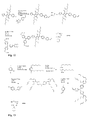
- Some preferred asymmetric DPP cores of compounds of the invention substituted by different Ar 1 and Ar 2 selected from different moieties and which are further substituted in R 1 , R 2 , R 1 and R 2 are described in Fig. 2 .
- Said DPP core may be further substituted by Ar 3 , Ar 4 , ⁇ -Spacer 1 , ⁇ -Spacer 2 , A and D as described and defined in the compound of the invention of formula (I).
- Ar 1 are Ar 2 are identical aromatic aryl groups and are selected from a moiety according to any one of formula (3) to (18). Preferably they are moieties of formula (3).
- ⁇ -Spacer 1 and ⁇ -Spacer 2 are selected from aromatic moieties. They are independently selected from a moiety according to any one of formula (19) to (33): wherein R 4 is selected from H, C1-C35 alkyl, C1-C35 alkoxy, C1-C35 thioalkyl, C4-C35 aryl, C1-C35 arylalkyl or C4-C35 heteroaryl, wherein heteroatoms are selected from O, S, or N. If alkyl, alkoxy, thioalkyl arylalkyl groups comprise 3 or more carbons, they may be linear, branched or cyclic. Preferably alkyl, arylalkyl are groups selected from groups containing from 1 to 26 carbons, 1 to 15 carbons or 1 to 8 carbons.
- connection of the compound of the invention onto the semiconductor surface is effected by way of an anchoring group of the compound of the invention.
- Said connection can be by way of electrostatic interaction and/or of covalent connection and/or coordinate covalent, which is stable for at least 10 hours, preferably at least 10 weeks, mote preferably at least 10 months and ideally up to an more that 1-3 years.
- the anchoring group is suitable to anchor said compound of formula (I) onto the surface of a semiconductor.
- the compound having the core structure is preferably in any way adsorbed or attached on a surface of said semiconductor, in particular by way of said anchoring group.
- A is a substituent comprising an anchoring group "Anch”and an acceptor group and being selected from a moiety according to any one of formula (78) to (87): wherein R 5 is selected from H, C1-C35 alkyl, C1-C35 alkoxy, C1-C35 thioalkyl, C4-C35 aryl, C1-C35 arylalkyl or C4-C35 heteroaryl, wherein heteroatoms are selected from O, S, or N. If alkyl, alkoxy, thioalkyl, arylalkyl groups comprise 3 or more carbons, they may be linear, branched or cyclic.
- alkyl chain is linear or branched and contains from 1 to 35 C.
- C 3 of the aryl moiety of formulae (81) and (84) is substituted by the halogen F.
- A is preferably selected from a moiety according any one of formula (78), (80), (82), (83) or (84).
- Anch is an anchoring group independently selected from -COOH, P0 3 H 2 , -P0 4 H 2 , - P(R 8 )O 2 H, -SO 3 H 2 , -SO 4 H 2 , -CONHOH - , 1,2-hydroxybenzene, 1-hydroxy-2-carboxybenzene, acetylacetonate, deprotonated forms of the aforementioned, organic and /or inorganic salts of said deprotonated forms, and chelating groups with ⁇ -conducting character.
- R 8 may be a hydrocarbon comprising from 1 to 50 carbons and 0-25 heteroatoms selected from O, N, or S, said hydrocarbon being covalently bound to the P atom of said phosphinic acid group by a carbon atom.
- R 8 may a a substituted or unsubstituted, linear, branched or cyclic C1-C20 alkyl, C2-C20 alkenyl, C2-C20 alkynyl, and C4-C20 aryl.
- A is preferably a substituent comprising an anchoring group and/or an acceptor group and being selected from a moiety according to any one of formula (34) to (43): wherein R 5 is selected from H, C1-C35 alkyl, C1-C35 alkoxy, C1-C35 thioalkyl, C4-C35 aryl, C1-C35 arylalkyl or C4-C35 heteroaryl, wherein heteroatoms are selected from O, S, or N. If alkyl, alkoxy, thioalkyl, arylalkyl groups comprise 3 or more carbons, they may be linear, branched or cyclic.
- alkyl chain is linear or branched and contains from 1 to 35 C.
- C 3 of the aryl moiety of formulae (37) and (40) is substituted by the halogen F.
- A is selected from a moiety according any one of formula (34), (36), (38), (39) or (40).
- D in the compound of formula (I) is preferably a donor group selected from a moiety according to any one of formula (44) to (55): wherein R 6 is selected from H, C1-C35 alkyl, C1-C35 alkoxy, C1-C35 thioalkyl, C4-C35 aryl, C1-C60 arylalkyl or C4-C35 heteroaryl, wherein heteroatoms are selected from O, S, or N and wherein aryl is optionally substituted by C4-C35 arylalkyl or by C4-C35 arylalkoxy groups.
- alkyl, alkoxy, thioalkyl arylalkyl groups comprise 3 or more carbons, they may be linear, branched or cyclic.
- alkyl chain is linear or branched and contains from 1 to 35 C.
- D is selected from a moiety according to any one of formula (45), (46), (48) and (54).
- acceptor and/or anchoring group (“Anch") of substituent A and the donor group D are not limited to the moieties of formula 34 to 43, 78 to 87 and of formula 44 to 55, respectively.
- Said acceptor and/or anchor group and the donor group D may be also selected from moieties disclosed as acceptor or anchor groups and as donor groups of sensitizers commonly used for DSC as disclosed in Hagfeldt et al.((2010), Chem. Rev., 110:6595-6663 ) and in PCT/IB2011/054628, which is entirely incorporated herein by reference.
- Ar 3 and Ar 4 are aromatic aryl groups independently selected from a moiety according to any one of formula (56) to (70): wherein R 7 is selected from H, C1-C35 alkyl, C4-C35 aryl, C1-C35 arylalkyl, or C4-C35 heteroaryl, wherein the heteroatoms are selected from O, S, or N.
- R 7 is selected from H, C1-C35 alkyl, C4-C35 aryl, C1-C35 arylalkyl, or C4-C35 heteroaryl, wherein the heteroatoms are selected from O, S, or N.
- alkyl, arylalkyl groups comprise 3 or more carbons, they may be linear, branched or cyclic.
- alkyl, arylalkyl are groups selected from groups containing from 1 to 26 carbons, 1 to 15 carbons or 1 to 8 carbons.
- said C1-C35 alkyl, C1-C35 alkoxy, C1-C35 thioalkyl, C4-C35 aryl, C1-C35 arylalkyl or C4-C35 heteroaryl may be further substituted or unsubstituted by a C1-C11 hydrocarbon comprising 0 to 15 heteroatoms selected from O, N, S or halogen.
- Halogen are selected from F, C1, Br, or I.
- the alkyl chains of groups of C1-C35 alkyl and C1-C35 arylalkyl of the compounds of invention are branched C1-C35 alkyl chains.
- any moiety to the basic structure DPP-core or to a preceding moiety is illustrated by way of a dashed line representing the bond indicating the connection of the moiety to either the DPP-core and to the following moiety, or to the preceding moiety and the following moiety.
- the compounds of formula (I) are selected from anyone of compounds of formula (72) to (77):
- the invention also provides a use of a compound of formula (I) as dye or D- ⁇ -A sensitizer in an electrochemical or optoelectronic device.
- the present invention provides a dye or a sensitizer comprising a compound of formula (I).
- Said dye may be co-adsorbed with CDCA and/or with further co-sensitizer.
- Said co-sensitizer, if present, is preferably selected among wide-bandgap sensitizers.
- the co-sensitizer is the compound of formula (71)
- the invention further provides, in one aspect, an electrochemical or optoelectronic device comprising a dye, wherein said dye is a compound of formula (I) of the invention.
- the device of the invention comprises a semiconductor surface on which the compound of the invention is adsorbed.
- the device of the invention is selected from an electrochemical device, a photo-electrochemical device, an optoelectronic device, a light emitting device, an electrochromic or photo-electrochromic device, an electrochemical sensor, a biosensor, an electrochemical display and an electrochemical capacitor, or a dye sensitized solar cell.
- the electrochemical device is a photoelectrical conversion device selected from a solar cell, a dye-sensitized solar cell (DSC), a regenerative dye-sensitized solar cell, a photovoltaic device or a photovoltaic cell.
- the device of the invention is the most preferably a dye-sensitized solar cell (DSC).
- the semiconductor is sensitized by the compound of the invention of formula (I), which may be connected onto the semiconductor surface by way of its anchoring group comprised in the substituent "A" of formula (I).
- the device of the invention is a dye sensitized solar cell, wherein the dye comprising a compound of formula (I) is co-adsorbed with CDCA (chenodeoxycholic acid).
- CDCA chenodeoxycholic acid
- said dye is co-adsorbed with CDCA and/or the compound of formula (71).
- the present invention provides a method of preparing an electrochemical or optoelectronic device, preferably a DSC, providing a first and a second electrode, wherein the first electrode is the anode covered by a mesoporous oxide film of TiO 2 , providing a compound of formula (I) as sensitizer to said mesoporous oxide film of TiO 2 and providing an intermediate layer comprising an electrolyte and a redox couple, or a hole transporting material for solid state devices.
- the maximum absorbance of the sensitizer was observed at -560 nm, which was -80 nm blue-shifted compared to DPP03 ( Fig. 3 ).
- the hypsochromic shift for DPP07 is explained by the increased dihedral twist at the DPP-Phenyl bond, the increased aromatic stabilization energy of the phenyl group, and the decreased electron donating strength of phenyl compared to thiophene.
- Electrochemical features were characterized with cyclic voltammetry measurements in a 0.1 M DMF solution of tetra-n-butylammonium hexafluorophosphate. Platinum counter and reference electrodes were used with a glassy carbon working electrode.
- the reduction potential (Ered) was determined to be -0.87 vs. NHE.
- the reaction was then brought to 80 °C for 10 hours.
- the reaction was then cooled to RT, and plugged through a thin pad of MgS04 with DCM.
- the crude product was purified with silica gel chromatography: 10:90 Et 2 O:Hex. 2.26 grams (68% yield) of a pure clear oil, which solidifies in time to a grey wax, was obtained.
- the TiO 2 transparent electrodes composed of ⁇ 20 nm anatase on fluorine doped thin oxide (FTO) conducting glass were controlled to get a desired thickness by the number of screen printing passes.
- Platinized FTO glass was used as the counter electrode, as disclosed in Yum, J. H.; Jang, S. R.; Humphry-Baker, R.; Grätzel, M.; Cid, J. J.; Torres, T.; Nazeeruddin, M. K. Langmuir 2008, 24, 5636).
- the TiO 2 film was stained with an organic dye (compound of formula (72), DPP07) by immersing it into a 0.025 mM solution of DPP07 with 2.5 mM 3 ⁇ ,7 ⁇ -dihydroxy-5 ⁇ -cholic acid (chenodeoxycholic acid) in 4- tert -butanol/acetonitrile mixture (1:1 v/v).
- the film was co-adsorbed with the co-sensitizer by immersing it into a solution containing DPP07 and co-sensitizer.
- Devices were fabricated with Ti02 thickness of -7.5 + 5 (20 nm and 400 nm particles) ⁇ m, with electrolyte composition 0.6M DMII, 0.05M LiI, 0.03M I 2 , 0.25M TBP, 0.05M GuSCN in Acetonitrile:Valeronitrile (85:15). All performance data are measured after -24 hrs. 2.5mM of CDCA is contained in the dye solution of DPP07, DPP07 with co-dye NT35 or with co-dye D35.
- the irradiation source was a 450 W xenon light source (Osram XBO 450, Germany) with a filter (Schott 113), whose power was regulated to the AM 1.5G solar standard by using a reference Si photodiode equipped with a colour matched filter (KG-3, Schott) in order to reduce the mismatch in the region of 350-750 nm between the simulated light and AM 1.5G to less than 4%.
- IPCE incident photon-to-current conversion efficiency
- DPP07 sensitized solar cells Compared to 5.03%, the performance with DPP03 ( Fig. 6 ), it is apparent that the DPP07-based solar cells outperform the DPP03 sensitized solar cell (see IV curves comparison in Fig. 6 ). Despite the decreased spectral breadth of DPP07 compared to DPP03, the asymmetric nature of DPP07 yielded increased IPCE and ultimately higher performance: DPP03 sensitized solar cells exhibited an IPCE extending to a longer wavelengths, close to 800 nm, but fewer photons were converted to photocurrent. The reason for the higher performance in DPP07 sensitized solar cell is mainly a result of linear current generation with light intensity. Fig. 6 shows the current dynamics as function of light intensity, which displays the individual photocurrents normalized to 1 sun Jsc.
- the photocurrent from the DPP07 sensitized solar cell shows exceptional linearity, achieving a plateau at intensities between 0.01 and 1 sun, compared to the DPP03 solar cell which fails to plateau. It is noted that the presence of CDCA improved the current linearity for both sensitizers. This linearity is likely ascribed to less aggregation for DPP07, as the asymmetric DPP bridge/core could impede ⁇ - ⁇ interactions between the sensitizers. Further work is underway concerning this aggregation, because it follows a reverse light intensity dependence.
- a wide-bandgap co-sensitizer was utilized to eke out more current from the high energy photons, as well as to aid in surface coverage leading to improved Voc.
- the PCE is improved to over 8.30% for photovoltaic devices utilizing the new co-sensitizer NT35 as well as with D35.
- NT35 has its maximum absorbance at -415 nm on the Ti02 surface, which is -35 nm blue shifted when compared to D35 ( Fig. 7 ).
- the wide-bandgap sensitizers substantially increased the high-energy visible light absorption from 400 - 550 nm, broadening the IPCE spectra of the co-sensitized photovoltaic devices when compared to the DPP07 single-sensitizer devices.
- the IPCEs of co-sensitized devices maintained high efficiencies even at low energy wavelengths and they (particularly DPP07/D35) show nearly-ideal panchromatic shapes from 400-750 nm.
- the VocS of co-sensitized cells were improved.
- the increase is likely due to an increase in electron lifetime in presence of the wide bandgap sensitizer ( Fig. 8 ).
- the increased lifetime is plausibly ascribed to either a functional group, dihexyloxybiphenyl at the donor ligand or passivation by wide-bandgap dyes acting as co-adsorbent20.
- a peak DPP07/D35 co-sensitized solar cell achieved 8.6% power conversion efficiency, improved from 7.7% obtained by DPP07 single-sensitizer solar cell, due to an increase in both Voc and Jsc.
Landscapes
- Chemical & Material Sciences (AREA)
- Organic Chemistry (AREA)
- Engineering & Computer Science (AREA)
- Materials Engineering (AREA)
- Physics & Mathematics (AREA)
- Spectroscopy & Molecular Physics (AREA)
- Power Engineering (AREA)
- Microelectronics & Electronic Packaging (AREA)
- Photovoltaic Devices (AREA)
- Nitrogen Condensed Heterocyclic Rings (AREA)
- Electric Double-Layer Capacitors Or The Like (AREA)
- Plural Heterocyclic Compounds (AREA)
- Hybrid Cells (AREA)
Priority Applications (7)
| Application Number | Priority Date | Filing Date | Title |
|---|---|---|---|
| EP12182817.2A EP2703468A1 (de) | 2012-09-03 | 2012-09-03 | Diketopyrrolopyrol-basierte Sensibilisatoren für elektrochemische oder optoelektronische Vorrichtung |
| CN201380057237.7A CN104937072B (zh) | 2012-09-03 | 2013-08-14 | 用于电化学装置或光电装置的二酮吡咯并吡咯(dpp)基敏化剂 |
| PCT/IB2013/056648 WO2014033582A2 (en) | 2012-09-03 | 2013-08-14 | Diketopyrrolopyrole (dpp)-based sensitizers for electrochemical or optoelectronic devices |
| KR1020157008384A KR102171481B1 (ko) | 2012-09-03 | 2013-08-14 | 전기화학 또는 광전자 장치에 대한 디케토피롤로피롤 (dpp)-계 증감제 |
| EP13779376.6A EP2892977B9 (de) | 2012-09-03 | 2013-08-14 | Diketopyrrolopyrrol (dpp)-basierte sensibilisatoren für elektrochemische oder optoelektronische vorrichtungen |
| US14/425,239 US9697956B2 (en) | 2012-09-03 | 2013-08-14 | Diketopyrrolopyrole (DPP)-based sensitizers for electrochemical or optoelectronic devices |
| JP2015529153A JP6139681B2 (ja) | 2012-09-03 | 2013-08-14 | 電気化学または光電子デバイスのためのジケトピロロピロール(dpp)系増感剤 |
Applications Claiming Priority (1)
| Application Number | Priority Date | Filing Date | Title |
|---|---|---|---|
| EP12182817.2A EP2703468A1 (de) | 2012-09-03 | 2012-09-03 | Diketopyrrolopyrol-basierte Sensibilisatoren für elektrochemische oder optoelektronische Vorrichtung |
Publications (1)
| Publication Number | Publication Date |
|---|---|
| EP2703468A1 true EP2703468A1 (de) | 2014-03-05 |
Family
ID=46940281
Family Applications (2)
| Application Number | Title | Priority Date | Filing Date |
|---|---|---|---|
| EP12182817.2A Withdrawn EP2703468A1 (de) | 2012-09-03 | 2012-09-03 | Diketopyrrolopyrol-basierte Sensibilisatoren für elektrochemische oder optoelektronische Vorrichtung |
| EP13779376.6A Active EP2892977B9 (de) | 2012-09-03 | 2013-08-14 | Diketopyrrolopyrrol (dpp)-basierte sensibilisatoren für elektrochemische oder optoelektronische vorrichtungen |
Family Applications After (1)
| Application Number | Title | Priority Date | Filing Date |
|---|---|---|---|
| EP13779376.6A Active EP2892977B9 (de) | 2012-09-03 | 2013-08-14 | Diketopyrrolopyrrol (dpp)-basierte sensibilisatoren für elektrochemische oder optoelektronische vorrichtungen |
Country Status (6)
| Country | Link |
|---|---|
| US (1) | US9697956B2 (de) |
| EP (2) | EP2703468A1 (de) |
| JP (1) | JP6139681B2 (de) |
| KR (1) | KR102171481B1 (de) |
| CN (1) | CN104937072B (de) |
| WO (1) | WO2014033582A2 (de) |
Cited By (2)
| Publication number | Priority date | Publication date | Assignee | Title |
|---|---|---|---|---|
| US10680180B2 (en) | 2015-03-02 | 2020-06-09 | Ecole Polytechnique Federale De Lausanne (Epfl) | Small molecule hole transporting material for optoelectronic and photoelectrochemical devices |
| US11329229B2 (en) | 2016-09-19 | 2022-05-10 | Kauno Technologies Universitetas | Hole transporting organic molecules containing enamine groups for optoelectronic and photoelectrochemical devices |
Families Citing this family (10)
| Publication number | Priority date | Publication date | Assignee | Title |
|---|---|---|---|---|
| CN104530747A (zh) * | 2014-12-02 | 2015-04-22 | 中国科学院化学研究所 | 基于不对称的吡咯并吡咯二酮为共轭桥的有机光敏染料 |
| EP3319964B1 (de) * | 2015-07-10 | 2020-07-22 | Merck Patent GmbH | Dithioalkylpyrrolopyrrole und ihre verwendung als farbstoffe |
| CN105131640B (zh) * | 2015-07-28 | 2017-10-20 | 华南理工大学 | 异吡咯并吡咯二酮染料及其应用 |
| EP3407361A1 (de) | 2017-05-24 | 2018-11-28 | Ecole Polytechnique Fédérale de Lausanne (EPFL) | Redoxschmelzen aus kupfer (i)/(ii)-komplexen als ladungsübertragungs- und ladungsspeicherungsmaterialien |
| KR102285560B1 (ko) * | 2017-07-10 | 2021-08-03 | 주식회사 엘지화학 | 화합물 및 이를 포함하는 유기 태양 전지 |
| EP3489240A1 (de) | 2017-11-28 | 2019-05-29 | Ecole Polytechnique Fédérale de Lausanne (EPFL) | In-situ-vernetzbare lochtransportierende monomere für optoelektronische vorrichtungen |
| EP3820465B1 (de) * | 2018-07-10 | 2025-09-17 | Ambient Photonics, Inc. | Solarzellenfarbstoffe für farbsensibilisierte solarzellen auf kupfer-redox-basis und kombinationen davon |
| TWI824012B (zh) * | 2019-09-20 | 2023-12-01 | 美商安畢特光學公司 | 用於基於銅氧化還原的染料敏化太陽能電池的太陽能電池染料及其組合 |
| KR102335394B1 (ko) * | 2020-02-20 | 2021-12-03 | 중앙대학교 산학협력단 | 다이케토피롤로피(dpp) 기반의 유기 청색염료, 이의 제조방법 및 이를 포함하는 염료감응형 태양전지 |
| KR20220160424A (ko) * | 2021-05-27 | 2022-12-06 | 삼성전자주식회사 | 고분자 반도체, 연신성 고분자 박막 및 전자 소자 |
Citations (8)
| Publication number | Priority date | Publication date | Assignee | Title |
|---|---|---|---|---|
| JPH01142654A (ja) * | 1987-11-30 | 1989-06-05 | Mita Ind Co Ltd | 電子写真用感光体 |
| JPH093448A (ja) * | 1995-06-23 | 1997-01-07 | Toyo Ink Mfg Co Ltd | 有機エレクトロルミネッセンス素子用電子輸送材料およびそれを用いた有機エレクトロルミネッセンス素子 |
| EP1452574A1 (de) * | 2001-12-03 | 2004-09-01 | Toyo Ink Mfg. Co., Ltd. | Zusammensetzung für organisches elektrolumineszenzelement und darauf basierendes organisches elektrolumineszenzelement |
| JP2007266285A (ja) * | 2006-03-28 | 2007-10-11 | Nippon Kayaku Co Ltd | 電界効果トランジスタ |
| WO2008101570A1 (de) | 2007-02-19 | 2008-08-28 | Clariant Finance (Bvi) Limited | Diketopyrrolopyrrol-mischkristalle mit hoher transparenz |
| CN101393970B (zh) * | 2001-04-25 | 2010-11-10 | 东丽株式会社 | 发光元件 |
| WO2010144566A1 (en) | 2009-06-09 | 2010-12-16 | Wayne State University | Automated video surveillance systems |
| WO2011144566A2 (en) | 2010-05-19 | 2011-11-24 | Basf Se | Diketopyrrolopyrrole polymers for use in organic semiconductor devices |
Family Cites Families (6)
| Publication number | Priority date | Publication date | Assignee | Title |
|---|---|---|---|---|
| JPH1142654A (ja) | 1997-07-25 | 1999-02-16 | Dainippon Ink & Chem Inc | パネル及びその製造方法 |
| TW565604B (en) | 2001-04-25 | 2003-12-11 | Toray Industries | Pyrromethene metal complex, material of luminescent element using it and luminescent element |
| WO2006061343A1 (en) * | 2004-12-09 | 2006-06-15 | Ciba Specialty Chemicals Holding Inc. | Fluorescent diketopyrrolopyrroles |
| KR20100093137A (ko) * | 2007-12-26 | 2010-08-24 | 도요 잉키 세이조 가부시끼가이샤 | 적색 칼라필터용 안료 조성물, 그의 제조방법, 그것을 사용한 착색 조성물, 및 컬러필터 |
| WO2010136353A1 (en) * | 2009-05-27 | 2010-12-02 | Basf Se | Diketopyrrolopyrrole polymers for use in organic semiconductor devices |
| JP5659761B2 (ja) * | 2010-12-13 | 2015-01-28 | 大日本印刷株式会社 | カラーフィルタ用赤色顔料分散液、カラーフィルタ用赤色感光性樹脂組成物、カラーフィルタ、及び液晶表示装置 |
-
2012
- 2012-09-03 EP EP12182817.2A patent/EP2703468A1/de not_active Withdrawn
-
2013
- 2013-08-14 WO PCT/IB2013/056648 patent/WO2014033582A2/en not_active Ceased
- 2013-08-14 EP EP13779376.6A patent/EP2892977B9/de active Active
- 2013-08-14 US US14/425,239 patent/US9697956B2/en active Active
- 2013-08-14 KR KR1020157008384A patent/KR102171481B1/ko active Active
- 2013-08-14 JP JP2015529153A patent/JP6139681B2/ja active Active
- 2013-08-14 CN CN201380057237.7A patent/CN104937072B/zh active Active
Patent Citations (8)
| Publication number | Priority date | Publication date | Assignee | Title |
|---|---|---|---|---|
| JPH01142654A (ja) * | 1987-11-30 | 1989-06-05 | Mita Ind Co Ltd | 電子写真用感光体 |
| JPH093448A (ja) * | 1995-06-23 | 1997-01-07 | Toyo Ink Mfg Co Ltd | 有機エレクトロルミネッセンス素子用電子輸送材料およびそれを用いた有機エレクトロルミネッセンス素子 |
| CN101393970B (zh) * | 2001-04-25 | 2010-11-10 | 东丽株式会社 | 发光元件 |
| EP1452574A1 (de) * | 2001-12-03 | 2004-09-01 | Toyo Ink Mfg. Co., Ltd. | Zusammensetzung für organisches elektrolumineszenzelement und darauf basierendes organisches elektrolumineszenzelement |
| JP2007266285A (ja) * | 2006-03-28 | 2007-10-11 | Nippon Kayaku Co Ltd | 電界効果トランジスタ |
| WO2008101570A1 (de) | 2007-02-19 | 2008-08-28 | Clariant Finance (Bvi) Limited | Diketopyrrolopyrrol-mischkristalle mit hoher transparenz |
| WO2010144566A1 (en) | 2009-06-09 | 2010-12-16 | Wayne State University | Automated video surveillance systems |
| WO2011144566A2 (en) | 2010-05-19 | 2011-11-24 | Basf Se | Diketopyrrolopyrrole polymers for use in organic semiconductor devices |
Non-Patent Citations (13)
| Title |
|---|
| GUO ET AL., SYNTHETIC METALS, vol. 160, 2010, pages 1767 - 1773 |
| HAGFELDT ET AL., CHEM. REV., vol. 110, 2010, pages 6595 - 6663 |
| JULIEN WARNAN ET AL: "A compact diketopyrrolopyrrole dye as efficient sensitizer in titanium dioxide dye-sensitized solar cells", JOURNAL OF PHOTOCHEMISTRY AND PHOTOBIOLOGY, A: CHEMISTRY, ELSEVIER SEQUOIA, LAUSANNE, CH, vol. 226, no. 1, 24 September 2011 (2011-09-24), pages 9 - 15, XP028121225, ISSN: 1010-6030, [retrieved on 20111014], DOI: 10.1016/J.JPHOTOCHEM.2011.09.023 * |
| KANIMOZHI ET AL., J. PHYS. CHEM C, vol. 114, 2010, pages 3287 - 3291 |
| QU ET AL., CHEM. COMM., vol. 48, 2012, pages 6972 - 6974 |
| QU ET AL., DYES AND PIGMENTS, vol. 92, 2012, pages 1384 - 1393 |
| QU ET AL., J. PHYS. CHEM. C, vol. 114, 2010, pages 1343 - 1349 |
| SANYIN QU ET AL: "Diketopyrrolopyrrole (DPP)-based materials for organic photovoltaics", CHEMICAL COMMUNICATIONS, vol. 48, no. 25, 1 January 2012 (2012-01-01), pages 3039, XP055048752, ISSN: 1359-7345, DOI: 10.1039/c2cc17886a * |
| SANYIN QU ET AL: "New D-Ï -A dyes for efficient dye-sensitized solar cells", SCIENCE CHINA CHEMISTRY, SP SCIENCE CHINA PRESS, HEIDELBERG, vol. 55, no. 5, 29 March 2012 (2012-03-29), pages 677 - 697, XP035058716, ISSN: 1869-1870, DOI: 10.1007/S11426-012-4517-X * |
| SANYIN QU ET AL: "New Diketopyrrolopyrrole (DPP) Dyes for Efficient Dye-Sensitized Solar Cells", JOURNAL OF PHYSICAL CHEMISTRY C, vol. 114, no. 2, 21 January 2010 (2010-01-21), pages 1343 - 1349, XP055048849, ISSN: 1932-7447, DOI: 10.1021/jp909786k * |
| SANYIN QU ET AL: "New diketo-pyrrolo-pyrrole (DPP) sensitizer containing a furan moiety for efficient and stable dye-sensitized solar cells", DYES AND PIGMENTS, ELSEVIER APPLIED SCIENCE PUBLISHERS. BARKING, GB, vol. 92, no. 3, 12 September 2011 (2011-09-12), pages 1384 - 1393, XP028106527, ISSN: 0143-7208, [retrieved on 20110922], DOI: 10.1016/J.DYEPIG.2011.09.009 * |
| YUM J H ET AL: "Effect of coadsorbent on the photovoltaic performance of squaraine sensitized nanocrystalline solar cells", NANOTECHNOLOGY, IOP, BRISTOL, GB, vol. 19, no. 42, 22 October 2008 (2008-10-22), pages 424005, XP020144700, ISSN: 0957-4484, DOI: 10.1088/0957-4484/19/42/424005 * |
| YUM, J. H.; JANG, S. R.; HUMPHRY-BAKER, R.; GRÄTZEL, M.; CID, J. J.; TORRES, T.; NAZEERUDDIN, M. K., LANGMUIR, vol. 24, 2008, pages 5636 |
Cited By (2)
| Publication number | Priority date | Publication date | Assignee | Title |
|---|---|---|---|---|
| US10680180B2 (en) | 2015-03-02 | 2020-06-09 | Ecole Polytechnique Federale De Lausanne (Epfl) | Small molecule hole transporting material for optoelectronic and photoelectrochemical devices |
| US11329229B2 (en) | 2016-09-19 | 2022-05-10 | Kauno Technologies Universitetas | Hole transporting organic molecules containing enamine groups for optoelectronic and photoelectrochemical devices |
Also Published As
| Publication number | Publication date |
|---|---|
| WO2014033582A3 (en) | 2014-04-24 |
| EP2892977B1 (de) | 2017-01-04 |
| JP2015534541A (ja) | 2015-12-03 |
| CN104937072A (zh) | 2015-09-23 |
| WO2014033582A2 (en) | 2014-03-06 |
| US9697956B2 (en) | 2017-07-04 |
| EP2892977A2 (de) | 2015-07-15 |
| JP6139681B2 (ja) | 2017-05-31 |
| CN104937072B (zh) | 2017-03-15 |
| US20150213966A1 (en) | 2015-07-30 |
| KR102171481B1 (ko) | 2020-10-30 |
| KR20150053268A (ko) | 2015-05-15 |
| EP2892977B9 (de) | 2017-05-03 |
Similar Documents
| Publication | Publication Date | Title |
|---|---|---|
| EP2703468A1 (de) | Diketopyrrolopyrol-basierte Sensibilisatoren für elektrochemische oder optoelektronische Vorrichtung | |
| EP2508570B1 (de) | Organischer metallfarbstoff sowie photoelektrisches element und farbstoffsensibilisierte solarzelle mit dem organischen metallfarbstoff | |
| García-Iglesias et al. | Effect of anchoring groups in zinc phthalocyanine on the dye-sensitized solar cell performance and stability | |
| Eom et al. | Triphenylamine-based organic sensitizers with π-spacer structural engineering for dye-sensitized solar cells: Synthesis, theoretical calculations, molecular spectroscopy and structure-property-performance relationships | |
| EP2483265B9 (de) | Neue liganden zur sensibilisierung der farbstoffe von farbstoffsensibilisierten solarzellen | |
| Wang et al. | Organic dyes containing dithieno [2, 3-d: 2′, 3′-d′] thieno [3, 2-b: 3′, 2′-b′] dipyrrole core for efficient dye-sensitized solar cells | |
| Hua et al. | Bulky dendritic triarylamine-based organic dyes for efficient co-adsorbent-free dye-sensitized solar cells | |
| Wang et al. | Influence of donor and bridge structure in D–A–π–A indoline dyes on the photovoltaic properties of dye-sensitized solar cells employing iodine/cobalt electrolyte | |
| KR102062929B1 (ko) | 유기 염료 및 광전지에서의 이의 이용 | |
| Yoosuf et al. | Triple bond rigidified anthracene-triphenylamine sensitizers for dye-sensitized solar cells | |
| Lu et al. | Studies on DA-π-A structured porphyrin sensitizers with different additional electron-withdrawing unit | |
| Jia et al. | New D–π–A dyes incorporating dithieno [3, 2-b: 2′, 3′-d] pyrrole (DTP)-based π-spacers for efficient dye-sensitized solar cells | |
| Nassar et al. | Recent progress in benzimidazole and quinoxaline dyes based on dye-sensitized solar cells: a comprehensive overview | |
| Wang et al. | Comparative study on N, N-di-p-tolylaniline-based D-π-A1-π-A2 sensitizers by tuning the auxiliary acceptor for dye-sensitized solar cells | |
| Arrechea et al. | Charge recombination losses in thiophene-substituted porphyrin dye-sensitized solar cells | |
| Su et al. | New triarylamine organic dyes containing the 9-hexyl-2-(hexyloxy)-9H-carbazole for dye-sensitized solar cells | |
| EP2372734A2 (de) | Rutheniumkomplex für eine Farbstoffsolarzelle | |
| Ma et al. | Sensitizers of metal complexes with sulfur coordination achieving a power conversion efficiency of 12.89% | |
| KR20140134288A (ko) | 릴렌 모노이미드 유도체, 및 태양 전지 및 광검출기에서 감광제로서의 이의 용도 | |
| Wang et al. | Phenothiazine organic dyes with the cone-shaped structural: Broad photoresponse and limitations on short-circuit photocurrent density in dye-sensitized solar cells | |
| Cheng et al. | Dithiafulvene-based organic sensitizers using pyridine as the acceptor for dye-sensitized solar cells | |
| Faraghally et al. | Rational molecular engineering of porphyrins for enhanced performance in dye-sensitized solar cells | |
| KR101465454B1 (ko) | 염료감응 태양전지용 유기염료 및 이를 포함하는 염료감응 태양전지 | |
| Wang et al. | Redox couple related influences of bulky electron donor as well as spacer in organic dye-sensitized mesoscopic solar cells | |
| KR101504526B1 (ko) | 신규한 유기염료 및 이를 포함하는 염료감응 태양전지 |
Legal Events
| Date | Code | Title | Description |
|---|---|---|---|
| AK | Designated contracting states |
Kind code of ref document: A1 Designated state(s): AL AT BE BG CH CY CZ DE DK EE ES FI FR GB GR HR HU IE IS IT LI LT LU LV MC MK MT NL NO PL PT RO RS SE SI SK SM TR |
|
| AX | Request for extension of the european patent |
Extension state: BA ME |
|
| PUAI | Public reference made under article 153(3) epc to a published international application that has entered the european phase |
Free format text: ORIGINAL CODE: 0009012 |
|
| STAA | Information on the status of an ep patent application or granted ep patent |
Free format text: STATUS: THE APPLICATION IS DEEMED TO BE WITHDRAWN |
|
| 18D | Application deemed to be withdrawn |
Effective date: 20140906 |