EP2712918B1 - Mehrorganchip mit verbesserter Lebensdauer und Homöostase - Google Patents
Mehrorganchip mit verbesserter Lebensdauer und Homöostase Download PDFInfo
- Publication number
- EP2712918B1 EP2712918B1 EP12186550.5A EP12186550A EP2712918B1 EP 2712918 B1 EP2712918 B1 EP 2712918B1 EP 12186550 A EP12186550 A EP 12186550A EP 2712918 B1 EP2712918 B1 EP 2712918B1
- Authority
- EP
- European Patent Office
- Prior art keywords
- organ
- equivalent
- organoid
- organoids
- layer
- Prior art date
- Legal status (The legal status is an assumption and is not a legal conclusion. Google has not performed a legal analysis and makes no representation as to the accuracy of the status listed.)
- Active
Links
Images



Classifications
-
- G—PHYSICS
- G01—MEASURING; TESTING
- G01N—INVESTIGATING OR ANALYSING MATERIALS BY DETERMINING THEIR CHEMICAL OR PHYSICAL PROPERTIES
- G01N33/00—Investigating or analysing materials by specific methods not covered by groups G01N1/00 - G01N31/00
- G01N33/48—Biological material, e.g. blood, urine; Haemocytometers
- G01N33/50—Chemical analysis of biological material, e.g. blood, urine; Testing involving biospecific ligand binding methods; Immunological testing
- G01N33/5005—Chemical analysis of biological material, e.g. blood, urine; Testing involving biospecific ligand binding methods; Immunological testing involving human or animal cells
- G01N33/5008—Chemical analysis of biological material, e.g. blood, urine; Testing involving biospecific ligand binding methods; Immunological testing involving human or animal cells for testing or evaluating the effect of chemical or biological compounds, e.g. drugs, cosmetics
- G01N33/5082—Supracellular entities, e.g. tissue, organisms
- G01N33/5088—Supracellular entities, e.g. tissue, organisms of vertebrates
-
- B—PERFORMING OPERATIONS; TRANSPORTING
- B01—PHYSICAL OR CHEMICAL PROCESSES OR APPARATUS IN GENERAL
- B01L—CHEMICAL OR PHYSICAL LABORATORY APPARATUS FOR GENERAL USE
- B01L3/00—Containers or dishes for laboratory use, e.g. laboratory glassware; Droppers
- B01L3/50—Containers for the purpose of retaining a material to be analysed, e.g. test tubes
- B01L3/502—Containers for the purpose of retaining a material to be analysed, e.g. test tubes with fluid transport, e.g. in multi-compartment structures
- B01L3/5027—Containers for the purpose of retaining a material to be analysed, e.g. test tubes with fluid transport, e.g. in multi-compartment structures by integrated microfluidic structures, i.e. dimensions of channels and chambers are such that surface tension forces are important, e.g. lab-on-a-chip
- B01L3/502746—Containers for the purpose of retaining a material to be analysed, e.g. test tubes with fluid transport, e.g. in multi-compartment structures by integrated microfluidic structures, i.e. dimensions of channels and chambers are such that surface tension forces are important, e.g. lab-on-a-chip characterised by the means for controlling flow resistance, e.g. flow controllers, baffles or throttle valves
-
- B—PERFORMING OPERATIONS; TRANSPORTING
- B01—PHYSICAL OR CHEMICAL PROCESSES OR APPARATUS IN GENERAL
- B01L—CHEMICAL OR PHYSICAL LABORATORY APPARATUS FOR GENERAL USE
- B01L3/00—Containers or dishes for laboratory use, e.g. laboratory glassware; Droppers
- B01L3/50—Containers for the purpose of retaining a material to be analysed, e.g. test tubes
- B01L3/502—Containers for the purpose of retaining a material to be analysed, e.g. test tubes with fluid transport, e.g. in multi-compartment structures
- B01L3/5027—Containers for the purpose of retaining a material to be analysed, e.g. test tubes with fluid transport, e.g. in multi-compartment structures by integrated microfluidic structures, i.e. dimensions of channels and chambers are such that surface tension forces are important, e.g. lab-on-a-chip
- B01L3/502761—Containers for the purpose of retaining a material to be analysed, e.g. test tubes with fluid transport, e.g. in multi-compartment structures by integrated microfluidic structures, i.e. dimensions of channels and chambers are such that surface tension forces are important, e.g. lab-on-a-chip specially adapted for handling suspended solids or molecules independently from the bulk fluid flow, e.g. for trapping or sorting beads or physically stretching molecules
-
- C—CHEMISTRY; METALLURGY
- C12—BIOCHEMISTRY; BEER; SPIRITS; WINE; VINEGAR; MICROBIOLOGY; ENZYMOLOGY; MUTATION OR GENETIC ENGINEERING
- C12M—APPARATUS FOR ENZYMOLOGY OR MICROBIOLOGY; APPARATUS FOR CULTURING MICROORGANISMS FOR PRODUCING BIOMASS, FOR GROWING CELLS OR FOR OBTAINING FERMENTATION OR METABOLIC PRODUCTS, i.e. BIOREACTORS OR FERMENTERS
- C12M21/00—Bioreactors or fermenters specially adapted for specific uses
- C12M21/08—Bioreactors or fermenters specially adapted for specific uses for producing artificial tissue or for ex-vivo cultivation of tissue
-
- C—CHEMISTRY; METALLURGY
- C12—BIOCHEMISTRY; BEER; SPIRITS; WINE; VINEGAR; MICROBIOLOGY; ENZYMOLOGY; MUTATION OR GENETIC ENGINEERING
- C12M—APPARATUS FOR ENZYMOLOGY OR MICROBIOLOGY; APPARATUS FOR CULTURING MICROORGANISMS FOR PRODUCING BIOMASS, FOR GROWING CELLS OR FOR OBTAINING FERMENTATION OR METABOLIC PRODUCTS, i.e. BIOREACTORS OR FERMENTERS
- C12M23/00—Constructional details, e.g. recesses, hinges
- C12M23/02—Form or structure of the vessel
- C12M23/04—Flat or tray type, drawers
-
- C—CHEMISTRY; METALLURGY
- C12—BIOCHEMISTRY; BEER; SPIRITS; WINE; VINEGAR; MICROBIOLOGY; ENZYMOLOGY; MUTATION OR GENETIC ENGINEERING
- C12M—APPARATUS FOR ENZYMOLOGY OR MICROBIOLOGY; APPARATUS FOR CULTURING MICROORGANISMS FOR PRODUCING BIOMASS, FOR GROWING CELLS OR FOR OBTAINING FERMENTATION OR METABOLIC PRODUCTS, i.e. BIOREACTORS OR FERMENTERS
- C12M23/00—Constructional details, e.g. recesses, hinges
- C12M23/02—Form or structure of the vessel
- C12M23/16—Microfluidic devices; Capillary tubes
-
- C—CHEMISTRY; METALLURGY
- C12—BIOCHEMISTRY; BEER; SPIRITS; WINE; VINEGAR; MICROBIOLOGY; ENZYMOLOGY; MUTATION OR GENETIC ENGINEERING
- C12M—APPARATUS FOR ENZYMOLOGY OR MICROBIOLOGY; APPARATUS FOR CULTURING MICROORGANISMS FOR PRODUCING BIOMASS, FOR GROWING CELLS OR FOR OBTAINING FERMENTATION OR METABOLIC PRODUCTS, i.e. BIOREACTORS OR FERMENTERS
- C12M23/00—Constructional details, e.g. recesses, hinges
- C12M23/22—Transparent or translucent parts
-
- C—CHEMISTRY; METALLURGY
- C12—BIOCHEMISTRY; BEER; SPIRITS; WINE; VINEGAR; MICROBIOLOGY; ENZYMOLOGY; MUTATION OR GENETIC ENGINEERING
- C12M—APPARATUS FOR ENZYMOLOGY OR MICROBIOLOGY; APPARATUS FOR CULTURING MICROORGANISMS FOR PRODUCING BIOMASS, FOR GROWING CELLS OR FOR OBTAINING FERMENTATION OR METABOLIC PRODUCTS, i.e. BIOREACTORS OR FERMENTERS
- C12M23/00—Constructional details, e.g. recesses, hinges
- C12M23/24—Gas permeable parts
-
- C—CHEMISTRY; METALLURGY
- C12—BIOCHEMISTRY; BEER; SPIRITS; WINE; VINEGAR; MICROBIOLOGY; ENZYMOLOGY; MUTATION OR GENETIC ENGINEERING
- C12M—APPARATUS FOR ENZYMOLOGY OR MICROBIOLOGY; APPARATUS FOR CULTURING MICROORGANISMS FOR PRODUCING BIOMASS, FOR GROWING CELLS OR FOR OBTAINING FERMENTATION OR METABOLIC PRODUCTS, i.e. BIOREACTORS OR FERMENTERS
- C12M23/00—Constructional details, e.g. recesses, hinges
- C12M23/34—Internal compartments or partitions
-
- C—CHEMISTRY; METALLURGY
- C12—BIOCHEMISTRY; BEER; SPIRITS; WINE; VINEGAR; MICROBIOLOGY; ENZYMOLOGY; MUTATION OR GENETIC ENGINEERING
- C12M—APPARATUS FOR ENZYMOLOGY OR MICROBIOLOGY; APPARATUS FOR CULTURING MICROORGANISMS FOR PRODUCING BIOMASS, FOR GROWING CELLS OR FOR OBTAINING FERMENTATION OR METABOLIC PRODUCTS, i.e. BIOREACTORS OR FERMENTERS
- C12M23/00—Constructional details, e.g. recesses, hinges
- C12M23/40—Manifolds; Distribution pieces
-
- C—CHEMISTRY; METALLURGY
- C12—BIOCHEMISTRY; BEER; SPIRITS; WINE; VINEGAR; MICROBIOLOGY; ENZYMOLOGY; MUTATION OR GENETIC ENGINEERING
- C12M—APPARATUS FOR ENZYMOLOGY OR MICROBIOLOGY; APPARATUS FOR CULTURING MICROORGANISMS FOR PRODUCING BIOMASS, FOR GROWING CELLS OR FOR OBTAINING FERMENTATION OR METABOLIC PRODUCTS, i.e. BIOREACTORS OR FERMENTERS
- C12M23/00—Constructional details, e.g. recesses, hinges
- C12M23/48—Holding appliances; Racks; Supports
-
- C—CHEMISTRY; METALLURGY
- C12—BIOCHEMISTRY; BEER; SPIRITS; WINE; VINEGAR; MICROBIOLOGY; ENZYMOLOGY; MUTATION OR GENETIC ENGINEERING
- C12M—APPARATUS FOR ENZYMOLOGY OR MICROBIOLOGY; APPARATUS FOR CULTURING MICROORGANISMS FOR PRODUCING BIOMASS, FOR GROWING CELLS OR FOR OBTAINING FERMENTATION OR METABOLIC PRODUCTS, i.e. BIOREACTORS OR FERMENTERS
- C12M29/00—Means for introduction, extraction or recirculation of materials, e.g. pumps
-
- C—CHEMISTRY; METALLURGY
- C12—BIOCHEMISTRY; BEER; SPIRITS; WINE; VINEGAR; MICROBIOLOGY; ENZYMOLOGY; MUTATION OR GENETIC ENGINEERING
- C12M—APPARATUS FOR ENZYMOLOGY OR MICROBIOLOGY; APPARATUS FOR CULTURING MICROORGANISMS FOR PRODUCING BIOMASS, FOR GROWING CELLS OR FOR OBTAINING FERMENTATION OR METABOLIC PRODUCTS, i.e. BIOREACTORS OR FERMENTERS
- C12M41/00—Means for regulation, monitoring, measurement or control, e.g. flow regulation
- C12M41/26—Means for regulation, monitoring, measurement or control, e.g. flow regulation of pH
-
- C—CHEMISTRY; METALLURGY
- C12—BIOCHEMISTRY; BEER; SPIRITS; WINE; VINEGAR; MICROBIOLOGY; ENZYMOLOGY; MUTATION OR GENETIC ENGINEERING
- C12M—APPARATUS FOR ENZYMOLOGY OR MICROBIOLOGY; APPARATUS FOR CULTURING MICROORGANISMS FOR PRODUCING BIOMASS, FOR GROWING CELLS OR FOR OBTAINING FERMENTATION OR METABOLIC PRODUCTS, i.e. BIOREACTORS OR FERMENTERS
- C12M41/00—Means for regulation, monitoring, measurement or control, e.g. flow regulation
- C12M41/40—Means for regulation, monitoring, measurement or control, e.g. flow regulation of pressure
-
- C—CHEMISTRY; METALLURGY
- C12—BIOCHEMISTRY; BEER; SPIRITS; WINE; VINEGAR; MICROBIOLOGY; ENZYMOLOGY; MUTATION OR GENETIC ENGINEERING
- C12M—APPARATUS FOR ENZYMOLOGY OR MICROBIOLOGY; APPARATUS FOR CULTURING MICROORGANISMS FOR PRODUCING BIOMASS, FOR GROWING CELLS OR FOR OBTAINING FERMENTATION OR METABOLIC PRODUCTS, i.e. BIOREACTORS OR FERMENTERS
- C12M41/00—Means for regulation, monitoring, measurement or control, e.g. flow regulation
- C12M41/46—Means for regulation, monitoring, measurement or control, e.g. flow regulation of cellular or enzymatic activity or functionality, e.g. cell viability
-
- B—PERFORMING OPERATIONS; TRANSPORTING
- B01—PHYSICAL OR CHEMICAL PROCESSES OR APPARATUS IN GENERAL
- B01L—CHEMICAL OR PHYSICAL LABORATORY APPARATUS FOR GENERAL USE
- B01L2300/00—Additional constructional details
- B01L2300/08—Geometry, shape and general structure
- B01L2300/0809—Geometry, shape and general structure rectangular shaped
- B01L2300/0816—Cards, e.g. flat sample carriers usually with flow in two horizontal directions
-
- B—PERFORMING OPERATIONS; TRANSPORTING
- B01—PHYSICAL OR CHEMICAL PROCESSES OR APPARATUS IN GENERAL
- B01L—CHEMICAL OR PHYSICAL LABORATORY APPARATUS FOR GENERAL USE
- B01L2400/00—Moving or stopping fluids
- B01L2400/04—Moving fluids with specific forces or mechanical means
- B01L2400/0475—Moving fluids with specific forces or mechanical means specific mechanical means and fluid pressure
- B01L2400/0481—Moving fluids with specific forces or mechanical means specific mechanical means and fluid pressure squeezing of channels or chambers
-
- B—PERFORMING OPERATIONS; TRANSPORTING
- B01—PHYSICAL OR CHEMICAL PROCESSES OR APPARATUS IN GENERAL
- B01L—CHEMICAL OR PHYSICAL LABORATORY APPARATUS FOR GENERAL USE
- B01L2400/00—Moving or stopping fluids
- B01L2400/06—Valves, specific forms thereof
- B01L2400/0633—Valves, specific forms thereof with moving parts
- B01L2400/0655—Valves, specific forms thereof with moving parts pinch valves
-
- B—PERFORMING OPERATIONS; TRANSPORTING
- B01—PHYSICAL OR CHEMICAL PROCESSES OR APPARATUS IN GENERAL
- B01L—CHEMICAL OR PHYSICAL LABORATORY APPARATUS FOR GENERAL USE
- B01L2400/00—Moving or stopping fluids
- B01L2400/08—Regulating or influencing the flow resistance
- B01L2400/082—Active control of flow resistance, e.g. flow controllers
-
- C—CHEMISTRY; METALLURGY
- C12—BIOCHEMISTRY; BEER; SPIRITS; WINE; VINEGAR; MICROBIOLOGY; ENZYMOLOGY; MUTATION OR GENETIC ENGINEERING
- C12M—APPARATUS FOR ENZYMOLOGY OR MICROBIOLOGY; APPARATUS FOR CULTURING MICROORGANISMS FOR PRODUCING BIOMASS, FOR GROWING CELLS OR FOR OBTAINING FERMENTATION OR METABOLIC PRODUCTS, i.e. BIOREACTORS OR FERMENTERS
- C12M27/00—Means for mixing, agitating or circulating fluids in the vessel
Definitions
- Miniaturized three dimensional (3D) organ or organoid culture systems are of increasing academic and economic interest. These 3D culture systems are aimed to allow investigation of how organs work and behave under certain stimuli as well as to test the effect of chemical compounds or compositions on particular organs or groups thereof and to study the pharmacokinetic behaviour of such compounds or compositions. In particular with regard to safety testing of chemical compounds, alternatives are required to replace animal experiments and to generate data which can more easily be used to efficiently and reliably predict safety in humans. The quality of such an in vitro 3D culture system will depend on its ability to reflect as closely as possible the physiological function and environment of the respective organ or organoid.
- organ-on-a-chip device In WO2009/146911 A2 an organ-on-a-chip device has been presented.
- This organ-on-a-chip device is designed to be self-contained and sensor controlled.
- the device allows establishing or maintaining organs or organoids as well as stem cell niches in a miniaturized chip format.
- the organ-on-a-chip device can comprise a multiplicity of organ growth sections comprising an organ or organoid, a medium feed reservoir and a medium waste reservoir functionally connected to each other such that the organs or organoids of the organ growth section can be fed with medium from the medium feed reservoir and that degradation products and waste can be disposed via the medium waste reservoir.
- this model allows the simultaneous culture of more than one organ on one chip, this device does not allow for interaction and cross-talk between different organs on the chip. Furthermore, this device does not reflect all functions necessary to achieve homeostasis of the culture system over a prolonged period of time.
- WO 2012/016711 A1 a 3D cell culture model is presented comprising one or more organ growth sections, a self-contained circulation system configured to supply organs or organoids cultured in the organ growth sections with nutrients and a extra-capillary fluid or waste collector to collect interstitial fluid and degradation products from the organ growth sections.
- This system allows for simultaneous culture of more than one organ and mimics a vascular system supplying and interconnecting the different organs. Thus, this system allows for interaction and cross-talk between the organs or organoids of the system.
- Another cell culture device with a comparable composition is disclosed in US 2012/0214189 A1 . However, this device does not reflect all functions necessary to achieve homeostasis of the culture system over a prolonged period of time.
- the present invention relates to a multi-organ-chip device which mimics the basic functions of an organism necessary for organ and/or organism homeostasis.
- the multi-organ-chip device of the present invention is designed to reflect a self-contained circulation system mimicking the blood system of a higher organism which supplies a number of different organ equivalents.
- the organ equivalents are selected and arranged in such a way that the basic functions of food supply, waste removal and oxygen supply are represented and fully functional to maintain homeostasis of the organ equivalents over a prolonged period of time.
- a multi-organ-chip device comprising
- first layer or object is specified to be located on top of a second layer or object, the first layer or object may be located directly on top of the second layer or object or there may be present another layer or object in between the first and second layer or object.
- the multi-organ-chip device of the invention is composed of a number of layers with different functionalities.
- the multi-organ-chip comprises a base layer, an organ layer, optionally an organ-holder layer, an antra layer and an actuator layer.
- the base layer is configured to provide a solid support for the further layers such that the multi-organ-chip device can be easily handled and manipulated.
- Preferably said base layer is made of a transparent material.
- Preferred materials for the base layer comprise glass and optically transparent synthetic polymers like e.g. polystyrol (PS), polycarbonate (PC), polysiloxane and/or polydimethylsiloxane (PDMS).
- PS polystyrol
- PC polycarbonate
- PDMS polydimethylsiloxane
- the base layer may comprise one or more sensors configured and arranged to measure signals emitted from and/or to transmit signals to one or more of the organ equivalents, organ growth sections and/or the self-contained circulation system. Sensors are used which exhibit high sensitivity in order to allow for exact measurement even on small sample volumes.
- the base layer comprises sensors for the main parameters of human organismal homeostasis such as organoid or cell viability, temperature, pH, fluid balance, pressure, flow volume, oxygen pressure or oxygen consumption, nutrient consumption, fluid adsorption, intestinal juice secretion, albumin synthesis, bile synthesis, urea excretion, ion balance, osmolality and electrical coupling.
- Sensors which may be used include but are not limited to pH sensors, pO 2 sensors, analyte capture sensors, conductivity sensors, plasmon resonance sensors, temperature sensors, CO 2 sensors, NO sensors, chemotaxis sensors, cytokine sensors, ion sensors, pressure sensors, potentiometric sensors, amperometric sensors, flow-through sensors, fill sensors, impedance sensors, electromagnetic field sensors, surface acoustic wave sensors, and metabolic sensors.
- the base layer comprises at least the following set of sensors:
- the multi-organ-chip device of the invention comprises an organ layer located on top of the base layer.
- the organ layer is configured to comprise a multiplicity of individual organ equivalents, each organ equivalent comprising one or more organ growth sections.
- Each of the organ growth sections of the organ layer is configured to comprise an organoid cavity for housing one organoid of a specific organ type.
- Each organ growth section is configured to comprise a micro-inlet and a micro-outlet for fluid communication between the organoid cavity of the organ growth section and the self-contained circulation system of the organ layer.
- the organ layer comprises at least one organ equivalent configured to represent the organs: lung, small intestine, spleen, pancreas, liver, kidney and bone marrow, respectively.
- the organ layer may comprise additional organ equivalents like e.g. organ equivalents of skin, testes, brain and/or adipose tissue. Furthermore, the organ layer comprises a self-contained circulation system configured to be in direct fluid communication with the organ growth sections of the organ layer via the micro inlets and outlets of the organ growth sections of the organ equivalents.
- additional organ equivalents like e.g. organ equivalents of skin, testes, brain and/or adipose tissue.
- the organ layer comprises a self-contained circulation system configured to be in direct fluid communication with the organ growth sections of the organ layer via the micro inlets and outlets of the organ growth sections of the organ equivalents.
- organ equivalent refers to all organ growth sections which comprise organoids or one particular organ type. All organs and systems of an organism, e.g. of a human organism, are built up by multiple, identical, functionally self-reliant, structural units, the organoid units. These organoid units are of very small dimensions, from several cell layers up to a few millimetres.
- Liver lobuli, nephrons of kidney, dermis and epidermis of skin, gut mucosa, Langerhans' islets of pancreas, grey and white matter of brain cortex and cerebellum and adult quiescence-promoting stem cell niches are a small selection of examples of such human organoid structures, all with a prominent functionality and highly variable conglomerate geometry. Due to distinguished functionality, a high degree of self-reliance and multiplicity of such micro-organoids within the respective organ, their reactivity pattern to any substances seems to be representative of the whole organ. Nature created very small but sophisticated biological structures to realize most prominent functions of organs and systems. Multiplication of these organoid structures within a given organ is nature's risk management tool to prevent total loss of functionality during partial organ damages.
- organoids means artificial, de novo generated, functional cell aggregates of different types of cells in vitro that show at least one organ or tissue function, preferably shows the majority of or essentially all organ or tissue functions.
- an organ equivalent is represented by one or more organ growth sections each organ growth section comprising an organoid cavity for housing one organoid of the respective organ type.
- organoids of specific organs are provided: alveolae form organoids of the lung, Langerhans' islets form organoids of the pancreas, white and red pulpae form organoids of the spleen, villi form organoids of the small intestine, lobule form organoids of the liver, nephrons form organoids of the kidney, units of bone marrow, bone and cartilage form organoids of the bone marrow, appendices form units of the skin, clusters form organoids of adipose tissue, follicle form organoids of the testes and cerebrellar cortex form organoids of the brain.
- the liver organoid may be a liver lobulus of hexagonal shape with a volume of 1,2 to 2,2 mm 3 .
- the lung organoid may be a lung alveola of spheroid shape and with a surface of 0,15 to 0,25 mm 2 .
- the pancreas organoid may be a Langerhans' islet surrounded by exocrine tissue, all organized in spheroid shape and with a volume of 0,2 to 0,5 mm 3 .
- the spleen organoid may be white and red pulpa tissue of spheroid shape with a volume of 0,3 to 0,6 mm 3 .
- the small intestine organoid may be a villus of pillar shape with a surface of 0,2 to 0,4 mm 2 .
- the kidney organoid may be a kidney nephron with a spheroid capsula and a cylindrical tubulus and a filtration surface of 6 to 7,5 mm 2 .
- the bone marrow organoid may be a unit of macroporous shape formed of bone marrow, bone and cartilage with a volume of 0,006 to 0,008 mm 3 .
- the skin organoid may be a segment of hexagonal shape containing appendices, having a surface of 1,2 to 2 mm 2 .
- the adipose tissue organoid may be an adipose cluster of spheroid shape with a volume of 0,0004 to 0,0006 mm 3 .
- the testes organoid may be a testes follicle of spheroid shape with a volume of 0,006 to 0,008 mm 3 .
- the brain organoid may be a cerebral cortex column of cylindrical shape and a surface of 0,02 to 0,03 mm 2 .
- the organ layer may be designed such that:
- organ layer may be designed such that:
- Each of the organ equivalents may be configured to house a number of organoids which is proportional to the number of organoids present in average in the respective organ of a mammalian organism, preferably of a human.
- Preferably all organ equivalents of the multi-organ-chip device are reduced in size by the same predetermined proportionality factor. This proportionality factor may vary depending on the intended size of the multi-organ-chip device, a preferred proportionality factor is 0,00001 (1/100.000). If a human organism is to be represented, the multi-organ-chip device is preferably configured to comprise:
- the multi-organ-chip device is preferably configured to comprise:
- an organ growth section further comprises one or more stem cell niches.
- a source of cells which can facilitate cell turn-over within an organoid.
- Each organ has a certain turn-over time during which the cells of the organ are replaced by new cells. This cellular turn-over of an organ ensures that the cells of an organ are vital and fully functional. Said turn-over can be mimicked by introducing a stem cell niche for one, some or all organ equivalents of the multi-organ-chip device.
- Said stem cell niches can be part of one, some or all organ growth sections of an organ equivalent.
- the organ layer may be made of a suitable material.
- Preferred materials comprise SiO2, glass, and synthetic polymers.
- Preferred synthetic polymers comprise polystyrol (PS), polycarbonate (PC), polyamide (PA), polyimide (PI), polyetheretherketone (PEEK), polyphenylenesulfide (PPSE), epoxide resin (EP), unsaturated polyester (UP)5 phenol resin (PF), polysiloxane, e.g. polydimethylsiloxane (PDMS), melamine resin (MF), cyanate ester (CA), polytetrafluoroethylene (PTFE) and mixtures thereof.
- Particularly preferred synthetic polymers are optically transparent and include, e.g. polystyrol (PS), polycarbonate (PC), and polysiloxane, e.g. polydimethylsiloxane (PDMS).
- a particularly preferred material comprises PDMS.
- the organ layer comprises a self-contained circulation system.
- the self-contained circulation system is designed to mimic the vascular system of an organism and, thus, supplies all organ equivalents of the multi-organ-chip device of the invention with nutrients, O 2 and allows for interaction and cross-talk between the organ equivalents.
- the presence of said self-contained circulation system is vital for homeostasis of the whole multi-organ-chip device.
- self-contained refers to the fact that a fluid is circulatable in the circulation system and that preferably there is no fluidic connection for continuously providing fluid, e.g. medium, blood or a blood equivalent, from an external reservoir into the circulation system.
- exital means that the reservoir is not an integral part of the circulation system or the multi-organ-chip device, e.g. is not connected via a tubing to the circulation system. If substances, e.g. nutrients and/or fluids, have to be replenished during the course of incubation it is preferred that such nutrients or fluids are supplied discontinuously through an injection port, which is preferably located in an arteriolar or venular transport channel of the circulation system or which is located in the antra layer.
- the self-contained circulation system is configured to be in direct fluid communication with the organ growth sections of the organ equivalents of the organ layer via the micro inlets and outlets of said organ growth sections.
- the structure and way of manufacturing of such a self-contained circulation system has already been described in WO 2012/016711 A1 , the disclosure of which is incorporated herein by reference.
- the inner surface of the self-contained circulation system can be lined with endothelial cells and optionally smooth muscle cells.
- the self-contained circulation system comprises:
- the self-contained circulation system can be filled with a fluid capable of transporting nutrients and O 2 to the organ equivalents.
- a fluid capable of transporting nutrients and O 2 to the organ equivalents.
- said fluid is blood or a blood equivalent.
- the fluid in the self-containing circulation system is circulated in a directed way by concerted action of actuators of the actuator layer of the multi-organ-chip device.
- actuators of the actuator layer of the multi-organ-chip device By doing so, it is possible to mimic not only an adequate pressure within the circulation system which corresponds to the pressure in the vasculature of an organism but also allows mimicking heart beat.
- the self-contained circulation system of the multi-organ-chip device of the invention is suitable to provide shear forces and micro-environment that corresponds to the situation found under physiological conditions.
- the self-contained circulation system may be configured such that the micro-outlets of the organ growth sections of small intestine, spleen and pancreas equivalents are connected to be in direct fluid communication with each other and with additional micro-inlets of the organ growth sections of the liver equivalent so as to allow for fluid communication between spleen, pancreas, small intestine and liver equivalent in such a way that fluid communication from spleen, pancreas and small intestine towards the venular transport channel of the self-contained circulation system can occur solely via passage through the liver equivalent.
- This architecture allows mimicking the basic functions of the digestive system of a higher organism like e.g. a human.
- the multi-organ-chip device can be cultured over a prolonged time by supplying the small intestine equivalent with nutrients from a reservoir located in the antra layer.
- the organ equivalents of the multi-organ-chip device of the invention will then be supplied with nutrients which have passed a digestive system.
- nutrients are provided in a form and manner which is more comparable to the physiological condition in an organism. There is no longer any need for an external medium reservoir which is constantly fed in the circulation system to supply the organ equivalents.
- the self-contained circulation system and the organ equivalents are preferably configured such that the arteriolar transport channel originating from the lung equivalent exhibits in flow direction bifurcations at which arteriolar channels are branching off supplying the organ equivalents.
- the fluid passing through a given organ equivalent is channelled back into the venular transport channel via venular channels branching off from the venular transport channel at respective bifurcations.
- the self-contained circulation system and the organ equivalents are configured such that the arteriolar transport channel originating from the lung equivalent exhibits in flow direction:
- the self-contained circulation system is configured such that the diameter of the arteriolar transport channel in flow direction is constantly reduced such that the sum of cross-sectional areas of all arteriolar transport channels including all bifurcations at a given distance from the lung equivalent remains constant and wherein in the venular transport channel said reduction in diameter is constantly reverted in flow direction such that the sum of cross-sectional areas of all venular transport channels including all bifurcations at a given distance from the lung equivalent remains constant.
- the organ layer may be configured such that the organoid cavities of the organ growth sections are open on the side opposed to the basal layer. This allows applying the organoids or precursor cells to the respective organoid cavities before the multi-organ-chip device is fully assembled.
- the multi-organ-chip device further comprises an otherwise optional organ-holder layer.
- the organ-holder layer is arranged between the organ layer and the antra layer.
- the organ-holder layer is configured to seal and/or stabilize the organ layer in such a way that for selected organ equivalents communication with the antra layer is maintained.
- the organ-holder layer may be provided as a layer of 50 to 500 ⁇ m thickness, preferably of a thickness of 100 to 300 ⁇ m, more preferably of a thickness of 200 ⁇ m.
- the organ-holder layer may be made of a material which comprises or consists of a synthetic polymer like e.g. polystyrol (PS), polycarbonate (PC), polysiloxane and/or polydimethylsiloxane (PDMS).
- the material comprises or consists of polycarbonate.
- the organ-holder layer is configured to allow fluid communication between the organ layer and the antra layer. This fluid communication can be achieved e.g. by providing pores within the organ-holder layer, preferably by providing pores with an average diameter of 5 to 7 ⁇ m.
- the thickness of the organ-holder layer in an area allowing fluid communication between the organ layer and the organ-holder layer can be reduced to an average thickness of 5 to 15 ⁇ m, preferably to 10 ⁇ m.
- the multi-organ-chip device of the invention comprises an antra layer arranged on top of the organ layer.
- the antra layer is configured to comprise a multiplicity of cavities and tubes arranged to be in fluid communication with selected organ equivalents or organ growth sections in order to allow for exchange of fluids between cavities of the antra layer and organ growth sections of the organ layer.
- a number of organs have excretory functions and/or produce considerable amounts of interstitial fluid which have to be dissipated if culture or incubation over a prolonged period of time is envisaged.
- the fluid of the self-contained circulation system is circulated constantly without exchange and replacement, it is vital to dissipate degradation products from the system.
- urine built in the kidney equivalent and faeces provided from the small intestine equivalent have to be eliminated from the system in order to allow operation of the mulit-organ-chip device for a prolonged period of time under homeostatic conditions.
- a reservoir for supplying the small intestine equivalent with nutrients is required.
- this nutrient reservoir is not arranged within the organ layer itself but within the antra layer. This allows refilling the nutrient reservoir discontinuously during operation of the multi-organ-chip device without directly interacting with the organ layer.
- the antra layer may be configured to comprise:
- the nutrition reservoir, the faeces reservoir, and the urine reservoir are integral part of the antra layer.
- the antra layer may further comprise a port that allows introduction of chemical compounds, like e.g. test compounds, to the fluid of the self-contained circulation system and to take samples from the fluid of the self-contained circulation system.
- chemical compounds like e.g. test compounds
- the multi-organ-chip device of the invention comprises an actuator layer.
- the actuator layer is configured to comprise a multiplicity of actuators arranged and configured to regulate a pressure force applied on a selected organ equivalent, the self-contained circulation system and/or part thereof.
- a pressure force applied on a selected organ equivalent the self-contained circulation system and/or part thereof.
- the configuration and arrangement of actuator elements in the actuator layer depends on the overall architecture of the multi-organ-chip device, in particular of the arrangement of organ equivalents within the organ layer.
- the actuators may be realized as air pressure-based actors that are configured to apply pressure force on an organ equivalent or the self-contained circulation system or a part thereof. These actuators may be controlled by an external device which may be programmable.
- the actuator layer comprises:
- the organ layer comprises or consists of polydimethylsiloxane (PDMS)
- the organ holder comprises or consists of polycarbonate
- the antra layer comprises or consists of PDMS
- the actuator layer comprises or consists of polycarbonate.
- the present invention is directed to the multi-organ-chip device defined above and in the claims without organoids, cells and fluid.
- the present invention is also directed to the multi-organ-chip device defined above, wherein the multi-organ-chip device comprises the respective organoids, cells and fluids.
- the multi-organ-chip of the present invention is characterized by its potential in prolonged operation in homeostatic condition and its closeness to a physiological organism.
- the multi-organ-chip can be applied in different settings depending on the content and architecture of the organ equivalents present on the device.
- Table 1 Preferred uses of the multi-organ-chip device of the invention
- Organ systems Use of the multi-organ-chip device for modelling of (not limited) Circulatory: - blood vessel system capable of replicating the structural and hemodynamic microenvironment of in vivo vasculature; hematopoiesis, bone marrow - Lymphatic system that represents aspects of circulatory and immune systems - Models of arrhythmia, inotropy, chronotropy and distinct properties of cardiomyocytes in the AV and SV nodes.
- Integrated systems that include coronary vasculature and oxygen gradients across cardiac tissue _ Microsystems that can model disease pathologies such as long QT syndrome , cardiomyopathy Endocrine: - Mimicking hypothalamic-pituitary-endocrine organ axes (e.g.
- pancreatic islets and/or its components (beta cells, alpha cells) - Diseases involving dysregulated hormone release or endocrinopathies - Individual and interconnected pathogenesis, treatment and complications of type 1 and type 2 diabetes Gastrointestinal: - Salivary gland - Gut including interaction with the microbiota - Diseases of liver steatosis, liver toxicity, inflammatory bowel disease, esophageal and gut dysmotility, pancreatitis Immune: - Innate and adaptive immune system, infant and adult immune system, gender-specific immune response, spleen - Disease pathologies such as inflammation, complement activation, dendritic cell activation, autoimmunity, allergy, hypersensitivity, infectious disease Integumentary: - Skin and related squamous mucosal epithelia that mimic the functions of a barrier, an immune organ (e.g., allergic reaction), a thermostatic regulatory organ,
- an immune organ e.g., allergic reaction
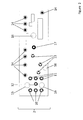
- FIGURES are a diagrammatic representation of FIGURES.
- the multi-organ-chip device 1 comprises a base layer 3, an organ layer 6, an organ holder layer 5, an antra layer 4 and an actuator layer 2.
- the base layer 3 is configured to provide a solid support for the further layers.
- the base layer 3 is made of glass or a transparent synthetic polymer like e.g. polystyrol (PS), polycarbonate (PC), polysiloxane and/or polydimethylsiloxane (PDMS).
- the base layer 3 also comprises a number of sensors 32 and 33 which are designed and arranged to monitor and control the system. Some of these sensors 32 are configured to apply electric stimuli to organ equivalents of the organ layer, other sensors 33 are configured to measure parameters of the system in order to ensure proper function.
- the base layer 3 comprises ports from which data acquired by the sensors can be extracted and used for other purposes like e.g. regulating the system.
- the organ layer 6 is shown in Figure 5 .
- the organ layer 6 is located on top of the base layer 3, is made of PDMS and is configured to comprise a multiplicity of individual organ equivalents, each organ equivalent comprising one or more organ growth sections, each of the organ growth section being configured to comprise an organoid cavity for housing at least one organoid of a given organ.
- the organ layer 6 comprises a lung equivalent 22, a small intestine equivalent 21, a spleen equivalent 23, a pancreas equivalent 24, a liver equivalent 25, a kidney equivalent 26, a bone marrow equivalent 27, an adipose tissue equivalent 28, a brain equivalent 29, a testes equivalent 30 and a skin equivalent 31.
- Each organ growth section comprises a micro-inlet and a micro-outlet for fluid communication between the organoid cavity of the organ growth section and a self-contained circulation system 34.
- the self-contained circulation system 34 is configured to be in direct fluid communication with the organ growth sections of the organ layer 6 via the micro inlets and outlets of the organ growth sections.
- the self-contained circulation system 34 comprises an arteriolar transport channel directly connecting the micro-outlets of the organ growth sections of the lung equivalent 22 with the micro-inlets of all other organ growth sections of the organ layer 6 in order to allow for transport of fluid with high pO 2 to said organ growth sections; and a venular transport channel directly connecting the micro-outlets of the organ growth sections with the micro inlets of the organ growth sections of the lung equivalent 22 in order to allow for transport of fluid with low pO 2 from the organ growth sections to the lung equivalent 22.
- the self-contained circulation system 34 is configured such that the micro-outlets of the organ growth sections of small intestine, spleen and pancreas equivalents 21, 23, 24 are connected to be in direct fluid communication with each other and with additional micro-inlets of the organ growth sections of the liver equivalent 25 so as to allow for fluid communication between spleen, pancreas, small intestine and liver equivalent 23, 24, 21, 25 in such a way that fluid communication from spleen, pancreas and small intestine equivalent 23, 24, 21 towards the venular transport channel of the self-contained circulation system 34 can occur solely via passage through the liver equivalent 25.
- the organ equivalents and the self-contained circulation system 34 are configured such that the arteriolar transport channel originating from the lung equivalent 22 exhibits in flow direction:
- the diameter of the arteriolar transport channel in flow direction (from the lung equivalent 22 towards the other organ equivalents) is constantly reduced such that the sum of cross-sectional areas of all arteriolar transport channels including all bifurcations at a given distance from the lung equivalent 22 remains constant, and wherein in the venular transport channel said reduction in diameter is constantly reverted in flow direction ( from the other organ equivalents towards the lung equivalent 22) such that the sum of cross-sectional areas of all venular transport channels including all bifurcations at a given distance from the lung equivalent remains constant.
- the organ equivalents each are configured to house a number of organoids which is proportional to the number of organoids present in average in the respective organ of a mammalian organism, preferably of a human, wherein all organ equivalents of the multi-organ-chip device are reduced in size by the same predetermined proportionality factor, e.g. by a factor of 0,00001 (1/100,000).
- the organ layer 6 is designed such that:
- the organ-holder layer 5 is arranged between the organ layer 6 and the antra layer 4, see Figure 4 .
- the organ-holder layer 5 is configured to seal and/or stabilize the organ layer 6 in such a way that for selected organ equivalents fluid communication with the antra layer 4 is maintained.
- the organ-holder layer 5 is provided as a layer with a thickness of 200 ⁇ m.
- the organ-holder layer 5 is made of a material which comprises or consists of polycarbonate (PC). In areas, where the organ-holder layer 5 covers one of the organ equivalents 21, 22, 23, 24, 25, 26, 27, 28, 29, 30, 31, the organ-holder layer 5 is configured to allow fluid communication between the organ layer 6 and the antra layer 4.
- this fluid communication can be achieved e.g. by providing pores within the organ-holder layer 5, preferably by providing pores with an average diameter of 5 to 7 ⁇ m.
- the thickness of the organ-holder layer 5 can be reduced to an average thickness of 5 to 15 ⁇ m, preferably to 10 ⁇ m.
- the antra layer 4 is depicted in Figure 3 and is configured to comprise a multiplicity of cavities and tubes arranged to be in fluid communication with selected organ equivalents or organ growth sections of the organ layer 6 in order to allow for exchange of fluids between cavities and organ growth sections.
- the antra layer 4 comprises or consists of PDMS.
- the antra layer 4 is configured to comprise:
- the actuator layer 2 is configured to comprise a multiplicity of actuators arranged and configured to regulate a pressure force applicable on selected organ equivalents, the self-contained circulation system and/or part thereof, see Figure 2 .
- the actuator layer is made of polycarbonate.
- the actuator layer 2 comprises:
- the actuator layer comprises a port 16 to access the nutrition reservoir 18, a port 16 to access the feaces reservoir, a port 16 to access the urine reservoir 20 and one port 16 to access the venular transport channel of the self-contained circulation system 34.
Landscapes
- Health & Medical Sciences (AREA)
- Chemical & Material Sciences (AREA)
- Life Sciences & Earth Sciences (AREA)
- Engineering & Computer Science (AREA)
- Bioinformatics & Cheminformatics (AREA)
- Wood Science & Technology (AREA)
- Organic Chemistry (AREA)
- Zoology (AREA)
- Biomedical Technology (AREA)
- General Health & Medical Sciences (AREA)
- Genetics & Genomics (AREA)
- Microbiology (AREA)
- Biochemistry (AREA)
- Biotechnology (AREA)
- Sustainable Development (AREA)
- General Engineering & Computer Science (AREA)
- Clinical Laboratory Science (AREA)
- Analytical Chemistry (AREA)
- Hematology (AREA)
- Dispersion Chemistry (AREA)
- Molecular Biology (AREA)
- Cell Biology (AREA)
- Chemical Kinetics & Catalysis (AREA)
- Immunology (AREA)
- Physics & Mathematics (AREA)
- Urology & Nephrology (AREA)
- Fluid Mechanics (AREA)
- Food Science & Technology (AREA)
- General Physics & Mathematics (AREA)
- Pathology (AREA)
- Medicinal Chemistry (AREA)
- Tropical Medicine & Parasitology (AREA)
- Toxicology (AREA)
- Apparatus Associated With Microorganisms And Enzymes (AREA)
- Prostheses (AREA)
- Micro-Organisms Or Cultivation Processes Thereof (AREA)
Claims (15)
- Mehrorganchip-Vorrichtung, umfassend:• eine Basisschicht,• eine auf der Basisschicht angeordnete Organschicht,• eine auf der Organschicht angeordnete Hohlraumschicht und• eine Aktuatorschicht,wobei• die Basisschicht so konfiguriert ist, dass sie eine feste Unterlage für die weiteren Schichten bereitstellt,• die Organschicht so konfiguriert ist, dass sie umfasst:eine Mehrzahl von einzelnen Organäquivalenten, wobei jedes Organäquivalent einen oder mehrere Organwachstumsbereiche umfasst, wobei jeder Organwachstumsbereich so konfiguriert ist, dass er einen Organoidhohlraum zur Aufnahme mindestens eines Organoids eines Organs umfasst und einen Mikroeinlass und einen Mikroauslass für die Fluidkommunikation zwischen dem Organoidhohlraum des Organwachstumsbereichs und einem in sich abgeschlossenen Kreislaufsystem umfasst, wobei die Organschicht mindestens ein Organäquivalent umfasst, so dass die Organe Lunge, Dünndarm, Milz, Bauchspeicheldrüse, Leber, Niere und Knochenmark jeweils dargestellt sind, undein in sich abgeschlossenes Kreislaufsystem, das so konfiguriert ist,dass es über die Mikroeinlässe und -auslässe der Organwachstumsbereiche in direkter Fluidkommunikation mit den Organwachstumsbereichen der Organschicht steht,• die Hohlraumschicht so konfiguriert ist, dass sie eine Mehrzahl von Hohlräumen und Röhren umfasst, die so angeordnet sind, dass sie in Fluidkommunikation mit ausgewählten Organäquivalenten oder Organwachstumsbereichen stehen, um den Austausch von Fluiden zwischen Hohlräumen und Organwachstumsbereichen zu ermöglichen, und• die Aktuatorschicht so konfiguriert ist, dass sie eine Mehrzahl von Aktuatoren umfasst, die so angeordnet und konfiguriert sind, dass sie eine Druckkraft regulieren, die auf ein ausgewähltes Organäquivalent, das in sich abgeschlossene Kreislaufsystem und/oder einen Teil davon anwendbar ist.
- Mehrorganchip-Vorrichtung nach Anspruch 1, wobei die Basisschicht aus einem transparenten Material hergestellt ist, wobei die Basisschicht vorzugsweise aus einem Material hergestellt ist, das Glas oder ein transparentes synthetisches Polymer umfasst oder daraus besteht.
- Mehrorganchip-Vorrichtung nach Anspruch 1 oder 2, wobei die Basisschicht einen oder mehrere Sensoren umfasst, die so konfiguriert sind, dass sie Signale messen, die von einem oder mehreren Organäquivalenten, Organwachstumsbereichen und/oder dem in sich abgeschlossenen Kreislaufsystem ausgesendet werden, und/oder Signale an ein oder mehrere Organäquivalente, Organwachstumsbereiche und/oder das in sich abgeschlossene Kreislaufsystem übertragen.
- Mehrorganchip-Vorrichtung nach einem der vorangehenden Ansprüche, wobei das in sich abgeschlossene Kreislaufsystem umfasst:einen arteriellen Transportkanal, der die Mikroauslässe der Organwachstumsbereiche des Lungenäquivalents direkt mit den Mikroeinlässen aller Organwachstumsbereiche der Organschicht verbindet, um den Transport von Fluid mit hohem pO2 zu Organwachstumsbereichen zu ermöglichen, undeinen venösen Transportkanal, der die Mikroauslässe der Organwachstumsbereiche direkt mit den Mikroeinlässen der Organwachstumsbereiche des Lungenäquivalents verbindet, um den Transport von Fluid mit niedrigem pO2 von den Organwachstumsbereichen zu dem Lungenäquivalent zu ermöglichen.
- Mehrorganchip-Vorrichtung nach Anspruch 4, wobei das in sich abgeschlossene Kreislaufsystem derart konfiguriert ist, dass die Mikroauslässe der Organwachstumsbereiche von Dünndarm-, Milz- und Bauchspeicheldrüsenäquivalenten so verbunden sind, dass sie in direkter Fluidkommunikation miteinander und mit zusätzlichen Mikroeinlässen der Organwachstumsbereiche des Leberäquivalents stehen, um die Fluidkommunikation zwischen Milz-, Bauchspeicheldrüsen-, Dünndarm- und Leberäquivalenten derart zu ermöglichen, dass die Fluidkommunikation aus Milz, Bauchspeicheldrüse und Dünndarm in Richtung des venösen Transportkanals des in sich abgeschlossenen Kreislaufsystems ausschließlich durch das Leberäquivalent hindurch stattfinden kann.
- Mehrorganchip-Vorrichtung nach einem der vorangehenden Ansprüche, wobei die Organschicht weitere Organäquivalente umfasst, wobei die Organschicht vorzugsweise Haut-, Hoden-, Hirn- und/oder Fettgewebe-Organäquivalente umfasst.
- Mehrorganchip-Vorrichtung nach einem der vorangehenden Ansprüche, ferner umfassend eine Organhalterschicht, die zwischen der Organschicht und der Hohlraumschicht angeordnet ist, wobei die Organhalterschicht so konfiguriert ist, dass sie die Organschicht derart abdichtet und/oder stabilisiert, dass für ausgewählte Organäquivalente die Fluidkommunikation mit der Hohlraumschicht aufrechterhalten wird.
- Mehrorganchip-Vorrichtung nach einem der vorangehenden Ansprüche, wobei die Hohlraumschicht so konfiguriert ist, dass sie umfasst:einen Hohlraum, der sich oben auf dem Dünndarmäquivalent befindet und derart mit dem Dünndarmäquivalent und einem Nahrungsbehälter in Fluidkommunikation steht,dass das Dünndarmäquivalent mit Nährstoffen aus dem Nahrungsbehälter versorgbar ist,einen Hohlraum, der sich oben auf dem Dünndarmäquivalent befindet und derart mit dem Dünndarmäquivalent und einem Kotbehälter in Fluidkommunikation steht, dass aus dem Dünndarmäquivalent ausgeschiedenes Material zu dem Kotbehälter transportierbar ist,einen Hohlraum, der sich oben auf dem Leberäquivalent befindet und derart mit dem Leberäquivalent und dem Hohlraum, der sich oben auf dem Dünndarmäquivalent befindet, in Fluidkommunikation steht, dass aus dem Leberäquivalent ausgeschiedenes Material zu dem Hohlraum, der sich oben auf dem Dünndarmäquivalent befindet,transportierbar ist, undeinen Hohlraum, der sich oben auf dem Nierenäquivalent befindet und derart mit dem Nierenäquivalent und einem Urinbehälter in Fluidkommunikation steht, dass der Urinbehälter aus dem Nierenäquivalent ausgeschiedenes Material aufnimmt.
- Mehrorganchip-Vorrichtung nach einem der vorangehenden Ansprüche, wobei die Aktuatorschicht umfasst:ein oder mehrere Aktuatoren, die auf das in sich abgeschlossene Kreislaufsystem einwirken, um eine gerichtete Fluidbewegung zu ermöglichen, um den Herzschlag nachzuahmen,ein oder mehrere Aktuatoren, die auf die Hohlraumschicht einwirken, um eine gerichtete Bewegung zu ermöglichen, um die intestinale peristaltische Bewegung nachzuahmen,ein oder mehrere Aktuatoren, die auf das Lungenäquivalent einwirken, um einen Luftstrom zu ermöglichen, um die Atmung nachzuahmen,ein oder mehrere Aktuatoren, die auf das Knochenmarkäquivalent einwirken, um eine regulierte Kompression zu ermöglichen, um die Knochenkompression nachzuahmen,ein oder mehrere Aktuatoren, die auf den arteriellen Transportkanal des in sich abgeschlossenen Kreislaufsystems einwirken, um die arterielle Konstriktion nachzuahmen,ein oder mehrere Aktuatoren, die auf das Leberäquivalent einwirken, um eine gerichtete Fluidbewegung zu ermöglichen, um Galle aus dem Leberäquivalent abzuleiten,undein oder mehrere Aktuatoren, die auf die Hohlraumschicht einwirken, um eine gerichtete Fluidbewegung zu ermöglichen, um Urin aus dem Nierenäquivalent abzuleiten.
- Mehrorganchip-Vorrichtung nach einem der vorangehenden Ansprüche, wobei die Organschicht derart ausgestaltet ist, dass:• ein Organwachstumsbereich des Leberäquivalents so konfiguriert ist, dass er einen Organoidhohlraum zur Aufnahme von 5 bis 15 Leberorganoiden bereitstellt, wobei jedes Leberorganoid ein Leberläppchen ist, wobei der Organoidhohlraum vorzugsweise so konfiguriert ist, dass er 10 Leberorganoide aufnimmt,• ein Organwachstumsbereich des Lungenäquivalents so konfiguriert ist, dass er einen Organoidhohlraum zur Aufnahme von 2000 bis 4000 Lungenorganoiden bereitstellt, wobei jedes Lungenorganoid eine Lungenalveole ist, wobei der Organoidhohlraum vorzugsweise so konfiguriert ist, dass er 3000 Lungenorganoide aufnimmt,• ein Organwachstumsbereich des Bauchspeicheldrüsenäquivalents so konfiguriert ist, dass er einen Organoidhohlraum zur Aufnahme von 5 bis 15 Bauchspeicheldrüsenorganoiden bereitstellt, wobei jedes Bauchspeicheldrüsenorganoid eine Langerhanssche Insel ist, wobei der Organoidhohlraum vorzugsweise so konfiguriert ist, dass er 10 Bauchspeicheldrüsenorganoide aufnimmt,• ein Organwachstumsbereich des Milzäquivalents so konfiguriert ist, dass er einen Organoidhohlraum zur Aufnahme von 5 bis 15 Milzorganoiden bereitstellt, wobei jedes Milzorganoid aus einer weißen und roten Pulpa besteht, wobei der Organoidhohlraum vorzugsweise so konfiguriert ist, dass er 10 Milzorganoide aufnimmt,• ein Organwachstumsbereich des Dünndarmäquivalents so konfiguriert ist, dass er einen Organoidhohlraum zur Aufnahme von 40 bis 80 Dünndarmorganoiden bereitstellt, wobei jedes Dünndarmorganoid ein Villus ist, wobei der Organoidhohlraum vorzugsweise so konfiguriert ist, dass er 60 Dünndarmorganoide aufnimmt,• ein Organwachstumsbereich des Nierenäquivalents so konfiguriert ist, dass er einen Organoidhohlraum zur Aufnahme von 10 bis 30 Nierenorganoiden bereitstellt, wobei jedes Nierenorganoid ein Nephron ist, wobei der Organoidhohlraum vorzugsweise so konfiguriert ist, dass er 20 Nierenorganoide aufnimmt, und• ein Organwachstumsbereich des Knochenmarkäquivalents so konfiguriert ist, dass er einen Organoidhohlraum zur Aufnahme von 1000 bis 2000 Knochenmarkorganoiden bereitstellt, wobei jedes Knochenmarkorganoid eine aus Knochenmark, Knochen und Knorpel gebildete Einheit ist, wobei der Organoidhohlraum vorzugsweise so konfiguriert ist, dass er 1400 Knochenmarkorganoide aufnimmt.
- Mehrorganchip-Vorrichtung nach einem der vorangehenden Ansprüche, wobei die Organschicht derart ausgestaltet ist, dass:• ein Organwachstumsbereich des Hautäquivalents so konfiguriert ist, dass er einen Organoidhohlraum zur Aufnahme von 10 bis 15 Hautorganoiden bereitstellt, wobei jedes Hautorganoid eine Hautappendix ist, wobei der Organoidhohlraum vorzugsweise so konfiguriert ist, dass er 15 Hautorganoide aufnimmt,• ein Organwachstumsbereich des Fettgewebeäquivalents so konfiguriert ist, dass er einen Organoidhohlraum zur Aufnahme von 200.000 bis 300.000 Fettgewebeorganoiden bereitstellt, wobei jedes Fettgewebeorganoid ein Fett-Cluster ist, wobei der Organoidhohlraum vorzugsweise so konfiguriert ist, dass er 240.000 Fettgewebeorganoide aufnimmt,• ein Organwachstumsbereich des Hodenäquivalents so konfiguriert ist, dass er einen Organoidhohlraum zur Aufnahme von 10 bis 20 Hodenorganoiden bereitstellt, wobei jedes Hodenorganoid ein Hodenfollikel ist, wobei der Organoidhohlraum vorzugsweise so konfiguriert ist, dass er 15 Hodenorganoide aufnimmt, und• ein Organwachstumsbereich des Hirnäquivalents so konfiguriert ist, dass er einen Organoidhohlraum zur Aufnahme von 150 bis 250 Hirnorganoiden bereitstellt, wobei jedes Hirnorganoid eine Hirnrindensäule ist, wobei der Organoidhohlraum vorzugsweise so konfiguriert ist, dass er 200 Hirnorganoide aufnimmt.
- Mehrorganchip-Vorrichtung nach einem der vorangehenden Ansprüche, wobei die Organäquivalente und das in sich abgeschlossene Kreislaufsystem derart konfiguriert sind, dass der von dem Lungenäquivalent ausgehende arterielle Transportkanal in Flussrichtung aufweist:• eine erste Bifurkation, an der ein erster Arteriolenkanal abzweigt und das Dünndarm-, das Milz- und das Bauchspeicheldrüsenäquivalent versorgt,• eine zweite Bifurkation, an der ein zweiter Arteriolenkanal abzweigt und das Leberäquivalent versorgt,• eine dritte Bifurkation, an der ein dritter Arteriolenkanal abzweigt und das Nierenäquivalent versorgt,• eine vierte Bifurkation, an der ein vierter Arteriolenkanal abzweigt und das Knochenmark versorgt,• eine optionale fünfte Bifurkation, an der ein fünfter Arteriolenkanal abzweigt und ein Hautäquivalent versorgt,• eine optionale sechste Bifurkation, an der ein sechster Arteriolenkanal abzweigt und ein Fettgewebeäquivalent versorgt,• eine optionale siebente Bifurkation, an der ein siebenter Arteriolenkanal abzweigt und ein Hodenäquivalent versorgt, und• eine optionale achte Bifurkation, an der ein achter Arteriolenkanal abzweigt und ein Hirnäquivalent versorgt.
- Mehrorganchip-Vorrichtung nach einem der Ansprüche 4 bis 12, wobei der Durchmesser des arteriellen Transportkanals in Flussrichtung ständig derart verringert wird, dass die Summe der Querschnittsflächen aller arteriellen Transportkanäle einschließlich aller Bifurkationen in einer bestimmten Entfernung von dem Lungenäquivalent konstant bleibt, und wobei in dem venösen Transportkanal die Durchmesserverringerung ständig derart in Flussrichtung umgekehrt wird, dass die Summe der Querschnittsflächen aller venösen Transportkanäle einschließlich aller Bifurkationen in einer bestimmten Entfernung von dem Lungenäquivalent konstant bleibt.
- Mehrorganchip-Vorrichtung nach einem der vorangehenden Ansprüche, wobei die Basisschicht Glas umfasst oder daraus besteht, die Organschicht Polydimethylsiloxan (PDMS) umfasst oder daraus besteht, die Organhalterschicht Polycarbonat umfasst oder daraus besteht, die Hohlraumschicht PDMS umfasst oder daraus besteht und/oder die Aktuatorschicht Polycarbonat umfasst oder daraus besteht.
- Mehrorganchip-Vorrichtung nach einem der vorangehenden Ansprüche, wobei die Organäquivalente jeweils so konfiguriert sind, dass sie eine Anzahl von Organoiden aufnehmen, die proportional zu der Anzahl der Organoide ist, die durchschnittlich in dem jeweiligen Organ eines Säugetierorganismus, vorzugsweise in dem eines Menschen, vorhanden sind, wobei die Größen aller Organäquivalente der Mehrorganchip-Vorrichtung um den gleichen vorgegebenen Proportionalitätsfaktor, z.B. um einen Faktor 0,00001 (1/100.000), reduziert sind.
Priority Applications (18)
| Application Number | Priority Date | Filing Date | Title |
|---|---|---|---|
| EP12186550.5A EP2712918B1 (de) | 2012-09-28 | 2012-09-28 | Mehrorganchip mit verbesserter Lebensdauer und Homöostase |
| PT121865505T PT2712918E (pt) | 2012-09-28 | 2012-09-28 | Chip-multi-órgãos com melhor tempo de vida e homeostase |
| ES12186550.5T ES2529994T3 (es) | 2012-09-28 | 2012-09-28 | Chip para múltiples órganos con una vida útil y homeostasis mejoradas |
| DK12186550.5T DK2712918T3 (en) | 2012-09-28 | 2012-09-28 | Multi-organ-chip with improved lifetime and homeostasis |
| PCT/EP2013/067073 WO2014048637A1 (en) | 2012-09-28 | 2013-08-15 | Multi-organ-chip with improved life time and homoeostasis |
| US14/431,661 US9791433B2 (en) | 2012-09-28 | 2013-08-15 | Multi-organ chip with improved life time and homoeostasis |
| CA2885375A CA2885375C (en) | 2012-09-28 | 2013-08-15 | Multi-organ-chip with improved life time and homoeostasis |
| RU2015110636A RU2630667C2 (ru) | 2012-09-28 | 2013-08-15 | Мультиорганный чип с улучшенной долговечностью и гомеостазом |
| AU2013323042A AU2013323042B2 (en) | 2012-09-28 | 2013-08-15 | Multi-organ-chip with improved life time and homoeostasis |
| EP13747334.4A EP2914713A1 (de) | 2012-09-28 | 2013-08-15 | Multi-organ-chip mit verbesserter lebensdauer und homöostase |
| JP2015533493A JP6129973B2 (ja) | 2012-09-28 | 2013-08-15 | 寿命及び恒常性が改善された多臓器チップ |
| BR112015006859-6A BR112015006859B1 (pt) | 2012-09-28 | 2013-08-15 | dispositivo de múltiplos órgãos em chip |
| SG11201501790VA SG11201501790VA (en) | 2012-09-28 | 2013-08-15 | Multi-organ-chip with improved life time and homoeostasis |
| CN201380050563.5A CN104685048B (zh) | 2012-09-28 | 2013-08-15 | 具有改进的使用寿命和体内平衡的多器官芯片 |
| KR1020157009779A KR102067311B1 (ko) | 2012-09-28 | 2013-08-15 | 개선된 수명 시간 및 항상성을 갖는 다기관 칩 장치 |
| HK15110079.6A HK1209452B (en) | 2012-09-28 | 2013-08-15 | Multi-organ-chip with improved life time and homoeostasis |
| IL237969A IL237969A0 (en) | 2012-09-28 | 2015-03-26 | Multi-organ chip with improved lifetime and constant internal environment |
| IN2765DEN2015 IN2015DN02765A (de) | 2012-09-28 | 2015-04-04 |
Applications Claiming Priority (1)
| Application Number | Priority Date | Filing Date | Title |
|---|---|---|---|
| EP12186550.5A EP2712918B1 (de) | 2012-09-28 | 2012-09-28 | Mehrorganchip mit verbesserter Lebensdauer und Homöostase |
Publications (2)
| Publication Number | Publication Date |
|---|---|
| EP2712918A1 EP2712918A1 (de) | 2014-04-02 |
| EP2712918B1 true EP2712918B1 (de) | 2014-11-12 |
Family
ID=47010306
Family Applications (2)
| Application Number | Title | Priority Date | Filing Date |
|---|---|---|---|
| EP12186550.5A Active EP2712918B1 (de) | 2012-09-28 | 2012-09-28 | Mehrorganchip mit verbesserter Lebensdauer und Homöostase |
| EP13747334.4A Withdrawn EP2914713A1 (de) | 2012-09-28 | 2013-08-15 | Multi-organ-chip mit verbesserter lebensdauer und homöostase |
Family Applications After (1)
| Application Number | Title | Priority Date | Filing Date |
|---|---|---|---|
| EP13747334.4A Withdrawn EP2914713A1 (de) | 2012-09-28 | 2013-08-15 | Multi-organ-chip mit verbesserter lebensdauer und homöostase |
Country Status (16)
| Country | Link |
|---|---|
| US (1) | US9791433B2 (de) |
| EP (2) | EP2712918B1 (de) |
| JP (1) | JP6129973B2 (de) |
| KR (1) | KR102067311B1 (de) |
| CN (1) | CN104685048B (de) |
| AU (1) | AU2013323042B2 (de) |
| BR (1) | BR112015006859B1 (de) |
| CA (1) | CA2885375C (de) |
| DK (1) | DK2712918T3 (de) |
| ES (1) | ES2529994T3 (de) |
| IL (1) | IL237969A0 (de) |
| IN (1) | IN2015DN02765A (de) |
| PT (1) | PT2712918E (de) |
| RU (1) | RU2630667C2 (de) |
| SG (1) | SG11201501790VA (de) |
| WO (1) | WO2014048637A1 (de) |
Cited By (1)
| Publication number | Priority date | Publication date | Assignee | Title |
|---|---|---|---|---|
| RU242389U1 (ru) * | 2025-09-25 | 2026-03-24 | федеральное государственное автономное образовательное учреждение высшего образования Первый Московский государственный медицинский университет имени И.М. Сеченова Министерства здравоохранения Российской Федерации (Сеченовский университет) | Микрочип для детекции аллерген-специфических антител у населения российской федерации |
Families Citing this family (60)
| Publication number | Priority date | Publication date | Assignee | Title |
|---|---|---|---|---|
| US9719068B2 (en) | 2010-05-06 | 2017-08-01 | Children's Hospital Medical Center | Methods and systems for converting precursor cells into intestinal tissues through directed differentiation |
| US10023832B2 (en) | 2013-07-16 | 2018-07-17 | Vanderbilt University | Interconnections of multiple perfused engineered tissue constructs and microbioreactors, multi-microformulators and applications of the same |
| CN106661548B (zh) | 2014-05-28 | 2020-12-11 | 儿童医院医疗中心 | 用于经由定向分化将前体细胞转化为胃组织的方法和系统 |
| JP6439115B2 (ja) * | 2014-06-10 | 2018-12-19 | 一般財団法人生産技術研究奨励会 | 組織片の機能を発現・維持する方法 |
| JP6804438B2 (ja) | 2014-10-17 | 2020-12-23 | チルドレンズ ホスピタル メディカル センター | 多能性幹細胞を使用するヒト小腸のin vivoモデル、並びにそれを作製、及び使用する方法 |
| RU2584598C1 (ru) * | 2015-03-27 | 2016-05-20 | Общество с ограниченной ответственностью Научно-технический центр "БиоКлиникум" | Микрофлюидный чип для создания клеточных моделей органов млекопитающих |
| CN104826676B (zh) * | 2015-05-04 | 2016-08-24 | 清华大学深圳研究生院 | 微流控芯片、系统及其应用 |
| EP3415611B1 (de) * | 2016-01-07 | 2025-05-14 | Vanderbilt University | Multi-mikroformulator und anwendungen davon |
| WO2017123855A1 (en) * | 2016-01-13 | 2017-07-20 | President And Fellows Of Harvard College | Microfluidic sample devices and uses thereof |
| RU171690U1 (ru) * | 2016-03-24 | 2017-06-09 | Общество с ограниченной ответственностью Научно-технический центр "БиоКлиникум" | Микрофлюидный чип для создания клеточных моделей органов млекопитающих |
| ES2929758T3 (es) | 2016-05-05 | 2022-12-01 | Childrens Hospital Med Ct | Métodos para la fabricación in vitro de tejido del fondo gástrico y composiciones relacionadas con el mismo |
| CN109475669B (zh) * | 2016-05-24 | 2022-01-04 | 苏马瓦克医疗解决方案公司 | 用于在手术后收集内部液体的带有一次性储存器的便携式设备 |
| WO2018071354A1 (en) * | 2016-10-14 | 2018-04-19 | Wake Forest University Health Sciences | Multi-organ "body on a chip" apparatus utilizing a common media |
| KR102729404B1 (ko) | 2016-11-04 | 2024-11-14 | 칠드런즈 호스피탈 메디칼 센터 | 간 유사 장기 조성물 및 이를 제조 및 사용하는 방법 |
| WO2018094522A1 (en) * | 2016-11-23 | 2018-05-31 | Valorisation-Hsj, Limited Partnership | Encapsulated liver tissue |
| KR102492455B1 (ko) | 2016-11-24 | 2023-01-27 | 알베오릭스 테크놀러지스 아게 | 세포 배양 시스템 및 방법 |
| JP7068305B2 (ja) | 2016-12-05 | 2022-05-16 | チルドレンズ ホスピタル メディカル センター | 結腸オルガノイドならびにその作製方法および使用方法 |
| KR101970125B1 (ko) | 2017-01-16 | 2019-04-18 | 한림대학교 산학협력단 | 신축 가능한 피부 칩 |
| WO2018144860A1 (en) * | 2017-02-03 | 2018-08-09 | Cornell University | Stable three-dimensional blood vessels and methods for forming the same |
| CN106859716B (zh) * | 2017-03-02 | 2023-03-14 | 福建医科大学附属协和医院 | 一种胰肠吻合器 |
| US12281334B2 (en) | 2017-04-14 | 2025-04-22 | Children's Hospital Medical Center | Multi donor stem cell compositions and methods of making same |
| EP3634514A4 (de) * | 2017-06-09 | 2021-03-10 | President and Fellows of Harvard College | Verfahren zur verbesserung der entwicklung von nierenorganoiden und verwendungsverfahren dafür |
| CN107312711B (zh) * | 2017-06-26 | 2020-02-07 | 清华大学深圳研究生院 | 一种自循环组织/器官芯片装置及其制作方法 |
| EP3694603B1 (de) | 2017-10-10 | 2026-04-08 | Children's Hospital Medical Center | Ösophagusgewebe- und/oder organoidzusammensetzungen und verfahren zu ihrer herstellung |
| DK3704227T3 (da) | 2017-10-31 | 2025-04-07 | Murdoch Childrens Res Inst | Sammensætning og fremgangsmåde |
| US12379372B2 (en) | 2017-12-21 | 2025-08-05 | Children's Hospital Medical Center | Digitalized human organoids and methods of using same |
| WO2019152767A1 (en) | 2018-02-02 | 2019-08-08 | Wake Forest University Health Sciences | Organoids related to immunotherapy and methods of preparing and using the same |
| US11731126B2 (en) | 2018-04-19 | 2023-08-22 | Nanyang Technological University | Microfluidic board and method of forming the same |
| WO2019222871A1 (zh) * | 2018-05-21 | 2019-11-28 | 深圳华大生命科学研究院 | 一种仿生肠-肝器官芯片及其制备方法和应用 |
| KR102887406B1 (ko) | 2018-07-26 | 2025-11-19 | 칠드런즈 호스피탈 메디칼 센터 | 간-담도-췌장 조직 및 이를 제조하는 방법 |
| EP4492294A3 (de) * | 2018-09-08 | 2025-04-16 | FinalSpark Sarl | Kognitive rechenverfahren und -systeme auf der basis biologischer neuronaler netzwerke |
| AU2019339410A1 (en) | 2018-09-12 | 2021-04-15 | Children's Hospital Medical Center | Organoid compositions for the production of hematopoietic stem cells and derivatives thereof |
| WO2020081740A1 (en) | 2018-10-17 | 2020-04-23 | Northwestern University | Tissue culture platform having multiple well chambers fluidically coupled via microfluidic channels and selector valves |
| CN109337813B (zh) * | 2018-10-19 | 2023-07-11 | 杭州捷诺飞生物科技股份有限公司 | 适用于生物组织培养及实时监测的系统和方法 |
| WO2020087148A1 (en) * | 2018-11-02 | 2020-05-07 | Centro Nacional De Pesquisa Em Energia E Materiais – Cnpem | Platform for multi-systems culture, bioreactors and methods for in vitro experimental assays |
| CN111269830B (zh) * | 2018-12-05 | 2022-07-15 | 中国科学院大连化学物理研究所 | 一种基于微流控技术的多器官芯片及其应用 |
| CN109517739A (zh) * | 2018-12-27 | 2019-03-26 | 重庆大学 | 双器官偶联三维层状一体化芯片 |
| KR102019007B1 (ko) * | 2019-01-31 | 2019-09-05 | 제주대학교 산학협력단 | 센서집적형 장기칩 |
| WO2020160371A1 (en) | 2019-02-01 | 2020-08-06 | The University Of Hong Kong | Innervated organoid compositions and methods of making same |
| WO2020243633A1 (en) | 2019-05-31 | 2020-12-03 | Children's Hospital Medical Center | Shaped organoid compositions and methods of making same |
| WO2020243613A1 (en) | 2019-05-31 | 2020-12-03 | Children's Hospital Medical Center | Methods of generating and expanding hematopoietic stem cells |
| KR102354778B1 (ko) * | 2019-09-30 | 2022-01-24 | 서울대학교병원 | 폐 조직 모사 미세유체 시스템 |
| WO2021071490A1 (en) * | 2019-10-10 | 2021-04-15 | Hewlett-Packard Development Company, L.P. | Dispense cassettes for microfluidic dispensers |
| WO2021071491A1 (en) * | 2019-10-10 | 2021-04-15 | Hewlett-Packard Development Company, L.P. | Microfluidic dispensers for limiting dilution |
| CN110669670B (zh) * | 2019-11-14 | 2022-06-03 | 大连理工大学 | 一种人体微生态系统芯片及其使用方法 |
| KR102830487B1 (ko) | 2020-01-16 | 2025-07-08 | 삼성전자주식회사 | 세포 클러스터를 이용한 생체 전자약 장치 |
| TWI728680B (zh) | 2020-02-04 | 2021-05-21 | 國立陽明交通大學 | 仿生系統 |
| CN111304152B (zh) * | 2020-03-06 | 2024-07-05 | 上海市第十人民医院 | 一种运用飞秒激光改善类器官体外3d培养微环境的方法 |
| CN111363682A (zh) * | 2020-04-22 | 2020-07-03 | 苏州济研生物医药科技有限公司 | 一种多层组合结构的器官芯片及其使用方法 |
| KR20250095766A (ko) | 2020-09-24 | 2025-06-26 | 큐리스 테크놀로지스 리미티드 | Ai-칩-온-칩, 임상 예측 엔진 |
| CN112280678B (zh) * | 2020-12-25 | 2021-04-06 | 苏州大学 | 一种可拆卸、可重复使用的疏水或超疏水微流控器官芯片 |
| EP4298201B1 (de) | 2021-02-26 | 2025-04-30 | Universidade do Minho | Multiorgan-on-a-chip-vorrichtung mit integrierten mikrobiosensoren, verfahren und verwendungen davon |
| WO2022265352A1 (ko) * | 2021-06-15 | 2022-12-22 | 연세대학교 산학협력단 | 다중 장기 모델 |
| CN114045218A (zh) * | 2021-10-21 | 2022-02-15 | 中国科学院大连化学物理研究所 | 一种心/肝/胎盘/脑/胰岛多器官芯片 |
| CN115349517A (zh) * | 2022-09-14 | 2022-11-18 | 曹毓琳 | 多微器官体外循环及神经网络维持系统 |
| CN115404165A (zh) * | 2022-09-30 | 2022-11-29 | 曹毓琳 | 微器官特异性维持系统 |
| CN115558601B (zh) * | 2022-11-30 | 2023-06-06 | 苏州大学 | 一种迷你哺乳动物模型及其应用 |
| DE102023202722A1 (de) * | 2023-03-27 | 2024-10-02 | Robert Bosch Gesellschaft Für Medizinische Forschung Mbh | Mikrofluidische Vorrichtung zur Kultivierung eines Gewebeschnitts |
| WO2025040692A1 (en) | 2023-08-22 | 2025-02-27 | Fluosphera Sa | Color- and position-based identification of multicellular structures for the multiplexed and individualized analysis of multi-tissue co-cultures |
| CN118853408B (zh) * | 2024-09-25 | 2024-12-10 | 南方科技大学 | 心脏器官芯片及制备方法 |
Family Cites Families (10)
| Publication number | Priority date | Publication date | Assignee | Title |
|---|---|---|---|---|
| US7288405B2 (en) * | 2001-04-25 | 2007-10-30 | Cornell Research Foundation, Inc. | Devices and methods for pharmacokinetic-based cell culture system |
| JP2003210157A (ja) * | 2002-01-17 | 2003-07-29 | Foundation For The Promotion Of Industrial Science | 灌流型複合細胞培養装置、該装置からなるシミュレータ及び該装置を用いた生体に対する化学物質影響評価方法 |
| EP1789528A4 (de) * | 2004-09-16 | 2011-07-20 | Becton Dickinson Co | Perfusionsbioreaktoren zur zellkultivierung |
| RU45733U1 (ru) * | 2004-11-23 | 2005-05-27 | Давыдов Владимир Николаевич | Установка для осуществления микробиологических процессов |
| DE102006031871B4 (de) * | 2006-07-10 | 2008-10-23 | Gerlach, Jörg, Dr.med. | 3-D Petri-Schale zur Züchtung und Untersuchung von Zellen |
| EP2057264A1 (de) * | 2006-08-23 | 2009-05-13 | Tautheta Instruments LLC | Gerät zur überwachung des stoffwechsels |
| WO2009146911A2 (en) * | 2008-06-04 | 2009-12-10 | Uwe Marx | Organ-on-a-chip-device |
| WO2009152618A1 (en) * | 2008-06-17 | 2009-12-23 | The Governing Council Of The University Of Toronto | Device for investigation of a flow conduit |
| US8748180B2 (en) * | 2009-07-29 | 2014-06-10 | Cornell University | Microfluidic device for pharmacokinetic-pharmacodynamic study of drugs and uses thereof |
| US9506024B2 (en) | 2010-08-06 | 2016-11-29 | Tissuse Gmbh | Circulation system |
-
2012
- 2012-09-28 EP EP12186550.5A patent/EP2712918B1/de active Active
- 2012-09-28 PT PT121865505T patent/PT2712918E/pt unknown
- 2012-09-28 DK DK12186550.5T patent/DK2712918T3/en active
- 2012-09-28 ES ES12186550.5T patent/ES2529994T3/es active Active
-
2013
- 2013-08-15 EP EP13747334.4A patent/EP2914713A1/de not_active Withdrawn
- 2013-08-15 JP JP2015533493A patent/JP6129973B2/ja active Active
- 2013-08-15 WO PCT/EP2013/067073 patent/WO2014048637A1/en not_active Ceased
- 2013-08-15 SG SG11201501790VA patent/SG11201501790VA/en unknown
- 2013-08-15 KR KR1020157009779A patent/KR102067311B1/ko active Active
- 2013-08-15 RU RU2015110636A patent/RU2630667C2/ru active
- 2013-08-15 CN CN201380050563.5A patent/CN104685048B/zh active Active
- 2013-08-15 CA CA2885375A patent/CA2885375C/en active Active
- 2013-08-15 BR BR112015006859-6A patent/BR112015006859B1/pt active IP Right Grant
- 2013-08-15 US US14/431,661 patent/US9791433B2/en active Active
- 2013-08-15 AU AU2013323042A patent/AU2013323042B2/en active Active
-
2015
- 2015-03-26 IL IL237969A patent/IL237969A0/en active IP Right Grant
- 2015-04-04 IN IN2765DEN2015 patent/IN2015DN02765A/en unknown
Cited By (1)
| Publication number | Priority date | Publication date | Assignee | Title |
|---|---|---|---|---|
| RU242389U1 (ru) * | 2025-09-25 | 2026-03-24 | федеральное государственное автономное образовательное учреждение высшего образования Первый Московский государственный медицинский университет имени И.М. Сеченова Министерства здравоохранения Российской Федерации (Сеченовский университет) | Микрочип для детекции аллерген-специфических антител у населения российской федерации |
Also Published As
| Publication number | Publication date |
|---|---|
| JP6129973B2 (ja) | 2017-05-17 |
| AU2013323042A1 (en) | 2015-04-02 |
| EP2914713A1 (de) | 2015-09-09 |
| IL237969A0 (en) | 2015-05-31 |
| BR112015006859B1 (pt) | 2020-11-17 |
| RU2630667C2 (ru) | 2017-09-11 |
| US9791433B2 (en) | 2017-10-17 |
| BR112015006859A2 (pt) | 2017-07-04 |
| SG11201501790VA (en) | 2015-04-29 |
| KR102067311B1 (ko) | 2020-02-11 |
| DK2712918T3 (en) | 2015-02-16 |
| WO2014048637A1 (en) | 2014-04-03 |
| EP2712918A1 (de) | 2014-04-02 |
| AU2013323042B2 (en) | 2017-10-19 |
| KR20150063077A (ko) | 2015-06-08 |
| ES2529994T3 (es) | 2015-02-25 |
| HK1209452A1 (en) | 2016-04-01 |
| PT2712918E (pt) | 2015-02-17 |
| US20150253309A1 (en) | 2015-09-10 |
| CA2885375C (en) | 2021-11-23 |
| JP2015535688A (ja) | 2015-12-17 |
| RU2015110636A (ru) | 2016-11-20 |
| CN104685048B (zh) | 2017-07-21 |
| CA2885375A1 (en) | 2014-04-03 |
| IN2015DN02765A (de) | 2015-09-04 |
| CN104685048A (zh) | 2015-06-03 |
Similar Documents
| Publication | Publication Date | Title |
|---|---|---|
| EP2712918B1 (de) | Mehrorganchip mit verbesserter Lebensdauer und Homöostase | |
| US12187997B2 (en) | Integrated human organ-on-chip microphysiological systems | |
| Thompson et al. | Mechanical stimulation: a crucial element of organ-on-chip models | |
| Fetah et al. | The emergence of 3D bioprinting in organ-on-chip systems | |
| Farhang Doost et al. | A comprehensive review of organ-on-a-chip technology and its applications | |
| Ghaemmaghami et al. | Biomimetic tissues on a chip for drug discovery | |
| Kaarj et al. | Methods of delivering mechanical stimuli to organ-on-a-chip | |
| Wang et al. | Multiorgan microphysiological systems for drug development: strategies, advances, and challenges | |
| CN107988072B (zh) | 具有微通道的器官模仿装置及其使用和制造方法 | |
| Marx et al. | ‘Human-on-a-chip’developments: a translational cutting-edge alternative to systemic safety assessment and efficiency evaluation of substances in laboratory animals and man? | |
| Wang et al. | Musculoskeletal Organs‐on‐Chips: an emerging platform for studying the nanotechnology–biology interface | |
| Klak et al. | Novel strategies in artificial organ development: what is the future of medicine? | |
| Palaninathan et al. | Multi-organ on a chip for personalized precision medicine | |
| Obeid et al. | Organ‐On‐A‐Chip Devices: Technology Progress and Challenges | |
| Naskar et al. | Reprogramming the stem cell behavior by shear stress and electric field stimulation: lab-on-a-chip based biomicrofluidics in regenerative medicine | |
| Luo et al. | Development of organs-on-chips and their impact on precision medicine and advanced system simulation | |
| Van Noort et al. | Towards human on a chip: recent progress and future perspective | |
| Naghib et al. | Advancing Biological Research and Drug Development Through Organ-On-A-Chip Technology | |
| HK1254994A1 (en) | Organ mimic device with microchannels and methods of use and manufacturing thereof |
Legal Events
| Date | Code | Title | Description |
|---|---|---|---|
| PUAI | Public reference made under article 153(3) epc to a published international application that has entered the european phase |
Free format text: ORIGINAL CODE: 0009012 |
|
| 17P | Request for examination filed |
Effective date: 20130722 |
|
| AK | Designated contracting states |
Kind code of ref document: A1 Designated state(s): AL AT BE BG CH CY CZ DE DK EE ES FI FR GB GR HR HU IE IS IT LI LT LU LV MC MK MT NL NO PL PT RO RS SE SI SK SM TR |
|
| AX | Request for extension of the european patent |
Extension state: BA ME |
|
| GRAJ | Information related to disapproval of communication of intention to grant by the applicant or resumption of examination proceedings by the epo deleted |
Free format text: ORIGINAL CODE: EPIDOSDIGR1 |
|
| GRAP | Despatch of communication of intention to grant a patent |
Free format text: ORIGINAL CODE: EPIDOSNIGR1 |
|
| GRAP | Despatch of communication of intention to grant a patent |
Free format text: ORIGINAL CODE: EPIDOSNIGR1 |
|
| GRAS | Grant fee paid |
Free format text: ORIGINAL CODE: EPIDOSNIGR3 |
|
| INTG | Intention to grant announced |
Effective date: 20140515 |
|
| RAP1 | Party data changed (applicant data changed or rights of an application transferred) |
Owner name: TISSUSE GMBH |
|
| GRAA | (expected) grant |
Free format text: ORIGINAL CODE: 0009210 |
|
| AK | Designated contracting states |
Kind code of ref document: B1 Designated state(s): AL AT BE BG CH CY CZ DE DK EE ES FI FR GB GR HR HU IE IS IT LI LT LU LV MC MK MT NL NO PL PT RO RS SE SI SK SM TR |
|
| REG | Reference to a national code |
Ref country code: GB Ref legal event code: FG4D |
|
| REG | Reference to a national code |
Ref country code: CH Ref legal event code: EP |
|
| REG | Reference to a national code |
Ref country code: AT Ref legal event code: REF Ref document number: 695769 Country of ref document: AT Kind code of ref document: T Effective date: 20141115 |
|
| REG | Reference to a national code |
Ref country code: IE Ref legal event code: FG4D |
|
| REG | Reference to a national code |
Ref country code: DE Ref legal event code: R096 Ref document number: 602012003750 Country of ref document: DE Effective date: 20141224 |
|
| REG | Reference to a national code |
Ref country code: DK Ref legal event code: T3 Effective date: 20150213 |
|
| REG | Reference to a national code |
Ref country code: PT Ref legal event code: SC4A Free format text: AVAILABILITY OF NATIONAL TRANSLATION Effective date: 20150210 |
|
| REG | Reference to a national code |
Ref country code: ES Ref legal event code: FG2A Ref document number: 2529994 Country of ref document: ES Kind code of ref document: T3 Effective date: 20150225 Ref country code: NL Ref legal event code: T3 |
|
| REG | Reference to a national code |
Ref country code: SE Ref legal event code: TRGR |
|
| REG | Reference to a national code |
Ref country code: NO Ref legal event code: T2 Effective date: 20141112 |
|
| PG25 | Lapsed in a contracting state [announced via postgrant information from national office to epo] |
Ref country code: LT Free format text: LAPSE BECAUSE OF FAILURE TO SUBMIT A TRANSLATION OF THE DESCRIPTION OR TO PAY THE FEE WITHIN THE PRESCRIBED TIME-LIMIT Effective date: 20141112 Ref country code: IS Free format text: LAPSE BECAUSE OF FAILURE TO SUBMIT A TRANSLATION OF THE DESCRIPTION OR TO PAY THE FEE WITHIN THE PRESCRIBED TIME-LIMIT Effective date: 20150312 |
|
| PG25 | Lapsed in a contracting state [announced via postgrant information from national office to epo] |
Ref country code: PL Free format text: LAPSE BECAUSE OF FAILURE TO SUBMIT A TRANSLATION OF THE DESCRIPTION OR TO PAY THE FEE WITHIN THE PRESCRIBED TIME-LIMIT Effective date: 20141112 Ref country code: HR Free format text: LAPSE BECAUSE OF FAILURE TO SUBMIT A TRANSLATION OF THE DESCRIPTION OR TO PAY THE FEE WITHIN THE PRESCRIBED TIME-LIMIT Effective date: 20141112 Ref country code: GR Free format text: LAPSE BECAUSE OF FAILURE TO SUBMIT A TRANSLATION OF THE DESCRIPTION OR TO PAY THE FEE WITHIN THE PRESCRIBED TIME-LIMIT Effective date: 20150213 Ref country code: RS Free format text: LAPSE BECAUSE OF FAILURE TO SUBMIT A TRANSLATION OF THE DESCRIPTION OR TO PAY THE FEE WITHIN THE PRESCRIBED TIME-LIMIT Effective date: 20141112 Ref country code: CY Free format text: LAPSE BECAUSE OF FAILURE TO SUBMIT A TRANSLATION OF THE DESCRIPTION OR TO PAY THE FEE WITHIN THE PRESCRIBED TIME-LIMIT Effective date: 20141112 Ref country code: LV Free format text: LAPSE BECAUSE OF FAILURE TO SUBMIT A TRANSLATION OF THE DESCRIPTION OR TO PAY THE FEE WITHIN THE PRESCRIBED TIME-LIMIT Effective date: 20141112 |
|
| PG25 | Lapsed in a contracting state [announced via postgrant information from national office to epo] |
Ref country code: CZ Free format text: LAPSE BECAUSE OF FAILURE TO SUBMIT A TRANSLATION OF THE DESCRIPTION OR TO PAY THE FEE WITHIN THE PRESCRIBED TIME-LIMIT Effective date: 20141112 Ref country code: SK Free format text: LAPSE BECAUSE OF FAILURE TO SUBMIT A TRANSLATION OF THE DESCRIPTION OR TO PAY THE FEE WITHIN THE PRESCRIBED TIME-LIMIT Effective date: 20141112 Ref country code: EE Free format text: LAPSE BECAUSE OF FAILURE TO SUBMIT A TRANSLATION OF THE DESCRIPTION OR TO PAY THE FEE WITHIN THE PRESCRIBED TIME-LIMIT Effective date: 20141112 Ref country code: RO Free format text: LAPSE BECAUSE OF FAILURE TO SUBMIT A TRANSLATION OF THE DESCRIPTION OR TO PAY THE FEE WITHIN THE PRESCRIBED TIME-LIMIT Effective date: 20141112 |
|
| REG | Reference to a national code |
Ref country code: DE Ref legal event code: R097 Ref document number: 602012003750 Country of ref document: DE |
|
| PLBE | No opposition filed within time limit |
Free format text: ORIGINAL CODE: 0009261 |
|
| STAA | Information on the status of an ep patent application or granted ep patent |
Free format text: STATUS: NO OPPOSITION FILED WITHIN TIME LIMIT |
|
| REG | Reference to a national code |
Ref country code: FR Ref legal event code: PLFP Year of fee payment: 4 |
|
| 26N | No opposition filed |
Effective date: 20150813 |
|
| PG25 | Lapsed in a contracting state [announced via postgrant information from national office to epo] |
Ref country code: SI Free format text: LAPSE BECAUSE OF FAILURE TO SUBMIT A TRANSLATION OF THE DESCRIPTION OR TO PAY THE FEE WITHIN THE PRESCRIBED TIME-LIMIT Effective date: 20141112 |
|
| PG25 | Lapsed in a contracting state [announced via postgrant information from national office to epo] |
Ref country code: LU Free format text: LAPSE BECAUSE OF FAILURE TO SUBMIT A TRANSLATION OF THE DESCRIPTION OR TO PAY THE FEE WITHIN THE PRESCRIBED TIME-LIMIT Effective date: 20150928 Ref country code: MC Free format text: LAPSE BECAUSE OF FAILURE TO SUBMIT A TRANSLATION OF THE DESCRIPTION OR TO PAY THE FEE WITHIN THE PRESCRIBED TIME-LIMIT Effective date: 20141112 |
|
| REG | Reference to a national code |
Ref country code: AT Ref legal event code: UEP Ref document number: 695769 Country of ref document: AT Kind code of ref document: T Effective date: 20141112 |
|
| REG | Reference to a national code |
Ref country code: FR Ref legal event code: PLFP Year of fee payment: 5 |
|
| PG25 | Lapsed in a contracting state [announced via postgrant information from national office to epo] |
Ref country code: MT Free format text: LAPSE BECAUSE OF FAILURE TO SUBMIT A TRANSLATION OF THE DESCRIPTION OR TO PAY THE FEE WITHIN THE PRESCRIBED TIME-LIMIT Effective date: 20141112 |
|
| PG25 | Lapsed in a contracting state [announced via postgrant information from national office to epo] |
Ref country code: BG Free format text: LAPSE BECAUSE OF FAILURE TO SUBMIT A TRANSLATION OF THE DESCRIPTION OR TO PAY THE FEE WITHIN THE PRESCRIBED TIME-LIMIT Effective date: 20141112 Ref country code: HU Free format text: LAPSE BECAUSE OF FAILURE TO SUBMIT A TRANSLATION OF THE DESCRIPTION OR TO PAY THE FEE WITHIN THE PRESCRIBED TIME-LIMIT; INVALID AB INITIO Effective date: 20120928 Ref country code: SM Free format text: LAPSE BECAUSE OF FAILURE TO SUBMIT A TRANSLATION OF THE DESCRIPTION OR TO PAY THE FEE WITHIN THE PRESCRIBED TIME-LIMIT Effective date: 20141112 |
|
| REG | Reference to a national code |
Ref country code: FR Ref legal event code: PLFP Year of fee payment: 6 |
|
| PG25 | Lapsed in a contracting state [announced via postgrant information from national office to epo] |
Ref country code: MK Free format text: LAPSE BECAUSE OF FAILURE TO SUBMIT A TRANSLATION OF THE DESCRIPTION OR TO PAY THE FEE WITHIN THE PRESCRIBED TIME-LIMIT Effective date: 20141112 |
|
| REG | Reference to a national code |
Ref country code: FR Ref legal event code: PLFP Year of fee payment: 7 |
|
| PG25 | Lapsed in a contracting state [announced via postgrant information from national office to epo] |
Ref country code: AL Free format text: LAPSE BECAUSE OF FAILURE TO SUBMIT A TRANSLATION OF THE DESCRIPTION OR TO PAY THE FEE WITHIN THE PRESCRIBED TIME-LIMIT Effective date: 20141112 |
|
| REG | Reference to a national code |
Ref country code: CH Ref legal event code: U11 Free format text: ST27 STATUS EVENT CODE: U-0-0-U10-U11 (AS PROVIDED BY THE NATIONAL OFFICE) Effective date: 20251001 |
|
| PGFP | Annual fee paid to national office [announced via postgrant information from national office to epo] |
Ref country code: FI Payment date: 20250922 Year of fee payment: 14 Ref country code: PT Payment date: 20250912 Year of fee payment: 14 |
|
| PGFP | Annual fee paid to national office [announced via postgrant information from national office to epo] |
Ref country code: DK Payment date: 20250922 Year of fee payment: 14 Ref country code: DE Payment date: 20250919 Year of fee payment: 14 |
|
| PGFP | Annual fee paid to national office [announced via postgrant information from national office to epo] |
Ref country code: NO Payment date: 20250919 Year of fee payment: 14 |
|
| PGFP | Annual fee paid to national office [announced via postgrant information from national office to epo] |
Ref country code: TR Payment date: 20250919 Year of fee payment: 14 Ref country code: NL Payment date: 20250922 Year of fee payment: 14 |
|
| PGFP | Annual fee paid to national office [announced via postgrant information from national office to epo] |
Ref country code: BE Payment date: 20250919 Year of fee payment: 14 Ref country code: GB Payment date: 20250923 Year of fee payment: 14 |
|
| PGFP | Annual fee paid to national office [announced via postgrant information from national office to epo] |
Ref country code: FR Payment date: 20250922 Year of fee payment: 14 Ref country code: AT Payment date: 20250918 Year of fee payment: 14 |
|
| PGFP | Annual fee paid to national office [announced via postgrant information from national office to epo] |
Ref country code: SE Payment date: 20250922 Year of fee payment: 14 |
|
| PGFP | Annual fee paid to national office [announced via postgrant information from national office to epo] |
Ref country code: IE Payment date: 20250919 Year of fee payment: 14 |
|
| PGFP | Annual fee paid to national office [announced via postgrant information from national office to epo] |
Ref country code: IT Payment date: 20250930 Year of fee payment: 14 |
|
| PGFP | Annual fee paid to national office [announced via postgrant information from national office to epo] |
Ref country code: CH Payment date: 20251001 Year of fee payment: 14 |
|
| PGFP | Annual fee paid to national office [announced via postgrant information from national office to epo] |
Ref country code: ES Payment date: 20251020 Year of fee payment: 14 |