EP2724733A1 - Hydrophobe polymerverbindung mit gerinnungsverhindernder wirkung - Google Patents
Hydrophobe polymerverbindung mit gerinnungsverhindernder wirkung Download PDFInfo
- Publication number
- EP2724733A1 EP2724733A1 EP12803272.9A EP12803272A EP2724733A1 EP 2724733 A1 EP2724733 A1 EP 2724733A1 EP 12803272 A EP12803272 A EP 12803272A EP 2724733 A1 EP2724733 A1 EP 2724733A1
- Authority
- EP
- European Patent Office
- Prior art keywords
- compound
- polymer compound
- hydrophobic polymer
- group
- copolymer
- Prior art date
- Legal status (The legal status is an assumption and is not a legal conclusion. Google has not performed a legal analysis and makes no representation as to the accuracy of the status listed.)
- Withdrawn
Links
Images
Classifications
-
- A—HUMAN NECESSITIES
- A61—MEDICAL OR VETERINARY SCIENCE; HYGIENE
- A61L—METHODS OR APPARATUS FOR STERILISING MATERIALS OR OBJECTS IN GENERAL; DISINFECTION, STERILISATION OR DEODORISATION OF AIR; CHEMICAL ASPECTS OF BANDAGES, DRESSINGS, ABSORBENT PADS OR SURGICAL ARTICLES; MATERIALS FOR BANDAGES, DRESSINGS, ABSORBENT PADS OR SURGICAL ARTICLES
- A61L33/00—Antithrombogenic treatment of surgical articles, e.g. sutures, catheters, prostheses, or of articles for the manipulation or conditioning of blood; Materials for such treatment
- A61L33/06—Use of macromolecular materials
- A61L33/068—Use of macromolecular materials obtained otherwise than by reactions only involving carbon-to-carbon unsaturated bonds
-
- A—HUMAN NECESSITIES
- A61—MEDICAL OR VETERINARY SCIENCE; HYGIENE
- A61K—PREPARATIONS FOR MEDICAL, DENTAL OR TOILETRY PURPOSES
- A61K31/00—Medicinal preparations containing organic active ingredients
- A61K31/74—Synthetic polymeric materials
- A61K31/795—Polymers containing sulfur
-
- A—HUMAN NECESSITIES
- A61—MEDICAL OR VETERINARY SCIENCE; HYGIENE
- A61K—PREPARATIONS FOR MEDICAL, DENTAL OR TOILETRY PURPOSES
- A61K31/00—Medicinal preparations containing organic active ingredients
- A61K31/74—Synthetic polymeric materials
- A61K31/80—Polymers containing hetero atoms not provided for in groups A61K31/755 - A61K31/795
-
- A—HUMAN NECESSITIES
- A61—MEDICAL OR VETERINARY SCIENCE; HYGIENE
- A61L—METHODS OR APPARATUS FOR STERILISING MATERIALS OR OBJECTS IN GENERAL; DISINFECTION, STERILISATION OR DEODORISATION OF AIR; CHEMICAL ASPECTS OF BANDAGES, DRESSINGS, ABSORBENT PADS OR SURGICAL ARTICLES; MATERIALS FOR BANDAGES, DRESSINGS, ABSORBENT PADS OR SURGICAL ARTICLES
- A61L27/00—Materials for grafts or prostheses or for coating grafts or prostheses
- A61L27/28—Materials for coating prostheses
- A61L27/34—Macromolecular materials
-
- A—HUMAN NECESSITIES
- A61—MEDICAL OR VETERINARY SCIENCE; HYGIENE
- A61L—METHODS OR APPARATUS FOR STERILISING MATERIALS OR OBJECTS IN GENERAL; DISINFECTION, STERILISATION OR DEODORISATION OF AIR; CHEMICAL ASPECTS OF BANDAGES, DRESSINGS, ABSORBENT PADS OR SURGICAL ARTICLES; MATERIALS FOR BANDAGES, DRESSINGS, ABSORBENT PADS OR SURGICAL ARTICLES
- A61L33/00—Antithrombogenic treatment of surgical articles, e.g. sutures, catheters, prostheses, or of articles for the manipulation or conditioning of blood; Materials for such treatment
- A61L33/0005—Use of materials characterised by their function or physical properties
- A61L33/0011—Anticoagulant, e.g. heparin, platelet aggregation inhibitor, fibrinolytic agent, other than enzymes, attached to the substrate
-
- A—HUMAN NECESSITIES
- A61—MEDICAL OR VETERINARY SCIENCE; HYGIENE
- A61L—METHODS OR APPARATUS FOR STERILISING MATERIALS OR OBJECTS IN GENERAL; DISINFECTION, STERILISATION OR DEODORISATION OF AIR; CHEMICAL ASPECTS OF BANDAGES, DRESSINGS, ABSORBENT PADS OR SURGICAL ARTICLES; MATERIALS FOR BANDAGES, DRESSINGS, ABSORBENT PADS OR SURGICAL ARTICLES
- A61L33/00—Antithrombogenic treatment of surgical articles, e.g. sutures, catheters, prostheses, or of articles for the manipulation or conditioning of blood; Materials for such treatment
- A61L33/06—Use of macromolecular materials
-
- A—HUMAN NECESSITIES
- A61—MEDICAL OR VETERINARY SCIENCE; HYGIENE
- A61M—DEVICES FOR INTRODUCING MEDIA INTO, OR ONTO, THE BODY; DEVICES FOR TRANSDUCING BODY MEDIA OR FOR TAKING MEDIA FROM THE BODY; DEVICES FOR PRODUCING OR ENDING SLEEP OR STUPOR
- A61M1/00—Suction or pumping devices for medical purposes; Devices for carrying-off, for treatment of, or for carrying-over, body-liquids; Drainage systems
- A61M1/36—Other treatment of blood in a by-pass of the natural circulatory system, e.g. temperature adaptation, irradiation ; Extra-corporeal blood circuits
- A61M1/3672—Means preventing coagulation
- A61M1/3673—Anticoagulant coating, e.g. Heparin coating
-
- A—HUMAN NECESSITIES
- A61—MEDICAL OR VETERINARY SCIENCE; HYGIENE
- A61P—SPECIFIC THERAPEUTIC ACTIVITY OF CHEMICAL COMPOUNDS OR MEDICINAL PREPARATIONS
- A61P7/00—Drugs for disorders of the blood or the extracellular fluid
- A61P7/02—Antithrombotic agents; Anticoagulants; Platelet aggregation inhibitors
-
- C—CHEMISTRY; METALLURGY
- C08—ORGANIC MACROMOLECULAR COMPOUNDS; THEIR PREPARATION OR CHEMICAL WORKING-UP; COMPOSITIONS BASED THEREON
- C08J—WORKING-UP; GENERAL PROCESSES OF COMPOUNDING; AFTER-TREATMENT NOT COVERED BY SUBCLASSES C08B, C08C, C08F, C08G or C08H
- C08J7/00—Chemical treatment or coating of shaped articles made of macromolecular substances
- C08J7/04—Coating
- C08J7/0427—Coating with only one layer of a composition containing a polymer binder
-
- C—CHEMISTRY; METALLURGY
- C08—ORGANIC MACROMOLECULAR COMPOUNDS; THEIR PREPARATION OR CHEMICAL WORKING-UP; COMPOSITIONS BASED THEREON
- C08J—WORKING-UP; GENERAL PROCESSES OF COMPOUNDING; AFTER-TREATMENT NOT COVERED BY SUBCLASSES C08B, C08C, C08F, C08G or C08H
- C08J7/00—Chemical treatment or coating of shaped articles made of macromolecular substances
- C08J7/04—Coating
- C08J7/043—Improving the adhesiveness of the coatings per se, e.g. forming primers
-
- C—CHEMISTRY; METALLURGY
- C08—ORGANIC MACROMOLECULAR COMPOUNDS; THEIR PREPARATION OR CHEMICAL WORKING-UP; COMPOSITIONS BASED THEREON
- C08J—WORKING-UP; GENERAL PROCESSES OF COMPOUNDING; AFTER-TREATMENT NOT COVERED BY SUBCLASSES C08B, C08C, C08F, C08G or C08H
- C08J7/00—Chemical treatment or coating of shaped articles made of macromolecular substances
- C08J7/04—Coating
- C08J7/056—Forming hydrophilic coatings
-
- C—CHEMISTRY; METALLURGY
- C08—ORGANIC MACROMOLECULAR COMPOUNDS; THEIR PREPARATION OR CHEMICAL WORKING-UP; COMPOSITIONS BASED THEREON
- C08L—COMPOSITIONS OF MACROMOLECULAR COMPOUNDS
- C08L83/00—Compositions of macromolecular compounds obtained by reactions forming in the main chain of the macromolecule a linkage containing silicon with or without sulfur, nitrogen, oxygen or carbon only; Compositions of derivatives of such polymers
- C08L83/10—Block- or graft-copolymers containing polysiloxane sequences
- C08L83/12—Block- or graft-copolymers containing polysiloxane sequences containing polyether sequences
-
- C—CHEMISTRY; METALLURGY
- C09—DYES; PAINTS; POLISHES; NATURAL RESINS; ADHESIVES; COMPOSITIONS NOT OTHERWISE PROVIDED FOR; APPLICATIONS OF MATERIALS NOT OTHERWISE PROVIDED FOR
- C09D—COATING COMPOSITIONS, e.g. PAINTS, VARNISHES OR LACQUERS; FILLING PASTES; CHEMICAL PAINT OR INK REMOVERS; INKS; CORRECTING FLUIDS; WOODSTAINS; PASTES OR SOLIDS FOR COLOURING OR PRINTING; USE OF MATERIALS THEREFOR
- C09D183/00—Coating compositions based on macromolecular compounds obtained by reactions forming in the main chain of the macromolecule a linkage containing silicon, with or without sulfur, nitrogen, oxygen, or carbon only; Coating compositions based on derivatives of such polymers
- C09D183/10—Block or graft copolymers containing polysiloxane sequences
- C09D183/12—Block or graft copolymers containing polysiloxane sequences containing polyether sequences
-
- A—HUMAN NECESSITIES
- A61—MEDICAL OR VETERINARY SCIENCE; HYGIENE
- A61M—DEVICES FOR INTRODUCING MEDIA INTO, OR ONTO, THE BODY; DEVICES FOR TRANSDUCING BODY MEDIA OR FOR TAKING MEDIA FROM THE BODY; DEVICES FOR PRODUCING OR ENDING SLEEP OR STUPOR
- A61M1/00—Suction or pumping devices for medical purposes; Devices for carrying-off, for treatment of, or for carrying-over, body-liquids; Drainage systems
- A61M1/36—Other treatment of blood in a by-pass of the natural circulatory system, e.g. temperature adaptation, irradiation ; Extra-corporeal blood circuits
- A61M1/3672—Means preventing coagulation
-
- C—CHEMISTRY; METALLURGY
- C08—ORGANIC MACROMOLECULAR COMPOUNDS; THEIR PREPARATION OR CHEMICAL WORKING-UP; COMPOSITIONS BASED THEREON
- C08G—MACROMOLECULAR COMPOUNDS OBTAINED OTHERWISE THAN BY REACTIONS ONLY INVOLVING UNSATURATED CARBON-TO-CARBON BONDS
- C08G77/00—Macromolecular compounds obtained by reactions forming a linkage containing silicon with or without sulfur, nitrogen, oxygen or carbon in the main chain of the macromolecule
- C08G77/42—Block-or graft-polymers containing polysiloxane sequences
- C08G77/46—Block-or graft-polymers containing polysiloxane sequences containing polyether sequences
-
- C—CHEMISTRY; METALLURGY
- C08—ORGANIC MACROMOLECULAR COMPOUNDS; THEIR PREPARATION OR CHEMICAL WORKING-UP; COMPOSITIONS BASED THEREON
- C08G—MACROMOLECULAR COMPOUNDS OBTAINED OTHERWISE THAN BY REACTIONS ONLY INVOLVING UNSATURATED CARBON-TO-CARBON BONDS
- C08G81/00—Macromolecular compounds obtained by interreacting polymers in the absence of monomers, e.g. block polymers
-
- C—CHEMISTRY; METALLURGY
- C08—ORGANIC MACROMOLECULAR COMPOUNDS; THEIR PREPARATION OR CHEMICAL WORKING-UP; COMPOSITIONS BASED THEREON
- C08J—WORKING-UP; GENERAL PROCESSES OF COMPOUNDING; AFTER-TREATMENT NOT COVERED BY SUBCLASSES C08B, C08C, C08F, C08G or C08H
- C08J2300/00—Characterised by the use of unspecified polymers
- C08J2300/22—Thermoplastic resins
-
- C—CHEMISTRY; METALLURGY
- C08—ORGANIC MACROMOLECULAR COMPOUNDS; THEIR PREPARATION OR CHEMICAL WORKING-UP; COMPOSITIONS BASED THEREON
- C08J—WORKING-UP; GENERAL PROCESSES OF COMPOUNDING; AFTER-TREATMENT NOT COVERED BY SUBCLASSES C08B, C08C, C08F, C08G or C08H
- C08J2400/00—Characterised by the use of unspecified polymers
- C08J2400/10—Polymers characterised by the presence of specified groups, e.g. terminal or pendant functional groups
-
- C—CHEMISTRY; METALLURGY
- C08—ORGANIC MACROMOLECULAR COMPOUNDS; THEIR PREPARATION OR CHEMICAL WORKING-UP; COMPOSITIONS BASED THEREON
- C08J—WORKING-UP; GENERAL PROCESSES OF COMPOUNDING; AFTER-TREATMENT NOT COVERED BY SUBCLASSES C08B, C08C, C08F, C08G or C08H
- C08J2483/00—Characterised by the use of macromolecular compounds obtained by reactions forming in the main chain of the macromolecule a linkage containing silicon with or without sulfur, nitrogen, oxygen, or carbon only; Derivatives of such polymers
- C08J2483/10—Block- or graft-copolymers containing polysiloxane sequences
- C08J2483/12—Block- or graft-copolymers containing polysiloxane sequences containing polyether sequences
Definitions
- the present invention relates to a hydrophobic polymer compound having an anticoagulant effect.
- a blood coagulation reaction required for coagulating blood is extremely complex reaction that involves a variety of blood coagulation factors and it is believed that the primary hemostasis stage where platelets are involved and the coagulation thrombus formation stage where blood coagulation factors such as thrombin are involved to stabilize and strengthen fibrin are particularly important.
- the blood coagulation reaction is indispensable for stopping bleeding caused by injury or the like; however, in cases where the blood coagulation reaction proceeds during artificial dialysis due to contact between the blood and a medical device or medical material such as an extracorporeal circulation circuit, there are risks that formation of coagulation thrombus increases the circulation pressure and causes vascular occlusion.
- Patent Documents 1 to 9 Recently, in order to avoid these problems, it has been reportedly attempted to inhibit blood coagulation during treatment by immobilizing a heparin-containing compound having an anticoagulant effect onto the surface of a medical device or medical material such as a blood circuit.
- a specific compound which is capable of inhibiting the blood coagulation reactions in both the primary hemostasis stage where platelets are involved and the coagulation thrombus formation stage where blood coagulation factors are involved is yet to be developed.
- an object of the present invention is to provide a hydrophobic polymer compound capable of inhibiting the blood coagulation reactions in both the primary hemostasis stage involving platelets and the coagulation thrombus formation stage involving blood coagulation factors, which hydrophobic polymer compound can be firmly immobilized on the surface of a medical device or medical material in a state where the compound retains its anticoagulant activity.
- a hydrophobic polymer compound in which a compound inhibiting blood coagulation reaction is bound to a polymer compound inhibiting platelet adhesion shows a prominent anticoagulant effect and can be firmly immobilized onto the surface of a medical device or medical material.
- the present invention provides a hydrophobic polymer compound in which a polymer compound inhibiting platelet adhesion is bound with a compound inhibiting blood coagulation reaction.
- the above-described polymer compound inhibiting platelet adhesion be a copolymer composed of a hydrophobic polymer and a hydrophilic polymer and adsorb to polymethyl methacrylate in an amount of not less than 0.1 pg/mm 2 .
- the polymer compound inhibiting platelet adhesion is more preferably a copolymer of monomers selected from the group consisting of ethylene glycol, vinyl acetate, vinyl chloride, styrene, acrylic acid, acrylate, alkyl acrylate, hydroxyalkyl acrylate, methacrylic acid, methacrylate, alkyl methacrylate, hydroxyalkyl methacrylate, acrylamide, N-alkylamide, N,N-dialkylacrylamide, methacrylamide, N-alkylmethacrylamide, N,N-dialkylmethacrylamide, acrylonitrile, vinyl pyrrolidone, propylene glycol, vinyl alcohol, ethylene, propylene, ethyleneimine, allylamine, vinylamine and siloxane, or a block copolymer composed of the above-described copolymer of monomers and a polymer selected from the group consisting of polyester, polyamide, polyurethane, polysulfone, polyether s
- the compound inhibiting blood coagulation reaction is more preferably a compound represented by the following Formula (I), still more preferably (2R,4R)-4-methyl-1-((2S)-2- ⁇ [(3RS)-3-methyl-1,2,3,4-tetrahydroquinolin-8-yl]sulfonyl ⁇ amino-5-guanidinopentanoyl)piperidine-2-carboxylic acid.
- R 1 represents a (2R,4R)-4-alkyl-2-carboxypiperidino group
- R 2 represents a phenyl group or a fused polycyclic compound group, the fused polycyclic compound group being optionally substituted with a lower alkyl group, a lower alkoxy group or an amino group substituted with a lower alkyl group
- the present invention provides a surface treatment agent of a medical device or medical material, which comprises the above-described hydrophobic polymer compound and has an anticoagulant effect.
- the present invention provides a medical device or a medical material which is treated with the above-described surface treatment agent.
- the blood coagulation reactions in both the primary hemostasis stage involving platelets and the coagulation thrombus formation stage involving blood coagulation factors can be markedly inhibited and the hydrophobic polymer compound can be firmly immobilized on the surface of a medical device or medical material in a state where the compound retains its anticoagulant activity.
- the hydrophobic polymer compound according to the present invention can be utilized as a surface treatment agent which imparts an anticoagulant effect to a medical device or medical material.
- hydrophobic polymer compound according to the present invention is characterized by comprising a polymer compound inhibiting platelet adhesion and a compound inhibiting blood coagulation reaction that are bound to each other.
- hydrophobic used herein means that the compound is insoluble to water and does not interact with water molecule by electrostatic interaction or hydrogen bond.
- hydrophobic polymer compound examples include hydrophobic polymer compounds in which a copolymer of monomers selected from the group consisting of ethylene glycol, vinyl acetate, vinyl chloride, styrene, acrylic acid, acrylate, alkyl acrylate, hydroxyalkyl acrylate, methacrylic acid, methacrylate, alkyl methacrylate, hydroxyalkyl methacrylate, acrylamide, N-alkylamide, N,N-dialkylacrylamide, methacrylamide, N-alkylmethacrylamide, N,N-dialkylmethacrylamide, acrylonitrile, vinyl pyrrolidone, propylene glycol, vinyl alcohol, ethylene, propylene, ethyleneimine, allylamine, vinylamine and siloxane, or a block copolymer composed of the above-described copolymer and a polymer selected from the group consisting of polyester, polyamide, polyurethane, polysulfonitrile, vinyl pyrrol
- R 1 represents a (2R,4R)-4-alkyl-2-carboxypiperidino group
- R 2 represents a phenyl group or a fused polycyclic compound group, the fused polycyclic compound group being optionally substituted with a lower alkyl group, a lower alkoxy group or an amino group substituted with a lower alkyl group
- the "polymer compound inhibiting platelet adhesion” means a polymer compound having a number-average molecular weight of not less than 1,000, which has blood compatibility and is capable of inhibiting adhesion of platelets to the surface of a substrate or material when allowed to exist on the surface of a medical device or medical material.
- polymer compound inhibiting platelet adhesion examples include polyvinyl alcohol; polyvinyl pyrrolidone; polyethylene glycol; polypropylene glycol; polymer compounds composed of highly hydrophobic polysiloxane and polyether; polyethyleneimine; polyallylamine; polyvinylamine; polyvinyl acetate; polyacrylic acid; polyacrylamide; polyhydroxyethyl methacrylate; and block copolymers composed of a monomer of these polymer compounds and a copolymer of other monomers or other polymer.
- the "polymer compound inhibiting platelet adhesion" have an amino group, a carboxyl group, a hydroxyl group, an epoxy group, an isocyanate group, an isothiocyanate group or a mercapto group.
- the "polymer compound inhibiting platelet adhesion" is more preferably a copolymer composed of a hydrophobic polymer and a hydrophilic polymer, still more preferably a polymer compound composed of highly hydrophobic polysiloxane and polyether, a partially saponified polyvinyl alcohol or a copolymer of vinyl pyrrolidone and vinyl acetate.
- polymer compound composed of highly hydrophobic polysiloxane and polyether examples include copolymers, polymer complexes and polymer blends of highly hydrophobic polysiloxane and polyether.
- the copolymer of highly hydrophobic polysiloxane and polyether is composed of polyether units and polysiloxane units and the copolymerization mode thereof may be any of a random copolymer, a block copolymer and a graft copolymer. Thereamong, a highly hydrophobic polyether-modified silicone is preferred.
- polyether examples include structures originated from polyethylene oxide or polypropylene oxide. It is noted here that the term “polyether” refers to a structure represented by the Formula (II) (wherein, R 3 represents an alkyl group having not more than 6 carbon atoms) and the term “structure originated from polypropylene glycol”, which is one example of polyether, refers to a structure represented by the Formula (III).
- polyether-modified silicone refers to a silicone in which polyether units are bound as side chains of the silicone chain, and the "polyether-modified silicone” may be a polyether-modified silicone which is further amino-modified or carboxy-modified with binding of amino groups or carboxyl groups to the side chain.
- the saponification degree thereof is, from the viewpoint of attaining suitable ease of handling or hydrophobicity, preferably 10 to less than 65 mol%, more preferably 15 to 60 mol%, still more preferably 15 to 55 mol%.
- saponification degree m / n + m ⁇ 100
- the amount of vinylpyrrolidone units is preferably less than 50 unit mol%, more preferably 20 to less than 49.9 unit mol%. It is noted here that the proportion of the vinylpyrrolidone units in the copolymer of vinyl pyrrolidone and vinyl acetate (unit mol%) can be determined by 1 H-NMR measurement (solvent: CDCl 3 ) of the copolymer.
- the adsorption amount of the polymer compound inhibiting platelet adhesion to a substrate such as a medical device or a medical material is preferably not less than 0.1 pg/mm 2 , more preferably not less than 1 pg/mm 2 , still more preferably not less than 10 pg/mm 2 .
- the above-described adsorption amount is measured by the following method.
- an untreated sensor chip (Sensor Chip Au; GE Healthcare) is pre-treated (with 25°C distilled water, at flow rate of 20 ⁇ l/min, for 10 minutes) using a surface plasmon resonance apparatus (hereinafter, referred to as "SPR") (BIACORE 3000; GE Healthcare) and the signal value (RU: resonance unit) is measured.
- SPR surface plasmon resonance apparatus
- the "substrate”, that is, an adsorbent material, is dissolved in a solvent to prepare a 0.5%-by-weight solution of adsorbent material.
- One drop of the thus obtained solution of adsorbent material is dropped onto the center of the gold film part of a pre-treated sensor chip installed in a spin coater, which is rotated immediately thereafter at 3,000 rpm for 1 minute at room temperature to coat the sensor chip with the adsorbent material.
- the sensor chip After confirming that no droplet is present on the sensor chip, the sensor chip is washed with distilled water using SPR (25°C, flow rate: 20 ⁇ l/min, 10 minutes). Then, the resulting sensor chip is further washed three times with 0.025%-by-weight Triton-X100 solution (25°C, flow rate: 20 ⁇ l/min, 1 minute) and the signal value is measured at 10 minutes after the completion of the washing.
- the selected sensor chip is further washed three times with 0.025%-by-weight Triton-X100 solution (25°C, flow rate: 20 ⁇ l/min, 1 minute).
- signal value A the signal value immediately before the start of the injection
- signal value B the signal value at 3 minutes after the completion of the injection
- the sensor chip is washed with distilled water (25°C, flow rate: 20 ⁇ l/min, 2 minutes) and further washed three times with 0.025%-by-weight Triton-X100 solution (25°C, flow rate: 20 ⁇ l/min, 1 minute), and the methanol solution of the hydrophobic polymer compound to be adsorbed (concentration: 100 ⁇ g/ml) is injected again (25°C, flow rate: 20 ⁇ l/min, 1 minute).
- the “compound inhibiting blood coagulation reaction” refers to a compound having an anti-blood coagulation capacity such as antithrombin activity. More specifically, the “compound inhibiting blood coagulation reaction” refers to a compound which, when added to blood at a concentration of 10 ⁇ g/mL, prolongs the prothrombin time by 30% or more as compared to a blank blood.
- the small test tube After gently shaking the small test tube, the small test tube is left to stand in a tilted condition to allow fibrin to precipitate.
- the time required for fibrin to precipitate after the addition of the issue thromboplastin-calcium reagent is measured and defined as "prothrombin time”.
- Examples of the “compound inhibiting blood coagulation reaction” include heparin, nafamostat mesilate, sodium citrate, sodium oxalate, ⁇ 1-antitrypsin, ⁇ 2-macroglobulin, C1 inhibitors, thrombomodulin, protein C, compounds having a guanidino structure, prostaglandin, hirudin, Xa inhibitors, tissue factor inhibitors, urokinase and antithrombin; however, the “compound inhibiting blood coagulation reaction” is preferably a compound having an antithrombin activity.
- compound having an antithrombin activity means a compound having a high binding affinity to thrombin.
- Ki inhibition constant
- Examples of the "compound having an antithrombin activity” include compounds having a guanidino structure, and the “compound having an antithrombin activity” is preferably (2R,4R)-4-methyl-1-((2S)-2- ⁇ [(3RS)-3-methyl-1,2,3,4-tetrahydroquinolin-8-yl]sulfonyl ⁇ amino-5-guanidinopentanoyl)piperidine-2-carboxylic acid (hereinafter, referred to as "argatroban”).
- Argatroban synthesized in 1978 is a medicinal compound having a selective antithrombin activity of arginine derivatives.
- the surface treatment agent of a medical device or medical material according to the present invention is characterized by comprising the above-described hydrophobic polymer compound and having an anticoagulant effect.
- Examples of the "medical device or medical material” include implantable artificial organs; synthetic blood vessels; catheters; stents; blood bags; contact lenses; intraocular lenses; surgical auxiliary instruments; and separation membranes and adsorbents that are integrated in biological component separation modules and blood purification modules.
- Examples of a method of treating the surface of a medical device or medical material with the above-described surface treatment agent that is, a method of immobilizing the above-described hydrophobic polymer compound, which is an active ingredient of the surface treatment agent, onto the surface of a medical device or medical material, include a method in which the above-described surface treatment agent is brought into contact with a medical device or medical material and radiation is then irradiated thereto.
- the type of the radiation an electron beam and ⁇ -ray are preferred.
- Examples of the material of the “medical device or medical material” include cellulose, cellulose acetate, polycarbonate, polysulfone, polyether sulfone, polymethacrylate such as polymethyl methacrylate (hereinafter, referred to as "PMMA”), polyacrylate, polyamide, polyvinylidene fluoride, polyvinyl chloride, polyacrylonitrile, polyester, polyurethane, polystyrene, polyethylene, polypropylene, polymethylpentene, polyether ether ketone, silicon and polyimide.
- PMMA polymethyl methacrylate
- anhydrous dimethylformamide (hereinafter, referred to as "anhydrous DMF")
- 15.4 g of amino-modified silicone KF-865; Shin-Etsu Chemical Co., Ltd.
- EDC 1-ethyl-3-(3-dimethylaminopropyl)carbodiimide
- HOBt 4-hydroxybenzotriazole
- Example 1 Compound a hydrophobic polymer compound
- Example 1 Compound/methanol solution prepared by dissolving 0.5 g of the Example 1 Compound in 1 mL of methanol, 900 ⁇ L of distilled water was added to prepare Example 1 Compound dispersion.
- This Example 1 Compound dispersion was recovered in an amount of 30 ⁇ L and mixed with 100 ⁇ L of ECA prothrombin buffer and 25 ⁇ L of ECA-T substrate.
- Example 1 Compound dispersion a mixture of 20 ⁇ L of an argatroban solution prepared to have an arbitrary concentration using an ethanol/hydrochloric acid (volume ratio: 4/1) mixed solvent and 80 ⁇ L of human plasma and a mixture of 20 ⁇ L of blank (distilled water) and 80 ⁇ L of human plasma were each subjected to the measurement using the ECA-T kit, and a calibration curve was prepared from the results thereof.
- the concentration of 1,450 ppm by weight in terms of argatroban of the Example 1 Compound dispersion which was calculated based on the calibration curve, was defined as the value indicating the antithrombin activity of the Example 1 Compound dispersion.
- Example Compounds 2 to 6 were obtained and their antithrombin capacities were measured in the same manner as in Example 1 except that the molar ratios of EDC, HOBt, KF-861 and SUNBRIGHT ME-020AS to argatroban hydrochloride and the volume ratio of anhydrous DMF to the polyether-modified silicone A were changed.
- the molar ratios of EDC, HOBt, KF-861 and SUNBRIGHT ME-020AS to argatroban hydrochloride and the results of measuring the antithrombin capacities of the Example Compounds 2 to 6 are shown in Table 1.
- the antithrombin activity of the polyether-modified silicone A described in Example 1 was also measured; however, the measured value was not different from that of the blank (distilled water), so that it was confirmed that the polyether-modified silicone A itself has no antithrombin activity.
- aqueous bovine thrombin solution was prepared by dissolving 10,000 U of a bovine thrombin solution (ILS Inc.) into 1 mL of physiological saline.
- An aqueous S-2238 stock solution was prepared by dissolving 25 mg of S-2238 stock solution (Sekisui Medical Co., Ltd.) into 40 mL of distilled water.
- the second absorbance measurement was performed.
- the third and subsequent absorbance measurements were performed at 4, 6, 8, 10, 12, 14, 16, 18 and 20 minutes after the addition of the diluted aqueous bovine thrombin solution, respectively. Ki was calculated from a Lineweaver-Burk plot of the thus obtained absorbance values.
- the Ki of the Example 1 Compound was 36 nM.
- the Ki was also calculated for the polyether-modified silicone A having no antithrombin activity; however, as expected, it was the same as the Ki of the blank.
- the Ki of argatroban was calculated in the same manner, the Ki was found to be 46 nM, which was 1.3 times higher than that of the Example 1 Compound.
- hydrophobic polymer compound has an extremely high binding affinity to thrombin and is capable of imparting a medical device or medical material, such as a hollow fiber-type dialyzer, with a prominent antithrombin activity at a level much higher than that of argatroban known to have an antithrombin activity.
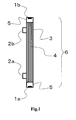
- Example 1 Mini-module The PMMA hollow fiber membrane 4 and the interior of the mini-module 6 were washed by allowing 0.025%-by-weight aqueous polyoxyethylene octylphenyl ether solution to flow therethrough at a flow rate of 10 mL/min for 8 hours using a peristaltic pump 8. Then, the PMMA hollow fiber membrane 4 and the interior of the mini-module 6 were further washed by allowing methanol, distilled water and physiological saline to flow therethrough at a flow rate of 10 mL/min for 30 minutes each, thereby obtaining a mini-module in which the Example 1 Compound (hereinafter, referred to as "Example 1 Mini-module”) was immobilized.
- Example 1 Mini-module Example 1 Compound
- Comparative Example 1 Mini-module a mini-module in which the polyether-modified silicone A was immobilized (hereinafter, referred to as "Comparative Example 1 Mini-module") was obtained by the same operations as described above except that the polyether-modified silicone A was used in place of the Example 1 Compound having concentration of 4,000 ppm by weight in terms of argatroban.
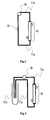
- Silicon tubes 7a and 7b were connected to the Example 1 Mini-module and the peristaltic pump 8 was arranged in the middle of the silicon tube 7b. From the silicon tube 7a connected to the blood port 1 a, the test blood was allowed to flow at a flow rate of 0.9 mL/min for 5 seconds. The test blood discharged from the blood port 1b was discarded via the silicon tube 7b and the bubbles formed inside the PMMA hollow fiber membrane were removed. Then, the silicon tubes 7a and 7b were connected at a connecting part 9 to prepare the closed circuit shown in Fig. 2 .
- Circulation of the test blood was started at a flow rate of 0.9 mL/min and the duration of circulation sustained until the silicon tube 7a or 7b was detached from the connecting part 9 due to an increase in the internal pressure of the circuit caused by coagulation thrombus formed in the circuit was measured.
- the duration of circulation was 37 minutes.
- Comparative Example 2 Mini-module A mini-module 6 in which no compound was immobilized on the PMMA hollow fiber membrane (hereinafter, referred to as "Comparative Example 2 Mini-module") was prepared and subjected to the same blood circulation test as described above. The duration of circulation in this case was measured to be 20 minutes, which was not more than 60% of the case where Example 1 Mini-module was used. From these results, it is apparent that the above-described hydrophobic polymer compound is capable of imparting an excellent anticoagulant effect to a medical device or medical material such as a hollow fiber-type dialyzer.
- the silicon tube 7b of 0.8 mm in inner diameter and 520 mm in length was connected to the blood port 1b of the separately prepared Example 1 Mini-module and the peristaltic pump 8 was arranged in the middle of the silicon tube 7b.
- the silicon tube of 0.8 mm in inner diameter and 160 mm in length was connected to the blood port 1a.
- the other ends of the silicon tubes 7a and 7b were each inserted into a polystyrene round tube 10 (Code: 352054; Becton, Dickinson and Co.) containing 5 mL of human plasma, thereby preparing the circulation circuit shown in Fig. 3 .
- the concentration of the Example 1 Compound in the human plasma contained in the polystyrene round tube 10 was measured using the ECA-T Kit.
- the concentration of the Example 1 Compound in the human plasma after the circulation was below the detection limit of the ECA-T Kit, so that elution of the Example 1 Compound from the Example 1 Mini-module was not confirmed.
- This result indicates that the above-described hydrophobic polymer compound can be firmly immobilized onto a medical device or medical material such as a hollow fiber-type dialyzer.
- VA-type copolymer As a copolymer of vinyl pyrrolidone and vinyl acetate (hereinafter, referred to as "VA-type copolymer"), which is one of the polymer compounds inhibiting platelet adhesion that constitute the above-described hydrophobic polymer compound, VA37 (BASF Corporation) was prepared. Similarly, a partially-saponified polyvinyl alcohol, which is one of the polymer compounds inhibiting platelet adhesion, was also prepared. Furthermore, the polyether-modified silicone A obtained in Example 1 was prepared. The thus prepared VA-type copolymer, partially-saponified polyvinyl alcohol and polyether-modified silicone A were each diluted with methanol to prepare a 10,000 ppm-by-weight methanol solution.
- the partially-saponified polyvinyl alcohol was prepared as follows. First, 20 g of vinyl acetate (Wako Pure Chemical Industries, Ltd.) and 20 mg of azobisbutyronitrile (Wako Pure Chemical Industries, Ltd.) were dissolved in anhydrous DMF and the resulting mixture was stirred at 70°C for 5 hours. The thus obtained reaction solution was added to sodium bicarbonate (Wako Pure Chemical Industries, Ltd.) and the precipitated polymer was recovered, washed with water and then dried under reduced pressure.
- polymer compounds that are not included in the polymer compound inhibiting platelet adhesion which constitutes the above-described hydrophobic polymer compound PEG2000, PEG4000, PEG6000 and PEG20000 (all of which are manufactured by Nacalai Tesque, Inc.) as well as PEG methyl ether (PEG-em) and PEG dimethyl ether (PEG-dm) (both of which are manufactured by Sigma-Aldrich Co., LLC.) were prepared. The thus prepared polymer compounds were each diluted with distilled water to prepare a 10,000 ppm-by-weight aqueous solution.
- the polymer compound inhibiting platelet adhesion which constitutes the above-described hydrophobic polymer compound is not restricted to polyether-modified silicones and can be firmly adsorbed to a medical device or medical material such as a hollow fiber-type dialyzer.
- Example 1 Hollow Fiber Membrane PMMA hollow fiber membrane
- a double-sided tape was pasted onto one side of a polyethylene terephthalatemade circular film of 18 mm in diameter and the Example 1 Hollow Fiber Membrane was fixed thereto. Then, the thus fixed PMMA hollow fiber membrane was cut into a semi-cylindrical shape to expose the inner surface thereof.
- the Example Hollow Fiber Membrane fixed onto the circular film was then placed in a FALCON (registered trademark) cylindrical tube (18 mm ⁇ , No. 2051) cut into a cylindrical shape, and the gap between the cylindrical tube and the circular film was sealed with Parafilm. Thereafter, this cylindrical tube was filled with physiological saline.
- FALCON registered trademark
- Venous blood was collected from a volunteer and immediately thereafter, the venous blood was loaded to a blood collection tube in which heparin had been collected in advance. The contents were mixed by inversion to prepare heparin-supplemented blood. It is noted here that the heparin-supplemented blood was adjusted to have a heparin concentration of 50 U/mL.
- Example 1 Hollow Fiber Membrane After pasting the thus dried circular film, on which the Example 1 Hollow Fiber Membrane was fixed, onto the stage of a scanning electron microscope using a double-sided tape, a platinum/palladium thin film was formed on the surface of the Example Hollow Fiber Membrane by sputtering.
- the inner surface of the central portion in the longitudinal direction of the Example Hollow Fiber Membrane on which the platinum/palladium thin film was formed was observed under a field emission scanning electron microscope (S800; Hitachi, Ltd.) at a magnification of ⁇ 1,500 and the number of adhered platelets in one field of view (4.3 ⁇ 10 3 ⁇ m 2 ) was counted.
- S800 field emission scanning electron microscope
- the integer of the average number of adhered platelets in 5 different fields of view was defined as the number of adhered platelets (platelets/4.3 ⁇ 10 3 ⁇ m 2 ) and the number of adhered platelets on the Example Hollow Fiber Membrane was 15.
- Comparative Example 2 Mini-module the separately prepared module case of the Comparative Example 2 Mini-module was cut with an ultrasonic cutter to take out the hollow fiber membrane on which no compound was immobilized (hereinafter, referred to as "Comparative Example 2 Hollow Fiber Membrane") and the number of adhered platelets thereon was verified in the same manner. As a result, the number of adhered platelets on the Comparative Example 2 Hollow Fiber Membrane was not less than 100.
- hydrophobic polymer compound is capable of imparting a prominent platelet adhesion-inhibiting capacity to a medical device or medical material such as a hollow fiber-type dialyzer.
- Blood collected from a volunteer and citric acid were mixed at a volume ratio of 9/1 to prepare a citric acid-supplemented blood.
- a cuvette Non-activated Clotting Test Kit
- 18 ⁇ L of physiological saline was placed and 14.8 ⁇ L of calcicol was added thereto, followed by further addition of 342 ⁇ L of the thus obtained citric acid-supplemented blood.
- the resulting mixture was measured using a Sonoclot blood coagulation/platelet function analyzer (IMI Co., Ltd.) and the measured ACT ONSET value was defined as the whole blood coagulation time.
- the whole blood coagulation time of the blood collected from the volunteer was 545 seconds.
- Example 1 Compound dispersion in place of physiological saline, the whole blood coagulation time was found to be 590, 780 and 910 seconds, respectively.
- Example 7 Compound a hydrophobic polymer compound
- the antithrombin activity of an Example 7 Compound/methanol solution (concentration: 20% by weight) was measured in the same manner as the measurement of the antithrombin activity of the Example 1 Compound and the calculated Compound 1-equivalent concentration of 87 ppm of the Example 7 Compound/methanol solution was defined as the value indicating the antithrombin activity of the Example 7 Compound/methanol solution.
- the above-described hydrophobic polymer compound is capable of prolonging the whole blood coagulation time even at an extremely low concentration and imparting an excellent anticoagulant effect to a medical device or medical material such as a hollow fiber-type dialyzer.
- the present invention can be used to impart an excellent anticoagulant effect to a medical device or medical material such as a hollow fiber-type dialyzer.
Landscapes
- Health & Medical Sciences (AREA)
- Chemical & Material Sciences (AREA)
- Life Sciences & Earth Sciences (AREA)
- Veterinary Medicine (AREA)
- Public Health (AREA)
- General Health & Medical Sciences (AREA)
- Animal Behavior & Ethology (AREA)
- Medicinal Chemistry (AREA)
- Epidemiology (AREA)
- Engineering & Computer Science (AREA)
- Organic Chemistry (AREA)
- Chemical Kinetics & Catalysis (AREA)
- Hematology (AREA)
- Materials Engineering (AREA)
- Polymers & Plastics (AREA)
- Surgery (AREA)
- Pharmacology & Pharmacy (AREA)
- Vascular Medicine (AREA)
- Heart & Thoracic Surgery (AREA)
- Biomedical Technology (AREA)
- Anesthesiology (AREA)
- Wood Science & Technology (AREA)
- Dermatology (AREA)
- Oral & Maxillofacial Surgery (AREA)
- Transplantation (AREA)
- Cardiology (AREA)
- General Chemical & Material Sciences (AREA)
- Bioinformatics & Cheminformatics (AREA)
- Nuclear Medicine, Radiotherapy & Molecular Imaging (AREA)
- Diabetes (AREA)
- Materials For Medical Uses (AREA)
- External Artificial Organs (AREA)
- Medicinal Preparation (AREA)
- Medicines That Contain Protein Lipid Enzymes And Other Medicines (AREA)
Applications Claiming Priority (2)
| Application Number | Priority Date | Filing Date | Title |
|---|---|---|---|
| JP2011139268 | 2011-06-23 | ||
| PCT/JP2012/065947 WO2012176862A1 (ja) | 2011-06-23 | 2012-06-22 | 抗血液凝固作用を有する疎水性高分子化合物 |
Publications (2)
| Publication Number | Publication Date |
|---|---|
| EP2724733A1 true EP2724733A1 (de) | 2014-04-30 |
| EP2724733A4 EP2724733A4 (de) | 2014-12-31 |
Family
ID=47422690
Family Applications (1)
| Application Number | Title | Priority Date | Filing Date |
|---|---|---|---|
| EP12803272.9A Withdrawn EP2724733A4 (de) | 2011-06-23 | 2012-06-22 | Hydrophobe polymerverbindung mit gerinnungsverhindernder wirkung |
Country Status (7)
| Country | Link |
|---|---|
| US (1) | US20140121181A1 (de) |
| EP (1) | EP2724733A4 (de) |
| JP (1) | JPWO2012176862A1 (de) |
| CN (1) | CN103608047A (de) |
| CA (1) | CA2839819A1 (de) |
| TW (1) | TW201311774A (de) |
| WO (1) | WO2012176862A1 (de) |
Cited By (2)
| Publication number | Priority date | Publication date | Assignee | Title |
|---|---|---|---|---|
| EP2724732A4 (de) * | 2011-06-24 | 2015-07-29 | Inoue Kanji | Instrument zum erfassen freier thromben |
| EP3508232A4 (de) * | 2016-08-31 | 2020-02-26 | Toray Industries, Inc. | Medizinisches material, medizinische trennmembran und blutreiniger |
Families Citing this family (9)
| Publication number | Priority date | Publication date | Assignee | Title |
|---|---|---|---|---|
| US20160045932A1 (en) * | 2014-08-18 | 2016-02-18 | Fenwal, Inc. | Anti-Thrombogenic Porous Membranes And Methods For Manufacturing Such Membranes |
| ITUB20153664A1 (it) * | 2015-09-16 | 2017-03-16 | O2 Group Sa | Dispositivo per la scoagulazione regionale |
| CN109172877B (zh) * | 2018-08-28 | 2021-07-13 | 杭州忻元医疗科技合伙企业(有限合伙) | 一种仿生抗凝血乳液及其制备方法和使用方法 |
| CN111317870A (zh) * | 2018-12-14 | 2020-06-23 | 高鼎精密材料股份有限公司 | 具抗凝血药物之改质材料 |
| JP6747744B1 (ja) * | 2019-02-01 | 2020-08-26 | 積水メディカル株式会社 | 血餅付着防止剤及び血液採取容器 |
| JP7829834B2 (ja) * | 2020-03-12 | 2026-03-16 | 東レ株式会社 | コーティング剤及びこれを用いた医療用材料 |
| CN115444982A (zh) * | 2022-10-31 | 2022-12-09 | 安徽医科大学 | 一种超疏水自清洁抗凝血复合涂层材料及其制备方法和应用 |
| CN116003662B (zh) * | 2022-12-05 | 2025-04-25 | 中美华世通生物医药科技(武汉)股份有限公司 | 一种抗凝血吸附树脂、其制备方法及应用 |
| CN117924797B (zh) * | 2024-01-25 | 2024-08-30 | 重庆希尔康血液净化器材研发有限公司 | 一种应用于透析吸附材料的抗凝血膜材料及其制备方法 |
Family Cites Families (19)
| Publication number | Priority date | Publication date | Assignee | Title |
|---|---|---|---|---|
| NO984143L (no) | 1998-09-09 | 2000-03-10 | Norsk Hydro As | Ny prosess for å fremstille overflatemodifiserende stoffer |
| JP2001213984A (ja) | 2000-02-02 | 2001-08-07 | Ion Engineering Research Institute Corp | 高分子材料表面へのヘパリンの固定方法 |
| US7875283B2 (en) * | 2000-04-13 | 2011-01-25 | Advanced Cardiovascular Systems, Inc. | Biodegradable polymers for use with implantable medical devices |
| DE10102878A1 (de) * | 2001-01-23 | 2002-08-01 | Haemosys Gmbh | Oligo- oder Polyalkylengekoppelte Thrombininhibitoren |
| JP5073891B2 (ja) * | 2001-07-16 | 2012-11-14 | 川澄化学工業株式会社 | ステント及びステントグラフト |
| US7691461B1 (en) * | 2002-04-01 | 2010-04-06 | Advanced Cardiovascular Systems, Inc. | Hybrid stent and method of making |
| EP1501565B1 (de) * | 2002-05-09 | 2006-11-02 | Hemoteq GmbH | Verbindungen und verfahren zur hemokompatiblen beschichtung von oberflächen |
| EP1550477B1 (de) * | 2002-08-23 | 2015-11-04 | National Cerebral and Cardiovascular Center | Stent und verfahren zu seiner herstellung |
| JP2005074139A (ja) * | 2003-09-03 | 2005-03-24 | Toto Ltd | 医療用品用コーティング組成物 |
| CA2558141C (en) * | 2004-02-28 | 2012-03-06 | Hemoteq Gmbh | Biocompatible coating, method and use of medical surfaces |
| JP2006291193A (ja) | 2005-03-17 | 2006-10-26 | Toray Ind Inc | 改質基材およびその製造方法 |
| US20070155907A1 (en) | 2005-12-30 | 2007-07-05 | Zhao Jonathon Z | Biologically active block copolymers |
| US7811555B2 (en) | 2005-12-30 | 2010-10-12 | Cordis Corporation | Tri-branched biologically active copolymer |
| WO2007145191A1 (ja) * | 2006-06-13 | 2007-12-21 | Nippon Shinyaku Co., Ltd. | 被覆錠剤 |
| CN103071192B (zh) | 2006-09-15 | 2016-04-27 | 东丽株式会社 | 基材及其制造方法 |
| JP5343377B2 (ja) * | 2008-03-19 | 2013-11-13 | 東レ株式会社 | 基材およびその製造方法 |
| JP5320941B2 (ja) | 2008-09-30 | 2013-10-23 | 東レ株式会社 | 生体成分接触用途の膜の製造方法 |
| WO2010054121A2 (en) * | 2008-11-07 | 2010-05-14 | Specialized Vascular Technologies, Inc. | Extracellular matrix modulating coatings for medical devices |
| EP2518100B1 (de) * | 2009-12-24 | 2015-02-18 | Toray Industries, Inc. | Hydrophile polymerverbindung mit gerinnungsverhindernder wirkung |
-
2012
- 2012-06-21 TW TW101122141A patent/TW201311774A/zh unknown
- 2012-06-22 CA CA2839819A patent/CA2839819A1/en not_active Abandoned
- 2012-06-22 CN CN201280030837.XA patent/CN103608047A/zh active Pending
- 2012-06-22 US US14/127,046 patent/US20140121181A1/en not_active Abandoned
- 2012-06-22 EP EP12803272.9A patent/EP2724733A4/de not_active Withdrawn
- 2012-06-22 JP JP2012531133A patent/JPWO2012176862A1/ja active Pending
- 2012-06-22 WO PCT/JP2012/065947 patent/WO2012176862A1/ja not_active Ceased
Cited By (3)
| Publication number | Priority date | Publication date | Assignee | Title |
|---|---|---|---|---|
| EP2724732A4 (de) * | 2011-06-24 | 2015-07-29 | Inoue Kanji | Instrument zum erfassen freier thromben |
| EP3508232A4 (de) * | 2016-08-31 | 2020-02-26 | Toray Industries, Inc. | Medizinisches material, medizinische trennmembran und blutreiniger |
| US10912868B2 (en) | 2016-08-31 | 2021-02-09 | Toray Industries, Inc. | Medical material, medical separation membrane, and blood purifier |
Also Published As
| Publication number | Publication date |
|---|---|
| US20140121181A1 (en) | 2014-05-01 |
| JPWO2012176862A1 (ja) | 2015-02-23 |
| WO2012176862A1 (ja) | 2012-12-27 |
| CA2839819A1 (en) | 2012-12-27 |
| CN103608047A (zh) | 2014-02-26 |
| EP2724733A4 (de) | 2014-12-31 |
| TW201311774A (zh) | 2013-03-16 |
Similar Documents
| Publication | Publication Date | Title |
|---|---|---|
| EP2724733A1 (de) | Hydrophobe polymerverbindung mit gerinnungsverhindernder wirkung | |
| EP2518100B1 (de) | Hydrophile polymerverbindung mit gerinnungsverhindernder wirkung | |
| CN101516413B (zh) | 基材及其制造方法 | |
| US6143354A (en) | One-step method for attachment of biomolecules to substrate surfaces | |
| US20140113091A1 (en) | Medical supply | |
| EP2724732A1 (de) | Instrument zum erfassen freier thromben | |
| JP2009225824A (ja) | 基材およびその製造方法 | |
| JP2004298223A (ja) | 生体適合性材料 | |
| JP2013006922A (ja) | 抗血液凝固作用を有する高分子化合物 | |
| JP2013006921A (ja) | 抗血液凝固作用を有する高分子化合物 |
Legal Events
| Date | Code | Title | Description |
|---|---|---|---|
| PUAI | Public reference made under article 153(3) epc to a published international application that has entered the european phase |
Free format text: ORIGINAL CODE: 0009012 |
|
| 17P | Request for examination filed |
Effective date: 20131105 |
|
| AK | Designated contracting states |
Kind code of ref document: A1 Designated state(s): AL AT BE BG CH CY CZ DE DK EE ES FI FR GB GR HR HU IE IS IT LI LT LU LV MC MK MT NL NO PL PT RO RS SE SI SK SM TR |
|
| DAX | Request for extension of the european patent (deleted) | ||
| A4 | Supplementary search report drawn up and despatched |
Effective date: 20141202 |
|
| RIC1 | Information provided on ipc code assigned before grant |
Ipc: A61K 47/34 20060101ALI20141126BHEP Ipc: A61L 31/00 20060101AFI20141126BHEP Ipc: A61P 7/02 20060101ALI20141126BHEP Ipc: A61K 31/795 20060101ALI20141126BHEP Ipc: A61K 38/55 20060101ALI20141126BHEP Ipc: A61L 33/00 20060101ALI20141126BHEP Ipc: A61K 47/48 20060101ALI20141126BHEP Ipc: A61L 33/06 20060101ALI20141126BHEP Ipc: A61K 31/80 20060101ALI20141126BHEP Ipc: A61M 1/18 20060101ALI20141126BHEP Ipc: A61M 1/36 20060101ALI20141126BHEP |
|
| RIC1 | Information provided on ipc code assigned before grant |
Ipc: C08G 81/00 20060101ALI20160420BHEP Ipc: A61M 1/36 20060101ALI20160420BHEP Ipc: A61L 27/34 20060101AFI20160420BHEP Ipc: C08J 7/04 20060101ALI20160420BHEP Ipc: A61K 31/795 20060101ALI20160420BHEP Ipc: C08G 77/46 20060101ALI20160420BHEP Ipc: A61K 31/80 20060101ALI20160420BHEP Ipc: A61L 33/06 20060101ALI20160420BHEP Ipc: A61L 33/00 20060101ALI20160420BHEP Ipc: C09D 183/12 20060101ALI20160420BHEP Ipc: C08L 83/12 20060101ALI20160420BHEP |
|
| GRAP | Despatch of communication of intention to grant a patent |
Free format text: ORIGINAL CODE: EPIDOSNIGR1 |
|
| INTG | Intention to grant announced |
Effective date: 20160602 |
|
| STAA | Information on the status of an ep patent application or granted ep patent |
Free format text: STATUS: GRANT OF PATENT IS INTENDED |
|
| STAA | Information on the status of an ep patent application or granted ep patent |
Free format text: STATUS: THE APPLICATION IS DEEMED TO BE WITHDRAWN |
|
| 18D | Application deemed to be withdrawn |
Effective date: 20161013 |