EP2733247B1 - Wäschewaschmaschine und zugehöriges Betriebsverfahren - Google Patents
Wäschewaschmaschine und zugehöriges Betriebsverfahren Download PDFInfo
- Publication number
- EP2733247B1 EP2733247B1 EP13193069.5A EP13193069A EP2733247B1 EP 2733247 B1 EP2733247 B1 EP 2733247B1 EP 13193069 A EP13193069 A EP 13193069A EP 2733247 B1 EP2733247 B1 EP 2733247B1
- Authority
- EP
- European Patent Office
- Prior art keywords
- compartment
- level
- liquid
- linen
- washing liquid
- Prior art date
- Legal status (The legal status is an assumption and is not a legal conclusion. Google has not performed a legal analysis and makes no representation as to the accuracy of the status listed.)
- Not-in-force
Links
- 238000005406 washing Methods 0.000 title claims description 82
- 238000011017 operating method Methods 0.000 title claims description 4
- 239000007788 liquid Substances 0.000 claims description 75
- XLYOFNOQVPJJNP-UHFFFAOYSA-N water Substances O XLYOFNOQVPJJNP-UHFFFAOYSA-N 0.000 claims description 37
- 238000000034 method Methods 0.000 claims description 16
- 238000010521 absorption reaction Methods 0.000 claims description 15
- 238000004422 calculation algorithm Methods 0.000 description 2
- 239000003599 detergent Substances 0.000 description 2
- 230000003213 activating effect Effects 0.000 description 1
- 238000001035 drying Methods 0.000 description 1
- 239000000463 material Substances 0.000 description 1
- 238000012986 modification Methods 0.000 description 1
- 230000004048 modification Effects 0.000 description 1
- 239000008237 rinsing water Substances 0.000 description 1
- 230000035945 sensitivity Effects 0.000 description 1
- 239000000126 substance Substances 0.000 description 1
- 238000009424 underpinning Methods 0.000 description 1
- 238000009736 wetting Methods 0.000 description 1
Images
Classifications
-
- D—TEXTILES; PAPER
- D06—TREATMENT OF TEXTILES OR THE LIKE; LAUNDERING; FLEXIBLE MATERIALS NOT OTHERWISE PROVIDED FOR
- D06F—LAUNDERING, DRYING, IRONING, PRESSING OR FOLDING TEXTILE ARTICLES
- D06F35/00—Washing machines, apparatus, or methods not otherwise provided for
- D06F35/005—Methods for washing, rinsing or spin-drying
- D06F35/006—Methods for washing, rinsing or spin-drying for washing or rinsing only
-
- D—TEXTILES; PAPER
- D06—TREATMENT OF TEXTILES OR THE LIKE; LAUNDERING; FLEXIBLE MATERIALS NOT OTHERWISE PROVIDED FOR
- D06F—LAUNDERING, DRYING, IRONING, PRESSING OR FOLDING TEXTILE ARTICLES
- D06F2101/00—User input for the control of domestic laundry washing machines, washer-dryers or laundry dryers
- D06F2101/02—Characteristics of laundry or load
- D06F2101/06—Type or material
Definitions
- the present invention relates to a linen washing machine and an operating method of a linen washing machine.
- Washing machines of the prior art envisage a step of washing linen and a subsequent step of rinsing it.
- washing machines wherein the quantity of water to be used during the rinse step is a function of the values rigidly pre-set in the electronic board.
- the user by activating a relevant button, can select the half load function. In that case the user can at his discretion decide that the load of linen is moderate and can therefore request a lower quantity of water during the rinse.
- the half load function is usually associated with a reduction in water consumption and therefore electrical energy also during the actual washing step and not only during the rinse.
- the user often bases his choice on the mass of linen to be washed and not on the degree of water absorption that such linen can offer. For example, the user could decide to use the half load program when he needs to wash products which, whilst having a reduced mass, actually absorb a large quantity of water (which could translate into an insufficient rinse).
- Document US 2008/189875 A1 discloses a wetting process in a washing machine entailing driving the drum continuously in a second phase until the water level in the tub reaches the level determined by the drop recognized in a first phase.
- Document EP 1281803 A1 discloses a control method for a washing machine including the step of selecting one of a plurality of different rinsing and/or spin-drying cycles depending on the absorbency of the laundry being washed.
- the technical task underpinning the present invention is to provide a washing machine and method that enables the linen rinse parameters to be optimised, in particular the quantity of water required in such an operation.
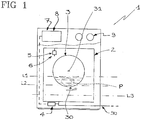
- number 1 indicates a linen washing machine. This machine is typically a washing machine, but could also be a washer-dryer.
- the washing machine 1 comprises a washing compartment 2.
- the washing machine 1 comprises a linen housing drum 3 that can rotate and that is placed inside the washing compartment 2.
- the washing machine 1 further comprises a washing liquid level sensor 4 in said compartment 2.
- the level sensor 4 is able to identify a first operating condition in which the measured level is higher than a first predefined level L1 and a second operating condition in which the measured level is lower than a second predefined level L2 (the second level L2 is lower than the first level L1).
- the level sensor 4 is usually a pressure switch.
- the pressure switch could be a differential pressure switch. In this case, in the first operating condition, the pressure switch assumes a first configuration whereas in the second operating condition the pressure switch assumes a second configuration which is physically different from the first configuration.
- the pressure switch may also be a linear pressure switch which detects in steps the level variations in the compartment 2.
- the differential pressure switch unlike the linear pressure switch, is only able to determine whether a discrete number of pressure thresholds is exceeded or not (usually one or two).
- the pressure switch is placed along a line 90 for unloading the washing liquid from the compartment 2.
- the washing machine 1 comprises washing liquid introduction means 6 into the compartment 2.
- the washing liquid introduction means 6 are operatively associated with the level sensor 4 and in the first and second operating condition they respectively stop and activate the introduction of washing liquid into the compartment 2.
- the introduction means 6 comprise a solenoid valve 5 that is closed in the first operating condition, whereas it is open in the second operating condition.
- a quantity of liquid is initially loaded in order to reach said first predefined level L1.
- This first predefined level L1 is higher with respect to a lower portion 30 of the housing drum 3. Consequently the linen will absorb part of the washing liquid determining a lowering of the level of liquid in the compartment 2.
- the reduction in the level will be compensated for by introducing a new quantity of washing liquid (through the introduction means 6) until the first predefined level L1 is reached. This operation will be repeated repeatedly until a condition is reached in which the linen will be substantially completely soaked (a situation in which there is no longer a drop in the level of washing liquid in the compartment 2 due to absorption by the linen).
- the introduction of the washing liquid to compensate for the drop in level dictated by the absorption by the linen is known as a "top-up" in technical jargon.
- the washing machine 1 comprises means 7 for determining a first parameter associated with the quantity of washing liquid introduced into the compartment 2 to top up said first level L1 and compensate for the absorption of liquid by the linen.
- the first parameter in the preferred embodiment is actually the sum of the quantity of liquid introduced during the top-ups. In limit cases, the sum could coincide with the quantity of water introduced in a single top-up or could also be equal to zero (as is also clear from a mathematical point of view if there are no top-ups).
- the machine 1 also comprises comparison means 8 of said first parameter with predetermined intervals of said first parameter. Each of said intervals is associated with a corresponding set of parameters connected with the quantity of water to be used in the rinse step.
- such a set of parameters could comprise, for example: number of rinses (the number of rinses could also be equal to "1"), quantity of water to be introduced in each rinse, duration of each individual rinse, etc..
- the washing machine 1 comprises an electronic control system (for example a main electronic board).
- the means 7 for determining said first parameter and the aforementioned comparison means 8 are integrated into said electronic control system (e.g. they are integrated into the same electronic board).
- the machine 1 further comprises a selector 9 of the type of linen to be washed.
- a selector 9 could be a knob, a button or a touch screen, etc. It allows the user to choose from a discrete list of items the one he intends to use for washing.
- the selector 9 is manually activated by the user.
- the set of parameters connected with the quantity of water to be used in the rinse step varies as the setting of said selector 9 varies.
- the utility of the selector 9 is particularly clear in the event of determined items such as quilts, for example. In fact, the applicant has verified that with determined and limited types of products it may be useful to use a specific quantity of water for that type of items by forcing the pre-set optimised algorithm in the machine 1.
- the present invention relates to an operating method of a linen washing machine 1 (in Figure 1 the linen is schematically indicated by the reference letter "P").
- This method enables the quantity of rinsing water to be used during the rinse to be optimised.
- This method can be advantageously implemented by a linen washing machine having one or more of the characteristics described above (for that reason some of the concepts already described will be referred to again below).
- the washing machine first performs an actual washing cycle followed by a rinse step.
- the rinse step usually serves the purpose of removing any residue of detergent used in the actual washing step. Typically, but not necessarily, in the rinse step only water is used.
- the rinse step may envisage the implementation of a plurality of rinses. Each rinse usually envisages the full replacement of the water contained in the compartment 2. In any case, the distinction between the washing cycle and the rinse step is well known in the technical field.
- washing liquid means a liquid comprising water and any chemical products (detergents, softener, etc.).
- the washing liquid loading step takes place at the start of a washing step.
- the washing liquid loading step comprises the step of introducing the washing liquid until a first predefined level L1 is initially reached.
- Such first level L1 is set by a level sensor 4.
- the washing compartment 2 contains a drum 3 that can rotate and that is suitable for housing the linen to be washed.
- the drum 3 can rotate with respect to the axis 31 indicated in Figure 1 .
- the first level L1 surpasses a lower portion 30 of the drum 3.
- the first level L1 therefore affects the linen placed in the drum 3.
- the washing liquid loading step also envisages introducing into the compartment 2 a top-up liquid following the partial absorption by the linen of the washing liquid already contained in the compartment 2. It is specified that once the top-up liquid has been introduced into the compartment 2 it is also considered washing liquid.
- the top-up liquid introduction step envisages repeatedly topping up the first level L1 by adding top-up liquid to compensate for the washing liquid absorbed by the linen.
- the top-up liquid may or may not be of the same type as the washing liquid already contained in the compartment 2.
- the top-up liquid is normally added once the level in the compartment 2 in a time span predetermined by the reaching of the first level L1 drops below the second predefined level L2.
- the drum 3 is advantageously placed in rotation in order to promote the absorption of the liquid by the linen contained therein.
- the repetition ends when at the end of a time span predetermined by the last reaching of the level L1, a lower level than the second predefined level L2 is not detected.
- the method also comprises the step of determining a first parameter univocally associated with the quantity of top-up liquid introduced into the compartment 2.
- the first parameter could be equal or directly proportional to the product of the flow rate and the time in which the solenoid valve 5 remains open during said step of repeatedly topping up the first predefined level L1.
- Said time is usually equal to the sum of a number of time intervals corresponding to each repetition, but could also correspond to a single time interval (in this case there would only be one top-up); furthermore, in the event that there are no top-ups such time could also be null.
- the situation in which there are no top-ups is a situation that could arise if items to be washed, which absorb very little water, are placed in the compartment 2.
- a particularly advantageous way of determining the water flow rate envisages measuring the time that, with the solenoid valve 5 open, the level of liquid in the compartment 2 takes to rise from one pre-established reference level L3 to said first predefined level L1, said flow rate being a function of the ratio between a first volume and a first time interval (the first volume is equal to the volume of the liquid interposed between the pre-established reference level L3 and the first pre-defined level L1; the first time interval is equal to the time that, with the solenoid valve 5 open, the level of liquid in the compartment 2 takes to rise from the pre-established reference level L3 to said first predefined level L1).
- the step of measuring the time that, with the solenoid valve 5 open, the level of liquid in the compartment 2 takes to pass from a pre-established reference level L3 to said predefined level L1 takes place during the step (already defined above) of introducing the washing liquid until the initial reaching of the first level L1.
- the method therefore envisages determining a set of parameters associated with the quantity of water to be used in a linen rinse step.
- the step of determining said set of parameters envisages comparing said first parameter (determined for example according to the indications provided above) with corresponding predetermined intervals of said first parameter.
- intervals are consecutive to each other.
- the higher the flow rate of the water introduced through the top-ups the higher the value of said first parameter will be.
- Each of said intervals of the first parameter corresponds to a set of parameters associated with the quantity of water to be used in the rinse step.
- the higher the quantity of washing liquid loaded through the top-ups the higher the quantity of water to be used in the rinse step will be.
- the quantity of washing liquid introduced with the top-ups provides an indication of the absorption by the linen.
- the absorption may vary greatly not only as the mass of the load varies (as the mass increases the absorption increases), but also according to its type (e.g. a cushion of the same mass absorbs more liquid than a pair of shoes).
- the quantity of water to be used during the rinse is optimised by connecting such a variable with the absorption of liquid by the linen.
- the step of determining the set of parameters associated with the quantity of water to be used in a linen rinse step envisages determining at least the number of rinse cycles to be performed in the rinse step and/or the quantity of water to be introduced in each rinse cycle and/or the duration of each rinse cycle (from which the overall duration of the rinse cycle could immediately be derived).
- the step of determining the quantity of water to be introduced in each rinse cycle envisages determining the opening time of the solenoid valve 5 in each rinse cycle or the various levels which when reached in each rinse cycle determine the stopping of the introduction of water into the compartment 2.
- the method finally envisages performing a rinse step by adopting the set of parameters corresponding to the interval identified by said comparison step of said first parameter with corresponding pre-determined intervals of such first parameter.
- the present invention enables many advantages to be attained. First of all, it enables an optimised estimate to be made of the water to be used in the rinse step considering the real requirements of the load (therefore not only influenced by the mass or only by the type of load). A further important advantage is connected with the possibility to directly associate, through a precise correspondence, said first parameter (connected with the absorption of the washing liquid) with said set of parameters (connected with the rinse cycle) without needing to use complicated calculation algorithms (which would require a suitably sized and expensive processor). According to the invention said set of parameters (connected with the rinse) can vary discretely as a function of the interval assumed by the first parameter.
Landscapes
- Engineering & Computer Science (AREA)
- Textile Engineering (AREA)
- Control Of Washing Machine And Dryer (AREA)
- Detergent Compositions (AREA)
Claims (10)
- Betriebsverfahren für eine Textilwaschmaschine (1), das folgenden Schritt umfasst:i) Einfüllen einer Waschflüssigkeit in einen Waschbottich (2), wobei der Waschbottich (2) eine Trommel (3) umfasst, die sich drehen kann und die die zu waschenden Textilien aufnimmt, wobei der Schritt des Einfüllens der Waschflüssigkeit Folgendes umfasst:wobei das Verfahren dadurch gekennzeichnet ist, dass es des Weiteren folgende Schritte umfasst:- einen Schritt zum Einleiten der Waschflüssigkeit, bis ein erster zuvor festgelegter Füllstand (L1) erreicht ist, wobei der erste Füllstand (L1) höher ist als ein unterer Abschnitt (30) der Trommel (3);- Einleiten, in den Bottich (2), einer Nachfüllflüssigkeit im Anschluss an eine zuvor festgelegte Absorption der bereits in dem Bottich (2) enthaltenen Waschflüssigkeit durch die Textilien; wobei die Nachfüllflüssigkeit, nachdem sie in den Bottich (2) eingeleitet wurde, ebenfalls als Waschflüssigkeit angesehen wird;ii) Bestimmen eines ersten Parameters, der eindeutig der Menge der in den Bottich (2) eingeleiteten Nachfüllflüssigkeit zugeordnet ist;iii) Bestimmen eines Satzes von Parametern, die einer Menge an Wasser zugeordnet sind, das in einem Spülschritt für die Textilien eingeleitet werden soll, wobei der Schritt des Bestimmens des Satzes von Parametern einen Vergleich des ersten Parameters mit entsprechenden zuvor festgelegten Intervallen dieses ersten Parameters vorsieht, wobei jedes der Intervalle einem entsprechenden Satz von Parametern zugeordnet ist, die der Menge an Wasser zugeordnet sind, das in einem Spülschritt verwendet werden soll;iv) Ausführen eines Spülschrittes unter Verwendung des Satzes von Parametern, die dem Intervall entsprechen, das durch den Schritt des Vergleichens des ersten Parameters mit entsprechenden vorgegebenen Intervallen dieses ersten Parameters identifiziert wurde.
- Verfahren nach Anspruch 1, dadurch gekennzeichnet, dass der Schritt des Bestimmens des Satzes von Parametern, die der Menge an Wasser zugeordnet sind, das in dem Textilien-Spülschritt zu verwenden ist, das Bestimmen mindestens der Anzahl von Spülzyklen, die in dem Spülschritt auszuführen sind, und/oder die Menge an Wasser, das in jedem Spülzyklus einzuleiten ist, und/oder die Dauer jedes Spülzyklus vorsieht.
- Verfahren nach Anspruch 2, dadurch gekennzeichnet, dass der Schritt des Bestimmens der Menge an Wasser, das in jedem Spülzyklus einzuleiten ist, das Bestimmen, für jeden Spülzyklus, die Öffnungszeit des Solenoidventils (5) oder des Füllstandes, der das Stoppen des Einleitens von Wasser in den Bottich (2) vorsieht.
- Verfahren nach einem der vorangehenden Ansprüche, dadurch gekennzeichnet, dass der Schritt des Bestimmens eines ersten Parameters, der eindeutig der Menge an Nachfüllflüssigkeit zugeordnet, Folgendes vorsieht:- Bestimmen der Strömungsrate der durch das Solenoidventil (5) in den Bottich (2) eingeleiteten Waschflüssigkeit;- Zählen der Zeit, in der das Solenoidventil (5) während des Schrittes zum Einleiten der Nachfüllflüssigkeit offen ist;wobei der erste Parameter zu dem Produkt der Strömungsrate und der Zeit, in der das Solenoidventil (5) während des Schrittes zum Einleiten der Nachfüllflüssigkeit offen bleibt, proportional ist.
- Verfahren nach Anspruch 4, dadurch gekennzeichnet, dass der Schritt des Bestimmens der Wasserströmungsrate vorsieht, die Zeit zu messen, die es bei geöffnetem Solenoidventil (5) dauert, bis der Füllstand der Waschflüssigkeit in dem Bottich (2) von einem zuvor festgelegten Referenzfüllstand (L3) zu dem ersten zuvor festgelegten Füllstand (L1) ansteigt, wobei die Strömungsrate eine Funktion des Verhältnisses zwischen einem ersten Volumen und einem ersten Zeitintervall ist; wobei das erste Volumen gleich dem Volumen der Flüssigkeit ist, die sich zwischen dem zuvor festgelegten Referenzfüllstand (L3) und dem ersten zuvor festgelegten Füllstand (L1) befindet; wobei das erste Zeitintervall gleich der Zeit ist, die es bei geöffnetem Solenoidventil (5) dauert, bis der Füllstand der Waschflüssigkeit in dem Bottich (2) von einem zuvor festgelegten Referenzfüllstand (L3) zu dem ersten zuvor festgelegten Füllstand (L1) ansteigt.
- Verfahren nach einem der vorangehenden Ansprüche, dadurch gekennzeichnet, dass der Schritt zum Einleiten der Nachfüllflüssigkeit vorsieht, den ersten zuvor festgelegten Füllstand (L1) wiederholt nachzufüllen, indem Nachfüllflüssigkeit zugegeben wird, um die bereits in dem Bottich (2) enthaltene Waschflüssigkeit, die durch die Textilien absorbiert wurde, zu kompensieren.
- Verfahren nach Anspruch 6, dadurch gekennzeichnet, dass der Schritt des wiederholten Nachfüllens des ersten zuvor festgelegten Füllstandes (L1) vorsieht, dass jede Wiederholung nur stattfindet, wenn innerhalb einer vorgegebenen Zeitspanne ab dem letzten Erreichen des ersten Füllstandes (L1) der Füllstand in dem Bottich (2) unter einen zweiten zuvor festgelegten Füllstand (L2) gesunken ist; wobei der zweite zuvor festgelegte Füllstand (L2) niedriger ist als der erste zuvor festgelegte Füllstand (L1); wobei während mindestens eines Teils der Zeitspanne die Trommel (3) innerhalb des Bottichs (2), in der sich die Textilien befinden, gedreht wird, um die Absorption der Waschflüssigkeit durch die Textilien selbst zu verbessern.
- Textilwaschmaschine, die Folgendes umfasst:- einen Waschbottich (2);- einen Waschflüssigkeit-Füllstandssensor (4) in dem Bottich (2), wobei der Füllstandssensor (4) einen ersten Betriebszustand identifiziert, in dem der gemessene Füllstand höher ist als ein erster zuvor festgelegter Füllstand (L1), und einen zweiten Betriebszustand identifiziert, in dem der gemessene Füllstand niedriger ist als ein zweiter zuvor festgelegter Füllstand (L2);- ein Mittel (6) zum Einleiten der Waschflüssigkeit in den Bottich (2), das funktional dem Füllstandssensor (4) zugeordnet ist, und das, wenn der erste und der zweite Betriebszustand eintritt, das Einleiten der Waschflüssigkeit in den Bottich (2) stoppt bzw. aktiviert;wobei die Maschine dadurch gekennzeichnet ist, dass sie des Weiteren Folgendes umfasst:- ein Mittel (7) zum Bestimmen eines ersten Parameters, welcher der Menge an Waschflüssigkeit zugeordnet ist, die in den Bottich (2) eingeleitet wird, um die Absorption der Flüssigkeit durch die Textilien während eines Schrittes des Einfüllens der Waschflüssigkeit zu kompensieren;- ein Mittel (8) zum Vergleichen des ersten Parameters mit vorgegebenen Intervallen des ersten Parameters, wobei jedes der Intervalle einem entsprechenden Satz von Parametern zugeordnet ist, die mit der Menge an Wasser verbunden sind, das in dem Spülschritt zu verwenden ist;- ein Mittel zum Ausführen eines Spülschrittes unter Verwendung des Satzes von Parametern, die dem Intervall entsprechen, das durch den Schritt des Vergleichs des ersten Parameters mit entsprechenden vorgegebenen Intervallen dieses ersten Parameters identifiziert wurde.
- Maschine nach Anspruch 8, dadurch gekennzeichnet, dass das Mittel (7) zum Bestimmen eines ersten Parameters, welcher der Menge an Waschflüssigkeit zugeordnet ist, die in den Bottich (2) eingeleitet wird, um die Absorption der Flüssigkeit durch die Textilien während einen Schritt des Einfüllens der Waschflüssigkeit zu kompensieren, ein Mittel (7) zum Bestimmen eines ersten Parameters ist, welcher der Menge Waschflüssigkeit zugeordnet, die in den Bottich (2) eingeleitet wurde, um den ersten zuvor festgelegten Füllstand (L1) aufzufüllen.
- Maschine nach Anspruch 8 oder 9, dadurch gekennzeichnet, dass sie einen Wählschalter (9) für die Art der zu waschenden Textilien umfasst, wobei der Wählschalter (9) manuell durch einen Nutzer aktiviert wird; wobei der Satz von Parametern variiert, wenn die Einstellung des Wählschalters (9) variiert wird.
Applications Claiming Priority (1)
| Application Number | Priority Date | Filing Date | Title |
|---|---|---|---|
| IT000077A ITPR20120077A1 (it) | 2012-11-19 | 2012-11-19 | Macchina di lavaggio panni e relativo metodo di funzionamento. |
Publications (2)
| Publication Number | Publication Date |
|---|---|
| EP2733247A1 EP2733247A1 (de) | 2014-05-21 |
| EP2733247B1 true EP2733247B1 (de) | 2016-12-21 |
Family
ID=47633296
Family Applications (1)
| Application Number | Title | Priority Date | Filing Date |
|---|---|---|---|
| EP13193069.5A Not-in-force EP2733247B1 (de) | 2012-11-19 | 2013-11-15 | Wäschewaschmaschine und zugehöriges Betriebsverfahren |
Country Status (2)
| Country | Link |
|---|---|
| EP (1) | EP2733247B1 (de) |
| IT (1) | ITPR20120077A1 (de) |
Family Cites Families (3)
| Publication number | Priority date | Publication date | Assignee | Title |
|---|---|---|---|---|
| KR100403026B1 (ko) * | 2001-07-31 | 2003-10-23 | 삼성전자주식회사 | 세탁물의 흡수특성을 고려한 세탁기의 제어방법 |
| DE102005012426A1 (de) * | 2005-03-17 | 2006-09-21 | BSH Bosch und Siemens Hausgeräte GmbH | Benetzungsprozess für die Wäsche in einer programmgesteuerten Waschmaschine |
| ITRN20110008A1 (it) * | 2011-02-11 | 2012-08-12 | Indesit Co Spa | Metodo di caricamento di un liquido di lavaggio in una macchina di lavaggio panni |
-
2012
- 2012-11-19 IT IT000077A patent/ITPR20120077A1/it unknown
-
2013
- 2013-11-15 EP EP13193069.5A patent/EP2733247B1/de not_active Not-in-force
Non-Patent Citations (1)
| Title |
|---|
| None * |
Also Published As
| Publication number | Publication date |
|---|---|
| EP2733247A1 (de) | 2014-05-21 |
| ITPR20120077A1 (it) | 2014-05-20 |
Similar Documents
| Publication | Publication Date | Title |
|---|---|---|
| EP2859141B1 (de) | Wasserführendes haushaltsgerät und zugehöriges betriebsverfahren | |
| US9534338B2 (en) | Washing machine | |
| US8245342B2 (en) | Method for determining load size in a washing machine | |
| AU2017260066B2 (en) | A method to control a washing machine and a washing machine | |
| EP3680378B1 (de) | Verfahren zum waschen von wäsche in einer wäschewaschmaschine mit einer automatisierten dosiervorrichtung sowie wäschewaschmaschine | |
| EP3241938B1 (de) | Verfahren zur steuerung einer waschmaschine | |
| EP2140795A1 (de) | Verfahren zur Anzeige von Betriebsinformation eines Bündelausgabesystems | |
| US7421752B2 (en) | Household-type water-recirculating clothes washing machine with automatic measure of the washload type, and operating method thereof | |
| US7930786B2 (en) | Method for determining load size and/or setting water level in a washing machine | |
| EP2657392B1 (de) | Verfahren zum Waschen von Wäsche in einer Waschmaschine und Waschmaschine | |
| EP3228741B1 (de) | Wäschebehandlungsmaschine und verfahren zur steuerung davon | |
| US7930787B2 (en) | Method for determining load size and/or setting water level in a washing machine | |
| EP3931388B1 (de) | Verfahren zum waschen von wäsche in einer wäschewaschmaschine und wäschewaschmaschine mit implementierung des verfahrens | |
| EP2458058B1 (de) | Waschmaschine | |
| EP2733247A1 (de) | Wäschewaschmaschine und zugehöriges Betriebsverfahren | |
| KR102404185B1 (ko) | 세탁기 및 그의 동작 방법 | |
| EP3257995B1 (de) | Verfahren zum betreiben einer wäschebehandlungsvorrichtung und wäschebehandlungsvorrichtung | |
| EP2336415B1 (de) | Verbesserte Waschmaschine | |
| KR100978102B1 (ko) | 세탁기의 세제량 판단방법 |
Legal Events
| Date | Code | Title | Description |
|---|---|---|---|
| PUAI | Public reference made under article 153(3) epc to a published international application that has entered the european phase |
Free format text: ORIGINAL CODE: 0009012 |
|
| 17P | Request for examination filed |
Effective date: 20131115 |
|
| AK | Designated contracting states |
Kind code of ref document: A1 Designated state(s): AL AT BE BG CH CY CZ DE DK EE ES FI FR GB GR HR HU IE IS IT LI LT LU LV MC MK MT NL NO PL PT RO RS SE SI SK SM TR |
|
| AX | Request for extension of the european patent |
Extension state: BA ME |
|
| R17P | Request for examination filed (corrected) |
Effective date: 20141120 |
|
| RBV | Designated contracting states (corrected) |
Designated state(s): AL AT BE BG CH CY CZ DE DK EE ES FI FR GB GR HR HU IE IS IT LI LT LU LV MC MK MT NL NO PL PT RO RS SE SI SK SM TR |
|
| GRAP | Despatch of communication of intention to grant a patent |
Free format text: ORIGINAL CODE: EPIDOSNIGR1 |
|
| INTG | Intention to grant announced |
Effective date: 20160819 |
|
| GRAS | Grant fee paid |
Free format text: ORIGINAL CODE: EPIDOSNIGR3 |
|
| GRAA | (expected) grant |
Free format text: ORIGINAL CODE: 0009210 |
|
| AK | Designated contracting states |
Kind code of ref document: B1 Designated state(s): AL AT BE BG CH CY CZ DE DK EE ES FI FR GB GR HR HU IE IS IT LI LT LU LV MC MK MT NL NO PL PT RO RS SE SI SK SM TR |
|
| REG | Reference to a national code |
Ref country code: GB Ref legal event code: FG4D |
|
| REG | Reference to a national code |
Ref country code: CH Ref legal event code: EP |
|
| REG | Reference to a national code |
Ref country code: IE Ref legal event code: FG4D |
|
| REG | Reference to a national code |
Ref country code: AT Ref legal event code: REF Ref document number: 855614 Country of ref document: AT Kind code of ref document: T Effective date: 20170115 |
|
| REG | Reference to a national code |
Ref country code: DE Ref legal event code: R096 Ref document number: 602013015543 Country of ref document: DE |
|
| RAP2 | Party data changed (patent owner data changed or rights of a patent transferred) |
Owner name: WHIRLPOOL EMEA S.P.A |
|
| PG25 | Lapsed in a contracting state [announced via postgrant information from national office to epo] |
Ref country code: LV Free format text: LAPSE BECAUSE OF FAILURE TO SUBMIT A TRANSLATION OF THE DESCRIPTION OR TO PAY THE FEE WITHIN THE PRESCRIBED TIME-LIMIT Effective date: 20161221 |
|
| REG | Reference to a national code |
Ref country code: LT Ref legal event code: MG4D |
|
| REG | Reference to a national code |
Ref country code: NL Ref legal event code: MP Effective date: 20161221 |
|
| PG25 | Lapsed in a contracting state [announced via postgrant information from national office to epo] |
Ref country code: NO Free format text: LAPSE BECAUSE OF FAILURE TO SUBMIT A TRANSLATION OF THE DESCRIPTION OR TO PAY THE FEE WITHIN THE PRESCRIBED TIME-LIMIT Effective date: 20170321 Ref country code: LT Free format text: LAPSE BECAUSE OF FAILURE TO SUBMIT A TRANSLATION OF THE DESCRIPTION OR TO PAY THE FEE WITHIN THE PRESCRIBED TIME-LIMIT Effective date: 20161221 Ref country code: SE Free format text: LAPSE BECAUSE OF FAILURE TO SUBMIT A TRANSLATION OF THE DESCRIPTION OR TO PAY THE FEE WITHIN THE PRESCRIBED TIME-LIMIT Effective date: 20161221 Ref country code: GR Free format text: LAPSE BECAUSE OF FAILURE TO SUBMIT A TRANSLATION OF THE DESCRIPTION OR TO PAY THE FEE WITHIN THE PRESCRIBED TIME-LIMIT Effective date: 20170322 |
|
| REG | Reference to a national code |
Ref country code: AT Ref legal event code: MK05 Ref document number: 855614 Country of ref document: AT Kind code of ref document: T Effective date: 20161221 |
|
| PG25 | Lapsed in a contracting state [announced via postgrant information from national office to epo] |
Ref country code: RS Free format text: LAPSE BECAUSE OF FAILURE TO SUBMIT A TRANSLATION OF THE DESCRIPTION OR TO PAY THE FEE WITHIN THE PRESCRIBED TIME-LIMIT Effective date: 20161221 Ref country code: FI Free format text: LAPSE BECAUSE OF FAILURE TO SUBMIT A TRANSLATION OF THE DESCRIPTION OR TO PAY THE FEE WITHIN THE PRESCRIBED TIME-LIMIT Effective date: 20161221 Ref country code: HR Free format text: LAPSE BECAUSE OF FAILURE TO SUBMIT A TRANSLATION OF THE DESCRIPTION OR TO PAY THE FEE WITHIN THE PRESCRIBED TIME-LIMIT Effective date: 20161221 |
|
| PG25 | Lapsed in a contracting state [announced via postgrant information from national office to epo] |
Ref country code: NL Free format text: LAPSE BECAUSE OF FAILURE TO SUBMIT A TRANSLATION OF THE DESCRIPTION OR TO PAY THE FEE WITHIN THE PRESCRIBED TIME-LIMIT Effective date: 20161221 |
|
| PG25 | Lapsed in a contracting state [announced via postgrant information from national office to epo] |
Ref country code: SK Free format text: LAPSE BECAUSE OF FAILURE TO SUBMIT A TRANSLATION OF THE DESCRIPTION OR TO PAY THE FEE WITHIN THE PRESCRIBED TIME-LIMIT Effective date: 20161221 Ref country code: IS Free format text: LAPSE BECAUSE OF FAILURE TO SUBMIT A TRANSLATION OF THE DESCRIPTION OR TO PAY THE FEE WITHIN THE PRESCRIBED TIME-LIMIT Effective date: 20170421 Ref country code: RO Free format text: LAPSE BECAUSE OF FAILURE TO SUBMIT A TRANSLATION OF THE DESCRIPTION OR TO PAY THE FEE WITHIN THE PRESCRIBED TIME-LIMIT Effective date: 20161221 Ref country code: CZ Free format text: LAPSE BECAUSE OF FAILURE TO SUBMIT A TRANSLATION OF THE DESCRIPTION OR TO PAY THE FEE WITHIN THE PRESCRIBED TIME-LIMIT Effective date: 20161221 Ref country code: EE Free format text: LAPSE BECAUSE OF FAILURE TO SUBMIT A TRANSLATION OF THE DESCRIPTION OR TO PAY THE FEE WITHIN THE PRESCRIBED TIME-LIMIT Effective date: 20161221 |
|
| PG25 | Lapsed in a contracting state [announced via postgrant information from national office to epo] |
Ref country code: BE Free format text: LAPSE BECAUSE OF FAILURE TO SUBMIT A TRANSLATION OF THE DESCRIPTION OR TO PAY THE FEE WITHIN THE PRESCRIBED TIME-LIMIT Effective date: 20161221 Ref country code: AT Free format text: LAPSE BECAUSE OF FAILURE TO SUBMIT A TRANSLATION OF THE DESCRIPTION OR TO PAY THE FEE WITHIN THE PRESCRIBED TIME-LIMIT Effective date: 20161221 Ref country code: BG Free format text: LAPSE BECAUSE OF FAILURE TO SUBMIT A TRANSLATION OF THE DESCRIPTION OR TO PAY THE FEE WITHIN THE PRESCRIBED TIME-LIMIT Effective date: 20170321 Ref country code: SM Free format text: LAPSE BECAUSE OF FAILURE TO SUBMIT A TRANSLATION OF THE DESCRIPTION OR TO PAY THE FEE WITHIN THE PRESCRIBED TIME-LIMIT Effective date: 20161221 Ref country code: PL Free format text: LAPSE BECAUSE OF FAILURE TO SUBMIT A TRANSLATION OF THE DESCRIPTION OR TO PAY THE FEE WITHIN THE PRESCRIBED TIME-LIMIT Effective date: 20161221 Ref country code: PT Free format text: LAPSE BECAUSE OF FAILURE TO SUBMIT A TRANSLATION OF THE DESCRIPTION OR TO PAY THE FEE WITHIN THE PRESCRIBED TIME-LIMIT Effective date: 20170421 Ref country code: ES Free format text: LAPSE BECAUSE OF FAILURE TO SUBMIT A TRANSLATION OF THE DESCRIPTION OR TO PAY THE FEE WITHIN THE PRESCRIBED TIME-LIMIT Effective date: 20161221 |
|
| REG | Reference to a national code |
Ref country code: DE Ref legal event code: R097 Ref document number: 602013015543 Country of ref document: DE |
|
| PLBE | No opposition filed within time limit |
Free format text: ORIGINAL CODE: 0009261 |
|
| STAA | Information on the status of an ep patent application or granted ep patent |
Free format text: STATUS: NO OPPOSITION FILED WITHIN TIME LIMIT |
|
| 26N | No opposition filed |
Effective date: 20170922 |
|
| PG25 | Lapsed in a contracting state [announced via postgrant information from national office to epo] |
Ref country code: DK Free format text: LAPSE BECAUSE OF FAILURE TO SUBMIT A TRANSLATION OF THE DESCRIPTION OR TO PAY THE FEE WITHIN THE PRESCRIBED TIME-LIMIT Effective date: 20161221 |
|
| PG25 | Lapsed in a contracting state [announced via postgrant information from national office to epo] |
Ref country code: SI Free format text: LAPSE BECAUSE OF FAILURE TO SUBMIT A TRANSLATION OF THE DESCRIPTION OR TO PAY THE FEE WITHIN THE PRESCRIBED TIME-LIMIT Effective date: 20161221 |
|
| REG | Reference to a national code |
Ref country code: DE Ref legal event code: R119 Ref document number: 602013015543 Country of ref document: DE |
|
| PG25 | Lapsed in a contracting state [announced via postgrant information from national office to epo] |
Ref country code: MC Free format text: LAPSE BECAUSE OF FAILURE TO SUBMIT A TRANSLATION OF THE DESCRIPTION OR TO PAY THE FEE WITHIN THE PRESCRIBED TIME-LIMIT Effective date: 20161221 |
|
| GBPC | Gb: european patent ceased through non-payment of renewal fee |
Effective date: 20171115 |
|
| PG25 | Lapsed in a contracting state [announced via postgrant information from national office to epo] |
Ref country code: CH Free format text: LAPSE BECAUSE OF NON-PAYMENT OF DUE FEES Effective date: 20171130 Ref country code: LI Free format text: LAPSE BECAUSE OF NON-PAYMENT OF DUE FEES Effective date: 20171130 |
|
| PG25 | Lapsed in a contracting state [announced via postgrant information from national office to epo] |
Ref country code: LU Free format text: LAPSE BECAUSE OF NON-PAYMENT OF DUE FEES Effective date: 20171115 |
|
| REG | Reference to a national code |
Ref country code: FR Ref legal event code: ST Effective date: 20180731 |
|
| REG | Reference to a national code |
Ref country code: IE Ref legal event code: MM4A |
|
| PG25 | Lapsed in a contracting state [announced via postgrant information from national office to epo] |
Ref country code: MT Free format text: LAPSE BECAUSE OF NON-PAYMENT OF DUE FEES Effective date: 20171115 |
|
| PG25 | Lapsed in a contracting state [announced via postgrant information from national office to epo] |
Ref country code: DE Free format text: LAPSE BECAUSE OF NON-PAYMENT OF DUE FEES Effective date: 20180602 Ref country code: IT Free format text: LAPSE BECAUSE OF NON-PAYMENT OF DUE FEES Effective date: 20171115 Ref country code: FR Free format text: LAPSE BECAUSE OF NON-PAYMENT OF DUE FEES Effective date: 20171130 Ref country code: IE Free format text: LAPSE BECAUSE OF NON-PAYMENT OF DUE FEES Effective date: 20171115 |
|
| PG25 | Lapsed in a contracting state [announced via postgrant information from national office to epo] |
Ref country code: GB Free format text: LAPSE BECAUSE OF NON-PAYMENT OF DUE FEES Effective date: 20171115 |
|
| PG25 | Lapsed in a contracting state [announced via postgrant information from national office to epo] |
Ref country code: HU Free format text: LAPSE BECAUSE OF FAILURE TO SUBMIT A TRANSLATION OF THE DESCRIPTION OR TO PAY THE FEE WITHIN THE PRESCRIBED TIME-LIMIT; INVALID AB INITIO Effective date: 20131115 |
|
| PG25 | Lapsed in a contracting state [announced via postgrant information from national office to epo] |
Ref country code: CY Free format text: LAPSE BECAUSE OF NON-PAYMENT OF DUE FEES Effective date: 20161221 |
|
| PG25 | Lapsed in a contracting state [announced via postgrant information from national office to epo] |
Ref country code: MK Free format text: LAPSE BECAUSE OF FAILURE TO SUBMIT A TRANSLATION OF THE DESCRIPTION OR TO PAY THE FEE WITHIN THE PRESCRIBED TIME-LIMIT Effective date: 20161221 |
|
| PG25 | Lapsed in a contracting state [announced via postgrant information from national office to epo] |
Ref country code: TR Free format text: LAPSE BECAUSE OF FAILURE TO SUBMIT A TRANSLATION OF THE DESCRIPTION OR TO PAY THE FEE WITHIN THE PRESCRIBED TIME-LIMIT Effective date: 20161221 |
|
| PG25 | Lapsed in a contracting state [announced via postgrant information from national office to epo] |
Ref country code: AL Free format text: LAPSE BECAUSE OF FAILURE TO SUBMIT A TRANSLATION OF THE DESCRIPTION OR TO PAY THE FEE WITHIN THE PRESCRIBED TIME-LIMIT Effective date: 20161221 |