EP2736004A1 - Luggage comprising a geo-positioning module combined with a communication module - Google Patents
Luggage comprising a geo-positioning module combined with a communication module Download PDFInfo
- Publication number
- EP2736004A1 EP2736004A1 EP20120193714 EP12193714A EP2736004A1 EP 2736004 A1 EP2736004 A1 EP 2736004A1 EP 20120193714 EP20120193714 EP 20120193714 EP 12193714 A EP12193714 A EP 12193714A EP 2736004 A1 EP2736004 A1 EP 2736004A1
- Authority
- EP
- European Patent Office
- Prior art keywords
- electronic circuits
- take
- time
- communication module
- baggage
- Prior art date
- Legal status (The legal status is an assumption and is not a legal conclusion. Google has not performed a legal analysis and makes no representation as to the accuracy of the status listed.)
- Withdrawn
Links
Images



Classifications
-
- G—PHYSICS
- G08—SIGNALLING
- G08B—SIGNALLING SYSTEMS, e.g. PERSONAL CALLING SYSTEMS; ORDER TELEGRAPHS; ALARM SYSTEMS
- G08B13/00—Burglar, theft or intruder alarms
- G08B13/22—Electrical actuation
- G08B13/24—Electrical actuation by interference with electromagnetic field distribution
- G08B13/2402—Electronic Article Surveillance [EAS], i.e. systems using tags for detecting removal of a tagged item from a secure area, e.g. tags for detecting shoplifting
- G08B13/2451—Specific applications combined with EAS
- G08B13/2462—Asset location systems combined with EAS
-
- A—HUMAN NECESSITIES
- A45—HAND OR TRAVELLING ARTICLES
- A45C—PURSES; LUGGAGE; HAND CARRIED BAGS
- A45C13/00—Details; Accessories
- A45C13/18—Devices to prevent theft or loss of purses, luggage or hand carried bags
-
- A—HUMAN NECESSITIES
- A45—HAND OR TRAVELLING ARTICLES
- A45C—PURSES; LUGGAGE; HAND CARRIED BAGS
- A45C5/00—Rigid or semi-rigid luggage
- A45C5/03—Suitcases
-
- G—PHYSICS
- G01—MEASURING; TESTING
- G01S—RADIO DIRECTION-FINDING; RADIO NAVIGATION; DETERMINING DISTANCE OR VELOCITY BY USE OF RADIO WAVES; LOCATING OR PRESENCE-DETECTING BY USE OF THE REFLECTION OR RERADIATION OF RADIO WAVES; ANALOGOUS ARRANGEMENTS USING OTHER WAVES
- G01S19/00—Satellite radio beacon positioning systems; Determining position, velocity or attitude using signals transmitted by such systems
- G01S19/01—Satellite radio beacon positioning systems transmitting time-stamped messages, e.g. GPS [Global Positioning System], GLONASS [Global Orbiting Navigation Satellite System] or GALILEO
- G01S19/13—Receivers
- G01S19/14—Receivers specially adapted for specific applications
-
- G—PHYSICS
- G01—MEASURING; TESTING
- G01S—RADIO DIRECTION-FINDING; RADIO NAVIGATION; DETERMINING DISTANCE OR VELOCITY BY USE OF RADIO WAVES; LOCATING OR PRESENCE-DETECTING BY USE OF THE REFLECTION OR RERADIATION OF RADIO WAVES; ANALOGOUS ARRANGEMENTS USING OTHER WAVES
- G01S5/00—Position-fixing by co-ordinating two or more direction or position line determinations; Position-fixing by co-ordinating two or more distance determinations
- G01S5/0009—Transmission of position information to remote stations
- G01S5/0018—Transmission from mobile station to base station
-
- G—PHYSICS
- G06—COMPUTING OR CALCULATING; COUNTING
- G06Q—INFORMATION AND COMMUNICATION TECHNOLOGY [ICT] SPECIALLY ADAPTED FOR ADMINISTRATIVE, COMMERCIAL, FINANCIAL, MANAGERIAL OR SUPERVISORY PURPOSES; SYSTEMS OR METHODS SPECIALLY ADAPTED FOR ADMINISTRATIVE, COMMERCIAL, FINANCIAL, MANAGERIAL OR SUPERVISORY PURPOSES, NOT OTHERWISE PROVIDED FOR
- G06Q10/00—Administration; Management
- G06Q10/08—Logistics, e.g. warehousing, loading or distribution; Inventory or stock management
-
- G—PHYSICS
- G08—SIGNALLING
- G08B—SIGNALLING SYSTEMS, e.g. PERSONAL CALLING SYSTEMS; ORDER TELEGRAPHS; ALARM SYSTEMS
- G08B13/00—Burglar, theft or intruder alarms
- G08B13/02—Mechanical actuation
-
- A—HUMAN NECESSITIES
- A45—HAND OR TRAVELLING ARTICLES
- A45C—PURSES; LUGGAGE; HAND CARRIED BAGS
- A45C15/00—Purses, bags, luggage or other receptacles covered by groups A45C1/00 - A45C11/00, combined with other objects or articles
-
- A—HUMAN NECESSITIES
- A45—HAND OR TRAVELLING ARTICLES
- A45C—PURSES; LUGGAGE; HAND CARRIED BAGS
- A45C5/00—Rigid or semi-rigid luggage
- A45C5/03—Suitcases
- A45C2005/037—Suitcases with a hard shell, i.e. rigid shell as volume creating element
Definitions
- the present invention relates to a luggage comprising an envelope, defining a loading volume and carrying electronic circuits including in particular a geolocation module and a communication module arranged in such a way that information relating to the position of the luggage can be accessible to distance for a user.
- the communication module comprises a switch device for its deactivation by the user independently of the rest of the electronic circuits.
- Baggage carrying geolocation devices have already been disclosed in the prior art. Indeed, one may want to follow the position of a piece of luggage over time for various reasons.
- patent application US 2008/0158002 describes the use of a geolocation device, associated with a communication module, in particular to track the position of a bag for containing money.
- Another motivation for tracking a piece of luggage is the risk of theft or loss during travel, especially by plane.
- Electronic devices have been developed that implement a method of detecting an aircraft take-off or landing. to automatically turn off the aircraft when a take-off or landing is identified. Such a method automatically switches off the device when the user forgets to do it manually.
- An apparatus of this type is for example described in the patent US 5,815,407 , which concerns an electronic book having a wireless communication module capable of disturbing the navigation instruments of an aircraft.
- this e-book must be powered back by the user, either during the flight or after the aircraft has landed.
- a main object of the present invention is to overcome the disadvantages of geolocation devices baggage known from the prior art, by providing a luggage provided with such a device whose operation is safer, while ensuring a high level of safety with reference to the operation of aircraft navigation instruments.
- the present invention relates more particularly to luggage of the type mentioned above, characterized in that the electronic circuits further comprise a detection module, arranged to take measurements of at least one physical quantity and to identify conditions corresponding to the landing of an aircraft on the basis of these measurements, and by the fact that the electronic circuits can be programmed, prior to transportation of the luggage by air, to operate in an airplane mode in which, after deactivation of the communication module in response to a predefined action of the user on the electronic circuits, the detection module performs measurements spaced in time, the electronic circuits being also arranged to automatically reactivate the communication module following the identification of conditions corresponding to the landing of an aircraft from these measurements.
- a detection module arranged to take measurements of at least one physical quantity and to identify conditions corresponding to the landing of an aircraft on the basis of these measurements, and by the fact that the electronic circuits can be programmed, prior to transportation of the luggage by air, to operate in an airplane mode in which, after deactivation of the communication module in response to a predefined action of the user on the electronic circuits
- the position of the luggage according to the invention can be followed in a safe manner by its owner since it decides when it disables its communication module, by action on its independent switch device, the geolocation module remaining active, as well as the detection module.
- the latter takes steps to identify the landing of the aircraft and thus allow automatic reactivation of the communication module without requiring user intervention.
- the owner will have access to information about his position.
- the electronic circuits comprise at least one input, to enable the user to transmit data to them, as well as a storage memory, intended to store information relating in particular to the dates and times of take-off of one or several planned flights.
- the user can also enter the departure and arrival locations of these flights.
- Electronic circuits are then arranged to deactivate the communication module by action on its own switch device at a time t1 preceding the take-off time of the next scheduled flight of a predefined duration ⁇ t1.
- the detection module is advantageously arranged to identify conditions corresponding to the take-off of an aircraft, in the airplane mode, by making measurements spaced in time, after time t1.
- the electronic circuits are then arranged to momentarily reactivate the communication module if, after a duration ⁇ t2 predefined according to the scheduled take-off time for the next planned flight, no take-off has been identified from the measurements made by the detection module. , so as to make accessible, for a remote user, information relating to the position of the baggage.
- the electronic circuits are arranged to momentarily reactivate the communication module periodically, after expiration of the predefined duration ⁇ t2 and until a take-off is identified, so as to make it accessible. periodically, for a remote user, information relating to the position of the baggage.
- the luggage according to the invention has an optimal level of security. In fact, these also make it possible to monitor the position of the luggage in the event that it is diverted from its destination before the aircraft takes off.
- the electronic circuits are further arranged to put the detection module in a standby mode after identification of a take-off and up to a time t3 preceding a predefined duration ⁇ t3 the expected time for the following landing, as stored in the storage memory, from which the electronic circuits stand out from the detection module of its standby mode so that the latter makes measurements making it possible to identify conditions corresponding to the landing of the 'plane.
- the tracking autonomy of the luggage according to the invention can be increased, by optimizing its energy consumption.
- the autonomy can be further improved if it is further provided that the electronic circuits are arranged to store the value of the time t 2 at which a takeoff is identified, in the storage memory, and to calculate the difference between the instant t2 and the value expected at the moment of takeoff as stored by a user in the storage memory, and make an estimate of a modified time for the landing of the aircraft, with reference to the landing time as stored by the user in the storage memory.
- the electronic circuits are advantageously arranged to adapt the instant t3 output of the standby mode of the detection module taking into account the estimate of a modified time for the landing of the aircraft.
- the detection module is preferably provided with at least one sensor or a combination of sensors taken from the group comprising a pressure sensor, an accelerometer, a satellite position sensor, a sensor of temperature.
- the baggage advantageously may include a burglar detection system, the electronic circuits being arranged in such a way that information relating to a break-in or attempted break-in of the baggage may be accessible remotely for a user. , either as soon as the burglary is detected or the attempted break-in if the electronic circuits are in a mode of operation other than the airplane mode, or upon reactivation of the communication module if the break-in or the attempted break-in occurs while that the electronic circuits are in airplane mode.
- the communication module is capable of transmitting messages via a GSM type telephone network.
- it can advantageously send a message to a predefined number following a break-in or attempted break-in.
- the baggage preferably comprises a support connected in a removable manner to the casing and carrying all the electronic circuits as well as a source of electrical energy intended to ensure the operation of the electronic circuits, the connection between the support and the envelope being locked by an electronic key.
- the method according to the invention may comprise additional steps in variant embodiments.
- FIG. 1 represents a simplified general view of a piece of luggage according to a preferred embodiment of the present invention
- FIG. 2 is a diagram illustrating the structure of a baggage building detail according to a preferred embodiment of the present invention
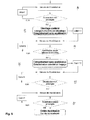
- FIG. 3 is a block diagram illustrating a first aspect of luggage operation according to a preferred embodiment of the present invention
- FIG. 4 represents a diagram illustrating the behavior of the pressure prevailing in the cabin of an airplane throughout a flight and according to the flight phases of the aircraft;
- FIG. 5 is a block diagram illustrating a second aspect of luggage operation according to a preferred embodiment of the present invention.
- FIG. 6 represents a block diagram illustrating a third aspect of baggage operation according to a preferred embodiment of the present invention.
- FIG. 7 is a block diagram illustrating a fourth aspect of luggage operation according to a preferred embodiment of the present invention.
- the figure 1 represents a simplified general view of a bag according to a preferred embodiment of the present invention, the luggage here having the form of a bag 1, by way of non-limiting illustration.
- the suitcase 1 comprises an envelope 2 which can be flexible or, preferably, rigid.
- the envelope 2 defines an internal volume of loading.
- the bag 1 is provided with rollers 4 and a first handle 6 for carrying it and a second handle 8 for rolling it by means of its wheels.
- the structure illustrated and described for the bag 1 is of course purely illustrative and not limiting. The skilled person may realize it in any other known manner adapted to the implementation of the present invention.
- the bag 1 comprises electronic circuits intended to perform several functions which will be described later.
- all of these circuits are grouped on a support which will be called Smart Unit 10 in the rest of the text.
- the figure 2 represents a diagram illustrating the structure of the Smart Unit 10 according to a preferred embodiment of the present invention.
- the Smart Unit 10 is preferably integrated in the casing 2 removably, being locked by means of a mechanical key or, preferably, electronic.
- a mechanical key or, preferably, electronic is only the owner of the bag 1 to extract the Smart Unit 10 from the envelope 2, in particular if he uses the bag 1 as hand luggage and has to pass an airport security gantry. He can then take it out of the envelope to make it go to the X-ray scanner in a tray, like a laptop.
- the Smart Unit 10 advantageously comprises a set of electronic circuits, managed by a microprocessor 20 and including a geolocation module 22, a communication module 24, a detection module 26 and a storage memory 28 whose operation will be detailed more far, and a battery 30, intended to supply all the electronic circuits and a control panel (numeral 12 on the figure 1 ).
- the bag 1 may be provided with brakes 32 acting on the rollers 4, position sensors 34 for the handles, detectors 36 for opening the compartments of the bag, and controllers 38 for the locks, all these elements being connected to the microprocessor 20.
- the latter elements together define a module for detecting a break-in or an attempted break-in.
- antennas 40 are provided for wireless transmission between the various communicating modules of the Smart Unit 10 and remote transmitters or receivers.
- the geolocation module 22 may be of any known type, for example it may comprise a GPS-type receiver, and the person skilled in the art will not encounter any particular difficulty in choosing one of the models available on the market according to its needs. In a preferred manner, the geolocation module 22 makes it possible to measure the geographical coordinates as well as the speed and the altitude.
- the communication module 24 preferably includes, but is not limited to, a RF (radio frequency) transmission module of the GSM / GPRS type, that is to say that it is capable of exchanging data. via the standard telephone network.
- a transmission module for the Iridium network for example, is conceivable but less advantageous from the point of view of communication costs.
- the communication module 24 allows the microprocessor 20 to send data to a remote server and / or to a telephone of the owner of the suitcase 1, for example by sending SMS ("Short Message Service"). It also allows the microprocessor to receive notifications and / or commands via SMS or voice messages.
- SMS Short Message Service
- the communication module can also connect to a remote centralized server to exchange information as data.
- commands may be location requests or other types of commands for example to control the luggage, such as the unlocking of one or more compartments, the change of access codes or any other command affecting the mode of operation of the baggage.
- the communication module also includes circuits for exchanging data at short distances, via Wi-Fi and / or Bluetooth standards.
- processors allow the baggage to exchange information with an optional remote control (digital reference 14 on the figure 1 ) or with a phone compatible with Wi-Fi and / or Bluetooth standards, or even with a computer.
- control panel 12 and the communication module 24 define inputs for transmitting information or commands to the microprocessor 20.
- the owner of the bag 1 to transmit to the microprocessor 20 information relating, in particular, to the dates and times of take-off of one or more scheduled flights, this information then being stored in the storage memory 28.
- planned hours for the corresponding landings can also be stored in the storage memory 28.
- the detection module 26 comprises at least one sensor, preferably a set of sensors, for measuring pressure, temperature and acceleration.
- the microprocessor can activate or deactivate each of the sensors individually, according to configuration parameters (at the request of the user or according to predefined operating modes of the electronic circuits).
- the environmental sensors of the detection module 26, the geolocation module 22 and the microprocessor 20 do not produce any emission likely to disturb the navigation instruments of an aircraft. Only the transmission functions of the communication module 24, including a short distance, must be deactivated during a flight by plane because they are likely to disturb the navigation instruments. Therefore, the present invention provides to provide the communication module 24 with its own switch device. Thus, the communication module alone can be deactivated while the other electronic circuits remain in operation, in an airplane mode.
- the figure 3 represents a block diagram illustrating the operation of the electronic circuits according to a preferred embodiment of the present invention, in particular how the operation of the communication module is managed according to the parameters relating to an airplane flight.
- the first block 42 corresponds to the operation of the electronic circuits in a normal mode, that is to say with the communication module 24 activated.
- Information relating to the position of the bag 1, in particular, is accessible remotely for its owner, either by being periodically transmitted to a central server, or in response to a request addressed to the microprocessor by the owner, from a phone or computer.
- the owner of the bag 1 can enter information relating to one or more scheduled flights, including information on possible stops, which can then be considered as several successive flights for the needs of the aircraft.
- algorithm used in the operation of electronic circuits It is possible to provide that this input is achieved through the control panel 12 if the latter has suitable input means (keys and / or touch screen), but it can be performed, in addition or in alternatively, from a telephone or computer connected to the bag either by the telephone network or by the short-distance wireless connections, that is to say WiFi or Bluetooth.
- the values of different environmental magnitudes, to The pressure, temperature, acceleration, position and identification of the GSM cell are measured by the detection module 26, at block 46, before being recorded as reference values in the memory of the cell. storage 28.
- These reference values may possibly be transmitted to a remote central server, depending on the configuration of the overall system.
- the microprocessor then controls the own switch device of the communication module 24 to disable the latter, block 48, thereby disabling all transmission sources, which amounts to putting the electronic circuits in the airplane mode.
- measurements of the time-spaced environmental parameters are made by the detection module 26, preferably periodically, at block 50.
- the electronic circuits are put in airplane mode directly by the user, for example when he finishes the entry of the planned flights or even later, by an action on the control panel 12 or even by transmission of a command adapted via the communication module 24.
- a multi-criteria decision algorithm 52 composed of several combined algorithms each of which is applied to one of the physical quantities being measured, is applied to the results of these measurements to identify a take-off of the aircraft.
- the measurements made are compared with the reference measurements stored in the memory 28. Threshold values of variation of the measured physical quantities are also stored in the memory 28, to define criteria making it possible to identify a take-off or a landing.
- the microprocessor 20 momentarily reacts the communication module 24 to transmit at least the position of the baggage to a remote server or the luggage owner's phone, before deactivating it again, as shown in block 56.
- This operation is repeated periodically as long as a take-off is not identified on the basis of the measurements made by the detection module 26.
- the detection module continues its periodic measurements to confirm the identification of a take-off, without the communication module 24 being reactivated.
- the detection module 26 continues to take periodic measurements during the flight to identify the landing of the aircraft (block 50).
- the detection module 26 is placed in standby during most of the flight to optimize the autonomy of the battery 30.
- the microprocessor preferably reactivates the detection module 26 so that the latter resumes its periodic measurements at time t3, preceding a predefined duration ⁇ t3 the expected time for the next landing as stored in the storage memory 28.
- the microprocessor 20 When the landing is identified, on the basis of a multi-criteria decision algorithm similar to that used to identify the takeoff, the microprocessor 20 reactivates the communication module 24, the electronic circuits thus leaving the airplane mode to resume a mode normal operation, as described above and shown in block 58.
- the figure 4 represents a schematic diagram illustrating the behavior of the pressure prevailing in the cabin of an airplane throughout a flight and according to the flight altitude of the aircraft.
- the pressure is expressed in altitude equivalent on the figure 4 to facilitate understanding.
- the cabin of an aircraft as well as its bunkers are pressurized in order to guarantee the comfort of the passengers.
- Curve 62 schematically illustrates the corresponding behavior of the pressure in the cabin and bunkers of the aircraft during the six phases just listed.
- the internal pressure is equal to the ground pressure.
- the pressure decreases steadily but rapidly in the cabin, in stages, until a cruising pressure is reached at the portion 4 of the curve 62.
- the internal pressure remains constant, while remaining above a minimum threshold corresponding to an altitude of about 2400 meters.
- the detection module 26 begins to make periodic measurements of different physical quantities, including pressure.
- the figure 5 illustrates, in 64, the fact that the detection module 26 performs a first loop of periodic measurements as the pressure does not decrease beyond a certain predefined threshold.
- the characteristics of a take-off are identified and the take-off is confirmed.
- the take-off time is further stored in the storage memory 28.
- the detection module is then advantageously put into a standby mode in which it takes measurements with a reduced period, or even in which it no longer takes measurement. It is reactivated, at 68, to take measurements at a higher period past a delay T1, corresponding to a time t3 preceding a predefined duration ⁇ t3 the expected time for the next landing, in order to identify the conditions corresponding to the landing.
- the detection module 26 examines whether it then rises slightly again, at 72, to validate the identification of the landing, in accordance with the portion 6 of the curve 62 on the figure 4 .
- the landing of an aircraft can therefore be identified by an algorithm of this type, based on pressure measurements.
- the figure 6 illustrates, in block diagram form, the implementation of an algorithm based on acceleration measurements, as an alternative or, preferably in addition, to the algorithm that has just been described.
- the takeoff of an airplane is characterized by a horizontal acceleration combined with a vertical acceleration. These accelerations are maintained until the plane reaches cruising speed.
- the detection module 26 measures the acceleration periodically, at 80.
- the measured acceleration is variable with vibrations due to the movements of the aircraft and the vibrations of the engines.
- the acceleration is strong and allows to determine the orientation of the luggage with respect to the front and the back of the aircraft.
- this strong acceleration is detected for a certain duration (characteristic of the acceleration of take-off of an airplane), the take-off is confirmed, in 82.
- the take-off time is determined and stored in the storage memory 28.
- a probable arrival time is estimated based on the actual take-off time, and the take-off and landing times as entered by the user. in the storage memory 28 before the flight. This estimated arrival time is compared with other arrival time values estimated from the measurements made by the other sensors of the detection module 26.
- Some values of the acceleration can possibly be measured during the flight, at 84, to verify that the aircraft is still in constant cruising speed and to confirm the orientation of the luggage, at 86.
- the accelerometer can to be put in standby mode the rest of the flight, substantially until the time t3 defined above, when it is reactivated to detect the landing of the aircraft.
- the acceleration On arrival at the point of unloading, the acceleration stabilizes then becomes null, in 90, while waiting for the unloading.
- the microprocessor can then validate the identification of the landing on the basis of the acceleration measurements made by the detection module 26.
- the figure 7 illustrates, in the form of a block diagram, the implementation of a third algorithm based on position measurements by GPS-type geolocation receiver, as an alternative or, preferably in addition, to the algorithms already described. Speed can also be determined from position measurements.
- the position measured by GPS may not be determined if the reception conditions of the satellite signals are not sufficient. Also, in case of poor reception, the implementation of this additional algorithm may not be performed.
- the user Before the flight, the user enters the route of the flight that he plans, which determines the location of the departure point of the flight.
- the microprocessor determines the speed of the baggage thanks to the measurements of positions, in 92. Indeed, the take-off of the airplane is characterized by a high speed and the determination of such a speed makes it possible to identify the moment of takeoff.
- the actual time of take-off is recorded in the storage memory 28, in 94, and an arrival time is estimated, as described above.
- the speed information is not available before take-off or during the flight, later location information allows, as soon as it is available, to calculate a distance with reference to the starting point and can possibly suffice to confirm that the takeoff has taken place.
- the arrival time can also be estimated on the basis of this measurement.
- Comparing the position of the baggage after the landing with the expected position as stored in the memory makes it possible to verify that the baggage is in the correct place and, if necessary, to generate an alert to the owner. if that's not the case.
- the microprocessor reactivates the communication module 24 and the alert can be transmitted to a remote central server and / or the phone of the luggage owner.
- the combination of the measurements made by the different types of sensors of the detection module 26 makes it possible to confirm the different stages of the journey by independent methods and guarantees a great reliability of the tracking of the luggage according to the present invention.
- the joint use of these separate criteria ensures that the output of the airplane mode of the communication module 24 can be done only in the case where the baggage is actually on the ground and there is no risk of disturbing the navigational instruments of the aircraft.
- an alert is generated but is sent to a remote central server or the owner of the baggage after reactivation of the communication module 24.
Landscapes
- Engineering & Computer Science (AREA)
- Physics & Mathematics (AREA)
- General Physics & Mathematics (AREA)
- Remote Sensing (AREA)
- Radar, Positioning & Navigation (AREA)
- Business, Economics & Management (AREA)
- Economics (AREA)
- Automation & Control Theory (AREA)
- Marketing (AREA)
- Human Resources & Organizations (AREA)
- Tourism & Hospitality (AREA)
- Quality & Reliability (AREA)
- General Business, Economics & Management (AREA)
- Operations Research (AREA)
- Theoretical Computer Science (AREA)
- Strategic Management (AREA)
- Entrepreneurship & Innovation (AREA)
- Computer Networks & Wireless Communication (AREA)
- Development Economics (AREA)
- Computer Security & Cryptography (AREA)
- Electromagnetism (AREA)
- Mobile Radio Communication Systems (AREA)
- Purses, Travelling Bags, Baskets, Or Suitcases (AREA)
- Telephone Function (AREA)
Priority Applications (4)
| Application Number | Priority Date | Filing Date | Title |
|---|---|---|---|
| EP20120193714 EP2736004A1 (de) | 2012-11-21 | 2012-11-21 | Luggage comprising a geo-positioning module combined with a communication module |
| US13/826,977 US9424723B2 (en) | 2012-11-21 | 2013-03-14 | Luggage bag comprising a geolocation module associated with a communication module |
| PCT/EP2013/074425 WO2014079956A1 (fr) | 2012-11-21 | 2013-11-21 | Bagage comportant un module de geolocalisation associe a un module de communication |
| EP13795468.1A EP2923318B1 (de) | 2012-11-21 | 2013-11-21 | Luggage comprising a geo-positioning module combined with a communication module |
Applications Claiming Priority (1)
| Application Number | Priority Date | Filing Date | Title |
|---|---|---|---|
| EP20120193714 EP2736004A1 (de) | 2012-11-21 | 2012-11-21 | Luggage comprising a geo-positioning module combined with a communication module |
Publications (1)
| Publication Number | Publication Date |
|---|---|
| EP2736004A1 true EP2736004A1 (de) | 2014-05-28 |
Family
ID=47263121
Family Applications (2)
| Application Number | Title | Priority Date | Filing Date |
|---|---|---|---|
| EP20120193714 Withdrawn EP2736004A1 (de) | 2012-11-21 | 2012-11-21 | Luggage comprising a geo-positioning module combined with a communication module |
| EP13795468.1A Not-in-force EP2923318B1 (de) | 2012-11-21 | 2013-11-21 | Luggage comprising a geo-positioning module combined with a communication module |
Family Applications After (1)
| Application Number | Title | Priority Date | Filing Date |
|---|---|---|---|
| EP13795468.1A Not-in-force EP2923318B1 (de) | 2012-11-21 | 2013-11-21 | Luggage comprising a geo-positioning module combined with a communication module |
Country Status (3)
| Country | Link |
|---|---|
| US (1) | US9424723B2 (de) |
| EP (2) | EP2736004A1 (de) |
| WO (1) | WO2014079956A1 (de) |
Cited By (3)
| Publication number | Priority date | Publication date | Assignee | Title |
|---|---|---|---|---|
| CN105652757A (zh) * | 2016-03-24 | 2016-06-08 | 贵州大学 | 一种基于无线传输的智能运动控制装置 |
| CN106527494A (zh) * | 2016-12-01 | 2017-03-22 | 芜湖酷哇机器人产业技术研究院有限公司 | 自动跟随式行李箱 |
| EP4460205A1 (de) * | 2022-01-07 | 2024-11-13 | Pa.Cotte Sa | Aktentasche mit einem von der transportart abhängigen öffnungsberechtigungssystem |
Families Citing this family (28)
| Publication number | Priority date | Publication date | Assignee | Title |
|---|---|---|---|---|
| EP2830027A1 (de) * | 2013-07-25 | 2015-01-28 | Telefonaktiebolaget L M Ericsson (publ) | Verfahren und Vorrichtungen zur Überwachung von Gepäckteilen |
| US20150348347A1 (en) * | 2014-05-27 | 2015-12-03 | Bluesmart Inc. | Active container |
| JP6550233B2 (ja) * | 2015-01-26 | 2019-07-24 | テレフオンアクチーボラゲット エルエム エリクソン(パブル) | 手荷物品を管理するための方法及びデバイス |
| WO2016124199A1 (en) * | 2015-02-06 | 2016-08-11 | Lyngsoe Systems A/S | A device and a method for automatic detection of whether an item is correctly routed |
| JP6438155B2 (ja) * | 2015-03-02 | 2018-12-12 | ケビン オドネル | 電動荷物 |
| USD795045S1 (en) | 2015-04-30 | 2017-08-22 | Bluesmart Inc. | Container wheel |
| CN104957855A (zh) * | 2015-05-26 | 2015-10-07 | 浙江汉脑数码科技有限公司 | 一种物联网智能箱包 |
| ES2773654T3 (es) * | 2015-05-29 | 2020-07-14 | Amadeus Sas | Comunicación de avión a tierra |
| US20160357240A1 (en) * | 2015-06-04 | 2016-12-08 | Under Armour, Inc. | System and Method for Controlling Operation of Processor During Shipment |
| US20160381499A1 (en) * | 2015-06-23 | 2016-12-29 | Mihai Radu Draghici | Personal luggage locator device, system, and processes |
| US20170176570A1 (en) * | 2015-12-16 | 2017-06-22 | Honeywell International Inc. | Systems and methods of tracking smart luggage |
| US10482419B2 (en) | 2015-12-17 | 2019-11-19 | Tive, Inc. | Sensor device having configuration changes |
| US10867508B2 (en) | 2015-12-17 | 2020-12-15 | Tive, Inc. | Multi-sensor electronic device with wireless connectivity and sensing as a service platform and web application |
| CN105433570A (zh) * | 2015-12-29 | 2016-03-30 | 天津北方网新媒体集团股份有限公司 | 基于iBeacon技术的旅行箱报警系统及使用方法 |
| CN105411147A (zh) * | 2016-01-05 | 2016-03-23 | 浙江光汇照明电子有限公司 | 智能定位防丢包 |
| CN105639954A (zh) * | 2016-01-28 | 2016-06-08 | 越甲科技(北京)有限公司 | 智能箱包 |
| FR3048714B1 (fr) * | 2016-03-14 | 2020-09-25 | Chen | Cadenas connecte muni d'une balance |
| FR3050063A1 (fr) * | 2016-04-08 | 2017-10-13 | Delsey Soc | Element de bagage connecte et procede de pilotage des fonctions d’un tel element de bagage |
| US9870683B1 (en) | 2016-04-19 | 2018-01-16 | Jerome Pious | Luggage notification system |
| CN106527429B (zh) * | 2016-10-25 | 2019-10-29 | 北京小米移动软件有限公司 | 行李箱控制方法及装置 |
| US10969499B2 (en) * | 2017-04-20 | 2021-04-06 | Pmf Spv Llc | Luggage tracking system |
| MX2020000443A (es) * | 2017-07-14 | 2020-08-17 | Cabeau Inc | Dispositivo de bloqueo con funcionalidad de seguimiento. |
| DE102017128165A1 (de) | 2017-11-28 | 2019-05-29 | Superfari GmbH | Modulare Vorrichtung zum Nachverfolgen einer geografischen Position eines Gegenstandes und/oder eines Lebewesens sowie Verfahren zum Aktivieren und Deaktivieren eines Flugmodus der Vorrichtung |
| CN109199410B (zh) * | 2018-06-28 | 2020-08-14 | 浙江大学 | 一种基于眼部运动的言语认知评估方法 |
| US10629067B1 (en) | 2018-06-29 | 2020-04-21 | Tive, Inc. | Selective prevention of signal transmission by device during aircraft takeoff and/or landing |
| CN109951797B (zh) * | 2019-03-11 | 2020-04-28 | 前海随身宝(深圳)科技有限公司 | 智能箱包运行控制方法、装置、智能箱包及可读存储介质 |
| US20220183436A1 (en) * | 2020-12-10 | 2022-06-16 | Juliana Bastos Volpiani | Identity-Locked Personal Item |
| CN114708713A (zh) * | 2022-04-02 | 2022-07-05 | 中国民航信息网络股份有限公司 | 一种行李的异常识别方法和相关装置 |
Citations (6)
| Publication number | Priority date | Publication date | Assignee | Title |
|---|---|---|---|---|
| US5815407A (en) | 1995-12-14 | 1998-09-29 | Motorola Inc. | Method and device for inhibiting the operation of an electronic device during take-off and landing of an aircraft |
| US20010052850A1 (en) * | 2000-02-25 | 2001-12-20 | Zimmerman Harry I. | Proximity and sensing system for baggage |
| US20080158002A1 (en) | 2005-04-22 | 2008-07-03 | W.R. Parkinson Co., Inc. | Portable object tracking system and security tracking bag or money pack for use therewith |
| WO2008151438A1 (en) * | 2007-06-12 | 2008-12-18 | Datatrail Inc. | Tracking, security and status monitoring system for cargos |
| WO2010111399A1 (en) * | 2009-03-25 | 2010-09-30 | Qualcomm Incorporated | Altitude-dependent power management |
| US20110241874A1 (en) * | 2010-04-06 | 2011-10-06 | Nicolas KEGLEVICH | Electronic Device and Procedure for Locating Pieces of Luggage Gone Astray |
Family Cites Families (18)
| Publication number | Priority date | Publication date | Assignee | Title |
|---|---|---|---|---|
| JPH0773386A (ja) | 1993-09-01 | 1995-03-17 | Shinano Giken:Kk | 特定条件下で自動停止する,近接特定物体検知装置 |
| US5576692A (en) * | 1994-03-10 | 1996-11-19 | Tompkins; Eugene | Nationwide airport luggage tracking system and method |
| US6281797B1 (en) | 2000-04-04 | 2001-08-28 | Marconi Data Systems Inc. | Method and apparatus for detecting a container proximate to a transportation vessel hold |
| US7030760B1 (en) | 2001-08-07 | 2006-04-18 | Seecontrol, Inc. | Method and apparatus for ensuring reliable loading of materials on aricraft and other vehicles |
| GB0211644D0 (en) * | 2002-05-21 | 2002-07-03 | Wesby Philip B | System and method for remote asset management |
| US20040021572A1 (en) * | 2002-08-05 | 2004-02-05 | Schoen Marc L. | Electronic baggage tracking and identification |
| US8299922B2 (en) * | 2005-11-23 | 2012-10-30 | Yyy International Llc | System and method for article and proximity location |
| US8167202B2 (en) | 2005-12-16 | 2012-05-01 | Saperstein Jan R | Method and apparatus for locating mobile assets |
| US8049616B2 (en) * | 2006-11-30 | 2011-11-01 | Patricia Hill | Method and apparatus for destination tracking with misrouting indication |
| US7791455B1 (en) | 2006-12-29 | 2010-09-07 | Onasset Intelligence, Inc. | Method and apparatus for autonomous detection of a given location or situation |
| US8253557B2 (en) | 2007-08-07 | 2012-08-28 | Nasser Ani | System and method for tracking luggage |
| US7916025B2 (en) * | 2007-08-10 | 2011-03-29 | Lockwinn Technology | Intelligent luggage tag |
| US20090315704A1 (en) * | 2008-06-19 | 2009-12-24 | Global Biomedical Development, Llc, A Georgia Limited Liability Company | Method and Integrated System for Tracking Luggage |
| JP2012526309A (ja) * | 2009-05-08 | 2012-10-25 | ピーター ウィルドン,マイケル | 識別装置、識別システムおよび識別方法 |
| GB201107559D0 (en) | 2011-05-06 | 2011-06-22 | Harkes Erik | EC-tag |
| US20130060514A1 (en) * | 2011-09-01 | 2013-03-07 | Qualcomm Incorporated | Mems accelerometer airliner takeoff and landing detection |
| US20130335193A1 (en) * | 2011-11-29 | 2013-12-19 | 1556053 Alberta Ltd. | Electronic wireless lock |
| US9659424B2 (en) * | 2013-06-20 | 2017-05-23 | Parakeet Technologies, Inc. | Technologies and methods for security access |
-
2012
- 2012-11-21 EP EP20120193714 patent/EP2736004A1/de not_active Withdrawn
-
2013
- 2013-03-14 US US13/826,977 patent/US9424723B2/en not_active Expired - Fee Related
- 2013-11-21 WO PCT/EP2013/074425 patent/WO2014079956A1/fr not_active Ceased
- 2013-11-21 EP EP13795468.1A patent/EP2923318B1/de not_active Not-in-force
Patent Citations (6)
| Publication number | Priority date | Publication date | Assignee | Title |
|---|---|---|---|---|
| US5815407A (en) | 1995-12-14 | 1998-09-29 | Motorola Inc. | Method and device for inhibiting the operation of an electronic device during take-off and landing of an aircraft |
| US20010052850A1 (en) * | 2000-02-25 | 2001-12-20 | Zimmerman Harry I. | Proximity and sensing system for baggage |
| US20080158002A1 (en) | 2005-04-22 | 2008-07-03 | W.R. Parkinson Co., Inc. | Portable object tracking system and security tracking bag or money pack for use therewith |
| WO2008151438A1 (en) * | 2007-06-12 | 2008-12-18 | Datatrail Inc. | Tracking, security and status monitoring system for cargos |
| WO2010111399A1 (en) * | 2009-03-25 | 2010-09-30 | Qualcomm Incorporated | Altitude-dependent power management |
| US20110241874A1 (en) * | 2010-04-06 | 2011-10-06 | Nicolas KEGLEVICH | Electronic Device and Procedure for Locating Pieces of Luggage Gone Astray |
Cited By (4)
| Publication number | Priority date | Publication date | Assignee | Title |
|---|---|---|---|---|
| CN105652757A (zh) * | 2016-03-24 | 2016-06-08 | 贵州大学 | 一种基于无线传输的智能运动控制装置 |
| CN106527494A (zh) * | 2016-12-01 | 2017-03-22 | 芜湖酷哇机器人产业技术研究院有限公司 | 自动跟随式行李箱 |
| EP4460205A1 (de) * | 2022-01-07 | 2024-11-13 | Pa.Cotte Sa | Aktentasche mit einem von der transportart abhängigen öffnungsberechtigungssystem |
| EP4460205B1 (de) * | 2022-01-07 | 2025-10-08 | Pa.Cotte Sa | Aktentasche mit einem von der transportart abhängigen öffnungsberechtigungssystem |
Also Published As
| Publication number | Publication date |
|---|---|
| US9424723B2 (en) | 2016-08-23 |
| US20140139334A1 (en) | 2014-05-22 |
| EP2923318A1 (de) | 2015-09-30 |
| EP2923318B1 (de) | 2018-01-10 |
| WO2014079956A1 (fr) | 2014-05-30 |
Similar Documents
| Publication | Publication Date | Title |
|---|---|---|
| EP2923318B1 (de) | Luggage comprising a geo-positioning module combined with a communication module | |
| US10662696B2 (en) | Detecting objects within a vehicle in connection with a service | |
| US20210039585A1 (en) | Systems and methods for unmanned positioning and delivery of rental vehicles | |
| US10315763B2 (en) | Managing package deliveries by robotic vehicles | |
| US11720848B2 (en) | Location-based pick up and delivery services | |
| JP6980600B2 (ja) | 基地装置、基地装置の制御方法、及び基地装置の制御プログラム | |
| US20150352947A1 (en) | Device and system for automotive refueling | |
| EP3772420B1 (de) | Verfahren zum energiemanaging in einem reifendrucküberwachungsytem in einem flugzeug | |
| CA2886570A1 (fr) | Systeme de balise de detresse pour aeronef ou autre vehicule | |
| KR102437584B1 (ko) | 퍼스널 모빌리티용 배터리 관리 및 공유 시스템 | |
| FR3085488A1 (fr) | Traceur destiné à être associé à une entité en itinérance et procédé de communication entre un système de supervision de la position géographique de l’entité et ledit traceur | |
| EP3690840A1 (de) | Elektronische vorrichtung zur erzeugung eines signals im innern eines fahrzeugs, entsprechendes fahrzeug, erzeugungsverfahren und computerprogrammprodukt | |
| EP4515851A1 (de) | Verfahren und vorrichtung zur digitalen steuerung der abgabe eines objekts von einem ersten fahrzeug zu einem zweiten fahrzeug | |
| EP2977286A1 (de) | Kabeltransportausrüstung | |
| FR3043789A1 (fr) | Chargement de donnees d'ephemerides dans un drone. | |
| US20210281931A1 (en) | Method and system for moving status detection for a sensor apparatus | |
| EP3874619B1 (de) | Verfahren zur übertragung von daten von einem objekt an bord eines flugzeugs zu einem netzwerk an verbundenen objekten | |
| FR2964519A1 (fr) | Procede d'emission conditionnelle d'une trame cellulaire sur un reseau, dispositif de mise en oeuvre | |
| US20200202475A1 (en) | Process and system for detecting an aerial transport mode | |
| EP4416943A1 (de) | System zur geolokalisierung von mindestens zwei objekten | |
| EP3933722A1 (de) | Automatisches verfahren und system zur diagnose des zustands fahrzeugflotte | |
| WO2026013160A1 (fr) | Système de communication radio entre navires à l'aide de satellites | |
| FR3129756A1 (fr) | Procédé et dispositif de contrôle de livraison d’un objet d’un premier véhicule à un deuxième véhicule |
Legal Events
| Date | Code | Title | Description |
|---|---|---|---|
| PUAI | Public reference made under article 153(3) epc to a published international application that has entered the european phase |
Free format text: ORIGINAL CODE: 0009012 |
|
| 17P | Request for examination filed |
Effective date: 20121121 |
|
| AK | Designated contracting states |
Kind code of ref document: A1 Designated state(s): AL AT BE BG CH CY CZ DE DK EE ES FI FR GB GR HR HU IE IS IT LI LT LU LV MC MK MT NL NO PL PT RO RS SE SI SK SM TR |
|
| AX | Request for extension of the european patent |
Extension state: BA ME |
|
| STAA | Information on the status of an ep patent application or granted ep patent |
Free format text: STATUS: THE APPLICATION IS DEEMED TO BE WITHDRAWN |
|
| 18D | Application deemed to be withdrawn |
Effective date: 20141129 |