EP2748984B1 - Vorrichtung und verfahren zum lastausgleich in einem kabelnetzwerk - Google Patents
Vorrichtung und verfahren zum lastausgleich in einem kabelnetzwerk Download PDFInfo
- Publication number
- EP2748984B1 EP2748984B1 EP12770371.8A EP12770371A EP2748984B1 EP 2748984 B1 EP2748984 B1 EP 2748984B1 EP 12770371 A EP12770371 A EP 12770371A EP 2748984 B1 EP2748984 B1 EP 2748984B1
- Authority
- EP
- European Patent Office
- Prior art keywords
- load balancing
- cable modems
- channel
- cable
- service
- Prior art date
- Legal status (The legal status is an assumption and is not a legal conclusion. Google has not performed a legal analysis and makes no representation as to the accuracy of the status listed.)
- Not-in-force
Links
Images



Classifications
-
- H—ELECTRICITY
- H04—ELECTRIC COMMUNICATION TECHNIQUE
- H04L—TRANSMISSION OF DIGITAL INFORMATION, e.g. TELEGRAPHIC COMMUNICATION
- H04L47/00—Traffic control in data switching networks
- H04L47/10—Flow control; Congestion control
- H04L47/12—Avoiding congestion; Recovering from congestion
- H04L47/125—Avoiding congestion; Recovering from congestion by balancing the load, e.g. traffic engineering
-
- H—ELECTRICITY
- H04—ELECTRIC COMMUNICATION TECHNIQUE
- H04L—TRANSMISSION OF DIGITAL INFORMATION, e.g. TELEGRAPHIC COMMUNICATION
- H04L47/00—Traffic control in data switching networks
- H04L47/10—Flow control; Congestion control
- H04L47/24—Traffic characterised by specific attributes, e.g. priority or QoS
Definitions
- DOC Data-Over-Cable
- Cable television networks typically comprise cables such as coaxial cables, optical fiber cables, or a Hybrid Fiber/Coaxial (HFC) cable system which interconnect cable modems (CMs) of subscribers to a headend of the cable network. Subscribers may use their cable modems and the cable network to connect to the Internet and/or other computer networks.
- the cable modems support data connection to the Internet and other computer networks via the cable network, and the cable networks provide bi-directional communication systems in which data can be sent downstream from the headend to a subscriber and upstream from a subscriber to the headend.
- a Cable Modem Termination System is equipment that is located at the headend of the cable network and that is able to receive data packets from a data network and transmit the data packets downstream via the cable network to a cable modem attached to customer premises equipment (CPE).
- CPE customer premises equipment
- the customer premises equipment can send signals to the cable modem which, in turn, sends data packets upstream via the cable network to the CMTS.
- the CMTS then sends the data packets back to the appropriate host on the data network.
- An example of a CMTS is the Motorola Broadband Service Router 64000 (BSR 64000).
- DOCSIS Data Over Cable System Interface Specification
- service flows transmitted across a DOCSIS network can vary and may include, for instance, text-based Web browsing, file transferring, email communications, voice and video communications, and the like.
- customer premises equipment CPE
- CPE customer premises equipment
- the cable modem will typically have an internal or embedded Media Terminal Adapter (eMTA) which provides network interface functionality that accepts analog voice inputs or video signal and generates IP packets.
- eMTA Media Terminal Adapter
- Voice and video communications tend to require greater throughput rates for acceptable levels of service than that of the other service flows referenced above.
- the different types of service flows communicated over the cable network may have different Quality of Service parameters and requirements.
- a series of handshaking steps are initially executed during which the modem identifies itself and the network designates (among other parameters) the level of service and frequency (channel) that the cable modem may use.
- the cable modem may periodically or occasionally request the creation of service flows and, if allowed, the allocation of bandwidth to transmit data to the CMTS in the upstream direction.
- CMTS customer premises equipment
- CPE customer premises equipment
- VoIP Voice-over-Internet-Protocol
- wireless routers wireless routers
- portable hand-held devices smartphones and the like
- CPE customer premises equipment
- Many users typically share a channel, or a group of channels, and their interests compete for the bandwidth of the channel.
- the full bandwidth available to the multi-channel network for data transmission comprises the sum of bandwidths of the individual channels. Overcrowding of traffic on any one channel will cause degraded performance to a user on that channel.
- a CMTS can be set to implement algorithms to provide load balancing for traffic across multiple channels.
- the algorithms are applied to a set of cable modems using a set of channels referred to as a "load balancing group".
- Three such techniques used for distributing voice, video, data and other traffic across upstream and downstream channels include manual, static and dynamic load balancing.
- cable modems can be manually moved by the actions of operation personnel to balance the number of cable modems evenly among a defined group of upstream channels.
- static upstream load balancing can be utilized to automatically move a newly registered cable modem to a least-loaded upstream channel.
- static load balancing has been based solely on cable modem count on each upstream channel.
- dynamic load balancing can be used to automatically move cable modems from a channel with highest utilization to a channel with lowest utilization in an attempt to more evenly distribute active traffic across upstream and/or downstream channels within a defined load balancing group.
- a particular transmission may be stopped, if sufficient bandwidth is not available.
- An example of this alternative is provided in U.S. Patent 6,822,940 .
- This disclosure describes a method of load balancing cable modems across multiple channels of a Data Over Cable System Interface Specification (DOCSIS) network according to claim 1.
- DOCSIS Data Over Cable System Interface Specification
- This disclosure also describes a signal processing electronic device for communicating with cable modems across channels of a load balancing group on a Data Over Cable System Interface Specification (DOCSIS) network according to claim 9.
- DOCSIS Data Over Cable System Interface Specification
- this disclosure describes at least one non-transitory computer readable storage medium having computer program instructions stored according to claim 16.
- FIG. 1 illustrates an exemplary network 10 in which a plurality of cable modems 12 or like network elements are connected to a Cable Modem Termination System (CMTS) 14 at the headend 16 of the cable network 10.
- CMTS Cable Modem Termination System
- Each cable modem 12 may connect to the CMTS 14 through a cascade of Hybrid Fiber Coax (HFC) components including taps, passives, cabling, nodes, and Radio Frequency (RF) amplifiers indicated generally as HFC network 18 in FIG. 1 .
- HFC Hybrid Fiber Coax
- RF Radio Frequency
- the CMTS 14 will be connected to a plurality of network taps, each of which are connected to a plurality of cable modems 12 or like network elements such that the CMTS 14 may serve and communicate with many hundreds or more of cable modems 12.
- each cable modem 12 may be connected to one or more customer premises equipment (CPE) (not shown), i.e., computer, router, set top box, media center
- the CMTS 14 may be connected to numerous program providers, television networks and stations, Internet broadcasters/service providers, and the like 20 for providing content via the CMTS 14 to the cable modems 12 and CPE.
- Transmission of signals from the CMTS 14 to the cable modems 12 are considered downstream transmissions and signal transmissions from the cable modems 12 to the CMTS 14, which are typically in the form of burst type transmissions, are considered upstream transmissions.
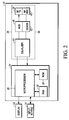
- FIG. 2 illustrates an example of logical architecture of the CMTS 14 which may include a processing unit 24 having a microprocessor 26 that receives information, such as instructions and data from a RAM 28 and a ROM 30.
- the processing unit 24 controls the operation of the CMTS 14 and is preferably connected to a display 32 which may display status information such as station maintenance and an input keypad 34 which may permit an operator to provide commands, instructions, processing requests and/or data to processing unit 24.
- the CMTS 14 may further include an RF transceiver (transmitter/receiver) unit 36 having a plurality of transmitters 38 and receivers 40 providing bi-directional communication capability with a plurality of cable modems 12 or other network elements on the network 10.
- RF transceiver transmitter/receiver
- Each RF receiver 40 of the CMTS may provide support for a hundred or more cable modems 12 or like network elements.
- the RF transceiver unit 36 may include a demodulator unit 42 and an equalizer 44 to which received RF signals are provided and may also include a modulator 46 which receives downstream signals from equalizer unit 44, modulates the signals, and provides the modulated signals to RF transmitters 38.
- a cable modem 12 when a cable modem 12 is registered with the CMTS 14, it is assigned to a load balancing group with perhaps hundreds of other cable modems. Such a group typically permits the cable modem 12 to be moved across multiple defined upstream and downstream channels.
- a particular load balancing group may enable its modems to receive/transmit traffic flows on a total of four downstream channels and three or four upstream channels.
- One of the functions typically performed by the CMTS 14 is to balance traffic across the multiple channels of a load balancing group. Conventionally, this may be accomplished by balancing the number of cable modems assigned to each channel (i.e., static load balancing) or by balancing and periodically re-balancing the total amount of active traffic on the channels (i.e., dynamic load balancing).
- the processing unit 24 or other processing unit of the CMTS 14 typically includes software, microprocessors, other modules, or the like for running and controlling load balancing operations.
- the CMTS and its load balancing software, microprocessors, modules, or the like balances traffic across channels by taking into account Quality of Service (QoS) parameters associated with the active traffic or cable modems with active traffic.
- QoS Quality of Service
- candidates for load balancing are selected based on the value or values of their QoS parameter or parameters.
- candidates are selecting using a QoS parameter value that is generally of an inferior grade (e.g. a lower minimum reserved rate) compared to other candidates.
- the inferior grade candidates will have QoS requirements that are easier to satisfy when aggregated with other cable modems on a channel.
- An example of selecting an inferior grade QoS parameter would be to consider as candidates for moving only modems with service flows with a Minimum Reserved Rate (MRR) less than a particular threshold.
- MRR Minimum Reserved Rate
- Quality of Service parameters of active traffic are considered when selections are made by the CMTS with respect to which cable modems are to be moved from one channel to another channel within a load balancing group. More specifically, cable modems and/or active traffic that are classified as having "easier to satisfy" Quality of Service parameters are first considered to be moved across channels in an effort to re-balance load before cable modems and/or active traffic that have Quality of Service parameters that are more difficult to satisfy are considered.
- a service flow is a unidirectional flow of packets that provides a particular Quality of Service (QoS).
- QoS Quality of Service
- the DOCSIS protocol classifies traffic into service flows with each service flow having its own set of QoS parameters.
- DOCSIS service flow types for upstream service flows may include: a best effort service flow type; a non-real-time polling service (NRTPS) flow type; a real-time polling service (RTPS) flow type; an unsolicited grant service (UGS) flow type; and an unsolicited grant service with activity detection (UGS-AD) flow type.
- a best effort service flow type may be standard internet traffic such as web browsing, email, or instant messaging.
- An example of a NRTPS flow type may be standard Internet traffic that requires high throughput or variable-size data grants on a regular basis.
- An example of a RTPS flow type may be MPEG video, and an example of an UGS flow type may be VoIP.
- the QoS parameters for a best effort service flow type include traffic priority, request transmission policy, maximum sustained traffic rate, maximum traffic burst, minimum reserved traffic rate, and assumed minimum reserved-traffic-rate packet size.
- the QoS parameters for a NRTPS flow type include traffic priority, request transmission policy, maximum sustained traffic rate, maximum traffic burst, minimum reserved traffic rate, assumed minimum reserved-traffic-rate packet size, and nominal polling interval.
- the QoS parameters for a RTPS flow type include request transmission policy, maximum sustained traffic rate, maximum traffic burst, minimum reserved traffic rate, assumed minimum reserved-traffic-rate packet size, nominal polling interval, and tolerated poll jitter.
- the QoS parameters for an UGS flow type include request transmission policy, unsolicited grant size, grants per interval, nominal grant interval, and tolerated grant jitter.
- the QoS parameters for an UGS-AD flow type include request transmission policy, nominal polling interval, tolerated poll jitter, unsolicited grant size, grants per interval, nominal grant interval, and tolerated grant jitter.
- an algorithm set to run on the processing unit 24 or like unit on the CMTS 14 can be pre-set with one or more defined thresholds relative to one or more Quality of Service parameters that can be used to distinguish a cable modem and/or traffic type or a set of cable modems and/or traffic types that have so-called "easier to satisfy" Quality of Service parameters than another cable modem or set of cable modems within a load balancing group of cable modems.
- cable modems pre-selected as having active traffic with easier to satisfy Quality of Service parameters are first considered for being moved during a load balancing procedure. Only if rebalancing cannot be fully achieved solely with movement of cable modems considered as having easier to satisfy Quality of Service parameters are cable modems from the remaining cable modems of the load balancing group considered for selection for movement to re-balance load across the channels. If this occurs, a cable modem having active traffic with the easiest to satisfy Quality of Service parameters remaining is selected before a cable modem having relatively harder Quality of Service parameters is selected. The selection process is performed in iterations until the desired or pre-set level of re-balancing is achieved.
- QoS parameters may also be considered when determining the number of times a cable modem can be moved to a different channel within a load balancing group during consecutive load balancing events. For example, dynamic load balancing may occur at intervals of about every five minutes, and any single cable modem may be limited from being moved repeatedly back-and forth between channels in a ping-pong manner during a given number of consecutive load balancing events.
- a cable modem identified as having so-called easier to satisfy QoS parameters may be permitted to be moved up to five times during consecutive load balancing events; whereas, a cable modem considered as having harder to satisfy QoS parameters may only be permitted to be moved two times during consecutive load balancing events.
- the cable modem is then prevented from being moved when the next load balancing operation occurs.
- one of the steps of the load balancing method is to distinguish cable modems having service flows with so-called easier to satisfy Quality of Service parameters from cable modems having service flows with relatively harder to satisfy Quality of Service parameters.
- These decisions can be implemented by providing algorithms applied by the CMTS 14 defined by one or more set of rules for use in making load balancing selections. For example, a cable modem that does not have an eMTA may be placed in a list of cable modems identified as having easier to satisfy Quality of Service parameters as compared to a cable modem having an eMTA. This is because the eMTA is used for streaming voice or video communications, such as required for providing VoIP communicating services. This type of service flow generally has harder to satisfy Quality of Service parameters. Thus, cable modems without an eMTA may be considered for being moved to a different channel during load balancing operations before cable modems having eMTAs.
- the algorithms applied by the CMTS 14 can focus on each active service flow of a cable modem to select modems for movement across channels during load balancing.
- a cable modem can be selected as having QoS parameters easier to satisfy than another cable modem based on each of its service flows being relatively easier to satisfy than the service flows of another modem. For example, a service flow that is without a defined MRR has QoS parameters that are easier to satisfy than a service flow with a defined MRR. Likewise, a service flow with a lower MRR has QoS parameters that are easier to satisfy than a service flow with a higher MRR.
- a service flow that is without a defined jitter tolerance has QoS parameters that are easier to satisfy than a service flow with a defined jitter tolerance
- a service flow with a higher jitter tolerance has QoS parameters that are easier to satisfy than a service flow with a lower jitter tolerance
- a service flow that is without a defined maximum traffic rate has QoS parameters that are easier to satisfy than a service flow with a defined maximum traffic rate
- a service flow with a lower maximum traffic rate has QoS parameters that are easier to satisfy than a service flow with a higher maximum traffic rate
- a service flow with a smaller total maximum traffic burst has QoS parameters that are easier to satisfy than a service flow with a higher total maximum traffic burst; a service flow with fewer Unsolicited Grant Service (UGS) grants per interval has QoS parameters that are easier to satisfy than a service flow with more UGS grants per interval; and a service flow with a smaller UGS grant interval has QoS parameters that are easier to satisfy than a service flow with a larger UGS grants interval.
- UGS Unsolicited Grant Service
- a method for considering QoS parameters during load balancing is shown in the flowchart of FIG. 3 and can include the following steps.
- a series of thresholds distinguishing between QoS parameters that are considered easier to satisfy from those considered more difficult to satisfy are defined and are entered into the algorithms run by the processing unit 24 of the CMTS 14 via use of Command Line Interface (CLI) commands entered by an operator via input keypad 34. (See step 50.)
- CLI Command Line Interface
- a value of "x" can be entered as a threshold for the QoS parameter Minimum Reserved Rate (MRR).
- the cable modem can be considered as having easier to satisfy QoS parameters and can be considered a proper candidate for being moved from a channel with highest utilization to another channel during load balancing.
- the cable modem should only be considered for being moved to another channel after all other modems having easier to satisfy QoS parameters are first considered and moved.
- the CMTS 14 detects whether or not a pre-defined amount of imbalance exists on a channel of highest utilization. (See step 52). If not, the CMTS 14 continues to detect for imbalances or checks for imbalances at a next pre-defined interval. (See step 54). However, if a pre-defined imbalance exists, the CMTS begins selecting cable modems for UCC or DCC for purposes of re-balancing the load across the channels of the load balancing group. Thus, the CMTS begins collecting a pre-defined QoS parameter for each service flow of cable modems actively passing traffic across the channel of highest utilization. (See step 56.)
- a "First List” is defined as including all the cable modems assign to pass traffic across a particular channel. From this "First List", cable modems that provide a Quality of Service that is better or superior to the pre-set thresholds for QoS parameters are removed from the "First List” and placed in a "Second List” or second subset. In this manner, only cable modems that do not meet the quality thresholds and/or are considered as having inferior grades of service with "easier to satisfy" QoS parameters remain in the "First List", or first subset for being considered as a candidate to be moved across channels in a load balancing effort. (See step 58.)
- the "Second List” can be compiled as follows. For each cable modem in the “First List”: (a) identify the cable modem's active service flow identifiers (SFIDs) on which there is active traffic; (b) for each such SFID, obtain the service flow attributes (i.e., QoS parameters and values thereof); and (c) if the service flow attributes of any of the SFIDs of the cable modem are of a quality that surpass the thresholds as defined by the rules stored in the algorithm of the CMTS, then move the cable modem to the "Second List", if not, permit the cable modem to remain in the "First List".
- SFIDs active service flow identifiers
- the above described "QoS-aware" load balancing algorithm can be run in conjunction with other algorithms and rules set for the CMTS. For instance, algorithms defining the threshold for when the next load balancing operation begins or ends, how many consecutive movements of a cable modem is permitted before the cable modem is not permitted to be moved, or which cable modems are always prevented from being moved can be used in conjunction with the "QoS-aware" load balancing algorithm. Further, the "QoS-aware" load balancing algorithm can be applied to all cable modems on all channels or only certain pre-defined cable modems or pre-defined channels.
- cable modem 1 is configured with a service class having a minimum reserved traffic rate of 800,000
- cable modem 2 is configured with a service class having a minimum reserved traffic rate of 700,000
- cable modem 3 is configured with a service class having a minimum reserved traffic rate of 500,000.
- all cable modems (CM1, CM2, CM3) are actively passing traffic on the same upstream channel and the utilization on this upstream channel crosses 80%. This initiates a load balancing operation to be performed by the CMTS according to the requirement of "Rule 1".
- a "List 1" is generated in which CM1, CM2 and CM3 are identified.
- the algorithm selects CM1 and CM2 to be removed from “List 1" and placed in "List 2" according to the requirements of "Rule 2". Since "List 1" now represents cable modems considered to have “easier to satisfy” QoS parameters, CM3 is selected for UCC and gets moved to a different (less utilized) channel in the load balancing group in an effort to balance load across the channels of the load balancing group. If the utilization of the upstream channel on which CM1 and CM2 remain falls below 80%, the load balancing operation concludes. Otherwise, if utilization on the channel remains at or above 80% after moving CM3 and "List1" is empty, cable modems from "List 2" are now considered for load re-balancing. Here, the algorithm selects CM2 for being moved to a less utilized channel because the MRR for CM2 is less than (i.e., easier to satisfy) the MRR for CM 1. Thus, CM2 is moved.
- the devices, units, modules and storage discussed above can physically be provided on a circuit board or within an electronic device and can include various processors, microprocessors, controllers, chips, disk drives, and the like. It will be apparent to one of ordinary skill in the art that the modules, processors, controllers, units, and the like may be implemented as electronic components, software, hardware or a combination of hardware and software. For example, a means to perform the above discussed algorithm can be provided as at least one computer readable storage medium having computer program instructions stored thereon that are arranged to perform the above referenced operations.
Landscapes
- Engineering & Computer Science (AREA)
- Computer Networks & Wireless Communication (AREA)
- Signal Processing (AREA)
- Communication Control (AREA)
- Telephonic Communication Services (AREA)
Claims (16)
- Verfahren zum Ausgleichen von Last von Kabelmodems über Kanäle einer Lastausgleichsgruppe bei einem Data Over Cable System Interface Specification- (DOCSIS) -Netzwerk (10), das die Schritte umfasst:Erfassen von mindestens einem Dienstgüte- (QoS) -Parameter für jeden Dienstfluss von mehreren Kabelmodems (12), die Verkehr über einen Kanal der Lastausgleichsgruppe aktiv weitergeben, durch einen oder mehrere Prozessoren (26);Verwenden des mindestens einen QoS-Parameters, der während des Erfassungsschritts für jeden Dienstfluss erfasst wurde, um mittels dem einen oder den mehreren Prozessoren (26) zu identifizieren, ob mindestens ein Kabelmodem (12) einen Dienstfluss mit einer geringeren Güte des mindestens einen QoS-Parameters relativ zu einem vordefinierten Schwellenwert aufweist, wobei eine erste Untergruppe von Kabelmodems (12) der Lastausgleichsgruppe, die aktiv Verkehr über den einen Kanal weitergibt und Dienstflüsse mit der geringeren Güte des mindestens einen QoS-Parameters aufweist, von einer zweiten Untergruppe von Kabelmodems (12) der Lastausgleichsgruppe identifiziert wird, die aktiv Verkehr über den einen Kanal weitergibt und Dienstflüsse aufweist, die nicht die geringere Güte des mindestens einen QoS-Parameters aufweisen; undAuswählen von einem oder mehreren Kabelmodems (12), die von einem Kanal der Lastausgleichsgruppe zu einem unterschiedlichen Kanal der Lastausgleichsgruppe zum Ausgleichen von Last von aktiven Dienstflüssen über die Kanäle der Lastausgleichsgruppe verschoben werden, durch den einen oder die mehreren Prozessoren (26), wobei die Kabelmodems (12) von der zweiten Untergruppe von Kabelmodems nicht berücksichtigt sind, ausgewählt zu werden, von dem einen Kanal verschoben zu werden, es sei denn, dass alle Kabelmodems in der ersten Untergruppe von Kabelmodems (12) verschoben wurden und weiterer Lastausgleich auszuführen ist.
- Verfahren nach Anspruch 1, wobei der vordefinierte Schwellenwert einen Dienstgüteschwellenwert für den mindestens einen QoS-Parameter definiert, und wobei der mindestens eine QoS-Parameter aus einer Gruppe ausgewählt wird, die aus minimaler reservierter Verkehrsmenge, Jittertoleranz, maximaler anhaltender Verkehrsmenge, gesamtem maximalem Verkehrsburst, Unsolicited Grant Service-(UGS) -Grants pro Intervall, UGS-Grant-Intervall, Verkehrspriorität, Übertragungsanforderungsrichtlinie, angenommener minimaler reservierter Verkehrsmengen-Paketgröße, nominalem Abfrageintervall und Unsolicited Grant-Größe besteht.
- Verfahren nach Anspruch 1, wobei während des Auswählschritts, wenn alle Kabelmodems (12) in der ersten Untergruppe von Kabelmodems verschoben wurden und weiterer Lastausgleich erforderlich ist, ein Kabelmodem (12) von der zweiten Untergruppe von Kabelmodems mit einem Dienstfluss mit einer niedrigsten Güte von dem mindestens einen QoS-Parameter relativ zu den Dienstflüssen anderer Kabelmodems (12), die in der zweiten Untergruppe verbleiben, zum Verschieben von dem einen Kanal zum Ausgleichen der Last ausgewählt wird.
- Verfahren nach Anspruch 1, weiter umfassend der Schritt des Konfigurierens von dem einen oder den mehreren Prozessoren mit dem vordefinierten Schwellenwert des mindestens einen QoS-Parameters über eine Benutzeroberfläche vor den Erfassungs-, Verwendungs- und Auswählschritten.
- Verfahren nach Anspruch 1, weiter umfassend den Schritt des Anwendens von mindestens einer von einer Upstreamkanalwechsel- (UCC) -Operation und einer dynamischen Kanalwechsel- (DCC) -Operation auf das mindestens eine Kabelmodem (12), das während des Auswählschritts ausgewählt wurde.
- Verfahren nach Anspruch 5, weiter umfassend den Schritt des Detektierens, ob ein vordefiniertes Lastausgleichsniveau nach dem Anwendungsschritt erreicht wurde, wobei, wenn das vordefinierte Lastausgleichsniveau noch nicht erreicht wurde, die Verwendungs-, Auswähl- und Anwendungsschritte für Kabelmodems (12), die auf dem einen Kanal verbleiben, wiederholt werden, und wobei, wenn das vordefinierte Lastausgleichsniveau erreicht wurde, der Lastausgleich beendet wird, bis eine spätere Unausgeglichenheit detektiert wird.
- Verfahren nach Anspruch 1, weiter umfassend den Schritt des Detektierens, ob ein vordefinierter Unausgeglichenheitsbetrag des aktiven Verkehrs auf den Kanälen der Lastausgleichsgruppe existiert, wobei, wenn der vordefinierte Unausgeglichenheitsbetrag detektiert wird, eine Lastausgleichsoperation durch Fortschreiten mit dem Erfassungsschritt initiiert wird.
- Verfahren nach Anspruch 1, wobei der eine oder die mehreren Prozessoren Teil eines Kabelmodemendsystems (CMTS) (14) sind.
- Elektronische Signalverabeitungsvorrichtung zum Kommunizieren mit Kabelmodems über Kanäle einer Lastausgleichsgruppe bei einem Data Over Cable System Interface Specification- (DOCSIS) -Netzwerk (10), umfassend:eine Verarbeitungseinheit (24), die konfigurierbar ist, einen Algorithmus zum Ausführen einer Lastausgleichsoperation für die Kabelmodems (12) über die Kanäle der Lastausgleichsgruppe auszuführen;wobei die Verarbeitungseinheit (24) konfiguriert ist, mindestens einen Dienstgüte- (QoS) -Parameter für jeden Dienstfluss von den Kabelmodems (12) zu erfassen, die aktiv Verkehr über einen Kanal der Lastausgleichsgruppe weitergeben;wobei die Verarbeitungseinheit (24) konfiguriert ist, zu identifizieren, ob mindestens ein Kabelmodem (12) einen Dienstfluss mit einer geringeren Güte des mindestens eines QoS-Parameters relativ zu einem vordefinierten Schwellenwert aufweist, wobei eine erste Untergruppe von Kabelmodems (12) der Lastausgleichsgruppe, die aktiv Verkehr über den einen Kanal weitergibt und Dienstflüsse mit der geringeren Güte des mindestens einen QoS-Parameters aufweist, von einer zweiten Untergruppe von Kabelmodems (12) der Lastausgleichsgruppe identifiziert wird, die aktiv Verkehr über den einen Kanal weitergibt und Dienstflüsse aufweist, die nicht die geringere Güte des mindestens einen QoS-Parameters aufweisen; undwobei die Verarbeitungseinheit konfiguriert ist, das mindestens eine Kabelmodem (12) zum Verschieben von dem einen Kanal zu einem unterschiedlichen Kanal der Lastausgleichsgruppe zum Ausgleichen der Last von aktiven Dienstflüssen über die Kanäle der Lastausgleichsgruppe auszuwählen, wobei die Kabelmodems (12) von der zweiten Untergruppe von Kabelmodems nicht berücksichtigt sind, ausgewählt zu werden, von dem einen Kanal verschoben zu werden, es sei denn, dass alle Kabelmodems in der ersten Untergruppe von Kabelmodems (12) verschoben wurden und weiterer Lastausgleich auszuführen ist.
- Elektronische Signalverarbeitungsvorrichtung nach Anspruch 9, wobei die elektronische Signalverarbeitungsvorrichtung ein Kabelmodemendsystem (CMTS) (14) ist.
- Elektronische Signalverarbeitungsvorrichtung nach Anspruch 9, weiter umfassend eine Transceivereinheit (36), die mit der Verarbeitungseinheit zum Senden und Empfangen von Kommunikationssignalen zu und von den Kabelmodems (12) über die Kanäle der Lastausgleichsgruppe verbunden ist.
- Elektronische Signalverarbeitungsvorrichtung nach Anspruch 9, wobei die Verarbeitungseinheit mindestens einen Mikroprozessor (26) zum Steuern der Lastausgleichsoperation umfasst.
- Elektronische Signalverarbeitungsvorrichtung nach Anspruch 9, wobei der vordefinierten Schwellenwert einen Dienstgüteschwellenwert für den mindestens einen QoS-Parameter definiert, und wobei der mindestens eine QoS-Parameter aus einer Gruppe ausgewählt ist, die aus minimaler reservierter Verkehrsmenge, Jittertoleranz, maximaler anhaltender Verkehrsmenge, gesamtem maximalem Verkehrsburst, Unsolicited Grant Service- (UGS) -Grants pro Intervall, UGS-Grant-Intervall, Verkehrspriorität, Übertragungsanforderungsrichtlinie, angenommener minimaler reservierter Verkehrsmengen-Paketgröße, nominalem Abfrageintervall und Unsolicited Grant-Größe besteht.
- Elektronische Signalverarbeitungsvorrichtung nach Anspruch 9, wobei, wenn alle Kabelmodems in der ersten Untergruppe verschoben wurden und weiterer Lastausgleich erforderlich ist, die Verarbeitungseinheit konfiguriert ist, ein Kabelmodem von der zweiten Untergruppe mit einem Dienstfluss mit einer niedrigsten Güte von dem mindestens einen QoS-Parameter relativ zu den Dienstflüssen anderer Kabelmodems, die in der zweiten Untergruppe zum Verschieben von dem einen Kanal zum Ausgleichen von Last von aktiven Dienstflüssen über die Kanäle der Lastausgleichsgruppe verbleiben, auszuwählen.
- Elektronische Signalverarbeitungsvorrichtung nach Anspruch 9, wobei die Verarbeitungseinheit konfiguriert ist, mindestens eine von einer Upstreamkanalwechsel- (UCC) - Operation und einer dynamischen Kanalwechsel- (DCC) - Operation auf das mindestens eine Kabelmodem anzuwenden, das zum Verschieben ausgewählt ist.
- Mindestens ein nicht flüchtiges computerlesbares Speichermedium mit darauf gespeicherten Computerprogrammbefehlen, die eingerichtet sind, die folgenden Operationen auszuführen:Erfassen von mindestens einem Dienstgüte- (QoS) -Parameter für jeden Dienstfluss von Kabelmodems einer Lastausgleichsgruppe, die aktiv Verkehr über einen Kanal eines vordefinierten Satzes von Kanälen der Lastausgleichsgruppe weitergeben;Verwenden des mindestens einen QoS-Parameters, der während des Erfassungsschritts für jeden Dienstfluss erfasst wurde, um zu identifizieren, ob mindestens ein Kabelmodem einen Dienstfluss mit einer geringeren Güte des mindestens eines QoS-Parameters relativ zu einem vordefinierten Schwellenwert aufweist, wobei eine erste Untergruppe von Kabelmodems (12) der Lastausgleichsgruppe, die aktiv Verkehr über den einen Kanal weitergibt und Dienstflüsse mit der geringeren Güte des mindestens einen QoS-Parameters aufweist, von einer zweiten Untergruppe von Kabelmodems (12) der Lastausgleichsgruppe identifiziert wird, die aktiv Verkehr über den einen Kanal weitergibt und Dienstflüsse aufweist, die nicht die geringere Güte des mindestens einen QoS-Parameters aufweisen; undAuswählen von mindestens einem Kabelmodem, das von einem Kanal zu einem unterschiedlichen Kanal der Lastausgleichsgruppe zum Ausgleichen der Last von aktiven Dienstflüssen über den vordefinierten Satz von Kanälen der Lastausgleichsgruppe zu verschieben ist, wobei die Kabelmodems (12) von der zweiten Untergruppe von Kabelmodems nicht berücksichtigt sind, ausgewählt zu werden, von dem einen Kanal verschoben zu werden, es sei denn, dass alle Kabelmodems in der ersten Untergruppe von Kabelmodems (12) verschoben wurden und weiterer Lastausgleich auszuführen ist.
Applications Claiming Priority (2)
| Application Number | Priority Date | Filing Date | Title |
|---|---|---|---|
| US13/270,756 US20130088961A1 (en) | 2011-10-11 | 2011-10-11 | Apparatus and Method for Load Balancing in a Cable Network |
| PCT/US2012/056338 WO2013055509A1 (en) | 2011-10-11 | 2012-09-20 | Apparatus and method for load balancing in a cable network |
Publications (3)
| Publication Number | Publication Date |
|---|---|
| EP2748984A1 EP2748984A1 (de) | 2014-07-02 |
| EP2748984B1 true EP2748984B1 (de) | 2016-05-18 |
| EP2748984B8 EP2748984B8 (de) | 2016-07-13 |
Family
ID=47010758
Family Applications (1)
| Application Number | Title | Priority Date | Filing Date |
|---|---|---|---|
| EP12770371.8A Not-in-force EP2748984B8 (de) | 2011-10-11 | 2012-09-20 | Vorrichtung und verfahren zum lastausgleich in einem kabelnetzwerk |
Country Status (4)
| Country | Link |
|---|---|
| US (1) | US20130088961A1 (de) |
| EP (1) | EP2748984B8 (de) |
| CN (1) | CN103875217B (de) |
| WO (1) | WO2013055509A1 (de) |
Families Citing this family (22)
| Publication number | Priority date | Publication date | Assignee | Title |
|---|---|---|---|---|
| WO2009093252A1 (en) | 2008-01-23 | 2009-07-30 | Liveu Ltd | Live uplink transmissions and broadcasting management system and method |
| US9077676B2 (en) * | 2010-11-10 | 2015-07-07 | Rave Wireless, Inc. | Intelligent messaging |
| KR101597380B1 (ko) * | 2011-11-21 | 2016-02-25 | 한국전자통신연구원 | 이진검색 기반 고속 부하균형 대역할당 장치 및 방법 |
| CN104285492B (zh) * | 2012-03-14 | 2018-06-05 | 马维尔国际贸易有限公司 | 用于调度通信网络中的业务流的方法和装置 |
| US8953450B2 (en) * | 2012-06-13 | 2015-02-10 | Alcatel Lucent | Method and system for ingress multicast load balancing |
| US9203639B2 (en) * | 2012-12-27 | 2015-12-01 | Arris Technology, Inc. | Dynamic load balancing under partial service conditions |
| US9369921B2 (en) * | 2013-05-31 | 2016-06-14 | Liveu Ltd. | Network assisted bonding |
| EP3022882B1 (de) * | 2013-07-15 | 2017-03-15 | Telefonaktiebolaget LM Ericsson (publ) | Verfahren und anordnung zum qos-bewussten routing in einem rechtmässigen überwachungssystem |
| US9325620B2 (en) * | 2013-09-24 | 2016-04-26 | Cisco Technology, Inc. | Channel load balancing system |
| JP6248527B2 (ja) | 2013-10-10 | 2017-12-20 | 富士通株式会社 | 無線通信装置、無線通信方法および無線通信プログラム |
| JP6323130B2 (ja) * | 2014-04-08 | 2018-05-16 | 富士通株式会社 | 無線通信装置、無線通信方法および無線通信プログラム |
| JP6442756B2 (ja) * | 2014-04-08 | 2018-12-26 | 富士通コネクテッドテクノロジーズ株式会社 | 無線通信装置、無線通信方法および無線通信プログラム |
| US10986029B2 (en) | 2014-09-08 | 2021-04-20 | Liveu Ltd. | Device, system, and method of data transport with selective utilization of a single link or multiple links |
| WO2018211488A1 (en) | 2017-05-18 | 2018-11-22 | Liveu Ltd. | Device, system, and method of wireless multiple-link vehicular communication |
| US10178008B2 (en) | 2014-11-14 | 2019-01-08 | Bigleaf Networks, Inc. | Circuit-aware load balancing with dynamic quality of service |
| KR20170094796A (ko) * | 2014-12-18 | 2017-08-21 | 노키아 솔루션스 앤드 네트웍스 오와이 | 네트워크 로드 밸런서 |
| EP3433984B1 (de) * | 2016-03-24 | 2020-02-12 | Telefonaktiebolaget LM Ericsson (PUBL) | Adaptive mikrowellenkommunikationsverbindung |
| US10599201B1 (en) * | 2016-12-19 | 2020-03-24 | Harmonic, Inc. | Detecting imminent failure in a power supply |
| US11088947B2 (en) | 2017-05-04 | 2021-08-10 | Liveu Ltd | Device, system, and method of pre-processing and data delivery for multi-link communications and for media content |
| WO2019232680A1 (en) * | 2018-06-04 | 2019-12-12 | Beijing Thomson Commerce Co., Ltd. | Method and device for providing load balancing |
| CN110891006B (zh) * | 2019-12-24 | 2021-11-05 | 成都康特电子科技股份有限公司 | Hinoc通信方法、装置、设备及计算机可读存储介质 |
| CN114338547A (zh) * | 2020-09-30 | 2022-04-12 | 艾锐势企业有限责任公司 | 用于增强上行传输性能的电子设备、方法和存储介质 |
Family Cites Families (8)
| Publication number | Priority date | Publication date | Assignee | Title |
|---|---|---|---|---|
| US7065779B1 (en) * | 1999-10-13 | 2006-06-20 | Cisco Technology, Inc. | Technique for synchronizing multiple access controllers at the head end of an access network |
| US6999420B1 (en) * | 1999-12-30 | 2006-02-14 | At & T Corp. | Method and apparatus for an architecture and design of internet protocol quality of service provisioning |
| US6822940B1 (en) * | 2000-09-29 | 2004-11-23 | Cisco Technology, Inc. | Method and apparatus for adapting enforcement of network quality of service policies based on feedback about network conditions |
| US7958534B1 (en) * | 2002-09-12 | 2011-06-07 | Juniper Networks, Inc. | Systems and methods for increasing cable modem system bandwidth efficiency |
| US7480237B2 (en) * | 2003-04-17 | 2009-01-20 | Arris International, Inc. | Predictive upstream load balancing |
| CN101155036A (zh) * | 2006-09-30 | 2008-04-02 | Thomson宽带研发(北京)有限公司 | 有线接入网络系统头端设备 |
| US7583677B1 (en) * | 2006-11-03 | 2009-09-01 | Juniper Networks, Inc. | Dynamic flow-based multi-path load balancing with quality of service assurances |
| US8649266B2 (en) * | 2009-07-27 | 2014-02-11 | Lester F. Ludwig | Flow state aware management of QoS with a distributed classifier |
-
2011
- 2011-10-11 US US13/270,756 patent/US20130088961A1/en not_active Abandoned
-
2012
- 2012-09-20 CN CN201280050148.5A patent/CN103875217B/zh not_active Expired - Fee Related
- 2012-09-20 EP EP12770371.8A patent/EP2748984B8/de not_active Not-in-force
- 2012-09-20 WO PCT/US2012/056338 patent/WO2013055509A1/en not_active Ceased
Also Published As
| Publication number | Publication date |
|---|---|
| US20130088961A1 (en) | 2013-04-11 |
| WO2013055509A1 (en) | 2013-04-18 |
| EP2748984B8 (de) | 2016-07-13 |
| CN103875217A (zh) | 2014-06-18 |
| EP2748984A1 (de) | 2014-07-02 |
| CN103875217B (zh) | 2018-06-05 |
Similar Documents
| Publication | Publication Date | Title |
|---|---|---|
| EP2748984B1 (de) | Vorrichtung und verfahren zum lastausgleich in einem kabelnetzwerk | |
| EP1786151B1 (de) | Zugang zum Internet Basisnetz durch Auswahl eines oder mehrerer Wege über verschiedene Zugangsknoten | |
| US8654640B2 (en) | System and method for IP video delivery using distributed flexible channel bonding | |
| US10027588B2 (en) | Dynamic load balancing under partial service conditions | |
| US6169728B1 (en) | Apparatus and method for spectrum management in a multipoint communication system | |
| EP1786153B1 (de) | Zugang zum Internet-Basisnetz durch Auswahl eines oder mehrer Wege über verschiedene Zugangsknoten | |
| US8149838B2 (en) | Method for suppression index reuse and packet classification for payload header suppression within a wireless network | |
| US8576705B2 (en) | Upstream channel bonding partial service using spectrum management | |
| EP1225734A2 (de) | Verfahren,Systeme und Rechnerprogrammprodukte zur Bandbreitenzuteilung in einem System mit Mehrfachzugriff | |
| CA2572717A1 (en) | Methods and apparatus for efficient ip multicasting in a content-based network | |
| US9113181B2 (en) | Dynamic channel bonding partial service triggering | |
| US20130041990A1 (en) | Method and apparatus for improving throughput of a modem | |
| US11997363B2 (en) | Regenerative active distributed networks | |
| US8910227B1 (en) | Method and system for allocating bandwidth based on transmission power of devices transmitting over communications channels in a network | |
| US8310926B1 (en) | Modem count based load balancing in a cable network | |
| EP2773053A1 (de) | Hybrides Kabel-Drahtlos-System | |
| US9900406B1 (en) | Method and apparatus for demand-based cable upstream channel assignment | |
| US9955233B1 (en) | Methods and apparatus for providing cloud services to customer premise devices | |
| WO2019232680A1 (en) | Method and device for providing load balancing | |
| US12407631B2 (en) | Methods and apparatus for coordinating data transmission in a communications network |
Legal Events
| Date | Code | Title | Description |
|---|---|---|---|
| PUAI | Public reference made under article 153(3) epc to a published international application that has entered the european phase |
Free format text: ORIGINAL CODE: 0009012 |
|
| 17P | Request for examination filed |
Effective date: 20140328 |
|
| AK | Designated contracting states |
Kind code of ref document: A1 Designated state(s): AL AT BE BG CH CY CZ DE DK EE ES FI FR GB GR HR HU IE IS IT LI LT LU LV MC MK MT NL NO PL PT RO RS SE SI SK SM TR |
|
| RIN1 | Information on inventor provided before grant (corrected) |
Inventor name: RAMACHANDRAN, ANITA Inventor name: PATRICK, MICHAEL, W. Inventor name: RAMANATHAN, UMA Inventor name: VIJAYARAGHAVAN, NITHYA |
|
| DAX | Request for extension of the european patent (deleted) | ||
| REG | Reference to a national code |
Ref country code: DE Ref legal event code: R079 Ref document number: 602012018676 Country of ref document: DE Free format text: PREVIOUS MAIN CLASS: H04L0012660000 Ipc: H04L0012801000 |
|
| GRAP | Despatch of communication of intention to grant a patent |
Free format text: ORIGINAL CODE: EPIDOSNIGR1 |
|
| RIC1 | Information provided on ipc code assigned before grant |
Ipc: H04L 12/801 20130101AFI20150728BHEP |
|
| INTG | Intention to grant announced |
Effective date: 20150811 |
|
| GRAS | Grant fee paid |
Free format text: ORIGINAL CODE: EPIDOSNIGR3 |
|
| GRAA | (expected) grant |
Free format text: ORIGINAL CODE: 0009210 |
|
| AK | Designated contracting states |
Kind code of ref document: B1 Designated state(s): AL AT BE BG CH CY CZ DE DK EE ES FI FR GB GR HR HU IE IS IT LI LT LU LV MC MK MT NL NO PL PT RO RS SE SI SK SM TR |
|
| REG | Reference to a national code |
Ref country code: GB Ref legal event code: FG4D |
|
| REG | Reference to a national code |
Ref country code: CH Ref legal event code: EP |
|
| RAP2 | Party data changed (patent owner data changed or rights of a patent transferred) |
Owner name: GOOGLE TECHNOLOGY HOLDINGS LLC |
|
| REG | Reference to a national code |
Ref country code: IE Ref legal event code: FG4D Ref country code: AT Ref legal event code: REF Ref document number: 801290 Country of ref document: AT Kind code of ref document: T Effective date: 20160615 |
|
| REG | Reference to a national code |
Ref country code: NL Ref legal event code: FP |
|
| REG | Reference to a national code |
Ref country code: DE Ref legal event code: R096 Ref document number: 602012018676 Country of ref document: DE |
|
| REG | Reference to a national code |
Ref country code: NL Ref legal event code: PD Owner name: GOOGLE TECHNOLOGY HOLDINGS LLC; US Free format text: DETAILS ASSIGNMENT: VERANDERING VAN EIGENAAR(S), OVERDRACHT; FORMER OWNER NAME: MOTOROLA MOBILITY LLC Effective date: 20160607 |
|
| REG | Reference to a national code |
Ref country code: LT Ref legal event code: MG4D Ref country code: FR Ref legal event code: PLFP Year of fee payment: 5 |
|
| PG25 | Lapsed in a contracting state [announced via postgrant information from national office to epo] |
Ref country code: FI Free format text: LAPSE BECAUSE OF FAILURE TO SUBMIT A TRANSLATION OF THE DESCRIPTION OR TO PAY THE FEE WITHIN THE PRESCRIBED TIME-LIMIT Effective date: 20160518 Ref country code: LT Free format text: LAPSE BECAUSE OF FAILURE TO SUBMIT A TRANSLATION OF THE DESCRIPTION OR TO PAY THE FEE WITHIN THE PRESCRIBED TIME-LIMIT Effective date: 20160518 Ref country code: NO Free format text: LAPSE BECAUSE OF FAILURE TO SUBMIT A TRANSLATION OF THE DESCRIPTION OR TO PAY THE FEE WITHIN THE PRESCRIBED TIME-LIMIT Effective date: 20160818 |
|
| REG | Reference to a national code |
Ref country code: AT Ref legal event code: MK05 Ref document number: 801290 Country of ref document: AT Kind code of ref document: T Effective date: 20160518 |
|
| PG25 | Lapsed in a contracting state [announced via postgrant information from national office to epo] |
Ref country code: ES Free format text: LAPSE BECAUSE OF FAILURE TO SUBMIT A TRANSLATION OF THE DESCRIPTION OR TO PAY THE FEE WITHIN THE PRESCRIBED TIME-LIMIT Effective date: 20160518 Ref country code: LV Free format text: LAPSE BECAUSE OF FAILURE TO SUBMIT A TRANSLATION OF THE DESCRIPTION OR TO PAY THE FEE WITHIN THE PRESCRIBED TIME-LIMIT Effective date: 20160518 Ref country code: GR Free format text: LAPSE BECAUSE OF FAILURE TO SUBMIT A TRANSLATION OF THE DESCRIPTION OR TO PAY THE FEE WITHIN THE PRESCRIBED TIME-LIMIT Effective date: 20160819 Ref country code: SE Free format text: LAPSE BECAUSE OF FAILURE TO SUBMIT A TRANSLATION OF THE DESCRIPTION OR TO PAY THE FEE WITHIN THE PRESCRIBED TIME-LIMIT Effective date: 20160518 Ref country code: PT Free format text: LAPSE BECAUSE OF FAILURE TO SUBMIT A TRANSLATION OF THE DESCRIPTION OR TO PAY THE FEE WITHIN THE PRESCRIBED TIME-LIMIT Effective date: 20160919 Ref country code: HR Free format text: LAPSE BECAUSE OF FAILURE TO SUBMIT A TRANSLATION OF THE DESCRIPTION OR TO PAY THE FEE WITHIN THE PRESCRIBED TIME-LIMIT Effective date: 20160518 Ref country code: RS Free format text: LAPSE BECAUSE OF FAILURE TO SUBMIT A TRANSLATION OF THE DESCRIPTION OR TO PAY THE FEE WITHIN THE PRESCRIBED TIME-LIMIT Effective date: 20160518 |
|
| PG25 | Lapsed in a contracting state [announced via postgrant information from national office to epo] |
Ref country code: IT Free format text: LAPSE BECAUSE OF FAILURE TO SUBMIT A TRANSLATION OF THE DESCRIPTION OR TO PAY THE FEE WITHIN THE PRESCRIBED TIME-LIMIT Effective date: 20160518 |
|
| PG25 | Lapsed in a contracting state [announced via postgrant information from national office to epo] |
Ref country code: DK Free format text: LAPSE BECAUSE OF FAILURE TO SUBMIT A TRANSLATION OF THE DESCRIPTION OR TO PAY THE FEE WITHIN THE PRESCRIBED TIME-LIMIT Effective date: 20160518 Ref country code: EE Free format text: LAPSE BECAUSE OF FAILURE TO SUBMIT A TRANSLATION OF THE DESCRIPTION OR TO PAY THE FEE WITHIN THE PRESCRIBED TIME-LIMIT Effective date: 20160518 Ref country code: SK Free format text: LAPSE BECAUSE OF FAILURE TO SUBMIT A TRANSLATION OF THE DESCRIPTION OR TO PAY THE FEE WITHIN THE PRESCRIBED TIME-LIMIT Effective date: 20160518 Ref country code: RO Free format text: LAPSE BECAUSE OF FAILURE TO SUBMIT A TRANSLATION OF THE DESCRIPTION OR TO PAY THE FEE WITHIN THE PRESCRIBED TIME-LIMIT Effective date: 20160518 Ref country code: CZ Free format text: LAPSE BECAUSE OF FAILURE TO SUBMIT A TRANSLATION OF THE DESCRIPTION OR TO PAY THE FEE WITHIN THE PRESCRIBED TIME-LIMIT Effective date: 20160518 |
|
| REG | Reference to a national code |
Ref country code: DE Ref legal event code: R097 Ref document number: 602012018676 Country of ref document: DE |
|
| PG25 | Lapsed in a contracting state [announced via postgrant information from national office to epo] |
Ref country code: AT Free format text: LAPSE BECAUSE OF FAILURE TO SUBMIT A TRANSLATION OF THE DESCRIPTION OR TO PAY THE FEE WITHIN THE PRESCRIBED TIME-LIMIT Effective date: 20160518 Ref country code: PL Free format text: LAPSE BECAUSE OF FAILURE TO SUBMIT A TRANSLATION OF THE DESCRIPTION OR TO PAY THE FEE WITHIN THE PRESCRIBED TIME-LIMIT Effective date: 20160518 Ref country code: BE Free format text: LAPSE BECAUSE OF NON-PAYMENT OF DUE FEES Effective date: 20160518 Ref country code: SM Free format text: LAPSE BECAUSE OF FAILURE TO SUBMIT A TRANSLATION OF THE DESCRIPTION OR TO PAY THE FEE WITHIN THE PRESCRIBED TIME-LIMIT Effective date: 20160518 |
|
| PLBE | No opposition filed within time limit |
Free format text: ORIGINAL CODE: 0009261 |
|
| STAA | Information on the status of an ep patent application or granted ep patent |
Free format text: STATUS: NO OPPOSITION FILED WITHIN TIME LIMIT |
|
| 26N | No opposition filed |
Effective date: 20170221 |
|
| PG25 | Lapsed in a contracting state [announced via postgrant information from national office to epo] |
Ref country code: MC Free format text: LAPSE BECAUSE OF FAILURE TO SUBMIT A TRANSLATION OF THE DESCRIPTION OR TO PAY THE FEE WITHIN THE PRESCRIBED TIME-LIMIT Effective date: 20160518 |
|
| REG | Reference to a national code |
Ref country code: CH Ref legal event code: PL |
|
| PG25 | Lapsed in a contracting state [announced via postgrant information from national office to epo] |
Ref country code: SI Free format text: LAPSE BECAUSE OF FAILURE TO SUBMIT A TRANSLATION OF THE DESCRIPTION OR TO PAY THE FEE WITHIN THE PRESCRIBED TIME-LIMIT Effective date: 20160518 |
|
| REG | Reference to a national code |
Ref country code: IE Ref legal event code: MM4A |
|
| PG25 | Lapsed in a contracting state [announced via postgrant information from national office to epo] |
Ref country code: CH Free format text: LAPSE BECAUSE OF NON-PAYMENT OF DUE FEES Effective date: 20160930 Ref country code: IE Free format text: LAPSE BECAUSE OF NON-PAYMENT OF DUE FEES Effective date: 20160920 Ref country code: LI Free format text: LAPSE BECAUSE OF NON-PAYMENT OF DUE FEES Effective date: 20160930 |
|
| PG25 | Lapsed in a contracting state [announced via postgrant information from national office to epo] |
Ref country code: LU Free format text: LAPSE BECAUSE OF NON-PAYMENT OF DUE FEES Effective date: 20160920 |
|
| REG | Reference to a national code |
Ref country code: FR Ref legal event code: PLFP Year of fee payment: 6 |
|
| PG25 | Lapsed in a contracting state [announced via postgrant information from national office to epo] |
Ref country code: CY Free format text: LAPSE BECAUSE OF FAILURE TO SUBMIT A TRANSLATION OF THE DESCRIPTION OR TO PAY THE FEE WITHIN THE PRESCRIBED TIME-LIMIT Effective date: 20160518 Ref country code: HU Free format text: LAPSE BECAUSE OF FAILURE TO SUBMIT A TRANSLATION OF THE DESCRIPTION OR TO PAY THE FEE WITHIN THE PRESCRIBED TIME-LIMIT; INVALID AB INITIO Effective date: 20120920 |
|
| PG25 | Lapsed in a contracting state [announced via postgrant information from national office to epo] |
Ref country code: MK Free format text: LAPSE BECAUSE OF FAILURE TO SUBMIT A TRANSLATION OF THE DESCRIPTION OR TO PAY THE FEE WITHIN THE PRESCRIBED TIME-LIMIT Effective date: 20160518 Ref country code: IS Free format text: LAPSE BECAUSE OF FAILURE TO SUBMIT A TRANSLATION OF THE DESCRIPTION OR TO PAY THE FEE WITHIN THE PRESCRIBED TIME-LIMIT Effective date: 20160518 Ref country code: MT Free format text: LAPSE BECAUSE OF NON-PAYMENT OF DUE FEES Effective date: 20160930 |
|
| PG25 | Lapsed in a contracting state [announced via postgrant information from national office to epo] |
Ref country code: BG Free format text: LAPSE BECAUSE OF FAILURE TO SUBMIT A TRANSLATION OF THE DESCRIPTION OR TO PAY THE FEE WITHIN THE PRESCRIBED TIME-LIMIT Effective date: 20160518 |
|
| REG | Reference to a national code |
Ref country code: FR Ref legal event code: PLFP Year of fee payment: 7 |
|
| PG25 | Lapsed in a contracting state [announced via postgrant information from national office to epo] |
Ref country code: AL Free format text: LAPSE BECAUSE OF FAILURE TO SUBMIT A TRANSLATION OF THE DESCRIPTION OR TO PAY THE FEE WITHIN THE PRESCRIBED TIME-LIMIT Effective date: 20160518 Ref country code: TR Free format text: LAPSE BECAUSE OF FAILURE TO SUBMIT A TRANSLATION OF THE DESCRIPTION OR TO PAY THE FEE WITHIN THE PRESCRIBED TIME-LIMIT Effective date: 20160518 |
|
| PGFP | Annual fee paid to national office [announced via postgrant information from national office to epo] |
Ref country code: NL Payment date: 20190926 Year of fee payment: 8 Ref country code: FR Payment date: 20190925 Year of fee payment: 8 |
|
| REG | Reference to a national code |
Ref country code: NL Ref legal event code: MM Effective date: 20201001 |
|
| PG25 | Lapsed in a contracting state [announced via postgrant information from national office to epo] |
Ref country code: NL Free format text: LAPSE BECAUSE OF NON-PAYMENT OF DUE FEES Effective date: 20201001 |
|
| PG25 | Lapsed in a contracting state [announced via postgrant information from national office to epo] |
Ref country code: FR Free format text: LAPSE BECAUSE OF NON-PAYMENT OF DUE FEES Effective date: 20200930 |
|
| REG | Reference to a national code |
Ref country code: DE Ref legal event code: R079 Ref document number: 602012018676 Country of ref document: DE Free format text: PREVIOUS MAIN CLASS: H04L0012801000 Ipc: H04L0047100000 |
|
| P01 | Opt-out of the competence of the unified patent court (upc) registered |
Effective date: 20230515 |
|
| PGFP | Annual fee paid to national office [announced via postgrant information from national office to epo] |
Ref country code: GB Payment date: 20230927 Year of fee payment: 12 |
|
| PGFP | Annual fee paid to national office [announced via postgrant information from national office to epo] |
Ref country code: DE Payment date: 20230927 Year of fee payment: 12 |
|
| REG | Reference to a national code |
Ref country code: DE Ref legal event code: R119 Ref document number: 602012018676 Country of ref document: DE |
|
| GBPC | Gb: european patent ceased through non-payment of renewal fee |
Effective date: 20240920 |
|
| PG25 | Lapsed in a contracting state [announced via postgrant information from national office to epo] |
Ref country code: DE Free format text: LAPSE BECAUSE OF NON-PAYMENT OF DUE FEES Effective date: 20250401 |
|
| PG25 | Lapsed in a contracting state [announced via postgrant information from national office to epo] |
Ref country code: GB Free format text: LAPSE BECAUSE OF NON-PAYMENT OF DUE FEES Effective date: 20240920 |