EP2759603A1 - Verfahren zur Bestimmung eines Therapieansatzes zur Behandlung von altersbedingter Makuladegeneration (AMD) - Google Patents
Verfahren zur Bestimmung eines Therapieansatzes zur Behandlung von altersbedingter Makuladegeneration (AMD) Download PDFInfo
- Publication number
- EP2759603A1 EP2759603A1 EP13179087.5A EP13179087A EP2759603A1 EP 2759603 A1 EP2759603 A1 EP 2759603A1 EP 13179087 A EP13179087 A EP 13179087A EP 2759603 A1 EP2759603 A1 EP 2759603A1
- Authority
- EP
- European Patent Office
- Prior art keywords
- seq
- subject
- allele
- homozygous
- risk
- Prior art date
- Legal status (The legal status is an assumption and is not a legal conclusion. Google has not performed a legal analysis and makes no representation as to the accuracy of the status listed.)
- Withdrawn
Links
- 206010064930 age-related macular degeneration Diseases 0.000 title claims abstract description 145
- 208000002780 macular degeneration Diseases 0.000 title claims abstract description 139
- 238000000034 method Methods 0.000 title claims abstract description 49
- 230000001225 therapeutic effect Effects 0.000 title description 3
- 238000013459 approach Methods 0.000 title description 2
- HCHKCACWOHOZIP-UHFFFAOYSA-N Zinc Chemical compound [Zn] HCHKCACWOHOZIP-UHFFFAOYSA-N 0.000 claims abstract description 97
- 239000011701 zinc Substances 0.000 claims abstract description 97
- 229910052725 zinc Inorganic materials 0.000 claims abstract description 97
- 108010053085 Complement Factor H Proteins 0.000 claims abstract description 85
- 239000003963 antioxidant agent Substances 0.000 claims abstract description 72
- 239000013589 supplement Substances 0.000 claims abstract description 41
- 230000002068 genetic effect Effects 0.000 claims abstract description 32
- 101150036609 ARMS2 gene Proteins 0.000 claims abstract description 22
- 108700028369 Alleles Proteins 0.000 claims description 229
- 102100035432 Complement factor H Human genes 0.000 claims description 76
- RYGMFSIKBFXOCR-UHFFFAOYSA-N Copper Chemical compound [Cu] RYGMFSIKBFXOCR-UHFFFAOYSA-N 0.000 claims description 42
- 229910052802 copper Inorganic materials 0.000 claims description 42
- 239000010949 copper Substances 0.000 claims description 42
- 102210039673 rs3766405 Human genes 0.000 claims description 29
- 239000002773 nucleotide Substances 0.000 claims description 21
- 125000003729 nucleotide group Chemical group 0.000 claims description 21
- 150000007523 nucleic acids Chemical group 0.000 claims description 19
- 238000012217 deletion Methods 0.000 claims description 18
- 230000037430 deletion Effects 0.000 claims description 18
- 238000003780 insertion Methods 0.000 claims description 18
- 230000037431 insertion Effects 0.000 claims description 18
- 108090000623 proteins and genes Proteins 0.000 claims description 18
- 101150030967 CFH gene Proteins 0.000 claims description 15
- 108091028043 Nucleic acid sequence Proteins 0.000 claims description 12
- FWMNVWWHGCHHJJ-SKKKGAJSSA-N 4-amino-1-[(2r)-6-amino-2-[[(2r)-2-[[(2r)-2-[[(2r)-2-amino-3-phenylpropanoyl]amino]-3-phenylpropanoyl]amino]-4-methylpentanoyl]amino]hexanoyl]piperidine-4-carboxylic acid Chemical compound C([C@H](C(=O)N[C@H](CC(C)C)C(=O)N[C@H](CCCCN)C(=O)N1CCC(N)(CC1)C(O)=O)NC(=O)[C@H](N)CC=1C=CC=CC=1)C1=CC=CC=C1 FWMNVWWHGCHHJJ-SKKKGAJSSA-N 0.000 claims description 11
- 102000054765 polymorphisms of proteins Human genes 0.000 claims description 11
- 102220130916 rs1061147 Human genes 0.000 claims description 8
- 102200031812 rs1065489 Human genes 0.000 claims description 8
- 102220005751 rs2274700 Human genes 0.000 claims description 8
- 102220130080 rs3753396 Human genes 0.000 claims description 8
- 102200031793 rs800292 Human genes 0.000 claims description 8
- 238000001712 DNA sequencing Methods 0.000 claims description 5
- 238000009396 hybridization Methods 0.000 claims description 5
- 238000003776 cleavage reaction Methods 0.000 claims description 4
- 108091008146 restriction endonucleases Proteins 0.000 claims description 4
- 230000007017 scission Effects 0.000 claims description 4
- 239000000126 substance Substances 0.000 claims description 4
- 201000007737 Retinal degeneration Diseases 0.000 claims description 3
- 238000002105 Southern blotting Methods 0.000 claims description 3
- 208000002492 retinal drusen Diseases 0.000 claims description 3
- 102200139266 rs10490924 Human genes 0.000 claims description 3
- 235000020772 multivitamin supplement Nutrition 0.000 claims description 2
- 102220005747 rs1061170 Human genes 0.000 claims 8
- 235000016804 zinc Nutrition 0.000 description 92
- 235000006708 antioxidants Nutrition 0.000 description 68
- 101000808726 Homo sapiens Age-related maculopathy susceptibility protein 2 Proteins 0.000 description 51
- 102100038568 Age-related maculopathy susceptibility protein 2 Human genes 0.000 description 50
- 208000037265 diseases, disorders, signs and symptoms Diseases 0.000 description 44
- 201000010099 disease Diseases 0.000 description 43
- 108091034117 Oligonucleotide Proteins 0.000 description 24
- 239000000523 sample Substances 0.000 description 23
- 230000003993 interaction Effects 0.000 description 16
- 239000000902 placebo Substances 0.000 description 14
- 229940068196 placebo Drugs 0.000 description 14
- 108020004414 DNA Proteins 0.000 description 13
- 102220592822 Complement factor H_Y402H_mutation Human genes 0.000 description 12
- 230000000295 complement effect Effects 0.000 description 12
- 238000003752 polymerase chain reaction Methods 0.000 description 12
- 206010025421 Macule Diseases 0.000 description 11
- 239000000203 mixture Substances 0.000 description 11
- 108020004707 nucleic acids Proteins 0.000 description 11
- 102000039446 nucleic acids Human genes 0.000 description 11
- 230000002250 progressing effect Effects 0.000 description 11
- 230000003078 antioxidant effect Effects 0.000 description 10
- 238000009472 formulation Methods 0.000 description 10
- 230000035772 mutation Effects 0.000 description 10
- 230000008901 benefit Effects 0.000 description 9
- JLCPHMBAVCMARE-UHFFFAOYSA-N [3-[[3-[[3-[[3-[[3-[[3-[[3-[[3-[[3-[[3-[[3-[[5-(2-amino-6-oxo-1H-purin-9-yl)-3-[[3-[[3-[[3-[[3-[[3-[[5-(2-amino-6-oxo-1H-purin-9-yl)-3-[[5-(2-amino-6-oxo-1H-purin-9-yl)-3-hydroxyoxolan-2-yl]methoxy-hydroxyphosphoryl]oxyoxolan-2-yl]methoxy-hydroxyphosphoryl]oxy-5-(5-methyl-2,4-dioxopyrimidin-1-yl)oxolan-2-yl]methoxy-hydroxyphosphoryl]oxy-5-(6-aminopurin-9-yl)oxolan-2-yl]methoxy-hydroxyphosphoryl]oxy-5-(6-aminopurin-9-yl)oxolan-2-yl]methoxy-hydroxyphosphoryl]oxy-5-(6-aminopurin-9-yl)oxolan-2-yl]methoxy-hydroxyphosphoryl]oxy-5-(6-aminopurin-9-yl)oxolan-2-yl]methoxy-hydroxyphosphoryl]oxyoxolan-2-yl]methoxy-hydroxyphosphoryl]oxy-5-(5-methyl-2,4-dioxopyrimidin-1-yl)oxolan-2-yl]methoxy-hydroxyphosphoryl]oxy-5-(4-amino-2-oxopyrimidin-1-yl)oxolan-2-yl]methoxy-hydroxyphosphoryl]oxy-5-(5-methyl-2,4-dioxopyrimidin-1-yl)oxolan-2-yl]methoxy-hydroxyphosphoryl]oxy-5-(5-methyl-2,4-dioxopyrimidin-1-yl)oxolan-2-yl]methoxy-hydroxyphosphoryl]oxy-5-(6-aminopurin-9-yl)oxolan-2-yl]methoxy-hydroxyphosphoryl]oxy-5-(6-aminopurin-9-yl)oxolan-2-yl]methoxy-hydroxyphosphoryl]oxy-5-(4-amino-2-oxopyrimidin-1-yl)oxolan-2-yl]methoxy-hydroxyphosphoryl]oxy-5-(4-amino-2-oxopyrimidin-1-yl)oxolan-2-yl]methoxy-hydroxyphosphoryl]oxy-5-(4-amino-2-oxopyrimidin-1-yl)oxolan-2-yl]methoxy-hydroxyphosphoryl]oxy-5-(6-aminopurin-9-yl)oxolan-2-yl]methoxy-hydroxyphosphoryl]oxy-5-(4-amino-2-oxopyrimidin-1-yl)oxolan-2-yl]methyl [5-(6-aminopurin-9-yl)-2-(hydroxymethyl)oxolan-3-yl] hydrogen phosphate Polymers Cc1cn(C2CC(OP(O)(=O)OCC3OC(CC3OP(O)(=O)OCC3OC(CC3O)n3cnc4c3nc(N)[nH]c4=O)n3cnc4c3nc(N)[nH]c4=O)C(COP(O)(=O)OC3CC(OC3COP(O)(=O)OC3CC(OC3COP(O)(=O)OC3CC(OC3COP(O)(=O)OC3CC(OC3COP(O)(=O)OC3CC(OC3COP(O)(=O)OC3CC(OC3COP(O)(=O)OC3CC(OC3COP(O)(=O)OC3CC(OC3COP(O)(=O)OC3CC(OC3COP(O)(=O)OC3CC(OC3COP(O)(=O)OC3CC(OC3COP(O)(=O)OC3CC(OC3COP(O)(=O)OC3CC(OC3COP(O)(=O)OC3CC(OC3COP(O)(=O)OC3CC(OC3COP(O)(=O)OC3CC(OC3COP(O)(=O)OC3CC(OC3CO)n3cnc4c(N)ncnc34)n3ccc(N)nc3=O)n3cnc4c(N)ncnc34)n3ccc(N)nc3=O)n3ccc(N)nc3=O)n3ccc(N)nc3=O)n3cnc4c(N)ncnc34)n3cnc4c(N)ncnc34)n3cc(C)c(=O)[nH]c3=O)n3cc(C)c(=O)[nH]c3=O)n3ccc(N)nc3=O)n3cc(C)c(=O)[nH]c3=O)n3cnc4c3nc(N)[nH]c4=O)n3cnc4c(N)ncnc34)n3cnc4c(N)ncnc34)n3cnc4c(N)ncnc34)n3cnc4c(N)ncnc34)O2)c(=O)[nH]c1=O JLCPHMBAVCMARE-UHFFFAOYSA-N 0.000 description 8
- 230000000694 effects Effects 0.000 description 8
- 238000011161 development Methods 0.000 description 7
- 239000000758 substrate Substances 0.000 description 7
- 239000011782 vitamin Substances 0.000 description 7
- 235000013343 vitamin Nutrition 0.000 description 7
- 229930003231 vitamin Natural products 0.000 description 7
- 229940088594 vitamin Drugs 0.000 description 7
- 235000019195 vitamin supplement Nutrition 0.000 description 7
- 208000008069 Geographic Atrophy Diseases 0.000 description 6
- 238000004458 analytical method Methods 0.000 description 6
- 238000006243 chemical reaction Methods 0.000 description 6
- 238000001514 detection method Methods 0.000 description 6
- 239000012634 fragment Substances 0.000 description 6
- 238000002493 microarray Methods 0.000 description 6
- 239000013615 primer Substances 0.000 description 6
- 208000000208 Wet Macular Degeneration Diseases 0.000 description 5
- 230000005856 abnormality Effects 0.000 description 5
- 230000003902 lesion Effects 0.000 description 5
- 238000002560 therapeutic procedure Methods 0.000 description 5
- 230000004304 visual acuity Effects 0.000 description 5
- 150000003722 vitamin derivatives Chemical class 0.000 description 5
- 201000004569 Blindness Diseases 0.000 description 4
- 206010061818 Disease progression Diseases 0.000 description 4
- XLOMVQKBTHCTTD-UHFFFAOYSA-N Zinc monoxide Chemical compound [Zn]=O XLOMVQKBTHCTTD-UHFFFAOYSA-N 0.000 description 4
- 238000003491 array Methods 0.000 description 4
- 230000005750 disease progression Effects 0.000 description 4
- 208000011325 dry age related macular degeneration Diseases 0.000 description 4
- 239000003550 marker Substances 0.000 description 4
- 239000000049 pigment Substances 0.000 description 4
- 238000007894 restriction fragment length polymorphism technique Methods 0.000 description 4
- 238000012163 sequencing technique Methods 0.000 description 4
- 239000007787 solid Substances 0.000 description 4
- 108091032973 (ribonucleotides)n+m Proteins 0.000 description 3
- OENHQHLEOONYIE-UKMVMLAPSA-N all-trans beta-carotene Natural products CC=1CCCC(C)(C)C=1/C=C/C(/C)=C/C=C/C(/C)=C/C=C/C=C(C)C=CC=C(C)C=CC1=C(C)CCCC1(C)C OENHQHLEOONYIE-UKMVMLAPSA-N 0.000 description 3
- 238000003556 assay Methods 0.000 description 3
- 235000013734 beta-carotene Nutrition 0.000 description 3
- 239000011648 beta-carotene Substances 0.000 description 3
- TUPZEYHYWIEDIH-WAIFQNFQSA-N beta-carotene Natural products CC(=C/C=C/C=C(C)/C=C/C=C(C)/C=C/C1=C(C)CCCC1(C)C)C=CC=C(/C)C=CC2=CCCCC2(C)C TUPZEYHYWIEDIH-WAIFQNFQSA-N 0.000 description 3
- 229960002747 betacarotene Drugs 0.000 description 3
- 210000000349 chromosome Anatomy 0.000 description 3
- 238000013461 design Methods 0.000 description 3
- 239000000499 gel Substances 0.000 description 3
- 238000003205 genotyping method Methods 0.000 description 3
- 238000002844 melting Methods 0.000 description 3
- 230000008018 melting Effects 0.000 description 3
- 230000037230 mobility Effects 0.000 description 3
- 230000009467 reduction Effects 0.000 description 3
- 210000001525 retina Anatomy 0.000 description 3
- 230000004393 visual impairment Effects 0.000 description 3
- GVJHHUAWPYXKBD-UHFFFAOYSA-N (±)-α-Tocopherol Chemical compound OC1=C(C)C(C)=C2OC(CCCC(C)CCCC(C)CCCC(C)C)(C)CCC2=C1C GVJHHUAWPYXKBD-UHFFFAOYSA-N 0.000 description 2
- CIWBSHSKHKDKBQ-JLAZNSOCSA-N Ascorbic acid Chemical compound OC[C@H](O)[C@H]1OC(=O)C(O)=C1O CIWBSHSKHKDKBQ-JLAZNSOCSA-N 0.000 description 2
- 206010003694 Atrophy Diseases 0.000 description 2
- 206010010957 Copper deficiency Diseases 0.000 description 2
- 239000003155 DNA primer Substances 0.000 description 2
- ZHNUHDYFZUAESO-UHFFFAOYSA-N Formamide Chemical compound NC=O ZHNUHDYFZUAESO-UHFFFAOYSA-N 0.000 description 2
- 101710163270 Nuclease Proteins 0.000 description 2
- 208000007502 anemia Diseases 0.000 description 2
- 230000037444 atrophy Effects 0.000 description 2
- 230000009286 beneficial effect Effects 0.000 description 2
- 230000002759 chromosomal effect Effects 0.000 description 2
- OPTASPLRGRRNAP-UHFFFAOYSA-N cytosine Chemical compound NC=1C=CNC(=O)N=1 OPTASPLRGRRNAP-UHFFFAOYSA-N 0.000 description 2
- 230000035614 depigmentation Effects 0.000 description 2
- 235000005911 diet Nutrition 0.000 description 2
- 230000029087 digestion Effects 0.000 description 2
- 230000004438 eyesight Effects 0.000 description 2
- 238000001502 gel electrophoresis Methods 0.000 description 2
- 108020004999 messenger RNA Proteins 0.000 description 2
- 238000003199 nucleic acid amplification method Methods 0.000 description 2
- 230000019612 pigmentation Effects 0.000 description 2
- 239000000047 product Substances 0.000 description 2
- 230000002829 reductive effect Effects 0.000 description 2
- 239000000790 retinal pigment Substances 0.000 description 2
- 231100000241 scar Toxicity 0.000 description 2
- 230000035945 sensitivity Effects 0.000 description 2
- 238000012360 testing method Methods 0.000 description 2
- RWQNBRDOKXIBIV-UHFFFAOYSA-N thymine Chemical compound CC1=CNC(=O)NC1=O RWQNBRDOKXIBIV-UHFFFAOYSA-N 0.000 description 2
- 210000001519 tissue Anatomy 0.000 description 2
- KBPHJBAIARWVSC-XQIHNALSSA-N trans-lutein Natural products CC(=C/C=C/C=C(C)/C=C/C=C(C)/C=C/C1=C(C)CC(O)CC1(C)C)C=CC=C(/C)C=CC2C(=CC(O)CC2(C)C)C KBPHJBAIARWVSC-XQIHNALSSA-N 0.000 description 2
- 235000019154 vitamin C Nutrition 0.000 description 2
- 239000011718 vitamin C Substances 0.000 description 2
- 235000019165 vitamin E Nutrition 0.000 description 2
- 239000011709 vitamin E Substances 0.000 description 2
- 239000011787 zinc oxide Substances 0.000 description 2
- 229940091251 zinc supplement Drugs 0.000 description 2
- OENHQHLEOONYIE-JLTXGRSLSA-N β-Carotene Chemical compound CC=1CCCC(C)(C)C=1\C=C\C(\C)=C\C=C\C(\C)=C\C=C\C=C(/C)\C=C\C=C(/C)\C=C\C1=C(C)CCCC1(C)C OENHQHLEOONYIE-JLTXGRSLSA-N 0.000 description 2
- JKQXZKUSFCKOGQ-JLGXGRJMSA-N (3R,3'R)-beta,beta-carotene-3,3'-diol Chemical compound C([C@H](O)CC=1C)C(C)(C)C=1/C=C/C(/C)=C/C=C/C(/C)=C/C=C/C=C(C)C=CC=C(C)C=CC1=C(C)C[C@@H](O)CC1(C)C JKQXZKUSFCKOGQ-JLGXGRJMSA-N 0.000 description 1
- 108020005345 3' Untranslated Regions Proteins 0.000 description 1
- 108020005176 AU Rich Elements Proteins 0.000 description 1
- 108020004491 Antisense DNA Proteins 0.000 description 1
- 102000003712 Complement factor B Human genes 0.000 description 1
- 108090000056 Complement factor B Proteins 0.000 description 1
- ZZZCUOFIHGPKAK-UHFFFAOYSA-N D-erythro-ascorbic acid Natural products OCC1OC(=O)C(O)=C1O ZZZCUOFIHGPKAK-UHFFFAOYSA-N 0.000 description 1
- -1 DNA or RNA Chemical class 0.000 description 1
- 239000003298 DNA probe Substances 0.000 description 1
- 206010020772 Hypertension Diseases 0.000 description 1
- 102000003960 Ligases Human genes 0.000 description 1
- 108090000364 Ligases Proteins 0.000 description 1
- UPYKUZBSLRQECL-UKMVMLAPSA-N Lycopene Natural products CC(=C/C=C/C=C(C)/C=C/C=C(C)/C=C/C1C(=C)CCCC1(C)C)C=CC=C(/C)C=CC2C(=C)CCCC2(C)C UPYKUZBSLRQECL-UKMVMLAPSA-N 0.000 description 1
- JEVVKJMRZMXFBT-XWDZUXABSA-N Lycophyll Natural products OC/C(=C/CC/C(=C\C=C\C(=C/C=C/C(=C\C=C\C=C(/C=C/C=C(\C=C\C=C(/CC/C=C(/CO)\C)\C)/C)\C)/C)\C)/C)/C JEVVKJMRZMXFBT-XWDZUXABSA-N 0.000 description 1
- 238000005481 NMR spectroscopy Methods 0.000 description 1
- 238000000636 Northern blotting Methods 0.000 description 1
- 208000008589 Obesity Diseases 0.000 description 1
- 108020002230 Pancreatic Ribonuclease Proteins 0.000 description 1
- 102000005891 Pancreatic ribonuclease Human genes 0.000 description 1
- 108010076504 Protein Sorting Signals Proteins 0.000 description 1
- 108091034057 RNA (poly(A)) Proteins 0.000 description 1
- 238000010240 RT-PCR analysis Methods 0.000 description 1
- 208000037111 Retinal Hemorrhage Diseases 0.000 description 1
- 206010038848 Retinal detachment Diseases 0.000 description 1
- 102000006382 Ribonucleases Human genes 0.000 description 1
- 108010083644 Ribonucleases Proteins 0.000 description 1
- BUGBHKTXTAQXES-UHFFFAOYSA-N Selenium Chemical compound [Se] BUGBHKTXTAQXES-UHFFFAOYSA-N 0.000 description 1
- 229930003268 Vitamin C Natural products 0.000 description 1
- 229930003427 Vitamin E Natural products 0.000 description 1
- 238000002441 X-ray diffraction Methods 0.000 description 1
- JKQXZKUSFCKOGQ-LQFQNGICSA-N Z-zeaxanthin Natural products C([C@H](O)CC=1C)C(C)(C)C=1C=CC(C)=CC=CC(C)=CC=CC=C(C)C=CC=C(C)C=CC1=C(C)C[C@@H](O)CC1(C)C JKQXZKUSFCKOGQ-LQFQNGICSA-N 0.000 description 1
- QOPRSMDTRDMBNK-RNUUUQFGSA-N Zeaxanthin Natural products CC(=C/C=C/C=C(C)/C=C/C=C(C)/C=C/C1=C(C)CCC(O)C1(C)C)C=CC=C(/C)C=CC2=C(C)CC(O)CC2(C)C QOPRSMDTRDMBNK-RNUUUQFGSA-N 0.000 description 1
- PTFCDOFLOPIGGS-UHFFFAOYSA-N Zinc dication Chemical compound [Zn+2] PTFCDOFLOPIGGS-UHFFFAOYSA-N 0.000 description 1
- 230000006978 adaptation Effects 0.000 description 1
- 239000000654 additive Substances 0.000 description 1
- 230000000996 additive effect Effects 0.000 description 1
- 230000002411 adverse Effects 0.000 description 1
- 230000002776 aggregation Effects 0.000 description 1
- 238000004220 aggregation Methods 0.000 description 1
- JKQXZKUSFCKOGQ-LOFNIBRQSA-N all-trans-Zeaxanthin Natural products CC(=C/C=C/C=C(C)/C=C/C=C(C)/C=C/C1=C(C)CC(O)CC1(C)C)C=CC=C(/C)C=CC2=C(C)CC(O)CC2(C)C JKQXZKUSFCKOGQ-LOFNIBRQSA-N 0.000 description 1
- 230000004075 alteration Effects 0.000 description 1
- 230000003321 amplification Effects 0.000 description 1
- 239000003816 antisense DNA Substances 0.000 description 1
- 238000011888 autopsy Methods 0.000 description 1
- 230000002146 bilateral effect Effects 0.000 description 1
- 230000031018 biological processes and functions Effects 0.000 description 1
- 239000012472 biological sample Substances 0.000 description 1
- 238000001574 biopsy Methods 0.000 description 1
- 210000004369 blood Anatomy 0.000 description 1
- 239000008280 blood Substances 0.000 description 1
- 235000021466 carotenoid Nutrition 0.000 description 1
- 150000001747 carotenoids Chemical class 0.000 description 1
- 210000004027 cell Anatomy 0.000 description 1
- 230000008859 change Effects 0.000 description 1
- 238000012512 characterization method Methods 0.000 description 1
- 239000003795 chemical substances by application Substances 0.000 description 1
- 238000000546 chi-square test Methods 0.000 description 1
- 150000001875 compounds Chemical class 0.000 description 1
- 238000012937 correction Methods 0.000 description 1
- 229940104302 cytosine Drugs 0.000 description 1
- 230000006735 deficit Effects 0.000 description 1
- 230000002939 deleterious effect Effects 0.000 description 1
- 230000006866 deterioration Effects 0.000 description 1
- 238000003745 diagnosis Methods 0.000 description 1
- 239000005546 dideoxynucleotide Substances 0.000 description 1
- 230000037213 diet Effects 0.000 description 1
- 230000000378 dietary effect Effects 0.000 description 1
- 235000015872 dietary supplement Nutrition 0.000 description 1
- 231100000673 dose–response relationship Toxicity 0.000 description 1
- 239000003814 drug Substances 0.000 description 1
- 238000001962 electrophoresis Methods 0.000 description 1
- 238000011156 evaluation Methods 0.000 description 1
- 208000030533 eye disease Diseases 0.000 description 1
- WIGCFUFOHFEKBI-UHFFFAOYSA-N gamma-tocopherol Natural products CC(C)CCCC(C)CCCC(C)CCCC1CCC2C(C)C(O)C(C)C(C)C2O1 WIGCFUFOHFEKBI-UHFFFAOYSA-N 0.000 description 1
- 102000054766 genetic haplotypes Human genes 0.000 description 1
- 239000011521 glass Substances 0.000 description 1
- 239000011544 gradient gel Substances 0.000 description 1
- 230000007407 health benefit Effects 0.000 description 1
- 230000006872 improvement Effects 0.000 description 1
- 238000007901 in situ hybridization Methods 0.000 description 1
- 238000010249 in-situ analysis Methods 0.000 description 1
- 230000003960 inflammatory cascade Effects 0.000 description 1
- 230000000977 initiatory effect Effects 0.000 description 1
- 229910052500 inorganic mineral Inorganic materials 0.000 description 1
- 230000002427 irreversible effect Effects 0.000 description 1
- 230000000670 limiting effect Effects 0.000 description 1
- 230000007774 longterm Effects 0.000 description 1
- 239000001656 lutein Substances 0.000 description 1
- 235000012680 lutein Nutrition 0.000 description 1
- 229960005375 lutein Drugs 0.000 description 1
- KBPHJBAIARWVSC-RGZFRNHPSA-N lutein Chemical compound C([C@H](O)CC=1C)C(C)(C)C=1\C=C\C(\C)=C\C=C\C(\C)=C\C=C\C=C(/C)\C=C\C=C(/C)\C=C\[C@H]1C(C)=C[C@H](O)CC1(C)C KBPHJBAIARWVSC-RGZFRNHPSA-N 0.000 description 1
- ORAKUVXRZWMARG-WZLJTJAWSA-N lutein Natural products CC(=C/C=C/C=C(C)/C=C/C=C(C)/C=C/C1=C(C)CCCC1(C)C)C=CC=C(/C)C=CC2C(=CC(O)CC2(C)C)C ORAKUVXRZWMARG-WZLJTJAWSA-N 0.000 description 1
- 235000012661 lycopene Nutrition 0.000 description 1
- 239000001751 lycopene Substances 0.000 description 1
- OAIJSZIZWZSQBC-GYZMGTAESA-N lycopene Chemical compound CC(C)=CCC\C(C)=C\C=C\C(\C)=C\C=C\C(\C)=C\C=C\C=C(/C)\C=C\C=C(/C)\C=C\C=C(/C)CCC=C(C)C OAIJSZIZWZSQBC-GYZMGTAESA-N 0.000 description 1
- 229960004999 lycopene Drugs 0.000 description 1
- 238000004949 mass spectrometry Methods 0.000 description 1
- 239000000463 material Substances 0.000 description 1
- 239000011159 matrix material Substances 0.000 description 1
- 238000005259 measurement Methods 0.000 description 1
- 230000001404 mediated effect Effects 0.000 description 1
- 238000010197 meta-analysis Methods 0.000 description 1
- 239000011707 mineral Substances 0.000 description 1
- 229940029985 mineral supplement Drugs 0.000 description 1
- 235000020786 mineral supplement Nutrition 0.000 description 1
- 210000003470 mitochondria Anatomy 0.000 description 1
- 230000004048 modification Effects 0.000 description 1
- 238000012986 modification Methods 0.000 description 1
- 235000015097 nutrients Nutrition 0.000 description 1
- 235000020824 obesity Nutrition 0.000 description 1
- 239000007935 oral tablet Substances 0.000 description 1
- 230000036961 partial effect Effects 0.000 description 1
- 230000008289 pathophysiological mechanism Effects 0.000 description 1
- 230000037361 pathway Effects 0.000 description 1
- 230000000144 pharmacologic effect Effects 0.000 description 1
- 230000000649 photocoagulation Effects 0.000 description 1
- 230000008488 polyadenylation Effects 0.000 description 1
- 238000004393 prognosis Methods 0.000 description 1
- 230000000750 progressive effect Effects 0.000 description 1
- 102000004169 proteins and genes Human genes 0.000 description 1
- 230000002285 radioactive effect Effects 0.000 description 1
- 238000011160 research Methods 0.000 description 1
- 210000003296 saliva Anatomy 0.000 description 1
- 150000003839 salts Chemical class 0.000 description 1
- 238000005204 segregation Methods 0.000 description 1
- 239000011669 selenium Substances 0.000 description 1
- 229910052711 selenium Inorganic materials 0.000 description 1
- 235000011649 selenium Nutrition 0.000 description 1
- 230000001953 sensory effect Effects 0.000 description 1
- 230000000391 smoking effect Effects 0.000 description 1
- 125000006850 spacer group Chemical group 0.000 description 1
- 238000010561 standard procedure Methods 0.000 description 1
- 238000007619 statistical method Methods 0.000 description 1
- 230000009469 supplementation Effects 0.000 description 1
- 208000024891 symptom Diseases 0.000 description 1
- 229940113082 thymine Drugs 0.000 description 1
- ZCIHMQAPACOQHT-ZGMPDRQDSA-N trans-isorenieratene Natural products CC(=C/C=C/C=C(C)/C=C/C=C(C)/C=C/c1c(C)ccc(C)c1C)C=CC=C(/C)C=Cc2c(C)ccc(C)c2C ZCIHMQAPACOQHT-ZGMPDRQDSA-N 0.000 description 1
- 230000009466 transformation Effects 0.000 description 1
- 230000001052 transient effect Effects 0.000 description 1
- 238000011144 upstream manufacturing Methods 0.000 description 1
- 210000002700 urine Anatomy 0.000 description 1
- 230000004382 visual function Effects 0.000 description 1
- 229940046009 vitamin E Drugs 0.000 description 1
- FJHBOVDFOQMZRV-XQIHNALSSA-N xanthophyll Natural products CC(=C/C=C/C=C(C)/C=C/C=C(C)/C=C/C1=C(C)CC(O)CC1(C)C)C=CC=C(/C)C=CC2C=C(C)C(O)CC2(C)C FJHBOVDFOQMZRV-XQIHNALSSA-N 0.000 description 1
- 235000010930 zeaxanthin Nutrition 0.000 description 1
- 239000001775 zeaxanthin Substances 0.000 description 1
- 229940043269 zeaxanthin Drugs 0.000 description 1
Images







Classifications
-
- C—CHEMISTRY; METALLURGY
- C12—BIOCHEMISTRY; BEER; SPIRITS; WINE; VINEGAR; MICROBIOLOGY; ENZYMOLOGY; MUTATION OR GENETIC ENGINEERING
- C12Q—MEASURING OR TESTING PROCESSES INVOLVING ENZYMES, NUCLEIC ACIDS OR MICROORGANISMS; COMPOSITIONS OR TEST PAPERS THEREFOR; PROCESSES OF PREPARING SUCH COMPOSITIONS; CONDITION-RESPONSIVE CONTROL IN MICROBIOLOGICAL OR ENZYMOLOGICAL PROCESSES
- C12Q1/00—Measuring or testing processes involving enzymes, nucleic acids or microorganisms; Compositions therefor; Processes of preparing such compositions
- C12Q1/68—Measuring or testing processes involving enzymes, nucleic acids or microorganisms; Compositions therefor; Processes of preparing such compositions involving nucleic acids
- C12Q1/6876—Nucleic acid products used in the analysis of nucleic acids, e.g. primers or probes
- C12Q1/6883—Nucleic acid products used in the analysis of nucleic acids, e.g. primers or probes for diseases caused by alterations of genetic material
-
- C—CHEMISTRY; METALLURGY
- C12—BIOCHEMISTRY; BEER; SPIRITS; WINE; VINEGAR; MICROBIOLOGY; ENZYMOLOGY; MUTATION OR GENETIC ENGINEERING
- C12Q—MEASURING OR TESTING PROCESSES INVOLVING ENZYMES, NUCLEIC ACIDS OR MICROORGANISMS; COMPOSITIONS OR TEST PAPERS THEREFOR; PROCESSES OF PREPARING SUCH COMPOSITIONS; CONDITION-RESPONSIVE CONTROL IN MICROBIOLOGICAL OR ENZYMOLOGICAL PROCESSES
- C12Q2600/00—Oligonucleotides characterized by their use
- C12Q2600/106—Pharmacogenomics, i.e. genetic variability in individual responses to drugs and drug metabolism
-
- C—CHEMISTRY; METALLURGY
- C12—BIOCHEMISTRY; BEER; SPIRITS; WINE; VINEGAR; MICROBIOLOGY; ENZYMOLOGY; MUTATION OR GENETIC ENGINEERING
- C12Q—MEASURING OR TESTING PROCESSES INVOLVING ENZYMES, NUCLEIC ACIDS OR MICROORGANISMS; COMPOSITIONS OR TEST PAPERS THEREFOR; PROCESSES OF PREPARING SUCH COMPOSITIONS; CONDITION-RESPONSIVE CONTROL IN MICROBIOLOGICAL OR ENZYMOLOGICAL PROCESSES
- C12Q2600/00—Oligonucleotides characterized by their use
- C12Q2600/156—Polymorphic or mutational markers
Definitions
- the present invention relates to the fields of age-related macular degeneration (AMD) predictive testing and therapeutics.
- AMD age-related macular degeneration
- the invention relates to a method for determining a supplement regime in a subject with AMD.
- Age-related macular degeneration causes progressive impairment of central vision and is the leading cause of irreversible vision loss in older Americans ( Swaroop A et al., 2007, Hum Mol Genet 16 Spec 2:R174-82 ).
- Some subjects with dry AMD will have the disease progress into neovascular or exudative AMD, which usually results in blindness.
- the neovascular or exudative form of AMD is also referred to as wet AMD.
- Other patients with dry AMD may progress to central geographic atrophy of the retina. Wet AMD and central geographic atrophy are both classified as "advanced AMD”.
- CSH complement factor H
- C3 third component of complement
- C2/BF second component of complement/factor B
- AVS2 Age-Related Maculopathy Susceptibility 2
- AREDS Age-Related Eye Disease Study
- a grading system was developed for each of the lesions of AMD.
- the major AMD outcomes in this study were the development of neovascular disease or the development of geographic atrophy that involves the center of the macula. Eyes developing either of these conditions were considered to have progressed to advanced AMD.
- a method for determining a supplement regime for a subject diagnosed with age-related macular degeneration involves determining the subject's risk of advanced AMD in a sample from the subject based on their genetic profile for the complement factor H gene; and administering a supplement based on their genetic profile for the complement factor H gene.
- the supplement is free from zinc and/or copper.
- the subject is at low risk of developing advanced AMD based on their genetic profile for the complement factor H (CFH) gene (no risk alleles) the supplement comprises zinc and/or copper.
- the subject diagnosed with age-related macular degeneration has one or more retinal drusen.
- the subject's risk of developing advanced AMD is determined by analysing the single nucleotide polymorphisms: rs3766405 and rs412852 in the CFH gene.
- the subject's risk of developing advanced AMD is determined by analysing the single nucleotide polymorphisms: rs1048663, rs3766405, rs412852, rs11582939 and/or rs1280514 in the CFH gene.
- the subject's risk of developing advanced AMD is determined by analysing the single nucleotide polymorphism rs1061170, where an individual is at high risk of developing advanced AMD when they are homozygous for the C allele, at medium risk when they are heterozygous for the C allele and at low risk when they are homozygous for the T allele.
- the subject's risk of developing advanced AMD may be determined by analysing the single nucleotide polymorphisms: rs1061170, rs2274700, rs403846, rs12144939, rs1409153, rs1750311, rs10922153, rs698859, rs2990510, rs3753394, rs529825, rs800292, rs3766404, rs1061147, rs2033674, rs3753396, and/or rs1065489 in the CFH gene.
- These single nucleotide polymorphisms may be used alone, in combination with each other, and/or with one or more additional single nucleotide polymorphisms in the CFH gene.
- the supplement is a multi-vitamin and mineral supplement.
- the supplement when the subject is at high risk of advanced AMD based on their genetic profile for the complement factor H gene the supplement is also free from zinc and/or copper. In addition, when the subject is at low risk of developing advanced AMD based on their genetic profile for the complement factor H (CFH) gene the supplement also contains zinc.
- the subject is considered at high risk of developing advanced AMD when the subject is homozygous for the C allele at rs3766405 and is homozygous for the C allele at rs412852.
- the subject is considered at medium risk of developing advanced AMD when the subject is heterozygous for the C allele at rs3766405 and is heterozygous for the C allele at rs412852; or homozygous for the C allele at rs3766405 and heterozygous for the T allele at rs412852.
- the subject is considered at low risk of developing advanced AMD when the subject is homozygous for the C allele at rs3766405 and is homozygous for the T allele at rs412852, heterozygous for the C allele at rs3766405 and is homozygous for the C allele at rs412852, heterozygous for the C allele at rs3766405 and is homozygous for the T allele at rs412852, homozygous for the T allele at rs3766405 and is homozygous for the C allele at rs412852, homozygous for the T allele at rs3766405 and is heterozygous for the C allele at rs412852 or homozygous for the T allele at rs3766405 and is homozygous for the T allele at rs412852.
- the subject is considered at risk of developing advanced AMD when: the subject has the C allele at rs1061170; the subject has the G allele at rs2274700; the subject has the A allele at rs403846; the subject has the G allele at rs12144939; the subject has the G allele at rs1409153; the subject has the C allele at rs1750311; the subject has the G allele at rs10922153; the subject has the A allele at rs698859; the subject has the T allele at rs2990510; the subject has the C allele at rs3753394; the subject has the C allele at rs529825; the subject has the T allele at rs800292; the subject has the C allele at rs3766404; the subject has the A allele at rs1061147; the subject has the T allele at rs2033674; the subject has the G allele at rs
- the method includes determining the subject's risk of developing advanced AMD based on their genetic profile for the Age-Related Maculopathy Susceptibility 2 (ARMS2) gene.
- the genetic profile of the subject at the ARMS2 gene can be used to further delineate the optimal supplement composition for the subject to reduce the chances of their condition developing into advanced AMD.
- the subject is considered at high risk of developing advanced AMD when the subject is homozygous for the insertion/deletion polymorphism, considered at medium risk when the subject is heterozygous for the insertion/deletion polymorphism and is considered at low risk when the subject does not have the insertion/deletion polymorphism.
- the insertion/deletion polymorphism being defined as a deletion of a nucleic acid sequence from position 3143 of SEQ ID NO: 20 to position 3585 of SEQ ID NO: 20 and insertion of a sequence from position 104 of SEQ ID NO: 21 to position 157 of SEQ ID NO: 21 in place of the deleted sequence.
- the genetic profile of the subject at rs104890924 in the ARMS2 gene can be used to determine the subject's risk of developing advanced AMD.
- the subject When the subject has 2 high risk alleles at the complement factor H gene and has no high risk ARMS2 risk alleles, then the subject is administered a supplement that comprises antioxidants and is free from zinc and/or copper.
- the subject When the subject has 2 high risk alleles at the complement factor H gene and has one high risk ARMS2 risk allele, then the subject is administered a supplement that comprises at least antioxidants.
- the supplement can also contain zinc and/or copper.
- the subject When the subject has 1 high risk allele at the complement factor H gene and has no high risk ARMS2 risk alleles, then the subject is administered a supplement that comprises antioxidants and is free from zinc and/or copper.
- the subject When the subject has 1 high risk alleles at the complement factor H gene and has one high risk ARMS2 risk allele, then the subject is administered a supplement that comprises zinc and/or copper and antioxidants.
- the subject When the subject has no risk complement factor H alleles and has 0 risk alleles for the ARMS2 gene, then the subject is administered a supplement that contains zinc and/or copper.
- the subject When the subject has no risk complement factor H alleles and has 1 risk alleles for the ARMS2 gene, then the subject is administered a supplement that contains zinc and/or copper and is free of antioxidants.
- the subject When the subject has no risk complement factor H alleles and has 2 risk alleles for the ARMS2 gene, then the subject is administered a supplement that contains zinc and/or copper and is free of antioxidants.
- the subject When the subject has 1 complement factor H risk alleles and 2 risk alleles for the ARMS2 gene, then the subject is administered a supplement that contains zinc and/or copper and is free of antioxidants.
- the subject When the subject has 2 complement factor H risk alleles and 2 risk alleles for the ARMS2 gene, then the subject is administered a supplement that contains antioxidants.
- the supplement could also contain zinc and/or copper.
- the subject's genetic profile can be detected by hybridization, chemical cleavage, direct DNA sequencing, use of restriction enzymes or Southern blotting.
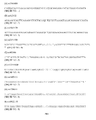
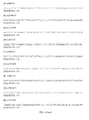
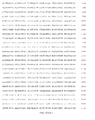
- FIG. 1 represents the nucleotide sequences containing (A) rs3766405, (B) rs412852, (C) rs1061170, (D) rs2274700, (E) rs403846, (F) rs12144939, (G) rs1409153, (H) rs1750311, (I) rs10922153, (J) rs698859, (K) rs2990510, (L) rs3753394, (M) rs529825, (N) rs800292, (O) rs3766404, (P) rs1061147, (Q) rs2033674, (R) rs3753396, and (S) rs1065489;
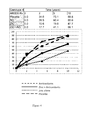
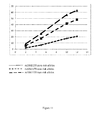
- FIG. 2 is a graphical representation of the percentage of subjects having no CFH and no ARMS2 risk alleles estimated to progress from AREDS category 3 disease in at least one eye to AREDS category 4 disease in the eye that initially had category 3 disease.
- the graph shows the variable "Time” on the X axis and "Percent Progressing" on the Y axis;
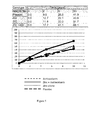
- FIG. 3 is a graphical representation of the percentage of subjects having no CFH and one ARMS2 risk alleles estimated to progress from AREDS category 3 disease in at least one eye to AREDS category 4 disease in the eye that initially had category 3 disease.
- the graph shows the variable "Time” on the X axis and "Percent Progressing" on the Y axis;
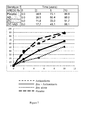
- FIG. 4 is a graphical representation of the percentage of subjects having no CFH and two ARMS2 risk alleles estimated to progress from AREDS category 3 disease in at least one eye to AREDS category 4 disease in the eye that initially had category 3 disease.
- the graph shows the variable "Time” on the X axis and "Percent Progressing" on the Y axis;
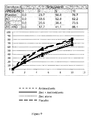
- FIG. 5 is a graphical representation of the percentage of subjects having one CFH and no ARMS2 risk alleles estimated to progress from AREDS category 3 disease in at least one eye to AREDS category 4 disease in the eye that initially had category 3 disease.
- the graph shows the variable "Time” on the X axis and "Percent Progressing" on the Y axis;
- FIG. 6 is a graphical representation of the percentage of subjects having one CFH and one ARMS2 risk alleles estimated to progress from AREDS category 3 disease in at least one eye to AREDS category 4 disease in the eye that initially had category 3 disease.
- the graph shows the variable "Time” on the X axis and "Percent Progressing" on the Y axis;
- FIG. 7 is a graphical representation of the percentage of subjects having one CFH and two ARMS2 risk alleles estimated to progress from AREDS category 3 disease in at least one eye to AREDS category 4 disease in the eye that initially had category 3 disease.
- the graph shows the variable "Time” on the X axis and "Percent Progressing" on the Y axis;
- FIG. 8 is a graphical representation of the percentage of subjects having two CFH and no ARMS2 risk alleles estimated to progress from AREDS category 3 disease in at least one eye to AREDS category 4 disease in the eye that initially had category 3 disease.
- the graph shows the variable "Time” on the X axis and "Percent Progressing" on the Y axis;
- FIG. 9 is a graphical representation of the percentage of subjects having two CFH and one ARMS2 risk alleles estimated to progress from AREDS category 3 disease in at least one eye to AREDS category 4 disease in the eye that initially had category 3 disease.
- the graph shows the variable "Time” on the X axis and "Percent Progressing" on the Y axis;
- FIG. 10 is a graphical representation of the percentage of subjects having two CFH and two ARMS2 risk alleles estimated to progress from AREDS category 3 disease in at least one eye to AREDS category 4 disease in the eye that initially had category 3 disease.
- the graph shows the variable "Time” on the X axis and "Percent Progressing" on the Y axis;
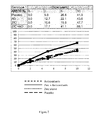
- FIG. 11 is a graphical representation of the percentage of subjects having zero, one or two rs1061170 CFH risk alleles estimated to progress from AREDS category 3 disease in at least one eye to AREDS category 4 disease in the eye that initially had category 3 disease.
- the graph shows the variable "Time" on the X axis and "Percent Progressing" on the Y axis.
- the method described herein is purposed to determine a supplement regime for a subject that has been diagnosed previously with age-related macular degeneration characterized by one or more drusen in one or both eyes, or is concurrently (i.e. for the first time) being diagnosed with this form of the disease.
- dry AMD will be used hereinafter to describe the condition characterized by retinal drusen.
- wet AMD will be used hereinafter to describe the neovascular or exudative form of AMD. Central Geographic Atrophy and wet AMD are conditions classified as "advanced AMD".
- the method described herein analyses the genetic profile of the subject to determine whether a supplement regime containing zinc and/or antioxidants should be administered to the subject, or whether the supplement regime should be free from zinc or antioxidants.
- a subject having AMD with one or more drusen in one or both eyes, and a genetic profile of two complement factor H AMD risk alleles should avoid being administered a supplement containing zinc.
- a subject having AMD with one or more drusen in one or both eyes and a genetic profile having 1 complement factor H risk allele and 1 or 2 ARMS2 risk alleles should be prescribed a supplement regime without antioxidants in order to prolong the potential onset of advanced AMD.
- the supplement can include also copper. Since copper is usually included with any vitamin formulation that includes zinc, it is possible that copper may be responsible for the therapeutic benefit normally achieved with zinc.
- the supplement regime described herein can be in the form of a single multiple vitamin formulation, or can be a series of individual vitamin formulations, or combinations thereof. In either case, the formulation should be controllable so that zinc and/or antioxidants can be provided or removed depending on the specific needs of the patient.
- Antioxidants and the dosages thereof that provide health benefits are known to those skilled in the art, and often include, but are not limited to, vitamins C and E, selenium, and carotenoids, such as beta-carotene, lycopene, lutein, and zeaxanthin.
- antioxidants can be synthetic or be derived from natural sources.
- Zinc supplements can include zinc oxide or any other zinc-containing salt or compound with or without copper.
- the risk of developing advanced AMD is determined by the genetic profile of the subject.
- SNPs single nucleotide polymorphisms in the complement factor H (CFH) gene located on chromosome 1 of the human genome are used to determine the risk of the subject developing advanced AMD.
- CFH complement factor H
- SNPs in the CFH gene are predictors of AMD development and/or predictors of disease progression from early forms of the disease to advanced AMD ( Li M et al., Nature Genetics 38(9):1049-1054, 2006 , the contents of which are incorporated herein).
- SNPs include: rs1048663 (SEQ ID NO: 23), rs3766405 (SEQ ID NO: 1), rs412852 (SEQ ID NO: 2), rs11582939 (SEQ ID NO: 24) and rs1280514 (SEQ ID NO: 25).
- at least rs3766405 (SEQ ID NO: 1) and rs412852 (SEQ ID NO: 2) are used to determine the risk of a subject with AMD characterized by one or more drusen in one or both eyes developing advanced AMD.
- rs3766405 and rs412852 SNPs include: cytosine (C)/C; C/thymine (T); and T/T.
- C cytosine
- T C/thymine
- risk of an individual with AMD having one or more drusen in one or both eyes developing advanced AMD is determined based on the genotype of the individual at rs3766405 and rs412852.
- TABLE 1 rs3766405 rs412852 Risk CC CC High CT CT Medium CC CT CC TT Low CT CC CT TT TT CC TT CT TT TT
- rs1061170 is used to determine risk of a subject with AMD characterized by having one or more drusen in one or both eyes developing advanced AMD. Since each individual will have two copies of each allele, possible allele combinations at the rs1061170 SNP include: C/C (high risk); C/T (medium risk); and T/T (low risk).
- Polymorphic forms of the three SNPs: rs3766405, rs412852 and rs1061170, which are associated with the risk of developing AMD, are shown herein to be associated with accelerated deterioration of vision from AMD in those taking zinc-containing dietary supplements.
- rs3766405, rs412852 and rs1061170 are shown herein to be associated with accelerated deterioration of vision from AMD in those taking zinc-containing dietary supplements.
- the SNPs shown in Table 2 are also considered to be risk indicators in subjects with AMD. The following SNPs can thus be used to detect a subject at risk of developing advanced AMD, either alone, in combination with each other, and/or with one or more additional single nucleotide polymorphism in the CFH gene.
- the subject's risk of developing advanced AMD is based on their genetic profile for the Age-Related Maculopathy Susceptibility 2 (ARMS2) gene in addition to the subject' genetic profile at CFH.
- the insertion/deletion (indel) polymorphism described in US Patent No. 8,168,390 can be used to determine the subject's risk of developing advanced AMD.
- rs10490924 (see FIG. 1V - SEQ ID NO:22), which is in linkage disequilibrium with the indel polymorphism, is used to determine the subject's risk of developing advanced AMD. Since each individual will have two copies of each allele, possible allele combinations at the rs10490924 SNP include: T/T (high risk); G/T (medium risk); and G/G (low risk).
- the indel polymorphism resides in the 3'-UTR of the ARMS2 gene and represents a combination of a deletion and insertion (*372_815delins54).
- the deletion removes the polyadenylation signal sequence at position *395_400 used for the addition of a poly(A) tract 19 bp downstream.
- the insertion introduces a 54-bp AU-rich element known for its properties to control mRNA decay in many transcripts that encode a wide variety of proteins involved in transient biological processes.
- the nucleic acid sequence of the human ARMS2 gene ( FIG. 1T , SEQ ID NO. 20) contains a nucleic acid sequence from position 3143 to 3585, which is deleted or removed from the gene in those individuals susceptible to or having AMD. In place of this deleted sequence, a sequence of 54 nucleotides, is inserted into the ARMS2 gene to produce the nucleic acid sequence shown in SEQ ID NO. 21 ( FIG. 1U ).
- a subject is considered to be at low risk of developing advanced AMD if they are homozygous for the wild-type sequence (i.e. either allele does not contain the indel polymorphism).
- a subject is considered to be at medium risk of developing advanced AMD if they are heterozygous for the indel polymorphism, and at low risk when they are homozygous for the indel polymorphism.
- the subject When the subject has 2 high risk alleles at the complement factor H gene and has no high risk ARMS2 risk alleles, then the subject is a candidate for treatment with a vitamin supplement that comprises antioxidants and is free from zinc and/or copper.
- the subject When the subject has 2 high risk alleles at the complement factor H gene and has one high risk ARMS2 risk alleles, then the subject is a candidate for treatment with a vitamin supplement that comprises antioxidants and is free from zinc and/or copper.
- the subject When the subject has 1 high risk allele at the complement factor H gene and has no high risk ARMS2 risk alleles, then the subject is a candidate for treatment with a vitamin supplement that comprises antioxidants and is free from zinc and/or copper.
- the subject When the subject has 1 high risk alleles at the complement factor H gene and has one high risk ARMS2 risk allele, then the subject is a candidate for treatment with a vitamin supplement that comprises antioxidants and zinc and/or copper.
- the subject When the subject has no risk complement factor H alleles and has 0 risk alleles for the ARMS2 gene, then the subject is a candidate for treatment with a vitamin supplement that contains zinc and/or copper or contains just antioxidants.
- the subject When the subject has no risk complement factor H alleles and has 1 risk alleles for the ARMS2 gene, then the subject is a candidate for treatment with a vitamin supplement that contains zinc and/or copper and no antioxidants. When the subject has no risk complement factor H alleles and has 2 risk alleles for the ARMS2 gene, then the subject is a candidate for treatment with a vitamin supplement that contains zinc and/or copper and no antioxidants.
- Nucleic acids for diagnosis may be obtained from a patient's cells, such as from blood, urine, saliva, tissue biopsy and autopsy material.
- the nucleic acid sample can be isolated from a biological sample using standard techniques.
- the nucleic acid sample may be isolated from the subject and then directly utilized in a method for determining the presence of a polymorphic variant, or alternatively, the sample may be isolated and then stored (e.g., frozen) for a period of time before being subjected to analysis.
- Genomic DNA may be used directly for detection or may be amplified enzymatically by using PCR prior to analysis ( Saiki RK et al., 1986, Nature 324(6093):163-6 ).
- PCR primers complementary to the nucleic acid of one or more polymorphic variants of the present invention can be used to identify and analyze the presence or absence of the polymorphic variant. For example, deletions and insertions can be detected by a change in size of the amplified product in comparison to the normal genotype.
- Polymorphic forms of the ARMS2 gene, specifically c.*372_815del443ins54 can be identified by hybridizing amplified DNA to radiolabeled RNA of the present invention or alternatively, radiolabeled antisense DNA sequences of the present invention. Perfectly matched sequences can be distinguished from mismatched duplexes by RNase A digestion or by differences in melting temperatures.
- Sequence differences between a reference gene and genes having a polymorphism also may be revealed by direct DNA sequencing.
- cloned DNA segments may be employed as probes to detect specific DNA segments.
- the sensitivity of such methods can be greatly enhanced by appropriate use of PCR or another amplification method.
- a sequencing primer is used with a double-stranded PCR product or a single-stranded template molecule generated by a modified PCR technique.
- the sequence determination is performed by conventional procedures with radiolabeled nucleotide or by automatic sequencing procedures with fluorescent-tags.
- DNA sequence differences may be achieved by detection of alteration in electrophoretic mobility of DNA fragments in gels, with or without denaturing agents. Small sequence deletions and insertions can be visualized by high resolution gel electrophoresis. DNA fragments of different sequences may be distinguished on denaturing formamide gradient gels in which the mobilities of different DNA fragments are retarded in the gel at different positions according to their specific melting or partial melting temperatures ( Myers R M et al., 1985, Science 230(4731):1242-6 ).
- Sequence changes at specific locations also may be revealed by nuclease protection assays, such as RNase and S1 protection or the chemical cleavage method ( Cotton R G et al., 1988, Proc Natl Acad Sci USA 85(12):4397-401 ).
- RNA or mRNA expression levels may be specifically determined by a number of different methods, including, but not limited to nuclease protection assay, Northern blot analysis, in situ hybridization or reverse-transcriptase polymerase chain reaction.
- mutations also can be detected by in situ analysis.
- the presence or absence of the SNP or indel polymorphism can be determined using one or both chromosomal complements represented in the nucleic acid sample. Determining the presence or absence of a polymorphic variant in both chromosomal complements represented in a nucleic acid sample is useful for determining the zygosity of an individual for the polymorphic variant (i.e., whether the individual is homozygous or heterozygous for the polymorphic variant). Any oligonucleotide-based diagnostic may be utilized to determine whether a sample includes the presence or absence of a polymorphic variant in a sample. For example, primer extension methods, ligase sequence determination methods (e.g., U.S. Pat. Nos.
- mismatch sequence determination methods e.g., U.S. Pat. Nos. 5,851,770 ; 5,958,692 ; 6,110,684 ; and 6,183,958
- microarray sequence determination methods restriction fragment length polymorphism (RFLP), single strand conformation polymorphism detection (SSCP) (e.g., U.S. Pat. Nos. 5,891,625 and 6,013,499 ), PCR-based assays (e.g., TAQMANTM PCR System (Applied Biosystems)), and nucleotide sequencing methods may be used.
- RFLP restriction fragment length polymorphism
- SSCP single strand conformation polymorphism detection
- PCR-based assays e.g., TAQMANTM PCR System (Applied Biosystems)
- nucleotide sequencing methods may be used.
- Oligonucleotide extension methods typically involve providing a pair of oligonucleotide primers in a polymerase chain reaction (PCR) or in other nucleic acid amplification methods for the purpose of amplifying a region from the nucleic acid sample that comprises the polymorphic variation.
- PCR polymerase chain reaction
- One oligonucleotide primer is complementary to a region 3' or downstream of the polymorphism and the other is complementary to a region 5' or upstream of the polymorphism.
- a PCR primer pair may be used in methods disclosed in U.S. Pat. Nos.
- PCR primer pairs may also be used in any commercially available machines that perform PCR, such as any of the GENEAMPTM, systems available from Applied Biosystems. Also, those of ordinary skill in the art will be able to design oligonucleotide primers based upon the nucleotide sequences set forth in SEQ ID NOs:1-25.
- an extension oligonucleotide that hybridizes to the amplified fragment adjacent to the polymorphic variation.
- An adjacent fragment refers to the 3' end of the extension oligonucleotide being often 1 nucleotide from the 5' end of the polymorphic site, and sometimes 2, 3, 4, 5, 6, 7, 8, 9, or 10 nucleotides from the 5' end of the polymorphic site, in the nucleic acid when the extension oligonucleotide is hybridized to the nucleic acid.
- the extension oligonucleotide then is extended by one or more nucleotides, and the number and/or type of nucleotides that are added to the extension oligonucleotide determine whether the polymorphic variant is present.
- Oligonucleotide extension methods are disclosed, for example, in U.S. Pat. Nos. 4,656,127 ; 4,851,331 ; 5,679,524 ; 5,834,189 ; 5,876,934 ; 5,908,755 ; 5,912,118 ; 5,976,802 ; 5,981,186 ; 6,004,744 ; 6,013,431 ; 6,017,702 ; 6,046,005 ; 6,087,095 ; 6,210,891 ; and WO 01/20039 . Oligonucleotide extension methods using mass spectrometry are described, for example, in U.S. Pat. Nos.
- Genetic mutations can be identified by hybridizing a sample and control nucleic acids, e.g., DNA or RNA, to high density arrays containing hundreds or thousands of oligonucleotides probes ( Cronin M T et al., Hum Mutat 7(3):244-55 ; Kozal M J et al., 1996, Nat Med 2(7):753-9 ).
- genetic mutations can be identified in two-dimensional arrays containing light-generated DNA probes as described in Cronin et al., ( supra ). Briefly, a first hybridization array of probes can be used to scan through long stretches of DNA in a sample and control to identify base changes between the sequences by making linear arrays of sequential overlapping probes.
- This step allows the identification of point mutations.
- This step is followed by a second hybridization array that allows the characterization of specific mutations by using smaller, specialized probe arrays complementary to all variants or mutations detected.
- Each mutation array is composed of parallel probe sets, one complementary to the wild-type gene and the other complementary to the mutant gene.
- Specific mutations can also be determined through direct sequencing of one or both strands of DNA using dideoxy nucleotide chain termination chemistry, electrophoresis through a semi-solid matrix and fluorescent or radioactive chain length detection techniques. Further mutation detection techniques may involve differential susceptibility of the polymorphic double strand to restriction endonuclease digestion, or altered electrophoretic gel mobility of single or double stranded gene fragments containing one polymorphic form.
- Other techniques to detect specific DNA polymorphisms or mutation may involve evaluation of the structural characteristics at the site of polymorphism using nuclear magnetic resonance or x-ray diffraction techniques.
- the apparatus comprises a substrate, such as a glass slide, and at least one oligonucleotide bound to the substrate.
- the oligonucleotide comprising a contiguous nucleic acid sequence complementary to any one of SEQ ID NOs. 1 to 19 and 22-25 and containing position 27 of the sequence, including both the wild-type allele and the polymorphism.
- a second oligonucleotide will be bound to the substrate which corresponds to the oligonucleotide not already bound to the substrate.
- this second sequence could include the wild-type or polymorphic sequence of the sequence already bound to the substrate.
- the substrate will contain alone or in combination with SEQ ID NOs: 1, 2 and/or 3, at least an oligonucleotide comprising a contiguous nucleic acid sequence complementary to SEQ ID NO. 4, SEQ ID NO. 5, SEQ ID NO. 6, SEQ ID NO. 7, SEQ ID NO. 8, SEQ ID NO. 9, SEQ ID NO. 10, SEQ ID NO. 11, SEQ ID NO. 12, SEQ ID NO. 13, SEQ ID NO. 14, SEQ ID NO. 15, SEQ ID NO. 16, SEQ ID NO. 17, SEQ ID NO. 18, SEQ ID NO. 19, SEQ ID NO: 23, SEQ ID NO: 24 and/or SEQ ID NO: 25 and containing position 27 of the sequence.
- the length of the oligonucleotides for use with the apparatus can be chosen in part based on the overall characteristics of the oligonucleotides on the substrate, a preferred range of lengths are between 25-mer and 60-mer.
- a microarray can be utilized for determining whether the polymorphism is present or absent in a nucleic acid sample.
- a microarray may include any oligonucleotides described hereinabove, and methods for making and using oligonucleotide microarrays suitable for diagnostic use are disclosed in U.S. Pat. Nos.
- the microarray typically comprises a solid support and the oligonucleotides may be linked to this solid support by covalent bonds or by non-covalent interactions.
- the oligonucleotides may also be linked to the solid support directly or by a spacer molecule.
- a microarray may comprise one or more oligonucleotides complementary to a polymorphism.
- Subjects used for the present study were classified based on the category of AMD in his or her worse eye. Subjects chosen for observation had AREDS category 3 in one eye and either AREDS categories 1-4 in the fellow eye.
- AREDS classification of AMD and definitions are provided below:
- Subjects were prescribed oral tablets of placebo, antioxidants, zinc or antioxidants plus zinc.
- Antioxidants used in this study included 15 mg of ⁇ -carotene, 500 mg of vitamin C, and 400 IU of vitamin E.
- Zinc supplements included 80 mg as zinc oxide and copper. Copper was included to prevent zinc-induced copper-deficiency anemia.
- Subjects were examined every 6 months, and stereoscopic fundus photographs were obtained routinely from all eyes at baseline, at the 2-year follow-up visit, and every year thereafter. The average duration of treatment was 6.3 years.
- the individual was categorized according to Table 1 as either high, medium or low risk of advancing to AREDS category 4 or 5.
- the individual was categorized as described above as either high, medium or low risk of advancing to AREDS category 4.
- Genotyping was also conducted for the insertion/deletion (indel) polymorphism in the ARMS2 gene.
- the individual was categorized as either high, medium or low risk of developing advanced AMD depending on whether they were homozygous for the indel polymorphism (high risk), heterozygous for the indel polymorphism (medium risk) or homozygous for the wild type allele (i.e. no insertion/deletion in the ARMS2 gene) (low risk).
- Treatment category (TRTCAT 1 (placebo alone), 2 (antioxidants alone), 3 (zinc/copper alone) or 4 (antioxidants + zinc/copper)
- CFH risk status High, Medium and Low
- rs3766405 and rs412852 Treatment category
- ARMS2 status Treatment category
- CFH risk status High, Medium and Low
- rs3766405 and rs412852 Treatment category
- ARMS2 status High, Medium and Low
- the following chart shows the number of patients in each category.
- those subjects having a low risk genetic profile, as described above, benefitted from antioxidant and zinc treatment in that this supplement regime could prolong or prevent disease progression to advanced AMD.
- treatment with antioxidants and/or zinc negatively impacted the individual by contributing to a more rapid disease progression compared to the same risk group prescribed placebo.
- ARMS 2 genotypes were used to determine absolute progression risk among those treated with antioxidants and CFH genotypes to determine absolute progression risk for those treated with zinc alone.
- ARMS2 and CFH were used to determine the absolute risk of progression for those treated with zinc + antioxidants. While certain combinations of genotypes (1,8 and 9) were associated with similar progression risk among all 4 treatment groups, others were associated with marked differences in progression as a function of treatment group. For instance, genotype groups 2, 4 and 7 were associated with lower conversion rates with zinc containing regiments than with any other regimen.
- Genotypes groups 3, 6 and 8 derived no benefit from zinc containing regimens actually doing significantly worse than placebo-treated patients. Genotype groups 3 and 6 derive greater benefit from antioxidants alone than from antioxidants combined with zinc/copper.
- ARMS 2 alleles seem to decrease the effectiveness of anti-oxidant only therapy in an allele dose dependent fashion.
- 5 treatment groups were identified that derive greater benefit from either zinc/copper alone or antioxidants alone than from the combination of zinc and antioxidants.
- Table 8 There are shown in Table 8 below. Approximately 50 percent of all people with intermediate AMD would get more benefit from genotype-directed therapy than from the universal administration of zinc plus antioxidants. The frequency of each of the genotype combinations is shown (Table 8).
- Table 9 shows the overall beneficial effect for each genotype combination if treated with the genotype-directed optimal therapy rather than with both zinc and antioxidants.
- the progression to advance AMD at 10 years improvement is shown and ranges in each group from 6.8 to 28.1 absolute difference in progression proportion.
Landscapes
- Chemical & Material Sciences (AREA)
- Life Sciences & Earth Sciences (AREA)
- Proteomics, Peptides & Aminoacids (AREA)
- Health & Medical Sciences (AREA)
- Organic Chemistry (AREA)
- Wood Science & Technology (AREA)
- Analytical Chemistry (AREA)
- Zoology (AREA)
- Genetics & Genomics (AREA)
- Engineering & Computer Science (AREA)
- Pathology (AREA)
- Immunology (AREA)
- Microbiology (AREA)
- Molecular Biology (AREA)
- Biotechnology (AREA)
- Biophysics (AREA)
- Physics & Mathematics (AREA)
- Biochemistry (AREA)
- Bioinformatics & Cheminformatics (AREA)
- General Engineering & Computer Science (AREA)
- General Health & Medical Sciences (AREA)
- Measuring Or Testing Involving Enzymes Or Micro-Organisms (AREA)
Applications Claiming Priority (4)
| Application Number | Priority Date | Filing Date | Title |
|---|---|---|---|
| US201361757981P | 2013-01-29 | 2013-01-29 | |
| US201361761432P | 2013-02-06 | 2013-02-06 | |
| US201361777681P | 2013-03-12 | 2013-03-12 | |
| US201361819858P | 2013-05-06 | 2013-05-06 |
Publications (1)
| Publication Number | Publication Date |
|---|---|
| EP2759603A1 true EP2759603A1 (de) | 2014-07-30 |
Family
ID=48906171
Family Applications (1)
| Application Number | Title | Priority Date | Filing Date |
|---|---|---|---|
| EP13179087.5A Withdrawn EP2759603A1 (de) | 2013-01-29 | 2013-08-02 | Verfahren zur Bestimmung eines Therapieansatzes zur Behandlung von altersbedingter Makuladegeneration (AMD) |
Country Status (2)
| Country | Link |
|---|---|
| US (2) | US9896728B2 (de) |
| EP (1) | EP2759603A1 (de) |
Families Citing this family (1)
| Publication number | Priority date | Publication date | Assignee | Title |
|---|---|---|---|---|
| CN103874526A (zh) * | 2011-04-29 | 2014-06-18 | 犹他大学研究基金会 | 预测补体介导的疾病的发展的方法 |
Citations (55)
| Publication number | Priority date | Publication date | Assignee | Title |
|---|---|---|---|---|
| US4656127A (en) | 1983-04-22 | 1987-04-07 | Amersham International Plc. | Method of detecting mutations in DNA and RNA |
| US4683202A (en) | 1985-03-28 | 1987-07-28 | Cetus Corporation | Process for amplifying nucleic acid sequences |
| US4683195A (en) | 1986-01-30 | 1987-07-28 | Cetus Corporation | Process for amplifying, detecting, and/or-cloning nucleic acid sequences |
| US4851331A (en) | 1986-05-16 | 1989-07-25 | Allied Corporation | Method and kit for polynucleotide assay including primer-dependant DNA polymerase |
| US4965188A (en) | 1986-08-22 | 1990-10-23 | Cetus Corporation | Process for amplifying, detecting, and/or cloning nucleic acid sequences using a thermostable enzyme |
| US5492806A (en) | 1987-04-01 | 1996-02-20 | Hyseq, Inc. | Method of determining an ordered sequence of subfragments of a nucleic acid fragment by hybridization of oligonucleotide probes |
| US5525464A (en) | 1987-04-01 | 1996-06-11 | Hyseq, Inc. | Method of sequencing by hybridization of oligonucleotide probes |
| US5547835A (en) | 1993-01-07 | 1996-08-20 | Sequenom, Inc. | DNA sequencing by mass spectrometry |
| US5589330A (en) | 1994-07-28 | 1996-12-31 | Genzyme Corporation | High-throughput screening method for sequence or genetic alterations in nucleic acids using elution and sequencing of complementary oligonucleotides |
| US5605798A (en) | 1993-01-07 | 1997-02-25 | Sequenom, Inc. | DNA diagnostic based on mass spectrometry |
| US5656493A (en) | 1985-03-28 | 1997-08-12 | The Perkin-Elmer Corporation | System for automated performance of the polymerase chain reaction |
| US5679524A (en) | 1994-02-07 | 1997-10-21 | Molecular Tool, Inc. | Ligase/polymerase mediated genetic bit analysis of single nucleotide polymorphisms and its use in genetic analysis |
| US5834189A (en) | 1994-07-08 | 1998-11-10 | Visible Genetics Inc. | Method for evaluation of polymorphic genetic sequences, and the use thereof in identification of HLA types |
| US5849483A (en) | 1994-07-28 | 1998-12-15 | Ig Laboratories, Inc. | High throughput screening method for sequences or genetic alterations in nucleic acids |
| US5849542A (en) | 1993-11-17 | 1998-12-15 | Amersham Pharmacia Biotech Uk Limited | Primer extension mass spectroscopy nucleic acid sequencing method |
| US5851770A (en) | 1994-04-25 | 1998-12-22 | Variagenics, Inc. | Detection of mismatches by resolvase cleavage using a magnetic bead support |
| US5869242A (en) | 1995-09-18 | 1999-02-09 | Myriad Genetics, Inc. | Mass spectrometry to assess DNA sequence polymorphisms |
| US5876934A (en) | 1996-12-18 | 1999-03-02 | Pharmacia Biotech Inc. | DNA sequencing method |
| US5891625A (en) | 1992-06-05 | 1999-04-06 | Buchardt Ole | Use of nucleic acid analogues in the inhibition of nucleic acid amplification |
| US5908755A (en) | 1996-06-14 | 1999-06-01 | Sarnoff Corporation | Sequential step method for sequencing and identifying polynucleotides |
| US5912118A (en) | 1991-08-02 | 1999-06-15 | Europaisches Laboratorium Fur Molekularbiologie (Embl) | Method for sequencing nucleic acids |
| US5928906A (en) | 1996-05-09 | 1999-07-27 | Sequenom, Inc. | Process for direct sequencing during template amplification |
| US5958692A (en) | 1994-04-25 | 1999-09-28 | Variagenics, Inc. | Detection of mutation by resolvase cleavage |
| US5976802A (en) | 1995-04-27 | 1999-11-02 | Europasches Laboratorium fur Molekularbiologie (EMBL) | Simultaneous sequencing of nucleic acids |
| US5981186A (en) | 1995-06-30 | 1999-11-09 | Visible Genetics, Inc. | Method and apparatus for DNA-sequencing using reduced number of sequencing mixtures |
| US5998143A (en) | 1997-12-05 | 1999-12-07 | The Perkin-Elmer Corporation | Cycle sequencing thermal profiles |
| US6004744A (en) | 1991-03-05 | 1999-12-21 | Molecular Tool, Inc. | Method for determining nucleotide identity through extension of immobilized primer |
| US6013499A (en) | 1995-09-14 | 2000-01-11 | Kirin Beer Kabushiki Kaisha | Rho target protein kinase p160 |
| US6013431A (en) | 1990-02-16 | 2000-01-11 | Molecular Tool, Inc. | Method for determining specific nucleotide variations by primer extension in the presence of mixture of labeled nucleotides and terminators |
| US6017702A (en) | 1996-12-05 | 2000-01-25 | The Perkin-Elmer Corporation | Chain-termination type nucleic acid sequencing method including 2'-deoxyuridine-5'-triphosphate |
| US6046005A (en) | 1997-01-15 | 2000-04-04 | Incyte Pharmaceuticals, Inc. | Nucleic acid sequencing with solid phase capturable terminators comprising a cleavable linking group |
| US6045996A (en) | 1993-10-26 | 2000-04-04 | Affymetrix, Inc. | Hybridization assays on oligonucleotide arrays |
| US6087095A (en) | 1992-04-22 | 2000-07-11 | Medical Research Council | DNA sequencing method |
| US6110684A (en) | 1998-02-04 | 2000-08-29 | Variagenics, Inc. | Mismatch detection techniques |
| WO2000052625A2 (en) | 1999-02-22 | 2000-09-08 | Vialogy Corporation | Method and apparatus for analyzing hybridized biochip patterns using resonance interactions |
| US6140054A (en) | 1998-09-30 | 2000-10-31 | University Of Utah Research Foundation | Multiplex genotyping using fluorescent hybridization probes |
| US6142681A (en) | 1999-02-22 | 2000-11-07 | Vialogy Corporation | Method and apparatus for interpreting hybridized bioelectronic DNA microarray patterns using self-scaling convergent reverberant dynamics |
| US6156501A (en) | 1993-10-26 | 2000-12-05 | Affymetrix, Inc. | Arrays of modified nucleic acid probes and methods of use |
| US6183958B1 (en) | 1998-05-06 | 2001-02-06 | Variagenics, Inc. | Probes for variance detection |
| US6194144B1 (en) | 1993-01-07 | 2001-02-27 | Sequenom, Inc. | DNA sequencing by mass spectrometry |
| US6197506B1 (en) | 1989-06-07 | 2001-03-06 | Affymetrix, Inc. | Method of detecting nucleic acids |
| WO2001020039A2 (en) | 1999-09-16 | 2001-03-22 | Curagen Corporation | Method of sequencing a nucleic acid |
| US6210891B1 (en) | 1996-09-27 | 2001-04-03 | Pyrosequencing Ab | Method of sequencing DNA |
| WO2001025485A2 (en) | 1999-10-06 | 2001-04-12 | Amersham Biosciences Corp | Method for detecting mutations using arrayed primer extension |
| WO2001027327A2 (en) | 1999-10-08 | 2001-04-19 | Protogene Laboratories, Inc. | Method and apparatus for performing large numbers of reactions using array assembly |
| WO2001027329A2 (en) | 1999-10-08 | 2001-04-19 | Board Of Regents, The University Of Texas System | Combinatorial oligonucleotide pcr: a method for rapid, global expression analysis |
| WO2001027326A2 (en) | 1999-10-08 | 2001-04-19 | Applera Corporation | Template-dependent ligation with pna-dna chimeric probes |
| US6223127B1 (en) | 1997-08-15 | 2001-04-24 | Affymetrix, Inc. | Polymorphism detection utilizing clustering analysis |
| WO2001029259A2 (en) | 1999-10-18 | 2001-04-26 | Affymetrix, Inc. | Identification of alleles |
| US6225625B1 (en) | 1989-06-07 | 2001-05-01 | Affymetrix, Inc. | Signal detection methods and apparatus |
| US6229911B1 (en) | 1997-07-25 | 2001-05-08 | Affymetrix, Inc. | Method and apparatus for providing a bioinformatics database |
| US6239273B1 (en) | 1995-02-27 | 2001-05-29 | Affymetrix, Inc. | Printing molecular library arrays |
| WO2007029008A2 (en) * | 2005-09-08 | 2007-03-15 | Dsm Ip Assets B.V. | Method of treatment or prevention of age-related macular degeneration |
| WO2010085542A2 (en) * | 2009-01-23 | 2010-07-29 | Novartis Ag | Biomarkers related to age-related macular degeneration (amd) |
| US8168390B2 (en) | 2009-05-27 | 2012-05-01 | University Of Regensburg | Method and apparatus for diagnosing age-related macular degeneration |
-
2013
- 2013-07-31 US US13/955,502 patent/US9896728B2/en active Active - Reinstated
- 2013-08-02 EP EP13179087.5A patent/EP2759603A1/de not_active Withdrawn
-
2017
- 2017-07-06 US US15/642,710 patent/US20180023141A1/en not_active Abandoned
Patent Citations (63)
| Publication number | Priority date | Publication date | Assignee | Title |
|---|---|---|---|---|
| US4656127A (en) | 1983-04-22 | 1987-04-07 | Amersham International Plc. | Method of detecting mutations in DNA and RNA |
| US5656493A (en) | 1985-03-28 | 1997-08-12 | The Perkin-Elmer Corporation | System for automated performance of the polymerase chain reaction |
| US4683202B1 (de) | 1985-03-28 | 1990-11-27 | Cetus Corp | |
| US4683202A (en) | 1985-03-28 | 1987-07-28 | Cetus Corporation | Process for amplifying nucleic acid sequences |
| US4683195A (en) | 1986-01-30 | 1987-07-28 | Cetus Corporation | Process for amplifying, detecting, and/or-cloning nucleic acid sequences |
| US4683195B1 (de) | 1986-01-30 | 1990-11-27 | Cetus Corp | |
| US4851331A (en) | 1986-05-16 | 1989-07-25 | Allied Corporation | Method and kit for polynucleotide assay including primer-dependant DNA polymerase |
| US4965188A (en) | 1986-08-22 | 1990-10-23 | Cetus Corporation | Process for amplifying, detecting, and/or cloning nucleic acid sequences using a thermostable enzyme |
| US6018041A (en) | 1987-04-01 | 2000-01-25 | Hyseq, Inc. | Method of sequencing genomes by hybridization of oligonucleotide probes |
| US5525464A (en) | 1987-04-01 | 1996-06-11 | Hyseq, Inc. | Method of sequencing by hybridization of oligonucleotide probes |
| US5492806A (en) | 1987-04-01 | 1996-02-20 | Hyseq, Inc. | Method of determining an ordered sequence of subfragments of a nucleic acid fragment by hybridization of oligonucleotide probes |
| US5695940A (en) | 1987-04-01 | 1997-12-09 | Hyseq, Inc. | Method of sequencing by hybridization of oligonucleotide probes |
| US6197506B1 (en) | 1989-06-07 | 2001-03-06 | Affymetrix, Inc. | Method of detecting nucleic acids |
| US6225625B1 (en) | 1989-06-07 | 2001-05-01 | Affymetrix, Inc. | Signal detection methods and apparatus |
| US6013431A (en) | 1990-02-16 | 2000-01-11 | Molecular Tool, Inc. | Method for determining specific nucleotide variations by primer extension in the presence of mixture of labeled nucleotides and terminators |
| US6004744A (en) | 1991-03-05 | 1999-12-21 | Molecular Tool, Inc. | Method for determining nucleotide identity through extension of immobilized primer |
| US5912118A (en) | 1991-08-02 | 1999-06-15 | Europaisches Laboratorium Fur Molekularbiologie (Embl) | Method for sequencing nucleic acids |
| US6087095A (en) | 1992-04-22 | 2000-07-11 | Medical Research Council | DNA sequencing method |
| US5891625A (en) | 1992-06-05 | 1999-04-06 | Buchardt Ole | Use of nucleic acid analogues in the inhibition of nucleic acid amplification |
| US5605798A (en) | 1993-01-07 | 1997-02-25 | Sequenom, Inc. | DNA diagnostic based on mass spectrometry |
| US6194144B1 (en) | 1993-01-07 | 2001-02-27 | Sequenom, Inc. | DNA sequencing by mass spectrometry |
| US5691141A (en) | 1993-01-07 | 1997-11-25 | Sequenom, Inc. | DNA sequencing by mass spectrometry |
| US5547835A (en) | 1993-01-07 | 1996-08-20 | Sequenom, Inc. | DNA sequencing by mass spectrometry |
| US6156501A (en) | 1993-10-26 | 2000-12-05 | Affymetrix, Inc. | Arrays of modified nucleic acid probes and methods of use |
| US6045996A (en) | 1993-10-26 | 2000-04-04 | Affymetrix, Inc. | Hybridization assays on oligonucleotide arrays |
| US5849542A (en) | 1993-11-17 | 1998-12-15 | Amersham Pharmacia Biotech Uk Limited | Primer extension mass spectroscopy nucleic acid sequencing method |
| US5952174A (en) | 1994-02-07 | 1999-09-14 | Orchid Biocomputer, Inc. | Ligase/polymerase-mediated genetic bit analysis of single nucleotide polymorphisms and its use in genetic analysis |
| US5679524A (en) | 1994-02-07 | 1997-10-21 | Molecular Tool, Inc. | Ligase/polymerase mediated genetic bit analysis of single nucleotide polymorphisms and its use in genetic analysis |
| US5958692A (en) | 1994-04-25 | 1999-09-28 | Variagenics, Inc. | Detection of mutation by resolvase cleavage |
| US5851770A (en) | 1994-04-25 | 1998-12-22 | Variagenics, Inc. | Detection of mismatches by resolvase cleavage using a magnetic bead support |
| US5834189A (en) | 1994-07-08 | 1998-11-10 | Visible Genetics Inc. | Method for evaluation of polymorphic genetic sequences, and the use thereof in identification of HLA types |
| US5849483A (en) | 1994-07-28 | 1998-12-15 | Ig Laboratories, Inc. | High throughput screening method for sequences or genetic alterations in nucleic acids |
| US5589330A (en) | 1994-07-28 | 1996-12-31 | Genzyme Corporation | High-throughput screening method for sequence or genetic alterations in nucleic acids using elution and sequencing of complementary oligonucleotides |
| US6239273B1 (en) | 1995-02-27 | 2001-05-29 | Affymetrix, Inc. | Printing molecular library arrays |
| US6043031A (en) | 1995-03-17 | 2000-03-28 | Sequenom, Inc. | DNA diagnostics based on mass spectrometry |
| US5976802A (en) | 1995-04-27 | 1999-11-02 | Europasches Laboratorium fur Molekularbiologie (EMBL) | Simultaneous sequencing of nucleic acids |
| US5981186A (en) | 1995-06-30 | 1999-11-09 | Visible Genetics, Inc. | Method and apparatus for DNA-sequencing using reduced number of sequencing mixtures |
| US6013499A (en) | 1995-09-14 | 2000-01-11 | Kirin Beer Kabushiki Kaisha | Rho target protein kinase p160 |
| US5869242A (en) | 1995-09-18 | 1999-02-09 | Myriad Genetics, Inc. | Mass spectrometry to assess DNA sequence polymorphisms |
| US5928906A (en) | 1996-05-09 | 1999-07-27 | Sequenom, Inc. | Process for direct sequencing during template amplification |
| US5908755A (en) | 1996-06-14 | 1999-06-01 | Sarnoff Corporation | Sequential step method for sequencing and identifying polynucleotides |
| US6210891B1 (en) | 1996-09-27 | 2001-04-03 | Pyrosequencing Ab | Method of sequencing DNA |
| US6017702A (en) | 1996-12-05 | 2000-01-25 | The Perkin-Elmer Corporation | Chain-termination type nucleic acid sequencing method including 2'-deoxyuridine-5'-triphosphate |
| US5876934A (en) | 1996-12-18 | 1999-03-02 | Pharmacia Biotech Inc. | DNA sequencing method |
| US6046005A (en) | 1997-01-15 | 2000-04-04 | Incyte Pharmaceuticals, Inc. | Nucleic acid sequencing with solid phase capturable terminators comprising a cleavable linking group |
| US6229911B1 (en) | 1997-07-25 | 2001-05-08 | Affymetrix, Inc. | Method and apparatus for providing a bioinformatics database |
| US6223127B1 (en) | 1997-08-15 | 2001-04-24 | Affymetrix, Inc. | Polymorphism detection utilizing clustering analysis |
| US5998143A (en) | 1997-12-05 | 1999-12-07 | The Perkin-Elmer Corporation | Cycle sequencing thermal profiles |
| US6110684A (en) | 1998-02-04 | 2000-08-29 | Variagenics, Inc. | Mismatch detection techniques |
| US6183958B1 (en) | 1998-05-06 | 2001-02-06 | Variagenics, Inc. | Probes for variance detection |
| US6140054A (en) | 1998-09-30 | 2000-10-31 | University Of Utah Research Foundation | Multiplex genotyping using fluorescent hybridization probes |
| US6142681A (en) | 1999-02-22 | 2000-11-07 | Vialogy Corporation | Method and apparatus for interpreting hybridized bioelectronic DNA microarray patterns using self-scaling convergent reverberant dynamics |
| US6136541A (en) | 1999-02-22 | 2000-10-24 | Vialogy Corporation | Method and apparatus for analyzing hybridized biochip patterns using resonance interactions employing quantum expressor functions |
| WO2000052625A2 (en) | 1999-02-22 | 2000-09-08 | Vialogy Corporation | Method and apparatus for analyzing hybridized biochip patterns using resonance interactions |
| WO2001020039A2 (en) | 1999-09-16 | 2001-03-22 | Curagen Corporation | Method of sequencing a nucleic acid |
| WO2001025485A2 (en) | 1999-10-06 | 2001-04-12 | Amersham Biosciences Corp | Method for detecting mutations using arrayed primer extension |
| WO2001027327A2 (en) | 1999-10-08 | 2001-04-19 | Protogene Laboratories, Inc. | Method and apparatus for performing large numbers of reactions using array assembly |
| WO2001027329A2 (en) | 1999-10-08 | 2001-04-19 | Board Of Regents, The University Of Texas System | Combinatorial oligonucleotide pcr: a method for rapid, global expression analysis |
| WO2001027326A2 (en) | 1999-10-08 | 2001-04-19 | Applera Corporation | Template-dependent ligation with pna-dna chimeric probes |
| WO2001029259A2 (en) | 1999-10-18 | 2001-04-26 | Affymetrix, Inc. | Identification of alleles |
| WO2007029008A2 (en) * | 2005-09-08 | 2007-03-15 | Dsm Ip Assets B.V. | Method of treatment or prevention of age-related macular degeneration |
| WO2010085542A2 (en) * | 2009-01-23 | 2010-07-29 | Novartis Ag | Biomarkers related to age-related macular degeneration (amd) |
| US8168390B2 (en) | 2009-05-27 | 2012-05-01 | University Of Regensburg | Method and apparatus for diagnosing age-related macular degeneration |
Non-Patent Citations (26)
| Title |
|---|
| AMBATI J ET AL., SURV OPHTHALMOL, vol. 48, no. 3, 2003, pages 257 - 93 |
| ANDREW LOTERY ET AL: "Progress in defining the molecular biology of age related macular degeneration", HUMAN GENETICS, SPRINGER, BERLIN, DE, vol. 122, no. 3-4, 21 July 2007 (2007-07-21), pages 219 - 236, XP019563961, ISSN: 1432-1203, DOI: 10.1007/S00439-007-0406-3 * |
| ARCH OPHTHALMOL, vol. 119, no. 8, 2001, pages 1417 - 36 |
| BRANTLEY ET AL: "Association of Complement Factor H and LOC387715 Genotypes with Response of Exudative Age-Related Macular Degeneration to Intravitreal Bevacizumab", OPHTHALMOLOGY, J. B. LIPPINCOTT CO., PHILADELPHIA, PA, US, vol. 114, no. 12, 27 November 2007 (2007-11-27), pages 2168 - 2173, XP022382053, ISSN: 0161-6420, DOI: 10.1016/J.OPHTHA.2007.09.008 * |
| COTTON R G ET AL., PROC NATL ACAD SCI USA, vol. 85, no. 12, 1988, pages 4397 - 401 |
| CRONIN M T ET AL., HUM MUTAT, vol. 7, no. 3, pages 244 - 55 |
| EDWARDS A O ET AL., SCIENCE, vol. 308, no. 5720, 2005, pages 421 - 4 |
| FISHER S A ET AL., HUM MOL GENET, vol. 14, no. 15, 2005, pages 2257 - 64 |
| GUAN H ET AL: "Featured distribution of AMD-susceptibility SNPs between ethnicities and the modifying effect of SNPs on AMD therapy", EXPERT REVIEW OF OPHTHALMOLOGY 2009 EXPERT REVIEWS LTD. GBR, vol. 4, no. 4, 2009, pages 377 - 386, XP009172603, ISSN: 1746-9899 * |
| HAGEMAN G S ET AL., PROC NATL ACAD SCI USA, vol. 102, no. 20, 2005, pages 7227 - 32 |
| HAINES J L ET AL., SCIENCE, vol. 308, no. 5720, 2005, pages 419 - 21 |
| HAMMOND C J ET AL., OPHTHALMOLOGY, vol. 109, no. 4, 2002, pages 730 - 6 |
| J. M. SEDDON ET AL: "Prediction Model for Prevalence and Incidence of Advanced Age-Related Macular Degeneration Based on Genetic, Demographic, and Environmental Variables", INVESTIGATIVE OPHTHALMOLOGY & VISUAL SCIENCE, vol. 50, no. 5, 1 May 2009 (2009-05-01), pages 2044 - 2053, XP055079219, ISSN: 0146-0404, DOI: 10.1167/iovs.08-3064 * |
| JAKOBSDOTTIR J ET AL., AM J HUM GENET, vol. 77, no. 3, 2005, pages 389 - 407 |
| KLAVER C C ET AL., ARCH OPHTHALMOL, vol. 116, no. 5, 1998, pages 653 - 8 |
| KLEIN M L ET AL: "CFH and LOC387715/ARMS2 Genotypes and Treatment with Antioxidants and Zinc for Age-Related Macular Degeneration", OPHTHALMOLOGY, J. B. LIPPINCOTT CO., PHILADELPHIA, PA, US, vol. 115, no. 6, 1 June 2008 (2008-06-01), pages 1019 - 1025, XP023438952, ISSN: 0161-6420, [retrieved on 20080528], DOI: 10.1016/J.OPHTHA.2008.01.036 * |
| KLEIN R J ET AL., SCIENCE, vol. 308, no. 5720, 2005, pages 385 - 9 |
| KOZAL M J ET AL., NAT MED, vol. 2, no. 7, 1996, pages 753 - 9 |
| LEE A Y ET AL: "Pharmacogenetics of complement factor H (Y402H) and treatment of exudative age-related macular degeneration with ranibizumab", BRITISH JOURNAL OF OPHTHALMOLOGY, LONDON, GB, vol. 93, no. 5, 1 May 2009 (2009-05-01), pages 610 - 613, XP009129122, ISSN: 0007-1161 * |
| LI M ET AL., NAT GENET, vol. 38, no. 9, 2006, pages 1049 - 54 |
| LI M ET AL., NATURE GENETICS, vol. 38, no. 9, 2006, pages 1049 - 1054 |
| MYERS R M ET AL., SCIENCE, vol. 230, no. 4731, 1985, pages 1242 - 6 |
| SAIKI RK ET AL., NATURE, vol. 324, no. 6093, 1986, pages 163 - 6 |
| STEPHEN G. SCHWARTZ ET AL: "Pharmacogenetics and Age-Related Macular Degeneration", JOURNAL OF OPHTHALMOLOGY, vol. 52, no. 7, 1 January 2011 (2011-01-01), pages 4072 - 8, XP055076109, ISSN: 2090-004X, DOI: 10.2217/14622416.10.1.81 * |
| SWAROOP A ET AL., HUM MOL GENET, vol. 16, no. 2, 2007, pages R174 - 82 |
| ZAREPARSI S ET AL., AM J HUM GENET, vol. 77, no. 1, 2005, pages 149 - 53 |
Also Published As
| Publication number | Publication date |
|---|---|
| US20140212507A1 (en) | 2014-07-31 |
| US9896728B2 (en) | 2018-02-20 |
| US20180023141A1 (en) | 2018-01-25 |
Similar Documents
| Publication | Publication Date | Title |
|---|---|---|
| US8431345B2 (en) | Method for determination of progression risk of glaucoma | |
| US20180002753A1 (en) | Genetic markers predictive of response to glatiramer acetate | |
| EP3507384B1 (de) | Verfahren und zusammensetzungen zur vorhersage der aktivität von enzastaurin | |
| KR102050637B1 (ko) | 약물 부작용과 관련된 대립유전자 및 이의 검출 방법 | |
| CA2612389A1 (en) | Genemap of the human genes associated with longevity | |
| JP5129563B2 (ja) | 視神経症に対する感受性を診断または予測するための方法 | |
| JP2022179694A (ja) | Krasバリアントがん患者の免疫ベースの処置 | |
| EP2393939B1 (de) | Snp-marker für mamma- und ovarialkarzinomrisiko | |
| US9896728B2 (en) | Method for determining a therapeutic approach for the treatment of age-related macular degeneration (AMD) | |
| WO2008052167A2 (en) | Methods to identify patients at risk of developing adverse events during treatment with antidepressant medication | |
| WO2015135583A1 (en) | Method for identifying a candidate subject for anti-vascular endothelial growth factor (vegf) therapy | |
| Silva et al. | Ewing's sarcoma: analysis of single nucleotide polymorphism in the EWS gene | |
| Kadam-Pai et al. | Ethnic variations of a retinoblastoma susceptibility gene (RB1) polymorphism in eight Asian populations | |
| KR101806025B1 (ko) | 비소세포폐암 환자의 항암제 치료 반응성 및 예후 예측용 snp 마커 및 이의 용도 | |
| KR101725600B1 (ko) | 유전자 다형성을 이용한 항정신병약물에 대한 치료 반응 예측을 위한 정보를 제공하는 방법 | |
| US20160312284A1 (en) | Select single nucleotide polymorphisms predictive of response to glatiramer acetate | |
| US20170166969A1 (en) | Method for determining a supplement composition for preventing development of dry intermediate age-related macular degeneration | |
| Berca et al. | Study on VDR Polymorphism Influence in Associating with Diabetes Mellitus | |
| JP7570087B2 (ja) | 病的バリアントを利用した前立腺がんの検査方法 | |
| KR102333953B1 (ko) | 신규한 황반변성 진단용 유전자 마커 | |
| US20070117095A1 (en) | Diagnostic method for neonatal or infantile epilepsy syndromes | |
| JP2009089605A (ja) | 乳癌の放射線治療による晩期副作用の発症を予測する方法 | |
| WO2009036513A1 (en) | Diagnostic and therapeutic protocols | |
| KR20200009471A (ko) | Arid3a의 다형성을 이용한 비소세포폐암의 예후 진단 방법 | |
| Mokhtari et al. | Association between TGF-β1-509 Gene Polymorphism with Aggressive Periodontitis |
Legal Events
| Date | Code | Title | Description |
|---|---|---|---|
| PUAI | Public reference made under article 153(3) epc to a published international application that has entered the european phase |
Free format text: ORIGINAL CODE: 0009012 |
|
| 17P | Request for examination filed |
Effective date: 20130802 |
|
| AK | Designated contracting states |
Kind code of ref document: A1 Designated state(s): AL AT BE BG CH CY CZ DE DK EE ES FI FR GB GR HR HU IE IS IT LI LT LU LV MC MK MT NL NO PL PT RO RS SE SI SK SM TR |
|
| AX | Request for extension of the european patent |
Extension state: BA ME |
|
| R17P | Request for examination filed (corrected) |
Effective date: 20150129 |
|
| RBV | Designated contracting states (corrected) |
Designated state(s): AL AT BE BG CH CY CZ DE DK EE ES FI FR GB GR HR HU IE IS IT LI LT LU LV MC MK MT NL NO PL PT RO RS SE SI SK SM TR |
|
| 17Q | First examination report despatched |
Effective date: 20150731 |
|
| STAA | Information on the status of an ep patent application or granted ep patent |
Free format text: STATUS: THE APPLICATION IS DEEMED TO BE WITHDRAWN |
|
| 18D | Application deemed to be withdrawn |
Effective date: 20160211 |