EP2764080B2 - Verfahren zur herstellung von würze mit niedrigem verbrauch von wärmeenergie und brauchwasser - Google Patents
Verfahren zur herstellung von würze mit niedrigem verbrauch von wärmeenergie und brauchwasser Download PDFInfo
- Publication number
- EP2764080B2 EP2764080B2 EP13762442.5A EP13762442A EP2764080B2 EP 2764080 B2 EP2764080 B2 EP 2764080B2 EP 13762442 A EP13762442 A EP 13762442A EP 2764080 B2 EP2764080 B2 EP 2764080B2
- Authority
- EP
- European Patent Office
- Prior art keywords
- wort
- water
- process water
- temperature
- energy
- Prior art date
- Legal status (The legal status is an assumption and is not a legal conclusion. Google has not performed a legal analysis and makes no representation as to the accuracy of the status listed.)
- Active
Links
Images




Classifications
-
- C—CHEMISTRY; METALLURGY
- C12—BIOCHEMISTRY; BEER; SPIRITS; WINE; VINEGAR; MICROBIOLOGY; ENZYMOLOGY; MUTATION OR GENETIC ENGINEERING
- C12C—BEER; PREPARATION OF BEER BY FERMENTATION; PREPARATION OF MALT FOR MAKING BEER; PREPARATION OF HOPS FOR MAKING BEER
- C12C7/00—Preparation of wort
- C12C7/20—Boiling the beerwort
-
- C—CHEMISTRY; METALLURGY
- C12—BIOCHEMISTRY; BEER; SPIRITS; WINE; VINEGAR; MICROBIOLOGY; ENZYMOLOGY; MUTATION OR GENETIC ENGINEERING
- C12C—BEER; PREPARATION OF BEER BY FERMENTATION; PREPARATION OF MALT FOR MAKING BEER; PREPARATION OF HOPS FOR MAKING BEER
- C12C7/00—Preparation of wort
- C12C7/20—Boiling the beerwort
- C12C7/205—Boiling with hops
- C12C7/22—Processes or apparatus specially adapted to save or recover energy
-
- C—CHEMISTRY; METALLURGY
- C12—BIOCHEMISTRY; BEER; SPIRITS; WINE; VINEGAR; MICROBIOLOGY; ENZYMOLOGY; MUTATION OR GENETIC ENGINEERING
- C12C—BEER; PREPARATION OF BEER BY FERMENTATION; PREPARATION OF MALT FOR MAKING BEER; PREPARATION OF HOPS FOR MAKING BEER
- C12C7/00—Preparation of wort
- C12C7/26—Cooling beerwort; Clarifying beerwort during or after the cooling
Definitions
- the present invention relates to an optimized process for the manufacture of wort which allows a significant reduction in thermal energy consumption as well as a significant reduction in the consumption of process water by the implementation of optimal thermal exchanges between wort and water of wort. process.
- the manufacture of the must is a necessary step for several industries, particularly in the breweries, distillery or other industries related to the production of extracts.
- the manufacture of the must according to the conventional processes can be carried out batchwise or continuously and generally comprises the steps of stirring (OP 1), filtration of the mash (OP 2), preheating (OP 3), d boiling (OP 4), clarification (OP 5) and cooling (OP 6 and OP 7) of the must.
- the method may optionally comprise an additional stripping step (OP 8) located before or between the clarification (OP 5) and cooling (OP 6 and OP 7) stages.
- the brewing (OP 1) consists of the hydration of cereal flour or other source of starch with process water at a temperature generally between 40 ° C and 65 ° C. Commonly this temperature is obtained by mixing process water at room temperature and hot process water (78-85 ° C).
- the hydrated flour, called mash is then gradually heated according to a defined heating program in order to convert the starch into a fermentable extract. The mash is thus heated to a temperature generally between 76 and 85 ° C before being filtered.
- the filtration (OP 2) of the mash separates the soluble part containing the fermentable extract (must) and the insoluble part (Deach).
- the filtration operation further comprises a "washing" phase during which the soluble extract contained in the duff is harvested. Commonly this phase is achieved by introducing into the filter (filter-press or filter-tank) of the hot process water (78-85 ° C) which is charged with extract in contact with the duff and is incorporated in the must.
- Preheating makes it possible to heat the must harvested from its harvest temperature (76-85 ° C) to the local boiling point (100 ° C at sea level).
- Boiling (OP 4) of the wort for a specified period, usually 60 to 90 minutes, has for main objectives the sterilization of the wort, the coagulation of the proteins (trub), the isomerization of the hops and the elimination of the volatile compounds undesirable.
- the must is boiled alternating between "calm" boiling periods and "hot” boiling periods.
- the clarification (OP 5) of the boiled wort makes it possible to separate the soluble part containing the fermentable extract and the insoluble part (trub) formed during the boiling.
- the cooling (OP 6 and 7) of the must of its clarification temperature at the fermentation temperature is an operation that is commonly carried out in a heat exchanger fed on the one hand by the must which is cooled, on the other hand by process water at room temperature or cooled, which is heated to a temperature of 78-85 ° C.
- This operation may optionally be supplemented by additional cooling of the must (OP 7) using a heat transfer fluid, depending on the desired must temperature.
- the hot process water (78-85 ° C) produced during wort cooling is commonly stored in a buffer tank for incorporation during brewing (OP 1) and filtration (OP 2) operations. , as well as for rinsing after tank transfer.
- the amount of hot process water thus produced is usually substantially excessive, of the order of about 150%, compared to the amount of process water required for the manufacture of wort. This situation usually leads to surplus production of hot process water which represents for the operator a loss of water and energy.
- Pfaduko Pfannen Dunst Kondensator
- OP 4 a heat exchange by condensation of the vapors of water produced during boiling
- the energy is transmitted via a heat exchanger fed on the one hand by the boiling tank vapor which condenses, and on the other hand by a heat transfer agent which is most often softened water or osmosis.
- the heat transfer agent is subsequently stored in one or more tanks used as energy storage tanks (EST).
- the heat transfer medium at low temperature is thus taken from the bottom of the energy storage tank, heated via the vapor condenser to a temperature usually between 97 and 99 ° C and reintroduced into the top of the energy storage tank.
- the energy storage tank is thus "loaded” during the process of boiling the wort.
- this energy is returned to the product during the preheating operation (OP 3) of the must.
- the energy is transmitted via a heat exchanger supplied on the one hand by the filtered must which is heated to a temperature close to its boiling point, and on the other hand by the heat transfer medium which circulates in closed loop on the stratified energy storage tank.
- the heat transfer medium at high temperature generally of the order of 97 to 99 ° C, is thus taken from the top of the energy storage tank, possibly superheated with steam, then gives up its heat in the preheater of must and is reintroduced into the bottom of the energy storage tank at a temperature usually between 78 and 85 ° C.
- the energy storage tank is thus “discharged” during the preheating operation (OP 3) of the must.
- the circulation of the heat transfer agent thus follows a heating and cooling cycle for transferring and recovering energy.
- This heat transfer closed-loop energy recovery device makes it possible to reduce the thermal energy consumption required for the manufacture of the must by approximately 25%. However, this device does not reduce the surplus production of hot process water.
- the energy is thus captured during the cooling of the wort via a heat exchanger fed on the one hand by the hot wort which cools from a temperature of 98-99 ° C to a temperature of 79-82 ° C and on the other hand by a coolant which rotates in a closed loop on a stratified energy storage tank.
- the heat transfer medium at low temperature (usually 78-85 ° C) is thus taken from the bottom of the energy storage tank, heated via the wort cooler to a temperature usually of 95-96 ° C and reintroduced into the top of the energy storage tank.
- the energy storage tank is thus "loaded” during the wort cooling operation.
- One possibility is to use this energy to heat the mash during the brewing operation (OP 1) through a double-wall type heat exchanger.
- one of the objects of the present invention is to optimize the thermal efficiency of the manufacture of the must.
- a second object of the invention is to reduce the process water consumption required for the process as well as to significantly reduce the surplus production of hot process water.
- the present invention applies to processes for the production of mash comprising the steps of mixing (OP 1), mash filtration (OP 2), preheating (OP 3), formation (OP 4) and stripping (OP). 8), clarification (OP 5) and cooling (OP 6) of the must.
- the method according to the invention makes it possible to reduce the consumption of energy and water, hereinafter process water which is used in an open loop, that is to say that it is subsequently consumed by incorporation into the product. .
- this process water is therefore not softened water or osmosis in order to be subjected to a circulation and is not used for energy transfer in a closed loop which consists of a circuit heating and cooling.
- the process water according to the invention is used against the flow of the production line which successively allows to cool (OP 6) and preheat (OP 3) wort.
- the process water used will then be stored for incorporation into the product as the mashing and / or washing water during the washing of the filter cake.
- the process water which is used for cooling the must can be cooled from its original temperature, that is to say usually from the ambient temperature of the production site, to a temperature slightly lower than the desired temperature of the must cools, generally between 7 and 20 ° C.
- This cooling is carried out by a second exchanger or in a second stage of the same exchanger using a refrigerant such as brine, alcoholic water, or any other suitable refrigerant liquid.
- a refrigerant such as brine, alcoholic water, or any other suitable refrigerant liquid.
- the temperature of the process water after cooling is between 2 and 15 ° C.
- the process water is used to cool (OP 6) the must.
- This exchange is carried out optimally in order to obtain a minimum temperature difference of the order of 3 degrees between the incoming must and the water leaving the exchanger.
- the heat exchange can be carried out by at least one heat exchanger which, in a first step, makes it possible to cool the wort from a temperature of 96 ° to 99 ° C. at a temperature of 30 ° C. ° C and then in a second step to cool the must at a temperature between 5 and 20 ° C with a cooling solution such as a solution comprising glycol.
- the first wort cooling step can be carried out partially before and after clarification of the wort in two separate heat exchangers. For example, the first exchanger reduces the temperature of the wort from 99 ° C to 85 ° C before clarification, and a second exchanger reduces the wort temperature from 85 ° C to 30 ° C.
- the process water reaches a high temperature of the order of 90 to 97 ° C at the exchanger outlet, unlike the conventional process where the process water is produced at a lower temperature of between 78 and 85.degree. ° C.
- the method comprises a stripping step (OP 8) of the must carried out before the cooling operation. Stripping eliminates certain volatile compounds such as certain aldehydes and dimethylsulphide (DMS) form during the training stage.
- DMS dimethylsulphide
- the stripping consists of a gravity flow of must in a column equipped with a specific flow device, in order to maximize the evaporation surface, optionally against the flow of steam or another gas, in order to effectively remove volatile compounds.
- a vapor injection rate equivalent to an evaporation rate of 0.5% is preferable.
- the stripping device comprises a stripping column in which clean steam is injected and allows the volatiles to be carried away.
- An alternative to steam stripping is a hot air stripping step which also enables the volatile compounds to be removed satisfactorily.
- the process water obtained in (a) can be heated in an optional step by condensation of the water vapor produced by the stripping (OP 8). This additional heating is performed by at least one steam condenser for increasing the temperature of the process water to a temperature between 96 and 99 ° C.
- the process water would then be stored at a temperature slightly below 99 ° C of the order of 90 to 95 ° C.
- step (b) the hot process water produced in steps (a) is stored in a buffer tank. In the case of process water, this water will be produced and consumed continuously. The tank therefore does not require lamination.
- the optional step (c) is an overheating of the hot water stored in (b) from its storage temperature of about 99 ° C to a temperature slightly above temperature at which the user wishes to heat his must for the so-called training operation.
- the process water temperature is between 103 and 105 ° C for a site located at sea level. This heating can be performed with steam or superheated water.
- the forming step (OP 4) corresponds to a conventional boiling step and is carried out for a period of 60 to 90 minutes. However, it differs in that a minimum amount of energy is used to keep the must at its boiling point, i.e., at a temperature of about 100 ° C. Unlike Pfaduko processes, it is not necessary to heat the wort excessively or to recover this surplus of energy in the form of hot water.
- the forming operation (OP 4) allows the sterilization of the mutton, the trub formation and, where appropriate, the isomerization of the hops. Due to the absence of energy recovery in the form of steam at this stage, it is preferable to carry out a heating equivalent to an evaporation rate of about 1%.
- step (d) the hot water stored in (b) is used to preheat (OP 3) the wort during transfer between the buffer tank and the formation tank.
- This exchange is carried out optimally in order to obtain a minimum temperature difference between the incoming must and the water leaving the exchanger.
- the temperature of the water is advantageously between 78 ° C. and 85 ° C. at the outlet of the exchanger.
- step (e) the hot water produced in (d) is stored in a buffer tank.
- This water will be used as bottling water to produce the wort during brewing operations (OP 1) and / or as washing water of the filter cake (OP 2).
- process water does not circulate in a closed cycle of heating and cooling.
- the quantity of process water incorporated in the brewing is reduced compared with conventional methods or using a Pfaduko, as described in FIG. WO 2011/76410 since the product will not be so concentrated by evaporation during the training.
- the process may be supplemented by a process water cooling device, which may be for example a dry, wet or hybrid cooling tower, or any other cooling device.
- a process water cooling device which may be for example a dry, wet or hybrid cooling tower, or any other cooling device.
- part of the hot process water, stored in the buffer tank after the preheating step (OP 3) is cooled to the temperature of the mating, that is to say at a temperature from 40 to 65 ° C, and is used either directly, is stored for later use for brewing. It is thus possible to cancel the excess production of hot process water, thus achieving a global water saving of about 30% in the brewing room.
- the process according to the invention thus makes it possible to reduce the energy consumption necessary for the formation of the must and improves the overall balance of the manufacture of the must.
- the method according to the invention recovers hot water only at the cooling stage (OP 6) of the must and the circulation of water follows an open loop. This in particular avoids the problems encountered by the use of a stratified EST.
- the replacement of the boiling operation (OP 4) of the must by a combination of training operations (OP 4) and stripping (OP 8) allows the brewing industry to obtain a must of at least equal quality to that obtained according to a conventional boiling (OP 4), the stripping (OP 8) allowing the elimination of sulfur compounds including DMS and some aldehydes, while significantly reducing the total energy required for the manufacture of the must.
- this energy optimization comprises a formation step (OP 4) which does not generate strong evaporation of water and a stripping step (OP 8) which distinguishes it from conventional methods with or without Pfaduko.
- the process according to the invention makes it possible to reduce the consumption of process water and also makes it possible to substantially reduce water losses by evaporation.
- the method developed thus makes it possible to achieve significant savings in water and energy and makes it possible to place the training (OP 4) and stripping (OP 8) technologies in a new perspective.
- the device may advantageously be equipped with a Pfaduko type energy recovery installation at the formation tank.
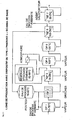
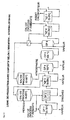
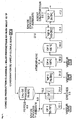
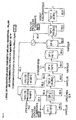
- Tables 1-3 as well as diagrams Figures 4-6 illustrate the energy balances of a wort production line according to a conventional method, a method with Pfaduko and the method according to the invention. These different energy balances were established on the basis of the assumptions according to which the recipe is a 100% malt recipe, that the brewing step is carried out according to an infusion method and that the setting temperature is 55 ° vs.
- the loss of water by evaporation during the boiling operation (OP 4) was taken into account by 4% for conventional methods or with Pfaduko.
- account was taken of a water loss of 1% by evaporation during the forming operation (OP 4) and by 0.5% during stripping (OP 8).
- the invention allows an overall energy reduction of the order of 50% compared to a conventional process and 35% compared to a process with Pfaduko.
- FIGs 7 to 10 illustrate the water consumption budgets of wort production lines using a conventional process ( Figure 7 ), a process comprising a Pfaduko ( Figure 8 ) and a method according to the invention ( Figure 9 and 10 ) based on the assumptions of Example 1.
Landscapes
- Chemical & Material Sciences (AREA)
- Organic Chemistry (AREA)
- Engineering & Computer Science (AREA)
- Bioinformatics & Cheminformatics (AREA)
- Life Sciences & Earth Sciences (AREA)
- Biochemistry (AREA)
- Health & Medical Sciences (AREA)
- General Engineering & Computer Science (AREA)
- General Health & Medical Sciences (AREA)
- Genetics & Genomics (AREA)
- Food Science & Technology (AREA)
- Wood Science & Technology (AREA)
- Zoology (AREA)
- Distillation Of Fermentation Liquor, Processing Of Alcohols, Vinegar And Beer (AREA)
Claims (10)
- Verfahren zur Würzeherstellung mit verringertem Verbrauch an Wärmeenergie und Prozesswasser, umfassend die Schritte des Mischens (OP 1), des Filterns der Maische (OP 2), des Vorerhitzens (OP 3), des Formierens (OP 4) und des Strippens , des Klärens (OP 5) und des Abkühlens (OP 6) der Würze, wobei das Verfahren weiter die folgenden Schritte umfasst:a. nach Abkühlen (OP 6) der Würze durch ein Prozesswasser die Temperatur des Prozesswassers am Tauscherausgang mehr als 90°C beträgt,b. das in Schritt (a) erzeugte Prozesswasser gelagert wird,c. das in Schritt (b) gelagerte Prozesswasser zum Vorerhitzen (OP 3) der Würze verwendet wird,d. das in (c) erzeugte Prozesswasser gelagert und dann als Einmaischwasser für die Mischvorgänge (OP 1) und/oder als Waschwasser des Filterkuchens (OP 2) verwendet wird.
- Verfahren zur Würzeherstellung nach Anspruch 1, dadurch gekennzeichnet, dass es einen zusätzlichen Schritt des Erhitzens des nach Schritt (a) erhaltenen Prozesswassers umfasst.
- Verfahren zur Würzeherstellung nach dem vorhergehenden Anspruch, dadurch gekennzeichnet, dass das zusätzliche Erhitzen mittels Wärmetausch beim Strippen mittels Dampf erfolgt.
- Verfahren zur Würzeherstellung nach einem der vorhergehenden Ansprüche, dadurch gekennzeichnet, dass das Verfahren einen Überhitzungsvorgang des in Schritt (b) gelagerten Prozesswassers bei einer Temperatur, die zwischen 103 und 105°C beträgt, umfasst.
- Verfahren zur Würzeherstellung nach einem der vorhergehenden Ansprüche, dadurch gekennzeichnet, dass bei Schritt (a) das Prozesswasser am Tauscherausgang eine Temperatur aufweist, die zwischen 95°C und 99°C beträgt.
- Verfahren zur Würzeherstellung nach einem der vorhergehenden Ansprüche, dadurch gekennzeichnet, dass bei Schritt (b) das Prozesswasser bei einer Temperatur gelagert wird, die zwischen 95 und 99°C beträgt.
- Verfahren zur Würzeherstellung nach einem der vorhergehenden Ansprüche, dadurch gekennzeichnet, dass bei Schritt (c) die Temperatur des Prozesswassers am Tauscherausgang zwischen 78°C und 85°C beträgt.
- Verfahren zur Würzeherstellung nach einem der vorhergehenden Ansprüche, dadurch gekennzeichnet, dass das in Schritt (d) gelagerte Prozesswasser als Einmaischwasser und Waschwasser des Filterkuchens verwendet wird.
- Verfahren zur Würzeherstellung nach einem der vorhergehenden Ansprüche, dadurch gekennzeichnet, dass das Verfahren einen Schritt des Abkühlens des in (d) gelagerten Prozesswassers auf eine Temperatur umfasst, die zwischen 40 und 65°C beträgt.
- Verfahren zur Würzeherstellung nach einem der vorhergehenden Ansprüche, dadurch gekennzeichnet, dass der erste Schritt des Abkühlens der Würze zum Teil vor und nach dem Klären (OP 5) der Würze erfolgt, von 99°C auf 85°C vor dem Klären und von 85°C auf 30°C nach dem Klären.
Applications Claiming Priority (2)
| Application Number | Priority Date | Filing Date | Title |
|---|---|---|---|
| BE2012/0597A BE1020478A5 (fr) | 2012-09-11 | 2012-09-11 | Procede de fabrication de mout a consommation reduite en energie thermique et eau de process. |
| PCT/EP2013/068681 WO2014040972A1 (fr) | 2012-09-11 | 2013-09-10 | Procede de fabrication de moût a consommation reduite en energie thermique et eau de process. |
Publications (3)
| Publication Number | Publication Date |
|---|---|
| EP2764080A1 EP2764080A1 (de) | 2014-08-13 |
| EP2764080B1 EP2764080B1 (de) | 2014-12-10 |
| EP2764080B2 true EP2764080B2 (de) | 2018-10-24 |
Family
ID=47048902
Family Applications (1)
| Application Number | Title | Priority Date | Filing Date |
|---|---|---|---|
| EP13762442.5A Active EP2764080B2 (de) | 2012-09-11 | 2013-09-10 | Verfahren zur herstellung von würze mit niedrigem verbrauch von wärmeenergie und brauchwasser |
Country Status (5)
| Country | Link |
|---|---|
| EP (1) | EP2764080B2 (de) |
| BE (1) | BE1020478A5 (de) |
| DK (1) | DK2764080T4 (de) |
| ES (1) | ES2530850T5 (de) |
| WO (1) | WO2014040972A1 (de) |
Families Citing this family (2)
| Publication number | Priority date | Publication date | Assignee | Title |
|---|---|---|---|---|
| EP2778219B1 (de) | 2013-03-13 | 2019-11-13 | Gea Brewery Systems Gmbh | Verfahren und Sudhausanlage zur kontinuierlichen Würzeherstellung |
| DE102013111058A1 (de) | 2013-03-13 | 2014-09-18 | Gea Brewery Systems Gmbh | Verfahren und Sudhausanlage zur Würzeherstellung |
Family Cites Families (2)
| Publication number | Priority date | Publication date | Assignee | Title |
|---|---|---|---|---|
| DE3345396A1 (de) * | 1983-12-15 | 1985-06-27 | Kraftanlagen Ag, 6900 Heidelberg | Verfahren und einrichtung zur kontinuierlichen wuerzekochung |
| DE102009055300A1 (de) * | 2009-12-23 | 2011-06-30 | Krones Ag, 93073 | Vorrichtung und Verfahren zum Rückgewinnen von Energie |
-
2012
- 2012-09-11 BE BE2012/0597A patent/BE1020478A5/fr active
-
2013
- 2013-09-10 DK DK13762442.5T patent/DK2764080T4/en active
- 2013-09-10 WO PCT/EP2013/068681 patent/WO2014040972A1/fr not_active Ceased
- 2013-09-10 ES ES13762442T patent/ES2530850T5/es active Active
- 2013-09-10 EP EP13762442.5A patent/EP2764080B2/de active Active
Non-Patent Citations (1)
| Title |
|---|
| "OPTIMIERUNG DES WäRME-UND WASSERHAUSHALTES IM SUDHAUS", BRAUWELT, no. 38/39, 1995, pages 1974 † |
Also Published As
| Publication number | Publication date |
|---|---|
| ES2530850T3 (es) | 2015-03-06 |
| ES2530850T5 (es) | 2019-02-27 |
| WO2014040972A9 (fr) | 2014-06-05 |
| DK2764080T3 (en) | 2015-03-09 |
| BE1020478A5 (fr) | 2013-11-05 |
| EP2764080A1 (de) | 2014-08-13 |
| EP2764080B1 (de) | 2014-12-10 |
| DK2764080T4 (en) | 2019-02-04 |
| WO2014040972A1 (fr) | 2014-03-20 |
Similar Documents
| Publication | Publication Date | Title |
|---|---|---|
| CN108315113A (zh) | 低酒精或不含酒精的基于发酵的麦芽的饮料及用于生产该饮料的方法 | |
| CN101952408B (zh) | 制备发酵饮料的方法 | |
| CA2784812A1 (en) | Apparatus and method for the recovery of energy | |
| EP2764080B2 (de) | Verfahren zur herstellung von würze mit niedrigem verbrauch von wärmeenergie und brauchwasser | |
| JP2014525243A (ja) | ビール醸造方法 | |
| TW201945533A (zh) | 啤酒釀造設備及釀造流程 | |
| DE102011086409A1 (de) | Verfahren und Vorrichtung zur Würzevorkühlung | |
| JP2001161338A (ja) | 発泡酒の製造方法 | |
| DK2975109T3 (en) | Beer production process | |
| CN101585974A (zh) | 一种毛用活性染料艳蓝的制备方法 | |
| CN107311372A (zh) | 利用空气氧化实现脱硫废液提盐的方法 | |
| BE1020741A3 (fr) | Procede de brassage continu ou semi-continu. | |
| CN106350419B (zh) | 利用酿酒黄水生产乳酸复合调酒液的方法 | |
| JP3558642B2 (ja) | 発酵可能な抽出物の殺菌および発酵 | |
| CN1085727C (zh) | 水果白酒生产装置 | |
| BE1028849B1 (fr) | Procédé de production de bière | |
| KR102163980B1 (ko) | 액상 당을 이용한 여과 속도가 증가된 주류의 제조 방법 | |
| CN105154282A (zh) | 一种黄酒的酿造方法 | |
| JP7591776B1 (ja) | 蒸留酒製造用の熱源システム及びこれを用いた排熱回収・供給方法 | |
| FR2788785A1 (fr) | Procede et unite d'extraction d'un jus sucre a partir de betteraves ou chicoree | |
| KR102863750B1 (ko) | 무알콜 맥주의 제조방법 | |
| KR102336034B1 (ko) | 도담쌀을 이용한 맥주 및 그 제조방법 | |
| CN114133368B (zh) | 一种从麦芽酚氯化水解液中直接升华提取乙基麦芽酚的方法 | |
| Groeneveld | Pasteurization is SO 2024 | |
| CN120399818A (zh) | 从废酵母泥中回收啤酒的方法 |
Legal Events
| Date | Code | Title | Description |
|---|---|---|---|
| PUAI | Public reference made under article 153(3) epc to a published international application that has entered the european phase |
Free format text: ORIGINAL CODE: 0009012 |
|
| 17P | Request for examination filed |
Effective date: 20140508 |
|
| AK | Designated contracting states |
Kind code of ref document: A1 Designated state(s): AL AT BE BG CH CY CZ DE DK EE ES FI FR GB GR HR HU IE IS IT LI LT LU LV MC MK MT NL NO PL PT RO RS SE SI SK SM TR |
|
| GRAP | Despatch of communication of intention to grant a patent |
Free format text: ORIGINAL CODE: EPIDOSNIGR1 |
|
| RIC1 | Information provided on ipc code assigned before grant |
Ipc: C12C 7/00 20060101AFI20140903BHEP Ipc: C12C 7/22 20060101ALI20140903BHEP Ipc: C12C 7/20 20060101ALI20140903BHEP Ipc: C12C 7/26 20060101ALI20140903BHEP |
|
| GRAS | Grant fee paid |
Free format text: ORIGINAL CODE: EPIDOSNIGR3 |
|
| INTG | Intention to grant announced |
Effective date: 20140924 |
|
| GRAA | (expected) grant |
Free format text: ORIGINAL CODE: 0009210 |
|
| AK | Designated contracting states |
Kind code of ref document: B1 Designated state(s): AL AT BE BG CH CY CZ DE DK EE ES FI FR GB GR HR HU IE IS IT LI LT LU LV MC MK MT NL NO PL PT RO RS SE SI SK SM TR |
|
| DAX | Request for extension of the european patent (deleted) | ||
| REG | Reference to a national code |
Ref country code: GB Ref legal event code: FG4D Free format text: NOT ENGLISH |
|
| REG | Reference to a national code |
Ref country code: CH Ref legal event code: EP |
|
| REG | Reference to a national code |
Ref country code: IE Ref legal event code: FG4D Free format text: LANGUAGE OF EP DOCUMENT: FRENCH |
|
| REG | Reference to a national code |
Ref country code: AT Ref legal event code: REF Ref document number: 700669 Country of ref document: AT Kind code of ref document: T Effective date: 20150115 |
|
| REG | Reference to a national code |
Ref country code: DE Ref legal event code: R096 Ref document number: 602013000589 Country of ref document: DE Effective date: 20150122 |
|
| REG | Reference to a national code |
Ref country code: NL Ref legal event code: T3 |
|
| REG | Reference to a national code |
Ref country code: CH Ref legal event code: NV Representative=s name: MICHELI AND CIE SA, CH |
|
| REG | Reference to a national code |
Ref country code: ES Ref legal event code: FG2A Ref document number: 2530850 Country of ref document: ES Kind code of ref document: T3 Effective date: 20150306 |
|
| REG | Reference to a national code |
Ref country code: DK Ref legal event code: T3 Effective date: 20150305 |
|
| REG | Reference to a national code |
Ref country code: AT Ref legal event code: MK05 Ref document number: 700669 Country of ref document: AT Kind code of ref document: T Effective date: 20141210 |
|
| PG25 | Lapsed in a contracting state [announced via postgrant information from national office to epo] |
Ref country code: FI Free format text: LAPSE BECAUSE OF FAILURE TO SUBMIT A TRANSLATION OF THE DESCRIPTION OR TO PAY THE FEE WITHIN THE PRESCRIBED TIME-LIMIT Effective date: 20141210 Ref country code: NO Free format text: LAPSE BECAUSE OF FAILURE TO SUBMIT A TRANSLATION OF THE DESCRIPTION OR TO PAY THE FEE WITHIN THE PRESCRIBED TIME-LIMIT Effective date: 20150310 Ref country code: LT Free format text: LAPSE BECAUSE OF FAILURE TO SUBMIT A TRANSLATION OF THE DESCRIPTION OR TO PAY THE FEE WITHIN THE PRESCRIBED TIME-LIMIT Effective date: 20141210 |
|
| REG | Reference to a national code |
Ref country code: LT Ref legal event code: MG4D |
|
| PG25 | Lapsed in a contracting state [announced via postgrant information from national office to epo] |
Ref country code: RS Free format text: LAPSE BECAUSE OF FAILURE TO SUBMIT A TRANSLATION OF THE DESCRIPTION OR TO PAY THE FEE WITHIN THE PRESCRIBED TIME-LIMIT Effective date: 20141210 Ref country code: HR Free format text: LAPSE BECAUSE OF FAILURE TO SUBMIT A TRANSLATION OF THE DESCRIPTION OR TO PAY THE FEE WITHIN THE PRESCRIBED TIME-LIMIT Effective date: 20141210 Ref country code: AT Free format text: LAPSE BECAUSE OF FAILURE TO SUBMIT A TRANSLATION OF THE DESCRIPTION OR TO PAY THE FEE WITHIN THE PRESCRIBED TIME-LIMIT Effective date: 20141210 Ref country code: SE Free format text: LAPSE BECAUSE OF FAILURE TO SUBMIT A TRANSLATION OF THE DESCRIPTION OR TO PAY THE FEE WITHIN THE PRESCRIBED TIME-LIMIT Effective date: 20141210 Ref country code: GR Free format text: LAPSE BECAUSE OF FAILURE TO SUBMIT A TRANSLATION OF THE DESCRIPTION OR TO PAY THE FEE WITHIN THE PRESCRIBED TIME-LIMIT Effective date: 20150311 Ref country code: LV Free format text: LAPSE BECAUSE OF FAILURE TO SUBMIT A TRANSLATION OF THE DESCRIPTION OR TO PAY THE FEE WITHIN THE PRESCRIBED TIME-LIMIT Effective date: 20141210 |
|
| PG25 | Lapsed in a contracting state [announced via postgrant information from national office to epo] |
Ref country code: PT Free format text: LAPSE BECAUSE OF FAILURE TO SUBMIT A TRANSLATION OF THE DESCRIPTION OR TO PAY THE FEE WITHIN THE PRESCRIBED TIME-LIMIT Effective date: 20150410 Ref country code: RO Free format text: LAPSE BECAUSE OF FAILURE TO SUBMIT A TRANSLATION OF THE DESCRIPTION OR TO PAY THE FEE WITHIN THE PRESCRIBED TIME-LIMIT Effective date: 20141210 Ref country code: SK Free format text: LAPSE BECAUSE OF FAILURE TO SUBMIT A TRANSLATION OF THE DESCRIPTION OR TO PAY THE FEE WITHIN THE PRESCRIBED TIME-LIMIT Effective date: 20141210 Ref country code: EE Free format text: LAPSE BECAUSE OF FAILURE TO SUBMIT A TRANSLATION OF THE DESCRIPTION OR TO PAY THE FEE WITHIN THE PRESCRIBED TIME-LIMIT Effective date: 20141210 Ref country code: CZ Free format text: LAPSE BECAUSE OF FAILURE TO SUBMIT A TRANSLATION OF THE DESCRIPTION OR TO PAY THE FEE WITHIN THE PRESCRIBED TIME-LIMIT Effective date: 20141210 |
|
| PG25 | Lapsed in a contracting state [announced via postgrant information from national office to epo] |
Ref country code: PL Free format text: LAPSE BECAUSE OF FAILURE TO SUBMIT A TRANSLATION OF THE DESCRIPTION OR TO PAY THE FEE WITHIN THE PRESCRIBED TIME-LIMIT Effective date: 20141210 Ref country code: IS Free format text: LAPSE BECAUSE OF FAILURE TO SUBMIT A TRANSLATION OF THE DESCRIPTION OR TO PAY THE FEE WITHIN THE PRESCRIBED TIME-LIMIT Effective date: 20150410 |
|
| REG | Reference to a national code |
Ref country code: DE Ref legal event code: R026 Ref document number: 602013000589 Country of ref document: DE |
|
| PLBI | Opposition filed |
Free format text: ORIGINAL CODE: 0009260 |
|
| PLAB | Opposition data, opponent's data or that of the opponent's representative modified |
Free format text: ORIGINAL CODE: 0009299OPPO |
|
| PLAX | Notice of opposition and request to file observation + time limit sent |
Free format text: ORIGINAL CODE: EPIDOSNOBS2 |
|
| 26 | Opposition filed |
Opponent name: ZIEMANN INTERNATIONAL GMBH Effective date: 20150908 |
|
| R26 | Opposition filed (corrected) |
Opponent name: ZIEMANN HOLVRIEKA GMBH Effective date: 20150908 |
|
| PG25 | Lapsed in a contracting state [announced via postgrant information from national office to epo] |
Ref country code: IT Free format text: LAPSE BECAUSE OF FAILURE TO SUBMIT A TRANSLATION OF THE DESCRIPTION OR TO PAY THE FEE WITHIN THE PRESCRIBED TIME-LIMIT Effective date: 20141210 |
|
| PLAF | Information modified related to communication of a notice of opposition and request to file observations + time limit |
Free format text: ORIGINAL CODE: EPIDOSCOBS2 |
|
| PG25 | Lapsed in a contracting state [announced via postgrant information from national office to epo] |
Ref country code: SI Free format text: LAPSE BECAUSE OF FAILURE TO SUBMIT A TRANSLATION OF THE DESCRIPTION OR TO PAY THE FEE WITHIN THE PRESCRIBED TIME-LIMIT Effective date: 20141210 |
|
| PG25 | Lapsed in a contracting state [announced via postgrant information from national office to epo] |
Ref country code: LU Free format text: LAPSE BECAUSE OF FAILURE TO SUBMIT A TRANSLATION OF THE DESCRIPTION OR TO PAY THE FEE WITHIN THE PRESCRIBED TIME-LIMIT Effective date: 20150910 Ref country code: MC Free format text: LAPSE BECAUSE OF FAILURE TO SUBMIT A TRANSLATION OF THE DESCRIPTION OR TO PAY THE FEE WITHIN THE PRESCRIBED TIME-LIMIT Effective date: 20141210 |
|
| PLBB | Reply of patent proprietor to notice(s) of opposition received |
Free format text: ORIGINAL CODE: EPIDOSNOBS3 |
|
| REG | Reference to a national code |
Ref country code: DE Ref legal event code: R082 Ref document number: 602013000589 Country of ref document: DE Representative=s name: HERNANDEZ, YORCK, DIPL.-ING., DE |
|
| REG | Reference to a national code |
Ref country code: FR Ref legal event code: ST Effective date: 20160531 |
|
| PG25 | Lapsed in a contracting state [announced via postgrant information from national office to epo] |
Ref country code: FR Free format text: LAPSE BECAUSE OF NON-PAYMENT OF DUE FEES Effective date: 20150930 |
|
| PG25 | Lapsed in a contracting state [announced via postgrant information from national office to epo] |
Ref country code: MT Free format text: LAPSE BECAUSE OF FAILURE TO SUBMIT A TRANSLATION OF THE DESCRIPTION OR TO PAY THE FEE WITHIN THE PRESCRIBED TIME-LIMIT Effective date: 20141210 |
|
| PG25 | Lapsed in a contracting state [announced via postgrant information from national office to epo] |
Ref country code: BG Free format text: LAPSE BECAUSE OF FAILURE TO SUBMIT A TRANSLATION OF THE DESCRIPTION OR TO PAY THE FEE WITHIN THE PRESCRIBED TIME-LIMIT Effective date: 20141210 Ref country code: HU Free format text: LAPSE BECAUSE OF FAILURE TO SUBMIT A TRANSLATION OF THE DESCRIPTION OR TO PAY THE FEE WITHIN THE PRESCRIBED TIME-LIMIT; INVALID AB INITIO Effective date: 20130910 |
|
| PG25 | Lapsed in a contracting state [announced via postgrant information from national office to epo] |
Ref country code: CY Free format text: LAPSE BECAUSE OF FAILURE TO SUBMIT A TRANSLATION OF THE DESCRIPTION OR TO PAY THE FEE WITHIN THE PRESCRIBED TIME-LIMIT Effective date: 20141210 |
|
| PG25 | Lapsed in a contracting state [announced via postgrant information from national office to epo] |
Ref country code: SM Free format text: LAPSE BECAUSE OF FAILURE TO SUBMIT A TRANSLATION OF THE DESCRIPTION OR TO PAY THE FEE WITHIN THE PRESCRIBED TIME-LIMIT Effective date: 20141210 |
|
| PG25 | Lapsed in a contracting state [announced via postgrant information from national office to epo] |
Ref country code: TR Free format text: LAPSE BECAUSE OF FAILURE TO SUBMIT A TRANSLATION OF THE DESCRIPTION OR TO PAY THE FEE WITHIN THE PRESCRIBED TIME-LIMIT Effective date: 20141210 Ref country code: MK Free format text: LAPSE BECAUSE OF FAILURE TO SUBMIT A TRANSLATION OF THE DESCRIPTION OR TO PAY THE FEE WITHIN THE PRESCRIBED TIME-LIMIT Effective date: 20141210 |
|
| PUAH | Patent maintained in amended form |
Free format text: ORIGINAL CODE: 0009272 |
|
| STAA | Information on the status of an ep patent application or granted ep patent |
Free format text: STATUS: PATENT MAINTAINED AS AMENDED |
|
| REG | Reference to a national code |
Ref country code: CH Ref legal event code: AELC |
|
| 27A | Patent maintained in amended form |
Effective date: 20181024 |
|
| AK | Designated contracting states |
Kind code of ref document: B2 Designated state(s): AL AT BE BG CH CY CZ DE DK EE ES FI FR GB GR HR HU IE IS IT LI LT LU LV MC MK MT NL NO PL PT RO RS SE SI SK SM TR |
|
| REG | Reference to a national code |
Ref country code: DE Ref legal event code: R102 Ref document number: 602013000589 Country of ref document: DE |
|
| PG25 | Lapsed in a contracting state [announced via postgrant information from national office to epo] |
Ref country code: AL Free format text: LAPSE BECAUSE OF FAILURE TO SUBMIT A TRANSLATION OF THE DESCRIPTION OR TO PAY THE FEE WITHIN THE PRESCRIBED TIME-LIMIT Effective date: 20141210 |
|
| REG | Reference to a national code |
Ref country code: DK Ref legal event code: T4 Effective date: 20190130 |
|
| REG | Reference to a national code |
Ref country code: ES Ref legal event code: DC2A Ref document number: 2530850 Country of ref document: ES Kind code of ref document: T5 Effective date: 20190227 Ref country code: NL Ref legal event code: FP |
|
| P01 | Opt-out of the competence of the unified patent court (upc) registered |
Effective date: 20230519 |
|
| REG | Reference to a national code |
Ref country code: CH Ref legal event code: U11 Free format text: ST27 STATUS EVENT CODE: U-0-0-U10-U11 (AS PROVIDED BY THE NATIONAL OFFICE) Effective date: 20251001 |
|
| PGFP | Annual fee paid to national office [announced via postgrant information from national office to epo] |
Ref country code: DK Payment date: 20250923 Year of fee payment: 13 Ref country code: DE Payment date: 20250923 Year of fee payment: 13 |
|
| PGFP | Annual fee paid to national office [announced via postgrant information from national office to epo] |
Ref country code: NL Payment date: 20250925 Year of fee payment: 13 |
|
| PGFP | Annual fee paid to national office [announced via postgrant information from national office to epo] |
Ref country code: BE Payment date: 20250925 Year of fee payment: 13 Ref country code: GB Payment date: 20250924 Year of fee payment: 13 |
|
| PGFP | Annual fee paid to national office [announced via postgrant information from national office to epo] |
Ref country code: IE Payment date: 20250923 Year of fee payment: 13 |
|
| PGFP | Annual fee paid to national office [announced via postgrant information from national office to epo] |
Ref country code: CH Payment date: 20251001 Year of fee payment: 13 |
|
| PGFP | Annual fee paid to national office [announced via postgrant information from national office to epo] |
Ref country code: ES Payment date: 20251223 Year of fee payment: 13 |