EP2768646B1 - Recyclage de produits - Google Patents
Recyclage de produits Download PDFInfo
- Publication number
- EP2768646B1 EP2768646B1 EP12786856.0A EP12786856A EP2768646B1 EP 2768646 B1 EP2768646 B1 EP 2768646B1 EP 12786856 A EP12786856 A EP 12786856A EP 2768646 B1 EP2768646 B1 EP 2768646B1
- Authority
- EP
- European Patent Office
- Prior art keywords
- product
- pieces
- marking
- component
- recycling
- Prior art date
- Legal status (The legal status is an assumption and is not a legal conclusion. Google has not performed a legal analysis and makes no representation as to the accuracy of the status listed.)
- Active
Links
Images
Classifications
-
- B—PERFORMING OPERATIONS; TRANSPORTING
- B29—WORKING OF PLASTICS; WORKING OF SUBSTANCES IN A PLASTIC STATE IN GENERAL
- B29B—PREPARATION OR PRETREATMENT OF THE MATERIAL TO BE SHAPED; MAKING GRANULES OR PREFORMS; RECOVERY OF PLASTICS OR OTHER CONSTITUENTS OF WASTE MATERIAL CONTAINING PLASTICS
- B29B17/00—Recovery of plastics or other constituents of waste material containing plastics
- B29B17/02—Separating plastics from other materials
-
- B—PERFORMING OPERATIONS; TRANSPORTING
- B03—SEPARATION OF SOLID MATERIALS USING LIQUIDS OR USING PNEUMATIC TABLES OR JIGS; MAGNETIC OR ELECTROSTATIC SEPARATION OF SOLID MATERIALS FROM SOLID MATERIALS OR FLUIDS; SEPARATION BY HIGH-VOLTAGE ELECTRIC FIELDS
- B03B—SEPARATING SOLID MATERIALS USING LIQUIDS OR USING PNEUMATIC TABLES OR JIGS
- B03B7/00—Combinations of wet processes or apparatus with other processes or apparatus, e.g. for dressing ores or garbage
-
- B—PERFORMING OPERATIONS; TRANSPORTING
- B07—SEPARATING SOLIDS FROM SOLIDS; SORTING
- B07C—POSTAL SORTING; SORTING INDIVIDUAL ARTICLES, OR BULK MATERIAL FIT TO BE SORTED PIECE-MEAL, e.g. BY PICKING
- B07C5/00—Sorting according to a characteristic or feature of the articles or material being sorted, e.g. by control effected by devices which detect or measure such characteristic or feature; Sorting by manually actuated devices, e.g. switches
- B07C5/34—Sorting according to other particular properties
-
- B—PERFORMING OPERATIONS; TRANSPORTING
- B07—SEPARATING SOLIDS FROM SOLIDS; SORTING
- B07C—POSTAL SORTING; SORTING INDIVIDUAL ARTICLES, OR BULK MATERIAL FIT TO BE SORTED PIECE-MEAL, e.g. BY PICKING
- B07C5/00—Sorting according to a characteristic or feature of the articles or material being sorted, e.g. by control effected by devices which detect or measure such characteristic or feature; Sorting by manually actuated devices, e.g. switches
- B07C5/34—Sorting according to other particular properties
- B07C5/342—Sorting according to other particular properties according to optical properties, e.g. colour
-
- B—PERFORMING OPERATIONS; TRANSPORTING
- B07—SEPARATING SOLIDS FROM SOLIDS; SORTING
- B07C—POSTAL SORTING; SORTING INDIVIDUAL ARTICLES, OR BULK MATERIAL FIT TO BE SORTED PIECE-MEAL, e.g. BY PICKING
- B07C5/00—Sorting according to a characteristic or feature of the articles or material being sorted, e.g. by control effected by devices which detect or measure such characteristic or feature; Sorting by manually actuated devices, e.g. switches
- B07C5/34—Sorting according to other particular properties
- B07C5/344—Sorting according to other particular properties according to electric or electromagnetic properties
-
- B—PERFORMING OPERATIONS; TRANSPORTING
- B09—DISPOSAL OF SOLID WASTE; RECLAMATION OF CONTAMINATED SOIL
- B09B—DISPOSAL OF SOLID WASTE NOT OTHERWISE PROVIDED FOR
- B09B3/00—Destroying solid waste or transforming solid waste into something useful or harmless
- B09B3/30—Destroying solid waste or transforming solid waste into something useful or harmless involving mechanical treatment
- B09B3/35—Shredding, crushing or cutting
-
- H—ELECTRICITY
- H01—ELECTRIC ELEMENTS
- H01M—PROCESSES OR MEANS, e.g. BATTERIES, FOR THE DIRECT CONVERSION OF CHEMICAL ENERGY INTO ELECTRICAL ENERGY
- H01M10/00—Secondary cells; Manufacture thereof
- H01M10/54—Reclaiming serviceable parts of waste accumulators
-
- H—ELECTRICITY
- H01—ELECTRIC ELEMENTS
- H01M—PROCESSES OR MEANS, e.g. BATTERIES, FOR THE DIRECT CONVERSION OF CHEMICAL ENERGY INTO ELECTRICAL ENERGY
- H01M50/00—Constructional details or processes of manufacture of the non-active parts of electrochemical cells other than fuel cells, e.g. hybrid cells
- H01M50/10—Primary casings; Jackets or wrappings
- H01M50/116—Primary casings; Jackets or wrappings characterised by the material
- H01M50/121—Organic material
-
- H—ELECTRICITY
- H01—ELECTRIC ELEMENTS
- H01M—PROCESSES OR MEANS, e.g. BATTERIES, FOR THE DIRECT CONVERSION OF CHEMICAL ENERGY INTO ELECTRICAL ENERGY
- H01M6/00—Primary cells; Manufacture thereof
- H01M6/52—Reclaiming serviceable parts of waste cells or batteries, e.g. recycling
-
- B—PERFORMING OPERATIONS; TRANSPORTING
- B09—DISPOSAL OF SOLID WASTE; RECLAMATION OF CONTAMINATED SOIL
- B09B—DISPOSAL OF SOLID WASTE NOT OTHERWISE PROVIDED FOR
- B09B2101/00—Type of solid waste
-
- B—PERFORMING OPERATIONS; TRANSPORTING
- B29—WORKING OF PLASTICS; WORKING OF SUBSTANCES IN A PLASTIC STATE IN GENERAL
- B29B—PREPARATION OR PRETREATMENT OF THE MATERIAL TO BE SHAPED; MAKING GRANULES OR PREFORMS; RECOVERY OF PLASTICS OR OTHER CONSTITUENTS OF WASTE MATERIAL CONTAINING PLASTICS
- B29B17/00—Recovery of plastics or other constituents of waste material containing plastics
- B29B17/04—Disintegrating plastics, e.g. by milling
- B29B17/0412—Disintegrating plastics, e.g. by milling to large particles, e.g. beads, granules, flakes, slices
-
- B—PERFORMING OPERATIONS; TRANSPORTING
- B29—WORKING OF PLASTICS; WORKING OF SUBSTANCES IN A PLASTIC STATE IN GENERAL
- B29B—PREPARATION OR PRETREATMENT OF THE MATERIAL TO BE SHAPED; MAKING GRANULES OR PREFORMS; RECOVERY OF PLASTICS OR OTHER CONSTITUENTS OF WASTE MATERIAL CONTAINING PLASTICS
- B29B17/00—Recovery of plastics or other constituents of waste material containing plastics
- B29B17/02—Separating plastics from other materials
- B29B2017/0213—Specific separating techniques
- B29B2017/0279—Optical identification, e.g. cameras or spectroscopy
-
- B—PERFORMING OPERATIONS; TRANSPORTING
- B29—WORKING OF PLASTICS; WORKING OF SUBSTANCES IN A PLASTIC STATE IN GENERAL
- B29L—INDEXING SCHEME ASSOCIATED WITH SUBCLASS B29C, RELATING TO PARTICULAR ARTICLES
- B29L2031/00—Other particular articles
- B29L2031/34—Electrical apparatus, e.g. sparking plugs or parts thereof
- B29L2031/3468—Batteries, accumulators or fuel cells
-
- Y—GENERAL TAGGING OF NEW TECHNOLOGICAL DEVELOPMENTS; GENERAL TAGGING OF CROSS-SECTIONAL TECHNOLOGIES SPANNING OVER SEVERAL SECTIONS OF THE IPC; TECHNICAL SUBJECTS COVERED BY FORMER USPC CROSS-REFERENCE ART COLLECTIONS [XRACs] AND DIGESTS
- Y02—TECHNOLOGIES OR APPLICATIONS FOR MITIGATION OR ADAPTATION AGAINST CLIMATE CHANGE
- Y02W—CLIMATE CHANGE MITIGATION TECHNOLOGIES RELATED TO WASTEWATER TREATMENT OR WASTE MANAGEMENT
- Y02W30/00—Technologies for solid waste management
- Y02W30/50—Reuse, recycling or recovery technologies
- Y02W30/62—Plastics recycling; Rubber recycling
-
- Y—GENERAL TAGGING OF NEW TECHNOLOGICAL DEVELOPMENTS; GENERAL TAGGING OF CROSS-SECTIONAL TECHNOLOGIES SPANNING OVER SEVERAL SECTIONS OF THE IPC; TECHNICAL SUBJECTS COVERED BY FORMER USPC CROSS-REFERENCE ART COLLECTIONS [XRACs] AND DIGESTS
- Y02—TECHNOLOGIES OR APPLICATIONS FOR MITIGATION OR ADAPTATION AGAINST CLIMATE CHANGE
- Y02W—CLIMATE CHANGE MITIGATION TECHNOLOGIES RELATED TO WASTEWATER TREATMENT OR WASTE MANAGEMENT
- Y02W30/00—Technologies for solid waste management
- Y02W30/50—Reuse, recycling or recovery technologies
- Y02W30/84—Recycling of batteries or fuel cells
-
- Y—GENERAL TAGGING OF NEW TECHNOLOGICAL DEVELOPMENTS; GENERAL TAGGING OF CROSS-SECTIONAL TECHNOLOGIES SPANNING OVER SEVERAL SECTIONS OF THE IPC; TECHNICAL SUBJECTS COVERED BY FORMER USPC CROSS-REFERENCE ART COLLECTIONS [XRACs] AND DIGESTS
- Y10—TECHNICAL SUBJECTS COVERED BY FORMER USPC
- Y10T—TECHNICAL SUBJECTS COVERED BY FORMER US CLASSIFICATION
- Y10T29/00—Metal working
- Y10T29/49—Method of mechanical manufacture
- Y10T29/49002—Electrical device making
- Y10T29/49108—Electric battery cell making
-
- Y—GENERAL TAGGING OF NEW TECHNOLOGICAL DEVELOPMENTS; GENERAL TAGGING OF CROSS-SECTIONAL TECHNOLOGIES SPANNING OVER SEVERAL SECTIONS OF THE IPC; TECHNICAL SUBJECTS COVERED BY FORMER USPC CROSS-REFERENCE ART COLLECTIONS [XRACs] AND DIGESTS
- Y10—TECHNICAL SUBJECTS COVERED BY FORMER USPC
- Y10T—TECHNICAL SUBJECTS COVERED BY FORMER US CLASSIFICATION
- Y10T29/00—Metal working
- Y10T29/49—Method of mechanical manufacture
- Y10T29/49751—Scrap recovering or utilizing
- Y10T29/49755—Separating one material from another
Definitions
- the invention relates to a method for producing a recyclable product according to claim 1.
- the invention relates to the recycling of products.
- the term "recycling” refers to a process by which the raw materials contained in products are made available for reuse. In this case, all types of waste materials containing reusable raw materials are usually selected for the corresponding raw materials or their materials, so that as pure as possible, readily reusable materials are available.
- the term “recycling”, however, is not limited to the reuse of the materials, but also includes all other types of their recycling, especially an energy recovery, eg. B. by combustion.
- the DE 10 2005 020 816 A1 relates to the use of fluorescent dyes to mark plastic components in articles to facilitate simplified recycling of these articles.
- the EP 1 801 148 A1 relates to a method of sorting and recycling polypropylene components.
- the invention is therefore based on the object to show improved ways of separating a product or pieces of the product in a recycling plant from each other and / or other objects.
- the invention takes into account the entire recycling process, beginning with the production of a product, and optimizes the recycling process in several respects. It has been recognized that a pure optimization in the final stages of the recycling process, d. H. in the actual separation, can be improved if the later recycling process is taken into account already in the phase of producing a recyclable product.
- a method for producing a recyclable product from a first material in which a first identification material is added to the first material before or during the production of the product and the product or at least one component of the product is combined with the first material is produced in the admixed first identification material, wherein the first identification material in the first material after its production in a recycling plant is automatically detectable.
- identification of the product or at least one component of the product with the first marking material has the advantage over the known proposals of product labeling in the recycling sector that the label can not be lost during use of the product over the life and can not be damaged. Because the first marking material is mixed directly with the first material, the first marking material also becomes a material component of the product that can not be lost anymore.
- a product or a component of the product of a second material to be separated from the first material in a recycling plant can be prepared by adding another second marking material to the second material before or during the production of the product
- Product is made of the first material and the admixed second marking material, wherein the second marking material is automatically detectable in the second material after its production in a recycling plant.
- the individual parts are understood.
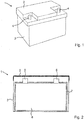
- the product accumulator as in FIG. 1 are shown as components of the product accumulator, the housing having a housing lower part and a housing cover, further the terminal poles, the electrode plates and the separators.
- the marking material may be added to the material of the product or product component directly in the manufacture of the product, e.g. B. in an injection molding of a housing component, if it is a plastic material.
- the admixture can also be done before the preparation of the product, for. B. by already a first material with a mixed first identification material is delivered.
- the supplied plastic granules may already be admixed with the first identification material.
- the invention proposes a method for recycling a product, wherein the product or at least one component of the product is made with a first material admixed with a first marking material, wherein the product, a component of the product or pieces of product in a recycling plant of other items and / or pieces of the product are separated by detecting the first marking material in the first material and separating the product, the component of the product or the pieces of product from other items and / or pieces of the product in which no tagging material or other second tagging material is detected.
- the method can be used advantageously in all types of recycling plants, especially in recycling plants, where products to be recycled are first cut into small pieces via a crusher. Due to the admixture of the first marking material directly in the first material of the product it can then be further identified in the individual pieces of the product, which was previously not possible in the prior art methods.
- the product or at least one component of the product is comminuted into pieces prior to the detection of the first or the second marking material and the separation of the pieces of the product is carried out.
- the first or the second identification drawing material is completely distributed in the first material of the product or at least one component of the product.
- the first marking material can be distributed unevenly or evenly. Uniform distribution is more favorable overall for later recycling, but minor irregularities are harmless.
- the first material may in principle be any material, in particular an organic or inorganic material.
- the first material is a polymer material, in particular polypropylene, polyethylene, a mixture thereof or a co-polymer of polyethylene and polypropylene.
- the first or the second identification material is a material detectable by means of an optical sensor, an electromagnetic or a magnetic sensor.
- the optical sensor can, for. B. be a camera
- the magnetic sensor can, for. B. be a reed switch or a magnetic field probe.
- electromagnetic Sensor can z. B. may be provided an electric coil.
- the first and the second marking material may, for. Example, a material with a certain color, which is characteristic and distinctive and in particular, is not present in other similar products of a different material.
- the first and the second marking material respectively, comprise colored pigments.
- the first and second marking materials may be a dye or a dye mixture. This is z. B. a detection of the first and the second identification material by means of an optical sensor feasible.
- the first and the second marking material may also be a magnetic material, for. B. magnetite powder or iron filings. This allows detection by means of a magnetic sensor.
- the first and the second marking material may also comprise an electromagnetic field changing material. So z. B. be added as the first identification material microcoils the first material, for. B. micro-coils of carbon. As microcoils thereby electrical coils are designated with dimensions of a few micrometers. These cause an increased absorption of electromagnetic high frequency radiation which is radiated onto the product. Such absorption of electromagnetic fields may, for. B. be detected by means of an electromagnetic sensor.
- the first and second marking materials may be a material that is detectable without external excitation.
- the first and second marking material may also be a material that must first be excited from the outside to be detectable.
- the first or the second marking material is responsive to an alternating electromagnetic field or a magnetic field Material.
- a material which reacts differently to an electromagnetic alternating field in different frequency ranges can be used, wherein all materials reacting in different frequency ranges can in principle be used.
- the electromagnetic alternating fields in this sense also include light, both in the visible and in the visible to humans area.
- the visible range of the light is electromagnetic radiation in the range of 380 to 780 ⁇ m wavelength.
- electromagnetic radiation in the non-visible area z As infrared radiation or ultraviolet radiation, which are also often referred to as light.
- the first and the second marking material may be a material which reacts to light in the non-visible wavelength range with a color change, a magnetic, a fluorescent or a phosphorescent material or a photoluminescent material.
- the first and the second marking material may, for. Example, fluorescein, a near-infrared fluorescence fluorescent (NIRFS) or Storelite, or in the case of a phosphorescent material, a sulfite of metals of the second group and zinc, to which small amounts of heavy metal salts are admixed, such as. Copper-doped zinc sulfite pigments, or a CAS / SRS mixed sulfite doped with bismuth.
- NIRS near-infrared fluorescence fluorescent
- the first material in the product, a component of the product or pieces of the product is identified by detecting the first marking material in the first material and, based on a defined association between the first material and the first marking material, the first material is identified.
- the first material can be z. B. identified with regard to the type of material, for. B. whether it is a plastic material, which can also be distinguished between different types of plastics.
- the defined association between the first material and the first Labeling material can be made available by the manufacturer of the recyclable product to a recycling company.
- the invention further relates to a recyclable product made by any of the methods described above.
- the product may in particular be an accumulator housing or a complete accumulator, for. B. in the form of a starter battery for motor vehicles.
- the invention further relates to a recycling plant which is set up to carry out a method as described above.
- FIG. 1 shows an accumulator 1, z. B. in the form of a starter battery, in an isometric view.
- the accumulator 1 is reproduced here in a simplified representation. Visible is a housing with a lower housing part 3 and a housing cover 2, which is placed on the lower housing part 3 and this closes. Through openings in the housing upper part 2 connecting poles 4 are led to the outside of the accumulator 1, which serve for electrical contacting of the accumulator 1.
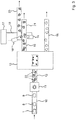
- FIG. 2 shows the accumulator 1 in a sectional view through a cell of the battery 1. Visible is the typical structure of a starter battery, in which inside a cell electrode plates 6 are provided, which are connected via respective terminal lugs 5 with the terminal poles 4. Some electrode plates 6 may be arranged in pocket-shaped separators 7, z. B. in each case the positive electrode plates. The separators 7 are slightly beyond the electrode plates 6.
- the housing parts 2, 3, z. B. made of polypropylene, to be separated from the electrode plates 6 and the separators 7 and possibly other components made of other materials.
- the housing components 2, 3 may consist of unfilled polypropylene or filled polypropylene, for such filling the polypropylene z. B. talc is added.
- unfilled polypropylene can be easily separated from the other substances, in particular filled polypropylene.
- housing components made of filled polypropylene occurs in the flotation z. B. the effect that no separation of the filled polypropylene pieces of the Separator congressen is possible because these two components sink in the flotation plant to the ground.
- FIG. 3 which shows a recycling plant
- the recycling plant according to FIG. 3 has a feed conveyor 10 on which three products 1, 8, 9 are recycled.
- the product 1 is an accumulator with housing components made of unfilled polypropylene
- the product 8 and the product 9 are each an accumulator with housing components made of filled polypropylene.
- all accumulators 1, 8, 9 separators 7 are present.
- the supplied via the feed conveyor 10 products 1, 8, 9 are fed to a crusher 11.
- the products 1, 8, 9 are broken into small pieces 22.
- These pieces 22 are transported by a second conveyor belt 12 from the crusher 11 to a flotation system 13.
- the pieces 22 of the products 1, 8, 9 to be recognized on the second conveyor belt 12 and on the further conveyor belts to be described later are defined by way of example as follows: Pieces with stripe pattern: Pieces of separators 7
- Pieces with checked pattern Pieces of housing components made of filled polypropylene
- Pieces without pattern Pieces of housing components made of unfilled polypropylene.
- the filled polypropylene material is mixed with a first labeling material which fluoresces under ultraviolet light irradiation.
- the supplied pieces are first pre-separated in the flotation system 13.
- the pieces can be separated out of the unfilled polypropylene material and removed via a third conveyor belt 14.
- the mixed fraction of separator pieces and pieces of filled polypropylene emerging from the flotation unit 13 are fed via a fourth conveyor belt 15 to a separation device 16, 17, 18, 19 which carries out a separation of the two different substances from one another based on the first identification material admixed in the filled polypropylene material.
- the separation device has a sensor device 16, the z. B. can be configured as a digital camera.
- the sensor device 16 additionally has a radiation source for emitting ultraviolet light, with which the pieces present on the fourth conveyor belt 15 are irradiated.
- the sensor device 16 is connected via a line to an electronic control device 17. This is set up by programming to evaluate the images supplied by the sensor device of the pieces located on the fourth conveyor belt 15 by image processing and thereby to detect pieces marked with the first marking material.
- the detection of the pieces marked with the first marking material takes place by recognizing a fluorescent light effect in the images supplied by the sensor device 16. Upon detection of a piece marked with the first marking material, d. H.
- the electronic control device 17 actuates via a line 18 an actuator 19.
- the actuator 19 causes a displacement of the detected piece of the fourth conveyor belt 15 on a fifth conveyor belt 20.
- the actuator 19 may, for. B. may be formed as a blowing device which emits an air flow through which a desired piece of the fourth conveyor belt 15 is blown onto the fifth conveyor belt 20.
- the actuator 19 may, for. B. also be designed as provided with an extendable rod pneumatic or hydraulic cylinder. The piece is then pushed by the fourth conveyor belt 15 onto the fifth conveyor belt 20 via the rod.
- the separated pieces of filled polypropylene are removed via the fifth conveyor belt 20.
- the remaining separator pieces are removed via a conveyor belt section 21 located behind the actuator 19.
Landscapes
- Engineering & Computer Science (AREA)
- General Chemical & Material Sciences (AREA)
- Chemical & Material Sciences (AREA)
- Chemical Kinetics & Catalysis (AREA)
- Electrochemistry (AREA)
- Environmental & Geological Engineering (AREA)
- Manufacturing & Machinery (AREA)
- Mechanical Engineering (AREA)
- Life Sciences & Earth Sciences (AREA)
- Sustainable Development (AREA)
- Processing Of Solid Wastes (AREA)
- Separation, Recovery Or Treatment Of Waste Materials Containing Plastics (AREA)
- Processing And Handling Of Plastics And Other Materials For Molding In General (AREA)
Claims (5)
- Procédé pour le recyclage d'un produit (1, 8, 9), dans lequel le produit (1, 8, 9) ou au moins un composant du produit est fabriqué avec un premier matériau auquel on mélange un matériau caractérisant, dans lequel le produit (1, 8, 9), un composant du produit, ou des morceaux (22) du produit (1, 8, 9) sont séparés, dans une installation de recyclage, vis-à-vis d'autres objets et/ou d'autres morceaux (22) du produit (1, 8, 9) les uns par rapport aux autres, en détectant le premier matériau caractérisant dans le premier matériau, et le produit (1, 8, 9), le composant du produit ou les morceaux (22) du produit (1, 8, 9) sont séparés vis-à-vis d'autres objets et/ou de morceaux (22) du produit dans lesquels on ne détecte aucun matériau caractérisant ou un autre second matériau caractérisant, dans lequel le produit (1, 8, 9) ou au moins un composant du produit est broyé en morceaux (22) avant la détection du premier ou du second matériau caractérisant et on exécute la séparation pour les morceaux (22) du produit, et dans lequel le premier ou le second matériau caractérisant est totalement réparti, et en particulier sensiblement régulièrement, dans le premier matériau du produit (1, 8, 9) ou au moins dans un composant du produit,
caractérisé en ce que
le premier matériau caractérisant dans le premier matériau est susceptible d'être détecté automatiquement dans une installation de recyclage, et en ce que
le produit (1, 8, 9) est réalisé sous forme de boîtier d'accumulateur ou d'accumulateur. - Procédé selon la revendication,
dans lequel le premier matériau est un matériau polymère, en particulier polypropylène, polyéthylène, un mélange de ceux-ci ou bien un copolymère de polyéthylène et de polypropylène. - Procédé selon la revendication 1 ou 2,
dans lequel le premier ou le second matériau caractérisant est susceptible d'être détecté au moyen d'un capteur optique (16), d'un capteur électromagnétique ou d'un capteur magnétique. - Procédé selon l'une des revendications précédentes,
dans lequel le premier ou le second matériau caractérisant est un matériau qui réagit à un champ alternatif électromagnétique ou à un champ magnétique, en particulier un matériau qui réagit à la lumière dans une plage de longueurs d'onde non visible avec une modification de couleur, un matériau magnétique, un matériau fluorescent ou un matériau phosphorescent, ou un matériau présentant une photoluminescence. - Procédé selon l'une des revendications précédentes,
dans lequel le premier matériau dans le produit (1, 8, 9), un composant du produit ou des morceaux (22) du produit (1, 8, 9) est identifié en détectant le premier matériau caractérisant dans le premier matériau et le premier matériau est identifié en raison d'une association définie entre le premier matériau et le premier matériau caractérisant.
Applications Claiming Priority (2)
| Application Number | Priority Date | Filing Date | Title |
|---|---|---|---|
| DE102011116046.2A DE102011116046B4 (de) | 2011-10-17 | 2011-10-17 | Recycling von Produkten sowie Recyclinganlage |
| PCT/EP2012/070457 WO2013057087A1 (fr) | 2011-10-17 | 2012-10-16 | Recyclage de produits |
Publications (2)
| Publication Number | Publication Date |
|---|---|
| EP2768646A1 EP2768646A1 (fr) | 2014-08-27 |
| EP2768646B1 true EP2768646B1 (fr) | 2017-06-14 |
Family
ID=47178583
Family Applications (1)
| Application Number | Title | Priority Date | Filing Date |
|---|---|---|---|
| EP12786856.0A Active EP2768646B1 (fr) | 2011-10-17 | 2012-10-16 | Recyclage de produits |
Country Status (5)
| Country | Link |
|---|---|
| US (1) | US10147913B2 (fr) |
| EP (1) | EP2768646B1 (fr) |
| CN (1) | CN104203524B (fr) |
| DE (1) | DE102011116046B4 (fr) |
| WO (1) | WO2013057087A1 (fr) |
Families Citing this family (19)
| Publication number | Priority date | Publication date | Assignee | Title |
|---|---|---|---|---|
| DE102014112520A1 (de) * | 2014-09-01 | 2016-03-03 | Rehau Ag + Co | Kraftfahrzeugbauteil und Verfahren zur Herstellung eines Kraftfahrzeugbauteils |
| US11964304B2 (en) | 2015-07-16 | 2024-04-23 | Sortera Technologies, Inc. | Sorting between metal alloys |
| US11278937B2 (en) | 2015-07-16 | 2022-03-22 | Sortera Alloys, Inc. | Multiple stage sorting |
| US12280403B2 (en) | 2015-07-16 | 2025-04-22 | Sortera Technologies, Inc. | Sorting based on chemical composition |
| US12551931B2 (en) | 2015-07-16 | 2026-02-17 | Sortera Technologies, Inc. | Classifying of materials with contaminants |
| US12508628B2 (en) | 2015-07-16 | 2025-12-30 | Sortera Technologies, Inc. | Sorting between metal alloys |
| US12208421B2 (en) | 2015-07-16 | 2025-01-28 | Sortera Technologies, Inc. | Metal separation in a scrap yard |
| US10688535B1 (en) | 2018-01-10 | 2020-06-23 | Owens-Brockway Glass Container Inc. | Obtaining cullet from thin film solar modules |
| GB2572183A (en) * | 2018-03-21 | 2019-09-25 | Sutton Philip | Recycling method and taggant for a recyclable product |
| CN110013963B (zh) * | 2019-01-18 | 2021-06-01 | 德玛克(长兴)自动化系统有限公司 | 一种电池盒自动化生产工艺 |
| GB2592691B (en) * | 2020-03-06 | 2022-03-02 | Tailorlux Gmbh | Method and system for analysing materials |
| DE102020110506B4 (de) | 2020-04-17 | 2022-11-03 | Rainer Brandsch | Sortenreine Wiedergewinnung von vorgebbaren Kunststoffanteilen aus einem unsortierten Wertstoffstrom |
| CN112186284A (zh) * | 2020-09-10 | 2021-01-05 | 安徽华铂再生资源科技有限公司 | 一种铅酸蓄电池铅膏的冶炼方法 |
| CN111921909A (zh) * | 2020-09-14 | 2020-11-13 | 青岛黄海学院 | 一种电子商务废料智能分类处理系统及其运作方法 |
| US20230249224A1 (en) * | 2021-04-04 | 2023-08-10 | Micro Recycling Systems L.L.C. | Apparatus and method for separating or sorting a set of parts |
| CN115846235B (zh) * | 2022-11-23 | 2025-08-26 | 苏州华兴源创科技股份有限公司 | 产品筛选方法、装置、计算机设备 |
| DE102023204729A1 (de) | 2023-05-22 | 2024-11-28 | Volkswagen Aktiengesellschaft | Verfahren zur Beschichtung eines Elektrodencoils |
| CN117224987B (zh) * | 2023-10-18 | 2026-01-02 | 中交一公局海威工程建设有限公司 | 一种记忆合金的抗凝冰改性剂制备装置 |
| CN118699038B (zh) * | 2024-07-31 | 2025-02-11 | 广东省锐驰新能源科技有限公司 | 一种废旧磷酸铁锂回收再生处理设备及回收再生方法 |
Citations (2)
| Publication number | Priority date | Publication date | Assignee | Title |
|---|---|---|---|---|
| DE102005020816A1 (de) * | 2005-05-04 | 2006-08-03 | Ticona Gmbh | Kennzeichnung von flammgeschützten Kunststoffbauteilen und Recyclingverfahren für flammgeschützte Kunststoffbauteile |
| EP1801148A1 (fr) * | 2005-12-20 | 2007-06-27 | Total Petrochemicals Research Feluy | Procédé pour la séparation et le recyclage des articles en polypropylène |
Family Cites Families (28)
| Publication number | Priority date | Publication date | Assignee | Title |
|---|---|---|---|---|
| FR2133541A1 (en) * | 1971-04-15 | 1972-12-01 | Gros Jean Paul | Disposal of plastics - using magnetic fillers to assist isolation of plastics (pvc) from incinerator feedstocks |
| GB1472039A (en) * | 1974-03-25 | 1977-04-27 | Mitsui Mining & Smelting Co | Method for separating a plastics-containing mixture |
| US5444378A (en) | 1988-07-13 | 1995-08-22 | Electronic Development Inc. | Battery state of charge monitor |
| DE3922160A1 (de) * | 1989-07-06 | 1991-01-10 | Grace Gmbh | Blei/schwefelsaeure-akkumulator, separator fuer blei/schwefelsaeure-akkumulator und verfahren zur verringerung der bildung von dunklen ablagerungen in einem blei/schwefelsaeure-akkumulator |
| GB8914363D0 (en) * | 1989-06-22 | 1989-08-09 | Bxl Plastics Ltd | Waste recovery |
| GB2245781A (en) | 1990-06-29 | 1992-01-08 | Wu Ko Lee | A device for controlling charging of a battery and displaying charge level |
| DE4024130A1 (de) * | 1990-07-30 | 1992-02-06 | Folkerts Karl Heinz Prof Dr Re | Verfahren zum abscheiden und/oder trennen von gemengen verschiedener kunststoffe |
| US5272216A (en) | 1990-12-28 | 1993-12-21 | Westinghouse Electric Corp. | System and method for remotely heating a polymeric material to a selected temperature |
| SG47881A1 (en) * | 1991-11-08 | 1998-04-17 | Eastman Chem Co | Method for tagging thermoplastic materials with near infrared fluorophores |
| US5240789A (en) * | 1992-02-20 | 1993-08-31 | Rand Mcnally & Company | Multi-layer labels |
| DE4321612A1 (de) * | 1993-06-24 | 1995-01-05 | Wenzel Martin Prof Dr | Verfahren zur Abtrennung von Kunststoffteilen im Müll |
| US5378555A (en) * | 1993-12-27 | 1995-01-03 | General Motors Corporation | Electric vehicle battery pack |
| DE4401207A1 (de) * | 1994-01-18 | 1995-07-20 | Tobias Fey | Kunststoffidentifizierung von Kunststoffverpackungen |
| DE19530449A1 (de) * | 1995-08-18 | 1997-02-20 | Bayer Ag | Polymere Fluoreszenzmarker |
| JPH10106526A (ja) * | 1996-09-26 | 1998-04-24 | G S Kasei Kogyo Kk | 鉛電池用セパレータ及びその製造方法 |
| IT1290454B1 (it) | 1997-04-04 | 1998-12-03 | William Rossi | Procedimento per la separazione di manufatti non ferrosi e manufatto non ferroso predisposto per essere separato |
| DE10039472A1 (de) * | 2000-08-12 | 2002-02-21 | Bosch Gmbh Robert | Schaltungsanordnung zur Überwachung des Ladezustands eines Akkumulators |
| JP4796704B2 (ja) * | 2001-03-30 | 2011-10-19 | 株式会社タイカ | 押出可能な架橋済グリース状放熱材を充填・封入した容器の製法 |
| JP2003311250A (ja) | 2002-02-20 | 2003-11-05 | Nippon Steel Corp | 複合廃棄物の再資源化方法 |
| US6920982B2 (en) * | 2002-08-06 | 2005-07-26 | Eriez Magnetics | Plastic material having enhanced magnetic susceptibility, method of making and method of separating |
| DE10302853A1 (de) | 2003-01-21 | 2004-08-05 | Klaus Kabella | Verfahren und Markierung zur Kennzeichnung und Identifizierung von Behältern |
| US7055691B2 (en) * | 2004-02-27 | 2006-06-06 | Owens-Illinois Healthcare Packaging Inc. | Plastic packaging having embedded micro-particle taggants |
| US20050277710A1 (en) | 2004-06-14 | 2005-12-15 | Joyce Richard P | Tagged resin, method of making a tagged resin, and articles made therefrom |
| US7250612B2 (en) * | 2005-09-28 | 2007-07-31 | General Electric Company | Devices and methods capable of authenticating batteries |
| JP2008066053A (ja) * | 2006-09-06 | 2008-03-21 | Fuji Heavy Ind Ltd | 蓄電デバイス用負極活物質およびその製造方法 |
| DE102007007506A1 (de) * | 2007-02-15 | 2008-08-21 | Robert Bosch Gmbh | Handwerkzeugmaschine, Akkupack und Ladegerät |
| US20100203366A1 (en) * | 2008-02-22 | 2010-08-12 | Sloop Steven E | Recycling of battery electrode materials |
| WO2012151190A2 (fr) * | 2011-05-05 | 2012-11-08 | Bright Automotive, Inc. | Système de batterie sèche à raccord direct pour véhicules hybrides et électriques |
-
2011
- 2011-10-17 DE DE102011116046.2A patent/DE102011116046B4/de not_active Expired - Fee Related
-
2012
- 2012-10-16 WO PCT/EP2012/070457 patent/WO2013057087A1/fr not_active Ceased
- 2012-10-16 EP EP12786856.0A patent/EP2768646B1/fr active Active
- 2012-10-16 US US14/352,215 patent/US10147913B2/en active Active
- 2012-10-16 CN CN201280060759.8A patent/CN104203524B/zh active Active
Patent Citations (2)
| Publication number | Priority date | Publication date | Assignee | Title |
|---|---|---|---|---|
| DE102005020816A1 (de) * | 2005-05-04 | 2006-08-03 | Ticona Gmbh | Kennzeichnung von flammgeschützten Kunststoffbauteilen und Recyclingverfahren für flammgeschützte Kunststoffbauteile |
| EP1801148A1 (fr) * | 2005-12-20 | 2007-06-27 | Total Petrochemicals Research Feluy | Procédé pour la séparation et le recyclage des articles en polypropylène |
Also Published As
| Publication number | Publication date |
|---|---|
| CN104203524B (zh) | 2017-03-22 |
| CN104203524A (zh) | 2014-12-10 |
| DE102011116046B4 (de) | 2017-08-03 |
| EP2768646A1 (fr) | 2014-08-27 |
| US20150050548A1 (en) | 2015-02-19 |
| DE102011116046A1 (de) | 2013-04-18 |
| US10147913B2 (en) | 2018-12-04 |
| WO2013057087A1 (fr) | 2013-04-25 |
Similar Documents
| Publication | Publication Date | Title |
|---|---|---|
| EP2768646B1 (fr) | Recyclage de produits | |
| WO2021058063A2 (fr) | Procédé de tri | |
| EP2828053B1 (fr) | Procédé permettant de trier un mélange de matières | |
| DE102014013160A1 (de) | Verfahren und Vorrichtung zur Sortierung von wiederverwertbaren Rohstoffstücken | |
| EP2700456B1 (fr) | Agencement et procédé de tri de matière synthétique | |
| EP2862950A2 (fr) | Procédé destiné à la préparation mécanique de débris d'aluminium | |
| DE102013211184A1 (de) | Verfahren und Vorrichtungen zum Trennen von seltenerdhaltigem Primärerz | |
| DE112011101917B4 (de) | Verfahren zur Aufbereitung von Mineralen nach ihren Lumineszenzeigenschaften | |
| EP2823945A2 (fr) | Procédé et dispositif destinés à la récupération de déchets en plastique | |
| DE3728558A1 (de) | Verfahren zur wiederaufbereitung des pet von gebrauchten, pet-haltigen produkten, sowie anordnung zur durchfuehrung des verfahrens | |
| DE102019127894A1 (de) | Produktkennzeichnungssystem und verfahren zur kennzeichnung eines produkts | |
| DE4231477A1 (de) | Verfahren zur optischen Sortierung von Kunststoffen mittels zeitaufgelöster Laserspektroskopie | |
| EP4139106B1 (fr) | Procede et dispositif de tri d'objets en plastique | |
| DE102016125471A1 (de) | Verfahren zum Sortieren von Verschnitt- oder Stanzabfällen aus Metalllegierungen | |
| DE10049404C2 (de) | Mit einem NIR-Marker versehener kunststoff-, glas-, textil- oder papierhaltiger Werkstoff und Verfahren zur Identifizierung dieses Werkstoffs | |
| DE102017118601A1 (de) | Sortierverfahren für Verpackungsmaterialien | |
| WO2022199758A1 (fr) | Système et procédé d'identification et/ou de tri d'objets | |
| EP4139662B1 (fr) | Procédé et système de production d'une matière plastique | |
| EP0330046A2 (fr) | Procédé de récupération de matières plastiques à partir de déchets métaux/plastiques | |
| EP2984191A1 (fr) | Procédé et dispositif d'extraction de résidus de métaux ferreux purs et libres contenus dans un mélange de déchets métalliques broyés | |
| WO2023006901A1 (fr) | Emballage en matière plastique recyclable ainsi que procédé et dispositif pour la récupération d'un tel emballage | |
| EP2681043B1 (fr) | Corps composite et procédé de production d'un corps composite présentant une zone volumique modifiée située à l'intérieur | |
| DE69301207T2 (de) | Produkt aus nichtmagnetischem Material und Verfahren und Einrichtung zum Wiedergewinnen von derartigen Produkten | |
| DE102005061937B4 (de) | Verfahren und Vorrichtung zum Abtrennen von Metall/Kunstoff-Verbunden, vorzugsweise Platinen, zur stofflichen Verwertung von Elektroaltgeräten | |
| EP0922505B1 (fr) | Procédé et dispositif de séparation automatique de cartes téléphoniques selon leurs matériaux spécifiques |
Legal Events
| Date | Code | Title | Description |
|---|---|---|---|
| PUAI | Public reference made under article 153(3) epc to a published international application that has entered the european phase |
Free format text: ORIGINAL CODE: 0009012 |
|
| 17P | Request for examination filed |
Effective date: 20140519 |
|
| AK | Designated contracting states |
Kind code of ref document: A1 Designated state(s): AL AT BE BG CH CY CZ DE DK EE ES FI FR GB GR HR HU IE IS IT LI LT LU LV MC MK MT NL NO PL PT RO RS SE SI SK SM TR |
|
| DAX | Request for extension of the european patent (deleted) | ||
| RAP1 | Party data changed (applicant data changed or rights of an application transferred) |
Owner name: JOHNSON CONTROLS AUTOBATTERIE GMBH & CO. KGAA |
|
| RIN1 | Information on inventor provided before grant (corrected) |
Inventor name: MEISSNER, EBERHARD Inventor name: BAUER, JUERGEN Inventor name: LEDOUX, ANNE-LAURE |
|
| 17Q | First examination report despatched |
Effective date: 20160428 |
|
| GRAP | Despatch of communication of intention to grant a patent |
Free format text: ORIGINAL CODE: EPIDOSNIGR1 |
|
| INTG | Intention to grant announced |
Effective date: 20170209 |
|
| GRAS | Grant fee paid |
Free format text: ORIGINAL CODE: EPIDOSNIGR3 |
|
| GRAA | (expected) grant |
Free format text: ORIGINAL CODE: 0009210 |
|
| AK | Designated contracting states |
Kind code of ref document: B1 Designated state(s): AL AT BE BG CH CY CZ DE DK EE ES FI FR GB GR HR HU IE IS IT LI LT LU LV MC MK MT NL NO PL PT RO RS SE SI SK SM TR |
|
| REG | Reference to a national code |
Ref country code: GB Ref legal event code: FG4D Free format text: NOT ENGLISH |
|
| REG | Reference to a national code |
Ref country code: CH Ref legal event code: EP Ref country code: AT Ref legal event code: REF Ref document number: 900525 Country of ref document: AT Kind code of ref document: T Effective date: 20170615 |
|
| REG | Reference to a national code |
Ref country code: IE Ref legal event code: FG4D Free format text: LANGUAGE OF EP DOCUMENT: GERMAN |
|
| REG | Reference to a national code |
Ref country code: DE Ref legal event code: R096 Ref document number: 502012010560 Country of ref document: DE |
|
| REG | Reference to a national code |
Ref country code: NL Ref legal event code: MP Effective date: 20170614 |
|
| REG | Reference to a national code |
Ref country code: LT Ref legal event code: MG4D Ref country code: FR Ref legal event code: PLFP Year of fee payment: 6 |
|
| PG25 | Lapsed in a contracting state [announced via postgrant information from national office to epo] |
Ref country code: GR Free format text: LAPSE BECAUSE OF FAILURE TO SUBMIT A TRANSLATION OF THE DESCRIPTION OR TO PAY THE FEE WITHIN THE PRESCRIBED TIME-LIMIT Effective date: 20170915 Ref country code: HR Free format text: LAPSE BECAUSE OF FAILURE TO SUBMIT A TRANSLATION OF THE DESCRIPTION OR TO PAY THE FEE WITHIN THE PRESCRIBED TIME-LIMIT Effective date: 20170614 Ref country code: FI Free format text: LAPSE BECAUSE OF FAILURE TO SUBMIT A TRANSLATION OF THE DESCRIPTION OR TO PAY THE FEE WITHIN THE PRESCRIBED TIME-LIMIT Effective date: 20170614 Ref country code: NO Free format text: LAPSE BECAUSE OF FAILURE TO SUBMIT A TRANSLATION OF THE DESCRIPTION OR TO PAY THE FEE WITHIN THE PRESCRIBED TIME-LIMIT Effective date: 20170914 Ref country code: LT Free format text: LAPSE BECAUSE OF FAILURE TO SUBMIT A TRANSLATION OF THE DESCRIPTION OR TO PAY THE FEE WITHIN THE PRESCRIBED TIME-LIMIT Effective date: 20170614 |
|
| PG25 | Lapsed in a contracting state [announced via postgrant information from national office to epo] |
Ref country code: LV Free format text: LAPSE BECAUSE OF FAILURE TO SUBMIT A TRANSLATION OF THE DESCRIPTION OR TO PAY THE FEE WITHIN THE PRESCRIBED TIME-LIMIT Effective date: 20170614 Ref country code: NL Free format text: LAPSE BECAUSE OF FAILURE TO SUBMIT A TRANSLATION OF THE DESCRIPTION OR TO PAY THE FEE WITHIN THE PRESCRIBED TIME-LIMIT Effective date: 20170614 Ref country code: SE Free format text: LAPSE BECAUSE OF FAILURE TO SUBMIT A TRANSLATION OF THE DESCRIPTION OR TO PAY THE FEE WITHIN THE PRESCRIBED TIME-LIMIT Effective date: 20170614 Ref country code: BG Free format text: LAPSE BECAUSE OF FAILURE TO SUBMIT A TRANSLATION OF THE DESCRIPTION OR TO PAY THE FEE WITHIN THE PRESCRIBED TIME-LIMIT Effective date: 20170914 Ref country code: RS Free format text: LAPSE BECAUSE OF FAILURE TO SUBMIT A TRANSLATION OF THE DESCRIPTION OR TO PAY THE FEE WITHIN THE PRESCRIBED TIME-LIMIT Effective date: 20170614 |
|
| PG25 | Lapsed in a contracting state [announced via postgrant information from national office to epo] |
Ref country code: EE Free format text: LAPSE BECAUSE OF FAILURE TO SUBMIT A TRANSLATION OF THE DESCRIPTION OR TO PAY THE FEE WITHIN THE PRESCRIBED TIME-LIMIT Effective date: 20170614 Ref country code: SK Free format text: LAPSE BECAUSE OF FAILURE TO SUBMIT A TRANSLATION OF THE DESCRIPTION OR TO PAY THE FEE WITHIN THE PRESCRIBED TIME-LIMIT Effective date: 20170614 Ref country code: RO Free format text: LAPSE BECAUSE OF FAILURE TO SUBMIT A TRANSLATION OF THE DESCRIPTION OR TO PAY THE FEE WITHIN THE PRESCRIBED TIME-LIMIT Effective date: 20170614 Ref country code: CZ Free format text: LAPSE BECAUSE OF FAILURE TO SUBMIT A TRANSLATION OF THE DESCRIPTION OR TO PAY THE FEE WITHIN THE PRESCRIBED TIME-LIMIT Effective date: 20170614 |
|
| PG25 | Lapsed in a contracting state [announced via postgrant information from national office to epo] |
Ref country code: IS Free format text: LAPSE BECAUSE OF FAILURE TO SUBMIT A TRANSLATION OF THE DESCRIPTION OR TO PAY THE FEE WITHIN THE PRESCRIBED TIME-LIMIT Effective date: 20171014 Ref country code: ES Free format text: LAPSE BECAUSE OF FAILURE TO SUBMIT A TRANSLATION OF THE DESCRIPTION OR TO PAY THE FEE WITHIN THE PRESCRIBED TIME-LIMIT Effective date: 20170614 Ref country code: SM Free format text: LAPSE BECAUSE OF FAILURE TO SUBMIT A TRANSLATION OF THE DESCRIPTION OR TO PAY THE FEE WITHIN THE PRESCRIBED TIME-LIMIT Effective date: 20170614 Ref country code: PL Free format text: LAPSE BECAUSE OF FAILURE TO SUBMIT A TRANSLATION OF THE DESCRIPTION OR TO PAY THE FEE WITHIN THE PRESCRIBED TIME-LIMIT Effective date: 20170614 |
|
| REG | Reference to a national code |
Ref country code: DE Ref legal event code: R097 Ref document number: 502012010560 Country of ref document: DE |
|
| PLBE | No opposition filed within time limit |
Free format text: ORIGINAL CODE: 0009261 |
|
| STAA | Information on the status of an ep patent application or granted ep patent |
Free format text: STATUS: NO OPPOSITION FILED WITHIN TIME LIMIT |
|
| PG25 | Lapsed in a contracting state [announced via postgrant information from national office to epo] |
Ref country code: DK Free format text: LAPSE BECAUSE OF FAILURE TO SUBMIT A TRANSLATION OF THE DESCRIPTION OR TO PAY THE FEE WITHIN THE PRESCRIBED TIME-LIMIT Effective date: 20170614 |
|
| 26N | No opposition filed |
Effective date: 20180315 |
|
| PG25 | Lapsed in a contracting state [announced via postgrant information from national office to epo] |
Ref country code: MC Free format text: LAPSE BECAUSE OF FAILURE TO SUBMIT A TRANSLATION OF THE DESCRIPTION OR TO PAY THE FEE WITHIN THE PRESCRIBED TIME-LIMIT Effective date: 20170614 |
|
| REG | Reference to a national code |
Ref country code: CH Ref legal event code: PL |
|
| REG | Reference to a national code |
Ref country code: IE Ref legal event code: MM4A |
|
| PG25 | Lapsed in a contracting state [announced via postgrant information from national office to epo] |
Ref country code: CH Free format text: LAPSE BECAUSE OF NON-PAYMENT OF DUE FEES Effective date: 20171031 Ref country code: LI Free format text: LAPSE BECAUSE OF NON-PAYMENT OF DUE FEES Effective date: 20171031 Ref country code: LU Free format text: LAPSE BECAUSE OF NON-PAYMENT OF DUE FEES Effective date: 20171016 |
|
| REG | Reference to a national code |
Ref country code: BE Ref legal event code: MM Effective date: 20171031 |
|
| PG25 | Lapsed in a contracting state [announced via postgrant information from national office to epo] |
Ref country code: BE Free format text: LAPSE BECAUSE OF NON-PAYMENT OF DUE FEES Effective date: 20171031 Ref country code: SI Free format text: LAPSE BECAUSE OF FAILURE TO SUBMIT A TRANSLATION OF THE DESCRIPTION OR TO PAY THE FEE WITHIN THE PRESCRIBED TIME-LIMIT Effective date: 20170614 |
|
| PG25 | Lapsed in a contracting state [announced via postgrant information from national office to epo] |
Ref country code: MT Free format text: LAPSE BECAUSE OF FAILURE TO SUBMIT A TRANSLATION OF THE DESCRIPTION OR TO PAY THE FEE WITHIN THE PRESCRIBED TIME-LIMIT Effective date: 20170614 |
|
| REG | Reference to a national code |
Ref country code: FR Ref legal event code: PLFP Year of fee payment: 7 |
|
| PG25 | Lapsed in a contracting state [announced via postgrant information from national office to epo] |
Ref country code: IE Free format text: LAPSE BECAUSE OF NON-PAYMENT OF DUE FEES Effective date: 20171016 |
|
| REG | Reference to a national code |
Ref country code: AT Ref legal event code: MM01 Ref document number: 900525 Country of ref document: AT Kind code of ref document: T Effective date: 20171016 |
|
| PG25 | Lapsed in a contracting state [announced via postgrant information from national office to epo] |
Ref country code: AT Free format text: LAPSE BECAUSE OF NON-PAYMENT OF DUE FEES Effective date: 20171016 |
|
| PG25 | Lapsed in a contracting state [announced via postgrant information from national office to epo] |
Ref country code: HU Free format text: LAPSE BECAUSE OF FAILURE TO SUBMIT A TRANSLATION OF THE DESCRIPTION OR TO PAY THE FEE WITHIN THE PRESCRIBED TIME-LIMIT; INVALID AB INITIO Effective date: 20121016 |
|
| REG | Reference to a national code |
Ref country code: DE Ref legal event code: R082 Ref document number: 502012010560 Country of ref document: DE Representative=s name: MEISSNER BOLTE PATENTANWAELTE RECHTSANWAELTE P, DE |
|
| PG25 | Lapsed in a contracting state [announced via postgrant information from national office to epo] |
Ref country code: CY Free format text: LAPSE BECAUSE OF NON-PAYMENT OF DUE FEES Effective date: 20170614 |
|
| PG25 | Lapsed in a contracting state [announced via postgrant information from national office to epo] |
Ref country code: MK Free format text: LAPSE BECAUSE OF FAILURE TO SUBMIT A TRANSLATION OF THE DESCRIPTION OR TO PAY THE FEE WITHIN THE PRESCRIBED TIME-LIMIT Effective date: 20170614 |
|
| PG25 | Lapsed in a contracting state [announced via postgrant information from national office to epo] |
Ref country code: TR Free format text: LAPSE BECAUSE OF FAILURE TO SUBMIT A TRANSLATION OF THE DESCRIPTION OR TO PAY THE FEE WITHIN THE PRESCRIBED TIME-LIMIT Effective date: 20170614 |
|
| PG25 | Lapsed in a contracting state [announced via postgrant information from national office to epo] |
Ref country code: PT Free format text: LAPSE BECAUSE OF FAILURE TO SUBMIT A TRANSLATION OF THE DESCRIPTION OR TO PAY THE FEE WITHIN THE PRESCRIBED TIME-LIMIT Effective date: 20170614 |
|
| PG25 | Lapsed in a contracting state [announced via postgrant information from national office to epo] |
Ref country code: AL Free format text: LAPSE BECAUSE OF FAILURE TO SUBMIT A TRANSLATION OF THE DESCRIPTION OR TO PAY THE FEE WITHIN THE PRESCRIBED TIME-LIMIT Effective date: 20170614 |
|
| REG | Reference to a national code |
Ref country code: DE Ref legal event code: R082 Ref document number: 502012010560 Country of ref document: DE Representative=s name: MEISSNER BOLTE PATENTANWAELTE RECHTSANWAELTE P, DE Ref country code: DE Ref legal event code: R081 Ref document number: 502012010560 Country of ref document: DE Owner name: CLARIOS GERMANY GMBH & CO. KGAA, DE Free format text: FORMER OWNER: JOHNSON CONTROLS AUTOBATTERIE GMBH & CO. KGAA, 30419 HANNOVER, DE |
|
| P01 | Opt-out of the competence of the unified patent court (upc) registered |
Free format text: CASE NUMBER: APP_664/2025 Effective date: 20250108 |
|
| PGFP | Annual fee paid to national office [announced via postgrant information from national office to epo] |
Ref country code: DE Payment date: 20251029 Year of fee payment: 14 |
|
| PGFP | Annual fee paid to national office [announced via postgrant information from national office to epo] |
Ref country code: GB Payment date: 20251027 Year of fee payment: 14 |
|
| PGFP | Annual fee paid to national office [announced via postgrant information from national office to epo] |
Ref country code: IT Payment date: 20251021 Year of fee payment: 14 |
|
| PGFP | Annual fee paid to national office [announced via postgrant information from national office to epo] |
Ref country code: FR Payment date: 20251027 Year of fee payment: 14 |