EP2770996B1 - Procédé de préparation d'agonistes bêta 3 et d'intermédiaires associés - Google Patents
Procédé de préparation d'agonistes bêta 3 et d'intermédiaires associés Download PDFInfo
- Publication number
- EP2770996B1 EP2770996B1 EP12844551.7A EP12844551A EP2770996B1 EP 2770996 B1 EP2770996 B1 EP 2770996B1 EP 12844551 A EP12844551 A EP 12844551A EP 2770996 B1 EP2770996 B1 EP 2770996B1
- Authority
- EP
- European Patent Office
- Prior art keywords
- compound
- group
- boc
- solvent
- catalyst
- Prior art date
- Legal status (The legal status is an assumption and is not a legal conclusion. Google has not performed a legal analysis and makes no representation as to the accuracy of the status listed.)
- Active
Links
- 0 COP(CC(Cc(cc1)ccc1N*)=O)(OC)=O Chemical compound COP(CC(Cc(cc1)ccc1N*)=O)(OC)=O 0.000 description 3
- GFFVXIAZPBWWFS-IAGOWNOFSA-N CC(C)(N([C@@H]1CO)c2ccccc2)O[C@@H]1c1ccccc1 Chemical compound CC(C)(N([C@@H]1CO)c2ccccc2)O[C@@H]1c1ccccc1 GFFVXIAZPBWWFS-IAGOWNOFSA-N 0.000 description 2
- DVGTZFYMHIHQED-HUUCEWRRSA-N CC(C)(C)COC(N([C@@H]1C=O)C(C)(C)O[C@@H]1c1ccccc1)=O Chemical compound CC(C)(C)COC(N([C@@H]1C=O)C(C)(C)O[C@@H]1c1ccccc1)=O DVGTZFYMHIHQED-HUUCEWRRSA-N 0.000 description 1
- LBTFCAQHUDISGT-ZIAGYGMSSA-N CC(C)(C)OC(N([C@@H]1CO)C(C)(C)O[C@@H]1c1ccccc1)=O Chemical compound CC(C)(C)OC(N([C@@H]1CO)C(C)(C)O[C@@H]1c1ccccc1)=O LBTFCAQHUDISGT-ZIAGYGMSSA-N 0.000 description 1
- RMMFFGDGSZXCFZ-WXFUMESZSA-N CC(C)(C)OC(N[C@H]1C(CC(CC[C@H]([C@@H](c2ccccc2)OC2(C)C)N2C(OC(C)(C)C)=O)=O)=CC1)=O Chemical compound CC(C)(C)OC(N[C@H]1C(CC(CC[C@H]([C@@H](c2ccccc2)OC2(C)C)N2C(OC(C)(C)C)=O)=O)=CC1)=O RMMFFGDGSZXCFZ-WXFUMESZSA-N 0.000 description 1
- NNZWZAKSBMTVIK-GKUCLKHTSA-N CC(C)(C)OC(Nc1ccc(CC(/C=C/[C@H](C(c2ccccc2)=[O]C2(C)C)N2C(OC(C)(C)C)=O)=O)cc1)=O Chemical compound CC(C)(C)OC(Nc1ccc(CC(/C=C/[C@H](C(c2ccccc2)=[O]C2(C)C)N2C(OC(C)(C)C)=O)=O)cc1)=O NNZWZAKSBMTVIK-GKUCLKHTSA-N 0.000 description 1
- JMVHMISQGWPYDO-GHMZBOCLSA-N CC(C)(N([C@@H]1C=O)P)O[C@@H]1c1ccccc1 Chemical compound CC(C)(N([C@@H]1C=O)P)O[C@@H]1c1ccccc1 JMVHMISQGWPYDO-GHMZBOCLSA-N 0.000 description 1
- YRXRBLCTWIHNGC-MRXNPFEDSA-N CC(C)(N([C@@H]1CO)c2ccccc2)[O]=C1c1ccccc1 Chemical compound CC(C)(N([C@@H]1CO)c2ccccc2)[O]=C1c1ccccc1 YRXRBLCTWIHNGC-MRXNPFEDSA-N 0.000 description 1
- BSRMRTRMPGGPCW-ZETCQYMHSA-N NC/C=[O]\C([C@H](CCC1=NC=C2)N1C2=O)=O Chemical compound NC/C=[O]\C([C@H](CCC1=NC=C2)N1C2=O)=O BSRMRTRMPGGPCW-ZETCQYMHSA-N 0.000 description 1
- PLJJNGOBCYHRLB-RKDXNWHRSA-N N[C@H](CO)[C@@H](C1=CC=CCC1)O Chemical compound N[C@H](CO)[C@@H](C1=CC=CCC1)O PLJJNGOBCYHRLB-RKDXNWHRSA-N 0.000 description 1
- DJXRIQMCROIRCZ-XOEOCAAJSA-N O[C@@H]([C@@H]1N[C@H](Cc(cc2)ccc2NC([C@H](CCC2=NC=C3)N2C3=O)=O)CC1)c1ccccc1 Chemical compound O[C@@H]([C@@H]1N[C@H](Cc(cc2)ccc2NC([C@H](CCC2=NC=C3)N2C3=O)=O)CC1)c1ccccc1 DJXRIQMCROIRCZ-XOEOCAAJSA-N 0.000 description 1
Images
Classifications
-
- C—CHEMISTRY; METALLURGY
- C07—ORGANIC CHEMISTRY
- C07D—HETEROCYCLIC COMPOUNDS
- C07D487/00—Heterocyclic compounds containing nitrogen atoms as the only ring hetero atoms in the condensed system, not provided for by groups C07D451/00 - C07D477/00
- C07D487/02—Heterocyclic compounds containing nitrogen atoms as the only ring hetero atoms in the condensed system, not provided for by groups C07D451/00 - C07D477/00 in which the condensed system contains two hetero rings
- C07D487/04—Ortho-condensed systems
-
- A—HUMAN NECESSITIES
- A61—MEDICAL OR VETERINARY SCIENCE; HYGIENE
- A61K—PREPARATIONS FOR MEDICAL, DENTAL OR TOILETRY PURPOSES
- A61K31/00—Medicinal preparations containing organic active ingredients
- A61K31/33—Heterocyclic compounds
- A61K31/395—Heterocyclic compounds having nitrogen as a ring hetero atom, e.g. guanethidine or rifamycins
- A61K31/41—Heterocyclic compounds having nitrogen as a ring hetero atom, e.g. guanethidine or rifamycins having five-membered rings with two or more ring hetero atoms, at least one of which being nitrogen, e.g. tetrazole
- A61K31/4196—1,2,4-Triazoles
-
- A—HUMAN NECESSITIES
- A61—MEDICAL OR VETERINARY SCIENCE; HYGIENE
- A61K—PREPARATIONS FOR MEDICAL, DENTAL OR TOILETRY PURPOSES
- A61K31/00—Medicinal preparations containing organic active ingredients
- A61K31/33—Heterocyclic compounds
- A61K31/395—Heterocyclic compounds having nitrogen as a ring hetero atom, e.g. guanethidine or rifamycins
- A61K31/495—Heterocyclic compounds having nitrogen as a ring hetero atom, e.g. guanethidine or rifamycins having six-membered rings with two or more nitrogen atoms as the only ring heteroatoms, e.g. piperazine or tetrazines
- A61K31/505—Pyrimidines; Hydrogenated pyrimidines, e.g. trimethoprim
- A61K31/519—Pyrimidines; Hydrogenated pyrimidines, e.g. trimethoprim ortho- or peri-condensed with heterocyclic rings
-
- A—HUMAN NECESSITIES
- A61—MEDICAL OR VETERINARY SCIENCE; HYGIENE
- A61P—SPECIFIC THERAPEUTIC ACTIVITY OF CHEMICAL COMPOUNDS OR MEDICINAL PREPARATIONS
- A61P13/00—Drugs for disorders of the urinary system
- A61P13/10—Drugs for disorders of the urinary system of the bladder
-
- A—HUMAN NECESSITIES
- A61—MEDICAL OR VETERINARY SCIENCE; HYGIENE
- A61P—SPECIFIC THERAPEUTIC ACTIVITY OF CHEMICAL COMPOUNDS OR MEDICINAL PREPARATIONS
- A61P43/00—Drugs for specific purposes, not provided for in groups A61P1/00-A61P41/00
-
- C—CHEMISTRY; METALLURGY
- C07—ORGANIC CHEMISTRY
- C07D—HETEROCYCLIC COMPOUNDS
- C07D207/00—Heterocyclic compounds containing five-membered rings not condensed with other rings, with one nitrogen atom as the only ring hetero atom
- C07D207/02—Heterocyclic compounds containing five-membered rings not condensed with other rings, with one nitrogen atom as the only ring hetero atom with only hydrogen or carbon atoms directly attached to the ring nitrogen atom
- C07D207/04—Heterocyclic compounds containing five-membered rings not condensed with other rings, with one nitrogen atom as the only ring hetero atom with only hydrogen or carbon atoms directly attached to the ring nitrogen atom having no double bonds between ring members or between ring members and non-ring members
- C07D207/08—Heterocyclic compounds containing five-membered rings not condensed with other rings, with one nitrogen atom as the only ring hetero atom with only hydrogen or carbon atoms directly attached to the ring nitrogen atom having no double bonds between ring members or between ring members and non-ring members with hydrocarbon radicals, substituted by hetero atoms, attached to ring carbon atoms
- C07D207/09—Radicals substituted by nitrogen atoms, not forming part of a nitro radical
-
- C—CHEMISTRY; METALLURGY
- C07—ORGANIC CHEMISTRY
- C07D—HETEROCYCLIC COMPOUNDS
- C07D263/00—Heterocyclic compounds containing 1,3-oxazole or hydrogenated 1,3-oxazole rings
- C07D263/02—Heterocyclic compounds containing 1,3-oxazole or hydrogenated 1,3-oxazole rings not condensed with other rings
- C07D263/04—Heterocyclic compounds containing 1,3-oxazole or hydrogenated 1,3-oxazole rings not condensed with other rings having no double bonds between ring members or between ring members and non-ring members
- C07D263/06—Heterocyclic compounds containing 1,3-oxazole or hydrogenated 1,3-oxazole rings not condensed with other rings having no double bonds between ring members or between ring members and non-ring members with hydrocarbon radicals, substituted by oxygen atoms, attached to ring carbon atoms
-
- C—CHEMISTRY; METALLURGY
- C07—ORGANIC CHEMISTRY
- C07D—HETEROCYCLIC COMPOUNDS
- C07D403/00—Heterocyclic compounds containing two or more hetero rings, having nitrogen atoms as the only ring hetero atoms, not provided for by group C07D401/00
- C07D403/02—Heterocyclic compounds containing two or more hetero rings, having nitrogen atoms as the only ring hetero atoms, not provided for by group C07D401/00 containing two hetero rings
- C07D403/12—Heterocyclic compounds containing two or more hetero rings, having nitrogen atoms as the only ring hetero atoms, not provided for by group C07D401/00 containing two hetero rings linked by a chain containing hetero atoms as chain links
-
- C—CHEMISTRY; METALLURGY
- C07—ORGANIC CHEMISTRY
- C07B—GENERAL METHODS OF ORGANIC CHEMISTRY; APPARATUS THEREFOR
- C07B2200/00—Indexing scheme relating to specific properties of organic compounds
- C07B2200/13—Crystalline forms, e.g. polymorphs
Definitions
- This application is directed to synthetic processes for making beta 3 agonists of Formula (I) and Formula (II) and their intermediate compounds.
- Beta Adrenergic receptors are present in detrusor smooth muscle of various species, including human, rat, guinea pig, rabbit, ferret, dog, cat, pig and non-human primate.
- pharmacological studies indicate there are marked species differences in the receptor subtypes mediating relaxation of the isolated detrusor; ⁇ 1AR predominate in cats and guinea pig, ⁇ 2AR predominate in rabbit, and ⁇ 3AR contribute or predominate in dog, rat, ferret, pig, cynomolgus and human detrusor.
- ⁇ AR subtypes in the human and rat detrusor has been examined by a variety of techniques, and the presence of ⁇ 3AR was confirmed using in situ hybridization and/or reverse transcription-polymerase chain reaction (RT-PCR).
- RT-PCR reverse transcription-polymerase chain reaction
- Overactive bladder is characterized by the symptoms of urinary urgency, with or without urgency urinary incontinence, usually associated with frequency and nocturia.
- OAB Overactive bladder
- the prevalence of OAB in the United States and Europe has been estimated at 16 to 17% in both women and men over the age of 18 years.
- Overactive bladder is most often classified as idiopathic, but can also be secondary to neurological condition, bladder outlet obstruction, and other causes.
- the overactive bladder symptom complex especially when associated with urge incontinence, is suggestive of detrusor overactivity.
- Urgency with or without incontinence has been shown to negatively impact both social and medical well-being, and represents a significant burden in terms of annual direct and indirect healthcare expenditures.
- current medical therapy for urgency is suboptimal, as many patients either do not demonstrate an adequate response to current treatments, and/or are unable to tolerate current treatments (for example, dry mouth associated with anticholinergic therapy).
- beta 3 agonists The preparation of beta 3 agonists is disclosed in BIOORGANIC & MEDICINAL CHEMISTRY LETTERS, 2010, 21 (6), 1865-1870 ; US 2011/028481 and WO 2011/043942 .
- the present invention describes efficient and economical processes as described in more detail below for the preparation of the beta 3 agonists of Formula (I) and Formula (II) and intermediate compounds that can be used for making these agonists.
- the present invention is directed to synthetic processes for making beta 3 agonists of Formula (I) and Formula (II) and their intermediate compounds 1-11 and I-12.
- the multiple-step reactions from compound I-5b to compound I-11 comprise reacting compound I-5b with acetone and P 1 2 O to produce compound I-6: wherein P 1 is selected from the group consisting of Ac, Bn, Boc, Bz, Cbz, DMPM, FMOC, Ns, Moz, and Ts. In one embodiment, P 1 is Boc.
- the multiple-step reactions from compound I-5b to compound I-11 comprise oxidizing compound I-6 with an oxidizing agent in the presence of a catalyst to produce compound I-7: wherein P 1 is selected from the group consisting of Ac, Bn, Boc, Bz, Cbz, DMPM, FMOC, Ns, Moz, and Ts. In one embodiment, P 1 is Boc.
- Suitable oxidizing agents include, but are not limited to, NaOCl, NaClO 2 , hydrogen peroxide, Swern oxidation and variants such as pyridine sulfur trioxide, PCC, and DCC.
- the oxidizing agent is NaOCl.
- the amount of the oxidizing agent is typically 1.1 equiv. to 1.3 equiv., or more specifically, 1.2 equiv. to 1.25 equiv. In one embodiment, the amount of the oxidizing agent is 1.25 equiv.
- Suitable catalysts for the above oxidation reaction include, but are not limited to, TEMPO and TEMPO analogues.
- the catalyst is TEMPO.
- HWE Horner Wadsworth Emmons
- the oxidation step from I-6 to I-7 can be carried out in the presence of a solvent.
- Suitable solvents include, but are not limited to, THF, MTBE, CH 2 Cl 2 , MeCN, toluene and mixtures thereof.
- the solvent is a mixture of toluene and MeCN.
- the solvent is a mixture of CH 2 Cl 2 and MeCN.
- the multiple-step reactions from compound I-5b to compound I-11 comprise reacting compound I-7 with phosphate compound A-4: in the presence of a solvent to produce compound I-8 ("HWE reaction"): wherein P 1 and P 2 are each independently selected from the group consisting of Ac, Bn, Boc, Bz, Cbz, DMPM, FMOC, Ns, Moz, and Ts. In one embodiment, both P 1 and P 2 are Boc.
- Suitable solvents include, but are not limited to, THF, MTBE, CH 2 Cl 2 , MeCN, toluene and a mixture comprising two of the foregoing solvents.
- the solvent is the mixture of toluene and MeCN.
- the HWE reaction is typically carried out at a temperature of -10 to 50 °C, or more specifically, 0 to 40 °C. In one embodiment, the temperature is 0 to 25 °C. In another embodiment, the temperature is 40 °C.
- the HWE reaction is typically carried out in the presence of a base or a salt.
- the base is a tertiary amine.
- the base is N,N- diisopropylethylamine (DIPEA).
- the salt is lithium halide, or more specifically, LiCl or LiBr.
- an impurity compound I-21 (aldol dimmer by-product) may be formed in addition to compound I-8:
- Increasing the reaction temperature can speed up the conversion to the desired product compound I-8 and reduce the level of the byproduct compound I-21.
- the yield of compound I-8 can be improved and the level of byproduct compound I-21 can be reduced.
- the level of I-21 can be decreased and the yield of compound I-8 improved.
- a solution containing 1.2 equiv of A-4, 3 equiv. of DIPEA and 3 equiv. of LiCl in 5 volumes of MeCN was prepared and warmed to 40 °C.
- a toluene stream of compound 1-7 was then added to this mixture over 3 h, after an additional 30 min aging conversion to product was complete.
- the level of impurity I-21 was about ⁇ 1 LCAP. Sampling the reaction at 1 h intervals showed there was no build-up of compound I-7 in the reaction mixture. After work up the product was isolated with a 90 % isolated yield.
- Compound A-4 used in the HWE reaction can be prepared from compound A-1: using similar synthetic steps and conditions as described in A General Procedure for the Preparation of ⁇ -Ketophosphonates, Maloney et. al., J. Org. Chem., 74, page 7574-7576 (2009 ).
- the reduction of compound I-8 to produce compound 1-9 is carried out in the presence of a catalyst: wherein P 1 and P 2 are each independently selected from the group consisting of Ac, Bn, Boc, Bz, Cbz, DMPM, FMOC, Ns, Moz, and Ts. In one embodiment, both P 1 and P 2 are Boc.
- Suitable catalysts include, but are not limited to, Pd, Raney Ni, Pt, PdCl 2 , and Pd(OH) 2 . In one embodiment, the catalyst is 5% Pd/C.
- the reduction from I-8 to 1-9 is carried out in the presence of a solvent.
- Suitable solvents include, but are not limited to, THF, MTBE, CH 2 Cl 2 , MeCN, toluene, methanol, ethanol, 2-propanol and mixtures thereof.
- the solvent is THF.
- the reduction reaction is carried out using hydrogen gas at a pressure of 2 to 300 psig, preferably about 40 psig, in the presence of a catalyst.
- compound I-9 reacts with an acid to produce compound I-10 through a cyclization reaction:
- Suitable acids include, but are not limited to, HCl, HBr, TFA, MeSO 3 H, TfOH, H 2 SO 4 , para-toluenesulfonic acid, and other sulfone acids such as RSO 3 H wherein R is C 1-6 alkyl, aryl or substituted aryl.
- the acid is HCl.
- HCl is used as acid and an HCl salt of compound I-10 is obtained.
- the HCl salt is in the form of bis-HCl salt.
- the bis-HCl salt is in the form of a mono-hydrate.
- the mono-hydrate of the bis-HCl salt of compound I-10 is a crystalline material.
- the conversion from I-9 to I-10 can be carried out at a temperature of 0 to 40 °C, or more specifically, 15 to 25 °C, or even more specifically, 20 to 25 °C. In one embodiment, the temperature is 20 to 25 °C.
- compound I-10 is reduced to compound I-11 in the presence of a catalyst:
- the reaction conditions for the conversion from I-10 to I-11 can be controlled so a cis-selective hydrogenation process is obtained.
- the cis-selective hydrogenation is carried out in the presence of a catalyst.
- Suitable catalysts include, but are not limited to Pt on alumina, Pd on alumina, Pd/C, Pd(OH) 2 -C, Raney Ni, Rh/C, Rh/Al, Pt/C, Ru/C and PtO 2 .
- the catalyst is Pt on alumina.
- the cis-selective hydrogenation from I-10 to I-11 is carried out in the presence of HMDS, which can protect the hydroxy group in situ and therefore improve the diastereo selectivity.
- HMDS hydroxy group in situ
- suitable protecting reagents include, but are not limited to, TMSCl, TESCl, and TBDMSCl.
- compound I-11 is obtained in the form of a crystalline anhydrous free base. In another embodiment, compound I-11 is obtained in the form of a crystalline free base hemihydrate.
- a process of making compound I-11 comprises:
- the catalyst in step (a) above is selected from the group consisting of Pd, Raney Ni, Pt, PdCl 2 , and Pd(OH) 2 .
- the acid in step (b) above is selected from the group consisting of HCl, HBr, TFA, MeSO 3 H, T fOH, H 2 SO 4 , para-toluenesulfonic acid, and RSO 3 H wherein R is alkyl, aryl or substituted aryl.
- the reduction of step (c) is carried out in the presence of HMDS and the catalyst used is selected from the group consisting of Pt on alumina, Pd on alumina, Pd/C, Pd(OH) 2 -C, Raney Ni, Rh/C, Rh/Al, Pt/C, Ru/C and PtO 2 .
- a process of making compound 1-11 comprises:
- a process of making compound I-11 comprises:
- Compound I-11 can be used as an intermediate compound for making compounds of Formula (I) or Formula (II):
- compound 1-12 comprising reacting compound I-14: with compound I-15: wherein R 2 and R 3 are each independently selected from the group consisting of C 1-6 alkyl, benzyl, and phenyl. In one embodiment, R 2 and R 3 are each independently selected from the group consisting of methyl, ethyl, propyl, butyl and benzyl. In another embodiment, R 2 and R 3 are both methyl.
- the above process for making compound I-12 comprises 2 steps:
- the above step (a) can be carried out in the presence of a solvent.
- Suitable solvents include, but are not limited to, ethyl benzene, toluene, trifluorotoluene, xylenes, cumene, and tert-butyl benzene.
- the solvent is ethyl benzene.
- the above step (a) can be carried out at a temperature of 110 °C to 150 °C, or more specifically, 125 °C to 135 °C. In one embodiment, the temperature is 125 °C to 135 °C.
- the above hydrolysis step (b) can be carried out in the presence of a base.
- Suitable bases include, but are not limited to, NaOH, LiOH, KOH, CsOH, Ca(OH) 2 , Ba(OH) 2 , Mg(OH) 2 , K 2 CO 3 , Na 2 CO 3 , and Cs 2 CO 3 .
- the base is NaOH.
- the above step (b) can be carried out in the presence of a solvent.
- Suitable solvents include, but are not limited to, methanol, water, THF, EtOH, IPA, ⁇ -methyl-THF, and mixtures thereof.
- the solvent is the mixture of methanol/water, THF/water, EtOH/water, IPA/water, or ⁇ -methyl-THF/water.
- the solvent is a mixture of methanol/water.
- compound I-14 can be prepared from reacting compound I-13: with (MeO) 2 SO 2 , wherein R 2 is as defined above.
- R 2 is selected from the group consisting of methyl, ethyl, propyl, butyl and phenyl. In another embodiment, R 2 is methyl.
- the above step from compound I-13 to compound I-14 is carried out without a solvent.
- the above step from compound I-13 to compound I-14 is carried out at a temperature of 10 °C to 85 °C, or more specifically, 25 °C to 65 °C. In one embodiment, the temperature is 25 °C to 65 °C.
- the reaction between I-11 and I-12 can be carried out in the presence of a coupling reagent.
- Suitable coupling reagents include, but are not limited to, CDI, DCC, EDC, EDC methiodide, T3P, HATU, HBTU and mix-anhydrides.
- the coupling reagent is EDC.
- the reaction between I-11 and 1-12 can be carried out in the presence of a solvent while the substrate is treated with an acid such as HCl, MeSO 3 H, H 2 SO 4 to selectively protect the secondary pyrrolidine amine.
- Suitable solvents include, but are not limited to, both aqueous and non-aqueous solvents such as MeOH, EtOH, IPA, n-PrOH, MeCN, DMF, DMAc, THF, EtOAc, IPAc, or toluene.
- a promoter can be used in the reaction between 1-11 and I-12.
- Suitable promotors include, but are not limited to, HOBT and HOPO.
- Suitable pH values for the reaction between I-11 and I-12 can be 2.5 to 5.0, or more specifically, 3.0 to 4.0, or even more specifically, 3.0 to 3.5.
- the pH can be adjusted to the desired ranges using an acid such as HCl, HBr, HI, HNO 3 , H 2 SO 4 , H 3 PO 4 , TFA and MeSO 3 H.
- the pH is 3.0 to 3.5.
- the pH is 3.3 to 3.5.
- Also described herein is a process of making a compound of Formula (II): comprising reacting compound I-11 with a suitable salt of compound I-30:
- the salt of compound I-30 is the lithium salt.
- the reaction between I-11 and I-30 is carried out in the presence of an acid.
- the solvent is selected from the group consisting of HCl, HBr, HI, HNO 3 , H 2 SO 4 , H 3 PO 4 , TFA and MeSO 3 H.
- the reaction between I-11 and I-30 is carried out in the presence of a solvent.
- the solvent is selected from the group consisting of MeOH, EtOH, IPA, n-PrOH, MeCN, DMF, DMAc, THF, EtOAc, IPAc, or toluene.
- the lithium salt of compound I-30 can be prepared from ethyl pyruvate (compound i-37) through multiple step reactions as illustrated in Scheme 4 and Example 4:
- alkyl means both branched- and straight-chain saturated aliphatic hydrocarbon groups having the specified number of carbon atoms.
- C 1-6 alkyl includes, but is not limited to, methyl (Me), ethyl (Et), n-propyl (Pr), n-butyl (Bu), n-pentyl, n-hexyl, and the isomers thereof such as isopropyl (i-Pr), isobutyl (i-Bu), secbutyl (s-Bu), tert -butyl (t-Bu), isopentyl, sec-pentyl, tert-pentyl and isohexyl.
- aryl refers to an aromatic carbocycle.
- aryl includes, but is not limited to, phenyl and naphthale.
- compound i-6 was obtained, it was converted to i-7 by TEMPO oxidation.
- TEMPO oxidation and subsequent HWE coupling step a one-pot through process was used such that the crude steam of the aldehyde i-7 after phase cut was used directly for the HWE reaction to avoid solvent switch. Unsaturated ketone i-8 was isolated over 5 steps. Finally, compound i-8 was converted to compound i-11 through i-9 and i-10. Detailed experimental conditions are described below.
- the reaction was quenched by dropwise addition of 10% sodium sulfite (50 mL) at 5 °C.
- the organic layer was separated and directly used for the subsequent HWE coupling step without further purification.
- the assay yield was 17.5 g (88%) by 1 H NMR using DMAc as internal standard.
- Retention times of i-6 and i-7 using the following HPLC method were about 3.3 min and 3.9 min, respectively.
- the slurry was cooled to 5 °C, and a 10% aqueous solution of citric acid ( ⁇ 75 g) was added dropwise to adjust the pH to 6.5-7.0 while maintaining the batch temperature at 0-5 °C.
- the aqueous phase was separated at 0-5 °C and discarded.
- the organic layer was washed with saturated NaHCO 3 (57 mL) and with H 2 O (57 mL) successively.
- the organic phase was solvent switched to IPA to a final volume of ⁇ 192 mL.
- the product was gradually crystallized during the distillation.
- the retention times of i-7, ⁇ -4 and i-8 were about 3.0 min, 1.2 min and 3.8 min, respectively.
- the retention times of i-8 and i-9 were about 11.2 min and 11.4 min, respectively.
- the resulting slurry was heated to 45°C, and IPAc ( ⁇ 430 L) was slowly added to the batch over 2-3 h. The slurry was then cooled to ⁇ 20°C over 1-2 h and aged overnight. The batch was filtered, and the cake was washed with a 1:2 mixture of IPA:IPAc (52L) followed by IPAc (52L). The wet cake was dried at 45 °C under nitrogen atmosphere to give the cyclic imine bis-HCl monohydrate salt i-10 (16.1 kg). The isolated yield of 94% was obtained.
- the reaction mixture was discharged, and the vessel rinsed with 96 mL of THF.
- the batch was filtered through a pad of Solka Floc, and the pad was rinsed with the THF vessel rinse ( ⁇ 96 mL).
- the combined filtrate was stirred with 0.5 M hydrochloric acid (129 mL) at ambient temperature for 1 h.
- the aqueous layer was separated.
- IPAc 39 mL
- 5 N sodium hydroxide ⁇ 15 mL
- the organic layer ( ⁇ 120 mL) was separated and treated with AquaGuard Powder (Meadwestvaco) (2.4 g) at RT for 2 h.
- the solution was filtered through a pad of Solka Floc, and the pad was rinsed with 2-propanol (18 mL).
- the combined filtrate was concentrated to 70 mL.
- the solution was distilled at the constant volume by feeding a total of 140 mL of 2-propanol, maintaining the batch temperature at 33-35 °C.
- the resulting solution was concentrated to ⁇ 34 mL and heated to 50 °C, followed by addition of H 2 O (6.3 mL).
- the resulting solution was cooled to 41-43 °C and seeded with pyrrolidine aniline hemihydrate (42 mg).
- the resulting mixture was aged at 41-43 °C for 1 h to establish a seed bed.
- the retention times of i-10 (bis-HCl salt) and i-11 were about 8.3 min and 8.5 min, respectively.
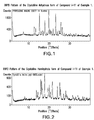
- the crystalline anhydrous form of the pyrrolidine aniline compound i-11 was characterized by XRPD by the following reflections with the d-spacing and corresponding intensities listed below. Position [°2 Theta] d-spacing [ ⁇ ] Relative Intensity [%] 17.8453 4.97 100 25.1979 3.53 51.24 20.1002 4.42 39.04 23.9931 3.71 32.65 16.7073 5.31 27.98 25.5483 3.49 20.21 19.6576 4.52 20.2 13.8883 6.38 20.08 28.086 3.18 18.72 20.6498 4.30 16.23
- the crystalline hemihydrate of the pyrrolidine aniline compound i-11 was characterized by XRPD by the following reflections with the d-spacing and corresponding intensities listed below. Position [°2 Theta] d-spacing [ ⁇ ] Relative Intensity [%] 17.9681 4.94 100 17.8666 4.96 80.62 23.1905 3.84 73.82 15.3049 5.79 71.53 19.7955 4.49 65.46 19.9483 4.45 56 23.1076 3.85 54.38 25.3415 3.51 53.04 16.0859 5.51 44.07 25.6746 3.47 41.85
- Acetonitrile (24 L) was added and the layers were separated. If needed, 24 L of 20% brine solution was added to facilitate the viscous aqueous layer to flow. The top organic layer was separated and concentrated to 24 L and then filtered through an in-line filter into a 50 L RBF. At the prep area, removing residual inorganic salts via in-line filtration was problematic due to premature crystallization of the product. More acetonitrile and decanting at higher temperature were found helpful.
- the slurry was cooled to 27 °C and to which was added 120 mL (3 vol) heptane dropwise via an addition funnel and aged overnight at room temperature.
- reaction mixture was cooled to 35 °C, diluted with toluene (14.3 L, 3 V) and Darco G-60 (1.43 kg) was added. The resulting mixture was stirred at the same temperature for 1 h.
- the Dacro G-60 was filtered off by passing through solka flock, washed with toluene (19.1 L). Assay product i-17 in the toluene solution was 3.81 kg (65%).
- the crystalline i-17 was important for the ee% upgrade, crystallization and isolation of product i-12 in the next step. Otherwise, the final step may require chiral separation or enzyme resolution.
- reaction mixture was concentrated and azotroped with toluene to a thick solution, and then solvent-switched to IPA. And the IPA solution was continued to azotrope to KF ⁇ 6 wt% and adjusted to a total volume (14.1 L) with IPA. The resulting slurry was stirred at 0 °C to 5 °C for 1-2 h. A crystalline product i-12 as hydrate (3 equiv of water) was collected by filtration, washed with cold IPA (6 L), toluene (6 L), and dried under vacuum with nitrogen sweep overnight.
- the crystalline hydrate product i-12 was continually dried in an oven at 50 0°C to 55 °C under vacuum with flowing nitrogen for 50 h.
- the crystalline compound of i-12 easily absorbs moisture in the air to form a hydrate.
- MP of the hydrate is 69.5 0°C to 70.5 °C.
- Step 1 From Compound i-37 to Compound i-36
- the concentration of i-36 in the supernatant prior to filtration was 18 mg/mL.
- the retention time of Boc-hydrazone using the following HPLC method was about 11.7 min.
- Step 2 From Compound i-36 to Compound i-35
- Rh(nbd) 2 BF 4 (374 mg, 1.00 mmol, 1.0 mol%) and SL-WO08-1 (990 mg, 1.05 mol %) were weighed into a glass vial. Then 22 mL of degassed EtOH were added to give a homogeneous solution which was aged 16 h at 22 °C. A slurry of 23.0 g (100 mmol) Boc-hydrazone i-36 in 100 mL of EtOH was prepared. This slurry was then charged to a 300 mL autoclave with a 20 mL EtOH flush. Degassed with vacuum/nitrogen purges, then charged the catalyst solution under nitrogen with a 10 mL EtOH flush. Hydrogenated at 500 psig H 2 for 48 h at 20-25 °C. HPLC assay reveals 85% assay yield.
- the batch was kept under nitrogen even after the reaction was complete.
- the product underwent oxidation to give the Boc-hydrazine in the presence of oxygen and rhodium.
- the target HPLC conversion is 96% (product/(product + starting material), at 210 nm), which corresponds to 99.3 mol % conversion.
- the retention times of i-35 and i-36 were about 11.5 min and 11.7 min, respectively.
- the retention times of i-36, i-35 and the undesired hydrazide product were about 2.9 min, 3.8min and 4.2 min, respectively.
- Step 3 From Compound i-35 to Compound i-34
- the targeted mol % conversion is 99% by 1 H NMR.
- the presence of oxygen can cause degradation of substrate/product.
- the reagents charges in the subsequent cyclization step were calculated by assuming 100% yield for this de-Boc step.
- Step 4 From Compound i-34 to Compound i-32
- the bottom layer contained the hydrazine MSA salt.
- the EtOH in the bottom layer was 0.7 mol eq (relative to the hydrazine) by 1 H NMR.
- the resulting biphasic solution was diluted with CH 2 Cl 2 (100 mL) and cooled to - 45 °C, followed by addition of ethyl acetimidate HCl (10.29 g, 1.1 mol eq). N,N- diisopropylethylamine (27.39 g, 2.8 mol eq) was added dropwise over 1 h while maintaining the batch temperature between -45 °C and -40 °C. The resulting suspension was allowed to warm to RT over 30 min and aged at RT for 2 h.
- the batch was cooled to -10 °C, and triethyl orthoformate (51.2 g, 10 mol eq) and formic acid (4.14 g, 1.5 mol eq) were added dropwsie while maintaining the batch temperature below 0 °C.
- the resulting mixture was distilled at 20-25 °C to collect 100 mL of solvents.
- Formic acid (4.14 g, 1.5 mol eq) was charged dropwise at RT, and the resulting mixture was heated to 70 °C for 4 h until the HPLC conversion reached 96 A% (i-32/(i-32+i-33)).
- Formic acid with good quality (98%) was used.
- the enantiopurity of the product was eroded from 95% ee to 93% ee. Ee will be eroded further by prelonged aging. The racemization gets faster at higher temperatures. Reactions at lower temperature were sluggish and gave lower conversion.
- Quenching orthoformate was mildly exothermic and external cooling was required to maintain the batch temperature below 25 °C.
- the spec for toluene level after solvent switch was 1.0 v/v%.
- Product losses in aqueous layers were typically ⁇ 0.5% in the aqueous layer post back extractions and 2% in each brine and buffer wash. The buffer wash was helpful to promote the subsequent enzymatic resolution reaction.
- the retention times of i-33, i-32 and the ethyl formate by-product were about 4.0 min, 8.3 min and 8.4 min, respectively.
- Step 5 From Compound i-32 to Compound i-30
- the product ee was gradually decreased as the hydrolysis progressed.
- the reaction significantly slowed down as the desired enantiomer was consumed. If the ee of the starting material (triazole ester) is lower, the reaction has to be stopped at a lower conversion before the hydrolysis of the undesired enantiomer becomes competitive.
- the ee of the product was determined by SFC analysis. The conversion can be determined by RPLC.
- reaction mixture was filtered to remove the immobilized enzyme, and the enzyme was rinsed with 310 mL of buffer-saturated 2-Me-THF.
- the combined filtrate was assayed by HPLC. 5.74 g product (90% yield). >99% ee by SFC.
- the solvent of the crude solution was switched from 2-Me-THF to IPA (total volume ⁇ 115 mL) by distillation. Lithium acetate (2.44 g) and H 2 O (9 mL) were added. The resulting slurry was aged at RT for 3 days and was azeotropically distilled while feeding a total of 230 mL of IPA (40 °C, 50 Torr) to remove acetic acid. 0.6 v/v% H 2 O by KF. The slurry was cooled to RT and aged at RT for 4 h. The resulting solid was collected by filtration, washed with IPA and suction-dried to afford the triazole acid Li-salt i-30 as white solids (5.46 g). 92% isolated yield. >99.5% ee by SFC.
- the enzyme can be recycled for re-use multiple times.
- the enzyme absorbs the triazole acid product and needs to be rinsed thoroughly after reaction to recover product.
- Adequate aging time for the Li-salt formation reaction was for from 12 hours to 3 days.
- the generating acetic acid needed to be distilled off to drive the Li-salt formation to completion.
- the addition of H 2 O was helpful to promote the Li-salt formation.
- LiOAc weak base
- the retention times of the desired enantiomer (S) and undesired enantiomer (R) were about 4.4 min and 7.1 min, respectively.
- the combined organic layer was washed with water (5 mL) and azetropically solvent switched to IPA to a final volume of 17 mL.
- MTBE 23 mL was added.
- ⁇ 10% of 0.87 ml of HOAc was added at RT dropwise, the batch was seeded.
- the slurry was aged at RT for 1 h to form a good seed bed.
- the rest of HOAc was added dropwise at RT over 2 h. Then, the slurry was warmed to 40 °C and aged for 2 h before cooling to RT.
Landscapes
- Chemical & Material Sciences (AREA)
- Organic Chemistry (AREA)
- Health & Medical Sciences (AREA)
- General Health & Medical Sciences (AREA)
- Veterinary Medicine (AREA)
- Public Health (AREA)
- Medicinal Chemistry (AREA)
- Animal Behavior & Ethology (AREA)
- Life Sciences & Earth Sciences (AREA)
- Pharmacology & Pharmacy (AREA)
- Epidemiology (AREA)
- General Chemical & Material Sciences (AREA)
- Engineering & Computer Science (AREA)
- Bioinformatics & Cheminformatics (AREA)
- Chemical Kinetics & Catalysis (AREA)
- Nuclear Medicine, Radiotherapy & Molecular Imaging (AREA)
- Urology & Nephrology (AREA)
- Pharmaceuticals Containing Other Organic And Inorganic Compounds (AREA)
- Nitrogen Condensed Heterocyclic Rings (AREA)
- Plural Heterocyclic Compounds (AREA)
- Pyrrole Compounds (AREA)
- Organic Low-Molecular-Weight Compounds And Preparation Thereof (AREA)
- Low-Molecular Organic Synthesis Reactions Using Catalysts (AREA)
- Catalysts (AREA)
Claims (14)
- Procédé de préparation du composé I-11:
 (a) la réduction du composé I-8:
 (b) la réaction du composé I-9 avec un acide pour produire le composé I-10:
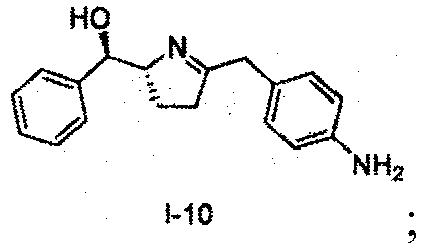 (c) la réduction du composé I-10 en présence d'un catalyseur pour produire le composé I-11;dans lequel P1 et P2 sont chacun indépendamment choisis dans le groupe constitué par Ac, Bn, Boc, Bz, Cbz, DMPM, FMOC, Ns, Moz et Ts.
 - Procédé selon la revendication 1, dans lequel le catalyseur dans l'étape (a) est choisi dans le groupe constitué par Pd, Ni de Raney, Pt, PdCl2 et Pd(OH)2; et la réaction de réduction est effectuée en présence d'hydrogène gazeux.
- Procédé selon la revendication 1, dans lequel l'acide dans l'étape (b) est choisi dans le groupe constitué par HCl, HBr, TFA, MeSO3H, TFOH, H2SO4, acide para-toluènesulfonique et RSO3H où R est alkyle, aryle ou aryle substitué.
- Procédé selon la revendication 1, dans lequel la réduction de l'étape (c) est mise en oeuvre en présence de HMDS et le catalyseur utilisé est choisi dans le groupe constitué par Pt sur alumine, Pd sur alumine, Pd/C, Pd(OH)2-C, Ni de Raney, Rh/C, Rh/Al, Pt/C, Ru/C et PtO2.
- Procédé selon la revendication 1, comprenant en outre la réaction du composé I-7:

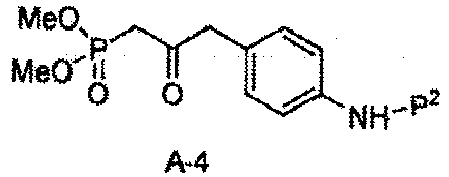
dans lequel la réaction est mise en oeuvre à une température d'environ 20 à 40°C et en présence d'un solvant choisi dans le groupe constitué par THF, MTBE, CH2Cl2, MeCN, toluène et un mélange comprenant deux des solvants précités; et
dans lequel P1 et P2 sont chacun indépendamment choisis dans le groupe constitué par Ac, Bn, Boc, Bz, Cbz, DMPM, FMOC, Ns, Moz et Ts. - Procédé selon la revendication 5, dans lequel le composé I-7 est dans une solution, et la solution contenant le composé I-7 est ajoutée à une solution contenant le composé A-4.
- Procédé selon la revendication 5, comprenant en outre l'oxydation du composé I-6:

dans lequel P1 est choisi dans le groupe constitué par Ac, Bn, Boc, Bz, Cbz, DMPM, FMOC, Ns, Moz et Ts. - Procédé selon la revendication 7, dans lequel:le solvant est choisi dans le groupe constitué THF, MTBE, CH2Cl2, MeCN, toluène et un mélange comprenant deux des solvants précités;l'agent oxydant est choisi dans le groupe constitué par NaOCl, NaClO2, peroxyde d'hydrogène, pyridine trioxyde de soufre, PCC et DCC; etle catalyseur est TEMPO ou un analogue de TEMPO.
- Procédé selon la revendication 7, comprenant en outre la réaction du composé I-5b:

- Procédé de production du composé I-11, comprenant:(a) la réaction du composé I-5b:

 (b) l'oxydation du composé I-6 avec un agent oxydant en présence d'un solvant et d'un catalyseur pour produire le composé I-7:
 (c) la réaction du composé I-7 avec le composé phosphate A-4:
 (d) la réduction du composé I-8 en présence d'un catalyseur choisi dans le groupe constitué par Pd, Ni de Raney, Pt, PdCl2 et Pd(OH)2 pour produire le composé I-9:
 (e) la réaction du composé I-9 avec un acide pour produire le composé I-10:
 (f) la réduction du composé I-10 en présence d'un catalyseur pour produire le composé I-11:
- Procédé de préparation d'un composé de Formule (I):
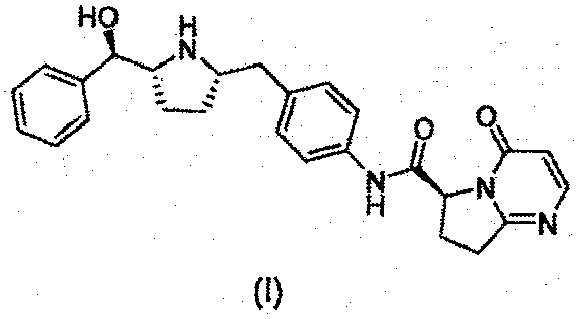


dans lequel le solvant est choisi dans le groupe constitué par MeOH, EtOH, IPA, n-PrOH, MeCN, DMF, DMAc, THF, EtOAc et IPAc. - Procédé de préparation d'un composé de Formule (II):


- Forme cristalline anhydre du composé de Formule I-11 caractérisée par XRPD par les réflexions suivantes avec l'espacement d.
Position [°2 thêta] espacement d [Å] 17.8453 4.97 25.1979 3.53 20.1002 4.42 23.9931 3.71 16.7073 5.31 25.5483 3.49 19.6576 4.52 13.8883 6.38 28.086 3.18 20.6498 4.30 - Forme cristalline hémihydratée du composé de Formule I-11 caractérisée par XRPD par les réflexions suivantes avec l'espacement d.
Position [°2 thêta] espacement d [Å] 17.9681 4.94 17.8666 4.96 23.1905 3.84 15.3049 5.79 19.7955 4.49 19.9483 4.45 23.1076 3.85 25.3415 3.51 16.0859 5.51 25.6746 3.47
Applications Claiming Priority (2)
| Application Number | Priority Date | Filing Date | Title |
|---|---|---|---|
| US201161552195P | 2011-10-27 | 2011-10-27 | |
| PCT/US2012/061252 WO2013062881A1 (fr) | 2011-10-27 | 2012-10-22 | Procédé de préparation d'agonistes bêta 3 et d'intermédiaires associés |
Publications (3)
| Publication Number | Publication Date |
|---|---|
| EP2770996A1 EP2770996A1 (fr) | 2014-09-03 |
| EP2770996A4 EP2770996A4 (fr) | 2015-07-08 |
| EP2770996B1 true EP2770996B1 (fr) | 2016-09-28 |
Family
ID=48168360
Family Applications (1)
| Application Number | Title | Priority Date | Filing Date |
|---|---|---|---|
| EP12844551.7A Active EP2770996B1 (fr) | 2011-10-27 | 2012-10-22 | Procédé de préparation d'agonistes bêta 3 et d'intermédiaires associés |
Country Status (4)
| Country | Link |
|---|---|
| US (6) | US20150087832A1 (fr) |
| EP (1) | EP2770996B1 (fr) |
| JP (2) | JP6063948B2 (fr) |
| WO (1) | WO2013062881A1 (fr) |
Families Citing this family (13)
| Publication number | Priority date | Publication date | Assignee | Title |
|---|---|---|---|---|
| JP6063948B2 (ja) | 2011-10-27 | 2017-01-18 | メルク・シャープ・アンド・ドーム・コーポレーションMerck Sharp & Dohme Corp. | ベータ3アゴニストおよび中間体を製造するプロセス |
| ES2584427T3 (es) | 2011-10-27 | 2016-09-27 | Merck Sharp & Dohme Corp. | Proceso para la preparación de agonistas beta 3 y productos intermedios |
| JP6383403B2 (ja) | 2013-03-15 | 2018-08-29 | メルク・シャープ・アンド・ドーム・コーポレーションMerck Sharp & Dohme Corp. | β−3作動薬および中間体の製造方法 |
| EP3634488A1 (fr) | 2017-06-06 | 2020-04-15 | Urovant Sciences GmbH | Administration de vibegron pour le traitement de la vessie hyperactive |
| EP4410295A3 (fr) | 2017-06-06 | 2024-10-16 | Urovant Sciences GmbH | Utilisation de vibegron pour traiter une vessie hyperactive |
| WO2019224788A1 (fr) | 2018-05-23 | 2019-11-28 | Urovant Sciences Gmbh | Utilisation de vibegron pour traiter la douleur associée au syndrome du côlon irritable |
| SG11202103662VA (en) | 2018-12-05 | 2021-06-29 | Urovant Sciences Gmbh | Vibegron for the treatment of overactive bladder symptoms |
| KR20260049872A (ko) | 2019-03-18 | 2026-04-14 | 유로반트 사이언시즈 게엠베하 | 과민성 방광을 치료하기 위한 비베그론의 용도 |
| JP2024501661A (ja) | 2020-12-22 | 2024-01-15 | ウロバント サイエンシズ ゲーエムベーハー | 過活動膀胱を治療するためのビベグロンの使用と併用したジゴキシンのモニタリング方法 |
| WO2022175848A1 (fr) | 2021-02-16 | 2022-08-25 | Urovant Sciences Gmbh | Méthodes de traitement de l'insuffisance cardiaque au moyen de vibegron |
| CN113816917B (zh) * | 2021-11-19 | 2022-02-18 | 奥锐特药业(天津)有限公司 | 一种维贝格龙中间体的制备方法 |
| CN115850286B (zh) * | 2022-12-05 | 2023-08-22 | 奥锐特药业(天津)有限公司 | 一种维贝格龙中间体及其制备方法 |
| CN121511245A (zh) | 2023-06-08 | 2026-02-10 | 重庆博腾制药科技股份有限公司 | 一种肾上腺素能受体激动剂中间体的制备方法 |
Family Cites Families (14)
| Publication number | Priority date | Publication date | Assignee | Title |
|---|---|---|---|---|
| DE3621775A1 (de) * | 1986-03-13 | 1988-01-07 | Thomae Gmbh Dr K | Neue substituierte thiazole und oxazole, diese verbindungen enthaltende arzneimittel und verfahren zu ihrer herstellung |
| US6525202B2 (en) | 2000-07-17 | 2003-02-25 | Wyeth | Cyclic amine phenyl beta-3 adrenergic receptor agonists |
| DOP2003000587A (es) | 2002-02-27 | 2003-08-30 | Pfizer Prod Inc | AGONISTAS DEL RECEPTOR ß3-ADRENERGICO |
| FR2874011B1 (fr) | 2004-08-03 | 2007-06-15 | Sanofi Synthelabo | Derives de sulfonamides, leur preparation et leur application en therapeutique |
| CN101855342B (zh) | 2007-09-13 | 2013-07-10 | 科德克希思公司 | 用于还原苯乙酮的酮还原酶多肽 |
| PE20091825A1 (es) | 2008-04-04 | 2009-12-04 | Merck & Co Inc | Hidroximetil pirrolidinas como agonistas del receptor adrenergico beta 3 |
| CA2719907A1 (fr) * | 2008-04-04 | 2009-10-08 | Merck Sharp & Dohme Corp. | Hydroxymethylpyrrolidines en tant qu'agonistes de recepteur beta-3-adrenergique |
| SG10201404330VA (en) | 2008-08-29 | 2014-10-30 | Codexis Inc | Ketoreductase Polypeptides For The Stereoselective Production Of (4S)-3[(5S)-5(4-Fluorophenyl)-5-Hydroxypentanoyl]-4-Phenyl-1,3-Oxazolidin-2-One |
| IN2012DN02782A (fr) * | 2009-10-07 | 2015-09-18 | Merck Sharp & Dohme | |
| AU2011245499B2 (en) | 2010-04-30 | 2014-09-25 | Merck Sharp & Dohme Corp. | Novel beta 3 adrenergic receptor agonists |
| ES2584427T3 (es) | 2011-10-27 | 2016-09-27 | Merck Sharp & Dohme Corp. | Proceso para la preparación de agonistas beta 3 y productos intermedios |
| JP6063948B2 (ja) | 2011-10-27 | 2017-01-18 | メルク・シャープ・アンド・ドーム・コーポレーションMerck Sharp & Dohme Corp. | ベータ3アゴニストおよび中間体を製造するプロセス |
| EP2780448B1 (fr) | 2011-11-18 | 2019-09-11 | Codexis, Inc. | Biocatalystes pour preparer des hydroxy-carbamates |
| JP6383403B2 (ja) | 2013-03-15 | 2018-08-29 | メルク・シャープ・アンド・ドーム・コーポレーションMerck Sharp & Dohme Corp. | β−3作動薬および中間体の製造方法 |
-
2012
- 2012-10-22 JP JP2014538853A patent/JP6063948B2/ja active Active
- 2012-10-22 WO PCT/US2012/061252 patent/WO2013062881A1/fr not_active Ceased
- 2012-10-22 EP EP12844551.7A patent/EP2770996B1/fr active Active
- 2012-10-22 US US14/354,158 patent/US20150087832A1/en not_active Abandoned
-
2016
- 2016-03-01 US US15/057,427 patent/US9822121B2/en active Active
- 2016-11-11 JP JP2016220190A patent/JP6259892B2/ja active Active
-
2017
- 2017-11-09 US US15/808,740 patent/US10087189B2/en active Active
-
2018
- 2018-09-17 US US16/133,320 patent/US10435410B2/en active Active
-
2019
- 2019-10-01 US US16/590,180 patent/US10899771B2/en active Active
-
2021
- 2021-01-22 US US17/155,982 patent/US11708371B2/en active Active
Also Published As
| Publication number | Publication date |
|---|---|
| JP2017048237A (ja) | 2017-03-09 |
| US20150087832A1 (en) | 2015-03-26 |
| JP2015504416A (ja) | 2015-02-12 |
| US9822121B2 (en) | 2017-11-21 |
| US20190016729A1 (en) | 2019-01-17 |
| US20180065973A1 (en) | 2018-03-08 |
| US20200031838A1 (en) | 2020-01-30 |
| US20210221815A1 (en) | 2021-07-22 |
| US10899771B2 (en) | 2021-01-26 |
| JP6259892B2 (ja) | 2018-01-10 |
| EP2770996A1 (fr) | 2014-09-03 |
| US10087189B2 (en) | 2018-10-02 |
| JP6063948B2 (ja) | 2017-01-18 |
| EP2770996A4 (fr) | 2015-07-08 |
| US11708371B2 (en) | 2023-07-25 |
| WO2013062881A1 (fr) | 2013-05-02 |
| US10435410B2 (en) | 2019-10-08 |
| US20160176884A1 (en) | 2016-06-23 |
Similar Documents
| Publication | Publication Date | Title |
|---|---|---|
| US11708371B2 (en) | Process for making beta 3 agonists and intermediates | |
| RU2344138C2 (ru) | Способ получения ингибиторов поли(адф-рибоза)полимераз | |
| US10577316B2 (en) | Process for making beta 3 agonists and intermediates | |
| EP1973900B1 (fr) | Composés destinés au traitement de troubles inflammatoires | |
| KR20140040748A (ko) | 트랜스-7-옥소-6-(술포옥시)-1,6-디아자비시클로[3,2,1]옥탄-2-카르복스아미드 및 그의 염을 포함하는 헤테로시클릭 화합물의 제조 방법 | |
| JP2012504632A (ja) | C型肝炎ウイルス阻害剤 | |
| EP2609099A2 (fr) | Sitagliptine, sels et polymorphes de celle-ci | |
| AU2002357885A1 (en) | Compounds for the treatment of inflammatory disorders | |
| KR20110020795A (ko) | TAFIa의 억제제로서의 마크로사이클릭 우레아 및 술파미드 유도체 | |
| WO2023143249A1 (fr) | Composé de dégradation de protéine ciblant malt1 | |
| EP2004655A1 (fr) | Formes polymorphes de (2r,z)-2-amino-2-cyclohexyl-n-(5-(1-méthyl-1h-pyrazol-4 l)-1-oxo-2,6-dihydro-1h-ý1,2¨diazépinoý4,5,6-cd¨indol-8-yl)acétamide | |
| CN103922986A (zh) | 维大列汀及其类似物、中间体及其制备方法和应用 | |
| EP2459525B1 (fr) | Synthèses énantio- et stéréospécifiques de -amino- -hydroxyamides | |
| EP1917266A1 (fr) | Préparation de dérivés diazapentalène par l'intermédiaire de l'époxydation de dihydropyrroles | |
| WO2025149985A1 (fr) | Procédés de préparation d'agonistes du récepteur aux mélanocortines de type 4 | |
| WO2022120048A1 (fr) | Inhibiteurs de hdac | |
| MXPA06012587A (es) | Compuestos y composiciones como inhibidores de catepsina s. | |
| HK1107087A (en) | 4-trifluoromethoxyphenoxybenzol-4'-sulfonic acids, method for the production and use thereof in medicaments | |
| HK1112454B (en) | Method of preparing poly(adp-ribose) polymerases inhibitors |
Legal Events
| Date | Code | Title | Description |
|---|---|---|---|
| PUAI | Public reference made under article 153(3) epc to a published international application that has entered the european phase |
Free format text: ORIGINAL CODE: 0009012 |
|
| 17P | Request for examination filed |
Effective date: 20140527 |
|
| AK | Designated contracting states |
Kind code of ref document: A1 Designated state(s): AL AT BE BG CH CY CZ DE DK EE ES FI FR GB GR HR HU IE IS IT LI LT LU LV MC MK MT NL NO PL PT RO RS SE SI SK SM TR |
|
| DAX | Request for extension of the european patent (deleted) | ||
| RA4 | Supplementary search report drawn up and despatched (corrected) |
Effective date: 20150609 |
|
| RIC1 | Information provided on ipc code assigned before grant |
Ipc: A61K 31/427 20060101AFI20150602BHEP Ipc: C07D 487/04 20060101ALI20150602BHEP Ipc: C07D 207/09 20060101ALI20150602BHEP Ipc: C07D 403/12 20060101ALI20150602BHEP |
|
| GRAP | Despatch of communication of intention to grant a patent |
Free format text: ORIGINAL CODE: EPIDOSNIGR1 |
|
| RIC1 | Information provided on ipc code assigned before grant |
Ipc: C07D 207/09 20060101ALI20160321BHEP Ipc: C07D 487/04 20060101ALI20160321BHEP Ipc: C07D 403/12 20060101ALI20160321BHEP Ipc: A61K 31/427 20060101AFI20160321BHEP |
|
| INTG | Intention to grant announced |
Effective date: 20160426 |
|
| GRAS | Grant fee paid |
Free format text: ORIGINAL CODE: EPIDOSNIGR3 |
|
| GRAA | (expected) grant |
Free format text: ORIGINAL CODE: 0009210 |
|
| AK | Designated contracting states |
Kind code of ref document: B1 Designated state(s): AL AT BE BG CH CY CZ DE DK EE ES FI FR GB GR HR HU IE IS IT LI LT LU LV MC MK MT NL NO PL PT RO RS SE SI SK SM TR |
|
| REG | Reference to a national code |
Ref country code: GB Ref legal event code: FG4D |
|
| REG | Reference to a national code |
Ref country code: CH Ref legal event code: EP |
|
| REG | Reference to a national code |
Ref country code: FR Ref legal event code: PLFP Year of fee payment: 5 |
|
| REG | Reference to a national code |
Ref country code: AT Ref legal event code: REF Ref document number: 832148 Country of ref document: AT Kind code of ref document: T Effective date: 20161015 |
|
| REG | Reference to a national code |
Ref country code: IE Ref legal event code: FG4D |
|
| REG | Reference to a national code |
Ref country code: DE Ref legal event code: R096 Ref document number: 602012023615 Country of ref document: DE |
|
| REG | Reference to a national code |
Ref country code: LT Ref legal event code: MG4D |
|
| PG25 | Lapsed in a contracting state [announced via postgrant information from national office to epo] |
Ref country code: FI Free format text: LAPSE BECAUSE OF FAILURE TO SUBMIT A TRANSLATION OF THE DESCRIPTION OR TO PAY THE FEE WITHIN THE PRESCRIBED TIME-LIMIT Effective date: 20160928 Ref country code: HR Free format text: LAPSE BECAUSE OF FAILURE TO SUBMIT A TRANSLATION OF THE DESCRIPTION OR TO PAY THE FEE WITHIN THE PRESCRIBED TIME-LIMIT Effective date: 20160928 Ref country code: NO Free format text: LAPSE BECAUSE OF FAILURE TO SUBMIT A TRANSLATION OF THE DESCRIPTION OR TO PAY THE FEE WITHIN THE PRESCRIBED TIME-LIMIT Effective date: 20161228 Ref country code: LT Free format text: LAPSE BECAUSE OF FAILURE TO SUBMIT A TRANSLATION OF THE DESCRIPTION OR TO PAY THE FEE WITHIN THE PRESCRIBED TIME-LIMIT Effective date: 20160928 Ref country code: RS Free format text: LAPSE BECAUSE OF FAILURE TO SUBMIT A TRANSLATION OF THE DESCRIPTION OR TO PAY THE FEE WITHIN THE PRESCRIBED TIME-LIMIT Effective date: 20160928 |
|
| REG | Reference to a national code |
Ref country code: NL Ref legal event code: MP Effective date: 20160928 |
|
| REG | Reference to a national code |
Ref country code: AT Ref legal event code: MK05 Ref document number: 832148 Country of ref document: AT Kind code of ref document: T Effective date: 20160928 |
|
| PG25 | Lapsed in a contracting state [announced via postgrant information from national office to epo] |
Ref country code: GR Free format text: LAPSE BECAUSE OF FAILURE TO SUBMIT A TRANSLATION OF THE DESCRIPTION OR TO PAY THE FEE WITHIN THE PRESCRIBED TIME-LIMIT Effective date: 20161229 Ref country code: NL Free format text: LAPSE BECAUSE OF FAILURE TO SUBMIT A TRANSLATION OF THE DESCRIPTION OR TO PAY THE FEE WITHIN THE PRESCRIBED TIME-LIMIT Effective date: 20160928 Ref country code: LV Free format text: LAPSE BECAUSE OF FAILURE TO SUBMIT A TRANSLATION OF THE DESCRIPTION OR TO PAY THE FEE WITHIN THE PRESCRIBED TIME-LIMIT Effective date: 20160928 Ref country code: BE Free format text: LAPSE BECAUSE OF NON-PAYMENT OF DUE FEES Effective date: 20161031 Ref country code: SE Free format text: LAPSE BECAUSE OF FAILURE TO SUBMIT A TRANSLATION OF THE DESCRIPTION OR TO PAY THE FEE WITHIN THE PRESCRIBED TIME-LIMIT Effective date: 20160928 |
|
| PG25 | Lapsed in a contracting state [announced via postgrant information from national office to epo] |
Ref country code: RO Free format text: LAPSE BECAUSE OF FAILURE TO SUBMIT A TRANSLATION OF THE DESCRIPTION OR TO PAY THE FEE WITHIN THE PRESCRIBED TIME-LIMIT Effective date: 20160928 Ref country code: EE Free format text: LAPSE BECAUSE OF FAILURE TO SUBMIT A TRANSLATION OF THE DESCRIPTION OR TO PAY THE FEE WITHIN THE PRESCRIBED TIME-LIMIT Effective date: 20160928 |
|
| PG25 | Lapsed in a contracting state [announced via postgrant information from national office to epo] |
Ref country code: BE Free format text: LAPSE BECAUSE OF FAILURE TO SUBMIT A TRANSLATION OF THE DESCRIPTION OR TO PAY THE FEE WITHIN THE PRESCRIBED TIME-LIMIT Effective date: 20160928 Ref country code: SK Free format text: LAPSE BECAUSE OF FAILURE TO SUBMIT A TRANSLATION OF THE DESCRIPTION OR TO PAY THE FEE WITHIN THE PRESCRIBED TIME-LIMIT Effective date: 20160928 Ref country code: ES Free format text: LAPSE BECAUSE OF FAILURE TO SUBMIT A TRANSLATION OF THE DESCRIPTION OR TO PAY THE FEE WITHIN THE PRESCRIBED TIME-LIMIT Effective date: 20160928 Ref country code: IS Free format text: LAPSE BECAUSE OF FAILURE TO SUBMIT A TRANSLATION OF THE DESCRIPTION OR TO PAY THE FEE WITHIN THE PRESCRIBED TIME-LIMIT Effective date: 20170128 Ref country code: BG Free format text: LAPSE BECAUSE OF FAILURE TO SUBMIT A TRANSLATION OF THE DESCRIPTION OR TO PAY THE FEE WITHIN THE PRESCRIBED TIME-LIMIT Effective date: 20161228 Ref country code: CZ Free format text: LAPSE BECAUSE OF FAILURE TO SUBMIT A TRANSLATION OF THE DESCRIPTION OR TO PAY THE FEE WITHIN THE PRESCRIBED TIME-LIMIT Effective date: 20160928 Ref country code: PT Free format text: LAPSE BECAUSE OF FAILURE TO SUBMIT A TRANSLATION OF THE DESCRIPTION OR TO PAY THE FEE WITHIN THE PRESCRIBED TIME-LIMIT Effective date: 20170130 Ref country code: PL Free format text: LAPSE BECAUSE OF FAILURE TO SUBMIT A TRANSLATION OF THE DESCRIPTION OR TO PAY THE FEE WITHIN THE PRESCRIBED TIME-LIMIT Effective date: 20160928 Ref country code: AT Free format text: LAPSE BECAUSE OF FAILURE TO SUBMIT A TRANSLATION OF THE DESCRIPTION OR TO PAY THE FEE WITHIN THE PRESCRIBED TIME-LIMIT Effective date: 20160928 Ref country code: SM Free format text: LAPSE BECAUSE OF FAILURE TO SUBMIT A TRANSLATION OF THE DESCRIPTION OR TO PAY THE FEE WITHIN THE PRESCRIBED TIME-LIMIT Effective date: 20160928 |
|
| REG | Reference to a national code |
Ref country code: CH Ref legal event code: PL |
|
| REG | Reference to a national code |
Ref country code: DE Ref legal event code: R097 Ref document number: 602012023615 Country of ref document: DE |
|
| PG25 | Lapsed in a contracting state [announced via postgrant information from national office to epo] |
Ref country code: IT Free format text: LAPSE BECAUSE OF FAILURE TO SUBMIT A TRANSLATION OF THE DESCRIPTION OR TO PAY THE FEE WITHIN THE PRESCRIBED TIME-LIMIT Effective date: 20160928 |
|
| REG | Reference to a national code |
Ref country code: IE Ref legal event code: MM4A |
|
| PG25 | Lapsed in a contracting state [announced via postgrant information from national office to epo] |
Ref country code: DK Free format text: LAPSE BECAUSE OF FAILURE TO SUBMIT A TRANSLATION OF THE DESCRIPTION OR TO PAY THE FEE WITHIN THE PRESCRIBED TIME-LIMIT Effective date: 20160928 Ref country code: LI Free format text: LAPSE BECAUSE OF NON-PAYMENT OF DUE FEES Effective date: 20161031 Ref country code: CH Free format text: LAPSE BECAUSE OF NON-PAYMENT OF DUE FEES Effective date: 20161031 |
|
| PLBE | No opposition filed within time limit |
Free format text: ORIGINAL CODE: 0009261 |
|
| STAA | Information on the status of an ep patent application or granted ep patent |
Free format text: STATUS: NO OPPOSITION FILED WITHIN TIME LIMIT |
|
| PG25 | Lapsed in a contracting state [announced via postgrant information from national office to epo] |
Ref country code: LU Free format text: LAPSE BECAUSE OF NON-PAYMENT OF DUE FEES Effective date: 20161022 |
|
| 26N | No opposition filed |
Effective date: 20170629 |
|
| REG | Reference to a national code |
Ref country code: FR Ref legal event code: PLFP Year of fee payment: 6 |
|
| PG25 | Lapsed in a contracting state [announced via postgrant information from national office to epo] |
Ref country code: SI Free format text: LAPSE BECAUSE OF FAILURE TO SUBMIT A TRANSLATION OF THE DESCRIPTION OR TO PAY THE FEE WITHIN THE PRESCRIBED TIME-LIMIT Effective date: 20160928 Ref country code: IE Free format text: LAPSE BECAUSE OF NON-PAYMENT OF DUE FEES Effective date: 20161022 |
|
| PG25 | Lapsed in a contracting state [announced via postgrant information from national office to epo] |
Ref country code: HU Free format text: LAPSE BECAUSE OF FAILURE TO SUBMIT A TRANSLATION OF THE DESCRIPTION OR TO PAY THE FEE WITHIN THE PRESCRIBED TIME-LIMIT; INVALID AB INITIO Effective date: 20121022 |
|
| PG25 | Lapsed in a contracting state [announced via postgrant information from national office to epo] |
Ref country code: MT Free format text: LAPSE BECAUSE OF NON-PAYMENT OF DUE FEES Effective date: 20161031 Ref country code: MC Free format text: LAPSE BECAUSE OF FAILURE TO SUBMIT A TRANSLATION OF THE DESCRIPTION OR TO PAY THE FEE WITHIN THE PRESCRIBED TIME-LIMIT Effective date: 20160928 Ref country code: CY Free format text: LAPSE BECAUSE OF FAILURE TO SUBMIT A TRANSLATION OF THE DESCRIPTION OR TO PAY THE FEE WITHIN THE PRESCRIBED TIME-LIMIT Effective date: 20160928 Ref country code: MK Free format text: LAPSE BECAUSE OF FAILURE TO SUBMIT A TRANSLATION OF THE DESCRIPTION OR TO PAY THE FEE WITHIN THE PRESCRIBED TIME-LIMIT Effective date: 20160928 |
|
| REG | Reference to a national code |
Ref country code: FR Ref legal event code: PLFP Year of fee payment: 7 |
|
| PG25 | Lapsed in a contracting state [announced via postgrant information from national office to epo] |
Ref country code: AL Free format text: LAPSE BECAUSE OF FAILURE TO SUBMIT A TRANSLATION OF THE DESCRIPTION OR TO PAY THE FEE WITHIN THE PRESCRIBED TIME-LIMIT Effective date: 20160928 Ref country code: TR Free format text: LAPSE BECAUSE OF FAILURE TO SUBMIT A TRANSLATION OF THE DESCRIPTION OR TO PAY THE FEE WITHIN THE PRESCRIBED TIME-LIMIT Effective date: 20160928 |
|
| P01 | Opt-out of the competence of the unified patent court (upc) registered |
Effective date: 20230519 |
|
| PGFP | Annual fee paid to national office [announced via postgrant information from national office to epo] |
Ref country code: DE Payment date: 20251029 Year of fee payment: 14 |
|
| PGFP | Annual fee paid to national office [announced via postgrant information from national office to epo] |
Ref country code: GB Payment date: 20251027 Year of fee payment: 14 |
|
| PGFP | Annual fee paid to national office [announced via postgrant information from national office to epo] |
Ref country code: FR Payment date: 20251027 Year of fee payment: 14 |