EP2779658A2 - Bereitstellung von segmentiertem Inhalt - Google Patents
Bereitstellung von segmentiertem Inhalt Download PDFInfo
- Publication number
- EP2779658A2 EP2779658A2 EP14158666.9A EP14158666A EP2779658A2 EP 2779658 A2 EP2779658 A2 EP 2779658A2 EP 14158666 A EP14158666 A EP 14158666A EP 2779658 A2 EP2779658 A2 EP 2779658A2
- Authority
- EP
- European Patent Office
- Prior art keywords
- content
- devices
- segments
- processor
- receiving
- Prior art date
- Legal status (The legal status is an assumption and is not a legal conclusion. Google has not performed a legal analysis and makes no representation as to the accuracy of the status listed.)
- Withdrawn
Links
Images


Classifications
-
- H—ELECTRICITY
- H04—ELECTRIC COMMUNICATION TECHNIQUE
- H04N—PICTORIAL COMMUNICATION, e.g. TELEVISION
- H04N21/00—Selective content distribution, e.g. interactive television or video on demand [VOD]
- H04N21/20—Servers specifically adapted for the distribution of content, e.g. VOD servers; Operations thereof
- H04N21/21—Server components or server architectures
- H04N21/222—Secondary servers, e.g. proxy server, cable television Head-end
- H04N21/2225—Local VOD servers
-
- H—ELECTRICITY
- H04—ELECTRIC COMMUNICATION TECHNIQUE
- H04L—TRANSMISSION OF DIGITAL INFORMATION, e.g. TELEGRAPHIC COMMUNICATION
- H04L65/00—Network arrangements, protocols or services for supporting real-time applications in data packet communication
- H04L65/60—Network streaming of media packets
-
- H—ELECTRICITY
- H04—ELECTRIC COMMUNICATION TECHNIQUE
- H04L—TRANSMISSION OF DIGITAL INFORMATION, e.g. TELEGRAPHIC COMMUNICATION
- H04L67/00—Network arrangements or protocols for supporting network services or applications
- H04L67/14—Session management
- H04L67/141—Setup of application sessions
-
- H—ELECTRICITY
- H04—ELECTRIC COMMUNICATION TECHNIQUE
- H04L—TRANSMISSION OF DIGITAL INFORMATION, e.g. TELEGRAPHIC COMMUNICATION
- H04L67/00—Network arrangements or protocols for supporting network services or applications
- H04L67/50—Network services
- H04L67/60—Scheduling or organising the servicing of application requests, e.g. requests for application data transmissions using the analysis and optimisation of the required network resources
-
- H—ELECTRICITY
- H04—ELECTRIC COMMUNICATION TECHNIQUE
- H04N—PICTORIAL COMMUNICATION, e.g. TELEVISION
- H04N21/00—Selective content distribution, e.g. interactive television or video on demand [VOD]
- H04N21/20—Servers specifically adapted for the distribution of content, e.g. VOD servers; Operations thereof
- H04N21/23—Processing of content or additional data; Elementary server operations; Server middleware
- H04N21/234—Processing of video elementary streams, e.g. splicing of video streams or manipulating encoded video stream scene graphs
- H04N21/2343—Processing of video elementary streams, e.g. splicing of video streams or manipulating encoded video stream scene graphs involving reformatting operations of video signals for distribution or compliance with end-user requests or end-user device requirements
- H04N21/23439—Processing of video elementary streams, e.g. splicing of video streams or manipulating encoded video stream scene graphs involving reformatting operations of video signals for distribution or compliance with end-user requests or end-user device requirements for generating different versions
-
- H—ELECTRICITY
- H04—ELECTRIC COMMUNICATION TECHNIQUE
- H04N—PICTORIAL COMMUNICATION, e.g. TELEVISION
- H04N21/00—Selective content distribution, e.g. interactive television or video on demand [VOD]
- H04N21/20—Servers specifically adapted for the distribution of content, e.g. VOD servers; Operations thereof
- H04N21/23—Processing of content or additional data; Elementary server operations; Server middleware
- H04N21/238—Interfacing the downstream path of the transmission network, e.g. adapting the transmission rate of a video stream to network bandwidth; Processing of multiplex streams
- H04N21/2387—Stream processing in response to a playback request from an end-user, e.g. for trick-play
-
- H—ELECTRICITY
- H04—ELECTRIC COMMUNICATION TECHNIQUE
- H04N—PICTORIAL COMMUNICATION, e.g. TELEVISION
- H04N21/00—Selective content distribution, e.g. interactive television or video on demand [VOD]
- H04N21/20—Servers specifically adapted for the distribution of content, e.g. VOD servers; Operations thereof
- H04N21/23—Processing of content or additional data; Elementary server operations; Server middleware
- H04N21/239—Interfacing the upstream path of the transmission network, e.g. prioritizing client content requests
- H04N21/2393—Interfacing the upstream path of the transmission network, e.g. prioritizing client content requests involving handling client requests
-
- H—ELECTRICITY
- H04—ELECTRIC COMMUNICATION TECHNIQUE
- H04N—PICTORIAL COMMUNICATION, e.g. TELEVISION
- H04N21/00—Selective content distribution, e.g. interactive television or video on demand [VOD]
- H04N21/20—Servers specifically adapted for the distribution of content, e.g. VOD servers; Operations thereof
- H04N21/23—Processing of content or additional data; Elementary server operations; Server middleware
- H04N21/24—Monitoring of processes or resources, e.g. monitoring of server load, available bandwidth, upstream requests
- H04N21/2402—Monitoring of the downstream path of the transmission network, e.g. bandwidth available
-
- H—ELECTRICITY
- H04—ELECTRIC COMMUNICATION TECHNIQUE
- H04N—PICTORIAL COMMUNICATION, e.g. TELEVISION
- H04N21/00—Selective content distribution, e.g. interactive television or video on demand [VOD]
- H04N21/20—Servers specifically adapted for the distribution of content, e.g. VOD servers; Operations thereof
- H04N21/25—Management operations performed by the server for facilitating the content distribution or administrating data related to end-users or client devices, e.g. end-user or client device authentication, learning user preferences for recommending movies
- H04N21/258—Client or end-user data management, e.g. managing client capabilities, user preferences or demographics, processing of multiple end-users preferences to derive collaborative data
- H04N21/25808—Management of client data
- H04N21/25833—Management of client data involving client hardware characteristics, e.g. manufacturer, processing or storage capabilities
-
- H—ELECTRICITY
- H04—ELECTRIC COMMUNICATION TECHNIQUE
- H04N—PICTORIAL COMMUNICATION, e.g. TELEVISION
- H04N21/00—Selective content distribution, e.g. interactive television or video on demand [VOD]
- H04N21/20—Servers specifically adapted for the distribution of content, e.g. VOD servers; Operations thereof
- H04N21/25—Management operations performed by the server for facilitating the content distribution or administrating data related to end-users or client devices, e.g. end-user or client device authentication, learning user preferences for recommending movies
- H04N21/262—Content or additional data distribution scheduling, e.g. sending additional data at off-peak times, updating software modules, calculating the carousel transmission frequency, delaying a video stream transmission, generating play-lists
-
- H—ELECTRICITY
- H04—ELECTRIC COMMUNICATION TECHNIQUE
- H04N—PICTORIAL COMMUNICATION, e.g. TELEVISION
- H04N21/00—Selective content distribution, e.g. interactive television or video on demand [VOD]
- H04N21/20—Servers specifically adapted for the distribution of content, e.g. VOD servers; Operations thereof
- H04N21/25—Management operations performed by the server for facilitating the content distribution or administrating data related to end-users or client devices, e.g. end-user or client device authentication, learning user preferences for recommending movies
- H04N21/262—Content or additional data distribution scheduling, e.g. sending additional data at off-peak times, updating software modules, calculating the carousel transmission frequency, delaying a video stream transmission, generating play-lists
- H04N21/26258—Content or additional data distribution scheduling, e.g. sending additional data at off-peak times, updating software modules, calculating the carousel transmission frequency, delaying a video stream transmission, generating play-lists for generating a list of items to be played back in a given order, e.g. playlist, or scheduling item distribution according to such list
-
- H—ELECTRICITY
- H04—ELECTRIC COMMUNICATION TECHNIQUE
- H04N—PICTORIAL COMMUNICATION, e.g. TELEVISION
- H04N21/00—Selective content distribution, e.g. interactive television or video on demand [VOD]
- H04N21/60—Network structure or processes for video distribution between server and client or between remote clients; Control signalling between clients, server and network components; Transmission of management data between server and client, e.g. sending from server to client commands for recording incoming content stream; Communication details between server and client
- H04N21/61—Network physical structure; Signal processing
- H04N21/6106—Network physical structure; Signal processing specially adapted to the downstream path of the transmission network
- H04N21/6125—Network physical structure; Signal processing specially adapted to the downstream path of the transmission network involving transmission via Internet
-
- H—ELECTRICITY
- H04—ELECTRIC COMMUNICATION TECHNIQUE
- H04N—PICTORIAL COMMUNICATION, e.g. TELEVISION
- H04N21/00—Selective content distribution, e.g. interactive television or video on demand [VOD]
- H04N21/80—Generation or processing of content or additional data by content creator independently of the distribution process; Content per se
- H04N21/81—Monomedia components thereof
- H04N21/812—Monomedia components thereof involving advertisement data
-
- H—ELECTRICITY
- H04—ELECTRIC COMMUNICATION TECHNIQUE
- H04N—PICTORIAL COMMUNICATION, e.g. TELEVISION
- H04N21/00—Selective content distribution, e.g. interactive television or video on demand [VOD]
- H04N21/80—Generation or processing of content or additional data by content creator independently of the distribution process; Content per se
- H04N21/83—Generation or processing of protective or descriptive data associated with content; Content structuring
- H04N21/845—Structuring of content, e.g. decomposing content into time segments
- H04N21/8456—Structuring of content, e.g. decomposing content into time segments by decomposing the content in the time domain, e.g. in time segments
-
- H—ELECTRICITY
- H04—ELECTRIC COMMUNICATION TECHNIQUE
- H04L—TRANSMISSION OF DIGITAL INFORMATION, e.g. TELEGRAPHIC COMMUNICATION
- H04L67/00—Network arrangements or protocols for supporting network services or applications
- H04L67/01—Protocols
- H04L67/06—Protocols specially adapted for file transfer, e.g. file transfer protocol [FTP]
Definitions
- aspects of the disclosure present methods and systems related to segmented delivery of content through a content delivery network.
- UDP User Datagram Protocol
- QAM quadrature amplitude modulation
- SDV switched digital video
- the present disclosure is directed to a method and system for more efficiently delivering programming options to end users by using a segmentation process that allows portions or chunks of content to be moved through a content delivery network before reconstitution at an edge device for delivery to user or client devices.
- aspects of the disclosure address the expansion of linear programing, stored content that can be consumed on-demand (e.g., video-on-demand, etc.), and/or networked digital video recording (DVR) options.
- the methods and systems discussed herein offer time-shifted and on-demand viewing of content by client devices.
- aspects of the disclosure provide for personalized delivery of content (e.g., advertising, etc.).
- aspects of the disclosure further allow for bandwidth optimization by delivering format specific content based on the capability of a client device and network resource utilization.
- aspects of the disclosure may be provided in a computer-readable medium having computer-executable instructions to perform one or more of the process steps described herein.
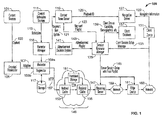
- Figure 1 shows an example network 100 for generating and delivering content to end user devices (e.g., a display device, gateway, set top box, etc.) in accordance with various aspects of the disclosure.
- end user devices e.g., a display device, gateway, set top box, etc.
- content sources 101 transmit content 103 (e.g., live streams, etc.) to an encoder/transcoder 105.
- the encoder/transcoder 105 may encode and/or transcode content 103 into multiple codec formats (e.g., Moving Picture Experts Group (MPEG)-2, MPEG-4, High Efficiency Video Coding (HEVC), or any other existing or future codec format) and/or multiple bit rate profiles 107 (e.g., quality levels) before delivering the encoded/transcoded content 107 to a recorder 109a and segmentor 109b.
- codec formats e.g., Moving Picture Experts Group (MPEG)-2, MPEG-4, High Efficiency Video Coding (HEVC), or any other existing or future codec format
- HEVC High Efficiency Video Coding
- Encoder/transcoder 105 may encode and/or transcode content 103 into any number of codec formats and/or bit rate profiles.
- One or more sources 111 for content schedules may transmit, to a recorder manager 115, information related to schedules 113 for transmitting content 103.
- Schedule information 113 received by recorder manager 115 may also include information related to content metadata such as a channel source ID, multicast source and group address, content start time, content end time, content title and description, and advertising break time and length.
- Recorder manager 115 may then transmit information regarding schedules 113 and other instructions for recording and segmenting transcoded/encoded content 107 to recorder 109a and segmentor 109b.
- Recorder manager 115 may select an optimal recorder 109a and segmentor 109b based on the load capacity and/or geo-location of recorder 109a and segmentor 109b and based on content sources 101 (e.g., national and/or local).
- Recorder 109a and segmentor 109b may use data related to schedules 113 to capture and store (e.g., in data storage 117) transcoded/encoded content 107.
- caching of small fragments of content 107 e.g., small object caching
- an entire programming option e.g., live event
- segmentor 109b may parse content 107 into one or more content segments and generate a segment playlist in real time along with an index file.
- the segment playlist may refer to a series of content segments that may be concatenated in a predetermined order to generate a larger unit of content.
- the index file may include data related to byte ranges / offsets for a given segment of requested content 103.
- the way in which content 107 is parsed may be based on information stored in schedules 113 aligned with the start and end times of a given unit of content (e.g., a programming option, etc.).
- the way in which content 107 is parsed may be based on a predetermined, fixed time interval (e.g., a fixed window of content segments lasting two seconds each) and/or fixed boundary points independent of duration.
- Content name server 119 may receive messages 121 about content segment updates from recorder manager 115 for each recorded unit of content 107 (e.g., a live programming option).
- content name server 119 may generate a logical segment playlist 123 associated with each recorded unit of content 107 (e.g., a live event) using a normal play time (NPT) range for content 107.
- NPT normal play time
- each logical segment playlist 123 may refer to a logical sequence of content segments. This sequence may be concatenated in a predetermined order as indicated by a NPT start and end time to result in a discrete unit of content 103 (e.g., all or a portion of a live event, program, etc.).
- each content segment may be associated with one of multiple codec types and bitrate profiles.
- Content segment updates 121 may be received by content name server 119 as new content segments are created in real-time (e.g., for a live programming event). Therefore, logical segment playlist 123 may represent a continuously growing playlist 123 that continues to grow until a live event ends.
- content name server 119 may also transmit a playback ID 125 for each discrete unit of content 103 (e.g., a unit of content represented by a given logical segment playlist 123) to navigation server 127, which may transmit this and other navigation information 129 (e.g., description of a programming option, start time, end time, etc.) for each unit of content 103 to client device 131 (e.g., a gateway, personal computer (PC), smart phone, game console, tablet device, etc.).
- client device 131 e.g., a gateway, personal computer (PC), smart phone, game console, tablet device, etc.
- client is used herein as merely an example, and device 131 may correspond to any type of user device.
- An end user may use client device 131 to navigate content options on demand via navigation information 129 (e.g., playback ID 125, etc.) provided by navigation server 127.
- navigation information 129 e.g., playback ID 125, etc.
- playback ID 125 may be used by client device 131 to transmit a request for content 103 as part of a client session setup message 133 to session resource manager 135.
- session resource manager 135 may transmit a query to client database 137 to receive information 139 related to capabilities (e.g., configuration, etc.) of the client device 131 requesting content 103.
- the query may also request information 139 related to demographics (e.g., location, age group, etc.) associated with an end user of client device 131.
- session resource manager 135 may use information 139 to authenticate a content request and confirm entitlement of the requested content 103.
- session resource manager 135 may use the playback ID 125 (e.g., retrieved from client session setup message 133) associated with requested content 103 and information 139 related to capabilities of client device 131 to retrieve a logical segment playlist 123 that specifies playback of content segments in a predetermined codec format and/or with a predetermined bitrate.
- playback ID 125 e.g., retrieved from client session setup message 133
- information 139 related to capabilities of client device 131 to retrieve a logical segment playlist 123 that specifies playback of content segments in a predetermined codec format and/or with a predetermined bitrate.
- the existing segment items associated with logical segment playlist 123 from the start of the requested content 103 to the current session setup time may be retrieved from content name server 119 and transmitted to session resource manager 135.
- Content name server 119 may also continuously update and append logical segment playlist 123 with new segment items related to the requested content 103 as they become available.
- Session resource manager 135 may also interface with advertisement decision system 141 to facilitate delivery of personalized advertising to a given client requesting content 103.
- Session resource manager 135 may transmit, to advertisement decision system 141, (e.g., at session startup time) a request for information related to personalized advertisements targeted to an end user requesting content 103 through client device 131.
- advertisement decision system 141 may transmit, to session resource manager 135, an advertisement segment playlist 143 referencing one or more segments of advertisements targeted to the end user requesting content 103 through client device 131.
- the existing advertisement segment playlist items 143 from the start of the requested content 103 to the current session setup time may be retrieved from advertisement decision system 141 and transmitted to session resource manager 135.
- Content name server 119 may also continuously update and append advertisement segment playlist 143 with new advertisement segment items related to the requested content 103 as they become available.
- Session resource manager 135 may maintain the state of a session and may manage generation of a final playlist with logical segment playlist items 123 and advertisement segment playlist items 143. Session resource manager 135 may also manage NPT start and end times for requested content 103. Once generated, the final playlist may be transmitted as part of a server session setup message 145 to streaming server 147 at the time of session setup. Session resource manager 135 may also transmit in-session updates to streaming server 147 as they become available.
- streaming server 147 may interface with a content delivery network (CDN) 149 (e.g., for recorded content), recorder 109a, and segmentor 109b (e.g., for live content) to retrieve each playlist segment from logical segment playlist 123 and advertisement segment playlist 143.
- CDN content delivery network
- Streaming server 147 may also concatenate each retrieved playlist segment and decide on the appropriate bit rate profile to use for delivery to client 131.
- Streaming server 147 may decide on a given bit rate profile based on factors such as what quality level of content client 131 requests, what quality level of content client 131 supports, and on network congestion levels that may not allow a bit rate profile above a predetermined threshold.
- CDN 149 may include various storage elements for storing content, including a persistent storage 151, national cache 153 (e.g. for storing content that is nationally applicable), and regional cache 155 (e.g., for storing content that is regionally or locally applicable). Further, CDN 149 may communicate with recorder 109a and segmentor 109b through HTTP link 157. Streaming server 147 may retrieve requested content 103 from recorder 109a, segmentor 109b, and CDN 149 in real-time from the start of a session setup until the end of a programming option (e.g., a live event) or until a user-initiated instruction (e.g., channel tune-away, client device 131 power-down, etc.).
- a programming option e.g., a live event
- a user-initiated instruction e.g., channel tune-away, client device 131 power-down, etc.
- Requested content 103 may be streamed to client device 131 via networks 159 and 163 (e.g., a hybrid fiber coaxial network, etc.) in communication with an edge device (e.g., an edge quadrature amplitude modulation (QAM) device) 161.
- networks 159 and 163 e.g., a hybrid fiber coaxial network, etc.
- an edge device e.g., an edge quadrature amplitude modulation (QAM) device
- the system and method discussed herein may support trick mode play (e.g., fast forward, pause, rewind, start over, etc.) of requested content 103.
- This functionality may be supported by a dynamically and continuously generated index file for a given programming option (e.g., a live event) at recorder 109a and segmentor 109b.
- Streaming server 147 may retrieve this index file to access a predetermined byte range / offset of key picture frames (e.g., I-frames, IDR frames, etc. depending on codec type) to perform trick mode operations.
- IP Internet Protocol
- HFC Hybrid Fiber Coaxial
- This management may occur by detecting the network and/or edge resource congestion from the session resource manager 135 and/or streaming server 147, requesting a lower bitrate profile segment playlist 123 from content name server 119, and playing the lower bitrate profile final playlist from the streaming server 147.
- IP Internet Protocol
- HFC Hybrid Fiber Coaxial
- session resource manager 135 may provision the chosen bit rate profile to let other network devices know that the given profile has been chosen. This provisioning may occur at each content fragment boundary as needed wherever new bitrate profiles are chosen by session resource manager 135.
- Session resource manager 135 may decide to approve a chosen bitrate profile based on various factors, such as priority of service (e.g., paid content versus free content, live content versus on-demand content, characteristics such as display size of client device 131, etc.). For instance, session resource manager 135 may decide that client devices 131 requesting paid content may receive higher priority than those receiving free content.
- priority of service e.g., paid content versus free content, live content versus on-demand content, characteristics such as display size of client device 131, etc.
- session resource manager 135 may decide that client devices 131 requesting paid content may receive higher priority than those receiving free content.
- Fig. 2 illustrates general hardware elements that can be used to implement any of the various computing devices discussed herein.
- the computing device 200 may include one or more processors 201, which may execute instructions of a computer program to perform any of the features described herein.
- the instructions may be stored in any type of computer-readable medium or memory, to configure the operation of the processor 201.
- ROM read-only memory
- RAM random access memory
- removable media 204 such as a Universal Serial Bus (USB) drive, compact disk (CD) or digital versatile disk (DVD) drive, and/or floppy disk drive, or any other desired electronic storage medium.
- Instructions and/or other data may also be stored in an attached (or internal) hard drive and/or data repository 205.
- the computing device 200 may include one or more output devices, such as a display 206, and may include one or more output device controllers 207, such as a video processor. There may also be one or more user input devices 208, such as a remote control, keyboard, mouse, touch screen, microphone, etc.
- the computing device 200 may also include one or more network interfaces, such as input/output circuits 209 (e.g., a network card) to communicate with a network 210.
- the network interface 209 may be a wired interface, wireless interface, or a combination of the two.
- computing devices discussed herein may include some or all of the components discussed in Figure 2 , along with additional components.
- the present disclosure identifies problems associated with efficiently delivering content to end users.
- the present disclosure is directed to a method and system for more efficiently delivering programming options to end users by using a segmentation process that allows chunks of content to be moved through a content delivery network before reconstitution at an edge device for delivery to client devices.
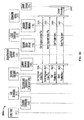
- FIG. 3a shows a first flow diagram for content delivery in accordance with various aspects of the disclosure.
- the process 300a may start out at step 301 where content 103 may be transmitted from content sources (e.g., live feeds) 101 to encoder/transcoder 105.
- information 113 related to scheduling of content 103 e.g., scheduling metadata
- step 305 a request to record content 107 may be transmitted from recorder manager 115 to recorder 109a and segmentor 109b.
- encoded/transcoded content 107 may be transmitted to recorder 109a and segmentor 109b in step 307 and a response indicating that recording and segmenting of content 107 is taking place may be transmitted from recorder 109a to recorder manager 115 in step 309.
- updates to content segments 121 may be transmitted from recorder manager 115 to content name server 119 in step 311.
- Figure 3b shows a second flow diagram for content delivery in accordance with various aspects of the disclosure.
- the process 300b may start out at step 313 where client device 131 may transmit a client session setup request 133 to session resource manager 135.
- session resource manager 135 may transmit a request for client data 139 from client database 137 in step 315.
- Client database 137 may transmit this information to session resource manager 135 as a response in step 317.
- session resource manager 135 may also transmit a request for a content segment playlist 123 to content name server 119 in step 319, and content name server 119 may transmit a response that includes content segment playlist 123 in step 321.
- step 323 session resource manager 135 may transmit a request for an advertisement segment playlist 143 to advertisement decision system 141.
- advertisement decision system 141 may transmit an advertisement segment playlist 143 to session resource manager 135 in step 325.
- Session resource manager 135 may then transmit a server session setup request 145 with a final playlist to streaming server 147 in step 327 and streaming server 147 may reply with a response (e.g., acknowledging receipt of server session setup request 145) in step 329. The process may then move to step 331 where session resource manager 135 may transmit a client session setup response (e.g., acknowledging receipt of client session setup request 133) to client device 131.
- a server session setup request 145 with a final playlist to streaming server 147 in step 327 and streaming server 147 may reply with a response (e.g., acknowledging receipt of server session setup request 145) in step 329.
- the process may then move to step 331 where session resource manager 135 may transmit a client session setup response (e.g., acknowledging receipt of client session setup request 133) to client device 131.
- Figure 3c shows a third flow diagram for content delivery in accordance with various aspects of the disclosure.
- the process 300c may start out at step 333 where streaming server 147 may transmit, to content delivery network 149, a request for a segment index file corresponding to the requested content 103.
- CDN 149 may then forward this request to recorder 109a and segmentor 109b in step 335.
- recorder 109a and segmentor 109b may transmit the appropriate segment index file to CDN 149, which may forward this index file to streaming server 149 in step 339.
- step 341 streaming server 147 may transmit, to CDN 149, a request for a playlist item, and CDN 149 may forward this request to recorder 109a and segmentor 109b in step 343.
- step 345 recorder 109a and segmentor 109b may transmit the appropriate playlist item to CDN 149, which may forward this playlist item to streaming server 147 in step 347.
- Streaming server 147 may then concatenate all received playlist items and transmit the playlist items to client 131 for unicast streaming in step 349.
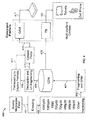
- Figure 4 shows a flow diagram 400 for delivering content to end user devices (e.g., client devices 131) in accordance with various aspects of the disclosure.
- a source mezzanine feed may transmit high quality, high bit rate content (e.g., 50 or 100 Megabit source content, etc.) to an encoder (e.g., encoder 105) in step 401.
- Encoder 105 may encode the high quality, high bit rate content from the source mezzanine feed at multiple bit rate profiles to enable adaptive bit rate streaming.
- the encoded content may be transcoded to one or more resolutions (e.g., 1080i, 720p60, etc.) for delivery to one or more different types of client devices 131.
- the transcoded/encoded content 107 may be fragmented (e.g., by segmentor 109b) into discrete units (e.g., as fixed or variable time slices) and secured with a digital rights management (DRM) scheme in step 405.
- DRM digital rights management
- the process may then move to step 407 where content 107 may be transmitted onto a CDN 149 for distribution to one or more client devices 131.
- Content 107 on CDN 149 may support delivery of content to multiple types of client devices 131, including legacy (e.g., QAM-based, etc.) and IP devices.
- multiple sets of network devices may not have to be maintained by a content supplier for each of multiple types of devices 131, thereby reducing cost associated with content delivery.
- content 107 stored on CDN 149 may be transcoded into a predetermined format (e.g., H.264) that may deliver higher coding efficiencies than other formats (e.g., MPEG-2).
- the process may then move to step 409 where content 107 stored on CDN 149 may be unfragmented (and decrypted) and either directly stored on a content pump (e.g., streaming server 147, video on demand (VOD) pump, etc.) in step 411 or transcoded from one or more formats (e.g., H.264, HEVC, etc.) to a legacy format (e.g., MPEG-2, etc.) in step 413 before storage on a content pump in step 411 to support playback of content 107 by legacy client devices 131.
- a content pump e.g., streaming server 147, video on demand (VOD) pump, etc.
- VOD video on demand
- a legacy format e.g., MPEG-2, etc.
- the functionalities associated with defragmenting, transcoding, and streaming may be performed by a gateway device (e.g., home gateway, mobile communications gateway, etc.).
- a mobile communications gateway may process content from a content provider for distribution to various mobile devices.
- content 107 may be transmitted to a converged platform.
- the converged platform may include a pathway for delivery of content from the content pump to a QAM device in step 415 and to QAM-based clients in step 417 or from CDN 149 to a termination system (TS) (e.g., cable modem termination system) in step 419 and to IP-based client devices 131 (e.g., tablets, cell phones, etc.) in step 421.
- TS termination system
- IP-based client devices 131 e.g., tablets, cell phones, etc.
- QAM-based clients 131 may include those that support content delivery in formats such as MPEG-2/Arc Consistency-3 (AC-3)/enhanced binary exchange format (eBIF) and H.264/Advanced Audio Coding (AAC)/eBIF.
- IP-based client devices 131 may include those that support content delivery in formats such as adaptive bit rate (ABR) H.264/AAC/ Hypertext Markup Language (HTML) 5, and smooth/HTTP Live Streaming (HLS)/Zeri/Dash.
- ABR adaptive bit rate
- HLS smooth/HTTP Live Streaming
Landscapes
- Engineering & Computer Science (AREA)
- Signal Processing (AREA)
- Multimedia (AREA)
- Databases & Information Systems (AREA)
- Computer Networks & Wireless Communication (AREA)
- Computer Graphics (AREA)
- Business, Economics & Management (AREA)
- Marketing (AREA)
- Information Transfer Between Computers (AREA)
Applications Claiming Priority (1)
| Application Number | Priority Date | Filing Date | Title |
|---|---|---|---|
| US13/793,957 US20140258449A1 (en) | 2013-03-11 | 2013-03-11 | Segmented content delivery |
Publications (2)
| Publication Number | Publication Date |
|---|---|
| EP2779658A2 true EP2779658A2 (de) | 2014-09-17 |
| EP2779658A3 EP2779658A3 (de) | 2014-12-03 |
Family
ID=50342143
Family Applications (1)
| Application Number | Title | Priority Date | Filing Date |
|---|---|---|---|
| EP14158666.9A Withdrawn EP2779658A3 (de) | 2013-03-11 | 2014-03-10 | Bereitstellung von segmentiertem Inhalt |
Country Status (3)
| Country | Link |
|---|---|
| US (1) | US20140258449A1 (de) |
| EP (1) | EP2779658A3 (de) |
| CA (1) | CA2845092A1 (de) |
Cited By (2)
| Publication number | Priority date | Publication date | Assignee | Title |
|---|---|---|---|---|
| CN107148779A (zh) * | 2014-10-22 | 2017-09-08 | 艾锐势有限责任公司 | 自适应比特率流送时延减少 |
| EP3682641A4 (de) * | 2017-09-15 | 2021-01-20 | Imagine Communications Corp. | Systeme und verfahren für playout von fragmentierten videoinhalten |
Families Citing this family (15)
| Publication number | Priority date | Publication date | Assignee | Title |
|---|---|---|---|---|
| US9584598B2 (en) * | 2013-04-04 | 2017-02-28 | Ericsson Ab | Methods, apparatus, and computer program products for allocating bandwidth for push and pull content requests in a content delivery network |
| US9319753B2 (en) * | 2013-05-09 | 2016-04-19 | Broadcom Corporation | Seamless trick-mode with decreased latency for live transcode streaming |
| US9894125B2 (en) * | 2013-07-03 | 2018-02-13 | Avago Technologies General Ip (Singapore) Pte. Ltd. | Redistributing sources for adaptive bit rate streaming |
| US9113229B2 (en) * | 2013-09-12 | 2015-08-18 | Verizon Patent And Licensing Inc. | Automated content ingestion |
| US20160014439A1 (en) * | 2014-07-14 | 2016-01-14 | Cisco Technology Inc. | Indexing of Video Assets |
| US9648359B2 (en) * | 2014-12-02 | 2017-05-09 | Arris Enterprises, Inc. | Method and system for advertisement multicast pre-delivery caching |
| US11778014B2 (en) * | 2014-12-12 | 2023-10-03 | Arris Enterprises Llc | Throttling content download in adaptive HTTP live streaming |
| US9883221B1 (en) | 2015-03-25 | 2018-01-30 | Concurrent Computer Corporation | System and method for optimizing real-time video-on-demand recording in a content delivery network |
| CN105049873B (zh) * | 2015-05-29 | 2018-06-15 | 腾讯科技(北京)有限公司 | 一种流媒体传输方法、装置和系统 |
| US10257839B2 (en) * | 2017-03-20 | 2019-04-09 | At&T Intellectual Property I, L.P. | Facilitating communication of radio resource quality to a mobile application |
| US20190020700A1 (en) * | 2017-07-14 | 2019-01-17 | Cisco Technology, Inc. | Transport of Legacy Transport Streams Over ABR Networks |
| US10715880B2 (en) * | 2017-08-24 | 2020-07-14 | Skitter, Inc. | Method for creation and distribution of segmented video over distributed multicast-aware sparse networks with low latency |
| JP7175658B2 (ja) * | 2018-07-25 | 2022-11-21 | キヤノン株式会社 | 映像配信装置、配信方法及びプログラム |
| CN109714606A (zh) * | 2018-12-29 | 2019-05-03 | 深圳市网心科技有限公司 | 一种hls文件播放方法、系统及电子设备和存储介质 |
| US10715871B1 (en) | 2019-03-27 | 2020-07-14 | Verizon Patent And Licensing, Inc. | Determining an end screen time for displaying an end screen user interface |
Citations (1)
| Publication number | Priority date | Publication date | Assignee | Title |
|---|---|---|---|---|
| US20110296048A1 (en) * | 2009-12-28 | 2011-12-01 | Akamai Technologies, Inc. | Method and system for stream handling using an intermediate format |
Family Cites Families (12)
| Publication number | Priority date | Publication date | Assignee | Title |
|---|---|---|---|---|
| US8930561B2 (en) * | 2003-09-15 | 2015-01-06 | Sony Computer Entertainment America Llc | Addition of supplemental multimedia content and interactive capability at the client |
| US8214256B2 (en) * | 2003-09-15 | 2012-07-03 | Time Warner Cable Inc. | System and method for advertisement delivery within a video time shifting architecture |
| JP3816488B2 (ja) * | 2003-12-26 | 2006-08-30 | 株式会社リコー | 情報記録装置と情報記録媒体と情報記録方法とプログラム |
| US9009066B2 (en) * | 2009-02-12 | 2015-04-14 | Echostar Technologies L.L.C. | Advertisement management for live internet multimedia content |
| US8909806B2 (en) * | 2009-03-16 | 2014-12-09 | Microsoft Corporation | Delivering cacheable streaming media presentations |
| WO2010111261A1 (en) * | 2009-03-23 | 2010-09-30 | Azuki Systems, Inc. | Method and system for efficient streaming video dynamic rate adaptation |
| US20100333132A1 (en) * | 2009-06-24 | 2010-12-30 | Tandberg Television Inc. | Methods and systems for indexing on-demand video content in a cable system |
| US8527647B2 (en) * | 2009-10-06 | 2013-09-03 | Unwired Planet, Inc. | Managing network traffic using intermediate flow control |
| US9313512B2 (en) * | 2009-11-25 | 2016-04-12 | Vudu, Inc. | Multiple bit rate encoding by segments |
| WO2011139305A1 (en) * | 2010-05-04 | 2011-11-10 | Azuki Systems, Inc. | Method and apparatus for carrier controlled dynamic rate adaptation and client playout rate reduction |
| US8484692B2 (en) * | 2011-06-13 | 2013-07-09 | Motorola Mobility Llc | Method of streaming compressed digital video content over a network |
| US10547882B2 (en) * | 2012-12-31 | 2020-01-28 | Dish Technologies Llc | Systems and methods for generating concatenated transport streams from adaptive media streams |
-
2013
- 2013-03-11 US US13/793,957 patent/US20140258449A1/en not_active Abandoned
-
2014
- 2014-03-10 CA CA2845092A patent/CA2845092A1/en active Pending
- 2014-03-10 EP EP14158666.9A patent/EP2779658A3/de not_active Withdrawn
Patent Citations (1)
| Publication number | Priority date | Publication date | Assignee | Title |
|---|---|---|---|---|
| US20110296048A1 (en) * | 2009-12-28 | 2011-12-01 | Akamai Technologies, Inc. | Method and system for stream handling using an intermediate format |
Non-Patent Citations (1)
| Title |
|---|
| H T KUNG ET AL: "Content Networks: Taxonomy and New Approaches", 1 January 2002 (2002-01-01), XP055124184, Retrieved from the Internet <URL:http://www.iis.sinica.edu.tw/~wuch/publications/2002-santa-fe-kung-wu.pdf> [retrieved on 20140619] * |
Cited By (6)
| Publication number | Priority date | Publication date | Assignee | Title |
|---|---|---|---|---|
| CN107148779A (zh) * | 2014-10-22 | 2017-09-08 | 艾锐势有限责任公司 | 自适应比特率流送时延减少 |
| CN107148779B (zh) * | 2014-10-22 | 2020-10-23 | 艾锐势有限责任公司 | 一种传送媒体内容的方法 |
| EP3682641A4 (de) * | 2017-09-15 | 2021-01-20 | Imagine Communications Corp. | Systeme und verfahren für playout von fragmentierten videoinhalten |
| US10999611B2 (en) | 2017-09-15 | 2021-05-04 | Imagine Communications Corp. | Systems and methods for playout of fragmented video content |
| US11310544B2 (en) | 2017-09-15 | 2022-04-19 | Imagine Communications Corp. | Systems and methods for playout of fragmented video content |
| US11871054B2 (en) | 2017-09-15 | 2024-01-09 | Imagine Communications Corp. | Systems and methods for playout of fragmented video content |
Also Published As
| Publication number | Publication date |
|---|---|
| US20140258449A1 (en) | 2014-09-11 |
| EP2779658A3 (de) | 2014-12-03 |
| CA2845092A1 (en) | 2014-09-11 |
Similar Documents
| Publication | Publication Date | Title |
|---|---|---|
| EP2779658A2 (de) | Bereitstellung von segmentiertem Inhalt | |
| KR102652518B1 (ko) | 비디오 스트리밍을 위한 세션 기반 적응적 재생 프로파일 판정 | |
| Kesavan et al. | An investigation on adaptive HTTP media streaming Quality-of-Experience (QoE) and agility using cloud media services | |
| US9787747B2 (en) | Optimizing video clarity | |
| US9332051B2 (en) | Media manifest file generation for adaptive streaming cost management | |
| US10009659B2 (en) | System and method for hybrid push-based streaming | |
| US8965960B2 (en) | Client device with video player and client-side proxy and methods for use therewith | |
| US8850054B2 (en) | Hypertext transfer protocol live streaming | |
| US8589583B2 (en) | Method and apparatus for adaptive bit rate switching | |
| WO2016203428A1 (en) | Directory limit based system and method for storing media segments | |
| KR101705898B1 (ko) | 디지털 방송 시스템에서 타임시프트 서비스 제공 방법 및 시스템 | |
| KR102791298B1 (ko) | 비디오 플레이백에서 예측-기반의 표현 선택 | |
| EP2773078A1 (de) | Verfahren, System und Vorrichtung zur Multimediainhaltlieferung mittels adaptivem Streaming | |
| CN109151614B (zh) | 一种降低hls直播播放延迟的方法及装置 | |
| CN108271039B (zh) | 一种文件发送方法及装置 | |
| EP3354033B1 (de) | Dynamische suche in videobereitstellungssystemen | |
| EP4557745A1 (de) | Bitratenauswahl unter verwendung gespeicherter informationen | |
| EP4535795A2 (de) | Adaptives bitratenstreaming mit videoqualitätsinformationen | |
| CN109756774A (zh) | 一种ott组播频道切换的方法及装置 | |
| Kesavan et al. | Rate adaptation performance and quality analysis of adaptive HTTP streaming methods | |
| Arifin et al. | Implementation of the Hybrid Base ABR Algorithm in Named Data Networking Based Video Streaming System | |
| Haimi-Cohen et al. | Flexible and robust video delivery based on self-contained multimedia segments |
Legal Events
| Date | Code | Title | Description |
|---|---|---|---|
| 17P | Request for examination filed |
Effective date: 20140310 |
|
| AK | Designated contracting states |
Kind code of ref document: A2 Designated state(s): AL AT BE BG CH CY CZ DE DK EE ES FI FR GB GR HR HU IE IS IT LI LT LU LV MC MK MT NL NO PL PT RO RS SE SI SK SM TR |
|
| AX | Request for extension of the european patent |
Extension state: BA ME |
|
| PUAI | Public reference made under article 153(3) epc to a published international application that has entered the european phase |
Free format text: ORIGINAL CODE: 0009012 |
|
| PUAL | Search report despatched |
Free format text: ORIGINAL CODE: 0009013 |
|
| AK | Designated contracting states |
Kind code of ref document: A3 Designated state(s): AL AT BE BG CH CY CZ DE DK EE ES FI FR GB GR HR HU IE IS IT LI LT LU LV MC MK MT NL NO PL PT RO RS SE SI SK SM TR |
|
| AX | Request for extension of the european patent |
Extension state: BA ME |
|
| RIC1 | Information provided on ipc code assigned before grant |
Ipc: H04N 21/236 20110101ALI20141029BHEP Ipc: H04N 21/2387 20110101ALI20141029BHEP Ipc: H04N 21/24 20110101ALI20141029BHEP Ipc: H04N 21/231 20110101ALI20141029BHEP Ipc: H04N 21/2225 20110101ALI20141029BHEP Ipc: H04N 21/2381 20110101ALI20141029BHEP Ipc: H04N 21/218 20110101AFI20141029BHEP Ipc: H04N 21/239 20110101ALI20141029BHEP |
|
| R17P | Request for examination filed (corrected) |
Effective date: 20150602 |
|
| RBV | Designated contracting states (corrected) |
Designated state(s): AL AT BE BG CH CY CZ DE DK EE ES FI FR GB GR HR HU IE IS IT LI LT LU LV MC MK MT NL NO PL PT RO RS SE SI SK SM TR |
|
| 17Q | First examination report despatched |
Effective date: 20150717 |
|
| RIN1 | Information on inventor provided before grant (corrected) |
Inventor name: HOLDEN, DANIAL E. Inventor name: MAO, WEIDONG Inventor name: WERNER, ANTHONY |
|
| STAA | Information on the status of an ep patent application or granted ep patent |
Free format text: STATUS: EXAMINATION IS IN PROGRESS |
|
| P01 | Opt-out of the competence of the unified patent court (upc) registered |
Effective date: 20230505 |
|
| STAA | Information on the status of an ep patent application or granted ep patent |
Free format text: STATUS: THE APPLICATION IS DEEMED TO BE WITHDRAWN |
|
| 18D | Application deemed to be withdrawn |
Effective date: 20251206 |