EP2782500B1 - Verfahren zur durchführung einer elektrophysiologischen analyse mit erhöhter zuverlässigkeit - Google Patents
Verfahren zur durchführung einer elektrophysiologischen analyse mit erhöhter zuverlässigkeit Download PDFInfo
- Publication number
- EP2782500B1 EP2782500B1 EP12786976.6A EP12786976A EP2782500B1 EP 2782500 B1 EP2782500 B1 EP 2782500B1 EP 12786976 A EP12786976 A EP 12786976A EP 2782500 B1 EP2782500 B1 EP 2782500B1
- Authority
- EP
- European Patent Office
- Prior art keywords
- anode
- during
- cathode
- potential
- high impedance
- Prior art date
- Legal status (The legal status is an assumption and is not a legal conclusion. Google has not performed a legal analysis and makes no representation as to the accuracy of the status listed.)
- Not-in-force
Links
- 238000000034 method Methods 0.000 title claims description 43
- 238000004458 analytical method Methods 0.000 title claims description 26
- 230000008929 regeneration Effects 0.000 claims description 32
- 238000011069 regeneration method Methods 0.000 claims description 32
- 210000000804 eccrine gland Anatomy 0.000 claims description 8
- 210000000106 sweat gland Anatomy 0.000 claims description 8
- 230000001186 cumulative effect Effects 0.000 claims description 7
- 238000012937 correction Methods 0.000 claims description 6
- 230000004044 response Effects 0.000 claims description 5
- 238000005259 measurement Methods 0.000 description 46
- 210000003491 skin Anatomy 0.000 description 37
- 210000004907 gland Anatomy 0.000 description 21
- 210000004243 sweat Anatomy 0.000 description 15
- 150000002500 ions Chemical class 0.000 description 12
- 210000000434 stratum corneum Anatomy 0.000 description 10
- 108091006146 Channels Proteins 0.000 description 8
- 101100536354 Drosophila melanogaster tant gene Proteins 0.000 description 8
- 238000004520 electroporation Methods 0.000 description 8
- 206010012601 diabetes mellitus Diseases 0.000 description 7
- 230000008569 process Effects 0.000 description 7
- 210000001061 forehead Anatomy 0.000 description 6
- 230000003248 secreting effect Effects 0.000 description 6
- 238000004804 winding Methods 0.000 description 6
- VEXZGXHMUGYJMC-UHFFFAOYSA-M Chloride anion Chemical compound [Cl-] VEXZGXHMUGYJMC-UHFFFAOYSA-M 0.000 description 5
- 201000003883 Cystic fibrosis Diseases 0.000 description 5
- 108090000862 Ion Channels Proteins 0.000 description 5
- 102000004310 Ion Channels Human genes 0.000 description 5
- 230000003647 oxidation Effects 0.000 description 5
- 238000007254 oxidation reaction Methods 0.000 description 5
- 238000006722 reduction reaction Methods 0.000 description 5
- 241000894007 species Species 0.000 description 5
- 239000003792 electrolyte Substances 0.000 description 4
- 230000009467 reduction Effects 0.000 description 4
- 208000031968 Cadaver Diseases 0.000 description 3
- 210000004027 cell Anatomy 0.000 description 3
- 230000005684 electric field Effects 0.000 description 3
- 238000011156 evaluation Methods 0.000 description 3
- 230000010354 integration Effects 0.000 description 3
- 230000007170 pathology Effects 0.000 description 3
- 230000002829 reductive effect Effects 0.000 description 3
- 238000001075 voltammogram Methods 0.000 description 3
- XLYOFNOQVPJJNP-UHFFFAOYSA-N water Substances O XLYOFNOQVPJJNP-UHFFFAOYSA-N 0.000 description 3
- 208000032131 Diabetic Neuropathies Diseases 0.000 description 2
- PXHVJJICTQNCMI-UHFFFAOYSA-N Nickel Chemical compound [Ni] PXHVJJICTQNCMI-UHFFFAOYSA-N 0.000 description 2
- 229920000297 Rayon Polymers 0.000 description 2
- 150000001805 chlorine compounds Chemical class 0.000 description 2
- 210000003780 hair follicle Anatomy 0.000 description 2
- 230000000670 limiting effect Effects 0.000 description 2
- 239000000463 material Substances 0.000 description 2
- 239000002964 rayon Substances 0.000 description 2
- 238000000926 separation method Methods 0.000 description 2
- 206010061666 Autonomic neuropathy Diseases 0.000 description 1
- 108010062745 Chloride Channels Proteins 0.000 description 1
- 102000011045 Chloride Channels Human genes 0.000 description 1
- 206010018429 Glucose tolerance impaired Diseases 0.000 description 1
- UFHFLCQGNIYNRP-UHFFFAOYSA-N Hydrogen Chemical compound [H][H] UFHFLCQGNIYNRP-UHFFFAOYSA-N 0.000 description 1
- 238000002940 Newton-Raphson method Methods 0.000 description 1
- 238000010521 absorption reaction Methods 0.000 description 1
- 238000013019 agitation Methods 0.000 description 1
- 238000013459 approach Methods 0.000 description 1
- 210000001099 axilla Anatomy 0.000 description 1
- 230000015572 biosynthetic process Effects 0.000 description 1
- 238000004364 calculation method Methods 0.000 description 1
- 210000000038 chest Anatomy 0.000 description 1
- 239000004020 conductor Substances 0.000 description 1
- 210000000736 corneocyte Anatomy 0.000 description 1
- 230000003247 decreasing effect Effects 0.000 description 1
- 230000008034 disappearance Effects 0.000 description 1
- 201000010099 disease Diseases 0.000 description 1
- 208000037265 diseases, disorders, signs and symptoms Diseases 0.000 description 1
- 238000009826 distribution Methods 0.000 description 1
- 230000004064 dysfunction Effects 0.000 description 1
- 230000000694 effects Effects 0.000 description 1
- 238000002848 electrochemical method Methods 0.000 description 1
- 230000005518 electrochemistry Effects 0.000 description 1
- 230000007831 electrophysiology Effects 0.000 description 1
- 238000002001 electrophysiology Methods 0.000 description 1
- 210000002615 epidermis Anatomy 0.000 description 1
- 210000004955 epithelial membrane Anatomy 0.000 description 1
- 230000029142 excretion Effects 0.000 description 1
- 239000012530 fluid Substances 0.000 description 1
- 230000004907 flux Effects 0.000 description 1
- 239000007789 gas Substances 0.000 description 1
- 239000001257 hydrogen Substances 0.000 description 1
- 229910052739 hydrogen Inorganic materials 0.000 description 1
- 230000003993 interaction Effects 0.000 description 1
- 230000037427 ion transport Effects 0.000 description 1
- 238000005304 joining Methods 0.000 description 1
- 238000012886 linear function Methods 0.000 description 1
- 150000002632 lipids Chemical class 0.000 description 1
- 238000004519 manufacturing process Methods 0.000 description 1
- 239000011159 matrix material Substances 0.000 description 1
- 239000000203 mixture Substances 0.000 description 1
- 229910052759 nickel Inorganic materials 0.000 description 1
- 230000036961 partial effect Effects 0.000 description 1
- 239000002245 particle Substances 0.000 description 1
- 230000002093 peripheral effect Effects 0.000 description 1
- 210000002381 plasma Anatomy 0.000 description 1
- 239000011148 porous material Substances 0.000 description 1
- 238000004321 preservation Methods 0.000 description 1
- 230000000750 progressive effect Effects 0.000 description 1
- 210000003689 pubic bone Anatomy 0.000 description 1
- 238000006479 redox reaction Methods 0.000 description 1
- 230000001172 regenerating effect Effects 0.000 description 1
- 230000027756 respiratory electron transport chain Effects 0.000 description 1
- 229910001415 sodium ion Inorganic materials 0.000 description 1
- 229910001220 stainless steel Inorganic materials 0.000 description 1
- 239000010935 stainless steel Substances 0.000 description 1
- 239000000126 substance Substances 0.000 description 1
- 230000036962 time dependent Effects 0.000 description 1
- 238000012546 transfer Methods 0.000 description 1
- 230000001052 transient effect Effects 0.000 description 1
Images

Classifications
-
- A—HUMAN NECESSITIES
- A61—MEDICAL OR VETERINARY SCIENCE; HYGIENE
- A61B—DIAGNOSIS; SURGERY; IDENTIFICATION
- A61B5/00—Measuring for diagnostic purposes; Identification of persons
- A61B5/05—Detecting, measuring or recording for diagnosis by means of electric currents or magnetic fields; Measuring using microwaves or radio waves
- A61B5/053—Measuring electrical impedance or conductance of a portion of the body
- A61B5/0531—Measuring skin impedance
-
- A—HUMAN NECESSITIES
- A61—MEDICAL OR VETERINARY SCIENCE; HYGIENE
- A61B—DIAGNOSIS; SURGERY; IDENTIFICATION
- A61B5/00—Measuring for diagnostic purposes; Identification of persons
- A61B5/42—Detecting, measuring or recording for evaluating the gastrointestinal, the endocrine or the exocrine systems
- A61B5/4261—Evaluating exocrine secretion production
- A61B5/4266—Evaluating exocrine secretion production sweat secretion
-
- A—HUMAN NECESSITIES
- A61—MEDICAL OR VETERINARY SCIENCE; HYGIENE
- A61B—DIAGNOSIS; SURGERY; IDENTIFICATION
- A61B5/00—Measuring for diagnostic purposes; Identification of persons
- A61B5/68—Arrangements of detecting, measuring or recording means, e.g. sensors, in relation to patient
- A61B5/6801—Arrangements of detecting, measuring or recording means, e.g. sensors, in relation to patient specially adapted to be attached to or worn on the body surface
- A61B5/6813—Specially adapted to be attached to a specific body part
- A61B5/6814—Head
-
- A—HUMAN NECESSITIES
- A61—MEDICAL OR VETERINARY SCIENCE; HYGIENE
- A61B—DIAGNOSIS; SURGERY; IDENTIFICATION
- A61B5/00—Measuring for diagnostic purposes; Identification of persons
- A61B5/68—Arrangements of detecting, measuring or recording means, e.g. sensors, in relation to patient
- A61B5/6801—Arrangements of detecting, measuring or recording means, e.g. sensors, in relation to patient specially adapted to be attached to or worn on the body surface
- A61B5/6813—Specially adapted to be attached to a specific body part
- A61B5/6825—Hand
-
- A—HUMAN NECESSITIES
- A61—MEDICAL OR VETERINARY SCIENCE; HYGIENE
- A61B—DIAGNOSIS; SURGERY; IDENTIFICATION
- A61B5/00—Measuring for diagnostic purposes; Identification of persons
- A61B5/68—Arrangements of detecting, measuring or recording means, e.g. sensors, in relation to patient
- A61B5/6801—Arrangements of detecting, measuring or recording means, e.g. sensors, in relation to patient specially adapted to be attached to or worn on the body surface
- A61B5/6813—Specially adapted to be attached to a specific body part
- A61B5/6829—Foot or ankle
-
- A—HUMAN NECESSITIES
- A61—MEDICAL OR VETERINARY SCIENCE; HYGIENE
- A61B—DIAGNOSIS; SURGERY; IDENTIFICATION
- A61B5/00—Measuring for diagnostic purposes; Identification of persons
- A61B5/72—Signal processing specially adapted for physiological signals or for diagnostic purposes
Definitions
- the invention relates generally to the field of electrochemistry, and more particularly to the field of electrophysiological analysis of the human body, for example to detect pathologies.
- the invention is particularly applicable to the evaluation of the sweat function of the human body.
- the Applicant has already proposed in the patent FR 2 912 893 an electrophysiological analysis system comprising a series of electrodes for positioning at different regions of the body of a patient, a DC voltage source adapted to generate adjustable DC voltage pulses, and a switching circuit arranged for selectively connecting a pair of so-called active electrodes to the voltage source, said active electrodes constituting an anode and a cathode, and for connecting at least one other high impedance electrode.
- the voltage applied by the voltage source on the electrodes makes it possible to generate an electrophysiological current in the outer layer of the skin, the study of certain characteristics of which may indicate certain pathologies.
- a slight slope of the voltage-current curve may be an index, in a diabetic patient, of a diabetic neuropathy, as described in the document Gin H, et al. Non-invasive and quantitative assessment of sudomotor function for peripheral diabetic neuropathy evaluation. Diabetes Metab (2011 ), doi: 10.1016 / j.diabet.2011.05.003 ".
- the anode and the cathode are respectively subjected to oxidation and reduction reactions related to the application of a potential on these electrodes.
- the chlorides participate in the oxidation of the anode, and a wall is formed beyond a certain threshold in tension.
- the position of these oxidation and reduction walls on the voltammogram depends on the electrode (composition, rate of use) as well as the electrolyte concentrations causing the oxidation-reduction reactions.
- the voltammogram thus represents the intrinsic behavior of the electrode, that is to say the maximum current that it can transmit for a given potential, and which is governed by the charge transfer between the electrode and the electrolyte.
- One of the aims of the invention is to overcome the problems mentioned above by proposing an electrophysiological analysis method in which the acquired measurements are more reliable and relevant than in the prior art.
- the invention aims to correct the bias that may occur during the measurement.
- Another object of the invention is to propose a precise model of the electrochemical phenomena caused during the application of a potential by electrodes, in order to make the interpretation of the measurements more reliable.
- the invention also relates to a method of modeling the electrical conductance of eccrine sweat gland walls, comprising the implementation of the method according to the invention with electrodes arranged in the eccrine gland region in question.
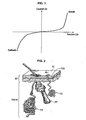
- the outermost layer of the skin P is electrically insulating.
- This layer included in the epidermis EP, consists of a matrix of lipids and corneocytes, that is to say dead cells. It is crossed by FP hair follicles and by follicles of sweat glands FGS, as schematized in figure 2 . So, only the follicles of the FGS sweat glands are electrically conductive.
- the eccrine glands GE are the most numerous and are present almost on the entire surface of the skin. There is an abundance (on average 500 / cm 2 ) on the palms of the hands, the soles of the feet and on the forehead, where the measurements are made. This model particularly concerns the electrochemical behavior of eccrine gland follicles.
- the GE eccrine gland consists of two parts: the secretory part PS, where the sweat is filtered (isotonically) from the blood plasma, is a coil.
- the PE excretory part where some species can move in both directions through an ion channel (absorption or excretion, according to their electrochemical gradient), is an almost straight duct that leads to a pore P on the surface of the skin. These two regions have lengths of the same order of magnitude, and the winding is slightly wider than the conduit.
- the geometric model consists in unrolling the coil and joining it to the pipe to form, as in the Chizmazdhev model (see “ YA Chizmadzhev, AV Indenbom, PL Kuzmin, SV Galichenko, JCWeaver, and RO Potts, Contribution of appendageal macropores, Biophys. J., vol. 74, pp. 843-856, 1998 "), A cylindrical tube.
- the main variables are the concentrations c i and velocities u i of the main ions present in sweat: i ⁇ ⁇ Cl - , Na + , H + ⁇ .
- Two currents are present: an axial current along the axis of the gland, due to the movements of ions along the axis, and transverse currents due to the charges that pass through or accumulate on the wall of the gland .
- E ⁇ - ⁇ ⁇ ⁇ x F ⁇ ⁇ i z i . vs i . u i
- the transverse current through the wall corresponds to the charges that pass through the wall of the gland, called the ion channel current. It is bound to Cl - and Na + ions that pass through the epithelial membrane using their own specific ion channels.
- the ion channel approach is more fertile than a simple conductance model because it also takes into account the chemical gradient.
- Ions are considered to be rigid spheres moving in an incompressible continuous fluid.
- they create an electric field (already mentioned) and a magnetic field
- the species are subjected to the following forces:
- the second term is strictly zero in our one-dimensional model because it is orthogonal to speed.
- F i R i . ⁇ i m i ⁇ R i . vs i . M i m i
- the measured conductance is: VS ⁇ 2 ⁇ ⁇ . r e .
- the measured electrochemical conductance of the skin is the sum of the "real total” conductance of the duct and the "real total” conductance of the coil.
- this EDO must satisfy the same boundary conditions at more than one value: one at the surface, the other at the end of the gland.
- the resulting problem is no longer the classical integration of an EDO or problem at the initial Cauchy values, but is called a two-point boundary problem
- the adopted solution is a method of shooting.
- the integration of the EDO with Stoermer's second-order algorithm proceeds from the surface to the end of the gland, and we try to match the condition to zero current limits at the end of the integration. .
- the key point here is this delicate correspondence. It is implemented using the globally convergent Newton-Raphson method.
- the main parameters that regulate the electrical response of the eccrine gland are the (surface) conductances of the secretory part and the excretory part. Typical values are as follows: normal patient, cystic fibrosis patient, diabetic patient. The orders of magnitude of the conductances are given in ⁇ S / cm 2 .
- the steady-state current-voltage characteristic of the human skin initially has a linear part before a slope separation (or a deviation of linearity) which comes from the nonlinear dependence of the surface conductance of the gland / tube relative to the voltage due to the opening of the channels and / or the electroporation.
- This system 100 comprises a plurality of electrodes 110, including at least two electrodes for the feet (left foot, right foot), two electrodes for the hands (left hand, right hand), and two electrodes for the forehead (left side of the forehead, right part of the forehead).
- it comprises only four electrodes 110, for the hands and feet.
- Electrode pairs (abbreviated designation in parentheses): Anode Cathode Left hand (MG) Right Hand (MD) Right Hand (MD) Left hand (MG) Left foot (PG) Right foot (PD) Right foot (PD) Left foot (PG)
- Electrodes are preferably large, ie their surface is between 50 and 200 cm 2 , so that they cover the entire surface of the analyzed zone. These electrodes, once applied to the skin, are subjected to potential allowing the establishment of electrochemical phenomena studied in the model above.
- the current due to the ion transport of the sweat in the gland must be less than the current that can transmit the electrode and which is due to the electron transfer between the electrode and the sweat.
- these electrodes are connected to an adjustable DC voltage source 130, adapted to deliver dc voltage slots.
- the system also includes a switching circuit 120.
- This circuit can selectively connect one or more high impedance electrodes, and connect a pair of others to the voltage source.
- the latter are so-called active electrodes, because they apply the potential on the skin in order to carry out the measurements.
- the system further comprises a measuring circuit 140, which records data representative of current and potential in the active electrodes, and potentials on at least one electrode connected at high impedance.
- This measurement circuit can also include or be connected to a processor 150, adapted to process the data, and if necessary display them as a curve on a display 151.
- the measurement is done successively and independently on the hands and feet, alternating left and right.
- two electrodes are active: the anode of positive potential V a imposed and the cathode of potential V c measured, the current between the two is also measured.
- At least one other passive electrode is connected to ground in high impedance.
- the electrochemical conductance of the skin is traditionally measured at the anode and at the cathode, by dividing the current between the electrodes by the potential at the anode and at the cathode respectively, subtracted from the potential of a high impedance electrode and possibly an electrode correction.
- the average potential is calculated for determining the electrochemical conductance of the skin at the anode and at the cathode.
- the voltage source delivers to the anode one or more voltage pulses with a duration greater than or equal to 0.2 second.
- the cumulative duration of all the slots is between 5 seconds and one minute, and preferably between 10 and 30 seconds. This time is long enough to allow the establishment of electrochemical phenomena in the skin.
- the slots have a potential between 1 and 4 V.
- the voltage source can apply to the anode several slots, of equal duration and variable voltage from one slot to another, for example increasing or decreasing between 1 and 4 V.
- the oxidation of the anode generates at the level thereof an overvoltage which evolves increasingly as a function of time and the potential applied to the anode.
- the reduction causes a decrease of the surge until it is canceled.
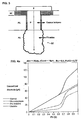
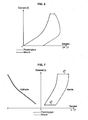
- the solid line represents the physiological current to be measured, which must normally pass through the origin.
- the dashed curve represents the actually measured current, as a function of the difference between the anode potential and the body potential, the latter being measured by the high impedance connected electrodes.
- the method according to the invention makes it possible to correct this measurement.
- the electrode regeneration principle of connecting an electrode as a cathode is used to suppress any overvoltage.
- the method according to the invention has at least one additional step, prior to the measuring step, during which at least one electrode is regenerated, using it as a cathode, before connecting it in high impedance.
- the cathode is subjected to a continuous potential of between -1 and -4 V, and preferably between -3 and -3.5 V.
- This potential results from the application to the anode of a DC voltage, in the form of a single slot, or several slots of varying voltages or not from one slot to another.
- the total duration of the voltage application is greater than the regeneration time of the cathode, comprised between a few seconds and a few tens of seconds.
- the regeneration time of the cathode can be between 5 s and 1 minute, or preferably between 10 and 30 seconds.
- the method may further comprise an additional regeneration step of one or more other electrodes which are connected at high impedance during the measurement step. In this case, we calculate the average of their potentials to obtain the potential reached by the body.
- the measuring circuit raises the potentials at the electrodes connected in high impedance, the potential at the cathode, and the current between the anode and the cathode.
- a cycle can be considered in which the cathode used in a measurement step is used as an anode in a subsequent measurement step.
- a cycle is created in which the electrochemical conductance of the skin on the hands and feet is measured from the anode potential (chloride ion conductance); therefore, at least four measurements must be taken where the anode is located at the four different sites: right hand, left hand, right foot, left foot.
- a possible cycle, in which the two electrodes connected in high impedance and the anode are always regenerated is as follows: Anode - Cathode Nature of the stage Remarks MG - PG Regeneration PG regenerated after MG - PD Regeneration PD regenerated after MG - MD Regeneration MD regenerated after MD - MG Measured Regenerated anode at the beginning, MG regenerated after MG - MD Measured Regenerated anode at the beginning, regenerated MD after PG - MG Regeneration MG regenerated after PD - PG Measured Regenerated anode at the beginning, PG regenerated after PG - PD Measured Anode regenerated at the beginning
- the anodes are always regenerated, and the "zero" is ensured for the two electrodes connected in high impedance; as a result, the left and right measuring circuits are symmetrical.
- the linear conductance of the physiological current can therefore be calculated by determining the slope of the curve when low voltages are applied to the anode, once the anode and cathode side overvoltage is stabilized.
- Another method of exploiting the slope of the curve is to estimate the overvoltage at the anode by extrapolating the potential when the current is canceled, then to determine the conductance (linear or not) of the skin at the level of the anode by dividing the current by the difference between the potential of the anode removed from this overvoltage, and the potential of a regenerated electrode connected in high impedance.
- the conductance can also be estimated by electrode correction.
- the method according to the invention may comprise an intermediate step, during which an overvoltage is estimated by a potential difference between a regenerated electrode connected at high impedance, and another electrode, not regenerated, connected in high impedance.
- the DC voltage source always delivers at the anode one or more voltage pulses with the same voltage and the same duration as previously described. The potential difference thus measured makes it possible to determine the overvoltage when this non-regenerated electrode will serve as anode during a subsequent measurement step.
- An estimate of the electrochemical conductance of the skin at the anode is obtained by dividing the current between the anode and the cathode by the difference between the corrected anode potential (ie, the overvoltage removed) and the potential of the anode. the regenerated electrode connected in high impedance.
- the method according to the invention comprises an additional regeneration step, between the regeneration step and the measurement step, during which the anode and the cathode are respectively the same as in the step of measured.
- the cathode is completely regenerated, while the surge at the anode increases to reach the final offset.
- the measured cathode-side curve coincides with the physiological current, in solid lines.
- the overvoltage is constant and equal to the final offset ⁇ f at , ie the current measured in dashed lines and the physiological current in solid lines are simply offset from the offset. This allows an accurate evaluation of the entire curve at the anode and the cathode: both the linear conductance portion, and the detachment portion.
- this conductance can be estimated at the anode, as at the cathode, by measuring the slope of the current-voltage curve.
- the current between the electrodes is divided by the potential difference between the anode and a regenerated high impedance electrode, to which the overvoltage at the anode has been subtracted.
Landscapes
- Health & Medical Sciences (AREA)
- Life Sciences & Earth Sciences (AREA)
- Engineering & Computer Science (AREA)
- Molecular Biology (AREA)
- Animal Behavior & Ethology (AREA)
- Veterinary Medicine (AREA)
- Public Health (AREA)
- Physics & Mathematics (AREA)
- General Health & Medical Sciences (AREA)
- Biophysics (AREA)
- Pathology (AREA)
- Biomedical Technology (AREA)
- Heart & Thoracic Surgery (AREA)
- Medical Informatics (AREA)
- Surgery (AREA)
- Physiology (AREA)
- Dermatology (AREA)
- Radiology & Medical Imaging (AREA)
- Nuclear Medicine, Radiotherapy & Molecular Imaging (AREA)
- Signal Processing (AREA)
- Psychiatry (AREA)
- Artificial Intelligence (AREA)
- Computer Vision & Pattern Recognition (AREA)
- Endocrinology (AREA)
- Gastroenterology & Hepatology (AREA)
- Investigating Or Analyzing Materials By The Use Of Electric Means (AREA)
- Measurement And Recording Of Electrical Phenomena And Electrical Characteristics Of The Living Body (AREA)
- Measuring And Recording Apparatus For Diagnosis (AREA)
Claims (15)
- Elektrophysiologisches Analyseverfahren, das in einem System umgesetzt wird, das umfasst:eine Reihe von Elektroden, die zur Platzierung in verschiedenen Regionen des menschlichen Körpers bestimmt sind,eine Gleichspannungsquelle, die gesteuert wird, um Gleichspannungrechtecke zu erzeugen,einen Kommunikationschaltkreis, der ausgebildet ist, um selektiv ein aktives Elektrodenpaar mit der Spannungsquelle zu verbinden, wobei die aktiven Elektroden eine Anode und eine Kathode darstellen, und um mindestens eine andere passive Elektrode, die zur Messung des vom Körper erreichten Potentials dient, in Hochimpedanz zu verbinden, undeinen Messkreis, der ausgebildet ist, um repräsentative Daten des Stroms in den aktiven Elektroden und der Potentiale auf mindestens bestimmten Elektroden, die in Hochimpedanz verbunden sind, als Antwort auf die Anwendung des rechtecke zu ermitteln, wobei die Daten erlauben, einen Wert der elektrochemischen Leitfähigkeit der Haut zu bestimmen,wobei das Verfahren mindestens einen Messschritt umfasst, bei dem die einstellbare Gleichspannungsquelle auf die Anode eine Reihe des Gleichspannungsrechtecke anwendet und bei dem der Messkreis die Daten ermittelt,wobei das Verfahren dadurch gekennzeichnet ist, dass es ferner einen Schritt vor dem Messschritt umfasst, bei dem eine Elektrode, die während des Messschritts in Hochimpedanz verbunden ist, als Kathode mit der Spannungsquelle verbunden regeneriert wird.
- Elektrophysiologisches Analyseverfahren nach Anspruch 1, wobei die Kathode während des Regenerationsschritts einem kontinuierlichen Potential zwischen -1 und -4 V, vorzugsweise zwischen -3 und -3,5 V, inklusive ausgesetzt wird.
- Elektrophysiologisches Analyseverfahren nach einem der Ansprüche 1 oder 2, wobei die Spannungsquelle während des Regenerationsschritts ein Spannungsrechteck einer Dauer zwischen 5 Sekunden und einer Minute, vorzugsweise zwischen 10 und 30 Sekunden, inklusive oder Rechtecke identischer oder von einem Rechteck zum anderen variabler Spannung einer kumulierten Dauer zwischen 5 Sekunden und einer Minute, vorzugsweise zwischen 10 und 30 Sekunden, inklusive bereitstellt.
- Elektrophysiologisches Analyseverfahren nach Anspruch 1, das vor dem Messschritt einen zusätzlichen Regenerationsschritts umfasst, bei dem eine andere, in Hochimpedanz verbundene Elektrode oder die während des Messschritts als Anode verwendete Elektrode als mit der Spannungsquelle als Kathode verbunden regeneriert wird.
- Elektrophysiologisches Analyseverfahren nach einem der Ansprüche 1 bis 4, das ferner einen Übergangsschritt zwischen dem Regenerationsschritt und dem Messschritt umfasst, bei dem eine Spannungsdifferenz zwischen einer nicht regenerierten, in Hochimpedanz verbundenen Elektrode und einer regenerierten, in Hochimpedanz verbundenen Elektrode gemessen wird, wobei die Differenz die Bestimmung eines Überspannungswerts an der nicht regenerierten Elektrode erlaubt, und wobei während des Messschritts die nicht regenerierte Elektrode, deren Überspannung gemessen wurde, als Anode verbunden wird.
- Elektrophysiologisches Analyseverfahren nach Anspruch 5, das ausgehend von der Überspannung der nicht regenerierten Hochimpedanz-Elektrode einen Bestimmungsschritt einer an die während des Messschritts gemessenen Werte anzuwendenden Korrektur umfasst.
- Elektrophysiologisches Analyseverfahren nach Anspruch 6, wobei die regenerierte, während des Übergangsschritts in Hochimpedanz verbundene Elektrode zuvor als Kathode verbunden war und einen Schritt umfasst, bei dem vom an der Anode während des Messschritts gemessenen Potential die während des Übergangsschritts gemessene Überspannung abgezogen wird.
- Elektrophysiologisches Analyseverfahren nach einem der Ansprüche 1 bis 4, das zwischen dem Regenerationsschritt und dem Messschritt einen zusätzlichen Regenerationsschritt umfasst, bei dem die Anode und die Kathode jeweils dieselben wie beim Messschritt sind.
- Elektrophysiologisches Analyseverfahren nach den Ansprüchen 1 bis 4 oder 8, wobei, unabhängig von jeder Überspannung, die an der Anode oder an der Kathode bestimmte elektrochemische Leitfähigkeit der Haut die Steigung der in einem Strom-Spannungs-Graph für an die Anode unter 2 V angelegte Spannungen gemessene Kurve ist.
- Elektrophysiologisches Analyseverfahren nach Anspruch 8, wobei die Leitfähigkeit der Haut im Bereich der Kathode durch Division des an der Kathode gemessenen Stroms durch die Potentialdifferenz zwischen der Kathode und einer regenerierten, in Hochimpedanz verbundenen Elektrode ermittelt wird.
- Elektrophysiologisches Analyseverfahren nach Anspruch 8, wobei eine Überspannung an der Anode durch den Wert des extrapolierten Potentials an der Anode geschätzt wird, wenn der Strom zusammenfällt, und man die Leitfähigkeit der Haut im Bereich der Anode durch Division des an der Anode gemessenen Stroms durch die Differenz zwischen dem Potential der Anode minus Überspannung und dem Potential einer regenerierten, in Hochimpedanz verbundenen Elektrode erhält.
- Elektrophysiologisches Analyseverfahren nach einem der Ansprüche 1 bis 4, wobei die kumulierte Dauer der während des Messschritts angewendeten Spannungs Rechteck zwischen 5 Sekunden und einer Minute, vorzugsweise zwischen 10 und 30 Sekunden, inklusive ist.
- Elektrophysiologisches Analyseverfahren nach Anspruch 12, wobei die kumulierte Dauer der während des Messschritts angewendeten Spannungs Rechtecke größer oder gleich der Dauer des während eines Regenerationsschritts angewendeten Rechteckes ist.
- Elektrophysiologisches Analyseverfahren nach einem der Ansprüche 1 bis 13, wobei eine Leitfähigkeit der Haut an der Anode durch Division des an der Anode gemessenen Stroms durch die Potentialdifferenz zwischen der Anode minus Überspannung und einer regenerierten, in Hochimpedanz verbundenen Elektrode gemessen wird, und wobei die derart erhaltene elektrochemische Leitfähigkeit der Haut der elektrischen Leitfähigkeit der Wände der ekkrinen Schweißdrüsen im Kontakt mit den aktiven Elektroden entspricht.
- Verfahren für die Modellierung der elektrischen Leitfähigkeit der Wände ekkrinen Schweißdrüsen, das die Umsetzung des Verfahrens nach einem der Ansprüche 1 bis 13 mit Elektroden, die in der Region der fraglichen ekkrinen Drüsen angeordnet sind, umfasst.
Applications Claiming Priority (2)
| Application Number | Priority Date | Filing Date | Title |
|---|---|---|---|
| FR1160601A FR2982758B1 (fr) | 2011-11-21 | 2011-11-21 | Procede d'analyse physiologique de fiabilite accrue |
| PCT/EP2012/072388 WO2013075963A1 (fr) | 2011-11-21 | 2012-11-12 | Procede d'analyse physiologique de fiabilite accrue |
Publications (2)
| Publication Number | Publication Date |
|---|---|
| EP2782500A1 EP2782500A1 (de) | 2014-10-01 |
| EP2782500B1 true EP2782500B1 (de) | 2015-08-12 |
Family
ID=47178694
Family Applications (1)
| Application Number | Title | Priority Date | Filing Date |
|---|---|---|---|
| EP12786976.6A Not-in-force EP2782500B1 (de) | 2011-11-21 | 2012-11-12 | Verfahren zur durchführung einer elektrophysiologischen analyse mit erhöhter zuverlässigkeit |
Country Status (7)
| Country | Link |
|---|---|
| US (1) | US9211080B2 (de) |
| EP (1) | EP2782500B1 (de) |
| JP (1) | JP5670607B2 (de) |
| KR (1) | KR101514835B1 (de) |
| CN (1) | CN104168824B (de) |
| FR (1) | FR2982758B1 (de) |
| WO (1) | WO2013075963A1 (de) |
Families Citing this family (24)
| Publication number | Priority date | Publication date | Assignee | Title |
|---|---|---|---|---|
| FR3010298B1 (fr) * | 2013-09-12 | 2015-09-04 | Impeto Medical | Procede d'analyse physiologique par stabilisation d'une surtension |
| US9636061B2 (en) | 2015-03-09 | 2017-05-02 | CoreSyte, Inc. | System and method for measuring biological fluid biomarkers |
| US9883827B2 (en) | 2015-03-09 | 2018-02-06 | CoreSyte, Inc. | System and method for measuring biological fluid biomarkers |
| US9645133B2 (en) | 2015-03-09 | 2017-05-09 | CoreSyte, Inc. | Method for manufacturing a biological fluid sensor |
| US9579024B2 (en) | 2015-03-09 | 2017-02-28 | CoreSyte, Inc. | System and method for measuring biological fluid biomarkers |
| US11389087B2 (en) | 2015-03-09 | 2022-07-19 | CoreSyte, Inc. | Device for measuring biological fluids |
| US11883011B2 (en) | 2015-03-09 | 2024-01-30 | CoreSyte, Inc. | Method for manufacturing a biological fluid sensor |
| US9622725B2 (en) | 2015-03-09 | 2017-04-18 | CoreSyte, Inc. | Method for manufacturing a biological fluid sensor |
| US10561405B2 (en) * | 2015-03-09 | 2020-02-18 | CoreSyte, Inc. | Method for manufacturing a biological fluid sensor |
| US11998319B2 (en) | 2015-03-09 | 2024-06-04 | CoreSyte, Inc. | Device for measuring biological fluids |
| US10327676B2 (en) | 2015-03-09 | 2019-06-25 | CoreSyte, Inc. | Device for measuring biological fluids |
| CN105997071A (zh) * | 2016-05-10 | 2016-10-12 | 咸阳康荣信数字超声系统有限公司 | 基于汗液浓度的人体电导测试分析仪 |
| CN106859606A (zh) * | 2017-04-06 | 2017-06-20 | 浙江大学 | 基于人体电导的糖尿病风险评估仪 |
| CN107016243A (zh) * | 2017-04-06 | 2017-08-04 | 浙江大学 | 糖尿病风险评估方法 |
| CN107432745B (zh) * | 2017-06-27 | 2020-11-24 | 芯海科技(深圳)股份有限公司 | 一种人体阻抗测量中判断错误站姿的方法 |
| US20210341412A1 (en) * | 2018-08-23 | 2021-11-04 | Mayo Foundation For Medical Education And Research | Measuring neurochemical levels with multiple cyclic square wave voltammetry |
| US20230118172A1 (en) * | 2020-03-02 | 2023-04-20 | Nippon Telegraph And Telephone Corporation | Wearable Device, Perspiration Analysis Device, and Perspiration Analysis Method |
| FR3131524A1 (fr) | 2021-12-31 | 2023-07-07 | Withings | Station de mesure avec mesure d’électrocardiogramme |
| FR3131521B1 (fr) | 2021-12-31 | 2024-10-25 | Withings | Station de mesure avec mesure de l’activité sudorale |
| EP4349245B1 (de) | 2022-10-07 | 2025-12-10 | BIC Violex Single Member S.A. | Schreibgerät zur messung des hautleitwertes eines benutzers und verfahren zum betrieb desselben |
| EP4382040A1 (de) | 2022-12-05 | 2024-06-12 | Withings | Verbessertes esc-bewertungsverfahren |
| FR3131523A1 (fr) | 2022-12-29 | 2023-07-07 | Withings | Station de mesure avec mesure d’électrocardiogramme |
| EP4470458A1 (de) | 2023-05-30 | 2024-12-04 | Withings | Elektrodenentladung an einer messvorrichtung |
| CN118846381B (zh) * | 2024-09-23 | 2025-02-25 | 江西华恒京兴医疗科技有限公司 | 电流刺激参数调控装置及电子设备 |
Family Cites Families (54)
| Publication number | Priority date | Publication date | Assignee | Title |
|---|---|---|---|---|
| US3449080A (en) | 1964-10-29 | 1969-06-10 | Johnson & Johnson | Device for determining sodium or chloride concentration in body fluids |
| US3821949A (en) | 1972-04-10 | 1974-07-02 | Menninger Foundation | Bio-feedback apparatus |
| US4365637A (en) | 1979-07-05 | 1982-12-28 | Dia-Med, Inc. | Perspiration indicating alarm for diabetics |
| US4509531A (en) | 1982-07-28 | 1985-04-09 | Teledyne Industries, Inc. | Personal physiological monitor |
| JPS62324A (ja) | 1985-06-27 | 1987-01-06 | 本山 博 | 内臓−自律神経機能診断装置 |
| US4690152A (en) | 1985-10-23 | 1987-09-01 | American Mediscan, Inc. | Apparatus for epithelial tissue impedance measurements |
| JPH01288233A (ja) | 1988-02-20 | 1989-11-20 | Hiroshi Motoyama | 生体情報測定装置 |
| DE59007743D1 (de) | 1989-01-27 | 1995-01-05 | Medese Ag | Biotelemetrie-verfahren zur übertragung von bioelektrischen potentialdifferenzen, und vorrichtung zur übertragung von ekg-signalen. |
| US5406956A (en) | 1993-02-11 | 1995-04-18 | Francis Luca Conte | Method and apparatus for truth detection |
| DE4329898A1 (de) | 1993-09-04 | 1995-04-06 | Marcus Dr Besson | Kabelloses medizinisches Diagnose- und Überwachungsgerät |
| ZA948393B (en) | 1993-11-01 | 1995-06-26 | Polartechnics Ltd | Method and apparatus for tissue type recognition |
| US5947910A (en) | 1994-01-14 | 1999-09-07 | E-Z-Em, Inc. | Extravasation detection technique |
| US6678552B2 (en) | 1994-10-24 | 2004-01-13 | Transscan Medical Ltd. | Tissue characterization based on impedance images and on impedance measurements |
| US5771261A (en) | 1995-09-13 | 1998-06-23 | Anbar; Michael | Telethermometric psychological evaluation by monitoring of changes in skin perfusion induced by the autonomic nervous system |
| US6990422B2 (en) | 1996-03-27 | 2006-01-24 | World Energy Labs (2), Inc. | Method of analyzing the time-varying electrical response of a stimulated target substance |
| US6058325A (en) | 1996-04-16 | 2000-05-02 | Cardiotronics | Method and apparatus for high current electrode, transthoracic and transmyocardial impedance estimation |
| US6517482B1 (en) | 1996-04-23 | 2003-02-11 | Dermal Therapy (Barbados) Inc. | Method and apparatus for non-invasive determination of glucose in body fluids |
| US5782884A (en) | 1996-11-05 | 1998-07-21 | Sulzer Intermedics Inc. | Rate responsive cardiac pacemaker with peak impedance detection for rate control |
| US5928155A (en) | 1997-01-24 | 1999-07-27 | Cardiox Corporation | Cardiac output measurement with metabolizable analyte containing fluid |
| US6299583B1 (en) | 1998-03-17 | 2001-10-09 | Cardiox Corporation | Monitoring total circulating blood volume and cardiac output |
| US6175752B1 (en) | 1998-04-30 | 2001-01-16 | Therasense, Inc. | Analyte monitoring device and methods of use |
| AU5918399A (en) | 1998-09-11 | 2000-04-03 | Res Technologies Llc | Measurement of electric and/or magnetic properties in organisms using induced currents |
| US6491647B1 (en) | 1998-09-23 | 2002-12-10 | Active Signal Technologies, Inc. | Physiological sensing device |
| WO2000019894A1 (en) | 1998-10-08 | 2000-04-13 | Polartechnics Limited | Apparatus for recognizing tissue types |
| NO313534B1 (no) | 1999-06-01 | 2002-10-21 | Hanne Storm | Apparat og fremgangsmåte for overvåkning og fremgangsmåte for styring av et varselsignal |
| US6512949B1 (en) | 1999-07-12 | 2003-01-28 | Medtronic, Inc. | Implantable medical device for measuring time varying physiologic conditions especially edema and for responding thereto |
| JP3705574B2 (ja) | 1999-09-30 | 2005-10-12 | 株式会社タニタ | 生体電気インピーダンス測定装置 |
| CA2843053C (en) | 2000-06-01 | 2015-08-25 | Georgetown University | Systems and methods for monitoring health and delivering drugs transdermally |
| HU222052B1 (hu) | 2000-06-15 | 2003-04-28 | Miklós Illyés | Berendezésrendszer távirányításos orvosi vizsgálatokhoz |
| BRPI0414359A (pt) | 2000-06-16 | 2006-11-14 | Bodymedia Inc | sistema para a monitoração e gerenciamento do peso corpóreo e demais condições psicológicas que abrangem um planejamento interativo e personalizado, intervenção e capacidade de formular relatórios |
| JP3792489B2 (ja) | 2000-06-30 | 2006-07-05 | 株式会社タニタ | 生体インピーダンス測定装置 |
| US6871084B1 (en) | 2000-07-03 | 2005-03-22 | Srico, Inc. | High-impedance optical electrode |
| WO2002012981A2 (en) | 2000-08-09 | 2002-02-14 | Clinical Care Systems, Inc. | Method and system for a distributed analytical and diagnostic software over the intranet and internet environment |
| JP2002112969A (ja) | 2000-09-02 | 2002-04-16 | Samsung Electronics Co Ltd | 身体及び感情状態の認識装置及び方法 |
| BR0210833A (pt) | 2001-07-06 | 2004-06-22 | Aspect Medical Systems Inc | Sistema e método para a medição de impedância bioelétrica na presença de interferência |
| US6993384B2 (en) | 2001-12-04 | 2006-01-31 | Advanced Bionics Corporation | Apparatus and method for determining the relative position and orientation of neurostimulation leads |
| US8085144B2 (en) | 2002-07-02 | 2011-12-27 | Mine Safety Appliances Company | Equipment and method for identifying, monitoring and evaluating equipment, environmental and physiological conditions |
| JP5328074B2 (ja) | 2002-10-31 | 2013-10-30 | シー・アール・バード・インコーポレーテッド | 改善された電気生理学的カテーテル |
| WO2004043247A1 (fr) | 2002-11-12 | 2004-05-27 | Medi.L.D Sarl | Electrosomatogramme |
| DE202004021824U1 (de) | 2003-08-15 | 2011-04-28 | Animas Technologies Llc | Mikroprozessoren und Vorrichtungen zur Überwachung von physiologischen Analyten |
| AR043163A1 (es) | 2004-02-12 | 2005-07-20 | Univ Buenos Aires | Dispositivo electronico para discriminacion, identificacion y analisis de muestras liquidas, semi-solidas y solidas que contengan compuestos volatiles |
| WO2005092177A1 (en) | 2004-03-22 | 2005-10-06 | Bodymedia, Inc. | Non-invasive temperature monitoring device |
| US20060127964A1 (en) | 2004-07-30 | 2006-06-15 | Russell Ford | Microprocessors, devices, and methods for use in monitoring of physiological analytes |
| US7865236B2 (en) * | 2004-10-20 | 2011-01-04 | Nervonix, Inc. | Active electrode, bio-impedance based, tissue discrimination system and methods of use |
| FR2887425A1 (fr) | 2005-06-22 | 2006-12-29 | Annick Nicole Lydie Tournefier | Systeme d'analyse electrophysiologique |
| US7788045B2 (en) | 2005-09-01 | 2010-08-31 | Meditasks, Llc | Systems and method for homeostatic blood states |
| US20070124176A1 (en) | 2005-11-30 | 2007-05-31 | Searete Llc, A Limited Liability Corporation Of The State Of Delaware | Computational and/or control systems and methods related to nutraceutical agent selection and dosing |
| US20100081941A1 (en) | 2006-03-22 | 2010-04-01 | Endothelix, Inc. | Cardiovascular health station methods and apparatus |
| US7558622B2 (en) | 2006-05-24 | 2009-07-07 | Bao Tran | Mesh network stroke monitoring appliance |
| FR2912893B1 (fr) * | 2007-02-23 | 2009-12-11 | Philippe Brunswick | Systeme d'analyse electrophysiologique |
| US8764653B2 (en) | 2007-08-22 | 2014-07-01 | Bozena Kaminska | Apparatus for signal detection, processing and communication |
| CA2782858A1 (en) | 2009-12-08 | 2011-06-16 | Albert Maarek | Medical device system |
| US8934954B2 (en) | 2011-08-23 | 2015-01-13 | Impeto Medical | Assessment of sudomor function for peripheral diabetic neuropathy evaluation |
| US20130053673A1 (en) | 2011-08-23 | 2013-02-28 | Impeto Medical | Cystic fibrosis diagnostic device and method |
-
2011
- 2011-11-21 FR FR1160601A patent/FR2982758B1/fr not_active Expired - Fee Related
-
2012
- 2012-11-12 JP JP2014541617A patent/JP5670607B2/ja not_active Expired - Fee Related
- 2012-11-12 CN CN201280064592.2A patent/CN104168824B/zh not_active Expired - Fee Related
- 2012-11-12 WO PCT/EP2012/072388 patent/WO2013075963A1/fr not_active Ceased
- 2012-11-12 KR KR1020147017092A patent/KR101514835B1/ko not_active Expired - Fee Related
- 2012-11-12 US US14/359,503 patent/US9211080B2/en not_active Expired - Fee Related
- 2012-11-12 EP EP12786976.6A patent/EP2782500B1/de not_active Not-in-force
Also Published As
| Publication number | Publication date |
|---|---|
| US20140330096A1 (en) | 2014-11-06 |
| EP2782500A1 (de) | 2014-10-01 |
| US9211080B2 (en) | 2015-12-15 |
| CN104168824B (zh) | 2016-01-06 |
| JP2015504331A (ja) | 2015-02-12 |
| KR101514835B1 (ko) | 2015-04-23 |
| CN104168824A (zh) | 2014-11-26 |
| FR2982758A1 (fr) | 2013-05-24 |
| FR2982758B1 (fr) | 2013-11-15 |
| JP5670607B2 (ja) | 2015-02-18 |
| WO2013075963A1 (fr) | 2013-05-30 |
| KR20140089611A (ko) | 2014-07-15 |
Similar Documents
| Publication | Publication Date | Title |
|---|---|---|
| EP2782500B1 (de) | Verfahren zur durchführung einer elektrophysiologischen analyse mit erhöhter zuverlässigkeit | |
| Nagel et al. | Intracellular ionic activities in frog skin | |
| JP2025524863A (ja) | 分析物の正確な決定のための電気化学装置および方法 | |
| EP2943247B1 (de) | Gerät zur elektrostimulation und/oder zur iontophorese mit mitteln zur variation der spannung als funktion der resistivität der haut eines benutzers | |
| EP2124736B1 (de) | Elektrophysiologisches analysensystem | |
| EP2675941B1 (de) | Verfahren zur aktivierung einer dotierten diamantelektrode | |
| FR2873385A1 (fr) | Surveillance et controle d'une electroporation | |
| CN103257275B (zh) | 电极评价装置和电极评价方法 | |
| WO2014033105A1 (fr) | Systeme d'analyse electrophysiologique ameliore | |
| JP7005751B2 (ja) | ナノポア配列決定セルにおける二重層静電容量の測定 | |
| US20200158679A1 (en) | Analyte sensor with extended lifetime | |
| Naumowicz et al. | Pore formation in lipid bilayer membranes made of phosphatidylcholine and cholesterol followed by means of constant current | |
| WO2018220115A1 (fr) | Procede et systeme pour diagnostiquer en temps reel l'etat de fonctionnement d'un systeme electrochimique, et systeme electrochimique integrant ce systeme de diagnostic | |
| WO2015036530A1 (fr) | Procede d'analyse physiologique par stabilisation d'une surtension | |
| Kuralay et al. | Electrochemical characterization of redox polymer modified electrode developed for monitoring of adenine | |
| JP2017534067A (ja) | 検査装置および検査装置を使用する方法 | |
| EP3072179A1 (de) | Verfahren zur in-situ-rekalibrierung einer in ein elektrochemisches system integrierten bezugselektrode | |
| US9354250B1 (en) | Nanoscale probe structure and application thereof | |
| EP3535582B1 (de) | Verfahren zur charakterisierung einer blutprobe | |
| WO2007077360A1 (fr) | Dispositif et procede electrochimiques de mesure de l'etat redox de la peau | |
| FR2798996A1 (fr) | Capteur electrochimique a autodiagnostic | |
| EP1937146B1 (de) | Vorrichtung und Verfahren zur Messung der physikalisch-chemischen Eigenschaften der Haut | |
| Ichieda et al. | Voltammetric elucidation of ion transfer through an extremely thin membrane | |
| WO2022253843A1 (fr) | Detection d'une espece chimique dans la sueur d'un sujet | |
| Geets | Les transmissions électriques dans la fibre nerveuse |
Legal Events
| Date | Code | Title | Description |
|---|---|---|---|
| PUAI | Public reference made under article 153(3) epc to a published international application that has entered the european phase |
Free format text: ORIGINAL CODE: 0009012 |
|
| 17P | Request for examination filed |
Effective date: 20140619 |
|
| AK | Designated contracting states |
Kind code of ref document: A1 Designated state(s): AL AT BE BG CH CY CZ DE DK EE ES FI FR GB GR HR HU IE IS IT LI LT LU LV MC MK MT NL NO PL PT RO RS SE SI SK SM TR |
|
| DAX | Request for extension of the european patent (deleted) | ||
| GRAP | Despatch of communication of intention to grant a patent |
Free format text: ORIGINAL CODE: EPIDOSNIGR1 |
|
| INTG | Intention to grant announced |
Effective date: 20150330 |
|
| GRAS | Grant fee paid |
Free format text: ORIGINAL CODE: EPIDOSNIGR3 |
|
| GRAA | (expected) grant |
Free format text: ORIGINAL CODE: 0009210 |
|
| AK | Designated contracting states |
Kind code of ref document: B1 Designated state(s): AL AT BE BG CH CY CZ DE DK EE ES FI FR GB GR HR HU IE IS IT LI LT LU LV MC MK MT NL NO PL PT RO RS SE SI SK SM TR |
|
| REG | Reference to a national code |
Ref country code: GB Ref legal event code: FG4D Free format text: NOT ENGLISH |
|
| REG | Reference to a national code |
Ref country code: CH Ref legal event code: EP |
|
| REG | Reference to a national code |
Ref country code: AT Ref legal event code: REF Ref document number: 741383 Country of ref document: AT Kind code of ref document: T Effective date: 20150815 |
|
| REG | Reference to a national code |
Ref country code: IE Ref legal event code: FG4D Free format text: LANGUAGE OF EP DOCUMENT: FRENCH |
|
| REG | Reference to a national code |
Ref country code: DE Ref legal event code: R096 Ref document number: 602012009664 Country of ref document: DE |
|
| REG | Reference to a national code |
Ref country code: FR Ref legal event code: PLFP Year of fee payment: 4 |
|
| REG | Reference to a national code |
Ref country code: LT Ref legal event code: MG4D |
|
| REG | Reference to a national code |
Ref country code: AT Ref legal event code: MK05 Ref document number: 741383 Country of ref document: AT Kind code of ref document: T Effective date: 20150812 |
|
| REG | Reference to a national code |
Ref country code: NL Ref legal event code: MP Effective date: 20150812 |
|
| PG25 | Lapsed in a contracting state [announced via postgrant information from national office to epo] |
Ref country code: NO Free format text: LAPSE BECAUSE OF FAILURE TO SUBMIT A TRANSLATION OF THE DESCRIPTION OR TO PAY THE FEE WITHIN THE PRESCRIBED TIME-LIMIT Effective date: 20151112 Ref country code: GR Free format text: LAPSE BECAUSE OF FAILURE TO SUBMIT A TRANSLATION OF THE DESCRIPTION OR TO PAY THE FEE WITHIN THE PRESCRIBED TIME-LIMIT Effective date: 20151113 Ref country code: LT Free format text: LAPSE BECAUSE OF FAILURE TO SUBMIT A TRANSLATION OF THE DESCRIPTION OR TO PAY THE FEE WITHIN THE PRESCRIBED TIME-LIMIT Effective date: 20150812 Ref country code: FI Free format text: LAPSE BECAUSE OF FAILURE TO SUBMIT A TRANSLATION OF THE DESCRIPTION OR TO PAY THE FEE WITHIN THE PRESCRIBED TIME-LIMIT Effective date: 20150812 Ref country code: LV Free format text: LAPSE BECAUSE OF FAILURE TO SUBMIT A TRANSLATION OF THE DESCRIPTION OR TO PAY THE FEE WITHIN THE PRESCRIBED TIME-LIMIT Effective date: 20150812 |
|
| PG25 | Lapsed in a contracting state [announced via postgrant information from national office to epo] |
Ref country code: IS Free format text: LAPSE BECAUSE OF FAILURE TO SUBMIT A TRANSLATION OF THE DESCRIPTION OR TO PAY THE FEE WITHIN THE PRESCRIBED TIME-LIMIT Effective date: 20151212 Ref country code: ES Free format text: LAPSE BECAUSE OF FAILURE TO SUBMIT A TRANSLATION OF THE DESCRIPTION OR TO PAY THE FEE WITHIN THE PRESCRIBED TIME-LIMIT Effective date: 20150812 Ref country code: HR Free format text: LAPSE BECAUSE OF FAILURE TO SUBMIT A TRANSLATION OF THE DESCRIPTION OR TO PAY THE FEE WITHIN THE PRESCRIBED TIME-LIMIT Effective date: 20150812 Ref country code: SE Free format text: LAPSE BECAUSE OF FAILURE TO SUBMIT A TRANSLATION OF THE DESCRIPTION OR TO PAY THE FEE WITHIN THE PRESCRIBED TIME-LIMIT Effective date: 20150812 Ref country code: AT Free format text: LAPSE BECAUSE OF FAILURE TO SUBMIT A TRANSLATION OF THE DESCRIPTION OR TO PAY THE FEE WITHIN THE PRESCRIBED TIME-LIMIT Effective date: 20150812 Ref country code: RS Free format text: LAPSE BECAUSE OF FAILURE TO SUBMIT A TRANSLATION OF THE DESCRIPTION OR TO PAY THE FEE WITHIN THE PRESCRIBED TIME-LIMIT Effective date: 20150812 Ref country code: PT Free format text: LAPSE BECAUSE OF FAILURE TO SUBMIT A TRANSLATION OF THE DESCRIPTION OR TO PAY THE FEE WITHIN THE PRESCRIBED TIME-LIMIT Effective date: 20151214 Ref country code: PL Free format text: LAPSE BECAUSE OF FAILURE TO SUBMIT A TRANSLATION OF THE DESCRIPTION OR TO PAY THE FEE WITHIN THE PRESCRIBED TIME-LIMIT Effective date: 20150812 |
|
| PG25 | Lapsed in a contracting state [announced via postgrant information from national office to epo] |
Ref country code: NL Free format text: LAPSE BECAUSE OF FAILURE TO SUBMIT A TRANSLATION OF THE DESCRIPTION OR TO PAY THE FEE WITHIN THE PRESCRIBED TIME-LIMIT Effective date: 20150812 |
|
| PG25 | Lapsed in a contracting state [announced via postgrant information from national office to epo] |
Ref country code: EE Free format text: LAPSE BECAUSE OF FAILURE TO SUBMIT A TRANSLATION OF THE DESCRIPTION OR TO PAY THE FEE WITHIN THE PRESCRIBED TIME-LIMIT Effective date: 20150812 Ref country code: SK Free format text: LAPSE BECAUSE OF FAILURE TO SUBMIT A TRANSLATION OF THE DESCRIPTION OR TO PAY THE FEE WITHIN THE PRESCRIBED TIME-LIMIT Effective date: 20150812 Ref country code: IT Free format text: LAPSE BECAUSE OF FAILURE TO SUBMIT A TRANSLATION OF THE DESCRIPTION OR TO PAY THE FEE WITHIN THE PRESCRIBED TIME-LIMIT Effective date: 20150812 Ref country code: DK Free format text: LAPSE BECAUSE OF FAILURE TO SUBMIT A TRANSLATION OF THE DESCRIPTION OR TO PAY THE FEE WITHIN THE PRESCRIBED TIME-LIMIT Effective date: 20150812 Ref country code: CZ Free format text: LAPSE BECAUSE OF FAILURE TO SUBMIT A TRANSLATION OF THE DESCRIPTION OR TO PAY THE FEE WITHIN THE PRESCRIBED TIME-LIMIT Effective date: 20150812 |
|
| REG | Reference to a national code |
Ref country code: DE Ref legal event code: R097 Ref document number: 602012009664 Country of ref document: DE |
|
| PG25 | Lapsed in a contracting state [announced via postgrant information from national office to epo] |
Ref country code: RO Free format text: LAPSE BECAUSE OF FAILURE TO SUBMIT A TRANSLATION OF THE DESCRIPTION OR TO PAY THE FEE WITHIN THE PRESCRIBED TIME-LIMIT Effective date: 20150812 |
|
| PLBE | No opposition filed within time limit |
Free format text: ORIGINAL CODE: 0009261 |
|
| STAA | Information on the status of an ep patent application or granted ep patent |
Free format text: STATUS: NO OPPOSITION FILED WITHIN TIME LIMIT |
|
| PG25 | Lapsed in a contracting state [announced via postgrant information from national office to epo] |
Ref country code: MC Free format text: LAPSE BECAUSE OF FAILURE TO SUBMIT A TRANSLATION OF THE DESCRIPTION OR TO PAY THE FEE WITHIN THE PRESCRIBED TIME-LIMIT Effective date: 20150812 Ref country code: LU Free format text: LAPSE BECAUSE OF FAILURE TO SUBMIT A TRANSLATION OF THE DESCRIPTION OR TO PAY THE FEE WITHIN THE PRESCRIBED TIME-LIMIT Effective date: 20151112 |
|
| REG | Reference to a national code |
Ref country code: CH Ref legal event code: PL |
|
| 26N | No opposition filed |
Effective date: 20160513 |
|
| PG25 | Lapsed in a contracting state [announced via postgrant information from national office to epo] |
Ref country code: LI Free format text: LAPSE BECAUSE OF NON-PAYMENT OF DUE FEES Effective date: 20151130 Ref country code: CH Free format text: LAPSE BECAUSE OF NON-PAYMENT OF DUE FEES Effective date: 20151130 |
|
| REG | Reference to a national code |
Ref country code: IE Ref legal event code: MM4A |
|
| PG25 | Lapsed in a contracting state [announced via postgrant information from national office to epo] |
Ref country code: SI Free format text: LAPSE BECAUSE OF FAILURE TO SUBMIT A TRANSLATION OF THE DESCRIPTION OR TO PAY THE FEE WITHIN THE PRESCRIBED TIME-LIMIT Effective date: 20150812 |
|
| PG25 | Lapsed in a contracting state [announced via postgrant information from national office to epo] |
Ref country code: IE Free format text: LAPSE BECAUSE OF NON-PAYMENT OF DUE FEES Effective date: 20151112 |
|
| REG | Reference to a national code |
Ref country code: FR Ref legal event code: PLFP Year of fee payment: 5 |
|
| PG25 | Lapsed in a contracting state [announced via postgrant information from national office to epo] |
Ref country code: SM Free format text: LAPSE BECAUSE OF FAILURE TO SUBMIT A TRANSLATION OF THE DESCRIPTION OR TO PAY THE FEE WITHIN THE PRESCRIBED TIME-LIMIT Effective date: 20150812 Ref country code: BG Free format text: LAPSE BECAUSE OF FAILURE TO SUBMIT A TRANSLATION OF THE DESCRIPTION OR TO PAY THE FEE WITHIN THE PRESCRIBED TIME-LIMIT Effective date: 20150812 |
|
| PG25 | Lapsed in a contracting state [announced via postgrant information from national office to epo] |
Ref country code: CY Free format text: LAPSE BECAUSE OF FAILURE TO SUBMIT A TRANSLATION OF THE DESCRIPTION OR TO PAY THE FEE WITHIN THE PRESCRIBED TIME-LIMIT Effective date: 20150812 Ref country code: HU Free format text: LAPSE BECAUSE OF FAILURE TO SUBMIT A TRANSLATION OF THE DESCRIPTION OR TO PAY THE FEE WITHIN THE PRESCRIBED TIME-LIMIT; INVALID AB INITIO Effective date: 20121112 |
|
| PG25 | Lapsed in a contracting state [announced via postgrant information from national office to epo] |
Ref country code: BE Free format text: LAPSE BECAUSE OF NON-PAYMENT OF DUE FEES Effective date: 20151130 |
|
| PG25 | Lapsed in a contracting state [announced via postgrant information from national office to epo] |
Ref country code: MT Free format text: LAPSE BECAUSE OF FAILURE TO SUBMIT A TRANSLATION OF THE DESCRIPTION OR TO PAY THE FEE WITHIN THE PRESCRIBED TIME-LIMIT Effective date: 20150812 |
|
| REG | Reference to a national code |
Ref country code: FR Ref legal event code: PLFP Year of fee payment: 6 |
|
| PGFP | Annual fee paid to national office [announced via postgrant information from national office to epo] |
Ref country code: FR Payment date: 20171129 Year of fee payment: 6 Ref country code: DE Payment date: 20171212 Year of fee payment: 6 |
|
| PGFP | Annual fee paid to national office [announced via postgrant information from national office to epo] |
Ref country code: GB Payment date: 20171219 Year of fee payment: 6 |
|
| PG25 | Lapsed in a contracting state [announced via postgrant information from national office to epo] |
Ref country code: MK Free format text: LAPSE BECAUSE OF FAILURE TO SUBMIT A TRANSLATION OF THE DESCRIPTION OR TO PAY THE FEE WITHIN THE PRESCRIBED TIME-LIMIT Effective date: 20150812 |
|
| PG25 | Lapsed in a contracting state [announced via postgrant information from national office to epo] |
Ref country code: AL Free format text: LAPSE BECAUSE OF FAILURE TO SUBMIT A TRANSLATION OF THE DESCRIPTION OR TO PAY THE FEE WITHIN THE PRESCRIBED TIME-LIMIT Effective date: 20150812 Ref country code: TR Free format text: LAPSE BECAUSE OF FAILURE TO SUBMIT A TRANSLATION OF THE DESCRIPTION OR TO PAY THE FEE WITHIN THE PRESCRIBED TIME-LIMIT Effective date: 20150812 |
|
| REG | Reference to a national code |
Ref country code: DE Ref legal event code: R119 Ref document number: 602012009664 Country of ref document: DE |
|
| GBPC | Gb: european patent ceased through non-payment of renewal fee |
Effective date: 20181112 |
|
| PG25 | Lapsed in a contracting state [announced via postgrant information from national office to epo] |
Ref country code: DE Free format text: LAPSE BECAUSE OF NON-PAYMENT OF DUE FEES Effective date: 20190601 Ref country code: FR Free format text: LAPSE BECAUSE OF NON-PAYMENT OF DUE FEES Effective date: 20181130 |
|
| PG25 | Lapsed in a contracting state [announced via postgrant information from national office to epo] |
Ref country code: GB Free format text: LAPSE BECAUSE OF NON-PAYMENT OF DUE FEES Effective date: 20181112 |