EP2800543B1 - Systèmes de traitement de l'oeil sec - Google Patents
Systèmes de traitement de l'oeil sec Download PDFInfo
- Publication number
- EP2800543B1 EP2800543B1 EP12864218.8A EP12864218A EP2800543B1 EP 2800543 B1 EP2800543 B1 EP 2800543B1 EP 12864218 A EP12864218 A EP 12864218A EP 2800543 B1 EP2800543 B1 EP 2800543B1
- Authority
- EP
- European Patent Office
- Prior art keywords
- treatment
- strips
- strip
- eyelid
- skin
- Prior art date
- Legal status (The legal status is an assumption and is not a legal conclusion. Google has not performed a legal analysis and makes no representation as to the accuracy of the status listed.)
- Active
Links
Images









Classifications
-
- A—HUMAN NECESSITIES
- A61—MEDICAL OR VETERINARY SCIENCE; HYGIENE
- A61F—FILTERS IMPLANTABLE INTO BLOOD VESSELS; PROSTHESES; DEVICES PROVIDING PATENCY TO, OR PREVENTING COLLAPSING OF, TUBULAR STRUCTURES OF THE BODY, e.g. STENTS; ORTHOPAEDIC, NURSING OR CONTRACEPTIVE DEVICES; FOMENTATION; TREATMENT OR PROTECTION OF EYES OR EARS; BANDAGES, DRESSINGS OR ABSORBENT PADS; FIRST-AID KITS
- A61F7/00—Heating or cooling appliances for medical or therapeutic treatment of the human body
- A61F7/007—Heating or cooling appliances for medical or therapeutic treatment of the human body characterised by electric heating
-
- A—HUMAN NECESSITIES
- A61—MEDICAL OR VETERINARY SCIENCE; HYGIENE
- A61F—FILTERS IMPLANTABLE INTO BLOOD VESSELS; PROSTHESES; DEVICES PROVIDING PATENCY TO, OR PREVENTING COLLAPSING OF, TUBULAR STRUCTURES OF THE BODY, e.g. STENTS; ORTHOPAEDIC, NURSING OR CONTRACEPTIVE DEVICES; FOMENTATION; TREATMENT OR PROTECTION OF EYES OR EARS; BANDAGES, DRESSINGS OR ABSORBENT PADS; FIRST-AID KITS
- A61F9/00—Methods or devices for treatment of the eyes; Devices for putting in contact-lenses; Devices to correct squinting; Apparatus to guide the blind; Protective devices for the eyes, carried on the body or in the hand
-
- A—HUMAN NECESSITIES
- A61—MEDICAL OR VETERINARY SCIENCE; HYGIENE
- A61F—FILTERS IMPLANTABLE INTO BLOOD VESSELS; PROSTHESES; DEVICES PROVIDING PATENCY TO, OR PREVENTING COLLAPSING OF, TUBULAR STRUCTURES OF THE BODY, e.g. STENTS; ORTHOPAEDIC, NURSING OR CONTRACEPTIVE DEVICES; FOMENTATION; TREATMENT OR PROTECTION OF EYES OR EARS; BANDAGES, DRESSINGS OR ABSORBENT PADS; FIRST-AID KITS
- A61F13/00—Bandages or dressings; Absorbent pads
- A61F13/12—Bandages or dressings; Absorbent pads specially adapted for the head or neck
- A61F13/122—Bandages or dressings; Absorbent pads specially adapted for the head or neck specially adapted for the face
- A61F13/124—Bandages or dressings; Absorbent pads specially adapted for the head or neck specially adapted for the face specially adapted for the eyes
-
- A—HUMAN NECESSITIES
- A61—MEDICAL OR VETERINARY SCIENCE; HYGIENE
- A61F—FILTERS IMPLANTABLE INTO BLOOD VESSELS; PROSTHESES; DEVICES PROVIDING PATENCY TO, OR PREVENTING COLLAPSING OF, TUBULAR STRUCTURES OF THE BODY, e.g. STENTS; ORTHOPAEDIC, NURSING OR CONTRACEPTIVE DEVICES; FOMENTATION; TREATMENT OR PROTECTION OF EYES OR EARS; BANDAGES, DRESSINGS OR ABSORBENT PADS; FIRST-AID KITS
- A61F7/00—Heating or cooling appliances for medical or therapeutic treatment of the human body
- A61F7/02—Compresses or poultices for effecting heating or cooling
-
- A—HUMAN NECESSITIES
- A61—MEDICAL OR VETERINARY SCIENCE; HYGIENE
- A61F—FILTERS IMPLANTABLE INTO BLOOD VESSELS; PROSTHESES; DEVICES PROVIDING PATENCY TO, OR PREVENTING COLLAPSING OF, TUBULAR STRUCTURES OF THE BODY, e.g. STENTS; ORTHOPAEDIC, NURSING OR CONTRACEPTIVE DEVICES; FOMENTATION; TREATMENT OR PROTECTION OF EYES OR EARS; BANDAGES, DRESSINGS OR ABSORBENT PADS; FIRST-AID KITS
- A61F9/00—Methods or devices for treatment of the eyes; Devices for putting in contact-lenses; Devices to correct squinting; Apparatus to guide the blind; Protective devices for the eyes, carried on the body or in the hand
- A61F9/0008—Introducing ophthalmic products into the ocular cavity or retaining products therein
-
- A—HUMAN NECESSITIES
- A61—MEDICAL OR VETERINARY SCIENCE; HYGIENE
- A61F—FILTERS IMPLANTABLE INTO BLOOD VESSELS; PROSTHESES; DEVICES PROVIDING PATENCY TO, OR PREVENTING COLLAPSING OF, TUBULAR STRUCTURES OF THE BODY, e.g. STENTS; ORTHOPAEDIC, NURSING OR CONTRACEPTIVE DEVICES; FOMENTATION; TREATMENT OR PROTECTION OF EYES OR EARS; BANDAGES, DRESSINGS OR ABSORBENT PADS; FIRST-AID KITS
- A61F9/00—Methods or devices for treatment of the eyes; Devices for putting in contact-lenses; Devices to correct squinting; Apparatus to guide the blind; Protective devices for the eyes, carried on the body or in the hand
- A61F9/0008—Introducing ophthalmic products into the ocular cavity or retaining products therein
- A61F9/0017—Introducing ophthalmic products into the ocular cavity or retaining products therein implantable in, or in contact with, the eye, e.g. ocular inserts
-
- A—HUMAN NECESSITIES
- A61—MEDICAL OR VETERINARY SCIENCE; HYGIENE
- A61F—FILTERS IMPLANTABLE INTO BLOOD VESSELS; PROSTHESES; DEVICES PROVIDING PATENCY TO, OR PREVENTING COLLAPSING OF, TUBULAR STRUCTURES OF THE BODY, e.g. STENTS; ORTHOPAEDIC, NURSING OR CONTRACEPTIVE DEVICES; FOMENTATION; TREATMENT OR PROTECTION OF EYES OR EARS; BANDAGES, DRESSINGS OR ABSORBENT PADS; FIRST-AID KITS
- A61F9/00—Methods or devices for treatment of the eyes; Devices for putting in contact-lenses; Devices to correct squinting; Apparatus to guide the blind; Protective devices for the eyes, carried on the body or in the hand
- A61F9/0008—Introducing ophthalmic products into the ocular cavity or retaining products therein
- A61F9/0026—Ophthalmic product dispenser attachments to facilitate positioning near the eye
-
- A—HUMAN NECESSITIES
- A61—MEDICAL OR VETERINARY SCIENCE; HYGIENE
- A61M—DEVICES FOR INTRODUCING MEDIA INTO, OR ONTO, THE BODY; DEVICES FOR TRANSDUCING BODY MEDIA OR FOR TAKING MEDIA FROM THE BODY; DEVICES FOR PRODUCING OR ENDING SLEEP OR STUPOR
- A61M37/00—Other apparatus for introducing media into the body; Percutany, i.e. introducing medicines into the body by diffusion through the skin
-
- A—HUMAN NECESSITIES
- A61—MEDICAL OR VETERINARY SCIENCE; HYGIENE
- A61F—FILTERS IMPLANTABLE INTO BLOOD VESSELS; PROSTHESES; DEVICES PROVIDING PATENCY TO, OR PREVENTING COLLAPSING OF, TUBULAR STRUCTURES OF THE BODY, e.g. STENTS; ORTHOPAEDIC, NURSING OR CONTRACEPTIVE DEVICES; FOMENTATION; TREATMENT OR PROTECTION OF EYES OR EARS; BANDAGES, DRESSINGS OR ABSORBENT PADS; FIRST-AID KITS
- A61F7/00—Heating or cooling appliances for medical or therapeutic treatment of the human body
- A61F2007/0001—Body part
- A61F2007/0002—Head or parts thereof
- A61F2007/0004—Eyes or part of the face surrounding the eyes
-
- A—HUMAN NECESSITIES
- A61—MEDICAL OR VETERINARY SCIENCE; HYGIENE
- A61F—FILTERS IMPLANTABLE INTO BLOOD VESSELS; PROSTHESES; DEVICES PROVIDING PATENCY TO, OR PREVENTING COLLAPSING OF, TUBULAR STRUCTURES OF THE BODY, e.g. STENTS; ORTHOPAEDIC, NURSING OR CONTRACEPTIVE DEVICES; FOMENTATION; TREATMENT OR PROTECTION OF EYES OR EARS; BANDAGES, DRESSINGS OR ABSORBENT PADS; FIRST-AID KITS
- A61F7/00—Heating or cooling appliances for medical or therapeutic treatment of the human body
- A61F7/007—Heating or cooling appliances for medical or therapeutic treatment of the human body characterised by electric heating
- A61F2007/0075—Heating or cooling appliances for medical or therapeutic treatment of the human body characterised by electric heating using a Peltier element, e.g. near the spot to be heated or cooled
-
- A—HUMAN NECESSITIES
- A61—MEDICAL OR VETERINARY SCIENCE; HYGIENE
- A61F—FILTERS IMPLANTABLE INTO BLOOD VESSELS; PROSTHESES; DEVICES PROVIDING PATENCY TO, OR PREVENTING COLLAPSING OF, TUBULAR STRUCTURES OF THE BODY, e.g. STENTS; ORTHOPAEDIC, NURSING OR CONTRACEPTIVE DEVICES; FOMENTATION; TREATMENT OR PROTECTION OF EYES OR EARS; BANDAGES, DRESSINGS OR ABSORBENT PADS; FIRST-AID KITS
- A61F7/00—Heating or cooling appliances for medical or therapeutic treatment of the human body
- A61F7/007—Heating or cooling appliances for medical or therapeutic treatment of the human body characterised by electric heating
- A61F2007/0077—Details of power supply
- A61F2007/0078—Details of power supply with a battery
-
- A—HUMAN NECESSITIES
- A61—MEDICAL OR VETERINARY SCIENCE; HYGIENE
- A61F—FILTERS IMPLANTABLE INTO BLOOD VESSELS; PROSTHESES; DEVICES PROVIDING PATENCY TO, OR PREVENTING COLLAPSING OF, TUBULAR STRUCTURES OF THE BODY, e.g. STENTS; ORTHOPAEDIC, NURSING OR CONTRACEPTIVE DEVICES; FOMENTATION; TREATMENT OR PROTECTION OF EYES OR EARS; BANDAGES, DRESSINGS OR ABSORBENT PADS; FIRST-AID KITS
- A61F7/00—Heating or cooling appliances for medical or therapeutic treatment of the human body
- A61F2007/0086—Heating or cooling appliances for medical or therapeutic treatment of the human body with a thermostat
-
- A—HUMAN NECESSITIES
- A61—MEDICAL OR VETERINARY SCIENCE; HYGIENE
- A61F—FILTERS IMPLANTABLE INTO BLOOD VESSELS; PROSTHESES; DEVICES PROVIDING PATENCY TO, OR PREVENTING COLLAPSING OF, TUBULAR STRUCTURES OF THE BODY, e.g. STENTS; ORTHOPAEDIC, NURSING OR CONTRACEPTIVE DEVICES; FOMENTATION; TREATMENT OR PROTECTION OF EYES OR EARS; BANDAGES, DRESSINGS OR ABSORBENT PADS; FIRST-AID KITS
- A61F7/00—Heating or cooling appliances for medical or therapeutic treatment of the human body
- A61F2007/0093—Heating or cooling appliances for medical or therapeutic treatment of the human body programmed
-
- A—HUMAN NECESSITIES
- A61—MEDICAL OR VETERINARY SCIENCE; HYGIENE
- A61F—FILTERS IMPLANTABLE INTO BLOOD VESSELS; PROSTHESES; DEVICES PROVIDING PATENCY TO, OR PREVENTING COLLAPSING OF, TUBULAR STRUCTURES OF THE BODY, e.g. STENTS; ORTHOPAEDIC, NURSING OR CONTRACEPTIVE DEVICES; FOMENTATION; TREATMENT OR PROTECTION OF EYES OR EARS; BANDAGES, DRESSINGS OR ABSORBENT PADS; FIRST-AID KITS
- A61F7/00—Heating or cooling appliances for medical or therapeutic treatment of the human body
- A61F2007/0094—Heating or cooling appliances for medical or therapeutic treatment of the human body using a remote control
-
- A—HUMAN NECESSITIES
- A61—MEDICAL OR VETERINARY SCIENCE; HYGIENE
- A61F—FILTERS IMPLANTABLE INTO BLOOD VESSELS; PROSTHESES; DEVICES PROVIDING PATENCY TO, OR PREVENTING COLLAPSING OF, TUBULAR STRUCTURES OF THE BODY, e.g. STENTS; ORTHOPAEDIC, NURSING OR CONTRACEPTIVE DEVICES; FOMENTATION; TREATMENT OR PROTECTION OF EYES OR EARS; BANDAGES, DRESSINGS OR ABSORBENT PADS; FIRST-AID KITS
- A61F7/00—Heating or cooling appliances for medical or therapeutic treatment of the human body
- A61F2007/0095—Heating or cooling appliances for medical or therapeutic treatment of the human body with a temperature indicator
-
- A—HUMAN NECESSITIES
- A61—MEDICAL OR VETERINARY SCIENCE; HYGIENE
- A61F—FILTERS IMPLANTABLE INTO BLOOD VESSELS; PROSTHESES; DEVICES PROVIDING PATENCY TO, OR PREVENTING COLLAPSING OF, TUBULAR STRUCTURES OF THE BODY, e.g. STENTS; ORTHOPAEDIC, NURSING OR CONTRACEPTIVE DEVICES; FOMENTATION; TREATMENT OR PROTECTION OF EYES OR EARS; BANDAGES, DRESSINGS OR ABSORBENT PADS; FIRST-AID KITS
- A61F7/00—Heating or cooling appliances for medical or therapeutic treatment of the human body
- A61F2007/0095—Heating or cooling appliances for medical or therapeutic treatment of the human body with a temperature indicator
- A61F2007/0096—Heating or cooling appliances for medical or therapeutic treatment of the human body with a temperature indicator with a thermometer
-
- A—HUMAN NECESSITIES
- A61—MEDICAL OR VETERINARY SCIENCE; HYGIENE
- A61F—FILTERS IMPLANTABLE INTO BLOOD VESSELS; PROSTHESES; DEVICES PROVIDING PATENCY TO, OR PREVENTING COLLAPSING OF, TUBULAR STRUCTURES OF THE BODY, e.g. STENTS; ORTHOPAEDIC, NURSING OR CONTRACEPTIVE DEVICES; FOMENTATION; TREATMENT OR PROTECTION OF EYES OR EARS; BANDAGES, DRESSINGS OR ABSORBENT PADS; FIRST-AID KITS
- A61F7/00—Heating or cooling appliances for medical or therapeutic treatment of the human body
- A61F7/02—Compresses or poultices for effecting heating or cooling
- A61F2007/0225—Compresses or poultices for effecting heating or cooling connected to the body or a part thereof
- A61F2007/0226—Compresses or poultices for effecting heating or cooling connected to the body or a part thereof adhesive, self-sticking
-
- A—HUMAN NECESSITIES
- A61—MEDICAL OR VETERINARY SCIENCE; HYGIENE
- A61F—FILTERS IMPLANTABLE INTO BLOOD VESSELS; PROSTHESES; DEVICES PROVIDING PATENCY TO, OR PREVENTING COLLAPSING OF, TUBULAR STRUCTURES OF THE BODY, e.g. STENTS; ORTHOPAEDIC, NURSING OR CONTRACEPTIVE DEVICES; FOMENTATION; TREATMENT OR PROTECTION OF EYES OR EARS; BANDAGES, DRESSINGS OR ABSORBENT PADS; FIRST-AID KITS
- A61F7/00—Heating or cooling appliances for medical or therapeutic treatment of the human body
- A61F7/02—Compresses or poultices for effecting heating or cooling
- A61F2007/0242—Compresses or poultices for effecting heating or cooling heated by microwaves
-
- A—HUMAN NECESSITIES
- A61—MEDICAL OR VETERINARY SCIENCE; HYGIENE
- A61F—FILTERS IMPLANTABLE INTO BLOOD VESSELS; PROSTHESES; DEVICES PROVIDING PATENCY TO, OR PREVENTING COLLAPSING OF, TUBULAR STRUCTURES OF THE BODY, e.g. STENTS; ORTHOPAEDIC, NURSING OR CONTRACEPTIVE DEVICES; FOMENTATION; TREATMENT OR PROTECTION OF EYES OR EARS; BANDAGES, DRESSINGS OR ABSORBENT PADS; FIRST-AID KITS
- A61F7/00—Heating or cooling appliances for medical or therapeutic treatment of the human body
- A61F7/02—Compresses or poultices for effecting heating or cooling
- A61F2007/0244—Compresses or poultices for effecting heating or cooling with layers
-
- A—HUMAN NECESSITIES
- A61—MEDICAL OR VETERINARY SCIENCE; HYGIENE
- A61M—DEVICES FOR INTRODUCING MEDIA INTO, OR ONTO, THE BODY; DEVICES FOR TRANSDUCING BODY MEDIA OR FOR TAKING MEDIA FROM THE BODY; DEVICES FOR PRODUCING OR ENDING SLEEP OR STUPOR
- A61M37/00—Other apparatus for introducing media into the body; Percutany, i.e. introducing medicines into the body by diffusion through the skin
- A61M2037/0007—Other apparatus for introducing media into the body; Percutany, i.e. introducing medicines into the body by diffusion through the skin having means for enhancing the permeation of substances through the epidermis, e.g. using suction or depression, electric or magnetic fields, sound waves or chemical agents
-
- A—HUMAN NECESSITIES
- A61—MEDICAL OR VETERINARY SCIENCE; HYGIENE
- A61M—DEVICES FOR INTRODUCING MEDIA INTO, OR ONTO, THE BODY; DEVICES FOR TRANSDUCING BODY MEDIA OR FOR TAKING MEDIA FROM THE BODY; DEVICES FOR PRODUCING OR ENDING SLEEP OR STUPOR
- A61M2205/00—General characteristics of the apparatus
- A61M2205/18—General characteristics of the apparatus with alarm
-
- A—HUMAN NECESSITIES
- A61—MEDICAL OR VETERINARY SCIENCE; HYGIENE
- A61M—DEVICES FOR INTRODUCING MEDIA INTO, OR ONTO, THE BODY; DEVICES FOR TRANSDUCING BODY MEDIA OR FOR TAKING MEDIA FROM THE BODY; DEVICES FOR PRODUCING OR ENDING SLEEP OR STUPOR
- A61M35/00—Devices for applying media, e.g. remedies, on the human body
- A61M35/10—Wearable devices, e.g. garments, glasses or masks
Definitions
- the present invention relates to apparatus for treatment of dry eye syndrome and other related conditions. More particularly, the present invention relates to apparatus for the treatment of dry eye syndrome using adhesive strips which are specifically contoured or shaped to adhere to selected regions around a patient's eyes or peri-orbital region.
- Tears are a complex mixture of water, lipids, mucus,, proteins and electrolytes and this mixture helps to maintain a smooth and clear optical surface and also helps to protect the eyes from infection.
- the tear film has three basic layers: oil, water, and mucus and problems or disturbances in any of these layers can cause dry eyes symptoms.
- the outermost layer of the tear film is typically comprised of an oil layer containing fatty acids and lipids (meibum) which are produced primarily by sebaceous glands called the meibomian glands located along the eyelid margin.
- the oil layer smoothes the tear surface and slows evaporation of the watery middle layer.
- the meibomian glands fail to produce enough oil, produce suboptimal fatty acid mixtures, or if the glands become obstructed or clogged, the watery layer typically evaporates too quickly causing dry eyes. A blockage of the meibomian glands can lead to enlarged glands or infections. Dry eyes are thus common in people whose meibomian glands are obstructed or functioning improperly.
- the middle layer of tears is composed primarily of an aqueous solution, which is produced by the lacrimal glands (tear glands).
- the middle layer cleanses the eyes and washes away foreign particles or irritants, maintains a clear optical medium, and keeps the ocular surface moist.
- the innermost layer of the tear film is composed primarily of mucus which helps to spread the tears evenly over the surface of the eyes. A lack of mucus in the tear film is also associated with dry eye syndrome.
- the meibomian glands are oil-secreting glands located within both the upper and lower eyelids. There are approximately 30 to 40 glands along the upper eyelid and approximately 20 to 30 glands along the lower eyelid with the ducts for each of the glands opening along the inner edge of the free margin of the respective lids by minute foramina through which their secretion is released to prevent the lids adhering to each other.
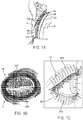
- An example of the location of the meibomian glands is illustrated in the cross-sectional view of the upper eyelid UL shown in Fig. 1A which illustrates the relative positioning of a single meibomian gland MG.
- glands and anatomical features are illustrated for reference, e.g., the glands of Wolfring GW, tarsus TR, gland of Moll GM, gland of Zeis GZ, gland of Krause GK, upper fornix UF, conjunctiva CN and cornea CR of the eye which is partially covered by the upper eyelid UL.
- the meibomian gland MG is positioned along a length of the upper eyelid UL (and lower eyelid LL ) with the duct opening along the inner edge of the eyelid UL in proximity to a surface of the underlying eye.
- Fig. 1B illustrates a front view of a patient's eye having the upper eyelid UL and lower eyelid LL in a closed position, such as when the patient blinks.
- the meibomian glands MG may be seen aligned adjacent to one another over both the upper UL and lower eyelids LL.
- Fig. 1C also shows a perspective view of a patient's eye in the open position to illustrate how the meibomian glands are typically aligned relative to one another when the patient's eye is opened.
- Blinking is thought to be the primary mechanism to open the orifice of the meibomian glands to allow for the release of oil secretions from the glands.
- the natural blinking motion and blinking force causes the upper lid to pull a sheet of the lipids secreted by the meibomian glands over the two underlying layers of the tear film thus forming the protective coating which limits the rate at which the underlying layers evaporate. It is estimated that approximately 65% of meibomian gland disease or dry eye results from a defective lipid layer or an insufficient quantity of such lipids that results in accelerated evaporation of the aqueous layer. Hence, blinking disorders, or other disorders that affect proper tear distribution, may also cause or exacerbate meibomian gland dysfunction or dry eye.
- the superior and inferior fornices which hold a reservoir of tears, are compressed by the force of the preseptal muscles and the eyelids move toward one another.
- the upper eyelid moves over the eye while exerting upon the eye surface a force which helps to clear the front of the eye of debris, insoluble mucin, and also expresses the oil secretions from the meibomian glands.
- the lower lid moves horizontally in the nasal direction and pushes debris toward both punctae, the openings that ultimately drain into the nasal cavities.
- the meibomian glands can become blocked, plugged, or occluded resulting in meibomian gland dysfunction and dry eye disease.
- the obstruction that triggers the disease can occur anywhere within the meibomian gland, for instance, at the gland's surface or orifice preventing normal lipid secretions from lowing; in the main channel of the gland which may be narrowed or blocked; or in other locations deeper within the gland that lead to the main channel.
- Treatments for blocked meibomian glands may include a number of conventional treatments.
- One course of treatment includes the application of soap and cleaning agents, eyelid scrubs, or antibiotics to reduce eyelid inflammation.
- Antibiotics such as tetracycline, doxycycline, metronidazole, or erythromycin can be administered orally or topically to help regulate or improve meibomian gland lipid production.
- Inflammation on the surface of the eye may also be controlled with topical drugs such as corticosteroids or cyclosporine (RESTASIS®, Allergan, Inc., CA), or other antiinflammatory compounds or immune-suppressants.
- RESTASIS® corticosteroids
- Allergan, Inc., CA cyclosporine
- Evidence suggests that ocular surface inflammation is not only associated with meibomian gland dysfunction but also with dry eye syndrome.
- dry eye treatments may include the application of prescription eye inserts for people with moderate to severe dry eyes symptoms who are unable to use artificial tears.
- An eye insert e.g., hydroxypropyl cellulose (LACRISERT®, Merck & Co., Inc., NJ), may be inserted between the lower eyelid and eye. The insert dissolves slowly to release a substance which lubricates the eye.
- special contact lenses may be used to shield the surface of the eye to trap moisture.
- the patient's tear ducts may be closed to prevent the tear film from draining away from the surface of the eye too quickly by procedures such as insertion of punctal plugs into the tear ducts or cauterizing the tissues of the drainage area.
- dry eye syndrome may be treated using pharmaceutical agents such as eyedrops, ointments which coat the eyes, etc. Artificial tears, gels, ointments, autologous serum tears, or albumin drops have all been employed in the treatment of dry eye.
- warm compresses are also typically placed over the eyes and are used to restore function to the meibomian glands by melting any lipid plugs as well as incorporating massaging of the lids which may further express meibomian gland contents.
- application of warm compresses require their application two to three times daily during which time patients may incorrectly target only one of the affected lids and are also prevented from seeing out of the treated eye because of the compresses. Compresses may be too hot, further exacerbating inflammation, or they may cool too quickly preventing adequate therapeutic effect.
- US 2011/081333 A1 discloses a compressor system for treatment of bags under eyes.
- the system comprises two compressor pockets, an attachment means for retaining the two compressor pockets against a user's face under each eye, and an insert removably disposed within each of said two compressor pockets.
- the insert includes an energetic stimulator for delivering milliamps of electricity to strengthen the lower eye lid muscle and rejuvenate the aging skin of the lower lids and its connective tissue contents.
- US 2007/060988 A1 discloses an apparatus that provides regulated heat for treatment of a mammalian eyelid.
- a heater unit has a heating element that produces heat when electrical signal is applied thereto.
- a temperature regulator applies the electrical signal to the heating element in order to achieve heating of the heating element to a specified temperature range.
- An eyelid interfacing mechanism couples the heater unit into contact with the eyelid to achieve regulated heating of the eyelid within the specified temperature range.
- a patch or strip can be affixed to the skin of the upper and/or lower eyelids to deliver heat or other forms of energy, pressure, drugs, moisture, etc. (alone or in combination) to the one or more meibomian glands contained within the underlying skin.
- the assembly for the treatment strip or strips may generally comprise one or more strips configured to adhere to an underlying region of skin in proximity to one or both eyes of a subject such that the one or more strips allow for the subject to blink naturally without restriction from the one or more patches.
- the one or more strips may be configured to emit energy to the underlying region of skin and where the one or more strips are shaped to follow a location of one or more meibomian glands contained within the underlying region of skin.
- the one or more strips may be adhered to a region of skin in proximity to one or both eyes of a subject such that the one or more strips allow for the subject to blink naturally without restriction from the one or more patches. While adhered, the strips may emit energy to the region of skin, where the one or more strips are shaped to follow a location of one or more meibomian glands contained within the region of skin.
- the strip may not directly overly a meibomian or other ocular or orbital gland, it may deliver energy or absorb energy from underlying neighboring vasculature which ultimately supplies said glands. In other words, heating or cooling the blood supply to the eyelids, meibomian glands, and/or lacrimal glands using these strips may affect their function and metabolism while not necessarily needing to directly overly them in particular variations.
- the upper strip may thus have an upper curved or arcuate periphery which is shaped to extend and follow the upper (or superior) border of the meibomian glands (such as along or up to the upper eyelid crease) while the straightened periphery of the lower edge may be shaped to extend and follow the lower (or inferior) border of the meibomian glands such as along the free margin of the upper eyelid.
- the lower edge may be gently curved or arcuate in alternative variations.
- the lower strip may similarly have an upper straightened periphery to extend and follow the upper (or superior) border of the meibomian glands along the free margin of the lower eyelid and a lower curved or arcuate periphery to extend and follow the lower (or inferior) border of the meibomian glands along the lower eyelid (such as along or up to the lower eyelid crease).
- the upper periphery of the lower strip may also be gently curved or arcuate in alternative variations as well.
- the peripheral edges of the treatment strips may correspond to the distal eyelid margin and proximal peripheral edge and the treatment strips can assume multiple configurations.
- the peripheral distal edge of the treatment strip may be relatively straight or assume a gentle curve either of which can follow the underlying distal eyelid margin and tarsal plate while having a proximal peripheral edge that is relatively curved to assume the more curved proximal edge of the underlying tarsal plate.
- the strips may be used individually for placement upon only the upper eyelid or only the lower eyelid depending upon the desired treatment. Moreover, the lengths of the treatment strips may also be varied to target individual meibomian glands for providing a targeted treatment, if desired, and as described in further detail herein. Additionally, while the treatment strips may be sized generally, they may also be custom made or sized for a specific individual's eyelid dimensions.
- the treatment strips may be placed upon the patient to apply therapy to the underlying meibomian glands allowing the patient's eyes to be opened and closed normally without interference from one or both treatment strips. Accordingly, the treatment strips contoured size, shape, and flexibility allow for treatment to occur while also allowing for the patient to have one or both eyes remain opened such that normal, physiologic blinking can proceed during the course of treatment. Rather than relying on an application of any type of external force, the treatment strips take advantage of the eye's natural mechanism for clearing oil from the meibomian glands via blinking.
- the treatment strips may be adhered in place for treatment without any further intervention by the patient or healthcare provider such that the treatment strips may apply, e.g., heat energy, to melt or liquefy any waxy or solid meibomian gland obstructions while the eyes remain unobstructed and are allowed to blink naturally.
- the treatment strips thus allow for the natural blinking force to clear the glands of the heat-treated softened obstructions before they have re-solidified unlike other treatments which require that the patient keep their eyes closed or obstructed during the course of a treatment and prevent or inhibit the patient from blinking.
- the treatment strip may be configured to have a contact layer (e.g., fabricated from conductive materials such as metals, alloys, porous ceramics, engineering ceramics, woods, polymers, composites, foams, polymer foams, fabrics, elastomers, etc.) which may protect the skin from burns or any other adverse effects.
- a second heating layer may be positioned above the contact layer (or directly in contact against the skin) for generating the heat energy and an insulative layer may be positioned atop the heating layer for focusing, directing, or reflecting the heat towards the underlying skin surface as well as to protect the patient from contact with the heating layer from other parts of the body.
- the insulative layer may accordingly be fabricated from a variety of insulative materials, e.g., foams, foam tapes, gauze, silicone, microporous polyethylene films, fabrics, polymers, etc.
- the application of heat energy from the treatment strips is described, other variations may alternatively include the application of using the treatment strips for cooling of the underlying skin.
- the layer may be configured to utilize an endothermic reaction instead to provide for cooling of the skin. Cooling, rather than heating, may be applied for conditions such as reducing inflammation, alleviating allergies or tired eyes, etc. particularly as the patient rests or sleeps.
- the strips may also include a layer for the diffusion or release of one or more pharmaceutical, biological, or chemical agents either alone or in combination with the heat treatment.
- the pharmaceutical, biological, or chemical agents may be incorporated into the either the contact layer, insulative layer, or in a separate layer entirely, for transdermal delivery to the meibomian glands or to the areas surrounding the meibomian glands for additional and/or alternative treatments.
- the heat may help to improve penetration of any drugs into the underlying skin.
- the treatment strips may incorporate various layers into the strips to effect various different treatments, the strips may also be varied in size, shape, contour, etc. depending upon the desired treatment areas so long as the treatment strips are contoured or shaped to follow the location of at least one meibomian gland.
- treatment strips may be applied to one or more of the meibomian glands, variations of the strip may also be used to treat other glands such as the sebaceous glands, e.g., for acne treatment.
- Treatment strips used to treat acne may utilize different pharmacological treatments.
- the treatment strips may be used to potentially treat eye disorders beyond meibomian gland dysfunction.
- Yet another example may include use of the treatment strips for treating disorders of the lacrimal gland and/or palpebral lacrimal gland which are located above the eye.
- Variously sized treatment strips such as lacrimal gland strips which are sized to have a curved upper periphery, may be sized for placement directly over the skin surface above where the lacrimal glands are located.
- the lacrimal glands and/or palpebral lacrimal gland may be treated alone or in combination with the treatment strips contoured for treatment of the meibomian glands.
- the treatment strips may be applied over the meibomian glands to apply the heat energy, the treatment does not require the application of any external force applied by the strip or any other external device but may utilize the natural blinking of the patient to facilitate treatment.
- the treatment strips may be configured to apply both the heat treatment as well as an external force. Any number of mechanisms may be utilized to apply a pinching or biasing force to provide for compression of the underlying skin and of the meibomian glands during application of the heat therapy.
- the strip may be formed with alternative components such as a mechanical component to impart vibrational energy or other forms of energy to facilitate the expression of the meibomian glands and promote oil secretion.
- one or both treatment strips may be configured to incorporate an indicator, e.g., LED light, alarm, vibration element, etc., electrically coupled to a power supply and/or processor to alert the patient when a prescribed treatment has been completed.
- an indicator e.g., LED light, alarm, vibration element, etc.
- This feature may be combined with any of the other variations of the treatment strips described herein as practicable.
- treatment times or other parameters such as temperature of the strips may be programmed and optionally shut on or off selectively by the patient or automatically.
- other parameters such as the frequency of the heat delivery or other stimulation may also be programmed by the processor to provide further flexibility in treatment.
- a patch, strip or thin adhesive device can be affixed to the skin of the upper and/or lower eyelids to deliver heat or other forms of energy, pressure, drugs, moisture, etc. (alone or in combination) to the one or more meibomian glands contained within the underlying skin.
- the treatment strip or strips may be configured and sized specifically for placement over one or more targeted meibomian glands contained within the skin of the upper and/or lower eyelids.
- thermal therapy e.g., heating or cooling
- the application of thermal therapy can cross the eyelids quite easily as the eyelids are generally the thinnest skin found on the human body and the tissue is highly vascularized. With the root of the eyelid located proximally and the eyelid margin located distally, the net arterial flow of blood flows from proximal to distal. So wherever these treatment strips are placed, the heating or cooling therapy may easily be carried throughout the eyelid and any structures contained therein. e.g., meibomian glands MG, lacrimal glands LG, gland of Zeis GZ, gland of Moll GM, gland of Wolfring GW. gland of Kraus GK, etc.
- the heating or cooling therapy can be transmitted to the ocular surface and the eye itself (described in further detail below).
- the therapy can impart energy to the conjunctiva, goblet cells, episcleral vasculature, cornea, aqueous humor, iris, ciliary body, and possibly the anterior vitreous and lens.
- any thermal therapy by the treatment strips may also impact and be used to treat ocular surface disorders and anterior segment diseases, e.g., conjunctivitis, keratitis, keratopathy, ulceris, cyclitis, glaucoma, cataract, etc.
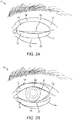
- one variation of such treatment strips may be seen as being adhered temporarily upon the upper eyelid UL and lower eyelid LL over an eye of a patient P when closed for illustrative purposes.
- the contoured upper strip 10 may be sized for adherence directly upon the skin of the upper eyelid UL such that the strip 10 has a configuration and shape which follows the location of the one or more meibomian glands contained within the underlying skin of the upper eyelid UL.
- the contoured lower strip 12 may also have a configuration and shape which follows the location of the one or more meibomian glands contained within the underlying skin of the lower eyelid LL.
- the contoured strip may stop at the eyelid crease or cross over it as described in other variations below.
- the upper strip 10 may thus have an upper curved or arcuate periphery 14 which is shaped to extend and follow the upper (or superior) border of the meibomian glands (such as along or up to the upper eyelid crease) while the straightened periphery 16 of the lower edge may be shaped to extend and follow the lower (or inferior) border of the meibomian glands such as along the free margin of the upper eyelid UL.
- the lower strip 12 may similarly have an upper straightened periphery 20 to extend and follow the upper (or superior) border of the meibomian glands along the free margin of the lower eyelid LL and a lower curved or arcuate periphery 18 to extend and follow the lower (or inferior) border of the meibomian glands along the lower eyelid LL (such as along or up to the lower eyelid crease).
- the use of the terms lower and upper herein refer to the periphery of the treatment strips when placed upon the patient P (human or animal) and are used herein for descriptive purposes.
- the treatment strips 10, 12 are both shown adhered upon the respective upper eyelid UL and lower eyelid LL, the strips 10, 12 may be used individually for placement upon only the upper eyelid UL or only the lower eyelid LL depending upon the desired treatment. Moreover, the lengths of the treatment strips 10, 12 may also be varied to target individual meibomian glands for providing a targeted treatment, if desired, and as described in further detail herein.
- the strips 10, 12 are arc-shaped or flexible enough to assume the curvature of the patient's eyelid margin and may be long enough to cover some or all of the underlying meibomian glands in the tarsal plate. While the treatment strips 10, 12 may be sized generally, they may also be custom made or sized for a specific individual's eyelid dimensions or shaped to optimize adhesion and/or comfort and/or stability. Generally, the treatment strips 10, 12 may have a length anywhere from about 1 mm to 50 mm depending upon the desired treatment length as well as the anatomical considerations of the patient since the typical palpebral fissure length in an adult is about 27 mm to 30 mm.
- the treatment strips 10, 12 may be sized to have length of, e.g., 25 mm to 30 mm, or if sized to cover just beyond all the meibomian glands, a length of, e.g., 30 mm to 50 mm (or more if needed to optimize adhesion/comfort/stability).
- one or both treatment strips 10, 12 can have a width ranging anywhere from about 1 mm to 25 mm since the typical eyelid crease in a Caucasian male is about 8 mm to 9 mm above the eyelid margin while in Caucasian females it is about 9 mm to 11 mm above the eyelid margin (or more if needed for adhesion/comfort and potentially increased efficacy from heating or cooling the inbound blood flow).
- Customization enables it to fit any particular anatomy, race, ethnicity, etc.
- the treatment strips may be manufactured with varying levels of flexibility to accommodate the ergonomics of the eyelid and eyelid blink for optimal comfort and minimal obtrusiveness or movement.
- the treatment strips may be placed upon the patient P by the patient himself/herself for consumer use or by a healthcare provider to apply therapy to the underlying meibomian glands allowing the patient's eyes to be opened and closed normally, as shown in Fig. 2B , without interference from one or both treatment strips. While the strips may be applied from eyelid margin to eyelid crease, they may alternatively flex or accordion and/or compress during blinks to prevent impairment of normal blinking and maximize comfort.
- Typical treatment patches such as for application of a warm compress, are generally sized for placement over the entire eye or eyes such that the patient is unable to open their eyes or blink during a treatment session.
- MGD includes the spectrum of MGD, meibomitis, blepharitis, and ocular rosacea
- natural blinking by an individual is the mechanism by which meibomian gland secretions are normally released onto the eyelid margin and over the tear.
- the oil contained within the meibomian glands remain unexpressed within the glands' terminal ducts and fail to contribute to distribution of the oily layer upon the tears.
- the treatment strips 10, 12 contoured size, shape, and flexibility allow for treatment to occur while also allowing for the patient to have one or both eyes remain opened such that normal, physiologic blinking can proceed during the course of treatment.
- the treatment strips 10, 12 take advantage of the eye's natural mechanism for clearing oil from the meibomian glands via blinking.
- the treatment strips 10, 12 may be adhered in place for treatment without any further intervention by the patient or healthcare provider such that the treatment strips 10. 12 may apply, e.g., heat energy, to melt or liquefy any waxy or solid meibomian gland obstructions while the eyes remain unobstructed and are allowed to blink naturally.
- the treatment strips 10, 12 thus allow for the natural blinking to clear the glands of the heat-treated softened obstructions before they have re-solidified unlike other treatments which require that the patient keep their eyes closed or obstructed during the course of a treatment and prevent or inhibit the patient from blinking.
- Delivery of heat may also increase blood flow by promoting vasodilation as increased delivery of blood can affect metabolism, temperature of other tissues, may have effects on inflammation, and can thereby improve tissue function.
- the treatment strips 10, 12 may apply heat or other treatments to the surface of the eyelids for a significant period of time for relatively longer treatment times and at higher treatment temperatures because of the ability of the treatment strips 10, 12 to remain attached to the patient during any given period throughout the day.
- Patients can assume their daily activities with their eyes open and eyes blinking and with the comfort of a strip-based treatment.
- patients can affix the treatment strips as many times as needed throughout the day, week, month, etc. until dry eye symptoms subside. This increases the frequency of treatment, convenience of treatment, and thus efficacy of treatment.
- the treatment frequency may be varied depending upon the severity of the condition to be treated.
- One example for potential treatment frequency may include application of one or both strips, e.g., up to six times per day for ten minutes or up to an hour or more for each treatment
- the application of the heating therapy may also indirectly heat the ocular surface as well and may further reduce any chronic ocular surface inflammation, chronic conjunctival inflammation, or corneal neovascularization.
- heat therapy may also optionally be used to potentially provide for indirect heating through the ocular surface as well for heating of the retina to provide a thermal therapy to limit inflammation and neovascularization which are underlying conditions for diseases such as Wet age-related macular degeneration (AMD) and Diabetic Retinopathy.
- AMD Wet age-related macular degeneration
- Diabetic Retinopathy a condition for diseases such as Wet age-related macular degeneration (AMD) and Diabetic Retinopathy.
- treatment strips 10, 12 may be used throughout the day to take advantage of the patient's physiologic blinking, the treatment strips 10, 12 may also be used while the patient is resting or sleeping or while the patient simply maintains their eyes closed.
- the treatment strips 10, 12 are desirably flexible enough to accommodate movement of the upper eyelid UL and/or lower eyelid LL which may move as much as about 15 mm or more.
- the treatment strips 10, 12 may be fabricated from various materials.
- Figs. 3A and 3B show front and cross-sectional side views, respectively, in one example of a treatment strip configured to have an adhesive 32 positioned about a periphery of the strip to leave a contact region 30 for direct placement against the skin surface.
- the contact region 30 may further include a moisturizing layer to interface between the strip and skin to facilitate heat transfer from the strip as well as to provide moisturizing therapy to the skin.
- the treatment strips may be used with any number of moisturizing agents which may be applied to the underlying skin by the patient P or by a practitioner separately from the treatment strips.
- the contact region 30 may be formed to have a surface which is smooth, porous, irregular, corrugated, etc. to facilitate contact and transfer of the heat from the treatment strip to the skin surface.
- the entire contact region 30 including its periphery, may be adhesive to maintain good contact. It may be hinged or curved to allow flexing or accordion-like dynamic movement for comfort and better, physiologically-sound ergonomics.
- the strip may be applied under tension, as shown by the tensioned strip 10' in Fig. 3D , to further reduce any impairment to blinking and once adhered to the skin the strip may be released to allow for its flexion, as shown by the released strip 10" also in Fig. 3D , to facilitate blinking by the patient P.
- the treatment strip 10 may be configured to have a contact layer 34 (e.g., fabricated from conductive materials such as metals, alloys, porous ceramics, engineering ceramics, woods, polymers, composites, foams, polymer foams, elastomers, etc.) which may protect the skin from bums or any other adverse effects.
- a second heating layer 36 may be positioned above the contact layer 34 (or directly in contact against the skin) for generating the heat energy and an insulative layer 38 may be positioned atop the heating layer 36 for focusing, directing, or reflecting the beat towards the underlying skin surface as well as to protect the patient from contact with the heating layer 36 from other parts of the body.
- the insulative layer 38 may accordingly be fabricated from a variety of insulative materials, e.g., foams, foam tapes, gauze, silicone, microporous polyethylene films, metals, alloys, reflective materials, minors, etc. Moreover, the thickness of the treatment strip 10 may vary, e.g., anywhere from about 1/64" to 1/8" or more, depending upon the heating layer 36 mechanism as well as the desired thermal profile and targeted transmission temperature. Additionally and/or alternatively, the insulative layer 38 may be comprised of a thermochromic material which may change its color when a targeted temperature has been reached by the treatment strip 10 to indicate to the patient that the targeted temperature has been achieved or when the therapy has been completed.
- insulative materials e.g., foams, foam tapes, gauze, silicone, microporous polyethylene films, metals, alloys, reflective materials, minors, etc.
- the thickness of the treatment strip 10 may vary, e.g., anywhere from about 1/64" to 1/8" or more, depending
- the heating layer 36 may be configured to generate its heat energy, e.g., up to a temperature range of about 20° to 55° C (or more) or between 40° to 50° C, through any number various mechanisms such as mechanical, electrical, or chemical mechanisms.
- the heating layer 36 may comprise an air-activated warmer that can increase to an elevated treatment temperature for a period of time lasting, e.g., from 5 minutes up to 24 hours or even longer.
- An example can include air activated layer incorporating. e.g., iron.
- Other examples may incorporate a heating layer 36 containing. e.g., cellulose, iron powder, water, activated carbon (to speed up reaction), vermiculite (water reservoir), and salt (catalyst), saw dust, sodium chloride and water, etc.
- heating layer 36 which incorporates light-based activation (visible or UV-light powered) or use of a supersaturated solution (crystallization-type) to initiate and/or maintain an exothermic reaction.
- a separate temperature sensor 39 may be incorporated onto the treatment strip 10, as shown in Fig. 3B , attached either to the top of the strip or to the bottom of the strip.
- the treatment strip 10 may also incorporate an optional controller and/or display 37 having a processor which may be programmable and which may incorporate a separate on/off feature, as shown in Fig. 3C .
- the temperature sensor 39 may be in communication with the controller 37 which may be programmed to regulate the temperature of the heating layer 36 and/or a length of time for a particular treatment.
- the controller 37 may accordingly be programmable by a physician or caregiver or directly by the patient.
- the controller 37 may be configured to be inaccessible by the patient but may merely provide temperature and/or time indications for display to the patient.
- the controller 37 may be programmed, e.g., to set a length of a heating period, set treatment times, set predetermined temperature ranges, control a heating temperature profile (such as gradually increasing the heating temperature or decreasing temperature over a predetermined period of time), etc.
- the heating layer 36 may generate heat through exothermic crystallization of supersaturated solutions (typically sodium acetate) which are usually reusable.
- the treatment strips may be recharged by heating them, e.g.. by boiling, and allowing them to cool. Heating of these treatment strips may triggered by snapping a small metal device buried in the treatment strips which generates nucleation centers that initiate crystallization. Heat is required to dissolve the salt in its own water of crystallization and it is this heat that is released when crystallization is initiated.
- the heating layer 36 may comprise a battery operated warmer which utilizes electrically resistive heating elements that are used to convert electrical energy in the battery to thermal energy.
- the power supply may be internal or external to the treatment strips and the treatment strips may charged, e.g., by direct electrical contact, induction, etc.
- Other mechanisms which may be incorporated into the heating layer 36 may comprise chemically actuated reactions such those used by sodium acetate heating pads.
- a single-use chemical reaction utilizing the catalyzed rusting of iron or dissolving calcium chloride may be use where the reagents are maintained in separate compartments within the treatment strips. When the patient squeezes the treatment strips, the compartments may break and the reagents mixed to produce heat Examples may include use of a supersaturated solution of sodium acetate (NaCH 3 COO) in water where crystallization may be triggered by flexing a small flat disc of notched ferrous metal embedded in the liquid which act as nucleation sites for the crystallization of the sodium acetate into the hydrated salt (sodium acetate trihydrate). Because the liquid is supersaturated, this makes the solution crystallize suddenly which releases the energy of the crystal lattice.
- heating layer 36 may include the use of a hot gel containing a supersaturated solution of a salt. Heat may be generated when the crystallization of the given salt occurs exothermically. Such heating layer 36 may be reused by forcing the salt back into solution within the heating layer 36.
- heating layer 36 may also include the use of high specific heat capacity materials which may be heated, e.g., by placement in a microwave prior to use, and then allowed to release the heat over a specified period of time.
- the layer may be configured to utilize an endothermic reaction instead to provide for cooling of the skin at temperatures ranging, e.g., from about 0°C to 37° C or more particularly from about 25° C to 35° C.
- One example may include having the layer 36 to incorporate water and ammonium nitrate or ammonium chloride. Mixture of the water and the ammonium may reduce the temperature of layer 36.
- Another variation may include the use of cooling get made by adding hydroxyethyl cellulose or vinyl-coated silica gel which may be cooled or frozen prior to use.
- cooling may be achieved by application of a cooling element such as a Peltier junction. Cooling, rather than heating, may be applied for conditions such as reducing inflammation, alleviating allergies or tired eyes, etc. particularly as the patient rests or sleeps.
- a cooling element such as a Peltier junction. Cooling, rather than heating, may be applied for conditions such as reducing inflammation, alleviating allergies or tired eyes, etc. particularly as the patient rests or sleeps.
- One example includes treatment for allergic conjunctivitis where application of the cooling treatment may provide relief from any burning or itching sensations by serving as a vasoconstrictor to limit blood flow, reduce blood vessel leakage and permeability thereby reducing acute swelling and inflammation.
- Yet another example includes reducing inflammation and fibrosis of a conjunctival bleb resulting from a trabeculectomy or mitigating inflammation generally following any ophthalmic surgical procedure.
- the treatment strips may be configured to be single-use disposable strips, multiple-use disposable, re-usable strips, selectively actuatable, etc.
- the strips may also include a layer for the diffusion or release of one or more pharmaceutical, biological, or chemical agents either alone or in combination with the heat treatment.
- the pharmaceutical, biological, or chemical agents may be incorporated into the either the contact layer 34, insulative layer 38, or in a separate layer entirely, for transdermal delivery to the meibomian glands or to the areas surrounding the meibomian glands for additional and/or alternative treatments.
- examples of some of the various pharmacological agents which may be incorporated into the treatment strips may include, but are not limited to, antiinflammatory compounds, antibiotics, topical tetracycline, oral tetracycline, topical corticosteroids, oral corticosteroids, topical androgens, metronidazole, steroid antagonists, topical androgen analogues, TGF- ⁇ , omega 3 or omega 6 compounds, vasoconstrictors such as naphazoline, oxymetazoline, phenylephrine, and tetrahydrozoline, enzymes that promote lipid production, agents that stimulate production of enzymes that promote lipid production, agents that act as a secretagogue to enhance meibomian gland secretion, agents that replace or promote production of any tear component, cholinergic, muscarinic, or nicotinic agonists may be used, cosmeceuticals such as retinol or hyal
- agents may include, e.g., alpha-melanocyte-stimulating hormone or adrenocorticotropic hormone or androgens like testosterone to increase tear production, agents which stimulate the underlying muscles like the orbicularis oculi or muscle of Riolan to stimulate blinking, increase frequency of blinking, or maintain longer closure after a blink by inhibiting the levator palpebrae muscle to force a blink or eyelid closure or otherwise mechanically compress the meibomian glands or glands of Zeis or other goblet cells or accessory lacrimal glands.
- agents for incorporation into the treatment strips may further include, e.g., neurotransmitters, noxious or irritating chemicals or vapors, hormones, oils, lipids, polar lipids, or fatty acids.
- neurotransmitters may allow for stimulation to occur via second messenger pathways like activation of the Calcium/Protein Kinase C pathways, G-Prtuein activation, other calcium related pathways, calcium-calmodutin dependent protein kinases, the cyclic adenosine monophosphate dependent pathways, adenylyl cyclase pathways, inhibition of cAMP dependent phosphodiesterases.
- the heat may help to improve penetration of any drugs into the underlying skin.
- Yet another variation may incorporate it treatment strip which applies a heat rub that can be applied via the treatment strips onto the upper UL and/or lower eyelids LL for the treatment of the meibomian glands or which applies a compound which attracts light and heats up accordingly.
- Each of these variations may allow for the treatment strips 10, 12 to be applied and used while allowing for natural blinking to occur to facilitate the clearing of the ducts of melted oil blockages within the meibomian glands and to facilitate the spreading of the oil onto the tears.
- the treatment strips may incorporate various layers into the strips to effect various different treatments, the strips may also be varied in size, shape, contour. etc. depending upon the desired treatment areas so long as the treatment strips are contoured or shaped to follow the location of at least one meibomian gland.
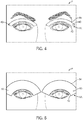
- An example of another configuration for the treatment strips is shown in the front view of Fig. 4 , which illustrates a contoured thinned strip 40 sized and shaped for placement along the upper eyelid UL.
- This treatment strip may have a contoured lower edge 42 as well as a contoured upper edge 44 which follow the positioning of the underlying meibomian glands.
- the strips 40 are shown placed upon the upper eyelids UL of both eyes of the patient P, a single strip 40 may be used upon a single eyelid to selectively treat the particular meibomian glands in this and other examples shown herein. Additionally, one or both upper eyelids UL may be treated alone or in combination with one or both lower eyelids LL depending upon the desired treatment in this and other examples shown herein.
- FIG. 5 shows a contoured thickened strip 50 having a contoured lower edge 52 and contoured upper edge 54 for placement upon the meibomian glands as well as the surrounding tissue and glands.
- a singular strip may also be used which extends over the bridge of the patient's nose.
- the thickened strip 50 may cover the portions of skin farther proximally away from the eyelid margin to facilitate treatment. Because arterial blood supply to the eyelids proceed from proximal to distal of the eyelid margins, the treatment strip may heat (or cool) the blood supply as it continues to flow towards the eyelid margins. This early heating (or cooling) may provide a therapeutic effect for increased comfort to the patient, less impact on eyelid function (such as blinking). and increased safety of application and distance from the ocular surface as well as potentially increased efficacy allowing for more total heating or cooling therapy.
- Fig. 6 shows yet another variation having a contoured thirmed strip 60 where the lower 62 edge and upper edge 64 converge to a tapered end 66 for placement upon the meibomian glands.
- Fig. 7 shows yet another variation where the treatment strips may comprise straightened strips 70 having a first width used in combination with a thinned straightened strip 72 as well.
- the straightened strips 70 may comprise straightened strips (having optionally rounded corners) which may be selectively placed over the meibomian glands.
- a single straightened strip 70 may be applied upon the upper eyelid UL of a single eye while the remaining eye may utilize a single straightened strip 70 applied along a first portion of the upper eyelid UL and a second straightened strip 72 having a relatively thinner width for placement upon a second portion of the upper eyelid UL.
- Each of the strips may be applied singularly or in various combinations depending upon the desired treatment areas and are shown in this variation as an exemplary combination.
- contoured thinned strip 80 is shown applied along the lower eyelid LL.
- the contoured upper edge 82 and contoured lower edge 84 may be contoured to follow over the underlying meibomian glands.
- the treatment strips may be applied singularly over one or both eyes or they may be applied in combination with treatment strips applied over one or both eyes of the upper eyelids.
- any of the treatment strips shown herein may be used in any number of combinations with one another.
- Fig. 9 shows another variation where the contoured thickened strip 90 may be applied over the lower eyelids LL and may further have a width which is relatively wider than those treatment strips shown above in Fig. 8 .
- Fig. 10 shows yet another variation where the contoured thickened strip 92 may have a width which is relatively wider still for treating not only the underlying meibomian glands but also any glands and tissue surrounding the peri-orbital region.
- the widened treatment strip may heat (or cool) the blood supply as it continues to flow towards the eyelid margins. The early heating (or cooling) may provide a therapeutic effect for increased comfort to the patient, less impact on eyelid function (such as blinking), and increased safety of application and distance from the ocular surface.
- any of the treatment strips may be varied in length as well to selectively target portions of the meibomian glands or particularly selected meibomian glands.
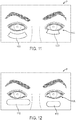
- Fig. 11 shows one variation where the shortened contoured strip 100 having a first shortened length may be applied upon the lower eyelid LL (and/or upon the upper eyelid UL ).
- a second contoured strip 102 having a second length which is longer than the shortened contoured strip 100 may also be seen for comparison.
- Fig. 12 similarly shows a shortened and straightened strip 110 applied upon the lower eyelid LL and a second straightened strip 112 having a relatively longer length applied upon the second lower eyelid LL.
- the straightened strips 110, 112 may incorporate rounded ends and may be varied in length depending upon the desired treatment area. They could also be rounded or circular to cover one or more styes.
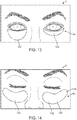
- Fig. 13 shows yet another variation where the contoured strips 120 may be configured to have tapered ends for overlying the meibomian glands.
- thickened contoured strip 122 is also illustrated having tapered ends yet is relatively wider to alter the treatment area.
- Fig. 14 shows another variation where the contoured strip 130 may have a first portion 132 which is relatively wider than a second portion 134 for placement over the meibomian glands of the lower eyelid LL.
- Each of the first 132 and second portions 134 may be varied in width again depending upon the desired treatment areas.
- Fig. 15 shows a contoured strip 140 having a first portion 142 and second portion 144 which are considerably wider for treating not only the meibomian glands along the lower eyelid LL but also the surrounding peri-orbital tissue regions such as the underlying maxillary sinus.
- Fig. 15 shows a contoured strip 140 having a first portion 142 and second portion 144 which are considerably wider for treating not only the meibomian glands along the lower eyelid LL but also the surrounding peri-orbital tissue regions such as the underlying maxillary sinus.
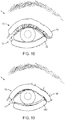
- FIG. 16 shows yet another example of a contoured strip 150 having a first portion 152 and a second portion 154 which is wider than the first portion 152 and where the strip 150 is positioned to cover just a portion of the meibomian glands along the lower eyelid LL but also covers various other glands, such as the lacrimal glands, around the peri-orbital regions.
- Fig. 17 shows yet another variation of a treatment strip comprised of a contoured strip 160 having a secondary enlarged portion 162 attached via a connecting strip 164. While the contoured strip 160 may treat the meibomian glands along the lower eyelid LL, the secondary enlarged portion 162 may treat region of the tissue along the cheeks of the patient.
- Fig. 18 shows an example where both an upper contoured strip 170 and a lower contoured strip 172 may be applied, respectively, along the upper eyelid UL and lower eyelid LL.
- the contoured strips 170, 172 are shaped and applied to follow the underlying meibomian glands while enabling the patient P to blink normally.
- Fig. 19 shows a similarly applied upper contoured strip 180 and lower contoured strip 182 where the strips may be varied in color to more closely match a skin tone or shade of the patient P. Because the treatment strips may be used throughout the day for any given period of time, the strips 180, 182 may be made in various colors or tones to either more closely match the skin tone or shade of the patient P.
- Fig. 20 shows another example where the treatment strips may be varied in length to treat specific regions along the upper UL or lower eyelids LL.
- a first upper strip 190 having a first length may be applied adjacent to a second upper strip 192 having a second longer length.
- a third upper strip 194 and/or fourth upper strip 196 having lengths which are relatively shorter may also be applied as well over selected meibomian glands.
- a lower strip 198 having enlarged distal ends 200, 202 are also shown for placement along the lower eyelid LL. The distal ends 200 may be shaped to facilitate the placement and/or removal of the strip 198 from the skin (or for better adhesion).
- Fig. 20 shows another example where the treatment strips may be varied in length to treat specific regions along the upper UL or lower eyelids LL.
- a first upper strip 190 having a first length may be applied adjacent to a second upper strip 192 having a second longer length.
- first upper strip 210 and second upper strip 212 placed selectively along the upper eyelid UL along with, e.g., first lower strip 214 and second lower strip 216, placed selectively along the lower eyelid LL.
- Each of the strips may be varied in length as well as size depending upon the treatment area.
- each of the targeted strips 220 may have a length of, e.g., about 1 mm, to cover as few as a single meibomian gland.
- One or more of the targeted strips 220 may be applied along the upper eyelid UL and/or lower eyelid LL.
- one or more of the targeted strips 222 may further comprise a connecting member 224 which functions as a backing to couple each of the individual targeted strips 222 to one another.
- the individual strips may be applied selectively at particularly problematic meibomian glands either along the upper eyelid UL and/or lower eyelid LL.
- Fig. 23 illustrates the individual targeted strips 222 placed along just the lower eyelid LL.
- treatment strips may be applied to one or more of the meibomian glands, variations of the strip may also be used to treat other glands such as the sebaceous glands, e.g., for acne treatment.
- Treatment strips used to treat acne may utilize different. pharmacological treatments.
- Other glands in the underlying eyelids and conjunctiva CN for treatment may also include treatment of, e.g., the glands of Zeis GZ, goblet cells, accessory sebaceous glands, accessory goblet cells such as the Henle and Manz glands, accessory lacrimal glands of Wolfring GW or Krause GK, or either one or both lobes of the main lacrimal glands such as the palpebral portion or the orbital portion.
- the treatment strips may be used to potentially treat eye disorders beyond meibomian gland dysfunction including, e.g., blepharitis, Sjogren's syndrome, dacryoadenitis, conjunctivitis, allergic conjunctivitis, keratoconjunctivitis sicca, keratitis, dacryocystitis, LTDis, keratitis, retinitis, sclerokeratitis, uveitis, contact lens related eye problems, post blepharoplasty or eyelid or eye surgical procedures (e.g., cataract surgery, LASIK, PRK, etc.), absent or dysfunctional blinks disorders, conjunctivitis, blepharospasm, exposure keratopathy, lagophthalmos, lid myokymia, infections, styes, chalazion, hordeolum, glaucoma, blebs, trauma, etc.
- eye disorders beyond meibomian gland dysfunction including, e
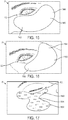
- Fig. 24 may include use of the treatment strips for treating disorders of the lacrimal gland LG and/or palpebral lacrimal gland PL which are located above the eye as shown in Fig. 24 .
- Variously sized treatment strips such as lacrimal gland strips 230 shown in Fig. 25 which is sized to have a curved upper periphery, may be sized for placement directly over the skin surface above where the lacrimal glands LG are located.
- Fig. 26 which illustrates lacrimal gland strips 232 which are relatively thinner in width as well as in Fig. 27 which illustrates lacrimal gland strips 234 which have curved peripheries ending in tapered ends.
- the treatment strips may deliver heat, e.g., to stimulate the lacrimal gland LG, increase gland metabolism, activity, lacrimation, etc.
- the treatment strips may deliver cooling therapy to reduce inflammation which impairs gland function.
- the lacrimal glands LG and/or palpebral lacrimal gland PL may be treated alone or in combination with the treatment strips contoured for treatment of the meibomian glands.
- Fig. 28 illustrates contoured strips 240 which are enlarged in width to cover both the lacrimal glands LG as well as the meibomian glands along the upper eyelid UL.
- Contoured treatment strips 242 are also shown placed along the lower eyelids LL for treatment of the meibomian glands as well.
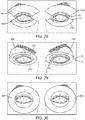
- Fig. 29 shows another variation where lacrimal gland strips 250 may be placed over the lacrimal glands LG in combination with an integral combined contoured strip 252 which is sized to encircle the eyes entirely while following the location of the meibomian glands along both the upper eyelids UL and lower eyelids LL.
- This fully encircling design may also be held in place more tightly against the skin with a strap which may encircle the patient's head, if so desired.
- Fig. 30 which illustrates an integral combined contoured strip 260 which is also sized to encircle the eyes entirely and further having a width suitable for placement over the lacrimal glands LG.
- the lacrimal gland strip 270 may be used in combination with any of the treatment strips shown herein. Another example is illustrated in Fig. 31 which shows lacrimal gland strip 270 used in combination with the individual strips 222 while Fig. 32 shows yet another example where lacrimal gland strip 270 may be used in combination with not only the individual strips 222 but also the strips 220 located along respective lower eyelid LL and upper eyelid UL.
- the treatment strips may be applied over the meibomian glands to apply the heat energy, the treatment does not require the application of any external force applied by the strip or any other external device but may utilize the natural blinking of the patient to facilitate treatment, as described above.
- the treatment strips may be configured to apply both the heat treatment as well as an external force. Any number of mechanisms may be utilized to apply a pinching or biasing force to provide for compression of the underlying skin and of the meibomian glands during application of the heat therapy.
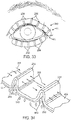
- Fig. 33 illustrates a biased treatment strip 280 which may be comprised of a strip 282, as previously described, having one or more biasing mechanisms 284 positioned along the strip 282.
- the one or more biasing mechanisms 284 may be positioned along either the upper strip or lower strip or both, as shown.
- the biasing mechanism 284 may locally squeeze or compress the underlying skin to apply a pressure to the meibomian glands MG to facilitate the clearing of any obstructions, particularly if applied simultaneously with the heat treatment.
- An example of a biasing mechanism 284 is illustrated in the perspective view of Fig. 34 which shows how the biasing mechanism 284 may generally comprise portions of the strip 282 or separate members biased to form corresponding channels 286 which are configured to flex in an open or closed configuration.
- the ends of the strip may be pulled to open the channels 286 which may then be placed upon the skin surface.
- the underlying skin and meibomian glands MG may be compressed or pinched by the compression forces 288 induced into the biasing mechanism 284.
- the strip may be formed with alternative components such as a mechanical component to impart vibrational energy to facilitate the expression of the meibomian glands and promote oil secretion.
- a mechanical component to impart vibrational energy to facilitate the expression of the meibomian glands and promote oil secretion.
- FIG. 35 shows another variation of the contoured strip 290A, 290B having one or more vibrating elements 292 (e.g., piezoelectric transducers, electromagnetic actuators, eccentrically coupled rotating elements, etc.) incorporated along the strips 290A, 290B.
- the one or more vibrating elements 292 may be electrically coupled to a power supply and/or processor 294 also contained along the strips 290A, 290B.
- the vibrational energy may be imparted separately from heat treatment or in combination with the heat therapy.
- the power supply may include a micro-battery which can be rechargeable to deliver microcurrents of energy.
- FIG. 36 shows an upper contoured strip 300A having a conductive element 302 such as a wire integrated along the entire length (or a partial length) of the contoured strip 300A.
- the conductive element 302 may be configured in an alternating pattern or it may be simply aligned along the length of the strip as shown by conductive element 306 (or electrically resistive) along the lower contoured strip 300B.
- Each of the conductive elements 302, 306 may be in electrical communication with a respective power supply and/or processor 304, 308.
- the conductive elements 302, 306 may be selectively actuated to apply either heat energy or they may configured to apply radio-frequency (RF) energy to the underlying skin and meibomian glands.
- RF radio-frequency
- one form of electrical energy applicable by the treatment strips may include use of a transcutaneous electrical nerve stimulation feature. e.g., to deliver neural stimulation to increase tear production.
- the conductive elements may generate the thermal energy via various power sources, e.g., battery, solar cell, kinetic movement, RF, etc.
- Fig. 37 shows yet another variation where the contoured strips 310A, 310B may be configured to incorporate an electrode or antenna 312 coupled to a power supply and/or processor 314 for applying, e.g., microwave energy to the underlying meibomian glands.
- the treatment strips may be configured to apply yet other forms of energy for treating the meibomian glands.
- other variations may incorporate actuators or transmitters for applying ultrasonic, RF, microwave, magnetic, photonic (light energy in the infrared or visible light spectrum), etc.
- the conductive elements may be configured to function as electromagnetic elements once actuated or the strips may incorporate ferromagnetic elements to promote closure of the eyelids. The magnetic force could serve to squeeze the meibomian glands and express the oily obstruction as the eyes are opened and re-opened when overcoming the magnetic force.
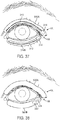
- one or both treatment strips 320A, 320B may be configured to incorporate an indicator 324, e.g., LED light, alarm, vibration element, etc.. electrically coupled to a power supply and/or processor 322 to alert the patient when a prescribed treatment has been completed.
- an indicator 324 e.g., LED light, alarm, vibration element, etc.. electrically coupled to a power supply and/or processor 322 to alert the patient when a prescribed treatment has been completed.
- Fig. 39 shows yet another variation where the eyelid treatment system 330 may be formed into a coupled dual-strip design, e.g., a "wishbone" design, where the dual-strip heating strips may have two heating elements which follow the location of the meibomian glands the upper UL and lower LL eyelid of a single eye.
- the system 330 may comprise a first heating strip assembly 332 and a second heating strip assembly 334 for each respective eye.
- Each of the assemblies 332, 334 may accordingly utilize an upper and a lower lid treatment heater, e.g., upper lid treatment strip 332A and lower lid treatment strip 332B, where each of the upper and lower elements may be coupled to one another via wires 336.
- each of the assemblies 332, 334 may be coupled via a connecting cable 338 to controller 340 which may be coupled (e.g., through an input/output port such as a headphone jack, USB port, or other connection port) to a portable electronic device 342 (e.g., smartphone having a touch screen interface, tablet, PDA, laptop computer, etc.) as shown.
- a portable electronic device 342 e.g., smartphone having a touch screen interface, tablet, PDA, laptop computer, etc.
- the number of connecting cables may range anywhere from 1-4 connector cables rather than utilizing a single cable 338.
- one cable may be used to provide power and communication to a few or all four heating elements in each of the assemblies 332. 334.
- four connecting cables may provide power and communication to each of the heating elements in assemblies 332, 334.
- two connecting cables may provide power and communication to each of the assemblies 332, 334.
- any of the treatment strips described may be used in combination with the controller 342 described herein, as practicable.
- oval or circular shaped heating elements may covers the eye and both eyelids where an outer border of the heating elements or strips may follow the path of the upper and lower meibomian glands.
- one treatment strip may cover both eyelids and both sets of meibomian glands and the user may use a total of two (rather than four) round, circular, or oval shaped treatment strips to cover both eyes.
- Such a variation may be used, e.g., for a night time therapy in bed prior to or during sleep when the eyes need not necessarily be open.
- the assemblies 332, 334 may generally comprise strips, as previously described, which follow the location of the meibomian glands while still allowing patients to blink easily and proceed in comfort with daily activity.
- An example of such heaters which may be configured for use with the treatment system 330 may include thin, flexible heaters which are commercially available through companies such as Minco Products, Inc. (Minneapolis, MN) or can be custom designed and manufactured independently or through third party manufacturing.
- Each individual treatment strip e.g., treatment strips 332A, 332B
- these size limitations are intended to be exemplary and not limiting since the treatment strips 332A, 332B may be sized to be smaller or larger to accommodate different eye anatomies.
- the individual treatment strips 332A, 332B may be formed as thin, flexible transparent polymers containing the heating elements while the contact surface of the strips may be affixed to the respective eyelids with, e.g., a disposable adhesive.
- Other variations may utilize opaque or colored strips, e.g., skin-tone colors.
- one or more temperature sensors may also be integrated into the treatment strips where the heating elements and sensors may be routed through the connecting cable 338 to a power source and/or controller 340 and/or portable electronic device 342, as shown.
- Controller 340 may generally comprise a hardware/software platform or unit which may be programmed for controlling the therapy treatments. Accordingly, the controller 340 may include a processor as well as a power supply such as a battery (rechargeable or disposable) for providing power to the assemblies 332, 334. The power supply within controller 340 may be optionally rechargeable separate from the portable electronic device 342 or the power supply may draw power for the assemblies 332, 334 and processor directly from the portable electronic device 342 as well.
- a power supply such as a battery (rechargeable or disposable) for providing power to the assemblies 332, 334.
- the power supply within controller 340 may be optionally rechargeable separate from the portable electronic device 342 or the power supply may draw power for the assemblies 332, 334 and processor directly from the portable electronic device 342 as well.
- controller 340 In the case where the controller 340 is programmed to provide the therapy treatment protocols, one or several controls for controlling the treatments may be built directly into controller 340.
- the portable electronic device 342 may interface with the controller 340 to display, in one variation, part of the controls on a screen (e.g., touchscreen) of the electronic device 342 such as controls for starting and/or stopping a treatment.
- all of the controls may reside on the controller 340 while a display on the electronic device 342 may serve primarily to show or track various results or treatment parameters.
- the all of the controls may reside on the display of the electronic device 342 for controlling the various treatment options and parameters rather than on the controller 340.
- the electronic device 342 in this example a smartphone, may also provide the power to the treatment strip assemblies 332, 334 and may also control the various treatment temperatures and times as well as provide temperature feedback or other physiological parameters which may be measured.
- the treatment strips 332, 334 and connecting cable 338 may be plugged directly into the mobile or portable consumer electronic device 342.
- the electronic device 342 may be used to display treatment parameters and controls such as an icon or button for initiating therapy.
- therapy may be initiated by the user through electronic device 342 to heat one or more of the strips of one or both of the treatment strip assemblies 332. 334.
- the electronic device 342 particularly in the case of a smartphone or tablet, may have an optional program or application downloaded onto the device which facilitates the various control and/or display parameters on the electronic device 342 depending upon how the electronic device 342 is used with the controller 340 and assemblies 332, 334.
- the electronic device 342 may also provide a diagnostic function to allow the user to test for dry eye and/or to determine how treatment is progressing either before, during, or after treatment. Accordingly, the electronic device 342 or controller 340 may leverage, e.g., an integrated camera and/or flash/light source, for purposes of imaging the user's ocular tear film or ocular surface and evaluating commonly used tear assessment criteria such as total tear film layer thickness, and/or tear film mucin layer thickness, and/or tear film lipid layer thickness, and/or tear film aqueous layer thickness, or any combination thereof.
- an integrated camera and/or flash/light source for purposes of imaging the user's ocular tear film or ocular surface and evaluating commonly used tear assessment criteria such as total tear film layer thickness, and/or tear film mucin layer thickness, and/or tear film lipid layer thickness, and/or tear film aqueous layer thickness, or any combination thereof.
- the mobile application may include other common methods for diagnosing dry eye such as user questionnaires related to the user patient's symptoms, discomfort, and/or improvement or worsening of symptoms that can be completed using the electronic device's touch screen interface, results stored on the electronic device 342 or web application or manufacturer's servers, tracked over time for trend evaluation, and possibly shared with the user's physician.
- the controller 340 and/or electronic device 342 may be programmed or initiated to heat up the assemblies 332, 334 to, e.g., 42.5° C +1- 1° to 2° C.
- Treatment time may be set to, e.g., 15 to 30 minutes, and the controller 340 and/or electronic device 342 may further be programmed to shut down when the allotted treatment time has passed or if the measured temperature rises above a predetermined level, e.g., 45° C.
- controller 340 and/or electronic device 342 may also be programmed or set to indicate various treatment parameters (e.g., the initiation of treatment, warming of the heating elements, completion of treatment, errors, battery life, etc.) through any number of visual, auditory, or haptic indicators.
- various treatment parameters e.g., the initiation of treatment, warming of the heating elements, completion of treatment, errors, battery life, etc.
- controller 340 and/or electronic device 342 may be used to store and/or transmit various data such as historical treatment data, usage time, total treatment time, temperature data, etc.
- controller 340 and/or electronic device 342 may communicate wirelessly with a remote server or additional controller, allowing the controller 340 and/or electronic device 342 to also be programmed remotely, e.g., by a physician or other party.
- audio and/or visual information e.g., advertisements or other media
- controller 340 is illustrated as being coupled to assemblies 332, 334 via a wired connecting cable 338, other variations may have controller 340 wirelessly connected with assemblies 332, 334. Such a connection may be through any number of wireless protocols such as Bluetooth®, RF, etc.
- This "precision temperature control" mobile heating therapy system may be used for heating other parts of the body as well, where the system remains nearly the same, but the heating element dimensions may be varied and power requirements may also be changed depending on the total surface area being treated and temperature goals.
- treatment times or other parameters such as temperature of the strips may be programmed and optionally shut on or off selectively by the patient or automatically.
- other parameters such as the frequency of the heat delivery or other stimulation may also be programmed by the processor to provide further flexibility in treatment.
- the applications of the devices and methods discussed above are not limited to the treatment of dry eye syndrome but may include any number of further treatment applications. Moreover, such devices and methods may be applied to other treatment sites within the body where acute or chronic inflammation causes a disease or condition.
- the treatment strips can be accordingly custom-designed to follow the path of the underlying physiology, e.g, custom designed and contoured cooling or heating treatment strips to treat the sinuses and acute or chronic sinusitis, respectively, rhinitis and allergic rhinitis, joint aches and inflammation, arthritis, muscle aches, back pain, headaches, wounds, sports injuries, etc.
Landscapes
- Health & Medical Sciences (AREA)
- Engineering & Computer Science (AREA)
- Public Health (AREA)
- Veterinary Medicine (AREA)
- Biomedical Technology (AREA)
- Heart & Thoracic Surgery (AREA)
- General Health & Medical Sciences (AREA)
- Life Sciences & Earth Sciences (AREA)
- Animal Behavior & Ethology (AREA)
- Vascular Medicine (AREA)
- Ophthalmology & Optometry (AREA)
- Otolaryngology (AREA)
- Physics & Mathematics (AREA)
- Thermal Sciences (AREA)
- Anesthesiology (AREA)
- Hematology (AREA)
- Dermatology (AREA)
- Medical Informatics (AREA)
- Thermotherapy And Cooling Therapy Devices (AREA)
- Percussion Or Vibration Massage (AREA)
- Radiation-Therapy Devices (AREA)
Claims (13)
- Système de traitement (330) pour syndrome de l'oeil sec, comprenant :une bande supérieure configurée pour adhérer, durant l'utilisation, à une région sous-jacente de peau d'une paupière supérieure (UL) d'un sujet de telle sorte que la bande supérieure ait une périphérie courbée ou arquée qui est formée pour s'étendre et suivre une marge libre de la paupière supérieure et également ait une flexibilité suffisante pour s'adapter au mouvement de la paupière supérieure lorsque la bande supérieure adhère, durant l'utilisation, à la paupière supérieure et qu'une limite extérieure de la bande supérieure soit configurée pour être contenue, durant l'utilisation, par un cartilage tarse sous-jacent de la paupière supérieure ;une bande inférieure configurée pour adhérer, durant l'utilisation, à une région sous-jacente de peau d'une paupière inférieure (LL) du sujet de telle sorte que la bande inférieure ait une périphérie courbée ou arquée qui est formée pour s'étendre et suivre une marge libre de la paupière inférieure et qu'une limite extérieure de la bande inférieure soit configurée pour être contenue, durant l'utilisation, par un cartilage tarse sous-jacent de la paupière inférieure ;un dispositif de commande (340) en communication avec les bandes supérieure et inférieure par l'intermédiaire d'un câble de connexion (338) qui transmet de l'énergie électrique aux bandes supérieure et inférieure, le dispositif de commande étant programmable pour une thérapie de traitement ;dans lequel les bande supérieure et bande inférieure sont électriquement couplées l'une à l'autre ;dans lequel les bandes supérieure et inférieure sont configurées pour recevoir l'énergie électrique et émettre de l'énergie thermique aux régions sous-jacentes de peau, et dans lequel les bandes supérieure et inférieure sont formées afin, durant l'utilisation, de suivre un emplacement d'une ou de plusieurs glandes de Meibomius contenues à l'intérieur de la région sous-jacentes de peau.
- Système selon la revendication 1, dans lequel les bande supérieure et bande inférieure sont électriquement couplées l'une à l'autre, formant une conception en fourche.
- Système selon la revendication 1, dans lequel les bandes supérieure et inférieure comprennent une surface de contact pour le placement contre la région de peau.
- Système selon la revendication 1, dans lequel les bandes supérieure et inférieure comprennent une couche chauffante en communication thermique avec la région de peau.
- Système selon la revendication 4, comprenant en outre une couche thermochromique en communication thermique avec la couche chauffante.
- Système selon la revendication 1, dans lequel le dispositif de commande est couplé au câble de connexion par l'intermédiaire d'un port.
- Système selon la revendication 1, dans lequel le dispositif de commande est programmé pour commander un ou plusieurs paramètres des bandes supérieure et inférieure.
- Système selon la revendication 7, dans lequel les un ou plusieurs paramètres comprennent une température, un temps de traitement, une fréquence de traitement, ou un profil thermique des bandes supérieure et inférieure.
- Système selon la revendication 1, comprenant en outre un dispositif électronique portatif couplé de façon amovible au dispositif de commande.
- Système selon la revendication 9, dans lequel le dispositif électronique portatif comprend un téléphone intelligent ou une tablette.
- Système selon la revendication 10, dans lequel le téléphone intelligent est programmé pour fournir un indicateur auditif, visuel, ou haptique pour communiquer avec l'utilisateur.
- Système selon la revendication 1, dans lequel le système de traitement comprend en outre un agent pharmacologique ou chimique pour la libération.
- Système selon la revendication 1, dans lequel le système de traitement comprend en outre un mécanisme de sollicitation configuré pour localement serrer ou comprimer la peau.
Applications Claiming Priority (3)
| Application Number | Priority Date | Filing Date | Title |
|---|---|---|---|
| US13/343,407 US9724230B2 (en) | 2012-01-04 | 2012-01-04 | Dry eye treatment apparatus and methods |
| US13/645,985 US9510972B2 (en) | 2012-01-04 | 2012-10-05 | Dry eye treatment systems |
| PCT/US2012/059384 WO2013103413A1 (fr) | 2012-01-04 | 2012-10-09 | Systèmes de traitement de l'oeil sec |
Publications (3)
| Publication Number | Publication Date |
|---|---|
| EP2800543A1 EP2800543A1 (fr) | 2014-11-12 |
| EP2800543A4 EP2800543A4 (fr) | 2015-11-11 |
| EP2800543B1 true EP2800543B1 (fr) | 2019-06-26 |
Family
ID=48695449
Family Applications (1)
| Application Number | Title | Priority Date | Filing Date |
|---|---|---|---|
| EP12864218.8A Active EP2800543B1 (fr) | 2012-01-04 | 2012-10-09 | Systèmes de traitement de l'oeil sec |
Country Status (7)
| Country | Link |
|---|---|
| US (7) | US9510972B2 (fr) |
| EP (1) | EP2800543B1 (fr) |
| JP (5) | JP6747770B2 (fr) |
| CN (4) | CN115068202B (fr) |
| BR (1) | BR112014016505B8 (fr) |
| ES (1) | ES2739630T3 (fr) |
| WO (1) | WO2013103413A1 (fr) |
Families Citing this family (109)
| Publication number | Priority date | Publication date | Assignee | Title |
|---|---|---|---|---|
| US20070060988A1 (en) | 2005-07-18 | 2007-03-15 | Grenon Stephen M | Melting meibomian gland obstructions |
| US7981095B2 (en) * | 2005-07-18 | 2011-07-19 | Tearscience, Inc. | Methods for treating meibomian gland dysfunction employing fluid jet |
| US20080114423A1 (en) | 2006-05-15 | 2008-05-15 | Grenon Stephen M | Apparatus for inner eyelid treatment of meibomian gland dysfunction |
| WO2013003594A2 (fr) | 2011-06-28 | 2013-01-03 | Tearscience, Inc. | Procédés et systèmes de traitement de dysfonctionnement de la glande de meibomius à l'aide d'énergie radiofréquence |
| US20090043365A1 (en) | 2005-07-18 | 2009-02-12 | Kolis Scientific, Inc. | Methods, apparatuses, and systems for reducing intraocular pressure as a means of preventing or treating open-angle glaucoma |
| US8083787B2 (en) | 2005-07-18 | 2011-12-27 | Tearscience, Inc. | Method and apparatus for treating meibomian gland dysfunction |
| US8950405B2 (en) | 2006-05-15 | 2015-02-10 | Tearscience, Inc. | Treatment of obstructive disorders of the eye or eyelid |
| US7981145B2 (en) | 2005-07-18 | 2011-07-19 | Tearscience Inc. | Treatment of meibomian glands |
| CA2999420A1 (fr) | 2005-09-27 | 2007-04-05 | Tissuetech, Inc. | Preparations de membrane amniotique et compositions purifiees, et procedes d'utilisation |
| US8187639B2 (en) | 2005-09-27 | 2012-05-29 | Tissue Tech, Inc. | Amniotic membrane preparations and purified compositions and anti-angiogenesis treatment |
| US9314369B2 (en) | 2006-05-15 | 2016-04-19 | Tearscience, Inc. | System for inner eyelid treatment of meibomian gland dysfunction |
| US8128673B2 (en) | 2006-05-15 | 2012-03-06 | Tearscience, Inc. | System for inner eyelid heat and pressure treatment for treating meibomian gland dysfunction |
| US8137390B2 (en) | 2006-05-15 | 2012-03-20 | Tearscience, Inc. | System for providing heat treatment and heat loss reduction for treating meibomian gland dysfunction |
| US8128674B2 (en) | 2006-05-15 | 2012-03-06 | Tearscience, Inc. | System for outer eyelid heat and pressure treatment for treating meibomian gland dysfunction |
| CN102573497B (zh) | 2009-04-01 | 2015-09-09 | 眼泪科学公司 | 眼睛泪液膜成像仪器 |
| EP2717888B1 (fr) | 2011-06-10 | 2020-09-09 | Tissuetech, Inc. | Procédés de traitement de tissus foetaux de support |
| CA2844115C (fr) | 2011-08-26 | 2021-11-23 | Tissuetech, Inc. | Procedes de sterilisation de tissus support foetaux |
| US9724230B2 (en) | 2012-01-04 | 2017-08-08 | Sight Sciences, Inc. | Dry eye treatment apparatus and methods |
| US10973680B2 (en) * | 2012-01-04 | 2021-04-13 | Sight Sciences, Inc. | Controller for dry eye treatment systems |
| US9510972B2 (en) | 2012-01-04 | 2016-12-06 | Sight Sciences, Inc. | Dry eye treatment systems |
| US11285040B2 (en) * | 2012-01-04 | 2022-03-29 | Sight Sciences, Inc. | Combination treatment systems |
| WO2014031857A2 (fr) | 2012-08-22 | 2014-02-27 | Tearscience, Inc. | Appareils et méthodes de diagnostic et/ou de traitement du déficit en transport des lipides dans des films de larmes oculaires, et composants et dispositifs afférents |
| US20150335466A1 (en) * | 2012-10-15 | 2015-11-26 | Christoph SCHÖGGLER | Ear cooling device |
| US10226378B2 (en) * | 2013-02-28 | 2019-03-12 | Carmen Schuller | Disposable thermal regulation apparatus |
| WO2014143479A1 (fr) * | 2013-03-14 | 2014-09-18 | Birch Tree Medical, Inc. | Vêtement chauffé pour applications médicales |
| US11181740B1 (en) * | 2013-03-15 | 2021-11-23 | Percept Technologies Inc | Digital eyewear procedures related to dry eyes |
| US11033227B1 (en) * | 2018-09-21 | 2021-06-15 | Percept Technologies Inc | Digital eyewear integrated with medical and other services |
| EP3424558B1 (fr) | 2013-04-30 | 2020-07-22 | Alcon Inc. | Systèmes de traitement de maladies oculaires |
| US9763827B2 (en) | 2013-04-30 | 2017-09-19 | Tear Film Innovations, Inc. | Systems and methods for the treatment of eye conditions |
| JP6615748B2 (ja) | 2013-05-03 | 2019-12-04 | テイアサイエンス・インコーポレーテツド | マイボーム腺分析のためにマイボーム腺を画像化するための眼瞼照射システムおよび方法 |
| US10485695B2 (en) * | 2013-07-08 | 2019-11-26 | Ocusoft, Inc. | Projection frame eyelid heater |
| US10369041B2 (en) * | 2013-07-08 | 2019-08-06 | John Devine | Eye mask for amelioration or prevention of dry eye and the like |
| US20150081028A1 (en) * | 2013-09-18 | 2015-03-19 | Ray Zubok | Adaptor for modular joint prostheses |
| US10799395B1 (en) * | 2013-11-06 | 2020-10-13 | Nathan Horner | Tarsus eyelid support |
| AU2015209304A1 (en) * | 2014-01-22 | 2016-07-21 | Marcio Marc Abreu | Devices configured to provide treatment at an Abreu brain thermal tunnel |
| US9615968B2 (en) * | 2014-04-16 | 2017-04-11 | David Rand | Portable rapid cooling, hypothermia inducing headgear apparatus for tissue preservation |
| ES2510965B1 (es) * | 2014-06-04 | 2015-07-28 | Universidade De Santiago De Compostela | Almohadilla apta para el masaje de las glándulas de Meibomio |
| US20160030233A1 (en) * | 2014-08-01 | 2016-02-04 | Empire Technology Development Llc | Apparatuses and methods for cooling a surface |
| WO2016057872A1 (fr) * | 2014-10-10 | 2016-04-14 | The Regent Of The University Of California | Régulation de température autonome de dispositifs chauffants pour traitement médical |
| EP3215224A4 (fr) * | 2014-11-05 | 2018-06-27 | Tissuetech, Inc. | Compositions et procédé permettant de favoriser la croissance et la régénération nerveuse |
| EP3736974A1 (fr) | 2015-01-30 | 2020-11-11 | Sunfolding, Inc. | Système et procédé d'actionneur fluidique |
| US20160228293A1 (en) * | 2015-02-11 | 2016-08-11 | Robert Latkany | Method and apparatus for closing the eyes of persons with nocturnal lagophthalmos |
| WO2016138025A2 (fr) * | 2015-02-23 | 2016-09-01 | Tissuetech, Inc. | Appareils et méthodes de traitement de maladies et de troubles ophtalmiques |
| CN107532832A (zh) | 2015-03-28 | 2018-01-02 | 加利福尼亚大学董事会 | 用于生物医学应用的热电温控冷却器 |
| US11103417B2 (en) * | 2015-04-30 | 2021-08-31 | Lillie A. Mosaddegh | Meibomian gland roller |
| US12514778B2 (en) | 2015-04-30 | 2026-01-06 | Lillie A Mosaddegh | Meibomian gland roller system with eye pads |
| DE102015109819A1 (de) * | 2015-06-19 | 2016-12-22 | automation & software Günther Tausch GmbH | System zur Beeinflussung der Homöostase biologischer Objekte |
| AU2016323117B2 (en) * | 2015-09-15 | 2019-10-31 | I-Lumen Scientific, Inc. | Apparatus and method for ocular microcurrent stimulation therapy |
| ITUB20154761A1 (it) * | 2015-10-29 | 2017-04-29 | Resono Ophthalmic S R L | Sistema di elettrodo e relativo dispositivo per il trattamento di patologie dell?occhio, in particolare dell?occhio secco |
| US12551509B2 (en) | 2015-11-18 | 2026-02-17 | Lucina Patent Holdco, Llc | Acellular regenerative products and methods of their manufacture |
| WO2017100608A1 (fr) * | 2015-12-11 | 2017-06-15 | Sight Sciences, Inc. | Systèmes de polythérapies |
| US10842667B2 (en) * | 2016-02-17 | 2020-11-24 | Tramec Termico Technologies, L.L.C. | Self-regulating heater |
| US20170266035A1 (en) * | 2016-03-21 | 2017-09-21 | Brian Young Ming Kuo | Wireless-controlled therapeutic warming eye wear device |
| KR20190011714A (ko) | 2016-03-28 | 2019-02-07 | 더 리전트 오브 더 유니버시티 오브 캘리포니아 | 열교환 모듈, 시스템 및 방법 |
| CA3019306A1 (fr) | 2016-03-28 | 2017-10-05 | The Regents Of The University Of California | Module d'echange de chaleur et systeme pour des applications medicales |
| US10695219B2 (en) * | 2016-04-08 | 2020-06-30 | ThermiGen, LLC | Apparatus and method for treatment of dry eye using radio frequency heating |
| US11696850B2 (en) | 2016-04-13 | 2023-07-11 | Umay Care Holdings Inc. | Eye thermal compress |
| US10974063B2 (en) | 2016-06-30 | 2021-04-13 | Alcon Inc. | Light therapy for eyelash growth |
| KR101778114B1 (ko) * | 2016-07-08 | 2017-09-26 | 울산과학기술원 | 휴대용 전기히터장치 |
| IL265686B (en) | 2016-09-28 | 2022-09-01 | Hypothermia Devices Inc | Heat exchange module, system and method |
| US12233017B2 (en) | 2016-10-14 | 2025-02-25 | Olympic Ophthalmics, Inc. | Quiet handheld devices and methods for treatment of disorders |
| EP3525735B1 (fr) * | 2016-10-14 | 2025-07-16 | Olympic Ophthalmics, Inc. | Dispositif pour stimuler la production de larmes |
| EP3338623B1 (fr) | 2016-12-23 | 2022-12-21 | Nokia Technologies Oy | Détection de mouvement de l'oeil par capteurs attachés aux paupières |
| IT201600131691A1 (it) * | 2016-12-28 | 2018-06-28 | Ntc Srl | Compressa oculare e metodo per scaldare una regione perioculare. |
| GB201706302D0 (en) * | 2017-04-20 | 2017-06-07 | Grant Susan | Meical device |
| DE102017006994A1 (de) * | 2017-07-24 | 2019-01-24 | Stefan Hotz | Koppelbare portable Vorrichtung zur thermisch - medizinischen Behandlung der Haut |
| US11503895B2 (en) * | 2017-12-20 | 2022-11-22 | L'oreal | Makeup removal mask |
| US11147736B2 (en) | 2018-02-26 | 2021-10-19 | Olympic Ophthalmics, Inc. | Therapeutic handheld devices for disorders |
| EP3773371A4 (fr) * | 2018-03-29 | 2022-01-05 | Lumenis Ltd | Appareil et procédé pour le traitement des yeux secs |
| CN108433869B (zh) * | 2018-04-27 | 2024-08-27 | 北京小耗医疗器械有限公司 | 一种粘贴型磁性眼睑闭合医疗装置 |
| US10913241B2 (en) * | 2018-06-28 | 2021-02-09 | Jason Fladoos | Flexible adhesive tape for heating beverages, pipes and other articles |
| CN109044627B (zh) * | 2018-06-28 | 2021-07-30 | 郑州大学第一附属医院 | 义眼眼球消毒绷带 |
| US12263115B2 (en) | 2018-09-11 | 2025-04-01 | Sight Sciences, Inc. | Forceps treatment systems |
| EP3860703A1 (fr) | 2018-10-01 | 2021-08-11 | Biovisics Medical, Inc. | Système et procédés de modulation électrique commandée pour une thérapie de la vision |
| US10828504B2 (en) * | 2018-10-12 | 2020-11-10 | Edward L. Blenderman | Wearable device that increases muscle strength |
| CN113056246A (zh) * | 2018-11-14 | 2021-06-29 | 美国奥科视光有限公司 | 眼罩 |
| US11305118B2 (en) | 2018-11-30 | 2022-04-19 | Biovisics Medical, Inc. | Head worn apparatuses for vision therapy |
| WO2020130176A1 (fr) * | 2018-12-19 | 2020-06-25 | 부산대학교 산학협력단 | Dispositif de traitement du syndrome de l'œil sec |
| US20220047866A1 (en) | 2018-12-20 | 2022-02-17 | I-Lumen Scientific, Inc. | Apparatus and method for microcurrent stimulation therapy |
| US11471680B2 (en) | 2019-04-10 | 2022-10-18 | Biovisics, Inc. | Systems and interfaces for ocular therapy |
| US11844958B2 (en) | 2019-05-14 | 2023-12-19 | Twenty Twenty Therapeutics Llc | Gland treatment devices and methods for treating dry eye disease |
| US11446495B2 (en) * | 2019-05-14 | 2022-09-20 | Twenty Twenty Therapeutics Llc | Therapeutic devices for placement underneath the eyelid and associated systems, devices, and methods for dry eye treatment |
| IL267166B (en) | 2019-06-06 | 2022-06-01 | Novoxel Ltd | System and method for treating eyelid inflammation by creating lesions in skin tissue |
| KR102298019B1 (ko) * | 2019-06-11 | 2021-09-03 | 인하대학교 산학협력단 | 안검 자극장치 |
| EP4464367A3 (fr) | 2019-06-14 | 2025-01-22 | i-LUMEN Scientific, Inc. | Dispositif médical portable |
| US12023498B2 (en) | 2019-07-12 | 2024-07-02 | Biovisics Medical, Inc. | Ocular therapy modes and systems |
| EP3998933A4 (fr) * | 2019-08-05 | 2023-07-19 | Sight Sciences, Inc. | Dispositif de commande avec système d'imagerie |
| US11278447B2 (en) | 2019-09-25 | 2022-03-22 | David Rand | Portable thermal therapy and support apparatus for emergency medical treatment |
| WO2021140419A1 (fr) * | 2020-01-08 | 2021-07-15 | Azura Ophthalmics Ltd. | Dispositif d'administration d'un médicament à une paupière |
| EP4087655A4 (fr) | 2020-01-10 | 2024-02-21 | Azura Ophthalmics Ltd | Instructions pour composition et sensibilité |
| JP7579594B2 (ja) | 2020-05-15 | 2024-11-08 | アイフロー・インコーポレーテッド | 哺乳類の眼の従来の房水排出路内の移植物のための方法及び装置 |
| CN111568634B (zh) * | 2020-05-18 | 2022-06-10 | 上饶爱尔眼科医院有限公司 | 一种眼科炎症治疗用湿雾治疗器 |
| US20230181362A1 (en) * | 2020-05-20 | 2023-06-15 | Nthalmic Holding Pty Ltd | Methods and apparatus to manage meibomian gland deficiencies |
| CN115804006A (zh) | 2020-06-22 | 2023-03-14 | 森福鼎股份有限公司 | 用于太阳能跟踪器的锁定、阻尼和致动系统以及方法 |
| US12310886B2 (en) * | 2020-08-03 | 2025-05-27 | Verily Life Sciences Llc | Ophthalmic devices, systems and methods for treating dry eye |
| USD1061894S1 (en) | 2020-10-09 | 2025-02-11 | I-Lumen Scientific, Inc. | Medical device |
| US20220313077A1 (en) * | 2021-04-01 | 2022-10-06 | CorneaCare Inc. | Method of and system for automated machine-assisted detection of ocular disease conditions in human eyes captured using visible illumination light sources and digital camera systems |
| GB202107351D0 (en) * | 2021-05-24 | 2021-07-07 | Univ Dublin | Tear stimulation device |
| AT524665B1 (de) | 2021-05-25 | 2022-08-15 | Aurox Gmbh | Temperiervorrichtung für Gesichtsauflagepads |
| CN113558752A (zh) * | 2021-08-12 | 2021-10-29 | 热芙美(湖南)科技有限公司 | 射频眼科睑板腺热疗设备 |
| FI130061B (en) * | 2021-10-21 | 2023-01-13 | Icare Finland Oy | ELASTIC KETONOMETERS AND METHODS OF USING ELASTIC KETONOMETERS |
| US12472376B2 (en) | 2022-02-06 | 2025-11-18 | Demaod Ltd | Devices and methods for stimulating tear secretion |
| CN114847929B (zh) * | 2022-04-26 | 2024-08-16 | 灵动翘睫(深圳)科技有限公司 | 一种基于眼睑曲率图的眼整形手术评估方法 |
| AT525631B1 (de) | 2022-05-04 | 2023-06-15 | Aurox Gmbh | Temperiervorrichtung für Gesichtsauflagepads |
| DE202022104070U1 (de) | 2022-07-19 | 2023-10-20 | Aurox Gmbh | Temperiervorrichtung zur dermalen Applikation und thermoelektrische Module |
| WO2024053569A1 (fr) | 2022-09-05 | 2024-03-14 | 三菱ケミカル株式会社 | Cristal de gan et procédé de production de cristal de gan |
| US12589243B2 (en) | 2022-10-21 | 2026-03-31 | I-Lumen Scientific, Inc. | Ocular devices and controller interfaces for ocular therapy |
| WO2024201227A1 (fr) * | 2023-03-24 | 2024-10-03 | Lumenis Be Ltd. | Dispositif de traitement de la sécheresse oculaire |
| US20250281747A1 (en) * | 2024-03-11 | 2025-09-11 | Verily Life Sciences Llc | System, method, and apparatus for underlid home-based meibomian gland disease treatment via resistive heating and magnetic-based mechanical stimulation |
Family Cites Families (165)
| Publication number | Priority date | Publication date | Assignee | Title |
|---|---|---|---|---|
| US2001862A (en) | 1931-02-26 | 1935-05-21 | Battey Edith Carter | Facial tissue support |
| US2108934A (en) | 1934-03-31 | 1938-02-22 | American Anode Inc | Therapeutical appliance and method of making the same |
| US2635175A (en) | 1952-02-09 | 1953-04-14 | Hodge Woodrow Wilson | Therapeutic appliance |
| US3075527A (en) | 1960-06-02 | 1963-01-29 | Chemway Corp | Sterile medicated strips |
| US3173419A (en) | 1962-07-10 | 1965-03-16 | Dubilier William | Relaxer device |
| US3589369A (en) | 1969-02-26 | 1971-06-29 | Resiflex Lab | Forcep construction |
| US4096864A (en) | 1975-03-26 | 1978-06-27 | Bio-Medicus, Inc. | Fluid carrying surgical instrument of the forceps type |
| US4261364A (en) | 1979-01-26 | 1981-04-14 | Haddad Heskel M | Electric warm compress for ophthalmic treatment |
| US4325254A (en) | 1980-01-29 | 1982-04-20 | Staodynamics, Inc. | Temperature indicative hotpack |
| US4962761A (en) | 1987-02-24 | 1990-10-16 | Golden Theodore A | Thermal bandage |
| US4867146A (en) | 1988-02-04 | 1989-09-19 | Webb Research, Ii, Inc. | Eye patch |
| US4930317A (en) | 1988-05-20 | 1990-06-05 | Temperature Research Corporation | Apparatus for localized heat and cold therapy |
| US5097829A (en) | 1990-03-19 | 1992-03-24 | Tony Quisenberry | Temperature controlled cooling system |
| US5169384A (en) | 1991-08-16 | 1992-12-08 | Bosniak Stephen L | Apparatus for facilitating post-traumatic, post-surgical, and/or post-inflammatory healing of tissue |
| US5164987A (en) * | 1991-10-17 | 1992-11-17 | Raven Jay R | Personal stereo speaker assembly |
| WO1994011739A1 (fr) | 1992-11-16 | 1994-05-26 | Cymbus Bioscience Limited | Diagnostic de troubles oculaires |
| JPH07185017A (ja) * | 1993-12-27 | 1995-07-25 | Olympus Optical Co Ltd | 治療装置 |
| US5643336A (en) | 1995-01-09 | 1997-07-01 | Lopez-Claros; Marcelo Enrique | Heating and cooling pad |
| US6544193B2 (en) | 1996-09-04 | 2003-04-08 | Marcio Marc Abreu | Noninvasive measurement of chemical substances |
| US5860985A (en) | 1996-10-18 | 1999-01-19 | Anschutz; Till Rainer | Ophthalmic instrument for cataract surgery |
| US6626901B1 (en) | 1997-03-05 | 2003-09-30 | The Trustees Of Columbia University In The City Of New York | Electrothermal instrument for sealing and joining or cutting tissue |
| AT407480B (de) | 1997-05-06 | 2001-03-26 | Macher David | Heizeinrichtung zum erwärmen einer hautoberfläche bzw. teilbereiche eines menschlichen körpers |
| JPH11221247A (ja) * | 1997-08-25 | 1999-08-17 | Seputo:Kk | 温熱付眼鏡 |
| EP1024769B1 (fr) | 1997-10-23 | 2009-02-25 | Arthrocare Corporation | Alimentation en puissance pour electrochirurgie dans du fluide conducteur |
| US6074414A (en) | 1998-08-06 | 2000-06-13 | Limex Bio-Tech L.C. | System for providing thermal application to external body areas of a patient |
| US6159189A (en) | 1998-08-12 | 2000-12-12 | Ocular Research Of Boston, Inc. | Method for instilling a controlled dose of fluid into the eye |
| US6248363B1 (en) | 1999-11-23 | 2001-06-19 | Lipocine, Inc. | Solid carriers for improved delivery of active ingredients in pharmaceutical compositions |
| US6238427B1 (en) | 1999-03-30 | 2001-05-29 | John G. Matta | Therapeutic heat transfer pads |
| US6563094B2 (en) | 1999-05-11 | 2003-05-13 | Thermosoft International Corporation | Soft electrical heater with continuous temperature sensing |
| US6155995A (en) | 1999-08-05 | 2000-12-05 | Lin; Pin-Hung | Structure of a multifunctional eye mask |
| EP1090614B1 (fr) | 1999-10-07 | 2003-06-18 | Kao Corporation | Coussin pour les yeux |
| US6193741B1 (en) | 1999-11-08 | 2001-02-27 | Cecily Heavenridge | Non-surgical upper eyelid lift system |
| DE29920352U1 (de) | 1999-11-15 | 2000-02-10 | Belopolskaya, Juliya, 14195 Berlin | Abdeck-Schminkschutzfolie für die Augenpartie |
| USD441081S1 (en) | 2000-02-29 | 2001-04-24 | Mueller Sports Medicine, Inc. | Combined light absorbing nose and cheek strip |
| JP3071816U (ja) * | 2000-03-16 | 2000-09-22 | 文昭 吉富 | マイボーム腺圧迫鉗子 |
| US6416534B1 (en) | 2000-10-10 | 2002-07-09 | Sunbeam Products, Inc. | Portable heating pad with removable heat pad, removable gel pack and pressure bladder |
| US7899551B2 (en) | 2001-04-13 | 2011-03-01 | Greatbatch Ltd. | Medical lead system utilizing electromagnetic bandstop filters |
| US7121666B2 (en) | 2001-04-25 | 2006-10-17 | Tseng Scheffer C G | Apparatus and method for the kinetic analysis of tear stability |
| JP3667268B2 (ja) | 2001-09-26 | 2005-07-06 | 得一郎 長谷川 | アイマスク |
| US20080039769A1 (en) * | 2001-11-07 | 2008-02-14 | Minu Llc | Method of medical treatment using controlled heat delivery |
| US6511446B1 (en) | 2001-11-16 | 2003-01-28 | Chia-Hsiung Wu | Message bead with heat application effect |
| GB2384430B (en) * | 2002-01-24 | 2003-12-03 | John Robert Fuller | Therapeutic eye and eyelid cover |
| US20030167556A1 (en) * | 2002-03-05 | 2003-09-11 | Consumers Choice Systems, Inc. | Methods and devices for transdermal delivery of anti-aging compounds for treatment and prevention of facial or neck skin aging |
| US20030236487A1 (en) | 2002-04-29 | 2003-12-25 | Knowlton Edward W. | Method for treatment of tissue with feedback |
| US7069084B2 (en) | 2002-06-14 | 2006-06-27 | Seefit Incorporated | Method and apparatus for preventing and treating eyelid problems |
| AU2003259145A1 (en) | 2002-07-17 | 2004-02-02 | Spencer P. Thornton | Treatment for dry eye syndrome |
| US6860896B2 (en) | 2002-09-03 | 2005-03-01 | Jeffrey T. Samson | Therapeutic method and apparatus |
| KR200301311Y1 (ko) | 2002-09-12 | 2003-01-24 | 박철 | 와이어가 가진 강성 및 탄성력에 의해 전자기기 일면에자동 정렬되는 이어폰 및 그 시스템 |
| GB0225795D0 (en) * | 2002-11-05 | 2002-12-11 | Guillon Michael | Wipes |
| US7108694B2 (en) | 2002-11-08 | 2006-09-19 | Olympus Corporation | Heat-emitting treatment device |
| US6893453B2 (en) | 2002-12-17 | 2005-05-17 | Kimberly-Clark Worldwide, Inc. | Thermal therapy pad with variable heat control |
| EP1520568B1 (fr) | 2003-10-03 | 2011-07-27 | Mario Zanotti | Appareil d'échange thermique, en particulier pour l'application du traitement thermique |
| US7211070B2 (en) | 2003-12-01 | 2007-05-01 | Abraham Ebbie Soroudi | Device and method for exothermic treatment of eyelid diseases |
| CN1631343A (zh) * | 2003-12-24 | 2005-06-29 | 邵帅 | 可调谐能量和脉冲频率的激光磁力软压式近视矫治器 |
| US20050159775A1 (en) | 2004-01-20 | 2005-07-21 | Reynolds James W. | Disposable eyelid retractor apparatus |
| USD507350S1 (en) | 2004-02-06 | 2005-07-12 | Mueller Sports Medicine, Inc. | Pair of light absorbing strips |
| USD507054S1 (en) | 2004-02-06 | 2005-07-05 | Mueller Sports Medicine, Inc. | Pair of light absorbing strips |
| USD511573S1 (en) | 2004-02-06 | 2005-11-15 | Mueller Sports Medicine, Inc. | Pair of light absorbing strips |
| USD507055S1 (en) | 2004-02-06 | 2005-07-05 | Mueller Sports Medicine, Inc. | Pair of light absorbing strips |
| USD513323S1 (en) | 2004-02-06 | 2005-12-27 | Mueller Sports Medicine, Inc. | Pair of light absorbing strips |
| USD507651S1 (en) | 2004-02-06 | 2005-07-19 | Mueller Sports Medicine, Inc. | Pair of light absorbing strips |
| US20060154642A1 (en) | 2004-02-20 | 2006-07-13 | Scannell Robert F Jr | Medication & health, environmental, and security monitoring, alert, intervention, information and network system with associated and supporting apparatuses |
| WO2005082301A1 (fr) | 2004-02-23 | 2005-09-09 | Aqueduct Medical, Inc. | Dispositif a temperature reglable |
| US20080269850A1 (en) | 2004-07-14 | 2008-10-30 | Toshihiro Dodo | Flexible Heat Generating Body |
| US7771342B2 (en) | 2004-09-29 | 2010-08-10 | Patrick J. Rademacher | Apparatus and method for reducing vision problems as a result of floaters |
| JP2008520397A (ja) | 2004-11-23 | 2008-06-19 | エドワード・ケイ・ジュニアー・ウォング | 眼及び眼の周囲組織の温度制御及び治療のための医療装置 |
| TWI290463B (en) | 2005-03-04 | 2007-12-01 | Bing-Hung Lin | Structure of massager |
| US20060206171A1 (en) | 2005-03-14 | 2006-09-14 | Michael Gertner | Devices, methods and kits for radiation treatment via a target body surface |
| US20060210616A1 (en) | 2005-03-17 | 2006-09-21 | Linder Barry J | Therapeutic patch for ophthalmologic and cosmetic use |
| KR100750011B1 (ko) | 2005-04-01 | 2007-08-16 | 길종진 | 안전장치를 구비하는 심플형 유해 전자파 차단 조절기 |
| US7300409B2 (en) | 2005-05-12 | 2007-11-27 | S.C. Johnson & Son, Inc. | Therapy patch |
| JP2007000520A (ja) * | 2005-06-27 | 2007-01-11 | Ito Choutanpa Kk | 超短波治療器 |
| US7981145B2 (en) | 2005-07-18 | 2011-07-19 | Tearscience Inc. | Treatment of meibomian glands |
| US20070060988A1 (en) | 2005-07-18 | 2007-03-15 | Grenon Stephen M | Melting meibomian gland obstructions |
| US7981095B2 (en) | 2005-07-18 | 2011-07-19 | Tearscience, Inc. | Methods for treating meibomian gland dysfunction employing fluid jet |
| US8950405B2 (en) | 2006-05-15 | 2015-02-10 | Tearscience, Inc. | Treatment of obstructive disorders of the eye or eyelid |
| US8255039B2 (en) | 2006-09-29 | 2012-08-28 | Tearscience, Inc. | Meibomian gland illuminating and imaging |
| US20080114423A1 (en) | 2006-05-15 | 2008-05-15 | Grenon Stephen M | Apparatus for inner eyelid treatment of meibomian gland dysfunction |
| US8083787B2 (en) | 2005-07-18 | 2011-12-27 | Tearscience, Inc. | Method and apparatus for treating meibomian gland dysfunction |
| US7981146B2 (en) | 2006-05-15 | 2011-07-19 | Tearscience Inc. | Inner eyelid treatment for treating meibomian gland dysfunction |
| JP2007185017A (ja) | 2006-01-05 | 2007-07-19 | Dainippon Printing Co Ltd | 情報処理装置及び情報送信装置 |
| JP2007229175A (ja) * | 2006-02-28 | 2007-09-13 | Kobayashi Pharmaceut Co Ltd | 眼用冷却シート |
| EP2002813B1 (fr) | 2006-03-31 | 2018-07-18 | Kao Corporation | Generateur de vapeur d'eau |
| US7976573B2 (en) | 2006-05-15 | 2011-07-12 | Tearscience, Inc. | Inner eyelid heat and pressure treatment for treating meibomian gland dysfunction |
| US7981147B2 (en) | 2006-05-15 | 2011-07-19 | Tearscience, Inc. | Outer eyelid heat and pressure treatment for treating meibomian gland dysfunction |
| US9314369B2 (en) | 2006-05-15 | 2016-04-19 | Tearscience, Inc. | System for inner eyelid treatment of meibomian gland dysfunction |
| US8007524B2 (en) | 2006-05-15 | 2011-08-30 | Tearscience, Inc. | Heat treatment and heat loss reduction for treating meibomian gland dysfunction |
| WO2008027069A1 (fr) | 2006-08-21 | 2008-03-06 | Tearscience, Inc. | Procédé et appareil de traitement du dysfonctionnement de la glande de meibomius au moyen d'un fluide |
| EP2056809A1 (fr) * | 2006-08-28 | 2009-05-13 | Senju Pharmaceutical Co., Ltd. | Préparation ophtalmique du type à absorption par voie percutanée |
| JP2010504769A (ja) * | 2006-09-29 | 2010-02-18 | テイアサイエンス・インコーポレーテツド | マイボーム腺閉塞の溶解 |
| US8202853B2 (en) | 2006-11-03 | 2012-06-19 | Ocusoft, Inc. | Convenience kit for eyelid treatment |
| AR063619A1 (es) * | 2006-12-18 | 2009-02-04 | Alcon Res Ltd | Dispositivos y metodos para la administraicion de un farmaco oftalmico |
| WO2008129357A2 (fr) | 2006-12-26 | 2008-10-30 | Thermaquatic, Inc. | Coussin chauffant et refroidissant, unite de commande, systeme et procede associes |
| JP2010515481A (ja) * | 2007-01-09 | 2010-05-13 | テイアサイエンス・インコーポレーテツド | マイボーム腺の治療 |
| WO2008100647A1 (fr) | 2007-01-09 | 2008-08-21 | Bjl Medical, Llc | Tampon de refroidissement thérapeutique à usage ophtalmologique et cosmétique |
| US8696724B2 (en) | 2007-01-11 | 2014-04-15 | Scion Neurostim, Llc. | Devices for vestibular or cranial nerve stimulation |
| EP2121109B1 (fr) * | 2007-01-17 | 2018-09-05 | Tearscience, Inc. | Appareilsde traitement thermique du dysfonctionnement des glandes de meibomius |
| WO2008130905A2 (fr) | 2007-04-17 | 2008-10-30 | Mikos, Ltd. | Système et procédé d'utilisation de l'imagerie infrarouge tridimensionnelle pour obtenir des cartes de structures anatomiques détaillées |
| US20100114086A1 (en) | 2007-04-19 | 2010-05-06 | Deem Mark E | Methods, devices, and systems for non-invasive delivery of microwave therapy |
| US7758190B2 (en) | 2007-06-20 | 2010-07-20 | Tearscience, Inc. | Tear film measurement |
| NZ582188A (en) | 2007-07-11 | 2012-03-30 | Pfizer | Pharmaceutical compositions and methods of treating dry eye disorders |
| US20090020521A1 (en) | 2007-07-18 | 2009-01-22 | Thomas Blaszczykiewicz | Heating Pad System For Orthopedic Braces And The Like |
| US20090048590A1 (en) | 2007-08-15 | 2009-02-19 | Tyrell, Inc. | Systems and methods for treating nail-bed fungus through application of heat |
| SE532142C2 (sv) * | 2007-09-28 | 2009-11-03 | Clinical Laserthermia Systems | Anordning för bestämning av en termisk egenskap hos en vävnad |
| US8122890B2 (en) | 2007-11-13 | 2012-02-28 | Apnicure, Inc. | Methods and systems for saliva management with an oral device |
| WO2009073217A1 (fr) | 2007-12-03 | 2009-06-11 | 986, Inc. | Système de contrôle de température corporelle |
| US20090149925A1 (en) | 2007-12-05 | 2009-06-11 | Kimberly-Clark Worldwide, Inc. | Temperature Indicator for Warming Products |
| USD617443S1 (en) | 2008-02-06 | 2010-06-08 | Tearscience, Inc. | Eye treatment goggles |
| USD614303S1 (en) | 2008-02-06 | 2010-04-20 | Tearscience, Inc. | Eye treatment apparatus |
| USD613408S1 (en) | 2008-02-06 | 2010-04-06 | Tearscience, Inc. | Eye treatment head gear |
| KR101010863B1 (ko) | 2008-06-30 | 2011-01-25 | 에스티에스반도체통신 주식회사 | 다이 본딩 장치 |
| EP2361144B1 (fr) | 2008-10-07 | 2018-05-16 | The Research Foundation of the State University of New York | Membranes de nanofibres à haute efficacité, à flux élevé et procédés de production de celles-ci |
| USD614774S1 (en) | 2008-12-18 | 2010-04-27 | Tearscience, Inc. | Ocular imaging apparatus |
| GB2466662A (en) * | 2009-01-05 | 2010-07-07 | Symbian Software Ltd | Mobile communication device with charge conserving system |
| CN102361603A (zh) * | 2009-02-23 | 2012-02-22 | Qlt股份有限公司 | 泪腺植入物和相关方法 |
| US8632511B2 (en) * | 2009-05-06 | 2014-01-21 | Alcon Research, Ltd. | Multiple thermal sensors in a multiple processor environment for temperature control in a drug delivery device |
| WO2011038457A1 (fr) | 2009-09-30 | 2011-04-07 | Lions Eye Institute Limited | Imageur, module pour imageur, système d'imagerie et procédé associé |
| USD638128S1 (en) | 2009-10-06 | 2011-05-17 | Tearscience, Inc. | Ocular device design |
| JP2011188958A (ja) | 2010-03-12 | 2011-09-29 | Kanazawa Univ | シェーグレン症候群及びドライマウスの治療器並びにドライアイの治療器 |
| EP2560703A2 (fr) * | 2010-04-20 | 2013-02-27 | MiniPumps, LLC | Dispositifs de pompes à médicaments à commande électrolytique |
| JP2013531548A (ja) * | 2010-07-15 | 2013-08-08 | コリンシアン オフサルミック,インコーポレイティド | 遠隔治療及び遠隔モニタリングを実施する方法及びシステム |
| US20130046367A1 (en) | 2011-08-18 | 2013-02-21 | Willie Ying-Wei Chen | Lipid Removal Device for Treating Blepharitis (Meibomian Gland Dysfunction) |
| US8535363B1 (en) | 2010-10-27 | 2013-09-17 | Falenia Lewis | Facial heating pad device |
| EP2446865A1 (fr) | 2010-10-28 | 2012-05-02 | Louise Mohn | Appareil de thermostimulation |
| FR2968522B1 (fr) | 2010-12-09 | 2013-01-04 | Oreal | Procede cosmetique de modification de l'apparence du contour de l'oeil. |
| US20110081333A1 (en) | 2010-12-10 | 2011-04-07 | Shantha Totada R | Apparatus and system for treatment and prevention of bags under eyes |
| US20120191164A1 (en) | 2011-01-26 | 2012-07-26 | Gander Nicholas M | Radiant heating apparatus and method for therapeutic heating |
| WO2012112638A1 (fr) | 2011-02-18 | 2012-08-23 | Valeant International (Barbados) Srl | Renvoi vers demandes apparentées |
| US9421124B2 (en) | 2011-03-02 | 2016-08-23 | Michelle E. Carey | Systems for applying heat and pressure to sinuses |
| US9271865B2 (en) | 2011-03-09 | 2016-03-01 | Cheng-Chuan YANG | Hot and cold eye treatment apparatus |
| US10813825B2 (en) | 2011-06-14 | 2020-10-27 | Portable Therapeutix, LLC | Compression device |
| JP3170844U (ja) * | 2011-07-04 | 2011-10-06 | 株式会社レーベン販売 | 湯たんぽパック |
| US10780005B2 (en) | 2011-10-21 | 2020-09-22 | Drägerwerk AG & Co. KGaA | Warming therapy patient care units with automated warm-up modes |
| CN202313590U (zh) | 2011-11-14 | 2012-07-11 | 李国英 | 多功能皮肤镊 |
| US10973680B2 (en) | 2012-01-04 | 2021-04-13 | Sight Sciences, Inc. | Controller for dry eye treatment systems |
| US9724230B2 (en) | 2012-01-04 | 2017-08-08 | Sight Sciences, Inc. | Dry eye treatment apparatus and methods |
| US11285040B2 (en) | 2012-01-04 | 2022-03-29 | Sight Sciences, Inc. | Combination treatment systems |
| US9510972B2 (en) | 2012-01-04 | 2016-12-06 | Sight Sciences, Inc. | Dry eye treatment systems |
| TWI446898B (zh) | 2012-05-22 | 2014-08-01 | Ming Yuan Wu | 置重型拋棄式牙科鑷子 |
| JP6312671B2 (ja) | 2012-07-24 | 2018-04-18 | ブレフェクス・エルエルシー | 眼疾患の治療装置 |
| WO2014031857A2 (fr) | 2012-08-22 | 2014-02-27 | Tearscience, Inc. | Appareils et méthodes de diagnostic et/ou de traitement du déficit en transport des lipides dans des films de larmes oculaires, et composants et dispositifs afférents |
| DK3446742T3 (da) | 2013-03-15 | 2023-09-04 | Carewear Corp | Lysterapienhed |
| JP6615748B2 (ja) | 2013-05-03 | 2019-12-04 | テイアサイエンス・インコーポレーテツド | マイボーム腺分析のためにマイボーム腺を画像化するための眼瞼照射システムおよび方法 |
| CN203493672U (zh) | 2013-10-25 | 2014-03-26 | 刘中华 | 皮肤真菌检验用具 |
| CN203564408U (zh) | 2013-11-21 | 2014-04-30 | 张进 | 一种睑板按摩镊 |
| US20160045755A1 (en) | 2014-08-18 | 2016-02-18 | Donghoon CHUN | Apparatus, system and method for treating fat tissue |
| WO2016057872A1 (fr) | 2014-10-10 | 2016-04-14 | The Regent Of The University Of California | Régulation de température autonome de dispositifs chauffants pour traitement médical |
| US9463201B2 (en) | 2014-10-19 | 2016-10-11 | M.G. Therapeutics Ltd | Compositions and methods for the treatment of meibomian gland dysfunction |
| CA2965974C (fr) | 2014-10-30 | 2023-10-17 | Tear Film Innovations, Inc. | Systemes et procedes pour le traitement d'affections oculaires |
| US11103417B2 (en) | 2015-04-30 | 2021-08-31 | Lillie A. Mosaddegh | Meibomian gland roller |
| US20170014300A1 (en) | 2015-06-18 | 2017-01-19 | Eyedetec Medical, Inc. | Moldable heater with Miniature Resonant Frequency Vibration Generator for Ophthalmic Eyelid Therapy |
| WO2017100608A1 (fr) | 2015-12-11 | 2017-06-15 | Sight Sciences, Inc. | Systèmes de polythérapies |
| CN205234758U (zh) | 2015-12-22 | 2016-05-18 | 襄阳市中心医院 | 一种多功能睑板腺镊 |
| US9962072B2 (en) | 2015-12-31 | 2018-05-08 | Anantha Pradeep | System and method for analyzing eye and contact lens condition |
| CN205568977U (zh) | 2016-01-11 | 2016-09-14 | 李丽 | 皮肤科用皮肤组织取样装置 |
| US20170273823A1 (en) | 2016-03-23 | 2017-09-28 | MG Therapies, Inc. | System for providing interval thermal therapy |
| US10369043B2 (en) | 2016-09-12 | 2019-08-06 | Mikhail Sheydin | Multi-layer heating mat for providing therapeutic heat to an area of the body |
| AT519279B1 (de) | 2016-10-17 | 2019-12-15 | Aurox Gmbh | Vorrichtung zur Kühlung einer Körperregion |
| US20180200494A1 (en) | 2017-01-18 | 2018-07-19 | Bioinspire Technologies, Inc. | Devices, systems, and methods for delivering therapeutic substances in a mammalian body |
| US11517473B2 (en) | 2017-08-27 | 2022-12-06 | Solana Hesith, Inc. | Multi-modal thermal therapy for blepharitis, meibomian gland dysfunction and dry eye syndrome |
| WO2019193000A1 (fr) | 2018-04-04 | 2019-10-10 | Alvalux Medical | Système de traitement du syndrome de sécheresse oculaire |
| KR102544208B1 (ko) | 2018-09-10 | 2023-06-15 | 오큐소프트, 인코포레이티드 | 겸자 |
| US12263115B2 (en) | 2018-09-11 | 2025-04-01 | Sight Sciences, Inc. | Forceps treatment systems |
| US20210022914A1 (en) | 2019-07-26 | 2021-01-28 | Sight Sciences, Inc. | Treatment apparatus and methods |
| EP3998933A4 (fr) | 2019-08-05 | 2023-07-19 | Sight Sciences, Inc. | Dispositif de commande avec système d'imagerie |
-
2012
- 2012-10-05 US US13/645,985 patent/US9510972B2/en active Active
- 2012-10-09 CN CN202210615213.XA patent/CN115068202B/zh active Active
- 2012-10-09 BR BR112014016505A patent/BR112014016505B8/pt active IP Right Grant
- 2012-10-09 CN CN202511059996.8A patent/CN120661314A/zh active Pending
- 2012-10-09 CN CN201710769358.4A patent/CN107510545B/zh active Active
- 2012-10-09 CN CN201280071161.9A patent/CN104334129B/zh active Active
- 2012-10-09 ES ES12864218T patent/ES2739630T3/es active Active
- 2012-10-09 JP JP2014551238A patent/JP6747770B2/ja active Active
- 2012-10-09 WO PCT/US2012/059384 patent/WO2013103413A1/fr not_active Ceased
- 2012-10-09 EP EP12864218.8A patent/EP2800543B1/fr active Active
-
2016
- 2016-11-29 US US15/364,070 patent/US9844459B2/en active Active
- 2016-12-05 US US15/369,176 patent/US9642743B2/en active Active
-
2017
- 2017-02-24 US US15/442,003 patent/US10052226B2/en active Active
-
2018
- 2018-08-09 US US16/059,281 patent/US10925765B2/en active Active
- 2018-10-12 JP JP2018193884A patent/JP6768761B2/ja active Active
-
2020
- 2020-09-23 JP JP2020158988A patent/JP2020199386A/ja active Pending
-
2021
- 2021-02-03 US US17/166,619 patent/US12263116B2/en active Active
-
2022
- 2022-08-05 JP JP2022125366A patent/JP7625558B2/ja active Active
-
2025
- 2025-01-22 JP JP2025009483A patent/JP2025072412A/ja active Pending
- 2025-02-19 US US19/057,761 patent/US20250228702A1/en active Pending
Non-Patent Citations (1)
| Title |
|---|
| None * |
Also Published As
Similar Documents
| Publication | Publication Date | Title |
|---|---|---|
| US20250228702A1 (en) | Dry eye treatment systems | |
| US20250288458A1 (en) | Dry eye treatment apparatus and methods | |
| US20250177198A1 (en) | Controller for dry eye treatment systems | |
| US20220168136A1 (en) | Combination treatment systems | |
| JP7648597B2 (ja) | 撮像システムを備えた制御部 | |
| WO2017100608A1 (fr) | Systèmes de polythérapies |
Legal Events
| Date | Code | Title | Description |
|---|---|---|---|
| PUAI | Public reference made under article 153(3) epc to a published international application that has entered the european phase |
Free format text: ORIGINAL CODE: 0009012 |
|
| 17P | Request for examination filed |
Effective date: 20140724 |
|
| AK | Designated contracting states |
Kind code of ref document: A1 Designated state(s): AL AT BE BG CH CY CZ DE DK EE ES FI FR GB GR HR HU IE IS IT LI LT LU LV MC MK MT NL NO PL PT RO RS SE SI SK SM TR |
|
| DAX | Request for extension of the european patent (deleted) | ||
| RA4 | Supplementary search report drawn up and despatched (corrected) |
Effective date: 20151013 |
|
| RIC1 | Information provided on ipc code assigned before grant |
Ipc: A61F 7/02 20060101ALI20151007BHEP Ipc: A61F 13/12 20060101ALI20151007BHEP Ipc: A61F 9/00 20060101ALI20151007BHEP Ipc: A61F 7/00 20060101AFI20151007BHEP |
|
| GRAP | Despatch of communication of intention to grant a patent |
Free format text: ORIGINAL CODE: EPIDOSNIGR1 |
|
| STAA | Information on the status of an ep patent application or granted ep patent |
Free format text: STATUS: GRANT OF PATENT IS INTENDED |
|
| RIC1 | Information provided on ipc code assigned before grant |
Ipc: A61F 7/02 20060101ALI20181210BHEP Ipc: A61F 13/12 20060101ALI20181210BHEP Ipc: A61F 9/00 20060101ALI20181210BHEP Ipc: A61F 7/00 20060101AFI20181210BHEP |
|
| INTG | Intention to grant announced |
Effective date: 20190116 |
|
| GRAS | Grant fee paid |
Free format text: ORIGINAL CODE: EPIDOSNIGR3 |
|
| GRAA | (expected) grant |
Free format text: ORIGINAL CODE: 0009210 |
|
| STAA | Information on the status of an ep patent application or granted ep patent |
Free format text: STATUS: THE PATENT HAS BEEN GRANTED |
|
| AK | Designated contracting states |
Kind code of ref document: B1 Designated state(s): AL AT BE BG CH CY CZ DE DK EE ES FI FR GB GR HR HU IE IS IT LI LT LU LV MC MK MT NL NO PL PT RO RS SE SI SK SM TR |
|
| REG | Reference to a national code |
Ref country code: GB Ref legal event code: FG4D |
|
| REG | Reference to a national code |
Ref country code: CH Ref legal event code: EP |
|
| REG | Reference to a national code |
Ref country code: AT Ref legal event code: REF Ref document number: 1147450 Country of ref document: AT Kind code of ref document: T Effective date: 20190715 |
|
| REG | Reference to a national code |
Ref country code: DE Ref legal event code: R096 Ref document number: 602012061539 Country of ref document: DE |
|
| REG | Reference to a national code |
Ref country code: IE Ref legal event code: FG4D |
|
| REG | Reference to a national code |
Ref country code: NL Ref legal event code: MP Effective date: 20190626 |
|
| PG25 | Lapsed in a contracting state [announced via postgrant information from national office to epo] |
Ref country code: NO Free format text: LAPSE BECAUSE OF FAILURE TO SUBMIT A TRANSLATION OF THE DESCRIPTION OR TO PAY THE FEE WITHIN THE PRESCRIBED TIME-LIMIT Effective date: 20190926 Ref country code: FI Free format text: LAPSE BECAUSE OF FAILURE TO SUBMIT A TRANSLATION OF THE DESCRIPTION OR TO PAY THE FEE WITHIN THE PRESCRIBED TIME-LIMIT Effective date: 20190626 Ref country code: LT Free format text: LAPSE BECAUSE OF FAILURE TO SUBMIT A TRANSLATION OF THE DESCRIPTION OR TO PAY THE FEE WITHIN THE PRESCRIBED TIME-LIMIT Effective date: 20190626 Ref country code: HR Free format text: LAPSE BECAUSE OF FAILURE TO SUBMIT A TRANSLATION OF THE DESCRIPTION OR TO PAY THE FEE WITHIN THE PRESCRIBED TIME-LIMIT Effective date: 20190626 Ref country code: SE Free format text: LAPSE BECAUSE OF FAILURE TO SUBMIT A TRANSLATION OF THE DESCRIPTION OR TO PAY THE FEE WITHIN THE PRESCRIBED TIME-LIMIT Effective date: 20190626 Ref country code: AL Free format text: LAPSE BECAUSE OF FAILURE TO SUBMIT A TRANSLATION OF THE DESCRIPTION OR TO PAY THE FEE WITHIN THE PRESCRIBED TIME-LIMIT Effective date: 20190626 |
|
| REG | Reference to a national code |
Ref country code: LT Ref legal event code: MG4D |
|
| PG25 | Lapsed in a contracting state [announced via postgrant information from national office to epo] |
Ref country code: LV Free format text: LAPSE BECAUSE OF FAILURE TO SUBMIT A TRANSLATION OF THE DESCRIPTION OR TO PAY THE FEE WITHIN THE PRESCRIBED TIME-LIMIT Effective date: 20190626 Ref country code: BG Free format text: LAPSE BECAUSE OF FAILURE TO SUBMIT A TRANSLATION OF THE DESCRIPTION OR TO PAY THE FEE WITHIN THE PRESCRIBED TIME-LIMIT Effective date: 20190926 Ref country code: RS Free format text: LAPSE BECAUSE OF FAILURE TO SUBMIT A TRANSLATION OF THE DESCRIPTION OR TO PAY THE FEE WITHIN THE PRESCRIBED TIME-LIMIT Effective date: 20190626 Ref country code: GR Free format text: LAPSE BECAUSE OF FAILURE TO SUBMIT A TRANSLATION OF THE DESCRIPTION OR TO PAY THE FEE WITHIN THE PRESCRIBED TIME-LIMIT Effective date: 20190927 |
|
| REG | Reference to a national code |
Ref country code: AT Ref legal event code: MK05 Ref document number: 1147450 Country of ref document: AT Kind code of ref document: T Effective date: 20190626 |
|
| PG25 | Lapsed in a contracting state [announced via postgrant information from national office to epo] |
Ref country code: PT Free format text: LAPSE BECAUSE OF FAILURE TO SUBMIT A TRANSLATION OF THE DESCRIPTION OR TO PAY THE FEE WITHIN THE PRESCRIBED TIME-LIMIT Effective date: 20191028 Ref country code: SK Free format text: LAPSE BECAUSE OF FAILURE TO SUBMIT A TRANSLATION OF THE DESCRIPTION OR TO PAY THE FEE WITHIN THE PRESCRIBED TIME-LIMIT Effective date: 20190626 Ref country code: AT Free format text: LAPSE BECAUSE OF FAILURE TO SUBMIT A TRANSLATION OF THE DESCRIPTION OR TO PAY THE FEE WITHIN THE PRESCRIBED TIME-LIMIT Effective date: 20190626 Ref country code: EE Free format text: LAPSE BECAUSE OF FAILURE TO SUBMIT A TRANSLATION OF THE DESCRIPTION OR TO PAY THE FEE WITHIN THE PRESCRIBED TIME-LIMIT Effective date: 20190626 Ref country code: CZ Free format text: LAPSE BECAUSE OF FAILURE TO SUBMIT A TRANSLATION OF THE DESCRIPTION OR TO PAY THE FEE WITHIN THE PRESCRIBED TIME-LIMIT Effective date: 20190626 Ref country code: NL Free format text: LAPSE BECAUSE OF FAILURE TO SUBMIT A TRANSLATION OF THE DESCRIPTION OR TO PAY THE FEE WITHIN THE PRESCRIBED TIME-LIMIT Effective date: 20190626 Ref country code: RO Free format text: LAPSE BECAUSE OF FAILURE TO SUBMIT A TRANSLATION OF THE DESCRIPTION OR TO PAY THE FEE WITHIN THE PRESCRIBED TIME-LIMIT Effective date: 20190626 |
|
| REG | Reference to a national code |
Ref country code: ES Ref legal event code: FG2A Ref document number: 2739630 Country of ref document: ES Kind code of ref document: T3 Effective date: 20200203 |
|
| PG25 | Lapsed in a contracting state [announced via postgrant information from national office to epo] |
Ref country code: SM Free format text: LAPSE BECAUSE OF FAILURE TO SUBMIT A TRANSLATION OF THE DESCRIPTION OR TO PAY THE FEE WITHIN THE PRESCRIBED TIME-LIMIT Effective date: 20190626 Ref country code: IS Free format text: LAPSE BECAUSE OF FAILURE TO SUBMIT A TRANSLATION OF THE DESCRIPTION OR TO PAY THE FEE WITHIN THE PRESCRIBED TIME-LIMIT Effective date: 20191026 |
|
| PG25 | Lapsed in a contracting state [announced via postgrant information from national office to epo] |
Ref country code: TR Free format text: LAPSE BECAUSE OF FAILURE TO SUBMIT A TRANSLATION OF THE DESCRIPTION OR TO PAY THE FEE WITHIN THE PRESCRIBED TIME-LIMIT Effective date: 20190626 |
|
| PG25 | Lapsed in a contracting state [announced via postgrant information from national office to epo] |
Ref country code: PL Free format text: LAPSE BECAUSE OF FAILURE TO SUBMIT A TRANSLATION OF THE DESCRIPTION OR TO PAY THE FEE WITHIN THE PRESCRIBED TIME-LIMIT Effective date: 20190626 Ref country code: DK Free format text: LAPSE BECAUSE OF FAILURE TO SUBMIT A TRANSLATION OF THE DESCRIPTION OR TO PAY THE FEE WITHIN THE PRESCRIBED TIME-LIMIT Effective date: 20190626 |
|
| PG25 | Lapsed in a contracting state [announced via postgrant information from national office to epo] |
Ref country code: IS Free format text: LAPSE BECAUSE OF FAILURE TO SUBMIT A TRANSLATION OF THE DESCRIPTION OR TO PAY THE FEE WITHIN THE PRESCRIBED TIME-LIMIT Effective date: 20200224 Ref country code: MC Free format text: LAPSE BECAUSE OF FAILURE TO SUBMIT A TRANSLATION OF THE DESCRIPTION OR TO PAY THE FEE WITHIN THE PRESCRIBED TIME-LIMIT Effective date: 20190626 |
|
| REG | Reference to a national code |
Ref country code: CH Ref legal event code: PL |
|
| REG | Reference to a national code |
Ref country code: DE Ref legal event code: R097 Ref document number: 602012061539 Country of ref document: DE |
|
| PLBE | No opposition filed within time limit |
Free format text: ORIGINAL CODE: 0009261 |
|
| STAA | Information on the status of an ep patent application or granted ep patent |
Free format text: STATUS: NO OPPOSITION FILED WITHIN TIME LIMIT |
|
| PG2D | Information on lapse in contracting state deleted |
Ref country code: IS |
|
| PG25 | Lapsed in a contracting state [announced via postgrant information from national office to epo] |
Ref country code: LU Free format text: LAPSE BECAUSE OF NON-PAYMENT OF DUE FEES Effective date: 20191009 Ref country code: LI Free format text: LAPSE BECAUSE OF NON-PAYMENT OF DUE FEES Effective date: 20191031 Ref country code: CH Free format text: LAPSE BECAUSE OF NON-PAYMENT OF DUE FEES Effective date: 20191031 |
|
| 26N | No opposition filed |
Effective date: 20200603 |
|
| REG | Reference to a national code |
Ref country code: BE Ref legal event code: MM Effective date: 20191031 |
|
| PG25 | Lapsed in a contracting state [announced via postgrant information from national office to epo] |
Ref country code: BE Free format text: LAPSE BECAUSE OF NON-PAYMENT OF DUE FEES Effective date: 20191031 Ref country code: SI Free format text: LAPSE BECAUSE OF FAILURE TO SUBMIT A TRANSLATION OF THE DESCRIPTION OR TO PAY THE FEE WITHIN THE PRESCRIBED TIME-LIMIT Effective date: 20190626 |
|
| PG25 | Lapsed in a contracting state [announced via postgrant information from national office to epo] |
Ref country code: IE Free format text: LAPSE BECAUSE OF NON-PAYMENT OF DUE FEES Effective date: 20191009 |
|
| PG25 | Lapsed in a contracting state [announced via postgrant information from national office to epo] |
Ref country code: CY Free format text: LAPSE BECAUSE OF FAILURE TO SUBMIT A TRANSLATION OF THE DESCRIPTION OR TO PAY THE FEE WITHIN THE PRESCRIBED TIME-LIMIT Effective date: 20190626 |
|
| PG25 | Lapsed in a contracting state [announced via postgrant information from national office to epo] |
Ref country code: MT Free format text: LAPSE BECAUSE OF FAILURE TO SUBMIT A TRANSLATION OF THE DESCRIPTION OR TO PAY THE FEE WITHIN THE PRESCRIBED TIME-LIMIT Effective date: 20190626 Ref country code: HU Free format text: LAPSE BECAUSE OF FAILURE TO SUBMIT A TRANSLATION OF THE DESCRIPTION OR TO PAY THE FEE WITHIN THE PRESCRIBED TIME-LIMIT; INVALID AB INITIO Effective date: 20121009 |
|
| PG25 | Lapsed in a contracting state [announced via postgrant information from national office to epo] |
Ref country code: MK Free format text: LAPSE BECAUSE OF FAILURE TO SUBMIT A TRANSLATION OF THE DESCRIPTION OR TO PAY THE FEE WITHIN THE PRESCRIBED TIME-LIMIT Effective date: 20190626 |
|
| PGFP | Annual fee paid to national office [announced via postgrant information from national office to epo] |
Ref country code: IT Payment date: 20250923 Year of fee payment: 14 |
|
| PGFP | Annual fee paid to national office [announced via postgrant information from national office to epo] |
Ref country code: GB Payment date: 20250923 Year of fee payment: 14 |
|
| PGFP | Annual fee paid to national office [announced via postgrant information from national office to epo] |
Ref country code: FR Payment date: 20250924 Year of fee payment: 14 |
|
| PGFP | Annual fee paid to national office [announced via postgrant information from national office to epo] |
Ref country code: DE Payment date: 20250923 Year of fee payment: 14 |
|
| PGFP | Annual fee paid to national office [announced via postgrant information from national office to epo] |
Ref country code: ES Payment date: 20251103 Year of fee payment: 14 |