EP2805621A1 - Procédé d'élimination de nitrate d'une solution comprenant un composant salin - Google Patents
Procédé d'élimination de nitrate d'une solution comprenant un composant salin Download PDFInfo
- Publication number
- EP2805621A1 EP2805621A1 EP13816497.5A EP13816497A EP2805621A1 EP 2805621 A1 EP2805621 A1 EP 2805621A1 EP 13816497 A EP13816497 A EP 13816497A EP 2805621 A1 EP2805621 A1 EP 2805621A1
- Authority
- EP
- European Patent Office
- Prior art keywords
- salt
- sulfur
- nitrate
- bacteria
- days
- Prior art date
- Legal status (The legal status is an assumption and is not a legal conclusion. Google has not performed a legal analysis and makes no representation as to the accuracy of the status listed.)
- Withdrawn
Links
- 150000003839 salts Chemical class 0.000 title claims abstract description 198
- 229910002651 NO3 Inorganic materials 0.000 title claims abstract description 176
- NHNBFGGVMKEFGY-UHFFFAOYSA-N Nitrate Chemical compound [O-][N+]([O-])=O NHNBFGGVMKEFGY-UHFFFAOYSA-N 0.000 title claims abstract description 176
- 238000000034 method Methods 0.000 title claims abstract description 44
- NINIDFKCEFEMDL-UHFFFAOYSA-N Sulfur Chemical compound [S] NINIDFKCEFEMDL-UHFFFAOYSA-N 0.000 claims abstract description 147
- 229910052717 sulfur Inorganic materials 0.000 claims abstract description 147
- 239000011593 sulfur Substances 0.000 claims abstract description 147
- 241000894006 Bacteria Species 0.000 claims abstract description 84
- 241000196324 Embryophyta Species 0.000 claims description 85
- XLYOFNOQVPJJNP-UHFFFAOYSA-N water Substances O XLYOFNOQVPJJNP-UHFFFAOYSA-N 0.000 claims description 60
- 240000002234 Allium sativum Species 0.000 claims description 10
- 235000004611 garlic Nutrition 0.000 claims description 10
- 235000008331 Pinus X rigitaeda Nutrition 0.000 claims description 9
- 235000011613 Pinus brutia Nutrition 0.000 claims description 9
- 241000018646 Pinus brutia Species 0.000 claims description 9
- 239000013535 sea water Substances 0.000 claims description 9
- 244000046052 Phaseolus vulgaris Species 0.000 claims description 8
- 235000005979 Citrus limon Nutrition 0.000 claims description 7
- 244000131522 Citrus pyriformis Species 0.000 claims description 7
- 244000194101 Ginkgo biloba Species 0.000 claims description 7
- 235000013311 vegetables Nutrition 0.000 claims description 7
- 235000011301 Brassica oleracea var capitata Nutrition 0.000 claims description 6
- 235000011201 Ginkgo Nutrition 0.000 claims description 6
- 235000008100 Ginkgo biloba Nutrition 0.000 claims description 6
- 235000002899 Mentha suaveolens Nutrition 0.000 claims description 6
- 244000182807 Mentha suaveolens Species 0.000 claims description 6
- 244000088415 Raphanus sativus Species 0.000 claims description 6
- 235000006140 Raphanus sativus var sativus Nutrition 0.000 claims description 6
- 238000001704 evaporation Methods 0.000 claims description 6
- 235000014571 nuts Nutrition 0.000 claims description 6
- 235000010627 Phaseolus vulgaris Nutrition 0.000 claims description 5
- 240000005498 Setaria italica Species 0.000 claims description 5
- 235000002252 panizo Nutrition 0.000 claims description 5
- 241001672694 Citrus reticulata Species 0.000 claims description 4
- 240000004371 Panax ginseng Species 0.000 claims description 4
- 235000005035 Panax pseudoginseng ssp. pseudoginseng Nutrition 0.000 claims description 4
- 235000003140 Panax quinquefolius Nutrition 0.000 claims description 4
- 241001355178 Setaria faberi Species 0.000 claims description 4
- 235000017016 Setaria faberi Nutrition 0.000 claims description 4
- 235000002595 Solanum tuberosum Nutrition 0.000 claims description 4
- 244000061456 Solanum tuberosum Species 0.000 claims description 4
- 244000041790 Spanish garlic Species 0.000 claims description 4
- 244000269722 Thea sinensis Species 0.000 claims description 4
- 240000004922 Vigna radiata Species 0.000 claims description 4
- 235000010721 Vigna radiata var radiata Nutrition 0.000 claims description 4
- 235000011469 Vigna radiata var sublobata Nutrition 0.000 claims description 4
- 244000273928 Zingiber officinale Species 0.000 claims description 4
- 235000006886 Zingiber officinale Nutrition 0.000 claims description 4
- 235000008397 ginger Nutrition 0.000 claims description 4
- 235000008434 ginseng Nutrition 0.000 claims description 4
- 235000009569 green tea Nutrition 0.000 claims description 4
- 238000010438 heat treatment Methods 0.000 claims description 4
- 241000332371 Abutilon x hybridum Species 0.000 claims description 3
- 244000066764 Ailanthus triphysa Species 0.000 claims description 3
- 241000234282 Allium Species 0.000 claims description 3
- 235000002732 Allium cepa var. cepa Nutrition 0.000 claims description 3
- 235000017060 Arachis glabrata Nutrition 0.000 claims description 3
- 244000105624 Arachis hypogaea Species 0.000 claims description 3
- 235000010777 Arachis hypogaea Nutrition 0.000 claims description 3
- 235000018262 Arachis monticola Nutrition 0.000 claims description 3
- 235000003261 Artemisia vulgaris Nutrition 0.000 claims description 3
- 235000000832 Ayote Nutrition 0.000 claims description 3
- 241001330024 Bambusoideae Species 0.000 claims description 3
- 240000007124 Brassica oleracea Species 0.000 claims description 3
- 235000003899 Brassica oleracea var acephala Nutrition 0.000 claims description 3
- 235000011299 Brassica oleracea var botrytis Nutrition 0.000 claims description 3
- 235000017647 Brassica oleracea var italica Nutrition 0.000 claims description 3
- 235000001169 Brassica oleracea var oleracea Nutrition 0.000 claims description 3
- 244000178937 Brassica oleracea var. capitata Species 0.000 claims description 3
- 241001107116 Castanospermum australe Species 0.000 claims description 3
- 235000021538 Chard Nutrition 0.000 claims description 3
- 235000008733 Citrus aurantifolia Nutrition 0.000 claims description 3
- 244000175448 Citrus madurensis Species 0.000 claims description 3
- 240000000560 Citrus x paradisi Species 0.000 claims description 3
- 235000009854 Cucurbita moschata Nutrition 0.000 claims description 3
- 235000009804 Cucurbita pepo subsp pepo Nutrition 0.000 claims description 3
- 244000000626 Daucus carota Species 0.000 claims description 3
- 235000002767 Daucus carota Nutrition 0.000 claims description 3
- 241000911173 Emilia fosbergii Species 0.000 claims description 3
- 235000017317 Fortunella Nutrition 0.000 claims description 3
- 235000010654 Melissa officinalis Nutrition 0.000 claims description 3
- 244000062730 Melissa officinalis Species 0.000 claims description 3
- 241000220317 Rosa Species 0.000 claims description 3
- 244000178231 Rosmarinus officinalis Species 0.000 claims description 3
- 235000011607 Salvia rutilans Nutrition 0.000 claims description 3
- 240000002793 Salvia rutilans Species 0.000 claims description 3
- 244000062793 Sorghum vulgare Species 0.000 claims description 3
- 235000011941 Tilia x europaea Nutrition 0.000 claims description 3
- 235000011453 Vigna umbellata Nutrition 0.000 claims description 3
- 240000001417 Vigna umbellata Species 0.000 claims description 3
- 235000021279 black bean Nutrition 0.000 claims description 3
- 244000013123 dwarf bean Species 0.000 claims description 3
- 230000008020 evaporation Effects 0.000 claims description 3
- 238000004108 freeze drying Methods 0.000 claims description 3
- 239000004571 lime Substances 0.000 claims description 3
- 235000019713 millet Nutrition 0.000 claims description 3
- 235000020232 peanut Nutrition 0.000 claims description 3
- 235000015136 pumpkin Nutrition 0.000 claims description 3
- 240000006891 Artemisia vulgaris Species 0.000 claims description 2
- 240000003259 Brassica oleracea var. botrytis Species 0.000 claims description 2
- 240000004244 Cucurbita moschata Species 0.000 claims description 2
- 235000014749 Mentha crispa Nutrition 0.000 claims description 2
- 244000078639 Mentha spicata Species 0.000 claims description 2
- 230000001180 sulfating effect Effects 0.000 claims 1
- 235000002639 sodium chloride Nutrition 0.000 description 173
- 235000001508 sulfur Nutrition 0.000 description 136
- 230000000694 effects Effects 0.000 description 37
- 239000000243 solution Substances 0.000 description 31
- DGAQECJNVWCQMB-PUAWFVPOSA-M Ilexoside XXIX Chemical compound C[C@@H]1CC[C@@]2(CC[C@@]3(C(=CC[C@H]4[C@]3(CC[C@@H]5[C@@]4(CC[C@@H](C5(C)C)OS(=O)(=O)[O-])C)C)[C@@H]2[C@]1(C)O)C)C(=O)O[C@H]6[C@@H]([C@H]([C@@H]([C@H](O6)CO)O)O)O.[Na+] DGAQECJNVWCQMB-PUAWFVPOSA-M 0.000 description 21
- 239000011734 sodium Substances 0.000 description 21
- 229910052708 sodium Inorganic materials 0.000 description 21
- 244000052616 bacterial pathogen Species 0.000 description 20
- 241000267040 Sasa borealis Species 0.000 description 17
- 239000000796 flavoring agent Substances 0.000 description 16
- 235000019634 flavors Nutrition 0.000 description 16
- 235000017166 Bambusa arundinacea Nutrition 0.000 description 14
- 235000017491 Bambusa tulda Nutrition 0.000 description 14
- 235000015334 Phyllostachys viridis Nutrition 0.000 description 14
- 235000019643 salty taste Nutrition 0.000 description 11
- 241001330002 Bambuseae Species 0.000 description 10
- 239000011425 bamboo Substances 0.000 description 10
- 230000008569 process Effects 0.000 description 8
- 230000019635 sulfation Effects 0.000 description 8
- 238000005670 sulfation reaction Methods 0.000 description 8
- 241000501784 Marinobacter sp. Species 0.000 description 5
- 238000002474 experimental method Methods 0.000 description 5
- 230000009931 harmful effect Effects 0.000 description 5
- 229910052500 inorganic mineral Inorganic materials 0.000 description 5
- 235000010755 mineral Nutrition 0.000 description 5
- 239000011707 mineral Substances 0.000 description 5
- 238000002360 preparation method Methods 0.000 description 5
- 230000009897 systematic effect Effects 0.000 description 5
- IJGRMHOSHXDMSA-UHFFFAOYSA-N Atomic nitrogen Chemical compound N#N IJGRMHOSHXDMSA-UHFFFAOYSA-N 0.000 description 4
- 241000209128 Bambusa Species 0.000 description 4
- 241000398183 Caminicella Species 0.000 description 4
- RWSOTUBLDIXVET-UHFFFAOYSA-N Dihydrogen sulfide Chemical compound S RWSOTUBLDIXVET-UHFFFAOYSA-N 0.000 description 4
- 241000282414 Homo sapiens Species 0.000 description 4
- IOVCWXUNBOPUCH-UHFFFAOYSA-M Nitrite anion Chemical compound [O-]N=O IOVCWXUNBOPUCH-UHFFFAOYSA-M 0.000 description 4
- ZLMJMSJWJFRBEC-UHFFFAOYSA-N Potassium Chemical compound [K] ZLMJMSJWJFRBEC-UHFFFAOYSA-N 0.000 description 4
- QVGXLLKOCUKJST-UHFFFAOYSA-N atomic oxygen Chemical compound [O] QVGXLLKOCUKJST-UHFFFAOYSA-N 0.000 description 4
- RWSXRVCMGQZWBV-WDSKDSINSA-N glutathione Chemical compound OC(=O)[C@@H](N)CCC(=O)N[C@@H](CS)C(=O)NCC(O)=O RWSXRVCMGQZWBV-WDSKDSINSA-N 0.000 description 4
- 229910000037 hydrogen sulfide Inorganic materials 0.000 description 4
- 235000021374 legumes Nutrition 0.000 description 4
- 239000000463 material Substances 0.000 description 4
- 230000003647 oxidation Effects 0.000 description 4
- 238000007254 oxidation reaction Methods 0.000 description 4
- 229910052760 oxygen Inorganic materials 0.000 description 4
- 239000001301 oxygen Substances 0.000 description 4
- 239000011591 potassium Substances 0.000 description 4
- 229910052700 potassium Inorganic materials 0.000 description 4
- 239000000047 product Substances 0.000 description 4
- 239000012266 salt solution Substances 0.000 description 4
- 238000000123 temperature gradient gel electrophoresis Methods 0.000 description 4
- JWDYCNIAQWPBHD-UHFFFAOYSA-N 1-(2-methylphenyl)glycerol Chemical compound CC1=CC=CC=C1OCC(O)CO JWDYCNIAQWPBHD-UHFFFAOYSA-N 0.000 description 3
- QGZKDVFQNNGYKY-UHFFFAOYSA-N Ammonia Chemical compound N QGZKDVFQNNGYKY-UHFFFAOYSA-N 0.000 description 3
- 241000831705 Geosporobacter subterraneus Species 0.000 description 3
- 241001055872 Marispirillum indicum Species 0.000 description 3
- FAPWRFPIFSIZLT-UHFFFAOYSA-M Sodium chloride Chemical compound [Na+].[Cl-] FAPWRFPIFSIZLT-UHFFFAOYSA-M 0.000 description 3
- QAOWNCQODCNURD-UHFFFAOYSA-L Sulfate Chemical compound [O-]S([O-])(=O)=O QAOWNCQODCNURD-UHFFFAOYSA-L 0.000 description 3
- 241000929593 Thalassospira sp. Species 0.000 description 3
- 235000013305 food Nutrition 0.000 description 3
- 239000003205 fragrance Substances 0.000 description 3
- 239000011521 glass Substances 0.000 description 3
- 235000015097 nutrients Nutrition 0.000 description 3
- 235000016709 nutrition Nutrition 0.000 description 3
- 230000035764 nutrition Effects 0.000 description 3
- 235000019640 taste Nutrition 0.000 description 3
- 238000012360 testing method Methods 0.000 description 3
- YBJHBAHKTGYVGT-ZKWXMUAHSA-N (+)-Biotin Chemical compound N1C(=O)N[C@@H]2[C@H](CCCCC(=O)O)SC[C@@H]21 YBJHBAHKTGYVGT-ZKWXMUAHSA-N 0.000 description 2
- OKTJSMMVPCPJKN-UHFFFAOYSA-N Carbon Chemical compound [C] OKTJSMMVPCPJKN-UHFFFAOYSA-N 0.000 description 2
- 241000605809 Desulfuromonas Species 0.000 description 2
- 206010013911 Dysgeusia Diseases 0.000 description 2
- 102000004190 Enzymes Human genes 0.000 description 2
- 108090000790 Enzymes Proteins 0.000 description 2
- 241000164875 Firmicutes bacterium Species 0.000 description 2
- 108010024636 Glutathione Proteins 0.000 description 2
- 241000209504 Poaceae Species 0.000 description 2
- 241000305805 Tepidibacter formicigenes Species 0.000 description 2
- 238000010521 absorption reaction Methods 0.000 description 2
- 229910052799 carbon Inorganic materials 0.000 description 2
- 238000006243 chemical reaction Methods 0.000 description 2
- 239000012153 distilled water Substances 0.000 description 2
- 239000003337 fertilizer Substances 0.000 description 2
- 229960003180 glutathione Drugs 0.000 description 2
- 150000002500 ions Chemical class 0.000 description 2
- 238000005259 measurement Methods 0.000 description 2
- 244000005700 microbiome Species 0.000 description 2
- 238000002156 mixing Methods 0.000 description 2
- QJGQUHMNIGDVPM-UHFFFAOYSA-N nitrogen group Chemical group [N] QJGQUHMNIGDVPM-UHFFFAOYSA-N 0.000 description 2
- 150000007524 organic acids Chemical class 0.000 description 2
- 235000005985 organic acids Nutrition 0.000 description 2
- 230000009467 reduction Effects 0.000 description 2
- 239000013049 sediment Substances 0.000 description 2
- 239000011780 sodium chloride Substances 0.000 description 2
- 239000002689 soil Substances 0.000 description 2
- 239000000758 substrate Substances 0.000 description 2
- 230000004083 survival effect Effects 0.000 description 2
- 238000002054 transplantation Methods 0.000 description 2
- 241000269837 Artemisia dubia Species 0.000 description 1
- 241000190909 Beggiatoa Species 0.000 description 1
- 241000219198 Brassica Species 0.000 description 1
- 235000003351 Brassica cretica Nutrition 0.000 description 1
- 235000011293 Brassica napus Nutrition 0.000 description 1
- 244000308180 Brassica oleracea var. italica Species 0.000 description 1
- 240000008100 Brassica rapa Species 0.000 description 1
- 235000000540 Brassica rapa subsp rapa Nutrition 0.000 description 1
- 235000003343 Brassica rupestris Nutrition 0.000 description 1
- 241000219193 Brassicaceae Species 0.000 description 1
- RGJOEKWQDUBAIZ-IBOSZNHHSA-N CoASH Chemical compound O[C@@H]1[C@H](OP(O)(O)=O)[C@@H](COP(O)(=O)OP(O)(=O)OCC(C)(C)[C@@H](O)C(=O)NCCC(=O)NCCS)O[C@H]1N1C2=NC=NC(N)=C2N=C1 RGJOEKWQDUBAIZ-IBOSZNHHSA-N 0.000 description 1
- 240000001980 Cucurbita pepo Species 0.000 description 1
- 108020004414 DNA Proteins 0.000 description 1
- 241000186541 Desulfotomaculum Species 0.000 description 1
- 241000605716 Desulfovibrio Species 0.000 description 1
- 108010074122 Ferredoxins Proteins 0.000 description 1
- WQZGKKKJIJFFOK-GASJEMHNSA-N Glucose Natural products OC[C@H]1OC(O)[C@H](O)[C@@H](O)[C@@H]1O WQZGKKKJIJFFOK-GASJEMHNSA-N 0.000 description 1
- 235000010469 Glycine max Nutrition 0.000 description 1
- 244000068988 Glycine max Species 0.000 description 1
- XUJNEKJLAYXESH-REOHCLBHSA-N L-Cysteine Chemical compound SC[C@H](N)C(O)=O XUJNEKJLAYXESH-REOHCLBHSA-N 0.000 description 1
- FFEARJCKVFRZRR-BYPYZUCNSA-N L-methionine Chemical compound CSCC[C@H](N)C(O)=O FFEARJCKVFRZRR-BYPYZUCNSA-N 0.000 description 1
- 241000206589 Marinobacter Species 0.000 description 1
- 241000180152 Marispirillum Species 0.000 description 1
- 150000004008 N-nitroso compounds Chemical class 0.000 description 1
- 206010028980 Neoplasm Diseases 0.000 description 1
- 108091028043 Nucleic acid sequence Proteins 0.000 description 1
- 235000014360 Punica granatum Nutrition 0.000 description 1
- 244000294611 Punica granatum Species 0.000 description 1
- 241000425108 Thalassospira Species 0.000 description 1
- 241000605118 Thiobacillus Species 0.000 description 1
- 241000190807 Thiothrix Species 0.000 description 1
- 241001148470 aerobic bacillus Species 0.000 description 1
- 235000001014 amino acid Nutrition 0.000 description 1
- 150000001413 amino acids Chemical class 0.000 description 1
- 229910021529 ammonia Inorganic materials 0.000 description 1
- 239000003963 antioxidant agent Substances 0.000 description 1
- 150000004945 aromatic hydrocarbons Chemical class 0.000 description 1
- 206010003246 arthritis Diseases 0.000 description 1
- 235000013527 bean curd Nutrition 0.000 description 1
- 235000013405 beer Nutrition 0.000 description 1
- 238000010364 biochemical engineering Methods 0.000 description 1
- 229960002685 biotin Drugs 0.000 description 1
- 235000020958 biotin Nutrition 0.000 description 1
- 239000011616 biotin Substances 0.000 description 1
- QKSKPIVNLNLAAV-UHFFFAOYSA-N bis(2-chloroethyl) sulfide Chemical compound ClCCSCCCl QKSKPIVNLNLAAV-UHFFFAOYSA-N 0.000 description 1
- 235000019658 bitter taste Nutrition 0.000 description 1
- 201000011510 cancer Diseases 0.000 description 1
- 150000001722 carbon compounds Chemical class 0.000 description 1
- 235000013339 cereals Nutrition 0.000 description 1
- 239000000701 coagulant Substances 0.000 description 1
- RGJOEKWQDUBAIZ-UHFFFAOYSA-N coenzime A Natural products OC1C(OP(O)(O)=O)C(COP(O)(=O)OP(O)(=O)OCC(C)(C)C(O)C(=O)NCCC(=O)NCCS)OC1N1C2=NC=NC(N)=C2N=C1 RGJOEKWQDUBAIZ-UHFFFAOYSA-N 0.000 description 1
- 239000005516 coenzyme A Substances 0.000 description 1
- 229940093530 coenzyme a Drugs 0.000 description 1
- 230000000052 comparative effect Effects 0.000 description 1
- 238000007796 conventional method Methods 0.000 description 1
- 238000012258 culturing Methods 0.000 description 1
- XUJNEKJLAYXESH-UHFFFAOYSA-N cysteine Natural products SCC(N)C(O)=O XUJNEKJLAYXESH-UHFFFAOYSA-N 0.000 description 1
- 235000018417 cysteine Nutrition 0.000 description 1
- KDTSHFARGAKYJN-UHFFFAOYSA-N dephosphocoenzyme A Natural products OC1C(O)C(COP(O)(=O)OP(O)(=O)OCC(C)(C)C(O)C(=O)NCCC(=O)NCCS)OC1N1C2=NC=NC(N)=C2N=C1 KDTSHFARGAKYJN-UHFFFAOYSA-N 0.000 description 1
- 235000015872 dietary supplement Nutrition 0.000 description 1
- 238000007598 dipping method Methods 0.000 description 1
- 238000007599 discharging Methods 0.000 description 1
- 201000010099 disease Diseases 0.000 description 1
- 208000037265 diseases, disorders, signs and symptoms Diseases 0.000 description 1
- 238000001035 drying Methods 0.000 description 1
- 235000013399 edible fruits Nutrition 0.000 description 1
- 235000020774 essential nutrients Nutrition 0.000 description 1
- 210000003527 eukaryotic cell Anatomy 0.000 description 1
- 239000000284 extract Substances 0.000 description 1
- 238000000605 extraction Methods 0.000 description 1
- 230000002349 favourable effect Effects 0.000 description 1
- 239000008103 glucose Substances 0.000 description 1
- 239000001056 green pigment Substances 0.000 description 1
- 150000002484 inorganic compounds Chemical class 0.000 description 1
- 229910010272 inorganic material Inorganic materials 0.000 description 1
- 235000021109 kimchi Nutrition 0.000 description 1
- 201000010260 leiomyoma Diseases 0.000 description 1
- 238000004519 manufacturing process Methods 0.000 description 1
- 238000002844 melting Methods 0.000 description 1
- 230000008018 melting Effects 0.000 description 1
- 230000004060 metabolic process Effects 0.000 description 1
- 229930182817 methionine Natural products 0.000 description 1
- 235000006109 methionine Nutrition 0.000 description 1
- 235000010460 mustard Nutrition 0.000 description 1
- 230000007935 neutral effect Effects 0.000 description 1
- 150000002823 nitrates Chemical class 0.000 description 1
- 229910052757 nitrogen Inorganic materials 0.000 description 1
- 108020004707 nucleic acids Proteins 0.000 description 1
- 150000007523 nucleic acids Chemical class 0.000 description 1
- 102000039446 nucleic acids Human genes 0.000 description 1
- 239000011368 organic material Substances 0.000 description 1
- 230000001590 oxidative effect Effects 0.000 description 1
- 230000000737 periodic effect Effects 0.000 description 1
- 230000029553 photosynthesis Effects 0.000 description 1
- 238000010672 photosynthesis Methods 0.000 description 1
- 235000012015 potatoes Nutrition 0.000 description 1
- 230000002062 proliferating effect Effects 0.000 description 1
- 230000035755 proliferation Effects 0.000 description 1
- 239000001054 red pigment Substances 0.000 description 1
- 230000003014 reinforcing effect Effects 0.000 description 1
- 125000000467 secondary amino group Chemical class [H]N([*:1])[*:2] 0.000 description 1
- 239000010865 sewage Substances 0.000 description 1
- 241000894007 species Species 0.000 description 1
- 239000000126 substance Substances 0.000 description 1
- KDYFGRWQOYBRFD-UHFFFAOYSA-L succinate(2-) Chemical compound [O-]C(=O)CCC([O-])=O KDYFGRWQOYBRFD-UHFFFAOYSA-L 0.000 description 1
- 150000003467 sulfuric acid derivatives Chemical class 0.000 description 1
- 230000002194 synthesizing effect Effects 0.000 description 1
- 150000003568 thioethers Chemical class 0.000 description 1
- DHCDFWKWKRSZHF-UHFFFAOYSA-L thiosulfate(2-) Chemical compound [O-]S([S-])(=O)=O DHCDFWKWKRSZHF-UHFFFAOYSA-L 0.000 description 1
Images
Classifications
-
- C—CHEMISTRY; METALLURGY
- C02—TREATMENT OF WATER, WASTE WATER, SEWAGE, OR SLUDGE
- C02F—TREATMENT OF WATER, WASTE WATER, SEWAGE, OR SLUDGE
- C02F3/00—Biological treatment of water, waste water, or sewage
- C02F3/34—Biological treatment of water, waste water, or sewage characterised by the microorganisms used
- C02F3/348—Biological treatment of water, waste water, or sewage characterised by the microorganisms used characterised by the way or the form in which the microorganisms are added or dosed
-
- A—HUMAN NECESSITIES
- A23—FOODS OR FOODSTUFFS; TREATMENT THEREOF, NOT COVERED BY OTHER CLASSES
- A23L—FOODS, FOODSTUFFS OR NON-ALCOHOLIC BEVERAGES, NOT OTHERWISE PROVIDED FOR; PREPARATION OR TREATMENT THEREOF
- A23L27/00—Spices; Flavouring agents or condiments; Artificial sweetening agents; Table salts; Dietetic salt substitutes; Preparation or treatment thereof
- A23L27/40—Table salts; Dietetic salt substitutes
-
- A—HUMAN NECESSITIES
- A23—FOODS OR FOODSTUFFS; TREATMENT THEREOF, NOT COVERED BY OTHER CLASSES
- A23L—FOODS, FOODSTUFFS OR NON-ALCOHOLIC BEVERAGES, NOT OTHERWISE PROVIDED FOR; PREPARATION OR TREATMENT THEREOF
- A23L27/00—Spices; Flavouring agents or condiments; Artificial sweetening agents; Table salts; Dietetic salt substitutes; Preparation or treatment thereof
- A23L27/40—Table salts; Dietetic salt substitutes
- A23L27/45—Salt substitutes completely devoid of sodium chloride
-
- A—HUMAN NECESSITIES
- A23—FOODS OR FOODSTUFFS; TREATMENT THEREOF, NOT COVERED BY OTHER CLASSES
- A23L—FOODS, FOODSTUFFS OR NON-ALCOHOLIC BEVERAGES, NOT OTHERWISE PROVIDED FOR; PREPARATION OR TREATMENT THEREOF
- A23L5/00—Preparation or treatment of foods or foodstuffs, in general; Food or foodstuffs obtained thereby; Materials therefor
- A23L5/20—Removal of unwanted matter, e.g. deodorisation or detoxification
-
- A—HUMAN NECESSITIES
- A23—FOODS OR FOODSTUFFS; TREATMENT THEREOF, NOT COVERED BY OTHER CLASSES
- A23L—FOODS, FOODSTUFFS OR NON-ALCOHOLIC BEVERAGES, NOT OTHERWISE PROVIDED FOR; PREPARATION OR TREATMENT THEREOF
- A23L5/00—Preparation or treatment of foods or foodstuffs, in general; Food or foodstuffs obtained thereby; Materials therefor
- A23L5/20—Removal of unwanted matter, e.g. deodorisation or detoxification
- A23L5/27—Removal of unwanted matter, e.g. deodorisation or detoxification by chemical treatment, by adsorption or by absorption
- A23L5/273—Removal of unwanted matter, e.g. deodorisation or detoxification by chemical treatment, by adsorption or by absorption using adsorption or absorption agents, resins, synthetic polymers, or ion exchangers
-
- A—HUMAN NECESSITIES
- A23—FOODS OR FOODSTUFFS; TREATMENT THEREOF, NOT COVERED BY OTHER CLASSES
- A23L—FOODS, FOODSTUFFS OR NON-ALCOHOLIC BEVERAGES, NOT OTHERWISE PROVIDED FOR; PREPARATION OR TREATMENT THEREOF
- A23L5/00—Preparation or treatment of foods or foodstuffs, in general; Food or foodstuffs obtained thereby; Materials therefor
- A23L5/20—Removal of unwanted matter, e.g. deodorisation or detoxification
- A23L5/28—Removal of unwanted matter, e.g. deodorisation or detoxification using microorganisms
-
- C—CHEMISTRY; METALLURGY
- C02—TREATMENT OF WATER, WASTE WATER, SEWAGE, OR SLUDGE
- C02F—TREATMENT OF WATER, WASTE WATER, SEWAGE, OR SLUDGE
- C02F1/00—Treatment of water, waste water, or sewage
- C02F1/58—Treatment of water, waste water, or sewage by removing specified dissolved compounds
-
- C—CHEMISTRY; METALLURGY
- C02—TREATMENT OF WATER, WASTE WATER, SEWAGE, OR SLUDGE
- C02F—TREATMENT OF WATER, WASTE WATER, SEWAGE, OR SLUDGE
- C02F3/00—Biological treatment of water, waste water, or sewage
- C02F3/34—Biological treatment of water, waste water, or sewage characterised by the microorganisms used
-
- A—HUMAN NECESSITIES
- A23—FOODS OR FOODSTUFFS; TREATMENT THEREOF, NOT COVERED BY OTHER CLASSES
- A23V—INDEXING SCHEME RELATING TO FOODS, FOODSTUFFS OR NON-ALCOHOLIC BEVERAGES AND LACTIC OR PROPIONIC ACID BACTERIA USED IN FOODSTUFFS OR FOOD PREPARATION
- A23V2002/00—Food compositions, function of food ingredients or processes for food or foodstuffs
-
- C—CHEMISTRY; METALLURGY
- C02—TREATMENT OF WATER, WASTE WATER, SEWAGE, OR SLUDGE
- C02F—TREATMENT OF WATER, WASTE WATER, SEWAGE, OR SLUDGE
- C02F2101/00—Nature of the contaminant
- C02F2101/10—Inorganic compounds
- C02F2101/16—Nitrogen compounds, e.g. ammonia
- C02F2101/163—Nitrates
-
- C—CHEMISTRY; METALLURGY
- C02—TREATMENT OF WATER, WASTE WATER, SEWAGE, OR SLUDGE
- C02F—TREATMENT OF WATER, WASTE WATER, SEWAGE, OR SLUDGE
- C02F2103/00—Nature of the water, waste water, sewage or sludge to be treated
- C02F2103/08—Seawater, e.g. for desalination
-
- Y—GENERAL TAGGING OF NEW TECHNOLOGICAL DEVELOPMENTS; GENERAL TAGGING OF CROSS-SECTIONAL TECHNOLOGIES SPANNING OVER SEVERAL SECTIONS OF THE IPC; TECHNICAL SUBJECTS COVERED BY FORMER USPC CROSS-REFERENCE ART COLLECTIONS [XRACs] AND DIGESTS
- Y02—TECHNOLOGIES OR APPLICATIONS FOR MITIGATION OR ADAPTATION AGAINST CLIMATE CHANGE
- Y02W—CLIMATE CHANGE MITIGATION TECHNOLOGIES RELATED TO WASTEWATER TREATMENT OR WASTE MANAGEMENT
- Y02W10/00—Technologies for wastewater treatment
- Y02W10/30—Wastewater or sewage treatment systems using renewable energies
- Y02W10/37—Wastewater or sewage treatment systems using renewable energies using solar energy
Definitions
- the present invention relates to a method of removing a nitrate from a solution containing a salt component, a solution containing a salt component in which the content of the nitrate has been minimized, and a salt in which the content of the nitrate has been minimized.
- Nitrate contained in salt is known as a risk factor of various diseases. That is, when nitrate is taken, the nitrate becomes nitrite by germs of the mouth, and the nitrite reacts with such materials as secondary amine and alchylamine contained in fishes, ports, grains, beer, etc. so as to generate N-nitroso compounds. Hence, when a lot of nitrate is taken, the nitrate can cause a cancer. Hence, it is necessary to take less nitrate, and thus is it needed to use salt which contains less nitrate.
- nitrate is inevitably generated in the process of preparing salt, and thus it is not easy to prepare salt with less nitrate. If seawater is evaporate to prepare salt, aerobic bacteria in the solution die or excrements decay, and in this process, ammonia is generated, the ammonia forms nitrite, and the nitrite becomes nitrate by microorganisms. Hence, even if the nitrate is completely removed in the state of solution in which salt has been melted, the salt, which is made therefrom, inevitably contains nitrate. The same is applied to other salts such as rock salt or salt in the desert.
- the currently known method of removing nitrate from salt water or seawater is to propagate sulfur bacteria by using mineral sulfur, and to decompose the nitrate into nitrogen or hydrogen sulfide (e.g.: Japanese Patent Publication No. 2002-273475 )
- An object of the present invention is to provide a method of rapidly removing nitrate from a solution containing a salt component by using a method which is not harmful to a human body.
- Another object of the present invention is to provide a solution containing a salt component from which nitrate has been removed by the above method.
- Another object of the present invention is to provide a salt in which the content of nitrate has been minimized (less than 1.7mg/100g).
- Another object of the present invention is to provide a salt in which the content of sodium has been minimized.
- Another object of the present invention is to provide a salt in which the salty state has been significantly reinforced by containing vegetable edible sulfur.
- Another object of the present invention is to provide a solution containing a salt component containing the vegetable's unique flavor.
- the present invention provides
- a method of removing nitrate from a solution containing a salt component in which the method transplants sulfur bacteria to a sulfur-containing plant and enables the sulfur-containing plant to which the sulfur bacteria is transplanted to contact a solution that contains a salt component so as to remove nitrate from the solution containing the salt component.
- Salt in which the content of nitrate is less than 1.7mg/100g by evaporating water by heating the solution containing the salt component from which nitrate has been removed.
- plants containing edible sulfur which is not harmful to the human body, is used as a source of nutrition of sulfur bacteria, and thus this is very safe and nitrate is very quickly removed from a solution containing a salt component (about 2 to 5 times faster than the existing products).
- the solution containing a salt component which is prepared by the method of removing nitrate of the present invention, may be very useful in growth of edible lives or lives in the sea.
- the content of nitrate is minimized, and thus the salt may be very useful in growth of edible lives or lives in the sea.
- sodium is consumed by sulfur bacteria in the preparation process, and thus it is possible to provide salt in which the content of sodium has been minimized.
- salt in which the salty taste has been significantly reinforced by containing edible sulfur, is provided, thereby significantly reducing the consumption of sodium.
- a solution and salt containing a salt component containing the plant's unique flavor may be provided.
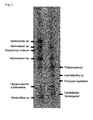
- FIG. 1 shows a result of identifying bacteria containing in a salt water of 3-9% salinity from a salt farm in Sinan area (west sea of Korea) by using a temperature gradient gel electrophoresis (TGGE) method.
- TGGE temperature gradient gel electrophoresis
- the present invention relates to a method for removing nitrate from a solution comprising a salt component, wherein the method transplants sulfur bacteria to a sulfur-containing plant, and enables the sulfur-containing plant to which the sulfur bacteria is transplanted to contact a solution that comprises a salt component so as to remove nitrate from the solution comprising the salt component.
- plantation of sulfur bacteria is used as a concept including the proliferated state after transplantation of sulfur bacteria.
- Sulfur (element symbol S, atomic number 16, atomic weight 32.066, and an element which belongs to 16(6B) group of the periodic table) is an essential nutrient element of all plants. Sulfur is taken by plants or microorganisms in the form of a sulfate, and the sulfate is reduced to hydrogen sulfide and the hydrogen sulfide may be used in synthesizing amino acids containing sulfur. Further, sulfur is an important element of biological antioxidants like glutathione and various enzymes. Hence, sulfur exists in plants in various forms of enzymes.
- Edible sulfur in plants is used, and thus the effects of removing nitrate vary depending on the amount of sulfur contained in the plants used. Plants absorb mineral sulfur in the soil after converting the sulfur into edible sulfur, and thus the absorbed edible sulfur is not harmful to the human body. Hence, edible sulfur is being sold in the market as health supplements (e.g., currently, MSM, which is edible sulfur from pine trees, is sold as nutrients for arthritis.
- MSM which is edible sulfur from pine trees
- the content of edible sulfur varies depending on the species of plants, and the content of edible sulfur increases in the order of grasses, legumes, and flowers having 4 petals (grasses ⁇ legumes ⁇ flowers having 4 petals).
- Much sulfur is contained in cysteine and methionine, and sulfur is also an element of ferredoxin, biotin, glutathione, and coenzyme A.
- plants which contain the sulfur and may be effectively used in removing nitrate, are a Bambusoideae plant, a potato, a garlic, the stalk of a garlic, a ginger, a ginkgo nut, foxtail millet, Chinese millet, a black bean, a white bean, a red bean, a pea, a kidney bean, a mung bean, a African millet, grapefruit skin, lemon skin, mandarin orange skin, Hanrabong skin, lime skin, orange skin, kumquat skin, a ginseng, a carrot, a radish, a radish sprout, a broad bellflower, a green bean sprout, a bean sprout, a peanut, a mugwort, a pumpkin, rosemary, a rose, a branch of a pine, a pine needle, Acanthopanax, chard, a spring onion, a wild rocambole, a broccoli, a candle plant, a pineapple
- the roots, stalks, and leaves of the plants also show the same effects.
- the function for removing nitrate may be set to be performed by plants containing sulfur having the effects of removing nitrate, and adding the flavor to the salt water or salt may be set to be performed by plants with no or insufficient effects of removing nitrate.
- plants without containing sulfur in the present invention in order to provide the plant's unique flavor.
- salt water or salt from which nitrate has been removed, is prepared, the plant's unique flavor is added to the salt water or salt, and thus it is possible to prepare salt water or salt having the plant's unique flavor (taste and smell).
- bamboo shoots having strong effects of removing nitrate and pine needles having insignificant effects of removing nitrate are put together in a solution containing a salt element and the nitrate is removed, then salt water and salt with the fragrance of pine needles may be prepared.
- salt water and salt with the fragrance of lemons or oranges, from which nitrate has been almost removed may be prepared by using bamboo shoots and orange skin or lemon skin. This is different from salt having the fragrance of lemons and containing nitrate which is simply prepared by melting lemons.
- potassium is reinforced, and thus potassium-reinforced salt without nitrate for discharging sodium may be prepared.
- bamboo shoots One of plants for effectively removing nitrate from among plants containing sulfur is bamboo shoots.
- the bamboo is a general term of perennial plants which belong to Bambusoideae.
- Sasa borealis may be favorably used among the bamboos.
- the bamboo contains edible sulfur, and thus all of leaves, stems, shoots, and roots may be used.
- the roots of the bamboos contain a lot of stomata contain a lot of sulfur, and thus the roots may be favorably used in transplantation and propagation of sulfur bacteria.
- the amounts of sulfur elements of Sasa borealis are different depending on the produced area, the cultivated and harvested season, and the dried level. That is, the Nonsan area Sasa borealis, which is produced in summer, contains less sulfur, and Jeju area Sasa borealis, which is produced in the volcanic region, contains relatively a large amount of sulfur. Hence, it is preferable to select and use bamboos containing a lot of sulfur.
- sulfur bacteria are classified as sulfur reduction bacteria and sulfur oxidation bacteria.
- the sulfur bacteria are germs which obtain energy needed in the growth by oxidizing sulfur or inorganic compounds, and grow in salt water of a salt farm, soil, etc.
- the sulfur bacteria may include Leucothiobacteria and chromothiobacteria.
- Sulfur bacteria oxidize hydrogen sulfide, other sulfides, etc. for proliferation, and do not need organic carbon compounds in the nutrition.
- Leucothiobacteria include Beggiatoa and Thiothrix, and some like alkalinity and some others like acidity.
- Chromothiobacteria include Thiobacillus and perform photosynthesis with red or green pigments and by using sunbeam.
- Sulfate reducing bacteria and sulfur reducing bacteria may be used as the sulfur reducing germs.
- sulfate reducing bacteria are Desulfovibrio and Desulfotomaculum, and an example of sulfur reducing bacteria is Desulfuromonas.
- sulfur oxidation bacteria may be used in the present invention.
- Marinobacter sp. germs exhibit the highest denitrification effects in the salt concentration of 3 to 6%.
- the concentration of salt, which shows the optimal denitrification, is 3%.
- Neutral pH is most appropriate.
- Marinobacter sp. germs have the function of reducing nitrate into molecular nitrogen (N2) by using succinate as the energy source.
- the denitrification effects are shown in anaerobic conditions without oxygen, and thus it is possible to live in deposits on the floor of the ocean (related theses: Miyo Nakano, Tadashi Inagaki, SuguruOkunishi, Reiji Tanaka and Hiroto Maeda, "Effect of salinity on denitrification under limited single carbon source by Marinobacter sp. isolated from marine sediment". Journal of Basic Microbiology, 2010, 50, pages 285-289 ;
- germs which are separated from deposits of the Yellow Sea in Korea, may grow in the range of 0.5 to 9% salt concentration and 7 to 37°C and use sugar and organic acids, etc. as the carbon source.
- the germs grow by using thiosulphate as the energy source, and thus they are referred to as selective sulfation bacteria
- Marispirillumindicum GenBank accession number NR044545
- Marispirillumindicum grows in the ragne of 0.5 to 12% salt concentration and 10 to 41°C. And has denitrification effects (related thesis: Lai Q, Yuan J, Gu L and Shao Z., "Marispirillumindicumgen. nov., sp. nov., isolated from a deep-sea environment", International Journal of Systematic and Evolutionary Microbiology, 2009, 59, pages 1278-1281 ).
- Germs which use aromatic hydrocarbon compounds and belong to Thalassospira sp., grow in the 2 to 14% salt concentration, but the optimal salt concentration for growth is 3% as in the seawater.
- the germs grow in the range of 8 to 45°C, but the optimal temperature for growth is 43°C.
- the germs may use glucose as the substrate and have the function of reducing nitrate (related thesis: Yumiko Kodama, Lies Indah Stiknowati, Atsuko Ueki, Katsuji Ueki and Kazuya Watanabe, "Thalassospiratepidiphilasp. nov., a polycyclicaromatic hydrocarbon-degrading bacteriumisolated from seawater" ,International Journal of Systematic and Evolutionary Microbiology, 2008, 58, pages 711-715 ).
- Chemoheterotrophic germs They are sporforming Chemoheterotrophic germs. They may grow in the range of 2 to 6% salt concentration, but the optimal concentration is 3%. The pH range for growth is 5 to 8, and the organic matters (sugar, organic acids) are used as nutrition for growth (related thesis: Urios L, Cueff V, Pignet P, and Barbier G. "Tepidibacterformicigenessp. nov., a novel spore-forming bacterium isolated from a Mid-Atlantic Ridge hydrothermal vent", International Journal of Systematic and Evolutionary Microbiology, 2004, 54, pages 439-443 ).
- denitrification bacteria may be used along with sulfur bacteria.
- the germs which belong to Marinobacter, Marispirillum, Thalassospira, and Caminobacillus, are in charge of denitrification in the environment with a high salinity.
- Nos. 1, 2, 3, 4, and 5, which are sulfation bacteria, are mainly oxidized to generate biochemical energy and denitrification germs (Nos. 5, 6, and 7) reduce nitrate by using the energy source produced by other germs, and thus when the sulfation bacteria and denitrification germs are used together, sulfation and the reduction of nitrate may be performed.
- no. 5 is bacteria which inhabit in places without a lot of sulfur, and at the same time, organic matters are also used as nutrients.
- the germs do not reduce the nitrate with the energy source which is generated by only the biochemical oxidation process of sulfur in the condition that the organic matters are completely excluded, but use various organic matters and sulfur as the energy source which exist in the water, and remove nitrate by the denitrification reaction by producing biochemical energy by using nitrate as the electron accepter instead of oxygen in the anaerobic condition.
- Oxidation bacteria of nos. 1, 2, 3, 4, and 5 and denitrification bacteria of nos. 6 and 7 appropriately remove nitrate by using edible sulfur and organic matters as the energy source even in a high salinity (3% or more).
- Bacteria of nos. 1 to 7 may be extracted from salt water of a salt farm of the salinity of 3 to 27% (w/v).
- the extraction may be performed by transplanting bacteria after putting a plant containing sulfur in the salt water of a salt form or seawater in the deep sea of the salinity of 3 to 27% (w/v).
- the bacteria are well proliferated even in temperatures of 5 to 70°C and absorb nitrate well.
- a solution containing a salt element refers to a solution in which a salt element, i.e., NaCl is melted, and more specifically, refers to salt water or seawater.
- This method may be performed in a manner that additionally dips a plant containing sulfur which is not bacteria-transplanted in the step of making the plant containing the bacteria-transplanted sulfur contact the solution containing the salt element for removing nitrate.
- the method may be performed in a manner that makes the plants without bacteria-transplanted sulfur as well as plants with sulfur contact the solution containing the salt element in the step of making the plant containing the bacteria-transplanted sulfur contact the solution containing the salt element for removing nitrate.
- the added plant does not contain sulfur and thus does not remove nitrate, but may provide the plant's unique flavor to the salt water.
- the method may also be performed in a manner that further dips the plant without sulfur as well as the plant with sulfur, to which bacteria has not been transplanted, in the step of making the plant containing the bacteria-transplanted sulfur contact the solution containing the salt element for removing nitrate.
- the method may be performed in a manner that adds edible sulfur extracts extracted from plants containing sulfur in the step of making the plant containing bacteria-transplanted sulfur contact the solution containing the salt element for removing nitrate.
- all these processes may also be performed by extracting edible sulfur from a plant containing sulfur.
- edible sulfur may be extracted by a method which is commonly used in this field.
- a plant containing sulfur may be boiled in the water of 50 to 120°C so as to extract edible sulfur.
- a plant having bacteria-transplanted sulfur and a plant having sulfur to which bacteria have not been transplanted may be the same plant or different plants.
- the method of removing nitrate of the present invention is preferably performed in anaerobic conditions. It is because sulfur bacteria remove nitrate by denitrification reaction by producing biochemical energy by using nitrate as the electron acceptor instead of oxygen in anaerobic conditions. That is, in aerobic conditions, sulfur bacteria use oxygen as the electron acceptor, and thus it is difficult to expect the effects of removing nitrate.
- the present invention relates to a solution containing a salt element from which nitrate has been removed.
- Some examples of such a solution containing the salt element are edible salt water and seawater.
- the edible salt water includes salt water which is used in the process of preparing foods.
- the salt water may be very usefully used as a substitute of salt.
- the salt water may be used to season a food with salt, may be used as a coagulant at the time of preparing bean curd, and may be used to salt kimchi.
- the present invention relates to
- a salt having less than 1.7mg nitrate per 100g salt which is prepared by evaporating water from a solution containing a salt element.
- the level of nitrate is even better to set the level of nitrate to be less than 1mg per 100g salt.
- the salt water of a high salinity (greater than 25%), from which nitrate has been completely removed, has sulfur bacteria therein.
- Such activities become dull in the high salinity state, and the bacteria die in the process when salt is made by water evaporation so as to generate nitrate.
- the salt water which is prepared by removing nitrate by the method of the present invention, is rapidly heated in the range of 90 to 120°C, is rapidly heated by a microwave oven, is rapidly evaporated by strong light, or is lyophilized, it is possible to obtain salt with less than 1.7mg nitrate/100g salt.
- bacteria in the lyophilized salt is not rotten, but is dried, and thus the content of nitrate rarely increases.
- the rapid heating means 1 to 30 minutes, but preferably completing drying for 1 to 10 minutes.
- nitrate of bay salt sold in the market is about 4.3 to 6.7mg/100g, and the content of nitrate of chemical salt is about 3.7mg/100g. Salt with less nitrate is not known. Further, it is recognized that to prepare such salt is very difficult.
- salt with less than 5mg nitrate of the present invention is very significant.
- salt with minimum nitrate is prepared by allowing bacteria to remain in a form like nucleic acid within salt by rapidly evaporating water from salt water of very high salinity.
- the present invention provides salt in which the content of sodium is minimized.
- halophilic bacteria need sodium (Na+) for movement of materials ( BIOPROCESS ENGINEERING BASIC CONCEPTS, second edition, MICHAEL L. SHULER, page 59 ).
- halophilic sulfur bacteria are used, and such halophilic bacteria use a very little amount of sodium. Hence, it is possible to provide salt in which the content of sodium has been minimized.
- the present invention also provides salt which contains vegetable edible sulfur.
- the vegetable edible sulfur performs a function of reinforcing the salty taste of salt.
- the salt from which nitrate has been removed by sulfur bacteria, is salty twice than the existing refined salt. It is because edible sulfur and potassium contained in bamboo shoots or legumes taste bitter. Potassium and edible sulfur contained in plants usually taste bitter and provide effects of making those who taste the salt feel more salty. That is, salt, which is prepared by the present invention by using edible sulfur and sulfur bacteria, still contains edible sulfur, and thus the salty taste is significantly reinforced. Currently, salt, in which the salty taste has been reinforced by using the bitter taste of potassium, is sold to reduce the intake of sodium, but according to the present invention, the salty taste is reinforced more safely by using edible sulfur.
- the content of edible sulfur contained in the salt may vary according to the kind of plants or the number of sulfur bacteria used.
- Salt water and salt of high salinity which are obtained by sulfur bacteria in the present invention, also have effects in reducing the speed of natural nitrate increase in vegetables and foods.
- Nitrate remover sold in the market (mineral sulfur is used) (product name: LSM, manufacturing company: Sarib-sea) was purchased so as to remove nitrate contained in salt water.
- salt water 1L of 9% salinity is poured in a cylinder-shaped container, and the nitrate remover is added according to the amount of use displayed in the products.
- the concentration of nitrate is checked with the nitrate measuring kit after waiting for some time until the nitrate is removed enough. As a result, it was found that the concentration of nitrate became 0mg/L after 60 days.
- the concentration of the nitrate was measured after 6 days from the starting date, and it was confirmed that the concentration of nitrate was 0mg/L and the Sasa borealis pieces were taken out from the cylinder-shaped container. The remaining salt water was filtered and was then poured in a separate container to prepare salt water without nitrate.
- the method of removing nitrate of the present invention is much faster (about 2 to 3 times) than that of the products which are now sold in the market.
- Second embodiment Preparation of salt water without nitrate
- a glass container of 180ml to be used in an experiment and salt water of 9% (3 to 28% are possible) salinity of bay salt are disinfected in 90°F in order to prevent entrance of other bacteria, and plants to be used are also sterilized by dipping them in boiled water for 5 seconds to prevent entrance of other bacteria.
- Salt water is poured in the glass container, and the concentration of nitrate is measured with absorption scheme of the spectrophotometer and the No3 profi test kit color measurement scheme of Tetra and Salifert. Then each 30g plant of Table 1 is put in the glass container so that salt water is not overflown, and one of root pieces (1 to 2 cm) of Sasa borealis which is obtained by proliferating sulfation bacteria is put in plants and then the container is shaken slightly not to have a bubble.
- the experimental container is matured in the temperature range of 20 to 35°C, and the removed amount of nitrate is measured with the absorption scheme of the spectrophotometer and the No3 profi test kit color measurement scheme of Tetra and Salifert.
- the plants are washed and are cut into pieces of 1 to 2cm so as to be used.
- Fruits such as beans, mung beans, foxtail millet, and gingko nuts are used as themselves just after peeling off the skin.
- Other branches and some things with a large volume have been cut into pieces of 1 to 2 cm so as to be used. Plants are cut into pieces for easy contact between edible sulfur and sulfur bacteria and growth.
- Pineapple sage 8-5mg/l 3-20 days The effects of removing nitrate are not high, but it adds flavor when preparing salt.
- Lemon balm 8-6mg/l 3-20 days The effects of removing nitrate are not high, but it adds flavor when preparing salt.
- Pineapple mint 8-5mg/l 3-20 days The effects of removing nitrate are not high, but it adds flavor when preparing salt.
- Green tea leaf 8-5mg/l 3-20 days The effects of removing nitrate are not high, but it adds flavor when preparing salt.
- 53 Apple mint 8-6mg/l 3-20 days The effects of removing nitrate are not high, but it adds flavor when preparing salt.
- the nitrate-minimized salt water and salt may be prepared. Further, salt water and salt having the plant's unique flavor (taste and smell) may be prepared.
- Salt water which is prepared in no. 1 (bamboo shoot is used as the plant containing edible sulfur) of the second embodiment, is heated to 90 to 100°C, and water is evaporated within 2 minutes so as to prepare fine salt.
- prepared salt 1g is melted in distilled water 300ml, and then the content of nitrate was measured by using Test No. 3 measuring kit of Tetra company (Germany, www.tetra.net). As a result, the content of nitrate was 1.3mg/100g.
- salt prepared in the third embodiment Content of sodium, which is contained is salt prepared in the third embodiment, was measured by the sodium electron ion measuring scheme. That is, bay salt 100g, which was purchased, and salt 100mg, which was prepared in the third embodiment, were respectively melted in distilled water 100ml so as to prepare a salt solution, and the content of sodium contained in each salt solution was measured in normal temperatures according to the sodium electron ion measuring scheme.
- the content of edible sulfur which was contained in the salt prepared in the third embodiment, was measured by the sulfur icon electrode measuring scheme. As a result, it was found that about edible sulfur 1000mg were contained in salt 50g.
- the relation between the content of edible sulfur and salty taste was checked with 20 testees.
- the testees include 13 women in 30s and 7 men in forties.
- the testees tasted salts having various contents of edible sulfur and evaluated and recorded the level of salty taste.
- Bacteria contained in root pieces of bacteria-transplanted Sasa borealis in 2) of (1) of the second embodiment were identified with the temperature gradient gel electrophoresis (TGGE) method, and the result photograph is shown in FIG. 1 . Further, each DNA band is cut, extracted, and refined, and is then amplified. Then the DNA sequence is analyzed through a specialized company, then the bacteria were identified based on the database of GenBank by using the result.
- TGGE temperature gradient gel electrophoresis
- the salt water contains Marinobacter sp.(GenBank accession number JQ618280), Marispirillumindicum(GenBank accession number NR044545), Thalassospira sp.(GenBank accession number AB373113), Caminibacillus(GenBank accession number AB752312), Tepidibacterformicigenes(GenBank accession number JQ670743), Geosporobactersubterraneus(GenBank accession number DQ643978), and Firmicutesbacterium(GenBank accession number JX240960)
Landscapes
- Life Sciences & Earth Sciences (AREA)
- Engineering & Computer Science (AREA)
- Chemical & Material Sciences (AREA)
- Polymers & Plastics (AREA)
- Health & Medical Sciences (AREA)
- Nutrition Science (AREA)
- Food Science & Technology (AREA)
- Microbiology (AREA)
- Environmental & Geological Engineering (AREA)
- Water Supply & Treatment (AREA)
- Hydrology & Water Resources (AREA)
- Organic Chemistry (AREA)
- Biodiversity & Conservation Biology (AREA)
- Micro-Organisms Or Cultivation Processes Thereof (AREA)
- Coloring Foods And Improving Nutritive Qualities (AREA)
- General Preparation And Processing Of Foods (AREA)
- Seasonings (AREA)
- Purification Treatments By Anaerobic Or Anaerobic And Aerobic Bacteria Or Animals (AREA)
Applications Claiming Priority (3)
| Application Number | Priority Date | Filing Date | Title |
|---|---|---|---|
| KR20120074948 | 2012-07-10 | ||
| KR20130023714A KR101342052B1 (ko) | 2012-07-10 | 2013-03-06 | 소금 성분을 포함하는 용액으로부터 질산염을 제거하는 방법 |
| PCT/KR2013/006166 WO2014010950A1 (fr) | 2012-07-10 | 2013-07-10 | Procédé d'élimination de nitrate d'une solution comprenant un composant salin |
Publications (2)
| Publication Number | Publication Date |
|---|---|
| EP2805621A1 true EP2805621A1 (fr) | 2014-11-26 |
| EP2805621A4 EP2805621A4 (fr) | 2015-08-05 |
Family
ID=49988434
Family Applications (1)
| Application Number | Title | Priority Date | Filing Date |
|---|---|---|---|
| EP13816497.5A Withdrawn EP2805621A4 (fr) | 2012-07-10 | 2013-07-10 | Procédé d'élimination de nitrate d'une solution comprenant un composant salin |
Country Status (6)
| Country | Link |
|---|---|
| US (1) | US20150010677A1 (fr) |
| EP (1) | EP2805621A4 (fr) |
| JP (1) | JP2015512771A (fr) |
| KR (1) | KR101342052B1 (fr) |
| CN (1) | CN104105413A (fr) |
| WO (1) | WO2014010950A1 (fr) |
Cited By (1)
| Publication number | Priority date | Publication date | Assignee | Title |
|---|---|---|---|---|
| CN114250172A (zh) * | 2021-12-09 | 2022-03-29 | 中国科学院海洋研究所 | 一种海运海杆菌及其应用 |
Families Citing this family (2)
| Publication number | Priority date | Publication date | Assignee | Title |
|---|---|---|---|---|
| US9994466B2 (en) * | 2016-10-04 | 2018-06-12 | Georgia Aquarium Inc. | Removing nitrate from water |
| CN117003413B (zh) * | 2023-07-10 | 2025-11-21 | 江苏国创低碳科技有限公司 | 一种高盐高硝态氮废水脱氮方法 |
Family Cites Families (17)
| Publication number | Priority date | Publication date | Assignee | Title |
|---|---|---|---|---|
| US5288407A (en) * | 1992-04-06 | 1994-02-22 | Henderson And Bodwell | Denitrification system |
| JPH0760281A (ja) * | 1993-08-30 | 1995-03-07 | Kuraray Co Ltd | 海洋性脱窒細菌固定化物 |
| JPH11225616A (ja) * | 1998-02-12 | 1999-08-24 | Kurio:Kk | 魚介類飼育循環瀘過槽及び循環瀘過装置 |
| JP4562935B2 (ja) | 2001-03-22 | 2010-10-13 | 新日鐵化学株式会社 | 海水中硝酸性窒素の処理装置及び処理方法 |
| JP2003103294A (ja) * | 2001-09-28 | 2003-04-08 | Aquas Corp | 水中の硝酸性窒素の除去方法及び除去装置 |
| JP3735707B2 (ja) * | 2001-11-19 | 2006-01-18 | 国立大学法人金沢大学 | 土壌浸透水からの硝酸態窒素の除去方法 |
| US6929809B2 (en) * | 2002-03-26 | 2005-08-16 | Council Of Scientific And Industrial Research | Preparation of nutrient rich salt of plant origin |
| WO2003093180A1 (fr) * | 2002-05-02 | 2003-11-13 | Korea Institute Of Science And Technology | Appareil et procede de denitrification biologique faisant appel a un reacteur a lit fluidise rempli de soufre elementaire |
| JP2004000861A (ja) * | 2002-06-03 | 2004-01-08 | Aquas Corp | 水中の硝酸性窒素の除去方法及び除去装置 |
| US7037481B2 (en) * | 2002-09-09 | 2006-05-02 | United Brine Services Company, Llc | Production of ultra pure salt |
| KR100990730B1 (ko) * | 2002-11-05 | 2010-10-29 | 신닛테츠가가쿠 가부시키가이샤 | 질산성질소 처리재 및 그 제조방법과, 수중의질산성질소의 제거방법, 장치 및 탈질처리재 |
| JP2004305980A (ja) | 2003-04-10 | 2004-11-04 | Miyama Kk | 生物脱窒処理方法 |
| MXPA06008671A (es) * | 2004-01-30 | 2007-02-16 | Univ Maryland Biotech Inst | Reduccion dismilatoria de sulfato como procedimiento para promover la desnitrificacion en sistemas marinos de acuacultura en recirculacion. |
| KR100668598B1 (ko) * | 2005-11-21 | 2007-01-19 | (주)바이텍코리아 | 식물 및 생물학적 정화법을 이용한 인공 습지 구조 및 그에 따른 정화방법 |
| US20070262019A1 (en) * | 2005-12-23 | 2007-11-15 | Sukalyan Sengupta | Process for autotrophic denitrification using elemental sulfur and mollusk shells |
| JP2007307538A (ja) * | 2006-05-18 | 2007-11-29 | Takuro Fujita | 水中の無機栄養塩類の除去法 |
| WO2010076794A1 (fr) * | 2008-12-31 | 2010-07-08 | Technion Research & Development Foundation Ltd. | Procédé pour dénitrifier une saumure et systèmes aptes à une telle dénitrification |
-
2013
- 2013-03-06 KR KR20130023714A patent/KR101342052B1/ko active Active
- 2013-07-10 EP EP13816497.5A patent/EP2805621A4/fr not_active Withdrawn
- 2013-07-10 US US14/375,299 patent/US20150010677A1/en not_active Abandoned
- 2013-07-10 CN CN201380009511.3A patent/CN104105413A/zh active Pending
- 2013-07-10 WO PCT/KR2013/006166 patent/WO2014010950A1/fr not_active Ceased
- 2013-07-10 JP JP2014556496A patent/JP2015512771A/ja active Pending
Cited By (1)
| Publication number | Priority date | Publication date | Assignee | Title |
|---|---|---|---|---|
| CN114250172A (zh) * | 2021-12-09 | 2022-03-29 | 中国科学院海洋研究所 | 一种海运海杆菌及其应用 |
Also Published As
| Publication number | Publication date |
|---|---|
| WO2014010950A1 (fr) | 2014-01-16 |
| EP2805621A4 (fr) | 2015-08-05 |
| CN104105413A (zh) | 2014-10-15 |
| US20150010677A1 (en) | 2015-01-08 |
| JP2015512771A (ja) | 2015-04-30 |
| KR101342052B1 (ko) | 2013-12-18 |
Similar Documents
| Publication | Publication Date | Title |
|---|---|---|
| Amr et al. | Effect of cultivar and harvest date on nitrate (NO3) and nitrite (NO2) content of selected vegetables grown under open field and greenhouse conditions in Jordan | |
| Wigmore | The Wheatgrass Book: How to Grow and Use Wheatgrass to Maximize Your Health and Vitality | |
| Wolverton et al. | Nutritional composition of water hyacinths grown on domestic sewage | |
| ES2253519T3 (es) | Preparacion de una sal rica en nutrientes de origen hebaceo. | |
| CN101828508B (zh) | 一种促进无土栽培蔬菜体内硝酸盐同化的方法 | |
| King | Reaching for the sun: how plants work | |
| Jampeetong et al. | Effects of inorganic nitrogen form on growth, morphology, N uptake, and nutrient allocation in hybrid Napier grass (Pennisetum purpureum× Pennisetum americanum cv. Pakchong1) | |
| EP2805621A1 (fr) | Procédé d'élimination de nitrate d'une solution comprenant un composant salin | |
| Hamzah et al. | The potential use of humic acid-coated biochar for reducing Pb and Cu in the soil to improve plant growth. | |
| Indira et al. | Comparative analysis of growth parameters in hydroponic and soil-grown systems of Ocimum basilicum L.(Basil) | |
| Asaduzzaman et al. | Growth and yield recovery in strawberry plants under autotoxicity through electrodegradation | |
| KR102475348B1 (ko) | 저온숙성을 통한 연어 그라브락스 저장성 향상 방법 | |
| Suyani et al. | COPPER, IRON AND ZINC CONTENTS IN WATER, PAKCOY (Brassica rapa L.) AND TILAPIA (Oreochromis niloticus) IN THE PRESENCE OF AQUAPONICS. | |
| Lee et al. | Waste nutrient solution as an alternative fertilizer in curled mallow cultivation | |
| CN106167297A (zh) | 一种基于生物工程制备植物活性氢水的方法及应用 | |
| Dorais et al. | Managing greenhouse organic wastes: a holistic approach | |
| Adamu et al. | A comparative study of the use of cassava species and alum in waste water treatment | |
| Alhaddad et al. | Biodiversity and possible utilization of halophytes in Qatar | |
| Farago et al. | The recovery of platinum metals by the water hyacinth | |
| KR100929932B1 (ko) | 금 나노 포도와 마늘을 함께 발효시킨 마늘 포도주 제조방법 및 이로부터 제조된 마늘 포도주 | |
| Heo et al. | Study on the lettuce growth using different water sources in a hydroponic system | |
| Jaikaran et al. | Growth and bioremediation properties of oyster mushroom (Pleurotus ostreatus) using gold and bauxite mining soils in Guyana | |
| JP3414707B2 (ja) | 穀類等の種子から抽出した抽出物を含有する、海洋深層水を用いた飲料水及びその製造方法 | |
| Avkopashvili et al. | Novel biostimulant “bioragi” boosts plant development and limits trace metal absorption | |
| KR102876274B1 (ko) | 해수 지장수를 이용한 기능성 김치류의 제조방법 및 이를 이용하여 제조된 기능성 김치류 |
Legal Events
| Date | Code | Title | Description |
|---|---|---|---|
| PUAI | Public reference made under article 153(3) epc to a published international application that has entered the european phase |
Free format text: ORIGINAL CODE: 0009012 |
|
| 17P | Request for examination filed |
Effective date: 20140821 |
|
| AK | Designated contracting states |
Kind code of ref document: A1 Designated state(s): AL AT BE BG CH CY CZ DE DK EE ES FI FR GB GR HR HU IE IS IT LI LT LU LV MC MK MT NL NO PL PT RO RS SE SI SK SM TR |
|
| RA4 | Supplementary search report drawn up and despatched (corrected) |
Effective date: 20150708 |
|
| RIC1 | Information provided on ipc code assigned before grant |
Ipc: A23L 1/237 20060101ALI20150702BHEP Ipc: C02F 3/34 20060101ALI20150702BHEP Ipc: C02F 103/08 20060101ALI20150702BHEP Ipc: A23L 1/015 20060101AFI20150702BHEP Ipc: C02F 101/16 20060101ALI20150702BHEP |
|
| DAX | Request for extension of the european patent (deleted) | ||
| STAA | Information on the status of an ep patent application or granted ep patent |
Free format text: STATUS: THE APPLICATION IS DEEMED TO BE WITHDRAWN |
|
| 18D | Application deemed to be withdrawn |
Effective date: 20160204 |