EP2810766B1 - Procédé de liaison - Google Patents
Procédé de liaison Download PDFInfo
- Publication number
- EP2810766B1 EP2810766B1 EP13190376.7A EP13190376A EP2810766B1 EP 2810766 B1 EP2810766 B1 EP 2810766B1 EP 13190376 A EP13190376 A EP 13190376A EP 2810766 B1 EP2810766 B1 EP 2810766B1
- Authority
- EP
- European Patent Office
- Prior art keywords
- foil
- bonding
- fixture
- thermoplastic
- fixtures
- Prior art date
- Legal status (The legal status is an assumption and is not a legal conclusion. Google has not performed a legal analysis and makes no representation as to the accuracy of the status listed.)
- Active
Links
- 238000000034 method Methods 0.000 title claims description 34
- 239000011888 foil Substances 0.000 claims description 69
- 239000000463 material Substances 0.000 claims description 18
- 229920002492 poly(sulfone) Polymers 0.000 claims description 18
- 238000010438 heat treatment Methods 0.000 claims description 16
- 229920001169 thermoplastic Polymers 0.000 claims description 13
- 239000004416 thermosoftening plastic Substances 0.000 claims description 13
- 239000000155 melt Substances 0.000 claims description 5
- 229910052751 metal Inorganic materials 0.000 claims description 2
- 239000002184 metal Substances 0.000 claims description 2
- 239000012530 fluid Substances 0.000 description 27
- 239000000306 component Substances 0.000 description 16
- 238000007789 sealing Methods 0.000 description 12
- 229910052782 aluminium Inorganic materials 0.000 description 9
- XAGFODPZIPBFFR-UHFFFAOYSA-N aluminium Chemical compound [Al] XAGFODPZIPBFFR-UHFFFAOYSA-N 0.000 description 9
- 239000012815 thermoplastic material Substances 0.000 description 9
- 238000003466 welding Methods 0.000 description 8
- 230000001954 sterilising effect Effects 0.000 description 7
- 230000000712 assembly Effects 0.000 description 6
- 238000000429 assembly Methods 0.000 description 6
- 239000003795 chemical substances by application Substances 0.000 description 6
- 238000004519 manufacturing process Methods 0.000 description 6
- 238000012360 testing method Methods 0.000 description 5
- 238000012545 processing Methods 0.000 description 4
- 238000011161 development Methods 0.000 description 3
- 239000007788 liquid Substances 0.000 description 3
- 238000002844 melting Methods 0.000 description 3
- 230000008018 melting Effects 0.000 description 3
- 239000004033 plastic Substances 0.000 description 3
- 229920003023 plastic Polymers 0.000 description 3
- 238000004659 sterilization and disinfection Methods 0.000 description 3
- 239000004743 Polypropylene Substances 0.000 description 2
- 230000015572 biosynthetic process Effects 0.000 description 2
- 239000008280 blood Substances 0.000 description 2
- 210000004369 blood Anatomy 0.000 description 2
- 239000012503 blood component Substances 0.000 description 2
- 230000006835 compression Effects 0.000 description 2
- 238000007906 compression Methods 0.000 description 2
- 238000001816 cooling Methods 0.000 description 2
- 239000003814 drug Substances 0.000 description 2
- 229940079593 drug Drugs 0.000 description 2
- 239000007769 metal material Substances 0.000 description 2
- -1 polypropylene Polymers 0.000 description 2
- 229920001155 polypropylene Polymers 0.000 description 2
- 239000004800 polyvinyl chloride Substances 0.000 description 2
- 229920000915 polyvinyl chloride Polymers 0.000 description 2
- 239000000843 powder Substances 0.000 description 2
- 238000012827 research and development Methods 0.000 description 2
- 230000001225 therapeutic effect Effects 0.000 description 2
- 241000894006 Bacteria Species 0.000 description 1
- IAYPIBMASNFSPL-UHFFFAOYSA-N Ethylene oxide Chemical compound C1CO1 IAYPIBMASNFSPL-UHFFFAOYSA-N 0.000 description 1
- WQZGKKKJIJFFOK-GASJEMHNSA-N Glucose Chemical compound OC[C@H]1OC(O)[C@H](O)[C@@H](O)[C@@H]1O WQZGKKKJIJFFOK-GASJEMHNSA-N 0.000 description 1
- FAPWRFPIFSIZLT-UHFFFAOYSA-M Sodium chloride Chemical compound [Na+].[Cl-] FAPWRFPIFSIZLT-UHFFFAOYSA-M 0.000 description 1
- 229910000831 Steel Inorganic materials 0.000 description 1
- 239000003146 anticoagulant agent Substances 0.000 description 1
- 229940127219 anticoagulant drug Drugs 0.000 description 1
- 238000013459 approach Methods 0.000 description 1
- 230000003385 bacteriostatic effect Effects 0.000 description 1
- 238000012512 characterization method Methods 0.000 description 1
- 230000002939 deleterious effect Effects 0.000 description 1
- 238000013461 design Methods 0.000 description 1
- 238000002405 diagnostic procedure Methods 0.000 description 1
- 238000000502 dialysis Methods 0.000 description 1
- 230000000694 effects Effects 0.000 description 1
- 238000010894 electron beam technology Methods 0.000 description 1
- 239000010408 film Substances 0.000 description 1
- 230000000415 inactivating effect Effects 0.000 description 1
- 230000001939 inductive effect Effects 0.000 description 1
- 230000036512 infertility Effects 0.000 description 1
- 238000002347 injection Methods 0.000 description 1
- 239000007924 injection Substances 0.000 description 1
- 238000011835 investigation Methods 0.000 description 1
- 230000005865 ionizing radiation Effects 0.000 description 1
- 238000005304 joining Methods 0.000 description 1
- 238000010030 laminating Methods 0.000 description 1
- 238000011031 large-scale manufacturing process Methods 0.000 description 1
- 244000005700 microbiome Species 0.000 description 1
- 239000003755 preservative agent Substances 0.000 description 1
- 230000002335 preservative effect Effects 0.000 description 1
- 238000012797 qualification Methods 0.000 description 1
- 230000005855 radiation Effects 0.000 description 1
- 238000011160 research Methods 0.000 description 1
- 239000011780 sodium chloride Substances 0.000 description 1
- 239000007787 solid Substances 0.000 description 1
- 239000010959 steel Substances 0.000 description 1
- 239000008223 sterile water Substances 0.000 description 1
- 238000002560 therapeutic procedure Methods 0.000 description 1
- XLYOFNOQVPJJNP-UHFFFAOYSA-N water Chemical compound O XLYOFNOQVPJJNP-UHFFFAOYSA-N 0.000 description 1
Images

Classifications
-
- B—PERFORMING OPERATIONS; TRANSPORTING
- B32—LAYERED PRODUCTS
- B32B—LAYERED PRODUCTS, i.e. PRODUCTS BUILT-UP OF STRATA OF FLAT OR NON-FLAT, e.g. CELLULAR OR HONEYCOMB, FORM
- B32B37/00—Methods or apparatus for laminating, e.g. by curing or by ultrasonic bonding
- B32B37/0046—Methods or apparatus for laminating, e.g. by curing or by ultrasonic bonding characterised by constructional aspects of the apparatus
-
- B—PERFORMING OPERATIONS; TRANSPORTING
- B29—WORKING OF PLASTICS; WORKING OF SUBSTANCES IN A PLASTIC STATE IN GENERAL
- B29C—SHAPING OR JOINING OF PLASTICS; SHAPING OF MATERIAL IN A PLASTIC STATE, NOT OTHERWISE PROVIDED FOR; AFTER-TREATMENT OF THE SHAPED PRODUCTS, e.g. REPAIRING
- B29C65/00—Joining or sealing of preformed parts, e.g. welding of plastics materials; Apparatus therefor
- B29C65/02—Joining or sealing of preformed parts, e.g. welding of plastics materials; Apparatus therefor by heating, with or without pressure
-
- B—PERFORMING OPERATIONS; TRANSPORTING
- B29—WORKING OF PLASTICS; WORKING OF SUBSTANCES IN A PLASTIC STATE IN GENERAL
- B29C—SHAPING OR JOINING OF PLASTICS; SHAPING OF MATERIAL IN A PLASTIC STATE, NOT OTHERWISE PROVIDED FOR; AFTER-TREATMENT OF THE SHAPED PRODUCTS, e.g. REPAIRING
- B29C65/00—Joining or sealing of preformed parts, e.g. welding of plastics materials; Apparatus therefor
- B29C65/78—Means for handling the parts to be joined, e.g. for making containers or hollow articles, e.g. means for handling sheets, plates, web-like materials, tubular articles, hollow articles or elements to be joined therewith; Means for discharging the joined articles from the joining apparatus
- B29C65/7802—Positioning the parts to be joined, e.g. aligning, indexing or centring
-
- B—PERFORMING OPERATIONS; TRANSPORTING
- B29—WORKING OF PLASTICS; WORKING OF SUBSTANCES IN A PLASTIC STATE IN GENERAL
- B29C—SHAPING OR JOINING OF PLASTICS; SHAPING OF MATERIAL IN A PLASTIC STATE, NOT OTHERWISE PROVIDED FOR; AFTER-TREATMENT OF THE SHAPED PRODUCTS, e.g. REPAIRING
- B29C65/00—Joining or sealing of preformed parts, e.g. welding of plastics materials; Apparatus therefor
- B29C65/78—Means for handling the parts to be joined, e.g. for making containers or hollow articles, e.g. means for handling sheets, plates, web-like materials, tubular articles, hollow articles or elements to be joined therewith; Means for discharging the joined articles from the joining apparatus
- B29C65/7841—Holding or clamping means for handling purposes
-
- B—PERFORMING OPERATIONS; TRANSPORTING
- B29—WORKING OF PLASTICS; WORKING OF SUBSTANCES IN A PLASTIC STATE IN GENERAL
- B29C—SHAPING OR JOINING OF PLASTICS; SHAPING OF MATERIAL IN A PLASTIC STATE, NOT OTHERWISE PROVIDED FOR; AFTER-TREATMENT OF THE SHAPED PRODUCTS, e.g. REPAIRING
- B29C66/00—General aspects of processes or apparatus for joining preformed parts
- B29C66/01—General aspects dealing with the joint area or with the area to be joined
- B29C66/05—Particular design of joint configurations
- B29C66/10—Particular design of joint configurations particular design of the joint cross-sections
- B29C66/11—Joint cross-sections comprising a single joint-segment, i.e. one of the parts to be joined comprising a single joint-segment in the joint cross-section
- B29C66/112—Single lapped joints
-
- B—PERFORMING OPERATIONS; TRANSPORTING
- B29—WORKING OF PLASTICS; WORKING OF SUBSTANCES IN A PLASTIC STATE IN GENERAL
- B29C—SHAPING OR JOINING OF PLASTICS; SHAPING OF MATERIAL IN A PLASTIC STATE, NOT OTHERWISE PROVIDED FOR; AFTER-TREATMENT OF THE SHAPED PRODUCTS, e.g. REPAIRING
- B29C66/00—General aspects of processes or apparatus for joining preformed parts
- B29C66/01—General aspects dealing with the joint area or with the area to be joined
- B29C66/05—Particular design of joint configurations
- B29C66/10—Particular design of joint configurations particular design of the joint cross-sections
- B29C66/11—Joint cross-sections comprising a single joint-segment, i.e. one of the parts to be joined comprising a single joint-segment in the joint cross-section
- B29C66/114—Single butt joints
-
- B—PERFORMING OPERATIONS; TRANSPORTING
- B29—WORKING OF PLASTICS; WORKING OF SUBSTANCES IN A PLASTIC STATE IN GENERAL
- B29C—SHAPING OR JOINING OF PLASTICS; SHAPING OF MATERIAL IN A PLASTIC STATE, NOT OTHERWISE PROVIDED FOR; AFTER-TREATMENT OF THE SHAPED PRODUCTS, e.g. REPAIRING
- B29C66/00—General aspects of processes or apparatus for joining preformed parts
- B29C66/01—General aspects dealing with the joint area or with the area to be joined
- B29C66/05—Particular design of joint configurations
- B29C66/20—Particular design of joint configurations particular design of the joint lines, e.g. of the weld lines
- B29C66/24—Particular design of joint configurations particular design of the joint lines, e.g. of the weld lines said joint lines being closed or non-straight
- B29C66/242—Particular design of joint configurations particular design of the joint lines, e.g. of the weld lines said joint lines being closed or non-straight said joint lines being closed, i.e. forming closed contours
- B29C66/2422—Particular design of joint configurations particular design of the joint lines, e.g. of the weld lines said joint lines being closed or non-straight said joint lines being closed, i.e. forming closed contours being circular, oval or elliptical
- B29C66/24221—Particular design of joint configurations particular design of the joint lines, e.g. of the weld lines said joint lines being closed or non-straight said joint lines being closed, i.e. forming closed contours being circular, oval or elliptical being circular
-
- B—PERFORMING OPERATIONS; TRANSPORTING
- B29—WORKING OF PLASTICS; WORKING OF SUBSTANCES IN A PLASTIC STATE IN GENERAL
- B29C—SHAPING OR JOINING OF PLASTICS; SHAPING OF MATERIAL IN A PLASTIC STATE, NOT OTHERWISE PROVIDED FOR; AFTER-TREATMENT OF THE SHAPED PRODUCTS, e.g. REPAIRING
- B29C66/00—General aspects of processes or apparatus for joining preformed parts
- B29C66/50—General aspects of joining tubular articles; General aspects of joining long products, i.e. bars or profiled elements; General aspects of joining single elements to tubular articles, hollow articles or bars; General aspects of joining several hollow-preforms to form hollow or tubular articles
- B29C66/51—Joining tubular articles, profiled elements or bars; Joining single elements to tubular articles, hollow articles or bars; Joining several hollow-preforms to form hollow or tubular articles
- B29C66/53—Joining single elements to tubular articles, hollow articles or bars
- B29C66/534—Joining single elements to open ends of tubular or hollow articles or to the ends of bars
- B29C66/5346—Joining single elements to open ends of tubular or hollow articles or to the ends of bars said single elements being substantially flat
- B29C66/53461—Joining single elements to open ends of tubular or hollow articles or to the ends of bars said single elements being substantially flat joining substantially flat covers and/or substantially flat bottoms to open ends of container bodies
-
- B—PERFORMING OPERATIONS; TRANSPORTING
- B29—WORKING OF PLASTICS; WORKING OF SUBSTANCES IN A PLASTIC STATE IN GENERAL
- B29C—SHAPING OR JOINING OF PLASTICS; SHAPING OF MATERIAL IN A PLASTIC STATE, NOT OTHERWISE PROVIDED FOR; AFTER-TREATMENT OF THE SHAPED PRODUCTS, e.g. REPAIRING
- B29C66/00—General aspects of processes or apparatus for joining preformed parts
- B29C66/70—General aspects of processes or apparatus for joining preformed parts characterised by the composition, physical properties or the structure of the material of the parts to be joined; Joining with non-plastics material
- B29C66/71—General aspects of processes or apparatus for joining preformed parts characterised by the composition, physical properties or the structure of the material of the parts to be joined; Joining with non-plastics material characterised by the composition of the plastics material of the parts to be joined
-
- B—PERFORMING OPERATIONS; TRANSPORTING
- B29—WORKING OF PLASTICS; WORKING OF SUBSTANCES IN A PLASTIC STATE IN GENERAL
- B29C—SHAPING OR JOINING OF PLASTICS; SHAPING OF MATERIAL IN A PLASTIC STATE, NOT OTHERWISE PROVIDED FOR; AFTER-TREATMENT OF THE SHAPED PRODUCTS, e.g. REPAIRING
- B29C66/00—General aspects of processes or apparatus for joining preformed parts
- B29C66/70—General aspects of processes or apparatus for joining preformed parts characterised by the composition, physical properties or the structure of the material of the parts to be joined; Joining with non-plastics material
- B29C66/72—General aspects of processes or apparatus for joining preformed parts characterised by the composition, physical properties or the structure of the material of the parts to be joined; Joining with non-plastics material characterised by the structure of the material of the parts to be joined
- B29C66/723—General aspects of processes or apparatus for joining preformed parts characterised by the composition, physical properties or the structure of the material of the parts to be joined; Joining with non-plastics material characterised by the structure of the material of the parts to be joined being multi-layered
-
- B—PERFORMING OPERATIONS; TRANSPORTING
- B29—WORKING OF PLASTICS; WORKING OF SUBSTANCES IN A PLASTIC STATE IN GENERAL
- B29C—SHAPING OR JOINING OF PLASTICS; SHAPING OF MATERIAL IN A PLASTIC STATE, NOT OTHERWISE PROVIDED FOR; AFTER-TREATMENT OF THE SHAPED PRODUCTS, e.g. REPAIRING
- B29C66/00—General aspects of processes or apparatus for joining preformed parts
- B29C66/70—General aspects of processes or apparatus for joining preformed parts characterised by the composition, physical properties or the structure of the material of the parts to be joined; Joining with non-plastics material
- B29C66/73—General aspects of processes or apparatus for joining preformed parts characterised by the composition, physical properties or the structure of the material of the parts to be joined; Joining with non-plastics material characterised by the intensive physical properties of the material of the parts to be joined, by the optical properties of the material of the parts to be joined, by the extensive physical properties of the parts to be joined, by the state of the material of the parts to be joined or by the material of the parts to be joined being a thermoplastic or a thermoset
- B29C66/739—General aspects of processes or apparatus for joining preformed parts characterised by the composition, physical properties or the structure of the material of the parts to be joined; Joining with non-plastics material characterised by the intensive physical properties of the material of the parts to be joined, by the optical properties of the material of the parts to be joined, by the extensive physical properties of the parts to be joined, by the state of the material of the parts to be joined or by the material of the parts to be joined being a thermoplastic or a thermoset characterised by the material of the parts to be joined being a thermoplastic or a thermoset
- B29C66/7392—General aspects of processes or apparatus for joining preformed parts characterised by the composition, physical properties or the structure of the material of the parts to be joined; Joining with non-plastics material characterised by the intensive physical properties of the material of the parts to be joined, by the optical properties of the material of the parts to be joined, by the extensive physical properties of the parts to be joined, by the state of the material of the parts to be joined or by the material of the parts to be joined being a thermoplastic or a thermoset characterised by the material of the parts to be joined being a thermoplastic or a thermoset characterised by the material of at least one of the parts being a thermoplastic
-
- B—PERFORMING OPERATIONS; TRANSPORTING
- B29—WORKING OF PLASTICS; WORKING OF SUBSTANCES IN A PLASTIC STATE IN GENERAL
- B29C—SHAPING OR JOINING OF PLASTICS; SHAPING OF MATERIAL IN A PLASTIC STATE, NOT OTHERWISE PROVIDED FOR; AFTER-TREATMENT OF THE SHAPED PRODUCTS, e.g. REPAIRING
- B29C66/00—General aspects of processes or apparatus for joining preformed parts
- B29C66/80—General aspects of machine operations or constructions and parts thereof
- B29C66/81—General aspects of the pressing elements, i.e. the elements applying pressure on the parts to be joined in the area to be joined, e.g. the welding jaws or clamps
- B29C66/816—General aspects of the pressing elements, i.e. the elements applying pressure on the parts to be joined in the area to be joined, e.g. the welding jaws or clamps characterised by the mounting of the pressing elements, e.g. of the welding jaws or clamps
- B29C66/8169—General aspects of the pressing elements, i.e. the elements applying pressure on the parts to be joined in the area to be joined, e.g. the welding jaws or clamps characterised by the mounting of the pressing elements, e.g. of the welding jaws or clamps the mounting of said pressing elements being laterally movable, e.g. adjustable
-
- B—PERFORMING OPERATIONS; TRANSPORTING
- B29—WORKING OF PLASTICS; WORKING OF SUBSTANCES IN A PLASTIC STATE IN GENERAL
- B29C—SHAPING OR JOINING OF PLASTICS; SHAPING OF MATERIAL IN A PLASTIC STATE, NOT OTHERWISE PROVIDED FOR; AFTER-TREATMENT OF THE SHAPED PRODUCTS, e.g. REPAIRING
- B29C66/00—General aspects of processes or apparatus for joining preformed parts
- B29C66/80—General aspects of machine operations or constructions and parts thereof
- B29C66/82—Pressure application arrangements, e.g. transmission or actuating mechanisms for joining tools or clamps
- B29C66/822—Transmission mechanisms
- B29C66/8223—Worm or spindle mechanisms
-
- B—PERFORMING OPERATIONS; TRANSPORTING
- B29—WORKING OF PLASTICS; WORKING OF SUBSTANCES IN A PLASTIC STATE IN GENERAL
- B29C—SHAPING OR JOINING OF PLASTICS; SHAPING OF MATERIAL IN A PLASTIC STATE, NOT OTHERWISE PROVIDED FOR; AFTER-TREATMENT OF THE SHAPED PRODUCTS, e.g. REPAIRING
- B29C66/00—General aspects of processes or apparatus for joining preformed parts
- B29C66/80—General aspects of machine operations or constructions and parts thereof
- B29C66/83—General aspects of machine operations or constructions and parts thereof characterised by the movement of the joining or pressing tools
- B29C66/832—Reciprocating joining or pressing tools
- B29C66/8322—Joining or pressing tools reciprocating along one axis
-
- B—PERFORMING OPERATIONS; TRANSPORTING
- B32—LAYERED PRODUCTS
- B32B—LAYERED PRODUCTS, i.e. PRODUCTS BUILT-UP OF STRATA OF FLAT OR NON-FLAT, e.g. CELLULAR OR HONEYCOMB, FORM
- B32B37/00—Methods or apparatus for laminating, e.g. by curing or by ultrasonic bonding
- B32B37/04—Methods or apparatus for laminating, e.g. by curing or by ultrasonic bonding characterised by the partial melting of at least one layer
-
- B—PERFORMING OPERATIONS; TRANSPORTING
- B29—WORKING OF PLASTICS; WORKING OF SUBSTANCES IN A PLASTIC STATE IN GENERAL
- B29C—SHAPING OR JOINING OF PLASTICS; SHAPING OF MATERIAL IN A PLASTIC STATE, NOT OTHERWISE PROVIDED FOR; AFTER-TREATMENT OF THE SHAPED PRODUCTS, e.g. REPAIRING
- B29C65/00—Joining or sealing of preformed parts, e.g. welding of plastics materials; Apparatus therefor
- B29C65/02—Joining or sealing of preformed parts, e.g. welding of plastics materials; Apparatus therefor by heating, with or without pressure
- B29C65/18—Joining or sealing of preformed parts, e.g. welding of plastics materials; Apparatus therefor by heating, with or without pressure using heated tools
-
- B—PERFORMING OPERATIONS; TRANSPORTING
- B29—WORKING OF PLASTICS; WORKING OF SUBSTANCES IN A PLASTIC STATE IN GENERAL
- B29C—SHAPING OR JOINING OF PLASTICS; SHAPING OF MATERIAL IN A PLASTIC STATE, NOT OTHERWISE PROVIDED FOR; AFTER-TREATMENT OF THE SHAPED PRODUCTS, e.g. REPAIRING
- B29C66/00—General aspects of processes or apparatus for joining preformed parts
- B29C66/70—General aspects of processes or apparatus for joining preformed parts characterised by the composition, physical properties or the structure of the material of the parts to be joined; Joining with non-plastics material
- B29C66/71—General aspects of processes or apparatus for joining preformed parts characterised by the composition, physical properties or the structure of the material of the parts to be joined; Joining with non-plastics material characterised by the composition of the plastics material of the parts to be joined
- B29C66/712—General aspects of processes or apparatus for joining preformed parts characterised by the composition, physical properties or the structure of the material of the parts to be joined; Joining with non-plastics material characterised by the composition of the plastics material of the parts to be joined the composition of one of the parts to be joined being different from the composition of the other part
-
- B—PERFORMING OPERATIONS; TRANSPORTING
- B29—WORKING OF PLASTICS; WORKING OF SUBSTANCES IN A PLASTIC STATE IN GENERAL
- B29C—SHAPING OR JOINING OF PLASTICS; SHAPING OF MATERIAL IN A PLASTIC STATE, NOT OTHERWISE PROVIDED FOR; AFTER-TREATMENT OF THE SHAPED PRODUCTS, e.g. REPAIRING
- B29C66/00—General aspects of processes or apparatus for joining preformed parts
- B29C66/70—General aspects of processes or apparatus for joining preformed parts characterised by the composition, physical properties or the structure of the material of the parts to be joined; Joining with non-plastics material
- B29C66/72—General aspects of processes or apparatus for joining preformed parts characterised by the composition, physical properties or the structure of the material of the parts to be joined; Joining with non-plastics material characterised by the structure of the material of the parts to be joined
- B29C66/723—General aspects of processes or apparatus for joining preformed parts characterised by the composition, physical properties or the structure of the material of the parts to be joined; Joining with non-plastics material characterised by the structure of the material of the parts to be joined being multi-layered
- B29C66/7232—General aspects of processes or apparatus for joining preformed parts characterised by the composition, physical properties or the structure of the material of the parts to be joined; Joining with non-plastics material characterised by the structure of the material of the parts to be joined being multi-layered comprising a non-plastics layer
- B29C66/72321—General aspects of processes or apparatus for joining preformed parts characterised by the composition, physical properties or the structure of the material of the parts to be joined; Joining with non-plastics material characterised by the structure of the material of the parts to be joined being multi-layered comprising a non-plastics layer consisting of metals or their alloys
-
- B—PERFORMING OPERATIONS; TRANSPORTING
- B29—WORKING OF PLASTICS; WORKING OF SUBSTANCES IN A PLASTIC STATE IN GENERAL
- B29C—SHAPING OR JOINING OF PLASTICS; SHAPING OF MATERIAL IN A PLASTIC STATE, NOT OTHERWISE PROVIDED FOR; AFTER-TREATMENT OF THE SHAPED PRODUCTS, e.g. REPAIRING
- B29C66/00—General aspects of processes or apparatus for joining preformed parts
- B29C66/70—General aspects of processes or apparatus for joining preformed parts characterised by the composition, physical properties or the structure of the material of the parts to be joined; Joining with non-plastics material
- B29C66/73—General aspects of processes or apparatus for joining preformed parts characterised by the composition, physical properties or the structure of the material of the parts to be joined; Joining with non-plastics material characterised by the intensive physical properties of the material of the parts to be joined, by the optical properties of the material of the parts to be joined, by the extensive physical properties of the parts to be joined, by the state of the material of the parts to be joined or by the material of the parts to be joined being a thermoplastic or a thermoset
- B29C66/731—General aspects of processes or apparatus for joining preformed parts characterised by the composition, physical properties or the structure of the material of the parts to be joined; Joining with non-plastics material characterised by the intensive physical properties of the material of the parts to be joined, by the optical properties of the material of the parts to be joined, by the extensive physical properties of the parts to be joined, by the state of the material of the parts to be joined or by the material of the parts to be joined being a thermoplastic or a thermoset characterised by the intensive physical properties of the material of the parts to be joined
- B29C66/7311—Thermal properties
- B29C66/73115—Melting point
-
- B—PERFORMING OPERATIONS; TRANSPORTING
- B29—WORKING OF PLASTICS; WORKING OF SUBSTANCES IN A PLASTIC STATE IN GENERAL
- B29C—SHAPING OR JOINING OF PLASTICS; SHAPING OF MATERIAL IN A PLASTIC STATE, NOT OTHERWISE PROVIDED FOR; AFTER-TREATMENT OF THE SHAPED PRODUCTS, e.g. REPAIRING
- B29C66/00—General aspects of processes or apparatus for joining preformed parts
- B29C66/70—General aspects of processes or apparatus for joining preformed parts characterised by the composition, physical properties or the structure of the material of the parts to be joined; Joining with non-plastics material
- B29C66/73—General aspects of processes or apparatus for joining preformed parts characterised by the composition, physical properties or the structure of the material of the parts to be joined; Joining with non-plastics material characterised by the intensive physical properties of the material of the parts to be joined, by the optical properties of the material of the parts to be joined, by the extensive physical properties of the parts to be joined, by the state of the material of the parts to be joined or by the material of the parts to be joined being a thermoplastic or a thermoset
- B29C66/735—General aspects of processes or apparatus for joining preformed parts characterised by the composition, physical properties or the structure of the material of the parts to be joined; Joining with non-plastics material characterised by the intensive physical properties of the material of the parts to be joined, by the optical properties of the material of the parts to be joined, by the extensive physical properties of the parts to be joined, by the state of the material of the parts to be joined or by the material of the parts to be joined being a thermoplastic or a thermoset characterised by the extensive physical properties of the parts to be joined
- B29C66/7352—Thickness, e.g. very thin
-
- B—PERFORMING OPERATIONS; TRANSPORTING
- B29—WORKING OF PLASTICS; WORKING OF SUBSTANCES IN A PLASTIC STATE IN GENERAL
- B29C—SHAPING OR JOINING OF PLASTICS; SHAPING OF MATERIAL IN A PLASTIC STATE, NOT OTHERWISE PROVIDED FOR; AFTER-TREATMENT OF THE SHAPED PRODUCTS, e.g. REPAIRING
- B29C66/00—General aspects of processes or apparatus for joining preformed parts
- B29C66/70—General aspects of processes or apparatus for joining preformed parts characterised by the composition, physical properties or the structure of the material of the parts to be joined; Joining with non-plastics material
- B29C66/73—General aspects of processes or apparatus for joining preformed parts characterised by the composition, physical properties or the structure of the material of the parts to be joined; Joining with non-plastics material characterised by the intensive physical properties of the material of the parts to be joined, by the optical properties of the material of the parts to be joined, by the extensive physical properties of the parts to be joined, by the state of the material of the parts to be joined or by the material of the parts to be joined being a thermoplastic or a thermoset
- B29C66/739—General aspects of processes or apparatus for joining preformed parts characterised by the composition, physical properties or the structure of the material of the parts to be joined; Joining with non-plastics material characterised by the intensive physical properties of the material of the parts to be joined, by the optical properties of the material of the parts to be joined, by the extensive physical properties of the parts to be joined, by the state of the material of the parts to be joined or by the material of the parts to be joined being a thermoplastic or a thermoset characterised by the material of the parts to be joined being a thermoplastic or a thermoset
- B29C66/7392—General aspects of processes or apparatus for joining preformed parts characterised by the composition, physical properties or the structure of the material of the parts to be joined; Joining with non-plastics material characterised by the intensive physical properties of the material of the parts to be joined, by the optical properties of the material of the parts to be joined, by the extensive physical properties of the parts to be joined, by the state of the material of the parts to be joined or by the material of the parts to be joined being a thermoplastic or a thermoset characterised by the material of the parts to be joined being a thermoplastic or a thermoset characterised by the material of at least one of the parts being a thermoplastic
- B29C66/73921—General aspects of processes or apparatus for joining preformed parts characterised by the composition, physical properties or the structure of the material of the parts to be joined; Joining with non-plastics material characterised by the intensive physical properties of the material of the parts to be joined, by the optical properties of the material of the parts to be joined, by the extensive physical properties of the parts to be joined, by the state of the material of the parts to be joined or by the material of the parts to be joined being a thermoplastic or a thermoset characterised by the material of the parts to be joined being a thermoplastic or a thermoset characterised by the material of at least one of the parts being a thermoplastic characterised by the materials of both parts being thermoplastics
-
- B—PERFORMING OPERATIONS; TRANSPORTING
- B29—WORKING OF PLASTICS; WORKING OF SUBSTANCES IN A PLASTIC STATE IN GENERAL
- B29C—SHAPING OR JOINING OF PLASTICS; SHAPING OF MATERIAL IN A PLASTIC STATE, NOT OTHERWISE PROVIDED FOR; AFTER-TREATMENT OF THE SHAPED PRODUCTS, e.g. REPAIRING
- B29C66/00—General aspects of processes or apparatus for joining preformed parts
- B29C66/80—General aspects of machine operations or constructions and parts thereof
- B29C66/82—Pressure application arrangements, e.g. transmission or actuating mechanisms for joining tools or clamps
- B29C66/824—Actuating mechanisms
- B29C66/8242—Pneumatic or hydraulic drives
-
- B—PERFORMING OPERATIONS; TRANSPORTING
- B29—WORKING OF PLASTICS; WORKING OF SUBSTANCES IN A PLASTIC STATE IN GENERAL
- B29C—SHAPING OR JOINING OF PLASTICS; SHAPING OF MATERIAL IN A PLASTIC STATE, NOT OTHERWISE PROVIDED FOR; AFTER-TREATMENT OF THE SHAPED PRODUCTS, e.g. REPAIRING
- B29C66/00—General aspects of processes or apparatus for joining preformed parts
- B29C66/80—General aspects of machine operations or constructions and parts thereof
- B29C66/84—Specific machine types or machines suitable for specific applications
- B29C66/847—Drilling standard machine type
-
- B—PERFORMING OPERATIONS; TRANSPORTING
- B29—WORKING OF PLASTICS; WORKING OF SUBSTANCES IN A PLASTIC STATE IN GENERAL
- B29C—SHAPING OR JOINING OF PLASTICS; SHAPING OF MATERIAL IN A PLASTIC STATE, NOT OTHERWISE PROVIDED FOR; AFTER-TREATMENT OF THE SHAPED PRODUCTS, e.g. REPAIRING
- B29C66/00—General aspects of processes or apparatus for joining preformed parts
- B29C66/90—Measuring or controlling the joining process
- B29C66/91—Measuring or controlling the joining process by measuring or controlling the temperature, the heat or the thermal flux
- B29C66/914—Measuring or controlling the joining process by measuring or controlling the temperature, the heat or the thermal flux by controlling or regulating the temperature, the heat or the thermal flux
- B29C66/9141—Measuring or controlling the joining process by measuring or controlling the temperature, the heat or the thermal flux by controlling or regulating the temperature, the heat or the thermal flux by controlling or regulating the temperature
- B29C66/91421—Measuring or controlling the joining process by measuring or controlling the temperature, the heat or the thermal flux by controlling or regulating the temperature, the heat or the thermal flux by controlling or regulating the temperature of the joining tools
-
- B—PERFORMING OPERATIONS; TRANSPORTING
- B29—WORKING OF PLASTICS; WORKING OF SUBSTANCES IN A PLASTIC STATE IN GENERAL
- B29C—SHAPING OR JOINING OF PLASTICS; SHAPING OF MATERIAL IN A PLASTIC STATE, NOT OTHERWISE PROVIDED FOR; AFTER-TREATMENT OF THE SHAPED PRODUCTS, e.g. REPAIRING
- B29C66/00—General aspects of processes or apparatus for joining preformed parts
- B29C66/90—Measuring or controlling the joining process
- B29C66/91—Measuring or controlling the joining process by measuring or controlling the temperature, the heat or the thermal flux
- B29C66/914—Measuring or controlling the joining process by measuring or controlling the temperature, the heat or the thermal flux by controlling or regulating the temperature, the heat or the thermal flux
- B29C66/9141—Measuring or controlling the joining process by measuring or controlling the temperature, the heat or the thermal flux by controlling or regulating the temperature, the heat or the thermal flux by controlling or regulating the temperature
- B29C66/91431—Measuring or controlling the joining process by measuring or controlling the temperature, the heat or the thermal flux by controlling or regulating the temperature, the heat or the thermal flux by controlling or regulating the temperature the temperature being kept constant over time
-
- B—PERFORMING OPERATIONS; TRANSPORTING
- B29—WORKING OF PLASTICS; WORKING OF SUBSTANCES IN A PLASTIC STATE IN GENERAL
- B29C—SHAPING OR JOINING OF PLASTICS; SHAPING OF MATERIAL IN A PLASTIC STATE, NOT OTHERWISE PROVIDED FOR; AFTER-TREATMENT OF THE SHAPED PRODUCTS, e.g. REPAIRING
- B29C66/00—General aspects of processes or apparatus for joining preformed parts
- B29C66/90—Measuring or controlling the joining process
- B29C66/91—Measuring or controlling the joining process by measuring or controlling the temperature, the heat or the thermal flux
- B29C66/919—Measuring or controlling the joining process by measuring or controlling the temperature, the heat or the thermal flux characterised by specific temperature, heat or thermal flux values or ranges
-
- B—PERFORMING OPERATIONS; TRANSPORTING
- B29—WORKING OF PLASTICS; WORKING OF SUBSTANCES IN A PLASTIC STATE IN GENERAL
- B29C—SHAPING OR JOINING OF PLASTICS; SHAPING OF MATERIAL IN A PLASTIC STATE, NOT OTHERWISE PROVIDED FOR; AFTER-TREATMENT OF THE SHAPED PRODUCTS, e.g. REPAIRING
- B29C66/00—General aspects of processes or apparatus for joining preformed parts
- B29C66/90—Measuring or controlling the joining process
- B29C66/91—Measuring or controlling the joining process by measuring or controlling the temperature, the heat or the thermal flux
- B29C66/919—Measuring or controlling the joining process by measuring or controlling the temperature, the heat or the thermal flux characterised by specific temperature, heat or thermal flux values or ranges
- B29C66/9192—Measuring or controlling the joining process by measuring or controlling the temperature, the heat or the thermal flux characterised by specific temperature, heat or thermal flux values or ranges in explicit relation to another variable, e.g. temperature diagrams
- B29C66/91921—Measuring or controlling the joining process by measuring or controlling the temperature, the heat or the thermal flux characterised by specific temperature, heat or thermal flux values or ranges in explicit relation to another variable, e.g. temperature diagrams in explicit relation to another temperature, e.g. to the softening temperature or softening point, to the thermal degradation temperature or to the ambient temperature
-
- B—PERFORMING OPERATIONS; TRANSPORTING
- B29—WORKING OF PLASTICS; WORKING OF SUBSTANCES IN A PLASTIC STATE IN GENERAL
- B29C—SHAPING OR JOINING OF PLASTICS; SHAPING OF MATERIAL IN A PLASTIC STATE, NOT OTHERWISE PROVIDED FOR; AFTER-TREATMENT OF THE SHAPED PRODUCTS, e.g. REPAIRING
- B29C66/00—General aspects of processes or apparatus for joining preformed parts
- B29C66/90—Measuring or controlling the joining process
- B29C66/92—Measuring or controlling the joining process by measuring or controlling the pressure, the force, the mechanical power or the displacement of the joining tools
- B29C66/924—Measuring or controlling the joining process by measuring or controlling the pressure, the force, the mechanical power or the displacement of the joining tools by controlling or regulating the pressure, the force, the mechanical power or the displacement of the joining tools
- B29C66/9241—Measuring or controlling the joining process by measuring or controlling the pressure, the force, the mechanical power or the displacement of the joining tools by controlling or regulating the pressure, the force, the mechanical power or the displacement of the joining tools by controlling or regulating the pressure, the force or the mechanical power
-
- B—PERFORMING OPERATIONS; TRANSPORTING
- B29—WORKING OF PLASTICS; WORKING OF SUBSTANCES IN A PLASTIC STATE IN GENERAL
- B29C—SHAPING OR JOINING OF PLASTICS; SHAPING OF MATERIAL IN A PLASTIC STATE, NOT OTHERWISE PROVIDED FOR; AFTER-TREATMENT OF THE SHAPED PRODUCTS, e.g. REPAIRING
- B29C66/00—General aspects of processes or apparatus for joining preformed parts
- B29C66/90—Measuring or controlling the joining process
- B29C66/92—Measuring or controlling the joining process by measuring or controlling the pressure, the force, the mechanical power or the displacement of the joining tools
- B29C66/924—Measuring or controlling the joining process by measuring or controlling the pressure, the force, the mechanical power or the displacement of the joining tools by controlling or regulating the pressure, the force, the mechanical power or the displacement of the joining tools
- B29C66/9261—Measuring or controlling the joining process by measuring or controlling the pressure, the force, the mechanical power or the displacement of the joining tools by controlling or regulating the pressure, the force, the mechanical power or the displacement of the joining tools by controlling or regulating the displacement of the joining tools
- B29C66/92611—Measuring or controlling the joining process by measuring or controlling the pressure, the force, the mechanical power or the displacement of the joining tools by controlling or regulating the pressure, the force, the mechanical power or the displacement of the joining tools by controlling or regulating the displacement of the joining tools by controlling or regulating the gap between the joining tools
-
- B—PERFORMING OPERATIONS; TRANSPORTING
- B29—WORKING OF PLASTICS; WORKING OF SUBSTANCES IN A PLASTIC STATE IN GENERAL
- B29C—SHAPING OR JOINING OF PLASTICS; SHAPING OF MATERIAL IN A PLASTIC STATE, NOT OTHERWISE PROVIDED FOR; AFTER-TREATMENT OF THE SHAPED PRODUCTS, e.g. REPAIRING
- B29C66/00—General aspects of processes or apparatus for joining preformed parts
- B29C66/90—Measuring or controlling the joining process
- B29C66/92—Measuring or controlling the joining process by measuring or controlling the pressure, the force, the mechanical power or the displacement of the joining tools
- B29C66/929—Measuring or controlling the joining process by measuring or controlling the pressure, the force, the mechanical power or the displacement of the joining tools characterized by specific pressure, force, mechanical power or displacement values or ranges
-
- B—PERFORMING OPERATIONS; TRANSPORTING
- B29—WORKING OF PLASTICS; WORKING OF SUBSTANCES IN A PLASTIC STATE IN GENERAL
- B29C—SHAPING OR JOINING OF PLASTICS; SHAPING OF MATERIAL IN A PLASTIC STATE, NOT OTHERWISE PROVIDED FOR; AFTER-TREATMENT OF THE SHAPED PRODUCTS, e.g. REPAIRING
- B29C66/00—General aspects of processes or apparatus for joining preformed parts
- B29C66/90—Measuring or controlling the joining process
- B29C66/94—Measuring or controlling the joining process by measuring or controlling the time
- B29C66/944—Measuring or controlling the joining process by measuring or controlling the time by controlling or regulating the time
-
- B—PERFORMING OPERATIONS; TRANSPORTING
- B29—WORKING OF PLASTICS; WORKING OF SUBSTANCES IN A PLASTIC STATE IN GENERAL
- B29C—SHAPING OR JOINING OF PLASTICS; SHAPING OF MATERIAL IN A PLASTIC STATE, NOT OTHERWISE PROVIDED FOR; AFTER-TREATMENT OF THE SHAPED PRODUCTS, e.g. REPAIRING
- B29C66/00—General aspects of processes or apparatus for joining preformed parts
- B29C66/90—Measuring or controlling the joining process
- B29C66/94—Measuring or controlling the joining process by measuring or controlling the time
- B29C66/949—Measuring or controlling the joining process by measuring or controlling the time characterised by specific time values or ranges
-
- B—PERFORMING OPERATIONS; TRANSPORTING
- B29—WORKING OF PLASTICS; WORKING OF SUBSTANCES IN A PLASTIC STATE IN GENERAL
- B29L—INDEXING SCHEME ASSOCIATED WITH SUBCLASS B29C, RELATING TO PARTICULAR ARTICLES
- B29L2031/00—Other particular articles
- B29L2031/753—Medical equipment; Accessories therefor
-
- B—PERFORMING OPERATIONS; TRANSPORTING
- B32—LAYERED PRODUCTS
- B32B—LAYERED PRODUCTS, i.e. PRODUCTS BUILT-UP OF STRATA OF FLAT OR NON-FLAT, e.g. CELLULAR OR HONEYCOMB, FORM
- B32B2307/00—Properties of the layers or laminate
- B32B2307/70—Other properties
- B32B2307/732—Dimensional properties
-
- B—PERFORMING OPERATIONS; TRANSPORTING
- B32—LAYERED PRODUCTS
- B32B—LAYERED PRODUCTS, i.e. PRODUCTS BUILT-UP OF STRATA OF FLAT OR NON-FLAT, e.g. CELLULAR OR HONEYCOMB, FORM
- B32B2310/00—Treatment by energy or chemical effects
- B32B2310/08—Treatment by energy or chemical effects by wave energy or particle radiation
- B32B2310/0806—Treatment by energy or chemical effects by wave energy or particle radiation using electromagnetic radiation
-
- B—PERFORMING OPERATIONS; TRANSPORTING
- B32—LAYERED PRODUCTS
- B32B—LAYERED PRODUCTS, i.e. PRODUCTS BUILT-UP OF STRATA OF FLAT OR NON-FLAT, e.g. CELLULAR OR HONEYCOMB, FORM
- B32B2386/00—Specific polymers obtained by polycondensation or polyaddition not provided for in a single one of index codes B32B2363/00 - B32B2383/00
-
- B—PERFORMING OPERATIONS; TRANSPORTING
- B32—LAYERED PRODUCTS
- B32B—LAYERED PRODUCTS, i.e. PRODUCTS BUILT-UP OF STRATA OF FLAT OR NON-FLAT, e.g. CELLULAR OR HONEYCOMB, FORM
- B32B2535/00—Medical equipment, e.g. bandage, prostheses or catheter
-
- Y—GENERAL TAGGING OF NEW TECHNOLOGICAL DEVELOPMENTS; GENERAL TAGGING OF CROSS-SECTIONAL TECHNOLOGIES SPANNING OVER SEVERAL SECTIONS OF THE IPC; TECHNICAL SUBJECTS COVERED BY FORMER USPC CROSS-REFERENCE ART COLLECTIONS [XRACs] AND DIGESTS
- Y10—TECHNICAL SUBJECTS COVERED BY FORMER USPC
- Y10T—TECHNICAL SUBJECTS COVERED BY FORMER US CLASSIFICATION
- Y10T156/00—Adhesive bonding and miscellaneous chemical manufacture
- Y10T156/17—Surface bonding means and/or assemblymeans with work feeding or handling means
- Y10T156/1702—For plural parts or plural areas of single part
- Y10T156/1744—Means bringing discrete articles into assembled relationship
Definitions
- the present subject matter relates to a method for bonding thermoplastic parts or pieces together and, more particularly, to a method for melt bonding or welding such parts or pieces to form a hermetic seal therebetween for use, for example, as a component of a sterile connection system.
- Fluid flow systems or assemblies that are pre-sterilized and/or preassembled are used in a wide variety of medical and non-medical applications.
- Medical applications may include, for example, administration of medical fluids to a patient for therapeutic and/or diagnostic purposes, blood and/or blood component or other cell collection or processing, dialysis and other medical procedures.
- Non-medical applications for such systems or assemblies may include, for example, pharmaceutical or medical device manufacturing and/or cell processing.
- fluid flow systems or assemblies commonly employ one or more pre-filled containers or other sources of medical fluid or agent and an associated fluid flow circuit or system (sometimes called a tubing set) containing the necessary flow tubing, valves, flow controllers, process chambers and the like to carry out the particular procedure, either alone or in cooperation with a reusable controller or other device.
- a medical fluid flow system to include or be used in association with a container of a suitable drug, saline, anticoagulant, dextrose solution, sterile water, cell preservative or the like, to name just a few examples.
- Such a fluid flow system can, however, pose manufacturing or assembly challenges for different reasons.
- One reason can be that the pre-filled containers of medical liquid, powder or other agent that is administered to the patient or otherwise employed in the medical fluid flow system, require different sterilization techniques than other portions of the fluid flow system.
- empty plastic tubing, containers, flow control devices and/or processing devices or chambers which do not contain any substantial amount of liquid or other agent, may be sterilized with gamma or electron beam (e-beam) radiation or by exposure to a sterilizing gas, e.g., ethylene oxide.
- a sterilizing gas e.g., ethylene oxide
- gas sterilization would be ineffective to sterilize an agent, such as a liquid, powder or drug, contained in a sealed container, and exposing the agent to ionizing radiation may degrade or otherwise have a deleterious effect on the agent.
- an agent such as a liquid, powder or drug
- exposing the agent to ionizing radiation may degrade or otherwise have a deleterious effect on the agent.
- sterile connections often need to be made on site, by the end user, e.g., at the location where the fluid flow systems are being used to treat patients or collect or process blood, or blood components, or biologic materials, or in other therapeutic or diagnostic procedures.
- One example of a fluid flow circuit or subassembly employing a sterile connection system described in these applications includes a fluid conduit including at least one open end terminating in a heat meltable end material (e.g., a thermoplastic material) and a sealing member sealing the open end of the conduit.
- the sealing member includes at least one heating element configured to melt the end material upon energizing. Upon heating, the sealing member and open end of the conduit are relatively movable to expose the molten end material.
- Two such fluid flow circuits or subassemblies may be joined in a sterile manner to form a fluid flow circuit assembly by simultaneously melting the thermoplastic material of the open ends (by heating the heating element), relatively moving the sealing members and the respective open ends to which they are sealed to expose the open ends, and bringing the exposed open ends together while melted to form a junction between the fluid flow circuits that allows fluid flow therebetween.
- thermoplastic materials have been identified for use in the above development, including polypropylene.
- Polypropylene does not bond as well as desired to polyvinylchloride, which is a common material in fluid flow circuits. Accordingly, alternate materials and sealing and bonding conditions still need investigation and characterization.
- Document JP S57 43824 A discloses a method for bonding thermoplastic foils, such a method including heating the foils.
- the heating tool of document JP S57 43824 A is movable relative to the foils to be bonded in three directions, a first direction of movement, a second direction generally lateral to the first direction and a third direction generally lateral to the first and second directions.
- the following summary is intended to provide a general introduction to acquaint the reader broadly with the subject matter disclosed, and is not intended to set forth every feature, step, combination or sub-combination of the present subject matter, which is set forth below in the more detailed description, drawings and claims.
- the present subject matter has particular utility with respect to the recent sterile connection development described above, and is directed, in part, to a method for joining a component, for example a terminating member or component of a fluid flow conduit having at least a thermoplastic end portion, with a sealing member such as a laminated film or foil.
- the method described herein may be used to join such members in connection with the manufacture of the fluid flow conduits or subassemblies described above and/or in connection with the developing, testing or evaluating of such joined members for purposes of research and development, such as characterizing or evaluating materials, bonding conditions (e.g., time, temperature, pressure) and/or bond strength.
- the method preferably, but not necessarily, allows variation or change in certain sealing parameters such as temperature, time and/or pressure, as well as variation in dimensions and/or materials, which may be of particular advantage in connection with further research and development activities.
- a method for bonding a thermoplastic portion of a member or component to a sealing member, such as a film or foil having a surface heat weldable to the member portion.
- a sealing member such as a film or foil having a surface heat weldable to the member portion.
- Such method may include mounting such a member on a first fixture and mounting the foil on a second fixture, with the fixtures being relatively movable in three directions, a first direction of movement toward and away from one another, a second direction generally lateral to the first direction and a third direction generally lateral to the first and second directions.
- the method may further include heating the foil and moving at least one of the fixtures in the first, second and/or third directions between a loading position wherein the fixtures are spaced sufficiently to hold a member and foil in a loaded, unbonded relationship and a bonding position wherein the fixtures are more closely spaced to hold a member and foil in contacting relationship until the thermoplastic member portion and foil surface are bonded together, preferably forming a hermetic seal therebetween.
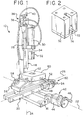
- Fig. 1 is a perspective view of three axis apparatus 10 for hermetically bonding a member or component 12 ( Fig. 3 ) to a sealing member such as a film or foil 14 ( Fig. 6 ). As shown in Fig. 1 , the apparatus is in a loading position in which the member or component and film or foil may be secured or mounted to the appropriate fixture.
- the terms “foil” and “film” are used interchangeably and no distinction is intended unless expressly stated.
- member and “component” are also used interchangeably.
- Heat weldable” and “melt bondable” are also used interchangeably and no distinction is intended.
- the apparatus 10 includes three support arms or frames 16, 18 and 20, each located and extending along one of three respective intersecting work axes, 22, 24 and 26.
- Axes 22, 24 and 26 are preferably orthogonal or transverse to one another, extending at right angles (laterally) to one another as in coordinate X, Y and Z axes.
- Each support arm is configured to mount a work member, fixture or another support arm in a linearly movable manner along the axis of such arm.
- horizontal support arm 16 also forms the base for the overall apparatus 10, allowing it to rest on a work table or other support surface (not shown).
- Vertical support arm 18 is fixed to and extends upwardly from one end of horizontal support arm 16.
- Horizontal support arm 20 is mounted on the arm 16 and extends laterally with respect to arm 16 and arm 18, and is movable linearly along the axis of support arm 16.
- At least one and preferably two or three of the support arms include individual drives or drive assemblies for moving the work member, arm or fixture mounted on such support arm along the respective axis of such arm.
- the drive(s) may be manual and/or automated and operable through such mechanism as may be desired, such as a lead screw, gear train, linkage, pneumatic or hydraulic cylinder, solenoid or other mechanism.
- vertical support arm 18 includes a movable carriage 28 that is movable axially (linearly) along the support arm and mounts a pneumatic piston/cylinder device 30 having an extendible and retractable shaft 34.
- Fixture 32 which is configured for holding the member 12 during the bonding operation, is attached to the end of shaft 34.
- a drive or drive assembly is provided for moving the carriage 28 axially along the vertical support arm 18.
- the drive 36 may include a motor, such as a stepper motor 38, which is particularly suited for precise, repeatable computer controlled positioning of the carriage, and/or a manual actuator such as crank 40 for rotating a lead screw coupled to the carriage or other suitable drive mechanism.
- a motor such as a stepper motor 38
- a manual actuator such as crank 40 for rotating a lead screw coupled to the carriage or other suitable drive mechanism.
- This arrangement allows manual and/or automatic positioning of the carriage 28 and, optionally, the manual actuator may be used for gross position changes and the stepper motor may be used for smaller or more incremental position changes or adjustments.
- Horizontal support arm 20 is mounted for axial movement along support arm 16.
- the mechanism for moving the support arm 20 may be of any suitable configuration such as lead screw or the like for moving the support arm along the axis 22 of support arm 16.
- the horizontal support arm 16 also includes an associated drive or drive assembly 42 for rotating a lead screw or otherwise moving the support arm 20 along support arm 16.
- the drive 42 may be essentially as described above with respect to drive 36 and include a motor, such stepper motor 44, and/or a manual actuator such as crank 46.
- Horizontal arm 20 movably mounts a carriage 48.
- the carriage 48 is mounted for movement along the axis 26 of support arm 20, such as by lead screw, gear train, or other suitable mechanism as described above relative to the other support arms.
- the horizontal arm 20 includes a drive assembly 50, also having generally similar configuration to those described earlier, and is illustrated with a motor, such as stepper motor 52 and manual actuator in the form of crank 54, for rotating a leading screw that engages with the carriage 48, or other suitable mechanism for moving carriage 48.
- Carriage 48 of horizontal support arm 20 supports an optional laboratory heat source, such as hot plate 56 for heating the foil 14, as will be described in more detail below.
- the heat source may employ any suitable heating principle such as conductive, convective, inductive or radiant heating, for example.
- the illustrated hot plate includes a temperature controller, illustrated in the form of a manual temperature control rheostat 58, although the temperature control could be automated and computer controlled if desired.
- the hot plate 56 supports a fixture in the form of a heat conductive cap or die plate 60 that has foil recess 62 for holding foil 14 in specific location.
- the relative positioning of the member fixture 32 and a foil fixture (cap 60) for melt bonding (or welding) the member and foil together can be accurately controlled and repeated.
- the drive assemblies 36, 42 and 54, and optionally also the pneumatic cylinder 30 and/or hot plate 56 are computer or software controlled (such as by MATLAB software from MathWorks of Natick, Ma. USA) for repeated and accurate control of not only relative positioning but also sealing temperature of the foil and stroke length and pressure applied by the cylinder.
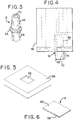
- Figs. 2-4 illustrate the member 12 and the fixture 32 in which it is mounted during bonding to the foil 14.
- the member is best seen in Fig. 3 .
- the member 12 may actually be of any desired shape and is constrained only by the system or circuit in which it is intended to be used.
- the member is injection molded of rigid thermoplastic material, such as polysulfone, with a generally elongated cylindrical shape with a raised or radially enlarged annular positioning flange 64 and slightly tapered opposed cylindrical extensions 66 and 68.
- the member is hollow and has a bore or lumen 70 extending fully through the member as best seen in dashed lines in Fig. 4 .
- the component or member may be made entirely of any suitable moldable and heat bondable thermoplastic material and at least the portion bonded to the foil is preferably thermoplastic material.
- the melt temperature of the material is higher than sterilizing temperature so that the process of heat welding or bonding raises the temperature of the foil 14 and the contacting portion of the member 12 above sterilizing temperature for destroying or inactivating bacteria and other microorganisms. This is explained more fully in the applications specified above.
- polysulfone material such as 1000 grade Udel brand polysulfone from Solvay Plastics of Brussels, Belgium, which has a melt temperature of about 329-385 degrees C.
- Sterilizing temperature is typically about 230 degrees C, and heating time may be several seconds, such as 5 or 6 or less, although heating time may vary inversely with temperature (the higher the temperature, the shorter the heating time required).
- Polysulfone appears to be well suited for sterile connection applications, is bondable to polyvinylchloride and the apparatus and methods described herein may be used to test, characterize and/or evaluate polysulfone as well as other potential materials for sterile connection applications.
- Fig. 2 shows the fixture 32 into which the member 12 is temporarily mounted or positioned for bonding.
- the fixture may be of any suitable rigid plastic, metallic or other material.
- a slot or recess 72 is provided in the fixture for receiving the member 12.
- the slot is of width sufficient to receive the member 12 and the slot has opposed location grooves 74 for receiving the raised annular flange 64 of the member such that an end portion of one of the extensions 66, 68 extends beyond the fixture sufficiently that the end of the extension can be pressed into contact with the foil 14 during bonding.
- the tolerances between the location grooves 74 and flange 64 are sufficiently close that substantially the same positioning between fixture and member is repeatable as between sequential bonding operations.
- the width of the grooves 74 tapers slightly to frictionally retain the component or member securely within the fixture 32 during the heat welding or bonding process.
- Fig. 4 is a side view of the fixture 32, with a member located in the receiving slot 72 for bonding to a film or foil 14. As can be seen there, an end portion 76 of one of the extensions 66, 68 extends below the lower surface of the fixture.
- Figs. 5 and 6 show a fixture for foil 14, which fixture is in the form of the cap or die plate 60.
- the foil 14 preferably includes a metallic layer 78, such as aluminum or other suitable metallic material, (preferably a material having bacteriostatic properties, as described in one or more of the prior applications specified herein), and a layer 80 of thermoplastic material, such as but not limited to polysulfone.
- the film or foil may be acquired commercially or fabricated by melting polysulfone or other thermoplastic film or films of other material candidates directly onto the metallic layer.
- a die cut piece e.g., 2.5 cm x 1.25cm
- a piece of polysulfone of similar size placed on top of the heated aluminum.
- the polysulfone melts quickly to the surface of the aluminum, adhering thereto.
- the laminated foil is then removed from the heat source (e.g., a hot plate), and compressed between cooling plates, such as steel surfaces, for cooling and for compressing to help it retain a flat shape.
- the metal and thermoplastic (e.g., aluminum and polysulfone) layers may be of any suitable thickness, such as from about 0.025 to about 0.075 mm (0.001 - 0.003 inches) or greater.
- the color of the polysulfone changes from clear to yellow if it is allowed to continue heating on a hot plate, and during manual fabrication the color change is preferably noted before it is used in further processing to confirm that the polysulfone is adhered to the aluminum film. In large scale production where processes are more controlled, color change may not occur.
- the cap or die plate 60 is preferably of heat conductive metallic material, such as aluminum. It may be of any suitable size or shape, and is shown in Figs. 1 , 5 and 7 as a generally solid rectangular block of aluminum, with a foil positioning station, such as recess 62 on the upper surface. The recess closely conforms to the size and shape of the foil 14 to maintain it in the desired position during bonding.
- the cap or die plate 60 is secured relative to the heat source to directly conduct heat from the heat source to heat the film or foil 14. As illustrated, the cap rests on the hot plate 56.
- the same cap or die plate may also be used for melting and laminating the polysulfone to the aluminum layer, as described above, if desired.
- FIG. 1 shows the apparatus 10 in which the member fixture 32 and the foil fixture, cap or die plate 60, are located in a loading position where they are relatively located to allow the member 12 to be inserted into slot 72 and foil 14 to be placed in the recess 62 (with thermoplastic layer facing upwardly).
- the member and foil (and associated fixtures) are preferably spaced apart in the loading position, but that is preferred and not required.
- the heat source e.g., hot plate
- the heat source may be set for the desired temperature for making, characterizing or testing the bond between member and foil, for example between 150-550 degrees C, and the cap or die plate allowed to come up to approximately the temperature of the hot plate.
- the apparatus 10 is then actuated, manually and/or automatically via computer control, to move the carriages 28 and 48 and support arm 20 to the desired bonding position along the respective support arm on which it is mounted, where the foil 14 and member 12 are in the desired vertical alignment.
- the pneumatic cylinder 30, or other pushing apparatus is then energized to extend the shaft 34 and force the exposed end of member 12 against the polysulfone layer 80 of the foil 14 as illustrated in Fig. 8 .
- This may be referred to as the bonding or welding position. They are held in that position until the polysulfone layer of the film and the end surface of the member are sufficiently melted by the elevated heat of the cap or die plate to melt weld (bond) together, preferably forming a hermetic seal therebetween.
- the force alone may be sufficient to generate enough heat to cause bonding of the member and foil even in the absence of a separate heat source such as hot plate 56.
- the air pressure in the pneumatic cylinder may be selected as desired to apply the desired force between the member and foil in the bonding position. Any desired pressure may be selected, and but it is contemplated that the pressure may be selected in a range of about 5 to 20 PSI of air pressure in the illustrated pneumatic cylinder 30, which has a bore diameter of about 1.125 inches (28mm). Also, to enhance contact and melt welding/bonding between the member 12 and the foil 14, the position of the air cylinder or stroke length of the shaft 34 is preferably selected so that the lowermost surface of the member 12 is pressed downwardly to a position that is slightly below the upper surface of the foil 14 (such as, for example, about 0.1- 0.5 mm or more, or about 0.25 mm, below the upper surface).
- thermoplastic material may collapse or be compressed between about 0.025 mm and about 2.5 mm (0.001 to 0.1 inches), and preferably is compressed about 0.76 mm (0.03 inches).
- the apparatus is held in the bonding position for a limited amount of time as may be selected for manufacture or for testing purposes, such as about 0.5 - 2 seconds or more, such as up to about 5 or 6 seconds.
- the apparatus can then be returned to the initial or loading position, where the fixture 32 and cap 60 are spaced sufficiently to allow the bonded member and foil assembly to be removed from fixture 32.
- the welded or bonded assembly of member 12 and foil 14 is shown for purposes of illustration in Fig. 9 .
- the apparatus and method described herein may be used for manufacture or for testing, research and design purposes, with various conditions, such as contact force, temperature, contact time, amount of compression and materials varied to assess the process and/or the integrity of the resulting bond.
- the apparatus 10 may be used to produce bonded assemblies for experimental or commercial use in products.
- the bonded member 12 and foil 14 may be attached (before or after bonding) to a fluid flow assembly or circuit, as desired, such as at the end of a fluid flow conduit, and subsequently sterilized.
- Such a fluid flow circuit or assembly may then be attached in a sterile manner to another fluid flow circuit or assembly having a similar member and foil assembly as described in the above applications.
- the foil (i.e. sealing member) of each fluid flow circuit is placed in face to face contact and heated until the member attached to each is sufficiently molten to form a melt bond or weld.
- the foils are then pulled from between the members as the members are simultaneously pressed together, such that a meld bond or weld immediately forms between the members as the foils are pulled from between them.
Landscapes
- Engineering & Computer Science (AREA)
- Mechanical Engineering (AREA)
- Lining Or Joining Of Plastics Or The Like (AREA)
Claims (7)
- Procédé pour lier une partie thermoplastique d'un élément (12) à une feuille (14) ayant une surface (80) pouvant être thermosoudée à la partie d'élément, un tel procédé incluant :le montage d'un tel élément (12) sur une première monture (32) ;le montage de la feuille (14) sur une seconde monture (60) ;les montures (32, 60) étant relativement mobiles dans trois directions, une première direction de déplacement vers et à l'opposé l'une de l'autre, une deuxième direction globalement latérale à la première direction et une troisième direction globalement latérale aux première et deuxième directions,le procédé incluant en outre le chauffage de la feuille (14) ; etle déplacement d'au moins une des montures (32, 60) dans les première, deuxième et/ou troisième directions entre une position de chargement dans laquelle les montures sont suffisamment espacées pour maintenir un élément et une feuille dans une relation non liée et une position de liaison dans laquelle les montures sont espacées plus étroitement pour maintenir un élément et une feuille dans une relation de contact jusqu'à ce que la partie d'élément thermoplastique et la surface de feuille (80) se lient l'une à l'autre.
- Procédé selon la revendication 1 incluant l'exercice d'une force de compression entre l'élément (12) et la feuille (14).
- Procédé selon la revendication 1 ou 2 incluant le chauffage de la feuille (14) à une température supérieure à la température de fusion de la partie thermoplastique de l'élément (12).
- Procédé selon l'une quelconque des revendications 1 à 3 dans lequel la partie thermoplastique est comprimée ou affaissée d'une distance sélectionnée pendant la liaison à la feuille (14).
- Procédé selon l'une quelconque des revendications 1 à 4 dans lequel la partie thermoplastique de l'élément (12) comprend un matériau polysulfone et la surface de feuille (80) inclut une couche de matériau polysulfone.
- Procédé selon la revendication 5 dans lequel la feuille (14) inclut une couche de métal ayant une épaisseur supérieure ou égale à environ 0,001 pouce (0,0254 mm) et la couche de polysulfone a une épaisseur supérieure ou égale à environ 0,001 pouce (0,0254 mm).
- Procédé selon l'une quelconque des revendications 1 à 6 incluant la compression de l'élément (12) contre la feuille (14) moyennant quoi l'élément comprime d'une quantité entre environ 0,001 et 0,1 pouce (0,025-2,54 mm), de préférence d'environ 0,03 pouce (0,76 mm).
Applications Claiming Priority (1)
| Application Number | Priority Date | Filing Date | Title |
|---|---|---|---|
| US13/911,560 US9308709B2 (en) | 2013-06-06 | 2013-06-06 | Bonding apparatus and method |
Publications (2)
| Publication Number | Publication Date |
|---|---|
| EP2810766A1 EP2810766A1 (fr) | 2014-12-10 |
| EP2810766B1 true EP2810766B1 (fr) | 2019-03-06 |
Family
ID=49515211
Family Applications (1)
| Application Number | Title | Priority Date | Filing Date |
|---|---|---|---|
| EP13190376.7A Active EP2810766B1 (fr) | 2013-06-06 | 2013-10-25 | Procédé de liaison |
Country Status (2)
| Country | Link |
|---|---|
| US (1) | US9308709B2 (fr) |
| EP (1) | EP2810766B1 (fr) |
Families Citing this family (1)
| Publication number | Priority date | Publication date | Assignee | Title |
|---|---|---|---|---|
| WO2013096038A1 (fr) | 2011-12-21 | 2013-06-27 | Fenwal, Inc. | Conduits d'écoulement de fluide et appareil et procédés de fabrication et d'assemblage de conduits de fluide |
Citations (1)
| Publication number | Priority date | Publication date | Assignee | Title |
|---|---|---|---|---|
| US20060185157A1 (en) * | 2003-03-20 | 2006-08-24 | Satoshi Shida | Parts packaging device and parts packaging method |
Family Cites Families (90)
| Publication number | Priority date | Publication date | Assignee | Title |
|---|---|---|---|---|
| US3853478A (en) * | 1972-12-22 | 1974-12-10 | Pactide Corp | Solute metering apparatus |
| US3863826A (en) * | 1973-04-23 | 1975-02-04 | Branson Instr | Sonic or ultrasonic apparatus |
| US4030494A (en) | 1973-11-05 | 1977-06-21 | Francis Tenczar | Fluid connectors |
| US3968195A (en) | 1974-06-17 | 1976-07-06 | Marilyn Bishop | Method for making sterile connections |
| USRE32056E (en) | 1977-10-19 | 1985-12-24 | Baxter Travenol Laboratories, Inc. | Method of forming a connection between two sealed conduits using radiant energy |
| US4157723A (en) | 1977-10-19 | 1979-06-12 | Baxter Travenol Laboratories, Inc. | Method of forming a connection between two sealed conduits using radiant energy |
| JPS5743824A (en) | 1980-06-10 | 1982-03-12 | Kaneo Anzai | Apparatus for cutting and welding hot melting-weld sheet |
| US4369779A (en) | 1981-02-23 | 1983-01-25 | E. I. Du Pont De Nemours And Company | Sterile docking process, apparatus and system |
| ES274987Y (es) | 1981-01-19 | 1985-04-01 | Baxter Travenol Laboratories, Inc. | Dispositivo conector esteril perfeccionado. |
| US4443215A (en) | 1982-07-06 | 1984-04-17 | E. I. Du Pont De Nemours & Company | Sterile docking process, apparatus and system |
| US4412835A (en) | 1982-07-06 | 1983-11-01 | E. I. Du Pont De Nemours & Company | Sterile docking process, apparatus and system |
| DE3243634A1 (de) * | 1982-11-25 | 1984-06-14 | Aldo 8200 Schaffhausen Artusi | Vorrichtung zum aufsiegeln einer folie od. dgl. auf einen behaelter |
| US4828557A (en) | 1984-04-06 | 1989-05-09 | Persidsky Maxim D | Sterile connector and method |
| US4619642A (en) | 1985-03-12 | 1986-10-28 | E. I. Du Pont De Nemours And Company | Sterile, cold cut connection process, apparatus and system |
| JPS61290035A (ja) | 1985-06-17 | 1986-12-20 | Kenichi Yamakoshi | 無菌接続用構造物およびその接続方法 |
| US5045666A (en) * | 1985-06-20 | 1991-09-03 | Metcal, Inc. | Self-soldering flexible circuit connector |
| EP0208004B1 (fr) | 1985-07-05 | 1988-08-10 | NPBI Nederlands Produktielaboratorium voor Bloedtransfusieapparatuur en Infusievloeistoffen B.V. | Procédé et appareil stérile de connexion de parties de tuyaux en plastique ou similaires |
| US4673400A (en) | 1986-02-10 | 1987-06-16 | Martin Ivan W | Aseptic connector assembly for conduits for sterile fluids |
| US4864101A (en) | 1987-01-09 | 1989-09-05 | Denco, Inc. | Hybrid welding wafer |
| US4753697A (en) | 1987-02-24 | 1988-06-28 | Denco, Inc. | Total-containment sterile process and system |
| US4793880A (en) | 1987-05-18 | 1988-12-27 | Denco, Inc. | Sterile welding of plastic tubes |
| US4897138A (en) | 1987-05-18 | 1990-01-30 | Denco, Inc. | Sealing of plastic tubes |
| US4933036A (en) | 1987-09-22 | 1990-06-12 | Denco, Inc. | Techniques for welding thermoplastic tubes |
| US4913756A (en) | 1987-09-22 | 1990-04-03 | Denco, Inc. | Techniques for welding thermoplastic tubes |
| US4770735A (en) | 1987-09-22 | 1988-09-13 | Denco, Inc. | Techniques for welding thermoplastic tubes |
| US4832773A (en) | 1987-09-22 | 1989-05-23 | Denco, Inc. | Techniques for welding thermoplastic tubes |
| US5009645A (en) | 1989-06-12 | 1991-04-23 | Jules Silver | Syringe for dispensing measured quantities of a material |
| FR2654977B1 (fr) | 1989-11-29 | 1992-03-13 | Gaz De France | Procede et piece de raccordement utilisant une resistance electrique pour le soudage d'elements en matiere plastique. |
| US5141592A (en) | 1990-08-20 | 1992-08-25 | Denco, Inc. | Sterile entry/exit total containment process for closed systems using plastic tubes |
| US5158630A (en) | 1990-08-20 | 1992-10-27 | Denco, Inc. | Total containment welding or plastic tubes |
| US5248359A (en) | 1990-08-20 | 1993-09-28 | Denco Inc. | Sterile entry/exit total containment process for closed systems using plastic tubes |
| US5209800A (en) | 1990-08-20 | 1993-05-11 | Denco, Inc. | Total containment welding of plastic tubes |
| US5397425A (en) | 1990-08-20 | 1995-03-14 | Denco, Inc. | Total containment welding of plastic tubes |
| US5156701A (en) | 1990-08-20 | 1992-10-20 | Denco Inc. | Total containment welding of plastic tubes |
| US5525186A (en) | 1990-08-20 | 1996-06-11 | Denco, Inc. | Wafer for use in the selective connecting and disconnecting of plastic tubes |
| US5279685A (en) | 1990-08-20 | 1994-01-18 | Denco, Inc. | Total containment device for connect/disconnect of plastic tubes |
| US5244522A (en) | 1990-10-29 | 1993-09-14 | Denco Inc. | Total containment welding of plastic tubes |
| US5245693A (en) * | 1991-03-15 | 1993-09-14 | In-Touch Products Co. | Parenteral fluid warmer apparatus and disposable cassette utilizing thin, flexible heat-exchange membrane |
| JP3096086B2 (ja) | 1991-04-05 | 2000-10-10 | テルモ株式会社 | チューブの接合方法及び装置 |
| US5256845A (en) | 1992-01-21 | 1993-10-26 | Npbi Mederlands Produktielaboratorium Voor Bloedtransfusieapparatuur En Infusievloeistoffen B.V. | Apparatus for sealing medical plastic tubing with high frequency dielectric heating |
| US5858016A (en) | 1992-07-14 | 1999-01-12 | Baxter International Inc. | Sterile/aseptic connector |
| US5272304A (en) | 1992-08-28 | 1993-12-21 | Npbi Nederlands Produktielaboratorium Voor Bloedtransfusieapparatuur En Infusievloeistoffen B.V. | High-frequency dielectric heating hand-operated sealer for medical tubing |
| US5632852A (en) | 1992-10-23 | 1997-05-27 | Denco, Inc. | Ion generator in connect/disconnect of plastic tubes |
| US5256229A (en) | 1992-10-23 | 1993-10-26 | Denco, Inc. | Sterile containment welding device for plastic tubes |
| US5674333A (en) | 1992-10-23 | 1997-10-07 | Denco, Inc. | Total containment welding of plastic tubes |
| US5342345A (en) | 1993-01-04 | 1994-08-30 | Denco, Inc. | Solution bag with plastic connecting tube |
| JPH0775675A (ja) | 1993-06-16 | 1995-03-20 | Terumo Corp | チューブ装填装置 |
| USD355848S (en) | 1994-01-18 | 1995-02-28 | Denco, Inc. | Package for a wafer for the welding and/or cutting of plastic tubes |
| USD357926S (en) | 1994-01-21 | 1995-05-02 | Denco, Inc. | Wafer for the welding and/or cutting of plastic tubes |
| US6348049B1 (en) | 1994-03-30 | 2002-02-19 | Denco, Inc. | Surgical/medical tubing and containers for use in conveying medical solutions and the like |
| US5733268A (en) | 1996-11-01 | 1998-03-31 | Denco, Inc. | Medical tubing and containers for use in conveying medical solutions and the like |
| CA2164749A1 (fr) | 1995-01-18 | 1996-07-19 | Ivars V. Ivansons | Dispositif d'accouplement entierement etanche |
| JPH09150458A (ja) | 1995-11-29 | 1997-06-10 | Alps Electric Co Ltd | 樹脂成形部材の接合体および樹脂成形部材の接合方法 |
| JP3422452B2 (ja) | 1995-12-08 | 2003-06-30 | テルモ株式会社 | チューブ接続装置 |
| KR100248600B1 (ko) | 1996-12-11 | 2000-03-15 | 아마노 시게루 | 튜브 접속 장치 |
| US5928216A (en) | 1997-01-30 | 1999-07-27 | Denco, Inc. | Surgical/medical tubing and containers for use in conveying medical solutions and the like |
| US5871612A (en) | 1997-07-10 | 1999-02-16 | Denco, Inc. | Wafer for use in selective connecting and disconnecting of plastic tubes |
| US5855731A (en) | 1997-09-17 | 1999-01-05 | Denco, Inc. | Sterile containment welding device for plastic tubes |
| US6071690A (en) | 1998-02-02 | 2000-06-06 | Denco, Inc. | Ionomeric modified poly-ether-ester plastic container for cryogenic fluids |
| US6020574A (en) | 1998-03-09 | 2000-02-01 | Denco, Inc. | Sterile containment welding device with self-monitoring heater unit for plastic tubes |
| JPH11354684A (ja) * | 1998-06-09 | 1999-12-24 | Nitto Denko Corp | 低熱膨張配線基板および多層配線基板 |
| AU4977499A (en) | 1998-07-10 | 2000-02-01 | Edison Welding Institute | Simultaneous butt and lap joints |
| US6485593B1 (en) | 1998-10-26 | 2002-11-26 | Kurt J. Christoffersen | Sterile docking apparatus and method of use |
| US6132833A (en) | 1999-04-06 | 2000-10-17 | Denco | Wafer for use in selective connecting and disconnecting of plastic tubes |
| JP3856981B2 (ja) | 1999-04-27 | 2006-12-13 | テルモ株式会社 | チューブ接続装置 |
| JP2000308686A (ja) | 1999-04-27 | 2000-11-07 | Terumo Corp | チューブ接続装置 |
| FR2803010B1 (fr) | 1999-12-24 | 2002-02-01 | Aventis Pasteur | Procede et appareil pour la connexion sterile de deux tubes souples |
| US7669390B2 (en) * | 2004-03-08 | 2010-03-02 | Medical Instill Technologies, Inc. | Method for molding and assembling containers with stoppers and filling same |
| US6416489B1 (en) | 2000-03-02 | 2002-07-09 | William H Booth | Process for effecting sterile connections of medical tubing by way of terminally sterilizing an isolated fluid filled connected area |
| EP1436586A2 (fr) * | 2001-10-19 | 2004-07-14 | MonoGen, Inc. | Systeme et procede automatises de traitement d'echantillons multiples a base de liquide |
| US6913056B2 (en) | 2002-01-31 | 2005-07-05 | Baxter International Inc. | Apparatus and method for connecting and disconnecting flexible tubing |
| PT1642614E (pt) | 2002-03-11 | 2010-02-15 | Fresenius Medical Care De Gmbh | Recipiente com um conector e um dispositivo de preparação de fluido de diálise associado |
| US6847001B2 (en) | 2002-08-22 | 2005-01-25 | Delphi Technologies, Inc. | Method for metallurgically joining a tube to a member |
| JP4185735B2 (ja) | 2002-08-30 | 2008-11-26 | テルモ株式会社 | チューブ接合装置及びチューブ接合方法 |
| EP1547755B1 (fr) | 2002-08-30 | 2016-02-03 | Terumo Kabushiki Kaisha | Appareil de raccordement de tuyaux et procede associe |
| US6637489B1 (en) | 2002-10-04 | 2003-10-28 | Denco, Inc. | Wafer for use in the selective connecting and disconnecting of plastic tubes |
| JP4162973B2 (ja) | 2002-11-01 | 2008-10-08 | テルモ株式会社 | チューブ接合装置 |
| US6982051B2 (en) | 2003-06-13 | 2006-01-03 | Underground Solutions Technologies Group, Inc. | Fusion process for conduit |
| JP4046655B2 (ja) | 2003-07-04 | 2008-02-13 | テルモ株式会社 | チューブ接合装置 |
| AU2004285366B2 (en) | 2003-11-04 | 2009-08-27 | Terumo Kabushiki Kaisha | Connector |
| US7722733B2 (en) | 2004-03-29 | 2010-05-25 | Baxter International Inc. | Method for sterile connection of tubing |
| EP1798614A3 (fr) | 2005-12-15 | 2017-11-08 | Terumo BCT, Inc. | Système de soudage de tube stérile |
| WO2008005882A2 (fr) | 2006-07-07 | 2008-01-10 | Caridianbct, Inc. | Raccords à tube thermosoudés |
| US7398813B2 (en) | 2006-07-31 | 2008-07-15 | Denco Inc. | Device for welding plastic tubes |
| JP2010524647A (ja) | 2007-04-24 | 2010-07-22 | ハイクローン ラボラトリーズ インコーポレイテッド | 殺菌コネクタシステム |
| US7938454B2 (en) | 2007-04-24 | 2011-05-10 | Hyclone Laboratories, Inc. | Sterile connector systems |
| US8128611B2 (en) | 2008-12-03 | 2012-03-06 | Fenwal, Inc. | Pre-assembled medical fluid flow system and method of making same |
| EP2420286A1 (fr) | 2010-08-18 | 2012-02-22 | Fresenius Kabi Deutschland GmbH | Procédé et dispositif de liaison stérile de tuyaux flexibles |
| US8448992B2 (en) | 2011-02-16 | 2013-05-28 | Fenwal, Inc. | Sterile docking device, medical fluid flow system with sterile docking device and method of using same |
| WO2013096038A1 (fr) | 2011-12-21 | 2013-06-27 | Fenwal, Inc. | Conduits d'écoulement de fluide et appareil et procédés de fabrication et d'assemblage de conduits de fluide |
-
2013
- 2013-06-06 US US13/911,560 patent/US9308709B2/en active Active
- 2013-10-25 EP EP13190376.7A patent/EP2810766B1/fr active Active
Patent Citations (1)
| Publication number | Priority date | Publication date | Assignee | Title |
|---|---|---|---|---|
| US20060185157A1 (en) * | 2003-03-20 | 2006-08-24 | Satoshi Shida | Parts packaging device and parts packaging method |
Also Published As
| Publication number | Publication date |
|---|---|
| US9308709B2 (en) | 2016-04-12 |
| EP2810766A1 (fr) | 2014-12-10 |
| US20140360668A1 (en) | 2014-12-11 |
Similar Documents
| Publication | Publication Date | Title |
|---|---|---|
| CN103492021B (zh) | 流体流动导管以及制作和连接流体导管的设备和方法 | |
| EP3060292B1 (fr) | Appareil de raccordement de tubes thermoplastiques | |
| US7964048B2 (en) | Heat weld tubing connectors | |
| EP0471953B1 (fr) | Procédé de confinement total des entrées et des sorties stériles pour des systèmes fermés utilisant des tubes plastiques | |
| EP2675519B1 (fr) | Dispositif d'ancrage stérile, système de circulation de fluide médical avec dispositif d'ancrage stérile et procédé d'utilisation de ceux-ci | |
| US5248359A (en) | Sterile entry/exit total containment process for closed systems using plastic tubes | |
| JPH047228B2 (fr) | ||
| EP2810766B1 (fr) | Procédé de liaison | |
| CN114789561B (zh) | 管的无菌连接 | |
| EP2992917A1 (fr) | Cylindre extérieur à aiguille et son procédé de production | |
| WO2017025641A1 (fr) | Échantillonnage de thermoscellage | |
| US20250177718A1 (en) | Device And Method For Sterile Connection Of Medical Tubes | |
| SHIRAVAND | Assessment of assembly automation for plastic medical disposables: from state of the art to future trends | |
| KR20180089587A (ko) | 카테터 펌프 커버의 실링 장치 | |
| CN121464034A (zh) | 无菌连接 |
Legal Events
| Date | Code | Title | Description |
|---|---|---|---|
| PUAI | Public reference made under article 153(3) epc to a published international application that has entered the european phase |
Free format text: ORIGINAL CODE: 0009012 |
|
| 17P | Request for examination filed |
Effective date: 20131125 |
|
| AK | Designated contracting states |
Kind code of ref document: A1 Designated state(s): AL AT BE BG CH CY CZ DE DK EE ES FI FR GB GR HR HU IE IS IT LI LT LU LV MC MK MT NL NO PL PT RO RS SE SI SK SM TR |
|
| AX | Request for extension of the european patent |
Extension state: BA ME |
|
| STAA | Information on the status of an ep patent application or granted ep patent |
Free format text: STATUS: EXAMINATION IS IN PROGRESS |
|
| 17Q | First examination report despatched |
Effective date: 20170419 |
|
| RIC1 | Information provided on ipc code assigned before grant |
Ipc: B29K 81/00 20060101ALN20180803BHEP Ipc: B29C 65/78 20060101AFI20180803BHEP Ipc: B29C 65/18 20060101ALN20180803BHEP Ipc: B29C 65/02 20060101ALI20180803BHEP |
|
| GRAP | Despatch of communication of intention to grant a patent |
Free format text: ORIGINAL CODE: EPIDOSNIGR1 |
|
| STAA | Information on the status of an ep patent application or granted ep patent |
Free format text: STATUS: GRANT OF PATENT IS INTENDED |
|
| INTG | Intention to grant announced |
Effective date: 20180928 |
|
| GRAS | Grant fee paid |
Free format text: ORIGINAL CODE: EPIDOSNIGR3 |
|
| GRAA | (expected) grant |
Free format text: ORIGINAL CODE: 0009210 |
|
| STAA | Information on the status of an ep patent application or granted ep patent |
Free format text: STATUS: THE PATENT HAS BEEN GRANTED |
|
| AK | Designated contracting states |
Kind code of ref document: B1 Designated state(s): AL AT BE BG CH CY CZ DE DK EE ES FI FR GB GR HR HU IE IS IT LI LT LU LV MC MK MT NL NO PL PT RO RS SE SI SK SM TR |
|
| REG | Reference to a national code |
Ref country code: GB Ref legal event code: FG4D |
|
| REG | Reference to a national code |
Ref country code: CH Ref legal event code: EP Ref country code: AT Ref legal event code: REF Ref document number: 1103960 Country of ref document: AT Kind code of ref document: T Effective date: 20190315 |
|
| REG | Reference to a national code |
Ref country code: DE Ref legal event code: R096 Ref document number: 602013051752 Country of ref document: DE |
|
| REG | Reference to a national code |
Ref country code: IE Ref legal event code: FG4D |
|
| REG | Reference to a national code |
Ref country code: NL Ref legal event code: MP Effective date: 20190306 |
|
| REG | Reference to a national code |
Ref country code: LT Ref legal event code: MG4D |
|
| PG25 | Lapsed in a contracting state [announced via postgrant information from national office to epo] |
Ref country code: NO Free format text: LAPSE BECAUSE OF FAILURE TO SUBMIT A TRANSLATION OF THE DESCRIPTION OR TO PAY THE FEE WITHIN THE PRESCRIBED TIME-LIMIT Effective date: 20190606 Ref country code: LT Free format text: LAPSE BECAUSE OF FAILURE TO SUBMIT A TRANSLATION OF THE DESCRIPTION OR TO PAY THE FEE WITHIN THE PRESCRIBED TIME-LIMIT Effective date: 20190306 Ref country code: SE Free format text: LAPSE BECAUSE OF FAILURE TO SUBMIT A TRANSLATION OF THE DESCRIPTION OR TO PAY THE FEE WITHIN THE PRESCRIBED TIME-LIMIT Effective date: 20190306 Ref country code: FI Free format text: LAPSE BECAUSE OF FAILURE TO SUBMIT A TRANSLATION OF THE DESCRIPTION OR TO PAY THE FEE WITHIN THE PRESCRIBED TIME-LIMIT Effective date: 20190306 |
|
| PG25 | Lapsed in a contracting state [announced via postgrant information from national office to epo] |
Ref country code: NL Free format text: LAPSE BECAUSE OF FAILURE TO SUBMIT A TRANSLATION OF THE DESCRIPTION OR TO PAY THE FEE WITHIN THE PRESCRIBED TIME-LIMIT Effective date: 20190306 Ref country code: HR Free format text: LAPSE BECAUSE OF FAILURE TO SUBMIT A TRANSLATION OF THE DESCRIPTION OR TO PAY THE FEE WITHIN THE PRESCRIBED TIME-LIMIT Effective date: 20190306 Ref country code: LV Free format text: LAPSE BECAUSE OF FAILURE TO SUBMIT A TRANSLATION OF THE DESCRIPTION OR TO PAY THE FEE WITHIN THE PRESCRIBED TIME-LIMIT Effective date: 20190306 Ref country code: BG Free format text: LAPSE BECAUSE OF FAILURE TO SUBMIT A TRANSLATION OF THE DESCRIPTION OR TO PAY THE FEE WITHIN THE PRESCRIBED TIME-LIMIT Effective date: 20190606 Ref country code: RS Free format text: LAPSE BECAUSE OF FAILURE TO SUBMIT A TRANSLATION OF THE DESCRIPTION OR TO PAY THE FEE WITHIN THE PRESCRIBED TIME-LIMIT Effective date: 20190306 Ref country code: GR Free format text: LAPSE BECAUSE OF FAILURE TO SUBMIT A TRANSLATION OF THE DESCRIPTION OR TO PAY THE FEE WITHIN THE PRESCRIBED TIME-LIMIT Effective date: 20190607 |
|
| REG | Reference to a national code |
Ref country code: AT Ref legal event code: MK05 Ref document number: 1103960 Country of ref document: AT Kind code of ref document: T Effective date: 20190306 |
|
| PG25 | Lapsed in a contracting state [announced via postgrant information from national office to epo] |
Ref country code: EE Free format text: LAPSE BECAUSE OF FAILURE TO SUBMIT A TRANSLATION OF THE DESCRIPTION OR TO PAY THE FEE WITHIN THE PRESCRIBED TIME-LIMIT Effective date: 20190306 Ref country code: AL Free format text: LAPSE BECAUSE OF FAILURE TO SUBMIT A TRANSLATION OF THE DESCRIPTION OR TO PAY THE FEE WITHIN THE PRESCRIBED TIME-LIMIT Effective date: 20190306 Ref country code: PT Free format text: LAPSE BECAUSE OF FAILURE TO SUBMIT A TRANSLATION OF THE DESCRIPTION OR TO PAY THE FEE WITHIN THE PRESCRIBED TIME-LIMIT Effective date: 20190706 Ref country code: SK Free format text: LAPSE BECAUSE OF FAILURE TO SUBMIT A TRANSLATION OF THE DESCRIPTION OR TO PAY THE FEE WITHIN THE PRESCRIBED TIME-LIMIT Effective date: 20190306 Ref country code: CZ Free format text: LAPSE BECAUSE OF FAILURE TO SUBMIT A TRANSLATION OF THE DESCRIPTION OR TO PAY THE FEE WITHIN THE PRESCRIBED TIME-LIMIT Effective date: 20190306 Ref country code: IT Free format text: LAPSE BECAUSE OF FAILURE TO SUBMIT A TRANSLATION OF THE DESCRIPTION OR TO PAY THE FEE WITHIN THE PRESCRIBED TIME-LIMIT Effective date: 20190306 Ref country code: ES Free format text: LAPSE BECAUSE OF FAILURE TO SUBMIT A TRANSLATION OF THE DESCRIPTION OR TO PAY THE FEE WITHIN THE PRESCRIBED TIME-LIMIT Effective date: 20190306 Ref country code: RO Free format text: LAPSE BECAUSE OF FAILURE TO SUBMIT A TRANSLATION OF THE DESCRIPTION OR TO PAY THE FEE WITHIN THE PRESCRIBED TIME-LIMIT Effective date: 20190306 |
|
| PG25 | Lapsed in a contracting state [announced via postgrant information from national office to epo] |
Ref country code: SM Free format text: LAPSE BECAUSE OF FAILURE TO SUBMIT A TRANSLATION OF THE DESCRIPTION OR TO PAY THE FEE WITHIN THE PRESCRIBED TIME-LIMIT Effective date: 20190306 Ref country code: PL Free format text: LAPSE BECAUSE OF FAILURE TO SUBMIT A TRANSLATION OF THE DESCRIPTION OR TO PAY THE FEE WITHIN THE PRESCRIBED TIME-LIMIT Effective date: 20190306 |
|
| REG | Reference to a national code |
Ref country code: DE Ref legal event code: R097 Ref document number: 602013051752 Country of ref document: DE |
|
| PG25 | Lapsed in a contracting state [announced via postgrant information from national office to epo] |
Ref country code: AT Free format text: LAPSE BECAUSE OF FAILURE TO SUBMIT A TRANSLATION OF THE DESCRIPTION OR TO PAY THE FEE WITHIN THE PRESCRIBED TIME-LIMIT Effective date: 20190306 Ref country code: IS Free format text: LAPSE BECAUSE OF FAILURE TO SUBMIT A TRANSLATION OF THE DESCRIPTION OR TO PAY THE FEE WITHIN THE PRESCRIBED TIME-LIMIT Effective date: 20190706 |
|
| PLBE | No opposition filed within time limit |
Free format text: ORIGINAL CODE: 0009261 |
|
| STAA | Information on the status of an ep patent application or granted ep patent |
Free format text: STATUS: NO OPPOSITION FILED WITHIN TIME LIMIT |
|
| PG25 | Lapsed in a contracting state [announced via postgrant information from national office to epo] |
Ref country code: DK Free format text: LAPSE BECAUSE OF FAILURE TO SUBMIT A TRANSLATION OF THE DESCRIPTION OR TO PAY THE FEE WITHIN THE PRESCRIBED TIME-LIMIT Effective date: 20190306 |
|
| 26N | No opposition filed |
Effective date: 20191209 |
|
| PG25 | Lapsed in a contracting state [announced via postgrant information from national office to epo] |
Ref country code: SI Free format text: LAPSE BECAUSE OF FAILURE TO SUBMIT A TRANSLATION OF THE DESCRIPTION OR TO PAY THE FEE WITHIN THE PRESCRIBED TIME-LIMIT Effective date: 20190306 |
|
| PG25 | Lapsed in a contracting state [announced via postgrant information from national office to epo] |
Ref country code: TR Free format text: LAPSE BECAUSE OF FAILURE TO SUBMIT A TRANSLATION OF THE DESCRIPTION OR TO PAY THE FEE WITHIN THE PRESCRIBED TIME-LIMIT Effective date: 20190306 |
|
| PG25 | Lapsed in a contracting state [announced via postgrant information from national office to epo] |
Ref country code: MC Free format text: LAPSE BECAUSE OF FAILURE TO SUBMIT A TRANSLATION OF THE DESCRIPTION OR TO PAY THE FEE WITHIN THE PRESCRIBED TIME-LIMIT Effective date: 20190306 |
|
| REG | Reference to a national code |
Ref country code: CH Ref legal event code: PL |
|
| PG25 | Lapsed in a contracting state [announced via postgrant information from national office to epo] |
Ref country code: CH Free format text: LAPSE BECAUSE OF NON-PAYMENT OF DUE FEES Effective date: 20191031 Ref country code: LI Free format text: LAPSE BECAUSE OF NON-PAYMENT OF DUE FEES Effective date: 20191031 Ref country code: LU Free format text: LAPSE BECAUSE OF NON-PAYMENT OF DUE FEES Effective date: 20191025 |
|
| REG | Reference to a national code |
Ref country code: BE Ref legal event code: MM Effective date: 20191031 |
|
| PG25 | Lapsed in a contracting state [announced via postgrant information from national office to epo] |
Ref country code: BE Free format text: LAPSE BECAUSE OF NON-PAYMENT OF DUE FEES Effective date: 20191031 |
|
| PG25 | Lapsed in a contracting state [announced via postgrant information from national office to epo] |
Ref country code: IE Free format text: LAPSE BECAUSE OF NON-PAYMENT OF DUE FEES Effective date: 20191025 |
|
| PG25 | Lapsed in a contracting state [announced via postgrant information from national office to epo] |
Ref country code: CY Free format text: LAPSE BECAUSE OF FAILURE TO SUBMIT A TRANSLATION OF THE DESCRIPTION OR TO PAY THE FEE WITHIN THE PRESCRIBED TIME-LIMIT Effective date: 20190306 |
|
| PG25 | Lapsed in a contracting state [announced via postgrant information from national office to epo] |
Ref country code: MT Free format text: LAPSE BECAUSE OF FAILURE TO SUBMIT A TRANSLATION OF THE DESCRIPTION OR TO PAY THE FEE WITHIN THE PRESCRIBED TIME-LIMIT Effective date: 20190306 Ref country code: HU Free format text: LAPSE BECAUSE OF FAILURE TO SUBMIT A TRANSLATION OF THE DESCRIPTION OR TO PAY THE FEE WITHIN THE PRESCRIBED TIME-LIMIT; INVALID AB INITIO Effective date: 20131025 |
|
| PG25 | Lapsed in a contracting state [announced via postgrant information from national office to epo] |
Ref country code: MK Free format text: LAPSE BECAUSE OF FAILURE TO SUBMIT A TRANSLATION OF THE DESCRIPTION OR TO PAY THE FEE WITHIN THE PRESCRIBED TIME-LIMIT Effective date: 20190306 |
|
| P01 | Opt-out of the competence of the unified patent court (upc) registered |
Effective date: 20230515 |
|
| PGFP | Annual fee paid to national office [announced via postgrant information from national office to epo] |
Ref country code: DE Payment date: 20241029 Year of fee payment: 12 |
|
| PGFP | Annual fee paid to national office [announced via postgrant information from national office to epo] |
Ref country code: GB Payment date: 20241028 Year of fee payment: 12 |
|
| PGFP | Annual fee paid to national office [announced via postgrant information from national office to epo] |
Ref country code: FR Payment date: 20241025 Year of fee payment: 12 |