EP2814329B1 - Edulcorant à valeur de ph ajustée - Google Patents
Edulcorant à valeur de ph ajustée Download PDFInfo
- Publication number
- EP2814329B1 EP2814329B1 EP13703810.5A EP13703810A EP2814329B1 EP 2814329 B1 EP2814329 B1 EP 2814329B1 EP 13703810 A EP13703810 A EP 13703810A EP 2814329 B1 EP2814329 B1 EP 2814329B1
- Authority
- EP
- European Patent Office
- Prior art keywords
- weight
- mixed composition
- aqueous solution
- total
- composition according
- Prior art date
- Legal status (The legal status is an assumption and is not a legal conclusion. Google has not performed a legal analysis and makes no representation as to the accuracy of the status listed.)
- Revoked
Links
Images

Classifications
-
- A—HUMAN NECESSITIES
- A23—FOODS OR FOODSTUFFS; TREATMENT THEREOF, NOT COVERED BY OTHER CLASSES
- A23G—COCOA; COCOA PRODUCTS, e.g. CHOCOLATE; SUBSTITUTES FOR COCOA OR COCOA PRODUCTS; CONFECTIONERY; CHEWING GUM; ICE-CREAM; PREPARATION THEREOF
- A23G3/00—Sweetmeats; Confectionery; Marzipan; Coated or filled products
- A23G3/34—Sweetmeats, confectionery or marzipan; Processes for the preparation thereof
- A23G3/36—Sweetmeats, confectionery or marzipan; Processes for the preparation thereof characterised by the composition containing organic or inorganic compounds
- A23G3/38—Sucrose-free products
-
- A—HUMAN NECESSITIES
- A23—FOODS OR FOODSTUFFS; TREATMENT THEREOF, NOT COVERED BY OTHER CLASSES
- A23G—COCOA; COCOA PRODUCTS, e.g. CHOCOLATE; SUBSTITUTES FOR COCOA OR COCOA PRODUCTS; CONFECTIONERY; CHEWING GUM; ICE-CREAM; PREPARATION THEREOF
- A23G3/00—Sweetmeats; Confectionery; Marzipan; Coated or filled products
- A23G3/32—Processes for preparing caramel or sugar colours
-
- A—HUMAN NECESSITIES
- A23—FOODS OR FOODSTUFFS; TREATMENT THEREOF, NOT COVERED BY OTHER CLASSES
- A23G—COCOA; COCOA PRODUCTS, e.g. CHOCOLATE; SUBSTITUTES FOR COCOA OR COCOA PRODUCTS; CONFECTIONERY; CHEWING GUM; ICE-CREAM; PREPARATION THEREOF
- A23G3/00—Sweetmeats; Confectionery; Marzipan; Coated or filled products
- A23G3/34—Sweetmeats, confectionery or marzipan; Processes for the preparation thereof
- A23G3/36—Sweetmeats, confectionery or marzipan; Processes for the preparation thereof characterised by the composition containing organic or inorganic compounds
-
- A—HUMAN NECESSITIES
- A23—FOODS OR FOODSTUFFS; TREATMENT THEREOF, NOT COVERED BY OTHER CLASSES
- A23G—COCOA; COCOA PRODUCTS, e.g. CHOCOLATE; SUBSTITUTES FOR COCOA OR COCOA PRODUCTS; CONFECTIONERY; CHEWING GUM; ICE-CREAM; PREPARATION THEREOF
- A23G3/00—Sweetmeats; Confectionery; Marzipan; Coated or filled products
- A23G3/34—Sweetmeats, confectionery or marzipan; Processes for the preparation thereof
- A23G3/36—Sweetmeats, confectionery or marzipan; Processes for the preparation thereof characterised by the composition containing organic or inorganic compounds
- A23G3/42—Sweetmeats, confectionery or marzipan; Processes for the preparation thereof characterised by the composition containing organic or inorganic compounds characterised by the carbohydrates used, e.g. polysaccharides
-
- A—HUMAN NECESSITIES
- A23—FOODS OR FOODSTUFFS; TREATMENT THEREOF, NOT COVERED BY OTHER CLASSES
- A23L—FOODS, FOODSTUFFS OR NON-ALCOHOLIC BEVERAGES, NOT OTHERWISE PROVIDED FOR; PREPARATION OR TREATMENT THEREOF
- A23L27/00—Spices; Flavouring agents or condiments; Artificial sweetening agents; Table salts; Dietetic salt substitutes; Preparation or treatment thereof
- A23L27/30—Artificial sweetening agents
- A23L27/33—Artificial sweetening agents containing sugars or derivatives
- A23L27/34—Sugar alcohols
-
- A—HUMAN NECESSITIES
- A23—FOODS OR FOODSTUFFS; TREATMENT THEREOF, NOT COVERED BY OTHER CLASSES
- A23L—FOODS, FOODSTUFFS OR NON-ALCOHOLIC BEVERAGES, NOT OTHERWISE PROVIDED FOR; PREPARATION OR TREATMENT THEREOF
- A23L29/00—Foods or foodstuffs containing additives; Preparation or treatment thereof
- A23L29/30—Foods or foodstuffs containing additives; Preparation or treatment thereof containing carbohydrate syrups; containing sugars; containing sugar alcohols, e.g. xylitol; containing starch hydrolysates, e.g. dextrin
- A23L29/37—Sugar alcohols
Definitions
- the invention relates to processes for the production of hard caramels from isomalt while maintaining strict pH values and mixture compositions containing isomalt and optionally pH buffer substances with a defined pH value.
- Isomalt belongs to the group of disaccharide alcohols and is used as a sugar substitute. Conventional production takes place in two process steps: enzymatic isomerization of sucrose to isomaltulose and hydrogenation of the isomaltulose to isomalt.
- the product isomalt is a mixture of isomers of 1-O- ⁇ -D-glucopyranosyl-D-mannitol (1,1-GPM) and 6-O- ⁇ -D-glucopyranosyl-D-sorbitol (1,6-GPS).
- J. Kowalczyk. Isomalt, pp. 340-359 in K. Rosenplenter, U. Nöhle (ed.), Handbuch der sweeteners, 2007, B.
- Classic hard caramels are essentially sugar confectionery consisting of sucrose and glucose, which are manufactured using odor and taste-imparting, coloring and texture-influencing substances. Hard caramels have a hard, glassy consistency.
- isomalt Due to its low caloric content, good heat stability and the inert properties of isomalt in connection with other ingredients used in hard caramel production, isomalt can be used as a direct substitute for sucrose for "sugar-free" hard caramels ( H. Schiweck, et al. (2005) Sugar Alcohols, in Ullmann's Encyclopedia of Industrial Chemistry, Wiley-VCH ).
- Hard caramels are now mostly produced using processes in which the sugar or sugar substitute is first dissolved in water as granules. The mass is then reduced to a water content of 2% in a vacuumed cooking process and cooled, so that the mass with appropriate Additives (flavors, acids, colors) can be added. The hard caramel mass is then embossed or cast into the desired shape.
- An alternative process is the injection molding process, in which the sugar or sugar substitute granules are processed directly without going through the aqueous solution.
- the raw material is plasticized in a pickable cavity in an injection molding machine and homogenized thermally and materially. After cooling to the demolding temperature, the molded part can be removed.
- the EP1217898 discloses hard caramel containing 1,1-GPM (1-O-alpha-D-glucopyranosyl-D-mannitol) in an amount of 52 to 60% by weight (based on the total dry matter of the hard caramel) and sorbitol in an amount of 0, 5 to 3.5% by weight and a process for producing a hard caramel, an aqueous solution or suspension of a mixture comprising 52 to 60% by weight of 1,1-GPM and 0.5 to 3.5% by weight % Sorbitol evaporated under the influence of heat, cooled, shaped and a hard caramel is obtained.
- WO 2010/031527 A1 discloses filled hard caramels, the coating being made by mixing isomalt, sucralose and water.
- the solid caramels obtained consist of 15% by weight of the mixture containing fructans and 85% by weight of the moldable mass.
- the alleged final composition of the hard caramel has a pH of 4.9, whereby no measuring method or measuring temperature is specified for the pH determination. It is also pointed out that the fructans which are always present in the compositions are not hydrolyzed under acidic conditions, but should preferably be operated at the highest possible pH.
- WO 2004/049815 A2 discloses the use of surface-active agents, in particular emulsifiers, and / or edible acids, to improve the surface quality of hard caramels, working either below the pH range from pH 4.0 or above pH 5.0.
- the present invention therefore relates to aqueous isomalt solutions with a certain pH, mixture compositions containing isomalt and certain pH buffer substances.
- Another object of the invention is a process for the production of hard caramels based on isomalt, in which the aqueous isomalt solution has a specific pH range.
- Another object of the invention is a process for the production of hard caramels based on isomalt, in which solid mixture compositions containing isomalt and certain pH buffer substances are melted and plasticized.
- An advantage of the present invention is that the controlled pH control during the process allows hard caramels based on isomalt to be produced reproducibly with a low hygroscopicity and without increased color values.
- Another advantage of the present invention is that clear hard candies can be reproducibly represented.
- Another advantage of the present invention is that hard caramels can be produced which have a low and therefore good tendency to recrystallize.
- An advantage of the mixture composition according to the invention is its homogeneous meltability.
- Another advantage of the mixture composition according to the invention is its ability to stably preserve dyes in the hard caramel.
- Another advantage is that the mixture composition according to the invention has good flowability.
- Another advantage of the mixture composition according to the invention is its good compressibility.
- Another advantage of the solid mixture composition according to the invention is its good demolding behavior.
- pH value in the context of the present invention is defined as the value which is measured for corresponding compounds dissolved in demineralized water at 25 ° C. after stirring for five minutes with a calibrated pH electrode according to ISO 4319 (1977).
- aqueous solution in connection with the present invention is to be understood as meaning at least one corresponding substance at least partially dissolved in water, the solution preferably containing at least 5% by weight of water, based on the total composition under consideration.
- buffer capacity in the context of the present invention is defined as that a value of "1" corresponds to a buffer solution whose pH changes by one pH unit when 1 mol of base is added per liter of buffer solution Conditions as described above for pH measurement.
- the subject of the present invention is thus containing an aqueous solution 20% by weight to 75% by weight, preferably 40% by weight to 65% by weight, particularly preferably 45% by weight to 60% by weight of 6-O- ⁇ -D-glucopyranosyl-D- Sorbitol, 25% by weight to 80% by weight, preferably 35% by weight to 60% by weight, particularly preferably 40% by weight to 55% by weight of 1-O- ⁇ -D-glucopyranosyl-D- Mannitol, wherein the wt .-% refer to the total amount of sugar and sugar alcohols of the entire solution, characterized in that the solution has a pH of 4.0 to 4.5, preferably 4.1 to at a temperature of 25 ° C. 4.5, particularly preferably 4.2 to 4.3.
- aqueous solutions are also used, additionally containing 0.02% by weight to 15% by weight, preferably 0.1% by weight to 10% by weight, particularly preferably 0.2% by weight to 5% by weight 1-O- ⁇ - D-glucopyranosyl-D-sorbitol, 0.02% by weight to 15% by weight, preferably 0.1% by weight to 8% by weight, particularly preferably 0.2% by weight to 3.5% by weight of sorbitol and 0.02% by weight to 15% by weight, preferably 0.1% by weight to 10% by weight, particularly preferably 0.2% by weight to 2.9% by weight of mannitol, wherein the wt .-% refer to the total amount of sugar and sugar alcohols in the entire solution.
- Solutions preferred according to the invention have a total amount of sugars and sugar alcohols of 40% by weight to 90% by weight, preferably 70% by weight to 80% by weight, based on the total aqueous solution.
- aqueous solutions of alkali hydroxides such as NaOH (aq) are suitable as bases; Suitable acids are, for example, mineral acids such as HCl or organic acids such as acetic acid.
- a mixture composition is also claimed, preferably consisting of 20% by weight to 75% by weight, preferably 40% by weight to 65% by weight, particularly preferably 45% by weight to 60% by weight of 6-O- ⁇ -D-glucopyranosyl-D- Sorbitol, 25% by weight to 80% by weight, preferably 35% by weight to 60% by weight, particularly preferably 40% by weight to 55% by weight of 1-O- ⁇ -D-glucopyranosyl-D- Mannitol, and 0.02% by weight to 15% by weight, preferably 0.5% by weight to 5% by weight, particularly preferably 0.5% by weight to 2% by weight of pH buffer substance, wherein the% by weight relates to the total amount of sugar and sugar alcohols of the total mixture composition, characterized in that that in the form of an aqueous solution containing 40% by weight of dry substance, the% by weight relating to the entire aqueous solution, a pH of 4.0 to 4.5, preferably at a temperature of 25.degree 4.1 to 4.5, particularly preferably
- pH buffer substance is to be understood as meaning one or more chemical compounds which, owing to a trapping reaction of hydrogen or hydroxide ions to form weak acids or bases, are based on the dissociation equilibrium, the pH value of one to keep the aqueous solution constant. Unless stated otherwise, all percentages (%) are percentages by mass.
- mixture compositions are also claimed, additionally containing 0.02% by weight to 15% by weight, preferably 0.1% by weight to 10% by weight, particularly preferably 0.2% by weight to 5% by weight 1-O- ⁇ - D-glucopyranosyl-D-sorbitol, 0.02% by weight to 15% by weight, preferably 0.1% by weight to 8% by weight, particularly preferably 0.2% by weight to 3.5% by weight of sorbitol and 0.02% by weight to 15% by weight, preferably 0.1% by weight to 10% by weight, particularly preferably 0.2% by weight to 2.9% by weight of mannitol, wherein the wt .-% refer to the total amount of sugar and sugar alcohols of the total mixture composition.
- preferred mixture compositions according to the invention have at a temperature of 25 ° C. in the form of an aqueous solution containing 40% by weight of dry substance, the% by weight relating to the entire aqueous solution, at a temperature of 25 ° C. and at a pH -Value of 4.2 a buffer capacity of at least 0.01 mmol / l, in particular of at least 0.05 mmol / l, particularly preferably of at least 0.1 mmol / l.
- the mixture compositions according to the invention are characterized in that they are solid at 25 ° C., preferably crystalline. These can be used advantageously in the injection molding process. These mixture compositions preferably have a cylindrical or lenticular granule shape. Solid mixture compositions preferred according to the invention are characterized in that they have a water content of less than 2% by weight, preferably less than 1.5% by weight, in particular less than 0.5% by weight, based on the total Have mixture composition.
- the mixture compositions according to the invention are in the form of aqueous solutions which can advantageously be used for the production of hard caramels in classic processes.
- This object of the present invention is represented by an aqueous solution containing 40% by weight to 90% by weight, preferably 70% by weight to 80% by weight, of a mixture composition according to the invention, the% by weight representing the amount of dry substance specify based on the total aqueous solution.
- Preferred aqueous solutions according to the invention have a pH of 4.0 to 5.0, preferably 4.1 to 4.5, particularly preferably 4.2 to 4.3 at a temperature of 25 ° C.
- Another object of the present invention is the use of the aqueous solutions or mixture compositions according to the invention for the production of hard caramels.
- aqueous solution in process step A) is heated, preferably to from 70 ° C. to 100 ° C., in particular 80 ° C. to 90 ° C.
- Process step B) can be carried out on all common types of set cookers, semi-continuous and continuous cooking systems.
- the melt should preferably be boiled down to a water content of less than 5, in particular less than 2 percent.
- temperatures between 135 ° C. to 185 ° C., preferably from 145 ° C. to 175 ° C., in particular 155 ° C. to 165 ° C., are generally used. It is preferred according to the invention if process step B) is carried out under vacuum, in particular at 0.05 bar to 0.2 bar.
- the discharge devices such as rollers or screws should not be heated too much. A lower temperature increases the adhesion of the mass and thus ensures a constant discharge.
- further ingredients in process step C) such as flavorings, sweeteners, acids or minerals can be carried out in a continuous process using a mixing device. Since some flavorings are sensitive to temperature and evaporate quickly at higher temperatures, the mass must be cooled beforehand in semi-continuous or batch production.
- the aqueous solutions used in the second method according to the invention preferably contain, preferably consist of 20% by weight to 75% by weight, preferably 40% by weight to 65% by weight, particularly preferably 45% by weight to 60% by weight of 6-O- ⁇ -D-glucopyranosyl-D- Sorbitol, 25% by weight to 80% by weight, preferably 35% by weight to 60% by weight, particularly preferably 40% by weight to 55% by weight of 1-O- ⁇ -D-glucopyranosyl-D- Mannitol, if appropriate 0.02% by weight to 15% by weight, preferably 0.1% by weight to 10% by weight, particularly preferably 0.2% by weight to 5% by weight 1-O- ⁇ - D-glucopyranosyl-D-sorbitol, optionally 0.02% by weight to 15% by weight, preferably 0.1% by weight to 8% by weight, particularly preferably 0.2% by weight to 3.5% by weight of sorbitol and optionally 0.02% by weight to 15% by weight, preferably 0.1% by weight to 10% by
- This second method according to the invention corresponds to the first method according to the invention, only in this second the pH is not determined in advance by the use of the mixture composition, but is checked online in the current method via a titration in method step A1).
- Preferred embodiments of the second method according to the invention correspond to those of the first method according to the invention.
- This third method according to the invention corresponds to an injection molding method of the first method according to the invention, in which the solid mixture composition according to the invention is used. This process also benefits from the advantageous properties of pH buffering of the isomalt.
- Solid mixture compositions according to the invention preferably used in the third method according to the invention correspond to the preferred solid mixture compositions of the present invention.
- Another object of the present invention is a hard caramel containing a mixture composition according to the invention.
- Hard caramels are also claimed, which can be obtained by one of the methods according to the invention.
- Example 1 pH value and buffer capacity determination of commercial isomalt
- Example 2 Caramels according to the invention with reduced water absorption by adjusting the pH
- Example 2 For the production of the hard caramel, 40 g of commercial isomalt (Isomaltidex, Cargill) were dissolved in 60 g of completely deionized water as described in Example 1. The pH of the solution was gradually raised to a pH of 5.0 by adding defined volumes of 1 N NaOH (aq) or gradually reduced to a defined value by adding 1 N HCl (aq) to a pH -Value of 3.6. The solutions obtained were heated in a beaker in a 170 ° C.-180 ° C. hot oil bath with constant stirring on a magnetic stirrer. The temperature was monitored in the isomalt solution using a rod thermometer.
- the melt was heated further until a temperature of 165 ° C. was reached.
- the beaker was then allowed to cool to 130 ° C - 135 ° C at room temperature.
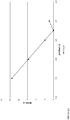
- candy bodies were poured into petri dishes ( ⁇ 3.5 cm) and allowed to cool at room temperature until solidified. The storage took place for 5 days at 25 ° C and 80% humidity. The water absorption was assessed on the basis of the weight gain of the candy bodies. Surprisingly, at pH 4.0 the result was a sudden relative reduction in weight gain and thus hygroscopicity (see illustration 1 ).
- Example 3 Caramels according to the invention with improved color stability by adjusting the pH
- Example 2 As described in Example 2, starting from commercial isomalt, previously defined pH values were set by adding 1 N NaOH or 1 N HCl, and caramels were produced. To determine the color number according to ICUMSA, a 10% by weight solution in deionized water was prepared by dissolving 90 g of water and 10 g of melt. This showed an optimum of the color value and thus the transparency of the caramel at a pH of 4.1 to 4.2 (see Figure 2 )
Landscapes
- Life Sciences & Earth Sciences (AREA)
- Chemical & Material Sciences (AREA)
- Food Science & Technology (AREA)
- Polymers & Plastics (AREA)
- Engineering & Computer Science (AREA)
- Health & Medical Sciences (AREA)
- Inorganic Chemistry (AREA)
- Nutrition Science (AREA)
- Molecular Biology (AREA)
- Proteomics, Peptides & Aminoacids (AREA)
- Confectionery (AREA)
- Seasonings (AREA)
- Medicinal Preparation (AREA)
Claims (17)
- Solution aqueuse, contenant :
20 % en poids à 75 % en poids de 6-O-α-D-glucopyranosyl-D-sorbitol,
25 % en poids à 80 % en poids de 1-O-α-D-glucopyranosyl-D-mannitol,
les % en poids se rapportant à la quantité totale de sucres et d'alcools de sucres de l'ensemble de la solution, caractérisée en ce que la solution présente à une température de 25 °C un pH de 4,0 à 4,5. - Solution aqueuse selon la revendication 1, contenant en outre :0,02 % en poids à 15 % en poids de 1-O-α-D-glucopyranosyl-D-sorbitol, éventuellement0,02 % en poids à 15 % en poids de sorbitol, et éventuellement0,02 % en poids à 15 % en poids de mannitol,
les % en poids se rapportant à la quantité totale de sucres et d'alcools de sucres de l'ensemble de la solution. - Solution aqueuse selon la revendication 1 ou 2, comprenant une quantité totale de sucres et d'alcools de sucres de 40 % en poids à 90 % en poids, par rapport à l'ensemble de la solution aqueuse.
- Composition de mélange contenant :20 % en poids à 75 % en poids de 6-O-α-D-glucopyranosyl-D-sorbitol,25 % en poids à 80 % en poids de 1-O-α-D-glucopyranosyl-D-mannitol, et0,02 % en poids à 15 % en poids d'une substance de tamponnage du pH,les % en poids se rapportant à la quantité totale de sucres et d'alcools de sucres de l'ensemble de la composition de mélange, caractérisée en ce qu'elle présente sous la forme d'une solution aqueuse contenant 40 % en poids de substance sèche, les % en poids se rapportant à l'ensemble de la solution aqueuse, à une température de 25 °C un pH de 4,0 à 4,5.
- Composition de mélange selon la revendication 4, contenant en outre :0,02 % en poids à 15 % en poids de 1-O-α-D-glucopyranosyl-D-sorbitol, éventuellement0,02 % en poids à 15 % en poids de sorbitol, et éventuellement0,02 % en poids à 15 % en poids de mannitol,les % en poids se rapportant à la quantité totale de sucres et d'alcools de sucres de l'ensemble de la composition de mélange.
- Composition de mélange selon la revendication 4 ou 5, caractérisée en ce qu'elle présente sous la forme d'une solution aqueuse contenant 40 % en poids de substance sèche, les % en poids se rapportant à l'ensemble de la solution aqueuse, à une température de 25 °C et à un pH de 4,2 une capacité de tamponnage d'au moins 0,01 mmol/l, notamment d'au moins 0,05 mmol/l, de manière particulièrement préférée d'au moins 0,1 mmol/l.
- Composition de mélange selon au moins l'une quelconque des revendications 4 à 6, caractérisée en ce que la substance de tamponnage du pH est choisie parmi au moins une du groupe comprenant un tampon citrate, un tampon acétate, un tampon citrate-phosphate.
- Composition de mélange selon au moins l'une quelconque des revendications 4 à 7, caractérisée en ce que la substance de tamponnage du pH contient un tampon acétate, celui-ci contenant 0,12 % en poids d'acide acétique glacial et 0,08 % en poids d'acétate de sodium trihydraté, les % en poids se rapportant à la substance sèche de l'ensemble de la composition de mélange, ou contient un tampon citrate, celui-ci contenant 0,30 % en poids d'acide citrique et 0,31 % en poids de citrate de sodium, les % en poids se rapportant à la substance sèche de l'ensemble de la composition de mélange.
- Composition de mélange selon au moins l'une quelconque des revendications 4 à 8, caractérisée en ce qu'elle est solide, de préférence cristalline, à 25 °C.
- Composition de mélange selon la revendication 8 ou 9, caractérisée en ce qu'elle présente une teneur en eau de moins de 2 % en poids, par rapport à l'ensemble de la composition de mélange.
- Composition de mélange selon au moins l'une quelconque des revendications 4 à 8, sous la forme d'une solution aqueuse contenant 40 % en poids à 90 % en poids de substance sèche, par rapport à l'ensemble de la solution aqueuse.
- Composition de mélange selon la revendication 11, présentant à une température de 25 °C un pH de 4,0 à 5,0.
- Utilisation d'une solution aqueuse selon au moins l'une quelconque des revendications 1 à 3 ou d'une composition de mélange selon au moins l'une quelconque des revendications 4 à 12 pour la fabrication de caramels durs.
- Procédé de fabrication d'un caramel dur, comprenant les étapes de procédé suivantes :A) la mise à disposition d'une composition de mélange selon la revendication 11 ou 12,B) le chauffage de la composition de mélange aqueuse et la réduction de la teneur en eau à moins de 2 % en poids, par rapport à l'ensemble de la composition de mélange,C) le refroidissement de la composition de mélange à une température de 100 °C à 120 °C, et éventuellement l'ajout d'additifs supplémentaires, tels que par exemple des arômes, des colorants et des acides, et éventuellement l'homogénéisation, etD) le façonnage de la composition de mélange en le caramel dur souhaité.
- Procédé de fabrication d'un caramel dur, comprenant les étapes de procédé suivantes :A) la mise à disposition d'une solution aqueuse selon au moins l'une quelconque des revendications 1 à 3, contenant 40 % en poids à 90 % en poids de substance sèche, par rapport à l'ensemble de la solution aqueuse, A1) l'ajustement du pH, de telle sorte que la solution aqueuse présente à une température de 25 °C un pH de 4,0 à 4,5,B) le chauffage de la solution aqueuse et la réduction de la teneur en eau à moins de 2 % en poids, par rapport à l'ensemble de la composition de mélange,C) le refroidissement à une température de 100 °C à 120 °C, et éventuellement l'ajout d'additifs supplémentaires, tels que par exemple des arômes, des colorants et des acides, et éventuellement l'homogénéisation, etD) le façonnage en le caramel dur souhaité.
- Procédé de fabrication d'un caramel dur, comprenant les étapes de procédé suivantes :A) la mise à disposition d'une composition de mélange selon la revendication 9 ou 10,B) la fusion de la composition de mélange,C) le refroidissement de la composition de mélange à une température de 100 °C à 120 °C, et éventuellement l'ajout d'additifs supplémentaires, tels que par exemple des arômes, des colorants et des acides, et éventuellement l'homogénéisation,D) le façonnage de la composition de mélange en le caramel dur souhaité.
- Caramel dur contenant une composition de mélange selon au moins l'une quelconque des revendications 4 à 12 ou pouvant être obtenu par l'un quelconque des procédés selon les revendications 14 à 16.
Priority Applications (1)
| Application Number | Priority Date | Filing Date | Title |
|---|---|---|---|
| PL13703810T PL2814329T3 (pl) | 2012-02-14 | 2013-02-12 | ŚRODEK SŁODZĄCY O USTAWIANEJ WARTOŚCI pH |
Applications Claiming Priority (2)
| Application Number | Priority Date | Filing Date | Title |
|---|---|---|---|
| DE102012202193A DE102012202193A1 (de) | 2012-02-14 | 2012-02-14 | pH-eingestelltes Süßungsmittel |
| PCT/EP2013/052759 WO2013120838A1 (fr) | 2012-02-14 | 2013-02-12 | Edulcorant à valeur de ph ajustée |
Publications (2)
| Publication Number | Publication Date |
|---|---|
| EP2814329A1 EP2814329A1 (fr) | 2014-12-24 |
| EP2814329B1 true EP2814329B1 (fr) | 2020-04-15 |
Family
ID=47710152
Family Applications (1)
| Application Number | Title | Priority Date | Filing Date |
|---|---|---|---|
| EP13703810.5A Revoked EP2814329B1 (fr) | 2012-02-14 | 2013-02-12 | Edulcorant à valeur de ph ajustée |
Country Status (9)
| Country | Link |
|---|---|
| US (1) | US20150024106A1 (fr) |
| EP (1) | EP2814329B1 (fr) |
| JP (1) | JP2015506714A (fr) |
| KR (3) | KR20210072134A (fr) |
| DE (1) | DE102012202193A1 (fr) |
| DK (1) | DK2814329T3 (fr) |
| ES (1) | ES2798183T3 (fr) |
| PL (1) | PL2814329T3 (fr) |
| WO (1) | WO2013120838A1 (fr) |
Families Citing this family (10)
| Publication number | Priority date | Publication date | Assignee | Title |
|---|---|---|---|---|
| DE102012200907A1 (de) | 2012-01-23 | 2013-07-25 | Evonik Industries Ag | Verfahren und Absorptionsmedium zur Absorption von CO2 aus einer Gasmischung |
| DE102012207509A1 (de) | 2012-05-07 | 2013-11-07 | Evonik Degussa Gmbh | Verfahren zur Absorption von CO2 aus einer Gasmischung |
| DE102015212749A1 (de) | 2015-07-08 | 2017-01-12 | Evonik Degussa Gmbh | Verfahren zur Entfeuchtung von feuchten Gasgemischen |
| EP3257568B1 (fr) | 2016-06-14 | 2019-09-18 | Evonik Degussa GmbH | Procede de deshumidification de melanges gazeux humides par des liquides ioniques |
| DE102016210478A1 (de) | 2016-06-14 | 2017-12-14 | Evonik Degussa Gmbh | Verfahren zur Entfeuchtung von feuchten Gasgemischen |
| DE102016210481B3 (de) | 2016-06-14 | 2017-06-08 | Evonik Degussa Gmbh | Verfahren zum Reinigen einer ionischen Flüssigkeit |
| EP3257843A1 (fr) | 2016-06-14 | 2017-12-20 | Evonik Degussa GmbH | Procédé pour préparer un sel tres pur d'imidazolium |
| DE102016210483A1 (de) | 2016-06-14 | 2017-12-14 | Evonik Degussa Gmbh | Verfahren und Absorptionsmittel zur Entfeuchtung von feuchten Gasgemischen |
| DE102016210484A1 (de) | 2016-06-14 | 2017-12-14 | Evonik Degussa Gmbh | Verfahren zur Entfeuchtung von feuchten Gasgemischen |
| SG11202000810TA (en) * | 2017-08-02 | 2020-02-27 | Evonik Operations Gmbh | An isomaltulose based sweetener |
Citations (14)
| Publication number | Priority date | Publication date | Assignee | Title |
|---|---|---|---|---|
| US4971798A (en) | 1989-11-30 | 1990-11-20 | Miles Inc. | Hard confections containing hydrogenated isomaltulose and medicinally active ingredient |
| DE19523008A1 (de) | 1994-06-26 | 1996-01-04 | Gadot Biochemical Ind Ltd | Verfahren zur Herstellung von Isomaltit |
| WO1997030598A1 (fr) | 1996-02-24 | 1997-08-28 | Südzucker Aktiengesellschaft | Caramels renfermant un edulcorant |
| WO1998039978A1 (fr) | 1997-03-07 | 1998-09-17 | Südzucker Aktiengesellschaft Mannheim/Ochsenfurt | Procede de production de caramels durs et de comprimes |
| WO2001003513A1 (fr) | 1999-07-08 | 2001-01-18 | Cerestar Holding B.V. | Preparation pour bonbon dur sans sucre |
| WO2001021005A1 (fr) | 1999-09-22 | 2001-03-29 | Südzucker Aktiengesellschaft Mannheim/Ochsenfurt | Caramels durs a stabilite d'entreposage amelioree |
| WO2003104473A2 (fr) | 2002-06-07 | 2003-12-18 | Südzucker Aktiengesellschaft | Galactosyl-isomalte, son procede de preparation et son utilisation |
| WO2004019925A1 (fr) | 2002-08-28 | 2004-03-11 | Pharmacia Corporation | Composition liquide de tolterodine administree par voie orale |
| WO2004049815A2 (fr) | 2002-12-04 | 2004-06-17 | Südzucker Aktiengesellschaft Mannheim/Ochsenfurt | Caramels durs à surface modifiée et à durée de conservation améliorée |
| WO2005075066A1 (fr) | 2004-02-06 | 2005-08-18 | Basf Aktiengesellschaft | Dispersion aqueuse et son utilisation |
| US20090182052A1 (en) | 2008-01-15 | 2009-07-16 | Jelena Djordjevic | Taste-masked docusate compositions |
| WO2010031527A1 (fr) | 2008-09-16 | 2010-03-25 | Tiense Suikerraffinaderij N.V. | Produit de confiserie |
| US20120189560A1 (en) | 2011-01-24 | 2012-07-26 | Healthy Sweet Beverages, LLC. | Sugar-free Beverage Composition |
| WO2013008237A1 (fr) | 2011-07-13 | 2013-01-17 | Akerman, Emanuel | Denrée alimentaire et son procédé de conservation |
Family Cites Families (5)
| Publication number | Priority date | Publication date | Assignee | Title |
|---|---|---|---|---|
| DE9321600U1 (de) * | 1993-05-06 | 2000-04-06 | Südzucker Aktiengesellschaft Mannheim/Ochsenfurt, 68165 Mannheim | Süssungsmittel |
| DE19943491B4 (de) * | 1999-09-10 | 2010-04-01 | Südzucker AG Mannheim/Ochsenfurt | Verbesserte Komprimate |
| DE102004038689A1 (de) * | 2004-08-10 | 2006-03-02 | Südzucker AG Mannheim/Ochsenfurt | Organoleptisch verbesserte besonders lagerstabile Hartkaramellen |
| DE102005022601A1 (de) * | 2005-05-11 | 2006-11-23 | Südzucker AG Mannheim/Ochsenfurt | Hartkaramellen mit Isomaltulose |
| WO2009051219A1 (fr) * | 2007-10-19 | 2009-04-23 | Kabushiki Kaisha Hayashibara Seibutsu Kagaku Kenkyujo | Bonbon dur contenant du lacto-saccharose à dominance de liquéfaction de sucre et procédé de production de celui-ci |
-
2012
- 2012-02-14 DE DE102012202193A patent/DE102012202193A1/de not_active Withdrawn
-
2013
- 2013-02-12 PL PL13703810T patent/PL2814329T3/pl unknown
- 2013-02-12 US US14/378,565 patent/US20150024106A1/en not_active Abandoned
- 2013-02-12 JP JP2014557009A patent/JP2015506714A/ja active Pending
- 2013-02-12 KR KR1020217017502A patent/KR20210072134A/ko not_active Ceased
- 2013-02-12 DK DK13703810.5T patent/DK2814329T3/da active
- 2013-02-12 ES ES13703810T patent/ES2798183T3/es active Active
- 2013-02-12 WO PCT/EP2013/052759 patent/WO2013120838A1/fr not_active Ceased
- 2013-02-12 EP EP13703810.5A patent/EP2814329B1/fr not_active Revoked
- 2013-02-12 KR KR1020197037197A patent/KR20200003211A/ko not_active Ceased
- 2013-02-12 KR KR1020147022351A patent/KR20140125375A/ko not_active Ceased
Patent Citations (15)
| Publication number | Priority date | Publication date | Assignee | Title |
|---|---|---|---|---|
| US4971798A (en) | 1989-11-30 | 1990-11-20 | Miles Inc. | Hard confections containing hydrogenated isomaltulose and medicinally active ingredient |
| DE19523008A1 (de) | 1994-06-26 | 1996-01-04 | Gadot Biochemical Ind Ltd | Verfahren zur Herstellung von Isomaltit |
| WO1997030598A1 (fr) | 1996-02-24 | 1997-08-28 | Südzucker Aktiengesellschaft | Caramels renfermant un edulcorant |
| DE19709304C2 (de) | 1997-03-07 | 2002-08-14 | Suedzucker Ag | Verfahren zur Herstellung von Hartkaramellen und Tabletten |
| WO1998039978A1 (fr) | 1997-03-07 | 1998-09-17 | Südzucker Aktiengesellschaft Mannheim/Ochsenfurt | Procede de production de caramels durs et de comprimes |
| WO2001003513A1 (fr) | 1999-07-08 | 2001-01-18 | Cerestar Holding B.V. | Preparation pour bonbon dur sans sucre |
| WO2001021005A1 (fr) | 1999-09-22 | 2001-03-29 | Südzucker Aktiengesellschaft Mannheim/Ochsenfurt | Caramels durs a stabilite d'entreposage amelioree |
| WO2003104473A2 (fr) | 2002-06-07 | 2003-12-18 | Südzucker Aktiengesellschaft | Galactosyl-isomalte, son procede de preparation et son utilisation |
| WO2004019925A1 (fr) | 2002-08-28 | 2004-03-11 | Pharmacia Corporation | Composition liquide de tolterodine administree par voie orale |
| WO2004049815A2 (fr) | 2002-12-04 | 2004-06-17 | Südzucker Aktiengesellschaft Mannheim/Ochsenfurt | Caramels durs à surface modifiée et à durée de conservation améliorée |
| WO2005075066A1 (fr) | 2004-02-06 | 2005-08-18 | Basf Aktiengesellschaft | Dispersion aqueuse et son utilisation |
| US20090182052A1 (en) | 2008-01-15 | 2009-07-16 | Jelena Djordjevic | Taste-masked docusate compositions |
| WO2010031527A1 (fr) | 2008-09-16 | 2010-03-25 | Tiense Suikerraffinaderij N.V. | Produit de confiserie |
| US20120189560A1 (en) | 2011-01-24 | 2012-07-26 | Healthy Sweet Beverages, LLC. | Sugar-free Beverage Composition |
| WO2013008237A1 (fr) | 2011-07-13 | 2013-01-17 | Akerman, Emanuel | Denrée alimentaire et son procédé de conservation |
Non-Patent Citations (7)
| Title |
|---|
| "Leatherhead food research Ingredients handbook", 1 January 1996, article FERGUSON TONY, ET AL: "Isomalt", pages: 21 - 48, XP055963332 |
| "SWEETENERS AND SUGAR ALTERNATIVES IN FOOD TECHNOLOGY", 2006, article H. MITCHELL: "10 Isomalt", pages: 177 - 204, XP055781595 |
| "Untersuchung von Lebensmitteln (Zusatzstoffen)", AMTLICHE SAMMLUNG VON UNTERSUCHUNGSVERFAHREN NACH § 35 LMBG, May 1982 (1982-05-01), XP055781599 |
| ANONYMOUS: "Isomalt", SICHERHEITSDATENBLATT ISOMALT (LIQUID) (D3A) MIT PRODUKTSPEZIFIKATION ISOMALT ST (LIQUID) (D3B) UND ISOMALT ST (D3C, 1 June 2003 (2003-06-01), pages 1 - 6, XP055963268 |
| BOLLINGER HARTMUT: "Palatinit (Isomalt) - ein kalorienreduzierter Zuckeraustauschstoff", GORDIAN, 1 June 1987 (1987-06-01), pages 111 - 114, XP055963347 |
| ERKLÄRUNG DR. RALPH CARTARIUS, OFFENKUNDIGE VORBENUTZUNGEN |
| FRITZSCHING B.: "ISOMALT IN HARD CANDY APPLICATIONS.", THE MANUFACTURING CONFECTIONER, CHICAGO, IL., US, vol. 75., no. 11., 1 January 1995 (1995-01-01), US , pages 65 - 73., XP000862872, ISSN: 0163-4364 |
Also Published As
| Publication number | Publication date |
|---|---|
| DK2814329T3 (da) | 2020-07-13 |
| KR20200003211A (ko) | 2020-01-08 |
| KR20210072134A (ko) | 2021-06-16 |
| EP2814329A1 (fr) | 2014-12-24 |
| ES2798183T3 (es) | 2020-12-09 |
| KR20140125375A (ko) | 2014-10-28 |
| PL2814329T3 (pl) | 2020-12-28 |
| US20150024106A1 (en) | 2015-01-22 |
| JP2015506714A (ja) | 2015-03-05 |
| WO2013120838A1 (fr) | 2013-08-22 |
| DE102012202193A1 (de) | 2013-08-14 |
Similar Documents
| Publication | Publication Date | Title |
|---|---|---|
| EP2814329B1 (fr) | Edulcorant à valeur de ph ajustée | |
| DE69207259T2 (de) | Hypokalorische Schokolade | |
| DE69403356T2 (de) | Süsssirup auf Basis von Maltitol, mit Hilfe dieses Sirup hergestellte Konfekte und die Anwendung eines Mittels zur Regulierung des Kristallisationsablaufes bei der Herstellung dieser Produkte | |
| DE69033534T2 (de) | Xylit enthaltende hartbonbons und verfahren zu ihrer herstellung | |
| DE3873445T2 (de) | Harter kandiszucker und verfahren zu seiner herstellung. | |
| DE19705664B4 (de) | Verfahren zur Herstellung 1,1-GPM angereicherter Phasen mit über 75 Gew.-% a.TS bis über 99 Gew.-% a.TS 1,1-GPM und 1,6-GPS angereicherter Phasen mit über 80 Gew.-% a.TS bis über 99 Gew.-% a.TS 1,6 GPS | |
| EP2787833B1 (fr) | Sucrerie à base d'un gel de gélatine et son procédé de production | |
| DE60001503T2 (de) | Verfahren zur herstellung von zuckerfreien süsswaren | |
| EP1217898B1 (fr) | Caramels durs a stabilite d'entreposage amelioree | |
| DE60033117T2 (de) | Verhinderung des Festklebens von Hartkonfekten | |
| CH623995A5 (en) | Process for producing hard caramels | |
| EP1776015B1 (fr) | Caramels durs particulierement stables au stockage presentant de meilleures proprietes organoleptiques | |
| EP1895855A1 (fr) | Caramels durs contenant de l'isomaltulose | |
| EP2410865B1 (fr) | Procédé du type mogul, à basse température, et articles de confiserie obtenus au moyen de ce procédé | |
| DE4411584C1 (de) | Zuckerfreier Fondant | |
| DE60119309T2 (de) | Sirup-enthaltende zusammensetzungen und verfahren zu deren herstellung | |
| EP2628397B1 (fr) | Compositions édulcorantes renfermant du sucralose | |
| EP2138051B1 (fr) | Mélanges d'amidon et leur utilisation | |
| DE1692721B2 (de) | Verwendung eines produkts, das aus staerke durch hydrolyse und hydrierung hergestellt worden ist, als zuckerersatzmittel | |
| DE4411595C1 (de) | Nicht-auskristallisierender Sirup | |
| EP4072305B1 (fr) | Caramels durs contenant de l'isomaltulose et procédés de fabrication de ceux-ci | |
| WO1995012985A1 (fr) | Fondant et son procede de fabrication | |
| EP4329505A1 (fr) | Composition édulcorante à teneur réduite en sucre et son procédé de fabrication | |
| WO2022029010A1 (fr) | Préparation améliorée de saccharose de betterave sucrière | |
| CH712626A1 (de) | Schokolademasse. |
Legal Events
| Date | Code | Title | Description |
|---|---|---|---|
| PUAI | Public reference made under article 153(3) epc to a published international application that has entered the european phase |
Free format text: ORIGINAL CODE: 0009012 |
|
| 17P | Request for examination filed |
Effective date: 20140807 |
|
| AK | Designated contracting states |
Kind code of ref document: A1 Designated state(s): AL AT BE BG CH CY CZ DE DK EE ES FI FR GB GR HR HU IE IS IT LI LT LU LV MC MK MT NL NO PL PT RO RS SE SI SK SM TR |
|
| AX | Request for extension of the european patent |
Extension state: BA ME |
|
| DAX | Request for extension of the european patent (deleted) | ||
| STAA | Information on the status of an ep patent application or granted ep patent |
Free format text: STATUS: EXAMINATION IS IN PROGRESS |
|
| 17Q | First examination report despatched |
Effective date: 20170320 |
|
| TPAC | Observations filed by third parties |
Free format text: ORIGINAL CODE: EPIDOSNTIPA |
|
| REG | Reference to a national code |
Ref country code: DE Ref legal event code: R079 Ref document number: 502013014582 Country of ref document: DE Free format text: PREVIOUS MAIN CLASS: A23G0003320000 Ipc: A23L0027300000 |
|
| RIC1 | Information provided on ipc code assigned before grant |
Ipc: A23G 3/42 20060101ALI20190920BHEP Ipc: A23L 29/30 20160101ALI20190920BHEP Ipc: A23G 3/32 20060101ALI20190920BHEP Ipc: A23L 27/30 20160101AFI20190920BHEP Ipc: A23G 3/36 20060101ALI20190920BHEP Ipc: A23G 3/38 20060101ALI20190920BHEP |
|
| GRAP | Despatch of communication of intention to grant a patent |
Free format text: ORIGINAL CODE: EPIDOSNIGR1 |
|
| STAA | Information on the status of an ep patent application or granted ep patent |
Free format text: STATUS: GRANT OF PATENT IS INTENDED |
|
| INTG | Intention to grant announced |
Effective date: 20191104 |
|
| RAP1 | Party data changed (applicant data changed or rights of an application transferred) |
Owner name: EVONIK OPERATIONS GMBH Owner name: PFEIFER & LANGEN GMBH & CO. KG |
|
| GRAS | Grant fee paid |
Free format text: ORIGINAL CODE: EPIDOSNIGR3 |
|
| GRAA | (expected) grant |
Free format text: ORIGINAL CODE: 0009210 |
|
| STAA | Information on the status of an ep patent application or granted ep patent |
Free format text: STATUS: THE PATENT HAS BEEN GRANTED |
|
| AK | Designated contracting states |
Kind code of ref document: B1 Designated state(s): AL AT BE BG CH CY CZ DE DK EE ES FI FR GB GR HR HU IE IS IT LI LT LU LV MC MK MT NL NO PL PT RO RS SE SI SK SM TR |
|
| REG | Reference to a national code |
Ref country code: GB Ref legal event code: FG4D Free format text: NOT ENGLISH Ref country code: CH Ref legal event code: EP |
|
| REG | Reference to a national code |
Ref country code: DE Ref legal event code: R096 Ref document number: 502013014582 Country of ref document: DE |
|
| RAP2 | Party data changed (patent owner data changed or rights of a patent transferred) |
Owner name: EVONIK OPERATIONS GMBH |
|
| REG | Reference to a national code |
Ref country code: IE Ref legal event code: FG4D Free format text: LANGUAGE OF EP DOCUMENT: GERMAN |
|
| REG | Reference to a national code |
Ref country code: AT Ref legal event code: REF Ref document number: 1256248 Country of ref document: AT Kind code of ref document: T Effective date: 20200515 |
|
| REG | Reference to a national code |
Ref country code: DK Ref legal event code: T3 Effective date: 20200708 |
|
| REG | Reference to a national code |
Ref country code: SE Ref legal event code: TRGR |
|
| REG | Reference to a national code |
Ref country code: NL Ref legal event code: FP |
|
| REG | Reference to a national code |
Ref country code: NO Ref legal event code: T2 Effective date: 20200415 |
|
| REG | Reference to a national code |
Ref country code: LT Ref legal event code: MG4D |
|
| PG25 | Lapsed in a contracting state [announced via postgrant information from national office to epo] |
Ref country code: IS Free format text: LAPSE BECAUSE OF FAILURE TO SUBMIT A TRANSLATION OF THE DESCRIPTION OR TO PAY THE FEE WITHIN THE PRESCRIBED TIME-LIMIT Effective date: 20200815 Ref country code: PT Free format text: LAPSE BECAUSE OF FAILURE TO SUBMIT A TRANSLATION OF THE DESCRIPTION OR TO PAY THE FEE WITHIN THE PRESCRIBED TIME-LIMIT Effective date: 20200817 Ref country code: LT Free format text: LAPSE BECAUSE OF FAILURE TO SUBMIT A TRANSLATION OF THE DESCRIPTION OR TO PAY THE FEE WITHIN THE PRESCRIBED TIME-LIMIT Effective date: 20200415 Ref country code: GR Free format text: LAPSE BECAUSE OF FAILURE TO SUBMIT A TRANSLATION OF THE DESCRIPTION OR TO PAY THE FEE WITHIN THE PRESCRIBED TIME-LIMIT Effective date: 20200716 Ref country code: FI Free format text: LAPSE BECAUSE OF FAILURE TO SUBMIT A TRANSLATION OF THE DESCRIPTION OR TO PAY THE FEE WITHIN THE PRESCRIBED TIME-LIMIT Effective date: 20200415 |
|
| REG | Reference to a national code |
Ref country code: SK Ref legal event code: T3 Ref document number: E 35163 Country of ref document: SK |
|
| PG25 | Lapsed in a contracting state [announced via postgrant information from national office to epo] |
Ref country code: HR Free format text: LAPSE BECAUSE OF FAILURE TO SUBMIT A TRANSLATION OF THE DESCRIPTION OR TO PAY THE FEE WITHIN THE PRESCRIBED TIME-LIMIT Effective date: 20200415 Ref country code: LV Free format text: LAPSE BECAUSE OF FAILURE TO SUBMIT A TRANSLATION OF THE DESCRIPTION OR TO PAY THE FEE WITHIN THE PRESCRIBED TIME-LIMIT Effective date: 20200415 Ref country code: RS Free format text: LAPSE BECAUSE OF FAILURE TO SUBMIT A TRANSLATION OF THE DESCRIPTION OR TO PAY THE FEE WITHIN THE PRESCRIBED TIME-LIMIT Effective date: 20200415 Ref country code: BG Free format text: LAPSE BECAUSE OF FAILURE TO SUBMIT A TRANSLATION OF THE DESCRIPTION OR TO PAY THE FEE WITHIN THE PRESCRIBED TIME-LIMIT Effective date: 20200715 |
|
| REG | Reference to a national code |
Ref country code: ES Ref legal event code: FG2A Ref document number: 2798183 Country of ref document: ES Kind code of ref document: T3 Effective date: 20201209 |
|
| PG25 | Lapsed in a contracting state [announced via postgrant information from national office to epo] |
Ref country code: AL Free format text: LAPSE BECAUSE OF FAILURE TO SUBMIT A TRANSLATION OF THE DESCRIPTION OR TO PAY THE FEE WITHIN THE PRESCRIBED TIME-LIMIT Effective date: 20200415 |
|
| REG | Reference to a national code |
Ref country code: DE Ref legal event code: R026 Ref document number: 502013014582 Country of ref document: DE |
|
| PG25 | Lapsed in a contracting state [announced via postgrant information from national office to epo] |
Ref country code: SM Free format text: LAPSE BECAUSE OF FAILURE TO SUBMIT A TRANSLATION OF THE DESCRIPTION OR TO PAY THE FEE WITHIN THE PRESCRIBED TIME-LIMIT Effective date: 20200415 Ref country code: RO Free format text: LAPSE BECAUSE OF FAILURE TO SUBMIT A TRANSLATION OF THE DESCRIPTION OR TO PAY THE FEE WITHIN THE PRESCRIBED TIME-LIMIT Effective date: 20200415 Ref country code: EE Free format text: LAPSE BECAUSE OF FAILURE TO SUBMIT A TRANSLATION OF THE DESCRIPTION OR TO PAY THE FEE WITHIN THE PRESCRIBED TIME-LIMIT Effective date: 20200415 Ref country code: CZ Free format text: LAPSE BECAUSE OF FAILURE TO SUBMIT A TRANSLATION OF THE DESCRIPTION OR TO PAY THE FEE WITHIN THE PRESCRIBED TIME-LIMIT Effective date: 20200415 |
|
| PLBI | Opposition filed |
Free format text: ORIGINAL CODE: 0009260 |
|
| PLAX | Notice of opposition and request to file observation + time limit sent |
Free format text: ORIGINAL CODE: EPIDOSNOBS2 |
|
| 26 | Opposition filed |
Opponent name: CARGILL, INCORPORATED Effective date: 20210113 Opponent name: SUEDZUCKER AG Effective date: 20210114 |
|
| PG25 | Lapsed in a contracting state [announced via postgrant information from national office to epo] |
Ref country code: SI Free format text: LAPSE BECAUSE OF FAILURE TO SUBMIT A TRANSLATION OF THE DESCRIPTION OR TO PAY THE FEE WITHIN THE PRESCRIBED TIME-LIMIT Effective date: 20200415 |
|
| PLAF | Information modified related to communication of a notice of opposition and request to file observations + time limit |
Free format text: ORIGINAL CODE: EPIDOSCOBS2 |
|
| PLBB | Reply of patent proprietor to notice(s) of opposition received |
Free format text: ORIGINAL CODE: EPIDOSNOBS3 |
|
| PG25 | Lapsed in a contracting state [announced via postgrant information from national office to epo] |
Ref country code: MC Free format text: LAPSE BECAUSE OF FAILURE TO SUBMIT A TRANSLATION OF THE DESCRIPTION OR TO PAY THE FEE WITHIN THE PRESCRIBED TIME-LIMIT Effective date: 20200415 |
|
| PG25 | Lapsed in a contracting state [announced via postgrant information from national office to epo] |
Ref country code: LU Free format text: LAPSE BECAUSE OF NON-PAYMENT OF DUE FEES Effective date: 20210212 |
|
| PGFP | Annual fee paid to national office [announced via postgrant information from national office to epo] |
Ref country code: IE Payment date: 20220216 Year of fee payment: 10 Ref country code: GB Payment date: 20220223 Year of fee payment: 10 Ref country code: DK Payment date: 20220218 Year of fee payment: 10 Ref country code: DE Payment date: 20220217 Year of fee payment: 10 Ref country code: CH Payment date: 20220216 Year of fee payment: 10 Ref country code: AT Payment date: 20220217 Year of fee payment: 10 |
|
| PGFP | Annual fee paid to national office [announced via postgrant information from national office to epo] |
Ref country code: SK Payment date: 20220223 Year of fee payment: 10 Ref country code: SE Payment date: 20220216 Year of fee payment: 10 Ref country code: PL Payment date: 20220204 Year of fee payment: 10 Ref country code: NO Payment date: 20220218 Year of fee payment: 10 Ref country code: NL Payment date: 20220216 Year of fee payment: 10 Ref country code: IT Payment date: 20220218 Year of fee payment: 10 Ref country code: FR Payment date: 20220216 Year of fee payment: 10 Ref country code: BE Payment date: 20220216 Year of fee payment: 10 |
|
| PGFP | Annual fee paid to national office [announced via postgrant information from national office to epo] |
Ref country code: ES Payment date: 20220426 Year of fee payment: 10 |
|
| REG | Reference to a national code |
Ref country code: DE Ref legal event code: R103 Ref document number: 502013014582 Country of ref document: DE Ref country code: DE Ref legal event code: R064 Ref document number: 502013014582 Country of ref document: DE |
|
| RDAF | Communication despatched that patent is revoked |
Free format text: ORIGINAL CODE: EPIDOSNREV1 |
|
| PG25 | Lapsed in a contracting state [announced via postgrant information from national office to epo] |
Ref country code: HU Free format text: LAPSE BECAUSE OF FAILURE TO SUBMIT A TRANSLATION OF THE DESCRIPTION OR TO PAY THE FEE WITHIN THE PRESCRIBED TIME-LIMIT; INVALID AB INITIO Effective date: 20130212 |
|
| RDAG | Patent revoked |
Free format text: ORIGINAL CODE: 0009271 |
|
| STAA | Information on the status of an ep patent application or granted ep patent |
Free format text: STATUS: PATENT REVOKED |
|
| PG25 | Lapsed in a contracting state [announced via postgrant information from national office to epo] |
Ref country code: CY Free format text: LAPSE BECAUSE OF FAILURE TO SUBMIT A TRANSLATION OF THE DESCRIPTION OR TO PAY THE FEE WITHIN THE PRESCRIBED TIME-LIMIT Effective date: 20200415 |
|
| REG | Reference to a national code |
Ref country code: CH Ref legal event code: PL |
|
| REG | Reference to a national code |
Ref country code: SK Ref legal event code: MC4A Ref document number: E 35163 Country of ref document: SK Effective date: 20230117 |
|
| 27W | Patent revoked |
Effective date: 20230117 |
|
| GBPR | Gb: patent revoked under art. 102 of the ep convention designating the uk as contracting state |
Effective date: 20230117 |
|
| REG | Reference to a national code |
Ref country code: NO Ref legal event code: MMEP |
|
| REG | Reference to a national code |
Ref country code: SE Ref legal event code: ECNC |
|
| REG | Reference to a national code |
Ref country code: AT Ref legal event code: MA03 Ref document number: 1256248 Country of ref document: AT Kind code of ref document: T Effective date: 20230117 |
|
| PG25 | Lapsed in a contracting state [announced via postgrant information from national office to epo] |
Ref country code: MK Free format text: LAPSE BECAUSE OF FAILURE TO SUBMIT A TRANSLATION OF THE DESCRIPTION OR TO PAY THE FEE WITHIN THE PRESCRIBED TIME-LIMIT Effective date: 20200415 |
|
| PG25 | Lapsed in a contracting state [announced via postgrant information from national office to epo] |
Ref country code: MT Free format text: LAPSE BECAUSE OF FAILURE TO SUBMIT A TRANSLATION OF THE DESCRIPTION OR TO PAY THE FEE WITHIN THE PRESCRIBED TIME-LIMIT Effective date: 20200415 |
|
| PG25 | Lapsed in a contracting state [announced via postgrant information from national office to epo] |
Ref country code: TR Free format text: LAPSE BECAUSE OF FAILURE TO SUBMIT A TRANSLATION OF THE DESCRIPTION OR TO PAY THE FEE WITHIN THE PRESCRIBED TIME-LIMIT Effective date: 20200415 |