EP2816092A1 - Neue leitende und lichtempfindliche Polymere - Google Patents
Neue leitende und lichtempfindliche Polymere Download PDFInfo
- Publication number
- EP2816092A1 EP2816092A1 EP14170535.0A EP14170535A EP2816092A1 EP 2816092 A1 EP2816092 A1 EP 2816092A1 EP 14170535 A EP14170535 A EP 14170535A EP 2816092 A1 EP2816092 A1 EP 2816092A1
- Authority
- EP
- European Patent Office
- Prior art keywords
- group
- substituted
- isocyanate
- polythiophene
- compound
- Prior art date
- Legal status (The legal status is an assumption and is not a legal conclusion. Google has not performed a legal analysis and makes no representation as to the accuracy of the status listed.)
- Withdrawn
Links
- 0 *C(OCCc1c[s]cc1)=O Chemical compound *C(OCCc1c[s]cc1)=O 0.000 description 1
- GWQOOADXMVQEFT-UHFFFAOYSA-N Cc1ccc(C)[s]1 Chemical compound Cc1ccc(C)[s]1 GWQOOADXMVQEFT-UHFFFAOYSA-N 0.000 description 1
- QWZZSOZFZUNSJV-UHFFFAOYSA-N OCCC1=CSCC=C1 Chemical compound OCCC1=CSCC=C1 QWZZSOZFZUNSJV-UHFFFAOYSA-N 0.000 description 1
Images





Classifications
-
- C—CHEMISTRY; METALLURGY
- C09—DYES; PAINTS; POLISHES; NATURAL RESINS; ADHESIVES; COMPOSITIONS NOT OTHERWISE PROVIDED FOR; APPLICATIONS OF MATERIALS NOT OTHERWISE PROVIDED FOR
- C09K—MATERIALS FOR MISCELLANEOUS APPLICATIONS, NOT PROVIDED FOR ELSEWHERE
- C09K11/00—Luminescent materials, e.g. electroluminescent or chemiluminescent
- C09K11/06—Luminescent materials, e.g. electroluminescent or chemiluminescent containing organic luminescent materials
-
- C—CHEMISTRY; METALLURGY
- C08—ORGANIC MACROMOLECULAR COMPOUNDS; THEIR PREPARATION OR CHEMICAL WORKING-UP; COMPOSITIONS BASED THEREON
- C08G—MACROMOLECULAR COMPOUNDS OBTAINED OTHERWISE THAN BY REACTIONS ONLY INVOLVING UNSATURATED CARBON-TO-CARBON BONDS
- C08G61/00—Macromolecular compounds obtained by reactions forming a carbon-to-carbon link in the main chain of the macromolecule
- C08G61/12—Macromolecular compounds containing atoms other than carbon in the main chain of the macromolecule
- C08G61/122—Macromolecular compounds containing atoms other than carbon in the main chain of the macromolecule derived from five- or six-membered heterocyclic compounds, other than imides
- C08G61/123—Macromolecular compounds containing atoms other than carbon in the main chain of the macromolecule derived from five- or six-membered heterocyclic compounds, other than imides derived from five-membered heterocyclic compounds
-
- C—CHEMISTRY; METALLURGY
- C08—ORGANIC MACROMOLECULAR COMPOUNDS; THEIR PREPARATION OR CHEMICAL WORKING-UP; COMPOSITIONS BASED THEREON
- C08G—MACROMOLECULAR COMPOUNDS OBTAINED OTHERWISE THAN BY REACTIONS ONLY INVOLVING UNSATURATED CARBON-TO-CARBON BONDS
- C08G61/00—Macromolecular compounds obtained by reactions forming a carbon-to-carbon link in the main chain of the macromolecule
- C08G61/12—Macromolecular compounds containing atoms other than carbon in the main chain of the macromolecule
- C08G61/122—Macromolecular compounds containing atoms other than carbon in the main chain of the macromolecule derived from five- or six-membered heterocyclic compounds, other than imides
- C08G61/123—Macromolecular compounds containing atoms other than carbon in the main chain of the macromolecule derived from five- or six-membered heterocyclic compounds, other than imides derived from five-membered heterocyclic compounds
- C08G61/126—Macromolecular compounds containing atoms other than carbon in the main chain of the macromolecule derived from five- or six-membered heterocyclic compounds, other than imides derived from five-membered heterocyclic compounds with a five-membered ring containing one sulfur atom in the ring
-
- H—ELECTRICITY
- H01—ELECTRIC ELEMENTS
- H01B—CABLES; CONDUCTORS; INSULATORS; SELECTION OF MATERIALS FOR THEIR CONDUCTIVE, INSULATING OR DIELECTRIC PROPERTIES
- H01B1/00—Conductors or conductive bodies characterised by the conductive materials; Selection of materials as conductors
- H01B1/06—Conductors or conductive bodies characterised by the conductive materials; Selection of materials as conductors mainly consisting of other non-metallic substances
- H01B1/12—Conductors or conductive bodies characterised by the conductive materials; Selection of materials as conductors mainly consisting of other non-metallic substances organic substances
- H01B1/124—Intrinsically conductive polymers
- H01B1/127—Intrinsically conductive polymers comprising five-membered aromatic rings in the main chain, e.g. polypyrroles, polythiophenes
-
- H—ELECTRICITY
- H10—SEMICONDUCTOR DEVICES; ELECTRIC SOLID-STATE DEVICES NOT OTHERWISE PROVIDED FOR
- H10K—ORGANIC ELECTRIC SOLID-STATE DEVICES
- H10K71/00—Manufacture or treatment specially adapted for the organic devices covered by this subclass
- H10K71/10—Deposition of organic active material
- H10K71/12—Deposition of organic active material using liquid deposition, e.g. spin coating
-
- H—ELECTRICITY
- H10—SEMICONDUCTOR DEVICES; ELECTRIC SOLID-STATE DEVICES NOT OTHERWISE PROVIDED FOR
- H10K—ORGANIC ELECTRIC SOLID-STATE DEVICES
- H10K85/00—Organic materials used in the body or electrodes of devices covered by this subclass
- H10K85/10—Organic polymers or oligomers
- H10K85/111—Organic polymers or oligomers comprising aromatic, heteroaromatic, or aryl chains, e.g. polyaniline, polyphenylene or polyphenylene vinylene
- H10K85/113—Heteroaromatic compounds comprising sulfur or selene, e.g. polythiophene
-
- H—ELECTRICITY
- H10—SEMICONDUCTOR DEVICES; ELECTRIC SOLID-STATE DEVICES NOT OTHERWISE PROVIDED FOR
- H10K—ORGANIC ELECTRIC SOLID-STATE DEVICES
- H10K85/00—Organic materials used in the body or electrodes of devices covered by this subclass
- H10K85/10—Organic polymers or oligomers
- H10K85/111—Organic polymers or oligomers comprising aromatic, heteroaromatic, or aryl chains, e.g. polyaniline, polyphenylene or polyphenylene vinylene
- H10K85/115—Polyfluorene; Derivatives thereof
-
- H—ELECTRICITY
- H10—SEMICONDUCTOR DEVICES; ELECTRIC SOLID-STATE DEVICES NOT OTHERWISE PROVIDED FOR
- H10K—ORGANIC ELECTRIC SOLID-STATE DEVICES
- H10K85/00—Organic materials used in the body or electrodes of devices covered by this subclass
- H10K85/10—Organic polymers or oligomers
- H10K85/151—Copolymers
-
- C—CHEMISTRY; METALLURGY
- C08—ORGANIC MACROMOLECULAR COMPOUNDS; THEIR PREPARATION OR CHEMICAL WORKING-UP; COMPOSITIONS BASED THEREON
- C08G—MACROMOLECULAR COMPOUNDS OBTAINED OTHERWISE THAN BY REACTIONS ONLY INVOLVING UNSATURATED CARBON-TO-CARBON BONDS
- C08G2261/00—Macromolecular compounds obtained by reactions forming a carbon-to-carbon link in the main chain of the macromolecule
- C08G2261/10—Definition of the polymer structure
- C08G2261/14—Side-groups
- C08G2261/143—Side-chains containing nitrogen
-
- C—CHEMISTRY; METALLURGY
- C08—ORGANIC MACROMOLECULAR COMPOUNDS; THEIR PREPARATION OR CHEMICAL WORKING-UP; COMPOSITIONS BASED THEREON
- C08G—MACROMOLECULAR COMPOUNDS OBTAINED OTHERWISE THAN BY REACTIONS ONLY INVOLVING UNSATURATED CARBON-TO-CARBON BONDS
- C08G2261/00—Macromolecular compounds obtained by reactions forming a carbon-to-carbon link in the main chain of the macromolecule
- C08G2261/10—Definition of the polymer structure
- C08G2261/14—Side-groups
- C08G2261/143—Side-chains containing nitrogen
- C08G2261/1432—Side-chains containing nitrogen containing amide groups
-
- C—CHEMISTRY; METALLURGY
- C08—ORGANIC MACROMOLECULAR COMPOUNDS; THEIR PREPARATION OR CHEMICAL WORKING-UP; COMPOSITIONS BASED THEREON
- C08G—MACROMOLECULAR COMPOUNDS OBTAINED OTHERWISE THAN BY REACTIONS ONLY INVOLVING UNSATURATED CARBON-TO-CARBON BONDS
- C08G2261/00—Macromolecular compounds obtained by reactions forming a carbon-to-carbon link in the main chain of the macromolecule
- C08G2261/30—Monomer units or repeat units incorporating structural elements in the main chain
- C08G2261/32—Monomer units or repeat units incorporating structural elements in the main chain incorporating heteroaromatic structural elements in the main chain
- C08G2261/322—Monomer units or repeat units incorporating structural elements in the main chain incorporating heteroaromatic structural elements in the main chain non-condensed
- C08G2261/3223—Monomer units or repeat units incorporating structural elements in the main chain incorporating heteroaromatic structural elements in the main chain non-condensed containing one or more sulfur atoms as the only heteroatom, e.g. thiophene
-
- C—CHEMISTRY; METALLURGY
- C08—ORGANIC MACROMOLECULAR COMPOUNDS; THEIR PREPARATION OR CHEMICAL WORKING-UP; COMPOSITIONS BASED THEREON
- C08G—MACROMOLECULAR COMPOUNDS OBTAINED OTHERWISE THAN BY REACTIONS ONLY INVOLVING UNSATURATED CARBON-TO-CARBON BONDS
- C08G2261/00—Macromolecular compounds obtained by reactions forming a carbon-to-carbon link in the main chain of the macromolecule
- C08G2261/30—Monomer units or repeat units incorporating structural elements in the main chain
- C08G2261/32—Monomer units or repeat units incorporating structural elements in the main chain incorporating heteroaromatic structural elements in the main chain
- C08G2261/324—Monomer units or repeat units incorporating structural elements in the main chain incorporating heteroaromatic structural elements in the main chain condensed
- C08G2261/3246—Monomer units or repeat units incorporating structural elements in the main chain incorporating heteroaromatic structural elements in the main chain condensed containing nitrogen and sulfur as heteroatoms
-
- C—CHEMISTRY; METALLURGY
- C08—ORGANIC MACROMOLECULAR COMPOUNDS; THEIR PREPARATION OR CHEMICAL WORKING-UP; COMPOSITIONS BASED THEREON
- C08G—MACROMOLECULAR COMPOUNDS OBTAINED OTHERWISE THAN BY REACTIONS ONLY INVOLVING UNSATURATED CARBON-TO-CARBON BONDS
- C08G2261/00—Macromolecular compounds obtained by reactions forming a carbon-to-carbon link in the main chain of the macromolecule
- C08G2261/90—Applications
- C08G2261/91—Photovoltaic applications
-
- C—CHEMISTRY; METALLURGY
- C08—ORGANIC MACROMOLECULAR COMPOUNDS; THEIR PREPARATION OR CHEMICAL WORKING-UP; COMPOSITIONS BASED THEREON
- C08G—MACROMOLECULAR COMPOUNDS OBTAINED OTHERWISE THAN BY REACTIONS ONLY INVOLVING UNSATURATED CARBON-TO-CARBON BONDS
- C08G2261/00—Macromolecular compounds obtained by reactions forming a carbon-to-carbon link in the main chain of the macromolecule
- C08G2261/90—Applications
- C08G2261/92—TFT applications
-
- C—CHEMISTRY; METALLURGY
- C08—ORGANIC MACROMOLECULAR COMPOUNDS; THEIR PREPARATION OR CHEMICAL WORKING-UP; COMPOSITIONS BASED THEREON
- C08G—MACROMOLECULAR COMPOUNDS OBTAINED OTHERWISE THAN BY REACTIONS ONLY INVOLVING UNSATURATED CARBON-TO-CARBON BONDS
- C08G2261/00—Macromolecular compounds obtained by reactions forming a carbon-to-carbon link in the main chain of the macromolecule
- C08G2261/90—Applications
- C08G2261/95—Use in organic luminescent diodes
-
- C—CHEMISTRY; METALLURGY
- C09—DYES; PAINTS; POLISHES; NATURAL RESINS; ADHESIVES; COMPOSITIONS NOT OTHERWISE PROVIDED FOR; APPLICATIONS OF MATERIALS NOT OTHERWISE PROVIDED FOR
- C09K—MATERIALS FOR MISCELLANEOUS APPLICATIONS, NOT PROVIDED FOR ELSEWHERE
- C09K2211/00—Chemical nature of organic luminescent or tenebrescent compounds
- C09K2211/14—Macromolecular compounds
- C09K2211/1441—Heterocyclic
- C09K2211/1458—Heterocyclic containing sulfur as the only heteroatom
-
- H—ELECTRICITY
- H10—SEMICONDUCTOR DEVICES; ELECTRIC SOLID-STATE DEVICES NOT OTHERWISE PROVIDED FOR
- H10K—ORGANIC ELECTRIC SOLID-STATE DEVICES
- H10K10/00—Organic devices specially adapted for rectifying, amplifying, oscillating or switching; Organic capacitors or resistors having potential barriers
- H10K10/40—Organic transistors
- H10K10/46—Field-effect transistors, e.g. organic thin-film transistors [OTFT]
- H10K10/462—Insulated gate field-effect transistors [IGFETs]
- H10K10/484—Insulated gate field-effect transistors [IGFETs] characterised by the channel regions
-
- H—ELECTRICITY
- H10—SEMICONDUCTOR DEVICES; ELECTRIC SOLID-STATE DEVICES NOT OTHERWISE PROVIDED FOR
- H10K—ORGANIC ELECTRIC SOLID-STATE DEVICES
- H10K30/00—Organic devices sensitive to infrared radiation, light, electromagnetic radiation of shorter wavelength or corpuscular radiation
- H10K30/30—Organic devices sensitive to infrared radiation, light, electromagnetic radiation of shorter wavelength or corpuscular radiation comprising bulk heterojunctions, e.g. interpenetrating networks of donor and acceptor material domains
-
- H—ELECTRICITY
- H10—SEMICONDUCTOR DEVICES; ELECTRIC SOLID-STATE DEVICES NOT OTHERWISE PROVIDED FOR
- H10K—ORGANIC ELECTRIC SOLID-STATE DEVICES
- H10K30/00—Organic devices sensitive to infrared radiation, light, electromagnetic radiation of shorter wavelength or corpuscular radiation
- H10K30/50—Photovoltaic [PV] devices
-
- H—ELECTRICITY
- H10—SEMICONDUCTOR DEVICES; ELECTRIC SOLID-STATE DEVICES NOT OTHERWISE PROVIDED FOR
- H10K—ORGANIC ELECTRIC SOLID-STATE DEVICES
- H10K85/00—Organic materials used in the body or electrodes of devices covered by this subclass
- H10K85/20—Carbon compounds, e.g. carbon nanotubes or fullerenes
- H10K85/211—Fullerenes, e.g. C60
- H10K85/215—Fullerenes, e.g. C60 comprising substituents, e.g. PCBM
-
- Y—GENERAL TAGGING OF NEW TECHNOLOGICAL DEVELOPMENTS; GENERAL TAGGING OF CROSS-SECTIONAL TECHNOLOGIES SPANNING OVER SEVERAL SECTIONS OF THE IPC; TECHNICAL SUBJECTS COVERED BY FORMER USPC CROSS-REFERENCE ART COLLECTIONS [XRACs] AND DIGESTS
- Y02—TECHNOLOGIES OR APPLICATIONS FOR MITIGATION OR ADAPTATION AGAINST CLIMATE CHANGE
- Y02E—REDUCTION OF GREENHOUSE GAS [GHG] EMISSIONS, RELATED TO ENERGY GENERATION, TRANSMISSION OR DISTRIBUTION
- Y02E10/00—Energy generation through renewable energy sources
- Y02E10/50—Photovoltaic [PV] energy
- Y02E10/549—Organic PV cells
Definitions
- This invention relates to a novel polymer, in particular, a newly functionalized polythiophene, and the syntheses as well as the applications thereof.
- Photovoltaics are currently one of the most research-intensive areas globally in search for new technology to obtain reasonably priced and renewable green energy from sunlight.
- the technology development nowadays has come very diverse in the photovoltaic field.
- energy saving devices such as organic light emitting diodes (OLEDs), polymer light emitting diodes (PLEDs), and organic photovoltaic devices (OPVs) are undergoing mass production and applications based on the advanced materials have been developed in recent years.
- OLEDs organic light emitting diodes
- PLEDs polymer light emitting diodes
- OCVs organic photovoltaic devices
- PCE power conversion efficiency
- the PCE of PTB7 (Poly[[4,8-bis[(2-ethylhexyl)oxy]benzo[1,2-b:4,5-b']dithiophene-2,6-diyl][3-fluoro-2-[(2-ethylhexyl)carbonyl]thieno[3,4-b]thiophene-diyl]]) is able to reach about 9 %.
- the cost and the synthetic methodology for these polymers are not yet favorable for mass production and commercialization. As such, further improvements are still needed in order to provide ease of processing, higher performance, and lower production cost.
- Polythiophene is one of the well-known electrically conducting polymers and it has been an important material for applications in photovoltaic cells, photochemical resists, light emitting diodes, and thin film transistors.
- both native polythiophene and regio-regular polythiophenes are well-known conducting polymers for the applications in the fields of energy saving devices.
- poly(3-hexylthiophene (P3HT) poly(3-hexylthiophene (P3HT)
- P3HT poly(3-hexylthiophene
- native polythiophene is cheap but unfortunately it is not soluble in both organic and aqueous solvents. This implies that the native polythiophene is difficult to be processed and thus limit many of its potential applications.
- the present invention in one aspect, provides a compound of formula I,
- X is selected from the group consisting of hydrogen, bromine, chlorine, and methyl group
- n is equal or great than zero
- k is equal or great than one
- n is equal or great than one
- R is NR 1 R 2 , or selected from the group consisting of hydrogen, alkoxy group, and substituted alkoxy group;
- R 1 and R 2 are independently selected from the group consisting of hydrogen, aldehyde, acid chloride, acid bromide, and isocyanate;
- R' is selected from the group consisting of aryl, and substituted aryl.
- R is NR 1 R 2 or an alkoxy group
- said alkoxy group is further selected from the group consisting of propanols, butanols, pentanols, hexanols, ethyl formate, substituted ethyl formate, ethoxy silane, and substituted ethoxy silane.
- R is NR 1 R 2 or an alkoxy group
- said alkoxy group is further selected from the group consisting of ethanol, substituted ethanol, ethyl formate, substituted ethyl formate, ethoxy silane, and substituted ethoxy silane.
- R'' is hydrogen or alkyl chain comprising C 6 H 13 , C 8 H 17 , and C 12 H 25 ;
- R is NR 1 R 2 or an alkoxy group, said alkoxy group is further selected from the group consisting of ethanol, substituted ethanol, ethyl formate, substituted ethyl formate, ethoxy silane, and substituted ethoxy silane.
- m' is equal or greater than one
- R* is selected from the group consisting of ethanol, substituted ethanol, ethyl formate, substituted ethyl formate, ethoxy silane, and substituted ethoxy silane;
- R" is hydrogen or alkyl chain comprising C 6 H 13 , C 8 H 17 , and C 12 H 25 .
- R is NR 1 R 2 or an alkoxy group
- said alkoxy group is further selected from the group consisting of ethanol, substituted ethanol, ethyl formate, substituted ethyl formate, ethoxy silane, and substituted ethoxy silane.
- R 3 and R 4 are independently selected from the group consisting of hydrogen, aldehyde, acid chloride, acid bromide, and isocyanate.
- aldehyde is an aliphatic aldehyde selected from the group consisting of acetaldehyde, propionaldehyde, butyraldehyde, and valeraldehyde; or an aromatic aldehyde selected from the group consisting of cinnamaldehyde.
- Said aldehyde is present in any one of the compounds represented by formulae I, la, Ib, Ic, Ic', Id, or Ie.
- said acid chloride is an aliphatic acid chloride selected from the group consisting of acetyl chloride, propanoyl chloride, butanoyl chloride, and pentanoyl chloride; or an aromatic acid chloride selected from the group consisting of benzoyl chloride, p-toluoyl chloride, 4-tert-butylbenzoyl chloride, and 4-(chloromethyl)benzoyl chloride.
- Said acid chloride is present in any one of the compounds represented by formulae I, Ia, Ib, Ic, Ic', Id, or Ie.
- said acid bromide is an aliphatic acid bromide selected from the group consisting of acetyl bromide, propanoyl bromide, butanoyl bromide, and pentanoyl bromide; or an aromatic acid bromide selected from the group consisting of p-toluoyl bromide, 4-tert-butylbenzoyl bromide, and 4-(chloromethyl)benzoyl bromide.
- Said acid bromide is present in any one of the compounds represented by formulae I, Ia, Ib, Ic, Ic', Id, or Ie.
- said isocyanate is an aliphatic isocyanate selected from the group consisting of ethyl isocyanate, isopropyl isocyanate, propyl isocyanate, sec-butyl isocyanate, 1-isocyanatobutane, and 2-ethylhexyl isocyanate; or an aromatic isocyanate selected from the group consisting of p-tolyl isocyanate, 4-ethylphenyl isocyanate, and 4-nitrophenyl isocyanate.
- Said isocyanate is present in any one of the compounds represented by formulae I, Ia, Ib, Ic, Ic', Id, or Ie.
- composition comprising at least one of the above mentioned compounds, represented by formulae I, Ia, Ib, Ic, Ic', Id, Ie, Ie', (i), (ii), or (iii), and/or solvents, and/or solvents.
- the solvent comprises an organic solvent selected from the group consisting of acetone, acetonitrile, tetrahydrofuran, ethyl acetate, toluene, benzene, methanol, ethanol, 1-propanol, iso-propanol, DMSO, DMF, and halogenated hydrocarbon solvent.
- the solvent further comprises water.
- compositions as mentioned above including fabricating conducting polymers for printed electronics devices, organic light emitting diodes (OLEDs), light emitting diodes (PLEDs) and organic photovoltaic devices (OPVs) applications; or preparing light absorbing materials or donor materials for organic photovoltaic devices (OPVs) applications.
- OLEDs organic light emitting diodes
- PLEDs light emitting diodes
- OCVs organic photovoltaic devices
- a conductive polymer comprising at least a compound as mentioned above, represented by formulae I, Ia, Ib, Ic, Ic', Id, Ie, Ie', (i), (ii), or (iii).
- a solution comprising at least a compound as mentioned above, represented by formulae I, la, Ib, Ic, Ic', Id, Ie, Ie', (i), (ii), or (iii), wherein said solution is adapted for using or making a thin film on a substrate.
- the solution is adapted for fabrication of a layer by using spin coating process or roll-to-roll process; wherein said layer is selected from the group consisting of a thin layer on a LED device as an active layer, a conductive layer for thermal management, and an active light absorption layer on an organic photovoltaic solar device.
- an ink formulation comprising at least a compound as mentioned above, represented by formulae I, Ia, Ib, Ic, Ic', Id, Ie, Ie', (i), (ii), or (iii), wherein said ink formulation is adapted for using or making a thin film on printed electronic devices.
- the solution, the ink formulation is adapted for fabrication of a layer by using spin coating process or roll-to-roll process; wherein said layer is selected from the group consisting of a thin layer on a LED device as an active layer, a conductive layer for thermal management, and an active light absorption layer on an organic photovoltaic solar device.
- the present invention relates to new functionalized polythiophene compound.
- amine group directly bonds to the thiophene repeating unit of the polythiophene compound.
- the amine group allows ease of further functionalization to prepare new polymer derivatives with different chemical and physical properties.
- These new functionalized polythiophenes and their derivatives can be used for the fabrications of organic light emitting diodes (OLEDs), polymer light emitting diodes (PLEDs), organic photovoltaic devices (OPVs) and conducting polymers for printed electronic devices.
- OLEDs organic light emitting diodes
- PLEDs polymer light emitting diodes
- OOVs organic photovoltaic devices
- the amine-functionalized polythiophene is soluble in commonly used organic solvents including acetone, ethyl acetate, ethanol, and toluene, etc.
- the resulting solution amine-functionalized polythiophene is processable and suitable for printing thin-films in the field of printed electronics
- Another aspect of the present invention discloses a new low-cost methodology to functionalize the native polythiophene through simple and mild chemical processes to produce new polythiophene compounds.
- the process is able to be scaled up for large production.
- the new compounds are soluble in common organic solvents including acetone, acetonitrile, tetrahydrofuran, ethyl acetate, chloroform, toluene, methanol, ethanol, 1-propanol, isopropanol, DMSO, DMF, other halogenated hydrocarbon solvents and etc.
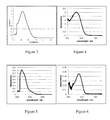
- Fabrication processes are described in Examples 1-9 below. Referring now to Figures 1-5 , the present invention discloses the fabrication processes and UV-vis absorption spectrum of solution processable polythiophene.
- Step 1 Nitration of Polythiophene to NO 2 -polythiophene (NO 2 -PT)
- HNO 3 8 ml
- H 2 SO 4 (20 ml) were put in an ice bath for 30 min.
- the two acids and 3 ml H 2 O were added to a flask with stirring in an ice bath and was kept for 30 min.
- Polythiophene (1 g) was added to the flask slowly.
- the mixture was then heated to 50 °C for 4 h after all solids were dissolved.
- the reaction mixture was then cooled to room temperature and then was poured to a beaker with ice-water slowly. Reddish brown precipitates were formed and the solid was filtered out.
- the compound was characterized by UV-vis. The process is summarized in Equation (2) below.
- Step 2 Reduction of NO 2 -polythiophene to NH 2 -polythiophene
- Step 1 Modification of Thiophene-3-ethanol with various acyl chlorides (where R can be any alkyl chains comprising methyl, ethyl, propyl, i-propyl, butyl, etc.)
- Step 2 Synthesis of polythiophene 1 (where R can be any alkyl chains comprising methyl, ethyl, propyl, i-propyl, butyl, etc.)
- polythiophene 1 is soluble in acetone, chloroform, and 1,2-dichlorobenzene.
- Table 1 Sample Solvent Solubility, g/ml at 23 °C A Methanol Insoluble B Acetonitrile Insoluble C Acetone 0.43 mg/mL D Chloroform 0.93 mg/mL E 1,2-Dichlorobenzene 1.03 mg/mL
- Step 1 Modification of Thiophene-3-ethanol with various silyl chlorides ((R) 3 -Si-Cl, where R 1 , R 2 , and R 3 can be any alkyl chains comprising methyl, ethyl, propyl, i-propyl, butyl, etc.)
- Step 2 Synthesis of silyl-Polythiophene (where R can be any alkyl chains comprising methyl, ethyl, propyl, i-propyl, butyl, etc.)
- polythiophene 2 is soluble in acetone, chloroform, and 1,2-dichlorobenzene.
- polythiophene 4 is soluble in acetone, chloroform, and 1,2-dichlorobenzene.
- Step 1 Synthesis of 3-substituted polythiophene 5 (where the repeating unit, n, is greater than 1.
- R 1 , R 2 , and R 3 can be any alkyl chains comprising methyl, ethyl, propyl, i-propyl, butyl, etc.
- R 1 , R 2 , and R 3 can be any alkyl chains comprising methyl, ethyl, propyl, i-propyl, butyl, etc.
- Example 9 Synthesis using new polythiophene (where R can be any alkyl chains comprising methyl, ethyl, propyl, i-propyl, butyl, etc.) with benzothiadiazole (BT).
- R can be any alkyl chains comprising methyl, ethyl, propyl, i-propyl, butyl, etc.
- BT benzothiadiazole
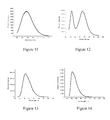
- Polythiophene 14-19 emit green light in the range of 505nm to 570nm.
- Polythiophene 12 shows yellow emission color at 588nm while polythiophene 13 exhibits green and red light emission with two peaks at 512nm and 630nm respectively.
- Polythiophene 19 shows emission color in the range from yellow to orange at 580nm to 613nm.
- the photoluminescence spectra of polythiophenes 12-19 obtained are shown in Figs. 11-18 .
- the structure of fabricated device is ITO / PEDOT:PSS (30nm) / Polymer:PCBM (1:1 wt%) / LiF (1nm) / Al (120nm) and the active area is 0.16 cm 2 .
- the J-V characteristic under illumination is plotted in Fig. 19 and the PV parameters are summarized in Table 5. All of the polythiophenes have shown the PV characteristics, and so it is proven that the selected polythiophenes are the potential materials for PV cells fabrication.
- J-V measurement in dark condition is employed for 16, 17 and 19 with the unipolar device structure, ITO / PEDOT:PSS (30nm) / Polymer / Al (100nm).
- the J-V characteristics are shown in Fig. 10 .
- the hollowed symbols are the experimental data, while the solid lines are the fitted curve of space-charge-limited current (J SCL ).
Landscapes
- Chemical & Material Sciences (AREA)
- Engineering & Computer Science (AREA)
- Materials Engineering (AREA)
- Organic Chemistry (AREA)
- Health & Medical Sciences (AREA)
- Chemical Kinetics & Catalysis (AREA)
- Medicinal Chemistry (AREA)
- Polymers & Plastics (AREA)
- Physics & Mathematics (AREA)
- Spectroscopy & Molecular Physics (AREA)
- Manufacturing & Machinery (AREA)
- Polyoxymethylene Polymers And Polymers With Carbon-To-Carbon Bonds (AREA)
Applications Claiming Priority (1)
| Application Number | Priority Date | Filing Date | Title |
|---|---|---|---|
| US201361855965P | 2013-05-29 | 2013-05-29 |
Publications (1)
| Publication Number | Publication Date |
|---|---|
| EP2816092A1 true EP2816092A1 (de) | 2014-12-24 |
Family
ID=50828751
Family Applications (1)
| Application Number | Title | Priority Date | Filing Date |
|---|---|---|---|
| EP14170535.0A Withdrawn EP2816092A1 (de) | 2013-05-29 | 2014-05-30 | Neue leitende und lichtempfindliche Polymere |
Country Status (4)
| Country | Link |
|---|---|
| US (1) | US9583711B2 (de) |
| EP (1) | EP2816092A1 (de) |
| CN (1) | CN104211927A (de) |
| HK (1) | HK1200472A1 (de) |
Families Citing this family (1)
| Publication number | Priority date | Publication date | Assignee | Title |
|---|---|---|---|---|
| CN121191850A (zh) * | 2025-11-24 | 2025-12-23 | 大连海外华昇电子科技有限公司 | 一种n型高效光伏电池用导电银浆的制备方法 |
Citations (1)
| Publication number | Priority date | Publication date | Assignee | Title |
|---|---|---|---|---|
| EP0261837A2 (de) * | 1986-09-12 | 1988-03-30 | Sanyo Electric Co., Ltd | Elektrisch leitendes Material, Verfahren zu dessen Herstellung und das elektrisch leitende Material verwendende sekundäre Batterie |
Family Cites Families (7)
| Publication number | Priority date | Publication date | Assignee | Title |
|---|---|---|---|---|
| US5276102A (en) * | 1993-01-07 | 1994-01-04 | Ford Motor Company | Electrically conductive polythiopheneamine polymer networks |
| CA2217378A1 (en) | 1996-10-02 | 1998-04-02 | Nitto Chemical Industry Co., Ltd. | Method for producing soluble conductive polymer having acidic group |
| US7105237B2 (en) | 2003-10-01 | 2006-09-12 | The University Of Connecticut | Substituted thieno[3,4-B]thiophene polymers, method of making, and use thereof |
| WO2006101953A2 (en) * | 2005-03-16 | 2006-09-28 | Plextronics, Inc. | Copolymers of soluble poly (thiophenes) with improved electronic performance |
| WO2007109545A2 (en) * | 2006-03-16 | 2007-09-27 | The Regents Of The University Of California | Copolymers of alkoxythiophene |
| JP5369384B2 (ja) * | 2007-03-29 | 2013-12-18 | 住友化学株式会社 | 有機光電変換素子及びその製造に有用な重合体 |
| WO2013006357A2 (en) * | 2011-07-01 | 2013-01-10 | Board Of Supervisors Of Louisiana State University And Agricultural And Mechanical College | Controlled radical polymerization, and catalysts useful therein |
-
2014
- 2014-05-28 CN CN201410230558.9A patent/CN104211927A/zh active Pending
- 2014-05-28 US US14/288,397 patent/US9583711B2/en not_active Expired - Fee Related
- 2014-05-30 EP EP14170535.0A patent/EP2816092A1/de not_active Withdrawn
-
2015
- 2015-01-23 HK HK15100740.6A patent/HK1200472A1/xx unknown
Patent Citations (1)
| Publication number | Priority date | Publication date | Assignee | Title |
|---|---|---|---|---|
| EP0261837A2 (de) * | 1986-09-12 | 1988-03-30 | Sanyo Electric Co., Ltd | Elektrisch leitendes Material, Verfahren zu dessen Herstellung und das elektrisch leitende Material verwendende sekundäre Batterie |
Non-Patent Citations (11)
| Title |
|---|
| AMARESH MISHRA ET AL: "Functional Oligothiophenes: Molecular Design for Multidimensional Nanoarchitectures and Their Applications +", CHEMICAL REVIEWS, vol. 109, no. 3, 11 March 2009 (2009-03-11), pages 1141 - 1276, XP055012790, ISSN: 0009-2665, DOI: 10.1021/cr8004229 * |
| ANDREW C GRIMSDALE ET AL: "Synthesis of Light-Emitting Conjugated Polymers for Applications in Electroluminescent Devices", CHEMICAL REVIEWS, AMERICAN CHEMICAL SOCIETY, US, vol. 109, 1 February 2009 (2009-02-01), pages 897 - 1091, XP009133687, ISSN: 0009-2665, DOI: 10.1021/CR000013V * |
| MCCULLOUGH R D: "THE CHEMISTRY OF CONDUCTING POLYTHIOPHENES", ADVANCED MATERIALS, WILEY - V C H VERLAG GMBH & CO. KGAA, DE, vol. 10, no. 2, 22 January 1998 (1998-01-22), pages 93 - 116, XP000727852, ISSN: 0935-9648, DOI: 10.1002/(SICI)1521-4095(199801)10:2<93::AID-ADMA93>3.0.CO;2-F * |
| MIYASAKA ET AL: "Magnetic and electrical properties of poly(3-radical-substituted thiophene)s", POLYHEDRON, PERGAMON PRESS, OXFORD, GB, vol. 20, no. 11-14, 30 May 2001 (2001-05-30), pages 1157 - 1162, XP005258263, ISSN: 0277-5387, DOI: 10.1016/S0277-5387(01)00588-5 * |
| OGAWA KATSU ET AL: "Nitrogen-functionalized polythiophenes: Potential routes to new low band gap materials", SYNTHETIC METALS, ELSEVIER SEQUOIA, LAUSANNE, CH, vol. 152, no. 1-3, 20 September 2005 (2005-09-20), pages 137 - 140, XP027758529, ISSN: 0379-6779, [retrieved on 20050920] * |
| QING T ZHANG AND JAMES M TOUR: "Low Optical Bandgap Polythiophenes by an Alternating Donor/Acceptor Repeat Unit Strategy", JOURNAL OF THE AMERICAN CHEMICAL SOCIETY, AMERICAN CHEMICAL SOCIETY, vol. 119, no. 21, 28 May 1997 (1997-05-28), pages 5065 - 5066, XP002609994, ISSN: 0002-7863 * |
| RONCALI J ET AL: "A molecular approach of poly(thiophene) functionalization", SYNTHETIC METALS, ELSEVIER SEQUOIA, LAUSANNE, CH, vol. 28, no. 1-2, 30 January 1989 (1989-01-30), pages 341 - 348, XP024160539, ISSN: 0379-6779, [retrieved on 19890130], DOI: 10.1016/0379-6779(89)90544-4 * |
| RONCALI J: "Synthetic Principles for Bandgap Control in Linear pi-Conjugated Systems", CHEMICAL REVIEWS, AMERICAN CHEMICAL SOCIETY, US, vol. 97, no. 1, 1 January 1997 (1997-01-01), pages 173 - 205, XP002395738, ISSN: 0009-2665, DOI: 10.1021/CR950257T * |
| TAKAKAZU YAMAMOTO, KENICHI SANECHIKA AND AKIO YAMAMOTO: "Preparation of thermostable and electric-conducting poly(2,5-thienylene)", JOURNAL OF POLYMER SCIENCE: POLYMER LETTERS EDITION, vol. 18, no. 1, 1 January 1980 (1980-01-01), pages 9 - 12, DOI: 10.1002/pol.1980.130180103 * |
| VICTOR MEYER: "Ueber den Begleiter des Benzols im Steinkohlentheer", BERICHTE DER DEUTSCHEN CHEMISCHEN GESELLSCHAFT,, vol. 16, no. 1, 1 January 1883 (1883-01-01), pages 1465 - 1478, XP008180381 * |
| ZOTTI G ET AL: "Novel polythiophene regular copolymers from 3',4'-diamino- and 3',4'-dinitro-terthiophenes", ELECTROCHIMICA ACTA, ELSEVIER SCIENCE PUBLISHERS, BARKING, GB, vol. 50, no. 7-8, 15 February 2005 (2005-02-15), pages 1469 - 1474, XP027694485, ISSN: 0013-4686, [retrieved on 20050215] * |
Also Published As
| Publication number | Publication date |
|---|---|
| CN104211927A (zh) | 2014-12-17 |
| HK1200472A1 (en) | 2015-08-07 |
| US20140353552A1 (en) | 2014-12-04 |
| US9583711B2 (en) | 2017-02-28 |
Similar Documents
| Publication | Publication Date | Title |
|---|---|---|
| Wu et al. | Conjugated donor− acceptor copolymer semiconductors. Synthesis, optical Properties, electrochemistry, and field-effect carrier mobility of pyridopyrazine-based copolymers | |
| CN102439059B (zh) | 共轭聚合物及其在光电子器件中的用途 | |
| US8723028B2 (en) | Conjugated polymers and their use in optoelectronic devices | |
| Chen et al. | Synthesis and characterization of bridged bithiophene-based conjugated polymers for photovoltaic applications: Acceptor strength and ternary blends | |
| Koizumi et al. | Thienoisoindigo-based low-band gap polymers for organic electronic devices | |
| CN102893422B (zh) | 吡咯并[3,2-b]吡咯半导体化合物及采用该化合物的器件 | |
| US8883958B2 (en) | Conjugated polymers and their use in optoelectronic devices | |
| Shi et al. | Bichalcogenophene imide-based homopolymers: chalcogen-atom effects on the optoelectronic property and device performance in organic thin-film transistors | |
| Gu et al. | Synthesis and photovoltaic properties of copolymers based on benzo [1, 2-b: 4, 5-b′] dithiophene and thiophene with different conjugated side groups | |
| Wang et al. | Solution-processable small molecules for high-performance organic solar cells with rigidly fluorinated 2, 2′-bithiophene central cores | |
| US8883954B2 (en) | Photoactive polymers | |
| Song et al. | A low-bandgap alternating copolymer containing the dimethylbenzimidazole moiety | |
| Wu et al. | (Z)-(Thienylmethylene) oxindole-based polymers for high-performance solar cells | |
| WO2014031750A1 (en) | Acenaphthylene imide-derived semiconductors | |
| Kim et al. | High open-circuit voltage organic photovoltaic cells fabricated using semiconducting copolymers consisting of bithiophene and fluorinated quinoxaline or triazole derivatives | |
| EP2472625B1 (de) | Organische Halbleiterverbindungen mit geringen Bandabständen sowie elektronische Vorrichtungen damit | |
| US9583711B2 (en) | Conductive and photosensitive polymers | |
| Song et al. | Pyrrolo [3, 2-b] pyrrole based small molecules as donor materials for OPVs | |
| Shaker | Comparative study of the optoelectronic properties of diketopyrrolopyrrole based polymers obtained by direct CH arylation | |
| Gedefaw et al. | Donor-acceptor polymers for organic photovoltaics | |
| US8853349B2 (en) | Disordered organic electronic materials based on non-benzenoid 1,6-methano[10]annulene rings | |
| KR101564406B1 (ko) | 신규한 공액계 고분자 및 이를 이용한 유기전자소자 | |
| US8993713B1 (en) | Solution processable n-type ladder polymer for hetero-junction devices | |
| US11930694B2 (en) | Polymer semiconductors containing acrylyl or acrylyl-like side chain and their devices | |
| Song et al. | Synthesis of a conjugated copolymer with benzodithiophene and benzimidazole units |
Legal Events
| Date | Code | Title | Description |
|---|---|---|---|
| PUAI | Public reference made under article 153(3) epc to a published international application that has entered the european phase |
Free format text: ORIGINAL CODE: 0009012 |
|
| 17P | Request for examination filed |
Effective date: 20140530 |
|
| AK | Designated contracting states |
Kind code of ref document: A1 Designated state(s): AL AT BE BG CH CY CZ DE DK EE ES FI FR GB GR HR HU IE IS IT LI LT LU LV MC MK MT NL NO PL PT RO RS SE SI SK SM TR |
|
| AX | Request for extension of the european patent |
Extension state: BA ME |
|
| R17P | Request for examination filed (corrected) |
Effective date: 20150624 |
|
| RBV | Designated contracting states (corrected) |
Designated state(s): AL AT BE BG CH CY CZ DE DK EE ES FI FR GB GR HR HU IE IS IT LI LT LU LV MC MK MT NL NO PL PT RO RS SE SI SK SM TR |
|
| 17Q | First examination report despatched |
Effective date: 20160603 |
|
| STAA | Information on the status of an ep patent application or granted ep patent |
Free format text: STATUS: THE APPLICATION IS DEEMED TO BE WITHDRAWN |
|
| 18D | Application deemed to be withdrawn |
Effective date: 20181201 |