EP2820168B1 - Procédé de production d'une couche de matériau dur sur un substrat, couche de matériau dur et outil d'usinage par enlèvement de copeaux - Google Patents
Procédé de production d'une couche de matériau dur sur un substrat, couche de matériau dur et outil d'usinage par enlèvement de copeaux Download PDFInfo
- Publication number
- EP2820168B1 EP2820168B1 EP13716153.5A EP13716153A EP2820168B1 EP 2820168 B1 EP2820168 B1 EP 2820168B1 EP 13716153 A EP13716153 A EP 13716153A EP 2820168 B1 EP2820168 B1 EP 2820168B1
- Authority
- EP
- European Patent Office
- Prior art keywords
- layer
- hard material
- substrate
- material layer
- ticnb
- Prior art date
- Legal status (The legal status is an assumption and is not a legal conclusion. Google has not performed a legal analysis and makes no representation as to the accuracy of the status listed.)
- Active
Links
Images


Classifications
-
- C—CHEMISTRY; METALLURGY
- C01—INORGANIC CHEMISTRY
- C01B—NON-METALLIC ELEMENTS; COMPOUNDS THEREOF; METALLOIDS OR COMPOUNDS THEREOF NOT COVERED BY SUBCLASS C01C
- C01B35/00—Boron; Compounds thereof
- C01B35/08—Compounds containing boron and nitrogen, phosphorus, oxygen, sulfur, selenium or tellurium
-
- B—PERFORMING OPERATIONS; TRANSPORTING
- B22—CASTING; POWDER METALLURGY
- B22D—CASTING OF METALS; CASTING OF OTHER SUBSTANCES BY THE SAME PROCESSES OR DEVICES
- B22D11/00—Continuous casting of metals, i.e. casting in indefinite lengths
- B22D11/12—Accessories for subsequent treating or working cast stock in situ
- B22D11/1206—Accessories for subsequent treating or working cast stock in situ for plastic shaping of strands
-
- B—PERFORMING OPERATIONS; TRANSPORTING
- B22—CASTING; POWDER METALLURGY
- B22D—CASTING OF METALS; CASTING OF OTHER SUBSTANCES BY THE SAME PROCESSES OR DEVICES
- B22D11/00—Continuous casting of metals, i.e. casting in indefinite lengths
- B22D11/12—Accessories for subsequent treating or working cast stock in situ
- B22D11/128—Accessories for subsequent treating or working cast stock in situ for removing
- B22D11/1287—Rolls; Lubricating, cooling or heating rolls while in use
-
- B—PERFORMING OPERATIONS; TRANSPORTING
- B23—MACHINE TOOLS; METAL-WORKING NOT OTHERWISE PROVIDED FOR
- B23B—TURNING; BORING
- B23B27/00—Tools for turning or boring machines; Tools of a similar kind in general; Accessories therefor
- B23B27/14—Cutting tools of which the bits or tips or cutting inserts are of special material
-
- C—CHEMISTRY; METALLURGY
- C23—COATING METALLIC MATERIAL; COATING MATERIAL WITH METALLIC MATERIAL; CHEMICAL SURFACE TREATMENT; DIFFUSION TREATMENT OF METALLIC MATERIAL; COATING BY VACUUM EVAPORATION, BY SPUTTERING, BY ION IMPLANTATION OR BY CHEMICAL VAPOUR DEPOSITION, IN GENERAL; INHIBITING CORROSION OF METALLIC MATERIAL OR INCRUSTATION IN GENERAL
- C23C—COATING METALLIC MATERIAL; COATING MATERIAL WITH METALLIC MATERIAL; SURFACE TREATMENT OF METALLIC MATERIAL BY DIFFUSION INTO THE SURFACE, BY CHEMICAL CONVERSION OR SUBSTITUTION; COATING BY VACUUM EVAPORATION, BY SPUTTERING, BY ION IMPLANTATION OR BY CHEMICAL VAPOUR DEPOSITION, IN GENERAL
- C23C16/00—Chemical coating by decomposition of gaseous compounds, without leaving reaction products of surface material in the coating, i.e. chemical vapour deposition [CVD] processes
- C23C16/22—Chemical coating by decomposition of gaseous compounds, without leaving reaction products of surface material in the coating, i.e. chemical vapour deposition [CVD] processes characterised by the deposition of inorganic material, other than metallic material
- C23C16/30—Deposition of compounds, mixtures or solid solutions, e.g. borides, carbides, nitrides
-
- C—CHEMISTRY; METALLURGY
- C23—COATING METALLIC MATERIAL; COATING MATERIAL WITH METALLIC MATERIAL; CHEMICAL SURFACE TREATMENT; DIFFUSION TREATMENT OF METALLIC MATERIAL; COATING BY VACUUM EVAPORATION, BY SPUTTERING, BY ION IMPLANTATION OR BY CHEMICAL VAPOUR DEPOSITION, IN GENERAL; INHIBITING CORROSION OF METALLIC MATERIAL OR INCRUSTATION IN GENERAL
- C23C—COATING METALLIC MATERIAL; COATING MATERIAL WITH METALLIC MATERIAL; SURFACE TREATMENT OF METALLIC MATERIAL BY DIFFUSION INTO THE SURFACE, BY CHEMICAL CONVERSION OR SUBSTITUTION; COATING BY VACUUM EVAPORATION, BY SPUTTERING, BY ION IMPLANTATION OR BY CHEMICAL VAPOUR DEPOSITION, IN GENERAL
- C23C16/00—Chemical coating by decomposition of gaseous compounds, without leaving reaction products of surface material in the coating, i.e. chemical vapour deposition [CVD] processes
- C23C16/22—Chemical coating by decomposition of gaseous compounds, without leaving reaction products of surface material in the coating, i.e. chemical vapour deposition [CVD] processes characterised by the deposition of inorganic material, other than metallic material
- C23C16/30—Deposition of compounds, mixtures or solid solutions, e.g. borides, carbides, nitrides
- C23C16/32—Carbides
-
- C—CHEMISTRY; METALLURGY
- C23—COATING METALLIC MATERIAL; COATING MATERIAL WITH METALLIC MATERIAL; CHEMICAL SURFACE TREATMENT; DIFFUSION TREATMENT OF METALLIC MATERIAL; COATING BY VACUUM EVAPORATION, BY SPUTTERING, BY ION IMPLANTATION OR BY CHEMICAL VAPOUR DEPOSITION, IN GENERAL; INHIBITING CORROSION OF METALLIC MATERIAL OR INCRUSTATION IN GENERAL
- C23C—COATING METALLIC MATERIAL; COATING MATERIAL WITH METALLIC MATERIAL; SURFACE TREATMENT OF METALLIC MATERIAL BY DIFFUSION INTO THE SURFACE, BY CHEMICAL CONVERSION OR SUBSTITUTION; COATING BY VACUUM EVAPORATION, BY SPUTTERING, BY ION IMPLANTATION OR BY CHEMICAL VAPOUR DEPOSITION, IN GENERAL
- C23C16/00—Chemical coating by decomposition of gaseous compounds, without leaving reaction products of surface material in the coating, i.e. chemical vapour deposition [CVD] processes
- C23C16/22—Chemical coating by decomposition of gaseous compounds, without leaving reaction products of surface material in the coating, i.e. chemical vapour deposition [CVD] processes characterised by the deposition of inorganic material, other than metallic material
- C23C16/30—Deposition of compounds, mixtures or solid solutions, e.g. borides, carbides, nitrides
- C23C16/34—Nitrides
-
- C—CHEMISTRY; METALLURGY
- C23—COATING METALLIC MATERIAL; COATING MATERIAL WITH METALLIC MATERIAL; CHEMICAL SURFACE TREATMENT; DIFFUSION TREATMENT OF METALLIC MATERIAL; COATING BY VACUUM EVAPORATION, BY SPUTTERING, BY ION IMPLANTATION OR BY CHEMICAL VAPOUR DEPOSITION, IN GENERAL; INHIBITING CORROSION OF METALLIC MATERIAL OR INCRUSTATION IN GENERAL
- C23C—COATING METALLIC MATERIAL; COATING MATERIAL WITH METALLIC MATERIAL; SURFACE TREATMENT OF METALLIC MATERIAL BY DIFFUSION INTO THE SURFACE, BY CHEMICAL CONVERSION OR SUBSTITUTION; COATING BY VACUUM EVAPORATION, BY SPUTTERING, BY ION IMPLANTATION OR BY CHEMICAL VAPOUR DEPOSITION, IN GENERAL
- C23C16/00—Chemical coating by decomposition of gaseous compounds, without leaving reaction products of surface material in the coating, i.e. chemical vapour deposition [CVD] processes
- C23C16/22—Chemical coating by decomposition of gaseous compounds, without leaving reaction products of surface material in the coating, i.e. chemical vapour deposition [CVD] processes characterised by the deposition of inorganic material, other than metallic material
- C23C16/30—Deposition of compounds, mixtures or solid solutions, e.g. borides, carbides, nitrides
- C23C16/38—Borides
-
- C—CHEMISTRY; METALLURGY
- C23—COATING METALLIC MATERIAL; COATING MATERIAL WITH METALLIC MATERIAL; CHEMICAL SURFACE TREATMENT; DIFFUSION TREATMENT OF METALLIC MATERIAL; COATING BY VACUUM EVAPORATION, BY SPUTTERING, BY ION IMPLANTATION OR BY CHEMICAL VAPOUR DEPOSITION, IN GENERAL; INHIBITING CORROSION OF METALLIC MATERIAL OR INCRUSTATION IN GENERAL
- C23C—COATING METALLIC MATERIAL; COATING MATERIAL WITH METALLIC MATERIAL; SURFACE TREATMENT OF METALLIC MATERIAL BY DIFFUSION INTO THE SURFACE, BY CHEMICAL CONVERSION OR SUBSTITUTION; COATING BY VACUUM EVAPORATION, BY SPUTTERING, BY ION IMPLANTATION OR BY CHEMICAL VAPOUR DEPOSITION, IN GENERAL
- C23C16/00—Chemical coating by decomposition of gaseous compounds, without leaving reaction products of surface material in the coating, i.e. chemical vapour deposition [CVD] processes
- C23C16/22—Chemical coating by decomposition of gaseous compounds, without leaving reaction products of surface material in the coating, i.e. chemical vapour deposition [CVD] processes characterised by the deposition of inorganic material, other than metallic material
- C23C16/30—Deposition of compounds, mixtures or solid solutions, e.g. borides, carbides, nitrides
- C23C16/40—Oxides
- C23C16/403—Oxides of aluminium, magnesium or beryllium
-
- C—CHEMISTRY; METALLURGY
- C23—COATING METALLIC MATERIAL; COATING MATERIAL WITH METALLIC MATERIAL; CHEMICAL SURFACE TREATMENT; DIFFUSION TREATMENT OF METALLIC MATERIAL; COATING BY VACUUM EVAPORATION, BY SPUTTERING, BY ION IMPLANTATION OR BY CHEMICAL VAPOUR DEPOSITION, IN GENERAL; INHIBITING CORROSION OF METALLIC MATERIAL OR INCRUSTATION IN GENERAL
- C23C—COATING METALLIC MATERIAL; COATING MATERIAL WITH METALLIC MATERIAL; SURFACE TREATMENT OF METALLIC MATERIAL BY DIFFUSION INTO THE SURFACE, BY CHEMICAL CONVERSION OR SUBSTITUTION; COATING BY VACUUM EVAPORATION, BY SPUTTERING, BY ION IMPLANTATION OR BY CHEMICAL VAPOUR DEPOSITION, IN GENERAL
- C23C16/00—Chemical coating by decomposition of gaseous compounds, without leaving reaction products of surface material in the coating, i.e. chemical vapour deposition [CVD] processes
- C23C16/44—Chemical coating by decomposition of gaseous compounds, without leaving reaction products of surface material in the coating, i.e. chemical vapour deposition [CVD] processes characterised by the method of coating
-
- C—CHEMISTRY; METALLURGY
- C23—COATING METALLIC MATERIAL; COATING MATERIAL WITH METALLIC MATERIAL; CHEMICAL SURFACE TREATMENT; DIFFUSION TREATMENT OF METALLIC MATERIAL; COATING BY VACUUM EVAPORATION, BY SPUTTERING, BY ION IMPLANTATION OR BY CHEMICAL VAPOUR DEPOSITION, IN GENERAL; INHIBITING CORROSION OF METALLIC MATERIAL OR INCRUSTATION IN GENERAL
- C23C—COATING METALLIC MATERIAL; COATING MATERIAL WITH METALLIC MATERIAL; SURFACE TREATMENT OF METALLIC MATERIAL BY DIFFUSION INTO THE SURFACE, BY CHEMICAL CONVERSION OR SUBSTITUTION; COATING BY VACUUM EVAPORATION, BY SPUTTERING, BY ION IMPLANTATION OR BY CHEMICAL VAPOUR DEPOSITION, IN GENERAL
- C23C16/00—Chemical coating by decomposition of gaseous compounds, without leaving reaction products of surface material in the coating, i.e. chemical vapour deposition [CVD] processes
- C23C16/44—Chemical coating by decomposition of gaseous compounds, without leaving reaction products of surface material in the coating, i.e. chemical vapour deposition [CVD] processes characterised by the method of coating
- C23C16/52—Controlling or regulating the coating process
-
- C—CHEMISTRY; METALLURGY
- C23—COATING METALLIC MATERIAL; COATING MATERIAL WITH METALLIC MATERIAL; CHEMICAL SURFACE TREATMENT; DIFFUSION TREATMENT OF METALLIC MATERIAL; COATING BY VACUUM EVAPORATION, BY SPUTTERING, BY ION IMPLANTATION OR BY CHEMICAL VAPOUR DEPOSITION, IN GENERAL; INHIBITING CORROSION OF METALLIC MATERIAL OR INCRUSTATION IN GENERAL
- C23C—COATING METALLIC MATERIAL; COATING MATERIAL WITH METALLIC MATERIAL; SURFACE TREATMENT OF METALLIC MATERIAL BY DIFFUSION INTO THE SURFACE, BY CHEMICAL CONVERSION OR SUBSTITUTION; COATING BY VACUUM EVAPORATION, BY SPUTTERING, BY ION IMPLANTATION OR BY CHEMICAL VAPOUR DEPOSITION, IN GENERAL
- C23C16/00—Chemical coating by decomposition of gaseous compounds, without leaving reaction products of surface material in the coating, i.e. chemical vapour deposition [CVD] processes
- C23C16/56—After-treatment
-
- C—CHEMISTRY; METALLURGY
- C23—COATING METALLIC MATERIAL; COATING MATERIAL WITH METALLIC MATERIAL; CHEMICAL SURFACE TREATMENT; DIFFUSION TREATMENT OF METALLIC MATERIAL; COATING BY VACUUM EVAPORATION, BY SPUTTERING, BY ION IMPLANTATION OR BY CHEMICAL VAPOUR DEPOSITION, IN GENERAL; INHIBITING CORROSION OF METALLIC MATERIAL OR INCRUSTATION IN GENERAL
- C23C—COATING METALLIC MATERIAL; COATING MATERIAL WITH METALLIC MATERIAL; SURFACE TREATMENT OF METALLIC MATERIAL BY DIFFUSION INTO THE SURFACE, BY CHEMICAL CONVERSION OR SUBSTITUTION; COATING BY VACUUM EVAPORATION, BY SPUTTERING, BY ION IMPLANTATION OR BY CHEMICAL VAPOUR DEPOSITION, IN GENERAL
- C23C28/00—Coating for obtaining at least two superposed coatings either by methods not provided for in a single one of groups C23C2/00 - C23C26/00 or by combinations of methods provided for in subclasses C23C and C25C or C25D
- C23C28/04—Coating for obtaining at least two superposed coatings either by methods not provided for in a single one of groups C23C2/00 - C23C26/00 or by combinations of methods provided for in subclasses C23C and C25C or C25D only coatings of inorganic non-metallic material
- C23C28/042—Coating for obtaining at least two superposed coatings either by methods not provided for in a single one of groups C23C2/00 - C23C26/00 or by combinations of methods provided for in subclasses C23C and C25C or C25D only coatings of inorganic non-metallic material including a refractory ceramic layer, e.g. refractory metal oxides, ZrO2, rare earth oxides
-
- C—CHEMISTRY; METALLURGY
- C23—COATING METALLIC MATERIAL; COATING MATERIAL WITH METALLIC MATERIAL; CHEMICAL SURFACE TREATMENT; DIFFUSION TREATMENT OF METALLIC MATERIAL; COATING BY VACUUM EVAPORATION, BY SPUTTERING, BY ION IMPLANTATION OR BY CHEMICAL VAPOUR DEPOSITION, IN GENERAL; INHIBITING CORROSION OF METALLIC MATERIAL OR INCRUSTATION IN GENERAL
- C23C—COATING METALLIC MATERIAL; COATING MATERIAL WITH METALLIC MATERIAL; SURFACE TREATMENT OF METALLIC MATERIAL BY DIFFUSION INTO THE SURFACE, BY CHEMICAL CONVERSION OR SUBSTITUTION; COATING BY VACUUM EVAPORATION, BY SPUTTERING, BY ION IMPLANTATION OR BY CHEMICAL VAPOUR DEPOSITION, IN GENERAL
- C23C28/00—Coating for obtaining at least two superposed coatings either by methods not provided for in a single one of groups C23C2/00 - C23C26/00 or by combinations of methods provided for in subclasses C23C and C25C or C25D
- C23C28/04—Coating for obtaining at least two superposed coatings either by methods not provided for in a single one of groups C23C2/00 - C23C26/00 or by combinations of methods provided for in subclasses C23C and C25C or C25D only coatings of inorganic non-metallic material
- C23C28/044—Coating for obtaining at least two superposed coatings either by methods not provided for in a single one of groups C23C2/00 - C23C26/00 or by combinations of methods provided for in subclasses C23C and C25C or C25D only coatings of inorganic non-metallic material coatings specially adapted for cutting tools or wear applications
-
- C—CHEMISTRY; METALLURGY
- C23—COATING METALLIC MATERIAL; COATING MATERIAL WITH METALLIC MATERIAL; CHEMICAL SURFACE TREATMENT; DIFFUSION TREATMENT OF METALLIC MATERIAL; COATING BY VACUUM EVAPORATION, BY SPUTTERING, BY ION IMPLANTATION OR BY CHEMICAL VAPOUR DEPOSITION, IN GENERAL; INHIBITING CORROSION OF METALLIC MATERIAL OR INCRUSTATION IN GENERAL
- C23C—COATING METALLIC MATERIAL; COATING MATERIAL WITH METALLIC MATERIAL; SURFACE TREATMENT OF METALLIC MATERIAL BY DIFFUSION INTO THE SURFACE, BY CHEMICAL CONVERSION OR SUBSTITUTION; COATING BY VACUUM EVAPORATION, BY SPUTTERING, BY ION IMPLANTATION OR BY CHEMICAL VAPOUR DEPOSITION, IN GENERAL
- C23C30/00—Coating with metallic material characterised only by the composition of the metallic material, i.e. not characterised by the coating process
- C23C30/005—Coating with metallic material characterised only by the composition of the metallic material, i.e. not characterised by the coating process on hard metal substrates
-
- B—PERFORMING OPERATIONS; TRANSPORTING
- B23—MACHINE TOOLS; METAL-WORKING NOT OTHERWISE PROVIDED FOR
- B23B—TURNING; BORING
- B23B2222/00—Materials of tools or workpieces composed of metals, alloys or metal matrices
- B23B2222/28—Details of hard metal, i.e. cemented carbide
-
- B—PERFORMING OPERATIONS; TRANSPORTING
- B23—MACHINE TOOLS; METAL-WORKING NOT OTHERWISE PROVIDED FOR
- B23B—TURNING; BORING
- B23B2228/00—Properties of materials of tools or workpieces, materials of tools or workpieces applied in a specific manner
- B23B2228/04—Properties of materials of tools or workpieces, materials of tools or workpieces applied in a specific manner applied by chemical vapour deposition [CVD]
-
- B—PERFORMING OPERATIONS; TRANSPORTING
- B23—MACHINE TOOLS; METAL-WORKING NOT OTHERWISE PROVIDED FOR
- B23B—TURNING; BORING
- B23B2228/00—Properties of materials of tools or workpieces, materials of tools or workpieces applied in a specific manner
- B23B2228/10—Coatings
- B23B2228/105—Coatings with specified thickness
-
- Y—GENERAL TAGGING OF NEW TECHNOLOGICAL DEVELOPMENTS; GENERAL TAGGING OF CROSS-SECTIONAL TECHNOLOGIES SPANNING OVER SEVERAL SECTIONS OF THE IPC; TECHNICAL SUBJECTS COVERED BY FORMER USPC CROSS-REFERENCE ART COLLECTIONS [XRACs] AND DIGESTS
- Y10—TECHNICAL SUBJECTS COVERED BY FORMER USPC
- Y10T—TECHNICAL SUBJECTS COVERED BY FORMER US CLASSIFICATION
- Y10T428/00—Stock material or miscellaneous articles
- Y10T428/26—Web or sheet containing structurally defined element or component, the element or component having a specified physical dimension
- Y10T428/263—Coating layer not in excess of 5 mils thick or equivalent
- Y10T428/264—Up to 3 mils
- Y10T428/265—1 mil or less
Definitions
- the present invention relates to a method for producing a hard material layer on a substrate, wherein a TiCNB hard material layer is deposited on the substrate according to claim 1.
- the method is preferably used to produce cutting tools for turning, milling or other machining processes.
- the present invention relates to a hard material layer according to claim 7 and a cutting tool according to claim 8, preferably a cutting body or an indexable insert.
- TiCNB hard material coatings to increase wear resistance on cutting tools and other components subject to wear.
- Corresponding cutting tools are used, for example, in the form of cutting bodies or indexable inserts in turning and milling devices.
- the respective hard material coating is usually deposited on the likewise wear-resistant substrate materials by means of physical or chemical layer deposition from the vapor phase or the gas phase.
- substrate materials for example, hard metals, cermets, hard materials or tool steels are used as substrate materials.
- Hard metal is understood to mean a composite material which usually has a main phase made of tungsten carbide (WC) and optionally phases of further carbides and a metallic binder or a corresponding metallic matrix. Cobalt, nickel and / or iron are usually used as the metallic matrix.
- Carbides of metals of the fourth (titanium group), fifth (vanadium group) and sixth (chromium group) subgroup, for example of tantalum, niobium, hafnium, zirconium, etc., can be used as further carbides.
- Cermets are understood to mean composite materials which contain titanium carbide as the main phase with regard to the carbides. Typically, the majority of the binder is formed by nickel and / or cobalt.
- Hard materials are materials with a hardness of more than 10 GPa.
- Tool steels are in turn DIN 17300 steels, which are defined by their application in tools.
- the corresponding substrates for the production of the cutting tools can be coated chemically or physically.
- Corresponding coating methods are the CVD method, which is also known as chemical vapor deposition (English: chemical vapor deposition), and the PVD method, which is also known as physical vapor deposition (English: physical vapor deposition).
- the CVD process which will mainly be considered in the following, essentially differentiates between three different types of process control.
- the HT-CVD process which is also known as the high-temperature CVD process, is carried out at temperatures of approx. 900 ° C to 1100 ° C.
- the MT-CVD process which is also known as the medium-temperature CVD process, is carried out at temperatures of approx. 700 ° C to 900 ° C.
- a PA-CVD process, or also plasma-activated CVD process is known, which is carried out at temperatures of 450 ° C to 650 ° C is carried out, which will not be considered in the following.
- TiCNB hard material coatings it is known to deposit them from a gas system consisting of TiCl 4 , CH 4 , N 2 , H 2 and BCl 3 in a HT-CVD process on a substrate, temperatures from 950 ° C. to 1050 ° C. here be used.
- This method is for example in H. Holzschuh, in: G. Kneringer, P. Rödhammer, H. Wildner (Editor), Plansee Seminar, Plansee Holding AG, Reutte, 2001, Vol. 2, pages 441ff ., described.
- an MT-CVD process is also known, by means of which a TiCNB hard material layer is deposited on a substrate at temperatures from 700 ° C. to 900 ° C.
- the gas system has been changed compared to the HT-CVD process in such a way that instead of the methane (CH 4 ) used in the HT-CVD process, acetonitrile (CH 3 CN), ie a nitrile, is now used as an organic precursor.
- CH 4 methane
- acetonitrile CH 3 CN
- the TiCNB hard material layer can be deposited even at the lower temperatures used in the MT-CVD process.
- DE 43 43 354 A1 discloses a method for producing a hard material layer.
- WO 2012/13346 A1 discloses an element coated with a hard film.
- a TiCNB hard material layer is deposited by chemical vapor deposition (CVD) from a gas system comprising a titanium carrier, a boron carrier, a nitrogen carrier, preferably at least one nitrogen carrier, and a carbon carrier, preferably at least one carbon carrier.
- the disclosed carbon carrier comprises an alkane with at least two carbon atoms, an alkene or an alkyne.
- the carbon support is preferably an alkane with at least two carbon atoms, an alkene or an alkyne.
- a TiCNB hard material layer can be deposited on the substrate using a CVD method, the carbon-to-nitrogen ratio being freely adjustable.
- the alkanes mentioned have Alkenes and alkynes have a higher reactivity, so that the deposition of the TiCNB layer can take place even at lower temperatures and especially also in the MT-CVD process.
- carbon-to-nitrogen ratio which was determined by the conventional use of acetonitrile
- carbon-to-nitrogen ratio in the deposited on the substrate TiC x N y B 1-xy System can in principle be set between 0 ⁇ X ⁇ 1. It is preferably 0.70 X X 1,0 1.0, according to the invention 0.75 X X 0,8 0.85, at a reaction temperature of 750 ° C to 930 ° C.
- the exact composition of the hard material layer deposited on the substrate can be determined, for example, using the GDOES method.
- a TiCNB hard material layer can be deposited on the substrate, in which the carbon to nitrogen content can be set within a significantly larger range than in the conventional MT-CVD process, and at the same time the advantages of the MT-CVD process can be retained, That is, because the lower temperature in the reactor reduces or prevents undercooling of the substrate, a particularly powerful hard material layer can be formed. The possible reduction in the reaction temperatures further reduces or substantially prevents the formation of a brittle eta phase at the interface between the substrate and the coating. The machining properties of a hard material layer produced in this way on the substrate can also be improved in this way. In particular, the adhesion properties of the hard material layer on the substrate are also improved in this way, since the adhesion between the hard material layer and the substrate takes place on a boundary layer which is essentially free of an eta phase.
- ethane (C 2 H 6 ) is used as a carbon carrier.
- Ethan also offers easy handling in the MT-CVD process. Due to the acetonitrile used compared to the conventional MT-CVD process, ethane is much more reactive. Accordingly, even small changes in the dosage of ethane lead to large changes in the reaction for depositing the TiCNB hard material layer on the substrate.
- the carbon carrier is preferably liquid or gaseous at room temperature in order to simplify processing in the MT-CVD process. Room temperature here means a temperature of 293K (20 ° C).
- TiCl 4 is used as the titanium support, BCl 3 as the boron support and N 2 as the nitrogen support.
- the gas system has H 2 as compensating gas and particularly preferably has at least one further compensating gas such as argon.
- the process according to the invention is carried out at a temperature of 750 ° C. to 930 ° C., preferably from 800 ° C. to 900 ° C., in order to reduce or completely prevent the formation of a brittle eta phase at the interface of the substrate. Due to the higher reactivity of the carbon carrier used, the TiCNB hard material layer is reliably deposited on the substrate, especially with a preset carbon-to-nitrogen ratio.
- the process is advantageously carried out at a pressure of 50 mbar to 1000 mbar, preferably from 80 mbar to 500 mbar. These are preferred pressures in order to deposit the desired hard material layers in a CVD process.
- a diffusion barrier preferably titanium nitride (TiN) is preferably applied to the substrate before the TiCNB hard material layer is applied.
- the thickness of the diffusion barrier is preferably 0.4 ⁇ m to 1 ⁇ m. That way a diffusion of boron into the substrate can be reduced or prevented and, accordingly, a brittle tungsten-cobalt-boron phase at the interface can be avoided or reduced. As a result, the adhesion of the TiCNB hard material layer to the substrate can be improved and the cutting properties of a cutting tool produced in this way can be improved.
- One or more outer layers and / or functional layers can furthermore preferably be applied to the TiCNB adhesive layer, for example an aluminum oxide (Al 2 O 3 ) layer, particularly preferably a corundum layer ( ⁇ -Al 2 O 3 ) or a Zr (C, N) -Layer.
- Al 2 O 3 aluminum oxide
- ⁇ -Al 2 O 3 corundum layer
- C, N Zr
- layer (s) made of nitrides, carbides, carbonitrides, carboxynitrides and / or boron nitrides based on Ti can also be formed as functional and / or cover layers above the TiCNB layer, which additionally also contain portions of Al, Zr, Hf, Ta and / or Nb can contain.
- different layer thicknesses of the TiCNB layer are preferably deposited, the TiCNB layer being deposited on the substrate preferably in a range from 1 ⁇ m to 15 ⁇ m, preferably in a range from 2 ⁇ m to 12 ⁇ m.
- a TiCNB layer with a thickness in a range from 3 ⁇ m to 4 ⁇ m is preferably deposited; for cutting tools for turning workpieces, a TiCNB hard material layer with a thickness of 10 ⁇ m is preferably deposited.
- a hard metal, a cermet, a hard material or a tool steel is used as the substrate, the substrate preferably being pretreated, particularly preferably polished, before the respective coating is applied.
- the TiCNB layer or the applied hard material layer preferably in connection with the respective cover layer, is preferred aftertreated, for example by wet blasting, dry blasting or dyeing, with the surface structure and / or the surface roughness preferably being adapted to the intended intended area of application.
- the hardness of the TiCNB layer can be increased further by adjusting the boron content in the gas system.
- the TiCNB hard material layer on the substrate then has a boron content of up to 5 at.%, Preferably up to 1 at.%, But at least 0.01 at.%, Measured using the GDOES method. Based on the empirical formula TiC x N y B 1-xy , this means: 0.01 at .-% ⁇ 1-xy ⁇ 5 at .-%, preferably 0.01 at .-% ⁇ 1-xy ⁇ 1 at.- %.
- the above-mentioned object is further achieved by a hard material layer on a substrate, the hard material layer being produced by the method described above.
- a cutting tool preferably a cutting body or an indexable insert, comprising a substrate, a hard material layer being applied to the substrate by the method described above.
- the cutting tool has a substrate made of hard metal, on which a TiCNB hard material layer is applied, the ratio of the carbon atoms to the nitrogen atoms in the 0.75 X X 0,8 0.85 deposited on the substrate according to the invention. Also disclosed is a TiCxN y B 1-xy system 0.70 ⁇ X ⁇ 1.0. According to the invention, the micrograph after a Murakami etching is essentially free of an eta phase.
- the cut is applied in a plane that is essentially perpendicular to the plane of the interface between the substrate and the coating.
- the cut is then polished and then subjected to Murakami etching, the cut being carried out at room temperature with a short exposure time of 1-2 s using the standard Murakami etching liquid consisting of 10 g KOH, 10 g K 3 Fe (CN) 6 , and 10 mml H 2 O is treated.
- the micrograph prepared in this way is then viewed using a light microscope at 1,000 times magnification.
- the eta phase is made visible in the micrograph by the corresponding Murakami etching.
- no eta phase can be detected in the micrograph in a depth range in the substrate of 0.4 ⁇ m to 1 ⁇ m from the interface between the substrate and the coating.
- no eta phase is detectable in the correspondingly treated micrograph.
- the cutting tool advantageously has a TiCNB layer with a thickness of 1 ⁇ m to 15 ⁇ m, preferably a thickness of 2 ⁇ m to 12 ⁇ m, and particularly preferably a thickness of 3 ⁇ m to 4 ⁇ m for milling applications, and particularly preferably a thickness for turning applications of 10 ⁇ m.
- the substrate of the cutting tool is advantageously pretreated, preferably polished, before the respective coating is applied.
- the TiCNB hard material layer is preferably post-treated and the surface structure and / or surface roughness adapted to the particular application, particularly preferably by wet blasting, dry blasting and / or dyeing.
- the TiCNB hard material layer on the substrate is produced by chemical vapor deposition, ie CVD, from a gas mixture comprising a titanium carrier, preferably TiCl 4 , a boron carrier, preferably BCl 3 , a nitrogen carrier, preferably N 2 , and a carbon carrier.
- a titanium carrier preferably TiCl 4
- a boron carrier preferably BCl 3
- a nitrogen carrier preferably N 2
- a carbon carrier preferably N 2
- a deposition of a TiCNB layer is provided with a freely adjustable atomic ratio of carbon atoms to nitrogen atoms in the TiC x N y B 1-xy system of 0 ⁇ X ⁇ 1, preferably 0.10 ⁇ X ⁇ 0.90, in this way, even at temperatures possible below 930 ° C.
- a particularly reactive organic precursor in the form of ethane, ethene or ethyne, it is also possible to produce TiCNB hard material layers which have a high carbon content.
- the higher carbon content leads to a further increase in hardness of the TiCNB hard material layer, such a composition being able to be deposited on the substrate by the use of alkanes, alkenes or alkynes as the organic precursor and the associated increased reactivity in the MT-CVD process.
- the lower temperatures of the MT-CVD process mean that the formation of a brittle eta phase is reduced or avoided altogether, so that the toughness of the cutting insert of the TiCNB hard material layer produced in this way is compared to that of the conventional HT-CVD process manufactured is improved. In this way, corresponding cutting elements for cutting tools with improved properties can be produced.
- a hard metal with 12% by weight cobalt and 11% by weight mixed carbides was used as the substrate, which was polished before the coating.
- a 0.4 ⁇ m thick TiN diffusion barrier was deposited on the substrate.
- TiC x N y B 1-xy layer was deposited on the TiN diffusion barrier.
- the deposition was carried out using a gas system using TiCl 4 , C 2 H 6 , H 2 , N 2 , BCl 3 at 920 ° C. and at a pressure of 1.6 ⁇ 10 4 Pa.
- the basic composition of the gas system for the production of the TiC x N y B 1-xy layer was 23.3 vol.% N 2 , 1.2 vol.% TiCl 4 , 1.5 vol.% C 2 H 6 , and H 2 to compensate.
- the total gas flow was 65.4 l / min. Ethane was accordingly used as the organic precursor.
- coated substrates produced in this way were analyzed as described below.
- the coating thickness was determined by means of optical light microscopy on polished cross sections of substrates at three positions within the CVD reactor.
- the increase in mass was measured using a precision balance on 33 samples from the total number of samples.
- the boron content is preferably adjusted in the process for producing a TiCNB hard material layer presented here in such a way that it contains up to 5 at.%, Preferably up to 1 at.%, But at least 0.01 at. -%, measured with GDOES.
- the milling tests were carried out with WC-Co substrates with 10% by weight cobalt in an RPHX 1204 MO-ENM 31 geometry.
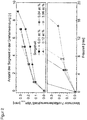
- the in Figure 3 micrographs shown produced the substrates produced at 0 ppm, 150 ppm, 380 ppm and 1070 ppm were prepared in a micrograph and etched using the Murakami method. By means of this selective etching process, the eta phase at the interface 3 between the substrate 1 and the TiCNB layer 2 can be worked out.
- Murakami etching is known in the field of metallurgy.
- the standard Murakami etching liquid is formed from 10 g KOH, 10 g K 3 Fe (CN) 6 , and 10 mml H 2 O.
- the means of this etching liquid Etched micrographs, for example, show clear etchings in the area of the respective sigma phase. In the etching process carried out, the brittle eta phase is etched off by the Murakami etching liquid, so that this is clearly visible in the subsequent light microscope examination.
- Murakami etching liquid is also the best known reagent for working out the structure in WC-Co alloys.
- Murakami's reagent emphasizes the carbide grains and darkens them slightly, whereas the co-binder matrix remains untouched.
- the eta phase can be marked in color.
- the eta phase is attacked with longer etching times.
- the etching liquid is usually used at 20 ° C.
- the grind was applied in a plane which was essentially perpendicular to the plane of the interface 3 between substrate 2 and coating 1.
- the cut was polished and then subjected to Murakami etching, the cut being carried out at room temperature with a short exposure time of 1-2 s using the standard Murakami etching liquid consisting of 10 g KOH, 10 g K 3 Fe (CN) 6 , and 10 mm H 2 O was treated.
- the micrograph prepared in this way was subsequently examined using a light microscope at a magnification of 1,000 times.
- Figure 3 shows the corresponding micrographs.
- an eta phase at the interface 3 between the substrate 1 and the TiCNB hard material layer 2 with a boron content of 0 ppm is essentially undetectable. It can be concluded from this that an undercarriage reaction due to the hard material coating essentially does not take place, so that the brittle eta phase does not form.
- a lack of the undercarriage reaction or a lack of the eta phase is the implementation of the method as an MT-CVD method with the corresponding attributed to low temperatures. It is therefore also assumed with the other micrographs that the possible formation of an eta phase does not take place through a temperature-induced undercarburization reaction at the interface 3.
- the probability that a brittle tungsten-cobalt-boron phase forms at the interface 3 increases.
- the tungsten-cobalt-boron phase that is formed in this way is not due to a subcarburization reaction due to the elevated temperatures within the CVD reactor, since the actual reaction temperatures are low in the proposed process.
- the proposed method can also be carried out as an MT-CVD method at temperatures from 750 ° C. to 930 ° C., the respective precursors then still being used due to the organic precursor used in the form of the alkanes with at least two carbon atoms, the alkenes or alkynes Carbon contents in the TiCNB layer can be set freely.
- alkanes alkenes or alkynes it is possible in this way that on the one hand a hard TiCNB layer is applied to the substrate 1, and on the other hand the formation of a brittle eta phase in the area of the interface 3 can be substantially avoided . This results in improved properties of the cutting tool produced in this way.
- a cutting tool for a cutting device which has a suitable substrate, preferably a hard metal substrate, in the specified geometry.
- the cutting tool can for example in the form of a cutting body for turning and milling devices or in the form of an indexable insert.
- a TiCNB is on this substrate then with the mentioned above method applied hard coating, wherein the TiCNB hard coating, a TiC x N y B 1-xy system with a carbon to nitrogen ratio of 0.70 ⁇ X ⁇ 1.0, preferably 0 , 75 ⁇ X ⁇ 0.85.
- the micrograph shows essentially no eta phase.
- at least one cover layer and / or a functional layer is preferably applied to the TiCNB hard material layer, preferably an aluminum oxide layer, particularly preferably a corundum layer and / or a zircon layer, in order to further adapt the surface properties to the respective applications.
- the TiCNB hard material layer can be subjected to an aftertreatment.
- This aftertreatment can be carried out, for example, by wet blasting, dry blasting and / or dyeing.
- a possibly applied top layer and / or functional layer can also be subjected to such an aftertreatment.
Landscapes
- Chemical & Material Sciences (AREA)
- Engineering & Computer Science (AREA)
- Mechanical Engineering (AREA)
- Organic Chemistry (AREA)
- Chemical Kinetics & Catalysis (AREA)
- Materials Engineering (AREA)
- Metallurgy (AREA)
- Inorganic Chemistry (AREA)
- General Chemical & Material Sciences (AREA)
- Ceramic Engineering (AREA)
- Chemical Vapour Deposition (AREA)
Claims (11)
- Procédé de réalisation d'une couche de matériau dur (2) sur un substrat (1), dans lequel une couche de matériau dur TiCNB est déposée par dépôt chimique en phase gazeuse (CVD) depuis un système de gaz comprenant un support de titane, un support de bore, un support d'azote et un support de carbone, caractérisé en ce que le support de titane est du TiCl4, le support de bore est du BCl3 et le support d'azote est du N2 et le système de gaz présente du H2 comme gaz de compensation et le support de carbone est de l'éthane, la teneur en bore dans le système de gaz étant réglée de manière à ce que la couche de matériau dur TiCNB présente une teneur en bore pouvant aller jusqu'à 5 % mais soit d'au moins 0,01 %, mesurée avec le procédé GDOES, sachant que, à une température réactionnelle de 750 °C à 930 °C, le rapport entre le carbone et l'azote dans le système de TiCxNyB1-x-y déposé sur le substrat est réglé à 0,75 ≤ X ≤ 0,85.
- Procédé selon la revendication 1, dans lequel le système de gaz présente un autre gaz de compensation, comme par exemple de l'argon.
- Procédé selon la revendication 1 ou 2, dans lequel le dépôt chimique en phase gazeuse est réalisé à des températures de 800 °C à 900 °C.
- Procédé selon une des revendications précédentes, dans lequel, avant le dépôt de la couche de matériau dur TiCNB, une couche de diffusion est appliquée sur le substrat, de préférence une barrière de diffusion en nitrure de titane, et la barrière de diffusion présente de préférence une épaisseur de couche de 0,4 µm à 1 µm.
- Procédé selon une des revendications précédentes, dans lequel, sur la couche de matériau dur TiCNB, est appliquée au moins une couche de couverture et/ou une couche fonctionnelle, de préférence une couche d'oxyde d'aluminium, très préférentiellement une couche de corindon et/ou une couche de Zr(C,N).
- Procédé selon une des revendications précédentes, dans lequel le dépôt chimique en phase gazeuse est réalisé jusqu'à ce que soit déposée sur le substrat une couche de TiCNB d'une épaisseur de 1 µm à 15 µm, de préférence une couche d'une épaisseur de 2 µm à 12 µm, très préférentiellement pour les applications de fraisage une couche d'une épaisseur de 3 µm à 4 µm, et particulièrement préférentiellement pour les applications de tournage une couche d'une épaisseur de 10 µm.
- Couche de matériau dur (2) sur un substrat (1), caractérisée en ce que la couche de matériau dur est constituée d'après le procédé selon une des revendications précédentes.
- Outil d'enlèvement de copeaux comportant un substrat (1) en carbure, sur lequel est appliquée une couche de matériau dur TiCNB (2), le rapport entre les atomes de carbone (C) et les atomes d'azote (N) étant, dans le système TiCxNyB1-x-y déposé sur le substrat, de 0,75 ≤ X ≤ 0,85, caractérisé en ce que le ponçage, grâce au substrat et à la couche de matériau dur, après une gravure Murakami, est sensiblement exempt d'une phase Eta, la couche de matériau dur TiCNB comportant une teneur en bore pouvant aller jusqu'à 5 % mais qui est d'au moins 0,01 %, mesurée avec le procédé GDOES.
- Outil d'enlèvement de copeaux selon la revendication 8, dans lequel, entre le substrat et la couche de matériau dur TiCNB, une barrière de diffusion est prévue, de préférence une barrière de diffusion en nitrure de titane, et la barrière de diffusion présente de préférence une épaisseur de couche de 0,4 µm à 1 µm.
- Outil d'enlèvement de copeaux selon la revendication 8 ou 9, dans lequel, sur la couche de matériau dur TiCNB, est appliquée au moins une couche de couverture et/ou une couche fonctionnelle, de préférence une couche d'oxyde d'aluminium, très préférentiellement une couche de corindon et/ou une couche de Zr(C,N).
- Outil d'enlèvement de copeaux selon une des revendications 8 à 10, dans lequel, dans le ponçage, à une profondeur de 0,4 µm à 1 µm à partir de la surface limite (3), aucune phase Et a n'est décelable.
Applications Claiming Priority (2)
| Application Number | Priority Date | Filing Date | Title |
|---|---|---|---|
| ATGM74/2012U AT13091U1 (de) | 2012-02-27 | 2012-02-27 | Verfahren zur Herstellung einer Hartstoffschicht auf einem Substrat, Hartstoffschicht sowie Zerspanwerkzeug |
| PCT/AT2013/000034 WO2013126935A2 (fr) | 2012-02-27 | 2013-02-25 | Procédé de production d'une couche de matériau dur sur un substrat, couche de matériau dur et outil d'usinage par enlèvement de copeaux |
Publications (2)
| Publication Number | Publication Date |
|---|---|
| EP2820168A2 EP2820168A2 (fr) | 2015-01-07 |
| EP2820168B1 true EP2820168B1 (fr) | 2020-06-17 |
Family
ID=48626756
Family Applications (1)
| Application Number | Title | Priority Date | Filing Date |
|---|---|---|---|
| EP13716153.5A Active EP2820168B1 (fr) | 2012-02-27 | 2013-02-25 | Procédé de production d'une couche de matériau dur sur un substrat, couche de matériau dur et outil d'usinage par enlèvement de copeaux |
Country Status (4)
| Country | Link |
|---|---|
| US (1) | US9409784B2 (fr) |
| EP (1) | EP2820168B1 (fr) |
| AT (1) | AT13091U1 (fr) |
| WO (1) | WO2013126935A2 (fr) |
Families Citing this family (1)
| Publication number | Priority date | Publication date | Assignee | Title |
|---|---|---|---|---|
| KR102103346B1 (ko) | 2017-11-15 | 2020-04-22 | 에스케이트리켐 주식회사 | 박막 증착용 전구체 용액 및 이를 이용한 박막 형성 방법. |
Family Cites Families (17)
| Publication number | Priority date | Publication date | Assignee | Title |
|---|---|---|---|---|
| JPS60238481A (ja) * | 1984-05-14 | 1985-11-27 | Sumitomo Electric Ind Ltd | 多重層被覆超硬合金 |
| AT387988B (de) * | 1987-08-31 | 1989-04-10 | Plansee Tizit Gmbh | Verfahren zur herstellung mehrlagig beschichteter hartmetallteile |
| JPH05171336A (ja) * | 1991-12-13 | 1993-07-09 | Mitsubishi Materials Corp | 耐摩耗性のすぐれたTi系炭窒硼化物基サーメット製切削工具 |
| DE4343354C2 (de) | 1993-12-18 | 2002-11-14 | Bosch Gmbh Robert | Verfahren zur Herstellung einer Hartstoffschicht |
| US6492011B1 (en) * | 1998-09-02 | 2002-12-10 | Unaxis Trading Ag | Wear-resistant workpiece and method for producing same |
| US6146697A (en) | 1999-03-02 | 2000-11-14 | Kennametal Inc. | MT CVD process |
| JP4152055B2 (ja) * | 2000-03-23 | 2008-09-17 | 三菱マテリアル株式会社 | 高熱発生を伴う難削材の高速切削で硬質被覆層がすぐれた耐熱塑性変形性を発揮する表面被覆超硬合金製チップ形状切削工具 |
| JP4437353B2 (ja) * | 2000-03-30 | 2010-03-24 | 株式会社タンガロイ | 被覆切削工具およびその製造方法 |
| KR20030052468A (ko) * | 2001-12-21 | 2003-06-27 | 한국야금 주식회사 | 내마모성 공구용 박막 및 이를 이용하는 피복부재 |
| KR100457658B1 (ko) * | 2002-01-16 | 2004-11-17 | 한국야금 주식회사 | 내마모성 및 인성이 향상된 피복 초경합금 절삭공구 |
| US7087295B2 (en) | 2002-01-18 | 2006-08-08 | Sumitomo Electric Industries, Ltd. | Surface-coated cutting tool |
| US7144803B2 (en) * | 2003-04-17 | 2006-12-05 | Semiconductor Research Corporation | Methods of forming boron carbo-nitride layers for integrated circuit devices |
| US7867633B2 (en) * | 2004-06-07 | 2011-01-11 | Colorado School Of Mines | Coatings for glass molding dies and forming tools |
| AT8346U1 (de) | 2005-04-29 | 2006-06-15 | Ceratitzit Austria Ges M B H | Beschichtetes werkzeug |
| AT9748U1 (de) | 2007-04-02 | 2008-03-15 | Ceratizit Austria Gmbh | Mehrlagige cvd-schicht |
| US8080324B2 (en) * | 2007-12-03 | 2011-12-20 | Kobe Steel, Ltd. | Hard coating excellent in sliding property and method for forming same |
| WO2012133461A1 (fr) * | 2011-03-31 | 2012-10-04 | 日立ツール株式会社 | Élément recouvert d'un film dur, procédé de fabrication de ce dernier et outil rotatif à mèche interchangeable pourvu de ce dernier |
-
2012
- 2012-02-27 AT ATGM74/2012U patent/AT13091U1/de not_active IP Right Cessation
-
2013
- 2013-02-25 WO PCT/AT2013/000034 patent/WO2013126935A2/fr not_active Ceased
- 2013-02-25 US US14/381,275 patent/US9409784B2/en active Active
- 2013-02-25 EP EP13716153.5A patent/EP2820168B1/fr active Active
Non-Patent Citations (1)
| Title |
|---|
| None * |
Also Published As
| Publication number | Publication date |
|---|---|
| US9409784B2 (en) | 2016-08-09 |
| EP2820168A2 (fr) | 2015-01-07 |
| WO2013126935A3 (fr) | 2014-08-07 |
| US20150099108A1 (en) | 2015-04-09 |
| AT13091U1 (de) | 2013-06-15 |
| WO2013126935A2 (fr) | 2013-09-06 |
Similar Documents
| Publication | Publication Date | Title |
|---|---|---|
| EP2209929B1 (fr) | Outil revetu | |
| EP2132358B1 (fr) | Couche cvd multicouche | |
| DE69431032T2 (de) | Beschichtetes schneidwerkzeug und verfahren zu dessen herstellung | |
| EP2499275B1 (fr) | Corps revêtus en métal, métal dur, cermet ou céramique ainsi que procédé de revêtement de tels corps | |
| DE60319295T2 (de) | PVD-beschichteter Werkzeugschneideinsatz | |
| DE112012003571B4 (de) | Schneidwerkzeug | |
| DE102013113501B4 (de) | Beschichtungen für Schneidwerkzeuge | |
| EP2281072B1 (fr) | Outil doté d'un revêtement d'oxyde métallique | |
| EP2900842A1 (fr) | Outil à revêtement de tialcrsin déposé par dépôt physique en phase vapeur | |
| AT8346U1 (de) | Beschichtetes werkzeug | |
| EP1231295A2 (fr) | Pièce d'usure en métal dur revêtue d'oxydes mixtes | |
| DE2263210B2 (de) | Verschleissteil aus hartmetall, insbesondere fuer werkzeuge | |
| DE69020719T2 (de) | Oberflächenbeschichtete hartwerkstoffe für schneidende und verschleissfeste werkzeuge. | |
| DE102016108734A1 (de) | Beschichteter Körper und Verfahren zur Herstellung des Körpers | |
| WO2018140990A1 (fr) | Outil pourvu d'un revêtement | |
| DE102014104672A1 (de) | Beschichtetes Schneidwerkzeug und Verfahren zu seiner Herstellung | |
| DE112014001520B4 (de) | Beschichtungen für Schneidwerkzeuge | |
| DE112016002130T5 (de) | Hartbeschichtung und Element, das mit der Hartbeschichtung bedeckt ist | |
| DE102015115859A1 (de) | Mehrschichtig strukturierte Beschichtungen für Schneidwerkzeuge | |
| WO2009003206A2 (fr) | Revêtement de matériau dur en al-ti-ru-n-c | |
| DE102012002394B4 (de) | Beschichtete Substrate und Verfahren zu deren Herstellung | |
| DE68910302T2 (de) | Diamantbeschichteter Sinterkörper mit hervorragender Adhäsion und Verfahren zu seiner Herstellung. | |
| AT13091U1 (de) | Verfahren zur Herstellung einer Hartstoffschicht auf einem Substrat, Hartstoffschicht sowie Zerspanwerkzeug | |
| EP2486164B1 (fr) | Outil de coupe pour l'usinage des matériaux métalliques | |
| DE10120046B4 (de) | Schneideinsatz zur Bearbeitung von schwer zerspanbaren Metalllegierungswerkstücken und Verfahren zu dessen Herstellung |
Legal Events
| Date | Code | Title | Description |
|---|---|---|---|
| PUAI | Public reference made under article 153(3) epc to a published international application that has entered the european phase |
Free format text: ORIGINAL CODE: 0009012 |
|
| 17P | Request for examination filed |
Effective date: 20140812 |
|
| AK | Designated contracting states |
Kind code of ref document: A2 Designated state(s): AL AT BE BG CH CY CZ DE DK EE ES FI FR GB GR HR HU IE IS IT LI LT LU LV MC MK MT NL NO PL PT RO RS SE SI SK SM TR |
|
| AX | Request for extension of the european patent |
Extension state: BA ME |
|
| DAX | Request for extension of the european patent (deleted) | ||
| STAA | Information on the status of an ep patent application or granted ep patent |
Free format text: STATUS: EXAMINATION IS IN PROGRESS |
|
| 17Q | First examination report despatched |
Effective date: 20161209 |
|
| REG | Reference to a national code |
Ref country code: DE Ref legal event code: R079 Ref document number: 502013014810 Country of ref document: DE Free format text: PREVIOUS MAIN CLASS: C23C0016300000 Ipc: B22D0011120000 |
|
| GRAP | Despatch of communication of intention to grant a patent |
Free format text: ORIGINAL CODE: EPIDOSNIGR1 |
|
| STAA | Information on the status of an ep patent application or granted ep patent |
Free format text: STATUS: GRANT OF PATENT IS INTENDED |
|
| RIC1 | Information provided on ipc code assigned before grant |
Ipc: B22D 11/12 20060101AFI20191212BHEP Ipc: C23C 16/56 20060101ALI20191212BHEP Ipc: C23C 30/00 20060101ALI20191212BHEP Ipc: C01B 35/08 20060101ALI20191212BHEP Ipc: C23C 16/44 20060101ALI20191212BHEP Ipc: B22D 11/128 20060101ALI20191212BHEP Ipc: C23C 28/04 20060101ALI20191212BHEP Ipc: C23C 16/30 20060101ALI20191212BHEP |
|
| INTG | Intention to grant announced |
Effective date: 20200109 |
|
| GRAJ | Information related to disapproval of communication of intention to grant by the applicant or resumption of examination proceedings by the epo deleted |
Free format text: ORIGINAL CODE: EPIDOSDIGR1 |
|
| STAA | Information on the status of an ep patent application or granted ep patent |
Free format text: STATUS: EXAMINATION IS IN PROGRESS |
|
| GRAR | Information related to intention to grant a patent recorded |
Free format text: ORIGINAL CODE: EPIDOSNIGR71 |
|
| GRAS | Grant fee paid |
Free format text: ORIGINAL CODE: EPIDOSNIGR3 |
|
| STAA | Information on the status of an ep patent application or granted ep patent |
Free format text: STATUS: GRANT OF PATENT IS INTENDED |
|
| GRAA | (expected) grant |
Free format text: ORIGINAL CODE: 0009210 |
|
| STAA | Information on the status of an ep patent application or granted ep patent |
Free format text: STATUS: THE PATENT HAS BEEN GRANTED |
|
| INTC | Intention to grant announced (deleted) | ||
| INTG | Intention to grant announced |
Effective date: 20200507 |
|
| AK | Designated contracting states |
Kind code of ref document: B1 Designated state(s): AL AT BE BG CH CY CZ DE DK EE ES FI FR GB GR HR HU IE IS IT LI LT LU LV MC MK MT NL NO PL PT RO RS SE SI SK SM TR |
|
| REG | Reference to a national code |
Ref country code: GB Ref legal event code: FG4D Free format text: NOT ENGLISH |
|
| REG | Reference to a national code |
Ref country code: CH Ref legal event code: EP |
|
| REG | Reference to a national code |
Ref country code: DE Ref legal event code: R096 Ref document number: 502013014810 Country of ref document: DE |
|
| REG | Reference to a national code |
Ref country code: IE Ref legal event code: FG4D Free format text: LANGUAGE OF EP DOCUMENT: GERMAN |
|
| REG | Reference to a national code |
Ref country code: AT Ref legal event code: REF Ref document number: 1280702 Country of ref document: AT Kind code of ref document: T Effective date: 20200715 |
|
| PG25 | Lapsed in a contracting state [announced via postgrant information from national office to epo] |
Ref country code: GR Free format text: LAPSE BECAUSE OF FAILURE TO SUBMIT A TRANSLATION OF THE DESCRIPTION OR TO PAY THE FEE WITHIN THE PRESCRIBED TIME-LIMIT Effective date: 20200918 Ref country code: NO Free format text: LAPSE BECAUSE OF FAILURE TO SUBMIT A TRANSLATION OF THE DESCRIPTION OR TO PAY THE FEE WITHIN THE PRESCRIBED TIME-LIMIT Effective date: 20200917 Ref country code: FI Free format text: LAPSE BECAUSE OF FAILURE TO SUBMIT A TRANSLATION OF THE DESCRIPTION OR TO PAY THE FEE WITHIN THE PRESCRIBED TIME-LIMIT Effective date: 20200617 Ref country code: LT Free format text: LAPSE BECAUSE OF FAILURE TO SUBMIT A TRANSLATION OF THE DESCRIPTION OR TO PAY THE FEE WITHIN THE PRESCRIBED TIME-LIMIT Effective date: 20200617 Ref country code: SE Free format text: LAPSE BECAUSE OF FAILURE TO SUBMIT A TRANSLATION OF THE DESCRIPTION OR TO PAY THE FEE WITHIN THE PRESCRIBED TIME-LIMIT Effective date: 20200617 |
|
| REG | Reference to a national code |
Ref country code: LT Ref legal event code: MG4D |
|
| REG | Reference to a national code |
Ref country code: NL Ref legal event code: MP Effective date: 20200617 |
|
| PG25 | Lapsed in a contracting state [announced via postgrant information from national office to epo] |
Ref country code: HR Free format text: LAPSE BECAUSE OF FAILURE TO SUBMIT A TRANSLATION OF THE DESCRIPTION OR TO PAY THE FEE WITHIN THE PRESCRIBED TIME-LIMIT Effective date: 20200617 Ref country code: BG Free format text: LAPSE BECAUSE OF FAILURE TO SUBMIT A TRANSLATION OF THE DESCRIPTION OR TO PAY THE FEE WITHIN THE PRESCRIBED TIME-LIMIT Effective date: 20200917 Ref country code: RS Free format text: LAPSE BECAUSE OF FAILURE TO SUBMIT A TRANSLATION OF THE DESCRIPTION OR TO PAY THE FEE WITHIN THE PRESCRIBED TIME-LIMIT Effective date: 20200617 Ref country code: LV Free format text: LAPSE BECAUSE OF FAILURE TO SUBMIT A TRANSLATION OF THE DESCRIPTION OR TO PAY THE FEE WITHIN THE PRESCRIBED TIME-LIMIT Effective date: 20200617 |
|
| PG25 | Lapsed in a contracting state [announced via postgrant information from national office to epo] |
Ref country code: AL Free format text: LAPSE BECAUSE OF FAILURE TO SUBMIT A TRANSLATION OF THE DESCRIPTION OR TO PAY THE FEE WITHIN THE PRESCRIBED TIME-LIMIT Effective date: 20200617 Ref country code: NL Free format text: LAPSE BECAUSE OF FAILURE TO SUBMIT A TRANSLATION OF THE DESCRIPTION OR TO PAY THE FEE WITHIN THE PRESCRIBED TIME-LIMIT Effective date: 20200617 |
|
| PG25 | Lapsed in a contracting state [announced via postgrant information from national office to epo] |
Ref country code: PT Free format text: LAPSE BECAUSE OF FAILURE TO SUBMIT A TRANSLATION OF THE DESCRIPTION OR TO PAY THE FEE WITHIN THE PRESCRIBED TIME-LIMIT Effective date: 20201019 Ref country code: ES Free format text: LAPSE BECAUSE OF FAILURE TO SUBMIT A TRANSLATION OF THE DESCRIPTION OR TO PAY THE FEE WITHIN THE PRESCRIBED TIME-LIMIT Effective date: 20200617 Ref country code: EE Free format text: LAPSE BECAUSE OF FAILURE TO SUBMIT A TRANSLATION OF THE DESCRIPTION OR TO PAY THE FEE WITHIN THE PRESCRIBED TIME-LIMIT Effective date: 20200617 Ref country code: SM Free format text: LAPSE BECAUSE OF FAILURE TO SUBMIT A TRANSLATION OF THE DESCRIPTION OR TO PAY THE FEE WITHIN THE PRESCRIBED TIME-LIMIT Effective date: 20200617 Ref country code: RO Free format text: LAPSE BECAUSE OF FAILURE TO SUBMIT A TRANSLATION OF THE DESCRIPTION OR TO PAY THE FEE WITHIN THE PRESCRIBED TIME-LIMIT Effective date: 20200617 Ref country code: CZ Free format text: LAPSE BECAUSE OF FAILURE TO SUBMIT A TRANSLATION OF THE DESCRIPTION OR TO PAY THE FEE WITHIN THE PRESCRIBED TIME-LIMIT Effective date: 20200617 Ref country code: IT Free format text: LAPSE BECAUSE OF FAILURE TO SUBMIT A TRANSLATION OF THE DESCRIPTION OR TO PAY THE FEE WITHIN THE PRESCRIBED TIME-LIMIT Effective date: 20200617 |
|
| PG25 | Lapsed in a contracting state [announced via postgrant information from national office to epo] |
Ref country code: IS Free format text: LAPSE BECAUSE OF FAILURE TO SUBMIT A TRANSLATION OF THE DESCRIPTION OR TO PAY THE FEE WITHIN THE PRESCRIBED TIME-LIMIT Effective date: 20201017 Ref country code: PL Free format text: LAPSE BECAUSE OF FAILURE TO SUBMIT A TRANSLATION OF THE DESCRIPTION OR TO PAY THE FEE WITHIN THE PRESCRIBED TIME-LIMIT Effective date: 20200617 Ref country code: SK Free format text: LAPSE BECAUSE OF FAILURE TO SUBMIT A TRANSLATION OF THE DESCRIPTION OR TO PAY THE FEE WITHIN THE PRESCRIBED TIME-LIMIT Effective date: 20200617 |
|
| REG | Reference to a national code |
Ref country code: DE Ref legal event code: R097 Ref document number: 502013014810 Country of ref document: DE |
|
| PLBE | No opposition filed within time limit |
Free format text: ORIGINAL CODE: 0009261 |
|
| STAA | Information on the status of an ep patent application or granted ep patent |
Free format text: STATUS: NO OPPOSITION FILED WITHIN TIME LIMIT |
|
| PG25 | Lapsed in a contracting state [announced via postgrant information from national office to epo] |
Ref country code: DK Free format text: LAPSE BECAUSE OF FAILURE TO SUBMIT A TRANSLATION OF THE DESCRIPTION OR TO PAY THE FEE WITHIN THE PRESCRIBED TIME-LIMIT Effective date: 20200617 |
|
| 26N | No opposition filed |
Effective date: 20210318 |
|
| PG25 | Lapsed in a contracting state [announced via postgrant information from national office to epo] |
Ref country code: SI Free format text: LAPSE BECAUSE OF FAILURE TO SUBMIT A TRANSLATION OF THE DESCRIPTION OR TO PAY THE FEE WITHIN THE PRESCRIBED TIME-LIMIT Effective date: 20200617 |
|
| PG25 | Lapsed in a contracting state [announced via postgrant information from national office to epo] |
Ref country code: MC Free format text: LAPSE BECAUSE OF FAILURE TO SUBMIT A TRANSLATION OF THE DESCRIPTION OR TO PAY THE FEE WITHIN THE PRESCRIBED TIME-LIMIT Effective date: 20200617 |
|
| GBPC | Gb: european patent ceased through non-payment of renewal fee |
Effective date: 20210225 |
|
| REG | Reference to a national code |
Ref country code: BE Ref legal event code: MM Effective date: 20210228 |
|
| PG25 | Lapsed in a contracting state [announced via postgrant information from national office to epo] |
Ref country code: LI Free format text: LAPSE BECAUSE OF NON-PAYMENT OF DUE FEES Effective date: 20210228 Ref country code: LU Free format text: LAPSE BECAUSE OF NON-PAYMENT OF DUE FEES Effective date: 20210225 Ref country code: CH Free format text: LAPSE BECAUSE OF NON-PAYMENT OF DUE FEES Effective date: 20210228 |
|
| PG25 | Lapsed in a contracting state [announced via postgrant information from national office to epo] |
Ref country code: IE Free format text: LAPSE BECAUSE OF NON-PAYMENT OF DUE FEES Effective date: 20210225 Ref country code: FR Free format text: LAPSE BECAUSE OF NON-PAYMENT OF DUE FEES Effective date: 20210228 Ref country code: GB Free format text: LAPSE BECAUSE OF NON-PAYMENT OF DUE FEES Effective date: 20210225 |
|
| REG | Reference to a national code |
Ref country code: AT Ref legal event code: MM01 Ref document number: 1280702 Country of ref document: AT Kind code of ref document: T Effective date: 20210225 |
|
| PG25 | Lapsed in a contracting state [announced via postgrant information from national office to epo] |
Ref country code: AT Free format text: LAPSE BECAUSE OF NON-PAYMENT OF DUE FEES Effective date: 20210225 |
|
| PG25 | Lapsed in a contracting state [announced via postgrant information from national office to epo] |
Ref country code: BE Free format text: LAPSE BECAUSE OF NON-PAYMENT OF DUE FEES Effective date: 20210228 |
|
| PG25 | Lapsed in a contracting state [announced via postgrant information from national office to epo] |
Ref country code: HU Free format text: LAPSE BECAUSE OF FAILURE TO SUBMIT A TRANSLATION OF THE DESCRIPTION OR TO PAY THE FEE WITHIN THE PRESCRIBED TIME-LIMIT; INVALID AB INITIO Effective date: 20130225 |
|
| PG25 | Lapsed in a contracting state [announced via postgrant information from national office to epo] |
Ref country code: CY Free format text: LAPSE BECAUSE OF FAILURE TO SUBMIT A TRANSLATION OF THE DESCRIPTION OR TO PAY THE FEE WITHIN THE PRESCRIBED TIME-LIMIT Effective date: 20200617 |
|
| PG25 | Lapsed in a contracting state [announced via postgrant information from national office to epo] |
Ref country code: MK Free format text: LAPSE BECAUSE OF FAILURE TO SUBMIT A TRANSLATION OF THE DESCRIPTION OR TO PAY THE FEE WITHIN THE PRESCRIBED TIME-LIMIT Effective date: 20200617 |
|
| PG25 | Lapsed in a contracting state [announced via postgrant information from national office to epo] |
Ref country code: MT Free format text: LAPSE BECAUSE OF FAILURE TO SUBMIT A TRANSLATION OF THE DESCRIPTION OR TO PAY THE FEE WITHIN THE PRESCRIBED TIME-LIMIT Effective date: 20200617 |
|
| PG25 | Lapsed in a contracting state [announced via postgrant information from national office to epo] |
Ref country code: TR Free format text: LAPSE BECAUSE OF FAILURE TO SUBMIT A TRANSLATION OF THE DESCRIPTION OR TO PAY THE FEE WITHIN THE PRESCRIBED TIME-LIMIT Effective date: 20200617 |
|
| PGFP | Annual fee paid to national office [announced via postgrant information from national office to epo] |
Ref country code: DE Payment date: 20260218 Year of fee payment: 14 |