EP2821983A1 - System zur beurteilung von bedienungslernstufen - Google Patents
System zur beurteilung von bedienungslernstufen Download PDFInfo
- Publication number
- EP2821983A1 EP2821983A1 EP13755369.9A EP13755369A EP2821983A1 EP 2821983 A1 EP2821983 A1 EP 2821983A1 EP 13755369 A EP13755369 A EP 13755369A EP 2821983 A1 EP2821983 A1 EP 2821983A1
- Authority
- EP
- European Patent Office
- Prior art keywords
- trainee
- data
- encoded
- evaluation
- expert
- Prior art date
- Legal status (The legal status is an assumption and is not a legal conclusion. Google has not performed a legal analysis and makes no representation as to the accuracy of the status listed.)
- Ceased
Links
Images





Classifications
-
- G—PHYSICS
- G09—EDUCATION; CRYPTOGRAPHY; DISPLAY; ADVERTISING; SEALS
- G09B—EDUCATIONAL OR DEMONSTRATION APPLIANCES; APPLIANCES FOR TEACHING, OR COMMUNICATING WITH, THE BLIND, DEAF OR MUTE; MODELS; PLANETARIA; GLOBES; MAPS; DIAGRAMS
- G09B9/00—Simulators for teaching or training purposes
-
- G—PHYSICS
- G05—CONTROLLING; REGULATING
- G05B—CONTROL OR REGULATING SYSTEMS IN GENERAL; FUNCTIONAL ELEMENTS OF SUCH SYSTEMS; MONITORING OR TESTING ARRANGEMENTS FOR SUCH SYSTEMS OR ELEMENTS
- G05B23/00—Testing or monitoring of control systems or parts thereof
- G05B23/02—Electric testing or monitoring
- G05B23/0205—Electric testing or monitoring by means of a monitoring system capable of detecting and responding to faults
- G05B23/0218—Electric testing or monitoring by means of a monitoring system capable of detecting and responding to faults characterised by the fault detection method dealing with either existing or incipient faults
- G05B23/0224—Process history based detection method, e.g. whereby history implies the availability of large amounts of data
- G05B23/0227—Qualitative history assessment, whereby the type of data acted upon, e.g. waveforms, images or patterns, is not relevant, e.g. rule based assessment; if-then decisions
- G05B23/0229—Qualitative history assessment, whereby the type of data acted upon, e.g. waveforms, images or patterns, is not relevant, e.g. rule based assessment; if-then decisions knowledge based, e.g. expert systems; genetic algorithms
-
- G—PHYSICS
- G06—COMPUTING OR CALCULATING; COUNTING
- G06Q—INFORMATION AND COMMUNICATION TECHNOLOGY [ICT] SPECIALLY ADAPTED FOR ADMINISTRATIVE, COMMERCIAL, FINANCIAL, MANAGERIAL OR SUPERVISORY PURPOSES; SYSTEMS OR METHODS SPECIALLY ADAPTED FOR ADMINISTRATIVE, COMMERCIAL, FINANCIAL, MANAGERIAL OR SUPERVISORY PURPOSES, NOT OTHERWISE PROVIDED FOR
- G06Q10/00—Administration; Management
- G06Q10/10—Office automation; Time management
-
- G—PHYSICS
- G06—COMPUTING OR CALCULATING; COUNTING
- G06Q—INFORMATION AND COMMUNICATION TECHNOLOGY [ICT] SPECIALLY ADAPTED FOR ADMINISTRATIVE, COMMERCIAL, FINANCIAL, MANAGERIAL OR SUPERVISORY PURPOSES; SYSTEMS OR METHODS SPECIALLY ADAPTED FOR ADMINISTRATIVE, COMMERCIAL, FINANCIAL, MANAGERIAL OR SUPERVISORY PURPOSES, NOT OTHERWISE PROVIDED FOR
- G06Q50/00—Information and communication technology [ICT] specially adapted for implementation of business processes of specific business sectors, e.g. utilities or tourism
- G06Q50/10—Services
- G06Q50/20—Education
-
- G—PHYSICS
- G09—EDUCATION; CRYPTOGRAPHY; DISPLAY; ADVERTISING; SEALS
- G09B—EDUCATIONAL OR DEMONSTRATION APPLIANCES; APPLIANCES FOR TEACHING, OR COMMUNICATING WITH, THE BLIND, DEAF OR MUTE; MODELS; PLANETARIA; GLOBES; MAPS; DIAGRAMS
- G09B19/00—Teaching not covered by other main groups of this subclass
-
- G—PHYSICS
- G09—EDUCATION; CRYPTOGRAPHY; DISPLAY; ADVERTISING; SEALS
- G09B—EDUCATIONAL OR DEMONSTRATION APPLIANCES; APPLIANCES FOR TEACHING, OR COMMUNICATING WITH, THE BLIND, DEAF OR MUTE; MODELS; PLANETARIA; GLOBES; MAPS; DIAGRAMS
- G09B19/00—Teaching not covered by other main groups of this subclass
- G09B19/14—Traffic procedures, e.g. traffic regulations
-
- G—PHYSICS
- G09—EDUCATION; CRYPTOGRAPHY; DISPLAY; ADVERTISING; SEALS
- G09B—EDUCATIONAL OR DEMONSTRATION APPLIANCES; APPLIANCES FOR TEACHING, OR COMMUNICATING WITH, THE BLIND, DEAF OR MUTE; MODELS; PLANETARIA; GLOBES; MAPS; DIAGRAMS
- G09B19/00—Teaching not covered by other main groups of this subclass
- G09B19/16—Control of vehicles or other craft
- G09B19/167—Control of land vehicles
-
- G—PHYSICS
- G09—EDUCATION; CRYPTOGRAPHY; DISPLAY; ADVERTISING; SEALS
- G09B—EDUCATIONAL OR DEMONSTRATION APPLIANCES; APPLIANCES FOR TEACHING, OR COMMUNICATING WITH, THE BLIND, DEAF OR MUTE; MODELS; PLANETARIA; GLOBES; MAPS; DIAGRAMS
- G09B25/00—Models for purposes not provided for in G09B23/00, e.g. full-sized devices for demonstration purposes
- G09B25/02—Models for purposes not provided for in G09B23/00, e.g. full-sized devices for demonstration purposes of industrial processes; of machinery
Definitions
- the present invention relates to a system for evaluating a learning level of a person who is in training in running operation of, for example, a chemical plant or a power-generating plant.
- Patent Literature 1 proposes to evaluate the learning level by recording operations by the trainee as encoded data, which are made into character strings, and comparing them with model procedures performed by an expert.
- Patent Literature 2 proposes to evaluate the trainee by registering a process parameter to be monitored and a reference value thereof, and comparing it with a running process parameter of the trainee all the time, and if the value becomes close to the reference value, storing this as an important parameter.
- Patent Literature 1 gives the same evaluation to both the cases whereas the latter case being recommended should be highly evaluated.
- Patent Literatures 1 and 2 cannot give different evaluations.
- Patent Literature 3 discloses an evaluation method focusing on comparison of the operation timings of operations with those by an expert, but it takes no evaluation based on differences in the operation procedures into account.
- the present invention has an object to provide a system that can evaluate an operation learning level of a trainee quantitatively and accurately by taking a temporal element into account.
- the pieces of encoded data on the expert and the trainee used for evaluating operation procedures each include procedures performed in chronological order.
- the inventors have completed the following invention by focusing on evaluating the operation timings using this data.
- the present invention provides a learning level evaluation system that evaluates a learning level of the running operation by a person who is in training in the running operation, by comparing the running operation with the running operation by a model expert.
- the learning level evaluation system of the present invention executes a procedure evaluation process to evaluate the operation procedures and a timing evaluation process to evaluate the operation timings.
- the procedure evaluation process evaluates the degree of similarity of encoded trainee data with respect to encoded expert data.
- the encoded expert data is obtained by encoding expert data that is recorded according to the operation performed by the expert
- the encoded trainee data is obtained by encoding trainee operation data that is recorded according to the operation performed by the trainee.
- the timing evaluation process evaluates a deviation between timings at which the same operation is performed, on the basis of the encoded expert data and the encoded trainee data.
- the evaluation result is quantitative and is an accurate evaluation fitting an actual running state of a training target.
- timing evaluation can be made from the encoded expert data and the encoded trainee data, which are prepared for use of the evaluation of the operation procedures, according to the present invention, there is no need to prepare another data item for the timing evaluation.
- the timing evaluation process in the learning level evaluation system of the present invention can quantitatively evaluate a deviation between timings at which the same operation is performed by an error ratio ⁇ t in following Expression (1), if previous first operations are the same and second operations subsequent thereto are the same, respectively, between the encoded expert data and the encoded trainee data.
- Expression (1) is a function that calculates the error ratio ⁇ t using time lags t1 and t2, and includes a number of forms as will be described hereafter.
- Error ratio ⁇ t F t ⁇ 1 , t ⁇ 2
- the learning level evaluation system of the present invention can execute a stabilization degree evaluation process to evaluate a stability of an operation by the trainee.
- This stabilization degree evaluation process compares a cumulative time of alarm signals recorded according to the operation performed by the expert with a cumulative time of alarm signals recorded according to the operation performed by the trainee.
- the learning level evaluation system of the present invention can obtain evaluation results more accurately by performing the evaluation based on the alarm signals, in addition to the procedure evaluation process and the timing evaluation process.
- the learning level evaluation system of the present invention can integrate the procedure evaluation and the timing evaluation, as will be described below. That is, in the case where the procedure evaluation process calculates the degree of similarity of the encoded trainee data with respect to the encoded expert data as an edit distance, the timing evaluation process multiplies the error ratio ⁇ t with the edit distance, which results in the integration of the procedure evaluation and the timing evaluation. This then has an advantage in that two learning levels of the operation procedures and the operation timings can be determined by only one evaluation value.
- the learning level evaluation system of the present invention can include a state quantity evaluation process to evaluate a state quantity of an operation target, instead of or in addition to the timing evaluation process.
- the evaluation using the state quantity allows for evaluating the operation timing depending on the state quantity.
- This state quantity evaluation process is to compare a state quantity contained in the encoded expert data with the state quantity contained in the encoded trainee data.
- the learning level evaluation system of the present invention the learning level is evaluated with the temporal element taken into account as well, which makes the evaluation results thereof quantitative and accurate.
- the timing evaluation can be made from the encoded expert data and the encoded trainee data, which are prepared for use of the evaluation of the operation procedures, the present invention does not need to prepare another data source for the timing evaluation.
- a learning level evaluation system 10 performs the training in the running operations of various plants such as a plant for manufacturing chemical substances and a thermal/nuclear power-generating plant, to quantitatively evaluate a learning level of the operations.
- the learning level evaluation system 10 includes, for example, a system body 1 constituted by a PC (Personal Computer) and a data storage unit (Reference Database) 2. Note that although this example shows the data storage unit 2 as a component separated from the system body 1, the data storage unit 2 can be provided in a data storage device of the system body (PC) 1.
- PC Personal Computer
- the system body 1 has a function of a running training simulator that can simulate the running to perform the training, and the learning level evaluation system 10 can be considered as a function accompanying the running training simulator.
- a trainee (operator) inputs operation signals into the system body 1 following the Process Data on the plant provided from the system body 1.
- Process Data indicates processes in the plant, for example, a process A, a process B, a process C, ...
- the system body 1 causes a display 3 as a display device to display the process A, the process B, the process C, ... in order, and the trainee inputs running operation procedures necessary for the displayed processes into the system body 1 via a keyboard 4 as an input means, to train the running.
- the running operation procedures input by the trainee are stored in the data storage unit 2 as trainee data.
- the trainee data is distinguished and stored for each trainee.
- the data storage unit 2 therefore contains pieces of trainee data on a plurality of trainees.
- the data storage unit 2 also contains expert data.
- the expert data is stored, as with the trainee data, on the basis of an expert inputting operational conditions following the Process Data.
- the learning level evaluation system 10 compares the expert data with the trainee data to evaluate a learning level of the trainee in question, and displays the results thereof on the display 3.
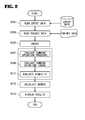
- the steps of the learning level evaluation of the trainee executed by the learning level evaluation system 10 will be described on the basis of FIG. 2 .
- the learning level evaluation system 10 evaluates the learning levels of the running operation by the trainee, as will be described hereafter, on the basis of three items, that is, running operation procedures (may be hereafter simply referred to as operation procedures), running operation timings (may be hereafter simply referred to as operation timings), and stabilities.
- running operation procedures may be hereafter simply referred to as operation procedures
- running operation timings may be hereafter simply referred to as operation timings
- stabilities The present embodiment is characterized in that the operation timings are considered as an evaluation item among the items.
- the system body 1 reads the expert data from the data storage unit 2, while reading the trainee data (steps S101 and 103 of FIG. 2 ).
- FIG. 3A shows one example of the trainee data. Note that the expert data also contains data similar to the trainee data.
- the system body 1 encodes the read expert data and trainee data (step S105 of FIG. 2 ).
- the encoding of the operation procedures contributes the evaluation of the operation procedures and the operation timings.
- the encoding generates the encoded operation data ( FIG. 3B ) and the alarm data ( FIG. 3C ).
- the encoding is to convert time into a comparable variable, with which data is arranged in chronological order from an operation start time. Note that the expert data and the trainee data are referred to as reference data as a general term for both of them.
- the encoded operation data is data on the operation procedures in the reference data, which is arranged in chronological order.
- the data on the operation procedures is constituted by, in the example of FIG. 3B , elapsed times (seconds) from the start of the operation, functional block names, and operation codes ( FIG. 3B ).
- the elapsed times are calculated from "event detection time points" in the reference data.
- the functional block names are "functional block names" in the reference data extracted as they are, being data to identify devices of operation targets.
- the operation codes are generated from “message numbers” and “message contents” in the reference data, being data to identify contents of the operations.
- the first piece of data (at the first row) of FIG. 3B represents that an operation is performed at the elapsed time of "1065 (seconds)," to a device identified by "PC005,” and the content of the operation is identified by "CA.”
- the encoding of the expert data and the trainee data are performed at the time of the evaluation, the encoding may be performed and the encoded data may be stored in the data storage unit 2 in advance.
- the alarm data is obtained by, as shown in FIG. 3C , arranging the number of alarms in chronological order, and is constituted by elapsed times (seconds) from the start of the operation, and the number of alarms (alarm signals) having been output from the simulator at that point.
- the second piece of data (at the second row) of FIG. 3C represents that the number of alarms having been output from the simulator is five at the elapsed time of "1023 (seconds)."
- FIG. 3D shows one example thereof.
- FIG. 3D shows character string data created from the first and second rows of FIG. 3B .
- an edit distance between the expert character string data and the trainee character string data is calculated and this is treated as an operation procedure evaluation value, with which, in the present embodiment, a difference between the operation procedures by the expert and the trainee is evaluated quantitatively.
- the edit distance is a numerical value representing how the two character strings differ (or the degree of similarity). Specifically, the edit distance is given as a minimum number of steps required to change one character string into another character string by inserting, deleting, or replacing a character.
- calculating an edit distance from the trainee character string data to the expert character string data allows the learning level of the operation procedures by the trainee in question with respect to the operation procedures by the expert to be grasped quantitatively.
- an actual evaluation value is derived by performing weighting that is determined on the basis of relations with other evaluation items as will be described hereafter. This also applies to the following evaluation of the operation timings and evaluation of stabilities.
- step S109 of FIG. 2 a process for evaluating the operation timings by evaluating a difference between the operation timings of the expert and the trainee with a penalty function method
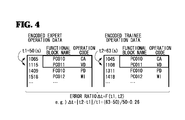
- This evaluation starts with calculating time lags t1 and t2 between operations of the same two consecutive operations in the encoded expert data and the encoded trainee data.
- the functional block names and the operation codes of the first row and the second row of the encoded expert data are identical to those of the first row and the second row of the encoded trainee data, respectively, which means that the same two consecutive operations are performed.
- the time lag t1 between the first row and the second row in the encoded expert data is 50 (seconds), while the time lag t2 between the first row and the second row in the encoded trainee data is 63 (seconds).
- an error ratio ⁇ t is calculated by following Expression (2).
- This error ratio ⁇ t represents how a time that the trainee takes for an operation deviates from that taken by the expert, which will be treated as an operation timing evaluation value.
- the smaller error ratio ⁇ t represents a higher learning level of the trainee in question.
- Error ratio ⁇ t t ⁇ 2 - t ⁇ 1 / t ⁇ 1
- the error ratios ⁇ t are calculated by the number n of the same two consecutive operations ( ⁇ t 1 , ⁇ t 2 , ... ⁇ t n ), the mean value of which is used for evaluating the operation timings.
- the learning level evaluation system 10 next calculates an evaluation value, which combines the results of three evaluation items of the operation procedures, the operation timings, and the stability, as a score (step S113 of FIG. 2 ).
- a comprehensive evaluation is calculated after assigning weights to the results of the three evaluation items with preset factors.
- k1, k2, and k3 in Expression (5) are weighting factors for the respective evaluation items.
- the comprehensive evaluation is stored in the data storage unit 2 together with the operation procedure evaluation value, the operation timing evaluation value, and the stability evaluation value, being associated with the trainee in question.
- Comprehensive evaluation score F operation procedure evaluation value , operation timing evaluation value , stability evaluation value , weighting factors k ⁇ 1 , k ⁇ 2 , k ⁇ 3 of the respective evaluation values
- the learning level evaluation system 10 displays the results on the display 3 (step S115 of FIG. 2 ).
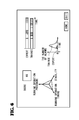
- FIG. 6 shows one example thereof.
- This example shows, in addition to a score as the comprehensive evaluation, a graph showing the individual scores of the three evaluation items, a graph showing the time allotments for each operation item by the expert and the trainee by comparison, and a graph showing the cumulative alarm time periods of the expert and the trainee by comparison.
- the trainee or other persons can quantitatively evaluate the learning level of the trainee in question by referring to this display, and can grasp the difference in operations with respect to the expert as well.
- the comprehensive evaluation is a result that takes also the operation timings into account, with which an accurate evaluation fitting the actual conditions of the running operation can be made.
- the present embodiment is characterized in that the both can be evaluated at the same time. Other points thereof are similar to those of the first embodiment, and the characteristic point will be described below.
- the edit distance being an indicator for evaluating the degree of similarity between the character strings is calculated by, as described in the first embodiment, comparing a character string being an evaluation target with a model character string from a leading character and by adding one if any one of the manipulations of "replacing,” “inserting, “ and “deleting” a character is required or by adding zero otherwise, and the cumulative total thereof is calculated as the distance. It then means that the shorter this distance is, the higher the degree of similarity between the two character strings is.
- a time element is also evaluated by assigning time weights defined as follows.
- the distance with the time weights will be described on the basis of an example shown in FIG. 7 .
- procedures in a model operation and operation procedures performed by trainees ( ⁇ , ⁇ ) are as follows.
- the ED for the first to fifth operations by the trainee ⁇ is as follows.
- the ED of the trainee ⁇ taking the time weights into account is therefore 2.15.
- the edit distance for the first to fifth operations is as follows.
- the edit distance (ED) of the trainee ⁇ taking the time weights into account is therefore 2.10, which means that the trainee ⁇ has a higher degree of similarity.
- the present embodiment there is an advantage in that the two learning levels of the operation procedures and the operation timings can be determined by only one evaluation value. Note that the present invention is not intended to deny the determination in combination with the evaluation of the operation procedures and the evaluation of the operation timings.
- a state quantity of the plant is evaluated as an operation condition.
- the state quantity herein includes, for example, a pressure and a temperature. This evaluation is applicable to an alternative to the time that is treated as the operation condition in the first embodiment and the second embodiment, or this evaluation may be added to the three evaluation items.
- a state quantity specified in advance is used for the evaluation of the operation timing.
- the value of a state quantity by the expert and the value of a state quantity by the trainee are evaluated as with the operation timing in the first embodiment, which allows for an evaluation equivalent to the evaluation of the operation timing.
- the state quantity to be specified is determined for each operation. A specific example thereof will be described below on the basis of FIG. 8 .
- Differences s1 and s2 between the state quantities between the same two consecutive operations are calculated for the encoded expert data and the encoded trainee data.
- the functional block names and the operation codes of the first row and the second row in the encoded expert data are identical to those of the first row and the second row in the encoded trainee data, which means that the same two consecutive operations are performed.
- the state quantity difference s1 between the first row and the second row in the encoded expert data is 5 (Pa), while the state quantity difference s2 between the first row and the second row in the encoded trainee data is 4 (Pa).
- a state quantity error ratio ⁇ s is calculated by following Expression (6).
- This error ratio ⁇ s represents how much the error between the state quantity from the operation by the trainee and the state quantity from the operation by the expert is.
- evaluating the error ratio ⁇ s with respect to such a state quantity is equivalent to the evaluation of the operation timing.
- the smaller error ratio ⁇ s represents a higher learning level of the trainee in question.
- Error ratio ⁇ s s ⁇ 2 - s ⁇ 1 / s ⁇ 1
- the error ratios ⁇ s are calculated by the number n of the same two consecutive operations ( ⁇ t 1 , ⁇ t 2 , ... ⁇ t n ), the mean value of which is used for evaluating the plant state quantity.
- using the operation timing depending on the state quantity as an evaluation item allows for evaluating the learning level of the trainee better fitting an actual condition of a training target including plants.
- the most typical application example of the learning level evaluation system according to the present invention is to accompany a running operation simulator, but is not limited thereto and can be applied to actual plants, where operation procedures performed in an actual running of the plant are stored in chronological order, and the learning level of using an actual machine can be thereafter evaluated by the learning level evaluation system according to the present invention.
- the applicable field of the learning level evaluation system according to the present invention is not limited to plants, and available to any devices or apparatuses that require training in the running operations thereof.
Landscapes
- Engineering & Computer Science (AREA)
- Business, Economics & Management (AREA)
- Theoretical Computer Science (AREA)
- Physics & Mathematics (AREA)
- General Physics & Mathematics (AREA)
- Educational Technology (AREA)
- Educational Administration (AREA)
- Entrepreneurship & Innovation (AREA)
- Human Resources & Organizations (AREA)
- Strategic Management (AREA)
- Tourism & Hospitality (AREA)
- General Business, Economics & Management (AREA)
- Marketing (AREA)
- Economics (AREA)
- General Health & Medical Sciences (AREA)
- Operations Research (AREA)
- Data Mining & Analysis (AREA)
- Health & Medical Sciences (AREA)
- Quality & Reliability (AREA)
- Primary Health Care (AREA)
- Life Sciences & Earth Sciences (AREA)
- Bioinformatics & Cheminformatics (AREA)
- Bioinformatics & Computational Biology (AREA)
- Evolutionary Biology (AREA)
- Automation & Control Theory (AREA)
- Management, Administration, Business Operations System, And Electronic Commerce (AREA)
- Testing And Monitoring For Control Systems (AREA)
Applications Claiming Priority (2)
| Application Number | Priority Date | Filing Date | Title |
|---|---|---|---|
| JP2012040851A JP6045159B2 (ja) | 2012-02-28 | 2012-02-28 | 操作習熟度評価システム |
| PCT/JP2013/000896 WO2013128842A1 (ja) | 2012-02-28 | 2013-02-19 | 操作習熟度評価システム |
Publications (2)
| Publication Number | Publication Date |
|---|---|
| EP2821983A1 true EP2821983A1 (de) | 2015-01-07 |
| EP2821983A4 EP2821983A4 (de) | 2015-11-04 |
Family
ID=49082058
Family Applications (1)
| Application Number | Title | Priority Date | Filing Date |
|---|---|---|---|
| EP13755369.9A Ceased EP2821983A4 (de) | 2012-02-28 | 2013-02-19 | System zur beurteilung von bedienungslernstufen |
Country Status (4)
| Country | Link |
|---|---|
| US (1) | US20150044647A1 (de) |
| EP (1) | EP2821983A4 (de) |
| JP (1) | JP6045159B2 (de) |
| WO (1) | WO2013128842A1 (de) |
Cited By (2)
| Publication number | Priority date | Publication date | Assignee | Title |
|---|---|---|---|---|
| JP2016142904A (ja) * | 2015-02-02 | 2016-08-08 | 三菱重工業株式会社 | 運転訓練支援システム、運転訓練支援方法、プログラム |
| CN110516968A (zh) * | 2019-08-28 | 2019-11-29 | 宜信博诚保险销售服务(北京)股份有限公司 | 一种保险代理人的能力评价方法及装置 |
Families Citing this family (19)
| Publication number | Priority date | Publication date | Assignee | Title |
|---|---|---|---|---|
| JP5894131B2 (ja) | 2013-10-02 | 2016-03-23 | ヤマハ発動機株式会社 | 評価プログラム、記録媒体、評価方法、評価装置および車両 |
| JP6044937B2 (ja) * | 2014-03-04 | 2016-12-14 | 日本電信電話株式会社 | 移動軌跡解析装置及び方法 |
| US10095772B2 (en) * | 2016-01-22 | 2018-10-09 | International Business Machines Corporation | Calculation of a degree of similarity of users |
| JP7005255B2 (ja) * | 2017-09-29 | 2022-01-21 | 三菱重工業株式会社 | 評価システム、評価方法及びプログラム |
| JP7021509B2 (ja) * | 2017-11-15 | 2022-02-17 | 富士通株式会社 | 情報処理装置、予約支援方法及び予約支援プログラム |
| US10803379B2 (en) | 2017-12-12 | 2020-10-13 | Amazon Technologies, Inc. | Multi-memory on-chip computational network |
| EP3724822B1 (de) * | 2017-12-12 | 2025-02-05 | Amazon Technologies Inc. | On-chip-rechnernetzwerk |
| JP2020004042A (ja) * | 2018-06-27 | 2020-01-09 | グローリー株式会社 | 習熟度検知装置、習熟度検知システム、習熟度検知方法及び習熟度検知プログラム |
| JP7084817B2 (ja) * | 2018-08-06 | 2022-06-15 | 日本放送協会 | 主観評価装置及びプログラム |
| JP7011569B2 (ja) * | 2018-11-28 | 2022-02-10 | 株式会社日立ビルシステム | 熟練度判定システム |
| JP6983294B1 (ja) * | 2020-09-25 | 2021-12-17 | 東京瓦斯株式会社 | 運転訓練方法、運転訓練装置、運転訓練プログラム、及び運転訓練システム |
| JP7674114B2 (ja) * | 2021-02-26 | 2025-05-09 | 川崎重工業株式会社 | 情報処理装置、学習装置、情報処理システム、ロボットシステム及び評価方法 |
| JP7205561B2 (ja) * | 2021-03-15 | 2023-01-17 | カシオ計算機株式会社 | 情報処理装置、制御方法、及びプログラム |
| JP7555859B2 (ja) * | 2021-03-17 | 2024-09-25 | 住友重機械マリンエンジニアリング株式会社 | 航路評価装置、航路評価プログラム、及び航路評価方法 |
| JP7635054B2 (ja) * | 2021-04-01 | 2025-02-25 | 株式会社バルカー | 技能評価システム、技能評価プログラム、技能評価方法および技能評価装置 |
| CN116431655B (zh) * | 2021-12-31 | 2026-03-06 | 中核武汉核电运行技术股份有限公司 | 查询方法及装置 |
| CN115909843B (zh) * | 2022-11-23 | 2025-01-10 | 深圳职业技术学院 | 一种物联网实训平台、工作方法及程序质量评估方法 |
| JP7739347B2 (ja) * | 2023-02-02 | 2025-09-16 | 株式会社日立製作所 | 情報管理システム、情報管理装置及び情報管理方法 |
| JP7745802B1 (ja) * | 2025-04-30 | 2025-09-29 | 株式会社エヌ・エフ・ラボラトリーズ | 評価装置、評価方法、およびコンピュータプログラム |
Family Cites Families (12)
| Publication number | Priority date | Publication date | Assignee | Title |
|---|---|---|---|---|
| JPH02139590A (ja) | 1988-11-21 | 1990-05-29 | Nippon Atom Ind Group Co Ltd | 学習訓練シミュレータ装置 |
| US5311422A (en) * | 1990-06-28 | 1994-05-10 | The United States Of America As Represented By The Administrator Of The National Aeronautics And Space Administration | General purpose architecture for intelligent computer-aided training |
| JPH06130885A (ja) * | 1992-10-20 | 1994-05-13 | Mitsubishi Electric Corp | 運転訓練支援装置 |
| JPH0816092A (ja) * | 1994-06-29 | 1996-01-19 | Mitsubishi Electric Corp | 訓練用シミュレータ装置 |
| JPH08320644A (ja) * | 1995-05-25 | 1996-12-03 | Mitsubishi Electric Corp | 運転訓練支援装置 |
| JPH09297524A (ja) * | 1996-05-01 | 1997-11-18 | Fujitsu Ltd | 施設管理システムの訓練シミュレーション装置 |
| JP2001067113A (ja) * | 1999-08-30 | 2001-03-16 | Toshiba Corp | プラント操作評価システム |
| JP2001228790A (ja) * | 2000-02-15 | 2001-08-24 | Mitsubishi Electric Corp | 訓練結果評価装置 |
| JP2003271048A (ja) * | 2002-03-14 | 2003-09-25 | Mitsubishi Heavy Ind Ltd | 訓練評価装置及び訓練評価方法 |
| JP2007536634A (ja) * | 2004-05-04 | 2007-12-13 | フィッシャー−ローズマウント・システムズ・インコーポレーテッド | プロセス制御システムのためのサービス指向型アーキテクチャ |
| JP4793734B2 (ja) * | 2007-10-02 | 2011-10-12 | 大阪瓦斯株式会社 | プラント操業訓練システム及びコンピュータプログラム |
| JP5361424B2 (ja) * | 2009-02-04 | 2013-12-04 | 三菱電機株式会社 | 運転訓練シミュレータ装置及び訓練者運転データの評価方法 |
-
2012
- 2012-02-28 JP JP2012040851A patent/JP6045159B2/ja active Active
-
2013
- 2013-02-19 WO PCT/JP2013/000896 patent/WO2013128842A1/ja not_active Ceased
- 2013-02-19 US US14/381,365 patent/US20150044647A1/en not_active Abandoned
- 2013-02-19 EP EP13755369.9A patent/EP2821983A4/de not_active Ceased
Cited By (2)
| Publication number | Priority date | Publication date | Assignee | Title |
|---|---|---|---|---|
| JP2016142904A (ja) * | 2015-02-02 | 2016-08-08 | 三菱重工業株式会社 | 運転訓練支援システム、運転訓練支援方法、プログラム |
| CN110516968A (zh) * | 2019-08-28 | 2019-11-29 | 宜信博诚保险销售服务(北京)股份有限公司 | 一种保险代理人的能力评价方法及装置 |
Also Published As
| Publication number | Publication date |
|---|---|
| EP2821983A4 (de) | 2015-11-04 |
| JP6045159B2 (ja) | 2016-12-14 |
| WO2013128842A1 (ja) | 2013-09-06 |
| JP2013178294A (ja) | 2013-09-09 |
| US20150044647A1 (en) | 2015-02-12 |
Similar Documents
| Publication | Publication Date | Title |
|---|---|---|
| US20150044647A1 (en) | Operation learning level evaluation system | |
| Montgomery et al. | Introduction to linear regression analysis | |
| US8868287B2 (en) | Prediction of maintenance operations on an aircraft engine | |
| US9940184B2 (en) | Anomaly detecting method, and apparatus for the same | |
| Čepin | DEPEND-HRA—A method for consideration of dependency in human reliability analysis | |
| Manca et al. | Procedure for automated assessment of industrial operators | |
| Waleriańczyk et al. | Perfectionism moderates the effects of goal-realızatıon on post-competition mood in amateur runners | |
| Madeyski et al. | Impact of aspect-oriented programming on software development efficiency and design quality: an empirical study | |
| JP7442310B2 (ja) | 学習済みモデル生成装置、故障予測装置、故障予測システム、故障予測プログラム、および学習済みモデル | |
| Rajabalinejad et al. | Incorporating Uncertainty into the Design Management Process. | |
| US20160342901A1 (en) | Method of state transition prediction and state improvement of liveware, and an implementation device of the method | |
| US20200042926A1 (en) | Analysis method and computer | |
| Bravo et al. | Evaluating strategies to predict student dropout of a bachelor's degree in computer science | |
| Cacciabue | Evaluation of human factors and man-machine problems in the safety of nuclear power plants | |
| Shuford | In pursuit of the fallacy: resurrecting the penalty | |
| JP2645017B2 (ja) | プラント診断方法及びその装置 | |
| US20240346943A1 (en) | Vr training performance management device, vr training performance management method, and recording medium | |
| Amran et al. | Emerging cloud-based predictive maintenance for hemodialysis reverse osmosis purified water | |
| Yu et al. | TSRBench: A Comprehensive Multi-task Multi-modal Time Series Reasoning Benchmark for Generalist Models | |
| Adjallah et al. | Optimizing the reliability, maintainability and safety data collection process through lifecycle | |
| Marsh et al. | Explanation hubris and conspiracy theories: A case of the 2016 Presidential election | |
| Pokorádi et al. | Markovian Model-based Sensitivity Analysis of Maintenance System | |
| Burov | Operator functional status and the prediction of fitness for duty | |
| Wardell | Predictive Factors for First-Generation Students: A Logistic Regression Analysis of Postsecondary Graduation | |
| Jiang et al. | A human error probability quantification method based on SRK framewok |
Legal Events
| Date | Code | Title | Description |
|---|---|---|---|
| PUAI | Public reference made under article 153(3) epc to a published international application that has entered the european phase |
Free format text: ORIGINAL CODE: 0009012 |
|
| 17P | Request for examination filed |
Effective date: 20140825 |
|
| AK | Designated contracting states |
Kind code of ref document: A1 Designated state(s): AL AT BE BG CH CY CZ DE DK EE ES FI FR GB GR HR HU IE IS IT LI LT LU LV MC MK MT NL NO PL PT RO RS SE SI SK SM TR |
|
| AX | Request for extension of the european patent |
Extension state: BA ME |
|
| DAX | Request for extension of the european patent (deleted) | ||
| RA4 | Supplementary search report drawn up and despatched (corrected) |
Effective date: 20151001 |
|
| RIC1 | Information provided on ipc code assigned before grant |
Ipc: G09B 19/00 20060101AFI20150925BHEP Ipc: G05B 23/02 20060101ALI20150925BHEP Ipc: G06Q 50/20 20120101ALI20150925BHEP Ipc: G09B 9/00 20060101ALI20150925BHEP Ipc: G06Q 50/04 20120101ALI20150925BHEP |
|
| STAA | Information on the status of an ep patent application or granted ep patent |
Free format text: STATUS: EXAMINATION IS IN PROGRESS |
|
| 17Q | First examination report despatched |
Effective date: 20170214 |
|
| APBK | Appeal reference recorded |
Free format text: ORIGINAL CODE: EPIDOSNREFNE |
|
| APBN | Date of receipt of notice of appeal recorded |
Free format text: ORIGINAL CODE: EPIDOSNNOA2E |
|
| APBR | Date of receipt of statement of grounds of appeal recorded |
Free format text: ORIGINAL CODE: EPIDOSNNOA3E |
|
| APAF | Appeal reference modified |
Free format text: ORIGINAL CODE: EPIDOSCREFNE |
|
| REG | Reference to a national code |
Ref country code: DE Ref legal event code: R003 |
|
| APBT | Appeal procedure closed |
Free format text: ORIGINAL CODE: EPIDOSNNOA9E |
|
| STAA | Information on the status of an ep patent application or granted ep patent |
Free format text: STATUS: THE APPLICATION HAS BEEN REFUSED |
|
| 18R | Application refused |
Effective date: 20211018 |