EP2828663B1 - Nouveau marqueur de surface des cellules souches mésenchymateuses (csm) - Google Patents
Nouveau marqueur de surface des cellules souches mésenchymateuses (csm) Download PDFInfo
- Publication number
- EP2828663B1 EP2828663B1 EP13720803.9A EP13720803A EP2828663B1 EP 2828663 B1 EP2828663 B1 EP 2828663B1 EP 13720803 A EP13720803 A EP 13720803A EP 2828663 B1 EP2828663 B1 EP 2828663B1
- Authority
- EP
- European Patent Office
- Prior art keywords
- antibody
- antibodies
- functional fragments
- binds
- susd2
- Prior art date
- Legal status (The legal status is an assumption and is not a legal conclusion. Google has not performed a legal analysis and makes no representation as to the accuracy of the status listed.)
- Not-in-force
Links
Images

Classifications
-
- C—CHEMISTRY; METALLURGY
- C07—ORGANIC CHEMISTRY
- C07K—PEPTIDES
- C07K16/00—Immunoglobulins [IG], e.g. monoclonal or polyclonal antibodies
- C07K16/18—Immunoglobulins [IG], e.g. monoclonal or polyclonal antibodies against material from animals or humans
- C07K16/28—Immunoglobulins [IG], e.g. monoclonal or polyclonal antibodies against material from animals or humans against receptors, cell surface antigens or cell surface determinants
-
- C—CHEMISTRY; METALLURGY
- C12—BIOCHEMISTRY; BEER; SPIRITS; WINE; VINEGAR; MICROBIOLOGY; ENZYMOLOGY; MUTATION OR GENETIC ENGINEERING
- C12N—MICROORGANISMS OR ENZYMES; COMPOSITIONS THEREOF; PROPAGATING, PRESERVING, OR MAINTAINING MICROORGANISMS; MUTATION OR GENETIC ENGINEERING; CULTURE MEDIA
- C12N5/00—Undifferentiated human, animal or plant cells, e.g. cell lines; Tissues; Cultivation or maintenance thereof; Culture media therefor
- C12N5/06—Animal cells or tissues; Human cells or tissues
- C12N5/0602—Vertebrate cells
- C12N5/0652—Cells of skeletal and connective tissues; Mesenchyme
- C12N5/0662—Stem cells
- C12N5/0663—Bone marrow mesenchymal stem cells (BM-MSC)
-
- A—HUMAN NECESSITIES
- A61—MEDICAL OR VETERINARY SCIENCE; HYGIENE
- A61K—PREPARATIONS FOR MEDICAL, DENTAL OR TOILETRY PURPOSES
- A61K35/00—Medicinal preparations containing materials or reaction products thereof with undetermined constitution
- A61K35/12—Materials from mammals; Compositions comprising non-specified tissues or cells; Compositions comprising non-embryonic stem cells; Genetically modified cells
- A61K35/28—Bone marrow; Haematopoietic stem cells; Mesenchymal stem cells of any origin, e.g. adipose-derived stem cells
-
- C—CHEMISTRY; METALLURGY
- C07—ORGANIC CHEMISTRY
- C07K—PEPTIDES
- C07K16/00—Immunoglobulins [IG], e.g. monoclonal or polyclonal antibodies
- C07K16/18—Immunoglobulins [IG], e.g. monoclonal or polyclonal antibodies against material from animals or humans
- C07K16/28—Immunoglobulins [IG], e.g. monoclonal or polyclonal antibodies against material from animals or humans against receptors, cell surface antigens or cell surface determinants
- C07K16/2803—Immunoglobulins [IG], e.g. monoclonal or polyclonal antibodies against material from animals or humans against receptors, cell surface antigens or cell surface determinants against the immunoglobulin superfamily
-
- C—CHEMISTRY; METALLURGY
- C07—ORGANIC CHEMISTRY
- C07K—PEPTIDES
- C07K16/00—Immunoglobulins [IG], e.g. monoclonal or polyclonal antibodies
- C07K16/18—Immunoglobulins [IG], e.g. monoclonal or polyclonal antibodies against material from animals or humans
- C07K16/28—Immunoglobulins [IG], e.g. monoclonal or polyclonal antibodies against material from animals or humans against receptors, cell surface antigens or cell surface determinants
- C07K16/2863—Immunoglobulins [IG], e.g. monoclonal or polyclonal antibodies against material from animals or humans against receptors, cell surface antigens or cell surface determinants against receptors for growth factors, growth regulators
-
- C—CHEMISTRY; METALLURGY
- C07—ORGANIC CHEMISTRY
- C07K—PEPTIDES
- C07K16/00—Immunoglobulins [IG], e.g. monoclonal or polyclonal antibodies
- C07K16/40—Immunoglobulins [IG], e.g. monoclonal or polyclonal antibodies against enzymes
-
- G—PHYSICS
- G01—MEASURING; TESTING
- G01N—INVESTIGATING OR ANALYSING MATERIALS BY DETERMINING THEIR CHEMICAL OR PHYSICAL PROPERTIES
- G01N33/00—Investigating or analysing materials by specific methods not covered by groups G01N1/00 - G01N31/00
- G01N33/48—Biological material, e.g. blood, urine; Haemocytometers
- G01N33/50—Chemical analysis of biological material, e.g. blood, urine; Testing involving biospecific ligand binding methods; Immunological testing
- G01N33/53—Immunoassay; Biospecific binding assay; Materials therefor
- G01N33/569—Immunoassay; Biospecific binding assay; Materials therefor for microorganisms, e.g. protozoa, bacteria, viruses
- G01N33/56966—Animal cells
-
- A—HUMAN NECESSITIES
- A61—MEDICAL OR VETERINARY SCIENCE; HYGIENE
- A61K—PREPARATIONS FOR MEDICAL, DENTAL OR TOILETRY PURPOSES
- A61K35/00—Medicinal preparations containing materials or reaction products thereof with undetermined constitution
- A61K35/12—Materials from mammals; Compositions comprising non-specified tissues or cells; Compositions comprising non-embryonic stem cells; Genetically modified cells
- A61K2035/124—Materials from mammals; Compositions comprising non-specified tissues or cells; Compositions comprising non-embryonic stem cells; Genetically modified cells the cells being hematopoietic, bone marrow derived or blood cells
-
- A—HUMAN NECESSITIES
- A61—MEDICAL OR VETERINARY SCIENCE; HYGIENE
- A61K—PREPARATIONS FOR MEDICAL, DENTAL OR TOILETRY PURPOSES
- A61K39/00—Medicinal preparations containing antigens or antibodies
- A61K2039/505—Medicinal preparations containing antigens or antibodies comprising antibodies
- A61K2039/507—Comprising a combination of two or more separate antibodies
-
- G—PHYSICS
- G01—MEASURING; TESTING
- G01N—INVESTIGATING OR ANALYSING MATERIALS BY DETERMINING THEIR CHEMICAL OR PHYSICAL PROPERTIES
- G01N2333/00—Assays involving biological materials from specific organisms or of a specific nature
- G01N2333/435—Assays involving biological materials from specific organisms or of a specific nature from animals; from humans
- G01N2333/705—Assays involving receptors, cell surface antigens or cell surface determinants
-
- G—PHYSICS
- G01—MEASURING; TESTING
- G01N—INVESTIGATING OR ANALYSING MATERIALS BY DETERMINING THEIR CHEMICAL OR PHYSICAL PROPERTIES
- G01N2333/00—Assays involving biological materials from specific organisms or of a specific nature
- G01N2333/435—Assays involving biological materials from specific organisms or of a specific nature from animals; from humans
- G01N2333/705—Assays involving receptors, cell surface antigens or cell surface determinants
- G01N2333/70503—Immunoglobulin superfamily, e.g. VCAMs, PECAM, LFA-3
-
- G—PHYSICS
- G01—MEASURING; TESTING
- G01N—INVESTIGATING OR ANALYSING MATERIALS BY DETERMINING THEIR CHEMICAL OR PHYSICAL PROPERTIES
- G01N2333/00—Assays involving biological materials from specific organisms or of a specific nature
- G01N2333/435—Assays involving biological materials from specific organisms or of a specific nature from animals; from humans
- G01N2333/705—Assays involving receptors, cell surface antigens or cell surface determinants
- G01N2333/71—Assays involving receptors, cell surface antigens or cell surface determinants for growth factors; for growth regulators
-
- G—PHYSICS
- G01—MEASURING; TESTING
- G01N—INVESTIGATING OR ANALYSING MATERIALS BY DETERMINING THEIR CHEMICAL OR PHYSICAL PROPERTIES
- G01N2333/00—Assays involving biological materials from specific organisms or of a specific nature
- G01N2333/90—Enzymes; Proenzymes
- G01N2333/914—Hydrolases (3)
- G01N2333/916—Hydrolases (3) acting on ester bonds (3.1), e.g. phosphatases (3.1.3), phospholipases C or phospholipases D (3.1.4)
Definitions
- the present invention relates to the in vitro isolation and / or identification of high purity mesenchymal stem cells by means of novel cell surface markers, as well as the use of these cell surface markers.
- MSC Mesenchymal stem cells
- mesenchymal stromal cells are multipotent cells that have the ability to differentiate into various mesenchymal tissues under appropriate in vitro and in vivo conditions. For example, they can differentiate into osteocytes, chondrocytes, adipocytes, myocytes, and form bone, cartilage, fat and muscle tissues. In addition, however, they can also differentiate into astrocytes, neurons, endothelial cells, hepatocytes, pancreatic-like cells and lung epithelial cells.
- Bone marrow MSCs express a range of surface markers such as CD105 (endoglin, SH2), CD73 (ecto-5'-nucleotidase, SH3, SH4), CD166 (ALCAM), CD29 ( ⁇ 1-integrin), CD44 (H-CAM) and CD90 (Thy-1), which in part can also be found on endothelial, epithelial cells as well as on muscle cells.
- CD105 encodedoglin, SH2
- CD73 ecto-5'-nucleotidase, SH3, SH4
- CD166 ALCAM
- CD29 ⁇ 1-integrin
- CD44 H-CAM
- CD90 Thy-1
- MSCs have the property of adhering rapidly and stably to plastic or glass surfaces and forming fibroblast colonies ("colony forming units fibroblast” (CFU-F)).
- CFU-F colony forming units fibroblast
- MSCs with a certain potential for differentiation are of great interest in medicine and research: they can be obtained in particular from the bone marrow, even from that of older people, have a high rate of division and, as mentioned, can differentiate into tissue cells of mesenchymal origin.
- stem cell therapies they could serve directly for the treatment of degenerative diseases of organs such as bones, cartilage, tendons, muscle, connective tissue, blood cells, etc.
- unfractionated bone marrow cells are used as the starting material for isolation of MSC.
- other cells such as macrophages and endothelial cells adhere to culture bottles. After defined times, the non-adherent cells (mostly hematopoietic cells) are discarded from the sample.
- the cells thus obtained are poorly defined and differentiate not only into heterogeneous MSC populations, but also into osteoblasts, and / or in osteoblast precursor cells, fat cells, reticulum cells, macrophages and endothelial cells.
- a specific treatment of degenerative diseases of an organ is therefore difficult with MSC without a particular differentiation potential or problematic due to possible side effects.
- cartilage damage could be treated by adding specifically isolated mesenchymal stem cells with chondrogenic differentiation potential either directly in situ into the affected tissue, where they differentiate into chondrocytes and thereby replace the damaged tissue (stem cell therapy).
- differentiation into chondrocytes in vitro may be of interest if, for example, for research / diagnostics / medicine, differentiated chondrocytes are to be obtained.
- the object is further achieved by an in vitro method for isolating and / or identifying MSC in which the antibodies binding to SUSD2 and to CD140b, and optionally to antibodies binding to TNAP and / or CD56, are used.
- the present disclosure also describes the stem cells isolated in this way and their use, especially in therapy.
- the object underlying the invention is completely solved in this way.
- the inventors of the present application were able to show in their own experiments that it is possible to isolate particularly pure MSC using said antibodies. These can then be differentiated or differentiated into chondrocytes, osteoblasts and adipocytes under suitable in vivo or in vitro conditions.
- a tool is made available by means of the newly identified surface mark SUSD2, with which for the first time - in combination with CD140b, and possibly additionally with CD56 and / or TNAP - MSC can be identified that represent a particularly pure MSC subpopulation.
- SUSD2 is an integral membrane protein of 822 amino acids, which has been previously detected in cells of the tonsil, lung, intestine and kidney organs. Its sequence and further details can be found in the UniProt database ( www.uniprot.org ) under the entry Q9UGT4, to which reference is explicitly made becomes. An association with the expression of this membrane protein on mesenchymal stem cells has not been previously reported in the prior art.
- the stem cells isolated in this way can be used in particular for the treatment of diseases which are characterized by a degenerated, injured or damaged tissue, for example in the context of a stem cell therapy:
- the stem cells isolated by means of the in vitro method according to the invention are transplanted into the affected tissue for this purpose (For example, in connection with certain implants), and differentiate there into the corresponding tissue. This regenerates the degenerated tissue and makes it functional again.
- the mesenchymal stem cells from both primary and cultured cells can be isolated and identified with high purity.
- anti-SUSD2 antibodies in combination with anti-CD140b antibodies can be used according to the invention in the in vitro use according to the invention and the in vitro method according to the invention ,
- the antibody W5C5 and / or the antibody W3D5 is used.
- the two antibodies W5C5 or W3D5 or from both of these antibodies, which are produced by hybridoma cell lines, according to the Budapest Treaty on February 21, 2007 under the accession numbers DSM ACC2813 (W5C5) and DSM ACC2815 (W3D5) at the German Collection of Cell Cultures and Microorganisms have been deposited; the extension of the deposit was requested.
- the term "binding-relevant" or “functional” fragments of the antibodies means any fragment of the antibodies, or a sequence derived therefrom, which is still capable of binding to the same epitope as the respective complete antibody.
- the antibodies W5C5 and W3D5 bind to different epitopes of SUSD2; although these antibodies are available in the art, the antigen to which these antibodies bind has not been known.
- anti-CD140b antibodies are known and are available, for example, from GenWay Biotec, San Diego, USA, RayBiotech Inc., Norcross, USA, AbD Serotec, Raleigh, USA, BD Biosciences, San Jose, USA, Millipore Upstate Biotechnology, USA. Biolegend, San Diego, USA, etc.
- the CD140b-specific antibody 28D4 is available, for example, from BD Biosciences, USA, and has been shown to be a marker for MSC in other studies. However, it was not previously known that a combination of antibodies directed against SUSD2 and CD140b can be used to obtain highly pure subpopulations of mesenchymal stem cells.
- the TNAP-specific antibody W8B2 has been shown to be a marker for MSC in other studies. However, it was not previously known that a combination of antibodies directed against SUSD2 and TNAP can be used to obtain highly pure subpopulations of mesenchymal stem cells.
- the cells producing the antibody W8B2 were deposited on August 14, 2002 with the German Collection of Microorganisms and Cell Cultures (DSMZ) under the Budapest Treaty, whereby the extension of their deposit was secured.
- an anti-SUSD2 and a against CD140b and optionally additionally an antibody directed against CD56 and / or TNAP, further additionally an antibody directed against CD271, or functional Fragments thereof, is used.
- the terms "functional fragments” or “functional fragments” as used in the application are intended to mean substances which are parts / portions of the disclosed antibodies and which still retain the functional properties, in particular the Show and possess cell-binding properties of antibodies from which they are derived. These fragments can be used either as such or in combination with other fragments; Also disclosed herein are modified W5C5, W3D5, W8B2, 39D5 and 28D4 antibodies that have been adapted, e.g. humanized, for appropriate uses and uses in humans.
- W5C5 and / or W3D5 with anti-CD140b antibodies in particular 28D4
- W5C5 and / or W3D5 with anti-CD140b antibodies in particular 28D4, and with anti-CD56 antibodies or anti-TNAP antibodies
- W5C5 and / or W3D5 with anti-CD140b antibodies in particular 28D4, anti-CD56 antibodies, in particular 39D5 and anti-TNAP antibodies, in particular W8B2.
- the antibodies suitable for the purposes of the present invention are monoclonal, and further antibodies directed against SUSD2, CD140b, TNAP or CD56 can be obtained using the antibodies W5C5 and W3D5, 28D4, W8B2 and 39D5. Instructions for obtaining monoclonal antibodies were published Köhler and Milstein ("Continuous cultures of fused cells secreting antibodies of predefined specificity", Nature, (1975), 256: 495-497 ).
- fragments of such antibodies such as Fab, F (ab) ' 2 or scFv fragments, and other fragments such as CDR ("complementarity-determining region"), hypervariable region) as antibodies within the meaning and scope of the present invention are meant so long as they possess their functionality, ie the specific binding properties like the "whole" antibodies from which they are derived.
- antibody fragments can also be produced recombinantly using methods known in the art.
- the antibodies W5C5 and W3D5 and 28D4 can also be appropriately humanized and used for stem cell therapy.
- Humanized antibodies are, for example, chimeric antibodies in which the constant regions of the animal antibodies (for example of mouse or rabbit antibodies) have been replaced by the corresponding regions of human antibodies, for example the Fc fragments ( Sharon et al., Nature, (1984), 309: 364-367 ).
- the CDR of the animal antibody can be linked to human antibodies, This process is called antibody reshaping.
- human antibodies are produced in transgenic animals.
- the antibodies may be incorporated or incorporated into appropriate implantable medical devices, for example, in humanized form, or functional fragments thereof, and implanted with the device in the patient to be treated at the sites / tissue defects to be treated. At the sites to be treated, mesenchymal stem cells are then recruited via the antibodies, which attach themselves to the implant, differentiate and thus form new tissue.
- Suitable medical devices here are any biocompatible implants, endoprostheses, for example. Stents, etc., of any kind, which are either permanently or temporarily introduced into the patient.
- the devices can also consist of completely or partially resorbable materials and, in addition to the antibodies, have further therapeutic active substances which are usually used in implants / transplants to be introduced into a body.
- stem cells can be identified and / or isolated, and in particular those which have a chondrogenic differentiation potential.
- the stem cells thus obtained can then be used either directly in the context of a stem cell therapy (autologous or allogeneic therapy), where they differentiate in situ into chondrocytes, and thus can regenerate degenerated or damaged cartilage tissue.
- the MSCs obtained by means of the in vitro method according to the invention can also initially be differentiated into chondrocytes in vitro , and subsequently be used for the treatment of diseased or degenerated tissue.
- stem cells with, for example, chondrogenic differentiation potential from the tissue of a patient and a rapid, efficient and targeted cultivation of chondrocyte tissue for subsequent transplantation in the Sample donor (autologous transplant) or another recipient (allogeneic transplant) to achieve.
- one or more anti-SUSD2 antibodies can be used in the in vitro method according to the invention, in particular the antibodies W5C5 and W3D5 or a combination of these two antibodies, in combination with an anti-SUSD2 antibody.
- 140b antibody or optionally in combination with a mixture of anti-140b, anti-CD56 and anti-TNAP antibodies, with the antibodies 28D4 (CD140b), 39D5 (CD56) and W8B2 (TNAP) being preferred.
- the inventors have determined in their own experiments that using the antibodies W5C5 and / or W3D5 in an in vitro method for isolation / identification of mesenchymal stem cells targeted enrichment of highly pure mesenchymal stem cells could be obtained.
- stem cells isolated and / or identified with the in vitro methods according to the invention can be used for therapy, diagnostics or research.
- the stem cells obtained with the in vitro methods of the invention can be used for the defined generation of chondrocytes, in vivo or in vitro.
- stem cells isolated and / or identified with the in vitro methods according to the invention which have been differentiated into chondrocytes, can also be used for the therapy and / or prophylaxis of degenerated or susceptible tissue.
- the stem cells obtained with the in vitro methods of the invention can be used for the therapy and / or prophylaxis of cartilage and / or bone damage, degeneration or disease, in particular of the knee and intervertebral discs, or for rheumatoid arthritis.
- Rheumatoid arthritis is an autoimmune disease, and even in this disease, the use of stem cells for tissue replacement (so-called "tissue repair”) can be used.
- the present specification also discloses a pharmaceutical composition and a kit containing a combination of at least one of the antibodies W5C5 or W3D5 or both of these antibodies with the antibody 28D4 or W8B2 or 39D5.
- the present specification also discloses a pharmaceutical composition containing stem cells isolated and / or identified according to the methods of the invention, and at least one pharmaceutically acceptable carrier and / or adjuvant, and optionally therapeutically active substances.
- pharmaceutically acceptable excipients or excipients herein is meant any substance / composition to be administered to a patient in pharmacy that does not adversely affect the efficacy of the cells / antibodies, and / or that pharmacologically supports the use of the pharmaceutical composition or can facilitate.
- terapéuticaally active substance herein is meant any substance used for the purpose of treating or ameliorating a clinical picture of a patient.
- compositions can be administered systemically, i. for example, orally, subcutaneously, intravenously, rectally, parenterally, intramuscularly, intraperitoneally, transdermally or topically, the mode of administration will depend on the nature of the disease, the clinical picture and the condition of the patients. Likewise, the administration can take place repeatedly or once, wherein the administration in the former case can take place once or several times a day, and / or over a longer period of time.
- the pharmaceutical composition may also contain buffers, diluents and / or additives.
- buffers include, for example, Tris-HCl, glycine and phosphate
- suitable diluents include, for example, aqueous NaCl solutions, lactose or mannitol.
- suitable additives include, for example, detergents, solvents, antioxidants and preservatives.
- bone marrow was obtained from the femoral shaft of patients who received an artificial hip joint after hip surgery at the Qualcommdovenschaftliche discourse.
- Peripheral blood from healthy donors was obtained from the transfusion department of the University Hospital Tübingen. Bone marrow mononuclear cells and blood mononuclear cells were isolated by Ficoll density gradient fractionation and the remaining erythrocytes were lysed in an ammonium chloride solution.
- the Ficoll-separated and FACS-enriched bone marrow cells were cultured as previously described: 2 ⁇ 10 7 unfractionated or 1 ⁇ 10 4 sorted MSCA-1 + CD56 + and MSCA-1 + CD56 - BM cells in gelatin-coated T-75 or T-25 culture flasks were cultured in the presence of 20 ml or 6 ml Knockout TM replacement medium (Invitrogen, Düsseldorf, Germany) and 5 ng / ml recombinant human fibroblast growth factor (rh-bFGF; CellSystems, Remagen, Germany). After a three day culture, the non-adherent cells were removed and fresh medium added. The adherent cells were cultured until they reached 90% confluency.
- CFU-F Colony-forming Fibroblast Assay
- CFU-F assays were performed by plating either 1 ⁇ 10 5 unselected or 500-5,000 FACS-selected bone marrow cells into gelatin-coated T-25 bottles containing Knockout TM medium and 5 ng / ml rh-bFGF. After 12 days of culture, the adherent cells were washed twice with PBS, fixed with methanol at room temperature for five minutes (Sigma-Aldrich), air dried and stained with Giemsa solution (Merck, Darmstadt, Germany). CFU-F colonies were counted macroscopically. The size of the colonies ranged from between 1 and 8 mm in diameter.
- W5C5 SUSD2
- W3D5 SUSD2
- W8B2 TNAP
- CD56-FITC clone NCAM16.2
- the SSEA-4-reactive antibody MC-813-70 was purchased from Chemicon (Hampshire, UK).
- CD271-APC and SUSD2-PE and MACS beads coupled SUSD2 were purchased from Miltenyi Boitec, Bergisch Gladbach.
- Immunofluorescent staining After blocking and specific binding with 10 mg / ml polyglobin (10 min, 4 ° C), the cells were incubated for 15 min with either 20 ⁇ l antibodies or 10 ⁇ l fluorochrome-conjugated antibodies. The cells stained with the conjugates were washed twice, suspended in 200 ⁇ l of FACS buffer and used for flow cytometry. The cells were labeled with the antibodies were incubated with 20 ul of a F (ab) 2 fragment of R-phycoerythrin (PE) -conjugated goat anti-mouse antibody (Dako Cytomations, Glostrup, Denmark) stained for 15 minutes , washed twice and analyzed by flow cytometry.
- ab F
- PE R-phycoerythrin
- cells were incubated for 15 min with 10 ⁇ l of anti-CD56-FITC, anti-TNAP-APC and anti-SUSD2-PE. After washing, the cells were used for flow cytometry.
- the cells were first labeled with the unconjugated antibody followed by 20 1 ⁇ l of goat anti-mouse secondary antibody diluted 1:25 for 15 minutes. The free binding sites of the secondary antibody were blocked by incubating the cells for 25 min with 20 ⁇ l of a mouse IgG polyclonal antibody (0.05 ⁇ g / ml, Southern Biotech, Birmingham, AL) before being incubated with TNAP-APC and / or or CD56-FITC were counterstained. After a washing step, the cells were analyzed by flow cytometry.
- Bone marrow cells labeled with anti-TNAP-APC, anti-SUSD2-PE and CD56-FITC were sorted with a FACSAria cell sorter (Becton Dickinson) by first placing a gate on the SUSD2 population and then the sorting windows in the resulting plot TNAP were set against CD56. The sorted cells were used for functional and phenotypic analyzes. The co-expression analyzes were performed with a FACSCantoll flow cytometer (Becton Dickinson). The data were analyzed using the FCS Express software (De Novo Software, Ontario, Canada).
- the bone marrow cells were presorted using MACS (Miltenyi Biotec) using SUSD2-PE and anti-PE MACS beads. The separations were carried out according to the manufacturer's recommendations.
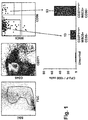
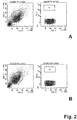
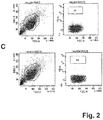
- bone marrow cells were labeled in experiments with CD271-APC, CD45-BrilliantViolet, CD56-FITC and W5C5-PE. Because MSC CD271 + CD45 - are, a window was in this population set and then the resulting plot sorting window on the W5C5 + CD56 - and set W5C5 + CD56 + populations. After sorting, the colony forming capacity of the respective populations was examined ( Fig. 1 ).
- the present study therefore identified a combination of antigens, namely SUSD2 with CD104b, TNAP and / or CD56, via which MSC, in particular those with chondrogenic, adipocytic and osteogenic differentiation potential, can be effectively isolated and / or identified.
- the present invention offers the possibility, for example, of providing highly enriched and well-defined MSC bone marrow cells, with outstanding chondrogenic differentiation ability, which can be used for clinical use as a starting population.
- These cells can either be used directly for injection, for example into the intervertebral spaces / intervertebral discs, or expanded in vitro and differentiated into chondrocytes before they are used for clinical applications.
Landscapes
- Health & Medical Sciences (AREA)
- Chemical & Material Sciences (AREA)
- Life Sciences & Earth Sciences (AREA)
- Immunology (AREA)
- Organic Chemistry (AREA)
- General Health & Medical Sciences (AREA)
- Molecular Biology (AREA)
- Engineering & Computer Science (AREA)
- Biochemistry (AREA)
- Medicinal Chemistry (AREA)
- Genetics & Genomics (AREA)
- Biomedical Technology (AREA)
- Proteomics, Peptides & Aminoacids (AREA)
- Biophysics (AREA)
- Cell Biology (AREA)
- Hematology (AREA)
- Zoology (AREA)
- Biotechnology (AREA)
- Developmental Biology & Embryology (AREA)
- Urology & Nephrology (AREA)
- Microbiology (AREA)
- Virology (AREA)
- Wood Science & Technology (AREA)
- Bioinformatics & Cheminformatics (AREA)
- General Physics & Mathematics (AREA)
- Food Science & Technology (AREA)
- Pathology (AREA)
- Tropical Medicine & Parasitology (AREA)
- Analytical Chemistry (AREA)
- Physics & Mathematics (AREA)
- General Engineering & Computer Science (AREA)
- Rheumatology (AREA)
- Pharmacology & Pharmacy (AREA)
- Epidemiology (AREA)
- Animal Behavior & Ethology (AREA)
- Public Health (AREA)
- Veterinary Medicine (AREA)
- Micro-Organisms Or Cultivation Processes Thereof (AREA)
- Peptides Or Proteins (AREA)
- Medicines Containing Antibodies Or Antigens For Use As Internal Diagnostic Agents (AREA)
Claims (11)
- Utilisation d'au moins un premier anticorps, qui se lie à l'antigène de la protéine 2 contenant des domaines Sushi (SUSD2), ou de fragments fonctionnels dudit au moins un premier anticorps, en combinaison avec au moins un deuxième anticorps, qui se lie à l'antigène CD140b, ou des fragments fonctionnels dudit au moins un deuxième anticorps, pour l'isolement in vitro de cellules souches mésenchymateuses.
- Utilisation selon la revendication 1, caractérisée en ce que ledit au moins un anticorps qui se lie à SUSD2 est choisi dans le groupe constitué par :- l'anticorps W5C5, qui est produit par la lignée cellulaire déposée sous le numéro ACC 2813 auprès de la collection allemande de micro-organismes et de cultures cellulaires,- l'anticorps W3D5, qui est produit par la lignée cellulaire déposée sous le numéro ACC 2815 auprès de la collection allemande de micro-organismes et de cultures cellulaires,- des fragments fonctionnels de l'anticorps W5C5 ou W3D5, et- un anticorps qui se lie au même épitope que l'anticorps W5C5 ou W3D5.
- Utilisation selon la revendication 1 ou 2, caractérisée en ce que l'anticorps qui se lie à CD140b est choisi dans le groupe constitué par :- l'anticorps 28D4,- des fragments fonctionnels de l'anticorps 28D4, et- un anticorps qui se lie au même épitope que l'anticorps 28D4.
- Utilisation selon l'une quelconque des revendications 1 à 3, caractérisée en ce que l'utilisation a lieu en combinaison avec au moins un troisième anticorps, ou des fragments fonctionnels de celui-ci, qui se lie au moins à un des antigènes CD56 ou TNAP (tissue non-specific alkaline phosphatase ; phosphatase alcaline non spécifique au tissu), l'anticorps qui se lie à TNAP étant choisi dans le groupe constitué par :- l'anticorps W8B2, qui est produit par la lignée cellulaire déposée sous le numéro ACC 2813 auprès de la collection allemande de micro-organismes et de cultures cellulaires,- des fragments fonctionnels de l'anticorps W8B2, et- un anticorps qui se lie au même épitope que l'anticorps W8B2.
- Utilisation selon la revendication 4, caractérisée en ce que l'anticorps qui se lie à CD56 est choisi dans le groupe constitué par :- l'anticorps 39D5, qui est produit par la lignée cellulaire déposée sous le numéro ACC 2930 auprès de la collection allemande de micro-organismes et de cultures cellulaires,- des fragments fonctionnels de l'anticorps 39D5, et- un anticorps qui se lie au même épitope que l'anticorps 39D5.
- Procédé in vitro pour l'isolement et/ou l'identification de cellules souches mésenchymateuses, notamment de cellules souches mésenchymateuses à potentiel de différenciation chondrocytaire, caractérisé en ce qu'il comprend les étapes suivantes :a) la mise en contact d'un échantillon qui contient des cellules souches mésenchymateuses avec au moins un anticorps qui se lie à l'antigène SUSD2, ou avec des fragments fonctionnels de l'anticorps,b) éventuellement la mise en contact d'un échantillon qui contient des cellules souches mésenchymateuses avec un autre anticorps qui se lie à l'antigène SUSD2, ou avec des fragments fonctionnels de l'anticorps,c) la mise en contact de l'échantillon avec au moins un anticorps qui se lie à CD140b, ou avec des fragments fonctionnels de l'anticorps, etd) l'isolement et/ou l'identification de cellules auxquelles i) ledit au moins un anticorps ou des fragments de celui-ci, qui se lie à l'antigène SUSD2, et ii) ledit au moins un anticorps qui se lie à CD140b se sont reliés.
- Procédé selon la revendication 6, caractérisé en ce que l'anticorps anti-SUSD2 utilisé à l'étape a) est choisi dans le groupe constitué par :- l'anticorps W5C5, qui est produit par la lignée cellulaire d'hybridomes déposée sous le numéro ACC 2813 auprès de la collection allemande de micro-organismes et de cultures cellulaires,- l'anticorps W3D5, qui est produit par la lignée cellulaire d'hybridomes déposée sous le numéro ACC 2815 auprès de la collection allemande de micro-organismes et de cultures cellulaires,- des fragments fonctionnels des anticorps W5C5 et W3D5, et- un anticorps qui se lie au même épitope que l'anticorps W5C5 ou W3D5.
- Procédé selon l'une quelconque des revendications 6 ou 7, caractérisé en ce que l'anticorps anti-CD140b utilisé à l'étape c) est choisi dans le groupe constitué par :- l'anticorps 28D4,- des fragments fonctionnels de l'anticorps 28D4, et- un anticorps qui se lie au même épitope que l'anticorps 28D4.
- Procédé selon l'une quelconque des revendications 6 à 8, caractérisé en ce qu'il comprend l'étape c1) supplémentaire :
c1) la mise en contact de l'échantillon avec au moins un anticorps qui se lie à CD56 ou TNAP, ou avec des fragments fonctionnels de l'anticorps,
l'anticorps anti-TNAP utilisé à l'étape c1) étant choisi dans le groupe constitué par :- l'anticorps W8B2, qui est produit par la lignée cellulaire d'hybridomes déposée sous le numéro ACC 2567 auprès de la collection allemande de micro-organismes et de cultures cellulaires,- des fragments fonctionnels de l'anticorps W8B2, et- un anticorps qui se lie au même antigène ou épitope que l'anticorps W8B2. - Procédé selon la revendication 9, caractérisé en ce que l'anticorps qui se lie à CD56 utilisé à l'étape c1) est choisi dans le groupe constitué par :- l'anticorps 39D5, qui est produit par la lignée cellulaire d'hybridomes déposée sous le numéro ACC 2930 auprès de la collection allemande de micro-organismes et de cultures cellulaires,- des fragments fonctionnels de l'anticorps 39D5, et- un anticorps qui se lie au même épitope que l'anticorps 39D5.
- Procédé selon l'une quelconque des revendications 6 à 10, caractérisé en ce que les étapes a), b), c) et éventuellement c1) sont réalisées simultanément, successivement ou dans l'ordre inverse.
Applications Claiming Priority (2)
| Application Number | Priority Date | Filing Date | Title |
|---|---|---|---|
| DE102012102532A DE102012102532A1 (de) | 2012-03-23 | 2012-03-23 | Neue MSC-Oberflächenmarker |
| PCT/EP2013/056033 WO2013139952A2 (fr) | 2012-03-23 | 2013-03-22 | Nouveau marqueur de surface des cellules souches mésenchymateuses (csm) |
Publications (2)
| Publication Number | Publication Date |
|---|---|
| EP2828663A2 EP2828663A2 (fr) | 2015-01-28 |
| EP2828663B1 true EP2828663B1 (fr) | 2018-09-26 |
Family
ID=48325588
Family Applications (1)
| Application Number | Title | Priority Date | Filing Date |
|---|---|---|---|
| EP13720803.9A Not-in-force EP2828663B1 (fr) | 2012-03-23 | 2013-03-22 | Nouveau marqueur de surface des cellules souches mésenchymateuses (csm) |
Country Status (6)
| Country | Link |
|---|---|
| US (1) | US9580686B2 (fr) |
| EP (1) | EP2828663B1 (fr) |
| AU (1) | AU2013237374B2 (fr) |
| DE (1) | DE102012102532A1 (fr) |
| ES (1) | ES2695581T3 (fr) |
| WO (1) | WO2013139952A2 (fr) |
Families Citing this family (2)
| Publication number | Priority date | Publication date | Assignee | Title |
|---|---|---|---|---|
| CN104215768B (zh) | 2014-08-07 | 2016-01-13 | 北京大学 | Susd2蛋白作为标记物的用途 |
| SG11201701398SA (en) | 2014-08-22 | 2017-03-30 | Cambridge Entpr Ltd | Resetting pluripotent stem cells |
Family Cites Families (2)
| Publication number | Priority date | Publication date | Assignee | Title |
|---|---|---|---|---|
| DE102006043625B4 (de) * | 2006-09-12 | 2012-02-23 | Eberhard-Karls-Universität Tübingen Universitätsklinikum | Verfahren zur Isolierung und/oder Identifizierung von mesenchymalen Stammzellen (MSC) |
| ES2370794B1 (es) * | 2010-05-25 | 2012-10-31 | Servicio Andaluz De Salud | Biomarcador de células cartilaginosas humanas. |
-
2012
- 2012-03-23 DE DE102012102532A patent/DE102012102532A1/de not_active Withdrawn
-
2013
- 2013-03-22 AU AU2013237374A patent/AU2013237374B2/en not_active Ceased
- 2013-03-22 EP EP13720803.9A patent/EP2828663B1/fr not_active Not-in-force
- 2013-03-22 ES ES13720803T patent/ES2695581T3/es active Active
- 2013-03-22 WO PCT/EP2013/056033 patent/WO2013139952A2/fr not_active Ceased
-
2014
- 2014-09-22 US US14/493,160 patent/US9580686B2/en not_active Expired - Fee Related
Non-Patent Citations (1)
| Title |
|---|
| None * |
Also Published As
| Publication number | Publication date |
|---|---|
| WO2013139952A3 (fr) | 2014-09-25 |
| WO2013139952A2 (fr) | 2013-09-26 |
| ES2695581T3 (es) | 2019-01-09 |
| US9580686B2 (en) | 2017-02-28 |
| EP2828663A2 (fr) | 2015-01-28 |
| US20150010516A1 (en) | 2015-01-08 |
| AU2013237374A1 (en) | 2014-10-16 |
| DE102012102532A1 (de) | 2013-09-26 |
| AU2013237374B2 (en) | 2016-02-11 |
Similar Documents
| Publication | Publication Date | Title |
|---|---|---|
| EP2313772B1 (fr) | Isolement et/ou identification de cellules souches ayant un potentiel de différentiation adipocytaire, chondrocytaire et pancréatique | |
| DE69936720T2 (de) | Menschliche cd45+ und/oder fibroblasten+ mesenchymale stammzellen | |
| US7863043B2 (en) | Stem cell populations and methods of use | |
| US20100260721A1 (en) | Enrichment of Cells | |
| US20050249731A1 (en) | Methods of implating mesenchymal stem cells for tissue repair and formation | |
| WO2002000849A1 (fr) | Fraction cellulaire contenant des cellules capables de se differencier en cellules du systeme nerveux | |
| US20080075699A1 (en) | Method for isolating and/or identifying mesenchymal stem cells (msc) | |
| DE60318706T2 (de) | Marker für stammzellen und dessen verwendung | |
| DE60037007T2 (de) | Angereicherte zentralnervensystem-zellpopulationen | |
| Khan et al. | Evaluation of the effects of synovial multipotent cells on deep digital flexor tendon repair in a large animal model of intra‐synovial tendinopathy | |
| EP2828663B1 (fr) | Nouveau marqueur de surface des cellules souches mésenchymateuses (csm) | |
| US11613733B2 (en) | Method for purifying mesenchymal stem cells to improve transplantation efficiency | |
| DE102009041885B4 (de) | Separation von Mesenchymalen Stammzellen | |
| WO2004024772A1 (fr) | Anticorps permettant d'isoler et/ou d'identifier des cellules souches neuronales et procede pour isoler et/ou identifier des cellules precurseurs neuronales | |
| US20220313741A1 (en) | Pluripotent stem cells inducing osteochondral repair | |
| WO2003027281A2 (fr) | Cellules souches totipotentes provenant des tissus intestinaux de muscle squelettique | |
| HK1123071B (en) | Isolation of adult multipotential cells by tissue non-specific alkaline phosphatase | |
| HK1123071A1 (zh) | 通过组织非特异性碱性磷酸酶分离成人多潜能细胞 |
Legal Events
| Date | Code | Title | Description |
|---|---|---|---|
| PUAI | Public reference made under article 153(3) epc to a published international application that has entered the european phase |
Free format text: ORIGINAL CODE: 0009012 |
|
| 17P | Request for examination filed |
Effective date: 20140924 |
|
| AK | Designated contracting states |
Kind code of ref document: A2 Designated state(s): AL AT BE BG CH CY CZ DE DK EE ES FI FR GB GR HR HU IE IS IT LI LT LU LV MC MK MT NL NO PL PT RO RS SE SI SK SM TR |
|
| AX | Request for extension of the european patent |
Extension state: BA ME |
|
| RIN1 | Information on inventor provided before grant (corrected) |
Inventor name: BUEHRING, HANS-JOERG Inventor name: CERABONA, FLAVIANNA Inventor name: GRIMM, SABRINA |
|
| DAX | Request for extension of the european patent (deleted) | ||
| 17Q | First examination report despatched |
Effective date: 20150805 |
|
| STAA | Information on the status of an ep patent application or granted ep patent |
Free format text: STATUS: EXAMINATION IS IN PROGRESS |
|
| GRAP | Despatch of communication of intention to grant a patent |
Free format text: ORIGINAL CODE: EPIDOSNIGR1 |
|
| STAA | Information on the status of an ep patent application or granted ep patent |
Free format text: STATUS: GRANT OF PATENT IS INTENDED |
|
| INTG | Intention to grant announced |
Effective date: 20180423 |
|
| GRAS | Grant fee paid |
Free format text: ORIGINAL CODE: EPIDOSNIGR3 |
|
| GRAA | (expected) grant |
Free format text: ORIGINAL CODE: 0009210 |
|
| STAA | Information on the status of an ep patent application or granted ep patent |
Free format text: STATUS: THE PATENT HAS BEEN GRANTED |
|
| AK | Designated contracting states |
Kind code of ref document: B1 Designated state(s): AL AT BE BG CH CY CZ DE DK EE ES FI FR GB GR HR HU IE IS IT LI LT LU LV MC MK MT NL NO PL PT RO RS SE SI SK SM TR |
|
| REG | Reference to a national code |
Ref country code: GB Ref legal event code: FG4D Free format text: NOT ENGLISH |
|
| REG | Reference to a national code |
Ref country code: CH Ref legal event code: EP |
|
| REG | Reference to a national code |
Ref country code: AT Ref legal event code: REF Ref document number: 1046635 Country of ref document: AT Kind code of ref document: T Effective date: 20181015 |
|
| REG | Reference to a national code |
Ref country code: IE Ref legal event code: FG4D Free format text: LANGUAGE OF EP DOCUMENT: GERMAN |
|
| REG | Reference to a national code |
Ref country code: DE Ref legal event code: R096 Ref document number: 502013011177 Country of ref document: DE |
|
| REG | Reference to a national code |
Ref country code: ES Ref legal event code: FG2A Ref document number: 2695581 Country of ref document: ES Kind code of ref document: T3 Effective date: 20190109 |
|
| REG | Reference to a national code |
Ref country code: NL Ref legal event code: MP Effective date: 20180926 |
|
| PG25 | Lapsed in a contracting state [announced via postgrant information from national office to epo] |
Ref country code: FI Free format text: LAPSE BECAUSE OF FAILURE TO SUBMIT A TRANSLATION OF THE DESCRIPTION OR TO PAY THE FEE WITHIN THE PRESCRIBED TIME-LIMIT Effective date: 20180926 Ref country code: LT Free format text: LAPSE BECAUSE OF FAILURE TO SUBMIT A TRANSLATION OF THE DESCRIPTION OR TO PAY THE FEE WITHIN THE PRESCRIBED TIME-LIMIT Effective date: 20180926 Ref country code: BG Free format text: LAPSE BECAUSE OF FAILURE TO SUBMIT A TRANSLATION OF THE DESCRIPTION OR TO PAY THE FEE WITHIN THE PRESCRIBED TIME-LIMIT Effective date: 20181226 Ref country code: GR Free format text: LAPSE BECAUSE OF FAILURE TO SUBMIT A TRANSLATION OF THE DESCRIPTION OR TO PAY THE FEE WITHIN THE PRESCRIBED TIME-LIMIT Effective date: 20181227 Ref country code: NO Free format text: LAPSE BECAUSE OF FAILURE TO SUBMIT A TRANSLATION OF THE DESCRIPTION OR TO PAY THE FEE WITHIN THE PRESCRIBED TIME-LIMIT Effective date: 20181226 Ref country code: RS Free format text: LAPSE BECAUSE OF FAILURE TO SUBMIT A TRANSLATION OF THE DESCRIPTION OR TO PAY THE FEE WITHIN THE PRESCRIBED TIME-LIMIT Effective date: 20180926 Ref country code: SE Free format text: LAPSE BECAUSE OF FAILURE TO SUBMIT A TRANSLATION OF THE DESCRIPTION OR TO PAY THE FEE WITHIN THE PRESCRIBED TIME-LIMIT Effective date: 20180926 |
|
| REG | Reference to a national code |
Ref country code: LT Ref legal event code: MG4D |
|
| PG25 | Lapsed in a contracting state [announced via postgrant information from national office to epo] |
Ref country code: AL Free format text: LAPSE BECAUSE OF FAILURE TO SUBMIT A TRANSLATION OF THE DESCRIPTION OR TO PAY THE FEE WITHIN THE PRESCRIBED TIME-LIMIT Effective date: 20180926 Ref country code: LV Free format text: LAPSE BECAUSE OF FAILURE TO SUBMIT A TRANSLATION OF THE DESCRIPTION OR TO PAY THE FEE WITHIN THE PRESCRIBED TIME-LIMIT Effective date: 20180926 Ref country code: HR Free format text: LAPSE BECAUSE OF FAILURE TO SUBMIT A TRANSLATION OF THE DESCRIPTION OR TO PAY THE FEE WITHIN THE PRESCRIBED TIME-LIMIT Effective date: 20180926 |
|
| PG25 | Lapsed in a contracting state [announced via postgrant information from national office to epo] |
Ref country code: EE Free format text: LAPSE BECAUSE OF FAILURE TO SUBMIT A TRANSLATION OF THE DESCRIPTION OR TO PAY THE FEE WITHIN THE PRESCRIBED TIME-LIMIT Effective date: 20180926 Ref country code: PL Free format text: LAPSE BECAUSE OF FAILURE TO SUBMIT A TRANSLATION OF THE DESCRIPTION OR TO PAY THE FEE WITHIN THE PRESCRIBED TIME-LIMIT Effective date: 20180926 Ref country code: IS Free format text: LAPSE BECAUSE OF FAILURE TO SUBMIT A TRANSLATION OF THE DESCRIPTION OR TO PAY THE FEE WITHIN THE PRESCRIBED TIME-LIMIT Effective date: 20190126 Ref country code: RO Free format text: LAPSE BECAUSE OF FAILURE TO SUBMIT A TRANSLATION OF THE DESCRIPTION OR TO PAY THE FEE WITHIN THE PRESCRIBED TIME-LIMIT Effective date: 20180926 Ref country code: CZ Free format text: LAPSE BECAUSE OF FAILURE TO SUBMIT A TRANSLATION OF THE DESCRIPTION OR TO PAY THE FEE WITHIN THE PRESCRIBED TIME-LIMIT Effective date: 20180926 Ref country code: NL Free format text: LAPSE BECAUSE OF FAILURE TO SUBMIT A TRANSLATION OF THE DESCRIPTION OR TO PAY THE FEE WITHIN THE PRESCRIBED TIME-LIMIT Effective date: 20180926 |
|
| PG25 | Lapsed in a contracting state [announced via postgrant information from national office to epo] |
Ref country code: SK Free format text: LAPSE BECAUSE OF FAILURE TO SUBMIT A TRANSLATION OF THE DESCRIPTION OR TO PAY THE FEE WITHIN THE PRESCRIBED TIME-LIMIT Effective date: 20180926 Ref country code: PT Free format text: LAPSE BECAUSE OF FAILURE TO SUBMIT A TRANSLATION OF THE DESCRIPTION OR TO PAY THE FEE WITHIN THE PRESCRIBED TIME-LIMIT Effective date: 20190126 Ref country code: SM Free format text: LAPSE BECAUSE OF FAILURE TO SUBMIT A TRANSLATION OF THE DESCRIPTION OR TO PAY THE FEE WITHIN THE PRESCRIBED TIME-LIMIT Effective date: 20180926 |
|
| REG | Reference to a national code |
Ref country code: DE Ref legal event code: R097 Ref document number: 502013011177 Country of ref document: DE |
|
| PG25 | Lapsed in a contracting state [announced via postgrant information from national office to epo] |
Ref country code: DK Free format text: LAPSE BECAUSE OF FAILURE TO SUBMIT A TRANSLATION OF THE DESCRIPTION OR TO PAY THE FEE WITHIN THE PRESCRIBED TIME-LIMIT Effective date: 20180926 |
|
| PLBE | No opposition filed within time limit |
Free format text: ORIGINAL CODE: 0009261 |
|
| STAA | Information on the status of an ep patent application or granted ep patent |
Free format text: STATUS: NO OPPOSITION FILED WITHIN TIME LIMIT |
|
| 26N | No opposition filed |
Effective date: 20190627 |
|
| PG25 | Lapsed in a contracting state [announced via postgrant information from national office to epo] |
Ref country code: SI Free format text: LAPSE BECAUSE OF FAILURE TO SUBMIT A TRANSLATION OF THE DESCRIPTION OR TO PAY THE FEE WITHIN THE PRESCRIBED TIME-LIMIT Effective date: 20180926 Ref country code: MC Free format text: LAPSE BECAUSE OF FAILURE TO SUBMIT A TRANSLATION OF THE DESCRIPTION OR TO PAY THE FEE WITHIN THE PRESCRIBED TIME-LIMIT Effective date: 20180926 |
|
| REG | Reference to a national code |
Ref country code: CH Ref legal event code: PL |
|
| REG | Reference to a national code |
Ref country code: DE Ref legal event code: R082 Ref document number: 502013011177 Country of ref document: DE Representative=s name: WITTE, WELLER & PARTNER PATENTANWAELTE MBB, DE Ref country code: DE Ref legal event code: R081 Ref document number: 502013011177 Country of ref document: DE Owner name: TETEC TISSUE ENGINEERING TECHNOLOGIES AG, DE Free format text: FORMER OWNER: EBERHARD-KARLS-UNIVERSITAET TUEBINGEN UNIVERSITAETSKLINIKUM, 72076 TUEBINGEN, DE |
|
| PG25 | Lapsed in a contracting state [announced via postgrant information from national office to epo] |
Ref country code: LU Free format text: LAPSE BECAUSE OF NON-PAYMENT OF DUE FEES Effective date: 20190322 |
|
| REG | Reference to a national code |
Ref country code: ES Ref legal event code: PC2A Owner name: TETEC TISSUE ENGINEERING TECHNOLOGIES AG Effective date: 20191129 Ref country code: BE Ref legal event code: MM Effective date: 20190331 |
|
| PG25 | Lapsed in a contracting state [announced via postgrant information from national office to epo] |
Ref country code: IE Free format text: LAPSE BECAUSE OF NON-PAYMENT OF DUE FEES Effective date: 20190322 Ref country code: LI Free format text: LAPSE BECAUSE OF NON-PAYMENT OF DUE FEES Effective date: 20190331 Ref country code: CH Free format text: LAPSE BECAUSE OF NON-PAYMENT OF DUE FEES Effective date: 20190331 |
|
| REG | Reference to a national code |
Ref country code: GB Ref legal event code: 732E Free format text: REGISTERED BETWEEN 20200116 AND 20200122 |
|
| PG25 | Lapsed in a contracting state [announced via postgrant information from national office to epo] |
Ref country code: BE Free format text: LAPSE BECAUSE OF NON-PAYMENT OF DUE FEES Effective date: 20190331 |
|
| PG25 | Lapsed in a contracting state [announced via postgrant information from national office to epo] |
Ref country code: TR Free format text: LAPSE BECAUSE OF FAILURE TO SUBMIT A TRANSLATION OF THE DESCRIPTION OR TO PAY THE FEE WITHIN THE PRESCRIBED TIME-LIMIT Effective date: 20180926 |
|
| PG25 | Lapsed in a contracting state [announced via postgrant information from national office to epo] |
Ref country code: MT Free format text: LAPSE BECAUSE OF FAILURE TO SUBMIT A TRANSLATION OF THE DESCRIPTION OR TO PAY THE FEE WITHIN THE PRESCRIBED TIME-LIMIT Effective date: 20180926 |
|
| REG | Reference to a national code |
Ref country code: AT Ref legal event code: MM01 Ref document number: 1046635 Country of ref document: AT Kind code of ref document: T Effective date: 20190322 |
|
| PG25 | Lapsed in a contracting state [announced via postgrant information from national office to epo] |
Ref country code: AT Free format text: LAPSE BECAUSE OF NON-PAYMENT OF DUE FEES Effective date: 20190322 |
|
| PGFP | Annual fee paid to national office [announced via postgrant information from national office to epo] |
Ref country code: FR Payment date: 20210319 Year of fee payment: 9 |
|
| PG25 | Lapsed in a contracting state [announced via postgrant information from national office to epo] |
Ref country code: CY Free format text: LAPSE BECAUSE OF FAILURE TO SUBMIT A TRANSLATION OF THE DESCRIPTION OR TO PAY THE FEE WITHIN THE PRESCRIBED TIME-LIMIT Effective date: 20180926 |
|
| PGFP | Annual fee paid to national office [announced via postgrant information from national office to epo] |
Ref country code: GB Payment date: 20210324 Year of fee payment: 9 |
|
| PG25 | Lapsed in a contracting state [announced via postgrant information from national office to epo] |
Ref country code: HU Free format text: LAPSE BECAUSE OF FAILURE TO SUBMIT A TRANSLATION OF THE DESCRIPTION OR TO PAY THE FEE WITHIN THE PRESCRIBED TIME-LIMIT; INVALID AB INITIO Effective date: 20130322 |
|
| PGFP | Annual fee paid to national office [announced via postgrant information from national office to epo] |
Ref country code: IT Payment date: 20210331 Year of fee payment: 9 |
|
| PGFP | Annual fee paid to national office [announced via postgrant information from national office to epo] |
Ref country code: ES Payment date: 20210421 Year of fee payment: 9 |
|
| PG25 | Lapsed in a contracting state [announced via postgrant information from national office to epo] |
Ref country code: MK Free format text: LAPSE BECAUSE OF FAILURE TO SUBMIT A TRANSLATION OF THE DESCRIPTION OR TO PAY THE FEE WITHIN THE PRESCRIBED TIME-LIMIT Effective date: 20180926 |
|
| GBPC | Gb: european patent ceased through non-payment of renewal fee |
Effective date: 20220322 |
|
| PG25 | Lapsed in a contracting state [announced via postgrant information from national office to epo] |
Ref country code: GB Free format text: LAPSE BECAUSE OF NON-PAYMENT OF DUE FEES Effective date: 20220322 Ref country code: FR Free format text: LAPSE BECAUSE OF NON-PAYMENT OF DUE FEES Effective date: 20220331 |
|
| PG25 | Lapsed in a contracting state [announced via postgrant information from national office to epo] |
Ref country code: IT Free format text: LAPSE BECAUSE OF NON-PAYMENT OF DUE FEES Effective date: 20220322 |
|
| REG | Reference to a national code |
Ref country code: ES Ref legal event code: FD2A Effective date: 20230602 |
|
| PG25 | Lapsed in a contracting state [announced via postgrant information from national office to epo] |
Ref country code: ES Free format text: LAPSE BECAUSE OF NON-PAYMENT OF DUE FEES Effective date: 20220323 |
|
| PGFP | Annual fee paid to national office [announced via postgrant information from national office to epo] |
Ref country code: DE Payment date: 20230929 Year of fee payment: 11 |
|
| REG | Reference to a national code |
Ref country code: DE Ref legal event code: R119 Ref document number: 502013011177 Country of ref document: DE |
|
| PG25 | Lapsed in a contracting state [announced via postgrant information from national office to epo] |
Ref country code: DE Free format text: LAPSE BECAUSE OF NON-PAYMENT OF DUE FEES Effective date: 20241001 |
|
| PG25 | Lapsed in a contracting state [announced via postgrant information from national office to epo] |
Ref country code: DE Free format text: LAPSE BECAUSE OF NON-PAYMENT OF DUE FEES Effective date: 20241001 |