EP2843078B1 - Procédé de fabrication d'une tube en acier galvanisé - Google Patents
Procédé de fabrication d'une tube en acier galvanisé Download PDFInfo
- Publication number
- EP2843078B1 EP2843078B1 EP12875001.5A EP12875001A EP2843078B1 EP 2843078 B1 EP2843078 B1 EP 2843078B1 EP 12875001 A EP12875001 A EP 12875001A EP 2843078 B1 EP2843078 B1 EP 2843078B1
- Authority
- EP
- European Patent Office
- Prior art keywords
- hot
- galvanized steel
- steel pipe
- dip galvanized
- mass
- Prior art date
- Legal status (The legal status is an assumption and is not a legal conclusion. Google has not performed a legal analysis and makes no representation as to the accuracy of the status listed.)
- Not-in-force
Links
Images
Classifications
-
- F—MECHANICAL ENGINEERING; LIGHTING; HEATING; WEAPONS; BLASTING
- F16—ENGINEERING ELEMENTS AND UNITS; GENERAL MEASURES FOR PRODUCING AND MAINTAINING EFFECTIVE FUNCTIONING OF MACHINES OR INSTALLATIONS; THERMAL INSULATION IN GENERAL
- F16L—PIPES; JOINTS OR FITTINGS FOR PIPES; SUPPORTS FOR PIPES, CABLES OR PROTECTIVE TUBING; MEANS FOR THERMAL INSULATION IN GENERAL
- F16L58/00—Protection of pipes or pipe fittings against corrosion or incrustation
- F16L58/02—Protection of pipes or pipe fittings against corrosion or incrustation by means of internal or external coatings
- F16L58/04—Coatings characterised by the materials used
- F16L58/08—Coatings characterised by the materials used by metal
-
- C—CHEMISTRY; METALLURGY
- C23—COATING METALLIC MATERIAL; COATING MATERIAL WITH METALLIC MATERIAL; CHEMICAL SURFACE TREATMENT; DIFFUSION TREATMENT OF METALLIC MATERIAL; COATING BY VACUUM EVAPORATION, BY SPUTTERING, BY ION IMPLANTATION OR BY CHEMICAL VAPOUR DEPOSITION, IN GENERAL; INHIBITING CORROSION OF METALLIC MATERIAL OR INCRUSTATION IN GENERAL
- C23C—COATING METALLIC MATERIAL; COATING MATERIAL WITH METALLIC MATERIAL; SURFACE TREATMENT OF METALLIC MATERIAL BY DIFFUSION INTO THE SURFACE, BY CHEMICAL CONVERSION OR SUBSTITUTION; COATING BY VACUUM EVAPORATION, BY SPUTTERING, BY ION IMPLANTATION OR BY CHEMICAL VAPOUR DEPOSITION, IN GENERAL
- C23C2/00—Hot-dipping or immersion processes for applying the coating material in the molten state without affecting the shape; Apparatus therefor
- C23C2/04—Hot-dipping or immersion processes for applying the coating material in the molten state without affecting the shape; Apparatus therefor characterised by the coating material
- C23C2/06—Zinc or cadmium or alloys based thereon
-
- B—PERFORMING OPERATIONS; TRANSPORTING
- B32—LAYERED PRODUCTS
- B32B—LAYERED PRODUCTS, i.e. PRODUCTS BUILT-UP OF STRATA OF FLAT OR NON-FLAT, e.g. CELLULAR OR HONEYCOMB, FORM
- B32B15/00—Layered products comprising a layer of metal
- B32B15/01—Layered products comprising a layer of metal all layers being exclusively metallic
- B32B15/013—Layered products comprising a layer of metal all layers being exclusively metallic one layer being formed of an iron alloy or steel, another layer being formed of a metal other than iron or aluminium
-
- C—CHEMISTRY; METALLURGY
- C22—METALLURGY; FERROUS OR NON-FERROUS ALLOYS; TREATMENT OF ALLOYS OR NON-FERROUS METALS
- C22C—ALLOYS
- C22C18/00—Alloys based on zinc
-
- C—CHEMISTRY; METALLURGY
- C22—METALLURGY; FERROUS OR NON-FERROUS ALLOYS; TREATMENT OF ALLOYS OR NON-FERROUS METALS
- C22C—ALLOYS
- C22C38/00—Ferrous alloys, e.g. steel alloys
- C22C38/02—Ferrous alloys, e.g. steel alloys containing silicon
-
- C—CHEMISTRY; METALLURGY
- C22—METALLURGY; FERROUS OR NON-FERROUS ALLOYS; TREATMENT OF ALLOYS OR NON-FERROUS METALS
- C22C—ALLOYS
- C22C38/00—Ferrous alloys, e.g. steel alloys
- C22C38/04—Ferrous alloys, e.g. steel alloys containing manganese
-
- C—CHEMISTRY; METALLURGY
- C23—COATING METALLIC MATERIAL; COATING MATERIAL WITH METALLIC MATERIAL; CHEMICAL SURFACE TREATMENT; DIFFUSION TREATMENT OF METALLIC MATERIAL; COATING BY VACUUM EVAPORATION, BY SPUTTERING, BY ION IMPLANTATION OR BY CHEMICAL VAPOUR DEPOSITION, IN GENERAL; INHIBITING CORROSION OF METALLIC MATERIAL OR INCRUSTATION IN GENERAL
- C23C—COATING METALLIC MATERIAL; COATING MATERIAL WITH METALLIC MATERIAL; SURFACE TREATMENT OF METALLIC MATERIAL BY DIFFUSION INTO THE SURFACE, BY CHEMICAL CONVERSION OR SUBSTITUTION; COATING BY VACUUM EVAPORATION, BY SPUTTERING, BY ION IMPLANTATION OR BY CHEMICAL VAPOUR DEPOSITION, IN GENERAL
- C23C2/00—Hot-dipping or immersion processes for applying the coating material in the molten state without affecting the shape; Apparatus therefor
- C23C2/003—Apparatus
- C23C2/0034—Details related to elements immersed in bath
-
- C—CHEMISTRY; METALLURGY
- C23—COATING METALLIC MATERIAL; COATING MATERIAL WITH METALLIC MATERIAL; CHEMICAL SURFACE TREATMENT; DIFFUSION TREATMENT OF METALLIC MATERIAL; COATING BY VACUUM EVAPORATION, BY SPUTTERING, BY ION IMPLANTATION OR BY CHEMICAL VAPOUR DEPOSITION, IN GENERAL; INHIBITING CORROSION OF METALLIC MATERIAL OR INCRUSTATION IN GENERAL
- C23C—COATING METALLIC MATERIAL; COATING MATERIAL WITH METALLIC MATERIAL; SURFACE TREATMENT OF METALLIC MATERIAL BY DIFFUSION INTO THE SURFACE, BY CHEMICAL CONVERSION OR SUBSTITUTION; COATING BY VACUUM EVAPORATION, BY SPUTTERING, BY ION IMPLANTATION OR BY CHEMICAL VAPOUR DEPOSITION, IN GENERAL
- C23C2/00—Hot-dipping or immersion processes for applying the coating material in the molten state without affecting the shape; Apparatus therefor
- C23C2/02—Pretreatment of the material to be coated, e.g. for coating on selected surface areas
- C23C2/024—Pretreatment of the material to be coated, e.g. for coating on selected surface areas by cleaning or etching
-
- C—CHEMISTRY; METALLURGY
- C23—COATING METALLIC MATERIAL; COATING MATERIAL WITH METALLIC MATERIAL; CHEMICAL SURFACE TREATMENT; DIFFUSION TREATMENT OF METALLIC MATERIAL; COATING BY VACUUM EVAPORATION, BY SPUTTERING, BY ION IMPLANTATION OR BY CHEMICAL VAPOUR DEPOSITION, IN GENERAL; INHIBITING CORROSION OF METALLIC MATERIAL OR INCRUSTATION IN GENERAL
- C23C—COATING METALLIC MATERIAL; COATING MATERIAL WITH METALLIC MATERIAL; SURFACE TREATMENT OF METALLIC MATERIAL BY DIFFUSION INTO THE SURFACE, BY CHEMICAL CONVERSION OR SUBSTITUTION; COATING BY VACUUM EVAPORATION, BY SPUTTERING, BY ION IMPLANTATION OR BY CHEMICAL VAPOUR DEPOSITION, IN GENERAL
- C23C2/00—Hot-dipping or immersion processes for applying the coating material in the molten state without affecting the shape; Apparatus therefor
- C23C2/26—After-treatment
- C23C2/28—Thermal after-treatment, e.g. treatment in oil bath
- C23C2/29—Cooling or quenching
-
- C—CHEMISTRY; METALLURGY
- C23—COATING METALLIC MATERIAL; COATING MATERIAL WITH METALLIC MATERIAL; CHEMICAL SURFACE TREATMENT; DIFFUSION TREATMENT OF METALLIC MATERIAL; COATING BY VACUUM EVAPORATION, BY SPUTTERING, BY ION IMPLANTATION OR BY CHEMICAL VAPOUR DEPOSITION, IN GENERAL; INHIBITING CORROSION OF METALLIC MATERIAL OR INCRUSTATION IN GENERAL
- C23C—COATING METALLIC MATERIAL; COATING MATERIAL WITH METALLIC MATERIAL; SURFACE TREATMENT OF METALLIC MATERIAL BY DIFFUSION INTO THE SURFACE, BY CHEMICAL CONVERSION OR SUBSTITUTION; COATING BY VACUUM EVAPORATION, BY SPUTTERING, BY ION IMPLANTATION OR BY CHEMICAL VAPOUR DEPOSITION, IN GENERAL
- C23C2/00—Hot-dipping or immersion processes for applying the coating material in the molten state without affecting the shape; Apparatus therefor
- C23C2/30—Fluxes or coverings on molten baths
-
- C—CHEMISTRY; METALLURGY
- C23—COATING METALLIC MATERIAL; COATING MATERIAL WITH METALLIC MATERIAL; CHEMICAL SURFACE TREATMENT; DIFFUSION TREATMENT OF METALLIC MATERIAL; COATING BY VACUUM EVAPORATION, BY SPUTTERING, BY ION IMPLANTATION OR BY CHEMICAL VAPOUR DEPOSITION, IN GENERAL; INHIBITING CORROSION OF METALLIC MATERIAL OR INCRUSTATION IN GENERAL
- C23C—COATING METALLIC MATERIAL; COATING MATERIAL WITH METALLIC MATERIAL; SURFACE TREATMENT OF METALLIC MATERIAL BY DIFFUSION INTO THE SURFACE, BY CHEMICAL CONVERSION OR SUBSTITUTION; COATING BY VACUUM EVAPORATION, BY SPUTTERING, BY ION IMPLANTATION OR BY CHEMICAL VAPOUR DEPOSITION, IN GENERAL
- C23C2/00—Hot-dipping or immersion processes for applying the coating material in the molten state without affecting the shape; Apparatus therefor
- C23C2/34—Hot-dipping or immersion processes for applying the coating material in the molten state without affecting the shape; Apparatus therefor characterised by the shape of the material to be treated
- C23C2/36—Elongated material
- C23C2/38—Wires; Tubes
-
- F—MECHANICAL ENGINEERING; LIGHTING; HEATING; WEAPONS; BLASTING
- F16—ENGINEERING ELEMENTS AND UNITS; GENERAL MEASURES FOR PRODUCING AND MAINTAINING EFFECTIVE FUNCTIONING OF MACHINES OR INSTALLATIONS; THERMAL INSULATION IN GENERAL
- F16L—PIPES; JOINTS OR FITTINGS FOR PIPES; SUPPORTS FOR PIPES, CABLES OR PROTECTIVE TUBING; MEANS FOR THERMAL INSULATION IN GENERAL
- F16L9/00—Rigid pipes
- F16L9/02—Rigid pipes of metal
Definitions
- the present invention relates to a method of manufacturing a hot-dip galvanized steel pipe.
- the hot-dip galvanization has been used widely as a technique for improving the corrosion resistance of a steel material.
- JP2009-221601A , JP2009-221604A , JP2009-197328A , JP2011-26630A , and JP2009-221605A describe methods of manufacturing a hot-dip galvanized material in which, even if a molten zinc bath in which the content of Pb is restrained to at most 0.1 mass% and the content of Cd is restrained to at most 0.01 mass% is used in conformity to the RoHS instructions, poor plating occurs infrequently.
- a metal such as Sn, Sb, Bi, or In is added to the molten zinc bath in minute amounts.
- JP2006-307316A describes a hot-dip galvanizing bath composition for forming a galvanizing film on the surface of a steel material by means of a dipping process.
- the hot-dip galvanizing bath composition consists of 0.01 to 0.05 wt% of Ni, 0.001 to 0.01 wt% of Al, and 0.01 to 0.08 wt% of Bi, the balance being Zn and unavoidable impurities, and not containing Pb.
- JP2011-26632A describes a hot-dip galvanized steel material in which the composition of the plating layer contains at most 0.010 mass% of Pb and 0.04 to 0.50 mass% of Sb.
- JP10-140316A describes a method of manufacturing a hot-dip galvanized steel material in which a steel plate, which is plated by using a hot-dip galvanizing bath containing 0.1 to 0.3 wt% of Al and at most 0.01 wt% in total of Pb, Sn, Cd and Sb as impurities, is subjected to rolling with a rolling weight of 50 to 500 tons per 1 m width of steel plate that is in contact with a roll.
- JP2011-89175A describes a hot-dip galvanized steel pipe in which the lead concentration in a hot-dip galvanizing film is at most 0.1 mass%, the cadmium concentration therein is at most 0.01 mass%, and the Vickers hardness of an alloy layer part of the hot-dip galvanizing film is at most 110 Hv.
- US 5 437 738 A discloses a steel pipe which is pickled, rinsed and immersed in preflux solution at a temperature of 80 °C. and containing (mass%): zinc chloride 20.0, ammonium chloride 22.0, the nonionic surfactant Merpol® SCH 0.1, and the inhibitor Ethomeen® (Akzo US) 0.05.
- the pipe is dipped through a top-flux into molten Special High Grade zinc with 0.003 mass% lead. 10 % HCl is disclosed as pickling solution.
- US 6 277 443 B discloses a hot-dip, low lead zinc galvanizing of steel pipes.
- the galvanizing baths may contain low concentrations of aluminum (0.005 to 0.015 % by mass).
- the metal parts are pre-fluxed in a solution comprising ammonium chloride, zinc chloride or both.
- LANGILL T ET AL "Pickling iron and steel",GALVANIZING NOTES, vol. 2, no. 2, June 1998 (1998-06), pages 1 - 6 , reports hydrochloric and sulfuric acid as pickling agents for steel.
- Flaring is a treatment in which the opening part in the end portion of steel pipe is spread toward the outside to form a ring-shaped flare (collar).
- the plating layer When the hot-dip galvanized steel pipe is subjected to flaring, the plating layer is liable to peel off.
- As a method of reducing the peeling-off of plating layer it has been known to use a thinner plating layer. With a thinner plating layer, the strain applied to the plating layer at the time of working decreases. However, if the plating layer is made thin, predetermined corrosion resistance cannot be achieved in some cases.
- JP2009-221601A , JP2009-221604A , JP2009-197328A , JP2011-26630A , JP2009-221605A , JP2006-307316A , and JP2011-26632A do not describe the tendency of peeling-off of the plating layer at the time of working.
- the hot-dip galvanized steel pipe described in JP2011-89175A must be subjected to a special treatment to decrease the hardnesses of alloy layer and solidified zinc layer of the hot-dip galvanizing film.
- An object of the present invention is to provide a method of manufacturing a hot-dip galvanized steel pipe in which the plating layer is less liable to peel off even if the steel pipe is worked.
- the plating layer is less liable to peel off even if the steel pipe is worked.
- the present inventors studied the workability of a hot-dip galvanized steel pipe, and obtained the findings described below.
- the plating layer includes a Zn-Fe alloy layer formed at the interface with a base metal, and a Zn layer ( ⁇ layer) formed on the surface. Of these layers, the Zn-Fe alloy layer has a low ductility. In the Zn-Fe alloy layer, therefore, cracking is liable to occur on account of bending work such as flaring. If a crack generated in the Zn-Fe alloy layer propagates to the Zn layer on the surface, the plating layer peels off.
- the crack is further liable to propagate. Therefore, if a dissimilar metal has mixedly entered into the Zn layer, the plating layer is liable to peel off. In other words, by enhancing the purity of Zn layer, the plating layer can be restrained from peeling off, and the workability of the hot-dip galvanized steel pipe can be improved.
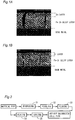
- Figure 1A is a scanning electron micrograph of the plating layer including the Zn layer having a low purity.
- Figure 1B is a scanning electron micrograph of the plating layer including the Zn layer having a high purity.
- Figure 1A in the plating layer including the Zn layer having a low purity, a crack generated in the Fe-Zn alloy layer propagates to the Zn layer on the surface.
- Figure 1B in the plating layer including the Zn layer having a high purity, a crack generated in the Fe-Zn alloy layer stops at the Zn layer on the surface.
- the fn is measured by the following method.
- an arbitrary region discharge area: 4-mm dia, hereinafter referred to as a specific region
- the element analysis in the depth direction is made by using a Markus type high frequency glow discharge optical emission spectroscopic apparatus (manufactured by Horiba, Ltd., GD-Profiler2).
- the measurement conditions at this time are as given in Table 1. Thereby, the element distribution in the entire depth of the specific region can be obtained. Based on the obtained element distribution, the value fn at each depth (fn distribution) is determined.
- each of the values fn is at least 99.9.
- the fn involves iron (Fe). Fe is alloyed with zinc to form the Zn-Fe alloy layer. Therefore, a large amount of Fe is contained in the plating layer. However, the Zn-Fe alloy layer is present separately from the Zn layer. Therefore, Fe does not mixedly enter into the Zn layer. For this reason, even if the plating layer contains iron, the workability of the hot-dip galvanized steel pipe does not decrease.
- Al aluminum
- Al improves the flowability of hot-dip galvanizing bath. If Al is contained in the hot-dip galvanizing bath, Al is also contained in the plating layer of the hot-dip galvanized steel pipe. However, Al is present concentratedly at a depth of about one micron from the plating surface. Therefore, even if the plating layer contains Al, the workability of hot-dip galvanized steel pipe does not decrease.
- the plating layer is less liable to peel off even if working such as flaring is performed.
- the hot-dip galvanized steel pipe can be manufactured by dipping a material pipe in a hot-dip galvanizing bath that contains 0.002 to 0.01 mass% of Al, the balance being Zn and impurities, wherein the total content of Pb, Sn, Cd, Sb, Bi, Cu, Ni, and In of the impurities is at most 0.1 mass%.
- FIG. 2 is a flow diagram of the method of manufacturing a hot-dip galvanized steel pipe in accordance with one embodiment of the present invention.
- the method of manufacturing a hot-dip galvanized steel pipe includes a step of degreasing a material pipe (step S1), a step of pickling the degreased material pipe (step S2), a step of flux-treating the pickled material pipe (step S3), a step of plating the flux-treated material pipe (step S4), and a step of cooling the plated steel pipe (step S5).
- a material pipe to be plated is prepared.
- any steel pipe can be used.
- the material pipe is, for example, an SGP steel pipe specified in JIS G3452 or an STPG steel pipe specified in JIS G3454.
- SGP steel pipe and the STPG steel pipe any of an electric-resistance welded pipe, a butt welded pipe, and a seamless pipe may be used.
- step S1 the material pipe is dipped in a degreasing solution and is degreased.
- the degreasing is, for example, alkali degreasing or solvent degreasing. Thereby, oils sticking to the surface of material pipe are removed. Thereafter, the material pipe is washed by water to remove the sticking degreasing solution.
- the degreased material pipe is dipped in a pickling solution and is pickled (step S2).
- the pickling solution is sulfuric acid of 5 to 20 mass%. It is necessary that the sulfuric acid be heated for use to a temperature of at least 65°C.
- a proper amount of acid corrosion inhibitor may be contained in the pickling solution.
- the pickling time is, for example, 10 to 60 minutes. Thereby, scale on the surface of material pipe is removed. Thereafter, the material pipe is washed by water to remove the sticking pickling solution.
- the pickled material pipe is flux-treated by a flux solution (step S3).
- the flux treatment the material pipe is dipped in the flux solution.
- an aqueous solution of zinc chloride and ammonium chloride is used as the flux solution.
- the quantity ratio (mole ratio) of zinc chloride and ammonium chloride is preferably 1:1 to 1:5, further preferably 1:2 to 1:4.
- the flux solution is heated for use to a temperature of 70 to 90°C.
- a flux solution having a high concentration of at least 600 g/l is used, and is in the range to saturation.
- the flux concentration (g/L) is represented by the ratio of the total mass (g) of the contained zinc chloride and ammonium chloride to one liter (L) of water.
- the flux film protects the surface of material pipe, and prevents zinc oxide from being involved at the time of plating and prevents poor plating from occurring.
- the material pipe is dried. If moisture remains on the material pipe, the moisture vaporizes when it comes into contact with the hot-dip galvanizing bath, and scatters molten zinc, causing the occurrence of poor plating.
- a surface active agent is contained in the flux solution. Also, by containing the surface active agent, the flux film is easily formed in a uniform manner.
- the surface active agent is, for example, lauryl trimethyl ammonium chloride, cetyl trimethyl ammonium chloride, or stearyl trimethyl ammonium chloride.
- the lower limit of the concentration of surface active agent in the flux solution is 0.05 mass%.
- the concentration of surface active agent is preferably higher than 0.05 mass%.
- the lower limit of the concentration of surface active agent is further preferably 0.10 mass%.
- the concentration of surface active agent is lower than 0.3 mass%, further preferably lower than 0.2 mass%.
- the hot-dip galvanizing bath used in this embodiment contains 0.002 to 0.01 mass% of Al, the balance being Zn and impurities, wherein the total content of Pb, Sn, Cd, Sb, Bi, Cu, Ni, and In of the impurities is at most 0.1 mass%.
- Aluminum (Al) improves the flowability of hot-dip galvanizing bath. If the content of Al in the hot-dip galvanizing bath is too low, the gloss of plating surface decreases. Therefore, the lower limit of Al content is 0.002 mass%.
- the Al content is preferably more than 0.002 mass%.
- the lower limit of Al content is further preferably 0.005 mass%.
- the upper limit of Al content is 0.01 mass%.
- the total content of these elements is at most 0.1 mass%.
- the temperature of the hot-dip galvanizing bath is, for example, 450 to 480°C.
- the time period for dipping the material pipe in the hot-dip galvanizing bath is, for example, 30 to 300 seconds.
- the temperature of the hot-dip galvanizing bath and the time period for dipping the material pipe in the hot-dip galvanizing bath are controlled according to the thickness of plating layer.
- the material pipe After having been dipped for a predetermined time period, the material pipe is pulled up from the hot-dip galvanizing bath.
- the material pipe is held above the hot-dip galvanizing bath for a certain time period so that surplus molten zinc sticking to the material pipe runs down. At this time, the surplus molten zinc may be removed by blowing compressed air or steam.
- the cooling may be air cooling, water cooling, or oil cooling.
- water cooling warm water having a temperature of 40 to 80°C is used.
- the hot-dip galvanized steel pipe is manufactured.
- the fn defined by Formula (1) is at least 99.9 throughout the entire depth of plating layer. Therefore, even if the hot-dip galvanized steel pipe is subjected to flaring, the plating layer is less liable to peel off.
- the method of manufacturing the hot-dip galvanized steel pipe in accordance with this embodiment is such that (A) in the pickling step (step S2), the material pipe is pickled by sulfuric acid having a temperature of at least 65°C, and (B) in the flux-treating step (step S3), the flux treatment is performed by using a flux solution containing at least 600 g/L in total of at least one of zinc chloride and ammonium chloride and 0.05 to 0.3 mass% of the surface active agent.
- the total content of Pb, Sn, Cd, Sb, Bi, Cu, Ni, and In is at most 0.1 mass%.
- the smut is a ferric salt insoluble in acid, and sticks in black to the pipe surface after pickling.
- a large amount of flux can be dispersed uniformly on the surface of material pipe.
- hydrochloric acid although it has an effect of reducing the smut, it is poor in reactivity as compared with high-temperature sulfuric acid. Consequently, it is thought that some metal oxides remain on the surface in a state before pickling without reacting, and may cause poor plating.
- Hot-dip galvanized steel pipes were produced by using a plurality of hot-dip galvanizing baths. Then, the composition analysis of the plating layer of each of the hot-dip galvanized steel pipes was made.
- an SGP steel pipe (C: 0.05 mass%, Si: 0.19 mass%, Mn: 0.34 mass%, electric-resistance welded pipe, outside diameter: 139.8 mm) was used.
- the degreasing, pickling, and flux treatment of material pipe were performed.
- pickling treatment pickling condition 2 of the later-described Example 2 was employed, and as the conditions of flux treatment, fluxing condition 2 of the later-described Example 2 was employed.
- the flux-treated material pipes were dipped in four kinds of hot-dip galvanizing baths and was plated.
- Table 2 gives the contents (unit: mass%) of Fe, Al, Pb, Sn, Cd, Sb, Bi, Cu, Ni, and In of each of the hot-dip galvanizing baths (conditions 1 to 4).
- the balance of composition was Zn and impurities.
- the "amounts of impurities" column in Table 2 the total value of the contents of Pb, Sn, Cd, Sb, Bi, Cu, Ni, and In was described.
- the temperature of the hot-dip galvanizing bath was 465°C.
- Each of the material pipes was dipped in the hot-dip galvanizing bath for 60 seconds.
- the coating weight of a hot-dip galvanized steel pipe was about 500 g/m 2 .
- the composition analysis of plating layer was made. As described before, the composition analysis of plating layer was made under the conditions given in Table 1 by using the Markus type high frequency glow discharge optical emission spectroscopic apparatus (manufactured by Horiba, Ltd., GD-Profiler2).
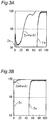
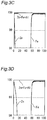
- Figures 3A to 3D are graphs showing element distributions in the depth directions of plating layers of the hot-dip galvanized steel pipes manufactured by using the hot-dip galvanizing baths, Figure 3A being a graph resulting from condition 1, Figure 3B being a graph from condition 2, Figure 3C being a graph from condition 3, and Figure 4D being a graph from condition 4.
- the abscissas in each graph of Figures 3A to 3D represents the distance ( ⁇ m) in the depth direction from the surface of plating layer.
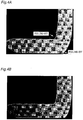
- the hot-dip galvanized steel pipes manufactured by using the hot-dip galvanizing baths of conditions 1 to 4 were subjected to flaring. Further, each of the flared hot-dip galvanized steel pipes was sliced in parallel with the axial direction, and the longitudinal cross section of the flared part was observed.
- Figure 4A is an optical micrograph of a longitudinal cross section of the flared part of the hot-dip galvanized steel pipe manufactured by using the hot-dip galvanizing bath of condition 1.
- Figure 4B is an optical micrograph of a longitudinal cross section of the flared part of the hot-dip galvanized steel pipe manufactured by using the hot-dip galvanizing bath of condition 4.
- Figure 1A is a scanning electron micrograph enlargedly showing the plating layer of the hot-dip galvanized steel pipe manufactured by using the hot-dip galvanizing bath of condition 1.
- Figure 1B is a scanning electron micrograph enlargedly showing the plating layer of the hot-dip galvanized steel pipe manufactured by using the hot-dip galvanizing bath of condition 4.
- Plating was performed by changing the pickling conditions and fluxing conditions, and the presence and absence of poor plating were examined.
- the plating conditions were the same as the conditions under which the hot-dip galvanized steel pipe was manufactured in the composition analysis test of plating layer.
- the hot-dip galvanizing bath the hot-dip galvanizing bath of condition 4 in Table 2 was used.
- an SGP steel pipe (C: 0.05 mass%, Si: 0.19 mass%, Mn: 0.34 mass%, electric-resistance welded pipe, outside diameter: 139.8 mm) was used.
- the degreasing, pickling, and flux treatment of material pipe were performed. First, examination was conducted by fixing the fluxing conditions and by changing the pickling conditions.
- Table 3 gives the pickling conditions (pickling conditions 1 to 4), and the foaming during pickling, appearance after pickling, appearance after flux treatment (after flux drying), and appearance after plating under each of the pickling conditions.
- the fluxing conditions were as described below.
- As a flux solution an aqueous solution containing 625 g/L of a 1:3 mixture of zinc chloride and ammonium chloride and 0.2 mass% of a surface active agent was used.
- the pickled material pipe was dipped in the flux solution heated to a temperature of 75°C.
- the material pipe having been dipped in the flux solution was dried in a 180°C atmosphere for five minutes.
- the flux treatment was performed after the smut had been removed. After plating, the plated material pipe was air-cooled, whereby a hot-dip galvanized steel pipe was manufactured.
- Table 4 gives the fluxing conditions (fluxing conditions 1 to 4), and the presence and absence of undissolved chemical agent, appearance after flux drying, and appearance after plating under each of the fluxing conditions.
- a flux solution an aqueous solution containing a 1:3 mixture of zinc chloride and ammonium chloride was used.
- Undissolved chemical agent column in Table 4 the presence and absence of undissolved part of this mixture were described.
- the pickled material pipe was dipped in the flux solution heated to a temperature of 75°C.
- the material pipe having been dipped in the flux solution was dried in a 180°C atmosphere for five minutes.
- Fluxing condition 1 Fluxing condition 2
- Fluxing condition 3 Fluxing condition 4
- the present invention can be used on an industrial basis as a hot-dip galvanized steel pipe in which the plating layer thereof is less liable to peel off, and as a method of manufacturing the hot-dip galvanized steel pipe.
Landscapes
- Chemical & Material Sciences (AREA)
- Engineering & Computer Science (AREA)
- Mechanical Engineering (AREA)
- Organic Chemistry (AREA)
- Materials Engineering (AREA)
- Metallurgy (AREA)
- Chemical Kinetics & Catalysis (AREA)
- General Engineering & Computer Science (AREA)
- Thermal Sciences (AREA)
- Oil, Petroleum & Natural Gas (AREA)
- Physics & Mathematics (AREA)
- Coating With Molten Metal (AREA)
- Electroplating Methods And Accessories (AREA)
Claims (3)
- Procédé de fabrication d'un tuyau en acier galvanisé à chaud, comprenant :une étape de décapage d'un tuyau au moyen d'un acide sulfurique ayant une température d'au moins 65°C ;une étape de traitement du tuyau décapé au moyen d'une solution de flux ; et suivie parune étape d'immersion du tuyau traité dans un bain de galvanisation à chaud,dans lequel la solution de flux contient au moins 600 g/L au total d'au moins un chlorure de zinc et/ou chlorure d'ammonium et de 0,05 à 0,3 % en poids de tensioactif,le bain de galvanisation à chaud contient de 0,002 à 0,01 % en poids de Al, le reste étant du Zn et des impuretés, etune teneur totale en impuretés de type Pb, Sn, Cd, Sb, Bi, Cu, Ni et In est d'au plus 0,1 % en poids.
- Procédé de fabrication d'un tuyau en acier galvanisé à chaud selon la revendication 1, dans lequel, dans l'étape de décapage, la concentration de l'acide sulfurique est dans la plage de 5 à 20 % en poids et le temps de décapage est dans une plage de 10 à 60 minutes.
- Procédé de fabrication d'un tuyau en acier galvanisé à chaud selon la revendication 1 ou 2, dans lequel le tensioactif est choisi dans le groupe constitué par le chlorure de lauryltriméthylammonium, le chlorure de cétyltriméthylammonium, et le chlorure de stéaryltriméthylammonium.
Applications Claiming Priority (2)
| Application Number | Priority Date | Filing Date | Title |
|---|---|---|---|
| JP2012098298A JP2013227594A (ja) | 2012-04-24 | 2012-04-24 | 溶融亜鉛めっき鋼管及び溶融亜鉛めっき鋼管の製造方法 |
| PCT/JP2012/082397 WO2013161122A1 (fr) | 2012-04-24 | 2012-12-13 | Tube en acier galvanisé, et procédé de fabrication du tube en acier galvanisé |
Publications (3)
| Publication Number | Publication Date |
|---|---|
| EP2843078A1 EP2843078A1 (fr) | 2015-03-04 |
| EP2843078A4 EP2843078A4 (fr) | 2015-12-02 |
| EP2843078B1 true EP2843078B1 (fr) | 2019-02-06 |
Family
ID=49482483
Family Applications (1)
| Application Number | Title | Priority Date | Filing Date |
|---|---|---|---|
| EP12875001.5A Not-in-force EP2843078B1 (fr) | 2012-04-24 | 2012-12-13 | Procédé de fabrication d'une tube en acier galvanisé |
Country Status (9)
| Country | Link |
|---|---|
| US (1) | US9593796B2 (fr) |
| EP (1) | EP2843078B1 (fr) |
| JP (1) | JP2013227594A (fr) |
| KR (1) | KR101626701B1 (fr) |
| CN (1) | CN104245998A (fr) |
| BR (1) | BR112014024599B8 (fr) |
| CA (1) | CA2869838C (fr) |
| MX (1) | MX353008B (fr) |
| WO (1) | WO2013161122A1 (fr) |
Families Citing this family (4)
| Publication number | Priority date | Publication date | Assignee | Title |
|---|---|---|---|---|
| JP6769276B2 (ja) * | 2016-12-08 | 2020-10-14 | 日本製鉄株式会社 | 溶融亜鉛めっき鋼管および溶融亜鉛めっき鋼管の製造方法 |
| WO2019087649A1 (fr) * | 2017-10-30 | 2019-05-09 | パナソニックIpマネジメント株式会社 | Tuyau en acier |
| JP7218625B2 (ja) * | 2019-03-12 | 2023-02-07 | 日本製鉄株式会社 | 溶融亜鉛めっき鋼管の製造方法 |
| CN115247250B (zh) * | 2021-11-12 | 2024-06-25 | 徐州瑞马智能技术有限公司 | 一种热镀锌钢管用全自动化有序冷却设备 |
Family Cites Families (34)
| Publication number | Priority date | Publication date | Assignee | Title |
|---|---|---|---|---|
| US4048381A (en) * | 1975-01-22 | 1977-09-13 | Nippon Kokan Kabushiki Kaisha | Method for manufacturing an electro-galvanized steel sheet excellent in bare corrosion resistance and adaptability to chromating, and product thereof |
| US4064320A (en) * | 1975-03-26 | 1977-12-20 | Nippon Kokan Kabushiki Kaisha | Chromated electro-galvanized steel sheet excellent in corrosion resistance and process for manufacturing same |
| JPS5620154A (en) | 1979-07-28 | 1981-02-25 | Nisshin Steel Co Ltd | Manufacture of galvanized steel sheet having excellent surface appearance |
| US4496612A (en) * | 1982-04-06 | 1985-01-29 | E. I. Du Pont De Nemours And Company | Aqueous flux for hot dip metalizing process |
| US5292377A (en) * | 1990-11-30 | 1994-03-08 | Tanaka Galvanizing Co., Ltd. | Flux suitable for coating molten zinc, molten alloy of aluminum and zinc, and molten aluminum |
| JP3047936B2 (ja) | 1991-10-22 | 2000-06-05 | 住友金属鉱山株式会社 | 溶融亜鉛めっき用フラックス |
| US5437738A (en) | 1994-06-21 | 1995-08-01 | Gerenrot; Yum | Fluxes for lead-free galvanizing |
| ZA971076B (en) * | 1996-02-23 | 1997-08-25 | Union Miniere Sa | Hot-dip galvanizing bath and process. |
| JP3637702B2 (ja) | 1996-11-13 | 2005-04-13 | 住友金属工業株式会社 | 加工性に優れた溶融亜鉛めっき鋼板の製造方法 |
| US6093452A (en) * | 1997-02-25 | 2000-07-25 | Nkk Corporation | Continuous hot-dip coating method and apparatus therefor |
| US6280795B1 (en) * | 1998-05-22 | 2001-08-28 | Cominco, Ltd. | Galvanizing of reactive steels |
| US6277443B1 (en) * | 1998-06-30 | 2001-08-21 | John Maneely Company | Low lead or no lead batch galvanization process |
| CN1192120C (zh) * | 1999-02-24 | 2005-03-09 | 蔡福财 | 钢铁热浸镀5%铝-锌合金的方法 |
| US6465114B1 (en) * | 1999-05-24 | 2002-10-15 | Nippon Steel Corporation | -Zn coated steel material, ZN coated steel sheet and painted steel sheet excellent in corrosion resistance, and method of producing the same |
| JP3501697B2 (ja) | 1999-08-03 | 2004-03-02 | 新日本製鐵株式会社 | フラックスおよびそれを用いた溶融Zn−Mg−Al系合金めっき鋼材の製造方法 |
| US6569268B1 (en) * | 2000-10-16 | 2003-05-27 | Teck Cominco Metals Ltd. | Process and alloy for decorative galvanizing of steel |
| EP1209245A1 (fr) * | 2000-11-23 | 2002-05-29 | Galvapower Group N.V. | Flux et son utilisation dans un procédé de galvanisation par immersion à chaud |
| WO2002055751A1 (fr) * | 2000-12-29 | 2002-07-18 | Nippon Steel Corporation | Plaque d'acier a placage en zinc moule a haute resistance possedant une excellente adhesion en depot et parfaitement adaptee au formage a la presse et procede de fabrication associe |
| JP2003328099A (ja) | 2002-05-02 | 2003-11-19 | Nippon Steel Corp | 高強度溶融亜鉛めっき鋼板の製造方法 |
| JP3938052B2 (ja) | 2003-01-14 | 2007-06-27 | 住友金属工業株式会社 | めっき付着性・加工性に優れた電縫鋼管とその製造方法 |
| JP3781055B1 (ja) * | 2005-03-31 | 2006-05-31 | 田中亜鉛鍍金株式会社 | 溶融亜鉛めっき方法 |
| CN101374970B (zh) * | 2006-02-02 | 2011-11-23 | Ck金属株式会社 | 熔融镀锌浴和镀锌处理的铁制品 |
| JP5559479B2 (ja) | 2008-01-22 | 2014-07-23 | Jfeスチール株式会社 | 溶融亜鉛めっき鋼管および溶融亜鉛めっき鋼管の製造方法 |
| JP5617170B2 (ja) | 2008-02-19 | 2014-11-05 | Jfeスチール株式会社 | 溶融亜鉛めっき鋼管および溶融亜鉛めっき鋼管の製造方法 |
| JP5663840B2 (ja) | 2008-02-19 | 2015-02-04 | Jfeスチール株式会社 | 溶融亜鉛めっき鋼管および溶融亜鉛めっき鋼管の製造方法 |
| JP2009221604A (ja) | 2008-02-19 | 2009-10-01 | Jfe Steel Corp | 溶融亜鉛めっき鋼管および溶融亜鉛めっき材の製造方法 |
| JP2009280895A (ja) * | 2008-05-23 | 2009-12-03 | Kowa Industry Co Ltd | 溶融亜鉛−アルミニウム系合金めっき法 |
| JP2009280896A (ja) * | 2008-05-23 | 2009-12-03 | Kowa Industry Co Ltd | 管継手 |
| EP2213758A1 (fr) | 2009-01-16 | 2010-08-04 | Galva Power Group N.V. | Fondant et bain de fondant pour galvanisation à chaud, procédé de galvanisation à chaud d'un article en fer ou en acier |
| JP5476651B2 (ja) | 2009-07-21 | 2014-04-23 | Jfeスチール株式会社 | 溶融亜鉛めっき鋼管および溶融亜鉛めっき材の製造方法 |
| JP5879020B2 (ja) * | 2009-07-21 | 2016-03-08 | Jfeスチール株式会社 | 溶融亜鉛めっき鋼管 |
| JP5482091B2 (ja) * | 2009-10-22 | 2014-04-23 | 新日鐵住金株式会社 | 溶融亜鉛めっき鋼管の製造方法 |
| JP4497431B1 (ja) | 2010-01-26 | 2010-07-07 | 株式会社駒形亜鉛鍍金所 | 溶融亜鉛めっき |
| JP5883211B2 (ja) * | 2010-01-29 | 2016-03-09 | 株式会社神戸製鋼所 | 加工性に優れた高強度冷延鋼板およびその製造方法 |
-
2012
- 2012-04-24 JP JP2012098298A patent/JP2013227594A/ja active Pending
- 2012-12-13 CN CN201280072657.8A patent/CN104245998A/zh active Pending
- 2012-12-13 US US14/395,175 patent/US9593796B2/en not_active Expired - Fee Related
- 2012-12-13 WO PCT/JP2012/082397 patent/WO2013161122A1/fr not_active Ceased
- 2012-12-13 EP EP12875001.5A patent/EP2843078B1/fr not_active Not-in-force
- 2012-12-13 MX MX2014012428A patent/MX353008B/es active IP Right Grant
- 2012-12-13 CA CA2869838A patent/CA2869838C/fr not_active Expired - Fee Related
- 2012-12-13 KR KR1020147025694A patent/KR101626701B1/ko active Active
- 2012-12-13 BR BR112014024599A patent/BR112014024599B8/pt active IP Right Grant
Non-Patent Citations (1)
| Title |
|---|
| None * |
Also Published As
| Publication number | Publication date |
|---|---|
| KR101626701B1 (ko) | 2016-06-01 |
| WO2013161122A1 (fr) | 2013-10-31 |
| BR112014024599B8 (pt) | 2023-03-07 |
| KR20140133859A (ko) | 2014-11-20 |
| US9593796B2 (en) | 2017-03-14 |
| CA2869838A1 (fr) | 2013-10-31 |
| US20150090359A1 (en) | 2015-04-02 |
| MX353008B (es) | 2017-12-14 |
| JP2013227594A (ja) | 2013-11-07 |
| CN104245998A (zh) | 2014-12-24 |
| CA2869838C (fr) | 2016-09-06 |
| EP2843078A1 (fr) | 2015-03-04 |
| BR112014024599B1 (pt) | 2020-11-03 |
| EP2843078A4 (fr) | 2015-12-02 |
| MX2014012428A (es) | 2015-01-19 |
Similar Documents
| Publication | Publication Date | Title |
|---|---|---|
| JP7312142B2 (ja) | 溶接性及び加工部耐食性に優れた亜鉛合金めっき鋼材及びその製造方法 | |
| EP3733918B1 (fr) | Matériau d'acier plaqué d'alliage de zinc ayant une excellente résistance à la corosion après traitement et son procédé de fabrication | |
| CN100540718C (zh) | 表面处理钢板及其制造方法 | |
| EP4242340A1 (fr) | Feuille d'acier électroplaquée à base de fe, feuille d'acier galvanisée par immersion à chaud alliée et leurs procédés de fabrication | |
| TWI437122B (zh) | 熔融Al-Zn系鍍覆鋼板及其製造方法 | |
| EP3578679B1 (fr) | Tôle d'acier laminée à chaud à placage de zinc fondu à haute résistance et son procédé de fabrication | |
| JP7244728B2 (ja) | めっき密着性及び耐腐食性に優れた亜鉛めっき鋼板及びその製造方法 | |
| JP2011214145A (ja) | 高耐食性を有し加工性に優れためっき鋼材と鋼管およびその製造方法 | |
| KR101665883B1 (ko) | 내식성 및 가공성이 우수한 도금 강선 및 그 제조방법 | |
| US9593796B2 (en) | Hot-dip galvanized steel pipe and method of manufacturing the same | |
| JP7290757B2 (ja) | めっき鋼線及びその製造方法 | |
| JP7235165B2 (ja) | Fe系皮膜付き素材冷延鋼板、Fe系皮膜付き素材冷延鋼板の製造方法、Fe系皮膜付き冷延鋼板の製造方法、溶融亜鉛めっき鋼板の製造方法、および合金化溶融亜鉛めっき鋼板の製造方法 | |
| CN100580130C (zh) | 合金化热浸镀锌钢板及其制造方法 | |
| JP5578116B2 (ja) | 合金化溶融亜鉛めっき鋼板及びその製造方法 | |
| JP5532086B2 (ja) | 溶融亜鉛めっき鋼管 | |
| KR20160143893A (ko) | 고강도 강판 및 고강도 용융 아연 도금 강판 그리고 그것들의 제조 방법 | |
| CN115485416A (zh) | 热浸镀锌钢板及其制造方法 | |
| JP5320899B2 (ja) | めっき密着性に優れた合金化溶融亜鉛めっき鋼板 | |
| JP5825295B2 (ja) | 溶融亜鉛めっき鋼管及び溶融亜鉛めっき鋼管の製造方法 | |
| JP2022180344A (ja) | Fe系電気めっき高強度鋼板及びその製造方法 | |
| JPS63312960A (ja) | 加工性の良い溶融亜鉛合金めっき鋼板の製造法 | |
| EP3575432B1 (fr) | Tôle d'acier trempé à chaud haute résistance ayant une excellente adhérence à une couche de revetement et son procédé de fabrication | |
| US6030714A (en) | Zinc and zinc-alloy hot-dip-coated steel sheet having decreased bare spots and excellent coating adhesion and a method for manufacturing the same | |
| JP2004162163A (ja) | 表面処理用鋼板、表面処理鋼板およびそれらの製造方法 | |
| JP3198902B2 (ja) | 薄目付け溶融亜鉛めっき鋼板の製造方法 |
Legal Events
| Date | Code | Title | Description |
|---|---|---|---|
| PUAI | Public reference made under article 153(3) epc to a published international application that has entered the european phase |
Free format text: ORIGINAL CODE: 0009012 |
|
| 17P | Request for examination filed |
Effective date: 20141023 |
|
| AK | Designated contracting states |
Kind code of ref document: A1 Designated state(s): AL AT BE BG CH CY CZ DE DK EE ES FI FR GB GR HR HU IE IS IT LI LT LU LV MC MK MT NL NO PL PT RO RS SE SI SK SM TR |
|
| AX | Request for extension of the european patent |
Extension state: BA ME |
|
| DAX | Request for extension of the european patent (deleted) | ||
| RA4 | Supplementary search report drawn up and despatched (corrected) |
Effective date: 20151104 |
|
| RIC1 | Information provided on ipc code assigned before grant |
Ipc: C22C 18/04 20060101ALI20151029BHEP Ipc: C22C 18/00 20060101ALI20151029BHEP Ipc: F16L 9/02 20060101ALI20151029BHEP Ipc: C23C 2/06 20060101AFI20151029BHEP Ipc: F16L 58/08 20060101ALI20151029BHEP Ipc: C23C 2/02 20060101ALI20151029BHEP Ipc: C23C 2/38 20060101ALI20151029BHEP |
|
| RIC1 | Information provided on ipc code assigned before grant |
Ipc: F16L 58/08 20060101ALI20180724BHEP Ipc: C23C 2/06 20060101AFI20180724BHEP Ipc: C23C 2/38 20060101ALI20180724BHEP Ipc: C22C 38/04 20060101ALI20180724BHEP Ipc: B32B 15/01 20060101ALI20180724BHEP Ipc: C23C 2/28 20060101ALI20180724BHEP Ipc: C23C 2/02 20060101ALI20180724BHEP Ipc: F16L 9/02 20060101ALI20180724BHEP Ipc: C22C 38/02 20060101ALI20180724BHEP Ipc: C22C 18/00 20060101ALI20180724BHEP |
|
| GRAP | Despatch of communication of intention to grant a patent |
Free format text: ORIGINAL CODE: EPIDOSNIGR1 |
|
| STAA | Information on the status of an ep patent application or granted ep patent |
Free format text: STATUS: GRANT OF PATENT IS INTENDED |
|
| INTG | Intention to grant announced |
Effective date: 20181004 |
|
| GRAS | Grant fee paid |
Free format text: ORIGINAL CODE: EPIDOSNIGR3 |
|
| GRAA | (expected) grant |
Free format text: ORIGINAL CODE: 0009210 |
|
| STAA | Information on the status of an ep patent application or granted ep patent |
Free format text: STATUS: THE PATENT HAS BEEN GRANTED |
|
| AK | Designated contracting states |
Kind code of ref document: B1 Designated state(s): AL AT BE BG CH CY CZ DE DK EE ES FI FR GB GR HR HU IE IS IT LI LT LU LV MC MK MT NL NO PL PT RO RS SE SI SK SM TR |
|
| REG | Reference to a national code |
Ref country code: GB Ref legal event code: FG4D |
|
| REG | Reference to a national code |
Ref country code: CH Ref legal event code: EP Ref country code: AT Ref legal event code: REF Ref document number: 1094955 Country of ref document: AT Kind code of ref document: T Effective date: 20190215 |
|
| REG | Reference to a national code |
Ref country code: IE Ref legal event code: FG4D |
|
| REG | Reference to a national code |
Ref country code: DE Ref legal event code: R096 Ref document number: 602012056568 Country of ref document: DE |
|
| REG | Reference to a national code |
Ref country code: DE Ref legal event code: R082 Ref document number: 602012056568 Country of ref document: DE Representative=s name: ZIMMERMANN & PARTNER PATENTANWAELTE MBB, DE Ref country code: DE Ref legal event code: R081 Ref document number: 602012056568 Country of ref document: DE Owner name: NIPPON STEEL CORPORATION, JP Free format text: FORMER OWNER: NIPPON STEEL & SUMITOMO METAL CORPORATION, TOKYO, JP |
|
| RAP2 | Party data changed (patent owner data changed or rights of a patent transferred) |
Owner name: NIPPON STEEL CORPORATION |
|
| REG | Reference to a national code |
Ref country code: NL Ref legal event code: MP Effective date: 20190206 |
|
| REG | Reference to a national code |
Ref country code: LT Ref legal event code: MG4D |
|
| PG25 | Lapsed in a contracting state [announced via postgrant information from national office to epo] |
Ref country code: PT Free format text: LAPSE BECAUSE OF FAILURE TO SUBMIT A TRANSLATION OF THE DESCRIPTION OR TO PAY THE FEE WITHIN THE PRESCRIBED TIME-LIMIT Effective date: 20190606 Ref country code: NO Free format text: LAPSE BECAUSE OF FAILURE TO SUBMIT A TRANSLATION OF THE DESCRIPTION OR TO PAY THE FEE WITHIN THE PRESCRIBED TIME-LIMIT Effective date: 20190506 Ref country code: LT Free format text: LAPSE BECAUSE OF FAILURE TO SUBMIT A TRANSLATION OF THE DESCRIPTION OR TO PAY THE FEE WITHIN THE PRESCRIBED TIME-LIMIT Effective date: 20190206 Ref country code: NL Free format text: LAPSE BECAUSE OF FAILURE TO SUBMIT A TRANSLATION OF THE DESCRIPTION OR TO PAY THE FEE WITHIN THE PRESCRIBED TIME-LIMIT Effective date: 20190206 Ref country code: SE Free format text: LAPSE BECAUSE OF FAILURE TO SUBMIT A TRANSLATION OF THE DESCRIPTION OR TO PAY THE FEE WITHIN THE PRESCRIBED TIME-LIMIT Effective date: 20190206 Ref country code: FI Free format text: LAPSE BECAUSE OF FAILURE TO SUBMIT A TRANSLATION OF THE DESCRIPTION OR TO PAY THE FEE WITHIN THE PRESCRIBED TIME-LIMIT Effective date: 20190206 |
|
| REG | Reference to a national code |
Ref country code: AT Ref legal event code: MK05 Ref document number: 1094955 Country of ref document: AT Kind code of ref document: T Effective date: 20190206 |
|
| PG25 | Lapsed in a contracting state [announced via postgrant information from national office to epo] |
Ref country code: RS Free format text: LAPSE BECAUSE OF FAILURE TO SUBMIT A TRANSLATION OF THE DESCRIPTION OR TO PAY THE FEE WITHIN THE PRESCRIBED TIME-LIMIT Effective date: 20190206 Ref country code: BG Free format text: LAPSE BECAUSE OF FAILURE TO SUBMIT A TRANSLATION OF THE DESCRIPTION OR TO PAY THE FEE WITHIN THE PRESCRIBED TIME-LIMIT Effective date: 20190506 Ref country code: IS Free format text: LAPSE BECAUSE OF FAILURE TO SUBMIT A TRANSLATION OF THE DESCRIPTION OR TO PAY THE FEE WITHIN THE PRESCRIBED TIME-LIMIT Effective date: 20190606 Ref country code: LV Free format text: LAPSE BECAUSE OF FAILURE TO SUBMIT A TRANSLATION OF THE DESCRIPTION OR TO PAY THE FEE WITHIN THE PRESCRIBED TIME-LIMIT Effective date: 20190206 Ref country code: GR Free format text: LAPSE BECAUSE OF FAILURE TO SUBMIT A TRANSLATION OF THE DESCRIPTION OR TO PAY THE FEE WITHIN THE PRESCRIBED TIME-LIMIT Effective date: 20190507 Ref country code: HR Free format text: LAPSE BECAUSE OF FAILURE TO SUBMIT A TRANSLATION OF THE DESCRIPTION OR TO PAY THE FEE WITHIN THE PRESCRIBED TIME-LIMIT Effective date: 20190206 |
|
| PG25 | Lapsed in a contracting state [announced via postgrant information from national office to epo] |
Ref country code: EE Free format text: LAPSE BECAUSE OF FAILURE TO SUBMIT A TRANSLATION OF THE DESCRIPTION OR TO PAY THE FEE WITHIN THE PRESCRIBED TIME-LIMIT Effective date: 20190206 Ref country code: DK Free format text: LAPSE BECAUSE OF FAILURE TO SUBMIT A TRANSLATION OF THE DESCRIPTION OR TO PAY THE FEE WITHIN THE PRESCRIBED TIME-LIMIT Effective date: 20190206 Ref country code: SK Free format text: LAPSE BECAUSE OF FAILURE TO SUBMIT A TRANSLATION OF THE DESCRIPTION OR TO PAY THE FEE WITHIN THE PRESCRIBED TIME-LIMIT Effective date: 20190206 Ref country code: AL Free format text: LAPSE BECAUSE OF FAILURE TO SUBMIT A TRANSLATION OF THE DESCRIPTION OR TO PAY THE FEE WITHIN THE PRESCRIBED TIME-LIMIT Effective date: 20190206 Ref country code: ES Free format text: LAPSE BECAUSE OF FAILURE TO SUBMIT A TRANSLATION OF THE DESCRIPTION OR TO PAY THE FEE WITHIN THE PRESCRIBED TIME-LIMIT Effective date: 20190206 Ref country code: CZ Free format text: LAPSE BECAUSE OF FAILURE TO SUBMIT A TRANSLATION OF THE DESCRIPTION OR TO PAY THE FEE WITHIN THE PRESCRIBED TIME-LIMIT Effective date: 20190206 Ref country code: RO Free format text: LAPSE BECAUSE OF FAILURE TO SUBMIT A TRANSLATION OF THE DESCRIPTION OR TO PAY THE FEE WITHIN THE PRESCRIBED TIME-LIMIT Effective date: 20190206 |
|
| REG | Reference to a national code |
Ref country code: DE Ref legal event code: R097 Ref document number: 602012056568 Country of ref document: DE |
|
| PG25 | Lapsed in a contracting state [announced via postgrant information from national office to epo] |
Ref country code: SM Free format text: LAPSE BECAUSE OF FAILURE TO SUBMIT A TRANSLATION OF THE DESCRIPTION OR TO PAY THE FEE WITHIN THE PRESCRIBED TIME-LIMIT Effective date: 20190206 Ref country code: PL Free format text: LAPSE BECAUSE OF FAILURE TO SUBMIT A TRANSLATION OF THE DESCRIPTION OR TO PAY THE FEE WITHIN THE PRESCRIBED TIME-LIMIT Effective date: 20190206 |
|
| PLBE | No opposition filed within time limit |
Free format text: ORIGINAL CODE: 0009261 |
|
| STAA | Information on the status of an ep patent application or granted ep patent |
Free format text: STATUS: NO OPPOSITION FILED WITHIN TIME LIMIT |
|
| PG25 | Lapsed in a contracting state [announced via postgrant information from national office to epo] |
Ref country code: AT Free format text: LAPSE BECAUSE OF FAILURE TO SUBMIT A TRANSLATION OF THE DESCRIPTION OR TO PAY THE FEE WITHIN THE PRESCRIBED TIME-LIMIT Effective date: 20190206 |
|
| 26N | No opposition filed |
Effective date: 20191107 |
|
| PGFP | Annual fee paid to national office [announced via postgrant information from national office to epo] |
Ref country code: DE Payment date: 20191203 Year of fee payment: 8 |
|
| PG25 | Lapsed in a contracting state [announced via postgrant information from national office to epo] |
Ref country code: SI Free format text: LAPSE BECAUSE OF FAILURE TO SUBMIT A TRANSLATION OF THE DESCRIPTION OR TO PAY THE FEE WITHIN THE PRESCRIBED TIME-LIMIT Effective date: 20190206 |
|
| PGFP | Annual fee paid to national office [announced via postgrant information from national office to epo] |
Ref country code: FR Payment date: 20191115 Year of fee payment: 8 Ref country code: IT Payment date: 20191209 Year of fee payment: 8 |
|
| PG25 | Lapsed in a contracting state [announced via postgrant information from national office to epo] |
Ref country code: TR Free format text: LAPSE BECAUSE OF FAILURE TO SUBMIT A TRANSLATION OF THE DESCRIPTION OR TO PAY THE FEE WITHIN THE PRESCRIBED TIME-LIMIT Effective date: 20190206 |
|
| REG | Reference to a national code |
Ref country code: CH Ref legal event code: PL |
|
| REG | Reference to a national code |
Ref country code: BE Ref legal event code: MM Effective date: 20191231 |
|
| PG25 | Lapsed in a contracting state [announced via postgrant information from national office to epo] |
Ref country code: MC Free format text: LAPSE BECAUSE OF FAILURE TO SUBMIT A TRANSLATION OF THE DESCRIPTION OR TO PAY THE FEE WITHIN THE PRESCRIBED TIME-LIMIT Effective date: 20190206 |
|
| GBPC | Gb: european patent ceased through non-payment of renewal fee |
Effective date: 20191213 |
|
| PG25 | Lapsed in a contracting state [announced via postgrant information from national office to epo] |
Ref country code: IE Free format text: LAPSE BECAUSE OF NON-PAYMENT OF DUE FEES Effective date: 20191213 Ref country code: GB Free format text: LAPSE BECAUSE OF NON-PAYMENT OF DUE FEES Effective date: 20191213 Ref country code: LU Free format text: LAPSE BECAUSE OF NON-PAYMENT OF DUE FEES Effective date: 20191213 |
|
| PG25 | Lapsed in a contracting state [announced via postgrant information from national office to epo] |
Ref country code: BE Free format text: LAPSE BECAUSE OF NON-PAYMENT OF DUE FEES Effective date: 20191231 Ref country code: CH Free format text: LAPSE BECAUSE OF NON-PAYMENT OF DUE FEES Effective date: 20191231 Ref country code: LI Free format text: LAPSE BECAUSE OF NON-PAYMENT OF DUE FEES Effective date: 20191231 |
|
| PG25 | Lapsed in a contracting state [announced via postgrant information from national office to epo] |
Ref country code: CY Free format text: LAPSE BECAUSE OF FAILURE TO SUBMIT A TRANSLATION OF THE DESCRIPTION OR TO PAY THE FEE WITHIN THE PRESCRIBED TIME-LIMIT Effective date: 20190206 |
|
| REG | Reference to a national code |
Ref country code: DE Ref legal event code: R119 Ref document number: 602012056568 Country of ref document: DE |
|
| PG25 | Lapsed in a contracting state [announced via postgrant information from national office to epo] |
Ref country code: MT Free format text: LAPSE BECAUSE OF FAILURE TO SUBMIT A TRANSLATION OF THE DESCRIPTION OR TO PAY THE FEE WITHIN THE PRESCRIBED TIME-LIMIT Effective date: 20190206 Ref country code: HU Free format text: LAPSE BECAUSE OF FAILURE TO SUBMIT A TRANSLATION OF THE DESCRIPTION OR TO PAY THE FEE WITHIN THE PRESCRIBED TIME-LIMIT; INVALID AB INITIO Effective date: 20121213 |
|
| PG25 | Lapsed in a contracting state [announced via postgrant information from national office to epo] |
Ref country code: FR Free format text: LAPSE BECAUSE OF NON-PAYMENT OF DUE FEES Effective date: 20201231 Ref country code: IT Free format text: LAPSE BECAUSE OF NON-PAYMENT OF DUE FEES Effective date: 20201213 |
|
| PG25 | Lapsed in a contracting state [announced via postgrant information from national office to epo] |
Ref country code: DE Free format text: LAPSE BECAUSE OF NON-PAYMENT OF DUE FEES Effective date: 20210701 |
|
| PG25 | Lapsed in a contracting state [announced via postgrant information from national office to epo] |
Ref country code: MK Free format text: LAPSE BECAUSE OF FAILURE TO SUBMIT A TRANSLATION OF THE DESCRIPTION OR TO PAY THE FEE WITHIN THE PRESCRIBED TIME-LIMIT Effective date: 20190206 |