EP2854530B1 - Compositions pour une immunothérapie avec un bêta-glucane - Google Patents
Compositions pour une immunothérapie avec un bêta-glucane Download PDFInfo
- Publication number
- EP2854530B1 EP2854530B1 EP13784472.6A EP13784472A EP2854530B1 EP 2854530 B1 EP2854530 B1 EP 2854530B1 EP 13784472 A EP13784472 A EP 13784472A EP 2854530 B1 EP2854530 B1 EP 2854530B1
- Authority
- EP
- European Patent Office
- Prior art keywords
- glucan
- antibody
- soluble
- composition
- subject
- Prior art date
- Legal status (The legal status is an assumption and is not a legal conclusion. Google has not performed a legal analysis and makes no representation as to the accuracy of the status listed.)
- Active
Links
Images



Classifications
-
- A—HUMAN NECESSITIES
- A61—MEDICAL OR VETERINARY SCIENCE; HYGIENE
- A61K—PREPARATIONS FOR MEDICAL, DENTAL OR TOILETRY PURPOSES
- A61K39/00—Medicinal preparations containing antigens or antibodies
- A61K39/395—Antibodies; Immunoglobulins; Immune serum, e.g. antilymphocytic serum
- A61K39/39583—Antibodies; Immunoglobulins; Immune serum, e.g. antilymphocytic serum against materials not provided for elsewhere, e.g. haptens, coenzymes
-
- A—HUMAN NECESSITIES
- A61—MEDICAL OR VETERINARY SCIENCE; HYGIENE
- A61K—PREPARATIONS FOR MEDICAL, DENTAL OR TOILETRY PURPOSES
- A61K39/00—Medicinal preparations containing antigens or antibodies
- A61K39/395—Antibodies; Immunoglobulins; Immune serum, e.g. antilymphocytic serum
-
- A—HUMAN NECESSITIES
- A61—MEDICAL OR VETERINARY SCIENCE; HYGIENE
- A61K—PREPARATIONS FOR MEDICAL, DENTAL OR TOILETRY PURPOSES
- A61K31/00—Medicinal preparations containing organic active ingredients
- A61K31/70—Carbohydrates; Sugars; Derivatives thereof
- A61K31/715—Polysaccharides, i.e. having more than five saccharide radicals attached to each other by glycosidic linkages; Derivatives thereof, e.g. ethers, esters
- A61K31/716—Glucans
-
- A—HUMAN NECESSITIES
- A61—MEDICAL OR VETERINARY SCIENCE; HYGIENE
- A61K—PREPARATIONS FOR MEDICAL, DENTAL OR TOILETRY PURPOSES
- A61K39/00—Medicinal preparations containing antigens or antibodies
- A61K39/39—Medicinal preparations containing antigens or antibodies characterised by the immunostimulating additives, e.g. chemical adjuvants
-
- A—HUMAN NECESSITIES
- A61—MEDICAL OR VETERINARY SCIENCE; HYGIENE
- A61K—PREPARATIONS FOR MEDICAL, DENTAL OR TOILETRY PURPOSES
- A61K39/00—Medicinal preparations containing antigens or antibodies
- A61K39/395—Antibodies; Immunoglobulins; Immune serum, e.g. antilymphocytic serum
- A61K39/39533—Antibodies; Immunoglobulins; Immune serum, e.g. antilymphocytic serum against materials from animals
- A61K39/39558—Antibodies; Immunoglobulins; Immune serum, e.g. antilymphocytic serum against materials from animals against tumor tissues, cells, antigens
-
- A—HUMAN NECESSITIES
- A61—MEDICAL OR VETERINARY SCIENCE; HYGIENE
- A61K—PREPARATIONS FOR MEDICAL, DENTAL OR TOILETRY PURPOSES
- A61K39/00—Medicinal preparations containing antigens or antibodies
- A61K39/395—Antibodies; Immunoglobulins; Immune serum, e.g. antilymphocytic serum
- A61K39/39575—Antibodies; Immunoglobulins; Immune serum, e.g. antilymphocytic serum against materials from other living beings excluding bacteria and viruses, e.g. protozoa, fungi, plants
-
- A—HUMAN NECESSITIES
- A61—MEDICAL OR VETERINARY SCIENCE; HYGIENE
- A61K—PREPARATIONS FOR MEDICAL, DENTAL OR TOILETRY PURPOSES
- A61K45/00—Medicinal preparations containing active ingredients not provided for in groups A61K31/00 - A61K41/00
- A61K45/06—Mixtures of active ingredients without chemical characterisation, e.g. antiphlogistics and cardiaca
-
- A—HUMAN NECESSITIES
- A61—MEDICAL OR VETERINARY SCIENCE; HYGIENE
- A61K—PREPARATIONS FOR MEDICAL, DENTAL OR TOILETRY PURPOSES
- A61K47/00—Medicinal preparations characterised by the non-active ingredients used, e.g. carriers or inert additives; Targeting or modifying agents chemically bound to the active ingredient
- A61K47/50—Medicinal preparations characterised by the non-active ingredients used, e.g. carriers or inert additives; Targeting or modifying agents chemically bound to the active ingredient the non-active ingredient being chemically bound to the active ingredient, e.g. polymer-drug conjugates
- A61K47/51—Medicinal preparations characterised by the non-active ingredients used, e.g. carriers or inert additives; Targeting or modifying agents chemically bound to the active ingredient the non-active ingredient being chemically bound to the active ingredient, e.g. polymer-drug conjugates the non-active ingredient being a modifying agent
- A61K47/68—Medicinal preparations characterised by the non-active ingredients used, e.g. carriers or inert additives; Targeting or modifying agents chemically bound to the active ingredient the non-active ingredient being chemically bound to the active ingredient, e.g. polymer-drug conjugates the non-active ingredient being a modifying agent the modifying agent being an antibody, an immunoglobulin or a fragment thereof, e.g. an Fc-fragment
- A61K47/6835—Medicinal preparations characterised by the non-active ingredients used, e.g. carriers or inert additives; Targeting or modifying agents chemically bound to the active ingredient the non-active ingredient being chemically bound to the active ingredient, e.g. polymer-drug conjugates the non-active ingredient being a modifying agent the modifying agent being an antibody, an immunoglobulin or a fragment thereof, e.g. an Fc-fragment the modifying agent being an antibody or an immunoglobulin bearing at least one antigen-binding site
-
- A—HUMAN NECESSITIES
- A61—MEDICAL OR VETERINARY SCIENCE; HYGIENE
- A61P—SPECIFIC THERAPEUTIC ACTIVITY OF CHEMICAL COMPOUNDS OR MEDICINAL PREPARATIONS
- A61P35/00—Antineoplastic agents
-
- A—HUMAN NECESSITIES
- A61—MEDICAL OR VETERINARY SCIENCE; HYGIENE
- A61P—SPECIFIC THERAPEUTIC ACTIVITY OF CHEMICAL COMPOUNDS OR MEDICINAL PREPARATIONS
- A61P35/00—Antineoplastic agents
- A61P35/02—Antineoplastic agents specific for leukemia
-
- A—HUMAN NECESSITIES
- A61—MEDICAL OR VETERINARY SCIENCE; HYGIENE
- A61P—SPECIFIC THERAPEUTIC ACTIVITY OF CHEMICAL COMPOUNDS OR MEDICINAL PREPARATIONS
- A61P37/00—Drugs for immunological or allergic disorders
- A61P37/02—Immunomodulators
-
- A—HUMAN NECESSITIES
- A61—MEDICAL OR VETERINARY SCIENCE; HYGIENE
- A61P—SPECIFIC THERAPEUTIC ACTIVITY OF CHEMICAL COMPOUNDS OR MEDICINAL PREPARATIONS
- A61P37/00—Drugs for immunological or allergic disorders
- A61P37/02—Immunomodulators
- A61P37/04—Immunostimulants
-
- A—HUMAN NECESSITIES
- A61—MEDICAL OR VETERINARY SCIENCE; HYGIENE
- A61P—SPECIFIC THERAPEUTIC ACTIVITY OF CHEMICAL COMPOUNDS OR MEDICINAL PREPARATIONS
- A61P43/00—Drugs for specific purposes, not provided for in groups A61P1/00-A61P41/00
-
- C—CHEMISTRY; METALLURGY
- C07—ORGANIC CHEMISTRY
- C07K—PEPTIDES
- C07K16/00—Immunoglobulins [IG], e.g. monoclonal or polyclonal antibodies
- C07K16/12—Immunoglobulins [IG], e.g. monoclonal or polyclonal antibodies against material from bacteria
-
- C—CHEMISTRY; METALLURGY
- C07—ORGANIC CHEMISTRY
- C07K—PEPTIDES
- C07K16/00—Immunoglobulins [IG], e.g. monoclonal or polyclonal antibodies
- C07K16/14—Immunoglobulins [IG], e.g. monoclonal or polyclonal antibodies against material from fungi, algea or lichens
-
- G—PHYSICS
- G01—MEASURING; TESTING
- G01N—INVESTIGATING OR ANALYSING MATERIALS BY DETERMINING THEIR CHEMICAL OR PHYSICAL PROPERTIES
- G01N33/00—Investigating or analysing materials by specific methods not covered by groups G01N1/00 - G01N31/00
- G01N33/48—Biological material, e.g. blood, urine; Haemocytometers
- G01N33/50—Chemical analysis of biological material, e.g. blood, urine; Testing involving biospecific ligand binding methods; Immunological testing
- G01N33/5005—Chemical analysis of biological material, e.g. blood, urine; Testing involving biospecific ligand binding methods; Immunological testing involving human or animal cells
- G01N33/5008—Chemical analysis of biological material, e.g. blood, urine; Testing involving biospecific ligand binding methods; Immunological testing involving human or animal cells for testing or evaluating the effect of chemical or biological compounds, e.g. drugs, cosmetics
- G01N33/5044—Chemical analysis of biological material, e.g. blood, urine; Testing involving biospecific ligand binding methods; Immunological testing involving human or animal cells for testing or evaluating the effect of chemical or biological compounds, e.g. drugs, cosmetics involving specific cell types
- G01N33/5047—Cells of the immune system
-
- G—PHYSICS
- G01—MEASURING; TESTING
- G01N—INVESTIGATING OR ANALYSING MATERIALS BY DETERMINING THEIR CHEMICAL OR PHYSICAL PROPERTIES
- G01N33/00—Investigating or analysing materials by specific methods not covered by groups G01N1/00 - G01N31/00
- G01N33/48—Biological material, e.g. blood, urine; Haemocytometers
- G01N33/50—Chemical analysis of biological material, e.g. blood, urine; Testing involving biospecific ligand binding methods; Immunological testing
- G01N33/53—Immunoassay; Biospecific binding assay; Materials therefor
-
- G—PHYSICS
- G01—MEASURING; TESTING
- G01N—INVESTIGATING OR ANALYSING MATERIALS BY DETERMINING THEIR CHEMICAL OR PHYSICAL PROPERTIES
- G01N33/00—Investigating or analysing materials by specific methods not covered by groups G01N1/00 - G01N31/00
- G01N33/48—Biological material, e.g. blood, urine; Haemocytometers
- G01N33/50—Chemical analysis of biological material, e.g. blood, urine; Testing involving biospecific ligand binding methods; Immunological testing
- G01N33/53—Immunoassay; Biospecific binding assay; Materials therefor
- G01N33/543—Immunoassay; Biospecific binding assay; Materials therefor with an insoluble carrier for immobilising immunochemicals
- G01N33/554—Immunoassay; Biospecific binding assay; Materials therefor with an insoluble carrier for immobilising immunochemicals the carrier being a biological cell or cell fragment, e.g. bacteria, yeast cells
-
- G—PHYSICS
- G01—MEASURING; TESTING
- G01N—INVESTIGATING OR ANALYSING MATERIALS BY DETERMINING THEIR CHEMICAL OR PHYSICAL PROPERTIES
- G01N33/00—Investigating or analysing materials by specific methods not covered by groups G01N1/00 - G01N31/00
- G01N33/48—Biological material, e.g. blood, urine; Haemocytometers
- G01N33/50—Chemical analysis of biological material, e.g. blood, urine; Testing involving biospecific ligand binding methods; Immunological testing
- G01N33/53—Immunoassay; Biospecific binding assay; Materials therefor
- G01N33/569—Immunoassay; Biospecific binding assay; Materials therefor for microorganisms, e.g. protozoa, bacteria, viruses
- G01N33/56966—Animal cells
-
- A—HUMAN NECESSITIES
- A61—MEDICAL OR VETERINARY SCIENCE; HYGIENE
- A61K—PREPARATIONS FOR MEDICAL, DENTAL OR TOILETRY PURPOSES
- A61K39/00—Medicinal preparations containing antigens or antibodies
- A61K2039/555—Medicinal preparations containing antigens or antibodies characterised by a specific combination antigen/adjuvant
- A61K2039/55511—Organic adjuvants
- A61K2039/55583—Polysaccharides
-
- G—PHYSICS
- G01—MEASURING; TESTING
- G01N—INVESTIGATING OR ANALYSING MATERIALS BY DETERMINING THEIR CHEMICAL OR PHYSICAL PROPERTIES
- G01N2400/00—Assays, e.g. immunoassays or enzyme assays, involving carbohydrates
- G01N2400/10—Polysaccharides, i.e. having more than five saccharide radicals attached to each other by glycosidic linkages; Derivatives thereof, e.g. ethers, esters
- G01N2400/12—Homoglycans, i.e. polysaccharides having a main chain consisting of one single sugar
- G01N2400/24—Homoglycans, i.e. polysaccharides having a main chain consisting of one single sugar beta-D-Glucans, i.e. having beta 1,n (n=3,4,6) linkages between saccharide units, e.g. xanthan
Definitions
- the present invention relates in a first aspect to a composition
- a composition comprising: a soluble yeast-derived ⁇ -glucan component composed of glucose monomers organized as a ⁇ -(1,3)-linked glucopyranose backbone with periodic ⁇ -(1,3) glucopyranose branches linked to the backbone via ⁇ -(1,6) glycosidic linkage; and an antibody component comprising a monoclonal antibody that specifically binds to the soluble ⁇ -glucan; and an anti-tumor antibody.
- the present invention relates in a second aspect to a composition that comprises (i) a soluble yeast-derived ⁇ -glucan composed of glucose monomers organized as a (3-(1,3)-linked glucopyranose backbone with periodic ⁇ -(1,3) glucopyranose branches linked to the backbone via ⁇ -(1,6) glycosidic linkage, (ii) an antibody preparation comprising a monoclonal antibody that specifically binds to the soluble ⁇ -glucan, and (iii) an anti-tumor antibody for use in increasing a subject's response to soluble ⁇ -glucan immunotherapy, wherein the soluble ⁇ -glucan and the antibody preparation are co-administered.
- a soluble yeast-derived ⁇ -glucan composed of glucose monomers organized as a (3-(1,3)-linked glucopyranose backbone with periodic ⁇ -(1,3) glucopyranose branches linked to the backbone via ⁇ -(1,6) glycosidic linkage
- an antibody preparation compris
- the present invention relates in a third aspect to a composition that comprises: a soluble yeast-derived ⁇ -glucan composed of glucose monomers organized as a ⁇ -(1,3)-linked glucopyranose backbone with periodic ⁇ -(1,3) glucopyranose branches linked to the backbone via ⁇ -(1,6) glycosidic linkage; an antibody preparation comprising a monoclonal antibody that specifically binds to the soluble ⁇ -glucan; and an anti-tumor antibody preparation for use in treating a tumor in a subject, wherein the soluble ⁇ -glucan and the antibody preparation are co-administered.
- a soluble yeast-derived ⁇ -glucan composed of glucose monomers organized as a ⁇ -(1,3)-linked glucopyranose backbone with periodic ⁇ -(1,3) glucopyranose branches linked to the backbone via ⁇ -(1,6) glycosidic linkage
- an antibody preparation comprising a monoclonal antibody that specifically binds to the soluble
- compositions that includes a ⁇ -glucan component and an antibody component that specifically binds to the ⁇ -glucan.
- the ⁇ -glucan may be derived from yeast.
- the ⁇ -glucan can include a ⁇ -1,3/1,6 glucan such as ⁇ (1,6)-[poly-(1,3)-D-glucopyranosylj-poly- ⁇ (1,3)-D-glucopyranose.
- the antibody component can include a monoclonal antibody that specifically binds to the ⁇ -glucan.
- the monoclonal antibody can include BfD I, BfD II, BfD III, or BfD IV.
- the ⁇ -glucan component and the antibody component can be provided in a single formulation.
- the ⁇ -glucan component and the antibody component can be provided in separate formulations.
- this disclosure describes a method that generally includes co-administering to a subject a ⁇ -glucan and an antibody preparation that specifically binds to the ⁇ -glucan.
- the method can further include administering to the subject an anti-tumor antibody.
- this disclosure describes a method of increasing a subject's response to ⁇ -glucan immunotherapy.
- the method includes co-administering to the subject a composition that comprises a ⁇ -glucan and an antibody preparation that specifically binds to the ⁇ -glucane.
- the method can further include identifying the subject as a low binder and administering a composition that comprises a ⁇ -glucan and an antibody preparation that specifically binds to the ⁇ -glucan.
- the ⁇ -glucan and the antibody preparation may be co-administered simultaneously. In other cases of any of the methods, the antibody preparation may be co-administered at different times. In some cases of any of the methods, the ⁇ -glucan and the antibody preparation may be co-administered at different sites.
- the ⁇ -glucan may be derived from yeast.
- the ⁇ -glucan can include a ⁇ -1,3/1,6 glucan such as P(1,6)-[poly-(1,3)-D-glucopyranosyl]-poly- ⁇ (1,3)-D-glucopyranose.
- the antibody component can include a monoclonal antibody that specifically binds to the ⁇ -glucan such as BfD I, BfD II, BfD III, or BfD IV.
- this disclosure describes a method of increasing a subject's response to ⁇ -glucan immunotherapy involving an antibody.
- the method includes administering to the subject a composition that includes a ⁇ -glucan moiety conjugated to the antibody.
- the ⁇ -glucan moiety may conjugated to a therapeutic antibody such as, for example, an anti-tumor antibody.
- the method may futher includes identifying the subject as a low binder of ⁇ -glucan.
- the ⁇ -glucan moiety may be derived from yeast.
- the ⁇ -glucan moiety can be, or is derived from, a ⁇ -1,3/1,6 glucan such as ⁇ (1,6)-[poly-(1,3)-D-glucopyranosyl]-poly- ⁇ (1,3)-D-glucopyranose.
- the ⁇ -glucan therapy can include administering to a subject a ⁇ -glucan, antibody that specifically binds ⁇ -glucan, and a therapeutic antibody.
- the therapeutic antibody can include an anti-tumor antibody.
- compositions and methods described herein exploit the observation of differential binding of ⁇ -glucan by immune cells in different populations of healthy humans.
- “high binders” of ⁇ -glucan exhibit higher titers of anti- ⁇ -glucan antibodies than "low binders.”
- this disclosure describes compositions that include a ⁇ -glucan component and an antibody component that specifically binds to the ⁇ -glucan.
- This disclosure also describes methods that generally include co-administering a ⁇ -glucan and an antibody or antibody component that specifically binds the ⁇ -glucan, or a ⁇ -glucan moiety conjugated to an antibody or antibody fragment. Such methods can convert a "low binder” to a "high binder” and, thus, increase the population for whom ⁇ -glucan-based immunotherapy can be effective.
- ⁇ -glucans are polymers of glucose derived from a variety of microbiological and plant sources including, for example, yeast, bacteria, algae, seaweed, mushroom, oats, and barley. Of these, yeast ⁇ -glucans have been extensively evaluated for their immunomodulatory properties. Yeast ⁇ -glucans can be present as various forms such as, for example, intact yeast, zymosan, purified whole glucan particles, solubilized zymosan polysaccharide, or highly-purified soluble ⁇ -glucans of different molecular weights.
- yeast ⁇ -glucans are composed of glucose monomers organized as a ⁇ -(1,3)-linked glucopyranose backbone with periodic ⁇ -(1,3) glucopyranose branches linked to the backbone via ⁇ -(1,6) glycosidic linkages.
- the different forms of yeast ⁇ -glucans can function differently from one another.
- the mechanism through which yeast ⁇ -glucans exert their immunomodulatory effects can be influenced by the structural differences between different forms of the ⁇ -glucans such as, for example, its particulate or soluble nature, tertiary conformation, length of the main chain, length of the side chain, and frequency of the side chains.
- the immune stimulating functions of yeast ⁇ -glucans are also dependent upon the receptors engaged in different cell types in different species, which again, is dependent on the structural properties of the ⁇ -glucans.
- this disclosure describes a composition that includes, generally, a ⁇ -glucan component and an antibody component that specifically binds to the ⁇ -glucan.
- the ⁇ -glucan component may include any suitable form of ⁇ -glucan or any combination of two or more forms of ⁇ -glucan. Suitable ⁇ -glucans and the preparation of suitable ⁇ -glucans from their natural sources are described in, for example, U.S. Patent Application Publication No. US2008/0103112 A1 .
- the ⁇ -glucan may be derived from a yeast such as, for example, Saccharomyces cerevisiae.
- the ⁇ -glucan may be or be derived from ⁇ (1,6)-[poly-(1,3)-D-glucopyranosyl]-poly- ⁇ (1,3)-D-glucopyranose, also referred to herein as PGG (IMPRIME PGG, Biothera, Inc., Eagan, MN), a highly purified and well characterized form of yeast-derived ⁇ -glucan.
- PGG IMPRIME PGG, Biothera, Inc., Eagan, MN
- the ⁇ -glucan component can include, for example, a modified and/or derivatized ⁇ -glucan such as those described in International Patent Application No. PCT/US12/36795 .
- the ⁇ -glucan component can include, for example, a particulate-soluble ⁇ -glucan or a particulate-soluble ⁇ -glucan preparation, each of which is described in, for example, U.S. Patent No. 7,981,447 .
- the antibody component of the composition can include any antibody preparation that specifically binds to the ⁇ -glucan component of the composition.
- "specific" and variations thereof refer to having a differential or a non-general (i.e., nonspecific) affinity, to any degree, for a particular target.
- the antibody component can include a polyclonal antibody preparation (e.g., derived from serum), a monoclonal antibody preparation, or any antibody fragment such as an Fc portion.
- Exemplary monoclonal antibodies that specifically bind ⁇ -glucan include, for example, monoclonal antibodies identified as BfD I, BfD II, BfD III, and/or BfD IV (Biothera, Inc., Eagan, MN), each of which is described in U.S. Patent No. 6,294,321 .
- the antibody or antibody fragment (e.g., the Fc portion) conjugated to the ⁇ -glucan. component can be any suitable antibody or antibody fragment that can be linked to the ⁇ -glucan component.
- the ⁇ -glucan component, the antibody component, and/or the combination of both components may be formulated in a composition along with a "carrier.”
- carrier includes any solvent, dispersion medium, vehicle, coating, diluent, antibacterial agent and/or antifungal agent, isotonic agent, absorption delaying agent, buffer, carrier solution, suspension, colloid, and the like.
- carrier includes any solvent, dispersion medium, vehicle, coating, diluent, antibacterial agent and/or antifungal agent, isotonic agent, absorption delaying agent, buffer, carrier solution, suspension, colloid, and the like.
- the use of such media and/or agents for pharmaceutical active substances is well known in the art. Except insofar as any conventional media or agent is incompatible with the ⁇ -glucan or the antibody, its use in the therapeutic compositions is contemplated. Supplementary active ingredients also can be incorporated into the compositions.
- pharmaceutically acceptable is meant a material that is not biologically or otherwise undesirable, i.e., the material may be administered to an individual along with the ⁇ -glucan and/or the antibody without causing any undesirable biological effects or interacting in a deleterious manner with any of the other components of the pharmaceutical composition in which it is contained.
- the ⁇ -glucan component, the antibody component, and/or the combination of both components may be formulated into a pharmaceutical composition.
- the ⁇ -glucan component of the composition and the antibody component of the composition may be provided in a single formulation.
- the ⁇ -glucan component and the antibody component may be provided in separate formulations.
- the composition may be formulated in a variety of and/or a plurality of forms adapted to one or more preferred routes of administration.
- a composition can be administered via one or more known routes including, for example, oral, parenteral (e.g., intradermal, transcutaneous, subcutaneous, intramuscular, intravenous, intraperitoneal, etc.), or topical (e.g., intranasal, intrapulmonary, intramammary, intravaginal, intrauterine, intradermal, transcutaneous, rectally, etc.).
- a composition, or a portion thereof can be administered to a mucosal surface, such as by administration to, for example, the nasal or respiratory mucosa (e.g., by spray or aerosol).
- a composition, or a portion thereof also can be administered via a sustained or delayed release.
- a formulation may be conveniently presented in unit dosage form and may be prepared by methods well known in the art of pharmacy.
- Methods of preparing a composition with a pharmaceutically acceptable carrier include the step of bringing the ⁇ -glucan and/or the antibody into association with a carrier that constitutes one or more accessory ingredients.
- a formulation may be prepared by uniformly and/or intimately bringing the active compound into association with a liquid carrier, a finely divided solid carrier, or both, and then, if necessary, shaping the product into the desired formulations.
- the ⁇ -glucan component, the antibody component, and/or the combination of both components may be provided in any suitable form including but not limited to a solution, a suspension, an emulsion, a spray, an aerosol, or any form of mixture.
- the composition may be delivered in formulation with any pharmaceutically acceptable excipient, carrier, or vehicle.
- the formulation may be delivered in a conventional topical dosage form such as, for example, a cream, an ointment, an aerosol formulation, a non-aerosol spray, a gel, a lotion, and the like.
- the formulation may further include one or more additives including such as, for example, an adjuvant, a skin penetration enhancer, a colorant, a fragrance, a flavoring, a moisturizer, a thickener, and the like.
- the disclosure describes a method that generally includes co-administering to a subject, in effective amounts with one another, a ⁇ -glucan and an antibody preparation that specifically binds the ⁇ -glucan.
- co-administered refers to two or more components of a combination administered so that the therapeutic or prophylactic effects of the combination can be greater than the therapeutic or prophylactic effects of either component administered alone.
- Two components may be co-administered simultaneously or sequentially.
- Simultaneously co-administered components may be provided in one or more pharmaceutical compositions. Sequential co-administration of two or more components includes cases in which the components are administered so that both components are simultaneously bioavailable after both are administered.
- an effective amount refers to the amount of ⁇ -glucan and antibody that specifically binds to the ⁇ -glucan effective to increase binding of the ⁇ -glucan to immune cells-e.g., polymorphonuclear leukocytes (PMNs), monocytes, or neutrophils-or to increase production of cytokines and/or chemokines associated with binding of ⁇ -glucans-e.g., IL-8 production.
- PMNs polymorphonuclear leukocytes
- monocytes e.g., monocytes, or neutrophils-or to increase production of cytokines and/or chemokines associated with binding of ⁇ -glucans-e.g., IL-8 production.
- ⁇ -glucans suitable for use in the methods include one or more of those described as suitable for use as the ⁇ -glucan component of the compositions described above.
- the antibody preparation can include one or more antibodies described as suitable for use as the antibody component of the compositions described above.
- the amount of ⁇ -glucan and antibody effective to induce one or more of the desired effects can vary depending on various factors including, but not limited to, the weight, physical condition, and/or age of the subject, and/or the route of administration.
- the absolute amount of ⁇ -glucan and antibody that specifically binds the ⁇ -glucan that are included in a given unit dosage form can vary widely, and depends upon factors such as the species, age, weight and physical condition of the subject, as well as the method of administration. Accordingly, it is not practical to set forth generally the amount that constitutes an amount of ⁇ -glucan and antibody effective for all possible applications. Those of ordinary skill in the art, however, can readily determine the appropriate amount with due consideration of such factors.
- the method can include administering sufficient ⁇ -glucan to provide a dose of, for example, from about 100 ng/kg to about 50 mg/kg to the subject, although in some embodiments the methods may be performed by administering the ⁇ -glucan in a dose outside this range.
- the method may includes administering sufficient ⁇ -glucan to provide a dose of from about 10 ⁇ g/kg to about 10 mg/kg to the subject such as, for example, a dose of about 1 mg/kg, about 2 mg/kg, about 3 mg/kg, about 4 mg/kg, about 5 mg/kg, about 6 mg/kg, about 7 mg/kg, about 8 mg/kg, about 9 mg/kg, or about 10 mg/kg.
- the method may also include administering sufficient ⁇ -glucan to provide a dose of 4 mg/kg.
- the dose may be calculated using actual body weight obtained just prior to the beginning of a treatment course.
- the method can include administering sufficient antibody that specifically binds the ⁇ -glucan to provide a dose of, for example, from about 100 ng/kg to about 50 mg/kg to the subject, although in some cases the methods may be performed by administering the antibody in a dose outside this range.
- the method may includes administering sufficient antibody to provide a dose of from about 10 ⁇ g/kg to about 5 mg/kg to the subject, for example, a dose of from about 100 ⁇ g/kg to about 1 mg/kg.
- Antibody that specifically binds the ⁇ -glucan can be administered in the form of intravenous immunoglobulin (IVIG), a blood product that contains pooled polyvalent IgG from many donors (typically many hundreds, even thousands, of donors and, thus, naturally containing anti- ⁇ -glucan antibodies).
- IVIG intravenous immunoglobulin
- IVIG may be administered in a dose of from about 0.1 g/kg to about 2.0 g/kg such as, for example, 0.1 g/kg, 0.2 g/kg, 0.3 g/kg, 0.4 g/kg, 0.5 g/kg, 0.6 g/kg, 0.7 g/kg, 0.8 g/kg, 0.9 g/kg, 1.0 g/kg, 1.1 g/kg, 1.2 g/kg, 1.3 g/kg, 1.4 g/kg, 1.5 g/kg, 1.6 g/kg, 1.7 g/kg, 1.8 g/kg, 1.9 g/kg, or 2.0 g/kg. In certain cases, IVIG may be administered to provide a dose of about 0.4 g/kg to about 1.0 g/kg.
- the dose may be calculated using actual body weight obtained just prior to the beginning of a treatment course.
- the ⁇ -glucan and antibody may be co-administered, for example, from a single dose to multiple doses per week, although in some cases the method may be performed by co-administering the ⁇ -glucan and antibody at a frequency outside this range.
- the ⁇ -glucan and antibody may be administered from about once per year to once per week.
- yeast ⁇ -glucans have been extensively evaluated for their immunomodulatory properties. We discovered, however, that distinct populations of individuals exist: one population exhibits relatively high capacity of ⁇ -glucan binding to innate immune cells in whole blood; another population exhibits relatively low capacity of ⁇ -glucan binding to innate immune cells in whole blood. This observation was wholly unexpected based on data from mouse models of immunity and studies involving isolated human immune cells. Many individuals exhibit some level of ⁇ -glucan binding to immune cells from native, low level exposure to ⁇ -glucans. (e.g., FIG. 1 , "De novo").
- FIG. 1 When exogenous ⁇ -glucan is administered, "low binders" exhibit a modest increase in the percentage of innate immune cells that bind ⁇ -glucan, while “high binders” exhibit a marked increase in the percentage of innate immune cells that bind ⁇ -glucan.
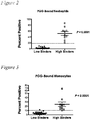
- FIG. 1 and FIG 2 show data reflecting ⁇ -glucan binding to polymorphonuclear leukocytes (PMNs), and FIG. 3 (monocytes) shows that the differential binding applies to other immune cell populations as well.
- PMNs polymorphonuclear leukocytes
- FIG. 3 monoocytes
- “high binders” also tend to produce more cytokines and/or chemokines such as, for example, IL-8, MCP, MIP-1, etc.
- status as a "high binder” refers to an individuals who exhibit a predetermined percentage of a particular immune cell population that binds exogenously provided ⁇ -glucan.
- the immune cell population used to determine whether an individual is a "high binder” or a “low binder” can be, for example, polymorphonuclear lymphocytes (PMNs) or monocytes.
- PMNs polymorphonuclear lymphocytes
- An individual can be considered a "high binder” if at least 10% of the PMNs or monocytes in a blood sample from the individual bind exogenously provided ⁇ -glucan.
- an individual may be a "high binder” if at least 10%, at least 12%, at least 15%, at least 20%, at least 15%, or at least 40% of PMNs or monocytes in a blood sample from the individual bind exogenously provided ⁇ -glucan.
- the exogenously provided ⁇ -glucan can include PGG provided to final concentration of 10 ⁇ g/mL to 100 ⁇ g/mL.
- Status as a "low binder" refers to an individual who fails to exhibit "high binder" status.
- high binders can exhibit higher titers of anti- ⁇ -glucan antibodies than "low binders.”
- a typical anti- ⁇ -glucan antibody titer for a "high binder” can be a titer of at least 25,000 such as, for example, at least 30,000, at least 35,000, at least 40,000, at least 45,000, at least 50,000, at least 55,000, or at least 60,000. (See, e.g., FIG. 4 ).
- Anti- ⁇ -glucan antibody titers typically refers to IgG. In some cases, however, the presence of IgM can compensate for a lower IgG titer to help establish "high binder" status.
- ⁇ -glucans are known to bind a lectin-like domain within the COOH-terminal region of the CD11b subunit of leukocyte complement receptor 3 (CR3; CD11b/CD18, aMh2 integrin, Mac-1; refs. Thorton et al., J Immunol 156:1235-46 , Xia et al, J Immunol 162:2281-90 ).
- ⁇ -glucans can prime CR3 of neutrophils, macrophages, and natural killer cells for cytotoxicity against tumors opsonized with iC3b.
- “High binder” serum can increase ⁇ -glucan binding to immune cells (e.g., PMNs) of a "low binder.”
- Increasing amounts of anti- ⁇ -glucan monoclonal antibody also can increase ⁇ -glucan binding to immune cells (e.g., PMNs) in serum from a "low binder.”
- intravenous immunoglobulin a blood product that contains pooled, polyvalent IgG from many donors (typically many hundreds, even thousands, of donors) and high natural anti- ⁇ -glucan titers, also can increase ⁇ -glucan binding to immune cells (e.g., PMNs) in serum from a "low binder.”
- FIG. 7 shows that contains pooled, polyvalent IgG from many donors (typically many hundreds, even thousands, of donors) and high natural anti- ⁇ -glucan titers.
- a subject with recurrent metastatic colorectal cancer exhibited as a "low binder" over five cycles of therapy that included administration of ⁇ -glucan.
- the subject exhibited ⁇ -glucan binding to ⁇ 5% of PMNs and monocytes and an anti- ⁇ -glucan antibody titer in the bottom 10% of the distribution curve for healthy individuals (1:1,600 to 1:3,200).
- the subject was treated multiple times with intravenous immunoglobulin (IVIG) (0.4 g/kg-1 g/kg).
- IVIG intravenous immunoglobulin
- Pre- and post-treatment samples were obtained before and after the second treatment.
- FIG. 8 shows that the subject exhibited a low capacity to bind ⁇ -glucan in PMNs and monocytes in the pre-treatment samples ( FIG.
- this disclosure describes immunotherapy that includes administering to a subject ⁇ -glucan co-administered with antibody that specifically binds ⁇ -glucan and, in addition, an anti-tumor antibody.
- anti-tumor antibody refers to an antibody that specifically binds neoplastic cells, regardless of whether the neoplastic cells form a solid tumor or include leukemic or lymphomic cells.
- the ⁇ -glucan and antibody that specifically binds the ⁇ -glucan may be administered as described in detail above.
- the anti-tumor antibody may be any suitable anti-tumor antibody administered as directed by the manufacturer or health professional.
- co-administering the ⁇ -glucan and the antibody preparation can increase the efficacy of the immunotherapy.
- PGG ⁇ -glucan has demonstrated preclinical activity against a variety of cancer types when administered in combination with anti-tumor monoclonal antibodies (mAbs).
- Exemplary types of cancer and their associated anti-tumor mAbs include, for example, T-cell lymphoma (anti-MUC1, anti-GD2), non-Hodgkin's lymphoma (rituximab), chroninc lymphocytic leukemia (rituximab), lung carcinoma (anti-MUC1), breast adenocarcinoma (anti-MMTV), ovarian carcinoma (bevacizumab), non-small-cell lung carcinoma (bevacizumab, cetuximab), colorectal cancer (cetuximab), and pancreatic carcinoma (cetuximab, anti-MUC1).
- the immunostimulatory effect of PGG ⁇ -glucan may be enhanced by co-administering antibody that specifically binds the ⁇ -glucan.
- FIG. 10 shows data illustrating relatively low PGG binding by PMNs in whole blood (Imp Ref, second panel) changing to high binding status by conjugating the PGG to either BTH1704 (anti-MUC1, U.S. Patent No. 6,204,366 , Biothera, Inc., Eagan, MN, third panel) or ERBITUX (Eli Lilly and Co., Indianapolis, IN, fourth panel) anti-tumor antibodies.
- FIG. 11 also illustrates relatively low PGG binding by PMNs in whole blood (Imp Ref, second panel) changing to high binding status by conjugating the PGG to intravenous immunoglobulin (IVIG, Biolegend, San Diego, CA).
- this disclosure describes immunotherapy that includes administering to a subject a composition that includes a ⁇ -glucan moiety conjugated to an antibody, a therapeutic antibody, an anti-tumor antibody, or an antibody fragment such as the Fc portion of an antibody.
- a composition that includes a ⁇ -glucan moiety conjugated to an antibody, a therapeutic antibody, an anti-tumor antibody, or an antibody fragment such as the Fc portion of an antibody.
- Modified and/or derivatized PGG including PGG conjugates of a PGG moiety and an antibody are described in International Patent Application No. PCT/US12/36795 , which may also be applied to conjugates of antibody fragments.
- the PGG moiety may be, or be derived from a ⁇ -1,3/1,6 glucan.
- derived from acknowledges that a conjugate may necessarily be prepared by creating a covalent linkage that replaces one or more atoms of the PGG ⁇ -glucan.
- derived from a ⁇ -1,3/1,6 glucan refers to a portion of the PGG ⁇ -glucan that remains as part of a conjugate after replacing one or more atoms of the PGG to form the covalent linkage of the conjugate.
- the therapeutic antibody may be any therapeutic antibody capable of being combined with ⁇ -glucan for immunotherapy.
- the therapeutic antibody also can include any of the anti-tumor antibodies-described above in connection with other aspects of this disclosure-in order to provide immunotherapy against various forms of cancer.
- the term “and/or” means one or all of the listed elements or a combination of any two or more of the listed elements; the terms “comprises” and variations thereof do not have a limiting meaning where these terms appear in the description and claims; unless otherwise specified, "a,” “an,” “the,” and “at least one” are used interchangeably and mean one or more than one; and the recitations of numerical ranges by endpoints include all numbers subsumed within that range (e.g., 1 to 5 includes 1, 1.5, 2, 2.75, 3, 3.80, 4, 5, etc.).
- the steps may be conducted in any feasible order. And, as appropriate, any combination of two or more steps may be conducted simultaneously.
- Imprime PGG (Biothera, Inc., Eagan, MN) was provided as a preservative-free, soluble ⁇ -glucan formulation prepared at a concentration of 1 mg/mL in 0.8% sodium chloride and 0.2% sodium citrate monobasic, at a pH of 6.4. The compound was stored at 4-8°C until use.
- Fresh whole blood was obtained from healthy volunteers that had provided informed consent prior to donation (New England Institutional Review Board, May 2007). The blood was collected in a Vacutainer® containing 158 USP Units Freeze-Dried Sodium Heparin (BD Biosciences; San Jose, CA).
- Serum and Plasma Whole blood was processed into serum or plasma by Vacutainer® tubes (BD Biosciences; San Jose, CA) collection with either serum separator (red top) or sodium heparin (green top) tubes. Tubes were mixed well, incubated at room temperature for 30 minutes, and then centrifuged at 2000 rpm ( ⁇ 1150 xg) for 10 minutes. The supernatant (either serum or plasma) was then transferred to a fresh polycarbonate storage conical tube.
- Vacutainer® tubes BD Biosciences; San Jose, CA
- Tubes were mixed well, incubated at room temperature for 30 minutes, and then centrifuged at 2000 rpm ( ⁇ 1150 xg) for 10 minutes. The supernatant (either serum or plasma) was then transferred to a fresh polycarbonate storage conical tube.
- a preliminary ELISA method modified from the monkey anti- ⁇ -glucan method ( Noss et al., 2012 Int. Arch. Allergy Immunol., 157:98-108 ) was used to test the human sera samples.
- Costar universal binding plates were coated with 50 ⁇ L of ⁇ -glucan at 1 ⁇ g/mL purified ⁇ -glucan diluted in purified water and incubated at 37°C for 30 minutes. The coated plate was then exposed to high intensity ultraviolet light at >1500 ⁇ W/cm 2 for five minutes at room temperature and placed in a 50°C forced air oven until dry before a second exposure to ultraviolet light at >1500 ⁇ W/cm 2 for five minutes at room temperature.
- the plate was then blocked with a 0.5% solution of Bovine Serum Albumin for > 30 minutes before washing with wash buffer (phosphate buffered saline [PBS] with 0.05% Tween-20).
- wash buffer phosphate buffered saline [PBS] with 0.05% Tween-20.
- Human serum samples were diluted into wash buffer added to the plate and subsequently serially diluted in wash buffer on the plate.
- Test samples diluted 1:400 were pipetted onto the test plate with seven additional serial 1:2 dilutions (serum dilutions between 1:400 and 1:12,800). Samples were incubated at room temperature for 30 minutes to permit human IgG to bind to the plate-bound ⁇ -glucan antigen.
- Assay Standard Curve A value of 160 Arbitrary Units per mL (AU/mL) was assigned to the standard human anti- ⁇ -glucan antibody. Thus a 1:400 dilution in the assay method results in a value of 400 mAU/mL as the highest point of a standard dilution curve additional serial 1:2 dilutions were prepared on the assay plate. Assay controls were diluted 1:100 in ELISA wash buffer for testing. Furthermore two dilutions of each control level were independently prepared for testing on each plate in parallel.
- Antibody Cocktail Used To Stain Whole Blood Samples Antibody Company; Clone # Dilution or Final Concentration For identification of: Anti-CD15 Biolegend; W6D3 0.2 ⁇ g/mL neutrophils Anti-CD19 Biolegend; HEB19 0.63 ⁇ g/mL B cells Anti-CD14 Biolegend; HCD14 5 ⁇ g/mL monocvtes Anti-CD14 Invitrogen; TüK4 1:50 monocytes Anti-CD3 Biolegend; HTT3a 0.25 ⁇ g/mL T cells Anti-CD45 Biolegend; HI30 0.25 ⁇ g/mL hematopoietic cells excluding erythrocytes and platelets Goat F(ab')2 anti- mouse IgM Jackson Immunolab 5 ⁇ g/mL mouse anti- ⁇ glucan antibody Proceeding incubation with the anti- ⁇ -glucan antibody BfD IV, the cells were incubated with the antibody cocktail which contains a secondary antibody for the recognition of BfD IV as well
- BD lysing solution (BD Biosciences; San Jose, CA) was added to each sample and gently vortexed. After an incubation period of one hour at room temperature, the samples were centrifuged at 1500-1700 rpm at 4°C for five minutes. The BD lysing solution was aspirated and the cells were washed once with 1xDPBS and aspirated as described above. For fixation, 300-400 ⁇ L of 1% paraformaldehyde was added to each sample. The samples were acquired on the LSR II (BD Biosciences; San Jose, CA) within 20 hours of fixation. Data was analyzed using FlowJo software (Tree Star, Ashland, OR).
- Imprime PGG (Biothera, Inc., Eagan, MN) was provided in a preservative-free, soluble ⁇ -glucan formulation prepared at a concentration of 1 mg/mL in 0.8% sodium chloride and 0.2% sodium citrate monobasic, at a pH of 6.4. The compound was stored at 4-8°C until use.
- Fresh WB was obtained from healthy volunteers that had provided informed consent prior to donation (New England Institutional Review Board. Blood Donation Protocol No. 07-124).
- the blood was collected in a Vacutainer® containing 158 USP Units Freeze-Dried Sodium Heparin (BD Biosciences; San Jose, CA).
- Serum was collected in a Vacutainer® containing a thrombin-based clot activator (BD Biosciences; San Jose, CA).
- the whole blood binding assay was performed by incubating whole blood samples with Imprime PGG for 30 minutes or two hours at 37°C in a humidified incubator. After washing with 1 ⁇ Dulbecco's phosphate buffered saline (DPBS), BfDIV, a mouse anti- ⁇ -glucan antibody was added and incubated with the WB for 30 minutes at room temperature. After more rounds of washing, an antibody cocktail including a goat anti-mouse detection antibody and antibodies to surface molecules were added and incubated at room temperature in the dark for 30 minutes. Erythrocytes were lysed with BD Lyse and samples were resuspended in 1% paraformaldehyde. Samples were acquired on a flow cytometer and analyzed using FlowJo software (Ashland, OR).
- the lyophilized antibody was resuspended to 1 mg/mL with 1 ⁇ DPBS and stored at -80°C or 4°C as a stock solution. Before being added to blood samples, the stock was diluted 1:10 to 100 ⁇ g/mL and 10 ⁇ L of this solution was added to 100 ⁇ L of blood. For incubation with IVIG, 10% IVIG (100 mg/mL) (PRIVIGEN, CSL Behrling, King of Prussia, PA) was added to the whole blood sample at the indicated final concentrations.
- Fresh whole blood was obtained from healthy volunteers that had provided informed consent prior to donation.
- the blood was collected in a Vacutainer® containing 158 USP Units Freeze-Dried Sodium Heparin (BD Biosciences; San Jose, CA).
- 100 ⁇ L of whole blood from the healthy donors was aliquoted into 5 mL polystyrene FACS tubes.
- the samples were stimulated with either the vehicle control, or PGG reference standard, or PGG-Mucl conjugate (Imp-BTH1704), PGG-Erbitux conjugate (10 ⁇ g/mL), or PGG-IVIG conjugate.
- PGG-anti-tumor antibody conjugates were prepared as described in International Patent Application No. PCT/US12/36795 .
- Tubes containing samples were loosely covered with parafilm and incubated for 30 minutes at 37°C in a humidified incubator (5% CO 2 ). After incubation, all samples were washed two times with 2 mL of 1 ⁇ DPBS and centrifuged at 1500-1700 rpm at 4°C for five minutes. After aspiration, 5 ⁇ L of the anti- ⁇ -glucan antibody BfD IV (Biothera, Inc., Eagan, MN; U.S. Patent No. 6,294,321 ), was mixed into each tube and incubated at room temperature for 30 minutes.
- BfD IV the anti- ⁇ -glucan antibody BfD IV
- This antibody was washed twice and a cocktail of antibodies containing the secondary Ab FITC-conjugated goat anti-mouse IgM (Southern Biotech; Birmingham, AL) as well as the specific cell surface markers, CD15, CD14, CD19, CD3 and CD45 (Biolegend, San Diego, CA) were added and incubated for 30 minutes at room temperature in the dark.
- 2 mL of 1 ⁇ BD Lysing solution (BD Bioscience; San Jose, CA) was added to each sample and vortexed. After incubating at room temperature for 30 minutes the samples were centrifuged as described above and the pellet was washed with 2 mL 1 ⁇ DPBS.
- composition comprising:
- Item 2 The composition of Item 1 wherein the soluble ⁇ -glucan is derived from yeast.
- Item 3 The composition of Item 1 or Item 2 wherein the soluble ⁇ -glucan comprises a ⁇ -1,311,6 glucan.
- Item 4 The composition of any preceding Item wherein the soluble ⁇ -glucan comprises ⁇ (1,6)-[poly-(1,3)-D-glucopyranosyl]-poly- ⁇ (1,3)-D-glucopyranose.
- Item 5 The composition of any preceding Item wherein the antibody component comprises a monoclonal antibody that specifically binds to the soluble ⁇ -glucan.
- Item 6 The composition of Item 5 wherein the monoclonal antibody comprises BfD I, BfD II, BfD III, or BfD IV.
- Item 7 The composition of any preceding Item wherein the soluble ⁇ -glucan component and the antibody component are provided in a single formulation.
- Item 8 The composition of any preceding Item wherein the soluble ⁇ -glucan component and the antibody component are provided in separate formulations.
- Item 9 The composition of any preceding Item and further comprising an anti-tumor antibody.
- Item 10 A method comprising co-administering to a subject a soluble ⁇ -glucan and an antibody preparation or antibody component that specifically binds to the soluble ⁇ -glucan.
- Item 11 A method of increasing a subject's response to soluble ⁇ -glucan immunotherapy, the method comprising co-administering to the subject a composition that comprises a soluble ⁇ -glucan and an antibody preparation that specifically binds to the soluble ⁇ -glucan.
- Item 12 The method of Item 11 further comprising identifying the subject as a low binder of ⁇ -glucan.
- Item 13 The method of any one of Items 10-12 wherein the soluble ⁇ -glucan and the antibody preparation are co-administered simultaneously.
- Item 14 The method of any one of Items 10-12 wherein the soluble ⁇ -glucan and the antibody preparation are co-administered at different times.
- Item 15 The method of any one of Items 10-12 wherein the soluble ⁇ -glucan and the antibody preparation are co-administered at different sites.
- Item 16 The method of any one of Items 10-15 wherein the soluble ⁇ -glucan is derived from yeast.
- Item 17 The method of any one of Items 10-16 wherein the soluble ⁇ -glucan comprises a ⁇ -1,3/1,6 glucan.
- Item 18 The method of any one of Items 10-17 wherein the soluble ⁇ -glucan comprises ⁇ (1,6)-[poly-(1,3)-D-glucopyranosyl-poly- ⁇ (1,3)-D-glucopyranose.
- Item 19 The method of any one of Items 10-18 wherein the antibody component comprises a monoclonal antibody that specifically binds to the ⁇ -glucan.
- Item 20 The method of Item 19 wherein the monoclonal antibody comprises BfD I, BfD II, BfD III, or BfD IV.
- Item 21 A method of increasing a subject's response to soluble ⁇ -glucan. immunotherapy, the method comprising administering to the subject a composition that comprises a soluble ⁇ -glucan moiety conjugated to an antibody or antibody fragment.
- Item 22 The method of Item 21 and further comprising identifying the subject as a low binder of soluble ⁇ -glucan.
- Item 23 The method of Item 21 or Item 22 wherein the soluble ⁇ -glucan moiety is derived from yeast.
- Item 24 The method of Items 21-23 wherein the soluble ⁇ -glucan moiety comprises, or is derived from, a ⁇ -1,3/1,6 glucan.
- Item 25 The method of any one of Items 21-24 wherein the ⁇ -glucan moiety comprises, or is derived from, ⁇ (1,6)-[poly-(1,3)-D-glucopyranosyl]-poly- ⁇ (1,3)-D-glucopyranose.
- Item 26 The method of any one of Items 21-25 wherein the antibody comprises a therapeutic antibody.
- Item 27 The method of any one of Items 21-26 and further comprising administering an anti-tumor antibody.
- Item 28 The method of Item 27 wherein the anti-tumor antibody specifically binds to leukemic or lymphomic cells.
- Item 29 The method of Item 27 wherein the anti-tumor antibody binds to cells of solid tumor.
- Item 30 A method of treating a tumor comprising co-administering to a subject having a tumor a composition that comprises:
- Item 31 The method of Item 30 and further comprising identifying the subject as a low binder of soluble ⁇ -glucan.
Landscapes
- Health & Medical Sciences (AREA)
- Life Sciences & Earth Sciences (AREA)
- Chemical & Material Sciences (AREA)
- Immunology (AREA)
- Medicinal Chemistry (AREA)
- Engineering & Computer Science (AREA)
- General Health & Medical Sciences (AREA)
- Molecular Biology (AREA)
- Animal Behavior & Ethology (AREA)
- Public Health (AREA)
- Veterinary Medicine (AREA)
- Pharmacology & Pharmacy (AREA)
- Biomedical Technology (AREA)
- Organic Chemistry (AREA)
- Epidemiology (AREA)
- Microbiology (AREA)
- Hematology (AREA)
- Bioinformatics & Cheminformatics (AREA)
- Urology & Nephrology (AREA)
- Cell Biology (AREA)
- Biochemistry (AREA)
- Mycology (AREA)
- General Chemical & Material Sciences (AREA)
- Chemical Kinetics & Catalysis (AREA)
- Pathology (AREA)
- Biotechnology (AREA)
- Food Science & Technology (AREA)
- Physics & Mathematics (AREA)
- Analytical Chemistry (AREA)
- General Physics & Mathematics (AREA)
- Nuclear Medicine, Radiotherapy & Molecular Imaging (AREA)
- Proteomics, Peptides & Aminoacids (AREA)
- Biophysics (AREA)
- Genetics & Genomics (AREA)
- Tropical Medicine & Parasitology (AREA)
- Virology (AREA)
- Oncology (AREA)
- Botany (AREA)
- Zoology (AREA)
- Toxicology (AREA)
Claims (9)
- Composition qui comprend :un composant de β-lucane soluble dérivé de levure composé de monomères de glucose organisés sous la forme d'un squelette de glucopyranose à liaisons β-(1,3) avec des ramifications périodiques de β-(1,3)-glucopyranose liées au squelette par l'intermédiaire de liaisons β-(1,6)-glycosidiques ; etun composant d'anticorps comprenant un anticorps monoclonal qui se lie spécifiquement au β-glucane soluble ; etun anticorps antitumoral.
- Composition selon la revendication 1, dans laquelle le composant de β-glucan soluble et le composant d'anticorps sont fournis dans une formulation unique ou dans des formulations séparées.
- Composition qui comprend (i) un β-lucane soluble dérivé de levure composé de monomères de glucose organisés sous la forme d'un squelette de glucopyranose à liaisons β-(1,3) avec des ramifications périodiques de β-(1,3)-glucopyranose liées au squelette par l'intermédiaire de liaisons β-(1,6)-glycosidiques, (ii) une préparation d'anticorps comprenant un anticorps monoclonal qui se lie spécifiquement au β-lucane soluble, et (iii) un anticorps antitumoral, pour une utilisation dans l'augmentation de la réponse d'un sujet à une immunothérapie à base de β-lucane soluble, dans laquelle le β-lucane soluble et la préparation d'anticorps sont coadministrés.
- Composition pour une utilisation selon la revendication 3, dans laquelle le β-glucane soluble et la préparation d'anticorps sont coadministrés simultanément, à des moments différents, ou à des sites différents.
- Composition pour une utilisation selon la revendication 3, dans laquelle l'anticorps antitumoral se lie spécifiquement aux cellules leucémiques ou lymphomiques ; ou se lie aux cellules d'une tumeur solide.
- Composition selon l'une quelconque des revendications précédentes, ou composition pour une utilisation selon l'une quelconque des revendications précédentes dans laquelle le β-lucane soluble comprend un β(1,6)-[poly-(1,3)-D-glucopyranosyl]-poly-(3(1,3)-D-glucopyranose.
- Composition qui comprend :un composant de β-glucane soluble dérivé de levure composé de monomères de glucose organisés sous la forme d'un squelette de glucopyranose à liaisons β-(1,3) avec des ramifications périodiques de β-'(1,3)-glucopyranose liées au squelette par l'intermédiaire de liaisons β-(1,6)-glycosidiques ; etune préparation d'anticorps comprenant un anticorps monoclonal qui se lie spécifiquement au β-glucane soluble ; et une préparation d'anticorps antitumoral pour une utilisation dans le traitement d'une tumeur chez un sujet, dans laquelle le β-glucane soluble et la préparation d'anticorps sont coadministrés.
- Composition selon l'une quelconque des revendications précédentes, ou composition pour une utilisation selon l'une quelconque des revendications précédentes, dans laquelle l'anticorps monoclonal comprend les BfD I, BfD II, BfD III, ou BfD IV.
- Composition pour une utilisation selon l'une quelconque des revendications précédentes, où le sujet a été identifié comme un lieur faible de β-glucane, où un lieur faible est un sujet, chez lequel moins de 10 % des leucocytes polynucléaires ou des monocytes dans un échantillon de sang provenant du sujet lient le β-glucane fourni de façon exogène ou est un sujet présentant un titre en anticorps anti-β-glucane inférieur à 25 000.
Priority Applications (1)
| Application Number | Priority Date | Filing Date | Title |
|---|---|---|---|
| EP17210808.6A EP3363462A1 (fr) | 2012-04-30 | 2013-03-14 | Compositions et méthodes d'immunothérapie beta-glucane |
Applications Claiming Priority (4)
| Application Number | Priority Date | Filing Date | Title |
|---|---|---|---|
| US201261640397P | 2012-04-30 | 2012-04-30 | |
| US201261640842P | 2012-05-01 | 2012-05-01 | |
| US201261640834P | 2012-05-01 | 2012-05-01 | |
| PCT/US2013/031625 WO2013165593A1 (fr) | 2012-04-30 | 2013-03-14 | Compositions et procédés pour une immunothérapie par un β-glucane |
Related Child Applications (1)
| Application Number | Title | Priority Date | Filing Date |
|---|---|---|---|
| EP17210808.6A Division EP3363462A1 (fr) | 2012-04-30 | 2013-03-14 | Compositions et méthodes d'immunothérapie beta-glucane |
Publications (3)
| Publication Number | Publication Date |
|---|---|
| EP2854530A1 EP2854530A1 (fr) | 2015-04-08 |
| EP2854530A4 EP2854530A4 (fr) | 2015-12-30 |
| EP2854530B1 true EP2854530B1 (fr) | 2018-01-03 |
Family
ID=49514726
Family Applications (4)
| Application Number | Title | Priority Date | Filing Date |
|---|---|---|---|
| EP17210808.6A Withdrawn EP3363462A1 (fr) | 2012-04-30 | 2013-03-14 | Compositions et méthodes d'immunothérapie beta-glucane |
| EP13784589.7A Active EP2844262B1 (fr) | 2012-04-30 | 2013-03-14 | Preparation immunothérapeutique de bêta-glucane |
| EP13784472.6A Active EP2854530B1 (fr) | 2012-04-30 | 2013-03-14 | Compositions pour une immunothérapie avec un bêta-glucane |
| EP18150764.1A Withdrawn EP3373006A1 (fr) | 2012-04-30 | 2013-03-14 | Procédés d'immunothérapie par bêta-glucane |
Family Applications Before (2)
| Application Number | Title | Priority Date | Filing Date |
|---|---|---|---|
| EP17210808.6A Withdrawn EP3363462A1 (fr) | 2012-04-30 | 2013-03-14 | Compositions et méthodes d'immunothérapie beta-glucane |
| EP13784589.7A Active EP2844262B1 (fr) | 2012-04-30 | 2013-03-14 | Preparation immunothérapeutique de bêta-glucane |
Family Applications After (1)
| Application Number | Title | Priority Date | Filing Date |
|---|---|---|---|
| EP18150764.1A Withdrawn EP3373006A1 (fr) | 2012-04-30 | 2013-03-14 | Procédés d'immunothérapie par bêta-glucane |
Country Status (10)
| Country | Link |
|---|---|
| US (4) | US11229701B2 (fr) |
| EP (4) | EP3363462A1 (fr) |
| JP (3) | JP6416751B2 (fr) |
| KR (2) | KR20150013206A (fr) |
| CN (2) | CN104812396B (fr) |
| AU (4) | AU2013257139B2 (fr) |
| CA (1) | CA2872010C (fr) |
| ES (2) | ES2662969T3 (fr) |
| RU (3) | RU2018102251A (fr) |
| WO (2) | WO2013165593A1 (fr) |
Families Citing this family (12)
| Publication number | Priority date | Publication date | Assignee | Title |
|---|---|---|---|---|
| EP3363462A1 (fr) | 2012-04-30 | 2018-08-22 | Biothera, Inc. | Compositions et méthodes d'immunothérapie beta-glucane |
| MX2016007148A (es) * | 2013-12-05 | 2016-12-07 | Biothera Inc | Metodos de ensayo de beta-glucano. |
| WO2016007876A1 (fr) * | 2014-07-10 | 2016-01-14 | Biothera, Inc. | Bêta-glucane en combinaison avec des agents anticancéreux affectant le microenvironnement de la tumeur |
| EP3215163B1 (fr) * | 2014-11-06 | 2021-03-10 | Biothera, Inc. | Compositions et procédés de bêta-glucane qui affectent le micro-environnement de la tumeur |
| EP3400442A4 (fr) * | 2016-01-08 | 2019-06-26 | Biothera, Inc. | Immunothérapies par bêta-glucane affectant le microenvironnement immunitaire |
| CN105749290A (zh) * | 2016-04-11 | 2016-07-13 | 苏州康聚生物科技有限公司 | 一种含有以β-葡聚糖为辅料的蛋白质药物制剂 |
| WO2018156888A1 (fr) * | 2017-02-24 | 2018-08-30 | Biothera Pharmaceuticals, Inc. | Immunopharmacodynamie de bêta-glucane |
| MX2020009510A (es) | 2018-03-13 | 2021-08-05 | Hibercell Inc | Inmunoterapia combinada de beta glucano y agonista cd40. |
| CN110038132A (zh) * | 2019-01-29 | 2019-07-23 | 苏州杰纳生物科技有限公司 | 天然高分子-蛋白复合物及其制备方法和应用 |
| WO2022251123A1 (fr) * | 2021-05-24 | 2022-12-01 | Frank Jordan | Extraction alcaline de composés de bêta-glucane destinés à être utilisés dans des thérapies anti-virales et immunitaires |
| CN113249336B (zh) * | 2021-07-15 | 2021-10-08 | 天津一瑞生物科技股份有限公司 | 鼠抗(1,3)-β-D葡聚糖杂交瘤细胞株,单克隆抗体及应用 |
| AU2024266326A1 (en) * | 2023-05-03 | 2025-11-13 | Immunoracle Inc. | Compositions and methods of analyzing a sample for antigen-specific immune cells |
Citations (1)
| Publication number | Priority date | Publication date | Assignee | Title |
|---|---|---|---|---|
| WO2012154680A2 (fr) * | 2011-05-06 | 2012-11-15 | Biothera, Inc. | Composés β-glucane modifiés et dérivatisés, compositions, et procédés |
Family Cites Families (20)
| Publication number | Priority date | Publication date | Assignee | Title |
|---|---|---|---|---|
| GB9019553D0 (en) | 1990-09-07 | 1990-10-24 | Unilever Plc | Specific binding agents |
| US6084092A (en) * | 1997-01-31 | 2000-07-04 | The Collaborative Group, Ltd. | β(1-3)-glucan diagnostic assays |
| US6413715B2 (en) | 1997-01-31 | 2002-07-02 | The Collaborative Group | β(1-3)-glucan diagnostic assays |
| ES2321892T3 (es) * | 1998-09-14 | 2009-06-12 | Nabi Biopharmaceuticals | Composiciones de beta-glucanos e inmunoglobulinas especificas. |
| US7507724B2 (en) | 2001-01-16 | 2009-03-24 | Sloan-Kettering Institute For Cancer Research | Therapy-enhancing glucan |
| US7786094B2 (en) * | 2001-10-09 | 2010-08-31 | Biopolymer Engineering, Inc. | Use of beta-glucans against biological warfare weapons and pathogens including anthrax |
| GB0302218D0 (en) * | 2003-01-30 | 2003-03-05 | Chiron Sri | Vaccine formulation & Mucosal delivery |
| GB0211118D0 (en) * | 2002-05-15 | 2002-06-26 | Polonelli Luciano | Vaccines |
| US8883760B2 (en) | 2002-09-04 | 2014-11-11 | University Of Louisville Research Foundation, Inc. | Cancer therapy using beta glucan and antibodies |
| CN1964722A (zh) * | 2004-05-10 | 2007-05-16 | 生物聚合物工程有限公司 | 与抗生素、疫苗和病毒单克隆抗体组合的全葡聚糖颗粒 |
| GB0420466D0 (en) * | 2004-09-14 | 2004-10-20 | Cassone Antonio | Anti-glucan antibodies |
| JP4666284B2 (ja) * | 2005-11-30 | 2011-04-06 | 味の素株式会社 | グルカン感受性予測方法、グルカン感受性増強剤及びそのスクリーニング方法 |
| EP1984004A4 (fr) | 2006-01-17 | 2010-03-03 | Sloan Kettering Inst Cancer | Glucane permettant d'améliorer une thérapie |
| WO2007146440A2 (fr) | 2006-06-15 | 2007-12-21 | Biopolymer Engineering, Inc. Dba Biothera, Inc. | Préparations de glycane |
| TW200825084A (en) | 2006-11-14 | 2008-06-16 | Astrazeneca Ab | New compounds 521 |
| CN101711112B (zh) | 2007-05-08 | 2015-11-25 | 生物高聚物工程公司Dba生物治疗公司 | 粒状可溶的葡聚糖制备 |
| JP2011519049A (ja) * | 2008-04-29 | 2011-06-30 | イミューンエクサイト インコーポレイテッド | 免疫調節組成物およびその使用方法 |
| US9943607B2 (en) * | 2011-05-09 | 2018-04-17 | Biothera, Inc. | Beta-glucan compounds, compositions, and methods |
| EP3363462A1 (fr) | 2012-04-30 | 2018-08-22 | Biothera, Inc. | Compositions et méthodes d'immunothérapie beta-glucane |
| MX2016007148A (es) * | 2013-12-05 | 2016-12-07 | Biothera Inc | Metodos de ensayo de beta-glucano. |
-
2013
- 2013-03-14 EP EP17210808.6A patent/EP3363462A1/fr not_active Withdrawn
- 2013-03-14 KR KR20147033313A patent/KR20150013206A/ko not_active Ceased
- 2013-03-14 CA CA2872010A patent/CA2872010C/fr active Active
- 2013-03-14 CN CN201380034978.3A patent/CN104812396B/zh active Active
- 2013-03-14 US US14/398,019 patent/US11229701B2/en active Active
- 2013-03-14 AU AU2013257139A patent/AU2013257139B2/en active Active
- 2013-03-14 JP JP2015510271A patent/JP6416751B2/ja active Active
- 2013-03-14 JP JP2015510272A patent/JP6272305B2/ja active Active
- 2013-03-14 RU RU2018102251A patent/RU2018102251A/ru not_active Application Discontinuation
- 2013-03-14 CN CN201380034980.0A patent/CN104812243B/zh not_active Expired - Fee Related
- 2013-03-14 WO PCT/US2013/031625 patent/WO2013165593A1/fr not_active Ceased
- 2013-03-14 EP EP13784589.7A patent/EP2844262B1/fr active Active
- 2013-03-14 US US14/398,020 patent/US10092646B2/en active Active
- 2013-03-14 ES ES13784472.6T patent/ES2662969T3/es active Active
- 2013-03-14 KR KR1020147033316A patent/KR102103366B1/ko active Active
- 2013-03-14 RU RU2014148153A patent/RU2643331C2/ru active
- 2013-03-14 WO PCT/US2013/031606 patent/WO2013165591A1/fr not_active Ceased
- 2013-03-14 AU AU2013257141A patent/AU2013257141B2/en active Active
- 2013-03-14 ES ES13784589.7T patent/ES2661393T3/es active Active
- 2013-03-14 EP EP13784472.6A patent/EP2854530B1/fr active Active
- 2013-03-14 EP EP18150764.1A patent/EP3373006A1/fr not_active Withdrawn
- 2013-03-14 RU RU2014148155A patent/RU2629334C2/ru active
-
2018
- 2018-01-30 AU AU2018200706A patent/AU2018200706A1/en not_active Abandoned
- 2018-04-09 JP JP2018074753A patent/JP2018150304A/ja active Pending
- 2018-05-16 AU AU2018203444A patent/AU2018203444B2/en active Active
- 2018-08-31 US US16/118,909 patent/US20180369376A1/en not_active Abandoned
-
2021
- 2021-12-15 US US17/552,137 patent/US12390526B2/en active Active
Patent Citations (1)
| Publication number | Priority date | Publication date | Assignee | Title |
|---|---|---|---|---|
| WO2012154680A2 (fr) * | 2011-05-06 | 2012-11-15 | Biothera, Inc. | Composés β-glucane modifiés et dérivatisés, compositions, et procédés |
Non-Patent Citations (1)
| Title |
|---|
| RUBIN-BEJERANO IFAT ET AL: "Phagocytosis by human neutrophils is stimulated by a unique fungal cell wall component.", CELL HOST & MICROBE 12 JUL 2007, vol. 2, no. 1, 12 July 2007 (2007-07-12), pages 55 - 67, ISSN: 1934-6069 * |
Also Published As
Similar Documents
| Publication | Publication Date | Title |
|---|---|---|
| EP2854530B1 (fr) | Compositions pour une immunothérapie avec un bêta-glucane | |
| US20170100425A1 (en) | Beta-glucan in combination with anti-cancer agents affecting the tumor microenvironment | |
| US20180256738A1 (en) | Beta-glucan compounds, compositions, and methods | |
| EP2714053B1 (fr) | Procédés et préparations de beta-glucane opsonisé | |
| EP3077816B1 (fr) | Procédés de dosage de glucane-beta | |
| CA2872009C (fr) | Procedes immunotherapeutiques de beta-glucane |
Legal Events
| Date | Code | Title | Description |
|---|---|---|---|
| PUAI | Public reference made under article 153(3) epc to a published international application that has entered the european phase |
Free format text: ORIGINAL CODE: 0009012 |
|
| 17P | Request for examination filed |
Effective date: 20141201 |
|
| AK | Designated contracting states |
Kind code of ref document: A1 Designated state(s): AL AT BE BG CH CY CZ DE DK EE ES FI FR GB GR HR HU IE IS IT LI LT LU LV MC MK MT NL NO PL PT RO RS SE SI SK SM TR |
|
| AX | Request for extension of the european patent |
Extension state: BA ME |
|
| DAX | Request for extension of the european patent (deleted) | ||
| RIN1 | Information on inventor provided before grant (corrected) |
Inventor name: DANIELSON, MICHAEL E. Inventor name: MICHEL, KYLE S. Inventor name: BOSE, NANDITA Inventor name: NELSON, MARIANA I. Inventor name: GROSSMAN, WILLIAM J. Inventor name: WALSH, RICHARD M. Inventor name: ANTONYSAMY, MARY A. |
|
| RA4 | Supplementary search report drawn up and despatched (corrected) |
Effective date: 20151127 |
|
| RIC1 | Information provided on ipc code assigned before grant |
Ipc: A61K 39/40 20060101ALI20151123BHEP Ipc: C12P 21/08 20060101ALI20151123BHEP Ipc: A01N 43/04 20060101AFI20151123BHEP Ipc: C07K 16/00 20060101ALI20151123BHEP |
|
| 17Q | First examination report despatched |
Effective date: 20161021 |
|
| REG | Reference to a national code |
Ref country code: DE Ref legal event code: R079 Ref document number: 602013031687 Country of ref document: DE Free format text: PREVIOUS MAIN CLASS: A01N0043040000 Ipc: A61K0031716000 |
|
| GRAP | Despatch of communication of intention to grant a patent |
Free format text: ORIGINAL CODE: EPIDOSNIGR1 |
|
| RIC1 | Information provided on ipc code assigned before grant |
Ipc: A61K 45/06 20060101ALI20170620BHEP Ipc: A61K 39/395 20060101ALI20170620BHEP Ipc: A61K 31/716 20060101AFI20170620BHEP |
|
| INTG | Intention to grant announced |
Effective date: 20170714 |
|
| GRAS | Grant fee paid |
Free format text: ORIGINAL CODE: EPIDOSNIGR3 |
|
| GRAA | (expected) grant |
Free format text: ORIGINAL CODE: 0009210 |
|
| AK | Designated contracting states |
Kind code of ref document: B1 Designated state(s): AL AT BE BG CH CY CZ DE DK EE ES FI FR GB GR HR HU IE IS IT LI LT LU LV MC MK MT NL NO PL PT RO RS SE SI SK SM TR |
|
| REG | Reference to a national code |
Ref country code: GB Ref legal event code: FG4D |
|
| REG | Reference to a national code |
Ref country code: CH Ref legal event code: EP Ref country code: AT Ref legal event code: REF Ref document number: 959610 Country of ref document: AT Kind code of ref document: T Effective date: 20180115 |
|
| REG | Reference to a national code |
Ref country code: IE Ref legal event code: FG4D |
|
| REG | Reference to a national code |
Ref country code: DE Ref legal event code: R096 Ref document number: 602013031687 Country of ref document: DE |
|
| REG | Reference to a national code |
Ref country code: FR Ref legal event code: PLFP Year of fee payment: 6 |
|
| REG | Reference to a national code |
Ref country code: ES Ref legal event code: FG2A Ref document number: 2662969 Country of ref document: ES Kind code of ref document: T3 Effective date: 20180410 |
|
| REG | Reference to a national code |
Ref country code: NL Ref legal event code: MP Effective date: 20180103 |
|
| REG | Reference to a national code |
Ref country code: LT Ref legal event code: MG4D |
|
| REG | Reference to a national code |
Ref country code: AT Ref legal event code: MK05 Ref document number: 959610 Country of ref document: AT Kind code of ref document: T Effective date: 20180103 |
|
| PG25 | Lapsed in a contracting state [announced via postgrant information from national office to epo] |
Ref country code: NL Free format text: LAPSE BECAUSE OF FAILURE TO SUBMIT A TRANSLATION OF THE DESCRIPTION OR TO PAY THE FEE WITHIN THE PRESCRIBED TIME-LIMIT Effective date: 20180103 |
|
| PG25 | Lapsed in a contracting state [announced via postgrant information from national office to epo] |
Ref country code: HR Free format text: LAPSE BECAUSE OF FAILURE TO SUBMIT A TRANSLATION OF THE DESCRIPTION OR TO PAY THE FEE WITHIN THE PRESCRIBED TIME-LIMIT Effective date: 20180103 Ref country code: LT Free format text: LAPSE BECAUSE OF FAILURE TO SUBMIT A TRANSLATION OF THE DESCRIPTION OR TO PAY THE FEE WITHIN THE PRESCRIBED TIME-LIMIT Effective date: 20180103 Ref country code: FI Free format text: LAPSE BECAUSE OF FAILURE TO SUBMIT A TRANSLATION OF THE DESCRIPTION OR TO PAY THE FEE WITHIN THE PRESCRIBED TIME-LIMIT Effective date: 20180103 Ref country code: NO Free format text: LAPSE BECAUSE OF FAILURE TO SUBMIT A TRANSLATION OF THE DESCRIPTION OR TO PAY THE FEE WITHIN THE PRESCRIBED TIME-LIMIT Effective date: 20180403 Ref country code: CY Free format text: LAPSE BECAUSE OF FAILURE TO SUBMIT A TRANSLATION OF THE DESCRIPTION OR TO PAY THE FEE WITHIN THE PRESCRIBED TIME-LIMIT Effective date: 20180103 |
|
| PG25 | Lapsed in a contracting state [announced via postgrant information from national office to epo] |
Ref country code: LV Free format text: LAPSE BECAUSE OF FAILURE TO SUBMIT A TRANSLATION OF THE DESCRIPTION OR TO PAY THE FEE WITHIN THE PRESCRIBED TIME-LIMIT Effective date: 20180103 Ref country code: SE Free format text: LAPSE BECAUSE OF FAILURE TO SUBMIT A TRANSLATION OF THE DESCRIPTION OR TO PAY THE FEE WITHIN THE PRESCRIBED TIME-LIMIT Effective date: 20180103 Ref country code: PL Free format text: LAPSE BECAUSE OF FAILURE TO SUBMIT A TRANSLATION OF THE DESCRIPTION OR TO PAY THE FEE WITHIN THE PRESCRIBED TIME-LIMIT Effective date: 20180103 Ref country code: GR Free format text: LAPSE BECAUSE OF FAILURE TO SUBMIT A TRANSLATION OF THE DESCRIPTION OR TO PAY THE FEE WITHIN THE PRESCRIBED TIME-LIMIT Effective date: 20180404 Ref country code: IS Free format text: LAPSE BECAUSE OF FAILURE TO SUBMIT A TRANSLATION OF THE DESCRIPTION OR TO PAY THE FEE WITHIN THE PRESCRIBED TIME-LIMIT Effective date: 20180503 Ref country code: AT Free format text: LAPSE BECAUSE OF FAILURE TO SUBMIT A TRANSLATION OF THE DESCRIPTION OR TO PAY THE FEE WITHIN THE PRESCRIBED TIME-LIMIT Effective date: 20180103 Ref country code: RS Free format text: LAPSE BECAUSE OF FAILURE TO SUBMIT A TRANSLATION OF THE DESCRIPTION OR TO PAY THE FEE WITHIN THE PRESCRIBED TIME-LIMIT Effective date: 20180103 Ref country code: BG Free format text: LAPSE BECAUSE OF FAILURE TO SUBMIT A TRANSLATION OF THE DESCRIPTION OR TO PAY THE FEE WITHIN THE PRESCRIBED TIME-LIMIT Effective date: 20180403 |
|
| REG | Reference to a national code |
Ref country code: DE Ref legal event code: R097 Ref document number: 602013031687 Country of ref document: DE |
|
| PG25 | Lapsed in a contracting state [announced via postgrant information from national office to epo] |
Ref country code: AL Free format text: LAPSE BECAUSE OF FAILURE TO SUBMIT A TRANSLATION OF THE DESCRIPTION OR TO PAY THE FEE WITHIN THE PRESCRIBED TIME-LIMIT Effective date: 20180103 Ref country code: EE Free format text: LAPSE BECAUSE OF FAILURE TO SUBMIT A TRANSLATION OF THE DESCRIPTION OR TO PAY THE FEE WITHIN THE PRESCRIBED TIME-LIMIT Effective date: 20180103 Ref country code: RO Free format text: LAPSE BECAUSE OF FAILURE TO SUBMIT A TRANSLATION OF THE DESCRIPTION OR TO PAY THE FEE WITHIN THE PRESCRIBED TIME-LIMIT Effective date: 20180103 |
|
| REG | Reference to a national code |
Ref country code: CH Ref legal event code: PL |
|
| PLBE | No opposition filed within time limit |
Free format text: ORIGINAL CODE: 0009261 |
|
| STAA | Information on the status of an ep patent application or granted ep patent |
Free format text: STATUS: NO OPPOSITION FILED WITHIN TIME LIMIT |
|
| PG25 | Lapsed in a contracting state [announced via postgrant information from national office to epo] |
Ref country code: DK Free format text: LAPSE BECAUSE OF FAILURE TO SUBMIT A TRANSLATION OF THE DESCRIPTION OR TO PAY THE FEE WITHIN THE PRESCRIBED TIME-LIMIT Effective date: 20180103 Ref country code: SM Free format text: LAPSE BECAUSE OF FAILURE TO SUBMIT A TRANSLATION OF THE DESCRIPTION OR TO PAY THE FEE WITHIN THE PRESCRIBED TIME-LIMIT Effective date: 20180103 Ref country code: CZ Free format text: LAPSE BECAUSE OF FAILURE TO SUBMIT A TRANSLATION OF THE DESCRIPTION OR TO PAY THE FEE WITHIN THE PRESCRIBED TIME-LIMIT Effective date: 20180103 Ref country code: SK Free format text: LAPSE BECAUSE OF FAILURE TO SUBMIT A TRANSLATION OF THE DESCRIPTION OR TO PAY THE FEE WITHIN THE PRESCRIBED TIME-LIMIT Effective date: 20180103 Ref country code: MC Free format text: LAPSE BECAUSE OF FAILURE TO SUBMIT A TRANSLATION OF THE DESCRIPTION OR TO PAY THE FEE WITHIN THE PRESCRIBED TIME-LIMIT Effective date: 20180103 |
|
| REG | Reference to a national code |
Ref country code: BE Ref legal event code: MM Effective date: 20180331 |
|
| 26N | No opposition filed |
Effective date: 20181005 |
|
| PG25 | Lapsed in a contracting state [announced via postgrant information from national office to epo] |
Ref country code: LU Free format text: LAPSE BECAUSE OF NON-PAYMENT OF DUE FEES Effective date: 20180314 |
|
| PG25 | Lapsed in a contracting state [announced via postgrant information from national office to epo] |
Ref country code: BE Free format text: LAPSE BECAUSE OF NON-PAYMENT OF DUE FEES Effective date: 20180331 Ref country code: LI Free format text: LAPSE BECAUSE OF NON-PAYMENT OF DUE FEES Effective date: 20180331 Ref country code: CH Free format text: LAPSE BECAUSE OF NON-PAYMENT OF DUE FEES Effective date: 20180331 Ref country code: SI Free format text: LAPSE BECAUSE OF FAILURE TO SUBMIT A TRANSLATION OF THE DESCRIPTION OR TO PAY THE FEE WITHIN THE PRESCRIBED TIME-LIMIT Effective date: 20180103 |
|
| PG25 | Lapsed in a contracting state [announced via postgrant information from national office to epo] |
Ref country code: MT Free format text: LAPSE BECAUSE OF NON-PAYMENT OF DUE FEES Effective date: 20180314 |
|
| PG25 | Lapsed in a contracting state [announced via postgrant information from national office to epo] |
Ref country code: TR Free format text: LAPSE BECAUSE OF FAILURE TO SUBMIT A TRANSLATION OF THE DESCRIPTION OR TO PAY THE FEE WITHIN THE PRESCRIBED TIME-LIMIT Effective date: 20180103 |
|
| PG25 | Lapsed in a contracting state [announced via postgrant information from national office to epo] |
Ref country code: PT Free format text: LAPSE BECAUSE OF FAILURE TO SUBMIT A TRANSLATION OF THE DESCRIPTION OR TO PAY THE FEE WITHIN THE PRESCRIBED TIME-LIMIT Effective date: 20180103 |
|
| PG25 | Lapsed in a contracting state [announced via postgrant information from national office to epo] |
Ref country code: HU Free format text: LAPSE BECAUSE OF FAILURE TO SUBMIT A TRANSLATION OF THE DESCRIPTION OR TO PAY THE FEE WITHIN THE PRESCRIBED TIME-LIMIT; INVALID AB INITIO Effective date: 20130314 Ref country code: MK Free format text: LAPSE BECAUSE OF NON-PAYMENT OF DUE FEES Effective date: 20180103 |
|
| P01 | Opt-out of the competence of the unified patent court (upc) registered |
Effective date: 20230511 |
|
| PGFP | Annual fee paid to national office [announced via postgrant information from national office to epo] |
Ref country code: ES Payment date: 20250917 Year of fee payment: 13 |
|
| PGFP | Annual fee paid to national office [announced via postgrant information from national office to epo] |
Ref country code: GB Payment date: 20260319 Year of fee payment: 14 |
|
| PGFP | Annual fee paid to national office [announced via postgrant information from national office to epo] |
Ref country code: DE Payment date: 20260319 Year of fee payment: 14 Ref country code: IE Payment date: 20260320 Year of fee payment: 14 |
|
| PGFP | Annual fee paid to national office [announced via postgrant information from national office to epo] |
Ref country code: IT Payment date: 20260319 Year of fee payment: 14 |
|
| PGFP | Annual fee paid to national office [announced via postgrant information from national office to epo] |
Ref country code: FR Payment date: 20260319 Year of fee payment: 14 |