EP2860439A2 - Système d accrochage de bouteille de gaz médical - Google Patents
Système d accrochage de bouteille de gaz médical Download PDFInfo
- Publication number
- EP2860439A2 EP2860439A2 EP20140306356 EP14306356A EP2860439A2 EP 2860439 A2 EP2860439 A2 EP 2860439A2 EP 20140306356 EP20140306356 EP 20140306356 EP 14306356 A EP14306356 A EP 14306356A EP 2860439 A2 EP2860439 A2 EP 2860439A2
- Authority
- EP
- European Patent Office
- Prior art keywords
- arms
- gas cylinder
- activation member
- base
- bottle
- Prior art date
- Legal status (The legal status is an assumption and is not a legal conclusion. Google has not performed a legal analysis and makes no representation as to the accuracy of the status listed.)
- Withdrawn
Links
- 230000004913 activation Effects 0.000 claims abstract description 32
- 230000000717 retained effect Effects 0.000 claims abstract description 4
- 238000003780 insertion Methods 0.000 claims description 14
- 230000037431 insertion Effects 0.000 claims description 14
- 230000001681 protective effect Effects 0.000 claims description 11
- 230000003213 activating effect Effects 0.000 claims description 2
- 230000000903 blocking effect Effects 0.000 claims description 2
- 239000007789 gas Substances 0.000 description 47
- 230000006378 damage Effects 0.000 description 4
- 208000027418 Wounds and injury Diseases 0.000 description 3
- QVGXLLKOCUKJST-UHFFFAOYSA-N atomic oxygen Chemical compound [O] QVGXLLKOCUKJST-UHFFFAOYSA-N 0.000 description 3
- 208000014674 injury Diseases 0.000 description 3
- 239000001301 oxygen Substances 0.000 description 3
- 229910052760 oxygen Inorganic materials 0.000 description 3
- 239000003570 air Substances 0.000 description 2
- 230000000694 effects Effects 0.000 description 2
- 230000001360 synchronised effect Effects 0.000 description 2
- 241000287107 Passer Species 0.000 description 1
- 241000897276 Termes Species 0.000 description 1
- 230000008878 coupling Effects 0.000 description 1
- 238000010168 coupling process Methods 0.000 description 1
- 238000005859 coupling reaction Methods 0.000 description 1
- 229940003953 helium / oxygen Drugs 0.000 description 1
- 238000012423 maintenance Methods 0.000 description 1
- 239000000203 mixture Substances 0.000 description 1
- 210000000056 organ Anatomy 0.000 description 1
- 239000004033 plastic Substances 0.000 description 1
- 229920003023 plastic Polymers 0.000 description 1
- 229920003229 poly(methyl methacrylate) Polymers 0.000 description 1
- 239000004926 polymethyl methacrylate Substances 0.000 description 1
- 230000035939 shock Effects 0.000 description 1
- 239000000725 suspension Substances 0.000 description 1
- 238000003466 welding Methods 0.000 description 1
Images

Classifications
-
- F—MECHANICAL ENGINEERING; LIGHTING; HEATING; WEAPONS; BLASTING
- F17—STORING OR DISTRIBUTING GASES OR LIQUIDS
- F17C—VESSELS FOR CONTAINING OR STORING COMPRESSED, LIQUEFIED OR SOLIDIFIED GASES; FIXED-CAPACITY GAS-HOLDERS; FILLING VESSELS WITH, OR DISCHARGING FROM VESSELS, COMPRESSED, LIQUEFIED, OR SOLIDIFIED GASES
- F17C13/00—Details of vessels or of the filling or discharging of vessels
- F17C13/08—Mounting arrangements for vessels
- F17C13/084—Mounting arrangements for vessels for small-sized storage vessels, e.g. compressed gas cylinders or bottles, disposable gas vessels, vessels adapted for automotive use
-
- F—MECHANICAL ENGINEERING; LIGHTING; HEATING; WEAPONS; BLASTING
- F16—ENGINEERING ELEMENTS AND UNITS; GENERAL MEASURES FOR PRODUCING AND MAINTAINING EFFECTIVE FUNCTIONING OF MACHINES OR INSTALLATIONS; THERMAL INSULATION IN GENERAL
- F16L—PIPES; JOINTS OR FITTINGS FOR PIPES; SUPPORTS FOR PIPES, CABLES OR PROTECTIVE TUBING; MEANS FOR THERMAL INSULATION IN GENERAL
- F16L3/00—Supports for pipes, cables or protective tubing, e.g. hangers, holders, clamps, cleats, clips, brackets
- F16L3/08—Supports for pipes, cables or protective tubing, e.g. hangers, holders, clamps, cleats, clips, brackets substantially surrounding the pipe, cable or protective tubing
- F16L3/12—Supports for pipes, cables or protective tubing, e.g. hangers, holders, clamps, cleats, clips, brackets substantially surrounding the pipe, cable or protective tubing comprising a member substantially surrounding the pipe, cable or protective tubing
- F16L3/1203—Supports for pipes, cables or protective tubing, e.g. hangers, holders, clamps, cleats, clips, brackets substantially surrounding the pipe, cable or protective tubing comprising a member substantially surrounding the pipe, cable or protective tubing with a pair of arms moved automatically to closed position by overcenter spring
-
- F—MECHANICAL ENGINEERING; LIGHTING; HEATING; WEAPONS; BLASTING
- F16—ENGINEERING ELEMENTS AND UNITS; GENERAL MEASURES FOR PRODUCING AND MAINTAINING EFFECTIVE FUNCTIONING OF MACHINES OR INSTALLATIONS; THERMAL INSULATION IN GENERAL
- F16L—PIPES; JOINTS OR FITTINGS FOR PIPES; SUPPORTS FOR PIPES, CABLES OR PROTECTIVE TUBING; MEANS FOR THERMAL INSULATION IN GENERAL
- F16L3/00—Supports for pipes, cables or protective tubing, e.g. hangers, holders, clamps, cleats, clips, brackets
- F16L3/08—Supports for pipes, cables or protective tubing, e.g. hangers, holders, clamps, cleats, clips, brackets substantially surrounding the pipe, cable or protective tubing
- F16L3/12—Supports for pipes, cables or protective tubing, e.g. hangers, holders, clamps, cleats, clips, brackets substantially surrounding the pipe, cable or protective tubing comprising a member substantially surrounding the pipe, cable or protective tubing
- F16L3/127—Supports for pipes, cables or protective tubing, e.g. hangers, holders, clamps, cleats, clips, brackets substantially surrounding the pipe, cable or protective tubing comprising a member substantially surrounding the pipe, cable or protective tubing and extending away from the attachment surface
-
- F—MECHANICAL ENGINEERING; LIGHTING; HEATING; WEAPONS; BLASTING
- F17—STORING OR DISTRIBUTING GASES OR LIQUIDS
- F17C—VESSELS FOR CONTAINING OR STORING COMPRESSED, LIQUEFIED OR SOLIDIFIED GASES; FIXED-CAPACITY GAS-HOLDERS; FILLING VESSELS WITH, OR DISCHARGING FROM VESSELS, COMPRESSED, LIQUEFIED, OR SOLIDIFIED GASES
- F17C1/00—Pressure vessels, e.g. gas cylinder, gas tank, replaceable cartridge
-
- A—HUMAN NECESSITIES
- A62—LIFE-SAVING; FIRE-FIGHTING
- A62C—FIRE-FIGHTING
- A62C13/00—Portable extinguishers which are permanently pressurised or pressurised immediately before use
- A62C13/76—Details or accessories
- A62C13/78—Suspending or supporting devices
-
- F—MECHANICAL ENGINEERING; LIGHTING; HEATING; WEAPONS; BLASTING
- F17—STORING OR DISTRIBUTING GASES OR LIQUIDS
- F17C—VESSELS FOR CONTAINING OR STORING COMPRESSED, LIQUEFIED OR SOLIDIFIED GASES; FIXED-CAPACITY GAS-HOLDERS; FILLING VESSELS WITH, OR DISCHARGING FROM VESSELS, COMPRESSED, LIQUEFIED, OR SOLIDIFIED GASES
- F17C2201/00—Vessel construction, in particular geometry, arrangement or size
- F17C2201/01—Shape
- F17C2201/0104—Shape cylindrical
-
- F—MECHANICAL ENGINEERING; LIGHTING; HEATING; WEAPONS; BLASTING
- F17—STORING OR DISTRIBUTING GASES OR LIQUIDS
- F17C—VESSELS FOR CONTAINING OR STORING COMPRESSED, LIQUEFIED OR SOLIDIFIED GASES; FIXED-CAPACITY GAS-HOLDERS; FILLING VESSELS WITH, OR DISCHARGING FROM VESSELS, COMPRESSED, LIQUEFIED, OR SOLIDIFIED GASES
- F17C2201/00—Vessel construction, in particular geometry, arrangement or size
- F17C2201/03—Orientation
- F17C2201/032—Orientation with substantially vertical main axis
-
- F—MECHANICAL ENGINEERING; LIGHTING; HEATING; WEAPONS; BLASTING
- F17—STORING OR DISTRIBUTING GASES OR LIQUIDS
- F17C—VESSELS FOR CONTAINING OR STORING COMPRESSED, LIQUEFIED OR SOLIDIFIED GASES; FIXED-CAPACITY GAS-HOLDERS; FILLING VESSELS WITH, OR DISCHARGING FROM VESSELS, COMPRESSED, LIQUEFIED, OR SOLIDIFIED GASES
- F17C2201/00—Vessel construction, in particular geometry, arrangement or size
- F17C2201/05—Size
- F17C2201/058—Size portable (<30 l)
-
- F—MECHANICAL ENGINEERING; LIGHTING; HEATING; WEAPONS; BLASTING
- F17—STORING OR DISTRIBUTING GASES OR LIQUIDS
- F17C—VESSELS FOR CONTAINING OR STORING COMPRESSED, LIQUEFIED OR SOLIDIFIED GASES; FIXED-CAPACITY GAS-HOLDERS; FILLING VESSELS WITH, OR DISCHARGING FROM VESSELS, COMPRESSED, LIQUEFIED, OR SOLIDIFIED GASES
- F17C2205/00—Vessel construction, in particular mounting arrangements, attachments or identifications means
- F17C2205/01—Mounting arrangements
- F17C2205/0153—Details of mounting arrangements
-
- F—MECHANICAL ENGINEERING; LIGHTING; HEATING; WEAPONS; BLASTING
- F17—STORING OR DISTRIBUTING GASES OR LIQUIDS
- F17C—VESSELS FOR CONTAINING OR STORING COMPRESSED, LIQUEFIED OR SOLIDIFIED GASES; FIXED-CAPACITY GAS-HOLDERS; FILLING VESSELS WITH, OR DISCHARGING FROM VESSELS, COMPRESSED, LIQUEFIED, OR SOLIDIFIED GASES
- F17C2205/00—Vessel construction, in particular mounting arrangements, attachments or identifications means
- F17C2205/01—Mounting arrangements
- F17C2205/0153—Details of mounting arrangements
- F17C2205/0157—Details of mounting arrangements for transport
- F17C2205/0165—Details of mounting arrangements for transport with handgrip
-
- F—MECHANICAL ENGINEERING; LIGHTING; HEATING; WEAPONS; BLASTING
- F17—STORING OR DISTRIBUTING GASES OR LIQUIDS
- F17C—VESSELS FOR CONTAINING OR STORING COMPRESSED, LIQUEFIED OR SOLIDIFIED GASES; FIXED-CAPACITY GAS-HOLDERS; FILLING VESSELS WITH, OR DISCHARGING FROM VESSELS, COMPRESSED, LIQUEFIED, OR SOLIDIFIED GASES
- F17C2205/00—Vessel construction, in particular mounting arrangements, attachments or identifications means
- F17C2205/01—Mounting arrangements
- F17C2205/0153—Details of mounting arrangements
- F17C2205/0188—Hanging up devices
-
- F—MECHANICAL ENGINEERING; LIGHTING; HEATING; WEAPONS; BLASTING
- F17—STORING OR DISTRIBUTING GASES OR LIQUIDS
- F17C—VESSELS FOR CONTAINING OR STORING COMPRESSED, LIQUEFIED OR SOLIDIFIED GASES; FIXED-CAPACITY GAS-HOLDERS; FILLING VESSELS WITH, OR DISCHARGING FROM VESSELS, COMPRESSED, LIQUEFIED, OR SOLIDIFIED GASES
- F17C2205/00—Vessel construction, in particular mounting arrangements, attachments or identifications means
- F17C2205/01—Mounting arrangements
- F17C2205/0153—Details of mounting arrangements
- F17C2205/0192—Details of mounting arrangements with external bearing means
-
- F—MECHANICAL ENGINEERING; LIGHTING; HEATING; WEAPONS; BLASTING
- F17—STORING OR DISTRIBUTING GASES OR LIQUIDS
- F17C—VESSELS FOR CONTAINING OR STORING COMPRESSED, LIQUEFIED OR SOLIDIFIED GASES; FIXED-CAPACITY GAS-HOLDERS; FILLING VESSELS WITH, OR DISCHARGING FROM VESSELS, COMPRESSED, LIQUEFIED, OR SOLIDIFIED GASES
- F17C2205/00—Vessel construction, in particular mounting arrangements, attachments or identifications means
- F17C2205/03—Fluid connections, filters, valves, closure means or other attachments
- F17C2205/0302—Fittings, valves, filters, or components in connection with the gas storage device
- F17C2205/0308—Protective caps
-
- F—MECHANICAL ENGINEERING; LIGHTING; HEATING; WEAPONS; BLASTING
- F17—STORING OR DISTRIBUTING GASES OR LIQUIDS
- F17C—VESSELS FOR CONTAINING OR STORING COMPRESSED, LIQUEFIED OR SOLIDIFIED GASES; FIXED-CAPACITY GAS-HOLDERS; FILLING VESSELS WITH, OR DISCHARGING FROM VESSELS, COMPRESSED, LIQUEFIED, OR SOLIDIFIED GASES
- F17C2221/00—Handled fluid, in particular type of fluid
- F17C2221/01—Pure fluids
- F17C2221/011—Oxygen
-
- F—MECHANICAL ENGINEERING; LIGHTING; HEATING; WEAPONS; BLASTING
- F17—STORING OR DISTRIBUTING GASES OR LIQUIDS
- F17C—VESSELS FOR CONTAINING OR STORING COMPRESSED, LIQUEFIED OR SOLIDIFIED GASES; FIXED-CAPACITY GAS-HOLDERS; FILLING VESSELS WITH, OR DISCHARGING FROM VESSELS, COMPRESSED, LIQUEFIED, OR SOLIDIFIED GASES
- F17C2221/00—Handled fluid, in particular type of fluid
- F17C2221/03—Mixtures
-
- F—MECHANICAL ENGINEERING; LIGHTING; HEATING; WEAPONS; BLASTING
- F17—STORING OR DISTRIBUTING GASES OR LIQUIDS
- F17C—VESSELS FOR CONTAINING OR STORING COMPRESSED, LIQUEFIED OR SOLIDIFIED GASES; FIXED-CAPACITY GAS-HOLDERS; FILLING VESSELS WITH, OR DISCHARGING FROM VESSELS, COMPRESSED, LIQUEFIED, OR SOLIDIFIED GASES
- F17C2221/00—Handled fluid, in particular type of fluid
- F17C2221/03—Mixtures
- F17C2221/031—Air
-
- F—MECHANICAL ENGINEERING; LIGHTING; HEATING; WEAPONS; BLASTING
- F17—STORING OR DISTRIBUTING GASES OR LIQUIDS
- F17C—VESSELS FOR CONTAINING OR STORING COMPRESSED, LIQUEFIED OR SOLIDIFIED GASES; FIXED-CAPACITY GAS-HOLDERS; FILLING VESSELS WITH, OR DISCHARGING FROM VESSELS, COMPRESSED, LIQUEFIED, OR SOLIDIFIED GASES
- F17C2223/00—Handled fluid before transfer, i.e. state of fluid when stored in the vessel or before transfer from the vessel
- F17C2223/01—Handled fluid before transfer, i.e. state of fluid when stored in the vessel or before transfer from the vessel characterised by the phase
- F17C2223/0107—Single phase
- F17C2223/0123—Single phase gaseous, e.g. CNG, GNC
-
- F—MECHANICAL ENGINEERING; LIGHTING; HEATING; WEAPONS; BLASTING
- F17—STORING OR DISTRIBUTING GASES OR LIQUIDS
- F17C—VESSELS FOR CONTAINING OR STORING COMPRESSED, LIQUEFIED OR SOLIDIFIED GASES; FIXED-CAPACITY GAS-HOLDERS; FILLING VESSELS WITH, OR DISCHARGING FROM VESSELS, COMPRESSED, LIQUEFIED, OR SOLIDIFIED GASES
- F17C2223/00—Handled fluid before transfer, i.e. state of fluid when stored in the vessel or before transfer from the vessel
- F17C2223/03—Handled fluid before transfer, i.e. state of fluid when stored in the vessel or before transfer from the vessel characterised by the pressure level
- F17C2223/035—High pressure (>10 bar)
-
- F—MECHANICAL ENGINEERING; LIGHTING; HEATING; WEAPONS; BLASTING
- F17—STORING OR DISTRIBUTING GASES OR LIQUIDS
- F17C—VESSELS FOR CONTAINING OR STORING COMPRESSED, LIQUEFIED OR SOLIDIFIED GASES; FIXED-CAPACITY GAS-HOLDERS; FILLING VESSELS WITH, OR DISCHARGING FROM VESSELS, COMPRESSED, LIQUEFIED, OR SOLIDIFIED GASES
- F17C2260/00—Purposes of gas storage and gas handling
- F17C2260/01—Improving mechanical properties or manufacturing
- F17C2260/015—Facilitating maintenance
-
- F—MECHANICAL ENGINEERING; LIGHTING; HEATING; WEAPONS; BLASTING
- F17—STORING OR DISTRIBUTING GASES OR LIQUIDS
- F17C—VESSELS FOR CONTAINING OR STORING COMPRESSED, LIQUEFIED OR SOLIDIFIED GASES; FIXED-CAPACITY GAS-HOLDERS; FILLING VESSELS WITH, OR DISCHARGING FROM VESSELS, COMPRESSED, LIQUEFIED, OR SOLIDIFIED GASES
- F17C2270/00—Applications
- F17C2270/02—Applications for medical applications
-
- F—MECHANICAL ENGINEERING; LIGHTING; HEATING; WEAPONS; BLASTING
- F17—STORING OR DISTRIBUTING GASES OR LIQUIDS
- F17C—VESSELS FOR CONTAINING OR STORING COMPRESSED, LIQUEFIED OR SOLIDIFIED GASES; FIXED-CAPACITY GAS-HOLDERS; FILLING VESSELS WITH, OR DISCHARGING FROM VESSELS, COMPRESSED, LIQUEFIED, OR SOLIDIFIED GASES
- F17C2270/00—Applications
- F17C2270/02—Applications for medical applications
- F17C2270/025—Breathing
-
- F—MECHANICAL ENGINEERING; LIGHTING; HEATING; WEAPONS; BLASTING
- F17—STORING OR DISTRIBUTING GASES OR LIQUIDS
- F17C—VESSELS FOR CONTAINING OR STORING COMPRESSED, LIQUEFIED OR SOLIDIFIED GASES; FIXED-CAPACITY GAS-HOLDERS; FILLING VESSELS WITH, OR DISCHARGING FROM VESSELS, COMPRESSED, LIQUEFIED, OR SOLIDIFIED GASES
- F17C2270/00—Applications
- F17C2270/05—Applications for industrial use
Definitions
- the present invention describes a fastening system for easily fixing, in a stable and safe manner, a gas container, in particular a gas bottle, in particular a medical gas bottle, to a support, such as a wall, a wall, a hospital bed, a stretcher, an armchair ...
- Containers in particular medical gas cylinders, used in hospitals, homes, emergency services or vehicles, must be capable of being fixed to various supports, such as a wall, wall, hospital bed, stretcher or armchair. ...
- the document EP-A-629812 proposes to arrange a notch directed downwards in the lower part of the protective cover, also called "hat”, fitted to a gas cylinder and used to protect the tap or pressure-reducing valve of the bottle against shocks.
- This notch makes it possible to suspend the bottle with various supports, in particular with the bars of beds.
- the document EP-A-2586481 proposes to equip the protective cowling of a gas cylinder with a pivoting attachment structure comprising two hooks for the suspension of the bottle including the bars of hospital beds.
- wall systems intended to be fixed to a vertical support, for example a wall or a wall, in the form of baskets or the like in which the bodies of the bottles are inserted by being held there by straps or the like.
- the problem to be solved is therefore to propose an attachment system for a gas container, in particular for a gas cylinder, in particular an improved medical gas, that is to say not having all or some of the aforementioned disadvantages. , so as to minimize any instability situation and to limit the risks of falling from the container, in particular from a gas cylinder, and injury to the user.
- the solution of the invention is an attachment system for a gas container, in particular for a gas cylinder, comprising a base adapted to be fixed to a support, in particular a vertical support, characterized in that the base comprises a first arm and a second arm of which at least one is pivotally movable relative to the other, and an activating member cooperating with at least one of said first and second arms so as to rotate at least one one of said first and second arms in relation to each other, when said activation member is actuated.
- the invention also relates to a support / bottle assembly comprising an attachment system according to the invention and a bottle of gas retained by the arms of said attachment system, preferably a bottle of a medical gas selected from oxygen, air, oxygen enriched air, N 2 O / oxygen, helium / oxygen or other mixture.
- a support / bottle assembly comprising an attachment system according to the invention and a bottle of gas retained by the arms of said attachment system, preferably a bottle of a medical gas selected from oxygen, air, oxygen enriched air, N 2 O / oxygen, helium / oxygen or other mixture.
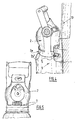
- FIGS. 1 and 2 represent a first embodiment of an attachment system for a gas cylinder 9 according to the present invention which is shown in the so-called “open” position ( Fig. 1 ) and in the so-called “closed” position ( Fig. 2 ).
- the attachment system for gas cylinder 9 of the Figures 1 and 2 comprising a base 1, that is to say a base, designed to be fixed to a support 10, such as a wall, a wall, a hospital bed, a stretcher, an armchair or other. Its fixing on the support 10 can be done by any known suitable means, for example by screwing.
- the base 1 may be plastic, such as PVC, PE, PET, PP, PMMA, PU ...
- the base 1 comprises two arms 3a, 3b and an activation member 4 arranged between said arms 3a, 3b, namely the first arms 3a and second arm 3b.
- the first arm 3a and / or the second arm 3b are pivotally movable about one or more axes of rotation, preferably about two axes 5a, 5b, so that they can be moved closer together or away from each other by simply pivoting.
- the arms 3a, 3b pivot in the direction tending to bring them closer to each other when they have to adopt the so-called "closed” position of the Figure 2 , and, conversely, they rotate in opposite directions tending to move them away from each other when they have to adopt the so-called "open” position of the Figure 1 as explained below.
- the base 1 also comprises an activation member 4, such as a push button, arranged between said first and second arms 3a, 3b and protruding on the front face 1b of the base 1, that is to say by projecting itself outward as visible on the Figure 1 when the arms 3a, 3b are in the "open" position.
- an activation member 4 such as a push button
- the activation member 4 cooperates, meanwhile, with the first and second arms 3a, 3b so as to operate their pivoting in the direction of their approximation to each other when said activation member 4 is actuated by insertion of a gas bottle 9 between said arms 3a, 3b, as illustrated in FIG. Figure 3 .
- the insertion by a user of a medical gas cylinder between said first and second arms 3a, 3b will cause a mechanical contact between the gas cylinder, for example its cowling, with the activation member 4 , that is to say that the bottle 9 presses on the member 4.
- the bearing force thus created and exerted by the bottle 9 will push 1 the activation member 4 towards the base 1 and cause the pivoting arms 3a, 3b towards one another, such as the jaws of a forceps.
- the push button constituting the activation member 4 will enter the base 1 and go directly or indirectly to bear on the distal end of the arms 3a, 3b located in the base 1 so as to generate a pivoting thereof around the axes 5a, 5b, under the effect of the mechanical force that is exerted as well.
- the arms 3a, 3b will then pivot simultaneously, that is to say synchronously, and move from the so-called "open” position of the Figure 1 in the so-called “closed” position of the Figure 2 and then come to surround the bottle 9, for example at its cowling 2, as shown in FIG. Figure 4 , so as to secure it to the base 1 and hold it there by means of said arms 3a, 3b.
- the first and second arms 3a, 3b here have a general shape in an arc of a circle, preferably in a semi-circle or in a quasi-semi-circle, so as to fit the contours of the barrel of the bottle of gas 9 or, depending on the embodiment considered, the contours of the protective casing 2 fitted to the gas cylinder 9.
- the internal arcuate profile of the inner surface 13 of the arms 3a, 3b corresponds approximately to the external profile of the barrel or cowling 2 of the bottle 9 in the region where the arms 3a, 3b surround said barrel or cowling 2.
- the bottle 9 can be retained by the arms 3a, 3b either at its protective cowling 2 or at its body or cylindrical barrel.
- a release mechanism comprising a release member 6, such as a push button actuated by a user (actuation in the direction of the arrow 11 of the Fig. 2 ), which acts on the locking mechanism so as to release the arms 3a, 3b and allow their pivoting away from each other, that is to say in the direction tending to bring them to said position " opened, "and thus allow withdrawal of the gas cylinder 9.
- a release member 6 such as a push button actuated by a user (actuation in the direction of the arrow 11 of the Fig. 2 ), which acts on the locking mechanism so as to release the arms 3a, 3b and allow their pivoting away from each other, that is to say in the direction tending to bring them to said position " opened, "and thus allow withdrawal of the gas cylinder 9.
- the push button 6 penetrates, at least in part, into the body or housing of the base 1 is acts, directly or indirectly, on the mechanism of locking to release the arms 3a, 3b.
- the bottle 9 is fixed frontally and at the neck 2b of the protective cap or bonnet 2.
- the attachment system so that the fixing is done at the drum is the cylindrical body, the gas cylinder 9.
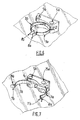
- Figures 6 and 7 schematically a second embodiment of a fastening system for a gas cylinder according to the invention, wherein the release mechanism for disengaging the bottle 9 from the hooking support is carried by the ends 8a, 8b of the two arms 3a, 3b, respectively.
- the push button 6 of the embodiment of the Figures 1 to 3 has been deleted.
- the ends 8a, 8b of the two arms 3a, 3b have been shaped to allow the user to apply a manual or digital force sufficient to cause a spacing of the arms 3a, 3b from each other, that is to say to move them away from each other by pivoting about the axes 5a, 5b, under the effect of the spreading force applied by the user.
- This makes it possible to return the arms 3a, 3b to the so-called "open" position and authorizes the release and the concomitant withdrawal of the gas cylinder 9.
- the ends 8a, 8b of the two arms 3a, 3b have been shaped to present bearing surfaces 7a, 7b facing each other while being spaced from one another, on which the user can exert pressure.
- the user exerts a spreading force, that is to say exerts a manual or digital pressure on only one of the two ends 8a, 8b of the arms 3a, 3b so that the release of the bottle 9 happen.
- the movement of the two arms 3a, 3b is preferably synchronized and therefore, applying the spreading force on one of the arms 3a, 3b will be sufficient to release the two arms 3a, 3b which were hitherto held in position said "closed" by the locking mechanism.
- the gas bottle coupling system of the invention can also combine the elements of the two aforementioned embodiments, namely to include a release pushbutton, as illustrated in FIGS. Figures 1 and 2 , and also have pivoting arms 3a, 3b whose ends 8a, 8b have been shaped to have bearing surfaces 7a, 7b, as illustrated in FIGS. Figures 6 and 7 . This gives the user two different possibilities to release the bottle 9.
- the attachment system for gas cylinder of the invention makes it possible to fix easily, securely and securely the cylinders of medical gas of different diameters so as to minimize the drops of bottle and therefore to limit the risk of injury to the user and damage to equipment.
- the present invention is not limited to the medical field and can be used in all fields using gases stored in gas containers, such as bottles, especially in the food, electronic, welding fields. / cutting ...
Landscapes
- Engineering & Computer Science (AREA)
- General Engineering & Computer Science (AREA)
- Mechanical Engineering (AREA)
- Filling Or Discharging Of Gas Storage Vessels (AREA)
Abstract
Description
- La présente invention décrit un système d'accrochage permettant de fixer facilement, de manière stable et en sécurité, un récipient de gaz, en particulier une bouteille de gaz, en particulier de gaz médical, à un support, tel un mur, une paroi, un lit d'hôpital, un brancard, un fauteuil...
- Les récipients, en particulier les bouteilles de gaz médical, utilisés notamment en milieu hospitalier, à domicile, dans les services ou véhicules d'urgence doivent pouvoir être fixés à différents supports, tel que mur, paroi, lit d'hôpital, brancard, fauteuil...
- Ils doivent donc être dotés d'un système d'accrochage propre porté par le récipient lui-même ou, le cas échéant, il convient d'utiliser un dispositif indépendant permettant son accrochage à un support.
- Ainsi, le document
EP-A-629812 - Le document
EP-A-2586481 propose d'équiper le capotage de protection d'une bouteille de gaz d'une structure d'accrochage pivotante comprenant deux crochets permettant la suspension de la bouteille notamment aux barreaux de lits hospitaliers. - Par ailleurs, on connait aussi des systèmes muraux destinés à être fixés à un support vertical, par exemple un mur ou une paroi, se présentant sous la forme de paniers ou analogues au sein desquels sont insérés les corps des bouteilles en y étant retenus par des sangles ou similaires.
- Cependant, ces systèmes ne sont pas totalement satisfaisants et présentent des inconvénients, à savoir notamment :
- les bouteilles de gaz équipées de capotages de protection à encoche ou crochets d'arrimage ne sont pas fixées de manière stable car elles ne sont pas fixées et peuvent dès lors chuter, notamment si une personne vient par inadvertance heurter la bouteille. Ceci constitue un risque pour l'utilisateur et pour le matériel lui-même. De plus, cela oblige à équiper toutes les bouteilles de capotages de protection spécifique, ce qui peut représenter un cout important.
- les systèmes de type paniers muraux sont encombrants et la manipulation des bouteilles n'est pas toujours aisée. Ainsi, il faut en général soulever la bouteille de gaz pour réaliser son insertion dans un logement du panier, ce qui n'est pas pratique et peut engendrer des blessures pour l'utilisateur.
- Le problème à résoudre est dès lors de proposer un système d'accrochage pour récipient de gaz, en particulier pour bouteille de gaz, en particulier de gaz médical, amélioré, c'est-à-dire ne présentant pas tout ou partie des inconvénients susmentionnés, de manière à minimiser toute situation d'instabilité et à limiter les risques de chutes du récipient, notamment d'une bouteille de gaz, et de blessure pour l'utilisateur.
- La solution de l'invention est un système d'accrochage pour récipient de gaz, en particulier pour bouteille de gaz, comprenant une embase conçue pour être fixée à un support, en particulier un support vertical, caractérisé en ce que l'embase comprend un premier bras et un second bras dont l'un au moins est mobile en pivotement par rapport à l'autre, et un organe d'activation coopérant avec au moins l'un desdits premier et second bras de manière à faire pivoter au moins l'un desdits premier et second bras en rapprochement par rapport à l'autre, lorsque ledit organe d'activation est actionné.
- Selon le cas, le système d'accrochage de l'invention peut comprendre l'une ou plusieurs des caractéristiques techniques suivantes :
- le récipient de gaz est une bouteille de gaz, en particulier une bouteille de gaz médical.
- l'organe d'activation est conçu pour et apte à être actionné par insertion d'une bouteille de gaz entre lesdits premier et second bras, ladite bouteille de gaz venant, lors de son insertion par un utilisateur, exercer une pression mécanique sur ledit organe d'activation.
- lesdits premier et second bras sont mobiles en pivotement.
- lesdits premier et second bras sont mobiles en pivotement autour un même axe ou de deux axes, de préférence deux axes parallèles.
- lesdits premier et second bras sont conçus pour et aptes à pivoter de manière synchrone, c'est-à-dire simultanée. En d'autres termes, le pivotement des deux bras a lieu en même temps ou approximativement en même temps.
- lesdits premier et second bras ont une forme générale en arc de cercle, de préférence en demi-cercle ou en quasi demi-cercle.
- lorsque ledit organe d'activation est actionné par mise en contact avec une bouteille de gaz, ledit organe d'activation agit, directement ou indirectement, sur l'un ou lesdits premier et second bras de manière à faire pivoter au moins l'un desdits premier et second bras et à les rapprocher l'un de l'autre en venant ceinturer ladite bouteille de gaz ou le capotage de protection agencée sur ladite bouteille de gaz.
- l'organe d'activation est agencé sur la face avant de l'embase entre lesdits premier et second bras.
- il comprend un mécanisme de verrouillage permettant de bloquer lesdits premier et second bras en position rapprochée l'un de l'autre, c'est-à-dire en position dite « fermée », lorsqu'une bouteille de gaz est insérée entre lesdits premier et second bras et agit sur l'organe d'activation.
- il comprend un mécanisme de libération actionnable par un utilisateur et agissant sur le mécanisme de verrouillage, lors d'un actionnement dudit mécanisme de libération par l'utilisateur, pour libérer au moins l'un desdits premier et second bras et permettre un pivotement dudit au moins un bras en éloignement par rapport à l'autre bras, de préférence un pivotement simultané ou synchrone des deux bras vers la position dite « ouverte ».
- le mécanisme de libération comprend un organe de libération faisant saillie sur l'embase, de préférence l'organe d'activation est un bouton-poussoir.
- l'organe de libération est porté par l'une des parois latérales ou par la paroi supérieure de l'embase.
- les extrémités des deux bras ont été conformées pour présenter des surfaces d'appui sur l'une ou l'autre desquelles un utilisateur peut exercer une pression, digitale ou manuelle, pour libérer les bras et leur permettre de passer de la position dite « fermée » en position dite « ouverte » et ainsi permettre d'extraire la bouteille.
- L'invention concerne aussi un ensemble support/bouteille comprenant un système d'accrochage selon l'invention et une bouteille de gaz retenue par les bras dudit système d'accrochage, de préférence une bouteille d'un gaz médical choisi parmi l'oxygène, l'air, l'air enrichi en oxygène, un mélange N2O/oxygène, hélium/oxygène ou autre.
- La présente invention va maintenant être décrite plus en détail en références aux Figures annexées parmi lesquelles :
- les
Figures 1 et 2 représentent un premier mode de réalisation d'un système d'accrochage pour bouteille de gaz selon l'invention, - la
Figure 3 schématise l'insertion d'une bouteille de gaz dans le système d'accrochage de laFigure 1 , - la
Figure 4 montre une bouteille de gaz après insertion dans le système d'accrochage de laFigure 1 , - la
Figure 5 détaille un capotage de protection particulier conçu pour venir se solidariser à un système d'accrochage pour bouteille de gaz selon l'invention, et - les
Figures 6 et 7 représentent un deuxième mode de réalisation d'un système d'accrochage pour bouteille de gaz selon l'invention. - Les
Figures 1 et 2 représentent un premier mode de réalisation d'un système d'accrochage pour bouteille de gaz 9 selon la présente invention qui est montré en position dite « ouverte » (Fig. 1 ) et en position dite « fermée » (Fig. 2 ). - Plus précisément, le système d'accrochage pour bouteille de gaz 9 des
Figures 1 et 2 comprenant une embase 1, c'est-à-dire un socle, conçue pour être fixée à un support 10, tel un mur, une paroi, un lit d'hôpital, un brancard, un fauteuil ou autre. Sa fixation sur le support 10 peut se faire par n'importe quel moyen adapté connu, par exemple par vissage. - L'embase 1 peut être en matière plastique, tel que PVC, PE, PET, PP, PMMA, PU...
- Par ailleurs, l'embase 1 comprend deux bras 3a, 3b et un organe d'activation 4 agencé entre lesdits bras 3a, 3b, à savoir les premier bras 3a et second bras 3b. Le premier bras 3a et/ou le second bras 3b sont mobiles en pivotement autour d'un ou plusieurs axes de rotation, de préférence autour de deux axes 5a, 5b, de manière à pouvoir être rapprochés ou éloignés l'un de l'autre par simplement pivotement.
- Les bras 3a, 3b pivotent dans le sens tendant à les rapprocher l'un de l'autre lorsqu'ils doivent adopter la position dite « fermée » de la
Figure 2 , et, à l'inverse, ils pivotent dans sens contraire tendant à les éloigner l'un de l'autre lorsqu'ils doivent adopter la position dite « ouverte » de laFigure 1 , comme expliqué ci-après. - L'embase 1 comporte aussi un organe d'activation 4, tel un bouton poussoir, agencé entre lesdits premier et second bras 3a, 3b, et faisant saillie sur la face avant 1b de l'embase 1, c'est-à-dire en se projetant vers l'extérieur comme visible sur la
Figure 1 , lorsque les bras 3a, 3b sont en position « ouverte ». - L'organe d'activation 4 coopère, quant à lui, avec les premier et second bras 3a, 3b de manière à opérer leur pivotement dans le sens de leur rapprochement l'un de l'autre lorsque ledit organe d'activation 4 est actionné par insertion d'une bouteille de gaz 9 entre lesdits bras 3a, 3b, comme illustré en
Figure 3 . - Plus précisément, l'insertion par un utilisateur d'une bouteille de gaz médical entre lesdits premier et second bras 3a, 3b va provoquer un contact mécanique entre la bouteille de gaz, par exemple de son capotage, avec l'organe d'activation 4, c'est-à-dire que la bouteille 9 vient appuyer sur l'organe 4.
- La force d'appui ainsi créée et exercée par la bouteille 9 va repousser 1 l'organe d'activation 4 en direction de l'embase 1 et engendrer le pivotement des bras 3a, 3b en rapprochement l'un de l'autre, telle les mâchoires d'une pince.
- Par exemple, au moins une partie du bouton-poussoir constituant l'organe d'activation 4 va pénétrer dans l'embase 1 et aller appuyer, directement ou indirectement, sur l'extrémité distale des bras 3a, 3b située dans l'embase 1 de manière à engendrer un pivotement de ceux-ci autour des axes 5a, 5b, sous l'effet de la force mécanique qui s'exerce ainsi.
- Les bras 3a, 3b vont alors pivoter simultanément, c'est-à-dire de façon synchrone, et passer de la position dite « ouverte » de la
Figure 1 à la position dite « fermée » de laFigure 2 et venir alors ceinturer la bouteille 9, par exemple au niveau de son capotage 2, comme montré enFigure 4 , de manière à la solidariser à l'embase 1 et à l'y maintenir par l'intermédiaire desdits bras 3a, 3b. - Comme visible sur les Figures, les premier et second bras 3a, 3b ont ici une forme générale en arc de cercle, de préférence en demi-cercle ou en quasi demi-cercle, de manière à venir épouser les contours du fût de la bouteille de gaz 9 ou, selon le mode de réalisation considéré, les contours du capotage de protection 2 équipant la bouteille de gaz 9. Préférentiellement, le profil interne en arc de cercle de la surface intérieure 13 des bras 3a, 3b correspond approximativement au profil externe du fût ou du capotage 2 de la bouteille 9 dans la région où les bras 3a, 3b viennent ceinturer ledit fût ou capotage 2.
- Lorsqu'ils sont en position dite « fermée », le pivotement des bras 3a, 3b est bloqué via un mécanisme de verrouillage, agencé dans l'embase 1, de sorte de maintenir lesdits bras 3a, 3b en position rapprochée l'un de l'autre (
Figure 4 ), lorsqu'une bouteille de gaz 9 est positionnée entre eux et agit sur l'organe d'activation 4, comme expliqué ci-avant. - Dans cette position dite « fermée », la bouteille 9 est solidarisée et portée par l'embase 1. Tout risque de chute ou autre est alors écarté. L'insertion de la bouteille 9 entre les deux bras 3a, 3b est extrêmement aisée et ne présente aucun danger pour l'utilisateur.
- Selon le mode de réalisation choisi, la bouteille 9 peut être retenue par les bras 3a, 3b soit au niveau de son capotage 2 de protection, soit au niveau de son corps ou fût cylindrique.
- En outre, pour permettre de désengager la bouteille 9 du support d'accrochage, est également prévu un mécanisme de libération comprenant un organe de libération 6, tel un bouton-poussoir actionnable par un utilisateur (actionnement dans le sens de la Flèche 11 de la
Fig. 2 ), lequel agit sur le mécanisme de verrouillage de manière à libérer les bras 3a, 3b et permettre leur pivotement en éloignement l'un de l'autre, c'est-à-dire dans le sens tendant à les amener en position dite « ouverte », et ainsi permettre un retrait de la bouteille de gaz 9. - Comme visible sur les
Figures 1 et 2 , lors de son actionnement par l'utilisateur (sens de la Flèche 11), le bouton-poussoir 6 pénètre, au moins en partie, dans le corps ou boitier de l'embase 1 est agit, directement ou indirectement, sur le mécanisme de verrouillage pour libérer les bras 3a, 3b. - Afin de faciliter le retour des bras 3a, 3b de la position « fermée » à la position « ouverte », ou inversement, et/ou du bouton-poussoir dans sa position non activée (
Fig. 1 ), il peut être prévu dans l'embase 1, un ou des moyens de rappel, tels que des ressorts ou similaires, ou un système à canne avec excentriques. - Dans le mode de réalisation des
Figures 1 à 4 , la bouteille 9 se fixe de manière frontale et au niveau du col 2b du chapeau ou capotage de protection 2. Toutefois, il est également possible de concevoir le système d'accrochage pour que la fixation se fasse au niveau du fût, c'est-à-dire du corps cylindrique, de la bouteille de gaz 9. - Avantageusement, on prévoit sur le capotage 2 de protection un ou des logements 7, tels un ou des rails ou gorges, au sein desquels viennent se loger les bras 3a, 3b, lorsqu'ils ceinturent le capotage 2 de la bouteille 9, comme illustré en
Figure 4 , et ainsi améliorer le maintien de la bouteille 9 dans le support d'accrochage de l'invention. - Par ailleurs, les
Figures 6 et 7 schématisent un deuxième mode de réalisation d'un système d'accrochage pour bouteille de gaz selon l'invention, dans lequel le mécanisme de libération permettant de désengager la bouteille 9 du support d'accrochage est porté par les extrémités 8a, 8b des deux bras 3a, 3b, respectivement. Dans ce deuxième mode de réalisation, le bouton-poussoir 6 du mode de réalisation desFigures 1 à 3 a donc été supprimé. - Plus précisément, les extrémités 8a, 8b des deux bras 3a, 3b ont été conformées pour permettre à l'utilisateur d'y appliquer une force manuelle ou digitale suffisante pour provoquer un écartement des bras 3a, 3b l'un de l'autre, c'est-à-dire de les éloigner l'un de l'autre par pivotement autour des axes 5a, 5b, sous l'effet de la force d'écartement appliquée par l'utilisateur. Ceci permet de ramener les bras 3a, 3b en position dite « ouverte » et autorise la libération et le retrait concomitant de la bouteille de gaz 9.
- Plus précisément, comme visible sur les Figures, les extrémités 8a, 8b des deux bras 3a, 3b ont été conformées pour présenter des surfaces d'appui 7a, 7b se faisant face tout en étant espacées l'une de l'autre, sur lesquelles l'utilisateur peut exercer une pression.
- Il suffit que l'utilisateur exerce une force d'écartement, c'est-à-dire exerce une pression manuelle ou digitale, sur l'une seulement des deux extrémités 8a, 8b des bras 3a, 3b pour que la libération de la bouteille 9 se produise. En effet, le mouvement des deux bras 3a, 3b est préférentiellement synchronisé et dès lors, appliquer la force d'écartement sur l'un des bras 3a, 3b va suffire à libérer les deux bras 3a, 3b qui étaient jusque là maintenus en position dite « fermée » par le mécanisme de verrouillage.
- Il est à souligner que le système d'accrochage pour bouteille de gaz de l'invention peut également combiner les éléments des deux modes de réalisation susmentionné, à savoir inclure un bouton-poussoir de libération, comme illustré sur les
Figures 1 et 2 , et par ailleurs présenter des bras pivotants 3a, 3b dont les extrémités 8a, 8b ont été conformées pour présenter des surfaces d'appui 7a, 7b, comme illustré sur lesFigures 6 et 7 . Ceci offre à l'utilisateur deux possibilités différentes pour libérer la bouteille 9. - Quel que soit le mode de réalisation considéré, le système d'accrochage pour bouteille de gaz de l'invention permet de fixer facilement, de manière stable et en sécurité les bouteilles de gaz médical de diamètres différents de sorte de minimiser les chutes de bouteille et donc de limiter le risque de blessure pour l'utilisateur et de dommage aux équipements.
- Dans tous les cas, la présente invention n'est pas limitée au domaine médical et peut être utilisée dans tous les domaines mettant en oeuvre des gaz stockés dans des récipients de gaz, telles des bouteilles, notamment dans les domaines alimentaire, électronique, du soudage/coupage...
Claims (13)
- Système d'accrochage pour récipient de gaz, en particulier pour bouteille de gaz (9), comprenant une embase (1) conçue pour être fixée à un support (10), caractérisé en ce que l'embase (1) comprend :- un premier bras (3a) et un second bras (3b) dont l'un au moins est mobile en pivotement par rapport à l'autre, et- un organe d'activation (4) coopérant avec au moins l'un desdits premier et second bras (3a, 3b) de manière à faire pivoter au moins l'un desdits premier et second bras (3a, 3b) en rapprochement par rapport à l'autre, lorsque ledit organe d'activation (4) est actionné.
- Système selon la revendication précédente, caractérisé en ce que ledit organe d'activation (4) est conçu pour et apte à être actionné par insertion d'une bouteille de gaz (9) entre lesdits premier et second bras (3a, 3b), ladite bouteille de gaz (9) venant exercer une pression mécanique sur ledit organe d'activation (4).
- Système selon l'une des revendications précédentes, caractérisé en ce que lesdits premier et second bras (3a, 3b) sont mobiles en pivotement.
- Système selon l'une des revendications précédentes, caractérisé en ce que lesdits premier et second bras (3a, 3b) sont conçus pour et aptes à pivoter de manière synchrone ou simultanée.
- Système selon l'une des revendications précédentes, caractérisé en ce que lesdits premier et second bras (3a, 3b) ont une forme générale en arc de cercle.
- Système selon l'une des revendications précédentes, caractérisé en ce que, lorsque ledit organe d'activation (4) est actionné par mise en contact avec une bouteille de gaz (9), l'organe d'activation (4) agit, directement ou indirectement, sur l'un ou lesdits premier et second bras (3a, 3b) de manière à faire pivoter au moins l'un desdits premier et second bras (3a, 3b) et à les rapprocher l'un de l'autre en venant ceinturer ladite bouteille de gaz (9) ou le capotage (2) de protection agencée sur ladite bouteille de gaz (9).
- Système selon l'une des revendications précédentes, caractérisé en ce que l'organe d'activation (4) est agencé sur la face avant (1b) de l'embase (1) entre lesdits premier et second bras (3a, 3b).
- Système selon l'une des revendications précédentes, caractérisé en ce qu'il comprend un mécanisme de verrouillage permettant de bloquer lesdits premier et second bras (3a, 3b) en position rapprochée l'un de l'autre, lorsqu'une bouteille de gaz (9) est insérée entre lesdits premier et second bras (3a, 3b) et agit sur l'organe d'activation (4).
- Système selon l'une des revendications précédentes, caractérisé en ce qu'il comprend un mécanisme de libération actionnable par un utilisateur et agissant sur le mécanisme de verrouillage pour libérer au moins l'un desdits premier et second bras (3a, 3b) et permettre un pivotement dudit au moins un bras (3a, 3b) en éloignement par rapport à l'autre bras (3a, 3b).
- Système selon l'une des revendications précédentes, caractérisé en ce que le mécanisme de libération comprend un organe de libération (6) faisant saillie sur l'embase (1), de préférence l'organe d'activation (4) est un bouton-poussoir.
- Système selon l'une des revendications précédentes, caractérisé en ce que l'organe de libération (6) est porté par l'une des parois latérales (1a) de l'embase (1) ou par sa paroi supérieure (1c).
- Système selon l'une des revendications précédentes, caractérisé en ce que les extrémités (8a, 8b) des deux bras (3a, 3b) ont été conformées pour présenter des surfaces d'appui (7a, 7b).
- Ensemble support/bouteille comprenant un système d'accrochage selon l'une des revendications précédentes et une bouteille de gaz (9) retenue par les bras (3a, 3b) dudit système d'accrochage.
Applications Claiming Priority (1)
| Application Number | Priority Date | Filing Date | Title |
|---|---|---|---|
| FR1358872A FR3010767B1 (fr) | 2013-09-16 | 2013-09-16 | Systeme d'accrochage de bouteille de gaz medical |
Publications (2)
| Publication Number | Publication Date |
|---|---|
| EP2860439A2 true EP2860439A2 (fr) | 2015-04-15 |
| EP2860439A3 EP2860439A3 (fr) | 2015-11-18 |
Family
ID=49510396
Family Applications (1)
| Application Number | Title | Priority Date | Filing Date |
|---|---|---|---|
| EP14306356.8A Withdrawn EP2860439A3 (fr) | 2013-09-16 | 2014-09-03 | Système d accrochage de bouteille de gaz médical |
Country Status (3)
| Country | Link |
|---|---|
| US (1) | US9212784B2 (fr) |
| EP (1) | EP2860439A3 (fr) |
| FR (1) | FR3010767B1 (fr) |
Cited By (3)
| Publication number | Priority date | Publication date | Assignee | Title |
|---|---|---|---|---|
| CN107218509A (zh) * | 2017-07-11 | 2017-09-29 | 深圳融昕医疗科技有限公司 | 用于转运车单双气瓶兼容安装的固定轭 |
| CN108119752A (zh) * | 2017-12-07 | 2018-06-05 | 天津华迈燃气装备股份有限公司 | 一种液化天然气瓶组固定装置 |
| US10363985B2 (en) | 2016-03-15 | 2019-07-30 | Abus August Bremicker Sohne Kg | Holder |
Families Citing this family (9)
| Publication number | Priority date | Publication date | Assignee | Title |
|---|---|---|---|---|
| US10737839B2 (en) | 2015-01-26 | 2020-08-11 | Professional Disposables International, Inc. | Canister and bracket system and method |
| USD785464S1 (en) * | 2015-03-17 | 2017-05-02 | Professional Disposables International, Inc. | Combination canister and bracket having holding features |
| USD782315S1 (en) | 2015-03-17 | 2017-03-28 | Professional Disposables International, Inc. | Canister |
| USD786051S1 (en) * | 2015-03-17 | 2017-05-09 | Professional Disposable International, Inc. | Bracket having holding features |
| US9523214B2 (en) * | 2015-04-06 | 2016-12-20 | Phillip Ross Prewitt | Awning airfoil |
| CN108906444A (zh) * | 2017-04-01 | 2018-11-30 | 厦门松霖科技股份有限公司 | 一种出水终端的悬挂结构 |
| CN109045525B (zh) * | 2018-07-16 | 2020-12-29 | 芜湖恒跃智能装备有限公司 | 一种车载灭火器夹具工装 |
| US11346378B2 (en) * | 2019-11-13 | 2022-05-31 | Mackenzie Caleb Bonvallet | Locking device for the transport and use on, vehicles, wearable equipment, stationary platforms, and sports equipment |
| EP3885004A1 (fr) * | 2020-03-23 | 2021-09-29 | Draeger Safety UK Limited | Support |
Citations (2)
| Publication number | Priority date | Publication date | Assignee | Title |
|---|---|---|---|---|
| EP0629812A1 (fr) | 1993-06-03 | 1994-12-21 | Compagnie Francaise De Produits Oxygenes | Chapeau de bouteille de gaz |
| EP2586481A1 (fr) | 2011-10-27 | 2013-05-01 | Linde Aktiengesellschaft | Couvercle pour bouchon de valve d'un cylindre de gaz |
Family Cites Families (35)
| Publication number | Priority date | Publication date | Assignee | Title |
|---|---|---|---|---|
| US573891A (en) * | 1896-12-29 | Bracket | ||
| US1007062A (en) * | 1909-06-19 | 1911-10-31 | Albertina N Carlson | Ice-cream-freezer support. |
| US1761497A (en) * | 1929-07-16 | 1930-06-03 | Barney C Garoff | Supporter for fishing rods |
| US1968462A (en) * | 1933-04-12 | 1934-07-31 | Merhell John | Article holder |
| US2277738A (en) * | 1939-08-04 | 1942-03-31 | Fram Corp | Mounting device for oil filters |
| US3547391A (en) * | 1969-01-14 | 1970-12-15 | Donald E Johnson | Quick release support for rescue breathing apparatus |
| US3603550A (en) * | 1969-10-14 | 1971-09-07 | Lacy J Miller Machine Co Inc | Quick release support |
| US3780972A (en) * | 1972-05-22 | 1973-12-25 | J Brodersen | Mounting apparatus for gas containers |
| US3823907A (en) * | 1973-01-10 | 1974-07-16 | T Ziaylek | Positive locking device |
| US4586687A (en) * | 1985-02-25 | 1986-05-06 | Ziaylek Theodore Jun | Air tank support of the quick release type |
| US4848714A (en) * | 1987-10-09 | 1989-07-18 | Ziaylek Theodore Jun | Mounting plate with rollers |
| DE58900621D1 (de) * | 1988-07-18 | 1992-02-06 | Egli Fischer & Co | Rohrschelle. |
| US5098054A (en) * | 1990-07-09 | 1992-03-24 | Tyton Corporation | Mounting bracket for a generally cylindrical article |
| US5312081A (en) * | 1992-11-30 | 1994-05-17 | Martin Gordon C | Hinged door quick access dip net holder |
| US5344112A (en) * | 1993-01-28 | 1994-09-06 | Ford Motor Company | Canister bracket |
| US5354029A (en) * | 1993-03-12 | 1994-10-11 | Ziaylek Theodore Jun | Quick release tank support bracket with positive locking engagement means |
| US5318266A (en) * | 1993-04-27 | 1994-06-07 | Liu Hui Long | Drink holder |
| US5362022A (en) * | 1993-06-30 | 1994-11-08 | Mcloughlin John E | Air tank bracket with strap-lifting arms |
| US5533701A (en) * | 1994-12-08 | 1996-07-09 | Trank; Robert D. | Foldable stabilizing bracket for compressed air tanks |
| US5572776A (en) * | 1994-12-12 | 1996-11-12 | Delco Electronics Corporation | Fastener employing a Bi-stable mechanism |
| US6059245A (en) * | 1998-05-14 | 2000-05-09 | Hermansen; Frank | Locking water bottle cage for bicycles |
| US6830226B2 (en) * | 2001-01-16 | 2004-12-14 | Pacific Safety Products Inc. | Quick release supporting apparatus for a canister |
| US6883766B1 (en) * | 2003-09-24 | 2005-04-26 | Michael Paul Ziaylek | Quick release mechanical bracket |
| US8035525B2 (en) * | 2006-01-13 | 2011-10-11 | Noonchester Joseph W | Emergency worker rescue apparatus |
| US8622469B2 (en) * | 2006-09-14 | 2014-01-07 | Indiana Mills & Manufacturing, Inc. | Apparatus for restraining an object in a vehicle |
| WO2008033753A2 (fr) * | 2006-09-14 | 2008-03-20 | Indiana Mills & Manufacturing, Inc. | Appareil, procédé et système permettant de maintenir un objet dans un véhicule |
| US20090084739A1 (en) * | 2007-09-28 | 2009-04-02 | Robert Shock | Gas cylinder containment system |
| DE102008019766B3 (de) * | 2008-04-18 | 2009-04-23 | Khs Ag | Vorrichtung zum Greifen und Halten von PET-Flaschen |
| US8136774B2 (en) * | 2009-01-21 | 2012-03-20 | Gem Temp, Llc | Light bulb holder |
| GB0905148D0 (en) * | 2009-03-25 | 2009-05-06 | Linde Ag | Holder for a cylindrical article |
| US8573576B2 (en) * | 2009-06-26 | 2013-11-05 | Intuitive Research And Technology Corporation | Clamp for single-handed operation |
| US8720841B2 (en) * | 2009-10-09 | 2014-05-13 | Michael Morren | Clamp assembly |
| US8191848B2 (en) * | 2010-06-06 | 2012-06-05 | Mcloughlin John E | Air tank bracket with strap-supporting arms |
| US8469247B2 (en) * | 2010-12-06 | 2013-06-25 | William L Nicoletti | Gas tank holder system |
| JP5715912B2 (ja) * | 2011-09-08 | 2015-05-13 | 株式会社オーディオテクニカ | マイクロホンホルダー |
-
2013
- 2013-09-16 FR FR1358872A patent/FR3010767B1/fr not_active Expired - Fee Related
-
2014
- 2014-09-03 EP EP14306356.8A patent/EP2860439A3/fr not_active Withdrawn
- 2014-09-08 US US14/479,551 patent/US9212784B2/en not_active Expired - Fee Related
Patent Citations (2)
| Publication number | Priority date | Publication date | Assignee | Title |
|---|---|---|---|---|
| EP0629812A1 (fr) | 1993-06-03 | 1994-12-21 | Compagnie Francaise De Produits Oxygenes | Chapeau de bouteille de gaz |
| EP2586481A1 (fr) | 2011-10-27 | 2013-05-01 | Linde Aktiengesellschaft | Couvercle pour bouchon de valve d'un cylindre de gaz |
Cited By (4)
| Publication number | Priority date | Publication date | Assignee | Title |
|---|---|---|---|---|
| US10363985B2 (en) | 2016-03-15 | 2019-07-30 | Abus August Bremicker Sohne Kg | Holder |
| CN107218509A (zh) * | 2017-07-11 | 2017-09-29 | 深圳融昕医疗科技有限公司 | 用于转运车单双气瓶兼容安装的固定轭 |
| CN107218509B (zh) * | 2017-07-11 | 2019-06-28 | 深圳融昕医疗科技有限公司 | 用于转运车单双气瓶兼容安装的固定轭 |
| CN108119752A (zh) * | 2017-12-07 | 2018-06-05 | 天津华迈燃气装备股份有限公司 | 一种液化天然气瓶组固定装置 |
Also Published As
| Publication number | Publication date |
|---|---|
| FR3010767A1 (fr) | 2015-03-20 |
| FR3010767B1 (fr) | 2016-02-26 |
| EP2860439A3 (fr) | 2015-11-18 |
| US9212784B2 (en) | 2015-12-15 |
| US20150076160A1 (en) | 2015-03-19 |
Similar Documents
| Publication | Publication Date | Title |
|---|---|---|
| EP2860439A2 (fr) | Système d accrochage de bouteille de gaz médical | |
| CA2664897C (fr) | Nouvelle structure de conteneur blinde pour le transport et le stockage d'une source radioactive a usage medical | |
| EP2918893B1 (fr) | Capotage de protection avec système d'accrochage pivotant pour bouteille de gaz | |
| EP2934225B1 (fr) | Dispositif de conditionnement d'un produit, en particulier un produit cosmetique | |
| EP3237077B1 (fr) | Système d'arrimage de sécurité, mousqueton utilisable pour un tel système et ensemble d'arrimage comprenant un tel système. | |
| EP3016701A1 (fr) | Autoinjecteur | |
| EP3164178A1 (fr) | Autoinjecteur | |
| EP3069629B1 (fr) | Fermoir de bracelet | |
| CA2971983A1 (fr) | Dispositif de conditionnement et de distribution de produit presentant un agencement de protection pour enfant | |
| CA2620494A1 (fr) | Dispositif d'accrochage a autoverrouillage dynamique | |
| CA3006384A1 (fr) | Dispositif d'accrochage pour le levage de charges a cliquet securise | |
| EP3793471B1 (fr) | Dispositif pour le maintien et la liberation d'un objet, ensemble et procede de liberation correspondants | |
| EP3531006B1 (fr) | Capotage de protection à système d'accrochage pivotant pour récipient de gaz | |
| EP2884152A2 (fr) | Ensemble support et récipient de gaz, telle une bouteille de gaz médical | |
| FR3067584A1 (fr) | Bouteille munie d'un element de frein et de maintien du couvercle | |
| EP3011857B1 (fr) | Fermoir de bracelet | |
| EP3260760B1 (fr) | Capotage de protection avec système d'accrochage pivotant à butée d'arrêt pour récipient de gaz | |
| EP3114390B1 (fr) | Robinet de distribution de gaz à embase fixe et coiffe mobile | |
| WO2008029357A2 (fr) | Dispositif pour lever et transferer des corps | |
| EP2304738B1 (fr) | Double porte a transfert etanche | |
| WO2014013204A1 (fr) | Tire-bouchon pour l'ouverture des bouteilles contenant des liquides sous pression | |
| FR3018582A1 (fr) | Capotage de protection avec systeme d’accrochage antiderapant pour recipient de gaz | |
| FR3015203A1 (fr) | Receptacle pour produit cosmetique | |
| FR3052845A1 (fr) | Capotage de protection de recipient de gaz a ouverture recouverte par paroi amovible | |
| CA2179005C (fr) | Crochet de retenue d'un ressort de torsion et piege a machoires muni d'un tel crochet |
Legal Events
| Date | Code | Title | Description |
|---|---|---|---|
| PUAI | Public reference made under article 153(3) epc to a published international application that has entered the european phase |
Free format text: ORIGINAL CODE: 0009012 |
|
| 17P | Request for examination filed |
Effective date: 20140903 |
|
| AK | Designated contracting states |
Kind code of ref document: A2 Designated state(s): AL AT BE BG CH CY CZ DE DK EE ES FI FR GB GR HR HU IE IS IT LI LT LU LV MC MK MT NL NO PL PT RO RS SE SI SK SM TR |
|
| AX | Request for extension of the european patent |
Extension state: BA ME |
|
| RIN1 | Information on inventor provided before grant (corrected) |
Inventor name: TREVISAN, ADRIEN Inventor name: FRENAL, ANTOINE Inventor name: TARANTELLO, CHIARA Inventor name: LIGONESCHE, RENAUD Inventor name: GRAVIERE, VINCENT |
|
| PUAL | Search report despatched |
Free format text: ORIGINAL CODE: 0009013 |
|
| AK | Designated contracting states |
Kind code of ref document: A3 Designated state(s): AL AT BE BG CH CY CZ DE DK EE ES FI FR GB GR HR HU IE IS IT LI LT LU LV MC MK MT NL NO PL PT RO RS SE SI SK SM TR |
|
| AX | Request for extension of the european patent |
Extension state: BA ME |
|
| RIC1 | Information provided on ipc code assigned before grant |
Ipc: F17C 13/08 20060101AFI20151013BHEP |
|
| R17P | Request for examination filed (corrected) |
Effective date: 20160518 |
|
| RBV | Designated contracting states (corrected) |
Designated state(s): AL AT BE BG CH CY CZ DE DK EE ES FI FR GB GR HR HU IE IS IT LI LT LU LV MC MK MT NL NO PL PT RO RS SE SI SK SM TR |
|
| 17Q | First examination report despatched |
Effective date: 20170526 |
|
| STAA | Information on the status of an ep patent application or granted ep patent |
Free format text: STATUS: THE APPLICATION HAS BEEN WITHDRAWN |
|
| 18W | Application withdrawn |
Effective date: 20181029 |