EP2873667B1 - Heterozyklische verbindung und organisches elektronisches element damit - Google Patents
Heterozyklische verbindung und organisches elektronisches element damit Download PDFInfo
- Publication number
- EP2873667B1 EP2873667B1 EP13817557.5A EP13817557A EP2873667B1 EP 2873667 B1 EP2873667 B1 EP 2873667B1 EP 13817557 A EP13817557 A EP 13817557A EP 2873667 B1 EP2873667 B1 EP 2873667B1
- Authority
- EP
- European Patent Office
- Prior art keywords
- compound
- group
- substituted
- unsubstituted
- organic
- Prior art date
- Legal status (The legal status is an assumption and is not a legal conclusion. Google has not performed a legal analysis and makes no representation as to the accuracy of the status listed.)
- Active
Links
- 0 C*c1cc2cccc(C)c2cc1 Chemical compound C*c1cc2cccc(C)c2cc1 0.000 description 15
- LYPGVPCECXIQLJ-UHFFFAOYSA-N FC(c(cc1)ccc1-c1nc(-c2cc(-c3cc4cccc(-c5cccc(-c6nc(-c7ccccc7)nc(-c7ccc(C(F)(F)F)cc7)n6)c5)c4cc3)ccc2)nc(-c2ccccc2)n1)(F)F Chemical compound FC(c(cc1)ccc1-c1nc(-c2cc(-c3cc4cccc(-c5cccc(-c6nc(-c7ccccc7)nc(-c7ccc(C(F)(F)F)cc7)n6)c5)c4cc3)ccc2)nc(-c2ccccc2)n1)(F)F LYPGVPCECXIQLJ-UHFFFAOYSA-N 0.000 description 2
- WLODEXMWVDBQAH-UHFFFAOYSA-N BrC(CCCC1CCC2)C1C2Br Chemical compound BrC(CCCC1CCC2)C1C2Br WLODEXMWVDBQAH-UHFFFAOYSA-N 0.000 description 1
- ODJZWBLNJKNOJK-UHFFFAOYSA-N Brc1cc2cc(Br)ccc2cc1 Chemical compound Brc1cc2cc(Br)ccc2cc1 ODJZWBLNJKNOJK-UHFFFAOYSA-N 0.000 description 1
- OILFKPAESXOIIH-UHFFFAOYSA-N CC1(C)OB(c(cc2)ccc2-c2nc(-c3ccccc3)nc(-c3ccccc3)c2)OC1(C)C Chemical compound CC1(C)OB(c(cc2)ccc2-c2nc(-c3ccccc3)nc(-c3ccccc3)c2)OC1(C)C OILFKPAESXOIIH-UHFFFAOYSA-N 0.000 description 1
- UYBYVPADSQWFRD-UHFFFAOYSA-N CC1(C)OB(c2cc(-c3nc(-c4ccccc4)nc(-c4ccccc4)c3)ccc2)OC1(C)C Chemical compound CC1(C)OB(c2cc(-c3nc(-c4ccccc4)nc(-c4ccccc4)c3)ccc2)OC1(C)C UYBYVPADSQWFRD-UHFFFAOYSA-N 0.000 description 1
- MGBPPDZCUVGNFB-UHFFFAOYSA-N COc(cc1)ccc1-c1nc(-c(cc2)ccc2-c2ccc(cccc3-c(cc4)ccc4-c4nc(-c5ccccc5)nc(-c(cc5)ccc5OC)n4)c3c2)nc(-c2ccccc2)n1 Chemical compound COc(cc1)ccc1-c1nc(-c(cc2)ccc2-c2ccc(cccc3-c(cc4)ccc4-c4nc(-c5ccccc5)nc(-c(cc5)ccc5OC)n4)c3c2)nc(-c2ccccc2)n1 MGBPPDZCUVGNFB-UHFFFAOYSA-N 0.000 description 1
- RKHKYODRKOWSEH-UHFFFAOYSA-N COc(cc1)ccc1-c1nc(-c2ccccc2)nc(-c(cc2)ccc2-c2cc3cccc(-c(cc4)ccc4-c4nc(-c5ccccc5)nc(-c(cc5)ccc5OC)n4)c3cc2)n1 Chemical compound COc(cc1)ccc1-c1nc(-c2ccccc2)nc(-c(cc2)ccc2-c2cc3cccc(-c(cc4)ccc4-c4nc(-c5ccccc5)nc(-c(cc5)ccc5OC)n4)c3cc2)n1 RKHKYODRKOWSEH-UHFFFAOYSA-N 0.000 description 1
- YUWGVIOUQLPKLK-UHFFFAOYSA-N COc(cc1)ccc1-c1nc(-c2ccccc2)nc(-c2cc(-c3c4c(-c5cc(-c6nc(-c7ccccc7)nc(-c(cc7)ccc7OC)n6)ccc5)cccc4ccc3)ccc2)n1 Chemical compound COc(cc1)ccc1-c1nc(-c2ccccc2)nc(-c2cc(-c3c4c(-c5cc(-c6nc(-c7ccccc7)nc(-c(cc7)ccc7OC)n6)ccc5)cccc4ccc3)ccc2)n1 YUWGVIOUQLPKLK-UHFFFAOYSA-N 0.000 description 1
- LWLRFSGEIWYFNE-UHFFFAOYSA-N COc(cc1)ccc1-c1nc(-c2ccccc2)nc(-c2cc(-c3cc4cccc(-c5cccc(-c6nc(-c7ccccc7)nc(-c(cc7)ccc7OC)n6)c5)c4cc3)ccc2)n1 Chemical compound COc(cc1)ccc1-c1nc(-c2ccccc2)nc(-c2cc(-c3cc4cccc(-c5cccc(-c6nc(-c7ccccc7)nc(-c(cc7)ccc7OC)n6)c5)c4cc3)ccc2)n1 LWLRFSGEIWYFNE-UHFFFAOYSA-N 0.000 description 1
- MMKSOUYPQWYVEM-UHFFFAOYSA-N Cc(cc1)ccc1-c1nc(-c(cc2)ccc2-c2ccc(cccc3-c(cc4)ccc4-c4nc(-c5ccccc5)nc(-c5ccc(C)cc5)n4)c3c2)nc(-c2ccccc2)n1 Chemical compound Cc(cc1)ccc1-c1nc(-c(cc2)ccc2-c2ccc(cccc3-c(cc4)ccc4-c4nc(-c5ccccc5)nc(-c5ccc(C)cc5)n4)c3c2)nc(-c2ccccc2)n1 MMKSOUYPQWYVEM-UHFFFAOYSA-N 0.000 description 1
- VFWADZHHDMQMRE-UHFFFAOYSA-N Cc(cc1)ccc1-c1nc(-c2cc(-c3cc4cccc(-c5cccc(-c6nc(-c7ccc(C)cc7)nc(-c7ccc(C)cc7)n6)c5)c4cc3)ccc2)nc(-c2ccc(C)cc2)n1 Chemical compound Cc(cc1)ccc1-c1nc(-c2cc(-c3cc4cccc(-c5cccc(-c6nc(-c7ccc(C)cc7)nc(-c7ccc(C)cc7)n6)c5)c4cc3)ccc2)nc(-c2ccc(C)cc2)n1 VFWADZHHDMQMRE-UHFFFAOYSA-N 0.000 description 1
- NBZKOTGPXRCMGN-UHFFFAOYSA-N Cc(cc1)ccc1-c1nc(-c2cccc(-c3cccc4cccc(-c5cc(-c6nc(-c7ccc(C)cc7)nc(-c7ccc(C)cc7)n6)ccc5)c34)c2)nc(-c2ccc(C)cc2)n1 Chemical compound Cc(cc1)ccc1-c1nc(-c2cccc(-c3cccc4cccc(-c5cc(-c6nc(-c7ccc(C)cc7)nc(-c7ccc(C)cc7)n6)ccc5)c34)c2)nc(-c2ccc(C)cc2)n1 NBZKOTGPXRCMGN-UHFFFAOYSA-N 0.000 description 1
- YAHDKXNZZYXASX-UHFFFAOYSA-N Cc(cc1)ccc1-c1nc(-c2ccccc2)nc(-c(cc2)ccc2-c(cc2)cc3c2ccc(-c(cc2)ccc2-c2nc(-c4ccccc4)nc(-c4ccc(C)cc4)n2)c3)n1 Chemical compound Cc(cc1)ccc1-c1nc(-c2ccccc2)nc(-c(cc2)ccc2-c(cc2)cc3c2ccc(-c(cc2)ccc2-c2nc(-c4ccccc4)nc(-c4ccc(C)cc4)n2)c3)n1 YAHDKXNZZYXASX-UHFFFAOYSA-N 0.000 description 1
- FJSDPHNINQPMFZ-UHFFFAOYSA-N Cc(cc1)ccc1-c1nc(-c2ccccc2)nc(-c(cc2)ccc2-c2c3c(-c(cc4)ccc4-c4nc(-c5ccccc5)nc(-c5ccc(C)cc5)n4)cccc3ccc2)n1 Chemical compound Cc(cc1)ccc1-c1nc(-c2ccccc2)nc(-c(cc2)ccc2-c2c3c(-c(cc4)ccc4-c4nc(-c5ccccc5)nc(-c5ccc(C)cc5)n4)cccc3ccc2)n1 FJSDPHNINQPMFZ-UHFFFAOYSA-N 0.000 description 1
- WLSVCYSQKHCJSD-UHFFFAOYSA-N Cc(cc1)ccc1-c1nc(-c2ccccc2)nc(-c(cc2)ccc2-c2cc3cccc(-c(cc4)ccc4-c4nc(-c5ccccc5)nc(-c5ccc(C)cc5)n4)c3cc2)n1 Chemical compound Cc(cc1)ccc1-c1nc(-c2ccccc2)nc(-c(cc2)ccc2-c2cc3cccc(-c(cc4)ccc4-c4nc(-c5ccccc5)nc(-c5ccc(C)cc5)n4)c3cc2)n1 WLSVCYSQKHCJSD-UHFFFAOYSA-N 0.000 description 1
- BAYBVDAQBZIEKK-UHFFFAOYSA-N Cc(cccc1)c1-c1nc(-c(cc2)ccc2-c2ccc(cccc3-c(cc4)ccc4-c4nc(-c5ccccc5)nc(-c5ccccc5C)n4)c3c2)nc(-c2ccccc2)n1 Chemical compound Cc(cccc1)c1-c1nc(-c(cc2)ccc2-c2ccc(cccc3-c(cc4)ccc4-c4nc(-c5ccccc5)nc(-c5ccccc5C)n4)c3c2)nc(-c2ccccc2)n1 BAYBVDAQBZIEKK-UHFFFAOYSA-N 0.000 description 1
- SKSFPDFYELAHLE-UHFFFAOYSA-N Cc(cccc1)c1-c1nc(-c2c(C)cccc2)nc(-c2cc(-c3cccc4cccc(-c5cc(-c6nc(-c7ccccc7C)nc(-c7ccccc7C)n6)ccc5)c34)ccc2)n1 Chemical compound Cc(cccc1)c1-c1nc(-c2c(C)cccc2)nc(-c2cc(-c3cccc4cccc(-c5cc(-c6nc(-c7ccccc7C)nc(-c7ccccc7C)n6)ccc5)c34)ccc2)n1 SKSFPDFYELAHLE-UHFFFAOYSA-N 0.000 description 1
- XAABPYINPXYOLM-UHFFFAOYSA-N Cc1c(c(C)ccc2)c2ccc1 Chemical compound Cc1c(c(C)ccc2)c2ccc1 XAABPYINPXYOLM-UHFFFAOYSA-N 0.000 description 1
- SKLRQQRQKAXPMX-LAWMERGMSA-N Cc1cccc(C(C=C2)=CCC2c2nc(C3C=CC=CC3)nc(-c3ccccn3)c2)c1/C=C(\C=C)/c(cc1)ccc1C1=NC(c2ncccc2)NC(C2=CC=CCC2)=C1 Chemical compound Cc1cccc(C(C=C2)=CCC2c2nc(C3C=CC=CC3)nc(-c3ccccn3)c2)c1/C=C(\C=C)/c(cc1)ccc1C1=NC(c2ncccc2)NC(C2=CC=CCC2)=C1 SKLRQQRQKAXPMX-LAWMERGMSA-N 0.000 description 1
- GIFACKKKYOYWGE-UHFFFAOYSA-N Cc1ccccc1-c1nc(-c(cc2)ccc2-c(cc2)cc3c2ccc(-c(cc2)ccc2-c2nc(-c4c(C)cccc4)nc(-c4c(C)cccc4)n2)c3)nc(-c2ccccc2C)n1 Chemical compound Cc1ccccc1-c1nc(-c(cc2)ccc2-c(cc2)cc3c2ccc(-c(cc2)ccc2-c2nc(-c4c(C)cccc4)nc(-c4c(C)cccc4)n2)c3)nc(-c2ccccc2C)n1 GIFACKKKYOYWGE-UHFFFAOYSA-N 0.000 description 1
- YOYFWBHPEPRBJC-UHFFFAOYSA-N Cc1ccccc1-c1nc(-c2cccc(-c(ccc3ccc4)cc3c4-c3cc(-c4nc(-c5ccccc5)nc(-c5ccccc5C)n4)ccc3)c2)nc(-c2ccccc2)n1 Chemical compound Cc1ccccc1-c1nc(-c2cccc(-c(ccc3ccc4)cc3c4-c3cc(-c4nc(-c5ccccc5)nc(-c5ccccc5C)n4)ccc3)c2)nc(-c2ccccc2)n1 YOYFWBHPEPRBJC-UHFFFAOYSA-N 0.000 description 1
- UDCXOLHARYHRAC-UHFFFAOYSA-N Cc1ccccc1-c1nc(-c2cccc(-c(ccc3ccc4)cc3c4-c3cc(-c4nc(-c5ccccc5C)nc(-c5ccccc5C)n4)ccc3)c2)nc(-c2c(C)cccc2)n1 Chemical compound Cc1ccccc1-c1nc(-c2cccc(-c(ccc3ccc4)cc3c4-c3cc(-c4nc(-c5ccccc5C)nc(-c5ccccc5C)n4)ccc3)c2)nc(-c2c(C)cccc2)n1 UDCXOLHARYHRAC-UHFFFAOYSA-N 0.000 description 1
- OAXGTCNJDYHIJO-UHFFFAOYSA-N Cc1ccccc1-c1nc(-c2cccc(-c3cc4cccc(-c5cc(-c6nc(-c7ccccc7)nc(-c7ccccc7C)n6)ccc5)c4cc3)c2)nc(-c2ccccc2)n1 Chemical compound Cc1ccccc1-c1nc(-c2cccc(-c3cc4cccc(-c5cc(-c6nc(-c7ccccc7)nc(-c7ccccc7C)n6)ccc5)c4cc3)c2)nc(-c2ccccc2)n1 OAXGTCNJDYHIJO-UHFFFAOYSA-N 0.000 description 1
- XOKJKSRMFIGHQU-UHFFFAOYSA-N Cc1ccccc1-c1nc(-c2ccccc2C)nc(-c2cccc(-c3cc4cccc(-c5cccc(-c6nc(-c7c(C)cccc7)nc(-c7ccccc7C)n6)c5)c4cc3)c2)n1 Chemical compound Cc1ccccc1-c1nc(-c2ccccc2C)nc(-c2cccc(-c3cc4cccc(-c5cccc(-c6nc(-c7c(C)cccc7)nc(-c7ccccc7C)n6)c5)c4cc3)c2)n1 XOKJKSRMFIGHQU-UHFFFAOYSA-N 0.000 description 1
- FDTRHTNHPKRWFG-UHFFFAOYSA-N Clc1cccc(-c2nc(-c3ccccc3)nc(-c3ccccc3)c2)c1 Chemical compound Clc1cccc(-c2nc(-c3ccccc3)nc(-c3ccccc3)c2)c1 FDTRHTNHPKRWFG-UHFFFAOYSA-N 0.000 description 1
- PJGUYOFFTLUIQP-UHFFFAOYSA-N FC(c(cc1)ccc1-c1nc(-c2ccccc2)nc(-c(cc2)ccc2-c2cc3cccc(-c(cc4)ccc4-c4nc(-c5ccccc5)nc(-c5ccc(C(F)(F)F)cc5)n4)c3cc2)n1)(F)F Chemical compound FC(c(cc1)ccc1-c1nc(-c2ccccc2)nc(-c(cc2)ccc2-c2cc3cccc(-c(cc4)ccc4-c4nc(-c5ccccc5)nc(-c5ccc(C(F)(F)F)cc5)n4)c3cc2)n1)(F)F PJGUYOFFTLUIQP-UHFFFAOYSA-N 0.000 description 1
- JPLLMSPXCQCYAB-UHFFFAOYSA-N Fc(cc1)ccc1-c1nc(-c2cccc(-c3ccc(cccc4-c5cc(-c6nc(-c7ccccc7)nc(-c(cc7)ccc7F)n6)ccc5)c4c3)c2)nc(-c2ccccc2)n1 Chemical compound Fc(cc1)ccc1-c1nc(-c2cccc(-c3ccc(cccc4-c5cc(-c6nc(-c7ccccc7)nc(-c(cc7)ccc7F)n6)ccc5)c4c3)c2)nc(-c2ccccc2)n1 JPLLMSPXCQCYAB-UHFFFAOYSA-N 0.000 description 1
- FAZZXYDFOYXMOC-UHFFFAOYSA-N Fc(cc1)ccc1-c1nc(-c2ccccc2)nc(-c2cc(-c3ccc(ccc(-c4cc(-c5nc(-c6ccccc6)nc(-c(cc6)ccc6F)n5)ccc4)c4)c4c3)ccc2)n1 Chemical compound Fc(cc1)ccc1-c1nc(-c2ccccc2)nc(-c2cc(-c3ccc(ccc(-c4cc(-c5nc(-c6ccccc6)nc(-c(cc6)ccc6F)n5)ccc4)c4)c4c3)ccc2)n1 FAZZXYDFOYXMOC-UHFFFAOYSA-N 0.000 description 1
- GDNZBTYCGRHOJW-UHFFFAOYSA-N c(cc1)ccc1-c1cc(-c(cc2)ccc2-c2ccc(ccc(-c(cc3)ccc3-c3cc(-c4ccccc4)nc(-c4ccccc4)n3)c3)c3c2)nc(-c2ccccc2)n1 Chemical compound c(cc1)ccc1-c1cc(-c(cc2)ccc2-c2ccc(ccc(-c(cc3)ccc3-c3cc(-c4ccccc4)nc(-c4ccccc4)n3)c3)c3c2)nc(-c2ccccc2)n1 GDNZBTYCGRHOJW-UHFFFAOYSA-N 0.000 description 1
- IEZDOUDYRUDRNE-UHFFFAOYSA-N c(cc1)ccc1-c1nc(-c2ccccc2)nc(-c(cc2)ccc2-c2ccc(ccc(-c(cc3)ccc3-c3nc(-c4ccccc4)nc(-c4ccccc4)n3)c3)c3c2)n1 Chemical compound c(cc1)ccc1-c1nc(-c2ccccc2)nc(-c(cc2)ccc2-c2ccc(ccc(-c(cc3)ccc3-c3nc(-c4ccccc4)nc(-c4ccccc4)n3)c3)c3c2)n1 IEZDOUDYRUDRNE-UHFFFAOYSA-N 0.000 description 1
- PMWODSZLNKUHBT-UHFFFAOYSA-N c(cc1)ccc1-c1nc(-c2ccccc2)nc(-c2cc(-c3ccc(ccc(-c4cccc(-c5nc(-c6ccccc6)nc(-c6ccccc6)n5)c4)c4)c4c3)ccc2)n1 Chemical compound c(cc1)ccc1-c1nc(-c2ccccc2)nc(-c2cc(-c3ccc(ccc(-c4cccc(-c5nc(-c6ccccc6)nc(-c6ccccc6)n5)c4)c4)c4c3)ccc2)n1 PMWODSZLNKUHBT-UHFFFAOYSA-N 0.000 description 1
Images

Classifications
-
- C—CHEMISTRY; METALLURGY
- C07—ORGANIC CHEMISTRY
- C07D—HETEROCYCLIC COMPOUNDS
- C07D405/00—Heterocyclic compounds containing both one or more hetero rings having oxygen atoms as the only ring hetero atoms, and one or more rings having nitrogen as the only ring hetero atom
- C07D405/14—Heterocyclic compounds containing both one or more hetero rings having oxygen atoms as the only ring hetero atoms, and one or more rings having nitrogen as the only ring hetero atom containing three or more hetero rings
-
- C—CHEMISTRY; METALLURGY
- C07—ORGANIC CHEMISTRY
- C07D—HETEROCYCLIC COMPOUNDS
- C07D213/00—Heterocyclic compounds containing six-membered rings, not condensed with other rings, with one nitrogen atom as the only ring hetero atom and three or more double bonds between ring members or between ring members and non-ring members
- C07D213/02—Heterocyclic compounds containing six-membered rings, not condensed with other rings, with one nitrogen atom as the only ring hetero atom and three or more double bonds between ring members or between ring members and non-ring members having three double bonds between ring members or between ring members and non-ring members
- C07D213/04—Heterocyclic compounds containing six-membered rings, not condensed with other rings, with one nitrogen atom as the only ring hetero atom and three or more double bonds between ring members or between ring members and non-ring members having three double bonds between ring members or between ring members and non-ring members having no bond between the ring nitrogen atom and a non-ring member or having only hydrogen or carbon atoms directly attached to the ring nitrogen atom
- C07D213/06—Heterocyclic compounds containing six-membered rings, not condensed with other rings, with one nitrogen atom as the only ring hetero atom and three or more double bonds between ring members or between ring members and non-ring members having three double bonds between ring members or between ring members and non-ring members having no bond between the ring nitrogen atom and a non-ring member or having only hydrogen or carbon atoms directly attached to the ring nitrogen atom containing only hydrogen and carbon atoms in addition to the ring nitrogen atom
-
- C—CHEMISTRY; METALLURGY
- C07—ORGANIC CHEMISTRY
- C07D—HETEROCYCLIC COMPOUNDS
- C07D239/00—Heterocyclic compounds containing 1,3-diazine or hydrogenated 1,3-diazine rings
- C07D239/02—Heterocyclic compounds containing 1,3-diazine or hydrogenated 1,3-diazine rings not condensed with other rings
- C07D239/24—Heterocyclic compounds containing 1,3-diazine or hydrogenated 1,3-diazine rings not condensed with other rings having three or more double bonds between ring members or between ring members and non-ring members
- C07D239/26—Heterocyclic compounds containing 1,3-diazine or hydrogenated 1,3-diazine rings not condensed with other rings having three or more double bonds between ring members or between ring members and non-ring members with only hydrogen atoms, hydrocarbon or substituted hydrocarbon radicals, directly attached to ring carbon atoms
-
- C—CHEMISTRY; METALLURGY
- C07—ORGANIC CHEMISTRY
- C07D—HETEROCYCLIC COMPOUNDS
- C07D251/00—Heterocyclic compounds containing 1,3,5-triazine rings
- C07D251/02—Heterocyclic compounds containing 1,3,5-triazine rings not condensed with other rings
- C07D251/12—Heterocyclic compounds containing 1,3,5-triazine rings not condensed with other rings having three double bonds between ring members or between ring members and non-ring members
- C07D251/14—Heterocyclic compounds containing 1,3,5-triazine rings not condensed with other rings having three double bonds between ring members or between ring members and non-ring members with hydrogen or carbon atoms directly attached to at least one ring carbon atom
- C07D251/24—Heterocyclic compounds containing 1,3,5-triazine rings not condensed with other rings having three double bonds between ring members or between ring members and non-ring members with hydrogen or carbon atoms directly attached to at least one ring carbon atom to three ring carbon atoms
-
- C—CHEMISTRY; METALLURGY
- C07—ORGANIC CHEMISTRY
- C07D—HETEROCYCLIC COMPOUNDS
- C07D401/00—Heterocyclic compounds containing two or more hetero rings, having nitrogen atoms as the only ring hetero atoms, at least one ring being a six-membered ring with only one nitrogen atom
- C07D401/02—Heterocyclic compounds containing two or more hetero rings, having nitrogen atoms as the only ring hetero atoms, at least one ring being a six-membered ring with only one nitrogen atom containing two hetero rings
- C07D401/10—Heterocyclic compounds containing two or more hetero rings, having nitrogen atoms as the only ring hetero atoms, at least one ring being a six-membered ring with only one nitrogen atom containing two hetero rings linked by a carbon chain containing aromatic rings
-
- C—CHEMISTRY; METALLURGY
- C07—ORGANIC CHEMISTRY
- C07D—HETEROCYCLIC COMPOUNDS
- C07D401/00—Heterocyclic compounds containing two or more hetero rings, having nitrogen atoms as the only ring hetero atoms, at least one ring being a six-membered ring with only one nitrogen atom
- C07D401/14—Heterocyclic compounds containing two or more hetero rings, having nitrogen atoms as the only ring hetero atoms, at least one ring being a six-membered ring with only one nitrogen atom containing three or more hetero rings
-
- C—CHEMISTRY; METALLURGY
- C07—ORGANIC CHEMISTRY
- C07D—HETEROCYCLIC COMPOUNDS
- C07D403/00—Heterocyclic compounds containing two or more hetero rings, having nitrogen atoms as the only ring hetero atoms, not provided for by group C07D401/00
- C07D403/02—Heterocyclic compounds containing two or more hetero rings, having nitrogen atoms as the only ring hetero atoms, not provided for by group C07D401/00 containing two hetero rings
- C07D403/10—Heterocyclic compounds containing two or more hetero rings, having nitrogen atoms as the only ring hetero atoms, not provided for by group C07D401/00 containing two hetero rings linked by a carbon chain containing aromatic rings
-
- C—CHEMISTRY; METALLURGY
- C07—ORGANIC CHEMISTRY
- C07D—HETEROCYCLIC COMPOUNDS
- C07D409/00—Heterocyclic compounds containing two or more hetero rings, at least one ring having sulfur atoms as the only ring hetero atoms
- C07D409/14—Heterocyclic compounds containing two or more hetero rings, at least one ring having sulfur atoms as the only ring hetero atoms containing three or more hetero rings
-
- C—CHEMISTRY; METALLURGY
- C09—DYES; PAINTS; POLISHES; NATURAL RESINS; ADHESIVES; COMPOSITIONS NOT OTHERWISE PROVIDED FOR; APPLICATIONS OF MATERIALS NOT OTHERWISE PROVIDED FOR
- C09K—MATERIALS FOR MISCELLANEOUS APPLICATIONS, NOT PROVIDED FOR ELSEWHERE
- C09K11/00—Luminescent materials, e.g. electroluminescent or chemiluminescent
- C09K11/02—Use of particular materials as binders, particle coatings or suspension media therefor
- C09K11/025—Use of particular materials as binders, particle coatings or suspension media therefor non-luminescent particle coatings or suspension media
-
- C—CHEMISTRY; METALLURGY
- C09—DYES; PAINTS; POLISHES; NATURAL RESINS; ADHESIVES; COMPOSITIONS NOT OTHERWISE PROVIDED FOR; APPLICATIONS OF MATERIALS NOT OTHERWISE PROVIDED FOR
- C09K—MATERIALS FOR MISCELLANEOUS APPLICATIONS, NOT PROVIDED FOR ELSEWHERE
- C09K11/00—Luminescent materials, e.g. electroluminescent or chemiluminescent
- C09K11/06—Luminescent materials, e.g. electroluminescent or chemiluminescent containing organic luminescent materials
-
- H—ELECTRICITY
- H05—ELECTRIC TECHNIQUES NOT OTHERWISE PROVIDED FOR
- H05B—ELECTRIC HEATING; ELECTRIC LIGHT SOURCES NOT OTHERWISE PROVIDED FOR; CIRCUIT ARRANGEMENTS FOR ELECTRIC LIGHT SOURCES, IN GENERAL
- H05B33/00—Electroluminescent light sources
- H05B33/10—Apparatus or processes specially adapted to the manufacture of electroluminescent light sources
-
- H—ELECTRICITY
- H10—SEMICONDUCTOR DEVICES; ELECTRIC SOLID-STATE DEVICES NOT OTHERWISE PROVIDED FOR
- H10K—ORGANIC ELECTRIC SOLID-STATE DEVICES
- H10K10/00—Organic devices specially adapted for rectifying, amplifying, oscillating or switching; Organic capacitors or resistors having potential barriers
- H10K10/40—Organic transistors
- H10K10/46—Field-effect transistors, e.g. organic thin-film transistors [OTFT]
- H10K10/462—Insulated gate field-effect transistors [IGFETs]
-
- H—ELECTRICITY
- H10—SEMICONDUCTOR DEVICES; ELECTRIC SOLID-STATE DEVICES NOT OTHERWISE PROVIDED FOR
- H10K—ORGANIC ELECTRIC SOLID-STATE DEVICES
- H10K30/00—Organic devices sensitive to infrared radiation, light, electromagnetic radiation of shorter wavelength or corpuscular radiation
-
- H—ELECTRICITY
- H10—SEMICONDUCTOR DEVICES; ELECTRIC SOLID-STATE DEVICES NOT OTHERWISE PROVIDED FOR
- H10K—ORGANIC ELECTRIC SOLID-STATE DEVICES
- H10K50/00—Organic light-emitting devices
- H10K50/10—OLEDs or polymer light-emitting diodes [PLED]
- H10K50/11—OLEDs or polymer light-emitting diodes [PLED] characterised by the electroluminescent [EL] layers
-
- H—ELECTRICITY
- H10—SEMICONDUCTOR DEVICES; ELECTRIC SOLID-STATE DEVICES NOT OTHERWISE PROVIDED FOR
- H10K—ORGANIC ELECTRIC SOLID-STATE DEVICES
- H10K50/00—Organic light-emitting devices
- H10K50/10—OLEDs or polymer light-emitting diodes [PLED]
- H10K50/11—OLEDs or polymer light-emitting diodes [PLED] characterised by the electroluminescent [EL] layers
- H10K50/12—OLEDs or polymer light-emitting diodes [PLED] characterised by the electroluminescent [EL] layers comprising dopants
-
- H—ELECTRICITY
- H10—SEMICONDUCTOR DEVICES; ELECTRIC SOLID-STATE DEVICES NOT OTHERWISE PROVIDED FOR
- H10K—ORGANIC ELECTRIC SOLID-STATE DEVICES
- H10K50/00—Organic light-emitting devices
- H10K50/10—OLEDs or polymer light-emitting diodes [PLED]
- H10K50/14—Carrier transporting layers
- H10K50/15—Hole transporting layers
-
- H—ELECTRICITY
- H10—SEMICONDUCTOR DEVICES; ELECTRIC SOLID-STATE DEVICES NOT OTHERWISE PROVIDED FOR
- H10K—ORGANIC ELECTRIC SOLID-STATE DEVICES
- H10K50/00—Organic light-emitting devices
- H10K50/10—OLEDs or polymer light-emitting diodes [PLED]
- H10K50/17—Carrier injection layers
-
- H—ELECTRICITY
- H10—SEMICONDUCTOR DEVICES; ELECTRIC SOLID-STATE DEVICES NOT OTHERWISE PROVIDED FOR
- H10K—ORGANIC ELECTRIC SOLID-STATE DEVICES
- H10K85/00—Organic materials used in the body or electrodes of devices covered by this subclass
- H10K85/30—Coordination compounds
-
- H—ELECTRICITY
- H10—SEMICONDUCTOR DEVICES; ELECTRIC SOLID-STATE DEVICES NOT OTHERWISE PROVIDED FOR
- H10K—ORGANIC ELECTRIC SOLID-STATE DEVICES
- H10K85/00—Organic materials used in the body or electrodes of devices covered by this subclass
- H10K85/60—Organic compounds having low molecular weight
- H10K85/615—Polycyclic condensed aromatic hydrocarbons, e.g. anthracene
-
- H—ELECTRICITY
- H10—SEMICONDUCTOR DEVICES; ELECTRIC SOLID-STATE DEVICES NOT OTHERWISE PROVIDED FOR
- H10K—ORGANIC ELECTRIC SOLID-STATE DEVICES
- H10K85/00—Organic materials used in the body or electrodes of devices covered by this subclass
- H10K85/60—Organic compounds having low molecular weight
- H10K85/615—Polycyclic condensed aromatic hydrocarbons, e.g. anthracene
- H10K85/626—Polycyclic condensed aromatic hydrocarbons, e.g. anthracene containing more than one polycyclic condensed aromatic rings, e.g. bis-anthracene
-
- H—ELECTRICITY
- H10—SEMICONDUCTOR DEVICES; ELECTRIC SOLID-STATE DEVICES NOT OTHERWISE PROVIDED FOR
- H10K—ORGANIC ELECTRIC SOLID-STATE DEVICES
- H10K85/00—Organic materials used in the body or electrodes of devices covered by this subclass
- H10K85/60—Organic compounds having low molecular weight
- H10K85/649—Aromatic compounds comprising a hetero atom
- H10K85/654—Aromatic compounds comprising a hetero atom comprising only nitrogen as heteroatom
-
- H—ELECTRICITY
- H10—SEMICONDUCTOR DEVICES; ELECTRIC SOLID-STATE DEVICES NOT OTHERWISE PROVIDED FOR
- H10K—ORGANIC ELECTRIC SOLID-STATE DEVICES
- H10K85/00—Organic materials used in the body or electrodes of devices covered by this subclass
- H10K85/60—Organic compounds having low molecular weight
- H10K85/649—Aromatic compounds comprising a hetero atom
- H10K85/657—Polycyclic condensed heteroaromatic hydrocarbons
- H10K85/6574—Polycyclic condensed heteroaromatic hydrocarbons comprising only oxygen in the heteroaromatic polycondensed ring system, e.g. cumarine dyes
-
- H—ELECTRICITY
- H10—SEMICONDUCTOR DEVICES; ELECTRIC SOLID-STATE DEVICES NOT OTHERWISE PROVIDED FOR
- H10K—ORGANIC ELECTRIC SOLID-STATE DEVICES
- H10K85/00—Organic materials used in the body or electrodes of devices covered by this subclass
- H10K85/60—Organic compounds having low molecular weight
- H10K85/649—Aromatic compounds comprising a hetero atom
- H10K85/657—Polycyclic condensed heteroaromatic hydrocarbons
- H10K85/6576—Polycyclic condensed heteroaromatic hydrocarbons comprising only sulfur in the heteroaromatic polycondensed ring system, e.g. benzothiophene
-
- C—CHEMISTRY; METALLURGY
- C09—DYES; PAINTS; POLISHES; NATURAL RESINS; ADHESIVES; COMPOSITIONS NOT OTHERWISE PROVIDED FOR; APPLICATIONS OF MATERIALS NOT OTHERWISE PROVIDED FOR
- C09K—MATERIALS FOR MISCELLANEOUS APPLICATIONS, NOT PROVIDED FOR ELSEWHERE
- C09K2211/00—Chemical nature of organic luminescent or tenebrescent compounds
- C09K2211/10—Non-macromolecular compounds
- C09K2211/1003—Carbocyclic compounds
- C09K2211/1007—Non-condensed systems
-
- C—CHEMISTRY; METALLURGY
- C09—DYES; PAINTS; POLISHES; NATURAL RESINS; ADHESIVES; COMPOSITIONS NOT OTHERWISE PROVIDED FOR; APPLICATIONS OF MATERIALS NOT OTHERWISE PROVIDED FOR
- C09K—MATERIALS FOR MISCELLANEOUS APPLICATIONS, NOT PROVIDED FOR ELSEWHERE
- C09K2211/00—Chemical nature of organic luminescent or tenebrescent compounds
- C09K2211/10—Non-macromolecular compounds
- C09K2211/1003—Carbocyclic compounds
- C09K2211/1011—Condensed systems
-
- C—CHEMISTRY; METALLURGY
- C09—DYES; PAINTS; POLISHES; NATURAL RESINS; ADHESIVES; COMPOSITIONS NOT OTHERWISE PROVIDED FOR; APPLICATIONS OF MATERIALS NOT OTHERWISE PROVIDED FOR
- C09K—MATERIALS FOR MISCELLANEOUS APPLICATIONS, NOT PROVIDED FOR ELSEWHERE
- C09K2211/00—Chemical nature of organic luminescent or tenebrescent compounds
- C09K2211/10—Non-macromolecular compounds
- C09K2211/1003—Carbocyclic compounds
- C09K2211/1014—Carbocyclic compounds bridged by heteroatoms, e.g. N, P, Si or B
-
- C—CHEMISTRY; METALLURGY
- C09—DYES; PAINTS; POLISHES; NATURAL RESINS; ADHESIVES; COMPOSITIONS NOT OTHERWISE PROVIDED FOR; APPLICATIONS OF MATERIALS NOT OTHERWISE PROVIDED FOR
- C09K—MATERIALS FOR MISCELLANEOUS APPLICATIONS, NOT PROVIDED FOR ELSEWHERE
- C09K2211/00—Chemical nature of organic luminescent or tenebrescent compounds
- C09K2211/10—Non-macromolecular compounds
- C09K2211/1018—Heterocyclic compounds
- C09K2211/1025—Heterocyclic compounds characterised by ligands
- C09K2211/1029—Heterocyclic compounds characterised by ligands containing one nitrogen atom as the heteroatom
-
- C—CHEMISTRY; METALLURGY
- C09—DYES; PAINTS; POLISHES; NATURAL RESINS; ADHESIVES; COMPOSITIONS NOT OTHERWISE PROVIDED FOR; APPLICATIONS OF MATERIALS NOT OTHERWISE PROVIDED FOR
- C09K—MATERIALS FOR MISCELLANEOUS APPLICATIONS, NOT PROVIDED FOR ELSEWHERE
- C09K2211/00—Chemical nature of organic luminescent or tenebrescent compounds
- C09K2211/10—Non-macromolecular compounds
- C09K2211/1018—Heterocyclic compounds
- C09K2211/1025—Heterocyclic compounds characterised by ligands
- C09K2211/1044—Heterocyclic compounds characterised by ligands containing two nitrogen atoms as heteroatoms
-
- C—CHEMISTRY; METALLURGY
- C09—DYES; PAINTS; POLISHES; NATURAL RESINS; ADHESIVES; COMPOSITIONS NOT OTHERWISE PROVIDED FOR; APPLICATIONS OF MATERIALS NOT OTHERWISE PROVIDED FOR
- C09K—MATERIALS FOR MISCELLANEOUS APPLICATIONS, NOT PROVIDED FOR ELSEWHERE
- C09K2211/00—Chemical nature of organic luminescent or tenebrescent compounds
- C09K2211/10—Non-macromolecular compounds
- C09K2211/1018—Heterocyclic compounds
- C09K2211/1025—Heterocyclic compounds characterised by ligands
- C09K2211/1059—Heterocyclic compounds characterised by ligands containing three nitrogen atoms as heteroatoms
-
- C—CHEMISTRY; METALLURGY
- C09—DYES; PAINTS; POLISHES; NATURAL RESINS; ADHESIVES; COMPOSITIONS NOT OTHERWISE PROVIDED FOR; APPLICATIONS OF MATERIALS NOT OTHERWISE PROVIDED FOR
- C09K—MATERIALS FOR MISCELLANEOUS APPLICATIONS, NOT PROVIDED FOR ELSEWHERE
- C09K2211/00—Chemical nature of organic luminescent or tenebrescent compounds
- C09K2211/10—Non-macromolecular compounds
- C09K2211/1018—Heterocyclic compounds
- C09K2211/1025—Heterocyclic compounds characterised by ligands
- C09K2211/1088—Heterocyclic compounds characterised by ligands containing oxygen as the only heteroatom
-
- C—CHEMISTRY; METALLURGY
- C09—DYES; PAINTS; POLISHES; NATURAL RESINS; ADHESIVES; COMPOSITIONS NOT OTHERWISE PROVIDED FOR; APPLICATIONS OF MATERIALS NOT OTHERWISE PROVIDED FOR
- C09K—MATERIALS FOR MISCELLANEOUS APPLICATIONS, NOT PROVIDED FOR ELSEWHERE
- C09K2211/00—Chemical nature of organic luminescent or tenebrescent compounds
- C09K2211/10—Non-macromolecular compounds
- C09K2211/1018—Heterocyclic compounds
- C09K2211/1025—Heterocyclic compounds characterised by ligands
- C09K2211/1092—Heterocyclic compounds characterised by ligands containing sulfur as the only heteroatom
-
- C—CHEMISTRY; METALLURGY
- C09—DYES; PAINTS; POLISHES; NATURAL RESINS; ADHESIVES; COMPOSITIONS NOT OTHERWISE PROVIDED FOR; APPLICATIONS OF MATERIALS NOT OTHERWISE PROVIDED FOR
- C09K—MATERIALS FOR MISCELLANEOUS APPLICATIONS, NOT PROVIDED FOR ELSEWHERE
- C09K2211/00—Chemical nature of organic luminescent or tenebrescent compounds
- C09K2211/18—Metal complexes
- C09K2211/188—Metal complexes of other metals not provided for in one of the previous groups
-
- H—ELECTRICITY
- H10—SEMICONDUCTOR DEVICES; ELECTRIC SOLID-STATE DEVICES NOT OTHERWISE PROVIDED FOR
- H10K—ORGANIC ELECTRIC SOLID-STATE DEVICES
- H10K10/00—Organic devices specially adapted for rectifying, amplifying, oscillating or switching; Organic capacitors or resistors having potential barriers
- H10K10/40—Organic transistors
- H10K10/46—Field-effect transistors, e.g. organic thin-film transistors [OTFT]
-
- H—ELECTRICITY
- H10—SEMICONDUCTOR DEVICES; ELECTRIC SOLID-STATE DEVICES NOT OTHERWISE PROVIDED FOR
- H10K—ORGANIC ELECTRIC SOLID-STATE DEVICES
- H10K10/00—Organic devices specially adapted for rectifying, amplifying, oscillating or switching; Organic capacitors or resistors having potential barriers
- H10K10/40—Organic transistors
- H10K10/46—Field-effect transistors, e.g. organic thin-film transistors [OTFT]
- H10K10/462—Insulated gate field-effect transistors [IGFETs]
- H10K10/484—Insulated gate field-effect transistors [IGFETs] characterised by the channel regions
- H10K10/488—Insulated gate field-effect transistors [IGFETs] characterised by the channel regions the channel region comprising a layer of composite material having interpenetrating or embedded materials, e.g. a mixture of donor and acceptor moieties, that form a bulk heterojunction
-
- H—ELECTRICITY
- H10—SEMICONDUCTOR DEVICES; ELECTRIC SOLID-STATE DEVICES NOT OTHERWISE PROVIDED FOR
- H10K—ORGANIC ELECTRIC SOLID-STATE DEVICES
- H10K30/00—Organic devices sensitive to infrared radiation, light, electromagnetic radiation of shorter wavelength or corpuscular radiation
- H10K30/30—Organic devices sensitive to infrared radiation, light, electromagnetic radiation of shorter wavelength or corpuscular radiation comprising bulk heterojunctions, e.g. interpenetrating networks of donor and acceptor material domains
-
- H—ELECTRICITY
- H10—SEMICONDUCTOR DEVICES; ELECTRIC SOLID-STATE DEVICES NOT OTHERWISE PROVIDED FOR
- H10K—ORGANIC ELECTRIC SOLID-STATE DEVICES
- H10K30/00—Organic devices sensitive to infrared radiation, light, electromagnetic radiation of shorter wavelength or corpuscular radiation
- H10K30/50—Photovoltaic [PV] devices
-
- H—ELECTRICITY
- H10—SEMICONDUCTOR DEVICES; ELECTRIC SOLID-STATE DEVICES NOT OTHERWISE PROVIDED FOR
- H10K—ORGANIC ELECTRIC SOLID-STATE DEVICES
- H10K50/00—Organic light-emitting devices
- H10K50/10—OLEDs or polymer light-emitting diodes [PLED]
- H10K50/11—OLEDs or polymer light-emitting diodes [PLED] characterised by the electroluminescent [EL] layers
- H10K50/12—OLEDs or polymer light-emitting diodes [PLED] characterised by the electroluminescent [EL] layers comprising dopants
- H10K50/121—OLEDs or polymer light-emitting diodes [PLED] characterised by the electroluminescent [EL] layers comprising dopants for assisting energy transfer, e.g. sensitization
-
- H—ELECTRICITY
- H10—SEMICONDUCTOR DEVICES; ELECTRIC SOLID-STATE DEVICES NOT OTHERWISE PROVIDED FOR
- H10K—ORGANIC ELECTRIC SOLID-STATE DEVICES
- H10K50/00—Organic light-emitting devices
- H10K50/10—OLEDs or polymer light-emitting diodes [PLED]
- H10K50/14—Carrier transporting layers
- H10K50/15—Hole transporting layers
- H10K50/155—Hole transporting layers comprising dopants
-
- H—ELECTRICITY
- H10—SEMICONDUCTOR DEVICES; ELECTRIC SOLID-STATE DEVICES NOT OTHERWISE PROVIDED FOR
- H10K—ORGANIC ELECTRIC SOLID-STATE DEVICES
- H10K50/00—Organic light-emitting devices
- H10K50/10—OLEDs or polymer light-emitting diodes [PLED]
- H10K50/14—Carrier transporting layers
- H10K50/16—Electron transporting layers
-
- H—ELECTRICITY
- H10—SEMICONDUCTOR DEVICES; ELECTRIC SOLID-STATE DEVICES NOT OTHERWISE PROVIDED FOR
- H10K—ORGANIC ELECTRIC SOLID-STATE DEVICES
- H10K50/00—Organic light-emitting devices
- H10K50/10—OLEDs or polymer light-emitting diodes [PLED]
- H10K50/14—Carrier transporting layers
- H10K50/16—Electron transporting layers
- H10K50/165—Electron transporting layers comprising dopants
-
- H—ELECTRICITY
- H10—SEMICONDUCTOR DEVICES; ELECTRIC SOLID-STATE DEVICES NOT OTHERWISE PROVIDED FOR
- H10K—ORGANIC ELECTRIC SOLID-STATE DEVICES
- H10K50/00—Organic light-emitting devices
- H10K50/10—OLEDs or polymer light-emitting diodes [PLED]
- H10K50/17—Carrier injection layers
- H10K50/171—Electron injection layers
-
- H—ELECTRICITY
- H10—SEMICONDUCTOR DEVICES; ELECTRIC SOLID-STATE DEVICES NOT OTHERWISE PROVIDED FOR
- H10K—ORGANIC ELECTRIC SOLID-STATE DEVICES
- H10K50/00—Organic light-emitting devices
- H10K50/80—Constructional details
- H10K50/805—Electrodes
- H10K50/82—Cathodes
-
- Y—GENERAL TAGGING OF NEW TECHNOLOGICAL DEVELOPMENTS; GENERAL TAGGING OF CROSS-SECTIONAL TECHNOLOGIES SPANNING OVER SEVERAL SECTIONS OF THE IPC; TECHNICAL SUBJECTS COVERED BY FORMER USPC CROSS-REFERENCE ART COLLECTIONS [XRACs] AND DIGESTS
- Y02—TECHNOLOGIES OR APPLICATIONS FOR MITIGATION OR ADAPTATION AGAINST CLIMATE CHANGE
- Y02E—REDUCTION OF GREENHOUSE GAS [GHG] EMISSIONS, RELATED TO ENERGY GENERATION, TRANSMISSION OR DISTRIBUTION
- Y02E10/00—Energy generation through renewable energy sources
- Y02E10/50—Photovoltaic [PV] energy
- Y02E10/549—Organic PV cells
Definitions
- the present disclosure relates to a novel heterocyclic compound and to an organic electronic device comprising the same.
- organic electronic device refers to a device that requires the exchange of an electronic charge between an electrode and an organic material using holes and/or electrons.
- the organic electronic device can be largely classified according to its operational principle into two types as follows.
- One type is an electronic device having a configuration in which an exciton is formed in an organic material layer by the entry of photons into the device from an external light source, and is then separated into an electron and a hole, which are transferred to different electrodes as a current source (voltage source), and the other type is an electric device having a configuration in which a voltage or a current is applied to two or more electrodes to inject a hole and/or an electron into an organic semiconductor positioned at the interface between the electrodes, and the device is operated using the injected electron and hole.
- Examples of the organic electronic device include an organic light-emitting device, an organic solar cell, an organic transistor and the like, all of which require a hole-injecting or hole-transporting material, an electron-injecting or electron-transporting material or a light emitting material to drive the device.
- the organic light-emitting device will be mainly and specifically described, but in the above-mentioned organic electronic devices, the hole-injecting or hole-transporting material, the electron-injecting or electron-transporting material, or the light-emitting material injection functions according to a similar principle.
- the term "organic light-emitting phenomenon” refers to a phenomenon in which electric energy is converted to light energy using an organic material.
- the organic light-emitting device that uses the organic light-emitting phenomenon usually has a structure comprising an anode, a cathode and an organic material layer interposed therebetween.
- the organic layer often has a multilayer structure consisting of a plurality of layers made of different materials in order to increase the efficiency and stability of the organic light-emitting device.
- the organic material layer may consist of a hole-injecting layer, a hole-transporting layer, a light-emitting layer, an electron-transporting layer, an electron-injecting layer and the like.
- the organic-light emitting device having this structure, when a voltage is applied between two electrodes, holes from the anode and electrons from the cathode are injected into the organic material layer, and the injected holes and electrons are combined with each other to form excitons. When the excitons subsequently drop to the ground state, light is emitted.
- heterocyclic compound having a chemical structure which, depending on the substituent groups thereof, may provide various functions required for an organic electronic device, and to provide an organic electronic device comprising the same.
- the present disclosure also provides an organic electronic device comprising a first electrode, a second electrode and one or more organic material layers interposed between the first electrode and the second electrode, wherein one or more of the organic material layers comprise the heterocyclic compound of formula 1.
- novel compound according to the present invention may be used as a material for the organic material layer of organic electronic devices, including organic light-emitting devices.
- the use of the novel compound according to the present invention makes it possible to improve the efficiency of organic electronic devices including organic light-emitting devices, lower the driving voltage of the devices, and/or increase the lifetime of the devices.
- the present disclosure provides the compound represented by formula 1.
- X 1 to X 3 are the same or different, and are each independently N or CH, and at least one of X 1 to X 3 is N.
- n 2
- X 1 to X 3 , Ar 1 to Ar 3 and L may be the same or different.
- Ar 3 is selected from among the following structures: wherein a, c, d and e are each an integer ranging from 1 to 6, R1, R4, R5 and R6 are the same or different, and are each independently hydrogen, deuterium, a halogen group, a nitrile group, a nitro group, a hydroxyl group, a substituted or unsubstituted alkyl group, a substituted or unsubstituted cycloalkyl group, a substituted or unsubstituted alkoxy group, a substituted or unsubstituted aryloxy group, a substituted or unsubstituted alkylthioxy group, a substituted or unsubstituted arylthioxy group, a substituted or unsubstituted alkylsulfoxy group, a substituted or unsubstituted arylsulfoxy group, a substituted or unsubstituted alkenyl group, a substituted or unsub
- Ar 1 and Ar 2 are the same or different, and are each independently a substituted or unsubstituted phenyl group, a substituted or unsubstituted naphthyl group, or a substituted or unsubstituted pyridine group.
- L is an unsubstituted phenylene group.
- the alkyl group may be linear or branched, and the number of carbon atoms thereof is not specifically limited, but preferably ranges from 1-50.
- Specific examples of the alkyl group include, but are not limited to, methyl, ethyl, propyl, isopropyl, butyl, t-butyl, pentyl, hexyl and heptyl groups.
- the alkenyl group may be linear or branched, and the number of carbon atoms thereof is not specifically limited, but preferably ranges from 2-50.
- Specific examples of the alkenyl group include, but are not limited to, aryl-substituted alkenyl groups such as stylbenyl and styrenyl groups.
- the alkoxy group may be linear or branched, and the number of carbon atoms thereof is not specifically limited, but preferably ranges from 1-50.
- the lengths of the alkyl, alkenyl and alkoxy groups in the compound do not influence the conjugation length of the compound, but merely influence the method used to apply the compound to an organic electronic device, for example, a vacuum deposition method or a solution application method, and thus the numbers of carbon atoms of these groups are not specifically limited.
- the cycloalkyl group is not specifically limited, but preferably contains 3-60 carbon atoms.
- Preferred examples of the cycloalkyl group include cyclopentyl and cyclohexyl groups.
- examples of the halogen group include fluorine, chlorine, bromine or iodine.
- the fluorenyl group has a structure in which two cyclic organic compounds are linked to each other by one atom, and examples thereof include and the like.
- the fluorenyl groups include an open fluorenyl group having a structure in which one of two cyclic compounds linked to each other by one atom is broken.
- Examples of the open fluorenyl group include and the like.
- the number of carbon atoms of the amine group is not specifically limited, but preferably ranges from 1-50.
- Specific examples of the amine group include, but are not limited to, methylamine, dimethylamine, ethylamine, diethylamine, phenylamine, naphthylamine, biphenylamine, anthracenylamine, 9-methyl-anthracenylamine, diphenylamine, phenylnaphthylamine, ditolylamine, phenyltolylamine and triphenylamine groups.
- examples of the arylamine group include a substituted or unsubstituted monoarylamine group, a substituted or unsubstituted diarylamine group or a substituted or unsubstituted triarylamine group.
- the aryl group of the arylamine group may be a monocyclic or polycyclic aryl group.
- the arylamine group containing two or more aryl groups may include a monocyclic aryl group, a polycyclic aryl group, or both the monocyclic aryl group and the polycyclic aryl group.
- arylamine group examples include, but are not limited to, phenylamine, naphthylamine, biphenylamine, anthracenylamine, 3-methyl-phenylamine, 4-methyl-naphthylamine, 2-methyl-biphenylamine, 9-methyl- anthracenylamine, diphenylamine, phenylnaphthylamine, ditolylamine, phenyltolylamine, carbazole and triphenylamine groups.
- the number of carbon atoms of each of the aryloxy, arylthioxy, arylsulfoxy and aralkylamine groups is not specifically limited, but preferably ranges from 6-50.
- the aryl group of each of the aryloxy, arylthioxy, arylsulfoxy and aralkylamine groups is as defined above.
- alkyl group of each of the alkylthioxy, alkylsulfoxy, alkylamine and aralkylamine groups is as defined above.
- heteroaryl group of the heteroarylamine group may be selected from the above-described examples of the heterocyclic group.
- the arylene, alkenylene, fluorenylene and heteroarylene groups are divalent aryl, alkenyl, fluorenyl and heteroaryl groups, respectively. These groups are as defined above for the aryl, alkenyl, fluorenyl and heteroaryl groups, except that they are divalent groups.
- substituted or unsubstituted means that it is unsubstituted or substituted with one or more substituents selected from the group consisting of deuterium, a halogen group, an alkyl group, an alkenyl group, an alkoxy group, a cycloalkyl group, a silyl group, an arylalkenyl group, an aryl group, an aryloxy group, an alkylthioxy group, an alkylsulfoxy group, an arylsulfoxy group, a boron group, an alkylamine group, an aralkylamine group, an arylamine group, a heteroaryl group, a carbazole group, an arylamine group, a fluorenyl group, a nitrile group, a nitro group, a hydroxyl group, a cyano group and a heterocyclic group containing at least one heteroatom selected from among N, O, S
- the present disclosure provides a novel heterocyclic compound represented by formula 1 above.
- This compound may be used for an organic material layer in an organic electronic device due to its structural specificity.
- Ar 3 is a substituted or unsubstituted 2,7-naphthyl group, a substituted or unsubstituted 1,8-naphthyl group, a substituted or unsubstituted 1,6-naphthyl group, a substituted or unsubstituted 1,7-naphthyl group, or a substituted or unsubstituted 3,6-fluorenyl group.
- Ar 3 is a 2,7-naphthyl group.
- Ar 3 is a 1,8-naphthyl group.
- Ar 3 is a 1,7-naphthyl group.
- Ar 3 is a 1,6-naphthyl group.
- Ar 3 is a 3,6-fluorenyl group.
- the effect of the compound as an electron donor can be further increased to increase the efficiency with which an electron is transported to and injected into a light-emitting layer. For this reason, the compound may have excellent characteristics in terms of voltage and efficiency.
- Ar 3 is a 2,7-naphthyl group substituted with an aryl group.
- Ar 3 is a 2,7-naphthyl group substituted with a phenyl group.
- Ar 3 is a 1,8-naphthyl group substituted with an aryl group.
- Ar 3 is a 1,8-naphthyl group substituted with a phenyl group.
- Ar 3 is a 1,7-naphthyl group substituted with an aryl group.
- Ar 3 is a 1,7-naphthyl group substituted with a phenyl group.
- Ar 3 is a 1,6-naphthyl group substituted with an aryl group.
- Ar 3 is a 1,6-naphthyl group substituted with a phenyl group.
- the compound represented by formula 1 is represented by any one of the following formulas 1-a, 1-b, 1-c, 1-d and 1-e:
- X 1 to X 3 may all be N.
- X 1 may be N, and X 2 and X 3 may be CH.
- X 2 may be N, and X 1 and X 3 may be CH.
- X 3 may be N, and X 1 and X 2 may be CH.
- X 1 and X 2 may be N.
- X 3 is CH.
- X 1 and X 3 may be N.
- X 2 is CH.
- X 2 and X 3 may be N.
- X 1 is CH.
- the structures linked to Ar 3 may be the same or different.
- Ar 1 and Ar 2 in formula 1 may be substituted or unsubstituted aryl or heteroaryl groups.
- Ar 1 and Ar 2 may be the same or different, and may be each independently a substituted or unsubstituted phenyl group, a substituted or unsubstituted biphenyl group, a substituted or unsubstituted pyridyl group or a substituted or unsubstituted naphthyl group.
- Ar 1 and Ar 2 are the same or different, and may be each independently an alkyl-substituted phenyl group, an alkoxy-substituted phenyl group, a halogen-substituted phenyl group or a trifluoro-substituted phenyl group.
- Ar 1 and Ar 2 are the same or different, and may be each independently an alkyl-substituted biphenyl group, an alkoxy-substituted biphenyl group, a halogen-substituted biphenyl group or a trifluoro-substituted biphenyl group.
- Ar 1 and Ar 2 are the same or different, and may be each independently an alkyl-substituted pyridyl group, an alkoxy-substituted pyridyl group, a halogen-substituted pyridyl group or a trifluoro-substituted pyridyl group.
- Ar 1 and Ar 2 are the same or different, and may be each independently an alkyl-substituted phenyl group, an alkoxy-substituted naphthyl group, a halogen-substituted naphthyl group or a trifluoro-substituted naphthyl group.
- Ar 1 and Ar 2 are the same or different, and may be each independently a methyl-substituted phenyl group, a methoxy-substituted phenyl group, a fluoro-substituted phenyl group or a trifluoro-substituted phenyl group.
- Ar 1 and Ar 2 are the same or different, and may be each independently wherein R 0 may be selected from the group consisting of alkyl, alkoxy, halogen and trifluoro groups.
- Ar 1 and Ar 2 are the same or different, and may be each independently a methyl-substituted biphenyl group, a methoxy-substituted biphenyl group, a fluoro-substituted biphenyl group or a trifluoro-substituted biphenyl group.
- Ar 1 and Ar 2 are the same or different, and may be each independently a methyl-substituted pyridyl group, a methoxy-substituted pyridyl group, a fluoro-substituted pyridyl group or a trifluoro-substituted pyridyl group.
- Ar 1 and Ar 2 are the same or different, and may be each independently a methyl-substituted naphthyl group, a methoxy-substituted naphthyl group, a fluoro-substituted naphthyl group or a trifluoro-substituted naphthyl group.
- Ar 1 and Ar 2 are the same or different and may be each independently a phenyl, biphenyl, pyridyl or naphthyl group.
- Ar 1 and Ar 2 are the same or different, and may be each independently
- Ar 1 and Ar 2 are the same or different, and may be each independently
- Ar 1 and Ar 2 are the same or different, and may be each independently
- Ar 1 and Ar 2 are the same or different, and may be each independently
- Ar 1 and Ar 2 are the same or different, and may be each independently
- Ar 1 and Ar 2 are the same or different, and may be each independently
- L is a phenylene group. Specifically, L may be In another embodiment, L may be Herein, " " means that L is linked to either the heterocyclic ring including X 1 to X 3 of formula 1 or Ar 3 .
- the compound represented by formula 1 is any one of the following compounds 1-a-1 to 1-a-16, 2-a-1 to 2-a-11, 1-b-1 to 1-b-16, 2-b-1 to 2-b-11, 1-c-1 to 1-c-16, 2-c-1 to 2-c-11, 1-d-1 to 1-d-16, and 2-d-1 to 2-d-11.
- the compound represented by formula 1-a is any one of the following compounds 1-a-1 to 1-a-16, and 2-a-1 to 2-a-11: Compound 1-a-1 Compound 1-a-2 Compound 1-a-3 Compound 1-a-4 Compound 1-a-5 Compound 1-a-6 Compound 1-a-7 Compound 1-a-8 Compound 1-a-9 Compound 1-a-10 Compound 1-a-11 Compound 1-a-12 Compound 1-a-13 Compound 1-a-14 Compound 1-a-15 Compound 1-a-16 Compound 2-a-1 Compound 2-a-2 Compound 2-a-3 Compound 2-a-4 Compound 2-a-5 Compound 2-a-6 Compound 2-a-7 Compound 2-a-8 Compound 2-a-9 Compound 2-a-10 Compound 2-a-11
- the compound represented by formula 1-b is any one of the following compounds 1-b-1 to 1-b-16, and 2-b-1 to 2-b-11.
- Compound 1-b-1 Compound 1-b-2 Compound 1-b-3 Compound 1-b-4 Compound 1-b-5 Compound 1-b-6 Compound 1-b-7 Compound 1-b-8 Compound 1-b-9 Compound 1-b-10 Compound 1-b-11 Compound 1-b-12 Compound 1-b-13 Compound 1-b-14 Compound 1-b-15 Compound 1-b-16 Compound 2-b-1 Compound 2-b-2 Compound 2-b-3 Compound 2-b-4 Compound 2-b-5 Compound 2-b-6 Compound 2-b-7 Compound 2-b-8 Compound 2-b-9 Compound 2-b-10 Compound 2-b-11
- the compound represented by formula 1-c is any one of the following compounds 1-c-1 to 1-c-16, and 2-c-1 to 2-c-11.
- Compound 1-c-1 Compound 1-c-2 Compound 1-c-3 Compound 1-c-4 Compound 1-c-5 Compound 1-c-6 Compound 1-c-7 Compound 1-c-8 Compound 1-c-9 Compound 1-c-10 Compound 1-c-11 Compound 1-c-12 Compound 1-c-13 Compound 1-c-14 Compound 1-c-15 Compound 1-c-16 Compound 2-c-1 Compound 2-c-2 Compound 2-c-3 Compound 2-c-4 Compound 2-c-5 Compound 2-c-6 Compound 2-c-7 Compound 2-c-8 Compound 2-c-9 Compound 2-c-10 Compound 2-c-11
- the compound represented by formula 1-d is any one of the following compounds 1-d-1 to 1-d-16, and 2-d-1 to 2-d-11: Compound 1-d-1 Compound 1-d-2 Compound 1-d-3 Compound 1-d-4 Compound 1-d-5 Compound 1-d-6 Compound 1-d-7 Compound 1-d-8 Compound 1-d-9 Compound 1-d-10 Compound 1-d-11 Compound 1-d-12 Compound 1-d-13 Compound 1-d-14 Compound 1-d-15 Compound 1-d-16 Compound 2-d-1 Compound 2-d-2 Compound 2-d-3 Compound 2-d-4 Compound 2-d-5 Compound 2-d-6 Compound 2-d-7 Compound 2-d-8 Compound 2-d-9 Compound 2-d-10 Compound 2-d-11 Compound 2-e-1 Compound 2-e-2 Compound 2-e-3 Compound 2-e-4 Compound 2-e-5 Compound 2-e-6 Compound 2-e-7 Compound 2-e-8 Compound 2-d-9 Compound 2-d-10 Compound 2-d-11 Compound 2-e-1 Compound 2-e-2 Compound 2-e-3 Compound 2-e-4 Compound 2-e-5 Compound 2-e-6 Compound 2-
- the compound of formula 1 may have suitable characteristics for use as an organic material layer in an organic electronic device as a result of introducing various substituents into the heterocyclic structure, which is the core structure shown in formula 1.
- the conjugation length and energy band gap of a compound have a close relationship with each other. Specifically, as the conjugation length of a compound increases, the energy band gap decreases. As described above, the core structure of the compound of formula 1 has a limited conjugation length, and thus has a high energy band gap.
- compounds having various energy band gaps can be synthesized by introducing various substituents into the positions Ar 1 to Ar 3 and R1 to R6 of the core structure having a high energy band gap as described above. It is generally easy to control the energy band gap by introducing the substituents of a core structure having a high energy band gap. However, when a core structure has a low energy band gap, it is difficult to control the energy band gap so as to have a high level by introducing substituents into the core structure.
- the HOMO and LUMO energy levels of the compound can also be controlled by introducing various substituents into the positions of Ar 1 to Ar 3 and R1 to R6 of the above-described core structure.
- a compound having the inherent characteristics of the introduced substituents can be synthesized.
- substituents which are mainly used in materials for the hole-injecting layer, hole-transporting layer, light-emitting layer and electron-transporting layer of an organic electronic device are introduced into the above-described core structure, a material that satisfies the conditions required for each of the organic material layers can be synthesized.
- the compound of formula 1 may have a suitable energy level for use as a hole-injecting material and/or a hole-transporting material in an organic light-emitting device.
- a suitable energy level for use as a hole-injecting material and/or a hole-transporting material in an organic light-emitting device.
- the device when a compound having a suitable energy level, attributable to the substituents introduced therein, is selected from among the compounds of formula 1 and used in an organic light-emitting device, the device may have a low driving voltage and a high optical efficiency.
- the energy band gap can be finely controlled, while the characteristics of the interface between organic materials in an organic electronic device can be improved and the compound of formula 1 may be used in various applications.
- the compound of formula 1 has excellent thermal stability due to its high glass transition temperature (T g ). This increase in the thermal stability is an important factor that provides driving stability to a device.
- the compound of formula 1 can be prepared based on Preparation Examples, which will be described below.
- the heterocyclic compound of formula 1 can be prepared by substituting the heterocyclic ring of formula 1, which includes X 1 to X 3 , with Ar 1 , Ar 2 and L, and then bonding the two substituted heterocyclic rings, which include X 1 to X 3 , to Ar 3 .
- the present disclosure also provides an organic electronic device comprising the compound of formula 1.
- the organic electronic device may have a structure comprising a first electrode, a second electrode and one or more organic material layers interposed between the first and second electrodes.
- the organic electronic device may be selected from the group consisting of an organic light-emitting device, an organic solar cell and an organic transistor.
- the organic electronic device may be an organic light-emitting device.
- an organic light-emitting device comprising a first electrode, a second electrode and one or more organic material layers interposed between the first and second electrodes, wherein one or more of the organic layers comprise the heterocyclic compound represented by formula 1.
- the organic material layers of the organic light-emitting device according to the present disclosure may have a single-layer structure or a multilayer structure consisting of two or more organic layers.
- the organic light-emitting device according to the present disclosure may have a structure comprising organic material layers, including a hole-injecting layer, a hole-transporting layer, a light-emitting layer, an electron-transporting layer and an electron-injecting layer.
- the structure of the organic light-emitting device is not limited thereto, and may comprise a smaller number of organic material layers.
- the organic material layers of the organic light-emitting device may include one or more of a hole-injecting layer, a hole-transporting layer and a layer that performs both hole injection and hole transport, and one or more of the layers may comprise the compound represented by formula 1.
- the organic material layers of the organic light-emitting device may include a hole-injecting layer, which may comprise the compound represented by formula 1.
- the organic material layers of the organic light-emitting device may include a hole-transporting layer, which may comprise the compound represented by formula 1.
- the organic material layers of the organic light-emitting device may include a hole-transporting layer and a hole-injecting layer, in which the hole-transporting layer and the hole-injecting layer may comprise the compound represented by formula 1.
- the organic material layers may include a light-emitting layer, in which the light-emitting layer may comprise the compound represented by formula 1.
- the compound represented by formula 1 may be included as a host in the light-emitting layer.
- the organic material layer comprising the compound represented by formula 1 may include the compound of formula 1 as a host, and may include another organic compound, a metal or a metal compound as a dopant.
- the organic material layers may include one or more of an electron-transporting layer, an electron-injecting layer or a layer that performs both electron transport and electron injection, wherein one or more of the layers may comprise the compound represented by formula 1.
- the organic material layers of the organic light-emitting device may include an electron-injecting layer, wherein the electron-injecting layer may comprise the compound represented by formula 1.
- the organic material layers of the organic light-emitting device may include an electron-transporting layer, wherein the electron-transporting layer may comprise the compound represented by formula 1.
- the organic material layers of the organic light-emitting device may include an electron-transporting layer and an electron-injecting layer, wherein the electron-transporting layer and the electron-injecting layer may comprise the compound represented by formula 1.
- the compound represented by formula 1 may be included in the light-emitting layer, the layer that performs all hole injection, hole transport and light emission, the layer that performs both hole transport and light emission, or the layer that performs both electron transport and light emission.
- the organic material layers of the organic light-emitting device may include, in addition to the organic material layer comprising the heterocyclic composition represented by formula 1, a hole-injecting layer or a hole-transporting layer, which comprises a compound containing an arylamino group, a carbazole group or a benzcarbazole group.
- the organic electronic device may be an organic solar cell.
- an organic solar cell comprising a first electrode, a second electrode and one or more organic material layers, including a photoactive layer, interposed between the first electrode and the second electrode, wherein one or more of the organic material layers comprise the heterocyclic compound represented by formula 1.
- the organic solar cell may include an electron-transporting layer, wherein the electron-transporting layer may comprise the compound represented by formula 1.
- the photoactive layer may comprise the compound represented by formula 1.
- the organic solar cell may include a photoactive layer, an electron donor and an electron acceptor, wherein the photoactive layer, the electron donor and the electron acceptor may comprise the compound represented by formula 1.
- the organic solar cell when the organic solar cell receives a photon from an external light source, an electron and a hole are generated between the electron donor and the electron acceptor. The generated hole is transported to the anode through the electron donor layer.
- the organic solar cell may further include an additional organic material layer.
- the organic solar cell may comprise a material having various functions in order to reduce the number of organic material layers therein.
- the organic electronic device may be an organic transistor.
- an organic transistor comprising a source, a drain, a gate and one or more organic material layers.
- the organic transistor may include a charge-generating layer, wherein the charge-generating layer may comprise the compound represented by formula 1.
- the organic transistor may include an insulating layer, wherein the insulating layer may be located on a substrate and the gate.
- the organic material layers may be formed of the same or different materials.
- the organic electronic device may have the structures shown in FIGS. 1 and 2 , but is not limited thereto.
- FIG. 1 illustrates an organic electronic device having a structure in which a substrate 1, an anode 2, a light-emitting layer 3 and a cathode 4 are sequentially deposited.
- the compound of formula 1 may be included in the light-emitting layer 3.
- FIG. 2 illustrates an organic electronic device having a structure in which a substrate 1, an anode 2, a hole-injecting layer 5, a hole-transporting layer 6, a light-emitting layer 7, an electron-transporting layer 8 and a cathode 4 are sequentially deposited.
- the compound represented by formula 1 may be included in one or more of the hole-injecting layer 5, the hole-transporting layer 6, the light-emitting layer 7 and the electron-transporting layer 8.
- the organic electronic device according to the present disclosure can be fabricated using the same materials and method as known in the art, except that one or more of the organic material layers may comprise the compound of the present disclosure, that is, the compound of formula 1.
- the organic electronic device according to the present disclosure can be fabricated by sequentially depositing a first electrode, one or more organic material layers and a second electrode on a substrate.
- the organic electronic device can be fabricated by depositing a metal, a conductive metal oxide or an alloy thereof on a substrate using a physical vapor deposition (PVD) method such as sputtering or e-beam evaporation to form an anode, forming organic material layers, including a hole-injecting layer, a hole-transporting layer, a light-emitting layer and an electron-transporting layer, on the anode, and then depositing thereon a material that may be used to form a cathode.
- the organic electronic device may also be fabricated by sequentially depositing a cathode material, one or more organic material layers and an anode material on the substrate.
- the compound of formula 1 can be formed into an organic material layer using a solution application method in addition to the physical vacuum deposition method.
- solution application method refers to spin coating, dip coating, doctor blading, inkjet printing, screen printing, spraying, roll coating or the like, but is not limited thereto.
- the organic electronic device can also be fabricated by sequentially depositing a cathode material, organic material layers and an anode material on a substrate ( WO 2003/012890 ).
- the fabrication method is not limited to the above methods.
- the anode material is preferably a material having a high work function, so that holes can be easily injected into the organic material layers.
- an anode material that may be used in the present invention include, but are not limited to, metals such as vanadium, chromium, copper, zinc or gold, or alloys thereof; metal oxides such as zinc oxide, indium oxide, indium tin oxide (ITO) or indium zinc oxide (IZO); metal/oxide combinations such as ZnO: Al or SNO 2 : Sb; and conductive polymers such as poly(3-methylthiophene), poly[3,4-(ethylene-1,2-dioxy)thiophene] (PEDOT), polypyrrole and polyaniline.
- metals such as vanadium, chromium, copper, zinc or gold, or alloys thereof
- metal oxides such as zinc oxide, indium oxide, indium tin oxide (ITO) or indium zinc oxide (IZO)
- metal/oxide combinations such as ZnO: Al or S
- the cathode material is preferably a material having a low work function, so that electrons are easily injected into the organic material layers.
- Specific examples of the cathode material include, but are not limited to, metals such as magnesium, calcium, sodium, potassium, titanium, indium, yttrium, lithium, gadolinium, aluminum, silver, tin and lead, or alloys thereof; and multilayer materials such as LiF/Al or LiO 2 /Al.
- the hole-injecting material is a material that can easily receive holes from the anode at a low voltage, and the HOMO (highest occupied molecular orbital) of the hole-injecting material is preferably between the work function of the anode material and the HOMO of the surrounding organic material layers.
- the hole-injecting material include, but are not limited to, metal porphyrin, oligothiophene, and arylamine-based organic materials, hexanitrile hexaazatriphenylene and quinacridone-based organic materials, perylene-based organic materials, anthraquinone, polyaniline-based or polythiophene-based conductive polymers and the like.
- the hole-transporting material is preferably a material having high hole mobility, which is capable of transferring holes from the anode or the hole-injecting layer to the light-emitting layer.
- Specific examples of the hole-transporting material include, but are not limited to, arylamine-based organic materials, conductive polymers, and block copolymers having both conjugated portions and non-conjugated portions.
- the light-emitting material is a material capable of emitting visible light by receiving holes and electrons from the hole-transporting layer and from the electron-transporting layer and combining the received holes and electrons, and is preferably a material having high quantum efficiency for fluorescence and phosphorescence.
- the light emitting material include, but are not limited to, an 8-hydroxyquinoline aluminum complex (Alg 3 ) ; carbazole-based compounds; dimerized styryl compounds; BAlq; 10-hydroxybenzoquinoline-metal compounds; benzoxazole-, benzthiazole- and benzimidazole-based compounds; poly(p-phenylenevinylene) (PPV)-based polymers; spiro compounds; and compounds such as polyfluorene and rubrene.
- Alg 3 8-hydroxyquinoline aluminum complex
- carbazole-based compounds dimerized styryl compounds
- BAlq 10-hydroxybenzoquinoline-metal compounds
- benzoxazole-, benzthiazole- and benzimidazole-based compounds benzoxazole-, benzthiazole- and benzimidazole-based compounds
- PV poly(p-phenylenevinylene)-based polymers
- spiro compounds and compounds such as polyfluorene and
- the electron-transporting material is a material that can easily receive electrons from the cathode and transfer the received electrons to the light-emitting layer. It is preferably a material having high electron mobility. Specific examples of the electron-transporting material include, but are not limited to, a 8-hydroxyquinoline aluminum complex; complexes including Alg 3 ; organic radical compounds; and hydroxyflavone-metal complexes.
- the organic electronic device may be a front side light-emitting type, a rear side light-emitting type or a both-side light-emitting type, depending on the material used.
- a glass substrate having ITO (indium tin oxide) coated thereon to a thickness of 1,000 ⁇ was placed in distilled water containing a detergent dissolved therein, and was ultrasonically washed.
- the detergent was a product manufactured by Fischer Co., and the distilled water was distilled water filtered twice through a filter (Millipore Co.). After the ITO has been washed for 30 minutes, it was ultrasonically washed twice with distilled water for 10 minutes. After the completion of washing with distilled water, the substrate was ultrasonically washed with a solvent such as isopropyl alcohol, acetone, methanol or the like, and was dried, after which it was transported to a plasma cleaner. Then, the substrate was cleaned with oxygen plasma for 5 minutes, and then transferred to a vacuum evaporator.
- a solvent such as isopropyl alcohol, acetone, methanol or the like
- HAT hexaazatriphenylene
- NPB N-(1-naphthyl)-N-phenylamino]biphenyl
- lithium fluoride (LiF) and aluminum were sequentially deposited to thicknesses of 12 ⁇ and 2,000 ⁇ , respectively, to form a cathode.
- the deposition rate of the organic materials was maintained at 0.4-0.7 ⁇ /sec
- the deposition rates of lithium fluoride and aluminum for the cathode were maintained at 0.3 ⁇ /sec and 2 ⁇ /sec, respectively
- the strength of the vacuum during the deposition was maintained at 2 x 10 -7 to 5 x 10 -6 torr.
Landscapes
- Chemical & Material Sciences (AREA)
- Organic Chemistry (AREA)
- Engineering & Computer Science (AREA)
- Physics & Mathematics (AREA)
- Materials Engineering (AREA)
- Spectroscopy & Molecular Physics (AREA)
- Optics & Photonics (AREA)
- Manufacturing & Machinery (AREA)
- Inorganic Chemistry (AREA)
- Electromagnetism (AREA)
- Electroluminescent Light Sources (AREA)
- Plural Heterocyclic Compounds (AREA)
- Pyridine Compounds (AREA)
- Photovoltaic Devices (AREA)
Claims (11)
- Heterocyclische Verbindung der nachstehenden Formel 1:
 n 2 ist,X1 bis X3 gleich oder verschieden sind und jeweils unabhängig N oder CH sind und zumindest eines von X1 bis X3 N ist,Ar1 und Ar2 gleich oder verschieden sind und jeweils unabhängig eine substituierte oder unsubstituierte Arylgruppe oder eine heterocyclische Gruppe sind,L eine unsubstituierte Phenylengruppe ist undAr3 irgendeines, ausgewählt aus den nachstehenden Strukturen, ist:
 worin a, c, d und e jeweils eine ganze Zahl im Bereich von 1 bis 6 sind undR1, R4, R5 und R6 gleich oder verschieden sind und jeweils unabhängig Wasserstoff, Deuterium, eine Halogengruppe, eine Nitrilgruppe, eine Nitrogruppe, eine Hydroxylgruppe, eine substituierte oder unsubstituierte Alkylgruppe, eine substituierte oder unsubstituierte Cycloalkylgruppe, eine substituierte oder unsubstituierte Alkoxygruppe, eine substituierte oder unsubstituierte Aryloxygruppe, eine substituierte oder unsubstituierte Alkylthioxygruppe, eine substituierte oder unsubstituierte Arylthioxygruppe, eine substituierte oder unsubstituierte Alkylsulfoxygruppe, eine substituierte oder unsubstituierte Arylsulfoxygruppe, eine substituierte oder unsubstituierte Alkenylgruppe, eine substituierte oder unsubstituierte Silylgruppe, eine substituierte oder unsubstituierte Borgruppe, eine substituierte oder unsubstituierte Amingruppe, eine substituierte oder unsubstituierte Alkylamingruppe, eine substituierte oder unsubstituierte Aralkylamingruppe, eine substituierte oder unsubstituierte Arylamingruppe, eine substituierte oder unsubstituierte Heteroarylamingruppe, eine substituierte oder unsubstituierte Arylgruppe, eine substituierte oder unsubstituierte Fluorenylgruppe, eine substituierte oder unsubstituierte Carbazolgruppe oder eine substituierte oder unsubstituierte heterocyclische Gruppe, enthaltend zumindest ein Heteroatom, ausgewählt aus N, O, S und P, sind.
 - Heterocyclische Verbindung gemäss Anspruch 1, worin Ar1 und Ar2 gleich oder verschieden sind und jeweils unabhängig eine substituierte oder unsubstituierte Phenylgruppe, eine substituierte oder unsubstituierte Naphthylgruppe, eine substituierte oder unsubstituierte Biphenylgruppe oder eine substituierte oder unsubstituierte Pyridingruppe sind.
- Heterocyclische Verbindung gemäss Anspruch 1, wobei die Verbindung der Formel 1 irgendeine der nachstehenden Verbindungen 1-a-1 bis 1-a-16 und 2-a-1 bis 2-a-11 ist:
Verbindung 1-a-1 Verbindung 1-a-2 
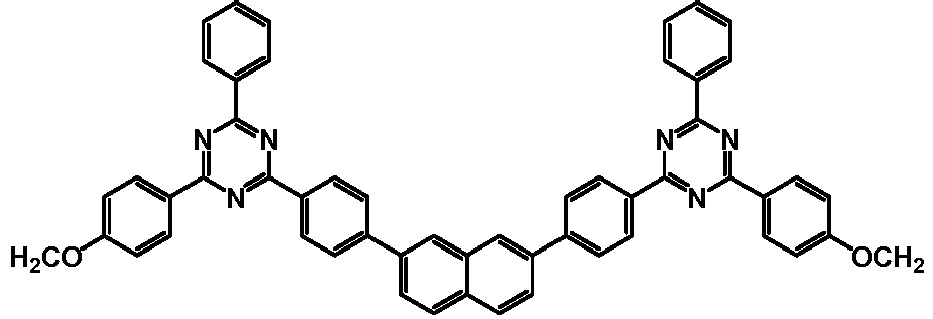
Verbindung 1-a-3 Verbindung 1-a-4 

Verbindung 1-a-5 Verbindung 1-a-6 

Verbindung 1-a-7 Verbindung 1-a-8 

Verbindung 1-a-9 Verbindung 1-a-10 

Verbindung 1-a-11 Verbindung 1-a-12 

Verbindung 1-a-13 Verbindung 1-a-14 

Verbindung 1-a-15 Verbindung 1-a-16 
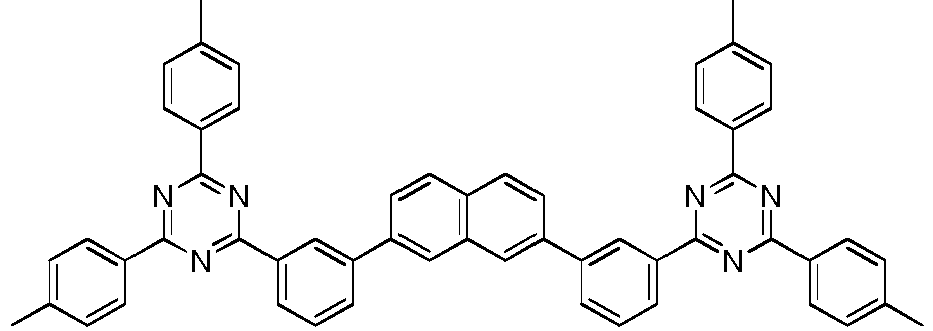
Verbindung 2-a-1 Verbindung 2-a-2 

Verbindung 2-a-3 Verbindung 2-a-4 

Verbindung 2-a-5 Verbindung 2-a-6 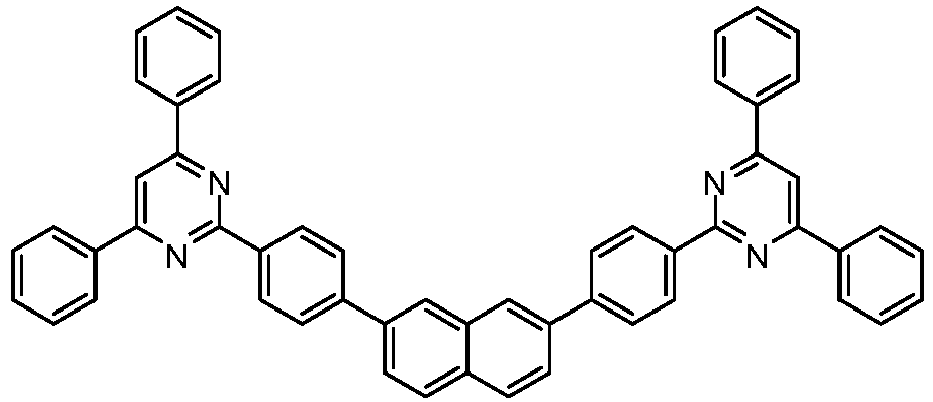

Verbindung 2-a-7 Verbindung 2-a-8 
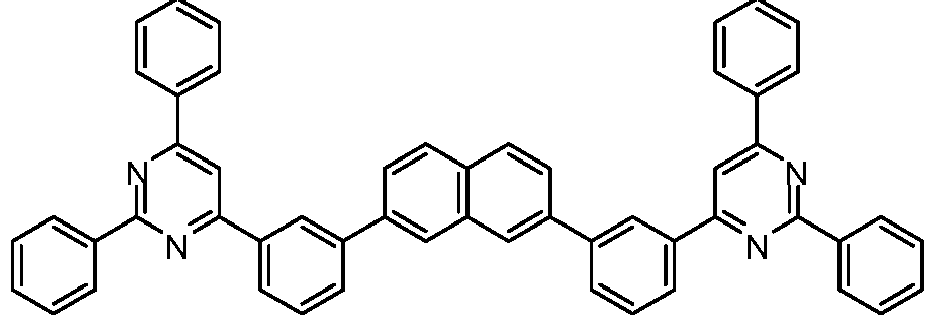
Verbindung 2-a-9 Verbindung 2-a-10 

Verbindung 2-a-11 
- Heterocyclische Verbindung gemäss Anspruch 1, wobei die Verbindung der Formel 1 irgendeine der nachstehenden Verbindungen 1-b-1 bis 1-b-16 und 2-b-1 bis 2-b-11 ist:
Verbindung 1-b-1 Verbindung 1-b-2 

Verbindung 1-b-3 Verbindung 1-b-4 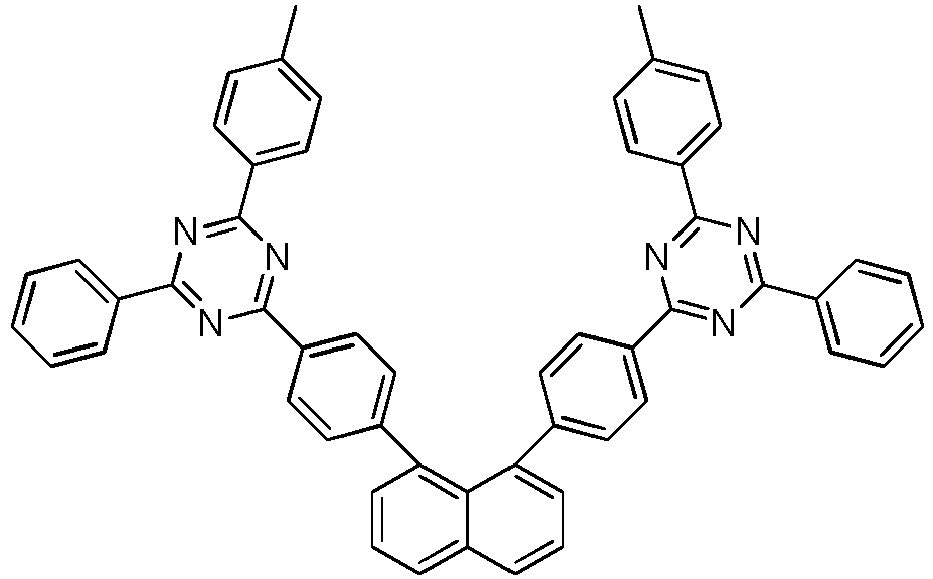

Verbindung 1-b-5 Verbindung 1-b-6 

Verbindung 1-b-7 Verbindung 1-b-8 

Verbindung 1-b-9 Verbindung 1-b-10 

Verbindung 1-b-11 Verbindung 1-b-12 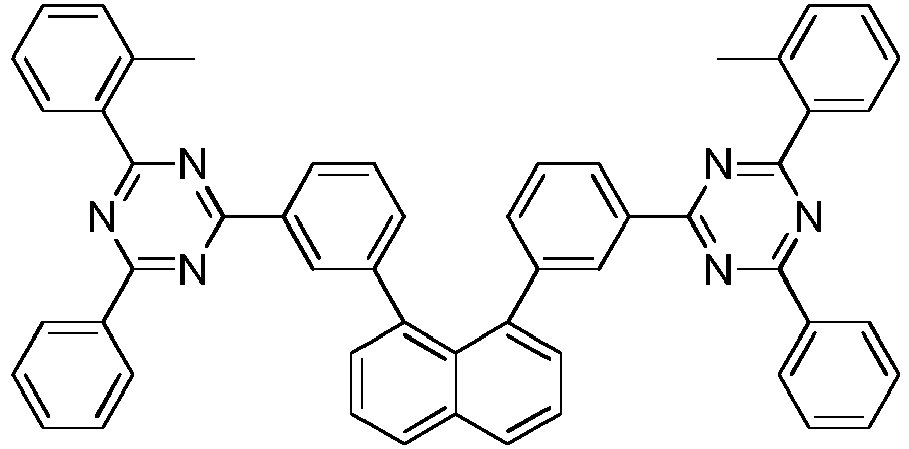

Verbindung 1-b-13 Verbindung 1-b-14 

Verbindung 1-b-15 Verbindung 1-b-16 

Verbindung 2-b-1 Verbindung 2-b-2 

Verbindung 2-b-3 Verbindung 2-b-4 
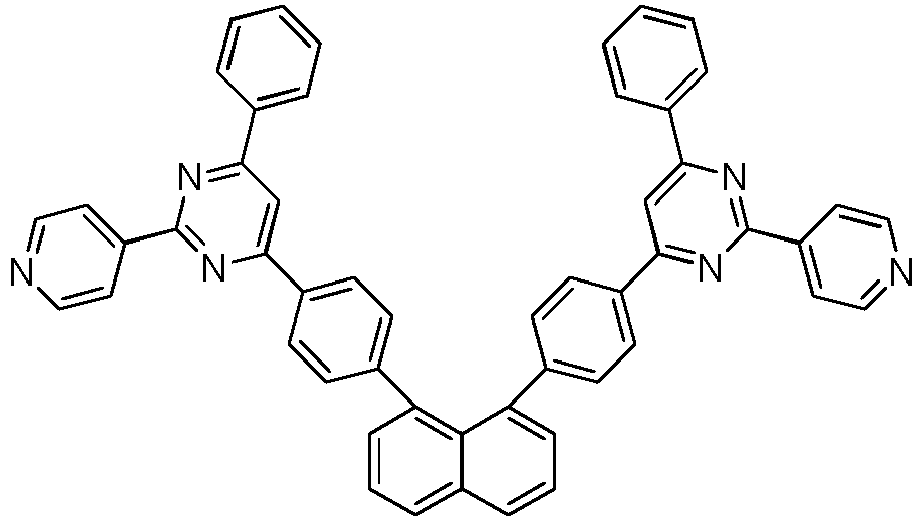
Verbindung 2-b-5 Verbindung 2-b-6 

Verbindung 2-b-7 Verbindung 2-b-8 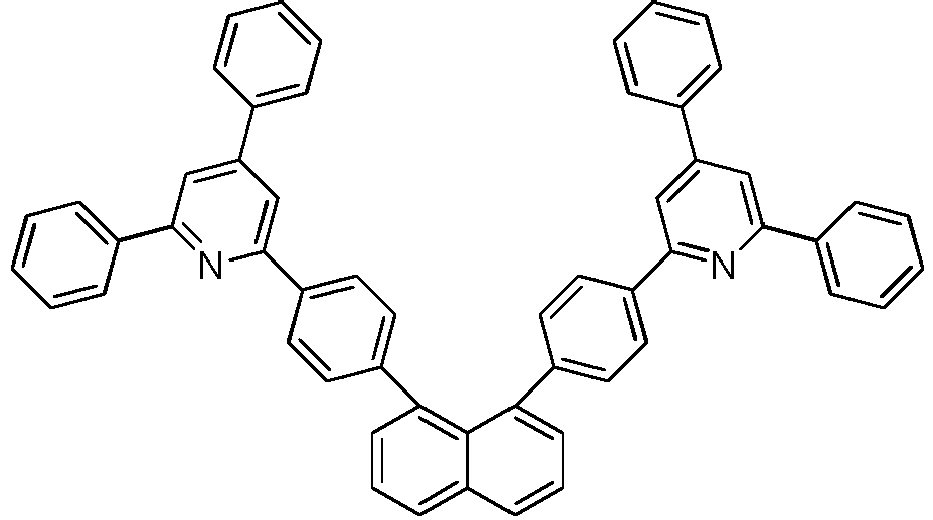

Verbindung 2-b-9 Verbindung 2-b-10 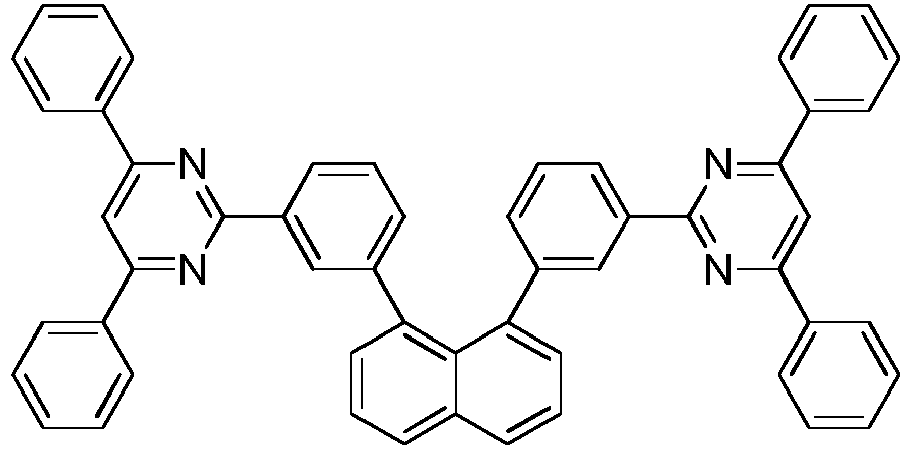

Verbindung 2-b-11 
- Heterocyclische Verbindung gemäss Anspruch 1, wobei die Verbindung der Formel 1 irgendeine der nachstehenden Verbindungen 1-c-1 bis 1-c-16 und 2-c-1 bis 2-c-11 ist:
Verbindung 1-c-1 Verbindung 1-c-2 
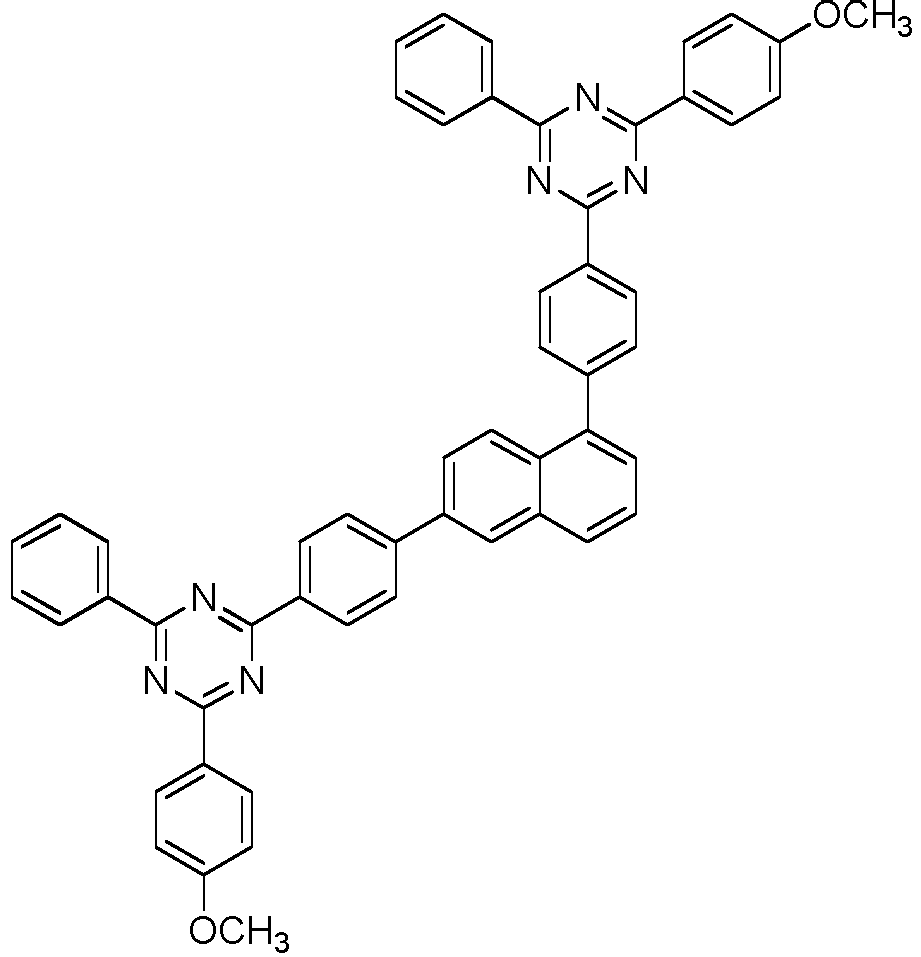
Verbindung 1-c-3 Verbindung 1-c-4 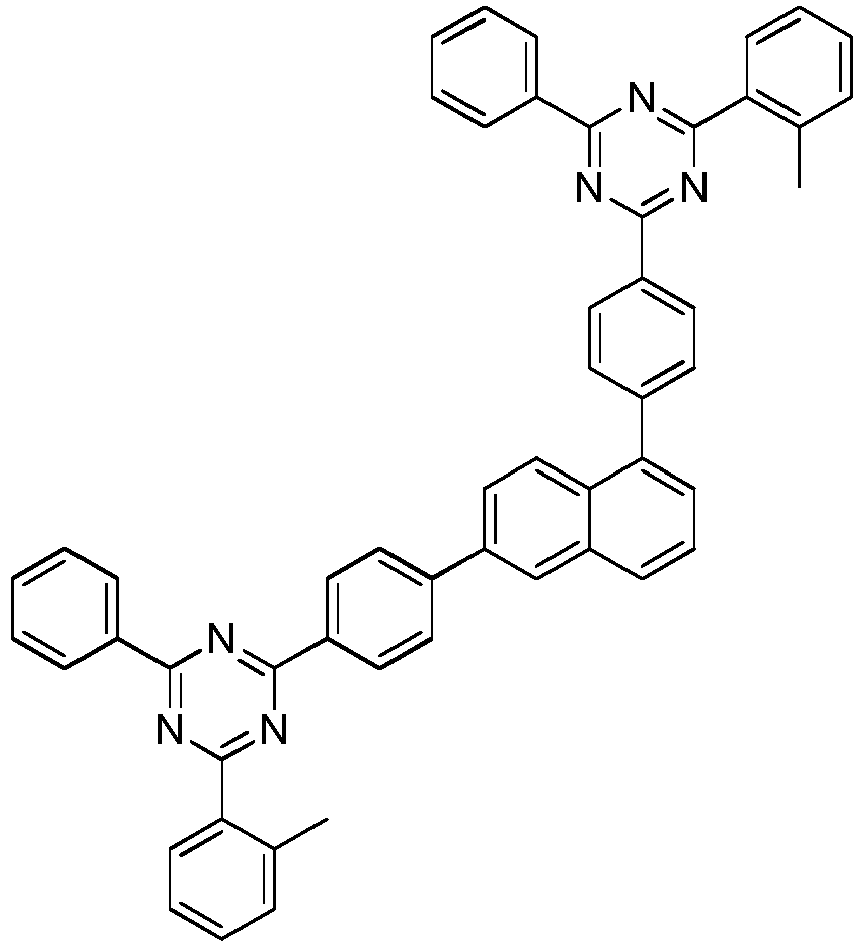

Verbindung 1-c-5 Verbindung 1-c-6 

Verbindung 1-c-7 Verbindung 1-c-8 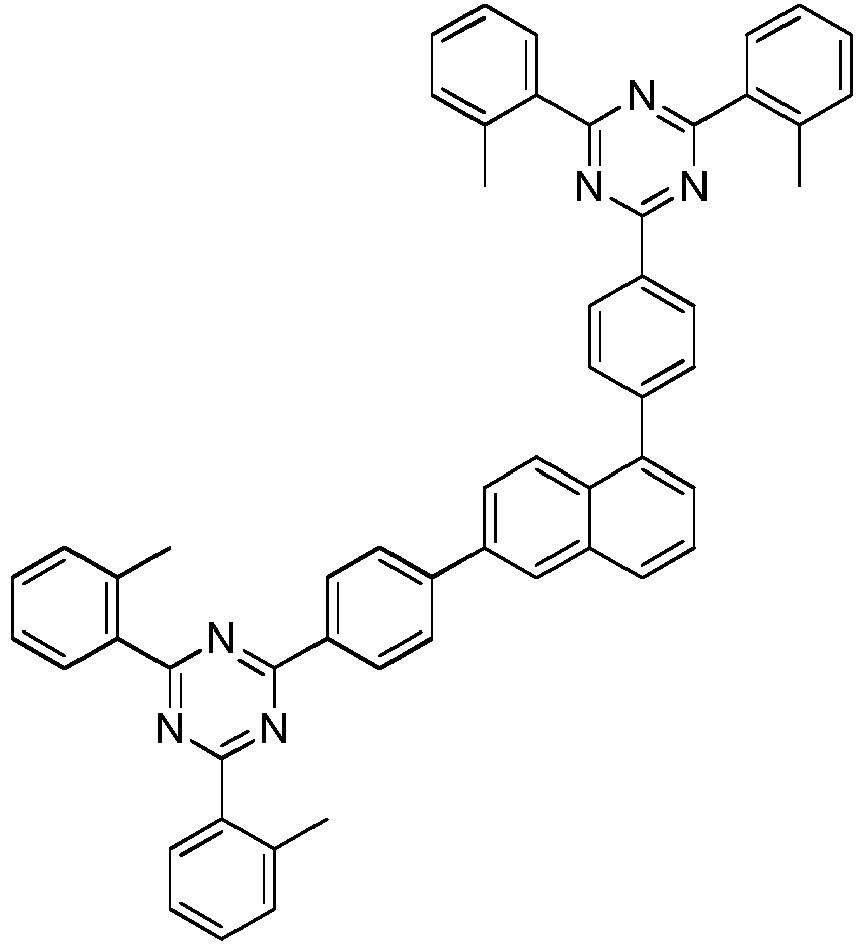
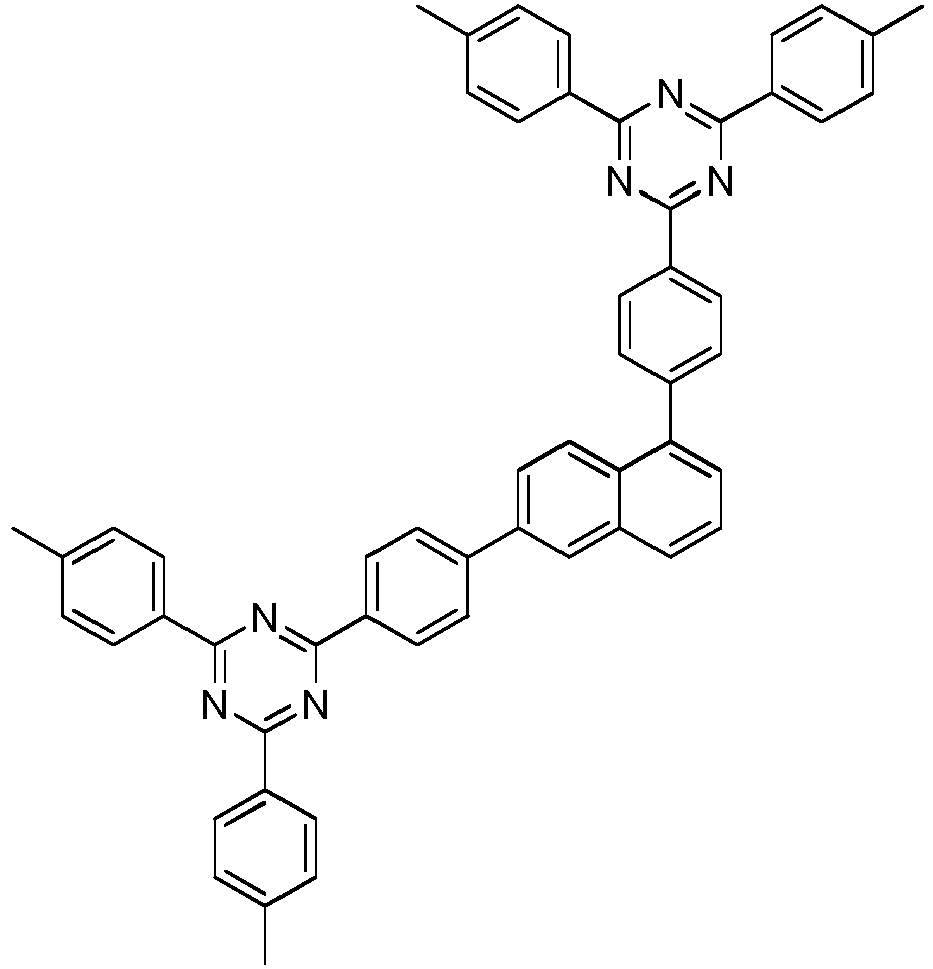
Verbindung 1-c-9 Verbindung 1-c-10 

Verbindung 1-c-11 Verbindung 1-c-12 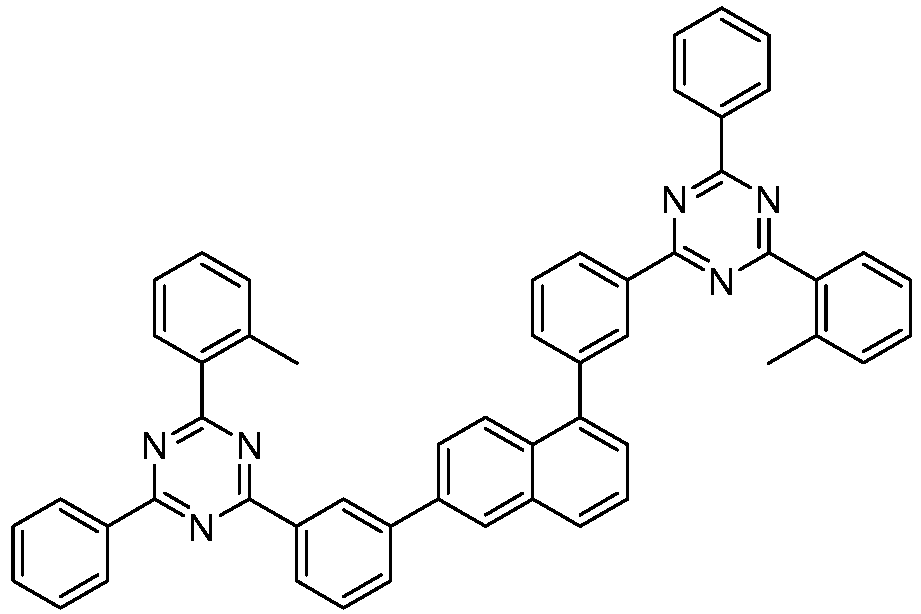

Verbindung 1-c-13 Verbindung 1-c-14 
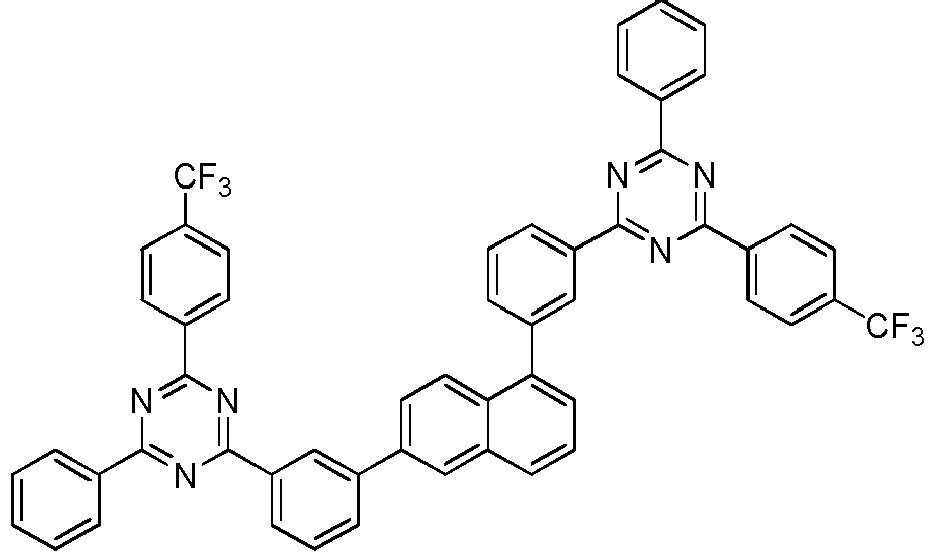
Verbindung 1-c-15 Verbindung 1-c-16 

Verbindung 2-c-1 Verbindung 2-c-2 

Verbindung 2-c-3 Verbindung 2-c-4 

Verbindung 2-c-5 Verbindung 2-c-6 

Verbindung 2-c-7 Verbindung 2-c-8 

Verbindung 2-c-9 Verbindung 2-c-10 

Verbindung 2-c-11 
- Heterocyclische Verbindung gemäss Anspruch 1, wobei die Verbindung der Formel 1 irgendeine der nachstehenden Verbindungen 1-d-1 bis 1-d-16 und 2-d-1 bis 2-d-11 ist:
Verbindung 1-d-1 Verbindung 1-d-2 

Verbindung 1-d-3 Verbindung 1-d-4 

Verbindung 1-d-5 Verbindung 1-d-6 

Verbindung 1-d-7 Verbindung 1-d-8 

Verbindung 1-d-9 Verbindung 1-d-10 

Verbindung 1-d-11 Verbindung 1-d-12 
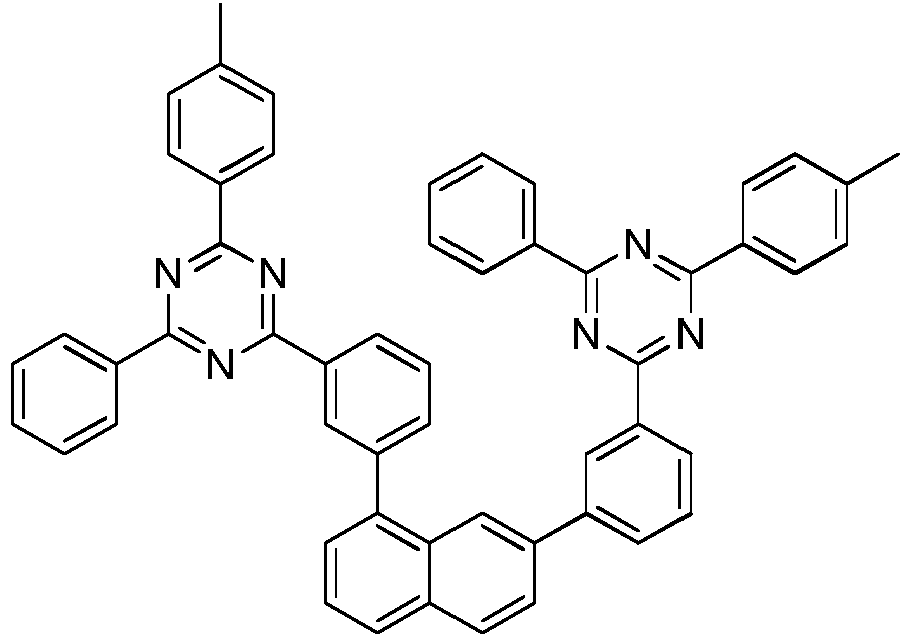
Verbindung 1-d-13 Verbindung 1-d-14 

Verbindung 1-d-15 Verbindung 1-d-16 
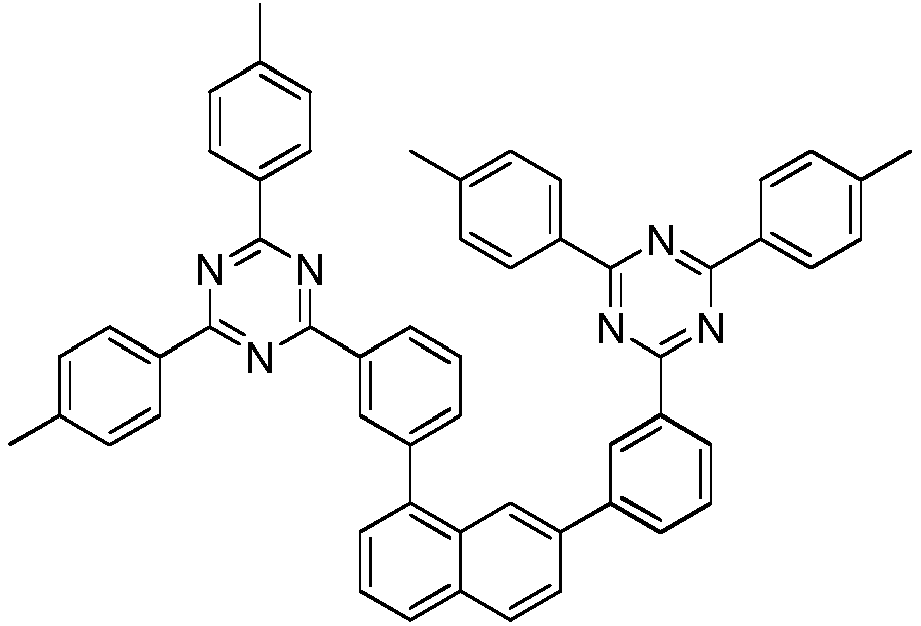
Verbindung 2-d-1 Verbindung 2-d-2 

Verbindung 2-d-3 Verbindung 2-d-4 

Verbindung 2-d-5 Verbindung 2-d-6 

Verbindung 2-d-7 Verbindung 2-d-8 

Verbindung 2-d-9 Verbindung 2-d-10 

Verbindung 2-d-11 
- Organische elektronische Vorrichtung, umfassend eine erste Elektrode, eine zweite Elektrode und eine oder mehrere organische Materialschichten, die zwischen der ersten Elektrode und der zweiten Elektrode angeordnet sind, wobei eine oder mehrere der organischen Materialschichten die heterocyclische Verbindung gemäss irgendeinem der Ansprüche 1 bis 6 umfassen.
- Organische elektronische Vorrichtung gemäss Anspruch 7, wobei die organische elektronische Vorrichtung aus der Gruppe bestehend aus einer organischen lichtemittierenden Vorrichtung, einer organischen Solarzelle und einem organischen Transistor ausgewählt ist.
- Organische elektronische Vorrichtung gemäss Anspruch 7, wobei die organischen Materialschichten eine Lochinjektionsschicht oder eine Lochtransportschicht, umfassend die die heterocyclische Verbindung, einschliessen.
- Organische elektronische Vorrichtung gemäss Anspruch 7, wobei die organischen Materialschichten eine lichtemittierende Schicht, umfassend die heterocyclische Verbindung als Wirt, einschliessen.
- Organische elektronische Vorrichtung gemäss Anspruch 7, wobei die organischen Materialschichten eine Elektronentransportschicht, umfassend die heterocyclische Verbindung, einschliessen.
Applications Claiming Priority (2)
| Application Number | Priority Date | Filing Date | Title |
|---|---|---|---|
| KR20120076493 | 2012-07-13 | ||
| PCT/KR2013/004231 WO2014010824A1 (ko) | 2012-07-13 | 2013-05-13 | 헤테로환 화합물 및 이를 포함하는 유기 전자 소자 |
Publications (3)
| Publication Number | Publication Date |
|---|---|
| EP2873667A1 EP2873667A1 (de) | 2015-05-20 |
| EP2873667A4 EP2873667A4 (de) | 2016-02-24 |
| EP2873667B1 true EP2873667B1 (de) | 2018-11-14 |
Family
ID=49916235
Family Applications (2)
| Application Number | Title | Priority Date | Filing Date |
|---|---|---|---|
| EP13816388.6A Active EP2873666B1 (de) | 2012-07-13 | 2013-05-13 | Heterocyclische verbindung und organisches elektronisches element damit |
| EP13817557.5A Active EP2873667B1 (de) | 2012-07-13 | 2013-05-13 | Heterozyklische verbindung und organisches elektronisches element damit |
Family Applications Before (1)
| Application Number | Title | Priority Date | Filing Date |
|---|---|---|---|
| EP13816388.6A Active EP2873666B1 (de) | 2012-07-13 | 2013-05-13 | Heterocyclische verbindung und organisches elektronisches element damit |
Country Status (7)
| Country | Link |
|---|---|
| US (3) | US9412954B2 (de) |
| EP (2) | EP2873666B1 (de) |
| JP (3) | JP6122112B2 (de) |
| KR (2) | KR101380060B1 (de) |
| CN (3) | CN104487432B (de) |
| TW (2) | TWI495635B (de) |
| WO (2) | WO2014010824A1 (de) |
Families Citing this family (79)
| Publication number | Priority date | Publication date | Assignee | Title |
|---|---|---|---|---|
| KR101380060B1 (ko) * | 2012-07-13 | 2014-04-01 | 주식회사 엘지화학 | 헤테로환 화합물 및 이를 포함하는 유기 전자 소자 |
| KR101499356B1 (ko) * | 2013-06-28 | 2015-03-05 | 주식회사 엘지화학 | 헤테로환 화합물 및 이를 포함하는 유기 발광 소자 |
| KR20220025211A (ko) * | 2013-07-30 | 2022-03-03 | 메르크 파텐트 게엠베하 | 전자 소자용 물질 |
| CN105408448B (zh) | 2013-07-30 | 2018-11-02 | 默克专利有限公司 | 用于电子器件的材料 |
| GB2522457B (en) * | 2014-01-24 | 2016-05-25 | Cambridge Display Tech Ltd | Compound, composition and organic light-emitting device |
| KR20150115622A (ko) | 2014-04-04 | 2015-10-14 | 주식회사 엘지화학 | 헤테로고리 화합물 및 이를 포함하는 유기 발광 소자 |
| KR101537500B1 (ko) | 2014-04-04 | 2015-07-20 | 주식회사 엘지화학 | 유기 발광 소자 |
| KR101542714B1 (ko) | 2014-04-04 | 2015-08-12 | 주식회사 엘지화학 | 헤테로고리 화합물 및 이를 포함하는 유기 발광 소자 |
| KR101656927B1 (ko) * | 2014-04-16 | 2016-09-23 | 희성전자 주식회사 | 발광 소자 및 발광 소자용 전자수송층 제조 방법 |
| WO2015167223A1 (ko) * | 2014-04-29 | 2015-11-05 | 주식회사 동진쎄미켐 | 신규한 화합물 및 이를 포함하는 유기발광소자 |
| CN106255695B (zh) * | 2014-04-29 | 2019-12-31 | 东进世美肯株式会社 | 化合物及包含其的有机发光元件 |
| US9997716B2 (en) | 2014-05-27 | 2018-06-12 | Universal Display Corporation | Organic electroluminescent materials and devices |
| US10297762B2 (en) | 2014-07-09 | 2019-05-21 | Universal Display Corporation | Organic electroluminescent materials and devices |
| US10749113B2 (en) | 2014-09-29 | 2020-08-18 | Universal Display Corporation | Organic electroluminescent materials and devices |
| US10361375B2 (en) | 2014-10-06 | 2019-07-23 | Universal Display Corporation | Organic electroluminescent materials and devices |
| KR102285381B1 (ko) | 2014-10-22 | 2021-08-04 | 삼성디스플레이 주식회사 | 화합물 및 이를 포함한 유기 발광 소자 |
| KR101560102B1 (ko) | 2014-11-20 | 2015-10-13 | 주식회사 엘지화학 | 유기 발광 소자 |
| US9406892B2 (en) | 2015-01-07 | 2016-08-02 | Universal Display Corporation | Organic electroluminescent materials and devices |
| EP3248966B1 (de) * | 2015-01-20 | 2022-12-21 | Hodogaya Chemical Co., Ltd. | Pyrimidinderivat und organisches elektrolumineszenzelement |
| KR101912107B1 (ko) * | 2015-03-06 | 2018-10-26 | 삼성에스디아이 주식회사 | 유기 화합물, 조성물, 유기 광전자 소자 및 표시 장치 |
| EP3272832B1 (de) * | 2015-03-16 | 2021-09-15 | LG Chem, Ltd. | Organische lichtemittierende vorrichtung |
| KR101968216B1 (ko) * | 2015-03-27 | 2019-04-11 | 주식회사 엘지화학 | 헤테로고리 화합물 및 이를 포함하는 유기 발광 소자 |
| US10403826B2 (en) * | 2015-05-07 | 2019-09-03 | Universal Display Corporation | Organic electroluminescent materials and devices |
| KR101962758B1 (ko) * | 2015-06-17 | 2019-03-27 | 삼성에스디아이 주식회사 | 유기 광전자 소자용 화합물, 유기 광전자 소자 및 표시 장치 |
| EP4301110A3 (de) * | 2015-07-30 | 2024-04-10 | Merck Patent GmbH | Materialien für organische elektrolumineszenzvorrichtungen |
| US11522140B2 (en) | 2015-08-17 | 2022-12-06 | Universal Display Corporation | Organic electroluminescent materials and devices |
| KR101841351B1 (ko) * | 2015-09-11 | 2018-03-22 | 주식회사 엘지화학 | 헤테로환 화합물 및 이를 이용한 유기 발광 소자 |
| KR102651208B1 (ko) * | 2015-09-25 | 2024-03-25 | 호도가야 가가쿠 고교 가부시키가이샤 | 유기 전계발광 소자 |
| US10519166B2 (en) * | 2015-10-26 | 2019-12-31 | Lg Chem, Ltd. | Heterocyclic compound and organic light emitting device comprising the same |
| CN108349914B9 (zh) * | 2015-10-27 | 2021-09-03 | 株式会社Lg化学 | 有机发光器件 |
| KR101897907B1 (ko) * | 2016-04-25 | 2018-09-12 | 주식회사 엘지화학 | 화합물 및 이를 포함하는 유기 전자 소자 |
| KR101834433B1 (ko) | 2016-06-08 | 2018-03-05 | 주식회사 엘지화학 | 신규한 화합물 및 이를 포함하는 유기발광 소자 |
| US10566547B2 (en) | 2016-07-11 | 2020-02-18 | Universal Display Corporation | Organic electroluminescent materials and devices |
| KR102095001B1 (ko) * | 2016-09-19 | 2020-03-30 | 주식회사 엘지화학 | 신규한 헤테로 고리 화합물 및 이를 이용한 유기발광 소자 |
| CN110492011B (zh) | 2016-10-18 | 2022-03-22 | 株式会社Lg化学 | 有机发光器件 |
| KR102727643B1 (ko) | 2016-12-07 | 2024-11-08 | 삼성디스플레이 주식회사 | 축합환 화합물 및 이를 포함한 유기 발광 소자 |
| CN109790129B (zh) | 2016-12-08 | 2022-08-12 | 广州华睿光电材料有限公司 | 芘三嗪类衍生物及其在有机电子器件中的应用 |
| KR101959514B1 (ko) * | 2017-02-21 | 2019-03-18 | 주식회사 엘지화학 | 신규한 헤테로 고리 화합물 및 이를 이용한 유기 발광 소자 |
| WO2018155904A1 (ko) * | 2017-02-21 | 2018-08-30 | 주식회사 엘지화학 | 신규한 헤테로 고리 화합물 및 이를 이용한 유기 발광 소자 |
| CN109790463B (zh) | 2017-03-09 | 2022-02-08 | 株式会社Lg化学 | 有机发光器件 |
| KR102134507B1 (ko) | 2017-03-21 | 2020-07-16 | 주식회사 엘지화학 | 화합물 및 이를 포함하는 유기 태양 전지 |
| US11158820B2 (en) | 2017-03-29 | 2021-10-26 | Universal Display Corporation | Organic electroluminescent materials and devices |
| CN109564973B (zh) * | 2017-03-30 | 2023-03-31 | 株式会社Lg化学 | 有机发光器件 |
| KR102080286B1 (ko) * | 2017-05-22 | 2020-04-07 | 주식회사 엘지화학 | 신규한 화합물 및 이를 이용한 유기발광 소자 |
| KR102536248B1 (ko) | 2017-06-21 | 2023-05-25 | 삼성디스플레이 주식회사 | 헤테로시클릭 화합물 및 이를 포함한 유기 발광 소자 |
| EP3418272B1 (de) * | 2017-06-21 | 2023-08-30 | Samsung Display Co., Ltd. | Triazin-verbindungen und organische lichtemittierende vorrichtungen damit |
| KR102161883B1 (ko) * | 2017-07-10 | 2020-10-05 | 주식회사 엘지화학 | 신규한 화합물 및 이를 포함하는 유기 발광 소자 |
| WO2019013486A1 (ko) | 2017-07-10 | 2019-01-17 | 주식회사 엘지화학 | 전기 변색용 화합물을 포함하는 전기 변색 소자 및 이의 제조 방법 |
| US12010911B2 (en) * | 2017-07-28 | 2024-06-11 | Lg Chem, Ltd. | Fluorene derivative and organic light emitting device comprising same |
| US11542237B2 (en) | 2017-07-28 | 2023-01-03 | Lg Chem, Ltd. | Fluorene derivative and organic light emitting device comprising same |
| KR102415376B1 (ko) | 2017-08-04 | 2022-07-01 | 삼성디스플레이 주식회사 | 축합환 화합물 및 이를 포함한 유기 발광 소자 |
| KR102120532B1 (ko) | 2017-09-18 | 2020-06-16 | 주식회사 엘지화학 | 유기트랜지스터 |
| EP3470412B1 (de) * | 2017-10-13 | 2020-07-22 | Novaled GmbH | Organische elektronische vorrichtung mit einer organischen halbleiterschicht |
| KR102250385B1 (ko) * | 2017-10-18 | 2021-05-11 | 주식회사 엘지화학 | 유기 광 다이오드 및 이를 포함하는 유기 이미지 센서 |
| CN111247650B (zh) * | 2018-02-02 | 2023-11-07 | 株式会社Lg化学 | 有机发光二极管 |
| WO2019176384A1 (ja) * | 2018-03-15 | 2019-09-19 | コニカミノルタ株式会社 | 有機エレクトロルミネッセンス素子、有機エレクトロルミネッセンス用材料、表示装置、及び、照明装置 |
| KR102536246B1 (ko) | 2018-03-23 | 2023-05-25 | 삼성디스플레이 주식회사 | 헤테로고리 화합물 및 이를 포함한 유기 발광 소자 |
| KR102133121B1 (ko) | 2018-03-28 | 2020-07-10 | 주식회사 엘지화학 | 화합물 및 이를 포함하는 유기 발광 소자 |
| US11793073B2 (en) * | 2018-05-06 | 2023-10-17 | Universal Display Corporation | Host materials for electroluminescent devices |
| JP7173145B2 (ja) * | 2018-07-09 | 2022-11-16 | コニカミノルタ株式会社 | 薄膜、電子デバイス、有機エレクトロルミネッセンス素子、有機エレクトロルミネッセンス用材料、表示装置、及び、照明装置 |
| KR102168068B1 (ko) | 2018-08-17 | 2020-10-20 | 주식회사 엘지화학 | 신규한 화합물 및 이를 이용한 유기발광 소자 |
| KR102235734B1 (ko) * | 2018-10-02 | 2021-04-02 | 주식회사 엘지화학 | 신규한 화합물 및 이를 포함하는 유기발광 소자 |
| KR102019923B1 (ko) * | 2019-01-23 | 2019-09-11 | 솔브레인 주식회사 | 화합물 및 이를 포함하는 유기 발광 소자 |
| KR102377686B1 (ko) * | 2019-07-31 | 2022-03-23 | 주식회사 엘지화학 | 유기 발광 소자 |
| WO2021020943A1 (ko) * | 2019-07-31 | 2021-02-04 | 주식회사 엘지화학 | 유기 발광 소자 |
| JP7693654B2 (ja) | 2019-09-19 | 2025-06-17 | メルク パテント ゲーエムベーハー | 2種のホスト材料の混合物、およびこれを含む有機エレクトロルミネッセントデバイス |
| KR102555503B1 (ko) | 2019-11-14 | 2023-07-12 | 삼성에스디아이 주식회사 | 유기 광전자 소자용 화합물, 유기 광전자 소자용 조성물, 유기 광전자 소자 및 표시 장치 |
| US12606563B2 (en) * | 2019-11-29 | 2026-04-21 | Lg Chem, Ltd. | Organic light-emitting device |
| CN111233832B (zh) * | 2020-01-08 | 2023-12-01 | 上海传勤新材料有限公司 | 一种含有芴和三嗪的有机电子材料及其应用 |
| KR102666351B1 (ko) * | 2020-06-12 | 2024-05-20 | 주식회사 엘지화학 | 헤테로고리 화합물 및 이를 포함하는 유기 발광 소자 |
| JP7624812B2 (ja) * | 2020-07-06 | 2025-01-31 | 東ソー株式会社 | キサンテニル基を有するトリアジン化合物 |
| KR102929256B1 (ko) | 2020-08-11 | 2026-02-23 | 주식회사 엘지화학 | 화합물 및 이를 포함하는 유기 발광 소자 |
| CN114249685A (zh) * | 2021-12-31 | 2022-03-29 | 华南理工大学 | 一种邻位二芳基取代的菲或菲啰啉载流子传输材料及其制备方法和应用 |
| KR102949076B1 (ko) * | 2021-12-31 | 2026-04-08 | 엘지디스플레이 주식회사 | 발광 소자 및 이를 이용한 발광 표시 장치 |
| US20230217821A1 (en) * | 2021-12-31 | 2023-07-06 | Lg Display Co., Ltd. | Light Emitting Device and Light Emitting Display Device Including the Same |
| CN114478416B (zh) * | 2022-02-14 | 2023-11-14 | 季华恒烨(佛山)电子材料有限公司 | 基于芘-三嗪的有机化合物及有机电致发光组合物和有机电致发光器件 |
| KR20260043107A (ko) | 2023-07-25 | 2026-03-31 | 메르크 파텐트 게엠베하 | 유기 전자 소자 |
| WO2025021841A1 (de) | 2023-07-27 | 2025-01-30 | Merck Patent Gmbh | Organische elektronische vorrichtung |
| CN119775195B (zh) * | 2025-03-10 | 2025-10-24 | 广东阿格蕾雅光电材料有限公司 | 一种杂环化合物及有机电致发光器件 |
Family Cites Families (49)
| Publication number | Priority date | Publication date | Assignee | Title |
|---|---|---|---|---|
| DE19628719B4 (de) | 1996-07-17 | 2006-10-05 | Hans-Werner Prof. Dr. Schmidt | Elektronenleitende Schicht in organischen, elektrolumineszierenden Anordnungen |
| US6057048A (en) | 1998-10-01 | 2000-05-02 | Xerox Corporation | Electroluminescent (EL) devices |
| US6229012B1 (en) * | 1998-10-01 | 2001-05-08 | Xerox Corporation | Triazine compositions |
| US6821643B1 (en) * | 2000-01-21 | 2004-11-23 | Xerox Corporation | Electroluminescent (EL) devices |
| DE10135513B4 (de) | 2001-07-20 | 2005-02-24 | Novaled Gmbh | Lichtemittierendes Bauelement mit organischen Schichten |
| EP1489155A4 (de) | 2002-03-22 | 2006-02-01 | Idemitsu Kosan Co | Material für organische elektrolumineszierende vorrichtungen und die entsprechenden vorrichtungen |
| EP1556360B1 (de) * | 2002-10-30 | 2008-01-23 | Ciba SC Holding AG | Elektroluminezierende vorrichtung |
| JP4595346B2 (ja) | 2003-02-25 | 2010-12-08 | 東レ株式会社 | 発光素子用材料、及びこれを含む発光素子 |
| JP2005170911A (ja) | 2003-12-15 | 2005-06-30 | Idemitsu Kosan Co Ltd | 芳香族化合物およびそれを用いた有機エレクトロルミネッセンス素子 |
| JP2005302657A (ja) | 2004-04-15 | 2005-10-27 | Sharp Corp | 有機発光素子 |
| JP2006016577A (ja) | 2004-07-05 | 2006-01-19 | Japan Science & Technology Agency | 有機エレクトロルミネッセンス材料と発光素子 |
| JP2006124373A (ja) | 2004-09-29 | 2006-05-18 | Canon Inc | 化合物及びそれを用いた有機エレクトロルミネッセンス素子 |
| CN100584811C (zh) | 2004-09-29 | 2010-01-27 | 佳能株式会社 | 化合物和使用它的有机电致发光元件 |
| EP1829871B1 (de) | 2004-12-24 | 2015-08-12 | Pioneer Corporation | Organische verbindung, material zum transportieren von ladungen und organisches elektrolumineszentes element |
| JP4856882B2 (ja) | 2005-02-17 | 2012-01-18 | 東ソー株式会社 | 1,3,5−トリアジン誘導体,その製法およびそれから成る薄膜 |
| WO2006114966A1 (ja) | 2005-04-18 | 2006-11-02 | Konica Minolta Holdings, Inc. | 有機エレクトロルミネッセンス素子、表示装置及び照明装置 |
| JP2007042973A (ja) * | 2005-08-05 | 2007-02-15 | Toyo Ink Mfg Co Ltd | 有機エレクトロルミネッセンス素子用材料および有機エレクトロルミネッセンス素子 |
| JP4907192B2 (ja) | 2006-02-22 | 2012-03-28 | 東ソー株式会社 | ピリジル基を持つ1,3,5−トリアジン誘導体、その製法、およびそれを構成成分とする有機電界発光素子 |
| JP5058588B2 (ja) | 2006-12-26 | 2012-10-24 | キヤノン株式会社 | アザフルオレン誘導体及びこれを用いた有機発光素子 |
| WO2009008100A1 (ja) | 2007-07-10 | 2009-01-15 | Idemitsu Kosan Co., Ltd. | 有機エレクトロルミネッセンス素子用材料及びそれを用いた有機エレクトロルミネッセンス素子 |
| JP5299807B2 (ja) * | 2007-08-31 | 2013-09-25 | 出光興産株式会社 | ベンゾジチオフェン誘導体並びにそれを用いた有機薄膜トランジスタ及び有機薄膜発光トランジスタ |
| CN101412907A (zh) | 2007-10-17 | 2009-04-22 | 中国科学院理化技术研究所 | 有机电致发光材料及其合成方法和用途 |
| KR100948853B1 (ko) * | 2007-11-16 | 2010-03-22 | 삼성모바일디스플레이주식회사 | 헤테로고리 화합물 및 이를 이용한 유기 전계 발광 장치 |
| US20090136346A1 (en) | 2007-11-23 | 2009-05-28 | Samuel Thomas Kelly | Vertical axis wind turbine |
| US8221905B2 (en) * | 2007-12-28 | 2012-07-17 | Universal Display Corporation | Carbazole-containing materials in phosphorescent light emitting diodes |
| JP5207760B2 (ja) | 2008-02-07 | 2013-06-12 | ケミプロ化成株式会社 | 新規なピリミジン系またはトリアジン系誘導体、それよりなる電子輸送材料およびそれを含む有機エレクトロルミネッセンス素子 |
| US8039125B2 (en) | 2008-05-22 | 2011-10-18 | General Electric Company | Compound comprising phenyl pyridine units |
| CN101381601A (zh) * | 2008-09-28 | 2009-03-11 | 南京邮电大学 | 一种寡聚物电致蓝光材料及其合成方法 |
| WO2010058946A2 (ko) | 2008-11-18 | 2010-05-27 | 주식회사 엘지화학 | 신규한 크라이센 유도체 및 이를 이용한 유기 전기 소자 |
| JP2010138121A (ja) | 2008-12-12 | 2010-06-24 | Canon Inc | トリアジン化合物及びこれを用いた有機発光素子 |
| JP5476034B2 (ja) | 2009-04-27 | 2014-04-23 | ケミプロ化成株式会社 | 新規なトリアリールアミン化合物、それよりなるホール輸送材料およびそれを用いた有機エレクトロルミネッセンス素子 |
| CN102422451A (zh) * | 2009-05-12 | 2012-04-18 | E.I.内穆尔杜邦公司 | 具有电子隧道层的有机电子器件 |
| JP5675189B2 (ja) * | 2009-07-07 | 2015-02-25 | 住友化学株式会社 | 有機電子素子用機能性膜 |
| EP2452997A4 (de) | 2009-07-10 | 2013-10-09 | Cheil Ind Inc | Verbindung für ein organisches photoelektrisches element und organisches photoelektrisches element damit |
| WO2011013959A2 (ko) * | 2009-07-28 | 2011-02-03 | 주식회사 동진쎄미켐 | 신규한 페난트렌계 화합물 및 이를 포함하는 유기발광소자 |
| DE102009053644B4 (de) | 2009-11-17 | 2019-07-04 | Merck Patent Gmbh | Materialien für organische Elektrolumineszenzvorrichtungen |
| US9412951B2 (en) | 2009-11-13 | 2016-08-09 | Beijing Visionox Technology Co., Ltd. | Organic materials and organic electroluminescent apparatuses using the same |
| DE102009053664A1 (de) * | 2009-11-17 | 2011-05-19 | Ziehm Imaging Gmbh | Verfahren zur empirischen Bestimmung einer Korrekturfunktion zur Korrektur von Strahlungsaufhärtungs- und Streustrahleneffekten in der Projektionsradiografie und in der Computertomografie |
| KR20110079197A (ko) | 2009-12-31 | 2011-07-07 | 제일모직주식회사 | 유기광전소자용 화합물 및 이를 포함하는 유기광전소자 |
| JP2011225501A (ja) * | 2010-04-22 | 2011-11-10 | Canon Inc | 新規m−ターフェニル化合物及びこれを有する有機発光素子 |
| KR101877580B1 (ko) * | 2010-06-18 | 2018-08-09 | 유디씨 아일랜드 리미티드 | 디벤조푸란 화합물 및 8-히드록시퀴놀리노레이토 알칼리 토금속 또는 알칼리 금속 착물의 층을 포함하는 유기 전자 소자 |
| JP5650449B2 (ja) * | 2010-07-06 | 2015-01-07 | 住友化学株式会社 | エレクトロクロミック錯体化合物、およびそれを使用するエレクトロクロミック素子 |
| JP5763309B2 (ja) * | 2010-07-30 | 2015-08-12 | ユー・ディー・シー アイルランド リミテッド | 有機電界発光素子及び化合物 |
| KR101825382B1 (ko) | 2010-10-07 | 2018-02-07 | 에스에프씨 주식회사 | 이형고리 화합물 및 이를 포함하는 유기전계발광소자 |
| TWI431003B (zh) * | 2010-10-21 | 2014-03-21 | Ind Tech Res Inst | 有機化合物及包含其之有機電激發光裝置 |
| KR101324784B1 (ko) | 2011-04-13 | 2013-10-31 | (주)씨에스엘쏠라 | 유기발광 화합물 및 이를 이용한 유기 광소자 |
| US9502664B2 (en) | 2011-11-10 | 2016-11-22 | Udc Ireland Limited | 4H-imidazo[1,2-a]imidazoles for electronic applications |
| EP2749625B1 (de) | 2012-02-27 | 2017-12-20 | LG Chem, Ltd. | Organische lichtemittierende diode |
| KR101380060B1 (ko) * | 2012-07-13 | 2014-04-01 | 주식회사 엘지화학 | 헤테로환 화합물 및 이를 포함하는 유기 전자 소자 |
-
2013
- 2013-05-13 KR KR1020130053866A patent/KR101380060B1/ko active Active
- 2013-05-13 CN CN201380034790.9A patent/CN104487432B/zh active Active
- 2013-05-13 JP JP2015521532A patent/JP6122112B2/ja active Active
- 2013-05-13 US US14/355,165 patent/US9412954B2/en active Active
- 2013-05-13 CN CN201610811483.2A patent/CN106977468B/zh active Active
- 2013-05-13 EP EP13816388.6A patent/EP2873666B1/de active Active
- 2013-05-13 JP JP2014559846A patent/JP6066132B2/ja active Active
- 2013-05-13 WO PCT/KR2013/004231 patent/WO2014010824A1/ko not_active Ceased
- 2013-05-13 WO PCT/KR2013/004230 patent/WO2014010823A1/ko not_active Ceased
- 2013-05-13 CN CN201380018601.9A patent/CN104203941B/zh active Active
- 2013-05-13 US US14/406,739 patent/US9391281B2/en active Active
- 2013-05-13 EP EP13817557.5A patent/EP2873667B1/de active Active
- 2013-05-13 KR KR20130053966A patent/KR101508424B1/ko active Active
- 2013-05-16 TW TW102117327A patent/TWI495635B/zh active
- 2013-05-16 TW TW102117333A patent/TWI469978B/zh active
-
2016
- 2016-03-31 US US15/087,847 patent/US9882146B2/en active Active
-
2017
- 2017-02-03 JP JP2017018337A patent/JP2017095514A/ja active Pending
Non-Patent Citations (1)
| Title |
|---|
| None * |
Also Published As
| Publication number | Publication date |
|---|---|
| CN104487432A (zh) | 2015-04-01 |
| TWI469978B (zh) | 2015-01-21 |
| CN104203941B (zh) | 2017-03-01 |
| US20150162543A1 (en) | 2015-06-11 |
| EP2873667A1 (de) | 2015-05-20 |
| TW201406755A (zh) | 2014-02-16 |
| CN104203941A (zh) | 2014-12-10 |
| JP2015524797A (ja) | 2015-08-27 |
| US9412954B2 (en) | 2016-08-09 |
| US9882146B2 (en) | 2018-01-30 |
| KR101508424B1 (ko) | 2015-04-07 |
| US9391281B2 (en) | 2016-07-12 |
| KR20140009919A (ko) | 2014-01-23 |
| TW201406735A (zh) | 2014-02-16 |
| JP2015509954A (ja) | 2015-04-02 |
| EP2873666A1 (de) | 2015-05-20 |
| JP6122112B2 (ja) | 2017-04-26 |
| EP2873666A4 (de) | 2016-02-24 |
| EP2873666B1 (de) | 2017-09-20 |
| US20160218298A1 (en) | 2016-07-28 |
| WO2014010823A1 (ko) | 2014-01-16 |
| TWI495635B (zh) | 2015-08-11 |
| WO2014010824A1 (ko) | 2014-01-16 |
| US20140299192A1 (en) | 2014-10-09 |
| JP2017095514A (ja) | 2017-06-01 |
| EP2873667A4 (de) | 2016-02-24 |
| KR20140009918A (ko) | 2014-01-23 |
| CN104487432B (zh) | 2018-06-12 |
| CN106977468A (zh) | 2017-07-25 |
| CN106977468B (zh) | 2020-05-22 |
| JP6066132B2 (ja) | 2017-01-25 |
| KR101380060B1 (ko) | 2014-04-01 |
Similar Documents
| Publication | Publication Date | Title |
|---|---|---|
| EP2873667B1 (de) | Heterozyklische verbindung und organisches elektronisches element damit | |
| EP3757110B1 (de) | Heterocyclische verbindung und organische lichtemittierende vorrichtung damit | |
| EP2924020B1 (de) | Fluoranthenverbindung und organische elektronische vorrichtung damit | |
| EP3002282B1 (de) | Heteroringverbindung und organische leuchtdiode damit | |
| EP3357912B1 (de) | Verwendung von spiroverbindung und diese enthaltendes organisches lichtemittierendes element | |
| EP2862862B1 (de) | Organische lichtemittierende vorrichtung mit stickstoffhaltiger heterocyclischer verbindung | |
| EP3378864B1 (de) | Spiroverbindung und organisches lichtemittierendes element damit | |
| EP3378853B1 (de) | Heterocyclische verbindung und organisches lichtemittierendes element damit | |
| EP3345891B1 (de) | Aminverbindung und organische lichtemittierende vorrichtung damit | |
| KR101624412B1 (ko) | 헤테로환 화합물 및 이를 포함하는 유기 발광 소자 | |
| EP3378865B1 (de) | Spiroverbindung und organisches lichtemittierendes element damit | |
| KR20170057850A (ko) | 화합물 및 이를 포함하는 유기 전자 소자 | |
| EP3369718B1 (de) | Verbindung vom spiro-typ und organisches lichtemittierendes element damit | |
| EP3330249B1 (de) | Aminbasierte verbindung und diese verbindung enthaltendes, organisches, lichtemittierendes element | |
| EP3263555B1 (de) | Heteroringverbindung und organisches lumineszierendes element damit | |
| KR20240032784A (ko) | 화합물 및 이를 포함하는 유기 발광 소자 | |
| EP3321246B1 (de) | Doppelspiroverbindung und organisches lichtemittierendes element damit | |
| EP3369719B1 (de) | Verbindung vom spiro-typ und organisches lichtemittierendes element damit | |
| KR102671135B1 (ko) | 화합물 및 이를 포함하는 유기 발광 소자 | |
| KR20230033309A (ko) | 화합물 및 이를 포함하는 유기 발광 소자 | |
| KR102865654B1 (ko) | 화합물 및 이를 포함하는 유기 발광 소자 | |
| KR102771278B1 (ko) | 화합물 및 이를 포함하는 유기 발광 소자 | |
| KR20250030458A (ko) | 화합물 및 이를 포함하는 유기 발광 소자 |
Legal Events
| Date | Code | Title | Description |
|---|---|---|---|
| PUAI | Public reference made under article 153(3) epc to a published international application that has entered the european phase |
Free format text: ORIGINAL CODE: 0009012 |
|
| 17P | Request for examination filed |
Effective date: 20140327 |
|
| AK | Designated contracting states |
Kind code of ref document: A1 Designated state(s): AL AT BE BG CH CY CZ DE DK EE ES FI FR GB GR HR HU IE IS IT LI LT LU LV MC MK MT NL NO PL PT RO RS SE SI SK SM TR |
|
| AX | Request for extension of the european patent |
Extension state: BA ME |
|
| DAX | Request for extension of the european patent (deleted) | ||
| REG | Reference to a national code |
Ref country code: DE Ref legal event code: R079 Ref document number: 602013046830 Country of ref document: DE Free format text: PREVIOUS MAIN CLASS: C07D0403100000 Ipc: C09K0011060000 |
|
| RA4 | Supplementary search report drawn up and despatched (corrected) |
Effective date: 20160122 |
|
| RIC1 | Information provided on ipc code assigned before grant |
Ipc: C07D 239/26 20060101ALI20160118BHEP Ipc: C09K 11/06 20060101AFI20160118BHEP Ipc: H01L 51/50 20060101ALI20160118BHEP Ipc: C07D 251/24 20060101ALI20160118BHEP Ipc: C07D 231/06 20060101ALI20160118BHEP Ipc: C07D 401/14 20060101ALI20160118BHEP |
|
| STAA | Information on the status of an ep patent application or granted ep patent |
Free format text: STATUS: EXAMINATION IS IN PROGRESS |
|
| 17Q | First examination report despatched |
Effective date: 20161213 |
|
| GRAP | Despatch of communication of intention to grant a patent |
Free format text: ORIGINAL CODE: EPIDOSNIGR1 |
|
| STAA | Information on the status of an ep patent application or granted ep patent |
Free format text: STATUS: GRANT OF PATENT IS INTENDED |
|
| INTG | Intention to grant announced |
Effective date: 20180718 |
|
| GRAS | Grant fee paid |
Free format text: ORIGINAL CODE: EPIDOSNIGR3 |
|
| GRAA | (expected) grant |
Free format text: ORIGINAL CODE: 0009210 |
|
| STAA | Information on the status of an ep patent application or granted ep patent |
Free format text: STATUS: THE PATENT HAS BEEN GRANTED |
|
| AK | Designated contracting states |
Kind code of ref document: B1 Designated state(s): AL AT BE BG CH CY CZ DE DK EE ES FI FR GB GR HR HU IE IS IT LI LT LU LV MC MK MT NL NO PL PT RO RS SE SI SK SM TR |
|
| REG | Reference to a national code |
Ref country code: CH Ref legal event code: EP Ref country code: AT Ref legal event code: REF Ref document number: 1064796 Country of ref document: AT Kind code of ref document: T Effective date: 20181115 |
|
| REG | Reference to a national code |
Ref country code: DE Ref legal event code: R096 Ref document number: 602013046830 Country of ref document: DE |
|
| REG | Reference to a national code |
Ref country code: IE Ref legal event code: FG4D |
|
| REG | Reference to a national code |
Ref country code: NL Ref legal event code: MP Effective date: 20181114 |
|
| REG | Reference to a national code |
Ref country code: LT Ref legal event code: MG4D |
|
| REG | Reference to a national code |
Ref country code: AT Ref legal event code: MK05 Ref document number: 1064796 Country of ref document: AT Kind code of ref document: T Effective date: 20181114 |
|
| PG25 | Lapsed in a contracting state [announced via postgrant information from national office to epo] |
Ref country code: FI Free format text: LAPSE BECAUSE OF FAILURE TO SUBMIT A TRANSLATION OF THE DESCRIPTION OR TO PAY THE FEE WITHIN THE PRESCRIBED TIME-LIMIT Effective date: 20181114 Ref country code: IS Free format text: LAPSE BECAUSE OF FAILURE TO SUBMIT A TRANSLATION OF THE DESCRIPTION OR TO PAY THE FEE WITHIN THE PRESCRIBED TIME-LIMIT Effective date: 20190314 Ref country code: BG Free format text: LAPSE BECAUSE OF FAILURE TO SUBMIT A TRANSLATION OF THE DESCRIPTION OR TO PAY THE FEE WITHIN THE PRESCRIBED TIME-LIMIT Effective date: 20190214 Ref country code: LT Free format text: LAPSE BECAUSE OF FAILURE TO SUBMIT A TRANSLATION OF THE DESCRIPTION OR TO PAY THE FEE WITHIN THE PRESCRIBED TIME-LIMIT Effective date: 20181114 Ref country code: HR Free format text: LAPSE BECAUSE OF FAILURE TO SUBMIT A TRANSLATION OF THE DESCRIPTION OR TO PAY THE FEE WITHIN THE PRESCRIBED TIME-LIMIT Effective date: 20181114 Ref country code: LV Free format text: LAPSE BECAUSE OF FAILURE TO SUBMIT A TRANSLATION OF THE DESCRIPTION OR TO PAY THE FEE WITHIN THE PRESCRIBED TIME-LIMIT Effective date: 20181114 Ref country code: ES Free format text: LAPSE BECAUSE OF FAILURE TO SUBMIT A TRANSLATION OF THE DESCRIPTION OR TO PAY THE FEE WITHIN THE PRESCRIBED TIME-LIMIT Effective date: 20181114 Ref country code: NO Free format text: LAPSE BECAUSE OF FAILURE TO SUBMIT A TRANSLATION OF THE DESCRIPTION OR TO PAY THE FEE WITHIN THE PRESCRIBED TIME-LIMIT Effective date: 20190214 Ref country code: AT Free format text: LAPSE BECAUSE OF FAILURE TO SUBMIT A TRANSLATION OF THE DESCRIPTION OR TO PAY THE FEE WITHIN THE PRESCRIBED TIME-LIMIT Effective date: 20181114 |
|
| PG25 | Lapsed in a contracting state [announced via postgrant information from national office to epo] |
Ref country code: PT Free format text: LAPSE BECAUSE OF FAILURE TO SUBMIT A TRANSLATION OF THE DESCRIPTION OR TO PAY THE FEE WITHIN THE PRESCRIBED TIME-LIMIT Effective date: 20190314 Ref country code: GR Free format text: LAPSE BECAUSE OF FAILURE TO SUBMIT A TRANSLATION OF THE DESCRIPTION OR TO PAY THE FEE WITHIN THE PRESCRIBED TIME-LIMIT Effective date: 20190215 Ref country code: RS Free format text: LAPSE BECAUSE OF FAILURE TO SUBMIT A TRANSLATION OF THE DESCRIPTION OR TO PAY THE FEE WITHIN THE PRESCRIBED TIME-LIMIT Effective date: 20181114 Ref country code: SE Free format text: LAPSE BECAUSE OF FAILURE TO SUBMIT A TRANSLATION OF THE DESCRIPTION OR TO PAY THE FEE WITHIN THE PRESCRIBED TIME-LIMIT Effective date: 20181114 Ref country code: NL Free format text: LAPSE BECAUSE OF FAILURE TO SUBMIT A TRANSLATION OF THE DESCRIPTION OR TO PAY THE FEE WITHIN THE PRESCRIBED TIME-LIMIT Effective date: 20181114 Ref country code: AL Free format text: LAPSE BECAUSE OF FAILURE TO SUBMIT A TRANSLATION OF THE DESCRIPTION OR TO PAY THE FEE WITHIN THE PRESCRIBED TIME-LIMIT Effective date: 20181114 |
|
| PG25 | Lapsed in a contracting state [announced via postgrant information from national office to epo] |
Ref country code: CZ Free format text: LAPSE BECAUSE OF FAILURE TO SUBMIT A TRANSLATION OF THE DESCRIPTION OR TO PAY THE FEE WITHIN THE PRESCRIBED TIME-LIMIT Effective date: 20181114 Ref country code: IT Free format text: LAPSE BECAUSE OF FAILURE TO SUBMIT A TRANSLATION OF THE DESCRIPTION OR TO PAY THE FEE WITHIN THE PRESCRIBED TIME-LIMIT Effective date: 20181114 Ref country code: DK Free format text: LAPSE BECAUSE OF FAILURE TO SUBMIT A TRANSLATION OF THE DESCRIPTION OR TO PAY THE FEE WITHIN THE PRESCRIBED TIME-LIMIT Effective date: 20181114 Ref country code: PL Free format text: LAPSE BECAUSE OF FAILURE TO SUBMIT A TRANSLATION OF THE DESCRIPTION OR TO PAY THE FEE WITHIN THE PRESCRIBED TIME-LIMIT Effective date: 20181114 |
|
| REG | Reference to a national code |
Ref country code: DE Ref legal event code: R097 Ref document number: 602013046830 Country of ref document: DE |
|
| PG25 | Lapsed in a contracting state [announced via postgrant information from national office to epo] |
Ref country code: RO Free format text: LAPSE BECAUSE OF FAILURE TO SUBMIT A TRANSLATION OF THE DESCRIPTION OR TO PAY THE FEE WITHIN THE PRESCRIBED TIME-LIMIT Effective date: 20181114 Ref country code: SK Free format text: LAPSE BECAUSE OF FAILURE TO SUBMIT A TRANSLATION OF THE DESCRIPTION OR TO PAY THE FEE WITHIN THE PRESCRIBED TIME-LIMIT Effective date: 20181114 Ref country code: SM Free format text: LAPSE BECAUSE OF FAILURE TO SUBMIT A TRANSLATION OF THE DESCRIPTION OR TO PAY THE FEE WITHIN THE PRESCRIBED TIME-LIMIT Effective date: 20181114 Ref country code: EE Free format text: LAPSE BECAUSE OF FAILURE TO SUBMIT A TRANSLATION OF THE DESCRIPTION OR TO PAY THE FEE WITHIN THE PRESCRIBED TIME-LIMIT Effective date: 20181114 |
|
| PLBE | No opposition filed within time limit |
Free format text: ORIGINAL CODE: 0009261 |
|
| STAA | Information on the status of an ep patent application or granted ep patent |
Free format text: STATUS: NO OPPOSITION FILED WITHIN TIME LIMIT |
|
| 26N | No opposition filed |
Effective date: 20190815 |
|
| PG25 | Lapsed in a contracting state [announced via postgrant information from national office to epo] |
Ref country code: SI Free format text: LAPSE BECAUSE OF FAILURE TO SUBMIT A TRANSLATION OF THE DESCRIPTION OR TO PAY THE FEE WITHIN THE PRESCRIBED TIME-LIMIT Effective date: 20181114 |
|
| REG | Reference to a national code |
Ref country code: CH Ref legal event code: PL |
|
| PG25 | Lapsed in a contracting state [announced via postgrant information from national office to epo] |
Ref country code: CH Free format text: LAPSE BECAUSE OF NON-PAYMENT OF DUE FEES Effective date: 20190531 Ref country code: MC Free format text: LAPSE BECAUSE OF FAILURE TO SUBMIT A TRANSLATION OF THE DESCRIPTION OR TO PAY THE FEE WITHIN THE PRESCRIBED TIME-LIMIT Effective date: 20181114 Ref country code: LI Free format text: LAPSE BECAUSE OF NON-PAYMENT OF DUE FEES Effective date: 20190531 |
|
| REG | Reference to a national code |
Ref country code: BE Ref legal event code: MM Effective date: 20190531 |
|
| PG25 | Lapsed in a contracting state [announced via postgrant information from national office to epo] |
Ref country code: LU Free format text: LAPSE BECAUSE OF NON-PAYMENT OF DUE FEES Effective date: 20190513 |
|
| PG25 | Lapsed in a contracting state [announced via postgrant information from national office to epo] |
Ref country code: TR Free format text: LAPSE BECAUSE OF FAILURE TO SUBMIT A TRANSLATION OF THE DESCRIPTION OR TO PAY THE FEE WITHIN THE PRESCRIBED TIME-LIMIT Effective date: 20181114 |
|
| PG25 | Lapsed in a contracting state [announced via postgrant information from national office to epo] |
Ref country code: IE Free format text: LAPSE BECAUSE OF NON-PAYMENT OF DUE FEES Effective date: 20190513 |
|
| PG25 | Lapsed in a contracting state [announced via postgrant information from national office to epo] |
Ref country code: BE Free format text: LAPSE BECAUSE OF NON-PAYMENT OF DUE FEES Effective date: 20190531 |
|
| PG25 | Lapsed in a contracting state [announced via postgrant information from national office to epo] |
Ref country code: CY Free format text: LAPSE BECAUSE OF FAILURE TO SUBMIT A TRANSLATION OF THE DESCRIPTION OR TO PAY THE FEE WITHIN THE PRESCRIBED TIME-LIMIT Effective date: 20181114 |
|
| PG25 | Lapsed in a contracting state [announced via postgrant information from national office to epo] |
Ref country code: HU Free format text: LAPSE BECAUSE OF FAILURE TO SUBMIT A TRANSLATION OF THE DESCRIPTION OR TO PAY THE FEE WITHIN THE PRESCRIBED TIME-LIMIT; INVALID AB INITIO Effective date: 20130513 Ref country code: MT Free format text: LAPSE BECAUSE OF FAILURE TO SUBMIT A TRANSLATION OF THE DESCRIPTION OR TO PAY THE FEE WITHIN THE PRESCRIBED TIME-LIMIT Effective date: 20181114 |
|
| PG25 | Lapsed in a contracting state [announced via postgrant information from national office to epo] |
Ref country code: MK Free format text: LAPSE BECAUSE OF FAILURE TO SUBMIT A TRANSLATION OF THE DESCRIPTION OR TO PAY THE FEE WITHIN THE PRESCRIBED TIME-LIMIT Effective date: 20181114 |
|
| PGFP | Annual fee paid to national office [announced via postgrant information from national office to epo] |
Ref country code: DE Payment date: 20250422 Year of fee payment: 13 |
|
| PGFP | Annual fee paid to national office [announced via postgrant information from national office to epo] |
Ref country code: FR Payment date: 20250422 Year of fee payment: 13 |
|
| PGFP | Annual fee paid to national office [announced via postgrant information from national office to epo] |
Ref country code: GB Payment date: 20260324 Year of fee payment: 14 |