EP2875014B1 - Schleimlösungsarzneien und verwendungen dafür - Google Patents
Schleimlösungsarzneien und verwendungen dafür Download PDFInfo
- Publication number
- EP2875014B1 EP2875014B1 EP13820354.2A EP13820354A EP2875014B1 EP 2875014 B1 EP2875014 B1 EP 2875014B1 EP 13820354 A EP13820354 A EP 13820354A EP 2875014 B1 EP2875014 B1 EP 2875014B1
- Authority
- EP
- European Patent Office
- Prior art keywords
- group
- compound
- pharmaceutically acceptable
- lower alkyl
- acceptable salt
- Prior art date
- Legal status (The legal status is an assumption and is not a legal conclusion. Google has not performed a legal analysis and makes no representation as to the accuracy of the status listed.)
- Not-in-force
Links
- JZQUNRQDKWFLCH-UHFFFAOYSA-N CC(C)(C)c(cc1NC(Nc(cc2)ccc2Sc(cc2)c[n]3c2nnc3C2CCNCC2)=O)n[n]1-c1ccc(C)cc1 Chemical compound CC(C)(C)c(cc1NC(Nc(cc2)ccc2Sc(cc2)c[n]3c2nnc3C2CCNCC2)=O)n[n]1-c1ccc(C)cc1 JZQUNRQDKWFLCH-UHFFFAOYSA-N 0.000 description 2
- AHYHXHGAXVTLGA-UHFFFAOYSA-N CC(C)(CCc1c2NC(Nc3ncc(CCN4CCOCC4)[s]3)=O)c1n[n]2-c1ccc(C)cc1 Chemical compound CC(C)(CCc1c2NC(Nc3ncc(CCN4CCOCC4)[s]3)=O)c1n[n]2-c1ccc(C)cc1 AHYHXHGAXVTLGA-UHFFFAOYSA-N 0.000 description 2
- JVGPNAUCOPHMSN-UHFFFAOYSA-N NNc(cc1Cl)ccc1O Chemical compound NNc(cc1Cl)ccc1O JVGPNAUCOPHMSN-UHFFFAOYSA-N 0.000 description 2
- APJUCBZFLBWRPG-UHFFFAOYSA-N CC(C)(C)C(C=C1N)NN1c(cc1)ccc1O[Si](C)(C)C(C)(C)C Chemical compound CC(C)(C)C(C=C1N)NN1c(cc1)ccc1O[Si](C)(C)C(C)(C)C APJUCBZFLBWRPG-UHFFFAOYSA-N 0.000 description 1
- MXZMACXOMZKYHJ-UHFFFAOYSA-N CC(C)(C)C(CC#N)=O Chemical compound CC(C)(C)C(CC#N)=O MXZMACXOMZKYHJ-UHFFFAOYSA-N 0.000 description 1
- MEICMIXPUDLSSX-UHFFFAOYSA-N CC(C)(C)[Si](C)(C)Oc(ccc(-[n]1nc(C(C)(C)CC2)c2c1NC(Oc1ccccc1)=O)c1)c1Cl Chemical compound CC(C)(C)[Si](C)(C)Oc(ccc(-[n]1nc(C(C)(C)CC2)c2c1NC(Oc1ccccc1)=O)c1)c1Cl MEICMIXPUDLSSX-UHFFFAOYSA-N 0.000 description 1
- PSKDRLHSSWKILO-UHFFFAOYSA-O CC(C)(C)[Si](C)(C)Oc(ccc([NH2+]C(NC(Oc1ccccc1)=O)=CC(C1(C)COC1)=N)c1)c1Cl Chemical compound CC(C)(C)[Si](C)(C)Oc(ccc([NH2+]C(NC(Oc1ccccc1)=O)=CC(C1(C)COC1)=N)c1)c1Cl PSKDRLHSSWKILO-UHFFFAOYSA-O 0.000 description 1
- ZCOGUDFPFWINQU-UHFFFAOYSA-N CC(C)(C)c(cc1N)n[n]1-c(cc1)ccc1O Chemical compound CC(C)(C)c(cc1N)n[n]1-c(cc1)ccc1O ZCOGUDFPFWINQU-UHFFFAOYSA-N 0.000 description 1
- FKMSPVWWQFZGMV-UHFFFAOYSA-N CC(C)(C)c(cc1NC(Nc(cc2)ccc2SC2=C[n]3c(C4(C)CCOCC4)nnc3CC2)=O)n[n]1-c1ccc(C)cc1 Chemical compound CC(C)(C)c(cc1NC(Nc(cc2)ccc2SC2=C[n]3c(C4(C)CCOCC4)nnc3CC2)=O)n[n]1-c1ccc(C)cc1 FKMSPVWWQFZGMV-UHFFFAOYSA-N 0.000 description 1
- AKKQTSIOEQGKGP-UHFFFAOYSA-N CC(C)(C)c(cc1NC(Nc(cc2)ccc2Sc(cc2)c[n]3c2nnc3C(CC2)CCN2C(COC)=O)=O)n[n]1-c1ccc(C)cc1 Chemical compound CC(C)(C)c(cc1NC(Nc(cc2)ccc2Sc(cc2)c[n]3c2nnc3C(CC2)CCN2C(COC)=O)=O)n[n]1-c1ccc(C)cc1 AKKQTSIOEQGKGP-UHFFFAOYSA-N 0.000 description 1
- FBJHLNJPFVYZQX-UHFFFAOYSA-N CC(C)(C)c(cc1NC(Nc(cc2)ccc2Sc(cc2)c[n]3c2nnc3C2CCOCC2)=O)n[n]1-c1ccc(C)cc1 Chemical compound CC(C)(C)c(cc1NC(Nc(cc2)ccc2Sc(cc2)c[n]3c2nnc3C2CCOCC2)=O)n[n]1-c1ccc(C)cc1 FBJHLNJPFVYZQX-UHFFFAOYSA-N 0.000 description 1
- WZDZNUOQTOZNGL-UHFFFAOYSA-N CC(C)(C)c(cc1NC(Nc2ncc(CCN3CCOCC3)[s]2)=O)n[n]1-c(cc1Cl)ccc1O Chemical compound CC(C)(C)c(cc1NC(Nc2ncc(CCN3CCOCC3)[s]2)=O)n[n]1-c(cc1Cl)ccc1O WZDZNUOQTOZNGL-UHFFFAOYSA-N 0.000 description 1
- UHGSHQOTUMLQBJ-UHFFFAOYSA-N CC(C)(C)c(cc1NC(Nc2ncc(CCN3CCOCC3)[s]2)=O)n[n]1-c1ccc(C)cc1 Chemical compound CC(C)(C)c(cc1NC(Nc2ncc(CCN3CCOCC3)[s]2)=O)n[n]1-c1ccc(C)cc1 UHGSHQOTUMLQBJ-UHFFFAOYSA-N 0.000 description 1
- ADWLVQRPXMAEDQ-UHFFFAOYSA-N CC(C)(C)c(cc1NC(Nc2ncc(CCN3CCOCC3)[s]2)O)n[n]1-c(cc1Cl)ccc1O Chemical compound CC(C)(C)c(cc1NC(Nc2ncc(CCN3CCOCC3)[s]2)O)n[n]1-c(cc1Cl)ccc1O ADWLVQRPXMAEDQ-UHFFFAOYSA-N 0.000 description 1
- VLMWLSXJGOGIGZ-UHFFFAOYSA-N CC(C)(C)c(cc1NC(Nc2ncc(CCN3CCSCC3)[s]2)=O)n[n]1-c1ccc(C)cc1 Chemical compound CC(C)(C)c(cc1NC(Nc2ncc(CCN3CCSCC3)[s]2)=O)n[n]1-c1ccc(C)cc1 VLMWLSXJGOGIGZ-UHFFFAOYSA-N 0.000 description 1
- BONCMSAAQKOLOM-UHFFFAOYSA-N CC(C)(CCc1c2N)c1n[n]2-c(cc1Cl)ccc1O Chemical compound CC(C)(CCc1c2N)c1n[n]2-c(cc1Cl)ccc1O BONCMSAAQKOLOM-UHFFFAOYSA-N 0.000 description 1
- DSKMAVVVPQMSLE-UHFFFAOYSA-N CC(C)(CCc1c2NC(Cc3ncc(CCN4CCOCC4)[s]3)=O)c1n[n]2-c1ccc(C)cc1 Chemical compound CC(C)(CCc1c2NC(Cc3ncc(CCN4CCOCC4)[s]3)=O)c1n[n]2-c1ccc(C)cc1 DSKMAVVVPQMSLE-UHFFFAOYSA-N 0.000 description 1
- PWFBEBNWWYXWJV-UHFFFAOYSA-N CC(C)(CCc1c2NC(Nc(cc3)ccc3Oc3ccncc3)=O)c1n[n]2-c1ccc(C)cc1 Chemical compound CC(C)(CCc1c2NC(Nc(cc3)ccc3Oc3ccncc3)=O)c1n[n]2-c1ccc(C)cc1 PWFBEBNWWYXWJV-UHFFFAOYSA-N 0.000 description 1
- PCYRXIGGDSRCPZ-UHFFFAOYSA-N CC(C)(CCc1c2NC(Nc(cc3)ccc3Sc(cc3)c[n]4c3nnc4C3(C)CCOCC3)=O)c1n[n]2-c1ccc(C)cc1 Chemical compound CC(C)(CCc1c2NC(Nc(cc3)ccc3Sc(cc3)c[n]4c3nnc4C3(C)CCOCC3)=O)c1n[n]2-c1ccc(C)cc1 PCYRXIGGDSRCPZ-UHFFFAOYSA-N 0.000 description 1
- YOVDHMVJIXBRFN-UHFFFAOYSA-N CC(C)(CCc1c2NC(Oc3ccccc3)=O)c1n[n]2-c1ccc(C)cc1 Chemical compound CC(C)(CCc1c2NC(Oc3ccccc3)=O)c1n[n]2-c1ccc(C)cc1 YOVDHMVJIXBRFN-UHFFFAOYSA-N 0.000 description 1
- PFXIKBSXHOFOND-UHFFFAOYSA-N CC1(C)OCc2c(NC(Nc(cc3)ccc3Oc3ccncc3)=O)[n](-c3ccc(C)cc3)nc12 Chemical compound CC1(C)OCc2c(NC(Nc(cc3)ccc3Oc3ccncc3)=O)[n](-c3ccc(C)cc3)nc12 PFXIKBSXHOFOND-UHFFFAOYSA-N 0.000 description 1
- YDRCSJDJRYHTRY-UHFFFAOYSA-N CC1(C)OCc2c(NC(Nc3ncc(CCN4CCOCC4)[s]3)=O)[n](-c3ccc(C)cc3)nc12 Chemical compound CC1(C)OCc2c(NC(Nc3ncc(CCN4CCOCC4)[s]3)=O)[n](-c3ccc(C)cc3)nc12 YDRCSJDJRYHTRY-UHFFFAOYSA-N 0.000 description 1
- GYCCVIBXMPVWNS-UHFFFAOYSA-N CC1(CCOCC1)c(cc1NC(Nc(cc2)ccc2Oc2ccncc2)=O)n[n]1-c1ccc(C)cc1 Chemical compound CC1(CCOCC1)c(cc1NC(Nc(cc2)ccc2Oc2ccncc2)=O)n[n]1-c1ccc(C)cc1 GYCCVIBXMPVWNS-UHFFFAOYSA-N 0.000 description 1
- QCIMXSBLCSWPJI-UHFFFAOYSA-N CC1(CCOCC1)c(cc1NC(Nc2ncc(CCN3CCOCC3)[s]2)=O)n[n]1-c1ccc(C)cc1 Chemical compound CC1(CCOCC1)c(cc1NC(Nc2ncc(CCN3CCOCC3)[s]2)=O)n[n]1-c1ccc(C)cc1 QCIMXSBLCSWPJI-UHFFFAOYSA-N 0.000 description 1
- SDEKXNBHILVVEB-DNUQBWSKSA-N CC1(COC1)C(/C=C(/NC(Nc1ncc(CCN2CCOCC2)[s]1)=O)\Nc(cc1Cl)ccc1O)=N Chemical compound CC1(COC1)C(/C=C(/NC(Nc1ncc(CCN2CCOCC2)[s]1)=O)\Nc(cc1Cl)ccc1O)=N SDEKXNBHILVVEB-DNUQBWSKSA-N 0.000 description 1
- KXLOKNGNPJOCFN-UHFFFAOYSA-N CC1(COC1)c(cc1N)n[n]1-c(cc1Cl)ccc1O Chemical compound CC1(COC1)c(cc1N)n[n]1-c(cc1Cl)ccc1O KXLOKNGNPJOCFN-UHFFFAOYSA-N 0.000 description 1
- CIMSRSKPNHWMFR-UHFFFAOYSA-N CC1(COC1)c(cc1NC(Nc2ncc(CCN3CCOCC3)[s]2)=O)n[n]1-c1ccc(C)cc1 Chemical compound CC1(COC1)c(cc1NC(Nc2ncc(CCN3CCOCC3)[s]2)=O)n[n]1-c1ccc(C)cc1 CIMSRSKPNHWMFR-UHFFFAOYSA-N 0.000 description 1
- 0 CCCC=*(CCC1(C)NC(*(C(*(C2=CC(C(C)(C)*)=*=*2*)=C=C)=O)=C=C)=*C1)[C@](C)C(*)=CC=C Chemical compound CCCC=*(CCC1(C)NC(*(C(*(C2=CC(C(C)(C)*)=*=*2*)=C=C)=O)=C=C)=*C1)[C@](C)C(*)=CC=C 0.000 description 1
- XWRFRFDBEVKRDP-UHFFFAOYSA-O CC[Si](C)(C)Oc(ccc([NH2+]C(N)=C(CCC1(C)C)C1=N)c1)c1Cl Chemical compound CC[Si](C)(C)Oc(ccc([NH2+]C(N)=C(CCC1(C)C)C1=N)c1)c1Cl XWRFRFDBEVKRDP-UHFFFAOYSA-O 0.000 description 1
- MHFRKHIBFYMILS-UHFFFAOYSA-N NNc(cc1)ccc1O Chemical compound NNc(cc1)ccc1O MHFRKHIBFYMILS-UHFFFAOYSA-N 0.000 description 1
- ZNYIPAKHYPNSEB-UHFFFAOYSA-N Nc1ncc(CCN2CCOCC2)[s]1 Chemical compound Nc1ncc(CCN2CCOCC2)[s]1 ZNYIPAKHYPNSEB-UHFFFAOYSA-N 0.000 description 1
Images


Classifications
-
- C—CHEMISTRY; METALLURGY
- C07—ORGANIC CHEMISTRY
- C07D—HETEROCYCLIC COMPOUNDS
- C07D417/00—Heterocyclic compounds containing two or more hetero rings, at least one ring having nitrogen and sulfur atoms as the only ring hetero atoms, not provided for by group C07D415/00
- C07D417/14—Heterocyclic compounds containing two or more hetero rings, at least one ring having nitrogen and sulfur atoms as the only ring hetero atoms, not provided for by group C07D415/00 containing three or more hetero rings
-
- A—HUMAN NECESSITIES
- A61—MEDICAL OR VETERINARY SCIENCE; HYGIENE
- A61P—SPECIFIC THERAPEUTIC ACTIVITY OF CHEMICAL COMPOUNDS OR MEDICINAL PREPARATIONS
- A61P11/00—Drugs for disorders of the respiratory system
- A61P11/06—Antiasthmatics
-
- A—HUMAN NECESSITIES
- A61—MEDICAL OR VETERINARY SCIENCE; HYGIENE
- A61P—SPECIFIC THERAPEUTIC ACTIVITY OF CHEMICAL COMPOUNDS OR MEDICINAL PREPARATIONS
- A61P11/00—Drugs for disorders of the respiratory system
- A61P11/12—Mucolytics
-
- C—CHEMISTRY; METALLURGY
- C07—ORGANIC CHEMISTRY
- C07D—HETEROCYCLIC COMPOUNDS
- C07D401/00—Heterocyclic compounds containing two or more hetero rings, having nitrogen atoms as the only ring hetero atoms, at least one ring being a six-membered ring with only one nitrogen atom
- C07D401/02—Heterocyclic compounds containing two or more hetero rings, having nitrogen atoms as the only ring hetero atoms, at least one ring being a six-membered ring with only one nitrogen atom containing two hetero rings
- C07D401/12—Heterocyclic compounds containing two or more hetero rings, having nitrogen atoms as the only ring hetero atoms, at least one ring being a six-membered ring with only one nitrogen atom containing two hetero rings linked by a chain containing hetero atoms as chain links
-
- C—CHEMISTRY; METALLURGY
- C07—ORGANIC CHEMISTRY
- C07D—HETEROCYCLIC COMPOUNDS
- C07D405/00—Heterocyclic compounds containing both one or more hetero rings having oxygen atoms as the only ring hetero atoms, and one or more rings having nitrogen as the only ring hetero atom
- C07D405/14—Heterocyclic compounds containing both one or more hetero rings having oxygen atoms as the only ring hetero atoms, and one or more rings having nitrogen as the only ring hetero atom containing three or more hetero rings
-
- C—CHEMISTRY; METALLURGY
- C07—ORGANIC CHEMISTRY
- C07D—HETEROCYCLIC COMPOUNDS
- C07D409/00—Heterocyclic compounds containing two or more hetero rings, at least one ring having sulfur atoms as the only ring hetero atoms
- C07D409/14—Heterocyclic compounds containing two or more hetero rings, at least one ring having sulfur atoms as the only ring hetero atoms containing three or more hetero rings
-
- C—CHEMISTRY; METALLURGY
- C07—ORGANIC CHEMISTRY
- C07D—HETEROCYCLIC COMPOUNDS
- C07D417/00—Heterocyclic compounds containing two or more hetero rings, at least one ring having nitrogen and sulfur atoms as the only ring hetero atoms, not provided for by group C07D415/00
- C07D417/02—Heterocyclic compounds containing two or more hetero rings, at least one ring having nitrogen and sulfur atoms as the only ring hetero atoms, not provided for by group C07D415/00 containing two hetero rings
- C07D417/12—Heterocyclic compounds containing two or more hetero rings, at least one ring having nitrogen and sulfur atoms as the only ring hetero atoms, not provided for by group C07D415/00 containing two hetero rings linked by a chain containing hetero atoms as chain links
-
- C—CHEMISTRY; METALLURGY
- C07—ORGANIC CHEMISTRY
- C07D—HETEROCYCLIC COMPOUNDS
- C07D471/00—Heterocyclic compounds containing nitrogen atoms as the only ring hetero atoms in the condensed system, at least one ring being a six-membered ring with one nitrogen atom, not provided for by groups C07D451/00 - C07D463/00
- C07D471/02—Heterocyclic compounds containing nitrogen atoms as the only ring hetero atoms in the condensed system, at least one ring being a six-membered ring with one nitrogen atom, not provided for by groups C07D451/00 - C07D463/00 in which the condensed system contains two hetero rings
- C07D471/04—Ortho-condensed systems
-
- C—CHEMISTRY; METALLURGY
- C07—ORGANIC CHEMISTRY
- C07D—HETEROCYCLIC COMPOUNDS
- C07D491/00—Heterocyclic compounds containing in the condensed ring system both one or more rings having oxygen atoms as the only ring hetero atoms and one or more rings having nitrogen atoms as the only ring hetero atoms, not provided for by groups C07D451/00 - C07D459/00, C07D463/00, C07D477/00 or C07D489/00
- C07D491/02—Heterocyclic compounds containing in the condensed ring system both one or more rings having oxygen atoms as the only ring hetero atoms and one or more rings having nitrogen atoms as the only ring hetero atoms, not provided for by groups C07D451/00 - C07D459/00, C07D463/00, C07D477/00 or C07D489/00 in which the condensed system contains two hetero rings
- C07D491/04—Ortho-condensed systems
- C07D491/044—Ortho-condensed systems with only one oxygen atom as ring hetero atom in the oxygen-containing ring
- C07D491/048—Ortho-condensed systems with only one oxygen atom as ring hetero atom in the oxygen-containing ring the oxygen-containing ring being five-membered
Definitions
- mucus production may be an early sign of progressive disease ( Brito-Mutunayagam, R., et al. Chest 138:605-13, 2010 ). At present, however, there is no specific and effective treatment for overproduction of mucus.
- WO 2006/062982 is directed to a compound having the formula (I) wherein R 1 , R 2 , G, and Q are defined herein.
- the compounds of WO 2006/062982 are useful as inhibitors of protein kinases such as MAP Kinases, in particular p38 kinases.
- WO 2006/062982 is also directed to compositions comprising a compound according to the above formula.
- the compounds and compositions described in WO 2006/062982 are useful for treating and preventing an inflammatory condition or disease.
- WO 2006/062982 is also directed to a method of treating or preventing a protein kinase-mediated condition.
- CCA calcium-activated chloride channel
- both the mouse Clca and human CLCA gene promoter regions contain consensus STAT6-binding sites that could mediate direct responsiveness to IL-13 stimulation ( Patel, A.C., et al. Annu. Rev. Physiol. 71:425-49, 2009 ).
- CLCA proteins undergo extracellular secretion and cleavage suggesting that they might function as signaling molecules rather than ion channels ( Gibson, A., et al. J. Biol. Chem. 280:27205-12, 2005 ; Mundhenk, L., et al. J. Biol. Chem. 281:30072-80, 2006 ).
- the present inventors disclose compounds that inhibit airway mucous production.
- the present inventors have developed compounds that block IL-13-stimulated mucus production in human airway epithelial cells. Accordingly, in various embodiments, the present teachings include compounds that can be administered in amounts effective for blocking IL-13-stimulated mucus production in airway epithelial cells. In various embodiments, a compound of the present teachings can have activity as an inhibitor of MAPK13 activity. In various embodiments, a compound of the present teachings can have activity as an inhibitor of MAPK13 activity preferential to activity as a MAPK14 inhibitor.
- methods for treating hypersecretory diseases of the pulmonary airways and other sites as well, such as, without limitation, asthma and COPD. These methods comprise administering to a subject in need thereof one or more compounds of the present teachings, in a dose effective for reducing mucus production. In some configurations, the methods can include administering a pharmaceutical composition comprising a compound, a salt thereof, or a prodrug thereof of the present teachings.
- the present inventors disclose methods for designing candidate inhibitors of MAPK13. Such inhibitors can be effective for reducing mucus production stimulated through a MAPK13-dependent pathway. In some configuration, these methods can include a ligand-hopping strategy which can be used to identify candidate kinase inhibitors that may preferentially inhibit MAPK13 activity compared to MAPK14 activity.
- R 1 can be selected from the group consisting of H, lower alkyl and aryl selected from the group consisting of phenyl and pyridinyl.
- the aryl can comprise 0, 1 or 2 substituents each independently selected from the group consisting of a halogen, a hydroxyl, an ether, a thioether, a lower alkyl, an ester, a carbamate, an amide, and a urea.
- R 2 and R 3 in Formula I together can comprise a 4-6 member aliphatic carbocyclic or aliphatic heterocyclic ring comprising 0, 1 or 2 heteroatoms selected from the group consisting of N, O and S.
- Y in Formula II can be selected from the group consisting of CH 2 , O and S.
- X can be selected from the group consisting of CH 2 , NH (preferred), O and S.
- Ring A can be aromatic (preferably benzene), heteroaromatic, or a trans-substituted cyclohexane ring.
- each R 4 and R 5 can be independently selected from the group consisting of H, a halogen (preferably R 4 is an F), lower alkyl, -CF 3 , -OR 8 and -SR 8 , with the proviso that R 4 and R 5 do not together comprise a ring.
- Z can be selected from the group consisting of CH 2 , NH, O and S (O and S preferred).
- R 6 can be selected from the group consisting of H, amine, lower alkyl, cycloalkyl, cycloalkylalkyl, heterocyclyl, heterocyloalkyl, aryl, arylalkyl, heteroaryl, heteroarylalkyl, -OR 8 , -SR 8 , - NR 8 R 8 , -CONR 8 R 8 , -NR 8 COR 8 , -CO 2 R 8 , -NR 8 C(O)OR 8 , -NR 8 C(O)NR 8 R 8 .
- R 6 when R 6 is lower alkyl, cycloalkyl, cycloalkylalkyl, heterocyclyl, heterocyloalkyl, aryl, arylalkyl, heteroaryl, or heteroarylalkyl, then R 6 can be optionally substituted with 1-2 radicals each independently selected from the group consisting of halogen, hydroxyl, ether, -CF 3 , thioether, amide, carbamate, urea, and ester.
- R 8 when R 6 includes R 8 , R 8 can be selected from the group consisting of H, lower alkyl, cycloalkyl, cycloalkylalkyl, heterocyclyl and heterocycloalkyl.
- R 8 can be further substituted with 1-2 groups selected from the group consisting of halogen, hydroxyl, ether, -CF 3 , thioether, amide, carbamate, urea, and ester.
- the R 8 groups can optionally be taken together to form a 5-7 membered ring.
- "lower alkyl” can include C 1 -C 10 linear alkyl, C 3 -C 10 branched alkyl and C 3 -C 10 cyclic alkyl.
- R 1 can be selected from the group consisting of H, lower alkyl and aryl selected from the group consisting of phenyl and pyridinyl.
- the aryl can comprise 1-2 substituents each independently selected from the group consisting of a halogen, a hydroxyl, an ether, a thioether, a lower alkyl, an ester, a carbamate, an amide, and a urea.
- R 2 and R 3 in Formula III together can comprise a 4-6 member aliphatic carbocyclic or aliphatic heterocyclic ring comprising 0, 1 or 2 heteroatoms selected from the group consisting of N, O and S.
- Y in Formula IV can be selected from the group consisting of CH 2 , O and S.
- X can be selected from the group consisting of CH 2 , NH (preferred), O and S.
- Ring A can be an aromatic (preferably benzene), heteroaromatic or a trans-substituted cyclohexane ring.
- each R 4 and R 5 can be independently selected from the group consisting of H, a halogen (preferably R 4 is an F), lower alkyl, -CF 3 , -OR 8 , and -SR 8 , with the proviso that R 4 and R 5 do not together comprise a ring.
- Z can be selected from the group consisting of CH 2 , NH, O, or S.
- R 7 can be selected from the group consisting of H, lower alkyl, arylalkyl, heterocyloalkyl, cycloalkyl, cycloalkylalkyl aryl, heteroaryl, heterocyclo.
- R 7 can be substituted with 0-3 groups independently selected from the group consisting of halogen, -OH, -OR 8 , -CF 3 ,-SR 8 , -NR 8 R 8 , -CONR 8 R 8 , -NR 8 COR 8 , -CO 2 R 8 , -NR 8 C(O)OR 8 and -NR 8 C(O)NR 8 R 8 .
- R 8 can be selected from the group consisting of H, lower alkyl, cycloalkyl, cycloalkylalkyl, heterocyclyl, heterocycloalkyl, aryl, arylalkyl, heteroaryl and heteroarylalkyl.
- R 8 can be further substituted with 0-2 groups selected from the group consisting of halogen, hydroxyl, ether, - CF 3 , thioether, amide, carbamate, urea and ester.
- the R 8 groups can optionally be taken together to form a 5-7 membered ring.
- "lower alkyl” can include C 1 -C 10 linear alkyl, C 3 -C 10 branched alkyl and C 3 -C 10 cyclic alkyl.
- R 1 can be selected from the group consisting of H, lower alkyl and aryl selected from the group consisting of phenyl and pyridinyl.
- the aryl optionally can comprise 1-2 substituents each independently selected from the group consisting of a halogen, a hydroxyl, an ether, a thioether, a lower alkyl, an ester, a carbamate, an amide and a urea.
- X can be selected from the group consisting of CH 2 , NH (preferred), O, or and S.
- Ring A can be a benzene, pyridine or trans-substituted cyclohexane ring.
- R 4 and R 5 can be independently selected from the group consisting of H, halogen (preferred is R 4 is fluorine), lower alkyl, -CF 3 , ether, and thioether, with the proviso that R 4 and R 5 together do not comprise a ring.
- Z can be selected from the group consisting of CH 2 , NH, O and S (O and S are preferred).
- R 7 can be a 4-7 membered heterocyclic ring containing 1-2 ring atoms independently selected from the group consisting of N, O and S.
- the heterocyclic ring in R 7 can be optionally substituted with 0-3 substituents independently selected from the group consisting of H, halogen, hydroxyl, lower alkyl, -OR 8 , -SR 8 , -NR 8 R 8 , -CONR 8 R 8 , -NR 8 COR 8 , -CO 2 R 8 , - NR 8 C(O)OR 8 , -NR 8 C(O)NR 8 R 8 .
- the alkyl when the heterocyclic ring in R 7 is substituted by an alkyl, the alkyl can optionally be further substituted by 0-2 substituents independently selected from the group consisting of halogen, hydroxyl, -OR 8 , -SR 8 , -NR 8 R 8 , -CONR 8 R 8 , -NR 8 COR 8 , -CO 2 R 8 , -NR 8 C(O)OR 8 , -NR 8 C(O)NR 8 R 8 .
- each R 8 is independently selected from the group consisting of H, lower alkyl, cycloalkyl, cycloalkylalkyl, heterocyclyl, heterocycloalkyl, aryl, arylalkyl, heteroaryl and heteroarylalkyl.
- R 7 can be optionally further substituted with 0-2 groups independently selected from the group consisting of halogen, hydroxyl, ether, -CF 3 , thioether, amide, carbonate, urea and ester.
- the R 8 groups when a nitrogen is substituted by two R 8 groups, can optionally comprise a 5-7 membered ring.
- "lower alkyl” can include C 1 -C 10 linear alkyl, C 3 -C 10 branched alkyl and C 3 -C 10 cyclic alkyl.
- R 1 can be selected from the group consisting of H, lower alkyl and aryl selected from the group consisting of phenyl and pyridinyl.
- the aryl can optionally comprise 0-2 substituents each independently selected from the group consisting of a halogen, a hydroxyl, an ether, a thioether, a lower alkyl, an ester, a carbamate, an amide, and a urea.
- R 2 and R 3 in Formula VI together can comprise a 4-6 member aliphatic carbocyclic or aliphatic heterocyclic ring comprising 0, 1 or 2 heteroatoms selected from the group consisting of N, O and S.
- Y in Formula VII can be selected from the group consisting of CH 2 , O and S.
- W can be selected from the group consisting of O and S (O is preferred).
- R 9 can be selected from the group consisting H, lower alkyl, cycloalkyl, cycloalkylalkyl, heterocyclyl, heterocycylalkyl, aryl, arylalkyl, -CONR 8 R 8 , and -CO 2 R 8 .
- "lower alkyl” can include C 1 -C 10 linear alkyl, C 3 -C 10 branched alkyl and C 3 -C 10 cyclic alkyl.
- the present inventors disclose compounds or pharmaceutically acceptable salts thereof having structures such as and
- the inventors disclose compounds comprising a 3-(3-methyloxetan-3-yl)-1H-pyrazole or derivatives thereof such as wherein R 1 comprises a bond and R 2 comprises a bond, or a salt or prodrug thereof.
- R 1 can comprise one or more atoms and R 2 can comprise one or more atoms.
- R 1 can be selected from the group consisting of methyl, methylbenzene, chlorobenzene and fluorobenzene.
- R 2 can be selected from the group consisting of and
- a compound comprising a structure of Claim 1 can have activity as an inhibitor of a MAPK kinase, such as MAPK13 and/or MAPK14.
- the present teachings include methods of identifying one or more inhibitors of MAPK13.
- these methods can comprise providing, on a digital computer, a molecular model comprising a complex of binding pocket domains of MAPK13; docking a chemical database to the molecular model; scoring the compounds comprised by the database; and identifying one or more high-scoring compounds.
- the present invention provides ex vivo methods of inhibiting MAPK13 activity.
- these methods can comprise contacting MAPK13 with at least one compound of Formula VI - VII or a pharmaceutically acceptable salt thereof.
- a compound can exhibit slow-off binding kinetics.
- a compound exhibiting slow off binding kinetics can bind MAPK13 by a DFG-out binding mode.
- a compound that exhibits slow off binding kinetics against MAPK13 when administered to a subject in need, can remain on-target (for example, after administration directly to a lung) for a longer duration (compared to other MAPK inhibitors), and thereby can provide a sustained effect.
- a compound that exhibits slow off binding kinetics against MAPK13 can reduce the need for repeated dosing and can also allow for a smaller doses compared to other MAPK inhibitors.
- a cell line can include NCI-H292 cells comprising a nucleic acid encoding tTA with pTRE-tight-hCLCA1 whereby the cell expresses hCLCA1 after doxycycline withdrawal.
- the present invention provides compounds or pharmaceutically acceptable salts thereof of Formula VI or Formula VII for use in methods of treating an inflammatory airway disease in a subject in need thereof.
- a use of these embodiments can comprise administering to a subject in need thereof a compound, a pharmaceutically acceptable salt thereof, or a prodrug thereof of the present teachings.
- a compound can be selected from the group consisting of Formulae VI - VII.
- the compound can be selected from the group consisting of and or any other MAPK13-inhibiting compound, prodrug or salt thereof described herein.
- the present invention provides compounds or pharmaceutically acceptable salts thereof of Formula VI or Formula VII for use in methods of delivering a MAPK13 blocking drug directly to a region of the lung affected by inflammatory airway disease.
- these uses can comprise administering the drug by an inhalation route.
- these uses can comprise administering the drug by an inhalation route to treat COPD.
- these uses can comprise administering the drug by an inhalation route to treat asthma.
- the present teachings include compounds or pharmaceutically acceptable salts thereof of Formula VI or Formula VII for use in methods of treating an inflammatory airway disease such as an inflammatory airway disease in a subject in need thereof.
- these uses can comprise administering a therapeutically effective amount of a pharmaceutical composition comprising a compound, prodrug or salt thereof of any of Formulas VI - VII, or a combination thereof, directly to the lung by utilizing an inhalation route of administration.
- these uses can comprise administering a therapeutically effective amount of a pharmaceutical composition comprising a compound, prodrug or salt thereof of any of Formulas VI - VII, or a combination thereof, directly to the lung by utilizing an inhalation route of administration wherein the composition is mixed with a carrier.
- the carrier can be lactose.
- a signal transduction basis for mucous cell metaplasia is shown.
- CLCA1 can activate MAPK13 (also known as p38 ⁇ -MAPK), which in turn can convey a signal to stimulate mucin gene expression.
- MAPK13 also known as p38 ⁇ -MAPK
- the same signaling pathway can be active in humans with COPD.
- a signaling pathway for IL-13 driven mucus production that proceeds via CLCA1 and MAPK13 activation to MUC5AC gene expression is disclosed.
- the inventors have identified a signaling pathway that proceeds from hCLCA1 to MAPK13 to MUC5AC mucin gene expression.
- the inventors have designed and synthesized small molecular weight compounds to inhibit MAPK13 activation. Interruption of this pathway can interfere with mucus overproduction and thereby provide treatment methods for diseases and conditions that involve excess mucus production.
- this pathway can be critical for the development of mucus production and the manifestation of mucous cell metaplasia in airway diseases such as COPD.
- the present teachings assign a new function for MAPK13 in controlling mucus production and validate MAPK13 blockade as a therapeutic strategy to correct overproduction of mucus, for example in inflammatory disease.
- the kinase in the DFG-out binding mode (See Example 3, infra), the kinase is believed to undergo a large conformational change in the activation loop which evacuates a deep pocket for inhibitor binding and can result in locking the kinase into an inactive conformation that can be incompatible with phosphate transfer, and therefore demonstrates slow-off binding kinetics.
- compounds 61 and 117 can demonstrate the DFG-out and DFG-in binding modes, respectively.
- the DFG-out binding mode displayed for compound 61 corresponds to a 40-fold increase in complex half-life ( Fig 6E ) which can also be reflected in a greater potency in the cellular assay (infra).
- both compound 61 and 117 display similar contacts with MAPK13 and can form hydrogen bonds with the same residues ( Fig 6D ).
- molecular modeling indicates that the MAPK13 Phe169 pocket can accommodate the moiety of compound 117.
- the structural reason for 117 displaying DFG-in binding appears to be steric fit. Achieving slow-off binding kinetics (i.e. DFG-out binding mode) can ensure that drug administered directly to the lungs can remain on-target for a long duration, providing a sustained effect and thus minimizing the need for repeated dosing, while also allowing for a smaller dose.
- a pharmaceutically acceptable salt of the present teachings can include acid addition salts, base addition salts, and the salts of quaternary amines and pyridiniums.
- An acid addition salts can be formed from a compound of the present teachings and a pharmaceutically acceptable inorganic or organic acid including but not limited to hydrochloric, hydrobromic, sulfuric, phosphoric, methanesulfonic, toluenesulphonic, benzenesulphonic, acetic, propionic, ascorbic, citric, malonic, fumaric, maleic, lactic, salicylic, sulfamic, or tartaric acids.
- the counter ion of quaternary amines and pyridiniums can include, for example, chloride, bromide, iodide, sulfate, phosphate, methansulfonate, citrate, acetate, malonate, fumarate, sulfamate, or tartrate.
- a base addition salts can include but are not limited to salts such as sodium, potassium, calcium, lithium, magnesium, ammonium and alkylammonium.
- basic nitrogen-containing groups can be quaternised with such agents as lower alkyl halides, such as methyl, ethyl, propyl, and butyl chlorides, bromides and iodides; dialkyl sulfates like dimethyl and diethyl sulfate; and others.
- a salt of the present teachings can be made by methods well-known to skilled artisans for example by treating the compound with an appropriate acid or base in the presence of a suitable solvent.
- a compound of the present teachings can be in crystalline form and/or as a solvate (e.g. hydrate).
- solvate refers to a complex of variable stoichiometry formed by a solute (such as a compound of the present teachings) and a solvent that does not interfere with the biological activity of the solute.
- Solvents can be, for example, water, ethanol or acetic acid. Methods of solvation are generally known within the art.
- a compound of the present teachings can be used in the treatment of skin cancer and sepsis.
- prodrug is used in its broadest sense and encompasses compounds that are converted in vivo to the compounds of the present teachings.
- Such prodrug compounds include, for example, compounds comprising an ester in place of a free hydroxy group, or an N-oxide in place of ring Nitrogen.
- ester prodrugs include alkyl esters, phosphate esters and esters formed from amino acids, such as valine.
- pharmaceutically acceptable ester includes biologically acceptable esters of compound of the invention such as sulphonic, phosphonic and carboxylic acid derivatives.
- a pharmaceutical composition can comprise any of the compounds, pharmaceutically acceptable salts thereof or prodrugs thereof described herein, and a pharmaceutically acceptable excipient.
- An excipient of the present teachings can be any excipient known to skilled artisans, such as, without limitation, an excipient described in Rowe, R.C., et al., Handbook of Pharmaceutical Excipients, Fourth Edition, Pharmaceutical Press, 2003 .
- Pharmaceutical compositions of the present teachings can be prepared by procedures known in the art.
- the compounds can be formulated into tablets, capsules, powders, suspensions, solutions for parenteral administration including intravenous, intramuscular, and subcutaneous administration, and into solutions for application onto patches for transdermal application with common and conventional carriers, binders, diluents, and excipients.
- powder particle size can be within the range of 0.1 -50 microns. In various configurations, powder particle size can be 1-5 microns.
- a powder composition can be administered directly to the lung. In various configurations, a composition can be administered using a dry powder inhaler (DPI) apparatus.
- DPI dry powder inhaler
- Inert pharmaceutically acceptable carriers useful to form pharmaceutical formulations in accordance with the present teachings include starch, mannitol, calcium sulfate, dicalcium phosphate, magnesium stearate, silicic derivatives, and/or sugars such as sucrose, lactose, and glucose.
- Binding agents can include carboxymethyl cellulose and other cellulose derivatives, gelatin, natural and synthetic gums including alginates such as sodium alginate, polyethylene glycol, waxes and the like.
- Diluents useful in the present teachings can include a suitable oil, saline, sugar solutions such as aqueous dextrose or aqueous glucose, and glycols such as polyethylene or polypropylene glycol.
- excipients can include lubricants such as sodium oleate, sodium acetate, sodium stearate, sodium chloride, sodium benzoate, talc, and magnesium stearate, and the like; disintegrating agents including agar, calcium carbonate, sodium bicarbonate, starch, xanthan gum, and the like; and adsorptive carriers such as bentonite and kaolin. Coloring and flavoring agents can also be added to a pharmaceutical formulation.
- Table 1 Compounds of the present teachings.
- hTECs Human tracheal epithelial cells
- growth factor enriched medium as described previously ( Tyner, J.W., et al. J. Clin. Invest. 116:309-21, 2006 ).
- cells were seeded at 2 x 10 5 cells per well (24-well Transwell, Corning, Corning, NY) and cultured under submerged conditions until confluent.
- DMEM-Ham's F12 medium with 2% NuSerum (BD, Franklin, NJ), Primocin (100 ⁇ g/ml, InvivoGen, San Diego, CA), and retinoic acid (1 x 10 -8 M, Sigma) with or without IL-13 (50 ng/ml, Peprotech, Rocky Hill, NJ) for 2 days, and finally were switched to air-liquid interface conditions with or without IL-13 added twice per week for 3 weeks.
- Cells were also cultured in the presence or absence of a range of concentrations of chemical inhibitors. All inhibitors were added 1 day before addition of IL-13 and were re-added with each IL-13 treatment.
- Transepithelial electrical resistance (TEER) of cell cultures was monitored as described previously ( Thavagnanam, S., et al. Ped. Res. 69:95-100, 2011 ).
- BIRB-796 Doramapimod was obtained from American Custom Chemicals (San Diego CA).
- SB-203580 was obtained from EMD Chemicals (Gibbstown, NJ). These compounds and all analogs were also synthesized in our laboratories and purified to >99% purity using silica gel column chromatography and recrystallization. Purity analysis was determined using a ZORBAX XDB-C8 column (Agilent) on an Agilent Series 1100 LC-MS instrument with UV detection at 215 and 254 nM. 1 H NMR spectra were obtained using a Varian 400 MHz NMR instrument (Varian Medical Systems Inc., Palo Alto, CA, USA). Instant JChem (version 5.9.3, 2012 release) was used for structure database management and search (http://www.chemaxon.com). Compounds were stored in the dark at 10 mM in DMSO before use in biological or biochemical assays.
- Gene expression microarray analysis was performed using ILLUMINA Human HT-12 BEADCHIP (Illumina, San Diego, CA, USA). Total RNA was isolated from hTECs using the QIAGEN RNEasy kit (Qiagen) and was amplified and biotinylated using the Ambion Illumina TotalPrep Kit. Hybridization and scanning, including background correction, of Human HT-12 BeadChip arrays was performed according to the manufacturer's instructions, using BEADSTUDIO 3.0 software (Illumina) at the Washington University School of Medicine Genome Sequencing Center Microarray Core Facility.
- Microarray normalization and statistical analysis was performed using packages from the Bioconductor project executed in the R programming environment ( Gentleman, R.C., et al. Genome Biol. 5:R80, 2004 ).
- Raw image data were imported into Bioconductor using readIllumina as implemented in the beadarray package with background subtraction and image sharpening.
- the resulting bead-level data was then normalized for intensity at the bead level using the HULK algorithm, to adjust for local spatial effects (i.e. cross-array gradients) ( Dunning, M.J., et al. Bioinformatics. 23:2183-4, 2007 ; Cairns, J.M., et al. Bioinformatics.
- Bead-types were annotated to genes using a combination of the manufacturer's annotation, transcript level annotations obtained from AceView, and annotations from the University of Cambridge Computational Biology Group in order to optimize interpretation of the gene expression data ( Thierry-Mieg, D. and Thierry-Mieg, J. Genome Biol. 7 Suppl. 1. S12:11-4, 2006 ; Barbosa-Morais, N.L., et al. Nucleic Acids Res. 38:e17, 2010 ; Yin, J., et al. BMC Genomics. 11:50, 2010 ). Visualization and plotting was performed using TIBCO Spotfire DecisionSite for Functional Genomics (TIBCO Spotfire, Somerville, MA, USA).
- Raw and processed microarray data were deposited in the National Center for Biotechnology Information Gene Expression Omnibus and are accessible through GEO Series accession number GSE37693 ( Edgar, R., et al. Nucl. Acids Res. 30:207-10, 2002 ).
- Mouse anti-human MUC5AC biotin-conjugated mAb clone 45M1 was obtained from Thermo Lab Vision (Kalamazoo, MI).
- Rabbit anti-human CLCA1 antibody (designated #1228) was generated by peptide inoculation and peptide-based affinity purification using amino acids 681-693 as described previously ( Gibson, A., et al. J. Biol. Chem. 280:27205-12, 2005 ).
- cells were fixed in 0.4% paraformaldehyde, permeabilized in PBS with 1% Tween-20), subjected to heat-induced epitope retrieval in 10 mM sodium citrate buffer (pH 6), blocked with Image-It FX signal enhancer, with 2% fish gelatin (Sigma), and then incubated with anti-MUC5AC biotin-conjugated mAb and rabbit anti-CLCA1 antibody followed by ALEXA 488- or 555-conjugated streptavidin or ALEXA 555- or 633-conjugated goat anti-rabbit secondary Ab (Life Technologies), counterstained with SYTOX Green (Life Technologies) or DAPI (Life Technologies) and then imaged by conventional (Leica) or confocal (Zeiss LSM-510 META laser scanning confocal microscope) fluorescence microscopy.
- ALEXA 488- or 555-conjugated streptavidin or ALEXA 555- or 633-conjugated
- lung sections were incubated with citrate-based Antigen Unmasking Solution (Vector Labs, Burlingame, CA) for 10 min at 90°C for antigen retrieval and then with biotinylated anti-MUC5AC mAb (2 ⁇ g/ml) and rabbit anti-CLCA1 Ab (10 ⁇ g/ml) in 70 mM NaCl, 30 mM HEPES, 2 mM CaCl 2 , pH 7.4 with 1% BSA, 1% goat serum, and 0.1% cold water fish gelatin followed by 10 ⁇ g/ml ALEXA-488 conjugated streptavidin and 10 ⁇ g/ml Alexa-555 conjugated goat anti-rabbit IgG (Life Technologies) in the same buffer overnight at 4°C.
- citrate-based Antigen Unmasking Solution Vector Labs, Burlingame, CA
- biotinylated anti-MUC5AC mAb 2 ⁇ g/ml
- rabbit anti-CLCA1 Ab 10 ⁇ g/ml
- shRNA-expressing cells Lentiviral vectors expressing small interfering RNA (siRNA) from short hairpin RNA (shRNA) were from the MISSION shRNA library (Sigma). A set of shRNA clones (constructed within the lentivirus plasmid pLKO.1-Puro) was obtained for each of the following mRNA targets: CLCA1 (NM_001285), MAPK13 (NM_002754) and MAPK14 (NM_001315).
- siRNA small interfering RNA
- shRNA short hairpin RNA
- Lentiviral particles for each of the clones were generated by transfecting HEK 293T cells with shRNAi-pLKO.1-Puro plasmid, pHR'8.2deltaR packaging plasmid, and pCMV-VSV-G envelope plasmid using Fugene6 (Roche Applied Science, Indianapolis, IN) as the transfection agent ( Stewart, S.A., et al. RNA. 9:493-501, 2003 ).
- the shRNA lentiviral particles were added to the apical and basal sides of hTEC cultures for 24 h at multiplicity of infection (MOI) 1 and then replaced with fresh media. Ten days later, cells were treated with or without IL13 as described above. Transduction efficiencies were 50-60% as determined using the MISSION Turbo-GFP control vector (SHC003, Sigma).
- Cell-based ELISA for MUC5AC Cells were fixed with 4% formaldehyde, rinsed with wash buffer (PBS with 0.1% Triton), incubated with blocking buffer containing 1X milk (BioFX Company, Owings Mills, MD) for 1 h at 25°C, rinsed again, and incubated with mouse anti-human MUC5AC biotin-conjugated mAb clone 45M1 at 1:500 final dilution for 18 h at 4°C.
- wash buffer PBS with 0.1% Triton
- 1X milk BioFX Company, Owings Mills, MD
- Quantitative MUC5AC ELISA To determine the level of MUC5AC in lung samples from COPD and control donors a quantitative MUC5AC ELISA was set up.
- the plasmid encoding the 45M1 epitope of MUC5AC was obtained from Dr. G.C. Hansson (Goteburg University, Gothenburg, Sweden).
- the recombinant protein was expressed in 293F cells and purified as described previously ( Lidell, M.E., et al. FEBS J. 275:481-9, 2008 ).
- COPD and donor tissue was lysed in the mammalian protein extraction reagent (M-PER, Thermo Pierce Biotechnology) supplemented with Halt Protease & Phosphatase Inhibitor Cocktail (Thermo Pierce Biotechnology) and 5 mM EDTA. Protein concentration was determined using the BCA protein assay kit (Thermo Pierce Biotechnology). Protein cell lysates were plated on high binding Nunc Maxisorp ELISA plates (Thermo Nalge Nunc, Rochester, NY) in carbonate-bicarbonate buffer pH 9.4 and incubated at 37°C overnight. The recombinant standard of 45M1 was incubated at 4°C.
- the plates were washed with PBS-0.05% Tween-20 (Sigma) and blocked overnight with Sea Block blocking buffer (Thermo Pierce Biotechnology).
- the reaction was developed using the 45M1 biotin conjugated monoclonal antibody and Avidin-HRP using the 1-Step UltraTMB-Elisa substrate (Thermo Pierce Biotechnology).
- CLCA1 ELISA for cell culture samples.
- a CLCA1 ELISA was developed using rabbit anti-N-CLCA1 antibody for detection and a purified recombinant CLCA1-3xFLAG containing amino acids 681-693 as a standard.
- the recombinant protein was expressed in 293Tcells using the pCDNA3.1 vector (Life Technologies) and purified using anti-3xFLAG antibody (Sigma).
- ELISA plates (Thermo Scientific Nagle Nunc) were coated with 50- ⁇ l sample aliquots (1 ⁇ g/well total protein) or with varying concentrations of standard overnight at 4°C, washed, blocked with 3% fish gel in PBS for 2 h at 25°C, washed again, and anti-CLCA1 antibody was added at a final dilution of 1:100 for 1 h at 25 °C. The plates were washed, and HRP-conjugated goat anti-rabbit secondary antibody (Santa Cruz) was added at 1:2000 dilution for 1 h at 25°C. Ab-binding was detected using color developing solutions (R&D Systems) with absorbance at 450 nm on a Spectra Max Plus plate reader (Molecular Devices, Sunnyvale, CA).
- CLCA1 ELISA for lung tissue samples.
- a CLCA1 ELISA was developed based on anti-CLCA1 mAb (clone 8D3) for detection and purified recombinant CLCA1 as a standard.
- a plasmid encoding the N-terminal portion of CLCA1 (amino acids 22-694) with a 6-His tag was expressed in 293F cells and purified by affinity chromatography.
- Lung tissue samples were lysed in M-PER reagent (Thermo Pierce Biotechnology) and cell lysates (10 ⁇ g/well) were plated in carbonate-bicarbonate buffer pH 9.4 overnight at 4°C.
- the plates were washed, blocked overnight with SEA BLOCK blocking buffer (Thermo Pierce Biotechnology), washed again, and anti-CLCA1 8D3 mAb was added at 1 ⁇ g/ml for 3 h.
- the plates were washed and HRP-conjugated Fab fragment of goat anti mouse IgG (H+L chains) antibody (Life Technologies) at 1:2000 was added for 1 h. After washing, Ab binding was detected using the 1-Step Ultra TMB-ELISA substrate (Thermo Pierce Biotechnology) with absorbance at 450 nm on the Spectra Max Plus plate reader.
- N-CLCA1 was purified from baculovirus-infected insect cells (Hi5) in a customized pFastBac Dual vector in frame with an N-terminal honey bee mellitin signal sequence and C-terminal thrombin cleavage site followed by a 6-His tag. Recombinant baculovirus was generated in Sf9 insect cells. Recombinant N-CLCA1 was produced by infecting Hi5 cells cultured in serum-free ExCell 405 media. Culture supernatants were collected 72 hours post-infection and the proteins were purified to homogeneity using Ni-affinity chromatography followed by ion-exchange chromatography.
- mice were primed and boosted at 3-wk intervals with purified N-CLCA1 (50 ⁇ g) complexed with adjuvant. Approximately one month after the last boost, serum was harvested and tested for immunoreactivity against plate-immobilized N-CLCA1 purified from 293T cells. Mice with highest titers were boosted intravenously with N-CLCA1 (50 ⁇ g) and splenocytes were harvested 3 days later. Hybridomas were produced by fusion with P3X63Ag8.653 myeloma cells.
- the plates were washed, and HRP-conjugated goat anti-rabbit secondary antibody (Santa Cruz) was added at 1:2000 dilution for 1 h at 25°C. Plates were washed, and Ab-binding was detected using color developing solutions (R&D Systems) for absorbance at 450 nm on a Spectra Max Plus plate reader (Molecular Devices, Sunnyvale, CA).
- CLCA1-expressing cell lines To generate lung cell lines that stably expressed CLCA1 driven by the tetracycline-inducible gene promoter system, human lung mucoepidermoid carcinoma NCI-H292 cells were first transfected with pCMV-rtTA (rTetR-VP16) (Clonetech, Mountain View, CA), and clones were selected with G418 (200 ⁇ g/ml).
- pCMV-rtTA rTetR-VP16
- G418 200 ⁇ g/ml
- Clones with low background and high induction of luciferase gene expression when transfected with pTRE-Tight-luciferase (Clonetech) and treated with doxycycline (10 ⁇ g/ml) were selected for a second transfection with a TRE-driven CLCA1-expressing plasmid.
- Cell lines (NCI-H292-rtTA-CLCA1) with stable expression of pCMV-rtTA and pTRE-CMV-CLCA1 were selected with G418 and hygromycin (20 ⁇ g/ml).
- the CLCA1 gene (including Kozak sequence) was cloned from hTEC RNA using PCR and was inserted into pTRE-Tight using 5'-NotI and 3'-EcoRV restriction enzyme sites. All constructs were verified by DNA sequencing.
- MAPK phospho-arrays MAPK activation was assessed using a human phospho-MAPK antibody array (Proteome Profiler MAPK Array, R&D Systems) according to the manufacturer's instructions. The chemiluminescent signal from the arrays was captured on film, digitized with a UMAX PowerLook 1120 scanner and SilverFast Ai software, and quantified with ArrayVision 8.0 software (GE Healthcare Biosciences, Pittsburgh, PA).
- MAPK13 or MAPK14 STEALTH RNAi was transfected into NCI-H292-rtTA-CLCA1 cells using Lipofectamine RNAiMax (Life Technologies).
- lipofectamine 2.5 ⁇ l was mixed in RPMI-serum free media (200 ⁇ l) with RNAi (25 nM) by shaking for 30 min at 25°C. Cells were then incubated in the RNAi-Lipofectamine mixture for 24 h at 37°C, and then treated with doxycycline for an additional 24 h.
- Cellular RNA was isolated and reversed transcribed using the High Capacity cDNA Archive kit (Life Technologies), and target mRNA levels were determined by quantitative RT-PCR.
- Lung tissue was obtained from the explanted lungs of 9 patients with very severe (GOLD Stage IV) COPD at the time of lung transplantation as described previously ( Tyner, J.W., et al. J. Clin. Invest. 116:309-21, 2006 ; Kim, E.Y., et al. Nat. Med. 14:633-40, 2008 ; Agapov, E., et al. Am. J. Respir. Cell Mol. Biol. 41:379-84, 2009 ). Excess lung tissue from four lung transplant donors without COPD was used as a control. The University Human Studies Committee approved all protocols, and all subjects provided informed consent for participation in the study.
- MAPK inhibitor assay The MAPK13 blocking activity of test compounds was determined using an immobilized metal affinity polarization (IMAP) assay containing activated MAPK13, FITC-labeled substrate, and test compound.
- IMAP immobilized metal affinity polarization
- Full-length 6-His-tagged MAPK13 and constitutively active GST-MKK6 were prepared as described below.
- Activated MAPK13 was generated in 50 mM Hepes, 10 mM MgCl 2 and 1 mM DTT, containing 1 ⁇ M MAPK13, 2 ⁇ M MKK6 and 50 ⁇ M ATP for 1 h at 25°C. MKK6 was removed by incubation with glutathione SEPHAROSE 4B beads (GE Healthcare Biosciences).
- MAPK13 activation was confirmed by Western blot using anti-phospho-p38-MAPK (T180/Y182) antibody (R&D Systems, Minneapolis, MN). IMAP assays were performed in 96-well non-treated half-area black plates or 384-well black plates (Corning Inc., Corning, NY) in a final reaction volume of 20 ⁇ l using the linear phase of the rate kinetics.
- Assay reactions contained 0-100 ⁇ M test compound, 5-35 nM (EC 80 ) activated MAPK13, 3 ⁇ M (K m,app ) ATP, and 100 nM FITC-labeled EGFR peptide substrate (FITC-KRELVERLTPSGEAPNQALLR-NH 2 ), which was a kind gift from John Schindler (Washington University).
- the reaction proceeded for 20 min at 25°C in 10 mM Tris-HCl, 10 mM MgCl 2 , 0.1% BSA, 0.05% NaN 3 , 1 mM DTT, pH 7.2 after which 60 ⁇ l of tri-valent metal nanoparticles containing IMAP binding reagent (Molecular Devices, Sunnyvale, CA) was added for 80 min at 25°C.
- the IMAP binding reagent was optimized at 1:600 (vol/vol) based on the number of acidic residues in the peptide substrate. Fluorescence polarization was measured with a Biotek Synergy 4 multimode plate reader (Biotek, Winooski, VT) with excitation at 485 nm and emission at 528 nm.
- the IC 50 values for each compound were determined from the compound concentration versus fluorescence polarization (mP) plot using nonlinear curve fitting with GraphPad Prism software (Graphpad Software, La Jolla, CA).
- MAPK purification for biochemical assays and crystallization Full-length human MAPK13 (1-365) and MAPK13 crystallization construct (1-352) were cloned into pET28a as N-terminal 6-His-tagged constructs.
- a constitutively active mutant MKK6-GST fusion construct (GST-MKK6 Glu) was a gift from Peiqing Sun (Scripps, La Jolla, CA).
- a pET28a construct of ⁇ -phosphatase was a gift from Dima Klenchin (University of Wisconsin, Madison, WI). All constructs were confirmed by sequencing and transformed into Rosetta2 (DE3) E.
- the MAPK13 proteins expressed in E. coli displayed a high degree of auto-phosphorylation, so they were dephosphorylated with ⁇ -phosphatase prior to final purification by ion exchange (Mono Q). All buffers used during purification (lysis, column, and storage) of MAPK13 required addition of 10% glycerol and 1-5 mM reducing agent (either ⁇ -mercaptoethanol or DTT) to prevent precipitation of the recombinant protein.
- the final purified MAPK13 for crystallization was stored in buffer containing 20 mM Hepes pH 7.5, 150 mM NaCl, 10% glycerol, and 1 mM DTT.
- Crystals of non-phosphorylated MAPK13 were obtained by mixing protein solution (at 10 mg/ml) with reservoir solution (50 mM ammonium tartrate, 18% PEG 3350) in a 4:1 (protein:reservoir) ratio.
- the non-phosphorylated MAPK13 crystals were used to obtain structures of MAPK13 in complex with compounds by soaking. Briefly, compounds dissolved in DMSO at a concentration of 100 mM were added to crystallization drops at one-tenth volume for a final concentration of 10 mM compound in the drop. Crystals were allowed to soak for 3-5 hours.
- Crystals were cryoprotected by addition of 25% glycerol and stream-frozen at 100°K.
- X-ray diffraction data were collected at Advanced Photon Source beamline 19ID (non-phosphorylated) and Advanced Light Source beamline 4.2.2 (Compound 61 and 124).
- Data were processed using HKL-2000 software ( Otwinowski, Z. and Minor, W. Methods in Enzymology: Macromolecular Crystallography, Vol. 276 (eds. Carter, C.W.J. & Sweet, R.M.) 307-326 (Academic Press, New York, 1997 ).
- the phase problem was solved by molecular replacement using Phaser crystallographic software ( McCoy, A.J., et al. J. Appl.
- MAPK13/small molecule binding assay Kinetics of MAPK13 binding to small molecules was assessed using bio-layer interferometry with an Octet (ForteBio, Menlo Park, CA). Super-streptavidin-coated biosensors from ForteBio were used to capture biotinylated MAPK13 onto the surface of the sensor. After reaching baseline, sensors were moved to association step containing 2500, 1250, 625, 312.5, or 156.3 nM inhibitor for 300 s and then dissociated for 300 s. Curves were corrected by a double-referencing technique using both biotin-coated pins dipped into the experimental wells and a buffer-only reference. The running buffer consisted of 10 mM Hepes pH 7.5, 150 mM NaCl, 0.05% Tween, and 5% DMSO. Half-lives were calculated from dissociation constants determined from global kinetic analysis.
- Human tracheal epithelial cells were incubated with IL-13 (50 ng/ml) under submerged conditions for 2 d and then air-liquid interface conditions for up to 21 d, and cell lysates were analyzed for hCLCA1, hCLCA2, and hCLCA4 mRNA levels by real-time quantitative PCR (qPCR) assay.
- Human CLCA1 but not CLCA2, CLCA3, or CLCA4 gene expression was increased in concert with IL-13 induction of mucous cell metaplasia (signified by increased MUC5AC mRNA) in well-differentiated human airway epithelial cells ( FIG. 1a,b ).
- FIG. 8 Whole genome microarray analysis of gene expression showed significant upregulation of CLCA1 and MUC5AC mRNA levels relative to all other genes ( FIG. 8 ).
- the increases in CLCA1 and MUC5AC mRNA resulted in corresponding increases in CLCA1 and MUC5AC protein levels ( FIG. 1c,d,e).
- FIG. 1c shows corresponding levels of CLCA1 in cell lysate and apical cell supernatant determined by ELISA.
- FIG 1d shows corresponding levels of MUC5AC determined by cell-based ELISA.
- FIG. 1e shows corresponding immunocytochemistry for DAPI, CLCA1, and MUC5AC using confocal microscopy. Scale bar: 50 ⁇ m.
- FIG. 1f shows corresponding immunocytochemistry at a more apical (high z axis) and subjacent (low z axis) cellular location. Arrows indicate the same reference cells for high and low z axis. Scale bar: 50 ⁇ m.
- FIG. 1c and d show that increases in CLCA1 and MUC5AC mRNA resulted in corresponding increases in CLCA1 and MUC5AC protein levels, with significant detection of these proteins in cell lysate and apical cell supernatant.
- FIG. 1e and f show confocal microscopy of IL-13-stimulated hTECs immunostained for CLCA1 and MUC5AC. These figures show colocalization in a spatial pattern of apical MUC5AC coupled with subjacent CLCA1.
- hCLCA1 and MUC5AC mRNA in hTECs which were transduced with lentivirus encoding hCLCA1 or control shRNA, were determined.
- Specific siRNA-mediated knockdown of CLCA1 expression caused quantitative inhibition of IL-13-driven mucous cell metaplasia ( FIG. 1g,h ).
- Corresponding hCLCA1 and MUC5AC protein levels were determined by ELISA. All values represent mean ⁇ SEM, and (*) indicates a significant increase from corresponding no IL-13 treatment control or decrease from no shRNA treatment.
- NCI-H292 cells were used (derived from a lung mucoepidermoid carcinoma) to establish a cell line with stable expression of the CLCA1 gene under the control of a doxycycline-inducible promoter system (as diagrammed in FIG. 2a ).
- Time course for mucin gene expression in NCI-H92-rrTA-hCLCA1 cells seen in FIG.2c was determined by treating cells with doxycycline (7.5 ⁇ g/ml) for 0-72 h.
- Dose-response for mucus protein levels in NCI-H292-rtTA-hCLCA1 cells was determined by treating cells with doxycycline for 48 h and MUC5AC level was determined by cell-based ELISA.
- Time course for mucus protein levels in NCI-H92-rrTA-hCLCA1 cells was determined by treating cells with doxycycline (7.5 ⁇ g/ml for 0-72 h), and MUC5AC level was determined by ELISA.
- the increases in CLCA1 and MUC5AC mRNA levels were accompanied by concomitant increases in hCLCA1 and MUC5AC protein ( FIG. 2d,e,f ).
- NCI-H292-rtTA-hCLCA1 cells were treated with doxycycline (7.5 ⁇ g/ml for 18 h) with or without BIRB-796 (10 ⁇ M), and cell lysates were analyzed by phospho-MAPK antibody array.
- Doxycycline treatment of NCI-H292-rtTA-CLCA1 cells caused time-dependent activation of twelve MAPKs ( FIG. 3a ). Box indicates results for MAPK values.
- NCI-H292-rtTA-hCLCA1 cells were treated with doxycycline (7.5 ⁇ g/ml for 18 h) with other concentrations of BIRB-796, SB203580, and vehicle control, and levels of hCLCA1 and MUC5AC mRNA were determined by real-time qPCR assay. Corresponding MUC5AC level were determined by cell-based ELISA.
- BIRB-796 which blocks MAPK11-14, inhibited doxycyline-induced MUC5AC mRNA and protein production
- SB203580 which blocks only MAPK11 and MAPK14 ( Kuma, Y., et al. J. Biol. Chem. 280:19472-9, 2005 ), did not inhibit MUC5AC synthesis ( FIG. 3b,c ).
- MAPK13 RNAi was used to suppress expression.
- Cells were transfected with or without control or MAPK13 or MAPK14 siRNA, (25 nM), treated with or without doxycycline (7.5 ⁇ g/ml for 48 h), and levels of MAPK13, MAPK14, MUC5AC and hCLCA1 mRNA were determined by real-time qPCR.
- Corresponding MUC5AC protein levels were determined by cell-based ELISA. Suppression of MAPK13 expression (using two different RNAi sequences) did not influence doxycyline-induced expression of CLCA1 but completely blocked expression of MUC5AC gene expression ( FIG. 3d,e ).
- hTECs were incubated with IL-13 (50 ng/ml) under submerged conditions for 2 d and then air-liquid interface conditions for up to 21 d with or without BIRB-796 or SB203580, and levels of hCLCA1 and MUC5AC mRNA were determined by real-time qPCR assay.
- Corresponding MUC5AC protein levels were determined by cell-based ELISA.
- MAPK blockade with BIRB-796 markedly suppressed IL-13-induced MUC5AC gene expression without affecting corresponding CLCA1 levels whereas treatment with SB203580 had no significant effect on CLCA1 or MUC5AC gene expression ( FIG.
- hTECs were then transduced with lentivirus encoding MAPK13, MAPK14, or control shRNA and then were treated with IL-13 (50 ng/ml) under submerged conditions for 2 d and then air-liquid interface conditions for up to 21 d.
- Cell lysates were analyzed for hCLCA1, MUC5AC, MAPK13, and MAPK14 mRNA levels using real-time PCR.
- Corresponding levels of MUC5AC protein was determined by cell-based ELISA. Suppression of MAPK13 expression (using two different shRNA sequences delivered with a lentivral vector) did not influence IL-13-induced expression of CLCA1 but significantly blocked the expected increase in MUC5AC mRNA and protein levels ( FIG.
- lentiviral transfection efficiences of 40-50% resulted in a similar quantitative decrease in MAPK13 and MUC5AC mRNA and protein levels.
- Transduction of airway epithelial cells with lentivirus encoding MAPK14 shRNA achieved a similar selective decrease in target mRNA but showed less influence on IL-13-induced MUC5AC gene expression or CLCA1 mRNA levels.
- Blockade of MUC5AC mRNA induction was reflected in inhibition of corresponding MUC5AC protein levels ( FIG. 4e ).
- This example illustrates that IL-13 activation of CLCA1-MAPK13 signaling pathway for mucin genes found in human airway epithelial cells in culture can be activated in human lungs in vivo during chronic obstructive lung disease.
- IL-13 activation of CLCA1-MAPK13 signaling pathway for mucin genes found in human airway epithelial cells in culture can be activated in human lungs in vivo during chronic obstructive lung disease.
- Table 2 Clinical characteristics of COPD subjects used for analysis of lung tissue. Values represent mean ⁇ SD.
- This example illustrates a potent and effective action of rationally designed MAPK13 inhibitors in blocking IL-13-induced mucus production in a high-fidelity system of primary-culture human airway epithelial cells.
- BIRB-796 exhibited potent inhibition of MAPK14 (the original target for this compound), but relatively weak activity for MAPK13 ( Kuma, Y., et al. J. Biol. Chem. 280:19472-9, 2005 ).
- the selectivity of BIRB-796 for MAPK14 is based largely on incorporating a bulky moiety that readily occupies a distinct pocket in MAPK14 that is not present in MAPK13.
- BIRB-796 was used as a starting compound to build slimmer analogs that might exhibit greater potency for MAPK13 by eliminating the steric clash while maintaining other beneficial structural features.
- BIRB-796 because it binds to MAPK14 in the Asp-Phe-Gly (DFG)-out mode ( Pargellis, C., et al. Nat. Struct. Biol. 9:268-72, 2002 ).
- Examples 5-14 refer to FIG. 7.
- This example illustrates the synthesis of pyrazole (3).
- This example illustrates the synthesis of activated pyrazole (4).
- This example illustrates the synthesis of activated pyrazole (6).
- This example illustrates the synthesis of BOC-protected phenol (8).
- Phenol 8 (6.0 g, 28.6 mMol), 4-chloropyridine hydrochloride (3.57 g, 23.8 mMol), and potassium t-butoxide (5.86 g, 52.3 mMol) were placed in a flask that was then flushed with nitrogen.
- DMA 60 mL was added via cannula and the reaction heated to 90 °C for 2 hr. The reaction was cooled and partitioned between ether and aqueous 0.5 N sodium hydroxide, and the organic layer was washed with water (4X) and brine.
- Acid 11 (190 mg, 1 mMol) was placed in a dried flask with aniline 10 (175 mg, 1 mMol) and EDC (191 mg, 1 mMol). DMF (3 mL) was added and the solution stirred 5 hr. The solution was extracted with water and ethyl acetate and the organic layer, washed with water (4X) and aqueous sodium bicarbonate, and dried over anhydrous sodium sulfate. Solvent removal afforded Compound # 117 as a solid which was purified using silica gel column chromatography, eluting with ethyl acetate (15%-90%) in hexane.
- Acid 12 (196 mg, 1 mMol) was placed in a dried flask with aniline 10 (175 mg, 1 mMol) and EDC (191 mg, 1 mMol). DMF (3 mL) was added and the solution stirred 5 hr. The solution was extracted with water and ethyl acetate and the organic layer, washed with water (4X) and aqueous sodium bicarbonate, and dried over anhydrous sodium sulfate. Solvent removal afforded a solid which was purified using silica gel column chromatography, eluting with ethyl acetate (20%-90%) in hexane.
- the LC-MS was an AGILENT Series 1000 LC-MSD (Agilent Technologies, Inc., Santa Clara, CA, USA) with UV detection at 215 nM and 254 nM, and a mass detector.
- TLC Thin layer chromatography
- the resin was washed with water and then product was collected by rinsing the resin with ammonia in methanol prepared by mixing concentrated ammonium hydroxide (80 ml) in methanol (700 ml). Solvent removal afforded thiazole 2 as a brown solid (26 g). The thiazole was dissolved in methanolic HCl, the volatiles were removed in vacuo, and the residue crystallized from methanol and ether to obtain 2 as the hydrochloride salt.
- Pivaloylacetonitrile (19.0 g) was refluxed with tolylhydrazine hydrochloride (24.0 g) in ethanol (190 ml) for 1.5 hr. The solution was cooled and volatiles removed in vacuo. The residue was extracted with ethyl acetate and 10% aq. sodium carbonate, and the organic layer washed with water and brine. Drying over sodium sulfate and solvent removal afforded pyrazole 6 as an off-white solid (30 g).
- ester 8 (15 g) and acrylonitrile (6.5 ml) were placed in a flask with THF (200 ml) and cooled in an ice-bath.
- Sodium hydride (5.2 g, 60% in oil) was added in portions and the reaction was stirred for 1 hr.
- the solution was acidified with 2 N aqueous hydrochloric acid (1.5 eq.) and ether and water were added and the mixture extracted. The organic layer was washed with water and brine and dried over sodium sulfate.
- Solvent removal afforded a liquid that was purified using silica gel chromatography, eluting with a gradient of 10% to 60% ethyl acetate in hexane to provide 9 as a clear liquid (5.34 g).
- TLC Rf 0.2 (ethyl acetate/hexane, 15:85).
- Isobutronitrile (4.81 g) was added drop-wise to a slurry of LDA (69.6 mmol) in hexane (150 ml) at 0°C.
- the alkylating agent (12.0 g) was added in one portion and the reaction allowed to warm to 20°C and stir for 2 hr. Water was added followed by ether and the solution was extracted and the organic layer washed with water (2X). The organic layer was dried over sodium sulfate and the solvent removed at 40 torr vacuum to afford 11 as a clear liquid (9.4 g).
- the nitrile product (12) (9.4 g) was mixed with sodium cyanide (6.3 g), tetrabutylammonium bisulfate (0.66 g), and water (180 ml) and refluxed for 2 hr. The solution was cooled and extracted with ether. The ether layer was washed 2X and dried over sodium sulfate and the ether removed in vacuo to afford dinitrile 13 as a clear liquid (4.9 g). The dinitrile (13) (4.8 g), potassium t-butoxide (2.37 g), and toluene (100 ml) were heated to 80°C for 2 hr. The reaction became very thick. After cooling ether and 3N aq.
- Keto-nitrile 14 (0.75 g) and toluylhydrazine hydrochloride (0.80 g) were refluxed in ethanol (10 ml) for 1.5 hr and then cooled. After solvent removal in vacuo the residue was extracted with ethyl acetate and 10% aq. sodium carbonate, washing the organic layer with water and brine. Drying over sodium sulfate and solvent removal in vacuo afforded pyrazole 15 (1.0 g) as a tan solid.
- Solid potassium t-butoxide (7.9 g) was placed in a dry flask with THF (35 ml) and it was placed in an ice-bath. Dry acetonitrile (2.0 g) was added followed by benzyl ester 21 (9.7 g) in THF (15 ml). The reaction was followed using LC-MS to determine completion and then the flask was placed in an ice-bath and aqueous 2N hydrochloric acid was added. The reaction was extracted with DCM (2X 150 ml) and the organic layer washed with water and then brine and dried over sodium sulfate.
- Keto-nitrile 22 (4.68 g) and toluylhydrazine hydrochloride (5.34 g) were mixed with ethanol (45 ml) and the warmed to 35°C.
- the reaction was complete in 3.5 hr and the reaction partitioned between DCM (200 ml) and saturated aqueous sodium bicarbonate, washing with water and brine.
- the organic layer was dried over sodium sulfate and the solvent removed at RT under vacuum to obtain 8.5 g of an orange wax. This was triturated with ether (200 ml), stirring 3 hr, and filtered, rinsing with ether to obtain a first fraction of the pyrazole as an off-white solid (3.4 g).
- the mother liquor was purified using silica gel chromatography, eluting with a gradiend comprised of 0% to 50% ethyl acetate in hexane to obtain a second pure fraction of pyrazole (3.8 g).
- TLC Rf 0.5 (ethyl acetate/hexane (1:1).
- the pyrazole (0.5 g) was placed in a flask with THF (5 mL) and saturated aqueous sodium bicarbonate (10 ml) and cooled in an ice-bath. Phenyl chloroformate (0.965 g) was added slowly and the reaction stirred for 20 min.
- diol 24 50 g was and acetonitrile (650 ml) were cooled in an ice-bath and DBU (56.75 g) added.
- Benzyl bromide 61.85 g was added over 30 min and the solution was allowed to warm to room temperature and stir for 24 hr.
- the solvent was removed in vacuo and the residue diluted with water (600 ml) and stirred in an ice-bath to cause crystallization of the benzyl ester, which was filtered and washed with cold water and then dried by pulling air through the solid. This material was suspended in ether and filtered, washing with ether to obtain pure benzyl ester 25 (52.8 g).
- benzyl ester 25 was obtained by combining the washings, adding DCM (600 ml) and aqueous 2N hydrochloric acid (100 ml) and extracting. The organic layer was washed with water and then saturated sodium bicarbonate and brine. After drying over sodium sulfate the solvent was removed in vacuo to afford benzyl ester 25 as a solid (25.6 g).
- Benzyl ester 25 (131 g) was placed in a flask with DCM (1000 ml) and DIPEA (170.5 g) and cooled in an ice-bath. Methane sulfonylchloride (140.7 g) was added slowly and the reaction stirred for 30 min. The solution was extracted with water, aqueous 2N hydrochloric acid, water (2X), saturated aqueous sodium bicarbonate, and brine. Drying over sodium sulfate and solvent removal in vacuo afforded 208.8 g of dimesylate 26 as a viscous liquid in greater than 95% purity.
- Dimesylate 26 (120.2 g) was placed in a flask fitted with an mechanical stirrer with DMF (1000 ml), cesium carbonate (154 g) and stirred while cooling in an ice-bath.
- the keto-nitrile (3.41 g) was mixed with toluylhydrazine hydrochloride (3.48 g) in ethanol (35 ml) and heated to 50°C for 45 min. Upon cooling a precipitate forms and is found to be toluylhydrazine hydrochloride and removed by filtration (1.5 g).
- the mother liquors are partitioned between ether/DCM and aqueous sodium bicarbonate, and the organic layer is washed with water and brine. Drying over sodium sulfate and solvent removal in vacuo afforded a solid that was triturated with ether and filtered to obtain 2.05 g of pure pyrazole as a white solid.
- Solvent removal afforded a oily residue that was purified using silica gel chromatography, eluting with a gradient consisting of 10% to 80% ethyl acetate in hexane.
- the amide Analog 240 was obtained as an oil.
- 3-Chloro-4-hydroxyphenylhydrazine hydrochloride (1.75 g) was mixed with keto-nitrile 22 (1.25 g) in ethanol (8 ml) and heated at 35°C for 2 hr. The solvent was removed and the residue partitioned between ethyl acetate and aq. sodium bicarbonate and the organic layer washed with water, dried over sodium sulfate, and solvent removed to afford a residue that was purified using silica gel chromatography, eluting with a gradient comprised of 5% to 75% ethyl acetate in hexane to afford pyrazole 52 (0.20 g) as a solid.
Landscapes
- Chemical & Material Sciences (AREA)
- Organic Chemistry (AREA)
- Health & Medical Sciences (AREA)
- Pulmonology (AREA)
- Pharmacology & Pharmacy (AREA)
- General Health & Medical Sciences (AREA)
- General Chemical & Material Sciences (AREA)
- Medicinal Chemistry (AREA)
- Nuclear Medicine, Radiotherapy & Molecular Imaging (AREA)
- Bioinformatics & Cheminformatics (AREA)
- Engineering & Computer Science (AREA)
- Life Sciences & Earth Sciences (AREA)
- Animal Behavior & Ethology (AREA)
- Chemical Kinetics & Catalysis (AREA)
- Public Health (AREA)
- Veterinary Medicine (AREA)
- Pharmaceuticals Containing Other Organic And Inorganic Compounds (AREA)
- Acyclic And Carbocyclic Compounds In Medicinal Compositions (AREA)
- Medicines That Contain Protein Lipid Enzymes And Other Medicines (AREA)
- Investigating Or Analysing Biological Materials (AREA)
- Measuring Or Testing Involving Enzymes Or Micro-Organisms (AREA)
Claims (15)
- Verbindung oder ein pharmazeutisch annehmbares Salz davon der Formel VI oder der Formel VII:

 wobei R1 ausgewählt ist aus der Gruppe, bestehend aus H, niedrigem Alkyl und Aryl, wobei wenn R1 nicht H ist, ist R1 ein niedriges Alkyl oder ein Aryl, mit 0-2 Radikalen substituiert, jeweils unabhängig ausgewählt aus der Gruppe bestehend aus H, einem Halogen, einem Hydroxyl, -OR11, SR11, niedrigem Alkyl, -CO2R11, -OC(O)R11, -NR10COR11, -CONR11, -NR11C(O)NR11R11, -OC(O)NR11R11, -NR11C(O)OR11 und Imidazolyl, wobei R10 ausgewählt ist aus der Gruppe, bestehend aus H, Methyl, Ethyl, Propyl, Isopropyl und Cyclopropylmethyl und wobei R11 unabhängig ausgewählt ist aus der Gruppe bestehend aus H, Methyl, Ethyl, Propyl, Isopropyl und Cyclopropylmethyl, und wenn ein Stickstoff, welcher mit R11 verbunden ist, mit zwei nicht-hydrogenen Gruppen substituiert ist, die Gruppen unabhängig sind oder zusammengenommen aus einem 5- oder 6-gliedrigen Ring bestehen;R2 und R3 zusammen einen 4-6-gliedrigen aliphatischen, karbozyklischen oder heterozyklischen Ring umfassen, welcher 0, 1 oder 2 Heteroatome umfasst, wobei jedes Heteroatom ausgewählt ist aus der Gruppe, bestehend aus N, O und S;Y ausgewählt ist aus der Gruppe, bestehend aus CH2, O und S;W ausgewählt ist aus der Gruppe, bestehend aus O und S;R9 ausgewählt ist aus der Gruppe, bestehend aus H, niedrigem Alkyl, Cycloalkyl, Cycloalkylalkyl, Heterocyclyl, Heterocyclylalkyl, Aryl, Arylalkyl, - CONR8R8 und -CO2R8 und R9 weiter mit 0-3 Gruppen, ausgewählt aus der Gruppe, bestehend aus einem Halogen, einem Hydroxyl, Amin, niedrigem Alkyl, Cycloalkyl, Cycloalkylalkyl, Heterocyclyl, Heterocycloalkyl, Aryl, Arylalkyl, -OR8, -SR8, -NR8R8, -CONR8R8, -NR8COR8, -CO2R8, -NR8C(O)OR8 und -NR8C(O)NR8R8 substituiert ist und wobei jedes R8 unabhängig ausgewählt ist aus der Gruppe, bestehend aus H, niedrigem Alkyl, Cycloalkyl, Cycloalkylalkyl, Heterocyclyl, Heterocycloalkyl, Aryl und Arylalkyl;wobei, wenn R9 R8 und N umfasst und N mit zwei nicht-hydrogenen Gruppen substituiert ist, die Gruppen unabhängig sind oder zusammengenommen aus einen 5- oder 6-gliedrigen Ring bestehen; undwobei das niedrige Alkyl lineares C1-C10-Alkyl, verzweigtes C3-C10-Alkyl oder zyklisches C3-C10 Alkyl ist und 0, 1, 2 oder 3 Kohlenstoffe eines niedrigen Alkyls mit einem Heteroatom ausgetauscht sind, wobei jedes Heteroatom ausgewählt ist aus der Gruppe, bestehend aus N, O und S; oder
eine Verbindung oder ein pharmazeutisch annehmbares Salz davon der Struktur, ausgewählt aus der Gruppe, bestehend aus

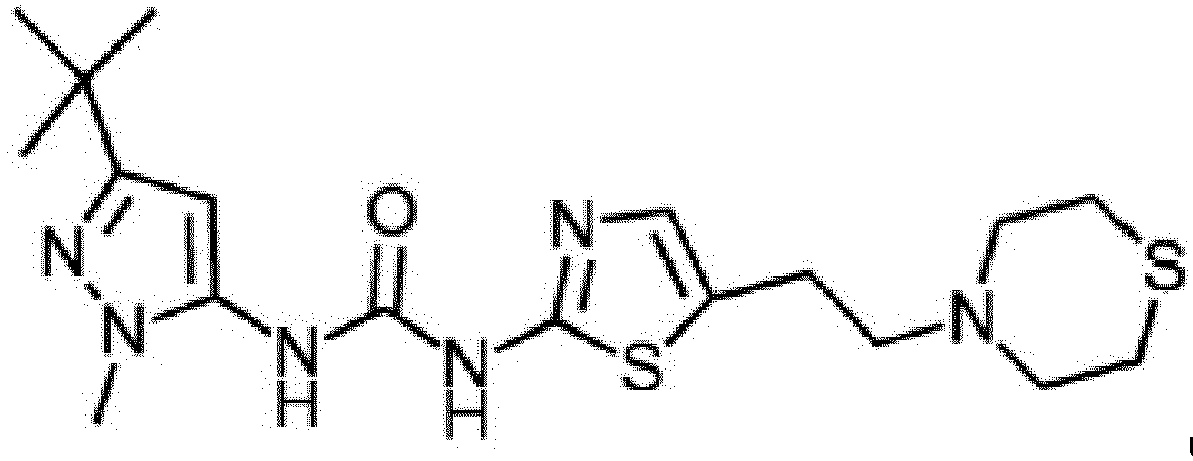

- Verbindung oder ein pharmazeutisch annehmbares Salz davon gemäß Anspruch 1, der Struktur, ausgewählt aus der Gruppe, bestehend aus


- Verbindung oder ein pharmazeutisch annehmbares Salz davon gemäß Anspruch 1, der Struktur, ausgewählt aus der Gruppe, bestehend aus
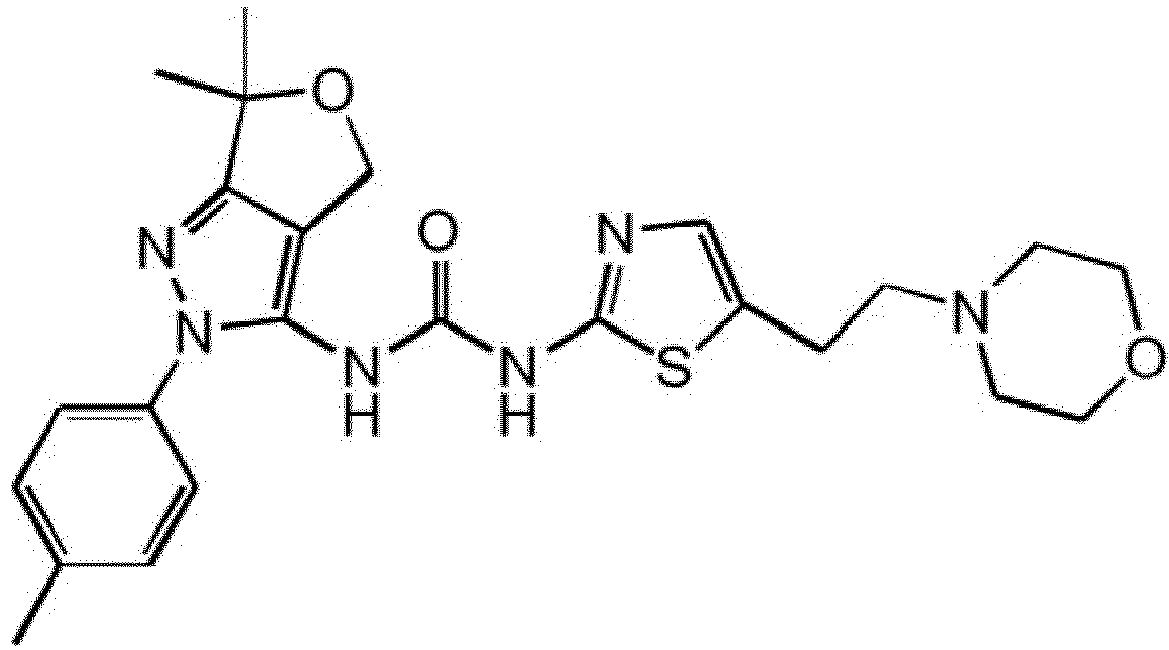

- Verbindung oder ein pharmazeutisch annehmbares Salz davon gemäß Anspruch 1, der Struktur

- Ex-vitro-Verfahren zum Inhibieren der Aktivität von MAPK13, wobei das Verfahren das In-Kontakt-bringen von MAPK13 mit einer Verbindungen einer der Formeln VI oder VII gemäß Anspruch 1 oder einem pharmazeutisch annehmbaren Salz davon umfasst.
- Verbindung zur Verwendung bei der Behandlung einer entzündlichen Atemwegserkrankung eines bedürftigen Subjekts, wobei die Verbindung ausgewählt ist aus der Gruppe, bestehend aus den Formeln VI-VII gemäß Anspruch 1.
- Verbindung zur Verwendung gemäß Anspruch 6, zur Behandlung einer entzündlichen Atemwegserkrankung eines bedürftigen Subjekts, wobei die Verbindung
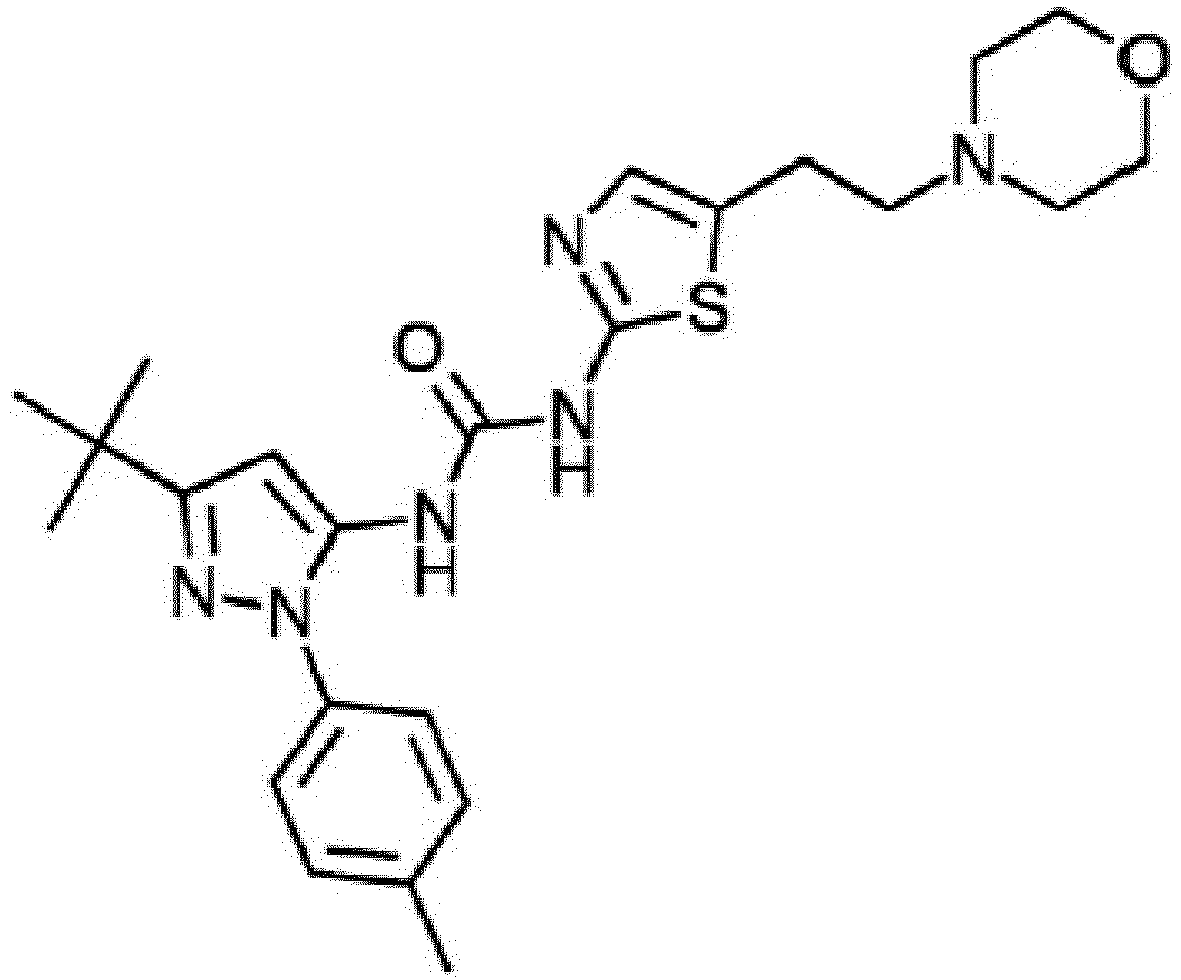
- Verbindung nach einer der Formeln VI-VII gemäß Anspruch 1, zur Verwendung bei der Behandlung einer entzündlichen Atemwegserkrankung eines bedürftigen Subjekts, wobei die Verbindung in einer therapeutisch wirksamen Menge direkt in die Lunge unter Anwendung eines Inhalations-Verabreichungswegs verabreicht wird.
- Verbindung nach einer der Formeln VI-VII gemäß Anspruch 1, zur Verwendung bei der Behandlung einer entzündlichen Atemwegserkrankung eines bedürftigen Subjekts, wobei die Verbindung in einer therapeutisch wirksamen Menge oral verabreicht wird.
- Verbindung nach einer der Formeln VI-VII gemäß Anspruch 1 oder eines pharmazeutisch annehmbaren Salzes davon, zur Verwendung bei der Behandlung von chronisch obstruktiver Lungenerkrankung, Asthma, hypersekretorischen Erkrankungen der Atemwege der Lunge, einer akuten Atemwegserkrankung, chronischer Lungenerkrankung, zystischer Fibrose, akuter und chronischer Bronchitis, Bronchiektasie und obere Atemwegserkrankungen einschließlich allergischer und infektiöser Rhinitis.
- Verbindung oder ein pharmazeutisch annehmbares Salz davon nach Anspruch 1, wobei R1 Aryl ist, welches mit 0-2 Radikalen substituiert ist, jeweils unabhängig ausgewählt aus der Gruppe, bestehend aus einem Halogen, einem Hydroxyl,-OR11, -SR11, niedrigem Alkyl, -CO2R11, -OC(O)R11, -NR10COR11, -CONR11,-NR11C(O)NR11R11, -OC(O)NR11R11, -NR11C(O)OR11 und Imidazolyl, wobei R10 ausgewählt ist aus der Gruppe, bestehend aus H, Methyl, Ethyl, Propyl, Isopropyl und Cyclopropylmethyl, und wobei jedes R11 unabhängig ausgewählt ist aus der Gruppe, bestehend aus H, Methyl, Ethyl, Propyl, Isopropyl und Cyclopropylmethyl.
- Verbindung oder ein pharmazeutisch annehmbares Salz davon nach Anspruch 1, wobei R9 ausgewählt ist aus der Gruppe, bestehend aus niedrigem Alkyl, Cycloalkyl, Cycloalkylalkyl, Heterocycyl, Heterocycylalkyl, Aryl und Arylalkyl, wobei R9 weiter substituiert ist mit 0-3 Gruppen, ausgewählt aus der Gruppe, bestehend aus einem Halogen, einem Hydroxyl, Amin, niedrigem Alkyl, Cycloalkyl, Cycloalkylalkyl, Heterocyclyl, Heterocycloalkyl, Aryl, Arylalkyl, -OR8, -SR8, -NR8R8, -CONR8R8, -NR8COR8, -CO2R8, -NR8C(O)OR8 und -NR8C(O)NR8R8, und wobei jedes R8 unabhängig ausgewählt ist aus der Gruppe, bestehend aus H, niedrigem Alkyl, Cycloalkyl, Cycloalkylalkyl, Heterocyclyl, Heterocycloalkyl, Aryl und Arylalkyl.
- Verbindung oder pharmazeutisch annehmbares Salz davon nach Anspruch 1, wobei jedes R11 unabhängig ausgewählt ist aus der Gruppe, bestehend aus H, Methyl, Ethyl, Propyl, Isopropyl und Cyclopropylmethyl und wobei, wenn ein Stickstoff von R11 mit zwei nicht-hydrogenen Gruppen substituiert ist, die Gruppen zusammengenommen aus einem 5- oder 6-gliedrigen Ring bestehen.
- Verbindung oder pharmazeutisch annehmbares Salz davon nach einem der Ansprüche 1 und 11-13 wobei, wenn R8 nicht H ist, R8 weiter mit 0-2 Radikalen, ausgewählt aus der Gruppe, bestehend aus einem Halogen, einem Hydroxyl, -NR10R10, -OR10, -SR10, -CF3, -CONR10R10, -NR10C(O)R10, -NR10C(O)NR10R10, -OC(O)NR10R10, -NC(O)OR10 und -CO2R10 substituiert ist und wobei jedes R10 unabhängig ausgewählt ist aus der Gruppe, bestehend aus H, Methyl, Ethyl, Propyl, Isopropyl und Cyclopropylmethyl.
- Verbindung oder pharmazeutisch annehmbares Salz davon nach Anspruch 1, wobei, wenn ein Stickstoff von R8 mit zwei nicht-hydrogenen Gruppen substituiert ist, die Gruppen zusammengenommen aus einem 5- bis 6-gliedrigen Ring bestehen.
Applications Claiming Priority (2)
| Application Number | Priority Date | Filing Date | Title |
|---|---|---|---|
| US201261672378P | 2012-07-17 | 2012-07-17 | |
| PCT/US2013/050921 WO2014015056A2 (en) | 2012-07-17 | 2013-07-17 | Anti-mucus drugs and uses therefor |
Publications (3)
| Publication Number | Publication Date |
|---|---|
| EP2875014A2 EP2875014A2 (de) | 2015-05-27 |
| EP2875014A4 EP2875014A4 (de) | 2015-12-23 |
| EP2875014B1 true EP2875014B1 (de) | 2017-11-29 |
Family
ID=49949365
Family Applications (1)
| Application Number | Title | Priority Date | Filing Date |
|---|---|---|---|
| EP13820354.2A Not-in-force EP2875014B1 (de) | 2012-07-17 | 2013-07-17 | Schleimlösungsarzneien und verwendungen dafür |
Country Status (4)
| Country | Link |
|---|---|
| US (1) | US9187470B2 (de) |
| EP (1) | EP2875014B1 (de) |
| CA (1) | CA2879431A1 (de) |
| WO (1) | WO2014015056A2 (de) |
Families Citing this family (13)
| Publication number | Priority date | Publication date | Assignee | Title |
|---|---|---|---|---|
| KR102708177B1 (ko) | 2018-01-31 | 2024-09-23 | 데시페라 파마슈티칼스, 엘엘씨. | 위장관 기질 종양의 치료를 위한 병용 요법 |
| CN118903436A (zh) | 2018-01-31 | 2024-11-08 | 德西费拉制药有限责任公司 | 治疗肥大细胞增多症的组合疗法 |
| CA3142097A1 (en) * | 2018-05-30 | 2019-12-05 | Washington University | Mitogen-activated protein kinase inhibitors, methods of making, and methods of use thereof |
| AU2019387370A1 (en) | 2018-11-30 | 2021-06-10 | Nuvation Bio Inc. | Pyrrole and pyrazole compounds and methods of use thereof |
| IL330104A (en) | 2019-03-11 | 2026-08-01 | Deciphera Pharmaceuticals Llc | Crystalline forms of rifatinib |
| CN114144410A (zh) | 2019-07-19 | 2022-03-04 | 阿纳格纳斯生物技术股份有限公司 | 多芳基脲衍生物及其在治疗肌肉疾病中的用途 |
| HRP20260411T1 (hr) | 2019-08-12 | 2026-05-08 | Deciphera Pharmaceuticals, Llc | Ripretinib za liječenje gastrointestinalnih stromalnih tumora |
| US12691108B2 (en) | 2019-08-12 | 2026-07-28 | Deciphera Pharmaceuticals, Llc | Methods for treating vascular malformations |
| FI4084779T3 (fi) | 2019-12-30 | 2024-12-16 | Deciphera Pharmaceuticals Llc | 1-(4-bromi-5-(1-etyyli-7-(metyyliamino)-2-okso-1,2-dihydro-1,6-naftyridin-3-yyli)-2-fluorifenyyli)-3-fenyyliurean koostumuksia |
| US20230295114A1 (en) * | 2020-05-08 | 2023-09-21 | Georgiamune Llc | Akt3 modulators |
| US11034664B1 (en) | 2020-05-11 | 2021-06-15 | International Business Machines Corporation | Synthesis of cyclic carbonate monomers |
| EP4029501A1 (de) | 2021-01-19 | 2022-07-20 | Anagenesis Biotechnologies | Kombination von polyaromatischen harnstoffderivaten und glucocorticoid- oder hdac-inhibitor zur behandlung von krankheiten oder störungen im zusammenhang mit muskelzellen und/oder satellitenzellen |
| US11779572B1 (en) | 2022-09-02 | 2023-10-10 | Deciphera Pharmaceuticals, Llc | Methods of treating gastrointestinal stromal tumors |
Family Cites Families (14)
| Publication number | Priority date | Publication date | Assignee | Title |
|---|---|---|---|---|
| JP4437270B2 (ja) * | 1997-12-22 | 2010-03-24 | バイエル コーポレイション | 置換複素環式尿素を用いたrafキナーゼの阻害 |
| ES2284887T3 (es) * | 2001-07-11 | 2007-11-16 | Boehringer Ingelheim Pharmaceuticals Inc. | Metodos para tratar enfermedades transmitidas por citocinas. |
| PA8579601A1 (es) | 2002-08-30 | 2004-05-07 | Pfizer Prod Inc | Compuestos antiinflamatorios de di y trifloruro-triazolo-piridinas |
| EP1601672B1 (de) | 2003-02-14 | 2006-07-26 | Pfizer Products Inc. | Triazolopyridine als entzündungshemmende verbindungen |
| US7135575B2 (en) | 2003-03-03 | 2006-11-14 | Array Biopharma, Inc. | P38 inhibitors and methods of use thereof |
| WO2006062982A2 (en) | 2004-12-07 | 2006-06-15 | Locus Pharmaceuticals, Inc. | Urea inhibitors of map kinases |
| JP2009518298A (ja) * | 2005-12-01 | 2009-05-07 | バイエル ヘルスケア リミティド ライアビリティ カンパニー | 癌治療に有用な尿素化合物 |
| EP1984363A1 (de) | 2006-02-09 | 2008-10-29 | Pfizer Limited | Triazolopyridinverbindungen |
| US20110189167A1 (en) * | 2007-04-20 | 2011-08-04 | Flynn Daniel L | Methods and Compositions for the Treatment of Myeloproliferative Diseases and other Proliferative Diseases |
| WO2008140895A1 (en) * | 2007-04-20 | 2008-11-20 | Deciphera Pharmaceuticals, Llc | Kinase inhibitors useful for the treatment of myleoproliferative diseases and other proliferative diseases |
| CA2690410C (en) | 2007-06-12 | 2015-09-29 | Provid Pharmaceuticals, Inc. | Kinase inhibitors, compositions thereof, and methods of use therewith |
| BRPI1005327A2 (pt) * | 2009-02-17 | 2019-09-24 | Chiesi Farm Spa | derivados de triazolopiridina como inibidores de p38 map quinase |
| US20110251216A1 (en) | 2010-02-19 | 2011-10-13 | The Regents Of The University Of Michigan | Compositions and methods for inhibiting ezh2 |
| GB201005589D0 (en) * | 2010-04-01 | 2010-05-19 | Respivert Ltd | Novel compounds |
-
2013
- 2013-07-17 EP EP13820354.2A patent/EP2875014B1/de not_active Not-in-force
- 2013-07-17 WO PCT/US2013/050921 patent/WO2014015056A2/en not_active Ceased
- 2013-07-17 CA CA2879431A patent/CA2879431A1/en not_active Abandoned
-
2015
- 2015-01-16 US US14/599,427 patent/US9187470B2/en not_active Expired - Fee Related
Non-Patent Citations (1)
| Title |
|---|
| None * |
Also Published As
| Publication number | Publication date |
|---|---|
| EP2875014A2 (de) | 2015-05-27 |
| EP2875014A4 (de) | 2015-12-23 |
| CA2879431A1 (en) | 2014-01-23 |
| US20150183777A1 (en) | 2015-07-02 |
| US9187470B2 (en) | 2015-11-17 |
| WO2014015056A3 (en) | 2014-04-03 |
| WO2014015056A2 (en) | 2014-01-23 |
Similar Documents
| Publication | Publication Date | Title |
|---|---|---|
| US9187470B2 (en) | Anti-mucus drugs and uses therefor | |
| US20260035393A1 (en) | Inhibitors of cyclin-dependent kinase 7 (cdk7) | |
| TWI797926B (zh) | 經雜芳基取代之吡啶及使用方法 | |
| JP6887996B2 (ja) | Tead転写因子自己パルミトイル化阻害剤 | |
| ES2423851T3 (es) | Compuesto de aciltiourea o sal del mismo y uso del mismo | |
| JP7328323B2 (ja) | SMARCA2/BRM ATPase阻害剤としての尿素化合物及び組成物 | |
| JP2019503362A (ja) | Dubの阻害剤としてのシアノピロリジン誘導体 | |
| JP7102012B2 (ja) | Ral GTPアーゼを標的とする抗癌化合物及びそれを使用する方法 | |
| UA118760C2 (uk) | Заміщені нуклеозиди, нуклеотиди та їх аналоги | |
| JP2017125029A (ja) | 5′−置換ヌクレオシド化合物 | |
| US11986471B2 (en) | Compounds and methods of use | |
| WO2015007730A1 (en) | Spiroquinoxaline derivatives as inhibitors of non-apoptotic regulated cell-death | |
| Yoon et al. | Identification of a novel 5-amino-3-(5-cyclopropylisoxazol-3-yl)-1-isopropyl-1H-pyrazole-4-carboxamide as a specific RET kinase inhibitor | |
| WO2023034808A1 (en) | Mixed lineage kinase inhibitors and methods of use | |
| EA032272B1 (ru) | Новые соединения | |
| EP1537879A1 (de) | Mittel zur prävention und/oder behandlung von asthma | |
| EP3749355B1 (de) | Inhibitoren der notch transcriptional activation complex kinase (»nack ) und verfahren zur verwendung davon | |
| WO2021129841A1 (zh) | 用作ret激酶抑制剂的化合物及其应用 | |
| WO2023226679A1 (zh) | 3c样蛋白酶抑制剂 | |
| US20230043672A1 (en) | Aromatic amido derivatives as lpa receptor 2 inhibitors | |
| WO2025255442A1 (en) | Trim21-targeted compounds and uses thereof | |
| US20230391730A1 (en) | Inhibitors of the bromodomain phd finger transcription factor (bptf) as anti-cancer agents | |
| Kelley | The Design and Optimization of a First-in-Class Inhibitor of NACK: Illuminating a Druggable Target in Notch | |
| WO2026061424A1 (zh) | 一种化合物、包含其的药物组合物及其用途 | |
| JP2007063261A (ja) | X線照射による肺障害の予防及び/または治療剤 |
Legal Events
| Date | Code | Title | Description |
|---|---|---|---|
| PUAI | Public reference made under article 153(3) epc to a published international application that has entered the european phase |
Free format text: ORIGINAL CODE: 0009012 |
|
| 17P | Request for examination filed |
Effective date: 20150203 |
|
| AK | Designated contracting states |
Kind code of ref document: A2 Designated state(s): AL AT BE BG CH CY CZ DE DK EE ES FI FR GB GR HR HU IE IS IT LI LT LU LV MC MK MT NL NO PL PT RO RS SE SI SK SM TR |
|
| AX | Request for extension of the european patent |
Extension state: BA ME |
|
| DAX | Request for extension of the european patent (deleted) | ||
| A4 | Supplementary search report drawn up and despatched |
Effective date: 20151120 |
|
| RIC1 | Information provided on ipc code assigned before grant |
Ipc: C07D 491/048 20060101ALI20151116BHEP Ipc: G01N 33/66 20060101ALI20151116BHEP Ipc: A61K 31/4427 20060101ALI20151116BHEP Ipc: C07D 401/12 20060101AFI20151116BHEP Ipc: C12N 15/00 20060101ALI20151116BHEP Ipc: A61K 31/4439 20060101ALI20151116BHEP Ipc: A61K 31/437 20060101ALI20151116BHEP Ipc: A61P 11/12 20060101ALI20151116BHEP Ipc: A61P 11/06 20060101ALI20151116BHEP Ipc: C07D 417/12 20060101ALI20151116BHEP Ipc: C07D 471/04 20060101ALI20151116BHEP Ipc: A61K 31/5377 20060101ALI20151116BHEP Ipc: A61K 31/541 20060101ALI20151116BHEP Ipc: C07D 405/14 20060101ALI20151116BHEP Ipc: C07D 409/14 20060101ALI20151116BHEP |
|
| STAA | Information on the status of an ep patent application or granted ep patent |
Free format text: STATUS: EXAMINATION IS IN PROGRESS |
|
| 17Q | First examination report despatched |
Effective date: 20161021 |
|
| GRAP | Despatch of communication of intention to grant a patent |
Free format text: ORIGINAL CODE: EPIDOSNIGR1 |
|
| STAA | Information on the status of an ep patent application or granted ep patent |
Free format text: STATUS: GRANT OF PATENT IS INTENDED |
|
| INTG | Intention to grant announced |
Effective date: 20170523 |
|
| RIN1 | Information on inventor provided before grant (corrected) |
Inventor name: ALEVY, YAEL G. Inventor name: ROMERO, ARTHUR D. Inventor name: PATEL, ANAND C. Inventor name: PATEL, DHARA Inventor name: BRETT, THOMAS J. Inventor name: HOLTZMAN, MICHAEL J. |
|
| GRAJ | Information related to disapproval of communication of intention to grant by the applicant or resumption of examination proceedings by the epo deleted |
Free format text: ORIGINAL CODE: EPIDOSDIGR1 |
|
| STAA | Information on the status of an ep patent application or granted ep patent |
Free format text: STATUS: EXAMINATION IS IN PROGRESS |
|
| GRAR | Information related to intention to grant a patent recorded |
Free format text: ORIGINAL CODE: EPIDOSNIGR71 |
|
| GRAS | Grant fee paid |
Free format text: ORIGINAL CODE: EPIDOSNIGR3 |
|
| STAA | Information on the status of an ep patent application or granted ep patent |
Free format text: STATUS: GRANT OF PATENT IS INTENDED |
|
| GRAA | (expected) grant |
Free format text: ORIGINAL CODE: 0009210 |
|
| STAA | Information on the status of an ep patent application or granted ep patent |
Free format text: STATUS: THE PATENT HAS BEEN GRANTED |
|
| INTC | Intention to grant announced (deleted) | ||
| INTG | Intention to grant announced |
Effective date: 20171019 |
|
| AK | Designated contracting states |
Kind code of ref document: B1 Designated state(s): AL AT BE BG CH CY CZ DE DK EE ES FI FR GB GR HR HU IE IS IT LI LT LU LV MC MK MT NL NO PL PT RO RS SE SI SK SM TR |
|
| REG | Reference to a national code |
Ref country code: CH Ref legal event code: EP |
|
| REG | Reference to a national code |
Ref country code: AT Ref legal event code: REF Ref document number: 950261 Country of ref document: AT Kind code of ref document: T Effective date: 20171215 |
|
| REG | Reference to a national code |
Ref country code: IE Ref legal event code: FG4D |
|
| REG | Reference to a national code |
Ref country code: DE Ref legal event code: R096 Ref document number: 602013030183 Country of ref document: DE |
|
| REG | Reference to a national code |
Ref country code: NL Ref legal event code: MP Effective date: 20171129 |
|
| REG | Reference to a national code |
Ref country code: LT Ref legal event code: MG4D |
|
| REG | Reference to a national code |
Ref country code: AT Ref legal event code: MK05 Ref document number: 950261 Country of ref document: AT Kind code of ref document: T Effective date: 20171129 |
|
| PG25 | Lapsed in a contracting state [announced via postgrant information from national office to epo] |
Ref country code: NO Free format text: LAPSE BECAUSE OF FAILURE TO SUBMIT A TRANSLATION OF THE DESCRIPTION OR TO PAY THE FEE WITHIN THE PRESCRIBED TIME-LIMIT Effective date: 20180228 Ref country code: LT Free format text: LAPSE BECAUSE OF FAILURE TO SUBMIT A TRANSLATION OF THE DESCRIPTION OR TO PAY THE FEE WITHIN THE PRESCRIBED TIME-LIMIT Effective date: 20171129 Ref country code: ES Free format text: LAPSE BECAUSE OF FAILURE TO SUBMIT A TRANSLATION OF THE DESCRIPTION OR TO PAY THE FEE WITHIN THE PRESCRIBED TIME-LIMIT Effective date: 20171129 Ref country code: SE Free format text: LAPSE BECAUSE OF FAILURE TO SUBMIT A TRANSLATION OF THE DESCRIPTION OR TO PAY THE FEE WITHIN THE PRESCRIBED TIME-LIMIT Effective date: 20171129 Ref country code: FI Free format text: LAPSE BECAUSE OF FAILURE TO SUBMIT A TRANSLATION OF THE DESCRIPTION OR TO PAY THE FEE WITHIN THE PRESCRIBED TIME-LIMIT Effective date: 20171129 |
|
| PG25 | Lapsed in a contracting state [announced via postgrant information from national office to epo] |
Ref country code: LV Free format text: LAPSE BECAUSE OF FAILURE TO SUBMIT A TRANSLATION OF THE DESCRIPTION OR TO PAY THE FEE WITHIN THE PRESCRIBED TIME-LIMIT Effective date: 20171129 Ref country code: RS Free format text: LAPSE BECAUSE OF FAILURE TO SUBMIT A TRANSLATION OF THE DESCRIPTION OR TO PAY THE FEE WITHIN THE PRESCRIBED TIME-LIMIT Effective date: 20171129 Ref country code: AT Free format text: LAPSE BECAUSE OF FAILURE TO SUBMIT A TRANSLATION OF THE DESCRIPTION OR TO PAY THE FEE WITHIN THE PRESCRIBED TIME-LIMIT Effective date: 20171129 Ref country code: GR Free format text: LAPSE BECAUSE OF FAILURE TO SUBMIT A TRANSLATION OF THE DESCRIPTION OR TO PAY THE FEE WITHIN THE PRESCRIBED TIME-LIMIT Effective date: 20180301 Ref country code: BG Free format text: LAPSE BECAUSE OF FAILURE TO SUBMIT A TRANSLATION OF THE DESCRIPTION OR TO PAY THE FEE WITHIN THE PRESCRIBED TIME-LIMIT Effective date: 20180228 Ref country code: HR Free format text: LAPSE BECAUSE OF FAILURE TO SUBMIT A TRANSLATION OF THE DESCRIPTION OR TO PAY THE FEE WITHIN THE PRESCRIBED TIME-LIMIT Effective date: 20171129 |
|
| PG25 | Lapsed in a contracting state [announced via postgrant information from national office to epo] |
Ref country code: NL Free format text: LAPSE BECAUSE OF FAILURE TO SUBMIT A TRANSLATION OF THE DESCRIPTION OR TO PAY THE FEE WITHIN THE PRESCRIBED TIME-LIMIT Effective date: 20171129 |
|
| REG | Reference to a national code |
Ref country code: FR Ref legal event code: PLFP Year of fee payment: 6 |
|
| PG25 | Lapsed in a contracting state [announced via postgrant information from national office to epo] |
Ref country code: SK Free format text: LAPSE BECAUSE OF FAILURE TO SUBMIT A TRANSLATION OF THE DESCRIPTION OR TO PAY THE FEE WITHIN THE PRESCRIBED TIME-LIMIT Effective date: 20171129 Ref country code: CZ Free format text: LAPSE BECAUSE OF FAILURE TO SUBMIT A TRANSLATION OF THE DESCRIPTION OR TO PAY THE FEE WITHIN THE PRESCRIBED TIME-LIMIT Effective date: 20171129 Ref country code: DK Free format text: LAPSE BECAUSE OF FAILURE TO SUBMIT A TRANSLATION OF THE DESCRIPTION OR TO PAY THE FEE WITHIN THE PRESCRIBED TIME-LIMIT Effective date: 20171129 Ref country code: CY Free format text: LAPSE BECAUSE OF FAILURE TO SUBMIT A TRANSLATION OF THE DESCRIPTION OR TO PAY THE FEE WITHIN THE PRESCRIBED TIME-LIMIT Effective date: 20171129 Ref country code: EE Free format text: LAPSE BECAUSE OF FAILURE TO SUBMIT A TRANSLATION OF THE DESCRIPTION OR TO PAY THE FEE WITHIN THE PRESCRIBED TIME-LIMIT Effective date: 20171129 |
|
| REG | Reference to a national code |
Ref country code: DE Ref legal event code: R097 Ref document number: 602013030183 Country of ref document: DE |
|
| PG25 | Lapsed in a contracting state [announced via postgrant information from national office to epo] |
Ref country code: PL Free format text: LAPSE BECAUSE OF FAILURE TO SUBMIT A TRANSLATION OF THE DESCRIPTION OR TO PAY THE FEE WITHIN THE PRESCRIBED TIME-LIMIT Effective date: 20171129 Ref country code: RO Free format text: LAPSE BECAUSE OF FAILURE TO SUBMIT A TRANSLATION OF THE DESCRIPTION OR TO PAY THE FEE WITHIN THE PRESCRIBED TIME-LIMIT Effective date: 20171129 Ref country code: IT Free format text: LAPSE BECAUSE OF FAILURE TO SUBMIT A TRANSLATION OF THE DESCRIPTION OR TO PAY THE FEE WITHIN THE PRESCRIBED TIME-LIMIT Effective date: 20171129 Ref country code: SM Free format text: LAPSE BECAUSE OF FAILURE TO SUBMIT A TRANSLATION OF THE DESCRIPTION OR TO PAY THE FEE WITHIN THE PRESCRIBED TIME-LIMIT Effective date: 20171129 |
|
| PLBE | No opposition filed within time limit |
Free format text: ORIGINAL CODE: 0009261 |
|
| STAA | Information on the status of an ep patent application or granted ep patent |
Free format text: STATUS: NO OPPOSITION FILED WITHIN TIME LIMIT |
|
| 26N | No opposition filed |
Effective date: 20180830 |
|
| PG25 | Lapsed in a contracting state [announced via postgrant information from national office to epo] |
Ref country code: SI Free format text: LAPSE BECAUSE OF FAILURE TO SUBMIT A TRANSLATION OF THE DESCRIPTION OR TO PAY THE FEE WITHIN THE PRESCRIBED TIME-LIMIT Effective date: 20171129 |
|
| REG | Reference to a national code |
Ref country code: CH Ref legal event code: PL |
|
| PG25 | Lapsed in a contracting state [announced via postgrant information from national office to epo] |
Ref country code: MC Free format text: LAPSE BECAUSE OF FAILURE TO SUBMIT A TRANSLATION OF THE DESCRIPTION OR TO PAY THE FEE WITHIN THE PRESCRIBED TIME-LIMIT Effective date: 20171129 Ref country code: LU Free format text: LAPSE BECAUSE OF NON-PAYMENT OF DUE FEES Effective date: 20180717 |
|
| REG | Reference to a national code |
Ref country code: BE Ref legal event code: MM Effective date: 20180731 |
|
| REG | Reference to a national code |
Ref country code: IE Ref legal event code: MM4A |
|
| PG25 | Lapsed in a contracting state [announced via postgrant information from national office to epo] |
Ref country code: CH Free format text: LAPSE BECAUSE OF NON-PAYMENT OF DUE FEES Effective date: 20180731 Ref country code: LI Free format text: LAPSE BECAUSE OF NON-PAYMENT OF DUE FEES Effective date: 20180731 Ref country code: IE Free format text: LAPSE BECAUSE OF NON-PAYMENT OF DUE FEES Effective date: 20180717 |
|
| PG25 | Lapsed in a contracting state [announced via postgrant information from national office to epo] |
Ref country code: BE Free format text: LAPSE BECAUSE OF NON-PAYMENT OF DUE FEES Effective date: 20180731 |
|
| PG25 | Lapsed in a contracting state [announced via postgrant information from national office to epo] |
Ref country code: MT Free format text: LAPSE BECAUSE OF NON-PAYMENT OF DUE FEES Effective date: 20180717 |
|
| PG25 | Lapsed in a contracting state [announced via postgrant information from national office to epo] |
Ref country code: TR Free format text: LAPSE BECAUSE OF FAILURE TO SUBMIT A TRANSLATION OF THE DESCRIPTION OR TO PAY THE FEE WITHIN THE PRESCRIBED TIME-LIMIT Effective date: 20171129 |
|
| PG25 | Lapsed in a contracting state [announced via postgrant information from national office to epo] |
Ref country code: HU Free format text: LAPSE BECAUSE OF FAILURE TO SUBMIT A TRANSLATION OF THE DESCRIPTION OR TO PAY THE FEE WITHIN THE PRESCRIBED TIME-LIMIT; INVALID AB INITIO Effective date: 20130717 Ref country code: PT Free format text: LAPSE BECAUSE OF FAILURE TO SUBMIT A TRANSLATION OF THE DESCRIPTION OR TO PAY THE FEE WITHIN THE PRESCRIBED TIME-LIMIT Effective date: 20171129 |
|
| PG25 | Lapsed in a contracting state [announced via postgrant information from national office to epo] |
Ref country code: MK Free format text: LAPSE BECAUSE OF NON-PAYMENT OF DUE FEES Effective date: 20171129 |
|
| PG25 | Lapsed in a contracting state [announced via postgrant information from national office to epo] |
Ref country code: AL Free format text: LAPSE BECAUSE OF FAILURE TO SUBMIT A TRANSLATION OF THE DESCRIPTION OR TO PAY THE FEE WITHIN THE PRESCRIBED TIME-LIMIT Effective date: 20171129 Ref country code: IS Free format text: LAPSE BECAUSE OF FAILURE TO SUBMIT A TRANSLATION OF THE DESCRIPTION OR TO PAY THE FEE WITHIN THE PRESCRIBED TIME-LIMIT Effective date: 20180329 |
|
| PGFP | Annual fee paid to national office [announced via postgrant information from national office to epo] |
Ref country code: FR Payment date: 20210729 Year of fee payment: 9 |
|
| PGFP | Annual fee paid to national office [announced via postgrant information from national office to epo] |
Ref country code: GB Payment date: 20210722 Year of fee payment: 9 Ref country code: DE Payment date: 20210721 Year of fee payment: 9 |
|
| REG | Reference to a national code |
Ref country code: DE Ref legal event code: R119 Ref document number: 602013030183 Country of ref document: DE |
|
| GBPC | Gb: european patent ceased through non-payment of renewal fee |
Effective date: 20220717 |
|
| PG25 | Lapsed in a contracting state [announced via postgrant information from national office to epo] |
Ref country code: FR Free format text: LAPSE BECAUSE OF NON-PAYMENT OF DUE FEES Effective date: 20220731 |
|
| PG25 | Lapsed in a contracting state [announced via postgrant information from national office to epo] |
Ref country code: GB Free format text: LAPSE BECAUSE OF NON-PAYMENT OF DUE FEES Effective date: 20220717 Ref country code: DE Free format text: LAPSE BECAUSE OF NON-PAYMENT OF DUE FEES Effective date: 20230201 |