EP2901589B1 - Mappage de requête automatique de répétition hybride (harq) pour l'agrégation de porteuses (ca) - Google Patents
Mappage de requête automatique de répétition hybride (harq) pour l'agrégation de porteuses (ca) Download PDFInfo
- Publication number
- EP2901589B1 EP2901589B1 EP13842882.6A EP13842882A EP2901589B1 EP 2901589 B1 EP2901589 B1 EP 2901589B1 EP 13842882 A EP13842882 A EP 13842882A EP 2901589 B1 EP2901589 B1 EP 2901589B1
- Authority
- EP
- European Patent Office
- Prior art keywords
- pucch
- harq
- window size
- bundling window
- subframe
- Prior art date
- Legal status (The legal status is an assumption and is not a legal conclusion. Google has not performed a legal analysis and makes no representation as to the accuracy of the status listed.)
- Not-in-force
Links
Images










Classifications
-
- H—ELECTRICITY
- H04—ELECTRIC COMMUNICATION TECHNIQUE
- H04W—WIRELESS COMMUNICATION NETWORKS
- H04W28/00—Network traffic management; Network resource management
- H04W28/02—Traffic management, e.g. flow control or congestion control
- H04W28/0215—Traffic management, e.g. flow control or congestion control based on user or device properties, e.g. MTC-capable devices
- H04W28/0221—Traffic management, e.g. flow control or congestion control based on user or device properties, e.g. MTC-capable devices power availability or consumption
-
- H—ELECTRICITY
- H04—ELECTRIC COMMUNICATION TECHNIQUE
- H04W—WIRELESS COMMUNICATION NETWORKS
- H04W48/00—Access restriction; Network selection; Access point selection
- H04W48/08—Access restriction or access information delivery, e.g. discovery data delivery
- H04W48/14—Access restriction or access information delivery, e.g. discovery data delivery using user query or user detection
-
- H—ELECTRICITY
- H04—ELECTRIC COMMUNICATION TECHNIQUE
- H04B—TRANSMISSION
- H04B17/00—Monitoring; Testing
- H04B17/30—Monitoring; Testing of propagation channels
- H04B17/309—Measuring or estimating channel quality parameters
- H04B17/318—Received signal strength
-
- H—ELECTRICITY
- H04—ELECTRIC COMMUNICATION TECHNIQUE
- H04J—MULTIPLEX COMMUNICATION
- H04J11/00—Orthogonal multiplex systems, e.g. using WALSH codes
-
- H—ELECTRICITY
- H04—ELECTRIC COMMUNICATION TECHNIQUE
- H04J—MULTIPLEX COMMUNICATION
- H04J11/00—Orthogonal multiplex systems, e.g. using WALSH codes
- H04J11/0069—Cell search, i.e. determining cell identity [cell-ID]
- H04J11/0086—Search parameters, e.g. search strategy, accumulation length, range of search, thresholds
-
- H—ELECTRICITY
- H04—ELECTRIC COMMUNICATION TECHNIQUE
- H04J—MULTIPLEX COMMUNICATION
- H04J3/00—Time-division multiplex systems
- H04J3/16—Time-division multiplex systems in which the time allocation to individual channels within a transmission cycle is variable, e.g. to accommodate varying complexity of signals, to vary number of channels transmitted
- H04J3/1694—Allocation of channels in TDM/TDMA networks, e.g. distributed multiplexers
-
- H—ELECTRICITY
- H04—ELECTRIC COMMUNICATION TECHNIQUE
- H04L—TRANSMISSION OF DIGITAL INFORMATION, e.g. TELEGRAPHIC COMMUNICATION
- H04L1/00—Arrangements for detecting or preventing errors in the information received
- H04L1/0001—Systems modifying transmission characteristics according to link quality, e.g. power backoff
- H04L1/0036—Systems modifying transmission characteristics according to link quality, e.g. power backoff arrangements specific to the receiver
- H04L1/0038—Blind format detection
-
- H—ELECTRICITY
- H04—ELECTRIC COMMUNICATION TECHNIQUE
- H04L—TRANSMISSION OF DIGITAL INFORMATION, e.g. TELEGRAPHIC COMMUNICATION
- H04L1/00—Arrangements for detecting or preventing errors in the information received
- H04L1/12—Arrangements for detecting or preventing errors in the information received by using return channel
- H04L1/16—Arrangements for detecting or preventing errors in the information received by using return channel in which the return channel carries supervisory signals, e.g. repetition request signals
- H04L1/18—Automatic repetition systems, e.g. Van Duuren systems
- H04L1/1812—Hybrid protocols; Hybrid automatic repeat request [HARQ]
-
- H—ELECTRICITY
- H04—ELECTRIC COMMUNICATION TECHNIQUE
- H04L—TRANSMISSION OF DIGITAL INFORMATION, e.g. TELEGRAPHIC COMMUNICATION
- H04L1/00—Arrangements for detecting or preventing errors in the information received
- H04L1/12—Arrangements for detecting or preventing errors in the information received by using return channel
- H04L1/16—Arrangements for detecting or preventing errors in the information received by using return channel in which the return channel carries supervisory signals, e.g. repetition request signals
- H04L1/18—Automatic repetition systems, e.g. Van Duuren systems
- H04L1/1829—Arrangements specially adapted for the receiver end
- H04L1/1861—Physical mapping arrangements
-
- H—ELECTRICITY
- H04—ELECTRIC COMMUNICATION TECHNIQUE
- H04L—TRANSMISSION OF DIGITAL INFORMATION, e.g. TELEGRAPHIC COMMUNICATION
- H04L1/00—Arrangements for detecting or preventing errors in the information received
- H04L1/12—Arrangements for detecting or preventing errors in the information received by using return channel
- H04L1/16—Arrangements for detecting or preventing errors in the information received by using return channel in which the return channel carries supervisory signals, e.g. repetition request signals
- H04L1/18—Automatic repetition systems, e.g. Van Duuren systems
- H04L1/1829—Arrangements specially adapted for the receiver end
- H04L1/1864—ARQ related signaling
-
- H—ELECTRICITY
- H04—ELECTRIC COMMUNICATION TECHNIQUE
- H04L—TRANSMISSION OF DIGITAL INFORMATION, e.g. TELEGRAPHIC COMMUNICATION
- H04L1/00—Arrangements for detecting or preventing errors in the information received
- H04L1/12—Arrangements for detecting or preventing errors in the information received by using return channel
- H04L1/16—Arrangements for detecting or preventing errors in the information received by using return channel in which the return channel carries supervisory signals, e.g. repetition request signals
- H04L1/18—Automatic repetition systems, e.g. Van Duuren systems
- H04L1/1867—Arrangements specially adapted for the transmitter end
- H04L1/1893—Physical mapping arrangements
-
- H—ELECTRICITY
- H04—ELECTRIC COMMUNICATION TECHNIQUE
- H04L—TRANSMISSION OF DIGITAL INFORMATION, e.g. TELEGRAPHIC COMMUNICATION
- H04L41/00—Arrangements for maintenance, administration or management of data switching networks, e.g. of packet switching networks
- H04L41/06—Management of faults, events, alarms or notifications
- H04L41/069—Management of faults, events, alarms or notifications using logs of notifications; Post-processing of notifications
-
- H—ELECTRICITY
- H04—ELECTRIC COMMUNICATION TECHNIQUE
- H04L—TRANSMISSION OF DIGITAL INFORMATION, e.g. TELEGRAPHIC COMMUNICATION
- H04L41/00—Arrangements for maintenance, administration or management of data switching networks, e.g. of packet switching networks
- H04L41/50—Network service management, e.g. ensuring proper service fulfilment according to agreements
- H04L41/5032—Generating service level reports
-
- H—ELECTRICITY
- H04—ELECTRIC COMMUNICATION TECHNIQUE
- H04L—TRANSMISSION OF DIGITAL INFORMATION, e.g. TELEGRAPHIC COMMUNICATION
- H04L43/00—Arrangements for monitoring or testing data switching networks
- H04L43/16—Threshold monitoring
-
- H—ELECTRICITY
- H04—ELECTRIC COMMUNICATION TECHNIQUE
- H04L—TRANSMISSION OF DIGITAL INFORMATION, e.g. TELEGRAPHIC COMMUNICATION
- H04L5/00—Arrangements affording multiple use of the transmission path
- H04L5/003—Arrangements for allocating sub-channels of the transmission path
- H04L5/0032—Distributed allocation, i.e. involving a plurality of allocating devices, each making partial allocation
- H04L5/0035—Resource allocation in a cooperative multipoint environment
-
- H—ELECTRICITY
- H04—ELECTRIC COMMUNICATION TECHNIQUE
- H04L—TRANSMISSION OF DIGITAL INFORMATION, e.g. TELEGRAPHIC COMMUNICATION
- H04L5/00—Arrangements affording multiple use of the transmission path
- H04L5/003—Arrangements for allocating sub-channels of the transmission path
- H04L5/0053—Allocation of signalling, i.e. of overhead other than pilot signals
- H04L5/0055—Physical resource allocation for ACK/NACK
-
- H—ELECTRICITY
- H04—ELECTRIC COMMUNICATION TECHNIQUE
- H04L—TRANSMISSION OF DIGITAL INFORMATION, e.g. TELEGRAPHIC COMMUNICATION
- H04L5/00—Arrangements affording multiple use of the transmission path
- H04L5/003—Arrangements for allocating sub-channels of the transmission path
- H04L5/0053—Allocation of signalling, i.e. of overhead other than pilot signals
- H04L5/0057—Physical resource allocation for CQI
-
- H—ELECTRICITY
- H04—ELECTRIC COMMUNICATION TECHNIQUE
- H04L—TRANSMISSION OF DIGITAL INFORMATION, e.g. TELEGRAPHIC COMMUNICATION
- H04L5/00—Arrangements affording multiple use of the transmission path
- H04L5/003—Arrangements for allocating sub-channels of the transmission path
- H04L5/0058—Allocation criteria
- H04L5/0073—Allocation arrangements that take into account other cell interferences
-
- H—ELECTRICITY
- H04—ELECTRIC COMMUNICATION TECHNIQUE
- H04L—TRANSMISSION OF DIGITAL INFORMATION, e.g. TELEGRAPHIC COMMUNICATION
- H04L5/00—Arrangements affording multiple use of the transmission path
- H04L5/0091—Signalling for the administration of the divided path, e.g. signalling of configuration information
-
- H—ELECTRICITY
- H04—ELECTRIC COMMUNICATION TECHNIQUE
- H04L—TRANSMISSION OF DIGITAL INFORMATION, e.g. TELEGRAPHIC COMMUNICATION
- H04L5/00—Arrangements affording multiple use of the transmission path
- H04L5/14—Two-way operation using the same type of signal, i.e. duplex
-
- H—ELECTRICITY
- H04—ELECTRIC COMMUNICATION TECHNIQUE
- H04L—TRANSMISSION OF DIGITAL INFORMATION, e.g. TELEGRAPHIC COMMUNICATION
- H04L65/00—Network arrangements, protocols or services for supporting real-time applications in data packet communication
- H04L65/60—Network streaming of media packets
-
- H—ELECTRICITY
- H04—ELECTRIC COMMUNICATION TECHNIQUE
- H04L—TRANSMISSION OF DIGITAL INFORMATION, e.g. TELEGRAPHIC COMMUNICATION
- H04L65/00—Network arrangements, protocols or services for supporting real-time applications in data packet communication
- H04L65/60—Network streaming of media packets
- H04L65/61—Network streaming of media packets for supporting one-way streaming services, e.g. Internet radio
- H04L65/612—Network streaming of media packets for supporting one-way streaming services, e.g. Internet radio for unicast
-
- H—ELECTRICITY
- H04—ELECTRIC COMMUNICATION TECHNIQUE
- H04L—TRANSMISSION OF DIGITAL INFORMATION, e.g. TELEGRAPHIC COMMUNICATION
- H04L65/00—Network arrangements, protocols or services for supporting real-time applications in data packet communication
- H04L65/60—Network streaming of media packets
- H04L65/65—Network streaming protocols, e.g. real-time transport protocol [RTP] or real-time control protocol [RTCP]
-
- H—ELECTRICITY
- H04—ELECTRIC COMMUNICATION TECHNIQUE
- H04L—TRANSMISSION OF DIGITAL INFORMATION, e.g. TELEGRAPHIC COMMUNICATION
- H04L65/00—Network arrangements, protocols or services for supporting real-time applications in data packet communication
- H04L65/60—Network streaming of media packets
- H04L65/75—Media network packet handling
- H04L65/762—Media network packet handling at the source
-
- H—ELECTRICITY
- H04—ELECTRIC COMMUNICATION TECHNIQUE
- H04L—TRANSMISSION OF DIGITAL INFORMATION, e.g. TELEGRAPHIC COMMUNICATION
- H04L67/00—Network arrangements or protocols for supporting network services or applications
- H04L67/01—Protocols
- H04L67/10—Protocols in which an application is distributed across nodes in the network
-
- H—ELECTRICITY
- H04—ELECTRIC COMMUNICATION TECHNIQUE
- H04W—WIRELESS COMMUNICATION NETWORKS
- H04W24/00—Supervisory, monitoring or testing arrangements
- H04W24/02—Arrangements for optimising operational condition
-
- H—ELECTRICITY
- H04—ELECTRIC COMMUNICATION TECHNIQUE
- H04W—WIRELESS COMMUNICATION NETWORKS
- H04W24/00—Supervisory, monitoring or testing arrangements
- H04W24/08—Testing, supervising or monitoring using real traffic
-
- H—ELECTRICITY
- H04—ELECTRIC COMMUNICATION TECHNIQUE
- H04W—WIRELESS COMMUNICATION NETWORKS
- H04W24/00—Supervisory, monitoring or testing arrangements
- H04W24/10—Scheduling measurement reports ; Arrangements for measurement reports
-
- H—ELECTRICITY
- H04—ELECTRIC COMMUNICATION TECHNIQUE
- H04W—WIRELESS COMMUNICATION NETWORKS
- H04W28/00—Network traffic management; Network resource management
- H04W28/02—Traffic management, e.g. flow control or congestion control
- H04W28/0205—Traffic management, e.g. flow control or congestion control at the air interface
-
- H—ELECTRICITY
- H04—ELECTRIC COMMUNICATION TECHNIQUE
- H04W—WIRELESS COMMUNICATION NETWORKS
- H04W28/00—Network traffic management; Network resource management
- H04W28/02—Traffic management, e.g. flow control or congestion control
- H04W28/0215—Traffic management, e.g. flow control or congestion control based on user or device properties, e.g. MTC-capable devices
-
- H—ELECTRICITY
- H04—ELECTRIC COMMUNICATION TECHNIQUE
- H04W—WIRELESS COMMUNICATION NETWORKS
- H04W28/00—Network traffic management; Network resource management
- H04W28/02—Traffic management, e.g. flow control or congestion control
- H04W28/0252—Traffic management, e.g. flow control or congestion control per individual bearer or channel
-
- H—ELECTRICITY
- H04—ELECTRIC COMMUNICATION TECHNIQUE
- H04W—WIRELESS COMMUNICATION NETWORKS
- H04W28/00—Network traffic management; Network resource management
- H04W28/02—Traffic management, e.g. flow control or congestion control
- H04W28/0268—Traffic management, e.g. flow control or congestion control using specific QoS parameters for wireless networks, e.g. QoS class identifier [QCI] or guaranteed bit rate [GBR]
-
- H—ELECTRICITY
- H04—ELECTRIC COMMUNICATION TECHNIQUE
- H04W—WIRELESS COMMUNICATION NETWORKS
- H04W28/00—Network traffic management; Network resource management
- H04W28/02—Traffic management, e.g. flow control or congestion control
- H04W28/08—Load balancing or load distribution
- H04W28/09—Management thereof
- H04W28/0925—Management thereof using policies
- H04W28/0942—Management thereof using policies based on measured or predicted load of entities- or links
-
- H—ELECTRICITY
- H04—ELECTRIC COMMUNICATION TECHNIQUE
- H04W—WIRELESS COMMUNICATION NETWORKS
- H04W28/00—Network traffic management; Network resource management
- H04W28/16—Central resource management; Negotiation of resources or communication parameters, e.g. negotiating bandwidth or QoS [Quality of Service]
-
- H—ELECTRICITY
- H04—ELECTRIC COMMUNICATION TECHNIQUE
- H04W—WIRELESS COMMUNICATION NETWORKS
- H04W36/00—Hand-off or reselection arrangements
- H04W36/0005—Control or signalling for completing the hand-off
- H04W36/0055—Transmission or use of information for re-establishing the radio link
- H04W36/0061—Transmission or use of information for re-establishing the radio link of neighbour cell information
-
- H—ELECTRICITY
- H04—ELECTRIC COMMUNICATION TECHNIQUE
- H04W—WIRELESS COMMUNICATION NETWORKS
- H04W36/00—Hand-off or reselection arrangements
- H04W36/0005—Control or signalling for completing the hand-off
- H04W36/0055—Transmission or use of information for re-establishing the radio link
- H04W36/0066—Transmission or use of information for re-establishing the radio link of control information between different types of networks in order to establish a new radio link in the target network
-
- H—ELECTRICITY
- H04—ELECTRIC COMMUNICATION TECHNIQUE
- H04W—WIRELESS COMMUNICATION NETWORKS
- H04W36/00—Hand-off or reselection arrangements
- H04W36/0005—Control or signalling for completing the hand-off
- H04W36/0083—Determination of parameters used for hand-off, e.g. generation or modification of neighbour cell lists
- H04W36/0085—Hand-off measurements
-
- H—ELECTRICITY
- H04—ELECTRIC COMMUNICATION TECHNIQUE
- H04W—WIRELESS COMMUNICATION NETWORKS
- H04W36/00—Hand-off or reselection arrangements
- H04W36/0005—Control or signalling for completing the hand-off
- H04W36/0083—Determination of parameters used for hand-off, e.g. generation or modification of neighbour cell lists
- H04W36/0085—Hand-off measurements
- H04W36/0088—Scheduling hand-off measurements
-
- H—ELECTRICITY
- H04—ELECTRIC COMMUNICATION TECHNIQUE
- H04W—WIRELESS COMMUNICATION NETWORKS
- H04W36/00—Hand-off or reselection arrangements
- H04W36/16—Performing reselection for specific purposes
- H04W36/22—Performing reselection for specific purposes for handling the traffic
-
- H—ELECTRICITY
- H04—ELECTRIC COMMUNICATION TECHNIQUE
- H04W—WIRELESS COMMUNICATION NETWORKS
- H04W4/00—Services specially adapted for wireless communication networks; Facilities therefor
- H04W4/70—Services for machine-to-machine communication [M2M] or machine type communication [MTC]
-
- H—ELECTRICITY
- H04—ELECTRIC COMMUNICATION TECHNIQUE
- H04W—WIRELESS COMMUNICATION NETWORKS
- H04W40/00—Communication routing or communication path finding
- H04W40/005—Routing actions in the presence of nodes in sleep or doze mode
-
- H—ELECTRICITY
- H04—ELECTRIC COMMUNICATION TECHNIQUE
- H04W—WIRELESS COMMUNICATION NETWORKS
- H04W40/00—Communication routing or communication path finding
- H04W40/24—Connectivity information management, e.g. connectivity discovery or connectivity update
- H04W40/246—Connectivity information discovery
-
- H—ELECTRICITY
- H04—ELECTRIC COMMUNICATION TECHNIQUE
- H04W—WIRELESS COMMUNICATION NETWORKS
- H04W48/00—Access restriction; Network selection; Access point selection
- H04W48/16—Discovering, processing access restriction or access information
-
- H—ELECTRICITY
- H04—ELECTRIC COMMUNICATION TECHNIQUE
- H04W—WIRELESS COMMUNICATION NETWORKS
- H04W48/00—Access restriction; Network selection; Access point selection
- H04W48/20—Selecting an access point
-
- H—ELECTRICITY
- H04—ELECTRIC COMMUNICATION TECHNIQUE
- H04W—WIRELESS COMMUNICATION NETWORKS
- H04W52/00—Power management, e.g. Transmission Power Control [TPC] or power classes
- H04W52/02—Power saving arrangements
- H04W52/0209—Power saving arrangements in terminal devices
-
- H—ELECTRICITY
- H04—ELECTRIC COMMUNICATION TECHNIQUE
- H04W—WIRELESS COMMUNICATION NETWORKS
- H04W52/00—Power management, e.g. Transmission Power Control [TPC] or power classes
- H04W52/02—Power saving arrangements
- H04W52/0209—Power saving arrangements in terminal devices
- H04W52/0212—Power saving arrangements in terminal devices managed by the network, e.g. network or access point is leader and terminal is follower
-
- H—ELECTRICITY
- H04—ELECTRIC COMMUNICATION TECHNIQUE
- H04W—WIRELESS COMMUNICATION NETWORKS
- H04W52/00—Power management, e.g. Transmission Power Control [TPC] or power classes
- H04W52/02—Power saving arrangements
- H04W52/0209—Power saving arrangements in terminal devices
- H04W52/0225—Power saving arrangements in terminal devices using monitoring of external events, e.g. the presence of a signal
-
- H—ELECTRICITY
- H04—ELECTRIC COMMUNICATION TECHNIQUE
- H04W—WIRELESS COMMUNICATION NETWORKS
- H04W52/00—Power management, e.g. Transmission Power Control [TPC] or power classes
- H04W52/02—Power saving arrangements
- H04W52/0209—Power saving arrangements in terminal devices
- H04W52/0225—Power saving arrangements in terminal devices using monitoring of external events, e.g. the presence of a signal
- H04W52/0229—Power saving arrangements in terminal devices using monitoring of external events, e.g. the presence of a signal where the received signal is a wanted signal
- H04W52/0235—Power saving arrangements in terminal devices using monitoring of external events, e.g. the presence of a signal where the received signal is a wanted signal where the received signal is a power saving command
-
- H—ELECTRICITY
- H04—ELECTRIC COMMUNICATION TECHNIQUE
- H04W—WIRELESS COMMUNICATION NETWORKS
- H04W52/00—Power management, e.g. Transmission Power Control [TPC] or power classes
- H04W52/02—Power saving arrangements
- H04W52/0209—Power saving arrangements in terminal devices
- H04W52/0251—Power saving arrangements in terminal devices using monitoring of local events, e.g. events related to user activity
- H04W52/0258—Power saving arrangements in terminal devices using monitoring of local events, e.g. events related to user activity controlling an operation mode according to history or models of usage information, e.g. activity schedule or time of day
-
- H—ELECTRICITY
- H04—ELECTRIC COMMUNICATION TECHNIQUE
- H04W—WIRELESS COMMUNICATION NETWORKS
- H04W52/00—Power management, e.g. Transmission Power Control [TPC] or power classes
- H04W52/04—Transmission power control [TPC]
-
- H—ELECTRICITY
- H04—ELECTRIC COMMUNICATION TECHNIQUE
- H04W—WIRELESS COMMUNICATION NETWORKS
- H04W52/00—Power management, e.g. Transmission Power Control [TPC] or power classes
- H04W52/04—Transmission power control [TPC]
- H04W52/06—TPC algorithms
- H04W52/14—Separate analysis of uplink or downlink
-
- H—ELECTRICITY
- H04—ELECTRIC COMMUNICATION TECHNIQUE
- H04W—WIRELESS COMMUNICATION NETWORKS
- H04W72/00—Local resource management
- H04W72/02—Selection of wireless resources by user or terminal
-
- H—ELECTRICITY
- H04—ELECTRIC COMMUNICATION TECHNIQUE
- H04W—WIRELESS COMMUNICATION NETWORKS
- H04W72/00—Local resource management
- H04W72/04—Wireless resource allocation
- H04W72/044—Wireless resource allocation based on the type of the allocated resource
-
- H—ELECTRICITY
- H04—ELECTRIC COMMUNICATION TECHNIQUE
- H04W—WIRELESS COMMUNICATION NETWORKS
- H04W72/00—Local resource management
- H04W72/04—Wireless resource allocation
- H04W72/044—Wireless resource allocation based on the type of the allocated resource
- H04W72/0453—Resources in frequency domain, e.g. a carrier in FDMA
-
- H—ELECTRICITY
- H04—ELECTRIC COMMUNICATION TECHNIQUE
- H04W—WIRELESS COMMUNICATION NETWORKS
- H04W72/00—Local resource management
- H04W72/20—Control channels or signalling for resource management
-
- H—ELECTRICITY
- H04—ELECTRIC COMMUNICATION TECHNIQUE
- H04W—WIRELESS COMMUNICATION NETWORKS
- H04W72/00—Local resource management
- H04W72/20—Control channels or signalling for resource management
- H04W72/21—Control channels or signalling for resource management in the uplink direction of a wireless link, i.e. towards the network
-
- H—ELECTRICITY
- H04—ELECTRIC COMMUNICATION TECHNIQUE
- H04W—WIRELESS COMMUNICATION NETWORKS
- H04W72/00—Local resource management
- H04W72/20—Control channels or signalling for resource management
- H04W72/23—Control channels or signalling for resource management in the downlink direction of a wireless link, i.e. towards a terminal
-
- H—ELECTRICITY
- H04—ELECTRIC COMMUNICATION TECHNIQUE
- H04W—WIRELESS COMMUNICATION NETWORKS
- H04W72/00—Local resource management
- H04W72/50—Allocation or scheduling criteria for wireless resources
- H04W72/52—Allocation or scheduling criteria for wireless resources based on load
-
- H—ELECTRICITY
- H04—ELECTRIC COMMUNICATION TECHNIQUE
- H04W—WIRELESS COMMUNICATION NETWORKS
- H04W72/00—Local resource management
- H04W72/50—Allocation or scheduling criteria for wireless resources
- H04W72/54—Allocation or scheduling criteria for wireless resources based on quality criteria
- H04W72/541—Allocation or scheduling criteria for wireless resources based on quality criteria using the level of interference
-
- H—ELECTRICITY
- H04—ELECTRIC COMMUNICATION TECHNIQUE
- H04W—WIRELESS COMMUNICATION NETWORKS
- H04W74/00—Wireless channel access
- H04W74/002—Transmission of channel access control information
-
- H—ELECTRICITY
- H04—ELECTRIC COMMUNICATION TECHNIQUE
- H04W—WIRELESS COMMUNICATION NETWORKS
- H04W74/00—Wireless channel access
- H04W74/002—Transmission of channel access control information
- H04W74/004—Transmission of channel access control information in the uplink, i.e. towards network
-
- H—ELECTRICITY
- H04—ELECTRIC COMMUNICATION TECHNIQUE
- H04W—WIRELESS COMMUNICATION NETWORKS
- H04W76/00—Connection management
- H04W76/10—Connection setup
- H04W76/12—Setup of transport tunnels
-
- H—ELECTRICITY
- H04—ELECTRIC COMMUNICATION TECHNIQUE
- H04W—WIRELESS COMMUNICATION NETWORKS
- H04W76/00—Connection management
- H04W76/10—Connection setup
- H04W76/15—Setup of multiple wireless link connections
-
- H—ELECTRICITY
- H04—ELECTRIC COMMUNICATION TECHNIQUE
- H04W—WIRELESS COMMUNICATION NETWORKS
- H04W76/00—Connection management
- H04W76/10—Connection setup
- H04W76/15—Setup of multiple wireless link connections
- H04W76/16—Involving different core network technologies, e.g. a packet-switched [PS] bearer in combination with a circuit-switched [CS] bearer
-
- H—ELECTRICITY
- H04—ELECTRIC COMMUNICATION TECHNIQUE
- H04W—WIRELESS COMMUNICATION NETWORKS
- H04W76/00—Connection management
- H04W76/20—Manipulation of established connections
- H04W76/23—Manipulation of direct-mode connections
-
- H—ELECTRICITY
- H04—ELECTRIC COMMUNICATION TECHNIQUE
- H04W—WIRELESS COMMUNICATION NETWORKS
- H04W76/00—Connection management
- H04W76/20—Manipulation of established connections
- H04W76/27—Transitions between radio resource control [RRC] states
-
- H—ELECTRICITY
- H04—ELECTRIC COMMUNICATION TECHNIQUE
- H04W—WIRELESS COMMUNICATION NETWORKS
- H04W76/00—Connection management
- H04W76/20—Manipulation of established connections
- H04W76/28—Discontinuous transmission [DTX]; Discontinuous reception [DRX]
-
- H—ELECTRICITY
- H04—ELECTRIC COMMUNICATION TECHNIQUE
- H04W—WIRELESS COMMUNICATION NETWORKS
- H04W76/00—Connection management
- H04W76/30—Connection release
-
- H—ELECTRICITY
- H04—ELECTRIC COMMUNICATION TECHNIQUE
- H04W—WIRELESS COMMUNICATION NETWORKS
- H04W8/00—Network data management
- H04W8/02—Processing of mobility data, e.g. registration information at HLR [Home Location Register] or VLR [Visitor Location Register]; Transfer of mobility data, e.g. between HLR, VLR or external networks
- H04W8/08—Mobility data transfer
-
- H—ELECTRICITY
- H04—ELECTRIC COMMUNICATION TECHNIQUE
- H04W—WIRELESS COMMUNICATION NETWORKS
- H04W88/00—Devices specially adapted for wireless communication networks, e.g. terminals, base stations or access point devices
- H04W88/02—Terminal devices
-
- H—ELECTRICITY
- H04—ELECTRIC COMMUNICATION TECHNIQUE
- H04W—WIRELESS COMMUNICATION NETWORKS
- H04W92/00—Interfaces specially adapted for wireless communication networks
- H04W92/02—Inter-networking arrangements
-
- H—ELECTRICITY
- H04—ELECTRIC COMMUNICATION TECHNIQUE
- H04L—TRANSMISSION OF DIGITAL INFORMATION, e.g. TELEGRAPHIC COMMUNICATION
- H04L5/00—Arrangements affording multiple use of the transmission path
- H04L5/0001—Arrangements for dividing the transmission path
- H04L5/0003—Two-dimensional division
- H04L5/0005—Time-frequency
- H04L5/0007—Time-frequency the frequencies being orthogonal, e.g. OFDM(A) or DMT
- H04L5/001—Time-frequency the frequencies being orthogonal, e.g. OFDM(A) or DMT the frequencies being arranged in component carriers
-
- H—ELECTRICITY
- H04—ELECTRIC COMMUNICATION TECHNIQUE
- H04W—WIRELESS COMMUNICATION NETWORKS
- H04W48/00—Access restriction; Network selection; Access point selection
- H04W48/18—Selecting a network or a communication service
-
- H—ELECTRICITY
- H04—ELECTRIC COMMUNICATION TECHNIQUE
- H04W—WIRELESS COMMUNICATION NETWORKS
- H04W52/00—Power management, e.g. Transmission Power Control [TPC] or power classes
- H04W52/02—Power saving arrangements
- H04W52/0209—Power saving arrangements in terminal devices
- H04W52/0261—Power saving arrangements in terminal devices managing power supply demand, e.g. depending on battery level
-
- H—ELECTRICITY
- H04—ELECTRIC COMMUNICATION TECHNIQUE
- H04W—WIRELESS COMMUNICATION NETWORKS
- H04W72/00—Local resource management
- H04W72/30—Resource management for broadcast services
-
- H—ELECTRICITY
- H04—ELECTRIC COMMUNICATION TECHNIQUE
- H04W—WIRELESS COMMUNICATION NETWORKS
- H04W80/00—Wireless network protocols or protocol adaptations to wireless operation
- H04W80/08—Upper layer protocols
- H04W80/10—Upper layer protocols adapted for application session management, e.g. SIP [Session Initiation Protocol]
-
- H—ELECTRICITY
- H04—ELECTRIC COMMUNICATION TECHNIQUE
- H04W—WIRELESS COMMUNICATION NETWORKS
- H04W84/00—Network topologies
- H04W84/02—Hierarchically pre-organised networks, e.g. paging networks, cellular networks, WLAN [Wireless Local Area Network] or WLL [Wireless Local Loop]
- H04W84/04—Large scale networks; Deep hierarchical networks
- H04W84/042—Public Land Mobile systems, e.g. cellular systems
-
- H—ELECTRICITY
- H04—ELECTRIC COMMUNICATION TECHNIQUE
- H04W—WIRELESS COMMUNICATION NETWORKS
- H04W84/00—Network topologies
- H04W84/02—Hierarchically pre-organised networks, e.g. paging networks, cellular networks, WLAN [Wireless Local Area Network] or WLL [Wireless Local Loop]
- H04W84/10—Small scale networks; Flat hierarchical networks
- H04W84/12—WLAN [Wireless Local Area Networks]
-
- H—ELECTRICITY
- H04—ELECTRIC COMMUNICATION TECHNIQUE
- H04W—WIRELESS COMMUNICATION NETWORKS
- H04W88/00—Devices specially adapted for wireless communication networks, e.g. terminals, base stations or access point devices
- H04W88/02—Terminal devices
- H04W88/06—Terminal devices adapted for operation in multiple networks or having at least two operational modes, e.g. multi-mode terminals
-
- H—ELECTRICITY
- H04—ELECTRIC COMMUNICATION TECHNIQUE
- H04W—WIRELESS COMMUNICATION NETWORKS
- H04W88/00—Devices specially adapted for wireless communication networks, e.g. terminals, base stations or access point devices
- H04W88/08—Access point devices
-
- H—ELECTRICITY
- H04—ELECTRIC COMMUNICATION TECHNIQUE
- H04W—WIRELESS COMMUNICATION NETWORKS
- H04W88/00—Devices specially adapted for wireless communication networks, e.g. terminals, base stations or access point devices
- H04W88/12—Access point controller devices
-
- H—ELECTRICITY
- H04—ELECTRIC COMMUNICATION TECHNIQUE
- H04W—WIRELESS COMMUNICATION NETWORKS
- H04W88/00—Devices specially adapted for wireless communication networks, e.g. terminals, base stations or access point devices
- H04W88/14—Backbone network devices
-
- H—ELECTRICITY
- H04—ELECTRIC COMMUNICATION TECHNIQUE
- H04W—WIRELESS COMMUNICATION NETWORKS
- H04W88/00—Devices specially adapted for wireless communication networks, e.g. terminals, base stations or access point devices
- H04W88/16—Gateway arrangements
-
- H—ELECTRICITY
- H04—ELECTRIC COMMUNICATION TECHNIQUE
- H04W—WIRELESS COMMUNICATION NETWORKS
- H04W88/00—Devices specially adapted for wireless communication networks, e.g. terminals, base stations or access point devices
- H04W88/18—Service support devices; Network management devices
-
- Y—GENERAL TAGGING OF NEW TECHNOLOGICAL DEVELOPMENTS; GENERAL TAGGING OF CROSS-SECTIONAL TECHNOLOGIES SPANNING OVER SEVERAL SECTIONS OF THE IPC; TECHNICAL SUBJECTS COVERED BY FORMER USPC CROSS-REFERENCE ART COLLECTIONS [XRACs] AND DIGESTS
- Y02—TECHNOLOGIES OR APPLICATIONS FOR MITIGATION OR ADAPTATION AGAINST CLIMATE CHANGE
- Y02D—CLIMATE CHANGE MITIGATION TECHNOLOGIES IN INFORMATION AND COMMUNICATION TECHNOLOGIES [ICT], I.E. INFORMATION AND COMMUNICATION TECHNOLOGIES AIMING AT THE REDUCTION OF THEIR OWN ENERGY USE
- Y02D30/00—Reducing energy consumption in communication networks
- Y02D30/70—Reducing energy consumption in communication networks in wireless communication networks
Definitions
- Wireless mobile communication technology uses various standards and protocols to transmit data between a node (e.g., a transmission station) and a wireless device (e.g., a mobile device).
- Some wireless devices communicate using orthogonal frequency-division multiple access (OFDMA) in a downlink (DL) transmission and single carrier frequency division multiple access (SC-FDMA) in an uplink (UL) transmission.
- OFDMA orthogonal frequency-division multiple access
- SC-FDMA single carrier frequency division multiple access
- OFDM orthogonal frequency-division multiplexing
- 3GPP third generation partnership project
- LTE long term evolution
- IEEE Institute of Electrical and Electronics Engineers
- 802.16 standard e.g., 802.16e, 802.16m
- WiMAX Worldwide Interoperability for Microwave Access
- IEEE 802.11 which is commonly known to industry groups as WiFi.
- the node can be a combination of Evolved Universal Terrestrial Radio Access Network (E-UTRAN) Node Bs (also commonly denoted as evolved Node Bs, enhanced Node Bs, eNodeBs, or eNBs) and Radio Network Controllers (RNCs), which communicates with the wireless device, known as a user equipment (UE).
- E-UTRAN Evolved Universal Terrestrial Radio Access Network
- Node Bs also commonly denoted as evolved Node Bs, enhanced Node Bs, eNodeBs, or eNBs
- RNCs Radio Network Controllers
- the downlink (DL) transmission can be a communication from the node (e.g., eNodeB) to the wireless device (e.g., UE), and the uplink (UL) transmission can be a communication from the wireless device to the node.
- UE user equipment
- Time-division duplexing is an application of time-division multiplexing (TDM) to separate downlink and uplink signals (or separate signals to a UE or from the UE in D2D communication).
- downlink signals and uplink signals may be carried on a same carrier frequency (i.e., shared carrier frequency) where the downlink signals use a different time interval from the uplink signals, so the downlink signals and the uplink signals do not generate interference for each other.
- TDM is a type of digital multiplexing in which two or more bit streams or signals, such as a downlink or uplink, are transferred apparently simultaneously as sub-channels in one communication channel, but are physically transmitted on different resources.
- FDD frequency-division duplexing
- an uplink transmission and a downlink transmission or a transmission to and from a UE in D2D communication
- can operate using different frequency carriers i.e. separate carrier frequency for each transmission direction.
- interference can be avoided because the downlink signals use a different frequency carrier from the uplink signals.
- 3GPP Tdoc. R1-123185 " HARQ-ACK for Inter-band CA with Different UL/DL Configurations", 3GPP TSG RAN WG1 Meeting #70, August 13-17, 2012 , deals with the bundling window size difference when channel selection is used to transmit HARQ-ACK.
- the document notes that for TDD inter-band carrier aggregation with different UL-DL configurations on different bands, a UE can be configured with PUCCH format 3 or PUCCH format 1b with channel selection for HARQ-ACK transmission.
- the authors propose a solution in which, for a given carrier aggregation scenario, fewer number of ACK/NACK bits are required in PUCCH format 1b with channel selection relative the proposal in 3GPP Tdoc. R1-122966, " Way forward on HARQ-ACK transmission for TDD inter-band CA", 3GPP TSG RAN WG1 Meeting #69 May, 2012 .
- 3GPP Tdoc. R1-123185 makes also reference to 3GPP TS 36.213: "Evolved Universal Terrestrial Radio Access (E-UTRA); Physical layer procedures", Version 10.6.0, June 2012 , that specifies and establishes the characteristics of the physicals layer procedures in the FDD and TDD modes of E-UTRA, including the selection of PUCCH resources for HARQ feedback for different numbers of configured serving cells.
- E-UTRA Evolved Universal Terrestrial Radio Access
- An increase in the amount of wireless data transmission has created congestion in wireless networks using licensed spectrum to provide wireless communication services for wireless devices, such as smart phones and tablet devices.
- the congestion is especially apparent in high density and high use locations such as urban locations and universities.
- One technique for providing additional bandwidth capacity to wireless devices is through the use carrier aggregation of multiple smaller bandwidths to form a virtual wideband channel at a wireless device (e.g., UE).
- a wireless device e.g., UE
- CA carrier aggregation
- CC component carriers
- Carriers can be signals in permitted frequency domains onto which information is placed. The amount of information that can be placed on a carrier can be determined by the aggregated carrier's bandwidth in the frequency domain.
- the permitted frequency domains are often limited in bandwidth. The bandwidth limitations can become more severe when a large number of users are simultaneously using the bandwidth in the permitted frequency domains.
- FIG. 1 illustrates a carrier bandwidth, signal bandwidth, or a component carrier (CC) that can be used by the wireless device.
- the LTE CC bandwidths can include: 1.4 MHz 210, 3 MHz 212, 5 MHz 214, 10 MHz 216, 15 MHz 218, and 20 MHz 220.
- the 1.4 MHz CC can include 6 resource blocks (RBs) comprising 72 subcarriers.
- the 3 MHz CC can include 15 RBs comprising 180 subcarriers.
- the 5 MHz CC can include 25 RBs comprising 300 subcarriers.
- the 10 MHz CC can include 50 RBs comprising 600 subcarriers.
- the 15 MHz CC can include 75 RBs comprising 900 subcarriers.
- the 20 MHz CC can include 100 RBs comprising 1200 subcarriers.
- Carrier aggregation enables multiple carrier signals to be simultaneously communicated between a user's wireless device and a node. Multiple different carriers can be used. In some instances, the carriers may be from different permitted frequency domains. Carrier aggregation provides a broader choice to the wireless devices, enabling more bandwidth to be obtained. The greater bandwidth can be used to communicate bandwidth intensive operations, such as streaming video or communicating large data files.
- FIG. 2A illustrates an example of carrier aggregation of continuous carriers.
- three carriers are contiguously located along a frequency band.
- Each carrier can be referred to as a component carrier.
- the component carriers are located adjacent one another and can be typically located within a single frequency band (e.g., band A).
- a frequency band can be a selected frequency range in the electromagnetic spectrum.
- Selected frequency bands are designated for use with wireless communications such as wireless telephony.
- Certain frequency bands are owned or leased by a wireless service provider.
- Each adjacent component carrier may have the same bandwidth, or different bandwidths.
- a bandwidth is a selected portion of the frequency band.
- Wireless telephony has traditionally been conducted within a single frequency band.
- FFT fast Fourier transform
- the contiguous component carriers can have similar propagation characteristics which can utilize similar reports and/or processing modules.
- FIGS. 2B-2C illustrates an example of carrier aggregation of non-continuous component carriers.
- the non-continuous component carriers may be separated along the frequency range. Each component carrier may even be located in different frequency bands.
- Non-contiguous carrier aggregation can provide aggregation of a fragmented spectrum.
- Intra-band (or single-band) non-contiguous carrier aggregation provides non-contiguous carrier aggregation within a same frequency band (e.g., band A), as illustrated in FIG. 2B .
- Inter-band (or multi-band) non-contiguous carrier aggregation provides non-contiguous carrier aggregation within different frequency bands (e.g., bands A, B, or C), as illustrated in FIG. 2C .
- the ability to use component carriers in different frequency bands can enable more efficient use of available bandwidth and increases the aggregated data throughput.
- Network symmetric (or asymmetric) carrier aggregation can be defined by a number of downlink (DL) and uplink (UL) component carriers offered by a network in a sector.
- UE symmetric (or asymmetric) carrier aggregation can be defined by a number of downlink (DL) and uplink (UL) component carriers configured for a UE.
- the number of DL CCs may be at least the number of UL CCs.
- a system information block type 2 (SIB2) can provide specific linking between the DL and the UL.
- SIB2 system information block type 2
- FIG. 3A illustrates a block diagram of a symmetric-asymmetric carrier aggregation configuration, where the carrier aggregation is symmetric between the DL and UL for the network and asymmetric between the DL and UL for the UE.
- FIG. 3B illustrates a block diagram of an asymmetric-symmetric carrier aggregation configuration, where the carrier aggregation is asymmetric between the DL and UL for the network and symmetric between the DL and UL for the UE.
- a CC can be defined as a primary cell (PCell). Different UEs may not necessarily use a same CC as their PCell.
- the PCell can be regarded as an anchor carrier for the UE and the PCell can thus be used for control signaling functionalities, such as radio link failure monitoring, hybrid automatic repeat request-acknowledgement (HARQ-ACK), and PUCCH resource allocations (RA).
- HARQ-ACK hybrid automatic repeat request-acknowledgement
- RA PUCCH resource allocations
- SCells secondary cells
- a component carrier can be used to carry channel information via a radio frame structure transmitted on the physical (PHY) layer in a uplink transmission between a node (e.g., eNodeB) and the wireless device (e.g., UE) using a generic long term evolution (LTE) frame structure, as illustrated in FIG. 4 .
- LTE long term evolution
- a frame structure for an IEEE 802.16 standard (WiMax), an IEEE 802.11 standard (WiFi), or another type of communication standard using SC-FDMA or OFDMA may also be used.
- FIG. 4 illustrates an uplink radio frame structure.
- a similar structure can be used for a downlink radio frame structure using OFDMA.
- a radio frame 100 of a signal used to transmit control information or data can be configured to have a duration, T f , of 10 milliseconds (ms).
- Each radio frame can be segmented or divided into ten subframes 110i that are each 1 ms long.
- Each subframe can be further subdivided into two slots 120a and 120b, each with a duration, T slot , of 0.5 ms.
- Each slot for a component carrier (CC) used by the wireless device and the node can include multiple resource blocks (RBs) 130a, 130b, 130i, 130m, and 130n based on the CC frequency bandwidth.
- CC component carrier
- Each RB (physical RB or PRB) 130i can include 12 - 15 kHz subcarriers 136 (on the frequency axis) and 6 or 7 SC-FDMA symbols 132 (on the time axis) per subcarrier.
- the RB can use seven SC-FDMA symbols if a short or normal cyclic prefix is employed.
- the RB can use six SC-FDMA symbols if an extended cyclic prefix is used.
- the resource block can be mapped to 84 resource elements (REs) 140i using short or normal cyclic prefixing, or the resource block can be mapped to 72 REs (not shown) using extended cyclic prefixing.
- REs resource elements
- the RE can be a unit of one SC-FDMA symbol 142 by one subcarrier (i.e., 15 kHz) 146.
- Each RE can transmit two bits 150a and 150b of information in the case of quadrature phase-shift keying (QPSK) modulation.
- QPSK quadrature phase-shift keying
- Other types of modulation may be used, such as 16 quadrature amplitude modulation (QAM) or 64 QAM to transmit a greater number of bits in each RE, or bi-phase shift keying (BPSK) modulation to transmit a lesser number of bits (a single bit) in each RE.
- QAM quadrature amplitude modulation
- BPSK bi-phase shift keying
- the RB can be configured for an uplink transmission from the wireless device to the node.
- An uplink signal or channel can include data on a Physical Uplink Shared CHannel (PUSCH) or control information on a Physical Uplink Control CHannel (PUCCH).
- PUSCH Physical Uplink Shared CHannel
- PUCCH Physical Uplink Control CHannel
- the uplink physical channel (PUCCH) carrying uplink control information (UCI) can include channel state information (CSI) reports, Hybrid Automatic Retransmission reQuest (HARQ) ACKnowledgment/Negative ACKnowledgment (ACK/NACK) and uplink scheduling requests (SR).
- CSI channel state information
- HARQ Hybrid Automatic Retransmission reQuest
- ACK/NACK Hybrid Automatic Retransmission reQuest
- ACK/NACK Hybrid Automatic Retransmission reQuest
- SR uplink scheduling requests
- the wireless device can provide HARQ-ACK feedback for a PDSCH using a PUCCH.
- the PUCCH can support multiple formats (i.e., PUCCH format) with various modulation and coding schemes (MCS), as shown for LTE in Table 1. Similar information to Table 1 can be shown in 3GPP LTE standard Release 11 (e.g., V11.1.0 (2012-12)) Technical Specification (TS) 36.211 Table 5.4-1.
- PUCCH format 1b can be used to convey a two-bit HARQ-ACK, which can be used for carrier aggregation.
- Table 1 PU CCH format Modulat ion scheme Number of bits per subframe, M bit 1 N/A N/A 1a BPSK 1 1b QPSK 2 2 QPSK 20 2a QPSK+BPSK 21 2b QPSK+QPSK 22 3 QPSK 48
- Legacy LTE TDD can support asymmetric UL-DL allocations by providing seven different semi-statically configured uplink-downlink configurations.
- Table 2 illustrates seven UL-DL configurations used in LTE, where "D" represents a downlink subframe, "S” represents a special subframe, and "U” represents an uplink subframe.
- the special subframe can operate or be treated as a downlink subframe. Similar information to Table 2 can be shown in 3GPP LTE TS 36.211 Table 4.2-2.
- UL-DL configuration 0 can include 6 uplink subframes in subframes 2, 3, 4, 7, 8, and 9, and 4 downlink and special subframes in subframes 0, 1, 5, and 6; and UL-DL configuration 5 can include one uplink subframe in subframe 2, and 9 downlink and special subframes in subframes 0, 1, and 3-9.
- Each uplink subframe n can be associated with a downlink subframe based on the uplink-downlink configuration, where each uplink subframe n can have a downlink association set index K ⁇ ⁇ k 0 , k 1 , ⁇ k M -1 ⁇ where M is defined as the number of elements in set K, as illustrated by Table 3.
- Table 3 Similar information to Table 3 can be shown in 3GPP LTE TS 36.213 Table 10.1.3.1-1.
- Table 3 UL-DL Configuration Subframe n 2 3 7 0 6 - 6 1 7, 6 4 7, 6 2 8, 7, 4, 6 - 8, 7, 4, 6 3 7, 6, 11 6, 5 ,4 - 4 12, 8, 7, 11 6, 5, 4, 7 - 5 13, 12, 9, 8, 7, 5, 4, 11, 6 - - 6 7 7 7 7
- the Table 3 shows examples of downlink subframe bundling in an uplink subframe handling ACK/NACK feedback for certain downlink subframe(s).
- uplink subframe 2 (subframe n ) handles ACK/NACK feedback for downlink and special subframes which are ⁇ 12, 8, 7, 11 ⁇ subframes (subframes k m ) earlier than uplink subframe 2 (i.e., downlink and special subframes ⁇ 0, 4, 5, 1 ⁇ (or downlink and special subframes n-k m )) and M equals 4.
- Uplink subframe 3 (subframe n ) handles ACK/NACK feedback for downlink subframes which are ⁇ 6, 5, 4, 7 ⁇ subframes (subframes k m ) earlier than uplink subframe 3 (i.e., downlink subframes ⁇ 7, 8, 9, 6 ⁇ (or downlink subframes n-k m )) and M equals 4.
- M For uplink-downlink configuration 5 uplink subframe 2, M equals 9.
- uplink subframe 2 M equals one, and uplink subframe 3, M equals zero.
- one uplink subframe may be responsible for ACK/NACK feedback for one or multiple downlink subframes. In certain situations, even distribution between uplink subframe responsibility can be desired to reduce situations where one uplink subframe is responsible for ACK/NACK feedback for a large number of downlink and special subframes.
- cells of the network can change UL-DL (TDD) configurations synchronously in order to avoid the interference.
- TDD UL-DL
- the legacy LTE TDD set of configurations can provide DL subframe allocations in the range between 40% and 90%, as shown in Table 2.
- the UL and DL subframes allocation within a radio frame can be reconfigured through system information broadcast signaling (e.g., system information block [SIB]).
- SIB system information block
- a property of TDD is that a number of UL and DL subframes can be different as shown in Table 2 and often the number of DL subframes can be more than the number of UL subframes for a radio frame. In configurations where more DL subframes are used than UL subframes, multiple DL subframes can be associated with one single UL subframe for the transmission of a corresponding control signals.
- a configuration-specific HARQ-ACK timing relationship can be defined (e.g., 3GPP LTE standard Release 11 (e.g., V11.1.0 (2012-12)) TS 36.213 Table 10.1.3.1-1 or Table 3).
- a UE If a UE is scheduled in a multiple of DL subframes, which can be associated with one UL subframe, the UE can transmit multiple ACK/NAK (ACK/NACK) bits in that UL subframe.
- ACK/NACK ACK/NAK
- a number of DL subframes with HARQ-ACK feedback on one single UL subframe can comprise one bundling window.
- HARQ-ACK bundling window may not be used for configuration 5, with 9 DL subframes.
- Time Division Duplex (TDD) system can be a flexible resource utilization through different TDD configurations to better match the uplink and downlink traffic characteristics of the cell.
- TDD Time Division Duplex
- the ratio between available UpLink (UL) and DownLink (DL) resources can range from 3UL:2DL (6UL:4DL) to 1UL:9DL.
- legacy LTE TDD e.g., LTE Release 10 (Rel-10) specification
- CCs TDD Component Carriers
- inter-band carrier aggregation for a TDD system with different uplink-downlink configurations on different bands can be supported.
- CA inter-band carrier aggregation
- more than one TDD carrier can be deployed by a single TDD operator and the carriers can be aggregated at a single base station (e.g., node).
- a separation between two carrier frequencies can be large enough to avoid UL-DL interference from a same device.
- Some of the benefits of inter-band CA with different TDD configurations on different bands can be include (1) legacy system co-existence, (2) heterogeneous network (HetNet) support, (3) aggregation of traffic-dependent carriers, (4) flexible configuration (e,g., more UL subframe in lower bands for better coverage, and more DL subframes in higher bands), and (5) higher peak rate.
- HetNet heterogeneous network
- HARQ Hybrid Automatic Repeat reQuest
- ACK/NACK feedback for downlink (DL) data may use a PUCCH only transmitted on Primary Cell (PCell), use legacy HARQ-ACK timing for PCell PDSCH by following a PCell SIB type 1 (SIB1) UL-DL configuration, and use HARQ-ACK timing for the PDSCH of a Secondary Cell (SCell) following a specific reference UL-DL configuration (e.g., PCell and SCell UL-DL configuration) as shown in Table 4 illustrated in FIG.
- PCell Primary Cell
- SIB1 PCell SIB type 1
- SCell Secondary Cell
- HARQ-ACK timing of the PDSCH on the PCell can follow the PCell SIB1 legacy UL/DL configuration.
- the HARQ timing can follow reference legacy UL/DL configuration as shown in Table 4.
- Interband TDD CA with different UL-DL configurations in different bands can be supported.
- an SCell PDSCH HARQ reference timing can be determined from a PCell UL-DL configuration and a SCell UL-DL configuration, as shown in Table 4 illustrated in FIG. 5 .
- Table 4 (i.e., FIG. 5 ) illustrates the UL-DL configuration number of PDSCH HARQ-ACK timing reference for SCell.
- a HARQ-ACK timing of PCell PDSCH, the scheduling timing of PCell PUSCH, the HARQ timing of PCell PUSCH can use the PCell SIB1 configuration.
- a UE can be configured with PUCCH format 3 or PUCCH format 1b with channel selection (CS) for HARQ-ACK transmission and self-carrier scheduling for TDD inter-band carrier aggregation (CA) with different UL-DL configurations on different bands.
- CS channel selection
- CA inter-band carrier aggregation
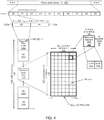
- a different number of downlink subframes can be bundled within an individual bundling window of each serving cell (e.g., PCell or SCell) as shown in FIG. 6 .
- the size of HARQ-ACK bundling window can be different between PCell and SCell.
- FIG. 6 illustrates an example where the PCell is configured with TDD UL/DL configuration 0 and SCell is configured with TDD UL/DL configuration 4.
- the SCell can follow a different DL HARQ timing from the PCell, not only the bundling window of the SCell can be different from the PCell, but also the number of the HARQ-ACK bits (corresponding to the number of the DL subframes) in the SCell bundling window can be different from the PCell bundling window.
- legacy HARQ-ACK bit mapping and bundling rules may no longer applicable for a SCell UL-DL configuration with a different UL-DL configuration from the PCell or legacy HARQ-ACK bit mapping and bundling rules may no longer support a case with the SCell UL-DL configuration different from the PCell UL-DL configuration.
- FIG. 6 illustrates varied HARQ-ACK bundling window sizes of the PCell and the SCell in case of inter-band TDD CA.
- An implication of different UL-DL configurations can be that different number of downlink subframes can be bundled within bundling window in each cell.
- a PCell can use TDD configuration 0 and an SCell can use a TDD configuration 4.
- the size of bundling windows associated with the UL subframe 3 can be different for the two serving cells (e.g., PCell and SCell).
- a different number of downlink subframes can be bundled within individual bundling window of each serving cell.
- a minimum value of bundling windows of two CCs can be zero.
- a value of bundling window size associated with uplink subframe 3 can be zero on the PCell, while a value of bundling window size can be 4 on the SCell (e.g., comprising subframe ⁇ 6,7,8,9 ⁇ ) correspondingly under an assumption of a configuration 0 on the PCell and a configuration 4 on the SCell.
- SCell e.g., comprising subframe ⁇ 6,7,8,9 ⁇
- a UE can be configured with PUCCH format 3 or PUCCH format 1b with channel selection (CS) for HARQ-ACK transmission and self-carrier scheduling for TDD inter-band carrier aggregation (CA) with different UL-DL configurations on different bands.
- CS channel selection
- CA inter-band carrier aggregation
- Various changes can be made to a legacy HARQ-ACK transmission configuration.
- none of the PDSCH timing reference configurations of aggregated serving cells may be UL-DL configuration #5.
- the set of DL subframes (denoted as Kc ) on serving cell c associated with UL subframe n can include the DL subframes n-k where k ⁇ K and K is determined according to the TDD UL-DL configuration which the PDSCH HARQ timing on serving cell c follows.
- legacy mapping table e.g., Tables 5-12 illustrated in FIGS. 12-19
- M max ⁇ Mp,Ms ⁇ , where Mp is the number of elements in set Kc for the primary cell and Ms is the number of elements in set Kc for the secondary cell
- DTX discontinuous transmission
- the UE can handle a case when any of a (Mp, Ms) is zero.
- the UE can upon detection of a PDSCH transmission or a PDCCH indicating downlink SPS release within subframe(s) n-k, where k ⁇ K and K is determined according to the TDD UL-DL configuration which the PDSCH HARQ timing on serving cell c follows Table 3.
- Table 3 illustrates a downlink association set index K: ⁇ k 0 , k 1 , ⁇ k M -1 ⁇ for TDD.
- the Mp can be a number of elements in a set K for the primary cell and the Ms can be a number of elements in the set K for the secondary cell, as shown in FIG. 7.
- FIG. 7 illustrates various bundling window sizes of the PCell and the SCell for inter-band CA scenario.
- a UE can conditionally determine a number of HARQ-ACK bits and corresponding PUCCH resource associated with PDSCH on SCell as provided by the description below.
- the PUCCH resource n PUCCH 1 p ⁇ for HARQ-ACK bundling for antenna port p 1 can be represented by Expression 2.
- the PUCCH resource can be denoted as n PUCCH , i 1 , which can be derived from a subframe n - k i on SCell, and an acknowledgement (ACK), Negative ACK (NACK), or discontinuous transmission (DTX) response (i.e., ACK/NACK/DTX response) can be denoted as HARQ-ACK(i) from the sub-frame n - k i on SCell, where k i ⁇ K and 0 ⁇ i ⁇ M s - 1.
- n PUCCH , i 1 M ⁇ i ⁇ 1 ⁇ N c + i ⁇ N c + 1 + n CCE , i + N P
- n PUCCH , i 1 indicated by a ACK/negative ACK (NACK) resource indicator (ARI) for the PDSCH transmission can be determined according to higher layer configuration and 3GPP LTE standard Release 11 TS 36.213 Table 9.2-2 (e.g., Table 17 illustrated in FIG. 24 ), where the ARI re-interprets a transmit power control (TPC) field in a downlink control information (DCI) format of the corresponding PDCCH.
- TPC transmit power control
- DCI downlink control information
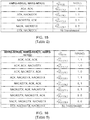
- a UE with M can perform channel selection according to a set of LTE TS 36.213 Table 10.1.3-5 (e.g., Table 8), LTE TS 36.213 Table 10.1.3-6 (e.g., Table 9), and LTE TS 36.213 Table 10.1.3-7 (e.g., Table 10).
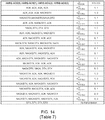
- a UE with M can perform channel selection according to a set of LTE TS 36.213 Table 10.1.3-2 (e.g., Table 5), LTE TS 36.213 Table 10.1.3-3 (e.g., Table 6), and LTE TS 36.213 Table 10.1.3-4 (e.g., Table 7).
- the UE can transmit b(0),b(1) (e.g., constellation bits) on PUCCH resource n PUCCH 1 in sub-frame n using PUCCH format 1b according to 3GPP LTE standard Release 11 TS 36.211 section 5.4.1.
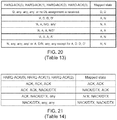
- FIG. 20 i.e., Table 13
- PCC primary component carrier
- SCC secondary component carrier
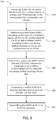
- Another example provides a method 500 for hybrid automatic retransmission re-quest (HARQ) bundling used in carrier aggregation (CA) at a user equipment (UE), as shown in the flow chart in FIG. 8 .
- the method may be executed as instructions on a machine, computer circuitry, or a processor for the UE, where the instructions are included on at least one computer readable medium or one non-transitory machine readable storage medium.
- the method includes the operation of receiving, at the UE, an uplink-downlink (UL-DL) configuration for a primary cell (PCell) and an UL-DL configuration for a secondary cell (SCell), as in block 510.
- UL-DL uplink-downlink
- PCell primary cell
- SCell secondary cell
- the operation of determining a secondary HARQ bundling window size for a subframe based on the UL-DL configuration for the SCell and a primary HARQ bundling window size for the subframe based on the UL-DL configuration for the PCell follows, as in block 520.
- the next operation of the method can be determining a physical uplink control channel (PUCCH) resource n PUCCH 1 for transmission of a HARQ-ACKnowledge (ACK) using the secondary HARQ bundling window size, as in block 530.
- the operation of generating a HARQ-ACK for a physical downlink shared channel (PDSCH) of the SCell follows, as in block 540.
- the method can further include transmitting the HARQ-ACK in the PUCCH) resource n PUCCH 1 , as in block 550.
- 3GPP Third Generation Partnership Project
- LTE Long Term Evolution
- TS Technical Specification
- the method can further include determining a value of constellation bits b(0) and b(1) and the PUCCH resource n PUCCH 1 based on the HARQ-ACK using tables for Ms equal to 2, 3, or 4.
- the UL-DL configuration for the PCell can be included in a system information block 1 (SIB1) transmitted on the PCell and the UL-DL configuration for the SCell can be included in a SIB1 transmitted on the SCell.
- SIB1 system information block 1
- Another example provides functionality 600 of computer circuitry of a processor on a user equipment (UE) operable to dynamically alter hybrid automatic retransmission re-quest (HARQ) mapping for carrier aggregation (CA), as shown in the flow chart in FIG. 9 .
- the functionality may be implemented as a method or the functionality may be executed as instructions on a machine, where the instructions are included on at least one computer readable medium or one non-transitory machine readable storage medium.
- the computer circuitry can be configured to determine a secondary HARQ bundling window size for a secondary cell (SCell), when a primary HARQ bundling window size for a primary cell (PCell) is zero, as in block 610.
- the computer circuitry can be further configured to determine a physical uplink control channel (PUCCH) resource for transmission of a HARQ-ACKnowledge (ACK) feedback using the secondary HARQ bundling window size, as in block 620.
- the computer circuitry can also be configured to transmit the HARQ-ACK feedback in the PUCCH resource, as in block 630.
- 3GPP Third Generation Partnership Project
- LTE Long Term Evolution
- TS Technical Specification
- the computer circuitry configured to transmit the HARQ-ACK feedback can be further configured to determine a value of constellation bits b(0) and b(1) and the PUCCH resource n PUCCH 1 based on the HARQ-ACK feedback using tables for Ms equal to 2, 3, or 4.
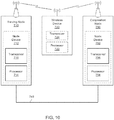
- FIG. 10 illustrates an example node (e.g., serving node 710 and cooperation node 750) and an example wireless device 720.
- the node can include a node device 712 and 752.
- the node device or the node can be configured to communicate with the wireless device.
- the node device, device at the node, or the node can be configured to communicate with other nodes via a backhaul link 748 (optical or wired link), such as an X2 application protocol (X2AP).
- the node device can include a processor 714 and 754 and a transceiver 716 and 756.
- the transceiver can be configured to receive a HARQ-ACK feedback in a PUCCH resource.
- the transceiver 716 and 756 can be further configured to communicate with the coordination node via an X2 application protocol (X2AP).
- the processor can be further configured to a reverse procedure can be implemented for PUCCH detection and PDSCH retransmission as disclosed herein.
- the serving node can generate both the PCell and the SCell.
- the node e.g., serving node 710 and cooperation node 750
- BS base station
- NB Node B
- eNB evolved Node B
- BBU baseband unit
- RRH remote radio head
- RRE remote radio equipment
- RRU remote radio unit
- CCM central processing module
- the device used by a node can be configured to detect a hybrid automatic retransmission re-quest (HARQ) bundle used in carrier aggregation (CA).
- HARQ hybrid automatic retransmission re-quest
- CA carrier aggregation
- the transceiver 716 and 756 can be configured to receive constellation bits in a physical uplink control channel (PUCCH) resource in a subframe transmitted in a primary cell (PCell) for a physical downlink shared channel (PDSCH) of a secondary cell (SCell).
- PUCCH physical uplink control channel
- PCell primary cell
- PDSCH physical downlink shared channel
- the processor 714 and 754 can be configured to: Determine a secondary HARQ bundling window size for a subframe based on an uplink-downlink (UL-DL) configuration for the SCell and a primary HARQ bundling window size for the subframe based on an UL-DL configuration for the PCell; and determine a HARQ-ACKnowledge (ACK) response for the subframe for the SCell using the secondary HARQ bundling window size and the PUCCH resource, when the primary HARQ bundling window size is zero.
- UL-DL uplink-downlink
- ACK HARQ-ACKnowledge
- the HARQ-ACK response can be represented as HARQ-ACK(i) and can include a combination of ACK, negative ACK (NACK), or discontinuous transmission (DTX) responses from sub-frame n - k i on the SCell, where k i ⁇ K and K is a set of M elements ⁇ k 0 , k 1 ⁇ k M -1 ⁇ and 0 ⁇ i ⁇ M s -1.
- the higher layer signaling can include radio resource control (RRC) signaling.
- RRC radio resource control
- 3GPP Third Generation Partnership Project
- LTE Long Term Evolution
- TS Technical Specification
- the wireless device 720 (e.g., UE) can include a transceiver 724 and a processor 722.
- the wireless device i.e., device
- HARQ conditional hybrid automatic retransmission re-quest
- CA carrier aggregation
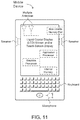
- FIG. 11 provides an example illustration of the wireless device, such as an user equipment (UE), a mobile station (MS), a mobile wireless device, a mobile communication device, a tablet, a handset, or other type of wireless device.
- the wireless device can include one or more antennas configured to communicate with a node, macro node, low power node (LPN), or, transmission station, such as a base station (BS), an evolved Node B (eNB), a baseband unit (BBU), a remote radio head (RRH), a remote radio equipment (RRE), a relay station (RS), a radio equipment (RE), or other type of wireless wide area network (WWAN) access point.
- BS base station
- eNB evolved Node B
- BBU baseband unit
- RRH remote radio head
- RRE remote radio equipment
- RS relay station
- RE radio equipment
- the wireless device can be configured to communicate using at least one wireless communication standard including 3 GPP LTE, WiMAX, High Speed Packet Access (HSPA), Bluetooth, and WiFi.
- the wireless device can communicate using separate antennas for each wireless communication standard or shared antennas for multiple wireless communication standards.
- the wireless device can communicate in a wireless local area network (WLAN), a wireless personal area network (WPAN), and/or a WWAN.
- WLAN wireless local area network
- WPAN wireless personal area network
- WWAN wireless wide area network
- FIG. 11 also provides an illustration of a microphone and one or more speakers that can be used for audio input and output from the wireless device.
- the display screen may be a liquid crystal display (LCD) screen, or other type of display screen such as an organic light emitting diode (OLED) display.
- the display screen can be configured as a touch screen.
- the touch screen may use capacitive, resistive, or another type of touch screen technology.
- An application processor and a graphics processor can be coupled to internal memory to provide processing and display capabilities.
- a non-volatile memory port can also be used to provide data input/output options to a user.
- the non-volatile memory port may also be used to expand the memory capabilities of the wireless device.
- a keyboard may be integrated with the wireless device or wirelessly connected to the wireless device to provide additional user input.
- a virtual keyboard may also be provided using the touch screen.
- Various techniques, or certain aspects or portions thereof, may take the form of program code (i.e., instructions) embodied in tangible media, such as floppy diskettes, CD-ROMs, hard drives, non-transitory computer readable storage medium, or any other machine-readable storage medium wherein, when the program code is loaded into and executed by a machine, such as a computer, the machine becomes an apparatus for practicing the various techniques.
- Circuitry can include hardware, firmware, program code, executable code, computer instructions, and/or software.
- a non-transitory computer readable storage medium can be a computer readable storage medium that does not include signal.
- the computing device may include a processor, a storage medium readable by the processor (including volatile and non-volatile memory and/or storage elements), at least one input device, and at least one output device.
- the volatile and non-volatile memory and/or storage elements may be a RAM, EPROM, flash drive, optical drive, magnetic hard drive, solid state drive, or other medium for storing electronic data.
- the node and wireless device may also include a transceiver module, a counter module, a processing module, and/or a clock module or timer module.
- One or more programs that may implement or utilize the various techniques described herein may use an application programming interface (API), reusable controls, and the like.
- API application programming interface
- Such programs may be implemented in a high level procedural or object oriented programming language to communicate with a computer system.
- the program(s) may be implemented in assembly or machine language, if desired.
- the language may be a compiled or interpreted language, and combined with hardware implementations.
- modules may be implemented as a hardware circuit comprising custom VLSI circuits or gate arrays, off-the-shelf semiconductors such as logic chips, transistors, or other discrete components.
- a module may also be implemented in programmable hardware devices such as field programmable gate arrays, programmable array logic, programmable logic devices or the like.
- Modules may also be implemented in software for execution by various types of processors or logic.
- An identified module of executable code may, for instance, comprise one or more physical or logical blocks of computer instructions, which may, for instance, be organized as an object, procedure, or function. Nevertheless, the executables of an identified module need not be physically located together, but may comprise disparate instructions stored in different locations which, when joined logically together, comprise the module and achieve the stated purpose for the module.
- a module of executable code may be a single instruction, or many instructions, and may even be distributed over several different code segments, among different programs, and across several memory devices.
- operational data may be identified and illustrated herein within modules, and may be embodied in any suitable form and organized within any suitable type of data structure. The operational data may be collected as a single data set, or may be distributed over different locations including over different storage devices, and may exist, at least partially, merely as electronic signals on a system or network.
- the modules may be passive or active, including agents operable to perform desired functions.
Landscapes
- Engineering & Computer Science (AREA)
- Signal Processing (AREA)
- Computer Networks & Wireless Communication (AREA)
- Multimedia (AREA)
- Computer Security & Cryptography (AREA)
- Quality & Reliability (AREA)
- Databases & Information Systems (AREA)
- Physics & Mathematics (AREA)
- Electromagnetism (AREA)
- Mobile Radio Communication Systems (AREA)
Claims (15)
- Équipement d'utilisateur capable d'altérer dynamiquement une mise en correspondance HARQ pour l'agrégation de porteuses, possédant des circuits informatiques (722) permettant de :émettre un retour d'information HARQ-ACK dans une ressource PUCCH ;caractérisé en ce queles circuits informatiques (722) sont configurés pour :déterminer une taille de fenêtre d'empaquetage HARQ secondaire pour une SCell, lorsqu'une taille de fenêtre d'empaquetage HARQ primaire est égale à zéro ; etdéterminer ladite ressource PUCCH pour l'émission du retour d'information HARQ-ACK à l'aide de la taille de fenêtre d'empaquetage HARQ secondaire ;dans lequel équipement d'utilisateur la ressource PUCCH



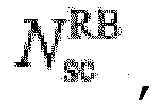


- UE (720) selon la revendication 1, dans lequel :la ressource PUCCH








- UE (720) selon la revendication 2, dans lequel le retour d'information HARQ-ACK est représenté sous la forme HARQ-ACK(i) et contient une combinaison de réponses ACK, NACK ou DTX provenant de la sous-trame n-ki sur la SCell, où ki ∈ K et K est un ensemble de M éléments {k0 , k1, ..., kM-1 } et 0 ≤ i ≤ M s - 1.
- UE (720) selon la revendication 1, également configuré pour :
effectuer une sélection de canal basée sur une taille de fenêtre d'empaquetage HARQ M = Ms, où Ms est la taille de fenêtre d'empaquetage HARQ secondaire, de telle façon que :l'UE (720) soit configurée pour utiliser une table 10.1.3-5 de la TS36.213 de la norme 3GPP LTE Release 11 lorsque Ms = 2 ;l'UE (720) soit configurée pour utiliser une table 10.1.3-6 de la TS36.213 lorsque Ms = 3 ; oul'UE (720) soit configurée pour utiliser une table 10.1.3-7 de la TS36.213 lorsque Ms = 4. - UE (720) selon la revendication 4, dans lequel les circuits informatiques (722) sont également configurés pour :
déterminer une valeur de bits de constellation b(0) et b(1) et la ressource PUCCH
- Procédé d'empaquetage HARQ utilisé pour l'agrégation de porteuses au niveau d'un équipement d'utilisateur, comprenant l'étape consistant à :émettre un HARQ-ACK dans une ressource PUCCH
 caractérisé par les étapes consistant à recevoir, au niveau de l'UE (720), une configuration de liaison montante/liaison descendante pour une PCell et une configuration de liaison montante/liaison descendante pour une SCell ;déterminer, lorsqu'une taille de fenêtre d'empaquetage HARQ primaire pour une PCell est égale à zéro, une taille de fenêtre d'empaquetage HARQ secondaire pour une sous-trame d'après la configuration de liaison montante/liaison descendante pour la SCell et une taille de fenêtre d'empaquetage HARQ primaire pour la sous-trame d'après la configuration de liaison montante/liaison descendante pour la PCell ;déterminer la ressource PUCCH
 générer un HARQ-ACK pour un PDSCH de la SCell ; etémettre le HARQ-ACK dans la ressource PUCCH


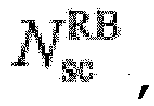


- Procédé selon la revendication 6, dans lequel :la ressource PUCCH





- Procédé selon la revendication 6, comprenant également :
une sélection de canal basée sur une taille de fenêtre d'empaquetage HARQ M = Ms, où Ms est la taille de fenêtre d'empaquetage HARQ secondaire, à l'aide de :une table 10.1.3-5 de la TS36.213 de la norme 3GPP LTE Release 11 lorsque Ms = 2 ;une table 10.1.3-6 de la TS36.213 lorsque Ms = 3 ; ouune table 10.1.3-7 de la TS36.213 lorsque Ms = 4. - Programme informatique contenant un code de programme informatique capable d'exécuter le procédé selon la revendication 6, 7 ou 8.
- Dispositif (712) destiné à être utilisé dans un noeud (710) configuré pour détecter un empaquetage HARQ utilisé pour l'agrégation de porteuses, caractérisé en ce qu'il comprend :un émetteur/récepteur (716) configuré pour recevoir des bits de constellation dans une ressource PUCCH d'une sous-trame émise dans une PCell pour un PDSCH d'une SCell ; etun processeur (714) configuré pour :déterminer une taille de fenêtre d'empaquetage HARQ secondaire pour une sous-trame d'après une configuration de liaison montante/liaison descendante de la SCell et une taille de fenêtre d'empaquetage HARQ primaire pour la sous-trame d'après une configuration de liaison montante/liaison descendante de la PCell, etdéterminer une réponse HARQ-ACK pour la sous-trame pour la SCell à l'aide de la taille de fenêtre d'empaquetage HARQ secondaire et la ressource PUCCH, lorsque la taille de fenêtre d'empaquetage HARQ primaire est égale à zéro ;dans lequel la ressource PUCCH


- Dispositif (712) selon la revendication 10, dans lequel :la ressource PUCCH





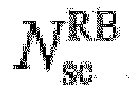


- Dispositif (712) selon la revendication 11, dans lequel la réponse HARQ-ACK est représentée sous la forme HARQ-ACK(i) et contient une combinaison de réponses ACK, NACK ou DTX provenant de la sous-trame n-ki sur la SCell, où ki ∈ K et K est un ensemble de M éléments {k0 , k1, ..., kM-1 } et 0 ≤ i ≤ M s - 1.
- Dispositif (712) selon la revendication 11, dans lequel la signalisation de couche plus haute contient une signalisation RRC.
- Dispositif (712) selon la revendication 10, dans lequel le processeur (714) est également configuré pour :
déterminer la réponse HARQ-ACK pour la sous-trame de la SCell en appliquant les valeurs des bits de constellation et la ressource PUCCH à une table de consultation de multiplexage HARQ-ACK d'après une taille de fenêtre d'empaquetage HARQ M = Ms, où Ms est la taille de fenêtre d'empaquetage HARQ secondaire, la table de consultation de multiplexage HARQ-ACK étant représentée par :une table 10.1.3-5 de la TS36.213 de la norme 3GPP LTE Release 11 lorsque Ms = 2 ;une table 10.1.3-6 de la TS36.213 lorsque Ms = 3 ; ouune table 10.1.3-7 de la TS36.213 lorsque Ms = 4. - Dispositif (712) selon la revendication 10, dans lequel le noeud (710) est sélectionné dans le groupe consistant en une station de base, un noeud B, un noeud B évolué, une unité en bande de base, une tête radio distante, un équipement radio distant, une unité radio distante et un module de traitement central.
Applications Claiming Priority (3)
| Application Number | Priority Date | Filing Date | Title |
|---|---|---|---|
| US201261707784P | 2012-09-28 | 2012-09-28 | |
| US13/867,020 US9439095B2 (en) | 2012-09-28 | 2013-04-19 | Hybrid automatic repeat request (HARQ) mapping for carrier aggregation (CA) |
| PCT/US2013/060611 WO2014052156A1 (fr) | 2012-09-28 | 2013-09-19 | Mappage de requête automatique de répétition hybride (harq) pour l'agrégation de porteuses (ca) |
Publications (3)
| Publication Number | Publication Date |
|---|---|
| EP2901589A1 EP2901589A1 (fr) | 2015-08-05 |
| EP2901589A4 EP2901589A4 (fr) | 2016-07-06 |
| EP2901589B1 true EP2901589B1 (fr) | 2019-05-22 |
Family
ID=94382000
Family Applications (1)
| Application Number | Title | Priority Date | Filing Date |
|---|---|---|---|
| EP13842882.6A Not-in-force EP2901589B1 (fr) | 2012-09-28 | 2013-09-19 | Mappage de requête automatique de répétition hybride (harq) pour l'agrégation de porteuses (ca) |
Country Status (6)
| Country | Link |
|---|---|
| US (1) | US9439095B2 (fr) |
| EP (1) | EP2901589B1 (fr) |
| CN (1) | CN104604167B (fr) |
| ES (1) | ES2735623T3 (fr) |
| HU (1) | HUE043657T2 (fr) |
| WO (1) | WO2014052156A1 (fr) |
Families Citing this family (35)
| Publication number | Priority date | Publication date | Assignee | Title |
|---|---|---|---|---|
| EP2194738B1 (fr) * | 2007-09-26 | 2021-05-26 | Denso Corporation | Système de communication sans fil, appareil de station de base et appareil de station mobile |
| WO2010105413A1 (fr) * | 2009-03-17 | 2010-09-23 | 华为技术有限公司 | Procédé et appareil de codage de signal de réaction |
| WO2011138849A1 (fr) | 2010-05-06 | 2011-11-10 | パナソニック株式会社 | Appareil terminal et procédé de mise en correspondance de signaux de réponse |
| JP5895008B2 (ja) * | 2011-03-18 | 2016-03-30 | エルジー エレクトロニクス インコーポレイティド | 無線通信システムにおける制御情報の伝送方法及び装置 |
| KR20130125695A (ko) * | 2012-05-09 | 2013-11-19 | 주식회사 팬택 | 인터밴드 tdd 전송 방식에서 채널 셀렉션 전송을 위한 harq-ack 인덱스 매핑 및 업링크 자원 할당을 제어하는 방법 및 장치 |
| EP2957141B1 (fr) | 2013-02-12 | 2019-01-02 | Altiostar Networks, Inc. | Réseau d'accès radio à évolution à long terme |
| US10326569B2 (en) * | 2013-02-12 | 2019-06-18 | Altiostar Networks, Inc. | Inter-site carrier aggregation with physical uplink control channel monitoring |
| EP2787662B1 (fr) * | 2013-04-05 | 2018-02-28 | Telefonaktiebolaget LM Ericsson (publ) | Détection de port d'antenne |
| US9692582B2 (en) * | 2013-05-09 | 2017-06-27 | Sharp Kabushiki Kaisha | Systems and methods for signaling reference configurations |
| EP3033916A4 (fr) * | 2013-08-14 | 2017-05-03 | Telefonaktiebolaget LM Ericsson (publ) | Procédé et appareil pour signaler une configuration de liaison montante- liaison descendante |
| EP3044895B1 (fr) * | 2013-09-13 | 2020-04-01 | Nokia Solutions and Networks Oy | Agregation de porteuses inter-site en liaison montante en fonction de la quantite de donnees a transmettre |
| US9143303B1 (en) * | 2013-10-29 | 2015-09-22 | Sprint Communications Company L.P. | Carrier aggregation across multiple frequency bands |
| US9867187B2 (en) * | 2014-08-04 | 2018-01-09 | Qualcomm Incorporated | Techniques for configuring uplink channel transmissions using shared radio frequency spectrum band |
| CN105376035B (zh) * | 2014-08-28 | 2018-10-02 | 成都鼎桥通信技术有限公司 | 非对称上行载波聚合中辅载波的控制方法及装置 |
| US10313067B2 (en) | 2015-01-29 | 2019-06-04 | Samsung Electronics Co., Ltd. | HARQ-ACK information feedback method and apparatus |
| ES2969632T3 (es) | 2015-03-17 | 2024-05-21 | Ericsson Telefon Ab L M | Un dispositivo de comunicación y un método en el mismo para determinar el tamaño de una ventana de contención en una red de comunicación |
| EP3343821B1 (fr) | 2015-09-15 | 2019-11-06 | Huawei Technologies Co., Ltd. | Procédé permettant d'envoyer des informations de commande, et dispositif de communication |
| WO2017074522A1 (fr) * | 2015-10-30 | 2017-05-04 | Intel IP Corporation | Réduction de latence pour une transmission de données sans fil |
| CN106899395B (zh) * | 2015-12-19 | 2019-06-28 | 上海朗帛通信技术有限公司 | 一种laa传输中的上行控制信令的传输方法和装置 |
| US10165564B2 (en) * | 2016-01-28 | 2018-12-25 | Sharp Kabushiki Kaisha | Systems and methods for association timing |
| WO2017177224A1 (fr) | 2016-04-08 | 2017-10-12 | Altiostar Networks, Inc. | Services de priorité de données sans fil |
| WO2017177223A1 (fr) | 2016-04-08 | 2017-10-12 | Altiostar Networks, Inc. | Connectivité double |
| MX2019001590A (es) * | 2016-08-09 | 2019-08-12 | Sharp Kk | Aparato terminal, aparato de estacion base, metodo de comunicacion y circuito integrado. |
| EP3496496B1 (fr) * | 2016-10-17 | 2025-05-21 | Guangdong Oppo Mobile Telecommunications Corp., Ltd. | Procédé et appareil de transmission d'informations |
| US11071127B2 (en) * | 2016-11-04 | 2021-07-20 | Telefonaktiebolaget Lm Ericsson (Publ) | Semi-persistent transmission scheduling |
| US10624034B2 (en) | 2016-12-13 | 2020-04-14 | Altiostar Networks, Inc. | Power control in wireless communications |
| CN110168987B (zh) * | 2017-01-05 | 2021-12-31 | 诺基亚技术有限公司 | 可扩展的反馈报告 |
| CN106851839B (zh) * | 2017-03-14 | 2020-06-12 | 北京佰才邦技术有限公司 | 帧结构确定方法和基站 |
| WO2018175820A1 (fr) * | 2017-03-23 | 2018-09-27 | Gang Xiong | Planification, opération de demande de répétition automatique hybride et conception de livre de codes pour une agrégation de porteuses de nouvelle radio |
| US10506468B2 (en) * | 2017-09-08 | 2019-12-10 | At&T Intellectual Property I, L.P. | Reporting hybrid automatic repeat request-acknowledgements in wireless communication systems |
| JP7027150B2 (ja) * | 2017-12-13 | 2022-03-01 | シャープ株式会社 | 端末装置、基地局装置、通信方法、および、集積回路 |
| US11252772B2 (en) * | 2019-01-03 | 2022-02-15 | Qualcomm Incorporated | Single transmitter switching for dual connectivity |
| CN113328834B (zh) * | 2020-02-28 | 2025-03-14 | 华为技术有限公司 | 一种通信方法及装置 |
| CN114585097B (zh) * | 2020-12-01 | 2024-10-15 | 中国联合网络通信集团有限公司 | 数据传输方法及通信装置 |
| US12003438B2 (en) * | 2021-08-04 | 2024-06-04 | Qualcomm Incorporated | Aggregate component carrier for full-duplex operation |
Family Cites Families (9)
| Publication number | Priority date | Publication date | Assignee | Title |
|---|---|---|---|---|
| CN101867467B (zh) * | 2009-04-20 | 2013-04-10 | 电信科学技术研究院 | 载波聚合系统中harq确认消息的反馈方法及装置 |
| CN102098151B (zh) * | 2010-12-28 | 2015-08-12 | 中兴通讯股份有限公司 | 一种正确/错误应答消息的发送方法及用户终端 |
| CN102098152A (zh) * | 2010-12-30 | 2011-06-15 | 电子科技大学 | 载波聚合下harq的跨载波重传方法 |
| EP3010171B1 (fr) * | 2012-05-10 | 2017-09-27 | Telefonaktiebolaget LM Ericsson (publ) | Procédé et appareil de signalisation de demande de répétition automatique hybride |
| US9185564B2 (en) * | 2012-05-11 | 2015-11-10 | Sharp Kabushiki Kaisha | Devices for sending and receiving feedback information |
| US9088977B2 (en) | 2012-05-30 | 2015-07-21 | Intel Corporation | Hybrid automatic repeat request (HARQ) mapping for carrier aggregation (CA) |
| US9094960B2 (en) | 2012-05-30 | 2015-07-28 | Intel Corporation | Hybrid automatic repeat request (HARQ) mapping for carrier aggregation (CA) |
| US8958331B2 (en) * | 2012-07-02 | 2015-02-17 | Intel Corporation | HARQ-ACK handling for unintended downlink sub-frames |
| US9258741B2 (en) * | 2012-08-03 | 2016-02-09 | Blackberry Limited | Carrier aggregation acknowledgement bits |
-
2013
- 2013-04-19 US US13/867,020 patent/US9439095B2/en active Active
- 2013-09-19 HU HUE13842882A patent/HUE043657T2/hu unknown
- 2013-09-19 CN CN201380045096.7A patent/CN104604167B/zh not_active Expired - Fee Related
- 2013-09-19 ES ES13842882T patent/ES2735623T3/es active Active
- 2013-09-19 EP EP13842882.6A patent/EP2901589B1/fr not_active Not-in-force
- 2013-09-19 WO PCT/US2013/060611 patent/WO2014052156A1/fr not_active Ceased
Non-Patent Citations (1)
| Title |
|---|
| None * |
Also Published As
| Publication number | Publication date |
|---|---|
| US9439095B2 (en) | 2016-09-06 |
| CN104604167B (zh) | 2017-10-27 |
| EP2901589A1 (fr) | 2015-08-05 |
| CN104604167A (zh) | 2015-05-06 |
| HUE043657T2 (hu) | 2019-08-28 |
| EP2901589A4 (fr) | 2016-07-06 |
| ES2735623T3 (es) | 2019-12-19 |
| WO2014052156A1 (fr) | 2014-04-03 |
| US20140092786A1 (en) | 2014-04-03 |
Similar Documents
| Publication | Publication Date | Title |
|---|---|---|
| EP2901589B1 (fr) | Mappage de requête automatique de répétition hybride (harq) pour l'agrégation de porteuses (ca) | |
| EP2901601B1 (fr) | Mappage d'une requête automatique de répétition hybride (harq) dans un système à agrégation de porteuses (ca) | |
| EP2856685B1 (fr) | Mappage d'une requête automatique de répétition hybride (harq) dans un système à agrégation de porteuses (ca) | |
| EP2856723B1 (fr) | Mappage d'une requête automatique de répétition hybride (harq) dans un système à agrégation de porteuses (ca) | |
| CN104396174B (zh) | 用于带间时分双工(tdd)载波聚合(ca)的混合自动重传请求确认(harq-ack)码本生成 | |
| JP6332650B2 (ja) | ハイブリッド自動再送要求アクノレッジ(harq−ack)送信に対する物理アップリンク制御チャネル(pucch)リソース割当(ra) | |
| US9913254B2 (en) | Method and apparatus for indicating subframes associated with a hybrid automatic repeat request feedback | |
| US10051633B2 (en) | Method and apparatus for carrier aggregation |
Legal Events
| Date | Code | Title | Description |
|---|---|---|---|
| PUAI | Public reference made under article 153(3) epc to a published international application that has entered the european phase |
Free format text: ORIGINAL CODE: 0009012 |
|
| 17P | Request for examination filed |
Effective date: 20150224 |
|
| AK | Designated contracting states |
Kind code of ref document: A1 Designated state(s): AL AT BE BG CH CY CZ DE DK EE ES FI FR GB GR HR HU IE IS IT LI LT LU LV MC MK MT NL NO PL PT RO RS SE SI SK SM TR |
|
| AX | Request for extension of the european patent |
Extension state: BA ME |
|
| DAX | Request for extension of the european patent (deleted) | ||
| RA4 | Supplementary search report drawn up and despatched (corrected) |
Effective date: 20160602 |
|
| REG | Reference to a national code |
Ref country code: DE Ref legal event code: R079 Ref document number: 602013055877 Country of ref document: DE Free format text: PREVIOUS MAIN CLASS: H04J0011000000 Ipc: H04B0005000000 |
|
| RIC1 | Information provided on ipc code assigned before grant |
Ipc: H04W 72/12 20090101ALI20181116BHEP Ipc: H04B 5/00 20060101AFI20181116BHEP Ipc: H04W 88/02 20090101ALI20181116BHEP Ipc: H04W 36/00 20090101ALI20181116BHEP Ipc: H04W 28/16 20090101ALI20181116BHEP Ipc: H04W 28/02 20090101ALI20181116BHEP Ipc: H04W 72/02 20090101ALI20181116BHEP Ipc: H04W 88/18 20090101ALI20181116BHEP Ipc: H04B 17/318 20150101ALI20181116BHEP Ipc: H04W 36/08 20090101ALI20181116BHEP Ipc: H04W 36/22 20090101ALI20181116BHEP Ipc: H04W 28/08 20090101ALI20181116BHEP Ipc: H04W 72/00 20090101ALI20181116BHEP Ipc: H04W 72/04 20090101ALI20181116BHEP |
|
| GRAP | Despatch of communication of intention to grant a patent |
Free format text: ORIGINAL CODE: EPIDOSNIGR1 |
|
| STAA | Information on the status of an ep patent application or granted ep patent |
Free format text: STATUS: GRANT OF PATENT IS INTENDED |
|
| INTG | Intention to grant announced |
Effective date: 20190108 |
|
| GRAS | Grant fee paid |
Free format text: ORIGINAL CODE: EPIDOSNIGR3 |
|
| GRAA | (expected) grant |
Free format text: ORIGINAL CODE: 0009210 |
|
| STAA | Information on the status of an ep patent application or granted ep patent |
Free format text: STATUS: THE PATENT HAS BEEN GRANTED |
|
| AK | Designated contracting states |
Kind code of ref document: B1 Designated state(s): AL AT BE BG CH CY CZ DE DK EE ES FI FR GB GR HR HU IE IS IT LI LT LU LV MC MK MT NL NO PL PT RO RS SE SI SK SM TR |
|
| REG | Reference to a national code |
Ref country code: GB Ref legal event code: FG4D |
|
| REG | Reference to a national code |
Ref country code: CH Ref legal event code: EP |
|
| REG | Reference to a national code |
Ref country code: IE Ref legal event code: FG4D |
|
| REG | Reference to a national code |
Ref country code: DE Ref legal event code: R096 Ref document number: 602013055877 Country of ref document: DE |
|
| REG | Reference to a national code |
Ref country code: AT Ref legal event code: REF Ref document number: 1137332 Country of ref document: AT Kind code of ref document: T Effective date: 20190615 |
|
| REG | Reference to a national code |
Ref country code: EE Ref legal event code: FG4A Ref document number: E017688 Country of ref document: EE Effective date: 20190619 |
|
| REG | Reference to a national code |
Ref country code: NL Ref legal event code: FP |
|
| REG | Reference to a national code |
Ref country code: HU Ref legal event code: AG4A Ref document number: E043657 Country of ref document: HU |
|
| REG | Reference to a national code |
Ref country code: SK Ref legal event code: T3 Ref document number: E 31305 Country of ref document: SK |
|
| REG | Reference to a national code |
Ref country code: LT Ref legal event code: MG4D |
|
| PG25 | Lapsed in a contracting state [announced via postgrant information from national office to epo] |
Ref country code: PT Free format text: LAPSE BECAUSE OF FAILURE TO SUBMIT A TRANSLATION OF THE DESCRIPTION OR TO PAY THE FEE WITHIN THE PRESCRIBED TIME-LIMIT Effective date: 20190922 Ref country code: AL Free format text: LAPSE BECAUSE OF FAILURE TO SUBMIT A TRANSLATION OF THE DESCRIPTION OR TO PAY THE FEE WITHIN THE PRESCRIBED TIME-LIMIT Effective date: 20190522 Ref country code: FI Free format text: LAPSE BECAUSE OF FAILURE TO SUBMIT A TRANSLATION OF THE DESCRIPTION OR TO PAY THE FEE WITHIN THE PRESCRIBED TIME-LIMIT Effective date: 20190522 Ref country code: HR Free format text: LAPSE BECAUSE OF FAILURE TO SUBMIT A TRANSLATION OF THE DESCRIPTION OR TO PAY THE FEE WITHIN THE PRESCRIBED TIME-LIMIT Effective date: 20190522 Ref country code: LT Free format text: LAPSE BECAUSE OF FAILURE TO SUBMIT A TRANSLATION OF THE DESCRIPTION OR TO PAY THE FEE WITHIN THE PRESCRIBED TIME-LIMIT Effective date: 20190522 Ref country code: NO Free format text: LAPSE BECAUSE OF FAILURE TO SUBMIT A TRANSLATION OF THE DESCRIPTION OR TO PAY THE FEE WITHIN THE PRESCRIBED TIME-LIMIT Effective date: 20190822 Ref country code: SE Free format text: LAPSE BECAUSE OF FAILURE TO SUBMIT A TRANSLATION OF THE DESCRIPTION OR TO PAY THE FEE WITHIN THE PRESCRIBED TIME-LIMIT Effective date: 20190522 |
|
| PG25 | Lapsed in a contracting state [announced via postgrant information from national office to epo] |
Ref country code: LV Free format text: LAPSE BECAUSE OF FAILURE TO SUBMIT A TRANSLATION OF THE DESCRIPTION OR TO PAY THE FEE WITHIN THE PRESCRIBED TIME-LIMIT Effective date: 20190522 Ref country code: RS Free format text: LAPSE BECAUSE OF FAILURE TO SUBMIT A TRANSLATION OF THE DESCRIPTION OR TO PAY THE FEE WITHIN THE PRESCRIBED TIME-LIMIT Effective date: 20190522 Ref country code: BG Free format text: LAPSE BECAUSE OF FAILURE TO SUBMIT A TRANSLATION OF THE DESCRIPTION OR TO PAY THE FEE WITHIN THE PRESCRIBED TIME-LIMIT Effective date: 20190822 |
|
| REG | Reference to a national code |
Ref country code: ES Ref legal event code: FG2A Ref document number: 2735623 Country of ref document: ES Kind code of ref document: T3 Effective date: 20191219 |
|
| REG | Reference to a national code |
Ref country code: GR Ref legal event code: EP Ref document number: 20190402546 Country of ref document: GR Effective date: 20191128 |
|
| PG25 | Lapsed in a contracting state [announced via postgrant information from national office to epo] |
Ref country code: RO Free format text: LAPSE BECAUSE OF FAILURE TO SUBMIT A TRANSLATION OF THE DESCRIPTION OR TO PAY THE FEE WITHIN THE PRESCRIBED TIME-LIMIT Effective date: 20190522 Ref country code: CZ Free format text: LAPSE BECAUSE OF FAILURE TO SUBMIT A TRANSLATION OF THE DESCRIPTION OR TO PAY THE FEE WITHIN THE PRESCRIBED TIME-LIMIT Effective date: 20190522 Ref country code: DK Free format text: LAPSE BECAUSE OF FAILURE TO SUBMIT A TRANSLATION OF THE DESCRIPTION OR TO PAY THE FEE WITHIN THE PRESCRIBED TIME-LIMIT Effective date: 20190522 |
|
| REG | Reference to a national code |
Ref country code: DE Ref legal event code: R097 Ref document number: 602013055877 Country of ref document: DE |
|
| PG25 | Lapsed in a contracting state [announced via postgrant information from national office to epo] |
Ref country code: IT Free format text: LAPSE BECAUSE OF FAILURE TO SUBMIT A TRANSLATION OF THE DESCRIPTION OR TO PAY THE FEE WITHIN THE PRESCRIBED TIME-LIMIT Effective date: 20190522 Ref country code: SM Free format text: LAPSE BECAUSE OF FAILURE TO SUBMIT A TRANSLATION OF THE DESCRIPTION OR TO PAY THE FEE WITHIN THE PRESCRIBED TIME-LIMIT Effective date: 20190522 |
|
| REG | Reference to a national code |
Ref country code: EE Ref legal event code: GB1A Ref document number: E017688 Country of ref document: EE |
|
| PLBE | No opposition filed within time limit |
Free format text: ORIGINAL CODE: 0009261 |
|
| STAA | Information on the status of an ep patent application or granted ep patent |
Free format text: STATUS: NO OPPOSITION FILED WITHIN TIME LIMIT |
|
| PG25 | Lapsed in a contracting state [announced via postgrant information from national office to epo] |
Ref country code: TR Free format text: LAPSE BECAUSE OF FAILURE TO SUBMIT A TRANSLATION OF THE DESCRIPTION OR TO PAY THE FEE WITHIN THE PRESCRIBED TIME-LIMIT Effective date: 20190522 |
|
| REG | Reference to a national code |
Ref country code: ES Ref legal event code: PC2A Owner name: APPLE INC. Effective date: 20200330 |
|
| 26N | No opposition filed |
Effective date: 20200225 |
|
| PG25 | Lapsed in a contracting state [announced via postgrant information from national office to epo] |
Ref country code: PL Free format text: LAPSE BECAUSE OF FAILURE TO SUBMIT A TRANSLATION OF THE DESCRIPTION OR TO PAY THE FEE WITHIN THE PRESCRIBED TIME-LIMIT Effective date: 20190522 |
|
| REG | Reference to a national code |
Ref country code: CH Ref legal event code: PUE Owner name: APPLE, INC., US Free format text: FORMER OWNER: INTEL CORPORATION, US |
|
| PG25 | Lapsed in a contracting state [announced via postgrant information from national office to epo] |
Ref country code: MC Free format text: LAPSE BECAUSE OF FAILURE TO SUBMIT A TRANSLATION OF THE DESCRIPTION OR TO PAY THE FEE WITHIN THE PRESCRIBED TIME-LIMIT Effective date: 20190522 Ref country code: SI Free format text: LAPSE BECAUSE OF FAILURE TO SUBMIT A TRANSLATION OF THE DESCRIPTION OR TO PAY THE FEE WITHIN THE PRESCRIBED TIME-LIMIT Effective date: 20190522 |
|
| REG | Reference to a national code |
Ref country code: NL Ref legal event code: PD Owner name: APPLE INC.; US Free format text: DETAILS ASSIGNMENT: CHANGE OF OWNER(S), ASSIGNMENT; FORMER OWNER NAME: INTEL CORPORATION Effective date: 20200527 |
|
| REG | Reference to a national code |
Ref country code: HU Ref legal event code: GB9C Owner name: APPLE INC., US Free format text: FORMER OWNER(S): INTEL CORPORATION, US |
|
| REG | Reference to a national code |
Ref country code: DE Ref legal event code: R081 Ref document number: 602013055877 Country of ref document: DE Owner name: APPLE INC., CUPERTINO, US Free format text: FORMER OWNER: INTEL CORPORATION, SANTA CLARA, CALIF., US |
|
| REG | Reference to a national code |
Ref country code: CH Ref legal event code: PK Free format text: BERICHTIGUNG INHABER Ref country code: AT Ref legal event code: UEP Ref document number: 1137332 Country of ref document: AT Kind code of ref document: T Effective date: 20190522 |
|
| PG25 | Lapsed in a contracting state [announced via postgrant information from national office to epo] |
Ref country code: LU Free format text: LAPSE BECAUSE OF NON-PAYMENT OF DUE FEES Effective date: 20190919 |
|
| REG | Reference to a national code |
Ref country code: SK Ref legal event code: PC4A Ref document number: E 31305 Country of ref document: SK Owner name: APPLE INC., CUPERTINO, CA, US Free format text: FORMER OWNER: INTEL CORPORATION, SANTA CLARA CA,US Effective date: 20200820 |
|
| PGFP | Annual fee paid to national office [announced via postgrant information from national office to epo] |
Ref country code: EE Payment date: 20200828 Year of fee payment: 8 Ref country code: DE Payment date: 20200909 Year of fee payment: 8 Ref country code: IE Payment date: 20200909 Year of fee payment: 8 Ref country code: GB Payment date: 20200909 Year of fee payment: 8 Ref country code: NL Payment date: 20200915 Year of fee payment: 8 Ref country code: FR Payment date: 20200812 Year of fee payment: 8 Ref country code: GR Payment date: 20200813 Year of fee payment: 8 Ref country code: SK Payment date: 20200817 Year of fee payment: 8 |
|
| PGFP | Annual fee paid to national office [announced via postgrant information from national office to epo] |
Ref country code: HU Payment date: 20200817 Year of fee payment: 8 Ref country code: AT Payment date: 20200825 Year of fee payment: 8 Ref country code: BE Payment date: 20200817 Year of fee payment: 8 Ref country code: CH Payment date: 20200916 Year of fee payment: 8 |
|
| REG | Reference to a national code |
Ref country code: AT Ref legal event code: PC Ref document number: 1137332 Country of ref document: AT Kind code of ref document: T Owner name: APPLE INC., US Effective date: 20201110 |
|
| REG | Reference to a national code |
Ref country code: BE Ref legal event code: PD Owner name: APPLE INC.; US Free format text: DETAILS ASSIGNMENT: CHANGE OF OWNER(S), CESSION; FORMER OWNER NAME: INTEL CORPORATION Effective date: 20200512 |
|
| PGFP | Annual fee paid to national office [announced via postgrant information from national office to epo] |
Ref country code: ES Payment date: 20201015 Year of fee payment: 8 |
|
| PG25 | Lapsed in a contracting state [announced via postgrant information from national office to epo] |
Ref country code: CY Free format text: LAPSE BECAUSE OF FAILURE TO SUBMIT A TRANSLATION OF THE DESCRIPTION OR TO PAY THE FEE WITHIN THE PRESCRIBED TIME-LIMIT Effective date: 20190522 |
|
| PG25 | Lapsed in a contracting state [announced via postgrant information from national office to epo] |
Ref country code: IS Free format text: LAPSE BECAUSE OF FAILURE TO SUBMIT A TRANSLATION OF THE DESCRIPTION OR TO PAY THE FEE WITHIN THE PRESCRIBED TIME-LIMIT Effective date: 20190922 |
|
| PG25 | Lapsed in a contracting state [announced via postgrant information from national office to epo] |
Ref country code: MT Free format text: LAPSE BECAUSE OF FAILURE TO SUBMIT A TRANSLATION OF THE DESCRIPTION OR TO PAY THE FEE WITHIN THE PRESCRIBED TIME-LIMIT Effective date: 20190522 |
|
| REG | Reference to a national code |
Ref country code: DE Ref legal event code: R119 Ref document number: 602013055877 Country of ref document: DE |
|
| REG | Reference to a national code |
Ref country code: EE Ref legal event code: MM4A Ref document number: E017688 Country of ref document: EE Effective date: 20210930 |
|
| REG | Reference to a national code |
Ref country code: CH Ref legal event code: PL |
|
| REG | Reference to a national code |
Ref country code: NL Ref legal event code: MM Effective date: 20211001 |
|
| REG | Reference to a national code |
Ref country code: SK Ref legal event code: MM4A Ref document number: E 31305 Country of ref document: SK Effective date: 20210919 |
|
| REG | Reference to a national code |
Ref country code: AT Ref legal event code: MM01 Ref document number: 1137332 Country of ref document: AT Kind code of ref document: T Effective date: 20210919 |
|
| REG | Reference to a national code |
Ref country code: BE Ref legal event code: MM Effective date: 20210930 |
|
| GBPC | Gb: european patent ceased through non-payment of renewal fee |
Effective date: 20210919 |
|
| PG25 | Lapsed in a contracting state [announced via postgrant information from national office to epo] |
Ref country code: NL Free format text: LAPSE BECAUSE OF NON-PAYMENT OF DUE FEES Effective date: 20211001 Ref country code: MK Free format text: LAPSE BECAUSE OF FAILURE TO SUBMIT A TRANSLATION OF THE DESCRIPTION OR TO PAY THE FEE WITHIN THE PRESCRIBED TIME-LIMIT Effective date: 20190522 |
|
| PG25 | Lapsed in a contracting state [announced via postgrant information from national office to epo] |
Ref country code: SK Free format text: LAPSE BECAUSE OF NON-PAYMENT OF DUE FEES Effective date: 20210919 Ref country code: IE Free format text: LAPSE BECAUSE OF NON-PAYMENT OF DUE FEES Effective date: 20210919 Ref country code: GB Free format text: LAPSE BECAUSE OF NON-PAYMENT OF DUE FEES Effective date: 20210919 Ref country code: FR Free format text: LAPSE BECAUSE OF NON-PAYMENT OF DUE FEES Effective date: 20210930 Ref country code: EE Free format text: LAPSE BECAUSE OF NON-PAYMENT OF DUE FEES Effective date: 20210930 Ref country code: DE Free format text: LAPSE BECAUSE OF NON-PAYMENT OF DUE FEES Effective date: 20220401 Ref country code: BE Free format text: LAPSE BECAUSE OF NON-PAYMENT OF DUE FEES Effective date: 20210930 |
|
| PG25 | Lapsed in a contracting state [announced via postgrant information from national office to epo] |
Ref country code: LI Free format text: LAPSE BECAUSE OF NON-PAYMENT OF DUE FEES Effective date: 20210930 Ref country code: GR Free format text: LAPSE BECAUSE OF NON-PAYMENT OF DUE FEES Effective date: 20220407 Ref country code: CH Free format text: LAPSE BECAUSE OF NON-PAYMENT OF DUE FEES Effective date: 20210930 Ref country code: AT Free format text: LAPSE BECAUSE OF NON-PAYMENT OF DUE FEES Effective date: 20210919 |
|
| REG | Reference to a national code |
Ref country code: ES Ref legal event code: FD2A Effective date: 20221125 |
|
| PG25 | Lapsed in a contracting state [announced via postgrant information from national office to epo] |
Ref country code: ES Free format text: LAPSE BECAUSE OF NON-PAYMENT OF DUE FEES Effective date: 20210920 |
|
| PG25 | Lapsed in a contracting state [announced via postgrant information from national office to epo] |
Ref country code: HU Free format text: LAPSE BECAUSE OF NON-PAYMENT OF DUE FEES Effective date: 20210920 |
|
| REG | Reference to a national code |
Ref country code: GB Ref legal event code: 732E Free format text: REGISTERED BETWEEN 20250306 AND 20250312 |