EP2902939A1 - Programmüberprüfungsvorrichtung, programmüberprüfungsverfahren und programmüberprüfungsprogramm - Google Patents
Programmüberprüfungsvorrichtung, programmüberprüfungsverfahren und programmüberprüfungsprogramm Download PDFInfo
- Publication number
- EP2902939A1 EP2902939A1 EP13842867.7A EP13842867A EP2902939A1 EP 2902939 A1 EP2902939 A1 EP 2902939A1 EP 13842867 A EP13842867 A EP 13842867A EP 2902939 A1 EP2902939 A1 EP 2902939A1
- Authority
- EP
- European Patent Office
- Prior art keywords
- variable
- program
- key
- output
- unit
- Prior art date
- Legal status (The legal status is an assumption and is not a legal conclusion. Google has not performed a legal analysis and makes no representation as to the accuracy of the status listed.)
- Withdrawn
Links
Images







Classifications
-
- G—PHYSICS
- G06—COMPUTING OR CALCULATING; COUNTING
- G06F—ELECTRIC DIGITAL DATA PROCESSING
- G06F21/00—Security arrangements for protecting computers, components thereof, programs or data against unauthorised activity
- G06F21/50—Monitoring users, programs or devices to maintain the integrity of platforms, e.g. of processors, firmware or operating systems
- G06F21/57—Certifying or maintaining trusted computer platforms, e.g. secure boots or power-downs, version controls, system software checks, secure updates or assessing vulnerabilities
-
- G—PHYSICS
- G06—COMPUTING OR CALCULATING; COUNTING
- G06F—ELECTRIC DIGITAL DATA PROCESSING
- G06F21/00—Security arrangements for protecting computers, components thereof, programs or data against unauthorised activity
- G06F21/50—Monitoring users, programs or devices to maintain the integrity of platforms, e.g. of processors, firmware or operating systems
- G06F21/52—Monitoring users, programs or devices to maintain the integrity of platforms, e.g. of processors, firmware or operating systems during program execution, e.g. stack integrity ; Preventing unwanted data erasure; Buffer overflow
- G06F21/54—Monitoring users, programs or devices to maintain the integrity of platforms, e.g. of processors, firmware or operating systems during program execution, e.g. stack integrity ; Preventing unwanted data erasure; Buffer overflow by adding security routines or objects to programs
-
- G—PHYSICS
- G06—COMPUTING OR CALCULATING; COUNTING
- G06F—ELECTRIC DIGITAL DATA PROCESSING
- G06F21/00—Security arrangements for protecting computers, components thereof, programs or data against unauthorised activity
- G06F21/50—Monitoring users, programs or devices to maintain the integrity of platforms, e.g. of processors, firmware or operating systems
- G06F21/57—Certifying or maintaining trusted computer platforms, e.g. secure boots or power-downs, version controls, system software checks, secure updates or assessing vulnerabilities
- G06F21/577—Assessing vulnerabilities and evaluating computer system security
-
- G—PHYSICS
- G06—COMPUTING OR CALCULATING; COUNTING
- G06F—ELECTRIC DIGITAL DATA PROCESSING
- G06F2221/00—Indexing scheme relating to security arrangements for protecting computers, components thereof, programs or data against unauthorised activity
- G06F2221/03—Indexing scheme relating to G06F21/50, monitoring users, programs or devices to maintain the integrity of platforms
- G06F2221/033—Test or assess software
Definitions
- the present invention relates to a program verification apparatus, a program verification method, and a program verification program for verifying reliability of a program, for example.
- the program is analyzed by paying attention to a data flow alone.
- a case where appropriately encrypted information is sent out to the outside is also erroneously detected as the vulnerability.
- Non-Patent Literature 1 Ikuo Nakata, “Compiler Construction and Optimization”, Asakura Shoten, September 1999, ISBN4-254-12139-3
- An object of the present invention is to verify whether or not information to be output by a target program that is a verification target, is information to be output after encryption.
- a program verification apparatus of the present invention includes:
- it may be verified, for example, whether or not information to be output by a target program that is a verification target is information to be output after encryption.
- a description will be directed to an embodiment for verifying whether or not a program to be verified is a program whereby information to be protected is output after having been appropriately encrypted.
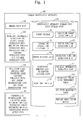
- Fig. 1 is a configuration diagram of a program verification apparatus 100 in a first embodiment.
- the program verification apparatus 100 in the first embodiment will be described, based on Fig. 1 .
- the program verification apparatus 100 is a computer that verifies whether a program to be verified is a program with high reliability whereby information to be protected is output after having been protected by encryption.
- the information is also referred to as data (the same applied hereinafter).
- target program 101 the program to be verified will be referred to as a "target program 101" and the information to be protected will be referred to as "protection target information”.
- the program verification apparatus 100 (an example of a program verification apparatus) includes a program input unit 110, a necessary information extraction unit 120, a protection state analysis unit 130, a vulnerability determination unit 140, and a verification apparatus storage unit 190.
- Each component of the program verification apparatus 100 will be outlined below. Details of each component of the program verification apparatus 100 will be described later.
- the program input unit 110 (an example of a program input unit) inputs the target program 101.
- the necessary information extraction unit 120 extracts various information necessary for verification from the target program 101 input by the program input unit 110.
- the necessary information extraction unit 120 generates a protection target extraction list 191, an output function extraction list 192, an encryption function extraction list 193, and a variable information extraction list 194, as a result of extraction of the various information.
- the protection target extraction list 191 is a list of variable names of variables for the protection target information.
- the output function extraction list 192 is a list of function names of output functions for outputting the information.
- the encryption function extraction list 193 is a list of function names of encryption functions for encrypting (or decrypting) the information.
- variable information extraction list 194 is a list of variable names of variables.
- the protection state analysis unit 130 (an example of an encrypted state variable extraction unit, a key content determination unit, and a key state determination unit) analyzes the target program 101 with respect to a protection state of the protection target information, based on the result of extraction of the various information by the necessary information extraction unit 120.
- the protection state analysis unit 130 generates each of a protection target state management table 195 and a key state management table 196, based on a result of analysis.
- the protection target state management table 195 is a list indicating whether or not the protection target information is encrypted, for each variable for the protection target information.
- the key state management table 196 is a list indicating whether or not an encryption key is protected for each encryption key used for encryption.
- the vulnerability determination unit 140 determines a vulnerable element included in the target program 101 based on the result of analysis of the target program 101 by the protection state analysis unit 130, and outputs a result of determination as a program verification result 197.
- the verification apparatus storage unit 190 (an example of a list storage unit) stores data to be used for the program verification apparatus 100.
- the verification apparatus storage unit 190 stores the following data.
- the verification apparatus storage unit 190 stores the target program 101 input by the program input unit 110.
- the verification apparatus storage unit 190 stores an information acquisition function list 181, an output function list 182, an encryption function list 183, and a hash function list 184 in advance.
- the verification apparatus storage unit 190 stores the protection target extraction list 191, the output function extraction list 192, the encryption function extraction list 193, and the variable information extraction list 194 generated by the necessary information extraction unit 120.
- the verification apparatus storage unit 190 stores the protection target state management table 195 and the key state management table 196 generated by the protection state analysis unit 130.
- the verification apparatus storage unit 190 stores the program verification result 197 generated by the vulnerability determination unit 140.
- the information acquisition function list 181 (an example of an information acquisition function list) is a list that defines each information acquisition function for acquiring the protection target information, and is used for generating the protection target extraction list 191.
- the output function list 182 (an example of an output function list) is a list that defines each output function for outputting the information, and is used for generating the output function extraction list 192.
- the encryption function list 183 (an example of an encryption function list) is a list that defines each encryption function for encrypting (or decrypting) the information, and is used for generating the encryption function extraction list 193.
- the hash function list 184 is a list of cryptographic hash functions (such as SHA1 and MD5) capable of being commonly used and is used for generating the key state management table 196.
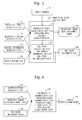
- Fig. 2 is a configuration diagram of the necessary information extraction unit 120 in the first embodiment.
- a configuration of the necessary information extraction unit 120 in the first embodiment will be described, based on Fig. 2 .
- the necessary information extraction unit 120 includes a protection target extraction unit 121, an output function extraction unit 122, an encryption function extraction unit 123, and a variable information extraction unit 124.
- Each component of the necessary information extraction unit 120 will be outlined below. Details of each component of the necessary information extraction unit 120 will be described later.
- the protection target extraction unit 121 (an example of the protection target variable extraction unit) extracts a variable for the protection target information from the target program 101 based on the information acquisition function list 181, and generates the protection target extraction list 191 listing the extracted variable.
- the output function extraction unit 122 (an example of the output variable extraction unit) extracts an output function from the target program 101, based on the output function list 182, and generates the output function extraction list 192 listing the extracted output function.
- the encryption function extraction unit 123 (an example of the encryption variable extraction unit and the key variable extraction unit) extracts an encryption function from the target program 101, based on the encryption function list 183, and generates the encryption function extraction list 193 listing the extracted encryption function.
- the variable information extraction unit 124 extracts a variable from the target program 101, and generates the variable information extraction list 194 listing the extracted variable.
- Fig. 3 is a configuration diagram of the protection state analysis unit 130 in the first embodiment.
- a configuration of the protection state analysis unit 130 in the first embodiment will be described, based on Fig. 3 .
- the protection state analysis unit 130 includes a protection target state acquisition unit 131 and a key state acquisition unit 132.
- Each component of the protection state analysis unit 130 will be outlined below. Details of each component of the protection state analysis unit 130 will be described later.
- the protection target state acquisition unit 131 analyzes the target program 101, based on the protection target extraction list 191 and the encryption function extraction list 193, and generates the protection target state management table 195 indicating whether or not the protection target information set to each variable is encrypted, for each variable for the protection target information.
- the key state acquisition unit 132 (an example of the key content determination unit and the key state determination unit) analyzes the target program 101, based on the encryption function extraction list 193, the variable information extraction list 194, and the hash function list 184, and generates the key state management table 196 indicating whether or not each encryption key is protected, for each encryption key used for encryption.
- Fig. 4 is a schematic diagram of the vulnerability determination unit 140 in the first embodiment.
- the vulnerability determination unit 140 in the first embodiment will be outlined, based on Fig. 4 .
- the vulnerability determination unit 140 determines the vulnerable element included in the target program 101, based on the output function extraction list 192, the protection target state management table 195, and the key state management table 196, and outputs the program verification result 197 indicating the result of determination.
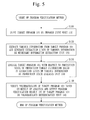
- Fig. 5 is a flowchart illustrating a program verification method by the program verification apparatus 100 in the first embodiment.
- step S110 the program input unit 110 inputs the target program 101.
- step S120 the necessary information extraction unit 120 extracts various information from the target program 101 and generates the extraction lists of the various information.
- step S130 the protection state analysis unit 130 analyzes the target program 101 with respect to a protection state of protection target information, based on the extraction lists of the various information.
- step S140 the vulnerability determination unit 140 determines a vulnerable element included in the target program 101, based on a result of analysis of the target program 101, generates the program verification result 197 indicating a result of determination, and outputs the generated program verification result 197.
- step S110 to step S140 details of the respective processes from step S110 to step S140 will be described.
- step S110 a user specifies the program (target program 101) desired to be verified, for the program verification apparatus 100, using an input device such as a keyboard or a mouse.
- the program input unit 110 of the program verification apparatus 100 inputs the specified target program 101.
- the target program 101 is input in the form of a source code.
- the program input unit 110 decompiles the target program 101 into the source code.
- the target program 101 is stored in an auxiliary storage device in advance, and the program input unit 110 inputs the target program 101 from the auxiliary storage device, for example.
- Input is defined as storage in a predetermined storage region of a memory (verification apparatus storage unit 190), for example.
- step S110 the procedure proceeds to step S120.
- Fig. 6 is a flowchart illustrating the necessary information extraction process (in step S120) in the first embodiment.
- step S120 The necessary information extraction process (in step S120) in the first embodiment will be described, based on Fig. 6 .
- each component of the necessary information extraction unit 120 refers to the target program 101 input in step S101 from the leading line to the last line of the target program 101, and generates the various lists, as will be described below.
- step S120 The necessary information extraction process (in step S120) is constituted from respective processes from step S121 to step S124.
- step S121 the protection target extraction unit 121 obtains the information acquisition function list 181 from the verification apparatus storage unit 190.
- the protection target extraction unit 121 extracts, from the target program 101 input in step S110, a variable to which the protection target information is set, based on the obtained information acquisition function list 181.
- the variable to which the protection target information is set will be referred to as a "protection target variable”.
- the protection target extraction unit 121 generates the protection target extraction list 191 listing the extracted protection target variable.
- step S121 the procedure proceeds to step S122.
- Fig. 7 is a diagram illustrating an example of the target program 101 in the first embodiment.
- Fig. 8 is a table illustrating an example of the information acquisition function list 181 in the first embodiment.
- Fig. 9 is a table illustrating an example of the protection target extraction list 191 in the first embodiment.
- step S121 An example of the protection target extraction process (in step S121) will be described, based on Figs. 7 to 9 .
- An information acquisition function list 181A (see Fig. 8 ) is a list of information acquisition functions for obtaining the protection target information.
- the information acquisition function list 181A is generated in advance, and is stored in the verification apparatus storage unit 190.
- the information acquisition function list 181A includes a "function name” and "protection target information”, in association with each other.
- the "function name" indicates the function name of each information acquisition function.
- the "protection target information" indicates content of the protection target information to be obtained by the information acquisition function.
- the information acquisition function list 181A in Fig. 8 indicates that an information acquisition function "getProfile” is a function for acquiring protection target information "profile", for example.
- the protection target extraction unit 121 extracts from a target program 101A (see Fig. 7 ) a line in which the information acquisition function is used, based on the information acquisition function list 181A (see Fig. 8 ).
- the information acquisition function "getProfile" is used in the first line of the target program 101A in Fig. 7 , for example.
- the protection target extraction unit 121 generates a protection target extraction list 191A (see Fig. 9 ), based on the line in which the information acquisition function is used and the information acquisition function list 181A.
- the protection target extraction list 191A includes a "variable name”, a “position (line number)”, “protection target information”, and an "information state”, in association with one another.
- variable name indicates the variable name of each protection target variable to which the protection target information obtained by the information acquisition function is set.
- the "position (line number)" indicates the number of a line in which the protection target information is set to the protection target variable.
- the "protection target information" indicates content of the protection target information set to the protection target variable.
- the "information state” indicates one of a state where the protection target information set to the protection target variable is encrypted (as an encrypted text) and a state where the protection target information set to the protection target variable is not encrypted (as a plaintext).
- the protection target extraction unit 121 sets the "plaintext" in each field of the "information state", as an initial value.
- the protection target extraction list 191A in Fig. 9 indicates that the protection target information "profile” is set to a protection target variable "profile” in the first line of the target program 101A (see Fig. 7 ).
- step S120 the description of the necessary information extraction process (in step S120) will be continued from step S122.
- step S122 the output function extraction unit 122 obtains the output function list 182 from the verification apparatus storage unit 190.
- the output function extraction unit 122 extracts an output function from the target program 101 input in step S110, based on the obtained output function list 182.
- the output function extraction unit 122 generates the output function extraction list 192 listing the extracted output function.
- step S122 the procedure proceeds to step S123.
- Fig. 10 is a table illustrating an example of the output function list 182 in the first embodiment.
- Fig. 11 is a table illustrating an example of the output function extraction list 192 in the first embodiment.
- step S122 An example of the output function extraction process (in step S122) will be described, based on Figs. 7 , 10 , and 11 .
- An output function list 182A (see Fig. 10 ) is a list of output functions for outputting the information.
- the output function list 182A is generated in advance, and is stored in the verification apparatus storage unit 190.
- the output function list 182A includes a "function name”, "output content”, and an “output state”, in association with one another.
- the "function name" indicates the name of each output function.
- the "output content” indicates content of the output function.
- a function for outputting a file, a function for communication, a function for communication between programs, and a function for writing to a database are, for example, examples of the output functions.
- the "output state” indicates an "encrypted text” or a "plaintext”.
- the "encrypted text” denotes that the output function outputs information encrypted by the output function, while the "plaintext” denotes that the output function outputs information without encrypting the information.
- the output function list 182A in Fig. 10 indicates that an output function "output" outputs a file without encrypting the file, for example.
- the output function extraction unit 122 extracts from the target program 101A (see Fig. 7 ) a line in which the output function is used, based on the output function list 182A (see Fig. 10 ).
- the output function "output" is used in the ninth line of the target program 101A in Fig. 7 , for example.
- the output function extraction unit 122 generates an output function extraction list 192A (see Fig. 11 ), based on the line in which the output function is used and the output function list 182A.
- the output function extraction list 192A includes a "function name”, a "position (line number)", an "actual argument”, and an "output state”, in association with one another.
- the "function name” indicates the function name of each output function used in the target program 101A.
- the "position (line number)" indicates the number of a line in which the output function is used.
- the "actual argument” indicates an argument of the output function, or indicates a variable for output information to be output by the output function.
- An argument is a type of a variable (the same applies hereinafter).
- the variable for the output information to be output by the output function will be referred to as an "output variable”.
- the "output state” indicates a state of the output information (plaintext or encrypted text) to be output by the output function.
- the output function extraction list 192A in Fig. 11 indicates, for example, that set values (output information) of output variables "name", “age”, and “sex” are output in the state of the "plaintexts" by the output function "output" in the ninth line of the target program 101A (see Fig. 7 ).
- step S120 the description of the necessary information extraction process (in step S120) will be continued from step S123.
- step S123 the encryption function extraction unit 123 obtains the encryption function list 183 from the verification apparatus storage unit 190.
- the encryption function extraction unit 123 extracts an encryption function from the target program 101 input in step S110, based on the obtained encryption function list 183.
- the encryption function extraction unit 123 generates the encryption function extraction list 193 listing the extracted encryption function.
- step S123 the procedure proceeds to step S124.
- Fig. 12 is a diagram illustrating an example of the target program 101 in the first embodiment.
- Fig. 13 is a table illustrating an example of the encryption function list 183 in the first embodiment.
- Fig. 14 is a table illustrating an example of the encryption function extraction list 193 in the first embodiment.
- step S123 An example of the encryption function extraction process (in step S123) will be described, based on Figs. 12 to 14 .
- An encryption function list 183B (see Fig. 13 ) is a list of encryption functions for encrypting or decrypting the information.
- an encryption function for encrypting the information will be referred to as an "encrypting function”
- an encryption function for decrypting the information will be referred to as a "decrypting function”.
- the encryption function list 183B is generated in advance, and is stored in the verification apparatus storage unit 190.
- the encryption function list 183B includes a "function name”, a "key position”, and "processing content”, in association with one another.
- the "function name” indicates the function name of each encryption function.
- the "key position” indicates the argument name of one of arguments of the encryption function to which an encryption key or a decryption key is set.
- the "processing content” indicates which one of encrypting processing and decrypting processing processing by the encryption function is.
- the encryption function list 183B in Fig. 13 indicates that an encrypting function "enc” performs the processing of "encryption", using information of a "second argument" as the encryption key, for example.
- the encryption function extraction unit 123 extracts from the target program 101B (see Fig. 12 ) a line in which the encryption function is used, based on the encryption function list 183B (see Fig. 13 ).
- the encrypting function "enc" is used in the ninth line of the target program 101B in Fig. 12 , for example.
- the encryption function extraction unit 123 generates an encryption function extraction list 193B (see Fig. 14 ), based on the line in which the encryption function is used and the encryption function list 183B.
- the encryption function extraction list 193B includes a "function name”, a "position (line number)", an "actual argument of function”, an "actual argument for key”, a “variable for output”, and an "output state”, in association with one another
- the "function name” indicates the function name of each encryption function.
- the "position (line number)" indicates the number of a line in which the encryption function is used.
- the "actual arguments of function" indicates arguments set to the encryption function.
- the "actual argument for key” indicates one of the arguments set to the encryption function, to which the encryption key is set.
- variable for output indicates a variable to which information processed by the encryption function is set.
- the variable to which the information processed by the encryption function is set will be referred to as an "encryption variable”.
- the "output state" indicates which one of an encrypted state and a decrypted state the information processed by the encryption function is.
- the encryption function extraction list 193B in Fig. 14 indicates, for example, that the encrypting function "enc” encrypts information set to an argument "tel”, using the encryption key set to an argument "key” in the ninth line of the target program 101B (see Fig. 12 ), and that the information encrypted by the encrypting function "enc” is set to an encryption variable "enc_tel".
- step S120 the description of the necessary information extraction process (in step S120) will be continued from step S124.
- step S124 the variable information extraction unit 124 extracts a variable from the target program 101 input in step S110, and generates the variable information extraction list 194 listing the extracted variable.
- variable information extraction unit 124 may use constant propagation known as a common code optimization technology of a compiler as a process for extracting the variable (see Non-Patent Literature 1).
- step S120 The necessary information extraction process (in step S120) is finished by step S124.
- Fig. 15 is a diagram illustrating an example of the target program 101 in the first embodiment.
- Fig. 16 is a table illustrating an example of the variable information extraction list 194 in the first embodiment.
- variable information extraction process (in step S124) will be described, based on Figs. 15 and 16 .
- variable information extraction unit 124 extracts, from a target program 101C in Fig. 15 , six variables "profile”, “name”, “age”, “key”, “h_key”, and “enc_tel” each used as the assignment destination (left side) of an assignment statement or an argument of function.
- variable information extraction unit 124 sets information on the extracted variables in a variable information extraction list 194C (see Fig. 16 ).
- variable information extraction list 194C includes a "variable name”, a “position (line number), and "content of variable” in association with one another.
- variable name indicates each variable used in the target program 101C.
- the "position (line number)" indicates the number of a line in which the variable is used.
- variable indicates whether a value set to the variable is “variable” or “invariable (constant)".
- variable may be classified into a type other than the two types of "variable” and "invariable".
- an "input variable” that is an output value of an external input function or a "time variable” that is an output value of a time acquisition function may be added to the types of the variable.
- the function (enc) includes, as an argument, the variable (name) that is variable.
- variable information extraction list 194C in Fig. 16 indicates, for example, that the variable "profile” which is variable is used in the first line of the target program 101C and that the variable "key” which is invariable is used in the fourth to sixth line of the target program 101C.
- Respective processes of the necessary information extraction process (in step S120) from step S121 to S124 described with reference to Fig. 6 may be executed by interchanging the order of the steps or may be executed in parallel.
- step S120 After the necessary information extraction process (in step S120), the procedure proceeds to a protection state analysis process (in step S130) (see Fig. 5 ).
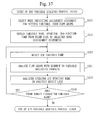
- Fig. 17 is a flowchart illustrating the protection state analysis process (in step S130) in the first embodiment.
- step S130 The protection state analysis process (in step S130) in the first embodiment will be described, based on Fig. 17 .
- the protection state analysis process (in step S130) is constituted from respective processes in steps S200 and S300.
- step S200 the protection target state acquisition unit 131 analyzes the target program 101, based on the protection target extraction list 191 generated in step S121 (see Fig. 6 ) and the encryption function extraction list 193 generated in step S123 (see Fig. 6 ).
- the protection target state acquisition unit 131 generates the protection target state management table 195, based on a result of analysis.
- step S200 An example of a protection target state acquisition process (in step S200) will be described later.
- step S200 the procedure proceeds to step S300.
- step S300 the key state acquisition unit 132 analyzes the target program 101, based on the encryption function extraction list 193 generated in step S123 (see Fig. 6 ), the variable information extraction list 194 generated in step S124 (see Fig. 6 ), and the hash function list 184 stored in the verification apparatus storage unit 190 in advance.
- the key state acquisition unit 132 generates the key state management table 196, based on a result of analysis.
- step S300 An example of a key state acquisition process (in step S300) will be described later.
- step S300 the protection state analysis process (in step S130) is finished.
- Steps S200 and S300 of the protection state analysis process (in step S130) described with reference to Fig. 17 may be executed by interchanging the order of the steps S200 and S 300, or may be executed in parallel.
- Fig. 18 is a flowchart illustrating an example of the protection target state acquisition process (in step S200) in the first embodiment.
- step S200 An example of the protection target state acquisition process (in step S200) in the first embodiment will be described, based on Fig. 18 .
- the protection target state acquisition process (in step S200) is constituted from respective processes from step S210 to step S261.
- step S210 the protection target state acquisition unit 131 generates a flow graph illustrating a processing flow of the target program 101.
- a flow graph indicates data of a graph illustrating all processing paths (order of processings) of a program, using nodes each indicating one instruction (and a line number) within the program and edges that connect the nodes in the order of the processings.
- the protection target state acquisition unit 131 generates the flow graph of the target program 101, using an existent tool, for example.
- step S210 the procedure proceeds to step S220.
- step S220 the protection target state acquisition unit 131 generates the protection target state management table 195, and initializes the protection target state management table 195, based on the protection target extraction list 191.
- step S220 the procedure proceeds to step S230.
- Fig. 19 is a table illustrating an example of the protection target extraction list 191 in the first embodiment.
- Fig. 20 is a table illustrating an example of initialization of the protection target state management table 195 in the first embodiment.
- step S220 An example of a management table initialization process (in step S220) will be described, based on Figs. 19 and 20 .
- a protection target state management table 195D (see Fig. 20 ) includes a "line number”, a “plaintext”, and an "encrypted text", in association with one another.
- the "line number” indicates a line number of the target program 101.
- the "plaintext" indicates each protection target variable that is not encrypted.
- the protection target variable that is not encrypted will be referred to as a "plaintext state variable”.
- the "encrypted text” indicates each protection target variable that is encrypted.
- the protection target variable that is encrypted will be referred to as an "encrypted state variable”.
- a protection target extraction list 191D in Fig. 19 indicates that the protection target variable "profile” in the state of the "plaintext” is set in the first line of the target program 101, and that a protection target variable "name” in the state of the "plaintext” is set in the second line of the target program 101.
- the protection target state acquisition unit 131 sets the protection target variable "profile" in the field of the "plaintext” associated with the line number of the "first line” in the protection target state management table 195D.
- the protection target state acquisition unit 131 sets the protection target variable "name” in the field of the "plaintext” associated with the line number of the "second line” in the protection target state management table 195D.
- the protection target state acquisition unit 131 sets the variable name of a protection target variable in the protection target state management table 195D, in association with the number of the line in which the protection target variable is set and the state of the protection target variable.
- the protection target state management table 195D illustrated in Fig. 20 is in a state that has been initialized, based on the protection target extraction list 191D illustrated in Fig. 19 .
- step S200 the description of the protection target state acquisition process (in step S200) will be continued from step S230.
- step S230 the protection target state acquisition unit 131 specifies a leading node on the flow graph generated in step S210, by a processing pointer.
- the processing pointer specifies the node to be processed.
- step S230 the procedure proceeds to step S231.
- step S231 the protection target state acquisition unit 131 reads into the memory the node specified by the processing pointer from the flow graph generated in step S210.
- the node read in step S231 will be referred to as an "attention node”, and an instruction indicated by the node read in S231 will be referred to as an "attention node instruction”.
- the protection target state acquisition unit 131 specifies the node immediately preceding the attention node, based on the flow graph, and obtains, from the protection target state management table 195, a plaintext state variable and an encrypted state valuable associated with the same line number as that of the specified node.
- the protection target state acquisition unit 131 confirms that the obtained plaintext state variable and the obtained encrypted state variable are not overwritten by the attention node instruction. If an attention node instruction is an assignment statement and the left side of the assignment statement is a plaintext state variable or an encrypted state variable, the plaintext state variable or the encrypted state variable is overwritten.
- the protection target state acquisition unit 131 adds the obtained plaintext state variable and the obtained encrypted state variable to the protection target state management table 195, in association with the same line number as that of the attention node.
- the protection target state management table 195D When the protection target state management table 195D is in the state illustrated in Fig. 20 , for example, the protection target state acquisition unit 131 adds the plaintext "profile" in the "first line” of the line number immediately preceding an attention node to the plaintext in the "second line” of the line number of the attention node. With this arrangement, the protection target state management table 195D becomes a state illustrated in Fig. 21 .
- Fig. 21 is a table illustrating an example of the protection target state management table 195 in the first embodiment.
- step S231 the procedure proceeds to step S232.
- step S232 the protection target state acquisition unit 131 determines whether or not the attention node instruction indicated by the attention node read in step S231 is an assignment statement.
- step S240 the protection target state acquisition unit 131 analyzes the right side (assignment source) of the attention node instruction (assignment statement) like the following (1) or (2):
- step S240 the procedure proceeds to step S250.
- step S250 the protection target state acquisition unit 131 determines whether or not the protection target variable is included in the right side (assignment source) of the attention node instruction (assignment statement), based on a result of analysis in step S240.
- step S260 If the protection target variable is determined not to be included in the right side of the attention node instruction (NO), the procedure proceeds to step S260.
- step S251 the protection target state acquisition unit 131 determines which one of the encrypting function or the encrypted state variable the right side (assignment source) of the attention node instruction (assignment statement) is, based on the result of analysis in step S240.
- step S252 If the right side of the attention node instruction is determined to be one of the encrypting function and the encrypted state variable (YES), the procedure proceeds to step S252.
- step S252 the protection target state acquisition unit 131 adds a variable name on the left side (assignment destination) of the attention node instruction (assignment statement) to the item of "encrypted text" in the protection target state management table 195, in association with the line number of the attention node.
- the variable added to the item of "encrypted text" in the protection target state management table 195 is an example of the encrypted state variable.
- the protection target state acquisition unit 131 sets the function name of the encrypting function and the number of a line in which the encrypting function is used, in association with the added encrypted state variable.
- the protection target state acquisition unit 131 obtains, from the encryption function extraction list 193, the name of a key variable of the encrypting function, and then adds the obtained key variable name to the item of "plaintext" in the protection target state management table 195, in association with the line number of the attention node,.
- the key variable added to the item of "plaintext" in the protection target state management table 195 is an example of the plaintext state variable.
- the right side of the seventh line (assignment statement) of a target program 101D illustrated in Fig. 22 is an encrypting function "enc (name1, key)", and the key variable is "key”.
- the protection target state acquisition unit 131 adds a variable name "enc_name" on the left side in the seventh line of the target program 101D to the item of "encrypted text" in the protection target state management table 195D, in association with the "seventh line” of the line number of the attention node.
- the protection target state acquisition unit 131 sets an encrypting function name "enc” and the line number of the "seventh line” in the protection target state management table 195D, in association with the added variable name "enc_name”.
- protection target state acquisition unit 131 adds a key variable name "key" to the item of "plaintext" of the protection target state management table 195D, in association with the line number of the "seventh line” of the attention node.
- the protection target state management table 195D becomes a state illustrated in Fig. 23 .
- Fig. 22 is an example of the target program 101 in the first embodiment.
- Fig. 23 is an example of the protection target state management table 195 in the first embodiment.
- step S252 the procedure proceeds to step S260.
- step S253 the protection target state management unit 131 adds the variable name on the left side (assignment destination) of the attention node instruction (assignment statement) to the item of "plaintext" of the protection target state management table 195, in association with the line number of the attention node.
- the variable added to the item of "plaintext" of the protection target state management table 195 is an example of the plaintext state variable.
- the protection target state acquisition unit 131 sets the function name of the decrypting function and the number of a line in which the decrypting function is used, in association with the plaintext state variable to be added.
- the right side of the third line (assignment statement) of the target program 101D illustrated in Fig. 22 is the protection target variable "name" that is not encrypted.
- the protection target state acquisition unit 131 adds a variable name "name 1" on the left side in the third line of the target program 101 to the item of the "plaintext" of the protection target state management table 195D, in association with the "third line” of the line number of the attention node.
- the protection target state management table 195D becomes a state in Fig. 24 .
- Fig. 24 is a table illustrating an example of the protection target state management table 195 in the first embodiment.
- step S253 the procedure proceeds to step S260.
- step S260 the protection target state acquisition unit 131 determines whether or not the attention node specified by the processing pointer is the node listed last on the flow graph.
- step S261 If the attention node is determined to be the last node (YES), the procedure proceeds to step S261.
- the protection target state acquisition unit 131 specifies the node subsequent to the attention node as a new attention node, by the processing pointer. Then, the procedure returns to step S231.
- step S261 the protection target state acquisition unit 131 determines whether or not the protection target state management table 195 has been altered. In other words, the protection target state acquisition unit 131 determines whether or not step S252 or step S253 has been executed in a loop from step S231 to step S260. If step S252 or step S253 has been executed, the protection target state management table 195 is altered.
- the protection target state acquisition unit 131 sets, in an alteration flag, the value of the alteration flag indicating that the protection target state management table 195 has been altered when the protection target state acquisition unit 131 has executed step S252 or step S253. Then, the protection target state acquisition unit 131 determines whether or not the alteration flag value is set in the alteration flag. After the determination, the protection target state acquisition unit 131 initializes the alteration flag using an unchanging alteration value indicating that the protection target state management table 195 is not altered.
- the protection target state acquisition unit 131 may copy the protection target state management table 195 in step S230, and may determine whether or not the protection target state management table 195 has been altered by comparing the protection target state management table 195 copied and the protection target state management table 195 at a current time.
- No alteration in the protection target state management table 195 means that the processes have been finished for all the nodes on the flow graph, or means that the processes have been finished for all the processing paths on the flow graph, for example.
- the protection target state acquisition unit 131 may determine whether or not the processes have been finished for all the nodes on the flow graph, or may determine whether or not the processes have been finished for all the processing paths on the flow graph, instead of determining whether or not the protection target state management table 195 has been altered.
- step S230 If the protection target state management table 195 is determined to have been altered (YES), the procedure returns to step S230, and the processes are repeated from step S230.
- step S200 If the protection target state management table 195 is determined not to have been altered (NO), the protection target state acquisition process (in step S200) is finished.
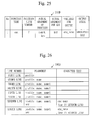
- Fig. 25 is a table illustrating an example of the encryption function extraction list 193 in the first embodiment.
- Fig. 26 is a table illustrating an example of the protection target state management table 195 in the first embodiment.
- the protection target state acquisition unit 131 generates the protection target state management table 195D illustrated in Fig. 26 , based on the target program 101D illustrated in Fig. 22 , the protection target extraction list 191D illustrated in Fig. 19 , and an encryption function extraction list 193D illustrated in Fig.25 , by the protection target state acquisition process (in step S200) (see Fig. 18 ).
- Fig. 27 is a diagram illustrating an example of the target program 101 in the first embodiment.
- Fig. 28 is a table illustrating an example of the protection target extraction list 191 in the first embodiment.
- Fig. 29 is a table illustrating an example of the encryption function extraction list 193 in the first embodiment.
- Fig. 30 is a table illustrating an example of the protection target state management table 195 in the first embodiment.
- the protection target state acquisition unit 131 generates a protection target state management table 195E illustrated in Fig. 30 , based on a target program 101E illustrated in Fig. 27 , a protection target extraction list 191E illustrated in Fig. 28 , and an encryption function extraction list 193E illustrated in Fig. 29 , by the protection target state acquisition process (in step S200) (see Fig. 18 ).
- Fig. 31 is a flowchart illustrating an example of the key state acquisition process (in step S300) in the first embodiment.
- step S300 The example of the key state acquisition process (in step S300) in the first embodiment will be described, based on Fig. 31 .
- the key state acquisition process (in step S300) is constituted from respective processes from step S310 to step S370.
- step S310 the key state acquisition unit 132 generates a flow graph of the target program 101. It may be so arranged, however, that the key state acquisition unit 132 does not generate the flow graph of the target program 101, and uses the flow graph (refer to step S210 in Fig. 18 ) generated by the protection target state acquisition unit 131.
- step S310 the procedure proceeds to step S320.
- step S320 the key state acquisition unit 132 generates and initializes the key state management table 196.
- step S320 the procedure proceeds to step S330.
- Fig. 32 is a table illustrating a configuration of the key state management table 196 in the first embodiment.
- the configuration of the key state management table 196 in the first embodiment will be described, based on Fig. 32 .
- the key state management table 196 includes a "position (line number)", a “key variable”, an “operator (function name)”, and "content”, in association with one another.
- the "position (line number)" indicates the number of a line in which each encrypting function is used.
- the "key variable” indicates a key variable used as the encryption key.
- the "operator (function name)" indicates an operator and a function used for generating the key variable.
- the “content” indicates whether a value set to the key variable is “variable” or “invariable”.
- the key state management table 196 that has been initialized is in a state where no information is set (see Fig. 32 ).
- step S200 the description about the key state acquisition process (in step S200) will be continued from step S330.
- step S330 the key state acquisition unit 132 specifies the leading line of the encryption function extraction list 193 by a processing pointer.
- the processing pointer specifies a line of the encryption function extraction list 193.
- step S330 the procedure proceeds to step S331.
- step S331 the key state acquisition unit 132 reads into the memory the line specified by the processing pointer from the encryption function extraction list 193.
- the line read in step S331 will be referred to as an "attention line”.
- step S331 the procedure proceeds to step S340.
- step S340 the key state acquisition unit 132 obtains the variable name of a key variable from the attention line of the encryption function extraction list 193, and obtains from the variable information extraction list 194 the (variable or invariable) content of the key variable identified by the obtained variable name.
- the key state acquisition unit 132 obtains, from a variable information extraction list 194F illustrated in Fig. 34 , content of "variable” associated with the same variable name as an actual argument for key "key2" (key variable).
- Fig. 33 is a table illustrating an example of the encryption function extraction list 193 in the first embodiment.
- Fig. 34 is a table illustrating an example of the variable information extraction list 194 in the first embodiment.
- step S340 the procedure proceeds to step S350.
- step S350 the key state acquisition unit 132 analyzes the flow graph with respect to the key variable in the attention line, and obtains an operator and a function used for generating the key variable in the attention line, as a result of analysis.
- step S350 Details of a key variable analysis process (in step S350) will be described later.
- step S350 the procedure proceeds to step S360.
- step S360 the key state acquisition unit 132 registers, in the key state management table 196, the line number of the attention line set in the encryption function extraction list 193, the content of the key variable obtained in step S340, and the result of analysis (the operator and the function) obtained in step S350.
- step S360 the procedure proceeds to step S370.
- step S370 the key state acquisition unit 132 determines whether or not the attention line at a current time is the last line of the encryption function extraction list 193.
- step S300 If the current attention line is determined to be the last line of the encryption function extraction list 193 (YES), the key state acquisition process (in step S300) is finished.
- the key state acquisition unit 132 specifies the line subsequent to the current attention line, as a new attention line, by the processing pointer. Then, the procedure returns to step S331.
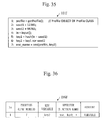
- Fig. 35 is a diagram illustrating an example of the target program 101 in the first embodiment.
- Fig. 36 is a table illustrating an example of the key state management table 196 in the first embodiment.
- the key variable "key2" of an encrypting variable "enc” in a target program 101F illustrated in Fig. 35 is generated using an operator “xor” (in the sixth line), a hash function “hash” (in the fifth line)", and an operator "+” (in the fifth line).
- the key state acquisition unit 132 generates a key state management table 196F illustrated in Fig. 36 by the key state acquisition process (in step S300) (see Fig. 31 ), based on the target program 101F illustrated in Fig. 35 , the encryption function extraction list 193F illustrated in Fig. 33 , and the variable information extraction list 194F illustrated in Fig. 34 .
- the hash function list 184 is assumed to include a function name "hash" for the hash function.
- Fig. 37 is a flowchart illustrating the key variable analysis process (in step S350) in the first embodiment.
- step S350 The key variable analysis process (in step S350) in the key state acquisition process (in step S300) (see Fig. 31 ) will be described, based on Fig. 37 .
- the key variable analysis process (in step S350) is constituted from respective processes in steps S351 to S356.
- step S351 the key state acquisition unit 132 obtains, from the variable information extraction list 194, the line number of each line in which the key variable in the attention line of the encryption function extraction list 193 is used, and selects, from the flow graph, one of the nodes that indicates an assignment statement for setting the key variable in the attention line.
- the nodes each represent the line to be identified by the obtained line number.
- the selected node will be referred to as an "attention node".
- the key state acquisition unit 132 obtains, from the variable information extraction list 194F illustrated in Fig. 34 , the line numbers of "6" and “7” associated with the key variable "key2". Then, the key state acquisition unit 132 selects, from the line numbers of "6" and “7", the line number of "6" of the assignment statement for setting the key variable "key2" (see the sixth line in Fig. 35 ). In this case, the node indicating the assignment statement in the sixth line is the attention node.
- step S351 the procedure proceeds to step S352.
- step S352 the key state acquisition unit 132 obtains, from the right side (assignment source) of the attention node (assignment statement) selected in step S351, one or more variable names , an operator, and a function name (such as the hash function name included in the hash function list 184).
- the key state acquisition unit 132 obtains, from the assignment statement (attention node) in the sixth line of the target program 101F illustrated in Fig. 35 , variable names "key1", "seed2" and the operator "xor" used on the right side.
- step S352 the procedure proceeds to step S353.
- step S353 the key state acquisition unit 132 selects one unselected variable name from among the one or more variable names obtained in step S352.
- step S353 the procedure proceeds to step S354.
- step S354 the key state acquisition unit 132 analyzes the flow graph with respect to the variable to be identified by the variable name selected in step S353, as in the case of the key variable in the attention line.
- the key state acquisition unit 132 executes the key variable analysis process (in step S350) by replacing the name of the key variable in the attention line with the variable name selected in step S353.
- step S350 the key state acquisition unit 132 recursively executes the key variable analysis process (in step S350) with respect to the variable for setting the key variable.
- the key state acquisition unit 132 executes the key variable analysis process (in step S350) with respect to a variable "key1" used in the assignment statement (in the sixth line) for setting the key variable "key2" in the target program 101F illustrated in Fig. 35 .
- the key state acquisition unit 132 executes the key variable analysis process (in step S350) with respect to a variable "in” used in an assignment statement (in the fifth line) for setting the variable "key1".
- the key state acquisition unit 132 also executes the key variable analysis process (in step S350) with respect to other variables “seed2" and “seed1" for setting the key variable "key2".
- step S354 the procedure proceeds to step S355.
- step S355 the key state acquisition unit 132 registers the operator and the function name obtained in step S352 (including an operator and a function name recursively obtained in step S354) in an analysis result list.
- the analysis result list indicates a result of analysis of the key variable analysis process (S350).
- the key state acquisition unit 132 registers in the analysis result list the operator "xor" in the assignment statement (in the sixth line) for setting the key variable "key2", the hash function name "hash” and the operator "+” in the assignment statement (in the fifth line) for setting the variable "key1" from among the operators and the function names included in the target program 101F illustrated in Fig. 35 .
- step S355 the procedure proceeds to step S356.
- step S356 the key state acquisition unit 132 determines whether or not there remains the variable name that has not been selected in step S353.
- step S350 the key variable analysis process
- Fig. 38 is a flowchart illustrating an example of a vulnerability determination process (in step S140) in the first embodiment.
- step S140 The vulnerability determination process (in step S140) (see Fig. 5 ) in the first embodiment will be described, based on Fig. 38 .
- the vulnerability determination process (in step S140) is constituted from respective processes from step S141 to step S149.
- step S141 the vulnerability determination unit 140 specifies the leading line of the output function extraction list 192 generated in step S122 (see Fig. 6 ) by a processing pointer.
- the processing pointer specifies a line of the output function extraction list 192.
- step S141 the procedure proceeds to step S142.
- step S142 the vulnerability determination unit 140 reads the line specified by the processing pointer from the output function extraction list 192 into the memory.
- the line read in step S142 will be referred to as an "attention line”.
- step S 142 the procedure proceeds to step S 143.
- step S143 the vulnerability determination unit 140 refers to the attention line in the output function extraction list 192, and determines whether or not an item of "output state" with respect to the attention line is a "plaintext".
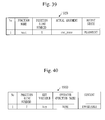
- Fig. 39 is a table illustrating an example of the output function extraction list 192 in the first embodiment.
- step S 144 If the item of "output state" with respect to the attention line is the "plaintext” (YES), the procedure proceeds to step S 144.
- step S 144 the vulnerability determination unit 140 selects one output variable (actual argument of the output function) from the attention line in the output function extraction list 192.
- step S 144 the procedure proceeds to step S 145.
- step S 145 the vulnerability determination unit 140 determines whether or not the output variable selected in step S 144 is the same variable as a protection target variable included in the protection target state management table 195 generated in step S200 (see Fig. 17 ).
- the output variable "enc_name" is the protection target variable included in the protection target state management table 195D illustrated in Fig. 26 .
- step S 148 If the output variable is determined not to be the protection target variable (NO), the procedure proceeds to step S 148.
- step S146-1 the vulnerability determination unit 140 determines whether or not the output variable (protection target variable) selected in step S 144 is an encrypted state variable included in the item of "encrypted text" in the protection target state management table 195.
- the output variable "enc_name” is the encrypted state variable included in the item of "encrypted text" in the protection target state management table 195D illustrated in Fig. 26 .
- step S147 If the output variable is determined not to be the encrypted state variable, or if the output variable is determined to be a plaintext state variable (NO), the procedure proceeds to step S147.
- step S 146-2 the vulnerability determination unit 140 obtains, from the protection target state management table 195, the line number of an encrypting function set in association with the output variable (encrypted state variable).
- the vulnerability determination unit 140 obtains, from the key state management table 196 generated in step S300 (see Fig. 17 ), the (variable or invariable) content of a key variable associated with the line number of the obtained encrypting function.
- the vulnerability determination unit 140 determines whether or not the content of the obtained key variable is variable.
- the vulnerability determination unit 140 obtains, from the protection target state management table 195D illustrated in Fig. 26 , the line number of the "seventh line” of the encrypting function "enc" associated with the output variable "enc_name”.
- the vulnerability determination unit 140 obtains, from a key state management table 196D illustrated in Fig. 40 , the content of "invariable” of the key variable "key” associated with the obtained line number of the "seventh line".
- Fig. 40 is a table illustrating an example of the key state management table 196 in the first embodiment.
- step S 147 If the content of the key variable is determined not to be variable, or if the content of the key variable is determined to be invariable (NO), the procedure proceeds to step S 147.
- step S 146-3 the vulnerability determination unit 140 refers to the key state management table 196 to determine whether or not the encryption key set to the key variable has a secret value to be generated by a predetermined secret operation using a hash function, the operator "xor", or the like.
- the predetermined secret operation is an operation for calculating the secret value that is not inferred by a third party and is made secret to the third party.
- the key state management table 196F illustrated in Fig. 36 shows that the key variable "key2" is generated by the operator "xor” and the hash function "hash". In this case, the vulnerability determination unit 140 determines that the key variable "key2" is protected.
- step S148 If the key variable is determined to be protected (YES), the procedure proceeds to step S148.
- step S 147 If the key variable is determined not to be protected (NO), the procedure proceeds to step S 147.
- step S147 the vulnerability determination unit 140 adds a result of determination to the program verification result 197.
- the vulnerability determination unit 140 adds the following result of determination to the program verification result 197.
- the vulnerability determination unit 140 adds to the program verification result 197 information on the output variable (such as the variable name and the line number) and information indicating that the output variable is in the state of a plaintext (in which the protection target information is output without being encrypted).
- the vulnerability determination unit 140 adds to the program verification result 197 information on the key variable (such as the function name, the variable name, and the line number) and information indicating that the key variable is invariable (constant) (the protection target information is output without being appropriately encrypted).
- the vulnerability determination unit 140 adds to the program verification result 197 the information on the key variable (such as the function name, the variable name, and the line number) and information indicating that the key variable is not protected (the protection target information is output without being appropriately encrypted).
- step S147 the procedure proceeds to step S148.
- step S148 the vulnerability determination unit 140 determines whether or not there remains an output variable that has not been selected in step S 144.
- step S149 the vulnerability determination unit 140 determines whether or not the attention line at a current time is the last line of the output function extraction list 192.
- the vulnerability determination unit 140 If the current attention line is determined to be the last line of the output function extraction list 192 (YES), the vulnerability determination unit 140 outputs the program verification result 197 to an output apparatus such as a display or a printer. Then, the vulnerability determination process (in step S140) is finished.
- the vulnerability determination unit 140 specifies the line subsequent to the current attention line as a new attention line, by the processing pointer. Then, the procedure returns to step S142.
- step S140 the vulnerability determination process (in step S140) described with reference to Fig. 38 , the result of determination when the condition in each of steps S 146-1 to S146-3 is not satisfied is set in the program verification result 197.
- step S 145 the result of determination in step S 145 and at least one of the respective results of determinations in steps S146-1 to S146-3 may be set to the program verification result 197, for each of all the output variables.
- At least one of the results of determinations in steps S146-1 to S146-3 may be set in the program verification result 197, for each protection target variable of all the output variables.
- Fig. 41 is a diagram illustrating an example of hardware resources of the program verification apparatus 100 in the first embodiment.
- the program verification apparatus 100 includes a CPU 901 (Central Processing Unit).
- the CPU 901 is connected to hardware devices such as a ROM 903, RAM 904, a communication board 905 (communication device), a display 911 (display device), a keyboard 912, a mouse 913, a drive 914, and a magnetic disk drive 920 through a bus 902 to control these hardware devices.
- the drive 914 is a device that reads or writes a storage medium such as an FD (Flexible Disk), a CD (Compact Disc), or a DVD (Digital Versatile Disc).
- the ROM 903, the RAM 904, the magnetic disk device 920, and the drive 914 are each an example of a storage device.
- the keyboard 912, the mouse 913, the communication board 905, and the storage device are an example of an input device.
- the display 911, the communication board 905, and the storage device are an example of an output device.
- the communication board 905 is connected to a communication network such as a LAN (Local Area Network), the Internet, or a telephone line by wire or wirelessly.
- a communication network such as a LAN (Local Area Network), the Internet, or a telephone line by wire or wirelessly.
- An OS 921 (operating system), programs 922, and files 923 are stored in the magnetic disk drive 920.
- a program that executes a function described as a "unit” in explanation of the embodiment is included in the programs 922.
- the program (such as the program verification program) is read and executed by the CPU 901. That is, the program causes the computer to function as the "unit", and also causes the computer to execute the procedure or the method of the "part".
- the "part” described in this embodiment may be a “circuit”, an "apparatus”, or a “device”, or a “step”, a “procedure”, or a “process”. Namely, the "part” described herein may be implemented as firmware, software, or hardware, or by a combination of these software, hardware, and firmware.
- the program verification apparatus 100 may discover and warn, by static analysis, that protection target information such as confidential information or personal information flows out to an outside of a program as a plaintext or without using an appropriate encryption method.
- the program verification apparatus 100 may verify that "the important information is not output to the outside from the program still as the plaintext" and that "when the important information is encrypted, a key used for the encryption is not hard coded (constantized) within the program".
- the program verification apparatus 100 may prevent erroneous diagnosis that the target program 101 has vulnerability.
- a key for encryption or decryption and a password are each an example of the confidential information
- a telephone directory, an address, a mail, positional information and biometric information are each an example of the personal information.
- the outside of the program means a network, a different program, a file, a database, or a portable storage medium, or the like, for example.
- the program verification apparatus (100) as follows, for example, has been described.
- a reference sign of each component corresponding to the component in the first embodiment is written within a bracket.
- the program verification apparatus (100) includes the list storage unit (190), the program input unit (110), the output variable extraction unit (122), the encryption variable extraction unit (123), the encrypted state variable extraction unit (131), the encrypted state determination unit (140), and the verification result output unit (140).
- the list storage unit stores the output function list (182) in which an output function for outputting information set to a specific variable is defined and the encrypting function list (183) in which an encrypting function for encrypting the information is defined.
- the program input unit inputs a verification target program, as the target program (101) (in step S110).
- the output variable extraction unit extracts, as an output variable, the specific variable to which the information to be output by the output function defined in the output function list is set as output information, from among variables used in the target program (in step S122).
- the encryption variable extraction unit extracts, as an encryption variable, a variable to which the information encrypted by the encryption function defined in the encryption function list is set as encrypted information, from among the variables used in the target program (in step S123).
- the encrypted state variable extraction unit refers to an assignment statement included in the target program, and extracts, from the target program, a variable to which the encrypted information set to the encryption variable extracted by the encryption variable extraction unit is assigned, as an encrypted state variable (in step S200).
- the encrypted state determination unit determines whether or not the encrypted state variable extracted by the encrypted state variable extraction unit and the output variable extracted by the output variable extraction unit are the same variable (in step S 146-1).
- the verification result output unit outputs information based on a result of determination by the encrypted state determination unit, as a verification result of the target program (in step S 147).
- the list storage unit stores an information acquisition function list (181) in which an information acquisition function for obtaining protection target information being a protection target is defined.
- the program verification apparatus includes the protection target variable extraction unit (121) and the protection target determination unit (140).
- the protraction target variable extraction unit extracts, as a protection target variable, a variable to which the protection target information obtained by the information acquisition function defined in the information acquisition function list is set, from among the variables used in the target program (in step S121).
- the protection target determination unit determines whether or not the protection target variable extracted by the protection target variable extraction unit and the output variable extracted by the output variable extraction unit are the same variable (in step S145).
- the verification result output unit outputs information based on a result of determination by the protection target determination unit and the result of determination by the encrypted state determination unit, as the verification result of the target program (in step S 147).
- the program verification apparatus includes the key variable extraction unit (123) and the key content determination unit (132).
- the key variable extraction unit extracts, as a key variable, a variable specified for the encrypting function as one of the variables which is used in the target program and to which an encryption key is set (in step S123).
- the key content determination unit refers to the assignment statement included in the target program, and determines whether or not a value assigned to the key variable extracted by the key variable extraction unit as the encryption key is a variable value (in step S300).
- the verification result output unit outputs information based on a result of determination by the key content determination unit, the result of determination by the protection target determination unit, and the result of determination by the encrypted state determination unit, as the verification result of the target program (in step S 147).
- the program verification apparatus includes the key state determination unit (132).
- the key state determination unit refers to the assignment statement included in the target program, and determines whether or not the value assigned to the key variable extracted by the key variable extraction unit as the encryption key is a secret value that is made to be secret by being generated by a predetermined secret operation (in step S300).
- the verification result output unit outputs information based on a result of determination by the key state determination unit, the result of determination by the key content determination unit, the result of determination by the protection target determination unit, and the result of determination by the encrypted state determination unit, as the verification result of the target program.
- 100 program verification apparatus, 101: target program, 110: program input unit, 120: necessary information extraction unit, 121: protection target extraction unit, 122: output function extraction unit, 123: encryption function extraction unit, 124: variable information extraction unit, 130: protection state analysis unit, 131: protection target state acquisition unit, 132: key state acquisition unit, 140: vulnerability determination unit, 181: information acquisition function list, 182: output function list, 183: encryption function list, 184: hash function list, 190: verification apparatus storage unit, 191: protection target extraction list, 192: output function extraction list, 193: encryption function extraction list, 194: variable information extraction list, 195: protection target state management table, 196: key state management table, 197: program verification result, 901: CPU, 902: bus, 903: ROM, 904: RAM, 905: communication board, 911: display, 912: keyboard, 913: mouse, 914: drive, 920: magnetic disk drive, 921: OS, 922: programs, 923: files.
Landscapes
- Engineering & Computer Science (AREA)
- Computer Security & Cryptography (AREA)
- Software Systems (AREA)
- Computer Hardware Design (AREA)
- General Engineering & Computer Science (AREA)
- Theoretical Computer Science (AREA)
- Physics & Mathematics (AREA)
- General Physics & Mathematics (AREA)
- Computing Systems (AREA)
- Debugging And Monitoring (AREA)
- Storage Device Security (AREA)
Applications Claiming Priority (2)
| Application Number | Priority Date | Filing Date | Title |
|---|---|---|---|
| JP2012211991 | 2012-09-26 | ||
| PCT/JP2013/073316 WO2014050431A1 (ja) | 2012-09-26 | 2013-08-30 | プログラム検証装置、プログラム検証方法およびプログラム検証プログラム |
Publications (2)
| Publication Number | Publication Date |
|---|---|
| EP2902939A1 true EP2902939A1 (de) | 2015-08-05 |
| EP2902939A4 EP2902939A4 (de) | 2016-04-27 |
Family
ID=50387840
Family Applications (1)
| Application Number | Title | Priority Date | Filing Date |
|---|---|---|---|
| EP13842867.7A Withdrawn EP2902939A4 (de) | 2012-09-26 | 2013-08-30 | Programmüberprüfungsvorrichtung, programmüberprüfungsverfahren und programmüberprüfungsprogramm |
Country Status (5)
| Country | Link |
|---|---|
| US (1) | US9501646B2 (de) |
| EP (1) | EP2902939A4 (de) |
| JP (1) | JP5726385B2 (de) |
| CN (1) | CN104662553B (de) |
| WO (1) | WO2014050431A1 (de) |
Families Citing this family (12)
| Publication number | Priority date | Publication date | Assignee | Title |
|---|---|---|---|---|
| US10657262B1 (en) * | 2014-09-28 | 2020-05-19 | Red Balloon Security, Inc. | Method and apparatus for securing embedded device firmware |
| CN107210920B (zh) * | 2015-02-06 | 2018-07-10 | 三菱电机株式会社 | 加密块确定装置以及加密块确定方法 |
| FR3094515B1 (fr) * | 2019-03-28 | 2021-09-10 | Ingenico Group | procédé d’exécution de code sécurisé, dispositifs, système et programmes correspondants |
| US11184160B2 (en) | 2020-02-26 | 2021-11-23 | International Business Machines Corporation | Channel key loading in a computing environment |
| US11502834B2 (en) | 2020-02-26 | 2022-11-15 | International Business Machines Corporation | Refreshing keys in a computing environment that provides secure data transfer |
| US11405215B2 (en) * | 2020-02-26 | 2022-08-02 | International Business Machines Corporation | Generation of a secure key exchange authentication response in a computing environment |
| US11652616B2 (en) | 2020-02-26 | 2023-05-16 | International Business Machines Corporation | Initializing a local key manager for providing secure data transfer in a computing environment |
| US11546137B2 (en) | 2020-02-26 | 2023-01-03 | International Business Machines Corporation | Generation of a request to initiate a secure data transfer in a computing environment |
| US11310036B2 (en) | 2020-02-26 | 2022-04-19 | International Business Machines Corporation | Generation of a secure key exchange authentication request in a computing environment |
| US11489821B2 (en) | 2020-02-26 | 2022-11-01 | International Business Machines Corporation | Processing a request to initiate a secure data transfer in a computing environment |
| US12223058B2 (en) | 2020-04-24 | 2025-02-11 | Nec Corporation | Security inspection apparatus, security inspection method, and program |
| CN111757176B (zh) * | 2020-06-11 | 2021-11-30 | 青岛海信传媒网络技术有限公司 | 流媒体文件安全播放方法及显示设备 |
Family Cites Families (18)
| Publication number | Priority date | Publication date | Assignee | Title |
|---|---|---|---|---|
| JPH09101880A (ja) | 1995-10-04 | 1997-04-15 | Fujitsu Ltd | プログラム分析装置 |
| JP4547861B2 (ja) | 2003-03-20 | 2010-09-22 | 日本電気株式会社 | 不正アクセス防止システム、不正アクセス防止方法、および不正アクセス防止プログラム |
| JP4164036B2 (ja) | 2004-02-05 | 2008-10-08 | トレンドマイクロ株式会社 | ネットワークを介して提供されるプログラムに対する受信装置上でのセキュリティの確保 |
| US7559080B2 (en) | 2004-05-04 | 2009-07-07 | Microsoft Corporation | Automatically generating security policies for web services |
| US20050268326A1 (en) | 2004-05-04 | 2005-12-01 | Microsoft Corporation | Checking the security of web services configurations |
| US7207065B2 (en) | 2004-06-04 | 2007-04-17 | Fortify Software, Inc. | Apparatus and method for developing secure software |
| US20050273860A1 (en) | 2004-06-04 | 2005-12-08 | Brian Chess | Apparatus and method for developing, testing and monitoring secure software |
| US7975306B2 (en) | 2004-06-04 | 2011-07-05 | Hewlett-Packard Development Company, L.P. | Apparatus and method for monitoring secure software |
| US20050273859A1 (en) | 2004-06-04 | 2005-12-08 | Brian Chess | Apparatus and method for testing secure software |
| KR101150653B1 (ko) * | 2004-06-04 | 2012-05-29 | 포티파이 소프트웨어 엘엘씨 | 보안 소프트웨어 개발, 테스팅 및 모니터링 장치 및 방법 |
| JP4628073B2 (ja) | 2004-11-30 | 2011-02-09 | 株式会社エヌ・ティ・ティ・ドコモ | アクセス制御装置及びアクセス制御方法 |
| US20070107057A1 (en) | 2005-11-10 | 2007-05-10 | Docomo Communications Laboratories Usa, Inc. | Method and apparatus for detecting and preventing unsafe behavior of javascript programs |
| JP4587976B2 (ja) | 2006-02-27 | 2010-11-24 | 日立ソフトウエアエンジニアリング株式会社 | アプリケーションの脆弱性検査方法および装置 |
| JP5042315B2 (ja) | 2006-10-19 | 2012-10-03 | チェックマークス リミテッド | ソースコード内のセキュリティ脆弱性の検出 |
| JP4512083B2 (ja) | 2006-12-20 | 2010-07-28 | トレンドマイクロ株式会社 | ネットワークを介して通信端末に提供されるプログラムに対する伝送経路上でのセキュリティの確保 |
| JP4951416B2 (ja) | 2007-06-01 | 2012-06-13 | 株式会社 日立システムアンドサービス | プログラム検証方法、プログラム検証装置 |
| JP4976991B2 (ja) | 2007-11-22 | 2012-07-18 | 株式会社東芝 | 情報処理装置、プログラム検証方法及びプログラム |
| JP5171907B2 (ja) * | 2010-09-13 | 2013-03-27 | 株式会社東芝 | 情報処理装置、情報処理プログラム |
-
2013
- 2013-08-30 WO PCT/JP2013/073316 patent/WO2014050431A1/ja not_active Ceased
- 2013-08-30 JP JP2014538305A patent/JP5726385B2/ja not_active Expired - Fee Related
- 2013-08-30 US US14/421,649 patent/US9501646B2/en not_active Expired - Fee Related
- 2013-08-30 EP EP13842867.7A patent/EP2902939A4/de not_active Withdrawn
- 2013-08-30 CN CN201380049331.8A patent/CN104662553B/zh not_active Expired - Fee Related
Also Published As
| Publication number | Publication date |
|---|---|
| JP5726385B2 (ja) | 2015-05-27 |
| EP2902939A4 (de) | 2016-04-27 |
| WO2014050431A1 (ja) | 2014-04-03 |
| US20150302202A1 (en) | 2015-10-22 |
| CN104662553A (zh) | 2015-05-27 |
| JPWO2014050431A1 (ja) | 2016-08-22 |
| US9501646B2 (en) | 2016-11-22 |
| CN104662553B (zh) | 2017-09-01 |
Similar Documents
| Publication | Publication Date | Title |
|---|---|---|
| EP2902939A1 (de) | Programmüberprüfungsvorrichtung, programmüberprüfungsverfahren und programmüberprüfungsprogramm | |
| CN112818380A (zh) | 业务行为的回溯处理方法、装置、设备及系统 | |
| US12287886B2 (en) | Method for file encryption, terminal, electronic device and computer-readable storage medium | |
| CN110855433B (zh) | 基于加密算法的数据加密方法、装置及计算机设备 | |
| US20210266175A1 (en) | Device for data encryption and integrity | |
| KR20140099126A (ko) | 소프트웨어를 보안하기 위하여 해시 함수를 이용한 소프트웨어 처리 방법, 그 장치 및 그 방법을 실행하기 위한 프로그램을 기록한 컴퓨터로 읽을 수 있는 기록매체 | |
| CN112434336A (zh) | 基于区块链的电子病历共享方法、装置、系统及存储介质 | |
| JP2010517448A (ja) | セキュアファイル暗号化 | |
| CN113569265B (zh) | 一种数据处理方法、系统及装置 | |
| EP3742665A1 (de) | Halbleiterbauelement, aktualisierungsdatenbereitstellungsverfahren, aktualisierungsdatenempfangsverfahren und programm | |
| JP2021519452A (ja) | 保護されたコンテナ間のセキュア通信方法およびそのシステム | |
| US20200228346A1 (en) | Encrypted data generation device, digital signature generation device, digital signature-attached data generation device, and digital signature-attached data generation system | |
| CN110661759B (zh) | 访问检测方法及设备 | |
| CN111953480B (zh) | 密钥生成装置以及方法、运算密钥生成装置以及方法 | |
| Knockel et al. | The Not-So-Silent Type: Vulnerabilities in Chinese IME Keyboards' Network Security Protocols | |
| KR102690536B1 (ko) | 암호화 장치 및 방법 | |
| JP6423100B2 (ja) | 暗号のシステム及び方法 | |
| CN115668334A (zh) | 隐匿信息处理系统、加密装置、加密方法和加密程序 | |
| CN111078224A (zh) | 软件包文件数据处理方法、装置、计算机设备及存储介质 | |
| KR20200039979A (ko) | 순서 노출 암호화를 위한 장치 및 방법 | |
| CN113672955A (zh) | 一种数据处理方法、系统及装置 | |
| KR102526114B1 (ko) | 암호화 및 복호화를 위한 장치 및 방법 | |
| EP4681101A1 (de) | Überprüfung von daten zur darstellung von bescheinigungen für eine plattform | |
| Luo et al. | A Usability Study of Cryptographic API Design | |
| JP2011123229A (ja) | プログラムコード暗号化装置及びプログラム |
Legal Events
| Date | Code | Title | Description |
|---|---|---|---|
| PUAI | Public reference made under article 153(3) epc to a published international application that has entered the european phase |
Free format text: ORIGINAL CODE: 0009012 |
|
| 17P | Request for examination filed |
Effective date: 20150316 |
|
| AK | Designated contracting states |
Kind code of ref document: A1 Designated state(s): AL AT BE BG CH CY CZ DE DK EE ES FI FR GB GR HR HU IE IS IT LI LT LU LV MC MK MT NL NO PL PT RO RS SE SI SK SM TR |
|
| AX | Request for extension of the european patent |
Extension state: BA ME |
|
| DAX | Request for extension of the european patent (deleted) | ||
| RA4 | Supplementary search report drawn up and despatched (corrected) |
Effective date: 20160324 |
|
| RIC1 | Information provided on ipc code assigned before grant |
Ipc: G06F 21/54 20130101ALI20160318BHEP Ipc: G06F 21/57 20130101AFI20160318BHEP |
|
| 17Q | First examination report despatched |
Effective date: 20180702 |
|
| GRAP | Despatch of communication of intention to grant a patent |
Free format text: ORIGINAL CODE: EPIDOSNIGR1 |
|
| INTG | Intention to grant announced |
Effective date: 20200416 |
|
| STAA | Information on the status of an ep patent application or granted ep patent |
Free format text: STATUS: THE APPLICATION IS DEEMED TO BE WITHDRAWN |
|
| 18D | Application deemed to be withdrawn |
Effective date: 20200827 |