EP2910027B1 - Procédés et appareils pour exécuter une détection et une extraction d'un tatouage numérique audio - Google Patents
Procédés et appareils pour exécuter une détection et une extraction d'un tatouage numérique audio Download PDFInfo
- Publication number
- EP2910027B1 EP2910027B1 EP13846852.5A EP13846852A EP2910027B1 EP 2910027 B1 EP2910027 B1 EP 2910027B1 EP 13846852 A EP13846852 A EP 13846852A EP 2910027 B1 EP2910027 B1 EP 2910027B1
- Authority
- EP
- European Patent Office
- Prior art keywords
- samples
- symbol
- block
- symbol value
- message
- Prior art date
- Legal status (The legal status is an assumption and is not a legal conclusion. Google has not performed a legal analysis and makes no representation as to the accuracy of the status listed.)
- Active
Links
Images






Classifications
-
- G—PHYSICS
- G10—MUSICAL INSTRUMENTS; ACOUSTICS
- G10L—SPEECH ANALYSIS TECHNIQUES OR SPEECH SYNTHESIS; SPEECH RECOGNITION; SPEECH OR VOICE PROCESSING TECHNIQUES; SPEECH OR AUDIO CODING OR DECODING
- G10L19/00—Speech or audio signals analysis-synthesis techniques for redundancy reduction, e.g. in vocoders; Coding or decoding of speech or audio signals, using source filter models or psychoacoustic analysis
- G10L19/018—Audio watermarking, i.e. embedding inaudible data in the audio signal
Definitions
- US 2010/0106510 A1 describes audio watermarking and watermark detection and extraction.
- US 6,871,180 B1 describes decoding a message symbol in an audio signal.
- US 7,131,007 B1 describes retrieving a watermark in a watermarked signal.
- Another example method includes sampling a media signal to generate samples, wherein the media signal includes an embedded message; determining a reference symbol value for a reference block of the samples; determining a first plurality of symbol values for a first plurality of blocks of the samples, wherein each block in the plurality of blocks of the samples is located a multiple of a length of a message, in samples, prior to the reference block of the samples; determining a second plurality of symbol values for a second plurality of blocks of the samples, wherein each member of the second plurality of blocks of the samples partly overlaps a member of the first plurality of blocks of the samples; and determining, using a processor, a resulting symbol value, representative of a part of the embedded message, based on the reference symbol value, the first plurality of symbol values, and the second plurality of symbol values.
- the system further comprises a third symbol value extractor to determine a third symbol value for a third block of the samples, wherein the third block of the samples is located a multiple of a length of an embedded message prior to the first block of the samples, wherein determining the resulting symbol value is also based on the third symbol value.
- the system further comprises a fourth symbol value extractor to determine a fourth symbol value for a fourth block of samples wherein the fourth block of samples and the third block of samples partially overlap, wherein determining the resulting symbol value is also determined based on the third symbol value.
- the system further comprises a third symbol extractor to determine a third symbol value from a third block of samples, wherein the resulting symbol value is also determined based on the third symbol value.
- determining the resulting symbol value comprises extracting a most occurring symbol value.
- the most occurring symbol value is determined by voting.
- the media signal is embedded with a plurality of messages, wherein each message comprises a series of symbols.
- the sampled media signal is stored in a buffer. In some such examples, the buffer is a circular buffer.
- the media signal is an audio signal.
- the embedded message is embedded as an audio watermark.
- Example computer readable storage media comprising instructions, which, when executed cause a machine to perform the disclosed methods are also disclosed.
- identification information e.g., a code
- media e.g., an audio signal
- recovery of the identification information is dependent on the fidelity with which the media is received at the media monitoring site. For example, where the information is embedded by modifying the frequency spectrum of an audio signal, recovery of the code is dependent upon the frequency spectrum being received with sufficient quality to detect the modifications.
- Interference due to multi-path interference, data transmission interference, sampling artifacts, conversion artifacts, ambient noise, etc. can make it difficult to detect the embedded information. For example, if a microphone is used to receive an encoded audio signal output by a speaker, people talking near the microphone will influence the frequency spectrum of the audio signal. Interference with an audio signal is often transient and may only affect portions of the audio signal.
- the code/watermark and/or the information is represents is used to trigger presentation of additional media (e.g., secondary media presented on a secondary media presentation device such as an iPad®) as discussed in US Patent Application No. 12/771,640 published as US Patent Publication No. 2010/0280641 . Therefore, it is desirable to increase the reliability of detection and facilitate consistent detection even when noise, quiet audio, etc. complicate the decoding process.
- additional media e.g., secondary media presented on a secondary media presentation device such as an iPad®
- the of the code frequency signals can be made imperceptible to human hearing when the audio in which the code(s) are embedded is played. Accordingly, in some examples, masking operations based on the energy content of the native audio at different frequencies and/or the tonality or noise-like nature of the native audio are used to provide information upon which the amplitude of the code frequency signals is based.
- an audio signal has passed through a distribution chain.
- the media may pass from a media originator to a network distributor (e.g., NBC national) and further passed to a local media distributor (e.g., NBC in Chicago).
- a network distributor e.g., NBC national
- a local media distributor e.g., NBC in Chicago
- one of the distributors may encode a watermark into the audio signal in accordance with the techniques described herein, thereby including in the audio signal an indication of identity of that distributor or the time of distribution.
- the encoding described herein is very robust and, therefore, codes inserted into the audio signal are not easily removed.
- an example system disclosed herein performs code detection by performing message-region analysis (e.g., analyzing multiple blocks of samples in a vicinity such as blocks of samples that are overlapping and offset by number of samples that is less than the number of samples in a block) on a digitally sampled audio signal.
- message-region analysis e.g., analyzing multiple blocks of samples in a vicinity such as blocks of samples that are overlapping and offset by number of samples that is less than the number of samples in a block
- Such decoding takes advantage of the repetition or partial repetition of codes within a signal and/or the fact that portions of a code are embedded over a period of time (e.g., symbols of a message may be embedded in 200 milliseconds of an audio signal during which the multiple attempts at extracting the same symbol can be performed).
- a decoder selects an initial long block (e.g., a block of samples having a length matching a number of samples previously used by an encoder to encode a symbol) of sampled audio data from which to extract a symbol value.
- the decoder decodes the initial long block to determine a symbol encoded in the initial long block.
- the decoder then decodes the symbols identified for a plurality of long blocks preceding and partially overlapping the initial long block. These symbols may have already been extracted by the decoder (e.g., when processing those long blocks as the currently received long block).
- the overlapping long blocks of samples are in very close proximity in time to the initial long block of samples (thus, within the same message-region) and will likely contain the same symbol value as the initial long block of samples.
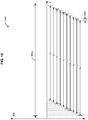
- the initial long block of samples may comprise the most recently sampled 3072 samples and a first, prior long block of samples may comprise 3072 samples starting 16 samples prior to the initial long block and excluding the 16 most recently received samples (e.g., a window shifted 16 samples earlier in time).
- the symbols are compared to determine a resulting symbol associated with the initial block of samples. For example, a voting scheme may be used to determine the most occurring symbol from the results. By using voting or another technique that compares the multiple symbols, the likelihood that interference or masking will prevent symbol extraction is reduced. Transient interference or dropout that affects a minority portion of the symbol extractions will, thus, not prevent symbol decoding.
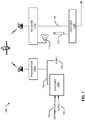
- FIG 1 is a block diagram of an example system 100 constructed in accordance with the techniques of this disclosure for identifying media.
- the example system 100 may be, for example, a television audience measurement system, which is described by way of example herein. Alternatively, the system 100 may be any other type of media system.
- the example system 100 of FIG. 1 includes an encoder 102 that adds information 103 to an input audio signal 104 to produce an encoded audio signal 105.
- the information 103 may be any information to be associated with the audio signal 104.
- the information 103 may be representative of a source and/or identity of the audio signal 104 or a media program associated with the audio signal (e.g., a media program that includes the audio signal 104 and the video 108).
- the information 103 may additionally or alternatively include timing information indicative of a time at which the information 103 was inserted into the audio and/or a media broadcast time.
- the information 103 may also include control information to control the behavior of one or more target devices that receive the encoded audio signal 105.
- the audio signal 104 may be any type of audio including, for example, voice, music, noise, commercial advertisement audio, audio associated with a television program, live performance, etc. While the example system 100 utilizes an audio signal, any other type of signal may additionally or alternatively be utilized.
- the example encoder 102 of FIG. 1 may employ any suitable method for inserting the information 103 in the audio signal 104.
- the encoder 102 of the illustrated example inserts one or more codes representative of the information 103 into the audio signal 104 to create the encoded audio 105.
- the example encoder 102 inserts codes into the audio signal 104 by modifying frequency components of the audio signal 104 (e.g., by combining the audio signal 104 with sine waves at the frequencies to be modified, by using Fourier coefficients in the frequency domain to adjust amplitudes of certain frequencies of audio, etc.) based on a look-up table of frequency components and symbols.
- the encoder 102 of the illustrated example samples the audio signal 104 at 48 kilohertz (KHz).
- Each message comprises a synchronization symbol following by 49 bits of information represented by 7 symbols of 7 bits per symbol.
- each symbol of a message (including the synchronization symbol) is carried in 9216 samples (a "long block") of audio at 48 KHz, which corresponds to 192 milliseconds of audio.
- 9216 x 8 73728 samples, which corresponds to 1.536 seconds of audio.
- an additional 3072 samples of audio having no encoding (“no code") are left at the end of the message before a new message is encoded.
- any other encoding scheme may be utilized. For example, additional "no code” time may be added such that each message and "no code” corresponds to 2 seconds of audio, each symbol may be encoded in 18432 samples of audio, the audio may be sampled at 96 KHz, and so forth.
- the distribution system of the example system 100 includes the encoder 102 and a single transmitter 106, the distribution system may include additional elements.
- the audio signal 104 may be generated at a national network level and distributed to a local network level for local distribution.
- the encoder 102 is shown in the transmit lineup prior to the transmitter 106, one or more encoders 102 may be additionally or alternatively provided throughout the distribution system of the audio signal 104 (e.g., at the local network level).
- the audio signal 104 may be encoded at multiple levels and may include embedded codes associated with those multiple levels.
- the media is presented by the receiver 110 or a device associated with the receiver.
- the encoded audio signal of the encoded media signal is presented via speaker(s) 114 and/or is output on a line 118.
- the encoded media signal may be presented using elements such as a display to present video content.
- the receiver 110 may be any type of media receiver such as a set top box, a satellite receiver, a cable television receiver, a radio, a television, a computing device, a digital video recorder, etc. While the encoded media signal is presented by the receiver 110 of the illustrated example upon receipt, presentation of the encoded media signal may be delayed by, for example, time shifting, space shifting, buffering, etc.
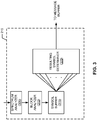
- the sample buffer 210 of the illustrated example is implemented by a first in first out circular buffer having a fixed length.
- the sample buffer 210 may be implemented by any type of buffer or memory and may hold a sampled audio signal of any length (e.g., the sample buffer 210 may store as many samples as memory permits).
- the example symbol value determiner 215 of FIG. 2 analyzes a block of samples contained within the sample buffer 210 to determine an encoded symbol value.
- the symbol value determiner 215 of the illustrated example analyzes the spectral characteristics of the block of samples (e.g., using a sliding Fourier analysis or any other algorithm) to identify frequencies modified (e.g., by the encoder 102 of FIG. 1 ), determines a symbol represented by the modified frequencies (e.g., using a look-up table that matches the look-up table used by the encoder 102), and analyzes symbols determined from preceding blocks of samples to determine an identified symbol value for the given block.
- the analysis of preceding blocks of samples is described in further detail in conjunction with FIG. 3 .
- the identified symbol value is stored in the message buffer 220.
- An example implementation of the symbol value determiner 215 is described in conjunction with FIG. 3 .
- the example message buffer 220 of FIG. 2 is a circular buffer to store identified symbol values determined by the symbol value determiner 215. The stored values are analyzed by the message identifier to parse the listing of resulting symbol values into messages (e.g., information 103 embedded in the audio signal 104 of FIG. 1 ).
- the example message buffer is a first in first out buffer that holds a fixed number of symbols based on the message length.
- the message buffer 220 of the illustrated example holds a multiple of the number of symbols contained in a message and the number of slides in a spectrum analysis (e.g., the message buffer 220 may be 192 x 8 where there are 192 slides or sample block shifts and 8 symbols per message).
- the message buffer 220 may be any type(s) of buffer or memory and may hold any number of symbols (e.g., the message buffer 220 may store as many symbols as memory permits).
- the symbol buffer 315 stores, in chronological order, the symbol values determined by the block analyzer 310.
- the symbol buffer 315 is a first in first out circular buffer.
- the symbol buffer 315 may store a history of symbols to facilitate comparison of a most recently determined symbol with previously determined symbols.
- An example implementation of the sample buffer 315 is further detailed in FIG. 6 .
- the example spectrum updater 405 of the illustrated example determines spectrum information for the block of samples in the sample buffer 210 based on the previous spectrum information stored in the spectrum buffer 410, information for the samples that are being added to the sample buffer 210, and the samples being removed from the sample buffer 210. For example, the spectrum updater 405 updates spectrum information in the spectrum buffer 410 each time 16 new samples are added to the sample buffer 210 and 16 oldest samples are removed from the sample buffer 210.
- the example spectrum updater 405 determines amplitude information for frequencies of interest (e.g., frequency indices 1 to K that correspond to any desired frequencies of interest (bins)). Alternatively, the spectrum updater 405 may determine spectrum information for any number of frequencies.
- a 1 [ k ] is the amplitude of frequency k for the new block of samples (after the newest 16 samples are added to the sample buffer 210)
- ⁇ 1 [ k ] is the phase of frequency k for the new block of samples
- a 0 [ k ] is the amplitude of frequency k for the old block of samples (before the newest 16 samples are added and before the oldest 16 samples are removed from the sample buffer 210)
- ⁇ 0 [ k ] is the phase of frequency k for the old block of samples
- value of f old ( q ) are multiplied by a factor to provide stability.
- the factor k 1 may be set to a value close to 1 (e.g., 0.9995) to maintain accuracy. Setting the value to 1 may cause the calculation to be unstable.
- the example resulting symbol determiner 320 evaluates ten overlapping blocks at message regions three, six, and nine message lengths prior to the first symbol value.
- messages may be spaced sufficiently far apart (e.g., 3 messages/4.8 seconds apart or any other separation) to enable additional messages to be inserted by other parties or at other levels of the media distribution chain.
- M ⁇ 0,3,6,9 ⁇ and:
- the symbol value storage 710 of the illustrated example may be implemented by any appropriate temporary or permanent storage which may receive input from the series of symbol retrievers 705 and be accessed by the symbol voter 715.
- M represents the series of message-regions to be analyzed to determine a symbol value.
- the message-regions located one, two, and three message lengths ( L m ) prior to s[0] are selected.
- the symbol values to be analyzed are shown at each message-region.
- the message-regions 902a-d illustrate the portions of the audio signal from which the symbol values of FIG. 8 used to determine a resulting symbol value originate.
- message-region 902a corresponds to the region beginning at s[0] and containing the series s[0,1,2,...9].
- 902b, 902c, and 902d correspond to s[0+ L M ], s[0+ 2L M ], and s[0+3L M ] respectively.
- the example decoder 116, the example sampler 205, the example sample buffer 210, the example symbol value determiner 215, the example message buffer 220, the example message identifier 225, the example symbol-to-bit converter 230, the example spectrum analyzer 305, the example block analyzer 310, the example symbol buffer 315, the example resulting symbol determiner 320, the example spectrum updater 405, the example slide spectrum buffer 410, the example frequency scorer 505, the example reference symbol determiner 510, the example error detector 605, the example circular symbol buffer 610, the example symbol retrievers 705, and the example symbol voter 715 of FIGS. 1-7 may be implemented by hardware, software, firmware and/or any combination of hardware, software and/or firmware.
- 1-7 could be implemented by one or more circuit(s), programmable processor(s), application specific integrated circuit(s) (ASIC(s)), programmable logic device(s) (PLD(s)) and/or field programmable logic device(s) (FPLD(s)), etc.
- ASIC application specific integrated circuit
- PLD programmable logic device
- FPLD field programmable logic device
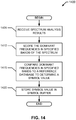
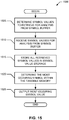
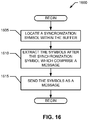
- FIGS. 11-16 Flowcharts representative of example machine readable instructions for implementing the example decoder 116, the example symbol determiner 215, the example spectrum analyzer 305, the example block analyzer 310, the example symbol buffer 315, the example resulting symbol determiner 320, and the example message identifier 225 are shown in FIGS. 11-16 .
- the machine readable instructions comprise program(s) for execution by a processor such as the processor 1712 shown in the example processing platform 1700 discussed below in connection with FIG. 17 .
- the example decoder 116 many other methods of implementing, the example decoder 116, the example symbol determiner 215, the example spectrum analyzer 305, the example block analyzer 310, the example symbol buffer 315, the example resulting symbol determiner 320, and the example message identifier 225 may alternatively be used.
- the order of execution of the blocks may be changed, and/or some of the blocks described may be changed, eliminated, or combined.
- FIG. 12 is a flowchart of example machine readable instructions 1200 that may be executed to implement the symbol value determiner 215 of FIGS. 2 and/or 3 and to implement block 1115 of the flowchart of FIG. 11 .
- the example machine readable instructions 1200 of FIG. 12 begin when the spectrum analyzer 305 determines a spectrum for a long block of samples stored in the sample buffer 210 (block 1205).
- the block analyzer 310 determines a symbol value using the spectrum of the long block of samples (block 1210).
- the determined symbol value is then stored in the symbol buffer (block 1215).
- Blocks 1205, 1210, and 1215 may be repeated to fill the symbol buffer 315.
- the resulting symbol determiner 320 determines a resulting symbol value from symbol values stored in the symbol buffer (block 1220).
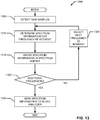
- FIG. 13 is a flowchart of example machine readable instructions 1300 that may be executed to implement the spectrum analyzer 305 of FIGS. 3 and/or 4 and to implement block 1205 of FIG. 12 .
- the example machine readable instructions begin execution at block 1305 at which the spectrum updater 405 detects and receives a newly gathered set of samples (e.g., following the additional of 16 new samples to the sample buffer 210) (block 1305).
- the spectrum updater 405 updates spectrum information for a particular frequency (e.g., a first frequency of interest or bin) in view of the newly added samples and samples removed from the sample buffer 210 (e.g., using the technique described in conjunction with FIG. 4 ) (block 1310).
- a particular frequency e.g., a first frequency of interest or bin
- the spectrum updater 405 stores the updated frequency information (e.g., amplitude information for the frequency of interest) in the spectrum buffer 410 (block 1315).
- the spectrum updater 405 determines if there are additional frequencies to be analyzed (block 1320). When there are additional frequencies to be analyzed, the spectrum updater 405 selects the next frequency and control returns to block 1310 to determine spectrum information for the next frequency (block 1325).
Landscapes
- Engineering & Computer Science (AREA)
- Physics & Mathematics (AREA)
- Signal Processing (AREA)
- Health & Medical Sciences (AREA)
- Audiology, Speech & Language Pathology (AREA)
- Human Computer Interaction (AREA)
- Computational Linguistics (AREA)
- Acoustics & Sound (AREA)
- Multimedia (AREA)
- Two-Way Televisions, Distribution Of Moving Picture Or The Like (AREA)
- Compression, Expansion, Code Conversion, And Decoders (AREA)
- Signal Processing For Digital Recording And Reproducing (AREA)
- Actuator (AREA)
Claims (11)
- Procédé comprenant :l'échantillonnage d'un signal audio pour générer des échantillons, dans lequel le signal audio inclut un message intégré ;la détermination d'une première valeur de symbole sur la base d'un premier spectre de fréquences déterminé pour un premier bloc des échantillons ;la détermination d'une deuxième valeur de symbole sur la base d'un deuxième spectre de fréquences déterminé pour un deuxième bloc des échantillons ; etla détermination, en utilisant un processeur, d'une valeur de symbole résultante, représentative d'une partie du message intégré, en votant sur la base d'un premier poids assigné à la première valeur de symbole pour le premier bloc d'échantillons et d'un deuxième poids assigné à la deuxième valeur de symbole pour le deuxième bloc d'échantillons, dans lequel les premier et deuxième poids sont basés sur un score de confiance pour la détermination de symbole et dans lequel le premier bloc et le deuxième bloc se chevauchent partiellement dans le temps dans le signal audio.
- Procédé selon la revendication 1, comprenant en outre la détermination d'une troisième valeur de symbole pour un troisième bloc d'échantillons, la valeur de symbole résultante est également déterminée sur la base de la troisième valeur de symbole.
- Procédé selon la revendication 2, dans lequel le troisième bloc d'échantillons est situé à un multiple d'une longueur du message intégré avant le premier bloc d'échantillons.
- Procédé selon la revendication 2 ou 3, comprenant en outre la détermination d'une quatrième valeur de symbole pour un quatrième bloc des échantillons, le quatrième bloc d'échantillons et le troisième bloc d'échantillons se chevauchant partiellement, et la valeur de symbole résultante est également déterminée sur la base de la troisième valeur de symbole.
- Procédé selon la revendication 1, dans lequel le signal audio est intégré à une pluralité de messages, chaque message comprenant une série de symboles.
- Procédé selon la revendication 1, dans lequel les échantillons sont stockés dans un tampon.
- Procédé selon la revendication 6, dans lequel le tampon est un tampon circulaire.
- Procédé selon la revendication 1, comprenant en outre le stockage de la première valeur de symbole et de la deuxième valeur de symbole dans une mémoire tangible, dans lequel le processeur lit la première valeur de symbole et la deuxième valeur de symbole à partir de la mémoire tangible lors de la détermination de la valeur de symbole résultante.
- Procédé selon la revendication 8, dans lequel la mémoire tangible est un tampon circulaire.
- Système pour identifier des messages intégrés à l'intérieur de signaux audio, le système comprenant :un échantillonneur configuré pour échantillonner un signal audio pour générer des échantillons, dans lequel le signal audio inclut un message intégré ;un premier extracteur de valeur de symbole configuré pour déterminer une première valeur de symbole sur la base d'un premier spectre de fréquences déterminé pour un premier bloc des échantillons ;un deuxième extracteur de valeur de symbole configuré pour déterminer une deuxième valeur de symbole sur la base d'un deuxième spectre de fréquences déterminé pour un deuxième bloc des échantillons ; etun processeur configuré pour déterminer une valeur de symbole résultante, représentative d'une partie du message intégré, en votant sur la base d'un premier poids assigné à la première valeur de symbole pour le premier bloc d'échantillons et d'un deuxième poids assigné à la deuxième valeur de symbole pour le deuxième bloc d'échantillons, dans lequel les premier et deuxième poids sont basés sur un score de confiance pour la détermination de symbole et dans lequel le premier bloc des échantillons et le deuxième bloc des échantillons se chevauchent partiellement dans le temps dans le signal audio.
- Support de stockage lisible par ordinateur comprenant des instructions qui, lorsqu'elles sont exécutées, amènent une machine à effectuer le procédé de l'une des revendications 1 à 9.
Priority Applications (1)
| Application Number | Priority Date | Filing Date | Title |
|---|---|---|---|
| EP21158661.5A EP3846163B1 (fr) | 2012-10-16 | 2013-09-17 | Procédés et appareils pour exécuter une détection et une extraction d'un tatouage numérique audio |
Applications Claiming Priority (2)
| Application Number | Priority Date | Filing Date | Title |
|---|---|---|---|
| US13/653,001 US9368123B2 (en) | 2012-10-16 | 2012-10-16 | Methods and apparatus to perform audio watermark detection and extraction |
| PCT/US2013/060187 WO2014062332A1 (fr) | 2012-10-16 | 2013-09-17 | Procédés et appareils pour exécuter une détection et une extraction d'un tatouage numérique audio |
Related Child Applications (1)
| Application Number | Title | Priority Date | Filing Date |
|---|---|---|---|
| EP21158661.5A Division EP3846163B1 (fr) | 2012-10-16 | 2013-09-17 | Procédés et appareils pour exécuter une détection et une extraction d'un tatouage numérique audio |
Publications (3)
| Publication Number | Publication Date |
|---|---|
| EP2910027A1 EP2910027A1 (fr) | 2015-08-26 |
| EP2910027A4 EP2910027A4 (fr) | 2016-06-29 |
| EP2910027B1 true EP2910027B1 (fr) | 2021-02-24 |
Family
ID=50475356
Family Applications (2)
| Application Number | Title | Priority Date | Filing Date |
|---|---|---|---|
| EP21158661.5A Active EP3846163B1 (fr) | 2012-10-16 | 2013-09-17 | Procédés et appareils pour exécuter une détection et une extraction d'un tatouage numérique audio |
| EP13846852.5A Active EP2910027B1 (fr) | 2012-10-16 | 2013-09-17 | Procédés et appareils pour exécuter une détection et une extraction d'un tatouage numérique audio |
Family Applications Before (1)
| Application Number | Title | Priority Date | Filing Date |
|---|---|---|---|
| EP21158661.5A Active EP3846163B1 (fr) | 2012-10-16 | 2013-09-17 | Procédés et appareils pour exécuter une détection et une extraction d'un tatouage numérique audio |
Country Status (6)
| Country | Link |
|---|---|
| US (1) | US9368123B2 (fr) |
| EP (2) | EP3846163B1 (fr) |
| JP (1) | JP2014081076A (fr) |
| AU (1) | AU2013332371B2 (fr) |
| CA (1) | CA2887703C (fr) |
| WO (1) | WO2014062332A1 (fr) |
Families Citing this family (12)
| Publication number | Priority date | Publication date | Assignee | Title |
|---|---|---|---|---|
| US10973656B2 (en) | 2009-09-18 | 2021-04-13 | Spinal Surgical Strategies, Inc. | Bone graft delivery system and method for using same |
| US9479216B2 (en) * | 2014-07-28 | 2016-10-25 | Uvic Industry Partnerships Inc. | Spread spectrum method and apparatus |
| US10271107B2 (en) * | 2015-11-26 | 2019-04-23 | The Nielsen Company (Us), Llc | Accelerated television advertisement identification |
| US10062134B2 (en) | 2016-06-24 | 2018-08-28 | The Nielsen Company (Us), Llc | Methods and apparatus to perform symbol-based watermark detection |
| US10347262B2 (en) | 2017-10-18 | 2019-07-09 | The Nielsen Company (Us), Llc | Systems and methods to improve timestamp transition resolution |
| US10448122B1 (en) | 2018-07-02 | 2019-10-15 | The Nielsen Company (Us), Llc | Methods and apparatus to extend a timestamp range supported by a watermark |
| US10448123B1 (en) | 2018-07-02 | 2019-10-15 | The Nielsen Company (Us), Llc | Methods and apparatus to extend a timestamp range supported by a watermark |
| CN110047497B (zh) * | 2019-05-14 | 2021-06-11 | 腾讯科技(深圳)有限公司 | 背景音频信号滤除方法、装置及存储介质 |
| US12211514B2 (en) * | 2021-03-30 | 2025-01-28 | Jio Platforms Limited | System and method for facilitating data transmission through audio waves |
| US20230084574A1 (en) * | 2021-09-16 | 2023-03-16 | UncommonX Inc. | Bit sequence storage method and system |
| US11564003B1 (en) * | 2021-09-20 | 2023-01-24 | The Nielsen Company (Us), Llc | Systems, apparatus, and methods to improve watermark detection in acoustic environments |
| US12537803B2 (en) | 2023-09-29 | 2026-01-27 | Bank Of America Corporation | Using tonal bits for secure messaging |
Family Cites Families (27)
| Publication number | Priority date | Publication date | Assignee | Title |
|---|---|---|---|---|
| US3232182A (en) * | 1963-08-15 | 1966-02-01 | John F Gilbert | Hydraulic pressure compensating means for internal combustion engine systems |
| US3683752A (en) * | 1970-09-17 | 1972-08-15 | Anthony Eugene Joseph Martin | Multiposition fluid-operable piston and cylinder unit |
| JPS5378774U (fr) * | 1976-12-03 | 1978-06-30 | ||
| US20020009208A1 (en) * | 1995-08-09 | 2002-01-24 | Adnan Alattar | Authentication of physical and electronic media objects using digital watermarks |
| US5768426A (en) | 1993-11-18 | 1998-06-16 | Digimarc Corporation | Graphics processing system employing embedded code signals |
| US6424725B1 (en) | 1996-05-16 | 2002-07-23 | Digimarc Corporation | Determining transformations of media signals with embedded code signals |
| US6614914B1 (en) | 1995-05-08 | 2003-09-02 | Digimarc Corporation | Watermark embedder and reader |
| JPH08259191A (ja) * | 1995-03-20 | 1996-10-08 | Osaka Jack Seisakusho:Kk | 両方向に機械式ロック機構のついた油圧ジャッキ |
| JP3686741B2 (ja) | 1997-02-19 | 2005-08-24 | 富士通株式会社 | 画像データへの識別情報埋め込み方法,識別情報が埋め込まれた画像データからの識別情報抽出方法,画像データへの識別情報埋め込み装置,識別情報が埋め込まれた画像データからの識別情報抽出装置,及びコンピュータ可読媒体 |
| AUPO521897A0 (en) | 1997-02-20 | 1997-04-11 | Telstra R & D Management Pty Ltd | Invisible digital watermarks |
| JPH1160171A (ja) * | 1997-08-08 | 1999-03-02 | Berubitsuku:Kk | 油圧シリンダ装置 |
| US6285775B1 (en) | 1998-10-01 | 2001-09-04 | The Trustees Of The University Of Princeton | Watermarking scheme for image authentication |
| US6871180B1 (en) * | 1999-05-25 | 2005-03-22 | Arbitron Inc. | Decoding of information in audio signals |
| WO2002039714A2 (fr) | 2000-11-08 | 2002-05-16 | Digimarc Corporation | Authentification et recuperation de contenu a l'aide de filigranes numeriques |
| US7131007B1 (en) * | 2001-06-04 | 2006-10-31 | At & T Corp. | System and method of retrieving a watermark within a signal |
| EP1421521A2 (fr) | 2001-07-31 | 2004-05-26 | Gracenote, Inc. | Identification d'enregistrements comportant des etapes multiples |
| US7231061B2 (en) * | 2002-01-22 | 2007-06-12 | Digimarc Corporation | Adaptive prediction filtering for digital watermarking |
| US7319791B1 (en) | 2003-09-22 | 2008-01-15 | Matrox Electronic Systems, Ltd. | Subtractive primitives used in pattern matching |
| WO2007109531A2 (fr) * | 2006-03-17 | 2007-09-27 | University Of Rochester | Système de synchronisation par marque numérique et procédé pour intégrer dans des caractéristiques tolérantes aux erreurs des estimations de caractéristiques au niveau du récepteur |
| US8359205B2 (en) * | 2008-10-24 | 2013-01-22 | The Nielsen Company (Us), Llc | Methods and apparatus to perform audio watermarking and watermark detection and extraction |
| US20100158160A1 (en) | 2008-12-24 | 2010-06-24 | Qualcomm Incorporated | Extracting information from positioning pilot channel symbols in forward link only system |
| CA2760677C (fr) | 2009-05-01 | 2018-07-24 | David Henry Harkness | Procedes, appareil et articles de fabrication destines a fournir un contenu secondaire en association avec un contenu multimedia de diffusion primaire |
| US8676570B2 (en) | 2010-04-26 | 2014-03-18 | The Nielsen Company (Us), Llc | Methods, apparatus and articles of manufacture to perform audio watermark decoding |
| JP5554658B2 (ja) | 2010-08-06 | 2014-07-23 | Kddi株式会社 | オーディオ電子透かし埋め込み装置およびプログラム |
| EP2439735A1 (fr) | 2010-10-06 | 2012-04-11 | Thomson Licensing | Procédé et appareil pour générer des motifs de phase de référence |
| EP2487680B1 (fr) | 2011-12-29 | 2014-03-05 | Distribeo | Détection de marque de l'eau audio pour diffuser du contenu contextuel à un utilisateur |
| US8768710B1 (en) * | 2013-12-05 | 2014-07-01 | The Telos Alliance | Enhancing a watermark signal extracted from an output signal of a watermarking encoder |
-
2012
- 2012-10-16 US US13/653,001 patent/US9368123B2/en active Active
-
2013
- 2013-09-17 EP EP21158661.5A patent/EP3846163B1/fr active Active
- 2013-09-17 CA CA2887703A patent/CA2887703C/fr active Active
- 2013-09-17 WO PCT/US2013/060187 patent/WO2014062332A1/fr not_active Ceased
- 2013-09-17 AU AU2013332371A patent/AU2013332371B2/en not_active Ceased
- 2013-09-17 EP EP13846852.5A patent/EP2910027B1/fr active Active
- 2013-10-04 JP JP2013208696A patent/JP2014081076A/ja active Pending
Non-Patent Citations (1)
| Title |
|---|
| None * |
Also Published As
| Publication number | Publication date |
|---|---|
| EP2910027A4 (fr) | 2016-06-29 |
| JP2014081076A (ja) | 2014-05-08 |
| CA2887703C (fr) | 2018-12-04 |
| AU2013332371B2 (en) | 2016-08-11 |
| EP3846163A1 (fr) | 2021-07-07 |
| CA2887703A1 (fr) | 2014-04-24 |
| EP2910027A1 (fr) | 2015-08-26 |
| US20140105448A1 (en) | 2014-04-17 |
| WO2014062332A1 (fr) | 2014-04-24 |
| AU2013332371A1 (en) | 2015-05-07 |
| EP3846163B1 (fr) | 2026-02-25 |
| US9368123B2 (en) | 2016-06-14 |
Similar Documents
| Publication | Publication Date | Title |
|---|---|---|
| EP3846163B1 (fr) | Procédés et appareils pour exécuter une détection et une extraction d'un tatouage numérique audio | |
| US12189684B2 (en) | Methods and apparatus to perform audio watermarking and watermark detection and extraction | |
| EP2901706B1 (fr) | Procédés et appareil pour identifier des éléments multimédias | |
| US10134408B2 (en) | Methods and apparatus to perform audio watermarking and watermark detection and extraction | |
| US10102602B2 (en) | Detecting watermark modifications | |
| AU2013203838B2 (en) | Methods and apparatus to perform audio watermarking and watermark detection and extraction | |
| AU2013203674B2 (en) | Methods and apparatus to perform audio watermarking and watermark detection and extraction |
Legal Events
| Date | Code | Title | Description |
|---|---|---|---|
| PUAI | Public reference made under article 153(3) epc to a published international application that has entered the european phase |
Free format text: ORIGINAL CODE: 0009012 |
|
| 17P | Request for examination filed |
Effective date: 20150515 |
|
| AK | Designated contracting states |
Kind code of ref document: A1 Designated state(s): AL AT BE BG CH CY CZ DE DK EE ES FI FR GB GR HR HU IE IS IT LI LT LU LV MC MK MT NL NO PL PT RO RS SE SI SK SM TR |
|
| AX | Request for extension of the european patent |
Extension state: BA ME |
|
| DAX | Request for extension of the european patent (deleted) | ||
| RA4 | Supplementary search report drawn up and despatched (corrected) |
Effective date: 20160531 |
|
| RIC1 | Information provided on ipc code assigned before grant |
Ipc: H04N 21/8358 20110101ALI20160524BHEP Ipc: H04N 21/435 20110101AFI20160524BHEP Ipc: G10L 19/018 20130101ALI20160524BHEP |
|
| STAA | Information on the status of an ep patent application or granted ep patent |
Free format text: STATUS: EXAMINATION IS IN PROGRESS |
|
| 17Q | First examination report despatched |
Effective date: 20170127 |
|
| GRAP | Despatch of communication of intention to grant a patent |
Free format text: ORIGINAL CODE: EPIDOSNIGR1 |
|
| STAA | Information on the status of an ep patent application or granted ep patent |
Free format text: STATUS: GRANT OF PATENT IS INTENDED |
|
| INTG | Intention to grant announced |
Effective date: 20200630 |
|
| GRAS | Grant fee paid |
Free format text: ORIGINAL CODE: EPIDOSNIGR3 |
|
| GRAA | (expected) grant |
Free format text: ORIGINAL CODE: 0009210 |
|
| STAA | Information on the status of an ep patent application or granted ep patent |
Free format text: STATUS: THE PATENT HAS BEEN GRANTED |
|
| AK | Designated contracting states |
Kind code of ref document: B1 Designated state(s): AL AT BE BG CH CY CZ DE DK EE ES FI FR GB GR HR HU IE IS IT LI LT LU LV MC MK MT NL NO PL PT RO RS SE SI SK SM TR |
|
| REG | Reference to a national code |
Ref country code: GB Ref legal event code: FG4D |
|
| REG | Reference to a national code |
Ref country code: CH Ref legal event code: EP |
|
| REG | Reference to a national code |
Ref country code: AT Ref legal event code: REF Ref document number: 1365978 Country of ref document: AT Kind code of ref document: T Effective date: 20210315 |
|
| REG | Reference to a national code |
Ref country code: IE Ref legal event code: FG4D |
|
| REG | Reference to a national code |
Ref country code: DE Ref legal event code: R096 Ref document number: 602013075915 Country of ref document: DE |
|
| REG | Reference to a national code |
Ref country code: NL Ref legal event code: FP |
|
| REG | Reference to a national code |
Ref country code: LT Ref legal event code: MG9D |
|
| PG25 | Lapsed in a contracting state [announced via postgrant information from national office to epo] |
Ref country code: PT Free format text: LAPSE BECAUSE OF FAILURE TO SUBMIT A TRANSLATION OF THE DESCRIPTION OR TO PAY THE FEE WITHIN THE PRESCRIBED TIME-LIMIT Effective date: 20210624 Ref country code: LT Free format text: LAPSE BECAUSE OF FAILURE TO SUBMIT A TRANSLATION OF THE DESCRIPTION OR TO PAY THE FEE WITHIN THE PRESCRIBED TIME-LIMIT Effective date: 20210224 Ref country code: HR Free format text: LAPSE BECAUSE OF FAILURE TO SUBMIT A TRANSLATION OF THE DESCRIPTION OR TO PAY THE FEE WITHIN THE PRESCRIBED TIME-LIMIT Effective date: 20210224 Ref country code: FI Free format text: LAPSE BECAUSE OF FAILURE TO SUBMIT A TRANSLATION OF THE DESCRIPTION OR TO PAY THE FEE WITHIN THE PRESCRIBED TIME-LIMIT Effective date: 20210224 Ref country code: GR Free format text: LAPSE BECAUSE OF FAILURE TO SUBMIT A TRANSLATION OF THE DESCRIPTION OR TO PAY THE FEE WITHIN THE PRESCRIBED TIME-LIMIT Effective date: 20210525 Ref country code: BG Free format text: LAPSE BECAUSE OF FAILURE TO SUBMIT A TRANSLATION OF THE DESCRIPTION OR TO PAY THE FEE WITHIN THE PRESCRIBED TIME-LIMIT Effective date: 20210524 Ref country code: NO Free format text: LAPSE BECAUSE OF FAILURE TO SUBMIT A TRANSLATION OF THE DESCRIPTION OR TO PAY THE FEE WITHIN THE PRESCRIBED TIME-LIMIT Effective date: 20210524 |
|
| REG | Reference to a national code |
Ref country code: AT Ref legal event code: MK05 Ref document number: 1365978 Country of ref document: AT Kind code of ref document: T Effective date: 20210224 |
|
| PG25 | Lapsed in a contracting state [announced via postgrant information from national office to epo] |
Ref country code: SE Free format text: LAPSE BECAUSE OF FAILURE TO SUBMIT A TRANSLATION OF THE DESCRIPTION OR TO PAY THE FEE WITHIN THE PRESCRIBED TIME-LIMIT Effective date: 20210224 Ref country code: LV Free format text: LAPSE BECAUSE OF FAILURE TO SUBMIT A TRANSLATION OF THE DESCRIPTION OR TO PAY THE FEE WITHIN THE PRESCRIBED TIME-LIMIT Effective date: 20210224 Ref country code: PL Free format text: LAPSE BECAUSE OF FAILURE TO SUBMIT A TRANSLATION OF THE DESCRIPTION OR TO PAY THE FEE WITHIN THE PRESCRIBED TIME-LIMIT Effective date: 20210224 Ref country code: RS Free format text: LAPSE BECAUSE OF FAILURE TO SUBMIT A TRANSLATION OF THE DESCRIPTION OR TO PAY THE FEE WITHIN THE PRESCRIBED TIME-LIMIT Effective date: 20210224 |
|
| PG25 | Lapsed in a contracting state [announced via postgrant information from national office to epo] |
Ref country code: IS Free format text: LAPSE BECAUSE OF FAILURE TO SUBMIT A TRANSLATION OF THE DESCRIPTION OR TO PAY THE FEE WITHIN THE PRESCRIBED TIME-LIMIT Effective date: 20210624 |
|
| PG25 | Lapsed in a contracting state [announced via postgrant information from national office to epo] |
Ref country code: SM Free format text: LAPSE BECAUSE OF FAILURE TO SUBMIT A TRANSLATION OF THE DESCRIPTION OR TO PAY THE FEE WITHIN THE PRESCRIBED TIME-LIMIT Effective date: 20210224 Ref country code: EE Free format text: LAPSE BECAUSE OF FAILURE TO SUBMIT A TRANSLATION OF THE DESCRIPTION OR TO PAY THE FEE WITHIN THE PRESCRIBED TIME-LIMIT Effective date: 20210224 Ref country code: CZ Free format text: LAPSE BECAUSE OF FAILURE TO SUBMIT A TRANSLATION OF THE DESCRIPTION OR TO PAY THE FEE WITHIN THE PRESCRIBED TIME-LIMIT Effective date: 20210224 Ref country code: AT Free format text: LAPSE BECAUSE OF FAILURE TO SUBMIT A TRANSLATION OF THE DESCRIPTION OR TO PAY THE FEE WITHIN THE PRESCRIBED TIME-LIMIT Effective date: 20210224 |
|
| REG | Reference to a national code |
Ref country code: DE Ref legal event code: R097 Ref document number: 602013075915 Country of ref document: DE |
|
| PG25 | Lapsed in a contracting state [announced via postgrant information from national office to epo] |
Ref country code: DK Free format text: LAPSE BECAUSE OF FAILURE TO SUBMIT A TRANSLATION OF THE DESCRIPTION OR TO PAY THE FEE WITHIN THE PRESCRIBED TIME-LIMIT Effective date: 20210224 Ref country code: ES Free format text: LAPSE BECAUSE OF FAILURE TO SUBMIT A TRANSLATION OF THE DESCRIPTION OR TO PAY THE FEE WITHIN THE PRESCRIBED TIME-LIMIT Effective date: 20210224 Ref country code: RO Free format text: LAPSE BECAUSE OF FAILURE TO SUBMIT A TRANSLATION OF THE DESCRIPTION OR TO PAY THE FEE WITHIN THE PRESCRIBED TIME-LIMIT Effective date: 20210224 Ref country code: SK Free format text: LAPSE BECAUSE OF FAILURE TO SUBMIT A TRANSLATION OF THE DESCRIPTION OR TO PAY THE FEE WITHIN THE PRESCRIBED TIME-LIMIT Effective date: 20210224 |
|
| PLBE | No opposition filed within time limit |
Free format text: ORIGINAL CODE: 0009261 |
|
| STAA | Information on the status of an ep patent application or granted ep patent |
Free format text: STATUS: NO OPPOSITION FILED WITHIN TIME LIMIT |
|
| PG25 | Lapsed in a contracting state [announced via postgrant information from national office to epo] |
Ref country code: AL Free format text: LAPSE BECAUSE OF FAILURE TO SUBMIT A TRANSLATION OF THE DESCRIPTION OR TO PAY THE FEE WITHIN THE PRESCRIBED TIME-LIMIT Effective date: 20210224 |
|
| 26N | No opposition filed |
Effective date: 20211125 |
|
| PG25 | Lapsed in a contracting state [announced via postgrant information from national office to epo] |
Ref country code: SI Free format text: LAPSE BECAUSE OF FAILURE TO SUBMIT A TRANSLATION OF THE DESCRIPTION OR TO PAY THE FEE WITHIN THE PRESCRIBED TIME-LIMIT Effective date: 20210224 |
|
| PG25 | Lapsed in a contracting state [announced via postgrant information from national office to epo] |
Ref country code: IT Free format text: LAPSE BECAUSE OF FAILURE TO SUBMIT A TRANSLATION OF THE DESCRIPTION OR TO PAY THE FEE WITHIN THE PRESCRIBED TIME-LIMIT Effective date: 20210224 |
|
| REG | Reference to a national code |
Ref country code: CH Ref legal event code: PL |
|
| REG | Reference to a national code |
Ref country code: BE Ref legal event code: MM Effective date: 20210930 |
|
| PG25 | Lapsed in a contracting state [announced via postgrant information from national office to epo] |
Ref country code: IS Free format text: LAPSE BECAUSE OF FAILURE TO SUBMIT A TRANSLATION OF THE DESCRIPTION OR TO PAY THE FEE WITHIN THE PRESCRIBED TIME-LIMIT Effective date: 20210624 Ref country code: MC Free format text: LAPSE BECAUSE OF FAILURE TO SUBMIT A TRANSLATION OF THE DESCRIPTION OR TO PAY THE FEE WITHIN THE PRESCRIBED TIME-LIMIT Effective date: 20210224 |
|
| PG25 | Lapsed in a contracting state [announced via postgrant information from national office to epo] |
Ref country code: LU Free format text: LAPSE BECAUSE OF NON-PAYMENT OF DUE FEES Effective date: 20210917 Ref country code: IE Free format text: LAPSE BECAUSE OF NON-PAYMENT OF DUE FEES Effective date: 20210917 Ref country code: BE Free format text: LAPSE BECAUSE OF NON-PAYMENT OF DUE FEES Effective date: 20210930 |
|
| PG25 | Lapsed in a contracting state [announced via postgrant information from national office to epo] |
Ref country code: LI Free format text: LAPSE BECAUSE OF NON-PAYMENT OF DUE FEES Effective date: 20210930 Ref country code: CH Free format text: LAPSE BECAUSE OF NON-PAYMENT OF DUE FEES Effective date: 20210930 |
|
| PG25 | Lapsed in a contracting state [announced via postgrant information from national office to epo] |
Ref country code: HU Free format text: LAPSE BECAUSE OF FAILURE TO SUBMIT A TRANSLATION OF THE DESCRIPTION OR TO PAY THE FEE WITHIN THE PRESCRIBED TIME-LIMIT; INVALID AB INITIO Effective date: 20130917 |
|
| PG25 | Lapsed in a contracting state [announced via postgrant information from national office to epo] |
Ref country code: CY Free format text: LAPSE BECAUSE OF FAILURE TO SUBMIT A TRANSLATION OF THE DESCRIPTION OR TO PAY THE FEE WITHIN THE PRESCRIBED TIME-LIMIT Effective date: 20210224 |
|
| PGFP | Annual fee paid to national office [announced via postgrant information from national office to epo] |
Ref country code: NL Payment date: 20230926 Year of fee payment: 11 Ref country code: GB Payment date: 20230927 Year of fee payment: 11 |
|
| PG25 | Lapsed in a contracting state [announced via postgrant information from national office to epo] |
Ref country code: MK Free format text: LAPSE BECAUSE OF FAILURE TO SUBMIT A TRANSLATION OF THE DESCRIPTION OR TO PAY THE FEE WITHIN THE PRESCRIBED TIME-LIMIT Effective date: 20210224 |
|
| PG25 | Lapsed in a contracting state [announced via postgrant information from national office to epo] |
Ref country code: MT Free format text: LAPSE BECAUSE OF FAILURE TO SUBMIT A TRANSLATION OF THE DESCRIPTION OR TO PAY THE FEE WITHIN THE PRESCRIBED TIME-LIMIT Effective date: 20210224 |
|
| REG | Reference to a national code |
Ref country code: NL Ref legal event code: MM Effective date: 20241001 |
|
| GBPC | Gb: european patent ceased through non-payment of renewal fee |
Effective date: 20240917 |
|
| PG25 | Lapsed in a contracting state [announced via postgrant information from national office to epo] |
Ref country code: NL Free format text: LAPSE BECAUSE OF NON-PAYMENT OF DUE FEES Effective date: 20241001 |
|
| PG25 | Lapsed in a contracting state [announced via postgrant information from national office to epo] |
Ref country code: GB Free format text: LAPSE BECAUSE OF NON-PAYMENT OF DUE FEES Effective date: 20240917 |
|
| PGFP | Annual fee paid to national office [announced via postgrant information from national office to epo] |
Ref country code: DE Payment date: 20250929 Year of fee payment: 13 |
|
| PGFP | Annual fee paid to national office [announced via postgrant information from national office to epo] |
Ref country code: FR Payment date: 20250925 Year of fee payment: 13 |
|
| PG25 | Lapsed in a contracting state [announced via postgrant information from national office to epo] |
Ref country code: TR Free format text: LAPSE BECAUSE OF FAILURE TO SUBMIT A TRANSLATION OF THE DESCRIPTION OR TO PAY THE FEE WITHIN THE PRESCRIBED TIME-LIMIT Effective date: 20210224 |