EP2913800A1 - Papierbogenverarbeitungsvorrichtung und papierbogenverarbeitungssystem - Google Patents
Papierbogenverarbeitungsvorrichtung und papierbogenverarbeitungssystem Download PDFInfo
- Publication number
- EP2913800A1 EP2913800A1 EP12887253.8A EP12887253A EP2913800A1 EP 2913800 A1 EP2913800 A1 EP 2913800A1 EP 12887253 A EP12887253 A EP 12887253A EP 2913800 A1 EP2913800 A1 EP 2913800A1
- Authority
- EP
- European Patent Office
- Prior art keywords
- paper
- unit
- sorting
- paper sheets
- sheet handling
- Prior art date
- Legal status (The legal status is an assumption and is not a legal conclusion. Google has not performed a legal analysis and makes no representation as to the accuracy of the status listed.)
- Withdrawn
Links
- 238000000034 method Methods 0.000 description 78
- 230000000694 effects Effects 0.000 description 13
- 238000010923 batch production Methods 0.000 description 1
- 230000001419 dependent effect Effects 0.000 description 1
Images




Classifications
-
- G—PHYSICS
- G07—CHECKING-DEVICES
- G07D—HANDLING OF COINS OR VALUABLE PAPERS, e.g. TESTING, SORTING BY DENOMINATIONS, COUNTING, DISPENSING, CHANGING OR DEPOSITING
- G07D11/00—Devices accepting coins; Devices accepting, dispensing, sorting or counting valuable papers
- G07D11/50—Sorting or counting valuable papers
-
- G—PHYSICS
- G07—CHECKING-DEVICES
- G07D—HANDLING OF COINS OR VALUABLE PAPERS, e.g. TESTING, SORTING BY DENOMINATIONS, COUNTING, DISPENSING, CHANGING OR DEPOSITING
- G07D11/00—Devices accepting coins; Devices accepting, dispensing, sorting or counting valuable papers
- G07D11/20—Controlling or monitoring the operation of devices; Data handling
Definitions
- the present invention relates to a paper-sheet handling apparatus configured to handle paper sheets, and a paper-sheet handling system having the paper-sheet handling apparatus and an outside apparatus communicable with the paper-sheet handling apparatus.
- An organizing process of banknotes by using a banknote handling apparatus is carried out at a bank center for collecting banknotes from a plurality of bank branches, a banknote collecting center for collecting banknotes from a plurality of clients through an armored-car company, or a bank (bank branch) where a plurality of customers deposit banknotes.
- the organizing process is carried out by sorting banknotes of a plurality of transactions in turn by using the banknote handling apparatus.
- the banknotes are sorted by denomination, and the banknotes of each denomination are divided into banknotes for recirculation and banknotes not for recirculation.
- the banknote handling apparatus includes: a reception unit configured to receive banknotes; a recognition unit configured to recognize a type of each of the banknotes received at the reception unit and to count the number of each type; a component-ratio-data making unit configured to make component-ratio data corresponding to a component ratio of the respective types of the banknotes, based on the counted results by the recognition unit (for example, the counted results by using "sample banknotes"); a sorting-pattern making unit configured to make a sorting pattern based on the component-ratio data; and a display unit configured to display the sorting pattern made by the sorting-pattern making unit.
- WO 2009 /122504 has provided another type of banknote handling apparatus, which includes: a reception unit configured to receive banknotes; a recognition unit configured to recognize a type of each of the banknotes received at the reception unit and to count the number of each type; a storage unit configured to store history data corresponding to a history of the counted results by the recognition unit; a component-ratio-data making unit configured to make component-ratio data corresponding to a component ratio of the respective types of the banknotes, based on the history data stored in the storage unit; a sorting-pattern making unit configured to make a sorting pattern based on the component-ratio data; and a display unit configured to display the sorting pattern made by the sorting-pattern making unit.
- the component-ratio of the respective types of the banknotes for each transaction depends on characteristics of the transaction. For example, component ratios regarding denomination and/or unfitness may be different for respective customers who deposit banknotes.
- the ratio of the banknotes of larger denomination is high
- the ratio of the banknotes of smaller denomination is high regarding the banknotes that are deposited at a store handling many inexpensive products, such as a retail store, a traffic-ticket booth, or a food store.
- the ratio of unfitted banknotes is likely to be high regarding the banknotes that are handled at a food market or the like.
- the present invention has been made in view of the above circumstances.
- the object of the present invention is to provide a paper-sheet handling apparatus configured to handle paper sheets, which can make a sorting pattern corresponding to contents of paper sheets that have been provided by each customer without any individual setting operation by an operator; and a paper-sheet handling system having the paper-sheet handling apparatus and an outside apparatus communicable with the paper-sheet handling apparatus.
- the paper-sheet handling apparatus includes: a taking unit configured to take paper sheets into the paper-sheet handling apparatus; a transport unit configured to transport the paper sheets taken by the taking unit; a plurality of stacking units configured to stack the paper sheets transported by the transport unit; a recognition and count unit configured to recognize and count the paper sheets transported by the transport unit; an input unit configured to input transaction information on a transaction; a storage unit configured to store the transaction information and history data including a counted result by the recognition and count unit, in association with each other; a sorting-pattern making unit configured to make a sorting pattern corresponding to the transaction information, for the paper sheets to be stacked in the plurality of stacking units, based on the history data; and a control unit configured to control the transport unit such that the paper sheets taken by the taking unit are stacked in the plurality of stacking units in accordance with the sorting pattern.
- the sorting-pattern making unit may be configured to make the sorting pattern, based on the history data corresponding to the transaction information inputted by the input unit.
- the history data may include number information on respective types that relates to the number of the paper sheets for each type.
- the plurality of stacking units may include a paper-sheet-to-be-bundled stacking unit configured to stack paper sheets to be bundled, a bundling unit configured to bundle the paper sheets stacked in the paper-sheet-to-be-bundled stacking unit and to make a bundle of the paper sheets may be further provided, and the sorting-pattern making unit may be configured to make the sorting pattern such that, based on the number information on respective types, paper sheets of a type whose number is large are stacked in the paper-sheet-to-be-bundied stacking unit.
- the sorting-pattern making unit may be configured to make the sorting pattern such that the number of paper sheets to be transported to the reject area is the smallest.
- the history data may include: number information on face-up and face-down that relates to the numbers of face-up paper sheets and face-down paper sheets, number information on orientation that relates to the number of the paper sheets of each orientation, or number information on fitness that relates to the numbers of the fit paper sheets and unfit paper sheets.
- the paper sheets may be banknotes
- the history data may include: number information on currency that relates to the number of the banknotes for each currency, number information on denomination that relates to the number of the banknotes for each denomination, number information on version that relates to the number of the banknotes for each version, or number information on issuing banks that relates to the number of the paper sheets for each issuing bank.
- the transaction information may include customer information that identifies a customer as a party in the transaction.
- the transaction information may include customer-category information that identifies a category of a customer as a party in the transaction.
- the transaction information may include customer-staff information that identifies a staff for a customer as a party in the transaction.
- the transaction information may include preprocess information that relates to a handling apparatus that has processed the paper sheets before the transaction.
- the transaction information may include transaction-time/period information that relates to a time of the transaction or a period of the transaction.
- the input unit may include a reading unit configured to read a storage medium in which the transaction information has been stored.
- the recognition and count unit may be configured to read a separator card in which the transaction information has been stored, and the recognition and count unit may be configured to serve as the input unit.
- the sorting-pattern making unit may be configured to make a plurality of sorting patterns, an output unit configured to output the plurality of sorting patterns may be provided, a selection unit configured to select one sorting pattern from the plurality of sorting patterns may be provided, and the control unit may be configured to control the transport unit such that the paper sheets taken by the taking unit are stacked in the plurality of stacking units in accordance with the sorting pattern selected by the selection unit.
- the output unit may be configured to output the plurality of sorting patterns in association with respective estimated handling times based on the plurality of sorting patterns.
- the paper-sheet handling system includes: a paper-sheet handling apparatus including a taking unit configured to take paper sheets into the paper-sheet handling apparatus, a transport unit configured to transport the paper sheets taken by the taking unit, a plurality of stacking units configured to stack the paper sheets transported by the transport unit, a recognition and count unit configured to recognize and count the paper sheets transported by the transport unit, and a control unit configured to control the transport unit; and an outside apparatus communicable with the paper-sheet handling apparatus; wherein the paper-sheet handling system further includes: an input unit configured to input transaction information on a transaction; a storage unit configured to store the transaction information and history data including a counted result by the recognition and count unit, in association with each other; and a sorting-pattern making unit configured to make a sorting pattern corresponding to the transaction information, for the paper sheets to be stacked in the plurality of stacking units, based on the history data; and the control unit is configured to control the transport unit such that the paper sheets taken by the taking unit are stacked in the plurality
- the sorting-pattern making unit may be configured to make the sorting pattern, based on the history data corresponding to the transaction information inputted by the input unit.
- a plurality of paper-sheet handling apparatuses may be provided, and the outside apparatus may be a host management apparatus configured to tally the history data of the respective paper-sheet handling apparatuses.
- the input unit may include a reading unit configured to read a storage medium in which the transaction information has been stored.
- the recognition and count unit may be configured to read a separator card in which the transaction information has been stored, and the recognition and count unit may be configured to serve as the input unit.
- the transaction information related to the transaction and the history data including the counted results by the recognition and count unit are stored in association with each other.
- the sorting-pattern making unit makes a sorting pattern for the paper sheets to be stacked in the plurality of stacking units, based on the history data corresponding to the inputted transaction information.
- the control unit controls the transport unit such that the paper sheets taken by the taking unit are stacked in the plurality of stacking units in accordance with the sorting pattern.
- the present invention it is possible to make a sorting pattern corresponding to contents of paper sheets that have been provided by each customer without any individual setting operation by an operator, and thus it is possible to sort and stack the paper sheets at the plurality of stacking units in accordance with the sorting pattern.
- Figs. 1 to 9 are views for explaining the first embodiment of the present invention.
- the "paper sheets” of the present application mean banknotes, checks, coupons or the like. As a typical example, they mean banknotes.
- the paper-sheet handling apparatus 100 of the present embodiment is used for an organizing process for organizing paper sheets, for example, at a bank center for collecting banknotes from a plurality of bank branches, a banknote collecting center for collecting banknotes from a plurality of clients via an armored-car company, or a bank (bank branch) where a plurality of customers deposit banknotes.
- a bank center for collecting banknotes from a plurality of bank branches
- a banknote collecting center for collecting banknotes from a plurality of clients via an armored-car company
- a bank bank (bank branch) where a plurality of customers deposit banknotes.
- paper sheets such as banknotes are brought into the bank center and/or the banknote collecting center such that the paper sheets are contained in a collection bag to which a transmittal form has been attached.
- a user name such as a store name or a store number
- a user-staff name such as a casher name or a staff number
- a total amount of money of the banknotes contained in the collection bag the number of the banknotes for each denomination, or the like.
- the paper-sheet handling apparatus 100 of the present embodiment includes: a housing 1, a placement unit 11 disposed on the housing 1, on which a plurality of paper sheets are placed; a taking unit 10 configured to take the plurality of paper sheets placed on the placement unit 11, one by one, into the housing 1; a transport unit 70 configured to transport the paper sheets having been taken into the housing 1 by the taking unit 10; a plurality of stacking units 60a-60d configured to stack the paper sheets having been transported by the transport unit 70; a recognition and count unit 55 configured to recognize and count the paper sheets transported by the transport unit 70; reject units 61a, 61b for rejecting paper sheets that are not to be stacked in the plurality of stacking units 60a-60d; and a touch panel (input and output unit) 59 which predetermined information is inputted to and/or which predetermined information is outputted from. Paper sheets to be rejected may be transported to one or several of the plurality of stacking units 60a-60d. In this case, such stacking units 60a-60
- a plurality of dividing members 71 for suitably dividing the paper sheets transported by the transport unit 70 is provided on the transport unit 70.
- a plurality of passage sensors 72 configured to detect a paper sheet that passes through the transport unit 70 is provided on the transport unit 70.
- the paper-sheet handling apparatus 100 of the present embodiment further include a paper-sheet reverse unit 90, 95 configured to turn the paper sheets upside down.
- the paper-sheet reverse unit 90, 95 has a transversal-direction reverse unit 95 that turns the paper sheets, which have been transported, upside down while reversing them with respect to their transversal direction and a longitudinal-direction reverse unit 90 that turns the paper sheets, which have been transported by the transport unit 70, upside down while reversing them with respect to their longitudinal direction.
- the detailed way of the method of turning the paper sheets upside down by means of the transversal-direction reverse unit 95 and the longitudinal-direction reverse unit 90 is disclosed in WO 2010 / 097954 , so that the detailed explanation is omitted.
- the paper-sheet handling apparatus 100 of the present embodiment further include two paper-sheet bundling unit 200, 300.
- Each of the paper-sheet bundling units 200, 300 has: a plurality of paper-sheet-to-be-bundled stacking units 210a-210c, 310a-310c configured to stack paper sheets to be bundled which have been transported by the transport unit 70; a bundling unit 250, 350 configured to bundle the paper sheets stacked in the paper-sheet-to-be-bundled stacking units 210a-210c, 310a-310c to make a bundle of the paper sheets; a pre-bundling transport unit 220, 320 for transporting the paper sheets to be bundled from the paper-sheet-to-be-bundled stacking units 210a-210c, 310a-310c to the bundling unit 210, 310; a bundle-of-paper-sheets stacking unit 260, 360 configured to contain the bundled paper sheets; and a post-bundling transport unit 270, 370 for transporting the bundle
- the bundle of the paper sheets contained in the bundle-of-paper-sheets stacking unit 260, 360 can be outputted to a bundle outlet 280, 380 (see Fig. 1 ), which is described below, by means of the bundle-of-paper-sheets stacking unit 260, 360.
- Two of the paper-sheet-to-be-bundled stacking units 210a-210c are used for stacking the paper sheets, and the last one is used as a backup.
- the paper sheets to be bundled are stacked in the paper-sheet-to-be-bundled stacking units 210a and 210b, if the bundling operation for the paper sheets stacked in the paper-sheet-to-be-bundled stacking unit 210a is automatically executed, the paper-sheet-to-be-bundled stacking unit 210a cannot be used for stacking further paper sheets thereon.
- the paper sheets which are the same as the paper sheets having been stacked in the paper-sheet-to-be-bundfed stacking unit 210a in their type, orientation, face-up/face-down, unfitness, and so on, are transported to and stacked in the paper-sheet-to-be-bundled stacking unit 210c.
- two of the paper-sheet-to-be-bundled stacking units 310a-310c are used for stacking the paper sheets, and the last one is used as a backup. Thereby, the bundling operation of the paper sheets can be executed without stopping the paper-sheet handling apparatus 100.
- the pre-bundling transport unit 220, 320 has: a hand unit 221, 321 configured to hold the paper sheets stacked in the paper-sheet-to-be-bundled stacking units 210a-210c, 310a-310c; a horizontal moving mechanism 222, 322 configured to move the hand unit 221, 321 in its front-back direction (horizontal direction); and a vertical moving mechanism 223, 323 configured to move the hand unit 221, 321 in its up-down direction (vertical direction).
- the post-bundling transport unit 270, 370 has: a holding transport unit 271, 371 configured to hold and transport the bundle of the paper sheets bundled by the bundling unit 250, 350; a bundle-of-paper-sheets lifting unit 272, 372 configured to transport upward the bundle of the paper sheets held and transported by the holding transport unit 271, 371; and a pushing mechanism 275, 375 configured to push the bundle of the paper sheets transported by the bundle-of-paper-sheets lifting unit 272, 372 toward the bundle outlet 280, 380 (in a front direction of the apparatus).
- the bundling unit 250, 350 winds a bundling band around a predetermined number of paper sheets, for example one hundred paper sheets, that are held by the holding transport unit 271, 371, and then loops the bundling band, so as to bundle the paper sheets to make a bundle of the paper sheets.
- the paper-sheet bundling unit 200, 300 further has: the bundle outlet 280, 380 configured to discharge the bundle of the paper sheets toward the operator; and a fraction return unit 285, 385 configured to discharge a fraction of the paper sheets having been stacked in the paper-sheet-to-be-bundled stacking units 210a-210c, 310a-310c at the end of a transaction toward the operator.
- the paper-sheet handling apparatus 100 of the present embodiment further include: a storage unit 56 configured to store transaction information on a transaction and history data including a counted result by the recognition and count unit 55, in association with each other; an input unit 57 configured to input the transaction information; a sorting-pattern making unit 51 configured to make a sorting pattern for the paper sheets to be stacked in the plurality of stacking units 60a-60d, based on the history data corresponding to the transaction information inputted by the input unit 57; and a control unit 50 configured to control the transport unit 70 such that the paper sheets taken by the taking unit 10 are stacked in the plurality of stacking units 60a-60d in accordance with the sorting pattern.
- a storage unit 56 configured to store transaction information on a transaction and history data including a counted result by the recognition and count unit 55, in association with each other
- an input unit 57 configured to input the transaction information
- a sorting-pattern making unit 51 configured to make a sorting pattern for the paper sheets to be stacked in the
- the history data include various information.
- the history data include: number information on respective types that relates to the number of the paper sheets for each type, number information on face-up and face-down that relates to the numbers of face-up paper sheets and face-down paper sheets, number information on orientation that relates to the number of the paper sheets of each orientation, number information on fitness that relates to the numbers of the fit paper sheets and unfit paper sheets, and so on.
- the paper sheets are banknotes, as shown in Fig.
- the history data may include: number information on currency that relates to the number of the banknotes for each currency, number information on version that relates to the number of the banknotes for each version, number information on issuing banks that relates to the number of the paper sheets for each issuing bank, and so on, in addition to number information on denomination that relates to the number of the banknotes for each denomination, number information on face-up and face-down that relates to the numbers of face-up banknotes and face-down banknotes, number information on orientation that relates to the number of the banknotes of each orientation, number information on fitness that relates to the number of the banknotes for each unfitness type.
- the transaction information include: customer information that identifies a customer as a party in the transaction; customer-category information that identifies a category of a customer as a party in the transaction; customer-staff information that identifies a staff for a customer as a party in the transaction; and so on.
- the transaction information may include: preprocess information that relates to a handling apparatus that has processed the paper sheets before the transaction; and/or transaction-time/period information that relates to a time of the transaction or a period of the transaction.
- the transaction information stored in the storage unit 56 is information on a transaction that has been completed in the past
- the transaction information inputted by the input unit 57 is information on a transaction to be completed in the future
- the preprocess information stored in the storage unit 56 is information on a handling apparatus that had processed the paper sheets before the transaction that has been completed in the past
- the preprocess information inputted by the input unit 57 is information on a handling apparatus that has processed the paper sheets before the transaction to be completed in the future.
- the transaction-time/period information stored in the storage unit 56 is information on a time of the transaction that has been completed in the past or a period of the transaction that has been completed in the past
- the transaction-time/period information inputted by the input unit 57 is information on a time of the transaction to be completed in the future or a period of the transaction to be completed in the future.
- the customer (client) information is information representing an individual customer (client), such as a bank name, a bank branch name, a department-store name, a department-store branch name, a retail-store name, a retail-store branch name, or the like.
- the customer-category information is information representing a category which the customer belongs to, such as a bank, a department store, a retail store, or the like.
- the customer-staff information is information representing a specific staff for the customer, such as a staff name, a staff number or the like.
- the preprocess information is information from which it is possible to judge which process has been conducted to the paper sheets before they are brought to the paper-sheet handling apparatus 100 of the present embodiment, such as an unfitness sorting apparatus or an up-face/down-face sorting apparatus.
- the transaction-time/period information is information representing a time of the transaction that has been completed in the past or a time of the transaction to be completed in the future, such as fourteen o'clock, or a period of the transaction that has been completed in the past or a period of the transaction to be completed in the future, such as a weekend, an end of month, summer, July, or the like.
- the input unit 57 is not limited, as far as it is possible to input the transaction information by the input unit 57.
- the input unit 57 may be a reading unit 57a (see Fig. 2 ) such as a card reader or a barcode reader, which can read a recording medium such as a magnetic card or an IC card in which the transaction information is stored, or a transmittal form on which the transaction information is printed.
- the above described touch panel 59 may serve as an input unit.
- the input unit 57 is a reading unit 57a.
- the recognition and count unit 55 may read a separator card in which the transaction information is stored, so that the recognition and count unit 55 may function as an input unit 57.
- the sorting-pattern making unit 51 can make various sorting patterns. Examples are described below.
- the sorting-pattern making unit 51 can make a sorting pattern such that, based on the number information on respective types, paper sheets of a type whose number is large are stacked in the paper-sheet-to-be-bundled stacking unit 210a-210c, 310a-310c.
- the sorting-pattern making unit 51 can make a sorting pattern such that, based on the number information on denomination, banknotes of a denomination whose number is large are stacked in the paper-sheet-to-be-bundled stacking unit 210a-210c, 310a-310c.
- the sorting-pattern making unit 51 can make a sorting pattern such that the number of paper sheets to be transported to the reject area is the smallest.
- the reject area is an area to which paper sheets to be rejected are transported.
- the reject area is the reject units 61a, 61b, but the reject area may include a part of the stacking units 60a-60d.
- a plurality of paper sheets to be sorted is placed on the placement unit 11. At that time, the fact that the paper sheets are placed on the placement unit 11 is detected by a sensor not shown.
- the inputted transaction information includes: the customer information that identifies a customer as a party in the transaction; the customer-category information that identifies a category of a customer as a party in the transaction; the customer-staff information that identifies a staff for a customer as a party in the transaction; the preprocess information that relates to a handling apparatus that has processed the paper sheets before the transaction to be completed; and/or the transaction-time/period information that relates to a time of the transaction to be completed or a period of the transaction to be completed.
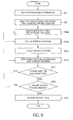
- the history data associated with the transaction information are read out by the sorting-pattern making unit 51 (see the step S2 in Fig. 6 ).
- the history data include: number information on respective types that relates to the number of the paper sheets for each type, number information on face-up and face-down that relates to the numbers of face-up paper sheets and face-down paper sheets, number information on orientation that relates to the number of the paper sheets of each orientation, number information on fitness that relates to the numbers of the fit paper sheets and unfit paper sheets, and so on.
- the paper sheets are banknotes, as shown in Fig.
- the history data may include: number information on denomination that relates to the number of the banknotes for each denomination, number information on face-up and face-down that relates to the numbers of face-up banknotes and face-down banknotes, number information on orientation that relates to the number of the banknotes of each orientation, number information on fitness that relates to the number of the banknotes for each unfitness type, number information on currency that relates to the number of the banknotes for each currency, number information on version that relates to the number of the banknotes for each version, number information on issuing banks that relates to the number of the paper sheets for each issuing bank, and so on.
- the sorting-pattern making unit 51 determines which category is used for the sorting process, among the types (the denominations when the paper sheets are banknotes), the face-up and face-down types, the orientation types, the unfitness types, the currencies, the printed types, the issuing banks, and so on, and also it is determined which sorting pattern is used for the determined category (see the step S3 in Fig. 6 ).
- the determined sorting pattern is displayed on the touch panel 59 (see the step S4 in Fig. 6 ).
- the operator When the operator would like to carry out the sorting process in accordance with the sorting pattern, the operator inputs a command for carrying out the sorting process in accordance with the sorting pattern, at the touch panel 59 (see the step S5 in Fig. 6 ).
- the operator inputs a command for not carrying out the sorting process in accordance with the sorting pattern, another sorting pattern is made (see the steps S5 and S3 in Fig. 6 ), and the thus made different sorting pattern is displayed on the touch panel 59 (see the step S4 in Fig. 6 ).
- the paper sheets are recognized, counted and sorted in accordance with the sorting pattern until all the paper sheets placed on the placement unit 11 are transported (see the steps S10 and S11 in Fig. 6 ).
- the control unit 50 After all the paper sheets placed on the placement unit 11 have been transported therefrom, subsequently, it is judged by the control unit 50 whether or not it is necessary to carry out a sorting process in accordance with the same sorting pattern or another different sorting pattern.
- the next necessary sorting pattern is made and displayed on the touch panel 59 (see the steps S20 and S3 and S4 in Fig. 6 ) or the previously made sorting pattern is displayed on the touch panel 59 (see the steps S20 and S4 in Fig. 6 ).
- the sorting process organization operation
- the history data are updated based on the inputted transaction information and the counted results (see the step S21 in Fig. 6 ).
- the transaction information related to the transaction and the history data including the counted results by the recognition and count unit 55 are stored in association with each other.
- the sorting-pattern making unit 51 makes a sorting pattern for the paper sheets to be stacked in the plurality of stacking units 60a-60d, based on the history data corresponding to the transaction information inputted by the input unit 57.
- the control unit 50 controls the transport unit such that the paper sheets taken by the taking unit 10 are stacked in the plurality of stacking units 60a-60d in accordance with the sorting pattern.
- the present embodiment it is possible to make a sorting pattern corresponding to contents of paper sheets that have been provided by each customer without any individual setting operation by an operator, and thus it is possible to sort and stack the paper sheets at the plurality of stacking units 60a-60d in accordance with the sorting pattern.
- the organizing operation by the paper-sheet handling apparatus 100 is carried out by sorting paper sheets such as banknotes of a plurality of transactions in turn.
- a sorting pattern consisting of an appropriate combination of: type (for example, denomination of a banknote), unfitness, orientation and the like, for paper sheets to be stacked in the stacking units 60a-60d.
- type for example, denomination of a banknote
- orientation for paper sheets to be stacked in the stacking units 60a-60d.
- trial and error of the operator, and/or experience of the operator are required to make such an appropriate sorting pattern. Also, it takes a long time to make it.
- a banknote handing apparatus which can make a sorting pattern within a short time without using the trial and error and/or the experience of the operator is disclosed in WO 2009 / 122504 .
- the component-ratio of the respective types of the banknotes for each transaction depends on characteristics of the transaction. For example, component ratios regarding denomination and/or unfitness may be different for respective customers who deposit banknotes.
- the ratio of the banknotes of larger denomination is high, while the ratio of the banknotes of smaller denomination is high regarding the banknotes that are deposited at a store handling many inexpensive products, such as a retail store, a traffic-ticket booth, or a food store.
- the ratio of unfitted banknotes is likely to be high regarding the banknotes that are handled at a food market or the like.
- the sorting-pattern making unit 51 makes a sorting pattern for the paper sheets to be stacked in the plurality of stacking units 60a-60d, based on the history data corresponding to the transaction information inputted by the input unit 57, so that the paper sheets are sorted and stacked in the plurality of stacking units 60a-60d in accordance with the sorting pattern. Therefore, according to the present embodiment, it is possible to make a sorting pattern corresponding to contents of paper sheets that have been provided by each customer without any individual setting operation by an operator, and thus it is possible to sort and stack the paper sheets at the plurality of stacking units 60a-60d in accordance with the sorting pattern.
- the respective customers that have brought paper sheets may belong to different categories.
- the sorting pattern can be made using the category that each customer belongs to. For example, in a bank, only fit banknotes are recycled. Thus, it is not necessary to sort the banknotes with respect to unfitness if the banknotes are brought from the bank.
- the sorting-pattern making unit 51 can make a sorting pattern without any consideration of sorting with respect to unfitness.
- the sorting-pattern making unit 51 makes a sorting pattern such that, based on the number information on respective types, paper sheets of a type whose number is large are stacked in the paper-sheet-to-be-bundled stacking unit 210a-210c, 310a-310c.
- the sorting-pattern making unit 51 makes a sorting pattern such that, based on the number information on respective types, paper sheets of a type whose number is large are stacked in the paper-sheet-to-be-bundled stacking unit 210a-210c, 310a-310c.
- paper sheets of a type whose number is estimated to be large among the paper sheets to be processed at that time, can be stacked in the paper-sheet-to-be-bundled stacking unit 210a-210c, 310a-310c.
- the paper sheets of a type whose number is large can be automatically bundled, so that the organizing process of the paper sheets can be conducted promptly and efficiently.
- paper sheets that are not necessary to be bundled are stacked in the plurality of stacking units 60a-60d.
- the sorting process is temporarily stopped when a predetermined number of paper sheets (for example, one hundred paper sheets) are stacked.
- the sorting process is resumed.
- the paper sheets of a type whose number is large among the processed paper sheets are likely to reach the predetermined number so early that it is necessary to often stop the paper-sheet handling apparatus. That is to say, it is difficult to conduct the organizing process of the paper sheets promptly and efficiently.
- paper sheets of a type whose number is estimated to be large among the paper sheets to be processed at that time, can be stacked in the paper-sheet-to-be-bundled stacking unit 210a-210c, 310a-310c, and thus can be automatically bundled by the bundling unit 250, 350, without stopping the paper-sheet handling apparatus 100. That is to say, according to the present manner, the bundling operation of the paper sheets of a type whose number is large among the processed paper sheets can be automatically conducted, so that it is possible to conduct the organizing process of the paper sheets promptly and efficiently.
- the sorting-pattern making unit 51 may make a sorting pattern such that, based on the number information on denomination, banknotes of a denomination whose number is large are stacked in the paper-sheet-to-be-bundled stacking unit 210a-210c, 310a-310c.
- banknotes of a denomination whose number is estimated to be large among the banknotes to be processed at that time, can be stacked in the paper-sheet-to-be-bundled stacking unit 210a-210c, 310a-310c, and thus it is possible to conduct the organizing process of the banknotes promptly and efficiently.
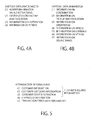
- Fig. 7 shows the number information on denomination (ratios of respective denominations) and the number information on orientation (ratios of orientation types), which are calculated from the history data based on the transaction information inputted by the input unit 57.
- the actual number of the banknotes to be processed for this transaction is shown both for each denomination and of each orientation.
- the ratio of 50 euro is 55.9 %
- the ratio of 20 euro is 26.5 %
- the ratio of 10 euro is 12.0 %
- the ratio of 100 euro is 3.7 %.
- the ratio of A direction is 20 %
- the ratio of B direction is 40 %
- the ratio of C direction is 30 %
- the ratio of D direction is 10 %.
- the used apparatus includes two paper-sheet bundling units 200, 300, and each of the paper-sheet bundling units 200, 300 can handle two types of paper sheets.
- four denominations whose ratios are large are assigned to the paper-sheet-to-be-bundled stacking unit 210a-210c, 310a-310c, in order to conduct the organizing process promptly and efficiently.
- the banknotes of 50 euro whose ratio is the largest and the banknotes of 100 euro whose ratio is the fourth largest (the sum of these ratios is 59.6%) are transported to and stacked in the paper-sheet-to-be-bundled stacking unit 210a-210c for the paper-sheet bundling unit 200, and the banknotes of 20 euro whose ratio is the second largest and the banknotes of 10 euro whose ratio is the third largest (the sum of these ratios is 38.5%) are transported to and stacked in the paper-sheet-to-be-bundled stacking unit 310a-310c for the paper-sheet bundling unit 300.
- the banknotes of 5 euro whose ratio is estimated to be the fifth largest are sorted by the orientation types into two stacking units 60a, 60b.
- the banknotes of 5 euro of the A orientation type and of the C orientation type are transported to and stacked in the stacking unit 60a
- the banknotes of 5 euro of the B orientation type and of the D orientation type are transported to and stacked in the stacking unit 60b.
- the numbers of the banknotes to be stacked in the stacking units 60a, 60b are homogenized.
- the ratio of the euro banknotes to be stacked in each stacking unit 60a, 60b can be adjusted to 50 %.
- the sorting pattern made by the sorting-pattern making unit 51 in accordance with the above steps is shown in Fig. 8 , together with the actual counted numbers of the banknotes and the numbers of stops of the paper-sheet handling apparatus 100, during the organizing process using the sorting pattern
- euro banknotes whose number was 13805 were processed. As shown in Fig. 8 , in order to bundle the banknotes of 5 euro having been stacked in the stacking units 60a, 60b, the transporting function of the paper sheets to the stacking unit 60a and the transporting function of the paper sheets to the stacking unit 60b were respectively stopped one time. The other banknotes were not stopped for the organizing process.
- the sorting-pattern making unit 51 may make a sorting pattern such that the number of paper sheets to be transported to the reject area is the smallest. In this manner, more paper sheets can be sorted into the stacking units 60a-60d by a one-time sorting process, so that it is possible to reduce time and labor required for the organizing process.
- the organizing process for the paper sheets may not be completed by a one-time sorting process, and the second organizing (sorting) process may be conducted to the rejected banknotes with the use of another different sorting pattern.
- the second organizing (sorting) process may be conducted to the rejected banknotes with the use of another different sorting pattern.
- the sorting pattern is made based on the history data such that the number of paper sheets to be transported to the reject area is the smallest, more paper sheets can be sorted into the stacking units 60a-60d by a one-time sorting process without being rejected, so that it is possible to reduce the time and labor required for the organizing process.
- the sorting-pattern making unit 51 makes a sorting pattern such that, based on the number information on respective types, paper sheets of types whose numbers are larger are stacked in the paper-sheet-to-be-bundled stacking units 210a-210c, 310a-310c in turn.
- the paper sheets whose numbers are large are processed by the first organizing process.
- the number of the rejected paper sheets that require the second organizing process can be made small, so that the total time for the first and second organizing processes can be shortened.
- unfit banknotes of 50 euro may be stacked in the paper-sheet-to-be-bundled stacking units 210a-210c, 310a-310c and automatically bundled by the bundling units 250, 350.
- the banknotes may be sorted into: banknotes that cannot be used at an ATM arranged at a financial institution such as a bank and are not acceptable to a reception of a financial institution such as a bank (so-called "UNFIT" banknotes); banknotes that cannot be used at an ATM arranged at a financial institution such as a bank but are acceptable to a reception of a financial institution such as a bank (so-called "Teller-FIT" banknotes); and banknotes that can be used at an ATM arranged at a financial institution such as a bank and are acceptable to a reception of a financial institution such as a bank (so-called "ATM-FIT" banknotes).
- the history data include: the number information on respective types of the paper sheets, the number information on face-up and face-down of the paper sheets, the number information on orientation of the paper sheets, the number information on fitness of the paper sheets, and so on.
- the history data may include: the number information on denomination of the banknotes, the number information on face-up and face-down of the banknotes, the number information on orientation of the banknotes, the number information on fitness of the banknotes, the number information on currency of the banknotes, the number information on version of the banknotes, the number information on issuing banks of the banknotes, and so on. All the information included in the history data can be suitably used for the subsequent sorting processes.
- the banknotes by denominations it is possible to use the number information on denomination of the banknotes stored in the storage unit 56.
- face-up and face-down types it is possible to use the number information on face-up and face-down of the banknotes stored in the storage unit 56.
- orientation types it is possible to use the number information on orientation of the banknotes stored in the storage unit 56.
- unfitness types it is possible to use the number information on fitness of the banknotes stored in the storage unit 56.
- various kinds of information are included in the history data.
- the transaction information associated with the above described history data include: the customer information; the customer-category information; the customer-staff information; the preprocess information; and/or the transaction-time/period information.
- a sorting pattern is made based on the history data for the category which the customer belongs to.
- the tendency of the types of the paper sheets (specifically, the tendency of the denominations of the banknotes) that are brought by the customer is generally dependent on the category which the customer belongs to.
- the ratio of the banknotes of larger denomination is high
- the ratio of the banknotes of smaller denomination is high regarding the banknotes brought from a store handling many inexpensive products, such as a retail store, a traffic-ticket booth, or a food store.
- the customer-staff information is used as the transaction information, it is possible to make a sorting pattern reflected by a specific custom of the staff of, for example, aligning the orientations of the paper sheets, uniforming the face-up and face-down of the paper sheets, or the like. In this case, it is possible to reduce time and labor required for the organizing process with more accuracy.
- a certain staff for the customer may have a predetermined custom of: aligning the orientations of the paper sheets, uniforming the face-up and face-down of the paper sheets, or the like, before bringing the paper sheets to a bank branch or a cash center.
- the customer-staff information is used as the transaction information, and a sorting pattern is made by the sorting-pattern making unit 51 by using the history data associated with the customer-staff information. Therefore, it is possible to make a sorting pattern reflected by the custom of the staff of aligning the orientations of the paper sheets, uniforming the face-up and face-down of the paper sheets, or the like. Thus, it is possible to reduce the time and labor required for the organizing process with more accuracy.
- the preprocess information is used as the transaction information, it is possible to judge which process has been conducted to the paper sheets before they are brought to the paper-sheet handling apparatus 100 of the present embodiment. Thus, taking into consideration the process that has been already conducted, it is possible to make a sorting pattern for not conducting again the already-conduced process. Thus, it is possible to reduce the time and labor required for the organizing process with more accuracy.
- the transaction-time/period information is used as the transaction information, it is possible to make a sorting pattern taking into consideration a time of the transaction or a period of the transaction. Thus, it is possible to reduce the time and labor required for the organizing process.
- contents of the paper sheets that are brought may be different depending on the time of the transaction (for example, in the early afternoon, at midnight) or the period of the transaction (for example, a weekend, an end of month, a peak-season, an off-season). According to this manner, it is possible to make a suitable sorting pattern depending on the time of the transaction or the period of the transaction.
- the transaction information regarding the time of the transaction and/or the period of the transaction are inputted in addition to the customer information, the customer-category information and/or the customer-staff information, so that the history data is read out in consideration of the time of the transaction and/or the period of the transaction in addition to the customer information, the customer-category information and/or the customer-staff information.
- the number of deposited banknotes may be widely different at the respective periods.
- it is recommendable to make a sorting pattern based on the history data for the same period of the last year, as the period of the transaction,
- customer-related information such as the customer information, the customer-category information and the customer-staff information
- preprocess information such as the customer information, the customer-category information and the customer-staff information
- transaction-time/period information both the customer-related information and the transaction-time/period information may be used.
- both the customer-related information and the preprocess information may be used, and all of the customer-related information, the preprocess information and the transaction-time/period information may be used.
- the input unit 57 has a reading unit 57a which can read a recording medium, it can be prevented that the operator fails to correctly input the transaction information, differently from a case wherein the operator directly inputs the transaction information via an input terminal such as the touch panel 59 or the like. Thus, it is possible to conduct the organizing process based on the correct transaction information.
- the sorting-pattern making unit 51 can obtain the transaction information only by transporting the separator by the paper-sheet handling apparatus 100. Thus, it is possible to cause the sorting-pattern making unit 51 to obtain the transaction information by a simple operation.
- the sorting-pattern making unit 51 makes one sorting pattern.
- the sorting-pattern making unit 51 makes a plurality of sorting patterns.
- the paper-sheet handling apparatus 100 of the modified example further includes: an output unit configured to output the plurality of sorting patterns; and a selection unit configured to select one sorting pattern from the plurality of sorting patterns.
- the output unit is not limited to a specific manner as far as the output unit can output the plurality of sorting patterns.
- the selection unit is also not limited to a specific manner as far as the selection unit can select one sorting pattern from the plurality of sorting patterns.
- the touch panel 59 serves as both the output unit and the selection unit.
- the control unit 50 controls the transport unit 70 such that the paper sheets taken from the taking unit 10 are stacked in the plurality of stacking units 60a-60d in accordance with the sorting pattern selected by the touch panel (selecting unit) 59.
- the plurality of sorting patterns outputted by the touch panel (output unit) 59 is made by the history data stored in the storage unit 56 being read out.
- the history data having been read out consist of, for example, a combination of the customer-related information, such as the customer information, the customer-category information and the customer-staff information, and the transaction-time/period information.
- the history data based on the result of the yesterday's process, the history data based on the result of the process on the same day of the last week, the history data based on the result of the process in the same period of the last year, the average history data for one month, the average history data for one year, and so on, are read out and outputted at the touch panel (output unit) 59.
- the touch panel (output unit) 59 of the modified example is configured to output the plurality of sorting patterns in association with respective estimated handling times based on the plurality of sorting patterns.
- each estimated handling time is calculated by multiplying the average process time required for handling one paper sheet in accordance with the selected sorting pattern with the number of paper sheets to be actually handled.
- the number of paper sheets to be actually handled can be included in the transaction information and can be read out from the inputted transaction information.
- the number of paper sheets to be actually handled can be read out at the input unit 57 from a transmittal form or the like attached on a collection bag in which the paper sheets having been brought are contained.
- the number of paper sheets to be actually handled can be manually inputted from the tough panel 59.
- the other structure of the modified example is substantially the same as that of the above embodiment.
- the same parts as the above embodiment are shown by the same reference numerals, and detailed explanation thereof is omitted.
- the same effects as the above embodiment can be achieved. Only important portions of the effects of the modified example are explained hereafter.
- a plurality of paper sheets to be sorted is placed on the placement unit 11. At that time, the fact that the paper sheets are placed on the placement unit 11 is detected by a sensor not shown.
- the history data associated with the transaction information are read out by the sorting-pattern making unit 51 (see the step S2 in Fig. 9 ).
- a plurality of sorting patterns is made by the sorting-pattern making unit 51 (see the step S3 in Fig. 9 ).
- the plurality of sorting patterns is displayed on the touch panel 59 (see the step S4a in Fig. 9 ).
- the operator selects and determines one sorting pattern which the operator would like to carry out the sorting process in accordance with (see the step S5 in Fig. 9 ).
- a sorting process is conducted in accordance with the sorting pattern until all the paper sheets placed on the placement unit 11 are transported (see the steps S10 and S11 in Fig. 9 ).
- the sorting process (organizing operation) for the paper sheets is completed.
- the history data are updated based on the inputted transaction information and the counted results (see the step S21 in Fig. 9 ).
- a plurality of sorting patterns is outputted, and the operator selects one sorting pattern among them.
- the operator selects one sorting pattern among them.
- the operator may select the sorting pattern whose estimated handling time is the shortest, by using the touch panel (selecting unit) 59.
- the operator may select another sorting pattern according to which the operator himself/herself estimates the process time is shorter, taking into consideration the time and/or the period of the transaction, allowing that the estimated handling time outputted by the touch panel (output unit) 59 is longer.
- the number of deposited banknotes may be widely different at the respective periods.
- the operator may select a sorting pattern corresponding to the history data based on the process of the same period of the last year, regardless of the estimated handling time.
- the operator can take into consideration the respective estimated handling times when the operator selects one sorting pattern. For example, if the operator hesitates what to choose, the operator can select one sorting pattern whose estimated handling time is the shortest without any consideration.
- the step of inputting the transaction information for making a sorting pattern is not indispensable.
- a manner in which a sorting pattern is made without using the inputted transaction information is explained based on the sorting process shown with reference to Fig. 9 .
- the step of "reading the history data associated with the transaction information" in Fig. 9 is omitted.
- a plurality of sorting patterns is made regardless of the transaction information of the transaction to be completed from now on.
- the sorting-pattern making unit 51 makes a plurality of sorting patterns for the respective categories that the customers belong to.
- the sorting-pattern making unit 51 makes a sorting pattern for banks, a sorting pattern for department stores, and a sorting pattern for retail stores. These sorting patterns are displayed on the touch panel 59 in association with the respective categories that the customers belong to. Since the operator knows the category that the customer of the present transaction belongs to, the operator can select an appropriate sorting pattern among the made and displayed three sorting patterns.
- the sorting-pattern making unit 51 makes a plurality of sorting patterns for the respective customers based on the respective history data corresponding to the respective customers.
- the sorting patterns made by the sorting-pattern making unit 51 are displayed on the touch panel 59 in association with respective names of the customers. Since the operator knows the name of the customer of the present transaction, the operator can select a sorting pattern for the customer, among the plurality of sorting patterns. In this manner, the transaction information inputted at the step S1 is used for updating the history data (see the step S21 in Fig. 9 ).
- the paper-sheet handling apparatus 100 has the storage unit 56, the input unit 57 and the sorting-pattern making unit 51.
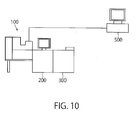
- an outside apparatus 500 communicable with the paper-sheet handling apparatus 100 has any of the storage unit 56, the input unit 57 and the sorting-pattern making unit 51.
- the outside apparatus 500 is, for example, an individual management apparatus configured to manage information on the paper-sheet handling apparatuses 100.
- the other structure of the second embodiment is substantially the same as that of the first embodiment.
- the same parts as the first embodiment are shown by the same reference numerals, and detailed explanation thereof is omitted.
- the paper-sheet handling apparatus 100 has any two of the storage unit 56, the input unit 57 and the sorting-pattern making unit 51, and the outside apparatus 500 connected to the paper-sheet handling apparatus 100 has the last one thereof.
- the paper-sheet handling apparatus 100 may have the input unit 57 and the sorting-pattern making unit 51, and the outside apparatus 500 may have the storage unit 56.
- the paper-sheet handling apparatus 100 may have the storage unit 56 and the sorting-pattern making unit 51, and the outside apparatus 500 may have the input unit 57.
- the paper-sheet handling apparatus 100 may have the storage unit 56 and the input unit 57, and the outside apparatus 500 may have the sorting-pattern making unit 51.
- the paper-sheet handling apparatus 100 has any one of the storage unit 56, the input unit 57 and the sorting-pattern making unit 51, and the outside apparatus 500 connected to the paper-sheet handling apparatus 100 has the other two among them.
- the paper-sheet handling apparatus 100 may have the storage unit 56, and the outside apparatus 500 may have the input unit 57 and the sorting-pattern making unit 51.
- the paper-sheet handling apparatus 100 may have the input unit 57, and the outside apparatus 500 may have the storage unit 56 and the sorting-pattern making unit 51.
- the paper-sheet handling apparatus 100 may have the sorting-pattern making unit 51, and the outside apparatus 500 may have the storage unit 56 and the input unit 57.
- the paper-sheet handling apparatus 100 has none of the storage unit 56, the input unit 57 and the sorting-pattern making unit 51, and the outside apparatus 500 connected to the paper-sheet handling apparatus 100 has all of the storage unit 56, the input unit 57 and the sorting-pattern making unit 51.
- outside apparatus it is not required that the number of outside apparatus is one. A plurality of outside apparatuses may be used.
- the one outside apparatus 500 is provided for the one paper-sheet handling apparatus 100.
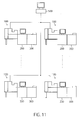
- the third embodiment as shown in Fig. 11 , there is a plurality of paper-sheet handling apparatuses 100, and one outside apparatus 500 is provided for the plurality of paper-sheet handling apparatuses 100.
- the outside apparatus 500 serves as a host management apparatus that tallies history data of the respective paper-sheet handling apparatuses 100.
- the other structure of the third embodiment is substantially the same as that of the second embodiment.
- the same parts as the second embodiment are shown by the same reference numerals, and detailed explanation thereof is omitted.
- each paper-sheet handling apparatus 100 may have all of the storage unit 56, the input unit 57 and the sorting-pattern making unit 51. Alternatively, each paper-sheet handling apparatus 100 may have any two of the storage unit 56, the input unit 57 and the sorting-pattern making unit 51, and the outside apparatus 500 may have the last one thereof. Alternatively, each paper-sheet handling apparatus 100 may have any one of the storage unit 56, the input unit 57 and the sorting-pattern making unit 51, and the outside apparatus 500 may have the last two thereof.
- each paper-sheet handling apparatus 100 may have none of the storage unit 56, the input unit 57 and the sorting-pattern making unit 51, and the outside apparatus 500 may have all of the storage unit 56, the input unit 57 and the sorting-pattern making unit 51 that serve for each paper-sheet handling apparatus 100.
- the outside apparatus 500 tallies the history data of the respective paper-sheet handling apparatuses 100.
- the history data of the respective paper-sheet handling apparatuses 100 are collectively managed by the outside apparatus 500.
- the outside apparatus 500 With respect to paper sheets that have been processed by various paper-sheet handling apparatuses 100, it is possible to store and manage the history data and the transaction data associated with the history data.
Landscapes
- Physics & Mathematics (AREA)
- General Physics & Mathematics (AREA)
- Pile Receivers (AREA)
- Separation, Sorting, Adjustment, Or Bending Of Sheets To Be Conveyed (AREA)
- Forming Counted Batches (AREA)
Applications Claiming Priority (1)
| Application Number | Priority Date | Filing Date | Title |
|---|---|---|---|
| PCT/JP2012/077639 WO2014064810A1 (ja) | 2012-10-25 | 2012-10-25 | 紙葉類処理装置及び紙葉類処理システム |
Publications (2)
| Publication Number | Publication Date |
|---|---|
| EP2913800A1 true EP2913800A1 (de) | 2015-09-02 |
| EP2913800A4 EP2913800A4 (de) | 2016-07-06 |
Family
ID=50544207
Family Applications (1)
| Application Number | Title | Priority Date | Filing Date |
|---|---|---|---|
| EP12887253.8A Withdrawn EP2913800A4 (de) | 2012-10-25 | 2012-10-25 | Papierbogenverarbeitungsvorrichtung und papierbogenverarbeitungssystem |
Country Status (4)
| Country | Link |
|---|---|
| EP (1) | EP2913800A4 (de) |
| CN (1) | CN104781854B (de) |
| RU (1) | RU2620940C2 (de) |
| WO (1) | WO2014064810A1 (de) |
Families Citing this family (3)
| Publication number | Priority date | Publication date | Assignee | Title |
|---|---|---|---|---|
| JP6612025B2 (ja) * | 2014-09-30 | 2019-11-27 | グローリー株式会社 | 紙葉類処理装置、管理装置及び紙葉類処理方法 |
| JP6599623B2 (ja) * | 2015-03-13 | 2019-10-30 | 株式会社東芝 | 紙葉類処理システム |
| WO2017145482A1 (ja) * | 2016-02-25 | 2017-08-31 | 日立オムロンターミナルソリューションズ株式会社 | 紙葉類取扱装置 |
Family Cites Families (7)
| Publication number | Priority date | Publication date | Assignee | Title |
|---|---|---|---|---|
| JPS6061461A (ja) * | 1983-09-14 | 1985-04-09 | Toshiba Corp | 紙葉類の集積制御方式 |
| JP4772331B2 (ja) * | 2005-01-20 | 2011-09-14 | 株式会社東芝 | 紙葉類処理装置 |
| US7779982B2 (en) * | 2006-09-07 | 2010-08-24 | Cummins-Allison Corp. | Currency processing and strapping systems and methods |
| JP5108087B2 (ja) * | 2008-02-27 | 2012-12-26 | グローリー株式会社 | 紙葉類処理装置 |
| WO2009122504A1 (ja) | 2008-03-31 | 2009-10-08 | グローリー株式会社 | 貨幣処理装置 |
| JP5438093B2 (ja) | 2009-02-27 | 2014-03-12 | グローリー株式会社 | 紙幣分類結束処理装置 |
| JP2012137981A (ja) * | 2010-12-27 | 2012-07-19 | Glory Ltd | 貨幣管理装置および貨幣管理システム |
-
2012
- 2012-10-25 RU RU2015119524A patent/RU2620940C2/ru active
- 2012-10-25 WO PCT/JP2012/077639 patent/WO2014064810A1/ja not_active Ceased
- 2012-10-25 CN CN201280077044.3A patent/CN104781854B/zh active Active
- 2012-10-25 EP EP12887253.8A patent/EP2913800A4/de not_active Withdrawn
Also Published As
| Publication number | Publication date |
|---|---|
| RU2620940C2 (ru) | 2017-05-30 |
| CN104781854B (zh) | 2017-07-14 |
| CN104781854A (zh) | 2015-07-15 |
| WO2014064810A1 (ja) | 2014-05-01 |
| EP2913800A4 (de) | 2016-07-06 |
| RU2015119524A (ru) | 2016-12-20 |
Similar Documents
| Publication | Publication Date | Title |
|---|---|---|
| JP5430082B2 (ja) | 自動取引装置 | |
| US20100235247A1 (en) | Methods and systems for sorting bank notes, providing a change fund and balancing revenue | |
| JP5191760B2 (ja) | 貨幣取引装置 | |
| CN101952858A (zh) | 分拣纸币、提供找零备用金和平衡收入的方法和系统 | |
| JP2013134569A (ja) | 取引データ処理装置、貨幣取引システムおよび貨幣取引方法 | |
| EP2913800A1 (de) | Papierbogenverarbeitungsvorrichtung und papierbogenverarbeitungssystem | |
| WO2017014209A1 (ja) | 紙幣処理装置及び紙幣処理方法 | |
| JP5480040B2 (ja) | 自動取引装置 | |
| JP6190246B2 (ja) | 現金処理装置及び現金処理システム | |
| JP3258611B2 (ja) | 紙幣処理機 | |
| WO2011021296A1 (ja) | 資金管理システム、資金管理方法及び紙幣処理装置 | |
| WO2011121736A1 (ja) | 貨幣配送システム及び貨幣配送システムの貨幣配送方法 | |
| WO2013099795A1 (ja) | 貨幣精算装置、貨幣取引システムおよび貨幣取引方法 | |
| JP2001101478A (ja) | 現金処理装置およびその入金処理方法 | |
| WO2011121733A1 (ja) | 紙幣収納払出装置及び紙幣収納払出装置の紙幣投出方法 | |
| WO2014171040A1 (ja) | 紙葉類処理装置、及び紙葉類処理方法 | |
| JP6027785B2 (ja) | 紙幣処理装置 | |
| JP5543288B2 (ja) | 自動釣銭機 | |
| JP2011238051A (ja) | 現金処理装置 | |
| CN110827464B (zh) | 现金中心系统 | |
| CN107055183B (zh) | 纸张处理装置 | |
| JP5125575B2 (ja) | 現金入出金管理装置 | |
| JP5261879B2 (ja) | 貨幣処理機 | |
| JPH1011666A (ja) | 金銭出納装置、及び自動釣銭機に収納すべき釣銭準備金の算出方法 | |
| CN103955991A (zh) | 纸币处理设备 |
Legal Events
| Date | Code | Title | Description |
|---|---|---|---|
| PUAI | Public reference made under article 153(3) epc to a published international application that has entered the european phase |
Free format text: ORIGINAL CODE: 0009012 |
|
| 17P | Request for examination filed |
Effective date: 20150507 |
|
| AK | Designated contracting states |
Kind code of ref document: A1 Designated state(s): AL AT BE BG CH CY CZ DE DK EE ES FI FR GB GR HR HU IE IS IT LI LT LU LV MC MK MT NL NO PL PT RO RS SE SI SK SM TR |
|
| AX | Request for extension of the european patent |
Extension state: BA ME |
|
| DAX | Request for extension of the european patent (deleted) | ||
| RA4 | Supplementary search report drawn up and despatched (corrected) |
Effective date: 20160608 |
|
| RIC1 | Information provided on ipc code assigned before grant |
Ipc: G07D 9/00 20060101AFI20160602BHEP Ipc: G07D 11/00 20060101ALI20160602BHEP |
|
| 17Q | First examination report despatched |
Effective date: 20190624 |
|
| STAA | Information on the status of an ep patent application or granted ep patent |
Free format text: STATUS: THE APPLICATION IS DEEMED TO BE WITHDRAWN |
|
| 18D | Application deemed to be withdrawn |
Effective date: 20191105 |