EP2917190B1 - Neue benzensulfonamidthiazolverbindungen - Google Patents
Neue benzensulfonamidthiazolverbindungen Download PDFInfo
- Publication number
- EP2917190B1 EP2917190B1 EP13792631.7A EP13792631A EP2917190B1 EP 2917190 B1 EP2917190 B1 EP 2917190B1 EP 13792631 A EP13792631 A EP 13792631A EP 2917190 B1 EP2917190 B1 EP 2917190B1
- Authority
- EP
- European Patent Office
- Prior art keywords
- phenyl
- compound
- formula
- thiazol
- thiazolyl
- Prior art date
- Legal status (The legal status is an assumption and is not a legal conclusion. Google has not performed a legal analysis and makes no representation as to the accuracy of the status listed.)
- Active
Links
- 0 CC(C(*)Br)=*=*C([N+]([O-])=O)=** Chemical compound CC(C(*)Br)=*=*C([N+]([O-])=O)=** 0.000 description 2
- ZTWVQGOBZOMZON-UHFFFAOYSA-N CC(Nc1nc(-c(cc2)ccc2N(S(c2cccc3c2cccc3N(C)C)(=O)=O)S(c2cccc3c2cccc3N(C)C)(=O)=O)c[s]1)=O Chemical compound CC(Nc1nc(-c(cc2)ccc2N(S(c2cccc3c2cccc3N(C)C)(=O)=O)S(c2cccc3c2cccc3N(C)C)(=O)=O)c[s]1)=O ZTWVQGOBZOMZON-UHFFFAOYSA-N 0.000 description 1
- SZPPDMWAAXPTQO-UHFFFAOYSA-N CC(Nc1nc(-c2cc(NS(c(cccc3)c3[N+]([O-])=O)(=O)=O)ccc2)c[s]1)=O Chemical compound CC(Nc1nc(-c2cc(NS(c(cccc3)c3[N+]([O-])=O)(=O)=O)ccc2)c[s]1)=O SZPPDMWAAXPTQO-UHFFFAOYSA-N 0.000 description 1
Images


Classifications
-
- C—CHEMISTRY; METALLURGY
- C07—ORGANIC CHEMISTRY
- C07D—HETEROCYCLIC COMPOUNDS
- C07D277/00—Heterocyclic compounds containing 1,3-thiazole or hydrogenated 1,3-thiazole rings
- C07D277/02—Heterocyclic compounds containing 1,3-thiazole or hydrogenated 1,3-thiazole rings not condensed with other rings
- C07D277/20—Heterocyclic compounds containing 1,3-thiazole or hydrogenated 1,3-thiazole rings not condensed with other rings having two or three double bonds between ring members or between ring members and non-ring members
- C07D277/32—Heterocyclic compounds containing 1,3-thiazole or hydrogenated 1,3-thiazole rings not condensed with other rings having two or three double bonds between ring members or between ring members and non-ring members with hetero atoms or with carbon atoms having three bonds to hetero atoms with at the most one bond to halogen, e.g. ester or nitrile radicals, directly attached to ring carbon atoms
- C07D277/38—Nitrogen atoms
- C07D277/42—Amino or imino radicals substituted by hydrocarbon or substituted hydrocarbon radicals
-
- A—HUMAN NECESSITIES
- A61—MEDICAL OR VETERINARY SCIENCE; HYGIENE
- A61P—SPECIFIC THERAPEUTIC ACTIVITY OF CHEMICAL COMPOUNDS OR MEDICINAL PREPARATIONS
- A61P17/00—Drugs for dermatological disorders
-
- A—HUMAN NECESSITIES
- A61—MEDICAL OR VETERINARY SCIENCE; HYGIENE
- A61P—SPECIFIC THERAPEUTIC ACTIVITY OF CHEMICAL COMPOUNDS OR MEDICINAL PREPARATIONS
- A61P35/00—Antineoplastic agents
-
- C—CHEMISTRY; METALLURGY
- C07—ORGANIC CHEMISTRY
- C07D—HETEROCYCLIC COMPOUNDS
- C07D277/00—Heterocyclic compounds containing 1,3-thiazole or hydrogenated 1,3-thiazole rings
- C07D277/02—Heterocyclic compounds containing 1,3-thiazole or hydrogenated 1,3-thiazole rings not condensed with other rings
- C07D277/20—Heterocyclic compounds containing 1,3-thiazole or hydrogenated 1,3-thiazole rings not condensed with other rings having two or three double bonds between ring members or between ring members and non-ring members
- C07D277/32—Heterocyclic compounds containing 1,3-thiazole or hydrogenated 1,3-thiazole rings not condensed with other rings having two or three double bonds between ring members or between ring members and non-ring members with hetero atoms or with carbon atoms having three bonds to hetero atoms with at the most one bond to halogen, e.g. ester or nitrile radicals, directly attached to ring carbon atoms
- C07D277/38—Nitrogen atoms
- C07D277/44—Acylated amino or imino radicals
- C07D277/46—Acylated amino or imino radicals by carboxylic acids, or sulfur or nitrogen analogues thereof
Definitions
- the invention relates to new benzene sulfonamide thiazole compounds active for the treatment of cancers.
- Cutaneous melanoma deriving from the transformation of melanocytes is one of the most lethal cancers among young adults. Its incidence has increased at a dramatic rate during the last decades. Melanoma has a high capability of invasion and rapid metastasis to other organs. The prognosis of metastatic melanoma is extremely pejorative, as the various protocols of chemotherapy or immunotherapy have not shown real survival benefit. Indeed, at the ganglionic metastatic stage, the forecast deteriorates considerably with a survival rate after 5 years of 50 %. At the stage of visceral metastases, the forecast is catastrophic with a median of survival of 6 months.
- the melanoma which represents only 5 % of the cutaneous cancers, represents 80 % of the deaths associated to this type of cancer. With an incidence, which doubles every ten years (10000 new cases in France in 2007), the melanoma constitutes a real problem of public health. Finally, even if recently encouraging results were obtained with vemurafenib and dabrafenib, two inhibitors of the B-Raf pathway, the responses remain transitory. Indeed, vemurafenib and dabrafenib target only melanomas mutated on B-Raf (approximately 50 % of the metastatic melanomas).
- the inventors of the instant invention were initially interested in a family of molecules used in the treatment of the type 2 diabetes, the thiazolidinediones (TZD).
- the effect of PPAR gamma on glucose metabolism is mediated by activation of nuclear receptor, PPAR gamma.
- the inventors have previously shown that some TZD led to a massive death of the cells in in vitro as well as in in vivo models of melanoma independently of PPAR gamma activation.
- the inventors synthesized and identified a family of compounds derived from TZD that led to a loss of viability of the melanoma cells.
- the compounds of the inventions thus show a high potency in vitro as well as in vivo models of melanoma.
- the compounds of the invention present structure similarities with dabrafenib, their signaling pathways and their mechanisms of action are totally different from those of dabrafenib.
- the compounds of the invention are also efficient on several other cancers namely prostate, breast and colon indicating that these molecules may be active in all type of cancers.
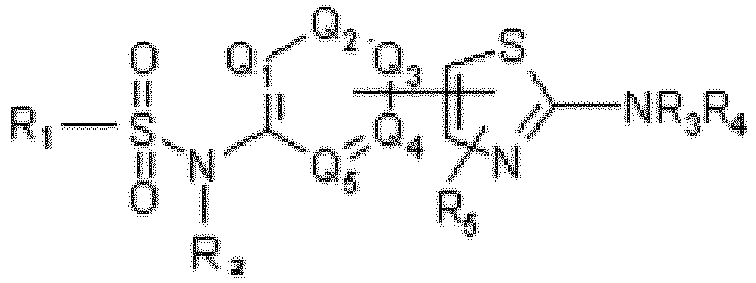
- the invention relates to benzene sulfonamide thiazole compounds of general formula: in which Q 1 , Q 2 , Q 3 , Q 4 , Q 5 , R 1 to R 5 and n have the meanings indicated below, and to processes for the preparation of, compositions containing and the uses of such derivatives.
- the invention relates to compounds of general formula (1): wherein
- a preferred group is comprised of compounds of general formula (2)
- Another preferred group is comprised of compounds of general formula (3)
- alkyl denotes a straight-chain or branched group containing 1, 2, 3, 4 or 5 carbon atoms. This also applies if they carry substituents or occur as substituents of other radicals, for example in O-alkyl radicals, S-alkyl radicals etc.
- suitable alkyl radicals are methyl, ethyl, n-propyl, isopropyl, n-butyl, isobutyl, sec-butyl, tert-butyl, etc.
- Cycloalkyl comprises 3 to 7 carbon atoms and f include cyclopropyl, cyclobutyl, cyclopentyl, cyclohexyl and cycloheptyl,
- Aryl denotes an aromatic carbon ring comprising from 6 to 10 carbon atoms.
- halo denotes a halogen atom selected from the group consisting of fluoro, chloro, bromo and iodo in particular fluoro or chloro.
- the free bond on the phenyl group such as in the structure below means that the phenyl can be substituted in the meta or para position.
- Preferred compounds according to the invention are the following:
- the compounds of the formula (1) may be prepared using conventional procedures such as by the following illustrative methods (schemes 1-2) in which the various substituents are as previously defined for the compounds of the formula (1) unless otherwise stated.
- Pharmaceutically acceptable salts of the compounds of formula (1) include the acid addition and base salts thereof. Suitable acid addition salts are formed from acids, which form non-toxic salts. Examples include the acetate, aspartate, benzoate, besylate, bicarbonate/carbonate, bisulphate/sulphate, borate, camsylate, citrate, edisylate, esylate, formate, fumarate, gluceptate, gluconate, glucuronate, hexafluorophosphate, hibenzate, hydrochloride/chloride, hydrobromide/bromide, hydroiodide/iodide, isethionate, lactate, malate, maleate, malonate, mesylate, methylsulphate, naphthylate, 2-napsylate, nicotinate, nitrate, orotate, oxalate, palmitate, pamoate, phosphate/hydrogen phosphate/dihydrogen phosphate, sac
- Suitable base salts are formed from bases which form non-toxic salts. Examples include the aluminium, arginine, benzathine, calcium, choline, diethylamine, diolamine, glycine, lysine, magnesium, meglumine, olamine, potassium, sodium, tromethamine and zinc salts. Hemisalts of acids and bases may also be formed, for example, hemisulphate and hemicalcium salts.
- the resulting salt may precipitate out and be collected by filtration or may be recovered by evaporation of the solvent.
- the degree of ionization in the resulting salt may vary from completely ionized to almost non-ionized.
- the compounds of the invention may exist in both unsolvated and solvated forms.
- the term 'solvate' is used herein to describe a molecular complex comprising the compound of the invention and a stoichiometric amount of one or more pharmaceutically acceptable solvent molecules, for example, ethanol.
- the term 'hydrate' is employed when said solvent is water.
- complexes such as clathrates, drug-host inclusion complexes wherein, in contrast to the aforementioned solvates, the drug and host are present in stoichiometric or non-stoichiometric amounts.
- complexes of the drug containing two or more organic and/or inorganic components which may be in stoichiometric or non-stoichiometric amounts.
- the resulting complexes may be ionised, partially ionized, or non-ionized.
- references to compounds of formula (1) include references to salts, solvates and complexes thereof and to solvates and complexes of salts thereof.
- the compounds of the invention include compounds of formula (1) as hereinbefore defined, including all polymorphs and crystal habits thereof, and isomers thereof (including optical, geometric and tautomeric isomers) as hereinafter defined and isotopically-labeled compounds of formula (1).
- Prodrugs can, for example, be produced by replacing appropriate functionalities present in the compounds of formula (1) with certain moieties known to those skilled in the art as 'pro-moieties' as described, for example, in " Design of Prodrugs" by H. Bundgaard (Elsevier, 1985 ).
- prodrugs include:
- Metabolites of compounds of formula (1) that is, compounds formed in vivo upon administration of the drug include
- Compounds of formula (1) containing one or more asymmetric carbon atoms can exist as two or more stereoisomers. Included within the scope of the present invention are all stereoisomers, geometric isomers and tautomeric forms of the compounds of formula (1), including compounds exhibiting more than one type of isomerism, and mixtures of one or more thereof. Also included is acid addition or base salts wherein the counter ion is optically active, for example, d-lactate or 1-lysine, or racemic, for example, dl-tartrate or dl-arginine.
- the racemate (or a racemic precursor) may be reacted with a suitable optically active compound, for example, an alcohol, or, in the case where the compound of formula (1) contains an acidic or basic moiety, an acid or base such as tartaric acid or 1-phenylethylamine.
- a suitable optically active compound for example, an alcohol, or, in the case where the compound of formula (1) contains an acidic or basic moiety, an acid or base such as tartaric acid or 1-phenylethylamine.
- the resulting diastereomeric mixture may be separated by chromatography and/or fractional crystallization and one or both of the diastereoisomers converted to the corresponding pure enantiomer(s) by means well known to a skilled person.
- Chiral compounds of the invention may be obtained in enantiomerically-enriched form using chromatography, typically HPLC (chiral columns), on an asymmetric resin with a mobile phase consisting of a hydrocarbon, typically heptane or hexane, containing from 0 to 50% by volume of isopropanol, typically from 2% to 20%, and from 0 to 5% by volume of an alkylamine, typically 0.1% diethylamine.
- HPLC chiral columns
- a mobile phase consisting of a hydrocarbon, typically heptane or hexane, containing from 0 to 50% by volume of isopropanol, typically from 2% to 20%, and from 0 to 5% by volume of an alkylamine, typically 0.1% diethylamine.
- MeOH or iPrOH and H 2 O are used as solvents. Concentration of the eluate affords the enriched mixture.
- Stereoisomeric conglomerates may be separated by conventional techniques known to those skilled in the art-see, for example, “ Stereochemistry of Organic Compounds” by E. L. Eliel (Wiley, New York, 1994 ). “ Chiral Separation Techniques”. by G. Subramanian. John Wiley & Sons, 2008 . “ Preparative Enantioselective Chromatography” by G. B. Cox. Wiley, 2005 .
- compositions in accordance with the invention include those wherein the solvent of crystallization may be isotopically substituted, e.g. D 2 O.
- the compounds of formula (1), their pharmaceutically acceptable salts and/or derived forms, are valuable pharmaceutically active compounds, which are suitable for the therapy and prophylaxis of various cancers, in particular melanoma, breast, prostate and colon
- Compounds of the invention may be administered as crystalline or amorphous products. They may be obtained, for example, as solid plugs, powders, or films by methods such as precipitation, crystallization, freeze-drying, spray drying, or evaporative drying. Microwave or radio frequency drying may be used for this purpose. They may be administered alone or in combination with one or more other compounds of the invention or in combination with one or more other drugs (or as any combination thereof). Generally, they will be administered as a formulation in association with one or more pharmaceutically acceptable excipients.
- excipient is used herein to describe any ingredient other than the compound(s) of the invention.
- compositions suitable for the delivery of compounds of the present invention and methods for their preparation will be readily apparent to those skilled in the art. Such compositions and methods for their preparation may be found, for example, in 'Remington's Pharmaceutical Sciences', 19th Edition (Mack Publishing Company, 1995 ).
- the compounds of the invention may be administered by any suitable route.
- a compound of the invention may be formulated as a pharmaceutical composition for oral, buccal, intranasal, parenteral (e. g. , intravenous, intramuscular or subcutaneous), topical, or rectal administration or in a form suitable for administration by inhalation or insufflation.
- the pharmaceutical composition may take the form of, for example, a tablet or capsule prepared by conventional means with a pharmaceutically acceptable excipient such as a binding agent (e. g., pregelatinized maize starch, polyvinylpyrrolidone or hydroxypropyl methylcellulose); filler (e. g., lactose, microcrystalline cellulose or calcium phosphate); lubricant (e.
- Liquid preparations for oral administration may take the form of a, for example, solution, syrup or suspension, or they may be presented as a dry product for constitution with water or other suitable vehicle before use.
- Such liquid preparations may be prepared by conventional means with a pharmaceutically acceptable additive such as a suspending agent (e. g., sorbitol syrup, methyl cellulose or hydrogenated edible fats); emulsifying agent (e. g., lecithin or acacia); non-aqueous vehicle (e. g., almond oil, oily esters or ethyl alcohol); and preservative (e. g., methyl or propyl p-hydroxybenzoates or sorbic acid).
- a suspending agent e. g., sorbitol syrup, methyl cellulose or hydrogenated edible fats
- emulsifying agent e. g., lecithin or acacia
- non-aqueous vehicle e. g., almond oil, oily esters or ethyl alcohol
- preservative e. g., methyl or propyl p-hydroxybenzoates or sorbic acid
- composition may take the form of tablets or lozenges formulated in conventional manner.
- a compound of the present invention may also be formulated for sustained delivery according to methods well known to those of ordinary skill in the art.
- a compound of the invention may be formulated for parenteral administration by injection, including using conventional catheterization techniques or infusion.
- Formulations for injection may be presented in unit dosage form, e.g., in ampules or in multi-dose containers, with an added preservative.
- the compositions may take such forms as suspensions, solutions or emulsions in oily or aqueous vehicles, and may contain a formulating agent such as a suspending, stabilizing and/or dispersing agent.
- the active ingredient may be in powder form for reconstitution with a suitable vehicle, e.
- sterile pyrogen-free water before use
- Parenteral formulations are typically aqueous solutions which may contain excipients such as salts, carbohydrates and buffering agents (preferably to a pH of from 3 to 9), but, for some applications, they may be more suitably formulated as a sterile non-aqueous solution or as a dried form to be used in conjunction with a suitable vehicle such as sterile, pyrogen-free water.
- kits suitable for coadministration of the compositions may conveniently be combined in the form of a kit suitable for coadministration of the compositions.
- the kit of the invention comprises two or more separate pharmaceutical compositions, at least one of which contains a compound of formula (1) in accordance with the invention, and means for separately retaining said compositions, such as a container, divided bottle, or divided foil packet.
- An example of such a kit is the familiar blister pack used for the packaging of tablets, capsules and the like.
- the kit of the invention is particularly suitable for administering different dosage forms, for example parenteral, for administering the separate compositions at different dosage intervals, or for titrating the separate compositions against one another.
- the kit typically comprises directions for administration and may be provided with a so-called memory aid.
- the total daily dose of the compounds of the invention is typically in the range 0.001 mg to 5000 mg depending, of course, on the mode of administration.
- an intravenous daily dose may only require from 0.001 mg to 40 mg.
- the total daily dose may be administered in single or divided doses and may, at the physician's discretion, fall outside of the typical range given herein. These dosages are based on an average human subject having a weight of about 65 kg to 70 kg. The physician will readily be able to determine doses for subjects whose weight falls outside this range, such as infants and the elderly.
- references herein to "treatment” include references to curative, palliative and prophylactic treatment.
- the compounds of the formula (1), or pharmaceutically acceptable salts, derived forms or compositions thereof can also be used as a combination with one or more additional therapeutic agents to be co-administered to a patient to obtain some particularly desired therapeutic end result such as the treatment of cancers namely melanoma, breast, prostate and colon cancer.
- the second and more additional therapeutic agents may also be a compound of the formula (1) to (3), or a pharmaceutically acceptable salt, derived forms or compositions thereof, or one or more compounds known in the art for the treatment of the conditions listed above. More typically, the second and more therapeutic agents will be selected from a different class of therapeutic agents.
- the terms "co-administration”, “co-administered” and “in combination with”, referring to the compounds of formula (1) and one or more other therapeutic agents, is intended to mean, and does refer to and include the following: simultaneous administration of such combination of compound(s) of formula (1) to (3) and therapeutic agent(s) to a patient in need of treatment, when such components are formulated together into a single dosage form which releases said components at substantially the same time to said patient, substantially simultaneous administration of such combination of compound(s) of formula (1) and therapeutic agent(s) to a patient in need of treatment, when such components are formulated apart from each other into separate dosage forms which are taken at substantially the same time by said patient, whereupon said components are released at substantially the same time to said patient, sequential administration of such combination compound(s) of formula (1) and therapeutic agent(s) to a patient in need of treatment, when such components are formulated apart from each other into separate dosage forms which are taken at consecutive times by said patient with a significant time interval between each administration, whereupon said components are released at substantially different times
- references herein to treatment include curative, palliative and prophylactic treatment.
- the description, which follows, concerns the therapeutic applications to which the compounds of formula (1) to (3) may be put.
- a still further aspect of the present invention also relates to the use of the compounds of formula (1) to (3), or pharmaceutically acceptable salts, derived forms or compositions thereof, for the manufacture of a drug having an anticancer activity.
- the present inventions concerns the use of the compounds of formula (1) to (3), or pharmaceutically acceptable salts, derived forms or compositions thereof, for the manufacture of a drug for the treatment of melanoma.
- the present invention provides compounds for use in a particularly interesting method to treat a mammal, including a human being, with an effective amount of a compound of formula (1) to (3), or a pharmaceutically acceptable salt, derived form or composition thereof. More precisely, the present invention provides compounds for use in particularly interesting method for the treatment of a cancer disease in a mammal, including a human being, in particular the diseases and/or conditions listed above, comprising administering said mammal with an effective amount of a compound of formula (1), its pharmaceutically acceptable salts and/or derived forms.
- the following examples illustrate the preparation of the compounds of the formula (1) and their pharmacological properties
- FIGURES are a diagrammatic representation of FIGURES.
- N-methylthiourea (1 equiv) was added to a solution of 1-bromo-3-nitroacetophenone (10 mmol) in ethanol (60 mL) .
- the reaction mixture was stirred at 80 °C for 30 min and then left to cool to room temperature.
- Benzoyl chloride (1.2 eq., 0.31 mL) was added dropwise in a solution of (4a 2 ) (508 mg, 2.29 mmol) in anhydrous pyridine (35 mL) at 0 °C. Then benzoly chloride was added (1.2 eq., 0.31 mL). Then the reaction mixture was then left to cool to room temperature for 15 h. Water was added and the mixture was extracted with ethyl acetate (3 x 30 mL).
- Normal human melanocytes prepared from foreskins of newborns were grown under 5% CO 2 at 37°C in MCDB 153 (Sigma) supplemented with 2% FCS, bovine pituitary extract (10 ⁇ g/ml), PMA (8nM), bFGF (1ng/ml), insulin (5 ⁇ g/ml), hydrocortisone (0.5 ⁇ g/ml), forskolin (10 ⁇ M), gentamicin (20 ⁇ g/ml), penicillin/streptomycin/amphotericin B (100U/ml) (Invitrogen).
- Normal human fibroblasts prepared from foreskins of newborns were grown under 5% CO 2 at 37°C in DMEM medium supplemented with 10% FCS and penicillin/streptomycin (100 U/ml/50 mg/ml).
- melanoma cell lines were purchased from American Tissue Culture Collection (Molsheim, France). Cells were grown in RPMI 1640 (A375, WM9 and patient melanoma cells) or in DMEM medium (Mel501) supplemented with 10% FCS and penicillin/streptomycin (100 U/ml/50 mg/ml) at 37°C and 5% CO 2 .
- Patient melanoma cells were prepared from biopsy after digestion for 1-2 h with collagenase A (0.33 U/ml), dispase (0.85 U/ml) and Dnase I (144 U/ml) at 37°C. Large debris were removed by filtration through a 70-mm cell strainer.
- Proteins were extracted in Fisher buffer containing TRIS-HCl pH 7.5 50 mM, NaCl 15 mM, Triton X-100 1% and proteases and phosphatases inhibitors. Briefly, cell lysates (30 ⁇ g) were separated by SDS-PAGE, transferred onto a PVDF membrane (Millipore, Molsheim, France) and then exposed to the appropriate antibodies. Proteins were visualized with the ECL system from Amersham (Arlington, Heights, IL, USA). The western blots shown are representative of at least 3 independent experiments.
- Athymic BALB/C nu/nu mice (Harlan) were used. The animals were 6 weeks old and weighed between 20 and 25g. The mice were housed in the animal's C3M in a 12h/12h cycle. The animals received water and food ad libitum. Mice were first acclimated for one week and then injected with A375 cells (2.5 million cells in 200 ⁇ l of PBS) subcutaneously into the right and left sides. Treatment was started eight days after injection of cancer cells (when tumors were visible). The various compounds were diluted in a mixture of Labrafil (90%) (Gattefossé), Tween 80 (1%) and N,N-Dimethylacetamide (9%).
- mice Five groups of six mice treated every day intraperitoneally with 0.7mg/day of PLX4032, SR44 (HA15), SR47 (HA32), SR50 (JG25) or with the mixture of Labrafil in control were defined. Three times a week the tumor size was measured using a caliper.
- HA15 inhibits cell viability of melanoma cells and other types of cancer cells.
- cell viability is evaluated by measuring the number of cells alive in samples of two different kind of prostate cells, respectively noted LNCAP and PC3, of breast cells noted MCF7, of colon cells noted HT29, of metastatic melanoma cell lines A375 and of melanoma cells from patients noted GIC.
- Cancer cells from prostate, breast, colon and melanoma A375 came from cell lines cultures.
- Cell cultures of melanoma cells GIC were prepared from lymph node metastasis from human patient with melanoma.
- 10 ⁇ M of ciglitazone or 10 ⁇ M of HA15 were added to the cell samples. The measure of cell viability was performed by cell counting using the trypan blue exclusion method.
- Ciglitazone is a synthetic ligand of the nuclear receptor PPAR gamma, from the thiazolidinedione family. This compound is used in the treatment of type 2 diabetes and has anti-tumor effects. In preliminary studies, it has been shown that ciglitazone led to the massive death of cells from melanomas, by apoptosis in in vitro and in vivo studies. Therefore, ciglitazone has been chosen as a positive control in the experiment illustrated in figure 1 .
- Results show that, contrary to cells placed in the presence of DMSO, cells LNCAP, PC3, MCF7, HT29, A375 and GIC in the presence of ciglitazone or compound HA15 have their viability greatly reduced.
- compound HA15 inhibits cell viability of cancer cells LNCAP, PC3, MCF7, HT29, A375 and GIC.
- HA15 does not inhibit cell viability of normal cells.
- the effect of compound HA15 on cell viability of melanocytes and fibroblasts was studied, as illustrated by figure 2 .
- Primary cell cultures of human normal melanocytes were prepared from human foreskin.
- 10 ⁇ M of ciglitazone or 10 ⁇ M of HA15 were added to the cell samples.
- the measure of cell viability was performed in the same way as for figure 1
- the cell viability in the presence of ciglitazone is also studied. Results show that the cell viability of normal melanocytes and fibroblasts is not affected by both compounds ciglitazone and HA15demonstarting that compound HA15 is not toxic for normal cells.
- A375 melanoma cells (2.5 x 10 6 ) were injected subcutaneously in 6-week-old female athymic nude mice and treated 5 days later by injection of vehicle (labrafil) or different compounds such as PLX4032, [HA15] and [SR50] (0.7 mg/mouse/day) over a period of 24 days.
- PLX4032 also known as RO5185426 or vemurafenib, is a drug authorized since August 2011 for the treatment of melanoma and is used here as a positive control. Untreated control mice rapidly developed visible tumors, and dramatic tumor growth is observed throughout the course of the study.
- mice with [HA15], [SR50] and PLX4032 markedly attenuated the ability of cells to develop visible tumors. Indeed, the tumor size was more than 500 mm 3 24 days after injection of labrafil against less than 100 mm 3 24 days after injection of [HA15], [SR50] and PLX4032.
- results are expressed as the percentage of cells alive relatively to the number of living cells in the presence of DMSO, which is a negative control, as for figure 1 .
- dabrafenib as PLX4032 inhibits activation of B-Raf on B-Raf V600E mutated melanoma.
- the inhibition of B-Raf leads to inhibition of MAP Vemurafenib cascade and could be visualized through inhibition of MAP vemurafenib phosphorylation.
- dabrafenib led to complete inhibition of MAP vemurafenib phosphorylation in comparison to negative control (DMSO).
- dabrafenib did not modulate MAP vemurafenib expression.
- the compounds of the invention do not modulate MAP vemurafenib phosphorylation indicating that the mechanism of action is different from dabrafenib.
Landscapes
- Chemical & Material Sciences (AREA)
- Organic Chemistry (AREA)
- Health & Medical Sciences (AREA)
- Life Sciences & Earth Sciences (AREA)
- General Health & Medical Sciences (AREA)
- Veterinary Medicine (AREA)
- Public Health (AREA)
- Pharmacology & Pharmacy (AREA)
- Medicinal Chemistry (AREA)
- Animal Behavior & Ethology (AREA)
- Chemical Kinetics & Catalysis (AREA)
- General Chemical & Material Sciences (AREA)
- Nuclear Medicine, Radiotherapy & Molecular Imaging (AREA)
- Engineering & Computer Science (AREA)
- Bioinformatics & Cheminformatics (AREA)
- Dermatology (AREA)
- Pharmaceuticals Containing Other Organic And Inorganic Compounds (AREA)
- Thiazole And Isothizaole Compounds (AREA)
- Epidemiology (AREA)
Claims (18)
- Verbindung der allgemeinen Formel (1)
 Q1 bis Q5 identisch oder verschieden für CR6 stehen,R1 für C6-C10-Aryl steht, das ein oder zwei kondensierte Ringe umfasst, wobei 2 bis 5 Kohlenstoffatome durch ein Heteroatom ersetzt sein können, ausgewählt aus O, S, N und NR6, und eventuell substituiert mit 5 bis 11 Substituenten, ausgewählt aus R6, Halo, CN, NO2, CF3, OCF3, COOR6, OCOR6, SO2NR6R7, CONR6R7, NR6R7, NR6COR7, (CH2)p- NR6R7, (CH2)p- OR6 und (CH2)PSR6,R2 SO2R1 oder R6 ist,R3 und R4 identisch oder verschieden aus COR8 und R6 ausgewählt sind,R5 für R6, Aryl, OR6, SR6, Halo, CN, NO2, CF3, OCF3, COOR6, SO2NR6R7, CONR6R7, NR6R7, NHCOR6 steht,R6 und R7 identisch oder verschieden für H oder Alkyl stehen,R8 aus H, Alkyl, Cycloalkyl, Aryl, Alkylaryl ausgewählt ist, wobei Aryl mit einem bis vier R5-Substituenten, identisch oder verschieden, substituiert sein kann, oder R8 für -(CH2)q-NR6R7 steht,p für eine ganze Zahl von 0 bis 6 steht,q für eine ganze Zahl von 0 bis 6 steht,wobei die Thiazolylgruppe in Bezug auf die Sulfonamidgruppe in Meta- oder Para-Position an die 6-gliedrige Gruppe gebunden ist und wobei die Thiazolylgruppe in Bezug auf das S-Atom in Position α oder β an die 6-gliedrige Gruppe gebunden ist, mit Ausnahme der folgenden Verbindungen:N-[4-[3-[[(4-Chlorophenyl)sulfonyl]amino]phenyl]-2-thiazolyl]-2-hydroxybenzamid,2-(Acetyloxy)-N-[4-[3-[[(4-chlorophenyl)sulfonyl]amino]phenyl]-2-thiazolyl]-benzamid,3-Chloro-N-[4-[3-[[(4-chlorophenyl)sulfonyl]amino]phenyl]-2-thiazolyl]benzamid,N-[4-[3-[[(4-Chlorophenyl)sulfonyl]amino]phenyl]-2-thiazolyl]-1-hydroxy-2-naphthalencarboxamid,N-[4-[3-[[(4-Chlorophenyl)sulfonyl]amino]phenyl]-2-thiazolyl]-3-hydroxy-2-naphthalencarboxamid,N-[4-[3-[[(4-Chlorophenyl)sulfonyl]amino]phenyl]-2-thiazolyl]-2-methoxy-benzamid,N-[3-(2-Amino-4-thiazolyl)phenyl]-4-chlorobenzolsulfonamid,N-[4-[3-[[(4-Chlorophenyl)sulfonyl]amino]phenyl]-2-thiazolyl]-benzamid,2-Chloro-N-[4-[3-[[(4-chlorophenyl)sulfonyl]amino]phenyl]-2-thiazolyl]-benzamid,4-Chloro-N-[4-[3-[[(4-chlorophenyl)sulfonyl]amino]phenyl]-2-thiazolyl]-benzamid,N-[4-[3-[[(4-Chlorophenyl)sulfonyl]amino]phenyl]-2-thiazolyl]-3,4-dimethoxybenzamid,N-[4-[3-[[(4-Chlorophenyl)sulfonyl]amino]phenyl]-2-thiazolyl]-3-methoxybenzamid,N-[4-[3-[[(4-Chlorophenyl)sulfonyl]amino]phenyl]-2-thiazolyl]-4-methoxybenzamid,N-[4-[3-[[(4-Chlorophenyl)sulfonyl]amino]phenyl]-2-thiazolyl]-3-methylbenzamid,N-[4-[3-[[(4-Chlorophenyl)sulfonyl]amino]phenyl]-2-thiazolyl]-4-methylbenzamid,N-[4-[3-[[(4-Chlorophenyl)sulfonyl]amino]phenyl]-2-thiazolyl]-4-nitrobenzamid,N-[4-[3-[[(4-Chlorophenyl)sulfonyl]amino]phenyl]-2-thiazolyl]-4-methylbenzamid,oder, falls geeignet, deren pharmazeutisch verträgliche Salze und/oder Tautomere, Solvate oder isotopische Varianten davon.
 - Verbindung nach Anspruch 1 der allgemeinen Formel (2)
 wobei Q1 bis Q5, R2, R3 und R4 sind wie in Anspruch 1 definiert, und R9 für R6, Halo, CN, NO2, CF3, OCF3, COOR6, OCOR6, SO2NR6R7, CONR6R7, NR6R7, NR6COR7, (CH2)p- NR6R7, (CH2)p- OR6 und (CH2)PSR6 steht,wobei R6 ist wie in Anspruch 1 definiert, n für 1, 2, 3 oder 4 steht und p für eine ganze Zahl von 0 bis 6 steht.
 - Verbindung nach Anspruch 1 der allgemeinen Formel (3)
 wobei Q1 bis Q5, R2, R3 und R4 sind wie in Anspruch 1 definiert, und R9 für R6, Halo, CN, NO2, CF3, OCF3, COOR6, OCOR6, SO2NR6R7, CONR6R7, NR6R7, NR6COR7, (CH2)p- NR6R7, (CH2)p- OR6 oder (CH2)PSR6 steht,wobei R6 ist wie in Anspruch 1 definiert, n für 1, 2, 3 oder 4 steht, p für 0, 1, 2, 3, 4, 5 oder 6 steht und die Naphthylgruppe in Bezug auf die quaternären Kohlenstoffe in Position 1, 2 oder 3 an das Schwefelatom gebunden ist.
 - Verbindung nach einem der vorhergehenden Ansprüche, wobei R2 für H oder SO2R1 steht, wobei R1 Phenyl oder Naphthyl ist, optional substituiert mit 1 bis 4, bevorzugt einem oder zwei Substituenten, ausgewählt aus R6, Halo, CN, NO2, CF3, OCF3, COOR6, OCOR6, SO2NR6R7, CONR6R7, NR6R7, NR6COR7, (CH2)p-NR6R7, (CH2)p-OR6 und (CH2)pSR6,
wobei R6 und p sind wie in Anspruch 1 definiert. - Verbindung nach einem der vorhergehenden Ansprüche, wobei R3 für H steht und R4 für H, Alkyl, CO-Alkyl, Aryl steht, wobei Aryl einen oder mehrere Substituenten umfasst, ausgewählt
aus R6, Halo, CN, NO2, CF3, OCF3, COOR6, OCOR6, SO2NR6R7, CONR6R7, NR6R7, NR6COR7, (CH2)p- NR6R7, (CH2)p- OR6 und (CH2)PSR6,
wobei R6, R7 und p sind wie in Anspruch 1 definiert. - Verbindung nach einem der vorhergehenden Ansprüche, wobei R6 H oder Alkyl ist.
- Verbindung nach einem der vorhergehenden Ansprüche, wobei R9 R6 ist, aus R6, Halo, CN, NO2, CF3, OCF3, COOR6, OCOR6, SO2NR6R7 CONR6R7, NR6R7, NR6COR7, (CH2)p- NR6R7, (CH2)p- OR6 und (CH2)PSR6,
wobei R6 und R7 identisch oder verschieden H oder Alkyl sind und p 0, 1, 2, 3, 4, 5 oder 6 ist. - Verbindung nach einem der vorhergehenden Ansprüche, wobei die Thiazolylgruppe sich in Bezug auf die Sulfonamidgruppe in der Meta-Position befindet.
- Verbindung nach einem der vorhergehenden Ansprüche, wobei die Thiazolylgruppe in Bezug auf das Schwefelatom in der β-Position an den 6-gliedrigen aromatischen Ring gebunden ist.
- Verbindung nach einem der vorhergehenden Ansprüche, wobei q für 5 steht.
- Verbindung nach einem der vorhergehenden Ansprüche, wobei R8 für -(CH2)5-NH2 steht.
- Verbindung nach Anspruch 1, welche ausgewählt ist aus:N-(4-(3-(5-(Dimethylamino)naphthalen-1-sulfonamido)phenyl)thiazol-2-yl)acetamid5-(Dimethylamino)-N-(3-(2-(methylamino)thiazol-4-yl)phenyl)naphthalen-1-sulfonamidN-(4-(3-(5-(Dimethylamino)naphthalen-1-sulfonamido)phenyl)thiazol-2-yl)-4-methylbenzamidN-(3-(2-Aminothiazol-4-yl)phenyl)-5-(dimethylamino)naphthalen-1-sulfonamidN-(4-(3-(5-(Dimethylamino)naphthalen-1-sulfonamido)phenyl)thiazol-2-yl)benzamidN-(4-(3-(5-(Dimethylamino)naphthalen-1-sulfonamido)phenyl)thiazol-2-yl)pivalamid2-Fluoro-N-(3-(2-(methylamino)thiazol-4-yl)phenyl)benzolsulfonamidN-(4-(4-(Naphthalen-2-sulfonamido)phenyl)thiazol-2-yl)acetamidN-(4-(4-(5-(Dimethylamino)naphthalen-1-sulfonamido)phenyl)thiazol-2-yl)acetamidN-(4-(4-(2-Fluorophenylsulfonamido)phenyl)thiazol-2-yl)acetamidN-(4-(4-(2,4-Difluorophenylsulfonamido)phenyl)thiazol-2-yl)acetamidN-(4-(4-(3-(Trifluoromethyl)phenylsulfonamido)phenyl)thiazol-2-yl)acetamidN-(4-(3-(3-(Trifluoromethyl)phenylsulfonamido)phenyl)thiazol-2-yl)acetamidN-(4-(3-(3-(Trifluoromethyl)phenylsulfonamido)phenyl)thiazol-2-yl)acetamidN-(4-(4-(4-(Trifluoromethyl)phenylsulfonamido)phenyl)thiazol-2-yl)acetamidN-(4-(3-(4-Methylphenylsulfonamido)phenyl)thiazol-2-yl)acetamidN-(4-(3-(2-Nitrophenylsulfonamido)phenyl)thiazol-2-yl)acetamidN-(4-(3-(3-Nitrophenylsulfonamido)phenyl)thiazol-2-yl)acetamidN-(4-(3-(Phenylsulfonamido)phenyl)thiazol-2-yl)acetamidN-(4-(3-(Methylsulfonamido)phenyl)thiazol-2-yl)acetamidN-(4-(4-(4-Methylphenylsulfonamido)phenyl)thiazol-2-yl)acetamidN-(4-(3-(5-(Dimethylamino)naphthalen-1-sulfonamido)phenyl)thiazol-2-yl)-5-aminovaleriamid.
- Verbindung der allgemeinen Formel (1)
 Q1 bis Q5 identisch oder verschieden für CR6 stehen, R1 für C6-C10-Aryl steht, das ein oder zwei kondensierte Ringe umfasst, wobei 2 bis 5 Kohlenstoffatome durch ein Heteroatom ersetzt sein können, ausgewählt aus O, S, N und NR6, und eventuell substituiert mit 5 bis 11 Substituenten, ausgewählt aus R6, Halo, CN, NO2, CF3, OCF3, COOR6, OCOR6, SO2NR6R7, CONR6R7, NR6R7, NR6COR7, (CH2)p- NR6R7, (CH2)p- OR6 und (CH2)PSR6,R2 SO2R1 oder R6 ist,R3 und R4 identisch oder verschieden aus COR8 und R6 ausgewählt sind,R5 für R6, Aryl, OR6, S6, Halo, CN, NO2, CF3, OCF3, COOR6, SO2NR6R7, CONR6R7, NR6R7, NHCOR6 steht,R6 und R7 identisch oder verschieden für H oder Alkyl stehen,R8 aus H, Alkyl, Cycloalkyl, Aryl, Alkylaryl ausgewählt ist, wobei Aryl mit einem bis vier R5-Substituenten, identisch oder verschieden, substituiert sein kann,wobei die Thiazolylgruppe in Bezug auf die Sulfonamidgruppe in Meta- oder Para-Position an die 6-gliedrige Gruppe gebunden ist und wobei die Thiazolylgruppe in Bezug auf das S-Atom in Position α oder β an die 6-gliedrige Gruppe gebunden ist,
oder R8 für -(CH2)q-NR6R7 steht, wobei p für eine ganze Zahl von 0 bis 6 steht, q für eine ganze Zahl von 0 bis 6 steht,
oder, falls geeignet, deren pharmazeutisch verträgliche Salze und/oder Tautomere, Solvate oder isotopische Varianten davon
zur Anwendung bei der Behandlung von Krebs. - Verfahren zur Herstellung einer Verbindung der Formel I von Anspruch 1, umfassend die folgenden Schritte:a. Bromierung einer Verbindung der Formel 1'a
 b. Umsetzung der in Schritt a erhaltenen Verbindung 2'a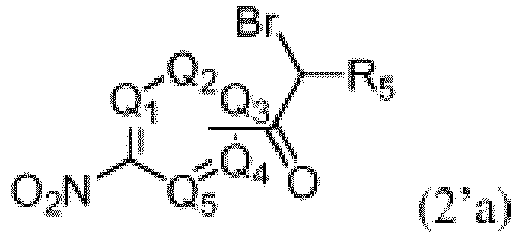
 c. Umsetzung der in Schritt b erhaltenen Verbindung der Formel 4'a
 d. Umsetzung der in Schritt c erhaltenen Verbindung der Formel 5'a
 e. Umsetzung der in Schritt d erhaltenen Verbindung der Formel I'a
R2X
wobei R2 ist wie in Anspruch 1 definiert und X ein Halogenatom ist, in Gegenwart einer Base;
um eine Verbindung der Formel I zu erhalten;f. Isolieren der erhaltenen Verbindung von Formel 1. - Verfahren zur Herstellung einer Verbindung der Formel I von Anspruch 1, umfassend die folgenden Schritte:a. Umsetzung einer Verbindung der Formel 1'c

 b. Umsetzung der in Schritt a erhaltenen Verbindung 2'c
 c. Umsetzung der in Schritt b erhaltenen Verbindung der Formel 3'c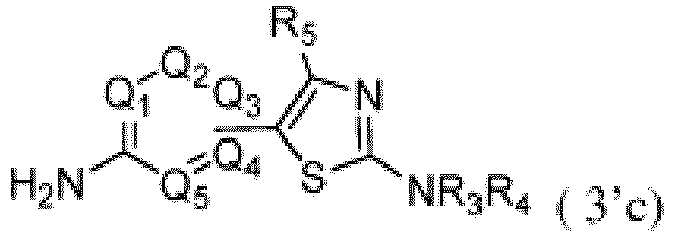
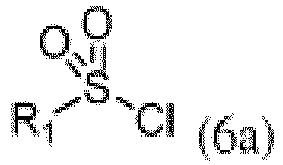 d. Umsetzung der in Schritt c erhaltenen Verbindung der Formel I'c
R2X
wobei R2 ist wie in Anspruch 1 definiert und X ein Halogenatom ist, in Gegenwart einer Base;e. Isolieren der so erhaltenen Verbindung der Formel 1. - Pharmazeutische Zusammensetzung, umfassend eine Verbindung nach einem der Ansprüche 1 bis 12 und einen pharmazeutisch verträglichen Träger.
- Pharmazeutische Zusammensetzung zur Anwendung bei der Behandlung eines Krebszustandes in einem Tier oder Menschen, umfassend den Schritt des dem an dem Krebszustand leidenden Tier oder Menschen Verabreichens einer therapeutisch wirksamen Menge einer Verbindung nach Anspruch 13 oder einer Zusammensetzung nach Anspruch 16.
- Pharmazeutische Zusammensetzung nach Anspruch 17, wobei der Krebs Melanom ist.
Priority Applications (1)
| Application Number | Priority Date | Filing Date | Title |
|---|---|---|---|
| EP13792631.7A EP2917190B1 (de) | 2012-11-09 | 2013-11-08 | Neue benzensulfonamidthiazolverbindungen |
Applications Claiming Priority (3)
| Application Number | Priority Date | Filing Date | Title |
|---|---|---|---|
| EP12306391 | 2012-11-09 | ||
| PCT/EP2013/073439 WO2014072486A1 (en) | 2012-11-09 | 2013-11-08 | New benzene sulfonamide thiazole compounds |
| EP13792631.7A EP2917190B1 (de) | 2012-11-09 | 2013-11-08 | Neue benzensulfonamidthiazolverbindungen |
Publications (2)
| Publication Number | Publication Date |
|---|---|
| EP2917190A1 EP2917190A1 (de) | 2015-09-16 |
| EP2917190B1 true EP2917190B1 (de) | 2017-07-19 |
Family
ID=47278729
Family Applications (1)
| Application Number | Title | Priority Date | Filing Date |
|---|---|---|---|
| EP13792631.7A Active EP2917190B1 (de) | 2012-11-09 | 2013-11-08 | Neue benzensulfonamidthiazolverbindungen |
Country Status (9)
| Country | Link |
|---|---|
| US (1) | US9567310B2 (de) |
| EP (1) | EP2917190B1 (de) |
| JP (1) | JP6539839B2 (de) |
| KR (1) | KR102271794B1 (de) |
| CN (1) | CN104797565A (de) |
| BR (1) | BR112015010467A2 (de) |
| CA (1) | CA2889389C (de) |
| ES (1) | ES2637407T3 (de) |
| WO (1) | WO2014072486A1 (de) |
Families Citing this family (14)
| Publication number | Priority date | Publication date | Assignee | Title |
|---|---|---|---|---|
| WO2017017004A1 (en) * | 2015-07-24 | 2017-02-02 | INSERM (Institut National de la Santé et de la Recherche Médicale) | Substituted hydrophobic benzene sulfonamide thiazole compounds for use in treating cancer |
| KR101674028B1 (ko) | 2015-09-03 | 2016-11-08 | 중원대학교 산학협력단 | 신규한 설폰아미드계 유도체, 이의 제조방법, 이를 포함하는 암 예방 및 치료용 약학 조성물, 및 이를 이용한 암 예방 또는 치료하는 방법 |
| EP3510407A1 (de) | 2016-09-08 | 2019-07-17 | INSERM (Institut National de la Santé et de la Recherche Médicale) | Verfahren zur diagnose und behandlung des nephrotischen syndroms |
| CZ308400B6 (cs) * | 2018-04-11 | 2020-07-29 | Univerzita Karlova | Farmaceutický přípravek pro léčení maligního melanomu |
| CN108794408B (zh) * | 2018-07-23 | 2020-04-21 | 中国医科大学 | 嘧啶苯脲类抗肿瘤化合物及其制备方法和应用 |
| AU2020384883B2 (en) * | 2019-11-15 | 2023-11-16 | Gilead Sciences, Inc. | Triazole carbamate pyridyl sulfonamides as LPA receptor antagonists and uses thereof |
| TWI843503B (zh) | 2020-06-03 | 2024-05-21 | 美商基利科學股份有限公司 | Lpa受體拮抗劑及其用途 |
| CN115867556B (zh) | 2020-06-03 | 2025-05-06 | 吉利德科学公司 | Lpa受体拮抗剂及其用途 |
| TWI853704B (zh) | 2021-05-11 | 2024-08-21 | 美商基利科學股份有限公司 | Lpa受體拮抗劑及其用途 |
| KR20240007233A (ko) | 2021-05-13 | 2024-01-16 | 길리애드 사이언시즈, 인코포레이티드 | Lpa 수용체 길항제 및 이의 용도 |
| WO2023107938A1 (en) | 2021-12-08 | 2023-06-15 | Gilead Sciences, Inc. | Lpa receptor antagonists and uses thereof |
| EP4201928A1 (de) | 2021-12-21 | 2023-06-28 | Institut National de la Santé et de la Recherche Médicale (INSERM) | Benzolsulfonamid-thiazol-verbindungen und ihre verwendung zur behandlung von krebs |
| WO2024084086A1 (en) * | 2022-10-20 | 2024-04-25 | Biper Therapeutics Sas | Compositions comprising a benzene sulfonamide thiazole compound |
| EP4604939A1 (de) | 2022-10-20 | 2025-08-27 | INSERM (Institut National de la Santé et de la Recherche Médicale) | Kombinationstherapie zur behandlung von krebs |
Family Cites Families (7)
| Publication number | Priority date | Publication date | Assignee | Title |
|---|---|---|---|---|
| SE0402735D0 (sv) * | 2004-11-09 | 2004-11-09 | Astrazeneca Ab | Novel compounds |
| EP2016075A1 (de) * | 2006-05-03 | 2009-01-21 | AstraZeneca AB | Thiazolderivate und ihre verwendung als antitumormittel |
| WO2009146013A1 (en) * | 2008-03-31 | 2009-12-03 | Georgetown University | Myosin light chain phosphatase inhibitors |
| UA103319C2 (en) * | 2008-05-06 | 2013-10-10 | Глаксосмитклайн Ллк | Thiazole- and oxazole-benzene sulfonamide compounds |
| US20110319392A1 (en) * | 2009-03-12 | 2011-12-29 | George Adjabeng | Thiazole Sulfonamide And Oxazole Sulfonamide Kinase Inhibitors |
| WO2012113774A1 (en) * | 2011-02-24 | 2012-08-30 | Nerviano Medical Sciences S.R.L. | Thiazolylphenyl-benzenesulfonamido derivatives as kinase inhibitors |
| US9309236B2 (en) * | 2011-10-05 | 2016-04-12 | The Board Of Trustees Of The Leland Stanford Junior University | PI-kinase inhibitors with broad spectrum anti-infective activity |
-
2013
- 2013-11-08 CA CA2889389A patent/CA2889389C/en active Active
- 2013-11-08 BR BR112015010467A patent/BR112015010467A2/pt not_active Application Discontinuation
- 2013-11-08 CN CN201380058629.5A patent/CN104797565A/zh active Pending
- 2013-11-08 JP JP2015541166A patent/JP6539839B2/ja active Active
- 2013-11-08 EP EP13792631.7A patent/EP2917190B1/de active Active
- 2013-11-08 KR KR1020157015339A patent/KR102271794B1/ko active Active
- 2013-11-08 WO PCT/EP2013/073439 patent/WO2014072486A1/en not_active Ceased
- 2013-11-08 ES ES13792631.7T patent/ES2637407T3/es active Active
- 2013-11-08 US US14/441,717 patent/US9567310B2/en active Active
Also Published As
| Publication number | Publication date |
|---|---|
| JP2016501846A (ja) | 2016-01-21 |
| CN104797565A (zh) | 2015-07-22 |
| WO2014072486A1 (en) | 2014-05-15 |
| JP6539839B2 (ja) | 2019-07-10 |
| CA2889389C (en) | 2021-02-02 |
| US20150284347A1 (en) | 2015-10-08 |
| ES2637407T3 (es) | 2017-10-13 |
| KR102271794B1 (ko) | 2021-07-01 |
| EP2917190A1 (de) | 2015-09-16 |
| US9567310B2 (en) | 2017-02-14 |
| BR112015010467A2 (pt) | 2017-07-11 |
| CA2889389A1 (en) | 2014-05-15 |
| KR20150081365A (ko) | 2015-07-13 |
Similar Documents
| Publication | Publication Date | Title |
|---|---|---|
| EP2917190B1 (de) | Neue benzensulfonamidthiazolverbindungen | |
| JP7662639B2 (ja) | エストロゲン受容体分解活性を有する新規クロマン誘導体およびその使用 | |
| KR101486026B1 (ko) | 플루오렌, 안트라센, 잔텐, 디벤조수베론 및 아크리딘의 유도체 및 이의 용도 | |
| JP5825535B2 (ja) | Hec1活性の調節因子およびそのための方法 | |
| WO2019191624A1 (en) | Substituted 1,1'-biphenyl compounds, analogues thereof, and methods using same | |
| US20210040054A1 (en) | Substituted Hydrophobic Benzene Sulfonamide Thiazole Compounds for Use in Treating Cancer | |
| JP5822840B2 (ja) | 眼疾患処置薬 | |
| CN110267963A (zh) | Magl抑制剂 | |
| WO2012116170A1 (en) | Inhibitors of bromodomains as modulators of gene expression | |
| HUP0103884A2 (hu) | Arilszulfonanilidkarbamid-származékok, ezeket tartalmazó gyógyszerkészítmények és alkalmazásuk | |
| JP6795525B2 (ja) | 炭酸脱水酵素阻害剤としてのアリールスルホンアミド化合物およびその治療的使用 | |
| CN117769544A (zh) | 多取代噻唑衍生物及其在疾病治疗中的应用 | |
| JP7268053B2 (ja) | 置換ハロキノリン誘導体、その調製方法及び適用 | |
| JP7301856B2 (ja) | インドールアミン-2,3-ジオキシゲナーゼ阻害剤およびその調製方法と使用 | |
| CN119365474A (zh) | Stat3抑制剂的前药 | |
| JP7039579B2 (ja) | 抗癌剤としての4-アニリノ-キノリン化合物 | |
| AU2017380492B2 (en) | Sulfonyl amidine as indoleamine-2,3-dioxygenase inhibitor, and preparation method therefor and use thereof | |
| EP1723127A2 (de) | Analoga, die die zellproliferation hemmen, verfahren zu deren herstellung und deren anwendung | |
| TW202500134A (zh) | G-蛋白偶聯受體之拮抗劑 | |
| JP2024520758A (ja) | Ttbk1の阻害剤 | |
| WO2019141095A1 (zh) | 脒类和胍类衍生物、其制备方法及其在医药上的应用 |
Legal Events
| Date | Code | Title | Description |
|---|---|---|---|
| PUAI | Public reference made under article 153(3) epc to a published international application that has entered the european phase |
Free format text: ORIGINAL CODE: 0009012 |
|
| 17P | Request for examination filed |
Effective date: 20150609 |
|
| AK | Designated contracting states |
Kind code of ref document: A1 Designated state(s): AL AT BE BG CH CY CZ DE DK EE ES FI FR GB GR HR HU IE IS IT LI LT LU LV MC MK MT NL NO PL PT RO RS SE SI SK SM TR |
|
| AX | Request for extension of the european patent |
Extension state: BA ME |
|
| DAX | Request for extension of the european patent (deleted) | ||
| 17Q | First examination report despatched |
Effective date: 20160610 |
|
| GRAP | Despatch of communication of intention to grant a patent |
Free format text: ORIGINAL CODE: EPIDOSNIGR1 |
|
| INTG | Intention to grant announced |
Effective date: 20170209 |
|
| GRAS | Grant fee paid |
Free format text: ORIGINAL CODE: EPIDOSNIGR3 |
|
| GRAA | (expected) grant |
Free format text: ORIGINAL CODE: 0009210 |
|
| AK | Designated contracting states |
Kind code of ref document: B1 Designated state(s): AL AT BE BG CH CY CZ DE DK EE ES FI FR GB GR HR HU IE IS IT LI LT LU LV MC MK MT NL NO PL PT RO RS SE SI SK SM TR |
|
| REG | Reference to a national code |
Ref country code: GB Ref legal event code: FG4D |
|
| REG | Reference to a national code |
Ref country code: CH Ref legal event code: EP |
|
| REG | Reference to a national code |
Ref country code: IE Ref legal event code: FG4D |
|
| REG | Reference to a national code |
Ref country code: AT Ref legal event code: REF Ref document number: 910253 Country of ref document: AT Kind code of ref document: T Effective date: 20170815 |
|
| REG | Reference to a national code |
Ref country code: DE Ref legal event code: R096 Ref document number: 602013023821 Country of ref document: DE |
|
| REG | Reference to a national code |
Ref country code: NL Ref legal event code: FP |
|
| REG | Reference to a national code |
Ref country code: ES Ref legal event code: FG2A Ref document number: 2637407 Country of ref document: ES Kind code of ref document: T3 Effective date: 20171013 |
|
| REG | Reference to a national code |
Ref country code: FR Ref legal event code: PLFP Year of fee payment: 5 |
|
| REG | Reference to a national code |
Ref country code: LT Ref legal event code: MG4D |
|
| REG | Reference to a national code |
Ref country code: AT Ref legal event code: MK05 Ref document number: 910253 Country of ref document: AT Kind code of ref document: T Effective date: 20170719 |
|
| PG25 | Lapsed in a contracting state [announced via postgrant information from national office to epo] |
Ref country code: NO Free format text: LAPSE BECAUSE OF FAILURE TO SUBMIT A TRANSLATION OF THE DESCRIPTION OR TO PAY THE FEE WITHIN THE PRESCRIBED TIME-LIMIT Effective date: 20171019 Ref country code: HR Free format text: LAPSE BECAUSE OF FAILURE TO SUBMIT A TRANSLATION OF THE DESCRIPTION OR TO PAY THE FEE WITHIN THE PRESCRIBED TIME-LIMIT Effective date: 20170719 Ref country code: LT Free format text: LAPSE BECAUSE OF FAILURE TO SUBMIT A TRANSLATION OF THE DESCRIPTION OR TO PAY THE FEE WITHIN THE PRESCRIBED TIME-LIMIT Effective date: 20170719 Ref country code: FI Free format text: LAPSE BECAUSE OF FAILURE TO SUBMIT A TRANSLATION OF THE DESCRIPTION OR TO PAY THE FEE WITHIN THE PRESCRIBED TIME-LIMIT Effective date: 20170719 Ref country code: SE Free format text: LAPSE BECAUSE OF FAILURE TO SUBMIT A TRANSLATION OF THE DESCRIPTION OR TO PAY THE FEE WITHIN THE PRESCRIBED TIME-LIMIT Effective date: 20170719 Ref country code: AT Free format text: LAPSE BECAUSE OF FAILURE TO SUBMIT A TRANSLATION OF THE DESCRIPTION OR TO PAY THE FEE WITHIN THE PRESCRIBED TIME-LIMIT Effective date: 20170719 |
|
| PG25 | Lapsed in a contracting state [announced via postgrant information from national office to epo] |
Ref country code: GR Free format text: LAPSE BECAUSE OF FAILURE TO SUBMIT A TRANSLATION OF THE DESCRIPTION OR TO PAY THE FEE WITHIN THE PRESCRIBED TIME-LIMIT Effective date: 20171020 Ref country code: LV Free format text: LAPSE BECAUSE OF FAILURE TO SUBMIT A TRANSLATION OF THE DESCRIPTION OR TO PAY THE FEE WITHIN THE PRESCRIBED TIME-LIMIT Effective date: 20170719 Ref country code: RS Free format text: LAPSE BECAUSE OF FAILURE TO SUBMIT A TRANSLATION OF THE DESCRIPTION OR TO PAY THE FEE WITHIN THE PRESCRIBED TIME-LIMIT Effective date: 20170719 Ref country code: IS Free format text: LAPSE BECAUSE OF FAILURE TO SUBMIT A TRANSLATION OF THE DESCRIPTION OR TO PAY THE FEE WITHIN THE PRESCRIBED TIME-LIMIT Effective date: 20171119 Ref country code: PL Free format text: LAPSE BECAUSE OF FAILURE TO SUBMIT A TRANSLATION OF THE DESCRIPTION OR TO PAY THE FEE WITHIN THE PRESCRIBED TIME-LIMIT Effective date: 20170719 Ref country code: BG Free format text: LAPSE BECAUSE OF FAILURE TO SUBMIT A TRANSLATION OF THE DESCRIPTION OR TO PAY THE FEE WITHIN THE PRESCRIBED TIME-LIMIT Effective date: 20171019 |
|
| REG | Reference to a national code |
Ref country code: DE Ref legal event code: R097 Ref document number: 602013023821 Country of ref document: DE |
|
| PG25 | Lapsed in a contracting state [announced via postgrant information from national office to epo] |
Ref country code: DK Free format text: LAPSE BECAUSE OF FAILURE TO SUBMIT A TRANSLATION OF THE DESCRIPTION OR TO PAY THE FEE WITHIN THE PRESCRIBED TIME-LIMIT Effective date: 20170719 Ref country code: CZ Free format text: LAPSE BECAUSE OF FAILURE TO SUBMIT A TRANSLATION OF THE DESCRIPTION OR TO PAY THE FEE WITHIN THE PRESCRIBED TIME-LIMIT Effective date: 20170719 Ref country code: RO Free format text: LAPSE BECAUSE OF FAILURE TO SUBMIT A TRANSLATION OF THE DESCRIPTION OR TO PAY THE FEE WITHIN THE PRESCRIBED TIME-LIMIT Effective date: 20170719 |
|
| PLBE | No opposition filed within time limit |
Free format text: ORIGINAL CODE: 0009261 |
|
| STAA | Information on the status of an ep patent application or granted ep patent |
Free format text: STATUS: NO OPPOSITION FILED WITHIN TIME LIMIT |
|
| PG25 | Lapsed in a contracting state [announced via postgrant information from national office to epo] |
Ref country code: SM Free format text: LAPSE BECAUSE OF FAILURE TO SUBMIT A TRANSLATION OF THE DESCRIPTION OR TO PAY THE FEE WITHIN THE PRESCRIBED TIME-LIMIT Effective date: 20170719 Ref country code: EE Free format text: LAPSE BECAUSE OF FAILURE TO SUBMIT A TRANSLATION OF THE DESCRIPTION OR TO PAY THE FEE WITHIN THE PRESCRIBED TIME-LIMIT Effective date: 20170719 Ref country code: SK Free format text: LAPSE BECAUSE OF FAILURE TO SUBMIT A TRANSLATION OF THE DESCRIPTION OR TO PAY THE FEE WITHIN THE PRESCRIBED TIME-LIMIT Effective date: 20170719 |
|
| 26N | No opposition filed |
Effective date: 20180420 |
|
| PG25 | Lapsed in a contracting state [announced via postgrant information from national office to epo] |
Ref country code: SI Free format text: LAPSE BECAUSE OF FAILURE TO SUBMIT A TRANSLATION OF THE DESCRIPTION OR TO PAY THE FEE WITHIN THE PRESCRIBED TIME-LIMIT Effective date: 20170719 |
|
| PG25 | Lapsed in a contracting state [announced via postgrant information from national office to epo] |
Ref country code: MT Free format text: LAPSE BECAUSE OF NON-PAYMENT OF DUE FEES Effective date: 20171108 |
|
| REG | Reference to a national code |
Ref country code: FR Ref legal event code: PLFP Year of fee payment: 6 |
|
| PG25 | Lapsed in a contracting state [announced via postgrant information from national office to epo] |
Ref country code: HU Free format text: LAPSE BECAUSE OF FAILURE TO SUBMIT A TRANSLATION OF THE DESCRIPTION OR TO PAY THE FEE WITHIN THE PRESCRIBED TIME-LIMIT; INVALID AB INITIO Effective date: 20131108 |
|
| PG25 | Lapsed in a contracting state [announced via postgrant information from national office to epo] |
Ref country code: CY Free format text: LAPSE BECAUSE OF FAILURE TO SUBMIT A TRANSLATION OF THE DESCRIPTION OR TO PAY THE FEE WITHIN THE PRESCRIBED TIME-LIMIT Effective date: 20170719 |
|
| PG25 | Lapsed in a contracting state [announced via postgrant information from national office to epo] |
Ref country code: MK Free format text: LAPSE BECAUSE OF FAILURE TO SUBMIT A TRANSLATION OF THE DESCRIPTION OR TO PAY THE FEE WITHIN THE PRESCRIBED TIME-LIMIT Effective date: 20170719 |
|
| PG25 | Lapsed in a contracting state [announced via postgrant information from national office to epo] |
Ref country code: TR Free format text: LAPSE BECAUSE OF FAILURE TO SUBMIT A TRANSLATION OF THE DESCRIPTION OR TO PAY THE FEE WITHIN THE PRESCRIBED TIME-LIMIT Effective date: 20170719 |
|
| PG25 | Lapsed in a contracting state [announced via postgrant information from national office to epo] |
Ref country code: PT Free format text: LAPSE BECAUSE OF FAILURE TO SUBMIT A TRANSLATION OF THE DESCRIPTION OR TO PAY THE FEE WITHIN THE PRESCRIBED TIME-LIMIT Effective date: 20170719 |
|
| PG25 | Lapsed in a contracting state [announced via postgrant information from national office to epo] |
Ref country code: AL Free format text: LAPSE BECAUSE OF FAILURE TO SUBMIT A TRANSLATION OF THE DESCRIPTION OR TO PAY THE FEE WITHIN THE PRESCRIBED TIME-LIMIT Effective date: 20170719 |
|
| PGFP | Annual fee paid to national office [announced via postgrant information from national office to epo] |
Ref country code: LU Payment date: 20241022 Year of fee payment: 12 |
|
| PGFP | Annual fee paid to national office [announced via postgrant information from national office to epo] |
Ref country code: MC Payment date: 20241025 Year of fee payment: 12 |
|
| PGFP | Annual fee paid to national office [announced via postgrant information from national office to epo] |
Ref country code: NL Payment date: 20251022 Year of fee payment: 13 |
|
| REG | Reference to a national code |
Ref country code: CH Ref legal event code: U11 Free format text: ST27 STATUS EVENT CODE: U-0-0-U10-U11 (AS PROVIDED BY THE NATIONAL OFFICE) Effective date: 20251201 |
|
| PGFP | Annual fee paid to national office [announced via postgrant information from national office to epo] |
Ref country code: DE Payment date: 20251022 Year of fee payment: 13 |
|
| PGFP | Annual fee paid to national office [announced via postgrant information from national office to epo] |
Ref country code: GB Payment date: 20251023 Year of fee payment: 13 |
|
| PGFP | Annual fee paid to national office [announced via postgrant information from national office to epo] |
Ref country code: IT Payment date: 20251022 Year of fee payment: 13 |
|
| PGFP | Annual fee paid to national office [announced via postgrant information from national office to epo] |
Ref country code: FR Payment date: 20251022 Year of fee payment: 13 |
|
| PGFP | Annual fee paid to national office [announced via postgrant information from national office to epo] |
Ref country code: BE Payment date: 20251022 Year of fee payment: 13 |
|
| PGFP | Annual fee paid to national office [announced via postgrant information from national office to epo] |
Ref country code: CH Payment date: 20251201 Year of fee payment: 13 |
|
| PGFP | Annual fee paid to national office [announced via postgrant information from national office to epo] |
Ref country code: IE Payment date: 20251024 Year of fee payment: 13 |
|
| PGFP | Annual fee paid to national office [announced via postgrant information from national office to epo] |
Ref country code: ES Payment date: 20251201 Year of fee payment: 13 |