EP2917461B1 - Unterwasserenergiespeicher für bohrlochschieber - Google Patents
Unterwasserenergiespeicher für bohrlochschieber Download PDFInfo
- Publication number
- EP2917461B1 EP2917461B1 EP13853834.3A EP13853834A EP2917461B1 EP 2917461 B1 EP2917461 B1 EP 2917461B1 EP 13853834 A EP13853834 A EP 13853834A EP 2917461 B1 EP2917461 B1 EP 2917461B1
- Authority
- EP
- European Patent Office
- Prior art keywords
- hydraulic
- shear ram
- subsea
- energy
- stored
- Prior art date
- Legal status (The legal status is an assumption and is not a legal conclusion. Google has not performed a legal analysis and makes no representation as to the accuracy of the status listed.)
- Active
Links
Images

Classifications
-
- E—FIXED CONSTRUCTIONS
- E21—EARTH OR ROCK DRILLING; MINING
- E21B—EARTH OR ROCK DRILLING; OBTAINING OIL, GAS, WATER, SOLUBLE OR MELTABLE MATERIALS OR A SLURRY OF MINERALS FROM WELLS
- E21B33/00—Sealing or packing boreholes or wells
- E21B33/02—Surface sealing or packing
- E21B33/03—Well heads; Setting-up thereof
- E21B33/035—Well heads; Setting-up thereof specially adapted for underwater installations
- E21B33/0355—Control systems, e.g. hydraulic, pneumatic, electric, acoustic, for submerged well heads
-
- E—FIXED CONSTRUCTIONS
- E21—EARTH OR ROCK DRILLING; MINING
- E21B—EARTH OR ROCK DRILLING; OBTAINING OIL, GAS, WATER, SOLUBLE OR MELTABLE MATERIALS OR A SLURRY OF MINERALS FROM WELLS
- E21B33/00—Sealing or packing boreholes or wells
- E21B33/02—Surface sealing or packing
- E21B33/03—Well heads; Setting-up thereof
- E21B33/06—Blow-out preventers, i.e. apparatus closing around a drill pipe, e.g. annular blow-out preventers
- E21B33/061—Ram-type blow-out preventers, e.g. with pivoting rams
- E21B33/062—Ram-type blow-out preventers, e.g. with pivoting rams with sliding rams
- E21B33/063—Ram-type blow-out preventers, e.g. with pivoting rams with sliding rams for shearing drill pipes
-
- E—FIXED CONSTRUCTIONS
- E21—EARTH OR ROCK DRILLING; MINING
- E21B—EARTH OR ROCK DRILLING; OBTAINING OIL, GAS, WATER, SOLUBLE OR MELTABLE MATERIALS OR A SLURRY OF MINERALS FROM WELLS
- E21B33/00—Sealing or packing boreholes or wells
- E21B33/02—Surface sealing or packing
- E21B33/03—Well heads; Setting-up thereof
- E21B33/06—Blow-out preventers, i.e. apparatus closing around a drill pipe, e.g. annular blow-out preventers
- E21B33/064—Blow-out preventers, i.e. apparatus closing around a drill pipe, e.g. annular blow-out preventers specially adapted for underwater well heads
-
- E—FIXED CONSTRUCTIONS
- E21—EARTH OR ROCK DRILLING; MINING
- E21B—EARTH OR ROCK DRILLING; OBTAINING OIL, GAS, WATER, SOLUBLE OR MELTABLE MATERIALS OR A SLURRY OF MINERALS FROM WELLS
- E21B41/00—Equipment or details not covered by groups E21B15/00 - E21B40/00
- E21B41/0007—Equipment or details not covered by groups E21B15/00 - E21B40/00 for underwater installations
Definitions
- This disclosure relates to subsea wells. More particularly, this disclosure relates to power systems for subsea wells.
- BOP Blow Out Preventers
- the unidirectional actuator that controls the hydraulic pilot valve incorporate the aforementioned spring return that allows the valve to turn off even when power is lost.
- engagement of the actuator requires sustained power from the surface, which limits the amount of actuators that can be engaged at any one time.
- loss or disturbance of power from the surface results in loss of communications and further causes a change in position of all powered solenoid actuators. This may cause unwanted hydraulic changes to the BOP functions.
- the few sensors used on existing BOP technology measure pressure, flow and other physical parameters in an attempt to provide feedback for components operating in an open loop by attempting to confirm that a particular function was actuated or completed.
- the use of central sensors forces only one function to be operated at a time because the feedback of central pressure and flow sensors would be unclear if multiple functions were operated simultaneously.
- the integrated nature of the system where there is extensive shared infrastructure, forces the use of significant levels of single application software. This software, and the off-line support systems for it are written for a very limited number of applications. The result is poor predictability, difficulty in troubleshooting, and weak industry-wide support.
- WO 2008/074995 discloses an electrical power storage and pressured fluid supply system for use in the oil and gas exploration and production industry.
- a method comprising: storing electrical energy near a well on a sea floor; storing hydraulic energy near the well on the sea floor; and activating a shear ram with a combination of the stored electrical energy and the stored hydraulic energy by: activating the shear ram with the stored electrical energy to move the shear ram a first distance; and activating the shear ram with the stored hydraulic energy to move the shear ram a second distance.
- an apparatus comprising: a shear ram; a subsea electrical power supply configured to provide stored electrical energy and coupled to the shear ram and configured to operate the shear ram; a hydraulic reservoir configured to provide stored hydraulic energy; a hydraulic line coupled to the hydraulic reservoir and coupled to the shear ram, the hydraulic line configured to operate the shear ram with the stored hydraulic energy; and a control system coupled to a hydraulic actuator and coupled to the subsea electrical power supply, the control system configured to operate the shear ram with the stored electrical energy from the subsea electrical power supply and with the stored hydraulic energy from the hydraulic line by performing steps comprising: operating the subsea electrical power supply to move the shear ram a first distance; and operating the hydraulic actuator to move the shear ram a second distance.
- a device and method of storing electrical energy near a well on the sea floor and activating well control equipment with the stored electrical energy may include an electrical design.
- Subsea actuators may alternatively include a hybrid electrical/mechanical design, in which a main hydraulic power valve may be electrically controlled, allowing one or more electrically powered hydraulic pumps to operate a shear ram in combination with, or independently of, a pressurized hydraulic system.
- cylinders in the shear ram are moved a first distance under stored electrical power and are then moved a second distance under stored hydraulic energy, where the first distance may be the portion of a path the shear ram traverses before contacting an obstruction, such as a drill pipe.
- stored electrical energy may be used to operate a pump to generate hydraulic pressure.
- the generated hydraulic pressure may be stored at the sea floor.
- hydraulic fluid may be recaptured for later use, rather than exhausting the fluid to the sea.
- Excess hydraulic fluid may be stored at ambient pressure near the well on the sea floor. This excess hydraulic fluid may be pressurized by the subsea pump using stored electrical energy.
- a remotely-operated vehicle may deliver either ambient-pressure hydraulic fluid or pressurized, hydraulic fluid. When pressurized fluid is delivered by the ROV, the hydraulic energy from the ROV, may operate a subsea pump as a generator to recharge the stored electrical energy in certain embodiments.
- the device and method include a complete stand-alone power and communications system, multiple sensors, event and signature memory, closed-loop feedback on mechanical positioning, and math models of actuator processes.
- Well control equipment may be activated based on data received from one or more sensors near the well.
- data may be wirelessly received from a sensor near the well.
- data received from one or more sensors may be recorded for a period of time and compared to event signatures for the purpose of determining that an event has occurred.
- the overall state of the BOP or well control equipment may be determined from the received data.
- an apparatus comprising well control equipment and a subsea electrical power supply coupled to the well control equipment and configured to operate the well control equipment.
- an apparatus further comprising a hydraulic reservoir and a hydraulic line coupled to the hydraulic reservoir and coupled to the well control equipment, the hydraulic line configured to operate the well control equipment in combination with the subsea electrical power supply.
- the apparatus further comprises a hydraulic valve, a hydraulic actuator coupled to the hydraulic valve, and a control system coupled to the hydraulic actuator and coupled to the subsea energy storage system, the control system configured to operate the well control equipment with electrical energy from the subsea electrical power supply and hydraulic energy from the hydraulic line.
- the well control equipment comprises a shear ram. Subsea energy storage is used to move the shear ram a first distance and a hydraulic actuator is used to move the shear ram a second distance.
- the apparatus further comprises a sensor coupled to the control system, in which the control system is configured to activate the well control equipment based, at least in part, on data received from the sensor.
- the well control equipment is wirelessly coupled to the control system.
- the control system is wirelessly coupled to the sensor.
- the apparatus is further configured to record data from the sensor for a period of time, compare the recorded data to predetermined event signatures, and determine an event has occurred based on the step of comparing.
- the subsea power supply is configured to independently operate the well control equipment.
- the apparatus further comprises a subsea pump coupled to the hydraulic line and coupled to the subsea electrical power supply, the subsea pump configured to generate hydraulic pressure in the hydraulic line from energy in the subsea electrical power supply.
- a blowout preventer (BOP) system may include a closed-loop hybrid electric/hydraulic system. Subsea energy storage is provided, allowing as-needed delivery of electrical power, such as through a low voltage, high current signal, to well bore electric components.
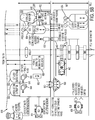
- FIG. 1 shows a high pressure ram hydraulic cylinder 208 with a push cylinder design in place around well bore 220. Although certain ram designs are illustrated in the system of FIG. 1 , other types of rams may be used.
- Drive and sensor pack 202 may regulate electric power to motor 204.
- Motor 204 may be connected to hydraulic pump 206, which moves hydraulic medium, such as hydraulic fluid, in closed hydraulic line 230 to press the ram cylinders in the closing position. Hydraulic fluid may be reversed in direction through the motor 204 to operate the motor 204 as a generator.
- a shear seal ram such as the one depicted in ram 208, has a region of low-power flow, where the cylinders move unobstructed, and a region of high-power flow, where the cylinders engage and cut an obstruction such as well bore 220 casing (not shown) or drill pipe (not shown).
- valves to existing subsea, pressurized hydraulic fluid tanks are used to manipulate the cylinders through both low-power and high-power regions.
- a hydraulic accumulator tank moves hydraulic fluid into the close line the pressure falls rapidly.
- the highest pressure zone of the hydraulic tanks is wasted on moving the cylinders through the low-power region, where the cylinders are simply moved into place to contact the obstruction to be cut.
- the present embodiment provides increased efficiency by using hydraulic pump 206 to move hydraulic cylinders of ram 208 through the low-power region.
- pressurized hydraulic fluid tank valve 214A may be opened allowing high-pressure hydraulic fluid from tank 214 into the closed hydraulic line 230.
- the high-energy hydraulic fluid may assist in closing the cylinders of ram 208 to shear an obstruction in the well bore 220. In this way, the high-energy fluid is utilized for cutting, rather than just moving the cylinder through the low power region.
- a hybrid electrical/hydraulic system is described, the system may also use the hydraulic pump 206 to operate the cylinders of ram 208 through both the low-power phase and high-power phase.
- the use of electrical components, such as the pump 206, in the subsea system may allow redundancy to be increased.
- the pressurized hydraulic fluid within tank 214 may be used to move the cylinders of ram 208 through the low-power region.
- pump 206 may drive the cylinders of ram 208 through the high-power region.
- sea water may be used in place of hydraulic fluid, such as in emergency situations when hydraulic fluid is unavailable. Hydraulic fluid may later be flushed through the subsea system to remove contaminants left by the sea water.
- tank 214 can be recharged from pump 206 by closing valves (not shown) in close line 230.
- the pump further assists ram 208 by pulling hydraulic fluid from the shear side of the cylinders into the open line 232.
- some embodiments of the subsea system disclosed in FIG. 1 may reuse the hydraulic fluid. Reusing hydraulic fluid is environmentally sensitive. Further, when hydraulic fluid is reused, higher quality hydraulic fluid may be used that is better tailored to ram 208. Also, monitoring of the repressurization of tank 214 or tank 212 provides an additional indicator of the position of the cylinders within ram 208.
- the electrical hydraulic hybrid design removes the need for the hydraulic pilot valve of conventional BOP systems.
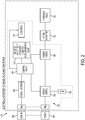
- FIG. 2 shows a block diagram of the electrical system according to one embodiment of the present disclosure. Components located within the block diagram may be self-contained with the motor and hydraulic valve, as shown in FIG. 2 , or they may be independent of the motor and/or valve. In some embodiments, certain components of FIG. 2 may be incorporated in the drive and sensor pack 202 of FIG. 1 .
- Electrical power may enters system 300 from power connection 350. Power may be stepped through voltage levels with a transformer and/or conditioned in power supply 304 and power module 306. The power module 306 may also recharge or draw power from an internal energy storage device 302. Power module 306 may contain a variable-frequency drive for motor/actuator 330. Power supply 304 may also power control board 310 and may power one or more sensors 312 within the valve and sensor pack 202.
- the control board 310 may include memory and a processor.
- the processor may be configured to perform functions, such as collection of data from sensors 312 and control of motor 330 and/or valve 340 and other functions described in this disclosure.
- the control board 310 may be configured to activate the shear ram with stored electrical energy to move the shear ram a first distance and activate the shear ram with stored hydraulic energy to move the shear ram a second distance.
- Control board 310 may receive power from power supply 304 and information processed by communication block 308, which may be received from communications connection 360.
- the communications connection 360 may be a wireless connection without galvanic electric connections, which removes traditional electrical connectors and the water tight seals used to insulate the electrical connects from sea water. Communication transmissions may enter and leave the valve and sensor pack 202 via connection 360.
- communication block 308 may incorporate wireless technology for communicating with the sensors 312. Embedded sensors 312 may report status information to control board 310.
- One or more sensors may provide humidity, temperature, pressure, vibration, acceleration, flow, torque, position, power, or other information particular to a given valve, motor, or actuator.
- Control board 310 telemeters the raw measurements of sensors 312 for reporting purposes to the surface or to other subsea components.
- control board 310 may perform calculations, converting raw measurement data into interpretable telemetry, and/or other processing.
- control board 310 may apply user-programmable calibrations to sensors 312. Because power may be stored and supplied in the subsea environment, system 300 may receive closed-loop feedback on any mechanical device.
- control board 310 may include memory to allow recording of electrical signatures of one or more remote devices. Control board 310 may then interpret status information from the remote devices by comparing the electrical signatures with predetermined electrical signatures or historical signatures for the remote devices.
- control board 310 may be pre-programmed with an electronic signature for a shear ram failure that includes approximate measurements over time from a shear ram that may indicate a failure of the shear ram.
- the recorded electronic signature for the shear ram may then be compared with this pre-programmed electronic signature to determine if a failure has occurred or if service is required.
- control board 310 Communications between control board 310, actuators, motors, valves, rams, indicators, and sensors may be by wired connection.
- wireless communication between components may be implemented, such as through radio frequency (RF) communications.
- RF radio frequency
- Control board 310 may do more than just communicate with and interpret information from sensors 312.
- the connection to power module 306 may allow control board 310 to actively manipulate motor/actuator 330 as well as valve 340.
- Control board 310 may include dynamic memory, allowing aggregation of sensor data over time with time-stamps.
- control board 310 may record data over a set period of time to determine normal or even abnormal operating parameters and then, using on-board comparison algorithms, compare current data parameters to these historical parameters. In this way, control board 310 can determine whether an event has occurred.
- the memory of control board 310 allows data logging to not be restricted by bandwidth limitations or line noise in the communications line 360. Thus, higher resolution data capture is possible.
- Control board 310 may send detailed information about the valve's health and status, such as how fast the valve closed, how much energy was used to close the valve, the temperature increase during valve closure, high vibration or acceleration, etc. Moreover, control board 310 may compare the valve closure to previous closures to determine the health of the valve.
- control board 310 autonomously manipulates well equipment according to preprogrammed conditions. Thus, even if communication is cut off to the surface, subsea control board 310 possesses the power and the processor capability to independent operate the BOP. Control board 310 may also facilitate day-to-day operational corrections without the need for human intervention.
- control board 310 may process mathematical models of normal or abnormal operation of various components of well bore equipment. For example, given standard hydraulic start pressure, head-loss algorithms, depth of equipment, shear strength of an obstruction to be cut, etc., mathematical modeling will be able to calculate or estimate the amount of hydraulic fluid exiting a given accumulator. If that number differs by a certain amount, control board 310 may issue an event code that would alert operators on the surface. In addition, control board 310 may take autonomous action based on the event code. Over time, aggregated data and mathematical modeling provides operators additional information regarding the operation of a particular BOP. Operators may then update control board 310 autonomous response parameters according to predicted signatures.
- Subsea processing of data may allow for quicker control of equipment.
- existing hydraulics may measure flow in limited places due to topside communication limitations discussed above.
- existing subsea hydraulic systems are prevented from simultaneously opening two valves upstream of a single flow meter because the operator would lose information regarding the flow through each individual valve.
- each valve could maintain its own powered valve and sensor pack complete with on-board sensors to measure flow, temperature, vibration, pressure, etc.
- electrical control systems allow operators to make more adjustments and make adjustments more rapidly. As such, this feature may reduce time to emergency disconnect due to vessel problems.
- Indication block 314 of FIG. 2 may receive information from sensors 312 through control board 310. Indication block 314 may display certain aspects of the valve status visually, audibly, magnetically, etc.
- a closed hydraulic valve may trigger an encased green light emitting diode (LED) visible on the outside of the valve by a remotely operated vehicle (ROV).
- ROV remotely operated vehicle
- a closed valve where the hydraulic fluid used exceeded normal parameters may display both a green LED and a yellow LED. In significantly high pressure environments, an LED display may be impractical.
- indication block 314 may employ a magnetic data output system. For example, polarization of an electromagnet may move a compass mounted on the outside of the valve or inside an ROV.
- audible cues may be initiated by indication block 314. Two pings, for example, may indicate a closed valve whereas three pings indicate a closed valve with pressure problems. Although the present example is directed at a blowout preventer (BOP) valve, this design may also be applied to other well bore equipment.
- BOP blowout preventer
- the closed-loop electrical control system described herein may be modular in design, forgoing the use of a central topside processor and infrastructure.
- multiple components of well equipment may contain identical valve and sensor packs, as described in FIG. 2 .
- Subsea actuators may contain the same software thus standardizing telemetry and calculations.
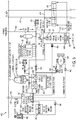
- System 400 is an embodiment of a BOP according to the present disclosure.
- Electrical power may be fed in and out of system 400 through umbilical 450 (or secondary umbilical 451).
- Either alternating current (AC) or direct current (DC) power may be transferred, with electronics package 404 converting and/or conditioning the power as needed.
- Umbilical 450 may also comprise communication lines. For deep deployments, the long distance transmission capability of AC power may be employed. In conventional systems without subsea energy storage, high current AC power is transmitted through the umbilical, as described above, and result in line noise and communications disturbances. Because system 400 contains subsea energy storage, however, both the current and voltage of power transmission through the umbilical 450 may be reduced.
- Power sent to subsea system 400 through the umbilical 450 may be low current and low voltage during normal conditions. Small amounts of additional electrical power may be transferred to storage within the subsea system 400 over the umbilical 450 to trickle charge of the storage. When high power is required, some of the additional power may already be stored subsea and reduce the additional power required to be transferred over the umbilical 450. This trickle charge capability may reduce the deleterious effects of existing subsea AC power systems.
- DC power may be fed on umbilical 450.
- umbilical 450 may transfer power from subsea system 400 topside, such as during storage device 402 reconditioning.
- Subsea power storage may allow each subsea actuator/sensor pack to be independent of any complex power source. Power distribution is low voltage and can be on the same conductors that are used for communication. In embodiments with DC power distribution, alternating electric and magnetic fields through the conductors is reduced, which removes a source of noise from the communications lines.
- the storage of power in a subsea system such as the lower main riser package (LMRP), removes high peak currents from the umbilical cable circuit.
- the subsea systems may operate with momentary or continuous loss of power from the surface. In embodiments with trickle charge capability, the management of voltage may be simpler and reduce the use for complex transformers at the subsea equipment.
- UPS surface-level Uninterrupted Power Systems
- DC power on the surface-to-subsea umbilical lines also eliminates complex impedance issues and greatly simplifies the design of the cable. Because lower peak currents allow for smaller cable, more cable may be stored on the surface vessel. Lower gauge cable is also easier and faster to terminate, resists kinking, and simplifies repairs. Lower gauge cable is also faster and less expensive to replace, and can be terminated with existing ROV technology.
- Electronics package 404 may regulate power through system 400.
- electronics package 404 may accept a trickle charge from umbilical 450, condition the electrical power, and charge storage device 402.
- Storage device 402 may be of any battery chemistry known in the art, such as lithium ion (Lilon), nickel cadmium (NiCd), or nickel metal hydride (NiMH).
- storage device 402 may comprise fuel cells, capacitors, or fly wheels.
- Storage device 402 may also contain a non-rechargeable reserve battery for emergency operations.
- reserve batteries and localized energy storage devices, such as energy storage device 302 may be located within electronics package 404 or at other locations in system 400.
- storage device 402 may exist in an oil-filled container at ambient pressure.
- Electronics package 404 monitors and maintains an appropriate charge for storage device 402.
- electronics package 404 may contain electronics and sensors such as associated with FIG. 2 above.
- Electronic package 404 may also include a variable speed drive 408 for use in driving motor 414. Additional power for use internally in electronics package 404 or for use externally may be stored in energy storage device 406.
- Energy storage device 406 may also be used for conditioning power.
- Electronics package 404 may also contain, or be connected to, indication components such as acoustic pod 480.
- Subsea-stored electrical energy may be used to drive motor 414, which in turn is coupled to hydraulic pump 416.
- Motor 414 and pump 416 may have multiple uses in the subsea system.
- pump 416 may accept hydraulic recharge fluid from ROV 434 and pump the fluid into hydraulic reservoir 410.
- Hydraulic reservoir 410 may be an ambient pressure fluid bladder contained in protective housing 411.
- Pump 416 may also transfer hydraulic fluid from ambient-pressure reservoir 410 to high-pressure hydraulic energy storage tanks 430. Pump 416 may pressurize tanks 430, creating hydraulic energy storage for use in ram 470 or for use in charging battery 402.
- Pump 416 may also accept hydraulic fluid from the surface along umbilical 452 for use in resupplying hydraulic reservoir 410.
- Pump 416 may also accept hydraulic fluid from ROV 432.
- pump 416 may drive motor 414 to recharge storage device 402.
- ROV 434 pushes hydraulic fluid through pump 416 to ambient pressure reservoir 410.
- Pump 416 turns motor 414, which generates electricity to charge storage device 402.
- hydraulic fluid may be discarded to the sea through external valve 420. Hydraulic fluid may also or alternately be sent through pump 416 from pressurized hydraulic energy storage tanks 430.
- ROV 432 and ROV 434 may replenish hydraulic fluid to system 400.
- ROV 434 may also recharge storage device 402 through pump 416 and generator 414.
- ROV 434 may communicate directly with electronics package 404 in the event of problems with umbilical 450.
- ROV 434 may provide raw DC power to electronics package 404 for use in powering system 400 or for recharging storage device 402.
- ROV 434 connects through induction and RF coupling device 442 which is capable of transferring both power and communications without a copper to copper connection.
- System 400 may include a conventional hydraulic energy storage subsystem.
- Pressurized hydraulic accumulator tanks 430 may be coupled to hydraulic operated valve and pump unit 460.
- Unit 460 contains pump 462, valve 464, sensor and electronics pack 466, and indicator 468.
- high pressure hydraulic fluid may be passed through regulator 476 to valve 464 where it is directed to open or close ram 470. Excess hydraulic fluid may be exhausted to the sea through port 469.
- pump 462 may assist in the opening or closing of ram 470 cylinders. Pump 462 may draw low-pressure hydraulic fluid from hydraulic reservoir 410 or from ROV 432.
- Valve 464 may then direct the hydraulic fluid pressurized by pump 462 along either hydraulic line 472 or line 474 to close or open, respectively, the cylinders of ram 470.
- unit 460 also contains electronics and sensor pack 466.
- Electronics and sensor pack 466 as described in relation to FIG. 2 , may record and telemeter measurements such as flow rate, vibration, acceleration, pressure, temperature, humidity, valve position, torque, or power.
- Electronics sensor pack 466 may be powered from electronics package 404 through, for example, induction and RF coupling 444.
- electronics and sensor pack 466 may include an internal energy storage device. Electronics sensor pack 466 may transmit communications along the power line or it may maintain separate hardwire or wireless communication connection with electronics package 404.
- Indicator 468 may receive data and information from electronics and sensor pack 466 or from electronics package 404, and displays the information accordingly.
- indicator 468 may employ any of the systems discussed in relation to indication block 314 in FIG. 2 .
- the indicator 468 may include a video camera interface for interfacing with a human at a remote location.
- the indicator 468 may be a wireless interface to allow reporting of valve data to a hand held device accessed by a technician while the BOP is accessible on a ship deck or in a storage yard. While certain components of the subsea system are located on deck or in the storage yard, they may be provided power and communications interfaces to allow receiving of sensor data and verifying of operational components before installation subsea. Additionally, close loop hydraulic circuits discussed elsewhere allow operation of the BOP on the ship deck of in the storage yard without top-side hardware and hydraulic fluid.
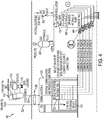
- FIG. 4 depicts the communication layout according to one embodiment of the present disclosure.
- electronics package 530 has been expanded to communicate with multiple hydraulic operated valve and pump units 460.
- control board 310 may have multiple input/output ports channeled through a communications distribution hub 532, such as a multiplexer/demultiplexer.
- Control board 310 located within electronics package 530 may receive and process sensor data from within each of five hydraulic operated valve and pump units 460, as shown in FIG. 4 .
- primary topside power 522 may be trickle charged to energy storage device 406, which then powers pump units 460. Because energy storage device 406 or storage device 402 may possess sufficient power to run hydraulic-operated valve and pump units 460, restrictions on topside power 522 may be reduced and allow use of low voltage, low amperage, AC, or DC power.
- Topside electronics 512 may communicate with electronics package 530. Telemetry may be sent topside and operational commands may be conveyed to well equipment. Telemetry and executed commands may be logged on data logging equipment 516. Telemetry may be displayed on topside displays 514 and also sent to remote locations via a internetwork or intranetwork 510. Commands may also be relayed via network 510.
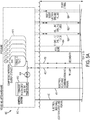
- FIG. 5 depicts one embodiment of the present disclosure in the configuration of a subsea LMRP and BOP attached to a riser string.
- Vessel-mounted hardware 610 of system 600 may sit topside and include hydraulic fluid storage 616, hydraulic pump 614, and/or hydraulic reservoir 612. Hydraulic fluid may be delivered through fluid supply line 452 or secondary supply line 453. Communication and power may be delivered via umbilical 450 or secondary umbilical 451.
- umbilicals may be configured to carry power independently of communication. For example, umbilical 450 may carry only power and umbilical 451 may carry only communication. This may reduce line noise and improve communication.
- umbilicals may be reversed so that umbilical 451 carries only power and umbilical 450 carries only communication, or either umbilical may be configured to carry both simultaneously.
- electronics packages 640 and 642 may be configured in tandem to be fully redundant or they can be set to operate in series, with electronics package 640 dedicated to power conditioning and supply, and electronics package 642 dedicated to communications and control.
- Electronics packages 640 and 642 may be coupled by power and communications line 641.
- Electronics packages 640 and 642 may be located within LMRP 630 or mounted as pods, as shown in FIG. 5 .
- Electronics packages 640 and/or 642 may power and control hydraulic valves 644 and 646 as well as hydraulic distribution and main function regulators 650.
- Electronics packages 640 and 642 may also manage and condition battery 652.
- LMRP 630 may contain an independent hydraulic energy storage 654 or be connected to BOP 670 hydraulic energy storage 664 through, for example, multipath hydraulic stabs 660 for hydraulic power connections to rams and valves. Electric power and communications may be transferred between LMRP 630 and BOP 670 through communication and energy transfer ports 656 and 662. Ports 656 and 662 may be hardwire connected or wirelessly coupled through induction.
- BOP 670 may include multiple rams 470 surrounding well bore 454.
- rams 470 may include independent hydraulic-operated valve and pump units 460.
- hydraulic-operated valve and pump units 460 may be interconnected to control and monitor multiple rams 470.
Landscapes
- Life Sciences & Earth Sciences (AREA)
- Engineering & Computer Science (AREA)
- Geology (AREA)
- Mining & Mineral Resources (AREA)
- Physics & Mathematics (AREA)
- Environmental & Geological Engineering (AREA)
- Fluid Mechanics (AREA)
- General Life Sciences & Earth Sciences (AREA)
- Geochemistry & Mineralogy (AREA)
- Fluid-Pressure Circuits (AREA)
Claims (19)
- Verfahren, umfassend:Speichern von elektrischer Energie in der Nähe einer Quelle (220) auf einem Meeresboden;Speichern von hydraulischer Energie in der Nähe der Quelle auf dem Meeresboden; undAktivieren eines Scherkolbens (208) mit einer Kombination aus der gespeicherten elektrischen Energie und der gespeicherten hydraulischen Energie durch:Aktivieren des Scherkolbens mit der gespeicherten elektrischen Energie, um den Scherkolben um eine erste Distanz zu bewegen; undAktivieren des Scherkolbens mit der gespeicherten hydraulischen Energie, um den Scherkolben um eine zweite Distanz zu bewegen.
- Verfahren nach Anspruch 1, wobei die erste Distanz geringer als die zweite Distanz ist,
wobei die erste Distanz der Abschnitt eines Pfades ist, um den der Scherkolben verfährt, bevor er ein Hindernis berührt, und
wobei das Hindernis ein Bohrgestänge ist. - Verfahren nach Anspruch 1, weiter umfassend Betreiben einer Pumpe aus der gespeicherten elektrischen Energie, um die gespeicherte hydraulische Druckenergie zu erzeugen.
- Verfahren nach Anspruch 1, wobei der Schritt des Speicherns von hydraulischer Energie Empfangen von hydraulischer Energie von einem ferngesteuerten Fahrzeug (ROV) umfasst.
- Verfahren nach Anspruch 1, weiter umfassend Betreiben einer Unterwasserpumpe (206) als einen Generator aus der gespeicherten hydraulischen Energie, um die gespeicherte elektrische Energie wieder aufzuladen.
- Verfahren nach Anspruch- 1, wobei Speichern der hydraulischen Energie umfasst
Speichern des Hydraulikmediums bei Umgebungsdruck in der Nähe der Quelle auf dem Meeresboden, und wobei das Verfahren weiter umfasst
Druckbeaufschlagen des Hydraulikmediums mit einer Pumpe, die aus der gespeicherten elektrischen Energie betrieben wird. - Verfahren nach Anspruch 6, wobei Speichern von Hydraulikmedium bei Umgebungsdruck Empfangen des Hydraulikmediums auf Umgebungsdruck von einem ferngesteuerten Fahrzeug (ROV) umfasst.
- Verfahren nach Anspruch 1, weiter umfassend Rückführen des Hydraulikmediums, um in dem Scherkolben wiederverwendet zu werden.
- Verfahren nach Anspruch 1, weiter umfassend:Empfangen von Daten (312) von einem Sensor in der Nähe der Quelle; undAktivieren des Scherkolbens basierend auf Daten, die von dem Sensor empfangen wurden.
- Verfahren nach Anspruch 9, wobei Daten drahtlos von dem Sensor in der Nähe der Quelle empfangen werden, und
wobei das Verfahren weiter umfasst:Aufzeichnen von Daten von dem Sensor für eine Zeitspanne;Vergleichen der aufgezeichneten Daten mit mindestens einer von einer vorbestimmten Ereignissignatur und einer historischen Ereignissignatur; undBestimmen, dass ein Ereignis aufgetreten ist, basierend auf dem Schritt des Vergleichens. - Vorrichtung, umfassend:einen Scherkolben (208);eine elektrische Unterwasserstromversorgung (304), die konfiguriert ist, um gespeicherte elektrische Energie bereitzustellen und mit dem Scherkolben gekoppelt ist und konfiguriert ist, den Scherkolben zu betreiben;ein Hydraulikreservoir (410), das konfiguriert ist, um gespeicherte hydraulische Energie bereitzustellen;eine Hydraulikleitung (472), die mit dem Hydraulikreservoir gekoppelt und mit dem Scherkolben gekoppelt ist, wobei die Hydraulikleitung konfiguriert ist, um den Scherkolben mit der gespeicherten hydraulischen Energie zu betreiben; undein Steuersystem (310), das mit einem hydraulischen Aktuator (330) gekoppelt ist und mit der elektrischen Unterwasserstromversorgung gekoppelt ist, wobei das Steuersystem konfiguriert ist, um den Scherkolben mit der gespeicherten elektrischen Energie aus der elektrischen Unterwasserstromversorgung und mit der gespeicherten hydraulischen Energie aus der Hydraulikleitung zu betreiben, indem es Schritte durchführt, die umfassen:Betreiben der elektrischen Unterwasserstromversorgung, um den Scherkolben um eine erste Distanz zu bewegen; undBetreiben des hydraulischen Aktuators, um den Scherkolben um eine zweite Distanz zu bewegen.
- Vorrichtung nach Anspruch 11, weiter umfassend:ein Hydraulikventil (464);einen Hydraulikaktuator, der mit dem Hydraulikventil gekoppelt ist.
- Vorrichtung nach Anspruch 12, wobei der Scherkolben drahtlos mit dem Steuersystem gekoppelt ist.
- Vorrichtung nach Anspruch 12, weiter umfassend einen Sensor, der mit dem Steuersystem gekoppelt ist, wobei das Steuersystem konfiguriert ist, um den Scherkolben zumindest teilweise auf der Grundlage von Daten, die von dem Sensor empfangen wurden, zu aktivieren.
- Vorrichtung nach Anspruch 12, wobei das Steuersystem weiter konfiguriert ist, um:Daten von dem Sensor für eine Zeitspanne aufzuzeichnen;die aufgezeichneten Daten mit mindestens einer von einer vorbestimmten Ereignissignatur und einer historischen Ereignissignatur zu vergleichen; undgegebenenfalls zu bestimmen, dass ein Ereignis aufgetreten ist, basierend auf dem Schritt des Vergleichens,
- Vorrichtung nach Anspruch 15, wobei die Vorrichtung weiter einen Indikator umfasst, der konfiguriert ist, um einen Gesundheitszustand des Scherkolbens anzuzeigen.
- Vorrichtung nach Anspruch 11, wobei die elektrische Unterwasserstromversorgung konfiguriert ist, den Scherkolben unabhängig zu betreiben.
- Vorrichtung nach Anspruch 11, weiter umfassend eine Unterwasserpumpe, die mit der Hydraulikleitung gekoppelt ist und mit der Unterwasserstromversorgung gekoppelt ist, wobei die Unterwasserpumpe konfiguriert ist, um von der gespeicherten elektrischen Energie in der Unterwasserstromversorgung Hydraulikdruck in der Hydraulikleitung zu erzeugen.
- Vorrichtung nach Anspruch 18, wobei das Hydraulikreservoir ein Umgebungsdruck-Hydraulikreservoir umfasst, und wobei die Unterwasserpumpe konfiguriert ist, um das Hydraulikmedium des Umgebungsdruck-Hydraulikreservoirs unter Druck zu setzen, um die Hydraulikleitung zu betreiben.
Priority Applications (2)
| Application Number | Priority Date | Filing Date | Title |
|---|---|---|---|
| EP20200238.2A EP3825513B1 (de) | 2012-11-07 | 2013-11-07 | Unterwasserenergiespeicher für bohrlochschieber |
| EP18203567.5A EP3502410B1 (de) | 2012-11-07 | 2013-11-07 | Unterwasserenergiespeicher für bohrlochschieber |
Applications Claiming Priority (2)
| Application Number | Priority Date | Filing Date | Title |
|---|---|---|---|
| US201261723591P | 2012-11-07 | 2012-11-07 | |
| PCT/US2013/069002 WO2014074747A1 (en) | 2012-11-07 | 2013-11-07 | Subsea energy storage for blow out preventers (bop) |
Related Child Applications (2)
| Application Number | Title | Priority Date | Filing Date |
|---|---|---|---|
| EP18203567.5A Division EP3502410B1 (de) | 2012-11-07 | 2013-11-07 | Unterwasserenergiespeicher für bohrlochschieber |
| EP20200238.2A Division EP3825513B1 (de) | 2012-11-07 | 2013-11-07 | Unterwasserenergiespeicher für bohrlochschieber |
Publications (3)
| Publication Number | Publication Date |
|---|---|
| EP2917461A1 EP2917461A1 (de) | 2015-09-16 |
| EP2917461A4 EP2917461A4 (de) | 2016-08-10 |
| EP2917461B1 true EP2917461B1 (de) | 2018-10-31 |
Family
ID=50680566
Family Applications (3)
| Application Number | Title | Priority Date | Filing Date |
|---|---|---|---|
| EP13853834.3A Active EP2917461B1 (de) | 2012-11-07 | 2013-11-07 | Unterwasserenergiespeicher für bohrlochschieber |
| EP20200238.2A Active EP3825513B1 (de) | 2012-11-07 | 2013-11-07 | Unterwasserenergiespeicher für bohrlochschieber |
| EP18203567.5A Active EP3502410B1 (de) | 2012-11-07 | 2013-11-07 | Unterwasserenergiespeicher für bohrlochschieber |
Family Applications After (2)
| Application Number | Title | Priority Date | Filing Date |
|---|---|---|---|
| EP20200238.2A Active EP3825513B1 (de) | 2012-11-07 | 2013-11-07 | Unterwasserenergiespeicher für bohrlochschieber |
| EP18203567.5A Active EP3502410B1 (de) | 2012-11-07 | 2013-11-07 | Unterwasserenergiespeicher für bohrlochschieber |
Country Status (9)
| Country | Link |
|---|---|
| US (4) | US9494007B2 (de) |
| EP (3) | EP2917461B1 (de) |
| JP (3) | JP6084300B2 (de) |
| KR (2) | KR102245173B1 (de) |
| CN (2) | CN107965288B (de) |
| BR (1) | BR112015010435B1 (de) |
| CA (1) | CA2890543C (de) |
| SG (3) | SG10201701193PA (de) |
| WO (1) | WO2014074747A1 (de) |
Cited By (1)
| Publication number | Priority date | Publication date | Assignee | Title |
|---|---|---|---|---|
| US11441579B2 (en) | 2018-08-17 | 2022-09-13 | Schlumberger Technology Corporation | Accumulator system |
Families Citing this family (36)
| Publication number | Priority date | Publication date | Assignee | Title |
|---|---|---|---|---|
| EP2917461B1 (de) * | 2012-11-07 | 2018-10-31 | Transocean Sedco Forex Ventures Limited | Unterwasserenergiespeicher für bohrlochschieber |
| GB2517132B (en) * | 2013-06-12 | 2015-11-11 | Aes Eng Ltd | Barrier System for Mechanical Seal |
| US20150045969A1 (en) * | 2013-08-09 | 2015-02-12 | Halliburton Energy Services, Inc. | Orka subsea pigging and hydrotesting unit |
| AU2014306446A1 (en) | 2013-08-15 | 2016-03-10 | Transocean Innovation Labs, Ltd | Subsea pumping apparatuses and related methods |
| DE102013217383A1 (de) * | 2013-08-30 | 2015-03-19 | Klaus Biester | Blowout-Preventer Stack und Versorgungssystem |
| US9650856B2 (en) * | 2013-11-12 | 2017-05-16 | Cameron International Corporation | Assembly and system including a surge relief valve |
| CN103953309B (zh) * | 2014-05-20 | 2017-04-12 | 中国海洋石油总公司 | 脐带缆终端冗余式水下分配单元 |
| GB2530745A (en) * | 2014-09-30 | 2016-04-06 | Statoil Petroleum As | Blow-Out Preventer |
| EP3256687B1 (de) * | 2015-02-15 | 2024-06-26 | Transocean Innovation Labs Ltd | Bop-kontrollsysteme und zugehörige verfahren |
| GB2536451A (en) * | 2015-03-17 | 2016-09-21 | Ge Oil & Gas Uk Ltd | Underwater hydrocarbon extraction facility |
| KR20180102067A (ko) * | 2015-11-17 | 2018-09-14 | 트랜스오션 이노베이션 랩스 리미티드 | 유압식으로 작동되는 디바이스를 작동시키기 위한 신뢰성 평가 시스템 및 관련 방법 |
| EP3464909B1 (de) * | 2016-05-31 | 2021-05-05 | Transocean Innovation Labs Ltd | Verfahren zur beurteilung der zuverlässigkeit von hydraulisch betätigten vorrichtungen und zugehörige systeme |
| US12305502B2 (en) * | 2016-05-31 | 2025-05-20 | Transocean Innovation Labs Ltd. | Methods for assessing the reliability of hydraulically-actuated devices and related systems |
| DE102016216469A1 (de) * | 2016-08-31 | 2018-03-01 | Klaus Biester | Blowout-Preventer Stack |
| DE102017206596A1 (de) * | 2017-04-19 | 2018-10-25 | Robert Bosch Gmbh | Elektrohydraulisches System für den Einsatz unter Wasser mit einem elektrohydraulischen Stellantrieb |
| CN106939786B (zh) * | 2017-05-23 | 2018-04-20 | 中国石油大学(华东) | 水下全电采油树紧急备用控制系统 |
| MX2019014637A (es) * | 2017-06-15 | 2020-02-07 | Hydril Usa Distrib Llc | Sistema con clasificacion de nivel de integridad de seguridad (sil) para control de preventor de reventones. |
| GB2554497B8 (en) * | 2017-06-29 | 2020-03-11 | Equinor Energy As | Tubing hanger installation tool |
| US11183846B2 (en) * | 2017-12-22 | 2021-11-23 | Raytheon Company | System and method for modulating high power in a submersible energy storage vessel utilizing high voltage DC transmission |
| US11624254B2 (en) | 2018-08-17 | 2023-04-11 | Schlumberger Technology Corporation | Accumulator system |
| DE102018217150A1 (de) * | 2018-10-08 | 2020-04-09 | Robert Bosch Gmbh | Hydraulisches System für den Einsatz unter Wasser mit einem hydraulischen Stellantrieb |
| CN112392424B (zh) * | 2019-08-13 | 2022-12-06 | 中国石油化工股份有限公司 | 一种用于监测固完井工具上扣与下入操作的系统及方法 |
| AU2020333679B2 (en) | 2019-08-19 | 2026-04-23 | Kinetic Pressure Control, Ltd. | Remote underwater robotic actuator |
| US11821290B2 (en) | 2019-08-19 | 2023-11-21 | Kinetic Pressure Control Ltd. | Remote underwater robotic actuator |
| US11708738B2 (en) * | 2020-08-18 | 2023-07-25 | Schlumberger Technology Corporation | Closing unit system for a blowout preventer |
| US11536116B2 (en) * | 2020-12-17 | 2022-12-27 | Schlumberger Technology Corporation | Alternative energy battery charging systems for well construction |
| US11555372B1 (en) | 2021-09-22 | 2023-01-17 | Saudi Arabian Oil Company | Smart blow off preventer shear ram system and methods |
| WO2023083432A1 (en) * | 2021-11-09 | 2023-05-19 | Fmc Kongsberg Subsea As | System and method for remote operation of well equipment |
| WO2023178014A1 (en) | 2022-03-14 | 2023-09-21 | Schlumberger Technology Corporation | Electrical accumulator system with internal transfer barrier |
| NO347676B1 (en) * | 2022-05-11 | 2024-02-19 | Optime Subsea As | Subsea Control Unit |
| US11661811B1 (en) | 2022-07-27 | 2023-05-30 | Kinetic Pressure Control Ltd. | Remote underwater robotic actuator |
| US12312919B2 (en) * | 2023-04-14 | 2025-05-27 | Halliburton Energy Services, Inc. | Sea floor automatic well intervention |
| US12385348B2 (en) | 2023-06-01 | 2025-08-12 | Schlumberger Technology Corporation | Annular closing system and method for use in blowout preventer |
| US12146377B1 (en) | 2023-06-28 | 2024-11-19 | Schlumberger Technology Corporation | Electric annular system and method for use in blowout preventer |
| US12152459B1 (en) | 2023-10-20 | 2024-11-26 | Schlumberger Technology Corporation | Electrically actuated annular system and method for use in blowout preventer |
| WO2026006450A1 (en) * | 2024-06-26 | 2026-01-02 | A.O. International Ii, Inc. | Downhole trickle charge device, apparatus, and method |
Family Cites Families (46)
| Publication number | Priority date | Publication date | Assignee | Title |
|---|---|---|---|---|
| FR2082386A5 (de) * | 1970-03-12 | 1971-12-10 | Inst Francais Du Petrole | |
| IT1073144B (it) * | 1976-10-28 | 1985-04-13 | Welko Ind Spa | Apparecchiatura idraulica per l'alimentazione di liquido a due differenti pressioni ad un dispositivo idraulico |
| CA1239090A (en) * | 1985-01-21 | 1988-07-12 | Bernard Gregov | Subsea bop stack control system |
| US4833971A (en) * | 1988-03-09 | 1989-05-30 | Kubik Philip A | Self-regulated hydraulic control system |
| US4864914A (en) * | 1988-06-01 | 1989-09-12 | Stewart & Stevenson Services,Inc. | Blowout preventer booster and method |
| US4955195A (en) * | 1988-12-20 | 1990-09-11 | Stewart & Stevenson Services, Inc. | Fluid control circuit and method of operating pressure responsive equipment |
| CA1291923C (en) | 1989-01-16 | 1991-11-12 | Stanley W. Wachowicz | Hydraulic power system |
| US4969519A (en) * | 1989-06-28 | 1990-11-13 | Cooper Industries, Inc. | Subsea hanger and running tool |
| GB2251639B (en) * | 1991-01-10 | 1994-07-27 | Robert Colin Pearson | Remote control apparatus |
| GB2266546B (en) * | 1992-04-22 | 1995-07-19 | Robert Colin Pearson | Remote control apparatus |
| US5519295A (en) * | 1994-04-06 | 1996-05-21 | Honeywell Inc. | Electrically operated actuator having a capacitor storing energy for returning the actuator to a preferred position upon power failure |
| GB9526423D0 (en) * | 1995-12-22 | 1996-02-21 | Koopmans Sietse Beheer Bv | Wellhead apparatus |
| DE69833091D1 (de) * | 1998-09-03 | 2006-03-30 | Cooper Cameron Corp | Aktivierungsmodul |
| US6192680B1 (en) * | 1999-07-15 | 2001-02-27 | Varco Shaffer, Inc. | Subsea hydraulic control system |
| US6298767B1 (en) * | 2000-02-16 | 2001-10-09 | Delaware Capital Formation, Inc. | Undersea control and actuation system |
| NO312376B1 (no) * | 2000-05-16 | 2002-04-29 | Kongsberg Offshore As | Fremgangsmåte og anordning for styring av ventiler av en undervannsinstallasjon |
| US7264050B2 (en) * | 2000-09-22 | 2007-09-04 | Weatherford/Lamb, Inc. | Method and apparatus for controlling wellbore equipment |
| US7083004B2 (en) * | 2002-10-17 | 2006-08-01 | Itrec B.V. | Cantilevered multi purpose tower and method for installing drilling equipment |
| US7156169B2 (en) * | 2003-12-17 | 2007-01-02 | Fmc Technologies, Inc. | Electrically operated actuation tool for subsea completion system components |
| US7159662B2 (en) * | 2004-02-18 | 2007-01-09 | Fmc Technologies, Inc. | System for controlling a hydraulic actuator, and methods of using same |
| RU2370627C2 (ru) | 2004-11-04 | 2009-10-20 | ХАЙДРИЛ ЮЭсЭй МЭНЬЮФЭКЧУРИНГ ЛЛК | Усовершенствования в гидравлических плунжерах и связанных с ними устройствах |
| NO322680B1 (no) * | 2004-12-22 | 2006-11-27 | Fmc Kongsberg Subsea As | System for a kontrollere en ventil |
| CN101208495B (zh) * | 2005-05-18 | 2013-03-20 | 阿古斯萨伯希股份有限公司 | 通用油管悬挂器悬挂组件和完井系统及其安装方法 |
| EP2041462A4 (de) * | 2006-05-26 | 2010-05-12 | Ifokus Engineering As | Vorrichtung zur betätigung von steuerbaren anlagenmitteln |
| US7338027B1 (en) | 2006-08-22 | 2008-03-04 | Cameron International Corporation | Fluid saving blowout preventer operator system |
| GB0625830D0 (en) * | 2006-12-21 | 2007-02-07 | Geoprober Drilling Ltd | Improvements to blowout preventer/subsea controls |
| NO20075029L (no) * | 2007-10-05 | 2009-04-06 | Multicontrol Hydraulics As | Elektrisk dervet hydraulisk pumpeenhet med akkumulatormodul for bruk til undervanns kontrollsystemer. |
| GB0806098D0 (en) * | 2008-04-04 | 2008-05-14 | Vetco Gray Controls Ltd | Underwater power supplies |
| US8220773B2 (en) * | 2008-12-18 | 2012-07-17 | Hydril Usa Manufacturing Llc | Rechargeable subsea force generating device and method |
| US8955595B2 (en) * | 2009-11-18 | 2015-02-17 | Chevron U.S.A. Inc. | Apparatus and method for providing a controllable supply of fluid to subsea well equipment |
| CN201588594U (zh) * | 2010-02-03 | 2010-09-22 | 宝鸡石油机械有限责任公司 | 一种机械驱动闸板锁定装置 |
| US20110232912A1 (en) * | 2010-03-25 | 2011-09-29 | Chevron U.S.A. Inc. | System and method for hydraulically powering a seafloor pump for delivering produced fluid from a subsea well |
| US9057243B2 (en) | 2010-06-02 | 2015-06-16 | Rudolf H. Hendel | Enhanced hydrocarbon well blowout protection |
| CN101886530B (zh) * | 2010-07-10 | 2012-12-05 | 中国石油大学(华东) | 基于fpga的深水防喷器组电控系统 |
| WO2012047291A1 (en) * | 2010-10-06 | 2012-04-12 | The Enser Corporation | Thermal battery for power systems |
| US8651190B2 (en) * | 2010-10-28 | 2014-02-18 | Hydril Usa Manufacturing Llc | Shear boost triggering and bottle reducing system and method |
| WO2012064812A2 (en) * | 2010-11-09 | 2012-05-18 | Wild Well Control, Inc. | Emergency control system for subsea blowout preventer |
| US8393399B2 (en) * | 2010-11-30 | 2013-03-12 | Hydril Usa Manufacturing Llc | Blowout preventer with intervention, workover control system functionality and method |
| US8781743B2 (en) * | 2011-01-27 | 2014-07-15 | Bp Corporation North America Inc. | Monitoring the health of a blowout preventer |
| JP2014512495A (ja) * | 2011-03-07 | 2014-05-22 | ムーグ インコーポレーテッド | 海中の作動システム |
| GB2488812A (en) * | 2011-03-09 | 2012-09-12 | Subsea 7 Ltd | Subsea dual pump system with automatic selective control |
| CN102226384B (zh) * | 2011-05-31 | 2013-11-27 | 中国海洋石油总公司 | 一种海底防喷器组及其控制系统 |
| CN102409994A (zh) * | 2011-11-14 | 2012-04-11 | 中国石油大学(华东) | 一种基于直线电机的闸板防喷器 |
| GB2500188B (en) * | 2012-03-12 | 2019-07-17 | Managed Pressure Operations | Blowout preventer assembly |
| BR112014027493A2 (pt) * | 2012-05-02 | 2017-06-27 | Cameron Int Corp | bateria reserva para fornecer energia para aplicações submarinas |
| EP2917461B1 (de) * | 2012-11-07 | 2018-10-31 | Transocean Sedco Forex Ventures Limited | Unterwasserenergiespeicher für bohrlochschieber |
-
2013
- 2013-11-07 EP EP13853834.3A patent/EP2917461B1/de active Active
- 2013-11-07 US US14/074,602 patent/US9494007B2/en active Active
- 2013-11-07 CN CN201711307613.XA patent/CN107965288B/zh not_active Expired - Fee Related
- 2013-11-07 EP EP20200238.2A patent/EP3825513B1/de active Active
- 2013-11-07 EP EP18203567.5A patent/EP3502410B1/de active Active
- 2013-11-07 JP JP2015540919A patent/JP6084300B2/ja not_active Expired - Fee Related
- 2013-11-07 WO PCT/US2013/069002 patent/WO2014074747A1/en not_active Ceased
- 2013-11-07 BR BR112015010435-5A patent/BR112015010435B1/pt active IP Right Grant
- 2013-11-07 SG SG10201701193PA patent/SG10201701193PA/en unknown
- 2013-11-07 SG SG10202001692PA patent/SG10202001692PA/en unknown
- 2013-11-07 CA CA2890543A patent/CA2890543C/en active Active
- 2013-11-07 KR KR1020157014713A patent/KR102245173B1/ko not_active Expired - Fee Related
- 2013-11-07 KR KR1020217011837A patent/KR20210049181A/ko not_active Ceased
- 2013-11-07 SG SG11201503502SA patent/SG11201503502SA/en unknown
- 2013-11-07 CN CN201380069607.9A patent/CN105121775B/zh not_active Expired - Fee Related
-
2016
- 2016-08-09 JP JP2016156250A patent/JP6270935B2/ja not_active Expired - Fee Related
- 2016-10-11 US US15/290,207 patent/US9822600B2/en active Active
-
2017
- 2017-11-20 US US15/818,446 patent/US10316605B2/en active Active
- 2017-12-26 JP JP2017249269A patent/JP6586154B2/ja not_active Expired - Fee Related
-
2019
- 2019-06-10 US US16/436,262 patent/US11060372B2/en active Active
Non-Patent Citations (1)
| Title |
|---|
| None * |
Cited By (1)
| Publication number | Priority date | Publication date | Assignee | Title |
|---|---|---|---|---|
| US11441579B2 (en) | 2018-08-17 | 2022-09-13 | Schlumberger Technology Corporation | Accumulator system |
Also Published As
Similar Documents
| Publication | Publication Date | Title |
|---|---|---|
| US11060372B2 (en) | Subsea energy storage for blow out preventers (BOP) | |
| AU2022241494B2 (en) | Manifolds for providing hydraulic fluid to a subsea blowout preventer and related methods | |
| US12540521B2 (en) | Electrical drilling and production systems and methods | |
| GB2364396A (en) | Electric actuator system for subsea environment | |
| BR122021000781B1 (pt) | Método e aparelho para armazenamento submarino de energia para preventores de explosão (bop) | |
| OA19746A (en) | Manifolds for providing hydraulic fluid to a subsea blowout preventer and related methods |
Legal Events
| Date | Code | Title | Description |
|---|---|---|---|
| PUAI | Public reference made under article 153(3) epc to a published international application that has entered the european phase |
Free format text: ORIGINAL CODE: 0009012 |
|
| 17P | Request for examination filed |
Effective date: 20150505 |
|
| AK | Designated contracting states |
Kind code of ref document: A1 Designated state(s): AL AT BE BG CH CY CZ DE DK EE ES FI FR GB GR HR HU IE IS IT LI LT LU LV MC MK MT NL NO PL PT RO RS SE SI SK SM TR |
|
| AX | Request for extension of the european patent |
Extension state: BA ME |
|
| DAX | Request for extension of the european patent (deleted) | ||
| REG | Reference to a national code |
Ref country code: DE Ref legal event code: R079 Ref document number: 602013046109 Country of ref document: DE Free format text: PREVIOUS MAIN CLASS: E21B0033060000 Ipc: E21B0033064000 |
|
| RA4 | Supplementary search report drawn up and despatched (corrected) |
Effective date: 20160713 |
|
| RIC1 | Information provided on ipc code assigned before grant |
Ipc: E21B 33/06 20060101ALI20160707BHEP Ipc: E21B 33/064 20060101AFI20160707BHEP Ipc: E21B 33/035 20060101ALI20160707BHEP |
|
| GRAP | Despatch of communication of intention to grant a patent |
Free format text: ORIGINAL CODE: EPIDOSNIGR1 |
|
| STAA | Information on the status of an ep patent application or granted ep patent |
Free format text: STATUS: GRANT OF PATENT IS INTENDED |
|
| INTG | Intention to grant announced |
Effective date: 20180621 |
|
| GRAS | Grant fee paid |
Free format text: ORIGINAL CODE: EPIDOSNIGR3 |
|
| RAP1 | Party data changed (applicant data changed or rights of an application transferred) |
Owner name: ASPIN KEMP & ASSOCIATES HOLDING CORP. Owner name: TRANSOCEAN SEDCO FOREX VENTURES LIMITED |
|
| GRAA | (expected) grant |
Free format text: ORIGINAL CODE: 0009210 |
|
| STAA | Information on the status of an ep patent application or granted ep patent |
Free format text: STATUS: THE PATENT HAS BEEN GRANTED |
|
| AK | Designated contracting states |
Kind code of ref document: B1 Designated state(s): AL AT BE BG CH CY CZ DE DK EE ES FI FR GB GR HR HU IE IS IT LI LT LU LV MC MK MT NL NO PL PT RO RS SE SI SK SM TR |
|
| REG | Reference to a national code |
Ref country code: CH Ref legal event code: EP Ref country code: GB Ref legal event code: FG4D |
|
| REG | Reference to a national code |
Ref country code: AT Ref legal event code: REF Ref document number: 1059617 Country of ref document: AT Kind code of ref document: T Effective date: 20181115 |
|
| REG | Reference to a national code |
Ref country code: IE Ref legal event code: FG4D |
|
| REG | Reference to a national code |
Ref country code: DE Ref legal event code: R096 Ref document number: 602013046109 Country of ref document: DE |
|
| REG | Reference to a national code |
Ref country code: NL Ref legal event code: MP Effective date: 20181031 |
|
| REG | Reference to a national code |
Ref country code: LT Ref legal event code: MG4D |
|
| REG | Reference to a national code |
Ref country code: NO Ref legal event code: T2 Effective date: 20181031 |
|
| REG | Reference to a national code |
Ref country code: AT Ref legal event code: MK05 Ref document number: 1059617 Country of ref document: AT Kind code of ref document: T Effective date: 20181031 |
|
| PG25 | Lapsed in a contracting state [announced via postgrant information from national office to epo] |
Ref country code: HR Free format text: LAPSE BECAUSE OF FAILURE TO SUBMIT A TRANSLATION OF THE DESCRIPTION OR TO PAY THE FEE WITHIN THE PRESCRIBED TIME-LIMIT Effective date: 20181031 Ref country code: PL Free format text: LAPSE BECAUSE OF FAILURE TO SUBMIT A TRANSLATION OF THE DESCRIPTION OR TO PAY THE FEE WITHIN THE PRESCRIBED TIME-LIMIT Effective date: 20181031 Ref country code: LV Free format text: LAPSE BECAUSE OF FAILURE TO SUBMIT A TRANSLATION OF THE DESCRIPTION OR TO PAY THE FEE WITHIN THE PRESCRIBED TIME-LIMIT Effective date: 20181031 Ref country code: AT Free format text: LAPSE BECAUSE OF FAILURE TO SUBMIT A TRANSLATION OF THE DESCRIPTION OR TO PAY THE FEE WITHIN THE PRESCRIBED TIME-LIMIT Effective date: 20181031 Ref country code: FI Free format text: LAPSE BECAUSE OF FAILURE TO SUBMIT A TRANSLATION OF THE DESCRIPTION OR TO PAY THE FEE WITHIN THE PRESCRIBED TIME-LIMIT Effective date: 20181031 Ref country code: IS Free format text: LAPSE BECAUSE OF FAILURE TO SUBMIT A TRANSLATION OF THE DESCRIPTION OR TO PAY THE FEE WITHIN THE PRESCRIBED TIME-LIMIT Effective date: 20190228 Ref country code: BG Free format text: LAPSE BECAUSE OF FAILURE TO SUBMIT A TRANSLATION OF THE DESCRIPTION OR TO PAY THE FEE WITHIN THE PRESCRIBED TIME-LIMIT Effective date: 20190131 Ref country code: LT Free format text: LAPSE BECAUSE OF FAILURE TO SUBMIT A TRANSLATION OF THE DESCRIPTION OR TO PAY THE FEE WITHIN THE PRESCRIBED TIME-LIMIT Effective date: 20181031 Ref country code: ES Free format text: LAPSE BECAUSE OF FAILURE TO SUBMIT A TRANSLATION OF THE DESCRIPTION OR TO PAY THE FEE WITHIN THE PRESCRIBED TIME-LIMIT Effective date: 20181031 |
|
| PG25 | Lapsed in a contracting state [announced via postgrant information from national office to epo] |
Ref country code: PT Free format text: LAPSE BECAUSE OF FAILURE TO SUBMIT A TRANSLATION OF THE DESCRIPTION OR TO PAY THE FEE WITHIN THE PRESCRIBED TIME-LIMIT Effective date: 20190301 Ref country code: NL Free format text: LAPSE BECAUSE OF FAILURE TO SUBMIT A TRANSLATION OF THE DESCRIPTION OR TO PAY THE FEE WITHIN THE PRESCRIBED TIME-LIMIT Effective date: 20181031 Ref country code: AL Free format text: LAPSE BECAUSE OF FAILURE TO SUBMIT A TRANSLATION OF THE DESCRIPTION OR TO PAY THE FEE WITHIN THE PRESCRIBED TIME-LIMIT Effective date: 20181031 Ref country code: SE Free format text: LAPSE BECAUSE OF FAILURE TO SUBMIT A TRANSLATION OF THE DESCRIPTION OR TO PAY THE FEE WITHIN THE PRESCRIBED TIME-LIMIT Effective date: 20181031 Ref country code: RS Free format text: LAPSE BECAUSE OF FAILURE TO SUBMIT A TRANSLATION OF THE DESCRIPTION OR TO PAY THE FEE WITHIN THE PRESCRIBED TIME-LIMIT Effective date: 20181031 Ref country code: GR Free format text: LAPSE BECAUSE OF FAILURE TO SUBMIT A TRANSLATION OF THE DESCRIPTION OR TO PAY THE FEE WITHIN THE PRESCRIBED TIME-LIMIT Effective date: 20190201 |
|
| REG | Reference to a national code |
Ref country code: CH Ref legal event code: PL |
|
| PG25 | Lapsed in a contracting state [announced via postgrant information from national office to epo] |
Ref country code: CZ Free format text: LAPSE BECAUSE OF FAILURE TO SUBMIT A TRANSLATION OF THE DESCRIPTION OR TO PAY THE FEE WITHIN THE PRESCRIBED TIME-LIMIT Effective date: 20181031 Ref country code: LU Free format text: LAPSE BECAUSE OF NON-PAYMENT OF DUE FEES Effective date: 20181107 Ref country code: IT Free format text: LAPSE BECAUSE OF FAILURE TO SUBMIT A TRANSLATION OF THE DESCRIPTION OR TO PAY THE FEE WITHIN THE PRESCRIBED TIME-LIMIT Effective date: 20181031 Ref country code: DK Free format text: LAPSE BECAUSE OF FAILURE TO SUBMIT A TRANSLATION OF THE DESCRIPTION OR TO PAY THE FEE WITHIN THE PRESCRIBED TIME-LIMIT Effective date: 20181031 |
|
| REG | Reference to a national code |
Ref country code: DE Ref legal event code: R097 Ref document number: 602013046109 Country of ref document: DE |
|
| REG | Reference to a national code |
Ref country code: BE Ref legal event code: MM Effective date: 20181130 |
|
| REG | Reference to a national code |
Ref country code: IE Ref legal event code: MM4A |
|
| PG25 | Lapsed in a contracting state [announced via postgrant information from national office to epo] |
Ref country code: MC Free format text: LAPSE BECAUSE OF FAILURE TO SUBMIT A TRANSLATION OF THE DESCRIPTION OR TO PAY THE FEE WITHIN THE PRESCRIBED TIME-LIMIT Effective date: 20181031 Ref country code: LI Free format text: LAPSE BECAUSE OF NON-PAYMENT OF DUE FEES Effective date: 20181130 Ref country code: SM Free format text: LAPSE BECAUSE OF FAILURE TO SUBMIT A TRANSLATION OF THE DESCRIPTION OR TO PAY THE FEE WITHIN THE PRESCRIBED TIME-LIMIT Effective date: 20181031 Ref country code: EE Free format text: LAPSE BECAUSE OF FAILURE TO SUBMIT A TRANSLATION OF THE DESCRIPTION OR TO PAY THE FEE WITHIN THE PRESCRIBED TIME-LIMIT Effective date: 20181031 Ref country code: CH Free format text: LAPSE BECAUSE OF NON-PAYMENT OF DUE FEES Effective date: 20181130 Ref country code: SK Free format text: LAPSE BECAUSE OF FAILURE TO SUBMIT A TRANSLATION OF THE DESCRIPTION OR TO PAY THE FEE WITHIN THE PRESCRIBED TIME-LIMIT Effective date: 20181031 Ref country code: RO Free format text: LAPSE BECAUSE OF FAILURE TO SUBMIT A TRANSLATION OF THE DESCRIPTION OR TO PAY THE FEE WITHIN THE PRESCRIBED TIME-LIMIT Effective date: 20181031 |
|
| PLBE | No opposition filed within time limit |
Free format text: ORIGINAL CODE: 0009261 |
|
| STAA | Information on the status of an ep patent application or granted ep patent |
Free format text: STATUS: NO OPPOSITION FILED WITHIN TIME LIMIT |
|
| 26N | No opposition filed |
Effective date: 20190801 |
|
| PG25 | Lapsed in a contracting state [announced via postgrant information from national office to epo] |
Ref country code: SI Free format text: LAPSE BECAUSE OF FAILURE TO SUBMIT A TRANSLATION OF THE DESCRIPTION OR TO PAY THE FEE WITHIN THE PRESCRIBED TIME-LIMIT Effective date: 20181031 Ref country code: IE Free format text: LAPSE BECAUSE OF NON-PAYMENT OF DUE FEES Effective date: 20181107 |
|
| PG25 | Lapsed in a contracting state [announced via postgrant information from national office to epo] |
Ref country code: BE Free format text: LAPSE BECAUSE OF NON-PAYMENT OF DUE FEES Effective date: 20181130 |
|
| PG25 | Lapsed in a contracting state [announced via postgrant information from national office to epo] |
Ref country code: MT Free format text: LAPSE BECAUSE OF NON-PAYMENT OF DUE FEES Effective date: 20181107 |
|
| PG25 | Lapsed in a contracting state [announced via postgrant information from national office to epo] |
Ref country code: TR Free format text: LAPSE BECAUSE OF FAILURE TO SUBMIT A TRANSLATION OF THE DESCRIPTION OR TO PAY THE FEE WITHIN THE PRESCRIBED TIME-LIMIT Effective date: 20181031 |
|
| PG25 | Lapsed in a contracting state [announced via postgrant information from national office to epo] |
Ref country code: MK Free format text: LAPSE BECAUSE OF NON-PAYMENT OF DUE FEES Effective date: 20181031 Ref country code: CY Free format text: LAPSE BECAUSE OF FAILURE TO SUBMIT A TRANSLATION OF THE DESCRIPTION OR TO PAY THE FEE WITHIN THE PRESCRIBED TIME-LIMIT Effective date: 20181031 Ref country code: HU Free format text: LAPSE BECAUSE OF FAILURE TO SUBMIT A TRANSLATION OF THE DESCRIPTION OR TO PAY THE FEE WITHIN THE PRESCRIBED TIME-LIMIT; INVALID AB INITIO Effective date: 20131107 |
|
| PGFP | Annual fee paid to national office [announced via postgrant information from national office to epo] |
Ref country code: FR Payment date: 20221123 Year of fee payment: 10 Ref country code: DE Payment date: 20221125 Year of fee payment: 10 |
|
| REG | Reference to a national code |
Ref country code: DE Ref legal event code: R119 Ref document number: 602013046109 Country of ref document: DE |
|
| PG25 | Lapsed in a contracting state [announced via postgrant information from national office to epo] |
Ref country code: DE Free format text: LAPSE BECAUSE OF NON-PAYMENT OF DUE FEES Effective date: 20240601 |
|
| PG25 | Lapsed in a contracting state [announced via postgrant information from national office to epo] |
Ref country code: FR Free format text: LAPSE BECAUSE OF NON-PAYMENT OF DUE FEES Effective date: 20231130 |
|
| PG25 | Lapsed in a contracting state [announced via postgrant information from national office to epo] |
Ref country code: FR Free format text: LAPSE BECAUSE OF NON-PAYMENT OF DUE FEES Effective date: 20231130 Ref country code: DE Free format text: LAPSE BECAUSE OF NON-PAYMENT OF DUE FEES Effective date: 20240601 |
|
| PGFP | Annual fee paid to national office [announced via postgrant information from national office to epo] |
Ref country code: GB Payment date: 20251127 Year of fee payment: 13 |
|
| PGFP | Annual fee paid to national office [announced via postgrant information from national office to epo] |
Ref country code: NO Payment date: 20251128 Year of fee payment: 13 |