EP2918352B1 - Verfahren zur abtrennung von schwermetallen aus glas - Google Patents
Verfahren zur abtrennung von schwermetallen aus glas Download PDFInfo
- Publication number
- EP2918352B1 EP2918352B1 EP13853917.6A EP13853917A EP2918352B1 EP 2918352 B1 EP2918352 B1 EP 2918352B1 EP 13853917 A EP13853917 A EP 13853917A EP 2918352 B1 EP2918352 B1 EP 2918352B1
- Authority
- EP
- European Patent Office
- Prior art keywords
- hydroxide
- glass
- heavy metal
- molar ratio
- chlorinating agent
- Prior art date
- Legal status (The legal status is an assumption and is not a legal conclusion. Google has not performed a legal analysis and makes no representation as to the accuracy of the status listed.)
- Not-in-force
Links
Images



Classifications
-
- C—CHEMISTRY; METALLURGY
- C03—GLASS; MINERAL OR SLAG WOOL
- C03C—CHEMICAL COMPOSITION OF GLASSES, GLAZES OR VITREOUS ENAMELS; SURFACE TREATMENT OF GLASS; SURFACE TREATMENT OF FIBRES OR FILAMENTS MADE FROM GLASS, MINERALS OR SLAGS; JOINING GLASS TO GLASS OR OTHER MATERIALS
- C03C23/00—Other surface treatment of glass not in the form of fibres or filaments
- C03C23/008—Other surface treatment of glass not in the form of fibres or filaments comprising a lixiviation step
-
- B—PERFORMING OPERATIONS; TRANSPORTING
- B09—DISPOSAL OF SOLID WASTE; RECLAMATION OF CONTAMINATED SOIL
- B09B—DISPOSAL OF SOLID WASTE NOT OTHERWISE PROVIDED FOR
- B09B3/00—Destroying solid waste or transforming solid waste into something useful or harmless
- B09B3/40—Destroying solid waste or transforming solid waste into something useful or harmless involving thermal treatment, e.g. evaporation
-
- C—CHEMISTRY; METALLURGY
- C01—INORGANIC CHEMISTRY
- C01B—NON-METALLIC ELEMENTS; COMPOUNDS THEREOF; METALLOIDS OR COMPOUNDS THEREOF NOT COVERED BY SUBCLASS C01C
- C01B33/00—Silicon; Compounds thereof
- C01B33/113—Silicon oxides; Hydrates thereof
- C01B33/12—Silica; Hydrates thereof, e.g. lepidoic silicic acid
- C01B33/18—Preparation of finely divided silica neither in sol nor in gel form; After-treatment thereof
Definitions
- the present invention relates to a method for separating heavy metals from glass.
- the present invention is utilized in separating lead from lead-glass used in the funnel of a cathode ray tube (hereinafter referred to as CRT).
- CRT cathode ray tube
- the funnel glass contains lead at a high concentration, it cannot be disposed by landfill as it is. In addition, it is not easy to utilize the funnel glass as a construction material and the like. Accordingly, a technique to remove lead from the funnel glass is desired.
- Patent Document 1 discloses a technique which melts lead-glass and a reducing agent, thereby reducing the lead oxide to allow collection of the lead as a metallic lead (melting reduction process).
- Patent Document 2 discloses a phase-separation method.
- the waste glass is melted with boron oxide, thereby forming a glass with a split phase of silicon oxide phase and boron oxide phase. This allows condensation of impurities such as chromium and cobalt into the boron oxide phase.
- the impurities can be removed from the waste glass by leaching (extracting) the boron oxide phase with acid.
- non-Patent Document 1 discloses a method in which a lead-glass is subjected to a reduction melting treatment, separating the lead contained by approximately 20% as a metal lead, thereby reducing the lead concentration of the glass to ⁇ 1 mass%. Subsequently, a chlorinating agent (CaCl 2 ) and a reducing agent (C) are added to the glass, and then the glass is melt under reduced atmosphere to volatize and separate the residual Pb as PbCl 2 . Accordingly, more than 99% of Pb can be removed.
- a chlorinating agent CaCl 2
- C a reducing agent
- Non-Patent Document 1 Environmental Issue and Recycling Technology of Glass Lead Recovery from Waste CRT Glass by Reduction Melting/Chloride Volatilization Hybrid Method (Ceramics Japan : Bulletin of the Ceramic Society of Japan 47(2), 96-100, 2012-02 )
- Patent Document 1 The method described in Patent Document 1 is advantageous in that metallic lead with extra value can be collected, however, the glass after the collection of metallic lead contains residual lead at the level of several thousand mg/kg. Therefore, the glass still cannot be disposed by landfill.
- Patent Document 2 The method described in Patent Document 2 is advantageous in that the impurities can be removed efficiently, however, this method requires the use of abundant acid. Therefore, the size of the plant for extraction becomes large, and thus the cost for treating waste glass increases.
- non-Patent Document 1 requires two steps of reduction melting treatment and chloride volatilization treatment. Therefore, there are burden and time for such treatments.
- the present invention has been made in view of such circumstances, and the object of the present invention is to provide an efficient and low-cost method for separating heavy metals from glass.
- a method for separating a heavy metal from glass comprising the steps of: calcinating a glass powder containing the heavy metal at 900 to 1400°C in the presence of a chlorinating agent to separate the heavy metal by volatilizing the heavy metal as a chloride; wherein the calcination is conducted in the presence of a hydroxide, is provided.
- lead was separated from glass generally by converting lead into a chloride using a chlorinating agent such as CaCl 2 , followed by volatilization to separate glass and lead.
- a chlorinating agent such as CaCl 2
- the residual lead concentration in the glass can be reduced to approximately 600 mg/kg (0.06%).
- the standard of lead content in glass to be disposed by landfill is regulated as 150 mg/kg or lower by the Soil Contamination Countermeasures Act, it was necessary to further decrease the residual lead concentration of glass.
- the inventors have conducted research to further decrease the residual lead concentration, and found that when calcination of the lead-glass is carried out in the presence of a chlorinating agent and a hydroxide, the residual lead concentration can be dramatically reduced.
- such phenomena was not limited to lead, and were seen in other heavy metals capable of chloride volatilization, thereby leading to completion of the present invention.
- a method for separating a heavy metal from glass comprises the steps of: calcinating a glass powder containing the heavy metal at 900 to 1400°C in the presence of a chlorinating agent to separate the heavy metal by volatilizing the heavy metal as a chloride; wherein the calcination is conducted in the presence of a hydroxide.
- the glass powder containing heavy metal can be prepared by crushing the glass containing heavy metal using a ball mill, commercially available vibrating mill, and the like.
- the grain size of the glass powder There is no particular limitation regarding the grain size of the glass powder.
- chlorinate refers to conversion of a substance into a chloride
- the grain size is small.
- the glass powder preferably contains particles having a grain size of smaller than 125 ⁇ m by 50 mass% (preferably, 60, 70, 80, 90, 95, or 99 mass%) or more, and more preferably contains particles having a grain size of smaller than 45 ⁇ m by 50 mass% (preferably, 60, 70, 80, 90, 95, or 99 mass%) or more.
- the phrase "having a grain size of smaller than X pm" means that the particles can go through a sieve having X ⁇ m mesh.
- the phrase "particles having a grain size of smaller than X ⁇ m by Y mass% or more” means that Y mass% or more of the glass powder can go through the sieve having X ⁇ m mesh.
- the present embodiment mainly focuses on a funnel glass of the CRT, containing heavy metals, described in the Background Art.
- the object of the present embodiment is to collect metallic lead from this funnel glass, and to detoxify the funnel glass.
- the present embodiment is intended not only for the funnel glass, but also the lead-glasses of other origin and type.
- the present embodiment is intended not only for lead, but also various heavy metals. It is necessary to separate such heavy metals from the viewpoint of preventing environmental pollution, securing of resources, and the like.
- the present embodiment intends to collect heavy metals which exist in the glass as an oxide, and can separate the heavy metals from the glass by chloride volatilization.
- heavy metal includes typical heavy metals such as Pb, Co, Cu, Mn, Ni, Zn, In, Cd, As, Se, Fe, and Cr; metals categorized as rare metals such as Ti, Ag, and Au; and other metals having a relatively large atomic weight (for example, the atomic weight is 45 to 250, and specific examples are 45, 50, 60, 70, 80, 90, 100, 110, 120, 130, 140, 150, 160, 170, 180, 190, 200, and 250.
- the atomic weight may be within the range of the two values selected from these exemplified values.) such as Cs.
- the heavy metal is at least one metal selected from the group consisting of Pb, Co, Cu, Mn, Ni, Zn, In, Cd, As, Se, Fe, Cr, Ti, Ag, Au, and Cs.
- Heavy metals other than these, rare metals, and other metals can be applied with the method of the present embodiment so long as it can be separated by the chloride volatilization.
- the present invention is focused on glass, however, the method of the present invention has a possibility for being applied for collecting rare metals from the circuit boards loaded with condensers and coils, or for detoxifying incineration fly ash.
- the content of silica (SiO 2 ) in the glass is not particularly limited, and is 30 to 99 mass% for example. Specifically, for example, the content is 30, 35, 40, 45, 50, 55, 60, 65, 70, 75, 80, 85, 90, 95, or 99 mass%. The content may be within the range of the two values selected from these exemplified values.
- the content of the heavy metal in the glass by oxide conversion (when the heavy metal is lead, by PbO) is, for example, 0.02 to 50 mass%. Specifically, for example, the content is 0.02, 0.05, 0.1, 0.5, 1, 5, 10, 15, 20, 25, 30, 40, or 50 mass%. The content may be within the range of the two values selected from these exemplified values.
- chlorinating agent used in the present embodiment, so long as it can chlorinate the heavy metal in glass.
- chlorine-containing organic polymer and calcium chloride (CaCl 2 ) are especially preferable.
- Chlorine-containing organic polymer is an organic polymer containing chlorine atom, and polyvinylidene chloride and polyvinyl chloride can be mentioned for example. Chlorine-containing organic polymer can be a source of dioxin if treated inappropriately, and thus its disposal is difficult.
- the waste chlorine-containing organic polymer as the chlorinating agent, it can be effectively used for separating heavy metals from glass.
- calcium chloride can be obtained inexpensively since it is filled in a fluid balancer of a drum type washing machine in the form of an aqueous solution, and is discarded with the washing machine. Further, residual heavy metal concentration can be decreased by using calcium chloride and optimizing the amount of hydroxide added, compared with the case where the chlorine-containing organic polymer is used. Therefore, it is preferable to use calcium chloride as the chlorinating agent.
- the chlorinating agent should be added in an amount necessary for fully chlorinating the heavy metal.
- the chlorinating agent is added by an amount so that the molar ratio (chlorine atom / heavy metal atom) of the chlorine atom in the chlorinating agent and the heavy metal to be chlorinated is 3 or more.
- the molar ratio is more preferably 5 or more, 6 or more, 8 or more, or 10 or more. In such cases, the volatilization rate is improved.
- Upper limit of the molar ratio is not particularly provided.
- the upper limit is 30 or less, 20 or less, or 15 or less, for example.
- the hydroxide is, for example, hydroxide of alkali metal or alkali earth metal; and metal hydroxide such as aluminum hydroxide.
- Example of the hydroxide of alkali metal is sodium hydroxide and potassium hydroxide.
- Example of the hydroxide of alkali earth metal is calcium hydroxide and magnesium hydroxide.
- calcium hydroxide is preferable since its effect to improve the volatilization rate of the heavy metal in the glass is especially high.
- the addition amount of the hydroxide is added by an amount so that the molar ratio (chlorine atom / heavy metal atom) of the hydroxyl group in the hydroxide and the chlorine atom in the chlorinating agent is 0.1 to 20.
- the effect of improving the volatilization rate of the heavy metal by adding the hydroxide cannot be sufficiently obtained for either case of too small addition amount nor excessive addition amount of the hydroxide.
- the optimal value of the molar ratio differs depending on the chlorinating agent used.
- the molar ratio (hydroxyl group / chlorine atom) is preferably 0.5 to 4, more preferably 1 to 2, and further more preferably 1.25 to 1.75. Examples of a particular molar ratio are 0.5, 1, 1.25, 1.3, 1.35, 1.4, 1.45, 1.5, 1.55, 1.6, 1.65, 1.7, 1.75, 2, 2.5, 3, 3.5, and 4. The molar ratio may be within the range of the two values selected from these exemplified values.
- the chlorinating agent is calcium chloride
- the molar ratio (hydroxyl group / chlorine atom) is preferably 0.1 to 1, more preferably 0.15 to 0.65.
- Examples of a particular molar ratio are 0.1, 0.15, 0.2, 0.25, 0.3, 0.35, 0.4, 0.45, 0.5, 0.55, 0.6, 0.65, 0.7, 0.8, 0.9, and 1.
- the molar ratio may be within the range of the two values selected from these exemplified values. When the molar ratio is such, the volatilization rate of the heavy metal becomes high, and thus the residual heavy metal concentration decreases.
- the glass powder containing heavy metal is calcined in the presence of the chlorinating agent and the hydroxide at 900 to 1400°C.
- the calcination temperature is too low, the chlorinated heavy metal cannot be fully volatilized, resulting in decrease in the volatilization rate of the heavy metal.
- the calcination temperature is too high, the glass powder would melt before the heavy metal in the glass is chlorinated, and thus chlorination reaction of the heavy metal would not proceed.
- the calcination temperature is the volatilization temperature of the heavy metal chloride or higher, and is the melting temperature of the glass powder or lower.
- Examples of a particular calcination temperature are 900, 950, 1000, 1050, 1100, 1150, 1200, 1250, 1300, 1350, and 1400°C.
- the calcination temperature may be within the range of the two values selected from these exemplified values.
- the calcination period is preferably 10 to 120 minutes.
- the calcination period can be arbitrarily adjusted depending on the type of the heavy metal to be removed, calcination temperature, and the volatilization rate to be achieved.
- the glass after the chloride volatilization is detoxified, and thus it can be disposed by landfill as it is, or can be used as construction materials and the like.
- the heavy metal chloride which have been subjected to chloride volatilization can be collected by cooling, a bag filter, or a cyclone type dust collector.
- the collected heavy metal chloride can be used as the smelting raw material.
- Glass powder having a grain size of smaller than 45pm was obtained by crushing the lead-glass (funnel of a cathode ray tube), followed by allowing the crushed glass to go through a sieve having 45 ⁇ m mesh.
- lead-glass (0.4 g), chlorinating agent (PVC), and Ca(OH) 2 were weighed by a predetermined weight, and were mixed in an agate mortar. The mixture thus obtained was placed in an alumina crucible.
- the crucible was placed in an electric furnace heated to a predetermined temperature. Subsequently, the furnace was heated at 1100°C for 2 hours with an air stream of 0.4 L/min. Accordingly, lead was subjected to chloride volatilization.
- the crucible was placed in a 100 mL plastic container.
- An mixed acid of hydrofluoric acid (10 mL) and nitric acid (10 mL) diluted by purified water to 100 mL was added to the container.
- the container was tightly closed, followed by irradiation with ultrasonic waves for 2 hours using an ultrasonic cleaner. Accordingly, the glass was decomposed.
- the solution containing the decomposed glass was placed in a 500 mL measuring flask, and then the crucible and the container for decomposition were rinsed with nitric acid (15 mL), followed by dilution with purified water to 500 mL.
- volatilization rate of Pb % B ⁇ A / B ⁇ 100
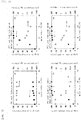
- FIG. 1(a) is a graph showing the volatilization rate of Pb and the concentration of residual Pb, when the molar ratio (Cl/Pb) was varied while using PVC as the chlorinating agent and the addition of hydroxide was omitted.
- the volatilization rate of Pb was not be improved even when the molar ratio (Cl/Pb) was increased.
- chloride volatilization of Pb does not proceed efficiently when PVC was only added.
- FIG. 1(b) is a graph obtained by conducting an Experiment in a similar condition as FIG. 1(a) , except that slaked lime (Ca(OH) 2 ) as the hydroxide was added so that the molar ratio (OH/Cl) would be 1.
- the volatilization rate of Pb was improved by increasing the molar ratio (Cl/Pb).
- the residual Pb concentration when the molar ratio (Cl/Pb) was 10 was as low as 0.021% (210 mg/kg).
- FIG. 1(c) is a graph obtained by conducting an Experiment in a similar condition as FIG. 1(b) except that the molar ratio (OH/Cl) was altered to 1.5.
- an extremely low value of the residual Pb concentration as 0.009% (90 mg/kg) was achieved when the molar ratio (Cl/Pb) was 10, by altering the molar ratio (OH/Cl) to 1.5.
- FIG. 1(d) is a graph obtained by conducting an Experiment in a similar condition as FIG. 1(c) , except that the molar ratio (OH/Cl) was altered to 2. As can be seen from the graph, the value of the residual Pb concentration became higher than FIG. 1(c) as 0.018% (180 mg/kg) when the molar ratio (Cl/Pb) was 10, by altering the molar ratio (OH/Cl) to 2.
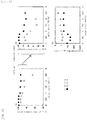
- FIG. 5(a) shows the variation in the volatilization rate of Pb when the molar ratio (Cl/Pb) was varied.
- FIG. 5(b) shows an enlarged graph of FIG. 5(a) , regarding the portion of 95 to 100% in the vertical axis.
- FIG. 5(c) is a graph showing the variation in the residual Pb concentration when the molar ratio (Cl/Pb) was varied.
- ⁇ represents a case where hydroxide was not used
- • represents a case where hydroxide was used. Therefore, the alteration from ⁇ to • shows the combined effect of the chlorinating agent and hydroxide.
- volatilization rate of Pb was increased by using hydroxide, regardless of the molar ratio (Cl/Pb). Accordingly, the residual Pb concentration was reduced.
- the molar ratio (Cl/Pb) is 10
- the residual Pb concentration was 0.059% (590 mg/kg) when hydroxide was not used.
- the residual Pb concentration was decreased to 0.0093% (93 mg/kg) when hydroxide was used.
- the standard of lead content is 150 mg/kg or lower according to the Soil Contamination Countermeasures Act
- decrease in the residual Pb concentration of glass from 590 mg/kg to 93 mg/kg has a significant technical meaning.
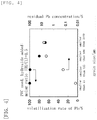
- FIG. 6(a) is a graph showing the variation in the volatilization rate of Pb when the molar ratio (OH/Cl) was varied.
- FIG. 6(b) shows an enlarged graph of FIG. 6(a) , regarding the portion of 90 to 100% in the vertical axis.
- FIG. 6(c) is a graph showing the variation in the residual Pb concentration when the molar ratio (OH/Cl) was varied.
- ⁇ represents a case where the molar ratio (Cl/Pb) was 4, and • represents a case where the molar ratio (Cl/Pb) was 8.
- Bi 2 O 3 , Ta 2 O 5 , Nb 2 O 5 , Co 3 O 4 , NiO, CuO, MnO 2 , ZnO, TiO 2 , and In 2 O 3 were added to soda-lime glass by 1 wt%, followed by melting and mixing, thereby obtaining a model glass.
- the model glass was crushed and the crushed model glass was allowed to go through a sieve having 45 ⁇ m mesh. Accordingly, glass powder having a grain size of 45 ⁇ m or smaller was obtained.
- the crucible was placed in an electric furnace heated to a predetermined temperature. Subsequently, the furnace was heated at 1100°C for 2 hours with an air stream of 0.4 L/min. Accordingly, the heavy metals were subjected to chloride volatilization.
Landscapes
- Chemical & Material Sciences (AREA)
- Engineering & Computer Science (AREA)
- Organic Chemistry (AREA)
- Environmental & Geological Engineering (AREA)
- Thermal Sciences (AREA)
- Physics & Mathematics (AREA)
- Inorganic Chemistry (AREA)
- Chemical Kinetics & Catalysis (AREA)
- Geochemistry & Mineralogy (AREA)
- Materials Engineering (AREA)
- General Chemical & Material Sciences (AREA)
- Life Sciences & Earth Sciences (AREA)
- Processing Of Solid Wastes (AREA)
- Silicon Compounds (AREA)
Claims (15)
- Verfahren zur Abtrennung eines Schwermetalls aus Glas, umfassend die folgenden Schritte:Kalzinieren eines das Schwermetall enthaltenden Glaspulvers bei 900 bis 1400 °C in Gegenwart eines Chlorierungsmittels zum Abtrennen des Schwermetalls durch Verdampfen des Schwermetalls als Chlorid; wobeidie Kalzinierung in Gegenwart eines Hydroxids durchgeführt wird.
- Verfahren nach Anspruch 1, wobei das Chlorierungsmittel ein chlorhaltiges organisches Polymer oder Calciumchlorid ist.
- Verfahren nach Anspruch 1 oder 2, wobei das Hydroxid ein Hydroxid eines Alkalimetalls oder ein Hydroxid eines Erdalkalimetalls; oder Aluminiumhydroxid ist.
- Verfahren nach Anspruch 3, wobei das Hydroxid Calciumhydroxid ist.
- Verfahren nach einem der Ansprüche 1 bis 4, wobei das Molverhältnis (Chloratom/Schwermetallatom) eines Chloratoms in dem Chlorierungsmittel und des zu chlorierenden Schwermetalls 3 oder mehr beträgt.
- Verfahren nach Anspruch 5, wobei das Molverhältnis (Chloratom/Schwermetallatom) 6 oder mehr beträgt.
- Verfahren nach einem der Ansprüche 1 bis 6, wobei ein Molverhältnis (Hydroxylgruppe/Chloratom) einer Hydroxylgruppe in dem Hydroxid und eines Chloratoms in dem Chlorierungsmittel 0,1 bis 20 beträgt.
- Verfahren nach einem der Ansprüche 1 bis 6, wobei das Chlorierungsmittel Polyvinylchlorid ist, und ein Molverhältnis (Hydroxylgruppe/Chloratom) einer Hydroxylgruppe in dem Hydroxid und eines Chloratoms in dem Chlorierungsmittel 0,5 bis 4 beträgt.
- Verfahren nach Anspruch 8, wobei das Molverhältnis (Hydroxylgruppe/Chloratom) 1,25 bis 1,75 beträgt.
- Verfahren nach einem der Ansprüche 1 bis 7, wobei das Chlorierungsmittel Calciumchlorid ist, und ein Molverhältnis (Hydroxylgruppe/Chloratom) einer Hydroxylgruppe in dem Hydroxid und eines Chloratoms in dem Chlorierungsmittel 0,1 bis 1 beträgt.
- Verfahren nach Anspruch 10, wobei das Molverhältnis (Hydroxylgruppe/Chloratom) 0,15 bis 0,65 beträgt.
- Verfahren nach einem der Ansprüche 1 bis 11, wobei das Schwermetall mindestens eine Art, ausgewählt aus der Gruppe bestehend aus Pb, Co, Cu, Mn, Ni, Zn, In, Cd, As, Se, Fe, Cr, Ti, Ag, Au und Cs, ist.
- Verfahren nach einem der Ansprüche 1 bis 12, wobei das Glaspulver Partikel mit einer Korngröße kleiner als 125 µm zu 50 Masse-% oder mehr, vorzugsweise Partikel mit einer Korngröße kleiner als 45 µm zu 50 Masse-% oder mehr enthält.
- Verfahren nach einem der Ansprüche 1 bis 13, wobei eine Kalzinierungstemperatur 1000 bis 1300 °C beträgt.
- Verfahren nach einem der Ansprüche 1 bis 14, wobei das Glas ein Trichterglas einer CRT ist.
Applications Claiming Priority (2)
| Application Number | Priority Date | Filing Date | Title |
|---|---|---|---|
| JP2012248553A JP6061291B2 (ja) | 2012-11-12 | 2012-11-12 | ガラスからの重金属の分離方法 |
| PCT/JP2013/079013 WO2014073399A1 (ja) | 2012-11-12 | 2013-10-25 | ガラスからの重金属の分離方法 |
Publications (3)
| Publication Number | Publication Date |
|---|---|
| EP2918352A1 EP2918352A1 (de) | 2015-09-16 |
| EP2918352A4 EP2918352A4 (de) | 2016-06-22 |
| EP2918352B1 true EP2918352B1 (de) | 2017-12-06 |
Family
ID=50684509
Family Applications (1)
| Application Number | Title | Priority Date | Filing Date |
|---|---|---|---|
| EP13853917.6A Not-in-force EP2918352B1 (de) | 2012-11-12 | 2013-10-25 | Verfahren zur abtrennung von schwermetallen aus glas |
Country Status (5)
| Country | Link |
|---|---|
| EP (1) | EP2918352B1 (de) |
| JP (1) | JP6061291B2 (de) |
| KR (1) | KR101677931B1 (de) |
| MY (1) | MY168448A (de) |
| WO (1) | WO2014073399A1 (de) |
Families Citing this family (2)
| Publication number | Priority date | Publication date | Assignee | Title |
|---|---|---|---|---|
| JP6307180B2 (ja) * | 2017-01-07 | 2018-04-04 | 国立大学法人福井大学 | 鉛含有ガラスからの鉛の回収方法 |
| CN113337717B (zh) * | 2021-06-11 | 2022-07-19 | 南昌航空大学 | 一种采用组合氯化剂分离回收电镀污泥中有价金属的方法 |
Family Cites Families (12)
| Publication number | Priority date | Publication date | Assignee | Title |
|---|---|---|---|---|
| JPH0735856B2 (ja) | 1990-04-12 | 1995-04-19 | 川崎製鉄株式会社 | 帯状材の周囲を真空シールする真空バルブ |
| JPH0796264A (ja) | 1993-09-29 | 1995-04-11 | Nkk Corp | 鉛ガラス切削屑からの脱鉛方法 |
| JPH096100A (ja) | 1995-06-22 | 1997-01-10 | Konica Corp | 画像形成方法及び画像形成装置 |
| JPH10202221A (ja) * | 1997-01-20 | 1998-08-04 | Tatsuo Goto | 焼却灰または飛灰の無害化処理方法 |
| JP2000282155A (ja) * | 1999-03-31 | 2000-10-10 | Taiheiyo Cement Corp | 鉛の分離方法 |
| EP1440951A4 (de) | 2001-09-12 | 2009-04-01 | Japan Science & Tech Agency | Verfahren zur rezyklierung von altglas und rezykliertes glas |
| JP4467998B2 (ja) * | 2003-03-26 | 2010-05-26 | 太平洋セメント株式会社 | 重金属を含む土壌の処理方法 |
| JP5109060B2 (ja) * | 2006-05-16 | 2012-12-26 | 住友金属鉱山株式会社 | 鉛ガラスの無害化を伴う無機質固化体の製造方法 |
| EP1918031A1 (de) * | 2006-10-30 | 2008-05-07 | ASH DEC Umwelt AG | Verfahren zur Entgiftung und Verwendung von Flugasche |
| JP2012000002A (ja) | 2008-10-10 | 2012-01-05 | Japan Tobacco Inc | シートたばこの製造方法および製造装置 |
| JP5042252B2 (ja) * | 2009-02-20 | 2012-10-03 | 学校法人 芝浦工業大学 | ガラス材料の回収方法 |
| JP2012239945A (ja) * | 2011-05-16 | 2012-12-10 | Hokkaido Research Organization | 鉛含有ガラスの脱鉛方法 |
-
2012
- 2012-11-12 JP JP2012248553A patent/JP6061291B2/ja not_active Expired - Fee Related
-
2013
- 2013-10-25 WO PCT/JP2013/079013 patent/WO2014073399A1/ja not_active Ceased
- 2013-10-25 KR KR1020157005450A patent/KR101677931B1/ko not_active Expired - Fee Related
- 2013-10-25 MY MYPI2015000392A patent/MY168448A/en unknown
- 2013-10-25 EP EP13853917.6A patent/EP2918352B1/de not_active Not-in-force
Non-Patent Citations (1)
| Title |
|---|
| None * |
Also Published As
| Publication number | Publication date |
|---|---|
| KR101677931B1 (ko) | 2016-11-21 |
| JP6061291B2 (ja) | 2017-01-18 |
| KR20150045454A (ko) | 2015-04-28 |
| JP2014094366A (ja) | 2014-05-22 |
| EP2918352A1 (de) | 2015-09-16 |
| EP2918352A4 (de) | 2016-06-22 |
| MY168448A (en) | 2018-11-09 |
| WO2014073399A1 (ja) | 2014-05-15 |
Similar Documents
| Publication | Publication Date | Title |
|---|---|---|
| EP2813297B1 (de) | Verfahren zur abtrennung von schwermetallen aus glas | |
| EP3012333A1 (de) | Verfahren zur rückgewinnung von metall aus elektronischen abfallsubstraten | |
| JP7018063B2 (ja) | バイヤー法によるアルミナ製造の残渣からの、または前記残渣に類似の化学組成を有する材料からの金属、希少金属および希土類金属の濃縮物の製造方法、ならびにそのようにして得られた濃縮物の精製 | |
| CN104988321B (zh) | 综合利用赤泥的方法和系统 | |
| CN109022763A (zh) | 一种含钨废料的处理方法及其设备 | |
| EP2455500A1 (de) | Verfahren zur Behandlung von Kathodenstrahlröhrchen am Ende ihrer Lebensdauer zur Rückgewinnung von Blei und löslicher Silikate | |
| JP2022182229A (ja) | リチウムイオン電池からの金属回収方法 | |
| EP2918352B1 (de) | Verfahren zur abtrennung von schwermetallen aus glas | |
| JP2012097288A (ja) | 鉛含有ガラスからの鉛回収方法 | |
| Shu et al. | Metal mobility and toxicity of reclaimed copper smelting fly ash and smelting slag | |
| CN113710959A (zh) | 灰分处理的方法和系统 | |
| JP4174708B2 (ja) | フッ素を含む副生混合塩からフッ化カルシウムを回収及び精製方法 | |
| KR20250166058A (ko) | 염화 리튬의 제조 방법 | |
| JP2012245494A (ja) | 鉛含有ガラスの鉛溶出抑制方法 | |
| CN116287731B (zh) | 一种从含铊废弃物中选择性分离铊的方法 | |
| Hu et al. | Extraction of lead from waste CRT funnel glass by generating lead sulfide–An approach for electronic waste management | |
| JP3663434B2 (ja) | 鉛を含むガラス廃棄物からの鉛の分離方法 | |
| JP3415382B2 (ja) | 高純度珪素粉末の製造方法 | |
| JP4393915B2 (ja) | 亜鉛、鉛および塩素を含む物質の処理方法 | |
| US11519053B2 (en) | Method for the treatment of iron-containing sludge | |
| US20140154157A1 (en) | Process of Treating End-of-Life Cathode Ray Tubes for Lead and Soluble Silicates Recovery | |
| KR20110007623A (ko) | 실리카를 주성분으로 하는 감손우라늄을 함유하는 폐촉매 처리방법 | |
| JP6622627B2 (ja) | レアメタル含有ガラスからのレアメタルの回収方法 | |
| CN107217146A (zh) | 处理含锌废料的方法 | |
| CN111690827B (zh) | 从氟钽酸钾结晶母液中回收钽资源的方法 |
Legal Events
| Date | Code | Title | Description |
|---|---|---|---|
| PUAI | Public reference made under article 153(3) epc to a published international application that has entered the european phase |
Free format text: ORIGINAL CODE: 0009012 |
|
| 17P | Request for examination filed |
Effective date: 20150227 |
|
| AK | Designated contracting states |
Kind code of ref document: A1 Designated state(s): AL AT BE BG CH CY CZ DE DK EE ES FI FR GB GR HR HU IE IS IT LI LT LU LV MC MK MT NL NO PL PT RO RS SE SI SK SM TR |
|
| AX | Request for extension of the european patent |
Extension state: BA ME |
|
| DAX | Request for extension of the european patent (deleted) | ||
| RA4 | Supplementary search report drawn up and despatched (corrected) |
Effective date: 20160520 |
|
| RIC1 | Information provided on ipc code assigned before grant |
Ipc: C03C 23/00 20060101ALI20160513BHEP Ipc: C01B 33/18 20060101ALI20160513BHEP Ipc: B09B 3/00 20060101AFI20160513BHEP Ipc: C22B 13/02 20060101ALI20160513BHEP |
|
| GRAP | Despatch of communication of intention to grant a patent |
Free format text: ORIGINAL CODE: EPIDOSNIGR1 |
|
| STAA | Information on the status of an ep patent application or granted ep patent |
Free format text: STATUS: GRANT OF PATENT IS INTENDED |
|
| INTG | Intention to grant announced |
Effective date: 20170523 |
|
| GRAS | Grant fee paid |
Free format text: ORIGINAL CODE: EPIDOSNIGR3 |
|
| GRAJ | Information related to disapproval of communication of intention to grant by the applicant or resumption of examination proceedings by the epo deleted |
Free format text: ORIGINAL CODE: EPIDOSDIGR1 |
|
| GRAL | Information related to payment of fee for publishing/printing deleted |
Free format text: ORIGINAL CODE: EPIDOSDIGR3 |
|
| STAA | Information on the status of an ep patent application or granted ep patent |
Free format text: STATUS: REQUEST FOR EXAMINATION WAS MADE |
|
| GRAR | Information related to intention to grant a patent recorded |
Free format text: ORIGINAL CODE: EPIDOSNIGR71 |
|
| STAA | Information on the status of an ep patent application or granted ep patent |
Free format text: STATUS: GRANT OF PATENT IS INTENDED |
|
| INTC | Intention to grant announced (deleted) | ||
| GRAA | (expected) grant |
Free format text: ORIGINAL CODE: 0009210 |
|
| STAA | Information on the status of an ep patent application or granted ep patent |
Free format text: STATUS: THE PATENT HAS BEEN GRANTED |
|
| INTG | Intention to grant announced |
Effective date: 20171011 |
|
| AK | Designated contracting states |
Kind code of ref document: B1 Designated state(s): AL AT BE BG CH CY CZ DE DK EE ES FI FR GB GR HR HU IE IS IT LI LT LU LV MC MK MT NL NO PL PT RO RS SE SI SK SM TR |
|
| REG | Reference to a national code |
Ref country code: GB Ref legal event code: FG4D |
|
| REG | Reference to a national code |
Ref country code: AT Ref legal event code: REF Ref document number: 951923 Country of ref document: AT Kind code of ref document: T Effective date: 20171215 Ref country code: CH Ref legal event code: EP |
|
| REG | Reference to a national code |
Ref country code: IE Ref legal event code: FG4D |
|
| REG | Reference to a national code |
Ref country code: DE Ref legal event code: R096 Ref document number: 602013030619 Country of ref document: DE |
|
| REG | Reference to a national code |
Ref country code: NL Ref legal event code: MP Effective date: 20171206 |
|
| REG | Reference to a national code |
Ref country code: LT Ref legal event code: MG4D |
|
| PG25 | Lapsed in a contracting state [announced via postgrant information from national office to epo] |
Ref country code: ES Free format text: LAPSE BECAUSE OF FAILURE TO SUBMIT A TRANSLATION OF THE DESCRIPTION OR TO PAY THE FEE WITHIN THE PRESCRIBED TIME-LIMIT Effective date: 20171206 Ref country code: FI Free format text: LAPSE BECAUSE OF FAILURE TO SUBMIT A TRANSLATION OF THE DESCRIPTION OR TO PAY THE FEE WITHIN THE PRESCRIBED TIME-LIMIT Effective date: 20171206 Ref country code: LT Free format text: LAPSE BECAUSE OF FAILURE TO SUBMIT A TRANSLATION OF THE DESCRIPTION OR TO PAY THE FEE WITHIN THE PRESCRIBED TIME-LIMIT Effective date: 20171206 Ref country code: NO Free format text: LAPSE BECAUSE OF FAILURE TO SUBMIT A TRANSLATION OF THE DESCRIPTION OR TO PAY THE FEE WITHIN THE PRESCRIBED TIME-LIMIT Effective date: 20180306 Ref country code: SE Free format text: LAPSE BECAUSE OF FAILURE TO SUBMIT A TRANSLATION OF THE DESCRIPTION OR TO PAY THE FEE WITHIN THE PRESCRIBED TIME-LIMIT Effective date: 20171206 |
|
| REG | Reference to a national code |
Ref country code: AT Ref legal event code: MK05 Ref document number: 951923 Country of ref document: AT Kind code of ref document: T Effective date: 20171206 |
|
| PG25 | Lapsed in a contracting state [announced via postgrant information from national office to epo] |
Ref country code: HR Free format text: LAPSE BECAUSE OF FAILURE TO SUBMIT A TRANSLATION OF THE DESCRIPTION OR TO PAY THE FEE WITHIN THE PRESCRIBED TIME-LIMIT Effective date: 20171206 Ref country code: BG Free format text: LAPSE BECAUSE OF FAILURE TO SUBMIT A TRANSLATION OF THE DESCRIPTION OR TO PAY THE FEE WITHIN THE PRESCRIBED TIME-LIMIT Effective date: 20180306 Ref country code: RS Free format text: LAPSE BECAUSE OF FAILURE TO SUBMIT A TRANSLATION OF THE DESCRIPTION OR TO PAY THE FEE WITHIN THE PRESCRIBED TIME-LIMIT Effective date: 20171206 Ref country code: LV Free format text: LAPSE BECAUSE OF FAILURE TO SUBMIT A TRANSLATION OF THE DESCRIPTION OR TO PAY THE FEE WITHIN THE PRESCRIBED TIME-LIMIT Effective date: 20171206 Ref country code: GR Free format text: LAPSE BECAUSE OF FAILURE TO SUBMIT A TRANSLATION OF THE DESCRIPTION OR TO PAY THE FEE WITHIN THE PRESCRIBED TIME-LIMIT Effective date: 20180307 |
|
| PG25 | Lapsed in a contracting state [announced via postgrant information from national office to epo] |
Ref country code: NL Free format text: LAPSE BECAUSE OF FAILURE TO SUBMIT A TRANSLATION OF THE DESCRIPTION OR TO PAY THE FEE WITHIN THE PRESCRIBED TIME-LIMIT Effective date: 20171206 |
|
| PG25 | Lapsed in a contracting state [announced via postgrant information from national office to epo] |
Ref country code: CZ Free format text: LAPSE BECAUSE OF FAILURE TO SUBMIT A TRANSLATION OF THE DESCRIPTION OR TO PAY THE FEE WITHIN THE PRESCRIBED TIME-LIMIT Effective date: 20171206 Ref country code: SK Free format text: LAPSE BECAUSE OF FAILURE TO SUBMIT A TRANSLATION OF THE DESCRIPTION OR TO PAY THE FEE WITHIN THE PRESCRIBED TIME-LIMIT Effective date: 20171206 Ref country code: EE Free format text: LAPSE BECAUSE OF FAILURE TO SUBMIT A TRANSLATION OF THE DESCRIPTION OR TO PAY THE FEE WITHIN THE PRESCRIBED TIME-LIMIT Effective date: 20171206 |
|
| PG25 | Lapsed in a contracting state [announced via postgrant information from national office to epo] |
Ref country code: RO Free format text: LAPSE BECAUSE OF FAILURE TO SUBMIT A TRANSLATION OF THE DESCRIPTION OR TO PAY THE FEE WITHIN THE PRESCRIBED TIME-LIMIT Effective date: 20171206 Ref country code: IT Free format text: LAPSE BECAUSE OF FAILURE TO SUBMIT A TRANSLATION OF THE DESCRIPTION OR TO PAY THE FEE WITHIN THE PRESCRIBED TIME-LIMIT Effective date: 20171206 Ref country code: PL Free format text: LAPSE BECAUSE OF FAILURE TO SUBMIT A TRANSLATION OF THE DESCRIPTION OR TO PAY THE FEE WITHIN THE PRESCRIBED TIME-LIMIT Effective date: 20171206 Ref country code: AT Free format text: LAPSE BECAUSE OF FAILURE TO SUBMIT A TRANSLATION OF THE DESCRIPTION OR TO PAY THE FEE WITHIN THE PRESCRIBED TIME-LIMIT Effective date: 20171206 Ref country code: SM Free format text: LAPSE BECAUSE OF FAILURE TO SUBMIT A TRANSLATION OF THE DESCRIPTION OR TO PAY THE FEE WITHIN THE PRESCRIBED TIME-LIMIT Effective date: 20171206 |
|
| REG | Reference to a national code |
Ref country code: DE Ref legal event code: R097 Ref document number: 602013030619 Country of ref document: DE |
|
| PLBE | No opposition filed within time limit |
Free format text: ORIGINAL CODE: 0009261 |
|
| STAA | Information on the status of an ep patent application or granted ep patent |
Free format text: STATUS: NO OPPOSITION FILED WITHIN TIME LIMIT |
|
| REG | Reference to a national code |
Ref country code: FR Ref legal event code: PLFP Year of fee payment: 6 |
|
| 26N | No opposition filed |
Effective date: 20180907 |
|
| PG25 | Lapsed in a contracting state [announced via postgrant information from national office to epo] |
Ref country code: SI Free format text: LAPSE BECAUSE OF FAILURE TO SUBMIT A TRANSLATION OF THE DESCRIPTION OR TO PAY THE FEE WITHIN THE PRESCRIBED TIME-LIMIT Effective date: 20171206 Ref country code: DK Free format text: LAPSE BECAUSE OF FAILURE TO SUBMIT A TRANSLATION OF THE DESCRIPTION OR TO PAY THE FEE WITHIN THE PRESCRIBED TIME-LIMIT Effective date: 20171206 |
|
| REG | Reference to a national code |
Ref country code: CH Ref legal event code: PL |
|
| GBPC | Gb: european patent ceased through non-payment of renewal fee |
Effective date: 20181025 |
|
| REG | Reference to a national code |
Ref country code: BE Ref legal event code: MM Effective date: 20181031 |
|
| PG25 | Lapsed in a contracting state [announced via postgrant information from national office to epo] |
Ref country code: LU Free format text: LAPSE BECAUSE OF NON-PAYMENT OF DUE FEES Effective date: 20181025 Ref country code: MC Free format text: LAPSE BECAUSE OF FAILURE TO SUBMIT A TRANSLATION OF THE DESCRIPTION OR TO PAY THE FEE WITHIN THE PRESCRIBED TIME-LIMIT Effective date: 20171206 |
|
| REG | Reference to a national code |
Ref country code: IE Ref legal event code: MM4A |
|
| PG25 | Lapsed in a contracting state [announced via postgrant information from national office to epo] |
Ref country code: CH Free format text: LAPSE BECAUSE OF NON-PAYMENT OF DUE FEES Effective date: 20181031 Ref country code: LI Free format text: LAPSE BECAUSE OF NON-PAYMENT OF DUE FEES Effective date: 20181031 Ref country code: BE Free format text: LAPSE BECAUSE OF NON-PAYMENT OF DUE FEES Effective date: 20181031 |
|
| PG25 | Lapsed in a contracting state [announced via postgrant information from national office to epo] |
Ref country code: IE Free format text: LAPSE BECAUSE OF NON-PAYMENT OF DUE FEES Effective date: 20181025 Ref country code: GB Free format text: LAPSE BECAUSE OF NON-PAYMENT OF DUE FEES Effective date: 20181025 |
|
| PG25 | Lapsed in a contracting state [announced via postgrant information from national office to epo] |
Ref country code: MT Free format text: LAPSE BECAUSE OF NON-PAYMENT OF DUE FEES Effective date: 20181025 |
|
| PG25 | Lapsed in a contracting state [announced via postgrant information from national office to epo] |
Ref country code: TR Free format text: LAPSE BECAUSE OF FAILURE TO SUBMIT A TRANSLATION OF THE DESCRIPTION OR TO PAY THE FEE WITHIN THE PRESCRIBED TIME-LIMIT Effective date: 20171206 |
|
| PG25 | Lapsed in a contracting state [announced via postgrant information from national office to epo] |
Ref country code: PT Free format text: LAPSE BECAUSE OF FAILURE TO SUBMIT A TRANSLATION OF THE DESCRIPTION OR TO PAY THE FEE WITHIN THE PRESCRIBED TIME-LIMIT Effective date: 20171206 |
|
| PG25 | Lapsed in a contracting state [announced via postgrant information from national office to epo] |
Ref country code: HU Free format text: LAPSE BECAUSE OF FAILURE TO SUBMIT A TRANSLATION OF THE DESCRIPTION OR TO PAY THE FEE WITHIN THE PRESCRIBED TIME-LIMIT; INVALID AB INITIO Effective date: 20131025 Ref country code: CY Free format text: LAPSE BECAUSE OF FAILURE TO SUBMIT A TRANSLATION OF THE DESCRIPTION OR TO PAY THE FEE WITHIN THE PRESCRIBED TIME-LIMIT Effective date: 20171206 Ref country code: MK Free format text: LAPSE BECAUSE OF NON-PAYMENT OF DUE FEES Effective date: 20171206 |
|
| PG25 | Lapsed in a contracting state [announced via postgrant information from national office to epo] |
Ref country code: AL Free format text: LAPSE BECAUSE OF FAILURE TO SUBMIT A TRANSLATION OF THE DESCRIPTION OR TO PAY THE FEE WITHIN THE PRESCRIBED TIME-LIMIT Effective date: 20171206 Ref country code: IS Free format text: LAPSE BECAUSE OF FAILURE TO SUBMIT A TRANSLATION OF THE DESCRIPTION OR TO PAY THE FEE WITHIN THE PRESCRIBED TIME-LIMIT Effective date: 20180406 |
|
| PGFP | Annual fee paid to national office [announced via postgrant information from national office to epo] |
Ref country code: DE Payment date: 20211208 Year of fee payment: 9 |
|
| PGFP | Annual fee paid to national office [announced via postgrant information from national office to epo] |
Ref country code: FR Payment date: 20211021 Year of fee payment: 9 |
|
| REG | Reference to a national code |
Ref country code: DE Ref legal event code: R119 Ref document number: 602013030619 Country of ref document: DE |
|
| PG25 | Lapsed in a contracting state [announced via postgrant information from national office to epo] |
Ref country code: FR Free format text: LAPSE BECAUSE OF NON-PAYMENT OF DUE FEES Effective date: 20221031 Ref country code: DE Free format text: LAPSE BECAUSE OF NON-PAYMENT OF DUE FEES Effective date: 20230503 |