EP2923400B1 - Réduction de dégagement gazeux dans des cellules en titanate de lithium - Google Patents
Réduction de dégagement gazeux dans des cellules en titanate de lithium Download PDFInfo
- Publication number
- EP2923400B1 EP2923400B1 EP13802560.6A EP13802560A EP2923400B1 EP 2923400 B1 EP2923400 B1 EP 2923400B1 EP 13802560 A EP13802560 A EP 13802560A EP 2923400 B1 EP2923400 B1 EP 2923400B1
- Authority
- EP
- European Patent Office
- Prior art keywords
- lithium
- electrode
- active material
- anode
- electrolyte
- Prior art date
- Legal status (The legal status is an assumption and is not a legal conclusion. Google has not performed a legal analysis and makes no representation as to the accuracy of the status listed.)
- Active
Links
Images


Classifications
-
- C—CHEMISTRY; METALLURGY
- C08—ORGANIC MACROMOLECULAR COMPOUNDS; THEIR PREPARATION OR CHEMICAL WORKING-UP; COMPOSITIONS BASED THEREON
- C08L—COMPOSITIONS OF MACROMOLECULAR COMPOUNDS
- C08L27/00—Compositions of homopolymers or copolymers of compounds having one or more unsaturated aliphatic radicals, each having only one carbon-to-carbon double bond, and at least one being terminated by a halogen; Compositions of derivatives of such polymers
- C08L27/02—Compositions of homopolymers or copolymers of compounds having one or more unsaturated aliphatic radicals, each having only one carbon-to-carbon double bond, and at least one being terminated by a halogen; Compositions of derivatives of such polymers not modified by chemical after-treatment
- C08L27/12—Compositions of homopolymers or copolymers of compounds having one or more unsaturated aliphatic radicals, each having only one carbon-to-carbon double bond, and at least one being terminated by a halogen; Compositions of derivatives of such polymers not modified by chemical after-treatment containing fluorine atoms
- C08L27/16—Homopolymers or copolymers or vinylidene fluoride
-
- H—ELECTRICITY
- H01—ELECTRIC ELEMENTS
- H01M—PROCESSES OR MEANS, e.g. BATTERIES, FOR THE DIRECT CONVERSION OF CHEMICAL ENERGY INTO ELECTRICAL ENERGY
- H01M4/00—Electrodes
- H01M4/02—Electrodes composed of, or comprising, active material
- H01M4/62—Selection of inactive substances as ingredients for active masses, e.g. binders, fillers
- H01M4/621—Binders
- H01M4/622—Binders being polymers
-
- C—CHEMISTRY; METALLURGY
- C08—ORGANIC MACROMOLECULAR COMPOUNDS; THEIR PREPARATION OR CHEMICAL WORKING-UP; COMPOSITIONS BASED THEREON
- C08K—Use of inorganic or non-macromolecular organic substances as compounding ingredients
- C08K5/00—Use of organic ingredients
- C08K5/16—Nitrogen-containing compounds
- C08K5/17—Amines; Quaternary ammonium compounds
- C08K5/18—Amines; Quaternary ammonium compounds with aromatically bound amino groups
-
- C—CHEMISTRY; METALLURGY
- C08—ORGANIC MACROMOLECULAR COMPOUNDS; THEIR PREPARATION OR CHEMICAL WORKING-UP; COMPOSITIONS BASED THEREON
- C08K—Use of inorganic or non-macromolecular organic substances as compounding ingredients
- C08K5/00—Use of organic ingredients
- C08K5/16—Nitrogen-containing compounds
- C08K5/34—Heterocyclic compounds having nitrogen in the ring
- C08K5/3412—Heterocyclic compounds having nitrogen in the ring having one nitrogen atom in the ring
- C08K5/3415—Five-membered rings
-
- C—CHEMISTRY; METALLURGY
- C08—ORGANIC MACROMOLECULAR COMPOUNDS; THEIR PREPARATION OR CHEMICAL WORKING-UP; COMPOSITIONS BASED THEREON
- C08K—Use of inorganic or non-macromolecular organic substances as compounding ingredients
- C08K5/00—Use of organic ingredients
- C08K5/16—Nitrogen-containing compounds
- C08K5/34—Heterocyclic compounds having nitrogen in the ring
- C08K5/3412—Heterocyclic compounds having nitrogen in the ring having one nitrogen atom in the ring
- C08K5/3432—Six-membered rings
-
- H—ELECTRICITY
- H01—ELECTRIC ELEMENTS
- H01M—PROCESSES OR MEANS, e.g. BATTERIES, FOR THE DIRECT CONVERSION OF CHEMICAL ENERGY INTO ELECTRICAL ENERGY
- H01M10/00—Secondary cells; Manufacture thereof
- H01M10/05—Accumulators with non-aqueous electrolyte
- H01M10/052—Li-accumulators
- H01M10/0525—Rocking-chair batteries, i.e. batteries with lithium insertion or intercalation in both electrodes; Lithium-ion batteries
-
- H—ELECTRICITY
- H01—ELECTRIC ELEMENTS
- H01M—PROCESSES OR MEANS, e.g. BATTERIES, FOR THE DIRECT CONVERSION OF CHEMICAL ENERGY INTO ELECTRICAL ENERGY
- H01M10/00—Secondary cells; Manufacture thereof
- H01M10/05—Accumulators with non-aqueous electrolyte
- H01M10/056—Accumulators with non-aqueous electrolyte characterised by the materials used as electrolytes, e.g. mixed inorganic/organic electrolytes
- H01M10/0564—Accumulators with non-aqueous electrolyte characterised by the materials used as electrolytes, e.g. mixed inorganic/organic electrolytes the electrolyte being constituted of organic materials only
- H01M10/0566—Liquid materials
- H01M10/0567—Liquid materials characterised by the additives
-
- H—ELECTRICITY
- H01—ELECTRIC ELEMENTS
- H01M—PROCESSES OR MEANS, e.g. BATTERIES, FOR THE DIRECT CONVERSION OF CHEMICAL ENERGY INTO ELECTRICAL ENERGY
- H01M10/00—Secondary cells; Manufacture thereof
- H01M10/05—Accumulators with non-aqueous electrolyte
- H01M10/056—Accumulators with non-aqueous electrolyte characterised by the materials used as electrolytes, e.g. mixed inorganic/organic electrolytes
- H01M10/0564—Accumulators with non-aqueous electrolyte characterised by the materials used as electrolytes, e.g. mixed inorganic/organic electrolytes the electrolyte being constituted of organic materials only
- H01M10/0566—Liquid materials
- H01M10/0568—Liquid materials characterised by the solutes
-
- H—ELECTRICITY
- H01—ELECTRIC ELEMENTS
- H01M—PROCESSES OR MEANS, e.g. BATTERIES, FOR THE DIRECT CONVERSION OF CHEMICAL ENERGY INTO ELECTRICAL ENERGY
- H01M10/00—Secondary cells; Manufacture thereof
- H01M10/05—Accumulators with non-aqueous electrolyte
- H01M10/056—Accumulators with non-aqueous electrolyte characterised by the materials used as electrolytes, e.g. mixed inorganic/organic electrolytes
- H01M10/0564—Accumulators with non-aqueous electrolyte characterised by the materials used as electrolytes, e.g. mixed inorganic/organic electrolytes the electrolyte being constituted of organic materials only
- H01M10/0566—Liquid materials
- H01M10/0569—Liquid materials characterised by the solvents
-
- H—ELECTRICITY
- H01—ELECTRIC ELEMENTS
- H01M—PROCESSES OR MEANS, e.g. BATTERIES, FOR THE DIRECT CONVERSION OF CHEMICAL ENERGY INTO ELECTRICAL ENERGY
- H01M10/00—Secondary cells; Manufacture thereof
- H01M10/42—Methods or arrangements for servicing or maintenance of secondary cells or secondary half-cells
- H01M10/4235—Safety or regulating additives or arrangements in electrodes, separators or electrolyte
-
- H—ELECTRICITY
- H01—ELECTRIC ELEMENTS
- H01M—PROCESSES OR MEANS, e.g. BATTERIES, FOR THE DIRECT CONVERSION OF CHEMICAL ENERGY INTO ELECTRICAL ENERGY
- H01M4/00—Electrodes
- H01M4/02—Electrodes composed of, or comprising, active material
- H01M4/04—Processes of manufacture in general
- H01M4/049—Manufacturing of an active layer by chemical means
-
- H—ELECTRICITY
- H01—ELECTRIC ELEMENTS
- H01M—PROCESSES OR MEANS, e.g. BATTERIES, FOR THE DIRECT CONVERSION OF CHEMICAL ENERGY INTO ELECTRICAL ENERGY
- H01M4/00—Electrodes
- H01M4/02—Electrodes composed of, or comprising, active material
- H01M4/13—Electrodes for accumulators with non-aqueous electrolyte, e.g. for lithium-accumulators; Processes of manufacture thereof
- H01M4/131—Electrodes based on mixed oxides or hydroxides, or on mixtures of oxides or hydroxides, e.g. LiCoOx
-
- H—ELECTRICITY
- H01—ELECTRIC ELEMENTS
- H01M—PROCESSES OR MEANS, e.g. BATTERIES, FOR THE DIRECT CONVERSION OF CHEMICAL ENERGY INTO ELECTRICAL ENERGY
- H01M4/00—Electrodes
- H01M4/02—Electrodes composed of, or comprising, active material
- H01M4/13—Electrodes for accumulators with non-aqueous electrolyte, e.g. for lithium-accumulators; Processes of manufacture thereof
- H01M4/139—Processes of manufacture
- H01M4/1391—Processes of manufacture of electrodes based on mixed oxides or hydroxides, or on mixtures of oxides or hydroxides, e.g. LiCoOx
-
- H—ELECTRICITY
- H01—ELECTRIC ELEMENTS
- H01M—PROCESSES OR MEANS, e.g. BATTERIES, FOR THE DIRECT CONVERSION OF CHEMICAL ENERGY INTO ELECTRICAL ENERGY
- H01M4/00—Electrodes
- H01M4/02—Electrodes composed of, or comprising, active material
- H01M4/36—Selection of substances as active materials, active masses, active liquids
- H01M4/362—Composites
- H01M4/364—Composites as mixtures
-
- H—ELECTRICITY
- H01—ELECTRIC ELEMENTS
- H01M—PROCESSES OR MEANS, e.g. BATTERIES, FOR THE DIRECT CONVERSION OF CHEMICAL ENERGY INTO ELECTRICAL ENERGY
- H01M4/00—Electrodes
- H01M4/02—Electrodes composed of, or comprising, active material
- H01M4/36—Selection of substances as active materials, active masses, active liquids
- H01M4/362—Composites
- H01M4/366—Composites as layered products
-
- H—ELECTRICITY
- H01—ELECTRIC ELEMENTS
- H01M—PROCESSES OR MEANS, e.g. BATTERIES, FOR THE DIRECT CONVERSION OF CHEMICAL ENERGY INTO ELECTRICAL ENERGY
- H01M4/00—Electrodes
- H01M4/02—Electrodes composed of, or comprising, active material
- H01M4/36—Selection of substances as active materials, active masses, active liquids
- H01M4/48—Selection of substances as active materials, active masses, active liquids of inorganic oxides or hydroxides
- H01M4/485—Selection of substances as active materials, active masses, active liquids of inorganic oxides or hydroxides of mixed oxides or hydroxides for inserting or intercalating light metals, e.g. LiTi2O4 or LiTi2OxFy
-
- H—ELECTRICITY
- H01—ELECTRIC ELEMENTS
- H01M—PROCESSES OR MEANS, e.g. BATTERIES, FOR THE DIRECT CONVERSION OF CHEMICAL ENERGY INTO ELECTRICAL ENERGY
- H01M4/00—Electrodes
- H01M4/02—Electrodes composed of, or comprising, active material
- H01M4/62—Selection of inactive substances as ingredients for active masses, e.g. binders, fillers
- H01M4/621—Binders
- H01M4/622—Binders being polymers
- H01M4/623—Binders being polymers fluorinated polymers
-
- H—ELECTRICITY
- H01—ELECTRIC ELEMENTS
- H01M—PROCESSES OR MEANS, e.g. BATTERIES, FOR THE DIRECT CONVERSION OF CHEMICAL ENERGY INTO ELECTRICAL ENERGY
- H01M4/00—Electrodes
- H01M4/02—Electrodes composed of, or comprising, active material
- H01M4/62—Selection of inactive substances as ingredients for active masses, e.g. binders, fillers
- H01M4/628—Inhibitors, e.g. gassing inhibitors, corrosion inhibitors
-
- H—ELECTRICITY
- H01—ELECTRIC ELEMENTS
- H01M—PROCESSES OR MEANS, e.g. BATTERIES, FOR THE DIRECT CONVERSION OF CHEMICAL ENERGY INTO ELECTRICAL ENERGY
- H01M2220/00—Batteries for particular applications
- H01M2220/10—Batteries in stationary systems, e.g. emergency power source in plant
-
- H—ELECTRICITY
- H01—ELECTRIC ELEMENTS
- H01M—PROCESSES OR MEANS, e.g. BATTERIES, FOR THE DIRECT CONVERSION OF CHEMICAL ENERGY INTO ELECTRICAL ENERGY
- H01M2220/00—Batteries for particular applications
- H01M2220/20—Batteries in motive systems, e.g. vehicle, ship, plane
-
- H—ELECTRICITY
- H01—ELECTRIC ELEMENTS
- H01M—PROCESSES OR MEANS, e.g. BATTERIES, FOR THE DIRECT CONVERSION OF CHEMICAL ENERGY INTO ELECTRICAL ENERGY
- H01M2300/00—Electrolytes
- H01M2300/0017—Non-aqueous electrolytes
- H01M2300/0025—Organic electrolyte
- H01M2300/0028—Organic electrolyte characterised by the solvent
- H01M2300/0037—Mixture of solvents
-
- Y—GENERAL TAGGING OF NEW TECHNOLOGICAL DEVELOPMENTS; GENERAL TAGGING OF CROSS-SECTIONAL TECHNOLOGIES SPANNING OVER SEVERAL SECTIONS OF THE IPC; TECHNICAL SUBJECTS COVERED BY FORMER USPC CROSS-REFERENCE ART COLLECTIONS [XRACs] AND DIGESTS
- Y02—TECHNOLOGIES OR APPLICATIONS FOR MITIGATION OR ADAPTATION AGAINST CLIMATE CHANGE
- Y02E—REDUCTION OF GREENHOUSE GAS [GHG] EMISSIONS, RELATED TO ENERGY GENERATION, TRANSMISSION OR DISTRIBUTION
- Y02E60/00—Enabling technologies; Technologies with a potential or indirect contribution to GHG emissions mitigation
- Y02E60/10—Energy storage using batteries
-
- Y—GENERAL TAGGING OF NEW TECHNOLOGICAL DEVELOPMENTS; GENERAL TAGGING OF CROSS-SECTIONAL TECHNOLOGIES SPANNING OVER SEVERAL SECTIONS OF THE IPC; TECHNICAL SUBJECTS COVERED BY FORMER USPC CROSS-REFERENCE ART COLLECTIONS [XRACs] AND DIGESTS
- Y02—TECHNOLOGIES OR APPLICATIONS FOR MITIGATION OR ADAPTATION AGAINST CLIMATE CHANGE
- Y02T—CLIMATE CHANGE MITIGATION TECHNOLOGIES RELATED TO TRANSPORTATION
- Y02T10/00—Road transport of goods or passengers
- Y02T10/60—Other road transportation technologies with climate change mitigation effect
- Y02T10/70—Energy storage systems for electromobility, e.g. batteries
Definitions
- the field of the invention relates to the reduction of gassing in a lithium titanate cell, a method for the preparation of electrodes leading to reduced gassing, manufacturing of a titanate-based lithium cell comprising such electrodes, and the manufactured electrochemical cell.
- Li-ion batteries are experiencing an increasing popularity for stationary applications such as storage of renewable energy, grid levelling, large hybrid diesel engines, military, hybrid electric vehicles (HEV), and aerospace applications due to their high energy density.
- stationary applications such as storage of renewable energy, grid levelling, large hybrid diesel engines, military, hybrid electric vehicles (HEV), and aerospace applications due to their high energy density.
- HEV hybrid electric vehicles
- the electrolyte is a critical component in lithium batteries, as it allows its functioning by lithium-ion conduction for charge equilibration at charge/discharge.
- the electrolyte is thermodynamically not stable at the anode and cathode surface in the charged state of the battery.
- a lithium-ion battery can only function correctly as there is a solid electrolyte interface (SEI) formed on the surface of the graphite anode which permits Li + -conduction, while hindering the electrolyte from diffusing to the anode surface.
- SEI solid electrolyte interface
- a SEI is also formed on the surface of the cathode, which is, however, less well investigated.
- Lithium titanate (LTO, Li 4 Ti 5 O 12 ) can be used as an alternative anode material replacing graphite. It allows for obtaining extremely safe lithium batteries that will not catch fire or explode in case of thermal problems or short circuit. Lithium titanate cells also show a very high cycle lifetime. This has several reasons: One of these reasons is that no or only a very thin SEI is formed. The electrolyte is generally considered to be stable at the working potential of a lithium titanate anode, but this is questionable regarding the findings described below.
- Lithium-ion batteries show a significant gas evolution during their first cycle (the so-called formation cycle). This gas evolution is due to the SEI formation on the graphite anode. Once the SEI is formed, no gas will be developed during further cycling. This is due to the fact that eventually the reduction of traces of electrolyte on the graphite surface generally creates solid or liquid products that are dissolved in the electrolyte or deposited in/on the SEI, but no more gases are formed which could accumulate.
- film-forming additives such as vinylene carbonate (VC) and propane sultone (PS) reduce the gassing in titanate batteries due to the formation of a relatively thick SEI.
- VC vinylene carbonate
- PS propane sultone
- the binder material is also one of the crucial components for an improved cell performance.
- the poly(vinylidene fluoride) (PVdF) product has been most widely adopted as a binder for electrodes in Li-ion batteries. It has a strong binding strength, but its low flexibility can easily deteriorate cycle life of the battery due to breaking of the bond between the active particles upon their dilatation/contraction during lithiation/delithiation. To absorb these stresses and extend the shelf life, it is necessary to choose an elastic binder.
- a binder like PVdF is only soluble in a solvent, which is hazardous for humans and the environment.
- JP 2012-009268 A discloses an aqueous composition for an electrode for a secondary battery the composition including an electrode active material, binder and water as essential components. This document does not disclose fluorine acrylic hybrid latex as part of a formulation for the preparation of an electrode.
- the present invention provides a method for the preparation of an electrode for a lithium titanate cell, comprising the use of fluorine acrylic hybrid latex, wherein fluorine and acrylate polymers are hybridized in a particle and such particles are dispersed in an aqueous solution, with lithium nickel cobalt aluminum oxide or titanate in combination with CMC and PVDF for the preparation of at least one electrode of an electrochemical cell.
- the anode active material can be selected from the group comprising Li 4 Ti 5 O 12 , Li 2 Ti 3 O 7 , Li x TiO 2 , TiO 2 , TiO 2 (OH) x and mixtures thereof, wherein the anode active material can additionally be coated with carbon.
- the anode active material can be a mixture of the above-mebtioned anode active material and carbonaceous material, wherein the carbonaceous material is selected from the group comprising graphite, hard carbon, amorphous carbon, carbon-containing core-shell material and silicon containing material.
- the cathode active material can be selected from the group comprising LiCoO 2 , LiNiO 2 , LiNi 1 -x-yCoxMnyO 2 , LiNi 1 -x-yCoxAlyO 2 , LiMn 2 O 4 , LiM2-xMn 4 -yO 4 , LiMPO 4 , wherein M comprises Fe, Mn, Co or Ni, LiAyMxPO 4 , wherein A comprises B, P, Si, Ti, Zr, Hf, Cr, Mo or W, and mixtures thereof, wherein the cathode active material can additionally be coated with carbon, oxides or phosphates.
- Another object of the present invention is an electrode prepared by a method as described above.
- an electrochemical cell comprising an electrode made of fluorine acrylic hybrid latex, wherein fluorine and acrylate polymers are hybridized in a particle and such particles are dispersed in an aqueous solution, with lithium nickel cobalt aluminum oxide or titanate in combination with CMC and PVDF and further comprising a film-forming additive selected from the group comprising vinylene carbonate, vinyl ethylene carbonate, propane sultone, is another object of the invention.
- the electrochemical cell can comprise a gas-reducing additive selected from the group comprising N-containing heterocycles, such as pyrrole, 2-methyl-1-pyrroline, 1-methylpyrroline and 1-vinyl-2-pyrrolidinone, pyridine, 2-picoline, 3-picoline, 4-picoline, 2-vinylpyridine, 4-vinylpyridine, and dimethyl-pyridine-amine (DMPA) and boran-pyridine-complex or mixtures thereof or aminated aromatic compounds such as aniline, toluidine, diphenylamine, naphtylamine, alkylanilines, dialkylaniline
- N-containing heterocycles such as pyrrole, 2-methyl-1-pyrroline, 1-methylpyrroline and 1-vinyl-2-pyrrolidinone
- pyridine 2-picoline, 3-picoline, 4-picoline, 2-vinylpyridine, 4-vinylpyridine, and dimethyl-pyridine-amine (DMPA) and boran-pyridine-complex or mixtures
- the the electrochemical cell electrolyte can comprises an electrolyte salt, an electrolyte solvent and an electrolyte additive, wherein the electrolyte salt is selected from the group comprising lithium perchlorate (LiClO 4 ), lithium hexafluorophosphate (LiPF 6 ), lithium tetrafluoroborate (LiBF 4 ), lithium hexafluoroarsenate (LiAsF 6 ), lithium hexafluoroantimonate (LiSbF 6 ), lithium trifluoromethanesulfonate (LiCF 3 SO 3 ), lithium bis[(trifluoromethyl)sulfonyl]imide (LiN(CF 3 SO 2 ) 2 ), lithium bisoxalatoborate (LiBOB), lithium difluorooxalatoborate (LidFOB), lithium trifluoro tris(pentafluoroethyl)phosphate (LiFAP) and lithium te
- an electrode prepared by a method as described above in consumer electronics, stationary applications as storage of renewable energy, grid levelling, large hybrid diesel engines, military, hybrid electric vehicles (HEV-s), and aerospace applications is another aspect of the invention.
- the switch from non-aqueous to aqueous binders has the following advantages: low cost, no pollution problems, reduction of the binder content, fast drying.
- aqueous binders have been commercially used for the graphite anodes, but not yet for the positive electrode or non carbon based anodes.
- the electrode composition is prepared in an aqueous solution, which results in economic and environmental advantages.
- the conventional, organic based process uses NMP, acetone or DMAC as solvent.
- the NMP has for example a lower evaporation rate because of its higher boiling point at 196°C and a much lower vapour pressure compared to water, which is the solvent of the water-based process. Therefore, the electrode slurry that is prepared by a NMP-based process takes a longer time to dry than that prepared by the water-based processes. In other words, when drying proceeds at a constant temperature, the organic-based PVDF will be allowed to migrate within the solvent for a longer time than the water-based SBR/SCMC, which possibly results in less uniformity of the PVDF than the SBR/SCMC in the dried electrode sheet.
- a non-uniform distribution of the binder might be detrimental to the physical and mechanical properties of electrodes, such as the flexibility and its adhesion on the current collector, and harm the electrical and electrochemical properties of as-manufactured cells. Furthermore, the different dispersion will influence the behaviour of the electrode, e.g. the mechanical and physical properties of dried electrode, the porosity and adhesion strength of the electrode, and finally the electrochemical Properties on the cell performance will be also affected.
- the lesser gassing with new water-based binder electrode formulation could be a result of various effects on different electrode properties.
- the PVDF has a strong binding effect, but low flexibility.
- the low flexibility of the electrodes prepared with PVDF can easily lead to the breaking of the bond between active materials and conductive additive and consequently expansion/contraction process occurs during charging and discharging. Through such breaking effects, it is possible that new active electrode surface areas are created which can increase the kinetic effects and lead to an increased gassing.
- the elastic binder absorbs the expansion and contraction of the active material during repeated cycling.
- the water-based binder has also an improved inter-particle binding and shows good adhesion with the current collector.
- the binder formulation comprising fluorine acrylic hybrid latex according to the invention
- the electrode/electrolyte interface reactions are different and their stability is improved by direct contact with the electrolyte compared to the PVDF based electrodes.
- a very thin CMC layer one part of the Binder
- side reactions could be diminished, such as electrolyte oxidation or reduction and corrosion of the active material by the electrolyte or HF and as a result also the gassing will be surprised. Li+-ion exchange between electrolyte and active material is not impeded, as long as the coating is thin enough.
- the electrolyte solvent can be selected from the group consisting of ethylene carbonate (EC), propylene carbonate (PC), vinylene carbonate (VC), linear carbonate as dimethyl carbonates (DMC), diethyl carbonate (DEC, ethyl methyl carbonate (EMC), cyclic ethers such as tetrahydrofuran (THF) and 2-methyltetrahydrofuran (2-Me-THF), linear ethers such as dimethoxyethane (DME), lactones such as ⁇ -butyrolactone (GBL), valerolactone, acetonitrile and sulfolane.
- the electrolyte can contain free or complexed transition metal ions or substances scavenging such free or complexed transition metal ions.
- the electrolyte can also contain a film-forming additive such as vinylene carbonate, vinyl ethylene carbonate, propane sultone or the like. It could further contain gas reducing additives such as N-containing heterocycles, such as pyrrole, 2-methyl-1-pyrroline, 1-methylpyrroline and 1-vinyl-2-pyrrolidinone, pyridine, 2-picoline, 3- picoline, 4-picoline, 2-vinylpyridine, 4-vinylpyridine, and dimethyl-pyridine-amine (DMPA) and boran-pyridine-complex or mixtures thereof.
- the additive can further be selected form the group of aminated aromatic compounds such as aniline, toluidine, diphenylamine, naphtylamine, alkylanilines, dialkylanilines.
- the electrolyte salt can be selected from the group consisting of lithium perchlorate (LiClO 4 ), lithium hexafluorophosphate (LiPF 6 ), lithium tetrafluoroborate (LiBF 4 ), lithium hexaflurorarsenate (LiAsF 6 ), lithium hexafluoroantimonate (LiSbF 6 ), lithium trifuloromethanesulfonate (LiCF 3 SO 3 ), lithium bis(trifluoromethyl)sulfonylimide (LiN(CF 3 SO 2 ) 2 ), lithium bis(pentafluoroethyl)sulfonylimide (LiN(C2F 5 SO 2 ) 2 ), lithium bisoxalatoborate (LiBOB), lithium difluorooxalatoborate (LidFOB), lithium trifluoro tris(pentafluoroethyl)phosphate (LiFAP), lithium t
- the anode active material can be selected from the group consisting of Li 4 Ti 5 O 12 , Li 2 Ti 3 O 7 , Li x TiO 2 , TiO 2 , TiO 2 (OH) x and mixtures thereof. These materials can also be carbon-coated. Further, carbonaceous material (such as graphite, hard carbon, amorphous carbon, carbon-containing core-shell material, silicon containing material) can be used in mixtures with the above mentioned anode active material or on their own.
- the lithium titanate-based anode of the battery is cast from a slurry containing water as solvent.
- the anode can be treated with a proton-absorbing or - releasing substance to modify the pH.
- the cathode of the lithium titanate-based battery can be cast from a slurry containing organic solvents or water as solvent.
- the cathode can be treated with a proton-absorbing or -releasing substance to modify the pH.
- the cells we used for the testing of the gassing are 16Ah pouch cells with lithium titanate anode (Li 4 Ti 5 O 12 ) and NCA cathode (lithium nickel cobalt aluminum oxide (LiNi 1-x-y Co x Al y O 2 ).
- the cells are made from laminated bicells, containing one anode and a cathode on either side of the anode, laminates together by a ceramic separator.
- the separator is made of a porous polymer foil that contains a high amount of ceramic lithium aluminium titanium phosphate.
- the electrodes are made by the following way:
- the bicells are made the following way: Separator foil is laminated on both sides of the anode and then cathode foils are laminated on both sides of the anode/separator assembly.
- the bicells are then stacked, Al and Cu tabs are welded on the current collector foils, the stacks put in tabs, filled with electrolyte and sealed.
- the sealed cells are then tempered, submitted to a formation cycle, aged, end evacuated and the tested for the gassing.
- the electrolyte is EC/PC (1:3), 1M LiPF 6 .
- the volume of the fresh cell is measured.
- the cells are put in an oven at 45°C and are cycled at a rate of C/2. In regular intervals the cell is taken from the oven and the cell volume is measured again. The difference in volume is reported in the graphs.
- Method 2 Floating in the charged state at elevated temperatures
- the volume of the fresh cell is measured.
- the cells are then put in an oven at 50° and kept at 2,7V, i.e. in the fully charged state. This is to force the gassing of titanate to happen. It is known that gassing of titanate happens is heavier in the charged state and at elevated temperatures. In regular intervals the cell is taken from the oven and the cell volume is measured again. The difference in volume is reported in the graphs.
- One cell has anodes and cathodes that have been coated from acetone-based slurry.
- One cell has an anode that has been coated from water-based slurry and a cathode that has been coated from an acetone-based slurry.
- One cell has anodes and cathodes that have been coated from an water-based slurry. Both cells were tested using method 1 for the determination of gassing (cycling at elevated temperatures).
- One cell has anodes and cathodes that have been coated from acetone-based slurry.
- One cell has an anode that has been coated from water-based slurry and a cathode that has been coated from an acetone-based slurry.
- One cell has anodes and cathodes that have been coated from an water-based slurry. Both cells were tested using method 2 for the determination of gassing (floating in charged state at elevated temperatures).
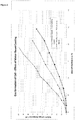
- the gassing of the completely acetone-based cells is reduced by coating the LTO anode from water-based slurry. It can also be reduced by coating both, anode and cathode, resp., from a water-based slurry.
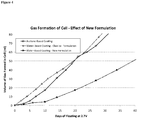
- Figures 3 shows the results of comparing cells that have been prepared using different precursor for preparing the electrodes.
- Classical formulation designates am NCA electrode, which is prepared using NCA and SBR/CMC/PVDF latex, wherein PVDF latex is a specifically developed PVDF having particles dispersed in an aqueous solution.
- the new formulation is based on NCA and fluorine acrylic hybrid latex, wherein fluorine and acrylate polymers are hybridized in a particle and such particles are dispersed in an aqueous solution.
- the titanate electrode is prepared using a titanate and SBR/CMC/PVDF latex (classical formulation) or titanate and fluorine acrylic hybrid latex/CMC/PVDF in the so-called new formulation.
Landscapes
- Chemical & Material Sciences (AREA)
- Chemical Kinetics & Catalysis (AREA)
- General Chemical & Material Sciences (AREA)
- Electrochemistry (AREA)
- Engineering & Computer Science (AREA)
- Manufacturing & Machinery (AREA)
- Composite Materials (AREA)
- Materials Engineering (AREA)
- Inorganic Chemistry (AREA)
- Health & Medical Sciences (AREA)
- Medicinal Chemistry (AREA)
- Polymers & Plastics (AREA)
- Organic Chemistry (AREA)
- Physics & Mathematics (AREA)
- General Physics & Mathematics (AREA)
- Condensed Matter Physics & Semiconductors (AREA)
- Battery Electrode And Active Subsutance (AREA)
- Secondary Cells (AREA)
- Electric Double-Layer Capacitors Or The Like (AREA)
Claims (12)
- Procédé de préparation d'une électrode destinée à une cellule au titanate de lithium, caractérisé en ce que le procédé comprend :
l'utilisation de latex hybride d'acrylique et de fluor, selon laquelle des polymères d'acrylate et de fluor sont hybridés en une particule et de telles particules sont dispersées dans une solution aqueuse, avec de l'oxyde de lithium nickel cobalt d'aluminium ou du titanate de lithium, en combinaison avec de la CMC et du PVDF pour la préparation d'au moins une électrode d'une cellule électrochimique. - Procédé selon la revendication 1, selon lequel l'électrode est une anode comprenant un matériau à activité d'anode choisi dans le groupe comprenant du Li4Ti5O12, Li2Ti3O7, LixTiO2, TiO2, TiO2(OH)x et des mélanges de ceux-ci.
- Procédé selon la revendication 1 ou la revendication 2, selon lequel l'électrode est une anode comprenant un matériau à activité d'anode, selon lequel le matériau à activité d'anode est en outre revêtu de carbone.
- Procédé selon l'une quelconque des revendications 1 à 3, selon lequel l'électrode est une anode comprenant un matériau à activité d'anode, selon lequel le matériau à activité d'anode est un mélange du matériau à activité d'anode selon les revendications 2 ou 3 et du matériau carboné, selon lequel le matériau carboné est choisi dans le groupe comprenant du graphite, du carbone dur, du carbone amorphe, du matériau à cœur/coquille contenant du carbone et du matériau contenant du silicium.
- Procédé selon la revendication 1, selon lequel l'électrode est une cathode comprenant un matériau à activité de cathode, selon lequel le matériau à activité de cathode est choisi dans le groupe comprenant du LiCoO2, LiNiO2, LiNi1-x-yCoxMnyO2, LiNi1-x-yCoxAlyO2, LiMn2O4, LiM2-xMn4-yO4, LiMPO4, selon lequel M comprend du Fe, Mn, Co ou Ni, LiAyMxPO4, selon lequel A comprend du B, P, Si, Ti, Zr, Hf, Cr, Mo ou W, et des mélanges de ceux-ci.
- Procédé selon la revendication 5, selon lequel le matériau à activité de cathode est en outre revêtu de carbone, d'oxydes, ou de phosphates.
- Cellule électrochimique caractérisée en ce qu'elle comprend :
une électrode constituée de latex hybride d'acrylique et de fluor, selon laquelle des polymères d'acrylate et de fluor sont hybridés en une particule et de telles particules sont dispersées dans une solution aqueuse, avec de l'oxyde de lithium nickel cobalt d'aluminium ou du titanate de lithium, en combinaison avec de la CMC et du PVDF et comprenant en outre un adjuvant filmogène choisi dans le groupe comprenant du carbonate de vinylène, du carbonate d'éthylène de vinyle, du sulfone de propane. - Cellule électrochimique selon la revendication 7, comprenant un adjuvant réducteur de gaz choisi dans le groupe comprenant des hétérocycles contentant de l'azote, tels que le pyrrole, la 2-méthyl-1-pyrroline, la 1-méthylpyrroline et la 1-vinyl-2-pyrrolidinone, la pyridine, la 2-picoline, la 3-picoline, la 4-picoline, la 2-vinylpyridine, la 4-vinylpyridine, et la diméthyl-pyridine-amine (DMPA) et le complexe de borane-pyridine ou des mélanges de ceux-ci ou des composés aminés aromatiques tels que l'aniline, la toluidine, la diphénylamine, la naphtylamine, les alkylanilines, la dialkylaniline.
- Cellule électrochimique selon l'une quelconque des revendications 7 ou 8, selon laquelle l'électrolyte de la cellule électrochimique comprend un sel d'électrolyte, un solvant d'électrolyte et un adjuvant d'électrolyte.
- Cellule électrochimique selon l'une quelconque des revendications 7 à 9, selon lequel le sel d'électrolyte est choisi dans le groupe comprenant du perchlorate de lithium (LiClO4), de l'hexafluorophosphate de lithium (LiFP6), du tétrafluoroborate de lithium (LiBF4), de l'hexafluoroarséniate de lithium (LiAsF6), de l'hexafluoroantimonate de lithium (LiSbF6), du trifluorométhanesulfonate de lithium (LiCF3SO3), du bis[(trifluorométhyl)sulfonyl]imide de lithium (LiN(CF3SO2)2), du bis[(pentafluoroéthyl)sulfonyl]imide de lithium (LiN(C2F5SO2)2), du bisoxalatoborate de lithium (LiBOB), du difluorooxalatoborate de lithium (LidFOB), du trifluoro-tris(pentafluoroéthyl)phosphate de lithium (LiFAP) et du tétraphénylborate de lithium (Li(C6H5)4B).
- Cellule électrochimique selon l'une quelconque des revendications 7 à 10, selon laquelle le solvant d'électrolyte est choisi dans le groupe comprenant du carbonate d'éthylène (EC), du carbonate de propylène (PC), du carbonate de vinylène (VC), du carbonate linéaire tel que les carbonates de diméthyle (DMC), du carbonate de diéthyle (DEC), du carbonate d'éthyl-méthyle (EMC), des éthers cycliques tels que du tétrahydrofurane (THF) et du 2-méthyltétrahydrofurane (2-Me-THF), des éthers linéaires tels que du diméthoxyéthane (DME), des lactones telles que la γ-butyrolactone (GBF), la valérolactone, l'acétonitrile et le sulfolane et des mélanges de ceux-ci.
- Utilisation d'une électrode préparée par un procédé selon l'une quelconque des revendications 1 à 6 dans des produits électroniques de grande consommation, des applications stationnaires telles que le stockage d'énergie renouvelable, du nivellement de réseau électrique, de grands moteurs hybrides au diesel, des véhicules militaires hybrides électriques (HEV-s), et des applications aérospatiales.
Priority Applications (3)
| Application Number | Priority Date | Filing Date | Title |
|---|---|---|---|
| PL13802560T PL2923400T3 (pl) | 2012-11-26 | 2013-11-26 | Redukcja gazowania w ogniwach z tytanianem litu |
| SI201331924T SI2923400T1 (sl) | 2012-11-26 | 2013-11-26 | Zmanjšanje tvorbe plinov v litij titanatnih celicah |
| HRP20211338TT HRP20211338T1 (hr) | 2012-11-26 | 2013-11-26 | Smanjivanje plinjenja kod članaka od litijevog titanata |
Applications Claiming Priority (2)
| Application Number | Priority Date | Filing Date | Title |
|---|---|---|---|
| GB1221217.1A GB2508218A (en) | 2012-11-26 | 2012-11-26 | Electrode for the reduction of gassing in lithium titanate cells |
| PCT/EP2013/074760 WO2014080039A1 (fr) | 2012-11-26 | 2013-11-26 | Réduction de dégagement gazeux dans des cellules en titanate de lithium |
Publications (2)
| Publication Number | Publication Date |
|---|---|
| EP2923400A1 EP2923400A1 (fr) | 2015-09-30 |
| EP2923400B1 true EP2923400B1 (fr) | 2021-05-26 |
Family
ID=47560659
Family Applications (1)
| Application Number | Title | Priority Date | Filing Date |
|---|---|---|---|
| EP13802560.6A Active EP2923400B1 (fr) | 2012-11-26 | 2013-11-26 | Réduction de dégagement gazeux dans des cellules en titanate de lithium |
Country Status (18)
| Country | Link |
|---|---|
| US (1) | US20150303482A1 (fr) |
| EP (1) | EP2923400B1 (fr) |
| JP (1) | JP2015535646A (fr) |
| KR (2) | KR20210038998A (fr) |
| CN (1) | CN104904041A (fr) |
| CY (1) | CY1124441T1 (fr) |
| DK (1) | DK2923400T3 (fr) |
| ES (1) | ES2884725T3 (fr) |
| GB (1) | GB2508218A (fr) |
| HR (1) | HRP20211338T1 (fr) |
| HU (1) | HUE055439T2 (fr) |
| LT (1) | LT2923400T (fr) |
| PL (1) | PL2923400T3 (fr) |
| PT (1) | PT2923400T (fr) |
| RU (1) | RU2668970C2 (fr) |
| SI (1) | SI2923400T1 (fr) |
| WO (1) | WO2014080039A1 (fr) |
| ZA (1) | ZA201502928B (fr) |
Families Citing this family (20)
| Publication number | Priority date | Publication date | Assignee | Title |
|---|---|---|---|---|
| EP3158604B1 (fr) | 2014-06-17 | 2019-04-24 | Medtronic, Inc. | Électrolytes semi-solides pour batteries |
| US10333173B2 (en) | 2014-11-14 | 2019-06-25 | Medtronic, Inc. | Composite separator and electrolyte for solid state batteries |
| WO2016175148A1 (fr) * | 2015-04-28 | 2016-11-03 | 株式会社カネカ | Objet emballé |
| CN104966820A (zh) * | 2015-05-08 | 2015-10-07 | 广州锂宝新材料有限公司 | 锂离子电池前驱材料、复合正极材料及其制备方法 |
| US10547083B2 (en) | 2015-06-22 | 2020-01-28 | Wildcat Discovery Technologies, Inc. | Electrolyte formulations for lithium ion batteries |
| US9887434B2 (en) | 2015-06-22 | 2018-02-06 | Wildcat Discovery Technologies, Inc | Electrolyte formulations for lithium ion batteries |
| US9490503B1 (en) | 2015-06-22 | 2016-11-08 | Wildcat Discovery Technologies, Inc. | Electrolyte formulations for lithium ion batteries |
| CN104900916A (zh) * | 2015-06-26 | 2015-09-09 | 广州天赐高新材料股份有限公司 | 用于高容量锂离子电池的电解液、制备方法及锂离子电池 |
| ES2767409T3 (es) * | 2015-12-18 | 2020-06-17 | Accumulateurs Fixes | Utilización de células electroquímicas que contienen un material activo negativo a base de óxido de titanato litiado para aplicaciones de órbita terrestre |
| WO2017111566A1 (fr) * | 2015-12-24 | 2017-06-29 | 주식회사 엘지화학 | Matériau actif d'électrode négative présentant des caractéristiques de rendement améliorées, et électrode pour dispositif électrochimique contenant le matériau actif d'électrode négative |
| JP6813956B2 (ja) * | 2016-03-17 | 2021-01-13 | 富山薬品工業株式会社 | 蓄電デバイス用非水電解液 |
| US10135093B2 (en) | 2016-03-30 | 2018-11-20 | Wildcat Discovery Technologies, Inc. | High voltage solid electrolyte compositions |
| KR102109833B1 (ko) | 2016-05-27 | 2020-05-13 | 주식회사 엘지화학 | 리튬 이차전지용 비수전해액 및 이를 포함하는 리튬 이차전지 |
| US20180070633A1 (en) | 2016-09-09 | 2018-03-15 | Rai Strategic Holdings, Inc. | Power source for an aerosol delivery device |
| JP6673818B2 (ja) * | 2016-12-27 | 2020-03-25 | 株式会社豊田中央研究所 | 非水系電解液及びリチウム二次電池 |
| WO2019150895A1 (fr) * | 2018-01-30 | 2019-08-08 | ダイキン工業株式会社 | Électrolyte, dispositif électrochimique, accumulateur au lithium-ion et module |
| CN114497506A (zh) * | 2022-01-29 | 2022-05-13 | 辽宁中宏能源新材料股份有限公司 | 一种硬碳-无机锂盐复合电极材料及其制备方法和应用 |
| EP4681264A1 (fr) * | 2023-03-17 | 2026-01-21 | Nanoramic, Inc. | Dispositifs de stockage d'énergie à électrodes gonflables |
| CN116364934B (zh) * | 2023-05-31 | 2023-10-27 | 宁德时代新能源科技股份有限公司 | 负极极片、二次电池和用电装置 |
| CN117691190A (zh) * | 2023-11-24 | 2024-03-12 | 万向一二三股份公司 | 一种用于富锂锰基正极高压锂离子电池的电解液以及锂离子电池 |
Family Cites Families (30)
| Publication number | Priority date | Publication date | Assignee | Title |
|---|---|---|---|---|
| AU3754195A (en) * | 1994-10-27 | 1996-05-23 | Fuji Photo Film Co., Ltd. | Nonaqueous secondary cell and its manufacturing method |
| US6001139A (en) * | 1995-03-06 | 1999-12-14 | Fuji Photo Film Co., Ltd. | Nonaqueous secondary battery having multiple-layered negative electrode |
| JP3539448B2 (ja) * | 1995-04-19 | 2004-07-07 | 日本ゼオン株式会社 | 非水二次電池 |
| JP2000223154A (ja) * | 1999-01-29 | 2000-08-11 | Sanyo Electric Co Ltd | リチウム二次電池。 |
| EP1905118B1 (fr) * | 2005-07-13 | 2018-09-05 | LG Chem, Ltd. | Batterie secondaire au lithium contenant une capsule servant à la libération contrôlée d'additifs |
| CN101017893B (zh) * | 2006-02-08 | 2010-05-12 | 深圳市比克电池有限公司 | 一种锂离子电池负极用锡碳复合电极材料及制备方法 |
| US8168330B2 (en) * | 2006-04-11 | 2012-05-01 | Enerdel, Inc. | Lithium titanate cell with reduced gassing |
| JP2007323958A (ja) * | 2006-05-31 | 2007-12-13 | Gs Yuasa Corporation:Kk | 非水電解質電池及びその製造方法 |
| JP4709710B2 (ja) * | 2006-08-04 | 2011-06-22 | 株式会社東芝 | 非水電解質電池、電池パック及び自動車 |
| KR100898705B1 (ko) * | 2006-08-21 | 2009-05-21 | 주식회사 엘지화학 | 폴리비닐알콜과 폴리우레탄의 semi-IPN인 전극합제용 바인더 및 이를 기반으로 하는 리튬 이차전지 |
| JP4665930B2 (ja) * | 2007-03-29 | 2011-04-06 | Tdk株式会社 | アノード及びリチウムイオン二次電池 |
| JP5470751B2 (ja) * | 2008-02-13 | 2014-04-16 | Tdk株式会社 | 活物質及び電極の製造方法、活物質及び電極 |
| JP5300502B2 (ja) * | 2008-03-13 | 2013-09-25 | 株式会社東芝 | 電池用活物質、非水電解質電池および電池パック |
| JP4957657B2 (ja) * | 2008-06-13 | 2012-06-20 | ソニー株式会社 | リチウムイオン二次電池用負極およびリチウムイオン二次電池 |
| CN102292854B (zh) * | 2008-11-20 | 2015-01-14 | 株式会社Lg化学 | 二次电池用电极活性材料及其制备方法 |
| CN101459238A (zh) * | 2008-12-23 | 2009-06-17 | 大连海事大学 | 一种锂离子电池用高比容量复合电极的制备方法 |
| RU2397576C1 (ru) * | 2009-03-06 | 2010-08-20 | ООО "Элионт" | Анодный материал для литий-ионных хит и способ его получения |
| SG176215A1 (en) * | 2009-05-29 | 2012-01-30 | Arkema Inc | Aqueous polyvinylidene fluoride composition |
| WO2011004447A1 (fr) * | 2009-07-06 | 2011-01-13 | トヨタ自動車株式会社 | Procédé de production dune électrode de batterie |
| US20110143217A1 (en) * | 2009-12-15 | 2011-06-16 | E. I. Du Pont De Nemours And Company | Electrochemical cell comprising a separator comprising a nanoweb consisting essentially of nanofibers of fully aromatic polyimide |
| JP5397860B2 (ja) * | 2009-12-24 | 2014-01-22 | 三洋電機株式会社 | 非水電解質二次電池の電極用組成物並びにそれを用いた非水電解質二次電池用電極及び非水電解質二次電池 |
| JP5552865B2 (ja) * | 2010-03-26 | 2014-07-16 | 三菱化学株式会社 | 非水系二次電池電極用の複合化高分子添着活物質 |
| CN101867064A (zh) * | 2010-06-11 | 2010-10-20 | 西安瑟福能源科技有限公司 | 兼顾高温性能的低温型锂离子电池电解液及锂离子电池 |
| JP5697906B2 (ja) * | 2010-06-24 | 2015-04-08 | 株式会社日本触媒 | 二次電池用電極水系組成物 |
| US20130112928A1 (en) * | 2010-07-16 | 2013-05-09 | Nippon Shokubai Co, Ltd. | Aqueous electrode binder for secondary battery |
| JP2012123952A (ja) * | 2010-12-06 | 2012-06-28 | Iwate Univ | 不定比チタン化合物、不定比チタン化合物の金属酸化物被覆複合体、それら化合物の製造方法、及びリチウムイオン二次電池用負極活物質、並びにリチウムイオン二次電池 |
| US9171675B2 (en) * | 2010-12-20 | 2015-10-27 | Jsr Corporation | Electrical storage device, lithium ion capacitor and negative electrode for lithium ion capacitor |
| JP2012182071A (ja) * | 2011-03-02 | 2012-09-20 | Sony Corp | リチウムイオン二次電池、電子機器、電動工具、電動車両および電力貯蔵システム |
| US9350015B2 (en) * | 2011-04-19 | 2016-05-24 | Samsung Sdi Co., Ltd. | Anode active material, anode and lithium battery including the material, and method of preparing the material |
| JP4957932B1 (ja) * | 2011-08-30 | 2012-06-20 | Jsr株式会社 | 蓄電デバイス電極用バインダー組成物、蓄電デバイス電極用スラリー、蓄電デバイス電極、および蓄電デバイス |
-
2012
- 2012-11-26 GB GB1221217.1A patent/GB2508218A/en not_active Withdrawn
-
2013
- 2013-11-26 PL PL13802560T patent/PL2923400T3/pl unknown
- 2013-11-26 ES ES13802560T patent/ES2884725T3/es active Active
- 2013-11-26 LT LTEP13802560.6T patent/LT2923400T/lt unknown
- 2013-11-26 SI SI201331924T patent/SI2923400T1/sl unknown
- 2013-11-26 CN CN201380061610.6A patent/CN104904041A/zh active Pending
- 2013-11-26 HU HUE13802560A patent/HUE055439T2/hu unknown
- 2013-11-26 JP JP2015543470A patent/JP2015535646A/ja active Pending
- 2013-11-26 WO PCT/EP2013/074760 patent/WO2014080039A1/fr not_active Ceased
- 2013-11-26 PT PT138025606T patent/PT2923400T/pt unknown
- 2013-11-26 KR KR1020217009501A patent/KR20210038998A/ko not_active Ceased
- 2013-11-26 EP EP13802560.6A patent/EP2923400B1/fr active Active
- 2013-11-26 KR KR1020157013613A patent/KR20150090075A/ko not_active Ceased
- 2013-11-26 RU RU2015116845A patent/RU2668970C2/ru active
- 2013-11-26 HR HRP20211338TT patent/HRP20211338T1/hr unknown
- 2013-11-26 US US14/646,838 patent/US20150303482A1/en not_active Abandoned
- 2013-11-26 DK DK13802560.6T patent/DK2923400T3/da active
-
2015
- 2015-04-29 ZA ZA2015/02928A patent/ZA201502928B/en unknown
-
2021
- 2021-08-20 CY CY20211100748T patent/CY1124441T1/el unknown
Non-Patent Citations (1)
| Title |
|---|
| None * |
Also Published As
| Publication number | Publication date |
|---|---|
| KR20150090075A (ko) | 2015-08-05 |
| JP2015535646A (ja) | 2015-12-14 |
| WO2014080039A1 (fr) | 2014-05-30 |
| EP2923400A1 (fr) | 2015-09-30 |
| US20150303482A1 (en) | 2015-10-22 |
| KR20210038998A (ko) | 2021-04-08 |
| RU2668970C2 (ru) | 2018-10-05 |
| HRP20211338T1 (hr) | 2021-11-26 |
| ZA201502928B (en) | 2016-07-27 |
| LT2923400T (lt) | 2021-10-25 |
| ES2884725T3 (es) | 2021-12-10 |
| GB2508218A (en) | 2014-05-28 |
| DK2923400T3 (da) | 2021-08-30 |
| SI2923400T1 (sl) | 2021-11-30 |
| RU2015116845A (ru) | 2017-01-10 |
| PL2923400T3 (pl) | 2021-11-29 |
| PT2923400T (pt) | 2021-08-31 |
| CN104904041A (zh) | 2015-09-09 |
| HUE055439T2 (hu) | 2021-11-29 |
| CY1124441T1 (el) | 2022-07-22 |
| GB201221217D0 (en) | 2013-01-09 |
Similar Documents
| Publication | Publication Date | Title |
|---|---|---|
| US20150303482A1 (en) | Reduction of Gassing in Lithium Titanate Cells | |
| EP2160788B1 (fr) | Électrolyte non-aqueux et batterie secondaire au lithium le comprenant | |
| JP6355163B2 (ja) | リチウムイオン電池 | |
| KR101607024B1 (ko) | 리튬 이차전지 | |
| JP5358905B2 (ja) | 二次電池用負極、二次電池およびそれらの製造方法 | |
| EP4120419B1 (fr) | Électrolyte pour batterie secondaire au lithium et batterie secondaire au lithium le comprenant | |
| JP5661875B2 (ja) | 非水電解液及びこれを含む二次電池 | |
| EP2951877B1 (fr) | Composition électrolytique pour cellules électrochimiques | |
| US11522221B2 (en) | Gelation reagent for forming gel electrolyte and methods relating thereto | |
| US20210305560A1 (en) | Method and system for aromatic macrocyclic compounds (phthalocyanines) as cathode additives for inhibition of transition metal dissolution and stable solid electrolyte interphase formation | |
| EP1721349B1 (fr) | Électrode pour pile secondaire au lithium | |
| JP2011192561A (ja) | 非水電解液二次電池の製造方法 | |
| CN119137784A (zh) | 锂离子二次电池用电解液和锂离子二次电池 | |
| JP5107232B2 (ja) | 機能性電解液添加剤及びこれを含む電気化学素子 | |
| KR20220058016A (ko) | 리튬 이차전지용 전해액 및 이를 포함하는 리튬 이차전지 | |
| KR20230091026A (ko) | 리튬 이차전지용 비수전해액 및 이를 포함하는 리튬 이차전지 | |
| JP4474803B2 (ja) | 非水電解質電池 | |
| EP3879616B1 (fr) | Électrolyte pour batterie secondaire au lithium et batterie secondaire au lithium comprenant celui-ci | |
| KR20220058026A (ko) | 리튬 이차전지용 전해액 및 이를 포함하는 리튬 이차전지 | |
| KR102633568B1 (ko) | 리튬 이차전지용 전해액 첨가제 및 이를 포함하는 리튬 이차전지용 비수 전해액 및 리튬 이차전지 | |
| KR20240162047A (ko) | 리튬 이온 배터리용 전극을 제조하기 위한 슬러리, 전극 및 제조방법 | |
| GB2504954A (en) | Electrolyte additives for electrochemical cells | |
| KR20240032632A (ko) | 리튬 이차전지용 비수전해액 및 이를 포함하는 리튬 이차전지 | |
| KR20140104995A (ko) | 질소-함유 중합체를 포함하는 전기화학 전지 | |
| CN117239241B (zh) | 一种电解液及锂离子电池 |
Legal Events
| Date | Code | Title | Description |
|---|---|---|---|
| PUAI | Public reference made under article 153(3) epc to a published international application that has entered the european phase |
Free format text: ORIGINAL CODE: 0009012 |
|
| 17P | Request for examination filed |
Effective date: 20150626 |
|
| AK | Designated contracting states |
Kind code of ref document: A1 Designated state(s): AL AT BE BG CH CY CZ DE DK EE ES FI FR GB GR HR HU IE IS IT LI LT LU LV MC MK MT NL NO PL PT RO RS SE SI SK SM TR |
|
| AX | Request for extension of the european patent |
Extension state: BA ME |
|
| DAX | Request for extension of the european patent (deleted) | ||
| RIN1 | Information on inventor provided before grant (corrected) |
Inventor name: BUQA, HILMI Inventor name: BLANC, PIERRE Inventor name: WUSSLER, SABINE Inventor name: SCHEIFELE, WERNER Inventor name: HOLZAPFEL, MICHAEL Inventor name: STUDENIK, ERIKA |
|
| STAA | Information on the status of an ep patent application or granted ep patent |
Free format text: STATUS: EXAMINATION IS IN PROGRESS |
|
| 17Q | First examination report despatched |
Effective date: 20170918 |
|
| REG | Reference to a national code |
Ref country code: DE Ref legal event code: R079 Ref document number: 602013077685 Country of ref document: DE Free format text: PREVIOUS MAIN CLASS: H01M0004131000 Ipc: C08K0005180000 |
|
| RIC1 | Information provided on ipc code assigned before grant |
Ipc: H01M 4/62 20060101ALI20200812BHEP Ipc: H01M 10/0525 20100101ALI20200812BHEP Ipc: C08K 5/18 20060101AFI20200812BHEP Ipc: H01M 10/42 20060101ALI20200812BHEP Ipc: H01M 4/1391 20100101ALI20200812BHEP Ipc: H01M 4/485 20100101ALI20200812BHEP Ipc: H01M 4/36 20060101ALI20200812BHEP Ipc: H01M 4/04 20060101ALN20200812BHEP Ipc: C08K 5/3432 20060101ALI20200812BHEP Ipc: H01M 10/0567 20100101ALI20200812BHEP Ipc: C08K 5/3415 20060101ALI20200812BHEP |
|
| GRAP | Despatch of communication of intention to grant a patent |
Free format text: ORIGINAL CODE: EPIDOSNIGR1 |
|
| STAA | Information on the status of an ep patent application or granted ep patent |
Free format text: STATUS: GRANT OF PATENT IS INTENDED |
|
| INTG | Intention to grant announced |
Effective date: 20200924 |
|
| GRAJ | Information related to disapproval of communication of intention to grant by the applicant or resumption of examination proceedings by the epo deleted |
Free format text: ORIGINAL CODE: EPIDOSDIGR1 |
|
| GRAP | Despatch of communication of intention to grant a patent |
Free format text: ORIGINAL CODE: EPIDOSNIGR1 |
|
| INTG | Intention to grant announced |
Effective date: 20201216 |
|
| GRAS | Grant fee paid |
Free format text: ORIGINAL CODE: EPIDOSNIGR3 |
|
| GRAA | (expected) grant |
Free format text: ORIGINAL CODE: 0009210 |
|
| STAA | Information on the status of an ep patent application or granted ep patent |
Free format text: STATUS: THE PATENT HAS BEEN GRANTED |
|
| AK | Designated contracting states |
Kind code of ref document: B1 Designated state(s): AL AT BE BG CH CY CZ DE DK EE ES FI FR GB GR HR HU IE IS IT LI LT LU LV MC MK MT NL NO PL PT RO RS SE SI SK SM TR |
|
| REG | Reference to a national code |
Ref country code: GB Ref legal event code: FG4D |
|
| REG | Reference to a national code |
Ref country code: CH Ref legal event code: EP |
|
| REG | Reference to a national code |
Ref country code: DE Ref legal event code: R096 Ref document number: 602013077685 Country of ref document: DE |
|
| REG | Reference to a national code |
Ref country code: AT Ref legal event code: REF Ref document number: 1396196 Country of ref document: AT Kind code of ref document: T Effective date: 20210615 |
|
| REG | Reference to a national code |
Ref country code: IE Ref legal event code: FG4D |
|
| REG | Reference to a national code |
Ref country code: HR Ref legal event code: TUEP Ref document number: P20211338 Country of ref document: HR |
|
| REG | Reference to a national code |
Ref country code: RO Ref legal event code: EPE |
|
| REG | Reference to a national code |
Ref country code: FI Ref legal event code: FGE |
|
| REG | Reference to a national code |
Ref country code: DK Ref legal event code: T3 Effective date: 20210823 |
|
| REG | Reference to a national code |
Ref country code: PT Ref legal event code: SC4A Ref document number: 2923400 Country of ref document: PT Date of ref document: 20210831 Kind code of ref document: T Free format text: AVAILABILITY OF NATIONAL TRANSLATION Effective date: 20210824 |
|
| REG | Reference to a national code |
Ref country code: NL Ref legal event code: FP |
|
| REG | Reference to a national code |
Ref country code: SE Ref legal event code: TRGR |
|
| REG | Reference to a national code |
Ref country code: SK Ref legal event code: T3 Ref document number: E 37982 Country of ref document: SK |
|
| REG | Reference to a national code |
Ref country code: EE Ref legal event code: FG4A Ref document number: E021283 Country of ref document: EE Effective date: 20210819 |
|
| REG | Reference to a national code |
Ref country code: NO Ref legal event code: T2 Effective date: 20210526 |
|
| PG25 | Lapsed in a contracting state [announced via postgrant information from national office to epo] |
Ref country code: BG Free format text: LAPSE BECAUSE OF FAILURE TO SUBMIT A TRANSLATION OF THE DESCRIPTION OR TO PAY THE FEE WITHIN THE PRESCRIBED TIME-LIMIT Effective date: 20210826 |
|
| REG | Reference to a national code |
Ref country code: GR Ref legal event code: EP Ref document number: 20210402233 Country of ref document: GR Effective date: 20211013 |
|
| REG | Reference to a national code |
Ref country code: HR Ref legal event code: T1PR Ref document number: P20211338 Country of ref document: HR |
|
| REG | Reference to a national code |
Ref country code: HU Ref legal event code: AG4A Ref document number: E055439 Country of ref document: HU |
|
| PG25 | Lapsed in a contracting state [announced via postgrant information from national office to epo] |
Ref country code: LV Free format text: LAPSE BECAUSE OF FAILURE TO SUBMIT A TRANSLATION OF THE DESCRIPTION OR TO PAY THE FEE WITHIN THE PRESCRIBED TIME-LIMIT Effective date: 20210526 Ref country code: RS Free format text: LAPSE BECAUSE OF FAILURE TO SUBMIT A TRANSLATION OF THE DESCRIPTION OR TO PAY THE FEE WITHIN THE PRESCRIBED TIME-LIMIT Effective date: 20210526 |
|
| REG | Reference to a national code |
Ref country code: ES Ref legal event code: FG2A Ref document number: 2884725 Country of ref document: ES Kind code of ref document: T3 Effective date: 20211210 |
|
| REG | Reference to a national code |
Ref country code: HR Ref legal event code: ODRP Ref document number: P20211338 Country of ref document: HR Payment date: 20211119 Year of fee payment: 9 |
|
| PG25 | Lapsed in a contracting state [announced via postgrant information from national office to epo] |
Ref country code: SM Free format text: LAPSE BECAUSE OF FAILURE TO SUBMIT A TRANSLATION OF THE DESCRIPTION OR TO PAY THE FEE WITHIN THE PRESCRIBED TIME-LIMIT Effective date: 20210526 |
|
| REG | Reference to a national code |
Ref country code: DE Ref legal event code: R097 Ref document number: 602013077685 Country of ref document: DE |
|
| PLBE | No opposition filed within time limit |
Free format text: ORIGINAL CODE: 0009261 |
|
| STAA | Information on the status of an ep patent application or granted ep patent |
Free format text: STATUS: NO OPPOSITION FILED WITHIN TIME LIMIT |
|
| 26N | No opposition filed |
Effective date: 20220301 |
|
| PG25 | Lapsed in a contracting state [announced via postgrant information from national office to epo] |
Ref country code: AL Free format text: LAPSE BECAUSE OF FAILURE TO SUBMIT A TRANSLATION OF THE DESCRIPTION OR TO PAY THE FEE WITHIN THE PRESCRIBED TIME-LIMIT Effective date: 20210526 |
|
| PG25 | Lapsed in a contracting state [announced via postgrant information from national office to epo] |
Ref country code: MC Free format text: LAPSE BECAUSE OF FAILURE TO SUBMIT A TRANSLATION OF THE DESCRIPTION OR TO PAY THE FEE WITHIN THE PRESCRIBED TIME-LIMIT Effective date: 20210526 |
|
| REG | Reference to a national code |
Ref country code: HR Ref legal event code: ODRP Ref document number: P20211338 Country of ref document: HR Payment date: 20221117 Year of fee payment: 10 |
|
| REG | Reference to a national code |
Ref country code: AT Ref legal event code: UEP Ref document number: 1396196 Country of ref document: AT Kind code of ref document: T Effective date: 20210526 |
|
| REG | Reference to a national code |
Ref country code: HR Ref legal event code: ODRP Ref document number: P20211338 Country of ref document: HR Payment date: 20231218 Year of fee payment: 11 |
|
| PG25 | Lapsed in a contracting state [announced via postgrant information from national office to epo] |
Ref country code: MK Free format text: LAPSE BECAUSE OF FAILURE TO SUBMIT A TRANSLATION OF THE DESCRIPTION OR TO PAY THE FEE WITHIN THE PRESCRIBED TIME-LIMIT Effective date: 20210526 |
|
| PG25 | Lapsed in a contracting state [announced via postgrant information from national office to epo] |
Ref country code: MT Free format text: LAPSE BECAUSE OF FAILURE TO SUBMIT A TRANSLATION OF THE DESCRIPTION OR TO PAY THE FEE WITHIN THE PRESCRIBED TIME-LIMIT Effective date: 20210526 |
|
| REG | Reference to a national code |
Ref country code: HR Ref legal event code: ODRP Ref document number: P20211338 Country of ref document: HR Payment date: 20241120 Year of fee payment: 12 |
|
| REG | Reference to a national code |
Ref country code: CH Ref legal event code: U11 Free format text: ST27 STATUS EVENT CODE: U-0-0-U10-U11 (AS PROVIDED BY THE NATIONAL OFFICE) Effective date: 20251201 |
|
| PGFP | Annual fee paid to national office [announced via postgrant information from national office to epo] |
Ref country code: PT Payment date: 20251112 Year of fee payment: 13 |
|
| PGFP | Annual fee paid to national office [announced via postgrant information from national office to epo] |
Ref country code: HU Payment date: 20251127 Year of fee payment: 13 |
|
| PGFP | Annual fee paid to national office [announced via postgrant information from national office to epo] |
Ref country code: NL Payment date: 20251119 Year of fee payment: 13 Ref country code: LU Payment date: 20251118 Year of fee payment: 13 |
|
| REG | Reference to a national code |
Ref country code: HR Ref legal event code: ODRP Ref document number: P20211338 Country of ref document: HR Payment date: 20251120 Year of fee payment: 13 |
|
| PGFP | Annual fee paid to national office [announced via postgrant information from national office to epo] |
Ref country code: IS Payment date: 20251119 Year of fee payment: 13 Ref country code: DE Payment date: 20251118 Year of fee payment: 13 |
|
| PGFP | Annual fee paid to national office [announced via postgrant information from national office to epo] |
Ref country code: LT Payment date: 20251112 Year of fee payment: 13 Ref country code: GB Payment date: 20251120 Year of fee payment: 13 |
|
| PGFP | Annual fee paid to national office [announced via postgrant information from national office to epo] |
Ref country code: NO Payment date: 20251118 Year of fee payment: 13 |
|
| PGFP | Annual fee paid to national office [announced via postgrant information from national office to epo] |
Ref country code: AT Payment date: 20251117 Year of fee payment: 13 |
|
| PGFP | Annual fee paid to national office [announced via postgrant information from national office to epo] |
Ref country code: IT Payment date: 20251128 Year of fee payment: 13 Ref country code: FI Payment date: 20251118 Year of fee payment: 13 Ref country code: DK Payment date: 20251119 Year of fee payment: 13 |
|
| PGFP | Annual fee paid to national office [announced via postgrant information from national office to epo] |
Ref country code: HR Payment date: 20251120 Year of fee payment: 13 Ref country code: FR Payment date: 20251120 Year of fee payment: 13 |
|
| PGFP | Annual fee paid to national office [announced via postgrant information from national office to epo] |
Ref country code: TR Payment date: 20251120 Year of fee payment: 13 Ref country code: GR Payment date: 20251117 Year of fee payment: 13 Ref country code: BE Payment date: 20251118 Year of fee payment: 13 |
|
| PGFP | Annual fee paid to national office [announced via postgrant information from national office to epo] |
Ref country code: SE Payment date: 20251119 Year of fee payment: 13 Ref country code: CH Payment date: 20251201 Year of fee payment: 13 |
|
| PGFP | Annual fee paid to national office [announced via postgrant information from national office to epo] |
Ref country code: IE Payment date: 20251120 Year of fee payment: 13 Ref country code: CY Payment date: 20251121 Year of fee payment: 13 Ref country code: CZ Payment date: 20251113 Year of fee payment: 13 |
|
| PGFP | Annual fee paid to national office [announced via postgrant information from national office to epo] |
Ref country code: PL Payment date: 20251119 Year of fee payment: 13 |
|
| PGFP | Annual fee paid to national office [announced via postgrant information from national office to epo] |
Ref country code: EE Payment date: 20251118 Year of fee payment: 13 |
|
| PGFP | Annual fee paid to national office [announced via postgrant information from national office to epo] |
Ref country code: RO Payment date: 20251118 Year of fee payment: 13 Ref country code: SK Payment date: 20251113 Year of fee payment: 13 |
|
| PGFP | Annual fee paid to national office [announced via postgrant information from national office to epo] |
Ref country code: SI Payment date: 20251117 Year of fee payment: 13 Ref country code: ES Payment date: 20251216 Year of fee payment: 13 |