EP2929863B1 - Druckverband - Google Patents
Druckverband Download PDFInfo
- Publication number
- EP2929863B1 EP2929863B1 EP15000986.8A EP15000986A EP2929863B1 EP 2929863 B1 EP2929863 B1 EP 2929863B1 EP 15000986 A EP15000986 A EP 15000986A EP 2929863 B1 EP2929863 B1 EP 2929863B1
- Authority
- EP
- European Patent Office
- Prior art keywords
- strap
- chest
- compression bandage
- shoulder strap
- shoulder
- Prior art date
- Legal status (The legal status is an assumption and is not a legal conclusion. Google has not performed a legal analysis and makes no representation as to the accuracy of the status listed.)
- Active
Links
Images

Classifications
-
- A—HUMAN NECESSITIES
- A61—MEDICAL OR VETERINARY SCIENCE; HYGIENE
- A61F—FILTERS IMPLANTABLE INTO BLOOD VESSELS; PROSTHESES; DEVICES PROVIDING PATENCY TO, OR PREVENTING COLLAPSING OF, TUBULAR STRUCTURES OF THE BODY, e.g. STENTS; ORTHOPAEDIC, NURSING OR CONTRACEPTIVE DEVICES; FOMENTATION; TREATMENT OR PROTECTION OF EYES OR EARS; BANDAGES, DRESSINGS OR ABSORBENT PADS; FIRST-AID KITS
- A61F13/00—Bandages or dressings; Absorbent pads
- A61F13/14—Bandages or dressings; Absorbent pads specially adapted for the breast or abdomen
-
- A—HUMAN NECESSITIES
- A61—MEDICAL OR VETERINARY SCIENCE; HYGIENE
- A61F—FILTERS IMPLANTABLE INTO BLOOD VESSELS; PROSTHESES; DEVICES PROVIDING PATENCY TO, OR PREVENTING COLLAPSING OF, TUBULAR STRUCTURES OF THE BODY, e.g. STENTS; ORTHOPAEDIC, NURSING OR CONTRACEPTIVE DEVICES; FOMENTATION; TREATMENT OR PROTECTION OF EYES OR EARS; BANDAGES, DRESSINGS OR ABSORBENT PADS; FIRST-AID KITS
- A61F13/00—Bandages or dressings; Absorbent pads
- A61F13/14—Bandages or dressings; Absorbent pads specially adapted for the breast or abdomen
- A61F13/143—Thorax bandages or bandaging garments
-
- A—HUMAN NECESSITIES
- A61—MEDICAL OR VETERINARY SCIENCE; HYGIENE
- A61F—FILTERS IMPLANTABLE INTO BLOOD VESSELS; PROSTHESES; DEVICES PROVIDING PATENCY TO, OR PREVENTING COLLAPSING OF, TUBULAR STRUCTURES OF THE BODY, e.g. STENTS; ORTHOPAEDIC, NURSING OR CONTRACEPTIVE DEVICES; FOMENTATION; TREATMENT OR PROTECTION OF EYES OR EARS; BANDAGES, DRESSINGS OR ABSORBENT PADS; FIRST-AID KITS
- A61F13/00—Bandages or dressings; Absorbent pads
- A61F13/14—Bandages or dressings; Absorbent pads specially adapted for the breast or abdomen
- A61F13/146—Shoulder bandages or bandaging garments
-
- A—HUMAN NECESSITIES
- A61—MEDICAL OR VETERINARY SCIENCE; HYGIENE
- A61F—FILTERS IMPLANTABLE INTO BLOOD VESSELS; PROSTHESES; DEVICES PROVIDING PATENCY TO, OR PREVENTING COLLAPSING OF, TUBULAR STRUCTURES OF THE BODY, e.g. STENTS; ORTHOPAEDIC, NURSING OR CONTRACEPTIVE DEVICES; FOMENTATION; TREATMENT OR PROTECTION OF EYES OR EARS; BANDAGES, DRESSINGS OR ABSORBENT PADS; FIRST-AID KITS
- A61F5/00—Orthopaedic methods or devices for non-surgical treatment of bones or joints; Nursing devices ; Anti-rape devices
- A61F5/01—Orthopaedic devices, e.g. long-term immobilising or pressure directing devices for treating broken or deformed bones such as splints, casts or braces
- A61F5/03—Corsets or bandages for abdomen, teat or breast support, with or without pads
-
- A—HUMAN NECESSITIES
- A61—MEDICAL OR VETERINARY SCIENCE; HYGIENE
- A61F—FILTERS IMPLANTABLE INTO BLOOD VESSELS; PROSTHESES; DEVICES PROVIDING PATENCY TO, OR PREVENTING COLLAPSING OF, TUBULAR STRUCTURES OF THE BODY, e.g. STENTS; ORTHOPAEDIC, NURSING OR CONTRACEPTIVE DEVICES; FOMENTATION; TREATMENT OR PROTECTION OF EYES OR EARS; BANDAGES, DRESSINGS OR ABSORBENT PADS; FIRST-AID KITS
- A61F5/00—Orthopaedic methods or devices for non-surgical treatment of bones or joints; Nursing devices ; Anti-rape devices
- A61F5/01—Orthopaedic devices, e.g. long-term immobilising or pressure directing devices for treating broken or deformed bones such as splints, casts or braces
- A61F5/30—Pressure pads
- A61F5/32—Adjustable pressure pads
Definitions
- the invention relates to a pressure dressing for pressing a compressor or a compress to a half of the breast of a patient after a pacemaker implantation according to the preamble of claim 1.
- the surgical wound is often sutured and provided with an adhesive dressing.
- a sandbag is placed over the adhesive bandage to create pressure on the surgical wound. This is intended to prevent or at least reduce edema formation.
- the patient is thus forced to lie all the time so that the sandbag can press on the surgical wound and not slip. This is of course extremely stressful and uncomfortable for the patient.
- the WO 2006/069 548 A1 describes a bandage for hemostasis after pacemaker surgery.
- a cardiac / thoracic strap which is intended to generate pressure in the region of the patient's chest, is described in US Pat US 6516 804 B1 , The pressure on the chest can be so strong that in individual cases can be dispensed with shoulder straps.
- US 2001/003 70 76 A1 describes a corset-like garment worn for pressure and temperature treatment. It is intended to give the patient relief in pain and discomfort.
- a dressing for compression of the thorax describes the EP 1 859 762 A2 , It is mainly used when the chest area of the patient is to be protected against unwanted movements, such as, for example, broken ribs.
- the invention has the object to provide a pressure bandage, with the generated on the chest a required contact pressure and a patient is granted more freedom of movement, especially when breathing.
- the invention achieves the stated object with a compression bandage according to claim 1.
- the pressure bandage thus generates the required contact pressure with which the compressorium is pressed flat against a surgical wound. Due to the surface pressure, the compressor can be pressed against a wound seam of the surgical wound as well as against the environment of the suture. This reduces the risk of edema or inflammation.
- the contact pressure of the shoulder band is preferably higher than the pressure of the chest band.
- the chest band on the front of the patient can be closed. Since the Velcro pads are arranged on the opposite sides of the chest band, it can be closed regardless of whether the shoulder strap is passed over the left or the right half of the chest, well.
- the double-sided velcro padding can be individually positioned on the chest band and / or on the shoulder band to optimally fit the pressure bandage on the patient. If the pacemaker has been implanted on the right half of the breast, the pressure bandage can alternatively be passed over the right half of the breast by simply turning it over.
- the pressure dressing can be made of a nonwoven, a nonwoven composite or a textile fabric.
- the shoulder band can be sewn with one end to the chest band.
- the interface may advantageously be located on the back of the patient.
- the shoulder band can cover the compressor completely.
- the shoulder strap may overlap the compressorium with its two longitudinal edges, so that the compressorium is completely obscured by the shoulder strap and can not slip unintentionally from the surgical wound.
- the chest band can partially cover the compressorium. Conveniently, the chest band covers the area of the compressor facing the legs of the patient. Thus, the compressor prevents the chestband from slipping toward the patient's shoulders. In addition, the chest band can also press the Kompressorium against the surgical wound in this way.
- a fastening element for fastening the compressor or the compress to the shoulder strap.
- the compress can be a cooling compress.
- the fastener may be a Velcro pad or an adhesive surface.
- the compress can be quickly attached to the shoulder strap or removed from it.
- the fastener may also be a band attached at one end to the shoulder strap and having at its other end a hook-and-loop pad against which the compressor or compress can be secured.
- a pocket for receiving the compressor can be attached to the shoulder strap.
- the compressor can be arranged on the shoulder band before the pressure bandage is applied to the patient. This also helps to put on the pressure bandage in the shortest possible time.
- the bag can be moved along the shoulder strap.
- the shoulder strap For this purpose can be a loop sewn to the bag and the shoulder strap passed through the loop.
- the pressure bandage can be prefabricated with the compress.
- the shoulder strap can be sewn at an angle to the chest band so that the shoulder band and the chest band enclose an angle of less than 90 °.
- the shoulder strap can be guided over the shoulder in a positionally stable manner so that it can not slip off the shoulder so easily.
- an angle range between 50 ° and 85 ° has proven particularly well.
- the shoulder strap may have a recess in the neck region of the patient. This is particularly useful when the shoulder band a particularly high contact pressure must be generated because then the shoulder strap must be passed as close to the neck. Through the neckline, the shoulder strap can hardly disturb the patient's neck.
- the chest band may be equipped with at least one skin-compatible adhesive pad on the side adjacent to the patient.
- the adhesive pad can be constructed on the basis of a polyacrylate adhesive.
- the Adhesive pads can preferably be applied in a micro-dot-like manner in order to avoid full-surface adhesion to the skin of the patient. For the same reason, the adhesive pad may alternatively have small stripes.
- the breast band may alternatively be equipped on the side adjacent to the patient with an adhesive layer.
- the adhesive layer may be constructed, for example, of silicone or a polyurethane coating. Also in this case, it makes sense if the adhesive layer is constructed micro-point or in the form of small strips.
- the chest band and / or the shoulder band may have a barrier layer blocking the passage of bacteria.
- the chest band and / or the shoulder band may also be equipped with a semi-permeable film.
- the chest band and / or the shoulder band is permeable to air and skin moisture.
- the semi-permeable film protects the surgical wound from the entry of bacteria or moisture coming from outside. This supports the healing process.
- the Velcro pads attached to one of the two ends on the opposite sides of the chest band may preferably be sewn on.
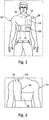
- FIGS. 1 and 2 show a compression bandage 10 with a chest band 11.
- a shoulder band 12 is sewn.
- the shoulder strap 12 completely covers a compressor 14 located thereunder disposed on a half-breast of a patient 15 such that the edges of the shoulder strap 12 are spaced from the compressor 14.
- the compressor 14 is optimally pressed against a surgical wound and can not undesirably slip off the surgical wound. Because the compressorium both against a suture of the surgical wound As well as pressing against the environment of the surgical wound, the risk of the formation of edema or inflammation is reduced.
- the shoulder band 12 is provided in the neck region of the patient 15 with a recess 13.
- the shoulder strap 12 can not disturb the patient 15 in the region of his neck.
- the chest band 11 is guided around a thorax of the patient 15. It primarily serves to fix the entire pressure bandage on the patient 15 and to maintain the tension of the shoulder band 12. This allows the shoulder band 12 to press the compressor 14 against the surgical wound with a certain pressure.
- the chest band 11 has a Velcro pad 17. On the opposite hidden side of the chest band 11 is also a here not closer recognizable Velcro pad. With the Velcro pad 17 and the Velcro pad not visible here, the chest band can be closed depending on whether the shoulder strap 12 is guided over the left or the right half of the patient 15. If the shoulder strap 12 is to be guided over the other shoulder, the compression bandage 10 merely needs to be turned.
- the shoulder strap 12 is performed on the front of the patient 15 coming from his shoulder behind the chest band 11 and then folded up at the bottom of the chest band 11 and finally secured with a double-sided velcro pad 16 on the forward facing side of the chest band 11.
- the double-sided velcro pad 16 may be dependent on the body measurements of the patient 15 on the shoulder strap 12 and the chest band 11 are arranged.
- the shoulder band 12 is sewn to the chest band 11 at an angle of 90 °.
- FIGS. 3 and 4 show a compression bandage 30 with a breast band 31 and a shoulder band 32. That shoulder band 32 is sewn at an angle of less than 90 ° to the chest band 31.
- the chest band 31 partially covers the compressor 14. In this way, the compressor 14 also prevents the chest band from slipping toward the shoulders of the patient 15. In addition, the chest band 31 in this way also contributes to the contact pressure with which the compressor 14 is pressed against the surgical wound.
- the chest band 31 is closed by a double-sided velcro pad 33.
- the double-sided Velcro pad 33 allows the chest band 31 to close regardless of whether the shoulder strap 32 is passed over the left or the right half of the patient 15.
- the shoulder strap 32 is provided with a recess 34 to increase the wearing comfort.
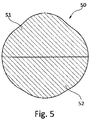
- Fig. 5 shows the compressor 50, which has two differently curved halves 51 and 52.
- the differently curved halves 51 and 52 is a Another way to customize the contact pressure of the compressor 50 on the surgical wound individually to the needs of the patient.
Landscapes
- Health & Medical Sciences (AREA)
- Engineering & Computer Science (AREA)
- Biomedical Technology (AREA)
- Heart & Thoracic Surgery (AREA)
- Vascular Medicine (AREA)
- Life Sciences & Earth Sciences (AREA)
- Animal Behavior & Ethology (AREA)
- General Health & Medical Sciences (AREA)
- Public Health (AREA)
- Veterinary Medicine (AREA)
- Nursing (AREA)
- Orthopedic Medicine & Surgery (AREA)
- Orthopedics, Nursing, And Contraception (AREA)
Description
- Die Erfindung betrifft einen Druckverband zum Andrücken eines Kompressoriums oder einer Kompresse an eine Brusthälfte eines Patienten nach einer Herzschrittmacherimplantation gemäß dem Oberbegriff des Anspruchs 1.
Nach einer Operation, bei der einem Patienten ein Herzschrittmacher oder ein anderes das Herz unterstützendes Gerät eingesetzt wird, wird die Operationswunde oftmals vernäht und mit einem Klebeverband versorgt. Häufig wird über den Klebeverband noch ein Sandsack gelegt, um einen Druck auf die Operationswunde zu erzeugen. Damit soll eine Ödembildung verhindert oder wenigstens reduziert werden. Der Patient ist somit gezwungen, die ganze Zeit zu liegen, damit der Sandsack auf die Operationswunde drücken und nicht verrutschen kann. Dies ist natürlich für den Patienten ausgesprochen anstrengend und unkomfortabel.
DieWO 2006/069 548 A1 beschreibt einen Verband zur Blutstillung nach einer Herzschrittmacheroperation. Er ist mit einem manuell aufpumpbaren Luftbeutel ausgerüstet. Ferner weist er ein Befestigungsmittel zur Befestigung des Luftbeutels am Körper des Patienten auf.
In derUS 3561 442 ist eine Bandage zum Gebrauch nach einer Brustamputation offenbart. Sie wird nach der Operation über einem Verband, welcher die Operationswunde abdeckt, aufgebracht. Die Bandage soll den Verband gegen vor einem Verrutschen sichern. - Eine Orthese, mit der ebenfalls nach einer Brustamputation eine Flüssigkeitsansammlung aus einem Gewebe des Patienten eliminiert werden soll, wird in der
WO 2008/142 186 A1 erwähnt.
Einen Herz-/Brustgurt, der einen Druck im Bereich eines Brustkorbs des Patienten erzeugen soll, beschreibt dieUS 6516 804 B1 . Der Druck auf den Brustkorb kann so stark sein, dass im Einzelfall auf Schulterbänder verzichtet werden kann.
In derUS 2001/003 70 76 A1 wird ein korsettartiges Gewand, das für eine Behandlung unter Druck und Temperatureinwirkung getragen wird, beschrieben. Es soll dem Patienten bei Schmerzen und Unbehagen Erleichterung verschaffen.
Einen Verband zur Kompression des Thorax beschreibt dieEP 1 859 762 A2 . Er wird vorwiegend dann eingesetzt, wenn der Brustbereich des Patienten vor unerwünschten Bewegungen geschützt werden soll, wie beispielsweise bei Rippenbrüchen.
Die Erfindung hat die Aufgabe, einen Druckverband zu schaffen, mit dem auf der Brust ein erforderlicher Anpressdruck erzeugt und einem Patienten mehr Bewegungsfreiheit eingeräumt wird, insbesondere auch beim Atmen.
Die Erfindung löst die gestellte Aufgabe mit einem Druckverband gemäß Anspruch 1. Der Druckverband erzeugt somit den erforderlichen Anpressdruck, mit dem das Kompressorium flächig gegen eine Operationswunde gedrückt wird. Durch die flächige Anpressung kann das Kompressorium sowohl gegen eine wundnaht der Operationswunde als auch gegen die Umgebung der Wundnaht gedrückt werden. Auf diese Weise wird die Gefahr der Bildung eines Ödems oder einer Entzündung reduziert. Die Anpressung des Schulterbands ist vorzugsweise höher als die Anpressung des Brustbandes. Dadurch wird die Atmung des Patienten nicht unnötig behindert, wobei gleichzeitig der Brustverband seine Position am Patienten zuverlässig beibehält. Da auf konventionelle Pflaster verzichtet werden kann, ist der Druckverband für den Patienten auch hautschonend. Zudem ist eine Nachjustierung des Kompressoriums oder der Kompresse jederzeit möglich. Eine nochmalige unangenehme Neuanlage eines Pflasterverbands entfällt also. - Mit den an den Enden des Brustbandes befindlichen Klettpolstern kann das Brustband an der Vorderseite des Patienten verschlossen werden. Da die Klettpolster auf den gegenüberliegenden Seiten des Brustbandes angeordnet sind, lässt es sich unabhängig davon, ob das Schulterband über die linke oder die rechte Brusthälfte geführt wird, gut verschließen. Die doppelseitig wirkenden Klettpolster können zur optimalen Anlage des Druckverbandes am Patienten individuell am Brustband und/oder am Schulterband positioniert werden. Wenn der Herzschrittmacher an der rechten Brusthälfte implantiert wurde, so kann der Druckverband durch einfaches Wenden alternativ über die rechte Brusthälfte geführt werden. Der Druckverband kann aus einem Vlies, einem Vliesverbund oder aus einem textilen Gewebe hergestellt sein.
- Um das Anlegen des Druckverbands am Patienten in kurzer Zeit zu ermöglichen, kann das Schulterband mit seinem einen Ende am Brustband angenäht sein. Die Nahtstelle kann sich vorteilhafterweise am Rücken des Patienten befinden.
- Damit das Kompressorium optimal gegen die Operationswunde gedrückt wird, kann das Schulterband das Kompressorium vollständig überdecken. Das Schulterband kann mit seinen beiden Längsrändern das Kompressorium überlappen, so dass das Kompressorium vollständig vom Schulterband verdeckt ist und nicht unbeabsichtigt von der Operationswunde herunterrutschen kann.
- Das Brustband kann das Kompressorium teilweise überdecken. Zweckmäßigerweise überdeckt das Brustband den zu den Beinen des Patienten hin gewandten Bereich des Kompressoriums. Somit verhindert das Kompressorium, dass das Brustband zu den Schultern des Patienten hin verrutschen kann. Außerdem kann das Brustband auf diese Weise das Kompressorium ebenfalls gegen die Operationswunde drücken.
- An dem Schulterband kann ein Befestigungselement zur Befestigung des Kompressoriums oder der Kompresse an dem Schulterband vorgesehen sein. Die Kompresse kann eine Kühlkompresse sein. Es ist jedoch auch möglich, dass man mehrere Mullkompressen oder andere damit vergleichbare Anpressdruckverstärker mit dem Befestigungselement am Schulterband fixiert.
- Das Befestigungselement kann ein Klettpolster oder eine Klebefläche sein. Somit kann die Kompresse schnell am Schulterband angebracht oder von ihm entfernt werden.
- Das Befestigungselement kann ferner ein Band sein, das mit seinem einen Ende am Schulterband befestigt ist und an seinem anderen Ende ein Klettpolster aufweist, an dem das Kompressorium oder die Kompresse befestigt werden kann.
- Alternativ kann an dem Schulterband eine Tasche zur Aufnahme des Kompressoriums angebracht sein. Somit lässt sich das Kompressorium am Schulterband anordnen, bevor der Druckverband an den Patienten angelegt wird. Dies hilft ebenfalls den Druckverband in kürzester Zeit anzulegen.
- Damit das Kompressorium individuell am Patienten positioniert werden kann, kann die Tasche entlang des Schulterbands verschoben werden. Zu diesem Zweck kann eine Schlaufe an die Tasche genäht und das Schulterband durch die Schlaufe geführt sein.
- Mit dem Befestigungselement und der Tasche kann der Druckverband mit der Kompresse vorkonfektioniert werden.
- Das Schulterband kann schräg am Brustband angenäht sein, so dass das Schulterband und das Brustband einen Winkel von weniger als 90° einschließen. Dadurch kann das Schulterband positionsstabiler über die Schulter geführt werden, so dass es nicht so leicht von der Schulter rutschen kann. In der Praxis hat sich ein Winkelbereich zwischen 50° und 85° besonders gut bewährt.
- Alternativ ist es jedoch auch möglich, das Schulterband in einem Winkel von 90° am Brustband anzunähen.
- Um den Tragekomfort für den Patienten zu erhöhen, kann das Schulterband im Halsbereich des Patienten eine Ausnehmung aufweisen. Dies ist besonders dann nützlich, wenn mit dem Schulterband ein besonders hoher Anpressdruck erzeugt werden muss, da dann das Schulterband möglichst nah am Hals vorbeigeführt werden muss. Durch den Ausschnitt kann das Schulterband den Patienten am Hals kaum stören.
- Das Brustband kann an der am Patienten anliegenden Seite mit mindestens einem hautverträglichen Klebepolster ausgestattet sein. Dadurch wird das Brustband am Körper zuverlässig fixiert, so dass es nicht in Richtung der Schulter rutschen kann und eine zuverlässige Anpressung des Kompressoriums gewährleistet ist. Das Klebepolster kann auf der Basis eines Poliacrylat-Klebers aufgebaut sein. Das Klebepolster kann vorzugsweise mikropunktuell aufgebracht werden um ein vollflächiges Verkleben auf der Haut des Patienten zu vermeiden. Aus demselben Grund kann das Klebepolster alternativ auch kleine Streifen aufweisen.
- Ebenfalls, um ein vollflächiges Verkleben auf der Haut des Patienten zu vermeiden, kann das Brustband alternativ auf der am Patienten anliegenden Seite mit einer Haftschicht ausgerüstet sein. Die Haftschicht kann beispielsweise aus Silikon oder einer Polyurethan-Beschichtung aufgebaut sein. Auch in diesem Fall ist es sinnvoll, wenn die Haftschicht mikropunktuell oder in Form von kleinen Streifen aufgebaut ist.
- Um Infektionen in der Operationswunde zu vermeiden, kann das Brustband und/oder das Schulterband eine Barrierelage, die den Durchgang von Bakterien blockiert, aufweisen.
- Das Brustband und/oder das Schulterband kann auch mit einer semipermeablen Folie ausgerüstet sein. Auf diese Weise ist das Brustband und/oder das Schulterband für Luft und Hautfeuchtigkeit durchlässig. Außerdem schützt die semipermeable Folie die Operationswunde vor dem Eintritt von Bakterien oder von Nässe, die von außen kommt. Dadurch wird der Heilungsprozess unterstützt.
- Die an dem einen der beiden Enden auf den gegenüberliegenden Seiten des Brustbandes angebrachten Klettpolster können vorzugsweise angenäht sein.
- Nachfolgend werden verschiedene Ausführungsbeispiele des erfindungsgemäßen Druckverbands anhand der beiliegenden Zeichnungen näher erläutert.
- Im Einzelnen zeigen:
- Fig. 1
- eine Vorderansicht eines an einem Patienten angelegten Druckverbandes;
- Fig. 2
- eine Rückansicht des Druckverbandes aus
Fig. 1 ; - Fig. 3
- eine Vorderansicht einer zweiten Ausführungsform des an den Patienten angelegten Druckverbandes;
- Fig. 4
- eine Rückansicht des Druckverbandes aus
Fig. 3 ; - Fig. 5
- eine Schnittansicht durch ein Kompressorium.
- Die
Fign. 1 und 2 zeigen einen Druckverband 10 mit einem Brustband 11. An dem Brustband 11 ist ein Schulterband 12 angenäht. Das Schulterband 12 überdeckt ein darunter angeordnetes Kompressorium 14, das auf einer Brusthälfte eines Patienten 15 angeordnet ist, vollständig, so dass die Ränder des Schulterbands 12 zum Kompressorium 14 beabstandet sind. Dadurch wird das Kompressorium 14 optimal gegen eine Operationswunde gedrückt und kann nicht unerwünschterweise von der Operationswunde herunterrutschen. Weil das Kompressorium sowohl gegen eine Wundnaht der Operationswunde als auch gegen die Umgebung der Operationswunde drückt, wird die Gefahr der Bildung eines Ödems oder einer Entzündung reduziert.
Das Schulterband 12 ist im Halsbereich des Patienten 15 mit einer Ausnehmung 13 versehen. Durch die Ausnehmung 13 kann das Schulterband 12 den Patienten 15 nicht im Bereich seines Halses stören.
Das Brustband 11 ist um einen Brustkorb des Patienten 15 herumgeführt. Es dient in erster Linie der Fixierung des gesamten Druckverbandes am Patienten 15 und der Aufrechterhaltung der Spannung des Schulterbands 12. Dadurch kann das Schulterband 12 das Kompressorium 14 mit einem bestimmten Druck gegen die Operationswunde drücken. Das Brustband 11 weist ein Klettpolster 17 auf. Auf der gegenüberliegenden verdeckten Seite des Brustbandes 11 befindet sich ebenfalls ein hier nicht näher erkennbares Klettpolster. Mit dem Klettpolster 17 und dem hier nicht erkennbaren Klettpolster kann das Brustband verschlossen werden je nachdem, ob das Schulterband 12 über die linke oder die rechte Brusthälfte des Patienten 15 geführt wird. Wenn das Schulterband 12 über die andere Schulter geführt werden soll, muss der Druckverband 10 lediglich gewendet werden.
Das Schulterband 12 wird an der Vorderseite des Patienten 15 von seiner Schulter kommend hinter dem Brustband 11 durchgeführt und dann am unteren Rand des Brustbandes 11 nach oben umgeschlagen und schließlich mit einem doppelseitig wirkenden Klettpolster 16 an der nach vorne weisenden Seite des Brustbands 11 befestigt. Das doppelseitig wirkende Klettpolster 16 kann abhängig von den Körpermaßen des Patienten 15 am Schulterband 12 und am Brustband 11 angeordnet werden. - Das Schulterband 12 ist am Brustband 11 mit einem Winkel von 90° angenäht.
- Die
Fign. 3 und 4 zeigen einen Druckverband 30 mit einem Brustband 31 und einem Schulterband 32. Dass Schulterband 32 ist unter einem Winkel von weniger als 90° am Brustband 31 angenäht. - Das Brustband 31 überdeckt das Kompressorium 14 teilweise. Auf diese Weise verhindert das Kompressorium 14 auch, dass das Brustband zu den Schultern des Patienten 15 hin verrutschen kann. Außerdem leistet das Brustband 31 auf diese Weise ebenfalls einen Beitrag zum Anpressdruck, mit dem das Kompressorium 14 gegen die Operationswunde gedrückt wird.
- Das Brustband 31 ist mit einem ebenfalls doppelseitig wirkenden Klettpolster 33 verschlossen. Das doppelseitig wirkende Klettpolster 33 ermöglicht es das Brustband 31 zu verschließen unabhängig davon, ob das Schulterband 32 über die linke oder die Rechte Brusthälfte des Patienten 15 geführt wird.
- Das Schulterband 32 ist zur Steigerung des Tragekomforts mit einer Ausnehmung 34 versehen.
-
Fig. 5 zeigt das Kompressorium 50, welches zwei unterschiedlich gewölbte Hälften 51 und 52 aufweist. Durch die unterschiedlich gewölbten Hälften 51 und 52 besteht eine weitere Möglichkeit, den Anpressdruck des Kompressoriums 50 auf die Operationswunde individuell an die Erfordernisse des Patienten anzupassen. -
- 10
- Druckverband
- 11
- Brustband
- 12
- Schulterband
- 13
- Ausnehmung
- 14
- Kompressorium
- 15
- Patient
- 16
- Klettpolster
- 17
- Klettpolster
- 30
- Druckverband
- 31
- Brustband
- 32
- Schulterband
- 33
- Klettpolster
- 34
- Ausnehmung
- 50
- Kompressorium
- 51
- Hälfte
- 52
- Hälfte
Claims (15)
- Druckverband (10, 30) zum Andrücken eines Kompressoriums (14, 50) oder einer Kompresse an eine Brusthälfte eines Patienten (15) nach einer Herzschrittmacherimplantation mit einem um einen Brustkorb geführten Brustband (11, 31), wobei an einem der beiden Enden des Brustbandes (11, 31) auf seinen gegenüberliegenden Seiten einenfalls Klettpolster (17) angebracht sind, und einem um eine Schulter geführten Schulterband (12, 32), das mit seinem einen Ende zwischen den beiden Enden des Brustbandes (11, 31) am Brustband (11, 31) außermittig befestigt ist, dadurch gekennzeichnet, dass einenfalls zur Fixierung des anderen Endes des Schulterbandes (12, 32) am Brustband (11, 31) ein doppelseitig wirkendes Klettpolster (16) vorgesehen ist und anderenfalls anstelle der Klettpolster (17) nur auf einer der gegenüberliegenden Seiten des Brustbandes (11, 31) an einem seiner beiden Enden ein doppelseitig wirkendes Klettpolster (33) angebracht ist und zur Fixierung des anderen Endes des Schulterbandes (12, 32) am Brustband (11, 31) auch das doppelseitig wirkende Klettpolster (16) vorgesehen ist so dass in beiden Fällen das Schulterband (12, 32) durch Wenden des Druckverbands (10, 30) entweder über die linke oder die rechte Brusthälfte führbar ist.
- Druckverband (10, 30) nach Anspruch 1, dadurch gekennzeichnet, dass das Schulterband (12, 32) mit seinem einen Ende am Brustband (11, 31) angenäht ist.
- Druckverband (10, 30) nach Anspruch 1 oder 2, dadurch gekennzeichnet, dass das Schulterband (12, 32) das Kompressorium (14, 50) vollständig überdeckt.
- Druckverband (10, 30) nach einem der Ansprüche 1 bis 3, dadurch gekennzeichnet, dass das Brustband (11, 31) das Kompressorium (14, 50) wenigstens teilweise überdeckt.
- Druckverband (10, 30) nach einem der Ansprüche 1 bis 3, dadurch gekennzeichnet, dass an dem Schulterband (12, 32) ein Befestigungselement zur Befestigung des Kompressoriums (14, 50) oder der Kompresse am Schulterband (12, 32) vorgesehen ist.
- Druckverband (10, 30) nach Anspruch 5, dadurch gekennzeichnet, dass das Befestigungselement ein Klettpolster oder eine Klebefläche ist.
- Druckverband (10, 30) nach Anspruch 5 oder 6, dadurch gekennzeichnet, dass das Befestigungselement ein Band ist, das mit seinem einen Ende am Schulterband (12, 32) befestigt ist und an seinem anderen Ende ein Klettpolster aufweist.
- Druckverband (10, 30) nach einem der Ansprüche 1 bis 7, dadurch gekennzeichnet, dass an dem Schulterband (12, 32) eine Tasche zur Aufnahme des Kompressoriums (14, 50) angebracht ist.
- Druckverband (10, 30) nach Anspruch 8, dadurch gekennzeichnet, dass die Tasche entlang des Schulterbands (12, 32) verschiebbar angeordnet ist.
- Druckverband (10, 30) nach einem der Ansprüche 2 bis 9, dadurch gekennzeichnet, dass das Schulterband (12, 32) schräg am Brustband (11, 31) angenäht ist, so dass das Schulterband (12, 32) und das Brustband (11, 31) einen Winkel von weniger als 90° einschließen.
- Druckverband (10, 30) nach einem der Ansprüche 1 bis 10, dadurch gekennzeichnet, dass das Schulterband (12, 32) im Halsbereich des Patienten (15) eine Ausnehmung (13) aufweist.
- Druckverband (10, 30) nach einem der Ansprüche 1 bis 11, dadurch gekennzeichnet, dass das Brustband (11, 31) auf der am Patienten (15) anliegenden Seite mit einer Haftschicht versehen ist.
- Druckverband (10, 30) nach einem der Ansprüche 1 bis 12, dadurch gekennzeichnet, dass das Brustband (11, 31) auf der am Patienten (15) anliegenden Seite mit mindestens einem hautverträglichen Klebepolster ausgestattet ist.
- Druckverband (10, 30) nach einem der Ansprüche 1 bis 13, dadurch gekennzeichnet, dass das Brustband (11, 31) und/oder das Schulterband (12, 32) eine Barrierelage, die den Durchgang von Bakterien blockiert, aufweist.
- Druckverband (10, 30) nach einem der Ansprüche 1 bis 14, dadurch gekennzeichnet, dass die an dem einen der beiden Enden des Brustbrandes (11, 31) angeordneten Klettpolster (17) angenäht sind.
Applications Claiming Priority (1)
| Application Number | Priority Date | Filing Date | Title |
|---|---|---|---|
| DE102014004988.4A DE102014004988A1 (de) | 2014-04-07 | 2014-04-07 | Druckverband |
Publications (2)
| Publication Number | Publication Date |
|---|---|
| EP2929863A1 EP2929863A1 (de) | 2015-10-14 |
| EP2929863B1 true EP2929863B1 (de) | 2018-02-21 |
Family
ID=52823994
Family Applications (1)
| Application Number | Title | Priority Date | Filing Date |
|---|---|---|---|
| EP15000986.8A Active EP2929863B1 (de) | 2014-04-07 | 2015-04-07 | Druckverband |
Country Status (3)
| Country | Link |
|---|---|
| EP (1) | EP2929863B1 (de) |
| DE (1) | DE102014004988A1 (de) |
| ES (1) | ES2670538T3 (de) |
Family Cites Families (9)
| Publication number | Priority date | Publication date | Assignee | Title |
|---|---|---|---|---|
| US3561442A (en) * | 1968-11-15 | 1971-02-09 | John T Goswitz | Mastectomy compression bandage |
| JPH09131347A (ja) * | 1995-11-09 | 1997-05-20 | Sumitomo Rubber Ind Ltd | 胸部圧迫ベルト |
| US20010037076A1 (en) * | 2000-03-13 | 2001-11-01 | Shelton Sharon Rene?Apos;E | Temperature and compression treatment garment for the chest |
| US6516804B1 (en) * | 2000-05-03 | 2003-02-11 | Aztec-Life, Inc. | Cardio-thoracic compression harness |
| CN100394896C (zh) * | 2004-12-31 | 2008-06-18 | 田亚华 | 永久性心脏起搏器植入术后压迫止血及囊袋保护装置 |
| AT502986B1 (de) * | 2005-12-27 | 2008-08-15 | Garvington Res & Dev Inc | Stützbandage |
| ES2303438B2 (es) * | 2006-04-27 | 2009-07-07 | Isabel Ruiz Escalera | Dispositivo de compresion del torax. |
| ES2324578B1 (es) * | 2007-05-17 | 2010-05-26 | Juan-Damaso Pardo Martinez | Sistema de compresion axilar y/o toracico. |
| FR2935607B1 (fr) * | 2008-09-08 | 2013-08-09 | Gil Frey | Dispositif de contention thoracique pour favoriser la toux et l'expectoration |
-
2014
- 2014-04-07 DE DE102014004988.4A patent/DE102014004988A1/de not_active Withdrawn
-
2015
- 2015-04-07 EP EP15000986.8A patent/EP2929863B1/de active Active
- 2015-04-07 ES ES15000986.8T patent/ES2670538T3/es active Active
Non-Patent Citations (1)
| Title |
|---|
| None * |
Also Published As
| Publication number | Publication date |
|---|---|
| DE102014004988A1 (de) | 2015-10-08 |
| EP2929863A1 (de) | 2015-10-14 |
| ES2670538T3 (es) | 2018-05-30 |
Similar Documents
| Publication | Publication Date | Title |
|---|---|---|
| DE2362908A1 (de) | Leibbinde | |
| DE1491149A1 (de) | Leibbinde | |
| DE202014002947U1 (de) | Druckverband | |
| EP2929863B1 (de) | Druckverband | |
| EP3310423B1 (de) | Set zur fixierung eines katheterschlauchs | |
| EP3551141B1 (de) | Vorrichtung zum externen aufbringen einer lokalen druckkraft unterhalb des rippenbogens eines patienten zur verkleinerung des magenvolumens | |
| DE19939005A1 (de) | Clavicula-Bandage | |
| DE102006017567B4 (de) | Thoraxbandage | |
| EP1398010B1 (de) | Clavicula-Bandage | |
| EP2105056B1 (de) | Lymphabflussvorrichtung für die weibliche Brust | |
| EP0476623A1 (de) | Fixierbandage | |
| DE60030335T2 (de) | Orthetische traumavorrichtung | |
| WO2010139084A1 (de) | Orthese | |
| DE4236654C2 (de) | Fertigbandage | |
| DE202009002630U1 (de) | Kompressenfixation | |
| DE202012002221U1 (de) | Thorax-Rumpf-Kompressionsbandage | |
| DE102019102007B4 (de) | Therapeutische Kopfbedeckung | |
| DE4230562C2 (de) | Halterung für einen Urinbeutel | |
| EP3082664A1 (de) | Schulterbandage | |
| DE10110178A1 (de) | Fixieranzug mit Sicherheitsbandage | |
| DE202014003071U1 (de) | Druckverband | |
| AT508970B1 (de) | Stützvorrichtung für den brustkorb mit einweg-pads | |
| WO2005120404A1 (de) | Bandage für den schulter- und oberarmbereich | |
| DE202011100814U1 (de) | Fixiergürtel zur medizinischen Fixierung eines Patienten | |
| DE102006006879A1 (de) | Flächiger Achselschweißabsorber |
Legal Events
| Date | Code | Title | Description |
|---|---|---|---|
| PUAI | Public reference made under article 153(3) epc to a published international application that has entered the european phase |
Free format text: ORIGINAL CODE: 0009012 |
|
| AK | Designated contracting states |
Kind code of ref document: A1 Designated state(s): AL AT BE BG CH CY CZ DE DK EE ES FI FR GB GR HR HU IE IS IT LI LT LU LV MC MK MT NL NO PL PT RO RS SE SI SK SM TR |
|
| AX | Request for extension of the european patent |
Extension state: BA ME |
|
| 17P | Request for examination filed |
Effective date: 20160406 |
|
| RBV | Designated contracting states (corrected) |
Designated state(s): AL AT BE BG CH CY CZ DE DK EE ES FI FR GB GR HR HU IE IS IT LI LT LU LV MC MK MT NL NO PL PT RO RS SE SI SK SM TR |
|
| 17Q | First examination report despatched |
Effective date: 20160715 |
|
| STAA | Information on the status of an ep patent application or granted ep patent |
Free format text: STATUS: EXAMINATION IS IN PROGRESS |
|
| GRAP | Despatch of communication of intention to grant a patent |
Free format text: ORIGINAL CODE: EPIDOSNIGR1 |
|
| STAA | Information on the status of an ep patent application or granted ep patent |
Free format text: STATUS: GRANT OF PATENT IS INTENDED |
|
| INTG | Intention to grant announced |
Effective date: 20170914 |
|
| GRAS | Grant fee paid |
Free format text: ORIGINAL CODE: EPIDOSNIGR3 |
|
| GRAA | (expected) grant |
Free format text: ORIGINAL CODE: 0009210 |
|
| STAA | Information on the status of an ep patent application or granted ep patent |
Free format text: STATUS: THE PATENT HAS BEEN GRANTED |
|
| AK | Designated contracting states |
Kind code of ref document: B1 Designated state(s): AL AT BE BG CH CY CZ DE DK EE ES FI FR GB GR HR HU IE IS IT LI LT LU LV MC MK MT NL NO PL PT RO RS SE SI SK SM TR |
|
| REG | Reference to a national code |
Ref country code: GB Ref legal event code: FG4D Free format text: NOT ENGLISH |
|
| REG | Reference to a national code |
Ref country code: CH Ref legal event code: EP |
|
| REG | Reference to a national code |
Ref country code: AT Ref legal event code: REF Ref document number: 970896 Country of ref document: AT Kind code of ref document: T Effective date: 20180315 |
|
| REG | Reference to a national code |
Ref country code: IE Ref legal event code: FG4D Free format text: LANGUAGE OF EP DOCUMENT: GERMAN |
|
| REG | Reference to a national code |
Ref country code: DE Ref legal event code: R096 Ref document number: 502015003091 Country of ref document: DE |
|
| REG | Reference to a national code |
Ref country code: FR Ref legal event code: PLFP Year of fee payment: 4 |
|
| REG | Reference to a national code |
Ref country code: ES Ref legal event code: FG2A Ref document number: 2670538 Country of ref document: ES Kind code of ref document: T3 Effective date: 20180530 |
|
| REG | Reference to a national code |
Ref country code: CH Ref legal event code: NV Representative=s name: ROTTMANN, ZIMMERMANN + PARTNER AG, CH |
|
| REG | Reference to a national code |
Ref country code: NL Ref legal event code: MP Effective date: 20180221 |
|
| REG | Reference to a national code |
Ref country code: LT Ref legal event code: MG4D |
|
| PG25 | Lapsed in a contracting state [announced via postgrant information from national office to epo] |
Ref country code: FI Free format text: LAPSE BECAUSE OF FAILURE TO SUBMIT A TRANSLATION OF THE DESCRIPTION OR TO PAY THE FEE WITHIN THE PRESCRIBED TIME-LIMIT Effective date: 20180221 Ref country code: HR Free format text: LAPSE BECAUSE OF FAILURE TO SUBMIT A TRANSLATION OF THE DESCRIPTION OR TO PAY THE FEE WITHIN THE PRESCRIBED TIME-LIMIT Effective date: 20180221 Ref country code: NO Free format text: LAPSE BECAUSE OF FAILURE TO SUBMIT A TRANSLATION OF THE DESCRIPTION OR TO PAY THE FEE WITHIN THE PRESCRIBED TIME-LIMIT Effective date: 20180521 Ref country code: LT Free format text: LAPSE BECAUSE OF FAILURE TO SUBMIT A TRANSLATION OF THE DESCRIPTION OR TO PAY THE FEE WITHIN THE PRESCRIBED TIME-LIMIT Effective date: 20180221 Ref country code: CY Free format text: LAPSE BECAUSE OF FAILURE TO SUBMIT A TRANSLATION OF THE DESCRIPTION OR TO PAY THE FEE WITHIN THE PRESCRIBED TIME-LIMIT Effective date: 20180221 Ref country code: NL Free format text: LAPSE BECAUSE OF FAILURE TO SUBMIT A TRANSLATION OF THE DESCRIPTION OR TO PAY THE FEE WITHIN THE PRESCRIBED TIME-LIMIT Effective date: 20180221 |
|
| PG25 | Lapsed in a contracting state [announced via postgrant information from national office to epo] |
Ref country code: GR Free format text: LAPSE BECAUSE OF FAILURE TO SUBMIT A TRANSLATION OF THE DESCRIPTION OR TO PAY THE FEE WITHIN THE PRESCRIBED TIME-LIMIT Effective date: 20180522 Ref country code: BG Free format text: LAPSE BECAUSE OF FAILURE TO SUBMIT A TRANSLATION OF THE DESCRIPTION OR TO PAY THE FEE WITHIN THE PRESCRIBED TIME-LIMIT Effective date: 20180521 Ref country code: RS Free format text: LAPSE BECAUSE OF FAILURE TO SUBMIT A TRANSLATION OF THE DESCRIPTION OR TO PAY THE FEE WITHIN THE PRESCRIBED TIME-LIMIT Effective date: 20180221 Ref country code: SE Free format text: LAPSE BECAUSE OF FAILURE TO SUBMIT A TRANSLATION OF THE DESCRIPTION OR TO PAY THE FEE WITHIN THE PRESCRIBED TIME-LIMIT Effective date: 20180221 Ref country code: LV Free format text: LAPSE BECAUSE OF FAILURE TO SUBMIT A TRANSLATION OF THE DESCRIPTION OR TO PAY THE FEE WITHIN THE PRESCRIBED TIME-LIMIT Effective date: 20180221 |
|
| PG25 | Lapsed in a contracting state [announced via postgrant information from national office to epo] |
Ref country code: MT Free format text: LAPSE BECAUSE OF FAILURE TO SUBMIT A TRANSLATION OF THE DESCRIPTION OR TO PAY THE FEE WITHIN THE PRESCRIBED TIME-LIMIT Effective date: 20180221 |
|
| PG25 | Lapsed in a contracting state [announced via postgrant information from national office to epo] |
Ref country code: PL Free format text: LAPSE BECAUSE OF FAILURE TO SUBMIT A TRANSLATION OF THE DESCRIPTION OR TO PAY THE FEE WITHIN THE PRESCRIBED TIME-LIMIT Effective date: 20180221 Ref country code: EE Free format text: LAPSE BECAUSE OF FAILURE TO SUBMIT A TRANSLATION OF THE DESCRIPTION OR TO PAY THE FEE WITHIN THE PRESCRIBED TIME-LIMIT Effective date: 20180221 Ref country code: IT Free format text: LAPSE BECAUSE OF FAILURE TO SUBMIT A TRANSLATION OF THE DESCRIPTION OR TO PAY THE FEE WITHIN THE PRESCRIBED TIME-LIMIT Effective date: 20180221 Ref country code: RO Free format text: LAPSE BECAUSE OF FAILURE TO SUBMIT A TRANSLATION OF THE DESCRIPTION OR TO PAY THE FEE WITHIN THE PRESCRIBED TIME-LIMIT Effective date: 20180221 Ref country code: AL Free format text: LAPSE BECAUSE OF FAILURE TO SUBMIT A TRANSLATION OF THE DESCRIPTION OR TO PAY THE FEE WITHIN THE PRESCRIBED TIME-LIMIT Effective date: 20180221 |
|
| REG | Reference to a national code |
Ref country code: DE Ref legal event code: R097 Ref document number: 502015003091 Country of ref document: DE |
|
| PG25 | Lapsed in a contracting state [announced via postgrant information from national office to epo] |
Ref country code: MC Free format text: LAPSE BECAUSE OF FAILURE TO SUBMIT A TRANSLATION OF THE DESCRIPTION OR TO PAY THE FEE WITHIN THE PRESCRIBED TIME-LIMIT Effective date: 20180221 Ref country code: CZ Free format text: LAPSE BECAUSE OF FAILURE TO SUBMIT A TRANSLATION OF THE DESCRIPTION OR TO PAY THE FEE WITHIN THE PRESCRIBED TIME-LIMIT Effective date: 20180221 Ref country code: SK Free format text: LAPSE BECAUSE OF FAILURE TO SUBMIT A TRANSLATION OF THE DESCRIPTION OR TO PAY THE FEE WITHIN THE PRESCRIBED TIME-LIMIT Effective date: 20180221 Ref country code: DK Free format text: LAPSE BECAUSE OF FAILURE TO SUBMIT A TRANSLATION OF THE DESCRIPTION OR TO PAY THE FEE WITHIN THE PRESCRIBED TIME-LIMIT Effective date: 20180221 Ref country code: SM Free format text: LAPSE BECAUSE OF FAILURE TO SUBMIT A TRANSLATION OF THE DESCRIPTION OR TO PAY THE FEE WITHIN THE PRESCRIBED TIME-LIMIT Effective date: 20180221 |
|
| PLBE | No opposition filed within time limit |
Free format text: ORIGINAL CODE: 0009261 |
|
| STAA | Information on the status of an ep patent application or granted ep patent |
Free format text: STATUS: NO OPPOSITION FILED WITHIN TIME LIMIT |
|
| REG | Reference to a national code |
Ref country code: IE Ref legal event code: MM4A |
|
| 26N | No opposition filed |
Effective date: 20181122 |
|
| PG25 | Lapsed in a contracting state [announced via postgrant information from national office to epo] |
Ref country code: LU Free format text: LAPSE BECAUSE OF NON-PAYMENT OF DUE FEES Effective date: 20180407 |
|
| PG25 | Lapsed in a contracting state [announced via postgrant information from national office to epo] |
Ref country code: SI Free format text: LAPSE BECAUSE OF FAILURE TO SUBMIT A TRANSLATION OF THE DESCRIPTION OR TO PAY THE FEE WITHIN THE PRESCRIBED TIME-LIMIT Effective date: 20180221 |
|
| PG25 | Lapsed in a contracting state [announced via postgrant information from national office to epo] |
Ref country code: IE Free format text: LAPSE BECAUSE OF NON-PAYMENT OF DUE FEES Effective date: 20180407 |
|
| PG25 | Lapsed in a contracting state [announced via postgrant information from national office to epo] |
Ref country code: TR Free format text: LAPSE BECAUSE OF FAILURE TO SUBMIT A TRANSLATION OF THE DESCRIPTION OR TO PAY THE FEE WITHIN THE PRESCRIBED TIME-LIMIT Effective date: 20180221 |
|
| PG25 | Lapsed in a contracting state [announced via postgrant information from national office to epo] |
Ref country code: PT Free format text: LAPSE BECAUSE OF FAILURE TO SUBMIT A TRANSLATION OF THE DESCRIPTION OR TO PAY THE FEE WITHIN THE PRESCRIBED TIME-LIMIT Effective date: 20180221 |
|
| PG25 | Lapsed in a contracting state [announced via postgrant information from national office to epo] |
Ref country code: HU Free format text: LAPSE BECAUSE OF FAILURE TO SUBMIT A TRANSLATION OF THE DESCRIPTION OR TO PAY THE FEE WITHIN THE PRESCRIBED TIME-LIMIT; INVALID AB INITIO Effective date: 20150407 Ref country code: MK Free format text: LAPSE BECAUSE OF NON-PAYMENT OF DUE FEES Effective date: 20180221 |
|
| PG25 | Lapsed in a contracting state [announced via postgrant information from national office to epo] |
Ref country code: IS Free format text: LAPSE BECAUSE OF FAILURE TO SUBMIT A TRANSLATION OF THE DESCRIPTION OR TO PAY THE FEE WITHIN THE PRESCRIBED TIME-LIMIT Effective date: 20180621 |
|
| PGFP | Annual fee paid to national office [announced via postgrant information from national office to epo] |
Ref country code: CH Payment date: 20200406 Year of fee payment: 6 |
|
| PGFP | Annual fee paid to national office [announced via postgrant information from national office to epo] |
Ref country code: BE Payment date: 20200415 Year of fee payment: 6 |
|
| PGFP | Annual fee paid to national office [announced via postgrant information from national office to epo] |
Ref country code: AT Payment date: 20200324 Year of fee payment: 6 |
|
| REG | Reference to a national code |
Ref country code: AT Ref legal event code: MM01 Ref document number: 970896 Country of ref document: AT Kind code of ref document: T Effective date: 20210407 |
|
| REG | Reference to a national code |
Ref country code: BE Ref legal event code: MM Effective date: 20210430 |
|
| PG25 | Lapsed in a contracting state [announced via postgrant information from national office to epo] |
Ref country code: LI Free format text: LAPSE BECAUSE OF NON-PAYMENT OF DUE FEES Effective date: 20210430 Ref country code: CH Free format text: LAPSE BECAUSE OF NON-PAYMENT OF DUE FEES Effective date: 20210430 Ref country code: AT Free format text: LAPSE BECAUSE OF NON-PAYMENT OF DUE FEES Effective date: 20210407 |
|
| PG25 | Lapsed in a contracting state [announced via postgrant information from national office to epo] |
Ref country code: BE Free format text: LAPSE BECAUSE OF NON-PAYMENT OF DUE FEES Effective date: 20210430 |
|
| PGFP | Annual fee paid to national office [announced via postgrant information from national office to epo] |
Ref country code: DE Payment date: 20250404 Year of fee payment: 11 |
|
| PGFP | Annual fee paid to national office [announced via postgrant information from national office to epo] |
Ref country code: ES Payment date: 20250509 Year of fee payment: 11 |
|
| PGFP | Annual fee paid to national office [announced via postgrant information from national office to epo] |
Ref country code: FR Payment date: 20250411 Year of fee payment: 11 |
|
| REG | Reference to a national code |
Ref country code: DE Ref legal event code: R081 Ref document number: 502015003091 Country of ref document: DE Owner name: ANDANZA GMBH, DE Free format text: FORMER OWNER: OESTREICHER, ULRICH, 37276 MEINHARD, DE |
|
| PGFP | Annual fee paid to national office [announced via postgrant information from national office to epo] |
Ref country code: GB Payment date: 20260326 Year of fee payment: 12 |