EP2937747A1 - Optimisation d'une séquence de bandes à décaper se basant sur la modélisation d'une ligne de décapage - Google Patents
Optimisation d'une séquence de bandes à décaper se basant sur la modélisation d'une ligne de décapage Download PDFInfo
- Publication number
- EP2937747A1 EP2937747A1 EP14165815.3A EP14165815A EP2937747A1 EP 2937747 A1 EP2937747 A1 EP 2937747A1 EP 14165815 A EP14165815 A EP 14165815A EP 2937747 A1 EP2937747 A1 EP 2937747A1
- Authority
- EP
- European Patent Office
- Prior art keywords
- computer
- pickling line
- sequences
- pickling
- operating method
- Prior art date
- Legal status (The legal status is an assumption and is not a legal conclusion. Google has not performed a legal analysis and makes no representation as to the accuracy of the status listed.)
- Withdrawn
Links
- 238000005554 pickling Methods 0.000 title claims abstract description 142
- 239000000463 material Substances 0.000 claims abstract description 22
- 238000000034 method Methods 0.000 claims description 49
- 238000005457 optimization Methods 0.000 claims description 35
- 238000011017 operating method Methods 0.000 claims description 21
- 230000008569 process Effects 0.000 claims description 10
- 239000000203 mixture Substances 0.000 claims description 8
- 230000004048 modification Effects 0.000 claims description 8
- 238000012986 modification Methods 0.000 claims description 8
- 239000000126 substance Substances 0.000 claims description 6
- 230000008859 change Effects 0.000 claims description 3
- 238000003860 storage Methods 0.000 claims description 3
- 238000005516 engineering process Methods 0.000 claims description 2
- 238000004519 manufacturing process Methods 0.000 description 16
- 238000013459 approach Methods 0.000 description 5
- 238000005265 energy consumption Methods 0.000 description 5
- UQSXHKLRYXJYBZ-UHFFFAOYSA-N Iron oxide Chemical compound [Fe]=O UQSXHKLRYXJYBZ-UHFFFAOYSA-N 0.000 description 3
- 239000002253 acid Substances 0.000 description 3
- 230000007704 transition Effects 0.000 description 3
- 230000002068 genetic effect Effects 0.000 description 2
- 238000002922 simulated annealing Methods 0.000 description 2
- 108010068370 Glutens Proteins 0.000 description 1
- 229910000831 Steel Inorganic materials 0.000 description 1
- 230000006978 adaptation Effects 0.000 description 1
- 238000011437 continuous method Methods 0.000 description 1
- 230000001419 dependent effect Effects 0.000 description 1
- 238000011438 discrete method Methods 0.000 description 1
- 235000021312 gluten Nutrition 0.000 description 1
- 238000010438 heat treatment Methods 0.000 description 1
- 229910052595 hematite Inorganic materials 0.000 description 1
- 239000011019 hematite Substances 0.000 description 1
- LIKBJVNGSGBSGK-UHFFFAOYSA-N iron(3+);oxygen(2-) Chemical compound [O-2].[O-2].[O-2].[Fe+3].[Fe+3] LIKBJVNGSGBSGK-UHFFFAOYSA-N 0.000 description 1
- SZVJSHCCFOBDDC-UHFFFAOYSA-N iron(II,III) oxide Inorganic materials O=[Fe]O[Fe]O[Fe]=O SZVJSHCCFOBDDC-UHFFFAOYSA-N 0.000 description 1
- 238000012067 mathematical method Methods 0.000 description 1
- 239000002184 metal Substances 0.000 description 1
- 238000012545 processing Methods 0.000 description 1
- 230000000750 progressive effect Effects 0.000 description 1
- 239000010959 steel Substances 0.000 description 1
Images



Classifications
-
- G—PHYSICS
- G05—CONTROLLING; REGULATING
- G05B—CONTROL OR REGULATING SYSTEMS IN GENERAL; FUNCTIONAL ELEMENTS OF SUCH SYSTEMS; MONITORING OR TESTING ARRANGEMENTS FOR SUCH SYSTEMS OR ELEMENTS
- G05B13/00—Adaptive control systems, i.e. systems automatically adjusting themselves to have a performance which is optimum according to some preassigned criterion
- G05B13/02—Adaptive control systems, i.e. systems automatically adjusting themselves to have a performance which is optimum according to some preassigned criterion electric
- G05B13/04—Adaptive control systems, i.e. systems automatically adjusting themselves to have a performance which is optimum according to some preassigned criterion electric involving the use of models or simulators
-
- C—CHEMISTRY; METALLURGY
- C23—COATING METALLIC MATERIAL; COATING MATERIAL WITH METALLIC MATERIAL; CHEMICAL SURFACE TREATMENT; DIFFUSION TREATMENT OF METALLIC MATERIAL; COATING BY VACUUM EVAPORATION, BY SPUTTERING, BY ION IMPLANTATION OR BY CHEMICAL VAPOUR DEPOSITION, IN GENERAL; INHIBITING CORROSION OF METALLIC MATERIAL OR INCRUSTATION IN GENERAL
- C23G—CLEANING OR DE-GREASING OF METALLIC MATERIAL BY CHEMICAL METHODS OTHER THAN ELECTROLYSIS
- C23G3/00—Apparatus for cleaning or pickling metallic material
- C23G3/02—Apparatus for cleaning or pickling metallic material for cleaning wires, strips, filaments continuously
-
- G—PHYSICS
- G05—CONTROLLING; REGULATING
- G05B—CONTROL OR REGULATING SYSTEMS IN GENERAL; FUNCTIONAL ELEMENTS OF SUCH SYSTEMS; MONITORING OR TESTING ARRANGEMENTS FOR SUCH SYSTEMS OR ELEMENTS
- G05B13/00—Adaptive control systems, i.e. systems automatically adjusting themselves to have a performance which is optimum according to some preassigned criterion
- G05B13/02—Adaptive control systems, i.e. systems automatically adjusting themselves to have a performance which is optimum according to some preassigned criterion electric
- G05B13/04—Adaptive control systems, i.e. systems automatically adjusting themselves to have a performance which is optimum according to some preassigned criterion electric involving the use of models or simulators
- G05B13/041—Adaptive control systems, i.e. systems automatically adjusting themselves to have a performance which is optimum according to some preassigned criterion electric involving the use of models or simulators in which a variable is automatically adjusted to optimise the performance
-
- G—PHYSICS
- G05—CONTROLLING; REGULATING
- G05B—CONTROL OR REGULATING SYSTEMS IN GENERAL; FUNCTIONAL ELEMENTS OF SUCH SYSTEMS; MONITORING OR TESTING ARRANGEMENTS FOR SUCH SYSTEMS OR ELEMENTS
- G05B17/00—Systems involving the use of models or simulators of said systems
- G05B17/02—Systems involving the use of models or simulators of said systems electric
Definitions
- the present invention relates to a pickling line operating method in which a number of strips to be pickled are to be pickled each having initial material properties.
- the present invention further relates to machine-readable program code for a computer, the program code having control instructions the execution of which causes the computer to execute such an operating method.
- the present invention further relates to a computer programmed with such program code.
- the task of a pickling line is to free the bands to be pickled from scale.
- the optimum residence time of a strip in a pickling line is influenced by the scale layer on the surface of the respective strip, the nature of the pickling line, the pickling medium (in particular the acid concentration) and other operating parameters of the pickling line (for example the temperature of the pickling medium).
- the optimum residence time and the corresponding optimum settings of the pickling line are usually taken either from tables or determined with the aid of a pickling line model.
- the pickling line model can be based on mathematical-physical equations.
- the model of the pickling line can in turn consist of several submodels.
- the operating parameters of the pickling line generally have to be adapted in each case. These operating parameters are determined by the pick line model so as to maximize throughput and minimize overall process time.
- the model of the pickling line takes into account the material properties of the strips, production specifications and the state of the pickling line when determining the operating parameters of the pickling line.
- the pickling line model often also determines the energy consumption. In particular during transitional periods, however, the pickling result - in relation to the total process duration and / or the energy consumption - is often not optimal. For a given production plan, i. In a given sequence in which the ribbons are to be pickled, the transition times can represent a significant proportion of the total process time. Two different possible production plans, ie two mutually different sequences of bands containing the same bands in different orders, may therefore have different total process times and / or different total energy consumptions from each other.
- the object of the present invention is to provide means by which an optimized production plan can be determined in a simple and reliable manner.
- step a) attaches only a single sequence.
- the computer varies in the context of step c) the scheduled sequence.
- the computer generally retains at least the previously best sequence for the subsequent iteration.
- the other sequences for the subsequent iteration can be determined as needed. It is crucial that the number of sequences and / or the sequences as such are different after variation than before.
- the model of the pickling line is known as such. However, it is only used in the prior art to determine the associated optimized operation of the pickling line for a given sequence of bands. On the other hand, it is not used in the prior art to determine the sequence of bands as such.
- the termination criterion may be determined as needed.
- the abort criterion may be that during a number of consecutive iterations, no or only marginal improvements of the best measure have occurred.
- the termination criterion may be that a maximum number of iterations is specified.
- the termination criterion may also be that a sequence of bands is determined that is considered sufficiently good. Also combinations these criteria are possible. It is crucial that the termination criterion ensures that only a finite number of iterations is performed.
- the material properties of the bands can be determined as needed.
- the material properties of the tapes comprise the chemical composition and / or geometry parameters and / or a history of the respective tape. They may include other parameters such as temperatures and phase proportions of the material that makes up the tapes.
- the computer preferably additionally counters the boundary conditions related to the bands and / or the pickling line and takes into account the boundary conditions within the scope of determining the respective optimized operation of the pickling line and / or the variation of the sequences.
- the boundary conditions may include, for example, based on the respective bands, times at which the tapes must be pickled at the latest.
- the boundary conditions - possibly based on individual bands - include temperatures that should have a pickling bath in which the bands are pickled.
- the boundary conditions can also include temperature intervals.
- the computer accepts an initial state of the pickling line and takes into account the initial state of the pickling line as part of the determination of the respective optimized operation of the pickling line and / or the variation of the sequences.
- the initial state may include, for example, a (possibly only initial) chemical composition (in particular acid concentration) and / or an initial temperature of the pickling bath or optionally several pickling baths and / or technical possibilities of the pickling line, for example technically maximum possible heating ramps.
- the computer calculates the number of sequences in step a) on the basis of a more or less random, unordered one initial order of the bands determined.
- the computer preferably determines an initial sequence of the bands before the execution of step a) and then determines the number of sequences in step a) based on the initial sequence. As a result, in many cases sequences can be assumed that tend to be optimized.
- the measures include a total process duration and / or a total energy requirement of the pickling line for pickling the number of bands according to the respective sequence.
- Other sizes are possible, such as Strafterme for a violation of predetermined boundary conditions or too close approach to predetermined limits.
- the computer varies the scheduled sequences in step c) in a statistical or random manner. Preferably, however, the computer varies the scheduled sequences in step c), taking into account variables or intermediate results determined during step b).
- the computer varies the scheduled sequences in step c) using methods of mathematical optimization.
- the computer varies the scheduled sequences in step c) using methods of mathematical optimization.
- steps a) to d) are carried out in advance, so while there is no band in the pickling line or while at least one band is in the pickling line, the production plan containing this band is already determined and the now determined production plan is determined for bands that are still in front of the pickling line.
- steps a) to d) are carried out while at least one band is in the pickling line, that the at least one band in the pickling line is the first band in the sequences set up in step a) and that the at least one band in the pickling line remains the first band in the sequences varied in step c).
- steps a) to d) are carried out while at least one band is in the pickling line, that the at least one band in the pickling line is the first band in the sequences set up in step a) and that the at least one band in the pickling line remains the first band in the sequences varied in step c).
- it is possible to react to changes in boundary conditions for example to the fact that certain strips are now to be pickled as a priority and
- pickling line operating data is acquired and the pickling line model and / or the change rule are adapted from expected pickling line operating data based on a deviation of pickling line operating data.
- the pickling line model and / or the change rule are adapted from expected pickling line operating data based on a deviation of pickling line operating data.
- the object is further achieved by machine-readable program code with the features of claim 11.
- the execution of the control commands causes the computer to execute an operating method according to the invention.
- the program code may in particular be stored on a storage medium.
- the object is further achieved by a computer having the features of claim 13.
- the computer is programmed with program code according to the invention.
- the computer is designed as a pickling line control means for pickling tapes.
- the computer may be connected to a data processing device of such a control device.
- a number of strips 2 are to be pickled in (at least) a pickling bath 1 of a pickling line.
- the bands 2 are made of metal, for example steel.
- a scale layer 3 which has a layer thickness d to be removed.
- the belts 2 are successively transported through the pickling bath 1 at a speed v.
- the speed v can be constant over time or vary over time. From the speed v in conjunction with a length l of the pickling bath 1 thus results in a respective dwell time t.
- the pickling line is controlled by a control device 4.
- the exact structure of the control device 4 and its mode of operation is of minor importance in the context of the present invention. It is crucial that the control device 4 and a computer 5, whose operation is explained in more detail below, are connected to each other in terms of data technology. Alternatively, the controller 4 and the computer 5 may be one and the same device. In this case, the computer 5 is also designed as a control device for the pickling line. This possibility is in FIG. 1 indicated that the control device 4 and the computer 5 are surrounded by dashed lines.
- the computer 5 is programmed with machine-readable program code 6.
- the program code 6 can be supplied to the computer 5, for example via a storage medium 7, on which the program code 6 is stored in machine-readable form - usually in exclusively machine-readable form, for example in electronic form.
- the program code 6 points Control commands 8 on. Execution of the control commands 8 causes the computer 5 to perform an operating procedure, as described below in connection with FIG FIG. 2 is explained in more detail.
- the computer 5 receives information about a number of bands 2 to be picked.
- the bands 2 each have initial material properties ME.
- initial material properties ME are the chemical composition C of the respective strip 2, its geometry parameters, in particular its width b and its thickness h, and / or a history H of the respective strip 2.
- the history H can in particular provide information about a temperature of the strip 2 and give the layer thickness d.
- the material properties ME receives the computer 5 in the context of step S1.
- the scheduled sequences Gi each contain the number of bands 2 to be etched.
- the sequences Gi thus represent permutations of the number of bands 2.
- a step S3 the computer 5 determines by means of a model 9 of the pickling line - see FIG. 1 and 3 for the scheduled sequences Gi, a respective optimized mode B of the pickling line. Furthermore, the computer 5 determines in step S3 by means of the model 9 at least one respective measure M for the respective scheduled sequence Gi. Step S3 will be described below in connection with FIG. 3 explained in more detail.
- the model 9 will be in accordance with FIG. 3 for a given band 2, the corresponding residence time t of the band 2 in the pickling bath 1, a temperature T of the pickling bath 1, a composition Z of the pickling bath 1 (for example an acid concentration) and the material properties ME of the band 2 considered. In the case of several pickling baths 1, the respective sizes are specified individually for the respective pickling bath 1.
- the model 9 is based on FIG. 3 on mathematical-physical Equations. The equations may in particular be algebraic equations and / or differential equations.
- model 9 determines the resulting layer thickness d of the scale layer 2 on the basis of the variables t, T, Z, ME given, inter alia, using the material properties ME of the considered strip 2 in addition, the associated phase portions p of the scale layer 3 are determined.
- a subordinate optimization layer 10 the residence time t is then optimized for the respective strip 2, so that the resulting layer thickness d of the scale layer 2 is reduced to 0. Furthermore, a respective energy requirement E is determined, which is required to carry out the descaling.
- the optimization in the subordinate optimization layer 10 is based on the respective band 2, ie without considering other bands 2.
- a higher-level optimization layer 11 an optimization for the respective sequence Gi is then carried out, starting from the optimization in the subordinate optimization layer 10 for the individual bands 2.
- transitions between the individual bands 2 are also taken into account.
- the residence times t determined for the individual bands 2 in the lower optimization layer 10 are varied, transition times t 'between individual bands 2 are determined and taken into account, and furthermore temperatures T of the pickling bath 1 are determined.
- the temperature T of the pickling bath 1 for example, by a heater 12 (see FIG. 1 ) or another temperature influencing device.
- the measure M is preferably determined according to the optimization criteria. If, for example, only the total duration ti is to be optimized, the total duration ti can be used directly as a measure M for the respective sequence Gi. The same applies if only the energy requirement Ei is to be minimized.
- a combination may be, for example, to normalize the respective total duration ti and the respective total energy requirement Ei and to use a weighted or unweighted addition of the normalized quantities as the respective measure M.
- the respective measure M can also be determined by a so-called cost function. The cost function can for example be based on material properties ME, production specifications, the state of the pickling line, the respective overall process duration ti, the required total energy requirement Ei and boundary conditions R1, R2 to be considered (see below).
- step S4 the computer 5 checks whether a termination criterion K is fulfilled. If the abort criterion K is not met, the computer 5 proceeds to a step S5. In step S5, the computer 5 varies the scheduled sequences Gi according to a modification rule V. After varying the scheduled sequences Gi, the computer 5 returns to step S3.
- the computer 5 can vary the scheduled sequences Gi in step S5, taking account of variables or intermediate results, which in the context of the immediately preceding execution of step S3 were determined. Furthermore, the computer 5 can vary the scheduled sequences Gi in step S5 using methods of mathematical optimization.
- step S6 the computer 5 selects one of the last scheduled sequences Gi.
- step S7 the computer 5 causes the control of the pickling line according to the selected sequence Gi. For example, the computer 5 can determine the corresponding operating parameters and specify the control 4.
- step S6 of FIG. 2 is replaced by steps S11 to S13.
- the computer 5 selects in a step S11 several of the last scheduled sequences Gi.
- the selected sequences Gi comprise at least those of the last scheduled sequences Gi, which the computer 5 considers preferred. It is also possible that the computer 5 selects all of the last scheduled sequences Gi.
- step S12 the computer 5 offers the sequences Gi selected by it - the computer 5 - in step S11 to an operator 13 (see FIG FIG. 1 ) together with their respective measure M - and possibly further information - for selection.
- step S13 the computer 5 receives from the operator 13 a selection command SEL.
- step S7 the computer 5 - as well as at FIG. 2 - Causes the control of the pickling line according to the selected by the operator 13 sequence Gi.
- the procedure according to the invention can be configured in various ways. One of the embodiments will be described below in connection with FIG. 5 explained in more detail.
- FIG. 5 build up FIG. 2 on. However, it could also be based on the modification FIG. 4 build up.
- Step S1 is preceded or followed by a step S21.
- the computer 5 takes an initial state ZA of the pickling line in particular, an initial state of the pickling bath 1 such as the temperature T and the chemical composition Z of the pickling bath 1. If the step S21 is present, the step S3 may be replaced by a step S22.
- step S22 the computer 5 implements the same procedure as in step S3 of FIG. 2 respectively.
- FIG. 4 In addition, however, the computer 5 takes into account the initial state ZA in the course of determining the respective optimized operating mode B of the pickling line.
- step S5 may be replaced by a step S23.
- step S23 the computer 5 realizes the same procedure as in step S5 of FIG. 2 respectively.
- FIG. 4 the computer 5 takes into account the initial state ZA in the context of varying the sequences Gi.
- the initial state ZA can be known to the computer 5 in principle any way.
- corresponding data can be measured and transmitted to the computer 5 by means of the control device 4 or in another way.
- the data may be determined by means of model 9 of the pickling line or other model (not shown in the figures). It is also possible that the corresponding data are given to the computer 5 by the operator 13.
- FIG. 6 Another possible embodiment explained. Also the embodiment according to FIG. 6 builds on the approach of FIG. 2 on. However, it could also be based on the modification FIG. 4 build up. Furthermore, the embodiment according to FIG. 6 with the embodiment of FIG. 5 be combined. However, it is also without the embodiment according to FIG. 5 realizable.
- Step S1 is followed by a step S26.
- step S26 the computer 5 determines an initial sequence GA of the bands 2.
- step S2 of FIG. 2 respectively.
- FIG. 4 replaced by a step S27.
- step S27 the computer 5 determines the number of sequences Gi based on the initial sequence GA.
- FIG. 7 shows a further possible embodiment of the procedure according to the invention.
- the embodiment according to FIG. 7 builds on the approach of FIG. 2 on. However, it could also be based on the modification FIG. 4 build up.
- the embodiment according to FIG. 7 with the embodiment of FIG. 5 and or FIG. 6 be combined. However, it is also without the embodiment according to FIG. 5 and or FIG. 6 realizable.
- step S1 is replaced by a step S31.
- the computer 5 - as well as in step S1 - receives information about the number of bands 2 to be sewn and also the material properties ME of the bands 2.
- the computer receives 5 boundary conditions R1 and / or R2.
- the boundary conditions R1 are related to the bands 2.
- the constraints R1 may include production specifications by which time certain of the belts 2 need to be pickled.
- the boundary conditions R2 are related to the pickling line.
- the boundary conditions R2 may include a maximum possible temperature change as well as a minimum possible and a maximum possible temperature of the pickling bath 1.
- step S2 may be replaced with step S32.
- step S32 the computer 5 implements the same procedure as in step S2 of FIG. 2 respectively.
- FIG. 4 the computer 5 takes into account the boundary conditions R1 related to the bands 2 and / or the boundary conditions R2 related to the pickling line in the course of determining the sequences Gi.
- the step S3 may be replaced by a step S33.
- step S33 the computer 5 implements the same procedure as in step S3 of FIG. 2 respectively.
- FIG. 4 In addition, however, the computer 5 takes into account the boundary conditions R2 related to the pickling line in the course of determining the respective optimized operation of the pickling line.
- the computer 5 may also take into account the conditions related to the bands 2 boundary conditions R1.
- the step S5 may be replaced by a step S34.
- step S34 the computer 5 realizes the same procedure as in step S5 of FIG. 2 respectively.
- FIG. 4 the computer 5 takes into account, as part of the variation of the sequences Gi, at least the boundary conditions R1 related to the bands 2.
- the computer 5 can also take into account the boundary conditions R2 related to the pickling line.
- the operating method according to the invention (according to the FIGS. 2 to 7 ) and only then to initiate the control of the pickling line corresponding to the selected sequence Gi.
- the corresponding band 2 can already be located in a feed line before the pickling bath 1 or in the case of several pickling baths 1 before the first pickling bath 1. If, in this case, this band 2 is to be included in the sequences Gi, however, the band 2 in the pickling line must be the first band 2 in the sequences Gi scheduled in step S2. Furthermore, in this case, the band 2 located in the pickling line must remain the first band 2 in the sequences Gi varied in step S5.
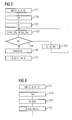
- FIG. 8 accepts the computer 5 following the execution of step S7 in a step S36 of the control device 4 actual operating data B 'of the pickling line. This data was previously acquired by the control device 4, while the control device 4 has controlled the pickling line according to the sequence Gi selected in step S7.
- the computer 5 compares the actual operating data B 'with expected operating data B "determined on the basis of the pickling line model 9.
- the computer 5 adapts the pickling line model 9 and / or the modification instruction V by means of a Deviation of the operating data B 'of the pickling line from the expected operating data B "of the pickling line.
- the present invention has many advantages.
- a better optimization of the production plan than in the prior art is possible in a simple and reliable manner.
- no operator know-how, ie know-how of the operator of the pickling line, is needed for the optimization.
Landscapes
- Engineering & Computer Science (AREA)
- Physics & Mathematics (AREA)
- General Physics & Mathematics (AREA)
- Automation & Control Theory (AREA)
- Medical Informatics (AREA)
- Artificial Intelligence (AREA)
- Computer Vision & Pattern Recognition (AREA)
- Evolutionary Computation (AREA)
- Health & Medical Sciences (AREA)
- Software Systems (AREA)
- Chemical & Material Sciences (AREA)
- Chemical Kinetics & Catalysis (AREA)
- General Chemical & Material Sciences (AREA)
- Materials Engineering (AREA)
- Mechanical Engineering (AREA)
- Metallurgy (AREA)
- Organic Chemistry (AREA)
- Cleaning And De-Greasing Of Metallic Materials By Chemical Methods (AREA)
- Drying Of Semiconductors (AREA)
Priority Applications (6)
| Application Number | Priority Date | Filing Date | Title |
|---|---|---|---|
| EP14165815.3A EP2937747A1 (fr) | 2014-04-24 | 2014-04-24 | Optimisation d'une séquence de bandes à décaper se basant sur la modélisation d'une ligne de décapage |
| PCT/EP2015/056344 WO2015161975A2 (fr) | 2014-04-24 | 2015-03-25 | Optimisation d'une séquence de bandes à décaper basée sur la modélisation d'une ligne de décapage |
| EP15741816.1A EP3134775B1 (fr) | 2014-04-24 | 2015-03-25 | Optimisation d'une séquence de bandes à décaper basée sur la modélisation d'une ligne de décapage |
| US15/305,970 US11053596B2 (en) | 2014-04-24 | 2015-03-25 | Optimization of a sequence of strips to be pickled, on the basis of modelling of a pickling line |
| RU2016145911A RU2682447C2 (ru) | 2014-04-24 | 2015-03-25 | Основанная на моделировании травильной линии оптимизация последовательности подвергаемых травлению полос |
| CN201580021029.0A CN106462120B (zh) | 2014-04-24 | 2015-03-25 | 用于酸洗生产线的运行方法 |
Applications Claiming Priority (1)
| Application Number | Priority Date | Filing Date | Title |
|---|---|---|---|
| EP14165815.3A EP2937747A1 (fr) | 2014-04-24 | 2014-04-24 | Optimisation d'une séquence de bandes à décaper se basant sur la modélisation d'une ligne de décapage |
Publications (1)
| Publication Number | Publication Date |
|---|---|
| EP2937747A1 true EP2937747A1 (fr) | 2015-10-28 |
Family
ID=50624442
Family Applications (2)
| Application Number | Title | Priority Date | Filing Date |
|---|---|---|---|
| EP14165815.3A Withdrawn EP2937747A1 (fr) | 2014-04-24 | 2014-04-24 | Optimisation d'une séquence de bandes à décaper se basant sur la modélisation d'une ligne de décapage |
| EP15741816.1A Active EP3134775B1 (fr) | 2014-04-24 | 2015-03-25 | Optimisation d'une séquence de bandes à décaper basée sur la modélisation d'une ligne de décapage |
Family Applications After (1)
| Application Number | Title | Priority Date | Filing Date |
|---|---|---|---|
| EP15741816.1A Active EP3134775B1 (fr) | 2014-04-24 | 2015-03-25 | Optimisation d'une séquence de bandes à décaper basée sur la modélisation d'une ligne de décapage |
Country Status (5)
| Country | Link |
|---|---|
| US (1) | US11053596B2 (fr) |
| EP (2) | EP2937747A1 (fr) |
| CN (1) | CN106462120B (fr) |
| RU (1) | RU2682447C2 (fr) |
| WO (1) | WO2015161975A2 (fr) |
Cited By (2)
| Publication number | Priority date | Publication date | Assignee | Title |
|---|---|---|---|---|
| CN105785963A (zh) * | 2016-05-18 | 2016-07-20 | 中南大学 | 一种基于人工蜂群算法的炼钢连铸调度方法 |
| CN106054616A (zh) * | 2016-07-27 | 2016-10-26 | 昆明理工大学 | 模糊逻辑优化pid控制器参数的钛带卷连续酸洗活套高度控制方法 |
Families Citing this family (2)
| Publication number | Priority date | Publication date | Assignee | Title |
|---|---|---|---|---|
| EP2937747A1 (fr) * | 2014-04-24 | 2015-10-28 | Siemens Aktiengesellschaft | Optimisation d'une séquence de bandes à décaper se basant sur la modélisation d'une ligne de décapage |
| WO2018192798A1 (fr) | 2017-04-18 | 2018-10-25 | Primetals Technologies Germany Gmbh | Optimisation de la modélisation de modèles de processus |
Citations (4)
| Publication number | Priority date | Publication date | Assignee | Title |
|---|---|---|---|---|
| US6410351B1 (en) * | 2000-07-13 | 2002-06-25 | Advanced Micro Devices, Inc. | Method and apparatus for modeling thickness profiles and controlling subsequent etch process |
| US20050222781A1 (en) * | 2004-03-30 | 2005-10-06 | Tokyo Electron Limited | Method and system for run-to-run control |
| US20060200265A1 (en) * | 2005-03-07 | 2006-09-07 | Taiwan Semiconductor Manufacturing Co., Ltd. | Etching operation management systems and methods |
| US20100036514A1 (en) * | 2008-08-06 | 2010-02-11 | Tokyo Electron Limited | Creating Multi-Layer/Multi-Input/Multi-Output (MLMIMO) Models for Metal-Gate Structures |
Family Cites Families (11)
| Publication number | Priority date | Publication date | Assignee | Title |
|---|---|---|---|---|
| US6749693B2 (en) * | 2001-09-13 | 2004-06-15 | Ak Properties | Method of producing (110)[001] grain oriented electrical steel using strip casting |
| ITRM20010747A1 (it) * | 2001-12-19 | 2003-06-19 | Ct Sviluppo Materiali Spa | Procedimento a ridotto impatto ambientale e relativo impianto per descagliare, decapare e finire/passivare, in modo continuo, integrato e fl |
| WO2003080502A1 (fr) * | 2002-03-25 | 2003-10-02 | Matvice Ehf. | Procede et dispositif permettant de traiter des structures nanoscopiques |
| DE10306273A1 (de) | 2003-02-14 | 2004-09-02 | Siemens Ag | Mathematisches Modell für eine hüttentechnische Anlage und Optimierungsverfahren für den Betrieb einer hüttentechnischen Anlage unter Verwendung eines derartigen Modells |
| US20070122920A1 (en) | 2005-11-29 | 2007-05-31 | Bornstein William B | Method for improved control of critical dimensions of etched structures on semiconductor wafers |
| FR2925530B1 (fr) * | 2007-12-21 | 2010-08-27 | Siemens Vai Metals Tech Sas | Installation et procede pour le decapage en continu de bandes d'acier |
| EP2524062B1 (fr) * | 2010-01-11 | 2018-11-28 | Kolene Corporation | Processus de conditionnement d'une couche d'amadou métallique et sa installation |
| KR101722405B1 (ko) * | 2012-11-30 | 2017-04-04 | 바오샨 아이론 앤 스틸 유한공사 | 냉간압연 피클링 생산라인용 산농도 제어방법 및 장치 |
| WO2014153570A2 (fr) * | 2013-03-15 | 2014-09-25 | Transtar Group, Ltd | Système nouveau et amélioré pour le traitement de divers produits chimiques et matériaux |
| EP2937747A1 (fr) * | 2014-04-24 | 2015-10-28 | Siemens Aktiengesellschaft | Optimisation d'une séquence de bandes à décaper se basant sur la modélisation d'une ligne de décapage |
| CN105483310B (zh) * | 2015-11-23 | 2017-05-10 | 东北大学 | 一种面向全流程生产的炼钢组批与排产方法 |
-
2014
- 2014-04-24 EP EP14165815.3A patent/EP2937747A1/fr not_active Withdrawn
-
2015
- 2015-03-25 RU RU2016145911A patent/RU2682447C2/ru active
- 2015-03-25 CN CN201580021029.0A patent/CN106462120B/zh active Active
- 2015-03-25 EP EP15741816.1A patent/EP3134775B1/fr active Active
- 2015-03-25 US US15/305,970 patent/US11053596B2/en active Active
- 2015-03-25 WO PCT/EP2015/056344 patent/WO2015161975A2/fr not_active Ceased
Patent Citations (4)
| Publication number | Priority date | Publication date | Assignee | Title |
|---|---|---|---|---|
| US6410351B1 (en) * | 2000-07-13 | 2002-06-25 | Advanced Micro Devices, Inc. | Method and apparatus for modeling thickness profiles and controlling subsequent etch process |
| US20050222781A1 (en) * | 2004-03-30 | 2005-10-06 | Tokyo Electron Limited | Method and system for run-to-run control |
| US20060200265A1 (en) * | 2005-03-07 | 2006-09-07 | Taiwan Semiconductor Manufacturing Co., Ltd. | Etching operation management systems and methods |
| US20100036514A1 (en) * | 2008-08-06 | 2010-02-11 | Tokyo Electron Limited | Creating Multi-Layer/Multi-Input/Multi-Output (MLMIMO) Models for Metal-Gate Structures |
Cited By (4)
| Publication number | Priority date | Publication date | Assignee | Title |
|---|---|---|---|---|
| CN105785963A (zh) * | 2016-05-18 | 2016-07-20 | 中南大学 | 一种基于人工蜂群算法的炼钢连铸调度方法 |
| CN105785963B (zh) * | 2016-05-18 | 2018-08-10 | 中南大学 | 一种基于人工蜂群算法的炼钢连铸调度方法 |
| CN106054616A (zh) * | 2016-07-27 | 2016-10-26 | 昆明理工大学 | 模糊逻辑优化pid控制器参数的钛带卷连续酸洗活套高度控制方法 |
| CN106054616B (zh) * | 2016-07-27 | 2018-12-14 | 昆明理工大学 | 模糊逻辑优化pid控制器参数的钛带卷连续酸洗活套高度控制方法 |
Also Published As
| Publication number | Publication date |
|---|---|
| WO2015161975A3 (fr) | 2016-03-17 |
| US11053596B2 (en) | 2021-07-06 |
| EP3134775A2 (fr) | 2017-03-01 |
| US20170044676A1 (en) | 2017-02-16 |
| CN106462120A (zh) | 2017-02-22 |
| RU2016145911A (ru) | 2018-05-24 |
| RU2016145911A3 (fr) | 2018-08-31 |
| WO2015161975A2 (fr) | 2015-10-29 |
| EP3134775B1 (fr) | 2018-05-09 |
| CN106462120B (zh) | 2019-11-19 |
| RU2682447C2 (ru) | 2019-03-19 |
Similar Documents
| Publication | Publication Date | Title |
|---|---|---|
| EP2742158B1 (fr) | Procédé permettant de faire fonctionner une ligne de recuit continu pour le traitement d'un produit laminé | |
| EP2566633B1 (fr) | Procédé pour faire fonctionner un train finisseur avec prédiction de la vitesse de commande | |
| EP2999935B1 (fr) | Dispositif et procédé de commande et/ou de régulation d'un four de recuit ou de traitement thermique d'une chaîne de production par usinage de matériau métallique | |
| EP3134775B1 (fr) | Optimisation d'une séquence de bandes à décaper basée sur la modélisation d'une ligne de décapage | |
| DE102016009106A1 (de) | Mit Steuerung ausgerüstete Bearbeitungsvorrichtung mit Bearbeitungszeit- Messfunktion und Messfunktion auf der Maschine | |
| DE102016117560B4 (de) | Werkzeugmaschine zum erzeugen einer geschwindigkeitsverteilung | |
| EP3642372B2 (fr) | Procédé permettant de faire fonctionner un four de recuit | |
| DE102010032185A1 (de) | Verfahren und Vorrichtung zum Koordinieren von zwei aufeinanderfolgenden Herstellungsstufen eines Produktionsprozesses | |
| WO2021228927A1 (fr) | Système et procédé de commande d'une usine de production constituée d'une pluralité de parties d'usine, en particulier d'une usine de production pour la production de marchandises industrielles telles que des produits semi-finis métalliques | |
| EP4078309A1 (fr) | Procédé et dispositif de détermination de paramètres de coupe d'une machine de coupe au laser | |
| WO2018192798A1 (fr) | Optimisation de la modélisation de modèles de processus | |
| EP3056957B1 (fr) | Procédé et dispositif de diagnostic destinés à la surveillance du fonctionnement d'un circuit régulateur | |
| EP2956251A1 (fr) | Refroidissement d'une bande métallique au moyen d'un système de vanne à réglage de position | |
| DE102006047718A1 (de) | Verfahren zur Nachverfolgung des physikalischen Zustands eines Warmblechs oder Warmbands im Rahmen der Steuerung einer Grobblechwalzstraße zur Bearbeitung eines Warmblechs oder Warmbands | |
| EP1658533B1 (fr) | Procede et dispositif pour assurer la commande d'une installation de production d'acier | |
| EP3349078A1 (fr) | Dispositif de diagnostic et procédé de surveillance et/ou d'optimisation d'un dispositif de réglage | |
| WO1999013999A1 (fr) | Procede et dispositif pour le refroidissement de metaux dans une usine metallurgique | |
| DE202019100641U1 (de) | Trainingsgerät für KI-Module | |
| EP1392455B1 (fr) | Procede de selection automatique de toles, en particulier de toles d'acier, utilisees pour former des composants | |
| EP3787811B1 (fr) | Procédé pour faire fonctionner une zone de refroidissement et installation pour la fabrication de produits laminés | |
| DE19641432A1 (de) | Verfahren und Einrichtung zur Vorausberechnung von vorab unbekannten Parametern eines industriellen Prozesses | |
| DE102010010551B4 (de) | Verfahren und Vorrichtung zum Koordinieren von zwei aufeinanderfolgenden Herstellungsstufen eines Produktionsprozesses | |
| EP4364867A1 (fr) | Laminage d'acier avec détection technique de mesure de la conversion de phase | |
| EP2133766A1 (fr) | Procédé de traitement et/ou de fabrication et dispositif d'exécution de celui-ci | |
| DE10118748A1 (de) | Verfahren und Vorrichtung zur prozessgesteuerten Modellierung einer verfahrenstechnischen Anlage |
Legal Events
| Date | Code | Title | Description |
|---|---|---|---|
| PUAI | Public reference made under article 153(3) epc to a published international application that has entered the european phase |
Free format text: ORIGINAL CODE: 0009012 |
|
| AK | Designated contracting states |
Kind code of ref document: A1 Designated state(s): AL AT BE BG CH CY CZ DE DK EE ES FI FR GB GR HR HU IE IS IT LI LT LU LV MC MK MT NL NO PL PT RO RS SE SI SK SM TR |
|
| AX | Request for extension of the european patent |
Extension state: BA ME |
|
| STAA | Information on the status of an ep patent application or granted ep patent |
Free format text: STATUS: THE APPLICATION IS DEEMED TO BE WITHDRAWN |
|
| 18D | Application deemed to be withdrawn |
Effective date: 20160429 |