EP2940029B1 - Design und synthese von spaltbaren fluoreszierenden nukleotiden als reversible terminatoren zur dna-sequenzierung durch synthese - Google Patents
Design und synthese von spaltbaren fluoreszierenden nukleotiden als reversible terminatoren zur dna-sequenzierung durch synthese Download PDFInfo
- Publication number
- EP2940029B1 EP2940029B1 EP15165262.5A EP15165262A EP2940029B1 EP 2940029 B1 EP2940029 B1 EP 2940029B1 EP 15165262 A EP15165262 A EP 15165262A EP 2940029 B1 EP2940029 B1 EP 2940029B1
- Authority
- EP
- European Patent Office
- Prior art keywords
- dna
- nucleic acid
- fluorophore
- dntp
- dntps
- Prior art date
- Legal status (The legal status is an assumption and is not a legal conclusion. Google has not performed a legal analysis and makes no representation as to the accuracy of the status listed.)
- Active
Links
Images




















Classifications
-
- C—CHEMISTRY; METALLURGY
- C12—BIOCHEMISTRY; BEER; SPIRITS; WINE; VINEGAR; MICROBIOLOGY; ENZYMOLOGY; MUTATION OR GENETIC ENGINEERING
- C12Q—MEASURING OR TESTING PROCESSES INVOLVING ENZYMES, NUCLEIC ACIDS OR MICROORGANISMS; COMPOSITIONS OR TEST PAPERS THEREFOR; PROCESSES OF PREPARING SUCH COMPOSITIONS; CONDITION-RESPONSIVE CONTROL IN MICROBIOLOGICAL OR ENZYMOLOGICAL PROCESSES
- C12Q1/00—Measuring or testing processes involving enzymes, nucleic acids or microorganisms; Compositions therefor; Processes of preparing such compositions
- C12Q1/68—Measuring or testing processes involving enzymes, nucleic acids or microorganisms; Compositions therefor; Processes of preparing such compositions involving nucleic acids
- C12Q1/6869—Methods for sequencing
-
- C—CHEMISTRY; METALLURGY
- C07—ORGANIC CHEMISTRY
- C07H—SUGARS; DERIVATIVES THEREOF; NUCLEOSIDES; NUCLEOTIDES; NUCLEIC ACIDS
- C07H19/00—Compounds containing a hetero ring sharing one ring hetero atom with a saccharide radical; Nucleosides; Mononucleotides; Anhydro-derivatives thereof
- C07H19/02—Compounds containing a hetero ring sharing one ring hetero atom with a saccharide radical; Nucleosides; Mononucleotides; Anhydro-derivatives thereof sharing nitrogen
- C07H19/04—Heterocyclic radicals containing only nitrogen atoms as ring hetero atom
- C07H19/06—Pyrimidine radicals
-
- C—CHEMISTRY; METALLURGY
- C07—ORGANIC CHEMISTRY
- C07H—SUGARS; DERIVATIVES THEREOF; NUCLEOSIDES; NUCLEOTIDES; NUCLEIC ACIDS
- C07H19/00—Compounds containing a hetero ring sharing one ring hetero atom with a saccharide radical; Nucleosides; Mononucleotides; Anhydro-derivatives thereof
- C07H19/02—Compounds containing a hetero ring sharing one ring hetero atom with a saccharide radical; Nucleosides; Mononucleotides; Anhydro-derivatives thereof sharing nitrogen
- C07H19/04—Heterocyclic radicals containing only nitrogen atoms as ring hetero atom
- C07H19/06—Pyrimidine radicals
- C07H19/10—Pyrimidine radicals with the saccharide radical esterified by phosphoric or polyphosphoric acids
-
- C—CHEMISTRY; METALLURGY
- C07—ORGANIC CHEMISTRY
- C07H—SUGARS; DERIVATIVES THEREOF; NUCLEOSIDES; NUCLEOTIDES; NUCLEIC ACIDS
- C07H19/00—Compounds containing a hetero ring sharing one ring hetero atom with a saccharide radical; Nucleosides; Mononucleotides; Anhydro-derivatives thereof
- C07H19/02—Compounds containing a hetero ring sharing one ring hetero atom with a saccharide radical; Nucleosides; Mononucleotides; Anhydro-derivatives thereof sharing nitrogen
- C07H19/04—Heterocyclic radicals containing only nitrogen atoms as ring hetero atom
- C07H19/14—Pyrrolo-pyrimidine radicals
-
- C—CHEMISTRY; METALLURGY
- C07—ORGANIC CHEMISTRY
- C07H—SUGARS; DERIVATIVES THEREOF; NUCLEOSIDES; NUCLEOTIDES; NUCLEIC ACIDS
- C07H19/00—Compounds containing a hetero ring sharing one ring hetero atom with a saccharide radical; Nucleosides; Mononucleotides; Anhydro-derivatives thereof
- C07H19/02—Compounds containing a hetero ring sharing one ring hetero atom with a saccharide radical; Nucleosides; Mononucleotides; Anhydro-derivatives thereof sharing nitrogen
- C07H19/04—Heterocyclic radicals containing only nitrogen atoms as ring hetero atom
- C07H19/16—Purine radicals
-
- C—CHEMISTRY; METALLURGY
- C07—ORGANIC CHEMISTRY
- C07H—SUGARS; DERIVATIVES THEREOF; NUCLEOSIDES; NUCLEOTIDES; NUCLEIC ACIDS
- C07H19/00—Compounds containing a hetero ring sharing one ring hetero atom with a saccharide radical; Nucleosides; Mononucleotides; Anhydro-derivatives thereof
- C07H19/02—Compounds containing a hetero ring sharing one ring hetero atom with a saccharide radical; Nucleosides; Mononucleotides; Anhydro-derivatives thereof sharing nitrogen
- C07H19/04—Heterocyclic radicals containing only nitrogen atoms as ring hetero atom
- C07H19/16—Purine radicals
- C07H19/20—Purine radicals with the saccharide radical esterified by phosphoric or polyphosphoric acids
-
- C—CHEMISTRY; METALLURGY
- C12—BIOCHEMISTRY; BEER; SPIRITS; WINE; VINEGAR; MICROBIOLOGY; ENZYMOLOGY; MUTATION OR GENETIC ENGINEERING
- C12Q—MEASURING OR TESTING PROCESSES INVOLVING ENZYMES, NUCLEIC ACIDS OR MICROORGANISMS; COMPOSITIONS OR TEST PAPERS THEREFOR; PROCESSES OF PREPARING SUCH COMPOSITIONS; CONDITION-RESPONSIVE CONTROL IN MICROBIOLOGICAL OR ENZYMOLOGICAL PROCESSES
- C12Q2525/00—Reactions involving modified oligonucleotides, nucleic acids, or nucleotides
- C12Q2525/30—Oligonucleotides characterised by their secondary structure
- C12Q2525/301—Hairpin oligonucleotides
-
- C—CHEMISTRY; METALLURGY
- C12—BIOCHEMISTRY; BEER; SPIRITS; WINE; VINEGAR; MICROBIOLOGY; ENZYMOLOGY; MUTATION OR GENETIC ENGINEERING
- C12Q—MEASURING OR TESTING PROCESSES INVOLVING ENZYMES, NUCLEIC ACIDS OR MICROORGANISMS; COMPOSITIONS OR TEST PAPERS THEREFOR; PROCESSES OF PREPARING SUCH COMPOSITIONS; CONDITION-RESPONSIVE CONTROL IN MICROBIOLOGICAL OR ENZYMOLOGICAL PROCESSES
- C12Q2537/00—Reactions characterised by the reaction format or use of a specific feature
- C12Q2537/10—Reactions characterised by the reaction format or use of a specific feature the purpose or use of
- C12Q2537/157—A reaction step characterised by the number of molecules incorporated or released
Definitions
- Nucleotides for use in sequencing methods are also disclosed in International Patent applications WO2004/018493 , WO2007/020457 and WO2007/135368 . Since the incorporation of ddNTPs-R 2 -fluorophore into a strand of DNA permanently terminates further extensions of that template in the first approach and the incorporation and cleavage of C-F-NRTs leaves a tail of the modified nucleotide that causes possible steric hindrance to lower the incorporation efficiency of the subsequent base in the second approach, the total number of sequenceble templates decreases after each cycle of SBS reaction. Various means can be employed to minimize this rate of template reduction. Among those, a powerful method termed template "walking" can potentially diminish the negative effect of template termination or reduction and extend the read length of SBS at least two to three-fold.
- a composition having a first, second and third portion wherein the second portion has the following structure: wherein ⁇ represents a point of attachment to the first portion and ⁇ represents a point of attachment to the third portion.
- a method for determining the identity of each of a series of consecutive nucleotide residues in a nucleic acid comprising:
- a method for determining the identity of each of a series of consecutive nucleotide residues in a self-priming nucleic acid comprising:
- a kit for use in sequencing a nucleic acid comprising:
- An array comprising a nucleic acid attached to a solid surface, wherein the nucleic acid comprises an azidomethyl group attached to a 3' O atom thereof and a molecule having the structure: wherein ⁇ represents a point of attachment to a 3' base of the nucleic acid and ⁇ represents a point of attachment to a detectable marker.
- An array comprising a self-priming nucleic acid attached to a solid surface, wherein the nucleic acid comprises an azidomethyl group attached to a 3' O atom thereof and a molecule having the structure: wherein ⁇ represents a point of attachment to a 3' base of the nucleic acid and ⁇ represents a point of attachment to a detectable marker.
- a method for increasing a read length of DNA sequencing by synthesis comprising (a) providing deoxynucleotide triphosphate analogues wherein the deoxynucleotide triphosphate analogues differ from deoxynucleotide triphosphates by having a methylazido group attached to a 3' O atom thereof and by having a detectable marker attached to a 1 nitrogen or a 9 nitrogen of a base thereof through a linker comprising the structure wherein ⁇ represents a point of attachment to a the base and ⁇ represents a point of attachment to the detectable marker, (b) incorporating a plurality of the deoxynucleotide triphosphate analogues into a nucleic acid being synthesized in the DNA sequencing by synthesis, and (c) cleaving the methylazido and detectable marker from each incorporated dNTP analogue, so as to thereby increase the read length of the DNA sequence by synthesis.
- a method for determining the identity of each of a series of consecutive nucleotide residues in a nucleic acid comprising:
- a method for determining the identity of each of a series of consecutive nucleotide residues in a self-priming nucleic acid comprising:
- a method for determining the identity of each of a series of consecutive nucleotide residues in a plurality of nucleic acids comprising, the same series of consecutive nucleotides comprising:
- a method for determining the identity of consecutive nucleotide residues in a self-priming nucleic acid comprising:
- a kit for use in sequencing a nucleic acid comprising:
- An array comprising a nucleic acid attached to a solid surface, wherein the nucleic acid comprises an azidomethyl group attached to a 3' O atom thereof and a molecule having the structure: wherein ⁇ represents a point of attachment to a 3' base of the nucleic acid and ⁇ represents a point of attachment to a detectable marker.
- An array comprising a self-priming nucleic acid attached to a solid surface, wherein the nucleic acid comprises an azidomethyl group attached to a 3' O atom thereof and a molecule having the structure: wherein ⁇ represents a point of attachment to a 3' base of the nucleic acid and ⁇ represents a point of attachment to a detectable marker.
- a method for increasing a read length of DNA sequencing by synthesis coupled with Sanger dideoxynucleotide terminating reaction (a) providing deoxynucleotide triphosphate analogues wherein the deoxynucleotide triphosphate analogues differ from deoxynucleotide triphosphates by having a methylazido group attached to a 3' O atom thereof and providing dideoxynucleotide triphosphate analogues wherein the dideoxynucleotide triphosphate analogues differ from dideoxynucleotide triphosphates by having a detectable marker attached to a 1 nitrogen or a 9 nitrogen of a base thereof through a linker comprising the structure wherein ⁇ represents a point of attachment to a the base and ⁇ represents a point of attachment to the detectable marker, (b) incorporating a plurality ratio of dideoxynucleotide triphosphate to deoxynucleotide triphosphate ana
- Nucleic acid shall mean any nucleic acid molecule, including, without limitation, DNA, RNA and hybrids thereof.
- the nucleic acid bases that form nucleic acid molecules can be the bases A, C, G, T and U, as well as derivatives thereof. Derivatives of these bases are well known in the art, and are exemplified in PCR Systems, Reagents and Consumables (Perkin Elmer Catalogue 1996-1997, Roche Molecular Systems, Inc., Branchburg, New Jersey, USA ).
- Type of nucleotide refers to A, G, C, T or U.
- Type of base refers to adenine, guanine, cytosine, uracil or thymine.
- Mass tag shall mean a molecular entity of a predetermined size which is capable of being attached by a cleavable bond to another entity.
- Solid substrate shall mean any suitable medium present in the solid phase to which a nucleic acid or an agent may be affixed.
- suitable medium include chips, beads and columns.
- Hybridize shall mean the annealing of one single-stranded nucleic acid to another nucleic acid based on sequence complementarity.
- the propensity for hybridization between nucleic acids depends on the temperature and ionic strength of their milieu, the length of the nucleic acids and the degree of complementarity. The effect of these parameters on hybridization is well known in the art (see Sambrook J, Fritsch EF, Maniatis T. 1989. Molecular cloning: a laboratory manual. Cold Spring Harbor Laboratory Press, New York .)
- a composition having a first, second and third portion wherein the second portion has the following structure: wherein ⁇ represents a point of attachment to the first portion and ⁇ represents a point of attachment to the third portion.
- ⁇ may be directly linked to the first portion, e.g. comprising a base, or bonded to the, for example base via, e.g. an alkynylene.
- ⁇ may be directly linked to the third portion, e.g. a detectable marker, or bonded to the third portion, for example via another group.
- the first portion comprises a deoxynucleotide or a dideoxynucleotide and the third portion comprises a detectable marker.
- the first portion is a deoxynucleotide or a dideoxynucleotide and the third portion is a detectable marker.
- the detectable marker is a fluorescent dye.
- the deoxynucleotide or dideoxynucleotide comprises a methylazido group attached to a 3' O atom thereof.
- the first portion is a deoxynucleotide comprising a methylazido group attached to a 3' O atom thereof.
- composition has the structure: or wherein the dye in each structure is a fluorescent dye.
- composition has the structure: or
- a method for determining the identity of each of a series of consecutive nucleotide residues in a nucleic acid comprising:
- a method for determining the identity of each of a series of consecutive nucleotide residues in a self-priming nucleic acid comprising:
- steps b) and c) can be performed simultaneously, or in the order step b) then step c) or in the order step c) then step b).
- the nucleic acid is DNA and the nucleic acid polymerase is a 9°N thermopolymerase.
- the cleavable chemical group is a methylazido group.
- the four dNTP analogues have the following structures: , and
- the four dNTP analogues have the following structures: and
- nucleic acid is immobilized on a solid surface.
- solid surface is a chip or a bead.
- a kit for use in sequencing a nucleic acid comprising:
- the kit comprises four nucleotide analogues having the following structures: and
- An array comprising a nucleic acid attached to a solid surface, wherein the nucleic acid comprises an azidomethyl group attached to a 3' O atom thereof and a molecule having the structure: wherein ⁇ represents a point of attachment to a 3' base of the nucleic acid and ⁇ represents a point of attachment to a detectable marker.
- An array comprising a self-priming nucleic acid attached to a solid surface, wherein the nucleic acid comprises an azidomethyl group attached to a 3' O atom thereof and a molecule having the structure: wherein ⁇ represents a point of attachment to a 3' base of the nucleic acid and ⁇ represents a point of attachment to a detectable marker.
- the detectable marker is a fluorophore.
- a method for increasing a read length of DNA sequencing by synthesis comprising (a) providing deoxynucleotide triphosphate analogues wherein the deoxynucleotide triphosphate analogues differ from deoxynucleotide triphosphates by having a methylazido group attached to a 3' O atom thereof and by having a detectable marker attached to a 1 nitrogen or a 9 nitrogen of a base thereof through a linker comprising the structure wherein ⁇ represents a point of attachment to a the base and ⁇ represents a point of attachment to the detectable marker, (b) incorporating a plurality of the deoxynucleotide triphosphate analogues into a nucleic acid being synthesized in the DNA sequencing by synthesis, and (c) cleaving the methylazido and detectable marker from each dNTP analogue, so as to thereby increase the read length of the DNA sequence by synthesis.
- a method for increasing a read length of DNA sequencing by synthesis comprising (a) providing deoxynucleotide triphosphate analogues wherein the deoxynucleotide triphosphate analogues differ from deoxynucleotide triphosphates by having a methylazido group attached to a 3' O atom thereof and by having a detectable marker attached to a 1 nitrogen or a 9 nitrogen of a base thereof through a linker comprising the structure wherein ⁇ represents a point of attachment to a the base and ⁇ represents a point of attachment to the detectable marker and (b) incorporating a plurality of the deoxynucleotide triphosphate analogues into a nucleic acid being synthesized in the DNA sequencing by synthesis and (c) cleaving the methylazido and detectable marker from each incorporated dNTP analogue, so as to thereby increase the read length of the DNA sequence by synthesis.
- a method for determining the identity of each of a series of consecutive nucleotide residues in a nucleic acid comprising:
- a method for determining the identity of each of a series of consecutive nucleotide residues in a self-priming nucleic acid comprising:
- steps b) and c) can be performed simultaneously, or in the order step b) then step c) or in the order step c) then step b).
- the nucleic acid is DNA and the nucleic acid polymerase is a 9°N thermopolymerase.
- the cleavable chemical group is a methylazido group.
- the four dNTP analogues have the following structures: , and
- the four dNTP analogues have the following structures: and
- nucleic acid is immobilized on a solid surface.
- solid surface is a chip or a bead.
- a method for determining the identity of each of a series of consecutive nucleotide residues in a plurality of nucleic acids comprising, the same series of consecutive nucleotides comprising:
- a method for determining the identity of consecutive nucleotide residues in a self-priming nucleic acid comprising:
- steps b) and c) can be performed simultaneously, or in the order step b) then step c) or in the order step c) then step b).
- the nucleic acid is DNA and the nucleic acid polymerase is a 9°N thermopolymerase.
- the cleavable chemical group is a methylazido group.
- the linker on the ddNTP and the chemical group on the 3' O position of the dNTP is cleaved with a phosphine.
- the phosphine is charged and water soluble.
- the phosphine is tris (2-carboxyethyl) phosphine.
- the four ddNTP analogues have the following structures: , and
- the four dNTPs have the following structures:
- the four ddNTP analogues have the following structures: , and
- nucleic acid is immobilized on a solid surface.
- solid surface is a chip or a bead.
- a kit for use in sequencing a nucleic acid comprising:
- the kit comprises four dideoxynucleotide analogues having the following structures: , and
- An array comprising a nucleic acid attached to a solid surface, wherein the nucleic acid comprises an azidomethyl group attached to a 3' O atom thereof and a molecule having the structure: wherein ⁇ represents a point of attachment to a 3' base of the nucleic acid and ⁇ represents a point of attachment to a detectable marker.
- An array comprising a self-priming nucleic acid attached to a solid surface, wherein the nucleic acid comprises an azidomethyl group attached to a 3' O atom thereof and a molecule having the structure: wherein ⁇ represents a point of attachment to a 3' base of the nucleic acid and ⁇ represents a point of attachment to a detectable marker.
- the detectable marker is a fluorophore.
- a method for increasing a read length of DNA sequencing by synthesis coupled with Sanger dideoxynucleotide terminating reaction (a) providing deoxynucleotide triphosphate analogues wherein the deoxynucleotide triphosphate analogues differ from deoxynucleotide triphosphates by having a methylazido group attached to a 3' O atom thereof and providing dideoxynucleotide triphosphate analogues wherein the dideoxynucleotide triphosphate analogues differ from dideoxynucleotide triphosphates by having a detectable marker attached to a 1 nitrogen or a 9 nitrogen of a base thereof through a linker comprising the structure wherein ⁇ represents a point of attachment to a the base and ⁇ represents a point of attachment to the detectable marker, (b) incorporating a plurality ratio of dideoxynucleotide triphosphate to deoxynucleotide triphosphate ana
- a method for increasing a read length of DNA sequencing by synthesis coupled with Sanger dideoxynucleotide terminating reaction (a) providing deoxynucleotide triphosphate analogues wherein the deoxynucleotide triphosphate analogues differ from deoxynucleotide triphosphates by having a methylazido group attached to a 3' O atom thereof and providing dideoxynucleotide triphosphate analogues wherein the dideoxynucleotide triphosphate analogues differ from dideoxynucleotide triphosphates by having a detectable marker attached to a 1 nitrogen or a 9 nitrogen of a base thereof through a linker comprising the structure wherein ⁇ represents a point of attachment to a the base and ⁇ represents a point of attachment to the detectable marker and (b) incorporating a plurality ratio of dideoxynucleotide triphosphate to deoxynucleotide triphosphate ana
- This invention provides the instant method, wherein the detectable bound to the base via a cleavable linker is a dye, a fluorophore, a chromophore, a combinatorial fluorescence energy transfer tag, a mass tag, or an electrophore.
- a cleavable linker is a dye, a fluorophore, a chromophore, a combinatorial fluorescence energy transfer tag, a mass tag, or an electrophore.
- Combinatorial fluorescence energy tags and methods for production thereof are disclosed in U.S. Patent No. 6,627,748 .
- This invention also provides the instant method, wherein the primer is a self-priming moiety.
- This invention also provides the instant method, wherein the DNA is bound to a solid substrate.
- This invention also provides the instant method, wherein the DNA is bound to the solid substrate via 1,3-dipolar azide-alkyne cycloaddition chemistry.
- This invention also provides the instant method, wherein the DNA is bound to the solid substrate via a polyethylene glycol molecule.
- This invention also provides the instant method, wherein the DNA is alkyne-labeled.
- This invention also provides the instant method, wherein the DNA is bound to the solid substrate via a polyethylene glycol molecule and the solid substrate is azide-functionalized.
- This invention also provides the instant method, wherein the DNA is immobilized on the solid substrate via an azido linkage, an alkynyl linkage, or biotin-streptavidin interaction. Immobilization of nucleic acids is described in Immobilization of DNA on Chips II, edited by Christine Wittmann (2005), Springer Verlag, Berl in.
- This invention also provides the instant methods, wherein the DNA is bound to the solid substrate via a polyethylene glycol molecule and the solid substrate is azide-functionalized or the DNA is immobilized on the solid substrate via an azido linkage, an alkynyl linkage, or biotin-streptavidin interaction.
- the DNA or nucleic acid is attached/bound to the solid surface by covalent site-specific coupling chemistry compatible with DNA.
- This invention also provides the instant method, wherein the solid substrate is in the form of a chip, a bead, a well, a capillary tube, a slide, a wafer, a filter, a fiber, a porous media, or a column.
- the solid substrate is gold, quartz, silica, plastic, glass, nylon, diamond, silver, metal, or polypropylene.
- This invention also provides the instant method, wherein the solid substrate is porous.
- Chips or beads may be made from materials common for DNA microarrays, for example glass or nylon. Beads/micro-beads may be in turn immobilized to chips.
- This invention also provides the instant method, wherein about 1000 or fewer copies of the DNA are bound to the solid substrate.
- This invention also provides the instant invention wherein 2 ⁇ 10 7 , 1 ⁇ 10 7 , 1 ⁇ 10 6 or 1 ⁇ 10 4 or fewer copies of the DNA are bound to the solid substrate.
- nucleotide analogues comprise one of the fluorophores Cy5, Bodipy-FL-510, ROX and R6G.
- DNA polymerase is a 9°N polymerase or a variant thereof.
- DNA polymerases which can be used in the instant invention include, for example E.Coli DNA polymerase I, Bacteriophage T4 DNA polymerase, Sequenase TM , Tag DNA polymerase and 9°N polymerase (exo-) A485L/Y409V.
- RNA polymerases which can be used in the instant invention include, for example, Bacteriophage SP6, T7 and T3 RNA polymerases.
- a method for determining the identity of each of a series of consecutive nucleotide residues in a nucleic acid comprising:
- the linker in each of step a) and j) independently each comprise the structure: wherein ⁇ represents a point of attachment to the base and ⁇ represents a point of attachment to the fluorophore, and wherein R is a cleavable chemical group.
- a linker is cleaved by contacting the linker with tris(2-carboxyethyl)phosphine.
- one or more linkers are photocleavable or chemically cleavable.
- one or more chemical groups are photocleavable or chemically cleavable.
- R in the structures set forth in steps a) and or j) is independently chosen from a -N 3 group or an allyl group.
- the cleavable chemical group in step g) is independently chosen from a -N 3 group or an allyl group.
- a method for determining the identity of each of a series of consecutive nucleotide residues in a nucleic acid comprising:
- the three types of dNTPs are chosen from the group dATP, dCTP, dGTP, dTTP or dITP.
- the linker in each of step a) and j) independently each comprise the structure: wherein ⁇ represents a point of attachment to the base and ⁇ represents a point of attachment to the fluorophore, and wherein R is a cleavable chemical group.
- a linker is cleaved by contacting the linker with tris(2-carboxyethyl)phosphine.
- one or more linkers are photocleavable or chemically cleavable.
- one or more chemical groups are photocleavable or chemically cleavable.
- R in the structures set forth in steps a) and or j) is independently chosen from a -N 3 group or an allyl group.
- the cleavable chemical group in step g) is independently chosen from a -N 3 group or an allyl group.
- a method for determining the identity of each of a series of consecutive nucleotide residues in a nucleic acid comprising:
- step g) the three types of dNTPs are chosen from the group dATP, dCTP, dGTP and dTTP.
- the linker in each of step a) and j) independently each comprise the structure: wherein ⁇ represents a point of attachment to the base and ⁇ represents a point of attachment to the fluorophore, and wherein R is a cleavable chemical group.
- a linker is cleaved by contacting the linker with tris(2-carboxyethyl)phosphine.
- one or more linkers are photocleavable or chemically cleavable.
- one or more chemical groups are photocleavable or chemically cleavable.
- R in the structures set forth in steps a) and or j) is independently chosen from a -N 3 group or an allyl group.
- the cleavable chemical group in step g) is independently chosen from the a -N 3 group or an allyl group.
- the methods described herein can be applied mutatis mutandis to sequencing RNA using the appropriate ddNTPS or analogues thereof and dNTPS and analogues thereof.
- base-pairing complementarity allows the sequence of the extended primer or of the target nucleic to be readily determined.
- Hybridize is understood by those skilled in the art to mean to disassociate the hybridized primer (or extended strand thereof) from the target nucleic acid without destroying the target nucleic acid and thus permitting further hybridization of a second primer to the target nucleic acid.
- Hybridization as used herein in one embodiment means stringent hybridization, for examples as described in Sambrook, J., Russell, D.W., (2000) Molecular Cloning: A Laboratory Manual: Third Editi on.
- Type of dNTP or ddNTP is used to distinguish dNTP or ddNTPs comprising different bases.
- an azido group can be effectively converted into an amine with phosphine in DNA-friendly aqueous solution (35).
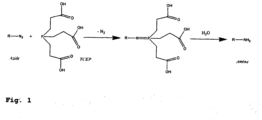
- This efficient reduction is further enhanced through the utilization of Tris(2-Carboxyethyl) phosphine (TCEP), an odorless and stable agent often used to digest peptide disulfide bonds ( Fig. 1 ).
- TCEP Tris(2-Carboxyethyl) phosphine
- nucleotide Similar to allyl and nitrobenzyl alterations previously reported, two positions of the nucleotide need to be modified with the azido moiety to afford a set of 3'-O-Azido-dNTPs-Azido-Dye.
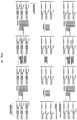
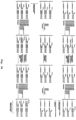
- the small azido methyl group (-CH 2 -N 3 ) is used to cap the 3' position of the sugar base while a novel azido linker connects unique fluorophores to the 5' position of C/U and the 7' position of A/G (see novel structures in Fig. 2 ).
- TCEP reagent
- Staudinger TCEP reduces the azido-methyl capping group to methylamine at the 3' sugar base. Since the carbon of the methylamine is highly unstable due to its position between two electron-withdrawing elements (oxygen and nitrogen), the methylamine is hydrolyzed in the presence of water that recovers the hydroxyl group at the 3' position. For the azido linker, the same Straudinger reduction takes place. However immediately after the attachment of TCEP to azido, the intermediate attacks the ester bond to afford total cleavage of the fluorophore ( Fig. 3 ) .
- an alternative approach is to attach the fluorophore via a PC (nitrobenzyl) linker while conserving the 3' capping with the azido methyl group (3'-O-Azido-dNTPs-PC-Dye, Fig. 4 ) and cleaving the azido again using TCEP.
- extension and detection steps for this set of nucleotides are analogous to those for 3'-O-Azido-dNTPs-Azido-Dye.
- An additional photolysis procedure is involved during the deprotection step. This dual cleavage process might offer different advantages for removing the fluorophore than the Staudinger reduction.
- nucleotides modified as reversible terminators by capping the 3'-OH with a small reversible moiety so that they are still recognized as substrates by DNA polymerase, are used in combination with a small percentage of four cleavable fluorescent dideoxynucleotides to perform SBS.
- DNA sequences are determined by the unique fluorescence emission of each fluorophore on the DNA products terminated by ddNTPs.
- the polymerase reaction reinitiates to continue the sequence determination ( Fig. 5 ).
- primer resetting The fundamental rationale behind primer resetting is to regenerate the original primer site or to insert two or more primer sites of known sequences into the target DNA so SBS can be carried out at each site sequentially.
- three steps are involved with this approach: 1) annealing of the first primer, 2) performing SBS, 3) denaturing the sequenced section of the template to recover a single-stranded DNA for the second primer annealing. These steps are carried out repeatedly until the target DNA is sequenced in its entirety.
- the advantage of primer resetting lies in its ability to restore all the templates after the denaturation step, including those that are terminated with ddNTPs, so the next cycle of SBS can restart with potentially the same amount of sequenceable DNA as the previous round.
- the DNA sequence is reset by reattaching the original primer, extending the chain with natural or minimally modified nucleotides to the end of the first round sequence, and then sequencing from that point.
- the second strategy relies on annealing of a second round primer that is longer than the first, containing at its 5' end the same sequence as the original primer, followed by a run of 20 universal nucleotides such as inosine, from which the second round of sequencing can be primed.
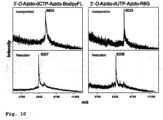
- the products were verified through MALDI-TOF MS ( Fig. 9 ).
- the two chemically cleavable fluorescent nucleotide analogs were used in an SBS reaction to identify the sequence of a selfprimed DNA template (130 base pairs) immobilized on a solid surface.
- a reaction mixture of 3'-O-Azido-dCTP-Azido-BodipyFL, 3'-O-Azido-dUTP-Azido-R6G, 3'-O-Azido-dATP, and 3'-O-Azido-dGTP were prepared for the incorporation.
- a synchronization step was performed with the full set of 3'-O-Azido-dNTPs after incorporation to extend any remaining priming strand.
- sequencing by synthesis of DNA templates attached on solid surface will be carried out.
- the goal will be the achievement of maximum base read length of each template with high consistency.
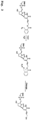
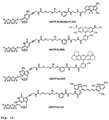
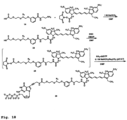
- ddNTP-N 3 -fluorophores four cleavable fluorescent dideoxynucleotides ddNTP-N 3 -fluorophores (ddCTP-N 3 -Bodipy-FL-510, ddUTP-N 3 -R6G, ddATP-N 3 -ROX, and ddGTP-N 3 -Cy5) were synthesized ( Figs. 14-22 ). The ddNTP-N 3 -fluorophores would be combined with the 4 NRTs ( Fig. 6 ) to perform the hybrid SBS.
- Modified DNA polymerases have been shown to be highly tolerant to nucleotide modifications with bulky groups at the 5 position of pyrimidines (C and U) and the 7 position of purines (A and G) (27).
- C and U pyrimidines
- a and G purines
- a unique fluorophore was attached to the 5 position of C/U and the 7 position of A/G through a cleavable linker, which is also based on an azido-modified moiety (37) as a trigger for cleavage, a mechanism that is similar to the removal of the 5'-O-azidomethyl group ( Fig. 13B ).
- the ddNTP-N 3 -fluorophores are found to efficiently incorporate into the growing DNA strand to terminate DNA synthesis for sequence determination.
- the fluorophore on a DNA extension product which is generated by incorporation of the cleavable fluorescent ddNTPs, is removed rapidly and quantitatively by TCEP from the DNA
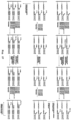
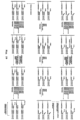
- the MALDI-TOF MS spectrum consist of a distinct peak corresponding to the DNA extension product 5'-primer-C-N 3 3' (m/z 8,310), which confirms that the NRT can be incorporated base-specifically by DNA polymerase into a growing DNA strand.
- Fig. 19(B) shows the cleavage result on the DNA extension product. The extended DNA mass peak at m / z 8,310 completely disappeared, whereas the peak corresponding to the cleavage product 5'-primer-C-3' appears as the sole dominant peak at m / z 8,255, which establishes that TCEP incubation completely cleaves the 3'-O-azidomethyl group with high efficiency.
- the next extension reaction was carried out by using this cleaved product, which now has a free 3'-OH group, as a primer to yield a second extension product, 5'-primer-CGN 3 -3' ( m / z 8,639; Fig. 19C).
- the extension product was cleaved to generate product for further MS analysis yielding a single peak at m / z 8,584 (Fig. 19(D)).
- the third extension reaction to yield 5'-primer-CGA-N 3 -3' ( m / z 8,952; Fig. 19(E)), the fourth extension to yield 5'-primer-CGAT-N 3 -3' ( m / z 9,256; Fig.
- the identity of the incorporated nucleotide is determined by the unique fluorescent emission from the four fluorescent dideoxynucleotide terminators, while the role of the 3'-O-modified NRTs is to further extend the DNA strand to continue the determination of the DNA sequence. Therefore, the ratio between the amount of ddNTP-N 3 -fluorophores and 3'-O-N 3 -dNTPs during the polymerase reaction determines how much of the ddNTP-N 3 -fluorophores incorporate and thus the corresponding fluorescent emission strength.
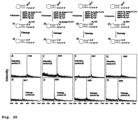
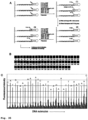
- ddNTP-N 3 -fluorophores With a finite amount of immobilized DNA template on a solid surface, initially the majority of the priming strands should be extended with 3'-O-N 3 -dNTPs, while a relative smaller amount should be extended with ddNTP-N 3 -fluorophores to produce fluorescent signals that are above the fluorescent detection system's sensitivity threshold for sequence determination. As the sequencing cycle continues, the amount of the ddNTP-N 3 -fluorophores need to be gradually increased to maintain the fluorescence emission strength for detection. Following these guidelines, we performed the hybrid SBS on a chip-immobilized DNA template using the 3'-O-N 3 -dNTP/ddNTP-N 3 -fluorophore combination and the results are shown in Fig. 21 . The general four-color sequencing reaction scheme on a chip is shown in Fig. 21A .
- De novo sequencing reaction on the chip was initiated by extending the self-priming DNA by using a solution consisting of four 3'-O-N 3 -dNTPs and four ddNTP-N 3 -fluorophores, and 9°N DNA polymerase.
- the hybrid SBS allows for the addition of all eight, nucleotide substrates simultaneously to unambiguously determine DNA sequences. This reduces the number of steps needed to complete the sequencing cycle, while increasing the sequencing accuracy because of competition among the substrates in the polymerase reaction.
- the DNA products extended by ddNTP-N 3 -fluorophores, after fluorescence detection for sequence determination and cleavage, are no longer involved in the subsequent polymerase reaction cycles because they are permanently terminated.
- a synchronization step was added to reduce the amount of unextended priming strands after the initial extension reaction shown in the scheme of Fig. 21A .
- a synchronization reaction mixture consisting of just the four 3'-0-N 3 -dNTPs in relatively high concentration was used along with the 9°N DNA polymerase to extend, any remaining priming strands that retain a free 3'-OH group to synchronize the incorporation.
- Fig. 21B The four-color images from a fluorescence scanner for each step of the hybrid SBS on a chip is shown in Fig, 21B .
- the surface was immersed in a TCEP solution to cleave both the fluorophore from the DNA product extended with ddNTP-N 3 -fluorophores and the 3'-0-azidomethyl group from the DNA product extended with 3'-0-N 3 -dNTPs.
- the advantage of template "walking” is its ability to restore all the templates after the denature step, includes those that are terminated with ddNTPs, so the next cycle of SBS can restart with potentially the same amount of nascent DNA as the previous round.
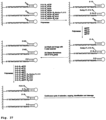
- the "walking" methodology is applicable to both hybrid SBS and SBS with C-F-NRTs, and has the potential to dramatically increase the read lengths of these SBS technologies ( Fig. 23 ).
- Hybrid SBS is a hybrid DNA sequencing method between the Sanger dideoxy chain terminating reaction and SBS.
- four nucleotides Fig. 24
- Fig. 25 a small percentage of four cleavable fluorescent dideoxynucleotides
- Sequences are determined by the unique fluorescence emission of each fluorophore on the DNA products terminated by ddNTPs, while the role of the 3'-O-modified dNTPs is to further extend the DNA strand to continue the determination of the DNA sequence.
- the polymerase reaction Upon removing the 3'-OH capping group from the DNA products generated by incorporating the 3'-O-modified dNTPs and the fluorophore from the DNA products terminated with the ddNTPs, the polymerase reaction reinitiates to continue the sequence determination ( Fig. 26 ).
- Method 1 Nucleotide reversible terminators (3'- O -R 1 -dNTPs) are used as substrates to perform enzymatic incorporation ( Fig. 27 ). After incorporation, specific chemical reaction is applied to regenerate 3'-OH to ensure the subsequent incorporation. The number of repeated cycles of such incorporation and cleavage will exactly match the actual read length in the first stage of SBS, so that this "filling gap" incorporation stops at the same point where the longest ddNTP primer reaches.
- Enzymatic incorporation is conducted using two sets of nucleotides as substrates ( Fig. 28 ).
- the first set of nucleotides composed of dCTP, dATP, and dGTP was used to perform incorporation, so that the polymerase reaction stops once it reaches a base "A" in template.
- enzymatic incorporation is resumed with the second set of nucleotides composed of dTTP, dATP, and dGTP (sans dCTP), resulting in a polymerase reaction that stops at the base "G” in template.
- the repeated cycles of such incorporations fill the gap between first and second stages of SBS.
- another enzyme substrate which can be recognized but not incorporated by the polymerase is assigned to each set of nucleotides. For instance, if the DNA polymerase used can only incorporate dNTP but not 3' blocked nucleotides, 3'- O -R 1 -dTTP will be combined with dCTP, dATP and dGTP as the first set, while 3'- O -R 1 -dCTP will be combined with dTTP, dATP and dGTP as the second set to elongate the primer ( Fig. 29 ).
- deoxyribonucleotides diphosphate can also play such role, replacing the 3'- O -R 1 -dNTPs, during enzymatic incorporation ( Fig. 30 ).
- Enzymatic incorporation is conducted using three dNTPs and another nucleotide reversible terminator as substrates ( Fig. 31 ). Primer elongation will only be stopped once it incorporates nucleotide reversible terminator. After incorporation, specific chemical reaction is applied to regenerate 3'-OH which ensure consecutive incorporation of the next round. Repeated cycles of such incorporation and cleavage will fill the gap between first and second stages of SBS.
- the second stage of SBS is conducted using mixture of nucleotide reversible terminators and fluorescently labeled dideoxynucleotides as incorporation substrates same as described above. Another cluster of bases on the template can be continuously revealed, leading to the doubling of the original read length.
- the SBS-walking-SBS process is repeated to generate maximum read length.
- 3'-O-azidomethyl-modified NRTs (3'-O-N 3 -dNTPs) were synthesized and evaluated ( Fig. 32 ) for use in the hybrid SBS approach.
- the 3'-O-modified NRTs containing an azidomethyl group to cap the 3'-OH on the sugar ring were synthesized based on similar method to that reported by Zavgorodny et al.
- the 3'-O-azidomethyl group on the DNA extension product generated by incorporating each of the NRTs is efficiently removed by the Staudinger reaction using aqueous Tris(2-carboxy-ethyl) phosphine (TCEP) solution followed by hydrolysis to yield a free 3'-OH group for elongating the DNA chain in subsequent cycles of the hybrid SBS ( Fig. 34A ).
- TCEP Tris(2-carboxy-ethyl) phosphine
- ddNTP-N 3 -Fluorophores ddCTP-N 3 -Bodipy-FL-510, ddUTP-N 3 -R6G, ddATP-N 3 -ROX and ddGTP-N 3 -Cy5
- Fig. 33 The ddNTP-N 3 -Fluorophore were used in combination with the four NRTs ( Fig. 32 ) to perform the hybrid SBS.
- Modified DNA polymerases have been shown to be highly tolerant to nucleotide modifications with bulky groups at the 5-position of pyrimidines (C and U) and the 7-position of purines (A and G). Thus, a each unique fluorophore was attached to the 5 position of C/U and the 7 position of A/G through a cleavable linker.
- the cleavable linker is also based on an azido modified moiety as a trigger for cleavage, a mechanism that is similar to the removal of the 3'-O-azidomethyl group ( Fig 34B ).
- Hybrid SBS was performed on a chip-immobilized DNA template using the 3'-O-N 3 -dNTP/ddNTP-N 3 -fluorophore combination and the results are shown in Fig. 35 .
- the general four-color sequencing reaction scheme on a chip is shown in Fig. 35A .
- the de novo sequencing reaction on the chip was initiated by extending the self-priming DNA using a solution containing the combination of the four 3'-O-N 3 -dNTPs and the four ddNTP-N 3 -fluorophores, and 9°N DNA polymerase.
- Fig. 35B The four-color images from a fluorescence scanner for each step of the hybrid SBS on a chip is shown in Fig. 35B .
- the entire process of incorporation, synchronization, detection and cleavage was performed multiple times to identify 32 successive bases in the DNA template.
- the plot of the fluorescence intensity vs. the progress of sequencing extension (raw 4-color sequencing data) is shown in Fig. 35C .
- the DNA sequences were unambiguously identified with no errors from the 4-color raw fluorescence data without any processing.
- the same self-priming DNA was immobilized on surface as template.
- the primer was reset for the second round SBS by elongating the original primer over the sequenced region via enzymatic incorporations.
- a solution containing dATP, dTTP, dCTP and 3'- O -N 3 -dGTP was used to perform the polymerase reaction.
- 9°N DNA polymerase incorporates 3' unblocked nucleotides more efficiently, leading to certain percentage of primers not fully extended by 3'- O -N 3 -dGTP.
- DNA sequencing by synthesis offers a paradigm to efficiently decipher multiple DNA sequences in parallel.
- SBS DNA sequencing by synthesis
- C-F-NRTs modified cleavable fluorescent nucleotide reversible terminators
- C-NRTs 3'- O -R 1 -dNTPs-R 2 -fluorophore
- a set of four C-F-NRTs is produced via dual modifications by capping the 3'-OH group with a small chemical moiety and tethering a fluorophore through a cleavable linker to either the 7-position of the purines (A, G) or the 5-position of the pyrimidines (C, T) so that they are still recognized as substrates by DNA polymerase.
- Another set of four C-NRTs is modified similarly as the C-F-NRTs except no fluorophore is attached, which results in a reduction of the size of C-NRTs and the increment of DNA polymerase incorporation efficiency.
- an extension mixture composed of the C-NRTs with a small percentage of the C-F-NRTs is used to perform SBS. Sequences are determined by the unique fluorescence emission of each fluorophore on the DNA products terminated by the C-F-NRTs. Immediately following the detection step, a synchronization reaction is performed using only the C-NRTs to extend the un-extended DNA strands. A dideoxynucleotides (ddNTPs) capping step is carried out afterwards to completely rid of the remaining un-extended DNA.
- ddNTPs dideoxynucleotides
- the polymerase reaction Upon removing the 3'-OH capping group from the DNA products generated by incorporating both C-F-NRTs and C-NRTs and the fluorophore from the C-F-NRTs, the polymerase reaction reinitiates to continue the sequence determination.
- the following scheme ( Fig. 37 ) illustrates the general process for SBS with C-F-NRTs.
- the azidomethyl capping moiety on the 3'-OH and the fluorophore attached to the DNA extension product via the azido-based cleavable linker are efficiently removed using tris(2-carboxyethyl)phosphine (TCEP) in aqueous solution compatible with DNA.
- TCEP tris(2-carboxyethyl)phosphine
- the 3'-OH is also restored after the cleavage step so that the next stage of SBS can be carried out. Therefore, it is possible to recover all the DNA templates after each round of sequencing, dramatically increasing the potential read-length of our SBS methodology.
- two separate capping steps first with 3'- O -N 3 -dNTPs and then with ddNTPs, are performed. The rationale behind the first capping reaction is to maximize the amount of extension products and to ensure the minimal loss of templates.
- DNA templates are denatured by heat or mild alkali conditions to rid of the extended primer.
- the same original primer is re-hybridized to the template chain, and one of the five "walking" methods described in the previous section can be applied to reset the start point for the next round of SBS at the end of the first sequencing run ( Figs. 40 , 41 , 42 , 43 , and 44 ).
- the primer is extended to the end of the previous round of SBS.
- hybrid SBS is carried out to identify the subsequent bases. If the process can be repeated more times, it should be theoretically possible to achieve long and significant read length.
- the reset is achieved not with nucleotide walking, but with the use of a longer primer partially consisting of universal nucleotides for the second round. Attachment of the template DNA to the surface and the first few steps of the procedure are identical to the first method. However, after stripping the first extended primer for the initial 20 base readout, a long primer with the following features will be hybridized to the template:
- an alternative approach to Strategy 2 is the use of a detachable loop primer, possibly with a labile sugar and glycosylase treatment.
- the loop is removed by enzymatic cleavage and denaturation, and then a new identical loop is attached.
- the new loop primer can be composed of an initial portion identical to the first loop primer, a "loop out" region that bypasses the first set of sequenced nucleotides, and a degenerate anchoring nucleotide to initiate the second round of sequencing.
- one or two additional primer annealing sites are introduced into the DNA to be sequenced at a distance just about equal to the number of bases that can be sequenced from the first primer.
- template preparation for SBS will utilize the cloning of genomic DNA into a specially designed vector containing type IIS or III restriction sites ( MmeI and EcoP15 I ) flanking the genomic DNA cloning site.
- type IIS or III restriction sites MmeI and EcoP15 I
- size fractionated DNA minimum length 100 bp
- the resulting recombinant plasmids will be re-cut at one of the type IIS/III sites and the sticky ends will be filled in with Klenow enzyme.
- specific sequencing primers will be introduced via ligation inside the genomic DNA inserts, 22 bases distant from the first primer in the case of MmeI or 27 bases away in the case of EcoP15 I .
- the constructs After insertion of the internal priming sites, the constructs will be re-cloned in E. coli, the recombinant plasmids isolated and the inserts re-amplified by PCR at vector-insert junctions and attached to the beads for sequencing.
- emulsion or polony PCR strategies can be used to accomplish attachment of single molecules to individual beads or slide locations and their subsequent amplification at a much lower cost than cloning.
- the first round of Hybrid SBS or SBS with C-F-NRTs will be primed from the flanking primer, then after stripping these extended primers, the second set of sequencing reactions will be initiated at the internal primer. It should be noted that with this scheme, the two sequenced portions come from opposite ends of the initial DNA, and are in essence paired end reads.
- the last sequence might end with the Mme I or EcoP15 I site.
- Other tricks would include modifying the ends of the primers to allow looping and reverse direction sequencing, incorporation of one or two decoding bases in the internal primers to confirm directions, and deconvoluting the results after all the data is generated.
- the four NRTs (3'- O -N 3 -dATP, 3'- O -N 3 -dCTP, 3'- O -N 3 -dGTP and 3'- O -N 3 -dTTP) have been characterized, by performing four continuous DNA-extension reactions sequentially using a self-priming DNA template (5'-ATCGGCGCCGCGCCTTGGCGCGGCGC-3' (SEQ ID No:1).
- the four nucleotides in the template immediately adjacent to the annealing site of the primer are 3'-GCTA-5', which allows the evaluation of the incorporation and cleavage efficiency of the 4 NRTs.
- a polymerase extension reaction using a pool of all four NRTs along with the self-priming DNA template was performed producing a single base extension product.
- the reaction mixture for this, and all subsequent extension reactions consisted of 80 pmol of self-priming DNA template, 160 pmol of 3'- O -N 3 -dNTPs, 1X Thermopol II reaction buffer (New England Biolabs), 40 nmol of MnCl 2 and 1 unit of 9°N DNA polymerase (exo-) A485L/Y409V (New England Biolabs) in a total reaction volume of 20 ⁇ l.
- the reaction consisted of incubation at 94°C for 5 min, 4°C for 5 min, and 65°C for 20 min.
- the extension product was desalted by using a ZipTip and analyzed by Voyager DE MALDI-TOF mass spectrometry (Applied Biosystems).
- the desalted DNA extension product bearing the 3'-O-azidomethyl group was first resuspended with 5 ⁇ l of 50 mM EDTA solution to quench the polymerase activity.
- This DNA solution was then mixed with 10 ⁇ l of 225 mM TCEP solution (pH 9.0) and incubated at 65°C for 15 min to yield a cleaved DNA product which was characterized by MALDI-TOF MS.
- the DNA product with the 3'-O-azidomethyl group removed to generate a free 3'-OH group was purified by using an Oligonucleotide Purification Cartridge (Applied Biosystems) and used as a primer for a second extension reaction using 3'- O -N 3 -dNTPs.
- the second extended DNA product was then purified by ZipTip and cleaved as described above.
- the third and the fourth extensions were carried out in a similar manner by using the previously extended and cleaved product as the primer.
- ddNTP-N3-fluorophores ddCTP-N3-Bodipy-FL-510, ddUTP-N3-R6G, ddATP-N3-ROX, and ddGTP-N3-Cy5
- ddNTP-N3-fluorophores ddCTP-N3-Bodipy-FL-510, ddUTP-N3-R6G, ddATP-N3-ROX, and ddGTP-N3-Cy5
- Each of the extension reactions consisted of all four ddNTP-N 3 -fluorophores (e.g., 120 pmol each of ddCTP-N 3 -Bodipy-FL-5l0, ddUTP-N 3 -R6G, ddATP-N 3 -ROX, and ddGTP-N 3 -Cy5) along with 60 pmol of the self-priming DNA template, 1X Thermopol II reaction buffer, 40 nmol of MnCl 2 and 1 unit of 9°N DNA polymerase (exo-) A485L/Y4Q9V in a total reaction volume of 20 ⁇ l.
- ddNTP-N 3 -fluorophores e.g., 120 pmol each of ddCTP-N 3 -Bodipy-FL-5l0, ddUTP-N 3 -R6G, ddATP-N 3 -ROX, and ddGTP-N 3
- the reaction consisted of incubations at 94°C for 5 min, 4°C for 5 min, and 65°C for 20 min. Subsequently, the extension product was purified by reverse-phase HPLC using established procedures (40). The fraction containing the desired product was collected and freeze-dried for analysis by MALDI-TOF MS and cleavage. For cleavage of the DNA extension product bearing the ddNTP-N 3 -fluorophores, the purified DNA product was resuspended in 50 ml of 100 mM TCEP solution (pH 9.0) at 65°C for 15 min and then analyzed by MALDI-TOF MS.
- the nucleotide complementary to the DNA template was allowed to incorporate into the primer at 62°C for 15 min.
- an extension solution consisting of 38 pmol each of 3'- O -N 3 -dTTP, 3'- O -N 3 -dATP, 3'- O -N 3 -dGTP and 75 pmol of 3'- O -N 3 -dCTP, 1 unit of 9°N mutant DNA polymerase(exo-) A485L/Y409V, 20nmol of MnCl 2 and 1X
- Thermopol II reaction buffer was added to the same spot and incubated at 62°C for 15 min.
- the chip After washing with SPSC buffer containing 0.1% Tween 20 for 1 min, the chip was rinsed with dH 2 O, and then scanned with a 4-color fluorescence ScanArray Express scanner (Perkin-Elmer Life Sciences) to detect the fluorescence signal. To perform the cleavage, the DNA chip was placed inside a chamber filled with 100 mM TCEP (pH 9.0) and incubated at 65°C for 10 min. After washing the surface with dH 2 O, the chip was scanned again to measure the background fluorescence signal.
- TCEP pH 9.0
- the 5'-amino-labeled self-priming DNA template 5'-NH 2 -CAC-TCA-CAT-ATG-TTT-TTT-AGC-TTT-TTT-AAT-TTC-TTA-ATG-ATG-TTG-TTG-CAT-GCG-ACT-TAA-GGC-GCT-TGC-GCC-TTA-AGT-CG-3' (SEQ ID No:6) was purchased from IDT (Coralville, IA).
- the DNA template was dissolved at 40 ⁇ M in 50 mM sodium phosphate buffer, pH 8.5 and spotted using SpotArray 72 arraying robot (Perkin Elmer) onto high density CodeLink microarray slides (GE Healthcare).
- the slides were incubated at ambient temperature ( ⁇ 24°C) for 20 hours in a humid chamber containing saturated sodium chloride solution ( ⁇ 75% humidity) to allow for 5'-tethering of the spotted amino-modified DNA templates to the slide surface functionalized with succinimide ester groups.
- the slides were removed from the humid chamber and stored in vacuum desiccator at room temperature until further use.
- the principal advantage of the hairpin structure introduced into the 3'-portion of the self-priming DNA template is its higher stability and the increased priming efficiency for DNA polymerases as compared to a separate primer/template complex, which is prone to spontaneous dissociation.
- the SBS cycle was repeated multiple times using the combination mixture of solution A consisting of 3'-O-N 3 -dCTP (3 ⁇ M), 3'-ON 3 -dTTP (3 ⁇ M), 3' -O-N 3 -dATP (3 ⁇ M) and 3' - O-N 3 -dGTP (0.5 ⁇ M) and solution B consisting of ddCTP-N 3 -Bodipy-FL-510 (50 nM), ddUTP-N 3 -R6G (100 nM), ddATP-N 3 -ROX (200 nM) and ddGTP-N 3 -Cy5 (100 nM) in each polymerase extension reaction.
- the cleavable fluorescent ddNTPs and 3'- O -N 3 -dNTPs permanent and reversible terminators, respectively, which allow the interrogation of each base in a serial manner, a key procedure enabling accurate determination of homopolymeric regions of DNA.
- all of the steps of the nucleotide incorporation, fluorescence detection for sequence determination, cleavage of the fluorophore, and the 3'-O-azidomethyl group are performed on a DNA chip, there is no longer a need for electrophoretic DNA fragment separation as in the classical Sanger sequencing method.
- the identity of the incorporated nucleotide is determined by the unique fluorescence emission from the four fluorescent dideoxynucleotides, whereas the role of the 3'-O-modified NRTs is to further extend the DNA strand. Therefore, the ratio of the ddNTP-N 3 -fluorophores and 3'- O -N 3 -dNTPs during the polymerase reaction determines how much of the ddNTP-N 3 -fluorophores incorporate and, thus, the corresponding fluorescence emission strength.
- the majority of the priming strands should be extended with 3'- O -N 3 -dNTPs, whereas a relatively smaller amount should be extended with ddNTP-N 3 -fluorophores to produce sufficient fluorescent signals that are above the fluorescence detection system's sensitivity threshold for sequence determination.
- the amount of the ddNTP-N 3 -fluorophores needs to be gradually increased to maintain the fluorescence emission strength for detection.
- the signal strength at base 32 is as strong as that of the first base ( Fig, 21C ), indicating it should be possible to increase the read length of the hybrid SBS further by optimizing the extension conditions to reduce the background fluorescence in the later sequencing cycles.
- the ultimate read length of this hybrid SBS system depends on three factors: the number of starting DNA molecules on each spot of a DNA chip, the reaction efficiency, and the detection sensitivity of the system.
- the read length with the Sanger sequencing method commonly reaches >700 bp.
- the hybrid SBS approach described here may have the potential to reach this read length, especially with improvements in the sensitivity of the fluorescent detection system, where single molecules can be reliably detected.
Landscapes
- Chemical & Material Sciences (AREA)
- Organic Chemistry (AREA)
- Life Sciences & Earth Sciences (AREA)
- Health & Medical Sciences (AREA)
- Engineering & Computer Science (AREA)
- Molecular Biology (AREA)
- Biochemistry (AREA)
- Biotechnology (AREA)
- General Health & Medical Sciences (AREA)
- Genetics & Genomics (AREA)
- Proteomics, Peptides & Aminoacids (AREA)
- Wood Science & Technology (AREA)
- Zoology (AREA)
- Immunology (AREA)
- Microbiology (AREA)
- Bioinformatics & Cheminformatics (AREA)
- General Engineering & Computer Science (AREA)
- Physics & Mathematics (AREA)
- Analytical Chemistry (AREA)
- Biophysics (AREA)
- Measuring Or Testing Involving Enzymes Or Micro-Organisms (AREA)
- Chemical Kinetics & Catalysis (AREA)
- Saccharide Compounds (AREA)
Claims (13)
- Kit zur Verwendung bei der Sequenzierung einer Nukleinsäure, umfassend(a) eine Vielzahl von vier Nukleotidanaloga mit den folgenden Strukturen:


 (b) Gebrauchsanweisungen.
 - Kit nach Anspruch 1, umfassend vier Nukleotidanaloga mit den folgenden Strukturen:


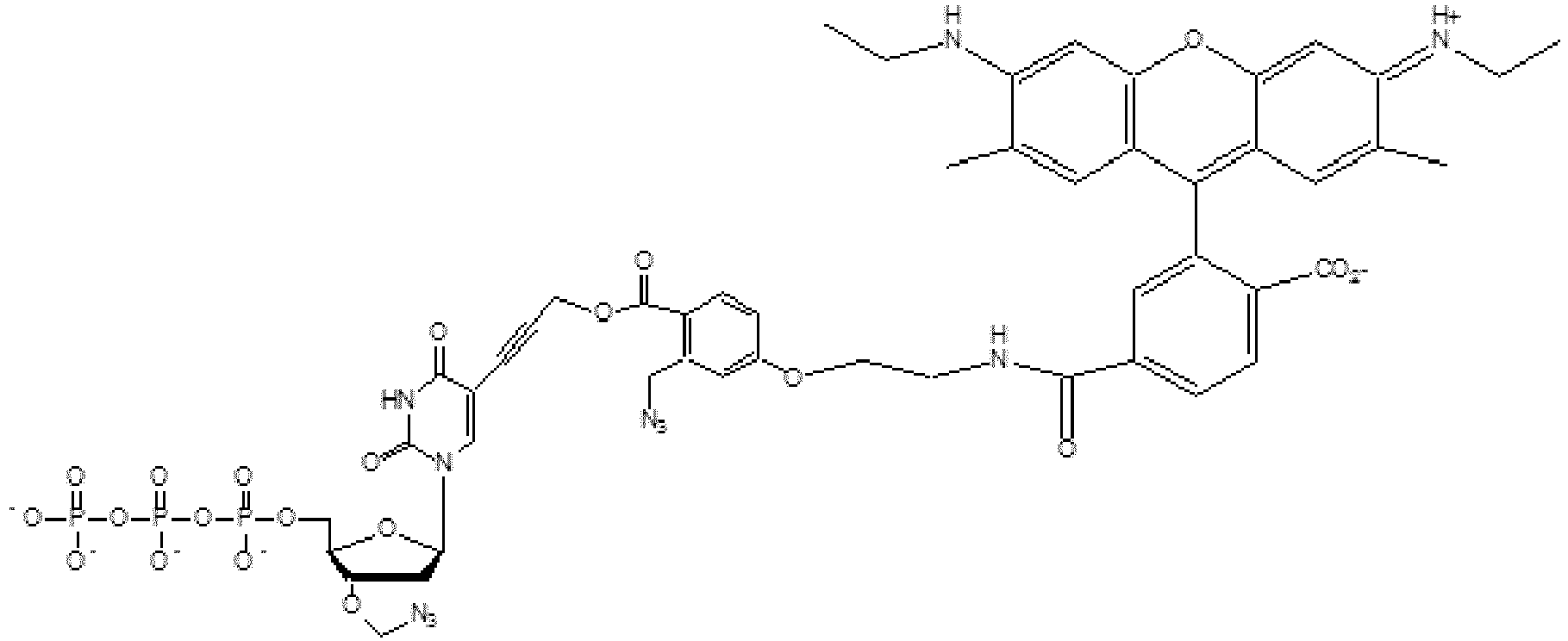

- Array, das eine an einer festen Oberfläche befestigte Nukleinsäure umfasst, wobei die Nukleinsäure eine an ein 3'-O-Atom von dieser gebundene Azidomethylgruppe umfasst und ein Molekül mit der Struktur:

- Array nach Anspruch 3, wobei die Nukleinsäure eine self-priming Nukleinsäure ist
- Array nach Anspruch 3 oder 4, wobei der nachweisbare Marker ein Fluorophor ist.
- Verfahren zur Erhöhung der Leselänge der DNA-Sequenzierung durch Synthese, umfassend:a) Bereitstellung von Desoxynukleotidtriphosphat-Analoga (dNTPs)
wobei sich die dNTPs von Desoxynukleotidtriphosphaten dadurch unterscheiden, dass sie eine Methylazidogruppe an ihrem 3'O-Atom haben und einen nachweisbaren Marker haben, der an ein 1-Stickstoffatom oder ein 9-Stickstoffatom ihrer Base über einen Linker gebunden ist, der die Struktur umfasst: b) Einbau einer Vielzahl der dNTPs in eine Nukleinsäure, die bei der DNA-Sequenzierung durch Synthese synthetisiert wird; undc) Abspaltung des Methylazido und des nachweisbaren Markers von jedem dNTP-Analogon.
 - Verfahren nach Anspruch 6, wobei die Nukleinsäure auf einer festen Oberfläche immobilisiert ist.
- Verfahren nach Anspruch 7, wobei die feste Oberfläche ein Chip oder ein Kügelchen ist.
- Verfahren nach einem der Ansprüche 6-8, wobei die dNTPs dNTPs mit der folgenden Struktur sind:


- Verfahren nach einem der Ansprüche 6-8, wobei die dNTPs dNTPs mit der Struktur:


- Verfahren nach einem der Ansprüche 6-10, wobei in Schritt c) das Methylazido durch Kontaktieren des Methylazidos mit Tris(2-carboxyethyl)phosphin gespalten wird.
- Verfahren nach einem der Ansprüche 6-11, wobei der nachweisbare Marker ein Fluorophor ist.
- Verfahren nach Anspruch 12, wobei in Schritt c) der Linker durch Kontaktieren des Linkers mit Tris(2-carboxyethyl)phosphin gespalten wird.
Priority Applications (1)
| Application Number | Priority Date | Filing Date | Title |
|---|---|---|---|
| EP23212547.6A EP4310194A3 (de) | 2007-10-19 | 2008-10-17 | Entwurf und synthese von spaltbaren fluoreszierenden nukleotiden als reversible terminatoren zur dna-sequenzierung durch synthese |
Applications Claiming Priority (3)
| Application Number | Priority Date | Filing Date | Title |
|---|---|---|---|
| US99957607P | 2007-10-19 | 2007-10-19 | |
| EP20080839081 EP2207900B1 (de) | 2007-10-19 | 2008-10-17 | Konstruktion und synthese spaltbarer fluoreszenznukleotide als reversible terminatoren für die dna-sequenzierung mittels synthese |
| PCT/US2008/011891 WO2009051807A1 (en) | 2007-10-19 | 2008-10-17 | Design and synthesis of cleavable fluorescent nucleotides as reversible terminators for dna sequencing by synthesis |
Related Parent Applications (1)
| Application Number | Title | Priority Date | Filing Date |
|---|---|---|---|
| EP20080839081 Division EP2207900B1 (de) | 2007-10-19 | 2008-10-17 | Konstruktion und synthese spaltbarer fluoreszenznukleotide als reversible terminatoren für die dna-sequenzierung mittels synthese |
Related Child Applications (1)
| Application Number | Title | Priority Date | Filing Date |
|---|---|---|---|
| EP23212547.6A Division EP4310194A3 (de) | 2007-10-19 | 2008-10-17 | Entwurf und synthese von spaltbaren fluoreszierenden nukleotiden als reversible terminatoren zur dna-sequenzierung durch synthese |
Publications (2)
| Publication Number | Publication Date |
|---|---|
| EP2940029A1 EP2940029A1 (de) | 2015-11-04 |
| EP2940029B1 true EP2940029B1 (de) | 2023-11-29 |
Family
ID=40567704
Family Applications (3)
| Application Number | Title | Priority Date | Filing Date |
|---|---|---|---|
| EP23212547.6A Pending EP4310194A3 (de) | 2007-10-19 | 2008-10-17 | Entwurf und synthese von spaltbaren fluoreszierenden nukleotiden als reversible terminatoren zur dna-sequenzierung durch synthese |
| EP20080839081 Active EP2207900B1 (de) | 2007-10-19 | 2008-10-17 | Konstruktion und synthese spaltbarer fluoreszenznukleotide als reversible terminatoren für die dna-sequenzierung mittels synthese |
| EP15165262.5A Active EP2940029B1 (de) | 2007-10-19 | 2008-10-17 | Design und synthese von spaltbaren fluoreszierenden nukleotiden als reversible terminatoren zur dna-sequenzierung durch synthese |
Family Applications Before (2)
| Application Number | Title | Priority Date | Filing Date |
|---|---|---|---|
| EP23212547.6A Pending EP4310194A3 (de) | 2007-10-19 | 2008-10-17 | Entwurf und synthese von spaltbaren fluoreszierenden nukleotiden als reversible terminatoren zur dna-sequenzierung durch synthese |
| EP20080839081 Active EP2207900B1 (de) | 2007-10-19 | 2008-10-17 | Konstruktion und synthese spaltbarer fluoreszenznukleotide als reversible terminatoren für die dna-sequenzierung mittels synthese |
Country Status (3)
| Country | Link |
|---|---|
| US (7) | US20110014611A1 (de) |
| EP (3) | EP4310194A3 (de) |
| WO (1) | WO2009051807A1 (de) |
Families Citing this family (68)
| Publication number | Priority date | Publication date | Assignee | Title |
|---|---|---|---|---|
| US9708358B2 (en) | 2000-10-06 | 2017-07-18 | The Trustees Of Columbia University In The City Of New York | Massive parallel method for decoding DNA and RNA |
| ATE356222T1 (de) | 2000-10-06 | 2007-03-15 | Univ Columbia | Massives parallelverfahren zur dekodierung von dna und rna |
| US11008359B2 (en) | 2002-08-23 | 2021-05-18 | Illumina Cambridge Limited | Labelled nucleotides |
| WO2007002204A2 (en) | 2005-06-21 | 2007-01-04 | The Trustees Of Columbia University In The City Of New York | Pyrosequencing methods and related compostions |
| WO2007053719A2 (en) | 2005-10-31 | 2007-05-10 | The Trustees Of Columbia University In The City Of New York | Chemically cleavable 3'-o-allyl-dntp-allyl-fluorophore fluorescent nucleotide analogues and related methods |
| US7982029B2 (en) | 2005-10-31 | 2011-07-19 | The Trustees Of Columbia University In The City Of New York | Synthesis of four color 3′O-allyl, modified photocleavable fluorescent nucleotides and related methods |
| WO2007135368A2 (en) | 2006-05-18 | 2007-11-29 | Solexa Limited | Dye compounds and the use of their labelled conjugates |
| US8889348B2 (en) * | 2006-06-07 | 2014-11-18 | The Trustees Of Columbia University In The City Of New York | DNA sequencing by nanopore using modified nucleotides |
| DE112007002932B4 (de) | 2006-12-01 | 2015-08-06 | The Trustees Of Columbia University In The City Of New York | Vierfarben DNA-Sequenzierung mittels Synthese unter Verwendung von abspaltbaren, reversiblen, fluoreszierenden Nucleotidterminatoren |
| US9115163B2 (en) | 2007-10-19 | 2015-08-25 | The Trustees Of Columbia University In The City Of New York | DNA sequence with non-fluorescent nucleotide reversible terminators and cleavable label modified nucleotide terminators |
| EP4310194A3 (de) | 2007-10-19 | 2024-10-16 | The Trustees of Columbia University in the City of New York | Entwurf und synthese von spaltbaren fluoreszierenden nukleotiden als reversible terminatoren zur dna-sequenzierung durch synthese |
| US10036063B2 (en) | 2009-07-24 | 2018-07-31 | Illumina, Inc. | Method for sequencing a polynucleotide template |
| US8324914B2 (en) | 2010-02-08 | 2012-12-04 | Genia Technologies, Inc. | Systems and methods for characterizing a molecule |
| US9605307B2 (en) | 2010-02-08 | 2017-03-28 | Genia Technologies, Inc. | Systems and methods for forming a nanopore in a lipid bilayer |
| US9678055B2 (en) | 2010-02-08 | 2017-06-13 | Genia Technologies, Inc. | Methods for forming a nanopore in a lipid bilayer |
| EP2652153B1 (de) * | 2010-12-17 | 2017-07-05 | The Trustees of Columbia University in the City of New York | Dna-sequenzierung durch synthese unter verwendung modifizierter nukleotide und nanoporennachweis |
| WO2012088339A2 (en) | 2010-12-22 | 2012-06-28 | Genia Technologies, Inc. | Nanopore-based single dna molecule characterization using speed bumps |
| US8962242B2 (en) | 2011-01-24 | 2015-02-24 | Genia Technologies, Inc. | System for detecting electrical properties of a molecular complex |
| US9110478B2 (en) | 2011-01-27 | 2015-08-18 | Genia Technologies, Inc. | Temperature regulation of measurement arrays |
| US9624539B2 (en) | 2011-05-23 | 2017-04-18 | The Trustees Of Columbia University In The City Of New York | DNA sequencing by synthesis using Raman and infrared spectroscopy detection |
| EP3623481B1 (de) * | 2011-09-23 | 2021-08-25 | Illumina, Inc. | Zusammensetzungen zur nukleinsäuresequenzierung |
| US8986629B2 (en) | 2012-02-27 | 2015-03-24 | Genia Technologies, Inc. | Sensor circuit for controlling, detecting, and measuring a molecular complex |
| US10246479B2 (en) | 2012-04-09 | 2019-04-02 | The Trustees Of Columbia University In The City Of New York | Method of preparation of nanopore and uses thereof |
| GB2510719A (en) | 2012-06-15 | 2014-08-13 | Genia Technologies Inc | Chip set-up and high-accuracy nucleic acid sequencing |
| EP2864502B1 (de) | 2012-06-20 | 2019-10-23 | The Trustees of Columbia University in the City of New York | Nucleinsäuresequenzierung durch nanoporendetektion von markierungsmolekülen |
| US9605309B2 (en) | 2012-11-09 | 2017-03-28 | Genia Technologies, Inc. | Nucleic acid sequencing using tags |
| US9759711B2 (en) | 2013-02-05 | 2017-09-12 | Genia Technologies, Inc. | Nanopore arrays |
| US8754244B1 (en) | 2013-03-08 | 2014-06-17 | Illumina Cambridge Limited | Rhodamine compounds and their use as fluorescent labels |
| US9146248B2 (en) | 2013-03-14 | 2015-09-29 | Intelligent Bio-Systems, Inc. | Apparatus and methods for purging flow cells in nucleic acid sequencing instruments |
| CN105102627B (zh) | 2013-03-15 | 2018-10-19 | 纽约哥伦比亚大学理事会 | 用于检测样品中多种预定化合物的方法 |
| US9591268B2 (en) | 2013-03-15 | 2017-03-07 | Qiagen Waltham, Inc. | Flow cell alignment methods and systems |
| US10648026B2 (en) | 2013-03-15 | 2020-05-12 | The Trustees Of Columbia University In The City Of New York | Raman cluster tagged molecules for biological imaging |
| CN104292117B (zh) * | 2013-07-15 | 2016-10-05 | 上海交通大学 | 酸敏感连接单元的合成及其在dna测序中的用途 |
| US9551697B2 (en) | 2013-10-17 | 2017-01-24 | Genia Technologies, Inc. | Non-faradaic, capacitively coupled measurement in a nanopore cell array |
| EP3640349A3 (de) | 2013-10-23 | 2020-07-29 | Roche Sequencing Solutions, Inc. | Schnelle molekulare erfassung mit nanoporen |
| US9322062B2 (en) | 2013-10-23 | 2016-04-26 | Genia Technologies, Inc. | Process for biosensor well formation |
| CA2943952A1 (en) | 2014-03-24 | 2015-10-01 | The Trustees Of Columbia University In The City Of New York | Chemical methods for producing tagged nucleotides |
| GB201414098D0 (en) * | 2014-08-08 | 2014-09-24 | Illumina Cambridge Ltd | Modified nucleotide linkers |
| US9933431B2 (en) | 2014-08-22 | 2018-04-03 | Arizona Board Of Regents On Behalf Of Arizona State University | System and method for iterative detection of biological molecules |
| WO2016065248A1 (en) | 2014-10-23 | 2016-04-28 | Complete Genomics, Inc. | Signal confinement sequencing (scs) and nucleotide analogues for signal confinement sequencing |
| WO2016144973A1 (en) | 2015-03-09 | 2016-09-15 | The Trustees Of Columbia University In The City Of New York | Pore-forming protein conjugate compositions and methods |
| AU2016298541B2 (en) | 2015-07-30 | 2019-10-31 | Illumina, Inc. | Orthogonal deblocking of nucleotides |
| EP3130681B1 (de) | 2015-08-13 | 2019-11-13 | Centrillion Technology Holdings Corporation | Verfahren zur synchronisierung von nukleinsäuremolekülen |
| US11085076B2 (en) | 2015-09-28 | 2021-08-10 | The Trustees Of Columbia University In The City Of New York | Synthesis of novel disulfide linker based nucleotides as reversible terminators for DNA sequencing by synthesis |
| EP3463381A4 (de) | 2016-05-23 | 2020-01-01 | The Trustees of Columbia University in the City of New York | Nukleotidderivate und verfahren zur verwendung davon |
| WO2018102554A1 (en) * | 2016-12-01 | 2018-06-07 | President And Fellows Of Harvard College | Cleavable nucleotide analogs and uses thereof |
| US11591647B2 (en) | 2017-03-06 | 2023-02-28 | Singular Genomics Systems, Inc. | Nucleic acid sequencing-by-synthesis (SBS) methods that combine SBS cycle steps |
| CN110709089B (zh) | 2017-03-28 | 2024-12-06 | 哥伦比亚大学董事会 | 用于连接荧光标记与用于dna合成测序的碱基的具有不同可裂解连接子的3’-o-改性的核苷酸类似物 |
| US12215124B2 (en) | 2018-02-21 | 2025-02-04 | Singular Genomics Systems, Inc. | Fluorinated nucleotides and uses thereof |
| WO2019178393A1 (en) | 2018-03-15 | 2019-09-19 | The Trustees Of Columbia University In The City Of New York | Nucleotide analogues and use thereof for nucleic acid sequencing and analysis |
| WO2020006421A1 (en) | 2018-06-29 | 2020-01-02 | Pacific Biosciences Of California, Inc. | Methods and compositions for delivery of molecules and complexes to reaction sites |
| CN113227772B (zh) | 2018-07-23 | 2024-11-01 | 纽约市哥伦比亚大学信托人 | 用于生物标志物检测的单分子电子多重纳米孔免疫测定 |
| WO2020086834A1 (en) | 2018-10-25 | 2020-04-30 | Singular Genomics Systems, Inc. | Nucleotide analogues |
| CN113453692A (zh) * | 2019-01-08 | 2021-09-28 | 奇异基因组学系统公司 | 核苷酸可裂解接头和其用途 |
| US20230148152A1 (en) * | 2019-01-31 | 2023-05-11 | Agency For Science, Technology And Research | Method of synthesizing single-stranded nucleotide sequence, blocked nucleoside triphosphates and related methods |
| CN113710686A (zh) | 2019-02-19 | 2021-11-26 | 阿尔缇玛基因组学公司 | 用于光学检测和测序的接头和方法 |
| EP3997101A4 (de) * | 2019-07-09 | 2024-03-13 | The Trustees Of Columbia University In The City Of New York | Neuartige nukleotidanaloga und verfahren zu ihrer verwendung |
| IL286668B1 (en) | 2019-12-16 | 2026-04-01 | Illumina Cambridge Ltd | Kits and flow cells |
| US12281134B2 (en) * | 2020-02-04 | 2025-04-22 | Microsoft Technology Licensing, Llc | Electrochemically-cleavable linkers |
| US11807851B1 (en) | 2020-02-18 | 2023-11-07 | Ultima Genomics, Inc. | Modified polynucleotides and uses thereof |
| WO2021216998A1 (en) | 2020-04-24 | 2021-10-28 | Singular Genomics Systems, Inc. | Modified nucleotides and uses thereof |
| CN114634488B (zh) * | 2020-12-15 | 2024-07-12 | 湖北华大基因研究院 | 琥珀酰亚胺酯及其制备、处理和检测方法 |
| US11591361B2 (en) * | 2020-12-29 | 2023-02-28 | Microsoft Technology Licensing, Llc | Linker structures with minimal scar for enzymatic synthesis |
| EP4317168A4 (de) * | 2021-04-01 | 2025-08-27 | Bgi Shenzhen | Nukleotidanalog zur sequenzierung |
| WO2023107673A2 (en) | 2021-12-10 | 2023-06-15 | Singular Genomics Systems, Inc. | Cleavable disulfide linkers and uses thereof |
| CN114958995B (zh) * | 2022-04-27 | 2023-07-18 | 深圳赛陆医疗科技有限公司 | 一种基因测序方法 |
| JP2025522811A (ja) * | 2022-06-30 | 2025-07-17 | アルナイラム ファーマシューティカルズ, インコーポレイテッド | 修飾オリゴヌクレオチドの合成のためのモノマーおよび方法 |
| WO2026019720A1 (en) | 2024-07-15 | 2026-01-22 | Pacific Biosciences Of California, Inc. | Improved loading of molecules and complexes to reaction sites |
Family Cites Families (182)
| Publication number | Priority date | Publication date | Assignee | Title |
|---|---|---|---|---|
| US4711955A (en) | 1981-04-17 | 1987-12-08 | Yale University | Modified nucleotides and methods of preparing and using same |
| US5175269A (en) | 1984-01-30 | 1992-12-29 | Enzo Diagnostics, Inc. | Compound and detectable molecules having an oligo- or polynucleotide with modifiable reactive group |
| US5118605A (en) * | 1984-10-16 | 1992-06-02 | Chiron Corporation | Polynucleotide determination with selectable cleavage sites |
| US4824775A (en) * | 1985-01-03 | 1989-04-25 | Molecular Diagnostics, Inc. | Cells labeled with multiple Fluorophores bound to a nucleic acid carrier |
| US4772691A (en) * | 1985-06-05 | 1988-09-20 | The Medical College Of Wisconsin, Inc. | Chemically cleavable nucleotides |
| US4863849A (en) * | 1985-07-18 | 1989-09-05 | New York Medical College | Automatable process for sequencing nucleotide |
| US4888274A (en) | 1985-09-18 | 1989-12-19 | Yale University | RecA nucleoprotein filament and methods |
| CA1340806C (en) * | 1986-07-02 | 1999-11-02 | James Merrill Prober | Method, system and reagents for dna sequencing |
| SE8801070D0 (sv) | 1988-03-23 | 1988-03-23 | Pharmacia Ab | Method for immobilizing a dna sequence on a solid support |
| US5174962A (en) | 1988-06-20 | 1992-12-29 | Genomyx, Inc. | Apparatus for determining DNA sequences by mass spectrometry |
| US5043272A (en) * | 1989-04-27 | 1991-08-27 | Life Technologies, Incorporated | Amplification of nucleic acid sequences using oligonucleotides of random sequence as primers |
| GB8910880D0 (en) | 1989-05-11 | 1989-06-28 | Amersham Int Plc | Sequencing method |
| US5547839A (en) | 1989-06-07 | 1996-08-20 | Affymax Technologies N.V. | Sequencing of surface immobilized polymers utilizing microflourescence detection |
| US5302509A (en) | 1989-08-14 | 1994-04-12 | Beckman Instruments, Inc. | Method for sequencing polynucleotides |
| EP0450060A1 (de) | 1989-10-26 | 1991-10-09 | Sri International | Dns-sequenzierung |
| US5437975A (en) * | 1991-02-25 | 1995-08-01 | California Institute Of Biological Research | Consensus sequence primed polymerase chain reaction method for fingerprinting genomes |
| JPH04337446A (ja) * | 1991-05-15 | 1992-11-25 | Hitachi Ltd | 微粒子計測方法、定量方法および微粒子計測装置 |
| US5556748A (en) * | 1991-07-30 | 1996-09-17 | Xenopore Corporation | Methods of sandwich hybridization for the quantitative analysis of oligonucleotides |
| WO1993005183A1 (en) | 1991-09-09 | 1993-03-18 | Baylor College Of Medicine | Method and device for rapid dna or rna sequencing determination by a base addition sequencing scheme |
| DE4141178A1 (de) | 1991-12-13 | 1993-06-17 | Europ Lab Molekularbiolog | Verfahren zur sequenzierung von nukleinsaeuren |
| DE4141698A1 (de) | 1991-12-18 | 1993-07-01 | Bosch Gmbh Robert | Verfahren zur schliesszeitregelung |
| US6555349B1 (en) * | 1993-01-22 | 2003-04-29 | Cornell Research Foundation, Inc. | Methods for amplifying and sequencing nucleic acid molecules using a three component polymerase |
| GB9208733D0 (en) * | 1992-04-22 | 1992-06-10 | Medical Res Council | Dna sequencing method |
| US5637469A (en) * | 1992-05-01 | 1997-06-10 | Trustees Of The University Of Pennsylvania | Methods and apparatus for the detection of an analyte utilizing mesoscale flow systems |
| GB9210176D0 (en) * | 1992-05-12 | 1992-06-24 | Cemu Bioteknik Ab | Chemical method |
| US5436143A (en) * | 1992-12-23 | 1995-07-25 | Hyman; Edward D. | Method for enzymatic synthesis of oligonucleotides |
| US5516664A (en) | 1992-12-23 | 1996-05-14 | Hyman; Edward D. | Enzymatic synthesis of repeat regions of oligonucleotides |
| US6074823A (en) * | 1993-03-19 | 2000-06-13 | Sequenom, Inc. | DNA sequencing by mass spectrometry via exonuclease degradation |
| FR2703052B1 (fr) * | 1993-03-26 | 1995-06-02 | Pasteur Institut | Nouvelle méthode de séquençage d'acides nucléiques. |
| US5959089A (en) | 1993-07-19 | 1999-09-28 | Hannessian; Stephen | Amino-cyclodextrin syntheses |
| GB9315847D0 (en) * | 1993-07-30 | 1993-09-15 | Isis Innovation | Tag reagent and assay method |
| US5547859A (en) * | 1993-08-02 | 1996-08-20 | Goodman; Myron F. | Chain-terminating nucleotides for DNA sequencing methods |
| US5789167A (en) * | 1993-09-10 | 1998-08-04 | Genevue, Inc. | Optical detection of position of oligonucleotides on large DNA molecules |
| EP0765401B1 (de) | 1993-11-17 | 2001-02-21 | Amersham Pharmacia Biotech UK Limited | Verfahren zur massenspektroskopischen sequenzanalyse einer nukleinsäure mittels primerverlängerung |
| US5654419A (en) * | 1994-02-01 | 1997-08-05 | The Regents Of The University Of California | Fluorescent labels and their use in separations |
| US5869255A (en) * | 1994-02-01 | 1999-02-09 | The Regents Of The University Of California | Probes labeled with energy transfer couples dyes exemplified with DNA fragment analysis |
| US6028190A (en) * | 1994-02-01 | 2000-02-22 | The Regents Of The University Of California | Probes labeled with energy transfer coupled dyes |
| FR2716263B1 (fr) * | 1994-02-11 | 1997-01-17 | Pasteur Institut | Procédé d'alignement de macromolécules par passage d'un ménisque et applications dans un procédé de mise en évidence, séparation et/ou dosage d'une macromolécule dans un échantillon. |
| US5552278A (en) * | 1994-04-04 | 1996-09-03 | Spectragen, Inc. | DNA sequencing by stepwise ligation and cleavage |
| US6589736B1 (en) * | 1994-11-22 | 2003-07-08 | The Trustees Of Boston University | Photocleavable agents and conjugates for the detection and isolation of biomolecules |
| US20020168642A1 (en) | 1994-06-06 | 2002-11-14 | Andrzej Drukier | Sequencing duplex DNA by mass spectroscopy |
| US5709999A (en) * | 1994-08-12 | 1998-01-20 | Myriad Genetics Inc. | Linked breast and ovarian cancer susceptibility gene |
| US5763594A (en) * | 1994-09-02 | 1998-06-09 | Andrew C. Hiatt | 3' protected nucleotides for enzyme catalyzed template-independent creation of phosphodiester bonds |
| US6232465B1 (en) * | 1994-09-02 | 2001-05-15 | Andrew C. Hiatt | Compositions for enzyme catalyzed template-independent creation of phosphodiester bonds using protected nucleotides |
| US5808045A (en) * | 1994-09-02 | 1998-09-15 | Andrew C. Hiatt | Compositions for enzyme catalyzed template-independent creation of phosphodiester bonds using protected nucleotides |
| US6214987B1 (en) * | 1994-09-02 | 2001-04-10 | Andrew C. Hiatt | Compositions for enzyme catalyzed template-independent formation of phosphodiester bonds using protected nucleotides |
| US5872244A (en) | 1994-09-02 | 1999-02-16 | Andrew C. Hiatt | 3' protected nucleotides for enzyme catalyzed template-independent creation of phosphodiester bonds |
| US6013445A (en) | 1996-06-06 | 2000-01-11 | Lynx Therapeutics, Inc. | Massively parallel signature sequencing by ligation of encoded adaptors |
| SE9500342D0 (sv) | 1995-01-31 | 1995-01-31 | Marek Kwiatkowski | Novel chain terminators, the use thereof for nucleic acid sequencing and synthesis and a method of their preparation |
| AU5171696A (en) | 1995-02-27 | 1996-09-18 | Ely Michael Rabani | Device, compounds, algorithms, and methods of molecular characterization and manipulation with molecular parallelism |
| EP0745686A1 (de) | 1995-06-01 | 1996-12-04 | Roche Diagnostics GmbH | Die Verwendung der 3'-wesentlichen Bearbeitungs-Wirksamkeit von DNS-Polymerase |
| US5770365A (en) * | 1995-08-25 | 1998-06-23 | Tm Technologies, Inc. | Nucleic acid capture moieties |
| CA2185590A1 (en) * | 1995-09-18 | 1997-03-19 | Kazunori Okano | Dna sequencing method and dna sample preparation method |
| US5728528A (en) * | 1995-09-20 | 1998-03-17 | The Regents Of The University Of California | Universal spacer/energy transfer dyes |
| US5962228A (en) * | 1995-11-17 | 1999-10-05 | Lynx Therapeutics, Inc. | DNA extension and analysis with rolling primers |
| IL124967A (en) * | 1995-12-18 | 2000-07-26 | Univ Washington | Method for nucleic acid analysis using fluorescence resonance energy transfer |
| US5658736A (en) * | 1996-01-16 | 1997-08-19 | Genetics Institute, Inc. | Oligonucleotide population preparation |
| US6613508B1 (en) * | 1996-01-23 | 2003-09-02 | Qiagen Genomics, Inc. | Methods and compositions for analyzing nucleic acid molecules utilizing sizing techniques |
| EP0992511B1 (de) | 1996-01-23 | 2009-03-11 | Operon Biotechnologies, Inc. | Verfahren und Zusammensetzungen zur Bestimmung von Sequenzen von Nukleinsäure-Molekülen |
| JP2002515738A (ja) | 1996-01-23 | 2002-05-28 | アフィメトリックス,インコーポレイティド | 核酸分析法 |
| US6312893B1 (en) | 1996-01-23 | 2001-11-06 | Qiagen Genomics, Inc. | Methods and compositions for determining the sequence of nucleic acid molecules |
| AU2320597A (en) | 1996-03-19 | 1997-10-10 | Molecular Tool, Inc. | Method for determining the nucleotide sequence of a polynucleotide |
| WO1997047761A1 (en) * | 1996-06-14 | 1997-12-18 | Sarnoff Corporation | Method for polynucleotide sequencing |
| AU6497296A (en) * | 1996-07-16 | 1998-02-09 | Periannan Senapathy | Method for contiguous genome sequencing |
| US5821356A (en) * | 1996-08-12 | 1998-10-13 | The Perkin Elmer Corporation | Propargylethoxyamino nucleotides |
| US6361940B1 (en) * | 1996-09-24 | 2002-03-26 | Qiagen Genomics, Inc. | Compositions and methods for enhancing hybridization and priming specificity |
| GB9620209D0 (en) * | 1996-09-27 | 1996-11-13 | Cemu Bioteknik Ab | Method of sequencing DNA |
| US5853992A (en) | 1996-10-04 | 1998-12-29 | The Regents Of The University Of California | Cyanine dyes with high-absorbance cross section as donor chromophores in energy transfer labels |
| US5885775A (en) * | 1996-10-04 | 1999-03-23 | Perseptive Biosystems, Inc. | Methods for determining sequences information in polynucleotides using mass spectrometry |
| US5856104A (en) * | 1996-10-28 | 1999-01-05 | Affymetrix, Inc. | Polymorphisms in the glucose-6 phosphate dehydrogenase locus |
| CA2274587A1 (en) * | 1996-12-10 | 1998-06-18 | Genetrace Systems Inc. | Releasable nonvolatile mass-label molecules |
| EP1015629A1 (de) | 1997-01-08 | 2000-07-05 | Proligo L.L.C. | Biokonjugation von oligonukleotiden |
| US5876936A (en) | 1997-01-15 | 1999-03-02 | Incyte Pharmaceuticals, Inc. | Nucleic acid sequencing with solid phase capturable terminators |
| US5804386A (en) | 1997-01-15 | 1998-09-08 | Incyte Pharmaceuticals, Inc. | Sets of labeled energy transfer fluorescent primers and their use in multi component analysis |
| US6046005A (en) | 1997-01-15 | 2000-04-04 | Incyte Pharmaceuticals, Inc. | Nucleic acid sequencing with solid phase capturable terminators comprising a cleavable linking group |
| US6136543A (en) * | 1997-01-31 | 2000-10-24 | Hitachi, Ltd. | Method for determining nucleic acids base sequence and apparatus therefor |
| US6197557B1 (en) * | 1997-03-05 | 2001-03-06 | The Regents Of The University Of Michigan | Compositions and methods for analysis of nucleic acids |
| DE69827060T2 (de) | 1997-03-20 | 2005-03-24 | F. Hoffmann-La Roche Ag | Modifizierte Primer |
| EP1591541B1 (de) | 1997-04-01 | 2012-02-15 | Illumina Cambridge Limited | Verfahren zur Vervielfältigung von Nukleinsäuren |
| US6309829B1 (en) | 1997-05-27 | 2001-10-30 | Pe Corporation (Ny) | Length determination of nucleic acid repeat sequences by discontinuous primer extension |
| DK1017848T3 (da) | 1997-07-28 | 2003-02-10 | Medical Biosystems Ltd | Nucleinsyresekvensanalyse |
| US5834203A (en) * | 1997-08-25 | 1998-11-10 | Applied Spectral Imaging | Method for classification of pixels into groups according to their spectra using a plurality of wide band filters and hardwire therefore |
| US6008379A (en) | 1997-10-01 | 1999-12-28 | The Perkin-Elmer Corporation | Aromatic-substituted xanthene dyes |
| US6511803B1 (en) | 1997-10-10 | 2003-01-28 | President And Fellows Of Harvard College | Replica amplification of nucleic acid arrays |
| US6485944B1 (en) | 1997-10-10 | 2002-11-26 | President And Fellows Of Harvard College | Replica amplification of nucleic acid arrays |
| GB9815163D0 (en) | 1998-07-13 | 1998-09-09 | Brax Genomics Ltd | Compounds |
| CA2330673C (en) * | 1998-05-01 | 2009-05-26 | Arizona Board Of Regents | Method of determining the nucleotide sequence of oligonucleotides and dna molecules |
| US6780591B2 (en) * | 1998-05-01 | 2004-08-24 | Arizona Board Of Regents | Method of determining the nucleotide sequence of oligonucleotides and DNA molecules |
| US6175107B1 (en) * | 1998-05-27 | 2001-01-16 | Owens-Brockway Glass Container Inc. | Inspection of containers employing a single area array sensor and alternately strobed light sources |
| US6096875A (en) | 1998-05-29 | 2000-08-01 | The Perlein-Elmer Corporation | Nucleotide compounds including a rigid linker |
| US6218530B1 (en) * | 1998-06-02 | 2001-04-17 | Ambergen Inc. | Compounds and methods for detecting biomolecules |
| US6287821B1 (en) * | 1998-06-11 | 2001-09-11 | Orchid Biosciences, Inc. | Nucleotide analogues with 3'-pro-fluorescent fluorophores in nucleic acid sequence analysis |
| US6335155B1 (en) * | 1998-06-26 | 2002-01-01 | Sunesis Pharmaceuticals, Inc. | Methods for rapidly identifying small organic molecule ligands for binding to biological target molecules |
| US6218118B1 (en) * | 1998-07-09 | 2001-04-17 | Agilent Technologies, Inc. | Method and mixture reagents for analyzing the nucleotide sequence of nucleic acids by mass spectrometry |
| WO2000006770A1 (en) | 1998-07-30 | 2000-02-10 | Solexa Ltd. | Arrayed biomolecules and their use in sequencing |
| GB0002310D0 (en) | 2000-02-01 | 2000-03-22 | Solexa Ltd | Polynucleotide sequencing |
| US6787308B2 (en) * | 1998-07-30 | 2004-09-07 | Solexa Ltd. | Arrayed biomolecules and their use in sequencing |
| WO2000009753A1 (en) | 1998-08-11 | 2000-02-24 | Caliper Technologies Corp. | Methods and systems for sequencing dna by distinguishing the decay times of fluorescent probes |
| US6245507B1 (en) * | 1998-08-18 | 2001-06-12 | Orchid Biosciences, Inc. | In-line complete hyperspectral fluorescent imaging of nucleic acid molecules |
| US20020012913A1 (en) | 1998-09-15 | 2002-01-31 | Kevin L. Gunderson | Nucleic acid analysis using complete n-mer arrays |
| DE19844931C1 (de) * | 1998-09-30 | 2000-06-15 | Stefan Seeger | Verfahren zur DNS- oder RNS-Sequenzierung |
| US6500650B1 (en) | 1998-10-01 | 2002-12-31 | Variagenics, Inc. | Method for identifying polymorphisms |
| US6221592B1 (en) * | 1998-10-20 | 2001-04-24 | Wisconsin Alumi Research Foundation | Computer-based methods and systems for sequencing of individual nucleic acid molecules |
| US6207831B1 (en) | 1998-12-21 | 2001-03-27 | Novartis Ag | Fluorescent dyes (AIDA) for solid phase and solution phase screening |
| US6380378B1 (en) * | 1998-12-24 | 2002-04-30 | Toagosei Company, Ltd. | Nucleotide compound, nucleotide block oligonucleotide, and method for producing them |
| AU2496900A (en) * | 1999-01-06 | 2000-07-24 | Hyseq, Inc. | Enhanced sequencing by hybridization using pools of probes |
| US20030054360A1 (en) * | 1999-01-19 | 2003-03-20 | Larry Gold | Method and apparatus for the automated generation of nucleic acid ligands |
| ATE556149T1 (de) | 1999-02-23 | 2012-05-15 | Caliper Life Sciences Inc | Manipulation von mikropartikeln in mikrofluidischen systemen |
| EP1159453B1 (de) | 1999-03-10 | 2008-05-28 | ASM Scientific, Inc. | Methode zur direkten sequenzierung von nukleinsäuren |
| US7037654B2 (en) * | 1999-04-30 | 2006-05-02 | Aclara Biosciences, Inc. | Methods and compositions for enhancing detection in determinations employing cleavable electrophoretic tag reagents |
| US7056661B2 (en) * | 1999-05-19 | 2006-06-06 | Cornell Research Foundation, Inc. | Method for sequencing nucleic acid molecules |
| US6277607B1 (en) * | 1999-05-24 | 2001-08-21 | Sanjay Tyagi | High specificity primers, amplification methods and kits |
| US6713255B1 (en) * | 1999-06-07 | 2004-03-30 | Fuji Photo Film Co., Ltd. | DNA chip, PNA chip, and their preparation methods |
| US6818395B1 (en) | 1999-06-28 | 2004-11-16 | California Institute Of Technology | Methods and apparatus for analyzing polynucleotide sequences |
| US6242193B1 (en) * | 1999-07-30 | 2001-06-05 | Hitachi, Ltd. | Apparatus for determining base sequence of nucleic acid |
| US6316230B1 (en) | 1999-08-13 | 2001-11-13 | Applera Corporation | Polymerase extension at 3′ terminus of PNA-DNA chimera |
| WO2001012776A2 (en) * | 1999-08-16 | 2001-02-22 | Human Genome Sciences, Inc. | 18 human secreted proteins |
| US6982146B1 (en) * | 1999-08-30 | 2006-01-03 | The United States Of America As Represented By The Department Of Health And Human Services | High speed parallel molecular nucleic acid sequencing |
| AU7086800A (en) | 1999-08-30 | 2001-03-26 | Government Of The United States Of America, As Represented By The Secretary Of The Department Of Health And Human Services, The | High speed parallel molecular nucleic acid sequencing |
| US6664399B1 (en) | 1999-09-02 | 2003-12-16 | E. I. Du Pont De Nemours & Company | Triazole linked carbohydrates |
| US6274320B1 (en) * | 1999-09-16 | 2001-08-14 | Curagen Corporation | Method of sequencing a nucleic acid |
| WO2001023610A2 (en) | 1999-09-29 | 2001-04-05 | Solexa Ltd. | Polynucleotide sequencing |
| US6309836B1 (en) | 1999-10-05 | 2001-10-30 | Marek Kwiatkowski | Compounds for protecting hydroxyls and methods for their use |
| DE60044030D1 (de) | 1999-10-08 | 2010-04-29 | Robert C Leif | Markerkomplexe aus konjugierten polymeren |
| US6934636B1 (en) * | 1999-10-22 | 2005-08-23 | Genset, S.A. | Methods of genetic cluster analysis and uses thereof |
| JP2003516129A (ja) | 1999-11-04 | 2003-05-13 | カリフォルニア・インスティテュート・オブ・テクノロジー | ポリヌクレオチド配列を解析する方法および装置 |
| AU3015801A (en) * | 1999-12-23 | 2001-07-09 | Axaron Bioscience Ag | Method for carrying out the parallel sequencing of a nucleic acid mixture on a surface |
| GB0002389D0 (en) | 2000-02-02 | 2000-03-22 | Solexa Ltd | Molecular arrays |
| WO2001073121A1 (en) | 2000-03-30 | 2001-10-04 | Toyota Jidosha Kabushiki Kaisha | Method of determining base sequence of single nucleic acid molecule |
| GB0013276D0 (en) | 2000-06-01 | 2000-07-26 | Amersham Pharm Biotech Uk Ltd | Nucleotide analogues |
| GB0016473D0 (en) | 2000-07-05 | 2000-08-23 | Amersham Pharm Biotech Uk Ltd | Sequencing method |
| EP1307469B1 (de) * | 2000-08-03 | 2008-01-23 | Boehringer Mannheim Gmbh | Nukleinsäurebindende verbindungen mit pyrazolo¬3,4-d pyrimidinanalogen von purin-2,6-diamin und ihre verwendung |
| CA2421582A1 (en) | 2000-09-11 | 2002-03-21 | The Trustees Of Columbia University In The City Of New York | Combinatorial fluorescence energy transfer tags and uses thereof |
| US20060057565A1 (en) | 2000-09-11 | 2006-03-16 | Jingyue Ju | Combinatorial fluorescence energy transfer tags and uses thereof |
| US6627748B1 (en) | 2000-09-11 | 2003-09-30 | The Trustees Of Columbia University In The City Of New York | Combinatorial fluorescence energy transfer tags and their applications for multiplex genetic analyses |
| ATE356222T1 (de) | 2000-10-06 | 2007-03-15 | Univ Columbia | Massives parallelverfahren zur dekodierung von dna und rna |
| WO2002072892A1 (en) | 2001-03-12 | 2002-09-19 | California Institute Of Technology | Methods and apparatus for analyzing polynucleotide sequences by asynchronous base extension |
| US20030027140A1 (en) | 2001-03-30 | 2003-02-06 | Jingyue Ju | High-fidelity DNA sequencing using solid phase capturable dideoxynucleotides and mass spectrometry |
| DE10120798B4 (de) | 2001-04-27 | 2005-12-29 | Genovoxx Gmbh | Verfahren zur Bestimmung der Genexpression |
| DE10120797B4 (de) | 2001-04-27 | 2005-12-22 | Genovoxx Gmbh | Verfahren zur Analyse von Nukleinsäureketten |
| US6613523B2 (en) * | 2001-06-29 | 2003-09-02 | Agilent Technologies, Inc. | Method of DNA sequencing using cleavable tags |
| CA2452474C (en) * | 2001-07-13 | 2012-03-06 | Ambergen, Inc. | Nucleotide compositions comprising photocleavable markers and methods of preparation thereof |
| US6902904B2 (en) * | 2001-08-27 | 2005-06-07 | Pharmanetics Incorporated | Coagulation assay reagents containing lanthanides |
| WO2003020968A2 (de) | 2001-08-29 | 2003-03-13 | Genovoxx Gmbh | Verfahren zur analyse von nukleinsäurekettensequenzen und der genexpression |
| EP1451365A4 (de) * | 2001-11-13 | 2006-09-13 | Rubicon Genomics Inc | Dna-amplifikation und -sequenzierung mit durch zufallsfragmentierung erzeugten dna-molekülen |
| GB0128526D0 (en) | 2001-11-29 | 2002-01-23 | Amersham Pharm Biotech Uk Ltd | Nucleotide analogues |
| US7057026B2 (en) * | 2001-12-04 | 2006-06-06 | Solexa Limited | Labelled nucleotides |
| WO2003064621A2 (en) * | 2002-02-01 | 2003-08-07 | Ambion, Inc. | HIGH POTENCY siRNAS FOR REDUCING THE EXPRESSION OF TARGET GENES |
| WO2003066812A2 (en) | 2002-02-05 | 2003-08-14 | Baylor College Of Medecine | Substituted 4,4-difluoro-4-bora-3a, 4a-diaza-s-indacene compounds for 8-color dna sequencing |
| AU2003214765B2 (en) | 2002-04-04 | 2007-07-26 | Qiagen Gmbh | New method |
| US20040014096A1 (en) * | 2002-04-12 | 2004-01-22 | Stratagene | Dual-labeled nucleotides |
| US7074597B2 (en) | 2002-07-12 | 2006-07-11 | The Trustees Of Columbia University In The City Of New York | Multiplex genotyping using solid phase capturable dideoxynucleotides and mass spectrometry |
| US7414116B2 (en) | 2002-08-23 | 2008-08-19 | Illumina Cambridge Limited | Labelled nucleotides |
| AU2003259352A1 (en) * | 2002-08-23 | 2004-03-11 | Solexa Limited | Labelled nucleotides |
| EP2607369B1 (de) | 2002-08-23 | 2015-09-23 | Illumina Cambridge Limited | Modifizierte Nucleotide zur Polynucleotidsequenzierung |
| WO2004055160A2 (en) | 2002-12-13 | 2004-07-01 | The Trustees Of Columbia University In The City Of New York | Biomolecular coupling methods using 1,3-dipolar cycloaddition chemistry |
| US20050170367A1 (en) * | 2003-06-10 | 2005-08-04 | Quake Stephen R. | Fluorescently labeled nucleoside triphosphates and analogs thereof for sequencing nucleic acids |
| GB0321306D0 (en) * | 2003-09-11 | 2003-10-15 | Solexa Ltd | Modified polymerases for improved incorporation of nucleotide analogues |
| CA2557818A1 (en) | 2004-03-03 | 2005-09-15 | The Trustees Of Columbia University In The City Of New York | Photocleavable fluorescent nucleotides for dna sequencing on chip constructed by site-specific coupling chemistry |
| US20050239134A1 (en) * | 2004-04-21 | 2005-10-27 | Board Of Regents, The University Of Texas System | Combinatorial selection of phosphorothioate single-stranded DNA aptamers for TGF-beta-1 protein |
| WO2006073436A2 (en) | 2004-04-29 | 2006-07-13 | The Trustees Of Columbia University In The City Of New York | Mass tag pcr for multiplex diagnostics |
| US20060105461A1 (en) * | 2004-10-22 | 2006-05-18 | May Tom-Moy | Nanopore analysis system |
| WO2006097320A2 (de) | 2005-03-17 | 2006-09-21 | Genovoxx Gmbh | Makromolekulare nukleotidverbindungen und methoden zu deren anwendung |
| US7393533B1 (en) | 2004-11-08 | 2008-07-01 | La Jolla Institute For Allergy And Immunology | H3L envelope protein immunization methods and H3L envelope passive protection methods |
| WO2007002204A2 (en) | 2005-06-21 | 2007-01-04 | The Trustees Of Columbia University In The City Of New York | Pyrosequencing methods and related compostions |
| GB0517097D0 (en) * | 2005-08-19 | 2005-09-28 | Solexa Ltd | Modified nucleosides and nucleotides and uses thereof |
| WO2007053719A2 (en) | 2005-10-31 | 2007-05-10 | The Trustees Of Columbia University In The City Of New York | Chemically cleavable 3'-o-allyl-dntp-allyl-fluorophore fluorescent nucleotide analogues and related methods |
| US7982029B2 (en) | 2005-10-31 | 2011-07-19 | The Trustees Of Columbia University In The City Of New York | Synthesis of four color 3′O-allyl, modified photocleavable fluorescent nucleotides and related methods |
| CA2630544A1 (en) | 2005-11-21 | 2007-05-31 | The Trustees Of Columbia University In The City Of New York | Multiplex digital immuno-sensing using a library of photocleavable mass tags |
| WO2007135368A2 (en) * | 2006-05-18 | 2007-11-29 | Solexa Limited | Dye compounds and the use of their labelled conjugates |
| US8889348B2 (en) | 2006-06-07 | 2014-11-18 | The Trustees Of Columbia University In The City Of New York | DNA sequencing by nanopore using modified nucleotides |
| DE112007002932B4 (de) | 2006-12-01 | 2015-08-06 | The Trustees Of Columbia University In The City Of New York | Vierfarben DNA-Sequenzierung mittels Synthese unter Verwendung von abspaltbaren, reversiblen, fluoreszierenden Nucleotidterminatoren |
| US8481259B2 (en) | 2007-02-05 | 2013-07-09 | Intelligent Bio-Systems, Inc. | Methods and devices for sequencing nucleic acids in smaller batches |
| EP4310194A3 (de) * | 2007-10-19 | 2024-10-16 | The Trustees of Columbia University in the City of New York | Entwurf und synthese von spaltbaren fluoreszierenden nukleotiden als reversible terminatoren zur dna-sequenzierung durch synthese |
| US9115163B2 (en) * | 2007-10-19 | 2015-08-25 | The Trustees Of Columbia University In The City Of New York | DNA sequence with non-fluorescent nucleotide reversible terminators and cleavable label modified nucleotide terminators |
| US20100035253A1 (en) | 2008-03-19 | 2010-02-11 | Intelligent Bio-Systems, Inc. | Methods And Compositions For Incorporating Nucleotides |
| US9309569B2 (en) | 2010-08-26 | 2016-04-12 | Intelligent Bio-Systems, Inc. | Methods and compositions for sequencing nucleic acid using charge |
| EP2652153B1 (de) | 2010-12-17 | 2017-07-05 | The Trustees of Columbia University in the City of New York | Dna-sequenzierung durch synthese unter verwendung modifizierter nukleotide und nanoporennachweis |
| US10246479B2 (en) | 2012-04-09 | 2019-04-02 | The Trustees Of Columbia University In The City Of New York | Method of preparation of nanopore and uses thereof |
| EP2864502B1 (de) | 2012-06-20 | 2019-10-23 | The Trustees of Columbia University in the City of New York | Nucleinsäuresequenzierung durch nanoporendetektion von markierungsmolekülen |
| CN105102627B (zh) | 2013-03-15 | 2018-10-19 | 纽约哥伦比亚大学理事会 | 用于检测样品中多种预定化合物的方法 |
| US10648026B2 (en) | 2013-03-15 | 2020-05-12 | The Trustees Of Columbia University In The City Of New York | Raman cluster tagged molecules for biological imaging |
-
2008
- 2008-10-17 EP EP23212547.6A patent/EP4310194A3/de active Pending
- 2008-10-17 WO PCT/US2008/011891 patent/WO2009051807A1/en not_active Ceased
- 2008-10-17 EP EP20080839081 patent/EP2207900B1/de active Active
- 2008-10-17 EP EP15165262.5A patent/EP2940029B1/de active Active
- 2008-10-17 US US12/734,227 patent/US20110014611A1/en not_active Abandoned
-
2013
- 2013-07-25 US US13/951,269 patent/US9175342B2/en active Active
-
2015
- 2015-09-21 US US14/859,853 patent/US9670539B2/en active Active
-
2017
- 2017-05-16 US US15/596,379 patent/US10144961B2/en active Active
-
2018
- 2018-12-03 US US16/208,379 patent/US11208691B2/en active Active
-
2021
- 2021-12-23 US US17/560,928 patent/US12180544B2/en active Active
-
2024
- 2024-12-24 US US19/001,296 patent/US20250243537A1/en active Pending
Also Published As
| Publication number | Publication date |
|---|---|
| US20140093869A1 (en) | 2014-04-03 |
| WO2009051807A1 (en) | 2009-04-23 |
| HK1217106A1 (en) | 2016-12-23 |
| US20250243537A1 (en) | 2025-07-31 |
| EP2940029A1 (de) | 2015-11-04 |
| US11208691B2 (en) | 2021-12-28 |
| US20110014611A1 (en) | 2011-01-20 |
| EP4310194A2 (de) | 2024-01-24 |
| EP2207900B1 (de) | 2015-04-29 |
| US9670539B2 (en) | 2017-06-06 |
| US12180544B2 (en) | 2024-12-31 |
| EP4310194A3 (de) | 2024-10-16 |
| EP2207900A4 (de) | 2014-01-15 |
| US20190085388A1 (en) | 2019-03-21 |
| US10144961B2 (en) | 2018-12-04 |
| EP2207900A1 (de) | 2010-07-21 |
| US20160090621A1 (en) | 2016-03-31 |
| US20170321267A1 (en) | 2017-11-09 |
| US20220112552A1 (en) | 2022-04-14 |
| US9175342B2 (en) | 2015-11-03 |
Similar Documents
| Publication | Publication Date | Title |
|---|---|---|
| US12180544B2 (en) | Synthesis of cleavable fluorescent nucleotides as reversible terminators for DNA sequencing by synthesis | |
| US12331352B2 (en) | DNA sequencing with non-fluorescent nucleotide reversible terminators and cleavable label modified nucleotide terminators | |
| US11939631B2 (en) | Four-color DNA sequencing by synthesis using cleavable fluorescent nucleotide reversible terminators | |
| EP2436778A2 (de) | Photospaltbare fluoreszierende Nukleotide zur DNA-Sequenzierung auf einem durch ortsspezifische Kopplungschemie konstruierten Chip | |
| WO2007053702A2 (en) | Synthesis of four color 3'-o-allyl modified photocleavable fluorescent nucleotides and related methods | |
| HK40106063A (en) | Design and synthesis of cleavable fluorescent nucleotides as reversible terminators for dna sequencing by synthesis | |
| HK1217106B (en) | Design and synthesis of cleavable fluorescent nucleotides as reversible terminators for dna sequencing by synthesis |
Legal Events
| Date | Code | Title | Description |
|---|---|---|---|
| PUAI | Public reference made under article 153(3) epc to a published international application that has entered the european phase |
Free format text: ORIGINAL CODE: 0009012 |
|
| AC | Divisional application: reference to earlier application |
Ref document number: 2207900 Country of ref document: EP Kind code of ref document: P |
|
| AK | Designated contracting states |
Kind code of ref document: A1 Designated state(s): AT BE BG CH CY CZ DE DK EE ES FI FR GB GR HR HU IE IS IT LI LT LU LV MC MT NL NO PL PT RO SE SI SK TR |
|
| RIN1 | Information on inventor provided before grant (corrected) |
Inventor name: JU, JINGYUE Inventor name: LI, ZENGMIN Inventor name: MENG, QINGLIN Inventor name: ZHANG, SHENGLONG Inventor name: GUO, JIA Inventor name: YU, LIN Inventor name: CAO, HUANYAN |
|
| 17P | Request for examination filed |
Effective date: 20160504 |
|
| RBV | Designated contracting states (corrected) |
Designated state(s): AT BE BG CH CY CZ DE DK EE ES FI FR GB GR HR HU IE IS IT LI LT LU LV MC MT NL NO PL PT RO SE SI SK TR |
|
| STAA | Information on the status of an ep patent application or granted ep patent |
Free format text: STATUS: REQUEST FOR EXAMINATION WAS MADE |
|
| REG | Reference to a national code |
Ref country code: HK Ref legal event code: DE Ref document number: 1217106 Country of ref document: HK |
|
| R17P | Request for examination filed (corrected) |
Effective date: 20160504 |
|
| STAA | Information on the status of an ep patent application or granted ep patent |
Free format text: STATUS: EXAMINATION IS IN PROGRESS |
|
| 17Q | First examination report despatched |
Effective date: 20190625 |
|
| GRAP | Despatch of communication of intention to grant a patent |
Free format text: ORIGINAL CODE: EPIDOSNIGR1 |
|
| STAA | Information on the status of an ep patent application or granted ep patent |
Free format text: STATUS: GRANT OF PATENT IS INTENDED |
|
| P01 | Opt-out of the competence of the unified patent court (upc) registered |
Effective date: 20230314 |
|
| INTG | Intention to grant announced |
Effective date: 20230601 |
|
| GRAS | Grant fee paid |
Free format text: ORIGINAL CODE: EPIDOSNIGR3 |
|
| GRAA | (expected) grant |
Free format text: ORIGINAL CODE: 0009210 |
|
| STAA | Information on the status of an ep patent application or granted ep patent |
Free format text: STATUS: THE PATENT HAS BEEN GRANTED |
|
| AC | Divisional application: reference to earlier application |
Ref document number: 2207900 Country of ref document: EP Kind code of ref document: P |
|
| AK | Designated contracting states |
Kind code of ref document: B1 Designated state(s): AT BE BG CH CY CZ DE DK EE ES FI FR GB GR HR HU IE IS IT LI LT LU LV MC MT NL NO PL PT RO SE SI SK TR |
|
| REG | Reference to a national code |
Ref country code: GB Ref legal event code: FG4D |
|
| REG | Reference to a national code |
Ref country code: CH Ref legal event code: EP |
|
| REG | Reference to a national code |
Ref country code: DE Ref legal event code: R096 Ref document number: 602008064916 Country of ref document: DE |
|
| REG | Reference to a national code |
Ref country code: IE Ref legal event code: FG4D |
|
| REG | Reference to a national code |
Ref country code: LT Ref legal event code: MG9D |
|
| REG | Reference to a national code |
Ref country code: NL Ref legal event code: MP Effective date: 20231129 |
|
| PG25 | Lapsed in a contracting state [announced via postgrant information from national office to epo] |
Ref country code: GR Free format text: LAPSE BECAUSE OF FAILURE TO SUBMIT A TRANSLATION OF THE DESCRIPTION OR TO PAY THE FEE WITHIN THE PRESCRIBED TIME-LIMIT Effective date: 20240301 |
|
| PG25 | Lapsed in a contracting state [announced via postgrant information from national office to epo] |
Ref country code: IS Free format text: LAPSE BECAUSE OF FAILURE TO SUBMIT A TRANSLATION OF THE DESCRIPTION OR TO PAY THE FEE WITHIN THE PRESCRIBED TIME-LIMIT Effective date: 20240329 |
|
| PG25 | Lapsed in a contracting state [announced via postgrant information from national office to epo] |
Ref country code: LT Free format text: LAPSE BECAUSE OF FAILURE TO SUBMIT A TRANSLATION OF THE DESCRIPTION OR TO PAY THE FEE WITHIN THE PRESCRIBED TIME-LIMIT Effective date: 20231129 |
|
| PG25 | Lapsed in a contracting state [announced via postgrant information from national office to epo] |
Ref country code: ES Free format text: LAPSE BECAUSE OF FAILURE TO SUBMIT A TRANSLATION OF THE DESCRIPTION OR TO PAY THE FEE WITHIN THE PRESCRIBED TIME-LIMIT Effective date: 20231129 |
|
| PG25 | Lapsed in a contracting state [announced via postgrant information from national office to epo] |
Ref country code: LT Free format text: LAPSE BECAUSE OF FAILURE TO SUBMIT A TRANSLATION OF THE DESCRIPTION OR TO PAY THE FEE WITHIN THE PRESCRIBED TIME-LIMIT Effective date: 20231129 Ref country code: IS Free format text: LAPSE BECAUSE OF FAILURE TO SUBMIT A TRANSLATION OF THE DESCRIPTION OR TO PAY THE FEE WITHIN THE PRESCRIBED TIME-LIMIT Effective date: 20240329 Ref country code: GR Free format text: LAPSE BECAUSE OF FAILURE TO SUBMIT A TRANSLATION OF THE DESCRIPTION OR TO PAY THE FEE WITHIN THE PRESCRIBED TIME-LIMIT Effective date: 20240301 Ref country code: ES Free format text: LAPSE BECAUSE OF FAILURE TO SUBMIT A TRANSLATION OF THE DESCRIPTION OR TO PAY THE FEE WITHIN THE PRESCRIBED TIME-LIMIT Effective date: 20231129 Ref country code: BG Free format text: LAPSE BECAUSE OF FAILURE TO SUBMIT A TRANSLATION OF THE DESCRIPTION OR TO PAY THE FEE WITHIN THE PRESCRIBED TIME-LIMIT Effective date: 20240229 |
|
| REG | Reference to a national code |
Ref country code: AT Ref legal event code: MK05 Ref document number: 1636020 Country of ref document: AT Kind code of ref document: T Effective date: 20231129 |
|
| PG25 | Lapsed in a contracting state [announced via postgrant information from national office to epo] |
Ref country code: NL Free format text: LAPSE BECAUSE OF FAILURE TO SUBMIT A TRANSLATION OF THE DESCRIPTION OR TO PAY THE FEE WITHIN THE PRESCRIBED TIME-LIMIT Effective date: 20231129 |
|
| PG25 | Lapsed in a contracting state [announced via postgrant information from national office to epo] |
Ref country code: SE Free format text: LAPSE BECAUSE OF FAILURE TO SUBMIT A TRANSLATION OF THE DESCRIPTION OR TO PAY THE FEE WITHIN THE PRESCRIBED TIME-LIMIT Effective date: 20231129 Ref country code: PL Free format text: LAPSE BECAUSE OF FAILURE TO SUBMIT A TRANSLATION OF THE DESCRIPTION OR TO PAY THE FEE WITHIN THE PRESCRIBED TIME-LIMIT Effective date: 20231129 Ref country code: NO Free format text: LAPSE BECAUSE OF FAILURE TO SUBMIT A TRANSLATION OF THE DESCRIPTION OR TO PAY THE FEE WITHIN THE PRESCRIBED TIME-LIMIT Effective date: 20240229 Ref country code: NL Free format text: LAPSE BECAUSE OF FAILURE TO SUBMIT A TRANSLATION OF THE DESCRIPTION OR TO PAY THE FEE WITHIN THE PRESCRIBED TIME-LIMIT Effective date: 20231129 Ref country code: LV Free format text: LAPSE BECAUSE OF FAILURE TO SUBMIT A TRANSLATION OF THE DESCRIPTION OR TO PAY THE FEE WITHIN THE PRESCRIBED TIME-LIMIT Effective date: 20231129 Ref country code: HR Free format text: LAPSE BECAUSE OF FAILURE TO SUBMIT A TRANSLATION OF THE DESCRIPTION OR TO PAY THE FEE WITHIN THE PRESCRIBED TIME-LIMIT Effective date: 20231129 |
|
| PG25 | Lapsed in a contracting state [announced via postgrant information from national office to epo] |
Ref country code: DK Free format text: LAPSE BECAUSE OF FAILURE TO SUBMIT A TRANSLATION OF THE DESCRIPTION OR TO PAY THE FEE WITHIN THE PRESCRIBED TIME-LIMIT Effective date: 20231129 |
|
| PG25 | Lapsed in a contracting state [announced via postgrant information from national office to epo] |
Ref country code: AT Free format text: LAPSE BECAUSE OF FAILURE TO SUBMIT A TRANSLATION OF THE DESCRIPTION OR TO PAY THE FEE WITHIN THE PRESCRIBED TIME-LIMIT Effective date: 20231129 Ref country code: CZ Free format text: LAPSE BECAUSE OF FAILURE TO SUBMIT A TRANSLATION OF THE DESCRIPTION OR TO PAY THE FEE WITHIN THE PRESCRIBED TIME-LIMIT Effective date: 20231129 |
|
| PG25 | Lapsed in a contracting state [announced via postgrant information from national office to epo] |
Ref country code: SK Free format text: LAPSE BECAUSE OF FAILURE TO SUBMIT A TRANSLATION OF THE DESCRIPTION OR TO PAY THE FEE WITHIN THE PRESCRIBED TIME-LIMIT Effective date: 20231129 |
|
| PG25 | Lapsed in a contracting state [announced via postgrant information from national office to epo] |
Ref country code: SK Free format text: LAPSE BECAUSE OF FAILURE TO SUBMIT A TRANSLATION OF THE DESCRIPTION OR TO PAY THE FEE WITHIN THE PRESCRIBED TIME-LIMIT Effective date: 20231129 Ref country code: RO Free format text: LAPSE BECAUSE OF FAILURE TO SUBMIT A TRANSLATION OF THE DESCRIPTION OR TO PAY THE FEE WITHIN THE PRESCRIBED TIME-LIMIT Effective date: 20231129 Ref country code: IT Free format text: LAPSE BECAUSE OF FAILURE TO SUBMIT A TRANSLATION OF THE DESCRIPTION OR TO PAY THE FEE WITHIN THE PRESCRIBED TIME-LIMIT Effective date: 20231129 Ref country code: EE Free format text: LAPSE BECAUSE OF FAILURE TO SUBMIT A TRANSLATION OF THE DESCRIPTION OR TO PAY THE FEE WITHIN THE PRESCRIBED TIME-LIMIT Effective date: 20231129 Ref country code: DK Free format text: LAPSE BECAUSE OF FAILURE TO SUBMIT A TRANSLATION OF THE DESCRIPTION OR TO PAY THE FEE WITHIN THE PRESCRIBED TIME-LIMIT Effective date: 20231129 Ref country code: CZ Free format text: LAPSE BECAUSE OF FAILURE TO SUBMIT A TRANSLATION OF THE DESCRIPTION OR TO PAY THE FEE WITHIN THE PRESCRIBED TIME-LIMIT Effective date: 20231129 Ref country code: AT Free format text: LAPSE BECAUSE OF FAILURE TO SUBMIT A TRANSLATION OF THE DESCRIPTION OR TO PAY THE FEE WITHIN THE PRESCRIBED TIME-LIMIT Effective date: 20231129 |
|
| PG25 | Lapsed in a contracting state [announced via postgrant information from national office to epo] |
Ref country code: PT Free format text: LAPSE BECAUSE OF FAILURE TO SUBMIT A TRANSLATION OF THE DESCRIPTION OR TO PAY THE FEE WITHIN THE PRESCRIBED TIME-LIMIT Effective date: 20240401 |
|
| PG25 | Lapsed in a contracting state [announced via postgrant information from national office to epo] |
Ref country code: PT Free format text: LAPSE BECAUSE OF FAILURE TO SUBMIT A TRANSLATION OF THE DESCRIPTION OR TO PAY THE FEE WITHIN THE PRESCRIBED TIME-LIMIT Effective date: 20240401 |
|
| REG | Reference to a national code |
Ref country code: DE Ref legal event code: R097 Ref document number: 602008064916 Country of ref document: DE |
|
| PLBE | No opposition filed within time limit |
Free format text: ORIGINAL CODE: 0009261 |
|
| STAA | Information on the status of an ep patent application or granted ep patent |
Free format text: STATUS: NO OPPOSITION FILED WITHIN TIME LIMIT |
|
| PG25 | Lapsed in a contracting state [announced via postgrant information from national office to epo] |
Ref country code: SI Free format text: LAPSE BECAUSE OF FAILURE TO SUBMIT A TRANSLATION OF THE DESCRIPTION OR TO PAY THE FEE WITHIN THE PRESCRIBED TIME-LIMIT Effective date: 20231129 |
|
| PG25 | Lapsed in a contracting state [announced via postgrant information from national office to epo] |
Ref country code: SI Free format text: LAPSE BECAUSE OF FAILURE TO SUBMIT A TRANSLATION OF THE DESCRIPTION OR TO PAY THE FEE WITHIN THE PRESCRIBED TIME-LIMIT Effective date: 20231129 |
|
| 26N | No opposition filed |
Effective date: 20240830 |
|
| REG | Reference to a national code |
Ref country code: CH Ref legal event code: PL |
|
| PG25 | Lapsed in a contracting state [announced via postgrant information from national office to epo] |
Ref country code: MC Free format text: LAPSE BECAUSE OF FAILURE TO SUBMIT A TRANSLATION OF THE DESCRIPTION OR TO PAY THE FEE WITHIN THE PRESCRIBED TIME-LIMIT Effective date: 20231129 |
|
| PG25 | Lapsed in a contracting state [announced via postgrant information from national office to epo] |
Ref country code: BE Free format text: LAPSE BECAUSE OF NON-PAYMENT OF DUE FEES Effective date: 20241031 Ref country code: LU Free format text: LAPSE BECAUSE OF NON-PAYMENT OF DUE FEES Effective date: 20241017 |
|
| PG25 | Lapsed in a contracting state [announced via postgrant information from national office to epo] |
Ref country code: CH Free format text: LAPSE BECAUSE OF NON-PAYMENT OF DUE FEES Effective date: 20241031 |
|
| REG | Reference to a national code |
Ref country code: BE Ref legal event code: MM Effective date: 20241031 |
|
| PG25 | Lapsed in a contracting state [announced via postgrant information from national office to epo] |
Ref country code: FI Free format text: LAPSE BECAUSE OF FAILURE TO SUBMIT A TRANSLATION OF THE DESCRIPTION OR TO PAY THE FEE WITHIN THE PRESCRIBED TIME-LIMIT Effective date: 20231129 |
|
| PG25 | Lapsed in a contracting state [announced via postgrant information from national office to epo] |
Ref country code: IE Free format text: LAPSE BECAUSE OF NON-PAYMENT OF DUE FEES Effective date: 20241017 |
|
| PGFP | Annual fee paid to national office [announced via postgrant information from national office to epo] |
Ref country code: DE Payment date: 20251021 Year of fee payment: 18 |
|
| PGFP | Annual fee paid to national office [announced via postgrant information from national office to epo] |
Ref country code: GB Payment date: 20251022 Year of fee payment: 18 |
|
| PGFP | Annual fee paid to national office [announced via postgrant information from national office to epo] |
Ref country code: FR Payment date: 20251030 Year of fee payment: 18 |
|
| PG25 | Lapsed in a contracting state [announced via postgrant information from national office to epo] |
Ref country code: CY Free format text: LAPSE BECAUSE OF FAILURE TO SUBMIT A TRANSLATION OF THE DESCRIPTION OR TO PAY THE FEE WITHIN THE PRESCRIBED TIME-LIMIT; INVALID AB INITIO Effective date: 20081017 |
|
| PG25 | Lapsed in a contracting state [announced via postgrant information from national office to epo] |
Ref country code: HU Free format text: LAPSE BECAUSE OF FAILURE TO SUBMIT A TRANSLATION OF THE DESCRIPTION OR TO PAY THE FEE WITHIN THE PRESCRIBED TIME-LIMIT; INVALID AB INITIO Effective date: 20081017 |