EP2940111A1 - Procédé et système de production de composants de carburant - Google Patents
Procédé et système de production de composants de carburant Download PDFInfo
- Publication number
- EP2940111A1 EP2940111A1 EP15168210.1A EP15168210A EP2940111A1 EP 2940111 A1 EP2940111 A1 EP 2940111A1 EP 15168210 A EP15168210 A EP 15168210A EP 2940111 A1 EP2940111 A1 EP 2940111A1
- Authority
- EP
- European Patent Office
- Prior art keywords
- oil
- catalyst
- fats
- waxes
- oils
- Prior art date
- Legal status (The legal status is an assumption and is not a legal conclusion. Google has not performed a legal analysis and makes no representation as to the accuracy of the status listed.)
- Granted
Links
Images

Classifications
-
- C—CHEMISTRY; METALLURGY
- C10—PETROLEUM, GAS OR COKE INDUSTRIES; TECHNICAL GASES CONTAINING CARBON MONOXIDE; FUELS; LUBRICANTS; PEAT
- C10L—FUELS NOT OTHERWISE PROVIDED FOR; NATURAL GAS; SYNTHETIC NATURAL GAS OBTAINED BY PROCESSES NOT COVERED BY SUBCLASSES C10G OR C10K; LIQUIFIED PETROLEUM GAS; USE OF ADDITIVES TO FUELS OR FIRES; FIRE-LIGHTERS
- C10L1/00—Liquid carbonaceous fuels
- C10L1/02—Liquid carbonaceous fuels essentially based on components consisting of carbon, hydrogen, and oxygen only
-
- B—PERFORMING OPERATIONS; TRANSPORTING
- B01—PHYSICAL OR CHEMICAL PROCESSES OR APPARATUS IN GENERAL
- B01D—SEPARATION
- B01D1/00—Evaporating
- B01D1/06—Evaporators with vertical tubes
- B01D1/065—Evaporators with vertical tubes by film evaporating
-
- B—PERFORMING OPERATIONS; TRANSPORTING
- B01—PHYSICAL OR CHEMICAL PROCESSES OR APPARATUS IN GENERAL
- B01D—SEPARATION
- B01D1/00—Evaporating
- B01D1/22—Evaporating by bringing a thin layer of the liquid into contact with a heated surface
-
- B—PERFORMING OPERATIONS; TRANSPORTING
- B01—PHYSICAL OR CHEMICAL PROCESSES OR APPARATUS IN GENERAL
- B01D—SEPARATION
- B01D3/00—Distillation or related exchange processes in which liquids are contacted with gaseous media, e.g. stripping
- B01D3/02—Distillation or related exchange processes in which liquids are contacted with gaseous media, e.g. stripping in boilers or stills
-
- B—PERFORMING OPERATIONS; TRANSPORTING
- B01—PHYSICAL OR CHEMICAL PROCESSES OR APPARATUS IN GENERAL
- B01D—SEPARATION
- B01D3/00—Distillation or related exchange processes in which liquids are contacted with gaseous media, e.g. stripping
- B01D3/14—Fractional distillation or use of a fractionation or rectification column
-
- C—CHEMISTRY; METALLURGY
- C10—PETROLEUM, GAS OR COKE INDUSTRIES; TECHNICAL GASES CONTAINING CARBON MONOXIDE; FUELS; LUBRICANTS; PEAT
- C10G—CRACKING HYDROCARBON OILS; PRODUCTION OF LIQUID HYDROCARBON MIXTURES, e.g. BY DESTRUCTIVE HYDROGENATION, OLIGOMERISATION, POLYMERISATION; RECOVERY OF HYDROCARBON OILS FROM OIL-SHALE, OIL-SAND, OR GASES; REFINING MIXTURES MAINLY CONSISTING OF HYDROCARBONS; REFORMING OF NAPHTHA; MINERAL WAXES
- C10G3/00—Production of liquid hydrocarbon mixtures from oxygen-containing organic materials, e.g. fatty oils, fatty acids
- C10G3/40—Thermal non-catalytic treatment
-
- C—CHEMISTRY; METALLURGY
- C10—PETROLEUM, GAS OR COKE INDUSTRIES; TECHNICAL GASES CONTAINING CARBON MONOXIDE; FUELS; LUBRICANTS; PEAT
- C10G—CRACKING HYDROCARBON OILS; PRODUCTION OF LIQUID HYDROCARBON MIXTURES, e.g. BY DESTRUCTIVE HYDROGENATION, OLIGOMERISATION, POLYMERISATION; RECOVERY OF HYDROCARBON OILS FROM OIL-SHALE, OIL-SAND, OR GASES; REFINING MIXTURES MAINLY CONSISTING OF HYDROCARBONS; REFORMING OF NAPHTHA; MINERAL WAXES
- C10G3/00—Production of liquid hydrocarbon mixtures from oxygen-containing organic materials, e.g. fatty oils, fatty acids
- C10G3/42—Catalytic treatment
-
- C—CHEMISTRY; METALLURGY
- C10—PETROLEUM, GAS OR COKE INDUSTRIES; TECHNICAL GASES CONTAINING CARBON MONOXIDE; FUELS; LUBRICANTS; PEAT
- C10G—CRACKING HYDROCARBON OILS; PRODUCTION OF LIQUID HYDROCARBON MIXTURES, e.g. BY DESTRUCTIVE HYDROGENATION, OLIGOMERISATION, POLYMERISATION; RECOVERY OF HYDROCARBON OILS FROM OIL-SHALE, OIL-SAND, OR GASES; REFINING MIXTURES MAINLY CONSISTING OF HYDROCARBONS; REFORMING OF NAPHTHA; MINERAL WAXES
- C10G3/00—Production of liquid hydrocarbon mixtures from oxygen-containing organic materials, e.g. fatty oils, fatty acids
- C10G3/50—Production of liquid hydrocarbon mixtures from oxygen-containing organic materials, e.g. fatty oils, fatty acids in the presence of hydrogen, hydrogen donors or hydrogen generating compounds
-
- C—CHEMISTRY; METALLURGY
- C10—PETROLEUM, GAS OR COKE INDUSTRIES; TECHNICAL GASES CONTAINING CARBON MONOXIDE; FUELS; LUBRICANTS; PEAT
- C10L—FUELS NOT OTHERWISE PROVIDED FOR; NATURAL GAS; SYNTHETIC NATURAL GAS OBTAINED BY PROCESSES NOT COVERED BY SUBCLASSES C10G OR C10K; LIQUIFIED PETROLEUM GAS; USE OF ADDITIVES TO FUELS OR FIRES; FIRE-LIGHTERS
- C10L1/00—Liquid carbonaceous fuels
- C10L1/04—Liquid carbonaceous fuels essentially based on blends of hydrocarbons
-
- C—CHEMISTRY; METALLURGY
- C10—PETROLEUM, GAS OR COKE INDUSTRIES; TECHNICAL GASES CONTAINING CARBON MONOXIDE; FUELS; LUBRICANTS; PEAT
- C10L—FUELS NOT OTHERWISE PROVIDED FOR; NATURAL GAS; SYNTHETIC NATURAL GAS OBTAINED BY PROCESSES NOT COVERED BY SUBCLASSES C10G OR C10K; LIQUIFIED PETROLEUM GAS; USE OF ADDITIVES TO FUELS OR FIRES; FIRE-LIGHTERS
- C10L1/00—Liquid carbonaceous fuels
- C10L1/10—Liquid carbonaceous fuels containing additives
- C10L1/14—Organic compounds
- C10L1/18—Organic compounds containing oxygen
- C10L1/1802—Organic compounds containing oxygen natural products, e.g. waxes, extracts, fatty oils
-
- C—CHEMISTRY; METALLURGY
- C11—ANIMAL OR VEGETABLE OILS, FATS, FATTY SUBSTANCES OR WAXES; FATTY ACIDS THEREFROM; DETERGENTS; CANDLES
- C11B—PRODUCING, e.g. BY PRESSING RAW MATERIALS OR BY EXTRACTION FROM WASTE MATERIALS, REFINING OR PRESERVING FATS, FATTY SUBSTANCES, e.g. LANOLIN, FATTY OILS OR WAXES; ESSENTIAL OILS; PERFUMES
- C11B13/00—Recovery of fats, fatty oils or fatty acids from waste materials
- C11B13/005—Recovery of fats, fatty oils or fatty acids from waste materials of residues of the fabrication of wood-cellulose (in particular tall-oil)
-
- C—CHEMISTRY; METALLURGY
- C11—ANIMAL OR VEGETABLE OILS, FATS, FATTY SUBSTANCES OR WAXES; FATTY ACIDS THEREFROM; DETERGENTS; CANDLES
- C11B—PRODUCING, e.g. BY PRESSING RAW MATERIALS OR BY EXTRACTION FROM WASTE MATERIALS, REFINING OR PRESERVING FATS, FATTY SUBSTANCES, e.g. LANOLIN, FATTY OILS OR WAXES; ESSENTIAL OILS; PERFUMES
- C11B3/00—Refining fats or fatty oils
- C11B3/12—Refining fats or fatty oils by distillation
-
- C—CHEMISTRY; METALLURGY
- C11—ANIMAL OR VEGETABLE OILS, FATS, FATTY SUBSTANCES OR WAXES; FATTY ACIDS THEREFROM; DETERGENTS; CANDLES
- C11C—FATTY ACIDS FROM FATS, OILS OR WAXES; CANDLES; FATS, OILS OR FATTY ACIDS BY CHEMICAL MODIFICATION OF FATS, OILS, OR FATTY ACIDS OBTAINED THEREFROM
- C11C1/00—Preparation of fatty acids from fats, fatty oils, or waxes; Refining the fatty acids
- C11C1/08—Refining
-
- C—CHEMISTRY; METALLURGY
- C11—ANIMAL OR VEGETABLE OILS, FATS, FATTY SUBSTANCES OR WAXES; FATTY ACIDS THEREFROM; DETERGENTS; CANDLES
- C11C—FATTY ACIDS FROM FATS, OILS OR WAXES; CANDLES; FATS, OILS OR FATTY ACIDS BY CHEMICAL MODIFICATION OF FATS, OILS, OR FATTY ACIDS OBTAINED THEREFROM
- C11C1/00—Preparation of fatty acids from fats, fatty oils, or waxes; Refining the fatty acids
- C11C1/08—Refining
- C11C1/10—Refining by distillation
-
- C—CHEMISTRY; METALLURGY
- C10—PETROLEUM, GAS OR COKE INDUSTRIES; TECHNICAL GASES CONTAINING CARBON MONOXIDE; FUELS; LUBRICANTS; PEAT
- C10G—CRACKING HYDROCARBON OILS; PRODUCTION OF LIQUID HYDROCARBON MIXTURES, e.g. BY DESTRUCTIVE HYDROGENATION, OLIGOMERISATION, POLYMERISATION; RECOVERY OF HYDROCARBON OILS FROM OIL-SHALE, OIL-SAND, OR GASES; REFINING MIXTURES MAINLY CONSISTING OF HYDROCARBONS; REFORMING OF NAPHTHA; MINERAL WAXES
- C10G2300/00—Aspects relating to hydrocarbon processing covered by groups C10G1/00 - C10G99/00
- C10G2300/10—Feedstock materials
- C10G2300/1011—Biomass
- C10G2300/1014—Biomass of vegetal origin
-
- C—CHEMISTRY; METALLURGY
- C10—PETROLEUM, GAS OR COKE INDUSTRIES; TECHNICAL GASES CONTAINING CARBON MONOXIDE; FUELS; LUBRICANTS; PEAT
- C10G—CRACKING HYDROCARBON OILS; PRODUCTION OF LIQUID HYDROCARBON MIXTURES, e.g. BY DESTRUCTIVE HYDROGENATION, OLIGOMERISATION, POLYMERISATION; RECOVERY OF HYDROCARBON OILS FROM OIL-SHALE, OIL-SAND, OR GASES; REFINING MIXTURES MAINLY CONSISTING OF HYDROCARBONS; REFORMING OF NAPHTHA; MINERAL WAXES
- C10G2300/00—Aspects relating to hydrocarbon processing covered by groups C10G1/00 - C10G99/00
- C10G2300/20—Characteristics of the feedstock or the products
- C10G2300/201—Impurities
- C10G2300/205—Metal content
-
- C—CHEMISTRY; METALLURGY
- C10—PETROLEUM, GAS OR COKE INDUSTRIES; TECHNICAL GASES CONTAINING CARBON MONOXIDE; FUELS; LUBRICANTS; PEAT
- C10G—CRACKING HYDROCARBON OILS; PRODUCTION OF LIQUID HYDROCARBON MIXTURES, e.g. BY DESTRUCTIVE HYDROGENATION, OLIGOMERISATION, POLYMERISATION; RECOVERY OF HYDROCARBON OILS FROM OIL-SHALE, OIL-SAND, OR GASES; REFINING MIXTURES MAINLY CONSISTING OF HYDROCARBONS; REFORMING OF NAPHTHA; MINERAL WAXES
- C10G2300/00—Aspects relating to hydrocarbon processing covered by groups C10G1/00 - C10G99/00
- C10G2300/20—Characteristics of the feedstock or the products
- C10G2300/30—Physical properties of feedstocks or products
- C10G2300/301—Boiling range
-
- C—CHEMISTRY; METALLURGY
- C10—PETROLEUM, GAS OR COKE INDUSTRIES; TECHNICAL GASES CONTAINING CARBON MONOXIDE; FUELS; LUBRICANTS; PEAT
- C10G—CRACKING HYDROCARBON OILS; PRODUCTION OF LIQUID HYDROCARBON MIXTURES, e.g. BY DESTRUCTIVE HYDROGENATION, OLIGOMERISATION, POLYMERISATION; RECOVERY OF HYDROCARBON OILS FROM OIL-SHALE, OIL-SAND, OR GASES; REFINING MIXTURES MAINLY CONSISTING OF HYDROCARBONS; REFORMING OF NAPHTHA; MINERAL WAXES
- C10G2400/00—Products obtained by processes covered by groups C10G9/00 - C10G69/14
- C10G2400/02—Gasoline
-
- C—CHEMISTRY; METALLURGY
- C10—PETROLEUM, GAS OR COKE INDUSTRIES; TECHNICAL GASES CONTAINING CARBON MONOXIDE; FUELS; LUBRICANTS; PEAT
- C10G—CRACKING HYDROCARBON OILS; PRODUCTION OF LIQUID HYDROCARBON MIXTURES, e.g. BY DESTRUCTIVE HYDROGENATION, OLIGOMERISATION, POLYMERISATION; RECOVERY OF HYDROCARBON OILS FROM OIL-SHALE, OIL-SAND, OR GASES; REFINING MIXTURES MAINLY CONSISTING OF HYDROCARBONS; REFORMING OF NAPHTHA; MINERAL WAXES
- C10G2400/00—Products obtained by processes covered by groups C10G9/00 - C10G69/14
- C10G2400/04—Diesel oil
-
- C—CHEMISTRY; METALLURGY
- C10—PETROLEUM, GAS OR COKE INDUSTRIES; TECHNICAL GASES CONTAINING CARBON MONOXIDE; FUELS; LUBRICANTS; PEAT
- C10G—CRACKING HYDROCARBON OILS; PRODUCTION OF LIQUID HYDROCARBON MIXTURES, e.g. BY DESTRUCTIVE HYDROGENATION, OLIGOMERISATION, POLYMERISATION; RECOVERY OF HYDROCARBON OILS FROM OIL-SHALE, OIL-SAND, OR GASES; REFINING MIXTURES MAINLY CONSISTING OF HYDROCARBONS; REFORMING OF NAPHTHA; MINERAL WAXES
- C10G2400/00—Products obtained by processes covered by groups C10G9/00 - C10G69/14
- C10G2400/08—Jet fuel
-
- C—CHEMISTRY; METALLURGY
- C10—PETROLEUM, GAS OR COKE INDUSTRIES; TECHNICAL GASES CONTAINING CARBON MONOXIDE; FUELS; LUBRICANTS; PEAT
- C10G—CRACKING HYDROCARBON OILS; PRODUCTION OF LIQUID HYDROCARBON MIXTURES, e.g. BY DESTRUCTIVE HYDROGENATION, OLIGOMERISATION, POLYMERISATION; RECOVERY OF HYDROCARBON OILS FROM OIL-SHALE, OIL-SAND, OR GASES; REFINING MIXTURES MAINLY CONSISTING OF HYDROCARBONS; REFORMING OF NAPHTHA; MINERAL WAXES
- C10G2400/00—Products obtained by processes covered by groups C10G9/00 - C10G69/14
- C10G2400/26—Fuel gas
-
- C—CHEMISTRY; METALLURGY
- C10—PETROLEUM, GAS OR COKE INDUSTRIES; TECHNICAL GASES CONTAINING CARBON MONOXIDE; FUELS; LUBRICANTS; PEAT
- C10L—FUELS NOT OTHERWISE PROVIDED FOR; NATURAL GAS; SYNTHETIC NATURAL GAS OBTAINED BY PROCESSES NOT COVERED BY SUBCLASSES C10G OR C10K; LIQUIFIED PETROLEUM GAS; USE OF ADDITIVES TO FUELS OR FIRES; FIRE-LIGHTERS
- C10L2200/00—Components of fuel compositions
- C10L2200/04—Organic compounds
- C10L2200/0461—Fractions defined by their origin
- C10L2200/0469—Renewables or materials of biological origin
-
- C—CHEMISTRY; METALLURGY
- C10—PETROLEUM, GAS OR COKE INDUSTRIES; TECHNICAL GASES CONTAINING CARBON MONOXIDE; FUELS; LUBRICANTS; PEAT
- C10L—FUELS NOT OTHERWISE PROVIDED FOR; NATURAL GAS; SYNTHETIC NATURAL GAS OBTAINED BY PROCESSES NOT COVERED BY SUBCLASSES C10G OR C10K; LIQUIFIED PETROLEUM GAS; USE OF ADDITIVES TO FUELS OR FIRES; FIRE-LIGHTERS
- C10L2270/00—Specifically adapted fuels
- C10L2270/02—Specifically adapted fuels for internal combustion engines
- C10L2270/023—Specifically adapted fuels for internal combustion engines for gasoline engines
-
- C—CHEMISTRY; METALLURGY
- C10—PETROLEUM, GAS OR COKE INDUSTRIES; TECHNICAL GASES CONTAINING CARBON MONOXIDE; FUELS; LUBRICANTS; PEAT
- C10L—FUELS NOT OTHERWISE PROVIDED FOR; NATURAL GAS; SYNTHETIC NATURAL GAS OBTAINED BY PROCESSES NOT COVERED BY SUBCLASSES C10G OR C10K; LIQUIFIED PETROLEUM GAS; USE OF ADDITIVES TO FUELS OR FIRES; FIRE-LIGHTERS
- C10L2270/00—Specifically adapted fuels
- C10L2270/02—Specifically adapted fuels for internal combustion engines
- C10L2270/026—Specifically adapted fuels for internal combustion engines for diesel engines, e.g. automobiles, stationary, marine
-
- C—CHEMISTRY; METALLURGY
- C10—PETROLEUM, GAS OR COKE INDUSTRIES; TECHNICAL GASES CONTAINING CARBON MONOXIDE; FUELS; LUBRICANTS; PEAT
- C10L—FUELS NOT OTHERWISE PROVIDED FOR; NATURAL GAS; SYNTHETIC NATURAL GAS OBTAINED BY PROCESSES NOT COVERED BY SUBCLASSES C10G OR C10K; LIQUIFIED PETROLEUM GAS; USE OF ADDITIVES TO FUELS OR FIRES; FIRE-LIGHTERS
- C10L2270/00—Specifically adapted fuels
- C10L2270/04—Specifically adapted fuels for turbines, planes, power generation
-
- C—CHEMISTRY; METALLURGY
- C10—PETROLEUM, GAS OR COKE INDUSTRIES; TECHNICAL GASES CONTAINING CARBON MONOXIDE; FUELS; LUBRICANTS; PEAT
- C10L—FUELS NOT OTHERWISE PROVIDED FOR; NATURAL GAS; SYNTHETIC NATURAL GAS OBTAINED BY PROCESSES NOT COVERED BY SUBCLASSES C10G OR C10K; LIQUIFIED PETROLEUM GAS; USE OF ADDITIVES TO FUELS OR FIRES; FIRE-LIGHTERS
- C10L2290/00—Fuel preparation or upgrading, processes or apparatus therefore, comprising specific process steps or apparatus units
- C10L2290/54—Specific separation steps for separating fractions, components or impurities during preparation or upgrading of a fuel
- C10L2290/543—Distillation, fractionation or rectification for separating fractions, components or impurities during preparation or upgrading of a fuel
-
- Y—GENERAL TAGGING OF NEW TECHNOLOGICAL DEVELOPMENTS; GENERAL TAGGING OF CROSS-SECTIONAL TECHNOLOGIES SPANNING OVER SEVERAL SECTIONS OF THE IPC; TECHNICAL SUBJECTS COVERED BY FORMER USPC CROSS-REFERENCE ART COLLECTIONS [XRACs] AND DIGESTS
- Y02—TECHNOLOGIES OR APPLICATIONS FOR MITIGATION OR ADAPTATION AGAINST CLIMATE CHANGE
- Y02E—REDUCTION OF GREENHOUSE GAS [GHG] EMISSIONS, RELATED TO ENERGY GENERATION, TRANSMISSION OR DISTRIBUTION
- Y02E50/00—Technologies for the production of fuel of non-fossil origin
- Y02E50/10—Biofuels, e.g. bio-diesel
-
- Y—GENERAL TAGGING OF NEW TECHNOLOGICAL DEVELOPMENTS; GENERAL TAGGING OF CROSS-SECTIONAL TECHNOLOGIES SPANNING OVER SEVERAL SECTIONS OF THE IPC; TECHNICAL SUBJECTS COVERED BY FORMER USPC CROSS-REFERENCE ART COLLECTIONS [XRACs] AND DIGESTS
- Y02—TECHNOLOGIES OR APPLICATIONS FOR MITIGATION OR ADAPTATION AGAINST CLIMATE CHANGE
- Y02P—CLIMATE CHANGE MITIGATION TECHNOLOGIES IN THE PRODUCTION OR PROCESSING OF GOODS
- Y02P30/00—Technologies relating to oil refining and petrochemical industry
- Y02P30/20—Technologies relating to oil refining and petrochemical industry using bio-feedstock
-
- Y—GENERAL TAGGING OF NEW TECHNOLOGICAL DEVELOPMENTS; GENERAL TAGGING OF CROSS-SECTIONAL TECHNOLOGIES SPANNING OVER SEVERAL SECTIONS OF THE IPC; TECHNICAL SUBJECTS COVERED BY FORMER USPC CROSS-REFERENCE ART COLLECTIONS [XRACs] AND DIGESTS
- Y02—TECHNOLOGIES OR APPLICATIONS FOR MITIGATION OR ADAPTATION AGAINST CLIMATE CHANGE
- Y02T—CLIMATE CHANGE MITIGATION TECHNOLOGIES RELATED TO TRANSPORTATION
- Y02T50/00—Aeronautics or air transport
- Y02T50/60—Efficient propulsion technologies, e.g. for aircraft
- Y02T50/678—Aviation using fuels of non-fossil origin
-
- Y—GENERAL TAGGING OF NEW TECHNOLOGICAL DEVELOPMENTS; GENERAL TAGGING OF CROSS-SECTIONAL TECHNOLOGIES SPANNING OVER SEVERAL SECTIONS OF THE IPC; TECHNICAL SUBJECTS COVERED BY FORMER USPC CROSS-REFERENCE ART COLLECTIONS [XRACs] AND DIGESTS
- Y02—TECHNOLOGIES OR APPLICATIONS FOR MITIGATION OR ADAPTATION AGAINST CLIMATE CHANGE
- Y02W—CLIMATE CHANGE MITIGATION TECHNOLOGIES RELATED TO WASTEWATER TREATMENT OR WASTE MANAGEMENT
- Y02W30/00—Technologies for solid waste management
- Y02W30/50—Reuse, recycling or recovery technologies
- Y02W30/74—Recovery of fats, fatty oils, fatty acids or other fatty substances, e.g. lanolin or waxes
Definitions
- the present invention relates to a process and system for producing fuel components, and more particularly to a process and system for producing fuel components from a material of biological origin.
- the process is a process comprising purifying of the feed material and refining the purified feed material to form a mixture of hydrocarbon compounds from which mixture liquid hydrocarbon compounds are separated and further fractionated into fuel components.
- the present invention relates further to fuel components obtained by the process of the present invention as well as to the use of the fuel components and a mixture comprising the fuel components.
- Raw materials of biological origin are potential sources of various biofuels or biofuel components. These raw materials can be converted to biofuels by feeding the raw material through a catalytic reactor by contacting it simultaneously with gaseous hydrogen. The resulting product is drawn off the reactor as a product stream which can be further fractionated for example by distillation to form biofuel/biofuel components.
- One possibility of purifying and/or pretreating a raw material of biological origin to be fed to catalytic hydrotreatment processes is ion-exchange with an acidic ion exchange resin.
- Another possibility is to use methods such as adsorption on a suitable material, ion exchange, or acid washing to remove alkaline metals and earth alkaline metals (Na, K, Ca).
- Yet another possibility is to use degumming for removing metals in the feed. Degumming is performed by washing the biological feed at 90 - 105°C, 300 - 500 kPa(a), with H 3 PO 4 , NaOH and soft water and separating the formed gums. A major amount of metal components, which are harmful for the hydrotreatment catalyst, are removed from the feedstock during the degumming stage.
- depitching of the crude tall oil can be used to remove impurities from the tall oil.
- Depitched tall oil is obtained by evaporating crude tall oil, for example by thin-film evaporator.
- US patent document 5,705,722 describes converting unsaturated fatty acids, for example tall oil fatty acids to naphtha and cetane improvers for diesel fuels.
- a feedstock comprising tall oil is fed through a hydrodeoxygenating reactor containing NiMo/CoMo catalyst where it is contacted with gaseous hydrogen.
- the resulting product is drawn off the reactor as one product stream which is further fractionated by distillation, to naphtha and middle distillate which is said to be used as a cetane improver.
- An object of the present invention is thus to provide a process and a system for implementing the process so as to overcome the above problems.
- the objects of the invention are achieved by a process and a system, which are characterized by what is stated in the independent claims.
- the preferred embodiments of the invention are disclosed in the dependent claims.
- the invention is based on the idea of purifying the material of biological origin and hydroprocessing the purified material of biological origin to form a mixture of hydrocarbon compounds, separating gaseous compounds from said mixture of hydrocarbon compounds to form liquid hydrocarbon compounds and fractionating said liquid hydrocarbon compounds to obtain fuel components.
- the purifying of the material of biological origin is performed by evaporating.
- evaporation is meant here any suitable separation method for separating two or more components from each other, such as gases from liquid, which separation method is based on utilising the differences in the vapour pressure of the components.
- separation methods are evaporation, flashing and distillation.
- suitable evaporation methods are those using thin film evaporation technology.
- the evaporators can thus be selected from the group of thin film evaporator, falling film evaporator, short path evaporator, plate molecular still and any other evaporator using thin film evaporation technology.
- the evaporation unit can comprise one, two, three or more evaporators which can be either of the same type or different type and are selected independently from the suitable separation methods presented above. If the evaporation unit comprises more than one evaporator, the evaporators are arranged in series.
- An advantage of the process and system of the invention is that when the material of biological origin is evaporated, the impurities, such as metals and solids are retained in the concentrate and the condensate retrieved from the evaporation is ready to be fed to the hydroprocessing reactor. If the evaporation is accomplished in two steps, i.e. the evaporation unit comprises two evaporators, water and light components are first evaporated from the material of biological origin in order to make the second evaporation step more efficient. Also the risk of carry-over is reduced in a controlled way. If the evaporation is accomplished in three steps, i.e.
- the evaporation unit comprises three evaporators, water and light components are first evaporated from the material of biological origin in the first evaporation step in order to make the following evaporation steps more efficient.
- the residual fraction containing pitch is minimized by evaporating the liquid product of the first evaporation step.
- the advantage of using a three step evaporation unit is that the second evaporation step can be a small and cheap evaporator that removes light components from the material.
- the following third evaporation step can also be smaller and cheaper than the second step in two-step evaporation. Consequently, a three step evaporation unit can be cheaper than a two step evaporation unit.
- the heavy fraction from the second evaporation step is directed to the third evaporator, from which the heavy fraction is removed.
- An advantage of such purifying with a two, three or more step evaporation is that the boiling takes place in a more controlled manner because low boiling light components, i.e. components having boiling point of 150 - 210°C, preferably 150 - 170°C, in normal pressure, do not cause so much "carry over", i.e. migrating of the compounds having a boiling point range at the higher end of the above boiling point ranges as well as impurities to the vapour in the subsequent evaporation step.
- the light components can be, if desired, returned back to the material of biological origin or refined further in another process or sold further as such.
- An advantage of the present invention compared to those known from the prior art is that the material of biological origin purified according to the present invention is ready to be fed to hydroprocessing and the hydroprocessing is able to produce fuel components with excellent yield. Especially when the feed contains tall oil, the process of the invention is advantageous compared to those known from the prior art.
- An advantage of the present invention is that the pitch can be avoided in the product fractions.
- a further advantage of the present invention is that the cold flow properties of the fuel are improved when the fuel components of the present invention are used in a fuel pool.
- the present invention relates to a process for producing fuel components from a material of biological origin, the process comprising the following steps
- the process further comprises a step e) for recycling a portion of the liquid hydrocarbon compounds obtained from the separation or fractionation back to the hydroprocessing.
- the material of biological origin is any material of biological origin.
- the material of biological origin is selected from a group consisting of
- the material of biological origin is selected form the group consisting of fish oils such as Baltic herring oil, salmon oil, herring oil, tuna oil, anchovy oil, sardine oil, and mackerel oil; plant oils such as rapeseed oil, colza oil, canola oil, tall oil, crude tall oil, sunflower seed oil, soybean oil, corn oil, hemp oil, linen seed oil, olive oil, cottonseed oil, mustard oil, palm oil, peanut oil, castor oil, Jatropha seed oil, Pongamia pinnata seed oil, palm kernel oil, and coconut oil; and animal fats such as lard, tallow, rendered lard and rendered tallow, and waste and recycled food grade fats and oils, as well as fats, waxes and oils produced by genetic engineering; animal waxes such as bee wax, Chinese wax (insect wax), shellac wax, and lanoline (wool wax); plant waxes such as carnauba palm wax, Ouricouri palm wax, jo
- the material of biological origin is tall oil or crude tall oil.
- the evaporating in the process is performed with any commercially available suitable evaporation unit.
- the evaporating is performed in an evaporator using thin film evaporation technology.
- the evaporator can thus be selected from the group of thin film evaporator, falling film evaporator, short path evaporator, plate molecular still and any other evaporator using thin film evaporation technology.
- the falling film evaporator refers to a falling film tube evaporator.
- the evaporation comprises a combination of thin film evaporation and short path evaporation. In another embodiment of the invention, the evaporation comprises a combination of thin film evaporation, plate molecular still evaporation and short path evaporation. Yet in another embodiment of the invention, the evaporation comprises a combination of falling film evaporation and thin film evaporation.
- the impurities, such as metals and solids contained in the material of biological origin are retained in the concentrate recovered from the evaporation unit.
- the evaporating of the material of biological origin can be performed either in one, two, three or more steps. Having more than one evaporating step provides the advantage that the boiling in the evaporation steps following the first step takes place in a more controlled manner because low boiling light components do not cause so much "carry over", i.e. migrating of the impurities to the vapour.
- the light compounds separated in the first step can be recycled back to the evaporation unit or to another process step and refined in another production line or sold as such.
- the light compounds comprise components having boiling point of 150 - 210°C in normal pressure, preferably 150 - 170°C, such as turpentine components, and light components boiling in a similar boiling range as turpentine.
- the evaporation is performed in an evaporator using thin film evaporation technology.
- the evaporator can thus be selected from the group of thin film evaporator, falling film evaporator, short path evaporator, plate molecular still and any other evaporator using thin film evaporation technology.
- the evaporating in the process comprises one, two, three or more evaporation steps.
- the metals and solids removed from the material of biological origin are for example lignin, several metals consisting mostly of Na, Fe, P, Si and sulfates, e.g. Na 2 SO 4 and H 2 SO 4 .
- the process of the present invention further comprises a step e) for recycling a portion of the liquid hydrocarbon compounds obtained from the separation or fractionation back to the hydroprocessing.
- the evaporation is performed in two steps by feeding the material of biological origin to an evaporation unit comprising two evaporators.
- the evaporator is preferably a thin film evaporator or a falling film evaporator.
- the fraction containing pitch is minimized by evaporating the liquid product of the first evaporation step at a temperature of 200 - 450°C and a pressure of 0 - 50 mbar, preferably 300 - 390°C and a pressure of 0.01 - 15 mbar.
- the evaporator is preferably a thin film evaporator.
- the evaporation is performed in three steps by feeding the material of biological origin to an evaporation unit comprising three evaporators.
- water and light components are removed at a temperature of 50 - 250°C and a pressure of 5 - 100 mbar, preferably at a temperature of 120 - 200° and a pressure of 10 - 55 mbar.
- the evaporator is preferably a thin film evaporator or a falling film evaporator.
- the liquid product of the first evaporation step is evaporated at a temperature of 180 - 350° and a pressure of 0.1 - 40 mbar, preferably at a temperature of 200 - 270° and a pressure of 0.1 - 20 mbar.
- the evaporator is preferably a plate molecular still or a thin film evaporator.
- the evaporator is a thin film evaporator.
- the distillate of the second step is recovered as purified material and the liquid fraction is directed to third evaporation step.
- the fraction containing pitch is minimized by evaporating the liquid product of the second evaporation step at a temperature of 200 - 450°C and a pressure of 0 - 50 mbar, preferably at a temperature of 300 - 390° and a pressure of 0.01 - 10 mbar.
- the evaporator is preferably a short path evaporator or a thin film evaporator.
- the purified material recovered from the third step is combined with the purified material of the second step and used as feed material for hydroprocessing.
- An advantage of the present invention is that the yield of the purified biological material obtained from the evaporation is very good, 65 - 95%, in a preferable embodiment 80 - 95% and in a most preferable embodiment 88 - 94%. After the purification by evaporating the purified biological material is fed to the hydroprocessing.
- the evaporation is accomplished in such a manner that the amount of residue from the evaporation is very small, it ranges from 5 to 15%, preferably under 10% and most preferably from about 5 to 6% from the feed.
- the amount of pitch from evaporation is from 20 to 30% from the feed.
- the process conditions (temperature, pressure) of the evaporation are controlled in such a way that the heavy neutral components in the feed are withdrawn with the condensate, and not taken out with the heavy fraction as in prior art depitching.
- the amount of heavy fraction is small, it means that the amount of purified biological material is higher that of the prior art processes.
- the evaporating comprises more than one evaporation steps and the light components are removed from the first evaporation step.
- the evaporating comprises more than one evaporation steps and the condensate of the first evaporation step is recovered and fed to a second evaporation step.
- the catalyst in the hydroprocessing is selected so that it is capable of transforming these heavy neutral components in the purified material to biofuel components.
- a prior art HDO catalyst is not able to do that, which can be clearly seen from the test results (Table 2) that are presented later on in this specification: the distillation curve shows, that sample CTO HDO mid cut 100% could not be distilled to the end, but an amount of 9% of the product was recovered as heavy residue.
- CTO HW Mid cut 100% and CTO HDO+HW Mid Cut 100% (Table 3) prepared by the process of the invention no residue was recovered, but the samples could be distilled to the end (FBP ⁇ 350°C).
- an additional purification between evaporating and hydroprocessing there may be optionally an additional purification.
- the additional purification may be realised using a guard bed, i.e. a separate pretreatment/purification bed prior to the hydroprocessing.
- the additional purification may also be realised by a purification bed or section located in connection with the hydropocessing reactor.
- the process of the present invention optionally comprises one or more guard beds.
- the one or more guard beds can be arranged either to separate guard bed units and/or in the hydroprocessing reactor.
- the guard bed has the task of acting against harmful substances in the feed.
- the guard bed is typically activated gamma aluminium oxide or some commercially available purifying catalyst.
- the guard bed material may also comprise catalyst materials that are capable of catalysing hydroprocessing reactions.
- the catalyst material may comprise the same material/materials that are used in the hydroprocessing reactor.
- the guard bed or the guard bed units can retain both solid and solvated impurities of the feed of biological origin, such as silicon based anti-foaming agents of a tall oil process and harmful chemical elements.
- the guard bed and/or the guard bed units can be heated, unheated, pressurized or unpressurised, fed with hydrogen gas or without hydrogen gas. Preferably the guard bed and/or the guard bed units are heated and unpressurised.
- guard beds There are basically two types of guard beds, i.e. active and inactive guard beds.
- the active guard beds take part in the purification of the feed and changing the chemical composition of the feed and they can be placed either in separate guard bed units or inside the hydroprocessing reactor itself.
- the active guard bed comprises only activated gamma aluminium oxide.
- the active guard bed comprises catalyst materials capable of catalysing hydroprocessing reactions, such as catalyst containing metals from group VI and/or VIII or mixtures or combinations thereof, which catalyst is capable of converting biological feed material to fuel components.
- the active guard bed comprises NiW catalyst or a mixture or a combination of several thin layers or beds of NiW and NiMo catalysts on a support selected from Al 2 O 3 , zeolite, zeolite-Al 2 O 3 and Al 2 O 3 -SiO 2 .
- the inactive guard beds merely take part in the purification of the feed. These guard beds comprise suitable passive or inert materials.
- the separate guard beds can be multiplied meaning there is one or several guard beds in a stand-by mode in parallel or in series with the guard bed(s) in use.
- a side feed material of biological origin may be optionally fed to the hydroprocessing.
- the side feed comprises animal fats or other residues from biological origin suitable for fuel production.
- the process of the present invention comprises hydroprocessing the purified biological material in the presence of at least one catalyst to form a mixture of fuel components.
- the hydroprocessing in the present invention can be done in one, two, three or more steps.
- the hydroprocessing is done in one step.
- the catalyst is a catalyst capable of hydrodeoxygenating, isomerising, ring opening and cracking the purified biological material to form a mixture of fuel components.
- the catalyst is selected so, that it hydrates the double bonds of the purified biological material fed to the hydroprocessing.
- the catalyst removes heteroatoms of the feed molecules, especially oxygen, by hydrating.
- the catalyst has a capability of hydrogenating the olefinic bonds of the compounds in the feed, opening at least one of the bicyclic rings, and cracking the side chains of hydrocarbon chains. In other words, hydrocarbons are hydrogenated, isomerized and/or cracked in a single step.
- the cracking/isomerizing are controlled by process variables, such as pressure and/or temperature and by the properties of the catalyst, for example by controlling its acidicity. At the same time sulfur compounds are reduced to hydrogen sulphide.
- the catalyst contained in the hydroprocessing reactor is selected from catalysts containing metals from group VI and/or VIII of the Periodic System or mixtures or combinations thereof, which catalyst is capable of converting biological feed material to fuel components in a single step.
- the catalyst comprises NiW, typically on a support selected from Al 2 O 3 , zeolite, zeolite-Al 2 O 3 , and Al 2 O 3 -SiO 2 .
- the catalyst comprises NiW on an Al 2 O 3 support.
- the catalyst is a mixture or a combination of a NiW catalyst with a further catalyst.
- Said further catalyst may be selected from any catalysts containing metals from group VI and/or VIII of the Periodic System, such as Ni, Co, Mo, Pt, Pd, or mixtures or combinations thereof, such as NiMo and CoMo, typically on a support selected from Al 2 O 3 , zeolite, zeolite-Al 2 O 3 or Al 2 O 3 -SiO 2 .
- the further catalyst is NiMo on an Al 2 O 3 support.
- the catalyst is a combination or a mixture or a combination of several thin layers or beds of NiMo and NiW catalysts.
- the hydroprocessing is performed in two steps.
- the first step the fatty acids contained in the feed material of biological origin are converted to n-paraffins and in the second step the obtained n-paraffins are isomerised and/or cracked.
- a catalyst which has a suitable metal, such as metals from Group VIII and /or VIB of the Periodic System may be used.
- Suitable catalysts are supported Pt, Pd, Ni, NiMo or a CoMo catalysts, on a suitable support, such as Al 2 O 3 and/or SiO 2 .
- the catalyst used in the isomerising step is for example a molecular sieve, which contains as a metal noble metals from the group VIII, such as Pt and/or Pd, or a NiW catalyst on a suitable support, such as Al 2 O 3 , zeolite, zeolite-Al 2 O 3 or Al 2 O 3 -SiO 2 .
- the catalysts used in the present invention need organic sulphur. Therefore when the feed of biological origin does not in itself contain sulphur or its sulphur concentration is too low, additional sulphur is fed to the step of hydroprocessing.
- the additional sulphur can be fed to the hydroprocessing step together with the feed of purified biological origin or it can be fed separately to the hydroprocessing step.
- Additional sulphur can be supplied to the process in gaseous form like hydrogen sulphide, or it can be any material that produces hydrogen sulphide in the process, like organic sulphur compounds, such as dimethyl disulphide.
- the amount of additional sulphur depends on the amount of sulphur contained in the feed. A person skilled in the art is able to determine the amount of needed sulphur without undue burden.
- the H 2 feed/H 2 S ratio must be maintained over about 0.0001, preferably over about 0.001.
- the catalyst material must be activated before it is effective and taken into use.
- the activation comprises several steps, of which one is treating the catalyst with activating sulphur compound, for example dimethyl disulphide.
- activating thus comprises sulphiding of the catalyst.
- the activation of catalysts is common knowledge in the art and will thus not be discussed here in detail.
- the catalyst contained in the reactors of the present invention can be in any suitable form.
- the catalyst used in the present invention can be diluted with silicon carbide, aluminium oxide, glass beads, less active catalyst and/or inert material.
- the catalyst used in the present invention can also be undiluted.
- the catalyst can be in catalyst bed and the bed can be graded by adjusting the activity, particle shape and/or size of the used catalyst. The diluting and grading of the catalyst help in controlling the exothermic balance of the reaction.
- the hydroprocessing can be carried out in any kind of reactor, column, vessel, container, tube or pipe, which is suitable for hydroprocessing.
- the hydroprocessing is carried out at a temperature range from about 280°C to about 500°C, preferably from about 330°C to about 430°C.
- the opening of the fused ring structures is also a desired property of the catalyst.
- the hydroprocessing is carried out at a pressure of about 20 to about 200 bar, preferably at a pressure of about 50 to about 200 bar, more preferably at about 70 to about 120 bar.
- Feed rate WHSV weight hourly spatial velocity of the feed material is typically in the range of about 0.2 to about 2.5, preferably from about 0.3 to 1.5.
- the amount of hydrogen gas needed is determined by the amount of feed.
- the suitable amount of hydrogen can be determined by a person having ordinary skills in the art.
- the gaseous compounds separated from the liquid compounds are hydrogen gas, hydrogen sulphide, light fuel gases, mainly lighter than C 5 hydrocarbons.
- the obtained fuel components are a fraction containing gasoline and/or naphtha and a fraction containing middle distillate.
- An advantage of the present invention is that there is no residue fraction as a result in the fractionating, this means that the material of biological origin can be processed to fuel components with an excellent yield.
- a system for producing fuel components which is suitable for performing the process of the present invention.
- the present invention relates also to a system for producing fuel components from a material of biological origin, which is characterized in that the system comprises
- evaporation unit is meant here any suitable unit for separating two or more components from each other, such as gases from liquid, which separation unit utilises the differences in the vapour pressure of the components.
- separation units are evaporation units, flashing units and distillation units.
- the evaporation unit can comprise one, two, three or more evaporators which can be either of the same type or different type and are selected independently. If the evaporation unit comprises more than one evaporator, the evaporators are arranged in series.
- the evaporation unit can be any commercially available suitable evaporation unit.
- the evaporation unit of the system of the present invention comprises one, two, three or more evaporators. In one preferred embodiment of the invention, the evaporation unit comprises two evaporators. In another preferred embodiment of the invention, the evaporation unit comprises three evaporators. According to an embodiment of the invention, the evaporators are selected from those using thin film evaporation technology. Preferably the evaporator(s) is/are selected independently from the group consisting of thin film evaporator, falling film evaporator, short path evaporator, plate molecular still and any other evaporator using thin film evaporation technology. Suitable combinations for evaporators (in this order) in the evaporation unit are:
- the evaporation in a two-step evaporation is performed by using a thin film evaporator in the first evaporation step and a short path evaporator in the second evaporation step.
- the two-step evaporation is performed by using a thin film evaporator in the first evaporation step and a falling film evaporator in the second evaporation step.
- the two-step evaporation is performed by using a thin film evaporator both in the first and second evaporation steps.
- the two-step evaporation is performed by using a falling film evaporator in the first evaporation step and a thin film evaporator in the second evaporation step.
- the evaporation the evaporation is performed by using a thin film evaporator in the first step, a plate molecular still in the second step and a short path evaporator in the third evaporation step.
- the three-step evaporation is performed by using a thin film evaporator in the first step, a thin film evaporator in the second step and a short path evaporator in the third evaporation step.
- the three-step evaporation is performed by using a falling film evaporator in the first step, a thin film evaporator in the second step and a short path evaporator in the third evaporation step.
- the three-step evaporation is performed by using a falling film evaporator in the first step, and a thin film evaporator in the second and third evaporation steps.
- the second evaporator in both two-step and three-step evaporation is most preferably a thin film evaporator.
- the separation unit comprises one or more separators.
- the separation can be done in several stages.
- separators any device capable of separating gases and liquids from each other, can be used.
- flash units can be used as separators.
- the fractionation unit comprises one or more fractionation devices which a person skilled in the art is able to construct.
- An example of a fractionation unit is a distillation unit.
- the system of the present invention further comprises at least one recycling connection (32, 34) for recycling a portion of the liquid hydrocarbon compounds from the separation unit (16) and/or fractionation unit (26) back to the hydroprocessing reactor (12, 12', 12").
- the system of the invention comprises one hydroprocessing reactor (12) comprising catalyst (13), which is selected from any catalysts containing metals from Group VI and/or VIII of the Periodic System or mixtures or combinations thereof, which catalyst is capable of converting biological feed material to fuel components.
- the catalyst is NiW, typically on a support selected from Al 2 O 3 , zeolite, zeolite-Al 2 O 3 , and Al 2 O 3 -SiO 2 .
- the catalyst is NiW on an Al 2 O 3 support.
- the reactor may comprise a mixture or a combination of a NiW catalyst with a further catalyst.
- Said further catalyst may be selected from any catalysts containing metals from group VI and/or VIII of the Periodic System, such as Ni, Co, Mo, Pd, Pt, or mixtures or combinations thereof, such as NiMo and CoMo, typically on a support selected from Al 2 O 3 , zeolite, zeolite-Al 2 O 3 or Al 2 O 3 -SiO 2 .
- the further catalyst is NiMo on an Al 2 O 3 support.
- the catalyst is a combination or a mixture or a combination of several thin layers or beds of Ni-Mo and NiW catalysts.
- the system comprises a first hydroprocessing reactor (12') and a second hydroprocessing reactor (12").
- the first hydroprocessing (12') reactor comprises a first catalyst (13') which is any catalyst containing metals from Group VIII and /or VIB of the Periodic System on a suitable support capable of converting hydrocarbons to n-paraffines.
- the first catalyst (13') in the first hydroprocessing reactor (12') is selected from the group of Pt, Pd, Ni, NiMo and CoMo supported by alumina and /or silica.
- the second hydroprocessing reactor (12") comprises a second catalyst (13") which is selected from the group of Pt ,Pd and NiW supported by Al 2 O 3 , zeolite, zeolite-Al 2 O 3 or Al 2 O 3 -SiO 2 .
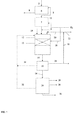
- the system of the present invention also comprises a first feed inlet 2 for feeding the material of biological origin to the evaporation unit 6, a second feed inlet 8 for feeding the purified biological material from the evaporation unit 6 to the hydroprocessing reactor 12.
- a first concentrate outlet 9 For recovering the concentrate from the evaporation unit 6 the system comprises a first concentrate outlet 9.
- the system For feeding the mixture of hydrocarbon compounds from the hydroprocessing reactor 12 to the separation unit 16 the system comprises a third feed inlet 14.
- the system comprises a first gas outlet 18 for removing the gaseous compounds, comprising hydrogen, hydrogen sulphide, light fuel gases and mainly lighter than C 5 hydrocarbons from the separation unit 16.
- the system comprises a first hydrogen feed inlet 10 and a second hydrogen inlet 15.
- the system also comprises a first product outlet 28 for naphtha and/or gasoline and, second product outlet 30 for middle distillate compounds for recovering them from the fractionation unit 26.
- the system may comprise an additional purification unit 7, that is presented in the figure by a dotted line, such as a guard bed. If desired, hydrogen gas can be fed to the guard bed 7 through a second hydrogen gas inlet 15.
- the system further comprises a first recycling outlet 32 for recycling a portion of the liquid product stream from the fractionation unit 26 back to the hydroprocessing reactor 12.
- the system also comprises a second recycling outlet 34 for recycling a portion of the liquid product stream from the separation unit 16 back to the hydroprocessing reactor 12.
- the system of Figure 1 comprises catalyst 13, which is any suitable catalyst or a combination or a mixture of catalysts capable of hydrodeoxygenating, isomerising and cracking the purified biological material to form a mixture of hydrocarbon compounds.
- catalysts for the system of Figure 1 are defined above in connection with the description of the system comprising one hydroprocessing reactor.
- Sulphur in a suitable form is fed to the hydroprocessing reactor 12 through a first sulphur feed inlet 19.
- the hydroprocessing is performed in two steps.
- the system comprises a first catalyst 13' in a first hydroprocessing reactor 12 and a second catalyst 13" arranged in the second hydroprocessing reactor 12".
- Suitable catalysts for the first catalyst 13' and the second catalyst 13" are defined above in connection with the description of the system comprising two hydroprocessing reactors.
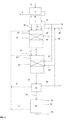
- the system of Figure 2 comprises a first feed inlet 2 for feeding the material of biological origin to an evaporation unit 6, a second feed inlet 8 for feeding the purified biological material from the evaporation unit 6 to a first hydroprocessing reactor 12'.
- the system For recovering the concentrate from the evaporation unit 6 the system comprises a first concentrate outlet 9.
- the system For feeding the mixture of hydrocarbon compounds from the first hydroprocessing reactor 12' to a second hydropocessing reactor 12" the system comprises an intermediate connection 11.
- the system For feeding the hydroprocessed product from the second hydroprocessing reactor 12" to the separation unit 16 the system comprises a third feed inlet 14.
- the system comprises a first gas outlet 18 is arranged to remove the desired gaseous compounds, such as hydrogen, hydrogen sulphide, light fuel gases and mainly lighter than C 5 hydrocarbons from the separation unit 16 and a fourth feed inlet 24 for feeding the liquid compounds to the fractionation unit 26.
- the first gas outlet 18 is connected to on second gas outlet 22 for removing the desired gaseous compounds of the system and to a first gas inlet 20 from which the gaseous compounds can be recycled back to the first hydroprocessing reactor 12'. Gases can also be recycled back to the second hydroprocessing reactor 12" through a second gas inlet 20'.
- the system For feeding the hydrogen gas to the hydroprocessing reactor 12' the system comprises a first hydrogen feed inlet 10.
- the system For feeding hydrogen to the second hydroprocessing reactor 12" the system comprises a third hydrogen inlet 17.
- the system also comprises a first product outlet 28 for naphtha and/or gasoline and a second product outlet 30 for middle distillate compounds for recovering them from the fractionation unit 26. There is also a residue outlet 36 for recovering the heavy fraction from the fractionation unit 26. Heavy fraction contains pitch. When the feed material is crude tall oil or tall oil there is no heavy fraction from the fractionation.
- the system further comprises a first recycling outlet 32 for recycling a portion of the liquid product stream from the fractionation unit 26 back to the hydroprocessing reactor(s) 12', 12".
- the system also comprises a second recycling outlet 34 for recycling a portion of the liquid product stream from the separation unit 16 back to the first hydroprocessing reactor 12' and/or to the second hydroprocessing reactor 12".
- the system may comprise an additional purification unit 7, such as a guard bed.
- the additional purification unit 7 is optional and shown in dotted line in the Figure 2 . If desired, hydrogen gas can be fed to the guard bed 7 through a second hydrogen gas inlet 15.
- Sulphur is fed to the hydroprocessing reactors 12', 12" through a first sulphur feed inlet 19 and a second sulphur feed inlet 19'.
- the process of the present invention is now made clearer with reference to the system of Figure 1 .
- a system is shown for carrying our the process, wherein the material of biological origin is fed through a first feed inlet 2 to an evaporation unit 6 wherein the impurities contained in the material of biological origin are removed.
- the evaporation unit 6 comprises at least one evaporator that can be any suitable commercially available equipment capable of separating liquid components from gaseous components utilising the differences of the vapour pressures of the components. Examples of such suitable equipments are defined above.
- the purified biological material is fed to the hydroprocessing reactor 12 comprising catalyst 13 which is a catalyst capable of hydrodeoxygenating, isomerising and cracking in which reactor the purified biological material is hydroprocessed in a single step in the presence of hydrogen gas to form a mixture of hydrocarbon compounds which are fed though a third product inlet 14 to a separation unit 16.
- the catalyst 13 may also be a combination or a mixture of catalysts capable of hydrodeoxygenating, cracking and isomerizing the purified biological material to form a mixture of hydrocarbon compounds.
- Hydrogen gas is fed to the hydroprocessing reactor 12 through a first hydrogen gas inlet 10. Before feeding the purified biological material to the hydroprocessing reactor 12, it can be fed through a second feed inlet 8 to an optional purification unit 7.
- gaseous compounds are separated from the liquid compounds of the mixture of hydrocarbon compounds.
- the gaseous compounds are recovered through a first gas outlet 18, which is connected to a second gas outlet 22 for removing the gaseous compounds of the system and/or to a first gas inlet 20 from which part or all of the gaseous compounds can be recycled back to the hydroprocessing reactor 12, if desired.
- the separation can be done in several stages or repeated as often as needed.
- the liquid hydrocarbon compounds are fed through a fourth feed inlet 24 to a fractionation unit 26 wherein the liquid hydrocarbon compounds are fractionated into separated fractions.
- the fractions are gasoline and/or naphtha and middle distillate. Gasoline and/or naphtha is/are recovered through a first product outlet 28 and middle distillate is recovered through a second product outlet 30.
- FIG. 2 shows a system for carrying out the process wherein the material of biological origin is fed through a first feed inlet 2 to an evaporation unit 6 wherein the impurities contained in the material of biological origin are removed.
- the evaporation unit 6 comprises at least one evaporator that can be any suitable commercially available equipment capable of separating liquid components from gaseous components utilising the differences of the vapour pressures of the components. Examples of such suitable equipments are defined above.
- the purified biological material is fed to the first hydroprocessing reactor 12' comprising a first catalyst 13', which is defined above.
- the first hydroprocessing reactor 12' From the first hydroprocessing reactor 12' the once hydroprocessed material is fed to a second hydroprocessing reactor 12" for isomerising, which second hydroprocessing reactor 12" comprises a second catalyst 13", which is defined above.
- the mixture of hydrocarbon compounds produced in the hydroprocessing reactors 12', 12" is fed further through a third product inlet 14 to a separation unit 16.
- Hydrogen gas is fed to the hydroprocessing reactor 12' through first hydrogen gas inlet 10 and to the second hydroprocessing reactor 12" through third hydrogen gas inlet 17.
- the material Before feeding the purified biological material to the hydroprocessing reactor 12', the material can be fed through a second feed inlet 8' to an optional purification unit 7.
- gaseous compounds are separated from the liquid compounds of the mixture of hydrocarbon compounds.
- the gaseous compounds are recovered through a first gas outlet 18, which is connected to a second gas outlet 22 for removing the gaseous compounds of the system and/or to a first gas inlet 20 from which part or all of the gaseous compounds can be recycled back to the hydroprocessing reactor 12', if desired.
- the separation can be done in several stages or repeated as often as needed.
- the liquid hydrocarbon compounds are fed through a fourth feed inlet 24 to a fractionation unit 26 wherein the liquid hydrocarbon compounds are fractionated into separated fractions.
- the fractions are gasoline and/or naphtha and middle distillate. Gasoline and/or naphtha is/are recovered through a first product outlet 28 and middle distillate is recovered through a second product outlet 30.
- the reactions in hydroprocessing are highly exothermic reactions, in which temperature can rise to a level which is detrimental to the stability of the catalyst and/or product quality. In some cases, it may be necessary to control the temperature variations.
- Recirculation of at least a portion of the liquid product stream obtained from the separation unit, i.e. a mixture of fuel grade hydrocarbons provides an efficient means for constraining the exothermic reaction whereby the recycled product stream acts as a media lowering the temperature of the bed in a controlled manner. Also, only a hydrocarbon fraction obtained from fractionation can be recycled.
- the hydroprocessing reactor 12, 12', 12" may be any kind of reactor, column, vessel, container, tube or pipe, which is suitable for hydroprocessing.
- the inlets, outlets and connections in accordance with this invention can be any kind of suitable means for letting in or out a feed or passing it though, for example pipe, tube, hose or connecting device suitable for this purpose.
- the present invention relates also to fuel components obtained by a process wherein material of biological origin is evaporated for removing impurities, such as metals and solids from the material of biological origin to produce purified biological material, and said purified biological material is hydroprocessed in the presence of hydrogen gas and a catalyst to form a mixture of hydrocarbon compounds, gaseous compounds are separated from said mixture of hydrocarbon compounds to form liquid hydrocarbon compounds and said liquid hydrocarbon compounds are fractionated to obtain fuel components.
- the process details are the same as above presented in connection with the process of the present invention.
- the fuel components are gasoline and/or naphtha and middle distillate compounds.
- the catalyst can be any suitable catalyst as presented above.
- the present invention relates also to the use of the above mentioned fuel components as diesel fuel, gasoline fuel, heating fuel, jet fuel or aviation fuel and/or as their components.
- the present invention relates also to a mixture comprising the above mentioned fuel component or fuel components and to the use of the mixture as diesel fuel, gasoline fuel, heating fuel, jet fuel, aviation fuel and/or as their components.
- Example 1 the impurities in the material of biological origin were removed by two different evaporation units.
- Example 2 the evaporation unit comprised of three evaporators.
- the material of biological origin was crude tall oil.
- Crude tall oil (CTO) was fed from storage at a temperature of 60°C to an evaporation unit containing a thin film evaporator and a short path evaporator.
- the feed rate of the crude tall oil to the evaporation unit was between 30 and 80 kg/h.
- the temperature of the first evaporation step was 137°C and the pressure was 18 mbar. Water, turpentine and light fatty acids were removed from the feed of crude tall oil.
- the first evaporation step was performed on a thin film evaporator.
- all together 3% of the original amount of crude tall oil was evaporated, of which 2% was turpentine and light fatty acids and 1% was water.
- 97% of the amount of the original feed of crude tall oil was recovered as condensate from the first evaporator and fed further to a second evaporator.
- the second evaporation step was performed on a short path evaporator at 315°C and 0.3 mbar. 5% of the amount of the original feed was removed from the second evaporation step as a heavy fraction comprising pitch.
- Distillate was recovered from the second evaporating step and the amount of it was 92% of the amount of the original feed of crude tall oil.
- the heavy fraction removed from the second evaporator contained 1600 ppm metals in total consisting mainly of Na, Fe, P and 10 to 20 other metals, and in addition to metals also SO 4 2- , in the form of Na 2 SO 4 and lignin.
- Crude tall oil (CTO) with a metal content of 72 ppm was fed from storage at a temperature of 60°C to an evaporation unit containing a thin film evaporator, a plate molecular still and a short path evaporator.
- the feed rate of the crude tall oil to the evaporation unit was between 30 and 80 kg/h.
- the temperature of the first evaporation step was 137°C and the pressure was 18 mbar. Water, turpentine and light fatty acids were removed from the feed of crude tall oil.
- the first evaporation step was performed on a thin film evaporator. In the first evaporator, all together 3% of the original amount of crude tall oil was evaporated, of which 2% was turpentine and light fatty acids and 1% was water. 97% of the amount of the original feed of crude tall oil was recovered as condensate from the first evaporator and fed further to a second evaporator.
- the second evaporation step was performed on a plate molecular still at 220°C and 1 mbar. 50% of the amount of the original feed of crude tall oil was removed from the second evaporation step as a heavy fraction. Distillate was recovered from the second evaporating step and the amount of it was 47% of the amount of the original feed of crude tall oil.
- the heavy fraction from the second evaporation step was fed to the third evaporation step.
- the third evaporation step was performed on a short path evaporator at 330°C and 0.1 mbar.
- the amount of the heavy fraction removed from the third evaporator was 5.5% from the original feed and it contained 1550 ppm metals in total, consisting mainly of Na, Fe, P and 10 to 20 other metals, and in addition to metals also SO 4 2 , in the form of Na 2 SO 4 and lignin. Distillates from evaporation stages 2 and 3 were collected and mixed together.
- the superdepitched and purified CTO had a 5 ppm metal content.
- the purified CTO obtained in accordance with Example 2 was processed by three different processes.
- the first process (CTO HDO) was a conventional process, where purified CTO was only hydrodeoxygenated by using a NiMo catalyst.
- the second process (CTO HW) was a process according to the invention, where purified CTO was hydroprocessed in a single step in the presence of hydrogen gas and a catalyst which is a catalyst capable of hydrodeoxygenating, isomerising and cracking in a single step to form a mixture of hydrocarbon compounds.
- the third process was a process according to the invention, where purified CTO was hydroprocessed in a single step in the presence of hydrogen gas and a mixture of NiW and NiMo catalysts to form a mixture of hydrocarbon compounds.
- Table 1 presents the process parameters of processes CTO HDO, CTO HW and CTO HDO+HW.
- CTO HDO mid cut is poor as a blending component in terms of distillation and cold flow properties.
- CTO HW and CTO HW+HDO mid cuts perform well and the Cloud Point of the blend is improved and Cold Filter Plugging Point maintained within the EN 590 Grade E without disturbing the distillation properties.
- the Cloud Points (CP) and Cold Filtering Plugging Points (CFPP) of the samples are presented in Figure 3 .
- the pitch compounds can be processed to valuable transportation fuel products whereas in the conventional hydrodeoxygenating process the pitch component cannot be recovered in the distillation product. It is also obvious from the results and a clear advantage of the present invention that in the CTO HW and CTO HW+HDO the heavy fraction is converted to form a part of the fuel fractions, whereas in the known CTO HDO process the heavy fraction is not even separable from the raw product.
Landscapes
- Chemical & Material Sciences (AREA)
- Oil, Petroleum & Natural Gas (AREA)
- Chemical Kinetics & Catalysis (AREA)
- Engineering & Computer Science (AREA)
- Organic Chemistry (AREA)
- General Chemical & Material Sciences (AREA)
- Life Sciences & Earth Sciences (AREA)
- Wood Science & Technology (AREA)
- Microbiology (AREA)
- Health & Medical Sciences (AREA)
- Emergency Medicine (AREA)
- Thermal Sciences (AREA)
- Physics & Mathematics (AREA)
- Production Of Liquid Hydrocarbon Mixture For Refining Petroleum (AREA)
- Fats And Perfumes (AREA)
- Liquid Carbonaceous Fuels (AREA)
- Preparation Of Compounds By Using Micro-Organisms (AREA)
- Catalysts (AREA)
- Vaporization, Distillation, Condensation, Sublimation, And Cold Traps (AREA)
- Immobilizing And Processing Of Enzymes And Microorganisms (AREA)
- Medicines Containing Plant Substances (AREA)
Applications Claiming Priority (4)
| Application Number | Priority Date | Filing Date | Title |
|---|---|---|---|
| FI20106252A FI20106252A0 (fi) | 2010-11-26 | 2010-11-26 | Menetelmä ja systeemi polttoainekomponenttien valmistamiseksi |
| FI20115217A FI126067B2 (fi) | 2010-11-26 | 2011-03-03 | Menetelmä polttoainekomponenttien tuottamiseksi |
| PCT/FI2011/051046 WO2012069706A2 (fr) | 2010-11-26 | 2011-11-25 | Procédé et système pour produire des composants combustibles |
| EP11827778.9A EP2643431B2 (fr) | 2010-11-26 | 2011-11-25 | Procédé pour produire des composants combustibles |
Related Parent Applications (2)
| Application Number | Title | Priority Date | Filing Date |
|---|---|---|---|
| EP11827778.9A Division EP2643431B2 (fr) | 2010-11-26 | 2011-11-25 | Procédé pour produire des composants combustibles |
| EP11827778.9A Division-Into EP2643431B2 (fr) | 2010-11-26 | 2011-11-25 | Procédé pour produire des composants combustibles |
Publications (3)
| Publication Number | Publication Date |
|---|---|
| EP2940111A1 true EP2940111A1 (fr) | 2015-11-04 |
| EP2940111B1 EP2940111B1 (fr) | 2019-01-30 |
| EP2940111B2 EP2940111B2 (fr) | 2024-06-12 |
Family
ID=43269028
Family Applications (5)
| Application Number | Title | Priority Date | Filing Date |
|---|---|---|---|
| EP11827778.9A Active EP2643431B2 (fr) | 2010-11-26 | 2011-11-25 | Procédé pour produire des composants combustibles |
| EP15168210.1A Active EP2940111B2 (fr) | 2010-11-26 | 2011-11-25 | Procédé et système de production de composants de carburant |
| EP15168211.9A Active EP2930231B2 (fr) | 2010-11-26 | 2011-11-25 | Procédé de purification de l'huile de tall |
| EP11802115.3A Active EP2643442B2 (fr) | 2010-11-26 | 2011-11-25 | Procédé et appareil de purification d'une substance d'origine biologique |
| EP11826131.2A Active EP2643443B2 (fr) | 2010-11-26 | 2011-11-25 | Procédé pour purifier une substance d'origine biologique |
Family Applications Before (1)
| Application Number | Title | Priority Date | Filing Date |
|---|---|---|---|
| EP11827778.9A Active EP2643431B2 (fr) | 2010-11-26 | 2011-11-25 | Procédé pour produire des composants combustibles |
Family Applications After (3)
| Application Number | Title | Priority Date | Filing Date |
|---|---|---|---|
| EP15168211.9A Active EP2930231B2 (fr) | 2010-11-26 | 2011-11-25 | Procédé de purification de l'huile de tall |
| EP11802115.3A Active EP2643442B2 (fr) | 2010-11-26 | 2011-11-25 | Procédé et appareil de purification d'une substance d'origine biologique |
| EP11826131.2A Active EP2643443B2 (fr) | 2010-11-26 | 2011-11-25 | Procédé pour purifier une substance d'origine biologique |
Country Status (9)
| Country | Link |
|---|---|
| US (4) | US9175228B2 (fr) |
| EP (5) | EP2643431B2 (fr) |
| CN (3) | CN103391986B (fr) |
| BR (3) | BR112013012868A2 (fr) |
| CA (3) | CA2817677A1 (fr) |
| ES (4) | ES2806754T5 (fr) |
| FI (10) | FI20106252A0 (fr) |
| RU (2) | RU2013126964A (fr) |
| WO (3) | WO2012069706A2 (fr) |
Cited By (1)
| Publication number | Priority date | Publication date | Assignee | Title |
|---|---|---|---|---|
| EP4293095A1 (fr) * | 2022-06-15 | 2023-12-20 | UPM-Kymmene Corporation | Procédé de raffinage de tallöl brut |
Families Citing this family (33)
| Publication number | Priority date | Publication date | Assignee | Title |
|---|---|---|---|---|
| FI20106252A0 (fi) | 2010-11-26 | 2010-11-26 | Upm Kymmene Corp | Menetelmä ja systeemi polttoainekomponenttien valmistamiseksi |
| US20130237845A1 (en) * | 2012-03-12 | 2013-09-12 | Ivwatch, Llc | Geometry of a Transcutaneous Sensor |
| FI131502B1 (en) | 2012-04-18 | 2025-05-26 | Upm Kymmene Corp | Method for producing biofuel or biofuel components |
| BR112015014982B1 (pt) * | 2012-12-21 | 2021-08-03 | Sunpine Ab | Processo para o pré-tratamento de um talóleo bruto |
| CN103059732B (zh) * | 2012-12-25 | 2015-09-16 | 云南美森源林产科技有限公司 | 一种松脂脂液蒸馏分离方法 |
| EP2777791A1 (fr) * | 2013-03-11 | 2014-09-17 | Sulzer Chemtech AG | Procédé et appareil de purification d'un courant contenant un ester cyclique d'un acide alpha-hydroxycarboxylique |
| FI126330B (en) | 2013-04-02 | 2016-10-14 | Upm Kymmene Corp | Renewable hydrocarbon composition |
| FI126331B (en) | 2013-04-02 | 2016-10-14 | Upm Kymmene Corp | Renewable hydrocarbon composition |
| CN103215127B (zh) * | 2013-04-24 | 2014-02-26 | 长春工业大学 | 一种芹菜籽油的分子蒸馏提纯方法及其装置 |
| FI124885B (fi) * | 2013-06-11 | 2015-03-13 | Upm Kymmene Corp | Prosessi biologista alkuperää olevan materiaalin raskaiden jäännösten käsittelemiseksi ja nestemäisten polttoaineiden valmistamiseksi |
| FI126674B (en) * | 2013-07-12 | 2017-03-31 | Upm Kymmene Corp | Process for the preparation of hydrocarbons |
| FI126029B (en) | 2013-10-17 | 2016-05-31 | Upm Kymmene Corp | Process for the preparation of hydrocarbons |
| CN103937615B (zh) * | 2014-05-06 | 2015-09-02 | 江西西林科股份有限公司 | 一种从妥尔油脂肪酸中提取高纯不饱和脂肪酸的方法 |
| US9650574B2 (en) | 2014-07-01 | 2017-05-16 | Gas Technology Institute | Hydropyrolysis of biomass-containing feedstocks |
| US10351161B2 (en) * | 2016-05-27 | 2019-07-16 | Steering Solutions Ip Holding Corporation | Steering column with manual retraction |
| FI128345B (en) * | 2016-08-05 | 2020-03-31 | Neste Oyj | Method for cleaning the feed |
| US9920262B1 (en) * | 2016-11-22 | 2018-03-20 | Rj Lee Group, Inc. | Methods of separation of pyrolysis oils |
| MX2020003187A (es) | 2017-09-26 | 2020-10-12 | Valero Services Inc | Produccion de combustibles e intermediarios renovables. |
| FI128591B (en) * | 2018-07-13 | 2020-08-31 | Neste Oyj | Fractionation of biomass-based material |
| FI128911B2 (en) | 2018-07-20 | 2025-05-27 | Neste Oyj | Cleaning of recycled and renewable organic material |
| FI128069B2 (en) | 2018-07-20 | 2024-04-24 | Neste Oyj | Purification of recycled and renewable organic material |
| FI128174B (en) | 2018-07-20 | 2019-11-29 | Neste Oyj | Purification of recycled and renewable organic material |
| FI128115B2 (en) | 2018-07-20 | 2024-08-20 | Neste Oyj | Purification of recycled and renewable organic material |
| FI128121B (en) | 2018-07-20 | 2019-10-15 | Neste Oyj | Production of hydrocarbons from recycled or renewable organic material |
| SE542596E (en) * | 2018-10-31 | 2023-10-31 | Sunpine Ab | Continuous fractionation of crude tall oil to refined tall diesel |
| FI130367B (fi) | 2018-12-17 | 2023-07-26 | Neste Oyj | Menetelmä valmistaa korkealaatuisia uusiutuvia komponentteja uusiutuvasta raaka-aineesta |
| FI128672B2 (en) | 2019-07-10 | 2024-11-29 | Neste Oyj | Method and device for treating pine oil |
| IT201900014778A1 (it) * | 2019-08-14 | 2021-02-14 | Nextchem S P A | Processo per il pretrattamento di alimentazioni destinate alla produzione di bio-carburanti, mediante idrolisi di grassi ad alta temperatura e pressione |
| KR102333313B1 (ko) * | 2019-09-27 | 2021-12-02 | 씨제이제일제당 (주) | 풍미가 강화된 원물 농축액 및 이의 제조 방법 |
| SE544325C2 (en) * | 2020-07-15 | 2022-04-05 | Sunpine Ab | Tall diesel composition |
| RU2762561C1 (ru) * | 2020-12-23 | 2021-12-21 | Акционерное общество «Управляющая компания «Биохимического холдинга «Оргхим» | Способ получения высокочистых фитостеринов |
| EP4108740A1 (fr) | 2021-06-22 | 2022-12-28 | Borealis AG | Procédé intégré et système intégré pour obtenir des produits chimiques à partir d'un matériau organique renouvelable par hydrotraitement |
| FI20236339A1 (en) * | 2023-12-05 | 2025-06-06 | Upm Kymmene Corp | FUEL PRODUCTION PROCEDURE |
Citations (2)
| Publication number | Priority date | Publication date | Assignee | Title |
|---|---|---|---|---|
| US5705722A (en) | 1994-06-30 | 1998-01-06 | Natural Resources Canada | Conversion of biomass feedstock to diesel fuel additive |
| WO2009131510A1 (fr) * | 2008-04-21 | 2009-10-29 | Sunpine Ab | Conversion de tallöl brut pour une charge d’alimentation renouvelable pour des compositions de carburant de la gamme diesel |
Family Cites Families (56)
| Publication number | Priority date | Publication date | Assignee | Title |
|---|---|---|---|---|
| US2200468A (en) * | 1938-08-08 | 1940-05-14 | Francis J Cirves | Recovery of by-products from black liquor |
| US2296952A (en) | 1939-12-30 | 1942-09-29 | Colgate Palmolive Peet Co | Chemical treatment of black liquor and tall oil |
| US2716630A (en) | 1951-01-26 | 1955-08-30 | Willy Spangenberg & Co | Distillation of tall oil |
| US2894880A (en) | 1955-09-12 | 1959-07-14 | Heyden Newport Chemical Corp | Method of fractionating tall oil into fatty acids and rosin acid products |
| US2886492A (en) | 1956-07-17 | 1959-05-12 | Crosby Chemicals Inc | Tall oil fractionating process |
| US3449313A (en) | 1965-11-18 | 1969-06-10 | Pulp Chem Ass | Recovery of tall oil soaps from sulfate process black liquor |
| AT274743B (de) | 1967-09-28 | 1969-09-25 | Krems Chemie Gmbh | Verfahren und Vorrichtung zur kontinuierlichen Fraktionierung von Tallöl oder andern organischen Mehrstoffgemischen |
| FR2036707A1 (fr) | 1969-03-03 | 1970-12-31 | Alsthom | |
| JPS5512080B2 (fr) | 1973-09-18 | 1980-03-29 | ||
| JPS5239613A (en) | 1975-09-22 | 1977-03-28 | Japan Synthetic Rubber Co Ltd | Process for recovery of high purity fatty acid and/or resin acid and s terols |
| DE2736357C2 (de) | 1977-08-12 | 1981-09-24 | Hermann Dipl.-Chem. Dr. 5000 Köln Stage | Verfahren zur Verarbeitung von vorbehandeltem Tallöl zu Fettsäuren und Harzsäuren |
| NL166060C (nl) | 1977-10-14 | 1981-06-15 | Kinetics Technology | Werkwijze voor het zuiveren van afgewerkte smeerolie. |
| US4431524A (en) | 1983-01-26 | 1984-02-14 | Norman George R | Process for treating used industrial oil |
| US4524024A (en) * | 1983-02-10 | 1985-06-18 | The Badger Company, Inc. | Processes of recovering fatty acids and sterols from tall oil pitch |
| US4512878A (en) | 1983-02-16 | 1985-04-23 | Exxon Research And Engineering Co. | Used oil re-refining |
| NL8304023A (nl) | 1983-11-23 | 1985-06-17 | Kinetics Technology | Werkwijze voor het zuiveren van afgewerkte smeerolie. |
| DE3834716A1 (de) * | 1988-10-12 | 1990-04-19 | Metallgesellschaft Ag | Verfahren und vorrichtung zum aufkonzentrieren von loesungen |
| FI100248B (fi) | 1996-02-05 | 1997-10-31 | Fortum Oil Oy | Keskitisleen valmistus |
| US5705822A (en) | 1997-01-30 | 1998-01-06 | Vanguard International Semiconductor Corporation | Cooling system for semiconductor process |
| FI112247B (fi) * | 1997-04-18 | 2003-11-14 | Arizona Chemical Oy | Alhaisen hajutason omaavan mäntyöljyhartsiesterin valmistaminen |
| US6409882B1 (en) * | 1999-10-22 | 2002-06-25 | Westvaco Corporation | Tall oil refining improvement |
| CA2349780C (fr) | 2000-06-05 | 2009-03-03 | Alfred Wong | Methode de production amelioree de sterols a partir de tallol |
| DE60133460D1 (de) | 2001-09-07 | 2008-05-15 | Raisio Staest Oy | Verfahren zur Isolierung von Sterinen und/oder Wachsalkoholen aus Talölprodukten |
| CA2360986A1 (fr) | 2001-11-01 | 2003-05-01 | Nicole Cadoret | Methode de fractionnement de dechets de recuperateurs de graisses et utilisations des fractions ainsi obtenues |
| BR0106522A (pt) * | 2001-12-17 | 2003-09-09 | Resitec Ind Quimica Ltda | Processo para separar produtos valiosos insaponificáveis obtidos de matérias primas diversas |
| US7232935B2 (en) † | 2002-09-06 | 2007-06-19 | Fortum Oyj | Process for producing a hydrocarbon component of biological origin |
| CA2514700A1 (fr) | 2003-02-21 | 2004-09-02 | Setsuo Sato | Procede pour obtenir des esters d'alkyle d'acide gras, des acides resiniques et des sterols a partir de tall oil brut |
| US7416756B2 (en) | 2003-09-10 | 2008-08-26 | Eastman Chemical Company | Process for the recovery of a phytolipid composition |
| EP1586624B1 (fr) | 2004-02-06 | 2013-04-03 | Härting Glade, Thomas Francis | Procédé pour l'affination de tallol à l'aide de la distillation à trajet court |
| ATE362506T1 (de) | 2004-09-21 | 2007-06-15 | Linde Ag | Verfahren zur gewinnung von tallöl oder tallölbrennstoff |
| AU2006264899B2 (en) | 2005-07-04 | 2011-03-31 | Neste Oil Oyj | Process for the manufacture of diesel range hydrocarbons |
| EP1741768B2 (fr) | 2005-07-04 | 2023-04-05 | Neste Oyj | Procédé pour la production d'hydrocarbures dans l'intervalle des Diesels |
| CA2626450A1 (fr) * | 2005-10-26 | 2007-05-03 | Kiram Ab | Carburants automobiles et produits chimiques fins a partir de tallol |
| US7888542B2 (en) * | 2005-12-12 | 2011-02-15 | Neste Oil Oyj | Process for producing a saturated hydrocarbon component |
| FI122234B (fi) | 2006-08-09 | 2011-10-31 | Hoeljaekkae Oy | Puunsuoja-aine |
| FR2910017B1 (fr) | 2006-12-18 | 2010-08-13 | Total France | Procede d'hydrotraitement d'une charge gazole, reacteur d'hydrotraitement pour la mise en oeuvre dudit procede, et unite d'hydroraffinage correspondante |
| US20080163543A1 (en) | 2007-01-05 | 2008-07-10 | Ramin Abhari | Process for producing bio-derived fuel with alkyl ester and iso-paraffin components |
| FI20070137A0 (fi) * | 2007-02-15 | 2007-02-15 | Raisio Benecol Oy | Menetelmä rasvahappojen, hartsihappojen ja sterolien eristämiseksi mäntyöljypiestä |
| CN101617029A (zh) | 2007-02-20 | 2009-12-30 | 国际壳牌研究有限公司 | 生产链烷烃的方法 |
| FR2913024B1 (fr) | 2007-02-27 | 2012-07-27 | Total France | Procede d'hydrotraitement d'une charge gazole, unite d'hydrotraitement pour la mise en oeuvre dudit procede, et unite d'hydroraffinage correspondante |
| WO2009011639A2 (fr) | 2007-07-19 | 2009-01-22 | Sunpine Ab | Carburants de la gamme diesel à partir d'acides carboxyliques d'origine végétale |
| US8523959B2 (en) * | 2007-07-26 | 2013-09-03 | Chevron U.S.A. Inc. | Paraffinic biologically-derived distillate fuels with bio-oxygenates for improved lubricity and methods of making same |
| US8026401B2 (en) | 2007-12-20 | 2011-09-27 | Syntroleum Corporation | Hydrodeoxygenation process |
| FI20080174A0 (fi) * | 2008-02-29 | 2008-02-29 | Raisio Nutrition Ltd | Menetelmä sterolien ja happojen erottamiseksi mäntyöljypiestä |
| US8039682B2 (en) | 2008-03-17 | 2011-10-18 | Uop Llc | Production of aviation fuel from renewable feedstocks |
| FI125590B (en) | 2008-04-10 | 2015-12-15 | Neste Oyj | A process for the preparation of a composition for the preparation of pinosylvine and its compounds, a composition for the preparation of stilbene compounds, a process for the recovery of stilbene compounds, and fatty acid and resin acid esters of pinosylvine and its monomethyl ether |
| WO2010049075A2 (fr) | 2008-10-31 | 2010-05-06 | Haldor Topsøe A/S | Hydrotraitement amélioré de matière organique renouvelable |
| SG185325A1 (en) | 2008-12-10 | 2012-11-29 | Syntroleum Corp | Even carbon number paraffin composition and method of manufacturing same |
| FI124508B (fi) * | 2009-02-27 | 2014-09-30 | Upm Kymmene Oyj | Menetelmä ja laitteisto polttoainekomponenttien valmistamiseksi raakamäntyöljystä |
| CN101508871B (zh) * | 2009-03-20 | 2011-11-09 | 中国林业科学研究院林产化学工业研究所 | 海松酸型树脂酸的制备方法 |
| FI124194B (fi) | 2009-05-04 | 2014-04-30 | Upm Kymmene Corp | Menetelmä ja laitteisto ainesosien erottamiseksi polttoaineraaka-aineesta |
| US8471081B2 (en) * | 2009-12-28 | 2013-06-25 | Uop Llc | Production of diesel fuel from crude tall oil |
| FI125931B (fi) | 2010-05-25 | 2016-04-15 | Upm Kymmene Corp | Menetelmä ja laitteisto hiilivetyjen valmistamiseksi |
| US20120069706A1 (en) † | 2010-09-20 | 2012-03-22 | Nicolas Goujon | Land Seismic Cable and Method |
| FI20106252A0 (fi) | 2010-11-26 | 2010-11-26 | Upm Kymmene Corp | Menetelmä ja systeemi polttoainekomponenttien valmistamiseksi |
| US9039790B2 (en) | 2010-12-15 | 2015-05-26 | Uop Llc | Hydroprocessing of fats, oils, and waxes to produce low carbon footprint distillate fuels |
-
2010
- 2010-11-26 FI FI20106252A patent/FI20106252A0/fi not_active Application Discontinuation
-
2011
- 2011-03-03 FI FI20165253A patent/FI129698B2/fi active IP Right Grant
- 2011-03-03 FI FI20155541A patent/FI20155541A7/fi not_active Application Discontinuation
- 2011-03-03 FI FI20115217A patent/FI126067B2/fi active IP Right Grant
- 2011-07-06 FI FI20115723A patent/FI127465B2/fi active IP Right Grant
- 2011-07-06 FI FI20185493A patent/FI128946B/fi active IP Right Grant
- 2011-07-06 FI FI20115722A patent/FI127738B2/fi active IP Right Grant
- 2011-11-25 US US13/989,399 patent/US9175228B2/en active Active
- 2011-11-25 EP EP11827778.9A patent/EP2643431B2/fr active Active
- 2011-11-25 WO PCT/FI2011/051046 patent/WO2012069706A2/fr not_active Ceased
- 2011-11-25 CN CN201180056712.XA patent/CN103391986B/zh active Active
- 2011-11-25 EP EP15168210.1A patent/EP2940111B2/fr active Active
- 2011-11-25 FI FIEP15168211.9T patent/FI2930231T4/fi active
- 2011-11-25 ES ES15168211T patent/ES2806754T5/es active Active
- 2011-11-25 BR BR112013012868A patent/BR112013012868A2/pt not_active Application Discontinuation
- 2011-11-25 FI FIEP15168210.1T patent/FI2940111T4/fi active
- 2011-11-25 CN CN201180056724.2A patent/CN103370404B/zh active Active
- 2011-11-25 EP EP15168211.9A patent/EP2930231B2/fr active Active
- 2011-11-25 US US13/989,400 patent/US9181494B2/en active Active
- 2011-11-25 CA CA 2817677 patent/CA2817677A1/fr not_active Abandoned
- 2011-11-25 BR BR112013012875A patent/BR112013012875A2/pt not_active IP Right Cessation
- 2011-11-25 ES ES15168210T patent/ES2718527T5/es active Active
- 2011-11-25 RU RU2013126964/13A patent/RU2013126964A/ru not_active Application Discontinuation
- 2011-11-25 BR BR112013012876A patent/BR112013012876B8/pt active IP Right Grant
- 2011-11-25 EP EP11802115.3A patent/EP2643442B2/fr active Active
- 2011-11-25 CA CA2817685A patent/CA2817685C/fr active Active
- 2011-11-25 CN CN2011800567204A patent/CN103370403A/zh active Pending
- 2011-11-25 RU RU2013126962/04A patent/RU2569681C2/ru active
- 2011-11-25 ES ES11802115T patent/ES2542765T5/es active Active
- 2011-11-25 ES ES11827778.9T patent/ES2543698T5/es active Active
- 2011-11-25 WO PCT/FI2011/051043 patent/WO2012069705A1/fr not_active Ceased
- 2011-11-25 EP EP11826131.2A patent/EP2643443B2/fr active Active
- 2011-11-25 US US13/989,371 patent/US9926503B2/en active Active
- 2011-11-25 WO PCT/FI2011/051037 patent/WO2012069704A1/fr not_active Ceased
- 2011-11-25 CA CA2817675A patent/CA2817675C/fr active Active
-
2015
- 2015-07-09 FI FI20155542A patent/FI127491B/fi active IP Right Review Request
- 2015-10-07 US US14/877,161 patent/US10144889B2/en active Active
Patent Citations (2)
| Publication number | Priority date | Publication date | Assignee | Title |
|---|---|---|---|---|
| US5705722A (en) | 1994-06-30 | 1998-01-06 | Natural Resources Canada | Conversion of biomass feedstock to diesel fuel additive |
| WO2009131510A1 (fr) * | 2008-04-21 | 2009-10-29 | Sunpine Ab | Conversion de tallöl brut pour une charge d’alimentation renouvelable pour des compositions de carburant de la gamme diesel |
Non-Patent Citations (1)
| Title |
|---|
| PARVEEN KUMAR ET AL: "Methods for Pretreatment of Lignocellulosic Biomass for Efficient Hydrolysis and Biofuel Production", INDUSTRIAL & ENGINEERING CHEMISTRY RESEARCH, AMERICAN CHEMICAL SOCIETY, US, vol. 48, no. 8, 15 April 2009 (2009-04-15), pages 3713 - 3729, XP008147200, ISSN: 0888-5885, [retrieved on 20090320], DOI: 10.1021/IE801542G * |
Cited By (2)
| Publication number | Priority date | Publication date | Assignee | Title |
|---|---|---|---|---|
| EP4293095A1 (fr) * | 2022-06-15 | 2023-12-20 | UPM-Kymmene Corporation | Procédé de raffinage de tallöl brut |
| US11987768B2 (en) | 2022-06-15 | 2024-05-21 | Upm-Kymmene Corporation | Process for refining crude tall oil |
Also Published As
Similar Documents
| Publication | Publication Date | Title |
|---|---|---|
| EP2643431B1 (fr) | Procédé et système pour produire des composants combustibles | |
| EP3058050B1 (fr) | Procédé de production d'hydrocarbures à partir de tallöl brut et du poix de tallöl | |
| RU2663669C2 (ru) | Способ получения углеводородов | |
| RU2624009C2 (ru) | Способ очистки биологического исходного материала | |
| US9790439B2 (en) | Process and apparatus for producing fuel from a biological origin through a single hydroprocessing step in the presence of a NiW catalyst | |
| CA2915849C (fr) | Procede de production d'hydrocarbures | |
| WO2015075315A1 (fr) | Procédé intégré de production d'hydrocarbures | |
| EP2699652B9 (fr) | Procede catalytique pour la production d'hydrocabures à partir des huiles d'origine biologique. |
Legal Events
| Date | Code | Title | Description |
|---|---|---|---|
| PUAI | Public reference made under article 153(3) epc to a published international application that has entered the european phase |
Free format text: ORIGINAL CODE: 0009012 |
|
| AC | Divisional application: reference to earlier application |
Ref document number: 2643431 Country of ref document: EP Kind code of ref document: P |
|
| AK | Designated contracting states |
Kind code of ref document: A1 Designated state(s): AL AT BE BG CH CY CZ DE DK EE ES FI FR GB GR HR HU IE IS IT LI LT LU LV MC MK MT NL NO PL PT RO RS SE SI SK SM TR |
|
| 17P | Request for examination filed |
Effective date: 20160428 |
|
| RBV | Designated contracting states (corrected) |
Designated state(s): AL AT BE BG CH CY CZ DE DK EE ES FI FR GB GR HR HU IE IS IT LI LT LU LV MC MK MT NL NO PL PT RO RS SE SI SK SM TR |
|
| STAA | Information on the status of an ep patent application or granted ep patent |
Free format text: STATUS: EXAMINATION IS IN PROGRESS |
|
| 17Q | First examination report despatched |
Effective date: 20170714 |
|
| RIC1 | Information provided on ipc code assigned before grant |
Ipc: C10G 3/00 20060101ALI20180815BHEP Ipc: C11B 13/00 20060101AFI20180815BHEP |
|
| GRAP | Despatch of communication of intention to grant a patent |
Free format text: ORIGINAL CODE: EPIDOSNIGR1 |
|
| STAA | Information on the status of an ep patent application or granted ep patent |
Free format text: STATUS: GRANT OF PATENT IS INTENDED |
|
| INTG | Intention to grant announced |
Effective date: 20180921 |
|
| RAP1 | Party data changed (applicant data changed or rights of an application transferred) |
Owner name: UPM-KYMMENE CORPORATION |
|
| RIN1 | Information on inventor provided before grant (corrected) |
Inventor name: KOTONEVA, JARI Inventor name: LAUMOLA, HELI Inventor name: RISSANEN, ARTO Inventor name: NOUSIAINEN, JAAKKO |
|
| GRAS | Grant fee paid |
Free format text: ORIGINAL CODE: EPIDOSNIGR3 |
|
| GRAA | (expected) grant |
Free format text: ORIGINAL CODE: 0009210 |
|
| STAA | Information on the status of an ep patent application or granted ep patent |
Free format text: STATUS: THE PATENT HAS BEEN GRANTED |
|
| AC | Divisional application: reference to earlier application |
Ref document number: 2643431 Country of ref document: EP Kind code of ref document: P |
|
| AK | Designated contracting states |
Kind code of ref document: B1 Designated state(s): AL AT BE BG CH CY CZ DE DK EE ES FI FR GB GR HR HU IE IS IT LI LT LU LV MC MK MT NL NO PL PT RO RS SE SI SK SM TR |
|
| REG | Reference to a national code |
Ref country code: GB Ref legal event code: FG4D |
|
| REG | Reference to a national code |
Ref country code: CH Ref legal event code: EP |
|
| REG | Reference to a national code |
Ref country code: AT Ref legal event code: REF Ref document number: 1093271 Country of ref document: AT Kind code of ref document: T Effective date: 20190215 |
|
| REG | Reference to a national code |
Ref country code: IE Ref legal event code: FG4D |
|
| REG | Reference to a national code |
Ref country code: DE Ref legal event code: R096 Ref document number: 602011056124 Country of ref document: DE |
|
| REG | Reference to a national code |
Ref country code: SE Ref legal event code: TRGR |
|
| REG | Reference to a national code |
Ref country code: NL Ref legal event code: FP |
|
| REG | Reference to a national code |
Ref country code: NO Ref legal event code: T2 Effective date: 20190130 |
|
| REG | Reference to a national code |
Ref country code: LT Ref legal event code: MG4D |
|
| REG | Reference to a national code |
Ref country code: ES Ref legal event code: FG2A Ref document number: 2718527 Country of ref document: ES Kind code of ref document: T3 Effective date: 20190702 |
|
| PG25 | Lapsed in a contracting state [announced via postgrant information from national office to epo] |
Ref country code: PT Free format text: LAPSE BECAUSE OF FAILURE TO SUBMIT A TRANSLATION OF THE DESCRIPTION OR TO PAY THE FEE WITHIN THE PRESCRIBED TIME-LIMIT Effective date: 20190530 Ref country code: LT Free format text: LAPSE BECAUSE OF FAILURE TO SUBMIT A TRANSLATION OF THE DESCRIPTION OR TO PAY THE FEE WITHIN THE PRESCRIBED TIME-LIMIT Effective date: 20190130 Ref country code: PL Free format text: LAPSE BECAUSE OF FAILURE TO SUBMIT A TRANSLATION OF THE DESCRIPTION OR TO PAY THE FEE WITHIN THE PRESCRIBED TIME-LIMIT Effective date: 20190130 |
|
| REG | Reference to a national code |
Ref country code: AT Ref legal event code: MK05 Ref document number: 1093271 Country of ref document: AT Kind code of ref document: T Effective date: 20190130 |
|
| PG25 | Lapsed in a contracting state [announced via postgrant information from national office to epo] |
Ref country code: BG Free format text: LAPSE BECAUSE OF FAILURE TO SUBMIT A TRANSLATION OF THE DESCRIPTION OR TO PAY THE FEE WITHIN THE PRESCRIBED TIME-LIMIT Effective date: 20190430 Ref country code: HR Free format text: LAPSE BECAUSE OF FAILURE TO SUBMIT A TRANSLATION OF THE DESCRIPTION OR TO PAY THE FEE WITHIN THE PRESCRIBED TIME-LIMIT Effective date: 20190130 Ref country code: IS Free format text: LAPSE BECAUSE OF FAILURE TO SUBMIT A TRANSLATION OF THE DESCRIPTION OR TO PAY THE FEE WITHIN THE PRESCRIBED TIME-LIMIT Effective date: 20190530 Ref country code: LV Free format text: LAPSE BECAUSE OF FAILURE TO SUBMIT A TRANSLATION OF THE DESCRIPTION OR TO PAY THE FEE WITHIN THE PRESCRIBED TIME-LIMIT Effective date: 20190130 Ref country code: RS Free format text: LAPSE BECAUSE OF FAILURE TO SUBMIT A TRANSLATION OF THE DESCRIPTION OR TO PAY THE FEE WITHIN THE PRESCRIBED TIME-LIMIT Effective date: 20190130 Ref country code: GR Free format text: LAPSE BECAUSE OF FAILURE TO SUBMIT A TRANSLATION OF THE DESCRIPTION OR TO PAY THE FEE WITHIN THE PRESCRIBED TIME-LIMIT Effective date: 20190501 |
|
| REG | Reference to a national code |
Ref country code: DE Ref legal event code: R026 Ref document number: 602011056124 Country of ref document: DE |
|
| PG25 | Lapsed in a contracting state [announced via postgrant information from national office to epo] |
Ref country code: RO Free format text: LAPSE BECAUSE OF FAILURE TO SUBMIT A TRANSLATION OF THE DESCRIPTION OR TO PAY THE FEE WITHIN THE PRESCRIBED TIME-LIMIT Effective date: 20190130 Ref country code: CZ Free format text: LAPSE BECAUSE OF FAILURE TO SUBMIT A TRANSLATION OF THE DESCRIPTION OR TO PAY THE FEE WITHIN THE PRESCRIBED TIME-LIMIT Effective date: 20190130 Ref country code: SK Free format text: LAPSE BECAUSE OF FAILURE TO SUBMIT A TRANSLATION OF THE DESCRIPTION OR TO PAY THE FEE WITHIN THE PRESCRIBED TIME-LIMIT Effective date: 20190130 Ref country code: AL Free format text: LAPSE BECAUSE OF FAILURE TO SUBMIT A TRANSLATION OF THE DESCRIPTION OR TO PAY THE FEE WITHIN THE PRESCRIBED TIME-LIMIT Effective date: 20190130 Ref country code: EE Free format text: LAPSE BECAUSE OF FAILURE TO SUBMIT A TRANSLATION OF THE DESCRIPTION OR TO PAY THE FEE WITHIN THE PRESCRIBED TIME-LIMIT Effective date: 20190130 Ref country code: DK Free format text: LAPSE BECAUSE OF FAILURE TO SUBMIT A TRANSLATION OF THE DESCRIPTION OR TO PAY THE FEE WITHIN THE PRESCRIBED TIME-LIMIT Effective date: 20190130 |
|
| PLBI | Opposition filed |
Free format text: ORIGINAL CODE: 0009260 |
|
| PLAX | Notice of opposition and request to file observation + time limit sent |
Free format text: ORIGINAL CODE: EPIDOSNOBS2 |
|
| PG25 | Lapsed in a contracting state [announced via postgrant information from national office to epo] |
Ref country code: SM Free format text: LAPSE BECAUSE OF FAILURE TO SUBMIT A TRANSLATION OF THE DESCRIPTION OR TO PAY THE FEE WITHIN THE PRESCRIBED TIME-LIMIT Effective date: 20190130 |
|
| 26 | Opposition filed |
Opponent name: SUNPINE AB Effective date: 20191029 Opponent name: NESTE OYJ Effective date: 20191030 |
|
| PG25 | Lapsed in a contracting state [announced via postgrant information from national office to epo] |
Ref country code: AT Free format text: LAPSE BECAUSE OF FAILURE TO SUBMIT A TRANSLATION OF THE DESCRIPTION OR TO PAY THE FEE WITHIN THE PRESCRIBED TIME-LIMIT Effective date: 20190130 |
|
| PG25 | Lapsed in a contracting state [announced via postgrant information from national office to epo] |
Ref country code: SI Free format text: LAPSE BECAUSE OF FAILURE TO SUBMIT A TRANSLATION OF THE DESCRIPTION OR TO PAY THE FEE WITHIN THE PRESCRIBED TIME-LIMIT Effective date: 20190130 |
|
| PLBB | Reply of patent proprietor to notice(s) of opposition received |
Free format text: ORIGINAL CODE: EPIDOSNOBS3 |
|
| PG25 | Lapsed in a contracting state [announced via postgrant information from national office to epo] |
Ref country code: TR Free format text: LAPSE BECAUSE OF FAILURE TO SUBMIT A TRANSLATION OF THE DESCRIPTION OR TO PAY THE FEE WITHIN THE PRESCRIBED TIME-LIMIT Effective date: 20190130 |
|
| REG | Reference to a national code |
Ref country code: CH Ref legal event code: PL |
|
| PG25 | Lapsed in a contracting state [announced via postgrant information from national office to epo] |
Ref country code: LU Free format text: LAPSE BECAUSE OF NON-PAYMENT OF DUE FEES Effective date: 20191125 Ref country code: CH Free format text: LAPSE BECAUSE OF NON-PAYMENT OF DUE FEES Effective date: 20191130 Ref country code: LI Free format text: LAPSE BECAUSE OF NON-PAYMENT OF DUE FEES Effective date: 20191130 Ref country code: MC Free format text: LAPSE BECAUSE OF FAILURE TO SUBMIT A TRANSLATION OF THE DESCRIPTION OR TO PAY THE FEE WITHIN THE PRESCRIBED TIME-LIMIT Effective date: 20190130 |
|
| REG | Reference to a national code |
Ref country code: BE Ref legal event code: MM Effective date: 20191130 |
|
| PG25 | Lapsed in a contracting state [announced via postgrant information from national office to epo] |
Ref country code: IE Free format text: LAPSE BECAUSE OF NON-PAYMENT OF DUE FEES Effective date: 20191125 |
|
| PG25 | Lapsed in a contracting state [announced via postgrant information from national office to epo] |
Ref country code: BE Free format text: LAPSE BECAUSE OF NON-PAYMENT OF DUE FEES Effective date: 20191130 |
|
| PLAY | Examination report in opposition despatched + time limit |
Free format text: ORIGINAL CODE: EPIDOSNORE2 |
|
| APBM | Appeal reference recorded |
Free format text: ORIGINAL CODE: EPIDOSNREFNO |
|
| APBP | Date of receipt of notice of appeal recorded |
Free format text: ORIGINAL CODE: EPIDOSNNOA2O |
|
| APAH | Appeal reference modified |
Free format text: ORIGINAL CODE: EPIDOSCREFNO |
|
| APBM | Appeal reference recorded |
Free format text: ORIGINAL CODE: EPIDOSNREFNO |
|
| APBP | Date of receipt of notice of appeal recorded |
Free format text: ORIGINAL CODE: EPIDOSNNOA2O |
|
| APBM | Appeal reference recorded |
Free format text: ORIGINAL CODE: EPIDOSNREFNO |
|
| APBP | Date of receipt of notice of appeal recorded |
Free format text: ORIGINAL CODE: EPIDOSNNOA2O |
|
| PG25 | Lapsed in a contracting state [announced via postgrant information from national office to epo] |
Ref country code: CY Free format text: LAPSE BECAUSE OF FAILURE TO SUBMIT A TRANSLATION OF THE DESCRIPTION OR TO PAY THE FEE WITHIN THE PRESCRIBED TIME-LIMIT Effective date: 20190130 |
|
| APBQ | Date of receipt of statement of grounds of appeal recorded |
Free format text: ORIGINAL CODE: EPIDOSNNOA3O |
|
| PG25 | Lapsed in a contracting state [announced via postgrant information from national office to epo] |
Ref country code: HU Free format text: LAPSE BECAUSE OF FAILURE TO SUBMIT A TRANSLATION OF THE DESCRIPTION OR TO PAY THE FEE WITHIN THE PRESCRIBED TIME-LIMIT; INVALID AB INITIO Effective date: 20111125 Ref country code: MT Free format text: LAPSE BECAUSE OF FAILURE TO SUBMIT A TRANSLATION OF THE DESCRIPTION OR TO PAY THE FEE WITHIN THE PRESCRIBED TIME-LIMIT Effective date: 20190130 |
|
| PLAB | Opposition data, opponent's data or that of the opponent's representative modified |
Free format text: ORIGINAL CODE: 0009299OPPO |
|
| R26 | Opposition filed (corrected) |
Opponent name: SUNPINE AB Effective date: 20191029 |
|
| PG25 | Lapsed in a contracting state [announced via postgrant information from national office to epo] |
Ref country code: MK Free format text: LAPSE BECAUSE OF FAILURE TO SUBMIT A TRANSLATION OF THE DESCRIPTION OR TO PAY THE FEE WITHIN THE PRESCRIBED TIME-LIMIT Effective date: 20190130 |
|
| P01 | Opt-out of the competence of the unified patent court (upc) registered |
Effective date: 20230414 |
|
| APBU | Appeal procedure closed |
Free format text: ORIGINAL CODE: EPIDOSNNOA9O |
|
| PUAH | Patent maintained in amended form |
Free format text: ORIGINAL CODE: 0009272 |
|
| STAA | Information on the status of an ep patent application or granted ep patent |
Free format text: STATUS: PATENT MAINTAINED AS AMENDED |
|
| 27A | Patent maintained in amended form |
Effective date: 20240612 |
|
| AK | Designated contracting states |
Kind code of ref document: B2 Designated state(s): AL AT BE BG CH CY CZ DE DK EE ES FI FR GB GR HR HU IE IS IT LI LT LU LV MC MK MT NL NO PL PT RO RS SE SI SK SM TR |
|
| REG | Reference to a national code |
Ref country code: DE Ref legal event code: R102 Ref document number: 602011056124 Country of ref document: DE |
|
| REG | Reference to a national code |
Ref country code: NL Ref legal event code: FP |
|
| REG | Reference to a national code |
Ref country code: SE Ref legal event code: RPEO |
|
| REG | Reference to a national code |
Ref country code: ES Ref legal event code: DC2A Ref document number: 2718527 Country of ref document: ES Kind code of ref document: T5 Effective date: 20241115 |
|
| PGFP | Annual fee paid to national office [announced via postgrant information from national office to epo] |
Ref country code: NL Payment date: 20251126 Year of fee payment: 15 |
|
| PGFP | Annual fee paid to national office [announced via postgrant information from national office to epo] |
Ref country code: DE Payment date: 20251128 Year of fee payment: 15 |
|
| PGFP | Annual fee paid to national office [announced via postgrant information from national office to epo] |
Ref country code: GB Payment date: 20251127 Year of fee payment: 15 |
|
| PGFP | Annual fee paid to national office [announced via postgrant information from national office to epo] |
Ref country code: NO Payment date: 20251128 Year of fee payment: 15 |
|
| PGFP | Annual fee paid to national office [announced via postgrant information from national office to epo] |
Ref country code: IT Payment date: 20251119 Year of fee payment: 15 Ref country code: FI Payment date: 20251125 Year of fee payment: 15 |
|
| PGFP | Annual fee paid to national office [announced via postgrant information from national office to epo] |
Ref country code: FR Payment date: 20251125 Year of fee payment: 15 |
|
| PGFP | Annual fee paid to national office [announced via postgrant information from national office to epo] |
Ref country code: SE Payment date: 20251127 Year of fee payment: 15 |
|
| PGFP | Annual fee paid to national office [announced via postgrant information from national office to epo] |
Ref country code: ES Payment date: 20251201 Year of fee payment: 15 |