EP2941445B1 - Flexibles hydrophobes copolymer mit hohem brechungsindex - Google Patents
Flexibles hydrophobes copolymer mit hohem brechungsindex Download PDFInfo
- Publication number
- EP2941445B1 EP2941445B1 EP14706130.3A EP14706130A EP2941445B1 EP 2941445 B1 EP2941445 B1 EP 2941445B1 EP 14706130 A EP14706130 A EP 14706130A EP 2941445 B1 EP2941445 B1 EP 2941445B1
- Authority
- EP
- European Patent Office
- Prior art keywords
- pea
- acrylate
- polymer
- mol
- networks
- Prior art date
- Legal status (The legal status is an assumption and is not a legal conclusion. Google has not performed a legal analysis and makes no representation as to the accuracy of the status listed.)
- Not-in-force
Links
- 229920001577 copolymer Polymers 0.000 title claims description 120
- 230000002209 hydrophobic effect Effects 0.000 title claims description 21
- 239000000178 monomer Substances 0.000 claims description 105
- HPSGLFKWHYAKSF-UHFFFAOYSA-N 2-phenylethyl prop-2-enoate Chemical compound C=CC(=O)OCCC1=CC=CC=C1 HPSGLFKWHYAKSF-UHFFFAOYSA-N 0.000 claims description 91
- STVZJERGLQHEKB-UHFFFAOYSA-N ethylene glycol dimethacrylate Substances CC(=C)C(=O)OCCOC(=O)C(C)=C STVZJERGLQHEKB-UHFFFAOYSA-N 0.000 claims description 55
- 239000000203 mixture Substances 0.000 claims description 53
- DBCAQXHNJOFNGC-UHFFFAOYSA-N 4-bromo-1,1,1-trifluorobutane Chemical compound FC(F)(F)CCCBr DBCAQXHNJOFNGC-UHFFFAOYSA-N 0.000 claims description 50
- KFZMGEQAYNKOFK-UHFFFAOYSA-N Isopropanol Chemical compound CC(C)O KFZMGEQAYNKOFK-UHFFFAOYSA-N 0.000 claims description 48
- 239000004971 Cross linker Substances 0.000 claims description 33
- 239000000463 material Substances 0.000 claims description 32
- 238000006116 polymerization reaction Methods 0.000 claims description 31
- 239000011521 glass Substances 0.000 claims description 29
- OGBWMWKMTUSNKE-UHFFFAOYSA-N 1-(2-methylprop-2-enoyloxy)hexyl 2-methylprop-2-enoate Chemical compound CCCCCC(OC(=O)C(C)=C)OC(=O)C(C)=C OGBWMWKMTUSNKE-UHFFFAOYSA-N 0.000 claims description 24
- 238000000034 method Methods 0.000 claims description 22
- NFRBUOMQJKUACC-UHFFFAOYSA-N triethyl(pentyl)azanium Chemical compound CCCCC[N+](CC)(CC)CC NFRBUOMQJKUACC-UHFFFAOYSA-N 0.000 claims description 22
- 150000003254 radicals Chemical class 0.000 claims description 20
- 238000007334 copolymerization reaction Methods 0.000 claims description 18
- 238000010438 heat treatment Methods 0.000 claims description 18
- 230000008569 process Effects 0.000 claims description 18
- 239000003999 initiator Substances 0.000 claims description 17
- ACCCMOQWYVYDOT-UHFFFAOYSA-N hexane-1,1-diol Chemical compound CCCCCC(O)O ACCCMOQWYVYDOT-UHFFFAOYSA-N 0.000 claims description 16
- 238000000944 Soxhlet extraction Methods 0.000 claims description 14
- 229910052760 oxygen Inorganic materials 0.000 claims description 14
- KVLORSXLAWFOQK-UHFFFAOYSA-N (2-phenoxy-2-phenylethyl) 2-methylprop-2-enoate Chemical compound C=1C=CC=CC=1C(COC(=O)C(=C)C)OC1=CC=CC=C1 KVLORSXLAWFOQK-UHFFFAOYSA-N 0.000 claims description 13
- FGGRLKWCMJMSKS-UHFFFAOYSA-N (2-phenoxy-2-phenylethyl) prop-2-enoate Chemical compound C=1C=CC=CC=1C(COC(=O)C=C)OC1=CC=CC=C1 FGGRLKWCMJMSKS-UHFFFAOYSA-N 0.000 claims description 13
- IJGRMHOSHXDMSA-UHFFFAOYSA-N Atomic nitrogen Chemical compound N#N IJGRMHOSHXDMSA-UHFFFAOYSA-N 0.000 claims description 13
- JIGUQPWFLRLWPJ-UHFFFAOYSA-N Ethyl acrylate Chemical compound CCOC(=O)C=C JIGUQPWFLRLWPJ-UHFFFAOYSA-N 0.000 claims description 13
- 229910001873 dinitrogen Inorganic materials 0.000 claims description 13
- SUPCQIBBMFXVTL-UHFFFAOYSA-N ethyl 2-methylprop-2-enoate Chemical compound CCOC(=O)C(C)=C SUPCQIBBMFXVTL-UHFFFAOYSA-N 0.000 claims description 13
- 238000000265 homogenisation Methods 0.000 claims description 13
- PNJWIWWMYCMZRO-UHFFFAOYSA-N pent‐4‐en‐2‐one Natural products CC(=O)CC=C PNJWIWWMYCMZRO-UHFFFAOYSA-N 0.000 claims description 13
- 125000000217 alkyl group Chemical group 0.000 claims description 12
- 150000001875 compounds Chemical class 0.000 claims description 11
- -1 diallyl methacrylate Chemical compound 0.000 claims description 11
- 125000003118 aryl group Chemical group 0.000 claims description 10
- NIXOWILDQLNWCW-UHFFFAOYSA-M Acrylate Chemical compound [O-]C(=O)C=C NIXOWILDQLNWCW-UHFFFAOYSA-M 0.000 claims description 9
- 239000006096 absorbing agent Substances 0.000 claims description 8
- 238000002156 mixing Methods 0.000 claims description 7
- 229920006037 cross link polymer Polymers 0.000 claims description 6
- QUPDWYMUPZLYJZ-UHFFFAOYSA-N ethyl Chemical compound C[CH2] QUPDWYMUPZLYJZ-UHFFFAOYSA-N 0.000 claims description 6
- 125000000956 methoxy group Chemical group [H]C([H])([H])O* 0.000 claims description 6
- 229910052717 sulfur Inorganic materials 0.000 claims description 6
- 238000003260 vortexing Methods 0.000 claims description 6
- 125000000113 cyclohexyl group Chemical group [H]C1([H])C([H])([H])C([H])([H])C([H])(*)C([H])([H])C1([H])[H] 0.000 claims description 5
- 150000001252 acrylic acid derivatives Chemical class 0.000 claims description 4
- 239000000654 additive Substances 0.000 claims description 4
- GABWEXRVBMIOFD-UHFFFAOYSA-N 2-anilinoethyl prop-2-enoate Chemical compound C=CC(=O)OCCNC1=CC=CC=C1 GABWEXRVBMIOFD-UHFFFAOYSA-N 0.000 claims description 3
- CEXQWAAGPPNOQF-UHFFFAOYSA-N 2-phenoxyethyl 2-methylprop-2-enoate Chemical compound CC(=C)C(=O)OCCOC1=CC=CC=C1 CEXQWAAGPPNOQF-UHFFFAOYSA-N 0.000 claims description 3
- RZVINYQDSSQUKO-UHFFFAOYSA-N 2-phenoxyethyl prop-2-enoate Chemical compound C=CC(=O)OCCOC1=CC=CC=C1 RZVINYQDSSQUKO-UHFFFAOYSA-N 0.000 claims description 3
- HTWRFCRQSLVESJ-UHFFFAOYSA-N 3-(2-methylprop-2-enoyloxy)propyl 2-methylprop-2-enoate Chemical compound CC(=C)C(=O)OCCCOC(=O)C(C)=C HTWRFCRQSLVESJ-UHFFFAOYSA-N 0.000 claims description 3
- PKBZUGSITIBLFK-UHFFFAOYSA-N 3-phenylpropyl prop-2-enoate Chemical compound C=CC(=O)OCCCC1=CC=CC=C1 PKBZUGSITIBLFK-UHFFFAOYSA-N 0.000 claims description 3
- XOJWAAUYNWGQAU-UHFFFAOYSA-N 4-(2-methylprop-2-enoyloxy)butyl 2-methylprop-2-enoate Chemical compound CC(=C)C(=O)OCCCCOC(=O)C(C)=C XOJWAAUYNWGQAU-UHFFFAOYSA-N 0.000 claims description 3
- MXNDNUJKPFXJJX-UHFFFAOYSA-N 4-phenylbutyl prop-2-enoate Chemical compound C=CC(=O)OCCCCC1=CC=CC=C1 MXNDNUJKPFXJJX-UHFFFAOYSA-N 0.000 claims description 3
- GCTPMLUUWLLESL-UHFFFAOYSA-N benzyl prop-2-enoate Chemical compound C=CC(=O)OCC1=CC=CC=C1 GCTPMLUUWLLESL-UHFFFAOYSA-N 0.000 claims description 3
- 239000003795 chemical substances by application Substances 0.000 claims description 3
- 239000011248 coating agent Substances 0.000 claims description 3
- 238000000576 coating method Methods 0.000 claims description 3
- 239000003085 diluting agent Substances 0.000 claims description 3
- 239000000975 dye Substances 0.000 claims description 3
- 125000000524 functional group Chemical group 0.000 claims description 3
- 239000004611 light stabiliser Substances 0.000 claims description 3
- WXZMFSXDPGVJKK-UHFFFAOYSA-N pentaerythritol Chemical compound OCC(CO)(CO)CO WXZMFSXDPGVJKK-UHFFFAOYSA-N 0.000 claims description 3
- 239000008177 pharmaceutical agent Substances 0.000 claims description 3
- 238000002360 preparation method Methods 0.000 claims description 3
- FBCQUCJYYPMKRO-UHFFFAOYSA-N prop-2-enyl 2-methylprop-2-enoate Chemical compound CC(=C)C(=O)OCC=C FBCQUCJYYPMKRO-UHFFFAOYSA-N 0.000 claims description 3
- 125000000547 substituted alkyl group Chemical group 0.000 claims description 3
- 125000003107 substituted aryl group Chemical group 0.000 claims description 3
- 229920000642 polymer Polymers 0.000 description 68
- 210000004027 cell Anatomy 0.000 description 37
- 210000000695 crystalline len Anatomy 0.000 description 28
- XLYOFNOQVPJJNP-UHFFFAOYSA-N water Substances O XLYOFNOQVPJJNP-UHFFFAOYSA-N 0.000 description 28
- 239000013642 negative control Substances 0.000 description 25
- 210000002950 fibroblast Anatomy 0.000 description 19
- 239000013641 positive control Substances 0.000 description 19
- 230000003833 cell viability Effects 0.000 description 18
- 230000015572 biosynthetic process Effects 0.000 description 17
- 230000009477 glass transition Effects 0.000 description 15
- 238000003786 synthesis reaction Methods 0.000 description 15
- 238000002411 thermogravimetry Methods 0.000 description 15
- 238000009864 tensile test Methods 0.000 description 13
- 238000002834 transmittance Methods 0.000 description 13
- 231100000135 cytotoxicity Toxicity 0.000 description 12
- 230000003013 cytotoxicity Effects 0.000 description 12
- 239000003855 balanced salt solution Substances 0.000 description 10
- 230000035882 stress Effects 0.000 description 10
- 238000000113 differential scanning calorimetry Methods 0.000 description 9
- 238000005259 measurement Methods 0.000 description 9
- 238000001757 thermogravimetry curve Methods 0.000 description 9
- QVGXLLKOCUKJST-UHFFFAOYSA-N atomic oxygen Chemical compound [O] QVGXLLKOCUKJST-UHFFFAOYSA-N 0.000 description 8
- 238000011534 incubation Methods 0.000 description 8
- 239000001301 oxygen Substances 0.000 description 8
- JUIBLDFFVYKUAC-UHFFFAOYSA-N [5-(2-ethylhexanoylperoxy)-2,5-dimethylhexan-2-yl] 2-ethylhexaneperoxoate Chemical compound CCCCC(CC)C(=O)OOC(C)(C)CCC(C)(C)OOC(=O)C(CC)CCCC JUIBLDFFVYKUAC-UHFFFAOYSA-N 0.000 description 7
- 210000001508 eye Anatomy 0.000 description 7
- 125000002496 methyl group Chemical group [H]C([H])([H])* 0.000 description 7
- 230000003287 optical effect Effects 0.000 description 7
- 230000009467 reduction Effects 0.000 description 7
- 230000003595 spectral effect Effects 0.000 description 7
- 238000001356 surgical procedure Methods 0.000 description 7
- 208000002177 Cataract Diseases 0.000 description 5
- 238000004566 IR spectroscopy Methods 0.000 description 5
- 231100000002 MTT assay Toxicity 0.000 description 5
- 238000000134 MTT assay Methods 0.000 description 5
- FAPWRFPIFSIZLT-UHFFFAOYSA-M Sodium chloride Chemical compound [Na+].[Cl-] FAPWRFPIFSIZLT-UHFFFAOYSA-M 0.000 description 5
- 238000004458 analytical method Methods 0.000 description 5
- 210000002808 connective tissue Anatomy 0.000 description 5
- 238000011084 recovery Methods 0.000 description 5
- 210000001519 tissue Anatomy 0.000 description 5
- TWRXJAOTZQYOKJ-UHFFFAOYSA-L Magnesium chloride Chemical compound [Mg+2].[Cl-].[Cl-] TWRXJAOTZQYOKJ-UHFFFAOYSA-L 0.000 description 4
- 238000010521 absorption reaction Methods 0.000 description 4
- NIXOWILDQLNWCW-UHFFFAOYSA-N acrylic acid group Chemical group C(C=C)(=O)O NIXOWILDQLNWCW-UHFFFAOYSA-N 0.000 description 4
- 230000001464 adherent effect Effects 0.000 description 4
- 238000003556 assay Methods 0.000 description 4
- 230000015556 catabolic process Effects 0.000 description 4
- 230000006037 cell lysis Effects 0.000 description 4
- 230000034994 death Effects 0.000 description 4
- 238000000354 decomposition reaction Methods 0.000 description 4
- 238000006731 degradation reaction Methods 0.000 description 4
- 238000001938 differential scanning calorimetry curve Methods 0.000 description 4
- 238000000605 extraction Methods 0.000 description 4
- 230000002349 favourable effect Effects 0.000 description 4
- 238000007654 immersion Methods 0.000 description 4
- 238000001000 micrograph Methods 0.000 description 4
- 229920003229 poly(methyl methacrylate) Polymers 0.000 description 4
- 239000004926 polymethyl methacrylate Substances 0.000 description 4
- 230000035755 proliferation Effects 0.000 description 4
- 239000002356 single layer Substances 0.000 description 4
- 238000000638 solvent extraction Methods 0.000 description 4
- 238000012360 testing method Methods 0.000 description 4
- 125000002023 trifluoromethyl group Chemical group FC(F)(F)* 0.000 description 4
- 108091003079 Bovine Serum Albumin Proteins 0.000 description 3
- 239000006144 Dulbecco’s modified Eagle's medium Substances 0.000 description 3
- CERQOIWHTDAKMF-UHFFFAOYSA-M Methacrylate Chemical compound CC(=C)C([O-])=O CERQOIWHTDAKMF-UHFFFAOYSA-M 0.000 description 3
- WCUXLLCKKVVCTQ-UHFFFAOYSA-M Potassium chloride Chemical compound [Cl-].[K+] WCUXLLCKKVVCTQ-UHFFFAOYSA-M 0.000 description 3
- 230000001747 exhibiting effect Effects 0.000 description 3
- 239000012091 fetal bovine serum Substances 0.000 description 3
- 238000002513 implantation Methods 0.000 description 3
- 230000028709 inflammatory response Effects 0.000 description 3
- 238000004519 manufacturing process Methods 0.000 description 3
- 230000000704 physical effect Effects 0.000 description 3
- 239000011780 sodium chloride Substances 0.000 description 3
- 239000000126 substance Substances 0.000 description 3
- XJRLKUOFBZMRBR-UHFFFAOYSA-N 2-phenylbenzotriazole Chemical compound C1=CC=CC=C1N1N=C2C=CC=CC2=N1 XJRLKUOFBZMRBR-UHFFFAOYSA-N 0.000 description 2
- UXVMQQNJUSDDNG-UHFFFAOYSA-L Calcium chloride Chemical compound [Cl-].[Cl-].[Ca+2] UXVMQQNJUSDDNG-UHFFFAOYSA-L 0.000 description 2
- LFQSCWFLJHTTHZ-UHFFFAOYSA-N Ethanol Chemical compound CCO LFQSCWFLJHTTHZ-UHFFFAOYSA-N 0.000 description 2
- 238000001157 Fourier transform infrared spectrum Methods 0.000 description 2
- NINIDFKCEFEMDL-UHFFFAOYSA-N Sulfur Chemical compound [S] NINIDFKCEFEMDL-UHFFFAOYSA-N 0.000 description 2
- 239000011358 absorbing material Substances 0.000 description 2
- 230000004308 accommodation Effects 0.000 description 2
- XAGFODPZIPBFFR-UHFFFAOYSA-N aluminium Chemical compound [Al] XAGFODPZIPBFFR-UHFFFAOYSA-N 0.000 description 2
- 229910052782 aluminium Inorganic materials 0.000 description 2
- 239000004411 aluminium Substances 0.000 description 2
- QRUDEWIWKLJBPS-UHFFFAOYSA-N benzotriazole Chemical compound C1=CC=C2N[N][N]C2=C1 QRUDEWIWKLJBPS-UHFFFAOYSA-N 0.000 description 2
- 239000012964 benzotriazole Substances 0.000 description 2
- 239000001110 calcium chloride Substances 0.000 description 2
- 229910001628 calcium chloride Inorganic materials 0.000 description 2
- 239000002775 capsule Substances 0.000 description 2
- 230000008859 change Effects 0.000 description 2
- 230000007423 decrease Effects 0.000 description 2
- LOKCTEFSRHRXRJ-UHFFFAOYSA-I dipotassium trisodium dihydrogen phosphate hydrogen phosphate dichloride Chemical compound P(=O)(O)(O)[O-].[K+].P(=O)(O)([O-])[O-].[Na+].[Na+].[Cl-].[K+].[Cl-].[Na+] LOKCTEFSRHRXRJ-UHFFFAOYSA-I 0.000 description 2
- 230000000694 effects Effects 0.000 description 2
- 229920001971 elastomer Polymers 0.000 description 2
- 230000004438 eyesight Effects 0.000 description 2
- 229920001903 high density polyethylene Polymers 0.000 description 2
- 239000004700 high-density polyethylene Substances 0.000 description 2
- 238000002329 infrared spectrum Methods 0.000 description 2
- 239000007788 liquid Substances 0.000 description 2
- 229910001629 magnesium chloride Inorganic materials 0.000 description 2
- 239000011159 matrix material Substances 0.000 description 2
- 239000002609 medium Substances 0.000 description 2
- 239000012299 nitrogen atmosphere Substances 0.000 description 2
- 239000002953 phosphate buffered saline Substances 0.000 description 2
- 239000004810 polytetrafluoroethylene Substances 0.000 description 2
- 229920001343 polytetrafluoroethylene Polymers 0.000 description 2
- 229920000915 polyvinyl chloride Polymers 0.000 description 2
- 239000004800 polyvinyl chloride Substances 0.000 description 2
- 230000002035 prolonged effect Effects 0.000 description 2
- 108090000623 proteins and genes Proteins 0.000 description 2
- 102000004169 proteins and genes Human genes 0.000 description 2
- 238000010526 radical polymerization reaction Methods 0.000 description 2
- 239000000243 solution Substances 0.000 description 2
- 125000006850 spacer group Chemical group 0.000 description 2
- 238000001228 spectrum Methods 0.000 description 2
- UCSJYZPVAKXKNQ-HZYVHMACSA-N streptomycin Chemical compound CN[C@H]1[C@H](O)[C@@H](O)[C@H](CO)O[C@H]1O[C@@H]1[C@](C=O)(O)[C@H](C)O[C@H]1O[C@@H]1[C@@H](NC(N)=N)[C@H](O)[C@@H](NC(N)=N)[C@H](O)[C@H]1O UCSJYZPVAKXKNQ-HZYVHMACSA-N 0.000 description 2
- 230000004580 weight loss Effects 0.000 description 2
- 238000009736 wetting Methods 0.000 description 2
- HJIAMFHSAAEUKR-UHFFFAOYSA-N (2-hydroxyphenyl)-phenylmethanone Chemical class OC1=CC=CC=C1C(=O)C1=CC=CC=C1 HJIAMFHSAAEUKR-UHFFFAOYSA-N 0.000 description 1
- 229920002818 (Hydroxyethyl)methacrylate Polymers 0.000 description 1
- SMZOUWXMTYCWNB-UHFFFAOYSA-N 2-(2-methoxy-5-methylphenyl)ethanamine Chemical compound COC1=CC=C(C)C=C1CCN SMZOUWXMTYCWNB-UHFFFAOYSA-N 0.000 description 1
- OMIGHNLMNHATMP-UHFFFAOYSA-N 2-hydroxyethyl prop-2-enoate Chemical compound OCCOC(=O)C=C OMIGHNLMNHATMP-UHFFFAOYSA-N 0.000 description 1
- HRPVXLWXLXDGHG-UHFFFAOYSA-N Acrylamide Chemical compound NC(=O)C=C HRPVXLWXLXDGHG-UHFFFAOYSA-N 0.000 description 1
- 206010067484 Adverse reaction Diseases 0.000 description 1
- 201000004569 Blindness Diseases 0.000 description 1
- 0 CC(C)(*N)NNC(C)(C)OC(C*)=O Chemical compound CC(C)(*N)NNC(C)(C)OC(C*)=O 0.000 description 1
- OKTJSMMVPCPJKN-UHFFFAOYSA-N Carbon Chemical group [C] OKTJSMMVPCPJKN-UHFFFAOYSA-N 0.000 description 1
- KCXVZYZYPLLWCC-UHFFFAOYSA-N EDTA Chemical compound OC(=O)CN(CC(O)=O)CCN(CC(O)=O)CC(O)=O KCXVZYZYPLLWCC-UHFFFAOYSA-N 0.000 description 1
- 238000005033 Fourier transform infrared spectroscopy Methods 0.000 description 1
- WOBHKFSMXKNTIM-UHFFFAOYSA-N Hydroxyethyl methacrylate Chemical compound CC(=C)C(=O)OCCO WOBHKFSMXKNTIM-UHFFFAOYSA-N 0.000 description 1
- CERQOIWHTDAKMF-UHFFFAOYSA-N Methacrylic acid Chemical compound CC(=C)C(O)=O CERQOIWHTDAKMF-UHFFFAOYSA-N 0.000 description 1
- 229930182555 Penicillin Natural products 0.000 description 1
- JGSARLDLIJGVTE-MBNYWOFBSA-N Penicillin G Chemical compound N([C@H]1[C@H]2SC([C@@H](N2C1=O)C(O)=O)(C)C)C(=O)CC1=CC=CC=C1 JGSARLDLIJGVTE-MBNYWOFBSA-N 0.000 description 1
- 206010036346 Posterior capsule opacification Diseases 0.000 description 1
- VMHLLURERBWHNL-UHFFFAOYSA-M Sodium acetate Chemical compound [Na+].CC([O-])=O VMHLLURERBWHNL-UHFFFAOYSA-M 0.000 description 1
- 101710172711 Structural protein Proteins 0.000 description 1
- QAOWNCQODCNURD-UHFFFAOYSA-L Sulfate Chemical compound [O-]S([O-])(=O)=O QAOWNCQODCNURD-UHFFFAOYSA-L 0.000 description 1
- 239000005864 Sulphur Substances 0.000 description 1
- 102000004142 Trypsin Human genes 0.000 description 1
- 108090000631 Trypsin Proteins 0.000 description 1
- CKIDCRFWPRVLEU-UHFFFAOYSA-N [3-(benzotriazol-2-yl)-4-hydroxyphenyl] prop-2-enoate Chemical compound OC1=CC=C(OC(=O)C=C)C=C1N1N=C2C=CC=CC2=N1 CKIDCRFWPRVLEU-UHFFFAOYSA-N 0.000 description 1
- 230000004913 activation Effects 0.000 description 1
- 230000006838 adverse reaction Effects 0.000 description 1
- 230000032683 aging Effects 0.000 description 1
- 239000012298 atmosphere Substances 0.000 description 1
- 239000012620 biological material Substances 0.000 description 1
- 230000005540 biological transmission Effects 0.000 description 1
- 210000005252 bulbus oculi Anatomy 0.000 description 1
- 238000012662 bulk polymerization Methods 0.000 description 1
- 229910052799 carbon Inorganic materials 0.000 description 1
- 239000013553 cell monolayer Substances 0.000 description 1
- 230000004663 cell proliferation Effects 0.000 description 1
- 239000001913 cellulose Substances 0.000 description 1
- 229920002678 cellulose Polymers 0.000 description 1
- 238000012512 characterization method Methods 0.000 description 1
- 238000004440 column chromatography Methods 0.000 description 1
- 230000000052 comparative effect Effects 0.000 description 1
- 239000000470 constituent Substances 0.000 description 1
- 239000000356 contaminant Substances 0.000 description 1
- 238000012937 correction Methods 0.000 description 1
- 238000004132 cross linking Methods 0.000 description 1
- 239000003431 cross linking reagent Substances 0.000 description 1
- 238000005520 cutting process Methods 0.000 description 1
- 231100000433 cytotoxic Toxicity 0.000 description 1
- 230000001472 cytotoxic effect Effects 0.000 description 1
- 231100000263 cytotoxicity test Toxicity 0.000 description 1
- 239000008367 deionised water Substances 0.000 description 1
- 229910021641 deionized water Inorganic materials 0.000 description 1
- 230000001627 detrimental effect Effects 0.000 description 1
- 238000011161 development Methods 0.000 description 1
- 230000018109 developmental process Effects 0.000 description 1
- 238000009792 diffusion process Methods 0.000 description 1
- 239000000806 elastomer Substances 0.000 description 1
- 230000008556 epithelial cell proliferation Effects 0.000 description 1
- 238000002474 experimental method Methods 0.000 description 1
- 239000001963 growth medium Substances 0.000 description 1
- XLYOFNOQVPJJNP-ZSJDYOACSA-N heavy water Substances [2H]O[2H] XLYOFNOQVPJJNP-ZSJDYOACSA-N 0.000 description 1
- 229920002100 high-refractive-index polymer Polymers 0.000 description 1
- 239000000017 hydrogel Substances 0.000 description 1
- 229920001600 hydrophobic polymer Polymers 0.000 description 1
- 230000005661 hydrophobic surface Effects 0.000 description 1
- 239000007943 implant Substances 0.000 description 1
- 239000012535 impurity Substances 0.000 description 1
- 239000004615 ingredient Substances 0.000 description 1
- 208000014674 injury Diseases 0.000 description 1
- 230000002427 irreversible effect Effects 0.000 description 1
- 238000002386 leaching Methods 0.000 description 1
- 210000001542 lens epithelial cell Anatomy 0.000 description 1
- 150000002734 metacrylic acid derivatives Chemical class 0.000 description 1
- FQPSGWSUVKBHSU-UHFFFAOYSA-N methacrylamide Chemical compound CC(=C)C(N)=O FQPSGWSUVKBHSU-UHFFFAOYSA-N 0.000 description 1
- VNWKTOKETHGBQD-UHFFFAOYSA-N methane Chemical group C VNWKTOKETHGBQD-UHFFFAOYSA-N 0.000 description 1
- 239000011368 organic material Substances 0.000 description 1
- 238000012856 packing Methods 0.000 description 1
- 229940049954 penicillin Drugs 0.000 description 1
- WRAQQYDMVSCOTE-UHFFFAOYSA-N phenyl prop-2-enoate Chemical compound C=CC(=O)OC1=CC=CC=C1 WRAQQYDMVSCOTE-UHFFFAOYSA-N 0.000 description 1
- 239000008363 phosphate buffer Substances 0.000 description 1
- 230000004962 physiological condition Effects 0.000 description 1
- 239000004014 plasticizer Substances 0.000 description 1
- 229920000058 polyacrylate Polymers 0.000 description 1
- 229920001223 polyethylene glycol Polymers 0.000 description 1
- 229920006254 polymer film Polymers 0.000 description 1
- 229920000193 polymethacrylate Polymers 0.000 description 1
- 229920001296 polysiloxane Polymers 0.000 description 1
- 239000001103 potassium chloride Substances 0.000 description 1
- 235000011164 potassium chloride Nutrition 0.000 description 1
- 201000010041 presbyopia Diseases 0.000 description 1
- 125000002924 primary amino group Chemical group [H]N([H])* 0.000 description 1
- 230000001105 regulatory effect Effects 0.000 description 1
- 239000011347 resin Substances 0.000 description 1
- 229920005989 resin Polymers 0.000 description 1
- 230000035945 sensitivity Effects 0.000 description 1
- 239000011734 sodium Substances 0.000 description 1
- 239000001632 sodium acetate Substances 0.000 description 1
- 235000017281 sodium acetate Nutrition 0.000 description 1
- NLJMYIDDQXHKNR-UHFFFAOYSA-K sodium citrate Chemical compound O.O.[Na+].[Na+].[Na+].[O-]C(=O)CC(O)(CC([O-])=O)C([O-])=O NLJMYIDDQXHKNR-UHFFFAOYSA-K 0.000 description 1
- 229960000999 sodium citrate dihydrate Drugs 0.000 description 1
- 229910000144 sodium(I) superoxide Inorganic materials 0.000 description 1
- 230000007480 spreading Effects 0.000 description 1
- 238000003892 spreading Methods 0.000 description 1
- 229960005322 streptomycin Drugs 0.000 description 1
- 238000009662 stress testing Methods 0.000 description 1
- 238000006467 substitution reaction Methods 0.000 description 1
- 125000001273 sulfonato group Chemical group [O-]S(*)(=O)=O 0.000 description 1
- 229910021653 sulphate ion Inorganic materials 0.000 description 1
- 230000000930 thermomechanical effect Effects 0.000 description 1
- 150000003568 thioethers Chemical group 0.000 description 1
- RMVRSNDYEFQCLF-UHFFFAOYSA-N thiophenol Chemical group SC1=CC=CC=C1 RMVRSNDYEFQCLF-UHFFFAOYSA-N 0.000 description 1
- 230000001988 toxicity Effects 0.000 description 1
- 231100000419 toxicity Toxicity 0.000 description 1
- 239000012780 transparent material Substances 0.000 description 1
- 230000008733 trauma Effects 0.000 description 1
- 239000012588 trypsin Substances 0.000 description 1
- 238000002371 ultraviolet--visible spectrum Methods 0.000 description 1
- 238000009827 uniform distribution Methods 0.000 description 1
- 210000003934 vacuole Anatomy 0.000 description 1
- 230000004393 visual impairment Effects 0.000 description 1
Images






Classifications
-
- C—CHEMISTRY; METALLURGY
- C08—ORGANIC MACROMOLECULAR COMPOUNDS; THEIR PREPARATION OR CHEMICAL WORKING-UP; COMPOSITIONS BASED THEREON
- C08F—MACROMOLECULAR COMPOUNDS OBTAINED BY REACTIONS ONLY INVOLVING CARBON-TO-CARBON UNSATURATED BONDS
- C08F220/00—Copolymers of compounds having one or more unsaturated aliphatic radicals, each having only one carbon-to-carbon double bond, and only one being terminated by only one carboxyl radical or a salt, anhydride ester, amide, imide or nitrile thereof
- C08F220/02—Monocarboxylic acids having less than ten carbon atoms; Derivatives thereof
- C08F220/10—Esters
- C08F220/12—Esters of monohydric alcohols or phenols
- C08F220/16—Esters of monohydric alcohols or phenols of phenols or of alcohols containing two or more carbon atoms
- C08F220/18—Esters of monohydric alcohols or phenols of phenols or of alcohols containing two or more carbon atoms with acrylic or methacrylic acids
- C08F220/1808—C8-(meth)acrylate, e.g. isooctyl (meth)acrylate or 2-ethylhexyl (meth)acrylate
-
- A—HUMAN NECESSITIES
- A61—MEDICAL OR VETERINARY SCIENCE; HYGIENE
- A61F—FILTERS IMPLANTABLE INTO BLOOD VESSELS; PROSTHESES; DEVICES PROVIDING PATENCY TO, OR PREVENTING COLLAPSING OF, TUBULAR STRUCTURES OF THE BODY, e.g. STENTS; ORTHOPAEDIC, NURSING OR CONTRACEPTIVE DEVICES; FOMENTATION; TREATMENT OR PROTECTION OF EYES OR EARS; BANDAGES, DRESSINGS OR ABSORBENT PADS; FIRST-AID KITS
- A61F2/00—Filters implantable into blood vessels; Prostheses, i.e. artificial substitutes or replacements for parts of the body; Appliances for connecting them with the body; Devices providing patency to, or preventing collapsing of, tubular structures of the body, e.g. stents
- A61F2/02—Prostheses implantable into the body
- A61F2/14—Eye parts, e.g. lenses or corneal implants; Artificial eyes
- A61F2/16—Intraocular lenses
-
- C—CHEMISTRY; METALLURGY
- C08—ORGANIC MACROMOLECULAR COMPOUNDS; THEIR PREPARATION OR CHEMICAL WORKING-UP; COMPOSITIONS BASED THEREON
- C08F—MACROMOLECULAR COMPOUNDS OBTAINED BY REACTIONS ONLY INVOLVING CARBON-TO-CARBON UNSATURATED BONDS
- C08F220/00—Copolymers of compounds having one or more unsaturated aliphatic radicals, each having only one carbon-to-carbon double bond, and only one being terminated by only one carboxyl radical or a salt, anhydride ester, amide, imide or nitrile thereof
- C08F220/62—Monocarboxylic acids having ten or more carbon atoms; Derivatives thereof
- C08F220/68—Esters
-
- C—CHEMISTRY; METALLURGY
- C08—ORGANIC MACROMOLECULAR COMPOUNDS; THEIR PREPARATION OR CHEMICAL WORKING-UP; COMPOSITIONS BASED THEREON
- C08F—MACROMOLECULAR COMPOUNDS OBTAINED BY REACTIONS ONLY INVOLVING CARBON-TO-CARBON UNSATURATED BONDS
- C08F228/00—Copolymers of compounds having one or more unsaturated aliphatic radicals, each having only one carbon-to-carbon double bond, and at least one being terminated by a bond to sulfur or by a heterocyclic ring containing sulfur
- C08F228/02—Copolymers of compounds having one or more unsaturated aliphatic radicals, each having only one carbon-to-carbon double bond, and at least one being terminated by a bond to sulfur or by a heterocyclic ring containing sulfur by a bond to sulfur
- C08F228/04—Thioethers
-
- C—CHEMISTRY; METALLURGY
- C08—ORGANIC MACROMOLECULAR COMPOUNDS; THEIR PREPARATION OR CHEMICAL WORKING-UP; COMPOSITIONS BASED THEREON
- C08K—Use of inorganic or non-macromolecular organic substances as compounding ingredients
- C08K3/00—Use of inorganic substances as compounding ingredients
- C08K3/01—Use of inorganic substances as compounding ingredients characterized by their specific function
-
- C—CHEMISTRY; METALLURGY
- C08—ORGANIC MACROMOLECULAR COMPOUNDS; THEIR PREPARATION OR CHEMICAL WORKING-UP; COMPOSITIONS BASED THEREON
- C08K—Use of inorganic or non-macromolecular organic substances as compounding ingredients
- C08K5/00—Use of organic ingredients
- C08K5/0008—Organic ingredients according to more than one of the "one dot" groups of C08K5/01 - C08K5/59
-
- G—PHYSICS
- G02—OPTICS
- G02B—OPTICAL ELEMENTS, SYSTEMS OR APPARATUS
- G02B1/00—Optical elements characterised by the material of which they are made; Optical coatings for optical elements
- G02B1/04—Optical elements characterised by the material of which they are made; Optical coatings for optical elements made of organic materials, e.g. plastics
- G02B1/041—Lenses
- G02B1/043—Contact lenses
Definitions
- the present invention relates to hydrophobic, flexible copolymer with high refractive index.
- present invention relates to hydrophobic, flexible copolymer useful in ophthalmic lenses, particularly intraocular lens. More particularly, present invention relates to process for the preparation of hydrophobic, flexible copolymer.
- the natural crystalline lens in the eye provides the ability of focusing objects placed at different distances in a process referred as accommodation.
- the crystalline lens grows throughout life increasing in size and rigidity. Due to this growth, the accommodation capability decreases with age (presbyopia) and an external optical correction is often needed to focus at objects located at near distances. At the same time, the lens becomes gradually opacified and results in loss in transparency termed as cataract formation.
- Cataract is the most common cause of visual loss in the world. Aging or stress can change the morphology of the proteins, causing the natural lens to lose transparency. Cataract formation is irreversible and can eventually cause blindness. Cataract surgery is among the most common major surgical procedures performed on the elderly in developed countries. The technique consists of implanting an intraocular lens (IOL) after surgically removing the opacified or otherwise damaged natural crystalline lens.
- IOL intraocular lens
- the natural crystalline lens is a precisely formed structure consisting of 65% water and 35% organic material (mostly structural proteins). The proteins are structured in such a manner that there are negligible local variations in their density, resulting in a transparent material.
- the natural lens has a refractive index of 1.42.
- Intraocular lens (IOL) implantation is performed after cataract removal to replace the optical function of the natural lens.
- the first material used for IOL implantation was poly(methyl methacrylate) (PMMA).
- PMMA has good optical properties and is compatible with the tissues of the eye, but the glass transition temperature of PMMA makes it rigid at room temperature.
- the incision to insert the optic was about 6-7 mm.
- the incision to implant the IOL could be made 3-4 mm in diameter, requiring no sutures.
- the material used for opthalmic devices should be stable to prolonged exposure to UV light, natural wear and tear, should remain transparent and glistening free, vacuoles free over the extended period of time at the normal temperature and physiological conditions of the eye.
- various silicone, acrylate and hydrogel lenses have been developed for IOLs.
- hydrophobic polymers in IOL's has been accepted by the medical fraternity for having good physical properties and acceptable bio compatibility in ocular region.
- a number of hydrophobic acrylate and methacrylate monomers are used for IOL fabrication since these are characterized by high refractive index (RI) allows for small incision during surgery and better transparency.
- US5290892 disclose flexible intraocular lenses made from high refractive index polymers comprising a copolymer with an elongation of at least 200% comprised of monomers selected from aromatic acrylates or methacrylates, and a polymerisable cross-linking agent.
- the said patent further discloses ultraviolet absorbing material 2-(3'-methallyl -2-hydroxy-5'-methyl-phenyl) benzotriazole.
- the copolymer has a glass transition temperature of about 37°C and refractive index of about 1.552 ⁇ .0.004.
- foldable acrylic intraocular lenses develop "glistenings" when implanted in humans or soaked in water at physiological temperatures. Although glistenings have no detrimental effect on the function or performance of lOL's made from acrylic materials, it is nevertheless cosmetically desirable to minimize or eliminate them.
- PCT publication No.WO9724382 relate to foldable intraocular lens material comprising copolymer of 2-phenylethylacrylate and 2-phenylethymiethacrylate and 0.1 to 10 mole% of a third monomer having hydrophilic characteristics which include monomers such as acrylic acid, methacrylic acid, hydroxyethylacrylate, hydroxyethylmethacrylate, acrylamide, methacrylamide, poly (ethylene glycol) acrylates (PEG-acrylates) and other similar monomers (preferably unsaturated compounds), especially those containing carboxyl-, hydroxyl-, sulphate, sulphonate-, amido-or substituted amino-bearing groups intended to minimize the risk for glistening.
- a third monomer having hydrophilic characteristics which include monomers such as acrylic acid, methacrylic acid, hydroxyethylacrylate, hydroxyethylmethacrylate, acrylamide, methacrylamide, poly (ethylene glycol) acrylates (PEG-
- Hydrophilic ingredients are undesirable as these materials reduce the overall refractive index of the hydrophobic aryl acrylic material, since the hydrophilic material possess low refractive index.
- Patent/Patent Applications which disclose foldable co-polymeric compositions containing hydrophobic/hydrophilic acrylate and methacrylate monomers either alone or in combination for IOL, a few which are listed herein such as WO9907756 , US2012196951 , US2008139769 , WO1994/011764 , US7585900 , US5331073 , US5403901 , US5674960 , EP1030194 , US6653422 , US5693095 , US5433746 , US5693095 , US2008/021129 and US2012/053313 .
- Patent/Patent Applications suffer from drawbacks such as tackiness, opacity, low internal reflections, low tensile strength; some applications disclose the use of halogenated monomers to rectify the tackiness thereby adding to the cost and other undesirable problems which impact the use of IOL for longer period of time.
- IOL's must overcome issues such as cytotoxicity and biocompatibility that may arise due to extractible contaminants. To reduce these impurities extraction steps are carried out.
- Prior art includes WO2004/029675 , US2005258096 , US2004031275 , which disclose batch extraction process.
- IOL intra ocular lens
- the present inventors observed that intra ocular lens (IOL) designed to be in direct contact with the living tissue of the eye or its immediate surroundings in addition being biocompatible should have certain physical properties such as flexibility, low unfolding time, low glass transition temperature to avoid rigidity, and other characteristics that will enable its use for a longer period of time. They further observed that even incremental change in the refractive index can make substantial difference to the user suffering from failing eye sight and vision.
- the mechanical characteristics of the resulting copolymer material varies with the selection of monomer and its relative proportions, combinations of monomers with other constituents such as cross-linking entities and the conditions employed during polymerization such as the amount of initiator, delivery of activation energy (thermal or radiated; e.g. ultraviolet light) and other components. Additionally, other differences in the nature of the monomers, such as polarity and solubility, can prevent the polymerized uni- monomeric blocks from forming homogeneous blends possibly leading to differences in the physical properties of the resultant polymer.
- Main object of the present invention is to provide a copolymer which is hydrophobic, foldable and has high refractive index suited to use in ophthalmic lenses, particularly intraocular lens(IOLs).
- Another object of the present invention is to provide a process for synthesis of the copolymer that has the desired improved functional properties such as high refractive index, low glass transition temperature (T g ), controlled unfolding rate and low water content for use in ophthalmic lenses, particularly IOL's.
- said copolymer comprising:
- said copolymer is hydrophobic and exhibit refractive index in the range of 1.558 to 1.601.
- tensile strength of the said copolymer is in the range of 1.58 to 12.69 MPa (of 230 to 1841 psi).
- said copolymer is flexible exhibit modulus of elasticity in the range of 0.03 to 0.07 MPa (of 4 to 10 psi).
- present invention provides a process according to claim 6 for the preparation of hydrophobic copolymer of formula (I) as claimed in claim 1 by free radical copolymerization and the said process comprising the steps of:
- the monomer of formula (I) is selected from 2-phenylethyl acrylate (PEA), 2-phenoxyethyl methacrylate; 2-phenoxyethyl acrylate, benzyl acrylate, 3-phenylpropyl acrylate, 4-phenylbutyl acrylate, 2-(phenylthio)ethyl actylate, 2-(phenylamino)ethyl acrylate.
- PEA 2-phenylethyl acrylate
- 2-phenoxyethyl methacrylate 2-phenoxyethyl acrylate
- 2-phenoxyethyl acrylate benzyl acrylate
- 3-phenylpropyl acrylate 4-phenylbutyl acrylate
- 2-(phenylthio)ethyl actylate 2-(phenylamino)ethyl acrylate.
- the monomer of formula (II) is selected from 2-phenoxy-2-phenylethyl acrylate (PPEA) or 2-phenoxy-2-phenylethyl methacrylate (PPEM) or 2-phenyl-(2-phenylthio)ethyl acrylate (PTEA) or 2-phenyl-(2-phenylthio)ethyl methacrylate (PTEM).
- PPEA 2-phenoxy-2-phenylethyl acrylate
- PPEM 2-phenoxy-2-phenylethyl methacrylate
- PTEA 2-phenyl-(2-phenylthio)ethyl acrylate
- PTEM 2-phenyl-(2-phenylthio)ethyl methacrylate
- the cross linker is in the range of 1-3 mol% w.r.t the mol % of the combination of monomers.
- the co-polymer may optionally comprise additives selected from UV absorbers, dyes, light stabilizers, coating materials, pharmaceutical agents, cell receptor functional groups, viscosity agents, diluents or combinations thereof wherein the UV absorber used is in the range of 0.1 to 2.0 wt % of total monomers.
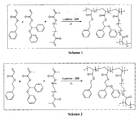
- Scheme 1 represents synthesis of poly (PEA-co-PPEA) bulk polymer networks wherein the variable 's' in the cross linker is 1 or 3.
- Scheme 2 represents synthesis of poly(PEA- co -PPEM) bulk polymer networks wherein the variable 's' in the cross linker is 1 or 3.
- Scheme 3 represents synthesis of poly(PEA-co-PTEA) bulk polymer networks; wherein the variable 's' in the cross linker is 1 or 3)
- Scheme 4 represents synthesis of poly(PEA-co-PTEM) bulk polymer networks; wherein the variable 's' in the cross linker is 1 or 3.
- the present invention relates to hydrophobic, flexible copolymer with high refractive index copolymer comprising a mixture of a monomer of formula I; wherein;
- Ar represents an aromatic ring which can be (un)substituted or substituted with H, CH 3 , CF 3 , C 2 H 5 , alkyl, OCH 3 , C 6 H 11 , Cl, Br, C 6 H 5 , or CH 2 C 6 H 5 ; and a co-polymerizable cross linker selected from the group consisting of terminally ethylenically unsaturated compounds such as hexanediol dimethacrylate (HDDMA), ethylene glycol dimethacrylate (EGDMA), allyl methacrylate, diallyl methacrylate; pentaerythritol tetra(meth)acrylate, 1,3-propanediol dimethacrylate, 1,4-butanediol dimethacrylate; and their corresponding acrylates.
- HDDMA hexanediol dimethacrylate
- EGDMA ethylene glycol dimethacrylate
- the monomers (I) include but are not limited to 2-phenylethyl acrylate (PEA), 2-phenoxyethyl methacrylate; 2-phenoxyethyl acrylate; phenyl acrylate;; benzyl acrylate, 3-phenylpropyl acrylate; 4-phenylbutyl acrylate; 2-(phenylthio)ethyl actylate; 2-(phenylamino)ethyl acrylate.
- PEA 2-phenylethyl acrylate
- 2-phenoxyethyl methacrylate 2-phenoxyethyl acrylate
- phenyl acrylate phenyl acrylate
- benzyl acrylate 3-phenylpropyl acrylate
- 4-phenylbutyl acrylate 2-(phenylthio)ethyl actylate
- 2-(phenylamino)ethyl acrylate 2-(phenylamino)ethyl acrylate.
- the monomer (II) include but are not limited to 2-phenoxy-2-phenylethyl acrylate (PPEA) or 2-phenoxy-2-phenylethyl methacrylate (PPEM) or 2-phenyl-(2-phenylthio)ethyl acrylate (PTEA) or 2-phenyl-(2-phenylthio)ethyl methacrylate (PTEM).
- PPEA 2-phenoxy-2-phenylethyl acrylate
- PPEM 2-phenoxy-2-phenylethyl methacrylate
- PTEA 2-phenyl-(2-phenylthio)ethyl acrylate
- PTEM 2-phenyl-(2-phenylthio)ethyl methacrylate
- the copolymer of the instant invention may optionally comprise additives selected from UV absorbers, dyes, light stabilizers, coating materials, pharmaceutical agents, cell receptor functional groups, viscosity agents, diluents or combinations thereof.
- the ultraviolet absorbing material can be any compound which absorbs ultraviolet light having a wavelength shorter than about 400 nm, but does not absorb any substantial amount of visible light.
- the ultraviolet absorbing compound is incorporated into the monomer mixture and is entrapped in the polymer matrix when the monomer mixture is polymerized.
- the ultraviolet absorbing compounds are selected from the compound which are co-polymerizable with the monomers and thereby is covalently bound to the polymer matrix thereby minimizing the leaching of the ultraviolet absorbing compound out of the lens and into the interior of the eye is minimized.
- the co-polymerizable ultraviolet absorbing compounds are the substituted 2-hydroxybenzophenones disclosed in US 4,304,895 ; the 2-hydroxy-5-acryloxyphenyl-2H-benzotriazole disclosed in US 4,528,311 and 5-chloro-2-[2-hydroxy-5-(3-methacryloyloxyethylcarbamoyloxyethyl)] phenyl-2H-benzotriazole and 2-[2-hydroxy-5-( ⁇ -methacryloyloxyethyl-carbamoyloxyethyl)] phenyl-2H-benzotriazole disclosed in U.S. patent No. 5814680 .
- the most preferred ultraviolet absorbing compound is 2-(2'-hydroxy-3'-methallyl-5'-methyl phenyl) benzotriazole.
- the uv absorber may be used in the range of 0.1 to 2.0 wt% w.r.t the mol % of the monomers.
- the present invention relates to free radical copolymerization of the monomers in the presence of cross-linker and radical initiator to obtain hydrophobic, flexible copolymer with high refractive index useful in foldable IOLs.
- the free radical polymerization is usually carried out in the presence of monofunctional initiator.
- the initiator concentration and polymerization temperature are primary factors regulating the polymerization rate and molecular weight of the product.
- radical initiator such as 2,5-dimethyl-2,5-di(2-ethylhexanoylperoxy)hexane (Luperox-256), is used to initiate bulk free radical polymerization.
- the process for synthesis of flexible, high refractive index copolymer useful in foldable IOLs by radical copolymerization includes the following steps;
- monomer mixtures, cross linker and radical initiator are weighed in centrifuge tubes and vortexed to allow homogenization. Nitrogen gas is bubbled through the mixture to remove most of the oxygen present.
- the mixtures are syringed into glass moulds. Glass plates of the mould are separated by square shaped PTFE spacer of 0.5 mm thickness. The glass moulds are heated at 60 °C for 20 h followed by isothermal heating at 90 °C for 10 h to ensure complete polymerization.
- the cross-linked polymer networks are extracted using soxhlet extraction with 2-propanol to remove the unreacted monomers and oligomers until equilibrium is reached.
- the monomers and its relative proportion is one of the key factors to affect the characteristics of the resulting copolymer and fabrication into IOLs.
- mechanical characteristics of the resulting material can affect ease of folding and subsequent unfolding time, stability of the lens after implantation; and sensitivity to changes in temperature.
- the structure of a particular monomer is observed to affect the magnitude of the polymer's T g (glass transition temperature).
- the monomer (I), monomer (II) and cross linker used in the process are as described hereinabove.
- the monomer composition in the copolymerization process varies in the range of 10:40 to 90:60 mol%.
- the cross linker is used in the range of 1-3mol% w.r.t the mol % of the combination of monomers.
- the concentration of radical initiator is in the range 0.1-0.3 mol%.
- the copolymer network of the present invention comprises:
- the present invention discloses synthesis of copolymer networks of 2-phenyl ethyl acrylate (PEA), 2-phenoxy-2-phenylethyl acrylate (PPEA) by free radical copolymerization comprising;
- the monomers are added in varying molar ratios and are given in Table 1 below in examples.
- the present invention discloses synthesis of copolymer networks of 2-phenylethyl acrylate (PEA) and 2-phenoxy-2-phenylethyl methacrylate (PPEM) comprising;
- the monomers are added in varying molar ratios and are given in Table 4 below.
- the present invention discloses synthesis of copolymer networks of 2-phenylethyl acrylate (PEA) and 2-phenyl-(2-phenylthio) ethyl acrylate (PTEA) comprising;
- the monomers are added in varying molar ratios and are given in Table 7 below.
- the present invention discloses synthesis of copolymer networks of 2-phenylethyl acrylate (PEA) and 2-phenyl-(2-phenylthio)ethyl methacrylate (PTEM) comprising;
- the monomers are added in varying molar ratios and are given in Table 10 below.
- the free radical copolymerization process of the current invention using monomer of formula (I), monomer of formula (II), cross linkers in presence of radical initiator 2,5-dimethyl-2,5-di(2-ethylhexanoylperoxy)hexane affords in the synthesis of copolymer with desired properties such as low glass transition temperature (5 to 20°C), high refractive index (1.55+), controlled unfolding rate (5 to 60 sec), and low equilibrium water content ( ⁇ 1wt%) which are useful for fabricating foldable ophthalmic lenses preferably IOLs.
- Ethylene dimethacrylate (EGDMA) and hexanediol dimethacrylate (HDDMA) were procured from Sigma Aldrich.
- 2-propanol (Merck) was used as received.
- Polymer networks were prepared by radical co-polymerization of monomer (I), monomer (II) in the presence of cross-linker and radical initiator. Monomer mixtures (formula I and II) were weighed in centrifuge tubes and vortexed to allow the homogenization. Nitrogen gas was bubbled through the mixture to remove most of the oxygen present. The mixtures were then syringed into glass moulds. Glass plates of the mould were separated by square shaped PTFE spacer of 0.5 mm thickness. The glass moulds were heated at 60 °C for 20 h followed by isothermally heating at 90 °C for 10 h to ensure complete polymerization. After polymerization, the cross-linked polymer networks were extracted using soxhlet extraction with 2-propanol to remove the unreacted monomers and oligomers until equilibrium was reached.
- FT-IR Fourier transform infrared
- T g glass transition temperatures
- Refractive index measurements were performed with an automatic refractometer, model PTR 46 X, from Index Instrument and calibrated with a standard. Each sample was allowed to equilibrate to 20 °C prior to the measurements. The measurements were done in triplicate and the average values recorded.
- the transparency of the polymer networks was measured with a Lambda-35 Perkin Elmer Ultraviolet-Visible spectrometer between 200 to 800 nm.
- Unreacted monomer and oligomer were removed by using soxhlet extraction. Each sample was placed between two cellulose extraction thimbles. The samples were weighed and the values recorded. The thimbles containing the sample were placed into a soxhlet extractor and the extractor placed on a 500 mL round bottom flask containing 250 mL 2-propanol. The 2-propanol was refluxed and the samples were extracted for 24 hours. Samples were then removed and dried in a vacuum oven at 65°C for eight hours. Samples were weighed. The process was repeated until no further weight loss was evident; usually 24 hours.
- BSS Balanced salt solution
- NaCl sodium chloride
- KCl potassium chloride
- CaCl 2 ⁇ 6H 2 O calcium chloride
- MgCl 2 ⁇ 6H 2 O magnesium chloride
- Na acetate C 2 H 3 NaO 2 ⁇ 3H 2 O
- sodium citrate dihydrate C 6 H 5 Na 3 O 7 ⁇ 2H 2 O
- the contact angle measurement was performed to obtain the hydrophilicity /hydrophobicity of the lens materials.
- the basis of the contact angle measurement lies in the fact that the spreading of a drop on a surface is related to physical-chemical forces between the liquid and the material.
- the sessile-drop method in air was used to quantify wetting ability, an indicator of hydrophilicity.
- the contact angle reading taken is the angle between the bordering surfaces, in this case formed between the IOL and the water surface.
- the wetting ability (and therefore hydrophilicity) is inversely proportional to the contact angle and to surface tension.
- CAs Water contact angles of the copolymer networks were measured using the sessile drop technique in a contact angle measuring system Easy Drop (Kruss) using water as contact liquid at ambient humidity and temperature. Drops of deionized water ⁇ 1.0 ⁇ L in volume were applied to the sample surface. A minimum of 10 drops were applied on each sample.
- thermogravimetric analysis employing a STA 6000 TGA model from Perkin Elmer instruments. The samples were heated at a rate of 10°C/min under nitrogen atmosphere.
- Biocompatibility was an important influencing factor for the application of copolymers in IOLs. Non-biocompatibility of IOLs could result in inflammatory response and posterior capsular opacification. In order to test whether the prepared copolymers were cytocompatible or cytotoxic, cyto compatibility tests were performed with L929 mouse fibroblasts according to ISO protocol 10993-5.
- the mouse connective tissue fibroblast cell line L929 (National Centre for Cell Science, Pune, India) was adopted and cultured in Dulbecco's modified Eagle's medium (DMEM) containing 10% fetal bovine serum (FBS), 100 U/mL penicillin, and 100 ⁇ g/mL streptomycin at 37 °C under a humidified atmosphere of 5% CO 2 .
- DMEM Dulbecco's modified Eagle's medium
- FBS fetal bovine serum
- streptomycin 100 fetal bovine serum
- streptomycin 100 fetal bovine serum
- the cell monolayer was washed twice with phosphate-buffered saline (PBS) and incubated with trypsin-EDTA solution (0.05% trypsin, 0.25% EDTA) for 5 min at 37 °C to detach the cells.
- trypsin-EDTA solution 0.05% trypsin, 0.25% EDTA
- Example 1 Synthesis of copolymer networks of 2-phenylethyl acrylate (PEA) and 2-phenoxy-2-phenylethyl acrylate (PPEA)
- Poly(PEA-co-PPEA) networks were prepared by radical co-polymerization of 2-phenylethyl acrylate (PEA), 2-phenoxy-2-phenylethyl acrylate (PPEA), in the presence of 2 mol % ethylene dimethacrylate (EGDMA) or hexanediol dimethacrylate (HDDMA) as a cross-linker and 0.2 mol% Luperox-256 as an initiator.
- the networks were prepared with varying molar ratios of PEA and PPEA.
- Monomers used and copolymerization feed compositions are detailed in Table 1. Around 4 g monomer mixtures were weighed in centrifuge tubes and the appropriate amount of each component was added.
- Polymers based on (meth) acrylate monomers have potential for a broad range of thermo-mechanical properties, making them strong candidates for optical materials.
- the T g of the copolymers increased from 5 to 18 °C.
- Copolymer networks with exorbitant T g are not suitable for biomedical applications.
- the concentration of PPEA was determined to be 10 to 30 mol %.
- Table 2 Refractive index, glass transition temperature, water contact angle and unfolding time of poly(PEA- co -PPEA) networks Sr. No. Code R.I.
- Table 2 shows the values of the Refractive Indices of poly(PEA- co -PPEA) networks.
- RI of copolymers increases from 1.560 to 1.571 with the increase in the concentration of PPEA.
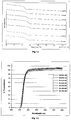
- the spectral transmittance of the poly(PEA- co -PPEA) networks is represented in Figure 2 . Most of the copolymer networks showed excellent optical transparency, and their spectral transmittance was higher than 85% in the visible wavelength region of 400-800 nm.
- the EWC of the all copolymers ranged from 0.1%-0.3%. These materials are hydrophobic in nature, so low EWC values were expected. The EWC values were measured on day 1 and day 5 after immersion into Balanced Salt Solution. No increase in EWC was seen after day 1.
- Water contact angles of the prepared copolymer networks ranges from 76.01 to 82.91°.
- CA values indicated that hydrophobicity increased with the PPEA content in copolymer, due to higher aromatic character.
- the water drop profiles on the three representative samples S1-EG-10, 20, and 30 with their CA values were observed comparable to those marketed hydrophobic acrylic IOLs, whose CA generally ranges from 65 to 85°.
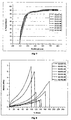
- Figure 3 shows the stress plotted against its respective % strain determined from the mechanical tensile test.
- the tensile behavior was measured at 37 °C, which is beyond the T g of the networks.
- Table 3 represents values of Young's Modulus at 100% strain, strength at failure strain and % elongation of synthesized polymer networks.
- the failure strain decreases as the elastic modulus increases, whereas the tensile strength increases as the elastic modulus increases.
- high failure strain is more important than high tensile strength. This is because large deformation of the network is required to achieve a small incision size, whereas the stress generated from the eyeball is minimal.
- polymer networks with low elastic modulus and relatively high failure strain are very suitable for IOL.
- L929 mouse fibroblasts were cultured for 7 days in direct contact to the networks.
- the effects of the networks on cell morphology were investigated by Carl Zeiss Axio scope microscope.
- a comparison of the microscopy images taken in bright field at 10X magnification obtained after incubation with polymer networks with the negative control and positive controls showed that Live L929 mouse fibroblast adherent cells can propagate to a confluent monolayer with increase in the culture time, as could be seen from those of negative control.
- the death of the cell was observed using a positive control, the open area between cells indicated that cell lysis had occurred.
- fibroblast L929 cells incubated with polymer networks maintained their morphology typical of L929. No cell debris and no detachment from dish bottom was observed.
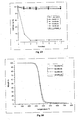
- Results regarding cell viability (MTT assay) of cultures are shown in Fig 4 .
- L929 cells presented a high proliferation rate throughout the culture time. At early incubation times, that is, day 1, values of MTT reduction were similar in seeded networks and negative controls, suggesting an identical number of attached cells, whereas the cell viability of the positive control went down to ⁇ 19 % in one day and almost to 0 % in two days.
- Example 2 Synthesis of copolymer networks of 2-phenylethyl acrylate (PEA) and 2-phenoxy-2-phenylethyl methacrylate (PPEM).
- PEA 2-phenylethyl acrylate
- PPEM 2-phenoxy-2-phenylethyl methacrylate
- Poly(PEA- co -PPEM) networks were prepared by radical co-polymerization of 2-phenylethyl acrylate (PEA) and 2-phenoxy-2-phenylethyl methacrylate (PPEM) in the presence of 2 mol % ethylene dimethacrylate (EGDMA) or hexanediol dimethacrylate (HDDMA) as a cross-linker, and 0.2 mol% Luperox-256 as an initiator.
- the networks were prepared with varying molar ratio of PEA and PPEM.
- Monomers used and co-polymerization feed compositions are detailed in Table 4. Around 5 g monomer mixtures were weighed in centrifuge tubes and the appropriate amount of each component was added.
- the T g increased as the rigidity in the molecule increased or by the addition of an a -methyl group.
- the T g of the co-polymers increased from 1 to 21 °C. This is due to the fact that the asymmetrically substitution of the methyl group on the quaternary carbon in the main chain and aromatic rings in pendent group increases the steric hindrance and the internal rotation of the molecular chain is hindered. Copolymer networks with exorbitant T g were not suitable for biomedical applications.
- Table 5 represents the values of the refractive indices of poly(PEA- co -PPEM) networks. RI of copolymers increases from 1.558 to 1.572 with the increase in the concentration of PPEM.
- the transparent copolymers were obtained.
- the spectral transmittance of the poly(PEA- co -PPEM) networks is represented in Figure 7 .
- the transmittances of copolymers are over 80 % in the visible light range.
- the EWC of the copolymers ranged from 0.1% to 0.5%. These materials are hydrophobic in nature, so low EWC values were expected. The EWC values were measured on day 1 and day 5 after BSS immersion. No increase in EWC was seen after day 1.
- Figure 8 shows the stress plotted against its respective % strain determined from the mechanical tensile tests.
- Copolymers S2-EG-30 and S2-HD-30 gives 'S' shaped stress-strain curves, which are particularly susceptible to elastic instabilities. The tensile behavior was measured at 37 °C, which is beyond the T g of the networks.
- Table 6 represents values of Young's Modulus at 100% strain, strength at failure strain and % elongation of synthesized polymer networks.
- the microscopy images were taken in bright field at 10X magnification obtained after incubation with polymer networks, in comparison with the negative control and positive controls.
- Live L929 mouse fibroblast adherent cells can propagate to a confluent monolayer with the increase in the culture time, as could be seen from those of negative control.
- the death of the cell was observed using a positive control, the open area between cells indicated that cell lysis has occurred.
- the fibroblast L929 cells incubated with polymer networks maintained their morphology typical of L929. No cell debris and no detachment from dish bottom was observed. Results regarding cell viability (MTT assay) of cultures are shown in Figure 9 .
- L929 cells presented a high proliferation rate throughout the culture time.
- TGA curves for representative polymers represented in Figure10 Thermograms indicate that polymer networks are thermally stable and decomposition of polymers starts at 310 °C. Single step degradation observed in all copolymers.
- Example 3 Synthesis of copolymer networks of 2-phenylethyl acrylate (PEA) and 2-phenyl-(2-phenylthio)ethyl acrylate (PTEA)
- Poly(PEA- co -PTEA) networks were prepared by radical copolymerisation of 2-phenylethyl acrylate (PEA) and 2-phenyl-(2-phenylthio)ethyl acrylate (PTEA) in the presence of 2 mol % ethylene dimethacrylate (EGDMA) or hexanediol dimethacrylate (HDDMA) as a cross-linker, and 0.2 mol% Luperox-256 as an initiator.
- the networks were prepared with varying molar ratio of PEA and PTEA.
- Monomers used and co-polymerization feed compositions are detailed in Table 7. Around 5 g monomer mixtures were weighed in centrifuge tubes and the appropriate amount of each component was added.
- the Glass transition temperatures (T g ) of the polymers represented in Figure 11 All of the cured acrylate resins show T g 's in the range of 6.10 to 18.26 °C measured by DSC.
- the increased concentration of PTEA containing two aromatic rings substantially reduces the mobility of polymer chains within the networks, as can be seen from the increase in the T g represented in Table 8.
- Table 8 Refractive index, glass transition temperature, water contact angle and unfolding time of poly(PEA- co -PTEA) networks Sr. No. Code R.I.
- Copolymers are clear and colorless even at higher mol % of PTEA (60 mol %). This transparency of the polymer networks is considered to be a result of uniform distribution of PTEA resulting homogeneous medium, having an increased refractive index and PTEA does not scatter the visible light. As shown in Figure 12 all copolymers has a reasonable transmission (>85% ranging from 400 nm to 800 nm), which is comparable to the human lens and filters out most of the UV light.
- the EWC of the copolymers ranged from 0.05% to 0.2%. These materials are hydrophobic in nature, so low EWC values were expected. The EWC values were measured on day 1 and day 5 after immersion into Balanced Salt Solution. No increase in EWC was seen after day 1.
- Figure 13 displays representative stress-strain curves of the seven copolymer networks.
- Table 9 represents values of Young's Modulus at 100% strain, strength at failure strain and % elongation of synthesized polymer networks. Results indicate that as concentration of PTEA increases, the strength of material increases. All copolymer networks exhibit the ' J -shaped' stress-strain curve, which is characteristic property of elastic rubbery polymers. The curve shows that initially, small increases in stress give large extensions, however, at larger extensions the material becomes stiffer, and more difficult to extend.
- L929 mouse fibroblasts were cultured for 7 days in direct contact to the networks.
- the effects of the networks on cell morphology were investigated by Carl Zeiss Axio scope microscope. The the microscopy images were taken in bright field at 10X magnification obtained after incubation with polymer networks, in comparison with the negative control and positive controls.
- Live L929 mouse fibroblast adherent cells can propagate to a confluent monolayer with increase in the culture time, as could be seen from those of negative control.
- the death of the cell is observed using a positive control, the open area between cells indicates that cell lysis has occurred.
- TGA curves for representative polymers represented in Figure 15 Thermograms clearly indicate that polymers undergo two-stage decomposition.
- the initial decomposition temperature of polymers is ⁇ 290 °C, while second decomposition temperature is ⁇ 340 °C.
- Example 4 Synthesis of copolymer networks of 2-phenylethyl acrylate (PEA) and 2-phenyl-(2-phenylthio)ethyl methacrylate (PTEM)
- PEA 2-phenylethyl acrylate
- PTEM 2-phenyl-(2-phenylthio)ethyl methacrylate
- Poly(PEA- co -PTEM) networks were prepared by radical copolymerisation of 2-phenylethyl acrylate (PEA) and 2-phenyl-(2-phenylthio)ethyl methacrylate (PTEM) in the presence of 2 mol % ethylene dimethacrylate (EGDMA) or hexanediol dimethacrylate, (HDDMA) as a cross-linker and 0.2 mol% Luperox-256 as an initiator.
- the networks were prepared with varying molar ratio of PEA and PTEM.
- Monomers used and co-polymerization feed compositions detailed in Table 10. Around 5 g monomer mixtures were weighed in centrifuge tubes and the appropriate amount of each component was added.
- T g for all five networks ranges between 2.84 and 21.67 °C.
- the glass transition temperatures of polymers were allowed to be optimized for intraocular lens application by adjusting the amounts of starting monomers without introducing any new monomers or additives into the system.
- the increased concentration of methacrylate substantially reduces the mobility of polymer chains within the networks, as can be seen from the increase in the T g shown in Table 11.
- Table 11 Refractive index, glass transition temperature, water contact angle and unfolding time of poly(PEA- co -PTEM) networks Sr. No. Codes R.I.
- RI of current acrylate foldable IOLs is approximately 1.51. Both the high RI and flexibility of the copolymers could be very helpful to reduce the implanted incision when they are used as IOLs.
- Table 11 shows the values of RI of copolymers with different concentrations and compositions of the monomers. With increasing the concentrations of PTEM from 10 to 30 mol%, the RI increased from 1.559 to 1.578. The high RI of the copolymers resulted from sulphur atom and aromatic rings of PTEM.
- the thio-ether unit may suppress packing between the polymer chains, which is required for high transparency.
- the EWC of the copolymers ranged from 0.1%-0.4%). These materials are hydrophobic in nature, so low EWC values were expected. The EWC values were measured on day 1 and day 5 after immersion into Balanced Salt Solution. No increase in EWC was seen after day 1.
- Unfolding times for synthesized bulk polymer networks are represented in Table 11. Unfolding time is varying from 4 to 19 sec. The S4-EG-10 composition tended to adhere to itself for a brief moment before unfolding.
- Figure 18 shows the stress plotted against its respective % strain determined from the mechanical tensile test.
- Copolymers having PTEM content more than 25 mol% shows more stiffness and less elongation. The tensile behavior was measured at 37 °C, which is beyond the T g of the networks.
- Table 12 represents values of Young's Modulus at 100% strain, strength at failure strain and % elongation of synthesized polymer networks.
- Table 12 Mechanical tensile testing parameters for poly(PEA- co -PTEM) networks Code Young's Modulus at 100 % strain (MPa) Strength at failure strain (MPa) % Elongation S4-EG-10 0.007 2.390 176 S4-EG-15 0.011 5.078 176 S4-EG-20 0.011 6.795 225 S4-EG-25 0.028 7.507 163 S4-EG-30 0.051 12.696 135 S4-HD-20 0.024 8.886 155 S4-HD-30 0.045 11.193 136
- thermogravimetric analysis ( Figure 20 ). Polymers showed single step degradation with high thermal stability. All polymer networks are thermally stable up to 290 °C.
- novel IOL materials are formed from crosslinked poly(meth)acrylate and do not contain any groups that can cause adverse reactions in the surrounding tissue or detrimentally affect the clarity of the optic by crazing.
- These new polymers are true rubbery elastomers and return to their original shape after deformation. They have a high index of refraction (1.55-1.60), a low glass transition temperature ( ⁇ 20 °C) a highly transparent in visible region (> 85%) a low modulus of elasticity ( ⁇ 2 MPa) and high elongation (> 150%), which renders them softer and flexible.
Landscapes
- Health & Medical Sciences (AREA)
- Chemical & Material Sciences (AREA)
- Chemical Kinetics & Catalysis (AREA)
- Medicinal Chemistry (AREA)
- Polymers & Plastics (AREA)
- Organic Chemistry (AREA)
- Ophthalmology & Optometry (AREA)
- Physics & Mathematics (AREA)
- Heart & Thoracic Surgery (AREA)
- Animal Behavior & Ethology (AREA)
- Engineering & Computer Science (AREA)
- Biomedical Technology (AREA)
- Oral & Maxillofacial Surgery (AREA)
- Vascular Medicine (AREA)
- Life Sciences & Earth Sciences (AREA)
- Transplantation (AREA)
- General Health & Medical Sciences (AREA)
- Public Health (AREA)
- Veterinary Medicine (AREA)
- Cardiology (AREA)
- General Physics & Mathematics (AREA)
- Optics & Photonics (AREA)
- Addition Polymer Or Copolymer, Post-Treatments, Or Chemical Modifications (AREA)
- Materials For Medical Uses (AREA)
Claims (10)
- Copolymer umfassend 5 bis 95 Mol-% Monomer der Formel I:
 R H oder Alkyl ist; "d" 1 - 10 ist,X vorhanden oder abwesend sein kann; mit der Maßgabe, dass, wenn X vorliegt, X O, S oder NR2 darstellt, wobei R2 H, (un)substituiertes oder substituiertes Alkyl, (un)substituiertes oder substituiertes Aryl, CH2C6H5 ist;Ar einen aromatischen Ring darstellt, der (un)substituiert oder mit H, CH3, CF3, C2H5, Alkyl, OCH3, C6H11, Cl, Br, C6H5 oder CH2C6H5 substituiert ist;5 bis 95 Mol-% Monomer der Formel II:
 R H oder Alkyl ist;Y O oder S darstellt;Ar einen aromatischen Ring darstellt, der (un)substituiert oder mit H, CH3, CF3, C2H5, Alkyl, OCH3, C6H11, Cl, Br, C6H5 oder CH2C6H5 substituiert ist; undund 0,1 bis 20 Mol-% eines copolymerisierbaren Vernetzungsmittels ausgewählt aus der Gruppe bestehend aus endständig ethylenisch ungesättigten Verbindungen wie Hexandioldimethacrylat (HDDMA), Ethylenglycoldimethacrylat (EGDMA), Allylmethacrylat, Diallylmethacrylat; Pentaerythrittetra(meth)acrylat, 1,3-Propandioldimethcrylat, 1,4-Butandioldimethacrylat; und ihren entsprechenden Acrylaten.
 - Copolymer nach Anspruch 1 umfassend:i. Copolymer von 2-Phenylethylacrylat (PEA), 2-Phenoxy-2-phenylethylacrylat (PPEA) und Ethylenglycoldimethacrylat;ii. Copolymer von 2-Phenylethylacrylat (PEA), 2-Phenoxy-2-phenylethylacrylat (PPEA) und Hexandioldimethacrylat;iii. Copolymer von 2-Phenylethylacrylat (PEA), 2-Phenoxy-2-phenylethylmethacrylat (PPEM) und Ethylenglycoldimethacrylat;iv. Copolymer von 2-Phenylethylacrylat (PEA), 2-Phenoxy-2-phenylethylmethacrylat (PPEM) und Hexandioldimethacrylat;v. Copolymer von 2-Phenylethylacrylat (PEA), 2-Phenyl-(2-phenylthio)ethylacrylat (PTEA) und Ethylenglycoldimethacrylat;vi. Copolymer von 2-Phenylethylacrylat (PEA), 2-Phenyl-(2-phenylthio)ethylacrylat (PTEA) und Hexandioldimethacrylat;vii. Copolymer von 2-Phenylethylacrylat (PEA), 2-Phenyl-(2-phenylthio)ethylmethacrylat (PTEM) und Ethylenglycoldimethacrylat; undviii Copolymer von 2-Phenylethylacrylat (PEA), 2-Phenyl-(2-phenylthio)ethylmethacrylat (PTEM) und Hexandioldimethacrylat.
- Copolymer nach Anspruch 1, wobei das Copolymer hydrophob ist und einen Brechungsindex im Bereich von 1,558 bis 1,601 (wie im Versuchsteil bestimmt) aufweist.
- Copolymer nach Anspruch 1, wobei die Zugfestigkeit des Copolymers im Bereich von 1,58 bis 12,69 MPa (230 bis 1841 psi und wie im Versuchsteil bestimmt) liegt.
- Copolymer nach Anspruch 1, wobei das Copolymer flexibel ist und einen Elastizitätsmodul im Bereich von 0,03 bis 0,07 MPa (4 bis 10 psi und wie im Versuchsteil bestimmt) aufweist.
- Verfahren für die Herstellung eines hydrophoben Copolymers nach Anspruch 1 durch Copolymerisation mit freien Radikalen, wobei das Verfahren die Schritte umfasst des:i. Mischens von Monomer I und Monomer II im Verhältnis im Bereich von 5:95 bis 95:5 Mol-% mit Vernetzungsmittel und 0,1 - 5,0 Mol-% Radikalinitiator in einem Zentrifugenglas und Vortexens, um die Homogenisierung zu gestatten;ii. Hindurchführens von Stickstoffgas durch die Mischung, gefolgt von Injizieren der Mischung in die Glasformen;ii. Erhitzens der Glasformen bei 60°C 20 h lang, gefolgt von isothermischem Erhitzen bei 90 °C 10 h lang, bis zur vollständigen Polymerisation; undiv. Extrahierens des vernetzten Polymernetzwerks unter Anwendung von Soxhlet-Extraktion mit 2-Propanol, um die unreagierten Monomere und Oligomere bis zum Äquilibrium zu entfernen.
- Copolymer nach Anspruch 1 und 2, wobei das Monomer der Formel (I) unter 2-Phenylethylacrylat (PEA), 2-Phenoxyethylmethacrylat; 2-Phenoxyethylacrylat, Benzylacrylat, 3-Phenylpropylacrylat, 4-Phenylbutylacrylat, 2-(Phenylthio)ethylacrylat, 2-(Phenylamino)ethylacrylat ausgewählt wird.
- Copolymer nach den Ansprüchen 1 und 2, wobei das Monomer der Formel (II) unter 2-Phenoxy-2-phenylethylacrylat (PPEA) oder 2-Phenoxy-2-phenylethylmethacrylat (PPEM) oder 2-Phenyl-(2-phenylthio)ethylacrylat (PTEA) oder 2-Phenyl-(2-phenylthio)ethylmethacrylat (PTEM) ausgewählt wird.
- Copolymer nach den Ansprüchen 1 bis 5, wobei das Vernetzungsmittel im Bereich von 0,1 bis 20 Mol-% mit Bezug auf die Mol-% der Kombination von Monomeren liegt.
- Copolymer nach einem der vorhergehenden Ansprüche, wahlweise Zusatzmittel umfassend ausgewählt unter UV-Absorptionsmitteln, Farbstoffen, Lichtstabilisatoren, Beschichtungsmaterialien, Pharmazeutika, funktionellen Zellrezeptorgruppen, Viskositätsmitteln, Verdünnungsmitteln oder Kombinationen davon, wobei das verwendete UV-Absorptionsmittel im Bereich von 0,1 bis 2,0 Gew.-% gesamter Monomere liegt.
Applications Claiming Priority (2)
| Application Number | Priority Date | Filing Date | Title |
|---|---|---|---|
| IN3765DE2012 | 2013-01-07 | ||
| PCT/IN2014/000015 WO2014106866A1 (en) | 2013-01-07 | 2014-01-07 | Flexible, high refractive index hydrophobic copolymer |
Publications (2)
| Publication Number | Publication Date |
|---|---|
| EP2941445A1 EP2941445A1 (de) | 2015-11-11 |
| EP2941445B1 true EP2941445B1 (de) | 2017-03-22 |
Family
ID=54250585
Family Applications (1)
| Application Number | Title | Priority Date | Filing Date |
|---|---|---|---|
| EP14706130.3A Not-in-force EP2941445B1 (de) | 2013-01-07 | 2014-01-07 | Flexibles hydrophobes copolymer mit hohem brechungsindex |
Country Status (3)
| Country | Link |
|---|---|
| US (1) | US20150353667A1 (de) |
| EP (1) | EP2941445B1 (de) |
| WO (1) | WO2014106866A1 (de) |
Families Citing this family (4)
| Publication number | Priority date | Publication date | Assignee | Title |
|---|---|---|---|---|
| US9505700B2 (en) * | 2012-06-21 | 2016-11-29 | Council Of Scientific & Industrial Research | High refractive index (meth) acrylates |
| CN109071902B (zh) * | 2016-03-30 | 2021-07-23 | 株式会社尼康 | 可固化组合物、固化制品及光学部件 |
| FR3075813B1 (fr) * | 2017-12-21 | 2021-06-18 | Total Marketing Services | Utilisation de polymeres reticules pour ameliorer les proprietes a froid de carburants ou combustibles |
| CN111467581B (zh) * | 2020-04-14 | 2022-04-12 | 广东赛珐生物科技有限公司 | 青光眼引流管及其制备方法 |
Family Cites Families (20)
| Publication number | Priority date | Publication date | Assignee | Title |
|---|---|---|---|---|
| US4304895A (en) | 1973-06-20 | 1981-12-08 | Wesley-Jessen, Inc. | Ultraviolet absorbing corneal contact lenses |
| US4528311A (en) | 1983-07-11 | 1985-07-09 | Iolab Corporation | Ultraviolet absorbing polymers comprising 2-hydroxy-5-acrylyloxyphenyl-2H-benzotriazoles |
| US5290892A (en) | 1990-11-07 | 1994-03-01 | Nestle S.A. | Flexible intraocular lenses made from high refractive index polymers |
| US5331073A (en) | 1992-11-09 | 1994-07-19 | Allergan, Inc. | Polymeric compositions and intraocular lenses made from same |
| JP2967093B2 (ja) | 1995-02-23 | 1999-10-25 | ホーヤ株式会社 | 軟性眼内レンズ |
| ATE228862T1 (de) | 1995-06-07 | 2002-12-15 | Alcon Lab Inc | Material für ophtalmische linsen mit hohem brechungsindex |
| SE9600006D0 (sv) | 1996-01-02 | 1996-01-02 | Pharmacia Ab | Foldable intraocular lens materials |
| ES2212124T3 (es) | 1997-08-12 | 2004-07-16 | Alcon Manufacturing Ltd. | Polimeros para lentillas oftalmicas. |
| JP4144920B2 (ja) | 1997-08-20 | 2008-09-03 | 興和株式会社 | 軟質眼内レンズ材料 |
| EP1035142A1 (de) * | 1999-03-09 | 2000-09-13 | Nidek Co., Ltd. | Acrylat- Copolymermaterial für ophtalmische Geräte |
| ATE291045T1 (de) | 1999-09-07 | 2005-04-15 | Alcon Inc | Material für faltbare ophtalmische und otorhinolaryngologische gegenstände |
| US6852793B2 (en) * | 2002-06-19 | 2005-02-08 | Bausch & Lomb Incorporated | Low water content, high refractive index, flexible, polymeric compositions |
| US6694758B1 (en) | 2002-08-14 | 2004-02-24 | Lg Electronics Inc. | Apparatus and method for controlling concentrated cooling of refrigerator |
| US20040056371A1 (en) | 2002-09-25 | 2004-03-25 | Medennium, Inc. | Method of manufacturing ophthalmic lenses made from hydrophobic acrylic polymers |
| US20050258096A1 (en) | 2004-05-21 | 2005-11-24 | Bausch & Lomb Incorporated | Process for extracting biomedical devices |
| US7714090B2 (en) | 2005-03-09 | 2010-05-11 | Hoya Corporation | (Meth)acrylate compound and process for the production thereof, (meth)acrylate copolymer and process for the production of (meth)acrylate copolymer, and soft intraocular lens |
| TWI399228B (zh) * | 2006-07-21 | 2013-06-21 | Alcon Inc | 低黏性的眼科與耳鼻喉科裝置材料(二) |
| JP2010519369A (ja) * | 2007-02-20 | 2010-06-03 | ビーエーエスエフ ソシエタス・ヨーロピア | 高屈折率モノマー、それらの組成物及び使用 |
| US8729203B2 (en) * | 2009-05-07 | 2014-05-20 | Timothy Charles Higgs | Polymer composition |
| US8455572B2 (en) | 2011-01-31 | 2013-06-04 | Key Medical Technologies, Inc. | Method of making ophthalmic devices and components thereof from hydrophobic acrylic (HA) polymers with reduced or eliminated glistenings |
-
2014
- 2014-01-07 WO PCT/IN2014/000015 patent/WO2014106866A1/en not_active Ceased
- 2014-01-07 US US14/759,526 patent/US20150353667A1/en not_active Abandoned
- 2014-01-07 EP EP14706130.3A patent/EP2941445B1/de not_active Not-in-force
Non-Patent Citations (1)
| Title |
|---|
| None * |
Also Published As
| Publication number | Publication date |
|---|---|
| US20150353667A1 (en) | 2015-12-10 |
| EP2941445A1 (de) | 2015-11-11 |
| WO2014106866A1 (en) | 2014-07-10 |
| WO2014106866A4 (en) | 2014-09-25 |
Similar Documents
| Publication | Publication Date | Title |
|---|---|---|
| TWI503354B (zh) | 具有末端矽氧烷類的非反應性親水聚合物以及其製造和使用方法 | |
| US6329485B1 (en) | High refractive index hydrogel compositions for ophthalmic implants | |
| RU2571091C2 (ru) | Акриловые материалы с высоким показателем преломления с уменьшенным количеством ослепляющих бликов для офтальмологических устройств | |
| JP5459816B2 (ja) | 折り畳み可能な眼科用および耳鼻咽喉科用のデバイス材料 | |
| RU2468825C2 (ru) | Материалы для офтальмологических и оториноларингологических устройств | |
| RU2728693C1 (ru) | Материалы для интраокулярной линзы с высоким показателем преломления и высоким числом аббе | |
| CN103348266A (zh) | 低粘性疏水性眼用器件材料 | |
| CN101815541A (zh) | 眼科和耳鼻喉科装置材料 | |
| MX2010012098A (es) | Materiales para dispositivo oftalmico con alto indice de refraccion. | |
| Li et al. | Cyclodextrin-containing hydrogels as an intraocular lens for sustained drug release | |
| BRPI0715431A2 (pt) | materiais de dispositivo otorrinolaringolàgico e oftÁlmico de baixa pegajosidade | |
| JP6857784B2 (ja) | ポリマー材料 | |
| US20150353667A1 (en) | Flexible, high refractive index hydrophobic copolymer | |
| CN104136050B (zh) | 含多臂peg大分子单体的眼科和耳鼻喉科装置材料 | |
| WO2011028480A2 (en) | Ophthalmic and otorhinolaryngological device materials | |
| CN116490532B (zh) | 眼科器件用改性剂 | |
| JPWO2020174570A1 (ja) | ポリマー材料 | |
| KR20260043864A (ko) | 가교제를 이용한 반짝임 변성이 감소된 소수성 아크릴 인공수정체의 제조방법 | |
| US20250073018A1 (en) | Ophthalmic devices having a high refractive index | |
| JP2025532268A (ja) | 複数のコモノマーグループを有する眼科用組成物及び眼科用レンズ | |
| CN119019599A (zh) | 一种聚合物及其制备方法和用途 |
Legal Events
| Date | Code | Title | Description |
|---|---|---|---|
| PUAI | Public reference made under article 153(3) epc to a published international application that has entered the european phase |
Free format text: ORIGINAL CODE: 0009012 |
|
| 17P | Request for examination filed |
Effective date: 20150715 |
|
| AK | Designated contracting states |
Kind code of ref document: A1 Designated state(s): AL AT BE BG CH CY CZ DE DK EE ES FI FR GB GR HR HU IE IS IT LI LT LU LV MC MK MT NL NO PL PT RO RS SE SI SK SM TR |
|
| AX | Request for extension of the european patent |
Extension state: BA ME |
|
| DAX | Request for extension of the european patent (deleted) | ||
| GRAP | Despatch of communication of intention to grant a patent |
Free format text: ORIGINAL CODE: EPIDOSNIGR1 |
|
| INTG | Intention to grant announced |
Effective date: 20161007 |
|
| GRAS | Grant fee paid |
Free format text: ORIGINAL CODE: EPIDOSNIGR3 |
|
| GRAA | (expected) grant |
Free format text: ORIGINAL CODE: 0009210 |
|
| AK | Designated contracting states |
Kind code of ref document: B1 Designated state(s): AL AT BE BG CH CY CZ DE DK EE ES FI FR GB GR HR HU IE IS IT LI LT LU LV MC MK MT NL NO PL PT RO RS SE SI SK SM TR |
|
| REG | Reference to a national code |
Ref country code: GB Ref legal event code: FG4D |
|
| REG | Reference to a national code |
Ref country code: CH Ref legal event code: EP |
|
| REG | Reference to a national code |
Ref country code: AT Ref legal event code: REF Ref document number: 877667 Country of ref document: AT Kind code of ref document: T Effective date: 20170415 |
|
| REG | Reference to a national code |
Ref country code: IE Ref legal event code: FG4D |
|
| REG | Reference to a national code |
Ref country code: DE Ref legal event code: R096 Ref document number: 602014007834 Country of ref document: DE |
|
| REG | Reference to a national code |
Ref country code: NL Ref legal event code: MP Effective date: 20170322 |
|
| PG25 | Lapsed in a contracting state [announced via postgrant information from national office to epo] |
Ref country code: LT Free format text: LAPSE BECAUSE OF FAILURE TO SUBMIT A TRANSLATION OF THE DESCRIPTION OR TO PAY THE FEE WITHIN THE PRESCRIBED TIME-LIMIT Effective date: 20170322 Ref country code: NO Free format text: LAPSE BECAUSE OF FAILURE TO SUBMIT A TRANSLATION OF THE DESCRIPTION OR TO PAY THE FEE WITHIN THE PRESCRIBED TIME-LIMIT Effective date: 20170622 Ref country code: GR Free format text: LAPSE BECAUSE OF FAILURE TO SUBMIT A TRANSLATION OF THE DESCRIPTION OR TO PAY THE FEE WITHIN THE PRESCRIBED TIME-LIMIT Effective date: 20170623 Ref country code: HR Free format text: LAPSE BECAUSE OF FAILURE TO SUBMIT A TRANSLATION OF THE DESCRIPTION OR TO PAY THE FEE WITHIN THE PRESCRIBED TIME-LIMIT Effective date: 20170322 Ref country code: FI Free format text: LAPSE BECAUSE OF FAILURE TO SUBMIT A TRANSLATION OF THE DESCRIPTION OR TO PAY THE FEE WITHIN THE PRESCRIBED TIME-LIMIT Effective date: 20170322 |
|
| REG | Reference to a national code |
Ref country code: LT Ref legal event code: MG4D |
|
| REG | Reference to a national code |
Ref country code: AT Ref legal event code: MK05 Ref document number: 877667 Country of ref document: AT Kind code of ref document: T Effective date: 20170322 |
|
| PG25 | Lapsed in a contracting state [announced via postgrant information from national office to epo] |
Ref country code: BG Free format text: LAPSE BECAUSE OF FAILURE TO SUBMIT A TRANSLATION OF THE DESCRIPTION OR TO PAY THE FEE WITHIN THE PRESCRIBED TIME-LIMIT Effective date: 20170622 Ref country code: SE Free format text: LAPSE BECAUSE OF FAILURE TO SUBMIT A TRANSLATION OF THE DESCRIPTION OR TO PAY THE FEE WITHIN THE PRESCRIBED TIME-LIMIT Effective date: 20170322 Ref country code: LV Free format text: LAPSE BECAUSE OF FAILURE TO SUBMIT A TRANSLATION OF THE DESCRIPTION OR TO PAY THE FEE WITHIN THE PRESCRIBED TIME-LIMIT Effective date: 20170322 Ref country code: RS Free format text: LAPSE BECAUSE OF FAILURE TO SUBMIT A TRANSLATION OF THE DESCRIPTION OR TO PAY THE FEE WITHIN THE PRESCRIBED TIME-LIMIT Effective date: 20170322 |
|
| PG25 | Lapsed in a contracting state [announced via postgrant information from national office to epo] |
Ref country code: NL Free format text: LAPSE BECAUSE OF FAILURE TO SUBMIT A TRANSLATION OF THE DESCRIPTION OR TO PAY THE FEE WITHIN THE PRESCRIBED TIME-LIMIT Effective date: 20170322 |
|
| PG25 | Lapsed in a contracting state [announced via postgrant information from national office to epo] |
Ref country code: EE Free format text: LAPSE BECAUSE OF FAILURE TO SUBMIT A TRANSLATION OF THE DESCRIPTION OR TO PAY THE FEE WITHIN THE PRESCRIBED TIME-LIMIT Effective date: 20170322 Ref country code: ES Free format text: LAPSE BECAUSE OF FAILURE TO SUBMIT A TRANSLATION OF THE DESCRIPTION OR TO PAY THE FEE WITHIN THE PRESCRIBED TIME-LIMIT Effective date: 20170322 Ref country code: RO Free format text: LAPSE BECAUSE OF FAILURE TO SUBMIT A TRANSLATION OF THE DESCRIPTION OR TO PAY THE FEE WITHIN THE PRESCRIBED TIME-LIMIT Effective date: 20170322 Ref country code: SK Free format text: LAPSE BECAUSE OF FAILURE TO SUBMIT A TRANSLATION OF THE DESCRIPTION OR TO PAY THE FEE WITHIN THE PRESCRIBED TIME-LIMIT Effective date: 20170322 Ref country code: AT Free format text: LAPSE BECAUSE OF FAILURE TO SUBMIT A TRANSLATION OF THE DESCRIPTION OR TO PAY THE FEE WITHIN THE PRESCRIBED TIME-LIMIT Effective date: 20170322 Ref country code: CZ Free format text: LAPSE BECAUSE OF FAILURE TO SUBMIT A TRANSLATION OF THE DESCRIPTION OR TO PAY THE FEE WITHIN THE PRESCRIBED TIME-LIMIT Effective date: 20170322 |
|
| PG25 | Lapsed in a contracting state [announced via postgrant information from national office to epo] |
Ref country code: PL Free format text: LAPSE BECAUSE OF FAILURE TO SUBMIT A TRANSLATION OF THE DESCRIPTION OR TO PAY THE FEE WITHIN THE PRESCRIBED TIME-LIMIT Effective date: 20170322 Ref country code: SM Free format text: LAPSE BECAUSE OF FAILURE TO SUBMIT A TRANSLATION OF THE DESCRIPTION OR TO PAY THE FEE WITHIN THE PRESCRIBED TIME-LIMIT Effective date: 20170322 Ref country code: IS Free format text: LAPSE BECAUSE OF FAILURE TO SUBMIT A TRANSLATION OF THE DESCRIPTION OR TO PAY THE FEE WITHIN THE PRESCRIBED TIME-LIMIT Effective date: 20170722 Ref country code: PT Free format text: LAPSE BECAUSE OF FAILURE TO SUBMIT A TRANSLATION OF THE DESCRIPTION OR TO PAY THE FEE WITHIN THE PRESCRIBED TIME-LIMIT Effective date: 20170724 |
|
| REG | Reference to a national code |
Ref country code: DE Ref legal event code: R097 Ref document number: 602014007834 Country of ref document: DE |
|
| PLBE | No opposition filed within time limit |
Free format text: ORIGINAL CODE: 0009261 |
|
| REG | Reference to a national code |
Ref country code: FR Ref legal event code: PLFP Year of fee payment: 5 |
|
| STAA | Information on the status of an ep patent application or granted ep patent |
Free format text: STATUS: NO OPPOSITION FILED WITHIN TIME LIMIT |
|
| PG25 | Lapsed in a contracting state [announced via postgrant information from national office to epo] |
Ref country code: DK Free format text: LAPSE BECAUSE OF FAILURE TO SUBMIT A TRANSLATION OF THE DESCRIPTION OR TO PAY THE FEE WITHIN THE PRESCRIBED TIME-LIMIT Effective date: 20170322 |
|
| 26N | No opposition filed |
Effective date: 20180102 |
|
| PG25 | Lapsed in a contracting state [announced via postgrant information from national office to epo] |
Ref country code: SI Free format text: LAPSE BECAUSE OF FAILURE TO SUBMIT A TRANSLATION OF THE DESCRIPTION OR TO PAY THE FEE WITHIN THE PRESCRIBED TIME-LIMIT Effective date: 20170322 Ref country code: IT Free format text: LAPSE BECAUSE OF FAILURE TO SUBMIT A TRANSLATION OF THE DESCRIPTION OR TO PAY THE FEE WITHIN THE PRESCRIBED TIME-LIMIT Effective date: 20170322 |
|
| PGFP | Annual fee paid to national office [announced via postgrant information from national office to epo] |
Ref country code: GB Payment date: 20171227 Year of fee payment: 5 |
|
| PGFP | Annual fee paid to national office [announced via postgrant information from national office to epo] |
Ref country code: DE Payment date: 20180123 Year of fee payment: 5 |
|
| PGFP | Annual fee paid to national office [announced via postgrant information from national office to epo] |
Ref country code: FR Payment date: 20180126 Year of fee payment: 5 |
|
| REG | Reference to a national code |
Ref country code: CH Ref legal event code: PL |
|
| PG25 | Lapsed in a contracting state [announced via postgrant information from national office to epo] |
Ref country code: LU Free format text: LAPSE BECAUSE OF NON-PAYMENT OF DUE FEES Effective date: 20180107 |
|
| REG | Reference to a national code |
Ref country code: IE Ref legal event code: MM4A |
|
| REG | Reference to a national code |
Ref country code: BE Ref legal event code: MM Effective date: 20180131 |
|
| PG25 | Lapsed in a contracting state [announced via postgrant information from national office to epo] |
Ref country code: LI Free format text: LAPSE BECAUSE OF NON-PAYMENT OF DUE FEES Effective date: 20180131 Ref country code: BE Free format text: LAPSE BECAUSE OF NON-PAYMENT OF DUE FEES Effective date: 20180131 Ref country code: CH Free format text: LAPSE BECAUSE OF NON-PAYMENT OF DUE FEES Effective date: 20180131 |
|
| PG25 | Lapsed in a contracting state [announced via postgrant information from national office to epo] |
Ref country code: IE Free format text: LAPSE BECAUSE OF NON-PAYMENT OF DUE FEES Effective date: 20180107 |
|
| PG25 | Lapsed in a contracting state [announced via postgrant information from national office to epo] |
Ref country code: MC Free format text: LAPSE BECAUSE OF FAILURE TO SUBMIT A TRANSLATION OF THE DESCRIPTION OR TO PAY THE FEE WITHIN THE PRESCRIBED TIME-LIMIT Effective date: 20170322 |
|
| REG | Reference to a national code |
Ref country code: DE Ref legal event code: R119 Ref document number: 602014007834 Country of ref document: DE |
|
| GBPC | Gb: european patent ceased through non-payment of renewal fee |
Effective date: 20190107 |
|
| PG25 | Lapsed in a contracting state [announced via postgrant information from national office to epo] |
Ref country code: FR Free format text: LAPSE BECAUSE OF NON-PAYMENT OF DUE FEES Effective date: 20190131 Ref country code: DE Free format text: LAPSE BECAUSE OF NON-PAYMENT OF DUE FEES Effective date: 20190801 |
|
| PG25 | Lapsed in a contracting state [announced via postgrant information from national office to epo] |
Ref country code: GB Free format text: LAPSE BECAUSE OF NON-PAYMENT OF DUE FEES Effective date: 20190107 |
|
| PG25 | Lapsed in a contracting state [announced via postgrant information from national office to epo] |
Ref country code: MT Free format text: LAPSE BECAUSE OF NON-PAYMENT OF DUE FEES Effective date: 20180107 |
|
| PG25 | Lapsed in a contracting state [announced via postgrant information from national office to epo] |
Ref country code: TR Free format text: LAPSE BECAUSE OF FAILURE TO SUBMIT A TRANSLATION OF THE DESCRIPTION OR TO PAY THE FEE WITHIN THE PRESCRIBED TIME-LIMIT Effective date: 20170322 |
|
| PG25 | Lapsed in a contracting state [announced via postgrant information from national office to epo] |
Ref country code: CY Free format text: LAPSE BECAUSE OF FAILURE TO SUBMIT A TRANSLATION OF THE DESCRIPTION OR TO PAY THE FEE WITHIN THE PRESCRIBED TIME-LIMIT Effective date: 20170322 Ref country code: MK Free format text: LAPSE BECAUSE OF NON-PAYMENT OF DUE FEES Effective date: 20170322 Ref country code: HU Free format text: LAPSE BECAUSE OF FAILURE TO SUBMIT A TRANSLATION OF THE DESCRIPTION OR TO PAY THE FEE WITHIN THE PRESCRIBED TIME-LIMIT; INVALID AB INITIO Effective date: 20140107 |
|
| PG25 | Lapsed in a contracting state [announced via postgrant information from national office to epo] |
Ref country code: AL Free format text: LAPSE BECAUSE OF FAILURE TO SUBMIT A TRANSLATION OF THE DESCRIPTION OR TO PAY THE FEE WITHIN THE PRESCRIBED TIME-LIMIT Effective date: 20170322 |