EP2946632B1 - Communication d2d assistée par un réseau, utilisant des informations de capacité d2d - Google Patents
Communication d2d assistée par un réseau, utilisant des informations de capacité d2d Download PDFInfo
- Publication number
- EP2946632B1 EP2946632B1 EP14704672.6A EP14704672A EP2946632B1 EP 2946632 B1 EP2946632 B1 EP 2946632B1 EP 14704672 A EP14704672 A EP 14704672A EP 2946632 B1 EP2946632 B1 EP 2946632B1
- Authority
- EP
- European Patent Office
- Prior art keywords
- wireless
- wireless device
- communication
- base station
- wireless devices
- Prior art date
- Legal status (The legal status is an assumption and is not a legal conclusion. Google has not performed a legal analysis and makes no representation as to the accuracy of the status listed.)
- Active
Links
Images








Classifications
-
- H—ELECTRICITY
- H04—ELECTRIC COMMUNICATION TECHNIQUE
- H04W—WIRELESS COMMUNICATION NETWORKS
- H04W76/00—Connection management
- H04W76/10—Connection setup
- H04W76/14—Direct-mode setup
-
- H—ELECTRICITY
- H04—ELECTRIC COMMUNICATION TECHNIQUE
- H04W—WIRELESS COMMUNICATION NETWORKS
- H04W88/00—Devices specially adapted for wireless communication networks, e.g. terminals, base stations or access point devices
- H04W88/02—Terminal devices
-
- H—ELECTRICITY
- H04—ELECTRIC COMMUNICATION TECHNIQUE
- H04W—WIRELESS COMMUNICATION NETWORKS
- H04W88/00—Devices specially adapted for wireless communication networks, e.g. terminals, base stations or access point devices
- H04W88/08—Access point devices
-
- H—ELECTRICITY
- H04—ELECTRIC COMMUNICATION TECHNIQUE
- H04W—WIRELESS COMMUNICATION NETWORKS
- H04W92/00—Interfaces specially adapted for wireless communication networks
- H04W92/16—Interfaces between hierarchically similar devices
- H04W92/20—Interfaces between hierarchically similar devices between access points
Definitions
- the present disclosure relates to network-assisted Device-to-Device (D2D) communication.
- D2D Device-to-Device
- D2D Device-to-Device
- a cellular communications network have the potential of increasing frequency spectrum and energy efficiency as well as allowing new peer-to-peer services by taking advantage of so called proximity and reuse gains.
- Possible scenarios for D2D include, for example, applications in proximity-based social networking, fast data transfer between devices, proximity-enabled communications between devices, point-to-multipoint communications, as well as national security and public safety applications, D2D communication in the cellular spectrum is currently studied by the 3rd Generation Partnership Project (3GPP) to facilitate proximity aware internetworking services.
- 3GPP 3rd Generation Partnership Project
- D2D is also referred to as "Long Term Evolution (LTE) Direct.”
- D2D capable devices in the proximity of each other need to detect one another and synchronize. The detection is far from being trivial since potentially any one of the thousands, millions, or billions of wireless devices connected to a cellular communications network can be a valid D2D candidate.
- device discovery is carried out by periodically broadcasting signals (e.g., beacons) from D2D capable devices (e.g., User Equipments (UEs)) interested in discovering other D2D capable devices (e.g. other D2D capable UEs, routers, femto enhanced Node Bs (eNBs), or the like) on the basis of some specific content identifier or available service.
- signals e.g., beacons
- UEs User Equipments
- eNBs femto enhanced Node Bs
- D2D communication between pairs of D2D capable devices (i.e., D2D pairs) generates new interference patterns in the existing LTE cellular communications network.
- D2D communications featuring an Orthogonal Frequency Division Multiplexing (OFDM) system
- some D2D links may reuse some of the OFDM time-frequency Physical Resource Blocks (PRBs) to better capitalize on the proximity of corresponding D2D pairs.
- PRBs Physical Resource Blocks
- PRBs Physical Resource Blocks
- D2D communications utilizing the frequency spectrum of a cellular communications network pose new challenges because, relative to cellular communications scenarios, the system needs to cope with new interference situations in which two D2D capable devices communicate with one another via a direct D2D link rather than via the cellular communications network.
- RRM Radio Resource Management
- HARQ Hybrid Automatic Repeat Request
- DRX Discontinuous Reception
- Radio Access Network (RAN) entities that are to support D2D communications e.g., eNBs and UEs
- RAN Radio Access Network
- eNBs and UEs e.g., eNBs and UEs
- D2D-related functionalities should be implemented taking the existing LTE infrastructure into account.
- RAN entities that are to support D2D communications must be compliant with the existing legacy RAN, and at same time offer new capabilities to the end users.
- WO 2012/152224 discloses a method for communications device operations including receiving a peer list at a communications device, where the peer list includes a list of reachable communications devices and device-to-device (D2D) capability information of the reachable communications devices, selecting a peer from the peer list, sending a content request comprising an indication of a content to a communications controller serving the communications device, and receiving the content from the peer over a channel established by the communications controller.
- D2D device-to-device
- a network node can access a UE capability database comprising information such as supported frequency bands, RATs and antenna modes, and determine that two UEs (UE1 and UE2) have matching capabilities and are able to communicate wirelessly. The network node then transmits an ad hoc paging message comprising the identifies of UE1 and UE2, and this allows them to establish an ad hoc network.
- a base station obtains D2D capability information for wireless devices, where the D2D capability information indicates that the wireless devices are physically capable of D2D communication.
- the base station also receives a D2D request from a first wireless device and, in response, determines that a D2D initialization procedure is to be performed.
- the base station transmits a positive D2D decision to the first wireless device that includes information that enables the first wireless device to establish D2D communication with a second wireless device, where the second wireless device is one of the wireless devices that are physically capable of D2D communication.
- determining that the D2D initialization procedure is to be performed includes determining that D2D communication is feasible between the first wireless device and the second wireless device, where the second wireless device is one of the wireless devices that are physically capable of D2D communication. In another example, determining that the D2D initialization procedure is to be performed includes determining that the second wireless device is physically capable of sharing a particular content item requested in the D2D request from the first wireless device, a particular content type requested in the D2D request from the first wireless device, a particular service requested in the D2D request from the first wireless device, and/or a particular service type requested in the D2D request from the first wireless device.
- determining that the D2D initialization procedure is to be performed includes determining that D2D communication is feasible between the first wireless device and the second wireless device, where the second wireless device is one of the wireless devices that are physically capable of D2D communication, and determining that the second wireless device is physically capable of sharing a particular content item requested in the D2D request from the first wireless device, a particular content type requested in the D2D request from the first wireless device, a particular service requested in the D2D request from the first wireless device, and/or a particular service type requested in the D2D request from the first wireless device.
- the D2D request includes information that is indicative of a particular content item requested by the first wireless device, a particular content type requested by the first wireless device, a particular service requested by the first wireless device, and/or a particular service type requested by the first wireless device.
- the D2D request additionally or alternatively includes a geographic location of the first wireless device.
- determining that the D2D initialization procedure is to be performed includes selecting one or more wireless devices, including the second wireless device, that are candidates for D2D communication with the first wireless device from the wireless devices that are physically capable of D2D communication.
- the positive D2D decision then includes a list of identifiers of the one or more wireless devices selected as candidates for D2D communication with the first wireless device.
- the list of identifiers reflects priorities assigned to the one or more wireless devices for D2D communication with the first wireless device.
- the priorities assigned to the one or more wireless devices are based on proximity to the first wireless device.
- the cellular communications network is a Long Term Evolution (LTE) cellular communications network
- the positive D2D decision includes information that is indicative of a Physical Uplink Control Channel (PUCCH) resource to be used by the first wireless device and the second wireless device to exchange power control commands for D2D communication between the first wireless device and the second wireless device, information that is indicative of Physical Random Access Channel (PRACH) resources to be used by the first wireless device for a D2D discovery procedure to discover the second wireless device, and/or information that is indicative of a PRACH power setting to be used by the first wireless device for a D2D discovery procedure to discover the second wireless device.
- PUCCH Physical Uplink Control Channel
- PRACH Physical Random Access Channel
- the cellular communications network is an LTE cellular communications network
- the D2D request is included in a Radio Resource Control (RRC) connection request from the first wireless device.
- RRC Radio Resource Control
- the positive D2D decision is transmitted to the first wireless device in a RRC setup message.
- the wireless devices that are physically capable of D2D communication include wireless devices that are physically capable of D2D communication and located within a cell served by the base station.
- the base station obtains the D2D capability information for at least some of the wireless devices that are physically capable of D2D communication and located within the cell served by the base station by receiving the D2D capability information from those wireless devices.
- the base station obtains the D2D capability information for at least some of the wireless devices that are physically capable of D2D communication and located within the cell served by the base station by receiving the D2D capability information for those wireless devices from the cellular communications network during handovers of those wireless devices to the cell served by the base station.
- the wireless devices that are physically capable of D2D communication include wireless devices that are physically capable of D2D communication and located within one or more neighboring cells adjacent to a cell served by the base station. Further, in one example, the base station obtains the D2D capability information for at least some of the wireless devices that are physically capable of D2D communication and located within the one or more neighboring cells adjacent to the cell served by the base station by receiving the D2D capability information for each of those wireless devices from a corresponding base station that serves a corresponding neighboring cell.
- Device discovery which is sometimes referred to as neighbor discovery or peer discovery, is a procedure that enables wireless devices that are in proximity to, or in the vicinity of, one another to detect each other and then establish D2D communication
- device discovery is expected to play an important role in new peer-to-peer, or D2D, services that will be supported by future 3 rd Generation Partnership Project (3GPP) Long Term Evolution (LTE) - Advanced features, such as D2D communication.
- 3GPP 3 rd Generation Partnership Project
- LTE Long Term Evolution
- D2D communication is direct wireless communication between wireless devices that are in proximity to one another via a direct radio link (i.e., a D2D bearer).
- D2D communication promises to be a good candidate to support modern wireless peer-to-peer services in which, for example, end users can share content and/or services with other users in their surrounding area (e.g., share a large amount of data, share business and entertainment interests such as, for example, social networking, share applications such as gaming applications" or the like).
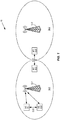
- FIG. 1 illustrates a cellular communications network 10 that provides network-assisted device discovery for D2D communication according to one embodiment of the present disclosure.
- the cellular communications network 10 is a 3GPP LTE cellular communications network and, as such, 3GPP LTE terminology is at times used.
- 3GPP LTE 3GPP LTE terminology is at times used.
- the present disclosure is not limited to 3GPP LTE. Rather, the concepts disclosed herein can be used in any suitable type of cellular communications network that desires to provide network-assisted device discovery.
- the cellular communications network 10 includes base stations 12-1 and 12-2 (generally referred to herein collectively as base stations 12 and individually as base station 12) that serve corresponding cells 14-1 and 14-2 (generally referred to herein collectively as cells 14 and individually as cell 14).
- the base stations 12 are preferably enhanced Node Bs (eNBs).
- eNBs enhanced Node Bs
- one or both of the base stations 12 may alternatively be low power base stations (e.g., pico or femto base stations). Note that while only two base stations 12 are illustrated for clarity and ease of discussion, the cellular communications network 10 generally includes numerous base stations 12.
- the base stations 12 operate to provide network-assisted device discovery for D2D communication
- the functionality of the base stations 12 described herein with respect to network-assisted device discovery may additionally or alternatively be performed by other types of nodes in the cellular communications network 10 (e.g., relays).
- the base station 12-1 performs a network-assisted device discovery procedure by which a wireless device (WD) 16-1 discovers a wireless device 16-2 that is in proximity to the wireless device 16-1.
- WD wireless device
- the wireless device 16-1 is enabled to establish D2D communication with the wireless device 16-2.
- the base stations 12-1 and 12-2 perform a device discovery procedure by which a wireless device 16-3 discovers a wireless device 16-4 that is in proximity to the wireless device 16-3 but located in a different cell 14, namely the cell 14-2.
- the wireless device 16-3 is enabled to establish D2D communication with the wireless device 16-4.
- the D2D communication between the wireless devices 16-1 and 16-2 and the D2D communication between the wireless devices 16-3 and 16-4 can use either a licensed frequency band of the cellular communications network 10 (e.g., either an uplink frequency band or a downlink frequency band of the cellular communications network 10) or some frequency band other than the licensed frequency band of the cellular communications network 10 (e.g., an unlicensed frequency spectrum or a frequency band of another cellular communications network).
- a licensed frequency band of the cellular communications network 10 e.g., either an uplink frequency band or a downlink frequency band of the cellular communications network 10
- some frequency band other than the licensed frequency band of the cellular communications network 10 e.g., an unlicensed frequency spectrum or a frequency band of another cellular communications network.
- the wireless devices 16-1 through 16-4 (generally referred to herein collectively as wireless device 16 and individually as wireless device 16) about to communicate via a D2D link can use synchronization signals of the cellular communications network 10 and other signals broadcast or otherwise provided by the cellular communications network 10 for signaling purposes (i.e., device detection, direct connection establishment, allocation of resources to the D2D connection connection (link) maintenance, etc.). For instance, synchronization, device detection, and resource allocation can be performed using the licensed frequency band, whereas exchange of data can be performed in an unlicensed frequency band.
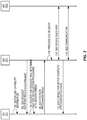
- FIG. 2 illustrates the operation of the cellular communications network 10 to provide network-assisted device discovery according to one embodiment of the present disclosure.
- the base station (BS) 12-1 performs a network-assisted device discovery procedure by which the wireless device 16-1 discovers the wireless device 16-2.
- the base station 12-1 obtains D2D capability information for a number of wireless devices 16 that are physically capable of D2D communication (step 100).
- the wireless devices 16 that are physically capable of D2D communication include wireless devices 16 located in the cell 14-1 that are physically capable of D2D communication and, in some embodiments, wireless devices 16 located in neighboring cells 14 (e.g., the cell 14-2) that are physically capable of D2D communication.
- a wireless device 16 is "physically capable of D2D communication" if the wireless device 16 includes hardware and, in some embodiments, software that is configured to provide D2D communication with other wireless devices 16 with the assistance of the cellular communications network 10.
- the corresponding D2D capability information is generally information that indicates that the wireless device 16 is physically capable of D2D communication (e.g., information that indicates that the wireless device 16 responded affirmatively to an enquiry from the cellular communications network 10).
- the D2D capability information can include other information that is to be used by the base station 12-1 in association with the network-assisted device discovery procedure.
- the D2D capability information includes, for each wireless device 16 that is physically capable of D2D communication, information that is indicative of content and/or services available from the D2D capable wireless device 16, a geographic location of the wireless device 16, an operative frequency spectrum of the wireless device 16, and/or an identifier (e.g., Cell Radio Network Temporary Identifier (CRNTI) or System Architecture Evolution Temporary Mobile Subscriber Identity (S-TMSI)) of the wireless device 16.
- CRNTI Cell Radio Network Temporary Identifier
- S-TMSI System Architecture Evolution Temporary Mobile Subscriber Identity
- the base station 12-1 obtains the D2D capability information in any desired manner. As discussed below in detail, in one embodiment, the base station 12-1 obtains the D2D capability information directly from at least some and potentially all of the D2D capable wireless devices 16. In addition or alternatively, the base station 12-1 obtains the D2D capability information for at least some of the D2D capable wireless devices 16 from other nodes in the cellular communications network 10 (e.g., from other base siation(s) 12 during handovers of the corresponding wireless devices 16 to the cell 14-1 served by the base station 12-1).
- the base station 12-1 obtains the D2D capability information in any desired manner. As discussed below in detail, in one embodiment, the base station 12-1 obtains the D2D capability information directly from at least some and potentially all of the D2D capable wireless devices 16. In addition or alternatively, the base station 12-1 obtains the D2D capability information for at least some of the D2D capable wireless devices 16 from other nodes in the cellular communications network 10 (e.g., from other base siation(
- the wireless device 16-1 transmits a D2D request to the base station 12-1 (step 102).
- the triggering event may be, for example, an event in an application layer of the wireless device 16-1 (e.g., a request from a user of the wireless device 16-1 that triggers a D2D connection), the wireless device 16-1 moving into a new tracking area within the cellular communications network 10, or the wireless device 16-1 executing a handover to the cell 14-1 served by the base station 12-1.
- the D2D request includes information that is indicative of content desired by the wireless device 16-1 for D2D communication (e.g., a particular content item such as a particular video, a particular song, or a particular game or a content type such as videos, music, or gaming) and/or information indicative of a service desired by the wireless device 16-1 for D2D communication (e.g., a particular service such as a particular social networking service or a service type such as social networking).
- the D2D request may include a geographic location of the wireless device 16-1 (e.g., Global Positioning System (GPS) coordinates).
- GPS Global Positioning System
- the D2D request is transmitted to the base station 12-1 via signaling within resources (i.e., time and frequency resources) of the cellular communications network 10.
- the D2D request is included in a modified RRCConnectionRequest.
- the modified RRCConnectionRequest is preferably submitted by Layer 3 at the wireless device 16-1 for transmission and is multiplexed in the first scheduled uplink transmission on the Uplink Shared Channel (UL-SCH) during a random access procedure (i.e., Msg3).
- Msg3 Random access procedure
- the modified RRCConnectionRequest includes an EstablishmentCause.
- the EstablishmentCause of the RRCConnectionRequest is set to a value corresponding to a D2D request, which in this embodiment is "D2DRequest.”
- the D2D request contained in the modified RRCConnectionRequest message includes a content identifier ("ContentID”) that is indicative of the content desired for D2D communication as well as a geographic location (“Position”) of the wireless device 16-1.
- the base station 12-1 decodes the D2D request and determines that a D2D initialization procedure is to be performed (step 104).
- the base station 12-1 decodes the D2D request to first determine that the message received is a D2D request and then, if applicable, extract information from the D2D request (e.g., ContentID and position).
- the base station 12-1 determines whether to perform the D2D initialization procedure. In other words, the base station 12-1 determines whether any suitable D2D capable wireless device(s) 16 is(are) available for D2D communication with the wireless device 16-1,
- the base station 12-1 determines whether the D2D initialization procedure is to be performed based on one or more criteria that are necessary or desirable for D2D communication with the wireless device 16-1.
- the one or more criteria include one or more feasibility criteria that must be satisfied for D2D communication between the D2D capable wireless device 16 and the wireless device 16-1 to be feasible.
- the one or more feasibility criteria that must be satisfied for D2D communication between the D2D capable wireless device 16 and the wireless device 16-1 to be feasible may include a criteria that the two wireless devices 16 must be within a predefined threshold geographic distance from one another and/or a criteria that the two wireless devices 16 must be within a predefined threshold radio distance from one another.
- the geographic locations of the two wireless devices 16 may be provided in the corresponding D2D request and D2D capability information or determined by the base station 12-1 using any appropriate location determination technique.
- the radio distance between the two wireless devices 16 can be determined based on any suitable information (e.g., statistics such as Reference Signal Received Power (RSRP) measured at the wireless device 16 and reported to the cellular communications network 10 for a downlink from the base station 12-1 and, in some embodiments, downlinks from one or more neighboring base stations 12).
- RSRP Reference Signal Received Power
- the one or more criteria that are necessary or desirable for D2D communication with the wireless device 16-1 may include a criterion that the D2D capable wireless device 16 must share the content and/or service(s) desired by the wireless device 16-1.
- the base station 12-1 determines whether there are any D2D capable wireless devices 16 that: (1) are sufficiently close to the wireless device 16-1 for D2D communication with the wireless device 16-1 to be feasible and (2) share the content and/or service(s) desired by the wireless device 16-1.
- Another criterion that may be considered by the base station 12-1 is the availability of resources (time and frequency) for a D2D communication link.
- the base station 12-1 determines that the D2D initialization procedure is to be performed and, in doing so, selects the wireless device 16-2 (and potentially one or more additional D2D capable wireless devices 16) as candidates for D2D communication with the wireless device 16-1. As such, the base station 12-1 transmits a positive D2D decision to the wireless device 16-1 (step 106).
- the D2D decision generally includes information that enables the wireless device 16-1 to perform D2D device discovery for each of the D2D capable wireless devices 16 selected by the base station 12-1 as candidates for D2D communication with the wireless device 16-1.
- the D2D decision includes a list of identifiers (e.g., CRNTIs) of the one or more D2D capable wireless devices 16 selected by the base station 12-1 as candidates for D2D communication with the wireless device 16-1.
- the one or more D2D capable wireless devices 16 may be prioritized by the base station 12-1 based on, for example, proximity to the wireless device 16-1, where the priorities are indicated in the list of identifiers. For instance, the list of identifiers may be sorted based on the priorities of the corresponding D2D capable devices 16 with respect to D2D communication with the wireless device 16-1.
- the D2D decision may include information that is indicative of resources (time and frequency) that are dedicated to D2D discovery and/or the D2D connection between the first wireless device 16-1 and, in this example, the wireless device 16-2.
- the D2D decision may include information that identifies:
- the D2D decision is transmitted from the base station 12-1 to the wireless device 16-1 via signaling within resources (i.e., time and frequency resources) of the cellular communications network 10.
- the D2D decision is included in an RRCConnectionSetup message transmitted from the base station 12-1 to the wireless device 16-1.
- RRCConnectionSetup message includes a list of identifiers (CRNTIs) of the wireless devices 16 selected by the base station 12-1 as candidates for D2D communication with the wireless device 16-1.
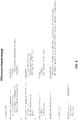
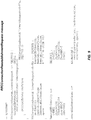
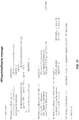
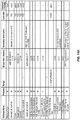
- the RRCConnectionSetup message includes a RadîoResourceConfigDedicated Information Element (IE), as illustrated in Figures 5A and 5B .
- the RadioResourceConfigDedicated IE includes, among other things, D2Ddrb-ToAddklodList and D2DPhysicalConfigDedicated.
- D2Ddrb-ToAddModList indicates the D2D data radio bearers (DRBs) towards which the RadioResourceConfigDedicated information element is related.
- D2D DRB contains the radio configuration for each D2D DRB that is uniquely indexed with a D2D-DRB identity. Each D2D connection may have a different D2D-DRB identity.
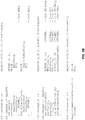
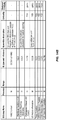
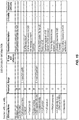
- D2DPhysicalConfigDedicated contains, as illustrated in Figures 6A and 6B , information for the physical setup of the D2D communication link (e.g., the time and frequency resources for the D2D communication link), PUCCH resources in which the D2D pair can exchange power control commands, PRACH resources to be used for D2D device discovery, and the PRACH power setting to use when performing D2D device discovery.
- D2DPhysicalConfigDedicated is customized for each D2D connection.
- the wireless device 16-1 processes the D2D decision (step 108). More specifically, the wireless device 16-1 processes the D2D decision to obtain the information included in the D2D decision (e.g., the list of identifiers of the wireless device(s) 16 selected by the base station 12-1, information to be used for D2D device discovery, etc.). In this embodiment, the wireless device 16-1 initiates a D2D device discovery procedure using the information included in the D2D decision (step 110). Notably, if the D2D decision includes a list of two or more wireless devices 16, the wireless device 16-1 selects, in this embodiment, the wireless device 16-2 from the list. If the list is prioritized, the wireless device 16-1 preferably selects the wireless device 16 having the highest priority.
- the wireless device 16-1 initiates the D2D device discovery procedure by transmitting a D2D access request to the wireless device 16-2 using resources dedicated for D2D device discovery for the D2D pair (i.e., the wireless device 16-1 and the wireless device 16-2).
- the resources dedicated to D2D device discovery for the D2D pair includes dedicated PRACH resources.
- the D2D access request may be transmitted at a specified PRACU power setting. Both the PRACH resources and the PRACH power setting may be included in the positive D2D decision.
- the wireless device 16-2 returns a D2D access acknowledgement.
- the wireless device 16-1 may then perform D2D device discovery for another wireless device 16 in the list of wireless devices 16 included in the positive D2D decision (e.g., the wireless device 16 having the next highest priority), if any.
- a D2D communication link is established between the wireless devices 16-1 and 16-2.
- the wireless device 16-1 sends a D2D connection setup complete message to the base station 12-1 in order to notify the base station 12-1 that the D2D connection has been successfully established (step 112).
- the D2D connection setup complete message is included in an RRCConnectionComptete message.
- the wireless devices 16-1 and 16-2 communicate via D2D communication over the established D2D communication link (step 114).
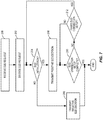
- Figure 7 is a flow chart that illustrates the operation of one of the base stations 12 (e.g., the base station 12-1 of Figure 2 ) to receive and a process a D2D request according to one embodiment of the present disclosure.
- the base station 12 receives a D2D request from one of the wireless devices 16 in the cell 14 served by the base station 12 (step 200).
- the D2D request includes information that is indicative of content desired by the wireless device 16 for D2D communication (e.g., a particular content item such as a particular video, a particular song, or a particular game or a content type such as videos, music, or gaming) and/or information indicative of a service desired by wireless device 16 for D2D communication (e.g., a particular service such as a particular social networking service or a service type such as social networking).
- the D2D request may include a geographic location of wireless device 16 (e.g., GPS coordinates).
- the D2D request is transmitted by wireless device 16 and received by the base station 12 via signaling within resources (i.e., time and frequency resources) of the cellular communications network 10.
- the D2D request is included in a modified RRCConnectionRequest.
- the base station 12 decodes the D2D request to first determine that the message is a D2D request and then, if applicable, extract the information from the D2D request (step 202). The base station 12 then determines whether a D2D initialization procedure is to be performed (step 204). In doing so, as discussed above, the base station 12 determines whether there are any suitable D2D capable wireless devices(s) 16 that are available for D2D communication with the wireless device 16 from which the D2D request was received. Thus, the base station 12 determines that the D2D initialization procedure is to be performed if there are one or more D2D capable wireless devices 16 that satisfy one or more criteria for D2D communication with the wireless device 16 from which the D2D request was received.
- the one or more criteria include a criterion that D2D communication between the D2D capable wireless device 16 and the wireless device 16 from which the D2D request was received be feasible.
- the one or more criteria may include one or more criteria regarding content and/or service(s) desired by the wireless device 16 from which the D2D request was received, availability of resources for D2D communication, and/or the like.
- the base station 12 determines that the D2D initialization procedure is not to be performed. Conversely, if the base station 12 determines that one or more D2D capable wireless devices 16 that satisfy the one or more criteria for D2D communication with the wireless device 16, the base station 12 identifies, or selects, those D2D capable wireless device(s) 16 as candidates for D2D communication with the wireless device 16 and determines that the D2D initialization procedure is to be performed.
- the base station 12 transmits a negative D2D decision to the wireless device 16 from which the D2D request was received (step 206).
- the negative D2D decision is transmitted to the wireless device 16 using signaling within the resources of the cellular communications network 10 (e.g., in an appropriate Radio Resource Control (RRC) message such as, for instance, a RRCConnectionReject message in response to the RRCConnectionRequest message containing the D2D request flag).
- RRC Radio Resource Control
- the base station 12 transmits a positive D2D decision to the wireless device 16 from which the D2D request was received (step 208).
- the D2D decision generally includes information that enables the wireless device 16 to perform D2D device discovery for each of the D2D capable wireless devices 16 selected by the base station 12 as candidates for D2D communication with the wireless device 16.
- the base station 12 transmits the D2D decision via signaling within resources (i.e., time and frequency resources) of the cellular communications network 10.
- the D2D decision is included in an RRCConnectionSetup message transmitted from the base station 12 to the wireless device 16.
- the base station 12 determines whether the wireless device 16 has returned a D2D connection setup complete message (step 210). If so, the process ends. If not, the base station 12 determines whether the wireless device 16 the D2D connection setup failed (step 212). In one embodiment, if the wireless device 16 is unable to establish a D2D connection with any of the D2D capable wireless devices 16 included in the positive D2D decision, the wireless device 16 transmits a message to the base station 12 that is indicative of a D2D connection setup failure. As discussed below, in one embodiment, this message is included in an RRCConnectionReestablishment Request. If there was a D2D connection setup failure, the process returns to step 204 and is repeated. If there was no D2D connection setup failure, the process returns to step 210 such that the base station 12 continues to wait for either a D2D connection setup complete or a D2D connection setup failure.
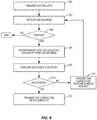
- FIG 8 is a flow chart that illustrates the operation of one of the wireless devices 16 of Figure 1 to perform network-assisted D2D device discovery according to one embodiment of the present disclosure.
- the wireless device 16 transmits a D2D request to the base station 12 that is serving the cell 14 in which the wireless device 16 is located (step 300).
- the triggering event may be, for example, an event in an application layer of the wireless device 16 (e.g., a request from a user of the wireless device 16 that triggers a D2D connection), the wireless device 16 moving into a new tracking area within the cellular communications network 10, or the wireless device 16 executing a handover to the cell 14 served by the base station 12.
- the D2D request includes information that is indicative of content desired by the wireless device 16 for D2D communication and/or information indicative of a service desired by the wireless device 16 for D2D communication.
- the D2D request may include a geographic location of the wireless device 16 (e.g., GPS coordinates).
- the wireless device 16 transmits the D2D request to the base station 12 via signaling within resources (i.e., time and frequency resources) of the cellular communications network 10.
- resources i.e., time and frequency resources
- the wireless device 16 After transmitting the D2D request, the wireless device 16 receives a D2D decision from the base station 12 (step 302) and determines whether the D2P decision is a positive D2D decision or a negative D2D decision (step 304). If the D2D decision is negative D2D decision, the process ends. However, if the D2D decision is a positive D2D decision, in this embodiment, the wireless device 16 obtains parameters for D2D device discovery from the D2D decision (step 306).
- the parameters for D2D device discovery include PRACH resources to be used for D2D device discovery and, if desired, a PRACH power setting to use when performing D2D device discovery.
- the parameters for D2D device discovery may also include other parameters such as, for example, a PRACH preamble to be used for D2D device discovery.
- the wireless device 16 performs D2D device discovery (step 308).
- the wireless device 16-1 initiates the D2D device discovery procedure by transmitting a D2D access request to the appropriate wireless device 16 (e.g., the wireless device 16-2) using resources dedicated for D2D device discovery for the D2D pair.
- the resources dedicated to D2D device discovery for the D2D pair includes dedicated PRACH resources.
- the D2D access request may be transmitted at a specified PRACH power setting. Both the PRACH resources and the PRACH power setting may be included in the positive D2D decision.
- the D2D decision includes a prioritized list of identifiers of the D2D capable wireless device(s) 16 selected by the base station 12 as candidates for D2D communication with the wireless device 16.
- the wireless device 16 preferably performs D2D device discovery for the D2D capable wireless devices 16 identified in the D2D decision in an order according to their priorities until either D2D device discovery is successful or D2D device discovery has failed for all of the D2D capable wireless devices 16 identified in the list.
- the wireless device 16 determines whether D2D device discovery was successful (step 310). If so, the wireless device 16 transmits a D2D connection setup complete message to the base station 12 (step 312). In one preferred embodiment, the D2D connection setup complete message is included in an RRCConnectionComplete message. If D2D device discovery was not successful, the wireless device 16 transmits a D2D connection reestablishment request to the base station 12 (step 314) and then the process returns to step 302. In one preferred embodiment, the D2D connection reestablishment request is included in an RRCConneetionReestablishmentRequest message.
- the RRCConnectionReestablishmentRequest message includes a D2D ReestablishmentCause, a D2DphysCellID, and a D2Dc-RNTI.
- the D2D ReestablishmentCause contains the reason for reestablishment, e.g., D2D configuration failure.
- the D2DphysCellID contains the ID of the cell that was providing the D2D support/assistance before reestablishment.
- the D2D cell can be different from the cell in which the wireless device 16 is connected, e.g., in case of inter-cell D2D communication.
- D2Dc-RNTI is the RNTI of the D2D connection before reestablishment.
- a wireless device 16 may have multiple D2D bearers/communication active and not all of them may be affected by the reestablishment procedure.
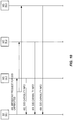
- Figure 10 illustrates the operation of one of the base stations 12, which in this example is the base station 12-1, to obtain D2D capability information from the wireless devices 16 in the cell 14 served by the base station 12 according to one embodiment of the present disclosure.
- This process may be desirable where, for example, the base station 12-1 is not otherwise aware of the D2D capabilities of the wireless devices 16 located in the cell 14-1.
- the base station 12-1 broadcasts a request for D2D capabilities (step 400).
- the request for D2D capabilities is included in a User Element (UE) CapabilityEnquiry message such as that illustrated in Figure 11 .
- the UBCapabilityEnquiry message includes a D2D CapabilityRequest.
- UE User Element
- the wireless devices 16 in the cell 14 served by the base station 12 that are physically capable of D2D communication which in this example include the wireless devices 16-1, 16-2, and 16-3, return corresponding D2D capability information to the base station 12-1 (steps 402, 404, 406).
- the wireless devices 16-1, 16-2, and 16-3 transmit their D2D capability information in corresponding UECapabilityInformation messages.
- UECapabilityInformation messages One example of a UECapabilityInformation message is illustrated in Figure 12 .
- the D2D capability information includes a content identifier (ContentID) that identifies content available from the corresponding wireless device 16 via D2D communication.
- ContentID content identifier
- the D2D capability information may be registered at another node in the cellular communications network 10 (e.g., a Mobile Management Entity (MME)) and transferred to other base stations 12 at tracking area changes. Moreover, such information may be used by the base station 12-1 to page the wireless devices 16-1, 16-2, and 16-3 when the wireless devices 16-1, 16-2, and 16-3 are in idle mode. Paging may be performed, for instance, according to some dedicated wireless device identifier or content/service identifier.
- MME Mobile Management Entity
- Figures 10 through 12 relate to the operation of the base station 12 to request and receive D2D capability information from the wireless devices 16 within the cell 14 of the base station 12
- Figures 13 through 15 relate to sending D2D capability information between base stations 12.
- Figure 13 illustrates the operation of the base station 12-2 to provide D2D capability information for one of the wireless devices 16 to the base station 12-1 in association with a handover of the wireless device 16 from the cell 14-2 served by the base station 12-2 to the cell 14-1 served by the base station 12-1 according to one embodiment of the present disclosure.
- the base station 12-2 determines that a handover is to be performed for the wireless device 16 (step 500).
- the base station 12-2 determines that a handover is to be performed using any suitable technique.
- the base station 12-2 sends D2D capability information for the wireless device 16 (which the base station 12-2 previously obtained from, for example, the wireless device 16 or another base station 12) to the base station 12-1 (step 502).
- the base station 12-2 sends the D2D capability information of the wireless device 16 in a handover request message exchanged via an X2 or S1 interface of the base station 12-2 (or any suitable logical interface).
- the LTE specifications define a handover request message in 3GPP Technical Specification (TS) 36.423 v. 11.0.0.
- Figures 14A and 14B illustrate one example of the handover request message of Figure 13 that includes D2D capability information for the wireless device 16 that is being handed over. More specifically, the handover request message of Figures 14A and 14B includes D2D capability information (UE Capability Information).
- Figure 15 illustrates the D2D capability information of the handover request message of Figures 14A and 14B in detail.
- the D2D capability information of Figure 15 includes a content ID (content-identity) of content that is shared by the wireless device 16 via D2D communication, a position (UE position) of the wireless device 16, an operative spectrum of the wireless device 16 (UE spectrum) which is needed for D2D discovery, PRACH resources for D2D device discovery, an identifier of the wireless device 16 (UE-identity) which may be, for example, CRNTI or S-TMSI, and security information (e.g., keys to allow discovery and wireless device/UE authentication).
- a content ID content-identity
- UE position operative spectrum of the wireless device 16
- PRACH resources for D2D device discovery PRACH resources for D2D device discovery
- UE-identity an identifier of the wireless device 16 (UE-identity) which may be, for example, CRNTI or S-TMSI
- security information e.g., keys to allow discovery and wireless device/UE authentication.
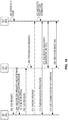
- Figures 16 and 17 illustrate embodiments where the wireless device 16-2 selected for D2D communication with the wireless device 16-1 is paged before the D2D device discovery process is performed according to embodiments of the present disclosure. More specifically, Figure 16 illustrates an embodiment where the wireless device 16-2 is paged and the D2D device discovery procedure is initiated by the wireless device 16-1. As illustrated, at some point, the wireless device 16-2 enters an idle mode (step 600).
- the wireless device 16-1 transmits a D2D request to the base station 12-1 (step 602), the base station 12-1 decodes the D2D request and determines that the D2D initialization procedure is to be performed (step 604), the base station 12-1 transmits a positive D2D decision to the wireless device 16-1 (step 606), and the wireless device 16-1 processes the D2D decision (step 608).
- the base station 12-1 transmits a paging message to the wireless device 16-2, which is a D2D capable wireless device 16 selected by the base station 12-1 as a candidate for D2D communication with the wireless device 16-1 in the manner described above (step 610).
- the paging message preferably includes an identifier of the wireless device 16-1 or a service/content identifier of a content/service desired by the wireless device 16-1.
- the wireless device 16-2 decides to accept a D2D connection (step 612). This decision may be based on any suitable criteria such as, for example, whether the application layer has configured the wireless device 16-2 to accept D2D connections, a battery life of the wireless device 16-2, or the like. Since the wireless device 16-2 has decided to accept the D2D connection, the wireless device 16-2 initiates a random access procedure by which the wireless device 16-2 transitions from the idle mode to a connected mode (step 614). Thereafter, the wireless device 16-1 initiates a D2D device discovery procedure by which the wireless device 16-1 discovers the wireless device 16-2 and a D2D communication link between the wireless devices 16-1 and 16-2 is established, as discussed above (step 616). The wireless device 16-1 then transmits a D2D connection setup complete message to the base station 12-1 (step 618), and the wireless devices 16-1 and 16-2 perform D2D communication over the established D2D communication link (step 620).
- a D2D connection setup complete message to the base station 12-1 (step
- the embodiment of Figure 17 is substantially the same as that of Figure 16 but where D2D device discovery is initiated by the wireless device 16-2 rather than the wireless device 16-1. More specifically, at some point, the wireless device 16-2 enters an idle mode (step 700). As discussed above with respect to steps 200-206 of Figure 7 , the wireless device 16-1 transmits a D2D request to the base station 12-1 (step 702), the base station 12-1 decodes the D2D request and determines that the D2D initialization procedure is to be performed (step 704), the base station 12-1 transmits a positive D2D decision to the wireless device 16-1 (step 706), and the wireless device 16-1 processes the D2D decision (step 708).
- the positive D2D decision transmitted to the wireless device 16-1 may not include some information included in the positive D2D decision of Figure 2 (e.g., some of the information related to D2D discovery such as, for example, PRACH related information, may not be needed since, in this embodiment, the wireless device 16-2 performs discovery).
- the base station 12-1 transmits a paging message to the wireless device 16-2, which is a D2D capable wireless device 16 selected by the base station 12-1 as a candidate for D2D communication with the wireless device 16-1 in the manner described above (step 710).
- the paging message preferably includes an identifier of the wireless device 16-1 or a service/content identifier of a content/service desired by the wireless device 16-1.
- the wireless device 16-2 initiates a random access procedure to connect to the base station 12-1 and thereby transition from the idle mode to the connected mode (step 712) and decides to accept a D2D connection (step 714).
- This decision may be based on any suitable criteria such as, for example, whether the application layer has configured the wireless device 16-2 to accept D2D connections, a battery life of the wireless device 16-2, or the like.
- the wireless device 16-2 initiates a D2D device discovery procedure by which the wireless device 16-2 discovers the wireless device 16-1 and a D2D communication link between the wireless devices 16-1 and 16-2 is established, as discussed above (step 716).
- the wireless device 16-2 (or alternatively the wireless device 16-1) then transmits a D2D connection setup complete message to the base station 12-1 (step 718), and the wireless devices 16-1 and 16-2 perform D2D communication over the established D2D communication link (step 720).
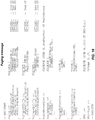
- Figure 18 illustrates one example of the paging message of Figures 16 and 17 according to one embodiment of the present disclosure.
- the paging message includes a PagingD2D-Identity, which can be either a D2D content ID (D2DContent-Identity) of the content shared by the wireless device 16 being paged or an identifier of the wireless device 16 being paged, which in this example is an S-TMSI of the wireless device 16 being paged.
- PagingD2D-Identity can be either a D2D content ID (D2DContent-Identity) of the content shared by the wireless device 16 being paged or an identifier of the wireless device 16 being paged, which in this example is an S-TMSI of the wireless device 16 being paged.
- D2D content ID D2DContent-Identity
- FIG 19 illustrates the operation of the cellular communications network 10 of Figure 1 to enable D2D communication between the wireless devices 16-3 and 16-4 located in neighboring cells 14-1 and 14-2 according to one embodiment of the present disclosure.
- the base station 12-2 obtains D2D capability information for the wireless device 16-4 by, in this example, requesting and receiving the D2D capability information from the wireless device 16-4 (steps 800 and 802).
- the request may be an enquiry for D2D capability information broadcast by the base station 12-2.
- the D2D capability information of the wireless device 16-4 may alternatively be obtained from another node in the cellular communications network 10 (e.g., another base station 12).
- the base station 12-2 sends the D2D capability information for the wireless device 16-4 (and potentially D2D capability information for other wireless devices 16 in the cell 14-2 served by the base station 12-2) to the base station 12-1 (step 804).
- the base station 12-2 may send the D2D capability information via, for example, an X2 or S1 interface of the base station 12-1. While not illustrated, the base station 12-1 may, in the same manner, send D2D capability information for wireless devices 16 in the cell 14-1 to the base station 12-2.
- the base station 12-1 may obtain D2D capability information for other wireless devices 16 that are physically capable of D2D communication in the manner described above.
- the wireless device 16-3 transmits a D2D request to the base station 12-1 (step 806).
- the triggering event may be, for example, an event in an application layer of the wireless device 16-3 (e.g., a request from a user of the wireless device 16-1 that triggers a D2D connection), the wireless device 16-3 moving into a new tracking area within the cellular communications network 10, or the wireless device 16-3 executing a handover to the cell 14-1 served by the base station 12-1.
- the D2D request includes information that is indicative of content desired by the wireless device 16-3 for D2D communication and/or information indicative of a service desired by the wireless device 16-3 for D2D communication.
- the D2D request may include a geographic location of the wireless device 16-3 (e.g., GPS coordinates).
- the D2D request is transmitted to the base station 12-1 via signaling within resources (i.e., time and frequency resources) of the cellular communications network 10.
- the D2D request is included in a modified RRCConnectionRequest.
- the base station 12-1 decodes the D2D request and determines that a D2D initialization procedure is to be performed (step 808).
- the base station 12-1 decodes the D2D request to first determine that the message received is a D2D request and then, if applicable, extract information from the D2D request (e.g., ContentID and Position).
- the base station 12-1 determines whether to perform the D2D initialization procedure. In other words, the base station 12-1 determines whether any suitable D2D capable wireless device(s) 16 is(are) available for D2D communication with the wireless device 16-3.
- the base station 12-1 determines whether the D2D initialization procedure is to be performed based on one or more criteria that are necessary or desirable for D2D communication with the wireless device 16-3.
- the one or more criteria include one or more feasibility criteria that must be satisfied for D2D communication between the D2D capable wireless device 16 and the wireless device 16-3 to be feasible.
- the one or more feasibility criteria that must be satisfied for D2D communication between the D2D capable wireless device 16 and the wireless device 16-3 to be feasible may include a criterion that that two wireless devices 16 must be within a predefined threshold geographic distance from one another and/or a criterion that the two wireless devices 16 must be within a predefined threshold radio distance from one another.
- the geographic locations of the two wireless devices 16 may be provided in the corresponding D2D request and D2D capability information or determined by the base station 12-1 using any appropriate location determination technique.
- the radio distance between the two wireless devices 16 can be determined based any suitable information (e.g., statistics such as RSRP measured at the wireless device 16 and reported to the cellular communications network 10 for a downlink from the base station 12-1 and, in some embodiments, downlinks from one or more neighboring base stations 12).
- the one or more criteria that are necessary or desirable for D2D communication with the wireless device 16-3 may include a criterion that the D2D capable wireless device 16 must share the content and/or service(s) desired by the wireless device 16-3.
- the base station 12-1 determines whether there are any D2D wireless devices 16 that: (1) are sufficiently close to the wireless device 16-3 for D2D communication with the wireless device 16-3 to be feasible and (2) share the content and/or service(s) desired by the wireless device 16-3.
- Another criterion that may be considered by the base station 12-1 is the availability of resources (time and frequency) for D2D communication link.
- the base station 12-1 determines that the D2D initialization procedure is to be performed and, in doing so, selects the wireless device 16-4 (and potentially one or more additional D2D capable wireless devices 16) as candidates for D2D communication with the wireless device 16-3, As such, the base station 12-1 transmits a positive D2D decision to the wireless device 16-3 (step 810).
- the D2D decision generally includes information that enables the wireless device 16-3 to perform D2D device discovery for each of the D2D capable wireless devices 16 selected by the base station 12-1 as candidates for D2D communication with the wireless device 16-3.
- the D2D decision includes a list of identifiers (e.g., CRNTIs) of the one or more D2D capable wireless devices 16 selected by the base station 12-1 as candidates for D2D communication with the wireless device 16-3.
- the one or more D2D capable wireless devices 16 may be prioritized by the base station 12-1 based on, for example, proximity to the wireless device 16-3, where the priorities are indicated in the list of identifiers.
- the list of identifiers may be sorted based on the priorities of the corresponding D2D capable wireless devices 16 with respect to D2D communication with the wireless device 16-3.
- the D2D decision may include information that is indicative of resources (time and frequency) that are dedicated to D2D discovery and/or the D2D connection between the wireless device 16-3 and, in this example, the wireless device 16-4.
- the D2D decision may include information that identifies:
- the wireless device 16-3 processes the D2D decision (step 812). More specifically, the wireless device 16-3 processes the D2D decision to obtain the information included in the D2D decision (e.g., the list of identifiers of the wireless device(s) 16 selected by the base station 12-1 and the resources dedicated for D2D device discovery and the D2D communication link). In this embodiment, the wireless device 16-3 initiates a D2D device discovery procedure using the information included in the D2D decision (step 814). Notably, if the D2D decision includes a list of two or more wireless devices 16, the wireless device 16-3 selects, in this embodiment, the wireless device 16-4 from the list. If the list is prioritized, the wireless device 16-3 preferably selects the wireless device 16 having the highest priority.
- the wireless device 16-3 preferably selects the wireless device 16 having the highest priority.
- the wireless device 16-3 initiates the D2D device discovery procedure by transmitting a D2D access request to the wireless device 16-4 using resources dedicated for D2D device discovery for the D2D pair (i.e., the wireless device 16-3 and the wireless device 16-4).
- the resources dedicated to D2D device discovery for the D2D pair includes dedicated PRACH resources.
- the D2D access request may be transmitted at a specified PRACH power setting. Both the PRACH resources and the PRACH power setting may be included in the positive D2D decision.
- the wireless device 16-4 returns a D2D access acknowledgement.
- the wireless device 16-3 may then perform D2D device discovery for another wireless device 16 in the list of wireless devices 16 included in the positive D2D decision (e.g., the wireless device 16 having the next highest priority).
- a D2D communication link is established between the wireless devices 16-3 and 16-4.
- the wireless device 16-3 sends a D2D connection setup complete message to the base station 12-1 in order to notify the base station 12-1 that the D2D connection has been successfully established (step 816).
- the D2D connection setup complete message is included in an RRCConnectionComplete message.
- the wireless devices 16-3 and 16-4 communicate via D2D communication over the established D2D communication link (step 818).
- FIG 20 is a block diagram of one of the base stations 12 of Figure 1 according to one embodiment of the present disclosure.
- the base station 12 includes a radio subsystem 18 and a processing subsystem 20.
- the radio subsystem 18 generally includes analog and, in some embodiments, digital components for sending and receiving data to and from wireless devices 16 within the corresponding cell 14.
- the radio subsystem 18 may represent or include one or more Radio Frequency (RF) transceiver(s), or separate RF transmitter(s) and receiver(s), capable of transmitting suitable information wirelessly to and receiving suitable information from other network components or nodes.
- RF Radio Frequency
- the radio subsystem 18 implements at least part of Layer 1 (i.e., the Physical or "PHY" Layer).
- the processing subsystem 20 generally implements any remaining portion of Layer 1 not implemented in the radio subsystem 18 as well as functions for higher layers in the wireless communications protocol (e.g., Layer 2 (data link layer), Layer 3 (network layer), etc.).
- the processing subsystem 20 may comprise, for example, one or several general-purpose or special-purpose microprocessors or other microcontrollers programmed with suitable software and/or firmware to carry out some or all of the functionality of the base station 12 described herein.
- the processing subsystem 20 may comprise various digital hardware blocks (e.g., one or more Application Specific Integrated Circuits (ASICs), one or more off-the-shelf digital and analog hardware components, or a combination thereof) configured to carry out some or all of the functionality of the base station 12 described herein.
- ASICs Application Specific Integrated Circuits
- the above described functionality of the base station 12 may be implemented, in whole or in part, by the processing subsystem 20 executing software or other instructions stored on a non-transitory computer-readable medium, such as Random Access Memory (RAM), Read Only Memory (ROM), a magnetic storage device, an optical storage device, or any other suitable type of data storage components.
- the base station 12 includes one or more communication interfaces 22.
- the one or more communication interfaces 22 include, for example, a communication interface to one or more components in a core network and/or a communication interface to one or more other base stations 12.
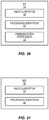
- FIG 21 is a block diagram of one of the wireless devices 16 of Figure 1 according to one embodiment of the present disclosure.
- the wireless device 16 includes a radio subsystem 24 and a processing subsystem 26.
- the radio subsystem 24 generally includes analog and, in some embodiments, digital components for sending and receiving data to and from the base stations 12.
- the radio subsystem 24 may represent or include one or more RF transceivers, or separate RF transmitter(s) and receiver(s), capable of transmitting suitable information wirelessly to and receiving suitable information from other network components or nodes.
- the radio subsystem 24 implements at least part of Layer 1 (i.e., the Physical or "'PHY" Layer).
- the processing subsystem 26 generally implements any remaining portion of Layer 1 as well as functions for higher layers in the wireless communications protocol (e.g., Layer 2 (data link layer), Layer 3 (network layer), etc.).
- the processing subsystem 26 may comprise, for example, one or several general-purpose or special-purpose microprocessors or other microcontrollers programmed with suitable software and/or firmware to carry out some or all of the functionality of the wireless device 16 described herein.
- the processing subsystem 26 may comprise various digital hardware blocks (e.g., one or more ASICs, one or more off-the-shelf digital and analog hardware components, or a combination thereof) configured to carry out some or all of the functionality of the wireless device 16 described herein.
- the above described functionality of the wireless device 16 may be implemented, in whole or in part, by the processing subsystem 26 executing software or other instructions stored on a non-transitory computer-readable medium, such as RAM, ROM, a magnetic storage device, an optical storage device, or any other suitable type of data storage components.
- a non-transitory computer-readable medium such as RAM, ROM, a magnetic storage device, an optical storage device, or any other suitable type of data storage components.
- a non-transitory computer-readable medium such as RAM, ROM, a magnetic storage device, an optical storage device, or any other suitable type of data storage components.
- the systems and methods for network-assisted device discovery for D2D communication disclosed herein provide many advantages. While not limited to or by any particular advantage, some examples of advantages that may be provided by the systems and methods disclosed herein are: alleviating the need device discovery at the wireless devices from a computational perspective, enabling the performance of security procedures, and providing an interference controlled environment for high data rate applications.
Landscapes
- Engineering & Computer Science (AREA)
- Computer Networks & Wireless Communication (AREA)
- Signal Processing (AREA)
- Mobile Radio Communication Systems (AREA)
Claims (15)
- Procédé effectué par une station de base (12) pour un réseau de communication cellulaire (10), comprenant :l'obtention d'informations de capacité de dispositif à dispositif pour une pluralité de dispositifs sans fil (16) indiquant que la pluralité de dispositifs sans fil (16) sont capables physiquement d'une communication de dispositif à dispositif ;la réception d'une demande de dispositif à dispositif en provenance d'un premier dispositif sans fil (16) ;la détermination qu'une procédure d'initialisation de dispositif à dispositif doit être effectuée ; eten réponse à la détermination que la procédure d'initialisation de dispositif à dispositif doit être effectuée, la transmission d'une décision de dispositif à dispositif positive à destination du premier dispositif sans fil (16) comprenant des informations permettant au premier dispositif sans fil (16) d'établir une communication de dispositif à dispositif avec un deuxième dispositif sans fil (16), le deuxième dispositif sans fil (16) étant l'un de la pluralité de dispositifs sans fil (16),dans lequel la pluralité de dispositifs sans fil (16) capables physiquement d'une communication de dispositif à dispositif comprend une première pluralité de dispositifs sans fil (16) qui sont capables physiquement d'une communication de dispositif à dispositif et qui sont situés à l'intérieur d'une cellule (14) desservie par la station de base (12), et une deuxième pluralité de dispositifs sans fil (16) qui sont capables physiquement d'une communication de dispositif à dispositif et qui sont situés à l'intérieur d'une ou plusieurs cellules voisines adjacentes à la cellule (14) desservie par la station de base (12), etdans lequel l'obtention d'informations de capacité de dispositif à dispositif comprend, pour chaque dispositif sans fil (16) d'au moins certains de la deuxième pluralité de dispositifs sans fil (16), la réception d'informations de capacité de dispositif à dispositif pour le dispositif sans fil (16) en provenance d'une station de base correspondante desservant une cellule voisine correspondante.
- Procédé selon la revendication 1, dans lequel la détermination que la procédure d'initialisation de dispositif à dispositif doit être effectuée comprend la détermination que le premier dispositif sans fil (16) et le deuxième dispositif sans fil (16) sont à au plus une distance géographique de seuil l'un de l'autre et/ou que le premier dispositif sans fil (16) et le deuxième dispositif sans fil (16) sont à au plus une distance radio de seuil l'un de l'autre.
- Procédé selon la revendication 1 ou 2, dans lequel la détermination que la procédure d'initialisation de dispositif à dispositif doit être effectuée comprend la détermination que le deuxième dispositif sans fil (16) est capable physiquement de partager au moins l'un d'un groupe se composant de: un élément de contenu particulier demandé dans la demande de dispositif à dispositif depuis le premier dispositif sans fil (16), un type de contenu particulier demandé dans la demande de dispositif à dispositif depuis le premier dispositif sans fil (16), un service particulier demandé dans la demande de dispositif à dispositif depuis le premier dispositif sans fil (16), et un type de service particulier demandé dans la demande de dispositif à dispositif depuis le premier dispositif sans fil (16).
- Procédé selon la revendication 1, dans lequel la demande de dispositif à dispositif depuis le premier dispositif sans fil (16) comprend des informations indicatives d'un emplacement géographique du premier dispositif sans fil (16).
- Procédé selon la revendication 1, dans lequel :la détermination que la procédure d'initialisation de dispositif à dispositif doit être effectuée comprend la sélection d'un ou plusieurs dispositifs sans fil, y compris le deuxième dispositif sans fil (16), qui sont préférés pour une communication de dispositif à dispositif avec le premier dispositif sans fil (16) parmi la pluralité de dispositifs sans fil (16) qui sont capables physiquement d'une communication de dispositif à dispositif ; etla décision de dispositif à dispositif positive comprend une liste d'identifiants des un ou plusieurs dispositifs sans fil sélectionnés parmi la pluralité de dispositifs sans fil (16) comme étant préférés pour une communication de dispositif à dispositif avec le premier dispositif sans fil (16).
- Procédé selon la revendication 5, dans lequel :les un ou plusieurs dispositifs sans fil sélectionnés parmi la pluralité de dispositifs sans fil (16) comme étant préférés pour une communication de dispositif à dispositif avec le premier dispositif sans fil (16) sont au moins deux dispositifs sans fil ;la détermination que la procédure d'initialisation de dispositif à dispositif doit être effectuée comprend en outre la priorisation des au moins deux dispositifs sans fil en ce qui concerne une communication de dispositif à dispositif avec le premier dispositif sans fil (16) ; etla liste d'identifiants dans la décision de dispositif à dispositif positive reflète des priorités des au moins deux dispositifs sans fil en ce qui concerne une communication de dispositif à dispositif avec le premier dispositif sans fil (16).
- Procédé selon la revendication 6, dans lequel la priorisation des au moins deux dispositifs sans fil en ce qui concerne une communication de dispositif à dispositif avec le premier dispositif sans fil (16) comprend la priorisation des au moins deux dispositifs sans fil sur la base d'une proximité du premier dispositif sans fil (16).
- Procédé selon la revendication 1, dans lequel la décision de dispositif à dispositif positive comprend une ou plusieurs de :des informations indicatives de ressources physiques à utiliser pour une communication de dispositif à dispositif entre le premier dispositif sans fil (16) et le deuxième dispositif sans fil (16) ;des informations indicatives d'une ressource de canal de commande de liaison montante physique à utiliser par le premier dispositif sans fil (16) et le deuxième dispositif sans fil (16) pour échanger des commandes pour une communication de dispositif à dispositif entre le premier dispositif sans fil (16) et le deuxième dispositif sans fil (16) ;des informations indicatives de ressources de canal d'accès aléatoire physique à utiliser par le premier dispositif sans fil (16) pour une procédure de découverte de dispositif à dispositif pour découvrir le deuxième dispositif sans fil (16) ; etdes informations indicatives d'un réglage de puissance de canal d'accès aléatoire physique à utiliser par le premier dispositif sans fil (16) pour une procédure de découverte de dispositif à dispositif pour découvrir le deuxième dispositif sans fil (16).
- Procédé selon la revendication 1, dans lequel la demande de dispositif à dispositif est incluse dans une demande de connexion de commande de ressources radio depuis le premier dispositif sans fil (16).
- Procédé selon la revendication 9, dans lequel la transmission de la décision de dispositif à dispositif positive au premier dispositif sans fil (16) comprend la transmission de la décision de dispositif à dispositif positive à destination du premier dispositif sans fil (16) dans un message de configuration de commande de ressources radio.
- Procédé selon la revendication 1, dans lequel l'obtention d'informations de capacité de dispositif à dispositif comprend l'une de :pour chaque dispositif sans fil (16) d'au moins certains de la première pluralité de dispositifs sans fil (16), la réception d'informations de capacité de dispositif à dispositif pour le dispositif sans fil (16) en provenance du dispositif sans fil (16) ; etpour chaque dispositif sans fil (16) d'au moins certains de la première pluralité de dispositifs sans fil (16), la réception d'informations de capacité de dispositif à dispositif pour le dispositif sans fil (16) en provenance du réseau de communication cellulaire (10) au cours d'un transfert intercellulaire du dispositif sans fil (16) de la cellule (14) desservie par une deuxième station de base (12) à une cellule (14) desservie par la station de base (12).
- Procédé selon la revendication 1, dans lequel, si le deuxième dispositif sans fil (16) est dans un mode de veille, le procédé comprend en outre l'exécution d'une transmission d'un message de radiomessagerie à destination du deuxième dispositif sans fil (16).
- Station de base (12) pour un réseau de communication cellulaire (10), comprenant :un sous-système radio (18) ; etun sous-système de traitement (20) associé au sous-système radio (18), le sous-système de traitement (20) étant configuré pour :l'obtention d'informations de capacité de dispositif à dispositif pour une pluralité de dispositifs sans fil (16) qui sont capables d'une communication de dispositif à dispositif ;la réception d'une demande de dispositif à dispositif en provenance d'un premier dispositif sans fil (16) ;la détermination qu'une procédure d'initialisation de dispositif à dispositif doit être effectuée ; eten réponse à la détermination que la procédure d'initialisation de dispositif à dispositif doit être effectuée, la transmission d'une décision de dispositif à dispositif positive à destination du premier dispositif sans fil (16) comprenant des informations permettant au premier dispositif sans fil (16) d'établir une communication de dispositif à dispositif avec un deuxième dispositif sans fil (16), le deuxième dispositif sans fil (16) étant l'un de la pluralité de dispositifs sans fil (16),dans laquelle la pluralité de dispositifs sans fil (16) capables physiquement d'une communication de dispositif à dispositif comprend une première pluralité de dispositifs sans fil (16) qui sont capables physiquement d'une communication de dispositif à dispositif et qui sont situés à l'intérieur d'une cellule (14) desservie par la station de base (12), et une deuxième pluralité de dispositifs sans fil (16) qui sont capables physiquement d'une communication de dispositif à dispositif et qui sont situés à l'intérieur d'une ou plusieurs cellules voisines adjacentes à la cellule (14) desservie par la station de base (12), etdans laquelle le sous-système de traitement est en outre configuré pour l'obtention des informations de capacité de dispositif à dispositif par au moins, pour chaque dispositif sans fil (16) d'au moins certains de la deuxième pluralité de dispositifs sans fil (16), la réception d'informations de capacité de dispositif à dispositif pour le dispositif sans fil (16) en provenance d'une station de base correspondante desservant une cellule voisine correspondante.
- Procédé effectué par une station de base (12) pour un réseau de communication cellulaire (10), comprenant :l'obtention d'informations de capacité de dispositif à dispositif pour une pluralité de dispositifs sans fil (16) indiquant que la pluralité de dispositifs sans fil (16) sont capables physiquement d'une communication de dispositif à dispositif ;la réception d'une demande de dispositif à dispositif en provenance d'un premier dispositif sans fil (16) ;la détermination qu'une procédure d'initialisation de dispositif à dispositif doit être effectuée ; eten réponse à la détermination que la procédure d'initialisation de dispositif à dispositif doit être effectuée, l'exécution d'une transmission d'un message de radiomessagerie à destination d'un deuxième dispositif sans fil (16) de la pluralité de dispositifs sans fil (16) sélectionné pour une communication de dispositif à dispositif avec le premier dispositif sans fil (16), le message de radiomessagerie comprenant des informations permettant au deuxième dispositif sans fil (16) d'établir une communication de dispositif à dispositif avec le premier dispositif sans fil (16), dans lequel l'exécution d'une transmission du message de radiomessagerie à destination du deuxième dispositif sans fil (16) comprend l'instruction à une deuxième station de base (12) de transmettre le message de radiomessagerie à destination du deuxième dispositif sans fil (16).
- Station de base (12) pour un réseau de communication cellulaire (10), comprenant :un sous-système radio (18) ; etun sous-système de traitement (20) associé au sous-système radio (18), le sous-système de traitement (20) étant configuré pour :l'obtention d'informations de capacité de dispositif à dispositif pour une pluralité de dispositifs sans fil (16) indiquant que la pluralité de dispositifs sans fil (16) sont capables physiquement d'une communication de dispositif à dispositif ;la réception d'une demande de dispositif à dispositif en provenance d'un premier dispositif sans fil (16) ;la détermination qu'une procédure d'initialisation de dispositif à dispositif doit être effectuée ; eten réponse à la détermination que la procédure d'initialisation de dispositif à dispositif doit être effectuée, l'exécution d'une transmission d'un message de radiomessagerie à destination d'un deuxième dispositif sans fil (16) de la pluralité de dispositifs sans fil (16) sélectionné pour une communication de dispositif à dispositif avec le premier dispositif sans fil (16), le message de radiomessagerie comprenant des informations permettant au deuxième dispositif sans fil (16) d'établir une communication de dispositif à dispositif avec le premier dispositif sans fil (16),dans laquelle l'exécution d'une transmission du message de radiomessagerie à destination du deuxième dispositif sans fil (16) comprend l'instruction à une deuxième station de base (12) de transmettre le message de radiomessagerie à destination du deuxième dispositif sans fil (16).
Applications Claiming Priority (3)
| Application Number | Priority Date | Filing Date | Title |
|---|---|---|---|
| US201361754316P | 2013-01-18 | 2013-01-18 | |
| US13/942,056 US20140204847A1 (en) | 2013-01-18 | 2013-07-15 | Network-assisted d2d communication using d2d capability information |
| PCT/IB2014/058363 WO2014111896A2 (fr) | 2013-01-18 | 2014-01-17 | Communication d2d assistée par un réseau, utilisant des informations de capacité d2d |
Publications (2)
| Publication Number | Publication Date |
|---|---|
| EP2946632A2 EP2946632A2 (fr) | 2015-11-25 |
| EP2946632B1 true EP2946632B1 (fr) | 2019-05-15 |
Family
ID=51207617
Family Applications (1)
| Application Number | Title | Priority Date | Filing Date |
|---|---|---|---|
| EP14704672.6A Active EP2946632B1 (fr) | 2013-01-18 | 2014-01-17 | Communication d2d assistée par un réseau, utilisant des informations de capacité d2d |
Country Status (4)
| Country | Link |
|---|---|
| US (1) | US20140204847A1 (fr) |
| EP (1) | EP2946632B1 (fr) |
| CN (1) | CN105075386A (fr) |
| WO (1) | WO2014111896A2 (fr) |
Families Citing this family (59)
| Publication number | Priority date | Publication date | Assignee | Title |
|---|---|---|---|---|
| EP2920991B1 (fr) * | 2012-11-14 | 2020-04-01 | Telefonaktiebolaget LM Ericsson (publ) | Procédés et appareils pour permettre une communication en mode direct entre des équipements utilisateurs |
| US20150319723A1 (en) * | 2013-01-18 | 2015-11-05 | Nokia Technologies Oy | Controlled synchronization group selection |
| US9706481B2 (en) * | 2013-03-15 | 2017-07-11 | Futurewei Technologies, Inc. | System and method for time-power frequency hopping for D2D discovery |
| KR20140125499A (ko) * | 2013-04-19 | 2014-10-29 | 한국전자통신연구원 | 클라우드 기지국 시스템에서 단말간 직접 통신 방법 및 장치 |
| US10136442B2 (en) * | 2013-04-19 | 2018-11-20 | Lg Electronics Inc. | Method and apparatus for allocating resources in wireless communication system |
| CN104185162B (zh) * | 2013-05-20 | 2018-10-19 | 华为终端有限公司 | 发现终端方法、终端、服务器、基站、管理实体及系统 |
| JP6258613B2 (ja) * | 2013-07-02 | 2018-01-10 | 株式会社Nttドコモ | 基地局、ユーザ装置、リソース割り当て方法、及びリソース決定方法 |
| JP5973967B2 (ja) * | 2013-07-19 | 2016-08-23 | 株式会社Nttドコモ | ユーザ装置、基地局、発見信号受信方法、及び発見信号送信方法 |
| US9301335B1 (en) * | 2013-07-31 | 2016-03-29 | Sprint Spectrum L.P. | Method and system for using a proxy device to throttle communications between a tethered device and a network |
| EP3028527A4 (fr) * | 2013-08-04 | 2017-03-08 | LG Electronics Inc. | Procédé et appareil d'initiation d'opération de dispositif à dispositif dans un système de communications sans fil |
| CN105453626B (zh) * | 2013-08-06 | 2019-08-16 | 夏普株式会社 | 终端装置、基站装置以及无线通信方法 |
| US9370035B2 (en) * | 2013-08-12 | 2016-06-14 | Google Technology Holdings LLC | Methods and devices for mobile station device-to-device beacon window determination |
| US9538501B2 (en) * | 2013-08-27 | 2017-01-03 | Kyocera Corporation | Communication control method and user terminal |
| CN104519508B (zh) * | 2013-09-27 | 2018-05-04 | 上海诺基亚贝尔股份有限公司 | 用于设备到设备通信中的发现检测的方法和设备 |
| EP3051851B1 (fr) * | 2013-09-27 | 2019-07-31 | Kyocera Corporation | Terminal utilisateur et dispositif de réseau |
| CN104581854B (zh) * | 2013-10-16 | 2019-07-12 | 中兴通讯股份有限公司 | 一种无线连接方法和装置 |
| GB2522682B (en) * | 2014-01-31 | 2016-07-13 | Nec Corp | Channel configuration in device-to-device communications |
| US9560574B2 (en) * | 2014-01-31 | 2017-01-31 | Intel IP Corporation | User equipment and method for transmit power control for D2D tranmissions |
| US10314000B2 (en) * | 2014-04-28 | 2019-06-04 | Intel IP Corporation | Method, apparatus and system for measuring a position of a user equipment in a wireless network |
| KR101984839B1 (ko) * | 2014-05-15 | 2019-05-31 | 엘지전자 주식회사 | 무선 통신 시스템에서 단말에 의해 수행되는 단말 보조 정보 전송 방법 및 상기 방법을 이용하는 단말 |
| EP4220993B1 (fr) * | 2014-05-22 | 2024-09-25 | Kyocera Corporation | Attribution de ressources de communication dans une bande de fréquences sans licence à un équipement fonctionnant dans une bande de fréquences sous licence |
| US9609592B2 (en) * | 2014-05-23 | 2017-03-28 | Sony Mobile Communications Inc. | Operating user equipments in a wireless communication network |
| US20150382378A1 (en) * | 2014-06-30 | 2015-12-31 | Innovative Sonic Corporation | Method and apparatus for performing a random access (ra) procedure for a device-to-device (d2d) communication |
| EP3174350A4 (fr) * | 2014-07-22 | 2018-03-14 | Sharp Kabushiki Kaisha | Dispositif de terminal, dispositif de station de base, système de communication, procédé de communication et circuit intégré |
| US10873982B2 (en) * | 2014-07-31 | 2020-12-22 | Sharp Kabushiki Kaisha | Terminal apparatus, control method, and integrated circuit |
| CN106664546B (zh) * | 2014-08-06 | 2020-04-17 | 富士通互联科技有限公司 | 通信系统、通信方法、通信装置和移动终端 |
| US10805926B2 (en) * | 2014-08-07 | 2020-10-13 | Apple Inc. | Systems, methods, and devices for proximity services for multi-carrier capable mobile devices |
| KR102073902B1 (ko) * | 2014-08-07 | 2020-02-05 | 엘지전자 주식회사 | 무선 통신 시스템에서 단말에 의해 수행되는 d2d(device-to-device) 동작 방법 및 상기 방법을 이용하는 단말 |
| WO2016048003A1 (fr) * | 2014-09-22 | 2016-03-31 | 엘지전자 주식회사 | Procédé et appareil d'émission-réception d'un signal de d2d d'une ressource prach |
| JP6605024B2 (ja) | 2014-09-24 | 2019-11-13 | エルジー エレクトロニクス インコーポレイティド | D2d信号の送信方法及びそのための端末 |
| CN112954652B (zh) | 2014-10-17 | 2024-06-25 | 三星电子株式会社 | 用于处理设备到设备(d2d)通信的方法和系统 |
| PL3210423T3 (pl) * | 2014-10-20 | 2019-05-31 | Ipcom Gmbh & Co Kg | Kontroler zasobów do zarządzania zasobami w sieci telekomunikacyjnej |
| JP2016096475A (ja) * | 2014-11-14 | 2016-05-26 | Kddi株式会社 | 無線制御装置、端末装置、および通信方法 |
| WO2016087497A1 (fr) * | 2014-12-02 | 2016-06-09 | Telefonaktiebolaget Lm Ericsson (Publ) | Commande de puissance combinée pour communication sans fil d2d |
| US10506490B2 (en) * | 2014-12-16 | 2019-12-10 | Lg Electronics Inc. | Method for cell switching in unlicensed band and apparatus using same |
| US9572186B2 (en) * | 2014-12-31 | 2017-02-14 | Intel Corporation | Intracell device-to-device communication control |
| EP3282795A4 (fr) * | 2015-04-09 | 2018-04-04 | NTT DoCoMo, Inc. | Dispositif utilisateur, système de communication mobile, et procédé de commande de communication |
| CN108307677A (zh) * | 2015-05-05 | 2018-07-20 | 诺基亚通信公司 | 方法、系统及装置 |
| CN107736062B (zh) | 2015-07-06 | 2020-02-14 | 华为技术有限公司 | 网络辅助d2d通信的设备与方法 |
| EP3304952B1 (fr) | 2015-07-06 | 2019-04-17 | Huawei Technologies Co., Ltd. | Dispositif de communication d2d |
| EP3308488B1 (fr) | 2015-07-06 | 2020-01-01 | Huawei Technologies Co., Ltd. | Structure de trame, dispositifs de communication et procédés pour une communication |
| US9955484B2 (en) * | 2015-08-06 | 2018-04-24 | Nokia Technologies Oy | Position information based access to a shared radio access channel |
| CN106470457B (zh) * | 2015-08-20 | 2020-10-27 | 华为技术有限公司 | 一种能力指示方法、路由建立方法、移动终端及网络设备 |
| EP3375229B1 (fr) * | 2015-11-10 | 2022-03-30 | Telefonaktiebolaget LM Ericsson (PUBL) | Procédé et système de réseau de communication sans fil pour la détection d'ue voisins d'un premier ue |
| WO2017166022A1 (fr) * | 2016-03-28 | 2017-10-05 | 广东欧珀移动通信有限公司 | Procédé de communication de dispositif à dispositif, dispositif de terminal et dispositif de réseau |
| CN108476489A (zh) * | 2016-03-31 | 2018-08-31 | 华为技术有限公司 | 一种寻呼方法以及相关设备 |
| CN108476444B (zh) * | 2016-06-17 | 2020-12-01 | 华为技术有限公司 | 获取终端无线能力信息的方法、核心网实体、基站和终端 |
| CN107666681B (zh) * | 2016-07-29 | 2022-08-26 | 北京三星通信技术研究有限公司 | 传输数据的方法及设备 |
| CN109479232B (zh) * | 2016-08-11 | 2023-03-28 | 富士通株式会社 | 信息传输方法、装置以及通信系统 |
| US20180092067A1 (en) * | 2016-09-28 | 2018-03-29 | Futurewei Technologies, Inc. | System and Method for D2D Communication |
| US11638129B2 (en) | 2017-06-26 | 2023-04-25 | Lg Electronics Inc. | Method for operating terminal for V2X communication in wireless communication system and terminal using same method |
| US11197324B2 (en) * | 2018-02-23 | 2021-12-07 | Qualcomm Incorporated | NR RACH MSG3 and MSG4 resource configuration for CV2X |
| CN112534954A (zh) | 2018-08-10 | 2021-03-19 | 瑞典爱立信有限公司 | 用于控制副链路QoS的方法和装置 |
| US11252777B2 (en) | 2019-01-27 | 2022-02-15 | Qualcomm Incorporated | Coordinating radio resource control signaling with upper layer direct link establishment procedures |
| CN111867146B (zh) * | 2019-04-30 | 2022-07-22 | 大唐移动通信设备有限公司 | 一种标识信息发送、接收方法、设备及装置 |
| US11653383B2 (en) * | 2020-03-23 | 2023-05-16 | Qualcomm Incorporated | Techniques for performing random access procedures in sidelink wireless communications |
| US12349104B2 (en) * | 2020-04-03 | 2025-07-01 | Beijing Xiaomi Mobile Software Co., Ltd. | Paging processing method and apparatus, user equipment, base station, and storage medium |
| CN114698154A (zh) * | 2020-12-31 | 2022-07-01 | 华为技术有限公司 | 确定终端的特性的方法和通信装置 |
| US20220386394A1 (en) * | 2021-05-27 | 2022-12-01 | At&T Intellectual Property I, L.P. | Methods, systems, and devices for providing a device-to-device communication link between communication devices |
Family Cites Families (44)
| Publication number | Priority date | Publication date | Assignee | Title |
|---|---|---|---|---|
| US5995500A (en) * | 1997-07-18 | 1999-11-30 | Telefonaktiebolaget Lm Ericsson | Method and apparatus for direct communication between mobile stations |
| CN1527623A (zh) * | 2003-03-07 | 2004-09-08 | �ʼҷ����ֵ��ӹɷ�����˾ | 无线通信网络中点到点对等通信无线链接建立和保持的方法与装置 |
| US20050152283A1 (en) * | 2004-01-08 | 2005-07-14 | David Ritzenthaler | Wireless device discovery |
| US20070058559A1 (en) * | 2005-09-15 | 2007-03-15 | Sharp Laboratories Of America, Inc. | Method and system of assigning priority to detection messages |
| KR101418357B1 (ko) * | 2007-07-09 | 2014-07-14 | 삼성전자주식회사 | 이동통신 시스템에서 단말간 피어투피어 접속방법 및 장치 |
| US8279851B2 (en) * | 2008-08-15 | 2012-10-02 | Nokia Corporation | Apparatus, system, and method for obtaining local connectivity settings |
| US8493887B2 (en) * | 2008-12-30 | 2013-07-23 | Qualcomm Incorporated | Centralized control of peer discovery pilot transmission |
| CN102282901B (zh) * | 2009-01-16 | 2015-06-17 | 诺基亚公司 | 在蜂窝网络中实现装置到装置通信 |
| US8305972B2 (en) * | 2009-01-27 | 2012-11-06 | Motorola Solutions, Inc. | Proactive scheduling methods and apparatus to enable peer-to-peer communication links in a wireless OFDMA system |
| US9949305B2 (en) * | 2009-10-02 | 2018-04-17 | Blackberry Limited | Methods and apparatus for peer-to-peer communications in a wireless local area network |
| CN102792720B (zh) * | 2010-01-13 | 2016-04-06 | 瑞典爱立信有限公司 | 蜂窝网络中的方法和装置 |
| CN102907068A (zh) * | 2010-03-09 | 2013-01-30 | 交互数字专利控股公司 | 支持机器对机器通信的方法和设备 |
| US8812657B2 (en) * | 2010-04-15 | 2014-08-19 | Qualcomm Incorporated | Network-assisted peer discovery |
| EP2656541A4 (fr) * | 2010-12-23 | 2015-10-28 | Samsung Electronics Co Ltd | Système et procédé de communication basés sur la spécification de radiofréquences pour l'électronique grand public |
| KR20120095138A (ko) * | 2011-02-18 | 2012-08-28 | 삼성전자주식회사 | 이동 통신 시스템에서 기기 간 통신 서비스를 위한 초기 접속 방법 및 장치 |
| CN102137105B (zh) * | 2011-03-11 | 2012-11-07 | 华为技术有限公司 | 机器通信的私密性保护方法、系统和机器通信业务管理实体及相关设备 |
| US20120290650A1 (en) * | 2011-05-11 | 2012-11-15 | Futurewei Technologies, Inc. | System and Method for Peer to Peer Communications in Cellular Communications Systems |
| CN103650418B (zh) * | 2011-06-09 | 2017-10-31 | 安华高科技通用Ip(新加坡)公司 | 用于多播服务的方法和装置 |
| EP2740300B1 (fr) * | 2011-08-01 | 2018-12-05 | Intel Corporation | Communication de dispositif à dispositif opportuniste |
| WO2013025057A2 (fr) * | 2011-08-16 | 2013-02-21 | 엘지전자 주식회사 | Procédé et appareil pour effectuer une communication de dispositif à dispositif dans un système d'accès sans fil |
| US8634777B2 (en) * | 2011-09-26 | 2014-01-21 | Broadcom Corporation | Pairing with directional code sequence |
| WO2013062310A1 (fr) * | 2011-10-24 | 2013-05-02 | 엘지전자 주식회사 | Procédé pour permettre à une station de base de prendre en charge une communication de dispositif à dispositif (d2d) dans un système de communication sans fil, et procédé pour permettre à un dispositif d2d d'émettre efficacement un signal de requête de communication d2d |
| KR101967418B1 (ko) * | 2011-10-25 | 2019-04-10 | 삼성전자주식회사 | 다중 m2m 디바이스 그룹 존 환경에서 머신-투-머신 통신 |
| KR20130065373A (ko) * | 2011-12-09 | 2013-06-19 | 한국전자통신연구원 | D2d 그룹 통신 방법 및 이를 이용하는 단말 장치 |
| JP5855280B2 (ja) * | 2011-12-29 | 2016-02-09 | テレフオンアクチーボラゲット エル エム エリクソン(パブル) | ユーザ装置および無線ネットワークノード、およびその方法 |
| CN102638893B (zh) * | 2012-03-31 | 2014-09-10 | 南京邮电大学 | 直通蜂窝系统中基站联合直通终端优化资源分配方法 |
| AU2012376802A1 (en) * | 2012-04-11 | 2014-10-02 | Intel Corporation | Operator-assisted device-to-device (D2D) discovery |
| US9143984B2 (en) * | 2012-04-13 | 2015-09-22 | Intel Corporation | Mapping of enhanced physical downlink control channels in a wireless communication network |
| TWI626855B (zh) * | 2012-04-27 | 2018-06-11 | 內數位專利控股公司 | 最佳化鄰近資料路徑設置方法及裝置 |
| TWI620459B (zh) * | 2012-05-31 | 2018-04-01 | 內數位專利控股公司 | 在蜂巢式通訊系統中賦能直鏈通訊排程及控制方法 |
| US8849203B2 (en) * | 2012-06-27 | 2014-09-30 | Alcatel Lucent | Discovering proximity devices in broadband networks |
| US9154267B2 (en) * | 2012-07-02 | 2015-10-06 | Intel Corporation | Sounding reference signal (SRS) mechanism for intracell device-to-device (D2D) communication |
| CN103546254B (zh) * | 2012-07-09 | 2017-09-15 | 财团法人工业技术研究院 | 执行混合式自动重送请求的方法及其基站与移动装置 |
| US9402261B2 (en) * | 2012-08-14 | 2016-07-26 | Qualcomm Incorporated | Methods and apparatus for communicating uplink data signals simultaneously with device to device data signals |
| JP6031610B2 (ja) * | 2012-08-23 | 2016-11-24 | インターデイジタル パテント ホールディングス インコーポレイテッド | デバイスツーデバイス発見を行うための方法および装置 |
| EP2888898A4 (fr) * | 2012-08-27 | 2016-04-06 | Ericsson Telefon Ab L M | Adaptation de liaison pour des communications de dispositif à dispositif |
| US9591679B2 (en) * | 2012-09-17 | 2017-03-07 | Blackberry Limited | Initiation of inter-device communication in wireless communication systems |
| US9001760B2 (en) * | 2012-09-27 | 2015-04-07 | Qualcomm Incorporated | Scheduling assignment and ACK/NACK reporting to facilitate centralized D2D scheduling |
| US9173124B2 (en) * | 2012-09-28 | 2015-10-27 | Intel Corporation | Systems and methods for wireless signal measurement and reporting for device to-device communication |
| US9820133B2 (en) * | 2012-12-12 | 2017-11-14 | Lg Electronics Inc. | Method and user equipment for performing D2D service in wireless communication system |
| US9042938B2 (en) * | 2012-12-27 | 2015-05-26 | Google Technology Holdings LLC | Method and apparatus for device-to-device communication |
| CN105075371A (zh) * | 2012-12-31 | 2015-11-18 | 日电(中国)有限公司 | 针对设备到设备和蜂窝通信进行资源共享的方法和装置 |
| US9313607B2 (en) * | 2013-01-18 | 2016-04-12 | Telefonaktiebolaget L M Ericsson (Publ) | Network-assisted UE detection in direct mode UE-to-UE communication |
| KR20140117963A (ko) * | 2013-03-27 | 2014-10-08 | 한국전자통신연구원 | 차세대 이동통신 시스템에서 트래픽 제어 방법 및 그 장치 |
-
2013
- 2013-07-15 US US13/942,056 patent/US20140204847A1/en not_active Abandoned
-
2014
- 2014-01-17 WO PCT/IB2014/058363 patent/WO2014111896A2/fr not_active Ceased
- 2014-01-17 EP EP14704672.6A patent/EP2946632B1/fr active Active
- 2014-01-17 CN CN201480016879.7A patent/CN105075386A/zh active Pending
Non-Patent Citations (1)
| Title |
|---|
| None * |
Also Published As
| Publication number | Publication date |
|---|---|
| US20140204847A1 (en) | 2014-07-24 |
| EP2946632A2 (fr) | 2015-11-25 |
| WO2014111896A3 (fr) | 2014-10-30 |
| WO2014111896A2 (fr) | 2014-07-24 |
| CN105075386A (zh) | 2015-11-18 |
Similar Documents
| Publication | Publication Date | Title |
|---|---|---|
| EP2946632B1 (fr) | Communication d2d assistée par un réseau, utilisant des informations de capacité d2d | |
| US9313607B2 (en) | Network-assisted UE detection in direct mode UE-to-UE communication | |
| CN112438071B (zh) | 用于针对侧行链路上的单播的对等ue搜索和通知的方法和装置 | |
| US11647473B2 (en) | Sidelink synchronization signal transmission method performed by terminal in wireless communication system and terminal using same | |
| US10660018B2 (en) | Device-to-device communication | |
| JP6519762B2 (ja) | 装置間(d2d)通信における改良されたリソース割当て | |
| EP3432655B1 (fr) | Procédé de transmission et de réception des données au moyen d'un terminal de relais | |
| RU2748647C2 (ru) | Оборудование пользователя и способ осуществления и обеспечения связи типа "устройство-устройство" (d2d) в сети радиосвязи | |
| CN115209454B (zh) | 用于在无线电链路故障(rlf)报告中分类相邻小区的方法 | |
| WO2016161747A1 (fr) | Procédé de traitement d'informations, nœud de communication et support de stockage informatique | |
| JP2016504861A (ja) | ランダムアクセスのための基地局、ユーザ装置及び方法 | |
| US12452773B2 (en) | Communications devices, infrastructure equipment and methods | |
| TW201911935A (zh) | 處理載波聚合及雙連結的裝置及方法 | |
| CN114902741B (zh) | 一种系统信息的传递方法和装置 | |
| CN109923895B (zh) | 网络节点及在网络节点中建立邻居节点关系的方法 | |
| CN108353447B (zh) | 用于装置到装置通信的控制信令 | |
| EP4104622B1 (fr) | Procédé et appareil d'accès aléatoire | |
| JP6695072B2 (ja) | 装置間(d2d)通信における改良されたリソース割当て | |
| CN110603890B (zh) | 包括用于在时间和空间上进行整体随机接入的物理信道的无线通信系统 | |
| US12177909B2 (en) | Method and apparatus for random access | |
| JP6887135B2 (ja) | 装置間(d2d)通信における改良されたリソース割当て |
Legal Events
| Date | Code | Title | Description |
|---|---|---|---|
| PUAI | Public reference made under article 153(3) epc to a published international application that has entered the european phase |
Free format text: ORIGINAL CODE: 0009012 |
|
| 17P | Request for examination filed |
Effective date: 20150716 |
|
| AK | Designated contracting states |
Kind code of ref document: A2 Designated state(s): AL AT BE BG CH CY CZ DE DK EE ES FI FR GB GR HR HU IE IS IT LI LT LU LV MC MK MT NL NO PL PT RO RS SE SI SK SM TR |
|
| AX | Request for extension of the european patent |
Extension state: BA ME |
|
| DAX | Request for extension of the european patent (deleted) | ||
| REG | Reference to a national code |
Ref country code: DE Ref legal event code: R079 Ref document number: 602014046760 Country of ref document: DE Free format text: PREVIOUS MAIN CLASS: H04W0076020000 Ipc: H04W0076140000 |
|
| GRAP | Despatch of communication of intention to grant a patent |
Free format text: ORIGINAL CODE: EPIDOSNIGR1 |
|
| STAA | Information on the status of an ep patent application or granted ep patent |
Free format text: STATUS: GRANT OF PATENT IS INTENDED |
|
| RIC1 | Information provided on ipc code assigned before grant |
Ipc: H04W 76/14 20180101AFI20181127BHEP Ipc: H04W 88/08 20090101ALI20181127BHEP Ipc: H04W 88/04 20090101ALI20181127BHEP Ipc: H04W 92/20 20090101ALI20181127BHEP Ipc: H04W 88/02 20090101ALI20181127BHEP |
|
| INTG | Intention to grant announced |
Effective date: 20181213 |
|
| RIC1 | Information provided on ipc code assigned before grant |
Ipc: H04W 88/02 20090101ALI20181127BHEP Ipc: H04W 76/14 20180101AFI20181127BHEP Ipc: H04W 88/08 20090101ALI20181127BHEP Ipc: H04W 92/20 20090101ALI20181127BHEP Ipc: H04W 88/04 20090101ALI20181127BHEP |
|
| GRAS | Grant fee paid |
Free format text: ORIGINAL CODE: EPIDOSNIGR3 |
|
| GRAA | (expected) grant |
Free format text: ORIGINAL CODE: 0009210 |
|
| STAA | Information on the status of an ep patent application or granted ep patent |
Free format text: STATUS: THE PATENT HAS BEEN GRANTED |
|
| AK | Designated contracting states |
Kind code of ref document: B1 Designated state(s): AL AT BE BG CH CY CZ DE DK EE ES FI FR GB GR HR HU IE IS IT LI LT LU LV MC MK MT NL NO PL PT RO RS SE SI SK SM TR |
|
| REG | Reference to a national code |
Ref country code: CH Ref legal event code: EP |
|
| REG | Reference to a national code |
Ref country code: DE Ref legal event code: R096 Ref document number: 602014046760 Country of ref document: DE |
|
| REG | Reference to a national code |
Ref country code: IE Ref legal event code: FG4D |
|
| REG | Reference to a national code |
Ref country code: NL Ref legal event code: FP |
|
| REG | Reference to a national code |
Ref country code: LT Ref legal event code: MG4D |
|
| PG25 | Lapsed in a contracting state [announced via postgrant information from national office to epo] |
Ref country code: SE Free format text: LAPSE BECAUSE OF FAILURE TO SUBMIT A TRANSLATION OF THE DESCRIPTION OR TO PAY THE FEE WITHIN THE PRESCRIBED TIME-LIMIT Effective date: 20190515 Ref country code: HR Free format text: LAPSE BECAUSE OF FAILURE TO SUBMIT A TRANSLATION OF THE DESCRIPTION OR TO PAY THE FEE WITHIN THE PRESCRIBED TIME-LIMIT Effective date: 20190515 Ref country code: PT Free format text: LAPSE BECAUSE OF FAILURE TO SUBMIT A TRANSLATION OF THE DESCRIPTION OR TO PAY THE FEE WITHIN THE PRESCRIBED TIME-LIMIT Effective date: 20190915 Ref country code: AL Free format text: LAPSE BECAUSE OF FAILURE TO SUBMIT A TRANSLATION OF THE DESCRIPTION OR TO PAY THE FEE WITHIN THE PRESCRIBED TIME-LIMIT Effective date: 20190515 Ref country code: FI Free format text: LAPSE BECAUSE OF FAILURE TO SUBMIT A TRANSLATION OF THE DESCRIPTION OR TO PAY THE FEE WITHIN THE PRESCRIBED TIME-LIMIT Effective date: 20190515 Ref country code: NO Free format text: LAPSE BECAUSE OF FAILURE TO SUBMIT A TRANSLATION OF THE DESCRIPTION OR TO PAY THE FEE WITHIN THE PRESCRIBED TIME-LIMIT Effective date: 20190815 Ref country code: LT Free format text: LAPSE BECAUSE OF FAILURE TO SUBMIT A TRANSLATION OF THE DESCRIPTION OR TO PAY THE FEE WITHIN THE PRESCRIBED TIME-LIMIT Effective date: 20190515 Ref country code: ES Free format text: LAPSE BECAUSE OF FAILURE TO SUBMIT A TRANSLATION OF THE DESCRIPTION OR TO PAY THE FEE WITHIN THE PRESCRIBED TIME-LIMIT Effective date: 20190515 |
|
| PG25 | Lapsed in a contracting state [announced via postgrant information from national office to epo] |
Ref country code: GR Free format text: LAPSE BECAUSE OF FAILURE TO SUBMIT A TRANSLATION OF THE DESCRIPTION OR TO PAY THE FEE WITHIN THE PRESCRIBED TIME-LIMIT Effective date: 20190816 Ref country code: BG Free format text: LAPSE BECAUSE OF FAILURE TO SUBMIT A TRANSLATION OF THE DESCRIPTION OR TO PAY THE FEE WITHIN THE PRESCRIBED TIME-LIMIT Effective date: 20190815 Ref country code: RS Free format text: LAPSE BECAUSE OF FAILURE TO SUBMIT A TRANSLATION OF THE DESCRIPTION OR TO PAY THE FEE WITHIN THE PRESCRIBED TIME-LIMIT Effective date: 20190515 Ref country code: LV Free format text: LAPSE BECAUSE OF FAILURE TO SUBMIT A TRANSLATION OF THE DESCRIPTION OR TO PAY THE FEE WITHIN THE PRESCRIBED TIME-LIMIT Effective date: 20190515 |
|
| REG | Reference to a national code |
Ref country code: AT Ref legal event code: MK05 Ref document number: 1134903 Country of ref document: AT Kind code of ref document: T Effective date: 20190515 |
|
| PG25 | Lapsed in a contracting state [announced via postgrant information from national office to epo] |
Ref country code: DK Free format text: LAPSE BECAUSE OF FAILURE TO SUBMIT A TRANSLATION OF THE DESCRIPTION OR TO PAY THE FEE WITHIN THE PRESCRIBED TIME-LIMIT Effective date: 20190515 Ref country code: AT Free format text: LAPSE BECAUSE OF FAILURE TO SUBMIT A TRANSLATION OF THE DESCRIPTION OR TO PAY THE FEE WITHIN THE PRESCRIBED TIME-LIMIT Effective date: 20190515 Ref country code: EE Free format text: LAPSE BECAUSE OF FAILURE TO SUBMIT A TRANSLATION OF THE DESCRIPTION OR TO PAY THE FEE WITHIN THE PRESCRIBED TIME-LIMIT Effective date: 20190515 Ref country code: CZ Free format text: LAPSE BECAUSE OF FAILURE TO SUBMIT A TRANSLATION OF THE DESCRIPTION OR TO PAY THE FEE WITHIN THE PRESCRIBED TIME-LIMIT Effective date: 20190515 Ref country code: RO Free format text: LAPSE BECAUSE OF FAILURE TO SUBMIT A TRANSLATION OF THE DESCRIPTION OR TO PAY THE FEE WITHIN THE PRESCRIBED TIME-LIMIT Effective date: 20190515 Ref country code: SK Free format text: LAPSE BECAUSE OF FAILURE TO SUBMIT A TRANSLATION OF THE DESCRIPTION OR TO PAY THE FEE WITHIN THE PRESCRIBED TIME-LIMIT Effective date: 20190515 |
|
| REG | Reference to a national code |
Ref country code: DE Ref legal event code: R097 Ref document number: 602014046760 Country of ref document: DE |
|
| PG25 | Lapsed in a contracting state [announced via postgrant information from national office to epo] |
Ref country code: SM Free format text: LAPSE BECAUSE OF FAILURE TO SUBMIT A TRANSLATION OF THE DESCRIPTION OR TO PAY THE FEE WITHIN THE PRESCRIBED TIME-LIMIT Effective date: 20190515 Ref country code: IT Free format text: LAPSE BECAUSE OF FAILURE TO SUBMIT A TRANSLATION OF THE DESCRIPTION OR TO PAY THE FEE WITHIN THE PRESCRIBED TIME-LIMIT Effective date: 20190515 |
|
| PLBE | No opposition filed within time limit |
Free format text: ORIGINAL CODE: 0009261 |
|
| STAA | Information on the status of an ep patent application or granted ep patent |
Free format text: STATUS: NO OPPOSITION FILED WITHIN TIME LIMIT |
|
| PG25 | Lapsed in a contracting state [announced via postgrant information from national office to epo] |
Ref country code: TR Free format text: LAPSE BECAUSE OF FAILURE TO SUBMIT A TRANSLATION OF THE DESCRIPTION OR TO PAY THE FEE WITHIN THE PRESCRIBED TIME-LIMIT Effective date: 20190515 |
|
| 26N | No opposition filed |
Effective date: 20200218 |
|
| PG25 | Lapsed in a contracting state [announced via postgrant information from national office to epo] |
Ref country code: PL Free format text: LAPSE BECAUSE OF FAILURE TO SUBMIT A TRANSLATION OF THE DESCRIPTION OR TO PAY THE FEE WITHIN THE PRESCRIBED TIME-LIMIT Effective date: 20190515 |
|
| PG25 | Lapsed in a contracting state [announced via postgrant information from national office to epo] |
Ref country code: SI Free format text: LAPSE BECAUSE OF FAILURE TO SUBMIT A TRANSLATION OF THE DESCRIPTION OR TO PAY THE FEE WITHIN THE PRESCRIBED TIME-LIMIT Effective date: 20190515 |
|
| PG25 | Lapsed in a contracting state [announced via postgrant information from national office to epo] |
Ref country code: MC Free format text: LAPSE BECAUSE OF FAILURE TO SUBMIT A TRANSLATION OF THE DESCRIPTION OR TO PAY THE FEE WITHIN THE PRESCRIBED TIME-LIMIT Effective date: 20190515 |
|
| REG | Reference to a national code |
Ref country code: CH Ref legal event code: PL |
|
| REG | Reference to a national code |
Ref country code: BE Ref legal event code: MM Effective date: 20200131 |
|
| PG25 | Lapsed in a contracting state [announced via postgrant information from national office to epo] |
Ref country code: LU Free format text: LAPSE BECAUSE OF NON-PAYMENT OF DUE FEES Effective date: 20200117 Ref country code: FR Free format text: LAPSE BECAUSE OF NON-PAYMENT OF DUE FEES Effective date: 20200131 |
|
| PG25 | Lapsed in a contracting state [announced via postgrant information from national office to epo] |
Ref country code: LI Free format text: LAPSE BECAUSE OF NON-PAYMENT OF DUE FEES Effective date: 20200131 Ref country code: CH Free format text: LAPSE BECAUSE OF NON-PAYMENT OF DUE FEES Effective date: 20200131 Ref country code: BE Free format text: LAPSE BECAUSE OF NON-PAYMENT OF DUE FEES Effective date: 20200131 |
|
| PG25 | Lapsed in a contracting state [announced via postgrant information from national office to epo] |
Ref country code: IE Free format text: LAPSE BECAUSE OF NON-PAYMENT OF DUE FEES Effective date: 20200117 |
|
| PG25 | Lapsed in a contracting state [announced via postgrant information from national office to epo] |
Ref country code: MT Free format text: LAPSE BECAUSE OF FAILURE TO SUBMIT A TRANSLATION OF THE DESCRIPTION OR TO PAY THE FEE WITHIN THE PRESCRIBED TIME-LIMIT Effective date: 20190515 Ref country code: CY Free format text: LAPSE BECAUSE OF FAILURE TO SUBMIT A TRANSLATION OF THE DESCRIPTION OR TO PAY THE FEE WITHIN THE PRESCRIBED TIME-LIMIT Effective date: 20190515 |
|
| PG25 | Lapsed in a contracting state [announced via postgrant information from national office to epo] |
Ref country code: MK Free format text: LAPSE BECAUSE OF FAILURE TO SUBMIT A TRANSLATION OF THE DESCRIPTION OR TO PAY THE FEE WITHIN THE PRESCRIBED TIME-LIMIT Effective date: 20190515 Ref country code: IS Free format text: LAPSE BECAUSE OF FAILURE TO SUBMIT A TRANSLATION OF THE DESCRIPTION OR TO PAY THE FEE WITHIN THE PRESCRIBED TIME-LIMIT Effective date: 20190915 |
|
| PGFP | Annual fee paid to national office [announced via postgrant information from national office to epo] |
Ref country code: NL Payment date: 20260126 Year of fee payment: 13 |
|
| PGFP | Annual fee paid to national office [announced via postgrant information from national office to epo] |
Ref country code: GB Payment date: 20260127 Year of fee payment: 13 |
|
| PGFP | Annual fee paid to national office [announced via postgrant information from national office to epo] |
Ref country code: DE Payment date: 20260128 Year of fee payment: 13 |