EP2948302B1 - Verfahren zum herstellen von verzinktem fein- oder feinstblech mit hoher korrosionsbeständigkeit - Google Patents
Verfahren zum herstellen von verzinktem fein- oder feinstblech mit hoher korrosionsbeständigkeit Download PDFInfo
- Publication number
- EP2948302B1 EP2948302B1 EP13771437.4A EP13771437A EP2948302B1 EP 2948302 B1 EP2948302 B1 EP 2948302B1 EP 13771437 A EP13771437 A EP 13771437A EP 2948302 B1 EP2948302 B1 EP 2948302B1
- Authority
- EP
- European Patent Office
- Prior art keywords
- steel strip
- zinc
- coating
- rolling
- polymer
- Prior art date
- Legal status (The legal status is an assumption and is not a legal conclusion. Google has not performed a legal analysis and makes no representation as to the accuracy of the status listed.)
- Not-in-force
Links
Images
Classifications
-
- C—CHEMISTRY; METALLURGY
- C21—METALLURGY OF IRON
- C21D—MODIFYING THE PHYSICAL STRUCTURE OF FERROUS METALS; GENERAL DEVICES FOR HEAT TREATMENT OF FERROUS OR NON-FERROUS METALS OR ALLOYS; MAKING METAL MALLEABLE, e.g. BY DECARBURISATION OR TEMPERING
- C21D8/00—Modifying the physical properties of ferrous metals or ferrous alloys by deformation combined with, or followed by, heat treatment
- C21D8/02—Modifying the physical properties of ferrous metals or ferrous alloys by deformation combined with, or followed by, heat treatment during manufacturing of plates or strips
- C21D8/04—Modifying the physical properties of ferrous metals or ferrous alloys by deformation combined with, or followed by, heat treatment during manufacturing of plates or strips to produce plates or strips for drawing, e.g. for deep-drawing
- C21D8/0478—Modifying the physical properties of ferrous metals or ferrous alloys by deformation combined with, or followed by, heat treatment during manufacturing of plates or strips to produce plates or strips for drawing, e.g. for deep-drawing involving a particular surface treatment
-
- C—CHEMISTRY; METALLURGY
- C25—ELECTROLYTIC OR ELECTROPHORETIC PROCESSES; APPARATUS THEREFOR
- C25D—PROCESSES FOR THE ELECTROLYTIC OR ELECTROPHORETIC PRODUCTION OF COATINGS; ELECTROFORMING; APPARATUS THEREFOR
- C25D5/00—Electroplating characterised by the process; Pretreatment or after-treatment of workpieces
- C25D5/48—After-treatment of electroplated surfaces
-
- B—PERFORMING OPERATIONS; TRANSPORTING
- B21—MECHANICAL METAL-WORKING WITHOUT ESSENTIALLY REMOVING MATERIAL; PUNCHING METAL
- B21B—ROLLING OF METAL
- B21B1/00—Metal-rolling methods or mills for making semi-finished products of solid or profiled cross-section; Sequence of operations in milling trains; Layout of rolling-mill plant, e.g. grouping of stands; Succession of passes or of sectional pass alternations
- B21B1/22—Metal-rolling methods or mills for making semi-finished products of solid or profiled cross-section; Sequence of operations in milling trains; Layout of rolling-mill plant, e.g. grouping of stands; Succession of passes or of sectional pass alternations for rolling plates, strips, bands or sheets of indefinite length
- B21B2001/228—Metal-rolling methods or mills for making semi-finished products of solid or profiled cross-section; Sequence of operations in milling trains; Layout of rolling-mill plant, e.g. grouping of stands; Succession of passes or of sectional pass alternations for rolling plates, strips, bands or sheets of indefinite length skin pass rolling or temper rolling
-
- C—CHEMISTRY; METALLURGY
- C21—METALLURGY OF IRON
- C21D—MODIFYING THE PHYSICAL STRUCTURE OF FERROUS METALS; GENERAL DEVICES FOR HEAT TREATMENT OF FERROUS OR NON-FERROUS METALS OR ALLOYS; MAKING METAL MALLEABLE, e.g. BY DECARBURISATION OR TEMPERING
- C21D8/00—Modifying the physical properties of ferrous metals or ferrous alloys by deformation combined with, or followed by, heat treatment
- C21D8/02—Modifying the physical properties of ferrous metals or ferrous alloys by deformation combined with, or followed by, heat treatment during manufacturing of plates or strips
- C21D8/0221—Modifying the physical properties of ferrous metals or ferrous alloys by deformation combined with, or followed by, heat treatment during manufacturing of plates or strips characterised by the working steps
- C21D8/0226—Hot rolling
-
- C—CHEMISTRY; METALLURGY
- C21—METALLURGY OF IRON
- C21D—MODIFYING THE PHYSICAL STRUCTURE OF FERROUS METALS; GENERAL DEVICES FOR HEAT TREATMENT OF FERROUS OR NON-FERROUS METALS OR ALLOYS; MAKING METAL MALLEABLE, e.g. BY DECARBURISATION OR TEMPERING
- C21D8/00—Modifying the physical properties of ferrous metals or ferrous alloys by deformation combined with, or followed by, heat treatment
- C21D8/02—Modifying the physical properties of ferrous metals or ferrous alloys by deformation combined with, or followed by, heat treatment during manufacturing of plates or strips
- C21D8/0221—Modifying the physical properties of ferrous metals or ferrous alloys by deformation combined with, or followed by, heat treatment during manufacturing of plates or strips characterised by the working steps
- C21D8/0236—Cold rolling
-
- C—CHEMISTRY; METALLURGY
- C21—METALLURGY OF IRON
- C21D—MODIFYING THE PHYSICAL STRUCTURE OF FERROUS METALS; GENERAL DEVICES FOR HEAT TREATMENT OF FERROUS OR NON-FERROUS METALS OR ALLOYS; MAKING METAL MALLEABLE, e.g. BY DECARBURISATION OR TEMPERING
- C21D8/00—Modifying the physical properties of ferrous metals or ferrous alloys by deformation combined with, or followed by, heat treatment
- C21D8/02—Modifying the physical properties of ferrous metals or ferrous alloys by deformation combined with, or followed by, heat treatment during manufacturing of plates or strips
- C21D8/04—Modifying the physical properties of ferrous metals or ferrous alloys by deformation combined with, or followed by, heat treatment during manufacturing of plates or strips to produce plates or strips for drawing, e.g. for deep-drawing
- C21D8/0421—Modifying the physical properties of ferrous metals or ferrous alloys by deformation combined with, or followed by, heat treatment during manufacturing of plates or strips to produce plates or strips for drawing, e.g. for deep-drawing characterised by the working steps
- C21D8/0442—Flattening; Dressing; Flexing
Definitions
- the invention relates to a method for producing galvanized fine or very fine sheet with high corrosion resistance from a hot-rolled steel strip with the method steps specified in claim 1.
- the invention further relates to an apparatus for carrying out this method.
- Cans for storing and preserving food are made of a steel sheet provided with a metallic anticorrosion layer, for example, tinplate, ECCS (electrolytic chromium coated steel) or galvanized steel sheet.
- a metallic anticorrosion layer for example, tinplate, ECCS (electrolytic chromium coated steel) or galvanized steel sheet.
- the cans are usually provided with a plastic coating.
- the surface of the steel sheet provided with the metallic corrosion protection layer is painted with an organic lacquer or coated with a polymer coating.
- the paints and polymers used are plastics based on polyester, epoxy resins or organosols.
- Epoxy resins prove to be hazardous to the environment and health, as they (at least in small quantities) have hazardous substances such as bisphenol-A (BPA) and can, especially in contact with acidic foods, in the canned contents.
- BPA bisphenol-A
- the commonly used coatings require the use of solvents in the processing, which may also be hazardous to the environment and health.
- a corrosion protection layer such as tinplate, ECCS or galvanized sheet
- a plastic coating of a thermoplastic material on one or both sides by laminating a polymer film.
- a corrosion-resistant steel sheet which has a metallic corrosion protection layer and on one or both sides with a transparent polymer film of polyethylene terephthalate (PET) or polypropylene (PP) is coated by a polymer film is laminated to the metallic corrosion protection layer.
- PET polyethylene terephthalate
- PP polypropylene
- an adhesion promoter in particular an adhesive layer, is provided between the metallic corrosion protection layer of the steel sheet and the laminated polymer film.
- a galvanically coated with a metallic corrosion protection layer and passivated steel sheet with a thickness between 0.05 mm and 0.5 mm is used and heated to temperatures of about 160 ° C.
- a polymer film of polyethylene terephthalate (PET) or polypropylene (PP) is laminated by means of rotating rollers.
- the thickness of the laminated polymer film is between 5 and 100 microns.
- the polymer film preferably has on one side an adhesive layer which has a lower melting point than the polymer material of the polymer film.
- the polymer film is laminated with the adhesive layer down on the surface of the metallic corrosion protection layer of the steel sheet, wherein the steel sheet is heated to temperatures of about 160 ° C before the lamination of the polymer film.
- a special polymer film having an adhesive layer is used to laminate it to the surface of the anticorrosion layer of the steel sheet.
- Such polymer films with an adhesive layer are very expensive to manufacture.
- the handling of such polymer films with an adhesive layer is more complicated and the process parameters, in particular the temperatures, must be kept during the lamination within the predetermined limits, which are determined by the melting temperatures of the polymer film and the adhesive layer.
- WO-A-2012/030726 and JP-A-2004 346 363 disclosed temper rolling of galvanized steel surfaces and then coating the surfaces with an organic film.
- the invention has for its object to provide a method and apparatus for producing a galvanized fine or fines sheet with the highest possible corrosion resistance, with the without the use of solvents or bisphenol-A-containing plastics a protective layer on the zinc-coated surface of the steel strip without use an adhesion promoter or a conversion coating can still be applied with good adhesion.
- a hot-rolled fine or very fine steel sheet is first cold-rolled to a thickness of less than 1 mm and then recrystallized-annealed in order to restore the ductility of the cold-rolled steel. After the recrystallization annealing, it is expedient to follow a rolling or temper rolling of the steel strip. Thereafter, the steel strip is galvanically coated with zinc, wherein the support of the zinc coating is preferably less than 15g / m 2 .
- a slight reduction in thickness occurs with a degree of skin pass of 0.5-2%.
- one or both sides of a polymer coating or an organic paint is applied to the zinc-coated surface of the steel strip. This can be done, for example, by laminating a polymer film, for example a PET or PP film, on the zinc-coated surface of the steel strip.
- the zinc-coated steel strip is expediently heated to temperatures above the melting temperature of the polymer material and the polymer film is laminated to the zinc-coated surface of the steel strip by means of lamination rollers.
- the sheet produced according to the invention is free of solvents and chromium and free of bisphenol A (BPA), since the preferably used polymer materials PET and PP contain no BPA and can be processed without the use of solvents and the metallic corrosion protection layer of the steel strip itself is chromium-free and not chromium-containing aftertreatment agents must be passivated.
- BPA bisphenol A
- the temper rolling is carried out in a Nachwalz intimid in which the thickness of the steel strip is reduced to Nachwalzgrade 4-45%.
- the treated steel strip also has a good elongation at break of 1-40% and in particular of 5-25%.
- the process according to the invention can be carried out in strip galvanizing plants, wherein the steel strip is moved through the coating plant at a speed of more than 200 m / min and preferably of more than 500 m / min.
- the temper rolling and the lamination of the polymer coating also takes place at these belt speeds.
- the fine or ultra-fine sheet produced according to the invention is outstandingly suitable for the production of packaging, in particular for foodstuffs or of parts for such packaging as, for example, flap bands, valve plates, can lids or lid rings.
- the sheets produced according to the invention are characterized by a high brilliance of the finished surface, a very good adhesion of the polymer coating or the organic lacquer on the zinc-coated surface of the steel strip and by a very high corrosion resistance.
- the fine structure of the zinc coating produced by the temper rolling of the zinc-coated surface minimizes the tendency of the zinc surface to oxidize, which is why a passivation or a conversion coating can be dispensed with for storage of the zinc-coated steel strip before coating it with the polymer coating or before coating it with an organic lacquer. It has been shown that galvanized galvanized steel strips can be easily stored for storage periods of up to 6 months without any passivation or conversion treatment before using the polymer coating or the organic paint are provided.
- the sheets produced according to the invention are distinguished by a very high corrosion resistance because the pores in the polymer coating or the organic paint can not lead to corrosion of the steel sheet due to the corrosion-resistant zinc layer. Also, the cut edges of the sheet, which is not protected by the laminated polymer coating, have electrochemical corrosion protection due to the long-range protective action of the less noble zinc compared to the steel.
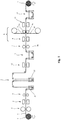
- FIG. 1 a schematic representation of an apparatus for carrying out the method according to the invention for the production of galvanized fine or Feinstblech shows.
- the starting material for the process according to the invention is a hot-rolled and unalloyed or low-alloy steel strip with a low carbon content of, for example, 20 to 900 ppm.
- the alloy components of the steel suitably meet the requirements of the international standard ASTM A 623-11 (Standard Specification for Tin Mill Products), whereby a use of the sheets produced according to the invention for the production of food packaging is ensured.
- ASTM A 623-11 Standard Specification for Tin Mill Products
- all steel grades which have a composition suitable for the production of fine or superfine sheets can be used for the method according to the invention.
- the hot-rolled steel strip is first pickled in a (not shown) pickling plant, then rinsed and dried and then cold-rolled in a cold rolling device 6.
- the steel strip 1 is moved as an endless belt by a transport device 7 with a transport speed of preferably more than 200 m / min and up to 750 m / min through the cold rolling device 6 and there to a thickness of less than 1.0 mm (sheet ) and preferably rolled to thicknesses of 0.1 to 0.5 mm (Feinstblech).
- the cold rolling device 6 is expediently a Kaltwalztandemstrasse with scaffolds, each carrying four superposed rollers, depending on a large support roller outside and two smaller work rolls inside, between which the steel strip with the Passes through transport speed.
- the roll gap is lubricated with a lubricant, for example. Oil, and the steel strip and the rollers are cooled with water.
- the steel strip 1 - as in FIG. 1 shown schematically - first passed through a continuous annealing furnace 3, in which the steel strip is heated to temperatures of 550 ° C to 700 ° C to recrystallize the steel strip to anneal.
- the recrystallizing annealing reestablishes the formability of the cold rolled steel strip.
- the steel strip may be dressed or regrooved in a post-mill 9, if required to achieve a smaller thickness.
- Strip coater 2 shown schematically is a strip galvanizing plant for the electrolytic galvanizing of sheet steel.
- This comprises a pretreatment device 10, in which the cold-rolled fine or very fine sheet is degreased, pickled and rinsed, and a coating device 11, in which it is then galvanically coated with zinc.
- the moving with the belt speed through the belt coater 2 steel strip 1 is passed through a zinc-containing electrolyte and connected there as a cathode and passed between two rows of zinc anodes.
- the zinc of the anodes is dissolved and deposited on the steel strip as a zinc coating.
- the zinc can be applied in any thickness and, if necessary, on both sides of the steel strip.
- the thickness of the applied tin layer is regularly between 1.0 g / m 2 and 15 g / m 2 .
- the strip coater 2 is followed in the strip running direction by a melting device 12, in which the zinc coating deposited on the steel strip is heated to temperatures above the melting temperature of the zinc (419.5 ° C.) in order to melt the deposited coating. Melting produces a glossy surface of the zinc coating and increases the corrosion resistance of the galvanized steel strip.
- the melting device 12 is adjoined by a cooling device 13, in which the molten zinc coating is quenched at a high cooling rate.
- the rolling device 5 has at least one pair of temper rolling rollers 5a, which form a gap through which the zinc-coated steel strip is conveyed at the transport speed.
- the temper rolling rollers 5a exert a rolling force expediently in the region of 500 t on the steel strip 1. Due to the pressure of the temper rolling rollers 5a on the steel strip, a temper rolling of the zinc-coated surface of the steel strip 1 takes place. In this temper rolling step, skin passages of 0.1 to 2.0% are achieved.
- the temper rolling rollers 5a are smooth, in particular finely ground or polished hard-surface rolls, which are expediently cooled and optionally moistened with water or steam or other wet-coating agents.
- the surface of the temper rolling rollers 5a may be provided with a fine structure by sandblasting, which is capable of giving the substrate a desired roughness or texturing.
- temper rolling is to densify and level the surface of the zinc coating.
- the applied zinc layer can be positively influenced by the coating step, both in terms of their brilliance and in terms of corrosion resistance and the tendency to oxidation.
- the temper rolling on the surface occurring zinc “buds” are leveled.
- any occurring zinc oxide is sufficiently removed from the galvanized surface. It is achieved by a high-gloss surface, which is particularly desirable in the packaging sector.
- the structuring of the zinc surface is very fine after the temper rolling and does not affect the gloss, but provides a good primer for the later to be applied organic layers, such as paints or polymer coatings.
- the leveled and textured surface slows down the formation of zinc oxides.
- This allows storage of the galvanized steel strips after galvanizing to their further processing by painting or plastic coating, without a Passivation or conversion treatment of the galvanized surface of the steel strip would be required. It has been shown that the galvanized steel strips can be easily stored over a period of up to six months, without forming an oxide layer on the zinc surface, which would be disturbing during the subsequent coating or coating with a polymer layer.
- the galvanized steel strip 1 can optionally be rolled by further pairs of rolls of the rolling device 5, in order to further reduce the thickness of the cold rolled steel strip 1, if necessary.
- This optional rolling step is a cold rolling step which is performed before skin pass rolling and which achieves re-rolling levels of up to 50%, preferably 4-45%.
- the temper rolled steel strip 1 is then guided at the belt speed in a plastic coating device 8.
- a polymer coating is applied to one or both sides of the galvanized steel strip.
- the steel strip is first heated in a heating device 4, which may be formed, for example, as induction heating or as infrared or microwave heating, to temperatures which are above the melting temperature of the polymer material of the polymer coating.
- the polymer material is preferably PET (having a melting point of approximately between 235 and 260 ° C., depending on the degree of crystallization and the degree of polymerization) or PP (having a melting temperature of approximately 160 ° C.) or else PE (having a melting temperature from approx. 130 - 145 ° C).
- the heated steel strip is supplied in the plastic coating device 8 on one or both sides of a film 16 of the polymer material (PET or PP film) and pressed by means of laminating rollers 8a to the surface of the zinc coating. Due to the temperature of the heated steel strip, at least the part of the polymer film 16 resting against the surface of the zinc coating thereby melts and thereby adheres to the surface of the zinc coating which is finely structured by the temper rolling.
- PET polymer material
- the polymer coating is expediently melted (completely) and then melted in a cooling device 15 (for example a water bath). quenched to a temperature below the glass transition point. As a result, an amorphous structure is formed in the polyethylene terephthalate or a minimum crystalline structure in the polypropylene.
- the melting of the polymer coating is carried out particularly expedient as in the patent DE 10130005 B4 described, or - as here in FIG. 1
- the quenching in the cooling device 15 can be carried out, for example, by air cooling or by immersing the steel strip in a tank with cooling liquid.
- the coated steel strip 1 is wound up by the transport device 7 onto a roll.
- the steel strips produced according to the invention are distinguished by high corrosion resistance, which is achieved by the metallic corrosion protection layer made of zinc and the polymer coating.
- the combination of these anticorrosive layers is particularly advantageous because even with any pores in the polymer coating, the underlying zinc layer still provides sufficient (electrochemical) corrosion protection.
- the cut edges not covered by the polymer coating are protected from corrosion by the long-distance protective action of the zinc coating.
- the steel strips produced according to the invention are further distinguished by a very good adhesion of the polymer coating to the zinc layer, which is achieved even without adhesion promoters or additional adhesive layers by the temper rolling of the surface of the zinc coating. Due to the surface properties of the zinc coating after the skin pass rolling can be dispensed with a usual passivation or a conversion coating after galvanizing the steel strip.
- the steel strips produced according to the invention are suitable for the production of packaging containers, in particular for food, such as, for example, two-part cans (deep-drawn and stretched, DWI cans). It is also possible to manufacture parts of such packaging containers from the steel strips produced according to the invention, such as flap bands, valve plates, can covers and cover rings. In addition, the inventive method can also be used for the production of steel sheets for use in other areas, such as for the production of sheets for the construction sector.
- the invention is not limited to the embodiment described.
- the Nachwalz intimide in the Nachwalzwerk 9 or with the other pairs of rollers of the rolling device 5 can be omitted.
- the polymer coating may also be applied to the zinc coating by other than laminating methods.
- a molten polymer material can be applied to the zinc coating, as described in the patent DE 197 30 893-C1 is described.
- an additional corrosion barrier can also be applied to the steel strip by coating the zinc-coated and tempered surface with an organic lacquer on one or both sides.
- lacquers examples include phenolic resin lacquers, such as epoxy-phenolic lacquer (gold lacquer), polyester lacquers and acrylic resin lacquers, such as white lacquer based on polyacrylates or polyesters, and also PVC and epoxy-anhydride lacquers. Preference is given to using BPA-free and solvent-free (water-based) lacquers.
Landscapes
- Chemical & Material Sciences (AREA)
- Engineering & Computer Science (AREA)
- Metallurgy (AREA)
- Organic Chemistry (AREA)
- Materials Engineering (AREA)
- Electrochemistry (AREA)
- Chemical Kinetics & Catalysis (AREA)
- Physics & Mathematics (AREA)
- Thermal Sciences (AREA)
- Crystallography & Structural Chemistry (AREA)
- Mechanical Engineering (AREA)
- Other Surface Treatments For Metallic Materials (AREA)
- Laminated Bodies (AREA)
- Coating With Molten Metal (AREA)
- Electroplating Methods And Accessories (AREA)
Description
- Die Erfindung betrifft ein Verfahren zum Herstellen von verzinktem Fein- oder Feinstblech mit hoher Korrosionsbeständigkeit aus einem warmgewalzten Stahlband mit den im Patentanspruch 1 angegebenen Verfahrensschritten. Die Erfindung betrifft ferner eine Vorrichtung zur Durchführung dieses Verfahrens.
- Dosen zum Aufbewahren und Konservieren von Lebensmitteln (Konservendosen) werden aus einem mit einer metallischen Korrosionsschutzschicht versehenen Stahlblech, beispielsweise aus Weißblech, aus ECCS (electrolytic chromium coated steel) oder verzinktem Stahlblech, gefertigt. Auf der Innenseite sind die Dosen gewöhnlich mit einem Kunststoffüberzug versehen. Zum Beschichten des Weißblechs oder des verzinkten Stahlblechs mit einem solchen Kunststoffüberzug wird die Oberfläche des mit der metallischen Korrosionsschutzschicht versehene Stahlblech mit einem organischen Lack lackiert oder mit einer Polymerbeschichtung beschichtet. Die dabei verwendeten Lacke und Polymere sind Kunststoffe auf Basis von Polyester, Epoxidharzen oder Organosolen. Epoxid-Harze erweisen sich als umwelt- und gesundheitsgefährdend, da sie (zumindest in geringen Mengen) gesundheitsgefährdende Stoffe wie Bisphenol-A (BPA) aufweisen und diese, insbesondere bei Kontakt mit säurehaltigen Lebensmitteln, in den Konserveninhalt abgeben können. Die üblicherweise verwendeten Lacke erfordern in der Verarbeitung den Einsatz von Lösungsmitteln, welche ebenfalls umwelt- und gesundheitsgefährdend sein können.
- Im Stand der Technik wurde daher bereits vorgeschlagen, mit einer Korrosionsschutzschicht beschichtete Stahlbleche, wie z.B. Weißblech, ECCS oder verzinktes Blech, ein- oder beidseitig mit einer Kunststoffbeschichtung aus einem thermoplastischen Kunststoff durch Auflaminieren einer Polymerfolie zu versehen. So ist beispielsweise aus der
WO 97/03823-A - Zwischen der metallischen Korrosionsschutzschicht des Stahlblechs und dem auflaminierten Polymerfilm ist dabei ein Haftvermittler, insbesondere eine Haftschicht vorgesehen. Zur Herstellung des korrosionsbeständigen Stahlblechs wird ein galvanisch mit einer metallischen Korrosionsschutzschicht beschichtetes und passiviertes Stahlblech mit einer Dicke zwischen 0,05 mm und 0,5 mm verwendet und auf Temperaturen von ca. 160°C erhitzt. Auf das erhitzte Stahlblech wird mittels rotierender Rollen eine Polymerfolie aus Polyethylenterephtalat (PET) oder Polypropylen (PP) auflaminiert. Die Dicke des auflaminierten Polymerfilms liegt zwischen 5 und 100 µm. Die Polymerfolie weist dabei bevorzugt auf einer Seite eine Haftschicht auf, welche einen niedrigeren Schmelzpunkt hat als das Polymermaterial der Polymerfolie. Der Polymerfilm wird mit der Haftschicht nach unten auf die Oberfläche der metallischen Korrosionsschutzschicht des Stahlblechs auflaminiert, wobei das Stahlblech vor dem Auflaminieren der Polymerfolie auf Temperaturen von ca. 160°C erhitzt wird.
In dem bekannten Verfahren zum Auflaminieren einer Polymerfolie auf die metallische Korrosionsschutzschicht eines Stahlblechs wird eine spezielle Polymerfolie mit einer Haftschicht verwendet, um diese auf die Oberfläche der Korrosionsschutzschicht des Stahlblechs zu laminieren. Solche Polymerfolien mit einer Haftschicht sind in der Herstellung sehr teuer. Ferner ist die Handhabung solcher Polymerfolien mit einer Haftschicht aufwendiger und die Verfahrensparameter, insbesondere die Temperaturen, müssen beim Auflaminieren innerhalb der vorgegebenen Grenzwerte gehalten werden, welche durch die Schmelztemperaturen der Polymerfolie und der Haftschicht bestimmt sind. Insbesondere bei verzinkten Stahlblechen hat sich jedoch gezeigt, dass auf eine Haftschicht nicht ohne weiteres verzichtet werden kann, wenn eine ausreichend gute Haftung des Polymerfilms auf der verzinkten Oberfläche des Stahlblechs gewährleistet werden soll.WO-A-2012/030726 undJP-A-2004 346 363 - Diese Aufgabe wird mit dem Verfahren mit den Merkmalen des Anspruchs 1 sowie mit der Vorrichtung mit den Merkmalen des Anspruchs 15 gelöst. Bevorzugte Ausführungsformen des Verfahrens sind in den abhängigen Ansprüchen angegeben.
In dem erfindungsgemäßen Verfahren wird ein warmgewalztes Fein- oder Feinstblech aus Stahl zunächst zu einer Dicke von weniger als 1 mm kaltgewalzt und anschließend rekristallisierend geglüht, um die Verformbarkeit des kaltgewalzten Stahls wieder herzustellen. Nach dem Rekristallisationsglühen kann sich zweckmäßig ein Dressieren oder Nachwalzen des Stahlbandes anschließen. Danach wird das Stahlband galvanisch mit Zink beschichtet, wobei die Auflage der Zinkbeschichtung bevorzugt kleiner als 15g/m2 ist. Nach der galvanischen Beschichtung des Stahlbands mit Zink erfolgt erfindungsgemäß ein Dressierwalzen bzw. ein Glanzdressieren der zinkbeschichteten Oberfläche des Stahlbands. Es hat sich in überraschender Weise gezeigt, dass durch das Dressierwalzen kleine Zinkknospen auf der Zinkoberfläche eingeebnet und störende Zinkoxide entfernt oder über die Bandoberfläche gleichmäßig verteilt werden können. Ferner wird durch das Dressierwalzen eine glänzende Oberfläche der Zinkbeschichtung erzeugt, welche insbesondere für die vorgesehene Verwendung der erfindungsgemäß hergestellten Bleche für die Herstellung von Verpackungen im Lebensmittelbereich von großer Bedeutung ist, da dort eine hohe Brillanz der Oberfläche des Verpackungsmaterials erwünscht ist. Darüber hinaus erzeugt das Dressierwalzen eine feinstrukturierte Oberfläche der Zinkschicht mit einer gleichmäßigen Beschaffenheit, welche eine gute Benetzbarkeit von Lacken und eine hervorragende Haftung für Polymerbeschichtungen, insbesondere aus PET oder PP, aufweist. Beim Dressierwalzen des zinkbeschichteten Stahlbands erfolgt eine geringe Dickenreduktion mit einem Dressiergrad von 0,5-2%. Nach dem Dressierwalzen wird ein- oder beidseitig eine Polymerbeschichtung oder ein organischer Lack auf die zinkbeschichtete Oberfläche des Stahlbands aufgebracht. Dies kann beispielsweise durch Auflaminieren einer Polymerfolie, beispielsweise einer PET- oder PP-Folie, auf die zinkbeschichtete Oberfläche des Stahlbands erfolgen. Beim Auflaminieren der Polymerfolie wird das zinkbeschichtete Stahlband zweckmäßig auf Temperaturen oberhalb der Schmelztemperatur des Polymermaterials erhitzt und die Polymerfolie wird mittels Laminierrollen auf die zinkbeschichtete Oberfläche des Stahlbands auflaminiert. Aufgrund der guten Haftfähigkeit der dressiergewalzten Zinkoberfläche kann dabei auf die Verwendung eines Haftvermittler und insbesondere auf eine zusätzliche Haftschicht zwischen der Zinkoberfläche und dem Polymerfilm verzichtet werden. Auch auf eine vorhergehende Passivierung oder Konversionsbeschichtung der Zinkoberfläche kann verzichtet werden. Dies vereinfacht und beschleunigt die Verfahrensführung erheblich. Das erfindungsgemäß hergestellte Blech ist lösemittel- und chromfrei und frei von Bisphenol-A (BPA), da die bevorzugt verwendeten Polymermaterialen PET und PP kein BPA enthalten und ohne Verwendung von Lösungsmitteln verarbeitet werden können und die metallische Korrosionsschutzschicht des Stahlbands selbst chromfrei ist und nicht mit chromhaltigen Nachbehandlungsmitteln passiviert werden muss. - In einem zweckmäßigen Ausführungsbeispiel des erfindungsgemäßen Verfahrens erfolgt das Dressierwalzen in einem Nachwalzschritt, in dem die Dicke des Stahlbands auf Nachwalzgrade von 4-45% reduziert wird. Der Nachwalzschritt erhöht dabei auch die Festigkeit des Stahlbands auf Werte von Rm=300 bis 1.000 MPa und insbesondere im Bereich von Rm=400-650 MPa. Das so behandelte Stahlband weist überdies eine gute Bruchdehnung von 1-40% und insbesondere von 5-25% auf.
- Das erfindungsgemäße Verfahren kann in Bandverzinkungsanlagen durchgeführt werden, wobei das Stahlband mit einer Geschwindigkeit von mehr als 200 m/min und bevorzugt von mehr als 500 m/min durch die Beschichtungsanlage bewegt wird. Auch das Dressierwalzen und das Auflaminieren der Polymerbeschichtung erfolgt dabei bei diesen Bandgeschwindigkeiten.
- Das erfindungsgemäß hergestellte Fein- oder Feinstblech eignet sich hervorragend zur Herstellung von Verpackungen, insbesondere für Lebensmittel oder von Teilen für solche Verpackungen wie z.B. Laschenbänder, Ventilteller, Dosendeckel oder Deckelringe. Die erfindungsgemäß hergestellten Bleche zeichnen sich durch eine hohe Brillanz der veredelten Oberfläche, eine sehr gute Haftung der Polymerbeschichtung oder des organischen Lacks auf der zinkbeschichten Oberfläche des Stahlbands und durch eine sehr hohe Korrosionsbeständigkeit aus. Die durch das Dressierwalzen der zinkbeschichteten Oberfläche erzeugte Feinstruktur der Zinkbeschichtung minimiert die Oxidationsneigung der ZinkOberfläche, weshalb für die Lagerung des zinkbeschichten Stahlbands vor dessen Beschichtung mit der Polymerbeschichtung oder vor dessen Lackierung mit einem organischen Lack auf eine Passivierung oder eine Konversionsbeschichtung verzichtet werden kann. Es hat sich gezeigt, dass die zinkbeschichteten Stahlbänder nach dem galvanischen Verzinken problemlos über Lagerungszeiten von bis zu 6 Monaten ohne jegliche Passivierungs- oder Konversionsbehandlung gelagert werden können, bevor sie mit der Polymerbeschichtung oder dem organischen Lack versehen werden. Nach der Polymerbeschichtung bzw. der Lackierung der zinkbeschichteten Oberfläche zeichnen sich die erfindungsgemäß hergestellten Bleche durch eine sehr hohe Korrosionsbeständigkeit aus, weil die Poren in der Polymerbeschichtung oder dem organischen Lack durch die korrosionsstabile Zinkschicht nicht zu einer Korrosion des Stahlblechs führen können. Auch die Schnittkanten des Blechs, welche nicht durch die auflaminierte Polymerbeschichtung geschützt ist, weisen aufgrund der Fernschutzwirkung des im Vergleich zum Stahl unedleren Zinks einen elektrochemischen Schutz vor Korrosion auf.
- Diese und weitere Vorteile und Merkmale der Erfindung gehen aus dem nachfolgend unter Bezugnahme auf die begleitende Zeichnung näher beschriebenen Ausführungsbeispiel hervor, wobei die in Bezug genommene Zeichnung der
Fig. 1 eine schematische Darstellung einer Vorrichtung zur Durchführung des erfindungsgemäßen Verfahrens zum Herstellen von verzinktem Fein- oder Feinstblech zeigt. - Ausgangsmaterial für das erfindungsgemäße Verfahren ist ein warmgewalztes und un- oder niedriglegiertes Stahlband mit geringem Kohlenstoffgehalt von bspw. 20 bis 900 ppm. Die Legierungsbestandteile des Stahls genügen zweckmäßig den Vorgaben des internationalen Standards ASTM A 623-11 (Standard Specification for Tin Mill Products), wodurch eine Verwendung der erfindungsgemäß erzeugten Bleche zur Herstellung von Lebensmittelverpackungen sicher gestellt wird. Grundsätzlich können für das erfindungsgemäße Verfahren alle Stahlsorten verwendet werden, welche eine für die Herstellung von Fein- oder Feinstblechen geeignete Zusammensetzung aufweisen. Das warmgewalzte Stahlband wird zunächst in einer (nicht dargestellten) Beizanlage gebeizt, danach gespült und getrocknet und anschließend in einer Kaltwalzeinrichtung 6 kaltgewalzt.
- In dem Kaltwalzschritt wird das Stahlband 1 als Endlosband von einer Transporteinrichtung 7 mit einer Transportgeschwindigkeit von bevorzugt mehr als 200 m/min und bis zu 750 m/min durch die Kaltwalzeinrichtung 6 bewegt und dort auf eine Dicke von weniger als 1,0 mm (Feinblech) und bevorzugt auf Dicken von 0,1 bis 0,5 mm (Feinstblech) gewalzt. Bei der Kaltwalzeinrichtung 6 handelt es sich zweckmäßig um eine Kaltwalztandemstrasse mit Gerüsten, die jeweils vier übereinander liegende Walzen tragen, je eine große Stützwalze außen und zwei kleinere Arbeitswalzen innen, zwischen denen das Stahlband mit der Transportgeschwindigkeit durchläuft. Der Walzspalt wird dabei mit einem Schmiermittel, bspw. Öl, geschmiert und das Stahlband sowie die Walzen werden mit Wasser gekühlt.
- Nach dem Kaltwalzen wird das Stahlband 1 - wie in
Figur 1 schematisch dargestellt - zunächst durch einen Durchlaufglühofen 3 geführt, in dem das Stahlband auf Temperaturen von 550°C bis 700°C erhitzt wird, um das Stahlband rekristallisierend zu Glühen. Durch das rekristallisierende Glühen wird die Umformbarkeit des kaltgewalzten Stahlbands wieder hergestellt. Nach dem Rekristallisationsglühen kann das Stahlband in einem Nachwalzwerk 9 dressiert oder nachgewalzt werden, falls zur Erzielung einer geringeren Dicke erforderlich. - Anschließend wird das Stahlband 1 mit der Transportgeschwindigkeit durch eine Bandbeschichtungsanlage 2 geführt. Bei der in
Figur 1 schematisch dargestellten Bandbeschichtungsanlage 2 handelt es sich um eine Bandverzinkungsanlage zur elektrolytischen Verzinkung von Stahlblech. Diese umfasst eine Vorbehandlungseinrichtung 10, in der das kaltgewalzte Fein- oder Feinstblech entfettet, gebeizt und gespült wird, sowie eine Beschichtungseinrichtung 11, in der es anschließend galvanisch mit Zink beschichtet wird. Dazu wird das sich mit der Bandgeschwindigkeit durch die Bandbeschichtungsanlage 2 bewegende Stahlband 1 durch einen zinkhaltigen Elektrolyten geleitet und dort als Kathode geschaltet und zwischen zwei Reihen von Zinkanoden hindurchgeführt. Dadurch wird das Zink der Anoden gelöst und auf dem Stahlband als Zink-Beschichtung abgeschieden. Das Zink kann dabei in beliebiger Dicke und, falls erforderlich, auf beiden Seiten des Stahlbandes aufgetragen werden. Die Dicke der aufgetragenen Zinnschicht liegt regelmäßig zwischen 1,0 g/m2 und 15 g/m2. Es ist jedoch auch die Beschichtung des Stahlbands mit dünneren oder mit dickeren Zinkschichten möglich. - An die Bandbeschichtungsanlage 2 schließt sich in Bandlaufrichtung eine Aufschmelzeinrichtung 12 an, in der die auf dem Stahlband abgeschiedene Zink-Beschichtung auf Temperaturen oberhalb der Schmelztemperatur des Zinks (419,5°C) erhitzt wird, um die abgeschiedene Beschichtung aufzuschmelzen. Durch das Aufschmelzen wird eine glänzende Oberfläche der Zinkbeschichtung und eine Erhöhung der Korrosionsstabilität des verzinkten Stahlbands erzielt. An die Aufschmelzeinrichtung 12 schließt sich eine Kühleinrichtung 13 an, in der die aufgeschmolzene Zinkbeschichtung mit hoher Kühlrate abgeschreckt wird.
- Das abgekühlte und mit Zink beschichtete Stahlband 1 wird danach in einer Walzeinrichtung 5 dressiert. Die Walzeinrichtung 5 weist dafür wenigstens ein Paar von Dressierwalzen 5a auf, welche einen Spalt ausbilden, durch den das zinkbeschichtete Stahlband mit der Transportgeschwindigkeit durchgeführt wird. Die Dressierwalzen 5a üben dabei eine zweckmäßig im Bereich von 500 t liegende Walzkraft auf das Stahlband 1 aus. Durch den Druck der Dressierwalzen 5a auf das Stahlband erfolgt ein Dressieren (Dressierwalzen) der zinkbeschichteten Oberfläche des Stahlbands 1. In diesem Dressierschritt werden Dressiergrade von 0,1 bis 2,0 % erzielt.
- Bei den Dressierwalzen 5a handelt es sich um glatte, insbesondere feingeschliffene oder polierte Walzen mit harter Oberfläche, welche zweckmäßig gekühlt und ggf. mit Wasser oder Wasserdampf oder anderen Naßdressiermitteln befeuchtet werden. Die Oberfläche der Dressierwalzen 5a kann bspw. durch Sandstrahlen mit einer feinen Struktur versehen werden, welche geeignet ist, dem Substrat eine gewünschte Rauhigkeit bzw. Texturierung zu verleihen. Der Grad der Glätte bzw. die Rauheit der dressierten Oberfläche wird dabei durch die Oberflächenbeschaffenheit der Dressierwalzen 5a beeinflusst. Es haben sich dabei Dressierwalzen mit einer Walzenrauheit von weniger als 0,07 µm als geeignet erwiesen, um die Zinkoberfläche auf eine bevorzugte mittlere Rauheit von Ra = 0,01 bis 0,1 µm zu dressieren.
- Zweck des Dressierens ist die Verdichtung und Einebnung der Oberfläche der Zinkbeschichtung. Überraschenderweise wurde fest gestellt, dass durch den Dressierschritt die aufgetragene Zinkschicht sowohl hinsichtlich ihrer Brillanz als auch bezüglich der Korrosionsbeständigkeit und der Oxidationsneigung positiv beeinflusst werden kann. Insbesondere werden durch das Dressierwalzen an der Oberfläche vorkommende Zink-"Knospen" eingeebnet. Außerdem wurde in überraschender Weise gefunden, dass etwaig auftretendes Zinkoxid in ausreichendem Maße von der verzinkten Oberfläche entfernt wird. Es wird dadurch eine hochglänzende Oberfläche erzielt, welche im Verpackungsbereich besonders erwünscht ist. Die Strukturierung der Zinkoberfläche ist nach dem Dressierwalzen sehr fein und beeinträchtigt den Glanz nicht, bietet aber eine gute Haftgrundlage für die später noch aufzutragenden organischen Schichten, wie Lacke oder Polymerbeschichtungen. Außerdem verlangsamt die eingeebnete und strukturierte Oberfläche die Entstehung von Zink-Oxiden. Dies ermöglicht eine Lagerung der verzinkten Stahlbänder nach dem Verzinken bis zu ihrer Weiterverarbeitung durch Lackieren oder Kunststoffbeschichten, ohne dass eine Passivierungs- oder Konversionsbehandlung der verzinkten Oberfläche des Stahlbands erforderlich wäre. Es hat sich gezeigt, dass die verzinkten Stahlbänder problemlos über einen Zeitraum von bis zu sechs Monaten gelagert werden können, ohne dass sich eine Oxidschicht an der Zinkoberfläche ausbildet, welche beim nachfolgenden Lackieren oder Beschichten mit einer Polymerschicht störend wäre.
- Vor dem Dressierwalzen kann das verzinkte Stahlband 1 ggf. durch weitere Walzenpaare der Walzeinrichtung 5 gewalzt werden, um erforderlichenfalls die Dicke des kaltgewalzten Stahlbands 1 weiter zu reduzieren. Bei diesem optionalen Walzschritt handelt es sich um einen Kaltwalzschritt, der vor dem Dressierwalzen durchgeführt wird und bei dem Nachwalzgrade von bis zu 50 %, vorzugsweise von 4 - 45% erzielt werden. Durch das Walzen wird die Festigkeit des Stahlbands 1 auf Werte bis zu 1000 MPa und insbesondere von Rm = 300 bis 650 MPa erhöht.
- Das dressiergewalzte Stahlband 1 wird danach mit der Bandgeschwindigkeit in eine Kunststoffbeschichtungseinrichtung 8 geführt. Dort wird auf eine oder beide Seiten des verzinkten Stahlbands eine Polymerbeschichtung aufgebracht. Hierfür wird das Stahlband zunächst in einer Heizeinrichtung 4, welche bspw. als Induktionsheizung oder auch als Infrarot- oder Mikrowellenheizung ausgebildet sein kann, auf Temperaturen erhitzt, welche oberhalb der Schmelztemperatur des Polymermaterials der Polymerbeschichtung liegen. Bevorzugt handelt es sich bei dem Polymermaterial um PET (mit einer Schmelztemperatur von ca. zwischen 235 und 260 °C, abhängig vom Kristallisationsgrad und vom Polymerisationsgrad) oder PP (mit einer Schmelztemperatur von ca. 160 °C) oder auch PE (mit einer Schmelztemperatur von ca. 130 - 145 °C). Es kann sich dabei auch um eine Folie aus einem Polymerlaminat bestehend aus Polyethylenterephthalat und Polypropylen handeln. Dem erhitzten Stahlband wird in der Kunststoffbeschichtungseinrichtung 8 ein- oder beidseitig eine Folie 16 aus dem Polymermaterial (PET- oder PP-Folie) zugeführt und mittels Laminierwalzen 8a an die Oberfläche der Zinkbeschichtung angedrückt. Aufgrund der Temperatur des erhitzten Stahlbands schmilzt dabei zumindest der an der Oberfläche der Zinkbeschichtung anliegende Teil der Polymerfolie 16 auf und haftet dadurch an der durch das Dressierwalzen feinstrukturierten Oberfläche der Zinkbeschichtung.
- Nach dem Auflaminieren der Polymerfolie wird zweckmäßig die Polymerbeschichtung (vollständig) aufgeschmolzen und dann in einer Kühleinrichtung 15 (bspw. einem Wasserbad) auf eine Temperatur unterhalb des Glasübergangspunkts abgeschreckt. Dadurch bildet sich eine amorphe Struktur in dem Polyethylenterephthalat bzw. eine minimale kristalline Struktur in dem Polypropylen aus. Das Aufschmelzen der Polymerbeschichtung erfolgt dabei besonders zweckmäßig wie in der Patentschrift
DE 10130005 B4 beschrieben, oder - wie hier inFigur 1 gezeigt - durch ein nochmaliges Erhitzen des Stahlbands auf Temperaturen oberhalb des Schmelzpunkts des verwendeten Polymermaterials in einer Aufschmelzeinrichtung 14. Das Abschrecken in der Kühleinrichtung 15 kann bspw. durch eine Luftkühlung oder durch Eintauchen des Stahlbands in einen Tank mit Kühlflüssigkeit erfolgen. Abschließend wird das beschichtete Stahlband 1 von der Transporteinrichtung 7 auf eine Rolle aufgewickelt. - Die erfindungsgemäß hergestellten Stahlbänder zeichnen sich durch eine hohe Korrosionsbeständigkeit aus, welche durch die metallische Korrosionsschutzschicht aus Zink und die Polymerbeschichtung erzielt wird. Dabei ist die Kombination dieser Korrosionsschutzschichten besonders vorteilhaft, weil auch bei etwaigen Poren in der Polymerbeschichtung die darunter liegende Zinkschicht noch einen ausreichenden (elektrochemischen) Korrosionsschutz bietet. Auch die nicht von der Polymerbeschichtung abgedeckten Schnittkanten sind durch die Fernschutzwirkung der Zinkbeschichtung vor Korrosion geschützt. Die erfindungsgemäß hergestellten Stahlbänder zeichnen sich weiterhin durch eine sehr gute Haftung der Polymerbeschichtung auf der Zinkschicht aus, welche auch ohne Haftvermittler oder zusätzliche Haftschichten durch das Dressierwalzen der Oberfläche der Zinkbeschichtung erzielt wird. Aufgrund der Oberflächeneigenschaften der Zinkbeschichtung nach dem Dressierwalzen kann auf eine sonst übliche Passivierung oder eine Konversionsbeschichtung nach dem Verzinken des Stahlbands verzichtet werden.
- Die erfindungsgemäß hergestellten Stahlbänder eignen sich zur Herstellung von Verpackungsbehältern, insbesondere für Lebensmittel, wie z.B. zweiteilige Dosen (tiefgezogen und gestreckt, DWI-Dosen). Es können auch Teile solcher Verpackungsbehälter aus den erfindungsgemäß hergestellten Stahlbändern gefertigt werden, wie z.B. Laschenbänder, Ventilteller, Dosendeckel und Deckelringe. Daneben kann das erfindungsgemäße Verfahren auch für die Herstellung von Stahlblechen zur Anwendung in anderen Bereichen verwendet werden, wie z.B. für die Herstellung von Blechen für den Baubereich.
- Die Erfindung ist nicht auf das beschriebene Ausführungsbeispiel beschränkt. So kann insbesondere auf die Nachwalzschritte in dem Nachwalzwerk 9 oder mit den weiteren Walzenpaaren der Walzeinrichtung 5 verzichtet werden. Ferner kann auch auf das Aufschmelzen der Zinkbeschichtung verzichtet werden, insbesondere dann, wenn beim Dressierwalzen der Zinkoberfläche eine so niedrige Rauhigkeit erzielt wird, dass bereits eine hochglänzende Oberfläche entsteht. Außerdem ist es im Rahmen der Erfindung möglich, das Stahlband 1 nach den einzelnen Verfahrensschritten auf eine Rolle (Coil) aufzuwickeln und es in dieser Form dem nächsten Verfahrensschritt zuzuführen. Dies ist in der schematischen Darstellung der erfindungsgemäßen Vorrichtung der
Figur 1 nicht berücksichtigt. - Die Polymerbeschichtung kann auch durch andere Beschichtungsverfahren als Laminieren auf die Zinkbeschichtung aufgebracht werden. So kann nach dem Dressierwalzen bspw. auch mittels Direktextrusion ein schmelzflüssiges Polymermaterial auf die Zinkbeschichtung aufgebracht werden, wie es in der Patentschrift
DE 197 30 893-C1 beschrieben ist. Alternativ zu dem beschriebenen Aufbringen einer Polymerbeschichtung durch Auflaminieren einer Polymerfolie oder der Direktextrusion eines flüssigen Polymermaterials kann auch durch ein- oder beidseitiges Lackieren der zinkbeschichteten und dressiergewalzten Oberfläche mit einem organischen Lack eine zusätzliche Korrosionsbarriere auf das Stahlband aufgebracht werden. Als geeignete Lacke haben sich dabei z.B. Phenolharzlacke wie Epoxyphenol-Lack (Goldlack), Polyesterlacke und Acrylharzlacke wie Weißlack auf Basis von Polyacrylaten oder Polyestern, sowie PVC- und Epoxianhydrid-Lacke erwiesen. Bevorzugt werden BPAfreie und lösemittelfreie (wasserbasierte) Lacke verwendet.
Claims (15)
- Verfahren zum Herstellen von verzinktem Fein- oder Feinstblech mit hoher Korrosionsbeständigkeit zur Herstellung von Verpackungen, mit folgenden Schritten:- Bereitstellen eines warmgewalzten Stahlbands und Kaltwalzen des Stahlbands auf eine Dicke von weniger als 1 mm,- galvanisches Beschichten des kaltgwalzten Stahlbands (1) mit Zink,- Dressierwalzen der zinkbeschichteten Oberfläche des Stahlbands (1),- ein- oder beidseitiges Auftragen einer Polymerbeschichtung oder eines organischen Lacks auf die zinkbeschichtete Oberfläche des Stahlbands (1).
- Verfahren nach Anspruch 1, wobei das warmgewalzte Stahlband vor dem Beschichten mit Zink von seiner ursprünglichen Dicke auf eine Dicke von 0,1 bis 0,5 mm kaltgewalzt wird.
- Verfahren nach Anspruch 1 oder 2, wobei das Stahlband (1) aus einem kohlenstoffarmen und un- oder niedriglegierten Stahl ist, wobei der Kohlenstoffgehalt geringer als 0,1 Gew.% ist und bevorzugt zwischen 20 und 900 ppm liegt.
- Verfahren nach einem der vorangehenden Ansprüche, dadurch gekennzeichnet, dass beim Dressierwalzen ein Dressiergrad von 0,5 - 2,0 % erzielt wird.
- Verfahren nach einem der vorangehenden Ansprüche, wobei die Auflage der Zinkbeschichtung kleiner als 15 g/m2 ist.
- Verfahren nach einem der vorangehenden Ansprüche, wobei vor dem Dressierwalzen ein zusätzlicher Kaltwalzschritt durchgeführt wird, wobei bevorzugt ein Walzgrad von 4 - 45 % erzielt wird.
- Verfahren nach Anspruch 6, dadurch gekennzeichnet, dass das verzinkte Stahlband nach dem Nachwalzschritt eine Festigkeit von Rm = 300 bis 1000 MPa und insbesondere von Rm = 400 bis 650 MPa aufweist.
- Verfahren nach einem der vorangehenden Ansprüche, dadurch gekennzeichnet, dass das verzinkte Stahlband eine Bruchdehnung von 1 bis 40 % und insbesondere von 5 bis 25 % aufweist.
- Verfahren nach einem der vorangehenden Ansprüche, wobei nach dem Kaltwalzen das Stahlband (1) rekristallisierend geglüht wird, wofür es bevorzugt induktiv auf Temperaturen zwischen 550°C und 800°C erhitzt wird.
- Verfahren nach einem der vorangehenden Ansprüche, dadurch gekennzeichnet, dass die Polymerbeschichtung auf das Stahlband (1) auflaminiert wird, wobei das Stahlband (1) während des Auflaminierens der Polymerbeschichtung auf Temperaturen oberhalb der Schmelztemperatur (Tm) des Polymermaterials gehalten wird.
- Verfahren nach einem der vorangehenden Ansprüche, dadurch gekennzeichnet, dass es sich bei dem Polymermaterial der Polymerbeschichtung um Polyethylenterephthalat (PET) oder Polypropylen (PP) oder Polyethylen (PE) handelt.
- Verfahren nach einem der vorangehenden Ansprüche, dadurch gekennzeichnet, dass die Polymerbeschichtung unmittelbar nach dem Dressierwalzen auf das Stahlband (1) ohne vorhergehende Passivierung, Haft- oder Konversionsbeschichtung der Stahlbandoberfläche aufgetragen wird.
- Verfahren nach einem der vorangehenden Ansprüche, dadurch gekennzeichnet, dass die zinkbeschichtete Oberfläche des Stahlbands (1) nach dem Dressierwalzen eine mittlere Rauheit von Ra = 0,01 bis 0,1 µm aufweist.
- Verfahren nach einem der vorangehenden Ansprüche, dadurch gekennzeichnet, dass das Verfahren bzw. das hergestellte Blech lösemittelfrei, chromfrei und/oder frei von Bisphenol-A (BPA) sind.
- Vorrichtung zur Durchführung des Verfahrens nach einem der Ansprüche 1 bis 14, umfassend- eine Transporteinrichtung (7) zum kontinuierlichen Transport eines endlosen Stahlbands (1) in eine Transportrichtung mit einer Transportgeschwindigkeit, welche bevorzugt größer als 200 m/min ist,- eine Kaltwalzeinrichtung (6) zum Kaltwalzen des mit der Transportgeschwindigkeit durch die Kaltwalzeinrichtung bewegten Stahlbands (1) auf eine Dicke von weniger als 1mm,- eine Beschichtungseinrichtung (11) zum galvanischen Beschichten des mit der Transportgeschwindigkeit durch die Beschichtungseinrichtung bewegten Stahlbands (1) mit Zink,- eine Walzeinrichtung (5) mit Dressierwalzen (5a) zum Dressieren der verzinkten Oberfläche des mit der Transportgeschwindigkeit durch die Walzeinrichtung bewegten Stahlbands (1),- eine Heizeinrichtung (4) zum Erhitzen des mit der Transportgeschwindigkeit durch die Heizeinrichtung bewegten Stahlbands (1),- eine Kunststoffbeschichtungseinrichtung (8) zum ein- oder beidseitigen Aufbringen einer Polymerbeschichtung oder eines organischen Lacks auf die zinkbeschichtete Oberfläche des Stahlbands (1).
Priority Applications (2)
| Application Number | Priority Date | Filing Date | Title |
|---|---|---|---|
| RS20180885A RS57558B1 (sr) | 2013-01-25 | 2013-09-25 | Postupak za proizvodnju pocinkovanih finih ili ultrafinih limova visoke otpornosti na koroziju |
| PL13771437T PL2948302T3 (pl) | 2013-01-25 | 2013-09-25 | Sposób wytwarzania cynkowanej blachy cienkiej lub bardzo cienkiej o wysokiej odporności na korozję |
Applications Claiming Priority (2)
| Application Number | Priority Date | Filing Date | Title |
|---|---|---|---|
| DE102013100730.9A DE102013100730B3 (de) | 2013-01-25 | 2013-01-25 | Verfahren und Vorrichtung zum Herstellen von verzinktem Fein- oder Feinstblech mit hoher Korrosionsbeständigkeit sowie Verwendung des verzinkten Fein- oder Feinstblechs |
| PCT/EP2013/069956 WO2014114370A1 (de) | 2013-01-25 | 2013-09-25 | Verfahren zum herstellen von verzinktem fein- oder feinstblech mit hoher korrosionsbeständigkeit |
Publications (2)
| Publication Number | Publication Date |
|---|---|
| EP2948302A1 EP2948302A1 (de) | 2015-12-02 |
| EP2948302B1 true EP2948302B1 (de) | 2018-05-16 |
Family
ID=49301458
Family Applications (1)
| Application Number | Title | Priority Date | Filing Date |
|---|---|---|---|
| EP13771437.4A Not-in-force EP2948302B1 (de) | 2013-01-25 | 2013-09-25 | Verfahren zum herstellen von verzinktem fein- oder feinstblech mit hoher korrosionsbeständigkeit |
Country Status (9)
| Country | Link |
|---|---|
| EP (1) | EP2948302B1 (de) |
| CA (1) | CA2916430C (de) |
| DE (1) | DE102013100730B3 (de) |
| ES (1) | ES2675587T3 (de) |
| PL (1) | PL2948302T3 (de) |
| PT (1) | PT2948302T (de) |
| RS (1) | RS57558B1 (de) |
| TR (1) | TR201809605T4 (de) |
| WO (1) | WO2014114370A1 (de) |
Families Citing this family (11)
| Publication number | Priority date | Publication date | Assignee | Title |
|---|---|---|---|---|
| DE102014017492A1 (de) * | 2014-11-27 | 2016-06-02 | Thyssenkrupp Ag | Halbzeug, Verfahren zum Herstellen eines Halbzeugs sowie dessen Verwendung |
| MX2019001647A (es) * | 2016-08-10 | 2019-07-01 | Swimc Llc | Mejora del rendimiento de la acumulación de borde y la formación de burbujas de borde de los revestimientos de bobina. |
| WO2020182538A1 (en) * | 2019-03-14 | 2020-09-17 | Tata Steel Ijmuiden B.V. | Laminated steel product |
| DE102019118578A1 (de) * | 2019-07-09 | 2021-01-14 | Thyssenkrupp Steel Europe Ag | Verfahren zum Herstellen eines Blechproduktes und Blechprodukt |
| CN110318013B (zh) * | 2019-07-19 | 2021-07-09 | 首钢京唐钢铁联合有限责任公司 | 一种热镀锌带钢的生产方法 |
| CN110396686B (zh) * | 2019-07-25 | 2022-05-20 | 首钢集团有限公司 | 一种提高钝化膜镀层钢耐腐蚀性能的方法 |
| DE102020200326A1 (de) | 2020-01-13 | 2021-07-15 | Thyssenkrupp Steel Europe Ag | Verfahren zur Herstellung eines oberflächenveredelten und oberflächenkonditionierten Stahlblechs |
| CN113106368A (zh) * | 2020-12-31 | 2021-07-13 | 鞍钢冷轧钢板(莆田)有限公司 | 一种热镀锌板生产方法 |
| DE102021200229A1 (de) | 2021-01-13 | 2022-07-14 | Thyssenkrupp Steel Europe Ag | Verfahren zur Herstellung eines elektrolytisch beschichteten Stahlblechs |
| DE102021121303A1 (de) | 2021-08-17 | 2023-02-23 | Thyssenkrupp Steel Europe Ag | Verfahren zum Herstellen einer lasertexturierten Dressierwalze, Verfahren zum Dressieren eines Stahlblechs und entsprechend dressiertes Stahlblech |
| CN115725938A (zh) * | 2022-11-25 | 2023-03-03 | 江苏华久辐条制造有限公司 | 一种强耐腐蚀防锈的自行车辐条 |
Family Cites Families (5)
| Publication number | Priority date | Publication date | Assignee | Title |
|---|---|---|---|---|
| GB2303330B (en) * | 1995-07-21 | 1999-09-08 | British Steel Plc | Improvements in and relating to laminated tin mill products and methods of producing the same |
| DE19730893C1 (de) * | 1997-05-02 | 1998-07-23 | Rasselstein Hoesch Gmbh | Verfahren und Vorrichtung zur Kunststoffbeschichtung von Metallband mittels Direkt-Extrusion |
| DE10130005B4 (de) * | 2001-06-25 | 2004-12-23 | Rasselstein Gmbh | Verfahren zur Beschichtung der Oberfläche eines Metallbandes mit einem Kunststoffilm und Verwendung eines nach dem Verfahren hergestellten Laminats |
| JP4256721B2 (ja) * | 2003-05-21 | 2009-04-22 | 新日本製鐵株式会社 | シルバーメタリック調意匠性めっき鋼板の製造方法 |
| JP6227410B2 (ja) * | 2010-08-30 | 2017-11-08 | エイケイ・スチール・プロパティーズ・インコーポレイテッドAK Steel Properties, Inc. | 磨かれたステンレス鋼様仕上げを有するテクスチャのある炭素鋼を製造するプロセス |
-
2013
- 2013-01-25 DE DE102013100730.9A patent/DE102013100730B3/de not_active Expired - Fee Related
- 2013-09-25 CA CA2916430A patent/CA2916430C/en active Active
- 2013-09-25 WO PCT/EP2013/069956 patent/WO2014114370A1/de not_active Ceased
- 2013-09-25 ES ES13771437.4T patent/ES2675587T3/es active Active
- 2013-09-25 RS RS20180885A patent/RS57558B1/sr unknown
- 2013-09-25 EP EP13771437.4A patent/EP2948302B1/de not_active Not-in-force
- 2013-09-25 TR TR2018/09605T patent/TR201809605T4/tr unknown
- 2013-09-25 PL PL13771437T patent/PL2948302T3/pl unknown
- 2013-09-25 PT PT137714374T patent/PT2948302T/pt unknown
Non-Patent Citations (1)
| Title |
|---|
| None * |
Also Published As
| Publication number | Publication date |
|---|---|
| TR201809605T4 (tr) | 2018-07-23 |
| RS57558B1 (sr) | 2018-10-31 |
| CA2916430C (en) | 2019-04-23 |
| PT2948302T (pt) | 2018-07-09 |
| PL2948302T3 (pl) | 2018-10-31 |
| EP2948302A1 (de) | 2015-12-02 |
| ES2675587T3 (es) | 2018-07-11 |
| CA2916430A1 (en) | 2014-07-31 |
| WO2014114370A1 (de) | 2014-07-31 |
| DE102013100730B3 (de) | 2014-06-05 |
Similar Documents
| Publication | Publication Date | Title |
|---|---|---|
| EP2948302B1 (de) | Verfahren zum herstellen von verzinktem fein- oder feinstblech mit hoher korrosionsbeständigkeit | |
| DE102013109801B4 (de) | Mit einer Polymerbeschichtung beschichtetes Weißblech und Verfahren zu dessen Herstellung | |
| CN106795575B (zh) | 冷轧并重结晶退火的扁钢产品及其制造方法 | |
| EP3215656B1 (de) | Verfahren zum herstellen einer korrosionsschutzbeschichtung für härtbare stahlbleche und korrosionsschutzschicht für härtbare stahlbleche | |
| US9382636B2 (en) | Process for producing an iron-tin layer on a packaging steel substrate | |
| WO2012085248A2 (de) | Verfahren zum umformen und härten von beschichteten stahlblechen | |
| EP2826569B1 (de) | Verfahren zur Passivierung von bandförmigem Schwarzblech | |
| DD277048A5 (de) | Verfahren und vorrichtung zur herstellung von schichtstoffen | |
| EP2955238B1 (de) | Verfahren zur herstellung eines aluminierten verpackungsstahls | |
| DE102012024616A1 (de) | Stahlblech und Formteil daraus | |
| EP2540867A1 (de) | Oberflächenbehandelte stahlplatte, herstellungsverfahren dafür und harzbeschichtete stahlplatte damit | |
| DE102015202642A1 (de) | Verfahren zum Herstellen eines Erzeugnisses aus gewalztem Bandmaterial | |
| EP2802688A2 (de) | VERFAHREN ZUR PASSIVIERUNG VON WEIßBLECH | |
| WO2015185072A2 (de) | Verbundstahlblech | |
| EP3133187B1 (de) | Verfahren zur thermischen behandlung eines mit einer konversionsschicht beschichteten schwarzblechs | |
| DE3925141C2 (de) | Verfahren zur Herstellung von Gegenständen, insbesondere Dosen aus oberflächenbehandeltem Stahlblech | |
| EP3583239A1 (de) | Verfahren zum herstellen von stahlblechen, stahlblech und dessen verwendung | |
| DE102017108403B4 (de) | Verfahren zum Beschichten eines Stahlbands | |
| WO2018153755A1 (de) | Verfahren zum beschichten von stahlblechen oder stahlbändern und verfahren zur herstellung von pressgehärteten bauteilen hieraus | |
| JP5673389B2 (ja) | 酸性飲料用3ピースリシール缶 | |
| DE2922789A1 (de) | Beschichteter stahl | |
| EP2684688B1 (de) | Verfahren zur herstellung eines polymerbeschichteten substrats für verpackungsanwendungen und damit hergestelltes polymerbeschichtetes substrat | |
| JP2012036424A (ja) | 表面処理鋼板の製造方法および樹脂被覆鋼板の製造方法 | |
| DE2120195A1 (de) | Verfahren zum Aufbringen von Überzügen aus polymeren organischen Stoffen auf Stahl |
Legal Events
| Date | Code | Title | Description |
|---|---|---|---|
| PUAI | Public reference made under article 153(3) epc to a published international application that has entered the european phase |
Free format text: ORIGINAL CODE: 0009012 |
|
| 17P | Request for examination filed |
Effective date: 20150825 |
|
| AK | Designated contracting states |
Kind code of ref document: A1 Designated state(s): AL AT BE BG CH CY CZ DE DK EE ES FI FR GB GR HR HU IE IS IT LI LT LU LV MC MK MT NL NO PL PT RO RS SE SI SK SM TR |
|
| AX | Request for extension of the european patent |
Extension state: BA ME |
|
| DAX | Request for extension of the european patent (deleted) | ||
| GRAP | Despatch of communication of intention to grant a patent |
Free format text: ORIGINAL CODE: EPIDOSNIGR1 |
|
| INTG | Intention to grant announced |
Effective date: 20180216 |
|
| GRAS | Grant fee paid |
Free format text: ORIGINAL CODE: EPIDOSNIGR3 |
|
| GRAA | (expected) grant |
Free format text: ORIGINAL CODE: 0009210 |
|
| AK | Designated contracting states |
Kind code of ref document: B1 Designated state(s): AL AT BE BG CH CY CZ DE DK EE ES FI FR GB GR HR HU IE IS IT LI LT LU LV MC MK MT NL NO PL PT RO RS SE SI SK SM TR |
|
| REG | Reference to a national code |
Ref country code: GB Ref legal event code: FG4D Free format text: NOT ENGLISH |
|
| REG | Reference to a national code |
Ref country code: CH Ref legal event code: EP Ref country code: CH Ref legal event code: NV Representative=s name: LUCHS AND PARTNER AG PATENTANWAELTE, CH |
|
| REG | Reference to a national code |
Ref country code: DE Ref legal event code: R096 Ref document number: 502013010165 Country of ref document: DE |
|
| REG | Reference to a national code |
Ref country code: IE Ref legal event code: FG4D Free format text: LANGUAGE OF EP DOCUMENT: GERMAN |
|
| REG | Reference to a national code |
Ref country code: AT Ref legal event code: REF Ref document number: 999167 Country of ref document: AT Kind code of ref document: T Effective date: 20180615 |
|
| REG | Reference to a national code |
Ref country code: PT Ref legal event code: SC4A Ref document number: 2948302 Country of ref document: PT Date of ref document: 20180709 Kind code of ref document: T Free format text: AVAILABILITY OF NATIONAL TRANSLATION Effective date: 20180703 |
|
| REG | Reference to a national code |
Ref country code: ES Ref legal event code: FG2A Ref document number: 2675587 Country of ref document: ES Kind code of ref document: T3 Effective date: 20180711 |
|
| REG | Reference to a national code |
Ref country code: NL Ref legal event code: FP |
|
| REG | Reference to a national code |
Ref country code: FR Ref legal event code: PLFP Year of fee payment: 6 |
|
| REG | Reference to a national code |
Ref country code: NO Ref legal event code: T2 Effective date: 20180516 |
|
| REG | Reference to a national code |
Ref country code: LT Ref legal event code: MG4D |
|
| PG25 | Lapsed in a contracting state [announced via postgrant information from national office to epo] |
Ref country code: SE Free format text: LAPSE BECAUSE OF FAILURE TO SUBMIT A TRANSLATION OF THE DESCRIPTION OR TO PAY THE FEE WITHIN THE PRESCRIBED TIME-LIMIT Effective date: 20180516 Ref country code: FI Free format text: LAPSE BECAUSE OF FAILURE TO SUBMIT A TRANSLATION OF THE DESCRIPTION OR TO PAY THE FEE WITHIN THE PRESCRIBED TIME-LIMIT Effective date: 20180516 Ref country code: LT Free format text: LAPSE BECAUSE OF FAILURE TO SUBMIT A TRANSLATION OF THE DESCRIPTION OR TO PAY THE FEE WITHIN THE PRESCRIBED TIME-LIMIT Effective date: 20180516 |
|
| PGFP | Annual fee paid to national office [announced via postgrant information from national office to epo] |
Ref country code: NO Payment date: 20180920 Year of fee payment: 6 Ref country code: IT Payment date: 20180921 Year of fee payment: 6 Ref country code: LU Payment date: 20180920 Year of fee payment: 6 Ref country code: FR Payment date: 20180921 Year of fee payment: 6 |
|
| PG25 | Lapsed in a contracting state [announced via postgrant information from national office to epo] |
Ref country code: HR Free format text: LAPSE BECAUSE OF FAILURE TO SUBMIT A TRANSLATION OF THE DESCRIPTION OR TO PAY THE FEE WITHIN THE PRESCRIBED TIME-LIMIT Effective date: 20180516 Ref country code: LV Free format text: LAPSE BECAUSE OF FAILURE TO SUBMIT A TRANSLATION OF THE DESCRIPTION OR TO PAY THE FEE WITHIN THE PRESCRIBED TIME-LIMIT Effective date: 20180516 |
|
| PGFP | Annual fee paid to national office [announced via postgrant information from national office to epo] |
Ref country code: NL Payment date: 20180920 Year of fee payment: 6 Ref country code: PL Payment date: 20180917 Year of fee payment: 6 Ref country code: BE Payment date: 20180920 Year of fee payment: 6 Ref country code: GR Payment date: 20180924 Year of fee payment: 6 Ref country code: GB Payment date: 20180924 Year of fee payment: 6 Ref country code: CH Payment date: 20180924 Year of fee payment: 6 Ref country code: AT Payment date: 20180918 Year of fee payment: 6 Ref country code: RS Payment date: 20180912 Year of fee payment: 6 Ref country code: BG Payment date: 20180921 Year of fee payment: 6 Ref country code: TR Payment date: 20180917 Year of fee payment: 6 |
|
| REG | Reference to a national code |
Ref country code: SK Ref legal event code: T3 Ref document number: E 28125 Country of ref document: SK |
|
| PGFP | Annual fee paid to national office [announced via postgrant information from national office to epo] |
Ref country code: PT Payment date: 20180912 Year of fee payment: 6 |
|
| REG | Reference to a national code |
Ref country code: GR Ref legal event code: EP Ref document number: 20180402046 Country of ref document: GR Effective date: 20190109 |
|
| PG25 | Lapsed in a contracting state [announced via postgrant information from national office to epo] |
Ref country code: RO Free format text: LAPSE BECAUSE OF FAILURE TO SUBMIT A TRANSLATION OF THE DESCRIPTION OR TO PAY THE FEE WITHIN THE PRESCRIBED TIME-LIMIT Effective date: 20180516 Ref country code: CZ Free format text: LAPSE BECAUSE OF FAILURE TO SUBMIT A TRANSLATION OF THE DESCRIPTION OR TO PAY THE FEE WITHIN THE PRESCRIBED TIME-LIMIT Effective date: 20180516 Ref country code: DK Free format text: LAPSE BECAUSE OF FAILURE TO SUBMIT A TRANSLATION OF THE DESCRIPTION OR TO PAY THE FEE WITHIN THE PRESCRIBED TIME-LIMIT Effective date: 20180516 Ref country code: EE Free format text: LAPSE BECAUSE OF FAILURE TO SUBMIT A TRANSLATION OF THE DESCRIPTION OR TO PAY THE FEE WITHIN THE PRESCRIBED TIME-LIMIT Effective date: 20180516 |
|
| PGFP | Annual fee paid to national office [announced via postgrant information from national office to epo] |
Ref country code: DE Payment date: 20181115 Year of fee payment: 6 Ref country code: SK Payment date: 20180912 Year of fee payment: 6 |
|
| REG | Reference to a national code |
Ref country code: DE Ref legal event code: R097 Ref document number: 502013010165 Country of ref document: DE |
|
| PG25 | Lapsed in a contracting state [announced via postgrant information from national office to epo] |
Ref country code: SM Free format text: LAPSE BECAUSE OF FAILURE TO SUBMIT A TRANSLATION OF THE DESCRIPTION OR TO PAY THE FEE WITHIN THE PRESCRIBED TIME-LIMIT Effective date: 20180516 |
|
| PGFP | Annual fee paid to national office [announced via postgrant information from national office to epo] |
Ref country code: ES Payment date: 20181024 Year of fee payment: 6 |
|
| PLBE | No opposition filed within time limit |
Free format text: ORIGINAL CODE: 0009261 |
|
| STAA | Information on the status of an ep patent application or granted ep patent |
Free format text: STATUS: NO OPPOSITION FILED WITHIN TIME LIMIT |
|
| 26N | No opposition filed |
Effective date: 20190219 |
|
| PG25 | Lapsed in a contracting state [announced via postgrant information from national office to epo] |
Ref country code: MC Free format text: LAPSE BECAUSE OF FAILURE TO SUBMIT A TRANSLATION OF THE DESCRIPTION OR TO PAY THE FEE WITHIN THE PRESCRIBED TIME-LIMIT Effective date: 20180516 |
|
| PG25 | Lapsed in a contracting state [announced via postgrant information from national office to epo] |
Ref country code: SI Free format text: LAPSE BECAUSE OF FAILURE TO SUBMIT A TRANSLATION OF THE DESCRIPTION OR TO PAY THE FEE WITHIN THE PRESCRIBED TIME-LIMIT Effective date: 20180516 |
|
| REG | Reference to a national code |
Ref country code: IE Ref legal event code: MM4A |
|
| PG25 | Lapsed in a contracting state [announced via postgrant information from national office to epo] |
Ref country code: IE Free format text: LAPSE BECAUSE OF NON-PAYMENT OF DUE FEES Effective date: 20180925 |
|
| PG25 | Lapsed in a contracting state [announced via postgrant information from national office to epo] |
Ref country code: AL Free format text: LAPSE BECAUSE OF FAILURE TO SUBMIT A TRANSLATION OF THE DESCRIPTION OR TO PAY THE FEE WITHIN THE PRESCRIBED TIME-LIMIT Effective date: 20180516 |
|
| PG25 | Lapsed in a contracting state [announced via postgrant information from national office to epo] |
Ref country code: MT Free format text: LAPSE BECAUSE OF FAILURE TO SUBMIT A TRANSLATION OF THE DESCRIPTION OR TO PAY THE FEE WITHIN THE PRESCRIBED TIME-LIMIT Effective date: 20180516 |
|
| REG | Reference to a national code |
Ref country code: DE Ref legal event code: R119 Ref document number: 502013010165 Country of ref document: DE |
|
| REG | Reference to a national code |
Ref country code: NO Ref legal event code: MMEP |
|
| REG | Reference to a national code |
Ref country code: NL Ref legal event code: MM Effective date: 20191001 |
|
| REG | Reference to a national code |
Ref country code: CH Ref legal event code: PL |
|
| REG | Reference to a national code |
Ref country code: SK Ref legal event code: MM4A Ref document number: E 28125 Country of ref document: SK Effective date: 20190925 |
|
| PG25 | Lapsed in a contracting state [announced via postgrant information from national office to epo] |
Ref country code: CY Free format text: LAPSE BECAUSE OF FAILURE TO SUBMIT A TRANSLATION OF THE DESCRIPTION OR TO PAY THE FEE WITHIN THE PRESCRIBED TIME-LIMIT Effective date: 20180516 Ref country code: MK Free format text: LAPSE BECAUSE OF NON-PAYMENT OF DUE FEES Effective date: 20180516 Ref country code: HU Free format text: LAPSE BECAUSE OF FAILURE TO SUBMIT A TRANSLATION OF THE DESCRIPTION OR TO PAY THE FEE WITHIN THE PRESCRIBED TIME-LIMIT; INVALID AB INITIO Effective date: 20130925 |
|
| PG25 | Lapsed in a contracting state [announced via postgrant information from national office to epo] |
Ref country code: NO Free format text: LAPSE BECAUSE OF NON-PAYMENT OF DUE FEES Effective date: 20190930 Ref country code: DE Free format text: LAPSE BECAUSE OF NON-PAYMENT OF DUE FEES Effective date: 20200401 Ref country code: LI Free format text: LAPSE BECAUSE OF NON-PAYMENT OF DUE FEES Effective date: 20190930 Ref country code: GR Free format text: LAPSE BECAUSE OF NON-PAYMENT OF DUE FEES Effective date: 20200416 Ref country code: CH Free format text: LAPSE BECAUSE OF NON-PAYMENT OF DUE FEES Effective date: 20190930 Ref country code: PT Free format text: LAPSE BECAUSE OF NON-PAYMENT OF DUE FEES Effective date: 20200428 Ref country code: RS Free format text: LAPSE BECAUSE OF NON-PAYMENT OF DUE FEES Effective date: 20190925 Ref country code: NL Free format text: LAPSE BECAUSE OF NON-PAYMENT OF DUE FEES Effective date: 20191001 Ref country code: LU Free format text: LAPSE BECAUSE OF NON-PAYMENT OF DUE FEES Effective date: 20190925 Ref country code: IS Free format text: LAPSE BECAUSE OF FAILURE TO SUBMIT A TRANSLATION OF THE DESCRIPTION OR TO PAY THE FEE WITHIN THE PRESCRIBED TIME-LIMIT Effective date: 20180916 |
|
| REG | Reference to a national code |
Ref country code: BE Ref legal event code: MM Effective date: 20190930 |
|
| REG | Reference to a national code |
Ref country code: AT Ref legal event code: MM01 Ref document number: 999167 Country of ref document: AT Kind code of ref document: T Effective date: 20190925 |
|
| PG25 | Lapsed in a contracting state [announced via postgrant information from national office to epo] |
Ref country code: IT Free format text: LAPSE BECAUSE OF NON-PAYMENT OF DUE FEES Effective date: 20190925 Ref country code: SK Free format text: LAPSE BECAUSE OF NON-PAYMENT OF DUE FEES Effective date: 20190925 Ref country code: BG Free format text: LAPSE BECAUSE OF NON-PAYMENT OF DUE FEES Effective date: 20200531 Ref country code: BE Free format text: LAPSE BECAUSE OF NON-PAYMENT OF DUE FEES Effective date: 20190930 |
|
| GBPC | Gb: european patent ceased through non-payment of renewal fee |
Effective date: 20190925 |
|
| PG25 | Lapsed in a contracting state [announced via postgrant information from national office to epo] |
Ref country code: FR Free format text: LAPSE BECAUSE OF NON-PAYMENT OF DUE FEES Effective date: 20190930 Ref country code: GB Free format text: LAPSE BECAUSE OF NON-PAYMENT OF DUE FEES Effective date: 20190925 |
|
| PG25 | Lapsed in a contracting state [announced via postgrant information from national office to epo] |
Ref country code: AT Free format text: LAPSE BECAUSE OF NON-PAYMENT OF DUE FEES Effective date: 20190925 |
|
| REG | Reference to a national code |
Ref country code: ES Ref legal event code: FD2A Effective date: 20210129 |
|
| PG25 | Lapsed in a contracting state [announced via postgrant information from national office to epo] |
Ref country code: ES Free format text: LAPSE BECAUSE OF NON-PAYMENT OF DUE FEES Effective date: 20190926 |
|
| PG25 | Lapsed in a contracting state [announced via postgrant information from national office to epo] |
Ref country code: PL Free format text: LAPSE BECAUSE OF NON-PAYMENT OF DUE FEES Effective date: 20190925 |
|
| PG25 | Lapsed in a contracting state [announced via postgrant information from national office to epo] |
Ref country code: TR Free format text: LAPSE BECAUSE OF NON-PAYMENT OF DUE FEES Effective date: 20190925 |