EP2948302B1 - Procédé de fabrication de tôle zinguée fine ou extra fine à haute résistance à la corrosion - Google Patents
Procédé de fabrication de tôle zinguée fine ou extra fine à haute résistance à la corrosion Download PDFInfo
- Publication number
- EP2948302B1 EP2948302B1 EP13771437.4A EP13771437A EP2948302B1 EP 2948302 B1 EP2948302 B1 EP 2948302B1 EP 13771437 A EP13771437 A EP 13771437A EP 2948302 B1 EP2948302 B1 EP 2948302B1
- Authority
- EP
- European Patent Office
- Prior art keywords
- steel strip
- zinc
- coating
- rolling
- polymer
- Prior art date
- Legal status (The legal status is an assumption and is not a legal conclusion. Google has not performed a legal analysis and makes no representation as to the accuracy of the status listed.)
- Not-in-force
Links
Images
Classifications
-
- C—CHEMISTRY; METALLURGY
- C21—METALLURGY OF IRON
- C21D—MODIFYING THE PHYSICAL STRUCTURE OF FERROUS METALS; GENERAL DEVICES FOR HEAT TREATMENT OF FERROUS OR NON-FERROUS METALS OR ALLOYS; MAKING METAL MALLEABLE, e.g. BY DECARBURISATION OR TEMPERING
- C21D8/00—Modifying the physical properties of ferrous metals or ferrous alloys by deformation combined with, or followed by, heat treatment
- C21D8/02—Modifying the physical properties of ferrous metals or ferrous alloys by deformation combined with, or followed by, heat treatment during manufacturing of plates or strips
- C21D8/04—Modifying the physical properties of ferrous metals or ferrous alloys by deformation combined with, or followed by, heat treatment during manufacturing of plates or strips to produce plates or strips for drawing, e.g. for deep-drawing
- C21D8/0478—Modifying the physical properties of ferrous metals or ferrous alloys by deformation combined with, or followed by, heat treatment during manufacturing of plates or strips to produce plates or strips for drawing, e.g. for deep-drawing involving a particular surface treatment
-
- C—CHEMISTRY; METALLURGY
- C25—ELECTROLYTIC OR ELECTROPHORETIC PROCESSES; APPARATUS THEREFOR
- C25D—PROCESSES FOR THE ELECTROLYTIC OR ELECTROPHORETIC PRODUCTION OF COATINGS; ELECTROFORMING; APPARATUS THEREFOR
- C25D5/00—Electroplating characterised by the process; Pretreatment or after-treatment of workpieces
- C25D5/48—After-treatment of electroplated surfaces
-
- B—PERFORMING OPERATIONS; TRANSPORTING
- B21—MECHANICAL METAL-WORKING WITHOUT ESSENTIALLY REMOVING MATERIAL; PUNCHING METAL
- B21B—ROLLING OF METAL
- B21B1/00—Metal-rolling methods or mills for making semi-finished products of solid or profiled cross-section; Sequence of operations in milling trains; Layout of rolling-mill plant, e.g. grouping of stands; Succession of passes or of sectional pass alternations
- B21B1/22—Metal-rolling methods or mills for making semi-finished products of solid or profiled cross-section; Sequence of operations in milling trains; Layout of rolling-mill plant, e.g. grouping of stands; Succession of passes or of sectional pass alternations for rolling plates, strips, bands or sheets of indefinite length
- B21B2001/228—Metal-rolling methods or mills for making semi-finished products of solid or profiled cross-section; Sequence of operations in milling trains; Layout of rolling-mill plant, e.g. grouping of stands; Succession of passes or of sectional pass alternations for rolling plates, strips, bands or sheets of indefinite length skin pass rolling or temper rolling
-
- C—CHEMISTRY; METALLURGY
- C21—METALLURGY OF IRON
- C21D—MODIFYING THE PHYSICAL STRUCTURE OF FERROUS METALS; GENERAL DEVICES FOR HEAT TREATMENT OF FERROUS OR NON-FERROUS METALS OR ALLOYS; MAKING METAL MALLEABLE, e.g. BY DECARBURISATION OR TEMPERING
- C21D8/00—Modifying the physical properties of ferrous metals or ferrous alloys by deformation combined with, or followed by, heat treatment
- C21D8/02—Modifying the physical properties of ferrous metals or ferrous alloys by deformation combined with, or followed by, heat treatment during manufacturing of plates or strips
- C21D8/0221—Modifying the physical properties of ferrous metals or ferrous alloys by deformation combined with, or followed by, heat treatment during manufacturing of plates or strips characterised by the working steps
- C21D8/0226—Hot rolling
-
- C—CHEMISTRY; METALLURGY
- C21—METALLURGY OF IRON
- C21D—MODIFYING THE PHYSICAL STRUCTURE OF FERROUS METALS; GENERAL DEVICES FOR HEAT TREATMENT OF FERROUS OR NON-FERROUS METALS OR ALLOYS; MAKING METAL MALLEABLE, e.g. BY DECARBURISATION OR TEMPERING
- C21D8/00—Modifying the physical properties of ferrous metals or ferrous alloys by deformation combined with, or followed by, heat treatment
- C21D8/02—Modifying the physical properties of ferrous metals or ferrous alloys by deformation combined with, or followed by, heat treatment during manufacturing of plates or strips
- C21D8/0221—Modifying the physical properties of ferrous metals or ferrous alloys by deformation combined with, or followed by, heat treatment during manufacturing of plates or strips characterised by the working steps
- C21D8/0236—Cold rolling
-
- C—CHEMISTRY; METALLURGY
- C21—METALLURGY OF IRON
- C21D—MODIFYING THE PHYSICAL STRUCTURE OF FERROUS METALS; GENERAL DEVICES FOR HEAT TREATMENT OF FERROUS OR NON-FERROUS METALS OR ALLOYS; MAKING METAL MALLEABLE, e.g. BY DECARBURISATION OR TEMPERING
- C21D8/00—Modifying the physical properties of ferrous metals or ferrous alloys by deformation combined with, or followed by, heat treatment
- C21D8/02—Modifying the physical properties of ferrous metals or ferrous alloys by deformation combined with, or followed by, heat treatment during manufacturing of plates or strips
- C21D8/04—Modifying the physical properties of ferrous metals or ferrous alloys by deformation combined with, or followed by, heat treatment during manufacturing of plates or strips to produce plates or strips for drawing, e.g. for deep-drawing
- C21D8/0421—Modifying the physical properties of ferrous metals or ferrous alloys by deformation combined with, or followed by, heat treatment during manufacturing of plates or strips to produce plates or strips for drawing, e.g. for deep-drawing characterised by the working steps
- C21D8/0442—Flattening; Dressing; Flexing
Definitions
- the invention relates to a method for producing galvanized fine or very fine sheet with high corrosion resistance from a hot-rolled steel strip with the method steps specified in claim 1.
- the invention further relates to an apparatus for carrying out this method.
- Cans for storing and preserving food are made of a steel sheet provided with a metallic anticorrosion layer, for example, tinplate, ECCS (electrolytic chromium coated steel) or galvanized steel sheet.
- a metallic anticorrosion layer for example, tinplate, ECCS (electrolytic chromium coated steel) or galvanized steel sheet.
- the cans are usually provided with a plastic coating.
- the surface of the steel sheet provided with the metallic corrosion protection layer is painted with an organic lacquer or coated with a polymer coating.
- the paints and polymers used are plastics based on polyester, epoxy resins or organosols.
- Epoxy resins prove to be hazardous to the environment and health, as they (at least in small quantities) have hazardous substances such as bisphenol-A (BPA) and can, especially in contact with acidic foods, in the canned contents.
- BPA bisphenol-A
- the commonly used coatings require the use of solvents in the processing, which may also be hazardous to the environment and health.
- a corrosion protection layer such as tinplate, ECCS or galvanized sheet
- a plastic coating of a thermoplastic material on one or both sides by laminating a polymer film.
- a corrosion-resistant steel sheet which has a metallic corrosion protection layer and on one or both sides with a transparent polymer film of polyethylene terephthalate (PET) or polypropylene (PP) is coated by a polymer film is laminated to the metallic corrosion protection layer.
- PET polyethylene terephthalate
- PP polypropylene
- an adhesion promoter in particular an adhesive layer, is provided between the metallic corrosion protection layer of the steel sheet and the laminated polymer film.
- a galvanically coated with a metallic corrosion protection layer and passivated steel sheet with a thickness between 0.05 mm and 0.5 mm is used and heated to temperatures of about 160 ° C.
- a polymer film of polyethylene terephthalate (PET) or polypropylene (PP) is laminated by means of rotating rollers.
- the thickness of the laminated polymer film is between 5 and 100 microns.
- the polymer film preferably has on one side an adhesive layer which has a lower melting point than the polymer material of the polymer film.
- the polymer film is laminated with the adhesive layer down on the surface of the metallic corrosion protection layer of the steel sheet, wherein the steel sheet is heated to temperatures of about 160 ° C before the lamination of the polymer film.
- a special polymer film having an adhesive layer is used to laminate it to the surface of the anticorrosion layer of the steel sheet.
- Such polymer films with an adhesive layer are very expensive to manufacture.
- the handling of such polymer films with an adhesive layer is more complicated and the process parameters, in particular the temperatures, must be kept during the lamination within the predetermined limits, which are determined by the melting temperatures of the polymer film and the adhesive layer.
- WO-A-2012/030726 and JP-A-2004 346 363 disclosed temper rolling of galvanized steel surfaces and then coating the surfaces with an organic film.
- the invention has for its object to provide a method and apparatus for producing a galvanized fine or fines sheet with the highest possible corrosion resistance, with the without the use of solvents or bisphenol-A-containing plastics a protective layer on the zinc-coated surface of the steel strip without use an adhesion promoter or a conversion coating can still be applied with good adhesion.
- a hot-rolled fine or very fine steel sheet is first cold-rolled to a thickness of less than 1 mm and then recrystallized-annealed in order to restore the ductility of the cold-rolled steel. After the recrystallization annealing, it is expedient to follow a rolling or temper rolling of the steel strip. Thereafter, the steel strip is galvanically coated with zinc, wherein the support of the zinc coating is preferably less than 15g / m 2 .
- a slight reduction in thickness occurs with a degree of skin pass of 0.5-2%.
- one or both sides of a polymer coating or an organic paint is applied to the zinc-coated surface of the steel strip. This can be done, for example, by laminating a polymer film, for example a PET or PP film, on the zinc-coated surface of the steel strip.
- the zinc-coated steel strip is expediently heated to temperatures above the melting temperature of the polymer material and the polymer film is laminated to the zinc-coated surface of the steel strip by means of lamination rollers.
- the sheet produced according to the invention is free of solvents and chromium and free of bisphenol A (BPA), since the preferably used polymer materials PET and PP contain no BPA and can be processed without the use of solvents and the metallic corrosion protection layer of the steel strip itself is chromium-free and not chromium-containing aftertreatment agents must be passivated.
- BPA bisphenol A
- the temper rolling is carried out in a Nachwalz intimid in which the thickness of the steel strip is reduced to Nachwalzgrade 4-45%.
- the treated steel strip also has a good elongation at break of 1-40% and in particular of 5-25%.
- the process according to the invention can be carried out in strip galvanizing plants, wherein the steel strip is moved through the coating plant at a speed of more than 200 m / min and preferably of more than 500 m / min.
- the temper rolling and the lamination of the polymer coating also takes place at these belt speeds.
- the fine or ultra-fine sheet produced according to the invention is outstandingly suitable for the production of packaging, in particular for foodstuffs or of parts for such packaging as, for example, flap bands, valve plates, can lids or lid rings.
- the sheets produced according to the invention are characterized by a high brilliance of the finished surface, a very good adhesion of the polymer coating or the organic lacquer on the zinc-coated surface of the steel strip and by a very high corrosion resistance.
- the fine structure of the zinc coating produced by the temper rolling of the zinc-coated surface minimizes the tendency of the zinc surface to oxidize, which is why a passivation or a conversion coating can be dispensed with for storage of the zinc-coated steel strip before coating it with the polymer coating or before coating it with an organic lacquer. It has been shown that galvanized galvanized steel strips can be easily stored for storage periods of up to 6 months without any passivation or conversion treatment before using the polymer coating or the organic paint are provided.
- the sheets produced according to the invention are distinguished by a very high corrosion resistance because the pores in the polymer coating or the organic paint can not lead to corrosion of the steel sheet due to the corrosion-resistant zinc layer. Also, the cut edges of the sheet, which is not protected by the laminated polymer coating, have electrochemical corrosion protection due to the long-range protective action of the less noble zinc compared to the steel.
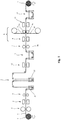
- FIG. 1 a schematic representation of an apparatus for carrying out the method according to the invention for the production of galvanized fine or Feinstblech shows.
- the starting material for the process according to the invention is a hot-rolled and unalloyed or low-alloy steel strip with a low carbon content of, for example, 20 to 900 ppm.
- the alloy components of the steel suitably meet the requirements of the international standard ASTM A 623-11 (Standard Specification for Tin Mill Products), whereby a use of the sheets produced according to the invention for the production of food packaging is ensured.
- ASTM A 623-11 Standard Specification for Tin Mill Products
- all steel grades which have a composition suitable for the production of fine or superfine sheets can be used for the method according to the invention.
- the hot-rolled steel strip is first pickled in a (not shown) pickling plant, then rinsed and dried and then cold-rolled in a cold rolling device 6.
- the steel strip 1 is moved as an endless belt by a transport device 7 with a transport speed of preferably more than 200 m / min and up to 750 m / min through the cold rolling device 6 and there to a thickness of less than 1.0 mm (sheet ) and preferably rolled to thicknesses of 0.1 to 0.5 mm (Feinstblech).
- the cold rolling device 6 is expediently a Kaltwalztandemstrasse with scaffolds, each carrying four superposed rollers, depending on a large support roller outside and two smaller work rolls inside, between which the steel strip with the Passes through transport speed.
- the roll gap is lubricated with a lubricant, for example. Oil, and the steel strip and the rollers are cooled with water.
- the steel strip 1 - as in FIG. 1 shown schematically - first passed through a continuous annealing furnace 3, in which the steel strip is heated to temperatures of 550 ° C to 700 ° C to recrystallize the steel strip to anneal.
- the recrystallizing annealing reestablishes the formability of the cold rolled steel strip.
- the steel strip may be dressed or regrooved in a post-mill 9, if required to achieve a smaller thickness.
- Strip coater 2 shown schematically is a strip galvanizing plant for the electrolytic galvanizing of sheet steel.
- This comprises a pretreatment device 10, in which the cold-rolled fine or very fine sheet is degreased, pickled and rinsed, and a coating device 11, in which it is then galvanically coated with zinc.
- the moving with the belt speed through the belt coater 2 steel strip 1 is passed through a zinc-containing electrolyte and connected there as a cathode and passed between two rows of zinc anodes.
- the zinc of the anodes is dissolved and deposited on the steel strip as a zinc coating.
- the zinc can be applied in any thickness and, if necessary, on both sides of the steel strip.
- the thickness of the applied tin layer is regularly between 1.0 g / m 2 and 15 g / m 2 .
- the strip coater 2 is followed in the strip running direction by a melting device 12, in which the zinc coating deposited on the steel strip is heated to temperatures above the melting temperature of the zinc (419.5 ° C.) in order to melt the deposited coating. Melting produces a glossy surface of the zinc coating and increases the corrosion resistance of the galvanized steel strip.
- the melting device 12 is adjoined by a cooling device 13, in which the molten zinc coating is quenched at a high cooling rate.
- the rolling device 5 has at least one pair of temper rolling rollers 5a, which form a gap through which the zinc-coated steel strip is conveyed at the transport speed.
- the temper rolling rollers 5a exert a rolling force expediently in the region of 500 t on the steel strip 1. Due to the pressure of the temper rolling rollers 5a on the steel strip, a temper rolling of the zinc-coated surface of the steel strip 1 takes place. In this temper rolling step, skin passages of 0.1 to 2.0% are achieved.
- the temper rolling rollers 5a are smooth, in particular finely ground or polished hard-surface rolls, which are expediently cooled and optionally moistened with water or steam or other wet-coating agents.
- the surface of the temper rolling rollers 5a may be provided with a fine structure by sandblasting, which is capable of giving the substrate a desired roughness or texturing.
- temper rolling is to densify and level the surface of the zinc coating.
- the applied zinc layer can be positively influenced by the coating step, both in terms of their brilliance and in terms of corrosion resistance and the tendency to oxidation.
- the temper rolling on the surface occurring zinc “buds” are leveled.
- any occurring zinc oxide is sufficiently removed from the galvanized surface. It is achieved by a high-gloss surface, which is particularly desirable in the packaging sector.
- the structuring of the zinc surface is very fine after the temper rolling and does not affect the gloss, but provides a good primer for the later to be applied organic layers, such as paints or polymer coatings.
- the leveled and textured surface slows down the formation of zinc oxides.
- This allows storage of the galvanized steel strips after galvanizing to their further processing by painting or plastic coating, without a Passivation or conversion treatment of the galvanized surface of the steel strip would be required. It has been shown that the galvanized steel strips can be easily stored over a period of up to six months, without forming an oxide layer on the zinc surface, which would be disturbing during the subsequent coating or coating with a polymer layer.
- the galvanized steel strip 1 can optionally be rolled by further pairs of rolls of the rolling device 5, in order to further reduce the thickness of the cold rolled steel strip 1, if necessary.
- This optional rolling step is a cold rolling step which is performed before skin pass rolling and which achieves re-rolling levels of up to 50%, preferably 4-45%.
- the temper rolled steel strip 1 is then guided at the belt speed in a plastic coating device 8.
- a polymer coating is applied to one or both sides of the galvanized steel strip.
- the steel strip is first heated in a heating device 4, which may be formed, for example, as induction heating or as infrared or microwave heating, to temperatures which are above the melting temperature of the polymer material of the polymer coating.
- the polymer material is preferably PET (having a melting point of approximately between 235 and 260 ° C., depending on the degree of crystallization and the degree of polymerization) or PP (having a melting temperature of approximately 160 ° C.) or else PE (having a melting temperature from approx. 130 - 145 ° C).
- the heated steel strip is supplied in the plastic coating device 8 on one or both sides of a film 16 of the polymer material (PET or PP film) and pressed by means of laminating rollers 8a to the surface of the zinc coating. Due to the temperature of the heated steel strip, at least the part of the polymer film 16 resting against the surface of the zinc coating thereby melts and thereby adheres to the surface of the zinc coating which is finely structured by the temper rolling.
- PET polymer material
- the polymer coating is expediently melted (completely) and then melted in a cooling device 15 (for example a water bath). quenched to a temperature below the glass transition point. As a result, an amorphous structure is formed in the polyethylene terephthalate or a minimum crystalline structure in the polypropylene.
- the melting of the polymer coating is carried out particularly expedient as in the patent DE 10130005 B4 described, or - as here in FIG. 1
- the quenching in the cooling device 15 can be carried out, for example, by air cooling or by immersing the steel strip in a tank with cooling liquid.
- the coated steel strip 1 is wound up by the transport device 7 onto a roll.
- the steel strips produced according to the invention are distinguished by high corrosion resistance, which is achieved by the metallic corrosion protection layer made of zinc and the polymer coating.
- the combination of these anticorrosive layers is particularly advantageous because even with any pores in the polymer coating, the underlying zinc layer still provides sufficient (electrochemical) corrosion protection.
- the cut edges not covered by the polymer coating are protected from corrosion by the long-distance protective action of the zinc coating.
- the steel strips produced according to the invention are further distinguished by a very good adhesion of the polymer coating to the zinc layer, which is achieved even without adhesion promoters or additional adhesive layers by the temper rolling of the surface of the zinc coating. Due to the surface properties of the zinc coating after the skin pass rolling can be dispensed with a usual passivation or a conversion coating after galvanizing the steel strip.
- the steel strips produced according to the invention are suitable for the production of packaging containers, in particular for food, such as, for example, two-part cans (deep-drawn and stretched, DWI cans). It is also possible to manufacture parts of such packaging containers from the steel strips produced according to the invention, such as flap bands, valve plates, can covers and cover rings. In addition, the inventive method can also be used for the production of steel sheets for use in other areas, such as for the production of sheets for the construction sector.
- the invention is not limited to the embodiment described.
- the Nachwalz intimide in the Nachwalzwerk 9 or with the other pairs of rollers of the rolling device 5 can be omitted.
- the polymer coating may also be applied to the zinc coating by other than laminating methods.
- a molten polymer material can be applied to the zinc coating, as described in the patent DE 197 30 893-C1 is described.
- an additional corrosion barrier can also be applied to the steel strip by coating the zinc-coated and tempered surface with an organic lacquer on one or both sides.
- lacquers examples include phenolic resin lacquers, such as epoxy-phenolic lacquer (gold lacquer), polyester lacquers and acrylic resin lacquers, such as white lacquer based on polyacrylates or polyesters, and also PVC and epoxy-anhydride lacquers. Preference is given to using BPA-free and solvent-free (water-based) lacquers.
Landscapes
- Chemical & Material Sciences (AREA)
- Engineering & Computer Science (AREA)
- Metallurgy (AREA)
- Organic Chemistry (AREA)
- Materials Engineering (AREA)
- Electrochemistry (AREA)
- Chemical Kinetics & Catalysis (AREA)
- Physics & Mathematics (AREA)
- Thermal Sciences (AREA)
- Crystallography & Structural Chemistry (AREA)
- Mechanical Engineering (AREA)
- Other Surface Treatments For Metallic Materials (AREA)
- Laminated Bodies (AREA)
- Coating With Molten Metal (AREA)
- Electroplating Methods And Accessories (AREA)
Claims (15)
- Procédé servant à fabriquer une tôle zinguée fine ou extra-fine avec une résistance à la corrosion élevée servant à fabriquer des emballages, avecles étapes qui suivent consistant à :- fournir un feuillard d'acier laminé à chaud et laminer à froid le feuillard d'acier à une épaisseur inférieure à 1 mm,- revêtir de manière galvanique de zinc le feuillard d'acier (1) laminé à froid,- dresser par laminage la surface revêtue de zinc du feuillard d'acier (1),- appliquer d'un côté ou des deux côtés un revêtement polymère ou un vernis organique sur la surface revêtue de zinc du feuillard d'acier (1).
- Procédé selon la revendication 1, dans lequel le feuillard d'acier laminé à chaud est laminé à froid avant le revêtement avec du zinc pour établir son épaisseur initiale à une épaisseur de 0,1 à 0,5 mm.
- Procédé selon la revendication 1 ou 2, dans lequel le feuillard d'acier (1) est composé d'un acier pauvre en carbone et non allié ou faiblement allié, dans lequel la teneur en carbone est inférieure à 0,1 % en poids et est comprise de manière préférée entre 20 et 900 ppm.
- Procédé selon l'une quelconque des revendications précédentes, caractérisé en ce qu'un degré de dressage de 0,5 - 2,0 % est obtenu lors du laminage par dressage.
- Procédé selon l'une quelconque des revendications précédentes, dans lequel la quantité appliquée du revêtement de zinc est inférieure à 15 g/m2.
- Procédé selon l'une quelconque des revendications précédentes, dans lequel une étape de laminage à froid supplémentaire est effectuée avant le laminage par dressage, dans lequel de manière préférée un degré de laminage de 4 - 45 % est atteint.
- Procédé selon la revendication 6, caractérisé en ce que le feuillard d'acier zingué présente, après l'étape de laminage ultérieure, une solidité Rm = 300 à 1000 MPa et en particulier Rm = 400 à 650 MPa.
- Procédé selon l'une quelconque des revendications précédentes, caractérisé en ce que le feuillard d'acier zingué présente un allongement à la rupture de 1 à 40 % et en particulier de 5 à 25 %.
- Procédé selon l'une quelconque des revendications précédentes, dans lequel après le laminage à froid, le feuillard d'acier (1) est recuit avec une action de recristallisation, ce dernier étant chauffé à cet effet par induction à des températures entre 550 °C et 800 °C.
- Procédé selon l'une quelconque des revendications précédentes, caractérisé en ce que le revêtement polymère est appliqué par laminage sur le feuillard d'acier (1), dans lequel le feuillard d'acier (1) est maintenu, au cours de l'application par laminage du revêtement polymère, à des températures supérieures à la température de fusion (Tm) du matériau polymère.
- Procédé selon l'une quelconque des revendications précédentes, caractérisé en ce que le matériau polymère du revêtement polymère est un polytéréphtalate d'éthylène (PET) ou du polypropylène (PP) ou du polyéthylène (PE).
- Procédé selon l'une quelconque des revendications précédentes, caractérisé en ce que le revêtement polymère est appliqué directement après le laminage par dressage sur le feuillard d'acier (1) sans passivation préalable, sans revêtement adhésif ou de conversion de la surface de feuillard d'acier.
- Procédé selon l'une quelconque des revendications précédentes, caractérisé en ce que la surface revêtue de zinc du feuillard d'acier (1) présente après le laminage par dressage une rugosité moyenne Ra = 0,01 à 0,1 µm.
- Procédé selon l'une quelconque des revendications précédentes, caractérisé en ce que le procédé ou la tôle fabriquée est sans solvant, sans chrome et/ou sans bisphénol A (BPA).
- Dispositif servant à mettre en oeuvre le procédé selon l'une quelconque des revendications 1 à 14, comprenant- un système de transport (7) servant au transport en continu d'un feuillard d'acier (1) sans fin dans une direction de transport à une vitesse de transport, qui est de manière préférée supérieure à 200 m/min,- un système de laminage à froid (6) servant à laminer à froid le feuillard d'acier (1) déplacé à la vitesse de transport par le système de laminage à froid à une épaisseur inférieure à 1 mm,- un système de revêtement (11) servant à revêtir de manière galvanique de zinc le feuillard d'acier (1) déplacé à la vitesse de transport par le système de revêtement,- un système de laminage (5) avec des cylindres de dressage (5a) servant à dresser la surface zinguée du feuillard d'acier (1) déplacé à la vitesse de transport à travers le système de laminage,- un système de chauffage (4) servant à chauffer le feuillard d'acier (1) déplacé à la vitesse de transport à travers le système de chauffage,- un système de revêtement de matière synthétique (8) servant à appliquer d'un côté ou des deux côtés un revêtement polymère ou un vernis organique sur la surface revêtue de zinc du feuillard d'acier (1).
Priority Applications (2)
| Application Number | Priority Date | Filing Date | Title |
|---|---|---|---|
| RS20180885A RS57558B1 (sr) | 2013-01-25 | 2013-09-25 | Postupak za proizvodnju pocinkovanih finih ili ultrafinih limova visoke otpornosti na koroziju |
| PL13771437T PL2948302T3 (pl) | 2013-01-25 | 2013-09-25 | Sposób wytwarzania cynkowanej blachy cienkiej lub bardzo cienkiej o wysokiej odporności na korozję |
Applications Claiming Priority (2)
| Application Number | Priority Date | Filing Date | Title |
|---|---|---|---|
| DE102013100730.9A DE102013100730B3 (de) | 2013-01-25 | 2013-01-25 | Verfahren und Vorrichtung zum Herstellen von verzinktem Fein- oder Feinstblech mit hoher Korrosionsbeständigkeit sowie Verwendung des verzinkten Fein- oder Feinstblechs |
| PCT/EP2013/069956 WO2014114370A1 (fr) | 2013-01-25 | 2013-09-25 | Procédé de fabrication de tôle zinguée fine ou extra fine à haute résistance à la corrosion |
Publications (2)
| Publication Number | Publication Date |
|---|---|
| EP2948302A1 EP2948302A1 (fr) | 2015-12-02 |
| EP2948302B1 true EP2948302B1 (fr) | 2018-05-16 |
Family
ID=49301458
Family Applications (1)
| Application Number | Title | Priority Date | Filing Date |
|---|---|---|---|
| EP13771437.4A Not-in-force EP2948302B1 (fr) | 2013-01-25 | 2013-09-25 | Procédé de fabrication de tôle zinguée fine ou extra fine à haute résistance à la corrosion |
Country Status (9)
| Country | Link |
|---|---|
| EP (1) | EP2948302B1 (fr) |
| CA (1) | CA2916430C (fr) |
| DE (1) | DE102013100730B3 (fr) |
| ES (1) | ES2675587T3 (fr) |
| PL (1) | PL2948302T3 (fr) |
| PT (1) | PT2948302T (fr) |
| RS (1) | RS57558B1 (fr) |
| TR (1) | TR201809605T4 (fr) |
| WO (1) | WO2014114370A1 (fr) |
Families Citing this family (11)
| Publication number | Priority date | Publication date | Assignee | Title |
|---|---|---|---|---|
| DE102014017492A1 (de) * | 2014-11-27 | 2016-06-02 | Thyssenkrupp Ag | Halbzeug, Verfahren zum Herstellen eines Halbzeugs sowie dessen Verwendung |
| MX2019001647A (es) * | 2016-08-10 | 2019-07-01 | Swimc Llc | Mejora del rendimiento de la acumulación de borde y la formación de burbujas de borde de los revestimientos de bobina. |
| WO2020182538A1 (fr) * | 2019-03-14 | 2020-09-17 | Tata Steel Ijmuiden B.V. | Produit d'acier stratifié |
| DE102019118578A1 (de) * | 2019-07-09 | 2021-01-14 | Thyssenkrupp Steel Europe Ag | Verfahren zum Herstellen eines Blechproduktes und Blechprodukt |
| CN110318013B (zh) * | 2019-07-19 | 2021-07-09 | 首钢京唐钢铁联合有限责任公司 | 一种热镀锌带钢的生产方法 |
| CN110396686B (zh) * | 2019-07-25 | 2022-05-20 | 首钢集团有限公司 | 一种提高钝化膜镀层钢耐腐蚀性能的方法 |
| DE102020200326A1 (de) | 2020-01-13 | 2021-07-15 | Thyssenkrupp Steel Europe Ag | Verfahren zur Herstellung eines oberflächenveredelten und oberflächenkonditionierten Stahlblechs |
| CN113106368A (zh) * | 2020-12-31 | 2021-07-13 | 鞍钢冷轧钢板(莆田)有限公司 | 一种热镀锌板生产方法 |
| DE102021200229A1 (de) | 2021-01-13 | 2022-07-14 | Thyssenkrupp Steel Europe Ag | Verfahren zur Herstellung eines elektrolytisch beschichteten Stahlblechs |
| DE102021121303A1 (de) | 2021-08-17 | 2023-02-23 | Thyssenkrupp Steel Europe Ag | Verfahren zum Herstellen einer lasertexturierten Dressierwalze, Verfahren zum Dressieren eines Stahlblechs und entsprechend dressiertes Stahlblech |
| CN115725938A (zh) * | 2022-11-25 | 2023-03-03 | 江苏华久辐条制造有限公司 | 一种强耐腐蚀防锈的自行车辐条 |
Family Cites Families (5)
| Publication number | Priority date | Publication date | Assignee | Title |
|---|---|---|---|---|
| GB2303330B (en) * | 1995-07-21 | 1999-09-08 | British Steel Plc | Improvements in and relating to laminated tin mill products and methods of producing the same |
| DE19730893C1 (de) * | 1997-05-02 | 1998-07-23 | Rasselstein Hoesch Gmbh | Verfahren und Vorrichtung zur Kunststoffbeschichtung von Metallband mittels Direkt-Extrusion |
| DE10130005B4 (de) * | 2001-06-25 | 2004-12-23 | Rasselstein Gmbh | Verfahren zur Beschichtung der Oberfläche eines Metallbandes mit einem Kunststoffilm und Verwendung eines nach dem Verfahren hergestellten Laminats |
| JP4256721B2 (ja) * | 2003-05-21 | 2009-04-22 | 新日本製鐵株式会社 | シルバーメタリック調意匠性めっき鋼板の製造方法 |
| JP6227410B2 (ja) * | 2010-08-30 | 2017-11-08 | エイケイ・スチール・プロパティーズ・インコーポレイテッドAK Steel Properties, Inc. | 磨かれたステンレス鋼様仕上げを有するテクスチャのある炭素鋼を製造するプロセス |
-
2013
- 2013-01-25 DE DE102013100730.9A patent/DE102013100730B3/de not_active Expired - Fee Related
- 2013-09-25 CA CA2916430A patent/CA2916430C/fr active Active
- 2013-09-25 WO PCT/EP2013/069956 patent/WO2014114370A1/fr not_active Ceased
- 2013-09-25 ES ES13771437.4T patent/ES2675587T3/es active Active
- 2013-09-25 RS RS20180885A patent/RS57558B1/sr unknown
- 2013-09-25 EP EP13771437.4A patent/EP2948302B1/fr not_active Not-in-force
- 2013-09-25 TR TR2018/09605T patent/TR201809605T4/tr unknown
- 2013-09-25 PL PL13771437T patent/PL2948302T3/pl unknown
- 2013-09-25 PT PT137714374T patent/PT2948302T/pt unknown
Non-Patent Citations (1)
| Title |
|---|
| None * |
Also Published As
| Publication number | Publication date |
|---|---|
| TR201809605T4 (tr) | 2018-07-23 |
| RS57558B1 (sr) | 2018-10-31 |
| CA2916430C (fr) | 2019-04-23 |
| PT2948302T (pt) | 2018-07-09 |
| PL2948302T3 (pl) | 2018-10-31 |
| EP2948302A1 (fr) | 2015-12-02 |
| ES2675587T3 (es) | 2018-07-11 |
| CA2916430A1 (fr) | 2014-07-31 |
| WO2014114370A1 (fr) | 2014-07-31 |
| DE102013100730B3 (de) | 2014-06-05 |
Similar Documents
| Publication | Publication Date | Title |
|---|---|---|
| EP2948302B1 (fr) | Procédé de fabrication de tôle zinguée fine ou extra fine à haute résistance à la corrosion | |
| DE102013109801B4 (de) | Mit einer Polymerbeschichtung beschichtetes Weißblech und Verfahren zu dessen Herstellung | |
| CN106795575B (zh) | 冷轧并重结晶退火的扁钢产品及其制造方法 | |
| EP3215656B1 (fr) | Procédé de production d'un revêtement anti-corrosion pour tôles d'acier trempables et revêtement anti-corrosion pour tôles d'acier trempables | |
| US9382636B2 (en) | Process for producing an iron-tin layer on a packaging steel substrate | |
| WO2012085248A2 (fr) | Procédé de formage et de durcissement de tôles d'acier revêtues | |
| EP2826569B1 (fr) | Procédé de passivation de tôle noire en forme de bande | |
| DD277048A5 (de) | Verfahren und vorrichtung zur herstellung von schichtstoffen | |
| EP2955238B1 (fr) | Procédé de fabrication d'un acier aluminé pour emballage | |
| DE102012024616A1 (de) | Stahlblech und Formteil daraus | |
| EP2540867A1 (fr) | Tôle d'acier traitée en surface, procédé de fabrication de cette dernière et tôle d'acier recouverte de résine utilisant cette dernière | |
| DE102015202642A1 (de) | Verfahren zum Herstellen eines Erzeugnisses aus gewalztem Bandmaterial | |
| EP2802688A2 (fr) | Procédé de passivation de fer blanc | |
| WO2015185072A2 (fr) | Tôle en acier composite | |
| EP3133187B1 (fr) | Procede de traitement thermique d'une tole noire revetue d'une couche de conversion | |
| DE3925141C2 (de) | Verfahren zur Herstellung von Gegenständen, insbesondere Dosen aus oberflächenbehandeltem Stahlblech | |
| EP3583239A1 (fr) | Procédé de fabrication de tôles d'acier, tôle d'acier et son utilisation | |
| DE102017108403B4 (de) | Verfahren zum Beschichten eines Stahlbands | |
| WO2018153755A1 (fr) | Procédé de revêtement de tôles d'acier ou de bandes d'acier et procédé de fabrication d'éléments trempés à la presse à partir desdites tôles ou bandes | |
| JP5673389B2 (ja) | 酸性飲料用3ピースリシール缶 | |
| DE2922789A1 (de) | Beschichteter stahl | |
| EP2684688B1 (fr) | Procédé de fabrication d'un substrat revêtu d'un polymère pour applications d'emballage et substrat revêtu d'un polymère ainsi obtenu | |
| JP2012036424A (ja) | 表面処理鋼板の製造方法および樹脂被覆鋼板の製造方法 | |
| DE2120195A1 (de) | Verfahren zum Aufbringen von Überzügen aus polymeren organischen Stoffen auf Stahl |
Legal Events
| Date | Code | Title | Description |
|---|---|---|---|
| PUAI | Public reference made under article 153(3) epc to a published international application that has entered the european phase |
Free format text: ORIGINAL CODE: 0009012 |
|
| 17P | Request for examination filed |
Effective date: 20150825 |
|
| AK | Designated contracting states |
Kind code of ref document: A1 Designated state(s): AL AT BE BG CH CY CZ DE DK EE ES FI FR GB GR HR HU IE IS IT LI LT LU LV MC MK MT NL NO PL PT RO RS SE SI SK SM TR |
|
| AX | Request for extension of the european patent |
Extension state: BA ME |
|
| DAX | Request for extension of the european patent (deleted) | ||
| GRAP | Despatch of communication of intention to grant a patent |
Free format text: ORIGINAL CODE: EPIDOSNIGR1 |
|
| INTG | Intention to grant announced |
Effective date: 20180216 |
|
| GRAS | Grant fee paid |
Free format text: ORIGINAL CODE: EPIDOSNIGR3 |
|
| GRAA | (expected) grant |
Free format text: ORIGINAL CODE: 0009210 |
|
| AK | Designated contracting states |
Kind code of ref document: B1 Designated state(s): AL AT BE BG CH CY CZ DE DK EE ES FI FR GB GR HR HU IE IS IT LI LT LU LV MC MK MT NL NO PL PT RO RS SE SI SK SM TR |
|
| REG | Reference to a national code |
Ref country code: GB Ref legal event code: FG4D Free format text: NOT ENGLISH |
|
| REG | Reference to a national code |
Ref country code: CH Ref legal event code: EP Ref country code: CH Ref legal event code: NV Representative=s name: LUCHS AND PARTNER AG PATENTANWAELTE, CH |
|
| REG | Reference to a national code |
Ref country code: DE Ref legal event code: R096 Ref document number: 502013010165 Country of ref document: DE |
|
| REG | Reference to a national code |
Ref country code: IE Ref legal event code: FG4D Free format text: LANGUAGE OF EP DOCUMENT: GERMAN |
|
| REG | Reference to a national code |
Ref country code: AT Ref legal event code: REF Ref document number: 999167 Country of ref document: AT Kind code of ref document: T Effective date: 20180615 |
|
| REG | Reference to a national code |
Ref country code: PT Ref legal event code: SC4A Ref document number: 2948302 Country of ref document: PT Date of ref document: 20180709 Kind code of ref document: T Free format text: AVAILABILITY OF NATIONAL TRANSLATION Effective date: 20180703 |
|
| REG | Reference to a national code |
Ref country code: ES Ref legal event code: FG2A Ref document number: 2675587 Country of ref document: ES Kind code of ref document: T3 Effective date: 20180711 |
|
| REG | Reference to a national code |
Ref country code: NL Ref legal event code: FP |
|
| REG | Reference to a national code |
Ref country code: FR Ref legal event code: PLFP Year of fee payment: 6 |
|
| REG | Reference to a national code |
Ref country code: NO Ref legal event code: T2 Effective date: 20180516 |
|
| REG | Reference to a national code |
Ref country code: LT Ref legal event code: MG4D |
|
| PG25 | Lapsed in a contracting state [announced via postgrant information from national office to epo] |
Ref country code: SE Free format text: LAPSE BECAUSE OF FAILURE TO SUBMIT A TRANSLATION OF THE DESCRIPTION OR TO PAY THE FEE WITHIN THE PRESCRIBED TIME-LIMIT Effective date: 20180516 Ref country code: FI Free format text: LAPSE BECAUSE OF FAILURE TO SUBMIT A TRANSLATION OF THE DESCRIPTION OR TO PAY THE FEE WITHIN THE PRESCRIBED TIME-LIMIT Effective date: 20180516 Ref country code: LT Free format text: LAPSE BECAUSE OF FAILURE TO SUBMIT A TRANSLATION OF THE DESCRIPTION OR TO PAY THE FEE WITHIN THE PRESCRIBED TIME-LIMIT Effective date: 20180516 |
|
| PGFP | Annual fee paid to national office [announced via postgrant information from national office to epo] |
Ref country code: NO Payment date: 20180920 Year of fee payment: 6 Ref country code: IT Payment date: 20180921 Year of fee payment: 6 Ref country code: LU Payment date: 20180920 Year of fee payment: 6 Ref country code: FR Payment date: 20180921 Year of fee payment: 6 |
|
| PG25 | Lapsed in a contracting state [announced via postgrant information from national office to epo] |
Ref country code: HR Free format text: LAPSE BECAUSE OF FAILURE TO SUBMIT A TRANSLATION OF THE DESCRIPTION OR TO PAY THE FEE WITHIN THE PRESCRIBED TIME-LIMIT Effective date: 20180516 Ref country code: LV Free format text: LAPSE BECAUSE OF FAILURE TO SUBMIT A TRANSLATION OF THE DESCRIPTION OR TO PAY THE FEE WITHIN THE PRESCRIBED TIME-LIMIT Effective date: 20180516 |
|
| PGFP | Annual fee paid to national office [announced via postgrant information from national office to epo] |
Ref country code: NL Payment date: 20180920 Year of fee payment: 6 Ref country code: PL Payment date: 20180917 Year of fee payment: 6 Ref country code: BE Payment date: 20180920 Year of fee payment: 6 Ref country code: GR Payment date: 20180924 Year of fee payment: 6 Ref country code: GB Payment date: 20180924 Year of fee payment: 6 Ref country code: CH Payment date: 20180924 Year of fee payment: 6 Ref country code: AT Payment date: 20180918 Year of fee payment: 6 Ref country code: RS Payment date: 20180912 Year of fee payment: 6 Ref country code: BG Payment date: 20180921 Year of fee payment: 6 Ref country code: TR Payment date: 20180917 Year of fee payment: 6 |
|
| REG | Reference to a national code |
Ref country code: SK Ref legal event code: T3 Ref document number: E 28125 Country of ref document: SK |
|
| PGFP | Annual fee paid to national office [announced via postgrant information from national office to epo] |
Ref country code: PT Payment date: 20180912 Year of fee payment: 6 |
|
| REG | Reference to a national code |
Ref country code: GR Ref legal event code: EP Ref document number: 20180402046 Country of ref document: GR Effective date: 20190109 |
|
| PG25 | Lapsed in a contracting state [announced via postgrant information from national office to epo] |
Ref country code: RO Free format text: LAPSE BECAUSE OF FAILURE TO SUBMIT A TRANSLATION OF THE DESCRIPTION OR TO PAY THE FEE WITHIN THE PRESCRIBED TIME-LIMIT Effective date: 20180516 Ref country code: CZ Free format text: LAPSE BECAUSE OF FAILURE TO SUBMIT A TRANSLATION OF THE DESCRIPTION OR TO PAY THE FEE WITHIN THE PRESCRIBED TIME-LIMIT Effective date: 20180516 Ref country code: DK Free format text: LAPSE BECAUSE OF FAILURE TO SUBMIT A TRANSLATION OF THE DESCRIPTION OR TO PAY THE FEE WITHIN THE PRESCRIBED TIME-LIMIT Effective date: 20180516 Ref country code: EE Free format text: LAPSE BECAUSE OF FAILURE TO SUBMIT A TRANSLATION OF THE DESCRIPTION OR TO PAY THE FEE WITHIN THE PRESCRIBED TIME-LIMIT Effective date: 20180516 |
|
| PGFP | Annual fee paid to national office [announced via postgrant information from national office to epo] |
Ref country code: DE Payment date: 20181115 Year of fee payment: 6 Ref country code: SK Payment date: 20180912 Year of fee payment: 6 |
|
| REG | Reference to a national code |
Ref country code: DE Ref legal event code: R097 Ref document number: 502013010165 Country of ref document: DE |
|
| PG25 | Lapsed in a contracting state [announced via postgrant information from national office to epo] |
Ref country code: SM Free format text: LAPSE BECAUSE OF FAILURE TO SUBMIT A TRANSLATION OF THE DESCRIPTION OR TO PAY THE FEE WITHIN THE PRESCRIBED TIME-LIMIT Effective date: 20180516 |
|
| PGFP | Annual fee paid to national office [announced via postgrant information from national office to epo] |
Ref country code: ES Payment date: 20181024 Year of fee payment: 6 |
|
| PLBE | No opposition filed within time limit |
Free format text: ORIGINAL CODE: 0009261 |
|
| STAA | Information on the status of an ep patent application or granted ep patent |
Free format text: STATUS: NO OPPOSITION FILED WITHIN TIME LIMIT |
|
| 26N | No opposition filed |
Effective date: 20190219 |
|
| PG25 | Lapsed in a contracting state [announced via postgrant information from national office to epo] |
Ref country code: MC Free format text: LAPSE BECAUSE OF FAILURE TO SUBMIT A TRANSLATION OF THE DESCRIPTION OR TO PAY THE FEE WITHIN THE PRESCRIBED TIME-LIMIT Effective date: 20180516 |
|
| PG25 | Lapsed in a contracting state [announced via postgrant information from national office to epo] |
Ref country code: SI Free format text: LAPSE BECAUSE OF FAILURE TO SUBMIT A TRANSLATION OF THE DESCRIPTION OR TO PAY THE FEE WITHIN THE PRESCRIBED TIME-LIMIT Effective date: 20180516 |
|
| REG | Reference to a national code |
Ref country code: IE Ref legal event code: MM4A |
|
| PG25 | Lapsed in a contracting state [announced via postgrant information from national office to epo] |
Ref country code: IE Free format text: LAPSE BECAUSE OF NON-PAYMENT OF DUE FEES Effective date: 20180925 |
|
| PG25 | Lapsed in a contracting state [announced via postgrant information from national office to epo] |
Ref country code: AL Free format text: LAPSE BECAUSE OF FAILURE TO SUBMIT A TRANSLATION OF THE DESCRIPTION OR TO PAY THE FEE WITHIN THE PRESCRIBED TIME-LIMIT Effective date: 20180516 |
|
| PG25 | Lapsed in a contracting state [announced via postgrant information from national office to epo] |
Ref country code: MT Free format text: LAPSE BECAUSE OF FAILURE TO SUBMIT A TRANSLATION OF THE DESCRIPTION OR TO PAY THE FEE WITHIN THE PRESCRIBED TIME-LIMIT Effective date: 20180516 |
|
| REG | Reference to a national code |
Ref country code: DE Ref legal event code: R119 Ref document number: 502013010165 Country of ref document: DE |
|
| REG | Reference to a national code |
Ref country code: NO Ref legal event code: MMEP |
|
| REG | Reference to a national code |
Ref country code: NL Ref legal event code: MM Effective date: 20191001 |
|
| REG | Reference to a national code |
Ref country code: CH Ref legal event code: PL |
|
| REG | Reference to a national code |
Ref country code: SK Ref legal event code: MM4A Ref document number: E 28125 Country of ref document: SK Effective date: 20190925 |
|
| PG25 | Lapsed in a contracting state [announced via postgrant information from national office to epo] |
Ref country code: CY Free format text: LAPSE BECAUSE OF FAILURE TO SUBMIT A TRANSLATION OF THE DESCRIPTION OR TO PAY THE FEE WITHIN THE PRESCRIBED TIME-LIMIT Effective date: 20180516 Ref country code: MK Free format text: LAPSE BECAUSE OF NON-PAYMENT OF DUE FEES Effective date: 20180516 Ref country code: HU Free format text: LAPSE BECAUSE OF FAILURE TO SUBMIT A TRANSLATION OF THE DESCRIPTION OR TO PAY THE FEE WITHIN THE PRESCRIBED TIME-LIMIT; INVALID AB INITIO Effective date: 20130925 |
|
| PG25 | Lapsed in a contracting state [announced via postgrant information from national office to epo] |
Ref country code: NO Free format text: LAPSE BECAUSE OF NON-PAYMENT OF DUE FEES Effective date: 20190930 Ref country code: DE Free format text: LAPSE BECAUSE OF NON-PAYMENT OF DUE FEES Effective date: 20200401 Ref country code: LI Free format text: LAPSE BECAUSE OF NON-PAYMENT OF DUE FEES Effective date: 20190930 Ref country code: GR Free format text: LAPSE BECAUSE OF NON-PAYMENT OF DUE FEES Effective date: 20200416 Ref country code: CH Free format text: LAPSE BECAUSE OF NON-PAYMENT OF DUE FEES Effective date: 20190930 Ref country code: PT Free format text: LAPSE BECAUSE OF NON-PAYMENT OF DUE FEES Effective date: 20200428 Ref country code: RS Free format text: LAPSE BECAUSE OF NON-PAYMENT OF DUE FEES Effective date: 20190925 Ref country code: NL Free format text: LAPSE BECAUSE OF NON-PAYMENT OF DUE FEES Effective date: 20191001 Ref country code: LU Free format text: LAPSE BECAUSE OF NON-PAYMENT OF DUE FEES Effective date: 20190925 Ref country code: IS Free format text: LAPSE BECAUSE OF FAILURE TO SUBMIT A TRANSLATION OF THE DESCRIPTION OR TO PAY THE FEE WITHIN THE PRESCRIBED TIME-LIMIT Effective date: 20180916 |
|
| REG | Reference to a national code |
Ref country code: BE Ref legal event code: MM Effective date: 20190930 |
|
| REG | Reference to a national code |
Ref country code: AT Ref legal event code: MM01 Ref document number: 999167 Country of ref document: AT Kind code of ref document: T Effective date: 20190925 |
|
| PG25 | Lapsed in a contracting state [announced via postgrant information from national office to epo] |
Ref country code: IT Free format text: LAPSE BECAUSE OF NON-PAYMENT OF DUE FEES Effective date: 20190925 Ref country code: SK Free format text: LAPSE BECAUSE OF NON-PAYMENT OF DUE FEES Effective date: 20190925 Ref country code: BG Free format text: LAPSE BECAUSE OF NON-PAYMENT OF DUE FEES Effective date: 20200531 Ref country code: BE Free format text: LAPSE BECAUSE OF NON-PAYMENT OF DUE FEES Effective date: 20190930 |
|
| GBPC | Gb: european patent ceased through non-payment of renewal fee |
Effective date: 20190925 |
|
| PG25 | Lapsed in a contracting state [announced via postgrant information from national office to epo] |
Ref country code: FR Free format text: LAPSE BECAUSE OF NON-PAYMENT OF DUE FEES Effective date: 20190930 Ref country code: GB Free format text: LAPSE BECAUSE OF NON-PAYMENT OF DUE FEES Effective date: 20190925 |
|
| PG25 | Lapsed in a contracting state [announced via postgrant information from national office to epo] |
Ref country code: AT Free format text: LAPSE BECAUSE OF NON-PAYMENT OF DUE FEES Effective date: 20190925 |
|
| REG | Reference to a national code |
Ref country code: ES Ref legal event code: FD2A Effective date: 20210129 |
|
| PG25 | Lapsed in a contracting state [announced via postgrant information from national office to epo] |
Ref country code: ES Free format text: LAPSE BECAUSE OF NON-PAYMENT OF DUE FEES Effective date: 20190926 |
|
| PG25 | Lapsed in a contracting state [announced via postgrant information from national office to epo] |
Ref country code: PL Free format text: LAPSE BECAUSE OF NON-PAYMENT OF DUE FEES Effective date: 20190925 |
|
| PG25 | Lapsed in a contracting state [announced via postgrant information from national office to epo] |
Ref country code: TR Free format text: LAPSE BECAUSE OF NON-PAYMENT OF DUE FEES Effective date: 20190925 |