EP2949218A1 - Verfahren zur Herstellung keimarmer Milchprodukte - Google Patents
Verfahren zur Herstellung keimarmer Milchprodukte Download PDFInfo
- Publication number
- EP2949218A1 EP2949218A1 EP14170229.0A EP14170229A EP2949218A1 EP 2949218 A1 EP2949218 A1 EP 2949218A1 EP 14170229 A EP14170229 A EP 14170229A EP 2949218 A1 EP2949218 A1 EP 2949218A1
- Authority
- EP
- European Patent Office
- Prior art keywords
- heated
- pasteurized
- milk
- products
- temperatures
- Prior art date
- Legal status (The legal status is an assumption and is not a legal conclusion. Google has not performed a legal analysis and makes no representation as to the accuracy of the status listed.)
- Granted
Links
Images

Classifications
-
- A—HUMAN NECESSITIES
- A23—FOODS OR FOODSTUFFS; TREATMENT THEREOF, NOT COVERED BY OTHER CLASSES
- A23B—PRESERVATION OF FOODS, FOODSTUFFS OR NON-ALCOHOLIC BEVERAGES; CHEMICAL RIPENING OF FRUIT OR VEGETABLES
- A23B11/00—Preservation of milk or dairy products
- A23B11/10—Preservation of milk or milk preparations
- A23B11/12—Preservation of milk or milk preparations by heating
- A23B11/13—Preservation of milk or milk preparations by heating the materials being loose unpacked
- A23B11/133—Preservation of milk or milk preparations by heating the materials being loose unpacked and progressively transported through the apparatus
- A23B11/137—Preservation of milk or milk preparations by heating the materials being loose unpacked and progressively transported through the apparatus in direct contact with the heating medium, e.g. steam
-
- A—HUMAN NECESSITIES
- A23—FOODS OR FOODSTUFFS; TREATMENT THEREOF, NOT COVERED BY OTHER CLASSES
- A23B—PRESERVATION OF FOODS, FOODSTUFFS OR NON-ALCOHOLIC BEVERAGES; CHEMICAL RIPENING OF FRUIT OR VEGETABLES
- A23B11/00—Preservation of milk or dairy products
- A23B11/10—Preservation of milk or milk preparations
- A23B11/12—Preservation of milk or milk preparations by heating
- A23B11/13—Preservation of milk or milk preparations by heating the materials being loose unpacked
- A23B11/133—Preservation of milk or milk preparations by heating the materials being loose unpacked and progressively transported through the apparatus
-
- A—HUMAN NECESSITIES
- A23—FOODS OR FOODSTUFFS; TREATMENT THEREOF, NOT COVERED BY OTHER CLASSES
- A23B—PRESERVATION OF FOODS, FOODSTUFFS OR NON-ALCOHOLIC BEVERAGES; CHEMICAL RIPENING OF FRUIT OR VEGETABLES
- A23B11/00—Preservation of milk or dairy products
- A23B11/10—Preservation of milk or milk preparations
- A23B11/14—Preservation of milk or milk preparations by freezing or cooling
Definitions
- the invention is in the field of dairy products and relates to an improved process for its sterilization.
- Pasteurization refers to the short-term heating of liquid or pasty foods to temperatures up to 100 ° C to kill microorganisms. It serves, among other things, to preserve milk, fruit and vegetable juices and other liquids. Due to the short duration of the heat and the moderate temperature, the nutritional value, the taste and the consistency of the food are only insignificantly changed and yet reliably killed most food spoilers such as lactic acid bacteria and yeasts as well as many pathogenic bacteria such as salmonella. Heat-resistant bacterial spores such as those of Clostridium botulinum, the pathogens of paratuberculosis and mold spores survive this treatment at least partially. For this reason, the amount of microorganisms in the raw material should be kept as low as possible.
- Pasteurization of milk, which is heated for 15 to 30 seconds to 72 to 75 ° C and then immediately cooled again.
- Pasteurized milk remains unopened stored at 6 to 7 ° C for about 6 to 10 days edible.
- EU according to the European Milk Hygiene Directive, pasteurization is required by law for all traded types of milk except raw and preferential milk.
- thermoresistant germs grow quickly and happy; the same applies to dead spaces in the exchangers.
- the germs can double each within 20 min and so populations of 6 million germs / ml can easily arise.
- the germs for example, in cheese production by gas formation can lead to malformations: whole loaves can arise as balloons. By releasing enzymes, it can also lead to sensory stress.
- the usual pasteurization follows the following scheme: The raw milk is heated in the first heat exchanger from 6 to 55 ° C for 30 to 45 seconds. In the separator, the cream is then separated at this temperature within 5 to 10 seconds. Subsequently, the skimmed milk is heated to 72 ° C within 15 to 30 seconds and pasteurized at this temperature in the second heat exchanger. Within 45 to 60 seconds, the pasteurized milk then cooled again to 8 ° C. In total, however, the milk remains in the critical temperature window of 35 to 55 ° C over a comparatively long period, in which germination takes place.
- Pasteurization does not kill these germs. Also, the flow velocity in the components is limited, so that a flushing of the germs is not possible. An alternative would be an UHT, but the whey proteins would denature, so this is also out of the question.
- LINDQUIST From the US 2002 012732 A1 (LINDQUIST) discloses a method in which a skim milk is subjected to filtration to obtain a permeate and a retentate. While subjecting the permeate to a heat treatment, the retentate is filtered once more and the resulting second permeate is added to the first permeate.
- the method proves to be too expensive in practice.
- Subject of the US 6,372,276 B1 is a process for producing a sterile milk in which raw milk is first filtered and the resulting permeate is then heat treated in several stages. In this procedure, however, one observes a frequent clogging of the membranes, which leads to constant interruptions in the continuous process sequence, moreover, the bacterial counts are not sufficiently reduced. On the contrary, a growth of the membranes is observed here, because there is no competition flora, the germination number grows exponentially.
- the object of the present invention has thus been to provide an alternative method for the reliable sterilization of dairy products, especially of whole and skim milk products, which is free of the disadvantages described above.
- Both methods can be operated continuously or batchwise.
- the two methods are linked by the same inventive concept and differ only in that in the first case a whole milk and in the second a skimmed milk is obtained. In principle, however, the method is also suitable for all other dairy products which require pasteurization.
- the raw milk which usually has a temperature between 5 and 10 ° C, is subjected to preheating. This can be done in conventional plate heat exchangers with heating taking place within about 10 to about 30 seconds to about 25 ° C.
- the first essential step of the method according to the invention is to shorten the critical heating process, ie the slow passage through a temperature range in which mesophilic and thermophilic spores find optimum growth conditions, by a lightning-like heating.
- This is achieved by the direct injection of hot or even superheated steam, which may have a temperature of 100 to about 250 ° C. Usually, this is done with the aid of nozzles that are either immersed directly in the product or installed in a derivative of the heat exchanger.
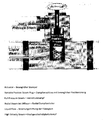
- illustration 1 explains the principle of DSI: A pressurized superheated steam jet is directed into a nozzle chamber and then relaxes through a perforated tube ("Radial Steam Jet Diffuser") into the liquid product to be heated.
- the high pressure flow creates a high velocity radial heat exchange field which provides uniform heating of the product in very short times.
- the aim is to set the milk product to an exact temperature in a very short time, preferably 1 to about 5 seconds and especially 1 to 2 seconds.
- the speed of the steam tends to drop below the speed of sound, causing the product to not heat up quickly enough.
- the steam in the sense of the process according to the invention is preferably fed under so-called "choke-flow" conditions, because this allows steam to be introduced directly into the product to be heated even at ultrasonic speed.
- the DSI does not require preheating of the milk, as described in steps (a1) and (b1), and therefore is also indicated as optional. It is basically possible to start directly from the cold raw milk. However, the lower the temperature differences, the more precise the temperature control. If the raw milk in the first step, as indicated, heated to not more than 25 ° C, it is below the temperature, which is favorable for the growth of germs, so this is not a disadvantage
- Another aspect is that the heat transfer due to the regenerative areas of a plate or tube heat exchanger become much more efficient.
- Skimming of the milk takes place when skimmed milk is to be produced.
- it has proved to be advantageous to separate the cream (about 4% by weight of the total mass of raw milk) at not too high temperatures and preferably not to exceed 60 ° C., since otherwise there are losses in quality.
- This process step can be carried out in standard separators that are well known in the art. Separators from GEA Westfalia Separator GmbH are very common in the dairy industry (http://www.westfaliaseparator.com/de/aninstallen/molkereitechnik/milch-molke.html). Corresponding components are for example in the DE 10036085 C1 (Westfalia ) and well known to those skilled in the art, so that no explanations are needed to carry out these method steps, since they are attributable to general expert knowledge.
- a second essential step of the method according to the invention is to undergo the temperature range critical for germ growth as quickly as possible, even during cooling.
- a flash cooling has proven to be particularly effective
- flash cooling is understood to mean a process in which the hot liquid product is "flashed" under turbulent flow conditions into a reactor under reduced pressure, so that the boiling point of the water is lowered below 30 ° C.
- To support the jacket of the Flashreaktors can be additionally cooled.
- a corresponding process description based on the cooling of a polymer preparation for example, in the EP 1116728 B1 (WOLFF CELLULOSICS).
- the cooling of the pasteurized whole or skim milk takes about 1 to 5 seconds, the final temperature usually being about 25 to about 30 ° C.
- the outlet temperature of the pasteurized milk may be below 10 ° C. In this case, another cooling stage is not required. When the milk leaves the reactor as typically at about 25 ° C, however, it is preferred that further cooling to about 5 to 10 ° C follow, which may be again in a plate heat exchanger, because no growth of undesirable nuclei is observed under these conditions.
- Raw milk was cooled to 6 ° C and heated to 25 ° C within 15 seconds using a plate heat exchanger.
- the preheated milk was heated to 55 ° C by a first direct hot steam injection within 1 second and then passed to a separator where the cream was separated.
- the skimmed milk was heated to 72 ° C within 2 seconds by a second direct hot steam injection and pasteurized. Subsequently, the pasteurized milk with turbulent flow was sprayed into a reactor and the pressure was reduced so much that the product cooled within 5 seconds to 25 ° C.
- the exiting product was then cooled to 8 ° C in a plate heat exchanger.
- the resulting skimmed milk was virtually free of mesophilic and thermophilic spores.
- Raw milk was cooled to 6 ° C and heated to 55 ° C within 40 seconds using a plate heat exchanger.
- the preheated milk was passed to a separator where the cream was separated.
- the skimmed milk thus obtained was heated in a second plate heat exchanger within 15 seconds up to 72 ° C and pasteurized. Subsequently, the pasteurized milk was cooled down to 8 ° C in a third heat exchanger. cooled.
- the resulting skimmed milk was within the EU specification, it contained around 500 mesophilic and thermophilic spores per ml.
Landscapes
- Life Sciences & Earth Sciences (AREA)
- Engineering & Computer Science (AREA)
- Wood Science & Technology (AREA)
- Zoology (AREA)
- Chemical & Material Sciences (AREA)
- Food Science & Technology (AREA)
- Polymers & Plastics (AREA)
- Dairy Products (AREA)
Abstract
(a1) gegebenenfalls das zu entkeimende Milchprodukt einer ersten Wärmevorbehandlung in einem Wärmeaustauscher unterwirft und auf Temperaturen im Bereich von 25 bis 30 °C erwärmt,
(a2) das gegebenenfalls vorbehandelte Milchprodukt durch direkte Einspritzung von hocherhitztem Wasserdampf ("direct steam injection", DSI) auf Temperaturen von 50 bis 75 °C erhitzt und dabei pasteurisiert, und
(a3) das pasteurisierte Produkt durch Flashkühlung abkühlt.
Description
- Die Erfindung befindet sich auf dem Gebiet der Milchprodukte und betrifft ein verbessertes Verfahren zu deren Entkeimung.
- Pasteurisierung bezeichnet die kurzzeitige Erwärmung von flüssigen oder pastösen Lebensmitteln auf Temperaturen bis 100 °C zur Abtötung von Mikroorganismen. Sie dient dazu, unter anderem Milch, Frucht- und Gemüsesäfte und andere Flüssigkeiten haltbar zu machen. Durch die kurze Zeitdauer der Hitzeeinwirkung und die mäßige Temperatur werden der Nährwert, der Geschmack und die Konsistenz des Lebensmittels nur unbedeutend verändert und dennoch die meisten Lebensmittelverderber wie Milchsäurebakterien und Hefen sowie viele krankheitserregende Bakterien wie Salmonellen zuverlässig abgetötet. Hitzeresistente Bakteriensporen wie die von Clostridium botulinum, die Erreger der Paratuberkulose sowie Schimmelpilzsporen überleben diese Behandlung zumindest teilweise. Aus diesem Grund sollte der Mikroorganismengehalt der Rohware möglichst gering gehalten werden. Am bekanntesten ist die Pasteurisierung von Milch, die hierzu 15 bis 30 Sekunden auf 72 bis 75 °C erhitzt und danach sofort wieder abgekühlt wird. Pasteurisierte Milch bleibt ungeöffnet bei 6 bis 7 °C gelagert etwa 6 bis 10 Tage genießbar. In Deutschland und der EU ist nach der europäischen Milchhygiene-Richtlinie die Pasteurisierung für alle gehandelten Milchsorten außer Roh- und Vorzugsmilch gesetzlich vorgeschrieben.
- Bei der Pasteurisierung von Milch werden üblicherweise Plattenwärmeaustauscher eingesetzt. Durch Verbrennungsprozesse entstehen jedoch Ablagerungen an denen bei Temperaturen von 30 bis 55 °C thermoresistente Keime schnell und gerne wachsen; das gleiche trifft für Toträume in den Austauschern zu. Die Keime können sich innerhalb von 20 min jeweils verdoppeln und so können leicht Populationen von 6 Mio. Keimen/ml entstehen. Abgesehen von dem hygienischen Mangel können die Keime beispielsweise in der Käseherstellung durch Gasbildung zu Fehlbildungen führen: ganze Laibe können dabei aufgehen wie Luftballons. Durch Abgabe von Enzymen kann es auch zu sensorischen Belastungen kommen.
- Die übliche Pasteurisierung folgt folgenden Schema: Die Rohmilch wird im ersten Wärmeaustauscher 30 bis 45 Sekunden von 6 auf 55 °C erhitzt. Im Separator wird dann bei dieser Temperatur innerhalb von 5 bis 10 Sekunden der Rahm abgetrennt. Anschließend wird die Magermilch innerhalb von 15 bis 30 Sekunden auf 72 °C erhitzt und bei dieser Temperatur im zweiten Wärmeaustauscher pasteurisiert. Innerhalb von 45 bis 60 Sekunden wird die pasteurisierte Milch dann wieder bis auf 8 °C abgekühlt. In Summe verbleibt die Milch aber über einen vergleichsweise langen Zeitraum im kritischen Temperaturfenster von 35 bis 55 °C, in dem Keimwachstum stattfindet.
- Durch die Pasteurisierung sind diese Keime nicht zu töten. Auch die Fließgeschwindigkeit in den Bauteilen ist begrenzt, so dass ein Ausspülen der Keime nicht möglich ist. Eine Alternative wäre eine Ultrahocherhitzung, dabei würden aber die Molkenproteine denaturieren, so dass dies auch nicht in Frage kommt.
- Aus dem Stand der Technik sind Verfahren bekannt, bei denen ein Teil der Keime schon vor der Pasteurisierung durch Mikrofiltrationsverfahren entfernt werden und so den Eindruck erwecken, es würden besonders keimarme Produkte erhalten. So ist stellvertretend für eine ganze Anzahl ähnlicher Druckschriften aus der
EP 1656030 B1 (PARMALAT) beispielsweise ein Verfahren bekannt, bei dem der Pasteurisierung eine Filtration über eine engporige Membran vorgeschaltet ist, bei der das Permeat weiterverarbeitet und das bakterienbelastete Retentat verworfen wird. Für das eingangs beschriebene Problem bedeutet dies indes keine Lösung, denn die geringe Keimzahl im Permeat ist immer noch so hoch, dass sie unter den Bedingungen, die während der Behandlung im Wärmeaustauscher herrschen, so stark anwachsen können, dass wieder eine erhebliche Keimbelastung die Folge ist. - Aus der
US 2002 012732 A1 (LINDQUIST) ist ein Verfahren bekannt, bei der man eine Magermilch einer Filtration unterwirft und dabei eine Permeat und ein Retentat erhält. Während das Permeat einer Wärmebehandlung unterworfen wird, wird das Retentat ein weiteres Mal filtriert und das dabei erhaltene zweite Permeat dem ersten Permeat zugesetzt. Das Verfahren erweist sich in der Praxis jedoch als viel zu aufwendig. - Gegenstand der
US 6,372,276 B1 (LINDQUIST) ist ein Verfahren zur Erzeugung einer sterilen Milch, bei der Rohmilch zunächst filtriert und das so erhaltene Permeat anschließend in mehreren Stufen hitzebehandelt wird. Bei dieser Verfahrensdurchführung beobachtet man jedoch ein häufiges Verstopfen der Membranen, was zu ständigen Unterbrechungen im kontinuierlichen Verfahrensablauf führt, zudem werden die Keimzahlen nicht ausreichend reduziert. Ganz im Gegenteil wird hier ein Durchwachsen der Membranen beobachtet, denn da keine Konkurrenzflora vorliegt, wächst die Keimzahl exponentiell an. - Die Aufgabe der vorliegenden Erfindung hat somit darin bestanden, ein alternatives Verfahren zur zuverlässigen Entkeimung von Milchprodukten, speziell von Voll- und Magermilchprodukten zur Verfügung zu stellen, das frei von den eingangs geschilderten Nachteilen ist.
- Ein erster Gegenstand der Erfindung betrifft Verfahren zur Herstellung von keimarmen Vollmilchprodukten, bei dem man
- (a1) gegebenenfalls das zu entkeimende Milchprodukt einer ersten Wärmevorbehandlung in einem Wärmeaustauscher unterwirft und auf Temperaturen im Bereich von 25 bis 30 °C erwärmt,
- (a2) das gegebenenfalls vorbehandelte Milchprodukt durch direkte Einspritzung von hocherhitztem Wasserdampf ("direct steam injection", DSI) auf Temperaturen von 50 bis 75 °C erhitzt und dabei pasteurisiert, und
- (a3) das pasteurisierte Produkt durch Flashkühlung abkühlt.
- Ein zweiter Gegenstand der Erfindung betrifft ein analoges Verfahren zur Herstellung von keimarmen Magermilchprodukten, bei dem man
- (b1) gegebenenfalls das zu entkeimende Milchprodukt einer ersten Wärmevorbehandlung in einem Wärmeaustauscher unterwirft und auf Temperaturen im Bereich von 25 bis 30 °C erwärmt,
- (b2) das gegebenenfalls vorbehandelte Milchprodukt durch eine erste direkte Einspritzung von hocherhitztem Wasserdampf ("direct steam injection", DSI) auf Temperaturen von 50 bis 60 °C erhitzt,
- (b3) den Rahm abtrennt,
- (b4) das entrahmte Milchprodukt durch eine zweite direkte Einspritzung von hocherhitztem Wasserdampf auf Temperaturen von 50 bis 75 °C erhitzt und dabei pasteurisiert, und
- (b5) das pasteurisierte Produkt durch Flashkühlung abkühlt.
- Beide Verfahren können kontinuierlich oder batchweise betrieben werden.
- Die beiden Verfahren sind durch den gleichen erfinderischen Gedanken verbunden und unterscheiden sich nur darin, dass im ersten Fall eine Vollmilch und im zweiten eine Magermilch erhalten wird. Grundsätzlich ist das Verfahren jedoch auch für alle übrigen Milchprodukte geeignet, die eine Pasteurisierung benötigen.
- Überraschenderweise wurde gefunden, dass sich durch die Kombination aus Direct Steam Injection und Flashkühlung das Problem der langen Verweilzeit im für das Keimwachstum vorteilhaften Temperaturbereich zwischen 30 und 55 °C und insbesondere 35 bis 50 °C deutlich reduzieren lässt. Während übliche Pasteurisierungsverfahren eine Zeit zwischen 1 und 2 Minuten erfordern, lässt sich diese Zeitspanne gemäß vorliegender Erfindung um den Faktor 2 bis 4 verkürzen. Auf diese Weise kann die Keimbelastung von Milchprodukten deutlich reduziert werden.
- In einem ersten fakultativen, wenn gleich bevorzugten Schritt, wird die Rohmilch, die üblicherweise eine Temperatur zwischen 5 und 10 °C besitzt, einer Vorerwärmung unterworfen. Dies kann in üblichen Plattenwärmeaustauschern erfolgen, wobei eine Erwärmung innerhalb von etwa 10 bis etwa 30 Sekunden auf etwa 25 °C stattfindet.
- Der erste essentielle Schritt des erfindungsgemäßen Verfahrens besteht darin, den kritischen Aufheizvorgang, d.h. das langsame Durchlaufen eines Temperaturbereiches, in dem mesophile und thermophile Sporen optimale Wachstumsbedingungen vorfinden, durch eine blitzartige Erwärmung zu verkürzen. Dies wird durch die direkte Einspritzung von heißem oder sogar überhitztem Wasserdampf erreicht, der eine Temperatur von 100 bis etwa 250 °C aufweisen kann. Üblicherweise erfolgt dies mit Hilfe von Düsen, die entweder direkt in das Produkt eintauchen oder in einer Ableitung des Wärmeaustauschers eingebaut sind.
-
Abbildung 1 erläutert das Prinzip der DSI: Ein unter Druck stehender hocherhitzter Wasserdampfstrahl wird in eine Düsenkammer geleitet und entspannt sich dann durch ein perforiertes Rohr ("Radial Steam Jet Diffuser") in das zu erhitzende flüssige Produkt. Der Hochdruckstrom erzeugt ein sich mit hoher Geschwindigkeit ausbreitendes radiales Wärmeaustauschfeld, wodurch eine gleichmäßige Erhitzung des Produktes in sehr kurzen Zeiten erreicht wird. - Wie eingangs erläutert, besteht das Ziel darin, das Milchprodukt in sehr kurzer Zeit, vorzugsweise 1 bis etwa 5 Sekunden und insbesondere 1 bis 2 Sekunden auf eine exakte Temperatur einzustellen. Dazu ist es erforderlich, eine möglichst präzise Menge an Dampf mit hoher Geschwindigkeit in das Produkt einzuleiten. Erfolgt die Kontrolle der Dampfmenge über ein Druckminderventil, fällt die Geschwindigkeit des Dampfes in der Regel unter die Schallgeschwindigkeit, was dazu führt, dass sich das Produkt nicht schnell genug erhitzt. Um dies zu verhindern wird der Dampf im Sinne des erfindungsgemäßen Verfahrens vorzugsweise unter so-genannten "choke-flow" Bedingungen eingespeist, weil dies erlaubt, Dampf auch mit Ultraschallgeschwindigkeit direkt in das zu erhitzende Produkt einzuleiten. Hierunter versteht man das Phänomen, die Dampfgeschwindigkeit zu steigern, indem man eine Druckdifferenz mit Hilfe einer speziellen Düse erzeugt, wie sie ebenfalls in
Abbildung 1 schematisch wiedergegeben ist. Mit Hilfe eines pneumatisch betriebenen Antriebs ("Actuator") wird ein Stempel ("Variable Position Steam Plug") ähnlich wie ein Kolben in einem Zylinder auf und nieder bewegt und dadurch die Dampfmenge genau gesteuert. Entsprechende Bauteile sind beispielsweise von der Firma ProSonics im Handel erhältlich. - Die DSI erfordert keine Vorerwärmung der Milch, wie sie in den Schritten (a1) und (b1) beschrieben wird und die daher auch als fakultativ angegeben sind. Es ist grundsätzlich möglich, direkt von der kalten Rohmilch auszugehen. Allerdings ist die Temperaturführung umso präziser, je geringer die Temperaturunterschiede sind. Wird die Rohmilch im ersten Schritt wie angegeben auf nicht mehr als 25 °C erhitzt, befindet sie sich unter der Temperatur, die für das Keimwachstum günstig ist, so dass dies also nicht von Nachteil ist Ein weiterer Aspekt besteht darin, dass der Wärmeübertrag bedingt durch die regenerativen Bereiche eines Platten- oder Röhrenwärmeaustauschers wesentlich effizienter wird.
- Die Beschreibung der DSI trifft jeweils für die Schritte (a2), (b2) und (b4) zu.
- Die Entrahmung der Milch findet dann statt, wenn Magermilch hergestellt werden soll. Dazu hat es sich als vorteilhaft erwiesen, den Rahm (etwa 4 Gew.-% der Gesamtmasse an Rohmilch) bei nicht zu hohen Temperaturen abzutrennen und dabei vorzugsweise 60 °C nicht zu überschreiten, weil es ansonsten zu Qualitätsverlusten kommt. Dieser Prozessschritt kann in Standard-Separatoren durchgeführt werden, die aus dem Stand der Technik hinreichend bekannt sind. In der Milchindustrie sehr verbreitet sind Separatoren der Firma GEA Westfalia Separator GmbH (http://www.westfaliaseparator.com/de/anwendungen/molkereitechnik/milch-molke.html). Entsprechende Bauteile sind beispielsweise auch in der
DE 10036085 C1 (Westfalia ) beschrieben und dem Fachmann bestens bekannt, so dass es zur Durchführung dieser Verfahrensschritte keiner Erläuterungen bedarf, da sie den allgemeinen Fachwissen zuzurechnen sind. - Ein zweiter essentieller Schritt des erfindungsgemäßen Verfahrens besteht darin, auch beim Abkühlen den für das Keimwachstum kritischen Temperaturbereich möglichst schnell zu durchlaufen. Hierzu hat sich eine Flashkühlung als besonders wirksam erwiesen
- Unter dem Begriff Flashkühlung versteht man ein Verfahren, bei dem das heiße flüssige Produkt unter turbulenten Strömungsbedingungen in einen unter verminderten Druck stehenden Reaktor "eingeflasht" wird, so dass der Siedepunkt des Wassers unter 30 °C abgesenkt wird. Zur Unterstützung kann der Mantel des Flashreaktors zusätzlich noch gekühlt werden. Eine entsprechende Verfahrensbeschreibung bezogen auf die Abkühlung einer Polymerzubereitung wird beispielsweise in der
EP 1116728 B1 (WOLFF CELLULOSICS) beschrieben. - Die Abkühlung der pasteurisierten Voll- oder Magermilch, wie sie in den Schritten (a3) und (b5) vorgesehen ist, benötigt etwa 1 bis 5 Sekunden, wobei die Endtemperatur üblicherweise bei etwa 25 bis etwa 30 °C liegt.
- Wird der Mantel des Flashreaktors zusätzlich gekühlt, kann die Austrittstemperatur der pasteurisierten Milch unter 10 °C liegen. In diesem Fall ist eine weitere Kühlstufe nicht erforderlich. Verlässt die Milch den Reaktor wie typisch mit etwa 25 °C, dann schließt sich jedoch vorzugsweise eine weitere Abkühlung auf etwa 5 bis 10 °C an, die wieder in einem Plattenwärmeaustauscher erfolgen kann, weil unter diesen Bedingungen kein Wachstum von unerwünschten Keimen beobachtet wird.
- Rohmilch wurde auf 6 °C abgekühlt und mit Hilfe eines Plattenwärmeaustauschers innerhalb von 15 Sekunden auf 25 °C erwärmt. Die vorgewärmte Milch wurde durch eine erste direkte Heißdampfinjektion innerhalb von 1 Sekunde auf 55 °C erhitzt und dann in einen Separator geleitet, in dem der Rahm abgetrennt wurde. Die entrahmte Milch wurde durch eine zweite direkte Heißdampfinjektion innerhalb von 2 Sekunden auf 72 °C erhitzt und pasteurisiert. Anschließend wurde die pasteurisierte Milch mit turbulenter Strömung in einen Reaktor eingesprüht und der Druck dabei so weit herabgesetzt, dass sich das Produkt innerhalb von 5 Sekunden bis auf 25 °C abkühlte. Das austretende Produkt wurde anschließend in einem Plattenwärmeaustauscher bis auf 8 °C abgekühlt. Die resultierende Magermilch war praktisch frei von mesophilen und thermophilen Sporen.
- Rohmilch wurde auf 6 °C abgekühlt und mit Hilfe eines Plattenwärmeaustauschers innerhalb von 40 Sekunden auf 55 °C erwärmt. Die vorgewärmte Milch wurde in einen Separator geleitet, in dem der Rahm abgetrennt wurde. Die so erhaltene Magermilch wurde in einem zweiten Plattenwärmeaustauscher innerhalb von 15 Sekunden bis auf 72 °C erhitzt und pasteurisiert. Anschließend wurde die pasteurisierte Milch in einem dritten Wärmeaustauscher bis auf 8 °C abgekühlt. abgekühlt. Die resultierende Magermilch befand sich zwar innerhalb der EU-Spezifikation, wies jedoch pro ml rund 500 mesophile und thermophile Sporen auf.
- Die beiden Verfahren werden in der nachfolgenden
Abbildung 2 noch einmal an Hand eines Ablaufdiagramms einander gegenübergestellt.
Claims (10)
- Verfahren zur Herstellung von keimarmen Milchprodukten, bei dem man(a1) gegebenenfalls das zu entkeimende Milchprodukt einer ersten Wärmevorbehandlung in einem Wärmeaustauscher unterwirft und auf Temperaturen im Bereich von 25 bis 30 °C erwärmt,(a2) das gegebenenfalls vorbehandelte Milchprodukt durch direkte Einspritzung von hocherhitztem Wasserdampf auf Temperaturen von 50 bis 75 °C erhitzt und dabei pasteurisiert, und(a3) das pasteurisierte Produkt durch Flashkühlung abkühlt.
- Verfahren zur Herstellung von keimarmen Milchprodukten, bei dem man(b1) gegebenenfalls das zu entkeimende Milchprodukt einer ersten Wärmevorbehandlung in einem Wärmeaustauscher unterwirft und auf Temperaturen im Bereich von 25 bis 30 °C erwärmt,(b2) das gegebenenfalls vorbehandelte Milchprodukt durch eine erste direkte Einspritzung von hocherhitztem Wasserdampf auf Temperaturen von 50 bis 60 °C erhitzt,(b3) den Rahm abtrennt,(b4) das entrahmte Milchprodukt durch eine zweite direkte Einspritzung von hocherhitztem Wasserdampf auf Temperaturen von 50 bis 75 °C erhitzt und dabei pasteurisiert, und(b5) das pasteurisierte Produkt durch Flashkühlung abkühlt.
- Verfahren nach den Ansprüchen 1 oder 2, dadurch gekennzeichnet, dass es kontinuierlich durchgeführt wird.
- Verfahren nach den Ansprüchen 1 oder 2, dadurch gekennzeichnet, dass es batchweise durchgeführt wird
- Verfahren nach den Ansprüchen 1 oder 2, dadurch gekennzeichnet, dass man die Milchprodukte in einem Wärmetauscher (Schritte a1 bzw. b1) über einen Zeitraum von etwa 10 bis etwa 30 Sekunden erwärmt.
- Verfahren nach den Ansprüchen 1 oder 2, dadurch gekennzeichnet, dass man in die wärmevorbehandelten Produkte hocherhitzten Wasserdampf einspritzt (Schritte a2, b2, b4), der eine Temperatur im Bereich von 100 bis 250 °C aufweist.
- Verfahren nach den Ansprüchen 1 oder 2, dadurch gekennzeichnet, dass man in die wärmevorbehandelten Produkte hocherhitzten Wasserdampf (Schritte a2, b2, b4) über einen Zeitraum von 1 bis etwa 5 Sekunden einspritzt.
- Verfahren nach den Ansprüchen 1 oder 2, dadurch gekennzeichnet, das man die pasteurisierten Produkte (Schritte a3, b5) über einen Zeitraum von etwa 1 bis 5 Sekunden abkühlt.
- Verfahren nach den Ansprüchen 1 oder 2, dadurch gekennzeichnet, dass man die pasteurisierten Produkte (Schritte a3, b5) auf eine Temperatur von etwa 25 bis etwa 30 °C abkühlt.
- Verfahren nach den Ansprüchen 1 oder 2, dadurch gekennzeichnet, dass man die vorgekühlten Produkte abschließend in einem Wärmeaustauscher auf eine Temperatur von etwa 5 bis etwa 10 °C abkühlt.
Priority Applications (4)
| Application Number | Priority Date | Filing Date | Title |
|---|---|---|---|
| EP14170229.0A EP2949218B1 (de) | 2014-05-28 | 2014-05-28 | Verfahren zur Herstellung keimarmer Milchprodukte |
| DK14170229.0T DK2949218T3 (en) | 2014-05-28 | 2014-05-28 | Process for the production of bacteria-poor milk products |
| CN201510282100.2A CN105166035A (zh) | 2014-05-28 | 2015-05-28 | 生产细菌含量低的奶产品的方法 |
| US14/724,228 US20150342207A1 (en) | 2014-05-28 | 2015-05-28 | Process for production of low microbial count milk products |
Applications Claiming Priority (1)
| Application Number | Priority Date | Filing Date | Title |
|---|---|---|---|
| EP14170229.0A EP2949218B1 (de) | 2014-05-28 | 2014-05-28 | Verfahren zur Herstellung keimarmer Milchprodukte |
Publications (2)
| Publication Number | Publication Date |
|---|---|
| EP2949218A1 true EP2949218A1 (de) | 2015-12-02 |
| EP2949218B1 EP2949218B1 (de) | 2017-11-01 |
Family
ID=50819629
Family Applications (1)
| Application Number | Title | Priority Date | Filing Date |
|---|---|---|---|
| EP14170229.0A Active EP2949218B1 (de) | 2014-05-28 | 2014-05-28 | Verfahren zur Herstellung keimarmer Milchprodukte |
Country Status (4)
| Country | Link |
|---|---|
| US (1) | US20150342207A1 (de) |
| EP (1) | EP2949218B1 (de) |
| CN (1) | CN105166035A (de) |
| DK (1) | DK2949218T3 (de) |
Families Citing this family (4)
| Publication number | Priority date | Publication date | Assignee | Title |
|---|---|---|---|---|
| CN106509096A (zh) * | 2016-09-27 | 2017-03-22 | 黑龙江省绿色食品科学研究院 | 一种灭菌乳的制备方法 |
| CN107969495B (zh) * | 2016-10-24 | 2022-12-30 | 内蒙古伊利实业集团股份有限公司 | 一种延长牛奶保存期的方法 |
| WO2020223592A1 (en) * | 2019-05-02 | 2020-11-05 | Hydro-Thermal Corporation | Steam injection heater with integrated cleaning mechanism |
| CN110463756A (zh) * | 2019-08-29 | 2019-11-19 | 秦皇岛燕大源达机电科技股份有限公司 | 用于液体奶杀菌的方法 |
Citations (6)
| Publication number | Priority date | Publication date | Assignee | Title |
|---|---|---|---|---|
| US3016815A (en) * | 1958-05-19 | 1962-01-16 | Francis P Hanrahan | Apparatus for heat-treating liquid food stuffs |
| DE10036085C1 (de) | 2000-07-25 | 2002-01-24 | Westfalia Separator Food Tec G | Verfahren zur Entkeimung von Milch |
| US20020012732A1 (en) | 1997-03-14 | 2002-01-31 | Anders Lindquist | Method and plant for producing a sterile milk product |
| US6372276B1 (en) | 1997-03-14 | 2002-04-16 | Tetra Laval Holdings & Finance S.A. | Method for producing sterile, stable milk |
| EP1116728B1 (de) | 2000-01-14 | 2006-01-11 | Wolff Cellulosics GmbH & Co.KG | Kontinuierliches Verfahren und Vorrichtung zur Trocknung und Gelbildung von lösungsmittelhaltigen gelbildenden Polymeren |
| EP1656030B1 (de) | 2003-06-19 | 2011-01-26 | PARMALAT S.p.A. | Verfahren zur verarbeitung von milch |
Family Cites Families (7)
| Publication number | Priority date | Publication date | Assignee | Title |
|---|---|---|---|---|
| DK180291D0 (da) * | 1991-10-31 | 1991-10-31 | Apv Pasilac As | Fremgangsmaade til varmebehandling af frisk maelk |
| DK169510B1 (da) * | 1993-05-13 | 1994-11-14 | Apv Pasilac As | Anlæg og fremgangsmåde til behandling af mælk |
| US20080160149A1 (en) * | 2006-12-28 | 2008-07-03 | Maurice Nasrallah | Sterilization of Flowable Food Products |
| CN101356938A (zh) * | 2007-07-31 | 2009-02-04 | 光明乳业股份有限公司 | 一种巴氏杀菌奶的生产工艺 |
| CN101142939A (zh) * | 2007-10-23 | 2008-03-19 | 内蒙古蒙牛乳业(集团)股份有限公司 | 一种中温灭活超高温瞬时灭菌奶及其制备方法 |
| US20100310711A1 (en) * | 2009-06-08 | 2010-12-09 | Kendell Lamar Chet | Milk filtration system |
| WO2011032957A1 (de) * | 2009-09-16 | 2011-03-24 | Gea Mechanical Equipment Gmbh | Verfahren zur herstellung von länger haltbarer frischmilch |
-
2014
- 2014-05-28 EP EP14170229.0A patent/EP2949218B1/de active Active
- 2014-05-28 DK DK14170229.0T patent/DK2949218T3/en active
-
2015
- 2015-05-28 US US14/724,228 patent/US20150342207A1/en not_active Abandoned
- 2015-05-28 CN CN201510282100.2A patent/CN105166035A/zh active Pending
Patent Citations (6)
| Publication number | Priority date | Publication date | Assignee | Title |
|---|---|---|---|---|
| US3016815A (en) * | 1958-05-19 | 1962-01-16 | Francis P Hanrahan | Apparatus for heat-treating liquid food stuffs |
| US20020012732A1 (en) | 1997-03-14 | 2002-01-31 | Anders Lindquist | Method and plant for producing a sterile milk product |
| US6372276B1 (en) | 1997-03-14 | 2002-04-16 | Tetra Laval Holdings & Finance S.A. | Method for producing sterile, stable milk |
| EP1116728B1 (de) | 2000-01-14 | 2006-01-11 | Wolff Cellulosics GmbH & Co.KG | Kontinuierliches Verfahren und Vorrichtung zur Trocknung und Gelbildung von lösungsmittelhaltigen gelbildenden Polymeren |
| DE10036085C1 (de) | 2000-07-25 | 2002-01-24 | Westfalia Separator Food Tec G | Verfahren zur Entkeimung von Milch |
| EP1656030B1 (de) | 2003-06-19 | 2011-01-26 | PARMALAT S.p.A. | Verfahren zur verarbeitung von milch |
Non-Patent Citations (1)
| Title |
|---|
| JONATAN A DICKOW ET AL: "Effect of Lenient Steam Injection (LSI) heat treatment of bovine milk on the activities of some enzymes, the milk fat globule and pH", INTERNATIONAL JOURNAL OF DAIRY TECHNOLOGY, vol. 65, no. 2, 28 December 2011 (2011-12-28), pages 191 - 200, XP055145344, ISSN: 1364-727X, DOI: 10.1111/j.1471-0307.2011.00765.x * |
Also Published As
| Publication number | Publication date |
|---|---|
| EP2949218B1 (de) | 2017-11-01 |
| DK2949218T3 (en) | 2018-01-02 |
| US20150342207A1 (en) | 2015-12-03 |
| CN105166035A (zh) | 2015-12-23 |
Similar Documents
| Publication | Publication Date | Title |
|---|---|---|
| EP3254566B1 (de) | Verfahren zur herstellung geschmacksverbesserter uht- milch | |
| DE2424031C3 (de) | Verfahren zur Herstellung proteinhaltiger Nahrungsmittel, insbesondere von Käse | |
| EP2949218B1 (de) | Verfahren zur Herstellung keimarmer Milchprodukte | |
| WO2011032957A1 (de) | Verfahren zur herstellung von länger haltbarer frischmilch | |
| EP2679098B1 (de) | Milchpulver mit hohem molkenproteinindex | |
| EP3298903B1 (de) | Keimarme milchpulver mit hohem molkenproteinindex (iv) | |
| EP2661968B1 (de) | Verfahren zur Herstellung von Käsereimilch (II) | |
| DE102005037503B4 (de) | Verfahren zur Herstellung von konzentrierten und fermentierten Milchprodukten, insbesondere Frischkäse, Frischkäseerzeugnisse und Quark | |
| EP2962574B1 (de) | Verfahren zur Herstellung von keimarmen Milchprodukten | |
| EP2730170B1 (de) | Allergenfreie Nahrungsmittelzusammensetzungen | |
| DE2323107A1 (de) | Verfahren zur herstellung von veredelten milchprodukten | |
| EP3103350B1 (de) | Verfahren zur herstellung von keimarmen molkenproteinkonzentraten | |
| DE102014019014B4 (de) | Verfahren und Anlage zur Behandlung von Milch zur Herstellung von Käsereimilch mit einem reduzierten Gehalt an Keimen und Bakterien | |
| EP2661967B1 (de) | Verfahren zur Herstellung von Käsereimilch | |
| EP2368437B1 (de) | Verfahren zur Herstellung von Käsereimilch aus Rohmilch | |
| EP2839748B1 (de) | Quarkgrundmasse mit verbesserten Geschmackeigenschaften II | |
| EP3047732B1 (de) | Kontinuierliches Verfahren zur Herstellung einer Weisskäsezubereitung | |
| EP2732706B1 (de) | Milchpulver mit hohem Molkeproteinindex | |
| EP2839747B1 (de) | Starterkulturen für die Herstellung von fermentierten Milchprodukten | |
| DE3008681C2 (de) | ||
| DE102012100495A1 (de) | Verfahren und Vorrichtung zur Herstellung von Speisequark | |
| EP3476220A1 (de) | Quarkgrundmasse mit verbesserten geschmackseigenschaften (ii) | |
| EP3300605B1 (de) | Verfarhen zur herstellung eines keimamrmen milchpulvers mit hohem mpi (iii) | |
| EP3962261B1 (de) | Verfahren zur herstellung eines milch- oder molkepulvers | |
| DE102004048588B4 (de) | Verfahren und Vorrichtung zur Herstellung eines Frischkäsekonzentrates mit hohem Trockenmassegehalt |
Legal Events
| Date | Code | Title | Description |
|---|---|---|---|
| AK | Designated contracting states |
Kind code of ref document: A1 Designated state(s): AL AT BE BG CH CY CZ DE DK EE ES FI FR GB GR HR HU IE IS IT LI LT LU LV MC MK MT NL NO PL PT RO RS SE SI SK SM TR |
|
| AX | Request for extension of the european patent |
Extension state: BA ME |
|
| PUAI | Public reference made under article 153(3) epc to a published international application that has entered the european phase |
Free format text: ORIGINAL CODE: 0009012 |
|
| 17P | Request for examination filed |
Effective date: 20160530 |
|
| RBV | Designated contracting states (corrected) |
Designated state(s): AL AT BE BG CH CY CZ DE DK EE ES FI FR GB GR HR HU IE IS IT LI LT LU LV MC MK MT NL NO PL PT RO RS SE SI SK SM TR |
|
| 17Q | First examination report despatched |
Effective date: 20170120 |
|
| GRAP | Despatch of communication of intention to grant a patent |
Free format text: ORIGINAL CODE: EPIDOSNIGR1 |
|
| INTG | Intention to grant announced |
Effective date: 20170614 |
|
| GRAS | Grant fee paid |
Free format text: ORIGINAL CODE: EPIDOSNIGR3 |
|
| GRAA | (expected) grant |
Free format text: ORIGINAL CODE: 0009210 |
|
| AK | Designated contracting states |
Kind code of ref document: B1 Designated state(s): AL AT BE BG CH CY CZ DE DK EE ES FI FR GB GR HR HU IE IS IT LI LT LU LV MC MK MT NL NO PL PT RO RS SE SI SK SM TR |
|
| REG | Reference to a national code |
Ref country code: GB Ref legal event code: FG4D Free format text: NOT ENGLISH |
|
| REG | Reference to a national code |
Ref country code: CH Ref legal event code: EP Ref country code: AT Ref legal event code: REF Ref document number: 941090 Country of ref document: AT Kind code of ref document: T Effective date: 20171115 |
|
| REG | Reference to a national code |
Ref country code: IE Ref legal event code: FG4D Free format text: LANGUAGE OF EP DOCUMENT: GERMAN |
|
| REG | Reference to a national code |
Ref country code: DE Ref legal event code: R096 Ref document number: 502014006024 Country of ref document: DE |
|
| REG | Reference to a national code |
Ref country code: DK Ref legal event code: T3 Effective date: 20171219 |
|
| REG | Reference to a national code |
Ref country code: NL Ref legal event code: FP |
|
| REG | Reference to a national code |
Ref country code: LT Ref legal event code: MG4D |
|
| PG25 | Lapsed in a contracting state [announced via postgrant information from national office to epo] |
Ref country code: SE Free format text: LAPSE BECAUSE OF FAILURE TO SUBMIT A TRANSLATION OF THE DESCRIPTION OR TO PAY THE FEE WITHIN THE PRESCRIBED TIME-LIMIT Effective date: 20171101 Ref country code: LT Free format text: LAPSE BECAUSE OF FAILURE TO SUBMIT A TRANSLATION OF THE DESCRIPTION OR TO PAY THE FEE WITHIN THE PRESCRIBED TIME-LIMIT Effective date: 20171101 Ref country code: ES Free format text: LAPSE BECAUSE OF FAILURE TO SUBMIT A TRANSLATION OF THE DESCRIPTION OR TO PAY THE FEE WITHIN THE PRESCRIBED TIME-LIMIT Effective date: 20171101 Ref country code: NO Free format text: LAPSE BECAUSE OF FAILURE TO SUBMIT A TRANSLATION OF THE DESCRIPTION OR TO PAY THE FEE WITHIN THE PRESCRIBED TIME-LIMIT Effective date: 20180201 |
|
| REG | Reference to a national code |
Ref country code: FR Ref legal event code: PLFP Year of fee payment: 5 |
|
| PG25 | Lapsed in a contracting state [announced via postgrant information from national office to epo] |
Ref country code: IS Free format text: LAPSE BECAUSE OF FAILURE TO SUBMIT A TRANSLATION OF THE DESCRIPTION OR TO PAY THE FEE WITHIN THE PRESCRIBED TIME-LIMIT Effective date: 20180301 Ref country code: HR Free format text: LAPSE BECAUSE OF FAILURE TO SUBMIT A TRANSLATION OF THE DESCRIPTION OR TO PAY THE FEE WITHIN THE PRESCRIBED TIME-LIMIT Effective date: 20171101 Ref country code: LV Free format text: LAPSE BECAUSE OF FAILURE TO SUBMIT A TRANSLATION OF THE DESCRIPTION OR TO PAY THE FEE WITHIN THE PRESCRIBED TIME-LIMIT Effective date: 20171101 Ref country code: RS Free format text: LAPSE BECAUSE OF FAILURE TO SUBMIT A TRANSLATION OF THE DESCRIPTION OR TO PAY THE FEE WITHIN THE PRESCRIBED TIME-LIMIT Effective date: 20171101 Ref country code: GR Free format text: LAPSE BECAUSE OF FAILURE TO SUBMIT A TRANSLATION OF THE DESCRIPTION OR TO PAY THE FEE WITHIN THE PRESCRIBED TIME-LIMIT Effective date: 20180202 Ref country code: BG Free format text: LAPSE BECAUSE OF FAILURE TO SUBMIT A TRANSLATION OF THE DESCRIPTION OR TO PAY THE FEE WITHIN THE PRESCRIBED TIME-LIMIT Effective date: 20180201 |
|
| PG25 | Lapsed in a contracting state [announced via postgrant information from national office to epo] |
Ref country code: EE Free format text: LAPSE BECAUSE OF FAILURE TO SUBMIT A TRANSLATION OF THE DESCRIPTION OR TO PAY THE FEE WITHIN THE PRESCRIBED TIME-LIMIT Effective date: 20171101 Ref country code: CY Free format text: LAPSE BECAUSE OF FAILURE TO SUBMIT A TRANSLATION OF THE DESCRIPTION OR TO PAY THE FEE WITHIN THE PRESCRIBED TIME-LIMIT Effective date: 20171101 Ref country code: CZ Free format text: LAPSE BECAUSE OF FAILURE TO SUBMIT A TRANSLATION OF THE DESCRIPTION OR TO PAY THE FEE WITHIN THE PRESCRIBED TIME-LIMIT Effective date: 20171101 Ref country code: SK Free format text: LAPSE BECAUSE OF FAILURE TO SUBMIT A TRANSLATION OF THE DESCRIPTION OR TO PAY THE FEE WITHIN THE PRESCRIBED TIME-LIMIT Effective date: 20171101 |
|
| PGFP | Annual fee paid to national office [announced via postgrant information from national office to epo] |
Ref country code: FI Payment date: 20180517 Year of fee payment: 5 Ref country code: CH Payment date: 20180523 Year of fee payment: 5 Ref country code: IE Payment date: 20180521 Year of fee payment: 5 |
|
| REG | Reference to a national code |
Ref country code: DE Ref legal event code: R097 Ref document number: 502014006024 Country of ref document: DE |
|
| PG25 | Lapsed in a contracting state [announced via postgrant information from national office to epo] |
Ref country code: PL Free format text: LAPSE BECAUSE OF FAILURE TO SUBMIT A TRANSLATION OF THE DESCRIPTION OR TO PAY THE FEE WITHIN THE PRESCRIBED TIME-LIMIT Effective date: 20171101 Ref country code: SM Free format text: LAPSE BECAUSE OF FAILURE TO SUBMIT A TRANSLATION OF THE DESCRIPTION OR TO PAY THE FEE WITHIN THE PRESCRIBED TIME-LIMIT Effective date: 20171101 Ref country code: RO Free format text: LAPSE BECAUSE OF FAILURE TO SUBMIT A TRANSLATION OF THE DESCRIPTION OR TO PAY THE FEE WITHIN THE PRESCRIBED TIME-LIMIT Effective date: 20171101 Ref country code: IT Free format text: LAPSE BECAUSE OF FAILURE TO SUBMIT A TRANSLATION OF THE DESCRIPTION OR TO PAY THE FEE WITHIN THE PRESCRIBED TIME-LIMIT Effective date: 20171101 |
|
| PGFP | Annual fee paid to national office [announced via postgrant information from national office to epo] |
Ref country code: TR Payment date: 20170630 Year of fee payment: 7 |
|
| PLBE | No opposition filed within time limit |
Free format text: ORIGINAL CODE: 0009261 |
|
| STAA | Information on the status of an ep patent application or granted ep patent |
Free format text: STATUS: NO OPPOSITION FILED WITHIN TIME LIMIT |
|
| PG25 | Lapsed in a contracting state [announced via postgrant information from national office to epo] |
Ref country code: MT Free format text: LAPSE BECAUSE OF FAILURE TO SUBMIT A TRANSLATION OF THE DESCRIPTION OR TO PAY THE FEE WITHIN THE PRESCRIBED TIME-LIMIT Effective date: 20171101 |
|
| 26N | No opposition filed |
Effective date: 20180802 |
|
| PGFP | Annual fee paid to national office [announced via postgrant information from national office to epo] |
Ref country code: GB Payment date: 20180523 Year of fee payment: 5 |
|
| PG25 | Lapsed in a contracting state [announced via postgrant information from national office to epo] |
Ref country code: SI Free format text: LAPSE BECAUSE OF FAILURE TO SUBMIT A TRANSLATION OF THE DESCRIPTION OR TO PAY THE FEE WITHIN THE PRESCRIBED TIME-LIMIT Effective date: 20171101 |
|
| REG | Reference to a national code |
Ref country code: BE Ref legal event code: MM Effective date: 20180531 |
|
| PG25 | Lapsed in a contracting state [announced via postgrant information from national office to epo] |
Ref country code: MC Free format text: LAPSE BECAUSE OF FAILURE TO SUBMIT A TRANSLATION OF THE DESCRIPTION OR TO PAY THE FEE WITHIN THE PRESCRIBED TIME-LIMIT Effective date: 20171101 |
|
| PG25 | Lapsed in a contracting state [announced via postgrant information from national office to epo] |
Ref country code: LU Free format text: LAPSE BECAUSE OF NON-PAYMENT OF DUE FEES Effective date: 20180528 |
|
| PG25 | Lapsed in a contracting state [announced via postgrant information from national office to epo] |
Ref country code: BE Free format text: LAPSE BECAUSE OF NON-PAYMENT OF DUE FEES Effective date: 20180531 |
|
| REG | Reference to a national code |
Ref country code: CH Ref legal event code: PL |
|
| GBPC | Gb: european patent ceased through non-payment of renewal fee |
Effective date: 20190528 |
|
| PG25 | Lapsed in a contracting state [announced via postgrant information from national office to epo] |
Ref country code: CH Free format text: LAPSE BECAUSE OF NON-PAYMENT OF DUE FEES Effective date: 20190531 Ref country code: FI Free format text: LAPSE BECAUSE OF NON-PAYMENT OF DUE FEES Effective date: 20190528 Ref country code: LI Free format text: LAPSE BECAUSE OF NON-PAYMENT OF DUE FEES Effective date: 20190531 |
|
| PG25 | Lapsed in a contracting state [announced via postgrant information from national office to epo] |
Ref country code: TR Free format text: LAPSE BECAUSE OF FAILURE TO SUBMIT A TRANSLATION OF THE DESCRIPTION OR TO PAY THE FEE WITHIN THE PRESCRIBED TIME-LIMIT Effective date: 20171101 |
|
| PG25 | Lapsed in a contracting state [announced via postgrant information from national office to epo] |
Ref country code: IE Free format text: LAPSE BECAUSE OF NON-PAYMENT OF DUE FEES Effective date: 20190528 Ref country code: GB Free format text: LAPSE BECAUSE OF NON-PAYMENT OF DUE FEES Effective date: 20190528 |
|
| PG25 | Lapsed in a contracting state [announced via postgrant information from national office to epo] |
Ref country code: PT Free format text: LAPSE BECAUSE OF FAILURE TO SUBMIT A TRANSLATION OF THE DESCRIPTION OR TO PAY THE FEE WITHIN THE PRESCRIBED TIME-LIMIT Effective date: 20171101 |
|
| PG25 | Lapsed in a contracting state [announced via postgrant information from national office to epo] |
Ref country code: MK Free format text: LAPSE BECAUSE OF NON-PAYMENT OF DUE FEES Effective date: 20171101 Ref country code: FR Free format text: LAPSE BECAUSE OF NON-PAYMENT OF DUE FEES Effective date: 20190531 Ref country code: HU Free format text: LAPSE BECAUSE OF FAILURE TO SUBMIT A TRANSLATION OF THE DESCRIPTION OR TO PAY THE FEE WITHIN THE PRESCRIBED TIME-LIMIT; INVALID AB INITIO Effective date: 20140528 |
|
| PG25 | Lapsed in a contracting state [announced via postgrant information from national office to epo] |
Ref country code: AL Free format text: LAPSE BECAUSE OF FAILURE TO SUBMIT A TRANSLATION OF THE DESCRIPTION OR TO PAY THE FEE WITHIN THE PRESCRIBED TIME-LIMIT Effective date: 20171101 |
|
| REG | Reference to a national code |
Ref country code: AT Ref legal event code: MM01 Ref document number: 941090 Country of ref document: AT Kind code of ref document: T Effective date: 20190528 |
|
| PG25 | Lapsed in a contracting state [announced via postgrant information from national office to epo] |
Ref country code: AT Free format text: LAPSE BECAUSE OF NON-PAYMENT OF DUE FEES Effective date: 20190528 |
|
| PGFP | Annual fee paid to national office [announced via postgrant information from national office to epo] |
Ref country code: NL Payment date: 20220518 Year of fee payment: 9 |
|
| PGFP | Annual fee paid to national office [announced via postgrant information from national office to epo] |
Ref country code: DK Payment date: 20220523 Year of fee payment: 9 |
|
| REG | Reference to a national code |
Ref country code: DK Ref legal event code: EBP Effective date: 20230531 |
|
| REG | Reference to a national code |
Ref country code: NL Ref legal event code: MM Effective date: 20230601 |
|
| PG25 | Lapsed in a contracting state [announced via postgrant information from national office to epo] |
Ref country code: NL Free format text: LAPSE BECAUSE OF NON-PAYMENT OF DUE FEES Effective date: 20230601 |
|
| PG25 | Lapsed in a contracting state [announced via postgrant information from national office to epo] |
Ref country code: DK Free format text: LAPSE BECAUSE OF NON-PAYMENT OF DUE FEES Effective date: 20230531 |
|
| REG | Reference to a national code |
Ref country code: DE Ref legal event code: R079 Ref document number: 502014006024 Country of ref document: DE Free format text: PREVIOUS MAIN CLASS: A23C0003037000 Ipc: A23B0011137000 |
|
| PGFP | Annual fee paid to national office [announced via postgrant information from national office to epo] |
Ref country code: DE Payment date: 20250519 Year of fee payment: 12 |