EP2949636B1 - Verfahren zur gleichzeitigen herstellung von alkoholen und einem oligomerprodukt aus einem kohlenwasserstoffrohstoff - Google Patents
Verfahren zur gleichzeitigen herstellung von alkoholen und einem oligomerprodukt aus einem kohlenwasserstoffrohstoff Download PDFInfo
- Publication number
- EP2949636B1 EP2949636B1 EP15169810.7A EP15169810A EP2949636B1 EP 2949636 B1 EP2949636 B1 EP 2949636B1 EP 15169810 A EP15169810 A EP 15169810A EP 2949636 B1 EP2949636 B1 EP 2949636B1
- Authority
- EP
- European Patent Office
- Prior art keywords
- reaction zone
- hydration
- catalyst
- isobutene
- product
- Prior art date
- Legal status (The legal status is an assumption and is not a legal conclusion. Google has not performed a legal analysis and makes no representation as to the accuracy of the status listed.)
- Active
Links
Images


Classifications
-
- C—CHEMISTRY; METALLURGY
- C07—ORGANIC CHEMISTRY
- C07C—ACYCLIC OR CARBOCYCLIC COMPOUNDS
- C07C2/00—Preparation of hydrocarbons from hydrocarbons containing a smaller number of carbon atoms
- C07C2/02—Preparation of hydrocarbons from hydrocarbons containing a smaller number of carbon atoms by addition between unsaturated hydrocarbons
- C07C2/04—Preparation of hydrocarbons from hydrocarbons containing a smaller number of carbon atoms by addition between unsaturated hydrocarbons by oligomerisation of well-defined unsaturated hydrocarbons without ring formation
- C07C2/06—Preparation of hydrocarbons from hydrocarbons containing a smaller number of carbon atoms by addition between unsaturated hydrocarbons by oligomerisation of well-defined unsaturated hydrocarbons without ring formation of alkenes, i.e. acyclic hydrocarbons having only one carbon-to-carbon double bond
- C07C2/08—Catalytic processes
-
- B—PERFORMING OPERATIONS; TRANSPORTING
- B01—PHYSICAL OR CHEMICAL PROCESSES OR APPARATUS IN GENERAL
- B01J—CHEMICAL OR PHYSICAL PROCESSES, e.g. CATALYSIS OR COLLOID CHEMISTRY; THEIR RELEVANT APPARATUS
- B01J35/00—Catalysts, in general, characterised by their form or physical properties
- B01J35/50—Catalysts, in general, characterised by their form or physical properties characterised by their shape or configuration
- B01J35/58—Fabrics or filaments
- B01J35/59—Membranes
-
- B—PERFORMING OPERATIONS; TRANSPORTING
- B01—PHYSICAL OR CHEMICAL PROCESSES OR APPARATUS IN GENERAL
- B01J—CHEMICAL OR PHYSICAL PROCESSES, e.g. CATALYSIS OR COLLOID CHEMISTRY; THEIR RELEVANT APPARATUS
- B01J35/00—Catalysts, in general, characterised by their form or physical properties
- B01J35/60—Catalysts, in general, characterised by their form or physical properties characterised by their surface properties or porosity
- B01J35/61—Surface area
- B01J35/612—Surface area less than 10 m2/g
-
- B—PERFORMING OPERATIONS; TRANSPORTING
- B01—PHYSICAL OR CHEMICAL PROCESSES OR APPARATUS IN GENERAL
- B01J—CHEMICAL OR PHYSICAL PROCESSES, e.g. CATALYSIS OR COLLOID CHEMISTRY; THEIR RELEVANT APPARATUS
- B01J35/00—Catalysts, in general, characterised by their form or physical properties
- B01J35/60—Catalysts, in general, characterised by their form or physical properties characterised by their surface properties or porosity
- B01J35/61—Surface area
- B01J35/613—10-100 m2/g
-
- B—PERFORMING OPERATIONS; TRANSPORTING
- B01—PHYSICAL OR CHEMICAL PROCESSES OR APPARATUS IN GENERAL
- B01J—CHEMICAL OR PHYSICAL PROCESSES, e.g. CATALYSIS OR COLLOID CHEMISTRY; THEIR RELEVANT APPARATUS
- B01J35/00—Catalysts, in general, characterised by their form or physical properties
- B01J35/60—Catalysts, in general, characterised by their form or physical properties characterised by their surface properties or porosity
- B01J35/64—Pore diameter
- B01J35/647—2-50 nm
-
- C—CHEMISTRY; METALLURGY
- C07—ORGANIC CHEMISTRY
- C07C—ACYCLIC OR CARBOCYCLIC COMPOUNDS
- C07C2/00—Preparation of hydrocarbons from hydrocarbons containing a smaller number of carbon atoms
- C07C2/02—Preparation of hydrocarbons from hydrocarbons containing a smaller number of carbon atoms by addition between unsaturated hydrocarbons
- C07C2/04—Preparation of hydrocarbons from hydrocarbons containing a smaller number of carbon atoms by addition between unsaturated hydrocarbons by oligomerisation of well-defined unsaturated hydrocarbons without ring formation
- C07C2/06—Preparation of hydrocarbons from hydrocarbons containing a smaller number of carbon atoms by addition between unsaturated hydrocarbons by oligomerisation of well-defined unsaturated hydrocarbons without ring formation of alkenes, i.e. acyclic hydrocarbons having only one carbon-to-carbon double bond
- C07C2/08—Catalytic processes
- C07C2/26—Catalytic processes with hydrides or organic compounds
- C07C2/28—Catalytic processes with hydrides or organic compounds with ion-exchange resins
-
- C—CHEMISTRY; METALLURGY
- C07—ORGANIC CHEMISTRY
- C07C—ACYCLIC OR CARBOCYCLIC COMPOUNDS
- C07C29/00—Preparation of compounds having hydroxy or O-metal groups bound to a carbon atom not belonging to a six-membered aromatic ring
- C07C29/03—Preparation of compounds having hydroxy or O-metal groups bound to a carbon atom not belonging to a six-membered aromatic ring by addition of hydroxy groups to unsaturated carbon-to-carbon bonds, e.g. with the aid of H2O2
- C07C29/04—Preparation of compounds having hydroxy or O-metal groups bound to a carbon atom not belonging to a six-membered aromatic ring by addition of hydroxy groups to unsaturated carbon-to-carbon bonds, e.g. with the aid of H2O2 by hydration of carbon-to-carbon double bonds
-
- C—CHEMISTRY; METALLURGY
- C10—PETROLEUM, GAS OR COKE INDUSTRIES; TECHNICAL GASES CONTAINING CARBON MONOXIDE; FUELS; LUBRICANTS; PEAT
- C10G—CRACKING HYDROCARBON OILS; PRODUCTION OF LIQUID HYDROCARBON MIXTURES, e.g. BY DESTRUCTIVE HYDROGENATION, OLIGOMERISATION, POLYMERISATION; RECOVERY OF HYDROCARBON OILS FROM OIL-SHALE, OIL-SAND, OR GASES; REFINING MIXTURES MAINLY CONSISTING OF HYDROCARBONS; REFORMING OF NAPHTHA; MINERAL WAXES
- C10G50/00—Production of liquid hydrocarbon mixtures from lower carbon number hydrocarbons, e.g. by oligomerisation
-
- C—CHEMISTRY; METALLURGY
- C10—PETROLEUM, GAS OR COKE INDUSTRIES; TECHNICAL GASES CONTAINING CARBON MONOXIDE; FUELS; LUBRICANTS; PEAT
- C10L—FUELS NOT OTHERWISE PROVIDED FOR; NATURAL GAS; SYNTHETIC NATURAL GAS OBTAINED BY PROCESSES NOT COVERED BY SUBCLASSES C10G OR C10K; LIQUIFIED PETROLEUM GAS; USE OF ADDITIVES TO FUELS OR FIRES; FIRE-LIGHTERS
- C10L1/00—Liquid carbonaceous fuels
- C10L1/02—Liquid carbonaceous fuels essentially based on components consisting of carbon, hydrogen, and oxygen only
-
- C—CHEMISTRY; METALLURGY
- C10—PETROLEUM, GAS OR COKE INDUSTRIES; TECHNICAL GASES CONTAINING CARBON MONOXIDE; FUELS; LUBRICANTS; PEAT
- C10L—FUELS NOT OTHERWISE PROVIDED FOR; NATURAL GAS; SYNTHETIC NATURAL GAS OBTAINED BY PROCESSES NOT COVERED BY SUBCLASSES C10G OR C10K; LIQUIFIED PETROLEUM GAS; USE OF ADDITIVES TO FUELS OR FIRES; FIRE-LIGHTERS
- C10L1/00—Liquid carbonaceous fuels
- C10L1/04—Liquid carbonaceous fuels essentially based on blends of hydrocarbons
- C10L1/06—Liquid carbonaceous fuels essentially based on blends of hydrocarbons for spark ignition
-
- C—CHEMISTRY; METALLURGY
- C10—PETROLEUM, GAS OR COKE INDUSTRIES; TECHNICAL GASES CONTAINING CARBON MONOXIDE; FUELS; LUBRICANTS; PEAT
- C10L—FUELS NOT OTHERWISE PROVIDED FOR; NATURAL GAS; SYNTHETIC NATURAL GAS OBTAINED BY PROCESSES NOT COVERED BY SUBCLASSES C10G OR C10K; LIQUIFIED PETROLEUM GAS; USE OF ADDITIVES TO FUELS OR FIRES; FIRE-LIGHTERS
- C10L1/00—Liquid carbonaceous fuels
- C10L1/10—Liquid carbonaceous fuels containing additives
- C10L1/14—Organic compounds
- C10L1/16—Hydrocarbons
-
- C—CHEMISTRY; METALLURGY
- C10—PETROLEUM, GAS OR COKE INDUSTRIES; TECHNICAL GASES CONTAINING CARBON MONOXIDE; FUELS; LUBRICANTS; PEAT
- C10L—FUELS NOT OTHERWISE PROVIDED FOR; NATURAL GAS; SYNTHETIC NATURAL GAS OBTAINED BY PROCESSES NOT COVERED BY SUBCLASSES C10G OR C10K; LIQUIFIED PETROLEUM GAS; USE OF ADDITIVES TO FUELS OR FIRES; FIRE-LIGHTERS
- C10L10/00—Use of additives to fuels or fires for particular purposes
- C10L10/10—Use of additives to fuels or fires for particular purposes for improving the octane number
-
- C—CHEMISTRY; METALLURGY
- C07—ORGANIC CHEMISTRY
- C07C—ACYCLIC OR CARBOCYCLIC COMPOUNDS
- C07C2531/00—Catalysts comprising hydrides, coordination complexes or organic compounds
- C07C2531/02—Catalysts comprising hydrides, coordination complexes or organic compounds containing organic compounds or metal hydrides
- C07C2531/06—Catalysts comprising hydrides, coordination complexes or organic compounds containing organic compounds or metal hydrides containing polymers
- C07C2531/08—Ion-exchange resins
-
- C—CHEMISTRY; METALLURGY
- C10—PETROLEUM, GAS OR COKE INDUSTRIES; TECHNICAL GASES CONTAINING CARBON MONOXIDE; FUELS; LUBRICANTS; PEAT
- C10G—CRACKING HYDROCARBON OILS; PRODUCTION OF LIQUID HYDROCARBON MIXTURES, e.g. BY DESTRUCTIVE HYDROGENATION, OLIGOMERISATION, POLYMERISATION; RECOVERY OF HYDROCARBON OILS FROM OIL-SHALE, OIL-SAND, OR GASES; REFINING MIXTURES MAINLY CONSISTING OF HYDROCARBONS; REFORMING OF NAPHTHA; MINERAL WAXES
- C10G2400/00—Products obtained by processes covered by groups C10G9/00 - C10G69/14
- C10G2400/02—Gasoline
-
- C—CHEMISTRY; METALLURGY
- C10—PETROLEUM, GAS OR COKE INDUSTRIES; TECHNICAL GASES CONTAINING CARBON MONOXIDE; FUELS; LUBRICANTS; PEAT
- C10L—FUELS NOT OTHERWISE PROVIDED FOR; NATURAL GAS; SYNTHETIC NATURAL GAS OBTAINED BY PROCESSES NOT COVERED BY SUBCLASSES C10G OR C10K; LIQUIFIED PETROLEUM GAS; USE OF ADDITIVES TO FUELS OR FIRES; FIRE-LIGHTERS
- C10L1/00—Liquid carbonaceous fuels
- C10L1/10—Liquid carbonaceous fuels containing additives
- C10L1/14—Organic compounds
- C10L1/16—Hydrocarbons
- C10L1/1608—Well defined compounds, e.g. hexane, benzene
-
- C—CHEMISTRY; METALLURGY
- C10—PETROLEUM, GAS OR COKE INDUSTRIES; TECHNICAL GASES CONTAINING CARBON MONOXIDE; FUELS; LUBRICANTS; PEAT
- C10L—FUELS NOT OTHERWISE PROVIDED FOR; NATURAL GAS; SYNTHETIC NATURAL GAS OBTAINED BY PROCESSES NOT COVERED BY SUBCLASSES C10G OR C10K; LIQUIFIED PETROLEUM GAS; USE OF ADDITIVES TO FUELS OR FIRES; FIRE-LIGHTERS
- C10L2200/00—Components of fuel compositions
- C10L2200/04—Organic compounds
- C10L2200/0407—Specifically defined hydrocarbon fractions as obtained from, e.g. a distillation column
- C10L2200/0415—Light distillates, e.g. LPG, naphtha
- C10L2200/0423—Gasoline
-
- C—CHEMISTRY; METALLURGY
- C10—PETROLEUM, GAS OR COKE INDUSTRIES; TECHNICAL GASES CONTAINING CARBON MONOXIDE; FUELS; LUBRICANTS; PEAT
- C10L—FUELS NOT OTHERWISE PROVIDED FOR; NATURAL GAS; SYNTHETIC NATURAL GAS OBTAINED BY PROCESSES NOT COVERED BY SUBCLASSES C10G OR C10K; LIQUIFIED PETROLEUM GAS; USE OF ADDITIVES TO FUELS OR FIRES; FIRE-LIGHTERS
- C10L2270/00—Specifically adapted fuels
- C10L2270/02—Specifically adapted fuels for internal combustion engines
- C10L2270/023—Specifically adapted fuels for internal combustion engines for gasoline engines
Definitions
- the present invention relates to a process for production of oligomer products from olefinic C4 feed stocks comprising isobutene, butenes, butanes, butadienes and mixture thereof. Particularly, the present invention relates to a process for the preparation of oligomers using olefinic C4 feed stock in presence of tertiary butyl alcohol (TBA) and iso propyl alcohol (IPA).
- TSA tertiary butyl alcohol
- IPA iso propyl alcohol
- Oligomerization of light olefins is a well-known process which utilizes different catalytic system for production of various desired end products. Oligomerization of isobutene particularly dimerization of isobutene is important for production of high octane gasoline blending component. Dimerization of isobutene is a well-known side reaction in the MTBE production process and highly exothermic. In order to avoid the formation of dimer, methanol is always kept in excess to the stoichiometric ratio required for MTBE production. By reducing the methanol to isobutene mole ratio one can produce both the dimer product and MTBE in the same reactor.
- EP 1074534 utilizes similar kind of process as MTBE production, which adds fresh methanol, MTBE, MSBE, secondary butyl alcohol and mixture thereof at different mole ratios along with the refinery C4 feedstock containing isobutene to the reactor employing an oligomerization catalyst. As there are more number of alcohols and ethers added as fresh feedstock the cost for production of dimer product will grow up and it will affect the economics of the process when comes into the industrial application point of view.
- TSA Tertiary butyl alcohol
- TBA is one of the costliest chemicals which is produced commercially through well-known Oxirane process as described in US3351635 .
- Some of the patents like US 8067655 , WO03/033442 made the efforts to recover the alcohol especially TBA using the energy intensive and cost intensive process like extraction, dual distillation etc. as the TBA cannot be recovered easily owing to its azeotrope formation with water.
- WO 03/020666 relates to a method and system for improving the efficiency of a dimerization reactor.
- the main aspect of the document is that the C3-C6 alcohol formed as a by-product in the isobutylene dimerization reaction is recovered from the reaction product and recycled to the reactor inlet.
- US 2007/0083069 describes a process for selective oligomerization of isobutene to di-isobutene in presence of TBA as selectivity enhancing modifier.
- the said modifier is prepared in a separate reactor and the substantially free of water modifier is separated and sent to oligomerization reactor where isobutene reacts in the presence of said separated modifier to selectively form di-isobutene. No clear description for the method of separation of the modifier has been given in this application.
- Dimer means the product of C4 feedstock iso-olefin oligomerization process, limited to dimerization, which comprises mainly isooctene, combination of 2,4,4, TMP-1 and 2,4,4 TMP-2, which is also called as di-isobutylene. Dimer also comprises the product from co-dimerization reaction i.e the reaction between isobutene and n-butenes like 5,5 dimethyl hexene, 2,5 dimethyl 3-hexene, 3,4 dimethyl-2-hexene etc.
- Trimer means the product of C4 feedstock iso-olefin oligomerization process, limited to trimerization process, which mainly comprises tri-isobutylene present in the form of 2,2,4,6,6-pentamethyl heptene-1 and 2,2,4,6,6-pentamethyl heptene -2. Similar to dimers, trimers also exist within various isomeric forms like 2,2,4,6,6-pentamethyl heptene -3 etc.
- the present invention relates to a process for production of oligomer products from olefinic C4 feed stocks comprising isobutene, butenes, butanes, butadienes and mixture thereof. Particularly, the present invention relates to a process for the preparation of oligomers using olefinic C4 feed stock in presence of tertiary butyl alcohol (TBA) and iso propyl alcohol (IPA).
- TSA tertiary butyl alcohol
- IPA iso propyl alcohol
- the present invention also relates to a process for continuous and consistent production of a mixture of alcohols from olefinic feed stocks, which comprises the hydrocarbons having carbon number in the range of C3-C12.
- the feed stock comprises propylene, iso butene and mixture thereof.
- TBA, IPA, other alcohols such as secondary butyl alcohol are produced simultaneously in a separate hydration reaction zone where the reaction environment is conducive for the production of alcohols free of water with maximum selectivity, eliminating the need of external addition of TBA & other alcohols and thereby making the process an economically attractive one.
- Entire catalyst in the hydration reaction zone is maintained in wet form, with always same level of wetting so as to maximize the selectivity of TBA, IPA and other alcohols such as secondary butyl alcohol.
- the alcohols are produced at a continuous and consistent rate by maintaining constant wetting of catalyst in the hydration reaction zone.
- TBA IPA and other alcohols
- the additional step for recovery of excess alcohols is eliminated in the present invention, which makes the process an economically attractive one.
- the TBA, IPA and other alcohols produced in the hydration reaction zone is directly routed to oligomerization reaction zone, the need for heating the TBA and the associated problems are also solved in the present invention.
- the main advantage of the invention is that TBA, IPA and other alcohols produced in the hydration reaction zone are free of water and do not require any separation step for recovery of anhydrous alcohols.
- the TBA, IPA and other alcohols produced in the separate hydration reaction zone is partly routed to oligomerization reaction zone connected in series configuration to the hydration reaction zone.
- the hydration process is operated at olefin space velocity in the range of 2 to 10 hr-1, temperature in the range of 60 - 100°C, Pressure in the range of 12 to 20 bar.
- the oligomerization of C4 feedstock comprising isobutene is performed by reacting a C4 feedstock comprising isobutene and a mixture comprising tertiary butyl alcohol and iso propyl alcohol in an oligomerization reaction zone in the presence of a catalyst to obtain dimers.
- the mole percentage of IPA in the mixture of IPA and TBA is varied from 10 to 90%.
- the oligomerization process is operated at olefin space velocity in the range of 2 to 10 hr -1 , temperature in the range of 40 - 100°C, Pressure in the range of 8 to 16 bar.
- the dimers obtained by the process of the present invention are used to mix with a gasoline pool comprising Heavy Reformate in the range of 25-55 wt%, Isomerate in the range 10-35 wt%, FCC gasoline in the range of 10-40 wt% and Naphtha in the range of 0 - 10 wt% to form a composite gasoline composition to improve the octane number.
- the amount of dimer used to prepare composite gasoline composition is in the range of 0.5 to 6 wt% of the composite gasoline composition.
- the present invention provides a process for production of trimers by feeding a first portion of a C4 feedstock comprising isobutene, propylene and water to a hydration reaction zone to produce a product comprising tertiary butyl alcohol and iso propyl alcohol, and feeding a second portion of the C4 feedstock comprising isobutene to an oligomerization reaction zone.
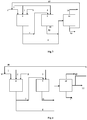
- Fig 1 A process for production of oligomer products from olefinic C4 feed stocks is described wherein, C4 feed stock comprising isobutene (1) as one of the component is divided into two portions (2) & (3) and routed to the hydration reaction zone (6) and oligomerization reaction zone (9) respectively.
- the ratio of feed to (6) and (9) varies from 0.01 to 0.8.
- Propylene feed (4) enters only in the reaction zone (6) in the proportion of 1 to 20 wt% to the C4 feed stock (2).
- Water (5) preferably DM water else any water free of metals and poisons eg; steam condensate can be added to the hydration reaction zone (6) for hydration of the respective olefins.
- Water is added in a quantity which is less than or equal to the moisture holding capacity of the catalyst present in the reaction zone so as to maintain always the same percentage wetting of the catalyst. In particular it should be in the range of 70- 90% of moisture holding capacity of the catalyst. This in turn helps in maintaining constant yield of alcohols through hydration reaction in hydration reaction zone (6), thereby maintaining the ratio of alcohols to isobutene at the inlet of oligomerization reaction zone (9).
- the product from the reaction zone (6) is further divided into two streams (7) and (8), stream (7) along with the produced iso propyl alcohol, tertiary butyl alcohol and unconverted propylene and butylenes enters into the oligomerization reaction zone (9).
- Stream (8) which combines with the product (10) of reactor (9) enters into zone 12 which is a fractionating column for separation of products.
- Products are separated into two different cuts, Stream (13) comprises lighter components which has true boiling point less than 25°C, Stream (14) has true boiling point higher than 25°C.
- the unconverted propylene from reaction zone (6) is partially converted to respective dimer product in reaction zone (9).
- the amount of water is added in such a way that, it is equal to or less than the moisture holding capacity of the catalyst.
- the main advantage of the invention is that it does not require any separation step for recovery of anhydrous alcohol.
- the alcohols are produced at a constant rate by maintaining constant wetting of catalyst in the hydration reaction zone. As the catalyst is maintained in a constant wetting, many of the side reactions are eliminated in the hydration reaction zone.
- a portion of the composite alcohol mixture from hydration reaction zone is routed to oligomerization reaction zone as selectivity modifier.
- the composite alcohol mixture increases the selectivity of dimer product in oligomerization reaction zone (9).
- Any kind of conventional reactors like plug flow reactor, continuous stirred tank reactor, fluidized bed reactor, bubble column reactor, etc. can be used in both the reaction zone.
- Fig 2 A process for production of oligomer products from olefinic C4 feed stocks is described wherein C4 feed stock comprising isobutene (1) as one of the component is divided into two portions (2) & (3) and routed to the hydration reaction zone (6) and oligomerization reaction zone (9) respectively.
- the ratio of feed to (6) and (9) varies from 0.01 to 0.8.
- Propylene feed (4) enters only in the reaction zone (6) in the proportion of 1 to 20 wt% to the C4 feed stock (2).
- Water (5) preferably DM water else any water free of metals and poisons eg; steam condensate can be added to the reaction zone (6) for hydration of the respective olefins.
- Water is added in a quantity which is less than or equal to the moisture holding capacity of the catalyst present in the reaction zone so as to maintain always the same percentage wetting of the catalyst. This in turn helps in maintaining constant yield of alcohols through hydration reaction in hydration reaction zone (6), the product from the hydration reaction zone (6) is further divided into two streams (7) and (8), and stream (7) along with the produced iso propyl alcohol,tertiary butyl alcohol and unconverted propylene and butylenes enters into the oligomerization reaction zone (9).
- the product from the oligomerization reaction zone (9) is further divided into two streams (10) and (11); Stream (10) combines with stream (8) and enters into zone (12) which is a fractionating column for separation of products. Products are separated into two different cuts, Stream (13) comprises lighter components which has true boiling point less than 25°C, Stream (14) has true boiling point higher than 25°C.
- a purge stream (11) which is a product from reaction zone (9) is recycled back to reaction zone (6) for hydration reaction and to increase the yield of alcohols by increasing the temperature.
- the advantage of the invention is, it increases the conversion of olefins by increasing the inlet temperature of the hydration reaction zone and advantageously it also forms the heavier alcohol which in turn increases the selectivity of Trimer product in the oligomerization reaction zone (9).
- the trimer product can be used as fuel additive, in the production of neo-acids etc.
- the amount of recycle of product is in the range of 25-75 wt% of total fresh feed and the mole ratio of isobutene to iso octene (dimer) at the inlet of oligomerization zone is in the range of 1:1 to 5:1.
- Yield of C8 alcohols is in the range of 0.5 to 2.5 wt%.
- the unconverted dimer from hydration reaction zone enters into the oligomerization zone where it reacts with C4 feedstock comprising isobutene and produces trimer.
- Increased yield of C3, C4 alcohols and the formation of C8 alcohols in the hydration zone favors the production of trimer in the oligomerization zone.
- Fig 3 A process for production of oligomer products from olefinic C4 feed stocks is described wherein, C4 feed stock comprising isobutene (1) as one of the component is divided into two portions (2) & (3) and routed to the hydration reaction zone (6) and oligomerization reaction zone (9) respectively.
- the ratio of feed to (6) and (9) varies from 0.01 to 0.8.
- Propylene feed (4) enters only in the hydration reaction zone (6) in the proportion of 1 to 20 wt% to the C4 feed stock (2).
- Water (5) preferably DM water else any water free of metals and poisons eg; steam condensate can be added to the hydration reaction zone (6) for hydration of the respective olefins.
- Water is added in a quantity which is less than or equal to the moisture holding capacity of the catalyst present in the reaction zone so as to maintain always the same percentage wetting of the catalyst. This in turn helps in maintaining constant yield of alcohols through hydration reaction in the reaction zone (6).
- the product from the reaction zone (6) is further divided into two streams (7) and (8), stream (7) along with the produced iso propyl alcohol, tertiary butyl alcohol and unconverted propylene and butylenes enters into the reaction zone (9).
- Stream (8) which combines with the product (10) of reaction zone (9) enters into zone 12 which is a fractionating column for separation of products. Products are separated into two different cuts, Stream (13) comprises lighter components which has true boiling point less than 25°C, Stream (14) has true boiling point higher than 25°C.
- a purge stream (15) is taken from stream (14) and recycled back to the hydration reaction zone (6) for production of heavier alcohols and to suppress the formation of heavier oligomers (Tetramers) in reaction zone (9).
- the amount of recycle of product is in the range of 25-75 wt% of total fresh feed and the mole ratio of isobutene to iso octene (dimer) at the inlet of oligomerization zone is in the range of 1:1 to 5:1.
- Yield of C8 alcohols is in the range of 0.5 to 2.5 wt%.
- the unconverted dimer from hydration reaction zone enters into the oligomerization zone where it reacts with C4 feedstock comprising isobutene and produces trimer.
- Increased yield of C3, C4 alcohols and the formation of C8 alcohols in the hydration zone favors the production of trimer in the oligomerization zone.
- Fig 4 A process for production of oligomer products from olefinic C4 feed stocks is described wherein, C4 feed stock comprising isobutene (1) as one of the component is divided into two portions (2) & (3) and routed to the hydration reaction zone (6) and oligomerization reaction zone (9) respectively.
- the ratio of feed to (6) and (9) varies from 0.01 to 0.8.
- Propylene feed (4) enters only in the hydration reaction zone (6) in the proportion of 1 to 20 wt% to the C4 feed stock (2).
- Water (5) preferably DM water else any water free of metals and poisons eg; steam condensate can be added to the reaction zone (6) for hydration of the respective olefins.
- Water is added in a quantity which is less than or equal to the moisture holding capacity of the catalyst present in the hydration reaction zone so as to maintain always the same percentage wetting of the catalyst. This in turn helps in maintaining constant yield of alcohols through hydration reaction in reaction zone (6), the product from the reaction zone (6) is further divided into two streams (7) and (8), and stream (7) along with the produced iso propyl alcohol,tertiary butyl alcohol and unconverted propylene and butylenes enters into the oligomerization reaction zone (9).
- Stream (8) which combines with the product (10) of the oligomerization reaction zone (9) enters into zone (12) which is a fractionating column for separation of products. Products are separated into three different cuts, Stream (13) comprises lighter components which has true boiling point less than 25°C. Stream (14) has true boiling point higher than 105°C. Stream (15) has true boiling point in the range of 25°C to 105°C.
- a purge stream (16) is taken from stream (15) which is a concentrated dimer product which comprises > 98% purity dimer product is recycled back to the hydration reaction zone (6) for production of C8 alcohols which further suppresses the formation of heavier oligomers (Tetramer) in reaction zone (9).
- the amount of recycle of product is in the range of 25-75 wt% of total fresh feed and the mole ratio of isobutene to iso octene (dimer) at the inlet of oligomerization zone is in the range of 1:1 to 5:1.
- Yield of C8 alcohols is in the range of 0.5 to 2.5 wt%.
- the unconverted dimer from hydration reaction zone enters into the oligomerization zone where it reacts with C4 feedstock comprising isobutene and produces trimer.
- Increased yield of C3, C4 alcohols and the formation of C8 alcohols in the hydration zone favors the production of trimer in the oligomerization zone.
- Fig 5 Shows the effect on the yield of products due to change in catalyst wetting with time.
- Fig 6 Shows the effect of blending oligomer product in the gasoline pool on RON.
- the present invention discloses a process for production of oligomer products which mainly comprises dimer and trimer product of isobutene; using acidic catalyst including ion exchange resin catalyst in a multiple reactor system from olefinic C4 feed stocks comprising isobutene, butenes, butanes, butadienes and mixture thereof.
- the present invention discloses a process for the preparation of oligomers using olefinic C4 feed stock in presence of tertiary butyl alcohol (TBA) and iso propyl alcohol (IPA).
- TSA tertiary butyl alcohol
- IPA iso propyl alcohol
- the present invention also discloses a process for continuous and consistent production of a mixture of alcohols from olefinic feed stocks which comprises the hydrocarbons having carbon number in the range of C3-C12.
- the feed stock comprises propylene, iso butene and mixture thereof.
- light olefinic hydrocarbon feedstock is contacted with acidic catalysts including ion exchange resin catalysts in two different reaction zones, which are connected in parallel-series configuration and operating at different conditions specifically to favor the production of TBA, IPA, other alcohols such as secondary butyl alcohol and heavier alcohols (C8+), in the first reaction zone and the oligomerization in the second reaction zone.
- acidic catalysts including ion exchange resin catalysts in two different reaction zones, which are connected in parallel-series configuration and operating at different conditions specifically to favor the production of TBA, IPA, other alcohols such as secondary butyl alcohol and heavier alcohols (C8+), in the first reaction zone and the oligomerization in the second reaction zone.
- the feed to the process is the C4 feed stream which comprises isobutene as one of the component which is available from any of the refinery process units like FCC, Naphtha cracker, Delayed Coker, isobutane dehydrogenation etc.
- the feed also comprises propylene as the feedstock with a minimum purity of 70 wt%.
- the propylene can be obtained from any of the process like FCC, delayed coker, Naphtha cracking and propane dehydrogenation etc.
- the C4 feedstock also contains n-butane, isobutane, n-butenes, 1, 3 butadiene etc.
- the propylene feedstock also contains propane and propadiene.
- the catalyst used in the hydration reactor has the minimum moisture holding capacity of 40 to 65 wt% of the catalyst.
- the catalyst is a polymer based cation exchange resin which has the concentration of acid sites less than 5 eq/kg, most preferably less than 4 eq/kg and surface area less than 40 m 2 /g and average pore diameter of less than 250 ⁇ .
- the catalyst used in the oligomerization reactor is a polymer based cation exchange resin which has the concentration of acid sites greater than 5 eq/kg and surface area greater than 40 m 2 /g and average pore diameter greater than 250 ⁇ and has the minimum divinely benzene content of 20 wt% to 85 wt% of the catalyst.
- the present invention provides a process for iso-olefin oligomerization, the process comprising:
- the product comprising tertiary butyl alcohol and iso propyl alcohol are obtained simultaneously in the said hydration reaction zone and a portion of the product comprising tertiary butyl alcohol and iso propyl alcohol is transferred to the oligomerization reaction zone.
- the yield of dimer is obtained in the range of 60-78 wt % with the dimer selectivity of more than 90 %.
- the process for continuous and consistent production of a mixture of alcohols comprising:
- the olefinic feedstock comprises the hydrocarbons having carbon number in the range of C3-C12.
- the olefinic feedstock is selected from C4 feedstock comprising isobutene, propylene, or a mixture thereof.
- the C4 feed stock comprises isobutene, butenes, butanes, butadienes and mixture thereof.
- the propylene feedstock also contains propane.
- the propylene is 1 to 20 wt% of the C4 feed stock.
- the percentage wetting of the catalyst in the hydration reaction zone is maintained in the range of 70- 90% of moisture holding capacity of the catalyst.
- the water in the hydration reaction zone is added in the range of 14 to 19 wt% of feed.
- the product obtained in hydration reaction zone comprises tertiary butyl alcohol, iso propyl alcohol, secondary butyl alcohol and other C4 alcohols.
- the present invention provides a process for producing trimers, the process comprising:
- the amount of dimer recycled in step (e) in the process of producing trimer is in the range of 25-75 wt% of fresh feed.
- the fraction comprising dimers obtained in step (d) comprises > 90 % dimers.
- the catalyst used in the hydration reaction zone is a polymer based cation exchange resin having the concentration of acid sites less than 5 eq/kg, surface area less than 40 m 2 /g and average pore diameter of less than 250 ⁇ .
- the catalyst used in the oligomerization reaction zone is a polymer based cation exchange resin having concentration of acid sites greater than 5 eq/kg, surface area greater than 40 m 2 /g, average pore diameter greater than 250 ⁇ and divinyl benzene content of 20 to 85 wt%.
- the present invention provides a composite gasoline composition comprising:
- the composite gasoline composition of the present invention has an improved octane number by 0.5 - 2.8.
- the ratio of the C4 feed stream to the hydration reaction zone and oligomerization reaction zone is 0.01 to 0.8.
- the effluent from the oligomerization reaction zone is fractionated into two cuts, lighter components which have true boiling point less than 25°C and true boiling point higher than 25°C.
- the effluent from the oligomerization reaction zone is fractionated into three different cuts, lighter components which has true boiling point less than 25°C, component having true boiling point in the range of 25°C to 105°C and a component having true boiling point higher than 105°C.
- the ratio of first portion of C4 feed stream to the second portion of C4 feed stream is 0.01 to 0.8 and the propylene feed is in a proportion of 1 to 20 wt% of the first portion of the C4 feed stream.
- Water used in the hydration reaction is free of metals and poisons.
- water is added in the hydration reaction zone in an amount which is less than or equal to the moisture holding capacity of the catalyst.
- a constant percentage wetting of the catalyst in the range of 70-90% of moisture holding capacity of the catalyst is maintained to obtain constant yield of alcohols in first reaction zone (hydration zone).
- the product/alcohols obtained in hydration reaction zone comprise iso propyl alcohol, butyl alcohol, heavier alcohols (C8+) and unconverted propylene and butylenes.
- temperature has been increased from 65 to 75°C by feeding the preheated pure iso-octene feed at the elevated temperature so as to maintain the inlet temperature of the hydration reaction zone at 75°C and found that there is an increase in yield from 51.12 wt% to 70.59 wt%. This shows that increase in temperature in the range of 65 to 75 will increase the conversion as well as yield of TBA.
- Table 3 Run No 1 2 Temperature, °C 65 75 Water in feed, wt% 18.7 18.7 Conversion of Isobutene, wt% 40.38 64.26 TBA Yield, wt% 51.12 70.59 Isooctene Yield, wt% 1.93 0 Trimethyl Pentanol Yield, wt% 0.72 1.96 Trimer Yield, wt% 0 0
- the reactor system comprises gas feed module, liquid feed module with C3/C4 feed injection in the liquid form into the reactor in precisely controlled manner through high pressure pumps, additionally two liquids such as additives can be pumped into the reactor.
- two stage separation system enables the gas liquid separation. In the first stage heavier liquid products can be separated and in the second stage, lighter liquid products can be separated and recycled back to the reactor system.
- Table 7 Run No. Temperature (actual), °C Pressure, bar Isobutene space velocity, hr -1 IPA + TBA on total C4 feed, wt% % conversion of isobutene Total isooctene selectivity, % Total isooctene yield, Wt% 1 79 8 1.975 1.367 93.05 52.82 49.15 2 80 8 1.994 1.352 97.80 48.00 46.95 3 80 8 1.995 2.35 83.35 91.80 76.52 4 81 8 1.980 2.32 79.57 92.50 73.60 5 78 8 1.994 3.28 67.45 93.80 63.27 6 81 8 1.992 3.29 65.32 94.20 61.53
- Example-7 which comprises oligomer product with greater than 90% dimer selectivity is blended in various proportions in the base gasoline pool which comprises 34.46 wt% heavy reformate, 35.2 wt % FCC gasoline and 30.35 wt% isomerate to obtain a composite gasoline composition with improved characteristics of Research Octane Number (RON) as shown in Fig. 6 .
Landscapes
- Chemical & Material Sciences (AREA)
- Organic Chemistry (AREA)
- Chemical Kinetics & Catalysis (AREA)
- Engineering & Computer Science (AREA)
- Oil, Petroleum & Natural Gas (AREA)
- General Chemical & Material Sciences (AREA)
- Materials Engineering (AREA)
- Combustion & Propulsion (AREA)
- Organic Low-Molecular-Weight Compounds And Preparation Thereof (AREA)
- Low-Molecular Organic Synthesis Reactions Using Catalysts (AREA)
- Nanotechnology (AREA)
Claims (16)
- Verfahren zur Isoolefinoligomerisierung, wobei das Verfahren umfasst:(a) Einspeisen eines Isobuten umfassenden C4-Rohstoffs in eine Oligomerisierungsreaktionszone;(b) Einspeisen eines tert-Butylalkohol und Isopropylalkohol umfassenden Produkts in die Oligomerisierungsreaktionszone; und(c) Oligomerisieren des Isobuten umfassenden C4-Rohstoffs in Anwesenheit eines Katalysators zur Herstellung von Dimeren,
wobei das tert-Butylalkohol und Isopropylalkohol umfassende Produkt durch ein Verfahren erhalten werden, umfassend:(i) Einspeisen von Propylen, eines Isobuten umfassenden C4-Rohstoffs und Wasser in eine Hydratationsreaktionszone; und(ii) Durchführen der Hydratation des C4-Rohstoffs und von Propylen in Anwesenheit eines Hydratationskatalysators, um ein tert-Butylalkohol und Isopropylalkohol umfassendes Produkt zu erhalten,wobei die konstante prozentuale Befeuchtung des Hydratationskatalysators im Bereich von 70-90% seines Wasseraufnahmevermögens liegt. - Verfahren nach Anspruch 1, wobei das tert-Butylalkohol und Isopropylalkohol umfassende Produkt gleichzeitig in der Hydratationsreaktionszone erhalten werden und ein Teil des tert-Butylalkohol und Isopropylalkohol umfassenden Produkts in die Oligomerisierungsreaktionszone überführt wird.
- Verfahren nach Anspruch 1, wobei die Dimerausbeute im Bereich von 60-78 Gew.-% mit der Dimerselektivität von > 90% erhalten wird.
- Verfahren zur kontinuierlichen und konsistenten Herstellung einer Mischung von Alkoholen, wobei das Verfahren umfasst:(a) Einspeisen eines olefinischen Rohstoffs und von Wasser in eine Hydratationsreaktionszone; und(b) Durchführen der Hydratation des olefinischen Rohstoffs in Anwesenheit eines Katalysators in der Hydratationsreaktionszone, wobei die konstante prozentuale Befeuchtung des Katalysators im Bereich von 70-90% seines Wasseraufnahmevermögens liegt, um eine konsistente Ausbeute der Mischung von Alkoholen zu erhalten.
- Verfahren nach Anspruch 4, wobei der olefinische Rohstoff die Kohlenwasserstoffe mit einer Kohlenstoffzahl im Bereich von C3-C12 umfasst.
- Verfahren nach Anspruch 5, wobei der olefinische Rohstoff ausgewählt ist aus C4-Rohstoff, umfassend Isobuten, Propylen oder eine Mischung davon.
- Verfahren nach einem der Ansprüche 1 und 6, wobei der C4-Rohstoff Isobuten, Butene, Butane, Butadiene und Mischungen davon umfasst.
- Verfahren nach den Ansprüchen 1 und 6, wobei der Propylen-Rohstoff auch Propan enthält.
- Verfahren nach Anspruch 1, wobei das Propylen 1 bis 20 Gew.-% des C4-Rohstoffs ausmacht.
- Verfahren nach einem der Ansprüche 1 und 4, wobei das Wasser im Bereich von 14 bis 19 Gew.-% des Rohstoffs zugegeben wird.
- Verfahren nach einem der Ansprüche 1 und 4, wobei das in der Hydratationsreaktionszone erhaltene Produkt tert-Butylalkohol, Isopropylalkohol, sec-Butylalkohol und andere C4-Alkohole umfasst.
- Verfahren zur Herstellung von Trimeren, wobei das Verfahren umfasst:(a) Einspeisen eines ersten Teils eines Isobuten, Propylen und Wasser umfassenden C4-Rohstoffs in eine Hydratationsreaktionszone in Anwesenheit eines Hydratationskatalysators, um ein tert-Butylalkohol und Isopropylalkohol umfassendes Produkt herzustellen;(b) Einspeisen eines zweiten Teils des Isobuten umfassenden C4-Rohstoffs in eine Oligomerisierungsreaktionszone;(c) Einspeisen eines Teils des in Schritt (a) erhaltenen Produkts in die Oligomerisierungsreaktionszone und Oligomerisieren des Isobuten umfassenden C4-Rohstoffs in Anwesenheit eines Katalysators, um einen Dimere umfassenden Abfluss herzustellen;(d) Fraktionieren des Abflusses in eine Dimere umfassende Fraktion;(e) Rückführen eines Teils der Dimere umfassenden Fraktion in die Hydratationsreaktionszone, um ein Produkt zu erhalten, das tert-Butylalkohol, Isopropylalkohol, C8-Alkohole und nicht umgesetzte Dimere umfasst; und(f) Einspeisen eines Teils des in Schritt (e) erhaltenen Produkts in die Oligomerisierungsreaktionszone, um Trimere zu erhalten,wobei die konstante prozentuale Befeuchtung des Hydratationskatalysators im Bereich von 70-90% seines Wasseraufnahmevermögens liegt.
- Verfahren nach Anspruch 12, wobei die Menge an Dimer, die in Schritt (e) zurückgeführt wird, im Bereich von 25-75 Gew.-% frischer Rohstoff liegt.
- Verfahren nach Anspruch 12, wobei die in Schritt (d) erhaltene Dimere umfassende Fraktion > 90% Dimere umfasst.
- Verfahren nach einem der Ansprüche 1, 4 und 12, wobei der in der Hydratationsreaktionszone verwendete Katalysator ein Kationenaustauscherharz auf Polymerbasis mit einer Konzentration an sauren Stellen von weniger als 5 Äquiv./kg und einer Oberfläche von weniger als 40 m2/g und einem mittleren Porendurchmesser von weniger als 250 Å ist.
- Verfahren nach einem der Ansprüche 1 und 12, wobei der in der Oligomerisierungsreaktionszone verwendete Katalysator ein Kationenaustauscherharz auf Polymerbasis mit einer Konzentration an sauren Stellen von mehr als 5 Äquiv./kg, einer Oberfläche von mehr als 40 m2/g, einem durchschnittlichen Porendurchmesser größer als 250 Å und einem Divinylbenzolgehalt von 20 bis 85 Gew.-% ist.
Applications Claiming Priority (1)
| Application Number | Priority Date | Filing Date | Title |
|---|---|---|---|
| IN1807MU2014 | 2014-05-31 |
Publications (2)
| Publication Number | Publication Date |
|---|---|
| EP2949636A1 EP2949636A1 (de) | 2015-12-02 |
| EP2949636B1 true EP2949636B1 (de) | 2018-05-09 |
Family
ID=53276751
Family Applications (1)
| Application Number | Title | Priority Date | Filing Date |
|---|---|---|---|
| EP15169810.7A Active EP2949636B1 (de) | 2014-05-31 | 2015-05-29 | Verfahren zur gleichzeitigen herstellung von alkoholen und einem oligomerprodukt aus einem kohlenwasserstoffrohstoff |
Country Status (4)
| Country | Link |
|---|---|
| US (1) | US10131589B2 (de) |
| EP (1) | EP2949636B1 (de) |
| ES (1) | ES2682945T3 (de) |
| SA (1) | SA115360577B1 (de) |
Families Citing this family (4)
| Publication number | Priority date | Publication date | Assignee | Title |
|---|---|---|---|---|
| ES2953298T3 (es) * | 2020-09-04 | 2023-11-10 | Evonik Operations Gmbh | Procedimiento para la oligomerización de isobuteno |
| EP3964492A1 (de) | 2020-09-05 | 2022-03-09 | Indian Oil Corporation Limited | Verfahren und vorrichtung zur herstellung und trennung von alkoholen und oligomerisierung von kohlenwasserstoffausgangsmaterial |
| FI130239B (fi) * | 2020-11-12 | 2023-05-04 | Neste Oyj | Olefiinien trimerisaatio |
| FI130595B (en) | 2021-10-27 | 2023-11-30 | Neste Oyj | Process for preparing olefin trimers and tetramers |
Family Cites Families (9)
| Publication number | Priority date | Publication date | Assignee | Title |
|---|---|---|---|---|
| US3351635A (en) | 1966-03-14 | 1967-11-07 | Halcon International Inc | Epoxidation process |
| US4100220A (en) | 1977-06-27 | 1978-07-11 | Petro-Tex Chemical Corporation | Dimerization of isobutene |
| IT1313600B1 (it) | 1999-08-05 | 2002-09-09 | Snam Progetti | Procedimento per produrre idrocarburi altoottanici mediantedimerizzazione selettiva di isobutene |
| US6596913B1 (en) | 2001-02-23 | 2003-07-22 | Catalytic Distillation Technologies | Recovery of tertiary butyl alcohol |
| FI20011575A0 (fi) * | 2001-07-26 | 2001-07-26 | Fortum Oyj | Polttoainekomponentit ja niiden selektiiviset valmistusmenetelmät |
| US7038101B2 (en) * | 2001-09-05 | 2006-05-02 | Neste Oil Oyj | Method for product separation and purification in iso-butylene dimerization process |
| US20070083069A1 (en) | 2005-10-07 | 2007-04-12 | Candela Lawrence M | Selective olefin oligomerization |
| US8067655B2 (en) | 2008-05-29 | 2011-11-29 | Lyondell Chemical Technology, L.P. | Diisobutylene process |
| US8853483B2 (en) | 2008-12-02 | 2014-10-07 | Catalytic Distillation Technologies | Oligomerization process |
-
2015
- 2015-05-29 EP EP15169810.7A patent/EP2949636B1/de active Active
- 2015-05-29 ES ES15169810.7T patent/ES2682945T3/es active Active
- 2015-05-31 SA SA115360577A patent/SA115360577B1/ar unknown
- 2015-06-01 US US14/727,307 patent/US10131589B2/en active Active
Non-Patent Citations (1)
| Title |
|---|
| None * |
Also Published As
| Publication number | Publication date |
|---|---|
| SA115360577B1 (ar) | 2017-07-27 |
| EP2949636A1 (de) | 2015-12-02 |
| US20150344383A1 (en) | 2015-12-03 |
| US10131589B2 (en) | 2018-11-20 |
| ES2682945T3 (es) | 2018-09-24 |
Similar Documents
| Publication | Publication Date | Title |
|---|---|---|
| EP1032550B1 (de) | Verfahren zur oligomerisierung von isobuten | |
| EP2346799B1 (de) | Metatheseeinheitsvorbehandlungsverfahren mit bildung von octen | |
| US8052945B2 (en) | Apparatus for oligomerization in multiple stages with single fractionation column | |
| EP1773737B1 (de) | Oligomerisationsverfahren | |
| KR101759802B1 (ko) | 저 에틸렌 또는 에틸렌을 이용하지 않는 복분해를 통한 프로필렌 | |
| KR101447769B1 (ko) | 올리고머화 방법 | |
| EP2949636B1 (de) | Verfahren zur gleichzeitigen herstellung von alkoholen und einem oligomerprodukt aus einem kohlenwasserstoffrohstoff | |
| CN101190860A (zh) | C4烯烃叠合醚化联产mtbe、异辛烯和二异丁烯的方法 | |
| US12583805B2 (en) | Co-production of high purity isobutylene and high purity isooctene | |
| US6863778B2 (en) | Separation of tertiary butyl alcohol from diisobutylene | |
| US8492603B2 (en) | Selectivated isoolefin dimerization using metalized resins | |
| KR102211625B1 (ko) | 이소부텐 올리고머를 제조하는 방법 |
Legal Events
| Date | Code | Title | Description |
|---|---|---|---|
| 17P | Request for examination filed |
Effective date: 20150529 |
|
| AK | Designated contracting states |
Kind code of ref document: A1 Designated state(s): AL AT BE BG CH CY CZ DE DK EE ES FI FR GB GR HR HU IE IS IT LI LT LU LV MC MK MT NL NO PL PT RO RS SE SI SK SM TR |
|
| AX | Request for extension of the european patent |
Extension state: BA ME |
|
| PUAI | Public reference made under article 153(3) epc to a published international application that has entered the european phase |
Free format text: ORIGINAL CODE: 0009012 |
|
| 17Q | First examination report despatched |
Effective date: 20170320 |
|
| GRAP | Despatch of communication of intention to grant a patent |
Free format text: ORIGINAL CODE: EPIDOSNIGR1 |
|
| RIC1 | Information provided on ipc code assigned before grant |
Ipc: C10L 1/06 20060101ALI20180124BHEP Ipc: C10L 1/02 20060101ALI20180124BHEP Ipc: C07C 11/02 20060101ALI20180124BHEP Ipc: C07C 2/28 20060101AFI20180124BHEP Ipc: C07C 29/04 20060101ALI20180124BHEP Ipc: C10G 50/00 20060101ALI20180124BHEP Ipc: C07C 31/10 20060101ALI20180124BHEP Ipc: C07C 31/12 20060101ALI20180124BHEP |
|
| INTG | Intention to grant announced |
Effective date: 20180216 |
|
| GRAS | Grant fee paid |
Free format text: ORIGINAL CODE: EPIDOSNIGR3 |
|
| RIN1 | Information on inventor provided before grant (corrected) |
Inventor name: SARAVANAN, SUBRAMANI Inventor name: DAS, BISWAPRIYA Inventor name: BHATTACHARYYA, DEBASIS Inventor name: CHOPRA, ANJU Inventor name: MALHOTRA, RAVINDER KUMAR Inventor name: MANNA, RESHMI Inventor name: VARSHNEY, PUSHKAR Inventor name: KUMAR, BRIJESH |
|
| GRAA | (expected) grant |
Free format text: ORIGINAL CODE: 0009210 |
|
| RAP1 | Party data changed (applicant data changed or rights of an application transferred) |
Owner name: INDIAN OIL CORPORATION LIMITED |
|
| AK | Designated contracting states |
Kind code of ref document: B1 Designated state(s): AL AT BE BG CH CY CZ DE DK EE ES FI FR GB GR HR HU IE IS IT LI LT LU LV MC MK MT NL NO PL PT RO RS SE SI SK SM TR |
|
| REG | Reference to a national code |
Ref country code: GB Ref legal event code: FG4D |
|
| REG | Reference to a national code |
Ref country code: CH Ref legal event code: EP Ref country code: AT Ref legal event code: REF Ref document number: 997456 Country of ref document: AT Kind code of ref document: T Effective date: 20180515 |
|
| REG | Reference to a national code |
Ref country code: IE Ref legal event code: FG4D |
|
| REG | Reference to a national code |
Ref country code: DE Ref legal event code: R096 Ref document number: 602015010861 Country of ref document: DE |
|
| REG | Reference to a national code |
Ref country code: FR Ref legal event code: PLFP Year of fee payment: 4 |
|
| REG | Reference to a national code |
Ref country code: NL Ref legal event code: FP |
|
| REG | Reference to a national code |
Ref country code: ES Ref legal event code: FG2A Ref document number: 2682945 Country of ref document: ES Kind code of ref document: T3 Effective date: 20180924 |
|
| REG | Reference to a national code |
Ref country code: LT Ref legal event code: MG4D |
|
| PG25 | Lapsed in a contracting state [announced via postgrant information from national office to epo] |
Ref country code: LT Free format text: LAPSE BECAUSE OF FAILURE TO SUBMIT A TRANSLATION OF THE DESCRIPTION OR TO PAY THE FEE WITHIN THE PRESCRIBED TIME-LIMIT Effective date: 20180509 Ref country code: BG Free format text: LAPSE BECAUSE OF FAILURE TO SUBMIT A TRANSLATION OF THE DESCRIPTION OR TO PAY THE FEE WITHIN THE PRESCRIBED TIME-LIMIT Effective date: 20180809 Ref country code: FI Free format text: LAPSE BECAUSE OF FAILURE TO SUBMIT A TRANSLATION OF THE DESCRIPTION OR TO PAY THE FEE WITHIN THE PRESCRIBED TIME-LIMIT Effective date: 20180509 Ref country code: NO Free format text: LAPSE BECAUSE OF FAILURE TO SUBMIT A TRANSLATION OF THE DESCRIPTION OR TO PAY THE FEE WITHIN THE PRESCRIBED TIME-LIMIT Effective date: 20180809 Ref country code: SE Free format text: LAPSE BECAUSE OF FAILURE TO SUBMIT A TRANSLATION OF THE DESCRIPTION OR TO PAY THE FEE WITHIN THE PRESCRIBED TIME-LIMIT Effective date: 20180509 |
|
| PG25 | Lapsed in a contracting state [announced via postgrant information from national office to epo] |
Ref country code: GR Free format text: LAPSE BECAUSE OF FAILURE TO SUBMIT A TRANSLATION OF THE DESCRIPTION OR TO PAY THE FEE WITHIN THE PRESCRIBED TIME-LIMIT Effective date: 20180810 Ref country code: LV Free format text: LAPSE BECAUSE OF FAILURE TO SUBMIT A TRANSLATION OF THE DESCRIPTION OR TO PAY THE FEE WITHIN THE PRESCRIBED TIME-LIMIT Effective date: 20180509 Ref country code: RS Free format text: LAPSE BECAUSE OF FAILURE TO SUBMIT A TRANSLATION OF THE DESCRIPTION OR TO PAY THE FEE WITHIN THE PRESCRIBED TIME-LIMIT Effective date: 20180509 Ref country code: HR Free format text: LAPSE BECAUSE OF FAILURE TO SUBMIT A TRANSLATION OF THE DESCRIPTION OR TO PAY THE FEE WITHIN THE PRESCRIBED TIME-LIMIT Effective date: 20180509 |
|
| REG | Reference to a national code |
Ref country code: CH Ref legal event code: PL |
|
| REG | Reference to a national code |
Ref country code: AT Ref legal event code: MK05 Ref document number: 997456 Country of ref document: AT Kind code of ref document: T Effective date: 20180509 |
|
| REG | Reference to a national code |
Ref country code: BE Ref legal event code: MM Effective date: 20180531 |
|
| PG25 | Lapsed in a contracting state [announced via postgrant information from national office to epo] |
Ref country code: DK Free format text: LAPSE BECAUSE OF FAILURE TO SUBMIT A TRANSLATION OF THE DESCRIPTION OR TO PAY THE FEE WITHIN THE PRESCRIBED TIME-LIMIT Effective date: 20180509 Ref country code: PL Free format text: LAPSE BECAUSE OF FAILURE TO SUBMIT A TRANSLATION OF THE DESCRIPTION OR TO PAY THE FEE WITHIN THE PRESCRIBED TIME-LIMIT Effective date: 20180509 Ref country code: RO Free format text: LAPSE BECAUSE OF FAILURE TO SUBMIT A TRANSLATION OF THE DESCRIPTION OR TO PAY THE FEE WITHIN THE PRESCRIBED TIME-LIMIT Effective date: 20180509 Ref country code: SK Free format text: LAPSE BECAUSE OF FAILURE TO SUBMIT A TRANSLATION OF THE DESCRIPTION OR TO PAY THE FEE WITHIN THE PRESCRIBED TIME-LIMIT Effective date: 20180509 Ref country code: CZ Free format text: LAPSE BECAUSE OF FAILURE TO SUBMIT A TRANSLATION OF THE DESCRIPTION OR TO PAY THE FEE WITHIN THE PRESCRIBED TIME-LIMIT Effective date: 20180509 Ref country code: EE Free format text: LAPSE BECAUSE OF FAILURE TO SUBMIT A TRANSLATION OF THE DESCRIPTION OR TO PAY THE FEE WITHIN THE PRESCRIBED TIME-LIMIT Effective date: 20180509 Ref country code: AT Free format text: LAPSE BECAUSE OF FAILURE TO SUBMIT A TRANSLATION OF THE DESCRIPTION OR TO PAY THE FEE WITHIN THE PRESCRIBED TIME-LIMIT Effective date: 20180509 |
|
| REG | Reference to a national code |
Ref country code: DE Ref legal event code: R097 Ref document number: 602015010861 Country of ref document: DE |
|
| REG | Reference to a national code |
Ref country code: IE Ref legal event code: MM4A |
|
| PG25 | Lapsed in a contracting state [announced via postgrant information from national office to epo] |
Ref country code: LI Free format text: LAPSE BECAUSE OF NON-PAYMENT OF DUE FEES Effective date: 20180531 Ref country code: CH Free format text: LAPSE BECAUSE OF NON-PAYMENT OF DUE FEES Effective date: 20180531 Ref country code: SM Free format text: LAPSE BECAUSE OF FAILURE TO SUBMIT A TRANSLATION OF THE DESCRIPTION OR TO PAY THE FEE WITHIN THE PRESCRIBED TIME-LIMIT Effective date: 20180509 |
|
| PLBE | No opposition filed within time limit |
Free format text: ORIGINAL CODE: 0009261 |
|
| STAA | Information on the status of an ep patent application or granted ep patent |
Free format text: STATUS: NO OPPOSITION FILED WITHIN TIME LIMIT |
|
| PG25 | Lapsed in a contracting state [announced via postgrant information from national office to epo] |
Ref country code: MC Free format text: LAPSE BECAUSE OF FAILURE TO SUBMIT A TRANSLATION OF THE DESCRIPTION OR TO PAY THE FEE WITHIN THE PRESCRIBED TIME-LIMIT Effective date: 20180509 Ref country code: LU Free format text: LAPSE BECAUSE OF NON-PAYMENT OF DUE FEES Effective date: 20180529 |
|
| 26N | No opposition filed |
Effective date: 20190212 |
|
| PG25 | Lapsed in a contracting state [announced via postgrant information from national office to epo] |
Ref country code: IE Free format text: LAPSE BECAUSE OF NON-PAYMENT OF DUE FEES Effective date: 20180529 |
|
| PG25 | Lapsed in a contracting state [announced via postgrant information from national office to epo] |
Ref country code: BE Free format text: LAPSE BECAUSE OF NON-PAYMENT OF DUE FEES Effective date: 20180531 Ref country code: SI Free format text: LAPSE BECAUSE OF FAILURE TO SUBMIT A TRANSLATION OF THE DESCRIPTION OR TO PAY THE FEE WITHIN THE PRESCRIBED TIME-LIMIT Effective date: 20180509 |
|
| PG25 | Lapsed in a contracting state [announced via postgrant information from national office to epo] |
Ref country code: AL Free format text: LAPSE BECAUSE OF FAILURE TO SUBMIT A TRANSLATION OF THE DESCRIPTION OR TO PAY THE FEE WITHIN THE PRESCRIBED TIME-LIMIT Effective date: 20180509 |
|
| PG25 | Lapsed in a contracting state [announced via postgrant information from national office to epo] |
Ref country code: MT Free format text: LAPSE BECAUSE OF NON-PAYMENT OF DUE FEES Effective date: 20180529 |
|
| PG25 | Lapsed in a contracting state [announced via postgrant information from national office to epo] |
Ref country code: TR Free format text: LAPSE BECAUSE OF FAILURE TO SUBMIT A TRANSLATION OF THE DESCRIPTION OR TO PAY THE FEE WITHIN THE PRESCRIBED TIME-LIMIT Effective date: 20180509 |
|
| PG25 | Lapsed in a contracting state [announced via postgrant information from national office to epo] |
Ref country code: PT Free format text: LAPSE BECAUSE OF FAILURE TO SUBMIT A TRANSLATION OF THE DESCRIPTION OR TO PAY THE FEE WITHIN THE PRESCRIBED TIME-LIMIT Effective date: 20180509 |
|
| PG25 | Lapsed in a contracting state [announced via postgrant information from national office to epo] |
Ref country code: MK Free format text: LAPSE BECAUSE OF NON-PAYMENT OF DUE FEES Effective date: 20180509 Ref country code: HU Free format text: LAPSE BECAUSE OF FAILURE TO SUBMIT A TRANSLATION OF THE DESCRIPTION OR TO PAY THE FEE WITHIN THE PRESCRIBED TIME-LIMIT; INVALID AB INITIO Effective date: 20150529 Ref country code: CY Free format text: LAPSE BECAUSE OF FAILURE TO SUBMIT A TRANSLATION OF THE DESCRIPTION OR TO PAY THE FEE WITHIN THE PRESCRIBED TIME-LIMIT Effective date: 20180509 |
|
| PG25 | Lapsed in a contracting state [announced via postgrant information from national office to epo] |
Ref country code: IS Free format text: LAPSE BECAUSE OF FAILURE TO SUBMIT A TRANSLATION OF THE DESCRIPTION OR TO PAY THE FEE WITHIN THE PRESCRIBED TIME-LIMIT Effective date: 20180909 |
|
| PGFP | Annual fee paid to national office [announced via postgrant information from national office to epo] |
Ref country code: NL Payment date: 20250523 Year of fee payment: 11 |
|
| PGFP | Annual fee paid to national office [announced via postgrant information from national office to epo] |
Ref country code: DE Payment date: 20250602 Year of fee payment: 11 |
|
| PGFP | Annual fee paid to national office [announced via postgrant information from national office to epo] |
Ref country code: GB Payment date: 20250524 Year of fee payment: 11 Ref country code: ES Payment date: 20250602 Year of fee payment: 11 |
|
| PGFP | Annual fee paid to national office [announced via postgrant information from national office to epo] |
Ref country code: IT Payment date: 20250529 Year of fee payment: 11 |
|
| PGFP | Annual fee paid to national office [announced via postgrant information from national office to epo] |
Ref country code: FR Payment date: 20250520 Year of fee payment: 11 |