EP2951027B1 - Supports d'enregistrement non revêtus - Google Patents
Supports d'enregistrement non revêtus Download PDFInfo
- Publication number
- EP2951027B1 EP2951027B1 EP13873191.4A EP13873191A EP2951027B1 EP 2951027 B1 EP2951027 B1 EP 2951027B1 EP 13873191 A EP13873191 A EP 13873191A EP 2951027 B1 EP2951027 B1 EP 2951027B1
- Authority
- EP
- European Patent Office
- Prior art keywords
- recording medium
- uncoated recording
- fibers
- paper
- uncoated
- Prior art date
- Legal status (The legal status is an assumption and is not a legal conclusion. Google has not performed a legal analysis and makes no representation as to the accuracy of the status listed.)
- Not-in-force
Links
Images
Classifications
-
- B—PERFORMING OPERATIONS; TRANSPORTING
- B41—PRINTING; LINING MACHINES; TYPEWRITERS; STAMPS
- B41M—PRINTING, DUPLICATING, MARKING, OR COPYING PROCESSES; COLOUR PRINTING
- B41M5/00—Duplicating or marking methods; Sheet materials for use therein
- B41M5/0035—Uncoated paper
-
- D—TEXTILES; PAPER
- D21—PAPER-MAKING; PRODUCTION OF CELLULOSE
- D21H—PULP COMPOSITIONS; PREPARATION THEREOF NOT COVERED BY SUBCLASSES D21C OR D21D; IMPREGNATING OR COATING OF PAPER; TREATMENT OF FINISHED PAPER NOT COVERED BY CLASS B31 OR SUBCLASS D21G; PAPER NOT OTHERWISE PROVIDED FOR
- D21H11/00—Pulp or paper, comprising cellulose or lignocellulose fibres of natural origin only
-
- D—TEXTILES; PAPER
- D21—PAPER-MAKING; PRODUCTION OF CELLULOSE
- D21H—PULP COMPOSITIONS; PREPARATION THEREOF NOT COVERED BY SUBCLASSES D21C OR D21D; IMPREGNATING OR COATING OF PAPER; TREATMENT OF FINISHED PAPER NOT COVERED BY CLASS B31 OR SUBCLASS D21G; PAPER NOT OTHERWISE PROVIDED FOR
- D21H11/00—Pulp or paper, comprising cellulose or lignocellulose fibres of natural origin only
- D21H11/02—Chemical or chemomechanical or chemothermomechanical pulp
-
- D—TEXTILES; PAPER
- D21—PAPER-MAKING; PRODUCTION OF CELLULOSE
- D21H—PULP COMPOSITIONS; PREPARATION THEREOF NOT COVERED BY SUBCLASSES D21C OR D21D; IMPREGNATING OR COATING OF PAPER; TREATMENT OF FINISHED PAPER NOT COVERED BY CLASS B31 OR SUBCLASS D21G; PAPER NOT OTHERWISE PROVIDED FOR
- D21H11/00—Pulp or paper, comprising cellulose or lignocellulose fibres of natural origin only
- D21H11/08—Mechanical or thermomechanical pulp
-
- D—TEXTILES; PAPER
- D21—PAPER-MAKING; PRODUCTION OF CELLULOSE
- D21H—PULP COMPOSITIONS; PREPARATION THEREOF NOT COVERED BY SUBCLASSES D21C OR D21D; IMPREGNATING OR COATING OF PAPER; TREATMENT OF FINISHED PAPER NOT COVERED BY CLASS B31 OR SUBCLASS D21G; PAPER NOT OTHERWISE PROVIDED FOR
- D21H11/00—Pulp or paper, comprising cellulose or lignocellulose fibres of natural origin only
- D21H11/10—Mixtures of chemical and mechanical pulp
-
- D—TEXTILES; PAPER
- D21—PAPER-MAKING; PRODUCTION OF CELLULOSE
- D21H—PULP COMPOSITIONS; PREPARATION THEREOF NOT COVERED BY SUBCLASSES D21C OR D21D; IMPREGNATING OR COATING OF PAPER; TREATMENT OF FINISHED PAPER NOT COVERED BY CLASS B31 OR SUBCLASS D21G; PAPER NOT OTHERWISE PROVIDED FOR
- D21H17/00—Non-fibrous material added to the pulp, characterised by its constitution; Paper-impregnating material characterised by its constitution
- D21H17/63—Inorganic compounds
-
- D—TEXTILES; PAPER
- D21—PAPER-MAKING; PRODUCTION OF CELLULOSE
- D21H—PULP COMPOSITIONS; PREPARATION THEREOF NOT COVERED BY SUBCLASSES D21C OR D21D; IMPREGNATING OR COATING OF PAPER; TREATMENT OF FINISHED PAPER NOT COVERED BY CLASS B31 OR SUBCLASS D21G; PAPER NOT OTHERWISE PROVIDED FOR
- D21H17/00—Non-fibrous material added to the pulp, characterised by its constitution; Paper-impregnating material characterised by its constitution
- D21H17/63—Inorganic compounds
- D21H17/66—Salts, e.g. alums
-
- D—TEXTILES; PAPER
- D21—PAPER-MAKING; PRODUCTION OF CELLULOSE
- D21H—PULP COMPOSITIONS; PREPARATION THEREOF NOT COVERED BY SUBCLASSES D21C OR D21D; IMPREGNATING OR COATING OF PAPER; TREATMENT OF FINISHED PAPER NOT COVERED BY CLASS B31 OR SUBCLASS D21G; PAPER NOT OTHERWISE PROVIDED FOR
- D21H17/00—Non-fibrous material added to the pulp, characterised by its constitution; Paper-impregnating material characterised by its constitution
- D21H17/63—Inorganic compounds
- D21H17/67—Water-insoluble compounds, e.g. fillers, pigments
- D21H17/675—Oxides, hydroxides or carbonates
-
- D—TEXTILES; PAPER
- D21—PAPER-MAKING; PRODUCTION OF CELLULOSE
- D21H—PULP COMPOSITIONS; PREPARATION THEREOF NOT COVERED BY SUBCLASSES D21C OR D21D; IMPREGNATING OR COATING OF PAPER; TREATMENT OF FINISHED PAPER NOT COVERED BY CLASS B31 OR SUBCLASS D21G; PAPER NOT OTHERWISE PROVIDED FOR
- D21H27/00—Special paper not otherwise provided for, e.g. made by multi-step processes
-
- B—PERFORMING OPERATIONS; TRANSPORTING
- B41—PRINTING; LINING MACHINES; TYPEWRITERS; STAMPS
- B41M—PRINTING, DUPLICATING, MARKING, OR COPYING PROCESSES; COLOUR PRINTING
- B41M5/00—Duplicating or marking methods; Sheet materials for use therein
- B41M5/0041—Digital printing on surfaces other than ordinary paper
- B41M5/0047—Digital printing on surfaces other than ordinary paper by ink-jet printing
Definitions
- Media used in laser printing and in inkjet printing often have a weight ranging from about 75 g/m 2 (gsm) to about 90 g/m 2 (gsm).
- Media within this weight range may be desirable for laser printing, at least in part because of the opacity characteristics exhibited by the media, as well as the printing performance that is achieved with the media in terms of reduced or eliminated wrinkling and jamming.
- Media having a weight within the weight range provided above may also be desirable for inkjet printing, at least in part because show through (i.e., strikethrough) is minimized or eliminated.
- the present disclosure relates generally to uncoated recording media.
- the uncoated recording medium disclosed herein are light weight cut size papers, which have a basis weight ranging from about 45 g/m 2 (gsm) to about 70 g/m 2 (gsm). In some instances, the weight ranges from about 50 gsm to about 63 gsm. Some difficulties generally encountered when moving to lower basis weight are retaining the paper feed reliability in printers, while maintaining good opacity to avoid image show through. Examples of the present disclosure advantageously include light weight cut size papers exhibiting reliable sheet feed and desirable opacity.
- the media disclosed herein a balance between fiber amount (and types of fibers) and filler type and amount has been identified so that the filler amount is reduced without deleteriously affecting desirable qualities, such as weight, stiffness, opacity, and brightness.
- desirable qualities such as weight, stiffness, opacity, and brightness.
- the stiffness of the examples of the media disclosed herein contributes to the light weight cut size paper working reliably in a variety of printing systems, including laser printers and inkjet printers. It is believed that the runability of the light weight cut size papers disclosed herein is enhanced. For example, it is believed that examples of the light weight cut size papers disclosed herein will exhibit reduced or eliminated jamming and wrinkling when compared to other commercially available light weight cut size papers.
- Some examples of the uncoated recording media disclosed herein are also particularly suitable for use in inkjet printing systems. These examples of the light weight cut size paper are able to maintain inkjet colorants on the surface and thus exhibit minimal show through (strikethrough), which is desirable.
- the examples of the uncoated recording media disclosed herein may be about 20% thinner and lighter than other commercially available papers (e.g., 60 gsm compared to 75 gsm).
- the thin and light-weight examples disclosed herein offer many advantages. For example, fewer raw materials are utilized to manufacture the light weight cut size paper, and the lighter weight of the paper may result in lower shipping costs of the paper itself and of brochures and other products made with the paper.
- thinner paper requires less storage space than thicker paper in cabinets, printer paper trays, briefcases, etc.
- laser printers may utilize less power for fusing toner on thinner paper.
- Examples of the uncoated recording medium include a pulp (e.g., a chemical pulp) of a blend of hardwood fibers and softwood fibers, as well as fibers formed by thermomechanical pulping (TMP) (referred to herein as "TMP fibers").
- suitable hardwood fibers include pulp fibers derived from deciduous trees (angiosperms), such as birch, aspen, oak, beech, maple, and eucalyptus.
- suitable softwood fibers include pulp fibers derived from coniferous trees (gymnosperms), such as varieties of fir, spruce, and pine (e.g., loblolly pine, slash pine, Colorado spruce, balsam fir, and Douglas fir).
- suitable TMP fibers include the hardwood fibers and softwood fibers listed above (e.g., aspen and maple are common TMP fibers, and pine softwood may also be used for TMP fibers).
- the uncoated recording medium includes a blend of bleached chemical northern USA hardwood fibers, bleached chemical southern USA softwood fibers, and Tembec Inc. (Temiscamingue, QC, Canada) Tempcel aspen TMP fibers.
- the ratio of hardwood fibers to softwood fibers to TMP fibers used may range from about 70:20:10 to about 30:30:40. In another example, the ratio of hardwood fibers to softwood fibers to TMP fibers is about 50:30:20.
- the uncoated recording medium has a total fiber content of at least about 80 wt% of the total wt% of the uncoated recording medium.
- Wt% refers to dry weight percentage based on the total dry weight of the uncoated recording medium.
- the total fiber content is equal to 100 wt% minus total filler wt% minus wt% of any other ingredients, including, for example, sizing agents, starch, and salt. In an example, the total fiber content ranges from about 85 wt% to about 95 wt%.
- the hardwood fibers are present in an amount ranging from about 20 wt% to about 70 wt% relative to the total fiber content
- the softwood fibers are present in an amount ranging from about 20 wt% to about 50 wt% relative to the total fiber content
- the TMP fibers are present in an amount ranging from about 10 wt% to about 40 wt% relative to the total fiber content.
- the blend of hardwood and softwood fibers may be prepared via any known pulping process, such as, for example, chemical pulping processes.
- the hardwood and softwood fibers are chemically pulped fibers.
- Two suitable chemical pulping methods include the kraft process and the sulphite process.
- some of the hardwood and softwood fibers are chemically pulped fibers, and some of the hardwood and softwood fibers are mechanically pulped fibers.
- the amount of chemically pulped fibers is at least 60 wt% of the total fiber content, and the amount of mechanically pulped fibers is up to 40 wt% of the total fiber content.
- TMP is meant to include two processes.
- TMP fibers are prepared by physically grinding wood chips or logs using heat to soften the chips (Thermo-Mechanical Pulp).
- CTMP Chemi-Thermo-Mechanical Pulp
- BCTMP bleached Chemi-Thermo-Mechanical Pulp
- the hardwood, softwood and TMP fibers used in the examples disclosed herein are not expanded fibers, and the uncoated recording medium does not include any expanded fibers.
- Expanded fibers are hardwood and/or softwood fibers that have been exposed to a treatment process that expands the fibers. Expanded fibers exhibit a gel-like resistance to settling.
- One example of a treatment process that forms expanded fibers utilizes a horizontal fine media mill having a 1.5 liter fibrillating zone volume and five impellers. Expanded fibers can be added to increase the strength of the resulting media; however, the light weight cut size paper disclosed herein exhibits a desirable stiffness without the inclusion of expanded fibers.
- the uncoated recording medium also includes filler.
- the ratio of fiber to filler has been selected to achieve the examples of the light weight cut size paper disclosed herein, which have desirable stiffness and opacity.
- the amount of fiber has been increased, and the amount of filler has been reduced.
- the amount of filler included in the uncoated recording medium ranges from about 3 wt% to about 14 wt% of the total wt% of the uncoated recording medium.
- the uncoated recording medium may include from about 65 lbs of filler per short ton (2000 lbs) of fiber to about 122 lbs of filler per short ton of fiber (i.e., from about 33 kg of filler per metric ton (1000 kg) of fiber to about 61 kg per metric ton of fiber).
- the uncoated recording medium may include a blend of fibers having about 40% hardwood fibers, about 30% softwood fibers and about 30% TMP fibers, and about 9 wt% filler (about 6 wt% calcium carbonate and about 3 wt% titanium dioxide) to render a thin paper that is light weight (about 52 gsm basis weight), has a desirable opacity (about 83), and has a desirable stiffness (i.e., exhibits desirable runnability on printers).
- suitable fillers include titanium dioxide (TiO 2 ), precipitated calcium carbonate, ground calcium carbonate, talc, clay (e.g., calcined clay, kaolin clay, or other phyllosilicates), calcium sulfate, or combinations thereof.
- TiO 2 titanium dioxide
- precipitated calcium carbonate ground calcium carbonate
- talc clay
- clay e.g., calcined clay, kaolin clay, or other phyllosilicates
- calcium sulfate or combinations thereof.
- An example of a suitable filler combination is calcium carbonate (precipitated, ground, or combinations thereof) with titanium dioxide.
- Another example of a suitable filler combination is precipitated calcium carbonate with titanium dioxide.
- these combinations may include from about 0.7 wt% to about 5 wt% (of the total wt% of the uncoated recording medium) of the titanium dioxide, and from about 2 wt% to about 9 wt% (of the total wt% of the uncoated recording medium) of the calcium carbonate (precipitated, ground, or a combination thereof).
- the combination of calcium carbonate and titanium dioxide includes from about 2.2 wt% to about 5 wt% of the calcium carbonate (precipitated, ground, or a combination thereof) and from about 1 wt% to about 2.7 wt% of the titanium dioxide.
- the filler is a combination of the calcium carbonate(s) and the titanium dioxide and excludes other fillers.
- Another example filler combination includes kaolin clay and talc with titanium dioxide, with or without other fillers.
- the ratio of kaolin clay/talc to titanium dioxide ranges from about 10:1 to about 1:5; or from about 3:1 to about 1:1.
- the combination of calcium carbonate and titanium dioxide may be desirable to achieve, in part, a desirable opacity and a desirable brightness (both of which are discussed further hereinbelow).
- Many currently available office papers (within or above a traditional weight of 75 gsm) sold in the United States utilize a large amount of calcium carbonate in order to achieve opacity and brightness.
- 40 samples of cut size office paper sold in the United States were tested for filler content using an X-ray fluorescence analyzer.
- the filler ranges for each of these papers was found to include less than 1% talc, less than 0.2% clay, from about 13% to about 23% calcium carbonate, and trace amounts (equal to or less than 0.1 %) titanium dioxide, where each % is by dry weight of the paper.
- the present inventors have surprisingly found, in an example, that by increasing the amount of titanium dioxide and decreasing the amount of precipitated calcium carbonate, a light weight cut size paper with desirable stiffness, opacity, and brightness can be achieved.
- Titanium dioxide is commercially available, for example, under the tradename TI-PURE® RPS VANTAGE® (E. I. du Pont de Nemours and Company).
- Precipitated calcium carbonate may be obtained by calcining crude calcium oxide. Water is added to obtain calcium hydroxide, and then carbon dioxide is passed through the solution to precipitate the desired calcium carbonate.
- Precipitated calcium carbonate is also commercially available, for example, under the tradenames OPACARB® A40 and ALBACAR® HO DRY (both of which are available from Minerals Technologies Inc.).
- Ground calcium carbonate is commercially available, for example, under the trade names OMYAFIL®, HYDROCARB 70®, and OMYAPAQUE®, all of which are available from Omya North America.
- Examples of commercially available filler clays are KAOCALTM, EG-44, and B-80, all of which are available from Thiele Kaolin Company.
- An example of commercially available talc is FINNTALCTM F03, which is available from Mondo Minerals.
- the uncoated recording medium may also include size press (or surface) starch additives, internal starch additives, or internal sizing agents.
- size press/surface starch additive is 2-hydroxyethyl starch ether, which is commercially available under the tradename PENFORD® Gum 270 (Penford Products, Co.).
- PENFORD® Gum 270 Penford Products, Co.
- the amount used may range from about 30 kg/ton of paper to about 50 kg/ton of paper.
- the amount of size press/surface starch additive is about 45 kg/ton of paper (i.e., about 100 lbs/ton of paper).
- a suitable internal starch additive is a cationic potato starch, which is commercially available under the tradename STA-LOKTM 400, from Tate & Lyle.
- STA-LOKTM 400 cationic potato starch
- the amount used may range from about 3 kg/ton of paper to about 6 kg/ton of paper.
- the amount of internal starch additive is about 2.7 kg/ton of paper (i.e., about 6 lbs/ton of paper).
- suitable internal sizing agents include alkyl ketene dimer (AKD) and alkenyl succinic anhydride.
- AKD is commercially available under the tradename HERCON® 80 (Hercules, Inc.), and may be used in an amount ranging from about 1.0 kg/ton of paper to about 3.0 kg/ton of paper. In an example, the amount of AKD included is about 1.8 kg/ton of paper (i.e., about 4 lbs/ton of paper). When alkenyl succinic anhydride is included, the amount used ranges from about 0.5 kg/ton of paper to about 2.5 kg/ton of paper. In an example, the amount of alkenyl succinic anhydride included is about 1.6 kg/ton of paper (i.e., about 3.5 lbs/ton of paper). For the amounts provided herein in terms of per ton of paper, per grams of paper, etc., it is to be understood that the paper refers to the uncoated recording medium.
- the medium may also include a salt, which is added during the paper making process at the size press.
- suitable salts include calcium chloride (CaCl 2 ), magnesium chloride (MgCl 2 ), aluminum chloride (AlCl 3 ), magnesium sulfate (MgSO 4 ) and combinations thereof.
- the salt may be added in any amount ranging from about 4000 ⁇ g/gram of paper to about 9500 ⁇ g/gram of paper.
- the addition of the salt may provide the uncoated recording medium with the ability to maintain colorants (e.g., present in inkjet inks) at the surface of the uncoated recording medium, thereby improving show through characteristics (i.e., strikethrough, or the amount of ink printed on one side of the paper that can be seen through the other side of the paper) as well as other printing qualities (black optical density, color saturation, etc.).
- colorants e.g., present in inkjet inks
- show through characteristics i.e., strikethrough, or the amount of ink printed on one side of the paper that can be seen through the other side of the paper
- other printing qualities black optical density, color saturation, etc.
- the uncoated recording medium exhibits a number of properties that render the light weight cut size paper reliable and suitable for a variety of printing techniques. These properties include stiffness (bending and tensile), opacity (reported both as opacity and as normalized opacity (discussed below)), and brightness.
- the examples of the uncoated recording medium disclosed herein have a machine direction Lorentezen & Wetter (L&W) 5 degree bending stiffness of at least 0.14 mNm (milliNewton meters). Some examples of the machine direction L&W 5 degree bending stiffness extend up to 0.30 mNm.
- the examples of the uncoated recording medium disclosed herein have a cross direction Lorentezen & Wetter (L&W) 5 degree bending stiffness ranging from about 0.12 mNm to about 0.15 mNm.
- L&W stiffness may be measured, for example, using an L&W bending tester available from Lorentezen & Wetter (see http://www.lorentzenwettre.com/images/stories/LorentzenWettre/PDF_product_info/LW_Bending_Teste r_160.pdf).
- L&W stiffness is generally measured by holding one end of a sample stationary while bending the other end through a selected angle (e.g., ranging from 0° to 5°). The L&W bending tester is automated and performs these steps. The force to bend the sample is measured by the tester. Bending stiffness is also calculated by the tester using the sample size, bending angle, and force.
- Stiffness may also be measured in terms of Clark stiffness using, for example, a Clark stiffness tester available from Alat Uji.
- the Clark stiffness of an example of the uncoated recording medium in the machine direction may range from about 70 cm 3 /100 to about 100 cm 3 /100
- the Clark stiffness of an example of the uncoated recording medium in the cross direction may range from about 25 cm 3 /100 to about 45 cm 3 /100.
- the stiffness value of examples of the uncoated recording medium disclosed herein provides the light weight cut size paper with sufficient rigidity to keep the paper from wrinkling and/or jamming during printing.
- Examples of the medium disclosed herein further exhibit a ratio of machine direction (MD) tensile stiffness to cross direction (CD) tensile stiffness ranging from about 1.4 to less than about 2.5.
- the light weight paper has an MD/CD tensile stiffness ratio of about 1.8.
- newspaper or magazine paper generally exhibits an MD tensile stiffness to CD tensile stiffness ratio ranging from about 3 to about 5.
- the examples of the uncoated recording medium disclosed herein also have an opacity ranging from about 78 to about 87. In an example of the medium disclosed herein, the opacity is about 82. For the examples disclosed herein, the maximum opacity may be up to 88.
- Opacity is an optical property of the paper, and may be determined by a ratio of reflectance measurements. TAPPI opacity (i.e., opacity using 89% reflectance backing) is one opacity value that may be used. TAPPI opacity is 100 times the ratio of reflectance of a sample when backed with a black backing to the reflectance of the sample when backed with a white backing having a known reflectance of 89%.
- opacity is a unitless property.
- the reflectance measurements may be carried out using a brightness and color meter. Higher opacity values are often obtained when the amount of filler is increased. However, it has been found in the examples disclosed herein that desirable opacity levels may be achieved with the lower amounts of filler disclosed herein.
- examples of the uncoated media according to the present disclosure exhibit a normalized opacity ranging from about 1.25 to about 1.60.
- "normalized opacity” is the opacity (actual or predicted) divided by the basis weight in grams per square meter. Normalized opacity (also referred to herein as "opacity index”) is reported as a unitless number.
- the uncoated medium exhibits a normalized opacity ranging from about 1.30 to about 1.48.
- some higher basis weight e.g., over 75 gsm
- opacity of examples of the uncoated media can be accurately predicted using an opacity model.
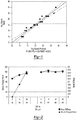
- the amounts of calcium carbonate, titanium dioxide and basis weight were included in a linear model, and this was advantageously found to explain 95% of actual opacity values. See, e.g., the prediction line in Fig. 1 as compared to the actual data points (the actual data points are from actual opacity tests run on Samples 1 through 7 of Example 2 (Table 2, below)).
- Fig. 1 shows that the linear model (described in more detail immediately below) is a good model and can be used to predict opacity for trial points that were not run.
- examples of the uncoated medium as disclosed herein may be designed to an opacity target using the 3 variables noted above in the model.
- Table 1 Opacity Examples of model predictions Basis Wt, gsm Calcium Carbonate filler, in % Titanium Dioxide Filler, in % Predicted Opacity 52 6 3 83 55 6 3 84 60 6 3 87 52 4 3 80 55 4 3 82 60 4 3 84 52 5 1 78 55 5 1 79 60 5 1 82
- the examples of the uncoated recording medium disclosed herein also have an ash content ranging from about 3 wt% to about 10 wt%.
- the ash content is often equal to the amount of filler.
- the ash content may also be referred to as a percentage based on the dry weight of the filler used.
- the ash content from burning may be less than the filler level, as determined by room temperature techniques. It is believed that if the ash content is higher, the stiffness may be deleteriously affected, and if the ash content is lower, opacity may be deleteriously affected. In an example, the ash content ranges from about 6 wt% to about 7 wt%.
- the brightness of examples of the uncoated recording medium is also desirable even though the weight of the paper is reduced.
- Brightness may be increased with an increased amount of filler (e.g., an increased amount of calcium carbonate).
- an increased amount of filler generally decreases the stiffness of the paper.
- the uncoated recording medium disclosed herein has the reduced amount of filler, desirable brightness, and desirable stiffness.
- the desired qualities and the low filler level is achieved using a combination of precipitated calcium carbonate and titanium dioxide in the ranges provided herein.
- the ISO brightness ranges from about 80 to about 84 (on a scale of 1-100).
- ISO 2470 brightness may be measured using illuminant C and 2° observer conditions. It is believed that the ISO brightness may be increased by including calcium carbonate and titanium dioxide in amounts at the higher end of the provided ranges.
- OBAs optical brightening agent(s)
- FBAs fluorescent brightening agents
- Basic class types of brighteners include triazine-stilbenes (di-, tetra- or hexa-sulfonated), coumarins, imidazolines, diazoles, triazoles, benzoxazolines, and biphenyl-stilbenes.
- the optical brightening agent(s) and/or fluorescent brightening agents may be added in a total amount ranging from about 0.5 kg/ton of paper to about 15 kg/ton of paper.
- the optical brightening agent(s) and/or fluorescent brightening agents may be added in the wet end or in the size press.
- Examples of the uncoated recording medium exhibit desirable strikethrough/show through characteristics (e.g., the strikethrough is minimized to such an extent as to be deemed acceptable to a user).
- a percentage of strikethrough of the ink or toner from the front side of the medium to the back side of the medium ranges from about 17% to about 30%.
- a percentage of strikethrough of the ink from a front side of the medium to a back side of the medium ranges from about 20% to about 24%.
- a percentage of strikethrough of the toner from a front side of the medium to a back side of the medium ranges from about 17% to about 24%.
- the uncoated recording medium disclosed herein consists of the fibers and filler(s), with or without the previously mentioned additives, and without any other components that would alter the weight, stiffness, and/or opacity of the uncoated recording medium.
- the uncoated recording medium may be made using any suitable paper making process. It is to be understood that the process used does not deposit any coating on the recording medium; rather the various ingredients are processed to form a continuous web of light weight paper that can be processed into cut sheet paper in converting operations. Furthermore, the paper making process used does not form any complexes between the fiber and the filler.
- the uncoated recording medium is formed on a Fourdrinier paper machine.
- the Fourdrinier paper machine consists of a headbox that delivers a stream of dilute fibers and other papermaking ingredients on to a continuously moving wire belt. The water drains through the wire belt, thereby forming a wet mat of fibers. The mat is then pressed and dried. Subsequent operations may add size press/surface additives to improve strength and a calendering step may be used to smooth the paper.
- the mat can be formed between two wires using a twin wire paper machine. Paper made by a continuous process, such as Fourdrinier or twin wire paper machines, has directionality.
- the Machine Direction (MD) of the paper refers to the direction the wire travels.
- the Cross Direction (CD) of the paper refers to the direction perpendicular to the direction the wire travels.
- the examples of the light weight cut size paper disclosed herein may be printed using a variety of printing techniques, including laser printing and inkjet printing. Printing may be accomplished in the typical manner, where the light weight cut size paper is fed into the selected printer, and toner or ink is applied thereto.
- a printing mode that utilizes less energy may be used.
- some laser (i.e., laser jet, enterprise) printers are capable of detecting the light weight cut size paper and automatically initiating an energy savings printing mode that uses a lower temperature for fusing than a printing mode used for higher weight paper. While the light weight cut size paper is actually being printed on in the energy savings printing mode, the overall energy savings may range from about 4% to about 20% in an example, or from about 6% to about 15% in another example.
- the ash content of the commercially available papers was determined using TAPPI test method T 211.
- a test specimen was ignited in a muffle furnace at 525°C to burn off organic fibers.
- a separate test specimen was analyzed for the percentage moisture. The resulting weight of ash and moisture level in the sample are used to calculate the percentage ash present at 525°C on a moisture-free sample basis.
- the Clark stiffness of the commercially available paper was also determined using TAPPI Standard T451. Stiffness was also measured using a Lorentezen & Wetter (L&W) bending-resistance tester both in the machine direction and in the cross direction. L&W stiffness was measured by holding one end of a sample stationary while and bending the other end through an angle (e.g., ranging from 0° to 5°). The force to bend the sample was measured. Bending stiffness was calculated by the tester using the sample size, bending angle, and force.
- L&W stiffness was measured by holding one end of a sample stationary while and bending the other end through an angle (e.g., ranging from 0° to 5°). The force to bend the sample was measured. Bending stiffness was calculated by the tester using the sample size, bending angle, and force.
- the commercially available papers were tested for brightness.
- the Tappi brightness was measured using TAPPI Standard T452, "Brightness of pulp, paper, and paperboard (directional reflectance at 457 nm)".
- ISO 2470 brightness was measured using illuminant C and 2° observer conditions.
- a hot mandrel (bend) test was also performed for some of the commercially available papers. This test involved contacting strips of each paper with a hot mandrel (i.e., a heated surface that had a radius of curvature of about 8 inches). The heated surface was made from a block of aluminum, and the curvature of the surface ensured good contact with the respective paper samples. The mandrel was heated to 150°C using a hot plate. This laboratory test is often predictive of curl resulting for a laser printer fuser, but is independent of the geometric variables present in a fuser.
- Desirable hot mandrel test results include similar results for curl when heating side 1 compared to heating side 2. This indicates uniformity in the paper sheet.
- the value in millimeters of MD side 1 minus MD side 2, and similar for CD strips, is a simple way to characterize a paper curl, with low numbers often predicting low curl in laser printers. These values are reported in this Example.
- the Askul paper included the following fillers: 0.4 wt% clay, 5.2 wt% calcium carbonate, and a trace amount (equal to or less than 0.1 wt%) TiO 2 .
- the Askul paper included about 93 wt% fiber.
- the basis weight was 60.4.
- the Tappi brightness and ISO brightness, opacity, ash content, and stiffness were determined for the Askul paper.
- the Tappi brightness was 84.
- the ISO brightness on the seam-up side was 81% and the brightness on the seam-down side was 81%.
- the ISO brightness is fairly low, based on the USA standard of 93. With this low ISO brightness value, the contrast between paper and printing is lower, making any printed text or color look less bright.
- the opacity was 82.
- the ash content, measured at 525°C, was about 6.7 wt%.
- the Clark stiffness (cm 3 /100) was 87.4 in machine direction and 39.1 in cross direction.
- the L&W stiffness was 0.22 in machine direction and 0.10 in cross direction.
- the Askul paper was tested using a laser jet printer. In terms of feedability, fixing, transfer, curl, wrinkle, and stacking, the Askul paper performed marginal to very good. In particular, the Askul paper printed on the laser jet printer was marginal in terms of feedability and curl.
- Curl was also tested using the hot mandrel (bend) test, as described above.
- the machine direction axis (MD) curl for Askul paper was 20 (average for 12 sheets with a standard deviation of 13) and the cross direction axis curl for Askul paper was 13 (average for 12 sheets with a standard deviation of 6). While these results are marginal, values of 10 or lower are more desirable.
- the hot mandrel (bend) test was indicative of the post printer curl that was actually exhibited by the Askul paper.
- the Maestro included 10.4 wt% calcium carbonate (with no titanium dioxide) as the filler.
- the basis weight was 61.6.
- Maestro included about 89 wt% fiber.
- the Tappi brightness and ISO brightness, opacity, ash content, and stiffness were determined for the Maestro.
- the Tappi brightness was 94.
- the ISO brightness on the seam-up side was 101% and the brightness on the seam-down side was 101%.
- the opacity was 84.
- the ash content, measured at 525°C, was about 16.7 wt%.
- the Clark stiffness (cm 3 /100) was 70.8 in machine direction and 40.2 in cross direction.
- the L&W stiffness was 0.20 in machine direction and 0.10 in cross direction.
- the Maestro was also tested using a laser jet printer. In terms of feedability, fixing, transfer, curl, wrinkle, and stacking, the Maestro performed marginal to very good. In particular, the Maestro printed on the laser jet printer was marginal in terms of curl.
- Curl was also tested using the hot mandrel (bend) test as previously described.
- the machine direction axis curl for Maestro was 8 (average for 12 sheets with a standard deviation of 13) and the cross direction axis curl for Maestro was 3 (average for 12 sheets with a standard deviation of 7). While the hot mandrel (bend) test indicated that curl would be minimal, an undesirable amount of post printer curl was actually exhibited by the Maestro sample. It is believed that the poor curl performance was due, at least in part, to the relatively high filler amount and ash content.
- IP60 International Paper's 60 Standard bond
- the IP60 included calcium carbonate (with no titanium dioxide) as a filler in an amount of 14.2 wt%. It was estimated that IP60 included about 86 wt% fiber. The basis weight was 60.9 gsm.
- the ISO brightness, ash content, and stiffness were determined for the IP 60.
- the ISO brightness on the seam-up side was 96% and the brightness on the seam-down side was 97%.
- the Clark stiffness (cm 3 /100) was 58.8 in machine direction and 30.5 in cross direction.
- the L&W stiffness was 0.15 in machine direction and 0.08 in cross direction.
- the IP60 was tested using a laser jet printer. In terms of feedability, fixing, transfer, curl, wrinkle, and stacking, the IP 60 performed relatively poorly. In particular, the IP60 suffered from feedability issues, curl issues, wrinkling issues, and stacking issues. It is believed that the poor printing performance was due, at least in part, to the relatively low stiffness value and the relatively high filler amount and ash content.
- the X-9 included the following fillers: 0.4 wt% talc, 0.3 wt% clay, 0.3 wt% SiO 2 , and 13.3 wt% calcium carbonate (with no titanium dioxide). The basis weight was 61.8. X-9 included about 85 wt% fiber.
- the Tappi brightness and ISO brightness, opacity, ash content, and stiffness were determined for the X-9.
- the Tappi brightness was 94.
- the ISO brightness on the seam-up side was 94% and the brightness on the seam-down side was 94%.
- the opacity was 84.
- the ash content, measured at 525°C, was about 16.9 wt%.
- the Clark stiffness (cm 3 /100) was 87.4 in machine direction and 38.0 in cross direction.
- the L&W stiffness was 0.22 in machine direction and 0.12 in cross direction.
- the X-9 was also tested using a laser jet printer. In terms of curl, wrinkle, and stacking, the X-9 performed poorly.
- Curl was again tested using a hot mandrel (bend) test, as described above.
- the machine direction axis curl for X-9 was 16 (average for 12 sheets with a standard deviation of 27) and the cross direction axis curl for X-9 was 26 (average for 12 sheets with a standard deviation of 16).
- the curl performance for three of the sheets were very different from the other nine sheets, thus the large standard deviation. It is believed that the poor printing performance was due, in part, to the high variability in curl from sheet to sheet. It is also believed that the poor printing performance was due, at least in part, to the relatively high filler amount and ash content.
- test results for the commercially available papers illustrate that when higher levels are filler are utilized, stiffness and/or printing performance are deleteriously affected.
- results also indicate that when lower levels of particular fillers are utilized, other properties, such as brightness, may be deleteriously affected.
- Samples 1-7 the percentage of TMP, calcium carbonate and titanium dioxide was varied. As can be seen from Table 2 above, when the amount of TMP was zero (in Samples 1 and 2), 5 and 37 sheets, respectively, wrinkled (out of 400 sheets) when run through the 4550 printer. For Sample 2, in addition to 37/400 sheets wrinkling, 0/100 sheets were successfully run without jamming in the 6015 printer.
- Sample 3 (average basis weight of 56 gsm) performed much better than the Comparative sample paper (average basis weight of 55 gsm).
- the Comparative sample was unable to run any sheets on the 6015 printer without jamming, exhibiting low stiffness and poor runability.
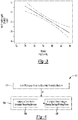
- Fig. 2 is a graph illustrating sheets through printer and geometric mean stiffness versus thermomechanical pulp (TMP)% and basis weight for Samples 1 through 7 As can be seen, the amount of TMP added to the light weight cut size paper appears to have more of an impact on the lower basis weight papers.
- TMP thermomechanical pulp
- Opacity as well as the opacity index (normalized opacity) is shown in Table 3 below for samples A-F.
- the HW, SW AND TMP columns reflect the percentages of hardwood, softwood and TMP fibers included in the sample (relative to total amount of fiber).
- the filler% column shows the total of calcium carbonate plus titanium dioxide in the respective sample.
- the HPMP paper is HP Multipurpose paper which includes a salt therein (75 gsm).
- the Boise X9s are Boise Cascade's X-9 (no salt added) paper (one 75 gsm and the other 60 gsm).
- the Askul is a 60 gsm paper.
- the China 52g is the comparative paper referred to in Table 2 above.
- the Boise X9 60 gsm paper had an opacity index similar to that of Samples A-G, however the amount of filler was much higher than that of Samples A-G.
- the Askul 60 gsm paper also had an opacity index similar to that of Samples A-G, however the amount of calcium carbonate was higher, and the amount of titanium dioxide was much lower than in Samples A-G. Further, the Boise X9 60 gsm and the Askul exhibited relatively poor strikethrough (as will be discussed below).
- the China 52g paper also had an opacity index similar to that of Samples A-G, however, the amount of filler was much higher than that of Samples A-G. Further, the China 52g paper exhibited low stiffness and poor runability (as shown in Example 2 above).
- Strikethrough was tested using the XRite 938 set to reflectance with Illuminate A/2 degrees.
- a simplex printed test plot with a black solid area was placed print side down on a white backing. Reflectance readings were taken on the back side of the paper in an area with no printing and in the area with solid printing. Strikethrough is calculated as the reduction in reflectance, normalized to the paper reflectance, (1-(R solid area/R paper )) x 100.
- a lower strikethrough value indicates less image seen through the paper and therefore, better duplex print quality. The results from these tests are shown in Table 4 below.
- Fig. 3 illustrates the effect that average opacity had on strikethrough of the ink printed on Samples A-G from Table 3. Strikethrough is indicative of the amount of ink that is seen through the paper after the image is printed thereon. The measurement is a loss of reflectance, and a lower percentage value is indicative of less strikethrough. As shown in Fig. 3 , as opacity declines, the percentage of strikethrough increases. Samples D, E and F exhibited a loss of reflectance of 24% or less. As can be seen, the opacity of examples of the light weight cut size paper as disclosed herein can be controlled. One advantage of this opacity control is that duplex print quality can be controlled.
- An acceptable ISO brightness is at least 80, which samples 1-7 exhibited. As discussed above, the brightness of examples of the present disclosure may be increased in various ways if desired.
- example methods according to example(s) disclosed herein include one of: i) inkjet printing an ink onto a surface of an example of the uncoated recording medium; or ii) applying a toner to a surface of an example of the uncoated recording medium. If a toner is applied, the toner fusing may or may not be accomplished using an energy savings printing mode.
- ranges provided herein include the stated range and any value or sub-range within the stated range.
- a range from about 0.7 wt% to about 5 wt% should be interpreted to include not only the explicitly recited limits of about 0.7 wt% to about 5 wt%, but also to include individual values, such as 1.3 wt%, 2 wt%, 3.2 wt%, etc., and sub-ranges, such as from about 1 wt% to about 4.5 wt%, from about 1.2 wt% to about 3 wt%, etc.
- “about” is utilized to describe a value, this is meant to encompass minor variations (up to +/- 10%) from the stated value.
Landscapes
- Chemical & Material Sciences (AREA)
- Inorganic Chemistry (AREA)
- Chemical Kinetics & Catalysis (AREA)
- General Chemical & Material Sciences (AREA)
- Paper (AREA)
- Ink Jet Recording Methods And Recording Media Thereof (AREA)
Claims (14)
- Support d'enregistrement non-revêtu comprenant :un mélange de fibres de bois dur, de fibres de bois tendre et des fibres de pâte thermomécanique (PTM), dans lequel une teneur totale en fibres est d'au moins 80 % en poids du % en poids total du support d'enregistrement non-revêtu, et dans lequel les fibres de bois dur sont présentes dans une quantité allant de 20 % en poids à 70 % en poids par rapport à la teneur totale en fibres, les fibres en bois tendre sont présentes dans une quantité allant de 30 % en poids à 50 % en poids par rapport à la teneur totale en fibres, et les fibres PTM sont présentes dans une quantité allant de 10 % en poids à 40 % en poids par rapport à la teneur totale en fibres ; etune charge présente dans une quantité allant de 3 % en poids à 14 % en poids du % en poids total du support d'enregistrement non-revêtu ;le support d'enregistrement non-revêtu possédant i) un poids de base allant de 45 g/m2 à 63 g/m2, ii) une rigidité à la flexion de degré 5 Lorentezen & Wetter dans le sens de la machine allant de 0,14 mNm à 0,30 mNm et une rigidité à la flexion de degré 5 Lorentezen & Wetter dans le sens transversal allant de 0,12 mNm à 0,15 mNm ; iii) une intensité lumineuse ISO d'au moins 80 ; iv) une opacité normalisée allant de 1,25 à 1,60 ; et v) un rapport de rigidité à la tension dans le sens de la machine sur rigidité à la tension en direction transversale étant inférieure à 2,5.
- Support d'enregistrement non-revêtu selon la revendication 1, comprenant en outre un sel présent dans une quantité allant de 4 000 µg par gramme de support d'enregistrement non-revêtu à 9 500 µg par gramme de support d'enregistrement non-revêtu.
- Support d'enregistrement non-revêtu selon la revendication 2, dans lequel le sel est du chlorure de calcium (CaCl2), du chlorure de magnésium (MgCl2), ou des combinaisons de ces derniers.
- Support d'enregistrement non-revêtu selon la revendication 1, dans lequel la charge est sélectionnée parmi le dioxyde de titane, le carbonate de calcium précipité, le carbonate de calcium naturel, le talc, l'argile, et des combinaisons de ces derniers.
- Support d'enregistrement non-revêtu selon la revendication 4, dans lequel la charge inclut une combinaison de dioxyde de titane et de carbonate de calcium.
- Support d'enregistrement non-revêtu selon la revendication 5, dans lequel :une quantité du dioxyde de titane se situe dans la plage de 1 % en poids à 5 % en poids du % en poids total du support d'enregistrement non-revêtu ; etune quantité du carbonate de calcium se situe dans la plage de 2 % en poids à 9 % en poids du % en poids total du support d'enregistrement non-revêtu.
- Support d'enregistrement non-revêtu selon la revendication 5, dans lequel :une quantité du dioxyde de titane se situe dans la plage de 0,7 % en poids à 2,7 % en poids du % en poids total du support d'enregistrement non-revêtu ; etune quantité du carbonate de calcium se situe dans la plage de 2,2 % en poids à 5 % en poids du % en poids total du support d'enregistrement non-revêtu.
- Support d'enregistrement non-revêtu selon la revendication 7, dans lequel lorsque de l'encre ou du toner est imprimé(e) sur le support, un pourcentage de traversée de l'encre ou de toner d'une face avant du support sur une face arrière du support se situe dans la plage de 17 % à 24 %.
- Support d'enregistrement non-revêtu selon la revendication 1, dans lequel le mélange inclut un rapport de fibres de bois dur / fibres de bois tendre / PTM allant de 70:20:10 à 30:30:40.
- Support d'enregistrement non-revêtu selon la revendication 1, comprenant en outre un additif d'encollage de presse à base d'amidon, un additif interne à base d'amidon, et l'un quelconque du dimère alkylcétène ou anhydride succinique alkényle.
- Support d'enregistrement non-revêtu selon la revendication 1, dans lequel le support d'enregistrement non-revêtu exclut les fibres expansées.
- Support d'enregistrement non-revêtu selon la revendication 1, dans lequel :i) le mélange de fibres de bois dur, de fibres de bois tendre et de fibres en pâte thermomécanique inclut des fibres de bois dur transformées chimiquement en pâte et des fibres de bois tendre transformées chimiquement en pâte ; ouii) au moins 60 % en poids de la teneur totale en fibres inclut des fibres de bois dur chimiquement en pâte et des fibres de bois tendre transformées chimiquement en pâte, et jusqu'à 40 % en poids de la teneur totale en fibres inclut des fibres de bois dur transformées mécaniquement en pâte et des fibres de bois tendre transformées mécaniquement en pâte.
- Procédé d'impression pour le support d'enregistrement non-revêtu selon la revendication 1, le procédé comprenant l'un de :i) l'impression d'encre par jet d'encre sur une surface du support d'enregistrement non-revêtu ; ouii) l'application d'un toner à la surface de support d'enregistrement non-revêtu ; et la fusion du toner à l'aide d'un mode d'impression économiseur d'énergie.
- Procédé d'impression selon la revendication 13, dans lequel la surface est une face avant, et dans lequel un pourcentage de traversée de l'encre ou de toner de la face avant du support sur une face arrière du support se situe dans la plage de 17 % à 30%.
Applications Claiming Priority (1)
| Application Number | Priority Date | Filing Date | Title |
|---|---|---|---|
| PCT/US2013/023799 WO2014120147A1 (fr) | 2013-01-30 | 2013-01-30 | Supports d'enregistrement non revêtus |
Publications (3)
| Publication Number | Publication Date |
|---|---|
| EP2951027A1 EP2951027A1 (fr) | 2015-12-09 |
| EP2951027A4 EP2951027A4 (fr) | 2016-08-24 |
| EP2951027B1 true EP2951027B1 (fr) | 2017-10-11 |
Family
ID=51262714
Family Applications (1)
| Application Number | Title | Priority Date | Filing Date |
|---|---|---|---|
| EP13873191.4A Not-in-force EP2951027B1 (fr) | 2013-01-30 | 2013-01-30 | Supports d'enregistrement non revêtus |
Country Status (4)
| Country | Link |
|---|---|
| US (1) | US9068292B2 (fr) |
| EP (1) | EP2951027B1 (fr) |
| CN (1) | CN105050826B (fr) |
| WO (1) | WO2014120147A1 (fr) |
Families Citing this family (3)
| Publication number | Priority date | Publication date | Assignee | Title |
|---|---|---|---|---|
| WO2015116095A1 (fr) * | 2014-01-30 | 2015-08-06 | Hewlett-Packard Development Company, L.P. | Supports d'impression pour impression à jet d'encre |
| JP6583850B2 (ja) * | 2015-04-09 | 2019-10-02 | 丸住製紙株式会社 | 蛍光マーカー対応中質紙 |
| RU2642801C1 (ru) * | 2016-12-16 | 2018-01-26 | Открытое акционерное общество "Центральный научно-исследовательский институт бумаги" (ОАО "ЦНИИБ") | Композиция для производства термочувствительной бумаги |
Family Cites Families (38)
| Publication number | Priority date | Publication date | Assignee | Title |
|---|---|---|---|---|
| BE758373A (fr) | 1967-11-27 | 1971-05-03 | Dow Chemical Co | Procede de fabrication de papier |
| US3884685A (en) | 1970-12-16 | 1975-05-20 | Xerox Corp | Low density paper used in transfer electrophotography |
| US3779951A (en) | 1972-11-21 | 1973-12-18 | Dow Chemical Co | Method for expanding microspheres and expandable composition |
| US4952278A (en) | 1989-06-02 | 1990-08-28 | The Procter & Gamble Cellulose Company | High opacity paper containing expanded fiber and mineral pigment |
| JPH05124331A (ja) * | 1991-10-30 | 1993-05-21 | Canon Inc | 記録媒体及びインクジエツト記録方法 |
| ATE142723T1 (de) | 1992-04-23 | 1996-09-15 | Domtar Inc | Holzfreier zellstoff und weisses papierprodukt |
| JPH07266689A (ja) * | 1994-03-31 | 1995-10-17 | Canon Inc | 記録媒体及びこれを用いた画像形成方法 |
| KR100256636B1 (ko) | 1994-04-12 | 2000-05-15 | 김충섭 | 종이내 충전물의 함량을 높이고 스코트 내부결합강도를 증가시키는 종이의 제조방법 |
| FI104502B (fi) | 1997-09-16 | 2000-02-15 | Metsae Serla Oyj | Menetelmä paperirainan valmistamiseksi |
| WO2000017448A2 (fr) | 1998-09-24 | 2000-03-30 | Sullivan William A | Substrat de support d'image possedant une densite accrue et son procede d'elaboration |
| US6866906B2 (en) | 2000-01-26 | 2005-03-15 | International Paper Company | Cut resistant paper and paper articles and method for making same |
| US6937358B2 (en) | 2000-02-10 | 2005-08-30 | Technology Innovations, Llc | Printable substrate having controllable thickness and method of making and using the same |
| US7008671B2 (en) * | 2000-12-28 | 2006-03-07 | Canon Kabushiki Kaisha | Recorded matter, method of producing recorded matter, method for improving image fastness, image fastness-improving agent, image fastness improving kit, dispenser, and applicator |
| US20020182376A1 (en) | 2001-03-27 | 2002-12-05 | Debabrata Mukherjee | Novel universal ink jet recording medium |
| US6667093B2 (en) | 2001-04-19 | 2003-12-23 | Arkwright Incorporated | Ink-jet printable transfer papers for use with fabric materials |
| FI116573B (fi) | 2001-11-28 | 2005-12-30 | M Real Oyj | Täyteaine ohuiden pohjapaperien valmistukseen ja menetelmä pohjapaperin valmistamiseksi |
| US6669814B2 (en) | 2002-03-08 | 2003-12-30 | Rock-Tenn Company | Multi-ply paperboard prepared from recycled materials and methods of manufacturing same |
| JP2003266705A (ja) * | 2002-03-20 | 2003-09-24 | Konica Corp | インクジェット記録方法およびインクジェット記録装置 |
| US20040043200A1 (en) * | 2002-08-28 | 2004-03-04 | Masek Jan K. | Pliable paper |
| US7497924B2 (en) | 2003-05-14 | 2009-03-03 | International Paper Company | Surface treatment with texturized microcrystalline cellulose microfibrils for improved paper and paper board |
| US7037405B2 (en) | 2003-05-14 | 2006-05-02 | International Paper Company | Surface treatment with texturized microcrystalline cellulose microfibrils for improved paper and paper board |
| US20050003113A1 (en) | 2003-07-02 | 2005-01-06 | Tienteh Chen | Inkjet recording materials |
| WO2006019808A1 (fr) | 2004-07-14 | 2006-02-23 | International Paper Company | Procede de fabrication de papier |
| CN101111371A (zh) * | 2005-02-04 | 2008-01-23 | 富士胶片株式会社 | 图像记录材料用载体和图像记录材料 |
| JP2006265346A (ja) | 2005-03-23 | 2006-10-05 | Hokuetsu Paper Mills Ltd | 樹脂混合用紙粉砕物、それを含有する環境配慮型樹脂組成物及びそれを使用した環境配慮型樹脂成形物 |
| US8758886B2 (en) | 2005-10-14 | 2014-06-24 | International Paper Company | Recording sheet with improved image dry time |
| KR101451291B1 (ko) | 2006-04-21 | 2014-10-15 | 니뽄 세이시 가부시끼가이샤 | 셀룰로스를 주체로 하는 섬유형상 물질 |
| CN101959694B (zh) * | 2008-03-07 | 2012-05-23 | 惠普开发有限公司 | 用于制备高白度喷墨介质的组合物、方法和体系 |
| PT2274478E (pt) | 2008-03-31 | 2012-10-02 | Int Paper Co | Folha de registo com qualidade de impressão melhorada a baixos niveis de aditivos |
| EP2293950B1 (fr) * | 2008-05-30 | 2013-11-20 | Hewlett-Packard Development Company, L.P. | Support pour l'impression à jet d'encre |
| PT2288752E (pt) * | 2008-06-20 | 2014-05-07 | Int Paper Co | Composição e folha de impressão que apresenta propriedades ópticas melhoradas |
| EP2291563B1 (fr) * | 2008-06-26 | 2013-09-11 | International Paper Company | Feuille d enregistrement avec une densité d impression améliorée |
| WO2009157952A1 (fr) * | 2008-06-27 | 2009-12-30 | Hewlett-Packard Development Company, L.P. | Composition de traitement de surface, article pouvant être imprimé par jet d'encre et procédé de réalisation correspondant |
| WO2010044795A1 (fr) * | 2008-10-16 | 2010-04-22 | Hewlett-Packard Development Company, L.P. | Composition et support d’impression |
| FI123465B (fi) * | 2009-05-11 | 2013-05-31 | Kemira Oyj | Koostumuksen käyttö mustesuihkupainatusominaisuuksien parantamiseksi |
| US8449665B2 (en) * | 2010-01-08 | 2013-05-28 | Hewlett-Packard Development Company, L.P. | Coating compositions including starch nanoparticles |
| US9056515B2 (en) | 2010-10-29 | 2015-06-16 | Hewlett-Packard Development Company, L.P. | Paper enhancement treatment with decreased calcium chloride |
| CN103502018B (zh) * | 2011-04-28 | 2015-01-14 | 惠普发展公司,有限责任合伙企业 | 高速数字喷墨卷筒纸印刷机印刷中使用的介质及其制备方法 |
-
2013
- 2013-01-30 EP EP13873191.4A patent/EP2951027B1/fr not_active Not-in-force
- 2013-01-30 CN CN201380071879.2A patent/CN105050826B/zh not_active Expired - Fee Related
- 2013-01-30 WO PCT/US2013/023799 patent/WO2014120147A1/fr not_active Ceased
- 2013-10-29 US US14/066,101 patent/US9068292B2/en active Active
Non-Patent Citations (1)
| Title |
|---|
| None * |
Also Published As
| Publication number | Publication date |
|---|---|
| US9068292B2 (en) | 2015-06-30 |
| EP2951027A1 (fr) | 2015-12-09 |
| EP2951027A4 (fr) | 2016-08-24 |
| US20140209263A1 (en) | 2014-07-31 |
| WO2014120147A1 (fr) | 2014-08-07 |
| CN105050826A (zh) | 2015-11-11 |
| CN105050826B (zh) | 2017-03-22 |
Similar Documents
| Publication | Publication Date | Title |
|---|---|---|
| US8790494B2 (en) | Paper with improved stiffness and bulk and method for making same | |
| EP2701920B1 (fr) | Support utilisé lors de l'impression par presse à bobines à jet d'encre à vitesse élevée numérique | |
| JP5406438B2 (ja) | 吸湿・耐油板紙 | |
| CN105531418A (zh) | 白板纸及其制造方法 | |
| CN105050826B (zh) | 未涂布的记录介质 | |
| EP2855770B1 (fr) | Supports d'enregistrement non revêtus | |
| JP6236353B2 (ja) | 多層抄き紙 | |
| JP2020097800A (ja) | 白板紙及び塗工白板紙 | |
| JP7623251B2 (ja) | 紙カップ用原紙 | |
| JP4549796B2 (ja) | 微塗工包装紙 | |
| CN106168007B (zh) | 记录用纸和记录用纸的制造方法 | |
| JP5454296B2 (ja) | 化粧板用紙 | |
| JP2008297668A (ja) | 印刷用紙 | |
| JP2834782B2 (ja) | 塗被紙の製造方法 | |
| JP2006037250A (ja) | グラビア印刷用紙の製造方法及びグラビア印刷用巻取り紙 | |
| JP4890876B2 (ja) | 水性グラビア印刷用塗被紙 | |
| US8486226B1 (en) | Low hygroexpansivity paper sheet | |
| JP2006297780A (ja) | インクジェット記録用紙およびその製造方法 | |
| EP1683916A1 (fr) | Support d'enregistrement et sa fabrication | |
| EP3038836B1 (fr) | Support d'enregistrement pouvant être imprimé | |
| JP2012219415A (ja) | 高白色高不透明度封筒用紙 | |
| JP3894967B2 (ja) | Ocr帳票付きパンフレット | |
| JP2009086502A (ja) | 電子写真用コート紙 |
Legal Events
| Date | Code | Title | Description |
|---|---|---|---|
| PUAI | Public reference made under article 153(3) epc to a published international application that has entered the european phase |
Free format text: ORIGINAL CODE: 0009012 |
|
| 17P | Request for examination filed |
Effective date: 20150706 |
|
| AK | Designated contracting states |
Kind code of ref document: A1 Designated state(s): AL AT BE BG CH CY CZ DE DK EE ES FI FR GB GR HR HU IE IS IT LI LT LU LV MC MK MT NL NO PL PT RO RS SE SI SK SM TR |
|
| AX | Request for extension of the european patent |
Extension state: BA ME |
|
| DAX | Request for extension of the european patent (deleted) | ||
| A4 | Supplementary search report drawn up and despatched |
Effective date: 20160727 |
|
| RIC1 | Information provided on ipc code assigned before grant |
Ipc: D21H 11/02 20060101ALI20160721BHEP Ipc: D21H 11/08 20060101ALI20160721BHEP Ipc: B41M 5/50 20060101AFI20160721BHEP Ipc: D21H 11/10 20060101ALI20160721BHEP Ipc: B41M 5/00 20060101ALI20160721BHEP Ipc: D21H 11/00 20060101ALI20160721BHEP |
|
| GRAP | Despatch of communication of intention to grant a patent |
Free format text: ORIGINAL CODE: EPIDOSNIGR1 |
|
| STAA | Information on the status of an ep patent application or granted ep patent |
Free format text: STATUS: GRANT OF PATENT IS INTENDED |
|
| INTG | Intention to grant announced |
Effective date: 20170725 |
|
| GRAS | Grant fee paid |
Free format text: ORIGINAL CODE: EPIDOSNIGR3 |
|
| GRAA | (expected) grant |
Free format text: ORIGINAL CODE: 0009210 |
|
| STAA | Information on the status of an ep patent application or granted ep patent |
Free format text: STATUS: THE PATENT HAS BEEN GRANTED |
|
| AK | Designated contracting states |
Kind code of ref document: B1 Designated state(s): AL AT BE BG CH CY CZ DE DK EE ES FI FR GB GR HR HU IE IS IT LI LT LU LV MC MK MT NL NO PL PT RO RS SE SI SK SM TR |
|
| REG | Reference to a national code |
Ref country code: GB Ref legal event code: FG4D |
|
| REG | Reference to a national code |
Ref country code: CH Ref legal event code: EP |
|
| REG | Reference to a national code |
Ref country code: IE Ref legal event code: FG4D |
|
| REG | Reference to a national code |
Ref country code: AT Ref legal event code: REF Ref document number: 935663 Country of ref document: AT Kind code of ref document: T Effective date: 20171115 |
|
| REG | Reference to a national code |
Ref country code: DE Ref legal event code: R096 Ref document number: 602013027970 Country of ref document: DE |
|
| REG | Reference to a national code |
Ref country code: FR Ref legal event code: PLFP Year of fee payment: 6 |
|
| REG | Reference to a national code |
Ref country code: NL Ref legal event code: MP Effective date: 20171011 |
|
| REG | Reference to a national code |
Ref country code: LT Ref legal event code: MG4D |
|
| REG | Reference to a national code |
Ref country code: AT Ref legal event code: MK05 Ref document number: 935663 Country of ref document: AT Kind code of ref document: T Effective date: 20171011 |
|
| PG25 | Lapsed in a contracting state [announced via postgrant information from national office to epo] |
Ref country code: NL Free format text: LAPSE BECAUSE OF FAILURE TO SUBMIT A TRANSLATION OF THE DESCRIPTION OR TO PAY THE FEE WITHIN THE PRESCRIBED TIME-LIMIT Effective date: 20171011 |
|
| PG25 | Lapsed in a contracting state [announced via postgrant information from national office to epo] |
Ref country code: FI Free format text: LAPSE BECAUSE OF FAILURE TO SUBMIT A TRANSLATION OF THE DESCRIPTION OR TO PAY THE FEE WITHIN THE PRESCRIBED TIME-LIMIT Effective date: 20171011 Ref country code: SE Free format text: LAPSE BECAUSE OF FAILURE TO SUBMIT A TRANSLATION OF THE DESCRIPTION OR TO PAY THE FEE WITHIN THE PRESCRIBED TIME-LIMIT Effective date: 20171011 Ref country code: ES Free format text: LAPSE BECAUSE OF FAILURE TO SUBMIT A TRANSLATION OF THE DESCRIPTION OR TO PAY THE FEE WITHIN THE PRESCRIBED TIME-LIMIT Effective date: 20171011 Ref country code: NO Free format text: LAPSE BECAUSE OF FAILURE TO SUBMIT A TRANSLATION OF THE DESCRIPTION OR TO PAY THE FEE WITHIN THE PRESCRIBED TIME-LIMIT Effective date: 20180111 Ref country code: LT Free format text: LAPSE BECAUSE OF FAILURE TO SUBMIT A TRANSLATION OF THE DESCRIPTION OR TO PAY THE FEE WITHIN THE PRESCRIBED TIME-LIMIT Effective date: 20171011 |
|
| PG25 | Lapsed in a contracting state [announced via postgrant information from national office to epo] |
Ref country code: IS Free format text: LAPSE BECAUSE OF FAILURE TO SUBMIT A TRANSLATION OF THE DESCRIPTION OR TO PAY THE FEE WITHIN THE PRESCRIBED TIME-LIMIT Effective date: 20180211 Ref country code: HR Free format text: LAPSE BECAUSE OF FAILURE TO SUBMIT A TRANSLATION OF THE DESCRIPTION OR TO PAY THE FEE WITHIN THE PRESCRIBED TIME-LIMIT Effective date: 20171011 Ref country code: RS Free format text: LAPSE BECAUSE OF FAILURE TO SUBMIT A TRANSLATION OF THE DESCRIPTION OR TO PAY THE FEE WITHIN THE PRESCRIBED TIME-LIMIT Effective date: 20171011 Ref country code: GR Free format text: LAPSE BECAUSE OF FAILURE TO SUBMIT A TRANSLATION OF THE DESCRIPTION OR TO PAY THE FEE WITHIN THE PRESCRIBED TIME-LIMIT Effective date: 20180112 Ref country code: AT Free format text: LAPSE BECAUSE OF FAILURE TO SUBMIT A TRANSLATION OF THE DESCRIPTION OR TO PAY THE FEE WITHIN THE PRESCRIBED TIME-LIMIT Effective date: 20171011 Ref country code: BG Free format text: LAPSE BECAUSE OF FAILURE TO SUBMIT A TRANSLATION OF THE DESCRIPTION OR TO PAY THE FEE WITHIN THE PRESCRIBED TIME-LIMIT Effective date: 20180111 Ref country code: LV Free format text: LAPSE BECAUSE OF FAILURE TO SUBMIT A TRANSLATION OF THE DESCRIPTION OR TO PAY THE FEE WITHIN THE PRESCRIBED TIME-LIMIT Effective date: 20171011 |
|
| REG | Reference to a national code |
Ref country code: DE Ref legal event code: R097 Ref document number: 602013027970 Country of ref document: DE |
|
| PG25 | Lapsed in a contracting state [announced via postgrant information from national office to epo] |
Ref country code: DK Free format text: LAPSE BECAUSE OF FAILURE TO SUBMIT A TRANSLATION OF THE DESCRIPTION OR TO PAY THE FEE WITHIN THE PRESCRIBED TIME-LIMIT Effective date: 20171011 Ref country code: SK Free format text: LAPSE BECAUSE OF FAILURE TO SUBMIT A TRANSLATION OF THE DESCRIPTION OR TO PAY THE FEE WITHIN THE PRESCRIBED TIME-LIMIT Effective date: 20171011 Ref country code: EE Free format text: LAPSE BECAUSE OF FAILURE TO SUBMIT A TRANSLATION OF THE DESCRIPTION OR TO PAY THE FEE WITHIN THE PRESCRIBED TIME-LIMIT Effective date: 20171011 Ref country code: CZ Free format text: LAPSE BECAUSE OF FAILURE TO SUBMIT A TRANSLATION OF THE DESCRIPTION OR TO PAY THE FEE WITHIN THE PRESCRIBED TIME-LIMIT Effective date: 20171011 |
|
| PLBE | No opposition filed within time limit |
Free format text: ORIGINAL CODE: 0009261 |
|
| STAA | Information on the status of an ep patent application or granted ep patent |
Free format text: STATUS: NO OPPOSITION FILED WITHIN TIME LIMIT |
|
| PG25 | Lapsed in a contracting state [announced via postgrant information from national office to epo] |
Ref country code: IT Free format text: LAPSE BECAUSE OF FAILURE TO SUBMIT A TRANSLATION OF THE DESCRIPTION OR TO PAY THE FEE WITHIN THE PRESCRIBED TIME-LIMIT Effective date: 20171011 Ref country code: PL Free format text: LAPSE BECAUSE OF FAILURE TO SUBMIT A TRANSLATION OF THE DESCRIPTION OR TO PAY THE FEE WITHIN THE PRESCRIBED TIME-LIMIT Effective date: 20171011 Ref country code: SM Free format text: LAPSE BECAUSE OF FAILURE TO SUBMIT A TRANSLATION OF THE DESCRIPTION OR TO PAY THE FEE WITHIN THE PRESCRIBED TIME-LIMIT Effective date: 20171011 Ref country code: RO Free format text: LAPSE BECAUSE OF FAILURE TO SUBMIT A TRANSLATION OF THE DESCRIPTION OR TO PAY THE FEE WITHIN THE PRESCRIBED TIME-LIMIT Effective date: 20171011 |
|
| REG | Reference to a national code |
Ref country code: CH Ref legal event code: PL |
|
| 26N | No opposition filed |
Effective date: 20180712 |
|
| PG25 | Lapsed in a contracting state [announced via postgrant information from national office to epo] |
Ref country code: LU Free format text: LAPSE BECAUSE OF NON-PAYMENT OF DUE FEES Effective date: 20180130 |
|
| REG | Reference to a national code |
Ref country code: IE Ref legal event code: MM4A |
|
| REG | Reference to a national code |
Ref country code: BE Ref legal event code: MM Effective date: 20180131 |
|
| PG25 | Lapsed in a contracting state [announced via postgrant information from national office to epo] |
Ref country code: CH Free format text: LAPSE BECAUSE OF NON-PAYMENT OF DUE FEES Effective date: 20180131 Ref country code: SI Free format text: LAPSE BECAUSE OF FAILURE TO SUBMIT A TRANSLATION OF THE DESCRIPTION OR TO PAY THE FEE WITHIN THE PRESCRIBED TIME-LIMIT Effective date: 20171011 Ref country code: BE Free format text: LAPSE BECAUSE OF NON-PAYMENT OF DUE FEES Effective date: 20180131 Ref country code: LI Free format text: LAPSE BECAUSE OF NON-PAYMENT OF DUE FEES Effective date: 20180131 |
|
| PG25 | Lapsed in a contracting state [announced via postgrant information from national office to epo] |
Ref country code: IE Free format text: LAPSE BECAUSE OF NON-PAYMENT OF DUE FEES Effective date: 20180130 |
|
| PG25 | Lapsed in a contracting state [announced via postgrant information from national office to epo] |
Ref country code: MC Free format text: LAPSE BECAUSE OF FAILURE TO SUBMIT A TRANSLATION OF THE DESCRIPTION OR TO PAY THE FEE WITHIN THE PRESCRIBED TIME-LIMIT Effective date: 20171011 |
|
| PG25 | Lapsed in a contracting state [announced via postgrant information from national office to epo] |
Ref country code: MT Free format text: LAPSE BECAUSE OF NON-PAYMENT OF DUE FEES Effective date: 20180130 |
|
| PGFP | Annual fee paid to national office [announced via postgrant information from national office to epo] |
Ref country code: FR Payment date: 20191219 Year of fee payment: 8 |
|
| PG25 | Lapsed in a contracting state [announced via postgrant information from national office to epo] |
Ref country code: TR Free format text: LAPSE BECAUSE OF FAILURE TO SUBMIT A TRANSLATION OF THE DESCRIPTION OR TO PAY THE FEE WITHIN THE PRESCRIBED TIME-LIMIT Effective date: 20171011 |
|
| PGFP | Annual fee paid to national office [announced via postgrant information from national office to epo] |
Ref country code: DE Payment date: 20191218 Year of fee payment: 8 Ref country code: GB Payment date: 20191223 Year of fee payment: 8 |
|
| PG25 | Lapsed in a contracting state [announced via postgrant information from national office to epo] |
Ref country code: PT Free format text: LAPSE BECAUSE OF FAILURE TO SUBMIT A TRANSLATION OF THE DESCRIPTION OR TO PAY THE FEE WITHIN THE PRESCRIBED TIME-LIMIT Effective date: 20171011 |
|
| PG25 | Lapsed in a contracting state [announced via postgrant information from national office to epo] |
Ref country code: MK Free format text: LAPSE BECAUSE OF NON-PAYMENT OF DUE FEES Effective date: 20171011 Ref country code: CY Free format text: LAPSE BECAUSE OF FAILURE TO SUBMIT A TRANSLATION OF THE DESCRIPTION OR TO PAY THE FEE WITHIN THE PRESCRIBED TIME-LIMIT Effective date: 20171011 Ref country code: HU Free format text: LAPSE BECAUSE OF FAILURE TO SUBMIT A TRANSLATION OF THE DESCRIPTION OR TO PAY THE FEE WITHIN THE PRESCRIBED TIME-LIMIT; INVALID AB INITIO Effective date: 20130130 |
|
| PG25 | Lapsed in a contracting state [announced via postgrant information from national office to epo] |
Ref country code: AL Free format text: LAPSE BECAUSE OF FAILURE TO SUBMIT A TRANSLATION OF THE DESCRIPTION OR TO PAY THE FEE WITHIN THE PRESCRIBED TIME-LIMIT Effective date: 20171011 |
|
| REG | Reference to a national code |
Ref country code: DE Ref legal event code: R119 Ref document number: 602013027970 Country of ref document: DE |
|
| GBPC | Gb: european patent ceased through non-payment of renewal fee |
Effective date: 20210130 |
|
| PG25 | Lapsed in a contracting state [announced via postgrant information from national office to epo] |
Ref country code: FR Free format text: LAPSE BECAUSE OF NON-PAYMENT OF DUE FEES Effective date: 20210131 |
|
| PG25 | Lapsed in a contracting state [announced via postgrant information from national office to epo] |
Ref country code: DE Free format text: LAPSE BECAUSE OF NON-PAYMENT OF DUE FEES Effective date: 20210803 Ref country code: GB Free format text: LAPSE BECAUSE OF NON-PAYMENT OF DUE FEES Effective date: 20210130 |