EP2951114B1 - Vorrichtung und verfahren zur aufzugzuordnung mithilfe einer magnetfeldkarte in einem aufzugsystem - Google Patents
Vorrichtung und verfahren zur aufzugzuordnung mithilfe einer magnetfeldkarte in einem aufzugsystem Download PDFInfo
- Publication number
- EP2951114B1 EP2951114B1 EP13874087.3A EP13874087A EP2951114B1 EP 2951114 B1 EP2951114 B1 EP 2951114B1 EP 13874087 A EP13874087 A EP 13874087A EP 2951114 B1 EP2951114 B1 EP 2951114B1
- Authority
- EP
- European Patent Office
- Prior art keywords
- elevator
- cell
- mobile node
- determining
- time
- Prior art date
- Legal status (The legal status is an assumption and is not a legal conclusion. Google has not performed a legal analysis and makes no representation as to the accuracy of the status listed.)
- Not-in-force
Links
Images


Classifications
-
- B—PERFORMING OPERATIONS; TRANSPORTING
- B66—HOISTING; LIFTING; HAULING
- B66B—ELEVATORS; ESCALATORS OR MOVING WALKWAYS
- B66B1/00—Control systems of elevators in general
- B66B1/02—Control systems without regulation, i.e. without retroactive action
- B66B1/06—Control systems without regulation, i.e. without retroactive action electric
-
- B—PERFORMING OPERATIONS; TRANSPORTING
- B66—HOISTING; LIFTING; HAULING
- B66B—ELEVATORS; ESCALATORS OR MOVING WALKWAYS
- B66B1/00—Control systems of elevators in general
- B66B1/34—Details, e.g. call counting devices, data transmission from car to control system, devices giving information to the control system
- B66B1/46—Adaptations of switches or switchgear
-
- B—PERFORMING OPERATIONS; TRANSPORTING
- B66—HOISTING; LIFTING; HAULING
- B66B—ELEVATORS; ESCALATORS OR MOVING WALKWAYS
- B66B3/00—Applications of devices for indicating or signalling operating conditions of elevators
- B66B3/002—Indicators
- B66B3/006—Indicators for guiding passengers to their assigned elevator car
-
- B—PERFORMING OPERATIONS; TRANSPORTING
- B66—HOISTING; LIFTING; HAULING
- B66B—ELEVATORS; ESCALATORS OR MOVING WALKWAYS
- B66B1/00—Control systems of elevators in general
- B66B1/24—Control systems with regulation, i.e. with retroactive action, for influencing travelling speed, acceleration, or deceleration
- B66B1/2408—Control systems with regulation, i.e. with retroactive action, for influencing travelling speed, acceleration, or deceleration where the allocation of a call to an elevator car is of importance, i.e. by means of a supervisory or group controller
-
- B—PERFORMING OPERATIONS; TRANSPORTING
- B66—HOISTING; LIFTING; HAULING
- B66B—ELEVATORS; ESCALATORS OR MOVING WALKWAYS
- B66B1/00—Control systems of elevators in general
- B66B1/34—Details, e.g. call counting devices, data transmission from car to control system, devices giving information to the control system
- B66B1/46—Adaptations of switches or switchgear
- B66B1/468—Call registering systems
-
- B—PERFORMING OPERATIONS; TRANSPORTING
- B66—HOISTING; LIFTING; HAULING
- B66B—ELEVATORS; ESCALATORS OR MOVING WALKWAYS
- B66B3/00—Applications of devices for indicating or signalling operating conditions of elevators
-
- G—PHYSICS
- G01—MEASURING; TESTING
- G01C—MEASURING DISTANCES, LEVELS OR BEARINGS; SURVEYING; NAVIGATION; GYROSCOPIC INSTRUMENTS; PHOTOGRAMMETRY OR VIDEOGRAMMETRY
- G01C21/00—Navigation; Navigational instruments not provided for in groups G01C1/00 - G01C19/00
- G01C21/20—Instruments for performing navigational calculations
- G01C21/206—Instruments for performing navigational calculations specially adapted for indoor navigation
-
- B—PERFORMING OPERATIONS; TRANSPORTING
- B66—HOISTING; LIFTING; HAULING
- B66B—ELEVATORS; ESCALATORS OR MOVING WALKWAYS
- B66B2201/00—Aspects of control systems of elevators
- B66B2201/20—Details of the evaluation method for the allocation of a call to an elevator car
- B66B2201/211—Waiting time, i.e. response time
-
- B—PERFORMING OPERATIONS; TRANSPORTING
- B66—HOISTING; LIFTING; HAULING
- B66B—ELEVATORS; ESCALATORS OR MOVING WALKWAYS
- B66B2201/00—Aspects of control systems of elevators
- B66B2201/20—Details of the evaluation method for the allocation of a call to an elevator car
- B66B2201/231—Sequential evaluation of plurality of criteria
- B66B2201/232—Sequential evaluation of plurality of criteria where the time needed for a passenger to arrive at the allocated elevator car from where the call is made is taken into account
-
- B—PERFORMING OPERATIONS; TRANSPORTING
- B66—HOISTING; LIFTING; HAULING
- B66B—ELEVATORS; ESCALATORS OR MOVING WALKWAYS
- B66B2201/00—Aspects of control systems of elevators
- B66B2201/40—Details of the change of control mode
- B66B2201/402—Details of the change of control mode by historical, statistical or predicted traffic data, e.g. by learning
-
- B—PERFORMING OPERATIONS; TRANSPORTING
- B66—HOISTING; LIFTING; HAULING
- B66B—ELEVATORS; ESCALATORS OR MOVING WALKWAYS
- B66B2201/00—Aspects of control systems of elevators
- B66B2201/40—Details of the change of control mode
- B66B2201/46—Switches or switchgear
- B66B2201/4607—Call registering systems
- B66B2201/4653—Call registering systems wherein the call is registered using portable devices
Definitions
- the invention relates to elevators, elevator allocation for a user, and an apparatus and a method for elevator allocation using a magnetic field map in an elevator system.
- a user of the elevator may specify for the elevator the destination floor when making the elevator call from a floor, that is, outside the elevator cage.
- elevator may be used to refer to the elevator cage for simplicity.
- closing the doors when there are still incoming passengers and there is still room in the elevator cage is perceived as annoying.
- the elevator users must come to a specific place where an elevator call keypad is located to make the elevator call. In many cases the keypad is directly in front of the elevators, but it may be also located some distance from the elevators.
- EP 2 148 167 discloses a method in which a grid is applied to an image of a floor.
- a routable map is then generated as a function of the grid, where the routable map provides point-to-point routing within the floor.
- a set of reference regions is generated and compiled with the grid, including the elevator region. Such map provides routing and guidance to a desired destination to assist a person in the building.
- WO 2007/020907 discloses a method in which the position of the passenger who is calling an elevator through a mobile device is determined through triangulation. Such information allows the control system to assign a car depending on the time necessary for the passenger to reach the elevator lobby and thus improving the traffic in the building. In order to improve the service offered by an elevator system, it would be beneficial to be able to predict when an elevator user arrives at the elevators. It would also be beneficial to be able to determine the destination floor of the elevator user. In this way it would be possible to ensure that elevator doors are not kept open too long.
- the invention is a method, comprising: dividing a target area to grid having a predefined resolution, the grid comprising a plurality of cells; determining a plurality of movement paths of a plurality of mobile nodes, each movement path comprising an origin cell and a target cell, the origin cell and the target cell being determined using a magnetic map of the target area; determining the durations of the plurality of movement paths for an elevator user; forming a route topology data structure using the plurality of movement paths and the durations of the plurality of movement paths, the route topology data structure comprising for a plurality of cells a time to reach an elevator location cell; determining an elevator call in a request cell by a requesting mobile node, the request cell being the cell in which the elevator call is made; determining the time to reach the elevator location cell using the route topology data structure and information on the request cell; and selecting an elevator car to serve the elevator call based on the time to reach the elevator location cell, a floor of the elevator location cell, current
- the invention is a method, comprising: dividing a target area to grid having a predefined resolution, the grid comprising a plurality of cells by a mobile node; determining a first cell by the mobile node using a magnetic map in the mobile node; determining a second cell by the mobile node using the magnetic map in the mobile node; determining the time elapsed to move between the first cell and the second cell; transmitting information on the first cell, the second cell and the time elapsed to a route network node; receiving a route topology data structure by the mobile node from the route network node, the route topology data structure comprising for a plurality of cells a time to reach an elevator location cell; determining an elevator call by the mobile node; determining a request cell in which the elevator call is made using the magnetic map in the mobile node; determining the time to reach the elevator location cell using the route topology data structure and information on the request cell; and transmitting the time to reach the elevator location cell to an elevator
- the invention is an apparatus comprising at least one processor and at least one memory including computer program code, the at least one memory and the computer program code configured to, with the at least one processor, cause the apparatus at least to perform: dividing a target area to grid having a predefined resolution, the grid comprising a plurality of cells; receiving information on a plurality of movement paths of a plurality of mobile nodes, each movement path comprising an origin cell and a target cell, the origin cell and the target cell being determined using a magnetic map of the target area; determining the durations of the plurality of movement paths; forming a route topology data structure using the plurality of movement paths and the durations of the plurality of movement paths, the route topology data structure comprising for a plurality of cells a time to reach an elevator location cell; receiving information on an elevator call in a request cell by a requesting mobile node, the request cell being the cell in which the elevator call is made; determining the time to reach the elevator location cell using the route topology data structure
- the invention is an elevator control computer comprising the apparatus.
- the invention is an apparatus comprising at least one processor and at least one memory including computer program code, the at least one memory and the computer program code configured to, with the at least one processor, cause the apparatus at least to perform: dividing a target area to grid having a predefined resolution, the grid comprising a plurality of cells; receiving information on a plurality of movement paths of a plurality of mobile nodes, each movement path comprising an origin cell and a target cell, the origin cell and the target cell being determined using a magnetic map of the target area; determining the durations of the plurality of movement paths; forming a route topology data structure using the plurality of movement paths and the durations of the plurality of movement paths, the route topology data structure comprising for a plurality of cells a time to reach an elevator location cell; receiving information on an elevator call in a request cell by a requesting mobile node, the request cell being the cell in which the elevator call is made; determining the time to reach the elevator location cell using the route topology data structure
- the invention is a mobile node comprising the apparatus.
- the invention is an apparatus comprising: means for dividing a target area to grid having a predefined resolution, the grid comprising a plurality of cells; means for determining a plurality of movement paths of a plurality of mobile nodes, each movement path comprising an origin cell and a target cell, the origin cell and the target cell being determined using a magnetic map of the target area; means for determining the durations of the plurality of movement paths for an elevator user; means for forming a route topology data structure using the plurality of movement paths and the durations of the plurality of movement paths, the route topology data structure comprising for a plurality of cells a time to reach an elevator location cell; means for determining an elevator call in a request cell by a requesting mobile node, the request cell being the cell in which the elevator call is made; means for determining the time to reach the elevator location cell using the route topology data structure and information on the request cell; and means for selecting an elevator car to serve the elevator call based on the time to reach the
- the invention is an apparatus comprising: means for dividing a target area to grid having a predefined resolution, the grid comprising a plurality of cells by a mobile node; means for determining a first cell by the mobile node using a magnetic map in the mobile node; determining a second cell by the mobile node using the magnetic map in the mobile node; means for determining the time elapsed to move between the first cell and the second cell; means for transmitting information on the first cell, the second cell and the time elapsed to a route network node; means for receiving a route topology data structure by the mobile node from the route network node, the route topology data structure comprising for a plurality of cells a time to reach an elevator location cell; means for determining an elevator call by the mobile node; means for determining a request cell in which the elevator call is made using the magnetic map in the mobile node; means for determining the time to reach the elevator location cell using the route topology data structure and information on the request
- the invention is a computer program comprising code adapted to cause the following when executed on a data-processing system: dividing a target area to grid having a predefined resolution, the grid comprising a plurality of cells; determining a plurality of movement paths of a plurality of mobile nodes, each movement path comprising an origin cell and a target cell, the origin cell and the target cell being determined using a magnetic map of the target area; determining the durations of the plurality of movement paths for an elevator user; forming a route topology data structure using the plurality of movement paths and the durations of the plurality of movement paths, the route topology data structure comprising for a plurality of cells a time to reach an elevator location cell; determining an elevator call in a request cell by a requesting mobile node, the request cell being the cell in which the elevator call is made; determining the time to reach the elevator location cell using the route topology data structure and information on the request cell; and selecting an elevator car to serve the elevator call based on
- the invention is a computer program comprising code adapted to cause the following when executed on a data-processing system: dividing a target area to grid having a predefined resolution, the grid comprising a plurality of cells by a mobile node; determining a first cell by the mobile node using a magnetic map in the mobile node; determining a second cell by the mobile node using the magnetic map in the mobile node; determining the time elapsed to move between the first cell and the second cell; transmitting information on the first cell, the second cell and the time elapsed to a route network node; receiving a route topology data structure by the mobile node from the route network node, the route topology data structure comprising for a plurality of cells a time to reach an elevator location cell; determining an elevator call by the mobile node; determining a request cell in which the elevator call is made using the magnetic map in the mobile node; determining the time to reach the elevator location cell using the route topology data structure and information
- the invention is a computer program product comprising the computer program.
- the invention is a method comprising, a computer program comprising, or an apparatus comprising means for: dividing a target area to a plurality of cells; determining a plurality of movement paths of a plurality of mobile nodes, each movement path comprising an origin cell and a target cell, the origin cell and the target cell being determined using a magnetic map of the target area; determining the durations of the plurality of movement paths for an elevator user; forming a route topology data structure using the plurality of movement paths and the durations of the plurality of movement paths, the route topology data structure comprising for a plurality of cells a time to reach an elevator location; determining an elevator call in a request cell where the elevator call is made by a requesting mobile node; determining the time to reach the elevator location using the route topology data structure and information on the request cell; and selecting an elevator car to serve the elevator call based on the time to reach the elevator location, a floor of the elevator location, current positions of at least two elevator cars, and current
- the invention is a method comprising, a computer program comprising, or an apparatus comprising means for: dividing a target area to a plurality of cells; determining a plurality of movement paths of a plurality of mobile nodes, each movement path comprising an origin cell and a target cell, the origin cell and the target cell being determined using a magnetic map of the target area; determining the durations of the plurality of movement paths for an elevator user; determining an elevator call in a request cell where the elevator call is made by a requesting mobile node; determining the time to reach the elevator location using information on the request cell; and selecting an elevator car to serve the elevator call based on the time to reach the elevator location, a floor of the elevator location, current positions of at least two elevator cars, and current directions of at the least two elevator cars.
- the elevator car may also be referred to as elevator cage.
- the elevator car may be elevator cage.
- the time to reach an elevator location cell is an estimate of the time to reach an elevator location cell.
- the target area is a floor of a building.
- the floor may be above or below ground level.
- the grid cells may be squares of predefined size in the floor.
- the duration of a movement path is the time required to walk or otherwise travel the path.
- the target area may comprise a plurality of floors or levels. The floors or levels may share the elevator location cell on one of the floors or location cells.
- the route topology data structure comprises information on a plurality of paths on the floor. At least one path leads to an area or a plurality of areas in front of the at least two elevator cars on the floor. An area in front of the at least two elevator cars is the elevator location cell.
- the route topology data structure also comprises information on specific points on the path how it takes to reach the elevator location cell.
- the request cell is the cell in which the elevator call is made.
- the method further comprises measuring a magnetic map of a target area using a magnetometer; and storing the magnetic map to a memory.
- the step of storing the magnetic map to a memory comprises transmitting a plurality of magnetic map measurements of the target area to a magnetic map network server; and storing the magnetic map to a memory within the magnetic map network server.
- the method further comprises determining the actual time required for the requesting mobile node to reach the elevator location cell; and updating the data related to at least the request cell in the route topology data structure using the actual time.
- the method further comprises associating a mobile node identifier for each of the plurality of movement paths; determining a speed category for each mobile node; and storing in the route topology data structure a time to reach an elevator location cell for each speed category.
- the step of determining the time to reach the elevator location cell further comprises determining the speed category of the mobile node.
- the elevator call comprises information on the target floor and the selecting of the elevator car to serve the elevator call uses the target floor as a further criterion.
- the target floor is to be understood as the destination of the elevator ride for the user, the mobile node of which detects or makes the elevator call.
- the method further comprises transmitting information on the magnetic map to the plurality of mobile nodes.
- the step of forming the route topology data structure comprises receiving information on the plurality of movement paths and movement path durations from the plurality of mobile node to a route network server; and forming the route topology data structure in the route network server.
- the method further comprises receiving the elevator call from the requesting mobile node by the route network server, the route network server determining the time to reach the elevator location cell using the route topology data structure and the request cell and the route network server selecting the elevator car to serve the elevator call.
- the method further comprises transmitting a request to a controller associated with the selected elevator car, the request indicating the floor the elevator call was made in.
- the method further comprises indicating the selected elevator car to the user of the mobile node.
- the selected elevator car is indicated to the user of the mobile node using a display of the mobile node.
- the selected elevator car is indicated to the user of the mobile node using an external display within a predefined proximity from the mobile node.
- the time to reach a door of the elevator car from the elevator location cell is used the time to reach a door of the elevator car from the elevator location cell.
- the elevator location cells may be located in front of, for example, a row or other spatial arrangement of the elevator shafts.
- the nearest elevator location cell to the request cell where the elevator call may be made may be selected as the elevator location cell.
- elevator control network node is configured to select an elevator car to serve the elevator call based on the time to reach the elevator location cell, a floor of the elevator location cell, current positions of at least two elevator cars, and current directions of at the least two elevator cars.
- the selecting of the elevator car to serve the elevator call comprises determining for the at least two elevator cars the time to reach the floor of the elevator location cell based on current positions of at least two elevator cars and current directions of at the least two elevator cars and optionally current speeds of the at least two elevator cars, determining for the at least two elevator cars a time window the elevator car doors may be held open without introducing undue delay for the elevator car, and selecting an elevator car among the at least two elevator cars for which the time window the elevator car doors may be held open fits the time to reach the elevator location cell. For the fitting the time window may be reduced from the time window end time so that, for example, to the time window is not included a short time before the elevator car doors are closed.
- elevator car doors may also be meant doors preventing access to an elevator shaft.
- An elevator car itself may not have doors.
- the mobile node comprises at least one of a handset, a chipset, a mobile device and a mobile terminal.
- the at least one processor of the apparatus for example, of the mobile node or the elevator control node may be configured to perform any of the method steps disclosed hereinabove.
- the mobile node such as a User Equipment (UE) comprises a mobile station or generally a mobile terminal.
- a user of a mobile terminal is identified using a subscriber module, for example, User Services Identity Module (USIM) or a Subscriber Identity Module (SIM).
- USIM User Services Identity Module
- SIM Subscriber Identity Module
- the combination of Mobile Equipment (ME) and a subscriber module may be referred to as a mobile subscriber.
- a mobile subscriber may be identified using an IMSI.
- An IP address may be allocated or associated with a mobile subscriber.
- the apparatus is a semiconductor circuit, a chip or a chipset.
- the mobile node is configured to be used in a 4G system such as, for example, LTE Evolved Packet System (EPS).
- EPS Evolved Packet System
- the computer program is stored on a computer readable medium.
- the computer readable medium may be, but is not limited to, a removable memory card, a removable memory module, a magnetic disk, an optical disk, a holographic memory or a magnetic tape.
- a removable memory module may be, for example, a USB memory stick, a PCMCIA card or a smart memory card.
- an apparatus comprising at least one processor and at least one memory including computer program code, the at least one memory and the computer program code are configured to, with the at least one processor, cause the apparatus at least to perform a method according to any of the method steps.
- a method, an apparatus, a computer program or a computer program product to which the invention is related may comprise at least one of the embodiments of the invention described hereinbefore.
- the benefits of the invention are related to improved elevator response time, reduced travel time in elevators and reduced energy consumption of an elevator system.
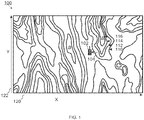
- Figure 1 illustrates a magnetic map of a floor and the movement of a mobile station on the floor in one embodiment of the invention.
- a magnetic map 100 of a floor A position on the floor is expressed in terms of coordinates in an x-axis 120 and in a y-axis 122.
- the magnetic map reveals magnetic flux density in a number of points on the floor.
- the magnetic field measured on the floor area is based at least partly on the magnetic field of the Earth. Different structures and objects of the building (not shown) in which the floor is contained affect the magnetic field.
- Static or Extremely Low-Frequency (ELF) magnetic fields in buildings may arise from both natural and man-made sources, for example, electric power cabling systems, different electric and electronic devices.
- Magnetic map 100 is formed, for example, using a separate magnetometer which is further provided with information on current positions of the magnetometer on the floor. The current positions may be obtained using at least one of manual entry, a satellite positioning system, a cellular network geographic positioning system, a near-field receiver or transmitter based positioning system and an accelerometer.
- Current positions on the floor may be obtained by the magnetometer by utilizing information on at least one predefined known position and information provided to the magnetometer by an associated accelerometer and a gyroscope.
- the accelerometer and the gyroscope may determine the speed and direction of the motion of the magnetometer.
- the accelerometer and the gyroscope may be embedded in a single device together with the magnetometer.
- the single device may be a robot or it may be carried by a human user.
- the single device may be embedded in a mobile node, for example, a mobile phone or communication device. Magnetic flux density in different points on map 100 is illustrated in Figure 1 using gradient lines such as gradient lines 110, 112, 114 and 116.
- a mobile node 102 has access to a memory in which map 100 is stored. Map 100 may be downloaded to mobile node 102.
- Mobile node 102 moves a path illustrated with arrow 104 on the floor.
- the mobile node 102 comprises a magnetometer (not shown) which measures magnetic flux density during the moving of the path illustrated with arrow 104.
- the magnetometer provides information to mobile node 102 on the magnetic flux densities encountered.
- Mobile node 102 may be seen to cross magnetic field gradient lines 110, 112 and 114 while moving the path.
- the gradient lines represent specific magnetic flux densities measured in, for example, ⁇ tesla or Gauss units.
- Mobile node 102 may determine its position based on a matching of a plurality of magnetic flux densities measured on the path to a plurality of magnetic flux densities on map 100.
- the matching may utilize speed and direction information provided by a gyroscope and an accelerometer associated with mobile node 102.
- Mobile node 102 may search for the best matching path from map 100 using the path illustrated with arrow 104 so that the magnetic flux densities measured using magnetometer are within a predefined error from the magnetic flux densities recorded in map 100.
- the search may utilize information on a previously determined position of mobile node 102. For simplicity of illustration, walls or other obstacles are not shown in Figure 1 .
- Figure 2 illustrates a route topology data structure representing a floor in one embodiment of the invention.
- a route topology data structure 200 in short, a data structure 200.
- the route in this context refers to human walker, robot or vehicle accessible routes to an area from which elevators may be entered without a significant delay.
- mobile node 102 which may be the mobile node illustrated in Figure 1 .
- the route topology data structure is illustrated as a matrix M.
- a data structure with equivalent function may also be, for example, a sparse matrix or a network of memory records.
- the matrix has 7 rows and 11 columns illustrating different points on the floor.
- the matrix represents a division of the floor to a grid.
- the matrix entries may also be referred to as grid cells, that is, squares on specific rows and columns.
- the floor may be the floor from which magnetic map 100 is formed in Figure 1 .
- the normal matrix entry numbering convention is illustrated for entries E 11 , E 13 , E 14 and E 21 .
- the matrix comprises entries accessible for an elevator user such as entries 202 and 204.
- the matrix also comprises entries not accessible for an elevator user such as entry 206.
- the entry for elevators is entry 210 and the entry for location from which elevators are entered is entry 212. Entry 212 may also be referred to as elevator location cell, that is, grid cell.
- the matrix entries each comprise information on which neighbor entries are accessible from the entry in question. This is illustrated in Figure 2 with arrows such as arrow 208.
- the matrix entries may also comprise information on the estimated walking time from the entry to entry 212 from which elevators are entered. There may be different estimated walking times for different walker speed categories. Walkers may be categorized to a plurality of walker categories. There may be a plurality of elevators.
- the matrix may be empty or have default values or comprise only part of the entries, for example, entry 212 from which elevators are entered, that is, an area in front of a number of elevators.
- entry 212 from which elevators are entered
- other entries may be recorded in the matrix.
- the plurality of mobile nodes are provided a predefined spatial size of the entries, that is, the size of a grid in which the floor is divided.
- the plurality of mobile nodes determine their current positions, that is, the matrix entries based on a magnetic map of the floor, for example, magnetic map 100. Measured walking times from other entries to entry 212 are recorded to the respective entries. Also walking times between neighboring entries or any other two entries may be measured using the plurality of mobile nodes.
- the mobile node measurements regarding walking times between entries and accessibility between entries are provided to a network node in communication with the plurality of network nodes via a plurality of base transceiver stations and a network.
- the base transceiver stations may be Wireless Local Area Network (WLAN) base transceiver stations or cellular base transceiver stations.
- the network may be a mobile communication system such as the Universal Mobile Telecommunication System (UMTS), Global System of Mobile communications (GSM) or Long-Term Evolution (LTE) or other similar network.
- the network may comprise a packet switched or a circuit switched network.
- the matrix may be regularly traversed by the network node starting, for example, from entry 212 to calculate cumulative walking times to entry 212 from any entries accessible from entry 212. Some mobile nodes may have traversed a path of entries that does not reach entry 212, but that crosses another path reaching entry 212. Information on connections between entries that have not been used within a predefined period of time may be removed from the affected entries. Therefore, in case a new wall or other obstruction is installed to the floor, the path via wall may be removed from the matrix. This is illustrated with faded lines in entry 206.
- there is more than one matrix entry that is, grid cell from which elevators are directly accessible, that is, without a significant walking time.
- the area in front of the row of elevators may be divided in two or more elevator location cells, that is, matrix entries.
- In the matrix entries may be stored information on the route to the closest matrix entry from which elevators may be entered.
- In the matrix entries may be stored information on the route to the all matrix entries from which elevators may be entered.
- the route information comprises the walking time.
- in a selection of the elevator cage to serve the elevator call is used the time to reach a door of the elevator cage from the elevator location cell.
- the elevator cage may also be referred to as elevator car. This may be necessary, if the walking time from the closest matrix entry to the elevator door exceeds a time proportional to the minimum time the elevator doors are kept open.
- Figure 3 illustrates two floors, namely floors 302 and 304, three elevator shafts, namely elevator shafts 310, 320 and 330, and three elevator cages and an elevator system in one embodiment of the invention.
- the number of elevators and floors is just for illustrative purposes and may vary in different embodiments. The figure may not be in scale with actual implementations.
- System 300 comprises elevator cages 312, 322 and 332.
- the system 300 comprises also a network node 342, for example, a network server.
- Network node 342 is communicatively connected to elevator cages 312, 322 and 332 as illustrated with arrow 344.
- Network node 342 In a memory of network node 342 there is maintained information on the current vertical positions on elevator cages 312, 322 and 332, for example, at a granularity of floor or at a higher granularity. In the memory of network node 342 there may also be maintained information on the speeds 314, 324, 334 and current directions of elevator cages 312, 322 and 332, respectively.
- Network node 342 is also communicatively connected to a base station 340, which may be, for example, a cellular system base station or a WLAN access point.
- base station 340 is illustrated on a floor, but it may be located also outside.
- Base station 340 is communicatively connected to mobile node 102, which may be a cellular phone or a personal communicator, for example, a UMTS or LTE User Equipment (UE), or a GSM Mobile Station (MS).
- Mobile node 102 may be any portable electronic device.
- mobile node 102 has obtained a magnetic map, for example, magnetic map 100 from network node 342.
- Mobile node 102 also has obtained from network node 342 a route topology data structure, for example, data structure 200 which may be used by mobile node 102 to estimate the walking time to an area 354 in front of elevators based on a current position of mobile node 102.
- Area 354 may be referred to as an elevator location cell or matrix entry from which elevators may be entered.
- the current position of mobile node 102 within floor 302 is determined using the magnetic map.
- the route topology data structure is not sent to mobile node 102, but mobile node 102 only sends information at the detection of an elevator call on the current position of mobile node 102 to network node 342.
- the elevator call comprises information that the destination floor for the elevator travel is floor 304.
- the elevator call may be made by the user using a user interface of mobile node 102 or automatically when reaching area 352, which may be used as a criterion for determining that with a probability exceeding a predefined threshold the user of mobile node 102 make an elevator travel from floor 302 to floor 304.
- the current time of the day may be used as an additional criterion for making the elevator call automatically by mobile node 102.
- mobile node determines the estimated walking time to reach area 354 from area 352 using the route topology data structure. The route is illustrated with arrow 350.
- Mobile node 102 sends the estimated walking time to network node 342 via base station 340.
- network node 342 may check the elevator cage positions and directions.
- Network node 342 may also check elevator cage speeds and the floors in which the elevator cages are scheduled to stop.
- Network node 342 may compare the estimated walking time to the estimated times for each elevator cage to reach floor 302, taking into consideration the current scheduled stops, directions and speeds of the elevator cages.
- Network node 342 selects the best matching elevator cage.
- elevator cage 324 may be selected because it is closest to floor 302 when the user of mobile node 102 reaches area 354.
- Elevator cage 312 may not be selected as it is assumed to arrive too soon at floor 302, which may cause undesired waiting for passengers currently in elevator cage 312 or passengers waiting in other floors in which cage 312 is scheduled to stop.
- the elevator doors may be closed immediately.
- the user of mobile node 102 being in cage 324 may be detected using at least one of a near-field transmitter in cage 324 read by mobile node 102, mobile node 102 indicating the current position of mobile node 102 based on magnetic map to network node 342 and an elevator cage scale in cage 324.
- Figure 4 is a flow chart illustrating a method for elevator selection in one embodiment of the invention.
- a target area for example, a floor of a building is divided to a grid having a predefined resolution, the grid comprising a plurality of cells.
- the resolution that is, the grid cell sizes, is defined in meters or centimeters.
- a plurality of movement paths of a plurality of mobile nodes are determined, each movement path comprising an origin cell and a target cell, the origin cell and the target cell being determined using a magnetic map of the target area.
- the durations of the plurality of movement paths are determined for an elevator user. Durations may be determined for a different walker speed categories or for individual walkers that are identified using a mobile node identifier. The determination of the durations of the plurality movement paths may be performed during the determination of the movement paths. Information on the movement paths and durations may be sent to a route network node.
- the plurality of the mobile nodes may store the magnetic map in their memories.
- a route topology data structure using the plurality of movement paths and the durations of the plurality of movement paths for an elevator user, the route topology data structure comprising for a plurality of cells a time to reach an elevator location cell.
- the route topology data structure may be distributed by the route network node to a plurality of mobile nodes.
- the route topology data structure may comprise information on movement paths and path durations to multiple elevator location cells.
- a closest elevator location cell may be selected for determining a walking distance to elevators. This walking distance is then used for the selection of the elevator cage. The selection may be performed by the route network node or by a requesting mobile node.
- At step 406 is obtain information on an elevator call made by the requesting mobile node in a request cell, that is, the cell in which the elevator call is made.
- the information on the elevator call and the request cell may be provided to the route network node.
- At step 408 is determined the time to reach the elevator location cell using the route topology data structure and information on the request cell.
- the information on the elevator call, the request cell or the time to reach the elevator location cell may be provided to an elevator control network node.
- At step 410 is selected an elevator cage to serve the elevator call based on the time to reach the elevator location cell, a floor of the elevator location cell, current positions of at least two elevator cages, and current directions of at the least two elevator cages.
- the selection may be performed in the elevator control network node.
- the steps may be performed in the order of numbering.
- the route network node and the elevator control network node are the same network node. They may be different logical network nodes within a single computer.
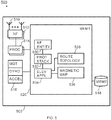
- FIG. 5 is a block diagram illustrating an apparatus in one embodiment of the invention.
- an apparatus 500 which is, for example, a mobile node, a cellular system user equipment such as UMTS or LTE UE, a cellular system mobile station, an Application Specific Integrated Circuit (ASIC), a chip or a chipset.
- Apparatus 500 may correspond to a mobile node illustrated in Figures 1 , 2 and 3 .
- the internal functions of apparatus 500 are illustrated with a box 502.
- Apparatus 500 may comprise at least one antenna 510. There may be multiple input and output antennas.
- RF Radio Frequency
- RF circuit 512 may be also any circuit or may be referred to as circuit 512 or circuitry 512. RF circuit 512 may also comprise a baseband circuit. RF circuit 512 is communicatively connected to at least one processor 514. Connected to the at least one processor 514 there may be a first memory 520, which is, for example, a Random Access Memory (RAM). There may also be a second memory 518, which may be a non-volatile memory, for example, an optical or magnetic disk or a solid state disk. There is also a position and speed determination chip or circuit 516. Circuit 516 comprises a magnetometer, a gyroscope and an accelerometer. In memory 520 there may be stored software relating to functional entities 532, 534 and 536.
- RAM Random Access Memory
- second memory 518 which may be a non-volatile memory, for example, an optical or magnetic disk or a solid state disk.
- circuit 516 comprises a magnetometer, a gyroscope and an accelerometer
- a protocol stack entity 532 communicates via an RF entity 530 with the at least one RF circuit 514 to perform signaling towards a base station and user data transmission and reception to/from the base station.
- An elevator application 534 obtains position and speed data of apparatus 500 from circuit 516. Elevator application 534 may store route topology data structure 538 in memory 520 formed using position and speed and direction information determined by elevator application 534 using circuit 516. Elevator application 534 accesses information on magnetic map 536 stored in memory 520. Elevator application may transmit elevator calls to a remote network node via protocol stack entity 532.
- Elevator application 534 may determine a plurality of movement paths of a plurality of mobile nodes, each movement path comprising an origin cell and a target cell, the origin cell and the target cell being determined using a magnetic map of the target area. Elevator application 534 may determine the durations of the plurality of movement paths for an elevator user. Elevator application 534 may determine an elevator call in a request cell by a requesting mobile node, the request cell being the cell in which the elevator call is made. The elevator call may be determined by the user giving the call via a user interface of apparatus 500, for example, via a touchscreen or a keypad. The elevator call may be determined by elevator application 534 automatically, for example, when the user is in a predetermined position determined using the magnetic map.
- RF circuit 512 may comprise a transmitter for SC-FDMA and a receiver and a transmitter for OFDMA. RF circuit 512 may also comprise a receiver for SC-FDMA. RF circuit 512 may also comprise a transmitter and a receiver circuit for WLAN transmission or reception.
- the term 'circuitry' and 'circuit' refers to all of the following: (a)hardware-only circuit implementations (such as implementations in only analog and/or digital circuitry) and (b) to combinations of circuits and software (and/or firmware), such as (as applicable): (i) to a combination of processor(s) or (ii) to portions of processor(s)/software (including digital signal processor(s)), software, and memory(ies) that work together to cause an apparatus, such as a mobile phone or server, to perform various functions) and (c) to circuits, such as a microprocessor (s) or a portion of a microprocessor(s), that require software or firmware for operation, even if the software or firmware is not physically present.
- circuitry would also cover an implementation of merely a processor (or multiple processors) or portion of a processor and its (or their) accompanying software and/or firmware.
- circuitry would also cover, for example and if applicable to the particular claim element, a baseband integrated circuit or applications processor integrated circuit for a mobile phone or a similar integrated circuit in server, a cellular network device, or other network device
- memory 520 comprises entities such as, any of the functional entities 532, 534 and 536.
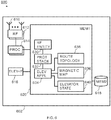
- FIG. 6 is a block diagram illustrating a network node in one embodiment of the invention.
- an apparatus 600 which is, for example, a network node, a computer, a server computer, an Application Specific Integrated Circuit (ASIC), a chip or a chipset.
- Apparatus 600 may correspond to a network node illustrated in Figure 3 .
- the internal functions of apparatus 600 are illustrated with a box 602.
- Apparatus 600 may comprise at least one antenna 610. There may be multiple input and output antennas.
- RF circuit 612 may be also any circuit or may be referred to as circuit 612 or circuitry 612.
- RF circuit 612 may also comprise a baseband circuit.
- RF circuit 612 is communicatively connected to at least one processor 614.
- a first memory 620 which is, for example, a Random Access Memory (RAM).
- RAM Random Access Memory
- second memory 618 which may be a non-volatile memory, for example, an optical or magnetic disk or a solid state disk.
- elevator interface circuit 516 for obtaining information from at least one elevator cage.
- memory 620 there may be stored software relating to functional entities 632, 634 and 636.
- a protocol stack entity 632 communicates via an RF entity 630 with the at least one RF circuit 614 to perform signaling towards a base station and user data transmission and reception to/from the base station.
- An elevator application 634 obtains position and speed data of apparatus 600 from elevator interface circuit 616.
- Elevator application 634 may store route topology data structure 638 in memory 520 formed using movement path and path duration information received from a plurality of mobile nodes.
- the route topology data structure is formed using the plurality of movement paths and the durations of the plurality of movement paths, the route topology data structure comprising for a plurality of cells an estimated time to reach an elevator location.
- Elevator application 634 may store a magnetic map 636 stored in memory 620.
- the magnetic map may be distributed to a plurality of mobile nodes by elevator application 634.
- Elevator application 634 may receive elevator calls from mobile nodes via protocol stack entity 632.
- Elevator application 634 may perform the selection of elevator cages to serve elevator calls.
- Elevator application 634 may issue floor visit instructions to the at least one elevator cage via elevator interface circuit 616.
- RF circuit 612 may comprise a transmitter for SC-FDMA and a receiver and a transmitter for OFDMA. RF circuit 612 may also comprise a receiver for SC-FDMA. RF circuit 612 may also comprise a transmitter and a receiver circuit for WLAN transmission or reception.
- the term 'circuitry' and 'circuit' refers to all of the following: (a)hardware-only circuit implementations (such as implementations in only analog and/or digital circuitry) and (b) to combinations of circuits and software (and/or firmware), such as (as applicable): (i) to a combination of processor(s) or (ii) to portions of processor(s)/software (including digital signal processor(s)), software, and memory(ies) that work together to cause an apparatus, such as a mobile phone or server, to perform various functions) and (c) to circuits, such as a microprocessor (s) or a portion of a microprocessor(s), that require software or firmware for operation, even if the software or firmware is not physically present.
- circuitry would also cover an implementation of merely a processor (or multiple processors) or portion of a processor and its (or their) accompanying software and/or firmware.
- circuitry would also cover, for example and if applicable to the particular claim element, a baseband integrated circuit or applications processor integrated circuit for a mobile phone or a similar integrated circuit in server, a cellular network device, or other network device
- memory 620 comprises entities such as, any of the functional entities 632, 634 and 636.
- the functional entities within apparatus 500 illustrated in Figure 5 and the functional entities within apparatus 600 illustrated in Figure 6 may be implemented in a variety of ways. They may be implemented as processes executed under the native operating system of the network node. The entities may be implemented as separate processes or threads or so that a number of different entities are implemented by means of one process or thread. A process or a thread may be the instance of a program block comprising a number of routines, that is, for example, procedures and functions.
- the functional entities may be implemented as separate computer programs or as a single computer program comprising several routines or functions implementing the entities.
- the program blocks are stored on at least one computer readable medium such as, for example, a memory circuit, memory card, magnetic or optical disk. Some functional entities may be implemented as program modules linked to another functional entity.
- the functional entities in Figure 4 may also be stored in separate memories and executed by separate processors, which communicate, for example, via a message bus or an internal network within the network node.
- a message bus is the Peripheral Component Interconnect (PCI) bus.
- PCI Peripheral Component Interconnect
- the exemplary embodiments of the invention can be included within any suitable device, for example, including any suitable servers, workstations, PCs, laptop computers, PDAs, Internet appliances, handheld devices, cellular telephones, wireless devices, other devices, and the like, capable of performing the processes of the exemplary embodiments, and which can communicate via one or more interface mechanisms, including, for example, Internet access, telecommunications in any suitable form (for instance, voice, modem, and the like), wireless communications media, one or more wireless communications networks, cellular communications networks, 3G communications networks, 4G communications networks, Public Switched Telephone Network (PSTNs), Packet Data Networks (PDNs), the Internet, intranets, a combination thereof, and the like.
- PSTNs Public Switched Telephone Network
- PDNs Packet Data Networks
- the exemplary embodiments are for exemplary purposes, as many variations of the specific hardware used to implement the exemplary embodiments are possible, as will be appreciated by those skilled in the hardware art(s).
- the functionality of one or more of the components of the exemplary embodiments can be implemented via one or more hardware devices, or one or more software entities such as modules.
- the exemplary embodiments can store information relating to various processes described herein. This information can be stored in one or more memories, such as a hard disk, optical disk, magneto-optical disk, RAM, and the like.
- One or more databases can store the information regarding cyclic prefixes used and the delay spreads measured.
- the databases can be organized using data structures (e.g., records, tables, arrays, fields, graphs, trees, lists, and the like) included in one or more memories or storage devices listed herein.
- the processes described with respect to the exemplary embodiments can include appropriate data structures for storing data collected and/or generated by the processes of the devices and subsystems of the exemplary embodiments in one or more databases.
- All or a portion of the exemplary embodiments can be implemented by the preparation of one or more application-specific integrated circuits or by interconnecting an appropriate network of conventional component circuits, as will be appreciated by those skilled in the electrical art(s).
- the components of the exemplary embodiments can include computer readable medium or memories according to the teachings of the present inventions and for holding data structures, tables, records, and/or other data described herein.
- Computer readable medium can include any suitable medium that participates in providing instructions to a processor for execution. Such a medium can take many forms, including but not limited to, non-volatile media, volatile media, transmission media, and the like.
- Non-volatile media can include, for example, optical or magnetic disks, magneto-optical disks, and the like.
- Volatile media can include dynamic memories, and the like.
- Transmission media can include coaxial cables, copper wire, fiber optics, and the like.
- Transmission media also can take the form of acoustic, optical, electromagnetic waves, and the like, such as those generated during radio frequency (RF) communications, infrared (IR) data communications, and the like.
- RF radio frequency
- IR infrared
- Common forms of computer-readable media can include, for example, a floppy disk, a flexible disk, hard disk, magnetic tape, any other suitable magnetic medium, a CD-ROM, CDRW, DVD, any other suitable optical medium, punch cards, paper tape, optical mark sheets, any other suitable physical medium with patterns of holes or other optically recognizable indicia, a RAM, a PROM, an EPROM, a FLASH-EPROM, any other suitable memory chip or cartridge, a carrier wave or any other suitable medium from which a computer can read.
Landscapes
- Engineering & Computer Science (AREA)
- Radar, Positioning & Navigation (AREA)
- Remote Sensing (AREA)
- Automation & Control Theory (AREA)
- Physics & Mathematics (AREA)
- General Physics & Mathematics (AREA)
- Computer Networks & Wireless Communication (AREA)
- Indicating And Signalling Devices For Elevators (AREA)
- Navigation (AREA)
- Elevator Control (AREA)
Claims (22)
- Verfahren, umfassend:Unterteilen eines Zielbereiches in ein Gitter mit einer vorbestimmten Auflösung, wobei das Gitter eine Mehrzahl von Zellen umfasst;Bestimmen einer Mehrzahl von Bewegungspfaden einer Mehrzahl von mobilen Knoten, wobei jeder Bewegungspfad eine Ursprungszelle und eine Zielzelle umfasst, wobei die Ursprungszelle und die Zielzelle unter Verwendung eines magnetischen Plans des Zielbereiches bestimmt werden;Bestimmen von Zeitdauern der Mehrzahl von Bewegungspfaden für einen Aufzugsnutzer;Bilden einer Routentopologiedatenstruktur unter Verwendung der Mehrzahl von Bewegungspfaden und der Zeitdauern der Mehrzahl von Bewegungspfaden, wobei die Routentopologiedatenstruktur für die Mehrzahl von Zellen eine Zeit umfasst, um eine Aufzugsortzelle zu erreichen;Bestimmen eines Aufzugsrufes in einer Anforderungszelle durch Anfordern eines mobilen Knotens, wobei die Anforderungszelle die Zelle ist, in der der Aufzugsruf getätigt worden ist;Bestimmen der Zeit, um die Aufzugsortzelle unter Verwendung der Routentopologiedatenstruktur und einer Information über die Anforderungszelle zu erreichen; undAuswählen einer Aufzugskabine, um den Aufzugsruf basierend auf der Zeit, um die Aufzugsortzelle zu erreichen, einer Etage der Aufzugsortzelle, derzeitigen Positionen von zumindest zwei Aufzugskabinen und derzeitigen Richtungen von zumindest zwei Aufzugskabinen zu bedienen.
- Verfahren nach Anspruch 1, wobei das Verfahren ferner umfasst:Messen des magnetischen Plans des Zielbereiches unter Verwendung eines Magnetometers; undSpeichern des magnetischen Plans des Zielbereiches in einem Speicher.
- Verfahren nach Anspruch 2, wobei der Schritt des Speicherns des magnetischen Plans in dem Speicher umfasst:Übertragen einer Mehrzahl von magnetischen Planmessungen des Zielbereiches zu einem magnetischen Plannetzwerkserver; undSpeichern des magnetischen Plans in einen Speicher innerhalb des magnetischen Plannetzwerkservers.
- Verfahren nach einem der Ansprüche 1-3, wobei das Verfahren ferner umfasst:Bestimmen der tatsächlichen Zeit, die benötigt wird, damit der anfordernde mobile Knoten die Aufzugsortzelle erreicht; undAktualisieren der Daten, die zumindest die Anforderungszelle in der Routentopologiedatenstruktur betreffen, unter Verwendung der tatsächlichen Zeit.
- Verfahren nach einem der Ansprüche 1-4, wobei das Verfahren ferner umfasst:Verbinden eines mobilen Knotenidentifikators für jeden der Mehrzahl von Bewegungspfaden;Bestimmen einer Geschwindigkeitskategorie für jeden mobilen Knoten; undSpeichern einer Zeit, um eine Aufzugsortzelle zu erreichen in der Routentopologiedatenstruktur für jede Geschwindigkeitskategorie.
- Verfahren nach Anspruch 4, wobei der Schritt des Bestimmens der Zeit, um die Aufzugsortzelle zu erreichen, umfasst:Bestimmen einer Geschwindigketiskategorie des mobilen Knotens.
- Verfahren nach einem der Ansprüche 1-6, wobei der Aufzugsruf eine Information über die Zieletage umfasst und das Auswählen der Aufzugskabine, um den Aufzugsruf zu bedienen, die Zieletage als ein weiteres Kriterium verwendet.
- Verfahren nach Anspruch 7, wobei das Verfahren ferner umfasst:Übertragen einer Information über den magnetischen Plan zu der Mehrzahl von mobilen Knoten.
- Verfahren nach einem der Ansprüche 1-8, wobei der Schritt des Bildens der Routentopologiedatenstruktur umfasst;
Empfangen einer Information über die Mehrzahl von Bewegungspfaden und Bewegungspfadzeitdauern von der Mehrzahl von mobilen Knoten in einem Routennetzwerkserver; und
Bilden der Routentopologiedatenstruktur in dem Routennetzwerkserver. - Verfahren nach Anspruch 9, wobei das Verfahren ferner umfasst:Empfangen des Aufzugsrufs von dem anfordernden mobilen Knoten durch den Routennetzwerkserver, wobei der Routennetzwerkserver die Zeit bestimmt, um die Aufzugsortzelle unter Verwendung der Routentopologiedatenstruktur zu erreichen und die Anforderungszelle und der Routennetzwerkserver die Aufzugskabine auswählt, um den Aufzugsruf zu bedienen.
- Verfahren nach einem der Ansprüche 1-10, wobei das Verfahren ferner umfasst:Übermitteln einer Anforderung an eine Steuereinheit, die mit der ausgewählten Aufzugskabine assoziiert bzw. verbunden ist, wobei die Anforderung die Etage anzeigt, in der der Aufzugsruf getätigt worden ist.
- Verfahren nach einem der Ansprüche 1-11, wobei das Verfahren ferner umfasst:Anzeigen der ausgewählten Aufzugskabine gegenüber dem Nutzer des mobilen Knotens.
- Verfahren nach Anspruch 12, wobei die ausgewählte Aufzugskabine gegenüber dem Nutzer des mobilen Knotens unter Verwendung eines Displays des mobilen Knotens angezeigt wird.
- Verfahren nach Anspruch 12, wobei die ausgewählte Aufzugskabine gegenüber dem Nutzer des mobilen Knotens unter Verwendung eines externen Displays innerhalb einer vordefinierten Nähe von dem mobilen Knoten angezeigt wird.
- Verfahren nach einem der Ansprüche 1-14, wobei die Zeit, um eine Tür der Aufzugskabine von der Aufzugsortzelle zu erreichen, in der Auswahl der Aufzugskabine, um den Aufzugsruf zu bedienen, verwendet wird.
- Verfahren umfassend:Unterteilen eines Zielbereiches in ein Gitter mit einer vordefinierten Auflösung, wobei das Gitter eine Mehrzahl von Zellen durch einen mobilen Knoten umfasst;Bestimmen einer ersten Zelle durch den mobilen Knoten unter Verwendung eines magnetischen Plans in dem mobilen Knoten;Bestimmen einer zweiten Zelle durch den mobilen Knoten unter Verwendung des magnetischen Plans in dem mobilen Knoten;Bestimmen der Zeit, die verstrichen ist, um sich zwischen der ersten und der zweiten Zelle zu bewegen;Übertragen einer Information über die erste Zelle, die zweite Zelle und die Zeit, die verstrichen ist, zu einem Routentopologienetzwerkknoten;Empfangen eine Routentopologiedatenstruktur durch den mobilen Knoten von dem Routentopologienetzwerkknoten, wobei die Routentopologiedatenstruktur für eine Mehrzahl von Zellen eine Zeit umfasst, um eine Aufzugsortzelle zu erreichen;Bestimmen eines Aufzugsrufs durch den mobilen Knoten;Bestimmen einer Anforderungszelle, in der der Aufzugsruf getätigt worden ist unter Verwendung des magnetischen Plans in dem mobilen Knoten;Bestimmen der Zeit, um die Aufzugsortzelle zu erreichen, unter Verwendung der Routentopologiedatenstruktur und einer Information über die Anforderungszelle; undÜbertragen der Zeit, um die Aufzugsortzelle zu erreichen, an einen Aufzugssteuernetzwerkknoten.
- Vorrichtung umfassend zumindest einen Prozessor und zumindest einen Speicher, der Computerprogrammcode umfasst, wobei der zumindest eine Speicher und der Computerprogrammcode konfiguriert sind, um mit dem zumindest einen Prozessor zu bewirken, das die Vorrichtung zumindest durchführt:Unterteilen eines Zielbereiches in ein Gitter mit einer vordefinierten Auflösung, wobei das Gitter eine Mehrzahl von Zellen umfasst;Empfangen einer Information über eine Mehrzahl von Bewegungspfaden einer Mehrzahl von mobilen Knoten, wobei jeder Bewegungspfad eine Ursprungszelle und eine Zielzelle umfasst, wobei die Ursprungszelle und die Zielzelle unter Verwendung eines magnetischen Plans des Zielbereiches bestimmt werden;Bestimmen der Zeitdauern der Mehrzahl von Bewegungspfaden;Bilden einer Routentopologiedatenstruktur unter Verwendung der Mehrzahl von Bewegungspfaden und der Zeitdauern der Mehrzahl von Bewegungspfaden, wobei die Routentopologiedatenstruktur für eine Mehrzahl von Zellen eine Zeit umfasst, um eine Aufzugsortzelle zu erreichen;Empfangen einer Information über einen Aufzugsruf in einer Anforderungszelle durch einen anfordernden mobilen Knoten, wobei die Anforderungszelle die Zelle ist, in der der Aufzugsruf getätigt worden ist;Bestimmen der Zeit, um die Aufzugsortzelle zu erreichen unter Verwendung der Routentopologiedatenstruktur und der Anforderungszelle; undAuswählen einer Aufzugskabine, um den Aufzugsruf basierend auf der Zeit, um die Aufzugsortzelle zu erreichen, einer Etage der Aufzugsortzelle, derzeitigen Positionen von zumindest zwei Aufzugskabinen und derzeitigen Richtungen von den zumindest zwei Aufzugskabinen zu bedienen.
- Vorrichtung mit zumindest einem Prozessor und zumindest einem Speicher mit einem Computerprogrammcode, wobei der zumindest eine Speicher und der Computerprogrammcode konfiguriert sind, um mit dem zumindest einen Prozessor zu bewirken, dass die Vorrichtung zumindest durchführt:Unterteilen eines Zielbereiches in ein Gitter mit einer vordefinierten Auflösung, wobei das Gitter eine Mehrzahl von Zellen durch einen mobilen Knoten umfasst;Bestimmen einer ersten Zelle durch den mobilen Knoten unter Verwendung eines magnetischen Plans in dem mobilen Knoten;Bestimmen einer zweiten Zelle durch den mobilen Knoten unter Verwendung des magnetischen Plans in dem mobilen Knoten;Bestimmen der Zeit, die verstrichen ist, um sich zwischen der ersten Zelle und der zweiten Zelle zu bewegen;Übertragen einer Information über die erste Zelle, die zweite Zelle und die Zeit, die verstrichen ist, zu einem Routentopologienetzwerkknoten;Empfangen einer Routentopologiedatenstruktur durch den mobilen Knoten von dem Routentopologienetzwerkknoten, wobei die Routentopologiedatenstruktur für eine Mehrzahl von Zellen eine Zeit umfasst, um eine Aufzugsortzelle zu erreichen;Bestimmen eines Aufzugsrufs durch den mobilen Knoten;Bestimmen einer Anforderungszelle, in der der Aufzugsruf getätigt worden ist unter Verwendung des magnetischen Plans in dem mobilen Knoten;Bestimmen der Zeit, um die Aufzugsortzelle zu erreichen, unter Verwendung der Routentopologiedatenstruktur und einer Information über die Anforderungszelle; undÜbertragen der Zeit, um die Aufzugsortzelle zu erreichen, an einen Aufzugssteuernetzwerkknoten.
- Computerprogramm mit einem Code, der eingerichtet ist, um das Folgende zu bewirken, wenn er auf einem datenverarbeitenden System ausgeführt wird:Unterteilen eines Zielbereiches in ein Gitter mit einer vordefinierten Auflösung, wobei das Gitter eine Mehrzahl von Zellen umfasst;Bestimmen einer Mehrzahl von Bewegungspfaden einer Mehrzahl von mobilen Knoten, wobei jeder Bewegungspfad eine Ursprungszelle und eine Zielzelle umfasst, wobei die Ursprungszelle und die Zielzelle bestimmt werden unter Verwendung eines magnetischen Plans des Zielbereiches;Bestimmen der Zeitdauern der Mehrzahl von Bewegungspfaden;Bilden einer Routentopologiedatenstruktur unter Verwendung der Mehrzahl von Bewegungspfaden und der Zeitdauern der Mehrzahl von Bewegungspfaden, wobei die Routentopologiedatenstruktur für eine Mehrzahl von Zellen eine Zeit umfasst, um eine Aufzugsortzelle zu erreichen;Bestimmen eines Aufguzsrufs in einer Anforderungszelle durch einen anfordernden mobilen Knoten, wobei die Anforderungszelle die Zelle ist, in der der Aufzugsruf getätigt worden ist;Bestimmen der Zeit, um die Aufzugsortzelle zu erreichen unter Verwendung der Routentopologiedatenstruktur und der Anforderungszelle; undAuswählen einer Aufzugskabine, um den Aufzugsruf basierend auf der Zeit, um die Aufzugsortzelle zu erreichen, einer Etage der Aufzugsortzelle, derzeitigen Positionen von zumindest zwei Aufzugskabinen und derzeitigen Richtungen von den zumindest zwei Aufzugskabinen zu bedienen.
- Computerprogramm nach Anspruch 19, wobei das Computerprogramm auf einem Computer-lesbaren Medium gespeichert ist.
- Computerprogramm mit einem Code, der eingerichtet ist, um das Folgende zu bewirken, wenn er auf einem datenverarbeitenden System ausgeführt wird:Unterteilen eines Zielbereiches in ein Gitter mit einer vordefinierten Auflösung, wobei das Gitter einer Mehrzahl von Zellen durch einen mobilen Knoten umfasst;Bestimmen einer ersten Zelle durch den mobilen Knoten unter Verwendung eines magnetischen Plans in dem mobilen Knoten;Bestimmen einer zweiten Zelle durch den mobilen Knoten unter Verwendung des magnetischen Plans in dem mobilen Knoten;Bestimmen der Zeit, die verstrichen ist, um sich zwischen der ersten Zelle und derzweiten Zelle zu bewegen;Übertragen von Information über die erste Zelle, die zweite Zelle und die Zeit, die verstrichen ist, an einen Routentopologienetzwerkknoten;Empfangen einer Routentopologiedatenstruktur durch den mobilen Knoten von dem Routentopologienetzwerkknoten, wobei die Routentopologiedatenstruktur für eine Mehrzahl von Zellen eine Zeit umfasst, um eine Aufzugsortzelle zu erreichen;Bestimmen eines Aufzugsrufs durch den mobilen Knoten;Bestimmen einer Anforderungszelle, in der der Aufzugsruf getätigt worden ist, unter Verwendung des magnetischen Plans in dem mobilen Knoten;Bestimmen der Zeit, um die Aufzugsortzelle zu erreichen, unter Verwendung der Routentopologiedatenstruktur und einer Information über die Anforderungszelle; undÜbertragen der Zeit, um die Aufzugsortzelle zu erreichen, an einen Aufzugssteuernetzwerkknoten.
- Computerprogramm nach Anspruch 21, wobei das Computerprogramm auf einem Computer-lesbaren Medium gespeichert ist.
Applications Claiming Priority (1)
| Application Number | Priority Date | Filing Date | Title |
|---|---|---|---|
| PCT/FI2013/050111 WO2014118424A1 (en) | 2013-02-01 | 2013-02-01 | An apparatus and a method for elevator allocation using a magnetic field map in an elevator system |
Publications (3)
| Publication Number | Publication Date |
|---|---|
| EP2951114A1 EP2951114A1 (de) | 2015-12-09 |
| EP2951114A4 EP2951114A4 (de) | 2016-10-05 |
| EP2951114B1 true EP2951114B1 (de) | 2017-08-23 |
Family
ID=51261506
Family Applications (1)
| Application Number | Title | Priority Date | Filing Date |
|---|---|---|---|
| EP13874087.3A Not-in-force EP2951114B1 (de) | 2013-02-01 | 2013-02-01 | Vorrichtung und verfahren zur aufzugzuordnung mithilfe einer magnetfeldkarte in einem aufzugsystem |
Country Status (5)
| Country | Link |
|---|---|
| US (1) | US9873590B2 (de) |
| EP (1) | EP2951114B1 (de) |
| CN (1) | CN104955755B (de) |
| AU (1) | AU2013376378B2 (de) |
| WO (1) | WO2014118424A1 (de) |
Families Citing this family (28)
| Publication number | Priority date | Publication date | Assignee | Title |
|---|---|---|---|---|
| US20140365119A1 (en) * | 2013-06-11 | 2014-12-11 | Indooratlas Oy | Detecting information about motion of mobile device |
| WO2015049414A1 (en) * | 2013-10-04 | 2015-04-09 | Kone Corporation | A system and a method for elevator allocation based on a determination of walker speed |
| CN104386552A (zh) * | 2014-11-04 | 2015-03-04 | 中山市卓梅尼控制技术有限公司 | 电梯轿顶分配器姿态仪 |
| EP3365630B1 (de) | 2015-10-19 | 2024-01-24 | KONE Corporation | Intelligente uhr und aufzug und führungssystem |
| US12012303B2 (en) * | 2016-02-24 | 2024-06-18 | Inventio Ag | Elevator trip planning based on destinations and activity parameters |
| CN107289923A (zh) | 2016-04-01 | 2017-10-24 | 奥的斯电梯公司 | 楼宇内乘梯导航终端、系统及方法 |
| EP3231754B1 (de) | 2016-04-15 | 2020-01-08 | Otis Elevator Company | Verfahren, programm und mobile vorrichtung zur steuerung eines aufzugssystems |
| WO2017186305A1 (en) * | 2016-04-29 | 2017-11-02 | Kone Corporation | Elevator entry control system and method |
| US9878875B1 (en) | 2016-09-30 | 2018-01-30 | Otis Elevator Company | Building selection in elevator system supporting mobile device calls |
| US10266370B2 (en) * | 2017-04-24 | 2019-04-23 | Thyssenkrupp Elevator Ag | Systems and methods for automatic rendering of walking path maps for elevator car assignment display |
| US20180327214A1 (en) * | 2017-05-15 | 2018-11-15 | Otis Elevator Company | Destination entry using building floor plan |
| US10676315B2 (en) * | 2017-07-11 | 2020-06-09 | Otis Elevator Company | Identification of a crowd in an elevator waiting area and seamless call elevators |
| GB2565837B (en) * | 2017-08-25 | 2020-05-27 | Arm Ip Ltd | Systems and methods for navigation |
| US11040849B2 (en) * | 2018-02-28 | 2021-06-22 | Otis Elevator Company | Method for blocking and filtering false automatic elevator calls |
| CN110294372B (zh) * | 2018-03-23 | 2023-02-28 | 奥的斯电梯公司 | 一种无线信号装置、电梯服务请求系统和方法 |
| US11040850B2 (en) * | 2018-03-27 | 2021-06-22 | Otis Elevator Company | Seamless elevator call from mobile device application |
| CN110407038B (zh) * | 2018-04-28 | 2022-04-12 | 上海三菱电梯有限公司 | 电梯系统、控制方法及自动导引运输车控制系统 |
| US20190382235A1 (en) * | 2018-06-15 | 2019-12-19 | Otis Elevator Company | Elevator scheduling systems and methods of operation |
| US12330906B2 (en) * | 2018-10-22 | 2025-06-17 | Otis Elevator Company | System and method for prioritizing service to remote elevator calls based on proximity to elevator lobby |
| KR102736216B1 (ko) * | 2019-08-16 | 2024-11-28 | 엘지전자 주식회사 | 로봇 시스템 및 그 작동방법 |
| JP7315415B2 (ja) * | 2019-08-28 | 2023-07-26 | 株式会社日立製作所 | エレベータ分析システム及びエレベータ分析システムの設計方法 |
| CN113401746B (zh) * | 2020-03-16 | 2024-09-20 | 奥的斯电梯公司 | 用于机器人和个人的电梯召唤协调 |
| CN114380158B (zh) | 2020-10-06 | 2024-07-30 | 奥的斯电梯公司 | 使用磁特性参考和传感器融合的楼层识别 |
| CN113044684B (zh) * | 2021-03-31 | 2023-04-21 | 上海高仙自动化科技发展有限公司 | 运载设备调配方法、装置、电子设备及计算机可读介质 |
| JP7327456B2 (ja) * | 2021-11-09 | 2023-08-16 | フジテック株式会社 | エレベータ情報提供装置、エレベータ情報提供方法、端末装置および端末制御プログラム |
| CN114229631B (zh) * | 2021-12-21 | 2024-03-15 | 北京云迹科技股份有限公司 | 一种建立移动设备与电梯的通信连接的方法和系统 |
| CN114873391B (zh) * | 2022-04-25 | 2024-02-06 | 北京云迹科技股份有限公司 | 机器人的楼层确定方法及相关设备 |
| CN118898179B (zh) * | 2024-07-10 | 2025-02-18 | 广东建设职业技术学院 | 一种吊笼结构优化方法、装置、计算机设备和存储介质 |
Family Cites Families (19)
| Publication number | Priority date | Publication date | Assignee | Title |
|---|---|---|---|---|
| JPH0712887B2 (ja) * | 1985-04-10 | 1995-02-15 | 三菱電機株式会社 | エレベ−タの遠隔呼び登録装置 |
| US5984051A (en) * | 1998-11-09 | 1999-11-16 | Otis Elevator Company | Remote elevator call requests with descriptor tags |
| FI112067B (fi) * | 2001-02-22 | 2003-10-31 | Kone Corp | Kolmidimensionaalisia sijaintitietoja käyttävä henkilönkuljetusjärjestelmä ja -menetelmä |
| US20040010368A1 (en) * | 2002-07-10 | 2004-01-15 | Logan Scott | Assisted GPS signal detection and processing system for indoor location determination |
| US7505849B2 (en) * | 2003-05-12 | 2009-03-17 | Nokia Corporation | Navigation tags |
| JP2005280906A (ja) * | 2004-03-29 | 2005-10-13 | Toshiba Elevator Co Ltd | 携帯端末およびエレベータシステム |
| US7712586B2 (en) * | 2004-05-26 | 2010-05-11 | Otis Elevator Company | Passenger guiding system for a passenger transportation system |
| US7263375B2 (en) * | 2004-12-21 | 2007-08-28 | Lockheed Martin Corporation | Personal navigation assistant system and apparatus |
| FI117009B (fi) * | 2005-03-08 | 2006-05-15 | Kone Corp | Opastusjärjestelmä |
| US20070041352A1 (en) * | 2005-08-18 | 2007-02-22 | Frankel James L | Elevator calling mechanism and method |
| US7940171B2 (en) * | 2008-06-10 | 2011-05-10 | Google Inc. | Machine-readable representation of geographic information |
| US8099237B2 (en) * | 2008-07-25 | 2012-01-17 | Navteq North America, Llc | Open area maps |
| FI121957B (fi) * | 2010-03-12 | 2011-06-30 | Kone Corp | Hissijärjestelmä |
| US20120143495A1 (en) * | 2010-10-14 | 2012-06-07 | The University Of North Texas | Methods and systems for indoor navigation |
| CN103476694B (zh) * | 2011-03-29 | 2016-09-28 | 因温特奥股份公司 | 通过移动电子装置进行用户引导 |
| US9323232B2 (en) * | 2012-03-13 | 2016-04-26 | Nokia Technologies Oy | Transportion remote call system based on passenger geo-routines |
| EP2704105A1 (de) * | 2012-08-31 | 2014-03-05 | Inventio AG | Führen von Benutzern in einem Bereich |
| FI123998B (fi) * | 2012-12-18 | 2014-01-31 | Kone Corp | Hissijärjestelmä |
| CN104936878B (zh) * | 2013-01-30 | 2017-05-03 | 通力股份公司 | 电梯呼叫的预分配 |
-
2013
- 2013-02-01 CN CN201380072046.8A patent/CN104955755B/zh active Active
- 2013-02-01 EP EP13874087.3A patent/EP2951114B1/de not_active Not-in-force
- 2013-02-01 AU AU2013376378A patent/AU2013376378B2/en not_active Ceased
- 2013-02-01 WO PCT/FI2013/050111 patent/WO2014118424A1/en not_active Ceased
-
2015
- 2015-07-21 US US14/805,261 patent/US9873590B2/en not_active Expired - Fee Related
Non-Patent Citations (1)
| Title |
|---|
| None * |
Also Published As
| Publication number | Publication date |
|---|---|
| US9873590B2 (en) | 2018-01-23 |
| AU2013376378A1 (en) | 2015-09-17 |
| CN104955755A (zh) | 2015-09-30 |
| WO2014118424A1 (en) | 2014-08-07 |
| EP2951114A1 (de) | 2015-12-09 |
| CN104955755B (zh) | 2017-05-03 |
| HK1210757A1 (en) | 2016-05-06 |
| AU2013376378B2 (en) | 2017-10-12 |
| US20150321881A1 (en) | 2015-11-12 |
| EP2951114A4 (de) | 2016-10-05 |
Similar Documents
| Publication | Publication Date | Title |
|---|---|---|
| US9873590B2 (en) | Apparatus and a method for elevator allocation using a magnetic field map in an elevator system | |
| US10207893B2 (en) | Elevator call allocation and transmission based on a determination of walker speed | |
| KR101676571B1 (ko) | 실내 측위 서비스 제공 방법 및 시스템 | |
| US8706137B2 (en) | Likelihood of mobile device portal transition | |
| KR101982818B1 (ko) | 실내 환경에서 네트워크 엘리먼트들 및 사용자 장비의 포지션 결정 | |
| US10259682B2 (en) | Pre-call scheduling assistant | |
| JP5207400B2 (ja) | 位置情報提供システム、位置情報提供方法及び測位統合装置 | |
| WO2014034707A1 (ja) | 情報処理装置及び情報処理方法 | |
| EP3092830B1 (de) | Rückkoppelung in einem positionierungssystem | |
| CN103081525A (zh) | 使用预测的位置来访问网络连接信息的方法和装置 | |
| JP7778920B2 (ja) | デバイスの位置決め | |
| CN104509134A (zh) | 用于基于位置获得通信质量信息的移动装置、方法和记录介质 | |
| CN111295568B (zh) | 用于确定环境的空间划分的方法和设备 | |
| CN104937914B9 (zh) | 信息处理设备、信息处理方法以及介质 | |
| HK1210757B (en) | An apparatus and a method for elevator allocation using a magnetic field map in an elevator system | |
| KR102360165B1 (ko) | 차량 호출 서비스 제공 장치, 그를 포함한 시스템 및 그 방법 | |
| JP6462639B2 (ja) | 無線通信装置、方法およびプログラム | |
| EP4371316B1 (de) | Verfahren und system zur bestimmung von innenstandorten von benutzergeräten in einem mobilfunknetz | |
| HK1224271B (en) | A system and a method for elevator allocation based on a determination of walker speed | |
| JP2018157520A (ja) | 同期方法、移動通信システム及びノード装置 | |
| JP2014082558A (ja) | 無線通信端末へ地理的識別性を担保した電話番号を付与する電話番号制御装置、システム及びプログラム | |
| WO2013145291A1 (ja) | 電子装置、通信システム及び電子装置の動作状態の変更方法 |
Legal Events
| Date | Code | Title | Description |
|---|---|---|---|
| PUAI | Public reference made under article 153(3) epc to a published international application that has entered the european phase |
Free format text: ORIGINAL CODE: 0009012 |
|
| 17P | Request for examination filed |
Effective date: 20150827 |
|
| AK | Designated contracting states |
Kind code of ref document: A1 Designated state(s): AL AT BE BG CH CY CZ DE DK EE ES FI FR GB GR HR HU IE IS IT LI LT LU LV MC MK MT NL NO PL PT RO RS SE SI SK SM TR |
|
| AX | Request for extension of the european patent |
Extension state: BA ME |
|
| DAX | Request for extension of the european patent (deleted) | ||
| A4 | Supplementary search report drawn up and despatched |
Effective date: 20160901 |
|
| RIC1 | Information provided on ipc code assigned before grant |
Ipc: B66B 3/00 20060101AFI20160826BHEP Ipc: B66B 1/46 20060101ALI20160826BHEP Ipc: G01C 21/20 20060101ALI20160826BHEP |
|
| GRAP | Despatch of communication of intention to grant a patent |
Free format text: ORIGINAL CODE: EPIDOSNIGR1 |
|
| INTG | Intention to grant announced |
Effective date: 20170317 |
|
| RAP1 | Party data changed (applicant data changed or rights of an application transferred) |
Owner name: KONE CORPORATION |
|
| GRAS | Grant fee paid |
Free format text: ORIGINAL CODE: EPIDOSNIGR3 |
|
| GRAA | (expected) grant |
Free format text: ORIGINAL CODE: 0009210 |
|
| AK | Designated contracting states |
Kind code of ref document: B1 Designated state(s): AL AT BE BG CH CY CZ DE DK EE ES FI FR GB GR HR HU IE IS IT LI LT LU LV MC MK MT NL NO PL PT RO RS SE SI SK SM TR |
|
| REG | Reference to a national code |
Ref country code: GB Ref legal event code: FG4D |
|
| REG | Reference to a national code |
Ref country code: CH Ref legal event code: EP |
|
| REG | Reference to a national code |
Ref country code: AT Ref legal event code: REF Ref document number: 921096 Country of ref document: AT Kind code of ref document: T Effective date: 20170915 |
|
| REG | Reference to a national code |
Ref country code: IE Ref legal event code: FG4D |
|
| REG | Reference to a national code |
Ref country code: DE Ref legal event code: R096 Ref document number: 602013025653 Country of ref document: DE |
|
| REG | Reference to a national code |
Ref country code: NL Ref legal event code: MP Effective date: 20170823 |
|
| REG | Reference to a national code |
Ref country code: LT Ref legal event code: MG4D |
|
| REG | Reference to a national code |
Ref country code: AT Ref legal event code: MK05 Ref document number: 921096 Country of ref document: AT Kind code of ref document: T Effective date: 20170823 |
|
| PG25 | Lapsed in a contracting state [announced via postgrant information from national office to epo] |
Ref country code: FI Free format text: LAPSE BECAUSE OF FAILURE TO SUBMIT A TRANSLATION OF THE DESCRIPTION OR TO PAY THE FEE WITHIN THE PRESCRIBED TIME-LIMIT Effective date: 20170823 Ref country code: LT Free format text: LAPSE BECAUSE OF FAILURE TO SUBMIT A TRANSLATION OF THE DESCRIPTION OR TO PAY THE FEE WITHIN THE PRESCRIBED TIME-LIMIT Effective date: 20170823 Ref country code: HR Free format text: LAPSE BECAUSE OF FAILURE TO SUBMIT A TRANSLATION OF THE DESCRIPTION OR TO PAY THE FEE WITHIN THE PRESCRIBED TIME-LIMIT Effective date: 20170823 Ref country code: AT Free format text: LAPSE BECAUSE OF FAILURE TO SUBMIT A TRANSLATION OF THE DESCRIPTION OR TO PAY THE FEE WITHIN THE PRESCRIBED TIME-LIMIT Effective date: 20170823 Ref country code: SE Free format text: LAPSE BECAUSE OF FAILURE TO SUBMIT A TRANSLATION OF THE DESCRIPTION OR TO PAY THE FEE WITHIN THE PRESCRIBED TIME-LIMIT Effective date: 20170823 Ref country code: NL Free format text: LAPSE BECAUSE OF FAILURE TO SUBMIT A TRANSLATION OF THE DESCRIPTION OR TO PAY THE FEE WITHIN THE PRESCRIBED TIME-LIMIT Effective date: 20170823 Ref country code: NO Free format text: LAPSE BECAUSE OF FAILURE TO SUBMIT A TRANSLATION OF THE DESCRIPTION OR TO PAY THE FEE WITHIN THE PRESCRIBED TIME-LIMIT Effective date: 20171123 |
|
| REG | Reference to a national code |
Ref country code: FR Ref legal event code: PLFP Year of fee payment: 6 |
|
| PG25 | Lapsed in a contracting state [announced via postgrant information from national office to epo] |
Ref country code: PL Free format text: LAPSE BECAUSE OF FAILURE TO SUBMIT A TRANSLATION OF THE DESCRIPTION OR TO PAY THE FEE WITHIN THE PRESCRIBED TIME-LIMIT Effective date: 20170823 Ref country code: ES Free format text: LAPSE BECAUSE OF FAILURE TO SUBMIT A TRANSLATION OF THE DESCRIPTION OR TO PAY THE FEE WITHIN THE PRESCRIBED TIME-LIMIT Effective date: 20170823 Ref country code: GR Free format text: LAPSE BECAUSE OF FAILURE TO SUBMIT A TRANSLATION OF THE DESCRIPTION OR TO PAY THE FEE WITHIN THE PRESCRIBED TIME-LIMIT Effective date: 20171124 Ref country code: IS Free format text: LAPSE BECAUSE OF FAILURE TO SUBMIT A TRANSLATION OF THE DESCRIPTION OR TO PAY THE FEE WITHIN THE PRESCRIBED TIME-LIMIT Effective date: 20171223 Ref country code: LV Free format text: LAPSE BECAUSE OF FAILURE TO SUBMIT A TRANSLATION OF THE DESCRIPTION OR TO PAY THE FEE WITHIN THE PRESCRIBED TIME-LIMIT Effective date: 20170823 Ref country code: RS Free format text: LAPSE BECAUSE OF FAILURE TO SUBMIT A TRANSLATION OF THE DESCRIPTION OR TO PAY THE FEE WITHIN THE PRESCRIBED TIME-LIMIT Effective date: 20170823 Ref country code: BG Free format text: LAPSE BECAUSE OF FAILURE TO SUBMIT A TRANSLATION OF THE DESCRIPTION OR TO PAY THE FEE WITHIN THE PRESCRIBED TIME-LIMIT Effective date: 20171123 |
|
| PG25 | Lapsed in a contracting state [announced via postgrant information from national office to epo] |
Ref country code: RO Free format text: LAPSE BECAUSE OF FAILURE TO SUBMIT A TRANSLATION OF THE DESCRIPTION OR TO PAY THE FEE WITHIN THE PRESCRIBED TIME-LIMIT Effective date: 20170823 Ref country code: CZ Free format text: LAPSE BECAUSE OF FAILURE TO SUBMIT A TRANSLATION OF THE DESCRIPTION OR TO PAY THE FEE WITHIN THE PRESCRIBED TIME-LIMIT Effective date: 20170823 Ref country code: DK Free format text: LAPSE BECAUSE OF FAILURE TO SUBMIT A TRANSLATION OF THE DESCRIPTION OR TO PAY THE FEE WITHIN THE PRESCRIBED TIME-LIMIT Effective date: 20170823 |
|
| REG | Reference to a national code |
Ref country code: DE Ref legal event code: R097 Ref document number: 602013025653 Country of ref document: DE |
|
| PG25 | Lapsed in a contracting state [announced via postgrant information from national office to epo] |
Ref country code: SM Free format text: LAPSE BECAUSE OF FAILURE TO SUBMIT A TRANSLATION OF THE DESCRIPTION OR TO PAY THE FEE WITHIN THE PRESCRIBED TIME-LIMIT Effective date: 20170823 Ref country code: EE Free format text: LAPSE BECAUSE OF FAILURE TO SUBMIT A TRANSLATION OF THE DESCRIPTION OR TO PAY THE FEE WITHIN THE PRESCRIBED TIME-LIMIT Effective date: 20170823 Ref country code: IT Free format text: LAPSE BECAUSE OF FAILURE TO SUBMIT A TRANSLATION OF THE DESCRIPTION OR TO PAY THE FEE WITHIN THE PRESCRIBED TIME-LIMIT Effective date: 20170823 Ref country code: SK Free format text: LAPSE BECAUSE OF FAILURE TO SUBMIT A TRANSLATION OF THE DESCRIPTION OR TO PAY THE FEE WITHIN THE PRESCRIBED TIME-LIMIT Effective date: 20170823 |
|
| PLBE | No opposition filed within time limit |
Free format text: ORIGINAL CODE: 0009261 |
|
| STAA | Information on the status of an ep patent application or granted ep patent |
Free format text: STATUS: NO OPPOSITION FILED WITHIN TIME LIMIT |
|
| 26N | No opposition filed |
Effective date: 20180524 |
|
| PG25 | Lapsed in a contracting state [announced via postgrant information from national office to epo] |
Ref country code: SI Free format text: LAPSE BECAUSE OF FAILURE TO SUBMIT A TRANSLATION OF THE DESCRIPTION OR TO PAY THE FEE WITHIN THE PRESCRIBED TIME-LIMIT Effective date: 20170823 |
|
| REG | Reference to a national code |
Ref country code: CH Ref legal event code: PL |
|
| PG25 | Lapsed in a contracting state [announced via postgrant information from national office to epo] |
Ref country code: MC Free format text: LAPSE BECAUSE OF FAILURE TO SUBMIT A TRANSLATION OF THE DESCRIPTION OR TO PAY THE FEE WITHIN THE PRESCRIBED TIME-LIMIT Effective date: 20170823 |
|
| REG | Reference to a national code |
Ref country code: IE Ref legal event code: MM4A |
|
| REG | Reference to a national code |
Ref country code: BE Ref legal event code: MM Effective date: 20180228 |
|
| PG25 | Lapsed in a contracting state [announced via postgrant information from national office to epo] |
Ref country code: LU Free format text: LAPSE BECAUSE OF NON-PAYMENT OF DUE FEES Effective date: 20180201 Ref country code: CH Free format text: LAPSE BECAUSE OF NON-PAYMENT OF DUE FEES Effective date: 20180228 Ref country code: LI Free format text: LAPSE BECAUSE OF NON-PAYMENT OF DUE FEES Effective date: 20180228 |
|
| PG25 | Lapsed in a contracting state [announced via postgrant information from national office to epo] |
Ref country code: IE Free format text: LAPSE BECAUSE OF NON-PAYMENT OF DUE FEES Effective date: 20180201 |
|
| PG25 | Lapsed in a contracting state [announced via postgrant information from national office to epo] |
Ref country code: BE Free format text: LAPSE BECAUSE OF NON-PAYMENT OF DUE FEES Effective date: 20180228 |
|
| PG25 | Lapsed in a contracting state [announced via postgrant information from national office to epo] |
Ref country code: MT Free format text: LAPSE BECAUSE OF NON-PAYMENT OF DUE FEES Effective date: 20180201 |
|
| PG25 | Lapsed in a contracting state [announced via postgrant information from national office to epo] |
Ref country code: TR Free format text: LAPSE BECAUSE OF FAILURE TO SUBMIT A TRANSLATION OF THE DESCRIPTION OR TO PAY THE FEE WITHIN THE PRESCRIBED TIME-LIMIT Effective date: 20170823 |
|
| PG25 | Lapsed in a contracting state [announced via postgrant information from national office to epo] |
Ref country code: PT Free format text: LAPSE BECAUSE OF FAILURE TO SUBMIT A TRANSLATION OF THE DESCRIPTION OR TO PAY THE FEE WITHIN THE PRESCRIBED TIME-LIMIT Effective date: 20170823 |
|
| PG25 | Lapsed in a contracting state [announced via postgrant information from national office to epo] |
Ref country code: HU Free format text: LAPSE BECAUSE OF FAILURE TO SUBMIT A TRANSLATION OF THE DESCRIPTION OR TO PAY THE FEE WITHIN THE PRESCRIBED TIME-LIMIT; INVALID AB INITIO Effective date: 20130201 Ref country code: MK Free format text: LAPSE BECAUSE OF NON-PAYMENT OF DUE FEES Effective date: 20170823 Ref country code: CY Free format text: LAPSE BECAUSE OF FAILURE TO SUBMIT A TRANSLATION OF THE DESCRIPTION OR TO PAY THE FEE WITHIN THE PRESCRIBED TIME-LIMIT Effective date: 20170823 |
|
| PG25 | Lapsed in a contracting state [announced via postgrant information from national office to epo] |
Ref country code: AL Free format text: LAPSE BECAUSE OF FAILURE TO SUBMIT A TRANSLATION OF THE DESCRIPTION OR TO PAY THE FEE WITHIN THE PRESCRIBED TIME-LIMIT Effective date: 20170823 |
|
| P01 | Opt-out of the competence of the unified patent court (upc) registered |
Effective date: 20230525 |
|
| PGFP | Annual fee paid to national office [announced via postgrant information from national office to epo] |
Ref country code: DE Payment date: 20240219 Year of fee payment: 12 Ref country code: GB Payment date: 20240219 Year of fee payment: 12 |
|
| PGFP | Annual fee paid to national office [announced via postgrant information from national office to epo] |
Ref country code: FR Payment date: 20240221 Year of fee payment: 12 |
|
| REG | Reference to a national code |
Ref country code: DE Ref legal event code: R119 Ref document number: 602013025653 Country of ref document: DE |
|
| GBPC | Gb: european patent ceased through non-payment of renewal fee |
Effective date: 20250201 |
|
| PG25 | Lapsed in a contracting state [announced via postgrant information from national office to epo] |
Ref country code: DE Free format text: LAPSE BECAUSE OF NON-PAYMENT OF DUE FEES Effective date: 20250902 |
|
| PG25 | Lapsed in a contracting state [announced via postgrant information from national office to epo] |
Ref country code: GB Free format text: LAPSE BECAUSE OF NON-PAYMENT OF DUE FEES Effective date: 20250201 |
|
| PG25 | Lapsed in a contracting state [announced via postgrant information from national office to epo] |
Ref country code: FR Free format text: LAPSE BECAUSE OF NON-PAYMENT OF DUE FEES Effective date: 20250228 |