EP2953375A2 - Commande de largeur de bande probabiliste dans un réseau optique passif (pon) - Google Patents
Commande de largeur de bande probabiliste dans un réseau optique passif (pon) Download PDFInfo
- Publication number
- EP2953375A2 EP2953375A2 EP15001017.1A EP15001017A EP2953375A2 EP 2953375 A2 EP2953375 A2 EP 2953375A2 EP 15001017 A EP15001017 A EP 15001017A EP 2953375 A2 EP2953375 A2 EP 2953375A2
- Authority
- EP
- European Patent Office
- Prior art keywords
- onu
- message
- olt
- onus
- gate
- Prior art date
- Legal status (The legal status is an assumption and is not a legal conclusion. Google has not performed a legal analysis and makes no representation as to the accuracy of the status listed.)
- Granted
Links
Images






Classifications
-
- H—ELECTRICITY
- H04—ELECTRIC COMMUNICATION TECHNIQUE
- H04B—TRANSMISSION
- H04B10/00—Transmission systems employing electromagnetic waves other than radio-waves, e.g. infrared, visible or ultraviolet light, or employing corpuscular radiation, e.g. quantum communication
- H04B10/27—Arrangements for networking
-
- H—ELECTRICITY
- H04—ELECTRIC COMMUNICATION TECHNIQUE
- H04Q—SELECTING
- H04Q11/00—Selecting arrangements for multiplex systems
- H04Q11/0001—Selecting arrangements for multiplex systems using optical switching
- H04Q11/0062—Network aspects
- H04Q11/0067—Provisions for optical access or distribution networks, e.g. Gigabit Ethernet Passive Optical Network (GE-PON), ATM-based Passive Optical Network (A-PON), PON-Ring
-
- H—ELECTRICITY
- H04—ELECTRIC COMMUNICATION TECHNIQUE
- H04B—TRANSMISSION
- H04B10/00—Transmission systems employing electromagnetic waves other than radio-waves, e.g. infrared, visible or ultraviolet light, or employing corpuscular radiation, e.g. quantum communication
- H04B10/25—Arrangements specific to fibre transmission
-
- H—ELECTRICITY
- H04—ELECTRIC COMMUNICATION TECHNIQUE
- H04B—TRANSMISSION
- H04B10/00—Transmission systems employing electromagnetic waves other than radio-waves, e.g. infrared, visible or ultraviolet light, or employing corpuscular radiation, e.g. quantum communication
- H04B10/40—Transceivers
-
- H—ELECTRICITY
- H04—ELECTRIC COMMUNICATION TECHNIQUE
- H04B—TRANSMISSION
- H04B10/00—Transmission systems employing electromagnetic waves other than radio-waves, e.g. infrared, visible or ultraviolet light, or employing corpuscular radiation, e.g. quantum communication
- H04B10/25—Arrangements specific to fibre transmission
- H04B10/2575—Radio-over-fibre, e.g. radio frequency signal modulated onto an optical carrier
-
- H—ELECTRICITY
- H04—ELECTRIC COMMUNICATION TECHNIQUE
- H04L—TRANSMISSION OF DIGITAL INFORMATION, e.g. TELEGRAPHIC COMMUNICATION
- H04L12/00—Data switching networks
- H04L12/28—Data switching networks characterised by path configuration, e.g. LAN [Local Area Networks] or WAN [Wide Area Networks]
- H04L12/2854—Wide area networks, e.g. public data networks
- H04L12/2856—Access arrangements, e.g. Internet access
- H04L12/2869—Operational details of access network equipments
- H04L12/2878—Access multiplexer, e.g. DSLAM
- H04L12/2879—Access multiplexer, e.g. DSLAM characterised by the network type on the uplink side, i.e. towards the service provider network
- H04L12/2885—Arrangements interfacing with optical systems
-
- H—ELECTRICITY
- H04—ELECTRIC COMMUNICATION TECHNIQUE
- H04Q—SELECTING
- H04Q11/00—Selecting arrangements for multiplex systems
- H04Q11/0001—Selecting arrangements for multiplex systems using optical switching
- H04Q11/0062—Network aspects
- H04Q2011/0064—Arbitration, scheduling or medium access control aspects
-
- H—ELECTRICITY
- H04—ELECTRIC COMMUNICATION TECHNIQUE
- H04Q—SELECTING
- H04Q11/00—Selecting arrangements for multiplex systems
- H04Q11/0001—Selecting arrangements for multiplex systems using optical switching
- H04Q11/0062—Network aspects
- H04Q2011/0084—Quality of service aspects
-
- H—ELECTRICITY
- H04—ELECTRIC COMMUNICATION TECHNIQUE
- H04Q—SELECTING
- H04Q11/00—Selecting arrangements for multiplex systems
- H04Q11/0001—Selecting arrangements for multiplex systems using optical switching
- H04Q11/0062—Network aspects
- H04Q2011/0086—Network resource allocation, dimensioning or optimisation
-
- H—ELECTRICITY
- H04—ELECTRIC COMMUNICATION TECHNIQUE
- H04Q—SELECTING
- H04Q11/00—Selecting arrangements for multiplex systems
- H04Q11/0001—Selecting arrangements for multiplex systems using optical switching
- H04Q11/0062—Network aspects
- H04Q2011/0088—Signalling aspects
Definitions
- the present disclosure relates generally to reducing latency and improving energy efficiency in Passive Optical Network (PON) systems.
- PON Passive Optical Network
- Existing Passive Optical Network (PON) systems employ a periodic polling reporting scheme in which GATE messages are constantly transmitted by the Optical Line Terminal (OLT) in the downstream and corresponding REPORT messages are constantly transmitted in the upstream by the subtending Optical Network Units (ONUs) even by ONUs which have no upstream data traffic (idle ONUs). While the downstream/upstream transmission times of GATE/REPORT messages are relatively short, the transmissions can still consume a considerable amount of bandwidth and power, particularly when multiple ONUs are present.
- OLT Optical Line Terminal
- REPORT messages are constantly transmitted in the upstream by the subtending Optical Network Units (ONUs) even by ONUs which have no upstream data traffic (idle ONUs). While the downstream/upstream transmission times of GATE/REPORT messages are relatively short, the transmissions can still consume a considerable amount of bandwidth and power, particularly when multiple ONUs are present.
- an Optical Network Unit comprises:
- the multicast LLID corresponds a multicast group including the ONU.
- the processor circuitry is further configured to:
- the processor circuitry is further configured to:
- the processor circuitry is configured to transmit the REPORT message to the OLT regardless of whether the data is available for upstream transmission at the ONU.
- the processor circuitry is configured to set the PR mode at the ONU responsive to the GATE message.
- the processor circuitry is configured to set the PR mode at the ONU independently of the OLT.
- the processor circuitry is configured to set the PR mode at the ONU based on a time of day.
- an Optical Line Terminal (OLT) connected to a plurality of Optical Network Units (ONUs) by a shared optical medium comprises:
- the processor circuitry is further configured to:
- the processor circuitry is further configured to:
- the processor circuitry is further configured to:
- the TX SUSPEND message indicates a packet boundary or a byte boundary of the unsolicited data burst at which the second ONU suspends transmission.
- processing circuitry is further configured to:
- an Optical Line Terminal (OLT) connected to a plurality of Optical Network Units (ONUs) by a shared optical medium comprises:
- the first unicast GATE message is configured to set the reporting mode of the first ONU to a probabilistic reporting (PR) mode when the upstream activity level of the first ONU is below a threshold, and to set the reporting mode of the first ONU to a periodic polling mode when the upstream activity level of the first ONU is above the threshold.
- PR probabilistic reporting
- the first unicast GATE message is configured to set the reporting mode of the first ONU to an unsolicited burst mode when the upstream activity level of the first ONU is below a threshold, and to set the reporting mode of the first ONU to a periodic polling mode when the upstream activity level of the first ONU is above the threshold.
- the processor circuitry is further configured to:
- the processor circuitry is further configured to:
- the upstream activity level of the first ONU corresponds to a first Logical Link Identifier (LLID) of a plurality of LLIDs associated with the first ONU, and wherein the first unicast GATE message is configured to set the reporting mode of the first ONU for only the first LLID.
- LLID Logical Link Identifier
- module shall be understood to include at least one of software, firmware, and hardware (such as one or more circuits, microchips, processors, or devices, or any combination thereof), and any combination thereof.
- each module can include one, or more than one, component within an actual device, and each component that forms a part of the described module can function either cooperatively or independently of any other component forming a part of the module.
- multiple modules described herein can represent a single component within an actual device. Further, components within a module can be in a single device or distributed among multiple devices in a wired or wireless manner.
- processor circuitry shall be understood to include one or more: circuit(s), processor(s), or a combination thereof.
- a circuit can include an analog circuit, a digital circuit, state machine logic, other structural electronic hardware, or a combination thereof.
- a processor can include a microprocessor, a digital signal processor (DSP), or other hardware processor.
- DSP digital signal processor
- the processor can be "hard-coded" with instructions to perform corresponding function(s) according to embodiments described herein.
- the processor can access an internal or external memory to retrieve instructions stored in the memory, which when executed by the processor, perform the corresponding function(s) associated with the processor.
- Ethernet Passive Optical Network EON
- PON Passive Optical Network
- GPON Gigabit Passive Optical Network
- BPON Broadband Passive Optical Network
- FIG. 1 illustrates an example PON 100 in which embodiments can be practiced or implemented.
- Example PON 100 is provided for the purpose of illustration only and is not limiting of embodiments.
- example PON 100 includes an OLT 102 and a plurality of Optical Network Units (ONUs) 104a, 104b, and 104c.
- ONUs Optical Network Units
- ONUs 104a, 104b, and 104c are coupled to OLT 102 via respective optical links 114a, 114b, and 114c, a splitter 112, and a shared optical link 110.
- ONUs 104a, 104b, and 104c can each serve one or more subscriber devices.
- ONU 104a serves a plurality of subscriber devices 116a
- ONU 104b serves a single subscriber device 116b
- ONU 104c serves a plurality of subscriber devices 116c.
- OLT 102 includes, without limitation, processor circuitry 102, a memory 108, and an optical transceiver 122.
- Memory 108 can store logic instructions for execution by processor circuitry 106 in order to perform the OLT functions described herein.
- Optical transceiver 122 includes an optical transmitter and receiver for transmitting and receiving optical signals over optical link 110.
- each of ONUs 104a, 104b, and 104c can include, without limitation, processor circuitry 120, a memory 118, and an optical transceiver 124.
- Memory 118 can store logic instructions for execution by processor circuitry 120 in order to perform the ONU functions described herein.
- TDMA Time Division Multiple Access
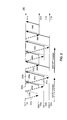
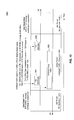
- a periodic polling scheme is implemented to allocate upstream time grants to ONUs as illustrated in FIG. 2 .
- the periodic polling scheme is illustrated in FIG. 2 with respect to example PON 100. However, this should not be used to limit the embodiments described herein.
- OLT 102 periodically sends GATE messages 202a, 202b, and 202c to ONUs 104a, 104b, and 104c, respectively.
- Each GATE message includes a unicast Logical Link Identifier (LLID) of the intended ONU, and indicates an upstream time grant, defined by an upstream transmission start time and an upstream transmission duration.
- the ONU transmits a data burst followed by a REPORT message in accordance with the upstream time grant.
- ONU 104a responds to GATE message 202a by transmitting a data burst 204a followed by a REPORT message 206a.
- ONU 104b responds to GATE message 202b by transmitting a data burst 204b followed by a REPORT message 206b, and so on.
- the REPORT message indicates to the OLT the amount of data (e.g., bytes) that remain to be sent at the ONU, and is typically sent regardless of whether the ONU has any remaining data. If the ONU has remaining data to send, the subsequent GATE message sent to the ONU specifies an upstream time grant large enough (up to a maximum upstream time grant size) to accommodate the transmission of the remaining data from the ONU to the OLT. Otherwise, the subsequent GATE message specifies an upstream time grant that is only large enough to accommodate the transmission of another REPORT message from the ONU to the OLT.
- data e.g., bytes
- GATE messages are constantly transmitted in the downstream and corresponding REPORT messages are constantly transmitted in the upstream even when an ONU has no upstream data traffic (idle ONU). While the downstream/upstream transmission times of GATE/REPORT messages are relatively short, the transmissions can consume a considerable amount of bandwidth and power, particularly when multiple ONUs are present. This is also because upstream REPORT messages have a significant burst overhead as illustrated in FIG. 3 described below.
- FIG. 3 illustrates an example upstream burst to transmit a REPORT message by an ONU.
- the upstream burst includes a laser on time T ON 302, an Automatic Gain Control (AGC) time T AGC 304, a Clock and Data Recovery (CDR) time T CDR 306, a REPORT message transmission time 308, and a laser off time T OFF 310.
- AGC Automatic Gain Control
- CDR Clock and Data Recovery
- the ONU transmits a synchronization preamble which allows the OLT to properly receive the REPORT message subsequently transmitted during time 208.
- AGC Automatic Gain Control
- CDR Clock and Data Recovery
- the transmission time of the synchronization preamble can be larger than transmission time 308 of the REPORT message itself, resulting in a very large overhead (in terms of bandwidth and power) associated with the sending of REPORT messages in the upstream.
- the OLT incurs significant cost in terms of processing power to receive and process the REPORT messages.
- Embodiments provide systems and methods for a probabilistic reporting mode, where an ONU sends a REPORT message only when it has data to transmit. The absence of a REPORT message from an ONU is treated by the OLT as indicating absence of data to transmit at the ONU.
- embodiments include systems and methods for an unsolicited burst mode, where an ONU can be configured to transmit data in the upstream unsolicited, i.e., without being in response to a dedicated GATE message or a shared GATE message.
- the unsolicited burst mode includes mechanisms to ensure that no data is lost due to potential collisions between ONUs.
- the OLT suspends periodic polling for one or more or all ONUs in the PON. Instead, the OLT generates and transmits, periodically, a shared GATE message in the downstream. Unlike the GATE message used in periodic polling, which is a unicast message directed to a single particular LLID and which is read only by the ONU associated with the particular LLID, the shared GATE message includes a broadcast LLID and, as such, is read by all ONUs in the PON.
- the shared GATE message specifies a shared upstream time grant (upstream transmission time, upstream transmission duration) during which any ONU that receives the shared GATE message can respond with a REPORT message.
- a shared upstream time grant upstream transmission time, upstream transmission duration
- This can include, for example, an ONU that was previously idle and that now has data to transmit.
- the ONU can transmit a REPORT message in the shared upstream time grant without needing a dedicated GATE message that schedules the REPORT message.
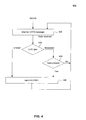
- FIG. 4 illustrates an example process 400 according to an embodiment.
- Example process 400 is provided for the purpose of illustration only and is not limiting of embodiments.
- Example process 400 can be performed by an ONU, such as ONU 104a, 104b, or 104c, in a PON implementing a probabilistic reporting mode. It is noted that the OLT may continue to perform periodic polling for some ONUs at the same time that probabilistic reporting is implemented.
- Example process 400 corresponds to a process performed by an ONU in such a PON.
- process 400 begins in step 402 which includes waiting to receive a GATE message.
- step 404 includes determining whether the GATE message includes a unicast or a broadcast LLID type. If the GATE message includes a unicast LLID (and the unicast LLID is associated with the ONU), process 400 proceeds to step 406 which includes sending a REPORT message in response to the GATE message. This corresponds to the case in which the GATE message is due to periodic polling by the OLT. The ONU sends the REPORT message regardless of whether it has data to transmit in the upstream.
- step 408 includes determining whether data is present for upstream transmission to the OLT. If not (e.g., the ONU is idle), process 400 returns to step 402. Otherwise, if data is present, process 400 proceeds to step 406, which includes sending a REPORT message in response to the GATE message. This corresponds to when the GATE message is a shared GATE message according to the probabilistic reporting mode. The REPORT message is sent in the shared upstream time grant specified by the shared GATE message.
- idle ONUs do not send any REPORT messages if the OLT suspends periodic polling for them. As such, significant polling and reporting resources can be saved. And in the case that the ONUs are generally idle, the probability of collision between REPORT messages in the shared upstream time grant is very low. However, a busy ONU (an ONU with queued data) will respond to every shared GATE message, even if the OLT is already aware of its queue status and intends to issue it a dedicated grant to transmit its data. This can be inefficient especially when multiple busy ONUs are present, such that the probability of REPORT collision increases.
- the OLT can limit probabilistic reporting to subsets of ONUs as desired. For example, the OLT can configure only ONUs that are idle or that have low upstream traffic in probabilistic reporting mode. As such, only such configured ONUs will respond to shared GATE messages.
- the ONU maintains a probabilistic reporting mode state, which can be set to true/false to enable/disable the probabilistic reporting mode at the ONU.
- the OLT uses a field of the GATE message to signal a reporting flag to the ONU. When the reporting flag is set (e.g., 1), the ONU operates in periodic polling mode and disables the probabilistic reporting mode if previously enabled. Otherwise, when the reporting flag is not set, the ONU operates in probabilistic reporting mode and enables the probabilistic reporting mode if previously disabled.
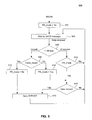
- FIG. 5 illustrates an example process 500 according to an embodiment.
- Example process 500 is provided for the purpose of illustration only and is not limiting of embodiments.
- Example process 500 can be performed by an ONU, such as ONU 104a, 104b, or 104c, in a PON implementing probabilistic reporting as described above.
- process 500 begins in step 502, which includes setting the probabilistic reporting mode state (PR_mode) of the ONU to false (No) to disable the probabilistic reporting mode at the ONU. Subsequently, process 500 proceeds to step 504, which includes waiting to receive a GATE message from an OLT.
- PR_mode probabilistic reporting mode state
- step 506 includes determining whether the GATE message includes a unicast or a broadcast LLID type.
- shared GATE messages can have a multicast LLID type, instead of or in addition to broadcast LLID, and thus step 506 includes determining whether the GATE message is unicast versus broadcast or multicast.
- step 506 further includes using the unicast or broadcast GATE message to maintain its MPCP (Multipoint Control Protocol) clock synchronization.
- MPCP Multipoint Control Protocol
- step 508 includes determining whether a reporting flag of the GATE message is set.
- the reporting flag is signaled in the Force_report field of the GATE message.
- the ONU is required to send a REPORT message in the corresponding grant.
- step 512 which includes setting the PR_mode of the ONU to false to disable the probabilistic reporting mode at the ONU if the PR mode is enabled.
- step 516 which includes transmitting a REPORT message to the OLT in response to the GATE message, before returning to step 504. It is noted that in this case the ONU transmits the REPORT message regardless of whether it has data available for upstream transmission to the OLT.
- step 514 which includes setting the PR_mode of the ONU to true to enable the probabilistic reporting mode at the ONU if the PR mode is disabled. Then, process 500 proceeds to step 518, which includes determining whether data is available for upstream transmission at the ONU. If yes, process 500 proceeds to step 516, which includes sending a REPORT message in response to the GATE message, before returning to step 504. Otherwise, process 500 returns to step 504.
- step 510 includes determining whether the probabilistic reporting mode of the ONU is enabled or disabled by checking the PR_mode state. If the probabilistic reporting mode is disabled (PR_mode false), process 500 returns to step 504. Otherwise, process 500 proceeds to step 518, where the ONU determines if it has data available for upstream transmission as described above.
- an idle ONU operating in probabilistic reporting mode will not transmit any REPORT messages to the OLT.
- the ONU can be further configured to periodically transmit a REPORT message.
- the REPORT message can be transmitted at a very low rate only as necessary for the purpose of the MPCP keep-alive mechanism.
- the OLT can detect collisions between REPORT messages transmitted by different ONUs in the same upstream window allocated by a shared GATE message. For example, a collision can result in corrupted REPORT messages at the OLT.
- the OLT can switch some of the ONUs to periodic polling mode to allow them to transmit their queued data in the upstream. Similarly, if collisions are low, the OLT can configure more ONUs for probabilistic reporting.
- the ONU sets (enables/disables) its probabilistic reporting mode in response to a unicast GATE message transmitted by the OLT.
- the OLT controls the ONU's configuration in probabilistic reporting mode.
- the ONU can set its probabilistic reporting mode independently of the OLT. For example, the ONU can examine its own upstream transmission queue and set its probabilistic reporting mode accordingly. The ONU can then stop responding to unicast GATE messages from the OLT to signal to the OLT that it entered probabilistic reporting mode, and the OLT can suspend periodic polling to the ONU in response.
- the ONU can set its probabilistic reporting mode based on a time of day or based on current traffic type.
- example processes 400 and 500 can be implemented using multicast GATE messages for enabling probabilistic reporting in the PON.
- multicast GATE messages can be configured to be received by only a subset of the ONUs in the PON, where the subset of the ONUs is associated with the multicast LLID of the GATE message.
- using multicast shared GATE messages allows the breaking of the ONU pool in a PON into several groups, with each group responding only to its respective multicast shared GATE message.
- FIG. 6 shows an example PON 600, comprising an OLT 102 and a plurality of ONUs 104a-e.
- ONUs 104a, 104b, and 104d are assigned a first multicast LLID to form a first group, and ONUs 104c and 104e are assigned a second multicast LLID to form a second group.
- an ONU can belong to one or more groups according to embodiments.
- OLT 102 periodically transmits GATE messages with the first multicast LLID as well as GATE messages with the second multicast LLID.
- GATE messages with the first multicast LLID can be responded to by ONUs 104a, 104b, and 104d belonging to the first group (when their respective probabilistic reporting modes are enabled), and GATE messages with the second multicast LLID can be responded to by ONUs 104c and 104e belonging to the second group (when their respective probabilistic reporting modes are enabled).
- the two types of GATE messages are transmitted at the same rate. In another embodiment, the two types of GATE messages can be transmitted at different rates.
- the first group may correspond to a first class of service (e.g., video), and the second group may correspond to a second class of service (e.g., data).
- GATE messages with the first multicast LLID can be issued at a higher rate than GATE messages with the second multicast LLID.
- multicast shared GATE messages By reducing the number of ONUs that can respond to a given shared GATE message, the probability of collisions in the PON is reduced.
- Another advantage of using multicast shared GATE messages is that a multicast GATE message appears to a legacy ONU like a regular dedicated GATE message intended for another ONU. The legacy ONU would thus simply ignore the message. In contrast, the legacy ONU can understand broadcast LLIDs, and thus would read a broadcast shared GATE message without the ability to process it properly.
- multicast shared GATE messages can be used to break the probabilistic reporting ONU pool based on distance to the OLT, allowing to reduce the upstream window that needs to be reserved in response to a shared GATE message. This is illustrated in the description below with reference to FIGs. 7 and 8 .
- FIG. 7 is an example 700 that illustrates an upstream window 710 reserved in response to a shared GATE message 708.
- the PON includes an OLT 702, a near ONU 704, and a far ONU 706.
- the PON can also include other ONUs not shown in FIG. 7 .
- ONU 704 is assumed to be closest in distance to OLT 702 from among available ONUs
- ONU 706 is assumed to be farthest in distance from OLT 702 from among available ONUs.
- ONUs 704 and 706 correspond to the ONU pair with the maximum round trip time (RTT) difference among all available ONUs.
- RTT round trip time
- OLT 102 transmits shared GATE message 708 to both ONU 704 and ONU 706.
- the shared GATE message 708 can be broadcast or multicast. Being closer to OLT 702, ONU 704 receives GATE message 708 before ONU 706. If ONU 704 has data to transmit, ONU 704 will transmit a REPORT message in response to GATE message 708. The REPORT message from ONU 704 will be received by OLT 702 after a minimum RTT 712 (corresponding to the RTT between OLT 702 and ONU 704) from the transmission of GATE message 708.
- ONU 706 will transmit a REPORT message, which will be received by OLT 702 after a maximum RTT 714 (corresponding to the RTT between OLT 702 and ONU 706) from the transmission of GATE message 708.
- allocated window 710 must account for the maximum RTT difference in the PON. It is noted that this example assumes that ONU 704 and 706 begin transmission of their respective REPORT messages at the same value of their local MPCP clocks, such that the REPORT messages arrive at different times due to different propagation delays.
- ONU 704 and ONU 706 may not always have data to transmit in response to a GATE message. For example, in some cases, only one ONU may have data to transmit in response to the GATE message. Yet, this approach would still allocate a very large window to accommodate the case that both ONUs 704 and 706 transmit in response to the GATE message.
- ONUs in the PON are divided into multiple groups based on distance from the OLT, and a multicast LLID is assigned to each group.
- the OLT transmits separate multicast shared GATE messages for each group.
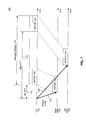
- FIG. 8 is an example 800 that illustrates this embodiment with respect to an example PON having 8 ONUs (ONU #1, ONU #2, ..., ONU #8).
- the OLT creates three groups based on distance from the OLT, where each group includes ONUs that are of similar distance (RTT) from the OLT. For example, a first group includes ONUs #3, #6, and #8, a second group includes ONUs #2 and #5, and a third groups includes ONUs # 1, #4, and #7.
- the OLT issues separate multicast shared GATE messages 802, 804, and 806 to the first group, second group, and third group respectively.
- the multicast shared GATE message is received at substantially the same time by the ONUs in the group. Assuming that the ONUs all transmit at the same value of their respective local MPCP clocks (assuming all have data to transmit), their respective transmissions will be received densely together (within a short window) at the OLT as shown in FIG 8 . More specifically, the window that must be reserved for transmission by a group is equal to the REPORT timeslot size plus the maximum RTT difference of the group, which is a small value because the ONUs have similar RTT from the OLT.
- the OLT can configure multicast shared GATE messages 802, 804, and 806 (e.g., by setting their respective upstream transmission times) so that each group of ONUs responds in a separate window. The OLT would thus reserve a separate upstream window for each group.
- the OLT can configure multicast shared GATE messages 802, 804, and 806 so that one or more of or all ONU groups respond within the same reserved window. For example, as shown in FIG. 8 , GATE messages 802, 804, and 806 can be configured such that all ONUs respond within a reserve upstream window 808.
- the OLT can transmit a shared GATE message to each ONU having a respective upstream transmission time configured to cause a REPORT message from the ONU to be received in a common window at the OLT.
- the common window can be just equal to the REPORT timeslot size. All ONUs configured for probabilistic reporting would thus attempt to report in the same common window.
- embodiments include systems and methods for an unsolicited burst mode, where an ONU can be configured to transmit data in the upstream unsolicited, i.e., without being in response to a dedicated GATE message or a shared GATE message.
- Example embodiments of the unsolicited burst mode are described below with reference to FIGs. 10-12 .
- the periodic polling mode used by current PON systems is first described with reference to FIG. 9 .
- the ONU cyclically polls available ONUs using dedicated GATE messages. Each ONU responds with a REPORT message to its respective dedicated GATE message.
- the OLT sends another dedicated GATE message to the ONU, allocating an upstream transmission slot to the ONU.
- the ONU can then send its data in the allocated upstream transmission slot, followed by a REPORT message as described above with reference to FIG. 2 .
- the periodic polling mode is wasteful when a vast majority of ONUs are idle.
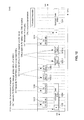
- FIG. 10 illustrates an example operation of a PON in the unsolicited burst mode according to an embodiment. This example is provided for the purpose of illustration only and is not limiting of embodiments.
- OLT operations described in FIG. 10 can be performed by an OLT, such as OLT 102 described above in FIG. 1 .
- ONU operations described in FIG. 10 can be performed by an ONU, such as ONUs 104 described above in FIG. 1 .
- the OLT suspends bandwidth control message exchange during idle periods of the PON. This includes suspending the downstream transmission of GATE messages, which results in no REPORT messages being transmitted in the upstream. The PON is thus operated in a low power state.
- the ONU When upstream data traffic becomes available at any ONU, the ONU begins transmission in the upstream in an unsolicited burst. For example, as shown in FIG. 10 , ONU i begins a transmission 1002 in an unsolicited manner as soon as it has data available.
- the OLT detects transmission 1002 from ONU i , the OLT broadcasts a TX REFRAIN message 1004 in the downstream.
- the TX REFRAIN message 1004 is received by all ONUs. All ONUs except ONU i remain quiet in response to TX REFRAIN message 1004 until a TX RESUME message 1006 is broadcast by the OLT when ONU i has terminated its transmission 1002.
- the unsolicited burst mode also includes a collision detection and management mechanism to mediate among multiple ONUs attempting simultaneous upstream transmission.
- the ONU is configured to prepend its transmission with an extended preamble.
- the extended preamble is configured to be long enough that the OLT can detect collisions between any two or more ONUs before any one ONU has begun transmitting data traffic.
- the extended preamble can be replaced with a transmission request message, to which the OLT can respond with a clear to send message.
- ONU j begins transmission after ONU i but before the OLT has transmitted a TX REFRAIN message.
- ONU i and ONU j begin by transmitting respective preambles 1102 and 1004 instead of data traffic.
- the OLT detects the collision of the preambles, the OLT broadcasts a TX SUSPEND message 1106 in the downstream, suspending any upstream transmission on the PON.
- Both ONU i and ONU j stop their respective transmissions in response to TX SUSPEND message 1106.
- each ONU with data available calculates a random back-off time and begins transmission after the random backoff time.
- ONU j begins transmission first in response to BACK-OFF and RETRY message 1108 and with no other contending ONU such that the OLT can detect extended preamble 1004 and can broadcast a TX REFRAIN message 1110 in the downstream.
- TX REFRAIN message 1110 reserves the upstream to ONU j , which can complete its transmission of preamble 1104 followed by a data burst 1112.
- ONU j After ONU j terminates its transmission, the OLT broadcasts a TX RESUME message 1114, which re-opens the upstream to all ONUs. ONU i can then capture the upstream as shown in FIG. 11 to transmit its data in the same manner described above with respect to FIG. 10 .
- the unsolicited burst mode can also include a pre-emption mechanism which can be used to protect time-sensitive traffic, enforce Service Level Agreements (SLAs) and Quality of Service (QoS) requirements, improve efficiency, and/or ensure fairness between ONUs.
- SLAs Service Level Agreements
- QoS Quality of Service
- FIG. 12 shows an example of the unsolicited burst mode where the pre-emption mechanism is used for QoS enforcement.
- the example begins with an ONU i beginning an upstream transmission 1204 of a large file, for example.
- the OLT detects a preamble 1202 preceding transmission 1204 and broadcasts a TX REFRAIN message 1206, reserving the upstream to ONU i .
- the OLT sends a TX SUSPEND message 1208 after a predetermined duration of continuous upstream transmission by ONU i .
- the ONU i stops transmitting in response to the TX SUSPEND message 1208.
- the OLT then performs a period of periodic polling of the other ONUs. For example, as shown in FIG. 12 , the OLT may send dedicated GATE messages 1210.1-1210.n to the ONUs requesting queue status. The ONUs respond with respective REPORT messages 1212.1-1212.n to the GATE messages. In another embodiment, some of the ONUs may be configured in probabilistic reporting mode, and the OLT may send shared GATE messages to those ONUs. If any of the ONUs has data to transmit, the OLT can send a subsequent GATE message to the ONU allocating an upstream transmission slot and the ONU can transmit its data in the allocated upstream transmission slot.
- the OLT can send a TX RESUME message and can monitor for upstream collisions, indicating the presence of upstream traffic at more than one ONU. If collisions are detected, the OLT can broadcast a TX SUSPEND message, and then poll the ONUs.
- the OLT sends a TX RESUME message 1214, which allows ONU i to resume its transmission 1204.
- ONU i may stop transmission at a packet boundary or at a byte or n-byte boundary.
- probabilistic reporting, unsolicited burst, and/or periodic polling modes can be used together in a single PON, where a first set of ONUs can be configured for probabilistic reporting, a second set of ONUs can be configured for unsolicited burst, and/or a third set of ONUs can operate according to periodic polling.
- the configuration is applied on an LLID basis, where multiple LLIDs associated with the same ONU can each be configured for a respective mode independent of other LLIDs. Configuration can be performed at the control of the OLT or by the ONU independent of the OLT. In the following, a few example configuration scenarios are described with reference to example PON 100 of FIG. 1 .
- example configuration scenarios are provided for the purpose of illustration only and are not limiting of embodiments.
- the example scenarios describe configurations being performed at the control of the OLT.
- the same configurations can be implemented by the ONU independent of control by the OLT.
- each of these configurations can be applied on an ONU basis or on an LLID basis.
- OLT 102 can selectively configure any one of ONUs 104a, 104b, and 104c into probabilistic reporting mode, unsolicited burst mode, or periodic polling mode based on its respective level of upstream activity.
- processor circuitry 106 of OLT 102 can be configured to determine an upstream activity level of ONU 104a, and to transmit a unicast GATE message to ONU 104a designed to set the reporting mode of ONU 104a in response to the determined upstream activity level of ONU 104.
- the unicast GATE message can be configured to set the reporting mode of the ONU 104a to the probabilistic reporting or the unsolicited burst mode when the upstream activity level of ONU 104a is below a threshold, and to set the reporting mode of ONU 104a to the periodic polling mode when the upstream activity level of ONU 104a is above the threshold.
- processor circuitry 106 can determine whether ONU 104a reported no upstream data available in the last N (e.g., 10) REPORT messages and can determine whether the upstream activity level is above or below the threshold accordingly.
- the upstream activity level of the ONU 104a corresponds to a first LLID of a plurality of LLIDs associated with the ONU 104a, and as such the first unicast GATE message configures the reporting mode of ONU 104a for only the first LLID.
- OLT 102 can configure ONU 104b and/or ONU 104c based on their respective levels of upstream activity. For example, OLT 102 may determine that ONU 104b has been idle and can configure it for probabilistic reporting mode, and that ONU 104c has been busy and can configure it for periodic polling mode.
- Other possible configurations according to embodiments should be apparent to a person of skill in the art based on the teachings herein.
- OLT 102 can selectively configure any one of ONUs 104a, 104b, and 104c into probabilistic reporting mode, unsolicited burst mode, or periodic polling mode based on a priority associated with its upstream traffic.
- processor circuitry 106 of OLT 102 can be configured to determine a priority of upstream traffic of ONU 104b, and to transmit a unicast GATE message to ONU 104b designed to set the reporting mode of ONU 104b in response to the priority of upstream traffic of ONU 104b.
- upstream data traffic can be categorized into a high priority, a medium priority, and a low priority. This categorization can be based on traffic type (e.g., video, voice, data).
- ONU 104b is configured for periodic polling when its upstream traffic is of high priority, probabilistic reporting when its upstream traffic is of medium priority, and unsolicited burst when its upstream traffic is of low priority.
- Other possible configurations according to embodiments should be apparent to a person of skill in the art based on the teachings herein.
- OLT 102 can selectively configure any one of ONUs 104a, 104b, and 104c into probabilistic reporting mode, unsolicited burst mode, or periodic polling mode based on a time of day.
- processor circuitry 106 of OLT 102 can be configured to determine the time of day, and to transmit a unicast GATE message to ONU 104c designed to set the reporting mode of ONU 104c in response to the time of day.
- OLT 102 may configure ONU 104c for probabilistic reporting or probabilistic reporting beginning at midnight and then re-configure it for periodic polling at 7 AM.
- Other possible configurations according to embodiments should be apparent to a person of skill in the art based on the teachings herein.
Landscapes
- Engineering & Computer Science (AREA)
- Computer Networks & Wireless Communication (AREA)
- Physics & Mathematics (AREA)
- Electromagnetism (AREA)
- Signal Processing (AREA)
- Computing Systems (AREA)
- Small-Scale Networks (AREA)
Applications Claiming Priority (2)
| Application Number | Priority Date | Filing Date | Title |
|---|---|---|---|
| US201461981529P | 2014-04-18 | 2014-04-18 | |
| US14/290,468 US9432120B2 (en) | 2014-04-18 | 2014-05-29 | Probabilistic bandwidth control in a passive optical network (PON) |
Publications (3)
| Publication Number | Publication Date |
|---|---|
| EP2953375A2 true EP2953375A2 (fr) | 2015-12-09 |
| EP2953375A3 EP2953375A3 (fr) | 2016-03-02 |
| EP2953375B1 EP2953375B1 (fr) | 2017-11-22 |
Family
ID=54322903
Family Applications (1)
| Application Number | Title | Priority Date | Filing Date |
|---|---|---|---|
| EP15001017.1A Active EP2953375B1 (fr) | 2014-04-18 | 2015-04-09 | Commande de largeur de bande probabiliste dans un réseau optique passif (pon) |
Country Status (4)
| Country | Link |
|---|---|
| US (1) | US9432120B2 (fr) |
| EP (1) | EP2953375B1 (fr) |
| CN (1) | CN105025400B (fr) |
| HK (1) | HK1215113A1 (fr) |
Families Citing this family (16)
| Publication number | Priority date | Publication date | Assignee | Title |
|---|---|---|---|---|
| KR102433853B1 (ko) * | 2016-03-28 | 2022-08-19 | 한국전자통신연구원 | 수동형 광 네트워크 시스템에서의 콰이어트 윈도우 설정 방법 및 그 장치 |
| CN105897948A (zh) * | 2016-04-11 | 2016-08-24 | 上海斐讯数据通信技术有限公司 | 一种基于光网络终端的光网络单元流配置创建方法及装置 |
| WO2018120179A1 (fr) * | 2016-12-30 | 2018-07-05 | 华为技术有限公司 | Procédé, appareil et système de gestion d'unité de réseau optique (onu) |
| US10382136B2 (en) * | 2017-04-26 | 2019-08-13 | Futurewei Technologies, Inc. | Envelope header design in passive optical networks |
| CN107124672B (zh) * | 2017-05-05 | 2019-08-27 | 烽火通信科技股份有限公司 | TWDM-PON系统中ONU高效管理profile消息的方法 |
| US10412472B2 (en) * | 2017-07-10 | 2019-09-10 | Maged E. Beshai | Contiguous network |
| US10587484B2 (en) | 2017-09-12 | 2020-03-10 | Cisco Technology, Inc. | Anomaly detection and reporting in a network assurance appliance |
| US11470569B2 (en) * | 2017-11-21 | 2022-10-11 | Qualcomm Incorporated | Uplink transmissions without uplink timing control and measurement |
| CN108768746B (zh) * | 2018-06-19 | 2021-10-01 | 上海市共进通信技术有限公司 | 10g光网络系统中ont端的自适应共享配置方法 |
| US10757488B2 (en) * | 2018-08-30 | 2020-08-25 | Maged E. Beshai | Fused three-stage networks forming a global contiguous network |
| US11206467B2 (en) * | 2019-09-04 | 2021-12-21 | Maged E. Beshai | Global contiguous web of fused three-stage networks |
| CN115462009A (zh) * | 2020-05-08 | 2022-12-09 | 昕诺飞控股有限公司 | 光学无线通信系统的功率节省 |
| WO2022014018A1 (fr) * | 2020-07-16 | 2022-01-20 | 日本電信電話株式会社 | Système de commande de bande, procédé de commande de bande, programme de commande de bande et terminal de ligne optique |
| US11616735B2 (en) * | 2020-08-23 | 2023-03-28 | Maged E. Beshai | Deep fusing of clos star networks to form a global contiguous web |
| CN112261513A (zh) * | 2020-09-18 | 2021-01-22 | 芯河半导体科技(无锡)有限公司 | 一种ONU高吞吐量的report上报方式 |
| US12273228B2 (en) * | 2021-12-18 | 2025-04-08 | Maged E. Beshai | Deep fusing of clos star networks to form a global contiguous web |
Family Cites Families (16)
| Publication number | Priority date | Publication date | Assignee | Title |
|---|---|---|---|---|
| US7477845B2 (en) * | 2003-08-18 | 2009-01-13 | Teknovus, Inc. | Method and apparatus for reducing data burst overhead in an ethernet passive optical network |
| US7545813B2 (en) * | 2003-08-26 | 2009-06-09 | Teknovus, Inc. | Method and apparatus for registering multiple remote nodes in an ethernet passive optical network |
| WO2007135858A1 (fr) | 2006-05-24 | 2007-11-29 | Mitsubishi Electric Corporation | Système de communication optique, dispositif côté station et dispositif côté abonné |
| US7778543B2 (en) * | 2006-05-26 | 2010-08-17 | Alcatel Lucent | Passive optical network rogue optical network unit diagnostics |
| KR100954686B1 (ko) * | 2008-01-25 | 2010-04-27 | 성균관대학교산학협력단 | 이더넷 수동 광 네트워크에서의 폴링 시스템 및 방법 |
| PT2117167E (pt) * | 2008-05-05 | 2012-06-19 | Nokia Siemens Networks Oy | Processo de descoberta a dois e três tempos para 10g-epon |
| US8442398B2 (en) * | 2008-10-21 | 2013-05-14 | Broadcom Corporation | Performance monitoring in passive optical networks |
| US8498534B2 (en) | 2008-11-05 | 2013-07-30 | Broadcom Corporation | Epon with power-saving features |
| US8335235B2 (en) * | 2009-03-20 | 2012-12-18 | Broadcom Corporation | Methods and apparatus for extending MAC control message in EPON |
| US8541245B2 (en) * | 2009-06-12 | 2013-09-24 | Beckman Coulter, Inc. | Method for assessing oocyte maturation |
| CN102056033B (zh) * | 2009-11-04 | 2014-04-09 | 中兴通讯股份有限公司 | 一种管理上行突发开销参数的方法及无源光网络系统 |
| US8548327B2 (en) * | 2009-12-15 | 2013-10-01 | Broadcom Corporation | Dynamic management of polling rates in an ethernet passive optical network (EPON) |
| US8565605B2 (en) * | 2009-12-15 | 2013-10-22 | Broadcom Corporation | Burst mode to continuous mode converter |
| JP5463165B2 (ja) | 2010-02-26 | 2014-04-09 | 株式会社日立製作所 | 省電力化可能なponシステムにおける、onuのスリープ状態からの復旧方法 |
| KR101825688B1 (ko) * | 2010-12-23 | 2018-02-06 | 한국전자통신연구원 | 로그 onu를 검출하는 방법, olt 및 pon 시스템 |
| US9113237B2 (en) * | 2012-02-03 | 2015-08-18 | Broadcom Corporation | Systems and methods for ethernet passive optical network over coaxial (EPOC) power saving modes |
-
2014
- 2014-05-29 US US14/290,468 patent/US9432120B2/en active Active
-
2015
- 2015-04-09 EP EP15001017.1A patent/EP2953375B1/fr active Active
- 2015-04-20 CN CN201510189152.5A patent/CN105025400B/zh active Active
-
2016
- 2016-03-14 HK HK16102865.0A patent/HK1215113A1/zh unknown
Non-Patent Citations (1)
| Title |
|---|
| None |
Also Published As
| Publication number | Publication date |
|---|---|
| EP2953375A3 (fr) | 2016-03-02 |
| CN105025400B (zh) | 2019-05-14 |
| CN105025400A (zh) | 2015-11-04 |
| US9432120B2 (en) | 2016-08-30 |
| HK1215113A1 (zh) | 2016-08-12 |
| US20150304046A1 (en) | 2015-10-22 |
| EP2953375B1 (fr) | 2017-11-22 |
Similar Documents
| Publication | Publication Date | Title |
|---|---|---|
| EP2953375B1 (fr) | Commande de largeur de bande probabiliste dans un réseau optique passif (pon) | |
| US8548327B2 (en) | Dynamic management of polling rates in an ethernet passive optical network (EPON) | |
| KR101286011B1 (ko) | 통신 방법, 광통신 시스템, 이용자측 광회선 종단 장치, 국측 광회선 종단 장치 및 제어 장치 | |
| CA2295563C (fr) | Procede et appareil de controle de communications dans un reseau optique passif | |
| JP2022137102A (ja) | Olt、onu、ponシステム、及びponシステムにおける情報伝送方法 | |
| EP3550739B1 (fr) | Système de communication de données, terminal de ligne optique et unité de bande de base | |
| US20120166819A1 (en) | Power Management of Optical Access Networks | |
| KR102433853B1 (ko) | 수동형 광 네트워크 시스템에서의 콰이어트 윈도우 설정 방법 및 그 장치 | |
| AU2017260108A1 (en) | Systems and methods for performing optical line terminal (OLT) failover switches in optical networks | |
| JP5595783B2 (ja) | 予備系光加入者線端局装置(olt)による、タイプbの保護されているパッシブ光ネットワーク(pon)のアクセス制御のテイクオーバを準備するための方法、タイプbのパッシブ光ネットワーク(pon)を保護するための方法、及び保護されているタイプbのパッシブ光ネットワーク(pon) | |
| US7496295B2 (en) | Optical-inclusive dWDM local area network | |
| KR20150042630A (ko) | 슬립모드 onu 제어 기법 | |
| US11736840B2 (en) | Systems and methods of open contention-based grant allocations | |
| JPWO2010116411A1 (ja) | 局側通信装置、光通信システムおよびリソース割り当て方法 | |
| US9356700B2 (en) | EPON/EPOC time division duplex (TDD) mode | |
| CN118102144A (zh) | 数据传输方法、装置、系统、设备及存储介质 | |
| US20180359235A1 (en) | Transmission apparatus and communication method | |
| JP4019895B2 (ja) | 通信システムおよび子局装置 | |
| TW201351928A (zh) | 光傳送系統、局側光終端裝置以及通信迴路切換方法 | |
| JP2014165697A (ja) | 光通信システム及び帯域割当方法 | |
| JP6093282B2 (ja) | 光通信システム、通信制御方法及び局側光回線終端装置 | |
| JP2012257341A (ja) | 通信方法、光通信システム、利用者側光回線終端装置、局側光回線終端装置および制御装置 | |
| JP6306488B2 (ja) | 光通信システム及び帯域割当方法 | |
| JPWO2013108559A1 (ja) | 局側装置、省電力制御システム及び省電力制御方法 | |
| Khotimsky et al. | Contention-Based Operation in TDM-Type Passive Optical Networks |
Legal Events
| Date | Code | Title | Description |
|---|---|---|---|
| PUAI | Public reference made under article 153(3) epc to a published international application that has entered the european phase |
Free format text: ORIGINAL CODE: 0009012 |
|
| 17P | Request for examination filed |
Effective date: 20150409 |
|
| AK | Designated contracting states |
Kind code of ref document: A2 Designated state(s): AL AT BE BG CH CY CZ DE DK EE ES FI FR GB GR HR HU IE IS IT LI LT LU LV MC MK MT NL NO PL PT RO RS SE SI SK SM TR |
|
| AX | Request for extension of the european patent |
Extension state: BA ME |
|
| PUAL | Search report despatched |
Free format text: ORIGINAL CODE: 0009013 |
|
| AK | Designated contracting states |
Kind code of ref document: A3 Designated state(s): AL AT BE BG CH CY CZ DE DK EE ES FI FR GB GR HR HU IE IS IT LI LT LU LV MC MK MT NL NO PL PT RO RS SE SI SK SM TR |
|
| AX | Request for extension of the european patent |
Extension state: BA ME |
|
| RIC1 | Information provided on ipc code assigned before grant |
Ipc: H04Q 11/00 20060101AFI20160122BHEP |
|
| 17Q | First examination report despatched |
Effective date: 20160216 |
|
| RBV | Designated contracting states (corrected) |
Designated state(s): AL AT BE BG CH CY CZ DE DK EE ES FI FR GB GR HR HU IE IS IT LI LT LU LV MC MK MT NL NO PL PT RO RS SE SI SK SM TR |
|
| GRAP | Despatch of communication of intention to grant a patent |
Free format text: ORIGINAL CODE: EPIDOSNIGR1 |
|
| INTG | Intention to grant announced |
Effective date: 20170612 |
|
| RAP1 | Party data changed (applicant data changed or rights of an application transferred) |
Owner name: AVAGO TECHNOLOGIES GENERAL IP (SINGAPORE) PTE. LTD |
|
| GRAS | Grant fee paid |
Free format text: ORIGINAL CODE: EPIDOSNIGR3 |
|
| GRAA | (expected) grant |
Free format text: ORIGINAL CODE: 0009210 |
|
| AK | Designated contracting states |
Kind code of ref document: B1 Designated state(s): AL AT BE BG CH CY CZ DE DK EE ES FI FR GB GR HR HU IE IS IT LI LT LU LV MC MK MT NL NO PL PT RO RS SE SI SK SM TR |
|
| REG | Reference to a national code |
Ref country code: GB Ref legal event code: FG4D |
|
| REG | Reference to a national code |
Ref country code: CH Ref legal event code: EP |
|
| REG | Reference to a national code |
Ref country code: IE Ref legal event code: FG4D |
|
| REG | Reference to a national code |
Ref country code: AT Ref legal event code: REF Ref document number: 949421 Country of ref document: AT Kind code of ref document: T Effective date: 20171215 |
|
| REG | Reference to a national code |
Ref country code: DE Ref legal event code: R096 Ref document number: 602015006079 Country of ref document: DE |
|
| REG | Reference to a national code |
Ref country code: NL Ref legal event code: MP Effective date: 20171122 |
|
| REG | Reference to a national code |
Ref country code: LT Ref legal event code: MG4D |
|
| REG | Reference to a national code |
Ref country code: AT Ref legal event code: MK05 Ref document number: 949421 Country of ref document: AT Kind code of ref document: T Effective date: 20171122 |
|
| PG25 | Lapsed in a contracting state [announced via postgrant information from national office to epo] |
Ref country code: FI Free format text: LAPSE BECAUSE OF FAILURE TO SUBMIT A TRANSLATION OF THE DESCRIPTION OR TO PAY THE FEE WITHIN THE PRESCRIBED TIME-LIMIT Effective date: 20171122 Ref country code: SE Free format text: LAPSE BECAUSE OF FAILURE TO SUBMIT A TRANSLATION OF THE DESCRIPTION OR TO PAY THE FEE WITHIN THE PRESCRIBED TIME-LIMIT Effective date: 20171122 Ref country code: NO Free format text: LAPSE BECAUSE OF FAILURE TO SUBMIT A TRANSLATION OF THE DESCRIPTION OR TO PAY THE FEE WITHIN THE PRESCRIBED TIME-LIMIT Effective date: 20180222 Ref country code: LT Free format text: LAPSE BECAUSE OF FAILURE TO SUBMIT A TRANSLATION OF THE DESCRIPTION OR TO PAY THE FEE WITHIN THE PRESCRIBED TIME-LIMIT Effective date: 20171122 Ref country code: NL Free format text: LAPSE BECAUSE OF FAILURE TO SUBMIT A TRANSLATION OF THE DESCRIPTION OR TO PAY THE FEE WITHIN THE PRESCRIBED TIME-LIMIT Effective date: 20171122 Ref country code: ES Free format text: LAPSE BECAUSE OF FAILURE TO SUBMIT A TRANSLATION OF THE DESCRIPTION OR TO PAY THE FEE WITHIN THE PRESCRIBED TIME-LIMIT Effective date: 20171122 |
|
| PG25 | Lapsed in a contracting state [announced via postgrant information from national office to epo] |
Ref country code: LV Free format text: LAPSE BECAUSE OF FAILURE TO SUBMIT A TRANSLATION OF THE DESCRIPTION OR TO PAY THE FEE WITHIN THE PRESCRIBED TIME-LIMIT Effective date: 20171122 Ref country code: AT Free format text: LAPSE BECAUSE OF FAILURE TO SUBMIT A TRANSLATION OF THE DESCRIPTION OR TO PAY THE FEE WITHIN THE PRESCRIBED TIME-LIMIT Effective date: 20171122 Ref country code: BG Free format text: LAPSE BECAUSE OF FAILURE TO SUBMIT A TRANSLATION OF THE DESCRIPTION OR TO PAY THE FEE WITHIN THE PRESCRIBED TIME-LIMIT Effective date: 20180222 Ref country code: RS Free format text: LAPSE BECAUSE OF FAILURE TO SUBMIT A TRANSLATION OF THE DESCRIPTION OR TO PAY THE FEE WITHIN THE PRESCRIBED TIME-LIMIT Effective date: 20171122 Ref country code: GR Free format text: LAPSE BECAUSE OF FAILURE TO SUBMIT A TRANSLATION OF THE DESCRIPTION OR TO PAY THE FEE WITHIN THE PRESCRIBED TIME-LIMIT Effective date: 20180223 Ref country code: HR Free format text: LAPSE BECAUSE OF FAILURE TO SUBMIT A TRANSLATION OF THE DESCRIPTION OR TO PAY THE FEE WITHIN THE PRESCRIBED TIME-LIMIT Effective date: 20171122 |
|
| PG25 | Lapsed in a contracting state [announced via postgrant information from national office to epo] |
Ref country code: CY Free format text: LAPSE BECAUSE OF FAILURE TO SUBMIT A TRANSLATION OF THE DESCRIPTION OR TO PAY THE FEE WITHIN THE PRESCRIBED TIME-LIMIT Effective date: 20171122 Ref country code: CZ Free format text: LAPSE BECAUSE OF FAILURE TO SUBMIT A TRANSLATION OF THE DESCRIPTION OR TO PAY THE FEE WITHIN THE PRESCRIBED TIME-LIMIT Effective date: 20171122 Ref country code: SK Free format text: LAPSE BECAUSE OF FAILURE TO SUBMIT A TRANSLATION OF THE DESCRIPTION OR TO PAY THE FEE WITHIN THE PRESCRIBED TIME-LIMIT Effective date: 20171122 Ref country code: EE Free format text: LAPSE BECAUSE OF FAILURE TO SUBMIT A TRANSLATION OF THE DESCRIPTION OR TO PAY THE FEE WITHIN THE PRESCRIBED TIME-LIMIT Effective date: 20171122 Ref country code: DK Free format text: LAPSE BECAUSE OF FAILURE TO SUBMIT A TRANSLATION OF THE DESCRIPTION OR TO PAY THE FEE WITHIN THE PRESCRIBED TIME-LIMIT Effective date: 20171122 |
|
| REG | Reference to a national code |
Ref country code: DE Ref legal event code: R097 Ref document number: 602015006079 Country of ref document: DE |
|
| PG25 | Lapsed in a contracting state [announced via postgrant information from national office to epo] |
Ref country code: PL Free format text: LAPSE BECAUSE OF FAILURE TO SUBMIT A TRANSLATION OF THE DESCRIPTION OR TO PAY THE FEE WITHIN THE PRESCRIBED TIME-LIMIT Effective date: 20171122 Ref country code: RO Free format text: LAPSE BECAUSE OF FAILURE TO SUBMIT A TRANSLATION OF THE DESCRIPTION OR TO PAY THE FEE WITHIN THE PRESCRIBED TIME-LIMIT Effective date: 20171122 Ref country code: SM Free format text: LAPSE BECAUSE OF FAILURE TO SUBMIT A TRANSLATION OF THE DESCRIPTION OR TO PAY THE FEE WITHIN THE PRESCRIBED TIME-LIMIT Effective date: 20171122 Ref country code: IT Free format text: LAPSE BECAUSE OF FAILURE TO SUBMIT A TRANSLATION OF THE DESCRIPTION OR TO PAY THE FEE WITHIN THE PRESCRIBED TIME-LIMIT Effective date: 20171122 |
|
| PLBE | No opposition filed within time limit |
Free format text: ORIGINAL CODE: 0009261 |
|
| STAA | Information on the status of an ep patent application or granted ep patent |
Free format text: STATUS: NO OPPOSITION FILED WITHIN TIME LIMIT |
|
| REG | Reference to a national code |
Ref country code: DE Ref legal event code: R082 Ref document number: 602015006079 Country of ref document: DE Representative=s name: BOSCH JEHLE PATENTANWALTSGESELLSCHAFT MBH, DE Ref country code: DE Ref legal event code: R081 Ref document number: 602015006079 Country of ref document: DE Owner name: AVAGO TECHNOLOGIES INTERNATIONAL SALES PTE. LT, SG Free format text: FORMER OWNER: AVAGO TECHNOLOGIES GENERAL IP (SINGAPORE) PTE. LTD., SINGAPORE, SG |
|
| 26N | No opposition filed |
Effective date: 20180823 |
|
| PG25 | Lapsed in a contracting state [announced via postgrant information from national office to epo] |
Ref country code: SI Free format text: LAPSE BECAUSE OF FAILURE TO SUBMIT A TRANSLATION OF THE DESCRIPTION OR TO PAY THE FEE WITHIN THE PRESCRIBED TIME-LIMIT Effective date: 20171122 Ref country code: MC Free format text: LAPSE BECAUSE OF FAILURE TO SUBMIT A TRANSLATION OF THE DESCRIPTION OR TO PAY THE FEE WITHIN THE PRESCRIBED TIME-LIMIT Effective date: 20171122 |
|
| REG | Reference to a national code |
Ref country code: CH Ref legal event code: PL |
|
| REG | Reference to a national code |
Ref country code: BE Ref legal event code: MM Effective date: 20180430 |
|
| REG | Reference to a national code |
Ref country code: IE Ref legal event code: MM4A |
|
| PG25 | Lapsed in a contracting state [announced via postgrant information from national office to epo] |
Ref country code: LU Free format text: LAPSE BECAUSE OF NON-PAYMENT OF DUE FEES Effective date: 20180409 |
|
| PG25 | Lapsed in a contracting state [announced via postgrant information from national office to epo] |
Ref country code: LI Free format text: LAPSE BECAUSE OF NON-PAYMENT OF DUE FEES Effective date: 20180430 Ref country code: CH Free format text: LAPSE BECAUSE OF NON-PAYMENT OF DUE FEES Effective date: 20180430 Ref country code: BE Free format text: LAPSE BECAUSE OF NON-PAYMENT OF DUE FEES Effective date: 20180430 |
|
| PG25 | Lapsed in a contracting state [announced via postgrant information from national office to epo] |
Ref country code: IE Free format text: LAPSE BECAUSE OF NON-PAYMENT OF DUE FEES Effective date: 20180409 Ref country code: FR Free format text: LAPSE BECAUSE OF NON-PAYMENT OF DUE FEES Effective date: 20180430 |
|
| GBPC | Gb: european patent ceased through non-payment of renewal fee |
Effective date: 20190409 |
|
| PG25 | Lapsed in a contracting state [announced via postgrant information from national office to epo] |
Ref country code: MT Free format text: LAPSE BECAUSE OF NON-PAYMENT OF DUE FEES Effective date: 20180409 Ref country code: GB Free format text: LAPSE BECAUSE OF NON-PAYMENT OF DUE FEES Effective date: 20190409 |
|
| PG25 | Lapsed in a contracting state [announced via postgrant information from national office to epo] |
Ref country code: TR Free format text: LAPSE BECAUSE OF FAILURE TO SUBMIT A TRANSLATION OF THE DESCRIPTION OR TO PAY THE FEE WITHIN THE PRESCRIBED TIME-LIMIT Effective date: 20171122 |
|
| PG25 | Lapsed in a contracting state [announced via postgrant information from national office to epo] |
Ref country code: PT Free format text: LAPSE BECAUSE OF FAILURE TO SUBMIT A TRANSLATION OF THE DESCRIPTION OR TO PAY THE FEE WITHIN THE PRESCRIBED TIME-LIMIT Effective date: 20171122 |
|
| PG25 | Lapsed in a contracting state [announced via postgrant information from national office to epo] |
Ref country code: MK Free format text: LAPSE BECAUSE OF NON-PAYMENT OF DUE FEES Effective date: 20171122 Ref country code: HU Free format text: LAPSE BECAUSE OF FAILURE TO SUBMIT A TRANSLATION OF THE DESCRIPTION OR TO PAY THE FEE WITHIN THE PRESCRIBED TIME-LIMIT; INVALID AB INITIO Effective date: 20150409 |
|
| PG25 | Lapsed in a contracting state [announced via postgrant information from national office to epo] |
Ref country code: AL Free format text: LAPSE BECAUSE OF FAILURE TO SUBMIT A TRANSLATION OF THE DESCRIPTION OR TO PAY THE FEE WITHIN THE PRESCRIBED TIME-LIMIT Effective date: 20171122 Ref country code: IS Free format text: LAPSE BECAUSE OF FAILURE TO SUBMIT A TRANSLATION OF THE DESCRIPTION OR TO PAY THE FEE WITHIN THE PRESCRIBED TIME-LIMIT Effective date: 20180322 |
|
| PGFP | Annual fee paid to national office [announced via postgrant information from national office to epo] |
Ref country code: DE Payment date: 20260410 Year of fee payment: 12 |