EP2953524B1 - Systèmes et procédés pour la détection de maladie précoce et la surveillance de maladie en temps réel - Google Patents
Systèmes et procédés pour la détection de maladie précoce et la surveillance de maladie en temps réel Download PDFInfo
- Publication number
- EP2953524B1 EP2953524B1 EP14704880.5A EP14704880A EP2953524B1 EP 2953524 B1 EP2953524 B1 EP 2953524B1 EP 14704880 A EP14704880 A EP 14704880A EP 2953524 B1 EP2953524 B1 EP 2953524B1
- Authority
- EP
- European Patent Office
- Prior art keywords
- detector
- detector device
- sequencing
- cancer
- dna
- Prior art date
- Legal status (The legal status is an assumption and is not a legal conclusion. Google has not performed a legal analysis and makes no representation as to the accuracy of the status listed.)
- Not-in-force
Links
Images


Classifications
-
- A—HUMAN NECESSITIES
- A61—MEDICAL OR VETERINARY SCIENCE; HYGIENE
- A61B—DIAGNOSIS; SURGERY; IDENTIFICATION
- A61B5/00—Measuring for diagnostic purposes; Identification of persons
- A61B5/145—Measuring characteristics of blood in vivo, e.g. gas concentration or pH-value ; Measuring characteristics of body fluids or tissues, e.g. interstitial fluid or cerebral tissue
- A61B5/14546—Measuring characteristics of blood in vivo, e.g. gas concentration or pH-value ; Measuring characteristics of body fluids or tissues, e.g. interstitial fluid or cerebral tissue for measuring analytes not otherwise provided for, e.g. ions, cytochromes
-
- A—HUMAN NECESSITIES
- A61—MEDICAL OR VETERINARY SCIENCE; HYGIENE
- A61B—DIAGNOSIS; SURGERY; IDENTIFICATION
- A61B5/00—Measuring for diagnostic purposes; Identification of persons
- A61B5/0002—Remote monitoring of patients using telemetry, e.g. transmission of vital signals via a communication network
- A61B5/0031—Implanted circuitry
-
- A—HUMAN NECESSITIES
- A61—MEDICAL OR VETERINARY SCIENCE; HYGIENE
- A61B—DIAGNOSIS; SURGERY; IDENTIFICATION
- A61B5/00—Measuring for diagnostic purposes; Identification of persons
- A61B5/68—Arrangements of detecting, measuring or recording means, e.g. sensors, in relation to patient
- A61B5/6846—Arrangements of detecting, measuring or recording means, e.g. sensors, in relation to patient specially adapted to be brought in contact with an internal body part, i.e. invasive
- A61B5/6867—Arrangements of detecting, measuring or recording means, e.g. sensors, in relation to patient specially adapted to be brought in contact with an internal body part, i.e. invasive specially adapted to be attached or implanted in a specific body part
- A61B5/6876—Blood vessel
-
- Y—GENERAL TAGGING OF NEW TECHNOLOGICAL DEVELOPMENTS; GENERAL TAGGING OF CROSS-SECTIONAL TECHNOLOGIES SPANNING OVER SEVERAL SECTIONS OF THE IPC; TECHNICAL SUBJECTS COVERED BY FORMER USPC CROSS-REFERENCE ART COLLECTIONS [XRACs] AND DIGESTS
- Y02—TECHNOLOGIES OR APPLICATIONS FOR MITIGATION OR ADAPTATION AGAINST CLIMATE CHANGE
- Y02A—TECHNOLOGIES FOR ADAPTATION TO CLIMATE CHANGE
- Y02A90/00—Technologies having an indirect contribution to adaptation to climate change
- Y02A90/10—Information and communication technologies [ICT] supporting adaptation to climate change, e.g. for weather forecasting or climate simulation
Definitions
- the invention generally relates to the field of medical device detection systems for detecting biomolecules selected from DNA or RNA indicative of disease. More specifically, the invention relates to a personal wearable or implantable detection device for detecting circulating or excreted biomolecules selected from DNA or RNA that permit the early detection and post-diagnosis monitoring of disease such as cancer.
- early diagnosis relies on patient education to increase awareness of symptoms and screening requires a systematic testing in an otherwise asymptomatic population. Even with proper education of symptoms, by the time symptoms arise and disease is detected, it has advanced to such a state that therapies may be less effective than if the disease is detected at a pre-symptomatic early cellular stage. Current early detection and screening methods can still be seen as ad hoc blunt tools for early detection. Despite the arsenal of diagnostic tools available, lack of patient education, and infrequent testing due to cost or patient convenience is the reality facing early detection efforts. Even monitoring remission or disease progression in patients with a previous diagnosis presents obstacles to regular testing, and even more so for patients who are otherwise healthy.
- Vaccines also treat the condition, but they ideally need to act at such an early stage where the disease is at a localized cellular level to engage the immune system to destroy nascent tumor development before growth and metastasis.
- One object of the present invention is to provide a detector device to facilitate the detection of disease-specific (e.g., pathogen-specific or tumor-specific) markers, e.g., biomolecules selected from RNA or DNA in a subject, including a human.
- disease-specific e.g., pathogen-specific or tumor-specific
- devices for use with these methods such as highly sensitive on-body wearable, or in-body implanted devices which have the capacity to achieve real-time monitoring of the patient and detect changes in normal levels of biomolecule markers and presence of aberrant biomolecule markers of disease to permit early action with treatment while the disease is at nascent stages.
- Devices that permit the early detection of biomolecule markers selected from DNA or RNA that indicate the presence of a disease such as cancer, or are associated with the development of a disease.
- Advances in nanotechnology and miniaturization enable the production of a wearable or implantable device as part of a system for short term or long term monitoring of biomolecules that identify onset of a disease sooner than diagnostic screens that occur through routine physician visits.
- the frequency of occurrence of a biomolecule detected in a biological fluid in a closed system such as the circulation is used with the detector device herein as an indicator of disease and disease progression with and without treatment.
- the detector device is one of three units within a system : 1) a biomolecule detector, 2) a receiver-relay and 3) a processor.
- a detector device for detecting the presence of one or more biomolecule markers selected from DNA or RNA in a biological fluid in a subject comprising:
- the nanopores are biological, solid-state or hybrid pores that permit the detection and sequencing of nucleic acid to provide real-time DNA sequencing of nucleic acids in a biological fluid.
- the solid-state nanopores are made of synthetic materials such as silicon nitride or graphene.
- the detector comprises an array of nanopores for multiplex evaluation of biomolecules.
- the detector is implantable located at a surgically created arterio-venous fistula or shunt, between the arterial and venous systems.
- the detector includes an array of nanopores for multiplex detection of nucleic acid bases and linear nucleic acid sequencing.
- the detector is arranged in such a manner as to permit flow of a biological fluid through the nanopore array to permit detection and evaluation of the biomolecules without substantially affecting the flow of the biological fluid on its proper course.
- the array of nucleic acid base-detecting nanopores permits sequencing of nucleic acid present in the biological fluid to evaluate the identity of, and characteristics of the nucleic acid that indicates disease.
- a biological protective matrix layer covers the surface of the detector device.
- data transmission to the receiver-relay is continuous or periodic and can be controlled by receiving instruction signals from the receiver-relay.
- the device is implantable or wearable in a host.
- the device is implantable in a blood vessel or a blood vessel bypass graft.
- the device is in fluid communication with the lymphatic system.
- the device further comprises means for monitoring, and a feedback loop to control directly, and/or signal the patency of the feeding vessel/system and biological fluid flow to the device and resultant reliable access to biomolecules.
- biomolecule refers to RNA or DNA.
- biological fluid refers to fluids within, excreted by or secreted by living organisms.
- exemplary biological fluids include saliva, whole blood, plasma, serum, lymph, synovial fluid, peritoneal fluid, pleural fluid, urine, sputum, semen, vaginal lavage, bone marrow, cerebrospinal cord fluid and tears.
- biomolecule characteristics refers to physical and chemical characteristics of a biomolecule that allow one to distinguish between different biomolecules. Such features include nucleic acid sequence, secondary and tertiary structures, molecular weight, chemical structures and degree of structural branching.
- fluid communication refers to physical communication between a fluid and an object such that the fluid is in physical contact with, or flows through orifices of the object such that substantial surface area contact occurs between the fluid and the object.
- disease As used herein, the terms “disease,” “disorder” and “condition,” describe a pathological condition in an organism including any impairment of health or any condition of abnormal function resulting from cause or condition including, but not limited to, infections, acquired conditions, genetic conditions, and characterized by identifiable symptoms.
- cancer and “cancerous” refer to or describe the physiological condition in mammals that is typically characterized by unregulated cell growth.
- examples of cancer include, but are not limited to, melanoma, carcinoma, lymphoma, blastoma, sarcoma, and leukemia or lymphoid malignancies.
- cancers include squamous cell cancer (e.g., epithelial squamous cell cancer), lung cancer including small-cell lung cancer, non-small cell lung cancer, adenocarcinoma of the lung and squamous carcinoma of the lung, cancer of the peritoneum, hepatocellular cancer, gastric or stomach cancer including gastrointestinal cancer, pancreatic cancer, glioblastoma, cervical cancer, ovarian cancer, liver cancer, bladder cancer, hepatoma, breast cancer, colon cancer, rectal cancer, colorectal cancer, endometrial cancer or uterine carcinoma, salivary gland carcinoma, kidney or renal cancer, prostate cancer, vulval cancer, thyroid cancer, hepatic carcinoma, anal carcinoma, penile carcinoma, as well as head and neck cancer.
- lung cancer including small-cell lung cancer, non-small cell lung cancer, adenocarcinoma of the lung and squamous carcinoma of the lung, cancer of the peritoneum, hepatocellular cancer, gastric or stomach cancer
- hyperproliferative disease is defined as a disease that results from a hyperproliferation of cells.
- exemplary hyperproliferative diseases include, but are not limited to, cancer or autoimmune diseases.
- cancers such as the cancer is melanoma, non-small cell lung, small-cell lung, lung, hepatocarcinoma, retinoblastoma, astrocytoma, glioblastoma, gum, tongue, leukemia, neuroblastoma, head, neck, breast, pancreatic, prostate, renal, bone, testicular, ovarian, mesothelioma, cervical, gastrointestinal, lymphoma, brain, colon, sarcoma or bladder cancer.
- the cancer may include a tumor comprised of tumor cells.
- the hyperproliferative disease is rheumatoid arthritis, inflammatory bowel disease, osteoarthritis, leiomyomas, adenomas, lipomas, hemangiomas, fibromas, vascular occlusion, restenosis, atherosclerosis, pre-neoplastic lesions (such as adenomatous hyperplasia and prostatic intraepithelial neoplasia), carcinoma in situ, oral hairy leukoplakia, or psoriasis.
- Neoplasm or "neoplastic cells” refer to cells that multiply in an abnormal manner. Neoplasms can be classified as either benign, histoid, malignant, mixed multicentric, organoid or unicentric.
- tumor refers to a localized concentration, gathering or other organization (including but not limited to hyperproliferative cells located within a sheath (theca) or organ) of hyperproliferating (hyperproliferative) cells, including for example but not limited to neoplastic cells, whether malignant or benign, pre-cancerous and cancerous cells.
- variant refers to proteins or peptides and/or other agents and/or compounds that differ from a reference protein, peptide or other compound. Variants in this sense are described below and elsewhere in the present disclosure in greater detail.
- changes in the nucleic acid sequence of the variant may be silent, e.g., they may not alter the amino acids encoded by the nucleic acid sequence. Where alterations are limited to silent changes of this type a variant will encode a peptide with the same amino acid sequence as the reference peptide. Changes in the nucleic acid sequence of the variant may alter the amino acid sequence of a peptide encoded by the reference nucleic acid sequence.
- nucleic acid changes may result in amino acid substitutions, additions, deletions, fusions and truncations in the peptide encoded by the reference sequence, as discussed below.
- differences in amino acid sequences are limited so that the sequences of the reference and the variant are closely similar overall and, in many regions, identical.
- a variant and reference peptide may differ in amino acid sequence by one or more substitutions, additions, deletions, fusions and truncations, which may be present in any combination.
- a variant may also be a fragment of a peptide of the invention that differs from a reference peptide sequence by being shorter than the reference sequence, such as by a terminal or internal deletion.
- Another variant of a peptide of the invention also includes a peptide which retains essentially the same function or activity as such peptide.
- systemic and “systemically” refer to contact with at least one system associated with the whole body, such as but not limited to the circulatory system, immune system, and lymphatic system, rather than only to a localized part of the body, such as but not limited to within a tumor.
- patient includes humans and or non-human animals, including mammals.
- Mammals include primates, such as but not limited to humans, chimpanzees, gorillas and monkeys; domesticated animals, such as dogs, horses, cats, pigs, goats, cows; and rodents such as mice, rats, hamsters and gerbils.
- the devices described herein are useful for the detection and identification of biomolecule markers, also referred to as analytes, selected from DNA or RNA that are known to be associated with disease.
- the target marker is present in a biological fluid within or excreted or secreted by a living organism such as blood, blood plasma, serum, sweat or urine.
- a biological fluid within or excreted or secreted by a living organism such as blood, blood plasma, serum, sweat or urine.
- targets may be characteristic of particular cells, while other targets may be associated with a particular disease or condition.
- targets that may be detected and analyzed using the methods disclosed herein may include, but are not limited to, prognostic targets, hormone or hormone receptor targets, lymphoid targets, tumor targets, cell cycle associated targets, neural tissue and tumor targets, or cluster differentiation targets.
- markers are normally immobilized on cell surface, these markers may be detected in a biological fluid after cell lysis and before being sequestered by biological mechanisms for excretion.
- the target is present in a biological fluid for detection using the detector device described herein.
- the frequency of occurrence of a biomolecule detected in a biological fluid in a closed system such as the circulation is used with the detector device herein as an indicator of disease and disease progression with and without treatment.
- Sources of biomolecules include cells of the body and the corresponding transcriptomes, as well as cell-free nucleic acids.
- the transcriptome is the set of all RNA molecules in the population of cells and reflects the genes that are being actively expressed at a specific point in time.
- the cell population is the blood cell population
- the continuous interactions between blood cells and the entire body supports the use of detecting subtle changes occurring in association with injury or disease within the cells and tissues of the body.
- Blood may serve as an ideal source of biomarker targets for diagnostic/prognostic purposes. Different gene expression signatures exist in circulating blood cell for a number of disease states. ( Liew et al., J Lab Clin Med 147(3):126-32 (2006 )). Blood cells can act as sentinels of disease and that we could capitalize on this property of blood for the diagnosis/prognosis of disease (the "Sentinel Principle").
- Peripheral blood is an ideal surrogate tissue as it is readily obtainable, provides a large biosensor pool in the form of gene transcripts, and response to changes in the macro- and micro-environments is detectable as alterations in the levels of these gene transcripts. Changes in blood transcriptome can occur within two weeks of disease treatment ( WO 2013138497 ; Bloom et al., PLOS ONE, 7(10):1-13 (2012 ))
- cfNA Cell-free Nucleic Acids
- cfNA carries great potential in either complementing or superseding existing cancer tissue and blood biomarkers and screening for cfNA beings a viable tool in early detection and management of major cancers. Fractional concentrations of tumor-derived cfNA in plasma can be correlated with tumour size and surgical treatment.
- cfNA is released from tumors primarily due to necrotization, whereas the origin of non-tumourous cfNA is mostly apoptotic.
- One method to distinguish tumor cfNA from non-tumorous cfNA includes detecting specific somatic DNA mutations, previously localized in the primary tumor that can be identified in the cfNA. ( Benesova et al., Anal. Biochem. 433:227-234 (2013 ). cfNA yields are found in higher amounts in patients with malignant and benign tumours when compared to healthy subjects.
- a tumour that weighs 100 g which corresponds to 3 x 10 10 tumour cells, may yield up to 3.3% of tumour DNA may enter the blood every day (an average of 180 ng per ml cfDNA, compared to an average of 30 ng per ml cfDNA in healthy subjects).
- Measuring cfDNA to predict treatment response is particularly attractive, particularly, in stage IV cancer patients (where cfDNA is better correlated to tumor presence), where biopsies are not possible or repeat sampling of primary tumour and metastatic samples is not practical or ethical.
- the biomolecule detector or detection units described herein are sufficiently miniaturized to provide portable or implantable monitoring of biomolecules in a biological fluid of an individual.
- Detector units are preferably biocompatible, and hermetically sealed except for a portal to permit physical communication of a biological fluid containing a biomolecule to be detected.
- the detector units are designed to permit fluid contact and/or flow through of a biological fluid. If implanted, the detector unit may be configured (for example, is configured) to permit flow through of a biological fluid along the same trajectory it conventionally flows without substantial disruption in flow.
- the detector device includes means to detect biomolecules in a biological fluid within, excreted by, or secreted by a living organism.
- the means for detecting biomolecules is an array of nanopore units.
- the means for detecting biomolecules is sequencing-by-synthesis, using such methods as silicon chip ion sequencing.
- the means for detecting biomolecules is a lab-on-a-chip.
- the "lab-on-a-chip” technology integrates one or several laboratory functions on a single miniature device of only millimeters to a few square centimeters in size.
- Lab-on-a-chip technologies are complementary and useful since they also analyze extremely small fluid volumes down to less than pico liters.
- Lab-on-a-chip devices are a subset of microelectromechanical system (MEMS) devices that are often indicated by "Micro Total Analysis Systems” ( ⁇ TAS) as well and are closely related to, and overlap with, microfluidics which studies minute amounts of fluids.
- MEMS microelectromechanical system
- ⁇ TAS Micro Total Analysis Systems
- Other means or assays for detecting biomolecules that maybe suitably miniaturized for use in the devices described herein are contemplated for use in the detection unit.
- the detector units can include data storage means, power supply, transmitter/receiver for wireless signals, and a microprocessor.
- preliminary information regarding the biomolecule identity such as nucleotide sequence, molecular weight or binding properties is stored in memory of the detector and relayed to an external receiver-relay unit in close proximity to the detector. Examples of such functions are described in U.S. Patent 5,836,889 and U.S. patent publications 2004/0199222 and 2012/0123221 .
- the detector may optionally include a preliminary processor for screening raw data according to pre-set or modifiable settings, and packaging biomolecule information in data files for transmission for the receiver-relay.
- the detector may also include a receiver for receiving signals to modify the processing or data collection functions without having to remove an implanted device
- the detector is configured to permit the flow through of a biological fluid for evaluation.
- the detector includes means to capture biomolecules flowing through the detector for subsequent detection and identification.
- One such a configuration is a double lumen implant device as described in WO1993/05730 .
- Other such features of the device are contemplated that permit flow through of the biological fluid through the detection unit without substantially obstructing the regular flow of the biological fluid.
- the detector (101) is part of a blood vessel graft (102) similar to grafts used in blood vessel (103) bypass procedures ( FIG. 3 ).
- the detector is positioned in the arterial flow to measure biomolecules through the blood circulation.
- the detector is positioned in the venous flow to measure biomolecules through the blood circulation.
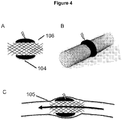
- the detector (104) may be positioned in a blood vessel (105) using a stent (106) similar to a stent used in endovascular procedures and applications ( FIG. 4 ).
- the detector/stent includes therapeutic drugs commonly used with stent applications.
- the detector/stent includes one or more therapeutic drug compounds to minimize trauma or inflammation of the blood vessel in which the detector/stent is implanted.
- VACNT Vertically Aligned Carbon Nanotubes
- Nanoporous VACNT can be integrated into patterned polymethyl siloxane (PDMS) channels using a strategy derived from standard PDMS channel fabrication and bonding techniques. This characteristic makes VACNT filtering system compatible with PDMS-microchannels solid-state nanopore networks (Tarun 2013)
- a position of Y-filters made of VACNT forest at the front end of the microfluidic system is employed to exclude large biomolecules and cells.
- the application of a very low voltage with the positive electrode on the inside of the system may be used to selectively translocate negatively charged biomolecules (including but not limited to nucleic acids) across a first interface for detection using biomarker detection means such as a sensing nanopore sequencing array.
- the detector unit may be positioned: on the surface of the skin - for example to detect analytes in sweat; on mucous membranes - for example to detect analytes in saliva or other mucous membrane secretions; in the gastro-intestinal tract - for example to detect analytes in the gastro-intestinal tract; in the bladder or elsewhere in the genito-urinary system - for example to detect analytes in the urine; elsewhere inside the body, or inside a blood vessel, to position the detector unit in fluid communication with a biological fluid to be evaluated for biomolecules.
- the detector unit may be positioned on the surface of the skin, inside the body, or inside a blood vessel to position the detector unit in fluid communication with a biological fluid to be evaluated for biomolecules.
- miniaturization of the detector device includes methods of microfluidic bioseparation such as MEMS and NEMS.
- MEMS microelectromechanical systems
- NEMS electromechanical systems
- Nanopore detection units are employed to detect biomolecules in biological fluids of an individual. Examples of nanopore detection units are described for example in Gu, L-Q, et al., Nature 398:686-690, 1999 ; Braha, O., Chem & Biol, 4:497-505, 1997 ; Bayley H et al., Nature 413:226-230, 2001 ; Shin, S-H, et al., Angew. Chem. Int. Ed. 2003, 41(19); 3707-3709 ; Guan X., et al., ChemBioChem 6:1875-1881, 2005 ; and Braha, O. et al., ChemPhysChem 6:889-892, 2005
- Nanopore detection arrays are described in US2011/0177498 ; US2011/0229877 ; US2012/0133354 ; WO2012/042226 ; WO2012/107778 , and have been used for nucleic acid sequencing as described in US2012/0058468 ; US2012/0064599 ; US2012/0322679 and WO2012/164270 .
- a single molecule of DNA can be sequenced directly using a nanopore, without the need for an intervening PCR amplification step or a chemical labelling step or the need for optical instrumentation to identify the chemical label.
- Commercially available nanopore nucleic acid sequencing units are developed by Oxford Nanopore (Oxford, United Kingdom).
- the GridIONTM system and miniaturised MinIONTM device are designed to provide novel qualities in molecular sensing such as real-time data streaming, improved simplicity, efficiency and scalability of workflows and direct analysis of the molecule of interest.
- an ionic current is passed through the nanopore by setting a voltage across this membrane. If an analyte passes through the pore or near its aperture, this event creates a characteristic disruption in current.
- this system can be used to distinguish between the four standard DNA bases G, A, T and C, and also modified bases.
- These nanopore arrays are useful for scientific applications specific for each analyte type; for example when sequencing DNA, the technology may be used for resequencing, de novo sequencing, and epigenetics.
- the Oxford Nanopore sequencing technologies such as the MinION are able to work on whole blood and other non-prepared fluid samples (suitably whole blood) as an analyte source fluid, readily facilitating placement on or in the host as disclosed herein.
- networks of nanopores may be developed for use in the detection devices described herein using a combined process that integrates membranes containing nanopores into microfluidic devices.
- This use of nanopore networks confers the advantage of decreasing noise and enabling the design of networks containing nanopores.
- the resulting nanopores can sense single DNA molecules at high bandwidths and with low noise due to reductions in membrane capacitance.
- Each step of the fabrication scheme is modular and can be independently adjusted to achieve specific functions.
- the assembly process is amenable to different nanopore fabrication schemes (TEM drilling, helium ion beam machining) and other materials such as graphene.
- the device architecture reduces capacitative noise and allows for exploiting the capabilities of low-noise amplifiers for nanopores.
- the present detector device uses nanopore detection units which are sufficiently miniaturized to be worn on the person or implanted within the individual such that the detection unit is in fluid communication with a biological fluid.
- the nanopore array permits DNA sequencing.
- "Strand sequencing” is a technique that passes intact DNA polymers through a protein nanopore, sequencing in real time as the DNA translocates the pore. (Oxford Nanopore Technologies, Oxford, UK) A single-stranded DNA polymer is passed through a protein nanopore, and individual DNA bases on the strand are identified in sequence as the DNA molecule passes through. This method can be used to generate read lengths of many tens of kilobases. And may be performed for example of Oxford Nanopore Technologies GridIONTM system; strand-sequencing nanopore/enzyme constructs are provided in the single-use cartridge. The method may also be performed using the smaller MinIONTM device. Oxford Nanopore has engineered bespoke nanopores, and data analysis algorithms are used to translate the characteristic electronic signals from stochastic sequencing into DNA sequence data.
- the nanopore array permits "Exonuclease sequencing” that passes individual nucleotides through a protein nanopore, aided by a processive exonuclease enzyme.
- "Wild type” (naturally occurring) ⁇ -hemolysin nanopore alone is not capable of differentiating DNA bases.
- Oxford Nanopore uses protein engineering techniques to adapt the nanopore for the detection of DNA bases.
- a protein nanopore is coupled with a processive enzyme, an exonuclease. The enzyme cleaves individual DNA bases from a DNA strand. These bases enter the nanopore and undergo a binding event before passing through the pore.
- This method provides the identification of individual nucleoside 5'-monophosphate molecules (DNA bases) to a standard commensurate with a high resolution DNA sequencing technology.
- RNA sequencing uses nanopores, customized using processive enzymes specific for RNA, and adapting the nanopore to distinguish RNA-specific bases, this RNA analysis system can also be integrated for use with the GridIONTM platform. This system is designed to analyse the original sample RNA strand directly, rather than by undergoing conversion to cDNA.
- the simplification of workflow, and direct - rather than surrogate - analysis, is unique to nanopore sensing and facilitates the use of an onboard/implantable system for biomolecule detection.
- the nanopore array includes a sub-microsecond temporal resolution that is compatible with manufacturing methods for integration of nanopores in microfluidic devices.
- This provides a low-noise measurement platform that integrates a complementary metal-oxide semiconductor (CMOS) preamplifier with solid-state nanopores in thin silicon nitride membranes.
- CMOS complementary metal-oxide semiconductor
- This configuration provides a signal-to-noise ratio exceeding five at a bandwith of 1MHz which is adequate for these purposes.
- This device centers around a low-noise current preamplifier and a high-performance solid-state nanopore.
- the preamplifier circuitry occupies 0.2mm 2 with a 0.13 micron mixed-signal CMOS process and is positioned directly inside the fluid chamber. This configuration significantly reduces parasitic capacitance. Lower noise spectral density will yield more accurate base calls, and with sufficient signal amplitudes, wider signal bandwidth can support faster translocations and higher throughput required in these detection methods.
- Biocompatibility of an implanted or on-board device is a consideration to ensure stability of the device when in fluid communication with a biological fluid.
- the United States Food & Drug Administration recommends the use of International Standard ISO-10993, "Biological Evaluation of Medical Devices Part 1: Evaluation and Testing" as a guidance document to ensure biocompatibility of parts of a medical device which contact a patient.
- a polymer encasing is used to prevent the foreign-body reaction which includes the formation of a collagenous capsule that isolates the device separating it from fluid communication with the body thereby impairing function.
- Polymers such as PEG and PHEMA are commonly used non-fouling or low-fouling materials and have been applied to implantable materials and devices.
- the polymer is carboxybetaine (CBMA).
- CBMA is unique and has been shown to adsorb ⁇ 0.3 ng/cm 2 proteins from 100% blood plasma or serum and is structurally similar to glycine betaine which is an endogenous solute that plays an important role in osmotic regulation.
- a zwitterionic hydrogel prepared form CBMA monomer and CBMA cross-linker more effectively mitigates the foreign-body reaction (Zhang et al., 2013).
- Titanium and titanium alloys are frequently used for medical applications and may be used for the casings of implantable medical devices.
- a biological protective matrix layer covers the surface of the underlying detector device.
- the matrix is combined with any of the previously disclosed methods, and/other materials known in the art and preserving fluid communication with the biological fluid.
- biocompatible matrix material such as that employed by artificial skin substitutes such as INTEGRA® (Integra LifeSciences Holdings Corp., Plainsborough, NJ) and the like, to encourage integration of the device with host tissue, and to minimize constrictive fibrosis and other host responses to the device.
- the biological protective layer is optionally combined with the matrix or any of the methods disclosed herein.
- a biological protective layer incorporates engineered tissue which may be cellular in origin.
- the biological layer is a 3-dimensional layer of cultured cells, which may be denuded of immunogenic elements or may be derived from the host individual's own tissues and therefore compatible which host immunity, thereby eliciting little or no response.
- Methods for culturing and achieving 3-dimensional biological layer of cultured tissues are known in the art, and employed using bio-printing by such entities as Organovo Holdings Inc. (San Diego, CA), and academic institutions such as the laboratory of Dr Anthony Atala (Wake Forest School of Medicine, Winston-Salem, NC).
- the detector unit packaging must exhibit long term hermeticity (on the order of the life of the sensor). Fluid communication via feedthroughs for the biological fluid to flow through must be provided through the hermetic package that do not introduce new or unnecessary potential modes of failure.
- the feedthroughs will constitute a necessary material interface, but all other interfaces can and should be eliminated. In other words, the number and area of material interfaces should be minimized to reduce the potential for breach of hermeticity.
- hermetic is generally defined as meaning "airtight or impervious to air.” In reality, however, all materials are, to a greater or lesser extent, permeable, and hence specifications must define acceptable levels of hermeticity.
- An acceptable level of hermeticity for a pressure sensor is therefore a rate of fluid ingress or egress that changes the pressure in the internal reference volume (pressure chamber) by an amount preferably less than 10 percent of the external pressure being sensed, more preferably less than 5 percent, and most preferably less than 1 percent over the accumulated time over which the measurements will be taken.
- an acceptable pressure change in the pressure chamber is on the order of 1.5 mm Hg/year. It is to be understood that that the present invention is not limited only to hermetic sensors or sensing devices that sense pressure, but may include any sensor or device that employs a hermetic chamber or cavity.
- the materials selected must be compatible with the processes used to fabricate the package as well as sufficiently robust to resist deleterious corrosion and biocompatible to minimize the body's immune response.
- the packaging should be amenable to batch fabrication. Examples of such packaging methods are described in U.S. Patent Publication 20060174712 .
- the detection units include a power supply to provide power for function of the detection unit. Energy harvesting devices for implants or methods of externally charging an implanted medical device are described for example in WO2010/005915 and EP116820 .
- the implantable or wearable detector device includes a power supply.
- the power supply includes one or both of a primary battery and a rechargeable battery.
- the rechargeable battery is a body energy harvesting battery where power is obtained from the body and stored in the battery.
- the human body produces a considerable about of energy and several microsystems can harvest the energy to power IMDs.
- a piezoelectric diaphragm transduces pressure variations in blood vessels into electrical energy.
- implantable microbiofuel cells harvest chemical energy from glucose.
- the rechargeable battery is charged through an external control unit using electromagnetic waves or mechanical waves.
- charging can occur by inductive coupling or low-power frequency.
- transcutaneous energy transfer by magnetic inductive coupling involves the placement of two coils positioned in close proximity to each other on opposite sides of the cutaneous boundary.
- the internal coil is integrated in the implanted device.
- the external coil is associated with an external power source and a current is induced in the internal coil through inductive coupling to charge the battery of the implanted device.
- an external unit emits high-frequency electromagnetic waves which can charge an implanted device or recharge the local power storage.
- the power supply includes an external control unit (CU) and the implanted medical device (IMD) such as the detector unit which transfer energy and data by an acoustic link.
- CU external control unit
- IMD implanted medical device
- An electrical signal can be transformed into an acoustic wave by a piezoelectric transducer contained in a control unit external to the body. Then this acoustic wave propagates in the direction of the power supply.
- Another piezoelectric transducer is integrated inside the implanted device and receives the acoustic wave coming from the control unit and converts it to electrical energy to be stored in the internal battery (Peisino 2013).
- Ultrasonic energy transfer through small transducers and to deep implanted devices proved more efficient than magnetic induction and radiofrequency waves and can be used for energization and communication in active implanted medical devices.
- the detector device includes a transmitter that transmits biomolecule sequence and identity information to a receiver-relay unit.
- the transmitter is an in vivo ultrasonic transponder system for biomedical applications.
- Ultrasonic telemetry provide for communication between one or several sensors or stimulators deeply implanted in the human body (the transponders) and a control unit which is used for both wirelessly recharging the implanted devices and transmitting the received information outside the body.
- the ultrasponder technology is a telemetry technique based on the backscattering principle to ensure efficient data communication through acoustic waves from the implanted transponder to the external control unit.
- the reader is the control unit and the tag is the transponder.
- the communication is unidirectional, the control unit provides the energy for the carrier wave, which illuminates the transponder.
- the transponder modulates this carrier by impedance modulation and scatters it back to the control unit.
- the control unit receives the backscattered wave and demodulates the signal. Demodulation occurs only at CU level and modulation only at transponder level. This reduces power consumption on transponder, as the implant will not need to demodulate instructions coming from the control unit.
- the high flexibility and modularity of the transponder is adaptable for the sensors used in the detection unit. Wireless communication can occur through acoustic waves from the control unit to the transponder.
- the ultrasponder implantable transponder contains an energy exchanger which coverts acoustic energy into electrical energy, a small local energy storage, a control and processing chip, and a sensor or actuator, all enclosed in a miniaturized biocompatible casing, hermetically sealed.
- the device may be equipped with an alarm function to facilitate critical care monitoring in certain applications.
- the ultrasponder device will also incorporate a dedicated external control unit, capable of energizing the transponder or transponder network and receiving information directly from the implanted transponders.
- the detector device is intended for use in screening biological fluids in a subject.
- the biological fluids are within, excreted by, or secreted by a subject.
- biological fluids include but are not limited to blood, serum, plasma, lymph, perspiration, urine, tears, saliva, and any biological fluid that contains biomolecule targets that indicate the onset, presence or progression of disease are contemplated for use with the present detector device.
- the detector device described herein is particularly useful for detecting and monitoring cancer
- the detector device may be modified appropriate for use in detecting and monitoring other diseases using the same principles.
- diseases may be grouped into three main categories: neoplastic disease, inflammatory disease, and degenerative disease.
- diseases include, but are not limited to, metabolic diseases (e.g., obesity, cachexia, diabetes, anorexia, etc.), cardiovascular diseases (e.g., atherosclerosis, ischemia/reperfusion, hypertension, myocardial infarction, restenosis, cardiomyopathies, arterial inflammation, etc.), immunological disorders (e.g., chronic inflammatory diseases and disorders, such as Crohn's disease, inflammatory bowel disease, reactive arthritis, rheumatoid arthritis, osteoarthritis, including Lyme disease, insulin-dependent diabetes, organ-specific autoimmunity, including multiple sclerosis, Hashimoto's thyroiditis and Grave's disease, contact dermatitis, psoriasis, graft rejection, graft versus host disease, sarcoidosis, atopic conditions, such as asthma and allergy, including allergic rhinitis, gastrointestinal allergies, including food allergies, eosinophilia, conjunctivitis, glomerular nephriti
- neuropathies e.g., neuropathies, Alzheimer's disease, Parkinson's disease, Huntington's disease, amyotropic lateral sclerosis, motor neuron disease, traumatic nerve injury, multiple sclerosis, acute disseminated encephalomyelitis, acute necrotizing hemorrhagic leukoencephalitis, dysmyelination disease, mitochondrial disease, migrainous disorder, bacterial infection, fungal infection, stroke, aging, dementia, peripheral nervous system diseases and mental disorders such as depression and schizophrenia, etc.), oncological disorders (e.g., leukemia, brain cancer, prostate cancer, liver cancer, ovarian cancer, stomach cancer, colorectal cancer, throat cancer, breast cancer, skin cancer, melanoma,
- prognostic targets may include enzymatic targets such as galactosyl transferase II, neuron specific enolase, proton ATPase-2, or acid phosphatase.
- hormone or hormone receptor targets may include human chorionic gonadotropin (HCG), adrenocorticotropic hormone, carcinoembryonic antigen (CEA), prostate-specific antigen (PSA), estrogen receptor, progesterone receptor, androgen receptor, gC1q-R/p33 complement receptor, IL-2 receptor, p75 neurotrophin receptor, PTH receptor, thyroid hormone receptor, or insulin receptor.
- HCG human chorionic gonadotropin
- CEA carcinoembryonic antigen
- PSA prostate-specific antigen
- estrogen receptor progesterone receptor
- androgen receptor gC1q-R/p33 complement receptor
- IL-2 receptor p75 neurotrophin receptor
- PTH receptor thyroid hormone receptor
- insulin receptor insulin receptor
- lymphoid targets may include alpha-1-antichymotrypsin, alpha-1-antitrypsin, B cell target, bcl-2, bcl-6, B lymphocyte antigen 36 kD, BM1 (myeloid target), BM2 (myeloid target), galectin-3, granzyme B, HLA class I Antigen, HLA class II (DP) antigen, HLA class II (DQ) antigen, HLA class II (DR) antigen, human neutrophil defensins, immunoglobulin A, immunoglobulin D, immunoglobulin G, immunoglobulin M, kappa light chain, kappa light chain, lambda light chain, lymphocyte/histocyte antigen, macrophage target, muramidase (lysozyme), p80 anaplastic lymphoma kinase, plasma cell target, secretory leukocyte protease inhibitor, T cell antigen receptor (JOVI 1), T cell antigen receptor (JOVI), T
- tumour targets may include alpha fetoprotein, apolipoprotein D, BAG-1 (RAP46 protein), CA 15-3, CA19-9 (sialyl lewisa), CA50 (carcinoma associated mucin antigen), CA125 (ovarian cancer antigen), CA242 (tumour associated mucin antigen), chromogranin A, clusterin (apolipoprotein J), epithelial membrane antigen, epithelial-related antigen, epithelial specific antigen, gross cystic disease fluid protein-15, hepatocyte specific antigen, heregulin, human gastric mucin, human milk fat globule, MAGE-1, matrix metalloproteinases, melan A, melanoma target (HMB45), mesothelin, metallothionein, microphthalmia transcription factor (MITE), Muc-1 core glycoprotein.
- apolipoprotein D apolipoprotein D
- BAG-1 RAP46 protein
- CA 15-3 CA19-9 (
- Suitable examples of cell cycle associated targets may include apoptosis protease activating factor-1, bcl-w, bcl-x, bromodeoxyuridine, CAK (cdk-activating kinase), cellular apoptosis susceptibility protein (CAS), caspase 2, caspase 8, CPP32 (caspase-3), CPP32 (caspase-3), cyclin dependent kinases, cyclin A, cyclin B1, cyclin D1, cyclin D2, cyclin D3, cyclin E, cyclin G, DNA fragmentation factor (N-terminus), Fas (CD95), Fas-associated death domain protein, Fas ligand, Fen-1, IPO-38, Mcl-1, minichromosome maintenance proteins, mismatch repair protein (MSH2), poly (ADP-Ribose) polymerase, proliferating cell nuclear antigen, p16 protein, p27 protein, p34cdc2, p57 protein (Kip
- Suitable examples of neural tissue and tumor targets may include alpha B crystallin, alpha-internexin, alpha synuclein, amyloid precursor protein, beta amyloid, calbindin, choline acetyltransferase, excitatory amino acid transporter 1, GAP43, glial fibrillary acidic protein, glutamate receptor 2, myelin basic protein, nerve growth factor receptor (gp75), neuroblastoma target, neurofilament 68 kD, neurofilament 160 kD, neurofilament 200 kD, neuron specific enolase, nicotinic acetylcholine receptor alpha4, nicotinic acetylcholine receptor beta2, peripherin, protein gene product 9, S-100 protein, serotonin, SNAP-25, synapsin I, synaptophysin, tau, tryptophan hydroxylase, tyrosine hydroxylase, or ubiquitin.
- Suitable examples of cluster differentiation targets may include CD1a, CD1b, CD1c, CD1d, CD1e, CD2, CD3delta, CD3epsilon, CD3gamma, CD4, CD5, CD6, CD7, CD8alpha, CD8beta, CD9, CD10, CD11a, CD11b, CD11c, CDw12, CD13, CD14, CD15, CD15s, CD16a, CD16b, CDw17, CD18, CD19, CD20, CD21, CD22, CD23, CD24, CD25, CD26, CD27, CD28, CD29, CD30, CD31, CD32, CD33, CD34, CD35, CD36, CD37, CD38, CD39, CD40, CD41, CD42a, CD42b, CD42c, CD42d, CD43, CD44, CD44R, CD45, CD46, CD47, CD48, CD49a, CD49b, CD49c, CD49d, CD49e, CD49f, CD50,
- Suitable prognostic targets may include centromere protein-F (CENP-F), giantin, involucrin, lamin A&C(XB 10), LAP-70, mucin, nuclear pore complex proteins, p180 lamellar body protein, ran, r, cathepsin D, Ps2 protein, Her2-neu, P53, S100, epithelial target antigen (EMA), TdT, MB2, MB3, PCNA, or Ki67.
- CENP-F centromere protein-F
- giantin giantin
- involucrin lamin A&C(XB 10)
- LAP-70 LAP-70
- mucin mucin
- nuclear pore complex proteins p180 lamellar body protein, ran, r, cathepsin D
- Ps2 protein Her2-neu, P53, S100
- EMA epithelial target antigen
- TdT MB2, MB3, PCNA, or Ki67.
- Tumor markers include, but are not limited to, epidermal growth factor receptor-related protein c-erbB2 ( Dsouza, B. et al. (1993) Oncogene. 8: 1797-1806 ), the glycoprotein MUC1 ( Batra, S. K. et al. (1992) Int. J. Pancreatology. 12: 271-283 ) and the signal transduction/cell cycle regulatory proteins Myc ( Blackwood, E. M. et al. (1994) Molecular Biology of the Cell 5: 597-609 ), p53 ( Matlashewski, G. et al.
- Tumour markers detectable directly from genomic sampling or sequencing of detectable cell-free nucleic acids may comprise the list of genetic / genomic corollaries of those listed above, and particularly including genes for, and mutations in, particularly such markers as KRAS, BRAF, EGFR (Epidermal Growth Factor Receptor), as well as ABL1, BTK, CTNNB1, FGF23, IL7R, MLH1, PDGFRA, SMO, AKT1, CARD11, DAXX, FGF3, INHBA, KMT2A (MLL), PDGFRB, SOCS1, AKT2, CBFB, DDR2, FGF4, IRF4, KMT2D (MLL2), PDK1, SOX10, AKT3, CBL, DNMT3A, FGF6, IRS2, MPL, PIK3CA, SOX2, ALK, CCND1, DOT1L, FGFR1, JAK1, MRE11A, PIK3CG, SPEN,APC, CCND2, EGFR, FGFR
- genes of interest which have oncogenic potential include USP17L2 (DUB3), BRF1, MTA1, and JAG2.
- EXAMPLE 1 Perpetual Monitoring Of Tumor Transcripts With Implanted Detector Array
- a detection device is implanted in communication with the circulation of an individual such that blood flow passes through a nanopore array within the detection device.
- the nanopore array is configured for single strand sequencing of DNA in a format similar to the MinION (Oxford Nanotechnologies), with the added features of being substantially miniaturized to be implanted into a human circulation, and containing a wireless transmitter configured to transmit sequence data to a receiver located in close proximity to the human subject in order to receive the transmitted data signals from the detector device.
- the implanted detector device also contains an inductive power supply similar to those found in cardiac pacemakers all hermetically sealed except for the nanopore array which is permitted access to the circulation.
- Circulating DNA in the human subject is detected via the nanopore array detector and tumor transcripts are screened for tumor markers including epidermal growth factor receptor-related protein c-erbB2 ( Dsouza, B. et al. (1993) Oncogene. 8: 1797-1806 ), the glycoprotein MUC1 ( Batra, S. K. et al. (1992) Int. J. Pancreatology. 12: 271-283 ) and the signal transduction/cell cycle regulatory proteins Myc ( Blackwood, E. M. et al. (1994) Molecular Biology of the Cell 5: 597-609 ), p53 ( Matlashewski, G. et al. (1984) EMBO J. 3: 3257-3262 ; Wolf, D.
- epidermal growth factor receptor-related protein c-erbB2 Dsouza, B. et al. (1993) Oncogene. 8: 1797-1806
- the glycoprotein MUC1 Batra, S. K. et al
- DNA sequencing data from the detector is transmitted wirelessly to a receiver located in close proximity to the human subject.
- the receiver may be worn on the person to receive the DNA sequencing data that is transmitted from the nanopore array detector.
- the receiver may optionally be incorporated as part of a patient's watch, cellular telephone, smart glasses, tablet, or personal accessory so long as the receiver device adequately communicates with the detector to receive the DNA sequence information.
- the receiver stores DNA sequence information in data files and then relays the data files wirelessly or via cable to a processor for analysis.
- the processor analyzes the sequence information using multiple comparisons and algorithms to constantly monitor sequence information compared to normal human subject controls where no cancer is present.
- the processor sends a signal to the receiver and optionally to the human subject's healthcare provider to notify the detection of tumor-associated sequences.
- EXAMPLE 2 Detection of Melanoma With an On-Board Detector Array
- a portable detector is worn on an individual and sweat from the individual is monitored for the presence of melanoma markers S-100B and/or melanoma-inhibiting activity (MIA).
- Protein sequencing data from the detector is transmitted wirelessly to a receiver in the individual's smart phone located in close proximity.
- the receiver relays the data files wirelessly or via cable to a processor for analysis.
- the processor analyzes the sequence information using multiple comparisons and algorithms to the sequence information compared to normal human subject controls where no cancer is present. If a significant difference in S-100B or MIA exists compared to normal, healthy, non-cancer individuals, an alert will be transmitted to both the individual and their healthcare provider so that they may take immediate action.
- a detection device is implanted in communication with the circulation of an individual such that blood flow passes through a nanopore array within the detection device.
- the nanopore array is configured for single strand sequencing of DNA in a format similar to the MinION (Oxford Nanotechnologies), with the added features of being substantially miniaturized to be implanted into a human circulation, and containing a wireless transmitter configured to transmit sequence data to a receiver located in close proximity to the human subject in order to receive the transmitted data signals from the detector device.
- the implanted detector device also contains an inductive power supply similar to those found in cardiac pacemakers all hermetically sealed except for the nanopore array which is permitted access to the circulation.
- Circulating DNA in the human subject is detected via the nanopore array detector and tumor transcripts are screened for tumor markers CA 15-3 ; mutations in PIK3CA and TP53 ( Dawson et al. N Engl J Med 368:1199-209 (2013 ); Benesova et al., Anal Biochem 433:227-234 (2013 ); and SNP/copy number variation ( Shaw et al., Genome Res 22:220-223 (2012 ). Since tumor DNA is more plentiful in the circulation, the detector will detect tumor-specific DNA sequences, and changes in normally expressed transcripts that are associated with, and therefore indicate the presence of proliferative disease.
- DNA sequencing data from the detector is transmitted wirelessly to a receiver located in close proximity to the human subject.
- the receiver may be worn on the person to receive the DNA sequencing data that is transmitted from the nanopore array detector.
- the receiver may optionally be incorporated as part of a patient's watch, cellular telephone, or personal accessory so long as the receiver device adequately communicates with the detector to receive the DNA sequence information.
- the receiver stores DNA sequence information in data files and then relays the data files wirelessly or via cable to a processor for analysis.
- the processor analyzes the sequence information using multiple comparisons and algorithms to constantly monitor sequence information compared to normal human subject controls where no cancer is present.
- the processor sends a signal to the receiver and to the human subject's healthcare provider to notify the detection of tumor-associated sequences.
- a detection unit device is implanted in fluid communication with the circulation of an individual such that blood flow passes through a nanopore array within the detection device.
- the detector unit is configured for blood cell transcriptome sequencing using nanopore arrays, with the added features of being substantially miniaturized to be implanted into a human circulation, and containing a wireless transmitter configured to transmit sequence data to a receiver located in close proximity to the human subject in order to receive the transmitted data signals from the detector device.
- the implanted detector device also contains an inductive power supply similar to those found in cardiac pacemakers all hermetically sealed except for the nanopore array which is permitted access to the circulation.
- Circulating DNA in the human subject is detected via the nanopore array detector and blood transcriptome transcripts are screened for efficacy of tuberculosis treatment. Changes in the blood transcriptome can be detected within 2 weeks of tuberculosis treatment. ( Bloom et al., PLOS ONE: 7(10):1-13 (2012 ))
- DNA sequencing data from the detector is transmitted wirelessly to a receiver located in close proximity to the human subject.
- the receiver may be worn on the person to receive the DNA sequencing data that is transmitted from the nanopore array detector.
- the receiver may optionally be incorporated as part of a patient's watch, cellular telephone, or personal accessory so long as the receiver device adequately communicates with the detector to receive the DNA sequence information.
- the receiver stores DNA sequence information in data files and then relays the data files wirelessly or via cable to a processor for analysis.
- the processor analyzes the sequence information using multiple comparisons and algorithms to constantly monitor sequence information compared to normal human subject controls where tuberculosis treatment is effective.
- the processor sends a signal to the receiver and to the human subject's healthcare provider to notify of progress of treatment and changes in the blood transcriptome that indicate efficacy of treatment.
- a detection device is implanted in communication with the circulation of an individual such that blood flow passes through a nanopore array within the detection device.
- the nanopore array is configured for single strand sequencing of DNA in a format similar to the MinION (Oxford Nanopore Technologies), with the added features of being substantially miniaturized to be implanted into a human circulation, and containing a wireless transmitter configured to transmit sequence data to a receiver located in close proximity to the human subject in order to receive the transmitted data signals from the detector device.
- the implanted detector device also contains an inductive power supply similar to those found in cardiac pacemakers all hermetically sealed except for the nanopore array which is permitted access to the circulation.
- Circulating DNA in the human subject is detected via the nanopore array detector and tumor transcripts are screened for tumor associated marker copy number ( Chen et al., Clin Chem 59(1):211-224 (2013 )). Since tumor DNA is more plentiful in the circulation, the detector will detect tumor-specific DNA sequences, and changes in normally expressed transcripts that are associated with, and therefore indicate the presence of hepatocellular carcinoma.
- DNA sequencing data from the detector is transmitted wirelessly to a receiver located in close proximity to the human subject.
- the receiver may be worn on the person to receive the DNA sequencing data that is transmitted from the nanopore array detector.
- the receiver may optionally be incorporated as part of a patient's watch, cellular telephone, or personal accessory so long as the receiver device adequately communicates with the detector to receive the DNA sequence information.
- the receiver stores DNA sequence information in data files and then relays the data files wirelessly or via cable to a processor for analysis.
- the processor analyzes the sequence information using multiple comparisons and algorithms to constantly monitor sequence information compared to normal human subject controls where no cancer is present.
- the processor sends a signal to the receiver and to the human subject's healthcare provider to notify the detection of the presence of hepatocellular carcinoma.
- a detection device is implanted in communication with the circulation of an individual such that blood flow passes through a sequencing array within the detection device.
- the sequencing array is configured for single strand sequencing of DNA, with the added features of being substantially miniaturized to be implanted into a human circulation, and containing a wireless transmitter configured to transmit sequence data to a receiver located in close proximity to the human subject in order to receive the transmitted data signals from the detector device.
- the implanted detector device also contains an inductive power supply similar to those found in cardiac pacemakers all hermetically sealed except for the sequencing array which is permitted access to the circulation.
- Circulating DNA in the human subject is captured and sequenced for detection via the sequencing array detector and tumor transcripts are screened for tumor associated marker copy number ( Chen et al., Clin Chem 59(1):211-224 (2013 )). Since tumor DNA is more plentiful in the circulation, the detector will detect tumor-specific DNA sequences, and changes in normally expressed transcripts that are associated with, and therefore indicate the presence of hepatocellular pancreatic.
- DNA sequencing data from the detector is transmitted wirelessly to a receiver located in close proximity to the human subject.
- the receiver may be worn on the person to receive the DNA sequencing data that is transmitted from the sequencing array detector.
- the receiver may optionally be incorporated as part of a patient's watch, cellular telephone, or personal accessory so long as the receiver device adequately communicates with the detector to receive the DNA sequence information.
- the receiver stores DNA sequence information in data files and then relays the data files wirelessly or via cable to a processor for analysis.
- the processor analyzes the sequence information using multiple comparisons and algorithms to constantly monitor sequence information compared to normal human subject controls where no cancer is present.
- the processor sends a signal to the receiver and to the human subject's healthcare provider to notify the detection of the presence of pancreatic carcinoma.
- EXAMPLE 7 Monitoring Of Serum Cholesterol Levels With Implanted Detector Unit
- a detection device is implanted in communication with the circulation of an individual such that blood flow passes through a miniaturized lab-on-a-chip unit within the detection device.
- the lab-on-a-chip unit is configured for detection and monitoring of serum cholesterol concentration over time, with the added features of being substantially miniaturized to be implanted into a human circulation, and containing a wireless transmitter configured to transmit data regarding serum cholesterol levels to a receiver located in close proximity to the human subject in order to receive the transmitted data signals from the detector device.
- the implanted detector device also contains an inductive power supply similar to those found in cardiac pacemakers all hermetically sealed except for the lab-on-a-chip unit which is permitted access to the circulation.
- Serum cholesterol in the human subject is detected via the lab-on-a-chip unit detector. A baseline cholesterol level is established and serum concentrations are monitored for a defined period of time afterwards.
- Cholesterol concentration data from the detector is transmitted wirelessly to a receiver located in close proximity to the human subject.
- the receiver may be worn on the person to receive the data that is transmitted from the lab-on-a-chip unit detector.
- the receiver may optionally be incorporated as part of a patient's watch, cellular telephone, or personal accessory so long as the receiver device adequately communicates with the detector to receive the cholesterol level information.
- the receiver stores cholesterol information in data files and then relays the data files wirelessly or via cable to a processor for analysis.
- the processor analyzes the cholesterol level information using multiple comparisons and algorithms to constantly monitor cholesterol level information compared to normal human subject controls having normal cholesterol levels.
- the processor sends a signal to the receiver and to the human subject's healthcare provider to notify the serum cholesterol concentration.
Landscapes
- Health & Medical Sciences (AREA)
- Life Sciences & Earth Sciences (AREA)
- Engineering & Computer Science (AREA)
- Physics & Mathematics (AREA)
- Molecular Biology (AREA)
- Surgery (AREA)
- Biophysics (AREA)
- Biomedical Technology (AREA)
- Heart & Thoracic Surgery (AREA)
- Medical Informatics (AREA)
- Veterinary Medicine (AREA)
- Pathology (AREA)
- Animal Behavior & Ethology (AREA)
- General Health & Medical Sciences (AREA)
- Public Health (AREA)
- Vascular Medicine (AREA)
- Computer Networks & Wireless Communication (AREA)
- Optics & Photonics (AREA)
- Measuring Or Testing Involving Enzymes Or Micro-Organisms (AREA)
- Apparatus Associated With Microorganisms And Enzymes (AREA)
Claims (14)
- Dispositif de détection pour détecter la présence d'un ou de plusieurs marqueurs biomoléculaires choisis par l'ADN ou l'ARN dans un fluide biologique chez un sujet comprenant :a) la détection de moyens en communication fluidique avec un fluide biologique capable d'obtenir des informations concernant l'identité et la concentration d'une biomolécule, dans lequel le détecteur comprend un module de séquençage, dans lequel le module de séquençage est un dispositif de détection de nanopores comprenant un ou plusieurs nanopores pour la détection et le séquençage de l'ADN ou de l'ARN,b) une alimentation électrique, etc) des moyens pour transmettre les informations à une unité de relais récepteur.
- Dispositif de détection selon la revendication 1, dans lequel les nanopores sont des pores biologiques, à l'état solide ou hybrides qui permettent la détection et le séquençage d'acide nucléique pour fournir un séquençage d'ADN en temps réel d'acides nucléiques dans un fluide biologique.
- Dispositif de détection selon la revendication 2, dans lequel les nanopores à l'état solide sont constituées de matériaux synthétiques tels que le nitrure de silicium ou le graphène.
- Dispositif de détection selon l'une quelconque des revendications 1 à 3, dans lequel le détecteur comprend un ensemble de nanopores pour une évaluation multiplex de biomolécules.
- Dispositif de détection selon l'une quelconque des revendications 1 à 4, dans lequel le détecteur peut être implanté situé au niveau d'une fistule artério-veineuse ou d'un shunt artério-veineux créé de façon chirurgicale entre les systèmes artériel et veineux.
- Dispositif de détection selon l'une quelconque des revendications 1 à 5, dans lequel le détecteur comprend un ensemble de nanopores pour une détection multiplex de bases d'acide nucléique et le séquençage d'acide nucléique linéaire.
- Dispositif de détection selon l'une quelconque des revendications 1 à 6, dans lequel le détecteur est agencé de manière à permettre l'écoulement d'un fluide biologique à travers l'ensemble de nanopores pour permettre la détection et l'évaluation des biomolécules sans affecter sensiblement l'écoulement du fluide biologique sur sa propre voie.
- Dispositif de détection selon l'une quelconque des revendications 1 à 7, dans lequel l'ensemble de nanopores de détection à base d'acide nucléique permet le séquençage d'acide nucléique présent dans le fluide biologique pour évaluer l'identité et les caractéristiques de l'acide nucléique qui indique une maladie.
- Dispositif de détection selon l'une quelconque des revendications 1 à 8, dans lequel une couche de matrice de protection biologique recouvre la surface du dispositif de détection.
- Dispositif de détection selon l'une quelconque des revendications 1 à 9, dans lequel la transmission de données au relais récepteur est continue ou périodique et peut être commandée en recevant des signaux d'instruction à partir du relais récepteur.
- Dispositif de détection selon l'une quelconque des revendications 1 à 10, dans lequel le dispositif peut être implanté ou peut être porté chez un hôte.
- Dispositif de détection selon la revendication 11, dans lequel le dispositif peut être implanté dans un vaisseau sanguin ou une greffe de pontage de vaisseau sanguin.
- Dispositif de détection selon l'une quelconque des revendications 1 à 12, dans lequel le dispositif est en communication fluidique avec le système lymphatique.
- Dispositif de détection selon l'une quelconque des revendications 1 à 13, dans lequel le dispositif comprend en outre des moyens pour surveiller et une boucle de rétroaction pour commander directement et/ou signaler la perméabilité du vaisseau/du système d'alimentation et l'écoulement de fluide biologique vers le dispositif et l'accès fiable résultant aux biomolécules.
Applications Claiming Priority (2)
| Application Number | Priority Date | Filing Date | Title |
|---|---|---|---|
| US201361850028P | 2013-02-06 | 2013-02-06 | |
| PCT/GB2014/050353 WO2014122467A1 (fr) | 2013-02-06 | 2014-02-06 | Systèmes et procédés pour la détection de maladie précoce et la surveillance de maladie en temps réel |
Publications (2)
| Publication Number | Publication Date |
|---|---|
| EP2953524A1 EP2953524A1 (fr) | 2015-12-16 |
| EP2953524B1 true EP2953524B1 (fr) | 2018-08-01 |
Family
ID=50114392
Family Applications (1)
| Application Number | Title | Priority Date | Filing Date |
|---|---|---|---|
| EP14704880.5A Not-in-force EP2953524B1 (fr) | 2013-02-06 | 2014-02-06 | Systèmes et procédés pour la détection de maladie précoce et la surveillance de maladie en temps réel |
Country Status (3)
| Country | Link |
|---|---|
| US (1) | US20160007893A1 (fr) |
| EP (1) | EP2953524B1 (fr) |
| WO (1) | WO2014122467A1 (fr) |
Families Citing this family (54)
| Publication number | Priority date | Publication date | Assignee | Title |
|---|---|---|---|---|
| US20050153309A1 (en) | 2003-12-22 | 2005-07-14 | David Hoon | Method and apparatus for in vivo surveillance of circulating biological components |
| US9874554B1 (en) | 2014-07-16 | 2018-01-23 | Verily Life Sciences Llc | Aptamer-based in vivo diagnostic system |
| US20180224456A1 (en) * | 2014-08-26 | 2018-08-09 | Reccan Diagnostics Ab | Method for determining a subject's probability to suffer from pancreatic cancer |
| KR102328327B1 (ko) | 2014-09-26 | 2021-11-22 | 소마로직, 인크. | 심혈관 위험 사건 예측 및 이의 용도 |
| US11596652B2 (en) | 2015-02-18 | 2023-03-07 | Enlivex Therapeutics R&D Ltd | Early apoptotic cells for use in treating sepsis |
| US11304976B2 (en) | 2015-02-18 | 2022-04-19 | Enlivex Therapeutics Ltd | Combination immune therapy and cytokine control therapy for cancer treatment |
| US11497767B2 (en) | 2015-02-18 | 2022-11-15 | Enlivex Therapeutics R&D Ltd | Combination immune therapy and cytokine control therapy for cancer treatment |
| CN107530376A (zh) | 2015-02-18 | 2018-01-02 | 恩立夫克治疗有限责任公司 | 用于癌症治疗的联合免疫疗法和细胞因子控制疗法 |
| US11318163B2 (en) | 2015-02-18 | 2022-05-03 | Enlivex Therapeutics Ltd | Combination immune therapy and cytokine control therapy for cancer treatment |
| US11000548B2 (en) | 2015-02-18 | 2021-05-11 | Enlivex Therapeutics Ltd | Combination immune therapy and cytokine control therapy for cancer treatment |
| KR101797282B1 (ko) | 2015-03-26 | 2017-11-13 | 연세대학교 산학협력단 | 아토피 및 알러지 질환에서의 ctcf 유전자의 용도 |
| IL287500B2 (en) | 2015-04-21 | 2023-12-01 | Enlivex Therapeutics Rdo Ltd | Therapeutic pooled blood apoptotic cell preparations and uses thereof |
| US20220068453A1 (en) * | 2015-05-07 | 2022-03-03 | Dexcom, Inc. | System and method for monitoring a therapeutic treatment |
| CA3014885A1 (fr) | 2016-02-18 | 2017-08-24 | Enlivex Therapeutics Ltd. | Association d'une immunotherapie et d'une therapie de controle des cytokines pour le traitement du cancer |
| CN107102141A (zh) * | 2016-02-23 | 2017-08-29 | 中国科学院生物物理研究所 | 分子标记物cd71及在子宫内膜癌诊断、分期及预后中的应用 |
| CA3015838A1 (fr) * | 2016-02-26 | 2017-08-31 | Daniela Brunner | Systeme et procede de surveillance de l'etat de sante cerebrale |
| US9811774B2 (en) * | 2016-03-08 | 2017-11-07 | Vorbeck Materials Corp. | Resilient radio-frequency tag |
| SG10202012275PA (en) | 2016-06-09 | 2021-01-28 | Haimachek Inc | Collector for detection and reversible capturing of cells from body fluids in vivo |
| WO2018009910A1 (fr) | 2016-07-07 | 2018-01-11 | The Regents Of The University Of California | Implants utilisant une rétrodiffusion ultrasonique pour détecter des signaux électrophysiologiques |
| EP3482202A4 (fr) * | 2016-07-11 | 2020-03-18 | Arizona Board of Regents on behalf of Arizona State University | Utilisation de la sueur comme biofluide pour l'analyse et l'identification de maladies |
| ES2979182T3 (es) | 2016-11-16 | 2024-09-24 | Catalog Tech Inc | Almacenamiento de datos basado en ácidos nucleicos |
| US10650312B2 (en) | 2016-11-16 | 2020-05-12 | Catalog Technologies, Inc. | Nucleic acid-based data storage |
| US10162736B2 (en) | 2016-11-17 | 2018-12-25 | International Business Machines Corporation | Smart emulator for wearable devices |
| CN108784666B (zh) * | 2017-05-04 | 2023-01-13 | 深圳市生码医疗科技有限公司 | 连续监测心血管的精准医疗系统及数据处理方法 |
| BR112019027029A2 (pt) * | 2017-06-19 | 2020-07-14 | Kainos Medicine, Inc. | moduladores de alfa-sinucleina |
| US10978203B2 (en) | 2017-06-20 | 2021-04-13 | International Business Machines Corporation | Power-efficient health affliction classification |
| US11821043B2 (en) | 2017-08-17 | 2023-11-21 | Nantomics Llc | Dynamic changes in circulating free RNA of neural tumors |
| TWI793151B (zh) | 2017-08-23 | 2023-02-21 | 瑞士商諾華公司 | 3-(1-氧異吲哚啉-2-基)之氫吡啶-2,6-二酮衍生物及其用途 |
| EP3678732A4 (fr) | 2017-09-07 | 2021-05-12 | The Regents of the University of California | Dispositif portable d'extraction et de détection multiplexées de sueur pour analyse de sueur normalisée et séquentielle dans le temps |
| AU2018331306B2 (en) | 2017-09-13 | 2024-07-25 | Hologic, Inc. | Wireless active monitoring implant system |
| KR20200132921A (ko) | 2018-03-16 | 2020-11-25 | 카탈로그 테크놀로지스, 인크. | 핵산-기반 데이터를 저장하기 위한 화학적 방법들 |
| EP3781255B1 (fr) | 2018-04-19 | 2024-10-23 | Iota Biosciences, Inc. | Implants utilisant une communication ultrasonore pour moduler l'activité du nerf splénique |
| CN118436321A (zh) | 2018-04-19 | 2024-08-06 | 艾奧塔生物科技公司 | 使用用于神经感测和刺激的超声通信的植入物 |
| KR102956991B1 (ko) | 2018-05-16 | 2026-04-24 | 카탈로그 테크놀로지스, 인크. | 핵산-기반 데이터를 저장하기 위한 조성물 및 방법 |
| AR116109A1 (es) | 2018-07-10 | 2021-03-31 | Novartis Ag | Derivados de 3-(5-amino-1-oxoisoindolin-2-il)piperidina-2,6-diona y usos de los mismos |
| CU20210002A7 (es) | 2018-07-10 | 2021-08-06 | Novartis Ag | Derivados de 3-(5-hidroxi-1-oxoisoindolin-2-il)piperidina-2,6-diona y su uso en el tratamiento de trastornos dependientes de la proteína con dedos de zinc 2 de la familia ikaros (ikzf2) |
| KR20210053292A (ko) | 2018-08-03 | 2021-05-11 | 카탈로그 테크놀로지스, 인크. | 오류 방지 기능을 갖춘 핵산 기반 데이터 저장 및 판독 시스템 및 방법 |
| WO2020047152A1 (fr) | 2018-08-29 | 2020-03-05 | Iota Biosciences, Inc. | Dispositif implantable de neuromodulation en boucle fermée, systèmes et procédés d'utilisation |
| US12331320B2 (en) | 2018-10-10 | 2025-06-17 | The Research Foundation For The State University Of New York | Genome edited cancer cell vaccines |
| AR117327A1 (es) | 2018-12-20 | 2021-07-28 | 23Andme Inc | Anticuerpos anti-cd96 y métodos de uso de estos |
| WO2020227718A1 (fr) | 2019-05-09 | 2020-11-12 | Catalog Technologies, Inc. | Structures de données et opérations de recherche, de calcul et d'indexation dans une mémoire de données à base d'adn |
| KR102178432B1 (ko) * | 2019-05-13 | 2020-11-13 | 연세대학교 산학협력단 | 침윤성 뇌암의 진단용 조성물 |
| US12445109B2 (en) | 2019-07-31 | 2025-10-14 | QXONIX Inc. | Structures, acoustic wave resonators, layers, devices and systems |
| US12431861B2 (en) | 2019-07-31 | 2025-09-30 | Qxoniix Inc. | Layers, structures, acoustic wave resonators, devices and systems |
| WO2021021739A1 (fr) | 2019-07-31 | 2021-02-04 | QXONIX Inc. | Structures de résonateur à ondes acoustiques de volume (baw) à charge de masse, dispositifs et systèmes |
| US12451860B2 (en) | 2019-07-31 | 2025-10-21 | QXONIX Inc. | Structures, acoustic wave resonators, devices and systems |
| JP7726874B2 (ja) | 2019-10-11 | 2025-08-20 | カタログ テクノロジーズ, インコーポレイテッド | 核酸セキュリティーおよび認証 |
| MX2022004584A (es) | 2019-10-17 | 2022-09-26 | Iota Biosciences Inc | Dispositivos y métodos para modular la actividad del sistema inmunitario en un paciente con cáncer y tratamiento del cáncer. |
| CN110988347A (zh) * | 2019-12-20 | 2020-04-10 | 临沂大学 | 一种利用纳米孔同时检测两种肿瘤标志物的方法 |
| US20210219913A1 (en) * | 2020-01-17 | 2021-07-22 | Prolung, Inc. dba IONIQ Sciences | Noninvasively locating and measuring tissue based on real-time feedback |
| EP4150622B1 (fr) | 2020-05-11 | 2024-09-25 | Catalog Technologies, Inc. | Programmes et fonctions dans un stockage de données à base d'adn |
| US20230273205A1 (en) * | 2020-07-14 | 2023-08-31 | La Jolla Institute For Immunology | Methods and Compositions for Diagnosing and Treating Cancer |
| CN112862804B (zh) * | 2021-03-01 | 2023-04-07 | 河南科技大学第一附属医院 | 一种眼底视网膜血管图像处理系统及方法 |
| US20230207128A1 (en) * | 2021-12-29 | 2023-06-29 | AiOnco, Inc. | Processing encrypted data for artificial intelligence-based analysis |
Family Cites Families (32)
| Publication number | Priority date | Publication date | Assignee | Title |
|---|---|---|---|---|
| JPS59153331A (ja) | 1983-02-21 | 1984-09-01 | Toshiba Corp | 半導体装置 |
| ATE230959T1 (de) | 1991-09-16 | 2003-02-15 | Atrium Medical Corp | Implantierbare mehrlumige, eine kontollierte porosität aufweisende, extrudierte vorrichtung und verfahren zur herstellung |
| US5628310A (en) | 1995-05-19 | 1997-05-13 | Joseph R. Lakowicz | Method and apparatus to perform trans-cutaneous analyte monitoring |
| DE19609411C2 (de) | 1996-03-04 | 1999-11-25 | Biotronik Mess & Therapieg | Verfahren und Vorrichtung zur Speicherung von Signalen in einem implantierbaren medizinischen Gerät |
| US6111520A (en) | 1997-04-18 | 2000-08-29 | Georgia Tech Research Corp. | System and method for the wireless sensing of physical properties |
| AU5631200A (en) * | 1999-06-22 | 2001-01-09 | President And Fellows Of Harvard College | Control of solid state dimensional features |
| JP2003509098A (ja) | 1999-09-17 | 2003-03-11 | エンドルミナル セラピューティクス, インコーポレイテッド | 医用移植片のセンシング、インタロゲーティング、記憶、遠隔機器を用いた通信、測定および応答 |
| CA2424119A1 (fr) * | 2000-10-03 | 2002-04-11 | Cynthia C. Bamdad | Detection electronique d'interaction et detection d'interaction basee sur une interruption d'ecoulement |
| US7699059B2 (en) | 2002-01-22 | 2010-04-20 | Cardiomems, Inc. | Implantable wireless sensor |
| US6855115B2 (en) | 2002-01-22 | 2005-02-15 | Cardiomems, Inc. | Implantable wireless sensor for pressure measurement within the heart |
| US7813780B2 (en) * | 2005-12-13 | 2010-10-12 | Medtronic Minimed, Inc. | Biosensors and methods for making and using them |
| US6847844B2 (en) | 2002-06-06 | 2005-01-25 | University Of Pittsburgh Of The Commonwealth System Of Higher Education | Method of data communication with implanted device and associated apparatus |
| GB2441078B (en) * | 2003-08-22 | 2008-04-30 | Dennis Sunga Fernandez | Implantable network biosensor and system for diagnosis and therapy |
| US7245117B1 (en) | 2004-11-01 | 2007-07-17 | Cardiomems, Inc. | Communicating with implanted wireless sensor |
| CA2554007C (fr) * | 2004-01-27 | 2013-03-26 | Altivera L.L.C. | Capteurs de badges d'identification radio de diagnostic et leurs applications |
| US7662653B2 (en) | 2005-02-10 | 2010-02-16 | Cardiomems, Inc. | Method of manufacturing a hermetic chamber with electrical feedthroughs |
| US20080077028A1 (en) | 2006-09-27 | 2008-03-27 | Biotronic Crm Patent | Personal health monitoring and care system |
| US7869884B2 (en) | 2007-04-26 | 2011-01-11 | Cyberonics, Inc. | Non-surgical device and methods for trans-esophageal vagus nerve stimulation |
| JP2011526823A (ja) | 2008-07-06 | 2011-10-20 | シネコー・エルエルシー | 移植された医療デバイスのためのエネルギー採取 |
| EP2307540B1 (fr) | 2008-07-07 | 2017-04-19 | Oxford Nanopore Technologies Limited | Constructions enzyme-pore |
| WO2010004273A1 (fr) | 2008-07-07 | 2010-01-14 | Oxford Nanopore Technologies Limited | Pore détecteur de bases |
| US8147549B2 (en) | 2008-11-24 | 2012-04-03 | Warsaw Orthopedic, Inc. | Orthopedic implant with sensor communications antenna and associated diagnostics measuring, monitoring, and response system |
| US20120100530A1 (en) | 2009-01-30 | 2012-04-26 | Oxford Nanopore Technologies Limited | Enzyme mutant |
| WO2010086622A1 (fr) | 2009-01-30 | 2010-08-05 | Oxford Nanopore Technologies Limited | Adaptateurs pour des constructions d'acide nucléique dans le séquençage de séquences transmembranaires |
| WO2010122293A1 (fr) | 2009-04-20 | 2010-10-28 | Oxford Nanopore Technologies Limited | Réseau de capteurs de bicouche lipidique |
| JP5771199B2 (ja) | 2009-06-11 | 2015-08-26 | アーオー テクノロジー アクチエンゲゼルシャフト | 医療用インプラント、診断装置又は生物学的手法をモニタリング及び/又は制御するための測定信号を、処理及び伝送するための装置 |
| US8588925B2 (en) | 2009-07-06 | 2013-11-19 | Boston Scientific Neuromodulation Corporation | External device for an implantable medical system having accessible contraindication information |
| EP2507387B1 (fr) | 2009-12-01 | 2017-01-25 | Oxford Nanopore Technologies Limited | Dispositif et procedee d'analyse biochimique |
| US9593370B2 (en) | 2010-10-01 | 2017-03-14 | Oxford Nanopore Technologies Ltd. | Biochemical analysis apparatus and rotary valve |
| EP2673638B1 (fr) | 2011-02-11 | 2019-10-30 | Oxford Nanopore Technologies Limited | Pores mutants |
| EP3633370B1 (fr) | 2011-05-27 | 2024-05-01 | Oxford Nanopore Technologies plc | Procédé et appareil permettant de déterminer la présence, l'absence ou les caractéristiques d'un analyte |
| EP2825671A4 (fr) | 2012-03-13 | 2015-08-26 | Baylor Res Inst | Détection précoce d'une réponse au traitement de la tuberculose |
-
2014
- 2014-02-06 US US14/766,394 patent/US20160007893A1/en not_active Abandoned
- 2014-02-06 EP EP14704880.5A patent/EP2953524B1/fr not_active Not-in-force
- 2014-02-06 WO PCT/GB2014/050353 patent/WO2014122467A1/fr not_active Ceased
Also Published As
| Publication number | Publication date |
|---|---|
| WO2014122467A4 (fr) | 2014-10-23 |
| WO2014122467A1 (fr) | 2014-08-14 |
| EP2953524A1 (fr) | 2015-12-16 |
| US20160007893A1 (en) | 2016-01-14 |
Similar Documents
| Publication | Publication Date | Title |
|---|---|---|
| US20160007893A1 (en) | Systems and methods for early disease detection and real-time disease monitoring | |
| JP7317078B2 (ja) | 腫瘍変異負荷を評価するための方法及びシステム | |
| An et al. | Nanopore detection of 8-oxoguanine in the human telomere repeat sequence | |
| Mintz et al. | CRISPR technology for breast cancer: diagnostics, modeling, and therapy | |
| AU2021227229A1 (en) | Methods of analyzing cell free nucleic acids and applications thereof | |
| US20250272835A1 (en) | Predicting treatment efficacy by analyzing non-cancer cells | |
| CN109716135A (zh) | 外排体引导的癌症治疗 | |
| EP3346014B1 (fr) | Procédé de détection de lésion buccale précancéreuse | |
| WO2016164387A1 (fr) | Procédés de marquage de particules pour criblage fonctionnel multiplexe | |
| KR102381444B1 (ko) | 불안정한 세포유리 dna 검출 방법 및 이를 이용한 장치 | |
| Niemitz | Ras pathway activation in breast cancer | |
| EP4268232B1 (fr) | Diagnostics et classification du cancer indépendants de la taxinomie et faisant appel à des acides nucléiques microbiens et à des mutations somatiques | |
| CN118979107B (zh) | 腹腔灌洗液循环肿瘤细胞与循环肿瘤dna在预测胃癌根治术后异时性腹膜转移中的应用 | |
| EP3495494B1 (fr) | Méthode pour déterminer la présence ou l'absence du risque de développer un cancer | |
| Wang et al. | Biomedical diagnosis perspective of epigenetic detections using alpha-hemolysin nanopore | |
| CN120452749A (zh) | 用于评估溃疡性结肠炎肠道屏障功能的多参数监测系统 | |
| US20240376549A1 (en) | Method for detecting gene mutation and method for differentiating somatic cell mutation from germ cell line mutation | |
| Soleimany et al. | Multiscale profiling of enzyme activity in cancer | |
| Niemitz | ADAM10 and Alzheimer's disease | |
| US20250382667A1 (en) | Identifying patient conditions by transforming nucleic acid sequence data into alternate domains | |
| WO2026006641A1 (fr) | Détermination de la chronologie relative d'apparition d'une mutation et d'une amplification | |
| US20250197932A1 (en) | Disease subtype classification using genomic features and clustering | |
| WO2026096832A2 (fr) | Détermination de variants importants de nombre de copies | |
| WO2025010296A2 (fr) | Classification pronostique basée sur des marqueurs génétiques | |
| Bahcall | FunSeq for cancer genomics |
Legal Events
| Date | Code | Title | Description |
|---|---|---|---|
| PUAI | Public reference made under article 153(3) epc to a published international application that has entered the european phase |
Free format text: ORIGINAL CODE: 0009012 |
|
| 17P | Request for examination filed |
Effective date: 20150824 |
|
| AK | Designated contracting states |
Kind code of ref document: A1 Designated state(s): AL AT BE BG CH CY CZ DE DK EE ES FI FR GB GR HR HU IE IS IT LI LT LU LV MC MK MT NL NO PL PT RO RS SE SI SK SM TR |
|
| AX | Request for extension of the european patent |
Extension state: BA ME |
|
| DAX | Request for extension of the european patent (deleted) | ||
| 17Q | First examination report despatched |
Effective date: 20160812 |
|
| STAA | Information on the status of an ep patent application or granted ep patent |
Free format text: STATUS: EXAMINATION IS IN PROGRESS |
|
| GRAP | Despatch of communication of intention to grant a patent |
Free format text: ORIGINAL CODE: EPIDOSNIGR1 |
|
| STAA | Information on the status of an ep patent application or granted ep patent |
Free format text: STATUS: GRANT OF PATENT IS INTENDED |
|
| INTG | Intention to grant announced |
Effective date: 20171023 |
|
| GRAS | Grant fee paid |
Free format text: ORIGINAL CODE: EPIDOSNIGR3 |
|
| RAP1 | Party data changed (applicant data changed or rights of an application transferred) |
Owner name: FREENOME HOLDINGS INC. |
|
| RIN1 | Information on inventor provided before grant (corrected) |
Inventor name: ROBERTS, CHARLES EDWARD SELKIRK |
|
| GRAA | (expected) grant |
Free format text: ORIGINAL CODE: 0009210 |
|
| STAA | Information on the status of an ep patent application or granted ep patent |
Free format text: STATUS: THE PATENT HAS BEEN GRANTED |
|
| AK | Designated contracting states |
Kind code of ref document: B1 Designated state(s): AL AT BE BG CH CY CZ DE DK EE ES FI FR GB GR HR HU IE IS IT LI LT LU LV MC MK MT NL NO PL PT RO RS SE SI SK SM TR |
|
| REG | Reference to a national code |
Ref country code: GB Ref legal event code: FG4D |
|
| REG | Reference to a national code |
Ref country code: CH Ref legal event code: EP Ref country code: AT Ref legal event code: REF Ref document number: 1023350 Country of ref document: AT Kind code of ref document: T Effective date: 20180815 |
|
| REG | Reference to a national code |
Ref country code: IE Ref legal event code: FG4D |
|
| REG | Reference to a national code |
Ref country code: DE Ref legal event code: R096 Ref document number: 602014029469 Country of ref document: DE |
|
| REG | Reference to a national code |
Ref country code: NL Ref legal event code: FP |
|
| REG | Reference to a national code |
Ref country code: LT Ref legal event code: MG4D |
|
| REG | Reference to a national code |
Ref country code: AT Ref legal event code: MK05 Ref document number: 1023350 Country of ref document: AT Kind code of ref document: T Effective date: 20180801 Ref country code: CH Ref legal event code: NV Representative=s name: ISLER AND PEDRAZZINI AG, CH |
|
| PG25 | Lapsed in a contracting state [announced via postgrant information from national office to epo] |
Ref country code: BG Free format text: LAPSE BECAUSE OF FAILURE TO SUBMIT A TRANSLATION OF THE DESCRIPTION OR TO PAY THE FEE WITHIN THE PRESCRIBED TIME-LIMIT Effective date: 20181101 Ref country code: PL Free format text: LAPSE BECAUSE OF FAILURE TO SUBMIT A TRANSLATION OF THE DESCRIPTION OR TO PAY THE FEE WITHIN THE PRESCRIBED TIME-LIMIT Effective date: 20180801 Ref country code: LT Free format text: LAPSE BECAUSE OF FAILURE TO SUBMIT A TRANSLATION OF THE DESCRIPTION OR TO PAY THE FEE WITHIN THE PRESCRIBED TIME-LIMIT Effective date: 20180801 Ref country code: SE Free format text: LAPSE BECAUSE OF FAILURE TO SUBMIT A TRANSLATION OF THE DESCRIPTION OR TO PAY THE FEE WITHIN THE PRESCRIBED TIME-LIMIT Effective date: 20180801 Ref country code: AT Free format text: LAPSE BECAUSE OF FAILURE TO SUBMIT A TRANSLATION OF THE DESCRIPTION OR TO PAY THE FEE WITHIN THE PRESCRIBED TIME-LIMIT Effective date: 20180801 Ref country code: FI Free format text: LAPSE BECAUSE OF FAILURE TO SUBMIT A TRANSLATION OF THE DESCRIPTION OR TO PAY THE FEE WITHIN THE PRESCRIBED TIME-LIMIT Effective date: 20180801 Ref country code: RS Free format text: LAPSE BECAUSE OF FAILURE TO SUBMIT A TRANSLATION OF THE DESCRIPTION OR TO PAY THE FEE WITHIN THE PRESCRIBED TIME-LIMIT Effective date: 20180801 Ref country code: IS Free format text: LAPSE BECAUSE OF FAILURE TO SUBMIT A TRANSLATION OF THE DESCRIPTION OR TO PAY THE FEE WITHIN THE PRESCRIBED TIME-LIMIT Effective date: 20181201 Ref country code: NO Free format text: LAPSE BECAUSE OF FAILURE TO SUBMIT A TRANSLATION OF THE DESCRIPTION OR TO PAY THE FEE WITHIN THE PRESCRIBED TIME-LIMIT Effective date: 20181101 Ref country code: GR Free format text: LAPSE BECAUSE OF FAILURE TO SUBMIT A TRANSLATION OF THE DESCRIPTION OR TO PAY THE FEE WITHIN THE PRESCRIBED TIME-LIMIT Effective date: 20181102 |
|
| PG25 | Lapsed in a contracting state [announced via postgrant information from national office to epo] |
Ref country code: HR Free format text: LAPSE BECAUSE OF FAILURE TO SUBMIT A TRANSLATION OF THE DESCRIPTION OR TO PAY THE FEE WITHIN THE PRESCRIBED TIME-LIMIT Effective date: 20180801 Ref country code: LV Free format text: LAPSE BECAUSE OF FAILURE TO SUBMIT A TRANSLATION OF THE DESCRIPTION OR TO PAY THE FEE WITHIN THE PRESCRIBED TIME-LIMIT Effective date: 20180801 Ref country code: AL Free format text: LAPSE BECAUSE OF FAILURE TO SUBMIT A TRANSLATION OF THE DESCRIPTION OR TO PAY THE FEE WITHIN THE PRESCRIBED TIME-LIMIT Effective date: 20180801 |
|
| PG25 | Lapsed in a contracting state [announced via postgrant information from national office to epo] |
Ref country code: IT Free format text: LAPSE BECAUSE OF FAILURE TO SUBMIT A TRANSLATION OF THE DESCRIPTION OR TO PAY THE FEE WITHIN THE PRESCRIBED TIME-LIMIT Effective date: 20180801 Ref country code: EE Free format text: LAPSE BECAUSE OF FAILURE TO SUBMIT A TRANSLATION OF THE DESCRIPTION OR TO PAY THE FEE WITHIN THE PRESCRIBED TIME-LIMIT Effective date: 20180801 Ref country code: RO Free format text: LAPSE BECAUSE OF FAILURE TO SUBMIT A TRANSLATION OF THE DESCRIPTION OR TO PAY THE FEE WITHIN THE PRESCRIBED TIME-LIMIT Effective date: 20180801 Ref country code: CZ Free format text: LAPSE BECAUSE OF FAILURE TO SUBMIT A TRANSLATION OF THE DESCRIPTION OR TO PAY THE FEE WITHIN THE PRESCRIBED TIME-LIMIT Effective date: 20180801 Ref country code: ES Free format text: LAPSE BECAUSE OF FAILURE TO SUBMIT A TRANSLATION OF THE DESCRIPTION OR TO PAY THE FEE WITHIN THE PRESCRIBED TIME-LIMIT Effective date: 20180801 |
|
| REG | Reference to a national code |
Ref country code: DE Ref legal event code: R097 Ref document number: 602014029469 Country of ref document: DE |
|
| PG25 | Lapsed in a contracting state [announced via postgrant information from national office to epo] |
Ref country code: SK Free format text: LAPSE BECAUSE OF FAILURE TO SUBMIT A TRANSLATION OF THE DESCRIPTION OR TO PAY THE FEE WITHIN THE PRESCRIBED TIME-LIMIT Effective date: 20180801 Ref country code: DK Free format text: LAPSE BECAUSE OF FAILURE TO SUBMIT A TRANSLATION OF THE DESCRIPTION OR TO PAY THE FEE WITHIN THE PRESCRIBED TIME-LIMIT Effective date: 20180801 Ref country code: SM Free format text: LAPSE BECAUSE OF FAILURE TO SUBMIT A TRANSLATION OF THE DESCRIPTION OR TO PAY THE FEE WITHIN THE PRESCRIBED TIME-LIMIT Effective date: 20180801 |
|
| PLBE | No opposition filed within time limit |
Free format text: ORIGINAL CODE: 0009261 |
|
| STAA | Information on the status of an ep patent application or granted ep patent |
Free format text: STATUS: NO OPPOSITION FILED WITHIN TIME LIMIT |
|
| 26N | No opposition filed |
Effective date: 20190503 |
|
| PG25 | Lapsed in a contracting state [announced via postgrant information from national office to epo] |
Ref country code: SI Free format text: LAPSE BECAUSE OF FAILURE TO SUBMIT A TRANSLATION OF THE DESCRIPTION OR TO PAY THE FEE WITHIN THE PRESCRIBED TIME-LIMIT Effective date: 20180801 |
|
| PG25 | Lapsed in a contracting state [announced via postgrant information from national office to epo] |
Ref country code: LU Free format text: LAPSE BECAUSE OF NON-PAYMENT OF DUE FEES Effective date: 20190206 Ref country code: MC Free format text: LAPSE BECAUSE OF FAILURE TO SUBMIT A TRANSLATION OF THE DESCRIPTION OR TO PAY THE FEE WITHIN THE PRESCRIBED TIME-LIMIT Effective date: 20180801 |
|
| REG | Reference to a national code |
Ref country code: BE Ref legal event code: MM Effective date: 20190228 |
|
| REG | Reference to a national code |
Ref country code: IE Ref legal event code: MM4A |
|
| PG25 | Lapsed in a contracting state [announced via postgrant information from national office to epo] |
Ref country code: IE Free format text: LAPSE BECAUSE OF NON-PAYMENT OF DUE FEES Effective date: 20190206 |
|
| PG25 | Lapsed in a contracting state [announced via postgrant information from national office to epo] |
Ref country code: BE Free format text: LAPSE BECAUSE OF NON-PAYMENT OF DUE FEES Effective date: 20190228 |
|
| PG25 | Lapsed in a contracting state [announced via postgrant information from national office to epo] |
Ref country code: TR Free format text: LAPSE BECAUSE OF FAILURE TO SUBMIT A TRANSLATION OF THE DESCRIPTION OR TO PAY THE FEE WITHIN THE PRESCRIBED TIME-LIMIT Effective date: 20180801 |
|
| PG25 | Lapsed in a contracting state [announced via postgrant information from national office to epo] |
Ref country code: MT Free format text: LAPSE BECAUSE OF NON-PAYMENT OF DUE FEES Effective date: 20190206 Ref country code: PT Free format text: LAPSE BECAUSE OF FAILURE TO SUBMIT A TRANSLATION OF THE DESCRIPTION OR TO PAY THE FEE WITHIN THE PRESCRIBED TIME-LIMIT Effective date: 20181201 |
|
| PG25 | Lapsed in a contracting state [announced via postgrant information from national office to epo] |
Ref country code: CY Free format text: LAPSE BECAUSE OF FAILURE TO SUBMIT A TRANSLATION OF THE DESCRIPTION OR TO PAY THE FEE WITHIN THE PRESCRIBED TIME-LIMIT Effective date: 20180801 |
|
| PG25 | Lapsed in a contracting state [announced via postgrant information from national office to epo] |
Ref country code: HU Free format text: LAPSE BECAUSE OF FAILURE TO SUBMIT A TRANSLATION OF THE DESCRIPTION OR TO PAY THE FEE WITHIN THE PRESCRIBED TIME-LIMIT; INVALID AB INITIO Effective date: 20140206 |
|
| PGFP | Annual fee paid to national office [announced via postgrant information from national office to epo] |
Ref country code: GB Payment date: 20220224 Year of fee payment: 9 Ref country code: DE Payment date: 20220225 Year of fee payment: 9 Ref country code: CH Payment date: 20220225 Year of fee payment: 9 |
|
| PGFP | Annual fee paid to national office [announced via postgrant information from national office to epo] |
Ref country code: NL Payment date: 20220218 Year of fee payment: 9 Ref country code: FR Payment date: 20220217 Year of fee payment: 9 |
|
| PG25 | Lapsed in a contracting state [announced via postgrant information from national office to epo] |
Ref country code: MK Free format text: LAPSE BECAUSE OF FAILURE TO SUBMIT A TRANSLATION OF THE DESCRIPTION OR TO PAY THE FEE WITHIN THE PRESCRIBED TIME-LIMIT Effective date: 20180801 |
|
| REG | Reference to a national code |
Ref country code: DE Ref legal event code: R119 Ref document number: 602014029469 Country of ref document: DE |
|
| REG | Reference to a national code |
Ref country code: CH Ref legal event code: PL |
|
| REG | Reference to a national code |
Ref country code: NL Ref legal event code: MM Effective date: 20230301 |
|
| GBPC | Gb: european patent ceased through non-payment of renewal fee |
Effective date: 20230206 |
|
| PG25 | Lapsed in a contracting state [announced via postgrant information from national office to epo] |
Ref country code: LI Free format text: LAPSE BECAUSE OF NON-PAYMENT OF DUE FEES Effective date: 20230228 Ref country code: CH Free format text: LAPSE BECAUSE OF NON-PAYMENT OF DUE FEES Effective date: 20230228 |
|
| PG25 | Lapsed in a contracting state [announced via postgrant information from national office to epo] |
Ref country code: NL Free format text: LAPSE BECAUSE OF NON-PAYMENT OF DUE FEES Effective date: 20230301 |
|
| PG25 | Lapsed in a contracting state [announced via postgrant information from national office to epo] |
Ref country code: GB Free format text: LAPSE BECAUSE OF NON-PAYMENT OF DUE FEES Effective date: 20230206 |
|
| PG25 | Lapsed in a contracting state [announced via postgrant information from national office to epo] |
Ref country code: GB Free format text: LAPSE BECAUSE OF NON-PAYMENT OF DUE FEES Effective date: 20230206 Ref country code: FR Free format text: LAPSE BECAUSE OF NON-PAYMENT OF DUE FEES Effective date: 20230228 Ref country code: DE Free format text: LAPSE BECAUSE OF NON-PAYMENT OF DUE FEES Effective date: 20230901 |