EP2957285B1 - Composé phospholipide contenant un dérivé d'acide gras insaturé ayant un noyau cyclopropane - Google Patents
Composé phospholipide contenant un dérivé d'acide gras insaturé ayant un noyau cyclopropane Download PDFInfo
- Publication number
- EP2957285B1 EP2957285B1 EP14751672.8A EP14751672A EP2957285B1 EP 2957285 B1 EP2957285 B1 EP 2957285B1 EP 14751672 A EP14751672 A EP 14751672A EP 2957285 B1 EP2957285 B1 EP 2957285B1
- Authority
- EP
- European Patent Office
- Prior art keywords
- didcp
- cyclopropylmethyl
- acid
- cyclopropyl
- pentyl
- Prior art date
- Legal status (The legal status is an assumption and is not a legal conclusion. Google has not performed a legal analysis and makes no representation as to the accuracy of the status listed.)
- Not-in-force
Links
Images







Classifications
-
- C—CHEMISTRY; METALLURGY
- C07—ORGANIC CHEMISTRY
- C07F—ACYCLIC, CARBOCYCLIC OR HETEROCYCLIC COMPOUNDS CONTAINING ELEMENTS OTHER THAN CARBON, HYDROGEN, HALOGEN, OXYGEN, NITROGEN, SULFUR, SELENIUM OR TELLURIUM
- C07F9/00—Compounds containing elements of Groups 5 or 15 of the Periodic Table
- C07F9/02—Phosphorus compounds
- C07F9/06—Phosphorus compounds without P—C bonds
- C07F9/062—Organo-phosphoranes without P-C bonds
-
- A—HUMAN NECESSITIES
- A61—MEDICAL OR VETERINARY SCIENCE; HYGIENE
- A61K—PREPARATIONS FOR MEDICAL, DENTAL OR TOILETRY PURPOSES
- A61K31/00—Medicinal preparations containing organic active ingredients
- A61K31/66—Phosphorus compounds
- A61K31/661—Phosphorus acids or esters thereof not having P—C bonds, e.g. fosfosal, dichlorvos, malathion or mevinphos
-
- A—HUMAN NECESSITIES
- A61—MEDICAL OR VETERINARY SCIENCE; HYGIENE
- A61K—PREPARATIONS FOR MEDICAL, DENTAL OR TOILETRY PURPOSES
- A61K31/00—Medicinal preparations containing organic active ingredients
- A61K31/66—Phosphorus compounds
- A61K31/683—Diesters of a phosphorus acid with two hydroxy compounds, e.g. phosphatidylinositols
-
- A—HUMAN NECESSITIES
- A61—MEDICAL OR VETERINARY SCIENCE; HYGIENE
- A61K—PREPARATIONS FOR MEDICAL, DENTAL OR TOILETRY PURPOSES
- A61K31/00—Medicinal preparations containing organic active ingredients
- A61K31/66—Phosphorus compounds
- A61K31/683—Diesters of a phosphorus acid with two hydroxy compounds, e.g. phosphatidylinositols
- A61K31/685—Diesters of a phosphorus acid with two hydroxy compounds, e.g. phosphatidylinositols one of the hydroxy compounds having nitrogen atoms, e.g. phosphatidylserine, lecithin
-
- A—HUMAN NECESSITIES
- A61—MEDICAL OR VETERINARY SCIENCE; HYGIENE
- A61P—SPECIFIC THERAPEUTIC ACTIVITY OF CHEMICAL COMPOUNDS OR MEDICINAL PREPARATIONS
- A61P25/00—Drugs for disorders of the nervous system
- A61P25/28—Drugs for disorders of the nervous system for treating neurodegenerative disorders of the central nervous system, e.g. nootropic agents, cognition enhancers, drugs for treating Alzheimer's disease or other forms of dementia
-
- A—HUMAN NECESSITIES
- A61—MEDICAL OR VETERINARY SCIENCE; HYGIENE
- A61P—SPECIFIC THERAPEUTIC ACTIVITY OF CHEMICAL COMPOUNDS OR MEDICINAL PREPARATIONS
- A61P3/00—Drugs for disorders of the metabolism
- A61P3/08—Drugs for disorders of the metabolism for glucose homeostasis
- A61P3/10—Drugs for disorders of the metabolism for glucose homeostasis for hyperglycaemia, e.g. antidiabetics
-
- A—HUMAN NECESSITIES
- A61—MEDICAL OR VETERINARY SCIENCE; HYGIENE
- A61P—SPECIFIC THERAPEUTIC ACTIVITY OF CHEMICAL COMPOUNDS OR MEDICINAL PREPARATIONS
- A61P43/00—Drugs for specific purposes, not provided for in groups A61P1/00-A61P41/00
-
- C—CHEMISTRY; METALLURGY
- C07—ORGANIC CHEMISTRY
- C07F—ACYCLIC, CARBOCYCLIC OR HETEROCYCLIC COMPOUNDS CONTAINING ELEMENTS OTHER THAN CARBON, HYDROGEN, HALOGEN, OXYGEN, NITROGEN, SULFUR, SELENIUM OR TELLURIUM
- C07F9/00—Compounds containing elements of Groups 5 or 15 of the Periodic Table
- C07F9/02—Phosphorus compounds
- C07F9/06—Phosphorus compounds without P—C bonds
- C07F9/08—Esters of oxyacids of phosphorus
- C07F9/09—Esters of phosphoric acids
- C07F9/10—Phosphatides, e.g. lecithin
- C07F9/106—Adducts, complexes, salts of phosphatides
-
- C—CHEMISTRY; METALLURGY
- C07—ORGANIC CHEMISTRY
- C07F—ACYCLIC, CARBOCYCLIC OR HETEROCYCLIC COMPOUNDS CONTAINING ELEMENTS OTHER THAN CARBON, HYDROGEN, HALOGEN, OXYGEN, NITROGEN, SULFUR, SELENIUM OR TELLURIUM
- C07F9/00—Compounds containing elements of Groups 5 or 15 of the Periodic Table
- C07F9/02—Phosphorus compounds
- C07F9/06—Phosphorus compounds without P—C bonds
- C07F9/08—Esters of oxyacids of phosphorus
- C07F9/09—Esters of phosphoric acids
- C07F9/117—Esters of phosphoric acids with cycloaliphatic alcohols
Definitions
- the present invention relates to a phospholipid compound having a cognitive function improving effect and/or a diabetes treatment effect, as defined in the claims - More particularly, it relates to a phospholipid compound containing an unsaturated fatty acid derivative having a cyclopropane ring, in particular diDCP-LA-PE, as defined in the claims.
- dementia has become a significant medical problem worldwide.
- Dementia is a disease associated with various symptoms mainly including learning and memory disorders and impaired judgment, in which the symptoms and progression thereof vary depending on the causative diseases thereof. In any case, they are common in that they markedly impair the quality of life of the patients. In consideration of the fact that dementia forces huge labor to the caregivers including patients' families, it is a very serious social problem. It is predicted that the dementia patients will further increase hereafter in Japan, since an increase in the population of elderly people due to prolongation of life span is related to an increase in the dementia patients. In addition, there are many people suffering from cognitive impairment due to aging, which is not classified as dementia.
- DCP-LA 8-[2-(2-Pentyl-cyclopropylmethyl)-cyclopropyl]-octanoic acid
- DCP-LA 8-[2-(2-Pentyl-cyclopropylmethyl)-cyclopropyl]-octanoic acid
- DCP-LA 8-[2-(2-Pentyl-cyclopropylmethyl)-cyclopropyl]-octanoic acid
- LTP long-term potentiation-like enhancement of synapse transmission
- LTP is considered to be involved in the onset of, for example, various neurological and mental diseases such as Alzheimer's disease and the like, and therefore, a substance that induces LTP expression has a possibility of providing a therapeutic or prophylactic drug for these neurological and mental diseases including dementia.
- phospholipid has also been reported to be effective for the improvement of cognitive function and for neurodegenerative diseases.
- 1,2-dilinoleoyl-sn-glycero-3-phosphocholine and 1-palmitoyl-2-oleoyl-sn-glycero-3-phosphocholine have been reported to improve spatial learning disorder and memory disorder induced by scopolamine, or mild cognitive impairment and dementia (non-patent documents 1, 2).
- phosphatidylethanolamine is a phospholipid, which is one of the main components of biological membrane, and is being marketed along with phosphatidylserine and the like as health foods.
- phosphatidylethanolamines particularly, dilinoleoyl ⁇ phosphatidylethanolamine (containing two linoleic acids as fatty acids) has been reported to have cell death induction suppressive activity, particularly, endoplasmic reticulum stress suppressive activity and, due to such activity, dilinoleoyl-phosphatidylethanolamine can be used for pharmaceutical application, particularly for the prophylaxis and/or treatment of neurodegenerative disease (patent document 2) .
- the present invention aims to provide a phospholipid compound containing an unsaturated fatty acid derivative having a cyclopropane ring, particularly a phospholipid compound having a cognitive function improving effect and/or a diabetes treatment effect, and pharmaceutical use of the compound.
- the present inventors have further conducted intensive studies in an attempt to obtain a medicine capable of more effectively improving the cognitive function. As a result, they have found that a phospholipid compound containing an unsaturated fatty acid derivative having a cyclopropane ring has various superior pharmacological actions useful for the improvement of cognitive function, and further confirmed that the compound also has a pharmacological action useful for the treatment of diabetes, which resulted in the completion of the present invention. Accordingly, the present invention is as described in the claims.
- the present disclosure encompasses the following aspects:
- the phospholipid compound containing an unsaturated fatty acid having a cyclopropane ring which is provided by the present invention, namely diDCP-LA-PE, has pharmacological actions (protein tyrosine phosphatase 1B (PTP1B) inhibitory action, Akt activating action, protein phosphorylated enzyme C (PKC) activating action, PKC and PKC ⁇ activating action, promoting action on transfer of glucose transporter 4 (GLUT4) to cellular membrane and non-insulin-dependent blood glucose level lowering action) superior in the improvement of cognitive function and/or treatment of diabetes, and therefore, is useful as a therapeutic drug for dementia or a therapeutic drug for diabetes. It is also useful as various reagents based on such pharmacological actions.
- PTP1B protein tyrosine phosphatase 1B
- PKC protein phosphorylated enzyme C
- GLUT4 glucose transporter 4
- the present disclosure provides a medicine containing a phospholipid compound containing an unsaturated fatty acid having a cyclopropane ring as an active ingredient.
- the pospholipid compound is diDCP-LA-PE.
- the phospholipid compound is hereinafter also referred to as the phospholipid compound of the present invention, and the medicine is also referred to as the medicine of the present invention.
- the medicine is a concept including a therapeutic drug for dementia, a therapeutic drug for diabetes, an anti-aging drug and the like as mentioned below.
- the "unsaturated fatty acid having a cyclopropane ring” is an unsaturated fatty acid wherein a double bond is converted to a cyclopropane ring, and the number of the conversion is 1 or more, preferably 1 or 2, more preferably 2, depending on the number of the original double bond.
- the unsaturated fatty acid is not particularly limited as long as it is a fatty acid having at least one double bond in a molecule, and may be any of a monovalent unsaturated fatty acid, a polyvalent unsaturated fatty acid, a cis-type unsaturated fatty acid, or a trans-type unsaturated fatty acid.
- Examples of the monovalent unsaturated fatty acid include oleic acid, pulmitoleic acid, petroselinic acid, erucic acid, brassidic acid, obtusilic acid, kapurein acid, undecylenoic acid, linder acid, tudu acid, fiseterinic acid, myristoleic acid, pulmitoleic acid, elaidic acid, asclepinic acid, vaccenic acid, gadoleic acid, gondoic acid, cetoleic acid, cis-6-hexadecene acid and the like.
- polyvalent unsaturated fatty acid examples include linoleic acid, linolenic acid, ⁇ -linolenic acid, ricinoleic acid, ⁇ -eleostearic acid, ⁇ -eleostearic acid, punicic acid, trans-10-octadecadienoic acid, trans-12-octadecadienoic acid and the like.
- Preferred as the "unsaturated fatty acid having a cyclopropane ring" in the present disclosure are 8-[2-(2-pentyl-cyclopropylmethyl)-cyclopropyl]-octanoic acid (DCP-LA) wherein the double bond of linoleic acid is converted to a cyclopropane ring; and 8-(2-octylcyclopropyl)octanoic acid (DCP-OA) wherein the double bond of oleic acid is converted to a cyclopropane ring. More preferred is DCP-LA.
- Phospholipid is largely divided into two: glycerophospholipid having glycerol as the skeleton, and sphingophospholipid having sphingosine as the skeleton. It has a structure wherein glycerol and sphingosine are the central skeletons, fatty acid and phosphoric acid are bonded thereto, and alcohol is ester-bonded to phosphoric acid. While the phospholipid compound of the present disclosure may be any of glycerophospholipid and sphingophospholipid, it is preferably glycerophospholipid.
- a molecule wherein fatty acid is ester bonded to the Cl and C2-positions of glycerol, and phosphoric acid is ester bonded to the C3-position is called phosphatidic acid and, in one preferable embodiment of the present disclosure, the fatty acid at the C1 and C2-positions is the above-mentioned "unsaturated fatty acid having a cyclopropane ring".
- Two unsaturated fatty acids may be the same or different, and preferably the same.
- Examples of alcohol ester-bonded to phosphoric acid include choline, ethanolamine, inositol, serine and the like. Preferred is ethanolamine.
- the phospholipid compound of the present invention may contain one or more stereoisomers (e.g., optical isomer, geometric isomer) due to an asymmetric carbon atom or a double bond, and all of such isomers and mixtures thereof are encompassed within the scope of the present invention.
- stereoisomers e.g., optical isomer, geometric isomer
- the phospholipid compound of the present invention can be synthesized according to a general synthesis method of phospholipid (e.g., the method described in " The Chemical Society of Japan ed., 5th ed., Jikken Kagaku Kouza 16 , synthesis of organic compound (kyo); carboxylic acid ⁇ amino acid ⁇ peptide, chapter 3, phosphate”), except that the fatty acid to be contained is an unsaturated fatty acid having a cyclopropane ring. More particularly, the compound can be synthesized according to the method described in Examples.
- An unsaturated fatty acid having a cyclopropane ring can be produced by, for example, the method shown in patent document 1 or a method analogous thereto. In addition, it may be extracted from a naturally occurring substance. The production method of DCP-LA is described in patent document 1.
- phospholipid compound containing an unsaturated fatty acid having a cyclopropane ring are 1,2-o-bis-[8- ⁇ 2-(2-pentyl-cyclopropylmethyl)-cyclopropyl ⁇ -octanoyl]-sn-glycero-3-phosphatidylethanolamine (diDCP-LA-PE), 1,2-o-bis-[8- ⁇ 2-(2-pentyl-cyclopropylmethyl)-cyclopropyl ⁇ -octanoyl]-sn-glycero-3-phosphatidyl-L-serine (diDCP-LA-PS), 1,2-o-bis-[8- ⁇ 2-(2-pentyl-cyclopropylmethyl)-cyclopropyl ⁇ -octanoyl]-sn-3-glycero-3-phosphatidylcholine (diDCP-LA-PC), 1,2-o-bis-[8- ⁇ 2-(2-pentyl-cyclo
- the diDCP-LA-PI ent is a nonnatural type optical isomer of diDCP-LA-PI.
- each phospholipid compound is shown in Fig. 1 .
- the phospholipid compound of the present invention may also be used in the form of a salt thereof.
- a salt acceptable as a medicine or food is preferable.
- examples thereof include salts with inorganic base (e.g., alkali metal such as sodium, potassium and the like; alkaline earth metal such as calcium, magnesium and the like; aluminum, ammonium), organic base (e.g., trimethylamine, triethylamine, pyridine, picoline, ethanolamine, diethanolamine, triethanolamine, dicyclohexylamine, N,N-dibenzylethylenediamine), inorganic acid (e.g., hydrochloric acid, hydrobromic acid, nitric acid, sulfuric acid, phosphoric acid), organic acid (e.g., formic acid, acetic acid, trifluoroacetic acid, fumaric acid, oxalic acid, tartaric acid, maleic acid, citric acid, succinic acid, malic acid, methanesul
- the phospholipid compound of the present invention has (1) protein tyrosine phosphatase 1B (PTP1B) inhibitory action, (2) Akt activating action, (3) protein phosphorylated enzyme C (PKC) activating action, (4) PKC and PKC ⁇ activating action, (5) promoting action on transfer of glucose transporter 4 (GLUT4) to cellular membrane, and (6) insulin non-dependent blood glucose level-decreasing action, as shown by the data in the Examples. Having these superior pharmacological actions, the phospholipid compound of the present invention is particularly useful for the prophylaxis or treatment of diseases associated with cognitive impairment, and the prophylaxis or treatment of diabetes, and is provided as a pharmaceutical product.
- PTP1B protein tyrosine phosphatase 1B
- PKC protein phosphorylated enzyme C
- Examples of the disease or condition associated with cognitive impairment include, specifically, various diseases and condition including dementia (e.g., senile dementia, dementia caused by various diseases such as Alzheimer-type dementia (Alzheimer's disease), cerebrovascular dementia, posttraumaic dementia, dementia caused by brain tumor, dementia caused by chronic subdural hematoma, dementia caused by normal pressure brain hydrocephalus, postmeningitis dementia, Parkinson type dementia and the like), cognitive impairment no dementia (e.g., mild cognitive impairment (MCI)), learning or memory disorders (e.g., learning and memory disorders associated with developmental brain disorder) and the like.
- dementia e.g., senile dementia, dementia caused by various diseases such as Alzheimer-type dementia (Alzheimer's disease), cerebrovascular dementia, posttraumaic dementia, dementia caused by brain tumor, dementia caused by chronic subdural hematoma, dementia caused by normal pressure brain hydrocephalus, postmeningitis dementia, Parkinson type dementia and the like
- cognitive impairment no dementia e.g., mild cognitive
- prophylaxis means prevention of exteriorization of cognitive impairment, learning ⁇ memory disorder and the like in test subjects free from such symptoms
- treatment means mitigation, prevention of exacerbation or delay of cognitive impairment, learning ⁇ memory disorder and the like in test subjects showing such symptoms.
- the "improvement” in test subjects free from cognitive impairment, learning ⁇ memory disorder and the like means improvement of cognitive ability, and learning ⁇ memorizing ability, and that in test subjects showing cognitive impairment, learning ⁇ memory disorder and the like means mitigation of the symptoms, preferably mitigation of the symptoms to the level posing no difficulty in daily living.
- Preferable examples of the applicable disease include Alzheimer's disease.
- an effect as an anti-aging drug can also be expected.
- Diabetes is a disease caused by disordered metabolism mechanism of sugar due to insufficient insulin action, and is divided into two: insulin dependent diabetes (IDDM or type 1 diabetes) and non-insulin dependent diabetes (NIDDM or type 2 diabetes).
- IDDM insulin dependent diabetes
- NIDDM non-insulin dependent diabetes
- the former is a type in which insulin is not secreted or secretion amount is extremely small even when the blood glucose level increased by food ingestion
- the latter is a type in which the response mechanism of peripheral tissue does not operate normally and the blood glucose level does not fall, even though insulin is normally secreted.
- the present invention is useful for the both types of diabetes.
- Examples of the pharmacological action of the phospholipid compound of the present invention include the following.
- Protein tyrosine phosphatase (PTP) 1B is a cytosolic tyrosine phosphatase that controls phosphorylation state of tyrosine kinase, thereby involved in the adjustment of tyrosine kinase.
- PTP1B is considered one of the attenuation factors of insulin signal transduction, and inhibition of this enzyme is considered to be useful for the treatment of diabetes.
- PTP1B inhibition to neurodegenerative diseases has been expected.
- Examples of reports indicating the possibility of a PTP1B inhibitor for application to pharmaceutical use include the following.
- Akt serine threonine phosphorylated enzyme
- activation thereof is considered to essentially require phosphorylation of two amino acids of threonine 308 group (Thr 308) and serine 473 group (Ser 473).
- Akt has a function to specifically phosphorylate intracellular protein serine or threonine residue, and is known as an anti-aging factor.
- Akt plays the most important action in the insulin/insulin receptor signal pathway relating to the promotion of transfer of glucose transporter 4 (GLUT4) into cellular membrane/intracellular uptake of glucose. Therefore, an Akt activator can be an effective therapeutic drug for diabetes.
- PLC Protein phosphorylated enzyme C
- PKC was identified as one of the maximum gene family of non-receptor serine-threonine protein kinase ( Kikkawa et al., J. Biol. Chem., 257, 13341 (1982 )). Many physiological signaling mechanisms are considered to be caused by this enzyme.
- the PKC gene family is currently constituted of 11 genes classified into 4 subgrounds: 1) classical PKC ⁇ , ⁇ 1 , ⁇ 2 and ⁇ , 2) novel PKC ⁇ , ⁇ , ⁇ and ⁇ , 3) atypical PKC ⁇ ⁇ , ⁇ and , and 4) PKC ⁇ .
- PKC ⁇ enhances synaptic activity by using ⁇ 7 acetylcholine receptor expressed in the presynaptic terminal as a target, and shows a cognitive function improving effect (documents 1-4 below). PKC ⁇ and have an action to promote transition of GLUT4 into the cellular membrane as a downstream signal of insulin/insulin receptor ( Bryant NJ et al., Nat Rev Mol Cell Biol 2002; 3: 267-277 ; document 5 below).
- GLUT4 expressed in adipocytes and skeletal muscle cells is hardly exposed on the cellular membrane in the absence of insulin stimulation, and exists in the state of being incorporated in an intracellular vesicle group.
- Insulin stimulation promotes transport of GLUT4 present in the intracellular vesicle onto a cellular membrane to increase the amount of GLUT4 that appears on the surface of cellular membrane, and uptake glucose into the cells to lower the blood glucose level. While promotion of sugar uptake induced by insulin is physiologically important, the physiological phenomenon in the case of diabetes is known to be disordered remarkably. When ⁇ cells in the pancreas die for some reason, insulin secretion is disordered and diabetes is developed (type 1 diabetes).
- type 1 diabetes the sole treatment of type 1 diabetes is insulin injection from outside the body.
- insulin resistance attenuation of insulin response
- type 2 diabetes insulin secretion stimulant, intestinal sugar absorption inhibitor, disaccharide decomposition inhibitor, DPP-4 inhibitor, PPAR ⁇ activator and the like have been used.
- the basic treatment of diabetes is promotion of cellular membrane transfer of GLUT4 via insulin/insulin receptor signal.
- a drug that activates intracellular downstream signals of insulin/insulin receptor and promotes transfer of GLUT4 into cellular membrane can non-insulin dependently promote intracellular sugar uptake, and is expected to show effects as a therapeutic drug for diabetes irrespective of type 1 and type 2 diabetes.
- Examples of reports showing the possibility of a medicine that promotes transition of GLUT4 to a cellular membrane for application to pharmaceutical use include as follows. 1. Stockli J, Fazakerley DJ, James DE. GLUT4 exocytosis. J Cell Sci 2011; 124: 4147-4159 .
- the phospholipid compound of the present invention can decrease the blood glucose level without requiring insulin, it is useful for the treatment of type 2 diabetes.
- the dose of the medicine of the present invention varies depending on the target disease, severity thereof, animal species to be the administration subject, drug acceptability, body weight, age of administration subject and the like, it is generally administered to a subject in 0.5 - 500 mg, preferably 5 - 250 mg, as an amount of the phospholipid compound of the present invention which is the active ingredient, per day to an adult.
- the medicine of the present invention can contain, besides the phospholipid compound of the present invention which is the active ingredient, any additive, for example, a pharmaceutically acceptable carrier.
- a pharmaceutically acceptable carrier include, but are not limited to, excipients such as sucrose, starch, mannit, sorbit, lactose, glucose, cellulose, talc, calcium phosphate, calcium carbonate and the like, binders such as cellulose, methylcellulose, hydroxypropylcellulose, polypropylpyrrolidone, gelatin, gum arabic, polyethylene glycol, sucrose, starch and the like, disintegrants such as starch, carboxymethylcellulose, hydroxypropylstarch, sodium-glycol-starch, sodium hydrogen carbonate, calcium phosphate, calcium citrate and the like, lubricants such as magnesium stearate, aerosil, talc, sodium lauryl sulfate and the like, aromatic substances such as citric acid, menthol, glycyllysin ⁇ ammoni
- the medicine of the present invention can be formulated as a preparation preferable for oral administration.
- the preparation preferable for oral administration include a liquid wherein an effective amount of a substance is dissolved in a diluent such as water and saline, a capsule, granule, powder or tablet containing an effective amount of a substance as a solid or granules, a suspension wherein an effective amount of a substance is suspended in a suitable dispersion medium, an emulsion wherein a solution of an effective amount of a substance is dispersed and emulsified in a suitable dispersion medium, and the like.
- the medicine of the present invention can be formulated as a preparation preferable for parenteral administration.
- the preparation preferable for parenteral administration e.g., intravenous injection, subcutaneous injection, muscular injection, topical injection and the like
- examples of the preparation preferable for parenteral administration include aqueous and nonaqueous isotonic aseptic injection liquids, which may contain antioxidant, buffer, bacteriostatic, isotonicity agent and the like.
- examples thereof include aqueous and non-aqueous aseptic suspensions, which may contain suspension, solubilizer, thickener, stabilizer, preservative and the like.
- Unit dose or plural doses of the preparation can be filled in a container such as ampoule and vial.
- the active ingredient and a pharmaceutically acceptable carrier can be freeze-dried and preserved in a form that can be dissolved or suspended in a suitable aseptic vehicle immediately before use.
- the phospholipid compound of the present invention can be provided as a food.
- the phospholipid compound of the present invention to be the active ingredient has, as mentioned above, (1) a protein tyrosine phosphatase 1B (PTP1B) inhibitory action, (2) an Akt activating action, (3) a protein phosphorylated enzyme C (PKC) activating action, (4) a PKC and PKC ⁇ activating action, (5) a promoting action on transition of glucose transporter 4 (GLUT4) to cellular membrane, and (6) a non-insulin-dependent blood glucose level lowering action on mammals (e.g., mouse, rat, hamster, rabbit, cat, dog, bovine, sheep, monkey, human and the like), and can be provided as functional foods effective for the prophylaxis of diseases associated with cognitive impairment, and prophylaxis of diabetes.
- it can be provided as a functional food expected to provide an anti-aging effect.
- the "food” in the present invention means all foods and drinks other than pharmaceutical products and quasi-drugs.
- it includes, but is not limited to, food for specified health uses, food with nutrient function claims, and what is called supplements.
- the medicine of the present invention may be packed or filled individually by a unit ingestion amount or a divided amount thereof, or packed or filled comprehensively by many unit ingestion amounts or divided amounts thereof.
- the unit ingestion amount of the medicine or a divided amount thereof is the unit ingestion amount of the whole phospholipid compound of the present invention or a divided amount thereof.
- Examples of the pharmaceutical product or food wherein a unit ingestion amount or a divided amount thereof is packed or filled individually include general packages (e.g., PTP (press through packing) sheet, paper container, film (e.g., plastic film) container, glass container, plastic container) packed or filled with the unit ingestion amount or a divided amount thereof.
- the pharmaceutical products or foods that are individually packed or filled may be further combined and packed or filled in a single container (e.g., paper container, film (e.g., plastic film) container, glass container, plastic container).
- Examples of the pharmaceutical product or food wherein many unit ingestion amounts or a divided amount thereof are/is comprehensively packed or filled include those wherein many tablets or capsules are packed or filled in a single container (e.g., paper container, film (e.g., plastic film) container, glass container, plastic container) without distinction.
- the pharmaceutical product or food of the present invention may contain a unit ingestion amount or a divided amount thereof in a number sufficient for long-term ingestion.
- a food can contain same in a number sufficient for ingestion for not less than 3 days, preferably not less than 7 days, 10 days, 14 days or 21 days, or 1 month, 2 months, or not less than 3 months.
- the medicine of the present invention may contain, besides the phospholipid compound of the present invention which is an essential active ingredient, and one or more other kinds of compounds capable of preventing or treating neurodegenerative disease, or other one or more kinds of compounds capable of preventing or treating diabetes.
- Examples of other compound for the prophylaxis or treatment of neurodegenerative disease include polyphenol, coenzyme Q10, ⁇ -sitosterol, isoflavone, mevinic acids, vitamin C, vitamin E, flavonoids, terpenes, folic acid, vitamin B6, vitamin B12, sesquirpene lactone, urokinase, nattokinase, dilinoleoylphosphatidylethanolamine, propyl sulfide, apple pectin, acetic acid, EPA, and DHA.
- Examples of other compound capable of preventing or treating diabetes include insulin secretagogue, sulfonylurea drug, sulfoneamide drug, biguanide drug, ⁇ glucosidase inhibitor, insulin preparation, insulin sensitizer and the like.
- Examples thereof are nateglinide, glimepiride, glibenclamide, gliclazide, acetohexamide, tolbutamide, glyclopyramide, tolazamide, glybuzole, metformin hydrochloride, buformin hydrochloride, voglibose, acarbose, insulin, pioglitazone hydrochloride and the like.
- DiDCP-LA-PE fits in the scope of the present claims; the other compounds are for reference.
- diDCP-LA-PE can be produced by the production method described in patent document 1.
- step 2 Synthesis of 3-O-benzyl-1,2-O-bis-[8- ⁇ 2-(2-pentyl-cyclopropylmethyl)-cyclopropyl ⁇ -octanoyl]-sn-glycerol
- step 3 Synthesis of 1,2-O-bis-[8- ⁇ 2-(2-pentyl-cyclopropylmethyl)-cyclopropyl ⁇ -octanoyl]-sn-glycerol
- O-(1,2-O-bis-[8- ⁇ 2-(2-pentyl-cyclopropylmethyl)-cyclopropyl ⁇ -octanoyl]-sn-3-glyceryl) O-methyl O-(2',3',4',5',6'-penta-O-benzyl-L-1-inositol)phosphate (90 mg, 0.070 mmol) in 2-butanone (2 ml) was added NaI (50 mg, 0.33 mmol). After stirring at 80°C for 3 hr, 2N HCl was added to the reaction mixture, and the aqueous layer was extracted with chloroform.
- Protein tyrosine phosphatase was measured under cell-free conditions by a method partially modified from the methods described in previous reports ( Baba Y, et al. J Am Chem Soc 2003; 125; 9740-9749 ; Rice RL, et al. Biochemistry 1997; 36: 15965-15974 ).
- Human PTP1B was cloned to a pGEX-6P-3 vector having a GST tag at the NH 2 terminal, and expressed in competent E. coli BL21(DE3) suitable for transformation and protein expression.
- GST fusion PTP1B was affinity-purified using glutathione sepharose 4B (GE Healthcare Bio-Science KK, Tokyo, Japan).
- p-NPP p-nitrophenylphosphate
- the enzyme was pre-incubated in a reaction medium [50 mM HEPES, 1 mM EDTA, 50 mM NaCl, 1 mM dithiothreitol, pH 7.2] at 37°C for 30 min in the presence or absence of diDCP-LA-PE and with or without addition of Na 3 VO 4 which is a PTP1B inhibitor.
- p-NPP (10 mM) was added to the reaction medium, and the mixture was incubated for 60 min. The reaction was discontinued by the addition of 0.1N NaOH.
- Dephosphorylated p-NPP, i.e., p-NP was quantified at an absorbance of 405 nm by using SpectraMax PLUS384 (Molecular Devices, Sunnyvale, CA, USA).
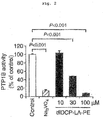
- diDCP-LA-PE inhibits PTP1B in a concentration-dependent manner. This further suggests that diDCP-LA-PE indirectly activates tyrosine kinase (reference pathway is shown in Fig. 3 ).
- 3T3L1-GLUT4myc fibroblast strain expressing GLUT4myc was used.
- the cells are constructed by inserting human c-MYC epitope (14 amino acids) into the first ectodomain.
- the cells were cultured in Dulbecco's Modified Eagles Medium (DMEM) added with 10% (v/v) bovine serum, penicillin (final concentration, 100 U/ml) and streptomycin (final concentration, 0.1 mg/ml) in a humid environment under 5%CO 2 and 95% air at 37°C.
- DMEM Dulbecco's Modified Eagles Medium
- the medium was exchanged with DMEM added with 10% (v/v) fetal bovine serum (FBS), 1 ⁇ M dexamethasone, 0.5 mM 3-isobutyl-methyl-xanthine and 0.1 mg/ml insulin to allow for differentiation from fibroblast into adipocyte.
- FBS fetal bovine serum
- dexamethasone 1 ⁇ M dexamethasone
- 0.5 mM 3-isobutyl-methyl-xanthine 0.1 mg/ml insulin
- 3T3L1-GLUT4myc adipocytes were incubated in Krebs-Ringer-HEPES buffer [136 mM NaCl, 4.7 mM KCl, 1.25 mM CaCl 2 , 1.25 mM MgSO 4 and 20 mM HEPES, pH 7.5] containing 0.2% (w/v) bovine serum albumin and added with 10 mM glucose at 37°C for 1 hr. The cells were incubated in the presence or absence of diDCP-LA-PE for 20 min.
- the cells were lysed in a lysis buffer [150 mM NaCl, 20 mM ethylenediaminetetraacetic acid, 0.5% (v/v) Nonidet P-40 and 50 mM Tris, pH 7.4] containing 1% (v/v) protease inhibitor cocktail, and centrifuged at 4°C for 5 min at 3,000 rpm. The supernatant was used as a total cell lysate.
- a lysis buffer 150 mM NaCl, 20 mM ethylenediaminetetraacetic acid, 0.5% (v/v) Nonidet P-40 and 50 mM Tris, pH 7.4
- the protein was separated by SDS-polyacrylamide gel electrophoresis (SDS-PAGE), and transferred onto polyvinylidene difluoride membranes.
- SDS-PAGE SDS-polyacrylamide gel electrophoresis
- the blotting membranes were blocked with TBS-T [150 mM NaCl, 0.1% (v/v) Tween20 and 20 mM Tris, pH 7.5] containing 5% (w/v) BSA, and sequentially reacted with antibodies (Cell Signaling Technology, Inc., Danvers, MA, USA) against phospho-Akt (Thr308), phospho-Akt (Ser473) and Akt. After washing, the membranes were reacted with horseradish peroxidase conjugate goat anti-rabbit IgG antibody.
- the immunoreactivity was detected using ECL kit (GE Healthcare, Piscataway, NJ, USA), and visualized using a chemical luminescence detection system (chemiluminescence detection system; GE Healthcare).
- the protein concentration of each sample was measured using BCA protein assay kit (Thermo Fisher Scientific, Waltham, MA, USA).
- diDCP-LA-PE has an action to activate Akt (Akt is activated by phosphorylation of Thr308 and Ser473).
- PKC activity in a cell-free system was quantified by the method described in a previous report ( Kanno T et al. J Lipid Res 2006; 47: 1146-1156 ).
- synthesized PKC substrate peptide (10 ⁇ M) was reacted with various PKC isozymes in a medium containing 20 mM Tris-HCl (pH 7.5), 5 mM magnesium acetate, 10 ⁇ M ATP, and DCP-LA-phospholipid in the absence of phosphatidylserine and diacylglycerol at 30°C for 5 min.
- a Ca 2+ -free medium was used for novel PKC such as PKC-5, - ⁇ and the like, and a 100 ⁇ M CaCl 2 -containing medium was used for other PKC isozymes. They were loaded on reversed-phase HPLC (LC-10ATvp, Shimadzu Co., Kyoto, Japan), and the peaks of substrate peptide and new resultant products were measured at an absorbance of 214 nm. The areas of non-phosphorylated PKC substrate peptide and phosphorylated PKC substrate peptide were measured (total area corresponds to the concentration of PKC substrate peptide used in this Example), and the amount of the phosphorylated substrate peptide was calculated. The amount of the phosphorylated substrate peptide (pmol/1 min) per 1 min was used as an index of the PKC activity.
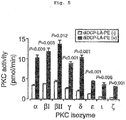
- Figs. 5 and 6 show that diDCP-LA-PE activates all PKC isozymes.
- Fig. 6 shows that diDCP-LA-PE functions as a specific activating agent of PKC and PKC ⁇ considered to be important for the adjustment of GLUT4 trafficking.
- 3T3L1-GLUT4myc adipocytes were incubated in Krebs-Ringer-HEPES buffer [136 mM NaCl, 4.7 mM KCl, 1.25 mM CaCl 2 , 1.25 mM MgSO 4 and 20 mM HEPES, pH 7.5] containing 0.2% (w/v) bovine serum albumin and added with 10 mM glucose at 37°C for 1 hr. The cells were incubated in the presence or absence of insulin, phospholipid or a derivative thereof for 20 min.
- Krebs-Ringer-HEPES buffer [136 mM NaCl, 4.7 mM KCl, 1.25 mM CaCl 2 , 1.25 mM MgSO 4 and 20 mM HEPES, pH 7.5] containing 0.2% (w/v) bovine serum albumin and added with 10 mM glucose at 37°C for 1 hr.
- the cells were incubated in the presence or absence of insulin, phospholipid or
- the cells were homogenized by sonication in an ice-cooled mitochondria buffer containing 1% (v/v) protease inhibitor cocktail [210 mM mannitol, 70 mM sucrose, and 1 mM ethylenediaminetetraacetic acid (EDTA), 10 mM HEPES, pH 7.5]. Sequentially, the homogenate was centrifuged at 4°C for 5 min at 3,000 rpm. The supernatant was further centrifuged at 4°C for 15 min at 11,000 rpm. The recovered supernatant was ultracentrifuged at 4°C for 60 min at 100,000 g, and separated into a cytoplasm fraction and a cellular membrane fraction.
- protease inhibitor cocktail 210 mM mannitol, 70 mM sucrose, and 1 mM ethylenediaminetetraacetic acid (EDTA), 10 mM HEPES, pH 7.5.
- the supernatant was used as the cytoplasm fraction and the pellet was used as the cellular membrane fraction. Whether the cytoplasm component and the cellular membrane component could be successfully separated was confirmed by Western blot analysis using an antibody to LDH which is a cellular membrane component marker, and an antibody to cadherin which is a cellular membrane marker.
- the protein concentration of each fraction was measured using BCA protein assay kit (Thermo Fisher Scientific, Waltham, MA, USA).
- the protein of the cellular membrane fraction was resuspended in a mitochondria buffer containing 1% (w/v) sodium dodecyl sulfate (SDS).
- the protein of each fraction was separated by SDS-polyacrylamide gel electrophoresis (SDS-PAGE), and transferred onto polyvinylidene difluoride membranes.
- SDS-PAGE SDS-polyacrylamide gel electrophoresis
- the blotting membranes were blocked with TBS-T [150 mM NaCl, 0.1% (v/v) Tween20 and 20 mM Tris, pH 7.5] containing 5% (w/v) BSA, reacted with anti-c-myc antibody (Merck Millipore, Darmstadt, Germany), and thereafter reacted with horseradish peroxidase (HRP) conjugate goat anti-mouse IgG antibody.
- TBS-T 150 mM NaCl, 0.1% (v/v) Tween20 and 20 mM Tris, pH 7.5
- anti-c-myc antibody Merck Millipore, Darmstadt, Germany
- HRP horseradish peroxidase
- the immunoreactivity was detected using ECL kit (Invitrogen), and visualized using a chemical luminescence detection system (chemiluminescence detection system; GE Healthcare, Piscataway, NJ, USA).
- the signal density was measured using an image analysis software (Image Gauge software; GE Healthcare).
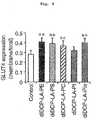
- Figs. 7 - 9 The results are shown in Figs. 7 - 9 . From Fig. 7 , it is clear that diDCP-LA-PE has, like insulin, an action to promote cellular membrane transport of GLUT4. From Fig. 8 , it is clear that diDCP-LA-PE promotes cellular membrane transport of GLUT4 in a concentration-dependent manner. Fig. 9 shows that all phospholipid derivatives except natural type diDCP-LA-PI have an action to promote cellular membrane transport of GLUT4.
- C57BL/KsJ-lepr db /lepr db mouse female, 8-week-old (CLEA Japan; Tokyo, Japan) was used.
- the glucose tolerance test was performed using the mouse starved for 12 hr.
- Glucose (2 g/ml/kg body weight) was administered by gavage, and the time point thereof was taken as 0 h.
- diDCP-LA-PE (0.01, 0.1, 1, 3 mg/kg), insulin (0.75 U/kg) or brine was orally administered 30 min before administration of glucose.
- the blood (10 ⁇ l) was collected from the tail vein at the time points of 0, 30, 60, and 90 min, and each plasma sample which was labeled with p-aminobenzylethylester and prepared from the obtained blood was loaded on high performance liquid chromatography (HPLC) system (LC-10ATvp; Shimadzu Co., Kyoto, Japan).
- HPLC high performance liquid chromatography
- the glucose concentration was calculated from a peak area/concentration analytical curve prepared using the standard glucose solution.
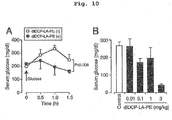
- the results are shown in Fig. 10 .
- the results show that diDCP-LA-PE has an action to decrease the blood glucose level in a dose-dependent manner on type 2 diabetes model mouse. This fact suggests a possibility that oral administration of diDCP-LA-PE may be a therapeutic drug for type 2 diabetes without requiring insulin.
- Fig. 11 The results show that diDCP-LA-PE significantly suppresses an increase in the blood glucose of STZ treatment mouse. That is, diDCP-LA-PE is shown to be also effective for type 1 diabetes.
- the experiment was performed in the same manner as in Experimental Example 4 except that 3T3L1-GLUT4myc adipocytes having a knocked-down insulin receptor were used and incubation with diDCP-LA-EA was performed in the absence of insulin.
- diDCP-LA-PE can promote transfer of GLUT4 to a cellular membrane in an insulin receptor independent manner. That is, it shows that diDCP-LA-PE can substitute for an intracellular insulin receptor signal (decreasing blood glucose level in an insulin/insulin receptor independent manner) even in the absence of insulin. From the results, it is clear that diDCP-LA-PE is also effective for the treatment of type 1 diabetes which is considered to essentially require insulin for the treatment.
- the phospholipid compound containing an unsaturated fatty acid derivative having a cyclopropane ring which is provided by the present invention, namely diDCP-LA-PE, has pharmacological actions (protein tyrosine phosphatase 1B (PTP1B) inhibitory action, Akt activating action, protein phosphorylated enzyme C (PKC) activating action, PKC and PKC ⁇ activating action, promoting action on transfer of glucose transporter 4 (GLUT4) to cellular membrane and non-insulin-dependent blood glucose level lowering action) superior in the improvement of cognitive function and/or treatment of diabetes, and therefore, is useful as a therapeutic drug for dementia or a therapeutic drug for diabetes. It is also useful as various reagents based on such pharmacological actions.
- PTP1B protein tyrosine phosphatase 1B
- PKC protein phosphorylated enzyme C
- GLUT4 glucose transporter 4
Landscapes
- Health & Medical Sciences (AREA)
- Chemical & Material Sciences (AREA)
- General Health & Medical Sciences (AREA)
- Life Sciences & Earth Sciences (AREA)
- Organic Chemistry (AREA)
- Medicinal Chemistry (AREA)
- Veterinary Medicine (AREA)
- Public Health (AREA)
- Pharmacology & Pharmacy (AREA)
- Animal Behavior & Ethology (AREA)
- Epidemiology (AREA)
- Molecular Biology (AREA)
- Biochemistry (AREA)
- Bioinformatics & Cheminformatics (AREA)
- Engineering & Computer Science (AREA)
- Nuclear Medicine, Radiotherapy & Molecular Imaging (AREA)
- General Chemical & Material Sciences (AREA)
- Chemical Kinetics & Catalysis (AREA)
- Diabetes (AREA)
- Neurology (AREA)
- Biomedical Technology (AREA)
- Neurosurgery (AREA)
- Obesity (AREA)
- Hospice & Palliative Care (AREA)
- Psychiatry (AREA)
- Hematology (AREA)
- Endocrinology (AREA)
- Emergency Medicine (AREA)
- Pharmaceuticals Containing Other Organic And Inorganic Compounds (AREA)
- Measuring Or Testing Involving Enzymes Or Micro-Organisms (AREA)
Claims (11)
- Médicament comprenant de la 1,2-o-bis-[8-{2-(2-pentyl-cyclopropylméthyl)-cyclopropyl}-octanoyl]-sn-glycéro-3-phosphatidyléthanolamine (diDCP-LA-PE).
- Médicament comprenant de la 1,2-o-bis-[8-{2-(2-pentyl-cyclopropylméthyl)-cyclopropyl}-octanoyl]-sn-glycéro-3-phosphatidyléthanolamine (diDCP-LA-PE) pour son utilisation dans le traitement du diabète.
- Médicament comprenant de la 1,2-o-bis-[8-{2-(2-pentyl-cyclopropylméthyl)-cyclopropyl}-octanoyl]-sn-glycéro-3-phosphatidyléthanolamine (diDCP-LA-PE) pour son utilisation dans le traitement de la démence.
- Médicament comprenant de la 1,2-o-bis-[8-{2-(2-pentyl-cyclopropylméthyl)-cyclopropyl}-octanoyl]-sn-glycéro-3-phosphatidyléthanolamine (diDCP-LA-PE) pour son utilisation comme médicament anti-âge.
- 1,2-o-bis-[8-{2-(2-pentyl-cyclopropylméthyl)-cyclopropyl}-octanoyl]-sn-glycéro-3-phosphatidyléthanolamine (diDCP-LA-PE).
- 1,2-o-bis-[8-{2-(2-pentyl-cyclopropylméthyl)-cyclopropyl}-octanoyl]-sn-glycéro-3-phosphatidyléthanolamine (diDCP-LA-PE) pour son utilisation dans le traitement du diabète.
- 1,2-o-bis-[8-{2-(2-pentyl-cyclopropylméthyl)-cyclopropyl}-octanoyl]-sn-glycéro-3-phosphatidyléthanolamine (diDCP-LA-PE) pour son utilisation dans le traitement de la démence.
- 1,2-o-bis-[8-{2-(2-pentyl-cyclopropylméthyl)-cyclopropyl}-octanoyl]-sn-glycéro-3-phosphatidyléthanolamine (diDCP-LA-PE) pour son utilisation comme médicament anti-âge.
- Utilisation de la 1,2-o-bis-[8-{2-(2-pentyl-cyclopropylméthyl)-cyclopropyl}-octanoyl]-sn-glycéro-3-phosphatidyléthanolamine (diDCP-LA-PE) pour inhiber une protéine-tyrosine phosphatase 1B in vitro.
- Utilisation de la 1,2-o-bis-[8-{2-(2-pentyl-cyclopropylméthyl)-cyclopropyl}-octanoyl]-sn-glycéro-3-phosphatidyléthanolamine (diDCP-LA-PE) pour activer une Akt in vitro.
- Utilisation de la 1,2-o-bis-[8-{2-(2-pentyl-cyclopropylméthyl)-cyclopropyl}-octanoyl]-sn-glycéro-3-phosphatidyléthanolamine (diDCP-LA-PE) pour activer une protéine de type enzyme C phosphorylée (PKC) in vitro.
Applications Claiming Priority (2)
| Application Number | Priority Date | Filing Date | Title |
|---|---|---|---|
| JP2013027992 | 2013-02-15 | ||
| PCT/JP2014/053448 WO2014126191A1 (fr) | 2013-02-15 | 2014-02-14 | Composé phospholipide contenant un dérivé d'acide gras insaturé ayant un noyau cyclopropane |
Publications (3)
| Publication Number | Publication Date |
|---|---|
| EP2957285A1 EP2957285A1 (fr) | 2015-12-23 |
| EP2957285A4 EP2957285A4 (fr) | 2016-07-06 |
| EP2957285B1 true EP2957285B1 (fr) | 2018-01-10 |
Family
ID=51354190
Family Applications (1)
| Application Number | Title | Priority Date | Filing Date |
|---|---|---|---|
| EP14751672.8A Not-in-force EP2957285B1 (fr) | 2013-02-15 | 2014-02-14 | Composé phospholipide contenant un dérivé d'acide gras insaturé ayant un noyau cyclopropane |
Country Status (4)
| Country | Link |
|---|---|
| US (1) | US9512152B2 (fr) |
| EP (1) | EP2957285B1 (fr) |
| JP (1) | JP6316272B2 (fr) |
| WO (1) | WO2014126191A1 (fr) |
Families Citing this family (3)
| Publication number | Priority date | Publication date | Assignee | Title |
|---|---|---|---|---|
| WO2015105094A1 (fr) * | 2014-01-07 | 2015-07-16 | 株式会社西崎創薬研究所 | Agent pour traiter le diabète |
| US10639313B2 (en) | 2017-09-01 | 2020-05-05 | Ndsu Research Foundation | Compound for inhibition of delta-5-desaturase (D5D) and treatment of cancer and inflammation |
| KR102508255B1 (ko) * | 2021-02-15 | 2023-03-09 | 연세대학교 산학협력단 | 비정형 pkc 활성화제를 함유하는 당 조절용 조성물 |
Family Cites Families (6)
| Publication number | Priority date | Publication date | Assignee | Title |
|---|---|---|---|---|
| AUPR215700A0 (en) | 2000-12-19 | 2001-01-25 | Fujisawa Pharmaceutical Co., Ltd. | Carboxylic acid compound having cyclopropane ring |
| JP4619666B2 (ja) | 2004-03-03 | 2011-01-26 | 株式会社 西崎創薬研究所 | 医薬組成物 |
| JP5769912B2 (ja) * | 2007-05-31 | 2015-08-26 | 知之 西崎 | 認知障害を伴う疾患又は状態の予防又は治療用の組成物 |
| CA2731171C (fr) | 2008-07-28 | 2016-10-18 | Blanchette Rockefeller Neurosciences Institute | Composes d'activation de pkc utiles dans le traitement de maladies neurodegeneratives |
| EP2780316B1 (fr) * | 2011-11-13 | 2020-04-15 | Blanchette Rockefeller Neurosciences Institute | Esters de dcpla et méthodes de traitement les utilisant |
| EP3006033A4 (fr) | 2013-06-07 | 2017-01-04 | KTN Biotec, Inc. | Médicament anticancéreux |
-
2014
- 2014-02-14 EP EP14751672.8A patent/EP2957285B1/fr not_active Not-in-force
- 2014-02-14 WO PCT/JP2014/053448 patent/WO2014126191A1/fr not_active Ceased
- 2014-02-14 US US14/767,532 patent/US9512152B2/en not_active Expired - Fee Related
- 2014-02-14 JP JP2015500305A patent/JP6316272B2/ja active Active
Non-Patent Citations (1)
| Title |
|---|
| None * |
Also Published As
| Publication number | Publication date |
|---|---|
| US20150376213A1 (en) | 2015-12-31 |
| US9512152B2 (en) | 2016-12-06 |
| JP6316272B2 (ja) | 2018-04-25 |
| EP2957285A4 (fr) | 2016-07-06 |
| WO2014126191A1 (fr) | 2014-08-21 |
| EP2957285A1 (fr) | 2015-12-23 |
| JPWO2014126191A1 (ja) | 2017-02-02 |
Similar Documents
| Publication | Publication Date | Title |
|---|---|---|
| Bielawska et al. | Selectivity of ceramide-mediated biology. Lack of activity of erythro-dihydroceramide. | |
| EP2641891B1 (fr) | ACTIVATEUR DE PKC-epsilon | |
| AU2012253479B2 (en) | Anxiolytic effect of pterostilbene | |
| US20210238208A1 (en) | Novel Plasmalogen Derivatives | |
| EP2957285B1 (fr) | Composé phospholipide contenant un dérivé d'acide gras insaturé ayant un noyau cyclopropane | |
| KR101214198B1 (ko) | 파이토스핑고신 유도체를 유효성분으로 함유하는 뇌질환 치료 또는 예방용 약학조성물 | |
| Hwang et al. | Isodihydrocapsiate stimulates plasma glucose uptake by activation of AMP-activated protein kinase | |
| JPH06510280A (ja) | タンパクキナーゼc阻害および新規化合物バラノール | |
| WO2002083148A1 (fr) | Promoteurs de survie des cellules nerveuses a base de derive cyclique d'acide phosphatidique | |
| WO2008135743A1 (fr) | Phosphonates substitués et leur utilisation pour réduire des agrégats amyloïdes | |
| CN118678969A (zh) | 抗癌剂及抗癌剂的筛选方法 | |
| EP3006033A1 (fr) | Médicament anticancéreux | |
| KR100911672B1 (ko) | 골기질 강화용 건강식품 조성물 및 골기질 강화용 성분의 분리 방법 | |
| US10251897B2 (en) | GLUT4 endocytosis inhibitor | |
| Babenko et al. | Effects of exogenous phosphatidylserine on cognitive functions and phospholipid metabolism in the hippocampus of aged rats | |
| KR20240011905A (ko) | 오메가-3 지방산을 함유한 해양생물 유래 리소인지질을 포함하는 기억력 저하 예방 및 개선용 조성물 | |
| KR20040036001A (ko) | 아실 코에이:디아실글리세롤 아실트랜스퍼라제 활성저해제인 퀴놀론 알칼로이드 화합물, 이의 제조방법 및이를 포함하는 약학적 조성물 | |
| Shen | Medicinal Chemistry of Lanthionine Ketenamine Analogues. Development of New Small Molecule Treatments for Neurodegenerative Diseases | |
| US9889104B2 (en) | Agent for treating diabetes | |
| Han et al. | Biotechnological Uses of Phospholipids | |
| Farooqui | Neural membranes: A Pandora’s box of lipid mediators | |
| Wang | Part I: Formation, Protein Modification, and Cellular Metabolism of 4-Hydroxy-7-Oxohept-5-Enoic Acid Lactone (Hoha-Lactone) Part II: Detection and Biological Activities of Carboxyethylpyrrole (Cep)-Phosphatidyl-Ethanolamine and Metabolism of Cep-Lysine |
Legal Events
| Date | Code | Title | Description |
|---|---|---|---|
| PUAI | Public reference made under article 153(3) epc to a published international application that has entered the european phase |
Free format text: ORIGINAL CODE: 0009012 |
|
| 17P | Request for examination filed |
Effective date: 20150903 |
|
| AK | Designated contracting states |
Kind code of ref document: A1 Designated state(s): AL AT BE BG CH CY CZ DE DK EE ES FI FR GB GR HR HU IE IS IT LI LT LU LV MC MK MT NL NO PL PT RO RS SE SI SK SM TR |
|
| AX | Request for extension of the european patent |
Extension state: BA ME |
|
| DAX | Request for extension of the european patent (deleted) | ||
| A4 | Supplementary search report drawn up and despatched |
Effective date: 20160607 |
|
| RIC1 | Information provided on ipc code assigned before grant |
Ipc: A61P 3/10 20060101ALI20160531BHEP Ipc: C07F 9/117 20060101ALI20160531BHEP Ipc: A61K 31/685 20060101ALI20160531BHEP Ipc: C07F 9/10 20060101ALI20160531BHEP Ipc: A61K 31/683 20060101AFI20160531BHEP Ipc: G01N 33/50 20060101ALI20160531BHEP Ipc: A61P 25/28 20060101ALI20160531BHEP Ipc: A61P 43/00 20060101ALI20160531BHEP |
|
| GRAP | Despatch of communication of intention to grant a patent |
Free format text: ORIGINAL CODE: EPIDOSNIGR1 |
|
| STAA | Information on the status of an ep patent application or granted ep patent |
Free format text: STATUS: GRANT OF PATENT IS INTENDED |
|
| INTG | Intention to grant announced |
Effective date: 20170808 |
|
| RAP1 | Party data changed (applicant data changed or rights of an application transferred) |
Owner name: NISHIZAKI BIOINFORMATION RESEARCH INSTITUTE |
|
| GRAS | Grant fee paid |
Free format text: ORIGINAL CODE: EPIDOSNIGR3 |
|
| GRAA | (expected) grant |
Free format text: ORIGINAL CODE: 0009210 |
|
| STAA | Information on the status of an ep patent application or granted ep patent |
Free format text: STATUS: THE PATENT HAS BEEN GRANTED |
|
| AK | Designated contracting states |
Kind code of ref document: B1 Designated state(s): AL AT BE BG CH CY CZ DE DK EE ES FI FR GB GR HR HU IE IS IT LI LT LU LV MC MK MT NL NO PL PT RO RS SE SI SK SM TR |
|
| REG | Reference to a national code |
Ref country code: CH Ref legal event code: EP Ref country code: AT Ref legal event code: REF Ref document number: 961651 Country of ref document: AT Kind code of ref document: T Effective date: 20180115 |
|
| REG | Reference to a national code |
Ref country code: IE Ref legal event code: FG4D |
|
| REG | Reference to a national code |
Ref country code: DE Ref legal event code: R096 Ref document number: 602014019675 Country of ref document: DE |
|
| REG | Reference to a national code |
Ref country code: FR Ref legal event code: PLFP Year of fee payment: 5 |
|
| REG | Reference to a national code |
Ref country code: CH Ref legal event code: NV Representative=s name: BOHEST AG, CH |
|
| REG | Reference to a national code |
Ref country code: NL Ref legal event code: MP Effective date: 20180110 |
|
| REG | Reference to a national code |
Ref country code: AT Ref legal event code: MK05 Ref document number: 961651 Country of ref document: AT Kind code of ref document: T Effective date: 20180110 |
|
| PG25 | Lapsed in a contracting state [announced via postgrant information from national office to epo] |
Ref country code: NL Free format text: LAPSE BECAUSE OF FAILURE TO SUBMIT A TRANSLATION OF THE DESCRIPTION OR TO PAY THE FEE WITHIN THE PRESCRIBED TIME-LIMIT Effective date: 20180110 |
|
| PG25 | Lapsed in a contracting state [announced via postgrant information from national office to epo] |
Ref country code: FI Free format text: LAPSE BECAUSE OF FAILURE TO SUBMIT A TRANSLATION OF THE DESCRIPTION OR TO PAY THE FEE WITHIN THE PRESCRIBED TIME-LIMIT Effective date: 20180110 Ref country code: NO Free format text: LAPSE BECAUSE OF FAILURE TO SUBMIT A TRANSLATION OF THE DESCRIPTION OR TO PAY THE FEE WITHIN THE PRESCRIBED TIME-LIMIT Effective date: 20180410 Ref country code: HR Free format text: LAPSE BECAUSE OF FAILURE TO SUBMIT A TRANSLATION OF THE DESCRIPTION OR TO PAY THE FEE WITHIN THE PRESCRIBED TIME-LIMIT Effective date: 20180110 Ref country code: CY Free format text: LAPSE BECAUSE OF FAILURE TO SUBMIT A TRANSLATION OF THE DESCRIPTION OR TO PAY THE FEE WITHIN THE PRESCRIBED TIME-LIMIT Effective date: 20180110 Ref country code: ES Free format text: LAPSE BECAUSE OF FAILURE TO SUBMIT A TRANSLATION OF THE DESCRIPTION OR TO PAY THE FEE WITHIN THE PRESCRIBED TIME-LIMIT Effective date: 20180110 Ref country code: LT Free format text: LAPSE BECAUSE OF FAILURE TO SUBMIT A TRANSLATION OF THE DESCRIPTION OR TO PAY THE FEE WITHIN THE PRESCRIBED TIME-LIMIT Effective date: 20180110 |
|
| PG25 | Lapsed in a contracting state [announced via postgrant information from national office to epo] |
Ref country code: IS Free format text: LAPSE BECAUSE OF FAILURE TO SUBMIT A TRANSLATION OF THE DESCRIPTION OR TO PAY THE FEE WITHIN THE PRESCRIBED TIME-LIMIT Effective date: 20180510 Ref country code: GR Free format text: LAPSE BECAUSE OF FAILURE TO SUBMIT A TRANSLATION OF THE DESCRIPTION OR TO PAY THE FEE WITHIN THE PRESCRIBED TIME-LIMIT Effective date: 20180411 Ref country code: BG Free format text: LAPSE BECAUSE OF FAILURE TO SUBMIT A TRANSLATION OF THE DESCRIPTION OR TO PAY THE FEE WITHIN THE PRESCRIBED TIME-LIMIT Effective date: 20180410 Ref country code: RS Free format text: LAPSE BECAUSE OF FAILURE TO SUBMIT A TRANSLATION OF THE DESCRIPTION OR TO PAY THE FEE WITHIN THE PRESCRIBED TIME-LIMIT Effective date: 20180110 Ref country code: LV Free format text: LAPSE BECAUSE OF FAILURE TO SUBMIT A TRANSLATION OF THE DESCRIPTION OR TO PAY THE FEE WITHIN THE PRESCRIBED TIME-LIMIT Effective date: 20180110 Ref country code: AT Free format text: LAPSE BECAUSE OF FAILURE TO SUBMIT A TRANSLATION OF THE DESCRIPTION OR TO PAY THE FEE WITHIN THE PRESCRIBED TIME-LIMIT Effective date: 20180110 Ref country code: SE Free format text: LAPSE BECAUSE OF FAILURE TO SUBMIT A TRANSLATION OF THE DESCRIPTION OR TO PAY THE FEE WITHIN THE PRESCRIBED TIME-LIMIT Effective date: 20180110 Ref country code: PL Free format text: LAPSE BECAUSE OF FAILURE TO SUBMIT A TRANSLATION OF THE DESCRIPTION OR TO PAY THE FEE WITHIN THE PRESCRIBED TIME-LIMIT Effective date: 20180110 |
|
| REG | Reference to a national code |
Ref country code: DE Ref legal event code: R097 Ref document number: 602014019675 Country of ref document: DE |
|
| PG25 | Lapsed in a contracting state [announced via postgrant information from national office to epo] |
Ref country code: RO Free format text: LAPSE BECAUSE OF FAILURE TO SUBMIT A TRANSLATION OF THE DESCRIPTION OR TO PAY THE FEE WITHIN THE PRESCRIBED TIME-LIMIT Effective date: 20180110 Ref country code: IT Free format text: LAPSE BECAUSE OF FAILURE TO SUBMIT A TRANSLATION OF THE DESCRIPTION OR TO PAY THE FEE WITHIN THE PRESCRIBED TIME-LIMIT Effective date: 20180110 Ref country code: EE Free format text: LAPSE BECAUSE OF FAILURE TO SUBMIT A TRANSLATION OF THE DESCRIPTION OR TO PAY THE FEE WITHIN THE PRESCRIBED TIME-LIMIT Effective date: 20180110 Ref country code: AL Free format text: LAPSE BECAUSE OF FAILURE TO SUBMIT A TRANSLATION OF THE DESCRIPTION OR TO PAY THE FEE WITHIN THE PRESCRIBED TIME-LIMIT Effective date: 20180110 Ref country code: MC Free format text: LAPSE BECAUSE OF FAILURE TO SUBMIT A TRANSLATION OF THE DESCRIPTION OR TO PAY THE FEE WITHIN THE PRESCRIBED TIME-LIMIT Effective date: 20180110 |
|
| PLBE | No opposition filed within time limit |
Free format text: ORIGINAL CODE: 0009261 |
|
| STAA | Information on the status of an ep patent application or granted ep patent |
Free format text: STATUS: NO OPPOSITION FILED WITHIN TIME LIMIT |
|
| REG | Reference to a national code |
Ref country code: IE Ref legal event code: MM4A |
|
| REG | Reference to a national code |
Ref country code: BE Ref legal event code: MM Effective date: 20180228 |
|
| PG25 | Lapsed in a contracting state [announced via postgrant information from national office to epo] |
Ref country code: DK Free format text: LAPSE BECAUSE OF FAILURE TO SUBMIT A TRANSLATION OF THE DESCRIPTION OR TO PAY THE FEE WITHIN THE PRESCRIBED TIME-LIMIT Effective date: 20180110 Ref country code: LU Free format text: LAPSE BECAUSE OF NON-PAYMENT OF DUE FEES Effective date: 20180214 Ref country code: SK Free format text: LAPSE BECAUSE OF FAILURE TO SUBMIT A TRANSLATION OF THE DESCRIPTION OR TO PAY THE FEE WITHIN THE PRESCRIBED TIME-LIMIT Effective date: 20180110 Ref country code: SM Free format text: LAPSE BECAUSE OF FAILURE TO SUBMIT A TRANSLATION OF THE DESCRIPTION OR TO PAY THE FEE WITHIN THE PRESCRIBED TIME-LIMIT Effective date: 20180110 Ref country code: CZ Free format text: LAPSE BECAUSE OF FAILURE TO SUBMIT A TRANSLATION OF THE DESCRIPTION OR TO PAY THE FEE WITHIN THE PRESCRIBED TIME-LIMIT Effective date: 20180110 |
|
| 26N | No opposition filed |
Effective date: 20181011 |
|
| PG25 | Lapsed in a contracting state [announced via postgrant information from national office to epo] |
Ref country code: IE Free format text: LAPSE BECAUSE OF NON-PAYMENT OF DUE FEES Effective date: 20180214 |
|
| PG25 | Lapsed in a contracting state [announced via postgrant information from national office to epo] |
Ref country code: SI Free format text: LAPSE BECAUSE OF FAILURE TO SUBMIT A TRANSLATION OF THE DESCRIPTION OR TO PAY THE FEE WITHIN THE PRESCRIBED TIME-LIMIT Effective date: 20180110 Ref country code: BE Free format text: LAPSE BECAUSE OF NON-PAYMENT OF DUE FEES Effective date: 20180228 |
|
| PG25 | Lapsed in a contracting state [announced via postgrant information from national office to epo] |
Ref country code: MT Free format text: LAPSE BECAUSE OF NON-PAYMENT OF DUE FEES Effective date: 20180214 |
|
| PG25 | Lapsed in a contracting state [announced via postgrant information from national office to epo] |
Ref country code: TR Free format text: LAPSE BECAUSE OF FAILURE TO SUBMIT A TRANSLATION OF THE DESCRIPTION OR TO PAY THE FEE WITHIN THE PRESCRIBED TIME-LIMIT Effective date: 20180110 |
|
| PGFP | Annual fee paid to national office [announced via postgrant information from national office to epo] |
Ref country code: GB Payment date: 20200206 Year of fee payment: 7 Ref country code: DE Payment date: 20200227 Year of fee payment: 7 |
|
| PG25 | Lapsed in a contracting state [announced via postgrant information from national office to epo] |
Ref country code: PT Free format text: LAPSE BECAUSE OF FAILURE TO SUBMIT A TRANSLATION OF THE DESCRIPTION OR TO PAY THE FEE WITHIN THE PRESCRIBED TIME-LIMIT Effective date: 20180110 |
|
| PGFP | Annual fee paid to national office [announced via postgrant information from national office to epo] |
Ref country code: CH Payment date: 20200219 Year of fee payment: 7 |
|
| PG25 | Lapsed in a contracting state [announced via postgrant information from national office to epo] |
Ref country code: HU Free format text: LAPSE BECAUSE OF FAILURE TO SUBMIT A TRANSLATION OF THE DESCRIPTION OR TO PAY THE FEE WITHIN THE PRESCRIBED TIME-LIMIT; INVALID AB INITIO Effective date: 20140214 Ref country code: MK Free format text: LAPSE BECAUSE OF NON-PAYMENT OF DUE FEES Effective date: 20180110 |
|
| PGFP | Annual fee paid to national office [announced via postgrant information from national office to epo] |
Ref country code: FR Payment date: 20200207 Year of fee payment: 7 |
|
| REG | Reference to a national code |
Ref country code: DE Ref legal event code: R119 Ref document number: 602014019675 Country of ref document: DE |
|
| GBPC | Gb: european patent ceased through non-payment of renewal fee |
Effective date: 20210214 |
|
| PG25 | Lapsed in a contracting state [announced via postgrant information from national office to epo] |
Ref country code: LI Free format text: LAPSE BECAUSE OF NON-PAYMENT OF DUE FEES Effective date: 20210228 Ref country code: CH Free format text: LAPSE BECAUSE OF NON-PAYMENT OF DUE FEES Effective date: 20210228 |
|
| PG25 | Lapsed in a contracting state [announced via postgrant information from national office to epo] |
Ref country code: FR Free format text: LAPSE BECAUSE OF NON-PAYMENT OF DUE FEES Effective date: 20210228 Ref country code: GB Free format text: LAPSE BECAUSE OF NON-PAYMENT OF DUE FEES Effective date: 20210214 Ref country code: DE Free format text: LAPSE BECAUSE OF NON-PAYMENT OF DUE FEES Effective date: 20210901 |