WO2014126191A1 - Composé phospholipide contenant un dérivé d'acide gras insaturé ayant un noyau cyclopropane - Google Patents
Composé phospholipide contenant un dérivé d'acide gras insaturé ayant un noyau cyclopropane Download PDFInfo
- Publication number
- WO2014126191A1 WO2014126191A1 PCT/JP2014/053448 JP2014053448W WO2014126191A1 WO 2014126191 A1 WO2014126191 A1 WO 2014126191A1 JP 2014053448 W JP2014053448 W JP 2014053448W WO 2014126191 A1 WO2014126191 A1 WO 2014126191A1
- Authority
- WO
- WIPO (PCT)
- Prior art keywords
- didcp
- pentyl
- cyclopropylmethyl
- cyclopropyl
- octanoyl
- Prior art date
- Legal status (The legal status is an assumption and is not a legal conclusion. Google has not performed a legal analysis and makes no representation as to the accuracy of the status listed.)
- Ceased
Links
Images




Classifications
-
- C—CHEMISTRY; METALLURGY
- C07—ORGANIC CHEMISTRY
- C07F—ACYCLIC, CARBOCYCLIC OR HETEROCYCLIC COMPOUNDS CONTAINING ELEMENTS OTHER THAN CARBON, HYDROGEN, HALOGEN, OXYGEN, NITROGEN, SULFUR, SELENIUM OR TELLURIUM
- C07F9/00—Compounds containing elements of Groups 5 or 15 of the Periodic Table
- C07F9/02—Phosphorus compounds
- C07F9/06—Phosphorus compounds without P—C bonds
- C07F9/062—Organo-phosphoranes without P-C bonds
-
- A—HUMAN NECESSITIES
- A61—MEDICAL OR VETERINARY SCIENCE; HYGIENE
- A61K—PREPARATIONS FOR MEDICAL, DENTAL OR TOILETRY PURPOSES
- A61K31/00—Medicinal preparations containing organic active ingredients
- A61K31/66—Phosphorus compounds
- A61K31/661—Phosphorus acids or esters thereof not having P—C bonds, e.g. fosfosal, dichlorvos, malathion or mevinphos
-
- A—HUMAN NECESSITIES
- A61—MEDICAL OR VETERINARY SCIENCE; HYGIENE
- A61K—PREPARATIONS FOR MEDICAL, DENTAL OR TOILETRY PURPOSES
- A61K31/00—Medicinal preparations containing organic active ingredients
- A61K31/66—Phosphorus compounds
- A61K31/683—Diesters of a phosphorus acid with two hydroxy compounds, e.g. phosphatidylinositols
-
- A—HUMAN NECESSITIES
- A61—MEDICAL OR VETERINARY SCIENCE; HYGIENE
- A61K—PREPARATIONS FOR MEDICAL, DENTAL OR TOILETRY PURPOSES
- A61K31/00—Medicinal preparations containing organic active ingredients
- A61K31/66—Phosphorus compounds
- A61K31/683—Diesters of a phosphorus acid with two hydroxy compounds, e.g. phosphatidylinositols
- A61K31/685—Diesters of a phosphorus acid with two hydroxy compounds, e.g. phosphatidylinositols one of the hydroxy compounds having nitrogen atoms, e.g. phosphatidylserine, lecithin
-
- A—HUMAN NECESSITIES
- A61—MEDICAL OR VETERINARY SCIENCE; HYGIENE
- A61P—SPECIFIC THERAPEUTIC ACTIVITY OF CHEMICAL COMPOUNDS OR MEDICINAL PREPARATIONS
- A61P25/00—Drugs for disorders of the nervous system
- A61P25/28—Drugs for disorders of the nervous system for treating neurodegenerative disorders of the central nervous system, e.g. nootropic agents, cognition enhancers, drugs for treating Alzheimer's disease or other forms of dementia
-
- A—HUMAN NECESSITIES
- A61—MEDICAL OR VETERINARY SCIENCE; HYGIENE
- A61P—SPECIFIC THERAPEUTIC ACTIVITY OF CHEMICAL COMPOUNDS OR MEDICINAL PREPARATIONS
- A61P3/00—Drugs for disorders of the metabolism
- A61P3/08—Drugs for disorders of the metabolism for glucose homeostasis
- A61P3/10—Drugs for disorders of the metabolism for glucose homeostasis for hyperglycaemia, e.g. antidiabetics
-
- A—HUMAN NECESSITIES
- A61—MEDICAL OR VETERINARY SCIENCE; HYGIENE
- A61P—SPECIFIC THERAPEUTIC ACTIVITY OF CHEMICAL COMPOUNDS OR MEDICINAL PREPARATIONS
- A61P43/00—Drugs for specific purposes, not provided for in groups A61P1/00-A61P41/00
-
- C—CHEMISTRY; METALLURGY
- C07—ORGANIC CHEMISTRY
- C07F—ACYCLIC, CARBOCYCLIC OR HETEROCYCLIC COMPOUNDS CONTAINING ELEMENTS OTHER THAN CARBON, HYDROGEN, HALOGEN, OXYGEN, NITROGEN, SULFUR, SELENIUM OR TELLURIUM
- C07F9/00—Compounds containing elements of Groups 5 or 15 of the Periodic Table
- C07F9/02—Phosphorus compounds
- C07F9/06—Phosphorus compounds without P—C bonds
- C07F9/08—Esters of oxyacids of phosphorus
- C07F9/09—Esters of phosphoric acids
- C07F9/10—Phosphatides, e.g. lecithin
- C07F9/106—Adducts, complexes, salts of phosphatides
-
- C—CHEMISTRY; METALLURGY
- C07—ORGANIC CHEMISTRY
- C07F—ACYCLIC, CARBOCYCLIC OR HETEROCYCLIC COMPOUNDS CONTAINING ELEMENTS OTHER THAN CARBON, HYDROGEN, HALOGEN, OXYGEN, NITROGEN, SULFUR, SELENIUM OR TELLURIUM
- C07F9/00—Compounds containing elements of Groups 5 or 15 of the Periodic Table
- C07F9/02—Phosphorus compounds
- C07F9/06—Phosphorus compounds without P—C bonds
- C07F9/08—Esters of oxyacids of phosphorus
- C07F9/09—Esters of phosphoric acids
- C07F9/117—Esters of phosphoric acids with cycloaliphatic alcohols
Definitions
- the present invention relates to a phospholipid compound having an effect of improving cognitive function and / or an effect of treating diabetes, and more particularly to a phospholipid compound containing an unsaturated fatty acid derivative having a cyclopropane ring.
- dementia has become a major medical problem worldwide.
- Dementia is a disease with various symptoms centered on learning / memory impairment and a decline in judgment, but the symptoms and their course differ depending on the disease that causes them.
- both cases are common in that the quality of life of the patient is significantly impaired.
- dementia is a serious social problem when considering the fact that the caregivers including the patient's family are forced to suffer a great deal of labor. Since the increase in the elderly population due to prolonged lifespan is related to the increase in patients with dementia, it is predicted that the number of patients with dementia will increase in Japan in the future. Many people suffer from cognitive impairment associated with aging that is not classified as dementia.
- DCP-LA 8- [2- (2-Pentyl-cyclopropylmethyl) -cyclopropyl] -octanoic acid
- DCP-LA a linoleic acid derivative
- LTP is thought to be involved in the development of various neurological and psychiatric disorders such as Alzheimer's disease, and thus substances that induce LTP expression are therapeutic or preventive agents for these neurological and psychiatric disorders including dementia. Have potential.
- 1,2-dilinoleoyl-sn-glycero-3-phosphocholine or 1-palmitoyl-2-oleoyl-sn-glycero-3-phosphocholine is a spatial learning and memory disorder induced by scopolamine, or mild cognition It has been reported that disability and dementia are improved (Non-Patent Documents 1 and 2).
- phosphatidylethanolamine is a phospholipid that is one of the main components of biological membranes and is marketed as a health food along with phosphatidylserine and the like.
- phosphatidylethanolamines in particular, dilinoleoyl phosphatidylethanolamine (as fatty acids) (Including two linoleic acids) have cell death induction inhibitory activity, particularly endoplasmic reticulum stress inhibitory activity. Due to this activity, dilinoleoyl phosphatidylethanolamine is used for pharmaceutical use, particularly for prevention and / or treatment of neurodegenerative diseases. (Patent Document 2).
- An object of the present invention is to provide a phospholipid compound containing an unsaturated fatty acid derivative having a cyclopropane ring, particularly a phospholipid compound having an effect of improving cognitive function and / or a therapeutic effect of diabetes, and a pharmaceutical use of the compound. .
- the present inventors conducted further intensive studies for the purpose of obtaining a drug capable of improving cognitive function more effectively. As a result, it was confirmed that phospholipid compounds containing unsaturated fatty acid derivatives having a cyclopropane ring have various pharmacological effects useful for improving cognitive function, and also have pharmacological actions useful for the treatment of diabetes.
- the present invention has been completed. That is, the present invention is as follows. [1] A pharmaceutical comprising a phospholipid compound containing an unsaturated fatty acid having a cyclopropane ring as an active ingredient.
- the unsaturated fatty acid having a cyclopropane ring is 8- [2- (2-pentyl-cyclopropylmethyl) -cyclopropyl] -octanoic acid (DCP-LA) or 8- (2-octylcyclopropyl) octane
- DCP-LA 2- (2-pentyl-cyclopropylmethyl
- DCP-LA octanoic acid
- phospholipid compound is phosphatidylethanolamine (PE), phosphatidylserine (PS), phosphatidylcholine (PC), or phosphatidylinositol (PI).
- PE phosphatidylethanolamine
- PS phosphatidylserine
- PC phosphatidylcholine
- PI phosphatidylinositol
- the phospholipid compound is 1,2-o-bis- [8- ⁇ 2- (2-pentyl-cyclopropylmethyl) -cyclopropyl ⁇ -octanoyl] -sn-glycero-3-phosphatidylethanolamine ( diDCP-LA-PE), 1,2-o-bis- [8- ⁇ 2- (2-pentyl-cyclopropylmethyl) -cyclopropyl ⁇ -octanoyl] -sn-glycero-3-phosphatidyl-L-serine (diDCP-LA-PS), 1,2-o-bis- [8- ⁇ 2- (2-pentyl-cyclopropylmethyl) -cyclopropyl ⁇ -octanoyl] -sn-3-glycero-3-phosphatidylcholine (diDCP-LA-PC), 1,2-o-bis- [8- ⁇ 2- (2-pentyl-cyclopropylmethyl)
- [6] The medicament according to any one of [1] to [5] above, which is a therapeutic drug for diabetes.
- the medicament according to [6] above, wherein the diabetes is type 1 diabetes.
- the medicament according to [6] above, wherein the diabetes is type 2 diabetes.
- the medicament according to [6] above, wherein the diabetes is type 1 and type 2 diabetes.
- the medicament according to [11] above, wherein the dementia is Alzheimer's dementia.
- a reagent comprising a phospholipid compound containing an unsaturated fatty acid derivative having a cyclopropane ring as an active ingredient.
- the unsaturated fatty acid having a cyclopropane ring is 8- [2- (2-pentyl-cyclopropylmethyl) -cyclopropyl] -octanoic acid (DCP-LA) or 8- (2-octylcyclopropyl) octane
- DCP-LA octanoic acid
- DCP-OA octanoic acid
- octylcyclopropyl octane
- DCP-OA an acid
- the reagent according to [13] above, wherein the phospholipid compound is phosphatidylethanolamine (PE), phosphatidylserine (PS), phosphatidylcholine (PC), or phosphatidylinositol (PI).
- PE phosphatidylethanolamine
- PS phosphatidylserine
- the phospholipid compound is 1,2-o-bis- [8- ⁇ 2- (2-pentyl-cyclopropylmethyl) -cyclopropyl ⁇ -octanoyl] -sn-glycero-3-phosphatidylethanolamine ( diDCP-LA-PE), 1,2-o-bis- [8- ⁇ 2- (2-pentyl-cyclopropylmethyl) -cyclopropyl ⁇ -octanoyl] -sn-glycero-3-phosphatidyl-L-serine (diDCP-LA-PS), 1,2-o-bis- [8- ⁇ 2- (2-pentyl-cyclopropylmethyl) -cyclopropyl ⁇ -octanoyl] -sn-3-glycero-3-phosphatidylcholine (diDCP-LA-PC), 1,2-o-bis- [8- ⁇ 2- (2-pentyl-cyclopropylmethyl)
- a method for preventing or treating diabetes comprising administering an effective amount of a phospholipid compound containing an unsaturated fatty acid having a cyclopropane ring to a patient in need thereof.
- the phospholipid compound is diDCP-LA-PE, diDCP-LA-PS, diDCP-LA-PC, diDCP-LA-PI, or diDCP-LA-PI ent.
- a method for preventing or treating dementia comprising administering an effective amount of a phospholipid compound containing an unsaturated fatty acid having a cyclopropane ring to a patient in need thereof.
- phospholipid compound is diDCP-LA-PE, diDCP-LA-PS, diDCP-LA-PC, diDCP-LA-PI, or diDCP-LA-PI ent.
- a phospholipid compound containing an unsaturated fatty acid having a cyclopropane ring for the prevention or treatment of dementia [30] The phospholipid compound according to [29] above, which is diDCP-LA-PE, diDCP-LA-PS, diDCP-LA-PC, diDCP-LA-PI, or diDCP-LA-PI ent.
- the phospholipid compound containing an unsaturated fatty acid having a cyclopropane ring provided by the present invention has excellent pharmacological action (protein tyrosine phosphatase 1B (PTP1B) inhibitory action, Akt activity) in improving cognitive function and / or treating diabetes.
- PTP1B protein tyrosine phosphatase 1B
- Akt activity protein tyrosine phosphatase 1B
- Akt activity protein tyrosine phosphatase 1B
- Akt activity protein tyrosine phosphatase 1B
- Akt activity protein tyrosine phosphatase 1B
- Akt activity protein tyrosine phosphatase 1B
- Akt activity protein tyrosine phosphatase 1B
- Akt activity protein tyrosine phosphatase 1B
- Activating action Protein phosphatase C (PKC) activating action, PKC ⁇ and PKC ⁇ activating action,
- FIG. 1 shows the structure of the phospholipid compound of the present invention.
- FIG. 3 is a diagram showing a membrane transport signal pathway of GLUT4 by diDCP-LA-PE.
- DiDCP-LA-PE inhibits PTP1B, thereby indirectly activating tyrosine kinase and promoting GLUT4 cell membrane transport.
- FIG. 4 is a graph showing that diDCP-LA-PE induces Akt activation.
- 3T3L1-GLUT4myc cells are not treated with diDCP-LA-PE (1 ⁇ M) or treated for 10 minutes followed by antibodies against phospho-threonine 308 (P-Thr308), phospho-serine 473 (P-Ser473) and Akt. Western blotting was performed. The signal intensity of P-Thr308 or P-Ser473 was normalized by the signal intensity of Akt.
- FIG. 5 is a graph showing that diDCP-LA-PE induces PKC activation. PKC activity was monitored in a cell-free system. A given PKC isozyme was evaluated in the absence (control) or presence of diDCP-LA-PE (100 ⁇ M). In the graph, each column
- diDCP-LA-PE is a specific activator of PKC ⁇ and PKC ⁇ .
- diDCP-LA-PE 100 ⁇ M
- diDCP-LA-PS 100 ⁇ M
- diDCP-LA-PC 100 ⁇ M
- diDCP-LA-PI 100 ⁇ M
- diDCP-LA-PI enantiomer diDCP-LA-PIe
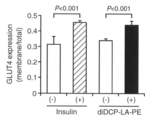
- FIG. 7 is a graph showing that diDCP-LA-PE promotes cell membrane transport of GLUT4 in differentiated 3T3L1-GLUT4myc adipocytes. Not treated with insulin or diDCP-LA-PE (1 ⁇ M), or 20 minutes after treatment, cells were lysed and separated into cytoplasmic and cell membrane fractions, then Western blotting using anti-c-myc antibody I did it.
- P value unpaired t-test.
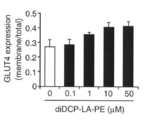
- FIG. 8 is a graph showing the concentration-dependent effect of diDCP-LA-PE on cell membrane transport of GLUT4 in 3T3L1-GLUT4myc adipocytes. Not treated with diDCP-LA-PE at a given concentration, or 20 minutes after treatment, cells were lysed and separated into cytoplasmic fraction and cell membrane fraction, and then Western blotting was performed using anti-c-myc antibody It was.
- FIG. 9 is a graph showing that phospholipid derivatives promote cell membrane transport of GLUT4 in differentiated 3T3L1-GLUT4myc adipocytes. 20 minutes after treatment with various phospholipid derivatives (control) or 1 ⁇ M, cells are lysed and separated into cytoplasmic fraction and cell membrane fraction, and then Western blotting is performed using anti-c-myc antibody It was.
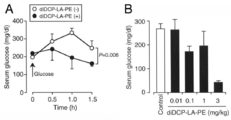
- FIG. 10 is a graph showing lowering serum glucose levels in C57BL / KsJ-lepr db / lepr db mice.
- FIG. 11 is a graph showing that diDCP-LA-PE reduces serum glucose levels in mice treated with streptozotocin (STZ). After the mouse was left in a state of glucose starvation for 12 hours, glucose (2 g / kg) was orally administered (arrow), and blood was collected at a predetermined time to perform a serum glucose assay.
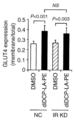
- FIG. 12 is a graph showing that diDCP-LA-PE promotes GLUT4 cell membrane transport in 3T3L1-GLUT4myc adipocytes in which the insulin receptor is knocked down (IR KD).
- NC siRNA negative control NC siRNA
- IR KD insulin receptor siRNA
- the present invention provides a medicament containing a phospholipid compound containing an unsaturated fatty acid having a cyclopropane ring as an active ingredient.
- the phospholipid compound is also referred to as the phospholipid compound of the present invention and the medicament is also referred to as the medicament of the present invention.
- the said medicine is mentioned later, it is a concept including a dementia therapeutic drug, a diabetes therapeutic drug, an anti-aging drug, etc.
- the “unsaturated fatty acid having a cyclopropane ring” is an unsaturated fatty acid in which a double bond is converted into a cyclopropane ring, and the number of the conversion is 1 or 2 depending on the number of the original double bonds. It is 2 or more, preferably 1 or 2, and more preferably 2.
- the unsaturated fatty acid is not particularly limited as long as it is a fatty acid having at least one or more double bonds in the molecule, but monounsaturated fatty acid, polyunsaturated fatty acid, cis type unsaturated fatty acid, Any of trans-type unsaturated fatty acids may be used.
- Examples of monounsaturated fatty acids include oleic acid, palmitoleic acid, petrothelic acid, erucic acid, brassic acid, obtusilic acid, capreic acid, undecylenic acid, lindelic acid, tuzic acid, fizeteric acid, myristic acid, palmitoleic acid , Elaidic acid, asclepic acid, vaccenic acid, gadoleic acid, gondoic acid, cetreic acid and cis-6-hexadecenoic acid.
- polyunsaturated fatty acids include linoleic acid, linolenic acid, ⁇ -linolenic acid, ricinoleic acid, ⁇ -eleostearic acid, ⁇ -eleostearic acid, bunic acid, trans-10-octadecadienoic acid and Examples thereof include trans-12-octadecadienoic acid.
- Preferred are linoleic acid (cis, cis-9,12-octadienoic acid) and oleic acid (cis-9-octadecenoic acid), and more preferred is linoleic acid.
- “unsaturated fatty acid having a cyclopropane ring” is preferably 8- [2- (2-pentyl-cyclopropylmethyl) -cyclopropyl] in which a double bond of linoleic acid is converted to a cyclopropane ring.
- DCP-LA -Octanoic acid
- DCP-OA 8- (2-octylcyclopropyl) octanoic acid
- DCP-LA 8- (2-octylcyclopropyl) octanoic acid
- DCP-OA 8- (2-octylcyclopropyl) octanoic acid
- More preferred is DCP-LA.
- phospholipids There are roughly two types of phospholipids: glycerophospholipids with a glycerin skeleton and sphingophospholipids with a sphingosine skeleton. Fatty acid and phosphoric acid are combined with glycerin or sphingosine as the central skeleton, and alcohol has an ester bond with phosphoric acid.
- the phospholipid compound of the present invention may be either glycerophospholipid or sphingophospholipid, but is preferably glycerophospholipid.
- a molecule in which a fatty acid is linked to C1 and C2 positions of glycerin and phosphoric acid is linked to C3 position is called phosphatidic acid, and a preferred embodiment of the present invention is that the fatty acids at C1 and C2 positions have the above-mentioned “cyclopropane ring. It has an unsaturated fatty acid.
- the two unsaturated fatty acids may be different or the same, but are preferably the same.
- Examples of alcohols ester-bonded to phosphoric acid include choline, ethanolamine, inositol, serine and the like. Ethanolamine is preferred.
- the phospholipid compounds of the present invention may contain one or more stereoisomers (eg optical isomers, geometric isomers) resulting from asymmetric carbon atoms or double bonds. All such isomers and mixtures thereof are included within the scope of the present invention.
- the phospholipid compound of the present invention is an ordinary phospholipid synthesis method (for example, “The Chemical Society of Japan, 5th edition, Experimental Chemistry Course 16”, except that the fatty acid contained therein is an unsaturated fatty acid having a cyclopropane ring. It can be synthesized according to the synthesis of organic compounds (cooperation); the method described in Chapter 3, “Phosphoric esters of carboxylic acids / amino acids / peptides”. In more detail, it is compoundable according to the method as described in an Example.
- the unsaturated fatty acid having a cyclopropane ring can be produced, for example, by the method shown in Patent Document 1 or a method analogous thereto. Moreover, what was extracted from the natural product may be used.
- a method for producing DCP-LA is described in Patent Document 1.
- phospholipid compound containing an unsaturated fatty acid having a cyclopropane ring preferably 1,2-o-bis- [8- ⁇ 2- (2-pentyl-cyclopropylmethyl) -cyclopropyl ⁇ -octanoyl] -sn-glycero-3-phosphatidylethanolamine (diDCP-LA-PE), 1,2-o-bis- [8- ⁇ 2- (2-pentyl-cyclopropylmethyl) -cyclopropyl ⁇ -octanoyl] -sn-glycero-3-phosphatidyl-L-serine (diDCP-LA-PS), 1,2-o-bis- [8- ⁇ 2- (2-pentyl-cyclopropylmethyl) -cyclopropyl ⁇ -octanoyl] -sn-3-glycero-3-phosphatidylcholine (diDCP-LA-PC), 1,2-o-bis- [
- the phospholipid compound of the present invention may also be used as a salt thereof.
- a salt is not particularly limited, but is preferably a pharmaceutically or food acceptable salt, for example, an inorganic base (eg, alkali metals such as sodium and potassium; alkaline earth metals such as calcium and magnesium; aluminum and ammonium), organic Base (eg, trimethylamine, triethylamine, pyridine, picoline, ethanolamine, diethanolamine, triethanolamine, dicyclohexylamine, N, N-dibenzylethylenediamine), inorganic acid (eg, hydrochloric acid, hydrobromic acid, nitric acid, sulfuric acid, phosphorus) Acid), organic acid (eg, formic acid, acetic acid, trifluoroacetic acid, fumaric acid, oxalic acid, tartaric acid, maleic acid, citric acid, succinic acid, malic acid, methanesulfonic acid, benzenesulfonic acid,
- the phospholipid compound of the present invention comprises (1) protein tyrosine phosphatase 1B (PTP1B) inhibitory action, (2) Akt activation action, and (3) protein phosphorylase C (PKC). ) Activation action, (4) PKC ⁇ and PKC ⁇ activation action, (5) glucose transporter 4 (GLUT4) migration promoting action to the cell membrane, and (6) insulin-independent blood glucose level lowering action. Due to these excellent pharmacological actions, the phospholipid compound of the present invention is particularly useful for the prevention or treatment of diseases associated with cognitive impairment and for the prevention or treatment of diabetes, and is provided as a pharmaceutical product.
- PTP1B protein tyrosine phosphatase 1B
- PKC protein phosphorylase C
- diseases or conditions associated with cognitive impairment include dementia (eg, senile dementia, Alzheimer's dementia (Alzheimer's disease), cerebrovascular dementia, post-traumatic dementia, dementia caused by brain tumor , Dementia caused by chronic subdural hematoma, dementia caused by normal pressure cerebral edema, dementia caused by various diseases such as postmeningitis dementia and Parkinsonian dementia), non-demented cognitive impairment ( Examples include various diseases or conditions, including mild cognitive impairment (MCI)), learning or memory impairment (eg, learning and memory impairment associated with brain development disorders) and the like.
- dementia eg, senile dementia, Alzheimer's dementia (Alzheimer's disease), cerebrovascular dementia, post-traumatic dementia, dementia caused by brain tumor , Dementia caused by chronic subdural hematoma, dementia caused by normal pressure cerebral edema, dementia caused by various diseases such as postmeningitis dementia and Parkinsonian dementia
- non-demented cognitive impairment Examples include various diseases or conditions, including mild cognitive impairment (MCI)), learning or
- prevention means preventing the manifestation of the symptom in a subject who does not exhibit cognitive impairment, learning / memory impairment, etc., and “treatment” In a subject exhibiting cognitive impairment, learning / memory impairment, etc., this means reducing the symptom or preventing or delaying the deterioration of the symptom.
- ⁇ Improvement '' means improvement in cognitive ability and learning / memory ability in subjects who do not show cognitive impairment, learning / memory impairment, etc., and in subjects showing cognitive impairment, learning / memory impairment, etc. It means that the symptoms are alleviated, preferably to the extent that they do not interfere with daily life.
- a preferred applicable disease includes Alzheimer's disease.
- the effect as an anti-aging agent can also be anticipated by the said characteristic.
- Diabetes is a disease in which the metabolic mechanism of sugar falls due to insufficient insulin action, and is divided into two types: insulin-dependent diabetes (IDDM or type 1 diabetes) and non-insulin-dependent diabetes (NIDDM or type 2 diabetes). Differentiated.
- IDDM insulin-dependent diabetes
- NIDDM non-insulin-dependent diabetes
- the former is a type in which insulin is not secreted or the amount of secretion is very low even if blood sugar level rises due to food intake, and the latter is a mechanism in which the response mechanism of peripheral tissues is not affected even though insulin is secreted normally. It is a type that does not operate normally and does not lower blood sugar levels.
- the present invention is useful for any type of diabetes.
- PTP1B inhibitory action Protein tyrosine phosphatase (PTP) 1B is a cytoplasmic tyrosine phosphatase, and is involved in the regulation of tyrosine kinase by controlling the phosphorylation state of tyrosine kinase. PTP1B is considered as one of the attenuation factors of insulin signaling, and inhibition of this enzyme is considered beneficial for the treatment of diabetes. In recent years, with the attention of protein phosphorylation involved in neural activity, PTP1B inhibition is expected to be applied to neurodegenerative diseases. Examples of reports showing the possibility of PTP1B inhibitors for pharmaceutical use include the following. 1.
- Akt activation action Akt also referred to as protein kinase B serine threonine kinase, which is activated by two amino acids, threonine 308 (Thr308) and serine 473 (Ser473) It is believed that phosphorylation of is essential. Akt has a function of specifically phosphorylating serine or threonine residues of intracellular proteins, and is known as an anti-aging factor. Akt plays the most important role in the insulin / insulin receptor signaling pathway involved in promoting the transport of glucose transporter 4 (GLUT4) to the cell membrane / intracellular uptake of glucose. Therefore, Akt activators can be effective diabetic therapeutic agents. Examples of reports showing the potential of Akt activators for pharmaceutical use include the following. 1.
- PKC protein kinase C
- PKC ⁇ targets the ⁇ 7 acetylcotine receptor expressed at the presynaptic terminal, enhances synaptic activity, and exhibits a cognitive function improving action (References 1-4 below).
- PKC ⁇ and ⁇ have an action of promoting the translocation of GLUT4 to the cell membrane as a downstream signal of insulin / insulin receptor (Bryant NJ et al., Nat Rev Mol Cell Biol 2002; 3: 267-277; Reference 5 below). Examples of reports showing the possibility of PKC activators for pharmaceutical use include the following. 1. Yamamoto S, Kanno T, Nagata T, Yaguchi T, Tanaka A, Nishizaki T.
- the linoleic acid derivative FR236924 facilitates hippocampal synaptic transmission by enhancing activity of presynaptic a7 acetylcholine receptors on the glutamatergic terminals.
- Linoleic acid derivative DCP-LA improves learning impairment in SAMP8.
- ⁇ , ⁇ -DCP-LA selectively activates PKC- ⁇ and stimulates neurotransmitter release with the highest potency among 4 diastereomers.Cell Physiol Biochem 2011; 27 (2): 149- 158. 4. Kanno T, Yaguchi T, Shimizu T, Tanaka A, Nishizaki T. 8- [2- (2-Pentyl-cyclopropylmethyl) -cyclopropyl] -octanoic acid and its diastereomers improve age-related cognitive deterioration. Lipids 2012; 47 ( 7): 687-695. 5. Sampsona SR, Cooperb DR.Specific protein kinase C isoforms as transducers and modulators of insulin signaling. Mol Genet Metab 2006; 89 (1-2): 32-47.
- Glucose transporter 4 (GLUT4) migration promoting action to the cell membrane GLUT4 expressed in adipocytes and skeletal muscle cells is hardly exposed on the cell membrane in the absence of insulin stimulation. It exists in the state of being incorporated into the vesicle group. Stimulation of insulin increases the amount of GLUT4 exposed on the cell membrane surface by promoting the transport of GLUT4 present in the intracellular vesicle onto the cell membrane, and reduces the blood glucose level by taking glucose into the cell. . Although the increase in sugar uptake induced by insulin is physiologically important, it is known that this physiological phenomenon is significantly impaired in the case of diabetes.
- pancreatic ⁇ -cells die, resulting in impaired insulin secretion and diabetes (type 1 diabetes).
- type 1 diabetes Currently, treatment of type 1 diabetes can only be done by injecting insulin from outside the body.
- insulin resistance attenuation of insulin responsiveness
- insulin secretion stimulants intestinal sugar absorption inhibitors, disaccharide degradation inhibitors, DPP-4 inhibitors, PPAR ⁇ activators, and the like are used.
- the basic diabetes treatment is to promote GLUT4 cell membrane translocation via insulin / insulin receptor signals.
- a drug that activates the intracellular downstream signal of insulin / insulin receptor and promotes the translocation of GLUT4 to the cell membrane makes it possible to enhance the intracellular uptake of sugar in an insulin-independent manner, type 1 and type 2 diabetes Regardless, the effect can be expected as a therapeutic drug for diabetes.
- Examples of reports showing the possibility of drugs that promote the transfer of GLUT4 to the cell membrane for pharmaceutical use include the following. 1. Stockli J, Fazakerley DJ, James DE. GLUT4 exocytosis. J Cell Sci 2011; 124: 4147-4159.
- the phospholipid compound of the present invention can lower blood sugar level without requiring insulin, and is therefore useful for the treatment of type 2 diabetes.
- the medicament of the present invention varies depending on the target disease, its severity, the animal species to be administered, the drug acceptability of the administration target, body weight, age, etc., but usually the amount of the phospholipid compound of the present invention which is an active ingredient Thus, 0.5-500 mg, preferably 5-250 mg per day for an adult is administered to the subject.
- the medicament of the present invention can contain any additive, for example, a pharmaceutically acceptable carrier, in addition to the phospholipid compound of the present invention which is an active ingredient.
- a pharmaceutically acceptable carrier include sucrose, starch, mannitol, sorbit, lactose, glucose, cellulose, talc, calcium phosphate, calcium carbonate and other excipients, cellulose, methylcellulose, hydroxypropylcellulose, polypropylpyrrolidone.
- the medicament of the present invention can be formulated as a preparation suitable for oral administration.
- Preparations suitable for oral administration include solutions in which an effective amount of a substance is dissolved in a diluent such as water or physiological saline, capsules, granules, powders or tablets containing the effective amount of the substance as solids or granules.
- a diluent such as water or physiological saline
- capsules such as water or physiological saline
- granules, powders or tablets containing the effective amount of the substance as solids or granules.
- a suspension in which an effective amount of a substance is suspended in an appropriate dispersion medium an emulsion in which a solution in which an effective amount of a substance is dissolved is dispersed in an appropriate dispersion medium, and the like.
- the medicament of the present invention can be formulated as a preparation suitable for parenteral administration.
- Formulations suitable for parenteral administration include aqueous and non-aqueous isotonic sterile injection solutions, which include antioxidants, Buffers, antibacterial agents, isotonic agents and the like may be included.
- Aqueous and non-aqueous sterile suspensions are also included, which may contain suspending agents, solubilizers, thickeners, stabilizers, preservatives and the like.
- the preparation can be enclosed in a container in unit doses or multiple doses like ampoules and vials.
- the active ingredient and a pharmaceutically acceptable carrier can be lyophilized and stored in a state that may be dissolved or suspended in a suitable sterile vehicle immediately before use.
- the phospholipid compound of the present invention can be provided as a food.
- the phospholipid compound of the present invention which is an active ingredient is (1) protein tyrosine for mammals (eg, mouse, rat, hamster, rabbit, cat, dog, cow, sheep, monkey, human, etc.).
- Phosphatase 1B (PTP1B) inhibitory action is (1) protein tyrosine for mammals (eg, mouse, rat, hamster, rabbit, cat, dog, cow, sheep, monkey, human, etc.).
- Phosphatase 1B (PTP1B) inhibitory action is Akt activation action, (3) Protein kinase C (PKC) activation action, (4) PKC ⁇ and PKC ⁇ activation action, (5) Glucose transporter 4 (GLUT4 )
- Phosphatase 1B (PTP1B) inhibitory action is eg, mouse, rat, hamster, rabbit, cat, dog, cow, sheep, monkey, human, etc
- “food” means all foods and drinks other than drugs and quasi drugs. Examples include, but are not limited to, foods for specified health use, nutritional functional foods, and so-called supplements.
- the medicament of the present invention may be one in which the unit intake of the medicament or a divided amount thereof is individually packaged or filled, or a plurality of unit intake or the divided amounts thereof are comprehensively packaged or filled.
- the unit intake of the medicament or its divided amount is the unit intake of the entire phospholipid compound of the present invention or its divided amount.
- a unit intake or its divided amount thereof is converted into a normal package (for example, a PTP (press through packaging) sheet, a paper container, What was packed or filled separately in a film (for example, plastic film) container, a glass container, a plastic container) is mentioned.
- a normal package for example, a PTP (press through packaging) sheet, a paper container, What was packed or filled separately in a film (for example, plastic film) container, a glass container, a plastic container
- Such individually packaged or filled pharmaceuticals or foods can be further combined and packaged together in one container (eg, paper container, film (eg, plastic film) container, glass container, plastic container). It may be filled.
- a medicine or food in which a large number of unit intakes or divided amounts thereof are comprehensively packaged or filled for example, a single container (eg, paper container, film (eg, , Plastic film) containers, glass containers, plastic containers) or the like packed or filled.
- the pharmaceutical product or food of the present invention can also contain a unit intake or a divided amount thereof in a sufficient number for long-term intake.
- a unit intake or a divided amount thereof in a sufficient number for long-term intake.
- it is 3 days or more, preferably 7 days, 10 days, It may be included in numbers sufficient for ingestion for 14 days or 21 days or more, 1 month, 2 months, 3 months or more.
- the medicament of the present invention can be used to prevent or treat other one or more compounds that can prevent or treat neurodegenerative diseases, or other diabetes.
- One or more compounds obtained may be included.
- Examples of compounds that prevent or treat other neurodegenerative diseases include polyphenols, coenzyme Q10, ⁇ -sitosterol, isoflavones, mevinic acid, vitamin C, vitamin E, flavonoids, terpenes, folic acid, vitamin B6, vitamin B12, ce Skill pen lactone, urokinase, nattokinase, dilinoleoylphosphatidylethanolamine, propyl sulfide, apple pectin, acetic acid, EPA, and DHA.
- Examples of other compounds that can prevent or treat diabetes include insulin secretagogues, sulfonylureas, sulfonamides, biguanides, ⁇ -glucosidase inhibitors, insulin preparations, insulin resistance improvers, and the like.
- Examples thereof include nateglinide, glimepiride, glibenclamide, gliclazide, acetohexamide, tolbutamide, glyclopyramide, tolazamide, glybsol, metformin hydrochloride, buformin hydrochloride, voglibose, acarbose, insulin, pioglitazone hydrochloride, and the like.
- diDCP-LA-PE can be produced by the production method described in Patent Document 1.
- Example 1 Synthesis of diDCP-LA-PE (Step 1) Synthesis of (R) -3-benzyloxy-1,2-propanediol (S)-(+)-2,2-dimethyl-1,3- To a solution of dioxolane-4-methanol (1.0 g, 7.6 mmol) in dimethylformamide (10 ml) was added 60% NaH (0.61 g, 15.1 mmol) and benzyl bromide (1.1 ml, 9.1 mmol) under ice cooling. After stirring at room temperature for 15 minutes, water was added to the reaction mixture. The aqueous layer was extracted with hexane, and the organic layer was washed with H 2 O and brine.
- Step 2 Synthesis of 3-O-benzyl-1,2-O-bis- [8- ⁇ 2- (2-pentyl-cyclopropylmethyl) -cyclopropyl ⁇ -octanoyl] -sn-glycerol DCP-LA ( 2.03 g, 6.59 mmol) was added to a toluene solution of (R) -3-benzyloxy-1,2-propanediol (0.5 g, 2.74 mmol), then concentrated under reduced pressure, and the resulting residue was dissolved in dichloromethane (15 ml ).
- Step 3 Synthesis of 1,2-O-bis- [8- ⁇ 2- (2-pentyl-cyclopropylmethyl) -cyclopropyl ⁇ -octanoyl] -sn-glycerol 3-O-benzyl-1,2- O-bis- [8- ⁇ 2- (2-pentyl-cyclopropylmethyl) -cyclopropyl ⁇ -octanoyl] -sn-glycerol (1.20 g, 1.57 mmol) and 10% (w / v) palladium activated carbon (480 mg) A solution of ethanol (80 ml) was stirred at room temperature for 15 minutes under a hydrogen atmosphere (1 atm).
- Step 4 Synthesis of diDCP-LA-PE 1,2-O-bis- [8- ⁇ 2- (2-pentyl-cyclopropylmethyl) -cyclopropyl ⁇ -octanoyl] -sn-glycerol (1.05 g, 1.57 mmol) and triethylamine (552 ml, 3.96 mmol) in CH 2 Cl 2 (40 ml) were added methyl N, N-diisopropylamidochloride (460 ml, 2.37 mmol) under ice cooling.
- Example 2 Synthesis of diDCP-LA-PS 1,2-O-bis- [8- ⁇ 2- (2-pentyl-cyclopropylmethyl) -cyclopropyl ⁇ -octanoyl] -sn-glycerol (0.44 g, 0.66 mmol) and triethylamine (0.18 ml, 1.3 mmol) in CH 2 Cl 2 (15 ml) were added methyl N, N-diisopropylamidochloride (0.15 ml, 0.79 mmol) under ice cooling.
- N-carbobenzoxy-serine benzyl ester (0.33 g, 0.99 mmol) and 1H-tetrazole (0.19 g, 2.6 mmol) were added to the mixture, and tert-butyl hydroperoxide (0.87 ml, 6.6 mmol) of 70% (v / v) aqueous solution was further added and stirred at the same temperature for 20 minutes.
- tert-butyl hydroperoxide (0.87 ml, 6.6 mmol) of 70% (v / v) aqueous solution was further added and stirred at the same temperature for 20 minutes.
- 10% (w / v) Na 2 S 2 O 3 aqueous solution the obtained aqueous layer was extracted with ethyl acetate, and the organic layer was dried over anhydrous MgSO 4 .
- Example 3 Synthesis of diDCP-LA-PC 1,2-O-bis- [8- ⁇ 2- (2-pentyl-cyclopropylmethyl) -cyclopropyl ⁇ -octanoyl] -sn-glycerol (0.14 g, 0.21 mmol) and triethylamine (0.058 ml, 0.42 mmol) in CH 2 Cl 2 (5 ml) were added methyl N, N-diisopropylamidochloride (0.048 ml, 0.25 mmol) under ice cooling.
- Example 4 Synthesis of diDCP-LA-D-PI 1,2-O-bis- [8- ⁇ 2- (2-pentyl-cyclopropylmethyl) -cyclopropyl ⁇ -octanoyl] -sn-glycerol (0.080 g , 0.12 mmol) and triethylamine (0.033 ml, 0.24 mmol) in CH 2 Cl 2 (2 ml) were added methyl N, N-diisopropylamidochloride (0.028 ml, 0.14 mmol) under ice cooling.
- Example 5 Synthesis of unnatural diDCP-LA-L-PI 1,2-O-bis- [8- ⁇ 2- (2-pentyl-cyclopropylmethyl) -cyclopropyl ⁇ -octanoyl] -sn-glycerol (0.175 g, 0.26 mmol) and triethylamine (0.072 ml, 0.52 mmol) in CH 2 Cl 2 (5 ml) were charged with methyl N, N-diisopropylamidochloride (0.061 ml, 0.31 mmol) under ice cooling. Added.
- O-methyl O- (2 ', 3 NaI 50 mg, 0.33 mmol
- 2-butanone 2 ml
- 2N HCl 2N HCl was added to the reaction mixture and the aqueous layer was extracted with chloroform.
- Test Example 1 Protein tyrosine phosphatase 1B (PTP1B) inhibitory action (materials and methods) Assay of PTP1B activity under cell-free conditions Protein tyrosine phosphatase measurements under cell-free conditions have been reported previously (Baba Y, et al. J Am Chem Soc 2003; 125; 9740-9749; Rice RL, et al. Biochemistry 1997 36: 15965-15974) was carried out by a partially modified method. Human PTP1B was cloned into a pGEX-6P-3 vector having a GST tag at the NH 2 terminus and competent E. coli suitable for transformation and protein expression. It was expressed in E. coli BL21 (DE3).
- GST-fused PTP1B was affinity purified using glutathione sepharose 4B (GE Healthcare Bio-Science KK, Tokyo, Japan). PTP1B activity was measured by reacting with p-nitrophenyl phosphate (p-NPP) (Sigma, St. Louis, MO, USA) as a substrate.
- the enzyme is Na, a PTP1B inhibitor, in the reaction medium [50 mM HEPES, 1 mM EDTA, 50 mM NaCl, 1 mM dithiothreitol, pH 7.2] at 37 ° C. for 30 minutes in the presence and absence of diDCP-LA-PE. 3 VO 4 was preincubated with and without addition.
- Test Example 2 Akt activation action (materials and methods) 1.
- Cell culture The 3T3L1-GLUT4myc fibroblast cell line expressing GLUT4myc was used. The cell is constructed by inserting a human c-MYC epitope (14 amino acids) into the first ectodomain. Cells were treated with 5% CO 2 in Dulbecco's Modified Eagles Medium (DMEM) supplemented with 10% (v / v) bovine serum, penicillin (final concentration, 100 U / ml) and streptomycin (final concentration, 0.1 mg / ml). Culturing at 37 ° C. in a humid environment of 95% air.
- DMEM Dulbecco's Modified Eagles Medium
- the cells are then lysed with lysis buffer [150 mM NaCl, 20 mM ethylenediaminetetraacetic acid, 0.5% (v / v) Nonidet P-40 and 50 mM Tris, pH 7.4] containing 1% (v / v) protease inhibitor cocktail. And centrifuged at 3,000 rpm for 5 minutes at 4 ° C. The supernatant was used as a whole cell lysate. For Western blotting, proteins were separated by SDS-polyacrylamide gel electrophoresis (SDS-PAGE) and transferred to a polyvinylidene difluoride membrane.
- SDS-PAGE SDS-polyacrylamide gel electrophoresis
- the blotting membrane was blocked with TBS-T [150 mM NaCl, 0.1% (v / v) Tween20 and 20 mM Tris, pH 7.5] containing 5% (w / v) BSA, followed by phospho-Akt ( Thr308), phospho-Akt (Ser473), and antibodies against Akt (Cell Signaling Technology, Inc., Danvers, MA, USA). After washing, the membrane was reacted with horseradish peroxidase conjugated goat anti-rabbit IgG antibody. Immunoreactivity was detected using an ECL kit (GE Healthcare, Piscataway, NJ, USA) and visualized using a chemiluminescence detection system (GE Healthcare).
- Test Example 3 PKC activation action (materials and methods)
- Cell-free PKC assay PKC activity in a cell-free system was quantified by the method described in a previous report (Kanno T et al. J Lipid Res 2006; 47: 1146-1156).
- a synthetic PKC substrate peptide (10 ⁇ M) was prepared in a medium containing 20 mM Tris-HCl (pH 7.5), 5 mM magnesium acetate, 10 ⁇ M ATP, and DCP-LA-phospholipid in the absence of phosphatidylserine and diacylglycerol. Reaction with various PKC isozymes at 30 ° C. for 5 minutes.
- Ca 2+ -free medium was used for new PKCs such as PKC- ⁇ and - ⁇ , and medium containing 100 ⁇ M CaCl 2 was used for other PKC isozymes.
- Reverse phase HPLC LC-10ATvp, Shimadzu Co., Kyoto, Japan
- the peak of the substrate peptide and the peak of the new product were measured at an absorbance of 214 nm. Measure the areas of the non-phosphorylated PKC substrate peptide and the phosphorylated PKC substrate peptide (the total area corresponds to the concentration of the PKC substrate peptide used in this example), and the amount of phosphorylated substrate peptide was calculated.
- FIGS. 5 shows that diDCP-LA-PE activates all PKC isozymes.
- FIG. 6 shows that diDCP-LA-PE acts as a specific activator of PKC ⁇ and PKC ⁇ that are considered important in the regulation of GLUT4 trafficking.
- Test Example 4 Promoting action of sugar transport carrier GLUT4 to cell membrane-1 (Materials and methods) Analysis of GLUT4 trafficking Krebs-Ringer-HEPES buffer containing 0.2% (w / v) bovine serum albumin containing 3T3L1-GLUT4myc adipocytes and supplemented with 10 mM glucose [136 mM NaCl, 4.7 mM KCl, 1.25 mM CaCl 2 , 1.25 mM MgSO 4 and 20 mM HEPES, pH 7.5] at 37 ° C. for 1 hour. Cells were incubated for 20 minutes in the presence or absence of insulin, phospholipids or derivatives thereof.
- the cells were then placed in ice-cold mitochondrial buffer [210 mM mannitol, 70 mM sucrose, and 1 mM ethylenediaminetetraacetic acid (EDTA), 10 mM HEPES, pH 7.5] containing a 1% (v / v) protease inhibitor cocktail. Homogenized by sonication. Subsequently, the homogenate was centrifuged at 3,000 rpm for 5 minutes at 4 ° C. The supernatant was further centrifuged at 11,000 rpm for 15 minutes at 4 ° C.
- mitochondrial buffer 210 mM mannitol, 70 mM sucrose, and 1 mM ethylenediaminetetraacetic acid (EDTA), 10 mM HEPES, pH 7.5
- the collected supernatant was ultracentrifuged at 100,000 g for 60 minutes at 4 ° C., and separated into a cytoplasmic fraction and a cell membrane fraction.
- the supernatant was used as the cytoplasm fraction and the pellet was used as the cell membrane fraction.
- Whether or not the cytoplasmic component and the cell membrane component were successfully separated was confirmed by Western blot analysis using an antibody against LDH which is a marker of cell membrane component and an antibody against cadherin which is a cell membrane marker.
- the protein concentration of each fraction was measured using a BCA protein assay kit (Thermo Fisher Scientific, Waltham, MA, USA).
- the protein of the cell membrane fraction was resuspended in mitochondrial buffer containing 1% (w / v) sodium dodecyl sulfate (SDS).
- the proteins of each fraction were separated by SDS-polyacrylamide gel electrophoresis (SDS-PAGE) and transferred to a polyvinylidene difluoride membrane.
- the blotting membrane was blocked with TBS-T [150 mM NaCl, 0.1% (v / v) Tween20 and 20 mM Tris, pH 7.5] containing 5% (w / v) BSA, and anti-c-myc antibody (Merck Millipore , Darmstadt, Germany) followed by reaction with horseradish peroxidase (HRP) conjugated goat anti-mouse IgG antibody.
- Immunoreactivity was detected using an ECL kit (Invitrogen) and visualized using a chemiluminescence detection system (GE Healthcare, Piscataway, NJ, USA). The signal density was measured using image analysis software (Image Healthcare). (result) The results are shown in FIGS. FIG.
- FIG. 7 shows that, like insulin, diDCP-LA-PE has an effect of promoting GLUT4 cell membrane transport.
- FIG. 8 shows that diDCP-LA-PE promotes cell membrane transport of GLUT4 in a concentration-dependent manner.
- FIG. 9 shows that all phospholipid derivatives except natural diDCP-LA-PI have an effect of promoting cell membrane transport of GLUT4.
- Test Example 5 Insulin-independent blood glucose lowering action (materials and methods) Glucose tolerance test C57BL / KsJ-lepr db / lepr db mice (female, 8 weeks old) (CLEA Japan; Tokyo, Japan) were used. The glucose tolerance test was performed on mice starved for 12 hours. Glucose (2 g / ml / kg body weight) was forcibly administered orally at that time. 30 minutes before administration of glucose, diDCP-LA-PE (0.01, 0.1, 1, 3 mg / kg), insulin (0.75 U / kg) or saline was orally administered.
- Test Example 6 Effect on type 1 diabetes model mouse using streptozotocin (materials and methods) C57BL / 6J mice (male, 8 weeks old) (Japan SLC Inc .; Shizuoka, Japan) were used. Streptozotocin (STZ; 250 mg / kg) or saline as a control was injected intraperitoneally. Four days after injection, an oral glucose tolerance test (OGTT) was performed. (result) The results are shown in FIG. This result shows that diDCP-LA-PE significantly suppresses the increase in blood glucose in STZ-treated mice. That is, diDCP-LA-PE is effective for type 1 diabetes.
- Test Example 7 Promoting action of sugar transport carrier GLUT4 to cell membrane-2 (Materials and methods) The experiment was conducted in the same manner as in Test Example 4 except that 3T3L1-GLUT4myc adipocytes in which the insulin receptor was knocked down were used and that incubation with diDCP-LA-EA was performed in the absence of insulin. . (result) The results are shown in FIG. FIG. 12 shows that diDCP-LA-PE can promote GLUT4 translocation to the cell membrane in an insulin receptor-independent manner. That is, it is shown that diDCP-LA-PE can substitute for an intracellular insulin receptor signal without insulin (lowering blood glucose level independently of insulin / insulin receptor). The results show that diDCP-LA-PE is also effective in the treatment of type 1 diabetes, where insulin is essential for treatment.
- the phospholipid compound comprising an unsaturated fatty acid derivative having a cyclopropane ring provided by the present invention has an excellent pharmacological action (protein tyrosine phosphatase 1B (PTP1B) inhibitory action, Akt, etc.) in improving cognitive function and / or treating diabetes.
- PTP1B protein tyrosine phosphatase 1B
- Akt cyclopropane ring
- Akt protein tyrosine phosphatase 1B
- Akt protein tyrosine phosphatase 1B
- Akt protein tyrosine phosphatase 1B
- Akt protein tyrosine phosphatase 1B
- Akt protein tyrosine phosphatase 1B
- Akt protein tyrosine phosphatase 1B
- Akt protein tyrosine phosphatase 1B
- Akt protein tyrosine phosphatase 1B
Landscapes
- Health & Medical Sciences (AREA)
- Chemical & Material Sciences (AREA)
- General Health & Medical Sciences (AREA)
- Life Sciences & Earth Sciences (AREA)
- Organic Chemistry (AREA)
- Medicinal Chemistry (AREA)
- Veterinary Medicine (AREA)
- Public Health (AREA)
- Pharmacology & Pharmacy (AREA)
- Animal Behavior & Ethology (AREA)
- Epidemiology (AREA)
- Molecular Biology (AREA)
- Biochemistry (AREA)
- Bioinformatics & Cheminformatics (AREA)
- Engineering & Computer Science (AREA)
- Nuclear Medicine, Radiotherapy & Molecular Imaging (AREA)
- General Chemical & Material Sciences (AREA)
- Chemical Kinetics & Catalysis (AREA)
- Diabetes (AREA)
- Neurology (AREA)
- Biomedical Technology (AREA)
- Neurosurgery (AREA)
- Obesity (AREA)
- Hospice & Palliative Care (AREA)
- Psychiatry (AREA)
- Hematology (AREA)
- Endocrinology (AREA)
- Emergency Medicine (AREA)
- Pharmaceuticals Containing Other Organic And Inorganic Compounds (AREA)
- Measuring Or Testing Involving Enzymes Or Micro-Organisms (AREA)
Abstract
Priority Applications (3)
| Application Number | Priority Date | Filing Date | Title |
|---|---|---|---|
| EP14751672.8A EP2957285B1 (fr) | 2013-02-15 | 2014-02-14 | Composé phospholipide contenant un dérivé d'acide gras insaturé ayant un noyau cyclopropane |
| JP2015500305A JP6316272B2 (ja) | 2013-02-15 | 2014-02-14 | シクロプロパン環を有する不飽和脂肪酸誘導体を含むリン脂質化合物 |
| US14/767,532 US9512152B2 (en) | 2013-02-15 | 2014-02-14 | Phospholipid compound containing unsaturated fatty acid derivative having cyclopropane ring |
Applications Claiming Priority (2)
| Application Number | Priority Date | Filing Date | Title |
|---|---|---|---|
| JP2013027992 | 2013-02-15 | ||
| JP2013-027992 | 2013-02-15 |
Publications (1)
| Publication Number | Publication Date |
|---|---|
| WO2014126191A1 true WO2014126191A1 (fr) | 2014-08-21 |
Family
ID=51354190
Family Applications (1)
| Application Number | Title | Priority Date | Filing Date |
|---|---|---|---|
| PCT/JP2014/053448 Ceased WO2014126191A1 (fr) | 2013-02-15 | 2014-02-14 | Composé phospholipide contenant un dérivé d'acide gras insaturé ayant un noyau cyclopropane |
Country Status (4)
| Country | Link |
|---|---|
| US (1) | US9512152B2 (fr) |
| EP (1) | EP2957285B1 (fr) |
| JP (1) | JP6316272B2 (fr) |
| WO (1) | WO2014126191A1 (fr) |
Cited By (2)
| Publication number | Priority date | Publication date | Assignee | Title |
|---|---|---|---|---|
| WO2015105094A1 (fr) * | 2014-01-07 | 2015-07-16 | 株式会社西崎創薬研究所 | Agent pour traiter le diabète |
| JP2024508416A (ja) * | 2021-02-15 | 2024-02-27 | インダストリー-アカデミック コオペレイション ファウンデーション,ヨンセイ ユニバーシティ | 非定型pkc活性化剤を含有する糖調節用組成物 |
Families Citing this family (1)
| Publication number | Priority date | Publication date | Assignee | Title |
|---|---|---|---|---|
| US10639313B2 (en) | 2017-09-01 | 2020-05-05 | Ndsu Research Foundation | Compound for inhibition of delta-5-desaturase (D5D) and treatment of cancer and inflammation |
Citations (5)
| Publication number | Priority date | Publication date | Assignee | Title |
|---|---|---|---|---|
| WO2002050013A1 (fr) | 2000-12-19 | 2002-06-27 | Fujisawa Pharmaceutical Co., Ltd. | Compose d'acide carboxylique ayant un cycle de cyclopropane |
| JP2005247728A (ja) | 2004-03-03 | 2005-09-15 | Tokkusu Kk | 医薬組成物 |
| JP2009007329A (ja) * | 2007-05-31 | 2009-01-15 | Tomoyuki Nishizaki | 認知障害を伴う疾患又は状態の予防又は治療用の組成物 |
| JP2011529503A (ja) * | 2008-07-28 | 2011-12-08 | ブランシェット・ロックフェラー・ニューロサイエンスィズ・インスティテュート | 神経変性疾患の治療のためのpkc活性化化合物 |
| WO2013071281A1 (fr) * | 2011-11-13 | 2013-05-16 | Blanchette Rockefeller Neurosciences Institute | Esters de dcpla et méthodes de traitement les utilisant |
Family Cites Families (1)
| Publication number | Priority date | Publication date | Assignee | Title |
|---|---|---|---|---|
| EP3006033A4 (fr) | 2013-06-07 | 2017-01-04 | KTN Biotec, Inc. | Médicament anticancéreux |
-
2014
- 2014-02-14 EP EP14751672.8A patent/EP2957285B1/fr not_active Not-in-force
- 2014-02-14 WO PCT/JP2014/053448 patent/WO2014126191A1/fr not_active Ceased
- 2014-02-14 US US14/767,532 patent/US9512152B2/en not_active Expired - Fee Related
- 2014-02-14 JP JP2015500305A patent/JP6316272B2/ja active Active
Patent Citations (5)
| Publication number | Priority date | Publication date | Assignee | Title |
|---|---|---|---|---|
| WO2002050013A1 (fr) | 2000-12-19 | 2002-06-27 | Fujisawa Pharmaceutical Co., Ltd. | Compose d'acide carboxylique ayant un cycle de cyclopropane |
| JP2005247728A (ja) | 2004-03-03 | 2005-09-15 | Tokkusu Kk | 医薬組成物 |
| JP2009007329A (ja) * | 2007-05-31 | 2009-01-15 | Tomoyuki Nishizaki | 認知障害を伴う疾患又は状態の予防又は治療用の組成物 |
| JP2011529503A (ja) * | 2008-07-28 | 2011-12-08 | ブランシェット・ロックフェラー・ニューロサイエンスィズ・インスティテュート | 神経変性疾患の治療のためのpkc活性化化合物 |
| WO2013071281A1 (fr) * | 2011-11-13 | 2013-05-16 | Blanchette Rockefeller Neurosciences Institute | Esters de dcpla et méthodes de traitement les utilisant |
Non-Patent Citations (24)
| Title |
|---|
| "Jikken Kagaku Kouza 16, synthesis of organic compound (kyo" |
| BABA Y ET AL., J AM CHEM SOC, vol. 125, 2003, pages 9740 - 9749 |
| BRYANT NJ ET AL., NAT REV MOL CELL BIOL, vol. 3, 2002, pages 267 - 277 |
| BRYANT NJ; GOVERS R; JAMES DE: "Regulated transport of the glucose transporter GLUT4", NAT REV MOL CELL BIOL, vol. 3, 2002, pages 267 - 277 |
| CHANGJIN ZHU ET AL.: "Synthesis of a novel lysophosphatidylcholine.", J.NAT. PROD., vol. 64, 2001, pages 98 - 99, XP055273529 * |
| D.L.TURNER ET AL.: "The synthesis of phosphatidylethanolamine and phosphatidylserine containing acetylenic or cyclopropane fatty acids and the activity of these phosphatides in blood coagulation.", LIPIDS, vol. 5, no. 7, 1970, pages 650 - 657, XP035174858 * |
| KANNO T ET AL., J LIPID RES, vol. 47, 2006, pages 1146 - 1156 |
| KANNO T; YAGUCHI T; SHIMIZU T; TANAKA A; NISHIZAKI T.: "8-[2-(2-Pentyl-cyclopropylmethyl)-cyclopropyl]-octanoic acid and its diastereomers improve age-related cognitive deterioration", LIPIDS, vol. 47, no. 7, 2012, pages 687 - 695, XP035075618, DOI: doi:10.1007/s11745-012-3677-y |
| KAORU NAGAI ET AL.: "Dilinoleoyl- phosphatidylethanolamine from Hericium erinaceum protects against ER stress-dependent Neuro2a cell death via protein kinase C pathway.", JOURNAL OF NUTRITIONAL BIOCHEMISTRY, vol. 17, 2006, pages 525 - 530, XP024960855 * |
| KIKKAWA ET AL., J. BIOL. CHEM., vol. 257, 1982, pages 13341 |
| LIN Z; ZHANG Y; ZHANG Y; SHEN H; HU L; JIANG H; SHEN X: "Oleanolic acid derivative NPLC441 potently stimulates glucose transport in 3T3-L1 adipocytes via a multi-target mechanism", BIOCHEM PHARMACOL, vol. 76, no. 10, 2008, pages 1251 - 1262, XP025573141, DOI: doi:10.1016/j.bcp.2008.08.016 |
| MAARBJERG SJ; SYLOW L; RICHTER EA: "Current understanding of increased insulin sensitivity after exercise-emerging candidates", ACTA PHYSIOL, vol. 202, 2011, pages 323 - 335 |
| NEUROSCIENCE, vol. 130, no. 1, 2005, pages 207 - 213 |
| RICE RL ET AL., BIOCHEMISTRY, vol. 36, 1997, pages 15965 - 15974 |
| SAMPSONA SR; COOPERB DR: "Specific protein kinase C isoforms as transducers and modulators of insulin signaling", MOL GENET METAB, vol. 89, no. 1-2, 2006, pages 32 - 47 |
| See also references of EP2957285A4 |
| SHIMIZU T; KANNO T; TANAKA A; NISHIZAKI T.: "a,p-DCP-LA selectively activates PKC- and stimulates neurotransmitter release with the highest potency among 4 diastereomers", CELL PHYSIOL BIOCHEM, vol. 27, no. 2, 2011, pages 149 - 158, XP055088919 |
| STOCKLI J; FAZAKERLEY DJ; JAMES DE: "GLUT4 exocytosis", J CELL SCI, vol. 124, 2011, pages 4147 - 4159 |
| SUN T; WANG Q; YU Z; ZHANG Y; GUO Y; CHEN K; SHEN X; JIANG H.: "Hyrtiosal, a PTP1B inhibitor from the marine sponge Hyrtios erectus, shows extensive cellular effects on PI3K/AKT activation, glucose transport, and TGFb/Smad2 signaling", CHEMBIOCHEM, vol. 8, no. 2, 2007, pages 187 - 193 |
| TAKESHI KANNNO ET AL.: "The linoleic acid derivative DCP-LA selectively activates PKC-epsilon, possibly binding to the phosphatidylserine binding site.", JOURNAL OF LIPID RESEARCH, vol. 47, 2006, pages 1146 - 1156, XP002550145 * |
| YAGUCHI T; NAGATA T; MUKASA T; FUJIKAWA H; YAMAMOTO H; YAMAMOTO S; ISO H; TANAKA A; NISHIZAKI T: "Linoleic acid derivative DCP-LA improves learning impairment in SAMP8", NEUROREPORT, vol. 17, no. 1, 2006, pages 105 - 108 |
| YAGUCHI T; NAGATA T; NISHIZAKI T.: "1-Palmitoyl-2-oleoyl-sn-glycero-3-phosphocholine improves cognitive decline by enhancing long-term depression", BEHAV BRAIN RES, vol. 204, 2009, pages 129 - 32, XP026422139 |
| YAGUCHI T; NAGATA T; NISHIZAKI T: "Dilinoleoylphosphatidylcholine ameliorates scopolamine-induced impairment of spatial learning and memory by targeting alpha-7 nicotinic ACh receptors", LIFE SCI, vol. 84, 2009, pages 263 - 6, XP055174884, DOI: doi:10.1016/j.lfs.2008.12.003 |
| ZHANG Y; ZHANG H; YAO XG; SHEN H; CHEN J; LI C; CHEN L; ZHENG M; YE J; HU L: "+)-Rutamarin as a dual inducer of both GLUT4 translocation and expression efficiently ameliorates glucose homeostasis in insulin-resistant mice", PLOS ONE, vol. 7, no. 2, 2012, pages E31811 |
Cited By (4)
| Publication number | Priority date | Publication date | Assignee | Title |
|---|---|---|---|---|
| WO2015105094A1 (fr) * | 2014-01-07 | 2015-07-16 | 株式会社西崎創薬研究所 | Agent pour traiter le diabète |
| US9889104B2 (en) | 2014-01-07 | 2018-02-13 | Nishizaki Bioinformation Research Institute | Agent for treating diabetes |
| JP2024508416A (ja) * | 2021-02-15 | 2024-02-27 | インダストリー-アカデミック コオペレイション ファウンデーション,ヨンセイ ユニバーシティ | 非定型pkc活性化剤を含有する糖調節用組成物 |
| JP7652915B2 (ja) | 2021-02-15 | 2025-03-27 | インダストリー-アカデミック コオペレイション ファウンデーション,ヨンセイ ユニバーシティ | 非定型pkc活性化剤を含有する糖調節用組成物 |
Also Published As
| Publication number | Publication date |
|---|---|
| US20150376213A1 (en) | 2015-12-31 |
| US9512152B2 (en) | 2016-12-06 |
| EP2957285B1 (fr) | 2018-01-10 |
| JP6316272B2 (ja) | 2018-04-25 |
| EP2957285A4 (fr) | 2016-07-06 |
| EP2957285A1 (fr) | 2015-12-23 |
| JPWO2014126191A1 (ja) | 2017-02-02 |
Similar Documents
| Publication | Publication Date | Title |
|---|---|---|
| ES2683021T3 (es) | Compuestos activadores de la PKC para el tratamiento de enfermedades neurodegenerativas | |
| US9012500B2 (en) | PKC-ε activator | |
| KR20120087878A (ko) | 1,3-프로판디설포닉 애시드의 수송을 위한 방법, 화합물 및 조성물 | |
| US20210238208A1 (en) | Novel Plasmalogen Derivatives | |
| US20230235378A1 (en) | Lzheimer's disease-specific alterations of protein kinase c epsilon (pkc-epsilon protein levels | |
| JP6316272B2 (ja) | シクロプロパン環を有する不飽和脂肪酸誘導体を含むリン脂質化合物 | |
| TWI832450B (zh) | 肌酸前藥、組合物及其使用方法 | |
| JP5455396B2 (ja) | プロテインホスファターゼ−1阻害剤 | |
| JP4836345B2 (ja) | 環状ホスファチジン酸誘導体を含む神経細胞の生存促進剤 | |
| US20070078111A1 (en) | LPA2 receptor agonist inhibitors of CFTR | |
| Lenoir et al. | PtdIns (4) P signalling and recognition systems | |
| CN115066237A (zh) | 用于治疗认知障碍的组合物 | |
| CN118678969A (zh) | 抗癌剂及抗癌剂的筛选方法 | |
| EP3006033A1 (fr) | Médicament anticancéreux | |
| US20080070870A1 (en) | Use of omega-3 rich phospholipids in the area of cognitive function | |
| EP2959896B1 (fr) | Utilisation du dcp-la comme réactif pour inhiber la protéine tyrosine phosphatase 1b in vitro | |
| JP6453245B2 (ja) | Glut4エンドサイトーシス抑制剤 | |
| JP2023161714A (ja) | 脳機能活性化組成物 | |
| EP3903776A1 (fr) | Composition destinée à améliorer la fonction cognitive | |
| Shen | Medicinal Chemistry of Lanthionine Ketenamine Analogues. Development of New Small Molecule Treatments for Neurodegenerative Diseases | |
| Milenina et al. | Inhibitors of the Metabolism of Arachidonic Acid Suppress Ca2+ Responses Induced by Trifluoperazine in Macrophages | |
| Farooqui | Neural membranes: A Pandora’s box of lipid mediators | |
| WO2007039911A1 (fr) | Agent et préparations l’incluant pour l'inhibition de lipases et/ou de phospholipases dans les fluides corporels, les cellules et les tissus | |
| Matsuo | Regulation of osteoclasts by membrane-derived lipid mediators | |
| WO2005074911A1 (fr) | Activateur de la protéine kinase c |
Legal Events
| Date | Code | Title | Description |
|---|---|---|---|
| 121 | Ep: the epo has been informed by wipo that ep was designated in this application |
Ref document number: 14751672 Country of ref document: EP Kind code of ref document: A1 |
|
| ENP | Entry into the national phase |
Ref document number: 2015500305 Country of ref document: JP Kind code of ref document: A |
|
| WWE | Wipo information: entry into national phase |
Ref document number: 14767532 Country of ref document: US |
|
| NENP | Non-entry into the national phase |
Ref country code: DE |
|
| WWE | Wipo information: entry into national phase |
Ref document number: 2014751672 Country of ref document: EP |