EP2964217B1 - Traitement d'association pour le traitement du cancer - Google Patents
Traitement d'association pour le traitement du cancer Download PDFInfo
- Publication number
- EP2964217B1 EP2964217B1 EP14710617.3A EP14710617A EP2964217B1 EP 2964217 B1 EP2964217 B1 EP 2964217B1 EP 14710617 A EP14710617 A EP 14710617A EP 2964217 B1 EP2964217 B1 EP 2964217B1
- Authority
- EP
- European Patent Office
- Prior art keywords
- compound
- pharmaceutically acceptable
- acceptable salt
- cancer
- days
- Prior art date
- Legal status (The legal status is an assumption and is not a legal conclusion. Google has not performed a legal analysis and makes no representation as to the accuracy of the status listed.)
- Active
Links
Images


Classifications
-
- A—HUMAN NECESSITIES
- A61—MEDICAL OR VETERINARY SCIENCE; HYGIENE
- A61K—PREPARATIONS FOR MEDICAL, DENTAL OR TOILETRY PURPOSES
- A61K31/00—Medicinal preparations containing organic active ingredients
- A61K31/33—Heterocyclic compounds
- A61K31/395—Heterocyclic compounds having nitrogen as a ring hetero atom, e.g. guanethidine or rifamycins
- A61K31/535—Heterocyclic compounds having nitrogen as a ring hetero atom, e.g. guanethidine or rifamycins having six-membered rings with at least one nitrogen and one oxygen as the ring hetero atoms, e.g. 1,2-oxazines
- A61K31/5375—1,4-Oxazines, e.g. morpholine
- A61K31/5377—1,4-Oxazines, e.g. morpholine not condensed and containing further heterocyclic rings, e.g. timolol
-
- A—HUMAN NECESSITIES
- A61—MEDICAL OR VETERINARY SCIENCE; HYGIENE
- A61K—PREPARATIONS FOR MEDICAL, DENTAL OR TOILETRY PURPOSES
- A61K31/00—Medicinal preparations containing organic active ingredients
- A61K31/33—Heterocyclic compounds
- A61K31/335—Heterocyclic compounds having oxygen as the only ring hetero atom, e.g. fungichromin
- A61K31/337—Heterocyclic compounds having oxygen as the only ring hetero atom, e.g. fungichromin having four-membered rings, e.g. taxol
-
- A—HUMAN NECESSITIES
- A61—MEDICAL OR VETERINARY SCIENCE; HYGIENE
- A61P—SPECIFIC THERAPEUTIC ACTIVITY OF CHEMICAL COMPOUNDS OR MEDICINAL PREPARATIONS
- A61P1/00—Drugs for disorders of the alimentary tract or the digestive system
- A61P1/04—Drugs for disorders of the alimentary tract or the digestive system for ulcers, gastritis or reflux esophagitis, e.g. antacids, inhibitors of acid secretion, mucosal protectants
-
- A—HUMAN NECESSITIES
- A61—MEDICAL OR VETERINARY SCIENCE; HYGIENE
- A61P—SPECIFIC THERAPEUTIC ACTIVITY OF CHEMICAL COMPOUNDS OR MEDICINAL PREPARATIONS
- A61P1/00—Drugs for disorders of the alimentary tract or the digestive system
- A61P1/18—Drugs for disorders of the alimentary tract or the digestive system for pancreatic disorders, e.g. pancreatic enzymes
-
- A—HUMAN NECESSITIES
- A61—MEDICAL OR VETERINARY SCIENCE; HYGIENE
- A61P—SPECIFIC THERAPEUTIC ACTIVITY OF CHEMICAL COMPOUNDS OR MEDICINAL PREPARATIONS
- A61P11/00—Drugs for disorders of the respiratory system
-
- A—HUMAN NECESSITIES
- A61—MEDICAL OR VETERINARY SCIENCE; HYGIENE
- A61P—SPECIFIC THERAPEUTIC ACTIVITY OF CHEMICAL COMPOUNDS OR MEDICINAL PREPARATIONS
- A61P13/00—Drugs for disorders of the urinary system
- A61P13/08—Drugs for disorders of the urinary system of the prostate
-
- A—HUMAN NECESSITIES
- A61—MEDICAL OR VETERINARY SCIENCE; HYGIENE
- A61P—SPECIFIC THERAPEUTIC ACTIVITY OF CHEMICAL COMPOUNDS OR MEDICINAL PREPARATIONS
- A61P15/00—Drugs for genital or sexual disorders; Contraceptives
-
- A—HUMAN NECESSITIES
- A61—MEDICAL OR VETERINARY SCIENCE; HYGIENE
- A61P—SPECIFIC THERAPEUTIC ACTIVITY OF CHEMICAL COMPOUNDS OR MEDICINAL PREPARATIONS
- A61P35/00—Antineoplastic agents
-
- A—HUMAN NECESSITIES
- A61—MEDICAL OR VETERINARY SCIENCE; HYGIENE
- A61P—SPECIFIC THERAPEUTIC ACTIVITY OF CHEMICAL COMPOUNDS OR MEDICINAL PREPARATIONS
- A61P43/00—Drugs for specific purposes, not provided for in groups A61P1/00-A61P41/00
Definitions
- the present invention relates to the use of combinations comprising 8-[(1 R )-1-(3,5-difluorophenylamino)ethyl]- N,N -dimethyl-2-morpholino-4-oxo-4H-chromene-6-carboxamide (hereafter "Compound [I]”) or a pharmaceutically acceptable salt thereof and docetaxel (TaxotereTM) in the treatment or prophylaxis of cancer.
- the invention further relates to the combination for use in methods of treatment comprising the simultaneous, sequential or separate administration of Compound [I] or a pharmaceutically acceptable salt thereof and a docetaxel to warm-blooded animal, such as man.
- a cell may become cancerous by virtue of the transformation of a portion of its DNA into an oncogene, a gene which, on activation, leads to the formation of malignant tumour cells ( Bradshaw, Mutagenesis, 1986, 1, 91 ).
- oncogenes give rise to the production of peptides, which are receptors for growth factors. Activation of the growth factor receptor complex subsequently leads to an increase in cell proliferation.
- peptides which are receptors for growth factors.
- Activation of the growth factor receptor complex subsequently leads to an increase in cell proliferation. It is known, for example, that several oncogenes encode tyrosine kinase enzymes and that certain growth factor receptors are also tyrosine kinase enzymes ( Yarden et al., Ann. Rev.
- Receptor tyrosine kinases are important in the transmission of biochemical signals which initiate cell replication. They are large enzymes which span the cell membrane and possess an extracellular binding domain for growth factors such as epidermal growth factor (EGF) and an intracellular portion which functions as a kinase to phosphorylate tyrosine amino acids in proteins and hence to influence cell proliferation.
- EGF epidermal growth factor
- Various classes of receptor tyrosine kinases are known ( Wilks, Advances in Cancer Research, 1993, 60, 43-73 ) including lipid kinases, which are located intracellularly and are involved in the transmission of biochemical signals such as those that influence tumour cell growth and invasiveness.
- lipid kinases include the PI 3-kinase family, which is alternatively known as the phosphatidylinositol-3-kinase family.
- the PI 3-kinase family of lipid kinases is a group of enzymes that phosphorylate the 3-position of the inositol ring of phosphatidylinositol (PI).
- PI 3-kinase enzymes Three major groups of PI 3-kinase enzymes are known which are classified according to their physiological substrate specificity ( Vanhaesebroeck et al., Trends in Biol. Sci., 1997, 22, 267 ).
- Class III PI 3-kinase enzymes phosphorylate PI alone.
- Class II PI 3-kinase enzymes phosphorylate both PI and PI 4-phosphate [abbreviated hereinafter to PI(4)P].
- Class I PI 3-kinase enzymes phosphorylate PI, PI(4)P and PI 4,5-bisphosphate [abbreviated hereinafter to PI(4,5)P2], although only PI(4,5)P2 is believed to be the physiological cellular substrate. Phosphorylation of PI(4,5)P2 produces the lipid second messenger PI 3,4,5-triphosphate [abbreviated hereinafter to PI(3,4,5)P3]. More distantly related members of this superfamily are Class IV kinases such as mTOR and DNA-dependent kinase that phosphorylate serine/threonine residues within protein substrates. The most studied and understood of these lipid kinases are the Class I PI 3-kinase enzymes.
- Class I PI 3-kinase is a heterodimer consisting of a p110 catalytic subunit and a regulatory subunit, and the family is further divided into Class Ia and Class Ib enzymes on the basis of regulatory partners and mechanism of regulation.
- Class Ia enzymes include PI 3-kinase ⁇ , and consist of three distinct catalytic subunits (p110 ⁇ , p110 ⁇ and p110 ⁇ ) that dimerise with five distinct regulatory subunits (p85 ⁇ , p55 ⁇ , p50 ⁇ , p85 ⁇ and p55 ⁇ ), with all catalytic subunits being able to interact with all regulatory subunits to form a variety of heterodimers.
- Class Ia PI 3-kinase enzymes are generally activated in response to growth factor-stimulation of receptor tyrosine kinases, via interaction of the regulatory subunit SH2 domains with specific phospho-tyrosine residues of the activated receptor or adaptor proteins such as IRS-1. Both p110 ⁇ and p110 ⁇ are constitutively expressed in all cell types, whereas p110 ⁇ expression is more restricted to leukocyte populations and some epithelial cells. In contrast, the single Class Ib enzyme consists of a p110 ⁇ catalytic subunit that interacts with a p101 regulatory subunit. Furthermore, the Class Ib enzymes are activated in response to G-protein coupled receptor (GPCR) systems as well as by the mechanisms described above.
- GPCR G-protein coupled receptor
- Class Ia PI 3-kinase enzymes which include PI 3-kinase ⁇ , contribute to tumourigenesis in a wide variety of human cancers, either directly or indirectly ( Vivanco and Sawyers, Nature Reviews Cancer, 2002, 2, 489-501 ).
- the p110 ⁇ subunit is amplified in some tumours such as those of the ovary ( Shayesteh et al., Nature Genetics, 1999, 21: 99-102 ) and cervix ( Ma et al., Oncogene, 2000, 19: 2739-2744 ).
- Activating mutations within the catalytic site of p110 ⁇ have been associated with various other tumours such as those of the colorectal region and of the breast and lung ( Samuels et al., Science, 2004, 304, 554 ). Tumour-related mutations in p85 ⁇ have also been identified in cancers such as those of the ovary and colon ( Philp et al., Cancer Research, 2001, 61, 7426-7429 ).
- PI 3 kinase- ⁇ plays a critical role in B-cell function and has been shown to be a mediator of survival signalling in a range of B-cell malignancies.
- CLL chronic lymphocytic leukaemia
- ALL acute lymphoblastic leukaemia
- follicular lymphoma diffuse large B-cell lymphoma
- DLBCL diffuse large B-cell lymphoma
- Ikeda et al., Blood, 2010, 116, 1460-1468 Herman et al., Blood, 2010, 116, 2078-2088 ; Lannutti et al., Blood, 2011, 117, 591-594 ; Hoellenriegel et al., Blood, 2011, 118, 3603-3612 ).
- Class Ia PI 3-kinase contributes to tumourigenic events that occur upstream in signalling pathways, for example by way of ligand-dependent or ligand-independent activation of receptor tyrosine kinases, GPCR systems or integrins ( Vara et al., Cancer Treatment Reviews, 2004, 30, 193-204 ).
- upstream signalling pathways examples include over-expression of the receptor tyrosine kinase Erb2 in a variety of tumours leading to activation of PI 3-kinase-mediated pathways ( Harari et al., Oncogene, 2000, 19, 6102-6114 ) and over-expression of the oncogene Ras ( Kauffmann-Zeh et al., Nature, 1997, 385, 544-548 ).
- Class Ia PI 3-kinases may contribute indirectly to tumourigenesis caused by various downstream signalling events.
- loss of the effect of the PTEN tumour-suppressor phosphatase that catalyses conversion of PI(3,4,5)P3 back to PI(4,5)P2 is associated with a very broad range of tumours via deregulation of PI 3-kinase-mediated production of PI(3,4,5)P3 ( Simpson and Parsons, Exp. Cell Res., 2001, 264, 29-41 ).
- augmentation of the effects of other PI 3-kinase-mediated signalling events is believed to contribute to a variety of cancers, for example by activation of AKT ( Nicholson and Anderson, Cellular Signalling, 2002, 14, 381-395 ).
- Class Ia PI 3-kinase enzymes will also contribute to tumourigenesis via its function in tumour-associated stromal cells.
- PI 3-kinase signalling is known to play an important role in mediating angiogenic events in endothelial cells in response to pro-angiogenic factors such as VEGF ( Abid et al., Arterioscler. Thromb. Vasc. Biol., 2004, 24, 294-300 ).
- VEGF Abid et al., Arterioscler. Thromb. Vasc. Biol., 2004, 24, 294-300 .
- VEGF vascular endothelial cells
- VEGF vascular endothelial growth factor
- PI 3-kinase inhibitors should provide therapeutic benefit via inhibition of tumour cell invasion and metastasis.
- Class I PI 3-kinase enzymes play an important role in the regulation of immune cells with PI 3-kinase activity contributing to pro-tumourigenic effects of inflammatory cells ( Coussens and Werb, Nature, 2002, 420, 860-867 ).
- inhibitors of Class I PI 3-kinase enzymes should be of therapeutic value for treatment of, for example, cancer of the breast, colorectum, lung (including small cell lung cancer, non-small cell lung cancer and bronchioalveolar cancer) and prostate, and of cancer of the bile duct, bone, bladder, brain, head and neck, kidney, liver, gastrointestinal tissue, oesophagus, ovary, pancreas, skin, testes, thyroid, uterus, cervix and vulva, and of leukaemias (including acute lymphoblastic leukaemia, Chronic Lymphocytic Leukaemia and chronic myelogenous leukaemia), multiple myeloma and lymphomas (including non-Hodgkin's lymphomas such as diffuse large B-cell lymphoma, follicular lymphoma, and mantle cell lymphoma).
- leukaemias including acute lymphoblastic leukaemia, Chronic Lymphocytic Leukaemia
- PI 3-kinase inhibitors LY294002 and wortmannin. Although use of those compounds may suggest a role for PI 3-kinase in a cellular event, they are not sufficiently selective within the PI 3-kinase family to allow dissection of the individual roles of the family members. For this reason, more potent and selective pharmaceutical PI 3-kinase inhibitors would be useful to allow a more complete understanding of PI 3-kinase function and to provide useful therapeutic agents.
- Compound [I] is a selective inhibitor of phosphoinositide (PI) 3-kinase ⁇ which is disclosed amongst many other Examples in international patent application publication number WO2011/051704 .
- Compound [I] has the following structure:
- WO2011/051704 it is stated that the compounds disclosed therein "may be applied as a sole therapy or may involve, in addition to the compound of the invention, conventional surgery or radiotherapy or chemotherapy". WO2011/051704 then lists many potential anti-tumour agents for use in such chemotherapy.
- a combination treatment may be considered to provide a synergistic effect if the effect is therapeutically superior, as measured by, for example, the extent of the response, the response rate, the time to disease progression or the survival period, to that achievable on dosing one or other of the components of the combination treatment at their conventional dose.
- the effect of the combination treatment is synergistic if the use of the combination is superior to the effect achievable with Compound [I] or one of the specified combination partners, when used alone.
- the effect of the combination treatment is synergistic if efficacy can be maintained during combination treatment at a lower dose of one or more of the combination partners than is required for the corresponding monotherapy treatment.
- the effect of the combination treatment is synergistic if a beneficial effect is obtained in a group of patients that does not respond (or responds poorly) to Compound [I] or one of the specified combination partners, when used alone.
- a combination treatment may also be considered to provide a synergistic effect if one or both of the components may be dosed less frequently than the dosing schedule used for conventional dosing of each component when used alone, while not adversely impacting the beneficial effect otherwise achieved by the use of conventional amounts of an agent used alone.
- synergy is deemed to be present if the frequency of dosing of Compound [I] and/or a specified combination partner may be reduced relative to what would otherwise be conventional/required when using one of the combination partners alone, without detriment to one or more factors such as: extent of the response, the response rate, the time to disease progression and survival data and in particular without detriment to the duration of the response. Decreasing the dosing amount and frequency for a particular compound can lead to fewer and/or less troublesome side-effects than those that occur when conventional scheduling/doses are used.
- a combination comprising Compound [I] or a pharmaceutically acceptable salt thereof and docetaxel, for use in the treatment of cancer, as defined in claim 1.
- a pharmaceutically acceptable salt is, for example, an acid-addition salt with an inorganic or organic acid, for example hydrochloric acid, hydrobromic acid, methanesulphonic acid, sulphuric acid or trifluoroacetic acid.
- “combination” refers to simultaneous administration of the components of the combination.
- “combination” refers to separate administration of the components of the combination.
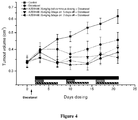
- intermittent dosage of Compound [I] in combination with docetaxel has similar effectiveness at regulating tumour size as continuous dosage of Compound [I] in combination with docetaxel.
- intermittent dosage of Compound [I] following only a single dose of docetaxel has similar effectiveness at regulating tumour size as continuous dosage of Compound [I] in combination with docetaxel.
- a combination comprising Compound [I] or a pharmaceutically acceptable salt thereof and docetaxel for use in the treatment of cancer, wherein the Compound [I] or a pharmaceutically acceptable salt thereof is dosed intermittently.
- the dosage cycle comprises the intermittent dosage of Compound [I] or a pharmaceutically acceptable salt thereof, as defined in claim 1.
- intermittent dosage of Compound [I] or a pharmaceutically acceptable salt thereof means that in a given dosage cycle there will be one or more days (for example 1, 2, 3, 4, 5, 6 or 7 days) where no Compound [I] or a pharmaceutically acceptable salt thereof is administered.
- the dosage cycle comprises the sequential administration of the Compound [I] or a pharmaceutically acceptable salt thereof prior to the administration of docetaxel.
- the dosage cycle comprises the sequential administration of docetaxel prior to the administration of Compound [I] or a pharmaceutically acceptable salt thereof.
- the dosage cycle involves only a single dose of docetaxel.
- the dosage cycle comprises the sequential administration of docetaxel only within the 2 days prior to the first administration of Compound [I] or a pharmaceutically acceptable salt thereof within a dosage cycle.
- the dosage cycle comprises the sequential administration of docetaxel only within the 24 hours prior to the first administration of Compound [I] or a pharmaceutically acceptable salt thereof within a dosage cycle.
- the dosage cycle comprises the sequential administration of t docetaxel only within the 12 hours prior to the first administration of Compound [I] or a pharmaceutically acceptable salt thereof within a dosage cycle.
- the dosage cycle comprises the sequential administration of docetaxel only within the 6 hours prior to the first administration of Compound [I] or a pharmaceutically acceptable salt thereof within a dosage cycle.
- the dosage cycle comprises the sequential administration of docetaxel only within the 3 hours prior to the first administration of Compound [I] or a pharmaceutically acceptable salt thereof within a dosage cycle.
- the dosage cycle comprises the sequential administration of docetaxel only within the 1.5 hours prior to the first administration of Compound [I] or a pharmaceutically acceptable salt thereof within a dosage cycle.
- within the x hours prior to the first administration of Compound means any time up to x hours before the first dosing of Compound [I] or a pharmaceutically acceptable salt thereof within a given dosage cycle, and includes substantially simultaneous dosing of docetaxel with the first dosing of Compound [I] or a pharmaceutically acceptable salt thereof of a given dosage cycle.
- the dosage cycle is from 8 to 29 days in length.
- the dosage cycle is from 15 to 29 days in length.
- the dosage cycle is from 15 to 22 days in length.
- the dosage cycle is from 22 to 29 days in length.
- the dosage cycle is from 8 to 22 days in length.
- the dosage cycle is from 8 to 15 days in length.
- the dosage cycle is 29 days in length.
- the dosage cycle is 22 days in length.
- the dosage cycle is 15 days in length.
- the dosage cycle is 8 days in length.
- the dosage cycle comprises Compound [I] or a pharmaceutically acceptable salt thereof being dosed for at least one period (for example 1, 2, or 3 periods) of 3-5 consecutive days (for example 3, 4 or 5 days), which period(s) are immediately followed by a further period of least one day (for example 2, 3, 4 or 5 consecutive days) where no Compound [I] or a pharmaceutically acceptable salt thereof is dosed.
- the dosage cycle comprises at least one 7 day period, in which period Compound [I] or a pharmaceutically acceptable salt thereof is dosed only for 3-5 consecutive days.
- the dosage cycle comprises one 7 day period in which Compound [I] or a pharmaceutically acceptable salt thereof is only dosed for 3-5 consecutive days.
- the dosage cycle comprises two 7 day periods in which Compound [I] or a pharmaceutically acceptable salt thereof is only dosed for 3-5 consecutive days.
- the dosage cycle comprises three7 day periods in which Compound [I] or a pharmaceutically acceptable salt thereof is only dosed for 3-5 consecutive days.
- the dosage cycle comprises Compound [I] or a pharmaceutically acceptable salt thereof being dosed for at least one period of 5 consecutive days immediately followed by a further period of 2 consecutive days where no Compound [I] or a pharmaceutically acceptable salt thereof is dosed.
- the dosage cycle comprises Compound [I] or a pharmaceutically acceptable salt thereof being dosed for at least one period of 4 consecutive days immediately followed by a further period of 3 consecutive days where no Compound [I] or a pharmaceutically acceptable salt thereof is dosed.
- the dosage cycle comprises Compound [I] or a pharmaceutically acceptable salt thereof being dosed for at least one period of 3 consecutive days immediately followed by a further period of 4 consecutive days where no Compound [I] or a pharmaceutically acceptable salt thereof is dosed.
- the dosage cycle is 29 days long and comprises four 7 day periods, each such period consisting of 5 days where Compound [I] or a pharmaceutically acceptable salt thereof is dosed followed by 2 days where no Compound [I] or a pharmaceutically acceptable salt thereof is dosed.
- the dosage cycle is 29 days long and comprises four 7 day periods, each such period consisting of 4 days where Compound [I] or a pharmaceutically acceptable salt thereof is dosed followed by 3 days where no Compound [I] or a pharmaceutically acceptable salt thereof is dosed.
- the dosage cycle is 29 days long and comprises four 7 day periods, each such period consisting of 3 days where Compound [I] or a pharmaceutically acceptable salt thereof is dosed followed by 4 days where no Compound [I] or a pharmaceutically acceptable salt thereof is dosed.
- the dosage cycle is 22 days long and comprises three 7 day periods, each such period consisting of 5 days where Compound [I] or a pharmaceutically acceptable salt thereof is dosed followed by 2 days where no Compound [I] or a pharmaceutically acceptable salt thereof is dosed.
- the dosage cycle is 22 days long and comprises three 7 day periods, each such period consisting of 4 days where Compound [I] or a pharmaceutically acceptable salt thereof is dosed followed by 3 days where no Compound [I] or a pharmaceutically acceptable salt thereof is dosed.
- the dosage cycle is 22 days long and comprises three 7 day periods, each such period consisting of 3 days where Compound [I] or a pharmaceutically acceptable salt thereof is dosed followed by 4 days where no Compound [I] or a pharmaceutically acceptable salt thereof is dosed.
- the dosage cycle is 15 days long and comprises two 7 day periods, each such period consisting of 5 days where Compound [I] or a pharmaceutically acceptable salt thereof is dosed followed by 2 days where no Compound [I] or a pharmaceutically acceptable salt thereof is dosed.
- the dosage cycle is 15 days long and comprises two 7 day periods, each such period consisting of 4 days where Compound [I] or a pharmaceutically acceptable salt thereof is dosed followed by 3 days where no Compound [I] or a pharmaceutically acceptable salt thereof is dosed.
- the dosage cycle is 15 days long and comprises two 7 day periods, each such period consisting of 3 days where Compound [I] or a pharmaceutically acceptable salt thereof is dosed followed by 4 days where no Compound [I] or a pharmaceutically acceptable salt thereof is dosed.
- the dosage cycle is 8 days long and comprises one 7 day period consisting of 5 days where Compound [I] or a pharmaceutically acceptable salt thereof is dosed followed by 2 days where no Compound [I] or a pharmaceutically acceptable salt thereof is dosed.
- the dosage cycle is 8 days long and comprises one 7 day period consisting of 4 days where Compound [I] or a pharmaceutically acceptable salt thereof is dosed followed by 3 days where no Compound [I] or a pharmaceutically acceptable salt thereof is dosed.
- the dosage cycle is 8 days long and comprises one 7 day period consisting of 3 days where Compound [I] or a pharmaceutically acceptable salt thereof is dosed followed by 4 days where no Compound [I] or a pharmaceutically acceptable salt thereof is dosed.
- the dosage cycle is 8-29 days long and comprises a single administration of docetaxel within the 24 hours prior to the first administration of Compound [I] or a pharmaceutically acceptable salt thereof, followed by intermittent dosing of Compound [I] or a pharmaceutically acceptable salt thereof.
- the dosage cycle is 15-29 days long and comprises the administration of the docetaxel within the 24 hours prior to the first administration of Compound [I] or a pharmaceutically acceptable salt thereof, followed by intermittent dosing of Compound [I] or a pharmaceutically acceptable salt thereof in 7 day periods consisting of 5 days where Compound [I] or a pharmaceutically acceptable salt thereof is dosed followed by 2 days where no Compound [I] or a pharmaceutically acceptable salt thereof is dosed.
- the dosage cycle is 15-29 days long and comprises the administration of the docetaxel within the 24 hours prior to the first administration of Compound [I] or a pharmaceutically acceptable salt thereof, followed by intermittent dosing of Compound [I] or a pharmaceutically acceptable salt thereof in 7 day periods consisting of 4 days where Compound [I] or a pharmaceutically acceptable salt thereof is dosed followed by 3 days where no Compound [I] or a pharmaceutically acceptable salt thereof is dosed.
- the dosage cycle is 15-29 days long and comprises the administration of the docetaxel within the 24 hours prior to the first administration of Compound [I] or a pharmaceutically acceptable salt thereof, followed by intermittent dosing of Compound [I] or a pharmaceutically acceptable salt thereof in 7 day periods consisting of 3 days where Compound [I] or a pharmaceutically acceptable salt thereof is dosed followed by 4 days where no Compound [I] or a pharmaceutically acceptable salt thereof is dosed.
- Compound [I] or a pharmaceutically acceptable salt thereof is administered once daily on the days of a dosage cycle when it is dosed.
- Compound [I] or a pharmaceutically acceptable salt thereof is administered twice daily on the days of a dosage cycle when it is dosed.
- dosage cycles may be separated by a number of days (for example 1, 2, 3, 4, 5, 6 or 7 days) where none of the active combination components are administered.
- the Compound [I] is 8-[(1 R )-1-(3,5-difluorophenylamino)ethyl]- N,N -dimethyl-2-morpholino-4-oxo-4H-chromene-6-carboxamide.
- the Compound [I] is a pharmaceutically acceptable salt of 8-[(1 R )-1-(3,5-difluorophenylamino)ethyl]- N,N- dimethyl-2-morpholino-4-oxo-4H-chromene-6-carboxamide.
- a combination comprising Compound [I] or a pharmaceutically acceptable salt thereof and docetaxel, for use in the treatment of cancer, as defined in claim 1.
- a combination comprising a pharmaceutically acceptable salt of Compound [I] and docetaxel, for use in the treatment of cancer, as defined in claim 1.
- the treatment of cancer may refer to the prevention of metastases and the treatment of metastases, i.e. cancer spread. Therefore the combination of the present invention might be used to treat a patient who has no metastases to stop them occurring, or to lengthen the time period before they occur, and to a patient who already has metastases to treat the metastases themselves.
- the treatment of cancer may refer to treatment of an established primary tumour or tumours and developing primary tumour or tumours.
- the treatment of cancer relates to the prevention of metastases.
- the treatment of cancer relates to the treatment of metastases.
- the treatment of cancer relates to treatment of an established primary tumour or tumours or developing primary tumour or tumours.
- the treatment of cancer may refer to the prevention of cancer per se.
- a physician may determine the exact dosage and scheduling for use of a combination product, such that the active components of the combination product may necessarily not be present together within a single dosage form at a fixed dose. Therefore a physician or pharmacist may prepare a combination medicament comprising the active combination products in readiness for simultaneous, separate or sequential combination use in medicine, for example to treat cancer in a warm-blooded animal, such as human.
- cancer may refer to oesophageal cancer, myeloma, hepatocellular cancer, pancreatic cancer, cervical cancer, ewings tumour, neuroblastoma, kaposis sarcoma, ovarian cancer, breast cancer, colorectal cancer, prostate cancer, bladder cancer, melanoma, lung cancer - non small cell lung cancer, and small cell lung cancer, gastric cancer, head and neck cancer, brain cancer, renal cancer, lymphoma and leukaemia.
- oesophageal cancer myeloma, hepatocellular cancer, pancreatic cancer, cervical cancer, ewings tumour, neuroblastoma, kaposis sarcoma, ovarian cancer, breast cancer, colorectal cancer, prostate cancer, bladder cancer, melanoma, lung cancer - non small cell lung cancer, and small cell lung cancer, gastric cancer, head and neck cancer, brain cancer, renal cancer, lymphoma and leukaemia.
- the cancer is prostate cancer.
- the cancer is pancreatic cancer.
- the cancer is castrate-resistant prostate cancer.
- the cancer is small cell lung cancer.
- the cancer is non-small cell lung cancer.
- the cancer is squamous non-small cell lung cancer.
- the cancer is colorectal cancer.
- the cancer is ovarian cancer.
- the cancer is breast cancer.
- the cancer is triple negative breast cancer.
- the cancer is prostate cancer, non-small cell lung cancer or breast cancer.
- the cancer is castrate-resistant prostate cancer, squamous non-small cell lung cancer, colorectal cancer, pancreatic cancer or triple negative breast cancer.
- the cancer is castrate-resistant prostate cancer, squamous non-small cell lung cancer or triple negative breast cancer.
- the cancer is bladder cancer, oesophageal cancer, gastric cancer, melanoma, cervical cancer or renal cancer.
- the cancer is endometrial, liver, stomach, thyroid, rectal or brain cancer.
- the cancer is cancer which is deficient in the gene PTEN.
- the cancer is in a metastatic state, and more particularly the cancer produces metastases to the bone.
- the cancer is in a metastatic state, and more particularly the cancer produces skin metastases.
- the cancer is in a metastatic state, and more particularly the cancer produces lymphatic metastases.
- the cancer is in a non-metastatic state.
- docetaxel may be dosed at 50-140 mg/m 2 body area of the animal on the day(s) when it is dosed, for example 60-120 mg/m 2 body area of the animal, or for example 65-110 mg/m 2 body area of the animal.
- the Compound [I] or a pharmaceutically acceptable salt thereof may be dosed at 10-50 mg/kg twice daily on days when it is dosed.
- the skilled person understands that if a pharmaceutically acceptable salt of Compound [I] is used, the Compound [I] content of the dose is less than 100% and the actual mass of the salt being dosed will be higher than the aforementioned 10-50 mg/kg twice daily, depending on the mass of the counterion used to make the particular salt, and the stoichiometry of the salt.
- the actual doses to be used for a given patient should be determined by an appropriately qualified physician.
- the dosage of each of the drugs and their proportions have to be composed so that the best possible treatment effects, as defined by national and international guidelines (which are periodically reviewed and re-defined), will be met.
- Compound [I] may be prepared according to the procedures described in WO2011/051704 , relevant details of which are incorporated herein by reference.
- mice Female Swiss athymic nu/nu mice were implanted subcutaneously in the left flank with 0.1ml PC3 cells (1x10 6 cells in Iscove's serum free medium mixed 50:50 with matrigel) or HCC70 cells (1x10 6 cells in RPMI serum free medium mixed 50:50 with matrigel). Once tumours reached ⁇ 200-500mm 3 in size animals were randomised into control and treatment groups.
- Compound [I] in the free base form was dosed either in the presence or absence of ABT (aminobenzotriazole).
- ABT aminobenzotriazole
- Compound [I] was formulated once weekly either alone in 10% DMSO/ 60% TEG/30% WFI or in the presence of ABT at 10 mg/ml.
- Compound [I] was co-dosed with ABT at hour 0, and then administered alone as the single formulation at hour 6-8.
- Compound [I] was formulated once weekly as a suspension in HPMC/Tween and dosed once or twice daily (0 and 6-8 hours)
- Docetaxel (TaxotereTM) was formulated fresh in physiological saline at 1.5mg/ml and dosed as a single i.v. bolus at a rate of 0.1ml/10g on Day 0, 24 hours prior to the administration of Compound [I].
- Tumour volume was calculated twice weekly from bilateral calliper measurements using the formula (length x width x width) x ⁇ /6. Growth inhibition from the start of treatment was assessed by comparison of the geometric mean change in tumour volume for the control and treated groups. Statistical significance was evaluated using a one-tailed "t"-test.
Landscapes
- Health & Medical Sciences (AREA)
- Animal Behavior & Ethology (AREA)
- Chemical & Material Sciences (AREA)
- Veterinary Medicine (AREA)
- Public Health (AREA)
- Medicinal Chemistry (AREA)
- General Health & Medical Sciences (AREA)
- Pharmacology & Pharmacy (AREA)
- Life Sciences & Earth Sciences (AREA)
- Nuclear Medicine, Radiotherapy & Molecular Imaging (AREA)
- General Chemical & Material Sciences (AREA)
- Chemical Kinetics & Catalysis (AREA)
- Organic Chemistry (AREA)
- Epidemiology (AREA)
- Engineering & Computer Science (AREA)
- Bioinformatics & Cheminformatics (AREA)
- Endocrinology (AREA)
- Reproductive Health (AREA)
- Pulmonology (AREA)
- Urology & Nephrology (AREA)
- Pharmaceuticals Containing Other Organic And Inorganic Compounds (AREA)
- Nutrition Science (AREA)
- Physiology (AREA)
Claims (12)
- Combinaison comprenant le Composé [I] :

- Combinaison pour utilisation dans le traitement du cancer selon l'une quelconque des revendications précédentes, où le Composé [I], ou l'un des sels pharmaceutiquement acceptables de celui-ci, et le docétaxel sont administrés séquentiellement.
- Combinaison pour utilisation dans le traitement du cancer selon l'une quelconque des revendications précédentes, où le Composé [I], ou l'un des sels pharmaceutiquement acceptables de celui-ci, et le docétaxel sont administrés lors d'un cycle d'administration d'une durée de 8 à 29 jours.
- Combinaison pour utilisation dans le traitement du cancer selon la revendication 1 ou la revendication 3, où le docétaxel est administré une seule fois dans un cycle d'administration donné.
- Combinaison pour utilisation dans le traitement du cancer selon la revendication 4, où le docétaxel est administré dans les 24 heures qui précèdent la première administration du Composé [I], ou l'un des sels pharmaceutiquement acceptables de celui-ci, dans un cycle d'administration donné.
- Combinaison pour utilisation dans le traitement du cancer selon la revendication 1, où le cycle d'administration dure 15 à 29 jours et comprend l'administration de docétaxel dans les 24 heures qui précèdent la première administration du Composé [I], ou d'un sel pharmaceutiquement acceptable de celui-ci, suivie de l'administration intermittente du Composé [I], ou d'un sel pharmaceutiquement acceptable de celui-ci par périodes de 7 jours consistant en 5 jours d'administration du Composé [I], ou d'un sel pharmaceutiquement acceptable de celui-ci, suivis de 2 jours sans administration du Composé [I], ou d'un sel pharmaceutiquement acceptable de celui-ci.
- Combinaison pour utilisation dans le traitement du cancer selon la revendication 1, où le cycle d'administration dure 15 à 29 jours et comprend l'administration de docétaxel dans les 24 heures qui précèdent la première administration du Composé [I], ou d'un sel pharmaceutiquement acceptable de celui-ci, suivie de l'administration intermittente du Composé [I], ou d'un sel pharmaceutiquement acceptable de celui-ci par périodes de 7 jours consistant en 4 jours d'administration du Composé [I], ou d'un sel pharmaceutiquement acceptable de celui-ci, suivis de 3 jours sans administration du Composé [I], ou d'un sel pharmaceutiquement acceptable de celui-ci.
- Combinaison pour utilisation dans le traitement du cancer selon la revendication 1, où le cycle d'administration dure 8 jours et comprend une période de 7 jours consistant en 5 jours d'administration du Composé [I], ou d'un sel pharmaceutiquement acceptable de celui-ci, suivis de 2 jours sans administration du Composé [I] ou d'un sel pharmaceutiquement acceptable de celui-ci.
- Combinaison pour utilisation dans le traitement du cancer selon la revendication 1, où le cycle d'administration dure 8 jours et comprend une période de 7 jours consistant en 4 jours d'administration du Composé [I], ou d'un sel pharmaceutiquement acceptable de celui-ci, suivis de 3 jours sans administration du Composé [I], ou d'un sel pharmaceutiquement acceptable de celui-ci.
- Combinaison pour utilisation dans le traitement du cancer selon la revendication 1, où le cycle d'administration dure 8 jours et comprend une période de 7 jours consistant en 3 jours d'administration du Composé [I], ou d'un sel pharmaceutiquement acceptable de celui-ci, suivis de 4 jours sans administration du Composé [I], ou d'un sel pharmaceutiquement acceptable de celui-ci.
- Combinaison pour utilisation dans le traitement du cancer selon l'une quelconque des revendications précédentes, où le docétaxel est administré à 50-140 mg/m2 de la surface du patient aux jours d'administration et le Composé [I], ou l'un des sels pharmaceutiquement acceptables de celui-ci, est administré à 0,1-200 mg/kg aux jours d'administration.
- Combinaison pour utilisation dans le traitement du cancer selon l'une quelconque des revendications précédentes, où le cancer est choisi parmi le cancer de la prostate résistant à la castration, le cancer du poumon non à petites cellules squameuses, le cancer colorectal, le cancer du pancréas et le cancer du sein triplement négatif.
Applications Claiming Priority (3)
| Application Number | Priority Date | Filing Date | Title |
|---|---|---|---|
| US201361772079P | 2013-03-04 | 2013-03-04 | |
| US201361771974P | 2013-03-04 | 2013-03-04 | |
| PCT/GB2014/050618 WO2014135851A1 (fr) | 2013-03-04 | 2014-03-03 | Traitement d'association |
Publications (2)
| Publication Number | Publication Date |
|---|---|
| EP2964217A1 EP2964217A1 (fr) | 2016-01-13 |
| EP2964217B1 true EP2964217B1 (fr) | 2019-08-28 |
Family
ID=50288179
Family Applications (1)
| Application Number | Title | Priority Date | Filing Date |
|---|---|---|---|
| EP14710617.3A Active EP2964217B1 (fr) | 2013-03-04 | 2014-03-03 | Traitement d'association pour le traitement du cancer |
Country Status (12)
| Country | Link |
|---|---|
| US (1) | US9763950B2 (fr) |
| EP (1) | EP2964217B1 (fr) |
| JP (1) | JP6546098B2 (fr) |
| KR (1) | KR102222346B1 (fr) |
| CN (1) | CN105142629B (fr) |
| AU (1) | AU2014224445C1 (fr) |
| BR (1) | BR112015019524A8 (fr) |
| CA (1) | CA2900136C (fr) |
| ES (1) | ES2754034T3 (fr) |
| MX (1) | MX362905B (fr) |
| RU (1) | RU2666999C2 (fr) |
| WO (1) | WO2014135851A1 (fr) |
Families Citing this family (4)
| Publication number | Priority date | Publication date | Assignee | Title |
|---|---|---|---|---|
| TW201813963A (zh) | 2016-09-23 | 2018-04-16 | 美商基利科學股份有限公司 | 磷脂醯肌醇3-激酶抑制劑 |
| TW201815787A (zh) | 2016-09-23 | 2018-05-01 | 美商基利科學股份有限公司 | 磷脂醯肌醇3-激酶抑制劑 |
| TW201825465A (zh) | 2016-09-23 | 2018-07-16 | 美商基利科學股份有限公司 | 磷脂醯肌醇3-激酶抑制劑 |
| KR20200132963A (ko) * | 2018-03-16 | 2020-11-25 | 디에프비 소리아, 엘엘씨 | 탁산의 나노입자를 사용하는 자궁경부 상피내 신생물 (cin) 및 자궁경부 암의 치료를 위한 국소적 요법 |
Family Cites Families (14)
| Publication number | Priority date | Publication date | Assignee | Title |
|---|---|---|---|---|
| HUT58310A (en) | 1988-12-21 | 1992-02-28 | Upjohn Co | Anti-atherosclerotic and anti-thrombotic 1-benzopyran-4-one- and 2-amino-1,3-benzoxazin-4-one derivatives, process for producing them and pharmaceutical compositions containing them |
| US5439686A (en) | 1993-02-22 | 1995-08-08 | Vivorx Pharmaceuticals, Inc. | Methods for in vivo delivery of substantially water insoluble pharmacologically active agents and compositions useful therefor |
| US6749868B1 (en) | 1993-02-22 | 2004-06-15 | American Bioscience, Inc. | Protein stabilized pharmacologically active agents, methods for the preparation thereof and methods for the use thereof |
| ES2435944T3 (es) | 1997-06-27 | 2013-12-26 | Abraxis Bioscience, Llc | Nuevas formulaciones de agentes farmacológicos, métodos para su preparación y métodos para su uso |
| US6395300B1 (en) | 1999-05-27 | 2002-05-28 | Acusphere, Inc. | Porous drug matrices and methods of manufacture thereof |
| RU2284818C2 (ru) * | 2001-05-10 | 2006-10-10 | Анормед, Инк. | Комбинированная химиотерапия |
| JP4646626B2 (ja) | 2002-08-16 | 2011-03-09 | アストラゼネカ アクチボラグ | ホスホイノシチド3−キナーゼβの阻害 |
| TR200808208T1 (tr) | 2003-12-09 | 2008-12-22 | The Government Of The United States Of America, As Represented By The Secretary, Department Of Health And Human Services | Bir immün tepkinin bastırılması veya proliferatif bir hastalığın tedavisi |
| BRPI0615265A8 (pt) | 2005-08-31 | 2018-03-06 | Abraxis Bioscience Llc | composições compreendendo agentes farmacêuticos pouco hidrossoluíveis e agentes antimicrobianos |
| US8034765B2 (en) | 2005-08-31 | 2011-10-11 | Abraxis Bioscience, Llc | Compositions and methods for preparation of poorly water soluble drugs with increased stability |
| WO2008064244A2 (fr) | 2006-11-20 | 2008-05-29 | The Trustees Of Columbia University In The City Of New York | Modulation des phosphoinositides pour le traitement de maladies neurodégénératives |
| RU2438664C2 (ru) * | 2007-05-15 | 2012-01-10 | Пирамал Лайф Сайнсиз Лимитед | Синергическая фармацевтическая комбинация для лечения рака |
| US8399460B2 (en) * | 2009-10-27 | 2013-03-19 | Astrazeneca Ab | Chromenone derivatives |
| WO2012131399A1 (fr) * | 2011-04-01 | 2012-10-04 | Astrazeneca Ab | Traitement thérapeutique |
-
2014
- 2014-03-03 CA CA2900136A patent/CA2900136C/fr active Active
- 2014-03-03 AU AU2014224445A patent/AU2014224445C1/en not_active Ceased
- 2014-03-03 RU RU2015139515A patent/RU2666999C2/ru active
- 2014-03-03 WO PCT/GB2014/050618 patent/WO2014135851A1/fr not_active Ceased
- 2014-03-03 JP JP2015560763A patent/JP6546098B2/ja not_active Expired - Fee Related
- 2014-03-03 BR BR112015019524A patent/BR112015019524A8/pt active Search and Examination
- 2014-03-03 KR KR1020157022944A patent/KR102222346B1/ko not_active Expired - Fee Related
- 2014-03-03 ES ES14710617T patent/ES2754034T3/es active Active
- 2014-03-03 MX MX2015011588A patent/MX362905B/es active IP Right Grant
- 2014-03-03 US US14/772,472 patent/US9763950B2/en not_active Expired - Fee Related
- 2014-03-03 CN CN201480008510.1A patent/CN105142629B/zh not_active Expired - Fee Related
- 2014-03-03 EP EP14710617.3A patent/EP2964217B1/fr active Active
Non-Patent Citations (1)
| Title |
|---|
| J. GLIGOROV: "Preclinical Pharmacology of the Taxanes: Implications of the Differences", THE ONCOLOGIST, vol. 9, no. suppl_2, 2 June 2004 (2004-06-02), US, pages 3 - 8, XP055447632, ISSN: 1083-7159, DOI: 10.1634/theoncologist.9-suppl_2-3 * |
Also Published As
| Publication number | Publication date |
|---|---|
| CN105142629A (zh) | 2015-12-09 |
| HK1216391A1 (en) | 2016-11-11 |
| JP6546098B2 (ja) | 2019-07-17 |
| CA2900136A1 (fr) | 2014-09-12 |
| CN105142629B (zh) | 2018-11-23 |
| RU2666999C2 (ru) | 2018-09-13 |
| ES2754034T3 (es) | 2020-04-15 |
| MX362905B (es) | 2019-02-25 |
| MX2015011588A (es) | 2015-12-09 |
| KR102222346B1 (ko) | 2021-03-02 |
| KR20150122145A (ko) | 2015-10-30 |
| EP2964217A1 (fr) | 2016-01-13 |
| US20160022690A1 (en) | 2016-01-28 |
| CA2900136C (fr) | 2021-05-04 |
| BR112015019524A2 (pt) | 2017-07-18 |
| AU2014224445C1 (en) | 2017-07-27 |
| AU2014224445B2 (en) | 2017-02-02 |
| BR112015019524A8 (pt) | 2019-11-19 |
| RU2015139515A (ru) | 2017-04-10 |
| US9763950B2 (en) | 2017-09-19 |
| AU2014224445A1 (en) | 2015-08-27 |
| JP2016510060A (ja) | 2016-04-04 |
| WO2014135851A1 (fr) | 2014-09-12 |
Similar Documents
| Publication | Publication Date | Title |
|---|---|---|
| Gil | Targeting the PI3K/AKT/mTOR pathway in estrogen receptor-positive breast cancer | |
| JP7288482B2 (ja) | がんの処置のための、Notch阻害剤およびCDK4/6阻害剤の併用療法 | |
| Tsimberidou | Targeted therapy in cancer | |
| Janku | Phosphoinositide 3-kinase (PI3K) pathway inhibitors in solid tumors: From laboratory to patients | |
| Akinleye et al. | Phosphatidylinositol 3-kinase (PI3K) inhibitors as cancer therapeutics | |
| ES2609767T3 (es) | Combinaciones de un inhibidor de PI3K y un inhibidor de MEK | |
| Liang et al. | VEGF signal system: the application of antiangiogenesis | |
| JP2020535173A (ja) | Hsp90阻害剤に関係する治療方法 | |
| JP2016522247A (ja) | 組合せ医薬 | |
| JP2025038167A (ja) | キナーゼ阻害剤に対する獲得抵抗性を有するがんの処置方法 | |
| JP2015529194A (ja) | PI3Kインヒビターとc−Metインヒビターの組み合わせ | |
| US9763950B2 (en) | Combination treatment | |
| JP2016520662A (ja) | Pi3k阻害剤および微小管不安定化剤の医薬組み合わせ | |
| Wang et al. | Targeted small molecule therapy and inhibitors for lymphoma | |
| WO2016146591A1 (fr) | Traitement de combinaison | |
| TW200412971A (en) | Therapeutic treatment | |
| JP6373252B2 (ja) | オーロラキナーゼ阻害薬を使用する癌の治療方法 | |
| Naumann | The role of the phosphatidylinositol 3-kinase (PI3K) pathway in the development and treatment of uterine cancer | |
| HK1216391B (en) | Combination for the treatment of cancer | |
| Fitzgerald et al. | Targeted agents in cancer | |
| Sampath et al. | 220 POSTER Combination of class I PI3K inhibitor, GDC-0941, with standard of care therapeutics results in enhanced anti-tumor responses in human cancer models in vitro and in vivo | |
| McCubrey et al. | New agents and approaches for targeting the RAS/RAF/MEK/ERK and PI3K/AKT/mTOR cell survival pathways | |
| Ocen et al. | Targeted agents in cancer | |
| Patel et al. | 217 POSTER Pre-clinical evaluation of efficacy and PK/PD biomarkers of GDC-0941, a potent class 1 PI3K inhibitor | |
| Doshi et al. | A Comprehensive Review on Novel Approaches In Cancer Treatment |
Legal Events
| Date | Code | Title | Description |
|---|---|---|---|
| PUAI | Public reference made under article 153(3) epc to a published international application that has entered the european phase |
Free format text: ORIGINAL CODE: 0009012 |
|
| 17P | Request for examination filed |
Effective date: 20151005 |
|
| AK | Designated contracting states |
Kind code of ref document: A1 Designated state(s): AL AT BE BG CH CY CZ DE DK EE ES FI FR GB GR HR HU IE IS IT LI LT LU LV MC MK MT NL NO PL PT RO RS SE SI SK SM TR |
|
| AX | Request for extension of the european patent |
Extension state: BA ME |
|
| DAX | Request for extension of the european patent (deleted) | ||
| STAA | Information on the status of an ep patent application or granted ep patent |
Free format text: STATUS: EXAMINATION IS IN PROGRESS |
|
| 17Q | First examination report despatched |
Effective date: 20180212 |
|
| GRAP | Despatch of communication of intention to grant a patent |
Free format text: ORIGINAL CODE: EPIDOSNIGR1 |
|
| STAA | Information on the status of an ep patent application or granted ep patent |
Free format text: STATUS: GRANT OF PATENT IS INTENDED |
|
| INTG | Intention to grant announced |
Effective date: 20190416 |
|
| GRAS | Grant fee paid |
Free format text: ORIGINAL CODE: EPIDOSNIGR3 |
|
| GRAA | (expected) grant |
Free format text: ORIGINAL CODE: 0009210 |
|
| STAA | Information on the status of an ep patent application or granted ep patent |
Free format text: STATUS: THE PATENT HAS BEEN GRANTED |
|
| AK | Designated contracting states |
Kind code of ref document: B1 Designated state(s): AL AT BE BG CH CY CZ DE DK EE ES FI FR GB GR HR HU IE IS IT LI LT LU LV MC MK MT NL NO PL PT RO RS SE SI SK SM TR |
|
| REG | Reference to a national code |
Ref country code: GB Ref legal event code: FG4D |
|
| REG | Reference to a national code |
Ref country code: CH Ref legal event code: EP |
|
| REG | Reference to a national code |
Ref country code: AT Ref legal event code: REF Ref document number: 1171500 Country of ref document: AT Kind code of ref document: T Effective date: 20190915 |
|
| REG | Reference to a national code |
Ref country code: IE Ref legal event code: FG4D |
|
| REG | Reference to a national code |
Ref country code: DE Ref legal event code: R096 Ref document number: 602014052476 Country of ref document: DE |
|
| REG | Reference to a national code |
Ref country code: SE Ref legal event code: TRGR |
|
| REG | Reference to a national code |
Ref country code: NL Ref legal event code: FP |
|
| REG | Reference to a national code |
Ref country code: LT Ref legal event code: MG4D |
|
| PG25 | Lapsed in a contracting state [announced via postgrant information from national office to epo] |
Ref country code: HR Free format text: LAPSE BECAUSE OF FAILURE TO SUBMIT A TRANSLATION OF THE DESCRIPTION OR TO PAY THE FEE WITHIN THE PRESCRIBED TIME-LIMIT Effective date: 20190828 Ref country code: PT Free format text: LAPSE BECAUSE OF FAILURE TO SUBMIT A TRANSLATION OF THE DESCRIPTION OR TO PAY THE FEE WITHIN THE PRESCRIBED TIME-LIMIT Effective date: 20191230 Ref country code: LT Free format text: LAPSE BECAUSE OF FAILURE TO SUBMIT A TRANSLATION OF THE DESCRIPTION OR TO PAY THE FEE WITHIN THE PRESCRIBED TIME-LIMIT Effective date: 20190828 Ref country code: FI Free format text: LAPSE BECAUSE OF FAILURE TO SUBMIT A TRANSLATION OF THE DESCRIPTION OR TO PAY THE FEE WITHIN THE PRESCRIBED TIME-LIMIT Effective date: 20190828 Ref country code: NO Free format text: LAPSE BECAUSE OF FAILURE TO SUBMIT A TRANSLATION OF THE DESCRIPTION OR TO PAY THE FEE WITHIN THE PRESCRIBED TIME-LIMIT Effective date: 20191128 Ref country code: BG Free format text: LAPSE BECAUSE OF FAILURE TO SUBMIT A TRANSLATION OF THE DESCRIPTION OR TO PAY THE FEE WITHIN THE PRESCRIBED TIME-LIMIT Effective date: 20191128 |
|
| PG25 | Lapsed in a contracting state [announced via postgrant information from national office to epo] |
Ref country code: AL Free format text: LAPSE BECAUSE OF FAILURE TO SUBMIT A TRANSLATION OF THE DESCRIPTION OR TO PAY THE FEE WITHIN THE PRESCRIBED TIME-LIMIT Effective date: 20190828 Ref country code: IS Free format text: LAPSE BECAUSE OF FAILURE TO SUBMIT A TRANSLATION OF THE DESCRIPTION OR TO PAY THE FEE WITHIN THE PRESCRIBED TIME-LIMIT Effective date: 20191228 Ref country code: LV Free format text: LAPSE BECAUSE OF FAILURE TO SUBMIT A TRANSLATION OF THE DESCRIPTION OR TO PAY THE FEE WITHIN THE PRESCRIBED TIME-LIMIT Effective date: 20190828 Ref country code: GR Free format text: LAPSE BECAUSE OF FAILURE TO SUBMIT A TRANSLATION OF THE DESCRIPTION OR TO PAY THE FEE WITHIN THE PRESCRIBED TIME-LIMIT Effective date: 20191129 Ref country code: RS Free format text: LAPSE BECAUSE OF FAILURE TO SUBMIT A TRANSLATION OF THE DESCRIPTION OR TO PAY THE FEE WITHIN THE PRESCRIBED TIME-LIMIT Effective date: 20190828 |
|
| REG | Reference to a national code |
Ref country code: AT Ref legal event code: MK05 Ref document number: 1171500 Country of ref document: AT Kind code of ref document: T Effective date: 20190828 |
|
| PG25 | Lapsed in a contracting state [announced via postgrant information from national office to epo] |
Ref country code: TR Free format text: LAPSE BECAUSE OF FAILURE TO SUBMIT A TRANSLATION OF THE DESCRIPTION OR TO PAY THE FEE WITHIN THE PRESCRIBED TIME-LIMIT Effective date: 20190828 |
|
| REG | Reference to a national code |
Ref country code: ES Ref legal event code: FG2A Ref document number: 2754034 Country of ref document: ES Kind code of ref document: T3 Effective date: 20200415 |
|
| PG25 | Lapsed in a contracting state [announced via postgrant information from national office to epo] |
Ref country code: RO Free format text: LAPSE BECAUSE OF FAILURE TO SUBMIT A TRANSLATION OF THE DESCRIPTION OR TO PAY THE FEE WITHIN THE PRESCRIBED TIME-LIMIT Effective date: 20190828 Ref country code: AT Free format text: LAPSE BECAUSE OF FAILURE TO SUBMIT A TRANSLATION OF THE DESCRIPTION OR TO PAY THE FEE WITHIN THE PRESCRIBED TIME-LIMIT Effective date: 20190828 Ref country code: DK Free format text: LAPSE BECAUSE OF FAILURE TO SUBMIT A TRANSLATION OF THE DESCRIPTION OR TO PAY THE FEE WITHIN THE PRESCRIBED TIME-LIMIT Effective date: 20190828 Ref country code: PL Free format text: LAPSE BECAUSE OF FAILURE TO SUBMIT A TRANSLATION OF THE DESCRIPTION OR TO PAY THE FEE WITHIN THE PRESCRIBED TIME-LIMIT Effective date: 20190828 Ref country code: EE Free format text: LAPSE BECAUSE OF FAILURE TO SUBMIT A TRANSLATION OF THE DESCRIPTION OR TO PAY THE FEE WITHIN THE PRESCRIBED TIME-LIMIT Effective date: 20190828 |
|
| PG25 | Lapsed in a contracting state [announced via postgrant information from national office to epo] |
Ref country code: SK Free format text: LAPSE BECAUSE OF FAILURE TO SUBMIT A TRANSLATION OF THE DESCRIPTION OR TO PAY THE FEE WITHIN THE PRESCRIBED TIME-LIMIT Effective date: 20190828 Ref country code: IS Free format text: LAPSE BECAUSE OF FAILURE TO SUBMIT A TRANSLATION OF THE DESCRIPTION OR TO PAY THE FEE WITHIN THE PRESCRIBED TIME-LIMIT Effective date: 20200224 Ref country code: SM Free format text: LAPSE BECAUSE OF FAILURE TO SUBMIT A TRANSLATION OF THE DESCRIPTION OR TO PAY THE FEE WITHIN THE PRESCRIBED TIME-LIMIT Effective date: 20190828 Ref country code: CZ Free format text: LAPSE BECAUSE OF FAILURE TO SUBMIT A TRANSLATION OF THE DESCRIPTION OR TO PAY THE FEE WITHIN THE PRESCRIBED TIME-LIMIT Effective date: 20190828 |
|
| REG | Reference to a national code |
Ref country code: DE Ref legal event code: R097 Ref document number: 602014052476 Country of ref document: DE |
|
| PLBE | No opposition filed within time limit |
Free format text: ORIGINAL CODE: 0009261 |
|
| STAA | Information on the status of an ep patent application or granted ep patent |
Free format text: STATUS: NO OPPOSITION FILED WITHIN TIME LIMIT |
|
| PG2D | Information on lapse in contracting state deleted |
Ref country code: IS |
|
| 26N | No opposition filed |
Effective date: 20200603 |
|
| PG25 | Lapsed in a contracting state [announced via postgrant information from national office to epo] |
Ref country code: SI Free format text: LAPSE BECAUSE OF FAILURE TO SUBMIT A TRANSLATION OF THE DESCRIPTION OR TO PAY THE FEE WITHIN THE PRESCRIBED TIME-LIMIT Effective date: 20190828 |
|
| PG25 | Lapsed in a contracting state [announced via postgrant information from national office to epo] |
Ref country code: MC Free format text: LAPSE BECAUSE OF FAILURE TO SUBMIT A TRANSLATION OF THE DESCRIPTION OR TO PAY THE FEE WITHIN THE PRESCRIBED TIME-LIMIT Effective date: 20190828 |
|
| REG | Reference to a national code |
Ref country code: BE Ref legal event code: MM Effective date: 20200331 |
|
| PG25 | Lapsed in a contracting state [announced via postgrant information from national office to epo] |
Ref country code: LU Free format text: LAPSE BECAUSE OF NON-PAYMENT OF DUE FEES Effective date: 20200303 |
|
| PG25 | Lapsed in a contracting state [announced via postgrant information from national office to epo] |
Ref country code: IE Free format text: LAPSE BECAUSE OF NON-PAYMENT OF DUE FEES Effective date: 20200303 |
|
| PG25 | Lapsed in a contracting state [announced via postgrant information from national office to epo] |
Ref country code: BE Free format text: LAPSE BECAUSE OF NON-PAYMENT OF DUE FEES Effective date: 20200331 |
|
| PG25 | Lapsed in a contracting state [announced via postgrant information from national office to epo] |
Ref country code: MT Free format text: LAPSE BECAUSE OF FAILURE TO SUBMIT A TRANSLATION OF THE DESCRIPTION OR TO PAY THE FEE WITHIN THE PRESCRIBED TIME-LIMIT Effective date: 20190828 Ref country code: CY Free format text: LAPSE BECAUSE OF FAILURE TO SUBMIT A TRANSLATION OF THE DESCRIPTION OR TO PAY THE FEE WITHIN THE PRESCRIBED TIME-LIMIT Effective date: 20190828 |
|
| PG25 | Lapsed in a contracting state [announced via postgrant information from national office to epo] |
Ref country code: MK Free format text: LAPSE BECAUSE OF FAILURE TO SUBMIT A TRANSLATION OF THE DESCRIPTION OR TO PAY THE FEE WITHIN THE PRESCRIBED TIME-LIMIT Effective date: 20190828 |
|
| PGFP | Annual fee paid to national office [announced via postgrant information from national office to epo] |
Ref country code: FR Payment date: 20230110 Year of fee payment: 10 |
|
| PGFP | Annual fee paid to national office [announced via postgrant information from national office to epo] |
Ref country code: SE Payment date: 20230110 Year of fee payment: 10 Ref country code: IT Payment date: 20230213 Year of fee payment: 10 Ref country code: GB Payment date: 20230112 Year of fee payment: 10 Ref country code: DE Payment date: 20221230 Year of fee payment: 10 |
|
| P01 | Opt-out of the competence of the unified patent court (upc) registered |
Effective date: 20230329 |
|
| PGFP | Annual fee paid to national office [announced via postgrant information from national office to epo] |
Ref country code: NL Payment date: 20230113 Year of fee payment: 10 |
|
| PGFP | Annual fee paid to national office [announced via postgrant information from national office to epo] |
Ref country code: ES Payment date: 20230407 Year of fee payment: 10 Ref country code: CH Payment date: 20230401 Year of fee payment: 10 |
|
| REG | Reference to a national code |
Ref country code: DE Ref legal event code: R119 Ref document number: 602014052476 Country of ref document: DE |
|
| REG | Reference to a national code |
Ref country code: SE Ref legal event code: EUG |
|
| REG | Reference to a national code |
Ref country code: CH Ref legal event code: PL |
|
| REG | Reference to a national code |
Ref country code: NL Ref legal event code: MM Effective date: 20240401 |
|
| GBPC | Gb: european patent ceased through non-payment of renewal fee |
Effective date: 20240303 |
|
| PG25 | Lapsed in a contracting state [announced via postgrant information from national office to epo] |
Ref country code: NL Free format text: LAPSE BECAUSE OF NON-PAYMENT OF DUE FEES Effective date: 20240401 |
|
| PG25 | Lapsed in a contracting state [announced via postgrant information from national office to epo] |
Ref country code: NL Free format text: LAPSE BECAUSE OF NON-PAYMENT OF DUE FEES Effective date: 20240401 |
|
| PG25 | Lapsed in a contracting state [announced via postgrant information from national office to epo] |
Ref country code: DE Free format text: LAPSE BECAUSE OF NON-PAYMENT OF DUE FEES Effective date: 20241001 |
|
| PG25 | Lapsed in a contracting state [announced via postgrant information from national office to epo] |
Ref country code: GB Free format text: LAPSE BECAUSE OF NON-PAYMENT OF DUE FEES Effective date: 20240303 |
|
| PG25 | Lapsed in a contracting state [announced via postgrant information from national office to epo] |
Ref country code: FR Free format text: LAPSE BECAUSE OF NON-PAYMENT OF DUE FEES Effective date: 20240331 |
|
| PG25 | Lapsed in a contracting state [announced via postgrant information from national office to epo] |
Ref country code: GB Free format text: LAPSE BECAUSE OF NON-PAYMENT OF DUE FEES Effective date: 20240303 Ref country code: FR Free format text: LAPSE BECAUSE OF NON-PAYMENT OF DUE FEES Effective date: 20240331 Ref country code: DE Free format text: LAPSE BECAUSE OF NON-PAYMENT OF DUE FEES Effective date: 20241001 Ref country code: CH Free format text: LAPSE BECAUSE OF NON-PAYMENT OF DUE FEES Effective date: 20240331 |
|
| REG | Reference to a national code |
Ref country code: ES Ref legal event code: FD2A Effective date: 20250425 |
|
| PG25 | Lapsed in a contracting state [announced via postgrant information from national office to epo] |
Ref country code: IT Free format text: LAPSE BECAUSE OF NON-PAYMENT OF DUE FEES Effective date: 20240303 |
|
| PG25 | Lapsed in a contracting state [announced via postgrant information from national office to epo] |
Ref country code: ES Free format text: LAPSE BECAUSE OF NON-PAYMENT OF DUE FEES Effective date: 20240304 |
|
| PG25 | Lapsed in a contracting state [announced via postgrant information from national office to epo] |
Ref country code: SE Free format text: LAPSE BECAUSE OF NON-PAYMENT OF DUE FEES Effective date: 20240304 |